EP4307412A1 - Hydrophobic biobinder for cathodic formulation - Google Patents
Hydrophobic biobinder for cathodic formulation Download PDFInfo
- Publication number
- EP4307412A1 EP4307412A1 EP22306038.5A EP22306038A EP4307412A1 EP 4307412 A1 EP4307412 A1 EP 4307412A1 EP 22306038 A EP22306038 A EP 22306038A EP 4307412 A1 EP4307412 A1 EP 4307412A1
- Authority
- EP
- European Patent Office
- Prior art keywords
- ink
- emulsion
- cathodic
- hydrophobic
- formulation
- Prior art date
- Legal status (The legal status is an assumption and is not a legal conclusion. Google has not performed a legal analysis and makes no representation as to the accuracy of the status listed.)
- Withdrawn
Links
- 239000000203 mixture Substances 0.000 title claims abstract description 73
- 238000009472 formulation Methods 0.000 title claims abstract description 64
- 230000002209 hydrophobic effect Effects 0.000 title claims abstract description 48
- 239000000839 emulsion Substances 0.000 claims abstract description 72
- 239000011230 binding agent Substances 0.000 claims abstract description 8
- XLYOFNOQVPJJNP-UHFFFAOYSA-N water Substances O XLYOFNOQVPJJNP-UHFFFAOYSA-N 0.000 claims description 30
- 229920000642 polymer Polymers 0.000 claims description 26
- 239000001993 wax Substances 0.000 claims description 26
- 229920001661 Chitosan Polymers 0.000 claims description 25
- 235000013871 bee wax Nutrition 0.000 claims description 24
- 230000000975 bioactive effect Effects 0.000 claims description 22
- 108090000790 Enzymes Proteins 0.000 claims description 17
- 102000004190 Enzymes Human genes 0.000 claims description 17
- 239000012166 beeswax Substances 0.000 claims description 16
- 239000000017 hydrogel Substances 0.000 claims description 15
- 239000002551 biofuel Substances 0.000 claims description 12
- 238000000034 method Methods 0.000 claims description 10
- VNWKTOKETHGBQD-UHFFFAOYSA-N methane Chemical compound C VNWKTOKETHGBQD-UHFFFAOYSA-N 0.000 claims description 8
- -1 poly(acrylic acid) Polymers 0.000 claims description 8
- 108010015428 Bilirubin oxidase Proteins 0.000 claims description 4
- 229920002134 Carboxymethyl cellulose Polymers 0.000 claims description 4
- 229920002153 Hydroxypropyl cellulose Polymers 0.000 claims description 4
- 229920002125 Sokalan® Polymers 0.000 claims description 4
- 239000004204 candelilla wax Substances 0.000 claims description 4
- 235000013868 candelilla wax Nutrition 0.000 claims description 4
- 229940073532 candelilla wax Drugs 0.000 claims description 4
- 239000001768 carboxy methyl cellulose Substances 0.000 claims description 4
- 235000010948 carboxy methyl cellulose Nutrition 0.000 claims description 4
- 239000008112 carboxymethyl-cellulose Substances 0.000 claims description 4
- 239000004203 carnauba wax Substances 0.000 claims description 4
- 235000013869 carnauba wax Nutrition 0.000 claims description 4
- 229910052802 copper Inorganic materials 0.000 claims description 4
- 239000010949 copper Substances 0.000 claims description 4
- IUJAMGNYPWYUPM-UHFFFAOYSA-N hentriacontane Chemical compound CCCCCCCCCCCCCCCCCCCCCCCCCCCCCCC IUJAMGNYPWYUPM-UHFFFAOYSA-N 0.000 claims description 4
- 239000001863 hydroxypropyl cellulose Substances 0.000 claims description 4
- 235000010977 hydroxypropyl cellulose Nutrition 0.000 claims description 4
- 238000002156 mixing Methods 0.000 claims description 4
- OKTJSMMVPCPJKN-UHFFFAOYSA-N Carbon Chemical compound [C] OKTJSMMVPCPJKN-UHFFFAOYSA-N 0.000 claims description 3
- 241001483078 Phyto Species 0.000 claims description 3
- FLPJVCMIKUWSDR-UHFFFAOYSA-N 2-(4-formylphenoxy)acetamide Chemical compound NC(=O)COC1=CC=C(C=O)C=C1 FLPJVCMIKUWSDR-UHFFFAOYSA-N 0.000 claims description 2
- 244000020551 Helianthus annuus Species 0.000 claims description 2
- 235000003222 Helianthus annuus Nutrition 0.000 claims description 2
- 108010029541 Laccase Proteins 0.000 claims description 2
- 239000004166 Lanolin Substances 0.000 claims description 2
- 241000219433 Myrica Species 0.000 claims description 2
- 235000021028 berry Nutrition 0.000 claims description 2
- 239000006229 carbon black Substances 0.000 claims description 2
- 239000002134 carbon nanofiber Substances 0.000 claims description 2
- 239000002041 carbon nanotube Substances 0.000 claims description 2
- 229910021393 carbon nanotube Inorganic materials 0.000 claims description 2
- 229940074979 cetyl palmitate Drugs 0.000 claims description 2
- 235000013399 edible fruits Nutrition 0.000 claims description 2
- PXDJXZJSCPSGGI-UHFFFAOYSA-N hexadecanoic acid hexadecyl ester Natural products CCCCCCCCCCCCCCCCOC(=O)CCCCCCCCCCCCCCC PXDJXZJSCPSGGI-UHFFFAOYSA-N 0.000 claims description 2
- 239000001866 hydroxypropyl methyl cellulose Substances 0.000 claims description 2
- 229920003088 hydroxypropyl methyl cellulose Polymers 0.000 claims description 2
- 235000010979 hydroxypropyl methyl cellulose Nutrition 0.000 claims description 2
- UFVKGYZPFZQRLF-UHFFFAOYSA-N hydroxypropyl methyl cellulose Chemical compound OC1C(O)C(OC)OC(CO)C1OC1C(O)C(O)C(OC2C(C(O)C(OC3C(C(O)C(O)C(CO)O3)O)C(CO)O2)O)C(CO)O1 UFVKGYZPFZQRLF-UHFFFAOYSA-N 0.000 claims description 2
- 235000019388 lanolin Nutrition 0.000 claims description 2
- 229940039717 lanolin Drugs 0.000 claims description 2
- 229920000609 methyl cellulose Polymers 0.000 claims description 2
- 239000001923 methylcellulose Substances 0.000 claims description 2
- MHXBHWLGRWOABW-UHFFFAOYSA-N tetradecyl octadecanoate Chemical compound CCCCCCCCCCCCCCCCCC(=O)OCCCCCCCCCCCCCC MHXBHWLGRWOABW-UHFFFAOYSA-N 0.000 claims description 2
- 238000004519 manufacturing process Methods 0.000 abstract description 2
- 239000000446 fuel Substances 0.000 description 16
- 229940088598 enzyme Drugs 0.000 description 15
- 235000013305 food Nutrition 0.000 description 9
- QVGXLLKOCUKJST-UHFFFAOYSA-N atomic oxygen Chemical compound [O] QVGXLLKOCUKJST-UHFFFAOYSA-N 0.000 description 8
- 239000001301 oxygen Substances 0.000 description 8
- 229910052760 oxygen Inorganic materials 0.000 description 8
- PEDCQBHIVMGVHV-UHFFFAOYSA-N Glycerine Chemical compound OCC(O)CO PEDCQBHIVMGVHV-UHFFFAOYSA-N 0.000 description 7
- 238000000576 coating method Methods 0.000 description 7
- 239000000463 material Substances 0.000 description 7
- 229920001343 polytetrafluoroethylene Polymers 0.000 description 7
- 239000004810 polytetrafluoroethylene Substances 0.000 description 7
- 239000001913 cellulose Substances 0.000 description 5
- 229920002678 cellulose Polymers 0.000 description 5
- 238000009792 diffusion process Methods 0.000 description 5
- 239000011248 coating agent Substances 0.000 description 4
- 239000007788 liquid Substances 0.000 description 4
- 230000010287 polarization Effects 0.000 description 4
- 229920001282 polysaccharide Polymers 0.000 description 4
- 239000011148 porous material Substances 0.000 description 4
- 238000012360 testing method Methods 0.000 description 4
- UFHFLCQGNIYNRP-UHFFFAOYSA-N Hydrogen Chemical compound [H][H] UFHFLCQGNIYNRP-UHFFFAOYSA-N 0.000 description 3
- 239000003054 catalyst Substances 0.000 description 3
- 230000000694 effects Effects 0.000 description 3
- 230000007613 environmental effect Effects 0.000 description 3
- 150000004676 glycans Chemical class 0.000 description 3
- 230000036571 hydration Effects 0.000 description 3
- 238000006703 hydration reaction Methods 0.000 description 3
- 239000001257 hydrogen Substances 0.000 description 3
- 229910052739 hydrogen Inorganic materials 0.000 description 3
- 239000005017 polysaccharide Substances 0.000 description 3
- 238000012546 transfer Methods 0.000 description 3
- 230000032258 transport Effects 0.000 description 3
- 235000013311 vegetables Nutrition 0.000 description 3
- WQZGKKKJIJFFOK-GASJEMHNSA-N Glucose Natural products OC[C@H]1OC(O)[C@H](O)[C@@H](O)[C@@H]1O WQZGKKKJIJFFOK-GASJEMHNSA-N 0.000 description 2
- 229920001213 Polysorbate 20 Polymers 0.000 description 2
- PMZURENOXWZQFD-UHFFFAOYSA-L Sodium Sulfate Chemical compound [Na+].[Na+].[O-]S([O-])(=O)=O PMZURENOXWZQFD-UHFFFAOYSA-L 0.000 description 2
- 230000003197 catalytic effect Effects 0.000 description 2
- 238000013461 design Methods 0.000 description 2
- 239000006185 dispersion Substances 0.000 description 2
- 230000002255 enzymatic effect Effects 0.000 description 2
- 238000006911 enzymatic reaction Methods 0.000 description 2
- 235000021022 fresh fruits Nutrition 0.000 description 2
- 239000008103 glucose Substances 0.000 description 2
- 239000000416 hydrocolloid Substances 0.000 description 2
- 238000005259 measurement Methods 0.000 description 2
- 238000012986 modification Methods 0.000 description 2
- 230000004048 modification Effects 0.000 description 2
- 239000002245 particle Substances 0.000 description 2
- 239000000256 polyoxyethylene sorbitan monolaurate Substances 0.000 description 2
- 235000010486 polyoxyethylene sorbitan monolaurate Nutrition 0.000 description 2
- 238000002360 preparation method Methods 0.000 description 2
- 230000008569 process Effects 0.000 description 2
- 230000002035 prolonged effect Effects 0.000 description 2
- 229910052938 sodium sulfate Inorganic materials 0.000 description 2
- 239000000758 substrate Substances 0.000 description 2
- 108010006591 Apoenzymes Proteins 0.000 description 1
- 206010013647 Drowning Diseases 0.000 description 1
- 108010010803 Gelatin Proteins 0.000 description 1
- 108010015776 Glucose oxidase Proteins 0.000 description 1
- 239000004366 Glucose oxidase Substances 0.000 description 1
- 108010093096 Immobilized Enzymes Proteins 0.000 description 1
- 239000007832 Na2SO4 Substances 0.000 description 1
- 229920000557 Nafion® Polymers 0.000 description 1
- 238000001484 Pickering emulsion method Methods 0.000 description 1
- 108010073771 Soybean Proteins Proteins 0.000 description 1
- 229920002472 Starch Polymers 0.000 description 1
- 230000000844 anti-bacterial effect Effects 0.000 description 1
- 238000013459 approach Methods 0.000 description 1
- WQZGKKKJIJFFOK-VFUOTHLCSA-N beta-D-glucose Chemical compound OC[C@H]1O[C@@H](O)[C@H](O)[C@@H](O)[C@@H]1O WQZGKKKJIJFFOK-VFUOTHLCSA-N 0.000 description 1
- 239000013060 biological fluid Substances 0.000 description 1
- 230000005540 biological transmission Effects 0.000 description 1
- 230000015572 biosynthetic process Effects 0.000 description 1
- 125000002057 carboxymethyl group Chemical group [H]OC(=O)C([H])([H])[*] 0.000 description 1
- 230000015556 catabolic process Effects 0.000 description 1
- 238000006555 catalytic reaction Methods 0.000 description 1
- 229920001577 copolymer Polymers 0.000 description 1
- 230000002596 correlated effect Effects 0.000 description 1
- 238000004132 cross linking Methods 0.000 description 1
- 230000003247 decreasing effect Effects 0.000 description 1
- 238000006731 degradation reaction Methods 0.000 description 1
- 238000004925 denaturation Methods 0.000 description 1
- 230000036425 denaturation Effects 0.000 description 1
- 238000011161 development Methods 0.000 description 1
- 125000000118 dimethyl group Chemical group [H]C([H])([H])* 0.000 description 1
- 239000012153 distilled water Substances 0.000 description 1
- 238000000840 electrochemical analysis Methods 0.000 description 1
- 238000003411 electrode reaction Methods 0.000 description 1
- 239000003792 electrolyte Substances 0.000 description 1
- 238000005538 encapsulation Methods 0.000 description 1
- 239000003623 enhancer Substances 0.000 description 1
- 230000001747 exhibiting effect Effects 0.000 description 1
- 238000002474 experimental method Methods 0.000 description 1
- 239000012530 fluid Substances 0.000 description 1
- 229920002313 fluoropolymer Polymers 0.000 description 1
- 238000009920 food preservation Methods 0.000 description 1
- 235000021393 food security Nutrition 0.000 description 1
- 238000004108 freeze drying Methods 0.000 description 1
- 239000007789 gas Substances 0.000 description 1
- 239000008273 gelatin Substances 0.000 description 1
- 229920000159 gelatin Polymers 0.000 description 1
- 235000019322 gelatine Nutrition 0.000 description 1
- 235000011852 gelatine desserts Nutrition 0.000 description 1
- 239000011521 glass Substances 0.000 description 1
- 229940116332 glucose oxidase Drugs 0.000 description 1
- 235000019420 glucose oxidase Nutrition 0.000 description 1
- 239000010439 graphite Substances 0.000 description 1
- 229910002804 graphite Inorganic materials 0.000 description 1
- 238000003306 harvesting Methods 0.000 description 1
- BTIJJDXEELBZFS-QDUVMHSLSA-K hemin Chemical compound CC1=C(CCC(O)=O)C(C=C2C(CCC(O)=O)=C(C)\C(N2[Fe](Cl)N23)=C\4)=N\C1=C/C2=C(C)C(C=C)=C3\C=C/1C(C)=C(C=C)C/4=N\1 BTIJJDXEELBZFS-QDUVMHSLSA-K 0.000 description 1
- 229940025294 hemin Drugs 0.000 description 1
- 229920006158 high molecular weight polymer Polymers 0.000 description 1
- 229920001477 hydrophilic polymer Polymers 0.000 description 1
- 229920001600 hydrophobic polymer Polymers 0.000 description 1
- 230000006872 improvement Effects 0.000 description 1
- 150000002632 lipids Chemical class 0.000 description 1
- 230000007774 longterm Effects 0.000 description 1
- 239000012528 membrane Substances 0.000 description 1
- 230000000813 microbial effect Effects 0.000 description 1
- 238000012544 monitoring process Methods 0.000 description 1
- 239000002070 nanowire Substances 0.000 description 1
- 229920005615 natural polymer Polymers 0.000 description 1
- 238000004806 packaging method and process Methods 0.000 description 1
- 230000035699 permeability Effects 0.000 description 1
- 229920005569 poly(vinylidene fluoride-co-hexafluoropropylene) Polymers 0.000 description 1
- 239000002861 polymer material Substances 0.000 description 1
- 238000004321 preservation Methods 0.000 description 1
- 230000002265 prevention Effects 0.000 description 1
- 230000001681 protective effect Effects 0.000 description 1
- 102000004169 proteins and genes Human genes 0.000 description 1
- 108090000623 proteins and genes Proteins 0.000 description 1
- 239000002994 raw material Substances 0.000 description 1
- 239000000376 reactant Substances 0.000 description 1
- 238000006479 redox reaction Methods 0.000 description 1
- 238000006722 reduction reaction Methods 0.000 description 1
- 230000000979 retarding effect Effects 0.000 description 1
- 229920002545 silicone oil Polymers 0.000 description 1
- 239000001488 sodium phosphate Substances 0.000 description 1
- 229910000162 sodium phosphate Inorganic materials 0.000 description 1
- 235000011152 sodium sulphate Nutrition 0.000 description 1
- 239000007787 solid Substances 0.000 description 1
- 238000001179 sorption measurement Methods 0.000 description 1
- 229940001941 soy protein Drugs 0.000 description 1
- 230000006641 stabilisation Effects 0.000 description 1
- 238000011105 stabilization Methods 0.000 description 1
- 239000008107 starch Substances 0.000 description 1
- 235000019698 starch Nutrition 0.000 description 1
- 230000008961 swelling Effects 0.000 description 1
- 229920001059 synthetic polymer Polymers 0.000 description 1
- RYFMWSXOAZQYPI-UHFFFAOYSA-K trisodium phosphate Chemical compound [Na+].[Na+].[Na+].[O-]P([O-])([O-])=O RYFMWSXOAZQYPI-UHFFFAOYSA-K 0.000 description 1
- 239000011345 viscous material Substances 0.000 description 1
- 229920003169 water-soluble polymer Polymers 0.000 description 1
Images

Classifications
-
- H—ELECTRICITY
- H01—ELECTRIC ELEMENTS
- H01M—PROCESSES OR MEANS, e.g. BATTERIES, FOR THE DIRECT CONVERSION OF CHEMICAL ENERGY INTO ELECTRICAL ENERGY
- H01M4/00—Electrodes
- H01M4/86—Inert electrodes with catalytic activity, e.g. for fuel cells
- H01M4/90—Selection of catalytic material
- H01M4/9008—Organic or organo-metallic compounds
-
- H—ELECTRICITY
- H01—ELECTRIC ELEMENTS
- H01M—PROCESSES OR MEANS, e.g. BATTERIES, FOR THE DIRECT CONVERSION OF CHEMICAL ENERGY INTO ELECTRICAL ENERGY
- H01M4/00—Electrodes
- H01M4/86—Inert electrodes with catalytic activity, e.g. for fuel cells
- H01M4/88—Processes of manufacture
- H01M4/8825—Methods for deposition of the catalytic active composition
- H01M4/8828—Coating with slurry or ink
-
- H—ELECTRICITY
- H01—ELECTRIC ELEMENTS
- H01M—PROCESSES OR MEANS, e.g. BATTERIES, FOR THE DIRECT CONVERSION OF CHEMICAL ENERGY INTO ELECTRICAL ENERGY
- H01M8/00—Fuel cells; Manufacture thereof
- H01M8/04—Auxiliary arrangements, e.g. for control of pressure or for circulation of fluids
- H01M8/04082—Arrangements for control of reactant parameters, e.g. pressure or concentration
- H01M8/04089—Arrangements for control of reactant parameters, e.g. pressure or concentration of gaseous reactants
-
- H—ELECTRICITY
- H01—ELECTRIC ELEMENTS
- H01M—PROCESSES OR MEANS, e.g. BATTERIES, FOR THE DIRECT CONVERSION OF CHEMICAL ENERGY INTO ELECTRICAL ENERGY
- H01M8/00—Fuel cells; Manufacture thereof
- H01M8/10—Fuel cells with solid electrolytes
- H01M8/1009—Fuel cells with solid electrolytes with one of the reactants being liquid, solid or liquid-charged
- H01M8/1011—Direct alcohol fuel cells [DAFC], e.g. direct methanol fuel cells [DMFC]
- H01M8/1013—Other direct alcohol fuel cells [DAFC]
-
- H—ELECTRICITY
- H01—ELECTRIC ELEMENTS
- H01M—PROCESSES OR MEANS, e.g. BATTERIES, FOR THE DIRECT CONVERSION OF CHEMICAL ENERGY INTO ELECTRICAL ENERGY
- H01M8/00—Fuel cells; Manufacture thereof
- H01M8/16—Biochemical fuel cells, i.e. cells in which microorganisms function as catalysts
-
- H—ELECTRICITY
- H01—ELECTRIC ELEMENTS
- H01M—PROCESSES OR MEANS, e.g. BATTERIES, FOR THE DIRECT CONVERSION OF CHEMICAL ENERGY INTO ELECTRICAL ENERGY
- H01M4/00—Electrodes
- H01M4/86—Inert electrodes with catalytic activity, e.g. for fuel cells
- H01M2004/8678—Inert electrodes with catalytic activity, e.g. for fuel cells characterised by the polarity
- H01M2004/8689—Positive electrodes
-
- Y—GENERAL TAGGING OF NEW TECHNOLOGICAL DEVELOPMENTS; GENERAL TAGGING OF CROSS-SECTIONAL TECHNOLOGIES SPANNING OVER SEVERAL SECTIONS OF THE IPC; TECHNICAL SUBJECTS COVERED BY FORMER USPC CROSS-REFERENCE ART COLLECTIONS [XRACs] AND DIGESTS
- Y02—TECHNOLOGIES OR APPLICATIONS FOR MITIGATION OR ADAPTATION AGAINST CLIMATE CHANGE
- Y02E—REDUCTION OF GREENHOUSE GAS [GHG] EMISSIONS, RELATED TO ENERGY GENERATION, TRANSMISSION OR DISTRIBUTION
- Y02E60/00—Enabling technologies; Technologies with a potential or indirect contribution to GHG emissions mitigation
- Y02E60/30—Hydrogen technology
- Y02E60/50—Fuel cells
Definitions
- the present invention relates to the manufacturing of a hydrophobic double emulsion, also named "hydrophobic bio binder", to be integrated in a biocathode ink in order to provide a cathodic ink formulation for a hydrophobic biocathode, to enhance oxygen diffusion, avoid flooding without the use of fluorinated polymers, and keep a global biofuel cell comprising the same biodegradable.
- references in square brackets ([ ]) refer to the list of references at the end of the text.
- Biofuel cells offer an attractive means to provide eco-friendly and sustainable power to electronic devices, particularly for small portable devices for applications such as healthcare, environmental monitoring, bio-defense, etc.
- enzyme-based fuel cells can operate using substrates that are abundant in the biological fluids and environmental effluent (i.e. , glucose and oxygen) whilst exhibiting power densities that are often superior to microbial fuel cells, they offer an attractive proposition to augment or self-power miniaturized wearable or implantable devices [1,2,3].
- paper-based devices are gaining popularity as propositions for these types of applications owing to their low mass, small form factor and flexibility, allowing them to conform to a range of different surfaces.
- Controlled hydrophobicity of the cathode can be achieved by adding a hydrophobic binder emulsion in its composition.
- bio enzymatic fuel cells have the possibility of being biodegradable and biobased because of their bio-based catalyst.
- This environmental parameter is particularly important from an application point of view and constrains the formulation of the materials used in their composition. For the moment, no bio-degradable or bio sourced materials are used as a hydrophobic enhancer in biofuel cell field.
- Carboxymethyl chitosan (CCS), as an amphoteric derivative of chitosan, has improved water solubility and retains other properties of chitosan, which has been extensively applied in food packaging [18-20].
- CCS Carboxymethyl chitosan
- the lipid compounds such as wax materials (beeswax, candelilla wax and carnauba wax), has high water retarding ability; Regrettably, the coating film formed by pure waxes had poor mechanical strength.
- Polysaccharides, such as cellulose and its derivatives could be applied to mix with wax component to form films with decreased water vapor transmission and water swelling [21, 22]. Therefore, there was a great significance to fabricate edible coatings consisting of CCS, cellulose and beeswax via Pickering emulsion method to overcome the drawbacks of coatings made from the single component.
- Immobilization of enzymes in the presence or absence of redox mediators offers many advantages, such as improved electronic transfer and long-term stability. However, immobilization can also affect the stability and/or activity of the enzyme.
- the stability of the immobilized enzyme depends on the nature and strength of the electrode bonds, the conditions of immobilization, the degree of confinement and the conditions under which enzymatic reactions occur in an electrode in operation.
- Each method of immobilization has its advantages and disadvantages. The immobilization process must therefore be carefully chosen to avoid the denaturation of enzymes and the loss of structural freedom required for their activity.
- the main immobilization techniques are physical adsorption, reconstitution of the apoenzyme, encapsulation, covalent grafting, immobilization by crosslinking, immobilization in a hydrogel.
- Enzymes in solution are typically active for a few hours to a few days. This lifetime can be extended to 7-20 days by entrapment in hydrogels and binding to electrode surfaces.
- researchers at saint Louis University have extended active enzymes lifetimes at electrode surfaces to greater than one year by immobilization within hydrophobically modified micellar polymers [23].
- Micellar polymers such as Nafion and chitosan
- This strategy has been shown both to increase the active lifetime of the enzyme, but also to increase the enzymatic activity of the enzyme by up to 2.5-fold [24].
- this hydrophobic modification involves an expensive and long freeze-drying procedure to produce the polymer.
- such hydrophobic modifications make the polymer completely hydrophobic and do not allow this character to be adjusted in a controlled way.
- the Inventors addressed the double problem of drowning the cathode and fine tuning the hydrophobic/hydrophilic ratio of the cathodic layer while maintaining the overall biodegradability of the fuel cell by the use of biobased products.
- the Inventors realized a double emulsion from a hydrogel bio sourced polymer, such as for example chitosan, as a first emulsion and a bio sourced hydrophobic wax, such as for example beeswax, as a second emulsion.
- This double emulsion formulation was then added in the composition of a bio-active ink as the main binder for the realization of a bio-cathode for bio-enzymatic fuel cell.
- the inventors thus provided a biodegradable hydrophobic composition for biofuel cell cathode with an adjustable hydrophilicity/hydrophobicity ratio.
- An object of the present invention is therefore a cathodic ink formulation comprising the mixture of a hydrogel bio sourced polymer as a first emulsion with a bio sourced hydrophobic wax as a second emulsion, and a bioactive ink.
- hydrogel biosourced polymer, it is meant a three-dimensional network of hydrophilic polymer(s) that when in water can swell and retain the liquid.
- biosourced it is meant a product or material made entirely or essentially from materials of biological origin.
- bio-active ink it is meant a fluid or viscous substance used for printing.
- bio-active designates in the present case, the possibility of catalyzing oxidation-reduction reactions with a biological catalyst.
- the cathodic ink formulation comprises:
- the polymer of the hydrogel bio sourced polymer can be chosen from the group consisting of chitosan, hydroxypropyl cellulose, hydroxypropyl methylcellulose, carboxymethyl cellulose, poly (acrylic acid).
- the bio sourced hydrophobic wax can be chosen from the group consisting of beeswax, carnauba wax, candelilla wax, sunflower wax, berry wax, Myrica fruit wax, lanolin, cetylesters wax (cetyl palmitate) and other Phyto waxes.
- waxes it is meant waxes of vegetable origin.
- the bioactive ink can comprise mesoporous carbon, water, at least one polymer and a multi-copper enzyme.
- the bioactive ink is added after the formation of the double emulsion since it contains enzymes and high molecular weight polymers (e.g. about 250 000 to 3 000 000 Da) not fully compatible with high shear rate process used to make emulsions.
- the mesoporous carbon of the bioactive ink can be chosen from the group consisting of carbon nanofibers, carbon black, and carbon nanotubes.
- the at least one polymer of the bioactive ink can be chosen from the group consisting of chitosan, hydroxypropyl cellulose, hydoxypropyl methylcellulose, carboxymethyl cellulose, poly(acrylic acid).
- the multi-copper enzyme of the bioactive ink can be chosen from the group consisting of bilirubin oxidase and laccase.
- the ratio second emulsion to first emulsion of the double emulsion formulation can be 70/30 to 99/1, preferably is 98/2.
- the bioactive ink can represent from 1 to 20%, preferably 15%, of the total weight of the formulation.
- Another object of the present invention is also a hydrophobic biocathode comprising a cathodic ink formulation of the present invention.
- Another object of the present invention is also a biofuel cell comprising a hydrophobic biocathode of the present invention.
- Another object of the present invention is also a method for preparing a cathodic ink formulation of the present invention, said method comprising the steps of:
- Another object of the present invention is also the use of a hydrophobic bio binder comprising or consisting of a double emulsion formulation wherein the double emulsion formulation comprises a hydrogel bio sourced polymer as a first emulsion with a bio sourced hydrophobic wax as a second emulsion, as defined in the present invention, in a biofuel cell.
- the double emulsion makes the resulting layer enough hydrophobic to enhance the oxygen concentration near the catalytic center but allows enough hydration to keep a good protonic conductivity.
- EXAMPLE 1 BIODEGRADABLE HYDROPHOBIC COMPOSITION (HYDROPHOBIC BIODINDER) FOR BIOFUEL CELL CATHODE
- beeswax was heated at 95°C until it was fully melted.
- chitosan dispersed in water, Tween 20 and glycerol were mixed and passed through an ULTRA-TURRAX ® rotor stator equipment during 20 minutes at 25 000rpm.
- this preparation (first emulsion) and previously melted beeswax were mixed together, and passed through an ULTRA-TURRAX ® rotor stator equipment during 30 minutes at 25 000 rpm.
- the double-emulsion formulations made the resulting layer enough hydrophobic to enhance the oxygen concentration near the catalytic center but allowed enough hydration to keep a good protonic conductivity.
- the 4 double emulsion formulations were coated on glass with a controlled thickness of 200 ⁇ m and squeegee speed of 30 mm/s.
- the system is hydrophilic when the contact angle is between 0° and 90°. On the contrary, it is hydrophobic when this contact angle is between 90° and 180°.
- double emulsion "BW E5" which had a ratio Beeswax/chitosan of 90/10 had an average contact angle of 90°
- double emulsion "BW E4" which had a ratio Beeswax/chitosan of 95/5 had an average contact angle of 98°
- double emulsion "BW E6" which had a ratio Beeswax/chitosan of 98/2 had an average contact angle of 100°.
- the double emulsions were prepared as described above before the final mix.
- Dispersion of mesoporous carbon was also made in advance with a rotor stator tool at high shear rate. This part generally took at least 15 minutes of dispersion, and was made at room temperature, until each particle was dispersed.
- the cathodic formulations A, B, C and D were composed of mesoporous carbon (3% wt), water, polymer in the same proportion for each and 1%(wt) of bilirubin oxidase enzyme. The only difference was the hydrophobic components (double emulsion components) that represented 15% of the global ink formulation.
- the cathodic ink formulation was ready to be printed with a coating table on a GDL (Gaz Diffusion Layer) substrate.
- a reference with PTFE was also tested in order to have a comparison with a fully hydrophobic polymer.
- Electrochemical tests were performed for these 4 different fuel cells. These were activated with a solution made of buffer (Sodium phosphate NaPB 0.1 M pH 7), electrolyte support (sodium sulfate Na 2 SO 4 0.1 M) and anodic fuel (glucose 0.2 M)
- Polarization tests were performed with a potentiostat and its related software EC-lab. The protocol was 30 seconds rests and then applied a discharge current of - 1 ⁇ A / -5 ⁇ A / -10 ⁇ A ... -500 ⁇ A.
Landscapes
- Chemical & Material Sciences (AREA)
- Electrochemistry (AREA)
- Engineering & Computer Science (AREA)
- General Chemical & Material Sciences (AREA)
- Chemical Kinetics & Catalysis (AREA)
- Manufacturing & Machinery (AREA)
- Life Sciences & Earth Sciences (AREA)
- Sustainable Energy (AREA)
- Sustainable Development (AREA)
- Materials Engineering (AREA)
- Biochemistry (AREA)
- Microbiology (AREA)
- Inks, Pencil-Leads, Or Crayons (AREA)
- Processes Of Treating Macromolecular Substances (AREA)
- Manufacture Of Macromolecular Shaped Articles (AREA)
- Inert Electrodes (AREA)
Abstract
Description
- The present invention relates to the manufacturing of a hydrophobic double emulsion, also named "hydrophobic bio binder", to be integrated in a biocathode ink in order to provide a cathodic ink formulation for a hydrophobic biocathode, to enhance oxygen diffusion, avoid flooding without the use of fluorinated polymers, and keep a global biofuel cell comprising the same biodegradable.
- In the description below, references in square brackets ([ ]) refer to the list of references at the end of the text.
- Biological fuel cells (Biofuel cells) offer an attractive means to provide eco-friendly and sustainable power to electronic devices, particularly for small portable devices for applications such as healthcare, environmental monitoring, bio-defense, etc. Given that enzyme-based fuel cells can operate using substrates that are abundant in the biological fluids and environmental effluent (i.e., glucose and oxygen) whilst exhibiting power densities that are often superior to microbial fuel cells, they offer an attractive proposition to augment or self-power miniaturized wearable or implantable devices [1,2,3]. Furthermore, paper-based devices are gaining popularity as propositions for these types of applications owing to their low mass, small form factor and flexibility, allowing them to conform to a range of different surfaces.
- One of the critical issues associated with the fuel cell is in water management, which needs a delicate water balance scheme between the system hydration and cathode flooding.
- On one hand, water is essential for separator membrane to facilitate proton conductibility. On the other hand, if excessive water fills the pores of the catalyst layer (CL) and gas diffusion layer (GDL), the electrode reaction becomes mass-transport-limiting, which leads to rapid cell voltage drop and immediate cell performance degradation. In view of the fact that water is produced by the oxygen reduction reaction within the CL and transports from anode to cathode through electro-osmotic drag, proper flooding prevention in the cathode design and operation is vital in ensuring the high performance and prolonged life span of fuel cells.
- During the operation, the properties of CL and GDL significantly affect the balance of water in the fuel cell. Sinha et al. [4] investigated the profound influence of the underlying structure and surface wettability on liquid water transport and interfacial dynamics in the fuel cell GDL at the pore level.
- Although the importance of GDL in preventing flooding has been extensively studied, the role of the Clin fuel cell water balance has never been investigated in depth, either experimentally or numerically. The CL can act as watershed in fuel cell to regulate the balance between the liquid water and vapor. Park et al. [5] numerically showed that the different wettability in both CL and GDL could affect liquid water flow patterns significantly, thus influencing the performance of the cell.
- Different strategies are reported in the literature to modify the structure of the cathode to improve the performance of the entire stack.
- Qiu et al. [6] developed a novel cathode structure, with a double CL containing a hydrophilic inner layer covered with a hydrophobic layer, their MEA with this double CL yielded better Pt utilization, reduced the interfacial resistance between the CL and the GDL, and enhanced mass transfer, resulting in a higher performance MEA. Wei et al. [7] designed a cathode structure with gradient Pt nanowires, which boosted Pt utilization and promoted mass transfer, yielding high performance. Deshmukh et al. [8] prepared a MEA with a micropatterned electrode structure to enhance the performance by alleviating cathode flooding and facilitating reactant diffusion. The aforementioned studies focused on the structural design of the CL to improve MEA performance. Another approach for boosting MEA performance and water management is to adjust the hydrophilicity and hydrophobicity of the CL or GDL [9]. Oh et al. [10] introduced poly(vinylidenefluoride-co-hexafluoropropylene) (P(VdF-co-HFP)) copolymer as the binder in the CL to increase its hydrophobicity and thereby prevent water flooding. Li et al. [11] enhanced MEA performance by adding dimethyl silicone oil to the CL to increase oxygen permeability and hydrophobicity, resulting in better oxygen diffusion and water management. Hiramitsu et al. [12] designed a GDL with a smaller pore structure, enabling the CL to resist water flooding more effectively. In previous work, Chi et al. [13] balanced hydrophobicity and hydrophilicity by adding polytetrafluoroethylene (PTFE) to the CL, thereby improving water management.
- In the case of a biofuel cell, water management and oxygen mass transport are also essential to ensure optimal performance and prolonged lifetime. Controlled hydrophobicity of the cathode can be achieved by adding a hydrophobic binder emulsion in its composition.
- Elsewhere, bio enzymatic fuel cells have the possibility of being biodegradable and biobased because of their bio-based catalyst. This environmental parameter is particularly important from an application point of view and constrains the formulation of the materials used in their composition. For the moment, no bio-degradable or bio sourced materials are used as a hydrophobic enhancer in biofuel cell field.
- Currently, the development of global agriculture and issues related to food security raise many problems, including the need for improvement of preserving post-harvest agricultural products, especially the preservation of fresh fruits and vegetables, etc... Therefore, there are many studies on various methods of food preservation to ensure quality during transportation. Some study aims to create protective films that are environmentally friendly and safe for consumers, to increase value from utilizing local raw materials, and to promote exporting potential for fresh fruits and vegetables.
- Various natural polymer materials instead of single or synthetic polymer, including polysaccharides (chitosan, cellulose, starch and their derivatives), proteins (gelatin and soy protein) and lipids (beeswax, candelilla wax and carnauba wax), had been used to develop edible emulsion-based coatings [14, 15]. Chitosan, a natural polycationic polysaccharide, has been widely used as coating material due to its excellent film-forming ability and antibacterial activity [16, 17], but the poor flexibility and ductility greatly limited its application. Carboxymethyl chitosan (CCS), as an amphoteric derivative of chitosan, has improved water solubility and retains other properties of chitosan, which has been extensively applied in food packaging [18-20]. However, most of the coating materials derived from water-soluble polymers performed high hydrophilicity, which extremely limited their applications in moist environment. The lipid compounds, such as wax materials (beeswax, candelilla wax and carnauba wax), has high water retarding ability; Regrettably, the coating film formed by pure waxes had poor mechanical strength. Polysaccharides, such as cellulose and its derivatives could be applied to mix with wax component to form films with decreased water vapor transmission and water swelling [21, 22]. Therefore, there was a great significance to fabricate edible coatings consisting of CCS, cellulose and beeswax via Pickering emulsion method to overcome the drawbacks of coatings made from the single component.
- In biofuel cells, catalysis is based on enzymatic reactions. Immobilization of enzymes in the presence or absence of redox mediators offers many advantages, such as improved electronic transfer and long-term stability. However, immobilization can also affect the stability and/or activity of the enzyme. The stability of the immobilized enzyme depends on the nature and strength of the electrode bonds, the conditions of immobilization, the degree of confinement and the conditions under which enzymatic reactions occur in an electrode in operation. Each method of immobilization has its advantages and disadvantages. The immobilization process must therefore be carefully chosen to avoid the denaturation of enzymes and the loss of structural freedom required for their activity.
- The main immobilization techniques are physical adsorption, reconstitution of the apoenzyme, encapsulation, covalent grafting, immobilization by crosslinking, immobilization in a hydrogel.
- One strategy for enzyme immobilization and stabilization has been the use of micellular polymers. Enzymes in solution are typically active for a few hours to a few days. This lifetime can be extended to 7-20 days by entrapment in hydrogels and binding to electrode surfaces. However, researchers at saint Louis University have extended active enzymes lifetimes at electrode surfaces to greater than one year by immobilization within hydrophobically modified micellar polymers [23].
- Micellar polymers, such as Nafion and chitosan, can be hydrophobically modified to tailor the micellar pore or pocket structure to be the optimal size for enzyme immobilization, while also ensuring a hydrophobic and buffered pH microenvironment for optimal enzyme activity. This strategy has been shown both to increase the active lifetime of the enzyme, but also to increase the enzymatic activity of the enzyme by up to 2.5-fold [24]. However, this hydrophobic modification involves an expensive and long freeze-drying procedure to produce the polymer. In addition, such hydrophobic modifications make the polymer completely hydrophobic and do not allow this character to be adjusted in a controlled way.
- Thus there is still a need to provide a biodegradable hydrophobic composition for biofuel cell cathode, that does not have the prior art disadvantages of the prior art.
- Therefore the Inventors addressed the double problem of drowning the cathode and fine tuning the hydrophobic/hydrophilic ratio of the cathodic layer while maintaining the overall biodegradability of the fuel cell by the use of biobased products.
- To this aim, the Inventors realized a double emulsion from a hydrogel bio sourced polymer, such as for example chitosan, as a first emulsion and a bio sourced hydrophobic wax, such as for example beeswax, as a second emulsion. This double emulsion formulation was then added in the composition of a bio-active ink as the main binder for the realization of a bio-cathode for bio-enzymatic fuel cell.
- The inventors thus provided a biodegradable hydrophobic composition for biofuel cell cathode with an adjustable hydrophilicity/hydrophobicity ratio.
- An object of the present invention is therefore a cathodic ink formulation comprising the mixture of a hydrogel bio sourced polymer as a first emulsion with a bio sourced hydrophobic wax as a second emulsion, and a bioactive ink.
- By "hydrogel" biosourced polymer, it is meant a three-dimensional network of hydrophilic polymer(s) that when in water can swell and retain the liquid.
- By "biosourced", it is meant a product or material made entirely or essentially from materials of biological origin.
- By "bio-active ink", it is meant a fluid or viscous substance used for printing. The term bio-active designates in the present case, the possibility of catalyzing oxidation-reduction reactions with a biological catalyst.
- According to a particular embodiment of the present invention, the cathodic ink formulation comprises:
- (a) a double emulsion formulation wherein the double emulsion formulation comprises a hydrogel bio sourced polymer as a first emulsion with a bio sourced hydrophobic wax as a second emulsion;
- (b) and a bioactive ink;
- In the cathodic ink formulation of the present invention, the polymer of the hydrogel bio sourced polymer can be chosen from the group consisting of chitosan, hydroxypropyl cellulose, hydroxypropyl methylcellulose, carboxymethyl cellulose, poly (acrylic acid).
- According to the present invention, the bio sourced hydrophobic wax can be chosen from the group consisting of beeswax, carnauba wax, candelilla wax, sunflower wax, berry wax, Myrica fruit wax, lanolin, cetylesters wax (cetyl palmitate) and other Phyto waxes.
- By "Phyto waxes", it is meant waxes of vegetable origin.
- According to the present invention, the bioactive ink can comprise mesoporous carbon, water, at least one polymer and a multi-copper enzyme. Preferably, the bioactive ink is added after the formation of the double emulsion since it contains enzymes and high molecular weight polymers (e.g. about 250 000 to 3 000 000 Da) not fully compatible with high shear rate process used to make emulsions.
- According to the present invention, the mesoporous carbon of the bioactive ink can be chosen from the group consisting of carbon nanofibers, carbon black, and carbon nanotubes.
- According to the present invention, the at least one polymer of the bioactive ink can be chosen from the group consisting of chitosan, hydroxypropyl cellulose, hydoxypropyl methylcellulose, carboxymethyl cellulose, poly(acrylic acid).
- According to the present invention, the multi-copper enzyme of the bioactive ink can be chosen from the group consisting of bilirubin oxidase and laccase.
- According the present invention, the ratio second emulsion to first emulsion of the double emulsion formulation can be 70/30 to 99/1, preferably is 98/2.
- According to the present invention, the bioactive ink can represent from 1 to 20%, preferably 15%, of the total weight of the formulation.
- Another object of the present invention is also a hydrophobic biocathode comprising a cathodic ink formulation of the present invention.
- Another object of the present invention is also a biofuel cell comprising a hydrophobic biocathode of the present invention.
- Another object of the present invention is also a method for preparing a cathodic ink formulation of the present invention, said method comprising the steps of:
- a) preparing a first emulsion of a hydrogel bio sourced polymer;
- b) preparing a second emulsion of a bio sourced hydrophobic wax;
- c) mixing the first and the second emulsions thereby obtaining a double emulsion formulation; and
- d) mixing the double emulsion formulation obtained in step c) with a bioactive ink.
- Another object of the present invention is also the use of a hydrophobic bio binder comprising or consisting of a double emulsion formulation wherein the double emulsion formulation comprises a hydrogel bio sourced polymer as a first emulsion with a bio sourced hydrophobic wax as a second emulsion, as defined in the present invention, in a biofuel cell. The double emulsion makes the resulting layer enough hydrophobic to enhance the oxygen concentration near the catalytic center but allows enough hydration to keep a good protonic conductivity.
-
-
Figure 1 represents polarization test for 4 different cathodic ink formulations. (squares) A- BW E4 95/5 (plus) B- BW E5 90/10 (crosses) C- BW E6 98/2 (rounds) D- PTFE. -
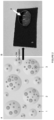
Figure 2 represents (A) a schematic view of a double emulsion formulation (hydrophobic bio binder) used according to the present invention to provide (B) a hydrophobic biocathode comprising the same with added ink formulation (cathodic ink formulation). (1) water; (2) hydrophobic bio sourced wax (second emulsion); (3) hydrogel bio sourced polymer (first emulsion); (4) water droplet; (5) hydrophobic biocathode. - Bee wax system formulations were prepared with:
- Beeswax bleached (CAS:8012-89-3)
- Chitosan from crab shells (cas:9012-76-4) dispersed in water (3% wt)
- Tween 20 (CAS:9005-64-5) (in the same proportion as dry chitosan)
- Glycerol (CAS:56-81-5) (0.25* dry weight of chitosan)
- Four different bee wax emulsions were prepared with different ratio of wax/chitosan (wt: 0/100; 90/10; 95/5; 98/2).
- Regarding the preparation of double emulsion formulations, beeswax was heated at 95°C until it was fully melted.
- In parallel, chitosan dispersed in water, Tween 20 and glycerol were mixed and passed through an ULTRA-TURRAX® rotor stator equipment during 20 minutes at 25 000rpm.
- Then, this preparation (first emulsion) and previously melted beeswax were mixed together, and passed through an ULTRA-TURRAX® rotor stator equipment during 30 minutes at 25 000 rpm.
- The double-emulsion formulations made the resulting layer enough hydrophobic to enhance the oxygen concentration near the catalytic center but allowed enough hydration to keep a good protonic conductivity.
- The 4 double emulsion formulations were coated on glass with a controlled thickness of 200 µm and squeegee speed of 30 mm/s.
- Then these samples were heated in the oven at 40°C until the layers were fully dried.
- Contact angles were determined with Ossila's Contact Goniometer and its related software. An electronic pipette dispensed distilled water drops of 10 µL. 6 samples were tested per bee wax emulsions. 3 measurements of contract angles were taken for 1 sample and an average was made between left and right angle.
Ratio beeswax/chitosan Average contact angle (°) Chitosan 3% wt 0/100 71 (σ = 9) BW E5 90/10 90 (σ = 4) BW E4 95/5 98 (σ = 6) BW E6 98/2 100 (σ = 6) - As the theory shows, the system is hydrophilic when the contact angle is between 0° and 90°. On the contrary, it is hydrophobic when this contact angle is between 90° and 180°.
- The results showed that the emulsion of chitosan only was considered as a hydrophilic one (average contact angle is 71°). On the other hand, the results showed that all the bee wax double emulsion formulations had a contact angle superior or equal to 90° that meant that they could be considered as hydrophobic.
- Moreover, the higher the percentage of beeswax was in the double emulsion formulations compared to chitosan, the more the layer was hydrophobic. Indeed, the double emulsion "BW E5" which had a ratio Beeswax/chitosan of 90/10 had an average contact angle of 90°, double emulsion "BW E4" which had a ratio Beeswax/chitosan of 95/5 had an average contact angle of 98°, and double emulsion "BW E6" which had a ratio Beeswax/chitosan of 98/2 had an average contact angle of 100°.
- With the 3 bee wax double emulsions "BW E4", "BW E5" and "BW E6", cathodic ink formulations were formulated.
- Briefly, to formulate the cathodic ink formulation, the double emulsions were prepared as described above before the final mix.
- Dispersion of mesoporous carbon was also made in advance with a rotor stator tool at high shear rate. This part generally took at least 15 minutes of dispersion, and was made at room temperature, until each particle was dispersed.
- Then graphite particles, carbons dispersed in polymer (chitosan), double emulsion bee wax, and water were mixed at low speed using a dispermat during 30 minutes. Enzyme (bilirubin oxidase) and its promotor (hemin) were then added to this cathodic ink formulation and the system was stirred at room temperature at least for 1 hour.
- The cathodic formulations A, B, C and D were composed of mesoporous carbon (3% wt), water, polymer in the same proportion for each and 1%(wt) of bilirubin oxidase enzyme. The only difference was the hydrophobic components (double emulsion components) that represented 15% of the global ink formulation.
- The cathodic ink formulation was ready to be printed with a coating table on a GDL (Gaz Diffusion Layer) substrate.
- The exact percentage was presented in the table below.
Cathodic ink reference Hydrophobic components Ratio beeswax/chitosan Solid content % Double emulsion components A BW E4 95/5 14.97 B BW E5 90/10 14.99 C BW E6 98/2 15.03 D PTFE / 15.17 - A reference with PTFE was also tested in order to have a comparison with a fully hydrophobic polymer.
- Four different fuel cells were built by assembling the following several layers:
- An external layer made of a glued cellulose paper, which have one opening dedicated to the breathe of the cathode and two others to take the contact of both anode and cathode;
- The printing cathode made of cathodic ink formulation (A; B; C; D) printed on GDL; GDL being on the side of the external layer;
- A microfluidic layer which is paper;
- A reference anode buckypaper functionalized with a glucose oxidase at 1.5 mg/cm2, considered stable (the functionalized side being in contact with paper);
- A GDL which is used as a current collector for the anode buckypaper;
- Another external layer made of a glued cellulose paper which close the all fuel cell (with two openings to take the contact of both cathode and anode side).
- Electrochemical tests were performed for these 4 different fuel cells. These were activated with a solution made of buffer (Sodium phosphate NaPB 0.1 M pH 7), electrolyte support (sodium sulfate Na2SO4 0.1 M) and anodic fuel (glucose 0.2 M)
- The experiments were repeated 5 times.
- Polarization tests were performed with a potentiostat and its related software EC-lab. The protocol was 30 seconds rests and then applied a discharge current of - 1µA / -5µA / -10µA ... -500µA.
- Results of polarization tests (
Figure 1 ) showed better results for formulations where the ratio of beeswax was more important. This trend could be correlated to the contact angle results. Moreover, after -150µA, potentials were higher for formulation C (BW E6 98/2) compared to formulation D (PTFE) that showed that an adjustable ratio between hydrophobicity and hydrophilicity worked better that only hydrophobic system like PTFE only. The maximum efficiency threshold was therefore for BW/CHIT ratios above 95/5. -
- 1. Atanassov et al., ChemElectroChem., 1(11): 1702-1704, 2014
- 2. Katz et MacVittie, Energy Environ. Sci., 6: 2791-2803, 2013
- 3. Cosnier et al., J. Power Sources, 325: 252-263, 2016
- 4. Sinha et al., J. Mater. Chem., 17: 3089-3103, 2007; DOI: 10.1039/b703485g
- 5. Park et al., Applied Energy, 87(7): 2180-2186, 2010 doi:10.1016/j.apenergy.2009.11.021
- 6. Qiu et al., Int. J. Hydrogen Energy, 38(14): 5836-5844, 2013
- 7. Wei et al., Int. J. Hydrogen Energy, 40(7): 3068-3074, 2015
- 8. Deshmukh et al. https://doi.org/10.1016/j.jpowsour.2019.227284
- 9. Roh et al., Electrochem. Commun., 97: 105-109, 2018
- 10.Oh et al., Int. J. Hydrogen Energy, 36(21): 13695-13702, 2011
- 11. Li et al., Electrochem Commun., 11(4): 897-900, 2009
- 12.Hiramitsu et al., J. Power Sources, 195(22): 7559-7567, 2010
- 13.Chi et al., Electrochim. Acta, 277: 110-115, 2018
- 14.Cazón et al., Food Hydrocolloids, 68: 136-148, 2017
- 15.Jung et al., J. Agric. Food Chem., 63(11): 3031-3038, 2015
- 16.Wang et al., J. Agric. Food Chem., 66(2): 395-413, 2018
- 17.J. Agric. Food Chem. 2004, 52, 6585-6591
- 18. Hu et al., LWT - Food Sci. Technol., 65: 398-405, 2016
- 19.Wang et al., 2019 J. Agric. Food Chem. 2004, 52, 6585-6591
- 20.Wu et al., Food Hydrocolloids, 30(1): 82-91, 2013
- 21. Klangmuang et Sothornvit, 2016 DOl:10.1016/J.LWT.2018.01.089
- 22. Velickova et al., LWT - Food Sci. Technol., 52(2): 80-92, 2013
- 23. Neto et al., J. Power Sources, 324: 208-214 2016
- 24.Cooney et al., Carbohydrate polymers 75(3): 428-435, 2009
Claims (14)
- Cathodic ink formulation comprising the mixture of a hydrogel biosourced polymer as a first emulsion with a biosourced hydrophobic wax as a second emulsion, and a bioactive ink.
- Cathodic ink formulation according to claim 1 comprising:(a) a double emulsion formulation wherein the double emulsion formulation comprises a hydrogel biosourced polymer as a first emulsion with a biosourced hydrophobic wax as a second emulsion;(b) and a bioactive ink;wherein the bioactive ink is added to the double emulsion formulation.
- Cathodic ink formulation according to claim 1 or 2, wherein the polymer of the hydrogel biosourced polymer is chosen from the group consisting of chitosan, hydroxypropyl cellulose, hydoxypropyl methylcellulose, carboxymethyl cellulose, poly(acrylic acid).
- Cathodic ink formulation according to any of claims 1 to 3, wherein the biosourced hydrophobic wax is chosen from the group consisting of beeswax, carnauba wax, candelilla wax, sunflower wax, berry wax, Myrica fruit wax, lanolin, cetylesters wax (cetyl palmitate) and other Phyto waxes.
- Cathodic ink formulation according to any of claims 1 to 4, wherein the bioactive ink comprises mesoporous carbon, water, at least one polymer and a multi-copper enzyme.
- Cathodic ink formulation according to claim 5, wherein the mesoporous carbon of the bioactive ink is chosen from the group consisting of carbon nanofibers, carbon black, and carbon nanotubes.
- Cathodic ink formulation according to claim 5, wherein the at least one polymer of the bioactive ink is chosen from the group consisting of chitosan, hydroxypropyl cellulose, hydroxypropyl methylcellulose, carboxymethyl cellulose, poly(acrylic acid).
- Cathodic ink formulation according to claim 5, wherein the multi-copper enzyme of the bioactive ink is chosen from the group consisting of bilirubin oxidase and laccase.
- Cathodic ink formulation according to any of claims 1 to 8, wherein the ratio second emulsion to first emulsion of the double emulsion formulation is 70/30 to 99/1, preferably is 98/2.
- Cathodic ink formulation according to any of claims 1 to 9, wherein the bioactive ink represents from 1 to 20%, preferably 15%, of the total weight of the formulation.
- Hydrophobic biocathode comprising a cathodic ink formulation as defined in any of claims 1 to 10.
- Biofuel cell comprising a hydrophobic biocathode as defined in claim 11.
- Method for preparing a cathodic ink formulation as defined in any of claims 1 to 10, said method comprising the steps of:e) preparing a first emulsion of a hydrogel bio sourced polymer;f) preparing a second emulsion of a bio sourced hydrophobic wax;g) mixing the first and the second emulsions thereby obtaining a double emulsion formulation; andh) mixing the double emulsion formulation obtained in step c) with a bioactive ink.
- Use of hydrophobic bio binder comprising a double emulsion wherein the double emulsion formulation comprises a hydrogel bio sourced polymer as a first emulsion with a bio sourced hydrophobic wax as a second emulsion, in a biofuel cell.
Priority Applications (6)
| Application Number | Priority Date | Filing Date | Title |
|---|---|---|---|
| EP22306038.5A EP4307412A1 (en) | 2022-07-11 | 2022-07-11 | Hydrophobic biobinder for cathodic formulation |
| CN202380052936.6A CN119563248A (en) | 2022-07-11 | 2023-07-10 | Hydrophobic bioadhesives for cathode formulations |
| JP2025501478A JP2025526515A (en) | 2022-07-11 | 2023-07-10 | Hydrophobic Biobinders for Cathode Formulations |
| EP23739288.1A EP4555562A1 (en) | 2022-07-11 | 2023-07-10 | Hydrophobic biobinder for cathodic formulation |
| KR1020257000551A KR20250034381A (en) | 2022-07-11 | 2023-07-10 | Hydrophobic bio-coupling agent for cathode formulation |
| PCT/EP2023/068998 WO2024013067A1 (en) | 2022-07-11 | 2023-07-10 | Hydrophobic biobinder for cathodic formulation |
Applications Claiming Priority (1)
| Application Number | Priority Date | Filing Date | Title |
|---|---|---|---|
| EP22306038.5A EP4307412A1 (en) | 2022-07-11 | 2022-07-11 | Hydrophobic biobinder for cathodic formulation |
Publications (1)
| Publication Number | Publication Date |
|---|---|
| EP4307412A1 true EP4307412A1 (en) | 2024-01-17 |
Family
ID=82786672
Family Applications (2)
| Application Number | Title | Priority Date | Filing Date |
|---|---|---|---|
| EP22306038.5A Withdrawn EP4307412A1 (en) | 2022-07-11 | 2022-07-11 | Hydrophobic biobinder for cathodic formulation |
| EP23739288.1A Pending EP4555562A1 (en) | 2022-07-11 | 2023-07-10 | Hydrophobic biobinder for cathodic formulation |
Family Applications After (1)
| Application Number | Title | Priority Date | Filing Date |
|---|---|---|---|
| EP23739288.1A Pending EP4555562A1 (en) | 2022-07-11 | 2023-07-10 | Hydrophobic biobinder for cathodic formulation |
Country Status (5)
| Country | Link |
|---|---|
| EP (2) | EP4307412A1 (en) |
| JP (1) | JP2025526515A (en) |
| KR (1) | KR20250034381A (en) |
| CN (1) | CN119563248A (en) |
| WO (1) | WO2024013067A1 (en) |
Citations (1)
| Publication number | Priority date | Publication date | Assignee | Title |
|---|---|---|---|---|
| US20080279944A1 (en) * | 1998-08-14 | 2008-11-13 | Incept Llc | Composite hydrogel drug delivery systems |
-
2022
- 2022-07-11 EP EP22306038.5A patent/EP4307412A1/en not_active Withdrawn
-
2023
- 2023-07-10 CN CN202380052936.6A patent/CN119563248A/en active Pending
- 2023-07-10 KR KR1020257000551A patent/KR20250034381A/en active Pending
- 2023-07-10 EP EP23739288.1A patent/EP4555562A1/en active Pending
- 2023-07-10 JP JP2025501478A patent/JP2025526515A/en active Pending
- 2023-07-10 WO PCT/EP2023/068998 patent/WO2024013067A1/en not_active Ceased
Patent Citations (1)
| Publication number | Priority date | Publication date | Assignee | Title |
|---|---|---|---|---|
| US20080279944A1 (en) * | 1998-08-14 | 2008-11-13 | Incept Llc | Composite hydrogel drug delivery systems |
Non-Patent Citations (24)
| Title |
|---|
| ATANASSOV ET AL., CHEMELECTROCHEM, vol. 1, no. 11, 2014, pages 1702 - 1704 |
| CAZON ET AL., FOOD HYDROCOLLOIDS, vol. 68, 2017, pages 136 - 148 |
| CHI ET AL., ELECTROCHIM. ACTA, vol. 277, 2018, pages 110 - 115 |
| COONEY ET AL., CARBOHYDRATE POLYMERS, vol. 75, no. 3, 2009, pages 428 - 435 |
| COSNIER ET AL., J. POWER SOURCES, vol. 324, 2016, pages 208 - 214 |
| COSNIER SERGE ET AL: "Recent advances on enzymatic glucose/oxygen and hydrogen/oxygen biofuel cells: Achievements and limitations", JOURNAL OF POWER SOURCES, ELSEVIER, AMSTERDAM, NL, vol. 325, 17 June 2016 (2016-06-17), pages 252 - 263, XP029640772, ISSN: 0378-7753, DOI: 10.1016/J.JPOWSOUR.2016.05.133 * |
| HIRAMITSU ET AL., J. POWER SOURCES, vol. 195, no. 22, 2010, pages 7559 - 7567 |
| HU ET AL., LWT - FOOD SCI. TECHNOL., vol. 65, 2016, pages 398 - 405 |
| J. AGRIC. FOOD CHEM., vol. 52, 2004, pages 6585 - 6591 |
| JUNG ET AL., J. AGRIC. FOOD CHEM., vol. 63, no. 11, 2015, pages 3031 - 3038 |
| KATZMACVITTIE, ENERGY ENVIRON. SCI., vol. 6, 2013, pages 2791 - 2803 |
| LI ET AL., ELECTROCHEM COMMUN., vol. 11, no. 4, 2009, pages 897 - 900 |
| OH ET AL., INT. J. HYDROGEN ENERGY, vol. 36, no. 21, 2011, pages 13695 - 13702 |
| PANG SUMIAO ET AL: "Flexible and Stretchable Biobatteries: Monolithic Integration of Membrane-Free Microbial Fuel Cells in a Single Textile Layer", ADVANCED ENERGY MATERIALS, vol. 8, no. 7, 6 March 2018 (2018-03-06), DE, pages 1702261, XP093040941, ISSN: 1614-6832, Retrieved from the Internet <URL:https://onlinelibrary.wiley.com/doi/full-xml/10.1002/aenm.201702261> DOI: 10.1002/aenm.201702261 * |
| PARK ET AL., APPLIED ENERGY, vol. 87, no. 7, 2010, pages 2180 - 2186 |
| QIU ET AL., INT. J. HYDROGEN ENERGY, vol. 38, no. 14, 2013, pages 5836 - 5844 |
| REID REID RUSSELL RUSSELL CRAIG CRAIG: "Enzymatic biofuel cell device development with an emphasis on electrode structure", 1 January 2016 (2016-01-01), pages 1 - 120, XP093040958, Retrieved from the Internet <URL:https://core.ac.uk/download/pdf/276264919.pdf> [retrieved on 20230421], DOI: 10.26053/0h-gvg6-2200 * |
| ROH ET AL., ELECTROCHEM. COMMUN., vol. 97, 2018, pages 105 - 109 |
| SINHA ET AL., J. MATER. CHEM., vol. 17, 2007, pages 3089 - 3103 |
| VELICKOVA ET AL., LWT - FOOD SCI. TECHNOL., vol. 52, no. 2, 2013, pages 80 - 92 |
| WANG ET AL., J. AGRIC. FOOD CHEM, vol. 2004, no. 52, 2019, pages 6585 - 6591 |
| WANG ET AL., J. AGRIC. FOOD CHEM., vol. 66, no. 2, 2018, pages 395 - 413 |
| WEI ET AL., INT. J. HYDROGEN ENERGY, vol. 40, no. 7, 2015, pages 3068 - 3074 |
| WU ET AL., FOOD HYDROCOLLOIDS, vol. 30, no. 1, 2013, pages 82 - 91 |
Also Published As
| Publication number | Publication date |
|---|---|
| CN119563248A (en) | 2025-03-04 |
| WO2024013067A1 (en) | 2024-01-18 |
| EP4555562A1 (en) | 2025-05-21 |
| JP2025526515A (en) | 2025-08-14 |
| KR20250034381A (en) | 2025-03-11 |
Similar Documents
| Publication | Publication Date | Title |
|---|---|---|
| Klotzbach et al. | Improving the microenvironment for enzyme immobilization at electrodes by hydrophobically modifying chitosan and Nafion® polymers | |
| US5470448A (en) | High performance electrolytic cell electrode/membrane structures and a process for preparing such electrode structures | |
| CN101573816A (en) | Bioanode and biocathode stack assemblies | |
| JP7430876B2 (en) | Cathode for biofuel cells | |
| US10316284B2 (en) | Implantable biocompatible reactor | |
| Szamocki et al. | Oxygen cathode based on a layer-by-layer self-assembled laccase and osmium redox mediator | |
| Saboe et al. | Biomimetic wiring and stabilization of photosynthetic membrane proteins with block copolymer interfaces | |
| EP3804013B1 (en) | Biocell with fuel reservoir | |
| Suzuki et al. | Lowering the potential of electroenzymatic glucose oxidation on redox hydrogel-modified porous carbon electrode | |
| JPH0888007A (en) | Polymer electrolyte fuel cell and its electrode | |
| KR20250048429A (en) | A membrane electrode assembly for fuel cells with improved mechanical strength and hydrogen ion conductivity | |
| EP4307412A1 (en) | Hydrophobic biobinder for cathodic formulation | |
| HK40105442A (en) | Hydrophobic biobinder for cathodic formulation | |
| US12456737B2 (en) | Composition for manufacturing an electrode, electrode and associated method | |
| Servat et al. | Modification of porous carbon tubes with enzymes: application for biofuel cells | |
| Sintov et al. | A New Nanoparticulate System Based on Divanillin‐Crosslinked Starch: Mode of Manufacturing and In‐Vitro Evaluation of Skin Penetration | |
| CN120283966A (en) | Antioxidant nano collagen peptide powder and preparation method thereof | |
| Wang et al. | Immobilization of Trametes hirsuta laccase into poly (3, 4-ethylenedioxythiophene) and polyaniline polymer-matrices | |
| US20030170539A1 (en) | Aqueous electrode binder and electrodes and fuel cells including same | |
| Tatara et al. | Impact of surface hydrophilicity of gas-diffusion-type biocathodes on their oxygen reduction ability for biofuel cells | |
| JP6728589B2 (en) | Method for preparing enzyme electrode and method for storing enzyme electrode | |
| KR20240098207A (en) | Slurry for catalyst layer of fuel cell electrode and Method for preparing slurry for catalyst layer of fuel cell electrode | |
| EP1702381A2 (en) | Suspension for the generation of a current of electrons and the use and the preparation thereof | |
| Hoshino et al. | A study on the thermostability of microencapsulated glucose oxidase | |
| Bindir et al. | Comparison Between the Impact of Rice Husk Ash and Silica Fillers on Water Absorption in Chitosan Membranes |
Legal Events
| Date | Code | Title | Description |
|---|---|---|---|
| PUAI | Public reference made under article 153(3) epc to a published international application that has entered the european phase |
Free format text: ORIGINAL CODE: 0009012 |
|
| STAA | Information on the status of an ep patent application or granted ep patent |
Free format text: STATUS: THE APPLICATION HAS BEEN PUBLISHED |
|
| AK | Designated contracting states |
Kind code of ref document: A1 Designated state(s): AL AT BE BG CH CY CZ DE DK EE ES FI FR GB GR HR HU IE IS IT LI LT LU LV MC MK MT NL NO PL PT RO RS SE SI SK SM TR |
|
| REG | Reference to a national code |
Ref country code: HK Ref legal event code: DE Ref document number: 40105442 Country of ref document: HK |
|
| STAA | Information on the status of an ep patent application or granted ep patent |
Free format text: STATUS: THE APPLICATION IS DEEMED TO BE WITHDRAWN |
|
| 18D | Application deemed to be withdrawn |
Effective date: 20240718 |