EP4306667A1 - Method for preparing granular titanium-based lithium ion sieve adsorbent having high adsorption capacity - Google Patents
Method for preparing granular titanium-based lithium ion sieve adsorbent having high adsorption capacity Download PDFInfo
- Publication number
- EP4306667A1 EP4306667A1 EP22891861.1A EP22891861A EP4306667A1 EP 4306667 A1 EP4306667 A1 EP 4306667A1 EP 22891861 A EP22891861 A EP 22891861A EP 4306667 A1 EP4306667 A1 EP 4306667A1
- Authority
- EP
- European Patent Office
- Prior art keywords
- titanium
- granulation
- lithium ion
- adsorbent
- ion sieve
- Prior art date
- Legal status (The legal status is an assumption and is not a legal conclusion. Google has not performed a legal analysis and makes no representation as to the accuracy of the status listed.)
- Pending
Links
Images

Classifications
-
- B—PERFORMING OPERATIONS; TRANSPORTING
- B01—PHYSICAL OR CHEMICAL PROCESSES OR APPARATUS IN GENERAL
- B01J—CHEMICAL OR PHYSICAL PROCESSES, e.g. CATALYSIS OR COLLOID CHEMISTRY; THEIR RELEVANT APPARATUS
- B01J20/00—Solid sorbent compositions or filter aid compositions; Sorbents for chromatography; Processes for preparing, regenerating or reactivating thereof
- B01J20/30—Processes for preparing, regenerating, or reactivating
- B01J20/3078—Thermal treatment, e.g. calcining or pyrolizing
-
- B—PERFORMING OPERATIONS; TRANSPORTING
- B01—PHYSICAL OR CHEMICAL PROCESSES OR APPARATUS IN GENERAL
- B01J—CHEMICAL OR PHYSICAL PROCESSES, e.g. CATALYSIS OR COLLOID CHEMISTRY; THEIR RELEVANT APPARATUS
- B01J20/00—Solid sorbent compositions or filter aid compositions; Sorbents for chromatography; Processes for preparing, regenerating or reactivating thereof
- B01J20/02—Solid sorbent compositions or filter aid compositions; Sorbents for chromatography; Processes for preparing, regenerating or reactivating thereof comprising inorganic material
- B01J20/06—Solid sorbent compositions or filter aid compositions; Sorbents for chromatography; Processes for preparing, regenerating or reactivating thereof comprising inorganic material comprising oxides or hydroxides of metals not provided for in group B01J20/04
-
- B—PERFORMING OPERATIONS; TRANSPORTING
- B01—PHYSICAL OR CHEMICAL PROCESSES OR APPARATUS IN GENERAL
- B01J—CHEMICAL OR PHYSICAL PROCESSES, e.g. CATALYSIS OR COLLOID CHEMISTRY; THEIR RELEVANT APPARATUS
- B01J20/00—Solid sorbent compositions or filter aid compositions; Sorbents for chromatography; Processes for preparing, regenerating or reactivating thereof
- B01J20/28—Solid sorbent compositions or filter aid compositions; Sorbents for chromatography; Processes for preparing, regenerating or reactivating thereof characterised by their form or physical properties
- B01J20/28014—Solid sorbent compositions or filter aid compositions; Sorbents for chromatography; Processes for preparing, regenerating or reactivating thereof characterised by their form or physical properties characterised by their form
- B01J20/28026—Particles within, immobilised, dispersed, entrapped in or on a matrix, e.g. a resin
-
- B—PERFORMING OPERATIONS; TRANSPORTING
- B01—PHYSICAL OR CHEMICAL PROCESSES OR APPARATUS IN GENERAL
- B01J—CHEMICAL OR PHYSICAL PROCESSES, e.g. CATALYSIS OR COLLOID CHEMISTRY; THEIR RELEVANT APPARATUS
- B01J20/00—Solid sorbent compositions or filter aid compositions; Sorbents for chromatography; Processes for preparing, regenerating or reactivating thereof
- B01J20/30—Processes for preparing, regenerating, or reactivating
- B01J20/3021—Milling, crushing or grinding
-
- B—PERFORMING OPERATIONS; TRANSPORTING
- B01—PHYSICAL OR CHEMICAL PROCESSES OR APPARATUS IN GENERAL
- B01J—CHEMICAL OR PHYSICAL PROCESSES, e.g. CATALYSIS OR COLLOID CHEMISTRY; THEIR RELEVANT APPARATUS
- B01J20/00—Solid sorbent compositions or filter aid compositions; Sorbents for chromatography; Processes for preparing, regenerating or reactivating thereof
- B01J20/30—Processes for preparing, regenerating, or reactivating
- B01J20/3028—Granulating, agglomerating or aggregating
-
- B—PERFORMING OPERATIONS; TRANSPORTING
- B01—PHYSICAL OR CHEMICAL PROCESSES OR APPARATUS IN GENERAL
- B01J—CHEMICAL OR PHYSICAL PROCESSES, e.g. CATALYSIS OR COLLOID CHEMISTRY; THEIR RELEVANT APPARATUS
- B01J20/00—Solid sorbent compositions or filter aid compositions; Sorbents for chromatography; Processes for preparing, regenerating or reactivating thereof
- B01J20/30—Processes for preparing, regenerating, or reactivating
- B01J20/3042—Use of binding agents; addition of materials ameliorating the mechanical properties of the produced sorbent
-
- B—PERFORMING OPERATIONS; TRANSPORTING
- B01—PHYSICAL OR CHEMICAL PROCESSES OR APPARATUS IN GENERAL
- B01J—CHEMICAL OR PHYSICAL PROCESSES, e.g. CATALYSIS OR COLLOID CHEMISTRY; THEIR RELEVANT APPARATUS
- B01J20/00—Solid sorbent compositions or filter aid compositions; Sorbents for chromatography; Processes for preparing, regenerating or reactivating thereof
- B01J20/30—Processes for preparing, regenerating, or reactivating
- B01J20/305—Addition of material, later completely removed, e.g. as result of heat treatment, leaching or washing, e.g. for forming pores
- B01J20/3064—Addition of pore forming agents, e.g. pore inducing or porogenic agents
-
- B—PERFORMING OPERATIONS; TRANSPORTING
- B01—PHYSICAL OR CHEMICAL PROCESSES OR APPARATUS IN GENERAL
- B01J—CHEMICAL OR PHYSICAL PROCESSES, e.g. CATALYSIS OR COLLOID CHEMISTRY; THEIR RELEVANT APPARATUS
- B01J20/00—Solid sorbent compositions or filter aid compositions; Sorbents for chromatography; Processes for preparing, regenerating or reactivating thereof
- B01J20/30—Processes for preparing, regenerating, or reactivating
- B01J20/3071—Washing or leaching
-
- C—CHEMISTRY; METALLURGY
- C22—METALLURGY; FERROUS OR NON-FERROUS ALLOYS; TREATMENT OF ALLOYS OR NON-FERROUS METALS
- C22B—PRODUCTION AND REFINING OF METALS; PRETREATMENT OF RAW MATERIALS
- C22B26/00—Obtaining alkali, alkaline earth metals or magnesium
- C22B26/10—Obtaining alkali metals
- C22B26/12—Obtaining lithium
-
- C—CHEMISTRY; METALLURGY
- C22—METALLURGY; FERROUS OR NON-FERROUS ALLOYS; TREATMENT OF ALLOYS OR NON-FERROUS METALS
- C22B—PRODUCTION AND REFINING OF METALS; PRETREATMENT OF RAW MATERIALS
- C22B3/00—Extraction of metal compounds from ores or concentrates by wet processes
- C22B3/04—Extraction of metal compounds from ores or concentrates by wet processes by leaching
-
- C—CHEMISTRY; METALLURGY
- C22—METALLURGY; FERROUS OR NON-FERROUS ALLOYS; TREATMENT OF ALLOYS OR NON-FERROUS METALS
- C22B—PRODUCTION AND REFINING OF METALS; PRETREATMENT OF RAW MATERIALS
- C22B3/00—Extraction of metal compounds from ores or concentrates by wet processes
- C22B3/20—Treatment or purification of solutions, e.g. obtained by leaching
- C22B3/22—Treatment or purification of solutions, e.g. obtained by leaching by physical processes, e.g. by filtration, by magnetic means, or by thermal decomposition
- C22B3/24—Treatment or purification of solutions, e.g. obtained by leaching by physical processes, e.g. by filtration, by magnetic means, or by thermal decomposition by adsorption on solid substances, e.g. by extraction with solid resins
-
- H—ELECTRICITY
- H01—ELECTRIC ELEMENTS
- H01M—PROCESSES OR MEANS, e.g. BATTERIES, FOR THE DIRECT CONVERSION OF CHEMICAL ENERGY INTO ELECTRICAL ENERGY
- H01M10/00—Secondary cells; Manufacture thereof
- H01M10/54—Reclaiming serviceable parts of waste accumulators
-
- Y—GENERAL TAGGING OF NEW TECHNOLOGICAL DEVELOPMENTS; GENERAL TAGGING OF CROSS-SECTIONAL TECHNOLOGIES SPANNING OVER SEVERAL SECTIONS OF THE IPC; TECHNICAL SUBJECTS COVERED BY FORMER USPC CROSS-REFERENCE ART COLLECTIONS [XRACs] AND DIGESTS
- Y02—TECHNOLOGIES OR APPLICATIONS FOR MITIGATION OR ADAPTATION AGAINST CLIMATE CHANGE
- Y02P—CLIMATE CHANGE MITIGATION TECHNOLOGIES IN THE PRODUCTION OR PROCESSING OF GOODS
- Y02P10/00—Technologies related to metal processing
- Y02P10/20—Recycling
Definitions
- the present invention relates to the technical field of chemical new materials preparation, and particularly to a preparation method for a high-adsorption-capacity granular titanium-based lithium ion sieve adsorbent.
- lithium-ion batteries have become the largest consumer of lithium in the world.
- Natural lithium resources are mainly reserved in granite type deposits and salt lake brine, seawater and geothermal water.
- the statistical data suggest that these resources are mainly presented in lithium-bearing brine, which accounts for about 61% of the total lithium resources, lithium ore accounts for about 34%, and the remaining 5% of lithium resources are contained in oil fields and geothermal water.
- Lithium extraction by adsorption is a novel process developed in recent years for extracting lithium from salt lakes. This process is to selectively adsorb lithium ions from raw brine by using specific lithium ion sieve absorbent materials. It has high efficiency and can quickly extract lithium from brine. The overall recovery rate is about 85%, greatly improving the value and utilization of resources. It is the most competitive development direction for lithium extraction from salt lakes. At present, research experts at home and abroad are committed to synthesizing a lithium ion sieve adsorbent with stable structure, low solution loss, high adsorption capacity and fast adsorption rate.
- the lithium ion sieve in powder state has the advantages of large adsorption capacity and high adsorption efficiency due to its fine particle size, large specific surface area and sufficient solid liquid contact; however, industrial use has engineering problems such as difficulties in separation and scrubbing.
- the specific surface area brought by the molding is reduced, resulting in a significant decline in the adsorption capacity, even only 20% - 30% of the original lithium ion sieve powder.
- researchers at home and abroad have actively developed the adsorbent molding method in recent years, so as to develop a low-cost, high-efficiency, large-scale process and device.
- the purpose of the present invention is to provide a preparation method for a high-adsorption-capacity granular titanium-based lithium ion sieve adsorbent against the defects of the prior art.
- the adsorbent is a hydrophilic granular titanium-based lithium ion sieve adsorbent.
- the prepared granular adsorbent can efficiently and selectively identify and adsorb lithium ions in salt lake brine, lithium precipitation mother liquor, high-impurity lithium-containing solution, lithium battery recovery solution and other lithium-containing solutions.
- the granular adsorbent has high porosity and small specific gravity, and can be suspended and dispersed in liquid medium under small liquid impact force.
- the granular adsorbent can fully and effectively contact with brine or eluent, with fast adsorption-desorption rate and high lithium adsorption capacity; the granular adsorbent has high strength and toughness, good liquid impact resistance, low solution loss and long cycle service life; the molding method adopts slurry granulation to solidify in water bath, or slurry granulation to dry in vacuum atmosphere. The solvent can be recycled.
- the molding process is simple and environmentally controllable, and can prepare granular absorbent materials on a large scale, with high industrial application value.
- a preparation method for a high-adsorption-capacity granular titanium-based lithium ion sieve adsorbent comprising the following steps:
- the dispersant in step 1(a) is more preferably one of PEG200-PEG6000 aqueous solution, with the concentration of 1% - 2wt%, and the lithium source is more preferably lithium carbonate.
- the titanium source in step 1(a) is more preferably titanium dioxide, with a primary particle size of 10-50nm, preferably 10nm; the specific surface area is 60 ⁇ 400m 2 /g, preferably 300m 2 /g; the addition amount of the water is 20% - 50wt% of the solid mass, and the ultrasonic frequency is more preferably 20KHZ-60KHZ.
- the spray drying temperature in step 1 is 160-220°C
- the high-temperature pore-forming agent is one of polyethersulfone, polysulfone and polyarylsulfone
- the titanium-based lithium ion sieve precursor powder obtained is Li 4 Ti 5 O 12 or Li 2 TiO 3 .
- the organic solvent in step B) is any one of dimethylacetamide, N-methylpyrrolidone, dimethyl sulfoxide and dichloromethane; more preferably dimethyl acetamide or dimethyl sulfoxide.
- the polymer material in step B) is any one or a mixture of polyarylsulfone, polysulfone, polyethersulfone, sulfonated polysulfone, polyphenylene sulfone, polyimide, chlorinated polyvinyl chloride and polyvinyl butyral, and the mass concentration of the polymer material dissolved in organic solvent is 5%-20%.
- the additive in step B) is any one or a mixture of polyvinyl alcohol, glycerin, polysulfone, polyarylsulfone, citric acid, glucose, chitosan, oxalic acid, acetic acid, PVP, PEG6000, lithium carbonate, sodium bicarbonate, potassium carbonate, and potassium bicarbonate; the amount of the additive is 0-3wt% of the mass of the high-adsorption-capacity titanium-based lithium ion sieve adsorbent.
- step C) after the powder is mixed with the composite adhesive, the solid content is controlled to be 30-60wt%; the rotation speed of the high-speed stirring for dispersion is 1,100-1,800r/min, and the dispersed slurry is sieved by 80-400 meshes.
- the coagulation bath used for molding by the water bath solidification in step D) is any one of water and inorganic salt solution, and the mass concentration of inorganic salt solution is 0.5% - 5%.
- the granulation in molding by the granulation - water bath solidification includes slurry electrostatic spray granulation, slurry brush-stipple spray granulation and disk centrifugal granulation, and the solid content in the slurry is controlled to be 35% - 45%.
- the slurry used for electrostatic spray granulation is sieved by 250-400 meshes, with the nozzle aperture of 0.7-1.1mm, the electrostatic pressure of 3KV-6KV, and the distance of 0.3-1m from the nozzle to receptor fluid;
- the slurry used for brush-stipple spray granulation is sieved by 150-300 meshes, with the nozzle aperture of 0.9-1.2mm and the distance of 0.5-1.2m from the nozzle to receptor fluid;
- the slurry used for disk centrifugal granulation is sieved by 80-150 meshes, with the disk diameter of 40mm-80mm, disk speed of 800r/min-1200r/min and the distance of 0.5-1.5m from the disk to receptor fluid.
- the slurry is sprayed into the water bath through the electrostatic brush-stipple spray device to solidify into rod-like, spherical or irregular particles, or the slurry is dropped into the high-speed disk device, the slurry is dispersed under the effect of centrifugal force, and sprayed into the water bath to solidify into spherical, ellipsoidal or irregular particles; the spherical, rod-like or irregular granular adsorbent precursor can be prepared by soaking in the coagulation bath for 0.5-2h.
- molding by granulation - vacuum drying needs to first control the solid content in the slurry to be 45-60wt%; the liquid drop of slurry is dried and molded by spray or disk centrifugal throwing out in a vacuum atmosphere at 40°C - 80°C, with the vacuum degree range being more preferably 0.05Mpa - 0.08Mpa, and particles with particle size of 0.3-2mm are sieved as the granular adsorbent precursor.
- the eluent in step E) is any one of sulfuric acid, nitric acid, hydrochloric acid, acetic acid, citric acid, oxalic acid and Na 2 S 2 O 6 .
- the high-adsorption-capacity granular titanium-based lithium ion sieve adsorbent with excellent performance can be prepared through the technical solution of the present invention.
- the average particle size of the granular adsorbent can be preferably controlled to be 0.3-2mm, and the bulk density is 0.35-0.45g/cm 3 .
- the present invention has the following beneficial effects:
- a preparation method for a high-adsorption-capacity granular titanium-based lithium ion sieve adsorbent comprising the following steps:
- the dispersant in step 1(a) is one of glucose, citric acid or PEG200-PEG6000 aqueous solution, with the concentration of 1% - 2wt%, and the lithium source is more preferably lithium carbonate.
- the titanium source in step 1(b) is more preferably titanium dioxide, with a primary particle size of 10-50nm, preferably 10nm; the specific surface area is 60 ⁇ 400m 2 /g, preferably 300m 2 /g; the addition amount of the water is 20 - 50% of the solid mass, and the ultrasonic frequency is more preferably 20KHZ-60KHZ;
- the polymer material in step B is any one or a mixture of polyarylsulfone, polysulfone, polyethersulfone, sulfonated polysulfone, polyphenylene sulfone, polyimide, chlorinated polyvinyl chloride and polyvinylidene fluoride, and the mass concentration of the polymer material dissolved in organic solvent is 5%-20%.
- the additive in step B) is any one or a mixture of polyvinyl alcohol, polysulfone, polyarylsulfone, citric acid, glucose, chitosan, oxalic acid, acetic acid, PVP, PEG200-PEG6000, lithium carbonate, sodium bicarbonate, potassium carbonate, and potassium bicarbonate; the amount of the additive is 0-3wt% of the mass of the high-adsorption-capacity titanium-based lithium ion sieve adsorbent.
- step C) after the powder is mixed with the composite adhesive, the solid content is controlled to be more preferably 35-45wt%; the rotation speed of the high-speed stirring for dispersion is 1,100-1,800r/min, and the dispersed slurry is sieved by 80-400 meshes.
- the coagulation bath used for molding by the granulation - water bath solidification in step D) is any one of water and inorganic salt solution, and the mass concentration of inorganic salt solution is 0.5% - 5%.
- the granulation molded by granulation - water bath solidification includes slurry electrostatic spray granulation, slurry brush-stipple spray granulation and disk centrifugal granulation, and the solid content in the slurry is controlled to be 35% - 45%; the slurry is sprayed into the water bath through the electrostatic brush-stipple spray device to solidify into rod-like, spherical or irregular particles, or the slurry is dropped into the high-speed disk device, the slurry is dispersed under the effect of centrifugal force, sprayed into the water bath to solidify into spherical, ellipsoidal or irregular particles, and soaked in the solidification bath for 0.5-2h for molding; the spherical, rod-like or irregular granular adsorbent precursor material can be prepared.
- the slurry used for electrostatic spray granulation is sieved by 250-400 meshes, with the nozzle aperture of 0.7-1.1mm, the electrostatic pressure of 3KV-6KV, and the distance of 0.3-1m from the nozzle to receptor fluid;
- the slurry used for brush-stipple spray granulation is sieved by 150-300 meshes, with the nozzle aperture of 0.9-1.2mm and the distance of 0.5-1.2m from the nozzle to receptor fluid;
- the slurry used for disk centrifugal granulation is sieved by 80-150 meshes, with the disk diameter of 40mm-80mm, disk speed of 800r/min-1200r/min and the distance of 0.5-1.5m from the disk to receptor fluid;
- molding by granulation - vacuum drying solidification needs to first control the solid content in the slurry to be 45-60%; the vacuum degree range is 0.03Mpa - 0.09Mpa, the drying temperature is 40-80°C, and the sieving particle size
- the eluent used for leaching the granular lithium ion precursor in step E) is any one or a combination of sulfuric acid, hydrochloric acid or Na 2 S 2 O 6 .
- a high-adsorption-capacity granular titanium-based lithium ion sieve adsorbent is prepared by the aforementioned method.
- the high-adsorption-capacity granular titanium-based lithium ion sieve adsorbent with excellent performance is prepared by the foregoing method of the present invention.
- the particle size of the granular adsorbent can be preferably controlled to be 0.3-2mm, and the bulk density is 0.35-0.45g/cm 3 .
- K, Ca, Na, Mg and B are analyzed by ICP spectrometry, Cl is analyzed by spectrophotometry colorimetry, Li and Ti are determined by atomic absorption spectrometry, and sulfate radical is determined by barium sulfate turbidimetry (GB 13580.6-92).
- % recited in this application shows the mass percentage, namely wt%.
- Simulated brine 1 pH Density Temperature Li + Na + K + Ca 2+ Mg 2+ Cl- SO42- B 3- g/cm 3 °C mg/L 9.5 1.181 20 680 99000 9800 997 990 169 6600 460
- Simulated brine 2 PH Density Temperature Li + Na + K + Mg 2+ Ca 2+ Cl- SO 4 2- B 3- g/cm 3 °C mg/L 7.26 1.2676 25 1772 7695 803 74006 16 246498 11106 1713
- the lithium metatitanate (Li 2 TiO 3 ) powder is prepared by dynamic elution of 0.4mol/L hydrochloric acid for 20h to obtain lithium ion sieve HTO powder.
- the evaluation results of Li adsorption-desorption performance are as follows: Brine 0.5h lithium adsorption capacity Li recovery rate 1h elution rate Solution loss Simulated brine 1 18.5mg/g 95.1% 95.1% 0.05% Simulated brine 2 28.1mg/g 91.3% 97.1% 0.05%
- the preparation process of PES-H 2 TiO 3 rod-like adsorbent is the same as that of Embodiment 1, but the difference is that the granulation is to use a disk centrifugal device.
- the slurry is sieved by 80 meshes, and the diameter of the disk is 60mm; the rotation speed of the disk is controlled at 950r/min; the distance from the receptor fluid is 0.5m, and the receptor coagulation bath is 1.5wt% sodium bisulfate aqueous solution, so that 0.3-2mm spherical adsorbent (PES-H 2 TiO 3 ) is prepared and sieved, with a yield of ⁇ 95% (the measured particle size distribution is 0.3-0.5mm accounting for 20%, 0.5-0.7mm accounting for 20%, 0.7-0.9 accounting for 30%, 0.9-1.1mm accounting for 20%, 1.1-1.5mm accounting for 5%, and 1.5-2mm accounting for 5%).
- the average bulk density is 0.44 g/cm3, and the absorbent material of this proportion can
- the granular adsorbent prepared in the present embodiment is subjected to columnar dynamic adsorption test, and the lithium extraction is evaluated by simulation 1 and 2 respectively;
- the lithium metatitanate (Li 2 TiO 3 ) powder prepared in the present embodiment is dynamically eluted with 0.4mol/L hydrochloric acid for 20h to obtain lithium ion sieve HTO powder, and the lithium extraction is evaluated by simulation 1 and 2 respectively;
- the preparation method for the adsorbent is basically the same as that of Embodiment 2, but the difference only lies in step S2: taking 2.7kg of granular PES (polyethersulfone) and adding it to 15L of dimethyl acetamide, then adding the additive PEG6000 (accounting 2.5% of the molded adsorbent), and stirring it continuously in a water bath at 50°C for 2h until it is completely dissolved, to obtain 15% PES sol (% - the proportion of polymer material in the solvent).
- PES polyethersulfone
- the granular lithium ion sieve PES-PEG-HTO prepared in the present embodiment is used for columnar dynamic adsorption test.
- the brine used in the present embodiment is the same as that in Embodiment 1, and the test results are as follows: Brine 0.5h lithium adsorption capacity Li recovery rate 1h elution rate Solution loss Simulated brine 1 12.5 mg/g 97.1% 98.1% 0.01% Simulated brine 2 20.5 mg/g 97.3% 96.1% 0.01%
- the preparation method for the adsorbent is basically the same as that of Embodiment 3, but the difference is that the PES is replaced with polymer material PVDF (polyvinylidene fluoride) as the molding substrate to prepare PVDF-H 2 TiO 3 composite adsorbent.
- PVDF polyvinylidene fluoride
- the preparation method for the adsorbent is basically the same as that of Embodiment 3, but the difference is that the PES is replaced with polymer material PVDF (polyvinylidene fluoride) as the molding substrate to prepare PVDF-H 2 TiO 3 composite adsorbent.
- the adsorbent obtained in comparative example 1 and comparative example 2 is subjected to columnar dynamic adsorption test under the same test conditions as that in Embodiment 1.
- the test results are as follows: 0.5h lithium adsorption capacity 1h elution rate Quality loss Comparative example 1 13.5mg/g 71.1% ⁇ 0.005% Comparative example 2 5.6mg/g 77.1% ⁇ 0.005%
- the preparation method for the adsorbent is basically the same as that of Embodiment 2, but the difference only lies in step S2: taking 2.7kg of granular PES (polyethersulfone) and adding it to 15L of dichloromethane, then adding the additive PEG6000 (accounting 2.5% of the molded adsorbent), and stirring it continuously at the normal temperature for 2h until it is completely dissolved, to obtain 15% PES sol (% - the proportion of polymer material in the solvent).
- the blended slurry is sieved by 300 meshes, and is granulated through a vacuum spray device, with the vacuum degree of 0.06MPa, and the temperature controlled at 25°C.
- Dichloromethane is recovered through a vacuum condensation system.
- the 0.3-2mm rod-like adsorbent (PES-H2TiO3) is obtained by sieving, with an average bulk density of 0.43g/cm 3 .
- the specific test results of the absorbent material are as follows:
- the granular lithium ion sieve PES-PEG-HTO prepared in the present embodiment is used for columnar dynamic adsorption test.
- the brine used in the present embodiment is the same as that in Embodiment 1, and the test results are as follows: Brine 0.5h lithium adsorption capacity Li recovery rate 1h elution rate Solution loss Simulated brine 1 9.5 mg/g 97.1% 98.1% 0.01% Simulated brine 2 18.5 mg/g 97.3% 96.1% 0.01%
- Embodiments 5-29 are obtained respectively.
- Embodiment Solvent Polymer material Additive Molding method Adsorbent shape Embodiment 5
- the C-PVC-PASF-HTO granular composite adsorbent prepared according to the conditions in Embodiment 23 is subjected to life test experiment, and the simulated brine is simulated for 1,000 industrial continuous one-way dynamic adsorption-desorption cycles.
- the brine used in the present embodiment is the same as the simulated brine 1 in Embodiment 1.
- the performances of the adsorbents prepared in comparative example 3 and comparative example 4 are compared with those prepared in Embodiment 24.
- the simulated brine 1 in Embodiment 1 is used to test (adsorbing for 1.5h and eluting with 0.1M sulfuric acid for 1.5h), and the porosity of the granular adsorbent is measured.
- the mass loss of the adsorbent under the same conditions is measured by ultrasonic vibration, and its strength is evaluated.
- Experiment 3 lithium precipitation mother liquor adsorption experiment: weighing 50g granular lithium ion sieve prepared in Embodiment 25, soak it in 2L of 1700mg/L lithium precipitation mother liquor, taking the first water sample after 2h to test the lithium content, and then taking samples every 1h to test the lithium content, until there is no difference in the lithium content between the two adjacent samples, considering that the adsorption reaches saturation, and calculating the saturated adsorption capacity of the lithium ion sieve.
- the specific test results are as shown in the following table.
- Adsorbent 2h lithium adsorption capacity Elution rate Saturated adsorption time Saturated adsorption capacity Porosity Embodiment 24 18.8mg/g 99.8% 4h 26.8mg/g 78.8% CN112871127A 12.7mg/g 99.1% 6h 18.2mg/g 12.52%
- the preparation process is the same as that in Embodiment 23, but the difference is that, the prepared adsorbent contains 60% of effective powder, 2.5% of additive polymer mixture, and 37.5% of composite polymer.
- the particle size range of the prepared granular adsorbent is 0.3-2mmm, and the particle size distribution is 0.3-0.5mm accounting for 15%, 0.5-0.7mm accounting for 15%, 0.7-0.9 accounting for 30%, 0.9-1.1mm accounting for 20%, 1.1-1.5mm accounting for 10%, and 1.5-2mm accounting for 10%.
- the average bulk density is 0.35g/cm 3 .
- the granular adsorbent can be suspended and dispersed in the simulated brine with a density of 1.2 from bottom to top, and can be suspended and dispersed in the eluate at a gas flow rate of 0.1Bv/min.
- the evaluation results of 0.1Bv/min bubbling dynamic adsorption are as follows: Brine 0.5h lithium adsorption capacity Li recovery rate 1h elution rate Solution loss Simulated brine 1 7.0 mg/g 97.1% 99.1% ⁇ 0.005% Simulated brine 2 15.5 mg/g 97.3% 99.1% 0.005%
- the granular ion sieve adsorbent prepared by the present invention has good adsorption performance, and the absorbent materials with different suspension properties can be obtained by adjusting the proportion of polymers in the formula and the particle size distribution of molded adsorbent, so as to use different brine and lithium-containing solutions, which has high industrial application value.
Landscapes
- Chemical & Material Sciences (AREA)
- Organic Chemistry (AREA)
- Chemical Kinetics & Catalysis (AREA)
- Analytical Chemistry (AREA)
- Engineering & Computer Science (AREA)
- Materials Engineering (AREA)
- Manufacturing & Machinery (AREA)
- Geology (AREA)
- Environmental & Geological Engineering (AREA)
- General Life Sciences & Earth Sciences (AREA)
- Life Sciences & Earth Sciences (AREA)
- Mechanical Engineering (AREA)
- Metallurgy (AREA)
- Thermal Sciences (AREA)
- Physics & Mathematics (AREA)
- Geochemistry & Mineralogy (AREA)
- Inorganic Chemistry (AREA)
- Dispersion Chemistry (AREA)
- Electrochemistry (AREA)
- General Chemical & Material Sciences (AREA)
- Solid-Sorbent Or Filter-Aiding Compositions (AREA)
- Inorganic Compounds Of Heavy Metals (AREA)
- Manufacture And Refinement Of Metals (AREA)
Abstract
Description
- The present invention relates to the technical field of chemical new materials preparation, and particularly to a preparation method for a high-adsorption-capacity granular titanium-based lithium ion sieve adsorbent.
- In the 21st century, with the popularization of computers, digital cameras, mobile phones, mobile electric tools and other electronic products, and the continuous development of new energy vehicles, lithium-ion batteries have become the largest consumer of lithium in the world.
- Natural lithium resources are mainly reserved in granite type deposits and salt lake brine, seawater and geothermal water. The statistical data suggest that these resources are mainly presented in lithium-bearing brine, which accounts for about 61% of the total lithium resources, lithium ore accounts for about 34%, and the remaining 5% of lithium resources are contained in oil fields and geothermal water.
- Lithium extraction by adsorption is a novel process developed in recent years for extracting lithium from salt lakes. This process is to selectively adsorb lithium ions from raw brine by using specific lithium ion sieve absorbent materials. It has high efficiency and can quickly extract lithium from brine. The overall recovery rate is about 85%, greatly improving the value and utilization of resources. It is the most competitive development direction for lithium extraction from salt lakes. At present, research experts at home and abroad are committed to synthesizing a lithium ion sieve adsorbent with stable structure, low solution loss, high adsorption capacity and fast adsorption rate.
- The lithium ion sieve in powder state has the advantages of large adsorption capacity and high adsorption efficiency due to its fine particle size, large specific surface area and sufficient solid liquid contact; however, industrial use has engineering problems such as difficulties in separation and scrubbing. In order to solve the problems such as difficulties in powder filtration and separation and high solution loss, it is necessary to mold and granulate the powder lithium ion sieve. After granulation, the filterability and scrubbing efficiency are greatly improved, and the solution loss of adsorbent is also greatly reduced. However, the specific surface area brought by the molding is reduced, resulting in a significant decline in the adsorption capacity, even only 20% - 30% of the original lithium ion sieve powder. In order to improve the particle size and specific surface area of molded adsorbent, researchers at home and abroad have actively developed the adsorbent molding method in recent years, so as to develop a low-cost, high-efficiency, large-scale process and device.
- The purpose of the present invention is to provide a preparation method for a high-adsorption-capacity granular titanium-based lithium ion sieve adsorbent against the defects of the prior art. The adsorbent is a hydrophilic granular titanium-based lithium ion sieve adsorbent. The prepared granular adsorbent can efficiently and selectively identify and adsorb lithium ions in salt lake brine, lithium precipitation mother liquor, high-impurity lithium-containing solution, lithium battery recovery solution and other lithium-containing solutions. The granular adsorbent has high porosity and small specific gravity, and can be suspended and dispersed in liquid medium under small liquid impact force. The granular adsorbent can fully and effectively contact with brine or eluent, with fast adsorption-desorption rate and high lithium adsorption capacity; the granular adsorbent has high strength and toughness, good liquid impact resistance, low solution loss and long cycle service life; the molding method adopts slurry granulation to solidify in water bath, or slurry granulation to dry in vacuum atmosphere. The solvent can be recycled. The molding process is simple and environmentally controllable, and can prepare granular absorbent materials on a large scale, with high industrial application value.
- To achieve the above purpose, the specific technical solution of the present invention is as follows:
A preparation method for a high-adsorption-capacity granular titanium-based lithium ion sieve adsorbent, comprising the following steps: - step 1, preparing titanium-based lithium ion sieve precursor powder by step a and step b;
- a) well mixing the lithium source, titanium dioxide and dispersant by mechanical ball milling, controlling the molar ratio of Li/Ti to be 2: (1-1.2), adding high-temperature pore-forming agent and mixing well, then spray drying to obtain granulation powder, transferring the granulation powder to microwave high-temperature sintering furnace, calcining at 350-650°C for 2-3h, cooling to obtain titanium-based lithium ion sieve precursor powder;
- or b) mixing the titanium source, lithium hydroxide and appropriate amount of water, controlling the molar ratio of Li/Ti to be 2: (1-1.2), adding 0.5-1.5wt% hydrogen peroxide, performing stirring reaction for 3-6h under 60-90°C ultrasonic conditions, filtering and scrubbing in sequence, adding high-temperature pore-forming agent, mixing well, and then spray drying to obtain granulation powder, transferring the granulation powder to the microwave high-temperature sintering furnace, calcining at 300-500°C for 2-3h , cooling to obtain titanium-based lithium ion sieve precursor powder;
- step 2, preparing a high-adsorption-capacity titanium-based lithium ion sieve adsorbent:
- A) pretreatment: grinding the titanium-based lithium ion sieve precursor powder and sieving by 150-800 meshes to obtain pretreated powder; more preferably sieving by 200-400 meshes.
- B) preparation of the composite adhesive: dissolving the polymer material with organic solvent, adding appropriate amount of additives thereto, and stirring under the water bath condition of 20-80°C until completely dissolved to obtain the composite adhesive;
- C) doping, blending and homogenization: mixing the powder in step A) with the composite adhesive prepared in step B), stirring at high speed and dispersing to obtain uniform slurry;
- D) molding: molding by granulation - water bath solidification or granulation - vacuum drying, sieving to obtain granular titanium-based lithium adsorbent precursor;
- E) elution and replacing: leaching out lithium ions from the granular titanium-based lithium adsorbent precursor in step D) with an eluent, and then washing with water to obtain the high-adsorption-capacity titanium-based lithium ion sieve adsorbent.
- As a preferred implementation of the present application, the dispersant in step 1(a) is more preferably one of PEG200-PEG6000 aqueous solution, with the concentration of 1% - 2wt%, and the lithium source is more preferably lithium carbonate.
- As a preferred implementation of the present application, the titanium source in step 1(a) is more preferably titanium dioxide, with a primary particle size of 10-50nm, preferably 10nm; the specific surface area is 60~400m2/g, preferably 300m2/g; the addition amount of the water is 20% - 50wt% of the solid mass, and the ultrasonic frequency is more preferably 20KHZ-60KHZ.
- As a preferred implementation of the present application, the spray drying temperature in step 1 is 160-220°C, the high-temperature pore-forming agent is one of polyethersulfone, polysulfone and polyarylsulfone, and the titanium-based lithium ion sieve precursor powder obtained is Li4Ti5O12 or Li2TiO3.
- As a preferred implementation of the present application, the organic solvent in step B) is any one of dimethylacetamide, N-methylpyrrolidone, dimethyl sulfoxide and dichloromethane; more preferably dimethyl acetamide or dimethyl sulfoxide.
- As a preferred implementation of the present application, the polymer material in step B) is any one or a mixture of polyarylsulfone, polysulfone, polyethersulfone, sulfonated polysulfone, polyphenylene sulfone, polyimide, chlorinated polyvinyl chloride and polyvinyl butyral, and the mass concentration of the polymer material dissolved in organic solvent is 5%-20%.
- The additive in step B) is any one or a mixture of polyvinyl alcohol, glycerin, polysulfone, polyarylsulfone, citric acid, glucose, chitosan, oxalic acid, acetic acid, PVP, PEG6000, lithium carbonate, sodium bicarbonate, potassium carbonate, and potassium bicarbonate; the amount of the additive is 0-3wt% of the mass of the high-adsorption-capacity titanium-based lithium ion sieve adsorbent.
- As a preferred implementation of the present application, in step C), after the powder is mixed with the composite adhesive, the solid content is controlled to be 30-60wt%; the rotation speed of the high-speed stirring for dispersion is 1,100-1,800r/min, and the dispersed slurry is sieved by 80-400 meshes.
- As a preferred implementation of the present application, the coagulation bath used for molding by the water bath solidification in step D) is any one of water and inorganic salt solution, and the mass concentration of inorganic salt solution is 0.5% - 5%. The granulation in molding by the granulation - water bath solidification includes slurry electrostatic spray granulation, slurry brush-stipple spray granulation and disk centrifugal granulation, and the solid content in the slurry is controlled to be 35% - 45%.
- As a preferred implementation of the present application, the slurry used for electrostatic spray granulation is sieved by 250-400 meshes, with the nozzle aperture of 0.7-1.1mm, the electrostatic pressure of 3KV-6KV, and the distance of 0.3-1m from the nozzle to receptor fluid; the slurry used for brush-stipple spray granulation is sieved by 150-300 meshes, with the nozzle aperture of 0.9-1.2mm and the distance of 0.5-1.2m from the nozzle to receptor fluid; the slurry used for disk centrifugal granulation is sieved by 80-150 meshes, with the disk diameter of 40mm-80mm, disk speed of 800r/min-1200r/min and the distance of 0.5-1.5m from the disk to receptor fluid.
- As a preferred implementation of the present application, during molding by granulation - water bath solidification, the slurry is sprayed into the water bath through the electrostatic brush-stipple spray device to solidify into rod-like, spherical or irregular particles, or the slurry is dropped into the high-speed disk device, the slurry is dispersed under the effect of centrifugal force, and sprayed into the water bath to solidify into spherical, ellipsoidal or irregular particles; the spherical, rod-like or irregular granular adsorbent precursor can be prepared by soaking in the coagulation bath for 0.5-2h.
- As a preferred implementation of the present application, molding by granulation - vacuum drying needs to first control the solid content in the slurry to be 45-60wt%; the liquid drop of slurry is dried and molded by spray or disk centrifugal throwing out in a vacuum atmosphere at 40°C - 80°C, with the vacuum degree range being more preferably 0.05Mpa - 0.08Mpa, and particles with particle size of 0.3-2mm are sieved as the granular adsorbent precursor.
- As a preferred implementation of the present application, the eluent in step E) is any one of sulfuric acid, nitric acid, hydrochloric acid, acetic acid, citric acid, oxalic acid and Na2S2O6.
- As a preferred implementation of the present application, the high-adsorption-capacity granular titanium-based lithium ion sieve adsorbent with excellent performance can be prepared through the technical solution of the present invention. The average particle size of the granular adsorbent can be preferably controlled to be 0.3-2mm, and the bulk density is 0.35-0.45g/cm3.
- The main solution of the present invention and further alternatives thereof may be combined freely to form a plurality of solutions, all of which may be adopted and claimed in the present invention; and each alternative can be arbitrarily combined with other compatible alternatives according to the present invention. Multiple combinations are clear to those skilled in the art based on the prior art and the common general knowledge after understanding the solutions of the present invention, all of which are technical solutions to be protected by the present invention and are not exhaustive here.
- Compared with the prior art, the present invention has the following beneficial effects:
- (1) The prepared granular titanium-based lithium ion sieve adsorbent has good hydrophilicity, high porosity, fast adsorption-desorption rate, and high lithium adsorption capacity. It can identify and adsorb lithium in salt lake brine, lithium precipitation mother liquor, high-purity lithium-containing solution, lithium battery recovery solution, and other lithium-containing solutions with high selectivity. The adsorbent has good erosion resistance, low solution loss, and long cycle life in use.
- (2) The adsorbent has simple preparation process, and the molding method adopts slurry granulation - water bath solidification, or slurry granulation -vacuum drying. The solvent can be recycled, and the molding process is simple and environmentally controllable, wherein the disk centrifugal granulation technology is novel, and can prepare granular absorbent materials on a large scale, with high industrial application value.
- (3) The prepared granular adsorbent has high porosity, small specific gravity and good suspension and dispersion performance. In the application of lithium extraction by adsorption, the adsorbents with different particle size ranges can be suspended and dispersed in brine or eluate under low impact, which increases the ion exchange rate on the adsorbent surface and reduces the energy consumption of the adsorbent in actual use.
-
-
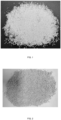
Fig. 1 shows a prepared spherical titanium-based lithium ion sieve particle adsorbent; -
Fig. 2 shows a prepared rod-like titanium-based lithium ion sieve particle adsorbent; -
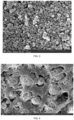
Fig. 3 is an SEM micrograph of the prepared titanium-based lithium ion sieve powder; -
Fig. 4 is an SEM micrograph of the cross section of a single titanium-based lithium absorbent material; and -
Fig. 5 is a disk centrifugal granulation device. - A preparation method for a high-adsorption-capacity granular titanium-based lithium ion sieve adsorbent, comprising the following steps:
- step 1, preparing titanium-based lithium ion sieve precursor powder;
- a) well mixing the lithium source, titanium dioxide and dispersant by mechanical ball milling, controlling the molar ratio of Li/Ti to be 2: (1-1.2), adding high-temperature pore-forming agent and mixing, then spray drying to obtain granulation powder, transferring the granulation powder to microwave high-temperature sintering furnace, calcining at 350-650°C for 2-3h, cooling to obtain titanium-based lithium ion sieve precursor powder;
- or b) mixing the titanium source, lithium hydroxide and appropriate amount of water, controlling the molar ratio of Li/Ti to be 2: (1-1.2), adding 0.5-1.5wt% hydrogen peroxide, performing stirring reaction for 3-6h under 60-90°C ultrasonic conditions, filtering and scrubbing in sequence, adding high-temperature pore-forming agent, mixing well, and then spray drying to obtain granulation powder, transferring the granulation powder to the microwave high-temperature sintering furnace, calcining at 300-500°C for 2-3h , cooling to obtain titanium-based lithium ion sieve precursor powder;
- step 2, preparing a high-adsorption-capacity titanium-based lithium ion sieve adsorbent:
- A) pretreatment: grinding the titanium-based lithium ion sieve precursor powder and sieving by 150-800 meshes to obtain powder; more preferably sieving by 200-400 meshes.
- B) preparation of the composite adhesive: dissolving the polymer material with organic solvent, adding appropriate amount of additives thereto, and stirring under the water bath condition of 20-80°C until completely dissolved to obtain the composite adhesive;
- C) doping, blending and homogenization: mixing and dispersing the powder in step A) with the composite adhesive prepared in step B) to obtain uniform slurry;
- D) molding: molding by granulation - water bath solidification or granulation - vacuum drying, sieving to obtain granular titanium-based lithium adsorbent precursor;
- E) elution and replacing: leaching out lithium ions from the titanium-based lithium adsorbent precursor in step D) with an eluent, and then washing with water to obtain the high-adsorption-capacity titanium-based lithium ion sieve adsorbent.
- Preferably, the dispersant in step 1(a) is one of glucose, citric acid or PEG200-PEG6000 aqueous solution, with the concentration of 1% - 2wt%, and the lithium source is more preferably lithium carbonate.
- Preferably, the titanium source in step 1(b) is more preferably titanium dioxide, with a primary particle size of 10-50nm, preferably 10nm; the specific surface area is 60~400m2/g, preferably 300m2/g; the addition amount of the water is 20 - 50% of the solid mass, and the ultrasonic frequency is more preferably 20KHZ-60KHZ;
- Preferably, the spray drying temperature in step 1 is 160-200°C, and the pore-forming agent is one of polyethersulfone, polysulfone and polyarylsulfone; the microwave sintering temperature in step 1(a) is more preferably 450-550°C, and the microwave sintering temperature in step 1(b) is more preferably 350-450°C; the metatitanic acid powder obtained above is Li4Ti5O12or Li2TiO3;
- Preferably, the organic solvent in step B) is any one of dimethylacetamide, N-methylpyrrolidone, dimethyl sulfoxide, ethyl acetate and dichloromethane.
- Preferably, the polymer material in step B is any one or a mixture of polyarylsulfone, polysulfone, polyethersulfone, sulfonated polysulfone, polyphenylene sulfone, polyimide, chlorinated polyvinyl chloride and polyvinylidene fluoride, and the mass concentration of the polymer material dissolved in organic solvent is 5%-20%.
- Preferably, the additive in step B) is any one or a mixture of polyvinyl alcohol, polysulfone, polyarylsulfone, citric acid, glucose, chitosan, oxalic acid, acetic acid, PVP, PEG200-PEG6000, lithium carbonate, sodium bicarbonate, potassium carbonate, and potassium bicarbonate; the amount of the additive is 0-3wt% of the mass of the high-adsorption-capacity titanium-based lithium ion sieve adsorbent.
- Preferably, in step C), after the powder is mixed with the composite adhesive, the solid content is controlled to be more preferably 35-45wt%; the rotation speed of the high-speed stirring for dispersion is 1,100-1,800r/min, and the dispersed slurry is sieved by 80-400 meshes.
- Preferably, the coagulation bath used for molding by the granulation - water bath solidification in step D) is any one of water and inorganic salt solution, and the mass concentration of inorganic salt solution is 0.5% - 5%.
- Preferably, the granulation molded by granulation - water bath solidification includes slurry electrostatic spray granulation, slurry brush-stipple spray granulation and disk centrifugal granulation, and the solid content in the slurry is controlled to be 35% - 45%; the slurry is sprayed into the water bath through the electrostatic brush-stipple spray device to solidify into rod-like, spherical or irregular particles, or the slurry is dropped into the high-speed disk device, the slurry is dispersed under the effect of centrifugal force, sprayed into the water bath to solidify into spherical, ellipsoidal or irregular particles, and soaked in the solidification bath for 0.5-2h for molding; the spherical, rod-like or irregular granular adsorbent precursor material can be prepared.
- Preferably, the slurry used for electrostatic spray granulation is sieved by 250-400 meshes, with the nozzle aperture of 0.7-1.1mm, the electrostatic pressure of 3KV-6KV, and the distance of 0.3-1m from the nozzle to receptor fluid; the slurry used for brush-stipple spray granulation is sieved by 150-300 meshes, with the nozzle aperture of 0.9-1.2mm and the distance of 0.5-1.2m from the nozzle to receptor fluid; the slurry used for disk centrifugal granulation is sieved by 80-150 meshes, with the disk diameter of 40mm-80mm, disk speed of 800r/min-1200r/min and the distance of 0.5-1.5m from the disk to receptor fluid;
Preferably, molding by granulation - vacuum drying solidification needs to first control the solid content in the slurry to be 45-60%; the vacuum degree range is 0.03Mpa - 0.09Mpa, the drying temperature is 40-80°C, and the sieving particle size is 0.3-2mm. - Preferably, the eluent used for leaching the granular lithium ion precursor in step E) is any one or a combination of sulfuric acid, hydrochloric acid or Na2S2O6.
- A high-adsorption-capacity granular titanium-based lithium ion sieve adsorbent is prepared by the aforementioned method. The high-adsorption-capacity granular titanium-based lithium ion sieve adsorbent with excellent performance is prepared by the foregoing method of the present invention. The particle size of the granular adsorbent can be preferably controlled to be 0.3-2mm, and the bulk density is 0.35-0.45g/cm3.
- The implementation of the present invention is described below through specific examples, and those skilled in the art can easily understand other advantages and effects of the present invention from the contents disclosed in the Description. The present invention can also be implemented or applied in other different specific implementations, and various details in the Description can also be modified or changed based on different views and applications without departing from the spirit of the present invention. It should be noted that, the following embodiments and the features in the embodiments may be combined with each other in a non-conflicting situation.
- It should be noted that, the technical solutions of the embodiments of the present invention will be described clearly and completely as follows in combination with the figures of these embodiments for clear understanding of the objects, technical solutions and advantages of the present invention. Apparently, the embodiments described herein are only some, but not all of the embodiments of the present invention. Generally, the components in the embodiments of the present invention described and shown in the figures herein may be arranged and designed in various configurations.
- For data analysis in the following examples, K, Ca, Na, Mg and B are analyzed by ICP spectrometry, Cl is analyzed by spectrophotometry colorimetry, Li and Ti are determined by atomic absorption spectrometry, and sulfate radical is determined by barium sulfate turbidimetry (GB 13580.6-92). Unless particularly stated elsewhere, % recited in this application shows the mass percentage, namely wt%.
- A preparation method for a high-adsorption-capacity granular titanium-based lithium ion sieve adsorbent, comprising the following steps:
(1) Preparation of lithium metatitanate powder;
dispersing and uniformly mixing 19.7kg of titanium dioxide, 17.4kg of battery grade lithium carbonate, 0.1kg of 1.5wt% PEG6000 aqueous solution at high speed, and then mechanically ball milling to control the particle size D50=550~850nm; next, adding polyethersulfone powder to mix for spray pre-granulation, setting the spray pre-granulation temperature at 200°C; finally, calcining at 600 °C in a microwave oven to obtain the lithium ion sieve precursor Li2TiO3;
(2) PES-H2TiO3 rod-like adsorbent
S1 pretreatment: grinding the lithium metatitanate precursor, and then sieving by 250 meshes to obtain lithium metatitanate lithium ion precursor;
S2 preparation of 15% PES sol: taking 2.7kg of granular PES (polyethersulfone) and adding it to 15L of dimethyl acetamide, and stirring it continuously in a water bath at 50°C for 2h until it is completely dissolved, to obtain 15% PES sol (% - the proportion of polymer material in the solvent);
S3 doping, blending and homogenizing: taking 9kg of Li2TiO3 powder pretreated in step S1 and all 15% PES sol obtained in step S2 and mixing them evenly at the speed of 1800r/min by mechanical stirring to obtain the blended slurry by ultrasonic for 15min;
S4 molding: first sieving the blended slurry by 250 meshes, then extruding and granulating it through an electrostatic solution spray device, receiving and solidifying it in a water bath, adjusting the voltage to 6kv, and the receiving distance to 0.5m to obtain spherical lithium ion sieve precursor materials; sieving 0.3-2mm particles as molding precursors, with a yield of ≥ 95% (the measured particle size distribution is 0.3-0.5mm accounting for 20%, 0.5-0.7mm accounting for 20%, 0.7-0.9 accounting for 30%, 0.9-1.1mm accounting for 20%, 1.1-1.5mm accounting for 5%, and 1.5-2mm accounting for 5%).The average bulk density is 0.43 g/cm3, and the absorbent material of this proportion can be suspended and dispersed in the simulated brine 1 at 0.15 Bv/min bubbling flow rate, and suspended and dispersed in the eluate at the air-blowing flow rate of 0.35 Bv/min;
S5 replacing: leaching out lithium ions from the granular precursor obtained in step S4 with 0.4 M HCl, and then washing to obtain PES-HTO type adsorbent; the PES-HTO adsorbent prepared in this embodiment is used to perform dynamic adsorption test on the adsorption columns of simulated brine 1 and simulated brine 2 respectively. The specific evaluation results are as follows:
Simulated brine 1:pH Density Temperature Li+ Na+ K+ Ca2+ Mg2+ Cl- SO42- B3- g/cm3 °C mg/L 9.5 1.181 20 680 99000 9800 997 990 169 6600 460
Simulated brine 2:PH Density Temperature Li+ Na+ K+ Mg2+ Ca2+ Cl- SO4 2- B3- g/cm3 °C mg/L 7.26 1.2676 25 1772 7695 803 74006 16 246498 11106 1713 - The lithium metatitanate (Li2TiO3) powder is prepared by dynamic elution of 0.4mol/L hydrochloric acid for 20h to obtain lithium ion sieve HTO powder. The evaluation results of Li adsorption-desorption performance are as follows:
Brine 0.5h lithium adsorption capacity Li recovery rate 1h elution rate Solution loss Simulated brine 1 18.5mg/g 95.1% 95.1% 0.05% Simulated brine 2 28.1mg/g 91.3% 97.1% 0.05% - The evaluation results of adsorption-desorption performance of molded PES-HTO:
Brine 0.5h lithium adsorption capacity Li recovery rate 1h elution rate Solution loss Simulated brine 1 7.5mg/g 95.1% 95.1% 0.03% Simulated brine 2 15mg/g 91.3% 97.1% 0.03% -
- (1) Preparation of lithium metatitanate powder;
taking 40kg of titanium dioxide and 10kg of water to mix and grind into uniform slurry, adding 10.5kg solid lithium hydroxide, mixing and stirring evenly; heating to 60 °C at the ultrasonic frequency of 40HZ, and perform the stirring reaction for 6h under normal pressure; adding hydrogen peroxide drop by drop during the reaction process (about 100mL of 30% hydrogen peroxide in total); after the reaction, filtering and scrubbing the titanium base lithium ion sieve powder, and returning the filtrate to slurry mixing for recycling; slurry beating, adding 0.1kg polymer pore-forming agent polyethersulfone, mixing evenly, spray pre-granulating, calcining at 450°C in air atmosphere for 3h, cooling to room temperature to obtain lithium metatitanate ion sieve Li2TiO3. - (2) PES-H2TiO3 rod-like adsorbent
- The preparation process of PES-H2TiO3 rod-like adsorbent is the same as that of Embodiment 1, but the difference is that the granulation is to use a disk centrifugal device. The slurry is sieved by 80 meshes, and the diameter of the disk is 60mm; the rotation speed of the disk is controlled at 950r/min; the distance from the receptor fluid is 0.5m, and the receptor coagulation bath is 1.5wt% sodium bisulfate aqueous solution, so that 0.3-2mm spherical adsorbent (PES-H2TiO3) is prepared and sieved, with a yield of ≥ 95% (the measured particle size distribution is 0.3-0.5mm accounting for 20%, 0.5-0.7mm accounting for 20%, 0.7-0.9 accounting for 30%, 0.9-1.1mm accounting for 20%, 1.1-1.5mm accounting for 5%, and 1.5-2mm accounting for 5%).The average bulk density is 0.44 g/cm3, and the absorbent material of this proportion can be suspended and dispersed in the simulated brine 1 at 0.2Bv/min bubbling flow rate, and suspended and dispersed in the eluate at the air-blowing flow rate of 0.4Bv/min.
- The granular adsorbent prepared in the present embodiment is subjected to columnar dynamic adsorption test, and the lithium extraction is evaluated by simulation 1 and 2 respectively;
- The lithium metatitanate (Li2TiO3) powder prepared in the present embodiment is dynamically eluted with 0.4mol/L hydrochloric acid for 20h to obtain lithium ion sieve HTO powder, and the lithium extraction is evaluated by simulation 1 and 2 respectively;
- The evaluation results of adsorption-desorption performance of prepared HTO powder:
Brine 0.5h lithium adsorption capacity Li recovery rate 1h elution rate Solution loss Simulated brine 1 20.5mg/g 95.1% 95.1% 0.05% Simulated brine 2 30.1mg/g 95.3% 97.1% 0.05% - The evaluation results of adsorption-desorption performance of molded PES-HTO:
Brine 0.5h lithium adsorption capacity Li recovery rate 1h elution rate Solution loss Simulated brine 1 9mg/g 97.1% 98.1% <0.02% Simulated brine 2 18mg/g 97.3% 96.1% <0.02% - The preparation method for the adsorbent is basically the same as that of Embodiment 2, but the difference only lies in step S2: taking 2.7kg of granular PES (polyethersulfone) and adding it to 15L of dimethyl acetamide, then adding the additive PEG6000 (accounting 2.5% of the molded adsorbent), and stirring it continuously in a water bath at 50°C for 2h until it is completely dissolved, to obtain 15% PES sol (% - the proportion of polymer material in the solvent).
- The granular lithium ion sieve PES-PEG-HTO prepared in the present embodiment is used for columnar dynamic adsorption test. The brine used in the present embodiment is the same as that in Embodiment 1, and the test results are as follows:
Brine 0.5h lithium adsorption capacity Li recovery rate 1h elution rate Solution loss Simulated brine 1 12.5 mg/g 97.1% 98.1% 0.01% Simulated brine 2 20.5 mg/g 97.3% 96.1% 0.01% - The preparation method for the adsorbent is basically the same as that of Embodiment 3, but the difference is that the PES is replaced with polymer material PVDF (polyvinylidene fluoride) as the molding substrate to prepare PVDF-H2TiO3 composite adsorbent.
- The preparation method for the adsorbent is basically the same as that of Embodiment 3, but the difference is that the PES is replaced with polymer material PVDF (polyvinylidene fluoride) as the molding substrate to prepare PVDF-H2TiO3 composite adsorbent. The adsorbent obtained in comparative example 1 and comparative example 2 is subjected to columnar dynamic adsorption test under the same test conditions as that in Embodiment 1. The test results are as follows:
0.5h lithium adsorption capacity 1h elution rate Quality loss Comparative example 1 13.5mg/g 71.1% <0.005% Comparative example 2 5.6mg/g 77.1% <0.005% - It can be seen from the above table that the elution performances of PVDF-H2TiO3 and PTFE-H2TiO3 composite adsorbents obtained in comparative example 1 and comparative example 2 are poor.
- The preparation method for the adsorbent is basically the same as that of Embodiment 2, but the difference only lies in step S2: taking 2.7kg of granular PES (polyethersulfone) and adding it to 15L of dichloromethane, then adding the additive PEG6000 (accounting 2.5% of the molded adsorbent), and stirring it continuously at the normal temperature for 2h until it is completely dissolved, to obtain 15% PES sol (% - the proportion of polymer material in the solvent). The blended slurry is sieved by 300 meshes, and is granulated through a vacuum spray device, with the vacuum degree of 0.06MPa, and the temperature controlled at 25°C. Dichloromethane is recovered through a vacuum condensation system. The 0.3-2mm rod-like adsorbent (PES-H2TiO3) is obtained by sieving, with an average bulk density of 0.43g/cm3. The specific test results of the absorbent material are as follows:
- The granular lithium ion sieve PES-PEG-HTO prepared in the present embodiment is used for columnar dynamic adsorption test. The brine used in the present embodiment is the same as that in Embodiment 1, and the test results are as follows:
Brine 0.5h lithium adsorption capacity Li recovery rate 1h elution rate Solution loss Simulated brine 1 9.5 mg/g 97.1% 98.1% 0.01% Simulated brine 2 18.5 mg/g 97.3% 96.1% 0.01% - The preparation method is the same as that in Embodiment 3, but the difference only lies in that the solvent, polymer material, additive, molding method and the shape of the obtained adsorbent are replaced according to the following table. Embodiments 5-29 are obtained respectively. The specific differences are as follows:
Embodiment Solvent Polymer material Additive Molding method Adsorbent shape Embodiment 5 DMAC PES (polyethersulfone) PEG6000 Electrostatic spray granulation + water bath solidification Rod-like Embodiment 6 DMAC PES PEG6000 Brush-stipple spray granulation + water bath solidification Rod-like Embodiment 7 DMAC PES PEG6000 Disk centrifugal granulation + water bath solidification Spherical Embodiment 8 DMAC PES PVP Electrostatic spray granulation + water bath solidification Rod-like Embodiment 9 DMAC PES Glucose Electrostatic spray granulation + water bath solidification Rod-like Embodiment 10 DMAC PES Citric acid Electrostatic spray granulation + water bath solidification Rod-like Embodiment 11 DMAC PES Chitosan Electrostatic spray granulation + water bath solidification Rod-like Embodiment 12 DMAC PES Glycerin Electrostatic spray granulation + water bath solidification Rod-like Embodiment 13 DMAC PES Polyvinyl alcohol Electrostatic spray granulation + water bath solidification Rod-like Embodiment 14 DMSO PES Polyvinyl alcohol Electrostatic spray granulation + water bath solidification Rod-like Embodiment 15 DMAC PSU (polysulfone) Polyvinyl alcohol Electrostatic spray granulation + water bath solidification Rod-like Embodiment 16 DMAC PASF (polyarylsulfone) Polyvinyl alcohol Electrostatic spray granulation + water bath solidification Rod-like Embodiment 17 DMAC PASF (polyarylsulfone) Polyvinyl alcohol Disk centrifugal granulation + vacuum drying solidification Rod-like Embodiment 18 DMAC C-PVC (chlorinated polyvinyl chloride) Polyvinyl alcohol Electrostatic spray granulation + water bath solidification Rod-like Embodiment 19 DMSO C-PVC Polyvinyl alcohol Electrostatic spray granulation + water bath solidification Rod-like Embodiment 20 DMAC PES-PSU(1:1) Polyvinyl alcohol Electrostatic spray granulation + water bath solidification Rod-like Embodiment 21 DMSO PES-PSU(1:1) Polyvinyl alcohol Centrifugal disk granulation + water bath solidification Spherical Embodiment 22 DMSO Polyimide Polyvinyl alcohol Electrostatic spray granulation + water bath solidification Spherical Embodiment 23 DMAC PASF-C-PVC(1:1) Polyvinyl alcohol Centrifugal disk granulation + water bath solidification Ellipsoidal Embodiment 24 DMAC PES-C-PVC(1:1) Polyvinyl alcohol Centrifugal disk granulation + water bath solidification Ellipsoidal Embodiment 25 DMAC C-PVC PASF Centrifugal disk granulation + water bath solidification Ellipsoidal Embodiment 26 DMAC C-PVC PES Electrostatic spray granulation + water bath solidification Ellipsoidal Embodiment 27 DMAC C-PVC Glycerin Electrostatic spray granulation + water bath solidification Spherical Embodiment 28 DMAC PASF (polyarylsulfone) Glycerin Centrifugal disk granulation + water bath solidification Spherical Embodiment 29 DMAC PVB (polyvinyl butyral) Glycerin Centrifugal disk granulation + water bath solidification Spherical - The adsorbent obtained in Embodiments 5-29 is subjected to columnar dynamic adsorption test. The brine under the adsorption test has the same indicators as the simulated brine 2 in Embodiment 1. The experimental test results are as follows:
Embodiment 0.5h Li adsorption capacity (mg/g) Saturated Li adsorption capacity (mg/g) Li selectivity Li elution rate Adsorbent Ti loss Embodiment 5 17.7 36.8 95.1% 94.7% 0.010% Embodiment 6 18.5 40.6 95.3% 94.5% 0.011% Embodiment 7 17.6 38.2 95.7% 91.5% 0.013% Embodiment 8 17.1 35.3 95.3% 93.3% 0.011% Embodiment 9 17.8 37.1 96.1% 93.1% 0.011% Embodiment 10 18.1 36.9 95.1% 92.7% 0.011% Embodiment 11 13.3 33.1 91.5% 96.8% 0.22% Embodiment 12 17.3 40.1 96.7% 91.5% 0.05% Embodiment 13 19.7 40.1 95.8% 93.7% 0.05% Embodiment 14 18.5 39.7 96.2% 92.1% 0.12% Embodiment 15 18.1 38.7 96.3% 97.8% 0.08% Embodiment 16 17.6 40.5 98.7% 99.8% <0.005% Embodiment 17 15.5 36.9 97.5% 99.3% <0.005% Embodiment 18 16.8 38.5 96.6% 95.1% <0.005% Embodiment 19 17.8 39.5 96.1% 94.6% <0.005% Embodiment 20 19.1 40.3 97.8 97.8% <0.005% Embodiment 21 17.9 39.7 97.1 97.5% <0.005% Embodiment 22 15.8 38.1 98.1% 95.1% <0.005% Embodiment 23 22.1 45.5 97.6% 98.3% <0.001% Embodiment 24 21.5 45.6 97.6% 96.6% <0.005% Embodiment 25 20.5 45.6 97.6% 99.8% <0.005% Embodiment 26 25.1 42.3 96.6% 98.15 <0.005% Embodiment 27 21.5 41.1 97.1% 95.5% <0.010% Embodiment 28 19.8 38.6 98.1% 99.5% <0.005% Embodiment 29 29.8 48.6 98.1% 99.5% <0.005% - The C-PVC-PASF-HTO granular composite adsorbent prepared according to the conditions in Embodiment 23 is subjected to life test experiment, and the simulated brine is simulated for 1,000 industrial continuous one-way dynamic adsorption-desorption cycles. The brine used in the present embodiment is the same as the simulated brine 1 in Embodiment 1. The specific test results are as follows:
Number of cycles Li adsorption capacity Li elution rate Solution loss 1 9.5mg/g 98.5% <0.001% 30 9.3mg/g 100% <0.001% 50 8.8mg/g 97.6% <0.001% 70 8.9mg/g 99.5% <0.001% 120 8.7mg/g 95.4% <0.001% 160 8.6mg/g 94.8% <0.001% 210 8.3mg/g 98.5% <0.001% 250 7.7mg/g 95.3% <0.001% 300 7.5mg/g 95.4% <0.001% 350 7.7mg/g 94.6% <0.001% 400 7.5mg/g 98.5% <0.001% 450 7.3mg/g 95.3% <0.001% 500 6.6mg/g 95.4% <0.003% 550 6.5mg/g 94.6% <0.003% 750 6.3mg/g 98.5% <0.004% 800 6.6mg/g 95.3% <0.005% 860 6.7mg/g 95.4% <0.006% 900 6.5mg/g 94.6% <0.008% 950 6.3mg/g 98.5% <0.006% 1000 6.1mg/g 95.3% <0.008% Note: After adsorption for 1h and desorption for 2h, the Li recovery rate is ≥95% - It can be seen from the above table that the lithium adsorption capacity of the adsorbent after 1000 cycles has declined, but it still remains above 6mg/g.
- Grinding the lithium ion sieve precursor powder prepared in Embodiment 2 and sieving it by 250 meshes, weighing 70g of Li2TiO3, 20g of modified acrylic water-based resin (50%) and 10g of water, fully stirring and mixing evenly, controlling the effective proportion of powder in the molding material to 89%, extruding it into small columnar particles with a diameter of 1.5mm by a granulator, drying it at 80°C for 24h to obtain the adsorbent precursor, and then soaking it in 1M HCL for 24h to obtain the particle adsorbent.
- Grinding the lithium ion sieve precursor powder prepared in Embodiment 2 and sieving it by 250 meshes, weighing 70g of Li2TiO3, 10g Fe2O3 and 20g of diatomite and mixing them; adding 20g of epoxy resin adhesive into the mixed powder in the previous step, forming small columnar particles with a diameter of 1.5mm through the extrusion granulator, and feeding them to the oven for drying at 80°C for 2h; soaking the dried particles in 1M HCl for 4h, maintaining at 60°C, and scrubbing to obtain a columnar lithium ion sieve particle.
- The performances of the adsorbents prepared in comparative example 3 and comparative example 4 are compared with those prepared in Embodiment 24. The simulated brine 1 in Embodiment 1 is used to test (adsorbing for 1.5h and eluting with 0.1M sulfuric acid for 1.5h), and the porosity of the granular adsorbent is measured. The mass loss of the adsorbent under the same conditions is measured by ultrasonic vibration, and its strength is evaluated. The results are as shown in the following table:
Li adsorption capacity Porosity Elution rate Titanium loss Mass loss rate Embodiment 24 12.5mg/g 79.5% 98.1% <0.005% <0.02% Comparative example 3 4.56mg/g 38.7% 95.8% <0.005% 5.66% Comparative example 4 3.96mg/g 36.5% 93.3% 0.01% 0.23% - Porosity measurement: taking about 100mL of adsorbents and put the same into 200mL of measuring cylinder, adding water until the adsorbent is saturated by water adsorption, using filter paper to absorb the surface overflow water after ultrasound, and recording the water adsorption volume V0, then continuing to add water to the scale of 250mL, and recording the water make-up volume V1, then the porosity Φ=V0/(250-V1)×100%;
- Strength evaluation of adsorbent precursor:
weighing 5g molded membranous lithium ion sieve precursor dried to constant weight and putting it into a test tube containing distilled water for sealing, putting the above test tube into an ultrasonic oscillator 40KHZ and oscillating it for 30min, and then taking it out; after suction filtration and drying to constant weight, weighing the mass mi of the lithium ion sieve precursor (i=1,2,3, weighed by the analytical balance), and then repeating three times to take the average value, calculating its average mass loss rate Φm:
- Experiment 3 - lithium precipitation mother liquor adsorption experiment: weighing 50g granular lithium ion sieve prepared in Embodiment 25, soak it in 2L of 1700mg/L lithium precipitation mother liquor, taking the first water sample after 2h to test the lithium content, and then taking samples every 1h to test the lithium content, until there is no difference in the lithium content between the two adjacent samples, considering that the adsorption reaches saturation, and calculating the saturated adsorption capacity of the lithium ion sieve. The specific test results are as shown in the following table.
Adsorbent 2h lithium adsorption capacity Elution rate Saturated adsorption time Saturated adsorption capacity Porosity Embodiment 24 18.8mg/g 99.8% 4h 26.8mg/g 78.8% CN112871127A 12.7mg/g 99.1% 6h 18.2mg/g 12.52% - The preparation process is the same as that in Embodiment 23, but the difference is that, the prepared adsorbent contains 60% of effective powder, 2.5% of additive polymer mixture, and 37.5% of composite polymer. The particle size range of the prepared granular adsorbent is 0.3-2mmm, and the particle size distribution is 0.3-0.5mm accounting for 15%, 0.5-0.7mm accounting for 15%, 0.7-0.9 accounting for 30%, 0.9-1.1mm accounting for 20%, 1.1-1.5mm accounting for 10%, and 1.5-2mm accounting for 10%. The average bulk density is 0.35g/cm3. The granular adsorbent can be suspended and dispersed in the simulated brine with a density of 1.2 from bottom to top, and can be suspended and dispersed in the eluate at a gas flow rate of 0.1Bv/min. The evaluation results of 0.1Bv/min bubbling dynamic adsorption are as follows:
Brine 0.5h lithium adsorption capacity Li recovery rate 1h elution rate Solution loss Simulated brine 1 7.0 mg/g 97.1% 99.1% <0.005% Simulated brine 2 15.5 mg/g 97.3% 99.1% 0.005% - It can be seen from the above table that, the granular ion sieve adsorbent prepared by the present invention has good adsorption performance, and the absorbent materials with different suspension properties can be obtained by adjusting the proportion of polymers in the formula and the particle size distribution of molded adsorbent, so as to use different brine and lithium-containing solutions, which has high industrial application value.
- Note: The proportions % of titanium loss, elution rate and recovery rate are calculated (mass ratio) according to industry standard formula.
- The aforementioned basic example of the present invention and its further selection examples can be freely combined to form multiple embodiments, which can be adopted and claimed by the present invention. In the solutions of the present invention, each selection example can be arbitrarily combined with any other basic example and selection example. Those skilled in the art know that there are many combinations.
- All above are only preferred embodiments of the present invention, which do not limit the scope of the present invention. All alterations, equivalent replacements and improvements, without departing from the spirit and principle of the present invention, shall fall into the protection scope of the present invention.
Claims (13)
- A preparation method for a high-adsorption-capacity granular titanium-based lithium ion sieve adsorbent, characterized by comprising the following steps:step 1, preparing titanium-based lithium ion sieve precursor powder by step a and step b;a) well mixing the lithium source, titanium dioxide and dispersant by mechanical ball milling, controlling the molar ratio of Li/Ti to be 2: (1-1.2), adding high-temperature pore-forming agent and mixing well, then spray drying to obtain granulation powder, transferring the granulation powder to microwave high-temperature sintering furnace, calcining at 350-650°C for 2-3h, cooling to obtain titanium-based lithium ion sieve precursor powder;or b) mixing the titanium source, lithium hydroxide and appropriate amount of water, controlling the molar ratio of Li/Ti to be 2: (1-1.2), adding 0.5-1.5wt% hydrogen peroxide, performing stirring reaction for 3-6h under 60-90 °C ultrasonic conditions, filtering and scrubbing in sequence, adding high-temperature pore-forming agent, mixing well, and then spray drying to obtain granulation powder, transferring the granulation powder to the microwave high-temperature sintering furnace, calcining at 300-500 °C for 2-3h , cooling to obtain titanium-based lithium ion sieve precursor powder;step 2, preparing a high-adsorption-capacity titanium-based lithium ion sieve adsorbent:A) pretreatment: grinding the titanium-based lithium ion sieve precursor powder and sieving by 150-800 meshes to obtain pretreated powder;B) preparation of the composite adhesive: dissolving the polymer material with organic solvent, adding appropriate amount of additives, and stirring under the water bath condition of 20-80°C until completely dissolved to obtain the composite adhesive;C) doping and blending: mixing the powder in step A) with the composite adhesive prepared in step B), stirring at high speed and dispersing evenly to obtain uniform slurry;D) molding: molding the slurry in step C) by granulation - water bath solidification or granulation - vacuum drying, collecting and sieving 0.3-2mm particles to obtain granular titanium-based lithium adsorbent precursor;E) elution and replacing: leaching out lithium ions from the granular titanium-based lithium adsorbent precursor in step D) with an eluent, and then washing with water to obtain the high-adsorption-capacity titanium-based lithium ion sieve adsorbent.
- The preparation method according to claim 1, characterized in that, the dispersant in step a is one of glucose, citric acid or PEG200-PEG6000 aqueous solution, with the solution concentration of 1% - 2wt%, and the lithium source is lithium hydroxide or lithium carbonate.
- The preparation method according to claim 1, characterized in that, the titanium source in step b is metatitanic acid or titanium dioxide, with a primary particle size of 10-50nm; the specific surface area is 60~400m2/g, the addition amount of the water is 20% - 50wt% of the solid mass, and the frequency range used for the ultrasound is 20KHZ-80KHZ.
- The preparation method according to claim 1, characterized in that, the spray drying temperature in step 1 is 160-220°C, the high-temperature pore-forming agent is any one of polyethersulfone, polysulfone and polyarylsulfone, and the titanium-based lithium ion sieve precursor powder obtained is Li4Ti5O12 or Li2TiO3.
- The preparation method according to claim 1, characterized in that, the organic solvent in step B is any one of dimethylacetamide, N-methylpyrrolidone, dimethyl sulfoxide and dichloromethane.
- The preparation method according to claim 1, characterized in that, the polymer material in step B is any one or a mixture of polyarylsulfone, polysulfone, polyethersulfone, sulfonated polysulfone, polyphenylene sulfone, polyimide, chlorinated polyvinyl chloride and polyvinyl butyral, and the mass concentration of the polymer material dissolved in organic solvent is 5-20wt%.
- The preparation method according to claim 1, characterized in that, the additive in step B is any one or a mixture of polyvinyl alcohol, glycerin, polysulfone, polyarylsulfone, citric acid, glucose, chitosan, oxalic acid, acetic acid, PVP, PEG6000, lithium carbonate, sodium bicarbonate, potassium carbonate, and potassium bicarbonate; the amount of the additive is 0-3wt% of the mass of the high-adsorption-capacity titanium-based lithium ion sieve adsorbent.
- The preparation method according to claim 1, characterized in that, in step C, after the powder is mixed with the composite adhesive, the solid content is controlled to be 30%-60wt%; the rotation speed of the high-speed stirring is 1,000-2,500r/min, and the dispersed slurry is sieved by 80-400 meshes.
- The preparation method according to claim 1, characterized in that, the coagulation bath used for molding by the granulation - water bath solidification in step D is any one of water and inorganic salt solution, and the mass concentration of inorganic salt solution is 0.5% - 5wt%.
- The preparation method according to claim 1, characterized in that, the eluent in step E is any one of sulfuric acid, nitric acid, hydrochloric acid, acetic acid, citric acid, oxalic acid and Na2S2O6.
- The preparation method according to claim 1 or 7, characterized in that, the granulation in molding by the granulation - water bath solidification includes slurry electrostatic spray granulation, slurry brush-stipple spray granulation and disk centrifugal granulation, and the solid content in the slurry must be controlled to be 35% - 45wt%; wherein, the slurry used for electrostatic spray granulation is sieved by 250-400 meshes, with the nozzle aperture of 0.7-1.1mm, the electrostatic pressure of 3KV-6KV, and the distance of 0.3-1m from the nozzle to receptor fluid; the slurry used for brush-stipple spray granulation is sieved by 150-300 meshes, with the nozzle aperture of 0.9-1.2mm and the distance of 0.5-1.2m from the nozzle to receptor fluid; the slurry used for disk centrifugal granulation is sieved by 80-150 meshes, with the disk diameter of 40mm-80mm, disk speed of 800r/min-1200r/min and the distance of 0.5-1.5m from the disk to receptor fluid.
- The preparation method according to claim 1, characterized in that, molding by granulation - vacuum drying needs to first control the solid content in the slurry to be 45%-60wt%; the vacuum degree range is 0.03Mpa - 0.09Mpa, the drying temperature is 40-80°C, and the sieving particle size is 0.5-2mm.
- A high-adsorption-capacity granular titanium-based lithium ion sieve adsorbent, characterized in being prepared by any one of methods according to claims 1~12.
Applications Claiming Priority (2)
| Application Number | Priority Date | Filing Date | Title |
|---|---|---|---|
| CN202111345745.8A CN114345291B (en) | 2021-11-15 | 2021-11-15 | A kind of preparation method of granular titanium-based lithium ion sieve adsorbent with high adsorption capacity |
| PCT/CN2022/129167 WO2023083065A1 (en) | 2021-11-15 | 2022-11-02 | Method for preparing granular titanium-based lithium ion sieve adsorbent having high adsorption capacity |
Publications (2)
| Publication Number | Publication Date |
|---|---|
| EP4306667A1 true EP4306667A1 (en) | 2024-01-17 |
| EP4306667A4 EP4306667A4 (en) | 2024-11-20 |
Family
ID=81095657
Family Applications (1)
| Application Number | Title | Priority Date | Filing Date |
|---|---|---|---|
| EP22891861.1A Pending EP4306667A4 (en) | 2021-11-15 | 2022-11-02 | Method for preparing granular titanium-based lithium ion sieve adsorbent having high adsorption capacity |
Country Status (9)
| Country | Link |
|---|---|
| US (1) | US20250262609A1 (en) |
| EP (1) | EP4306667A4 (en) |
| JP (1) | JP7653094B2 (en) |
| KR (1) | KR20240112270A (en) |
| CN (1) | CN114345291B (en) |
| AU (1) | AU2022387578A1 (en) |
| CA (1) | CA3215144A1 (en) |
| CL (1) | CL2024000929A1 (en) |
| WO (1) | WO2023083065A1 (en) |
Cited By (1)
| Publication number | Priority date | Publication date | Assignee | Title |
|---|---|---|---|---|
| WO2024126603A1 (en) * | 2022-12-14 | 2024-06-20 | Watercycle Technologies Limited | Material |
Families Citing this family (47)
| Publication number | Priority date | Publication date | Assignee | Title |
|---|---|---|---|---|
| CN110472361A (en) * | 2019-08-22 | 2019-11-19 | 成都市银隆新能源产业技术研究有限公司 | Simulation method for the configuration of boronene/molybdenum sulfide composites |
| CN114345291B (en) * | 2021-11-15 | 2023-07-25 | 成都开飞高能化学工业有限公司 | A kind of preparation method of granular titanium-based lithium ion sieve adsorbent with high adsorption capacity |
| CN117285049A (en) * | 2022-06-17 | 2023-12-26 | 宝山钢铁股份有限公司 | A method for producing lithium hydroxide from carbonated salt lake brine |
| CN115155528B (en) | 2022-08-04 | 2023-11-10 | 成都开飞高能化学工业有限公司 | Preparation method of high-adsorption-capacity granular aluminum salt lithium extraction adsorbent |
| CN115155510B (en) * | 2022-08-04 | 2023-11-10 | 成都开飞高能化学工业有限公司 | Preparation method of aluminum salt lithium extraction functional material |
| CN115672256B (en) * | 2022-11-01 | 2024-10-08 | 北京碧水源膜科技有限公司 | Micro-H of micron-sized lithium ion sieve2TiO3Preparation method of salt lake lithium extraction system using ion sieve |
| CN115701807B (en) * | 2022-11-08 | 2024-11-15 | 北京碧水源膜科技有限公司 | Lithium ion sieve H2TiO3Preparation method of adsorption curtain type membrane and salt lake lithium extraction system using same |
| CN116371373A (en) * | 2022-11-28 | 2023-07-04 | 江西赣锋锂业集团股份有限公司 | Preparation method of titanium particle adsorbent with high adsorption stability |
| GB202218894D0 (en) * | 2022-12-14 | 2023-01-25 | Watercycle Tech Ltd | Lithium extraction |
| CN116371384B (en) * | 2022-12-28 | 2024-04-16 | 北京碧水源膜科技有限公司 | Forming method of titanium-based lithium ion sieve powder |
| WO2024152322A1 (en) * | 2023-01-19 | 2024-07-25 | 礼思(上海)材料科技有限公司 | Lithium adsorbent, and preparation method therefor and use thereof |
| CN116440869A (en) * | 2023-01-19 | 2023-07-18 | 礼思(上海)材料科技有限公司 | Lithium adsorbent and preparation method and application thereof |
| CN116020397B (en) * | 2023-02-06 | 2023-09-19 | 湖南卓亚科技发展有限责任公司 | Preparation method of manganese-titanium composite lithium ion sieve adsorbent |
| CN116272843A (en) * | 2023-03-07 | 2023-06-23 | 成都开飞高能化学工业有限公司 | A kind of mesoporous aluminum-based lithium adsorbent and its preparation method and application |
| CN116196882B (en) * | 2023-04-11 | 2025-02-11 | 北京华特源科技有限公司 | Preparation method of titanium series lithium ion sieve |
| CN116440873B (en) * | 2023-04-21 | 2025-06-03 | 上海奋锐特技术有限公司 | An adsorbent for adsorbing lithium from the semen of Bayer process for producing alumina and a method for using the same |
| CN116422287A (en) * | 2023-04-23 | 2023-07-14 | 西安正阳嘉禾化工科技有限公司 | Method for changing battery electrode material into lithium ion adsorbent and application thereof |
| CN116328713A (en) * | 2023-04-24 | 2023-06-27 | 中国科学院过程工程研究所 | Method for preparing lithium ion sieve adsorbent particles and application thereof |
| CN116786078B (en) * | 2023-05-25 | 2024-08-30 | 苏州博睿特环保科技有限公司 | Lithium iron silicate modified spodumene slag lithium ion sieve, precursor thereof and preparation method thereof |
| WO2024254863A1 (en) * | 2023-06-16 | 2024-12-19 | 广东邦普循环科技有限公司 | Method for preparing lithium-ion sieve particles, and use of lithium-ion sieve particles |
| CN116586020A (en) * | 2023-06-26 | 2023-08-15 | 苏州道源华智环保科技有限公司 | Preparation system and separation method of a shaped lithium adsorbent |
| CN116809013A (en) * | 2023-07-07 | 2023-09-29 | 万华化学集团股份有限公司 | Titanium lithium ion sieve particle and preparation method thereof |
| CN119318938B (en) * | 2023-07-17 | 2026-01-06 | 中国石油化工股份有限公司 | Modified lithium-ion sieves and membranes with separation functions, their preparation methods and applications |
| CN119488888B (en) * | 2023-08-18 | 2025-10-14 | 中国石油化工股份有限公司 | Lithium adsorption material and preparation method and application thereof |
| CN117380152B (en) * | 2023-09-20 | 2024-03-19 | 中国地质科学院矿产资源研究所 | Preparation method of composite mineral lithium ion adsorbent and brine lithium extraction method |
| CN116983948A (en) * | 2023-09-27 | 2023-11-03 | 赣州市力道新能源有限公司 | Preparation method of titanium lithium ion adsorption material |
| CN119793388B (en) * | 2023-10-10 | 2025-11-14 | 中国石油化工股份有限公司 | A lithium-ion sieve adsorbent and its preparation method, a lithium-ion sieve adsorbent product, and a lithium-ion adsorption and separation method. |
| CN117563565B (en) * | 2023-11-17 | 2024-09-10 | 青海跨界分离技术有限公司 | Preparation method of lithium ion adsorption material |
| CN117680085A (en) * | 2023-11-20 | 2024-03-12 | 三达膜科技(厦门)有限公司 | A method for preparing a composite aluminum-based lithium adsorption column |
| CN117299098B (en) * | 2023-11-28 | 2024-02-27 | 万华化学集团股份有限公司 | High-performance titanium-based lithium adsorbent and preparation method and application thereof |
| CN117680090B (en) * | 2023-12-13 | 2026-04-03 | 江西赣锋锂业集团股份有限公司 | A method for preparing carbon nanotube-supported aluminum adsorbents by water suspension |
| CN117861609B (en) * | 2023-12-18 | 2025-10-21 | 华南理工大学 | A titanium-based lithium ion sieve using waste SCR denitration catalyst as titanium source and its preparation method and application |
| CN117772123B (en) * | 2023-12-20 | 2026-03-24 | 中触媒新材料股份有限公司 | A method for preparing a durable, high-adsorption-capacity titanium-based lithium-ion sieve |
| CN117839654A (en) * | 2023-12-21 | 2024-04-09 | 江苏奥克化学有限公司 | Lithium ion electrosorbent and lithium ion recovery method |
| FR3158243A1 (en) | 2024-01-17 | 2025-07-18 | Seprosys | Simulated moving bed lithium chromatographic separation process |
| CN117839617B (en) * | 2024-01-19 | 2024-10-29 | 江苏海普功能材料有限公司 | Titanium-containing composite material and preparation method and application thereof |
| CA3262675A1 (en) * | 2024-02-02 | 2025-11-29 | Aquatech International, Llc | Method for Improving Lithium Yield in a Direct Lithium Extraction Process |
| CN117797767B (en) * | 2024-02-05 | 2025-06-10 | 北京华特源科技有限公司 | Preparation method of adsorbent for extracting lithium from salt lake brine |
| CN117899804A (en) * | 2024-03-05 | 2024-04-19 | 全一(宁波)科技有限公司 | A lithium ion adsorbent and its preparation method and application |
| CN118204067A (en) * | 2024-03-22 | 2024-06-18 | 广东邦普循环科技有限公司 | Lithium adsorbent, preparation method and application |
| CN118543329A (en) * | 2024-04-23 | 2024-08-27 | 上海奋锐特技术有限公司 | A method for preparing a composite potassium adsorbent and a process for extracting potassium from Bayer mother liquor |
| CN118287032B (en) * | 2024-04-23 | 2024-09-13 | 中国矿业大学 | Preparation method of titanium lithium ion sieve with high adsorption performance |
| CN119838575A (en) * | 2025-01-20 | 2025-04-18 | 郑州大学 | Composite porous lithium ion sieve adsorbent and preparation method and application thereof |
| CN120169328B (en) * | 2025-05-22 | 2025-08-26 | 西安建筑科技大学 | Granular manganese adsorbent and preparation method and application thereof |
| CN120205080B (en) * | 2025-05-27 | 2025-10-21 | 北京华特源科技有限公司 | Application of titanium black in preparing titanium-based lithium adsorbent, titanium-based lithium adsorbent, preparation method and application thereof |
| CN120733691B (en) * | 2025-09-04 | 2026-01-06 | 中国地质大学(武汉) | A magnesium-doped lithium-ion sieve adsorbent, its preparation method and application |
| CN120736544B (en) * | 2025-09-04 | 2026-01-06 | 中国地质大学(武汉) | Method for separating magnesium and lithium from low-grade brine and producing magnesium hydroxide and lithium carbonate |
Family Cites Families (12)
| Publication number | Priority date | Publication date | Assignee | Title |
|---|---|---|---|---|
| JP3706842B2 (en) * | 2002-06-27 | 2005-10-19 | 財団法人工業技術研究院 | Adsorption method of lithium ion from aqueous solution containing lithium by adsorbent |
| CN102631897B (en) * | 2012-02-14 | 2015-03-25 | 西安蓝晓科技新材料股份有限公司 | Method for preparing lithium adsorbent resin |
| JP6692530B2 (en) * | 2016-03-31 | 2020-05-13 | 国立大学法人信州大学 | Method for producing lithium titanate-based adsorbent |
| AR112663A1 (en) * | 2017-08-02 | 2019-11-27 | Lilac Solutions Inc | LITHIUM EXTRACTION WITH ION EXCHANGE POROUS PEARLS |
| CN108636341A (en) * | 2018-04-18 | 2018-10-12 | 南京工业大学 | Forming method of lithium extraction adsorbent |
| CN109012600A (en) * | 2018-09-17 | 2018-12-18 | 天津市职业大学 | A kind of activated carbon supported lithium ion sieve filler and its methods for making and using same |
| CN109225124A (en) * | 2018-11-09 | 2019-01-18 | 华东理工大学 | A kind of preparation method of particle lithium adsorbent |
| CN110422875A (en) * | 2019-08-06 | 2019-11-08 | 南京兴旺新能源有限公司 | The preparation method of high-tap density high compacted density lithium titanate lithium cell cathode material |
| CN110975795A (en) * | 2019-12-20 | 2020-04-10 | 南京工业大学 | Synthesis method of lithium extraction adsorbent |
| CN112871126B (en) * | 2021-01-18 | 2023-08-11 | 江苏特丰新材料科技有限公司 | Preparation method of lithium ion sieve particles with high adsorption capacity |
| CN114100560B (en) * | 2021-11-15 | 2023-07-25 | 成都开飞高能化学工业有限公司 | A kind of preparation method of titanium-based lithium ion exchanger |
| CN114345291B (en) * | 2021-11-15 | 2023-07-25 | 成都开飞高能化学工业有限公司 | A kind of preparation method of granular titanium-based lithium ion sieve adsorbent with high adsorption capacity |
-
2021
- 2021-11-15 CN CN202111345745.8A patent/CN114345291B/en active Active
-
2022
- 2022-11-02 EP EP22891861.1A patent/EP4306667A4/en active Pending
- 2022-11-02 WO PCT/CN2022/129167 patent/WO2023083065A1/en not_active Ceased
- 2022-11-02 KR KR1020247015493A patent/KR20240112270A/en active Pending
- 2022-11-02 CA CA3215144A patent/CA3215144A1/en active Pending
- 2022-11-02 AU AU2022387578A patent/AU2022387578A1/en active Pending
- 2022-11-02 US US18/578,347 patent/US20250262609A1/en active Pending
- 2022-11-02 JP JP2023567073A patent/JP7653094B2/en active Active
-
2024
- 2024-03-27 CL CL2024000929A patent/CL2024000929A1/en unknown
Cited By (1)
| Publication number | Priority date | Publication date | Assignee | Title |
|---|---|---|---|---|
| WO2024126603A1 (en) * | 2022-12-14 | 2024-06-20 | Watercycle Technologies Limited | Material |
Also Published As
| Publication number | Publication date |
|---|---|
| CN114345291B (en) | 2023-07-25 |
| AU2022387578A1 (en) | 2023-10-26 |
| CL2024000929A1 (en) | 2024-10-04 |
| EP4306667A4 (en) | 2024-11-20 |
| CN114345291A (en) | 2022-04-15 |
| JP2024522952A (en) | 2024-06-24 |
| CA3215144A1 (en) | 2023-05-19 |
| US20250262609A1 (en) | 2025-08-21 |
| WO2023083065A1 (en) | 2023-05-19 |
| JP7653094B2 (en) | 2025-03-28 |
| KR20240112270A (en) | 2024-07-18 |
Similar Documents
| Publication | Publication Date | Title |
|---|---|---|
| EP4306667A1 (en) | Method for preparing granular titanium-based lithium ion sieve adsorbent having high adsorption capacity | |
| CN109225124A (en) | A kind of preparation method of particle lithium adsorbent | |
| CN111905700B (en) | Resin-based inorganic nanoparticle composite lithium extraction particle | |
| CN114100560B (en) | A kind of preparation method of titanium-based lithium ion exchanger | |
| CN103316623B (en) | Method for preparing spherical lithium ion sieve adsorbent | |
| CN116328713A (en) | Method for preparing lithium ion sieve adsorbent particles and application thereof | |
| CN114130375B (en) | Preparation method of membranous lithium ion sieve adsorbent | |
| CN114288983B (en) | Titanium-based lithium ion exchanger and preparation method thereof | |
| EP4663288A1 (en) | Mesoporous aluminum-based lithium adsorbent, and preparation method therefor and use thereof | |
| CN113041988B (en) | Titanium lithium ion sieve and preparation method and application thereof | |
| CN108046368B (en) | A kind of lithium ion sieve filler supported by open-cell foam glass and preparation method thereof | |
| CN115970661B (en) | Preparation method of lithium ion imprinting nano composite particles with high adsorption capacity | |
| CN108126651A (en) | A kind of lithium ion sieve of fly ash float load and preparation method thereof | |
| CN111330540A (en) | Preparation method of graphene oxide composite aluminum lithium adsorbent | |
| WO2024027045A1 (en) | Method for preparing aluminum salt functional material for lithium extraction | |
| CN113578252A (en) | Lithium extraction adsorbent and preparation method thereof | |
| CN116571221A (en) | Aluminum salt composite hydrogel adsorbent and preparation method and application thereof | |
| CN117258744B (en) | A granular lithium adsorbent, its preparation method and application | |
| CN108383540A (en) | A kind of modified coal ash ceramics and its preparation method and application | |
| CN119186513A (en) | Lithium adsorption material and preparation method and application thereof | |
| CN117884089A (en) | Micro-nano spherical manganese adsorbent and preparation method and application thereof | |
| CN106582577B (en) | Preparation method and application of attapulgite/polymer porous millimeter-scale pellets | |
| CN108404871A (en) | A kind of preparation method of high adsorption metal-organic framework materials | |
| WO2024254863A1 (en) | Method for preparing lithium-ion sieve particles, and use of lithium-ion sieve particles | |
| EP4342579A1 (en) | Preparation method for high-adsorption-capacity granular aluminum salt lithium extraction adsorbent |
Legal Events
| Date | Code | Title | Description |
|---|---|---|---|
| STAA | Information on the status of an ep patent application or granted ep patent |
Free format text: STATUS: THE INTERNATIONAL PUBLICATION HAS BEEN MADE |
|
| PUAI | Public reference made under article 153(3) epc to a published international application that has entered the european phase |
Free format text: ORIGINAL CODE: 0009012 |
|
| STAA | Information on the status of an ep patent application or granted ep patent |
Free format text: STATUS: REQUEST FOR EXAMINATION WAS MADE |
|
| 17P | Request for examination filed |
Effective date: 20231010 |
|
| AK | Designated contracting states |
Kind code of ref document: A1 Designated state(s): AL AT BE BG CH CY CZ DE DK EE ES FI FR GB GR HR HU IE IS IT LI LT LU LV MC ME MK MT NL NO PL PT RO RS SE SI SK SM TR |
|
| RAP3 | Party data changed (applicant data changed or rights of an application transferred) |
Owner name: SINOLITHIUM MATERIALS LIMITED Owner name: CHENGDU CHEMPHYS CHEMICAL INDUSTRY CO., LTD |
|
| STAA | Information on the status of an ep patent application or granted ep patent |
Free format text: STATUS: EXAMINATION IS IN PROGRESS |
|
| A4 | Supplementary search report drawn up and despatched |
Effective date: 20241022 |
|
| RIC1 | Information provided on ipc code assigned before grant |
Ipc: C22B 3/24 20060101ALI20241016BHEP Ipc: B01J 20/30 20060101ALI20241016BHEP Ipc: B01J 20/28 20060101ALI20241016BHEP Ipc: B01J 20/06 20060101ALI20241016BHEP Ipc: B01J 20/32 20060101ALI20241016BHEP Ipc: C22B 26/12 20060101AFI20241016BHEP |
|
| 17Q | First examination report despatched |
Effective date: 20241105 |