EP4303214A1 - Fused heterocycle compound having sulfonamide group or salt thereof, agricultural/horticultural pesticide and external or internal parasite controlling agent for animals containing said compound or salt thereof, and method of use therefor - Google Patents
Fused heterocycle compound having sulfonamide group or salt thereof, agricultural/horticultural pesticide and external or internal parasite controlling agent for animals containing said compound or salt thereof, and method of use therefor Download PDFInfo
- Publication number
- EP4303214A1 EP4303214A1 EP22763189.2A EP22763189A EP4303214A1 EP 4303214 A1 EP4303214 A1 EP 4303214A1 EP 22763189 A EP22763189 A EP 22763189A EP 4303214 A1 EP4303214 A1 EP 4303214A1
- Authority
- EP
- European Patent Office
- Prior art keywords
- group
- halo
- alkylsulfonyl
- alkylsulfinyl
- alkylthio
- Prior art date
- Legal status (The legal status is an assumption and is not a legal conclusion. Google has not performed a legal analysis and makes no representation as to the accuracy of the status listed.)
- Pending
Links
Classifications
-
- C—CHEMISTRY; METALLURGY
- C07—ORGANIC CHEMISTRY
- C07D—HETEROCYCLIC COMPOUNDS
- C07D471/00—Heterocyclic compounds containing nitrogen atoms as the only ring hetero atoms in the condensed system, at least one ring being a six-membered ring with one nitrogen atom, not provided for by groups C07D451/00 - C07D463/00
- C07D471/02—Heterocyclic compounds containing nitrogen atoms as the only ring hetero atoms in the condensed system, at least one ring being a six-membered ring with one nitrogen atom, not provided for by groups C07D451/00 - C07D463/00 in which the condensed system contains two hetero rings
- C07D471/04—Ortho-condensed systems
-
- A—HUMAN NECESSITIES
- A01—AGRICULTURE; FORESTRY; ANIMAL HUSBANDRY; HUNTING; TRAPPING; FISHING
- A01N—PRESERVATION OF BODIES OF HUMANS OR ANIMALS OR PLANTS OR PARTS THEREOF; BIOCIDES, e.g. AS DISINFECTANTS, AS PESTICIDES OR AS HERBICIDES; PEST REPELLANTS OR ATTRACTANTS; PLANT GROWTH REGULATORS
- A01N43/00—Biocides, pest repellants or attractants, or plant growth regulators containing heterocyclic compounds
- A01N43/48—Biocides, pest repellants or attractants, or plant growth regulators containing heterocyclic compounds having rings with two nitrogen atoms as the only ring hetero atoms
- A01N43/50—1,3-Diazoles; Hydrogenated 1,3-diazoles
- A01N43/52—1,3-Diazoles; Hydrogenated 1,3-diazoles condensed with carbocyclic rings, e.g. benzimidazoles
-
- A—HUMAN NECESSITIES
- A01—AGRICULTURE; FORESTRY; ANIMAL HUSBANDRY; HUNTING; TRAPPING; FISHING
- A01N—PRESERVATION OF BODIES OF HUMANS OR ANIMALS OR PLANTS OR PARTS THEREOF; BIOCIDES, e.g. AS DISINFECTANTS, AS PESTICIDES OR AS HERBICIDES; PEST REPELLANTS OR ATTRACTANTS; PLANT GROWTH REGULATORS
- A01N43/00—Biocides, pest repellants or attractants, or plant growth regulators containing heterocyclic compounds
- A01N43/72—Biocides, pest repellants or attractants, or plant growth regulators containing heterocyclic compounds having rings with nitrogen atoms and oxygen or sulfur atoms as ring hetero atoms
- A01N43/74—Biocides, pest repellants or attractants, or plant growth regulators containing heterocyclic compounds having rings with nitrogen atoms and oxygen or sulfur atoms as ring hetero atoms five-membered rings with one nitrogen atom and either one oxygen atom or one sulfur atom in positions 1,3
- A01N43/76—1,3-Oxazoles; Hydrogenated 1,3-oxazoles
-
- A—HUMAN NECESSITIES
- A01—AGRICULTURE; FORESTRY; ANIMAL HUSBANDRY; HUNTING; TRAPPING; FISHING
- A01N—PRESERVATION OF BODIES OF HUMANS OR ANIMALS OR PLANTS OR PARTS THEREOF; BIOCIDES, e.g. AS DISINFECTANTS, AS PESTICIDES OR AS HERBICIDES; PEST REPELLANTS OR ATTRACTANTS; PLANT GROWTH REGULATORS
- A01N43/00—Biocides, pest repellants or attractants, or plant growth regulators containing heterocyclic compounds
- A01N43/90—Biocides, pest repellants or attractants, or plant growth regulators containing heterocyclic compounds having two or more relevant hetero rings, condensed among themselves or with a common carbocyclic ring system
-
- A—HUMAN NECESSITIES
- A01—AGRICULTURE; FORESTRY; ANIMAL HUSBANDRY; HUNTING; TRAPPING; FISHING
- A01P—BIOCIDAL, PEST REPELLANT, PEST ATTRACTANT OR PLANT GROWTH REGULATORY ACTIVITY OF CHEMICAL COMPOUNDS OR PREPARATIONS
- A01P7/00—Arthropodicides
- A01P7/04—Insecticides
-
- A—HUMAN NECESSITIES
- A61—MEDICAL OR VETERINARY SCIENCE; HYGIENE
- A61P—SPECIFIC THERAPEUTIC ACTIVITY OF CHEMICAL COMPOUNDS OR MEDICINAL PREPARATIONS
- A61P33/00—Antiparasitic agents
-
- C—CHEMISTRY; METALLURGY
- C07—ORGANIC CHEMISTRY
- C07D—HETEROCYCLIC COMPOUNDS
- C07D401/00—Heterocyclic compounds containing two or more hetero rings, having nitrogen atoms as the only ring hetero atoms, at least one ring being a six-membered ring with only one nitrogen atom
- C07D401/02—Heterocyclic compounds containing two or more hetero rings, having nitrogen atoms as the only ring hetero atoms, at least one ring being a six-membered ring with only one nitrogen atom containing two hetero rings
- C07D401/04—Heterocyclic compounds containing two or more hetero rings, having nitrogen atoms as the only ring hetero atoms, at least one ring being a six-membered ring with only one nitrogen atom containing two hetero rings directly linked by a ring-member-to-ring-member bond
-
- C—CHEMISTRY; METALLURGY
- C07—ORGANIC CHEMISTRY
- C07D—HETEROCYCLIC COMPOUNDS
- C07D401/00—Heterocyclic compounds containing two or more hetero rings, having nitrogen atoms as the only ring hetero atoms, at least one ring being a six-membered ring with only one nitrogen atom
- C07D401/14—Heterocyclic compounds containing two or more hetero rings, having nitrogen atoms as the only ring hetero atoms, at least one ring being a six-membered ring with only one nitrogen atom containing three or more hetero rings
-
- C—CHEMISTRY; METALLURGY
- C07—ORGANIC CHEMISTRY
- C07D—HETEROCYCLIC COMPOUNDS
- C07D413/00—Heterocyclic compounds containing two or more hetero rings, at least one ring having nitrogen and oxygen atoms as the only ring hetero atoms
- C07D413/02—Heterocyclic compounds containing two or more hetero rings, at least one ring having nitrogen and oxygen atoms as the only ring hetero atoms containing two hetero rings
- C07D413/04—Heterocyclic compounds containing two or more hetero rings, at least one ring having nitrogen and oxygen atoms as the only ring hetero atoms containing two hetero rings directly linked by a ring-member-to-ring-member bond
-
- C—CHEMISTRY; METALLURGY
- C07—ORGANIC CHEMISTRY
- C07D—HETEROCYCLIC COMPOUNDS
- C07D487/00—Heterocyclic compounds containing nitrogen atoms as the only ring hetero atoms in the condensed system, not provided for by groups C07D451/00 - C07D477/00
- C07D487/02—Heterocyclic compounds containing nitrogen atoms as the only ring hetero atoms in the condensed system, not provided for by groups C07D451/00 - C07D477/00 in which the condensed system contains two hetero rings
- C07D487/04—Ortho-condensed systems
-
- C—CHEMISTRY; METALLURGY
- C07—ORGANIC CHEMISTRY
- C07D—HETEROCYCLIC COMPOUNDS
- C07D498/00—Heterocyclic compounds containing in the condensed system at least one hetero ring having nitrogen and oxygen atoms as the only ring hetero atoms
- C07D498/02—Heterocyclic compounds containing in the condensed system at least one hetero ring having nitrogen and oxygen atoms as the only ring hetero atoms in which the condensed system contains two hetero rings
- C07D498/04—Ortho-condensed systems
-
- C—CHEMISTRY; METALLURGY
- C07—ORGANIC CHEMISTRY
- C07F—ACYCLIC, CARBOCYCLIC OR HETEROCYCLIC COMPOUNDS CONTAINING ELEMENTS OTHER THAN CARBON, HYDROGEN, HALOGEN, OXYGEN, NITROGEN, SULFUR, SELENIUM OR TELLURIUM
- C07F7/00—Compounds containing elements of Groups 4 or 14 of the Periodic Table
- C07F7/02—Silicon compounds
- C07F7/08—Compounds having one or more C—Si linkages
- C07F7/0803—Compounds with Si-C or Si-Si linkages
- C07F7/081—Compounds with Si-C or Si-Si linkages comprising at least one atom selected from the elements N, O, halogen, S, Se or Te
- C07F7/0812—Compounds with Si-C or Si-Si linkages comprising at least one atom selected from the elements N, O, halogen, S, Se or Te comprising a heterocyclic ring
Definitions
- the present invention relates to a condensed heterocyclic compound having a sulfonamide group or a salt thereof, an agricultural or horticultural insecticide or an animal ectoparasite or endoparasite control agent comprising the compound or the salt thereof as an active ingredient, and a method for using the compound or the salt thereof, the insecticide, or the control agent.
- the present inventors found that the problems can be solved by the condensed heterocyclic compound having a sulfonamide group represented by the general formula (1) or a salt thereof, which is highly effective for controlling agricultural or horticultural pests and ectoparasites or endoparasites of animals. Based on this finding, the present inventors completed the present invention.
- the present invention includes the following.
- the condensed heterocyclic compound having a sulfonamide group of the present invention or a salt thereof is not only a highly effective agricultural or horticultural insecticide but also is effective against pests which live on pet animals such as dogs and cats and domestic animals such as cattle and sheep.
- halo refers to a "halogen atom” and represents a fluorine atom, a chlorine atom, a bromine atom, or an iodine atom.
- (C 1 -C 6 ) alkyl group refers to a straight-chain or branched-chain alkyl group of 1 to 6 carbon atoms, for example, a methyl group, an ethyl group, a n-propyl group, an isopropyl group, a n-butyl group, an isobutyl group, a sec-butyl group, a tert-butyl group, a n-pentyl group, an isopentyl group, a tert-pentyl group, a neopentyl group, a 2,3-dimethylpropyl group, an 1-ethylpropyl group, a 1-methylbutyl group, a 2-methylbutyl group, a n-hexyl group, an isohexyl group, a 2-hexyl group, a 3-hexyl group, a 2-methylpentyl group, a 3-methylpentyl group
- (C 2 -C 6 ) alkenyl group refers to a straight-chain or branched-chain alkenyl group of 2 to 6 carbon atoms, for example, a vinyl group, an allyl group, an isopropenyl group, a 1-butenyl group, a 2-butenyl group, a 2-methyl-2-propenyl group, a 1-methyl-2-propenyl group, a 2-methyl-1-propenyl group, a pentenyl group, a 1-hexenyl group, a 3,3-dimethyl-1-butenyl group or the like.
- (C 2 -C 6 ) alkynyl group refers to a straight-chain or branched-chain alkynyl group of 2 to 6 carbon atoms, for example, an ethynyl group, a 1-propynyl group, a 2-propynyl group, a 1-butynyl group, a 2-butynyl group, a 3-butynyl group, a 3-methyl-1-propynyl group, a 2-methyl-3-propynyl group, a pentynyl group, a 1-hexynyl group, a 3-methyl-1-butynyl group, a 3,3-dimethyl-1-butynyl group or the like.
- (C 3 -C 6 ) cycloalkyl group refers to a cyclic alkyl group of 3 to 6 carbon atoms, for example, a cyclopropyl group, a cyclobutyl group, a cyclopentyl group, a cyclohexyl group or the like.
- (C 1 -C 6 ) alkoxy group refers to a straight-chain or branched-chain alkoxy group of 1 to 6 carbon atoms, for example, a methoxy group, an ethoxy group, a n-propoxy group, an isopropoxy group, a n-butoxy group, a sec-butoxy group, a tert-butoxy group, a n-pentyloxy group, an isopentyloxy group, a tert-pentyloxy group, a neopentyloxy group, a 2,3-dimethylpropyloxy group, an 1-ethylpropyloxy group, a 1-methylbutyloxy group, a n-hexyloxy group, an isohexyloxy group, a 1,1,2-trimethylpropyloxy group or the like.
- (C 1 -C 6 ) alkylthio group refers to a straight-chain or branched-chain alkylthio group of 1 to 6 carbon atoms, for example, a methylthio group, an ethylthio group, a n-propylthio group, an isopropylthio group, a n-butylthio group, a sec-butylthio group, a tert-butylthio group, a n-pentylthio group, an isopentylthio group, a tert-pentylthio group, a neopentylthio group, a 2,3-dimethylpropylthio group, an 1-ethylpropylthio group, a 1-methylbutylthio group, a n-hexylthio group, an isohexylthio group, a 1,1,2-trimethylpropylthio group or the like
- (C 1 -C 6 ) alkylsulfinyl group refers to a straight-chain or branched-chain alkylsulfinyl group of 1 to 6 carbon atoms, for example, a methylsulfinyl group, an ethylsulfinyl group, a n-propylsulfinyl group, an isopropylsulfinyl group, a n-butylsulfinyl group, a sec-butylsulfinyl group, a tert-butylsulfinyl group, a n-pentylsulfinyl group, an isopentylsulfinyl group, a tert-pentyl sulfinyl group, a neopentyl sulfinyl group, a 2,3-dimethylpropylsulfinyl group, an 1-ethyl
- (C 1 -C 6 ) alkylsulfonyl group refers to a straight-chain or branched-chain alkylsulfonyl group of 1 to 6 carbon atoms, for example, a methylsulfonyl group, an ethylsulfonyl group, a n-propylsulfonyl group, an isopropylsulfonyl group, a n-butylsulfonyl group, a sec-butylsulfonyl group, a tert-butylsulfonyl group, a n-pentylsulfonyl group, an isopentylsulfonyl group, a tert-pentylsulfonyl group, a neopentylsulfonyl group, a 2,3-dimethylpropylsulfonyl group, an 1-ethylpropyl group
- halo (C 1 -C 6 ) alkyl group a "halo (C 2 -C 6 ) alkenyl group", a “halo (C 2 -C 6 ) alkynyl group", a “halo (C 3 -C 6 ) cycloalkyl group”, a "halo (C 1 -C 6 ) alkoxy group", a "halo (C 1 -C 6 ) alkylthio group", a "halo (C 1 -C 6 ) alkylsulfinyl group", and a "halo (C 1 -C 6 ) alkylsulfonyl group”.
- aryl group refers to an aromatic hydrocarbon group of 6 to 10 carbon atoms, for example, a phenyl group, a 1-naphthyl group, a 2-naphthyl group or the like.
- triazole group refers to, for example, a 1,2,3-triazole group or a 1,2,4-triazole group.
- oxadiazole group refers to, for example, a 1,2,4-oxadiazole group or a 1,3,4-oxadiazole group.
- thiadiazole group refers to, for example, a 1,2,4-thiadiazole group or a 1,3,4-thiadiazole.
- (C 1 -C 6 ) alkylcarbonyl group refers to an alkylcarbonyl group composed of a carbonyl group and a straight-chain or branched-chain alkyl group of 1 to 6 carbon atoms, for example, an acetyl group, a propionyl group, a butyryl group, an isobutyryl group, a n-butylcarbonyl group, an isobutylcarbonyl group, a sec-butylcarbonyl group, a tert-butylcarbonyl group, a n-pentylcarbonyl group, an isopentylcarbonyl group, a tert-pentylcarbonyl group, a neopentylcarbonyl group, a 2,3-dimethylpropylcarbonyl group, an 1-ethylpropylcarbonyl group, a 1-methylbutylcarbonyl group, a 2-methylbutylcarbonyl group,
- (C 1 -C 6 ) alkoxycarbonyl group refers to an alkoxycarbonyl group composed of a carbonyl group and a straight-chain or branched-chain alkoxy group of 1 to 6 carbon atoms, for example, a methoxycarbonyl group, an ethoxycarbonyl group, a n-propoxycarbonyl group, an isopropoxycarbonyl group, a n-butoxycarbonyl group, a sec-butoxycarbonyl group, a tert-butoxycarbonyl group, a n-pentyloxycarbonyl group, an isopentyloxycarbonyl group, a tert-pentyloxycarbonyl group, a neopentyloxycarbonyl group, a 2,3-dimethylpropyloxycarbonyl group, an 1-ethylpropyloxycarbonyl group, a 1-methylbutyloxycarbonyl group, a n-hexy
- dimethylamino (C 1 -C 6 ) alkylideneamino group examples include a dimethylaminomethylideneamino group, a dimethylaminoethylideneamino group, a dimethylaminopropylideneamino group, a dimethylaminobutylideneamino group, a dimethylaminopentylideneamino group, and dimethylaminohexylideneamino group.
- Examples of the 3- to 6-membered aliphatic ring that may be formed by joining R 1 and R 2 together with the nitrogen atom of the sulfonamide group include an aziridine ring, an azetidine ring, a pyrrolidine ring, and a piperidine ring.
- Examples of the aromatic heterocyclic ring formed by joining Y 1 and Y 2 together with the pyridine ring bound to Y 1 and Y 2 include a quinoline ring.
- Examples of the salt of the condensed heterocyclic compound having a sulfonamide group represented by the general formula (1) of the present invention include inorganic acid salts, such as hydrochlorides, sulfates, nitrates and phosphates; organic acid salts, such as acetates, fumarates, maleates, oxalates, methanesulfonates, benzenesulfonates and p-toluenesulfonates; and salts with an inorganic or organic base such as a sodium ion, a potassium ion, a calcium ion and a trimethylammonium ion.
- inorganic acid salts such as hydrochlorides, sulfates, nitrates and phosphates
- organic acid salts such as acetates, fumarates, maleates, oxalates, methanesulfonates, benzenesulfonates and p-toluene
- the condensed heterocyclic compound having a sulfonamide group represented by the general formula (1) of the present invention and a salt thereof can have one or more chiral centers in the structural formula and can exist as two or more kinds of optical isomers or diastereomers. All the optical isomers and mixtures of the isomers at any ratio are also included in the present invention. Further, the condensed heterocyclic compound having a sulfonamide group represented by the general formula (1) of the present invention and a salt thereof can exist as two kinds of geometric isomers due to a carbon-carbon double bond in the structural formula. All the geometric isomers and mixtures of the isomers at any ratio are also included in the present invention.
- the condensed heterocyclic compound having a sulfonamide group represented by the general formula (1) of the present invention or a salt thereof (hereinafter may be abbreviated simply as the condensed heterocyclic compound) can be produced according to, for example, the production method described below, which is a nonlimiting example.
- G 1 , G 2 , G 3 , G 4 , X 1 , Y 1 , Y 2 , R 1 , and R 2 are the same as above, R 0 represents a C 1 -C 3 alkyl group, and R represents a benzyl group, a benzyl group substituted with a C 1 -C 3 alkyl group or a C 1 -C 3 alkoxy group, etc.
- the condensed heterocyclic compound represented by the general formula (1-2) can be produced by reacting the condensed heterocyclic compound represented by the general formula (1-3), which is produced by the method described in WO 2016/059145 , WO 2016/121997 , WO 2016/121998 , or WO 2019/038195 , with RSH (wherein R is the same as above) in the presence of a base and an inert solvent.
- Examples of the base used in this reaction include inorganic bases such as sodium hydroxide, potassium hydroxide, sodium carbonate, potassium carbonate, sodium hydrogen carbonate, potassium hydrogen carbonate, sodium hydride, and potassium hydride; acetates such as sodium acetate and potassium acetate; alkali metal alkoxides such as potassium t-butoxide, sodium methoxide, and sodium ethoxide; tertiary amines such as triethylamine, diisopropylethylamine, and 1,8-diazabicyclo[5.4.0]undec-7-ene; and nitrogen-containing aromatic compounds such as pyridine and dimethylaminopyridine.
- the amount of the base used is usually in the range of a 1- to 10-fold molar amount relative to the compound represented by the general formula (1-3).
- the inert solvent used in this reaction may be any solvent that does not markedly inhibit the progress of the reaction, and examples include aromatic hydrocarbons such as benzene, toluene, and xylene; halogenated aromatic hydrocarbons such as chlorobenzene and dichlorobenzene; chain or cyclic ethers such as diethyl ether, methyl tert-butyl ether, dioxane, and tetrahydrofuran; amides such as dimethylformamide and dimethylacetamide; ketones such as acetone and methyl ethyl ketone; polar solvents such as dimethyl sulfoxide and 1,3-dimethyl-2-imidazolidinone; and alcohols such as methanol, ethanol, propanol, and isopropyl alcohol.
- aromatic hydrocarbons such as benzene, toluene, and xylene
- halogenated aromatic hydrocarbons such as chlorobenzene and dichlorobenz
- reaction temperature may be in the range of room temperature to the boiling point of the inert solvent used.
- reaction time varies with the reaction scale and the reaction temperature, but is basically in the range of a few minutes to 48 hours.
- the compound of interest is isolated from the post-reaction mixture by the usual method. As needed, recrystallization, column chromatography, etc. can be employed for the purification of the compound of interest. Alternatively, the post-reaction mixture may be directly subjected to the next step without isolation of the condensed heterocyclic compound represented by the general formula (1-2).
- the condensed heterocyclic compound having a sulfonyl chloride group represented by the general formula (1-1) can be produced by reacting the condensed heterocyclic compound represented by the general formula (1-2) with a chlorinating agent in the presence of an inert solvent.
- chlorinating agent used in this reaction examples include chlorine, thionyl chloride, N-chlorosuccinimide, and 1,3-dichloro-5,5-dimethylhydantoin.
- the inert solvent used in this reaction may be any solvent that does not markedly inhibit the progress of the reaction, and examples include halogenated hydrocarbons such as methylene chloride, chloroform, and carbon tetrachloride; halogenated aromatic hydrocarbons such as chlorobenzene and dichlorobenzene; nitriles such as acetonitrile and propionitrile; organic acids such as acetic acid and propionic acid; and water.
- halogenated hydrocarbons such as methylene chloride, chloroform, and carbon tetrachloride
- halogenated aromatic hydrocarbons such as chlorobenzene and dichlorobenzene
- nitriles such as acetonitrile and propionitrile
- organic acids such as acetic acid and propionic acid
- water water
- reaction temperature may be in the range of room temperature to the boiling point of the inert solvent used.
- reaction time varies with the reaction scale and the reaction temperature, but is basically in the range of a few minutes to 48 hours.
- the compound of interest is isolated from the post-reaction mixture by the usual method. As needed, recrystallization, column chromatography, etc. can be employed for the purification of the compound of the present invention. Alternatively, the post-reaction mixture may be directly subjected to the next step without isolation of the condensed heterocyclic compound represented by the general formula (1-1).
- the condensed heterocyclic compound having a sulfonamide group represented by the general formula (1) can be produced by reacting the condensed heterocyclic compound represented by the general formula (1-1) with NHR 1 R 2 (wherein R 1 and R 2 are the same as above) in the presence of a base and an inert solvent.
- the inert solvent used in this reaction may be any solvent that does not markedly inhibit the progress of the reaction, and examples include aromatic hydrocarbons such as benzene, toluene, and xylene; halogenated hydrocarbons such as methylene chloride, chloroform, and carbon tetrachloride; halogenated aromatic hydrocarbons such as chlorobenzene and dichlorobenzene; chain or cyclic ethers such as diethyl ether, methyl tert-butyl ether, dioxane, and tetrahydrofuran; alcohols such as methanol, ethanol, propanol, and isopropyl alcohol; amides such as dimethylformamide and dimethylacetamide; and polar solvents such as dimethyl sulfoxide and 1,3-dimethyl-2-imidazolidinone.
- aromatic hydrocarbons such as benzene, toluene, and xylene
- halogenated hydrocarbons such as
- reaction temperature may be in the range of room temperature to the boiling point of the inert solvent used.
- reaction time varies with the reaction scale and the reaction temperature, but is basically in the range of a few minutes to 48 hours.
- the compound of interest is isolated from the post-reaction mixture by the usual method. As needed, recrystallization, column chromatography, etc. can be employed for the purification of the compound of the present invention.
- the agricultural or horticultural insecticide comprising the condensed heterocyclic compound having a sulfonamide group represented by the general formula (1) of the present invention or a salt thereof as an active ingredient is suitable for controlling a variety of pests which may damage paddy rice, fruit trees, vegetables, other crops and ornamental flowering plants.
- the target pests are, for example, agricultural and forest pests, horticultural pests, stored grain pests, sanitary pests, nematodes, mites and ticks, etc.
- pests include the following: the species of the order Lepidoptera such as Parasa consocia, Anomis mesogona, Papilio xuthus, Matsumuraeses azukivora, Ostrinia scapulalis, Spodoptera exempla.
- Lepidoptera such as Parasa consocia, Anomis mesogona, Papilio xuthus, Matsumuraeses azukivora, Ostrinia scapulalis, Spodoptera exempla.
- Hyphantria cunea Ostrinia furnacalis, Pseudaletia separata, Tinea translucens, Bactra furfurana , Parnara guttata , Marasmia exigua , Parnara guttata , Sesamia inferens , Brachmia triannulella , Monema flavescens , Trichoplusia ni , Pleuroptya ruralis , Cystidia couaggaria , Lampides boeticus , Cephonodes hylas , Helicoverpa armigera , Phalerodonta manleyi , Eumeta japonica , Pieris brassicae , Malacosoma neustria testacea , Stathmopoda candidssa , Cuphodes diospyrosella , Archips xylosteanus , Agrotis segetum , Tetramoera schistaceana
- the agricultural or horticultural insecticide of the present invention has a strong insecticidal effect on Tuta absoluta as well.
- animal-parasitic mites and ticks are also included in the target pests, and examples include the species of the family Ixodidae such as Boophilus microplus , Rhipicephalus sanguineus , Haemaphysalis longicornis , Haemaphysalis flava , Haemaphysalis campanulata , Haemaphysalis concinna , Haemaphysalis japonica , Haemaphysalis kitaokai , Haemaphysalis ias , Ixodes ovatus , Ixodes nipponensis , Ixodes persulcatus , Amblyomma testudinarium , Haemaphysalis megaspinosa , Dermacentor reticulatus and Dermacentor taiwanensis ; Dermanyssus gallinae ; the species of the genus
- target pests include fleas including ectoparasitic wingless insects belonging to the order Siphonaptera, more specifically, the species belonging to the families Pulicidae and Ceratophyllidae.
- species belonging to the family Pulicidae include Ctenocephalides canis , Ctenocephalides felis , Pulex irritans , Echidnophaga gallinacea , Xenopsylla cheopis , Leptopsylla segnis , Nosopsyllus fasciatus and Monopsyllus anisus .
- target pests include ectoparasites, for example, the species of the suborder Anoplura such as Haematopinus eurysternus , Haematopinus asini , Dalmalinia ovis , Linognathus vituli , Haematopinus suis , Phthirus pubis and Pediculus capitis ; the species of the suborder Mallophaga such as Trichodectes canis ; and hematophagous Dipteran insect pests such as Tabanus trigonus , Culicoides schultzei and Simulium ornatum .
- Anoplura such as Haematopinus eurysternus , Haematopinus asini , Dalmalinia ovis , Linognathus vituli , Haematopinus suis , Phthirus pubis and Pediculus capitis
- the species of the suborder Mallophaga such as Trichodectes can
- endoparasites for example, nematodes such as lungworms, whipworms, nodular worms, endogastric parasitic worms, ascarides and filarial worms; cestodes such as Spirometra erinacei , Diphyllobothrium latum , Dipylidium caninum , Multiceps multiceps , Echinococcus granulosus and Echinococcus multilocularis ; trematodes such as Schistosoma japonicum and Fasciola hepatica ; and protozoa such as coccidia, Plasmodium , intestinal Sarcocystis , Toxoplasma and Cryptosporidium .
- cestodes such as Spirometra erinacei , Diphyllobothrium latum , Dipylidium caninum , Multiceps multiceps , Echinococcus granulosus and Echinococcus multilocularis
- endoparasites include the following endoparasites: from the order Enoplida, for example, Trichuris spp. (whipworms), Capillaria spp. (hairworms), Trichomosoides spp., Trichinella spp. (roundworms), etc.; from the order Rhabditida, for example, Micronema spp., Strongyloides spp., etc.; from the order Strongylida, for example, Strongylus spp.
- Enoplida for example, Trichuris spp. (whipworms), Capillaria spp. (hairworms), Trichomosoides spp., Trichinella spp. (roundworms), etc.
- Rhabditida for example, Micronema spp., Strongyloides spp., etc.
- Strongylida for example, Strongylus spp.
- lungworms Dictyocaulus spp., Muellerius spp., Protostrongylus spp., Neostrongylus spp., Cystocaulus spp., Pneumostrongylus spp., Spicocaulus spp., Elaphostrongylus spp., Parelaphostrongylus spp., Crenosoma spp., Paracrenosoma spp., Angiostrongylus spp. ( Angiostrongylus cantonensis ), Aelurostrongylus spp., Filaroides spp., Parafilaroides spp., Trichostrongylus spp.
- the endoparasite control agent comprising the condensed heterocyclic compound having a sulfonamide group represented by the general formula (1) of the present invention or a salt thereof as an active ingredient is effective against not only parasites that live in the body of an intermediate or final host, but also parasites that live in the body of a reservoir host.
- the condensed heterocyclic compound having a sulfonamide group represented by the general formula (1) of the present invention or a salt thereof is effective at every developmental stage of parasites.
- the compound in the case of protozoa, the compound is effective against their cysts, precystic forms and trophozoites; schizonts and amoeboid forms at the asexual stage; gametocytes, gametes and zygotes at the sexual stage; sporozoites; etc.
- the compound in the case of nematodes, the compound is effective against their eggs, larvae and adults.
- the compound of the present invention is capable of not only combating parasites in the living body, but also even preventing parasitic infection by application to the environment as a route of infection.
- soil-borne infection i.e., infection from soil of crop fields and parks; percutaneous infection from water in rivers, lakes, marshes, paddy fields, etc.; oral infection from feces of animals such as dogs and cats; oral infection from saltwater fish, freshwater fish, crustaceans, shellfish, raw meat of domestic animals, etc.; infection from mosquitoes, gadflies, flies, cockroaches, mites and ticks, fleas, lice, assassin bugs, trombiculid mites, etc.; and the like.
- an effective amount of the compound of the present invention with pharmaceutical excipients can be delivered by oral administration; parenteral administration such as injection (intramuscular, subcutaneous, intravenous, intraperitoneal); transdermal administration such as dipping, spraying, bathing, washing, pouring-on, spotting-on, or dusting; or transnasal administration.
- parenteral administration such as injection (intramuscular, subcutaneous, intravenous, intraperitoneal); transdermal administration such as dipping, spraying, bathing, washing, pouring-on, spotting-on, or dusting; or transnasal administration.
- molded products containing the compound such as strips, plates, bands, collars, earmarks, limb bands, and label devices, can also be used.
- the compound of the present invention can be formulated into any dosage form suitable for the administration route selected as appropriate.
- Examples of the dosage form include solid preparations, such as powders, granules, wettable powders, pellets, tablets, bolus, capsules, and molded products containing the active compound ; injectable solutions, oral solutions, and solutions for use on the skin or in body cavities; solution preparations, such as pour-on solutions, spot-on solutions, flowables, and emulsions; and semi-solid preparations such as ointments and gels.
- the solid preparations can be used mainly for oral administration or for transdermal administration after dilution with water, or for environmental treatment.
- the solid preparations can be produced by mixing the active compound, and if necessary an adjuvant, with an appropriate filler and then shaping the mixture into a desired form.
- appropriate filler include inorganic substances such as carbonate salts, hydrogen carbonate salts, phosphate salts, aluminum oxide, silica, and clay; and organic substances such as sugar, cellulose, ground cereals, and starch.
- the injectable solutions can be administered intravenously, intramuscularly, or subcutaneously.
- the injectable solutions can be produced by dissolving the active compound in an appropriate solvent, and if necessary, adding excipients such as solubilizing agents, acids, bases, buffer salts, antioxidants, and protecting agents to the solution.
- the appropriate solvent include water, ethanol, butanol, benzyl alcohol, glycerin, propylene glycol, polyethylene glycol, N-methyl pyrrolidone, and a mixture thereof, physiologically acceptable vegetable oils, and synthetic oils suitable for injection.
- the solubilizing agent include polyvinyl pyrrolidone, polyoxyethylated castor oil, and polyoxyethylated sorbitan ester.
- the protecting agent include benzyl alcohol, trichlorobutanol, p-hydroxybenzoic acid ester, and n-butanol. Other additives commonly used in this field can be used as appropriate.
- the oral solutions can be administered directly or after dilution.
- the oral solutions can be prepared as described above for the injectable solutions.
- the flowables, emulsions, and the like can be used, directly or after diluted, for transdermal administration or for environmental treatment.
- the solutions for use on the skin can be administered by pouring on, spreading, rubbing in, spraying, dispersing or dipping (dipping, bathing, or washing) or otherwise applying. These solutions can be prepared as described above for the injectable solutions.
- the pour-on solutions and spot-on solutions are dripped or sprayed onto a defined area of the skin, and thereby the active compound is allowed to permeate through the skin and act systemically.
- the pour-on solutions and spot-on solutions can be prepared by dissolving, suspending, or emulsifying the active ingredient in an appropriate solvent or mixed solvent suitable for use on the skin. If necessary, an adjuvant such as a surfactant, a colorant, an absorption enhancer, an antioxidant, a light stabilizer, and/or an adhesive may be contained.
- the solvent examples include water, alkanol, glycol, polyethylene glycol, polypropylene glycol, glycerin, benzyl alcohol, phenylethanol, phenoxyethanol, ethyl acetate, butyl acetate, benzyl benzoate, dipropylene glycol monomethyl ether, diethylene glycol monobutyl ether, acetone, methyl ethyl ketone, aromatic and/or aliphatic hydrocarbons, vegetable or synthetic oils, N,N-dimethylformamide (DMF), liquid paraffin, light liquid paraffin, silicone, dimethylacetamide, N-methyl pyrrolidone, and 2,2-dimethyl-4-oxy-methylene-1,3-dioxolane.
- DMF N,N-dimethylformamide
- absorption enhancer examples include dimethyl sulfoxide (DMSO), isopropyl myristate, dipropylene glycol pelargonate, silicone oil, aliphatic ester, triglyceride, and fatty alcohol.
- DMSO dimethyl sulfoxide
- antioxidant examples include sulfite salts, metabisulfite salts, ascorbic acid, butylated hydroxytoluene, butylated hydroxyanisole, and tocopherol. Other additives commonly used in this field can be used as appropriate.
- the emulsions can be delivered by oral administration, transdermal administration, or injection.
- the emulsions can be prepared by dissolving the active ingredient in a hydrophobic or hydrophilic phase and homogenizing a mixture of this solution and the other phase solvent with the addition of an appropriate emulsifier and if necessary an adjuvant such as a colorant, an absorption enhancer, a protecting agent, an antioxidant, a light-shielding agent, and/or a thickener. This method is well established and may be employed in the present invention.
- hydrophobic phase examples include paraffin oil, silicone oil, sesame oil, almond oil, castor oil; synthetic triglycerides; esters such as ethyl stearate, di-n-butyryl adipate, hexyl laurate, dipropylene glycol pelargonate, esters of branched short-chain fatty acids and saturated fatty acids of C 16 -C 18 chain length, isopropyl myristate, isopropyl palmitate, caprylic or capric acid esters of saturated fatty alcohols of C 12 -C 18 chain length, isopropyl stearate, oleyl oleate, decyl oleate, ethyl oleate, ethyl lactate, waxy fatty acid ester, dibutyl phthalate, and diisopropyl adipate; and alcohols such as isotridecyl alcohol, 2-octyldodecano
- hydrophilic phase examples include water, propylene glycol, glycerin, and sorbitol.
- the emulsifier examples include nonionic surfactants such as polyoxyethylated castor oil, polyoxyethylated sorbitan monoolefinate, sorbitan monostearate, glyceryl monostearate, polyoxyethyl stearate, and alkylphenol polyglycol ether; amphoteric surfactants such as disodium N-lauryl ⁇ -iminodipropionate and lecithin; anionic surfactants such as sodium lauryl sulfate, fatty alcohol ether sulfate, and monoethanolamine salts of mono-/di-alkyl polyglycol orthophosphoric acid ester; and cationic surfactants such as cetyltrimethylammonium chloride.
- nonionic surfactants such as polyoxyethylated castor oil, polyoxyethylated sorbitan monoolefinate, sorbitan monostearate, glyceryl monostearate, polyoxy
- adjuvants include carboxymethyl cellulose, methyl cellulose, polyacrylate, alginate, gelatin, gum arabic, polyvinyl pyrrolidone, polyvinyl alcohol, methyl vinyl ether, maleic anhydride copolymers, polyethylene glycol, waxes, and colloidal silica.
- the semi-solid preparations can be administered by applying or spreading them on the skin or introducing them into body cavities.
- the gels can be prepared by preparing a solution as described above for the injectable solutions and adding, to the solution, a thickener in an amount sufficient to give a clear, ointment-like, viscous substance.
- the optimum amount (effective amount) of the active ingredient varies with the purpose (treatment or prevention), the kind of infectious parasite, the type and severity of infection, the dosage form, etc., but in general, the oral daily dose is in the range of about 0.0001 to 10000 mg/kg body weight and the parenteral daily dose is in the range of about 0.0001 to 10000 mg/kg body weight.
- Such a dose may be given as a single dose or in divided doses.
- the concentration of the active ingredient in the endoparasite control agent of the present invention is generally about 0.001 to 100% by mass, preferably about 0.001 to 99% by mass, and more preferably about 0.005 to 20% by mass.
- the endoparasite control agent of the present invention may be a composition that can be directly administered, or a highly concentrated composition that needs to be diluted to a suitable concentration before use.
- the endoparasite control agent of the present invention can be used in combination with any existing endoparasite control agent for the purpose of reinforcing or complementing its effect.
- two or more active ingredients may be mixed and formulated into a single preparation before administration, or two or more different preparations may be administered separately.
- the agricultural or horticultural insecticide comprising the condensed heterocyclic compound having a sulfonamide group represented by the general formula (1) of the present invention or a salt thereof as an active ingredient has a remarkable control effect on the above-described pests which damage lowland crops, field crops, fruit trees, vegetables, other crops, ornamental flowering plants, etc.
- the desired effect can be obtained when the agricultural or horticultural insecticide is applied to nursery facilities for seedlings, paddy fields, fields, fruit trees, vegetables, other crops, ornamental flowering plants, etc. and their seeds, paddy water, foliage, growing media such as soil, or the like at an appropriate time depending on the expected time of pest infestation, i.e., before pest infestation or upon the confirmation of pest infestation.
- systemic application is preferable. That is, the agricultural or horticultural insecticide is applied to nursery soil, soil in transplanting holes, plant foot, irrigation water, cultivation water in hydroponics, or the like so that the compound of the present invention is systemically absorbed into crops, ornamental flowering plants, etc. through the roots via soil or otherwise.
- the useful plant to which the agricultural or horticultural insecticide of the present invention can be applied is not particularly limited.
- the useful plant include cereals (e.g., rice, barley, wheat, rye, oats, corn, etc.), legumes (e.g., soybeans, azuki beans, broad beans, green peas, kidney beans, peanuts, etc.), fruit trees and fruits (e.g., apples, citrus fruits, pears, grapes, peaches, plums, cherries, walnuts, chestnuts, almonds, bananas, etc.), leaf and fruit vegetables (e.g., cabbages, tomatoes, spinach, broccoli, lettuce, onions, green onions (chives, Welsh onions, etc.), green peppers, eggplants, strawberries, pepper crops, okra, Chinese chives, etc.), root vegetables (e.g., carrots, potatoes, sweet potatoes, taros, Japanese radishes, turnips, lotus roots, burdock roots, garlic, Chinese scallions, etc.), crops for processing
- the "plants” also include plants provided with herbicide tolerance by a classical breeding technique or a gene recombination technique.
- herbicide tolerance include tolerance to HPPD inhibitors, such as isoxaflutole; ALS inhibitors, such as imazethapyr and thifensulfuron-methyl; EPSP synthase inhibitors, such as glyphosate; glutamine synthetase inhibitors, such as glufosinate; acetyl-CoA carboxylase inhibitors, such as sethoxydim; or other herbicides, such as bromoxynil, dicamba and 2,4-D.
- HPPD inhibitors such as isoxaflutole
- ALS inhibitors such as imazethapyr and thifensulfuron-methyl
- EPSP synthase inhibitors such as glyphosate
- glutamine synthetase inhibitors such as glufosinate
- acetyl-CoA carboxylase inhibitors such as
- Examples of the plant provided with herbicide tolerance by a classical breeding technique include varieties of rapeseed, wheat, sunflower and rice tolerant to the imidazolinone family of ALS-inhibiting herbicides such as imazethapyr, and such plants are sold under the trade name of Clearfield (registered trademark). Also included is a variety of soybean provided with tolerance to the sulfonyl urea family of ALS-inhibiting herbicides such as thifensulfuron-methyl by a classical breeding technique, and this is sold under the trade name of STS soybean. Also included are plants provided with tolerance to acetyl-CoA carboxylase inhibitors such as trione oxime herbicides and aryloxy phenoxy propionic acid herbicides by a classical breeding technique, for example, SR corn and the like.
- acetyl-CoA carboxylase inhibitors Plants provided with tolerance to acetyl-CoA carboxylase inhibitors are described in Proc. Natl. Acad. Sci. USA, 87, 7175-7179 (1990 ), and the like. Further, acetyl-CoA carboxylase mutants resistant to acetyl-CoA carboxylase inhibitors are reported in Weed Science, 53, 728-746 (2005 ), and the like, and by introducing the gene of such an acetyl-CoA carboxylase mutant into plants by a gene recombination technique, or introducing a resistance-conferring mutation into acetyl-CoA carboxylase of plants, plants tolerant to acetyl-CoA carboxylase inhibitors can be engineered.
- nucleic acid causing base substitution mutation into plant cells (a typical example of this technique is chimeraplasty technique ( Gura T. 1999. Repairing the Genome's Spelling Mistakes. Science 285: 316-318 .)) to allow site-specific substitution mutation in the amino acids encoded by an acetyl-CoA carboxylase gene, an ALS gene or the like of plants, plants tolerant to acetyl-CoA carboxylase inhibitors, ALS inhibitors or the like can be engineered.
- the agricultural or horticultural insecticide of the present invention can be applied to these plants as well.
- exemplary toxins expressed in genetically modified plants include insecticidal proteins of Bacillus cereus or Bacillus popilliae ; Bacillus thuringiensis ⁇ -endotoxins, such as Cry1Ab, Cry1Ac, Cry1F, Cry1Fa2, Cry2Ab, Cry3A, Cry3Bb1 and Cry9C, and other insecticidal proteins, such as VIP1, VIP2, VIP3 and VIP3A; nematode insecticidal proteins; toxins produced by animals, such as scorpion toxins, spider toxins, bee toxins and insect-specific neurotoxins; toxins of filamentous fungi; plant lectins; agglutinin; protease inhibitors, such as trypsin inhibitors, serine protease inhibitors, patatin, cystatin and papain inhibitors; ribosome inactivating proteins (RIP), such as ricin, maize RIP, abrin, luffin, saporin and bryodin
- hybrid toxins also included are hybrid toxins, partially deficient toxins and modified toxins derived from the following: ⁇ -endotoxin proteins such as Cry1Ab, Cry1Ac, Cry1F, Cry1Fa2, Cry2Ab, Cry3A, Cry3Bb1, Cry9C, Cry34Ab and Cry35Ab, and other insecticidal proteins such as VIP1, VIP2, VIP3 and VIP3A.
- the hybrid toxin can be produced by combining some domains of these proteins differently from the original combination in nature with the use of a recombination technique.
- a Cry1Ab toxin in which a part of the amino acid sequence is deleted is known.
- the modified toxin one or more amino acids of a naturally occurring toxin are substituted.
- the plants exhibit resistance to pests, in particular, Coleopteran insect pests, Hemipteran insect pests, Dipteran insect pests, Lepidopteran insect pests and nematodes.
- pests in particular, Coleopteran insect pests, Hemipteran insect pests, Dipteran insect pests, Lepidopteran insect pests and nematodes.
- the above-described technologies and the agricultural or horticultural insecticide of the present invention can be used in combination or used systematically.
- the agricultural or horticultural insecticide of the present invention When used to control target insect pests or nematodes, it may or may not be diluted or suspended in water etc., and its effective amount for pest or nematode control is applied to plants potentially infested with the target insect pests or nematodes.
- foliar application may be performed, and also seed treatment, such as dipping, dust coating, and calcium peroxide coating of seeds, may be performed. Further, treatment of soil or the like may also be performed to allow plants to absorb agrochemicals through their roots.
- Examples of such treatment include whole soil incorporation, planting row treatment, bed soil incorporation, plug seedling treatment, planting hole treatment, plant foot treatment, top-dressing, rice nursery box treatment, and submerged application.
- application to growing media in hydroponics, smoking treatment, trunk injection, and the like can also be performed.
- the agricultural or horticultural insecticide of the present invention can be applied to sites potentially infested with pests in an amount effective for the control of the pests.
- spray treatment of stored grain pests, house pests, sanitary pests, forest pests, etc. can be performed, and also coating, smoking, or baiting treatment of residential building materials can be performed.
- Exemplary methods of seed treatment include dipping of seeds in a diluted or undiluted fluid of a liquid or solid formulation for the permeation of agrochemicals into the seeds; mixing or dust coating of seeds with a solid or liquid formulation for the adherence of the formulation onto the surfaces of the seeds; coating of seeds with a mixture of a solid or liquid formulation and an adhesive carrier such as resins and polymers; and application of a solid or liquid formulation to the vicinity of seeds at the same time as seeding.
- seed in the seed treatment refers to a plant body which is in the early stages of cultivation and used for plant propagation.
- the examples include, in addition to what is called a seed, a plant body for vegetative propagation, such as a bulb, a tuber, a seed potato, a bulbil, a propagule, a discoid stem, and a stem used for cuttage.
- soil or “growing medium” in the method of the present invention for using an agricultural or horticultural insecticide refers to a support medium for crop cultivation, in particular, a support medium which allows crop plants to spread their roots therein, and the materials are not particularly limited as long as they allow plants to grow.
- the support medium include what is called soil, seedling mats, and water, and specific examples of the materials include sand, pumice, vermiculite, diatomite, agar, gelatinous substances, high-molecular-weight substances, rock wool, glass wool, wood chip, and bark.
- Exemplary methods of the application to crop foliage or to stored grain pests, house pests, sanitary pests, forest pests, etc. include application of liquid formulations such as emulsifiable concentrates or flowables, or solid formulations such as wettable powders or water-dispersible granules after appropriate dilution in water. Also included are dust application and smoking.
- Exemplary methods of soil application include application of a water-diluted or undiluted liquid formulation to the foot of plants, nursery beds for seedlings, or the like; application of granules to the foot of plants, nursery beds for seedlings, or the like; application of dusts, wettable powders, water-dispersible granules, granules, or the like onto soil and subsequent incorporation of the formulation into the whole soil before seeding or transplanting; and application of dusts, wettable powders, water-dispersible granules, granules, or the like to planting holes, planting rows, or the like before seeding or planting.
- dusts, water-dispersible granules, granules, or the like are used depending on whether the application is performed at the time of seeding, in the greening period, at the time of transplanting, or the like.
- Such formulations can be applied by incorporation into nursery soil.
- dusts, water-dispersible granules, granules, or the like may be incorporated into bed soil, covering soil, or the whole nursery soil. Simply, nursery soil and such formulations may be alternately layered.
- solid formulations such as jumbos, packs, granules, and water-dispersible granules, or liquid formulations such as flowables and emulsifiable concentrates are applied usually to flooded paddy fields.
- a suitable formulation can be applied onto or injected into soil as it is or after mixed with a fertilizer etc.
- the source of water inflow to paddy fields such as a water inlet and an irrigation system, may be treated with emulsifiable concentrates, flowables, or the like. In this case, the application to paddy fields can be accomplished with the supply of water and thus achieved in a labor-saving manner.
- their seeds, growing media in the vicinity of their plants, or the like may be treated with the agricultural or horticultural insecticide of the present invention in the period from seeding to seedling culture.
- direct seed treatment is preferable, and plant foot treatment during cultivation is also preferable.
- granule application or drench treatment with a formulation in a water-diluted or undiluted liquid form can be performed.
- Another preferable treatment is incorporation of granules into growing media before seeding.
- the treatment in the period from seeding to seedling stage include direct seed treatment; drench treatment of nursery beds for seedlings with a formulation in a liquid form; and granule application to nursery beds for seedlings. Also included are treatment of planting holes with granules at the time of fix planting; and incorporation of granules into growing media in the vicinity of transplanting points at the time of fix planting.
- the agricultural or horticultural insecticide of the present invention is commonly used as a formulation convenient for application, which is prepared by the usual method for preparing agrochemical formulations. That is, the condensed heterocyclic compound having a sulfonamide group represented by the general formula (1) of the present invention or a salt thereof and an appropriate inactive carrier, and if needed an adjuvant, are blended at an appropriate ratio, and through the step of dissolution, separation, suspension, mixing, impregnation, adsorption and/or adhesion, are formulated into an appropriate form for application, such as a suspension concentrate, an emulsifiable concentrate, a soluble concentrate, a wettable powder, a water-dispersible granule, a granule, a dust, a tablet and a pack.
- a suspension concentrate an emulsifiable concentrate, a soluble concentrate, a wettable powder, a water-dispersible granule, a granule, a dust,
- composition (agricultural or horticultural insecticide or animal ectoparasite or endoparasite control agent) of the present invention can optionally contain an additive usually used for agrochemical formulations or animal parasite control agents in addition to the active ingredient.
- the additive include carriers such as solid or liquid carriers, surfactants, dispersants, wetting agents, binders, tackifiers, thickeners, colorants, spreaders, sticking/spreading agents, antifreezing agents, anti-caking agents, disintegrants and stabilizing agents. If needed, preservatives, plant fragments, etc. may also be used as the additive.
- One of these additives may be used alone, and also two or more of them may be used in combination.
- the solid carrier examples include natural minerals, such as quartz, clay, kaolinite, pyrophyllite, sericite, talc, bentonite, acid clay, attapulgite, zeolite and diatomite; inorganic salts, such as calcium carbonate, ammonium sulfate, sodium sulfate and potassium chloride; organic solid carriers, such as synthetic silicic acid, synthetic silicates, starch, cellulose and plant powders (for example, sawdust, coconut shell, corn cob, tobacco stalk, etc.); plastics carriers, such as polyethylene, polypropylene and polyvinylidene chloride; urea; hollow inorganic materials; hollow plastic materials; and fumed silica (white carbon).
- natural minerals such as quartz, clay, kaolinite, pyrophyllite, sericite, talc, bentonite, acid clay, attapulgite, zeolite and diatomite
- inorganic salts such as calcium carbonate, ammonium
- liquid carrier examples include alcohols including monohydric alcohols, such as methanol, ethanol, propanol, isopropanol and butanol, and polyhydric alcohols, such as ethylene glycol, diethylene glycol, propylene glycol, hexylene glycol, polyethylene glycol, polypropylene glycol and glycerin; polyol compounds, such as propylene glycol ether; ketones, such as acetone, methyl ethyl ketone, methyl isobutyl ketone, diisobutyl ketone and cyclohexanone; ethers, such as ethyl ether, dioxane, ethylene glycol monoethyl ether, dipropyl ether and tetrahydrofuran; aliphatic hydrocarbons, such as normal paraffin, naphthene, isoparaffin, kerosene and mineral oil; aromatic hydrocarbons, such as benzene, toluene,
- Exemplary surfactants used as the dispersant or the wetting/spreading agent include nonionic surfactants, such as sorbitan fatty acid ester, polyoxyethylene sorbitan fatty acid ester, sucrose fatty acid ester, polyoxyethylene fatty acid ester, polyoxyethylene resin acid ester, polyoxyethylene fatty acid diester, polyoxyethylene alkyl ether, polyoxyethylene alkyl aryl ether, polyoxyethylene alkyl phenyl ether, polyoxyethylene dialkyl phenyl ether, polyoxyethylene alkyl phenyl ether-formaldehyde condensates, polyoxyethylene-polyoxypropylene block copolymers, polystyrene-polyoxyethylene block polymers, alkyl polyoxyethylene-polypropylene block copolymer ether, polyoxyethylene alkylamine, polyoxyethylene fatty acid amide, polyoxyethylene fatty acid bis(phenyl ether), polyalkylene benzyl phenyl ether
- binder or the tackifier examples include carboxymethyl cellulose or salts thereof, dextrin, soluble starch, xanthan gum, guar gum, sucrose, polyvinyl pyrrolidone, gum arabic, polyvinyl alcohol, polyvinyl acetate, sodium polyacrylate, polyethylene glycols with an average molecular weight of 6,000 to 20,000, polyethylene oxides with an average molecular weight of 100,000 to 5,000,000, phospholipids (for example, cephalin, lecithin, etc.), cellulose powder, dextrin, modified starch, polyaminocarboxylic acid chelating compounds, cross-linked polyvinyl pyrrolidone, maleic acid-styrene copolymers, (meth)acrylic acid copolymers, half esters of polyhydric alcohol polymer and dicarboxylic anhydride, water soluble polystyrene sulfonates, paraffin, terpene, polyamide resins, polyacrylates
- thickener examples include water soluble polymers, such as xanthan gum, guar gum, diutan gum, carboxymethyl cellulose, polyvinyl pyrrolidone, carboxyvinyl polymers, acrylic polymers, starch compounds and polysaccharides; and inorganic fine powders, such as high grade bentonite and fumed silica (white carbon).
- water soluble polymers such as xanthan gum, guar gum, diutan gum, carboxymethyl cellulose, polyvinyl pyrrolidone, carboxyvinyl polymers, acrylic polymers, starch compounds and polysaccharides
- inorganic fine powders such as high grade bentonite and fumed silica (white carbon).
- the colorant examples include inorganic pigments, such as iron oxide, titanium oxide and Prussian blue; and organic dyes, such as alizarin dyes, azo dyes and metal phthalocyanine dyes.
- antifreezing agent examples include polyhydric alcohols, such as ethylene glycol, diethylene glycol, propylene glycol and glycerin.
- the adjuvant serving to prevent caking or facilitate disintegration examples include polysaccharides (starch, alginic acid, mannose, galactose, etc.), polyvinyl pyrrolidone, fumed silica (white carbon), ester gum, petroleum resin, sodium tripolyphosphate, sodium hexametaphosphate, metal stearates, cellulose powder, dextrin, methacrylate copolymers, polyvinyl pyrrolidone, polyaminocarboxylic acid chelating compounds, sulfonated styrene-isobutylene-maleic anhydride copolymers and starch-polyacrylonitrile graft copolymers.
- the stabilizing agent examples include desiccants, such as zeolite, quicklime and magnesium oxide; antioxidants, such as phenolic compounds, amine compounds, sulfur compounds and phosphoric acid compounds; and ultraviolet absorbers, such as salicylic acid compounds and benzophenone compounds.
- desiccants such as zeolite, quicklime and magnesium oxide
- antioxidants such as phenolic compounds, amine compounds, sulfur compounds and phosphoric acid compounds
- ultraviolet absorbers such as salicylic acid compounds and benzophenone compounds.
- Examples of the preservative include potassium sorbate and 1,2-benzothiazolin-3-one.
- adjuvants including functional spreading agents, activity enhancers such as metabolic inhibitors (piperonyl butoxide etc.), antifreezing agents (propylene glycol etc.), antioxidants (BHT etc.) and ultraviolet absorbers can also be used if needed.
- activity enhancers such as metabolic inhibitors (piperonyl butoxide etc.), antifreezing agents (propylene glycol etc.), antioxidants (BHT etc.) and ultraviolet absorbers can also be used if needed.
- the amount of the active ingredient compound in the agricultural or horticultural insecticide of the present invention can be adjusted as needed, and basically, the amount of the active ingredient compound is appropriately selected from the range of 0.01 to 90 parts by weight in 100 parts by weight of the agricultural or horticultural insecticide.
- the agricultural or horticultural insecticide is in the form of a dust, a granule, an emulsifiable concentrate or a wettable powder, it is suitable that the amount of the active ingredient compound is 0.01 to 50 parts by weight (0.01 to 50% by weight relative to the total weight of the agricultural or horticultural insecticide).
- the application rate of the agricultural or horticultural insecticide of the present invention may vary with various factors, for example, the purpose, the target pest, the growing conditions of crops, the tendency of pest infestation, the weather, the environmental conditions, the formulation, the application method, the application site, the application timing, etc., but basically, the application rate of the active ingredient compound is appropriately selected from the range of 0.001 g to 10 kg, preferably 0.01 g to 1 kg per 10 ares depending on the purpose.
- the agricultural or horticultural insecticide of the present invention can be used after mixed with other agricultural or horticultural insecticides, acaricides, nematicides, microbicides, biopesticides and/or the like. Further, the agricultural or horticultural insecticide can be used after mixed with herbicides, plant growth regulators, fertilizers and/or the like depending on the situation.
- Exemplary additional agricultural or horticultural insecticides, acaricides and nematicides used for the above-mentioned purposes include 3,5-xylyl methylcarbamate (XMC), fenobucarb (BPMC), Bt toxin-derived insecticidal compounds, CPCBS (chlorfenson), DCIP (dichlorodiisopropyl ether), D-D (1,3-dichloropropene), DDT, NAC, O-4-dimethylsulfamoylphenyl O,O-diethyl phosphorothioate (DSP), O-ethyl O-4-nitrophenyl phenylphosphonothioate (EPN), tripropylisocyanurate (TPIC), acrinathrin, azadirachtin, acynonapyr, azinphos-methyl, acequinocyl, acetamiprid, acetoprole, acephate,
- Exemplary agricultural or horticultural microbicides used for the same purposes as above include aureofungin, azaconazole, azithiram, acypetacs, acibenzolar, acibenzolar-S-methyl, azoxystrobin, anilazine, amisulbrom, aminopyrifen, ampropylfos, ametoctradin, allyl alcohol, aldimorph, amobam, isotianil, isovaledione, isopyrazam, isofetamid, isoflucypram, isoprothiolane, ipconazole, ipfentrifluconazole, ipflufenoquin, iprodione, iprovalicarb, iprobenfos, imazalil, iminoctadine, metam, iminoctadine-albesilate, iminoctadine-triacetate, imibenconazole, inpyrfluxam, uniconazole, unic
- herbicides used for the same purposes as above include 1-naphthylacetamide, 2,4-PA, 2,3,6-TBA, 2,4,5-T, 2,4,5-TB, 2,4-D, 2,4-DB, 2,4-DEB, 2,4-DEP, 3,4-DA, 3,4-DB, 3,4-DP, 4-CPA, 4-CPB, 4-CPP, MCP, MCPA, MCPA-thioethyl, MCPB, ioxynil, aclonifen, azafenidin, acifluorfen, aziprotryne, azimsulfuron, asulam, acetochlor, atrazine, atraton, anisuron, anilofos, aviglycine, abscisic acid, amicarbazone, amidosulfuron, amitrole, aminocyclopyrachlor, aminopyralid, amibuzin, amiprophos-methyl, ametridione, ametryn, alachlor, all
- biopesticide examples include Agrobacterium radiobacter (e.g., Galltrol-A (registered trademark) manufactured by AgBioChem, CA using strain K84 and Nogall (registered trademark) manufactured by Becker Underwood, US using strain K1026), Agrobacterium radiobacter (e.g., Bacterose (registered trademark) manufactured by NIHON NOHYAKU Co., Ltd. using strain 84), Ampelomyces quisqualis (e.g., AQ 10 (registered trademark) manufactured by IntrachemBio Italia & Co.
- Agrobacterium radiobacter e.g., Galltrol-A (registered trademark) manufactured by AgBioChem, CA using strain K84 and Nogall (registered trademark) manufactured by Becker Underwood, US using strain K1026)
- Agrobacterium radiobacter e.g., Bacterose (registered trademark) manufactured by NIHON NOHYAKU Co., Ltd. using strain 84
- Aspergillus flavus e.g., Afla-Guard (registered trademark) manufactured by Syngenta, AF36 (registered trademark) manufactured by Arizona Cotton Research and Protection Council, US using strain AF36, and Afla-Guard manufactured by Syngenta using NRRL 21882
- Aureobasidium pullulans e.g., Botector (registered trademark), a mixture of blastospores of strain DSM14940 and blastospores of strain DSM14941, manufactured by bio-ferm, GmbH
- biopesticide used in combination with the agricultural or horticultural insecticide of the present invention include natural predators such as Encarsia formosa, Aphidius colemani, Aphidoletes aphidimyza, Diglyphus isaea, Dacnusa sibirica, Phytoseiulus persimilis, Amblyseius cucumeris, and Orius sauteri; microbial pesticides such as Beauveria brongniartii; and pheromones such as (Z)-10-tetradecenyl acetate, (E,Z)-4,10-tetradecadienyl acetate, (Z)-8-dodecenyl acetate, (Z)-11-tetradecenyl acetate, (Z)-13-icosen-10-one, and 14-methyl-1-octadecene.
- natural predators such as Encarsia formosa, Aphidius
- tetrahydrofuran (THF) 3 mL
- a 40 mass% methanol solution (2 mL) of methylamine were added to the reaction mixture, and the mixture was allowed to react for 10 minutes.
- a saturated aqueous sodium thiosulfate solution and ethyl acetate were added.
- the organic layer was concentrated, and the residue was subjected to column chromatography to give the desired compound (94 mg).
- Bn stands for a benzyl group.
- This compound was reacted with 1,3-dichloro-5,5-dimethylhydantoin in a mixed solvent of acetonitrile and acetic acid as described in Example 1 to produce a sulfonic acid chloride compound.
- THF and a 50 mass% aqueous dimethylamine solution instead of the 40 mass% methanol solution of methylamine used in Example 1 were added to the reaction mixture.
- the mixture was subjected to the same procedure as described in Example 1 to give the desired compound.
- This compound was reacted with 1,3-dichloro-5,5-dimethylhydantoin in a mixed solvent of acetonitrile and acetic acid as described in Example 1 to produce a sulfonic acid chloride compound.
- THF and a 50 mass% aqueous dimethylamine solution instead of the 40 mass% methanol solution of methylamine used in Example 1 were added to the reaction mixture.
- the mixture was subjected to the same procedure as described in Example 1 to give the desired compound.
- Compound of the present invention 10 parts Xylene 70 parts N-methylpyrrolidone 10 parts Mixture of polyoxyethylene nonylphenyl ether and calcium alkylbenzene sulfonate (volume ratio of 1:1) 10 parts
- the above ingredients are uniformly mixed and then pulverized to give a dust formulation.
- the above ingredients are uniformly mixed. After addition of an appropriate volume of water, the mixture is kneaded, granulated and dried to give a granular formulation.
- the above ingredients are uniformly mixed and then pulverized to give a wettable powder formulation.
- the above ingredients are uniformly mixed for dissolution to give a solution for spraying.
- the above ingredients are uniformly mixed for dissolution to give a solution for transdermal administration.
- the above ingredients are uniformly mixed for dissolution to give a solution for transdermal administration.
- the above ingredients are uniformly mixed for dissolution to give a solution for transdermal (pour-on) administration.
- the above ingredients are uniformly mixed for dissolution to give a solution for transdermal (pour-on) administration.
- Control rate 100 ⁇ T ⁇ Ca / Ta ⁇ C ⁇ 100
- the sulfonamide group-containing condensed heterocyclic compounds represented by the general formula (1) of the present invention or salts thereof were separately dispersed in water and diluted to 500 ppm.
- Rice plant seedlings (variety: Nihonbare) were dipped in the agrochemical dispersions for 30 seconds. After air-dried, each seedling was put into a separate glass test tube and inoculated with ten 3rd-instar larvae of L. striatellus, and then the glass test tubes were capped with cotton plugs.
- Corrected mortality rate % 100 ⁇ Survival rate in a non-treatment plot ⁇ Survival rate in a treatment plot / Survival rate in a non-treatment plot
- the compound of the present invention is highly effective in controlling a wide range of agricultural or horticultural pests, ectoparasites or endoparasites of animals (e.g., mites and ticks), etc. and thus is useful.
Landscapes
- Chemical & Material Sciences (AREA)
- Organic Chemistry (AREA)
- Life Sciences & Earth Sciences (AREA)
- Health & Medical Sciences (AREA)
- Environmental Sciences (AREA)
- Zoology (AREA)
- Wood Science & Technology (AREA)
- Engineering & Computer Science (AREA)
- Plant Pathology (AREA)
- Pest Control & Pesticides (AREA)
- General Health & Medical Sciences (AREA)
- Dentistry (AREA)
- Agronomy & Crop Science (AREA)
- General Chemical & Material Sciences (AREA)
- Chemical Kinetics & Catalysis (AREA)
- Insects & Arthropods (AREA)
- Veterinary Medicine (AREA)
- Pharmacology & Pharmacy (AREA)
- Medicinal Chemistry (AREA)
- Nuclear Medicine, Radiotherapy & Molecular Imaging (AREA)
- Animal Behavior & Ethology (AREA)
- Tropical Medicine & Parasitology (AREA)
- Public Health (AREA)
- Plural Heterocyclic Compounds (AREA)
- Agricultural Chemicals And Associated Chemicals (AREA)
Abstract
Description
- The present invention relates to a condensed heterocyclic compound having a sulfonamide group or a salt thereof, an agricultural or horticultural insecticide or an animal ectoparasite or endoparasite control agent comprising the compound or the salt thereof as an active ingredient, and a method for using the compound or the salt thereof, the insecticide, or the control agent.
- Certain kinds of condensed heterocyclic compounds having a sulfonamide group have been reported to be useful as pharmaceuticals, insecticides, etc. (e.g., see Patent Literature 1 to 4). However, the literature does not describe any condensed heterocyclic compound which has a nitrogen-containing heterocyclic ring bound at the C2 position and a sulfonamide group bound at the C3 position of the pyridine ring, nor does it describe its insecticidal effect.
-
- Patent Literature 1:
WO 2019/226687 - Patent Literature 2:
WO 2017/191000 - Patent Literature 3:
WO 2012/087938 - Patent Literature 4:
WO 2015/000715 - In crop production in the fields of agriculture, horticulture and the like, the damage caused by insect pests, etc. is still immense. For addressing the emergence of insecticide-resistant pests, the impact on bioindicators, operational labor saving, etc., there is a need to develop agricultural or horticultural insecticides or animal ectoparasite or endoparasite control agents which have a novel action with less impact on natural predatory and useful insects and exhibit translaminar efficacy.
- After extensive research to solve the above-mentioned problems, the present inventors found that the problems can be solved by the condensed heterocyclic compound having a sulfonamide group represented by the general formula (1) or a salt thereof, which is highly effective for controlling agricultural or horticultural pests and ectoparasites or endoparasites of animals. Based on this finding, the present inventors completed the present invention.
- That is, the present invention includes the following.
- [1] A condensed heterocyclic compound having a sulfonamide group represented by the general formula (1):

- R1 and R2 may be the same or different and each represent
- (a1) a hydrogen atom; or
- (a2) a (C1-C6) alkyl group; or
- (a3) R1 and R2 may join together to form a 3- to 6-membered aliphatic ring having the nitrogen atom of the sulfonamide group,
- X1 represents
- (b 1) a hydrogen atom;
- (b2) a halo (C1-C6) alkyl group;
- (b3) a halo (C1-C6) alkoxy group;
- (b4) a halo (C1-C6) alkylthio group;
- (b5) a halo (C1-C6) alkylsulfinyl group; or
- (b6) a halo (C1-C6) alkylsulfonyl group,
- Y1 represents
- (c1) a hydrogen atom;
- (c2) a halogen atom;
- (c3) a (C1-C6) alkyl group;
- (c4) a (C3-C6) cycloalkyl group;
- (c5) a cyano (C3-C6) cycloalkyl group;
- (c6) an aryl group;
- (c7) an aryl group having, on the ring, 1 to 5 substituting groups which may be the same or different and are selected from (a) a halogen atom, (b) a cyano group, (c) a nitro group, (d) a (C1-C6) alkyl group, (e) a halo (C1-C6) alkyl group, (f) a (C1-C6) alkoxy group, (g) a halo (C1-C6) alkoxy group, (h) a (C1-C6) alkylthio group, (i) a halo (C1-C6) alkylthio group, (j) a (C1-C6) alkylsulfinyl group, (k) a halo (C1-C6) alkylsulfinyl group, (l) a (C1-C6) alkylsulfonyl group, and (m) a halo (C1-C6) alkylsulfonyl group; or (c8) a triazole group,
- Y2 represents
- (d1) a hydrogen atom;
- (d2) a (C3-C6) cycloalkyl group;
- (d3) a cyano (C3-C6) cycloalkyl group;
- (d4) a halo (C1-C6) alkyl group;
- (d5) a C(R3)=NOR4 group wherein R3 represents a (C3-C6) cycloalkyl group, and R4 represents a halo (C1-C6) alkyl group;
- (d6) an aryl group;
- (d7) an aryl group having, on the ring, 1 to 5 substituting groups which may be the same or different and are selected from (a) a halogen atom, (b) a cyano group, (c) a nitro group, (d) a (C1-C6) alkyl group, (e) a halo (C1-C6) alkyl group, (f) a (C1-C6) alkoxy group, (g) a halo (C1-C6) alkoxy group, (h) a (C1-C6) alkylthio group, (i) a halo (C1-C6) alkylthio group, (j) a (C1-C6) alkylsulfinyl group, (k) a halo (C1-C6) alkylsulfinyl group, (l) a (C1-C6) alkylsulfonyl group, (m) a halo (C1-C6) alkylsulfonyl group, (k) a (C1-C6) alkylthio group, (l) a formyl group, (m) a (C1-C6) alkylcarbonyl group, (n) a (C1-C6) alkoxycarbonyl group, (o) an acetamide group, (p) a methylene dioxy group, and (q) a trimethylsilyl group;
- (d8) Y1 and Y2 may join together with the pyridine ring bound to Y1 and Y2 to form an aromatic heterocyclic ring in which the aromatic ring moiety is an aromatic heterocyclic group optionally having, on the ring, 1 to 4 substituting groups selected from (a) a halogen atom, (b) a cyano group, (c) a nitro group, (d) a (C1-C6) alkyl group, (e) a halo (C1-C6) alkyl group, (f) a (C1-C6) alkoxy group, (g) a halo (C1-C6) alkoxy group, (h) a (C1-C6) alkylthio group, (i) a halo (C1-C6) alkylthio group, (j) a (C1-C6) alkylsulfinyl group, (k) a halo (C1-C6) alkylsulfinyl group, (l) a (C1-C6) alkylsulfonyl group, and (m) a halo (C1-C6) alkylsulfonyl group;
- (d9) a halogen atom;
- (d10) a (C1-C6) alkyl group;
- (d11) a (C2-C6) alkenyl group;
- (d12) a (C1-C6) alkoxy group;
- (d13) a halo (C1-C6) alkoxy group;
- (d14) a (C1-C6) alkylthio group;
- (d15) a (C1-C6) alkylsulfonyl group;
- (d16) a carboxyl group;
- (d17) a (C1-C6) alkoxycarbonyl group;
- (d18) a cyano (C1-C6) alkyl group;
- (d19) a cyano halo (C1-C6) alkyl group;
- (d20) a (C1-C6) alkoxy (C1-C6) alkyl group;
- (d21) a (C1-C6) alkylsulfonyl (C1-C6) alkyl group;
- (d22) an NRaRb group wherein Ra and Rb may be the same or different and each represent
- (aa) a hydrogen atom,
- (ab) a (C1-C6) alkyl group,
- (ac) a (C2-C6) alkynyl group,
- (ad) a (C3-C6) cycloalkyl (C1-C6) alkyl group,
- (ae) a (C1-C6) alkoxy (C1-C6) alkyl group,
- (af) a (C1-C6) alkylcarbonyl group,
- (ag) a (C1-C6) alkoxycarbonyl group, or
- (ah) a dimethylaminocarbonyl group;
- (d23) a CONRaRb group wherein Ra and Rb are the same as above;
- (d24) a dimethylamino (C1-C6) alkylideneamino group;
- (d25) a dimethylsulfinylideneamino group;
- (d26) a pyrimidyl group;
- (d27) a pyrimidyl group having, on the ring, 1 to 3 substituting groups which may be the same or different and are selected from (a) a halogen atom, (b) a cyano group, (c) a nitro group, (d) a (C1-C6) alkyl group, (e) a halo (C1-C6) alkyl group, (f) a (C1-C6) alkoxy group, (g) a halo (C1-C6) alkoxy group, (h) a (C1-C6) alkylthio group, (i) a halo (C1-C6) alkylthio group, (j) a (C1-C6) alkylsulfinyl group, (k) a halo (C1-C6) alkylsulfinyl group, (l) a (C1-C6) alkylsulfonyl group, and (m) a halo (C1-C6) alkylsulfonyl group;
- (d28) a pyridyl group;
- (d29) a pyridyl group having, on the ring, 1 to 4 substituting groups which may be the same or different and are selected from (a) a halogen atom, (b) a cyano group, (c) a nitro group, (d) a (C1-C6) alkyl group, (e) a halo (C1-C6) alkyl group, (f) a (C1-C6) alkoxy group, (g) a halo (C1-C6) alkoxy group, (h) a (C1-C6) alkylthio group, (i) a halo (C1-C6) alkylthio group, (j) a (C1-C6) alkylsulfinyl group, (k) a halo (C1-C6) alkylsulfinyl group, (l) a (C1-C6) alkylsulfonyl group, and (m) a halo (C1-C6) alkylsulfonyl group;
- (d30) a pyridazinyl group;
- (d31) a pyridazinyl group having, on the ring, 1 to 3 substituting groups which may be the same or different and are selected from (a) a halogen atom, (b) a cyano group, (c) a nitro group, (d) a (C1-C6) alkyl group, (e) a halo (C1-C6) alkyl group, (f) a (C1-C6) alkoxy group, (g) a halo (C1-C6) alkoxy group, (h) a (C1-C6) alkylthio group, (i) a halo (C1-C6) alkylthio group, (j) a (C1-C6) alkylsulfinyl group, (k) a halo (C1-C6) alkylsulfinyl group, (l) a (C1-C6) alkylsulfonyl group, and (m) a halo (C1-C6) alkylsulfonyl group;
- (d32) a pyrazinyl group;
- (d33) a pyrazinyl group having, on the ring, 1 to 3 substituting groups which may be the same or different and are selected from (a) a halogen atom, (b) a cyano group, (c) a nitro group, (d) a (C1-C6) alkyl group, (e) a halo (C1-C6) alkyl group, (f) a (C1-C6) alkoxy group, (g) a halo (C1-C6) alkoxy group, (h) a (C1-C6) alkylthio group, (i) a halo (C1-C6) alkylthio group, (j) a (C1-C6) alkylsulfinyl group, (k) a halo (C1-C6) alkylsulfinyl group, (l) a (C1-C6) alkylsulfonyl group, and (m) a halo (C1-C6) alkylsulfonyl group;
- (d34) a furanyl group;
- (d35) a furanyl group having, on the ring, 1 to 3 substituting groups which may be the same or different and are selected from (a) a halogen atom, (b) a cyano group, (c) a nitro group, (d) a (C1-C6) alkyl group, (e) a halo (C1-C6) alkyl group, (f) a (C1-C6) alkoxy group, (g) a halo (C1-C6) alkoxy group, (h) a (C1-C6) alkylthio group, (i) a halo (C1-C6) alkylthio group, (j) a (C1-C6) alkylsulfinyl group, (k) a halo (C1-C6) alkylsulfinyl group, (l) a (C1-C6) alkylsulfonyl group, and (m) a halo (C1-C6) alkylsulfonyl group;
- (d36) a thienyl group;
- (d37) a thienyl group having, on the ring, 1 to 3 substituting groups which may be the same or different and are selected from (a) a halogen atom, (b) a cyano group, (c) a nitro group, (d) a (C1-C6) alkyl group, (e) a halo (C1-C6) alkyl group, (f) a (C1-C6) alkoxy group, (g) a halo (C1-C6) alkoxy group, (h) a (C1-C6) alkylthio group, (i) a halo (C1-C6) alkylthio group, (j) a (C1-C6) alkylsulfinyl group, (k) a halo (C1-C6) alkylsulfinyl group, (l) a (C1-C6) alkylsulfonyl group, and (m) a halo (C1-C6) alkylsulfonyl group;
- (d38) an imidazole group;
- (d39) an imidazole group having, on the ring, 1 or 2 substituting groups which may be the same or different and are selected from (a) a halogen atom, (b) a cyano group, (c) a nitro group, (d) a (C1-C6) alkyl group, (e) a halo (C1-C6) alkyl group, (f) a (C1-C6) alkoxy group, (g) a halo (C1-C6) alkoxy group, (h) a (C1-C6) alkylthio group, (i) a halo (C1-C6) alkylthio group, (j) a (C1-C6) alkylsulfinyl group, (k) a halo (C1-C6) alkylsulfinyl group, (l) a (C1-C6) alkylsulfonyl group, and (m) a halo (C1-C6) alkylsulfonyl group;
- (d40) a pyrazole group;
- (d41) a pyrazole group having, on the ring, 1 to 3 substituting groups which may be the same or different and are selected from (a) a halogen atom, (b) a cyano group, (c) a nitro group, (d) a (C1-C6) alkyl group, (e) a halo (C1-C6) alkyl group, (f) a (C1-C6) alkoxy group, (g) a halo (C1-C6) alkoxy group, (h) a (C1-C6) alkylthio group, (i) a halo (C1-C6) alkylthio group, (j) a (C1-C6) alkylsulfinyl group, (k) a halo (C1-C6) alkylsulfinyl group, (l) a (C1-C6) alkylsulfonyl group, and (m) a halo (C1-C6) alkylsulfonyl group;
- (d42) a thiazole group;
- (d43) a thiazole group having, on the ring, 1 or 2 substituting groups which may be the same or different and are selected from (a) a halogen atom, (b) a cyano group, (c) a nitro group, (d) a (C1-C6) alkyl group, (e) a halo (C1-C6) alkyl group, (f) a (C1-C6) alkoxy group, (g) a halo (C1-C6) alkoxy group, (h) a (C1-C6) alkylthio group, (i) a halo (C1-C6) alkylthio group, (j) a (C1-C6) alkylsulfinyl group, (k) a halo (C1-C6) alkylsulfinyl group, (l) a (C1-C6) alkylsulfonyl group, and (m) a halo (C1-C6) alkylsulfonyl group;
- (d44) an isothiazole group;
- (d45) an isothiazole group having, on the ring, 1 or 2 substituting groups which may be the same or different and are selected from (a) a halogen atom, (b) a cyano group, (c) a nitro group, (d) a (C1-C6) alkyl group, (e) a halo (C1-C6) alkyl group, (f) a (C1-C6) alkoxy group, (g) a halo (C1-C6) alkoxy group, (h) a (C1-C6) alkylthio group, (i) a halo (C1-C6) alkylthio group, (j) a (C1-C6) alkylsulfinyl group, (k) a halo (C1-C6) alkylsulfinyl group, (l) a (C1-C6) alkylsulfonyl group, and (m) a halo (C1-C6) alkylsulfonyl group;
- (d46) an oxazole group;
- (d47) an oxazole group having, on the ring, 1 or 2 substituting groups which may be the same or different and are selected from (a) a halogen atom, (b) a cyano group, (c) a nitro group, (d) a (C1-C6) alkyl group, (e) a halo (C1-C6) alkyl group, (f) a (C1-C6) alkoxy group, (g) a halo (C1-C6) alkoxy group, (h) a (C1-C6) alkylthio group, (i) a halo (C1-C6) alkylthio group, (j) a (C1-C6) alkylsulfinyl group, (k) a halo (C1-C6) alkylsulfinyl group, (l) a (C1-C6) alkylsulfonyl group, and (m) a halo (C1-C6) alkylsulfonyl group;
- (d48) an isoxazole group;
- (d49) an isoxazole group having, on the ring, 1 or 2 substituting groups which may be the same or different and are selected from (a) a halogen atom, (b) a cyano group, (c) a nitro group, (d) a (C1-C6) alkyl group, (e) a halo (C1-C6) alkyl group, (f) a (C1-C6) alkoxy group, (g) a halo (C1-C6) alkoxy group, (h) a (C1-C6) alkylthio group, (i) a halo (C1-C6) alkylthio group, (j) a (C1-C6) alkylsulfinyl group, (k) a halo (C1-C6) alkylsulfinyl group, (l) a (C1-C6) alkylsulfonyl group, and (m) a halo (C1-C6) alkylsulfonyl group;
- (d50) an oxadiazole group;
- (d51) an oxadiazole group having, on the ring, one substituting group which may be the same or different and is selected from (a) a halogen atom, (b) a cyano group, (c) a nitro group, (d) a (C1-C6) alkyl group, (e) a halo (C1-C6) alkyl group, (f) a (C1-C6) alkoxy group, (g) a halo (C1-C6) alkoxy group, (h) a (C1-C6) alkylthio group, (i) a halo (C1-C6) alkylthio group, (j) a (C1-C6) alkylsulfinyl group, (k) a halo (C1-C6) alkylsulfinyl group, (l) a (C1-C6) alkylsulfonyl group, and (m) a halo (C1-C6) alkylsulfonyl group;
- (d52) a thiadiazole group;
- (d53) a thiadiazole group having, on the ring, one substituting group which may be the same or different and is selected from (a) a halogen atom, (b) a cyano group, (c) a nitro group, (d) a (C1-C6) alkyl group, (e) a halo (C1-C6) alkyl group, (f) a (C1-C6) alkoxy group, (g) a halo (C1-C6) alkoxy group, (h) a (C1-C6) alkylthio group, (i) a halo (C1-C6) alkylthio group, (j) a (C1-C6) alkylsulfinyl group, (k) a halo (C1-C6) alkylsulfinyl group, (l) a (C1-C6) alkylsulfonyl group, and (m) a halo (C1-C6) alkylsulfonyl group;
- (d54) a triazole group;
- (d55) a triazole group having, on the ring, 1 or 2 substituting groups which may be the same or different and are selected from (a) a halogen atom, (b) a cyano group, (c) a nitro group, (d) a (C1-C6) alkyl group, (e) a halo (C1-C6) alkyl group, (f) a (C1-C6) alkoxy group, (g) a halo (C1-C6) alkoxy group, (h) a (C1-C6) alkylthio group, (i) a halo (C1-C6) alkylthio group, (j) a (C1-C6) alkylsulfinyl group, (k) a halo (C1-C6) alkylsulfinyl group, (l) a (C1-C6) alkylsulfonyl group, and (m) a halo (C1-C6) alkylsulfonyl group;
- (d56) a pyrimidyloxy group;
- (d57) a pyridyloxy group; or
- the following structural formula Q1, Q2, Q3, Q4, Q5, or Q6:

- G1 represents an oxygen atom, a nitrogen atom, CH, CF, or N-CH3,
- G2 represents a carbon atom or a nitrogen atom,
- G3 represents a nitrogen atom or CH, and
- G4 represents a nitrogen atom or a C-X2 group (wherein X2 represents a hydrogen atom or a halo (C1-C6) alkyl group)}, or
a salt thereof.
- R1 and R2 may be the same or different and each represent
- [2] The condensed heterocyclic compound having a sulfonamide group or the salt thereof according to the above [1], wherein
- R1 and R2 may be the same or different and each represent
- (a1) a hydrogen atom; or
- (a2) a (C1-C6) alkyl group; or
- (a3) R1 and R2 may join together to form a 3- to 6-membered aliphatic ring having the nitrogen atom of the sulfonamide group,
- X1 represents
- (b 1) a hydrogen atom;
- (b2) a halo (C1-C6) alkyl group;
- (b3) a halo (C1-C6) alkoxy group;
- (b4) a halo (C1-C6) alkylthio group;
- (b5) a halo (C1-C6) alkylsulfinyl group; or
- (b6) a halo (C1-C6) alkylsulfonyl group,
- Y1 represents
- (c1) a hydrogen atom;
- (c2) a halogen atom;
- (c3) a (C1-C6) alkyl group;
- (c4) a (C3-C6) cycloalkyl group;
- (c5) a cyano (C3-C6) cycloalkyl group;
- (c7) an aryl group having, on the ring, 1 to 5 substituting groups which may be the same or different and are selected from (a) a halogen atom, (b) a cyano group, (c) a nitro group, (d) a (C1-C6) alkyl group, (e) a halo (C1-C6) alkyl group, (f) a (C1-C6) alkoxy group, (g) a halo (C1-C6) alkoxy group, (h) a (C1-C6) alkylthio group, (i) a halo (C1-C6) alkylthio group, (j) a (C1-C6) alkylsulfinyl group, (k) a halo (C1-C6) alkylsulfinyl group, (l) a (C1-C6) alkylsulfonyl group, and (m) a halo (C1-C6) alkylsulfonyl group; or (c8) a triazole group,
- Y2 represents
- (d1) a hydrogen atom;
- (d2) a (C3-C6) cycloalkyl group;
- (d3) a cyano (C3-C6) cycloalkyl group;
- (d4) a halo (C1-C6) alkyl group;
- (d5) a C(R3)=NOR4 group wherein R3 represents a (C3-C6) cycloalkyl group, and R4 represents a halo (C1-C6) alkyl group;
- (d7) an aryl group having, on the ring, 1 to 5 substituting groups which may be the same or different and are selected from (a) a halogen atom, (b) a cyano group, (c) a nitro group, (d) a (C1-C6) alkyl group, (e) a halo (C1-C6) alkyl group, (f) a (C1-C6) alkoxy group, (g) a halo (C1-C6) alkoxy group, (h) a (C1-C6) alkylthio group, (i) a halo (C1-C6) alkylthio group, (j) a (C1-C6) alkylsulfinyl group, (k) a halo (C1-C6) alkylsulfinyl group, (l) a (C1-C6) alkylsulfonyl group, (m) a halo (C1-C6) alkylsulfonyl group, (k) a (C1-C6) alkylthio group, (l) a formyl group, (m) a (C1-C6) alkylcarbonyl group, (n) a (C1-C6) alkoxycarbonyl group, (o) an acetamide group, (p) a methylene dioxy group, and (q) a trimethylsilyl group;
- (d8) Y1 and Y2 may join together with the pyridine ring bound to Y1 and Y2 to form an aromatic heterocyclic ring in which the aromatic ring moiety is an aromatic heterocyclic group optionally having, on the ring, 1 to 4 substituting groups selected from (a) a halogen atom, (b) a cyano group, (c) a nitro group, (d) a (C1-C6) alkyl group, (e) a halo (C1-C6) alkyl group, (f) a (C1-C6) alkoxy group, (g) a halo (C1-C6) alkoxy group, (h) a (C1-C6) alkylthio group, (i) a halo (C1-C6) alkylthio group, (j) a (C1-C6) alkylsulfinyl group, (k) a halo (C1-C6) alkylsulfinyl group, (l) a (C1-C6) alkylsulfonyl group, and (m) a halo (C1-C6) alkylsulfonyl group;
- (d9) a halogen atom;
- (d10) a (C1-C6) alkyl group;
- (d11) a (C2-C6) alkenyl group;
- (d12) a (C1-C6) alkoxy group;
- (d13) a halo (C1-C6) alkoxy group;
- (d14) a (C1-C6) alkylthio group;
- (d15) a (C1-C6) alkylsulfonyl group;
- (d16) a carboxyl group;
- (d17) a (C1-C6) alkoxycarbonyl group;
- (d18) a cyano (C1-C6) alkyl group;
- (d19) a cyano halo (C1-C6) alkyl group;
- (d20) a (C1-C6) alkoxy (C1-C6) alkyl group;
- (d21) a (C1-C6) alkylsulfonyl (C1-C6) alkyl group;
- (d22) an NRaRb group wherein Ra and Rb may be the same or different and each represent
- (aa) a hydrogen atom,
- (ab) a (C1-C6) alkyl group,
- (ac) a (C2-C6) alkynyl group,
- (ad) a (C3-C6) cycloalkyl (C1-C6) alkyl group,
- (ae) a (C1-C6) alkoxy (C1-C6) alkyl group,
- (af) a (C1-C6) alkylcarbonyl group,
- (ag) a (C1-C6) alkoxycarbonyl group, or
- (ah) a dimethylaminocarbonyl group;
- (d23) a CONRaRb group wherein Ra and Rb are the same as above;
- (d24) a dimethylamino (C1-C6) alkylideneamino group;
- (d25) a dimethylsulfinylideneamino group;
- (d26) a pyrimidyl group;
- (d27) a pyrimidyl group having, on the ring, 1 to 3 substituting groups which may be the same or different and are selected from (a) a halogen atom, (b) a cyano group, (c) a nitro group, (d) a (C1-C6) alkyl group, (e) a halo (C1-C6) alkyl group, (f) a (C1-C6) alkoxy group, (g) a halo (C1-C6) alkoxy group, (h) a (C1-C6) alkylthio group, (i) a halo (C1-C6) alkylthio group, (j) a (C1-C6) alkylsulfinyl group, (k) a halo (C1-C6) alkylsulfinyl group, (l) a (C1-C6) alkylsulfonyl group, and (m) a halo (C1-C6) alkylsulfonyl group;
- (d28) a pyridyl group;
- (d29) a pyridyl group having, on the ring, 1 to 4 substituting groups which may be the same or different and are selected from (a) a halogen atom, (b) a cyano group, (c) a nitro group, (d) a (C1-C6) alkyl group, (e) a halo (C1-C6) alkyl group, (f) a (C1-C6) alkoxy group, (g) a halo (C1-C6) alkoxy group, (h) a (C1-C6) alkylthio group, (i) a halo (C1-C6) alkylthio group, (j) a (C1-C6) alkylsulfinyl group, (k) a halo (C1-C6) alkylsulfinyl group, (l) a (C1-C6) alkylsulfonyl group, and (m) a halo (C1-C6) alkylsulfonyl group;
- (d30) a pyridazinyl group;
- (d31) a pyridazinyl group having, on the ring, 1 to 3 substituting groups which may be the same or different and are selected from (a) a halogen atom, (b) a cyano group, (c) a nitro group, (d) a (C1-C6) alkyl group, (e) a halo (C1-C6) alkyl group, (f) a (C1-C6) alkoxy group, (g) a halo (C1-C6) alkoxy group, (h) a (C1-C6) alkylthio group, (i) a halo (C1-C6) alkylthio group, (j) a (C1-C6) alkylsulfinyl group, (k) a halo (C1-C6) alkylsulfinyl group, (l) a (C1-C6) alkylsulfonyl group, and (m) a halo (C1-C6) alkylsulfonyl group;
- (d32) a pyrazinyl group;
- (d33) a pyrazinyl group having, on the ring, 1 to 3 substituting groups which may be the same or different and are selected from (a) a halogen atom, (b) a cyano group, (c) a nitro group, (d) a (C1-C6) alkyl group, (e) a halo (C1-C6) alkyl group, (f) a (C1-C6) alkoxy group, (g) a halo (C1-C6) alkoxy group, (h) a (C1-C6) alkylthio group, (i) a halo (C1-C6) alkylthio group, (j) a (C1-C6) alkylsulfinyl group, (k) a halo (C1-C6) alkylsulfinyl group, (l) a (C1-C6) alkylsulfonyl group, and (m) a halo (C1-C6) alkylsulfonyl group;
- (d34) a furanyl group;
- (d35) a furanyl group having, on the ring, 1 to 3 substituting groups which may be the same or different and are selected from (a) a halogen atom, (b) a cyano group, (c) a nitro group, (d) a (C1-C6) alkyl group, (e) a halo (C1-C6) alkyl group, (f) a (C1-C6) alkoxy group, (g) a halo (C1-C6) alkoxy group, (h) a (C1-C6) alkylthio group, (i) a halo (C1-C6) alkylthio group, (j) a (C1-C6) alkylsulfinyl group, (k) a halo (C1-C6) alkylsulfinyl group, (l) a (C1-C6) alkylsulfonyl group, and (m) a halo (C1-C6) alkylsulfonyl group;
- (d36) a thienyl group;
- (d37) a thienyl group having, on the ring, 1 to 3 substituting groups which may be the same or different and are selected from (a) a halogen atom, (b) a cyano group, (c) a nitro group, (d) a (C1-C6) alkyl group, (e) a halo (C1-C6) alkyl group, (f) a (C1-C6) alkoxy group, (g) a halo (C1-C6) alkoxy group, (h) a (C1-C6) alkylthio group, (i) a halo (C1-C6) alkylthio group, (j) a (C1-C6) alkylsulfinyl group, (k) a halo (C1-C6) alkylsulfinyl group, (l) a (C1-C6) alkylsulfonyl group, and (m) a halo (C1-C6) alkylsulfonyl group;
- (d38) an imidazole group;
- (d39) an imidazole group having, on the ring, 1 or 2 substituting groups which may be the same or different and are selected from (a) a halogen atom, (b) a cyano group, (c) a nitro group, (d) a (C1-C6) alkyl group, (e) a halo (C1-C6) alkyl group, (f) a (C1-C6) alkoxy group, (g) a halo (C1-C6) alkoxy group, (h) a (C1-C6) alkylthio group, (i) a halo (C1-C6) alkylthio group, (j) a (C1-C6) alkylsulfinyl group, (k) a halo (C1-C6) alkylsulfinyl group, (l) a (C1-C6) alkylsulfonyl group, and (m) a halo (C1-C6) alkylsulfonyl group;
- (d40) a pyrazole group;
- (d41) a pyrazole group having, on the ring, 1 to 3 substituting groups which may be the same or different and are selected from (a) a halogen atom, (b) a cyano group, (c) a nitro group, (d) a (C1-C6) alkyl group, (e) a halo (C1-C6) alkyl group, (f) a (C1-C6) alkoxy group, (g) a halo (C1-C6) alkoxy group, (h) a (C1-C6) alkylthio group, (i) a halo (C1-C6) alkylthio group, (j) a (C1-C6) alkylsulfinyl group, (k) a halo (C1-C6) alkylsulfinyl group, (l) a (C1-C6) alkylsulfonyl group, and (m) a halo (C1-C6) alkylsulfonyl group;
- (d42) a thiazole group;
- (d43) a thiazole group having, on the ring, 1 or 2 substituting groups which may be the same or different and are selected from (a) a halogen atom, (b) a cyano group, (c) a nitro group, (d) a (C1-C6) alkyl group, (e) a halo (C1-C6) alkyl group, (f) a (C1-C6) alkoxy group, (g) a halo (C1-C6) alkoxy group, (h) a (C1-C6) alkylthio group, (i) a halo (C1-C6) alkylthio group, (j) a (C1-C6) alkylsulfinyl group, (k) a halo (C1-C6) alkylsulfinyl group, (l) a (C1-C6) alkylsulfonyl group, and (m) a halo (C1-C6) alkylsulfonyl group;
- (d44) an isothiazole group;
- (d45) an isothiazole group having, on the ring, 1 or 2 substituting groups which may be the same or different and are selected from (a) a halogen atom, (b) a cyano group, (c) a nitro group, (d) a (C1-C6) alkyl group, (e) a halo (C1-C6) alkyl group, (f) a (C1-C6) alkoxy group, (g) a halo (C1-C6) alkoxy group, (h) a (C1-C6) alkylthio group, (i) a halo (C1-C6) alkylthio group, (j) a (C1-C6) alkylsulfinyl group, (k) a halo (C1-C6) alkylsulfinyl group, (l) a (C1-C6) alkylsulfonyl group, and (m) a halo (C1-C6) alkylsulfonyl group;
- (d46) an oxazole group;
- (d47) an oxazole group having, on the ring, 1 or 2 substituting groups which may be the same or different and are selected from (a) a halogen atom, (b) a cyano group, (c) a nitro group, (d) a (C1-C6) alkyl group, (e) a halo (C1-C6) alkyl group, (f) a (C1-C6) alkoxy group, (g) a halo (C1-C6) alkoxy group, (h) a (C1-C6) alkylthio group, (i) a halo (C1-C6) alkylthio group, (j) a (C1-C6) alkylsulfinyl group, (k) a halo (C1-C6) alkylsulfinyl group, (l) a (C1-C6) alkylsulfonyl group, and (m) a halo (C1-C6) alkylsulfonyl group;
- (d48) an isoxazole group;
- (d49) an isoxazole group having, on the ring, 1 or 2 substituting groups which may be the same or different and are selected from (a) a halogen atom, (b) a cyano group, (c) a nitro group, (d) a (C1-C6) alkyl group, (e) a halo (C1-C6) alkyl group, (f) a (C1-C6) alkoxy group, (g) a halo (C1-C6) alkoxy group, (h) a (C1-C6) alkylthio group, (i) a halo (C1-C6) alkylthio group, (j) a (C1-C6) alkylsulfinyl group, (k) a halo (C1-C6) alkylsulfinyl group, (l) a (C1-C6) alkylsulfonyl group, and (m) a halo (C1-C6) alkylsulfonyl group;
- (d50) an oxadiazole group;
- (d51) an oxadiazole group having, on the ring, one substituting group which may be the same or different and is selected from (a) a halogen atom, (b) a cyano group, (c) a nitro group, (d) a (C1-C6) alkyl group, (e) a halo (C1-C6) alkyl group, (f) a (C1-C6) alkoxy group, (g) a halo (C1-C6) alkoxy group, (h) a (C1-C6) alkylthio group, (i) a halo (C1-C6) alkylthio group, (j) a (C1-C6) alkylsulfinyl group, (k) a halo (C1-C6) alkylsulfinyl group, (l) a (C1-C6) alkylsulfonyl group, and (m) a halo (C1-C6) alkylsulfonyl group;
- (d52) a thiadiazole group;
- (d53) a thiadiazole group having, on the ring, one substituting group which may be the same or different and is selected from (a) a halogen atom, (b) a cyano group, (c) a nitro group, (d) a (C1-C6) alkyl group, (e) a halo (C1-C6) alkyl group, (f) a (C1-C6) alkoxy group, (g) a halo (C1-C6) alkoxy group, (h) a (C1-C6) alkylthio group, (i) a halo (C1-C6) alkylthio group, (j) a (C1-C6) alkylsulfinyl group, (k) a halo (C1-C6) alkylsulfinyl group, (l) a (C1-C6) alkylsulfonyl group, and (m) a halo (C1-C6) alkylsulfonyl group;
- (d54) a triazole group;
- (d55) a triazole group having, on the ring, 1 or 2 substituting groups which may be the same or different and are selected from (a) a halogen atom, (b) a cyano group, (c) a nitro group, (d) a (C1-C6) alkyl group, (e) a halo (C1-C6) alkyl group, (f) a (C1-C6) alkoxy group, (g) a halo (C1-C6) alkoxy group, (h) a (C1-C6) alkylthio group, (i) a halo (C1-C6) alkylthio group, (j) a (C1-C6) alkylsulfinyl group, (k) a halo (C1-C6) alkylsulfinyl group, (l) a (C1-C6) alkylsulfonyl group, and (m) a halo (C1-C6) alkylsulfonyl group;
- (d56) a pyrimidyloxy group; or
- (d57) a pyridyloxy group,
- R5s may be the same or different and each represent a halogen atom or a (C1-C6) alkyl group,
- R6 represents a (C1-C6) alkyl group,
- m represents an integer of 0 to 2,
- G1 represents an oxygen atom, a nitrogen atom, CH, or N-CH3,
- G2 represents a carbon atom or a nitrogen atom,
- G3 represents a nitrogen atom or CH, and
- G4 represents a nitrogen atom or a C-X2 group wherein X2 is the same as above.
- R1 and R2 may be the same or different and each represent
- [3] The condensed heterocyclic compound having a sulfonamide group or the salt thereof according to the above [1] or [2], wherein G1 represents N-CH3, G2 represents a carbon atom, G3 represents a nitrogen atom, and G4 represents a C-X2 group wherein X2 is the same as above.
- [4] The condensed heterocyclic compound having a sulfonamide group or the salt thereof according to the above [1] or [2], wherein G1 represents a nitrogen atom, G2 represents a carbon atom, and G3 and G4 each represent a nitrogen atom.
- [5] The condensed heterocyclic compound having a sulfonamide group or the salt thereof according to the above [1] or [2], wherein G1 represents a nitrogen atom, G2 represents a nitrogen atom, G3 represents CH, and G4 represents a C-X2 group wherein X2 is the same as above.
- [6] An agricultural or horticultural insecticide comprising the condensed heterocyclic compound having a sulfonamide group or the salt thereof according to any one of the above [1] to [5] as an active ingredient.
- [7] A method for using an agricultural or horticultural insecticide, comprising treating plants or soil with an effective amount of the condensed heterocyclic compound having a sulfonamide group or the salt thereof according to any one of the above [1] to [5].
- [8] An animal ectoparasite control agent comprising an effective amount of the condensed heterocyclic compound having a sulfonamide group or the salt thereof according to any one of the above [1] to [5] as an active ingredient.
- [9] An animal endoparasite control agent comprising an effective amount of the condensed heterocyclic compound having a sulfonamide group or the salt thereof according to any one of the above [1] to [5] as an active ingredient.
- The condensed heterocyclic compound having a sulfonamide group of the present invention or a salt thereof is not only a highly effective agricultural or horticultural insecticide but also is effective against pests which live on pet animals such as dogs and cats and domestic animals such as cattle and sheep.
- In the definition of the general formula (1) representing the condensed heterocyclic compound having a sulfonamide group of the present invention or a salt thereof, "halo" refers to a "halogen atom" and represents a fluorine atom, a chlorine atom, a bromine atom, or an iodine atom.
- The "(C1-C6) alkyl group" refers to a straight-chain or branched-chain alkyl group of 1 to 6 carbon atoms, for example, a methyl group, an ethyl group, a n-propyl group, an isopropyl group, a n-butyl group, an isobutyl group, a sec-butyl group, a tert-butyl group, a n-pentyl group, an isopentyl group, a tert-pentyl group, a neopentyl group, a 2,3-dimethylpropyl group, an 1-ethylpropyl group, a 1-methylbutyl group, a 2-methylbutyl group, a n-hexyl group, an isohexyl group, a 2-hexyl group, a 3-hexyl group, a 2-methylpentyl group, a 3-methylpentyl group, a 1,1,2-trimethyl propyl group, a 3,3-dimethylbutyl group or the like. The "(C2-C6) alkenyl group" refers to a straight-chain or branched-chain alkenyl group of 2 to 6 carbon atoms, for example, a vinyl group, an allyl group, an isopropenyl group, a 1-butenyl group, a 2-butenyl group, a 2-methyl-2-propenyl group, a 1-methyl-2-propenyl group, a 2-methyl-1-propenyl group, a pentenyl group, a 1-hexenyl group, a 3,3-dimethyl-1-butenyl group or the like. The "(C2-C6) alkynyl group" refers to a straight-chain or branched-chain alkynyl group of 2 to 6 carbon atoms, for example, an ethynyl group, a 1-propynyl group, a 2-propynyl group, a 1-butynyl group, a 2-butynyl group, a 3-butynyl group, a 3-methyl-1-propynyl group, a 2-methyl-3-propynyl group, a pentynyl group, a 1-hexynyl group, a 3-methyl-1-butynyl group, a 3,3-dimethyl-1-butynyl group or the like.
- The "(C3-C6) cycloalkyl group" refers to a cyclic alkyl group of 3 to 6 carbon atoms, for example, a cyclopropyl group, a cyclobutyl group, a cyclopentyl group, a cyclohexyl group or the like. The "(C1-C6) alkoxy group" refers to a straight-chain or branched-chain alkoxy group of 1 to 6 carbon atoms, for example, a methoxy group, an ethoxy group, a n-propoxy group, an isopropoxy group, a n-butoxy group, a sec-butoxy group, a tert-butoxy group, a n-pentyloxy group, an isopentyloxy group, a tert-pentyloxy group, a neopentyloxy group, a 2,3-dimethylpropyloxy group, an 1-ethylpropyloxy group, a 1-methylbutyloxy group, a n-hexyloxy group, an isohexyloxy group, a 1,1,2-trimethylpropyloxy group or the like.
- The "(C1-C6) alkylthio group" refers to a straight-chain or branched-chain alkylthio group of 1 to 6 carbon atoms, for example, a methylthio group, an ethylthio group, a n-propylthio group, an isopropylthio group, a n-butylthio group, a sec-butylthio group, a tert-butylthio group, a n-pentylthio group, an isopentylthio group, a tert-pentylthio group, a neopentylthio group, a 2,3-dimethylpropylthio group, an 1-ethylpropylthio group, a 1-methylbutylthio group, a n-hexylthio group, an isohexylthio group, a 1,1,2-trimethylpropylthio group or the like. The "(C1-C6) alkylsulfinyl group" refers to a straight-chain or branched-chain alkylsulfinyl group of 1 to 6 carbon atoms, for example, a methylsulfinyl group, an ethylsulfinyl group, a n-propylsulfinyl group, an isopropylsulfinyl group, a n-butylsulfinyl group, a sec-butylsulfinyl group, a tert-butylsulfinyl group, a n-pentylsulfinyl group, an isopentylsulfinyl group, a tert-pentyl sulfinyl group, a neopentyl sulfinyl group, a 2,3-dimethylpropylsulfinyl group, an 1-ethylpropylsulfinyl group, a 1-methylbutylsulfinyl group, a n-hexylsulfinyl group, an isohexylsulfinyl group, a 1,1,2-trimethylpropylsulfinyl group or the like. The "(C1-C6) alkylsulfonyl group" refers to a straight-chain or branched-chain alkylsulfonyl group of 1 to 6 carbon atoms, for example, a methylsulfonyl group, an ethylsulfonyl group, a n-propylsulfonyl group, an isopropylsulfonyl group, a n-butylsulfonyl group, a sec-butylsulfonyl group, a tert-butylsulfonyl group, a n-pentylsulfonyl group, an isopentylsulfonyl group, a tert-pentylsulfonyl group, a neopentylsulfonyl group, a 2,3-dimethylpropylsulfonyl group, an 1-ethylpropylsulfonyl group, a 1-methylbutylsulfonyl group, a n-hexylsulfonyl group, an isohexylsulfonyl group, a 1,1,2-trimethylpropylsulfonyl group or the like.
- The above-mentioned "(C1-C6) alkyl group", "(C3-C6) cycloalkyl group", "(C1-C6) alkoxy group", "(C1-C6) alkylthio group", "(C1-C6) alkylsulfinyl group", and "(C1-C6) alkylsulfonyl group" may be substituted with one or more halogen atoms at a substitutable position(s), and in the case where any of the above-listed groups is substituted with two or more halogen atoms, the halogen atoms may be the same or different. The above-mentioned groups substituted with one or more halogen atoms are expressed as a "halo (C1-C6) alkyl group", a "halo (C2-C6) alkenyl group", a "halo (C2-C6) alkynyl group", a "halo (C3-C6) cycloalkyl group", a "halo (C1-C6) alkoxy group", a "halo (C1-C6) alkylthio group", a "halo (C1-C6) alkylsulfinyl group", and a "halo (C1-C6) alkylsulfonyl group".
- The expressions "(C1-C6)", "(C3-C6)", etc. each represent the range of the number of carbon atoms in each group. The same definition holds true for groups in which two or more of the above-mentioned groups are coupled together, and for example, the "hydroxy (C1-C6) alkyl group" means that a hydroxyl group is bound to a straight-chain or branched-chain alkyl group of 1 to 6 carbon atoms.
- The "aryl group" refers to an aromatic hydrocarbon group of 6 to 10 carbon atoms, for example, a phenyl group, a 1-naphthyl group, a 2-naphthyl group or the like.
- The "triazole group" refers to, for example, a 1,2,3-triazole group or a 1,2,4-triazole group.
- The "oxadiazole group" refers to, for example, a 1,2,4-oxadiazole group or a 1,3,4-oxadiazole group.
- The "thiadiazole group" refers to, for example, a 1,2,4-thiadiazole group or a 1,3,4-thiadiazole.
- The "(C1-C6) alkylcarbonyl group" refers to an alkylcarbonyl group composed of a carbonyl group and a straight-chain or branched-chain alkyl group of 1 to 6 carbon atoms, for example, an acetyl group, a propionyl group, a butyryl group, an isobutyryl group, a n-butylcarbonyl group, an isobutylcarbonyl group, a sec-butylcarbonyl group, a tert-butylcarbonyl group, a n-pentylcarbonyl group, an isopentylcarbonyl group, a tert-pentylcarbonyl group, a neopentylcarbonyl group, a 2,3-dimethylpropylcarbonyl group, an 1-ethylpropylcarbonyl group, a 1-methylbutylcarbonyl group, a 2-methylbutylcarbonyl group, a n-hexylcarbonyl group, an isohexylcarbonyl group, a 2-hexylcarbonyl group, a 3-hexylcarbonyl group, a 2-methylpentylcarbonyl group, a 3-methylpentylcarbonyl group, a 1,1,2-trimethylpropylcarbonyl group, a 3,3-dimethylbutylcarbonyl group or the like.
- The "(C1-C6) alkoxycarbonyl group" refers to an alkoxycarbonyl group composed of a carbonyl group and a straight-chain or branched-chain alkoxy group of 1 to 6 carbon atoms, for example, a methoxycarbonyl group, an ethoxycarbonyl group, a n-propoxycarbonyl group, an isopropoxycarbonyl group, a n-butoxycarbonyl group, a sec-butoxycarbonyl group, a tert-butoxycarbonyl group, a n-pentyloxycarbonyl group, an isopentyloxycarbonyl group, a tert-pentyloxycarbonyl group, a neopentyloxycarbonyl group, a 2,3-dimethylpropyloxycarbonyl group, an 1-ethylpropyloxycarbonyl group, a 1-methylbutyloxycarbonyl group, a n-hexyloxycarbonyl group, an isohexyloxycarbonyl group, a 1,1,2-trimethylpropyloxycarbonyl group or the like. Examples of the "dimethylamino (C1-C6) alkylideneamino group" include a dimethylaminomethylideneamino group, a dimethylaminoethylideneamino group, a dimethylaminopropylideneamino group, a dimethylaminobutylideneamino group, a dimethylaminopentylideneamino group, and dimethylaminohexylideneamino group.
- Examples of the 3- to 6-membered aliphatic ring that may be formed by joining R1 and R2 together with the nitrogen atom of the sulfonamide group include an aziridine ring, an azetidine ring, a pyrrolidine ring, and a piperidine ring.
- Examples of the aromatic heterocyclic ring formed by joining Y1 and Y2 together with the pyridine ring bound to Y1 and Y2 include a quinoline ring.
- Examples of the salt of the condensed heterocyclic compound having a sulfonamide group represented by the general formula (1) of the present invention include inorganic acid salts, such as hydrochlorides, sulfates, nitrates and phosphates; organic acid salts, such as acetates, fumarates, maleates, oxalates, methanesulfonates, benzenesulfonates and p-toluenesulfonates; and salts with an inorganic or organic base such as a sodium ion, a potassium ion, a calcium ion and a trimethylammonium ion.
- The condensed heterocyclic compound having a sulfonamide group represented by the general formula (1) of the present invention and a salt thereof can have one or more chiral centers in the structural formula and can exist as two or more kinds of optical isomers or diastereomers. All the optical isomers and mixtures of the isomers at any ratio are also included in the present invention. Further, the condensed heterocyclic compound having a sulfonamide group represented by the general formula (1) of the present invention and a salt thereof can exist as two kinds of geometric isomers due to a carbon-carbon double bond in the structural formula. All the geometric isomers and mixtures of the isomers at any ratio are also included in the present invention.
- In a preferable embodiment of the condensed heterocyclic compound having a sulfonamide group represented by the general formula (1) of the present invention or a salt thereof,
- R1 and R2 are each
- (a1) a hydrogen atom; or
- (a2) a (C1-C6) alkyl group; or
- (a3) R1 and R2 may join together to form a 3- to 6-membered aliphatic ring having the nitrogen atom of the sulfonamide group,
- X1 is
- (b 1) a hydrogen atom;
- (b2) a halo (C1-C6) alkyl group;
- (b3) a halo (C1-C6) alkoxy group;
- (b4) a halo (C1-C6) alkylthio group;
- (b5) a halo (C1-C6) alkylsulfinyl group; or
- (b6) a halo (C1-C6) alkylsulfonyl group,
- Y1 is
- (c1) a hydrogen atom;
- (c2) a halogen atom;
- (c3) a (C1-C6) alkyl group;
- (c4) a (C3-C6) cycloalkyl group;
- (c5) a cyano (C3-C6) cycloalkyl group;
- (c7) an aryl group having, on the ring, 1 to 5 substituting groups which may be the same or different and are selected from (a) a halogen atom, (b) a cyano group, (c) a nitro group, (d) a (C1-C6) alkyl group, (e) a halo (C1-C6) alkyl group, (f) a (C1-C6) alkoxy group, (g) a halo (C1-C6) alkoxy group, (h) a (C1-C6) alkylthio group, (i) a halo (C1-C6) alkylthio group, (j) a (C1-C6) alkylsulfinyl group, (k) a halo (C1-C6) alkylsulfinyl group, (l) a (C1-C6) alkylsulfonyl group, and (m) a halo (C1-C6) alkylsulfonyl group; or (c8) a triazole group,
- Y2 is
- (d1) a hydrogen atom;
- (d2) a (C3-C6) cycloalkyl group;
- (d3) a cyano (C3-C6) cycloalkyl group;
- (d4) a halo (C1-C6) alkyl group;
- (d5) a C(R3)=NOR4 group wherein R3 represents a (C3-C6) cycloalkyl group, and R4 represents a halo (C1-C6) alkyl group;
- (d7) an aryl group having, on the ring, 1 to 5 substituting groups which may be the same or different and are selected from (a) a halogen atom, (b) a cyano group, (c) a nitro group, (d) a (C1-C6) alkyl group, (e) a halo (C1-C6) alkyl group, (f) a (C1-C6) alkoxy group, (g) a halo (C1-C6) alkoxy group, (h) a (C1-C6) alkylthio group, (i) a halo (C1-C6) alkylthio group, (j) a (C1-C6) alkylsulfinyl group, (k) a halo (C1-C6) alkylsulfinyl group, (l) a (C1-C6) alkylsulfonyl group, (m) a halo (C1-C6) alkylsulfonyl group, (k) a (C1-C6) alkylthio group, (l) a formyl group, (m) a (C1-C6) alkylcarbonyl group, (n) a (C1-C6) alkoxycarbonyl group, (o) an acetamide group, (p) a methylene dioxy group, and (q) a trimethylsilyl group;
- (d8) Y1 and Y2 may join together with the pyridine ring bound to Y1 and Y2 to form an aromatic heterocyclic ring in which the aromatic ring moiety is an aromatic heterocyclic group optionally having, on the ring, 1 to 4 substituting groups selected from (a) a halogen atom, (b) a cyano group, (c) a nitro group, (d) a (C1-C6) alkyl group, (e) a halo (C1-C6) alkyl group, (f) a (C1-C6) alkoxy group, (g) a halo (C1-C6) alkoxy group, (h) a (C1-C6) alkylthio group, (i) a halo (C1-C6) alkylthio group, (j) a (C1-C6) alkylsulfinyl group, (k) a halo (C1-C6) alkylsulfinyl group, (l) a (C1-C6) alkylsulfonyl group, and (m) a halo (C1-C6) alkylsulfonyl group;
- (d9) a halogen atom;
- (d10) a (C1-C6) alkyl group;
- (d11) a (C2-C6) alkenyl group;
- (d12) a (C1-C6) alkoxy group;
- (d13) a halo (C1-C6) alkoxy group;
- (d14) a (C1-C6) alkylthio group;
- (d15) a (C1-C6) alkylsulfonyl group;
- (d16) a carboxyl group;
- (d17) a (C1-C6) alkoxycarbonyl group;
- (d18) a cyano (C1-C6) alkyl group;
- (d19) a cyano halo (C1-C6) alkyl group;
- (d20) a (C1-C6) alkoxy (C1-C6) alkyl group;
- (d21) a (C1-C6) alkylsulfonyl (C1-C6) alkyl group;
- (d22) an NRaRb group wherein Ra and Rb may be the same or different and each represent
- (aa) a hydrogen atom,
- (ab) a (C1-C6) alkyl group,
- (ac) a (C2-C6) alkynyl group,
- (ad) a (C3-C6) cycloalkyl (C1-C6) alkyl group,
- (ae) a (C1-C6) alkoxy (C1-C6) alkyl group,
- (af) a (C1-C6) alkylcarbonyl group,
- (ag) a (C1-C6) alkoxycarbonyl group, or
- (ah) a dimethylaminocarbonyl group;
- (d23) a CONRaRb group wherein Ra and Rb are the same as above;
- (d24) a dimethylamino (C1-C6) alkylideneamino group;
- (d25) a dimethylsulfinylideneamino group;
- (d26) a pyrimidyl group;
- (d27) a pyrimidyl group having, on the ring, 1 to 3 substituting groups which may be the same or different and are selected from (a) a halogen atom, (b) a cyano group, (c) a nitro group, (d) a (C1-C6) alkyl group, (e) a halo (C1-C6) alkyl group, (f) a (C1-C6) alkoxy group, (g) a halo (C1-C6) alkoxy group, (h) a (C1-C6) alkylthio group, (i) a halo (C1-C6) alkylthio group, (j) a (C1-C6) alkylsulfinyl group, (k) a halo (C1-C6) alkylsulfinyl group, (l) a (C1-C6) alkylsulfonyl group, and (m) a halo (C1-C6) alkylsulfonyl group;
- (d28) a pyridyl group;
- (d29) a pyridyl group having, on the ring, 1 to 4 substituting groups which may be the same or different and are selected from (a) a halogen atom, (b) a cyano group, (c) a nitro group, (d) a (C1-C6) alkyl group, (e) a halo (C1-C6) alkyl group, (f) a (C1-C6) alkoxy group, (g) a halo (C1-C6) alkoxy group, (h) a (C1-C6) alkylthio group, (i) a halo (C1-C6) alkylthio group, (j) a (C1-C6) alkylsulfinyl group, (k) a halo (C1-C6) alkylsulfinyl group, (l) a (C1-C6) alkylsulfonyl group, and (m) a halo (C1-C6) alkylsulfonyl group;
- (d30) a pyridazinyl group;
- (d31) a pyridazinyl group having, on the ring, 1 to 3 substituting groups which may be the same or different and are selected from (a) a halogen atom, (b) a cyano group, (c) a nitro group, (d) a (C1-C6) alkyl group, (e) a halo (C1-C6) alkyl group, (f) a (C1-C6) alkoxy group, (g) a halo (C1-C6) alkoxy group, (h) a (C1-C6) alkylthio group, (i) a halo (C1-C6) alkylthio group, (j) a (C1-C6) alkylsulfinyl group, (k) a halo (C1-C6) alkylsulfinyl group, (l) a (C1-C6) alkylsulfonyl group, and (m) a halo (C1-C6) alkylsulfonyl group;
- (d32) a pyrazinyl group;
- (d33) a pyrazinyl group having, on the ring, 1 to 3 substituting groups which may be the same or different and are selected from (a) a halogen atom, (b) a cyano group, (c) a nitro group, (d) a (C1-C6) alkyl group, (e) a halo (C1-C6) alkyl group, (f) a (C1-C6) alkoxy group, (g) a halo (C1-C6) alkoxy group, (h) a (C1-C6) alkylthio group, (i) a halo (C1-C6) alkylthio group, (j) a (C1-C6) alkylsulfinyl group, (k) a halo (C1-C6) alkylsulfinyl group, (l) a (C1-C6) alkylsulfonyl group, and (m) a halo (C1-C6) alkylsulfonyl group;
- (d34) a furanyl group;
- (d35) a furanyl group having, on the ring, 1 to 3 substituting groups which may be the same or different and are selected from (a) a halogen atom, (b) a cyano group, (c) a nitro group, (d) a (C1-C6) alkyl group, (e) a halo (C1-C6) alkyl group, (f) a (C1-C6) alkoxy group, (g) a halo (C1-C6) alkoxy group, (h) a (C1-C6) alkylthio group, (i) a halo (C1-C6) alkylthio group, (j) a (C1-C6) alkylsulfinyl group, (k) a halo (C1-C6) alkylsulfinyl group, (l) a (C1-C6) alkylsulfonyl group, and (m) a halo (C1-C6) alkylsulfonyl group;
- (d36) a thienyl group;
- (d37) a thienyl group having, on the ring, 1 to 3 substituting groups which may be the same or different and are selected from (a) a halogen atom, (b) a cyano group, (c) a nitro group, (d) a (C1-C6) alkyl group, (e) a halo (C1-C6) alkyl group, (f) a (C1-C6) alkoxy group, (g) a halo (C1-C6) alkoxy group, (h) a (C1-C6) alkylthio group, (i) a halo (C1-C6) alkylthio group, (j) a (C1-C6) alkylsulfinyl group, (k) a halo (C1-C6) alkylsulfinyl group, (l) a (C1-C6) alkylsulfonyl group, and (m) a halo (C1-C6) alkylsulfonyl group;
- (d38) an imidazole group;
- (d39) an imidazole group having, on the ring, 1 or 2 substituting groups which may be the same or different and are selected from (a) a halogen atom, (b) a cyano group, (c) a nitro group, (d) a (C1-C6) alkyl group, (e) a halo (C1-C6) alkyl group, (f) a (C1-C6) alkoxy group, (g) a halo (C1-C6) alkoxy group, (h) a (C1-C6) alkylthio group, (i) a halo (C1-C6) alkylthio group, (j) a (C1-C6) alkylsulfinyl group, (k) a halo (C1-C6) alkylsulfinyl group, (l) a (C1-C6) alkylsulfonyl group, and (m) a halo (C1-C6) alkylsulfonyl group;
- (d40) a pyrazole group;
- (d41) a pyrazole group having, on the ring, 1 to 3 substituting groups which may be the same or different and are selected from (a) a halogen atom, (b) a cyano group, (c) a nitro group, (d) a (C1-C6) alkyl group, (e) a halo (C1-C6) alkyl group, (f) a (C1-C6) alkoxy group, (g) a halo (C1-C6) alkoxy group, (h) a (C1-C6) alkylthio group, (i) a halo (C1-C6) alkylthio group, (j) a (C1-C6) alkylsulfinyl group, (k) a halo (C1-C6) alkylsulfinyl group, (l) a (C1-C6) alkylsulfonyl group, and (m) a halo (C1-C6) alkylsulfonyl group;
- (d42) a thiazole group;
- (d43) a thiazole group having, on the ring, 1 or 2 substituting groups which may be the same or different and are selected from (a) a halogen atom, (b) a cyano group, (c) a nitro group, (d) a (C1-C6) alkyl group, (e) a halo (C1-C6) alkyl group, (f) a (C1-C6) alkoxy group, (g) a halo (C1-C6) alkoxy group, (h) a (C1-C6) alkylthio group, (i) a halo (C1-C6) alkylthio group, (j) a (C1-C6) alkylsulfinyl group, (k) a halo (C1-C6) alkylsulfinyl group, (l) a (C1-C6) alkylsulfonyl group, and (m) a halo (C1-C6) alkylsulfonyl group;
- (d44) an isothiazole group;
- (d45) an isothiazole group having, on the ring, 1 or 2 substituting groups which may be the same or different and are selected from (a) a halogen atom, (b) a cyano group, (c) a nitro group, (d) a (C1-C6) alkyl group, (e) a halo (C1-C6) alkyl group, (f) a (C1-C6) alkoxy group, (g) a halo (C1-C6) alkoxy group, (h) a (C1-C6) alkylthio group, (i) a halo (C1-C6) alkylthio group, (j) a (C1-C6) alkylsulfinyl group, (k) a halo (C1-C6) alkylsulfinyl group, (l) a (C1-C6) alkylsulfonyl group, and (m) a halo (C1-C6) alkylsulfonyl group;
- (d46) an oxazole group;
- (d47) an oxazole group having, on the ring, 1 or 2 substituting groups which may be the same or different and are selected from (a) a halogen atom, (b) a cyano group, (c) a nitro group, (d) a (C1-C6) alkyl group, (e) a halo (C1-C6) alkyl group, (f) a (C1-C6) alkoxy group, (g) a halo (C1-C6) alkoxy group, (h) a (C1-C6) alkylthio group, (i) a halo (C1-C6) alkylthio group, (j) a (C1-C6) alkylsulfinyl group, (k) a halo (C1-C6) alkylsulfinyl group, (l) a (C1-C6) alkylsulfonyl group, and (m) a halo (C1-C6) alkylsulfonyl group;
- (d48) an isoxazole group;
- (d49) an isoxazole group having, on the ring, 1 or 2 substituting groups which may be the same or different and are selected from (a) a halogen atom, (b) a cyano group, (c) a nitro group, (d) a (C1-C6) alkyl group, (e) a halo (C1-C6) alkyl group, (f) a (C1-C6) alkoxy group, (g) a halo (C1-C6) alkoxy group, (h) a (C1-C6) alkylthio group, (i) a halo (C1-C6) alkylthio group, (j) a (C1-C6) alkylsulfinyl group, (k) a halo (C1-C6) alkylsulfinyl group, (l) a (C1-C6) alkylsulfonyl group, and (m) a halo (C1-C6) alkylsulfonyl group;
- (d50) an oxadiazole group;
- (d51) an oxadiazole group having, on the ring, one substituting group which may be the same or different and is selected from (a) a halogen atom, (b) a cyano group, (c) a nitro group, (d) a (C1-C6) alkyl group, (e) a halo (C1-C6) alkyl group, (f) a (C1-C6) alkoxy group, (g) a halo (C1-C6) alkoxy group, (h) a (C1-C6) alkylthio group, (i) a halo (C1-C6) alkylthio group, (j) a (C1-C6) alkylsulfinyl group, (k) a halo (C1-C6) alkylsulfinyl group, (l) a (C1-C6) alkylsulfonyl group, and (m) a halo (C1-C6) alkylsulfonyl group;
- (d52) a thiadiazole group;
- (d53) a thiadiazole group having, on the ring, one substituting group which may be the same or different and is selected from (a) a halogen atom, (b) a cyano group, (c) a nitro group, (d) a (C1-C6) alkyl group, (e) a halo (C1-C6) alkyl group, (f) a (C1-C6) alkoxy group, (g) a halo (C1-C6) alkoxy group, (h) a (C1-C6) alkylthio group, (i) a halo (C1-C6) alkylthio group, (j) a (C1-C6) alkylsulfinyl group, (k) a halo (C1-C6) alkylsulfinyl group, (l) a (C1-C6) alkylsulfonyl group, and (m) a halo (C1-C6) alkylsulfonyl group;
- (d54) a triazole group;
- (d55) a triazole group having, on the ring, 1 or 2 substituting groups which may be the same or different and are selected from (a) a halogen atom, (b) a cyano group, (c) a nitro group, (d) a (C1-C6) alkyl group, (e) a halo (C1-C6) alkyl group, (f) a (C1-C6) alkoxy group, (g) a halo (C1-C6) alkoxy group, (h) a (C1-C6) alkylthio group, (i) a halo (C1-C6) alkylthio group, (j) a (C1-C6) alkylsulfinyl group, (k) a halo (C1-C6) alkylsulfinyl group, (l) a (C1-C6) alkylsulfonyl group, and (m) a halo (C1-C6) alkylsulfonyl group;
- (d56) a pyrimidyloxy group; or
- (d57) a pyridyloxy group,
- R5s may be the same or different and are each a halogen atom or a (C1-C6) alkyl group,
- R6 is a (C1-C6) alkyl group,
- m is an integer of 0 to 2,
- G1 is an oxygen atom, a nitrogen atom, CH, or N-CH3,
- G2 is a carbon atom or a nitrogen atom,
- G3 is a nitrogen atom or CH, and
- G4 is a nitrogen atom or a C-X2 group wherein X2 is the same as above.
- In more preferable embodiments,
- G1 is N-CH3, G2 is a carbon atom, G3 is a nitrogen atom, and G4 is a C-X2 group wherein X2 is the same as above;
- G1 is a nitrogen atom, G2 is a carbon atom, and G3 and G4 are each a nitrogen atom; or
- G1 is a nitrogen atom, G2 is a nitrogen atom, G3 is CH, and G4 is a C-X2 group wherein X2 is the same as above.
- The condensed heterocyclic compound having a sulfonamide group represented by the general formula (1) of the present invention or a salt thereof (hereinafter may be abbreviated simply as the condensed heterocyclic compound) can be produced according to, for example, the production method described below, which is a nonlimiting example.
-

- The condensed heterocyclic compound represented by the general formula (1-2) can be produced by reacting the condensed heterocyclic compound represented by the general formula (1-3), which is produced by the method described in
WO 2016/059145 ,WO 2016/121997 ,WO 2016/121998 , orWO 2019/038195 , with RSH (wherein R is the same as above) in the presence of a base and an inert solvent. - Examples of the base used in this reaction include inorganic bases such as sodium hydroxide, potassium hydroxide, sodium carbonate, potassium carbonate, sodium hydrogen carbonate, potassium hydrogen carbonate, sodium hydride, and potassium hydride; acetates such as sodium acetate and potassium acetate; alkali metal alkoxides such as potassium t-butoxide, sodium methoxide, and sodium ethoxide; tertiary amines such as triethylamine, diisopropylethylamine, and 1,8-diazabicyclo[5.4.0]undec-7-ene; and nitrogen-containing aromatic compounds such as pyridine and dimethylaminopyridine. The amount of the base used is usually in the range of a 1- to 10-fold molar amount relative to the compound represented by the general formula (1-3).
- The inert solvent used in this reaction may be any solvent that does not markedly inhibit the progress of the reaction, and examples include aromatic hydrocarbons such as benzene, toluene, and xylene; halogenated aromatic hydrocarbons such as chlorobenzene and dichlorobenzene; chain or cyclic ethers such as diethyl ether, methyl tert-butyl ether, dioxane, and tetrahydrofuran; amides such as dimethylformamide and dimethylacetamide; ketones such as acetone and methyl ethyl ketone; polar solvents such as dimethyl sulfoxide and 1,3-dimethyl-2-imidazolidinone; and alcohols such as methanol, ethanol, propanol, and isopropyl alcohol. One of these inert solvents may be used alone, and also two or more of them may be used as a mixture.
- Since this reaction is an equimolar reaction of the reactants, they are basically used in equimolar amounts, but either of them may be used in an excess amount. The reaction temperature may be in the range of room temperature to the boiling point of the inert solvent used. The reaction time varies with the reaction scale and the reaction temperature, but is basically in the range of a few minutes to 48 hours.
- After the reaction is completed, the compound of interest is isolated from the post-reaction mixture by the usual method. As needed, recrystallization, column chromatography, etc. can be employed for the purification of the compound of interest. Alternatively, the post-reaction mixture may be directly subjected to the next step without isolation of the condensed heterocyclic compound represented by the general formula (1-2).
- The condensed heterocyclic compound having a sulfonyl chloride group represented by the general formula (1-1) can be produced by reacting the condensed heterocyclic compound represented by the general formula (1-2) with a chlorinating agent in the presence of an inert solvent.
- Examples of the chlorinating agent used in this reaction include chlorine, thionyl chloride, N-chlorosuccinimide, and 1,3-dichloro-5,5-dimethylhydantoin.
- The inert solvent used in this reaction may be any solvent that does not markedly inhibit the progress of the reaction, and examples include halogenated hydrocarbons such as methylene chloride, chloroform, and carbon tetrachloride; halogenated aromatic hydrocarbons such as chlorobenzene and dichlorobenzene; nitriles such as acetonitrile and propionitrile; organic acids such as acetic acid and propionic acid; and water. One of these inert solvents may be used alone, and also two or more of them may be used as a mixture.
- Since this reaction is an equimolar reaction of the reactants, they are basically used in equimolar amounts, but either of them may be used in an excess amount. The reaction temperature may be in the range of room temperature to the boiling point of the inert solvent used. The reaction time varies with the reaction scale and the reaction temperature, but is basically in the range of a few minutes to 48 hours.
- After the reaction is completed, the compound of interest is isolated from the post-reaction mixture by the usual method. As needed, recrystallization, column chromatography, etc. can be employed for the purification of the compound of the present invention. Alternatively, the post-reaction mixture may be directly subjected to the next step without isolation of the condensed heterocyclic compound represented by the general formula (1-1).
- The condensed heterocyclic compound having a sulfonamide group represented by the general formula (1) can be produced by reacting the condensed heterocyclic compound represented by the general formula (1-1) with NHR1R2 (wherein R1 and R2 are the same as above) in the presence of a base and an inert solvent.
- The inert solvent used in this reaction may be any solvent that does not markedly inhibit the progress of the reaction, and examples include aromatic hydrocarbons such as benzene, toluene, and xylene; halogenated hydrocarbons such as methylene chloride, chloroform, and carbon tetrachloride; halogenated aromatic hydrocarbons such as chlorobenzene and dichlorobenzene; chain or cyclic ethers such as diethyl ether, methyl tert-butyl ether, dioxane, and tetrahydrofuran; alcohols such as methanol, ethanol, propanol, and isopropyl alcohol; amides such as dimethylformamide and dimethylacetamide; and polar solvents such as dimethyl sulfoxide and 1,3-dimethyl-2-imidazolidinone. One of these inert solvents may be used alone, and also two or more of them may be used as a mixture.
- Since this reaction is an equimolar reaction of the reactants, they are basically used in equimolar amounts, but either of them may be used in an excess amount. The reaction temperature may be in the range of room temperature to the boiling point of the inert solvent used. The reaction time varies with the reaction scale and the reaction temperature, but is basically in the range of a few minutes to 48 hours.
- After the reaction is completed, the compound of interest is isolated from the post-reaction mixture by the usual method. As needed, recrystallization, column chromatography, etc. can be employed for the purification of the compound of the present invention.
- Specific examples of the compound of the present invention are shown below. In the following tables, Me stands for a methyl group, Et stands for an ethyl group, c-Pr stands for a cyclopropyl group, i-Pr stands for an isopropyl group, Ac stands for an acetyl group, TMS stands for a trimethylsilyl group, t-Bu stands for a tertiary-butyl group, and Ph stands for a phenyl group. Shown in the column of "Physical property value" is a melting point (°C) or "NMR", which means 1H-NMR. 1H-NMR data are shown in Tables 15 to 17. "decomp." in the table means that the compound decomposed at the indicated temperature. The arrow represents a binding position.

-
Table 1 Compound No. R1 R2 X1 Y2 Physical property value 1-1 Me H CF3 c-Pr 154-156 1-2 Et H CF3 c-Pr 214-215 1-3 Me Me CF3 c-Pr 146-147 1-4 CH2CH2CH2 CF3 c-Pr 98-100 1-5 CH2CH2CH2CH2 CF3 c-Pr 73-75 1-6 Me H CF3 
154-156 1-7 Me Me CF3 
143-144 1-8 Me H CF3 4-FPh 215-217 1-9 Me Me CF3 4-FPh 215-217 1-10 CH2CH2CH2 CF3 4-FPh 89-91 1-11 Me H CF3 3-CF3Ph 169-170 1-12 Me Me CF3 3-CF3Ph 180-182 1-13 CH2CH2CH2 CF3 3-CF3Ph 189-192 1-14 Me Me CF3 CO2Me 193-194 1-15 Me Me CF3 CONHMe 272-273 1-16 Me Me CF3 CONMe2 208-209 1-17 Me Me CF3 Br 175-177 1-18 Me H CF3 Br 104-105 1-19 Me Me CF3 NHCO2-t-Bu 138-141 1-20 Me Me CF3 N(Me)CO2-t-Bu NMR -
Table 2 Compound No. R1 R2 X1 Y2 Physical property value 1-21 Me Me CF3 OCH2CF3 NMR 1-22 Me Me CF3 OMe 145-147 1-23 Me H CF3 OMe 191-192 1-24 Me Me CF3 SO2Et 180-182 1-24 Me Me CF3 SEt 79-80 1-25 Me Me CF3 NHCH2-c-Pr 120-122 1-26 Me Me CF3 H 155-157 1-27 Me Me CF3 NHAc 250(decomp.) 1-28 Me Me CF3 NH2 114-116 1-29 Me Me CF3 NHCONMe2 NMR 1-30 Me Me CF3 
161-162 1-31 Me Me CF3 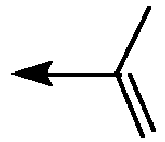
NMR 1-32 Me Me CF3 NHCH2CH2OMe 89-90 1-33 Me Me CF3 i-Pr 121-122 1-34 Me Me CF3 
196-198 1-35 Me Me CF3 4-OCF3-Ph 174-176 1-36 Me Me CF3 3, 4-F2-Ph 157-159 1-37 Me Me CF3 4-TMS-Ph 217-219 1-38 Me Me CF3 3-CN-4-F-Ph 236-238 1-39 Me Me CF3 3-SMe-Ph 180-182 1-40 Me Me CF3 4-Ac-Ph 197-198 -
Table 3 Compound No. R1 R2 X1 Y2 Physical property value 1-41 Me Me CF3 4-CHO-Ph 160-162 1-42 Me Me CF3 4-CO2Me-Ph 230-231 1-43 Me Me CF3 4-NHAc-Ph 253-255 1-44 Me Me CF3 3,4,5-F3-Ph 170-172 1-45 Me Me CF3 3-Et-Ph 164-166 1-46 Me Me CF3 3-OMe-Ph 159-161 1-47 Me Me CF3 
190-192 1-48 Me Me CF3 
NMR 1-49 Me Me CF3 
NMR 1-50 Me Me CF3 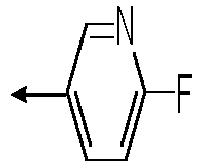
NMR 1-51 Me Me CF3 
NMR 1-52 Me Me CF3 
NMR 1-53 Me Me CF3 
NMR 1-54 Me Me CF3 
NMR -
Table 4 Compound No. R1 R2 X1 Y2 Physical property value 1-55 Me Me CF3 
NMR 1-56 Me Me CF3 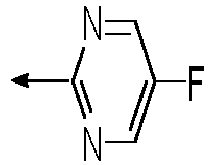
NMR 1-57 Me Me CF3 
NMR 1-58 Me Me CF3 
NMR 1-59 Me Me CF3 
NMR 1-60 Me Me CF3 
NMR 1-61 Me Me CF3 
NMR 1-62 Me Me CF3 
NMR 1-63 Me Me CF3 
NMR 1-64 Me Me CF3 
NMR 1-65 Me Me CF3 
NMR -
Table 5 Compound No. R1 R2 X1 Y2 Physical property value 1-66 Me Me CF3 
NMR 1-67 Me Me CF3 
NMR 1-68 Me Me CF3 
NMR 1-69 Me Me CF3 
NMR 1-70 Me Me CF3 
NMR 1-71 Me Me CF3 
NMR 1-72 Me Me CF3 
NMR 1-73 Me Me CF3 
NMR 1-74 Me Me CF3 
NMR 1-75 Me Me CF3 
NMR 
-
Table 6 Compound No. R1 R2 X1 Y2 Physical property value 2-1 Me H CF3 CF3 196-197 2-2 Me Me CF3 CF3 178-179 2-3 Me Me CF3 4-FPh 201-203 2-4 Me Me CF3 3-CF3Ph 243-245 2-5 Me H CF2CF3 4-FPh 249-251 2-6 Me Me CF2CF3 4-FPh 242-244 2-7 CH2CH2CH2 CF2CF3 4-FPh 242-244 2-8 Me H CF2CF3 3-CF3Ph 189-191 2-9 Me Me CF2CF3 3-CF3Ph 228-230 2-10 CH2CH2CH2 CF2CF3 3-CF3Ph 209-211 2-11 Me Me CF2CF3 
187-188 2-12 Me Me CF2CF3 
181-182 2-13 Me Me CF2CF3 CO2H 129-130 2-14 Me Me CF2CF3 CO2Me 176-177 2-15 Me Me CF2CF3 CONMe2 176-177 2-16 Me Me CF2CF3 NHCO2-t-Bu 53-55 2-17 Me Me CF2CF3 I 198-200 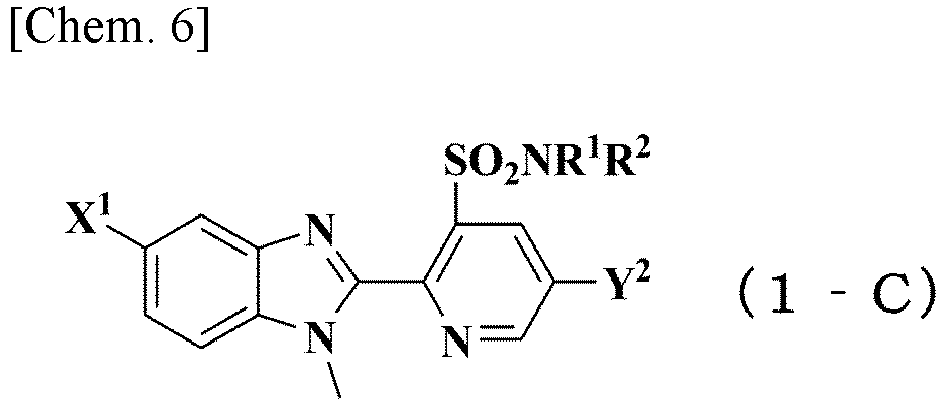
-
Table 7 Compound No. R1 R2 X1 Y2 Physical property value 3-1 Me H OCF3 H 199-200 3-2 Me H OCF3 H 145-147 3-3 Me Me OCF3 c-Pr 90-92 3-4 Me H SO2CF3 4-F-Ph 240-241 3-5 Me Me SO2CF3 4-F-Ph 189-190 
-
Table 8 Compound No. R1 R2 X1 Y1 Y2 Physical property value 4-1 Me H SCF3 H H 72-76 4-2 Me Me SCF3 H H NMR 4-3 Me H SCF3 H c-Pr 149-150 4-4 Me H SOCF3 H c-Pr 168-169 4-5 Me H SO2CF3 H c-Pr 199-200 4-6 Me Me SCF3 H c-Pr 91-92 4-7 Me Me SOCF3 H c-Pr 80-82 4-8 Me Me SO2CF3 H c-Pr 75-77 4-9 Me H SO2CF3 H 
121-123 4-10 Me Me SO2CF3 H 
76-78 4-11 Me Me SO2CF3 CHCHCClCH 197-198 4-12 Me Me SCF3 H CO2Me 120-122 4-13 Me Me SCF3 H CO2NHMe 211-213 4-14 Me Me SCF3 H CO2NMe2 122-125 4-15 Me Me SCF3 H CO2NH-c-Pr 194-196 4-16 Me Me SCF3 H CO2NHCH2CH2OMe 183-184 4-17 Me Me SOCF3 H 4-F-Ph 175-177 
-
Table 9 Compound No. R1 R2 X1 X2 Y2 G1 Physical property value 5-1 Me Me CF3 H 3-CF3Ph N 169-171 5-2 Me H CF3 H 3-CF3Ph N 201-203 5-3 Me Me CF3 H 3-CF3Ph N 199-200 5-4 Me H CF3 H 4-FPh N 290-291 5-5 Me Me CF3 H 4-FPh N 184-186 5-6 CH2CH2CH2 CF3 H 4-FPh N 214-216 5-7 Me H H CF3 3-CF3Ph N 195-197 5-8 Me Me H CF3 3-CF3Ph N 200-202 5-9 Me Me H CF3 Br CH 200-201 5-10 Me H H CF3 Br N 266-267 5-11 Me Me H CF3 Br N 152-153 5-12 Me Me H CF3 4-F-Ph CH 203-204 5-13 Me Me H CF3 c-Pr CH 156-158 5-14 Me H H CF3 H N 110-112 5-15 Me H H CF3 c-Pr N 225-229 5-16 Me Me H CF3 c-Pr N 78-80 5-17 Me H H CF3 NHCO2-t-Bu N 243-245 5-18 Me Me H CF3 NHCO2-t-Bu N 203-205 5-19 Me Me H CF3 N(Me)CO2-t-Bu N NMR 5-20 Me Me H CF3 N(CH2C≡CH)CO2-t-Bu N NMR 
-
Table 10 Compound No. R1 R2 X1 Y1 Physical property value 6-1 Me H SCF3 
NMR 6-2 Me Me SCF3 
NMR 
-
Table 11 Compound No. R1 R2 X1 Y1 Physical property value 7-1 Me H CF3 
219-220 7-2 Me Me CF3 
189-191 7-3 CH2CH2CH2 CF3 
246-248 
-
Table 12 Compound No. R1 R2 X1 Y2 Physical property value 8-1 Me H CF3 c-Pr 8-2 Me Me CF3 c-Pr 8-3 Me H CF3 4-F-Ph 301-303 8-4 Me Me CF3 4-F-Ph 177-179 
-
Table 13 R1 R2 X1 Y1 Physical property value Me Me CF3 Br 240-241 Me Me CF3 c-Pr 241-242 Me Me CF3 4-F-Ph 230-231 Me Me CF3 4-F-Ph 217-219 
-
Table 14 Compound No. R1 R2 X1 Y1 Physical property value 10-1 Me Me CF2CF3 i-Pr 10-2 Me Me CF2CF3 c-Pr 10-3 Me Me CF2CF3 
10-4 Me Me CF2CF3 NHAc 10-5 Me Me CF2CF3 NHCO2Me 10-6 Me Me CF2CF3 NHCONMe2 -
Table 15 Compound No. 1H-NMR data (CDCl3, CD3OD, or DMSO-d6) 1-20 8.90(d, 1H), 8.74(dd, 1H), 8.38(d, 1H), 8.28(d, 1H), 3.76(s, 3H), 3.42(s, 3H), 2.82(s, 6H), 1.56(s, 9H) 1-21 8.75(dd, 1H), 8.67(d, 1H), 8.28(d, 1H), 7.94(d, 1H), 4.52(q, 3H), 3.55(s, 3H), 2.78(s, 6H) 1-29 8.98(d, 1H), 8.74(d, 1H), 8.38(d, 1H), 8.28(d, 1H), 5.68(s, 1H), 5.45(d, 1H), 3.76(s, 3H), 2.78(s, 6H), 2.29(s, 3H) 1-31 8.98(d, 1H), 8.74(d, 1H), 8.38(d, 1H), 8.28(d, 1H), 5.68(s, 1H), 5.45(d, 1H), 3.76(s, 3H), 2.78(s, 6H), 2.29(s, 3H) 1-48 9.49 (d, J=2.1 Hz, 1H), 9.41 (s, 2H), 9.35 (s, 1H), 8.88 (s, 1H), 8.84 (d, J=2.1 Hz, 1H), 8.65 (s, 1H), 3.69 (s, 3H), 2.82 (s, 6H) 1-49 9.49 (d, J=1.8 Hz, 1H), 9.00 (d, J=1.8 Hz, 1H), 8.77 (s, 1H), 8.68 (d, J=2.8 Hz, 1H), 8.31 (s, 1H), 7.96 (dd, J=8.7, 4.0 Hz, 1H), 7.63 (td, J=8.2, 2.8 Hz, 1H), 3.80 (s, 3H), 2.85 (s, 6H) 1-50 9.31 (d, J = 2.1 Hz, 1H), 8.83 (d, J = 1.3 Hz, 1H), 8.76 - 8.70 (m, 2H), 8.50 - 8.43 (m, 2H), 7.35 - 7.29 (m, 1H), 3.78 (s, 3H), 2.82 (s, 6H) 1-51 9.69 (s, 1H), 9.00 (s, 1H), 8.88 (s, 1H), 8.66 (br d, J=14.3 Hz, 2H), 8.23-8.31 (m, 1H), 7.88 (br d, J=8.1 Hz, 1H), 3.68 (s, 3H), 2.78 (s, 6H), 2.42 (s, 3H) 1-52 9.86 (d, J=2.0 Hz, 1H), 9.47 (d, J=5.1 Hz, 1H), 9.19 (d, J=2.0 Hz, 1H), 8.89 (s, 1H), 8.67 (d, J=1.5 Hz, 1H), 8.22 (d, J=5.1 Hz, 1H), 3.70 (s, 3H), 2.78 (s, 6H) 1-53 9.74 (s, 1H), 9.08 (s, 1H), 8.89 (s, 1H), 8.73 (d, J=9.0 Hz, 1H), 8.66 (s, 1H), 8.24 (d, J=9.0 Hz, 1H), 3.70 (s, 3H), 2.80 (s, 6H) 1-54 9.75 (d, J=1.8 Hz, 1H), 9.49 (s, 1H), 9.05 (s, 1H), 9.03 (s, 1H), 8.89 (s, 1H), 8.66 (s, 1H), 3.69 (s, 3H), 2.79 (s, 6H) 1-55 9.97 (d, J=2.0 Hz, 1H), 9.44 (s, 1H), 9.19 (s, 2H), 8.79 (s, 1H), 8.32 (s, 1H), 3.83 (s, 3H), 2.88 (s, 6H) -
Table 16 Compound No. 1H-NMR data (CDCl3, CD3OD, or DMSO-d6) 1-56 9.82 (d, J=1.7 Hz, 1H), 9.20 (s, 2H), 9.15 (d, J=1.7 Hz, 1H), 8.88 (s, 1H), 8.65 (s, 1H), 3.69 (s, 3H), 2.78 (s, 6H) 1-57 9.86 (d, J=1.8 Hz, 1H), 9.19 (d, J=1.8 Hz, 1H), 8.96 (s, 2H), 8.89 (s, 1H), 8.66 (s, 1H), 3.70 (s, 3H), 2.79 (s, 6H), 2.42 (s, 3H) 1-58 9.31 (br s, 1H), 8.88 (br s, 1H), 8.64 (br s, 1H), 8.50 (br s, 1H), 7.96 (br s, 1H), 7.38 (br s, 1H), 3.68 (br s, 3H), 2.79 (br s, 6H) 1-59 9.35 (d, J = 2.1 Hz, 1H), 8.93 (s, 1H), 8.69 (s, 1H), 8.53 (d, J = 2.1 Hz, 1H), 7.94 (s, 1H), 7.51 (s, 1H), 3.73 (s, 3H), 2.84 (s, 6H), 2.37 (s, 3H) 1-60 9.26 (s, 1H), 8.75 (s, 1H), 8.69 (d, J=2.0 Hz, 1H), 8.32 (s, 1H), 6.53 (s, 1H), 5.30 (s, 1H), 3.92 - 3.86 (m, 3H), 3.80 - 3.74 (m, 3H), 2.85 - 2.77 (m, 6H), 2.39 - 2.34 (m, 2H), 2.39 - 2.34 (m, 1H) 1-61 9.43 (s, 1H), 8.89 (s, 1H), 8.77 (s, 1H), 8.31 (s, 1H), 7.14 (s, 1H), 3.80 (s, 3H), 2.85 (s, 6H), 2.60 (s, 3H) 1-62 9.41 (s, 1H), 8.94 (s, 1H), 8.78 (s, 1H), 8.31 (s, 1H), 3.82 (s, 3H), 2.95 (s, 3H), 2.87 (s, 6H) 1-63 9.43 (d, J = 1.9 Hz, 1H), 8.94 (d, J = 1.9 Hz, 1H), 8.79 (s, 1H), 8.33 (s, 1H), 3.82 (s, 3H), 2.87 (s, 6H), 2.83 (s, 3H) 1-64 9.67 (d, J = 2.3 Hz, 1H), 9.27 (d, J = 1.2 Hz, 1H), 8.94-8.86 (m, 2H), 8.67 (s, 1H), 8.17 (d, J = 1.1 Hz, 1H), 3.70 (s, 1H), 2.82 (s, 6H). 1-65 9.49 (d, J = 1.6 Hz, 1H), 9.02 (s, 1H), 8.87 (s, 1H), 8.78 (d, J = 1.7 Hz, 1H), 8.63 (s, 1H), 4.19 (s, 3H), 3.67 (s, 3H), 2.78 (s, 6H) 1-66 9.31 (s, 1H), 8.81 (s, 1H), 8.76 (d, J = 1.8 Hz, 1H), 8.38 (s, 1H), 8.07 (s, 1H), 4.34 (s, 3H), 3.82 (s, 3H), 2.86 (s, 6H) 1-67 9.45 (s, 1H), 9.23 (br s, 1H), 8.83 - 8.98 (m, 1H), 8.70 (s, 1H), 8.55 (br s, 1H), 8.26 (s, 1H), 7.50 - 7.65 (m, 1H), 3.66 - 4.04 (m, 6H), 2.77 - 2.91 (m, 6H) -
Table 17 Compound No. 1H-NMR data (CDCl3, CD3OD, or DMSO-d6) 1-68 9.30 (d, J = 2.1 Hz, 1H), 8.86 (d, J = 1.2 Hz, 1H), 8.65 - 8.58 (m, 2H), 8.50 (d, J = 2.1 Hz, 1H), 8.29 (s, 1H), 3.94 (s, 3H), 3.65 (s, 3H), 2.78 (s, 6H) 1-69 9.13 (d, J=2.4 Hz, 1H), 8.95 (d, J=2.4 Hz, 1H), 8.85 (d, J=1.5 Hz, 1H), 8.61 (d, J=1.5 Hz, 1H), 4.05 (t, J=7.1 Hz, 2H), 3.62 (s, 3H), 2.75 (s, 6H), 2.62 (t, J=7.9 Hz, 2H), 2.17 (quin, J=7.4 Hz, 2H) 1-70 8.99 (d, J=2.4 Hz, 1H), 8.91 (d, J=2.6 Hz, 1H), 8.79 (s, 1H), 8.40 (d, J=1.5 Hz, 1H), 4.14 - 3.99 (m, 2H), 3.72 (s, 3H), 3.69 - 3.62 (m, 2H), 2.94 (s, 3H), 2.79 (s, 6H) 1-71 9.42 (d, J = 2.0 Hz, 1H), 9.04 (d, J = 2.1 Hz, 1H), 8.88 (d, J = 1.1 Hz, 1H), 8.66 (dd, J = 1.8, 9.3 Hz, 2H), 8.29 (dd, J = 2.4, 8.1 Hz, 1H), 7.49 (d, J = 8.1 Hz, 1H), 3.68 (s, 3H), 2.81 (s, 6H), 2.59 (s, 3H) 1-72 9.16 (d, J = 1.5 Hz, 1H), 8.80 (d, J = 1.3 Hz, 1H), 8.63 - 8.57 (m, 2H), 8.51 (br d, J = 1.8 Hz, 1H), 8.33 (d, J = 1.7 Hz, 1H), 7.56 (s, 1H), 4.04 (s, 3H), 3.84 (s, 3H), 2.86 (s, 6H) 1-73 9.51 (d, J = 2.0 Hz, 1H), 9.36 (d, J = 1.8 Hz, 1H), 8.89 (s, 1H), 8.82 (d, J = 2.0 Hz, 1H), 8.73-8.62 (m, 2H), 8.16 (d, J = 8.2 Hz, 1H), 3.70 (s, 3H), 2.82 (s, 6H) 1-74 9.34 (d, J = 2.1 Hz, 1H), 9.20 (s, 2H), 8.85 - 8.77 (m, 2H), 8.45 (d, J = 1.5 Hz, 1H), 3.78 (s, 3H), 2.82 (s, 6H), 2.81 (s, 3H) 1-75 9.36 (d, J = 1.5 Hz, 1H), 9.30 (s, 1H), 9.05 (s, 1H), 8.82 (d, J = 1.3 Hz, 2H), 8.67 (s, 1H), 8.44 (s, 1H), 3.77 (s, 3H), 2.82 (s, 6H) 4-2 8.95(d, 1H), 8.39(dd, 1H), 8.16(d, 1H), 7.76-7.67(m, 3H), 2.88(s, 6H) 5-19 8.85(d, 1H), 8.77(d, 1H), 8.35(d, 1H), 8.11 (s, 1H), 7.28(dd, 1H), 3.41(s, 3H), 2.86(s, 6H), 1.53(s, 9H) 5-20 8.95(d, 1H), 8.77(d, 1H), 8.39(d, 1H), 8.12(t, 1H), 7.28(dd, 1H), 4.54(d, 2H), 2.88(s, 6H), 2.35(t, 1H), 1.53(s, 9H) 6-1 9.13(s, 1H), 8.71(d, 1H), 8.21(d, 1H), 8.20(s, 1H), 8.17(s, 1H), 7.52(d, 1H), 7.56(d, 1H), 4.00(s, 3H), 2.86(d, 3H) 6-2 9.12(s, 1H), 8.59(d, 1H), 8.26(d, 1H), 8.16(s, 1H), 8.13(d, 1H), 770(dd, 1H), 7.51(d, 1H), 3.72(s, 3H), 2.76(s, 6H) - The agricultural or horticultural insecticide comprising the condensed heterocyclic compound having a sulfonamide group represented by the general formula (1) of the present invention or a salt thereof as an active ingredient is suitable for controlling a variety of pests which may damage paddy rice, fruit trees, vegetables, other crops and ornamental flowering plants. The target pests are, for example, agricultural and forest pests, horticultural pests, stored grain pests, sanitary pests, nematodes, mites and ticks, etc.
- Specific examples of the pests, nematodes, etc. include the following: the species of the order Lepidoptera such as Parasa consocia, Anomis mesogona, Papilio xuthus, Matsumuraeses azukivora, Ostrinia scapulalis, Spodoptera exempla. Hyphantria cunea, Ostrinia furnacalis, Pseudaletia separata, Tinea translucens, Bactra furfurana, Parnara guttata, Marasmia exigua, Parnara guttata, Sesamia inferens, Brachmia triannulella, Monema flavescens, Trichoplusia ni, Pleuroptya ruralis, Cystidia couaggaria, Lampides boeticus, Cephonodes hylas, Helicoverpa armigera, Phalerodonta manleyi, Eumeta japonica, Pieris brassicae, Malacosoma neustria testacea, Stathmopoda masinissa, Cuphodes diospyrosella, Archips xylosteanus, Agrotis segetum, Tetramoera schistaceana, Papilio machaon hippocrates, Endoclyta sinensis, Lyonetia prunifoliella, Phyllonorycter ringoneella, Cydia kurokoi, Eucoenogenes aestuosa, Lobesia botrana, Latoia sinica, Euzophera batangensis, Phalonidia mesotypa, Spilosoma imparilis, Glyphodes pyloalis, Olethreutes mori, Tineola bisselliella, Endoclyta excrescens, Nemapogon granellus, Synanthedon hector, Cydia pomonella, Plutella xylostella, Cnaphalocrocis medinalis, Sesamia calamistis, Scirpophaga incertulas, Pediasia teterrellus, Phthorimaea operculella, Stauropus fagi persimilis, Etiella zinckenella, Spodoptera exigua, Palpifer sexnotata, Spodoptera mauritia, Scirpophaga innotata, Xestia c-nigrum, Spodoptera depravata, Ephestia kuehniella, Angerona prunaria, Clostera anastomosis, Pseudoplusia includens, Matsumuraeses falcana, Helicoverpa assulta, Autographa nigrisigna, Agrotis ipsilon, Euproctis pseudoconspersa, Adoxophyes orana, Caloptilia theivora, Homona magnanima, Ephestia elutella, Eumeta minuscula, Clostera anachoreta, Heliothis maritima, Sparganothis pilleriana, Busseola fusca, Euproctis subflava, Biston robustum, Heliothis zea, Aedia leucomelas, Narosoideus flavidorsalis, Viminia rumicis, Bucculatrix pyrivorella, Grapholita molesta, Spulerina astaurota, Ectomyelois pyrivorella, Chilo suppressalis, Acrolepiopsis sapporensis, Plodia interpunctella, Hellula undalis, Sitotroga cerealella, Spodoptera litura, a species of the family Tortricidae (Eucosma aporema), Acleris comariana, Scopelodes contractus, Orgyia thyellina, Spodoptera frugiperda, Ostrinia zaguliaevi, Naranga aenescens, Andraca bipunctata, Paranthrene regalis, Acosmeryx castanea, Phyllocnistis toparcha, Endopiza viteana, Eupoecillia ambiguella, Anticarsia gemmatalis, Cnephasia cinereipalpana, Lymantria dispar, Dendrolimus spectabilis, Leguminivora glycinivorella, Maruca testulalis, Matsumuraeses phaseoli, Caloptilia soyella, Phyllocnistis citrella, Omiodes indicata, Archips fuscocupreanus, Acanthoplusia agnata, Bambalina sp., Carposina niponensis, Conogethes punctiferalis, Synanthedon sp., Lyonetia clerkella, Papilio helenus, Colias erate poliographus, Phalera flavescens, the species of the family Pieridae such as Pieris rapae crucivora and Pieris rapae, Euproctis similis, Acrolepiopsis suzukiella, Ostrinia nubilalis, Mamestra brassicae, Ascotis selenaria, Phtheochroides clandestina, Hoshinoa adumbratana, Odonestis pruni japonensis, Triaena intermedia, Adoxophyes orana fasciata, Grapholita inopinata, Spilonota ocellana, Spilonota lechriaspis, Illiberis pruni, Argyresthia conjugella, Caloptilia zachrysa, Archips breviplicanus, Anomis flava, Pectinophora gossypiella, Notarcha derogata, Diaphania indica, Heliothis virescens and Earias cupreoviridis;
- the species of the order Hemiptera such as Nezara antennata, Stenotus rubrovittatus, Graphosoma rubrolineatum, Trigonotylus coelestialium, Aeschynteles maculatus, Creontiadespallidifer, Dysdercus cingulatus, Chrysomphalus ficus, Aonidiella aurantii, Graptopsaltria nigrofuscata, Blissus leucopterus, Icerya purchasi, Piezodorus hybneri, Lagynotomus elongatus, Thaia subrufa, Scotinophara lurida, Sitobion ibarae, Stariodes iwasakii, Aspidiotus destructor, Taylorilygus pallidulus, Myzus mumecola, Pseudaulacaspis prunicola, Acyrthosiphon pisum, Anacanthocoris striicornis, Ectometopterus micantulus, Eysarcoris lewisi, Molipteryx fuliginosa, Cicadella viridis, Rhopalosophum rufiabdominalis, Saissetia oleae, Trialeurodes vaporariorum, Aguriahana quercus, Lygus spp., Euceraphis punctipennis, Andaspis kashicola, Coccus pseudomagnoliarum, Cavelerius saccharivorus, Galeatus spinifrons, Macrosiphoniella sanborni, Aonidiella citrina, Halyomorpha mista, Stephanitis fasciicarina, Trioza camphorae, Leptocorisa chinensis, Trioza quercicola, Uhlerites latius, Erythroneura comes, Paromius exiguus, Duplaspidiotus claviger, Nephotettix nigropictus, Halticiellus insularis, Perkinsiella saccharicida, Psylla malivorella, Anomomeura mori, Pseudococcus longispinis, Pseudaulacaspis pentagona, Pulvinaria kuwacola, Apolygus lucorum, Togo hemipterus, Toxoptera aurantii, Saccharicoccus sacchari, Geoica lucifuga, Numata muiri, Comstockaspis perniciosa, Unaspis citri, Aulacorthum solani, Eysarcoris ventralis, Bemisia argentifolii, Cicadella spectra, Aspidiotus hederae, Liorhyssus hyalinus, Calophya nigridorsalis, Sogatella furcifera, Megoura crassicauda, Brevicoryne brassicae, Aphis glycines, Leptocorisa oratorius, Nephotettix virescens, Uroeucon formosanum, Cyrtopeltis tennuis, Bemisia tabaci, Lecanium persicae, Parlatoria theae, Pseudaonidia paeoniae, Empoasca onukii, Plautia stali, Dysaphis tulipae, Macrosiphum euphorbiae, Stephanitis pyrioides, Ceroplastes ceriferus, Parlatoria camelliae, Apolygus spinolai, Nephotettix cincticeps, Glaucias subpunctatus, Orthotylus flavosparsus, Rhopalosiphum maidis, Peregrinus maidis, Eysarcoris parvus, Cimex lectularius, Psylla abieti, Nilaparvata lugens, Psylla tobirae, Eurydema rugosum, Schizaphis piricola, Psylla pyricola, Parlatoreopsis pyri, Stephanitis nashi, Dysmicoccus wistarias, Lepholeucaspis japonica, Sappaphis piri, Lipaphis erysimi, Neotoxoptera formosana, Rhopalosophum nymphaeae, Edwardsiana rosae, Pinnaspis aspidistrae, Psylla alni, Speusotettix subfusculus, Alnetoidia alneti, Sogatella panicicola, Adelphocoris lineolatus, Dysdercus poecilus, Parlatoria ziziphi, Uhlerites debile, Laodelphax striatellus, Eurydema pulchrum, Cletus trigonus, Clovia punctata, Empoasca spp., Coccus hesperidum, Pachybrachius luridus, Planococcus kraunhiae, Stenotus binotatus, Arboridia apicalis, Macrosteles fascifrons, Dolycoris baccarum, Adelphocoris triannulatus, Viteus vitifolii, Acanthocoris sordidus, Leptocorisa acuta, Macropes obnubilus, Cletus punctiger, Riptortus clavatus, Paratrioza cockerelli, Aphrophora costalis, Lygus disponsi, Lygus saundersi, Crisicoccus pini, Empoasca abietis, Crisicoccus matsumotoi, Aphis craccivora, Megacopta punctatissimum, Eysarcoris guttiger, Lepidosaphes beckii, Diaphorina citri, Toxoptera citricidus, Planococcus citri, Dialeurodes citri, Aleurocanthus spiniferus, Pseudococcus citriculus, Zyginella citri, Pulvinaria citricola, Coccus discrepans, Pseudaonidia duplex, Pulvinaria aurantii, Lecanium corni, Nezara viridula, Stenodema calcaratum, Rhopalosiphum padi, Sitobion akebiae, Schizaphis graminum, Sorhoanus tritici, Brachycaudus helichrysi, Carpocoris purpureipennis, Myzus persicae, Hyalopterus pruni, Aphis farinose yanagicola, Metasalis populi, Unaspis yanonensis, Mesohomotoma camphorae, Aphis spiraecola, Aphis pomi, Lepidosaphes ulmi, Psylla mali, Heterocordylus flavipes, Myzus malisuctus, Aphidonuguis mali, Orientus ishidai, Ovatus malicolens, Eriosoma lanigerum, Ceroplastes rubens and Aphis gossypii;
- the species of the order Coleoptera such as Xystrocera globosa, Paederus fuscipes, Eucetonia roelofsi, Callosobruchus chinensis, Cylas formicarius, Hypera postica, Echinocnemus squameus, Oulema oryzae, Donacia provosti, Lissorhoptrus oryzophilus, Colasposoma dauricum, Euscepes postfasciatus, Epilachna varivestis, Acanthoscelides obtectus, Diabrotica virgifera virgifera, Involvulus cupreus, Aulacophora femoralis, Bruchus pisorum, Epilachna vigintioctomaculata, Carpophilus dimidiatus, Cassida nebulosa, Luperomorpha tunebrosa, Phyllotreta striolata, Psacothea hilaris, Aeolesthes chrysothrix, Curculio sikkimensis, Carpophilus hemipterus, Oxycetonia jucunda, Diabrotica spp., Mimela splendens, Sitophilus zeamais, Tribolium castaneum, Sitophilus oryzae, Palorus subdepressus, Melolontha japonica, Anoplophora malasiaca, Neatus picipes, Leptinotarsa decemlineata, Diabrotica undecimpunctata howardi, Sphenophorus venatus, Crioceris quatuordecimpunctata, Conotrachelus nenuphar, Ceuthorhynchidius albosuturalis, Phaedon brassicae, Lasioderma serricorne, Sitona japonicus, Adoretus tenuimaculatus, Tenebrio molitor, Basilepta balyi, Hypera nigrirostris, Chaetocnema concinna, Anomala cuprea, Heptophylla picea, Epilachna vigintioctopunctata, Diabrotica longicornis, Eucetonia pilifera, Agriotes spp., Attagenus unicolor japonicus, Pagria signata, Anomala rufocuprea, Palorus ratzeburgii, Alphitobius laevigatus, Anthrenus verbasci, Lyctus brunneus, Tribolium confusum, Medythia nigrobilineata, Xylotrechus pyrrhoderus, Epitrix cucumeris, Tomicus piniperda, Monochamus alternatus, Popillia japonica, Epicauta gorhami, Sitophilus zeamais, Rhynchites heros, Listroderes costirostris, Callosobruchus maculatus, Phyllobius armatus, Anthonomus pomorum, Linaeidea aenea and Anthonomus grandis;
- the species of the order Diptera such as Culex pipiens pallens, Pegomya hyoscyami, Liriomyza huidobrensis, Musca domestica, Chlorops oryzae, Hydrellia sasakii, Agromyza oryzae, Hydrellia griseola, Hydrellia griseola, Ophiomyia phaseoli, Dacus cucurbitae, Drosophila suzukii, Rhacochlaena japonica, Muscina stabulans, the species of the family Phoridae such as Megaselia spiracularis, Clogmia albipunctata, Tipula aino, Phormia regina, Culex tritaeniorhynchus, Anopheles sinensis, Hylemya brassicae, Asphondylia sp., Delia platura, Delia antiqua, Rhagoletis cerasi, Culex pipiens molestus Forskal, Ceratitis capitata, Bradysia agrestis, Pegomya cunicularia, Liriomyza sativae, Liriomyza bryoniae, Chromatomyia horticola, Liriomyza chinensis, Culex quinquefasciatus, Aedes aegypti, Aedes albopictus, Liriomyza trifolii, Liriomyza salivas. Dacus dorsalis, Dacus tsuneonis, Sitodiplosis mosellana, Meromuza nigriventris, Anastrepha ludens and Rhagoletis pomonella;
- the species of the order Hymenoptera such as Pristomyrmex pungens, Bethylid wasps, Monomorium pharaonis, Pheidole noda, Athalia rosae, Dryocosmus kuriphilus, Formica fusca japonica, Vespid wasps, Athalia infumata infumata, Arge pagana, Athalia japonica, Acromyrmex spp., Solenopsis spp., Arge mali and Ochetellus glaber;
- the species of the order Orthoptera such as Homorocoryphus lineosus, Gryllotalpa sp., Oxya hyla intricata, Oxyayezoensis, Locusta migratoria, Oxya japonica, Homorocoryphus jezoensis and Teleogryllus emma;
- the species of the order Thysanoptera such as Selenothrips rubrocinctus, Stenchaetothrips biformis, Haplothrips aculeatus, Ponticulothrips diospyrosi, Thrips flavus, Anaphothrips obscurus, Liothrips floridensis, Thrips simplex, Thrips nigropilosus, Heliothrips haemorrhoidalis, Pseudodendrothrips mori, Microcephalothrips abdominalis, Leeuwenia pasanii, Litotetothrips pasaniae, Scirtothrips citri, Haplothrips chinensis, Mycterothrips glycines, Thrips setosus, Scirtothrips dorsalis, Dendrothrips minowai, Haplothrips niger, Thrips tabaci, Thrips alliorum, Thrips hawaiiensis, Haplothrips kurdjumovi, Chirothrips manicatus, Frankliniella intonsa, Thrips coloratus, Franklinella occidentalis, Thrips palmi, Frankliniella lilivora and Liothrips vaneeckei;
- the species of the order Acari such as Leptotrombidium akamushi, Tetranychus ludeni, Dermacentor variabilis, Tetranychus truncatus, Ornithonyssus bacoti, Demodex canis, Tetranychus viennensis, Tetranychus kanzawai, the species of the family Ixodidae such as Rhipicephalus sanguineus, Cheyletus malaccensis, Tyrophagus putrescentiae, Dermatophagoides farinae, Latrodectus hasseltii, Dermacentor taiwanensis, Acaphylla theavagrans, Polyphagotarsonemus latus, Aculops lycopersici, Ornithonyssus sylvairum, Tetranychus urticae, Eriophyes chibaensis, Sarcoptes scabiei, Haemaphysalis longicornis, Ixodes scapularis, Tyrophagus similis, Cheyletus eruditus, Panonychus citri, Cheyletus moorei, Brevipalpus phoenicis, Octodectes cynotis, Dermatophagoides ptrenyssnus, Haemaphysalis flava, Ixodes ovatus, Phyllocoptruta citri, Aculus schlechtendali, Panonychus ulmi, Amblyomma americanum, Dermanyssus gallinae, Rhyzoglyphus robini and Sancassania sp.;
- the species of the order Isoptera such as Reticulitermes miyatakei, Incisitermes minor, Coptotermesformosanus, Hodotermopsisjaponica, Reticulitermes sp., Reticulitermes flaviceps amamianus, Glyptotermes kushimensis, Coptotermes guangzhoensis, Neotermes koshunensis, Glyptotermes kodamai, Glyptotermes satsumensis, Cryptotermes domesticus, Odontotermesformosanus, Glyptotermes nakajimai, Pericapritermes nitobei and Reticulitermes speratus;
- the species of the order Blattodea such as Periplaneta fuliginosa, Blattella germanica, Blatta orientalis, Periplaneta brunnea, Blattella lituricollis, Periplaneta japonica and Periplaneta americana;
- the species of the order Siphonaptera such as Pulex irritans, Ctenocephalides felis and Ceratophyllus gallinae;
- the species of the phylum Nematoda such as Nothotylenchus acris, Aphelenchoides besseyi, Pratylenchus penetrans, Meloidogyne hapla, Meloidogyne incognita, Globodera rostochiensis, Meloidogyne javanica, Heterodera glycines, Pratylenchus coffeae, Pratylenchus neglectus and Tylenchus semipenetrans; and
- the species of the phylum Mollusca such as Pomacea canaliculata, Achatina fulica, Meghimatium bilineatum, Lehmannina valentiana, Limax flavus and Acusta despecta sieboldiana.
- In addition, the agricultural or horticultural insecticide of the present invention has a strong insecticidal effect on Tuta absoluta as well.
- Further, animal-parasitic mites and ticks are also included in the target pests, and examples include the species of the family Ixodidae such as Boophilus microplus, Rhipicephalus sanguineus, Haemaphysalis longicornis, Haemaphysalis flava, Haemaphysalis campanulata, Haemaphysalis concinna, Haemaphysalis japonica, Haemaphysalis kitaokai, Haemaphysalis ias, Ixodes ovatus, Ixodes nipponensis, Ixodes persulcatus, Amblyomma testudinarium, Haemaphysalis megaspinosa, Dermacentor reticulatus and Dermacentor taiwanensis; Dermanyssus gallinae; the species of the genus Ornithonyssus such as Ornithonyssus sylviarum and Ornithonyssus bursa; the species of the family Trombiculidae such as Eutrombicula wichmanni, Leptotrombidium akamushi, Leptotrombidium pallidum, Leptotrombidiumfuji, Leptotrombidium tosa, Neotrombicula autumnalis, Eutrombicula alfreddugesi and Helenicula miyagawai; the species of the family Cheyletidae such as Cheyletiella yasguri, Cheyletiella parasitivorax and Cheyletiella blakei; the species of the superfamily Sarcoptoidea such as Psoroptes cuniculi, Chorioptes bovis, Otodectes cynotis, Sarcoptes scabiei and Notoedres cati; and the species of the family Demodicidae such as Demodex canis.
- Other target pests include fleas including ectoparasitic wingless insects belonging to the order Siphonaptera, more specifically, the species belonging to the families Pulicidae and Ceratophyllidae. Examples of the species belonging to the family Pulicidae include Ctenocephalides canis, Ctenocephalides felis, Pulex irritans, Echidnophaga gallinacea, Xenopsylla cheopis, Leptopsylla segnis, Nosopsyllus fasciatus and Monopsyllus anisus.
- Other target pests include ectoparasites, for example, the species of the suborder Anoplura such as Haematopinus eurysternus, Haematopinus asini, Dalmalinia ovis, Linognathus vituli, Haematopinus suis, Phthirus pubis and Pediculus capitis; the species of the suborder Mallophaga such as Trichodectes canis; and hematophagous Dipteran insect pests such as Tabanus trigonus, Culicoides schultzei and Simulium ornatum. Also included are endoparasites, for example, nematodes such as lungworms, whipworms, nodular worms, endogastric parasitic worms, ascarides and filarial worms; cestodes such as Spirometra erinacei, Diphyllobothrium latum, Dipylidium caninum, Multiceps multiceps, Echinococcus granulosus and Echinococcus multilocularis; trematodes such as Schistosoma japonicum and Fasciola hepatica; and protozoa such as coccidia, Plasmodium, intestinal Sarcocystis, Toxoplasma and Cryptosporidium.
- Specific Examples of the endoparasite include the following endoparasites: from the order Enoplida, for example, Trichuris spp. (whipworms), Capillaria spp. (hairworms), Trichomosoides spp., Trichinella spp. (roundworms), etc.; from the order Rhabditida, for example, Micronema spp., Strongyloides spp., etc.; from the order Strongylida, for example, Strongylus spp. (strongyles), Triodontophorus spp., Oesophagodontus spp., Trichonema spp., Gyalocephalus spp., Cylindropharynx spp., Poteriostomum spp., Cyclococercus spp., Cylicostephanus spp., Oesophagostomum spp. (nodule worms), Chabertia spp., Stephanurus spp. (Stephanurus dentatus), Ancylostoma spp. (Ancylostoma duodenale), Uncinaria spp., Bunostomum spp., Globocephalus spp., Syngamus spp., Cyathostoma spp., Metastrongylus spp. (lungworms), Dictyocaulus spp., Muellerius spp., Protostrongylus spp., Neostrongylus spp., Cystocaulus spp., Pneumostrongylus spp., Spicocaulus spp., Elaphostrongylus spp., Parelaphostrongylus spp., Crenosoma spp., Paracrenosoma spp., Angiostrongylus spp. (Angiostrongylus cantonensis), Aelurostrongylus spp., Filaroides spp., Parafilaroides spp., Trichostrongylus spp. (trichostrongyles), Haemonchus spp. (Haemonchus contortus), Ostertagia spp., Marshallagia spp., Cooperia spp., Nematodirus spp. (nematodes), Hyostrongylus spp., Obeliscoides spp., Amidostomum spp., Ollulanus spp., etc.;
- from the order Oxyurida, for example, Oxyuris spp. (Oxyuris equi), Enterobius spp. (pinworms), Passalurus spp., Syphacia spp., Aspiculuris spp., Heterakis spp., etc.;
- from the order Ascaridia, for example, Ascaris spp. (ascarids), Toxascaris spp., Toxocara spp. (Toxocara canis), Parascaris spp. (Parascaris equorum), Anisakis spp., Ascaridia spp., etc.;
- from the order Spirurida, for example, Gnathostoma spp., Physaloptera spp., Thelazia spp., Gongylonema spp., Habronema spp., Parabronema spp., Draschia spp., Dracunculus spp. (Dracunculus medinensis), etc.;
- from the order Filariida, for example, Stephanofilaria spp., Parafilaria spp., Setaria spp., Loa spp., Dirofilaria spp. (Dirofilaria immitis), Litomosoides spp., Brugia spp., Wuchereria spp., Onchocerca spp., etc.; and
- from the order Gigantorhynchida, for example, Filicollis spp., Moniliformis spp., Macracanthorhynchus spp., Prosthenorchis spp., etc.
- The endoparasite control agent comprising the condensed heterocyclic compound having a sulfonamide group represented by the general formula (1) of the present invention or a salt thereof as an active ingredient is effective against not only parasites that live in the body of an intermediate or final host, but also parasites that live in the body of a reservoir host. The condensed heterocyclic compound having a sulfonamide group represented by the general formula (1) of the present invention or a salt thereof is effective at every developmental stage of parasites. For example, in the case of protozoa, the compound is effective against their cysts, precystic forms and trophozoites; schizonts and amoeboid forms at the asexual stage; gametocytes, gametes and zygotes at the sexual stage; sporozoites; etc. In the case of nematodes, the compound is effective against their eggs, larvae and adults. The compound of the present invention is capable of not only combating parasites in the living body, but also even preventing parasitic infection by application to the environment as a route of infection. For example, it can prevent the occurrence of soil-borne infection, i.e., infection from soil of crop fields and parks; percutaneous infection from water in rivers, lakes, marshes, paddy fields, etc.; oral infection from feces of animals such as dogs and cats; oral infection from saltwater fish, freshwater fish, crustaceans, shellfish, raw meat of domestic animals, etc.; infection from mosquitoes, gadflies, flies, cockroaches, mites and ticks, fleas, lice, assassin bugs, trombiculid mites, etc.; and the like.
- For the control of ectoparasites or endoparasites in domestic mammals and birds using the compound of the present invention, an effective amount of the compound of the present invention with pharmaceutical excipients can be delivered by oral administration; parenteral administration such as injection (intramuscular, subcutaneous, intravenous, intraperitoneal); transdermal administration such as dipping, spraying, bathing, washing, pouring-on, spotting-on, or dusting; or transnasal administration. For the administration of the compound of the present invention, molded products containing the compound, such as strips, plates, bands, collars, earmarks, limb bands, and label devices, can also be used. The compound of the present invention can be formulated into any dosage form suitable for the administration route selected as appropriate.
- Examples of the dosage form include solid preparations, such as powders, granules, wettable powders, pellets, tablets, bolus, capsules, and molded products containing the active compound ; injectable solutions, oral solutions, and solutions for use on the skin or in body cavities; solution preparations, such as pour-on solutions, spot-on solutions, flowables, and emulsions; and semi-solid preparations such as ointments and gels. The solid preparations can be used mainly for oral administration or for transdermal administration after dilution with water, or for environmental treatment.
- The solid preparations can be produced by mixing the active compound, and if necessary an adjuvant, with an appropriate filler and then shaping the mixture into a desired form. Examples of the appropriate filler include inorganic substances such as carbonate salts, hydrogen carbonate salts, phosphate salts, aluminum oxide, silica, and clay; and organic substances such as sugar, cellulose, ground cereals, and starch.
- The injectable solutions can be administered intravenously, intramuscularly, or subcutaneously. The injectable solutions can be produced by dissolving the active compound in an appropriate solvent, and if necessary, adding excipients such as solubilizing agents, acids, bases, buffer salts, antioxidants, and protecting agents to the solution. Examples of the appropriate solvent include water, ethanol, butanol, benzyl alcohol, glycerin, propylene glycol, polyethylene glycol, N-methyl pyrrolidone, and a mixture thereof, physiologically acceptable vegetable oils, and synthetic oils suitable for injection. Examples of the solubilizing agent include polyvinyl pyrrolidone, polyoxyethylated castor oil, and polyoxyethylated sorbitan ester. Examples of the protecting agent include benzyl alcohol, trichlorobutanol, p-hydroxybenzoic acid ester, and n-butanol. Other additives commonly used in this field can be used as appropriate.
- The oral solutions can be administered directly or after dilution. The oral solutions can be prepared as described above for the injectable solutions.
- The flowables, emulsions, and the like can be used, directly or after diluted, for transdermal administration or for environmental treatment.
- The solutions for use on the skin can be administered by pouring on, spreading, rubbing in, spraying, dispersing or dipping (dipping, bathing, or washing) or otherwise applying. These solutions can be prepared as described above for the injectable solutions.
- The pour-on solutions and spot-on solutions are dripped or sprayed onto a defined area of the skin, and thereby the active compound is allowed to permeate through the skin and act systemically. The pour-on solutions and spot-on solutions can be prepared by dissolving, suspending, or emulsifying the active ingredient in an appropriate solvent or mixed solvent suitable for use on the skin. If necessary, an adjuvant such as a surfactant, a colorant, an absorption enhancer, an antioxidant, a light stabilizer, and/or an adhesive may be contained. Examples of the solvent include water, alkanol, glycol, polyethylene glycol, polypropylene glycol, glycerin, benzyl alcohol, phenylethanol, phenoxyethanol, ethyl acetate, butyl acetate, benzyl benzoate, dipropylene glycol monomethyl ether, diethylene glycol monobutyl ether, acetone, methyl ethyl ketone, aromatic and/or aliphatic hydrocarbons, vegetable or synthetic oils, N,N-dimethylformamide (DMF), liquid paraffin, light liquid paraffin, silicone, dimethylacetamide, N-methyl pyrrolidone, and 2,2-dimethyl-4-oxy-methylene-1,3-dioxolane. Examples of the absorption enhancer include dimethyl sulfoxide (DMSO), isopropyl myristate, dipropylene glycol pelargonate, silicone oil, aliphatic ester, triglyceride, and fatty alcohol. Examples of the antioxidant include sulfite salts, metabisulfite salts, ascorbic acid, butylated hydroxytoluene, butylated hydroxyanisole, and tocopherol. Other additives commonly used in this field can be used as appropriate.
- The emulsions can be delivered by oral administration, transdermal administration, or injection. The emulsions can be prepared by dissolving the active ingredient in a hydrophobic or hydrophilic phase and homogenizing a mixture of this solution and the other phase solvent with the addition of an appropriate emulsifier and if necessary an adjuvant such as a colorant, an absorption enhancer, a protecting agent, an antioxidant, a light-shielding agent, and/or a thickener. This method is well established and may be employed in the present invention.
- Examples of the hydrophobic phase (oil) include paraffin oil, silicone oil, sesame oil, almond oil, castor oil; synthetic triglycerides; esters such as ethyl stearate, di-n-butyryl adipate, hexyl laurate, dipropylene glycol pelargonate, esters of branched short-chain fatty acids and saturated fatty acids of C16-C18 chain length, isopropyl myristate, isopropyl palmitate, caprylic or capric acid esters of saturated fatty alcohols of C12-C18 chain length, isopropyl stearate, oleyl oleate, decyl oleate, ethyl oleate, ethyl lactate, waxy fatty acid ester, dibutyl phthalate, and diisopropyl adipate; and alcohols such as isotridecyl alcohol, 2-octyldodecanol, cetyl stearyl alcohol, and oleyl alcohol.
- Examples of the hydrophilic phase include water, propylene glycol, glycerin, and sorbitol.
- Examples of the emulsifier include nonionic surfactants such as polyoxyethylated castor oil, polyoxyethylated sorbitan monoolefinate, sorbitan monostearate, glyceryl monostearate, polyoxyethyl stearate, and alkylphenol polyglycol ether; amphoteric surfactants such as disodium N-lauryl β-iminodipropionate and lecithin; anionic surfactants such as sodium lauryl sulfate, fatty alcohol ether sulfate, and monoethanolamine salts of mono-/di-alkyl polyglycol orthophosphoric acid ester; and cationic surfactants such as cetyltrimethylammonium chloride.
- Other adjuvants include carboxymethyl cellulose, methyl cellulose, polyacrylate, alginate, gelatin, gum arabic, polyvinyl pyrrolidone, polyvinyl alcohol, methyl vinyl ether, maleic anhydride copolymers, polyethylene glycol, waxes, and colloidal silica.
- The semi-solid preparations can be administered by applying or spreading them on the skin or introducing them into body cavities. The gels can be prepared by preparing a solution as described above for the injectable solutions and adding, to the solution, a thickener in an amount sufficient to give a clear, ointment-like, viscous substance.
- In the case where the endoparasite control agent of the present invention is used as a pharmaceutical for humans or non-human animals (e.g., non-human mammalian or avian species), the optimum amount (effective amount) of the active ingredient varies with the purpose (treatment or prevention), the kind of infectious parasite, the type and severity of infection, the dosage form, etc., but in general, the oral daily dose is in the range of about 0.0001 to 10000 mg/kg body weight and the parenteral daily dose is in the range of about 0.0001 to 10000 mg/kg body weight. Such a dose may be given as a single dose or in divided doses.
- The concentration of the active ingredient in the endoparasite control agent of the present invention is generally about 0.001 to 100% by mass, preferably about 0.001 to 99% by mass, and more preferably about 0.005 to 20% by mass. The endoparasite control agent of the present invention may be a composition that can be directly administered, or a highly concentrated composition that needs to be diluted to a suitable concentration before use.
- The endoparasite control agent of the present invention can be used in combination with any existing endoparasite control agent for the purpose of reinforcing or complementing its effect. In such a combined use, two or more active ingredients may be mixed and formulated into a single preparation before administration, or two or more different preparations may be administered separately.
- The agricultural or horticultural insecticide comprising the condensed heterocyclic compound having a sulfonamide group represented by the general formula (1) of the present invention or a salt thereof as an active ingredient has a remarkable control effect on the above-described pests which damage lowland crops, field crops, fruit trees, vegetables, other crops, ornamental flowering plants, etc. The desired effect can be obtained when the agricultural or horticultural insecticide is applied to nursery facilities for seedlings, paddy fields, fields, fruit trees, vegetables, other crops, ornamental flowering plants, etc. and their seeds, paddy water, foliage, growing media such as soil, or the like at an appropriate time depending on the expected time of pest infestation, i.e., before pest infestation or upon the confirmation of pest infestation. In particular, systemic application is preferable. That is, the agricultural or horticultural insecticide is applied to nursery soil, soil in transplanting holes, plant foot, irrigation water, cultivation water in hydroponics, or the like so that the compound of the present invention is systemically absorbed into crops, ornamental flowering plants, etc. through the roots via soil or otherwise.
- The useful plant to which the agricultural or horticultural insecticide of the present invention can be applied is not particularly limited. Examples of the useful plant include cereals (e.g., rice, barley, wheat, rye, oats, corn, etc.), legumes (e.g., soybeans, azuki beans, broad beans, green peas, kidney beans, peanuts, etc.), fruit trees and fruits (e.g., apples, citrus fruits, pears, grapes, peaches, plums, cherries, walnuts, chestnuts, almonds, bananas, etc.), leaf and fruit vegetables (e.g., cabbages, tomatoes, spinach, broccoli, lettuce, onions, green onions (chives, Welsh onions, etc.), green peppers, eggplants, strawberries, pepper crops, okra, Chinese chives, etc.), root vegetables (e.g., carrots, potatoes, sweet potatoes, taros, Japanese radishes, turnips, lotus roots, burdock roots, garlic, Chinese scallions, etc.), crops for processing (e.g., cotton, hemp, beet, hops, sugarcane, sugar beet, olives, rubber, coffee, tobacco, tea, etc.), gourds (e.g., Japanese pumpkins, cucumbers, watermelons, oriental sweet melons, melons, etc.), pasture grass (e.g., orchardgrass, sorghum, timothy, clover, alfalfa, etc.), lawn grass (e.g., Korean lawn grass, bent grass, etc.), spice and aromatic crops and ornamental crops (e.g., lavender, rosemary, thyme, parsley, pepper, ginger, etc.), ornamental flowering plants (e.g., chrysanthemum, rose, carnation, orchid, tulip, lily, etc.), garden trees (e.g., ginkgo trees, cherry trees, Japanese aucuba, etc.) and forest trees (e.g., Abies sachalinensis, Picea jezoensis, pine, yellow cedar, Japanese cedar, hinoki cypress, eucalyptus, etc.).
- The "plants" also include plants provided with herbicide tolerance by a classical breeding technique or a gene recombination technique. Examples of such herbicide tolerance include tolerance to HPPD inhibitors, such as isoxaflutole; ALS inhibitors, such as imazethapyr and thifensulfuron-methyl; EPSP synthase inhibitors, such as glyphosate; glutamine synthetase inhibitors, such as glufosinate; acetyl-CoA carboxylase inhibitors, such as sethoxydim; or other herbicides, such as bromoxynil, dicamba and 2,4-D.
- Examples of the plant provided with herbicide tolerance by a classical breeding technique include varieties of rapeseed, wheat, sunflower and rice tolerant to the imidazolinone family of ALS-inhibiting herbicides such as imazethapyr, and such plants are sold under the trade name of Clearfield (registered trademark). Also included is a variety of soybean provided with tolerance to the sulfonyl urea family of ALS-inhibiting herbicides such as thifensulfuron-methyl by a classical breeding technique, and this is sold under the trade name of STS soybean. Also included are plants provided with tolerance to acetyl-CoA carboxylase inhibitors such as trione oxime herbicides and aryloxy phenoxy propionic acid herbicides by a classical breeding technique, for example, SR corn and the like.
- Plants provided with tolerance to acetyl-CoA carboxylase inhibitors are described in Proc. Natl. Acad. Sci. USA, 87, 7175-7179 (1990), and the like. Further, acetyl-CoA carboxylase mutants resistant to acetyl-CoA carboxylase inhibitors are reported in Weed Science, 53, 728-746 (2005), and the like, and by introducing the gene of such an acetyl-CoA carboxylase mutant into plants by a gene recombination technique, or introducing a resistance-conferring mutation into acetyl-CoA carboxylase of plants, plants tolerant to acetyl-CoA carboxylase inhibitors can be engineered. Alternatively, by introducing a nucleic acid causing base substitution mutation into plant cells (a typical example of this technique is chimeraplasty technique (Gura T. 1999. Repairing the Genome's Spelling Mistakes. Science 285: 316-318.)) to allow site-specific substitution mutation in the amino acids encoded by an acetyl-CoA carboxylase gene, an ALS gene or the like of plants, plants tolerant to acetyl-CoA carboxylase inhibitors, ALS inhibitors or the like can be engineered. The agricultural or horticultural insecticide of the present invention can be applied to these plants as well.
- Further, exemplary toxins expressed in genetically modified plants include insecticidal proteins of Bacillus cereus or Bacillus popilliae; Bacillus thuringiensis δ-endotoxins, such as Cry1Ab, Cry1Ac, Cry1F, Cry1Fa2, Cry2Ab, Cry3A, Cry3Bb1 and Cry9C, and other insecticidal proteins, such as VIP1, VIP2, VIP3 and VIP3A; nematode insecticidal proteins; toxins produced by animals, such as scorpion toxins, spider toxins, bee toxins and insect-specific neurotoxins; toxins of filamentous fungi; plant lectins; agglutinin; protease inhibitors, such as trypsin inhibitors, serine protease inhibitors, patatin, cystatin and papain inhibitors; ribosome inactivating proteins (RIP), such as ricin, maize RIP, abrin, luffin, saporin and bryodin; steroid metabolizing enzymes, such as 3-hydroxy steroid oxidase, ecdysteroid-UDP-glucosyltransferase and cholesterol oxidase; ecdysone inhibitors; HMG-CoA reductase; ion channel inhibitors, such as sodium channel inhibitors and calcium channel inhibitors; juvenile hormone esterase; diuretic hormone receptors; stilbene synthase; bibenzyl synthase; chitinase; and glucanase.
- Also included are hybrid toxins, partially deficient toxins and modified toxins derived from the following: δ-endotoxin proteins such as Cry1Ab, Cry1Ac, Cry1F, Cry1Fa2, Cry2Ab, Cry3A, Cry3Bb1, Cry9C, Cry34Ab and Cry35Ab, and other insecticidal proteins such as VIP1, VIP2, VIP3 and VIP3A. The hybrid toxin can be produced by combining some domains of these proteins differently from the original combination in nature with the use of a recombination technique. As the partially deficient toxin, a Cry1Ab toxin in which a part of the amino acid sequence is deleted is known. In the modified toxin, one or more amino acids of a naturally occurring toxin are substituted.
- Examples of the foregoing toxins and genetically modified plants capable of synthesizing these toxins are described in
EP0374753A ,WO93/07278 WO95/34656 EP0427529A ,EP451878A WO03/052073 - Due to the toxins contained in such genetically modified plants, the plants exhibit resistance to pests, in particular, Coleopteran insect pests, Hemipteran insect pests, Dipteran insect pests, Lepidopteran insect pests and nematodes. The above-described technologies and the agricultural or horticultural insecticide of the present invention can be used in combination or used systematically.
- When the agricultural or horticultural insecticide of the present invention is used to control target insect pests or nematodes, it may or may not be diluted or suspended in water etc., and its effective amount for pest or nematode control is applied to plants potentially infested with the target insect pests or nematodes. For example, in order to control insect pests or nematodes that may damage crops such as fruit trees, cereals and vegetables, foliar application may be performed, and also seed treatment, such as dipping, dust coating, and calcium peroxide coating of seeds, may be performed. Further, treatment of soil or the like may also be performed to allow plants to absorb agrochemicals through their roots. Examples of such treatment include whole soil incorporation, planting row treatment, bed soil incorporation, plug seedling treatment, planting hole treatment, plant foot treatment, top-dressing, rice nursery box treatment, and submerged application. In addition, application to growing media in hydroponics, smoking treatment, trunk injection, and the like can also be performed.
- Further, the agricultural or horticultural insecticide of the present invention, with or without dilution or suspension in water etc., can be applied to sites potentially infested with pests in an amount effective for the control of the pests. For example, spray treatment of stored grain pests, house pests, sanitary pests, forest pests, etc. can be performed, and also coating, smoking, or baiting treatment of residential building materials can be performed.
- Exemplary methods of seed treatment include dipping of seeds in a diluted or undiluted fluid of a liquid or solid formulation for the permeation of agrochemicals into the seeds; mixing or dust coating of seeds with a solid or liquid formulation for the adherence of the formulation onto the surfaces of the seeds; coating of seeds with a mixture of a solid or liquid formulation and an adhesive carrier such as resins and polymers; and application of a solid or liquid formulation to the vicinity of seeds at the same time as seeding.
- The term "seed" in the seed treatment refers to a plant body which is in the early stages of cultivation and used for plant propagation. The examples include, in addition to what is called a seed, a plant body for vegetative propagation, such as a bulb, a tuber, a seed potato, a bulbil, a propagule, a discoid stem, and a stem used for cuttage.
- The term "soil" or "growing medium" in the method of the present invention for using an agricultural or horticultural insecticide refers to a support medium for crop cultivation, in particular, a support medium which allows crop plants to spread their roots therein, and the materials are not particularly limited as long as they allow plants to grow. Examples of the support medium include what is called soil, seedling mats, and water, and specific examples of the materials include sand, pumice, vermiculite, diatomite, agar, gelatinous substances, high-molecular-weight substances, rock wool, glass wool, wood chip, and bark.
- Exemplary methods of the application to crop foliage or to stored grain pests, house pests, sanitary pests, forest pests, etc. include application of liquid formulations such as emulsifiable concentrates or flowables, or solid formulations such as wettable powders or water-dispersible granules after appropriate dilution in water. Also included are dust application and smoking.
- Exemplary methods of soil application include application of a water-diluted or undiluted liquid formulation to the foot of plants, nursery beds for seedlings, or the like; application of granules to the foot of plants, nursery beds for seedlings, or the like; application of dusts, wettable powders, water-dispersible granules, granules, or the like onto soil and subsequent incorporation of the formulation into the whole soil before seeding or transplanting; and application of dusts, wettable powders, water-dispersible granules, granules, or the like to planting holes, planting rows, or the like before seeding or planting.
- In the case of the application to nursery boxes for paddy rice, dusts, water-dispersible granules, granules, or the like are used depending on whether the application is performed at the time of seeding, in the greening period, at the time of transplanting, or the like. Such formulations can be applied by incorporation into nursery soil. For example, dusts, water-dispersible granules, granules, or the like may be incorporated into bed soil, covering soil, or the whole nursery soil. Simply, nursery soil and such formulations may be alternately layered.
- In the application to paddy fields, solid formulations such as jumbos, packs, granules, and water-dispersible granules, or liquid formulations such as flowables and emulsifiable concentrates are applied usually to flooded paddy fields. In addition, at the time of rice planting, a suitable formulation can be applied onto or injected into soil as it is or after mixed with a fertilizer etc. In addition, the source of water inflow to paddy fields, such as a water inlet and an irrigation system, may be treated with emulsifiable concentrates, flowables, or the like. In this case, the application to paddy fields can be accomplished with the supply of water and thus achieved in a labor-saving manner.
- For field crops, their seeds, growing media in the vicinity of their plants, or the like may be treated with the agricultural or horticultural insecticide of the present invention in the period from seeding to seedling culture. In the case of plants for direct-seeding cultivation in the field, direct seed treatment is preferable, and plant foot treatment during cultivation is also preferable. Specifically, granule application or drench treatment with a formulation in a water-diluted or undiluted liquid form can be performed. Another preferable treatment is incorporation of granules into growing media before seeding.
- In the case of plants for transplant cultivation, preferable examples of the treatment in the period from seeding to seedling stage include direct seed treatment; drench treatment of nursery beds for seedlings with a formulation in a liquid form; and granule application to nursery beds for seedlings. Also included are treatment of planting holes with granules at the time of fix planting; and incorporation of granules into growing media in the vicinity of transplanting points at the time of fix planting.
- The agricultural or horticultural insecticide of the present invention is commonly used as a formulation convenient for application, which is prepared by the usual method for preparing agrochemical formulations. That is, the condensed heterocyclic compound having a sulfonamide group represented by the general formula (1) of the present invention or a salt thereof and an appropriate inactive carrier, and if needed an adjuvant, are blended at an appropriate ratio, and through the step of dissolution, separation, suspension, mixing, impregnation, adsorption and/or adhesion, are formulated into an appropriate form for application, such as a suspension concentrate, an emulsifiable concentrate, a soluble concentrate, a wettable powder, a water-dispersible granule, a granule, a dust, a tablet and a pack.
- The composition (agricultural or horticultural insecticide or animal ectoparasite or endoparasite control agent) of the present invention can optionally contain an additive usually used for agrochemical formulations or animal parasite control agents in addition to the active ingredient. Examples of the additive include carriers such as solid or liquid carriers, surfactants, dispersants, wetting agents, binders, tackifiers, thickeners, colorants, spreaders, sticking/spreading agents, antifreezing agents, anti-caking agents, disintegrants and stabilizing agents. If needed, preservatives, plant fragments, etc. may also be used as the additive. One of these additives may be used alone, and also two or more of them may be used in combination.
- Examples of the solid carrier include natural minerals, such as quartz, clay, kaolinite, pyrophyllite, sericite, talc, bentonite, acid clay, attapulgite, zeolite and diatomite; inorganic salts, such as calcium carbonate, ammonium sulfate, sodium sulfate and potassium chloride; organic solid carriers, such as synthetic silicic acid, synthetic silicates, starch, cellulose and plant powders (for example, sawdust, coconut shell, corn cob, tobacco stalk, etc.); plastics carriers, such as polyethylene, polypropylene and polyvinylidene chloride; urea; hollow inorganic materials; hollow plastic materials; and fumed silica (white carbon). One of these solid carriers may be used alone, and also two or more of them may be used in combination.
- Examples of the liquid carrier include alcohols including monohydric alcohols, such as methanol, ethanol, propanol, isopropanol and butanol, and polyhydric alcohols, such as ethylene glycol, diethylene glycol, propylene glycol, hexylene glycol, polyethylene glycol, polypropylene glycol and glycerin; polyol compounds, such as propylene glycol ether; ketones, such as acetone, methyl ethyl ketone, methyl isobutyl ketone, diisobutyl ketone and cyclohexanone; ethers, such as ethyl ether, dioxane, ethylene glycol monoethyl ether, dipropyl ether and tetrahydrofuran; aliphatic hydrocarbons, such as normal paraffin, naphthene, isoparaffin, kerosene and mineral oil; aromatic hydrocarbons, such as benzene, toluene, xylene, solvent naphtha and alkyl naphthalene; halogenated hydrocarbons, such as dichloromethane, chloroform and carbon tetrachloride; esters, such as ethyl acetate, diisopropyl phthalate, dibutyl phthalate, dioctyl phthalate and dimethyl adipate; lactones, such as γ-butyrolactone; amides, such as dimethylformamide, diethylformamide, dimethylacetamide and N-alkyl pyrrolidinone; nitriles, such as acetonitrile; sulfur compounds, such as dimethyl sulfoxide; vegetable oils, such as soybean oil, rapeseed oil, cotton seed oil and castor oil; and water. One of these liquid carriers may be used alone, and also two or more of them may be used in combination.
- Exemplary surfactants used as the dispersant or the wetting/spreading agent include nonionic surfactants, such as sorbitan fatty acid ester, polyoxyethylene sorbitan fatty acid ester, sucrose fatty acid ester, polyoxyethylene fatty acid ester, polyoxyethylene resin acid ester, polyoxyethylene fatty acid diester, polyoxyethylene alkyl ether, polyoxyethylene alkyl aryl ether, polyoxyethylene alkyl phenyl ether, polyoxyethylene dialkyl phenyl ether, polyoxyethylene alkyl phenyl ether-formaldehyde condensates, polyoxyethylene-polyoxypropylene block copolymers, polystyrene-polyoxyethylene block polymers, alkyl polyoxyethylene-polypropylene block copolymer ether, polyoxyethylene alkylamine, polyoxyethylene fatty acid amide, polyoxyethylene fatty acid bis(phenyl ether), polyalkylene benzyl phenyl ether, polyoxyalkylene styryl phenyl ether, acetylene diol, polyoxyalkylene-added acetylene diol, polyoxyethylene ether-type silicone, ester-type silicone, fluorosurfactants, polyoxyethylene castor oil and polyoxyethylene hydrogenated castor oil; anionic surfactants, such as alkyl sulfates, polyoxyethylene alkyl ether sulfates, polyoxyethylene alkyl phenyl ether sulfates, polyoxyethylene styryl phenyl ether sulfates, alkylbenzene sulfonates, alkylaryl sulfonates, lignosulfonates, alkyl sulfosuccinates, naphthalene sulfonates, alkylnaphthalene sulfonates, salts of naphthalenesulfonic acid-formaldehyde condensates, salts of alkylnaphthalenesulfonic acid-formaldehyde condensates, fatty acid salts, polycarboxylic acid salts, polyacrylates, N-methyl-fatty acid sarcosinates, resinates, polyoxyethylene alkyl ether phosphates and polyoxyethylene alkyl phenyl ether phosphates; cationic surfactants including alkyl amine salts, such as lauryl amine hydrochloride, stearyl amine hydrochloride, oleyl amine hydrochloride, stearyl amine acetate, stearyl aminopropyl amine acetate, alkyl trimethyl ammonium chloride and alkyl dimethyl benzalkonium chloride; and amphoteric surfactants, such as amino acid-type or betaine-type amphoteric surfactants. One of these surfactants may be used alone, and also two or more of them may be used in combination.
- Examples of the binder or the tackifier include carboxymethyl cellulose or salts thereof, dextrin, soluble starch, xanthan gum, guar gum, sucrose, polyvinyl pyrrolidone, gum arabic, polyvinyl alcohol, polyvinyl acetate, sodium polyacrylate, polyethylene glycols with an average molecular weight of 6,000 to 20,000, polyethylene oxides with an average molecular weight of 100,000 to 5,000,000, phospholipids (for example, cephalin, lecithin, etc.), cellulose powder, dextrin, modified starch, polyaminocarboxylic acid chelating compounds, cross-linked polyvinyl pyrrolidone, maleic acid-styrene copolymers, (meth)acrylic acid copolymers, half esters of polyhydric alcohol polymer and dicarboxylic anhydride, water soluble polystyrene sulfonates, paraffin, terpene, polyamide resins, polyacrylates, polyoxyethylene, waxes, polyvinyl alkyl ether, alkylphenol-formaldehyde condensates and synthetic resin emulsions.
- Examples of the thickener include water soluble polymers, such as xanthan gum, guar gum, diutan gum, carboxymethyl cellulose, polyvinyl pyrrolidone, carboxyvinyl polymers, acrylic polymers, starch compounds and polysaccharides; and inorganic fine powders, such as high grade bentonite and fumed silica (white carbon).
- Examples of the colorant include inorganic pigments, such as iron oxide, titanium oxide and Prussian blue; and organic dyes, such as alizarin dyes, azo dyes and metal phthalocyanine dyes.
- Examples of the antifreezing agent include polyhydric alcohols, such as ethylene glycol, diethylene glycol, propylene glycol and glycerin.
- Examples of the adjuvant serving to prevent caking or facilitate disintegration include polysaccharides (starch, alginic acid, mannose, galactose, etc.), polyvinyl pyrrolidone, fumed silica (white carbon), ester gum, petroleum resin, sodium tripolyphosphate, sodium hexametaphosphate, metal stearates, cellulose powder, dextrin, methacrylate copolymers, polyvinyl pyrrolidone, polyaminocarboxylic acid chelating compounds, sulfonated styrene-isobutylene-maleic anhydride copolymers and starch-polyacrylonitrile graft copolymers.
- Examples of the stabilizing agent include desiccants, such as zeolite, quicklime and magnesium oxide; antioxidants, such as phenolic compounds, amine compounds, sulfur compounds and phosphoric acid compounds; and ultraviolet absorbers, such as salicylic acid compounds and benzophenone compounds.
- Examples of the preservative include potassium sorbate and 1,2-benzothiazolin-3-one.
- Further, other adjuvants including functional spreading agents, activity enhancers such as metabolic inhibitors (piperonyl butoxide etc.), antifreezing agents (propylene glycol etc.), antioxidants (BHT etc.) and ultraviolet absorbers can also be used if needed.
- The amount of the active ingredient compound in the agricultural or horticultural insecticide of the present invention can be adjusted as needed, and basically, the amount of the active ingredient compound is appropriately selected from the range of 0.01 to 90 parts by weight in 100 parts by weight of the agricultural or horticultural insecticide. For example, in the case where the agricultural or horticultural insecticide is in the form of a dust, a granule, an emulsifiable concentrate or a wettable powder, it is suitable that the amount of the active ingredient compound is 0.01 to 50 parts by weight (0.01 to 50% by weight relative to the total weight of the agricultural or horticultural insecticide).
- The application rate of the agricultural or horticultural insecticide of the present invention may vary with various factors, for example, the purpose, the target pest, the growing conditions of crops, the tendency of pest infestation, the weather, the environmental conditions, the formulation, the application method, the application site, the application timing, etc., but basically, the application rate of the active ingredient compound is appropriately selected from the range of 0.001 g to 10 kg, preferably 0.01 g to 1 kg per 10 ares depending on the purpose.
- Furthermore, for the expansion of the range of target pests and the appropriate time for pest control, or for dose reduction, the agricultural or horticultural insecticide of the present invention can be used after mixed with other agricultural or horticultural insecticides, acaricides, nematicides, microbicides, biopesticides and/or the like. Further, the agricultural or horticultural insecticide can be used after mixed with herbicides, plant growth regulators, fertilizers and/or the like depending on the situation.
- Exemplary additional agricultural or horticultural insecticides, acaricides and nematicides used for the above-mentioned purposes include 3,5-xylyl methylcarbamate (XMC), fenobucarb (BPMC), Bt toxin-derived insecticidal compounds, CPCBS (chlorfenson), DCIP (dichlorodiisopropyl ether), D-D (1,3-dichloropropene), DDT, NAC, O-4-dimethylsulfamoylphenyl O,O-diethyl phosphorothioate (DSP), O-ethyl O-4-nitrophenyl phenylphosphonothioate (EPN), tripropylisocyanurate (TPIC), acrinathrin, azadirachtin, acynonapyr, azinphos-methyl, acequinocyl, acetamiprid, acetoprole, acephate, abamectin, afidopyropen, avermectin-B, amidoflumet, amitraz, alanycarb, aldicarb, aldoxycarb, aldrin, alpha-endosulfan, alpha-cypermethrin, albendazole, allethrin, isazofos, isamidofos, isoamidofos isoxathion, isocycloseram, isofenphos, isoprocarb (MIPC), epsilon-metofluthrin, epsilon-momfluorothrin, ivermectin, imicyafos, imidacloprid, imiprothrin, indoxacarb, esfenvalerate, ethiofencarb, ethion, ethiprole, etoxazole, ethofenprox, ethoprophos, etrimfos, emamectin, emamectin-benzoate, endosulfan, empenthrin, oxazosulfyl, oxamyl, oxydemeton-methyl, oxydeprofos (ESP), oxibendazole, oxfendazole, potassium oleate, sodium oleate,
- cadusafos, kappa-tefluthrin, kappa-bifenthrin, cartap, carbaryl, carbosulfan, carbofuran, gamma-cyhalothrin, xylylcarb, quinalphos, kinoprene, chinomethionat, cloethocarb, clothianidin, clofentezine, chromafenozide, chlorantraniliprole, chlorethoxyfos, chlordimeform, chlordane, chlorpyrifos, chlorpyrifos-methyl, chlorphenapyr, chlorfenson, chlorfenvinphos, chlorfluazuron, chlorobenzilate, chlorobenzoate, chloroprallethrin, kelthane (dicofol), salithion, cyhalodiamide, cyanophos (CYAP), diafenthiuron, diamidafos, cyantraniliprole, theta-cypermethrin, dienochlor, cyenopyrafen, dioxabenzofos, diofenolan, sigma-cypermethrin, cyclaniliprole, dichlofenthion (ECP), cycloprothrin, dichlorvos (DDVP), dicloromezotiaz, disulfoton, dinotefuran, cyhalodiamide, cyhalothrin, cyphenothrin, cyfluthrin, diflubenzuron, cyflumetofen, diflovidazin, cyhexatin, cypermethrin, dimethylvinphos, dimethoate, dimpropyridaz, dimefluthrin, silafluofen, cyromazine, spinetoram, spinosad, spirodiclofen, spirotetramat, spiropidion, spiromesifen, sulfluramid, sulprofos, sulfoxaflor, zeta-cypermethrin,
- diazinon, tau-fluvalinate, dazomet, thiacloprid, tiaxazafen, thiamethoxam, tioxazafen, thiodicarb, thiocyclam, thiosultap, thiosultap-sodium, thionazin, thiometon, deet, dieldrin, tetrachlorantraniliprole, tyclopyrazoflor, tetrachlorvinphos, tetradifon, tetraniliprole, tetramethylfluthrin, tetramethrin, tebupirimfos, tebufenozide, tebufenpyrad, tefluthrin, teflubenzuron, demeton-S-methyl, temephos, deltamethrin, terbufos, doramectin, tralopyril, tralomethrin, transfluthrin, triazamate, triazuron, trichlamide, trichlorphon (DEP), triflumezopyrium, triflumuron, tolfenpyrad, naled (BRP),
- nithiazine, nitenpyram, novaluron, noviflumuron, hydroprene, vaniliprole, vamidothion, parathion, parathion-methyl, halfenprox, halofenozide, bistrifluron, bisultap, hydramethylnon, hydroxy propyl starch, binapacryl, pyflubumide, bifenazate, bifenthrin, pymetrozine, pyraclofos, pyrafluprole, pyridafenthion, pyridaben, pyridalyl, pyrifluquinazon, pyriprole, pyriproxyfen, pirimicarb, pyrimidifen, pyriminostrobin, pirimiphos-methyl, pyrethrins, fipronil, fenazaquin, fenamiphos, bromopropylate, fenitrothion (MEP), fenoxycarb, fenothiocarb, phenothrin, fenobucarb, fensulfothion, fenthion (MPP), phenthoate (PAP), fenvalerate, fenpyroximate, fenpropathrin, fenbendazole, fosthiazate, formetanate, butathiofos, buprofezin, furathiocarb, prallethrin, fluacrypyrim, fluazaindolizine, fluazinam, fluazuron, fluensulfone, fluxametamide, flucycloxuron, flucythrinate, fluvalinate, flupyradifurone, flufiprole, flupyrazofos, flupyrimin, flufenerim, flufenoxystrobin, flufenoxuron, flufenzine, flufenprox, fluproxyfen, flubrocythrinate, fluhexafon, flubendiamide, flumethrin, flurimfen, prothiofos, protrifenbute, flonicamid, propaphos, propargite (BPPS), profenofos, broflanilide, profluthrin, propoxur (PHC), flometoquin, alpha-bromadiolone, bromopropylate,
- beta-cyfluthrin, hexaflumuron, hexythiazox, heptafluthrin, heptenophos, permethrin, benclothiaz, bendiocarb, benzpyrimoxan, bensultap, benzoximate, benfuracarb, phoxim, phosalone, fosthietan, phosphamidon, phosphocarb, phosmet (PMP), polynactins, formothion, phorate, machine oil, malathion, milbemycin, milbemycin-A, milbemectin, mecarbam, mesulfenfos, methomyl, metaldehyde, metaflumizone, methamidophos, metam-ammonium, metam-sodium, methiocarb, methidathion (DMTP), methylisothiocyanate, methylneodecanamide, methylparathion, metoxadiazone, methoxychlor, methoxyfenozide, metofluthrin, methoprene, metolcarb, meperfluthrin, mevinphos, monocrotophos, monosultap, momfluorothrin, lambda-cyhalothrin, ryanodine, lufenuron, rescalure, resmethrin, lepimectin, rotenone, levamisole hydrochloride, fenbutatin oxide, morantel tartarate, methyl bromide, tricyclohexyltin hydroxide (cyhexatin), calcium cyanamide, calcium polysulfide, sulfur and nicotine-sulfate, and salts thereof.
- Exemplary agricultural or horticultural microbicides used for the same purposes as above include aureofungin, azaconazole, azithiram, acypetacs, acibenzolar, acibenzolar-S-methyl, azoxystrobin, anilazine, amisulbrom, aminopyrifen, ampropylfos, ametoctradin, allyl alcohol, aldimorph, amobam, isotianil, isovaledione, isopyrazam, isofetamid, isoflucypram, isoprothiolane, ipconazole, ipfentrifluconazole, ipflufenoquin, iprodione, iprovalicarb, iprobenfos, imazalil, iminoctadine, metam, iminoctadine-albesilate, iminoctadine-triacetate, imibenconazole, inpyrfluxam, uniconazole, uniconazole-P, echlomezole, edifenphos, etaconazole, ethaboxam, ethirimol, etem, ethoxyquin, etridiazole, enestroburin, enoxastrobin, epoxiconazole, oxadixyl, oxathiapiprolin, oxycarboxin, copper-8-quinolinolate, oxytetracycline, copper-oxinate, oxpoconazole, oxpoconazole-fumarate, oxolinic acid, octhilinone, ofurace, orysastrobin,
- metam-sodium, kasugamycin, carbamorph, carpropamid, carbendazim, carboxin, carvone, quinazamid, quinacetol, quinoxyfen, quinofumelin, chinomethionat, quinomethionate, captafol, captan, kiralaxyl, quinconazole, quintozene, guazatine, cufraneb, cuprobam, coumoxystrobin, glyodin, griseofulvin, climbazole, cresol, kresoxim-methyl, chlozolinate, clotrimazole, chlobenthiazone, chloraniformethan, chloranil, chlorquinox, chloropicrin, chlorfenazole, chlorodinitronaphthalene, chlorothalonil, chloroneb, salicylanilide, zarilamid, cyazofamid, diethyl pyrocarbonate, diethofencarb, cyclafuramid, diclocymet, dichlozoline, diclobutrazol, dichlofluanid, cycloheximide, dichlobentiazox, diclomezine, dicloran, dichlorophen, dichlone, disulfiram, ditalimfos, dithianon, diniconazole, diniconazole-M, zineb, dinocap, dinocton, dinosulfon, dinoterbon, dinobuton, dinopenton, dipymetitrone, dipyrithione, diphenylamine, difenoconazole, cyflufenamid, diflumetorim, cyproconazole, cyprodinil, cyprofuram, cypendazole, simeconazole, dimethirimol, dimethomorph, cymoxanil, dimoxystrobin, ziram, silthiofam,
- streptomycin, spiroxamine, sultropen, sedaxane, zoxamide, dazomet, thiadiazin, tiadinil, thiadifluor, thiabendazole, tioxymid, thioquinox, thiochlorfenphim, thiophanate, thiophanate-methyl, thifluzamide, thicyofen, thioquinox, thiram, decafentin, tecnazene, tecloftalam, tecoram, tetraconazole, debacarb, dehydroacetic acid, tebuconazole, tebufloquin, dodicin, dodine, dodecyl benzensulfonate bis-ethylene diamine copper(II) (DBEDC), dodemorph, drazoxolon, triadimenol, triadimefon, triazbutil, triazoxide, triamiphos, triarimol, trichlamide, triclopyricarb, tricyclazole, triticonazole, tridemorph, tributyltin oxide, triflumizole, trifloxystrobin, triforine, tolylfluanid, tolclofos-methyl, tolprocarb,
- natamycin, nabam, nitrostyrene, nitrothal-isopropyl, nuarimol, copper nonylphenol sulfonate, halacrinate, validamycin, valifenalate, harpin protein, picarbutrazox, bixafen, picoxystrobin, picobenzamide, pydiflumetofen, bithionol, bitertanol, hydroxyisoxazole, hydroxyisoxazole-potassium, binapacryl, biphenyl, piperalin, hymexazol, pyraoxystrobin, pyracarbolid, pyraclostrobin, pyraziflumid, pyrazophos, pyrapropoyne, pyrametostrobin, pyriofenone, pyridinitril, pyrifenox, pyrisoxazole, pyridachlometyl, pyrifenox, pyribencarb, pyriminostrobin, pyrimethanil, pyroxychlor, pyroxyfur, pyroquilon, vinclozolin,
- ferbam, famoxadone, fenapanil, fenamidone, fenaminosulf, fenaminstrobin, fenarimol, fenitropan, fenoxanil, ferimzone, ferbam, fentin, fenpiclonil, fenpicoxamid, fenpyrazamine, fenbuconazole, fenfuram, fenpropidin, fenpropimorph, fenhexamid, phthalide, buthiobate, butylamine, bupirimate, fuberidazole, blasticidin-S, furametpyr, furalaxyl, fluacrypyrim, fluazinam, fluindapyr, fluoxastrobin, fluoxapiprolin, fluotrimazole, fluopicolide, fluopimomide, fluopyram, fluoroimide, furcarbanil, fluxapyroxad, fluquinconazole, furconazole, furconazole-cis, fludioxonil, flusilazole, flusulfamide, flutianil, flutolanil, flutriafol, flufenoxystrobin, furfural, furmecyclox, flumetover, flumorph, proquinazid, prochloraz, procymidone, prothiocarb, prothioconazole, pronitridine, propamocarb, propiconazole, propineb, furophanate, probenazole, bromuconazole, florylpicoxamid, hexachlorobutadiene, hexaconazole, hexylthiofos, bethoxazin, benalaxyl, benalaxyl-M, benodanil, benomyl, pefurazoate, benquinox, penconazole, benzamorf, pencycuron, benzohydroxamic acid, benzovindiflupyr, bentaluron, benthiazole, benthiavalicarb, benthiavalicarb-isopropyl, penthiopyrad, penflufen, boscalid, phosdiphen, fosetyl, fosetyl-Al, polyoxins, polyoxorim, polycarbamate, folpet, formaldehyde,
- machine oil, maneb, mancozeb, mandipropamid, mandestrobin, myclozolin, myclobutanil, mildiomycin, milneb, mecarbinzid, methasulfocarb, metazoxolon, metam, metam-sodium, metalaxyl, metalaxyl-M, metiram, methyl isothiocyanate, meptyldinocap, metyltetraprole, metconazole, metsulfovax, methfuroxam, metominostrobin, metrafenone, mepanipyrim, mefenoxam, mefentrifluconazole, meptyldinocap, mepronil, mebenil, iodomethane, rabenzazole, methyl bromide, benzalkonium chloride, basic copper chloride, basic copper sulfate, inorganic microbicides such as silver, sodium hypochlorite, cupric hydroxide, wettable sulfur, calcium polysulfide, potassium hydrogen carbonate, sodium hydrogen carbonate, sulfur, copper sulfate anhydride, nickel dimethyldithiocarbamate, copper compounds such as copper-8-quinolinolate (oxine copper), zinc sulfate and copper sulfate pentahydrate, and salts thereof.
- Exemplary herbicides used for the same purposes as above include 1-naphthylacetamide, 2,4-PA, 2,3,6-TBA, 2,4,5-T, 2,4,5-TB, 2,4-D, 2,4-DB, 2,4-DEB, 2,4-DEP, 3,4-DA, 3,4-DB, 3,4-DP, 4-CPA, 4-CPB, 4-CPP, MCP, MCPA, MCPA-thioethyl, MCPB, ioxynil, aclonifen, azafenidin, acifluorfen, aziprotryne, azimsulfuron, asulam, acetochlor, atrazine, atraton, anisuron, anilofos, aviglycine, abscisic acid, amicarbazone, amidosulfuron, amitrole, aminocyclopyrachlor, aminopyralid, amibuzin, amiprophos-methyl, ametridione, ametryn, alachlor, allidochlor, alloxydim, alorac, iofensulfuron, isouron, isocarbamid, isoxachlortole, isoxapyrifop, isoxaflutole, isoxaben, isocil, isonoruron, isoproturon, isopropalin, isopolinate, isomethiozin, inabenfide, ipazine, ipfencarbazone, iprymidam, imazaquin, imazapic, imazapyr, imazamethapyr, imazamethabenz, imazamethabenz-methyl, imazamox, imazethapyr, imazosulfuron, indaziflam, indanofan, indolebutyric acid, uniconazole-P, eglinazine, esprocarb, ethametsulfuron, ethametsulfuron-methyl, ethalfluralin, ethiolate, ethychlozate-ethyl, ethidimuron, etinofen, ethephon, ethoxysulfuron, ethoxyfen, etnipromid, ethofumesate, etobenzanid, epronaz, erbon, endothal,
- oxadiazon, oxadiargyl, oxaziclomefone, oxasulfuron, oxapyrazon, oxyfluorfen, oryzalin, orthosulfamuron, orbencarb, cafenstrole, cambendichlor, carbasulam, carfentrazone, carfentrazone-ethyl, karbutilate, carbetamide, carboxazole, quizalofop, quizalofop-P, quizalofop-ethyl, xylachlor, quinoclamine, quinonamid, quinclorac, quinmerac, cumyluron, clacyfos, cliodinate, glyphosate, glufosinate, glufosinate-P, credazine, clethodim, cloxyfonac, clodinafop, clodinafop-propargyl, chlorotoluron, clopyralid, cloproxydim, cloprop, chlorbromuron, clofop, clomazone, chlomethoxynil, chlomethoxyfen, clomeprop, chlorazifop, chlorazine, cloransulam, chloranocryl, chloramben, cloransulam, cloransulam-methyl, chloridazon, chlorimuron, chlorimuron-ethyl, chlorsulfuron, chlorthal, chlorthiamid, chlortoluron, chlornitrofen, chlorfenac, chlorfenprop, chlorbufam, chlorphthalim, chlorflurazole, chlorflurenol, chlorprocarb, chlorpropham, chlormequat, chloreturon, chloroxynil, chloroxuron, chlorotoluron, chloropon,
- saflufenacil, cyanazine, cyanatryn, di-allate, diuron, diethamquat, dicamba, cycluron, cycloate, cycloxydim, diclosulam, cyclosulfamuron, cyclopyranil, cyclopyrimorate, dichlorprop, dichlorprop-P, dichlobenil, diclofop, diclofop-methyl, dichlormate, dichloralurea, diquat, cisanilide, disul, siduron, dithiopyr, dinitramine, cinidon-ethyl, dinosam, cinosulfuron, dinoseb, dinoterb, dinofenate, dinoprop, cyhalofop-butyl, diphenamid, difenoxuron, difenopenten, difenzoquat, cybutryne, cyprazine, cyprazole, diflufenican, diflufenzopyr, dipropetryn, cypromid, cyperquat, gibberellin, simazine, dimexano, dimethachlor, dimidazon, dimethametryn, dimethenamid, simetryn, simeton, dimepiperate, dimefuron, cinmethylin, swep, sulglycapin, sulcotrione, sulfallate, sulfentrazone, sulfosulfuron, sulfometuron, sulfometuron-methyl, secbumeton, sethoxydim, sebuthylazine,
- terbacil, daimuron, dazomet, dalapon, thiazafluron, thiazopyr, tiafenacil, thiencarbazone, thiencarbazone-methyl, tiocarbazil, tioclorim, thiobencarb, thidiazimin, thidiazuron, thifensulfuron, thifensulfuron-methyl, desmedipham, desmetryn, tetflupyrolimet, tetrafluron, thenylchlor, tebutam, tebuthiuron, terbumeton, tepraloxydim, tefuryltrione, tembotrione, delachlor, terbacil, terbucarb, terbuchlor, terbuthylazine, terbutryn, topramezone, tralkoxydim, triaziflam, triasulfuron, triafamone, tri-allate, trietazine, tricamba, triclopyr, tridiphane, tritac, tritosulfuron, trifludimoxazin, triflusulfuron, triflusulfuron-methyl, trifluralin, trifloxysulfuron, tripropindan, tribenuron, tribenuron-methyl, trifop, trifopsime, trimeturon, tolpyralate,
- naptalam, naproanilide, napropamide, nicosulfuron, nitralin, nitrofen, nitrofluorfen, nipyraclofen, neburon, norflurazon, noruron, barban, paclobutrazol, paraquat, parafluron, haloxydine, halauxifen, haloxyfop, haloxyfop-P, haloxyfop-methyl, halosafen, halosulfuron, halosulfuron-methyl, bilanafos, bixlozone, picloram, picolinafen, bicyclopyrone, bispyribac, bispyribac-sodium, pydanon, pinoxaden, bifenox, piperophos, hymexazol, pyraclonil, pyrasulfotole, pyrazoxyfen, pyrazosulfuron, pyrazosulfuron-ethyl, pyrazolate, bilanafos, pyraflufen-ethyl, pyriclor, pyridafol, pyrithiobac, pyrithiobac-sodium, pyridate, pyriftalid, pyributicarb, pyribenzoxim, pyrimisulfan, primisulfuron, pyriminobac-methyl, pyroxasulfone, pyroxsulam,
- fenasulam, phenisopham, fenuron, fenoxasulfone, fenoxaprop, fenoxaprop-P, fenoxaprop-ethyl, phenothiol, fenoprop, phenobenzuron, fenquinotrione, fenthiaprop, fenteracol, fentrazamide, phenmedipham, phenmedipham-ethyl, butachlor, butafenacil, butamifos, buthiuron, buthidazole, butylate, buturon, butenachlor, butroxydim, butralin, butroxydim, flazasulfuron, flamprop, furyloxyfen, prynachlor, primisulfuron-methyl, fluazifop, fluazifop-P, fluazifop-butyl, fluazolate, fluroxypyr, fluothiuron, fluometuron, fluoroglycofen, flurochloridone, fluorodifen, fluoronitrofen, fluoromidine, flucarbazone, flucarbazone-sodium, fluchloralin, flucetosulfuron, fluthiacet, fluthiacet-methyl, flupyrsulfuron, flufenacet, flufenican, flufenpyr, flupropacil, flupropanate, flupoxam, flumioxazin, flumiclorac, flumiclorac-pentyl, flumipropyn, flumezin, fluometuron, flumetsulam, fluridone, flurtamone, fluroxypyr, pretilachlor, proxan, proglinazine, procyazine, prodiamine, prosulfalin, prosulfuron, prosulfocarb, propaquizafop, propachlor, propazine, propanil, propyzamide, propisochlor, prohydrojasmon, propyrisulfuron, propham, profluazol, profluralin, prohexadione-calcium, propoxycarbazone, propoxycarbazone-sodium, profoxydim, bromacil, brompyrazon, prometryn, prometon, bromoxynil, bromofenoxim, bromobutide, bromobonil, florasulam, florpyrauxifen,
- hexachloroacetone, hexazinone, pethoxamid, benazolin, penoxsulam, pebulate, beflubutamid, beflubutamid-M, vernolate, perfluidone, bencarbazone, benzadox, benzipram, benzylaminopurine, benzthiazuron, benzfendizone, bensulide, bensulfuron-methyl, benzoylprop, benzobicyclon, benzofenap, benzofluor, bentazone, pentanochlor, benthiocarb, pendimethalin, pentoxazone, benfluralin, benfuresate, fosamine, fomesafen, foramsulfuron, forchlorfenuron, maleic hydrazide, mecoprop, mecoprop-P, medinoterb, mesosulfuron, mesosulfuron-methyl, mesotrione, mesoprazine, methoprotryne, metazachlor, methazole, metazosulfuron, methabenzthiazuron, metamitron, metamifop, metam, methalpropalin, methiuron, methiozolin, methiobencarb, methyldymron, metoxuron, metosulam, metsulfuron, metsulfuron-methyl, metflurazon, metobromuron, metobenzuron, methometon, metolachlor, metribuzin, mepiquat-chloride, mefenacet, mefluidide, monalide, monisouron, monuron, monochloroacetic acid, monolinuron, molinate, morfamquat, iodosulfuron, iodosulfuron-methyl-sodium, iodobonil, iodomethane, lactofen, lancotrione, linuron, rimsulfuron, lenacil, rhodethanil, calcium peroxide and methyl bromide, and salts thereof.
- Examples of the biopesticide include Agrobacterium radiobacter (e.g., Galltrol-A (registered trademark) manufactured by AgBioChem, CA using strain K84 and Nogall (registered trademark) manufactured by Becker Underwood, US using strain K1026), Agrobacterium radiobacter (e.g., Bacterose (registered trademark) manufactured by NIHON NOHYAKU Co., Ltd. using strain 84), Ampelomyces quisqualis (e.g., AQ 10 (registered trademark) manufactured by IntrachemBio Italia & Co. KG using strain AQ10), Aspergillus flavus (e.g., Afla-Guard (registered trademark) manufactured by Syngenta, AF36 (registered trademark) manufactured by Arizona Cotton Research and Protection Council, US using strain AF36, and Afla-Guard manufactured by Syngenta using NRRL 21882), Aureobasidium pullulans (e.g., Botector (registered trademark), a mixture of blastospores of strain DSM14940 and blastospores of strain DSM14941, manufactured by bio-ferm, GmbH),
- Bacillus amyloliquefaciens (e.g., Impression Clear (registered trademark) manufactured by Idemitsu Agri using strain AT-332, Avogreen (registered trademark) manufactured by University of Pretoria using strain B246, Bacstar (registered trademark) manufactured by Etec Crop Solutions, NZ using strain D747, Shelter (registered trademark) manufactured by Dagutat Bio lab, ZA using strain DB 101, Artemis (registered trademark) manufactured by Dagutat Bio lab, ZA using strain DB102, RhizoVital (registered trademark) manufactured by ABiTEP, DE using strain FZB42, Kodiak (registered trademark) manufactured by Bayer CropScience AG, DE using strain GB03, Subtilex (registered trademark) manufactured by Becker Underwood, US using strain MBI600, and Amplitude manufactured by Marrone Bio Innovations, Inc. using strain F727), Bacillus cepacia (e.g., Deny Stine (registered trademark) manufactured by Microbial Products), Bacillus cereus (e.g., Mepichlor (registered trademark) manufactured by Arysta, US using strain BP01), Bacillus firmus (e.g., BioNeem (registered trademark) manufactured by AgoGreen using strain I-1582), Bacillus lacticola (e.g., a product manufactured by Micro Flo Company), Bacillus lactimorbus (e.g., a product manufactured by Micro Flo Company), Bacillus lactis (e.g., a product manufactured by Micro Flo Company), Bacillus laterosporus (e.g., Bio-Tode (registered trademark) manufactured by Agro-Organics, SA), Bacillus licheniformis (e.g., EcoGuard Biofungicide (registered trademark) manufactured by Novozymes using strain SB3086), Bacillus maroccanus (e.g., a product manufactured by Micro Flo Company), Bacillus megaterium (e.g., Bioarc (registered trademark) manufactured by Bio Arc using strain YFM3.25), Bacillus metiens (e.g., a product manufactured by Micro Flo Company), Bacillus mojavensis (e.g., a product manufactured by Probelte, Sa using strain SR11), Bacillus mycoides (e.g., BmJ (registered trademark) manufactured by Certis USA using isolate J.), Bacillus nigrificans (e.g., a product manufactured by Micro Flo Company), Bacillus popilliae (e.g., Cronox (registered trademark) manufactured by Bio Crop, CO), Bacillus pumilus (e.g., Integral F-33 (registered trademark) manufactured by Becker Underwood, US using strain BU F-33, Yield Shield (registered trademark) manufactured by Bayer CropScience AG, DE using strain GB34, and Sonata (registered trademark) manufactured by Bayer CropScience LP, US using strain QST2808), Bacillus simplex (e.g., Momi-Hope WP (registered trademark) manufactured by Arysta LifeScience Corporation using strain CGF2856), Bacillus sphaericus (e.g., VectoLex (registered trademark) manufactured by Valent BioSciences, US using serotype H5a5b strain 2362), Bacillus subtilis (e.g., Botokiller WP (registered trademark) manufactured by Idemitsu Agri Co., Taegro (registered trademark) manufactured by Novozyme Biologicals, Inc. US using strain FZB24, SERENADE MAX (registered trademark) manufactured by Bayer CropScience LP, US using strain QST713/AQ713, Serenade-DPZ (registered trademark) using strain AQ30002, EcoShot (registered trademark) manufactured by KUMIAI CHEMICAL INDUSTRY Co., Ltd. using strain D747, Agrocare WP (registered trademark) manufactured by Nisso Green Co., Ltd. using strain HAI-0404, Botopika WP (registered trademark) manufactured by Idemitsu Kosan Co., Ltd. using strain MBI600, BaciStar WP (registered trademark) manufactured by Arysta LifeScience Corporation using strain Y1336, and Companion Biological Fungicide Wettable Powder manufactured by Growth Products Ltd. using strain GB03), Bacillus thuringiensis (e.g., VectoBac (registered trademark) manufactured by Valent BioSciences, US using strain AM65-52), Bacillus thuringienses aizawai (e.g., XenTari (registered trademark) manufactured by Bayer CropScience AG, DE using strain ABTS-1857, Florbac WG (registered trademark) manufactured by Valent BioSciences, US using serotype H-7, and Agree WG Biological Insecticide manufactured by Certis USA using strain GC-91), Bacillus thuringiensis subspecies. Aegypti (e.g., Agerin (registered trademark)), Bacillus thuringienses israelensis (e.g., Aquabac (registered trademark) manufactured by Becker Microbial Products IL using strain BMP144), Bacillus thuringienses kurstaki (e.g., a product manufactured by Becker Microbial Products, IL using strain BMP 123, Dipel ES (registered trademark) manufactured by Valent BioSciences, US using strain HD-1, BMP 123 manufactured by Becker Microbial Products using strain BMP123, BMP144/Aquabac manufactured by Becker Microbial Products using strain BMP144, Dipel 10G manufactured by Valent U.S.A. LLC using strain ABTS-351, Condor Wettable Powder manufactured by Certis USA using strain EG2348, Crymax Bioinsecticide manufactured by Certis USA using strain EG7841, Deliver Biological Insecticide manufactured by Certis USA using strain SA-12, and Bioprotec PLUS manufactured by AEF Global using strain EVB-113-19), Bacillus thuringiensis galleriae (e.g., beetleGONE! manufactured by Phyllom BioProducts and boreGONE! manufactured by Phyllom BioProducts using strain SDS-502), Bacillus thuringiensis var. colmeri (e.g., TianBaoBTc (registered trademark) manufactured by Changzhou Jianghai Chemical Factory), Bacillus thuringienses tenebrionis (e.g., Novodor FC (registered trademark) manufactured by BioFa DE using strain NB 176), Bacillus thuringiensis var. san diego (e.g., M-One (registered trademark) from Bacillus thuringiensis var. san diego),
- Beauveria bassiana (e.g., Naturalis (registered trademark) manufactured by Intrachem Bio Italia, Bove Max (registered trademark) manufactured by Novozymes using strain CG716, BioLisa Madara (registered trademark) manufactured by Idemitsu Kosan Co., Ltd. using strain F-263, BotaniGard WP (registered trademark) manufactured by ARYSTA using strain GHA, balEnce manufactured by Terragena, Inc. using strain HF23, BotaniGard ES manufactured by BioWorks Inc. using strain GHA, and BioCeres WP manufactured by BioSafe Systems using strain ANT-03), Beauveria brongniartii (e.g., Beaupro (registered trademark) manufactured by Andermatt Biocontrol AG), Bradyrhizobium japonicum (e.g., Optimize (registered trademark) manufactured by Novozymes), Burkholderia spp. (e.g., MBI-206 TGAI (registered trademark) manufactured by Marrone Bio Innovations using strain A396),
- Candida oleophila (e.g., Aspire manufactured by Ecogen Inc., US using strain I-82 and Nexy manufactured by BioNext using strain O), Candida saitoana (e.g., BIOCURE (registered trademark) manufactured by Micro Flo Company, US (BASF SE)), Chaetomium cupreum (e.g., BIOKUPRUM (registered trademark) manufactured by AgriLife), Chaetomium globosum (e.g., Rivadiom (registered trademark) manufactured by Rivale), Chromobacterium subtsugae (e.g., Grandevo (registered trademark) manufactured by Marrone Bio Innovations using strain PRAA4-1T), Cladosporium cladosporioides (e.g., from Cladosporium cladosporioides), Clonostachys rosea f. catenulate (e.g., PRESTOP (registered trademark) manufactured by Verdera, Finland using strain J1446), Colletotrichum gloeosporioides (e.g., Collego (registered trademark) manufactured by Agriultural Research Initiatives), Coniothyrium minitans (e.g., Contans (registered trademark) manufactured by Encore Technologies, LLC using strain CON/M/91-08), Cryptococcus albidus (e.g., YieldPlus (registered trademark) manufactured by Anchor Bio Technologies, ZA), Delftia acidovorans (e.g., BioBoost (registered trademark) manufactured by Brett Young Seeds using strain RAY209), Dilophosphora alopecuri (e.g., Twist Fungus (registered trademark)), Drechsrela monoceras (e.g., Tasumato herbicide (registered trademark) manufactured by Mitsui Chemicals Agro, Inc. using strain MTB-951), Entomophthora virulenta (e.g., Vektor (registered trademark) manufactured by Ecomic),
- Fusarium oxysporum (e.g., Maruka light manufactured by Eisai Seikaken, Inc. using strain 101-2), Fusarium oxysporum (e.g., Fusaclean (registered trademark) manufactured by Natural Plant Protection using strain Fo47), Gliocladium spp. (e.g., Prestop (registered trademark) manufactured by AgBio Inc. using strain J1446 and a product manufactured by W.F. Stoneman Company LLC using strain 321U), Hirsutella thompsonii (e.g., Mycohit (registered trademark) manufactured by Agro Bio tech Research Centre, IN), Lactobacillus acidophilus (e.g., Fruitsan (registered trademark) manufactured by Inagrosa Industrias Agrobiologicas, S.A.), Lactobacillus plantarum (e.g., Lactoguard WP manufactured by Meiji Seika Pharma Co., Ltd. using strain BY), Lecanicillium lecanii (e.g., Mycotal (registered trademark) manufactured by Koppert/Arysta using conidiospores of strain KV01), Metarhizium anisopliae (e.g., BIO 1020 (registered trademark) manufactured by Bayer CropScience using strain F52, Pirates G (registered trademark) manufactured by Arysta LifeScience Corporation using strain SMZ-2000, and Bio-Blast manufactured by LidoChem Inc using strain ESC1), Metarhizium anisopliae var. acridum (e.g., Green Muscle (registered trademark) manufactured by Biological Control Products and GreenGuard (registered trademark) manufactured by Becker Underwood, US), Metschnikowiafructicola (e.g., Shemer (registered trademark) manufactured by Bayer CropScience), Microdochium dimerum (e.g., ANTIBOT (registered trademark) manufactured by Agrauxine, France), Microsphaeropsis ochracea (e.g., Microx (registered trademark) manufactured by Prophyta),
- Monacrosporium phymatopagum (e.g., Nemahiton (registered trademark) manufactured by Tomoe Kagaku Kogyo K.K.), Mucor haemelis (e.g., BioAvard (registered trademark) manufactured by Indore Biotech Inputs & Research), Muscodor albus (e.g., Arabesque manufactured by Bayer Crop Science using strain QST 20799), Myrothecium verrucaria (e.g., DiTera (registered trademark) manufactured by Valent Biosciences using strain AARC-0255), Paecilomyces fumosoroseus (e.g., PreFeRal (registered trademark) WG manufactured by Biobest using strain apopka 97, Preferred WP manufactured by Tokai Bussan Co. Ltd., and No Fly (registered trademark) manufactured by Natural Industries Inc. (Novozymes company) using strain FE 9901), Paecilomyces lilacinus (e.g., BioAct WG (registered trademark) manufactured by Prophyta using strain 251), Pacilimyces tenuipes (e.g., Gottu A manufactured by Idemitsu Kosan Co., Ltd. using strain T1), Paecilomyces variotii (e.g., Nemaquim (registered trademark) manufactured by Quimia, MX using strain Q-09), Paenibacillus polymyxa (e.g., Topseed (registered trademark) manufactured by Green Biotech Company Ltd. using strain AC-1), Paenibacillus poppiliae (e.g., Milky spore disease (registered trademark) manufactured by St. Gabriel Laboratories), Pasteuria nishizawae (e.g., oyacyst LF/ST (registered trademark) manufactured by Pasteuria Bioscience and Clariva pn manufactured by Syngenta using strain Pn1), Pasteuria penetrans (e.g., Pasteuria (registered trademark) manufactured by Pasteuria Bioscience), Pasteuria usagae (e.g., Econem (registered trademark) manufactured by Pasteuria Bioscience), Pantoea agglomerans (e.g., Bloomtime Biological FD Biopesticide manufactured by Nufarm US using strain E325), Pectobacterium carotovorum (e.g., Biokeeper (registered trademark) manufactured by Nissan Chemical Corporation and EcoMate (registered trademark) manufactured by KUMIAI CHEMICAL INDUSTRY Co., Ltd. using CGE234M403), Phoma macrostroma (e.g., Phoma H (registered trademark) manufactured by Scotts, US using strain 94-44B), Penicillium bilaii (e.g., Jump Start (registered trademark) manufactured by Novozymes), Phlebiopsis gigantea (e.g., ROTSOP (registered trademark) manufactured by Verdera, Finland using strain FOC PG B22/SP1190/3.2), Pochonia chlamydosporia var. catenulata (e.g., KlamiC (registered trademark) manufactured by The National Center of Animal and Plant Health (CENSA); CU),
- Pseudomonas aureofaciens (e.g., Spot-Less Biofungicide (registered trademark) manufactured by Eco Soils Systems, CAusing strain TX-1), Pseudomonas chlororaphis (e.g., ATEze (registered trademark) manufactured by EcoSoil Systems using strain 63-28 and Cedomon (registered trademark) manufactured by Bioagri, S. using strain MA 342), Pseudomonas fluorescens (e.g., Frostban D (registered trademark) manufactured by Frost Technology Corp. using strain 1629RS, Blightban (registered trademark) manufactured by Blightban using strain A506, Konae Fukudo (registered trademark) manufactured by Taki Chemical Co., Ltd. using strain FPT-9601, Cell Nae Genki (registered trademark), a mixture of strains FPT-9601 and FPH-9601, manufactured by Taki Chemical Co., Ltd., and Vegikeeper (registered trademark) manufactured by Arysta LifeScience Corporation using strain G7090), Pseudomonas proradix (e.g., Proradix (registered trademark) manufactured by Sourcon Padena), Pseudomonas resinovorans (e.g., Solanacure (registered trademark) manufactured by Agricultural Research Council, SA), Pseudomonas syringae (e.g., Biosave (registered trademark) manufactured by EcoScience, US using strain MA-4, Frostban C (registered trademark) manufactured by Frost Technology Corp using strain 742RS, Bio-save 10LP Biological Fungicide manufactured by Jet Harvest Systems using strain ESC10, and Bio-Save 11LP Biological Fungicide manufactured by Jet Harvest Systems using strain ESC11), Pseudomonas spp. (e.g., Masterpiece WP (registered trademark) manufactured by Nippon Soda Co., Ltd. using strain HAI-0804 and Momi-Genki WP manufactured by Nissan Chemical Corporation using strain CAB-02), Pseudozyma aphidis (e.g., a product manufactured by Yissum Research Development Company of the Hebrew University of Jerusalem), Pseudozyma flocculosa (e.g., Sporodex L manufactured by Plant Products Co. Ltd., CA using strain PF-A22 UL), Pythium oligandrum (e.g., Polyversum (registered trademark) manufactured by Bioprepraty, CZ using strain DV74 or strain M1), Reynoutria sachlinensis (e.g., REGALIA (registered trademark) manufactured by Marrone BioInnovations, US), Rhizopogon amylopogon (e.g., Myco-Sol (registered trademark) manufactured by Helena Chemical Company), Rhizopogon fulvigleba (e.g., Myco-Sol (registered trademark) manufactured by Helena Chemical Company),
- Saccharomyces cerevisiae (e.g., a product manufactured by Lesaffre et Compagnie, FR), Sclerotinia minor (e.g., Sarritor (registered trademark) manufactured by Agrium Advanced Technologies), Serratia entomophila (e.g., Invade (registered trademark) manufactured by Wrightson Seeds), Sporothrix insectorum (e.g., Sporothrix Es (registered trademark) manufactured by Biocerto, BR), Steinernema carpocapsae (e.g., Biosafe (registered trademark) manufactured by SDS Biotech K.K.), Steinernema kushidai (e.g., Shibaichi-Nema manufactured by Kubota Corporation), Steinernema glaseri (e.g., Biotopia (registered trademark) manufactured by Arysta LifeScience Corporation), Streptomyces acidiscabies (e.g., MBI-005EP (registered trademark) manufactured by Marrone Bioinnovations, CA using strain RL-110T), Streptomyces candidus (e.g., BioBac (registered trademark) manufactured by Biontech, TW using strain Y21007-2), Streptomyces galbus (e.g., Mycostop (registered trademark) manufactured by Verdera using strain K61), Streptomyces lydicus (e.g., ACTINOVATE (registered trademark) manufactured by Natural Industries, US using strain WYEC108), Streptomyces saraceticus (e.g., Clanda (registered trademark) manufactured by A & A Group (Agro Chemical Corp.)),
- Talaromyces flavus (e.g., Momi-keeper (registered trademark) manufactured by Central Glass Co., Ltd. using strain B-422, Tough Block (registered trademark) manufactured by Idemitsu Kosan Co., Ltd. using strain SAY-Y-94-01, and PROTUS (registered trademark) WG manufactured by Prophyta, DE using strain V117b), Trichoderma asperellum (e.g., a product manufactured by Isagro using strain ICC 012, T34 Biocontrol (registered trademark) manufactured by Bioncontrol Technologies, ES using strain T34, and EcoHope (registered trademark) manufactured by KUMIAI CHEMICAL INDUSTRY Co., Ltd. using strain SKT-1), Trichoderma atroviride (e.g., Esquive (registered trademark) WP manufactured by Agrauxine, FR, Tenet (registered trademark) manufactured by Agrimm Technologies Ltd, NZ or SENTINEL (registered trademark) each using strain LC52, and EcoHope DJ (registered trademark) manufactured by KUMIAI CHEMICAL INDUSTRY Co., Ltd. using strain SKT-1), Trichoderma gamsii (e.g., BIO-TAM (registered trademark) manufactured by Bayer CropScience LP, US), Trichoderma harzianum (e.g., T-Gro 7456 (registered trademark) manufactured by Dagutat Biolab using strain DB 103, Trianum-P (registered trademark) manufactured by Koppert using strain ITEM908, Trichoplus (registered trademark) manufactured by Biological Control Products, SA using strain KD, and ROOT PRO (registered trademark) manufactured by Mycontrol Ltd. using strain TH-35), Trichoderma harzianum Rifai (e.g., PLANTSHIELD T-22G (registered trademark) manufactured by Firma BioWorks Inc, US using strain T-22 and TRICHODEX (registered trademark) manufactured by Makhteshim Ltd, US using strain T-39), Trichoderma lignorum (e.g., Mycotric (registered trademark) manufactured by Futureco Bioscience, ES using strain TL-0601), Trichoderma polysporum (e.g., Binab TF WP (registered trademark) manufactured by BINAB Bio-Innovation AB, Sweden), Trichoderma stromaticum (e.g., TRICOVAB (registered trademark) manufactured by Ceplac, Brazil), Trichoderma virens (e.g., SOILGARD (registered trademark) manufactured by Certis LLC, US using strain GL-21), Trichoderma viride (e.g., REMEDIER (registered trademark) WP manufactured by Isagro Ricerca, ITALIA using strain ICC080 and Trianum-P (registered trademark) manufactured by Koppert using strain TV1),
- Tsukamurella paurometabola (e.g., HeberNem (registered trademark) using strain C-924), Ulocladium oudemansii (e.g., Botry-Zen (registered trademark) manufactured by Botry-Zen Ltd, NZ using strain HRU3 and BotryStop manufactured by BioWorks Inc. using strain U3), Variovorax paradoxus (e.g., Fieldkeeper WP (registered trademark) manufactured by Central Glass using strain CGF4526), Vesicular-Arbuscular (VA) mycorrhizal fungi (e.g., Dr. Kinkon (registered trademark) manufactured by Idemitsu Agri), Verticillium alboatrum (e.g., Dutch Trig (registered trademark) manufactured by Tree Care Innovations using strain WCS850), Verticillium lecanii (e.g., Vertalec (registered trademark) manufactured by Arysta LifeScience Corporation using strain IMI 179172 and Mycotal (registered trademark) manufactured by Arysta LifeScience Corporation using strain IMI 263817), Xanthomonas campestris (e.g., Camperico L (registered trademark) manufactured by Taki Chemical), Xanthomonas campestris pv. poae, Heterorhabditis bacteriophora, Steinernema feltiae, Steinernema kraussei, Steinernema riobrave, and Steinernema scapterisci; and insecticidal and microbicidal strains selected from mutants of the above-listed strains that each have its original distinguishing characteristics, and metabolites that are produced by the above-listed strains and active against plant pathogenic microbes.
- Other examples of the biopesticide used in combination with the agricultural or horticultural insecticide of the present invention include natural predators such as Encarsia formosa, Aphidius colemani, Aphidoletes aphidimyza, Diglyphus isaea, Dacnusa sibirica, Phytoseiulus persimilis, Amblyseius cucumeris, and Orius sauteri; microbial pesticides such as Beauveria brongniartii; and pheromones such as (Z)-10-tetradecenyl acetate, (E,Z)-4,10-tetradecadienyl acetate, (Z)-8-dodecenyl acetate, (Z)-11-tetradecenyl acetate, (Z)-13-icosen-10-one, and 14-methyl-1-octadecene.
- Hereinafter, production examples of representative compounds of the present invention and their intermediates will be described in more detail, but the present invention is not limited only to these examples.
-

- To a solution of 2-(3-benzylthio-5-cyclopropylpyridin-2-yl)-3-methyl-6-trifluoromethyl-3H-imidazo[4,5-b]pyridine (102 mg), which was produced by the method described in Reference Example 1, in a mixed solvent of acetonitrile (2 mL) and acetic acid (0.2 mL), 1,3-dichloro-5,5-dimethylhydantoin (118 mg) was added, and the mixture was allowed to react for 10 minutes to produce a sulfonic acid chloride compound. Without isolating or purifying the sulfonic acid chloride compound, tetrahydrofuran (THF) (3 mL) and a 40 mass% methanol solution (2 mL) of methylamine were added to the reaction mixture, and the mixture was allowed to react for 10 minutes. A saturated aqueous sodium thiosulfate solution and ethyl acetate were added. The organic layer was concentrated, and the residue was subjected to column chromatography to give the desired compound (94 mg). Bn stands for a benzyl group.
-

- 2-(5-(4-Fluorophenyl)-3-ethylsulfonylpyridin-2-yl)-3-methyl-6-trifluoromethyl-3H-imidazo[4,5-c]pyridazine, which was synthesized by the method described in
WO 2016/059145 , was converted to 2-(5-(4-fluorophenyl)-3-benzylthiopyridin-2-yl)-3-methyl-6-trifluoromethyl-3H-imidazo[4,5-c]pyridazine according to the method described in Reference Example 1. This compound was reacted with 1,3-dichloro-5,5-dimethylhydantoin in a mixed solvent of acetonitrile and acetic acid as described in Example 1 to produce a sulfonic acid chloride compound. Without isolating or purifying the sulfonic acid chloride compound, THF and a 50 mass% aqueous dimethylamine solution instead of the 40 mass% methanol solution of methylamine used in Example 1 were added to the reaction mixture. The mixture was subjected to the same procedure as described in Example 1 to give the desired compound. -

- 2-(5-Cyclopropyl-3-ethylsulfonylpyridin-2-yl)-5-(trifluoromethylthio)benzoxazole, which was synthesized by the method described in
WO2016/121997 , was converted to 2-(3-benzylthio-5-cyclopropylpyridin-2-yl)-5-(trifluoromethylthio)benzoxazole according to the method described in Reference Example 1. This compound was reacted with 1,3-dichloro-5,5-dimethylhydantoin in a mixed solvent of acetonitrile and acetic acid as described in Example 1 to produce a sulfonic acid chloride compound. Without isolating or purifying the sulfonic acid chloride compound, THF and a 50 mass% aqueous dimethylamine solution instead of the 40 mass% methanol solution of methylamine used in Example 1 were added to the reaction mixture. The mixture was subjected to the same procedure as described in Example 1 to give the desired compound. -

- 2-(3-Ethylsulfonyl-5-(3-trifluoromethylphenyl)pyridin-2-yl)-7-trifluoromethyl-1,2,4-triazolo[1,5-a]pyridine, which was synthesized by the method described in
WO2019/038195 , was converted to 2-(3-benzylthio-5-(3-trifluoromethylphenyl)pyridin-2-yl)-7-trifluoromethyl-1,2,4-triazolo[1,5-a]pyridine according to the method described in Reference Example 1. This compound was reacted with 1,3-dichloro-5,5-dimethylhydantoin in a mixed solvent of acetonitrile and acetic acid as described in Example 1 to produce a sulfonic acid chloride compound. Without isolating or purifying the sulfonic acid chloride compound, THF and a 50 mass% aqueous dimethylamine solution instead of the 40 mass% methanol solution of methylamine used in Example 1 were added to the reaction mixture. The mixture was subjected to the same procedure as described in Example 1 to give the desired compound. -

- To a DMF (10 mL) solution of 2-(5-cyclopropyl-3-ethylsulfonylpyridin-2-yl)-3-methyl-6-trifluoromethyl-3H-imidazo[4,5-b]pyridine (1.13 g), which was produced by the method described in
WO2016/121998 , benzylthiol (585 µL) and 60 mass% sodium hydride (220 mg) were successively added under an argon atmosphere. The mixture was stirred at 100°C for 10 minutes, and water and ethyl acetate were added. The organic layer was concentrated, and the residue was subjected to column chromatography to give the desired compound, i.e., 2-(3-benzylthio-5-cyclopropylpyridin-2-yl)-3-methyl-6-trifluoromethyl-3H-imidazo[4,5-b]pyridine (0.45 g).
Melting point: 140 to 143°C - Hereinafter, formulation examples in connection with the present invention are shown, but the present invention is not limited thereto. In the formulation examples, "part" means part by weight.
-
Compound of the present invention 10 parts Xylene 70 parts N-methylpyrrolidone 10 parts Mixture of polyoxyethylene nonylphenyl ether and calcium alkylbenzene sulfonate (volume ratio of 1:1) 10 parts - The above ingredients are uniformly mixed for dissolution to give an emulsifiable concentrate formulation.
-
Compound of the present invention 3 parts Clay powder 82 parts Diatomite powder 15 parts - The above ingredients are uniformly mixed and then pulverized to give a dust formulation.
-
Compound of the present invention 5 parts Mixture of bentonite powder and clay powder (volume ratio of 1:1) 90 parts Calcium lignosulfonate 5 parts - The above ingredients are uniformly mixed. After addition of an appropriate volume of water, the mixture is kneaded, granulated and dried to give a granular formulation.
-
Compound of the present invention 20 parts Kaolin and synthetic high-dispersion silicic acid (volume ratio of 1:1) 75 parts Mixture of polyoxyethylene nonylphenyl ether and calcium alkylbenzene sulfonate 5 parts - The above ingredients are uniformly mixed and then pulverized to give a wettable powder formulation.
-
Compound of the present invention 20 parts Polyoxyethylene lauryl ether 3 parts Sodium dioctyl sulfosuccinate 3.5 parts Dimethyl sulfoxide 37 parts 2-Propanol 36.5 parts - The above ingredients are uniformly mixed for dissolution to give a water-soluble concentrate preparation.
-
Compound of the present invention 2 parts Dimethyl sulfoxide 10 parts 2-Propanol 35 parts Acetone 53 parts - The above ingredients are uniformly mixed for dissolution to give a solution for spraying.
-
Compound of the present invention 5 parts Hexylene glycol 50 parts Isopropanol 45 parts - The above ingredients are uniformly mixed for dissolution to give a solution for transdermal administration.
-
Compound of the present invention 5 parts Propylene glycol monomethyl ether 50 parts Dipropylene glycol 45 parts - The above ingredients are uniformly mixed for dissolution to give a solution for transdermal administration.
-
Compound of the present invention 2 parts Light liquid paraffin 98 parts - The above ingredients are uniformly mixed for dissolution to give a solution for transdermal (pour-on) administration.
-
Compound of the present invention 2 parts Light liquid paraffin 58 parts Olive oil 30 parts ODO-H (manufactured by Nisshin OilliO Group, Ltd.) 9 parts Shin-etsu silicone 1 part - The above ingredients are uniformly mixed for dissolution to give a solution for transdermal (pour-on) administration.
- Test examples in connection with the present invention are shown below, but the present invention is not limited thereto.
- Chinese cabbage plants were planted in plastic pots (diameter: 8 cm, height: 8 cm), Green peach aphids (M. persicae) were propagated on the plants, and the number of surviving Green peach aphids in each pot was counted. The sulfonamide group-containing condensed heterocyclic compounds represented by the general formula (1) of the present invention or salts thereof were separately dispersed in water and diluted to 500 ppm. The agrochemical dispersions were applied to the foliage of the potted Chinese cabbage plants. After the plants were air-dried, the pots were kept in a greenhouse. At 6 days after the foliar application, the number of surviving Green peach aphids on the Chinese cabbage plant in each pot was counted, the control rate was calculated according to the formula shown below, and the control efficacy was evaluated according to the criteria shown below.

- Ta: the number of survivors before the foliar application in a treatment plot
- T: the number of survivors after the foliar application in a treatment plot
- Ca: the number of survivors before the foliar application in a non-treatment plot
- C: the number of survivors after the foliar application in a non-treatment plot
-
- A: the control rate is 100%.
- B: the control rate is 90 to 99%.
- C: the control rate is 80 to 89%.
- D: the control rate is 50 to 79%.
- As a result, the compounds 1-1, 1-2, 1-3, 1-4, 1-5, 1-6, 1-7, 1-8, 1-9, 1-10, 1-11, 1-12, 1-13, 1-14, 1-15, 1-16, 1-17, 1-18, 1-19, 1-20, 1-21, 1-22, 1-23, 1-24, 1-25, 1-26, 1-27, 1-28, 1-29, 1-30, 1-31, 1-32, 1-33, 1-34, 1-35, 1-36, 1-37, 1-38, 1-39, 1-40, 1-41, 1-42, 1-43, 1-44, 1-45, 1-46, 1-47, 1-48, 1-49, 1-50, 1-51, 1-52, 1-53, 1-54, 1-55, 1-56, 1-57, 1-58, 1-59, 1-60, 1-61, 1-62, 1-63, 1-64, 1-65, 1-66, 1-67, 1-68, 1-69, 1-70, 1-71, 1-72, 1-73, 1-74, 1-75, 2-1, 2-2, 2-3, 2-4, 2-5, 2-6, 2-7, 2-8, 2-9, 2-10, 2-11, 2-12, 2-13, 2-14, 2-15, 2-16, 3-1, 3-2, 3-3, 3-4, 3-5, 4-1, 4-2, 4-3, 4-4, 4-5, 4-6, 4-7, 4-8, 4-9, 4-10, 4-11, 4-12, 4-13, 4-14, 4-15, 4-16, 4-17, 5-1, 5-2, 5-3, 5-4, 5-5, 5-6, 5-7, 5-8, 5-9, 5-10, 5-11, 5-12, 5-13, 5-14, 5-15, 5-16, 5-17, 5-18, 5-19, 5-20, 6-1, 6-2, 7-1, 7-2, 7-3, 8-3, 8-4, 9-1, 9-2, 9-3, and 9-4 of the present invention showed the activity level evaluated as A.
- The sulfonamide group-containing condensed heterocyclic compounds represented by the general formula (1) of the present invention or salts thereof were separately dispersed in water and diluted to 500 ppm. Rice plant seedlings (variety: Nihonbare) were dipped in the agrochemical dispersions for 30 seconds. After air-dried, each seedling was put into a separate glass test tube and inoculated with ten 3rd-instar larvae of L. striatellus, and then the glass test tubes were capped with cotton plugs. At 8 days after the inoculation, the numbers of surviving larvae and dead larvae were counted to determine the survival rate, the corrected mortality rate was calculated according to the formula shown below, and the insecticidal efficacy was evaluated according to the criteria shown below.

-
- A: the corrected mortality rate is 100%.
- B: the corrected mortality rate is 90 to 99%.
- C: the corrected mortality rate is 80 to 89%.
- D: the corrected mortality rate is 50 to 79%.
- As a result, the compounds 1-1, 1-2, 1-3, 1-4, 1-5, 1-6, 1-7, 1-8, 1-9, 1-10, 1-11, 1-12, 1-13, 1-14, 1-15, 1-16, 1-17, 1-18, 1-19, 1-20, 1-21, 1-22, 1-23, 1-24, 1-25, 1-26, 1-27, 1-28, 1-29, 1-30, 1-31, 1-32, 1-33, 1-34, 1-35, 1-36, 1-37, 1-38, 1-39, 1-40, 1-41, 1-42, 1-43, 1-44, 1-45, 1-46, 1-47, 1-48, 1-49, 1-50, 1-51, 1-52, 1-53, 1-54, 1-55, 1-56, 1-57, 1-58, 1-59, 1-60, 1-61, 1-62, 1-63, 1-64, 1-65, 1-66, 1-67, 1-68, 1-69, 1-70, 1-71, 1-72, 1-73, 1-74, 1-75, 2-1, 2-2, 2-3, 2-4, 2-5, 2-6, 2-7, 2-8, 2-9, 2-10, 2-11, 2-12, 2-13, 2-14, 2-15, 2-16, 3-1, 3-2, 3-3, 3-4, 3-5, 4-1, 4-2, 4-3, 4-4, 4-5, 4-6, 4-7, 4-8, 4-9, 4-10, 4-11, 4-12, 4-13, 4-14, 4-15, 4-16, 4-17, 5-1, 5-2, 5-3, 5-4, 5-5, 5-6, 5-7, 5-8, 5-9, 5-10, 5-11, 5-12, 5-13, 5-14, 5-15, 5-16, 5-17, 5-18, 5-19, 5-20, 6-1, 6-2, 7-1, 7-2, 7-3, 8-3, 8-4, 9-1, 9-2, 9-3, and 9-4 of the present invention showed the activity level evaluated as A.
- Adults of P. xylostella were released onto Chinese cabbage seedlings and allowed to lay eggs thereon. At 2 days after the release of the adults, the Chinese cabbage seedlings with laid eggs were dipped for about 30 seconds in agrochemical dispersions diluted to 500 ppm, each of which contained a different kind of sulfonamide group-containing condensed heterocyclic compound represented by the general formula (1) of the present invention or a salt thereof as an active ingredient. After air-dried, the seedlings were kept in a thermostatic chamber at 25°C. At 6 days after the dip treatment, the number of hatched larvae per plot was counted, the corrected mortality rate was calculated according to the formula shown below, and the insecticidal efficacy was evaluated according to the criteria of Test Example 2. This test was conducted in triplicate using 10 adults of P. xylostella per plot.

- As a result, the compounds 1-1, 1-2, 1-3, 1-4, 1-5, 1-6, 1-7, 1-8, 1-9, 1-10, 1-11, 1-12, 1-13, 1-14, 1-15, 1-16, 1-17, 1-18, 1-19, 1-20, 1-21, 1-22, 1-23, 1-24, 1-25, 1-26, 1-27, 1-28, 1-29, 1-30, 1-31, 1-32, 1-33, 1-34, 1-35, 1-36, 1-37, 1-38, 1-39, 1-40, 1-41, 1-42, 1-43, 1-44, 1-45, 1-46, 1-47, 1-48, 1-49, 1-50, 1-51, 1-52, 1-53, 1-54, 1-55, 1-56, 1-57, 1-58, 1-59, 1-60, 1-61, 1-62, 1-63, 1-64, 1-65, 1-66, 1-67, 1-68, 1-69, 1-70, 1-71, 1-72, 1-73, 1-74, 1-75, 2-1, 2-2, 2-3, 2-4, 2-5, 2-6, 2-7, 2-8, 2-9, 2-10, 2-11, 2-12, 2-13, 2-14, 2-15, 2-16, 3-1, 3-2, 3-3, 3-4, 3-5, 4-1, 4-2, 4-3, 4-4, 4-5, 4-6, 4-7, 4-8, 4-9, 4-10, 4-11, 4-12, 4-13, 4-14, 4-15, 4-16, 4-17, 5-1, 5-2, 5-3, 5-4, 5-5, 5-6, 5-7, 5-8, 5-9, 5-10, 5-11, 5-12, 5-13, 5-14, 5-15, 5-16, 5-17, 5-18, 5-19, 5-20, 6-1, 6-2, 7-1, 7-2, 7-3, 8-3, 8-4, 9-1, 9-2, 9-3, and 9-4 of the present invention showed the activity level evaluated as A.
- The compound of the present invention is highly effective in controlling a wide range of agricultural or horticultural pests, ectoparasites or endoparasites of animals (e.g., mites and ticks), etc. and thus is useful.
Claims (9)
- A condensed heterocyclic compound having a sulfonamide group represented by the general formula (1):
 R1 and R2 may be the same or different and each represent(a1) a hydrogen atom; or(a2) a (C1-C6) alkyl group; or(a3) R1 and R2 may join together to form a 3- to 6-membered aliphatic ring having the nitrogen atom of the sulfonamide group,X1 represents(b 1) a hydrogen atom;(b2) a halo (C1-C6) alkyl group;(b3) a halo (C1-C6) alkoxy group;(b4) a halo (C1-C6) alkylthio group;(b5) a halo (C1-C6) alkylsulfinyl group; or(b6) a halo (C1-C6) alkylsulfonyl group,Y1 represents(c1) a hydrogen atom;(c2) a halogen atom;(c3) a (C1-C6) alkyl group;(c4) a (C3-C6) cycloalkyl group;(c5) a cyano (C3-C6) cycloalkyl group;(c6) an aryl group;(c7) an aryl group having, on the ring, 1 to 5 substituting groups which may be the same or different and are selected from (a) a halogen atom, (b) a cyano group, (c) a nitro group, (d) a (C1-C6) alkyl group, (e) a halo (C1-C6) alkyl group, (f) a (C1-C6) alkoxy group, (g) a halo (C1-C6) alkoxy group, (h) a (C1-C6) alkylthio group, (i) a halo (C1-C6) alkylthio group, (j) a (C1-C6) alkylsulfinyl group, (k) a halo (C1-C6) alkylsulfinyl group, (l) a (C1-C6) alkylsulfonyl group, and (m) a halo (C1-C6) alkylsulfonyl group; or(c8) a triazole group,Y2 represents(d1) a hydrogen atom;(d2) a (C3-C6) cycloalkyl group;(d3) a cyano (C3-C6) cycloalkyl group;(d4) a halo (C1-C6) alkyl group;(d5) a C(R3)=NOR4 group wherein R3 represents a (C3-C6) cycloalkyl group, and R4 represents a halo (C1-C6) alkyl group;(d6) an aryl group;(d7) an aryl group having, on the ring, 1 to 5 substituting groups which may be the same or different and are selected from (a) a halogen atom, (b) a cyano group, (c) a nitro group, (d) a (C1-C6) alkyl group, (e) a halo (C1-C6) alkyl group, (f) a (C1-C6) alkoxy group, (g) a halo (C1-C6) alkoxy group, (h) a (C1-C6) alkylthio group, (i) a halo (C1-C6) alkylthio group, (j) a (C1-C6) alkylsulfinyl group, (k) a halo (C1-C6) alkylsulfinyl group, (l) a (C1-C6) alkylsulfonyl group, (m) a halo (C1-C6) alkylsulfonyl group, (k) a (C1-C6) alkylthio group, (l) a formyl group, (m) a (C1-C6) alkylcarbonyl group, (n) a (C1-C6) alkoxycarbonyl group, (o) an acetamide group, (p) a methylene dioxy group, and (q) a trimethylsilyl group;(d8) Y1 and Y2 may join together with the pyridine ring bound to Y1 and Y2 to form an aromatic heterocyclic ring in which the aromatic ring moiety is an aromatic heterocyclic group optionally having, on the ring, 1 to 4 substituting groups selected from (a) a halogen atom, (b) a cyano group, (c) a nitro group, (d) a (C1-C6) alkyl group, (e) a halo (C1-C6) alkyl group, (f) a (C1-C6) alkoxy group, (g) a halo (C1-C6) alkoxy group, (h) a (C1-C6) alkylthio group, (i) a halo (C1-C6) alkylthio group, (j) a (C1-C6) alkylsulfinyl group, (k) a halo (C1-C6) alkylsulfinyl group, (l) a (C1-C6) alkylsulfonyl group, and (m) a halo (C1-C6) alkylsulfonyl group;(d9) a halogen atom;(d10) a (C1-C6) alkyl group;(d11) a (C2-C6) alkenyl group;(d12) a (C1-C6) alkoxy group;(d13) a halo (C1-C6) alkoxy group;(d14) a (C1-C6) alkylthio group;(d15) a (C1-C6) alkylsulfonyl group;(d16) a carboxyl group;(d17) a (C1-C6) alkoxycarbonyl group;(d18) a cyano (C1-C6) alkyl group;(d19) a cyano halo (C1-C6) alkyl group;(d20) a (C1-C6) alkoxy (C1-C6) alkyl group;(d21) a (C1-C6) alkylsulfonyl (C1-C6) alkyl group;(d22) an NRaRb group wherein Ra and Rb may be the same or different and each represent(aa) a hydrogen atom,(ab) a (C1-C6) alkyl group,(ac) a (C2-C6) alkynyl group,(ad) a (C3-C6) cycloalkyl (C1-C6) alkyl group,(ae) a (C1-C6) alkoxy (C1-C6) alkyl group,(af) a (C1-C6) alkylcarbonyl group,(ag) a (C1-C6) alkoxycarbonyl group, or(ah) a dimethylaminocarbonyl group;(d23) a CONRaRb group wherein Ra and Rb are the same as above;(d24) a dimethylamino (C1-C6) alkylideneamino group;(d25) a dimethylsulfinylideneamino group;(d26) a pyrimidyl group;(d27) a pyrimidyl group having, on the ring, 1 to 3 substituting groups which may be the same or different and are selected from (a) a halogen atom, (b) a cyano group, (c) a nitro group, (d) a (C1-C6) alkyl group, (e) a halo (C1-C6) alkyl group, (f) a (C1-C6) alkoxy group, (g) a halo (C1-C6) alkoxy group, (h) a (C1-C6) alkylthio group, (i) a halo (C1-C6) alkylthio group, (j) a (C1-C6) alkylsulfinyl group, (k) a halo (C1-C6) alkylsulfinyl group, (l) a (C1-C6) alkylsulfonyl group, and (m) a halo (C1-C6) alkylsulfonyl group;(d28) a pyridyl group;(d29) a pyridyl group having, on the ring, 1 to 4 substituting groups which may be the same or different and are selected from (a) a halogen atom, (b) a cyano group, (c) a nitro group, (d) a (C1-C6) alkyl group, (e) a halo (C1-C6) alkyl group, (f) a (C1-C6) alkoxy group, (g) a halo (C1-C6) alkoxy group, (h) a (C1-C6) alkylthio group, (i) a halo (C1-C6) alkylthio group, (j) a (C1-C6) alkylsulfinyl group, (k) a halo (C1-C6) alkylsulfinyl group, (l) a (C1-C6) alkylsulfonyl group, and (m) a halo (C1-C6) alkylsulfonyl group;(d30) a pyridazinyl group;(d31) a pyridazinyl group having, on the ring, 1 to 3 substituting groups which may be the same or different and are selected from (a) a halogen atom, (b) a cyano group, (c) a nitro group, (d) a (C1-C6) alkyl group, (e) a halo (C1-C6) alkyl group, (f) a (C1-C6) alkoxy group, (g) a halo (C1-C6) alkoxy group, (h) a (C1-C6) alkylthio group, (i) a halo (C1-C6) alkylthio group, (j) a (C1-C6) alkylsulfinyl group, (k) a halo (C1-C6) alkylsulfinyl group, (l) a (C1-C6) alkylsulfonyl group, and (m) a halo (C1-C6) alkylsulfonyl group;(d32) a pyrazinyl group;(d33) a pyrazinyl group having, on the ring, 1 to 3 substituting groups which may be the same or different and are selected from (a) a halogen atom, (b) a cyano group, (c) a nitro group, (d) a (C1-C6) alkyl group, (e) a halo (C1-C6) alkyl group, (f) a (C1-C6) alkoxy group, (g) a halo (C1-C6) alkoxy group, (h) a (C1-C6) alkylthio group, (i) a halo (C1-C6) alkylthio group, (j) a (C1-C6) alkylsulfinyl group, (k) a halo (C1-C6) alkylsulfinyl group, (l) a (C1-C6) alkylsulfonyl group, and (m) a halo (C1-C6) alkylsulfonyl group;(d34) a furanyl group;(d35) a furanyl group having, on the ring, 1 to 3 substituting groups which may be the same or different and are selected from (a) a halogen atom, (b) a cyano group, (c) a nitro group, (d) a (C1-C6) alkyl group, (e) a halo (C1-C6) alkyl group, (f) a (C1-C6) alkoxy group, (g) a halo (C1-C6) alkoxy group, (h) a (C1-C6) alkylthio group, (i) a halo (C1-C6) alkylthio group, (j) a (C1-C6) alkylsulfinyl group, (k) a halo (C1-C6) alkylsulfinyl group, (l) a (C1-C6) alkylsulfonyl group, and (m) a halo (C1-C6) alkylsulfonyl group;(d36) a thienyl group;(d37) a thienyl group having, on the ring, 1 to 3 substituting groups which may be the same or different and are selected from (a) a halogen atom, (b) a cyano group, (c) a nitro group, (d) a (C1-C6) alkyl group, (e) a halo (C1-C6) alkyl group, (f) a (C1-C6) alkoxy group, (g) a halo (C1-C6) alkoxy group, (h) a (C1-C6) alkylthio group, (i) a halo (C1-C6) alkylthio group, (j) a (C1-C6) alkylsulfinyl group, (k) a halo (C1-C6) alkylsulfinyl group, (l) a (C1-C6) alkylsulfonyl group, and (m) a halo (C1-C6) alkylsulfonyl group;(d38) an imidazole group;(d39) an imidazole group having, on the ring, 1 or 2 substituting groups which may be the same or different and are selected from (a) a halogen atom, (b) a cyano group, (c) a nitro group, (d) a (C1-C6) alkyl group, (e) a halo (C1-C6) alkyl group, (f) a (C1-C6) alkoxy group, (g) a halo (C1-C6) alkoxy group, (h) a (C1-C6) alkylthio group, (i) a halo (C1-C6) alkylthio group, (j) a (C1-C6) alkylsulfinyl group, (k) a halo (C1-C6) alkylsulfinyl group, (l) a (C1-C6) alkylsulfonyl group, and (m) a halo (C1-C6) alkylsulfonyl group;(d40) a pyrazole group;(d41) a pyrazole group having, on the ring, 1 to 3 substituting groups which may be the same or different and are selected from (a) a halogen atom, (b) a cyano group, (c) a nitro group, (d) a (C1-C6) alkyl group, (e) a halo (C1-C6) alkyl group, (f) a (C1-C6) alkoxy group, (g) a halo (C1-C6) alkoxy group, (h) a (C1-C6) alkylthio group, (i) a halo (C1-C6) alkylthio group, (j) a (C1-C6) alkylsulfinyl group, (k) a halo (C1-C6) alkylsulfinyl group, (l) a (C1-C6) alkylsulfonyl group, and (m) a halo (C1-C6) alkylsulfonyl group;(d42) a thiazole group;(d43) a thiazole group having, on the ring, 1 or 2 substituting groups which may be the same or different and are selected from (a) a halogen atom, (b) a cyano group, (c) a nitro group, (d) a (C1-C6) alkyl group, (e) a halo (C1-C6) alkyl group, (f) a (C1-C6) alkoxy group, (g) a halo (C1-C6) alkoxy group, (h) a (C1-C6) alkylthio group, (i) a halo (C1-C6) alkylthio group, (j) a (C1-C6) alkylsulfinyl group, (k) a halo (C1-C6) alkylsulfinyl group, (l) a (C1-C6) alkylsulfonyl group, and (m) a halo (C1-C6) alkylsulfonyl group;(d44) an isothiazole group;(d45) an isothiazole group having, on the ring, 1 or 2 substituting groups which may be the same or different and are selected from (a) a halogen atom, (b) a cyano group, (c) a nitro group, (d) a (C1-C6) alkyl group, (e) a halo (C1-C6) alkyl group, (f) a (C1-C6) alkoxy group, (g) a halo (C1-C6) alkoxy group, (h) a (C1-C6) alkylthio group, (i) a halo (C1-C6) alkylthio group, (j) a (C1-C6) alkylsulfinyl group, (k) a halo (C1-C6) alkylsulfinyl group, (l) a (C1-C6) alkylsulfonyl group, and (m) a halo (C1-C6) alkylsulfonyl group;(d46) an oxazole group;(d47) an oxazole group having, on the ring, 1 or 2 substituting groups which may be the same or different and are selected from (a) a halogen atom, (b) a cyano group, (c) a nitro group, (d) a (C1-C6) alkyl group, (e) a halo (C1-C6) alkyl group, (f) a (C1-C6) alkoxy group, (g) a halo (C1-C6) alkoxy group, (h) a (C1-C6) alkylthio group, (i) a halo (C1-C6) alkylthio group, (j) a (C1-C6) alkylsulfinyl group, (k) a halo (C1-C6) alkylsulfinyl group, (l) a (C1-C6) alkylsulfonyl group, and (m) a halo (C1-C6) alkylsulfonyl group;(d48) an isoxazole group;(d49) an isoxazole group having, on the ring, 1 or 2 substituting groups which may be the same or different and are selected from (a) a halogen atom, (b) a cyano group, (c) a nitro group, (d) a (C1-C6) alkyl group, (e) a halo (C1-C6) alkyl group, (f) a (C1-C6) alkoxy group, (g) a halo (C1-C6) alkoxy group, (h) a (C1-C6) alkylthio group, (i) a halo (C1-C6) alkylthio group, (j) a (C1-C6) alkylsulfinyl group, (k) a halo (C1-C6) alkylsulfinyl group, (l) a (C1-C6) alkylsulfonyl group, and (m) a halo (C1-C6) alkylsulfonyl group;(d50) an oxadiazole group;(d51) an oxadiazole group having, on the ring, one substituting group which may be the same or different and is selected from (a) a halogen atom, (b) a cyano group, (c) a nitro group, (d) a (C1-C6) alkyl group, (e) a halo (C1-C6) alkyl group, (f) a (C1-C6) alkoxy group, (g) a halo (C1-C6) alkoxy group, (h) a (C1-C6) alkylthio group, (i) a halo (C1-C6) alkylthio group, (j) a (C1-C6) alkylsulfinyl group, (k) a halo (C1-C6) alkylsulfinyl group, (l) a (C1-C6) alkylsulfonyl group, and (m) a halo (C1-C6) alkylsulfonyl group;(d52) a thiadiazole group;(d53) a thiadiazole group having, on the ring, one substituting group which may be the same or different and is selected from (a) a halogen atom, (b) a cyano group, (c) a nitro group, (d) a (C1-C6) alkyl group, (e) a halo (C1-C6) alkyl group, (f) a (C1-C6) alkoxy group, (g) a halo (C1-C6) alkoxy group, (h) a (C1-C6) alkylthio group, (i) a halo (C1-C6) alkylthio group, (j) a (C1-C6) alkylsulfinyl group, (k) a halo (C1-C6) alkylsulfinyl group, (l) a (C1-C6) alkylsulfonyl group, and (m) a halo (C1-C6) alkylsulfonyl group;(d54) a triazole group;(d55) a triazole group having, on the ring, 1 or 2 substituting groups which may be the same or different and are selected from (a) a halogen atom, (b) a cyano group, (c) a nitro group, (d) a (C1-C6) alkyl group, (e) a halo (C1-C6) alkyl group, (f) a (C1-C6) alkoxy group, (g) a halo (C1-C6) alkoxy group, (h) a (C1-C6) alkylthio group, (i) a halo (C1-C6) alkylthio group, (j) a (C1-C6) alkylsulfinyl group, (k) a halo (C1-C6) alkylsulfinyl group, (1) a (C1-C6) alkylsulfonyl group, and (m) a halo (C1-C6) alkylsulfonyl group;(d56) a pyrimidyloxy group;(d57) a pyridyloxy group; orthe following structural formula Q1, Q2, Q3, Q4, Q5, or Q6:
 wherein R5s may be the same or different and each represent a halogen atom or a (C1-C6) alkyl group; R6 represents a (C1-C6) alkyl group; m represents an integer of 0 to 2, and the arrow represents a binding position,G1 represents an oxygen atom, a nitrogen atom, CH, CF, or N-CH3,G2 represents a carbon atom or a nitrogen atom,G3 represents a nitrogen atom or CH, andG4 represents a nitrogen atom or a C-X2 group (wherein X2 represents a hydrogen atom or a halo (C1-C6) alkyl group)}, ora salt thereof.
 - The condensed heterocyclic compound having a sulfonamide group or the salt thereof according to claim 1, whereinR1 and R2 may be the same or different and each represent(a1) a hydrogen atom; or(a2) a (C1-C6) alkyl group; or(a3) R1 and R2 may join together to form a 3- to 6-membered aliphatic ring having the nitrogen atom of the sulfonamide group,X1 represents(b1) a hydrogen atom;(b2) a halo (C1-C6) alkyl group;(b3) a halo (C1-C6) alkoxy group;(b4) a halo (C1-C6) alkylthio group;(b5) a halo (C1-C6) alkylsulfinyl group; or(b6) a halo (C1-C6) alkylsulfonyl group,Y1 represents(c1) a hydrogen atom;(c2) a halogen atom;(c3) a (C1-C6) alkyl group;(c4) a (C3-C6) cycloalkyl group;(c5) a cyano (C3-C6) cycloalkyl group;(c7) an aryl group having, on the ring, 1 to 5 substituting groups which may be the same or different and are selected from (a) a halogen atom, (b) a cyano group, (c) a nitro group, (d) a (C1-C6) alkyl group, (e) a halo (C1-C6) alkyl group, (f) a (C1-C6) alkoxy group, (g) a halo (C1-C6) alkoxy group, (h) a (C1-C6) alkylthio group, (i) a halo (C1-C6) alkylthio group, (j) a (C1-C6) alkylsulfinyl group, (k) a halo (C1-C6) alkylsulfinyl group, (1) a (C1-C6) alkylsulfonyl group, and (m) a halo (C1-C6) alkylsulfonyl group; or(c8) a triazole group,Y2 represents(d1) a hydrogen atom;(d2) a (C3-C6) cycloalkyl group;(d3) a cyano (C3-C6) cycloalkyl group;(d4) a halo (C1-C6) alkyl group;(d5) a C(R3)=NOR4 group wherein R3 represents a (C3-C6) cycloalkyl group, and R4 represents a halo (C1-C6) alkyl group;(d7) an aryl group having, on the ring, 1 to 5 substituting groups which may be the same or different and are selected from (a) a halogen atom, (b) a cyano group, (c) a nitro group, (d) a (C1-C6) alkyl group, (e) a halo (C1-C6) alkyl group, (f) a (C1-C6) alkoxy group, (g) a halo (C1-C6) alkoxy group, (h) a (C1-C6) alkylthio group, (i) a halo (C1-C6) alkylthio group, (j) a (C1-C6) alkylsulfinyl group, (k) a halo (C1-C6) alkylsulfinyl group, (1) a (C1-C6) alkylsulfonyl group, (m) a halo (C1-C6) alkylsulfonyl group, (k) a (C1-C6) alkylthio group, (1) a formyl group, (m) a (C1-C6) alkylcarbonyl group, (n) a (C1-C6) alkoxycarbonyl group, (o) an acetamide group, (p) a methylene dioxy group, and (q) a trimethylsilyl group;(d8) Y1 and Y2 may join together with the pyridine ring bound to Y1 and Y2 to form an aromatic heterocyclic ring in which the aromatic ring moiety is an aromatic heterocyclic group optionally having, on the ring, 1 to 4 substituting groups selected from (a) a halogen atom, (b) a cyano group, (c) a nitro group, (d) a (C1-C6) alkyl group, (e) a halo (C1-C6) alkyl group, (f) a (C1-C6) alkoxy group, (g) a halo (C1-C6) alkoxy group, (h) a (C1-C6) alkylthio group, (i) a halo (C1-C6) alkylthio group, (j) a (C1-C6) alkylsulfinyl group, (k) a halo (C1-C6) alkylsulfinyl group, (1) a (C1-C6) alkylsulfonyl group, and (m) a halo (C1-C6) alkylsulfonyl group;(d9) a halogen atom;(d10) a (C1-C6) alkyl group;(d11) a (C2-C6) alkenyl group;(d12) a (C1-C6) alkoxy group;(d13) a halo (C1-C6) alkoxy group;(d14) a (C1-C6) alkylthio group;(d15) a (C1-C6) alkylsulfonyl group;(d16) a carboxyl group;(d17) a (C1-C6) alkoxycarbonyl group;(d18) a cyano (C1-C6) alkyl group;(d19) a cyano halo (C1-C6) alkyl group;(d20) a (C1-C6) alkoxy (C1-C6) alkyl group;(d21) a (C1-C6) alkylsulfonyl (C1-C6) alkyl group;(d22) an NRaRb group wherein Ra and Rb may be the same or different and each represent(aa) a hydrogen atom,(ab) a (C1-C6) alkyl group,(ac) a (C2-C6) alkynyl group,(ad) a (C3-C6) cycloalkyl (C1-C6) alkyl group,(ae) a (C1-C6) alkoxy (C1-C6) alkyl group,(af) a (C1-C6) alkylcarbonyl group,(ag) a (C1-C6) alkoxycarbonyl group, or(ah) a dimethylaminocarbonyl group;(d23) a CONRaRb group wherein Ra and Rb are the same as above;(d24) a dimethylamino (C1-C6) alkylideneamino group;(d25) a dimethylsulfinylideneamino group;(d26) a pyrimidyl group;(d27) a pyrimidyl group having, on the ring, 1 to 3 substituting groups which may be the same or different and are selected from (a) a halogen atom, (b) a cyano group, (c) a nitro group, (d) a (C1-C6) alkyl group, (e) a halo (C1-C6) alkyl group, (f) a (C1-C6) alkoxy group, (g) a halo (C1-C6) alkoxy group, (h) a (C1-C6) alkylthio group, (i) a halo (C1-C6) alkylthio group, (j) a (C1-C6) alkylsulfinyl group, (k) a halo (C1-C6) alkylsulfinyl group, (1) a (C1-C6) alkylsulfonyl group, and (m) a halo (C1-C6) alkylsulfonyl group;(d28) a pyridyl group;(d29) a pyridyl group having, on the ring, 1 to 4 substituting groups which may be the same or different and are selected from (a) a halogen atom, (b) a cyano group, (c) a nitro group, (d) a (C1-C6) alkyl group, (e) a halo (C1-C6) alkyl group, (f) a (C1-C6) alkoxy group, (g) a halo (C1-C6) alkoxy group, (h) a (C1-C6) alkylthio group, (i) a halo (C1-C6) alkylthio group, (j) a (C1-C6) alkylsulfinyl group, (k) a halo (C1-C6) alkylsulfinyl group, (1) a (C1-C6) alkylsulfonyl group, and (m) a halo (C1-C6) alkylsulfonyl group;(d30) a pyridazinyl group;(d31) a pyridazinyl group having, on the ring, 1 to 3 substituting groups which may be the same or different and are selected from (a) a halogen atom, (b) a cyano group, (c) a nitro group, (d) a (C1-C6) alkyl group, (e) a halo (C1-C6) alkyl group, (f) a (C1-C6) alkoxy group, (g) a halo (C1-C6) alkoxy group, (h) a (C1-C6) alkylthio group, (i) a halo (C1-C6) alkylthio group, (j) a (C1-C6) alkylsulfinyl group, (k) a halo (C1-C6) alkylsulfinyl group, (1) a (C1-C6) alkylsulfonyl group, and (m) a halo (C1-C6) alkylsulfonyl group;(d32) a pyrazinyl group;(d33) a pyrazinyl group having, on the ring, 1 to 3 substituting groups which may be the same or different and are selected from (a) a halogen atom, (b) a cyano group, (c) a nitro group, (d) a (C1-C6) alkyl group, (e) a halo (C1-C6) alkyl group, (f) a (C1-C6) alkoxy group, (g) a halo (C1-C6) alkoxy group, (h) a (C1-C6) alkylthio group, (i) a halo (C1-C6) alkylthio group, (j) a (C1-C6) alkylsulfinyl group, (k) a halo (C1-C6) alkylsulfinyl group, (1) a (C1-C6) alkylsulfonyl group, and (m) a halo (C1-C6) alkylsulfonyl group;(d34) a furanyl group;(d35) a furanyl group having, on the ring, 1 to 3 substituting groups which may be the same or different and are selected from (a) a halogen atom, (b) a cyano group, (c) a nitro group, (d) a (C1-C6) alkyl group, (e) a halo (C1-C6) alkyl group, (f) a (C1-C6) alkoxy group, (g) a halo (C1-C6) alkoxy group, (h) a (C1-C6) alkylthio group, (i) a halo (C1-C6) alkylthio group, (j) a (C1-C6) alkylsulfinyl group, (k) a halo (C1-C6) alkylsulfinyl group, (1) a (C1-C6) alkylsulfonyl group, and (m) a halo (C1-C6) alkylsulfonyl group;(d36) a thienyl group;(d37) a thienyl group having, on the ring, 1 to 3 substituting groups which may be the same or different and are selected from (a) a halogen atom, (b) a cyano group, (c) a nitro group, (d) a (C1-C6) alkyl group, (e) a halo (C1-C6) alkyl group, (f) a (C1-C6) alkoxy group, (g) a halo (C1-C6) alkoxy group, (h) a (C1-C6) alkylthio group, (i) a halo (C1-C6) alkylthio group, (j) a (C1-C6) alkylsulfinyl group, (k) a halo (C1-C6) alkylsulfinyl group, (1) a (C1-C6) alkylsulfonyl group, and (m) a halo (C1-C6) alkylsulfonyl group;(d38) an imidazole group;(d39) an imidazole group having, on the ring, 1 or 2 substituting groups which may be the same or different and are selected from (a) a halogen atom, (b) a cyano group, (c) a nitro group, (d) a (C1-C6) alkyl group, (e) a halo (C1-C6) alkyl group, (f) a (C1-C6) alkoxy group, (g) a halo (C1-C6) alkoxy group, (h) a (C1-C6) alkylthio group, (i) a halo (C1-C6) alkylthio group, (j) a (C1-C6) alkylsulfinyl group, (k) a halo (C1-C6) alkylsulfinyl group, (1) a (C1-C6) alkylsulfonyl group, and (m) a halo (C1-C6) alkylsulfonyl group;(d40) a pyrazole group;(d41) a pyrazole group having, on the ring, 1 to 3 substituting groups which may be the same or different and are selected from (a) a halogen atom, (b) a cyano group, (c) a nitro group, (d) a (C1-C6) alkyl group, (e) a halo (C1-C6) alkyl group, (f) a (C1-C6) alkoxy group, (g) a halo (C1-C6) alkoxy group, (h) a (C1-C6) alkylthio group, (i) a halo (C1-C6) alkylthio group, (j) a (C1-C6) alkylsulfinyl group, (k) a halo (C1-C6) alkylsulfinyl group, (1) a (C1-C6) alkylsulfonyl group, and (m) a halo (C1-C6) alkylsulfonyl group;(d42) a thiazole group;(d43) a thiazole group having, on the ring, 1 or 2 substituting groups which may be the same or different and are selected from (a) a halogen atom, (b) a cyano group, (c) a nitro group, (d) a (C1-C6) alkyl group, (e) a halo (C1-C6) alkyl group, (f) a (C1-C6) alkoxy group, (g) a halo (C1-C6) alkoxy group, (h) a (C1-C6) alkylthio group, (i) a halo (C1-C6) alkylthio group, (j) a (C1-C6) alkylsulfinyl group, (k) a halo (C1-C6) alkylsulfinyl group, (1) a (C1-C6) alkylsulfonyl group, and (m) a halo (C1-C6) alkylsulfonyl group;(d44) an isothiazole group;(d45) an isothiazole group having, on the ring, 1 or 2 substituting groups which may be the same or different and are selected from (a) a halogen atom, (b) a cyano group, (c) a nitro group, (d) a (C1-C6) alkyl group, (e) a halo (C1-C6) alkyl group, (f) a (C1-C6) alkoxy group, (g) a halo (C1-C6) alkoxy group, (h) a (C1-C6) alkylthio group, (i) a halo (C1-C6) alkylthio group, (j) a (C1-C6) alkylsulfinyl group, (k) a halo (C1-C6) alkylsulfinyl group, (1) a (C1-C6) alkylsulfonyl group, and (m) a halo (C1-C6) alkylsulfonyl group;(d46) an oxazole group;(d47) an oxazole group having, on the ring, 1 or 2 substituting groups which may be the same or different and are selected from (a) a halogen atom, (b) a cyano group, (c) a nitro group, (d) a (C1-C6) alkyl group, (e) a halo (C1-C6) alkyl group, (f) a (C1-C6) alkoxy group, (g) a halo (C1-C6) alkoxy group, (h) a (C1-C6) alkylthio group, (i) a halo (C1-C6) alkylthio group, (j) a (C1-C6) alkylsulfinyl group, (k) a halo (C1-C6) alkylsulfinyl group, (1) a (C1-C6) alkylsulfonyl group, and (m) a halo (C1-C6) alkylsulfonyl group;(d48) an isoxazole group;(d49) an isoxazole group having, on the ring, 1 or 2 substituting groups which may be the same or different and are selected from (a) a halogen atom, (b) a cyano group, (c) a nitro group, (d) a (C1-C6) alkyl group, (e) a halo (C1-C6) alkyl group, (f) a (C1-C6) alkoxy group, (g) a halo (C1-C6) alkoxy group, (h) a (C1-C6) alkylthio group, (i) a halo (C1-C6) alkylthio group, (j) a (C1-C6) alkylsulfinyl group, (k) a halo (C1-C6) alkylsulfinyl group, (1) a (C1-C6) alkylsulfonyl group, and (m) a halo (C1-C6) alkylsulfonyl group;(d50) an oxadiazole group;(d51) an oxadiazole group having, on the ring, one substituting group which may be the same or different and is selected from (a) a halogen atom, (b) a cyano group, (c) a nitro group, (d) a (C1-C6) alkyl group, (e) a halo (C1-C6) alkyl group, (f) a (C1-C6) alkoxy group, (g) a halo (C1-C6) alkoxy group, (h) a (C1-C6) alkylthio group, (i) a halo (C1-C6) alkylthio group, (j) a (C1-C6) alkylsulfinyl group, (k) a halo (C1-C6) alkylsulfinyl group, (1) a (C1-C6) alkylsulfonyl group, and (m) a halo (C1-C6) alkylsulfonyl group;(d52) a thiadiazole group;(d53) a thiadiazole group having, on the ring, one substituting group which may be the same or different and is selected from (a) a halogen atom, (b) a cyano group, (c) a nitro group, (d) a (C1-C6) alkyl group, (e) a halo (C1-C6) alkyl group, (f) a (C1-C6) alkoxy group, (g) a halo (C1-C6) alkoxy group, (h) a (C1-C6) alkylthio group, (i) a halo (C1-C6) alkylthio group, (j) a (C1-C6) alkylsulfinyl group, (k) a halo (C1-C6) alkylsulfinyl group, (1) a (C1-C6) alkylsulfonyl group, and (m) a halo (C1-C6) alkylsulfonyl group;(d54) a triazole group;(d55) a triazole group having, on the ring, 1 or 2 substituting groups which may be the same or different and are selected from (a) a halogen atom, (b) a cyano group, (c) a nitro group, (d) a (C1-C6) alkyl group, (e) a halo (C1-C6) alkyl group, (f) a (C1-C6) alkoxy group, (g) a halo (C1-C6) alkoxy group, (h) a (C1-C6) alkylthio group, (i) a halo (C1-C6) alkylthio group, (j) a (C1-C6) alkylsulfinyl group, (k) a halo (C1-C6) alkylsulfinyl group, (1) a (C1-C6) alkylsulfonyl group, and (m) a halo (C1-C6) alkylsulfonyl group;(d56) a pyrimidyloxy group; or(d57) a pyridyloxy group,R5s may be the same or different and each represent a halogen atom or a (C1-C6) alkyl group,R6 represents a (C1-C6) alkyl group,m represents an integer of 0 to 2,G1 represents an oxygen atom, a nitrogen atom, CH, or N-CH3,G2 represents a carbon atom or a nitrogen atom,G3 represents a nitrogen atom or CH, andG4 represents a nitrogen atom or a C-X2 group wherein X2 is the same as above.
- The condensed heterocyclic compound having a sulfonamide group or the salt thereof according to claim 1 or 2, wherein G1 represents N-CH3, G2 represents a carbon atom, G3 represents a nitrogen atom, and G4 represents a C-X2 group wherein X2 is the same as above.
- The condensed heterocyclic compound having a sulfonamide group or the salt thereof according to claim 1 or 2, wherein G1 represents a nitrogen atom, G2 represents a carbon atom, and G3 and G4 each represent a nitrogen atom.
- The condensed heterocyclic compound having a sulfonamide group or the salt thereof according to claim 1 or 2, wherein G1 represents a nitrogen atom, G2 represents a nitrogen atom, G3 represents CH, and G4 represents a C-X2 group wherein X2 is the same as above.
- An agricultural or horticultural insecticide comprising the condensed heterocyclic compound having a sulfonamide group or the salt thereof according to any one of claims 1 to 5 as an active ingredient.
- A method for using an agricultural or horticultural insecticide, comprising treating plants or soil with an effective amount of the condensed heterocyclic compound having a sulfonamide group or the salt thereof according to any one of claims 1 to 5.
- An animal ectoparasite control agent comprising an effective amount of the condensed heterocyclic compound having a sulfonamide group or the salt thereof according to any one of claims 1 to 5 as an active ingredient.
- An animal endoparasite control agent comprising an effective amount of the condensed heterocyclic compound having a sulfonamide group or the salt thereof according to any one of claims 1 to 5 as an active ingredient.
Applications Claiming Priority (2)
| Application Number | Priority Date | Filing Date | Title |
|---|---|---|---|
| JP2021031437 | 2021-03-01 | ||
| PCT/JP2022/008282 WO2022186133A1 (en) | 2021-03-01 | 2022-02-28 | Fused heterocycle compound having sulfonamide group or salt thereof, agricultural/horticultural pesticide and external or internal parasite controlling agent for animals containing said compound or salt thereof, and method of use therefor |
Publications (2)
| Publication Number | Publication Date |
|---|---|
| EP4303214A1 true EP4303214A1 (en) | 2024-01-10 |
| EP4303214A4 EP4303214A4 (en) | 2025-02-19 |
Family
ID=83153812
Family Applications (1)
| Application Number | Title | Priority Date | Filing Date |
|---|---|---|---|
| EP22763189.2A Pending EP4303214A4 (en) | 2021-03-01 | 2022-02-28 | FUSED HETEROCYCLIC COMPOUND HAVING SULFONAMIDE GROUP OR SALT THEREOF, AGRICULTURAL/HORTICULTURAL PESTICIDE AND EXTERNAL OR INTERNAL PARASITIC CONTROL AGENT FOR ANIMALS CONTAINING SAID COMPOUND OR SALT THEREOF, AND METHOD OF USE THEREOF |
Country Status (5)
| Country | Link |
|---|---|
| US (1) | US20240199600A1 (en) |
| EP (1) | EP4303214A4 (en) |
| JP (1) | JP7644217B2 (en) |
| CN (1) | CN116917276A (en) |
| WO (1) | WO2022186133A1 (en) |
Families Citing this family (9)
| Publication number | Priority date | Publication date | Assignee | Title |
|---|---|---|---|---|
| WO2024071216A1 (en) * | 2022-09-28 | 2024-04-04 | 三井化学クロップ&ライフソリューション株式会社 | Pyrazole compound and pest control agent containing same as active ingredient |
| WO2024071219A1 (en) * | 2022-09-28 | 2024-04-04 | 住友化学株式会社 | Sulfonamide compound, and harmful-arthropod extermination composition containing same |
| JPWO2024080330A1 (en) * | 2022-10-13 | 2024-04-18 | ||
| JPWO2024080354A1 (en) * | 2022-10-14 | 2024-04-18 | ||
| EP4603485A1 (en) * | 2022-10-14 | 2025-08-20 | Sumitomo Chemical Company, Limited | Sulfonamide composition and harmful-arthropod control composition containing same |
| EP4680028A1 (en) | 2023-03-14 | 2026-01-21 | Syngenta Crop Protection AG | Control of pests resistant to insecticides |
| CN118872684B (en) * | 2024-07-10 | 2025-09-12 | 青岛恒宁生物科技有限公司 | Insecticide composition and its application |
| CN121449604A (en) * | 2024-08-02 | 2026-02-03 | 青岛清原化合物有限公司 | Pyridyl-substituted imidazole ring compound, preparation method thereof, insecticidal composition and application |
| WO2026041702A1 (en) | 2024-08-21 | 2026-02-26 | Basf Se | Benzoxazole derivatives as pesticidal compounds |
Family Cites Families (21)
| Publication number | Priority date | Publication date | Assignee | Title |
|---|---|---|---|---|
| BR8600161A (en) | 1985-01-18 | 1986-09-23 | Plant Genetic Systems Nv | CHEMICAL GENE, HYBRID, INTERMEDIATE PLASMIDIO VECTORS, PROCESS TO CONTROL INSECTS IN AGRICULTURE OR HORTICULTURE, INSECTICIDE COMPOSITION, PROCESS TO TRANSFORM PLANT CELLS TO EXPRESS A PLANTINIDE TOXIN, PRODUCED BY CULTURES, UNITED BY BACILLA |
| CA2005658A1 (en) | 1988-12-19 | 1990-06-19 | Eliahu Zlotkin | Insecticidal toxins, genes encoding these toxins, antibodies binding to them and transgenic plant cells and plants expressing these toxins |
| ATE121267T1 (en) | 1989-11-07 | 1995-05-15 | Pioneer Hi Bred Int | LARVAE-KILLING LECTINS AND BASED PLANT RESISTANCE AGAINST INSECTS. |
| UA48104C2 (en) | 1991-10-04 | 2002-08-15 | Новартіс Аг | Dna fragment including sequence that codes an insecticide protein with optimization for corn, dna fragment providing directed preferable for the stem core expression of the structural gene of the plant related to it, dna fragment providing specific for the pollen expression of related to it structural gene in the plant, recombinant dna molecule, method for obtaining a coding sequence of the insecticide protein optimized for corn, method of corn plants protection at least against one pest insect |
| US5530195A (en) | 1994-06-10 | 1996-06-25 | Ciba-Geigy Corporation | Bacillus thuringiensis gene encoding a toxin active against insects |
| AU2002361696A1 (en) | 2001-12-17 | 2003-06-30 | Syngenta Participations Ag | Novel corn event |
| WO2012087938A1 (en) | 2010-12-20 | 2012-06-28 | Glaxosmithkline Llc | Quinazolinone derivatives as antiviral agents |
| US10939682B2 (en) | 2013-07-02 | 2021-03-09 | Syngenta Participations Ag | Pesticidally active bi- or tricyclic heterocycles with sulfur containing substituents |
| ES2987367T3 (en) * | 2014-02-17 | 2024-11-14 | Bayer Cropscience Ag | 2-(het)aryl substituted fused bicyclic heterocycle derivatives as antiparasitic agents |
| WO2016059145A1 (en) | 2014-10-16 | 2016-04-21 | Syngenta Participations Ag | Pesticidally active tetracyclic heterocyclic derivatives with sulphur containing substituents |
| TWI696612B (en) | 2015-01-29 | 2020-06-21 | 日商日本農藥股份有限公司 | Condensed heterocyclic compound having a cycloalkylpyridyl group or a salt thereof, agricultural and horticultural insecticide containing the compound, and method of using the same |
| WO2016121998A1 (en) | 2015-01-31 | 2016-08-04 | 井上 克己 | Information matching device and method therefor |
| UY36548A (en) * | 2015-02-05 | 2016-06-01 | Bayer Cropscience Ag | BICYCLIC CONDENSED HETEROCYCLIC DERIVATIVES REPLACED BY 2- (HET) ARILO AS PESTICIDES |
| UY36547A (en) * | 2015-02-05 | 2016-06-01 | Bayer Cropscience Ag | BICYCLIC CONDENSED HETEROCYCLIC DERIVATIVES REPLACED BY 2- (HET) ARILO AS PESTICIDES |
| CN108137548A (en) * | 2015-08-07 | 2018-06-08 | 拜耳作物科学股份公司 | 2-(hetero)aryl substituted fused heterocyclic derivatives as pesticides |
| US10550116B2 (en) * | 2015-10-26 | 2020-02-04 | Bayer Cropscience Aktiengesellschaft | Fused bicyclic heterocycle derivatives as pesticides |
| US10844016B2 (en) | 2016-05-03 | 2020-11-24 | Bayer Pharma Aktiengesellschaft | Aromatic sulfonamide derivatives |
| BR112019012127A2 (en) * | 2016-12-15 | 2019-11-05 | Syngenta Participations Ag | pesticide-active heterocyclic derivatives with sulfur-containing substituents |
| EP3564238B1 (en) * | 2016-12-27 | 2021-10-13 | Nihon Nohyaku Co., Ltd. | Fused heterocyclic compound having oxime group or salts thereof, agricultural/horticultural insecticide containing said compounds, and method for using said insecticide |
| WO2019038195A1 (en) | 2017-08-22 | 2019-02-28 | Bayer Aktiengesellschaft | HETEROCYCLEN DERIVATIVES AS PESTICIDES |
| TW202003490A (en) | 2018-05-22 | 2020-01-16 | 瑞士商赫孚孟拉羅股份公司 | Therapeutic compounds and methods of use thereof |
-
2022
- 2022-02-28 JP JP2023503820A patent/JP7644217B2/en active Active
- 2022-02-28 EP EP22763189.2A patent/EP4303214A4/en active Pending
- 2022-02-28 US US18/279,243 patent/US20240199600A1/en active Pending
- 2022-02-28 WO PCT/JP2022/008282 patent/WO2022186133A1/en not_active Ceased
- 2022-02-28 CN CN202280017806.4A patent/CN116917276A/en active Pending
Also Published As
| Publication number | Publication date |
|---|---|
| US20240199600A1 (en) | 2024-06-20 |
| WO2022186133A1 (en) | 2022-09-09 |
| EP4303214A4 (en) | 2025-02-19 |
| JPWO2022186133A1 (en) | 2022-09-09 |
| CN116917276A (en) | 2023-10-20 |
| JP7644217B2 (en) | 2025-03-11 |
Similar Documents
| Publication | Publication Date | Title |
|---|---|---|
| EP3835301B1 (en) | Benzimidazole compound having alkylenedioxy group which may be halogenated or salt thereof, agricultural and horticultural pesticide containing said compound, and method of using same | |
| JP7644217B2 (en) | Fused heterocyclic compound having a sulfonamide group or its salt, agricultural and horticultural insecticide or animal external or internal parasite control agent containing said compound or its salt, and method of using them | |
| US11252962B2 (en) | Cyclopropylpyridyl group-containing benzimidazole compound or salt thereof, agricultural and horticultural insecticide comprising the compound or the salt, and method for using the insecticide | |
| JP7483748B2 (en) | Benzimidazole compounds or their salts, agricultural and horticultural insecticides and acaricides containing said compounds, and methods of using the same | |
| EP3798212A1 (en) | Benzimidazole compound or salt thereof, agricultural and horticultural insecticidal and acaricidal agent containing said compound, and method for using same | |
| US20250228241A1 (en) | Pyrimidinyl triazole compound or salt thereof, pest control agent containing said compound as active ingredient, and pest control method | |
| US12484581B2 (en) | Agricultural or horticultural insecticide or animal ectoparasite or endoparasite control agent each comprising a condensed heterocyclic compound having a substituted cyclopropane-oxadiazole group or a salt thereof as active ingredient, and method for using the insecticide or the control agent | |
| US12516062B2 (en) | Agricultural or horticultural insecticide or animal ectoparasite or endoparasite control agent each comprising an imidazopyridazine compound having a substituted cyclopropane-oxadiazole group or a salt thereof as active ingredient, and method for using the insecticide or the control agent | |
| WO2021107113A1 (en) | Benzimidazole compound or salts thereof, agricultural and horticultural insecticide/acaricide containing said compound, and method for using same | |
| EP3564241B1 (en) | 4h-pyrrolopyridine compound or salts thereof, agricultural/horticultural insecticide containing said compound, and method for using same | |
| US12116370B2 (en) | Condensed heterocyclic compound having a bridgehead nitrogen atom or salt thereof, agricultural or horticultural insecticide comprising the compound, and method for using the insecticide | |
| EP4029866B1 (en) | Insecticide agent for agricultural or horticultural use or animal ectoparasite or endoparasite control agent each containing imidazopyridazine compound or salt thereof as active ingredient, and use of said insecticide agent and said control agent | |
| WO2022255465A1 (en) | Benzimidazole compound or salt thereof, agricultural and horticultural insecticide/acaricide and canine filariasis control agent for animals containing same, and method of use thereof | |
| JP2024120192A (en) | Benzimidazole compounds or their salts, agricultural and horticultural insecticides and miticides containing said compounds, and animal heartworm control agents, and methods for using the same | |
| WO2026084053A1 (en) | Crystals of 2-[5-cyclopropyl-3-(ethanesulfonyl)pyridin-2-yl]-5-(trifluoromethanesulfonyl)-1,3-benzoxazole, pest control agent containing said crystals, and methods for using same | |
| WO2025239340A1 (en) | Amide compound or salt thereof, agricultural and horticultural microbicide containing said compound or salt, and method for using said microbicide |
Legal Events
| Date | Code | Title | Description |
|---|---|---|---|
| STAA | Information on the status of an ep patent application or granted ep patent |
Free format text: STATUS: THE INTERNATIONAL PUBLICATION HAS BEEN MADE |
|
| PUAI | Public reference made under article 153(3) epc to a published international application that has entered the european phase |
Free format text: ORIGINAL CODE: 0009012 |
|
| STAA | Information on the status of an ep patent application or granted ep patent |
Free format text: STATUS: REQUEST FOR EXAMINATION WAS MADE |
|
| 17P | Request for examination filed |
Effective date: 20230914 |
|
| AK | Designated contracting states |
Kind code of ref document: A1 Designated state(s): AL AT BE BG CH CY CZ DE DK EE ES FI FR GB GR HR HU IE IS IT LI LT LU LV MC MK MT NL NO PL PT RO RS SE SI SK SM TR |
|
| DAV | Request for validation of the european patent (deleted) | ||
| DAX | Request for extension of the european patent (deleted) | ||
| A4 | Supplementary search report drawn up and despatched |
Effective date: 20250120 |
|
| RIC1 | Information provided on ipc code assigned before grant |
Ipc: C07F 7/08 20060101ALI20250114BHEP Ipc: A01N 43/76 20060101ALI20250114BHEP Ipc: A61P 33/00 20060101ALI20250114BHEP Ipc: A01N 43/52 20060101ALI20250114BHEP Ipc: A61K 31/444 20060101ALI20250114BHEP Ipc: C07F 7/10 20060101ALI20250114BHEP Ipc: C07D 498/04 20060101ALI20250114BHEP Ipc: C07D 487/04 20060101ALI20250114BHEP Ipc: C07D 471/04 20060101ALI20250114BHEP Ipc: C07D 417/14 20060101ALI20250114BHEP Ipc: C07D 413/14 20060101ALI20250114BHEP Ipc: C07D 413/04 20060101ALI20250114BHEP Ipc: C07D 409/14 20060101ALI20250114BHEP Ipc: C07D 405/14 20060101ALI20250114BHEP Ipc: C07D 401/14 20060101ALI20250114BHEP Ipc: A01P 7/04 20060101ALI20250114BHEP Ipc: A01N 55/10 20060101ALI20250114BHEP Ipc: A01N 47/36 20060101ALI20250114BHEP Ipc: A01N 47/18 20060101ALI20250114BHEP Ipc: A01N 43/90 20060101ALI20250114BHEP Ipc: C07D 401/04 20060101AFI20250114BHEP |