EP4300493A1 - Audio data processing method and apparatus, device and medium - Google Patents
Audio data processing method and apparatus, device and medium Download PDFInfo
- Publication number
- EP4300493A1 EP4300493A1 EP22863157.8A EP22863157A EP4300493A1 EP 4300493 A1 EP4300493 A1 EP 4300493A1 EP 22863157 A EP22863157 A EP 22863157A EP 4300493 A1 EP4300493 A1 EP 4300493A1
- Authority
- EP
- European Patent Office
- Prior art keywords
- audio
- recorded
- voice
- sample
- noise
- Prior art date
- Legal status (The legal status is an assumption and is not a legal conclusion. Google has not performed a legal analysis and makes no representation as to the accuracy of the status listed.)
- Granted
Links
Images




Classifications
-
- G—PHYSICS
- G10—MUSICAL INSTRUMENTS; ACOUSTICS
- G10L—SPEECH ANALYSIS TECHNIQUES OR SPEECH SYNTHESIS; SPEECH RECOGNITION; SPEECH OR VOICE PROCESSING TECHNIQUES; SPEECH OR AUDIO CODING OR DECODING
- G10L21/00—Speech or voice signal processing techniques to produce another audible or non-audible signal, e.g. visual or tactile, in order to modify its quality or its intelligibility
- G10L21/02—Speech enhancement, e.g. noise reduction or echo cancellation
- G10L21/0208—Noise filtering
- G10L21/0216—Noise filtering characterised by the method used for estimating noise
- G10L21/0224—Processing in the time domain
-
- G—PHYSICS
- G10—MUSICAL INSTRUMENTS; ACOUSTICS
- G10L—SPEECH ANALYSIS TECHNIQUES OR SPEECH SYNTHESIS; SPEECH RECOGNITION; SPEECH OR VOICE PROCESSING TECHNIQUES; SPEECH OR AUDIO CODING OR DECODING
- G10L21/00—Speech or voice signal processing techniques to produce another audible or non-audible signal, e.g. visual or tactile, in order to modify its quality or its intelligibility
- G10L21/02—Speech enhancement, e.g. noise reduction or echo cancellation
- G10L21/0208—Noise filtering
-
- G—PHYSICS
- G10—MUSICAL INSTRUMENTS; ACOUSTICS
- G10L—SPEECH ANALYSIS TECHNIQUES OR SPEECH SYNTHESIS; SPEECH RECOGNITION; SPEECH OR VOICE PROCESSING TECHNIQUES; SPEECH OR AUDIO CODING OR DECODING
- G10L21/00—Speech or voice signal processing techniques to produce another audible or non-audible signal, e.g. visual or tactile, in order to modify its quality or its intelligibility
- G10L21/02—Speech enhancement, e.g. noise reduction or echo cancellation
- G10L21/0208—Noise filtering
- G10L21/0216—Noise filtering characterised by the method used for estimating noise
-
- G—PHYSICS
- G10—MUSICAL INSTRUMENTS; ACOUSTICS
- G10L—SPEECH ANALYSIS TECHNIQUES OR SPEECH SYNTHESIS; SPEECH RECOGNITION; SPEECH OR VOICE PROCESSING TECHNIQUES; SPEECH OR AUDIO CODING OR DECODING
- G10L21/00—Speech or voice signal processing techniques to produce another audible or non-audible signal, e.g. visual or tactile, in order to modify its quality or its intelligibility
- G10L21/02—Speech enhancement, e.g. noise reduction or echo cancellation
- G10L21/0208—Noise filtering
- G10L21/0216—Noise filtering characterised by the method used for estimating noise
- G10L21/0232—Processing in the frequency domain
-
- G—PHYSICS
- G10—MUSICAL INSTRUMENTS; ACOUSTICS
- G10L—SPEECH ANALYSIS TECHNIQUES OR SPEECH SYNTHESIS; SPEECH RECOGNITION; SPEECH OR VOICE PROCESSING TECHNIQUES; SPEECH OR AUDIO CODING OR DECODING
- G10L25/00—Speech or voice analysis techniques not restricted to a single one of groups G10L15/00 - G10L21/00
- G10L25/27—Speech or voice analysis techniques not restricted to a single one of groups G10L15/00 - G10L21/00 characterised by the analysis technique
- G10L25/30—Speech or voice analysis techniques not restricted to a single one of groups G10L15/00 - G10L21/00 characterised by the analysis technique using neural networks
-
- G—PHYSICS
- G10—MUSICAL INSTRUMENTS; ACOUSTICS
- G10L—SPEECH ANALYSIS TECHNIQUES OR SPEECH SYNTHESIS; SPEECH RECOGNITION; SPEECH OR VOICE PROCESSING TECHNIQUES; SPEECH OR AUDIO CODING OR DECODING
- G10L25/00—Speech or voice analysis techniques not restricted to a single one of groups G10L15/00 - G10L21/00
- G10L25/48—Speech or voice analysis techniques not restricted to a single one of groups G10L15/00 - G10L21/00 specially adapted for particular use
- G10L25/51—Speech or voice analysis techniques not restricted to a single one of groups G10L15/00 - G10L21/00 specially adapted for particular use for comparison or discrimination
- G10L25/54—Speech or voice analysis techniques not restricted to a single one of groups G10L15/00 - G10L21/00 specially adapted for particular use for comparison or discrimination for retrieval
-
- G—PHYSICS
- G10—MUSICAL INSTRUMENTS; ACOUSTICS
- G10L—SPEECH ANALYSIS TECHNIQUES OR SPEECH SYNTHESIS; SPEECH RECOGNITION; SPEECH OR VOICE PROCESSING TECHNIQUES; SPEECH OR AUDIO CODING OR DECODING
- G10L21/00—Speech or voice signal processing techniques to produce another audible or non-audible signal, e.g. visual or tactile, in order to modify its quality or its intelligibility
- G10L21/02—Speech enhancement, e.g. noise reduction or echo cancellation
- G10L21/0208—Noise filtering
- G10L2021/02085—Periodic noise
Definitions
- the present disclosure relates to the technical field of audio processing, and in particular, to an audio data processing method and apparatus, device, and medium.
- a recorded music signal recorded by the device may include not only the user's singing voice (a human voice signal) and the accompaniment (a music signal), but also a noise signal in the noisy environment, an electronic noise signal in the device, and the like. If the unprocessed recorded music signal is shared directly to an audio service application, it is difficult for other users to hear the user's singing voice clearly when playing the music recording signal in the audio service application. Therefore, it is necessary to perform noise reduction on the recorded music recording signal.
- noise reduction algorithms need to specify a noise type and a signal type. For example, based on the fact that human voice and noise have a certain feature distance from signal correlation and frequency spectrum distribution features, noise suppression is performed by some statistical noise reduction or deep learning noise reduction methods.
- music recording signals correspond to many types of music (such as classical music, folk music, and rock music), some types of music are similar to some types of noise, or some music frequency spectrum features are relatively similar to some noise.
- noise reduction is performed on music recording signals by the foregoing noise reduction algorithms, the music signals may be misinterpreted as noise signals for suppression, or noise signals may be misinterpreted as music signals for preservation, resulting in an unsatisfactory noise reduction effect on the music recording signals.
- Embodiments of the present disclosure provide an audio data processing method and apparatus, a device, and a medium, which can improve a noise reduction effect on recorded audio.
- the embodiments of the present disclosure provide an audio data processing method, which is performed by a computer device and includes the following steps:
- the embodiments of the present disclosure provide an audio data processing method, which is performed by a computer device and includes the following steps:
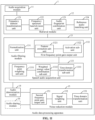
- an audio data processing apparatus which is deployed on a computer device and includes:
- an audio data processing apparatus which is deployed on a computer device and includes:
- the embodiments of the present disclosure provide a computer device, which includes a memory and a processor.
- the memory is connected to the processor, the memory is configured to store a computer program, and the processor is configured to invoke the computer program to cause the computer device to perform the method according to the foregoing aspect of the embodiments of the present disclosure.
- the embodiments of the present disclosure provide a computer-readable storage medium, which stores a computer program therein.
- the computer program is adapted to be loaded and executed by a processor to cause a computer device including the processor to perform the method according to the foregoing aspect of the embodiments of the present disclosure.
- the embodiments of the present disclosure provide a computer program product or computer program, which includes computer instructions.
- the computer instructions are stored in a computer-readable storage medium.
- a processor of a computer device reads the computer instructions from the computer-readable storage medium, and executes the computer instructions to cause the computer device to perform the method according to the foregoing aspect.
- recorded audio including a background component, a voice component, and a noise component may be acquired, a reference audio matched with the recorded audio is acquired from an audio database, and then to-be-processed voice audio may be acquired from the recorded audio by using the reference audio, the to-be-processed voice audio including the voice component and the noise component.
- noise reduction for the recorded audio can be converted into noise reduction for the to-be-processed voice audio, and then noise reduction is directly performed on the to-be-processed voice audio to obtain noise-reduced voice audio corresponding to the to-be-processed voice audio, so as to avoid the confusion between the background component and the noise component in the recorded audio.
- noise-reduced recorded audio may be obtained by combining the noise-reduced voice audio with the background component. It can be seen that by converting noise reduction for recorded audio into noise reduction for to-be-processed voice audio, the present disclosure can avoid the confusion between a background component and a noise component in the recorded audio, so as to improve a noise reduction effect on the recorded audio.
- AI noise reduction service in AI cloud services.
- the AI noise reduction service may be accessed by means of an application program interface (API), and noise reduction is performed on recoding audio shared to a social platform (such as a music recording sharing application) through the AI noise reduction service to improve a noise reduction effect on the recorded audio.
- API application program interface
- FIG. 1 is a schematic structural diagram of a network architecture according to an embodiment of the present disclosure.
- the network architecture may include a server 10d and a user terminal cluster
- the user terminal cluster may include one or more user terminals, and the number of user terminals is not limited herein.
- the user terminal cluster may include a user terminal 10a, a user terminal 10b, a user terminal 10c, and the like.
- the server 10d may be an independent physical server, may be a server cluster or distributed system including multiple physical servers, and may alternatively be a cloud server providing a basic cloud computing service such as a cloud service, a cloud database, cloud computing, a cloud function, cloud storage, a network service, cloud communication, a middleware service, a domain name service, a security service, a content delivery network (CDN), and a big data and AI platform.
- a basic cloud computing service such as a cloud service, a cloud database, cloud computing, a cloud function, cloud storage, a network service, cloud communication, a middleware service, a domain name service, a security service, a content delivery network (CDN), and a big data and AI platform.
- a basic cloud computing service such as a cloud service, a cloud database, cloud computing, a cloud function, cloud storage, a network service, cloud communication, a middleware service, a domain name service, a security service, a content delivery network (CDN), and a big data and AI platform
- All of the user terminal 10a, the user terminal 10b, the user terminal 10c, and the like may include, but are not limited to: an intelligent terminal with a recording function such as a smart phone, a tablet computer, a notebook computer, a palmtop computer, a mobile Internet device (MID), a wearable device (such as a smart watch and a smart bracelet), and a smart television, a sound card device connected with a microphone, and the like.
- an intelligent terminal with a recording function such as a smart phone, a tablet computer, a notebook computer, a palmtop computer, a mobile Internet device (MID), a wearable device (such as a smart watch and a smart bracelet), and a smart television, a sound card device connected with a microphone, and the like.
- MID mobile Internet device
- a wearable device such as a smart watch and a smart bracelet
- a smart television a sound card device connected with a microphone
- the user terminal 10a shown in FIG. 1 is taken as an example, the user terminal 10a may be configured with a recording function.
- a user wants to record audio data of himself/herself or others, he/she may use an audio playback device to play background reference audio (the background reference audio here may be accompaniment music, or background audio and actor's lines in a video, and the like), and start the recording function in the user terminal 10a to record mixed audio including the background reference audio played by the foregoing audio playback device.
- the mixed audio may be referred to as recorded audio
- the background reference audio may serve as a background component in the foregoing recorded audio.
- the foregoing audio playback device may be the user terminal 10a itself; or, the audio playback device may also be a device with an audio playback function other than the user terminal 10a.
- the foregoing recorded audio may be mixed audio including the background reference audio played by the audio playback device, noise in an environment where the audio playback device/user is located, and user voice.
- the recorded background reference audio may serve as a background component in the recorded audio
- the recorded noise may serve as a noise component in the recorded audio
- the recorded user voice may serve as a voice component in the recorded audio.
- the user terminal 10a may upload the recorded audio to a social platform.
- the user terminal 10a may upload the recorded audio to the client of the social platform, and the client of the social platform may transmit the recorded audio to a backend server (such as the server 10d shown in FIG. 1 ) of the social platform.
- a backend server such as the server 10d shown in FIG. 1
- a process of noise reduction for the recorded audio may be as follows: reference audio (the reference audio here may be understood as audio that is included in an audio database and that corresponding to the background component in the recorded audio, and may be, for example, an official genuine edition corresponding to the background component ) matched with the recorded audio is acquired from an audio database; to-be-processed voice audio (including the foregoing noise and the foregoing user voice) may be acquired from the recorded audio based on the reference audio, and then a difference between the recorded audio and the to-be-processed voice audio may be determined as the background component; and noise reduction is performed on the to-be-processed voice audio to obtain noise-reduced voice audio corresponding to the to-be-processed voice audio, and the noise-reduced voice audio and the background component are combined to obtain noise-reduced recorded audio.
- the noise-reduced recorded audio the reference audio here may be understood as audio that is included in an audio database and that corresponding to the background component in the recorded audio, and may be, for example,
- FIG. 2 is a schematic diagram of a noise reduction scene for recorded music audio according to an embodiment of the present disclosure.
- a user terminal 20a shown in FIG. 2 may be a terminal device (such as any user terminal in the user terminal cluster shown in FIG. 1 ) owned by a user A.
- the user terminal 20a is integrated with a recording function and an audio playback function, so the user terminal 20a may serve as both a recording device and an audio playback device.
- the user A wants to record music sung by himself/herself, he/she may start the recording function in the user terminal 20a, sing a song in the background of accompaniment music played by the user terminal 20a, and record the song. After the recording is completed, recorded music audio 20b can be obtained.
- the recorded audio of the embodiments of the present disclosure is the recorded music audio 20b
- the recorded music audio 20b may include the singing voice (that is, the voice component) of the user A and the accompaniment music (that is, the background component) played by the user terminal 20a.
- the user terminal 20a may upload the recorded music audio 20b to a client corresponding to a music application, and after acquiring the recorded music audio 20b, the client transmits the recorded music audio 20b to a backend server (such as the server 10d shown in FIG. 1 ) corresponding to the music application, so that the backend server stores and shares the recorded music audio 20b.
- a backend server such as the server 10d shown in FIG. 1
- the recorded music audio 20b recorded by the foregoing user terminal 20a may include noise in addition to the singing voice of the user A and the accompaniment music played by the user terminal 20a, that is, the recorded music audio 20b may include three audio components: the noise, the accompaniment music, and the user's singing voice.
- the noise in the recorded music audio 20b recorded by the user terminal 20a may be the whistling sound of a vehicle, the shouting sound of a roadside store, the speaking sound of a passerby, or the like.
- the noise in the recorded music audio 20b may also include electronic noise.
- the backend server directly shares the recorded music audio 20b uploaded by the user terminal 20a, other terminal devices cannot hear the music recorded by the user A clearly when accessing the music application and playing the recorded music audio 20a. Therefore, it is necessary to perform noise reduction on the recorded music audio 20b before the recorded music audio 20b is shared in the music application, and then noise-reduced recorded music audio is shared, so that other terminal devices may play the noise-reduced recorded music audio when accessing the music application to learn the real singing level of the user A.
- the user terminal 20a is only responsible for collection and uploading of the recorded music audio 20b, and the backend server corresponding to the music application may perform noise reduction on the recorded music audio 20b.
- the user terminal 20a may perform noise reduction on the recorded music audio 20b, and upload noise-reduced recorded music audio to the music application.
- the backend server corresponding to the music application may directly share the noise-reduced recorded music audio, that is, the user terminal 20a may perform noise reduction on the recorded music audio 20b.
- noise reduction is performed on the recorded music audio 20b to suppress the noise in the recorded music audio 20b and to preserve the accompaniment music and the singing voice of the user A in the recorded music audio 20b.
- noise reduction for the recorded music audio 20b is to removing the noise from the recorded music audio 20b as much as possible, and keeping the accompaniment music and the singing voice of the user A in the recorded music audio 20b unchanged as much as possible.
- the backend server (such as the foregoing server 10d) of the music application may perform frequency domain transformation on the recorded music audio 20b, that is, the recorded music audio 20b is transformed from a time domain to a frequency domain to obtain a frequency domain power spectrum corresponding to the recorded music audio 20b.
- the frequency domain power spectrum may include energy values respectively corresponding to frequency points.
- the frequency domain power spectrum may be shown as a frequency domain power spectrum 20i in FIG. 2 , one energy value in the frequency domain power spectrum 20i corresponds to one frequency point, and one frequency point is a frequency sampling point.
- An audio fingerprint 20c (that is, an audio fingerprint to be matched) corresponding to the recorded music audio 20b may be extracted from the frequency domain power spectrum of the recorded music audio 20b.
- the audio fingerprint may refer to unique digital features of a piece of audio in the form of identifiers.
- the backend server may acquire a music library 20d and an audio fingerprint library 20e corresponding to the music library 20d from the music application.
- the music library 20d may include all music audio stored in the music application, and the audio fingerprint library 20e may include audio fingerprint corresponding to each piece of music audio in the music library 20d.
- audio fingerprint retrieval may be performed in the audio fingerprint library 20e by using the audio fingerprint 20c corresponding to the recorded music audio 20b to obtain a fingerprint retrieval result (that is, an audio fingerprint, matched with the audio fingerprint 20b, in the audio fingerprint library 20e) corresponding to the audio fingerprint 20c
- a fingerprint retrieval result that is, an audio fingerprint, matched with the audio fingerprint 20b, in the audio fingerprint library 20e
- reference music audio 20f such as reference music corresponding to the accompaniment music in the recorded music audio 20b, that is, the reference audio
- frequency domain transformation may be performed on the reference music audio 20f, that is, the reference music audio 20f is transformed from a time domain to a frequency domain to obtain a frequency domain power spectrum corresponding to the reference music audio 20f.
- the first-stage deep network model 20g may be a pre-trained network model configured to remove a music component from recorded music audio, and a process of training of the first-stage deep network model 20g may refer to a process described in S304 below.
- a weighted recorded frequency domain signal is obtained by multiplying the frequency point gain outputted by the first-stage deep network model 20g by the frequency domain power spectrum corresponding to the recorded music audio 20b, and time domain transformation is performed on the weighted recording frequency domain signal, that is, the weighted recording frequency domain signal is transformed from the frequency domain to the time domain to obtain music-free audio 20k.
- the music-free audio 20k here may refer to an audio signal obtained by filtering out the accompaniment music from the recorded music audio 20b.
- the frequency point gain sequence 20h includes voice gains respectively corresponding to five frequency points: a voice gain 5 corresponding to a frequency point 1, a voice gain 7 corresponding to a frequency point 2, a voice gain 8 corresponding to a frequency point 3, a voice gain 10 corresponding to a frequency point 4, and a voice gain 3 corresponding to a frequency point 5.
- the frequency domain power spectrum 20i includes energy values respectively corresponding to the foregoing five frequency points: an energy value 1 corresponding to the frequency point 1, an energy value 2 corresponding to the frequency point 2, an energy value 3 corresponding to the frequency point 3, an energy value 2 corresponding to the frequency point 4, and an energy value 1 corresponding to the frequency point 5.
- a weighted recording frequency domain signal 20j is obtained by calculating a product of the voice gain of each frequency point in the frequency point gain sequence 20h and the energy value corresponding to the frequency point in the frequency domain power spectrum 20i.
- the calculation process is as follows: a product of the voice gain 5 corresponding to the frequency point 1 in the frequency point gain sequence 20h and the energy value 1 corresponding to the frequency point 1 in the frequency domain power spectrum 20i is calculated to obtain a weighted energy value 5 for the frequency point 1 in the weighted recording frequency domain signal 20j; a product of the voice gain 7 corresponding to the frequency point 2 in the frequency point gain sequence 20h and the energy value 2 corresponding to the frequency point 2 in the frequency domain power spectrum 20i is calculated to obtain an energy value 14 for the frequency point 2 in the weighted recording frequency domain signal 20j; a product of the voice gain 8 corresponding to the frequency point 3 in the frequency point gain sequence 20h and the energy value 3 corresponding to the frequency point 3 in the frequency domain power spectrum 20i is calculated to obtain an energy value 24 for the frequency point 3 in the weighted recording frequency domain signal 20j; a product of the voice gain 10 corresponding to the frequency point 4 in the frequency point gain sequence 20h and the energy value 2 corresponding to the frequency point 4 in
- the music-free audio 20k (that is, the to-be-processed voice audio) may be obtained by performing time domain transformation on the weighted recording frequency domain signal 20j, and the music-free audio 20k may include two components: the noise and the user's singing voice.
- the backend server may determine a difference between the recorded music audio 20b and the music-free audio 20k as pure music audio 20p (that is, the background component) included in the recorded music audio 20b.
- the pure music audio 20p here may be the accompaniment played by the music playback device.
- frequency domain transformation may also be performed on the music-free audio 20k to obtain a frequency domain power spectrum of the music-free audio 20k, the frequency domain power spectrum of the music-free audio 20k is inputted into a second-stage deep network model 20m, and a frequency point gain corresponding to the music-free audio 20k is outputted through the second-stage deep network model 20m.
- the second-stage deep network model 20m may be a pre-trained network model capable of performing noise reduction on noise-carrying voice audio, and a process of training of the second-stage voice network model 20m may refer to a process described in S305 below.
- a weighted voice frequency domain signal is obtained by multiplying the frequency point gain outputted by the second-stage deep network model 20m by the frequency domain power spectrum corresponding to the music-free audio 20k, and time domain transformation is performed on the weighted voice frequency domain signal to obtain human voice noise-free audio 20n (that is, the noise-reduced voice audio).
- the human voice noise-free audio 20n may refer to an audio signal obtained by performing noise suppression on the music-free audio 20k, such as the singing voice of the user A in the recorded music audio 20b.
- the foregoing first-stage deep network model 20g and second-stage deep network model 20m may be deep networks having different network structures.
- a process of calculation of the human voice noise-free audio 20n is similar to the foregoing process of calculation of the music-free audio 20k, which will not be described in detail here.
- the backend server may superimpose the pure music audio 20p and the human voice noise-free audio 20n to obtain noise-reduced recorded music audio 20q (that is, the noise-reduced recorded audio).
- noise reduction for the recorded music audio 20b is converted into noise reduction for the music-free audio 20k (which may be understood as human voice audio), so that the noise-reduced recorded music audio 20q can not only preserve the singing voice of the user A and the accompaniment music, but also suppress the noise in the recorded music audio 20b to the maximum extent, thereby improving a noise reduction effect on the recorded music audio 20b.
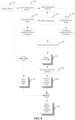
- FIG. 3 is a schematic flowchart of an audio data processing method according to an embodiment of the present disclosure. It will be appreciated that the audio data processing method may be performed by a computer device, and the computer device may be a user terminal, or a server, or a computer program application (including program codes) in a computer device, which is not limited herein. As shown in FIG. 3 , the audio data processing method may include S101 to S105.
- S101 Acquire recorded audio, the recorded audio including a background component, a voice component, and a noise component.
- the computer device may acquire the recorded audio including the background component, the voice component, and the noise component.
- the recorded audio may be mixed audio collected by a recording device by recording a voice of an object and a sound from an audio playback device in a recording environment.
- the recording device may be a device having a recording function, such as a sound card device connected with a microphone and a mobile phone.
- the audio playback device may be a device having an audio playback function, such as a mobile phone, a music playback device, and an audio device.
- the object may refer to a user who needs voice recording, such as the user A in the foregoing embodiment corresponding to FIG. 2 .
- the recording environment may be an environment where the object and the audio playback device are located, such as an indoor space or outdoor space (such as on a street or in a park) where the object and the audio playback device are located.
- the device may serve as both the recording device and the audio playback device, that is, the audio playback device and the recording device in the present disclosure may be the same device, such as the user terminal 20a in the foregoing embodiment corresponding to FIG. 2 .
- the recorded audio acquired by the computer device may be recorded data transmitted to the computer device by the recording device, or may be recorded data collected by the computer device itself.
- the computer device may serve as both the recording device and the audio playback device.
- the computer device may be installed with an audio application, and the foregoing recording process of the recorded audio may be realized through a recording function in the audio application.
- the object may start the recording function in the recording device, use the audio playback device to play accompaniment music, sing a song in the background of the accompaniment music, and use the recording device to record the song.
- the recorded song may serve as the foregoing recorded audio.
- the recorded audio may include the accompaniment music played by the audio playback device and the singing voice of the object.
- the recording environment is a noisy environment
- the recorded audio may further include noise in the recording environment.
- the recorded accompaniment music here may serve as the background component in the recorded audio, such as the accompaniment music played by the user terminal 20a in the foregoing embodiment corresponding to FIG. 2 .
- the recorded singing voice of the object may serve as the voice component in the recorded audio, such as the singing voice of the user A in the foregoing embodiment corresponding to FIG. 2 .
- the recorded noise may serve as the noise component in the recorded audio, such as the noise in the environment where the user terminal 20a is located in the foregoing embodiment corresponding to FIG. 2 .
- the recorded audio may be the recorded music audio 20b in the foregoing embodiment corresponding to FIG. 2 .
- the object may start the recording function in the recording device, use the audio playback device to play background audio in a video segment to be dubbed, dub on the basis of playing the background audio, and use the recording device to record the dubbing audio.
- recorded dubbing audio may serve as the foregoing recorded audio.
- the recorded audio may include the background audio played by the audio playback device and the dubbing voice of the object.
- the recording environment is a noisy environment
- the recorded audio may further include noise in the recording environment.
- the recorded background audio here may serve as the background component in the recorded audio.
- the recorded dubbing voice of the object may serve as the voice component in the recorded audio.
- the recorded noise may serve as the noise component in the recorded audio.
- the recorded audio acquired by the computer device may include audio (such as the foregoing accompaniment music and background audio in the segment to be dubbed) played by the audio playback device, a voice (such as the foregoing dubbing and singing voice of the user) outputted by the object, and noise in the recording environment.
- audio such as the foregoing accompaniment music and background audio in the segment to be dubbed
- voice such as the foregoing dubbing and singing voice of the user
- noise in the recording environment may include audio (such as the foregoing accompaniment music and background audio in the segment to be dubbed) played by the audio playback device, a voice (such as the foregoing dubbing and singing voice of the user) outputted by the object, and noise in the recording environment.
- the foregoing music recording scene and dubbing recording scene are merely examples in the present disclosure, and the present disclosure may also be applied to other audio recording scenes such as: a human-machine question-answer interaction scene between the object and the audio playback device, and a language performance scene (such as a
- S102 Determine a reference audio matched with the recorded audio from an audio database.
- the recorded audio acquired by the computer device may include the noise in the recording environment in addition to the audio outputted by the object and the audio played by the audio playback device.
- the noise in the foregoing recorded audio may be the broadcasting sound of promotional activities of the shopping mall, the shouting sound of a store clerk, electronic noise of the recording device, or the like.
- the noise in the foregoing recorded audio may be the operating sound of an air conditioner, the rotating sound of a fan, electronic noise of the recording device, or the like.
- the computer device needs to perform noise reduction on the acquired recorded audio, and the effect of noise reduction is to suppress the noise in the recorded audio as much as possible, and to keep the audio outputted by the object and the audio played by the audio playback device that are included in the recorded audio unchanged.
- noise reduction for the recorded audio may be converted into noise reduction for human voice noise-free audio excluding the background component to avoid the confusion between the background component and the noise component. Therefore, the reference audio matched with the recorded audio may be first determined from the audio database to obtain to-be-processed voice audio without the background component.
- the implementation of S 102 may be performing matching directly by using the recorded audio to obtain the reference audio; and may also be first acquiring an audio fingerprint to be matched corresponding to the recorded audio, and acquiring the reference audio matched with the recorded audio from the audio database by using the audio fingerprint to be matched.
- the computer device may perform data compression on the recorded audio, and map the recorded audio to digital summary information.
- the digital summary information here may be referred to as the audio fingerprint to be matched corresponding to the recorded audio, and a data volume of the audio fingerprint to be matched is far less than a data volume of the foregoing recorded audio, thereby improving the retrieval accuracy and retrieval efficiency.
- the computer device may further acquire the audio database, acquire an audio fingerprint library corresponding to the audio database, match the foregoing audio fingerprint to be matched with an audio fingerprint included in the audio fingerprint library, acquire an audio fingerprint matched with the audio fingerprint to be matched from the audio fingerprint library, and determine audio data corresponding to the matched audio fingerprint as the reference audio (such as the reference music audio 20f in the foregoing embodiment corresponding to FIG. 2 ) corresponding to the recorded audio.
- the computer device may retrieve the reference audio matched with the recorded audio from the audio database by using an audio fingerprint retrieval technology.
- the foregoing audio database may include all audio data included in the audio application, the audio fingerprint library may include an audio fingerprint corresponding to each audio data in the audio database, and the audio database and the audio fingerprint library may be pre-configured.
- the audio database may be a database including reference music audio; and in a case that the foregoing recorded audio is recorded dubbing audio, the audio database may be a database including audio from video data.
- the computer device may directly access the audio database and the audio fingerprint library to retrieve the reference audio matched with the recorded audio.
- the reference audio may correspond to background audio that is played by a voice playback device and that exists in the recorded audio as the background component.
- the reference audio may be reference music corresponding to accompaniment music, that is, the background component included in the recorded music audio
- the reference audio may be reference dubbing corresponding to video background audio included in the recorded dubbing audio.
- the audio fingerprint retrieval technology adopted by the computer device may include, but is not limited to: the Philips audio retrieval technology (a retrieval technology, which may include two parts: a highly-robust fingerprint extraction method and an efficient fingerprint search strategy) and the Shazam audio retrieval technology (an audio retrieval technology, which may include two parts: audio fingerprint extraction and audio fingerprint matching).
- a suitable audio retrieval technology may be selected according to actual requirements to retrieve the foregoing reference audio, such as: a technology improved based on the foregoing two audio fingerprint retrieval technologies, which is not defined herein.
- the audio fingerprint to be matched that is extracted by the computer device may be represented by a commonly used audio feature of recorded audio.
- the commonly used audio feature may include, but is not limited to: Fourier coefficients, Mel-frequency cepstral coefficients (MFCCs), spectral flatness, sharpness, linear predictive coefficients (LPCs), and the like.
- An audio fingerprint matching algorithm adopted by the computer device may include, but is not limited to: a distance-based matching algorithm (when the computer device finds out an audio fingerprint A that has the shortest distance from the audio fingerprint to be matched from the audio fingerprint library, it indicates that audio data corresponding to the audio fingerprint A is the reference audio corresponding to the recorded audio), an index-based matching method, and a threshold value-based matching method.
- suitable audio fingerprint extraction algorithm and audio fingerprint matching algorithm may be selected according to actual requirements, which are not defined herein.
- S103 Acquire to-be-processed voice audio from the recorded audio by using the reference audio, the to-be-processed voice audio including the voice component and the noise component.
- the computer device may filter the recorded audio by using the reference audio to obtain to-be-processed voice audio (which may also be referred to as a noise-carrying human voice signal, such as the music-free audio 20k in the foregoing embodiment corresponding to FIG. 2 ) included in the recorded audio.
- the to-be-processed voice audio may include the voice component and the noise component in the recorded audio.
- the to-be-processed voice audio may be obtained by filtering out the background component, that is, the audio outputted by the audio playback device from the recorded audio by using the reference audio.
- the foregoing to-be-processed voice audio may be obtained by removing the audio outputted by the audio playback device, that is, the background component included in the recorded audio, by using the reference audio.
- the computer device may perform frequency domain transformation on the recorded audio to obtain a first frequency spectrum feature corresponding to the recorded audio, and perform frequency domain transformation on the reference audio to obtain a second frequency spectrum feature corresponding to the reference audio.
- a frequency domain transformation method in the present disclosure may include, but is not limited to: Fourier transformation (FT), Laplace transform, Z-transformation, and variations or improvements of the foregoing three frequency domain transformation methods such as fast Fourier transformation (FFT) and discrete Fourier transform (DFT).
- FFT fast Fourier transformation
- DFT discrete Fourier transform
- the adopted frequency domain transformation method is not defined herein.
- the foregoing first frequency spectrum feature may be power spectrum data obtained by performing frequency domain transformation on the recorded audio, or may be a normalization result of the power spectrum data of the recorded audio.
- a process of acquisition of the foregoing second frequency spectrum feature is the same as that of the foregoing first frequency spectrum feature.
- the second frequency spectrum feature is power spectrum data corresponding to the reference audio; and in a case that the first frequency spectrum feature is normalized power spectrum data, the second frequency spectrum feature is normalized power spectrum data, and normalization methods adopted for the first frequency spectrum feature and the second frequency spectrum feature are the same.
- the foregoing normalization method may include, but is not limited to: instant layer normalization (iLN), layer normalization (LN), instance normalization (IN), group normalization (GN), switchable normalization (SN), and other normalization methods.
- the adopted normalization method is not defined herein.
- the computer device may perform feature combination (concat) on the first frequency spectrum feature and the second frequency spectrum feature, and input a combined frequency spectrum feature as an input feature into a first deep network model (such as the first deep network model 20g in the foregoing embodiment corresponding to FIG. 2 ), a first frequency point gain (such as the frequency point gain sequence 20h in the foregoing embodiment corresponding to FIG. 2 ) may be outputted through the first deep network model, and then to-be-processed voice audio is determined by using the first frequency point gain and recorded power spectrum data.
- the foregoing to-be-processed voice audio may be obtained by multiplying the first frequency point gain by the power spectrum data corresponding to the recorded audio and then performing time domain transformation.
- the time domain transformation here and the foregoing frequency domain transformation are inverse transformations.
- the adopted frequency domain transformation method is Fourier transformation
- the adopted time domain transformation method here is inverse Fourier transformation.
- a process of calculation of the to-be-processed voice audio may refer to the process of calculation of the music-free audio 20k in the foregoing embodiment corresponding to FIG. 2 , which will not be described in detail here.
- the foregoing first deep network model may be configured to remove the background component, that is, the audio outputted by the audio playback device, from the recorded audio.
- the first deep neural network may include, but is not limited to: a gate recurrent unit (GRU), a long short term memory (LSTM), a deep neural network (DNN), a convolutional neural network (CNN), variations of any one of the foregoing network models, combined models of two or more network models, and the like.
- GRU gate recurrent unit
- LSTM long short term memory
- DNN deep neural network
- CNN convolutional neural network
- the network structure of the adopted first deep network model is not defined herein.
- a second deep network model involved in the following description may also include, but is not limited to, the foregoing network models.
- the second deep network model is configured to perform noise reduction on the to-be-processed voice audio, and the second deep network model and the first deep network model may have the same network structure but have different model parameters (functions of the two network models are different); or, the second deep network model and the first deep network model may have different network structures and have different model parameters.
- the type of the second deep network model will not be described in detail subsequently.
- S104 Determine a difference between the recorded audio and the to-be-processed voice audio as the background component included in the recorded audio.
- the computer device may subtract the to-be-processed voice audio from the recorded audio to obtain the audio outputted by the audio playback device.
- the audio outputted by the audio device may be referred to as the background component (such as the pure music audio 20p in the foregoing embodiment corresponding to FIG. 2 ) in the recorded audio.
- the to-be-processed voice audio includes the noise component and the voice component in the recorded audio, and a result obtained by subtracting the to-be-processed voice from the recorded audio is the background component included in the recorded audio.
- the difference between the recorded audio and the to-be-processed voice audio may be a waveform difference in a time domain or a frequency spectrum difference in a frequency domain.
- the recorded audio and the to-be-processed voice audio are time domain waveform signals
- a first signal waveform corresponding to the recorded audio and a second signal waveform corresponding to the to-be-processed voice audio may be acquired, and both the first signal waveform and the second signal waveform may be represented in a two-dimensional coordinate system (the x-axis may represent time, and the y-axis may represent signal strength, which may also be referred to as signal amplitude), and then the second signal waveform may be subtracted from the first signal waveform to obtain a waveform difference between the recorded audio and the to-be-processed voice audio in a time domain.
- the new waveform signal may be considered as a time domain waveform signal corresponding to the background component.
- voice power spectrum data corresponding to the to-be-processed voice audio may be subtracted from recorded power spectrum data corresponding to the recorded audio to obtain a frequency spectrum difference between the two.
- the frequency spectrum difference may be considered as a frequency domain signal corresponding to the background component.
- the recorded power spectrum data corresponding to the recorded audio is (5, 8, 10, 9, 7)
- the voice power spectrum data corresponding to the to-be-processed voice audio is (2, 4, 1, 5, 6)
- a frequency spectrum difference obtained by subtracting the two may be (3, 4, 9, 4, 1).
- the frequency spectrum difference (3, 4, 9, 4, 1) may be referred to as the frequency domain signal corresponding to the background component.
- S105 Perform noise reduction on the to-be-processed voice audio to obtain noise-reduced voice audio corresponding to the to-be-processed voice audio, and combine the noise-reduced voice audio with the background component to obtain noise-reduced recorded audio.
- the computer device may perform noise reduction on the to-be-processed voice audio, that is, the noise in the to-be-processed voice audio is suppressed to obtain noise-reduced voice audio (such as the human voice noise-free audio 20n in the foregoing embodiment corresponding to FIG. 2 ) corresponding to the to-be-processed voice audio.
- noise reduction on the to-be-processed voice audio, that is, the noise in the to-be-processed voice audio is suppressed to obtain noise-reduced voice audio (such as the human voice noise-free audio 20n in the foregoing embodiment corresponding to FIG. 2 ) corresponding to the to-be-processed voice audio.
- the foregoing noise reduction for the to-be-processed voice audio may be realized through the foregoing second deep network model.
- the computer device may perform frequency domain transformation on the to-be-processed voice audio to obtain power spectrum data (which may be referred to as voice power spectrum data) corresponding to the to-be-processed voice audio, and input the voice power spectrum data into the second deep network model, a second frequency point gain may be outputted through the second deep network model, a weighted voice frequency domain signal corresponding to the to-be-processed voice audio is obtained by using the second frequency point gain and the voice power spectrum data, and then time domain transformation is performed on the weighted voice frequency domain signal to obtain the noise-reduced voice audio corresponding to the to-be-processed voice audio.
- the foregoing noise-reduced voice audio may be obtained by multiplying the second frequency point gain by the voice power spectrum data corresponding to the to-be-processed voice audio and then performing time domain transformation. Then, the noise-reduced voice audio and the foregoing background component may be superimposed to obtain noise-reduced recorded audio (such as the noise-reduced recorded music audio 20q in the foregoing embodiment corresponding to FIG. 2 ).
- the computer device may share the noise-reduced recorded audio to a social platform, so that a terminal device in the social platform may play the noise-reduced recorded audio when accessing the noise-reduced recorded audio.
- the foregoing social platform refers to an application or web page that may be used for sharing and propagating audio and video data.
- the social platform may be an audio application, or a video application, or a content sharing platform, or the like.
- the noise-reduced recorded audio may be noise-reduced recorded music audio
- the computer device may share the noise-reduced recorded music audio to a content sharing platform (in this case, the social platform defaults to the content sharing platform)
- the terminal device may play the noise-reduced recorded music audio when accessing the noise-reduced recorded music audio shared in the content sharing platform.
- FIG. 4 is a schematic diagram of a music recording scene according to an embodiment of the present disclosure.
- a user terminal 30b may be a terminal device used by a user A
- the user A is a user who shares noise-reduced recorded music audio 30e to the content sharing platform.
- a user terminal 30c may be a terminal device used by a user B and a user terminal 30d may be a terminal device used by a user C.
- the server 30a may share the noise-reduced recorded music audio 30e to the content sharing platform.
- the content sharing platform in the user terminal 30b may display the noise-reduced recorded music audio 30e and information such as sharing time corresponding to the noise-reduced recorded music audio 30e.
- contents shared by different users may be displayed in the content sharing platform of the user terminal 30c, the contents may include the noise-reduced recorded music audio 30e shared by the user A, and after the noise-reduced recorded music audio 30e is clicked, the noise-reduced recorded music audio 30e may be played by the user terminal 30c.
- the noise-reduced recorded music audio 30e shared by the user A may be displayed in the content sharing platform of the user terminal 30d, and after the noise-reduced recorded music audio 30e is clicked, the noise-reduced recorded music audio 30e may be played by the user terminal 30d.
- the recorded audio may be mixed audio including a voice component, a background component, and a noise component.
- a reference audio corresponding to the recorded audio may be obtained from an audio database
- to-be-processed voice audio may be screened out from the recorded audio by using the reference audio
- the background component may be obtained by subtracting the to-be-processed voice audio from the foregoing recorded audio.
- noise reduction may be performed on the to-be-processed voice audio to obtain noise-reduced voice audio
- the noise-reduced voice audio and the background component may be superimposed to obtain noise-reduced recorded audio.
- FIG. 5 is a schematic flowchart of an audio data processing method according to an embodiment of the present disclosure. It will be appreciated that the audio data processing method may be performed by a computer device, and the computer device may be a user terminal, or a server, or a computer program application (including program codes) in a computer device, which is not limited herein. As shown in FIG. 5 , the audio data processing method may include S201 to S210.
- S201 Acquire recorded audio, the recorded audio including a background component, a voice component, and a noise component.
- S201 may refer to S101 in the foregoing embodiment corresponding to FIG. 3 , which will not be described in detail here.
- S202 Divide the recorded audio into M recorded data frames, and perform frequency domain transformation on an ith recorded data frame among the M recorded data frames to obtain power spectrum data corresponding to the ith recorded data frame, i and M being both positive integers, and i being less than or equal to M.
- the computer device may perform frame division on the recorded audio to divide the recorded audio into M recorded data frames, perform frequency domain transformation on an ith recorded data frame in the M recorded data frames, for example, perform Fourier transformation on the ith recorded data frame to obtain power spectrum data corresponding to the ith recorded data frame.
- M may be a positive integer greater than 1.
- M may take the value of 2, 3, ..., and i may be a positive integer less than or equal to M.
- the computer device may perform frame division on the recorded audio through a sliding window to obtain M recorded data frames. To maintain the continuity of adjacent recorded data frames, frame division may usually be performed on the recorded audio by an overlapping and segmentation method, and the size of the recorded data frames may be associated with the size of the sliding window.
- Frequency domain transformation (such as Fourier transformation) may be performed independently on each of the M recorded data frames to obtain power spectrum data respectively corresponding to each recorded data frame.
- the power spectrum data may include energy values (the energy values here may also be referred to as amplitude values of the power spectrum data) respectively corresponding to frequency points, one energy value in the power spectrum data corresponds to one frequency point, and one frequency point may be understood as one frequency sampling point during frequency domain transformation.
- S203 Divide the power spectrum data corresponding to the ith recorded data frame into N frequency spectrum bands, and construct sub-fingerprint information corresponding to the ith recorded data frame by using peak signals in the N frequency spectrum bands, N being a positive integer.
- the computer device may construct sub-fingerprint information respectively corresponding to each recorded data frame by using the power spectrum data respectively corresponding to each recorded data frame.
- the key to construction of the sub-fingerprint information is to select an energy value with the greatest discrimination from the power spectrum data corresponding to each recorded data frame.
- a process of construction of the sub-fingerprint information will be described below by taking the ith recorded data frame as an example.
- the computer device may divide the power spectrum data corresponding to the ith recorded data frame into N frequency spectrum bands, and select a peak signal (that is, a maximum value in each frequency spectrum band, which may also be understood as a maximum energy value in each frequency spectrum band) in each frequency spectrum band as a signature of each frequency spectrum band to construct sub-fingerprint information corresponding to the ith recorded data frame.
- N may be a positive integer.
- N may take the value of 1, 2, ...
- the sub-fingerprint information corresponding to the ith recorded data frame may include the peak signals respectively corresponding to the N frequency spectrum bands.
- S204 Combine sub-fingerprint information respectively corresponding to the M recorded data frames according to a time sequence of the M recorded data frames in the recorded audio to obtain an audio fingerprint to be matched corresponding to the recorded audio.
- the computer device may acquire the sub-fingerprint information respectively corresponding to the M recorded data frames according to the foregoing description of S203, and then combine the sub-fingerprint information respectively corresponding to the M recorded data frames in sequence according to a time sequence of the M recorded data frames in the recorded audio to obtain an audio fingerprint to be matched corresponding to the recorded audio.
- the peak signals to construct the audio fingerprint to be matched it can be ensured that the audio fingerprint to be matched is kept unchanged in various noisy and distortion environments as much as possible.
- S205 Acquire an audio fingerprint library corresponding to an audio database, perform fingerprint retrieval in the audio fingerprint library by using the audio fingerprint to be matched, and determine the reference audio from the audio database by using a fingerprint retrieval result.
- the computer device may acquire an audio database and acquire an audio fingerprint library corresponding to the audio database. For each audio data in the audio database, an audio fingerprint respectively corresponding to each audio data in the audio database may be obtained according to the foregoing description of S201 to S204, and an audio fingerprint corresponding to each audio data may constitute the audio fingerprint library corresponding to the audio database.
- the audio fingerprint library is pre-constructed.
- the computer device may directly acquire the audio fingerprint library, and perform fingerprint retrieval in the audio fingerprint library based on the audio fingerprint to be matched to obtain an audio fingerprint matched with the audio fingerprint to be matched.
- the matched audio fingerprint may be used as a fingerprint retrieval result corresponding to the audio fingerprint to be matched, and then audio data corresponding to the fingerprint retrieval result may be determined as the reference audio matched with the recorded audio.
- the computer device may store the audio fingerprint as a key in an audio retrieval hash table.
- a single audio data frame included in each audio data may correspond to one piece of sub-fingerprint information, and one piece of sub-fingerprint information may correspond to one key in the audio retrieval hash table.
- Sub-fingerprint information corresponding to all audio data frames included in each audio data may constitute an audio fingerprint corresponding to each audio data.
- each piece of sub-fingerprint information may serve as a key in a hash table, and each key may point to the time when sub-fingerprint information appears in audio data to which the sub-fingerprint information belongs, and may also point to an identifier of the audio data to which the sub-fingerprint information belongs.
- the hash value may be stored as a key in an audio retrieval hash table, and the key points to the time when the sub-fingerprint information appears in audio data to which the sub-fingerprint information belongs being 02: 30, and points to an identifier of the audio data being: audio data 1.
- the foregoing audio fingerprint library may include one or more hash values corresponding to each audio data in the audio database.
- the audio fingerprint to be matched corresponding to the recorded audio may include M pieces of sub-fingerprint information, and one piece of sub-fingerprint information corresponds to one audio data frame.
- the computer device may map the M pieces of sub-fingerprint information included in the audio fingerprint to be matched to M hash values to be matched, and acquire recording time respectively corresponding to the M hash values to be matched.
- the recording time corresponding to one hash value to be matched is used for characterizing the time when sub-fingerprint information corresponding to the hash value to be matched appears in the recorded audio.
- a first time difference between recording time corresponding to the pth hash value to be matched and time information corresponding to the first hash value is acquired.
- p is a positive integer less than or equal to M.
- a second time difference between recording time corresponding to the qth hash value to be matched and time information corresponding to the second hash value is acquired.
- q is a positive integer less than or equal to M.
- the audio fingerprint to which the first hash value belongs may be determined as a fingerprint retrieval result, and audio data corresponding to the fingerprint retrieval result is determined as the reference audio corresponding to the recorded audio.
- the computer device may match the foregoing M hash values to be matched with hash values in the audio fingerprint library, each successfully matched hash value to be matched may be calculated to obtain a time difference, and after all the M hash values to be matched are matched, a maximum value of the same time difference may be counted. In this case, the maximum value may be set as the foregoing numerical threshold value, and audio data corresponding to the maximum value is determined as the reference audio corresponding to the recorded audio.
- the M hash values to be matched include a hash value 1, a hash value 2, a hash value 3, a hash value 4, a hash value 5, and a hash value 6, a hash value A in the audio fingerprint library is matched with the hash value 1, the hash value A points to audio data 1, and a time difference between the hash value A and the hash value 1 is t1.
- a hash value B in the audio fingerprint library is matched with the hash value 2, the hash value B points to the audio data 1, and a time difference between the hash value B and the hash value 2 is t2.
- a hash value C in the audio fingerprint library is matched with the hash value 3, the hash value C points to the audio data 1, and a time difference between the hash value C and the hash value 3 is t3.
- a hash value D in the audio fingerprint library is matched with the hash value 4, the hash value D points to the audio data 1, and a time difference between the hash value D and the hash value 4 is t4.
- a hash value E in the audio fingerprint library is matched with the hash value 5, the hash value E points to audio data 2, and a time difference between the hash value E and the hash value 5 is t5.
- a hash value F in the audio fingerprint library is matched with the hash value 6, the hash value 6 points to the audio data 2, and a time difference between the hash value F and the hash value 6 is t6.
- the audio data 1 may be used as the reference audio corresponding to the recorded audio.
- S206 Acquire recorded power spectrum data corresponding to the recorded audio, and perform normalization on the recorded power spectrum data to obtain a first frequency spectrum feature; and acquire reference power spectrum data corresponding to the reference audio, perform normalization on the reference power spectrum data to obtain a second frequency spectrum feature, and combine the first frequency spectrum feature with the second frequency spectrum feature to obtain an input feature.
- the computer device may acquire recorded power spectrum data corresponding to the recorded audio.
- the recorded power spectrum data may be composed of power spectrum data respectively corresponding to the foregoing M audio data frames, and the recorded power spectrum data may include energy values respectively corresponding to frequency points in the recorded audio. Normalization is performed on the recorded power spectrum data to obtain a first frequency spectrum feature. In a case that the normalization here is iLN, normalization may be performed independently on energy values corresponding to frequency points in the recorded power spectrum data. Of course, other normalization, such as BN, may also be adopted in the present disclosure.
- the recorded power spectrum data may be used directly as the first frequency spectrum feature without normalization of the recorded power spectrum data.
- the same frequency domain transformation (for obtaining reference power spectrum data) and normalization may be performed on the reference audio as the foregoing recorded audio to obtain the second frequency spectrum feature corresponding to the reference audio. Then, the first frequency spectrum feature and the second frequency spectrum feature may be combined into the input feature through concat.
- S207 Input the input feature into a first deep network model, to acquire a first frequency point gain for the recorded audio by using the first deep network model.
- the computer device may input the input feature into a first deep network model, and a first frequency point gain for the recorded audio may be outputted through the first deep network model.
- the first frequency point gain here may include voice gains respectively corresponding to frequency points in the recorded audio.
- the input feature is first inputted into the feature extraction network layer in the first deep network model, and a time sequence distribution feature corresponding to the input feature may be acquired by using the feature extraction network layer.
- the time sequence distribution feature may be used for characterizing context semantics in the recorded audio.
- a time sequence feature vector corresponding to the time sequence distribution feature is acquired according to the fully-connected network layer in the first deep network model, and then a first frequency point gain is outputted through the activation layer in the first deep network model according to the time sequence feature vector.
- voice gains that is, the first frequency point gain
- Sigmoid function serving as the activation layer.
- S208 Acquire to-be-processed voice audio included in the recorded audio by using the first frequency point gain and the recorded power spectrum data; and determine a difference between the recorded audio and the to-be-processed voice audio as the background component in the recorded audio, the to-be-processed voice audio including the voice component and the noise component.
- the first frequency point gain may include voice gains respectively corresponding to the T frequency points
- the recorded power spectrum data includes energy values respectively corresponding to the T frequency points
- the T voice gains correspond to the T energy values in a one-to-one manner.
- the computer device may weigh the energy values, belonging to the same frequency points, in the recorded power spectrum data by using the voice gains, respectively corresponding to the T frequency points, in the first frequency point gain to obtain weighted energy values respectively corresponding to the T frequency points. Then, a weighted recording frequency domain signal corresponding to the recorded audio may be determined according to the weighted energy values respectively corresponding to the T frequency points.
- Time domain transformation (which is an inverse transformation with respect to the foregoing frequency domain transformation) is performed on the weighted recording frequency domain signal to obtain the to-be-processed voice audio included in the recorded audio.
- the recorded audio may include two frequency points (T here takes the value of 2), a voice gain of a first frequency point in the first frequency point gain is 2 and an energy value in the recorded power spectrum data is 1, and a voice gain of a second frequency point in the first frequency point gain is 3 and an energy value in the recorded power spectrum data is 2.
- a weighted recording frequency domain signal of (2, 6) may be calculated, and the to-be-processed voice audio included in the recorded audio may be obtained by performing time domain transformation on the weighted recording frequency domain signal. Further, the difference between the recorded audio and the to-be-processed voice audio may be determined as the background component, that is, the audio outputted by the audio playback device.
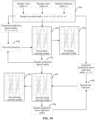
- FIG. 6 is a schematic structural diagram of a first deep network model according to an embodiment of the present disclosure.
- a network structure of the first deep network model will be described by taking a music recording scene as an example.
- a computer device may perform fast Fourier transformation (FFT) on the recorded music audio 40a and the reference music audio 40b, respectively, to obtain power spectrum data 40c (that is, recorded power spectrum data) and a phase corresponding to the recorded music audio 40a, as well as power spectrum data 40d (that is, reference power spectrum data) corresponding to the reference music audio 40b.
- FFT fast Fourier transformation
- the foregoing fast Fourier transformation is merely an example in this embodiment, and other frequency domain transformation methods, such as discrete Fourier transform, may be used in the present disclosure.
- iLN is performed on a power spectrum of each frame in the power spectrum data 40c and the power spectrum data 40d
- feature combination is performed through concat, and an input feature obtained by combination is taken as input data of a first deep network model 40e.
- the first deep network model 40e may include a gate recurrent unit 1, a gate recurrent unit 2, and a fully-connected network 1, and finally a first frequency point gain is outputted through a Sigmoid function.
- inverse fast Fourier transformation may be performed to obtain music-free audio 40f (that is, the foregoing to-be-processed voice audio).
- the inverse fast Fourier transformation may be a time domain transformation method, that is, a transformation from a frequency domain to a time domain.
- S209 Acquire voice power spectrum data corresponding to the to-be-processed voice audio, input the voice power spectrum data into a second deep network model, to acquire a second frequency point gain for the to-be-processed voice audio through the second deep network model.
- the computer device may perform frequency domain transformation on the to-be-processed voice audio to obtain voice power spectrum data corresponding to the to-be-processed voice audio, and input the voice power spectrum data into a second deep network model, and a second frequency point gain for the to-be-processed voice audio may be outputted through a feature extraction network layer (which may be a GRU), a fully-connected network layer (which may be a fully-connected network), and an activation layer (a Sigmoid function) in the second deep network model.
- the second frequency point gain may include noise reduction gains respectively corresponding to frequency points in the to-be-processed voice audio, and may be an output value of the Sigmoid function.
- S210 Acquire a weighted voice frequency domain signal corresponding to the to-be-processed voice audio according to the second frequency point gain and the voice power spectrum data; and perform time domain transformation on the weighted voice frequency domain signal to obtain noise-reduced voice audio corresponding to the to-be-processed voice audio, and combine the noise-reduced voice audio with the background component to obtain noise-reduced recorded audio.
- the second frequency point gain may include noise reduction gains respectively corresponding to the D frequency points
- the voice power spectrum data includes energy values respectively corresponding to the D frequency points
- the D noise reduction gains correspond to the D energy values in a one-to-one manner.
- the computer device may weigh the energy values, belonging to the same frequency points, in the voice power spectrum data according to the noise reduction gains, respectively corresponding to the D frequency points, in the second frequency point gain to obtain weighted energy values respectively corresponding to the D frequency points.
- a weighted voice frequency domain signal corresponding to the to-be-processed voice audio may be determined according to the weighted energy values respectively corresponding to the D frequency points.
- Time domain transformation (which is an inverse transformation with respect to the foregoing frequency domain transformation) is performed on the weighted voice frequency domain signal to obtain noise-reduced voice audio corresponding to the to-be-processed voice audio.
- the to-be-processed voice audio may include two frequency points (D here takes the value of 2), a noise reduction gain of a first frequency point in the second frequency point gain is 0.1 and an energy value in the voice power spectrum data is 5, and a noise reduction gain of a second frequency point in the second frequency point gain is 0.5 and an energy value in the voice power spectrum data is 8.
- D takes the value of 2
- a weighted voice frequency domain signal of (0.5, 4) may be calculated, and the noise-reduced voice audio corresponding to the to-be-processed voice audio may be obtained by performing time domain transformation on the weighted voice frequency domain signal. Further, the noise-reduced voice audio and the background component may be superimposed to obtain noise-reduced recorded audio.
- FIG. 7 is a schematic structural diagram of a second deep network model according to an embodiment of the present disclosure.
- the computer device may perform fast Fourier transformation (FFT) on the music-free audio 40f to obtain power spectrum data 40g (that is, the foregoing voice power spectrum data) and a phase corresponding to the music-free audio 40f.
- FFT fast Fourier transformation
- the power spectrum data 40g is taken as input data of a second deep network model 40h.
- the second deep network model 40h may be composed of a fully-connected network 2, a gate recurrent unit 3, a gate recurrent unit 4, and a fully-connected network 3, and finally a second frequency point gain may be outputted by a Sigmoid function. After a noise reduction gain of each frequency point included in the second frequency point gain is multiplied by an energy value of the corresponding frequency point in the power spectrum data 40g, inverse fast Fourier transformation (iFFT) is performed to obtain a human voice noise-free audio 40i (that is, the foregoing noise-reduced voice audio).
- iFFT inverse fast Fourier transformation
- FIG. 8 is a schematic flowchart of noise reduction for recorded audio according to an embodiment of the present disclosure.
- a computer device may acquire an audio fingerprint 50b corresponding to the recorded music audio 50a, perform audio fingerprint retrieval in an audio fingerprint library 50d corresponding to a music library 50c (that is, the foregoing audio database) based on the audio fingerprint 50b, and determine certain audio data in the music library 50c as reference music audio 50e corresponding to the recorded music audio 50a in a case that an audio fingerprint corresponding to the audio data in the music library 50c is matched with the audio fingerprint 50b.
- a process of extraction of the audio fingerprint 50b and a process of audio fingerprint retrieval for the audio fingerprint 50b may refer to the foregoing description of S202 to S205, which will not be described in detail here.
- frequency spectrum feature extraction may be performed on the recorded music audio 50a and the reference music audio 50e, respectively, feature combination is performed on acquired frequency spectrum features, a combined frequency spectrum feature is inputted into a first-stage deep network 50h (that is, the foregoing first deep network model), and music-free audio 50i may be obtained through the first-stage deep network 50h (a process of acquisition of the music-free audio 50i may refer to the foregoing embodiment corresponding to FIG. 6 , which will not be described in detail here).
- a frequency spectrum feature extraction process may include frequency domain transformation such as Fourier transformation and normalization such as iLN.
- pure music audio 50j that is, the foregoing background component
- Fast Fourier transformation may be performed on the music-free audio 50i to obtain power spectrum data corresponding to the music-free audio 50i, and the power spectrum data is taken as an input of a second-stage deep network 50k (that is, the foregoing second deep network model), and a human voice noise-free audio 50m may be obtained through the second-stage deep network 50k (a process of acquisition of the human voice noise-free audio 50m may refer to the foregoing embodiment corresponding to FIG. 7 , which will not be described in detail here). Then, the pure music audio 50j and the human voice noise-free audio 50m may be superimposed to obtain final noise-reduced recorded music audio 50n (that is, noise-reduced recorded audio).
- the recorded audio may be mixed audio including a voice component, a background component, and a noise component.
- a reference audio corresponding to the recorded audio may be found out through audio fingerprint retrieval, to-be-processed voice audio may be screened out from the recorded audio according to the reference audio, and the background component may be obtained by subtracting the to-be-processed voice audio from the foregoing recorded audio.
- noise reduction may be performed on the to-be-processed voice audio to obtain noise-reduced voice audio, and the noise-reduced voice audio and the background component may be superimposed to obtain noise-reduced recorded audio.
- noise reduction for the recorded audio into noise reduction for the to-be-processed voice audio
- the confusion between the background component and the noise in the recorded audio can be avoided, and a noise reduction effect on the recorded audio can be improved.
- An audio fingerprint retrieval technology is used to retrieve the reference audio, thereby improving the retrieval accuracy and retrieval efficiency.
- first deep network model and second deep network model Before being used in a recording scene, the foregoing first deep network model and second deep network model need to be trained. A process of training of the first deep network model and the second deep network model will be described below with reference to FIG. 9 and FIG. 10 .
- FIG. 9 is a schematic flowchart of an audio data processing method according to an embodiment of the present disclosure. It will be appreciated that the audio data processing method may be performed by a computer device, and the computer device may be a user terminal, or a server, or a computer program application (including program codes) in a computer device, which is not limited herein. As shown in FIG. 9 , the audio data processing method may include S301 to S305.
- S301 Acquire sample voice audio, sample noise audio, and sample reference audio, and generate sample recorded audio according to the sample voice audio, the sample noise audio, and the sample reference audio.
- the computer device may acquire a large amount of sample voice audio, a large amount of sample noise audio, and a large amount of sample reference audio in advance.
- the sample voice audio may be an audio sequence including only human voice.
- the sample voice audio may be pre-recorded singing voice sequences of various user, dubbing sequences of various user, or the like.
- the sample noise audio may be an audio sequence including only noise, and the sample noise audio may be pre-recorded noise of different scenes.
- the sample noise audio may be various types of noise such as the whistling sound of a vehicle, the striking sound of a keyboard, and the striking sound of various metals.
- the sample reference audio may be pure audio stored in an audio database.
- the sample reference audio may be a music sequence, a video dubbing sequence, or the like.
- the sample voice audio and the sample noise audio may be collected through recording
- the sample reference audio may be pure audio stored in various platforms
- the computer device needs to acquire authorization and permission from a platform when acquiring the sample reference audio from the platform.
- the sample voice audio may be a human voice sequence
- the sample noise audio may be noise sequences of different scenes
- the sample reference audio may be a music sequence.
- the computer device may superimpose the sample voice audio, the sample noise audio, and the sample reference audio to obtain sample recorded audio.
- sample voice audio not only different sample voice audio, sample noise audio, and sample reference audio may be randomly combined, but also different coefficients may be used to weight the same group of sample voice audio, sample noise audio, and sample reference audio to obtain different sample recorded audio.
- the computer device may acquire a weighting coefficient set for a first initial network model, and the weighting coefficient set may be a group of randomly generated floating-point numbers.
- K arrays may be constructed according to the weighting coefficient set, each array may include three numerical values with a sort order, three numerical values with different sort orders may constitute different arrays, and three numerical values included in one array are coefficients of sample voice audio, sample noise audio, and sample reference audio, respectively.
- the sample voice audio, the sample noise audio, and the sample reference audio are respectively weighted according to coefficients included in a jth array in the K arrays to obtain sample recorded audio corresponding to the jth array.
- K different sample recorded audio may be constructed for any one sample voice audio, any one sample noise audio, and any one sample reference audio.
- S302 Acquire sample prediction voice audio from the sample recorded audio through a first initial network model, the first initial network model being configured to remove the sample reference audio from the sample recorded audio, and expected prediction voice audio of the first initial network model being determined by using the sample voice audio and the sample noise audio.
- the processing for each sample recorded audio in the two initial network models is the same.
- the sample recorded audio may be inputted into the first initial network model in batches, that is, all the sample recorded audio is trained in batches.
- a process of training of the foregoing two initial network models will be described below by taking any one of all the sample recorded audio as an example.
- FIG. 10 is a schematic diagram of training of a deep network model according to an embodiment of the present disclosure.
- sample recorded audio y may be determined according to sample voice audio x1, a sample noise sequence x2, and sample reference audio in a sample database 60a.
- the sample recorded audio y is equal to r1 ⁇ x1+r2 ⁇ x2+r3 ⁇ x3.
- the computer device may perform frequency domain transformation on the sample recorded audio y to obtain sample power spectrum data corresponding to the sample recorded audio y, and perform normalization (such as iLN) on the sample power spectrum data to obtain a sample frequency spectrum feature corresponding to the sample recorded audio y.
- normalization such as iLN
- the sample frequency spectrum feature is inputted into a first initial network model 60b, and a first sample frequency point gain corresponding to the sample frequency spectrum feature may be outputted through the first initial network model 60b.
- the first sample frequency point gain may include voice gains of frequency points corresponding to the sample recorded audio, and the first sample frequency point gain here is an actual output result of the first initial network model 60b with respect to the foregoing sample recorded audio y.
- the first initial network model 60b may refer to a first deep network model in a training phase, and the first initial network model 60b is trained to remove the sample reference audio included in the sample recorded audio.
- the computer device may obtain sample prediction voice audio 60c according to the first sample frequency point gain and the sample power spectrum data, and a process of calculation of the sample prediction voice audio 60c is similar to the foregoing process of calculation of the to-be-processed voice audio, which will not be described in detail here.
- Expected prediction voice audio corresponding to the first initial network model 60b may be determined according to the sample voice audio x1 and the sample noise audio x2, and the expected prediction voice audio may be a signal (r1 ⁇ x1+r2 ⁇ x2) in the foregoing sample recorded audio y.
- an expected output result of the first initial network model 60b may be a result obtained by dividing each frequency point energy value (or referred to as each frequency point power spectrum value) in power spectrum data of the signal (r1 ⁇ x1+r2 ⁇ x2) by a corresponding frequency point energy value in the sample power spectrum data and then extracting a square root.
- S303 Acquire sample prediction noise reduction audio corresponding to the sample prediction voice audio through a second initial network model, the second initial network model being configured to suppress sample noise audio included in the sample prediction voice audio, and expected prediction noise reduction audio of the second initial network model being determined according to the sample voice audio.
- the computer device may input the power spectrum data corresponding to the sample prediction voice audio 60c into a second initial network model 60f, and a second sample frequency point gain corresponding to the sample prediction voice audio 60c may be outputted through the second initial network model 60f.
- the second sample frequency point gain may include noise reduction gains of frequency points corresponding to the sample prediction voice audio 60c, and the second sample frequency point gain here is an actual output result of the second initial network model 60f with respect to the foregoing sample prediction voice audio 60c.
- the second initial network model 60f may refer to a second deep network model in a training phase, and the second initial network model 60f is trained to suppress noise included in the sample prediction voice audio.
- a training sample of the second initial network model 60f need to be aligned with a partial sample of the first initial network model 60b.
- the training sample of the second initial network model 60f may be the sample prediction voice audio 60c determined based on the first initial network model 60b.
- the computer device may obtain sample prediction noise reduction audio 60g according to the second sample frequency point gain and the power spectrum data of the sample prediction voice audio 60c.
- a process of calculation of the sample prediction noise reduction audio 60g is similar to the foregoing process of calculation of the noise-reduced voice audio, which will not be described in detail here.
- Expected prediction noise reduction audio corresponding to the second initial network model 60f may be determined according to the sample voice audio x1, and the expected prediction noise reduction audio may be a signal (r1 ⁇ x1) in the foregoing sample recorded audio y.
- an expected output result of the second initial network model 60f may be a result obtained by dividing each frequency point energy value (or referred to as each frequency point power spectrum value) in power spectrum data of the signal (r1 ⁇ x1) by a corresponding frequency point energy value in the power spectrum data of the sample prediction voice audio 60c and then extracting a square root.
- S304 Adjust network parameters of the first initial network model based on the sample prediction voice audio and the expected prediction voice audio to obtain a first deep network model, the first deep network model being configured to filter recorded audio to obtain to-be-processed voice audio, the recorded audio including a background component, a voice component, and a noise component, and the to-be-processed voice audio including the voice component and the noise component.
- a first loss function 60d corresponding to the first initial network model 60b is determined according to a difference between the sample prediction voice audio 60c corresponding to the first initial network model 60b and the expected prediction voice audio (r1 ⁇ x1+r2 ⁇ x2), and network parameters of the first initial network model 60b are adjusted until the number of training iterations reaches the preset maximum number of iterations (or the training of the first initial network model 60b reaches convergence) by optimizing the first loss function 60d to a minimum value, that is, minimization of a training loss.
- the first initial network model 60b may serve as a first deep network model 60e
- the trained first deep network model 60e may be configured to filter recorded audio to obtain to-be-processed voice audio.
- the use of the first deep network model 60e may refer to the foregoing description of S207.
- the foregoing first loss function 60d may also be a square of the expected output result of the first initial network model 60b and the first frequency point gain (actual output result).
- S305 Adjust network parameters of the second initial network model based on the sample prediction noise reduction audio and the expected prediction noise reduction audio to obtain a second deep network model, the second deep network model being configured to perform noise reduction on the to-be-processed voice audio to obtain noise-reduced voice audio.
- a second loss function 60h corresponding to the second initial network model 60f is determined according to a difference between the sample prediction noise reduction audio 60g corresponding to the second initial network model 60f and the expected prediction voice audio (r1 ⁇ x1), and network parameters of the second initial network model 60f are adjusted until the number of training iterations reaches the preset maximum number of iterations (or the training of the second initial network model 60f reaches convergence) by optimizing the second loss function 60h to a minimum value, that is, minimization of a training loss.
- the second initial network model may serve as a second deep network model 60i
- the trained second deep network model 60i may be configured to perform noise reduction on the to-be-processed voice audio to obtain noise-reduced voice audio.
- the use of the second deep network model 60i may refer to the foregoing description of S209.
- the foregoing second loss function 60h may also be a square of the expected output result of the second initial network model 60f and the second frequency point gain (actual output result).
- the number of sample recorded audio can be increased, and the first initial network model and the second initial network model are trained by using the sample recorded audio, so that the generalization ability of the network models can be improved.
- the overall correlation between the first initial network model and the second initial network model can be enhanced, and when noise reduction is performed by using the trained first deep network model and second deep network model, a noise reduction effect on recorded audio can be improved.
- FIG. 11 is a schematic structural diagram of an audio data processing apparatus according to an embodiment of the present disclosure.
- an audio data processing apparatus 1 may include: an audio acquisition module 11, a retrieval module 12, an audio filtering module 13, an audio determination module 14, and a noise reduction module 15.
- the audio acquisition module 11 is configured to acquire recorded audio, the recorded audio including a background component, a voice component, and a noise component.
- the retrieval module 12 is configured to determine a reference audio matched with the recorded audio from an audio database.
- the audio filtering module 13 is configured to acquire to-be-processed voice audio from the recorded audio by using the reference audio, the to-be-processed voice audio including the voice component and the noise component.
- the audio determination module 14 is configured to determine a difference between the recorded audio and the to-be-processed voice audio as the background component in the recorded audio.
- the noise reduction module 15 is configured to perform noise reduction on the to-be-processed voice audio to obtain noise reduced voice audio corresponding to the to-be-processed voice audio, and combine the noise-reduced voice audio with the background component to obtain noise-reduced recorded audio.
- the retrieval module 12 is configured to acquire an audio fingerprint to be matched corresponding to the recorded audio, and acquire the reference audio matched with the recorded audio from an audio database by using the audio fingerprint to be matched.
- the fingerprint retrieval module 12 may include: a frequency domain transformation unit 121, a frequency spectrum band division unit 122, an audio fingerprint combination unit 123, and a reference audio matching unit 124.
- the frequency domain transformation unit 121 is configured to divide the recorded audio into M recorded data frames, and perform frequency domain transformation on an ith recorded data frame in the M recorded data frames to obtain power spectrum data corresponding to the ith recorded data frame, i and M being positive integers, and i being less than or equal to M.
- the frequency spectrum band division unit 122 is configured to divide the power spectrum data corresponding to the ith recorded data frame into N frequency spectrum bands, and construct sub-fingerprint information corresponding to the ith recorded data frame by using peak signals in the N frequency spectrum bands, N being a positive integer.
- the audio fingerprint combination unit 123 is configured to combine sub-fingerprint information respectively corresponding to the M recorded data frames according to a time sequence of the M recorded data frames in the recorded audio to obtain an audio fingerprint to be matched corresponding to the recorded audio.
- the reference audio matching unit 124 is configured to acquire an audio fingerprint library corresponding to the audio database, perform fingerprint retrieval in the audio fingerprint library by using the audio fingerprint to be matched, and determine the reference audio matched with the recorded audio from the audio database by using a fingerprint retrieval result.
- the reference audio matching unit 124 is configured to:
- the audio filtering module 13 may include: a normalization unit 131, a first frequency point gain output unit 132, and a voice audio acquisition unit 133.
- the normalization unit 131 is configured to acquire recorded power spectrum data corresponding to the recorded audio, and perform normalization on the recorded power spectrum data to obtain a first frequency spectrum feature.
- the foregoing normalization unit 131 is further configured to acquire reference power spectrum data corresponding to the reference audio, perform normalization on the reference power spectrum data to obtain a second frequency spectrum feature, and combine the first frequency spectrum feature with the second frequency spectrum feature to obtain an input feature.
- the first frequency point gain output unit 132 is configured to input the input feature into a first deep network model, to obtain a first frequency point gain for the recorded audio by using the first deep network model.
- the voice audio acquisition unit 133 is configured to acquire to-be-processed voice audio included in the recorded audio by using the first frequency point gain and the recorded power spectrum data.
- the first frequency point gain output unit 132 may include: a feature extraction sub-unit 1321 and an activation sub-unit 1322.
- the feature extraction sub-unit 1321 is configured to input the input feature into the first deep network model, to acquire a time sequence distribution feature corresponding to the input feature by using a feature extraction network layer in the first deep network model.
- the activation sub-unit 1322 is configured to acquire a time sequence feature vector corresponding to the time sequence distribution feature by using a fully-connected network layer in the first deep network model, and acquire a first frequency point gain by using an activation layer in the first deep network model according to the time sequence feature vector.
- the first frequency point gain includes voice gains respectively corresponding to T frequency points
- the recorded power spectrum data includes energy values respectively corresponding to the T frequency points
- the T voice gains correspond to the T energy values in a one-to-one manner.
- T is a positive integer greater than 1.
- the voice audio acquisition unit 133 may include: a frequency point weighting sub-unit 1331, a weighted energy value combination sub-unit 1332, and a time domain transformation sub-unit 1333.
- the frequency point weighting sub-unit 1331 is configured to weight the energy values, belonging to the same frequency points, in the recorded power spectrum data by using the voice gains, respectively corresponding to the T frequency points, in the first frequency point gain to obtain weighted energy values respectively corresponding to the T frequency points.
- the weighted energy value combination sub-unit 1332 is configured to determine a weighted recorded frequency domain signal corresponding to the recorded audio by using the weighted energy values respectively corresponding to the T frequency points.
- the time domain transformation sub-unit 1333 is configured to perform time domain transformation on the weighted recording frequency domain signal to obtain to-be-processed voice audio included in the recorded audio.
- the noise reduction module 15 may include: a second frequency point gain output unit 151, a signal weighting unit 152, and a time domain transformation unit 153.
- the second frequency point gain output unit 151 is configured to acquire voice power spectrum data corresponding to the to-be-processed voice audio, input the voice power spectrum data into a second deep network model, to acquire a second frequency point gain for the to-be-processed voice audio by using the second deep network model.
- the signal weighting unit 152 is configured to acquire a weighted voice frequency domain signal corresponding to the to-be-processed voice audio according to the second frequency point gain and the voice power spectrum data.
- the time domain transformation unit 153 is configured to perform time domain transformation on the weighted voice frequency domain signal to obtain noise-reduced voice audio corresponding to the to-be-processed voice audio.
- the audio data processing apparatus 1 may further include: an audio sharing module 16.
- the audio sharing module 16 is configured to share the noise-reduced recorded audio to a social platform, so that a terminal device in the social platform plays the noise-reduced recorded audio when accessing the social platform.
- a specific implementation of functions of the audio sharing module 16 may refer to S 105 in the foregoing embodiment corresponding to FIG. 3 , which will not be described in detail here.
- the foregoing modules, units, and sub-units may implement the description of the foregoing method embodiment corresponding to any one of FIG. 3 and FIG. 5 , and the beneficial effects of using the same method will not be described in detail here.
- FIG. 12 is a schematic structural diagram of an audio data processing apparatus according to an embodiment of the present disclosure.
- an audio data processing apparatus 2 may include: a sample acquisition module 21, a first prediction module 22, a second prediction module 23, a first adjustment module 24, and a second adjustment module 25.
- the sample acquisition module 21 is configured to acquire sample voice audio, sample noise audio, and sample reference audio, and generate sample recorded audio according to the sample voice audio, the sample noise audio, and the sample reference audio, the sample voice audio and the sample noise audio being collected through recording, and the sample reference audio being pure audio stored in an audio database.
- the first prediction module 22 is configured to acquire sample prediction voice audio from the sample recorded audio through a first initial network model, the first initial network model being configured to remove the sample reference audio included in the sample recorded audio, and expected prediction voice audio of the first initial network model being determined according to the sample voice audio and the sample noise audio.
- the second prediction module 23 is configured to acquire sample prediction noise reduction audio corresponding to the sample prediction voice audio through a second initial network model, the second initial network model being configured to suppress the sample noise audio included in the sample prediction voice audio, and expected prediction noise reduction audio of the second initial network model being determined according to the sample voice audio.
- the first adjustment module 24 is configured to adjust network parameters of the first initial network model based on the sample prediction voice audio and the expected prediction voice audio to obtain a first deep network model, the first deep network model being configured to filter recorded audio to obtain to-be-processed voice audio, the recorded audio including a background component, a voice component, and a noise component, and the to-be-processed voice audio including the voice component and the noise component.
- the second adjustment module 25 is configured to adjust network parameters of the second initial network model based on the sample prediction noise reduction audio and the expected prediction noise reduction audio to obtain a second deep network model, the second deep network model being configured to perform noise reduction on the to-be-processed voice audio to obtain noise-reduced voice audio.
- the number of sample recorded audio is K, and K is a positive integer.
- the sample acquisition module 21 may include: an array construction unit 211 and a sample recording construction unit 212.
- the array construction unit 211 is configured to acquire a weighting coefficient set for the first initial network model, and construct K arrays according to the weighting coefficient set, each array including coefficients corresponding to the sample voice audio, the sample noise audio, and the sample reference audio, respectively.
- the sample recording construction unit 212 is configured to respectively weight the sample voice audio, the sample noise audio, and the sample reference audio according to coefficients included in a jth array in the K arrays to obtain sample recorded audio corresponding to the jth array, j being a positive integer less than or equal to K.
- the foregoing modules, units, and sub-units may implement the description of the foregoing method embodiment corresponding to FIG. 9 , and the beneficial effects of using the same method will not be described in detail here.
- FIG. 13 is a schematic structural diagram of a computer device according to an embodiment of the present disclosure.
- a computer device 1000 may be a user terminal such as the user terminal 10a in the foregoing embodiment corresponding to FIG. 1 , or a server such as the server 10d in the foregoing embodiment corresponding to FIG. 1 , which is not defined herein.
- the computer device being a user terminal is taken as an example in the present disclosure, and the computer device 1000 may include: a processor 1001, a network interface 1004, and a memory 1005.
- the computer device 1000 may further include: a user interface 1003 and at least one communication bus 1002.
- the communication bus 1002 is configured to realize connection and communication between these components.
- the user interface 1003 may further include standard wired interface and wireless interface.
- the network interface 1004 may optionally include standard wired interface and wireless interface (such as a WI-FI interface).
- the memory 1004 may be a high-speed random access memory (RAM), or may also be a non-volatile memory, such as at least one disk memory.
- the memory 1005 may optionally also be at least one storage apparatus away from the foregoing processor 1001. As shown in FIG. 13 , the memory 1005, as a computer-readable storage medium, may include an operating system, a network communication module, a user interface module, and a device control application program.
- the network interface 1004 in the computer device 1000 may also provide network communication functions, and the user interface 1003 may further optionally include a display and a keyboard. In the computer device 1000 shown in FIG. 13 , the network interface 1004 may provide network communication functions.
- the user interface 1003 is mainly configured to provide an input interface for a user.
- the processor 1001 may be configured to invoke the device control application program stored in the memory 1005 to implement:
- processor 1001 may also implement:
- the computer device 1000 described in the embodiments of the present disclosure may implement the description of the audio data processing method in the foregoing embodiment corresponding to any one of FIG. 3 , FIG. 5 , and FIG. 9 , and may also implement the description of the audio data processing apparatus 1 in the foregoing embodiment corresponding to FIG. 11 , or the description of the audio data processing apparatus 2 in the foregoing embodiment corresponding to FIG. 12 , which will not be described in detail here.
- the beneficial effects of using the same method will not be described in detail here.
- the embodiments of the present disclosure also provide a computer-readable storage medium, which stores a computer program executed by the foregoing audio data processing apparatus 1 or audio data processing apparatus 2.
- the computer program includes program instructions that, when executed by a processor, are able to implement the description of the audio data processing method in the foregoing embodiment corresponding to any one of FIG. 3 , FIG. 5 , and FIG. 9 , which will not be described in detail here.
- the beneficial effects of using the same method will not be described in detail here.
- the program instructions may be deployed on a computing device for execution, or on multiple computing devices located at one site for execution, or on multiple computing devices distributed at multiple sites and interconnected through a communication network for execution.
- the multiple computing devices distributed at multiple sites and interconnected through a communication network may form a block chain system.
- the embodiments of the present disclosure also provide a computer program product or computer program, which may include computer instructions.
- the computer instructions may be stored in a computer-readable storage medium.
- a processor of a computer device reads the computer instructions from the computer-readable storage medium, and the processor may execute the computer instructions to cause the computer device to implement the description of the audio data processing method in the foregoing embodiment corresponding to any one of FIG. 3 , FIG. 5 , and FIG. 9 , which will not be described in detail here.
- the beneficial effects of using the same method will not be described in detail here.
- the modules in the apparatus according to the embodiments of the present disclosure may be combined, divided, and deleted according to actual needs.
- the storage medium may be a magnetic disk, an optical disk, a read-only memory (ROM), a random access memory (RAM), or the like.
Landscapes
- Engineering & Computer Science (AREA)
- Physics & Mathematics (AREA)
- Signal Processing (AREA)
- Health & Medical Sciences (AREA)
- Audiology, Speech & Language Pathology (AREA)
- Human Computer Interaction (AREA)
- Computational Linguistics (AREA)
- Acoustics & Sound (AREA)
- Multimedia (AREA)
- Quality & Reliability (AREA)
- Artificial Intelligence (AREA)
- Evolutionary Computation (AREA)
- Circuit For Audible Band Transducer (AREA)
Abstract
Description
- This application claims priority to
Chinese Patent Application No. 202111032206.9, entitled "AUDIO DATA PROCESSING METHOD AND APPARATUS, DEVICE, AND MEDIUM" filed with the China National Intellectual Property Administration on September 3, 2021 - The present disclosure relates to the technical field of audio processing, and in particular, to an audio data processing method and apparatus, device, and medium.
- With the rapid promotion and popularity of audio and video service applications, users are using audio service applications to share daily music recordings more and more frequently. For example, when a user is listening to an accompaniment and singing, and recording the sound through a device with a recording function (such as a mobile phone and a sound card device connected with a microphone), the user may be in a noisy environment or the device used is too simple, which results in that a recorded music signal recorded by the device may include not only the user's singing voice (a human voice signal) and the accompaniment (a music signal), but also a noise signal in the noisy environment, an electronic noise signal in the device, and the like. If the unprocessed recorded music signal is shared directly to an audio service application, it is difficult for other users to hear the user's singing voice clearly when playing the music recording signal in the audio service application. Therefore, it is necessary to perform noise reduction on the recorded music recording signal.
- Current noise reduction algorithms need to specify a noise type and a signal type. For example, based on the fact that human voice and noise have a certain feature distance from signal correlation and frequency spectrum distribution features, noise suppression is performed by some statistical noise reduction or deep learning noise reduction methods. However, music recording signals correspond to many types of music (such as classical music, folk music, and rock music), some types of music are similar to some types of noise, or some music frequency spectrum features are relatively similar to some noise. When noise reduction is performed on music recording signals by the foregoing noise reduction algorithms, the music signals may be misinterpreted as noise signals for suppression, or noise signals may be misinterpreted as music signals for preservation, resulting in an unsatisfactory noise reduction effect on the music recording signals.
- Embodiments of the present disclosure provide an audio data processing method and apparatus, a device, and a medium, which can improve a noise reduction effect on recorded audio.
- In an aspect, the embodiments of the present disclosure provide an audio data processing method, which is performed by a computer device and includes the following steps:
- acquiring recorded audio, the recorded audio including a background component, a voice component, and a noise component;
- determining a reference audio matched with the recorded audio from an audio database;
- acquiring to-be-processed voice audio from the recorded audio by using the reference audio, the to-be-processed voice audio including the voice component and the noise component;
- determining a difference between the recorded audio and the to-be-processed voice audio as the background component included in the recorded audio; and
- performing noise reduction on the to-be-processed voice audio to obtain noise-reduced voice audio corresponding to the to-be-processed voice audio, and combining the noise-reduced voice audio with the background component to obtain noise-reduced recorded audio.
- In an aspect, the embodiments of the present disclosure provide an audio data processing method, which is performed by a computer device and includes the following steps:
- acquiring sample voice audio, sample noise audio, and sample reference audio, and generating sample recorded audio by using the sample voice audio, the sample noise audio, and the sample reference audio, the sample voice audio and the sample noise audio being collected through recording, and the sample reference audio being pure audio stored in an audio database;
- acquiring sample prediction voice audio from the sample recorded audio through a first initial network model, the first initial network model being configured to remove the sample reference audio from the sample recorded audio, and expected prediction voice audio of the first initial network model being determined by using the sample voice audio and the sample noise audio;
- acquiring sample prediction noise reduction audio corresponding to the sample prediction voice audio through a second initial network model, the second initial network model being configured to suppress the sample noise audio included in the sample prediction voice audio, and expected prediction noise reduction audio of the second initial network model being determined by using the sample voice audio;
- adjusting network parameters of the first initial network model based on the sample prediction voice audio and the expected prediction voice audio to obtain a first deep network model, the first deep network model being configured to filter recorded audio to obtain to-be-processed voice audio, the recorded audio including a background component, a voice component, and a noise component, and the to-be-processed voice audio including the voice component and the noise component; and
- adjusting network parameters of the second initial network model based on the sample prediction noise reduction audio and the expected prediction noise reduction audio to obtain a second deep network model, the second deep network model being configured to perform noise reduction on the to-be-processed voice audio to obtain noise-reduced voice audio.
- In an aspect, the embodiments of the present disclosure provide an audio data processing apparatus, which is deployed on a computer device and includes:
- an audio acquisition module, configured to acquire recorded audio, the recorded audio including a background component, a voice component, and a noise component;
- a retrieval module, configured to determine a reference audio matched with the recorded audio from an audio database;
- an audio filtering module, configured to acquire to-be-processed voice audio from the recorded audio by using the reference audio, the to-be-processed voice audio including the voice component and the noise component;
- an audio determination module, configured to determine a difference between the recorded audio and the to-be-processed voice audio as the background component included in the recorded audio; and
- a noise reduction module, configured to perform noise reduction on the to-be-processed voice audio to obtain noise-reduced voice audio corresponding to the to-be-processed voice audio, and combine the noise-reduced voice audio with the background component to obtain noise-reduced recorded audio.
- In an aspect, the embodiments of the present disclosure provide an audio data processing apparatus, which is deployed on a computer device and includes:
- a sample acquisition module, configured to acquire sample voice audio, sample noise audio, and sample reference audio, and generate sample recorded audio by using the sample voice audio, the sample noise audio, and the sample reference audio, the sample voice audio and the sample noise audio being collected through recording, and the sample reference audio being pure audio stored in an audio database;
- a first prediction module, configured to acquire sample prediction voice audio from the sample recorded audio through a first initial network model, the first initial network model being configured to remove the sample reference audio included in the sample recorded audio, and expected prediction voice audio of the first initial network model being determined by using the sample voice audio and the sample noise audio;
- a second prediction module, configured to acquire sample prediction noise reduction audio corresponding to the sample prediction voice audio through a second initial network model, the second initial network model being configured to suppress the sample noise audio included in the sample prediction voice audio, and expected prediction noise reduction audio of the second initial network model being determined by using the sample voice audio;
- a first adjustment module, configured to adjust network parameters of the first initial network model based on the sample prediction voice audio and the expected prediction voice audio to obtain a first deep network model, the first deep network model being configured to filter recorded audio to obtain to-be-processed voice audio, the recorded audio including a background component, a voice component, and a noise component, and the to-be-processed voice audio including the voice component and the noise component; and
- a second adjustment module, configured to adjust network parameters of the second initial network model based on the sample prediction noise reduction audio and the expected prediction noise reduction audio to obtain a second deep network model, the second deep network model being configured to perform noise reduction on the to-be-processed voice audio to obtain noise-reduced voice audio.
- In an aspect, the embodiments of the present disclosure provide a computer device, which includes a memory and a processor. The memory is connected to the processor, the memory is configured to store a computer program, and the processor is configured to invoke the computer program to cause the computer device to perform the method according to the foregoing aspect of the embodiments of the present disclosure.
- In an aspect, the embodiments of the present disclosure provide a computer-readable storage medium, which stores a computer program therein. The computer program is adapted to be loaded and executed by a processor to cause a computer device including the processor to perform the method according to the foregoing aspect of the embodiments of the present disclosure.
- In an aspect, the embodiments of the present disclosure provide a computer program product or computer program, which includes computer instructions. The computer instructions are stored in a computer-readable storage medium. A processor of a computer device reads the computer instructions from the computer-readable storage medium, and executes the computer instructions to cause the computer device to perform the method according to the foregoing aspect.
- According to the embodiments of the present disclosure, recorded audio including a background component, a voice component, and a noise component may be acquired, a reference audio matched with the recorded audio is acquired from an audio database, and then to-be-processed voice audio may be acquired from the recorded audio by using the reference audio, the to-be-processed voice audio including the voice component and the noise component. In this way, noise reduction for the recorded audio can be converted into noise reduction for the to-be-processed voice audio, and then noise reduction is directly performed on the to-be-processed voice audio to obtain noise-reduced voice audio corresponding to the to-be-processed voice audio, so as to avoid the confusion between the background component and the noise component in the recorded audio. Because a difference between the recorded audio and the to-be-processed voice audio is the background component, noise-reduced recorded audio may be obtained by combining the noise-reduced voice audio with the background component. It can be seen that by converting noise reduction for recorded audio into noise reduction for to-be-processed voice audio, the present disclosure can avoid the confusion between a background component and a noise component in the recorded audio, so as to improve a noise reduction effect on the recorded audio.
- In order to describe the technical solutions in the embodiments of the present disclosure or the prior art more clearly, the drawings need to be used in the description of the embodiments or the prior art will be briefly introduced below. Obviously, the drawings in the following description are only some embodiments of the present disclosure, and those of ordinary skill in the art may obtain other drawings according to these drawings without involving any inventive effort.
-
FIG. 1 is a schematic structural diagram of a network architecture according to an embodiment of the present disclosure. -
FIG. 2 is a schematic diagram of a noise reduction scene for a music recorded audio according to an embodiment of the present disclosure. -
FIG. 3 is a schematic flowchart of an audio data processing method according to an embodiment of the present disclosure. -
FIG. 4 is a schematic diagram of a music recording scene according to an embodiment of the present disclosure. -
FIG. 5 is a schematic flowchart of an audio data processing method according to an embodiment of the present disclosure. -
FIG. 6 is a schematic structural diagram of a first deep network model according to an embodiment of the present disclosure. -
FIG. 7 is a schematic structural diagram of a second deep network model according to an embodiment of the present disclosure. -
FIG. 8 is a schematic flowchart of noise reduction for recorded audio according to an embodiment of the present disclosure. -
FIG. 9 is a schematic flowchart of an audio data processing method according to an embodiment of the present disclosure. -
FIG. 10 is a schematic diagram of training of a deep network model according to an embodiment of the present disclosure. -
FIG. 11 is a schematic structural diagram of an audio data processing apparatus according to an embodiment of the present disclosure. -
FIG. 12 is a schematic structural diagram of an audio data processing apparatus according to an embodiment of the present disclosure. -
FIG. 13 is a schematic structural diagram of a computer device according to an embodiment of the present disclosure. - The technical solutions in the embodiments of the present disclosure will be clearly and completely described below with reference to the drawings in the embodiments of the present disclosure. Obviously, the described embodiments are only some but not all of the embodiments of the present disclosure. All other embodiments obtained by those of ordinary skill in the art based on the embodiments of the present disclosure without involving any inventive effort shall fall within the scope of protection of the present disclosure.
- The solutions provided in the embodiments of the present disclosure relate to an artificial intelligence (AI) noise reduction service in AI cloud services. In the embodiments of the present disclosure, the AI noise reduction service may be accessed by means of an application program interface (API), and noise reduction is performed on recoding audio shared to a social platform (such as a music recording sharing application) through the AI noise reduction service to improve a noise reduction effect on the recorded audio.
- Referring to
FIG. 1, FIG. 1 is a schematic structural diagram of a network architecture according to an embodiment of the present disclosure. As shown inFIG. 1 , the network architecture may include aserver 10d and a user terminal cluster, the user terminal cluster may include one or more user terminals, and the number of user terminals is not limited herein. As shown inFIG. 1 , the user terminal cluster may include auser terminal 10a, auser terminal 10b, auser terminal 10c, and the like. Theserver 10d may be an independent physical server, may be a server cluster or distributed system including multiple physical servers, and may alternatively be a cloud server providing a basic cloud computing service such as a cloud service, a cloud database, cloud computing, a cloud function, cloud storage, a network service, cloud communication, a middleware service, a domain name service, a security service, a content delivery network (CDN), and a big data and AI platform. All of theuser terminal 10a, theuser terminal 10b, theuser terminal 10c, and the like may include, but are not limited to: an intelligent terminal with a recording function such as a smart phone, a tablet computer, a notebook computer, a palmtop computer, a mobile Internet device (MID), a wearable device (such as a smart watch and a smart bracelet), and a smart television, a sound card device connected with a microphone, and the like. As shown inFIG. 1 , theuser terminal 10a, theuser terminal 10b, theuser terminal 10c, and the like may be respectively connected to theserver 10d through a network, so that each user terminal may perform data interaction with theserver 10d through the network connection. - The
user terminal 10a shown inFIG. 1 is taken as an example, theuser terminal 10a may be configured with a recording function. In a case that a user wants to record audio data of himself/herself or others, he/she may use an audio playback device to play background reference audio (the background reference audio here may be accompaniment music, or background audio and actor's lines in a video, and the like), and start the recording function in theuser terminal 10a to record mixed audio including the background reference audio played by the foregoing audio playback device. In the present disclosure, the mixed audio may be referred to as recorded audio, and the background reference audio may serve as a background component in the foregoing recorded audio. In a case that theuser terminal 10a has an audio playback function, the foregoing audio playback device may be theuser terminal 10a itself; or, the audio playback device may also be a device with an audio playback function other than theuser terminal 10a. The foregoing recorded audio may be mixed audio including the background reference audio played by the audio playback device, noise in an environment where the audio playback device/user is located, and user voice. The recorded background reference audio may serve as a background component in the recorded audio, the recorded noise may serve as a noise component in the recorded audio, and the recorded user voice may serve as a voice component in the recorded audio. Theuser terminal 10a may upload the recorded audio to a social platform. For example, in a case that theuser terminal 10a is installed with a client of a social platform, theuser terminal 10a may upload the recorded audio to the client of the social platform, and the client of the social platform may transmit the recorded audio to a backend server (such as theserver 10d shown inFIG. 1 ) of the social platform. - Because noise may be recorded, the recorded audio includes a noise component. Therefore, the backend server of the social platform needs to perform noise reduction on the recorded audio. A process of noise reduction for the recorded audio may be as follows: reference audio (the reference audio here may be understood as audio that is included in an audio database and that corresponding to the background component in the recorded audio, and may be, for example, an official genuine edition corresponding to the background component ) matched with the recorded audio is acquired from an audio database; to-be-processed voice audio (including the foregoing noise and the foregoing user voice) may be acquired from the recorded audio based on the reference audio, and then a difference between the recorded audio and the to-be-processed voice audio may be determined as the background component; and noise reduction is performed on the to-be-processed voice audio to obtain noise-reduced voice audio corresponding to the to-be-processed voice audio, and the noise-reduced voice audio and the background component are combined to obtain noise-reduced recorded audio. In this case, the noise-reduced recorded audio may be shared in the social platform. By converting noise reduction for the recorded audio into noise reduction for the to-be-processed voice audio, a noise reduction effect on the recorded audio can be improved.
- Referring to
FIG. 2, FIG. 2 is a schematic diagram of a noise reduction scene for recorded music audio according to an embodiment of the present disclosure. Auser terminal 20a shown inFIG. 2 may be a terminal device (such as any user terminal in the user terminal cluster shown inFIG. 1 ) owned by a user A. Theuser terminal 20a is integrated with a recording function and an audio playback function, so theuser terminal 20a may serve as both a recording device and an audio playback device. In a case that the user A wants to record music sung by himself/herself, he/she may start the recording function in theuser terminal 20a, sing a song in the background of accompaniment music played by theuser terminal 20a, and record the song. After the recording is completed, recordedmusic audio 20b can be obtained. In this case, the recorded audio of the embodiments of the present disclosure is the recordedmusic audio 20b, and the recordedmusic audio 20b may include the singing voice (that is, the voice component) of the user A and the accompaniment music (that is, the background component) played by theuser terminal 20a. Theuser terminal 20a may upload the recordedmusic audio 20b to a client corresponding to a music application, and after acquiring the recordedmusic audio 20b, the client transmits the recordedmusic audio 20b to a backend server (such as theserver 10d shown inFIG. 1 ) corresponding to the music application, so that the backend server stores and shares the recordedmusic audio 20b. - In an actual music recording scene, the user A may be in a noisy environment. Therefore, the recorded
music audio 20b recorded by the foregoinguser terminal 20a may include noise in addition to the singing voice of the user A and the accompaniment music played by theuser terminal 20a, that is, the recordedmusic audio 20b may include three audio components: the noise, the accompaniment music, and the user's singing voice. If the user A is on a street, the noise in the recordedmusic audio 20b recorded by theuser terminal 20a may be the whistling sound of a vehicle, the shouting sound of a roadside store, the speaking sound of a passerby, or the like. Of course, the noise in the recordedmusic audio 20b may also include electronic noise. In a case that the backend server directly shares the recordedmusic audio 20b uploaded by theuser terminal 20a, other terminal devices cannot hear the music recorded by the user A clearly when accessing the music application and playing the recordedmusic audio 20a. Therefore, it is necessary to perform noise reduction on the recordedmusic audio 20b before the recordedmusic audio 20b is shared in the music application, and then noise-reduced recorded music audio is shared, so that other terminal devices may play the noise-reduced recorded music audio when accessing the music application to learn the real singing level of the user A. In other words, theuser terminal 20a is only responsible for collection and uploading of the recordedmusic audio 20b, and the backend server corresponding to the music application may perform noise reduction on the recordedmusic audio 20b. In a possible implementation, after collecting the recordedmusic audio 20b, theuser terminal 20a may perform noise reduction on the recordedmusic audio 20b, and upload noise-reduced recorded music audio to the music application. After receiving the noise-reduced recorded music audio, the backend server corresponding to the music application may directly share the noise-reduced recorded music audio, that is, theuser terminal 20a may perform noise reduction on the recordedmusic audio 20b. - A process of noise reduction for the recorded
music audio 20b will be described below by taking the backend server (such as the foregoingserver 10d) of the music application as an example. Noise reduction is performed on the recordedmusic audio 20b to suppress the noise in the recordedmusic audio 20b and to preserve the accompaniment music and the singing voice of the user A in the recordedmusic audio 20b. In other words, noise reduction for the recordedmusic audio 20b is to removing the noise from the recordedmusic audio 20b as much as possible, and keeping the accompaniment music and the singing voice of the user A in the recordedmusic audio 20b unchanged as much as possible. - As shown in
FIG. 2 , after acquiring the recordedmusic audio 20b, the backend server (such as the foregoingserver 10d) of the music application may perform frequency domain transformation on the recordedmusic audio 20b, that is, the recordedmusic audio 20b is transformed from a time domain to a frequency domain to obtain a frequency domain power spectrum corresponding to the recordedmusic audio 20b. The frequency domain power spectrum may include energy values respectively corresponding to frequency points. The frequency domain power spectrum may be shown as a frequency domain power spectrum 20i inFIG. 2 , one energy value in the frequency domain power spectrum 20i corresponds to one frequency point, and one frequency point is a frequency sampling point. - An
audio fingerprint 20c (that is, an audio fingerprint to be matched) corresponding to the recordedmusic audio 20b may be extracted from the frequency domain power spectrum of the recordedmusic audio 20b. The audio fingerprint may refer to unique digital features of a piece of audio in the form of identifiers. The backend server may acquire amusic library 20d and anaudio fingerprint library 20e corresponding to themusic library 20d from the music application. Themusic library 20d may include all music audio stored in the music application, and theaudio fingerprint library 20e may include audio fingerprint corresponding to each piece of music audio in themusic library 20d. Then, audio fingerprint retrieval may be performed in theaudio fingerprint library 20e by using theaudio fingerprint 20c corresponding to the recordedmusic audio 20b to obtain a fingerprint retrieval result (that is, an audio fingerprint, matched with theaudio fingerprint 20b, in theaudio fingerprint library 20e) corresponding to theaudio fingerprint 20c, andreference music audio 20f (such as reference music corresponding to the accompaniment music in the recordedmusic audio 20b, that is, the reference audio) matched with the recordedmusic audio 20b may be determined from themusic library 20d by using the fingerprint retrieval result. Similarly, frequency domain transformation may be performed on thereference music audio 20f, that is, thereference music audio 20f is transformed from a time domain to a frequency domain to obtain a frequency domain power spectrum corresponding to thereference music audio 20f. - Feature combination is performed on the frequency domain power spectrum corresponding to the recorded
music audio 20b and the frequency domain power spectrum corresponding to thereference music audio 20f, a combined frequency domain power spectrum is inputted into a first-stagedeep network model 20g, and a frequency point gain is outputted through the first-stagedeep network model 20g. The first-stagedeep network model 20g may be a pre-trained network model configured to remove a music component from recorded music audio, and a process of training of the first-stagedeep network model 20g may refer to a process described in S304 below. A weighted recorded frequency domain signal is obtained by multiplying the frequency point gain outputted by the first-stagedeep network model 20g by the frequency domain power spectrum corresponding to the recordedmusic audio 20b, and time domain transformation is performed on the weighted recording frequency domain signal, that is, the weighted recording frequency domain signal is transformed from the frequency domain to the time domain to obtain music-free audio 20k. The music-free audio 20k here may refer to an audio signal obtained by filtering out the accompaniment music from the recordedmusic audio 20b. - As shown in
FIG. 2 , if the frequency point gain outputted by the first-stagedeep network model 20g is a frequencypoint gain sequence 20h, the frequencypoint gain sequence 20h includes voice gains respectively corresponding to five frequency points: avoice gain 5 corresponding to afrequency point 1, avoice gain 7 corresponding to afrequency point 2, a voice gain 8 corresponding to afrequency point 3, avoice gain 10 corresponding to afrequency point 4, and avoice gain 3 corresponding to afrequency point 5. If the frequency domain power spectrum corresponding to the recordedmusic audio 20b is the frequency domain power spectrum 20i, the frequency domain power spectrum 20i includes energy values respectively corresponding to the foregoing five frequency points: anenergy value 1 corresponding to thefrequency point 1, anenergy value 2 corresponding to thefrequency point 2, anenergy value 3 corresponding to thefrequency point 3, anenergy value 2 corresponding to thefrequency point 4, and anenergy value 1 corresponding to thefrequency point 5. A weighted recordingfrequency domain signal 20j is obtained by calculating a product of the voice gain of each frequency point in the frequencypoint gain sequence 20h and the energy value corresponding to the frequency point in the frequency domain power spectrum 20i. In an embodiment, the calculation process is as follows: a product of the voice gain 5 corresponding to the frequency point 1 in the frequency point gain sequence 20h and the energy value 1 corresponding to the frequency point 1 in the frequency domain power spectrum 20i is calculated to obtain a weighted energy value 5 for the frequency point 1 in the weighted recording frequency domain signal 20j; a product of the voice gain 7 corresponding to the frequency point 2 in the frequency point gain sequence 20h and the energy value 2 corresponding to the frequency point 2 in the frequency domain power spectrum 20i is calculated to obtain an energy value 14 for the frequency point 2 in the weighted recording frequency domain signal 20j; a product of the voice gain 8 corresponding to the frequency point 3 in the frequency point gain sequence 20h and the energy value 3 corresponding to the frequency point 3 in the frequency domain power spectrum 20i is calculated to obtain an energy value 24 for the frequency point 3 in the weighted recording frequency domain signal 20j; a product of the voice gain 10 corresponding to the frequency point 4 in the frequency point gain sequence 20h and the energy value 2 corresponding to the frequency point 4 in the frequency domain power spectrum 20i is calculated to obtain an energy value 20 for the frequency point 4 in the weighted recording frequency domain signal 20j; and a product of the voice gain 3 corresponding to the frequency point 5 in the frequency point gain sequence 20h and the energy value 1 corresponding to the frequency point 4 in the frequency domain power spectrum 20i is calculated to obtain an energy value 3 for the frequency point 5 in the weighted recording frequency domain signal 20j. The music-free audio 20k (that is, the to-be-processed voice audio) may be obtained by performing time domain transformation on the weighted recordingfrequency domain signal 20j, and the music-free audio 20k may include two components: the noise and the user's singing voice. - After obtaining the music-
free audio 20k, the backend server may determine a difference between the recordedmusic audio 20b and the music-free audio 20k aspure music audio 20p (that is, the background component) included in the recordedmusic audio 20b. Thepure music audio 20p here may be the accompaniment played by the music playback device. Meanwhile, frequency domain transformation may also be performed on the music-free audio 20k to obtain a frequency domain power spectrum of the music-free audio 20k, the frequency domain power spectrum of the music-free audio 20k is inputted into a second-stagedeep network model 20m, and a frequency point gain corresponding to the music-free audio 20k is outputted through the second-stagedeep network model 20m. The second-stagedeep network model 20m may be a pre-trained network model capable of performing noise reduction on noise-carrying voice audio, and a process of training of the second-stagevoice network model 20m may refer to a process described in S305 below. A weighted voice frequency domain signal is obtained by multiplying the frequency point gain outputted by the second-stagedeep network model 20m by the frequency domain power spectrum corresponding to the music-free audio 20k, and time domain transformation is performed on the weighted voice frequency domain signal to obtain human voice noise-free audio 20n (that is, the noise-reduced voice audio). The human voice noise-free audio 20n may refer to an audio signal obtained by performing noise suppression on the music-free audio 20k, such as the singing voice of the user A in the recordedmusic audio 20b. The foregoing first-stagedeep network model 20g and second-stagedeep network model 20m may be deep networks having different network structures. A process of calculation of the human voice noise-free audio 20n is similar to the foregoing process of calculation of the music-free audio 20k, which will not be described in detail here. - The backend server may superimpose the
pure music audio 20p and the human voice noise-free audio 20n to obtain noise-reduced recordedmusic audio 20q (that is, the noise-reduced recorded audio). By separating thepure music audio 20q from the recordedmusic audio 20b, noise reduction for the recordedmusic audio 20b is converted into noise reduction for the music-free audio 20k (which may be understood as human voice audio), so that the noise-reduced recordedmusic audio 20q can not only preserve the singing voice of the user A and the accompaniment music, but also suppress the noise in the recordedmusic audio 20b to the maximum extent, thereby improving a noise reduction effect on the recordedmusic audio 20b. - Referring to
FIG. 3, FIG. 3 is a schematic flowchart of an audio data processing method according to an embodiment of the present disclosure. It will be appreciated that the audio data processing method may be performed by a computer device, and the computer device may be a user terminal, or a server, or a computer program application (including program codes) in a computer device, which is not limited herein. As shown inFIG. 3 , the audio data processing method may include S101 to S105. - S101: Acquire recorded audio, the recorded audio including a background component, a voice component, and a noise component.
- The computer device may acquire the recorded audio including the background component, the voice component, and the noise component. The recorded audio may be mixed audio collected by a recording device by recording a voice of an object and a sound from an audio playback device in a recording environment. The recording device may be a device having a recording function, such as a sound card device connected with a microphone and a mobile phone. The audio playback device may be a device having an audio playback function, such as a mobile phone, a music playback device, and an audio device. The object may refer to a user who needs voice recording, such as the user A in the foregoing embodiment corresponding to
FIG. 2 . The recording environment may be an environment where the object and the audio playback device are located, such as an indoor space or outdoor space (such as on a street or in a park) where the object and the audio playback device are located. In a case that a certain device has both a recording function and an audio playback function, the device may serve as both the recording device and the audio playback device, that is, the audio playback device and the recording device in the present disclosure may be the same device, such as theuser terminal 20a in the foregoing embodiment corresponding toFIG. 2 . The recorded audio acquired by the computer device may be recorded data transmitted to the computer device by the recording device, or may be recorded data collected by the computer device itself. For example, in a case that the foregoing computer device has both the recording function and the audio playback function, the computer device may serve as both the recording device and the audio playback device. The computer device may be installed with an audio application, and the foregoing recording process of the recorded audio may be realized through a recording function in the audio application. - In a possible implementation, if the object wants to record a song sung by himself/herself, the object may start the recording function in the recording device, use the audio playback device to play accompaniment music, sing a song in the background of the accompaniment music, and use the recording device to record the song. After the recording is completed, the recorded song may serve as the foregoing recorded audio. In this case, the recorded audio may include the accompaniment music played by the audio playback device and the singing voice of the object. In a case that the recording environment is a noisy environment, the recorded audio may further include noise in the recording environment. The recorded accompaniment music here may serve as the background component in the recorded audio, such as the accompaniment music played by the
user terminal 20a in the foregoing embodiment corresponding toFIG. 2 . The recorded singing voice of the object may serve as the voice component in the recorded audio, such as the singing voice of the user A in the foregoing embodiment corresponding toFIG. 2 . The recorded noise may serve as the noise component in the recorded audio, such as the noise in the environment where theuser terminal 20a is located in the foregoing embodiment corresponding toFIG. 2 . The recorded audio may be the recordedmusic audio 20b in the foregoing embodiment corresponding toFIG. 2 . - In a possible implementation, if the object wants to record his/her own dubbing audio, the object may start the recording function in the recording device, use the audio playback device to play background audio in a video segment to be dubbed, dub on the basis of playing the background audio, and use the recording device to record the dubbing audio. After the recording is completed, recorded dubbing audio may serve as the foregoing recorded audio. In this case, the recorded audio may include the background audio played by the audio playback device and the dubbing voice of the object. In a case that the recording environment is a noisy environment, the recorded audio may further include noise in the recording environment. The recorded background audio here may serve as the background component in the recorded audio. The recorded dubbing voice of the object may serve as the voice component in the recorded audio. The recorded noise may serve as the noise component in the recorded audio.
- In other words, the recorded audio acquired by the computer device may include audio (such as the foregoing accompaniment music and background audio in the segment to be dubbed) played by the audio playback device, a voice (such as the foregoing dubbing and singing voice of the user) outputted by the object, and noise in the recording environment. It will be appreciated that the foregoing music recording scene and dubbing recording scene are merely examples in the present disclosure, and the present disclosure may also be applied to other audio recording scenes such as: a human-machine question-answer interaction scene between the object and the audio playback device, and a language performance scene (such as a crosstalk performance scene) between the object and the audio playback device, which is not defined herein.
- S102: Determine a reference audio matched with the recorded audio from an audio database.
- The recorded audio acquired by the computer device may include the noise in the recording environment in addition to the audio outputted by the object and the audio played by the audio playback device. For example, in a case that the recording environment where the object and the audio playback device are located is a shopping mall, the noise in the foregoing recorded audio may be the broadcasting sound of promotional activities of the shopping mall, the shouting sound of a store clerk, electronic noise of the recording device, or the like. In a case that the recording environment where the object and the audio playback device are located is an office, the noise in the foregoing recorded audio may be the operating sound of an air conditioner, the rotating sound of a fan, electronic noise of the recording device, or the like. Therefore, the computer device needs to perform noise reduction on the acquired recorded audio, and the effect of noise reduction is to suppress the noise in the recorded audio as much as possible, and to keep the audio outputted by the object and the audio played by the audio playback device that are included in the recorded audio unchanged.
- Because there may be similarities between the background component and the noise component, noise reduction for the recorded audio may be converted into noise reduction for human voice noise-free audio excluding the background component to avoid the confusion between the background component and the noise component. Therefore, the reference audio matched with the recorded audio may be first determined from the audio database to obtain to-be-processed voice audio without the background component.
- In a possible implementation, the implementation of S 102 may be performing matching directly by using the recorded audio to obtain the reference audio; and may also be first acquiring an audio fingerprint to be matched corresponding to the recorded audio, and acquiring the reference audio matched with the recorded audio from the audio database by using the audio fingerprint to be matched.
- In the process of noise reduction for the recorded audio, the computer device may perform data compression on the recorded audio, and map the recorded audio to digital summary information. The digital summary information here may be referred to as the audio fingerprint to be matched corresponding to the recorded audio, and a data volume of the audio fingerprint to be matched is far less than a data volume of the foregoing recorded audio, thereby improving the retrieval accuracy and retrieval efficiency. The computer device may further acquire the audio database, acquire an audio fingerprint library corresponding to the audio database, match the foregoing audio fingerprint to be matched with an audio fingerprint included in the audio fingerprint library, acquire an audio fingerprint matched with the audio fingerprint to be matched from the audio fingerprint library, and determine audio data corresponding to the matched audio fingerprint as the reference audio (such as the
reference music audio 20f in the foregoing embodiment corresponding toFIG. 2 ) corresponding to the recorded audio. In other words, the computer device may retrieve the reference audio matched with the recorded audio from the audio database by using an audio fingerprint retrieval technology. The foregoing audio database may include all audio data included in the audio application, the audio fingerprint library may include an audio fingerprint corresponding to each audio data in the audio database, and the audio database and the audio fingerprint library may be pre-configured. For example, in a case that the foregoing recorded audio is recorded music audio, the audio database may be a database including reference music audio; and in a case that the foregoing recorded audio is recorded dubbing audio, the audio database may be a database including audio from video data. When performing audio fingerprint retrieval for the recorded audio, the computer device may directly access the audio database and the audio fingerprint library to retrieve the reference audio matched with the recorded audio. The reference audio may correspond to background audio that is played by a voice playback device and that exists in the recorded audio as the background component. For example, in a case that the recorded audio is recorded music audio, the reference audio may be reference music corresponding to accompaniment music, that is, the background component included in the recorded music audio In a case that the recorded audio is recorded dubbing audio, the reference audio may be reference dubbing corresponding to video background audio included in the recorded dubbing audio. - The audio fingerprint retrieval technology adopted by the computer device may include, but is not limited to: the Philips audio retrieval technology (a retrieval technology, which may include two parts: a highly-robust fingerprint extraction method and an efficient fingerprint search strategy) and the Shazam audio retrieval technology (an audio retrieval technology, which may include two parts: audio fingerprint extraction and audio fingerprint matching). In the present disclosure, a suitable audio retrieval technology may be selected according to actual requirements to retrieve the foregoing reference audio, such as: a technology improved based on the foregoing two audio fingerprint retrieval technologies, which is not defined herein. In the audio fingerprint retrieval technology, the audio fingerprint to be matched that is extracted by the computer device may be represented by a commonly used audio feature of recorded audio. The commonly used audio feature may include, but is not limited to: Fourier coefficients, Mel-frequency cepstral coefficients (MFCCs), spectral flatness, sharpness, linear predictive coefficients (LPCs), and the like. An audio fingerprint matching algorithm adopted by the computer device may include, but is not limited to: a distance-based matching algorithm (when the computer device finds out an audio fingerprint A that has the shortest distance from the audio fingerprint to be matched from the audio fingerprint library, it indicates that audio data corresponding to the audio fingerprint A is the reference audio corresponding to the recorded audio), an index-based matching method, and a threshold value-based matching method. In the present disclosure, suitable audio fingerprint extraction algorithm and audio fingerprint matching algorithm may be selected according to actual requirements, which are not defined herein.
- S103: Acquire to-be-processed voice audio from the recorded audio by using the reference audio, the to-be-processed voice audio including the voice component and the noise component.
- After retrieving the reference audio matched with the recorded audio from the audio database, the computer device may filter the recorded audio by using the reference audio to obtain to-be-processed voice audio (which may also be referred to as a noise-carrying human voice signal, such as the music-
free audio 20k in the foregoing embodiment corresponding toFIG. 2 ) included in the recorded audio. The to-be-processed voice audio may include the voice component and the noise component in the recorded audio. In other words, the to-be-processed voice audio may be obtained by filtering out the background component, that is, the audio outputted by the audio playback device from the recorded audio by using the reference audio. In other words, the foregoing to-be-processed voice audio may be obtained by removing the audio outputted by the audio playback device, that is, the background component included in the recorded audio, by using the reference audio. - In a possible implementation, the computer device may perform frequency domain transformation on the recorded audio to obtain a first frequency spectrum feature corresponding to the recorded audio, and perform frequency domain transformation on the reference audio to obtain a second frequency spectrum feature corresponding to the reference audio. A frequency domain transformation method in the present disclosure may include, but is not limited to: Fourier transformation (FT), Laplace transform, Z-transformation, and variations or improvements of the foregoing three frequency domain transformation methods such as fast Fourier transformation (FFT) and discrete Fourier transform (DFT). The adopted frequency domain transformation method is not defined herein. The foregoing first frequency spectrum feature may be power spectrum data obtained by performing frequency domain transformation on the recorded audio, or may be a normalization result of the power spectrum data of the recorded audio. A process of acquisition of the foregoing second frequency spectrum feature is the same as that of the foregoing first frequency spectrum feature. For example, in a case that the first frequency spectrum feature is power spectrum data corresponding to the recorded audio, the second frequency spectrum feature is power spectrum data corresponding to the reference audio; and in a case that the first frequency spectrum feature is normalized power spectrum data, the second frequency spectrum feature is normalized power spectrum data, and normalization methods adopted for the first frequency spectrum feature and the second frequency spectrum feature are the same. The foregoing normalization method may include, but is not limited to: instant layer normalization (iLN), layer normalization (LN), instance normalization (IN), group normalization (GN), switchable normalization (SN), and other normalization methods. The adopted normalization method is not defined herein.
- The computer device may perform feature combination (concat) on the first frequency spectrum feature and the second frequency spectrum feature, and input a combined frequency spectrum feature as an input feature into a first deep network model (such as the first
deep network model 20g in the foregoing embodiment corresponding toFIG. 2 ), a first frequency point gain (such as the frequencypoint gain sequence 20h in the foregoing embodiment corresponding toFIG. 2 ) may be outputted through the first deep network model, and then to-be-processed voice audio is determined by using the first frequency point gain and recorded power spectrum data. For example, the foregoing to-be-processed voice audio may be obtained by multiplying the first frequency point gain by the power spectrum data corresponding to the recorded audio and then performing time domain transformation. The time domain transformation here and the foregoing frequency domain transformation are inverse transformations. For example, in a case that the adopted frequency domain transformation method is Fourier transformation, the adopted time domain transformation method here is inverse Fourier transformation. A process of calculation of the to-be-processed voice audio may refer to the process of calculation of the music-free audio 20k in the foregoing embodiment corresponding toFIG. 2 , which will not be described in detail here. - The foregoing first deep network model may be configured to remove the background component, that is, the audio outputted by the audio playback device, from the recorded audio. The first deep neural network may include, but is not limited to: a gate recurrent unit (GRU), a long short term memory (LSTM), a deep neural network (DNN), a convolutional neural network (CNN), variations of any one of the foregoing network models, combined models of two or more network models, and the like. The network structure of the adopted first deep network model is not defined herein. A second deep network model involved in the following description may also include, but is not limited to, the foregoing network models. The second deep network model is configured to perform noise reduction on the to-be-processed voice audio, and the second deep network model and the first deep network model may have the same network structure but have different model parameters (functions of the two network models are different); or, the second deep network model and the first deep network model may have different network structures and have different model parameters. The type of the second deep network model will not be described in detail subsequently.
- S104: Determine a difference between the recorded audio and the to-be-processed voice audio as the background component included in the recorded audio.
- After obtaining the to-be-processed voice audio through the first deep network model, the computer device may subtract the to-be-processed voice audio from the recorded audio to obtain the audio outputted by the audio playback device. In the present disclosure, the audio outputted by the audio device may be referred to as the background component (such as the
pure music audio 20p in the foregoing embodiment corresponding toFIG. 2 ) in the recorded audio. The to-be-processed voice audio includes the noise component and the voice component in the recorded audio, and a result obtained by subtracting the to-be-processed voice from the recorded audio is the background component included in the recorded audio. - The difference between the recorded audio and the to-be-processed voice audio may be a waveform difference in a time domain or a frequency spectrum difference in a frequency domain. In a case that the recorded audio and the to-be-processed voice audio are time domain waveform signals, a first signal waveform corresponding to the recorded audio and a second signal waveform corresponding to the to-be-processed voice audio may be acquired, and both the first signal waveform and the second signal waveform may be represented in a two-dimensional coordinate system (the x-axis may represent time, and the y-axis may represent signal strength, which may also be referred to as signal amplitude), and then the second signal waveform may be subtracted from the first signal waveform to obtain a waveform difference between the recorded audio and the to-be-processed voice audio in a time domain. When the to-be-processed voice audio is subtracted from the recorded audio in the time domain, x-coordinates of the first signal waveform and the second signal waveform are kept unchanged, and only y-coordinates corresponding to the x-coordinates are subtracted to obtain a new waveform signal. The new waveform signal may be considered as a time domain waveform signal corresponding to the background component.
- In a possible implementation, in a case that the recorded audio and the to-be-processed voice audio are frequency domain signals, voice power spectrum data corresponding to the to-be-processed voice audio may be subtracted from recorded power spectrum data corresponding to the recorded audio to obtain a frequency spectrum difference between the two. The frequency spectrum difference may be considered as a frequency domain signal corresponding to the background component. For example, if the recorded power spectrum data corresponding to the recorded audio is (5, 8, 10, 9, 7), and the voice power spectrum data corresponding to the to-be-processed voice audio is (2, 4, 1, 5, 6), a frequency spectrum difference obtained by subtracting the two may be (3, 4, 9, 4, 1). In this case, the frequency spectrum difference (3, 4, 9, 4, 1) may be referred to as the frequency domain signal corresponding to the background component.
- S105: Perform noise reduction on the to-be-processed voice audio to obtain noise-reduced voice audio corresponding to the to-be-processed voice audio, and combine the noise-reduced voice audio with the background component to obtain noise-reduced recorded audio.
- The computer device may perform noise reduction on the to-be-processed voice audio, that is, the noise in the to-be-processed voice audio is suppressed to obtain noise-reduced voice audio (such as the human voice noise-
free audio 20n in the foregoing embodiment corresponding toFIG. 2 ) corresponding to the to-be-processed voice audio. - The foregoing noise reduction for the to-be-processed voice audio may be realized through the foregoing second deep network model. The computer device may perform frequency domain transformation on the to-be-processed voice audio to obtain power spectrum data (which may be referred to as voice power spectrum data) corresponding to the to-be-processed voice audio, and input the voice power spectrum data into the second deep network model, a second frequency point gain may be outputted through the second deep network model, a weighted voice frequency domain signal corresponding to the to-be-processed voice audio is obtained by using the second frequency point gain and the voice power spectrum data, and then time domain transformation is performed on the weighted voice frequency domain signal to obtain the noise-reduced voice audio corresponding to the to-be-processed voice audio. For example, the foregoing noise-reduced voice audio may be obtained by multiplying the second frequency point gain by the voice power spectrum data corresponding to the to-be-processed voice audio and then performing time domain transformation. Then, the noise-reduced voice audio and the foregoing background component may be superimposed to obtain noise-reduced recorded audio (such as the noise-reduced recorded
music audio 20q in the foregoing embodiment corresponding toFIG. 2 ). - The execution order of S104 and "performing noise reduction on the to-be-processed voice audio to obtain noise-reduced voice audio corresponding to the to-be-processed voice audio" in S105 are not defined in the embodiments of the present disclosure.
- In a possible implementation, the computer device may share the noise-reduced recorded audio to a social platform, so that a terminal device in the social platform may play the noise-reduced recorded audio when accessing the noise-reduced recorded audio. The foregoing social platform refers to an application or web page that may be used for sharing and propagating audio and video data. For example, the social platform may be an audio application, or a video application, or a content sharing platform, or the like.
- For example, in a music recording scene, the noise-reduced recorded audio may be noise-reduced recorded music audio, the computer device may share the noise-reduced recorded music audio to a content sharing platform (in this case, the social platform defaults to the content sharing platform), and the terminal device may play the noise-reduced recorded music audio when accessing the noise-reduced recorded music audio shared in the content sharing platform. Referring to
Fig. 4, FIG. 4 is a schematic diagram of a music recording scene according to an embodiment of the present disclosure. Aserver 30a shown inFIG. 4 may be a backend server of a content sharing platform, auser terminal 30b may be a terminal device used by a user A, and the user A is a user who shares noise-reduced recordedmusic audio 30e to the content sharing platform. Auser terminal 30c may be a terminal device used by a user B and auser terminal 30d may be a terminal device used by a user C. After obtaining the noise-reduced recordedmusic audio 30e, theserver 30a may share the noise-reduced recordedmusic audio 30e to the content sharing platform. In this case, the content sharing platform in theuser terminal 30b may display the noise-reduced recordedmusic audio 30e and information such as sharing time corresponding to the noise-reduced recordedmusic audio 30e. When the user B uses theuser terminal 30c to access the content sharing platform, contents shared by different users may be displayed in the content sharing platform of theuser terminal 30c, the contents may include the noise-reduced recordedmusic audio 30e shared by the user A, and after the noise-reduced recordedmusic audio 30e is clicked, the noise-reduced recordedmusic audio 30e may be played by theuser terminal 30c. Similarly, when the user C uses theuser terminal 30d to access the content sharing platform, the noise-reduced recordedmusic audio 30e shared by the user A may be displayed in the content sharing platform of theuser terminal 30d, and after the noise-reduced recordedmusic audio 30e is clicked, the noise-reduced recordedmusic audio 30e may be played by theuser terminal 30d. - In the embodiments of the present disclosure, the recorded audio may be mixed audio including a voice component, a background component, and a noise component. In the process of noise reduction for the recorded audio, a reference audio corresponding to the recorded audio may be obtained from an audio database, to-be-processed voice audio may be screened out from the recorded audio by using the reference audio, and the background component may be obtained by subtracting the to-be-processed voice audio from the foregoing recorded audio. Then, noise reduction may be performed on the to-be-processed voice audio to obtain noise-reduced voice audio, and the noise-reduced voice audio and the background component may be superimposed to obtain noise-reduced recorded audio. In other words, by converting noise reduction for the recorded audio into noise reduction for the to-be-processed voice audio, the confusion between the background component and the noise in the recorded audio can be avoided, and a noise reduction effect on the recorded audio can be improved.
- Referring to
FIG. 5, FIG. 5 is a schematic flowchart of an audio data processing method according to an embodiment of the present disclosure. It will be appreciated that the audio data processing method may be performed by a computer device, and the computer device may be a user terminal, or a server, or a computer program application (including program codes) in a computer device, which is not limited herein. As shown inFIG. 5 , the audio data processing method may include S201 to S210. - S201: Acquire recorded audio, the recorded audio including a background component, a voice component, and a noise component.
- A specific implementation of S201 may refer to S101 in the foregoing embodiment corresponding to
FIG. 3 , which will not be described in detail here. - S202: Divide the recorded audio into M recorded data frames, and perform frequency domain transformation on an ith recorded data frame among the M recorded data frames to obtain power spectrum data corresponding to the ith recorded data frame, i and M being both positive integers, and i being less than or equal to M.
- The computer device may perform frame division on the recorded audio to divide the recorded audio into M recorded data frames, perform frequency domain transformation on an ith recorded data frame in the M recorded data frames, for example, perform Fourier transformation on the ith recorded data frame to obtain power spectrum data corresponding to the ith recorded data frame. M may be a positive integer greater than 1. For example, M may take the value of 2, 3, ..., and i may be a positive integer less than or equal to M. The computer device may perform frame division on the recorded audio through a sliding window to obtain M recorded data frames. To maintain the continuity of adjacent recorded data frames, frame division may usually be performed on the recorded audio by an overlapping and segmentation method, and the size of the recorded data frames may be associated with the size of the sliding window.
- Frequency domain transformation (such as Fourier transformation) may be performed independently on each of the M recorded data frames to obtain power spectrum data respectively corresponding to each recorded data frame. The power spectrum data may include energy values (the energy values here may also be referred to as amplitude values of the power spectrum data) respectively corresponding to frequency points, one energy value in the power spectrum data corresponds to one frequency point, and one frequency point may be understood as one frequency sampling point during frequency domain transformation.
- S203: Divide the power spectrum data corresponding to the ith recorded data frame into N frequency spectrum bands, and construct sub-fingerprint information corresponding to the ith recorded data frame by using peak signals in the N frequency spectrum bands, N being a positive integer.
- The computer device may construct sub-fingerprint information respectively corresponding to each recorded data frame by using the power spectrum data respectively corresponding to each recorded data frame. The key to construction of the sub-fingerprint information is to select an energy value with the greatest discrimination from the power spectrum data corresponding to each recorded data frame. A process of construction of the sub-fingerprint information will be described below by taking the ith recorded data frame as an example. The computer device may divide the power spectrum data corresponding to the ith recorded data frame into N frequency spectrum bands, and select a peak signal (that is, a maximum value in each frequency spectrum band, which may also be understood as a maximum energy value in each frequency spectrum band) in each frequency spectrum band as a signature of each frequency spectrum band to construct sub-fingerprint information corresponding to the ith recorded data frame. N may be a positive integer. For example, N may take the value of 1, 2, ... In other words, the sub-fingerprint information corresponding to the ith recorded data frame may include the peak signals respectively corresponding to the N frequency spectrum bands.
- S204: Combine sub-fingerprint information respectively corresponding to the M recorded data frames according to a time sequence of the M recorded data frames in the recorded audio to obtain an audio fingerprint to be matched corresponding to the recorded audio.
- The computer device may acquire the sub-fingerprint information respectively corresponding to the M recorded data frames according to the foregoing description of S203, and then combine the sub-fingerprint information respectively corresponding to the M recorded data frames in sequence according to a time sequence of the M recorded data frames in the recorded audio to obtain an audio fingerprint to be matched corresponding to the recorded audio. By selecting the peak signals to construct the audio fingerprint to be matched, it can be ensured that the audio fingerprint to be matched is kept unchanged in various noisy and distortion environments as much as possible.
- S205: Acquire an audio fingerprint library corresponding to an audio database, perform fingerprint retrieval in the audio fingerprint library by using the audio fingerprint to be matched, and determine the reference audio from the audio database by using a fingerprint retrieval result.
- The computer device may acquire an audio database and acquire an audio fingerprint library corresponding to the audio database. For each audio data in the audio database, an audio fingerprint respectively corresponding to each audio data in the audio database may be obtained according to the foregoing description of S201 to S204, and an audio fingerprint corresponding to each audio data may constitute the audio fingerprint library corresponding to the audio database. The audio fingerprint library is pre-constructed. After acquiring the audio fingerprint to be matched corresponding to the recorded audio, the computer device may directly acquire the audio fingerprint library, and perform fingerprint retrieval in the audio fingerprint library based on the audio fingerprint to be matched to obtain an audio fingerprint matched with the audio fingerprint to be matched. The matched audio fingerprint may be used as a fingerprint retrieval result corresponding to the audio fingerprint to be matched, and then audio data corresponding to the fingerprint retrieval result may be determined as the reference audio matched with the recorded audio.
- The computer device may store the audio fingerprint as a key in an audio retrieval hash table. A single audio data frame included in each audio data may correspond to one piece of sub-fingerprint information, and one piece of sub-fingerprint information may correspond to one key in the audio retrieval hash table. Sub-fingerprint information corresponding to all audio data frames included in each audio data may constitute an audio fingerprint corresponding to each audio data. To facilitate searching, each piece of sub-fingerprint information may serve as a key in a hash table, and each key may point to the time when sub-fingerprint information appears in audio data to which the sub-fingerprint information belongs, and may also point to an identifier of the audio data to which the sub-fingerprint information belongs. For example, after a certain piece of sub-fingerprint information is converted into a hash value, the hash value may be stored as a key in an audio retrieval hash table, and the key points to the time when the sub-fingerprint information appears in audio data to which the sub-fingerprint information belongs being 02: 30, and points to an identifier of the audio data being:
audio data 1. It will be appreciated that the foregoing audio fingerprint library may include one or more hash values corresponding to each audio data in the audio database. - In a case that the recorded audio is divided into M audio data frames, the audio fingerprint to be matched corresponding to the recorded audio may include M pieces of sub-fingerprint information, and one piece of sub-fingerprint information corresponds to one audio data frame. The computer device may map the M pieces of sub-fingerprint information included in the audio fingerprint to be matched to M hash values to be matched, and acquire recording time respectively corresponding to the M hash values to be matched. The recording time corresponding to one hash value to be matched is used for characterizing the time when sub-fingerprint information corresponding to the hash value to be matched appears in the recorded audio. In a case that a pth hash value to be matched in the M hash values to be matched is matched with a first hash value included in the audio fingerprint library, a first time difference between recording time corresponding to the pth hash value to be matched and time information corresponding to the first hash value is acquired. p is a positive integer less than or equal to M. In a case that a qth hash value to be matched in the M hash values to be matched is matched with a second hash value included in the audio fingerprint library, a second time difference between recording time corresponding to the qth hash value to be matched and time information corresponding to the second hash value is acquired. q is a positive integer less than or equal to M. In a case that the first time difference and the second time difference satisfy a numerical threshold value, and the first hash value and the second hash value belong to the same audio fingerprint, the audio fingerprint to which the first hash value belongs may be determined as a fingerprint retrieval result, and audio data corresponding to the fingerprint retrieval result is determined as the reference audio corresponding to the recorded audio. Furthermore, the computer device may match the foregoing M hash values to be matched with hash values in the audio fingerprint library, each successfully matched hash value to be matched may be calculated to obtain a time difference, and after all the M hash values to be matched are matched, a maximum value of the same time difference may be counted. In this case, the maximum value may be set as the foregoing numerical threshold value, and audio data corresponding to the maximum value is determined as the reference audio corresponding to the recorded audio.
- For example, the M hash values to be matched include a
hash value 1, ahash value 2, ahash value 3, ahash value 4, ahash value 5, and a hash value 6, a hash value A in the audio fingerprint library is matched with thehash value 1, the hash value A points toaudio data 1, and a time difference between the hash value A and thehash value 1 is t1. A hash value B in the audio fingerprint library is matched with thehash value 2, the hash value B points to theaudio data 1, and a time difference between the hash value B and thehash value 2 is t2. A hash value C in the audio fingerprint library is matched with thehash value 3, the hash value C points to theaudio data 1, and a time difference between the hash value C and thehash value 3 is t3. A hash value D in the audio fingerprint library is matched with thehash value 4, the hash value D points to theaudio data 1, and a time difference between the hash value D and thehash value 4 is t4. A hash value E in the audio fingerprint library is matched with thehash value 5, the hash value E points toaudio data 2, and a time difference between the hash value E and thehash value 5 is t5. A hash value F in the audio fingerprint library is matched with the hash value 6, the hash value 6 points to theaudio data 2, and a time difference between the hash value F and the hash value 6 is t6. In a case that the foregoingtime difference 11, time difference t2, time difference t3, and time difference t4 are the same time difference, and the time difference t5 and the time difference t6 are the same time difference, theaudio data 1 may be used as the reference audio corresponding to the recorded audio. - S206: Acquire recorded power spectrum data corresponding to the recorded audio, and perform normalization on the recorded power spectrum data to obtain a first frequency spectrum feature; and acquire reference power spectrum data corresponding to the reference audio, perform normalization on the reference power spectrum data to obtain a second frequency spectrum feature, and combine the first frequency spectrum feature with the second frequency spectrum feature to obtain an input feature.
- The computer device may acquire recorded power spectrum data corresponding to the recorded audio. The recorded power spectrum data may be composed of power spectrum data respectively corresponding to the foregoing M audio data frames, and the recorded power spectrum data may include energy values respectively corresponding to frequency points in the recorded audio. Normalization is performed on the recorded power spectrum data to obtain a first frequency spectrum feature. In a case that the normalization here is iLN, normalization may be performed independently on energy values corresponding to frequency points in the recorded power spectrum data. Of course, other normalization, such as BN, may also be adopted in the present disclosure. Optionally, in the embodiments of the present disclosure, the recorded power spectrum data may be used directly as the first frequency spectrum feature without normalization of the recorded power spectrum data. Similarly, the same frequency domain transformation (for obtaining reference power spectrum data) and normalization may be performed on the reference audio as the foregoing recorded audio to obtain the second frequency spectrum feature corresponding to the reference audio. Then, the first frequency spectrum feature and the second frequency spectrum feature may be combined into the input feature through concat.
- S207: Input the input feature into a first deep network model, to acquire a first frequency point gain for the recorded audio by using the first deep network model.
- The computer device may input the input feature into a first deep network model, and a first frequency point gain for the recorded audio may be outputted through the first deep network model. The first frequency point gain here may include voice gains respectively corresponding to frequency points in the recorded audio.
- In a case that the first deep network model includes a GRU (may serve as a feature extraction network layer), a fully-connected network (may serve as a fully-connected network layer), and a Sigmoid function (may be referred to as an activation layer, and may serve as an output layer in the present disclosure), the input feature is first inputted into the feature extraction network layer in the first deep network model, and a time sequence distribution feature corresponding to the input feature may be acquired by using the feature extraction network layer. The time sequence distribution feature may be used for characterizing context semantics in the recorded audio. A time sequence feature vector corresponding to the time sequence distribution feature is acquired according to the fully-connected network layer in the first deep network model, and then a first frequency point gain is outputted through the activation layer in the first deep network model according to the time sequence feature vector. For example, voice gains (that is, the first frequency point gain) respectively corresponding to frequency points included in the recorded audio may be outputted by the Sigmoid function (serving as the activation layer).
- S208: Acquire to-be-processed voice audio included in the recorded audio by using the first frequency point gain and the recorded power spectrum data; and determine a difference between the recorded audio and the to-be-processed voice audio as the background component in the recorded audio, the to-be-processed voice audio including the voice component and the noise component.
- If the recorded audio includes T frequency points (T is a positive integer greater than 1), then the first frequency point gain may include voice gains respectively corresponding to the T frequency points, the recorded power spectrum data includes energy values respectively corresponding to the T frequency points, and the T voice gains correspond to the T energy values in a one-to-one manner. The computer device may weigh the energy values, belonging to the same frequency points, in the recorded power spectrum data by using the voice gains, respectively corresponding to the T frequency points, in the first frequency point gain to obtain weighted energy values respectively corresponding to the T frequency points. Then, a weighted recording frequency domain signal corresponding to the recorded audio may be determined according to the weighted energy values respectively corresponding to the T frequency points. Time domain transformation (which is an inverse transformation with respect to the foregoing frequency domain transformation) is performed on the weighted recording frequency domain signal to obtain the to-be-processed voice audio included in the recorded audio. For example, in a case that the first frequency point gain outputted by the first deep network model is (2, 3), and the recorded power spectrum data is (1, 2), it is indicated that the recorded audio may include two frequency points (T here takes the value of 2), a voice gain of a first frequency point in the first frequency point gain is 2 and an energy value in the recorded power spectrum data is 1, and a voice gain of a second frequency point in the first frequency point gain is 3 and an energy value in the recorded power spectrum data is 2. A weighted recording frequency domain signal of (2, 6) may be calculated, and the to-be-processed voice audio included in the recorded audio may be obtained by performing time domain transformation on the weighted recording frequency domain signal. Further, the difference between the recorded audio and the to-be-processed voice audio may be determined as the background component, that is, the audio outputted by the audio playback device.
- Referring to
FIG. 6, FIG. 6 is a schematic structural diagram of a first deep network model according to an embodiment of the present disclosure. A network structure of the first deep network model will be described by taking a music recording scene as an example. As shown inFIG. 6 , after retrieving areference music audio 40b (that is, the reference audio) corresponding to recordedmusic audio 40a (that is, recorded audio) from an audio database, a computer device may perform fast Fourier transformation (FFT) on the recordedmusic audio 40a and thereference music audio 40b, respectively, to obtainpower spectrum data 40c (that is, recorded power spectrum data) and a phase corresponding to the recordedmusic audio 40a, as well aspower spectrum data 40d (that is, reference power spectrum data) corresponding to thereference music audio 40b. The foregoing fast Fourier transformation is merely an example in this embodiment, and other frequency domain transformation methods, such as discrete Fourier transform, may be used in the present disclosure. After iLN is performed on a power spectrum of each frame in thepower spectrum data 40c and thepower spectrum data 40d, feature combination is performed through concat, and an input feature obtained by combination is taken as input data of a firstdeep network model 40e. The firstdeep network model 40e may include a gaterecurrent unit 1, a gaterecurrent unit 2, and a fully-connectednetwork 1, and finally a first frequency point gain is outputted through a Sigmoid function. After a voice gain of each frequency point included in the first frequency point gain is multiplied by an energy value (which may also be referred to as a frequency point power spectrum) of the corresponding frequency point in thepower spectrum data 40c, inverse fast Fourier transformation (iFFT) may be performed to obtain music-free audio 40f (that is, the foregoing to-be-processed voice audio). The inverse fast Fourier transformation may be a time domain transformation method, that is, a transformation from a frequency domain to a time domain. It will be appreciated that the network structure of the firstdeep network model 40e shown inFIG. 6 is merely an example, and the first deep network model used in the embodiments of the present disclosure may also be obtained by adding a gate recurrent unit or fully-connected network structure on the basis of the foregoing firstdeep network model 40e, which is not defined herein. - S209: Acquire voice power spectrum data corresponding to the to-be-processed voice audio, input the voice power spectrum data into a second deep network model, to acquire a second frequency point gain for the to-be-processed voice audio through the second deep network model.
- After acquiring the to-be-processed voice audio, the computer device may perform frequency domain transformation on the to-be-processed voice audio to obtain voice power spectrum data corresponding to the to-be-processed voice audio, and input the voice power spectrum data into a second deep network model, and a second frequency point gain for the to-be-processed voice audio may be outputted through a feature extraction network layer (which may be a GRU), a fully-connected network layer (which may be a fully-connected network), and an activation layer (a Sigmoid function) in the second deep network model. The second frequency point gain may include noise reduction gains respectively corresponding to frequency points in the to-be-processed voice audio, and may be an output value of the Sigmoid function.
- S210: Acquire a weighted voice frequency domain signal corresponding to the to-be-processed voice audio according to the second frequency point gain and the voice power spectrum data; and perform time domain transformation on the weighted voice frequency domain signal to obtain noise-reduced voice audio corresponding to the to-be-processed voice audio, and combine the noise-reduced voice audio with the background component to obtain noise-reduced recorded audio.
- If the to-be-processed voice audio includes D frequency points (D is a positive integer greater than 1, D here may be equal to the foregoing T or may not be equal to the foregoing T, and the two may take values according to actual requirements, which are not defined herein), then the second frequency point gain may include noise reduction gains respectively corresponding to the D frequency points, the voice power spectrum data includes energy values respectively corresponding to the D frequency points, and the D noise reduction gains correspond to the D energy values in a one-to-one manner. The computer device may weigh the energy values, belonging to the same frequency points, in the voice power spectrum data according to the noise reduction gains, respectively corresponding to the D frequency points, in the second frequency point gain to obtain weighted energy values respectively corresponding to the D frequency points. Then, a weighted voice frequency domain signal corresponding to the to-be-processed voice audio may be determined according to the weighted energy values respectively corresponding to the D frequency points. Time domain transformation (which is an inverse transformation with respect to the foregoing frequency domain transformation) is performed on the weighted voice frequency domain signal to obtain noise-reduced voice audio corresponding to the to-be-processed voice audio. For example, in a case that the second frequency point gain outputted by the second deep network model is (0.1, 0.5), and the voice power spectrum data is (5, 8), it is indicated that the to-be-processed voice audio may include two frequency points (D here takes the value of 2), a noise reduction gain of a first frequency point in the second frequency point gain is 0.1 and an energy value in the voice power spectrum data is 5, and a noise reduction gain of a second frequency point in the second frequency point gain is 0.5 and an energy value in the voice power spectrum data is 8. A weighted voice frequency domain signal of (0.5, 4) may be calculated, and the noise-reduced voice audio corresponding to the to-be-processed voice audio may be obtained by performing time domain transformation on the weighted voice frequency domain signal. Further, the noise-reduced voice audio and the background component may be superimposed to obtain noise-reduced recorded audio.
- Referring to
FIG. 7, FIG. 7 is a schematic structural diagram of a second deep network model according to an embodiment of the present disclosure. As shown inFIG. 7 , according to the foregoing embodiment corresponding toFIG. 6 , after obtaining the music-free audio 40f through the firstdeep network model 40e, the computer device may perform fast Fourier transformation (FFT) on the music-free audio 40f to obtainpower spectrum data 40g (that is, the foregoing voice power spectrum data) and a phase corresponding to the music-free audio 40f. Thepower spectrum data 40g is taken as input data of a seconddeep network model 40h. The seconddeep network model 40h may be composed of a fully-connectednetwork 2, a gaterecurrent unit 3, a gaterecurrent unit 4, and a fully-connectednetwork 3, and finally a second frequency point gain may be outputted by a Sigmoid function. After a noise reduction gain of each frequency point included in the second frequency point gain is multiplied by an energy value of the corresponding frequency point in thepower spectrum data 40g, inverse fast Fourier transformation (iFFT) is performed to obtain a human voice noise-free audio 40i (that is, the foregoing noise-reduced voice audio). It will be appreciated that the network structure of the seconddeep network model 40h shown inFIG. 7 is merely an example, and the second deep network model used in the embodiments of the present disclosure may also be obtained by adding a gate recurrent unit or fully-connected network structure on the basis of the foregoing seconddeep network model 40h, which is not defined herein. - Referring to
FIG. 8, FIG. 8 is a schematic flowchart of noise reduction for recorded audio according to an embodiment of the present disclosure. As shown inFIG. 8 , a music recording scene is taken as an example in this embodiment, after acquiring recordedmusic audio 50a, a computer device may acquire anaudio fingerprint 50b corresponding to the recordedmusic audio 50a, perform audio fingerprint retrieval in anaudio fingerprint library 50d corresponding to amusic library 50c (that is, the foregoing audio database) based on theaudio fingerprint 50b, and determine certain audio data in themusic library 50c asreference music audio 50e corresponding to the recordedmusic audio 50a in a case that an audio fingerprint corresponding to the audio data in themusic library 50c is matched with theaudio fingerprint 50b. A process of extraction of theaudio fingerprint 50b and a process of audio fingerprint retrieval for theaudio fingerprint 50b may refer to the foregoing description of S202 to S205, which will not be described in detail here. - In a possible implementation, frequency spectrum feature extraction may be performed on the recorded
music audio 50a and thereference music audio 50e, respectively, feature combination is performed on acquired frequency spectrum features, a combined frequency spectrum feature is inputted into a first-stagedeep network 50h (that is, the foregoing first deep network model), and music-free audio 50i may be obtained through the first-stagedeep network 50h (a process of acquisition of the music-free audio 50i may refer to the foregoing embodiment corresponding toFIG. 6 , which will not be described in detail here). A frequency spectrum feature extraction process may include frequency domain transformation such as Fourier transformation and normalization such as iLN. Then,pure music audio 50j (that is, the foregoing background component) may be obtained by subtracting the music-free audio 50i from the recordedmusic audio 50a. - Fast Fourier transformation may be performed on the music-
free audio 50i to obtain power spectrum data corresponding to the music-free audio 50i, and the power spectrum data is taken as an input of a second-stagedeep network 50k (that is, the foregoing second deep network model), and a human voice noise-free audio 50m may be obtained through the second-stagedeep network 50k (a process of acquisition of the human voice noise-free audio 50m may refer to the foregoing embodiment corresponding toFIG. 7 , which will not be described in detail here). Then, thepure music audio 50j and the human voice noise-free audio 50m may be superimposed to obtain final noise-reduced recordedmusic audio 50n (that is, noise-reduced recorded audio). - In the embodiments of the present disclosure, the recorded audio may be mixed audio including a voice component, a background component, and a noise component. In the process of noise reduction for the recorded audio, a reference audio corresponding to the recorded audio may be found out through audio fingerprint retrieval, to-be-processed voice audio may be screened out from the recorded audio according to the reference audio, and the background component may be obtained by subtracting the to-be-processed voice audio from the foregoing recorded audio. Then, noise reduction may be performed on the to-be-processed voice audio to obtain noise-reduced voice audio, and the noise-reduced voice audio and the background component may be superimposed to obtain noise-reduced recorded audio. In other words, by converting noise reduction for the recorded audio into noise reduction for the to-be-processed voice audio, the confusion between the background component and the noise in the recorded audio can be avoided, and a noise reduction effect on the recorded audio can be improved. An audio fingerprint retrieval technology is used to retrieve the reference audio, thereby improving the retrieval accuracy and retrieval efficiency.
- Before being used in a recording scene, the foregoing first deep network model and second deep network model need to be trained. A process of training of the first deep network model and the second deep network model will be described below with reference to
FIG. 9 andFIG. 10 . - Referring to
FIG. 9, FIG. 9 is a schematic flowchart of an audio data processing method according to an embodiment of the present disclosure. It will be appreciated that the audio data processing method may be performed by a computer device, and the computer device may be a user terminal, or a server, or a computer program application (including program codes) in a computer device, which is not limited herein. As shown inFIG. 9 , the audio data processing method may include S301 to S305. - S301: Acquire sample voice audio, sample noise audio, and sample reference audio, and generate sample recorded audio according to the sample voice audio, the sample noise audio, and the sample reference audio.
- The computer device may acquire a large amount of sample voice audio, a large amount of sample noise audio, and a large amount of sample reference audio in advance. The sample voice audio may be an audio sequence including only human voice. For example, the sample voice audio may be pre-recorded singing voice sequences of various user, dubbing sequences of various user, or the like. The sample noise audio may be an audio sequence including only noise, and the sample noise audio may be pre-recorded noise of different scenes. For example, the sample noise audio may be various types of noise such as the whistling sound of a vehicle, the striking sound of a keyboard, and the striking sound of various metals. The sample reference audio may be pure audio stored in an audio database. For example, the sample reference audio may be a music sequence, a video dubbing sequence, or the like. In other words, the sample voice audio and the sample noise audio may be collected through recording, the sample reference audio may be pure audio stored in various platforms, and the computer device needs to acquire authorization and permission from a platform when acquiring the sample reference audio from the platform. For example, in a music recording scene, the sample voice audio may be a human voice sequence, the sample noise audio may be noise sequences of different scenes, and the sample reference audio may be a music sequence.
- The computer device may superimpose the sample voice audio, the sample noise audio, and the sample reference audio to obtain sample recorded audio. To construct more sample recorded audio, not only different sample voice audio, sample noise audio, and sample reference audio may be randomly combined, but also different coefficients may be used to weight the same group of sample voice audio, sample noise audio, and sample reference audio to obtain different sample recorded audio. For example, the computer device may acquire a weighting coefficient set for a first initial network model, and the weighting coefficient set may be a group of randomly generated floating-point numbers. K arrays may be constructed according to the weighting coefficient set, each array may include three numerical values with a sort order, three numerical values with different sort orders may constitute different arrays, and three numerical values included in one array are coefficients of sample voice audio, sample noise audio, and sample reference audio, respectively. The sample voice audio, the sample noise audio, and the sample reference audio are respectively weighted according to coefficients included in a jth array in the K arrays to obtain sample recorded audio corresponding to the jth array. In other words, K different sample recorded audio may be constructed for any one sample voice audio, any one sample noise audio, and any one sample reference audio.
- For example, if the K arrays include 4 arrays (in this case, K takes the value of 4), the 4 arrays are [0.1, 0.5, 0.3], [0.5, 0.6, 0.8], [0.6, 0.1, 0.4], and [1, 0.7, 0.3], respectively, and the following sample recorded audio may be constructed for sample voice audio a, sample noise audio b, and sample reference audio c: sample recorded audio y1=0.1a+0.5b+0.3c, sample recorded audio y2=0.5a+0.6b+0.8c, sample recorded audio y3=0.6a+0.1b+0.4c, and sample recorded audio y4=a+0.7b+0.3c.
- S302: Acquire sample prediction voice audio from the sample recorded audio through a first initial network model, the first initial network model being configured to remove the sample reference audio from the sample recorded audio, and expected prediction voice audio of the first initial network model being determined by using the sample voice audio and the sample noise audio.
- For all sample recorded audio used for training two initial network models (including a first initial network model and a second initial network model), the processing for each sample recorded audio in the two initial network models is the same. In a training phase, the sample recorded audio may be inputted into the first initial network model in batches, that is, all the sample recorded audio is trained in batches. For convenience of description, a process of training of the foregoing two initial network models will be described below by taking any one of all the sample recorded audio as an example.
- Referring to
FIG. 10, FIG. 10 is a schematic diagram of training of a deep network model according to an embodiment of the present disclosure. As shown inFIG. 10 , sample recorded audio y may be determined according to sample voice audio x1, a sample noise sequence x2, and sample reference audio in asample database 60a. For example, the sample recorded audio y is equal to r1×x1+r2×x2+r3×x3. The computer device may perform frequency domain transformation on the sample recorded audio y to obtain sample power spectrum data corresponding to the sample recorded audio y, and perform normalization (such as iLN) on the sample power spectrum data to obtain a sample frequency spectrum feature corresponding to the sample recorded audio y. The sample frequency spectrum feature is inputted into a firstinitial network model 60b, and a first sample frequency point gain corresponding to the sample frequency spectrum feature may be outputted through the firstinitial network model 60b. The first sample frequency point gain may include voice gains of frequency points corresponding to the sample recorded audio, and the first sample frequency point gain here is an actual output result of the firstinitial network model 60b with respect to the foregoing sample recorded audio y. The firstinitial network model 60b may refer to a first deep network model in a training phase, and the firstinitial network model 60b is trained to remove the sample reference audio included in the sample recorded audio. - The computer device may obtain sample
prediction voice audio 60c according to the first sample frequency point gain and the sample power spectrum data, and a process of calculation of the sampleprediction voice audio 60c is similar to the foregoing process of calculation of the to-be-processed voice audio, which will not be described in detail here. Expected prediction voice audio corresponding to the firstinitial network model 60b may be determined according to the sample voice audio x1 and the sample noise audio x2, and the expected prediction voice audio may be a signal (r1×x1+r2×x2) in the foregoing sample recorded audio y. That is, an expected output result of the firstinitial network model 60b may be a result obtained by dividing each frequency point energy value (or referred to as each frequency point power spectrum value) in power spectrum data of the signal (r1×x1+r2×x2) by a corresponding frequency point energy value in the sample power spectrum data and then extracting a square root. - S303: Acquire sample prediction noise reduction audio corresponding to the sample prediction voice audio through a second initial network model, the second initial network model being configured to suppress sample noise audio included in the sample prediction voice audio, and expected prediction noise reduction audio of the second initial network model being determined according to the sample voice audio.
- As shown in
FIG. 10 , the computer device may input the power spectrum data corresponding to the sampleprediction voice audio 60c into a secondinitial network model 60f, and a second sample frequency point gain corresponding to the sampleprediction voice audio 60c may be outputted through the secondinitial network model 60f. The second sample frequency point gain may include noise reduction gains of frequency points corresponding to the sampleprediction voice audio 60c, and the second sample frequency point gain here is an actual output result of the secondinitial network model 60f with respect to the foregoing sampleprediction voice audio 60c. The secondinitial network model 60f may refer to a second deep network model in a training phase, and the secondinitial network model 60f is trained to suppress noise included in the sample prediction voice audio. A training sample of the secondinitial network model 60f need to be aligned with a partial sample of the firstinitial network model 60b. For example, the training sample of the secondinitial network model 60f may be the sampleprediction voice audio 60c determined based on the firstinitial network model 60b. - The computer device may obtain sample prediction
noise reduction audio 60g according to the second sample frequency point gain and the power spectrum data of the sampleprediction voice audio 60c. A process of calculation of the sample predictionnoise reduction audio 60g is similar to the foregoing process of calculation of the noise-reduced voice audio, which will not be described in detail here. Expected prediction noise reduction audio corresponding to the secondinitial network model 60f may be determined according to the sample voice audio x1, and the expected prediction noise reduction audio may be a signal (r1×x1) in the foregoing sample recorded audio y. That is, an expected output result of the secondinitial network model 60f may be a result obtained by dividing each frequency point energy value (or referred to as each frequency point power spectrum value) in power spectrum data of the signal (r1×x1) by a corresponding frequency point energy value in the power spectrum data of the sampleprediction voice audio 60c and then extracting a square root. - S304: Adjust network parameters of the first initial network model based on the sample prediction voice audio and the expected prediction voice audio to obtain a first deep network model, the first deep network model being configured to filter recorded audio to obtain to-be-processed voice audio, the recorded audio including a background component, a voice component, and a noise component, and the to-be-processed voice audio including the voice component and the noise component.
- As shown in
FIG. 10 , afirst loss function 60d corresponding to the firstinitial network model 60b is determined according to a difference between the sampleprediction voice audio 60c corresponding to the firstinitial network model 60b and the expected prediction voice audio (r1×x1+r2×x2), and network parameters of the firstinitial network model 60b are adjusted until the number of training iterations reaches the preset maximum number of iterations (or the training of the firstinitial network model 60b reaches convergence) by optimizing thefirst loss function 60d to a minimum value, that is, minimization of a training loss. In this case, the firstinitial network model 60b may serve as a first deep network model 60e, and the trained first deep network model 60e may be configured to filter recorded audio to obtain to-be-processed voice audio. The use of the first deep network model 60e may refer to the foregoing description of S207. Optionally, the foregoingfirst loss function 60d may also be a square of the expected output result of the firstinitial network model 60b and the first frequency point gain (actual output result). - S305: Adjust network parameters of the second initial network model based on the sample prediction noise reduction audio and the expected prediction noise reduction audio to obtain a second deep network model, the second deep network model being configured to perform noise reduction on the to-be-processed voice audio to obtain noise-reduced voice audio.
- As shown in
FIG. 10 , asecond loss function 60h corresponding to the secondinitial network model 60f is determined according to a difference between the sample predictionnoise reduction audio 60g corresponding to the secondinitial network model 60f and the expected prediction voice audio (r1×x1), and network parameters of the secondinitial network model 60f are adjusted until the number of training iterations reaches the preset maximum number of iterations (or the training of the secondinitial network model 60f reaches convergence) by optimizing thesecond loss function 60h to a minimum value, that is, minimization of a training loss. In this case, the second initial network model may serve as a seconddeep network model 60i, and the trained seconddeep network model 60i may be configured to perform noise reduction on the to-be-processed voice audio to obtain noise-reduced voice audio. The use of the seconddeep network model 60i may refer to the foregoing description of S209. In one possible implementation, the foregoingsecond loss function 60h may also be a square of the expected output result of the secondinitial network model 60f and the second frequency point gain (actual output result). - In the embodiments of the present disclosure, by weighting different coefficients for the sample voice audio, the sample noise audio, and the sample reference audio, the number of sample recorded audio can be increased, and the first initial network model and the second initial network model are trained by using the sample recorded audio, so that the generalization ability of the network models can be improved. By aligning a training sample of the second initial network model with a partial training sample (some signals included in sample recorded audio) of the first initial network model, the overall correlation between the first initial network model and the second initial network model can be enhanced, and when noise reduction is performed by using the trained first deep network model and second deep network model, a noise reduction effect on recorded audio can be improved.
- Referring to
FIG. 11, FIG. 11 is a schematic structural diagram of an audio data processing apparatus according to an embodiment of the present disclosure. As shown inFIG. 11 , an audiodata processing apparatus 1 may include: anaudio acquisition module 11, aretrieval module 12, anaudio filtering module 13, anaudio determination module 14, and anoise reduction module 15. - The
audio acquisition module 11 is configured to acquire recorded audio, the recorded audio including a background component, a voice component, and a noise component. - The
retrieval module 12 is configured to determine a reference audio matched with the recorded audio from an audio database. - The
audio filtering module 13 is configured to acquire to-be-processed voice audio from the recorded audio by using the reference audio, the to-be-processed voice audio including the voice component and the noise component. - The
audio determination module 14 is configured to determine a difference between the recorded audio and the to-be-processed voice audio as the background component in the recorded audio. - The
noise reduction module 15 is configured to perform noise reduction on the to-be-processed voice audio to obtain noise reduced voice audio corresponding to the to-be-processed voice audio, and combine the noise-reduced voice audio with the background component to obtain noise-reduced recorded audio. - Specific implementations of functions of the
audio acquisition module 11, thefingerprint retrieval module 12, theaudio filtering module 13, theaudio determination module 14, and thenoise reduction module 15 may refer to S101 to S105 in the foregoing embodiment corresponding toFIG. 3 , which will not be described in detail here. - In one or more embodiments, the
retrieval module 12 is configured to acquire an audio fingerprint to be matched corresponding to the recorded audio, and acquire the reference audio matched with the recorded audio from an audio database by using the audio fingerprint to be matched. - In one or more embodiments, the
fingerprint retrieval module 12 may include: a frequencydomain transformation unit 121, a frequency spectrumband division unit 122, an audiofingerprint combination unit 123, and a referenceaudio matching unit 124. - The frequency
domain transformation unit 121 is configured to divide the recorded audio into M recorded data frames, and perform frequency domain transformation on an ith recorded data frame in the M recorded data frames to obtain power spectrum data corresponding to the ith recorded data frame, i and M being positive integers, and i being less than or equal to M. - The frequency spectrum
band division unit 122 is configured to divide the power spectrum data corresponding to the ith recorded data frame into N frequency spectrum bands, and construct sub-fingerprint information corresponding to the ith recorded data frame by using peak signals in the N frequency spectrum bands, N being a positive integer. - The audio
fingerprint combination unit 123 is configured to combine sub-fingerprint information respectively corresponding to the M recorded data frames according to a time sequence of the M recorded data frames in the recorded audio to obtain an audio fingerprint to be matched corresponding to the recorded audio. - The reference
audio matching unit 124 is configured to acquire an audio fingerprint library corresponding to the audio database, perform fingerprint retrieval in the audio fingerprint library by using the audio fingerprint to be matched, and determine the reference audio matched with the recorded audio from the audio database by using a fingerprint retrieval result. - The reference
audio matching unit 124 is configured to: - map the M pieces of sub-fingerprint information in the audio fingerprint to be matched to M hash values to be matched, and acquire recording time respectively corresponding to the M hash values to be matched, recording time corresponding to each of the M hash values to be matched indicating time when sub-fingerprint information corresponding to the hash value to be matched appears in the recorded audio;
- acquire a first time difference between recording time corresponding to a pth hash value to be matched and time information corresponding to a first hash value in a case that the pth hash value to be matched in the M hash values to be matched is matched with the first hash value included in the audio fingerprint library, p being a positive integer less than or equal to M;
- acquire a second time difference between recording time corresponding to a qth hash value to be matched and time information corresponding to a second hash value in a case that the qth hash value to be matched in the M hash values to be matched is matched with the second hash value included in the audio fingerprint library, q being a positive integer less than or equal to M; and
- determine an audio fingerprint to which the first hash value belongs as a fingerprint retrieval result in a case that the first time difference and the second time difference satisfy a numerical threshold value, and the first hash value and the second hash value belong to the same audio fingerprint, and determine audio data corresponding to the fingerprint retrieval result as the reference audio corresponding to the recorded audio.
- Specific implementations of functions of the frequency
domain transformation unit 121, the frequency spectrumband division unit 122, the audiofingerprint combination unit 123, and the referenceaudio matching unit 124 may refer to S202 to S205 in the foregoing embodiment corresponding toFIG. 5 , which will not be described in detail here. - In one or more embodiments, the
audio filtering module 13 may include: anormalization unit 131, a first frequency pointgain output unit 132, and a voiceaudio acquisition unit 133. - The
normalization unit 131 is configured to acquire recorded power spectrum data corresponding to the recorded audio, and perform normalization on the recorded power spectrum data to obtain a first frequency spectrum feature. - The foregoing
normalization unit 131 is further configured to acquire reference power spectrum data corresponding to the reference audio, perform normalization on the reference power spectrum data to obtain a second frequency spectrum feature, and combine the first frequency spectrum feature with the second frequency spectrum feature to obtain an input feature. - The first frequency point
gain output unit 132 is configured to input the input feature into a first deep network model, to obtain a first frequency point gain for the recorded audio by using the first deep network model. - The voice
audio acquisition unit 133 is configured to acquire to-be-processed voice audio included in the recorded audio by using the first frequency point gain and the recorded power spectrum data. - In one or more embodiments, the first frequency point
gain output unit 132 may include: afeature extraction sub-unit 1321 and anactivation sub-unit 1322. - The
feature extraction sub-unit 1321 is configured to input the input feature into the first deep network model, to acquire a time sequence distribution feature corresponding to the input feature by using a feature extraction network layer in the first deep network model. - The
activation sub-unit 1322 is configured to acquire a time sequence feature vector corresponding to the time sequence distribution feature by using a fully-connected network layer in the first deep network model, and acquire a first frequency point gain by using an activation layer in the first deep network model according to the time sequence feature vector. - In one or more embodiments, the first frequency point gain includes voice gains respectively corresponding to T frequency points, the recorded power spectrum data includes energy values respectively corresponding to the T frequency points, and the T voice gains correspond to the T energy values in a one-to-one manner. T is a positive integer greater than 1.
- The voice
audio acquisition unit 133 may include: a frequencypoint weighting sub-unit 1331, a weighted energy value combination sub-unit 1332, and a timedomain transformation sub-unit 1333. - The frequency
point weighting sub-unit 1331 is configured to weight the energy values, belonging to the same frequency points, in the recorded power spectrum data by using the voice gains, respectively corresponding to the T frequency points, in the first frequency point gain to obtain weighted energy values respectively corresponding to the T frequency points. - The weighted energy value combination sub-unit 1332 is configured to determine a weighted recorded frequency domain signal corresponding to the recorded audio by using the weighted energy values respectively corresponding to the T frequency points.
- The time
domain transformation sub-unit 1333 is configured to perform time domain transformation on the weighted recording frequency domain signal to obtain to-be-processed voice audio included in the recorded audio. - Specific implementations of functions of the
normalization unit 131, the first frequency pointgain output unit 132, the voiceaudio acquisition unit 133, thefeature extraction sub-unit 1321, theactivation sub-unit 1322, the frequencypoint weighting sub-unit 1331, the weighted energy value combination sub-unit 1332, and the timedomain transformation sub-unit 1333 may refer to S206 to S208 in the foregoing embodiment corresponding toFIG. 5 , which will not be described in detail here. - In one or more embodiments, the
noise reduction module 15 may include: a second frequency pointgain output unit 151, asignal weighting unit 152, and a timedomain transformation unit 153. - The second frequency point
gain output unit 151 is configured to acquire voice power spectrum data corresponding to the to-be-processed voice audio, input the voice power spectrum data into a second deep network model, to acquire a second frequency point gain for the to-be-processed voice audio by using the second deep network model. - The
signal weighting unit 152 is configured to acquire a weighted voice frequency domain signal corresponding to the to-be-processed voice audio according to the second frequency point gain and the voice power spectrum data. - The time
domain transformation unit 153 is configured to perform time domain transformation on the weighted voice frequency domain signal to obtain noise-reduced voice audio corresponding to the to-be-processed voice audio. - Specific implementations of functions of the second frequency point
gain output unit 151, thesignal weighting unit 152, and the timedomain transformation unit 153 may refer to S209 and S210 in the foregoing embodiment corresponding toFIG. 5 , which will not be described in detail here. - In one or more embodiments, the audio
data processing apparatus 1 may further include: anaudio sharing module 16. - The
audio sharing module 16 is configured to share the noise-reduced recorded audio to a social platform, so that a terminal device in the social platform plays the noise-reduced recorded audio when accessing the social platform. - A specific implementation of functions of the
audio sharing module 16 may refer toS 105 in the foregoing embodiment corresponding toFIG. 3 , which will not be described in detail here. - In the present disclosure, the foregoing modules, units, and sub-units may implement the description of the foregoing method embodiment corresponding to any one of
FIG. 3 andFIG. 5 , and the beneficial effects of using the same method will not be described in detail here. - Referring to
FIG. 12, FIG. 12 is a schematic structural diagram of an audio data processing apparatus according to an embodiment of the present disclosure. As shown inFIG. 12 , an audiodata processing apparatus 2 may include: asample acquisition module 21, afirst prediction module 22, asecond prediction module 23, afirst adjustment module 24, and asecond adjustment module 25. - The
sample acquisition module 21 is configured to acquire sample voice audio, sample noise audio, and sample reference audio, and generate sample recorded audio according to the sample voice audio, the sample noise audio, and the sample reference audio, the sample voice audio and the sample noise audio being collected through recording, and the sample reference audio being pure audio stored in an audio database. - The
first prediction module 22 is configured to acquire sample prediction voice audio from the sample recorded audio through a first initial network model, the first initial network model being configured to remove the sample reference audio included in the sample recorded audio, and expected prediction voice audio of the first initial network model being determined according to the sample voice audio and the sample noise audio. - The
second prediction module 23 is configured to acquire sample prediction noise reduction audio corresponding to the sample prediction voice audio through a second initial network model, the second initial network model being configured to suppress the sample noise audio included in the sample prediction voice audio, and expected prediction noise reduction audio of the second initial network model being determined according to the sample voice audio. - The
first adjustment module 24 is configured to adjust network parameters of the first initial network model based on the sample prediction voice audio and the expected prediction voice audio to obtain a first deep network model, the first deep network model being configured to filter recorded audio to obtain to-be-processed voice audio, the recorded audio including a background component, a voice component, and a noise component, and the to-be-processed voice audio including the voice component and the noise component. - The
second adjustment module 25 is configured to adjust network parameters of the second initial network model based on the sample prediction noise reduction audio and the expected prediction noise reduction audio to obtain a second deep network model, the second deep network model being configured to perform noise reduction on the to-be-processed voice audio to obtain noise-reduced voice audio. - Specific implementations of functions of the
sample acquisition module 21, thefirst prediction module 22, thesecond prediction module 23, thefirst adjustment module 24, and thesecond adjustment module 25 may refer to S301 to S305 in the foregoing embodiment corresponding toFIG. 9 , which will not be described in detail here. - In one or more embodiments, the number of sample recorded audio is K, and K is a positive integer.
- The
sample acquisition module 21 may include: anarray construction unit 211 and a samplerecording construction unit 212. - The
array construction unit 211 is configured to acquire a weighting coefficient set for the first initial network model, and construct K arrays according to the weighting coefficient set, each array including coefficients corresponding to the sample voice audio, the sample noise audio, and the sample reference audio, respectively. - The sample
recording construction unit 212 is configured to respectively weight the sample voice audio, the sample noise audio, and the sample reference audio according to coefficients included in a jth array in the K arrays to obtain sample recorded audio corresponding to the jth array, j being a positive integer less than or equal to K. - Specific implementations of functions of the
array construction unit 211 and the samplerecording construction unit 212 may refer to S301 in the foregoing embodiment corresponding toFIG. 9 , which will not be described in detail here. - In the present disclosure, the foregoing modules, units, and sub-units may implement the description of the foregoing method embodiment corresponding to
FIG. 9 , and the beneficial effects of using the same method will not be described in detail here. - Referring to
FIG. 13, FIG. 13 is a schematic structural diagram of a computer device according to an embodiment of the present disclosure. As shown inFIG. 13 , acomputer device 1000 may be a user terminal such as theuser terminal 10a in the foregoing embodiment corresponding toFIG. 1 , or a server such as theserver 10d in the foregoing embodiment corresponding toFIG. 1 , which is not defined herein. To facilitate understanding, the computer device being a user terminal is taken as an example in the present disclosure, and thecomputer device 1000 may include: aprocessor 1001, anetwork interface 1004, and amemory 1005. In addition, thecomputer device 1000 may further include: auser interface 1003 and at least onecommunication bus 1002. Thecommunication bus 1002 is configured to realize connection and communication between these components. Theuser interface 1003 may further include standard wired interface and wireless interface. Thenetwork interface 1004 may optionally include standard wired interface and wireless interface (such as a WI-FI interface). Thememory 1004 may be a high-speed random access memory (RAM), or may also be a non-volatile memory, such as at least one disk memory. Thememory 1005 may optionally also be at least one storage apparatus away from the foregoingprocessor 1001. As shown inFIG. 13 , thememory 1005, as a computer-readable storage medium, may include an operating system, a network communication module, a user interface module, and a device control application program. - The
network interface 1004 in thecomputer device 1000 may also provide network communication functions, and theuser interface 1003 may further optionally include a display and a keyboard. In thecomputer device 1000 shown inFIG. 13 , thenetwork interface 1004 may provide network communication functions. Theuser interface 1003 is mainly configured to provide an input interface for a user. Theprocessor 1001 may be configured to invoke the device control application program stored in thememory 1005 to implement: - acquiring recorded audio, the recorded audio including a background component, a voice component, and a noise component;
- determining, from an audio database, a reference audio matched with the recorded audio;
- acquiring to-be-processed voice audio from the recorded audio by using the reference audio, the to-be-processed voice audio including the voice component and the noise component;
- determining a difference between the recorded audio and the to-be-processed voice audio as the background component included in the recorded audio; and
- performing noise reduction on the to-be-processed voice audio to obtain noise-reduced voice audio corresponding to the to-be-processed voice audio, and combining the noise-reduced voice audio with the background component to obtain noise-reduced recorded audio.
- Or, the
processor 1001 may also implement: - acquiring sample voice audio, sample noise audio, and sample reference audio, and generating sample recorded audio according to the sample voice audio, the sample noise audio, and the sample reference audio, the sample voice audio and the sample noise audio being collected through recording, and the sample reference audio being pure audio stored in an audio database;
- acquiring sample prediction voice audio from the sample recorded audio through a first initial network model, the first initial network model being configured to remove the sample reference audio included in the sample recorded audio, and expected prediction voice audio of the first initial network model being determined according to the sample voice audio and the sample noise audio;
- acquiring sample prediction noise reduction audio corresponding to the sample prediction voice audio through a second initial network model, the second initial network model being configured to suppress the sample noise audio included in the sample prediction voice audio, and expected prediction noise reduction audio of the second initial network model being determined according to the sample voice audio;
- adjusting network parameters of the first initial network model based on the sample prediction voice audio and the expected prediction voice audio to obtain a first deep network model, the first deep network model being configured to filter recorded audio to obtain to-be-processed voice audio, the recorded audio including a background component, a voice component, and a noise component, and the to-be-processed voice audio including the voice component and the noise component; and
- adjusting network parameters of the second initial network model based on the sample prediction noise reduction audio and the expected prediction noise reduction audio to obtain a second deep network model, the second deep network model being configured to perform noise reduction on the to-be-processed voice audio to obtain noise-reduced voice audio.
- It is to be understood that the
computer device 1000 described in the embodiments of the present disclosure may implement the description of the audio data processing method in the foregoing embodiment corresponding to any one ofFIG. 3 ,FIG. 5 , andFIG. 9 , and may also implement the description of the audiodata processing apparatus 1 in the foregoing embodiment corresponding toFIG. 11 , or the description of the audiodata processing apparatus 2 in the foregoing embodiment corresponding toFIG. 12 , which will not be described in detail here. In addition, the beneficial effects of using the same method will not be described in detail here. - In addition, it is to be pointed out here that the embodiments of the present disclosure also provide a computer-readable storage medium, which stores a computer program executed by the foregoing audio
data processing apparatus 1 or audiodata processing apparatus 2. The computer program includes program instructions that, when executed by a processor, are able to implement the description of the audio data processing method in the foregoing embodiment corresponding to any one ofFIG. 3 ,FIG. 5 , andFIG. 9 , which will not be described in detail here. In addition, the beneficial effects of using the same method will not be described in detail here. For technical details that are not disclosed in the embodiments of the computer-readable storage medium involved in the present disclosure, reference is made to the description of the method embodiments of the present disclosure. For example, the program instructions may be deployed on a computing device for execution, or on multiple computing devices located at one site for execution, or on multiple computing devices distributed at multiple sites and interconnected through a communication network for execution. The multiple computing devices distributed at multiple sites and interconnected through a communication network may form a block chain system. - In addition, it is to be noted that: the embodiments of the present disclosure also provide a computer program product or computer program, which may include computer instructions. The computer instructions may be stored in a computer-readable storage medium. A processor of a computer device reads the computer instructions from the computer-readable storage medium, and the processor may execute the computer instructions to cause the computer device to implement the description of the audio data processing method in the foregoing embodiment corresponding to any one of
FIG. 3 ,FIG. 5 , andFIG. 9 , which will not be described in detail here. In addition, the beneficial effects of using the same method will not be described in detail here. For technical details that are not disclosed in the embodiments of the computer program product or computer program involved in the present disclosure, reference is made to the description of the method embodiments of the present disclosure. - For simplicity of description, all the foregoing method embodiments are described as a series of action combinations. However, those skilled in the art will appreciate that the present disclosure is not limited by the described sequence of actions, as certain steps may be performed in other sequences or simultaneously according to the present disclosure. Furthermore, those skilled in the art will also appreciate that all the embodiments described in the specification are exemplary embodiments, and the involved actions and modules are not necessarily required by the present disclosure.
- The steps in the method according to the embodiments of the present disclosure may be reordered, combined, and deleted according to actual needs.
- The modules in the apparatus according to the embodiments of the present disclosure may be combined, divided, and deleted according to actual needs.
- Those of ordinary skill in the art will appreciate that all or some flows of the method according to the foregoing embodiments may be implemented by a computer program instructing related hardware, the computer program may be stored in a computer-readable storage medium, and may implement the flows of the foregoing embodiments of the method when executed. The storage medium may be a magnetic disk, an optical disk, a read-only memory (ROM), a random access memory (RAM), or the like.
- The above are merely exemplary embodiments of the present disclosure, and are not intended to limit the scope of the claims of the present disclosure. Therefore, equivalent variations made according to the claims of the present disclosure shall still fall within the scope of the present disclosure.
Claims (16)
- An audio data processing method, performed by a computer device and comprising:acquiring recorded audio, the recorded audio comprising a background component, a voice component, and a noise component;determining, from an audio database, a reference audio matched with the recorded audio;acquiring to-be-processed voice audio from the recorded audio by using the reference audio, the to-be-processed voice audio comprising the voice component and the noise component;determining a difference between the recorded audio and the to-be-processed voice audio as the background component in the recorded audio; andperforming noise reduction on the to-be-processed voice audio to obtain noise-reduced voice audio corresponding to the to-be-processed voice audio, and combining the noise-reduced voice audio with the background component to obtain noise-reduced recorded audio.
- The method according to claim 1, wherein the determining, from an audio database, a reference audio matched with the recorded audio comprises:acquiring an audio fingerprint to be matched corresponding to the recorded audio; andacquiring the reference audio matched with the recorded audio from the audio database by using the audio fingerprint to be matched.
- The method according to claim 2, wherein the acquiring an audio fingerprint to be matched corresponding to the recorded audio comprises:dividing the recorded audio into M recorded data frames, and performing frequency domain transformation on an ith recorded data frame among the M recorded data frames to obtain power spectrum data corresponding to the ith recorded data frame, i and M being positive integers, and i being less than or equal to M;dividing the power spectrum data corresponding to the ith recorded data frame into N frequency spectrum bands, and constructing sub-fingerprint information corresponding to the ith recorded data frame by using peak signals in the N frequency spectrum bands, N being a positive integer; andcombining sub-fingerprint information respectively corresponding to the M recorded data frames according to a time sequence of the M recorded data frames in the recorded audio to obtain an audio fingerprint to be matched corresponding to the recorded audio; andthe acquiring the reference audio matched with the recorded audio from the audio database by using the audio fingerprint to be matched comprises:acquiring an audio fingerprint library corresponding to the audio database; andperforming fingerprint retrieval in the audio fingerprint library by using the audio fingerprint to be matched, and determining the reference audio from the audio database by using a fingerprint retrieval result.
- The method according to claim 3, wherein the performing fingerprint retrieval in the audio fingerprint library by using the audio fingerprint to be matched, and determining the reference audio from the audio database by using a fingerprint retrieval result comprises:mapping the M pieces of sub-fingerprint information in the audio fingerprint to be matched to M hash values to be matched, and acquiring recording time respectively corresponding to the M hash values to be matched, recording time corresponding to each of the M hash values to be matched indicating time when sub-fingerprint information corresponding to the hash value to be matched appears in the recorded audio;in a case that a pth hash value among the M hash values to be matched is matched with a first hash value in the audio fingerprint library, acquiring a first time difference between recording time corresponding to the pth hash value and time information corresponding to the first hash value, p being a positive integer less than or equal to M;in a case that a qth hash value among the M hash values to be matched is matched with a second hash value in the audio fingerprint library, acquiring a second time difference between recording time corresponding to the qth hash value and time information corresponding to the second hash value, q being a positive integer less than or equal to M; anddetermining an audio fingerprint to which the first hash value belongs as the fingerprint retrieval result in a case that the first time difference and the second time difference satisfy a numerical threshold value, and the first hash value and the second hash value belong to the same audio fingerprint, and determining audio data corresponding to the fingerprint retrieval result as the reference audio matched with the recorded audio.
- The method according to claim 1, wherein the acquiring to-be-processed voice audio from the recorded audio by using the reference audio comprises:acquiring recorded power spectrum data corresponding to the recorded audio, and performing normalization on the recorded power spectrum data to obtain a first frequency spectrum feature;acquiring reference power spectrum data corresponding to the reference audio, performing normalization on the reference power spectrum data to obtain a second frequency spectrum feature, and combining the first frequency spectrum feature with the second frequency spectrum feature to obtain a combined frequency spectrum feature;inputting the combined frequency spectrum feature into the first deep network model, to acquire a first frequency point gain for the recorded audio; andacquiring to-be-processed voice audio in the recorded audio by using the first frequency point gain and the recorded power spectrum data.
- The method according to claim 5, wherein the inputting the input feature into a first deep network model, to acquire a first frequency point gain by using the first deep network model comprises:inputting the input feature into the first deep network model, to acquire a time sequence distribution feature corresponding to the input feature by using a feature extraction network layer in the first deep network model;acquiring a time sequence feature vector corresponding to the time sequence distribution feature by using a fully-connected network layer in the first deep network model; andacquiring a first frequency point gain by using an activation layer in the first deep network model based on the time sequence feature vector.
- The method according to claim 5, wherein the first frequency point gain comprises T voice gains respectively corresponding to T frequency points, the recorded power spectrum data comprises T energy values respectively corresponding to the T frequency points, and the T voice gains have a one to one correspondence with the T energy values; T is a positive integer greater than 1; and
the acquiring to-be-processed voice audio in the recorded audio by using the first frequency point gain and the recorded power spectrum data comprises:weighting energy values among the T energy values that belongs to the same frequency point and that is in the recorded power spectrum data by using the voice gains, respectively corresponding to the T frequency points, in the first frequency point gain to obtain weighted energy values respectively corresponding to the T frequency points;determining a weighted recorded frequency domain signal corresponding to the recorded audio by using the weighted energy values respectively corresponding to the T frequency points; andperforming time domain transformation on the weighted recording frequency domain signal to obtain to-be-processed voice audio comprised in the recorded audio. - The method according to claim 1, wherein the performing noise reduction on the to-be-processed voice audio to obtain noise-reduced voice audio corresponding to the to-be-processed voice audio comprises:acquiring voice power spectrum data corresponding to the to-be-processed voice audio, inputting the voice power spectrum data into a second deep network model, to acquire a second frequency point gain for the to-be-processed voice audio by using the second deep network model;acquiring a weighted voice frequency domain signal corresponding to the to-be-processed voice audio according to the second frequency point gain and the voice power spectrum data; andperforming time domain transformation on the weighted voice frequency domain signal to obtain noise-reduced voice audio corresponding to the to-be-processed voice audio.
- The method according to any one of claims 1 to 8, further comprising:
sharing the noise-reduced recorded audio to a social platform, so that a terminal device in the social platform plays the noise-reduced recorded audio when accessing the social platform. - An audio data processing method, performed by a computer device and comprising the following steps:acquiring sample voice audio, sample noise audio, and sample reference audio, and generating sample recorded audio by using the sample voice audio, the sample noise audio, and the sample reference audio, the sample voice audio and the sample noise audio being collected through recording, and the sample reference audio being pure audio stored in an audio database;acquiring sample prediction voice audio from the sample recorded audio through a first initial network model, the first initial network model being configured to remove the sample reference audio from the sample recorded audio, and expected prediction voice audio of the first initial network model being determined by using the sample voice audio and the sample noise audio;acquiring sample prediction noise reduction audio corresponding to the sample prediction voice audio through a second initial network model, the second initial network model being configured to suppress the sample noise audio comprised in the sample prediction voice audio, and expected prediction noise reduction audio of the second initial network model being determined by using the sample voice audio;adjusting network parameters of the first initial network model based on the sample prediction voice audio and the expected prediction voice audio to obtain a first deep network model, the first deep network model being configured to filter recorded audio to obtain to-be-processed voice audio, the recorded audio comprising a background component, a voice component, and a noise component, and the to-be-processed voice audio comprising the voice component and the noise component; andadjusting network parameters of the second initial network model based on the sample prediction noise reduction audio and the expected prediction noise reduction audio to obtain a second deep network model, the second deep network model being configured to perform noise reduction on the to-be-processed voice audio to obtain noise-reduced voice audio.
- The method according to claim 10, wherein the number of the sample recorded audio is K, and K is a positive integer;
the generating sample recorded audio by using the sample voice audio, the sample noise audio, and the sample reference audio comprises:acquiring a weighting coefficient set for the first initial network model, and constructing K arrays according to the weighting coefficient set, each array comprising coefficients corresponding to the sample voice audio, the sample noise audio, and the sample reference audio, respectively; andrespectively weighting the sample voice audio, the sample noise audio, and the sample reference audio by using coefficients comprised in a jth array in the K arrays to obtain sample recorded audio corresponding to the jth array, j being a positive integer less than or equal to K. - An audio data processing apparatus, deployed on a computer device and comprising:an audio acquisition module, configured to acquire recorded audio, the recorded audio comprising a background component, a voice component, and a noise component;a retrieval module, configured to determine reference audio matched with the recorded audio from an audio database;an audio filtering module, configured to acquire to-be-processed voice audio from the recorded audio by using the reference audio, the to-be-processed voice audio comprising the voice component and the noise component;an audio determination module, configured to determine a difference between the recorded audio and the to-be-processed voice audio as the background component in the recorded audio; anda noise reduction module, configured to perform noise reduction on the to-be-processed voice audio to obtain noise-reduced voice audio corresponding to the to-be-processed voice audio, and combine the noise-reduced voice audio with the background component to obtain noise-reduced recorded audio.
- An audio data processing apparatus, deployed on a computer device and comprising:a sample acquisition module, configured to acquire sample voice audio, sample noise audio, and sample reference audio, and generate sample recorded audio by using the sample voice audio, the sample noise audio, and the sample reference audio, the sample voice audio and the sample noise audio being collected through recording, and the sample reference audio being pure audio stored in an audio database;a first prediction module, configured to acquire sample prediction voice audio from the sample recorded audio through a first initial network model, the first initial network model being configured to remove the sample reference audio comprised in the sample recorded audio, and expected prediction voice audio of the first initial network model being determined by using the sample voice audio and the sample noise audio;a second prediction module, configured to acquire sample prediction noise reduction audio corresponding to the sample prediction voice audio through a second initial network model, the second initial network model being configured to suppress the sample noise audio comprised in the sample prediction voice audio, and expected prediction noise reduction audio of the second initial network model being determined according to the sample voice audio;a first adjustment module, configured to adjust network parameters of the first initial network model based on the sample prediction voice audio and the expected prediction voice audio to obtain a first deep network model, the first deep network model being configured to filter recorded audio to obtain to-be-processed voice audio, the recorded audio comprising a background component, a voice component, and a noise component, and the to-be-processed voice audio comprising the voice component and the noise component; anda second adjustment module, configured to adjust network parameters of the second initial network model based on the sample prediction noise reduction audio and the expected prediction noise reduction audio to obtain a second deep network model, the second deep network model being configured to perform noise reduction on the to-be-processed voice audio to obtain noise-reduced voice audio.
- A computer device, comprising a memory and a processor,
the memory being connected to the processor, the memory being configured to store a computer program, the processor being configured to invoke the computer program to cause the computer device to perform the method according to any one of claims 1 to 11. - A computer-readable storage medium, storing a computer program therein, the computer program being adapted to be loaded and executed by a processor to cause a computer device comprising the processor to perform the method according to any one of claims 1 to 11.
- A computer program product, comprising computer programs/instructions that, when executed by a processor, implement the method according to any one of claims 1 to 11.
Applications Claiming Priority (2)
| Application Number | Priority Date | Filing Date | Title |
|---|---|---|---|
| CN202111032206.9A CN115762546B (en) | 2021-09-03 | 2021-09-03 | Audio data processing methods, devices, equipment and media |
| PCT/CN2022/113179 WO2023030017A1 (en) | 2021-09-03 | 2022-08-18 | Audio data processing method and apparatus, device and medium |
Publications (3)
| Publication Number | Publication Date |
|---|---|
| EP4300493A1 true EP4300493A1 (en) | 2024-01-03 |
| EP4300493A4 EP4300493A4 (en) | 2024-10-09 |
| EP4300493B1 EP4300493B1 (en) | 2026-02-04 |
Family
ID=85332470
Family Applications (1)
| Application Number | Title | Priority Date | Filing Date |
|---|---|---|---|
| EP22863157.8A Active EP4300493B1 (en) | 2021-09-03 | 2022-08-18 | Audio data processing method and apparatus, device and medium |
Country Status (4)
| Country | Link |
|---|---|
| US (1) | US12334093B2 (en) |
| EP (1) | EP4300493B1 (en) |
| CN (1) | CN115762546B (en) |
| WO (1) | WO2023030017A1 (en) |
Families Citing this family (3)
| Publication number | Priority date | Publication date | Assignee | Title |
|---|---|---|---|---|
| CN116994600B (en) * | 2023-09-28 | 2023-12-12 | 中影年年(北京)文化传媒有限公司 | Method and system for driving character mouth shape based on audio frequency |
| CN118230700B (en) * | 2024-02-28 | 2025-10-03 | 深圳市万声文化科技有限公司 | A sound collection and reconstruction method, device and vehicle-mounted singing system |
| CN119107966B (en) * | 2024-09-14 | 2026-08-07 | 厦门亿联网络技术股份有限公司 | A noise reduction method, apparatus and system based on loss function |
Family Cites Families (25)
| Publication number | Priority date | Publication date | Assignee | Title |
|---|---|---|---|---|
| EP1785891A1 (en) * | 2005-11-09 | 2007-05-16 | Sony Deutschland GmbH | Music information retrieval using a 3D search algorithm |
| JP6002770B2 (en) * | 2011-09-18 | 2016-10-05 | タッチチューンズ ミュージック コーポレーション | Digital jukebox device with karaoke and / or photo booth functions and related techniques |
| US9947333B1 (en) * | 2012-02-10 | 2018-04-17 | Amazon Technologies, Inc. | Voice interaction architecture with intelligent background noise cancellation |
| US9847078B2 (en) * | 2014-07-07 | 2017-12-19 | Sensibol Audio Technologies Pvt. Ltd. | Music performance system and method thereof |
| US9666183B2 (en) * | 2015-03-27 | 2017-05-30 | Qualcomm Incorporated | Deep neural net based filter prediction for audio event classification and extraction |
| US10186276B2 (en) * | 2015-09-25 | 2019-01-22 | Qualcomm Incorporated | Adaptive noise suppression for super wideband music |
| CN107203571B (en) * | 2016-03-18 | 2019-08-06 | 腾讯科技(深圳)有限公司 | Song lyric information processing method and device |
| CN106126617B (en) * | 2016-06-22 | 2018-11-23 | 腾讯科技(深圳)有限公司 | A kind of video detecting method and server |
| CN106024005B (en) * | 2016-07-01 | 2018-09-25 | 腾讯科技(深圳)有限公司 | A kind of processing method and processing device of audio data |
| CN107666638B (en) * | 2016-07-29 | 2019-02-05 | 腾讯科技(深圳)有限公司 | A method and terminal device for estimating recording delay |
| CN206686334U (en) * | 2017-04-18 | 2017-11-28 | 恩平市炫音电子科技有限公司 | FM car microphones |
| WO2019042459A1 (en) * | 2017-09-04 | 2019-03-07 | 深圳市硕泰华科技有限公司 | Digital headset |
| KR102001315B1 (en) * | 2017-11-22 | 2019-07-17 | 배성현 | Method and apparatus of editing a music file recorded in a karaoke room |
| US11017798B2 (en) * | 2017-12-29 | 2021-05-25 | Harman Becker Automotive Systems Gmbh | Dynamic noise suppression and operations for noisy speech signals |
| CN111046226B (en) * | 2018-10-15 | 2023-05-05 | 阿里巴巴集团控股有限公司 | Music tuning method and device |
| CN110660383A (en) * | 2019-09-20 | 2020-01-07 | 华南理工大学 | Singing scoring method based on lyric and singing alignment |
| CN110675886B (en) * | 2019-10-09 | 2023-09-15 | 腾讯科技(深圳)有限公司 | Audio signal processing method, device, electronic equipment and storage medium |
| CN110808063A (en) * | 2019-11-29 | 2020-02-18 | 北京搜狗科技发展有限公司 | Voice processing method and device for processing voice |
| CN111009257B (en) * | 2019-12-17 | 2022-12-27 | 北京小米智能科技有限公司 | Audio signal processing method, device, terminal and storage medium |
| CN111128214B (en) * | 2019-12-19 | 2022-12-06 | 网易(杭州)网络有限公司 | Audio noise reduction method and device, electronic equipment and medium |
| CN113270082A (en) * | 2020-02-14 | 2021-08-17 | 广州汽车集团股份有限公司 | Vehicle-mounted KTV control method and device and vehicle-mounted intelligent networking terminal |
| CN113395623B (en) * | 2020-03-13 | 2022-10-04 | 华为技术有限公司 | Recording method and recording system of true wireless earphone |
| CN111524530A (en) * | 2020-04-23 | 2020-08-11 | 广州清音智能科技有限公司 | A speech noise reduction method based on dilated causal convolution |
| CN111696565B (en) * | 2020-06-05 | 2023-10-10 | 北京搜狗科技发展有限公司 | Voice processing method, device and medium |
| CN113257283B (en) * | 2021-03-29 | 2023-09-26 | 北京字节跳动网络技术有限公司 | Audio signal processing method and device, electronic equipment and storage medium |
-
2021
- 2021-09-03 CN CN202111032206.9A patent/CN115762546B/en active Active
-
2022
- 2022-08-18 EP EP22863157.8A patent/EP4300493B1/en active Active
- 2022-08-18 WO PCT/CN2022/113179 patent/WO2023030017A1/en not_active Ceased
-
2023
- 2023-04-20 US US18/137,332 patent/US12334093B2/en active Active
Also Published As
| Publication number | Publication date |
|---|---|
| WO2023030017A1 (en) | 2023-03-09 |
| CN115762546A (en) | 2023-03-07 |
| CN115762546B (en) | 2025-11-18 |
| US20230260527A1 (en) | 2023-08-17 |
| EP4300493B1 (en) | 2026-02-04 |
| US12334093B2 (en) | 2025-06-17 |
| EP4300493A4 (en) | 2024-10-09 |
Similar Documents
| Publication | Publication Date | Title |
|---|---|---|
| US12334093B2 (en) | Audio data processing method and apparatus, device, and medium | |
| US9898847B2 (en) | Multimedia picture generating method, device and electronic device | |
| Mezei et al. | Drone sound detection | |
| CN111444967B (en) | Training methods, generation methods, devices, equipment and media for generative adversarial networks | |
| US20170140260A1 (en) | Content filtering with convolutional neural networks | |
| CN111901626A (en) | Background audio determining method, video editing method, device and computer equipment | |
| EP4091167A1 (en) | Classifying audio scene using synthetic image features | |
| US12230284B2 (en) | Method and apparatus for filtering out background audio signal and storage medium | |
| CN115798459B (en) | Audio processing method and device, storage medium and electronic equipment | |
| CN110753263A (en) | Video dubbing method, device, terminal and storage medium | |
| CN116386659B (en) | Music video generation method, device, electronic device and storage medium | |
| CN113889081A (en) | Speech recognition method, medium, apparatus and computing device | |
| CN114996509B (en) | Methods and apparatus for training video feature extraction models and video recommendation | |
| WO2023160515A1 (en) | Video processing method and apparatus, device and medium | |
| WO2024255461A9 (en) | Speech processing method and apparatus, device, medium, and program product | |
| CN103347070A (en) | Method, terminal, server and system for voice data pushing | |
| Liu et al. | Anti-forensics of fake stereo audio using generative adversarial network | |
| US20230005479A1 (en) | Method for processing an audio stream and corresponding system | |
| WO2019127940A1 (en) | Video classification model training method, device, storage medium, and electronic device | |
| CN110516043A (en) | Answer generation method and device for question answering system | |
| CN111833882A (en) | Voiceprint information management method, device, system, computing device, and storage medium | |
| CN111666449A (en) | Video retrieval method, video retrieval device, electronic equipment and computer readable medium | |
| HK40082743A (en) | Audio data processing method, apparatus, device and medium | |
| CN113793602B (en) | Audio recognition method and system for juveniles | |
| HK40082743B (en) | Audio data processing method, apparatus, device and medium |
Legal Events
| Date | Code | Title | Description |
|---|---|---|---|
| STAA | Information on the status of an ep patent application or granted ep patent |
Free format text: STATUS: THE INTERNATIONAL PUBLICATION HAS BEEN MADE |
|
| PUAI | Public reference made under article 153(3) epc to a published international application that has entered the european phase |
Free format text: ORIGINAL CODE: 0009012 |
|
| STAA | Information on the status of an ep patent application or granted ep patent |
Free format text: STATUS: REQUEST FOR EXAMINATION WAS MADE |
|
| 17P | Request for examination filed |
Effective date: 20230926 |
|
| AK | Designated contracting states |
Kind code of ref document: A1 Designated state(s): AL AT BE BG CH CY CZ DE DK EE ES FI FR GB GR HR HU IE IS IT LI LT LU LV MC MK MT NL NO PL PT RO RS SE SI SK SM TR |
|
| A4 | Supplementary search report drawn up and despatched |
Effective date: 20240909 |
|
| RIC1 | Information provided on ipc code assigned before grant |
Ipc: G10L 21/0208 20130101AFI20240903BHEP |
|
| DAV | Request for validation of the european patent (deleted) | ||
| DAX | Request for extension of the european patent (deleted) | ||
| GRAP | Despatch of communication of intention to grant a patent |
Free format text: ORIGINAL CODE: EPIDOSNIGR1 |
|
| STAA | Information on the status of an ep patent application or granted ep patent |
Free format text: STATUS: GRANT OF PATENT IS INTENDED |
|
| RIC1 | Information provided on ipc code assigned before grant |
Ipc: G10L 21/0208 20130101AFI20250724BHEP Ipc: G10L 21/0216 20130101ALI20250724BHEP Ipc: G10L 25/30 20130101ALI20250724BHEP Ipc: G10L 25/54 20130101ALI20250724BHEP |
|
| INTG | Intention to grant announced |
Effective date: 20250819 |
|
| GRAS | Grant fee paid |
Free format text: ORIGINAL CODE: EPIDOSNIGR3 |
|
| GRAA | (expected) grant |
Free format text: ORIGINAL CODE: 0009210 |
|
| STAA | Information on the status of an ep patent application or granted ep patent |
Free format text: STATUS: THE PATENT HAS BEEN GRANTED |
|
| AK | Designated contracting states |
Kind code of ref document: B1 Designated state(s): AL AT BE BG CH CY CZ DE DK EE ES FI FR GB GR HR HU IE IS IT LI LT LU LV MC MK MT NL NO PL PT RO RS SE SI SK SM TR |
|
| REG | Reference to a national code |
Ref country code: CH Ref legal event code: F10 Free format text: ST27 STATUS EVENT CODE: U-0-0-F10-F00 (AS PROVIDED BY THE NATIONAL OFFICE) Effective date: 20260204 Ref country code: GB Ref legal event code: FG4D |
|
| REG | Reference to a national code |
Ref country code: DE Ref legal event code: R096 Ref document number: 602022029913 Country of ref document: DE |
|
| REG | Reference to a national code |
Ref country code: IE Ref legal event code: FG4D |
|
| REG | Reference to a national code |
Ref country code: NL Ref legal event code: FP |
|
| PG25 | Lapsed in a contracting state [announced via postgrant information from national office to epo] |
Ref country code: RS Free format text: LAPSE BECAUSE OF FAILURE TO SUBMIT A TRANSLATION OF THE DESCRIPTION OR TO PAY THE FEE WITHIN THE PRESCRIBED TIME-LIMIT Effective date: 20260504 |
|
| PG25 | Lapsed in a contracting state [announced via postgrant information from national office to epo] |
Ref country code: ES Free format text: LAPSE BECAUSE OF FAILURE TO SUBMIT A TRANSLATION OF THE DESCRIPTION OR TO PAY THE FEE WITHIN THE PRESCRIBED TIME-LIMIT Effective date: 20260204 |
|
| PG25 | Lapsed in a contracting state [announced via postgrant information from national office to epo] |
Ref country code: PL Free format text: LAPSE BECAUSE OF FAILURE TO SUBMIT A TRANSLATION OF THE DESCRIPTION OR TO PAY THE FEE WITHIN THE PRESCRIBED TIME-LIMIT Effective date: 20260204 |
|
| PG25 | Lapsed in a contracting state [announced via postgrant information from national office to epo] |
Ref country code: GR Free format text: LAPSE BECAUSE OF FAILURE TO SUBMIT A TRANSLATION OF THE DESCRIPTION OR TO PAY THE FEE WITHIN THE PRESCRIBED TIME-LIMIT Effective date: 20260505 |
|
| REG | Reference to a national code |
Ref country code: LT Ref legal event code: MG9D |
|
| PG25 | Lapsed in a contracting state [announced via postgrant information from national office to epo] |
Ref country code: LT Free format text: LAPSE BECAUSE OF FAILURE TO SUBMIT A TRANSLATION OF THE DESCRIPTION OR TO PAY THE FEE WITHIN THE PRESCRIBED TIME-LIMIT Effective date: 20260204 |
|
| PG25 | Lapsed in a contracting state [announced via postgrant information from national office to epo] |
Ref country code: NO Free format text: LAPSE BECAUSE OF FAILURE TO SUBMIT A TRANSLATION OF THE DESCRIPTION OR TO PAY THE FEE WITHIN THE PRESCRIBED TIME-LIMIT Effective date: 20260504 |
|
| PG25 | Lapsed in a contracting state [announced via postgrant information from national office to epo] |
Ref country code: FI Free format text: LAPSE BECAUSE OF FAILURE TO SUBMIT A TRANSLATION OF THE DESCRIPTION OR TO PAY THE FEE WITHIN THE PRESCRIBED TIME-LIMIT Effective date: 20260204 Ref country code: SE Free format text: LAPSE BECAUSE OF FAILURE TO SUBMIT A TRANSLATION OF THE DESCRIPTION OR TO PAY THE FEE WITHIN THE PRESCRIBED TIME-LIMIT Effective date: 20260204 Ref country code: AT Free format text: LAPSE BECAUSE OF FAILURE TO SUBMIT A TRANSLATION OF THE DESCRIPTION OR TO PAY THE FEE WITHIN THE PRESCRIBED TIME-LIMIT Effective date: 20260204 |
|
| REG | Reference to a national code |
Ref country code: AT Ref legal event code: MK05 Ref document number: 1884518 Country of ref document: AT Kind code of ref document: T Effective date: 20260204 |
|
| PG25 | Lapsed in a contracting state [announced via postgrant information from national office to epo] |
Ref country code: HR Free format text: LAPSE BECAUSE OF FAILURE TO SUBMIT A TRANSLATION OF THE DESCRIPTION OR TO PAY THE FEE WITHIN THE PRESCRIBED TIME-LIMIT Effective date: 20260204 |
|
| PG25 | Lapsed in a contracting state [announced via postgrant information from national office to epo] |
Ref country code: IS Free format text: LAPSE BECAUSE OF FAILURE TO SUBMIT A TRANSLATION OF THE DESCRIPTION OR TO PAY THE FEE WITHIN THE PRESCRIBED TIME-LIMIT Effective date: 20260604 Ref country code: PT Free format text: LAPSE BECAUSE OF FAILURE TO SUBMIT A TRANSLATION OF THE DESCRIPTION OR TO PAY THE FEE WITHIN THE PRESCRIBED TIME-LIMIT Effective date: 20260605 |
|
| PG25 | Lapsed in a contracting state [announced via postgrant information from national office to epo] |
Ref country code: LV Free format text: LAPSE BECAUSE OF FAILURE TO SUBMIT A TRANSLATION OF THE DESCRIPTION OR TO PAY THE FEE WITHIN THE PRESCRIBED TIME-LIMIT Effective date: 20260204 |
|
| PG25 | Lapsed in a contracting state [announced via postgrant information from national office to epo] |
Ref country code: BG Free format text: LAPSE BECAUSE OF FAILURE TO SUBMIT A TRANSLATION OF THE DESCRIPTION OR TO PAY THE FEE WITHIN THE PRESCRIBED TIME-LIMIT Effective date: 20260204 |