EP4299889B1 - Method to estimate the maximum pressure inside a combustion chamber of a cylinder of an internal combustion engine - Google Patents
Method to estimate the maximum pressure inside a combustion chamber of a cylinder of an internal combustion engine Download PDFInfo
- Publication number
- EP4299889B1 EP4299889B1 EP23181704.0A EP23181704A EP4299889B1 EP 4299889 B1 EP4299889 B1 EP 4299889B1 EP 23181704 A EP23181704 A EP 23181704A EP 4299889 B1 EP4299889 B1 EP 4299889B1
- Authority
- EP
- European Patent Office
- Prior art keywords
- ivc
- cylinder
- ref
- combustion chamber
- fuel
- Prior art date
- Legal status (The legal status is an assumption and is not a legal conclusion. Google has not performed a legal analysis and makes no representation as to the accuracy of the status listed.)
- Active
Links
Images

Classifications
-
- F—MECHANICAL ENGINEERING; LIGHTING; HEATING; WEAPONS; BLASTING
- F02—COMBUSTION ENGINES; HOT-GAS OR COMBUSTION-PRODUCT ENGINE PLANTS
- F02B—INTERNAL-COMBUSTION PISTON ENGINES; COMBUSTION ENGINES IN GENERAL
- F02B77/00—Component parts, details or accessories, not otherwise provided for
- F02B77/08—Safety, indicating, or supervising devices
- F02B77/085—Safety, indicating, or supervising devices with sensors measuring combustion processes, e.g. knocking, pressure, ionization, combustion flame
-
- F—MECHANICAL ENGINEERING; LIGHTING; HEATING; WEAPONS; BLASTING
- F02—COMBUSTION ENGINES; HOT-GAS OR COMBUSTION-PRODUCT ENGINE PLANTS
- F02D—CONTROLLING COMBUSTION ENGINES
- F02D35/00—Controlling engines, dependent on conditions exterior or interior to engines, not otherwise provided for
- F02D35/02—Controlling engines, dependent on conditions exterior or interior to engines, not otherwise provided for on interior conditions
- F02D35/023—Controlling engines, dependent on conditions exterior or interior to engines, not otherwise provided for on interior conditions by determining the cylinder pressure
- F02D35/024—Controlling engines, dependent on conditions exterior or interior to engines, not otherwise provided for on interior conditions by determining the cylinder pressure using an estimation
-
- F—MECHANICAL ENGINEERING; LIGHTING; HEATING; WEAPONS; BLASTING
- F02—COMBUSTION ENGINES; HOT-GAS OR COMBUSTION-PRODUCT ENGINE PLANTS
- F02D—CONTROLLING COMBUSTION ENGINES
- F02D35/00—Controlling engines, dependent on conditions exterior or interior to engines, not otherwise provided for
- F02D35/02—Controlling engines, dependent on conditions exterior or interior to engines, not otherwise provided for on interior conditions
- F02D35/025—Controlling engines, dependent on conditions exterior or interior to engines, not otherwise provided for on interior conditions by determining temperatures inside the cylinder, e.g. combustion temperatures
-
- F—MECHANICAL ENGINEERING; LIGHTING; HEATING; WEAPONS; BLASTING
- F02—COMBUSTION ENGINES; HOT-GAS OR COMBUSTION-PRODUCT ENGINE PLANTS
- F02D—CONTROLLING COMBUSTION ENGINES
- F02D35/00—Controlling engines, dependent on conditions exterior or interior to engines, not otherwise provided for
- F02D35/02—Controlling engines, dependent on conditions exterior or interior to engines, not otherwise provided for on interior conditions
- F02D35/028—Controlling engines, dependent on conditions exterior or interior to engines, not otherwise provided for on interior conditions by determining the combustion timing or phasing
-
- G—PHYSICS
- G06—COMPUTING OR CALCULATING; COUNTING
- G06F—ELECTRIC DIGITAL DATA PROCESSING
- G06F30/00—Computer-aided design [CAD]
- G06F30/20—Design optimisation, verification or simulation
-
- G—PHYSICS
- G06—COMPUTING OR CALCULATING; COUNTING
- G06F—ELECTRIC DIGITAL DATA PROCESSING
- G06F2119/00—Details relating to the type or aim of the analysis or the optimisation
- G06F2119/08—Thermal analysis or thermal optimisation
-
- G—PHYSICS
- G06—COMPUTING OR CALCULATING; COUNTING
- G06F—ELECTRIC DIGITAL DATA PROCESSING
- G06F2119/00—Details relating to the type or aim of the analysis or the optimisation
- G06F2119/14—Force analysis or force optimisation, e.g. static or dynamic forces
Definitions
- the present invention relates to a method to estimate the maximum pressure inside the combustion chamber of a cylinder of an internal combustion engine.
- an internal combustion engine comprises a plurality of cylinders, each of which houses a respective piston mechanically connected by means of a connecting rod to a drive shaft to transmit to said drive shaft the force generated by the combustion inside the cylinder.
- the internal combustion engine comprises an intake manifold connected to each cylinder by means of two intake valves and receives cool air (i.e. air coming from the external environment) . Moreover, the internal combustion engine comprises an exhaust manifold connected to each cylinder by means of two exhaust valves that flow into an exhaust pipe for emission of the gases produced by combustion into the atmosphere.
- a corresponding injector is further provided for each cylinder; injection can be of indirect type (when each injector is arranged upstream of the cylinder in an intake pipe that connects the intake manifold to the cylinder) or of direct type (when each injector is partially arranged inside the cylinder).
- each cylinder comprises a spark plug, which is arranged in the crown of the cylinder in central position between the intake valves and the exhaust valves and is activated cyclically to determine ignition of the gases compressed in the cylinder at the end of each compression stroke.
- the engine further comprises a control unit, which supervises operation of the combustion engine and, among other things, drives the spark plugs to determine ignition of the gases compressed in each cylinder.
- the complete combustion cycle is implemented by the succession of four strokes, at the end of which two revolutions of the drive shaft have been completed, for an angle of 720°.
- fuel is injected into the combustion chamber of the cylinder and in the expansion stroke or in the final part of the preceding compression stroke, the electrodes of the spark plug cause a spark that ignites the air-fuel mixture inside the cylinder giving rise to combustion, which produces an increase of temperature and pressure.
- combustion takes place spontaneously upon reaching a given pressure and temperature during the compression stroke.
- XP002390220 by ERIKSSON LARS ET AL. discloses a concept of determining a pressure inside a combustion chamber including the pressure at the peak pressure location based on the pressure value obtained at the end of a compression stroke and MFB50.
- the object of the present invention is to provide a method to estimate the maximum pressure inside the combustion chamber of a cylinder of an internal combustion engine, which does not have the drawbacks described above and, in particular, is simple and inexpensive to implement.
- the number 1 indicates as a whole an internal combustion engine comprising four cylinders 2 arranged in line.
- Each cylinder 2 houses a respective piston 3 mechanically connected by means of a connecting rod to a drive shaft 4 to transmit to said drive shaft 4 the force generated by combustion inside the cylinder 2.
- the internal combustion engine 1 comprises an intake manifold 5 connected to each cylinder 2 by means of two intake valves 6 (only one of which is illustrated in Fig. 2 ) and receives cool air (i.e. air coming from the external environment) through a throttle valve 7 movable between a closed position and a fully open position.
- the internal combustion engine 1 comprises an exhaust manifold 8 connected to each cylinder 2 by means of two exhaust valves 9 (only one of which is illustrated in Fig. 2 ) which flows into an exhaust pipe (not illustrated) for emission of the gases produced by combustion into the atmosphere.
- a corresponding injector 14 is provided for each cylinder 2; according to the embodiment illustrated in Fig. 2 , injection is of indirect type and therefore each injector 14 is arranged upstream of the cylinder 2 in an intake pipe that connects the intake manifold 5 to the cylinder 2. According to an alternative embodiment, not illustrated, injection is of direct type and therefore each injector 14 is partially arranged inside the cylinder 2.
- each cylinder 2 comprises a spark plug 15, which is arranged in the crown of the cylinder 2 in a central position between the intake valves 5 and the exhaust valves 9 and is activated cyclically to determine ignition of the gases compressed in the cylinder 2 at the end of each compression stroke.
- this spark plug is not necessary, as ignition of the gases compressed in the cylinder 2 takes place spontaneously during the compression stroke.
- the engine 1 comprises a control unit 16, which supervises operation of the combustion engine 1 and, among other things, controls the spark plugs 15 to determine ignition of the compressed gases inside each cylinder 2.
- control unit 16 The method implemented by the control unit 16 to estimate the maximum pressure P MAX reached in the combustion chamber of each cylinder 2 during a complete combustion cycle is described below.
- the complete combustion cycle is implemented by the succession of four strokes, at the end of which two revolutions of the drive shaft have been completed, for an angle of 720°.
- fuel is injected into the combustion chamber of the cylinder 2 and in the expansion stroke or in the final part of the preceding compression stroke, the electrodes of the spark plug cause a spark that ignites the air-fuel mixture inside the cylinder 2, giving rise to combustion, which produces an increase of temperature and pressure.
- the combustion cycle is schematised as a heat exchange in two phases by means of a Sabathé cycle illustrated in Fig. 3 .
- the combustion cycle can be schematised by means of a phase at constant volume and a subsequent phase at constant pressure; heat exchange at constant volume takes place with an increase of pressure from the value indicated with P 2 in Fig. 3 to the value indicated with P 3 .
- the total energy Q TOT produced during the combustion cycle is thus obtained through the sum of two contributions, i.e. the energy Qv produced in the phase at constant volume and the energy Q P produced in the phase at constant pressure.
- r c represents the compression ratio
- P IVC represents the pressure inside the combustion chamber of the cylinder 2 upon closing of the intake valves 6, i.e. when the compression stroke begins
- ⁇ represents the heat capacity ratio
- m CYL represents the air mass trapped in the cylinder 2 during the complete combustion cycle
- k represents a parameter that can assume a value equal to 0 (zero) or 1 (one).
- the heat capacity ratio ⁇ is determined based on the engine load and on the speed RPM of the internal combustion engine 1 (expressed in rpm) : in particular, by means of a map stored inside the control unit 16 that provides the heat capacity ratio ⁇ based on the engine load and on the speed RPM of the internal combustion engine 1.
- the air mass m CYL trapped in the cylinder 2 during the complete combustion cycle is preferably estimated with a filling model (), with a speed density model, or through a mass flow sensor.
- f (m CYL ) m CYL * R * T 2 /V cc [2"]
- V cc the volume of the combustion chamber of the cylinder 2
- R is the universal constant of perfect gases
- T 2 represents the temperature at the start of the phase at constant volume in the point indicated with 2 in the graph of Fig. 3 and can be calculated through formula [6] provided in the description below.
- the heat capacity ratio ⁇ is determined based on the engine charge and on the speed RPM of the internal combustion engine 1 (expressed in rpm): in particular, by means of a map stored inside the control unit 16 that provides the heat capacity ratio ⁇ based on the engine load and on the speed RPM of the internal combustion engine 1.
- the pressure P IVC can be estimated based on the product between the pressure P INT detected inside the intake manifold 5 and a value provided by a map g stored inside the control unit 16 and is variable based on the speed RPM of the internal combustion engine 1 (expressed in rpm) and on the instant IVC in which the intake valves 6 are closed.
- T 3 T 2 * P 3 / P 2
- T 2 T IVC * r c ⁇ ⁇ 1
- the ratio P 3 /P 2 is mainly influenced by the parameter K 1 , i.e. by the energy fraction released during the phase at constant volume.
- the energy fraction released during the phase at constant volume (i.e. the parameter K 1 ) that contributes to increasing the pressure to the value P 3 inside the combustion chamber is strongly correlated to the combustion speed; in other words, the energy fraction released during the phase at constant volume (i.e. the parameter K 1 ) that contributes to increasing the pressure to the value P 3 inside the combustion chamber is variable based on the MFB50 combustion index (50% Mass Fraction Burnt) that represents the engine angle (i.e. the crank angle) at which 50% of the fuel mass has been burnt inside the cylinder.
- MFB50 combustion index 50% Mass Fraction Burnt
- the MFB50 combustion index is anticipated, and vice versa, i.e. when the combustion speed decreases causing a reduction of the pressure inside the combustion chamber, the MFB50 combustion index is delayed.
- the parameter K 1 is variable based on the MFB50 index and also determines the trend of the energy conversion function P 3 /P 2 .
- the ratio P 3 /P 2 is mainly variable based on the MFB50 combustion index.
- the applicant carried out a series of calibration and set-up tests to identify the maximum pressure P MAX in the combustion chamber of the cylinder 2 (which corresponds to the pressure P 3 in Fig. 3 ) varying the MFB50 combustion index with the same speed RPM of the internal combustion engine 1 (expressed in rpm) and varying the engine load applied.
- Fig. 5 illustrates the maximum pressure values P MAX /P 3 detected when there is a variation in the MFB50 combustion index, with a speed RPM of the internal combustion engine 1 equal to 3000 rpm and with three different loads applied.
- the pressure value P 2 is calculated using formula [2] introduced previously; in particular, with r c that represents the compression ratio and is calculated as the ratio between the volume of the cylinder 2 upon closing of the intake valves 6 and the volume of the combustion chamber, P IVC represents the pressure inside the combustion chamber of the cylinder 2 upon closing of the intake valves 6 and is determined as defined in the description above, and ⁇ that represents the heat capacity ratio and is equal to 1.30.
- Fig. 6 shows the trend of the energy conversion function P 3 /P 2 when there is a variation in the MFB50 combustion index for the four cylinders 2. According to the illustration of Fig. 6 it can thus be established that the energy conversion function indicated with f in the description below is the same for all the cylinders 2 given the same conditions (in particular, with the same air/fuel equivalence ratio ⁇ and temperature T IVC ).
- the energy conversion function f is considered at the reference values with regard to the air/fuel equivalence ratio ⁇ and the temperature T IVC .
- maps are stored inside the control unit 16, one for each of the coefficients a 0 , a 1 and a 2 ; each of the maps provides the value of the respective coefficient based on the air/fuel equivalence ratio ⁇ and on the temperature T IVC .
- the value of the air/fuel equivalence ratio ⁇ is provided by an oxygen sensor of UHEGO or UEGO type housed along an exhaust pipe, downstream of the exhaust manifold 8 to detect the ratio between air/fuel ratio and the stoichiometric air/fuel ratio of the exhaust gases providing an output that indicates the oxygen content in the exhaust gases.
- the value of the air/fuel equivalence ratio ⁇ can be determined through estimation of the air mass trapped in each cylinder 2 as described, for example, in the patent application EP3650678 (incorporated herein by reference) and estimation of the injected fuel mass.
- the internal combustion engine 1 is of flex type, i.e. which can be supplied with a fuel composed for the most part of fossil fuels, i.e. petrol, and for the remaining part of ethanol.
- a fuel composed for the most part of fossil fuels i.e. petrol
- the lower heating value LHV of the fuel and the stoichiometric air/fuel ratio ⁇ ST are determined based on the mass percentage of ethanol contained in the fuel.
- the mass percentage of ethanol contained in the fuel is detected by means of a sensor arranged along a fuel delivery line or can be estimated by the control unit 16 based on the value of the air/fuel equivalence ratio ⁇ provided by the linear oxygen sensor of UHEGO or UEGO type.
- the energy conversion function is calibrated using a set of experimental tests carried out at the end of the line on the engine test bench and stored in the control unit 16.
- the value of the MFB50 combustion index can be determined alternatively by means of an accelerometer or by means of a pressure sensor housed in the combustion chamber of the cylinder 2 or alternatively it can be estimated through the estimation method described in the patent EP2022967 , the estimation method described in the patent EP2431595 .
- the maximum pressure P MAX that corresponds to the pressure P 3 is measured through the dedicated pressure sensor; in this case, the method defined in the description can be advantageously applied to diagnose any malfunctions of the pressure sensor.
- the internal combustion engine 1 comprises a low pressure circuit (not illustrated), which in turn comprises a bypass pipe that originates from an exhaust pipe, downstream of the exhaust manifold 8, and flows into a suction pipe, upstream of the intake manifold 5; said bypass pipe is connected in parallel to a turbocharger, is regulated by an EGR valve and is provided with a heat exchanger having the function of cooling the gases delivered from the exhaust manifold 8.
- the value of the temperature T IVC is instead determined based on the temperature T INT measured inside the intake manifold 5, on the intake efficiency ⁇ INT , on the rotation speed n of the internal combustion engine 1 (expressed in rpm), on the closing timing IVC of the intake valves 6 and on a quantity R EGRi indicative of the incidence of the exhaust gases recirculated through the overlap phase of the exhaust valves 9 and of the intake valves 6 and of the residues present inside the cylinder 2 on the gas mixture trapped in the cylinder 2.
- the pressure in the exhaust manifold 8 is greater than the pressure in the intake manifold 5
- a portion of the exhaust gases produced by combustion flows from the exhaust to the intake through the combustion chamber and the overlap, i.e. when the intake and exhaust valves are simultaneously open and said portion of the exhaust gases will then be recirculated into the combustion chamber through the intake valve 6 during the suction stroke.
- This operating mode is indicated as "inner EGR”.
- T IVC T INT * f 1 ⁇ INT , n * f 2 IVC , R EGRi
- the functions f 1 and f 2 are also maps stored inside the control unit 16; each of the two maps provides the respective value based on the intake efficiency ⁇ INT , and on the rotation speed n of the internal combustion engine 1 on the one hand, and on the closing timing IVC of the intake valves 6 and on the quantity R EGRi on the other hand.
- the maps used to determine the functions f 1 and f 2 are calibrated in a preliminary set-up phase on the basis of experimental data.
- the intake efficiency ⁇ INT is instead calculated by means of the ratio between the air mass m A trapped in the cylinder 2 upon closing of the intake valves 6 and the reference air mass m A_REF (i.e. the mass that fills the cylinder 2 at the reference conditions of 25°C and 1.013 bar).
- the method comprises the further steps of calculating the quantity R EGR indicative of the incidence of a low pressure circuit on the gas mixture that flows in the intake pipe 6:
- the method described above has several advantages; in particular, it is simple and inexpensive to implement, does not require a high computational burden for the control unit 16 and allows the maximum pressure value P MAX /P 3 inside the combustion chamber of the cylinder 2 to be estimated in a very reliable way.
Landscapes
- Engineering & Computer Science (AREA)
- General Engineering & Computer Science (AREA)
- Chemical & Material Sciences (AREA)
- Combustion & Propulsion (AREA)
- Mechanical Engineering (AREA)
- Physics & Mathematics (AREA)
- Theoretical Computer Science (AREA)
- Computer Hardware Design (AREA)
- Evolutionary Computation (AREA)
- Geometry (AREA)
- General Physics & Mathematics (AREA)
- Combined Controls Of Internal Combustion Engines (AREA)
Description
- The present invention relates to a method to estimate the maximum pressure inside the combustion chamber of a cylinder of an internal combustion engine.
- As is known, an internal combustion engine comprises a plurality of cylinders, each of which houses a respective piston mechanically connected by means of a connecting rod to a drive shaft to transmit to said drive shaft the force generated by the combustion inside the cylinder.
- The internal combustion engine comprises an intake manifold connected to each cylinder by means of two intake valves and receives cool air (i.e. air coming from the external environment) . Moreover, the internal combustion engine comprises an exhaust manifold connected to each cylinder by means of two exhaust valves that flow into an exhaust pipe for emission of the gases produced by combustion into the atmosphere.
- A corresponding injector is further provided for each cylinder; injection can be of indirect type (when each injector is arranged upstream of the cylinder in an intake pipe that connects the intake manifold to the cylinder) or of direct type (when each injector is partially arranged inside the cylinder).
- Finally, each cylinder comprises a spark plug, which is arranged in the crown of the cylinder in central position between the intake valves and the exhaust valves and is activated cyclically to determine ignition of the gases compressed in the cylinder at the end of each compression stroke.
- Alternatively, in the case of a diesel cycle internal combustion engine, ignition of the gases compressed in the cylinder takes place spontaneously, without the spark plug being necessary.
- The engine further comprises a control unit, which supervises operation of the combustion engine and, among other things, drives the spark plugs to determine ignition of the gases compressed in each cylinder.
- The complete combustion cycle is implemented by the succession of four strokes, at the end of which two revolutions of the drive shaft have been completed, for an angle of 720°. Taking as reference a direct injection system, during the intake stroke and/or the subsequent compression stroke and/or the subsequent expansion stroke, fuel is injected into the combustion chamber of the cylinder and in the expansion stroke or in the final part of the preceding compression stroke, the electrodes of the spark plug cause a spark that ignites the air-fuel mixture inside the cylinder giving rise to combustion, which produces an increase of temperature and pressure. Alternatively, in the case of a diesel cycle internal combustion engine, combustion takes place spontaneously upon reaching a given pressure and temperature during the compression stroke. Once the charge is trapped in the cylinder, the compression stroke and the combustion that takes place inside the cylinder determine the increase of pressure inside the combustion chamber until reaching the maximum pressure value. Currently there is no simplified and reliable model to estimate the increase of pressure inside of the cylinder generated by the compression stroke and by combustion. Consequently, the maximum pressure value can only be determined by means of the use of a dedicated pressure sensor arranged on the crown of each cylinder in a substantially central position; however, this solution has the drawback of being economically unfavourable. XP055580053 by KANG SONG ET AL. discloses a method to estimate the maximum pressure inside the combustion chamber of a cylinder of an internal combustion engine, which comprises estimating said maximum pressure based on the pressure value obtained at the end of a compression stroke of the combustion cycle and on a combustion index MFB50. XP002390220 by ERIKSSON LARS ET AL. discloses a concept of determining a pressure inside a combustion chamber including the pressure at the peak pressure location based on the pressure value obtained at the end of a compression stroke and MFB50.
- The object of the present invention is to provide a method to estimate the maximum pressure inside the combustion chamber of a cylinder of an internal combustion engine, which does not have the drawbacks described above and, in particular, is simple and inexpensive to implement.
- According to the present invention, there is provided a method to estimate the maximum pressure inside the combustion chamber of a cylinder of an internal combustion engine in accordance with the appended claims.
- The present invention will now be described with reference to the accompanying drawings, which illustrate a non-limiting example thereof, wherein:
-
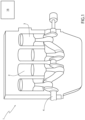
Fig. 1 is a schematic view of an internal combustion engine provided with a control unit that implements the estimation method of the present invention; -
Fig. 2 is a schematic view of a cylinder of the internal combustion engine ofFig. 1 ; -
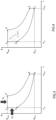
Fig. 3 represents a Sabathé cycle used to schematise the combustion cycle inside a cylinder of the engine ofFig. 1 ; -
Fig. 4 illustrates in greater detail how the trend of the pressure inside the chamber varies when there is a variation of the combustion speed, synthesised by the MFB50 combustion index (centre of gravity of combustion); -
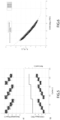
Fig. 5 illustrates the maximum pressure values detected in a cylinder of the engine ofFig. 1 when there is a variation of the MFB50 combustion index, with a speed of the internal combustion engine of 3000 rpm and with three different charges applied; and -
Fig. 6 illustrates the trend of an energy conversion function when there is a variation of the MFB50 combustion index. - In
Fig. 1 , thenumber 1 indicates as a whole an internal combustion engine comprising fourcylinders 2 arranged in line. Eachcylinder 2 houses arespective piston 3 mechanically connected by means of a connecting rod to adrive shaft 4 to transmit to saiddrive shaft 4 the force generated by combustion inside thecylinder 2. - According to the illustration in
Fig. 2 , theinternal combustion engine 1 comprises anintake manifold 5 connected to eachcylinder 2 by means of two intake valves 6 (only one of which is illustrated inFig. 2 ) and receives cool air (i.e. air coming from the external environment) through athrottle valve 7 movable between a closed position and a fully open position. Moreover, theinternal combustion engine 1 comprises anexhaust manifold 8 connected to eachcylinder 2 by means of two exhaust valves 9 (only one of which is illustrated inFig. 2 ) which flows into an exhaust pipe (not illustrated) for emission of the gases produced by combustion into the atmosphere. - A
corresponding injector 14 is provided for eachcylinder 2; according to the embodiment illustrated inFig. 2 , injection is of indirect type and therefore eachinjector 14 is arranged upstream of thecylinder 2 in an intake pipe that connects theintake manifold 5 to thecylinder 2. According to an alternative embodiment, not illustrated, injection is of direct type and therefore eachinjector 14 is partially arranged inside thecylinder 2. - Moreover, each
cylinder 2 comprises aspark plug 15, which is arranged in the crown of thecylinder 2 in a central position between theintake valves 5 and theexhaust valves 9 and is activated cyclically to determine ignition of the gases compressed in thecylinder 2 at the end of each compression stroke. - In a
diesel engine 1, this spark plug is not necessary, as ignition of the gases compressed in thecylinder 2 takes place spontaneously during the compression stroke. - The
engine 1 comprises acontrol unit 16, which supervises operation of thecombustion engine 1 and, among other things, controls thespark plugs 15 to determine ignition of the compressed gases inside eachcylinder 2. - The method implemented by the
control unit 16 to estimate the maximum pressure PMAX reached in the combustion chamber of eachcylinder 2 during a complete combustion cycle is described below. - Firstly, as is known, the complete combustion cycle is implemented by the succession of four strokes, at the end of which two revolutions of the drive shaft have been completed, for an angle of 720°. With reference to a direct injection system, during the intake stroke and/or the subsequent compression stroke and/or the subsequent expansion stroke, fuel is injected into the combustion chamber of the
cylinder 2 and in the expansion stroke or in the final part of the preceding compression stroke, the electrodes of the spark plug cause a spark that ignites the air-fuel mixture inside thecylinder 2, giving rise to combustion, which produces an increase of temperature and pressure. - The applicant has analysed in detail the strokes of the combustion cycle that take place with the intake valves 6 closed (i.e. the expansion and compression stroke); as is known, once the charge is trapped in the
cylinder 2, the compression stroke and the combustion that takes place inside thecylinder 2 determine increase of pressure inside said combustion chamber until reaching the maximum value PMAX. Since no simplified model of the increase of the pressure generated by the compression stroke and by combustion exists, the combustion cycle is schematised as a heat exchange in two phases by means of a Sabathé cycle illustrated inFig. 3 . In particular, the combustion cycle can be schematised by means of a phase at constant volume and a subsequent phase at constant pressure; heat exchange at constant volume takes place with an increase of pressure from the value indicated with P2 inFig. 3 to the value indicated with P3. - The total energy QTOT produced during the combustion cycle is thus obtained through the sum of two contributions, i.e. the energy Qv produced in the phase at constant volume and the energy QP produced in the phase at constant pressure.
- The total energy QTOT produced during the complete combustion cycle can also be expressed as the product of the fuel mass mFUEL injected into the cylinder during the combustion cycle for the lower heating value LHV of the fuel. Therefore, the following equation is valid:

- As already mentioned, during the phase at constant volume the pressure increases from the value indicated with P2 to the value indicated with P3.
- Advantageously, the pressure value P2 obtained at the end of the compression stroke (considering an isentropic compression stroke) can be expressed by means of the following formula:

cylinder 2 upon closing of the intake valves 6, i.e. when the compression stroke begins; γ represents the heat capacity ratio; mCYL represents the air mass trapped in thecylinder 2 during the complete combustion cycle; k represents a parameter that can assume a value equal to 0 (zero) or 1 (one). - The heat capacity ratio γ is determined based on the engine load and on the speed RPM of the internal combustion engine 1 (expressed in rpm) : in particular, by means of a map stored inside the
control unit 16 that provides the heat capacity ratio γ based on the engine load and on the speed RPM of theinternal combustion engine 1. - The air mass mCYL trapped in the
cylinder 2 during the complete combustion cycle is preferably estimated with a filling model (), with a speed density model, or through a mass flow sensor. - The function f (mCYL) can instead by expressed as follows: f (mCYL) = mCYL * R * T2/Vcc [2"]
where Vcc is the volume of the combustion chamber of thecylinder 2, R is the universal constant of perfect gases and T2 represents the temperature at the start of the phase at constant volume in the point indicated with 2 in the graph ofFig. 3 and can be calculated through formula [6] provided in the description below. - By simplifying formula [2'] the pressure value P2 obtained at the end of the compression stroke (considering an isentropic compression stroke) can be expressed by means of the following formula:

cylinder 2 upon closing of the intake valves 6 , i.e. when the compression stroke begins, and γ represents the heat capacity ratio. - The heat capacity ratio γ is determined based on the engine charge and on the speed RPM of the internal combustion engine 1 (expressed in rpm): in particular, by means of a map stored inside the
control unit 16 that provides the heat capacity ratio γ based on the engine load and on the speed RPM of theinternal combustion engine 1. - The pressure PIVC can be estimated based on the product between the pressure PINT detected inside the
intake manifold 5 and a value provided by a map g stored inside thecontrol unit 16 and is variable based on the speed RPM of the internal combustion engine 1 (expressed in rpm) and on the instant IVC in which the intake valves 6 are closed. The pressure PIVC is thus expressed as follows:
- The energy Qv produced in the phase at constant volume can instead be expressed as follows:

cylinder 2 during the complete combustion cycle, cv is the specific heat at constant volume, while T2 and T3 represent, respectively, the temperature at the start of the phase at constant volume in the points indicated with 2 and 3 in the graph ofFig. 3 . - As this is an isochoric transformation, the temperature T3 can be expressed by means of the following formula:

- Instead, as the transformation in the Sabathé cycle from
point 1 topoint 2 is an isentropic transformation, the temperature T2 can be expressed by means of the following formula:
- Through formula [5], the ratio P3/P2 can thus be expressed as the ratio T3/T2 and using formulae [4] and [6], the ratio P3/P2 can finally be expressed through the following formula:

- The air mass mCYL trapped in the
cylinder 2 during the complete combustion cycle can be expressed based on the product of the fuel mass mFUEL injected into thecylinder 2 during the combustion cycle, on the air/fuel equivalence ratio λ and on the stoichiometric air/fuel ratio λST as follows:
- Moreover, the parameter K1 is also introduced, which represents the energy fraction released during the phase at constant volume and is expressed as follows:

- Substituting the expressions [9] and [8] in formula [7], it follows that the ratio P3/P2 can be expressed as below:

- From formula [10] it can be seen that, with the same conditions (in particular, with the same air/fuel equivalence ratio λ and temperature TIVC), the ratio P3/P2 is mainly influenced by the parameter K1, i.e. by the energy fraction released during the phase at constant volume.
- The energy fraction released during the phase at constant volume (i.e. the parameter K1) that contributes to increasing the pressure to the value P3 inside the combustion chamber is strongly correlated to the combustion speed; in other words, the energy fraction released during the phase at constant volume (i.e. the parameter K1) that contributes to increasing the pressure to the value P3 inside the combustion chamber is variable based on the MFB50 combustion index (50% Mass Fraction Burnt) that represents the engine angle (i.e. the crank angle) at which 50% of the fuel mass has been burnt inside the cylinder.
- Typically, according to what is illustrated in
Fig. 4 , when the combustion speed increases causing an increase of pressure inside the combustion chamber, the MFB50 combustion index is anticipated, and vice versa, i.e. when the combustion speed decreases causing a reduction of the pressure inside the combustion chamber, the MFB50 combustion index is delayed. Considering a realinternal combustion engine 1, the parameter K1 is variable based on the MFB50 index and also determines the trend of the energy conversion function P3/P2. - Consequently, also the ratio P3/P2 is mainly variable based on the MFB50 combustion index.
- The applicant carried out a series of calibration and set-up tests to identify the maximum pressure PMAX in the combustion chamber of the cylinder 2 (which corresponds to the pressure P3 in
Fig. 3 ) varying the MFB50 combustion index with the same speed RPM of the internal combustion engine 1 (expressed in rpm) and varying the engine load applied. - For example,
Fig. 5 illustrates the maximum pressure values PMAX/P3 detected when there is a variation in the MFB50 combustion index, with a speed RPM of theinternal combustion engine 1 equal to 3000 rpm and with three different loads applied. - The pressure value P2 is calculated using formula [2] introduced previously; in particular, with rc that represents the compression ratio and is calculated as the ratio between the volume of the
cylinder 2 upon closing of the intake valves 6 and the volume of the combustion chamber, PIVC represents the pressure inside the combustion chamber of thecylinder 2 upon closing of the intake valves 6 and is determined as defined in the description above, and γ that represents the heat capacity ratio and is equal to 1.30. - The maximum pressure values PMAX/P3 when there is a variation in the MFB50 combustion index, determined as defined in the description above, are divided by the pressure value P2 so as to obtain the trend of the energy conversion function P3/P2.
Fig. 6 shows the trend of the energy conversion function P3/P2 when there is a variation in the MFB50 combustion index for the fourcylinders 2. According to the illustration ofFig. 6 it can thus be established that the energy conversion function indicated with f in the description below is the same for all thecylinders 2 given the same conditions (in particular, with the same air/fuel equivalence ratio λ and temperature TIVC). - Formula [10] can thus be expressed as follows:


- The energy conversion function f(MFB50) can be represented by a map stored in the
control unit 16 or alternatively can be expressed as a quadratic function of the MFB50 combustion index as follows:
- The applicant has verified experimentally that the use of the energy conversion function f leads to a mean absolute percentage error in the determination of the maximum pressure values PMAX/P3 of 3%.
- According to a further variant, it is possible to introduce corrections based on the air/fuel equivalence ratio λ and on the temperature TIVC.
- Introducing said corrections, formula [12] is expressed as follows:


- In this case, the energy conversion function f is considered at the reference values with regard to the air/fuel equivalence ratio λ and the temperature TIVC.
- By then substituting the quadratic function introduced with formula [12], the following is obtained:

- In this case, the maximum pressure PMAX that corresponds to the pressure P3 can thus be expressed as follows:

- In alternative to formulae [13], [14] and [14*], it is possible to introduce corrections based on the air/fuel equivalence ratio λ and on the temperature TIVC by means of the coefficients a0, a1 and a2. The ratio P3/P2 can thus be expressed as follows:

- Therefore, in this case the maximum pressure PMAX that corresponds to the pressure P3 can be expressed as follows:

- In substance, maps are stored inside the
control unit 16, one for each of the coefficients a0, a1 and a2; each of the maps provides the value of the respective coefficient based on the air/fuel equivalence ratio λ and on the temperature TIVC. - The value of the air/fuel equivalence ratio λ is provided by an oxygen sensor of UHEGO or UEGO type housed along an exhaust pipe, downstream of the
exhaust manifold 8 to detect the ratio between air/fuel ratio and the stoichiometric air/fuel ratio of the exhaust gases providing an output that indicates the oxygen content in the exhaust gases. Alternatively, the value of the air/fuel equivalence ratio λ can be determined through estimation of the air mass trapped in eachcylinder 2 as described, for example, in the patent applicationEP3650678 (incorporated herein by reference) and estimation of the injected fuel mass. - According to a variant, the
internal combustion engine 1 is of flex type, i.e. which can be supplied with a fuel composed for the most part of fossil fuels, i.e. petrol, and for the remaining part of ethanol. In this case, it is possible to introduce a correction of the ratio P3/P2 based on the composition of the fuel, i.e. based on the mass percentage of ethanol contained in the fuel. - In particular, introducing said correction based on the mass percentage of ethanol contained in the fuel, the ratio P3/P2 can be expressed as follows:

- The lower heating value LHV of the fuel and the stoichiometric air/fuel ratio λST are determined based on the mass percentage of ethanol contained in the fuel.
- The mass percentage of ethanol contained in the fuel is detected by means of a sensor arranged along a fuel delivery line or can be estimated by the
control unit 16 based on the value of the air/fuel equivalence ratio λ provided by the linear oxygen sensor of UHEGO or UEGO type. - In this case, the maximum pressure PMAX that corresponds to the pressure P3 can thus be expressed as follows:

- According to a further variant, the maximum pressure PMAX that corresponds to the pressure P3 can be expressed as follows:

control unit 16. - Alternatively, the energy conversion function determined based on data collected in an experimental phase can be expressed as follows:

- The maximum pressure PMAX that corresponds to the pressure P3 can be expressed as follows:

control unit 16. - The energy conversion function is calibrated using a set of experimental tests carried out at the end of the line on the engine test bench and stored in the
control unit 16. - To estimate the maximum pressure PMAX that corresponds to the pressure P3 it is therefore necessary to know the value of the MFB50 combustion index for each combustion cycle. The value of the MFB50 combustion index can be determined alternatively by means of an accelerometer or by means of a pressure sensor housed in the combustion chamber of the
cylinder 2 or alternatively it can be estimated through the estimation method described in the patentEP2022967 , the estimation method described in the patentEP2431595 . - Clearly, in the case in which a pressure sensor is provided housed in the combustion chamber of the
cylinder 2, the maximum pressure PMAX that corresponds to the pressure P3 is measured through the dedicated pressure sensor; in this case, the method defined in the description can be advantageously applied to diagnose any malfunctions of the pressure sensor. - According to a preferred variant, the
internal combustion engine 1 comprises a low pressure circuit (not illustrated), which in turn comprises a bypass pipe that originates from an exhaust pipe, downstream of theexhaust manifold 8, and flows into a suction pipe, upstream of theintake manifold 5; said bypass pipe is connected in parallel to a turbocharger, is regulated by an EGR valve and is provided with a heat exchanger having the function of cooling the gases delivered from theexhaust manifold 8. - The value of the temperature TIVC is instead determined based on the temperature TINT measured inside the
intake manifold 5, on the intake efficiency ηINT, on the rotation speed n of the internal combustion engine 1 (expressed in rpm), on the closing timing IVC of the intake valves 6 and on a quantity REGRi indicative of the incidence of the exhaust gases recirculated through the overlap phase of theexhaust valves 9 and of the intake valves 6 and of the residues present inside thecylinder 2 on the gas mixture trapped in thecylinder 2. In fact, in the case in which the pressure in theexhaust manifold 8 is greater than the pressure in theintake manifold 5, a portion of the exhaust gases produced by combustion flows from the exhaust to the intake through the combustion chamber and the overlap, i.e. when the intake and exhaust valves are simultaneously open and said portion of the exhaust gases will then be recirculated into the combustion chamber through the intake valve 6 during the suction stroke. This operating mode is indicated as "inner EGR". - The value of the temperature TIVC can be expressed as follows:

control unit 16; each of the two maps provides the respective value based on the intake efficiency ηINT, and on the rotation speed n of theinternal combustion engine 1 on the one hand, and on the closing timing IVC of the intake valves 6 and on the quantity REGRi on the other hand. The maps used to determine the functions f1 and f2 are calibrated in a preliminary set-up phase on the basis of experimental data. - The intake efficiency ηINT is instead calculated by means of the ratio between the air mass mA trapped in the
cylinder 2 upon closing of the intake valves 6 and the reference air mass mA_REF (i.e. the mass that fills thecylinder 2 at the reference conditions of 25°C and 1.013 bar). - If the
internal combustion engine 1 comprises a low temperature gas recirculation circuit, the method comprises the further steps of calculating the quantity REGR indicative of the incidence of a low pressure circuit on the gas mixture that flows in the intake pipe 6: - REGR = MEGR_LP/MTOT OT mass of the gas mixture that flows in the intake pipe 6; and
- MEGR_LP mass of exhaust gas recirculated through the low pressure circuit that flows in the intake pipe 6.
- The method described above has several advantages; in particular, it is simple and inexpensive to implement, does not require a high computational burden for the
control unit 16 and allows the maximum pressure value PMAX/P3 inside the combustion chamber of thecylinder 2 to be estimated in a very reliable way. -
- 1
- internal combustion engine
- 2
- cylinder
- 3
- piston
- 4
- drive shaft
- 5
- intake manifold
- 6
- intake valve
- 7
- throttle valve
- 8
- exhaust manifold
- 9
- exhaust valve
- 10
- cam shaft
- 11
- control device
- 12
- cam shaft
- 13
- hydraulic actuator
- 14
- injector
- 15
- spark plug
- 16
- control unit
Claims (11)
- A method to estimate the maximum pressure (PMAX, P3) inside the combustion chamber of a cylinder (2) of an internal combustion engine (1), which comprises estimating the maximum pressure (PMAX, P3) according to the following formula:
 f(MFB50)REF energy conversion function based on the MFB50 combustion index considered at the reference values of the air/fuel equivalence ratio (λ) and on the temperature (TIVC) inside the combustion chamber of the cylinder (2) upon closing of the intake valves (6), wherein the value of the MFB50 combustion index is alternatively determined by means of an accelerometer or by means of a pressure sensor housed in the combustion chamber of the cylinder (2);À air/fuel equivalence ratio;λREF reference air/fuel equivalence ratio;TIVC temperature inside the combustion chamber of the cylinder (2) upon closing of the intake valves (6);TIVC_REF reference temperature inside the combustion chamber of the cylinder (2) upon closing of the intake valves (6);λST stoichiometric air/fuel ratio;λST_REF reference stoichiometric air/fuel ratio;LHV lower heating value of the fuel;LHVREF reference lower heating value of the fuel;E mass percentage of ethanol contained in the fuel; andP2 pressure value obtained at the end of the compression stroke of the combustion cycle is calculated as follows:
 rc compression ratioPIVC pressure inside the combustion chamber of the cylinder (2) upon closing of the intake valves (6), i.e. when the compression stroke begins;γ heat capacity ratio;mCYL air mass trapped in the cylinder (2) during the complete combustion cycle; andk parameter equal to 0 or 1.
 - The method according to claim 1, wherein the function f(mCYL) is expressed as follows:
 Vcc volume of the combustion chamber of the cylinder (2);R universal constant of perfect gases;T2 temperature at the start of the phase at constant volume.
 - The method according to claim 1 or 2, wherein the energy conversion function f(MFB50)REF considered at the reference values is represented by a map stored in a control unit.
- The method according to claim 1 or 2, wherein the energy conversion function f(MFB50)REF considered at the reference values is expressed as a quadratic function of the MFB50 combustion index:

- The method according to claim 4, wherein each one of said coefficients (a0, a1, a2) is determined based on the air/fuel equivalence ratio (λ) and on the temperature (TIVC) inside the combustion chamber of the cylinder (2) upon closing of the intake valves (6).
- The method according to any one of the preceding claims, wherein the value of the air/fuel equivalence ratio (λ) is provided by an oxygen sensor housed along an exhaust pipe.
- The method according to any one of the preceding claims, wherein the pressure value (P2) obtained at the end of the compression stroke of the combustion cycle is calculated as follows:
 rc compression ratioPIVC pressure inside the combustion chamber of the cylinder (2) upon closing of the intake valves (6), i.e. when the compression stroke begins; andγ heat capacity ratio.
 - The method according to claim 7, wherein the pressure (PIVC) inside the combustion chamber of the cylinder (2) upon closing of the intake valves (6) is determined based on the product between the pressure (PINT) detected inside an intake manifold (5) and a value provided by a first map (g) and variable depending on the speed (RPM) of the internal combustion engine (1) and on the instant (IVC) in which the intake valves (6) are closed.
- The method according to claim 7, wherein the heat capacity ratio (γ) is determined based on the engine load and on the speed (RPM) of the internal combustion engine (1).
- The method according to any one of the preceding claims, wherein the value of the temperature (TIVC) inside the combustion chamber of the cylinder (2) upon closing of the intake valves (6) is determined based on a temperature (TINT) measured inside an intake manifold (5), on an intake efficiency (ηINT), on a rotation speed (n), on a closing timing (IVC) of the intake valves (6) and on a quantity (REGRi) indicative of the incidence of the inner EGR.
- The method according to claim 10, wherein the value of the temperature (TIVC) inside the combustion chamber of the cylinder (2) upon closing of the intake valves (6) is determined based on the temperature (TINT) measured inside an intake manifold (5) multiplied by the value provided by a first map (f1) variable depending on the intake efficiency (ηINT) and on the rotation speed (n) multiplied by the value provided by a second map variable depending on the closing timing (IVC) of the intake valves (6) and on the quantity (REGRi) indicative of the incidence of the inner EGR.
Applications Claiming Priority (1)
| Application Number | Priority Date | Filing Date | Title |
|---|---|---|---|
| IT102022000013879A IT202200013879A1 (en) | 2022-06-30 | 2022-06-30 | METHOD FOR ESTIMATING THE MAXIMUM PRESSURE INSIDE A COMBUSTION CHAMBER OF A CYLINDER OF AN INTERNAL COMBUSTION ENGINE |
Publications (2)
| Publication Number | Publication Date |
|---|---|
| EP4299889A1 EP4299889A1 (en) | 2024-01-03 |
| EP4299889B1 true EP4299889B1 (en) | 2024-12-11 |
Family
ID=83188441
Family Applications (1)
| Application Number | Title | Priority Date | Filing Date |
|---|---|---|---|
| EP23181704.0A Active EP4299889B1 (en) | 2022-06-30 | 2023-06-27 | Method to estimate the maximum pressure inside a combustion chamber of a cylinder of an internal combustion engine |
Country Status (4)
| Country | Link |
|---|---|
| EP (1) | EP4299889B1 (en) |
| CN (1) | CN117328995A (en) |
| BR (1) | BR102023013243A2 (en) |
| IT (1) | IT202200013879A1 (en) |
Family Cites Families (7)
| Publication number | Priority date | Publication date | Assignee | Title |
|---|---|---|---|---|
| EP2136061B1 (en) | 2007-07-25 | 2010-09-15 | Magneti Marelli S.p.A. | Method for determining the average rotational speed of a crankshaft in an internal combustion engine |
| DE102007057142A1 (en) * | 2007-11-28 | 2009-06-04 | Robert Bosch Gmbh | Direct injection internal combustion engine e.g. petrol-internal combustion engine, operating method for motor vehicle, involves determining maximum pressure by considering values characterizing pressure loss, and examining sensor |
| ITBO20100562A1 (en) | 2010-09-16 | 2012-03-17 | Magneti Marelli Spa | ESTIMATION METHOD OF A COMBUSTION AND / OR TORQUE INDEX INDICATED IN A CYLINDER OF AN INTERNAL COMBUSTION ENGINE |
| DE102013200542A1 (en) * | 2013-01-16 | 2014-07-17 | Robert Bosch Gmbh | Method for operating an internal combustion engine, wherein a cylinder internal pressure is determined in at least one cylinder of the internal combustion engine |
| KR101646330B1 (en) * | 2014-06-09 | 2016-08-12 | 현대자동차주식회사 | Engine Combustion Robustness Control Method based Engine Combustion Estimation and Engine Control System for Engine Combustion Robustness |
| US10012204B2 (en) * | 2015-06-23 | 2018-07-03 | Shu Wang | Engine operation control |
| US11739701B2 (en) | 2018-11-08 | 2023-08-29 | Marelli Europe S.P.A. | Method to determine the mass of air trapped in each cylinder of an internal combustion engine |
-
2022
- 2022-06-30 IT IT102022000013879A patent/IT202200013879A1/en unknown
-
2023
- 2023-06-27 EP EP23181704.0A patent/EP4299889B1/en active Active
- 2023-06-29 CN CN202310785164.9A patent/CN117328995A/en active Pending
- 2023-06-30 BR BR102023013243-0A patent/BR102023013243A2/en unknown
Also Published As
| Publication number | Publication date |
|---|---|
| EP4299889A1 (en) | 2024-01-03 |
| CN117328995A (en) | 2024-01-02 |
| IT202200013879A1 (en) | 2023-12-30 |
| BR102023013243A2 (en) | 2024-01-09 |
Similar Documents
| Publication | Publication Date | Title |
|---|---|---|
| US7269495B2 (en) | Engine output calculation method and engine output calculation apparatus | |
| EP0742359B1 (en) | Method and apparatus for controlling the operation of an internal combustion engine | |
| US7676322B1 (en) | Engine control using cylinder pressure differential | |
| EP3650678B1 (en) | Method to determine the mass of air trapped in each cylinder of an internal combustion engine | |
| US7861690B2 (en) | Device and method for controlling internal combustion engine | |
| US7628145B2 (en) | Control method of compression self ignition internal combustion engine | |
| US8001833B2 (en) | Method for determining the trapping efficiency and/or a scavenging air mass of an internal combustion engine | |
| EP1905988A2 (en) | Control device of internal combustion engine | |
| US7302335B1 (en) | Method for dynamic mass air flow sensor measurement corrections | |
| US7735478B1 (en) | Method of calculating mass fraction burnt in an internal combustion engine based on rassweiler-withrow method for real-time applications | |
| JP7208354B2 (en) | Method of operating an internal combustion engine, especially a gas engine | |
| US10570831B2 (en) | Method for determining the composition of the fuel used to operate an internal combustion engine | |
| KR101779306B1 (en) | Method and device for operating an internal combustion engine | |
| US10584650B2 (en) | Method for determining the composition of the fuel used and operating an internal combustion engine | |
| CN102889124B (en) | System and method to estimate intake charge temperature for internal combustion engines | |
| JP5331613B2 (en) | In-cylinder gas amount estimation device for internal combustion engine | |
| EP4299889B1 (en) | Method to estimate the maximum pressure inside a combustion chamber of a cylinder of an internal combustion engine | |
| CN108884772A (en) | Method and device for operating an internal combustion engine with a variable injection profile | |
| CN115419511A (en) | Combustion closed-loop control method and system for marine natural gas engine | |
| JP2010133353A (en) | Engine control device | |
| JP7635700B2 (en) | Engine state estimation device | |
| US20220235720A1 (en) | Control device for internal combustion engine | |
| Tour et al. | Development of the Tour Split-Cycle Internal Combustion Engine | |
| Ivansson | Estimation of the Residual Gas Fraction in an HCCI-engine using Cylinder Pressure | |
| JP4660462B2 (en) | Control device for internal combustion engine |
Legal Events
| Date | Code | Title | Description |
|---|---|---|---|
| PUAI | Public reference made under article 153(3) epc to a published international application that has entered the european phase |
Free format text: ORIGINAL CODE: 0009012 |
|
| STAA | Information on the status of an ep patent application or granted ep patent |
Free format text: STATUS: THE APPLICATION HAS BEEN PUBLISHED |
|
| AK | Designated contracting states |
Kind code of ref document: A1 Designated state(s): AL AT BE BG CH CY CZ DE DK EE ES FI FR GB GR HR HU IE IS IT LI LT LU LV MC ME MK MT NL NO PL PT RO RS SE SI SK SM TR |
|
| STAA | Information on the status of an ep patent application or granted ep patent |
Free format text: STATUS: REQUEST FOR EXAMINATION WAS MADE |
|
| 17P | Request for examination filed |
Effective date: 20240313 |
|
| RBV | Designated contracting states (corrected) |
Designated state(s): AL AT BE BG CH CY CZ DE DK EE ES FI FR GB GR HR HU IE IS IT LI LT LU LV MC ME MK MT NL NO PL PT RO RS SE SI SK SM TR |
|
| GRAP | Despatch of communication of intention to grant a patent |
Free format text: ORIGINAL CODE: EPIDOSNIGR1 |
|
| STAA | Information on the status of an ep patent application or granted ep patent |
Free format text: STATUS: GRANT OF PATENT IS INTENDED |
|
| INTG | Intention to grant announced |
Effective date: 20240709 |
|
| RAP3 | Party data changed (applicant data changed or rights of an application transferred) |
Owner name: ALMA MATER STUDIORUM - UNIVERSITA DI BOLOGNA Owner name: MARELLI EUROPE S.P.A. |
|
| GRAS | Grant fee paid |
Free format text: ORIGINAL CODE: EPIDOSNIGR3 |
|
| GRAA | (expected) grant |
Free format text: ORIGINAL CODE: 0009210 |
|
| STAA | Information on the status of an ep patent application or granted ep patent |
Free format text: STATUS: THE PATENT HAS BEEN GRANTED |
|
| P01 | Opt-out of the competence of the unified patent court (upc) registered |
Free format text: CASE NUMBER: APP_57733/2024 Effective date: 20241022 |
|
| AK | Designated contracting states |
Kind code of ref document: B1 Designated state(s): AL AT BE BG CH CY CZ DE DK EE ES FI FR GB GR HR HU IE IS IT LI LT LU LV MC ME MK MT NL NO PL PT RO RS SE SI SK SM TR |
|
| REG | Reference to a national code |
Ref country code: GB Ref legal event code: FG4D |
|
| REG | Reference to a national code |
Ref country code: CH Ref legal event code: EP |
|
| REG | Reference to a national code |
Ref country code: DE Ref legal event code: R096 Ref document number: 602023001321 Country of ref document: DE |
|
| REG | Reference to a national code |
Ref country code: IE Ref legal event code: FG4D |
|
| REG | Reference to a national code |
Ref country code: LT Ref legal event code: MG9D |
|
| PG25 | Lapsed in a contracting state [announced via postgrant information from national office to epo] |
Ref country code: HR Free format text: LAPSE BECAUSE OF FAILURE TO SUBMIT A TRANSLATION OF THE DESCRIPTION OR TO PAY THE FEE WITHIN THE PRESCRIBED TIME-LIMIT Effective date: 20241211 |
|
| PG25 | Lapsed in a contracting state [announced via postgrant information from national office to epo] |
Ref country code: FI Free format text: LAPSE BECAUSE OF FAILURE TO SUBMIT A TRANSLATION OF THE DESCRIPTION OR TO PAY THE FEE WITHIN THE PRESCRIBED TIME-LIMIT Effective date: 20241211 |
|
| PG25 | Lapsed in a contracting state [announced via postgrant information from national office to epo] |
Ref country code: BG Free format text: LAPSE BECAUSE OF FAILURE TO SUBMIT A TRANSLATION OF THE DESCRIPTION OR TO PAY THE FEE WITHIN THE PRESCRIBED TIME-LIMIT Effective date: 20241211 |
|
| REG | Reference to a national code |
Ref country code: NL Ref legal event code: MP Effective date: 20241211 |
|
| PG25 | Lapsed in a contracting state [announced via postgrant information from national office to epo] |
Ref country code: ES Free format text: LAPSE BECAUSE OF FAILURE TO SUBMIT A TRANSLATION OF THE DESCRIPTION OR TO PAY THE FEE WITHIN THE PRESCRIBED TIME-LIMIT Effective date: 20241211 |
|
| PG25 | Lapsed in a contracting state [announced via postgrant information from national office to epo] |
Ref country code: NO Free format text: LAPSE BECAUSE OF FAILURE TO SUBMIT A TRANSLATION OF THE DESCRIPTION OR TO PAY THE FEE WITHIN THE PRESCRIBED TIME-LIMIT Effective date: 20250311 |
|
| PG25 | Lapsed in a contracting state [announced via postgrant information from national office to epo] |
Ref country code: LV Free format text: LAPSE BECAUSE OF FAILURE TO SUBMIT A TRANSLATION OF THE DESCRIPTION OR TO PAY THE FEE WITHIN THE PRESCRIBED TIME-LIMIT Effective date: 20241211 Ref country code: GR Free format text: LAPSE BECAUSE OF FAILURE TO SUBMIT A TRANSLATION OF THE DESCRIPTION OR TO PAY THE FEE WITHIN THE PRESCRIBED TIME-LIMIT Effective date: 20250312 |
|
| PG25 | Lapsed in a contracting state [announced via postgrant information from national office to epo] |
Ref country code: RS Free format text: LAPSE BECAUSE OF FAILURE TO SUBMIT A TRANSLATION OF THE DESCRIPTION OR TO PAY THE FEE WITHIN THE PRESCRIBED TIME-LIMIT Effective date: 20250311 |
|
| REG | Reference to a national code |
Ref country code: DE Ref legal event code: R081 Ref document number: 602023001321 Country of ref document: DE Owner name: MARELLI EUROPE S.P.A., CORBETTA, IT Free format text: FORMER OWNERS: ALMA MATER STUDIORUM - UNIVERSITA DI BOLOGNA, BOLOGNA, IT; MARELLI EUROPE S.P.A., CORBETTA, MILANO, IT |
|
| PG25 | Lapsed in a contracting state [announced via postgrant information from national office to epo] |
Ref country code: NL Free format text: LAPSE BECAUSE OF FAILURE TO SUBMIT A TRANSLATION OF THE DESCRIPTION OR TO PAY THE FEE WITHIN THE PRESCRIBED TIME-LIMIT Effective date: 20241211 |
|
| REG | Reference to a national code |
Ref country code: AT Ref legal event code: MK05 Ref document number: 1750534 Country of ref document: AT Kind code of ref document: T Effective date: 20241211 |
|
| RAP2 | Party data changed (patent owner data changed or rights of a patent transferred) |
Owner name: MARELLI EUROPE S.P.A. |
|
| PG25 | Lapsed in a contracting state [announced via postgrant information from national office to epo] |
Ref country code: SM Free format text: LAPSE BECAUSE OF FAILURE TO SUBMIT A TRANSLATION OF THE DESCRIPTION OR TO PAY THE FEE WITHIN THE PRESCRIBED TIME-LIMIT Effective date: 20241211 |
|
| PG25 | Lapsed in a contracting state [announced via postgrant information from national office to epo] |
Ref country code: PL Free format text: LAPSE BECAUSE OF FAILURE TO SUBMIT A TRANSLATION OF THE DESCRIPTION OR TO PAY THE FEE WITHIN THE PRESCRIBED TIME-LIMIT Effective date: 20241211 |
|
| PGFP | Annual fee paid to national office [announced via postgrant information from national office to epo] |
Ref country code: DE Payment date: 20250520 Year of fee payment: 3 |
|
| PG25 | Lapsed in a contracting state [announced via postgrant information from national office to epo] |
Ref country code: IS Free format text: LAPSE BECAUSE OF FAILURE TO SUBMIT A TRANSLATION OF THE DESCRIPTION OR TO PAY THE FEE WITHIN THE PRESCRIBED TIME-LIMIT Effective date: 20250411 |
|
| PG25 | Lapsed in a contracting state [announced via postgrant information from national office to epo] |
Ref country code: PT Free format text: LAPSE BECAUSE OF FAILURE TO SUBMIT A TRANSLATION OF THE DESCRIPTION OR TO PAY THE FEE WITHIN THE PRESCRIBED TIME-LIMIT Effective date: 20250411 |
|
| PG25 | Lapsed in a contracting state [announced via postgrant information from national office to epo] |
Ref country code: EE Free format text: LAPSE BECAUSE OF FAILURE TO SUBMIT A TRANSLATION OF THE DESCRIPTION OR TO PAY THE FEE WITHIN THE PRESCRIBED TIME-LIMIT Effective date: 20241211 |
|
| PGFP | Annual fee paid to national office [announced via postgrant information from national office to epo] |
Ref country code: FR Payment date: 20250520 Year of fee payment: 3 |
|
| PG25 | Lapsed in a contracting state [announced via postgrant information from national office to epo] |
Ref country code: AT Free format text: LAPSE BECAUSE OF FAILURE TO SUBMIT A TRANSLATION OF THE DESCRIPTION OR TO PAY THE FEE WITHIN THE PRESCRIBED TIME-LIMIT Effective date: 20241211 Ref country code: RO Free format text: LAPSE BECAUSE OF FAILURE TO SUBMIT A TRANSLATION OF THE DESCRIPTION OR TO PAY THE FEE WITHIN THE PRESCRIBED TIME-LIMIT Effective date: 20241211 |
|
| PG25 | Lapsed in a contracting state [announced via postgrant information from national office to epo] |
Ref country code: SK Free format text: LAPSE BECAUSE OF FAILURE TO SUBMIT A TRANSLATION OF THE DESCRIPTION OR TO PAY THE FEE WITHIN THE PRESCRIBED TIME-LIMIT Effective date: 20241211 |
|
| PG25 | Lapsed in a contracting state [announced via postgrant information from national office to epo] |
Ref country code: CZ Free format text: LAPSE BECAUSE OF FAILURE TO SUBMIT A TRANSLATION OF THE DESCRIPTION OR TO PAY THE FEE WITHIN THE PRESCRIBED TIME-LIMIT Effective date: 20241211 |
|
| PG25 | Lapsed in a contracting state [announced via postgrant information from national office to epo] |
Ref country code: SE Free format text: LAPSE BECAUSE OF FAILURE TO SUBMIT A TRANSLATION OF THE DESCRIPTION OR TO PAY THE FEE WITHIN THE PRESCRIBED TIME-LIMIT Effective date: 20241211 |
|
| REG | Reference to a national code |
Ref country code: DE Ref legal event code: R097 Ref document number: 602023001321 Country of ref document: DE |
|
| PG25 | Lapsed in a contracting state [announced via postgrant information from national office to epo] |
Ref country code: DK Free format text: LAPSE BECAUSE OF FAILURE TO SUBMIT A TRANSLATION OF THE DESCRIPTION OR TO PAY THE FEE WITHIN THE PRESCRIBED TIME-LIMIT Effective date: 20241211 |
|
| PGFP | Annual fee paid to national office [announced via postgrant information from national office to epo] |
Ref country code: IT Payment date: 20250630 Year of fee payment: 3 |
|
| PLBE | No opposition filed within time limit |
Free format text: ORIGINAL CODE: 0009261 |
|
| STAA | Information on the status of an ep patent application or granted ep patent |
Free format text: STATUS: NO OPPOSITION FILED WITHIN TIME LIMIT |
|
| 26N | No opposition filed |
Effective date: 20250912 |
|
| PG25 | Lapsed in a contracting state [announced via postgrant information from national office to epo] |
Ref country code: MC Free format text: LAPSE BECAUSE OF FAILURE TO SUBMIT A TRANSLATION OF THE DESCRIPTION OR TO PAY THE FEE WITHIN THE PRESCRIBED TIME-LIMIT Effective date: 20241211 |
|
| PG25 | Lapsed in a contracting state [announced via postgrant information from national office to epo] |
Ref country code: LU Free format text: LAPSE BECAUSE OF NON-PAYMENT OF DUE FEES Effective date: 20250627 |
|
| REG | Reference to a national code |
Ref country code: BE Ref legal event code: MM Effective date: 20250630 |
|
| PG25 | Lapsed in a contracting state [announced via postgrant information from national office to epo] |
Ref country code: IE Free format text: LAPSE BECAUSE OF NON-PAYMENT OF DUE FEES Effective date: 20250627 |
|
| PG25 | Lapsed in a contracting state [announced via postgrant information from national office to epo] |
Ref country code: BE Free format text: LAPSE BECAUSE OF NON-PAYMENT OF DUE FEES Effective date: 20250630 |