EP4299530A1 - High-nickel ternary core-shell precursor, positive electrode material and preparation method therefor - Google Patents
High-nickel ternary core-shell precursor, positive electrode material and preparation method therefor Download PDFInfo
- Publication number
- EP4299530A1 EP4299530A1 EP22899967.8A EP22899967A EP4299530A1 EP 4299530 A1 EP4299530 A1 EP 4299530A1 EP 22899967 A EP22899967 A EP 22899967A EP 4299530 A1 EP4299530 A1 EP 4299530A1
- Authority
- EP
- European Patent Office
- Prior art keywords
- solution
- ammonia
- precursor
- salt
- dimethylglyoxime
- Prior art date
- Legal status (The legal status is an assumption and is not a legal conclusion. Google has not performed a legal analysis and makes no representation as to the accuracy of the status listed.)
- Pending
Links
Images
Classifications
-
- H—ELECTRICITY
- H01—ELECTRIC ELEMENTS
- H01M—PROCESSES OR MEANS, e.g. BATTERIES, FOR THE DIRECT CONVERSION OF CHEMICAL ENERGY INTO ELECTRICAL ENERGY
- H01M4/00—Electrodes
- H01M4/02—Electrodes composed of, or comprising, active material
- H01M4/36—Selection of substances as active materials, active masses, active liquids
- H01M4/48—Selection of substances as active materials, active masses, active liquids of inorganic oxides or hydroxides
- H01M4/52—Selection of substances as active materials, active masses, active liquids of inorganic oxides or hydroxides of nickel, cobalt or iron
- H01M4/525—Selection of substances as active materials, active masses, active liquids of inorganic oxides or hydroxides of nickel, cobalt or iron of mixed oxides or hydroxides containing iron, cobalt or nickel for inserting or intercalating light metals, e.g. LiNiO2, LiCoO2 or LiCoOxFy
-
- C—CHEMISTRY; METALLURGY
- C01—INORGANIC CHEMISTRY
- C01G—COMPOUNDS CONTAINING METALS NOT COVERED BY SUBCLASSES C01D OR C01F
- C01G53/00—Compounds of nickel
- C01G53/40—Complex oxides containing nickel and at least one other metal element
- C01G53/42—Complex oxides containing nickel and at least one other metal element containing alkali metals, e.g. LiNiO2
- C01G53/44—Complex oxides containing nickel and at least one other metal element containing alkali metals, e.g. LiNiO2 containing manganese
- C01G53/50—Complex oxides containing nickel and at least one other metal element containing alkali metals, e.g. LiNiO2 containing manganese of the type (MnO2)n-, e.g. Li(NixMn1-x)O2 or Li(MyNixMn1-x-y)O2
-
- C—CHEMISTRY; METALLURGY
- C01—INORGANIC CHEMISTRY
- C01G—COMPOUNDS CONTAINING METALS NOT COVERED BY SUBCLASSES C01D OR C01F
- C01G53/00—Compounds of nickel
- C01G53/80—Compounds containing nickel, with or without oxygen or hydrogen, and containing one or more other elements
- C01G53/82—Compounds containing nickel, with or without oxygen or hydrogen, and containing two or more other elements
-
- C—CHEMISTRY; METALLURGY
- C07—ORGANIC CHEMISTRY
- C07F—ACYCLIC, CARBOCYCLIC OR HETEROCYCLIC COMPOUNDS CONTAINING ELEMENTS OTHER THAN CARBON, HYDROGEN, HALOGEN, OXYGEN, NITROGEN, SULFUR, SELENIUM OR TELLURIUM
- C07F15/00—Compounds containing elements of Groups 8, 9, 10 or 18 of the Periodic Table
- C07F15/04—Nickel compounds
- C07F15/045—Nickel compounds without a metal-carbon linkage
-
- C—CHEMISTRY; METALLURGY
- C07—ORGANIC CHEMISTRY
- C07F—ACYCLIC, CARBOCYCLIC OR HETEROCYCLIC COMPOUNDS CONTAINING ELEMENTS OTHER THAN CARBON, HYDROGEN, HALOGEN, OXYGEN, NITROGEN, SULFUR, SELENIUM OR TELLURIUM
- C07F15/00—Compounds containing elements of Groups 8, 9, 10 or 18 of the Periodic Table
- C07F15/06—Cobalt compounds
- C07F15/065—Cobalt compounds without a metal-carbon linkage
-
- H—ELECTRICITY
- H01—ELECTRIC ELEMENTS
- H01M—PROCESSES OR MEANS, e.g. BATTERIES, FOR THE DIRECT CONVERSION OF CHEMICAL ENERGY INTO ELECTRICAL ENERGY
- H01M10/00—Secondary cells; Manufacture thereof
- H01M10/05—Accumulators with non-aqueous electrolyte
- H01M10/052—Li-accumulators
-
- H—ELECTRICITY
- H01—ELECTRIC ELEMENTS
- H01M—PROCESSES OR MEANS, e.g. BATTERIES, FOR THE DIRECT CONVERSION OF CHEMICAL ENERGY INTO ELECTRICAL ENERGY
- H01M4/00—Electrodes
- H01M4/02—Electrodes composed of, or comprising, active material
- H01M4/04—Processes of manufacture in general
- H01M4/0471—Processes of manufacture in general involving thermal treatment, e.g. firing, sintering, backing particulate active material, thermal decomposition, pyrolysis
-
- H—ELECTRICITY
- H01—ELECTRIC ELEMENTS
- H01M—PROCESSES OR MEANS, e.g. BATTERIES, FOR THE DIRECT CONVERSION OF CHEMICAL ENERGY INTO ELECTRICAL ENERGY
- H01M4/00—Electrodes
- H01M4/02—Electrodes composed of, or comprising, active material
- H01M4/36—Selection of substances as active materials, active masses, active liquids
-
- H—ELECTRICITY
- H01—ELECTRIC ELEMENTS
- H01M—PROCESSES OR MEANS, e.g. BATTERIES, FOR THE DIRECT CONVERSION OF CHEMICAL ENERGY INTO ELECTRICAL ENERGY
- H01M4/00—Electrodes
- H01M4/02—Electrodes composed of, or comprising, active material
- H01M4/36—Selection of substances as active materials, active masses, active liquids
- H01M4/362—Composites
- H01M4/366—Composites as layered products
-
- H—ELECTRICITY
- H01—ELECTRIC ELEMENTS
- H01M—PROCESSES OR MEANS, e.g. BATTERIES, FOR THE DIRECT CONVERSION OF CHEMICAL ENERGY INTO ELECTRICAL ENERGY
- H01M4/00—Electrodes
- H01M4/02—Electrodes composed of, or comprising, active material
- H01M4/36—Selection of substances as active materials, active masses, active liquids
- H01M4/48—Selection of substances as active materials, active masses, active liquids of inorganic oxides or hydroxides
- H01M4/50—Selection of substances as active materials, active masses, active liquids of inorganic oxides or hydroxides of manganese
- H01M4/505—Selection of substances as active materials, active masses, active liquids of inorganic oxides or hydroxides of manganese of mixed oxides or hydroxides containing manganese for inserting or intercalating light metals, e.g. LiMn2O4 or LiMn2OxFy
-
- C—CHEMISTRY; METALLURGY
- C01—INORGANIC CHEMISTRY
- C01P—INDEXING SCHEME RELATING TO STRUCTURAL AND PHYSICAL ASPECTS OF SOLID INORGANIC COMPOUNDS
- C01P2004/00—Particle morphology
- C01P2004/01—Particle morphology depicted by an image
- C01P2004/03—Particle morphology depicted by an image obtained by SEM
-
- C—CHEMISTRY; METALLURGY
- C01—INORGANIC CHEMISTRY
- C01P—INDEXING SCHEME RELATING TO STRUCTURAL AND PHYSICAL ASPECTS OF SOLID INORGANIC COMPOUNDS
- C01P2006/00—Physical properties of inorganic compounds
- C01P2006/40—Electric properties
-
- H—ELECTRICITY
- H01—ELECTRIC ELEMENTS
- H01M—PROCESSES OR MEANS, e.g. BATTERIES, FOR THE DIRECT CONVERSION OF CHEMICAL ENERGY INTO ELECTRICAL ENERGY
- H01M4/00—Electrodes
- H01M4/02—Electrodes composed of, or comprising, active material
- H01M2004/026—Electrodes composed of, or comprising, active material characterised by the polarity
- H01M2004/028—Positive electrodes
-
- Y—GENERAL TAGGING OF NEW TECHNOLOGICAL DEVELOPMENTS; GENERAL TAGGING OF CROSS-SECTIONAL TECHNOLOGIES SPANNING OVER SEVERAL SECTIONS OF THE IPC; TECHNICAL SUBJECTS COVERED BY FORMER USPC CROSS-REFERENCE ART COLLECTIONS [XRACs] AND DIGESTS
- Y02—TECHNOLOGIES OR APPLICATIONS FOR MITIGATION OR ADAPTATION AGAINST CLIMATE CHANGE
- Y02E—REDUCTION OF GREENHOUSE GAS [GHG] EMISSIONS, RELATED TO ENERGY GENERATION, TRANSMISSION OR DISTRIBUTION
- Y02E60/00—Enabling technologies; Technologies with a potential or indirect contribution to GHG emissions mitigation
- Y02E60/10—Energy storage using batteries
Definitions
- the present disclosure relates to the technical field of lithium battery materials, in particular to a high-nickel ternary core-shell precursor for a lithium battery, a positive electrode material and a preparation method therefor.
- a lithium-rich manganese-based positive electrode has a low cost and high capacity, but its irreversible capacity is relatively large during the first cycle, and the voltage and capacity attenuation during the cycle is large. As the multiplying power increases, its capacity also rapidly decreases, which makes it difficult to realize commercial applications.
- the positive electrodes which are mainly applied are two commercial materials such as lithium iron phosphate and a ternary layered oxide material. Lithium iron phosphate has the advantages of low cost, good cycle performance and good safety, but its capacity is low. With the improvement of a process, the specific capacity has become closer to its theoretical limit, and there is little space for improvement in the future.
- the ternary layered oxide material has good capacity density, good cycle performance and high compaction density, moreover, with the increase of Ni content, its actual specific capacity also increases, and in terms of solving the problem of "mileage anxiety", the ternary layered oxide material has more advantages. Therefore, in future development, the ternary layered oxide material will gradually occupy the mainstream position in the field of power batteries.
- a high-nickel ternary layered oxide material has high specific capacity, the high Ni content also reduces its stability, which leads to poor cycle performance and safety of high-nickel materials, greatly affecting its application in the field of the power batteries. Therefore, how to improve the stability of the high-nickel ternary layered oxide material has become a research hotspot for some scientists, and it is currently believed that a core-shell structure is an effective means to improve the stability.
- the conventional co-precipitation method for preparing core-shell precursors requires changing the proportion of ternary solutions, which is not conducive to operation.
- configuring different proportions of ternary solutions also requires increasing the number of storage tanks, which increases device costs.
- the present disclosure provides a high-nickel ternary core-shell precursor for a lithium battery, a positive electrode material and a preparation method therefor.
- a high-nickel ternary core-shell precursor characterized in that a chemical structural formula of the precursor is zNi(C 4 H 7 N 2 O 2 ) 2 -Ni x-z M1 y M2 1-x-y (OH) 2 , where, 0.6 ⁇ x ⁇ 0.9, 0.05 ⁇ y ⁇ 0.2, 0 ⁇ z ⁇ 0.24, and M1 and M2 are two of cobalt, aluminum and manganese.
- a method for preparing the above precursor characterized by including:
- the soluble nickel salt in step (1) is one or more of nickel sulfate, nickel chloride, and nickel nitrate; and the soluble metal M1 salt and the soluble metal M2 salt are two of soluble cobalt salt, soluble aluminum salt, and soluble manganese salt.
- the soluble cobalt salt is one of cobalt sulfate, cobalt chloride, and cobalt nitrate
- the soluble aluminum salt is one of aluminum sulfate, sodium metaaluminate, and aluminum nitrate
- the soluble manganese salt is one of manganese sulfate, manganese chloride, and manganese nitrate.
- the dimethylglyoxime-ammonia water composite solution is prepared by dissolving dimethylglyoxime (C 4 H 8 N 2 O 2 ) in concentrated ammonia liquor, where a ratio of the dimethylglyoxime to the concentrated ammonia liquor is 1 g:(10-200 ml), and a concentration of the concentrated ammonia liquor is 25% to 28%; and concentrations of the sodium hydroxide solution and the ammonia-water solution are both 2 mol/L.
- the base solution in step (2) is prepared by adding water with 2/3 of a volume of the reaction kettle into the reaction kettle, then adding ammonia water with the concentration of 10% to 28% and adjusting pH to a range from 8.0 to 10.0, with a flow rate of N 2 being from 0.5m 3 /h to 2m 3 /h.
- the metal salt solution has a flow rate of ranging from 1L/h to 50L/h
- the dimethylglyoxime-ammonia water composite solution has a flow rate of ranging from 3L/h to 10L/h
- the ammonia-water solution has a flow rate of ranging from 0L/h to 3L/h
- a stirring speed is in a range from 200r/min to 400r/min.
- the sodium hydroxide solution has a flow rate of ranging from 1L/h to 17L/h, and a stirring speed is in a range from 300r/min to 400r/min.
- a positive electrode material prepared using the above precursor characterized in that a structural formula of the positive electrode material is LiNi x M1 y M2 1-x-y O 2 , where 0.6 ⁇ x ⁇ 0.9, and 0.05 ⁇ y ⁇ 0.2.
- a method for preparing the above positive electrode material characterized by including: washing, drying, sieving and deironing the core-shell precursor, then mixing with a lithium source, maintaining a temperature at a range from 300°C to 500°C for 3h to 5h, then raising a temperature to a range from 700°C to 900°C and maintaining for 10h to 20h, where the lithium source is lithium hydroxide or lithium carbonate; and a molar ratio of the lithium source to the core-shell precursor is (1-1.2): 1.
- a ternary precursor of a core-shell structure is prepared by a co-precipitation method, the characteristic reaction of the dimethylglyoxime with Ni ions is utilized to form the precursor of the core-shell structure with a core nickel content of 100% and a low shell nickel content without changing a chemical ratio of a ternary solution.
- the positive electrode material of the core-shell structure is obtained after mixing with lithium and calcining, compared with ordinary materials with the same chemical ratio, the core-shell material can maintain high capacity, and also has excellent cycle performance. At the same time, the operation process is also simplified, and the number of storage tanks is reduced.
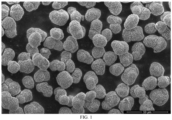
- FIG. 1 is an SEM image of a ternary precursor in Embodiment 3.
- Dimethylglyoxime of the present disclosure may undergo a characteristic reaction with Ni ions, and a core-shell structure with a core nickel content of 100% and a low shell nickel content may be obtained by utilizing the reaction. Therefore, when the chemical ratio is the same, compared with ordinary materials, the core-shell material can maintain high capacity, and also has excellent cycle performance.
Landscapes
- Chemical & Material Sciences (AREA)
- Chemical Kinetics & Catalysis (AREA)
- Electrochemistry (AREA)
- General Chemical & Material Sciences (AREA)
- Organic Chemistry (AREA)
- Inorganic Chemistry (AREA)
- Composite Materials (AREA)
- Engineering & Computer Science (AREA)
- Manufacturing & Machinery (AREA)
- Battery Electrode And Active Subsutance (AREA)
- Inorganic Compounds Of Heavy Metals (AREA)
Abstract
Description
- The present disclosure relates to the technical field of lithium battery materials, in particular to a high-nickel ternary core-shell precursor for a lithium battery, a positive electrode material and a preparation method therefor.
- In recent years, with the arrival of energy crisis and the need to reduce carbon emissions, new energy vehicles have emerged in people's vision and occupied an increasing share in the market. However, if the new energy vehicles need to further develop and completely replace traditional fuel vehicles, the problem of "mileage anxiety" needs to be solved, which requires core components, namely power lithium batteries, of the new energy vehicles to have higher energy density. In order to meet this requirement, it is needed to select a high-energy-density positive electrode material which can work stably.
- Among several current mainstream positive electrode materials, a lithium-rich manganese-based positive electrode has a low cost and high capacity, but its irreversible capacity is relatively large during the first cycle, and the voltage and capacity attenuation during the cycle is large. As the multiplying power increases, its capacity also rapidly decreases, which makes it difficult to realize commercial applications. At present, in the field of power batteries, the positive electrodes which are mainly applied are two commercial materials such as lithium iron phosphate and a ternary layered oxide material. Lithium iron phosphate has the advantages of low cost, good cycle performance and good safety, but its capacity is low. With the improvement of a process, the specific capacity has become closer to its theoretical limit, and there is little space for improvement in the future. Moreover, its poor low-temperature performance also limits its application range. The ternary layered oxide material has good capacity density, good cycle performance and high compaction density, moreover, with the increase of Ni content, its actual specific capacity also increases, and in terms of solving the problem of "mileage anxiety", the ternary layered oxide material has more advantages. Therefore, in future development, the ternary layered oxide material will gradually occupy the mainstream position in the field of power batteries.
- Although a high-nickel ternary layered oxide material has high specific capacity, the high Ni content also reduces its stability, which leads to poor cycle performance and safety of high-nickel materials, greatly affecting its application in the field of the power batteries. Therefore, how to improve the stability of the high-nickel ternary layered oxide material has become a research hotspot for some scientists, and it is currently believed that a core-shell structure is an effective means to improve the stability. However, the conventional co-precipitation method for preparing core-shell precursors requires changing the proportion of ternary solutions, which is not conducive to operation. However, configuring different proportions of ternary solutions also requires increasing the number of storage tanks, which increases device costs.
- Aiming at above shortcomings existing in the prior art, the present disclosure provides a high-nickel ternary core-shell precursor for a lithium battery, a positive electrode material and a preparation method therefor.
- The present disclosure is implemented through the following technical solution.
- A high-nickel ternary core-shell precursor, characterized in that a chemical structural formula of the precursor is zNi(C4H7N2O2)2-Nix-zM1yM21-x-y(OH)2, where, 0.6≤x≤0.9, 0.05≤y≤0.2, 0<z≤0.24, and M1 and M2 are two of cobalt, aluminum and manganese.
- A method for preparing the above precursor, characterized by including:
- (1) preparing a metal salt solution of 2-4 mol/L by using soluble nickel salt, soluble metal M1 salt and soluble metal M2 salt with a molar ratio of Ni:M1:M2=x:y:(1-x-y), where 0.6≤x≤0.9, and 0.05≤y≤0.2, and preparing a dimethylglyoxime-ammonia water composite solution, a sodium hydroxide solution and an ammonia-water solution respectively;
- (2) adding a base solution and introducing N2 into a reaction kettle, raising a temperature to a range from 40°C to 60°C, pumping the metal salt solution, the dimethylglyoxime-ammonia water composite solution, and the ammonia-water solution which are prepared in step (1) into the reaction kettle, maintaining pH of a reaction system at a range from 8.0 to 10.0, and reacting for 4h to 20 h to obtain a sphere-like precursor core with a structural formula of Ni(C4H7N2O2)2; and
- (3) keeping pumping the metal salt solution and the ammonia-water solution, stopping pumping the dimethylglyoxime-ammonia water composite solution, pumping the sodium hydroxide solution prepared in step (1) into the reaction kettle, maintaining pH of the reaction system at a range from 9.0 to 12.0, continuing to react for 30h to 80h to obtain a sphere-like core-shell precursor with a structural formula of zNi(C4H7N2O2)2-Nix-zM1yM21-x-y(OH)2, where 0.6≤x≤0.9, 0.05≤y≤0.2, and 0<z≤0.24.
- Further, the soluble nickel salt in step (1) is one or more of nickel sulfate, nickel chloride, and nickel nitrate; and the soluble metal M1 salt and the soluble metal M2 salt are two of soluble cobalt salt, soluble aluminum salt, and soluble manganese salt.
- Further, the soluble cobalt salt is one of cobalt sulfate, cobalt chloride, and cobalt nitrate; the soluble aluminum salt is one of aluminum sulfate, sodium metaaluminate, and aluminum nitrate; and the soluble manganese salt is one of manganese sulfate, manganese chloride, and manganese nitrate.
- Further, the dimethylglyoxime-ammonia water composite solution is prepared by dissolving dimethylglyoxime (C4H8N2O2) in concentrated ammonia liquor, where a ratio of the dimethylglyoxime to the concentrated ammonia liquor is 1 g:(10-200 ml), and a concentration of the concentrated ammonia liquor is 25% to 28%; and concentrations of the sodium hydroxide solution and the ammonia-water solution are both 2 mol/L.
- Further, the base solution in step (2) is prepared by adding water with 2/3 of a volume of the reaction kettle into the reaction kettle, then adding ammonia water with the concentration of 10% to 28% and adjusting pH to a range from 8.0 to 10.0, with a flow rate of N2 being from 0.5m3/h to 2m3/h.
- Further, in a reaction process of step (2), the metal salt solution has a flow rate of ranging from 1L/h to 50L/h, the dimethylglyoxime-ammonia water composite solution has a flow rate of ranging from 3L/h to 10L/h, and the ammonia-water solution has a flow rate of ranging from 0L/h to 3L/h; and a stirring speed is in a range from 200r/min to 400r/min.
- Further, in a reaction process of step (3), the sodium hydroxide solution has a flow rate of ranging from 1L/h to 17L/h, and a stirring speed is in a range from 300r/min to 400r/min.
- A positive electrode material prepared using the above precursor, characterized in that a structural formula of the positive electrode material is LiNixM1yM21-x-yO2, where 0.6≤x≤0.9, and 0.05≤y≤0.2.
- A method for preparing the above positive electrode material, characterized by including: washing, drying, sieving and deironing the core-shell precursor, then mixing with a lithium source, maintaining a temperature at a range from 300°C to 500°C for 3h to 5h, then raising a temperature to a range from 700°C to 900°C and maintaining for 10h to 20h, where the lithium source is lithium hydroxide or lithium carbonate; and a molar ratio of the lithium source to the core-shell precursor is (1-1.2): 1.
- The beneficial technical effects of the present disclosure are that a ternary precursor of a core-shell structure is prepared by a co-precipitation method, the characteristic reaction of the dimethylglyoxime with Ni ions is utilized to form the precursor of the core-shell structure with a core nickel content of 100% and a low shell nickel content without changing a chemical ratio of a ternary solution. The positive electrode material of the core-shell structure is obtained after mixing with lithium and calcining, compared with ordinary materials with the same chemical ratio, the core-shell material can maintain high capacity, and also has excellent cycle performance. At the same time, the operation process is also simplified, and the number of storage tanks is reduced.
-
FIG. 1 is an SEM image of a ternary precursor in Embodiment 3. - The present disclosure is described in detail below with reference to accompanying drawings and specific implementations.
- Dimethylglyoxime of the present disclosure may undergo a characteristic reaction with Ni ions, and a core-shell structure with a core nickel content of 100% and a low shell nickel content may be obtained by utilizing the reaction. Therefore, when the chemical ratio is the same, compared with ordinary materials, the core-shell material can maintain high capacity, and also has excellent cycle performance.
-
- Step 1. A metal salt solution of 2 mol/L is prepared by using nickel nitrate, cobalt nitrate, and manganese nitrate with a molar ratio of Ni:Co:Mn=0.6:0.2:0.2, dimethylglyoxime (C4H8N2O2) is dissolved in concentrated ammonia liquor of 25% to 28% to prepare a dimethylglyoxime-ammonia water composite solution of 10 g/L, and sodium hydroxide and ammonia water are prepared into solutions with concentrations being both 2 mol/L respectively;
- step 2. water of 130 L (namely 2/3 of a volume of a reaction kettle) is added into the reaction kettle, the ammonia water of 14% to 16% is used to adjust pH to a range from 8.0 to 9.0, N2 is introduced into the reaction kettle with a flow rate being 0.6m3/h, a temperature is raised to 50°C, the above metal salt solution of 8L/h, the dimethylglyoxime-ammonia water composite solution of 10L/h and the ammonia-water solution of ranging from 0L/h to 3L/h are pumped into the reaction kettle, pH in the reaction kettle is maintained at a range from 8.0 to 9.0, a stirring speed is in a range from 340r/min to 380r/min, and reaction is performed for 10h to obtain a sphere-like precursor core with a structural formula of Ni(C4H7N2O2)2;
- step 3. pumping of the metal salt solution and the ammonia-water solution is kept, pumping the dimethylglyoxime-ammonia water composite solution is stopped, the 2 mol/L sodium hydroxide solution of ranging from 1.4L/h to 1.6L/h is pumped into the reaction kettle, pH in the reaction is maintained at a range from 9.4 to 10.0, the stirring speed is in a range from 340r/min to 380r/min, and reaction is continued for 60h to obtain a sphere-like core-shell precursor with a structural formula of 0.1Ni(C4H7N2O2)2-Ni0.5Co0.2Mn0.2(OH)2; and
- step 4. the above core-shell precursor is washed, dried, sieved and deioned, and then is mixed with lithium carbonate, a temperature is maintained at 400°C for 5h, and then the temperature is raised to 800°C and maintained for 12h to obtain a ternary material of a core-shell structure with a structural formula of LiNi0.6Co0.2Mn0.2O2, where a molar ratio of the lithium carbonate to the precursor is 1.2:1. The positive electrode material is assembled into a CR2025 button battery and subjected to electrochemical performance testing, and results show that at a multiplying power of 0.1C and within a voltage range of 2.8V to 4.3 V, a discharge capacity is 182.1mA/g, and a capacity retention rate for 100 cycles at 0.5C is 92.9%.
-
- Step 1. A metal salt solution of 2 mol/L is prepared by using nickel chloride, cobalt chloride and manganese chloride with a molar ratio of Ni:Co:Mn=0.8:0.1:0.1, dimethylglyoxime (C4H8N2O2) is dissolved in concentrated ammonia liquor of 25% to 28% to prepare a dimethylglyoxime-ammonia water composite solution of 10 g/L, and sodium hydroxide and ammonia water are prepared into solutions with concentrations being both 2 mol/L respectively;
- step 2. water of 130 L is added into a reaction kettle, the ammonia water of 14% to 16% is used to adjust pH to a range from 8.0 to 9.0, N2 is introduced into the reaction kettle with a flow rate being 0.6m3/h, a temperature is raised to 50°C, the above metal salt solution of 8L/h, the dimethylglyoxime-ammonia water composite solution of 10L/h and the ammonia-water solution of ranging from 0L/h to 3L/h are pumped into the reaction kettle, pH in the reaction is maintained at a range from 8.0 to 9.0, a stirring speed is in a range from 340r/min to 380r/min, and reaction is performed for 10h to obtain a sphere-like precursor core with a structural formula of Ni(C4H7N2O2)2;
- step 3. pumping of the metal salt solution and the ammonia-water solution is kept, pumping the dimethylglyoxime-ammonia water composite solution is stopped, the 2 mol/L sodium hydroxide solution of ranging from 1.4L/h to 1.6L/h is pumped into the reaction kettle, pH in the reaction is maintained at a range from 9.6 to 11.0, the stirring speed is in a range from 340r/min to 380r/min, and reaction is continued for 55h to obtain a sphere-like core-shell precursor with a structural formula of 0.1Ni(C4H7N2O2)2-Ni0.7Co0.1Mn0.1(OH)2; and
- step 4. the above core-shell precursor is washed, dried, sieved and deioned, and then is mixed with lithium hydroxide, a temperature is maintained at 400°C for 5h, then the temperature is raised to 800°C and maintained for 12h to obtain a ternary material of a core-shell structure with a structural formula of LiNi0.8Co0.1Mn0.1O2, a molar ratio of the lithium hydroxide to the precursor is 1.2:1. The positive electrode material is assembled into a CR2025 button battery and subjected to electrochemical performance testing, and results show that at a multiplying power of 0.1C and within a voltage range of 2.8V to 4.3V, a discharge capacity is 191.4mA/g, and a capacity retention rate for 100 cycles at 0.5C is 92.3%.
-
- Step 1. A metal salt solution of 2 mol/L is prepared by using nickel sulfate, cobalt sulfate, and manganese sulfate with a molar ratio of Ni:Co:Mn=0.9:0.05:0.05, dimethylglyoxime (C4H8N2O2) is dissolved in concentrated ammonia liquor of 25% to 28% to prepare a dimethylglyoxime-ammonia water composite solution of 10 g/L, and sodium hydroxide and ammonia water are prepared into solutions with concentrations being both 2 mol/L respectively;
- step 2. water of 130 L is added into a reaction kettle, the ammonia water of 14% to 16% is used to adjust pH to a range from 8.0 to 9.0, N2 is introduced into the reaction kettle with a flow rate being 0.6m3/h, a temperature is raised to 50°C, the above metal salt solution of 8L/h, the dimethylglyoxime-ammonia water composite solution of 10L/h and the ammonia water solution of ranging from 0L/h to 3L/h are pumped into the reaction kettle, pH in the reaction is maintained at a range from 8.0 to 9.0, a stirring speed is 340r/min to 380r/min, and reaction is performed for 10h to obtain a sphere-like precursor core with a structural formula of Ni(C4H7N2O2)2;
- step 3. pumping of the metal salt solution and the ammonia-water solution is kept, pumping the dimethylglyoxime-ammonia water composite solution is stopped, the 2 mol/L sodium hydroxide solution of ranging from 1.4L/h to 1.6L/h is pumped into the reaction kettle, pH in the reaction is maintained at a range from 11.0 to 12.0, the stirring speed is in a range from 340r/min to 380r/min, and reaction is continued for 50h to obtain a sphere-like core-shell precursor with a structural formula of 0.1Ni(C4H7N2O2)2-Ni0.8Co0.05Mn0.05(OH)2; and
- step 4. the above core-shell precursor is washed, dried, sieved and deioned, and then is mixed with lithium hydroxide, a temperature is maintained at 400°C for 5h, then the temperature is raised to 800°C and maintained for 12h to obtain a ternary material of a core-shell structure with a structural formula of LiNi0.9Co0.05Mn0.05O2, where a molar ratio of the lithium hydroxide to the precursor is 1.2:1. The positive electrode material is assembled into a CR2025 button battery and subjected to electrochemical performance testing, and results show that at a multiplying power of 0.1C and within a voltage range of 2.8V to 4.3V, a discharge capacity is 217.1mA/g, and a capacity retention rate for 100 cycles at 0.5C is 90.3%.
-
- Step 1. A metal salt solution of 3 mol/L is prepared by using nickel sulfate, cobalt sulfate, and sodium metaaluminate with a molar ratio of Ni:Co:Al=0.8:0.15:0.05, dimethylglyoxime (C4H8N2O2) is dissolved in concentrated ammonia liquor of 25% to 28% to prepare a dimethylglyoxime-ammonia water composite solution of 10 g/L, and sodium hydroxide and ammonia water are prepared into solutions with concentrations being both 2 mol/L respectively;
- step 2. water of 130 L is added into a reaction kettle, the ammonia water of 14% to 16% is used to adjust pH to a range from 8.0 to 9.0, N2 is introduced into the reaction kettle with a flow rate being 0.6m3/h, a temperature is raised to 58°C, the above metal salt solution of 30L/h, the dimethylglyoxime-ammonia water composite solution of 5L/h and the ammonia water solution of ranging from 0L/h to 3L/h are pumped into the reaction kettle, pH in the reaction is maintained at a range from 9.0 to 10.0, a stirring speed is in a range from 340r/min to 360r/min, and reaction is performed for 20h to obtain a sphere-like precursor core with a structural formula of Ni(C4H7N2O2)2;
- step 3. pumping of the metal salt solution and the ammonia-water solution is kept, pumping the dimethylglyoxime-ammonia water composite solution is stopped, the 2 mol/L sodium hydroxide solution of ranging from 8L/h to 10L/h is pumped into the reaction kettle, pH in the reaction is maintained at a range from 9.2 to 9.8, the stirring speed is in a range from 380r/min to 400r/min, and reaction is continued for 70h to obtain a sphere-like core-shell precursor with a structural formula of 0.2Ni(C4H7N2O2)2-Ni0.6Co0.15Al0.05(OH)2; and
- step 4. the above core-shell precursor is washed, dried, sieved and deioned, and then is mixed with lithium carbonate, a temperature is maintained at 500°C for 3h, and then the temperature is raised to 900°C and maintained for 11h to obtain a ternary material of a core-shell structure with a structural formula of LiNi0.8Co0.15Al0.05O2, where a molar ratio of the lithium carbonate to the precursor is 1.1:1. The positive electrode material is assembled into a CR2025 button battery and subjected to electrochemical performance testing, and results show that at a multiplying power of 0.1C and within a voltage range of 2.8V to 4.3 V, a discharge capacity is 190.3mA/g, and a capacity retention rate for 100 cycles at 0.5C is 90.2%.
-
- Step 1. A metal salt solution of 4 mol/L is prepared by using nickel sulfate, cobalt sulfate, and aluminum nitrate with a molar ratio of Ni:Co:Al=0.89:0.1:0.01, dimethylglyoxime (C4H8N2O2) is dissolved in concentrated ammonia liquor of 25% to 28% to prepare a dimethylglyoxime-ammonia water composite solution of 10 g/L, and sodium hydroxide and ammonia water are prepared into solutions with concentrations being both 2 mol/L respectively;
- step 2. water of 130 L is added into a reaction kettle, the ammonia water of 14% to 16% is used to adjust pH to a range from 8.0 to 9.0, N2 is introduced into the reaction kettle with a flow rate being 1.5m3/h, a temperature is raised to 58°C, the above metal salt solution of 45L/h, the dimethylglyoxime-ammonia water composite solution of 5L/h and the ammonia-water solution of 0L/h to 2L/h are pumped into the reaction kettle, pH in the reaction is maintained at a range from 8.0 to 9.0, a stirring speed is in a range from 340r/min to 360r/min, and reaction is performed for 20h to obtain a sphere-like precursor core with a structural formula of Ni(C4H7N2O2)2;
- step 3. pumping of the metal salt solution and the ammonia-water solution is kept, pumping the dimethylglyoxime-ammonia water composite solution is stopped, the 2 mol/L sodium hydroxide solution of ranging from 15L/h to 17L/h is pumped into the reaction kettle, pH in the reaction is maintained at a range from 10.0 to 11.4, the stirring speed is in a range from 300r/min to 320r/min, and reaction is continued for 65h to obtain a sphere-like core-shell precursor with a structural formula of 0.24Ni(C4H7N2O2)2-Ni0.65Co0.1Al0.01(OH)2; and
- step 4. the above core-shell precursor is washed, dried, sieved and deioned, and then is mixed with lithium hydroxide, a temperature is maintained at 300°C for 4h, and then the temperature is raised to 850°C and maintained for 10h to obtain a ternary material of a core-shell structure with a structural formula of LiNi0.89Co0.1Al0.01O2, where a molar ratio of the lithium hydroxide to the precursor is 1.2:1. The positive electrode material is assembled into a CR2025 button battery and subjected to electrochemical performance testing, and results show that at a multiplying power of 0.1C and within a voltage range of 2.8V to 4.3 V, a discharge capacity is 210.4mA/g, and a capacity retention rate for 100 cycles at 0.5C is 91.4%.
-
- Step 1. A metal salt solution of 2 mol/L is prepared by using nickel sulfate, manganese sulfate and aluminum sulfate with a molar ratio of Ni:Mn:Al=0.9:0.05:0.05, dimethylglyoxime (C4H8N2O2) is dissolved in concentrated ammonia liquor of 25% to 28% to prepare a dimethylglyoxime-ammonia water composite solution of 10 g/L, and sodium hydroxide and ammonia water are prepared into solutions with concentrations being both 2 mol/L respectively;
- step 2. water of 130 L is added into a reaction kettle, the ammonia water of 14% to 16% is used to adjust pH to a range from 8.0 to 9.0, N2 is introduced into the reaction kettle with a flow rate being 0.6m3/h, a temperature is raised to 58°C, the above metal salt solution of 40L/h, the dimethylglyoxime-ammonia water composite solution of 8L/h and the ammonia-water solution of ranging from 2L/h to 3L/h are pumped into the reaction kettle, pH in the reaction is maintained at a range from 8.0 to 9.0, a stirring speed is in a range from 340r/min to 360r/min, and reaction is performed for 10h to obtain a sphere-like precursor core with a structural formula of Ni(C4H7N2O2)2;
- step 3. pumping of the metal salt solution and the ammonia-water solution is kept, pumping the dimethylglyoxime-ammonia water composite solution is stopped, the 2 mol/L sodium hydroxide solution of ranging from 13L/h to 15L/h is pumped into the reaction kettle, pH in the reaction is maintained at a range from 11.0 to 12.0, the stirring speed is in a range from 360r/min to 380r/min, and reaction is continued for 50h to obtain a sphere-like core-shell precursor with a structural formula of 0.1Ni(C4H7N2O2)2-Ni0.8Mn0.05Al0.05(OH)2; and
- step 4. the above core-shell precursor is washed, dried, sieved and deioned, and then is mixed with lithium hydroxide, a temperature is maintained at 400°C for 5h, and then the temperature is raised to 800°C and maintained for 12h to obtain a ternary material of a core-shell structure with a structural formula of LiNi0.9Mn0.05Al0.05O2, where a molar ratio of the lithium hydroxide to the precursor is 1.2:1. The positive electrode material is assembled into a CR2025 button battery and subjected to electrochemical performance testing, and results show that at a multiplying power of 0.1C and within a voltage range of 2.8V to 4.3 V, a discharge capacity is 209.7mA/g, and a capacity retention rate for 100 cycles at 0.5C is 90.1%.
- The above are only preferred embodiments of the present disclosure without limiting the present disclosure. It should be noted that for those ordinarily skilled in the art, under the technical inspiration provided by the present disclosure, other equivalent improvements can further be made, which can realize objectives of the present disclosure and should fall within the protection scope of the present disclosure.
Claims (10)
- A high-nickel ternary core-shell precursor, wherein a chemical structural formula of the precursor is zNi(C4H7N2O2)2-Nix-zM1yM21-x-y(OH)2, wherein, 0.6≤x≤0.9, 0.05≤y≤0.2, 0<z≤0.24, and M1 and M2 are two of cobalt, aluminum and manganese.
- A method for preparing the precursor of claim 1, comprising:(1) preparing a metal salt solution of 2-4 mol/L by using soluble nickel salt, soluble metal M1 salt and soluble metal M2 salt with a molar ratio of Ni:M1:M2=x:y:(1-x-y), wherein 0.6≤x≤0.9 and 0.05≤y≤0.2, and preparing a dimethylglyoxime-ammonia water composite solution, a sodium hydroxide solution and an ammonia-water solution respectively;(2) adding a base solution and introducing N2 into a reaction kettle, raising a temperature to a range from 40°C to 60°C, pumping the metal salt solution, the dimethylglyoxime-ammonia water composite solution, and the ammonia-water solution which are prepared in step (1) into the reaction kettle, maintaining pH of a reaction system at a range from 8.0 to 10.0, and reacting for 4h to 20h to obtain a sphere-like precursor core with a structural formula of Ni(C4H7N2O2)2; and(3) keeping pumping the metal salt solution and the ammonia-water solution, stopping pumping the dimethylglyoxime-ammonia water composite solution, pumping the sodium hydroxide solution prepared in step (1) into the reaction kettle, maintaining pH of the reaction system at a range from 9.0 to 12.0, continuing to react for 30h to 80h to obtain a sphere-like core-shell precursor with the structural formula of zNi(C4H7N2O2)2-Nix-zM1yM21-x-y(OH)2, wherein 0.6≤x≤0.9, 0.05≤y≤0.2, and 0<z≤0.24.
- The method of claim 2, wherein the soluble nickel salt in step (1) is one or more of nickel sulfate, nickel chloride, and nickel nitrate; and the soluble metal M1 salt and the soluble metal M2 salt are two of soluble cobalt salt, soluble aluminum salt, and soluble manganese salt.
- The method of claim 3, wherein the soluble cobalt salt is one of cobalt sulfate, cobalt chloride, and cobalt nitrate; the soluble aluminum salt is one of aluminum sulfate, sodium metaaluminate, and aluminum nitrate; and the soluble manganese salt is one of manganese sulfate, manganese chloride, and manganese nitrate.
- The method of claim 2, wherein the dimethylglyoxime-ammonia water composite solution is prepared by dissolving dimethylglyoxime (C4H8N2O2) in concentrated ammonia liquor, wherein a ratio of the dimethylglyoxime to the concentrated ammonia liquor is 1 g:(10-200 ml), and a concentration of the concentrated ammonia liquor is 25% to 28%; and concentrations of the sodium hydroxide solution and the ammonia-water solution are both 2 mol/L.
- The method of claim 2, wherein the base solution in step (2) is prepared by adding water with 2/3 of a volume of the reaction kettle into the reaction kettle, then adding ammonia water with the concentration of 10% to 28% and adjusting pH to a range from 8.0 to 10.0, with a flow rate of N2 being from 0.5m3/h to 2m3/h.
- The method of claim 2, wherein in a reaction process of step (2), the metal salt solution has a flow rate of ranging from 1L/h to 50L/h, the dimethylglyoxime-ammonia water composite solution has a flow rate of ranging from 3L/h to 10L/h, and the ammonia-water solution has a flow rate of ranging from 0L/h to 3L/h; and a stirring speed is in a range from 200r/min to 400r/min.
- The method of claim 2, wherein in a reaction process of step (3), the sodium hydroxide solution has a flow rate of ranging from 1L/h to 17L/h, and a stirring speed is in a range from 300r/min to 400r/min.
- A positive electrode material prepared using the precursor of claim 1, wherein a structural formula of the positive electrode material is LiNixM1yM21-x-yO2, wherein 0.6≤x≤0.9 and

- A method for preparing the positive electrode material of claim 9, wherein the method comprises: washing, drying, sieving and deironing the core-shell precursor, then mixing with a lithium source, maintaining a temperature at a range from 300°C to 500°C for 3h to 5h, then raising a temperature to a range from 700°C to 900°C and maintaining for 10h to 20h, wherein the lithium source is lithium hydroxide or lithium carbonate; and a molar ratio of the lithium source to the core-shell precursor is (1-1.2): 1.
Applications Claiming Priority (2)
| Application Number | Priority Date | Filing Date | Title |
|---|---|---|---|
| CN202111458529.4A CN114314688A (en) | 2021-12-02 | 2021-12-02 | High-nickel ternary core-shell precursor, positive electrode material and preparation method of precursor |
| PCT/CN2022/113432 WO2023098147A1 (en) | 2021-12-02 | 2022-08-18 | High-nickel ternary core-shell precursor, positive electrode material and preparation method therefor |
Publications (2)
| Publication Number | Publication Date |
|---|---|
| EP4299530A1 true EP4299530A1 (en) | 2024-01-03 |
| EP4299530A4 EP4299530A4 (en) | 2024-09-25 |
Family
ID=81047825
Family Applications (1)
| Application Number | Title | Priority Date | Filing Date |
|---|---|---|---|
| EP22899967.8A Pending EP4299530A4 (en) | 2021-12-02 | 2022-08-18 | High-nickel ternary core-shell precursor, positive electrode material and preparation method therefor |
Country Status (6)
| Country | Link |
|---|---|
| US (1) | US20240166533A1 (en) |
| EP (1) | EP4299530A4 (en) |
| JP (1) | JP7673235B2 (en) |
| KR (1) | KR102934216B1 (en) |
| CN (1) | CN114314688A (en) |
| WO (1) | WO2023098147A1 (en) |
Families Citing this family (4)
| Publication number | Priority date | Publication date | Assignee | Title |
|---|---|---|---|---|
| CN114314688A (en) * | 2021-12-02 | 2022-04-12 | 荆门市格林美新材料有限公司 | High-nickel ternary core-shell precursor, positive electrode material and preparation method of precursor |
| CN117480637B (en) * | 2023-09-20 | 2025-10-28 | 广东邦普循环科技有限公司 | A high-nickel cathode material and its preparation method and application |
| KR20250096467A (en) * | 2023-12-20 | 2025-06-27 | 삼성에스디아이 주식회사 | Positive active material, preparation method thereof, positive electrode, and rechargeable lithium batteries |
| TWI860233B (en) * | 2024-01-16 | 2024-10-21 | 明志科技大學 | Preparation method of nickel-rich hydroxide precursor material, and preparation method of nickel-rich oxide positive electrode material |
Family Cites Families (11)
| Publication number | Priority date | Publication date | Assignee | Title |
|---|---|---|---|---|
| JPH02184524A (en) * | 1989-01-07 | 1990-07-19 | Tosoh Corp | Production of piezoelectric perovskite-type compound |
| EP2693535B1 (en) | 2011-03-30 | 2016-08-31 | Toda Kogyo Corporation | Positive electrode active material granular powder and method for producing same, and nonaqueous electrolyte secondary battery |
| CN106299347B (en) * | 2016-08-08 | 2018-07-24 | 天津巴莫科技股份有限公司 | Nickel cobalt aluminium ternary precursor and preparation method thereof and the positive electrode prepared and method |
| CN108172799A (en) * | 2017-12-28 | 2018-06-15 | 清远佳致新材料研究院有限公司 | A kind of tertiary cathode material of nucleocapsid structure lithium ion battery and preparation method thereof |
| CN108878818B (en) * | 2018-06-19 | 2019-07-16 | 中南大学 | Core-shell structure nickel-cobalt-manganese ternary cathode material precursor and preparation method thereof |
| PL3821043T3 (en) | 2018-07-10 | 2026-02-02 | Basf Se | Process for the recycling of spent lithium ion cells |
| CA3141478A1 (en) * | 2019-05-22 | 2020-11-26 | Nemaska Lithium Inc. | Processes for preparing hydroxides and oxides of various metals and derivatives thereof |
| CN110504445A (en) * | 2019-08-29 | 2019-11-26 | 湖南金富力新能源股份有限公司 | A kind of nickel cobalt aluminium ternary precursor and the preparation method and application thereof |
| CN112978809B (en) * | 2019-12-18 | 2023-05-09 | 格林美股份有限公司 | A core-shell structure aluminum-doped nickel-cobalt-manganese cathode material precursor and preparation method thereof |
| CN112164784B (en) * | 2020-08-27 | 2022-04-08 | 荆门市格林美新材料有限公司 | Quaternary concentration gradient core-shell lithium ion battery positive electrode material and preparation method thereof |
| CN114314688A (en) * | 2021-12-02 | 2022-04-12 | 荆门市格林美新材料有限公司 | High-nickel ternary core-shell precursor, positive electrode material and preparation method of precursor |
-
2021
- 2021-12-02 CN CN202111458529.4A patent/CN114314688A/en active Pending
-
2022
- 2022-08-18 US US18/284,475 patent/US20240166533A1/en active Pending
- 2022-08-18 WO PCT/CN2022/113432 patent/WO2023098147A1/en not_active Ceased
- 2022-08-18 EP EP22899967.8A patent/EP4299530A4/en active Pending
- 2022-08-18 KR KR1020237033334A patent/KR102934216B1/en active Active
- 2022-08-18 JP JP2023562477A patent/JP7673235B2/en active Active
Also Published As
| Publication number | Publication date |
|---|---|
| CN114314688A (en) | 2022-04-12 |
| JP2024513948A (en) | 2024-03-27 |
| US20240166533A1 (en) | 2024-05-23 |
| JP7673235B2 (en) | 2025-05-08 |
| KR102934216B1 (en) | 2026-03-06 |
| KR20230151017A (en) | 2023-10-31 |
| EP4299530A4 (en) | 2024-09-25 |
| WO2023098147A1 (en) | 2023-06-08 |
Similar Documents
| Publication | Publication Date | Title |
|---|---|---|
| EP4299530A1 (en) | High-nickel ternary core-shell precursor, positive electrode material and preparation method therefor | |
| KR102487642B1 (en) | Manufacturing method of MOF-coated single crystal ternary positive electrode material and its precursor | |
| CN105406036B (en) | A kind of lithium ion battery high-voltage lithium cobaltate cathode material and preparation method thereof | |
| US10329162B2 (en) | Methods for preparing nickel-cobalt-aluminum precursor material and cathode material with gradient distribution of aluminum element | |
| CN103490051B (en) | One is applicable to high-tension multielement cathode lithium electric material and preparation method thereof | |
| CN103715409B (en) | A kind of preparation method of cladded type nickel ion doped anode material for lithium-ion batteries | |
| CN109455772A (en) | A kind of preparation method of the lithium ion battery presoma of modification, positive electrode and the presoma and positive electrode | |
| CN115108593B (en) | Preparation method and application of low-voltage high-capacity lithium-rich manganese-based positive electrode material | |
| CN108649205A (en) | A kind of anode material for lithium-ion batteries and its preparation with variable slope concentration gradient doped structure | |
| CN103296274B (en) | A kind of high power capacity, low residual alkali, low ph value cladded type lithium nickel cobalt dioxide positive electrode and preparation method thereof | |
| CN102110808A (en) | Method for preparing high-performance spherical lithium ion secondary battery cathode material | |
| CN102751480A (en) | Coated lithium-rich manganese base material and preparation method thereof | |
| KR20240018648A (en) | Cobalt-free anode material doped with multiple elements by partition and method for manufacturing the same | |
| CN107069013B (en) | Modified lithium-rich manganese-based positive electrode material and preparation method thereof | |
| CN101728529A (en) | Lithium ion battery anode material and manufacturing method thereof | |
| CN114843468B (en) | A kind of cobalt-free high-nickel ternary gradient lithium-ion battery cathode material and preparation method thereof | |
| CN107123792A (en) | Two-layer composite tertiary cathode material and preparation method thereof | |
| CN108428888A (en) | A kind of closely knit nickel cobalt aluminium ternary material of spherical surface, its presoma and its preparation method and application | |
| CN109888242A (en) | A kind of high-tap density cobalt nickel lithium manganate ternary material and preparation method thereof | |
| CN114388778A (en) | Molybdenum and tungsten co-doped lithium-rich manganese-based positive electrode material and preparation method thereof | |
| CN118315568B (en) | Cerium-doped lithium-rich manganese-based positive electrode material coated by nano cerium oxide and preparation method thereof | |
| CN107579236A (en) | The preparation method of the complete nickelic ternary precursor of gradient and the nickelic tertiary cathode material of full gradient | |
| CN103956472A (en) | Preparation method of multi-element cathode material covered with titanium oxide | |
| CN107732232A (en) | A kind of preparation method of Hydrothermal Synthesiss nickel-cobalt lithium manganate cathode material | |
| CN117976885A (en) | A double-layer coated lithium-rich manganese-based positive electrode material and preparation method |
Legal Events
| Date | Code | Title | Description |
|---|---|---|---|
| STAA | Information on the status of an ep patent application or granted ep patent |
Free format text: STATUS: THE INTERNATIONAL PUBLICATION HAS BEEN MADE |
|
| PUAI | Public reference made under article 153(3) epc to a published international application that has entered the european phase |
Free format text: ORIGINAL CODE: 0009012 |
|
| STAA | Information on the status of an ep patent application or granted ep patent |
Free format text: STATUS: REQUEST FOR EXAMINATION WAS MADE |
|
| 17P | Request for examination filed |
Effective date: 20230925 |
|
| AK | Designated contracting states |
Kind code of ref document: A1 Designated state(s): AL AT BE BG CH CY CZ DE DK EE ES FI FR GB GR HR HU IE IS IT LI LT LU LV MC MK MT NL NO PL PT RO RS SE SI SK SM TR |
|
| REG | Reference to a national code |
Ref country code: DE Ref legal event code: R079 Free format text: PREVIOUS MAIN CLASS: C01G0053000000 Ipc: C07F0015060000 |
|
| A4 | Supplementary search report drawn up and despatched |
Effective date: 20240823 |
|
| RIC1 | Information provided on ipc code assigned before grant |
Ipc: H01M 4/02 20060101ALI20240819BHEP Ipc: H01M 10/052 20100101ALI20240819BHEP Ipc: H01M 4/525 20100101ALI20240819BHEP Ipc: H01M 4/505 20100101ALI20240819BHEP Ipc: H01M 4/36 20060101ALI20240819BHEP Ipc: C01G 53/00 20060101ALI20240819BHEP Ipc: C07F 15/04 20060101ALI20240819BHEP Ipc: C07F 15/06 20060101AFI20240819BHEP |
|
| DAV | Request for validation of the european patent (deleted) | ||
| DAX | Request for extension of the european patent (deleted) | ||
| GRAP | Despatch of communication of intention to grant a patent |
Free format text: ORIGINAL CODE: EPIDOSNIGR1 |
|
| STAA | Information on the status of an ep patent application or granted ep patent |
Free format text: STATUS: GRANT OF PATENT IS INTENDED |
|
| RIC1 | Information provided on ipc code assigned before grant |
Ipc: C07F 15/06 20060101AFI20260206BHEP Ipc: C07F 15/04 20060101ALI20260206BHEP Ipc: C01G 53/50 20250101ALI20260206BHEP Ipc: H01M 4/36 20060101ALI20260206BHEP Ipc: H01M 4/505 20100101ALI20260206BHEP Ipc: H01M 4/525 20100101ALI20260206BHEP Ipc: H01M 10/052 20100101ALI20260206BHEP Ipc: H01M 4/02 20060101ALI20260206BHEP |
|
| INTG | Intention to grant announced |
Effective date: 20260218 |