EP4298548B1 - Informierte konsensbestimmung zwischen mehreren divergierenden benutzermeinungen - Google Patents
Informierte konsensbestimmung zwischen mehreren divergierenden benutzermeinungen Download PDFInfo
- Publication number
- EP4298548B1 EP4298548B1 EP22714953.1A EP22714953A EP4298548B1 EP 4298548 B1 EP4298548 B1 EP 4298548B1 EP 22714953 A EP22714953 A EP 22714953A EP 4298548 B1 EP4298548 B1 EP 4298548B1
- Authority
- EP
- European Patent Office
- Prior art keywords
- comment
- users
- opinion
- critical
- group
- Prior art date
- Legal status (The legal status is an assumption and is not a legal conclusion. Google has not performed a legal analysis and makes no representation as to the accuracy of the status listed.)
- Active
Links
Images







Classifications
-
- G—PHYSICS
- G06—COMPUTING OR CALCULATING; COUNTING
- G06Q—INFORMATION AND COMMUNICATION TECHNOLOGY [ICT] SPECIALLY ADAPTED FOR ADMINISTRATIVE, COMMERCIAL, FINANCIAL, MANAGERIAL OR SUPERVISORY PURPOSES; SYSTEMS OR METHODS SPECIALLY ADAPTED FOR ADMINISTRATIVE, COMMERCIAL, FINANCIAL, MANAGERIAL OR SUPERVISORY PURPOSES, NOT OTHERWISE PROVIDED FOR
- G06Q50/00—Information and communication technology [ICT] specially adapted for implementation of business processes of specific business sectors, e.g. utilities or tourism
- G06Q50/01—Social networking
-
- G—PHYSICS
- G06—COMPUTING OR CALCULATING; COUNTING
- G06F—ELECTRIC DIGITAL DATA PROCESSING
- G06F40/00—Handling natural language data
- G06F40/30—Semantic analysis
-
- G—PHYSICS
- G06—COMPUTING OR CALCULATING; COUNTING
- G06F—ELECTRIC DIGITAL DATA PROCESSING
- G06F40/00—Handling natural language data
- G06F40/30—Semantic analysis
- G06F40/35—Discourse or dialogue representation
-
- H—ELECTRICITY
- H04—ELECTRIC COMMUNICATION TECHNIQUE
- H04L—TRANSMISSION OF DIGITAL INFORMATION, e.g. TELEGRAPHIC COMMUNICATION
- H04L51/00—User-to-user messaging in packet-switching networks, transmitted according to store-and-forward or real-time protocols, e.g. e-mail
- H04L51/52—User-to-user messaging in packet-switching networks, transmitted according to store-and-forward or real-time protocols, e.g. e-mail for supporting social networking services
Definitions
- This document describes devices, systems, and methods related to determining an informed consensus from among multiple divergent user opinions or preferences, such as through aggregating judgments, to identify quality and reliable assertions or decisions in a polling environment, such as part of a social media systems.
- Social media systems such as social networks like FACEBOOK, TWITTER, and INSTAGRAM, have provided interfaces through which users are able to post content that others are able to effectively endorse, disagree with, or otherwise react to (among a variety of other response options).
- Such topic-based interactions among users can, in many instances, effectively make posts and the corresponding user reactions polls regarding the accuracy, reliability, and/or quality of the content in the posts. For example, if a user adds a post to a social media site and many users like it, an inference can be drawn that the content of the post is accurate and reliable (e.g., useful or representative of preferences of a group).
- Determinations of whether a post or other content in a social media system is accurate and reliable has been based on aggregate tallies of user reactions. For example, a post with a large number of likes and positive comments can be viewed as accurate and reliable based on the large positive response to the post by other users.
- Social media and other systems have also included the ability to conduct express online polls in which an issue is posed to users, who are presented with an enumerated set of responses to select from.
- Such express online polls have included the ability for the poll creator, poll participants, and/or other users to view the results of the poll, either while it is ongoing or at the conclusion of a timeframe for the poll.
- Online polls have included options for users to comment on or to otherwise react to the outcome of the online polls, such as a comment section associated with the online poll in which users are able to discuss the issue presented on the online poll.
- This document is generally directed to technology for determining an informed consensus among multiple different opinions, such as different opinions that are presented with regard to social media posts and/or that are reflected in express online polls.
- Such an informed consensus can identify a more reliable and accurate (e.g., trustworthy, useful, high quality) opinion, assertion, and/or decision from among a plurality of different opinions, and can do so in a way that is more accurate, reliable, and representative of group preferences than simply relying on an aggregate majority opinion.
- the disclosed technology provides for directing attention of voters or group members in a majority view to information that may not be reflected by the majority view or comments that can be overlooked-in other words, information that may underlie the basis for minority views.
- a deliberative or informed consensus can be determined based on a quantity of group members who see the minority comments and information, and change their vote or opinion from the majority view and based on the minority comment. Such a deliberative consensus can be displayed to majority group members and minority group members. Displaying the deliberative consensus can be advantageous to provide voters with a more holistic and informed view of the decision making process. As a result, voters can make more informed opinions and the results of those informed votes can more accurately reflect an informed opinion, viewpoint, and/or preferences.
- misinformation and disinformation has run rampant on social media in recent years.
- Often users are presented with false or otherwise misleading viewpoints, and attempts to correct or sway others through dissenting comments and opinions get drowned out by a majority of uninformed user views that form a center of gravity around the false opinion that, unfortunately, is difficult to modify.
- users often vote, share, and/or comment based on how they perceive that others vote, share and/or comment, without considering other views or discussion points, and online discussions can be asynchronous and comments may be overlooked.
- the disclosed technology can solve these and/or other problems by helping to focus conversations within an online forum or poll on a critical thread of comments and replies to the critical thread.
- the deliberative consensus, or aggregate judgment can be calculated to reflect a consistent and informed judgment of the overall group.
- This deliberative consensus can then be outputted to members of the group, such as voters in the majority of the group, to provide them with a more informed view of decision making in the online forum or poll. Therefore, the disclosed technology can assist group members in making consistent and informed decisions or judgments that take into consideration varying views within the group.
- the disclosed technology can be seamlessly integrated into different social media platforms where users vote on and/or discuss posted content (e.g., FACEBOOK, TWITTER, TWITTER BIRD WATCH, TWITTER SPACES, INSTAGRAM, TIK TOK, ZOOM, CLUBHOUSE, TWITCH, etc.).
- posted content e.g., FACEBOOK, TWITTER, TWITTER BIRD WATCH, TWITTER SPACES, INSTAGRAM, TIK TOK, ZOOM, CLUBHOUSE, TWITCH, etc.
- audio social networks e.g., TWITTER SPACES, CLUBHOUSE
- users can enter and communicate in audio chat rooms.
- Users can speak in the chat rooms and/or listen to others speaking in the chat rooms, and may have the ability to respond to comments made by other users in any of a variety of ways (e.g., audio response, emoji reaction, textual response, motion-based response, gesture-based response, facial expression detection, eye tracking).
- audio response e.g., emoji reaction
- textual response e.g., textual response
- motion-based response e.g., textual response
- gesture-based response e.g., textual response
- gesture-based response e.g., textual response
- facial expression detection e.g., facial expression detection, eye tracking
- a deliberative consensus can be determined based on the comments and reactions in such audio chat rooms, such as identifying a main proposition audibly presented in the chat room, one or more critical comments to that main proposition, and then determining a deliberate consensus among other users who have listened to and/or otherwise viewed both the main proposition and the critical comment.
- Such features can be extended to other media interfaces for user interaction, such as video interfaces (e.g., video chat room), live streams (e.g., TWITCH, YOUTUBE LIVE), and/or others.
- the disclosed technology can be used for any of a variety of purposes, such as for performing fact-checking functionality, particularly with regard to information that is spreading virally on the internet.
- social media and other content distribution systems have used viral coefficients, which is roughly a ratio of shares/redistributions of content to impressions of the content (e.g., ratio of shares to views), to identify and promote content that is already "going viral” or is likely to "go viral"-meaning promoting content likely to be shared many times over.
- high viral coefficients are not necessarily an indication that the content is accurate or truthful, and oftentimes content that is inaccurate, false, or otherwise misleading can end up having a high viral coefficient.
- the disclosed technology can be applied to viral coefficient determinations to aid social media companies and other content distribution systems in differentiating between accurate/truthful viral content and misleading/false viral content.
- one or more critical comments to the viral content e.g., viral post, viral video, viral news link
- a group of users who have viewed both the viral content and the responsive critical comment can be identified.
- the viral coefficient for such a group of informed users i.e., users who have viewed both the viral content and the critical comment(s)
- the viral coefficient for the group of informed users can be compared against a viral coefficient for a broader population of users (e.g., all users) and/or a population of users who have only viewed the viral content (not also viewed the critical comment). If the viral coefficient for the group of informed users is lower than viral coefficients for other populations of users (e.g., a threshold level lower, statistically significant amount lower), then the viral content can be determined to likely be inaccurate/false, and corrective actions can be taken, such as reducing the viral coefficient for the content (e.g., reducing viral coefficient to the viral coefficient of the informed group of users), removing the viral content from the social media and/or content distribution systems, and/or taking other corrective actions to slow, stop, or otherwise mitigate the spread of the false and misleading information.
- reducing the viral coefficient for the content e.g., reducing viral coefficient to the viral coefficient of the informed group of users
- removing the viral content from the social media and/or content distribution systems and/or taking other corrective actions to slow, stop
- the viral coefficient for the group of informed users is similar to, the same as, or greater than the viral coefficient for the broader population, it can indicate that the content is truthful/accurate, which can cause social media and/or other content distribution systems to maintain (and/or increase, in some instances) the viral coefficient for the viral content.
- Other extensions and/or applications of the deliberative consensus to viral content are also possible.
- Particular embodiments described herein include systems and methods for determining a deliberative consensus of a poll.
- the method can include receiving poll results having a first group and a second group, receiving comments to the poll, identifying, based on reactions to the comments and the poll results, a comment associated with users of the second group as a critical comment, and determining, based on the responses of users who saw or did not see the critical comment, the deliberative consensus of the poll.
- the system and method disclosed herein can optionally include one or more of the following features.
- the reactions to the critical comment can include (i) up votes, (ii) down votes, (iii) likes, (iv) replies, (v) retweets, (vi) reposts, or (vii) inaction.
- the method can further include determining whether users saw the critical comment based on (i) receiving an indication that the users received a notification with the critical comment or (ii) the users made reactions to the critical comment.
- Responses to the critical comment can include changing a vote or viewpoint of users of a portion of the first group to a vote or viewpoint of the second group.
- the poll can be a social media post.
- the critical comment can be a reaction to the poll that is opposite a viewpoint of the first group.
- the method can also include identifying the critical comment based on textual sentiment analysis.
- the method can include outputting the critical comment, the deliberative consensus, and an overall poll result to users of the first group and users of the second group.
- the overall poll result can be a numeric ratio of a quantity of users in the first group to a quantity of users in the second group.
- Outputting the critical comment can include displaying the critical comment at a top portion of the poll.
- Outputting the critical comment can include displaying a thread of comments that include the critical comment, the comments in the thread being ranked from a high criticalness score to a low criticalness score.
- the high criticalness score can be assigned to a comment of the comments in the thread having the most reactions and the low criticalness score can be assigned to a comment of the comments in the thread having the least reactions.
- the deliberative consensus can also be a ratio of (i) users who reacted in agreement with the critical comment to (ii) a primary proposition of the poll, wherein the primary proposition of the poll is associated with a viewpoint of the first group.
- the thread of comments can further include a last comment in the thread before the critical comment.
- the thread of comments can include one or more comments that are relevant to the critical comment.
- the method can further include transmitting, to a portion of users of the first group, a notification with the critical comment, receiving, from the portion of users of the first group, indications of responses to the notification, and determining, based on the indications of responses to the notification, the deliberative consensus.
- the notification can prompt the portion of users of the first group to view most recent comments in a comment thread, wherein the most recent comments in the comment thread can lead up to the critical comment.
- the notification can include a link that directs the portion of users of the first group to the critical comment in the poll.
- the notification can also be an email that includes the critical comment.
- the critical comment can be ranked higher than other comments in the thread of comments, wherein the other comments can be less critical than the critical comment.
- Embodiment 1 is a method for determining deliberative consensus among a plurality of opinions expressed electronically in an online discussion, the method comprising: receiving, at a computer system, user feedback data for at least a first group of users and a second group of users, wherein the user feedback data identifies a first opinion expressed in the online discussion by the first group of users and a second opinion expressed in the online discussion by the second group of users, wherein the first opinion and the second opinion relate to a topic, and the first opinion is different from the second opinion; receiving, at the computer system, comment data identifying comments posted to the online discussion in response to the first opinion and the second opinion expressed in the online discussion; identifying, by the computer system and based on reactions to the comments and the user feedback data, a critical comment from among the comments that support the second opinion, wherein the first opinion represents a majority view held by the first group and the second opinion represents a minority view in the online discussion held by
- Embodiment 2 is the method of embodiment 1, wherein: the online discussion is an online forum or a social media platform, the first opinion is expressed in relation to a post regarding the topic by the first computing devices associated with the first group of users via the online forum, wherein the first opinion is at least one of a (i) comment, (ii) up vote, (iii) like, (iv) the post, (v) a tag, (vi) a share action, (vii) a repost action, (viii) a micro-payment, and (ix) a user selection, and the second opinion is expressed in relation to the post regarding the topic by second computing devices associated with the second group of users via the online forum, wherein the second opinion is at least one of a (i) down vote, (ii) comment, (iii) inaction, (iv) a flag, (v) a tag, and (vi) a dislike, wherein the user feedback data is received from a computer system hosting the online discussion.
- the online discussion is an online forum or
- Embodiment 3 is the method of any one of embodiments 1 through 2, wherein the notification comprises at least one of (i) a message presented at a top portion of a feed provided by the online forum or the social media platform, (ii) a push notification directing the users of the third group to a mobile application provided at the portion of the computing devices, (iii) an email notification, (iv) a badge notification for the mobile application or a web application provided at the portion of the computing devices, and (v) the critical comment presented immediately below or immediately above the post in the feed provided by the online forum or the social media platform.
- the notification comprises at least one of (i) a message presented at a top portion of a feed provided by the online forum or the social media platform, (ii) a push notification directing the users of the third group to a mobile application provided at the portion of the computing devices, (iii) an email notification, (iv) a badge notification for the mobile application or a web application provided at the portion of the computing devices, and (v) the critical
- Embodiment 4 is the method of any one of embodiments 1 through 3, further comprising sorting, by the computer system and based on the deliberative consensus opinion, posts presented in the online forum or the social media platform to users of at least one of the first group, the second group, and the third group, wherein posts having a higher numeric value are presented above other posts having a lower numeric value in the online forum or the social media platform.
- Embodiment 5 is the method of any one of embodiments 1 through 4, further comprising filtering, by the computer system and based on the deliberative consensus opinion, posts presented in the online forum or the social media platform to users of at least one of the first group, the second group, and the third group such that posts having a numeric value that satisfies a threshold condition are presented and posts having a numeric value that does not satisfy the threshold condition are not presented.
- Embodiment 6 is the method of any one of embodiments 1 through 5, further comprising: identifying, by the computer system, a subset of users from at least one of the first group, the second group, and the third group who saw viral content and the critical comment, the critical comment being responsive to the viral content; determining, by the computer system, a first viral coefficient for the identified subset of users; determining, by the computer system, a second viral coefficient for users from at least one of the first group, the second group, and the third group who saw the viral content but did not see the critical comment; determining, by the computer system, whether the first viral coefficient is less than the second viral coefficient; identifying, by the computer system and based on a determination that the first viral coefficient is less than the second viral coefficient, the viral content as containing inaccurate or false information, and performing, by the computer system, a corrective action in response to the viral content containing inaccurate or false information, wherein the first viral coefficient is a value associated with a first deliberative consensus opinion and the second viral coefficient is a value associated with
- Embodiment 7 is the method of any one of embodiments 1 through 6, wherein performing, by the computer system, the corrective action comprises lowering the second viral coefficient to a value of the first viral coefficient.
- Embodiment 8 is the method of any one of embodiments 1 through 7, wherein performing, by the computer system, the corrective action comprises removing the viral content from the online discussion.
- Embodiment 9 is the method of any one of embodiments 1 through 8, wherein performing, by the computer system, the corrective action comprises sorting content presented in the online discussion such that the viral content is presented below other content.
- Embodiment 10 is the method of any one of embodiments 1 through 9, further comprising: identifying, by the computer system and based on a determination that the first viral coefficient is greater than or equal to the second viral coefficient, the viral content as containing accurate or true information; and raising, by the computer system, the second viral coefficient in response to the viral content containing accurate or true information.
- Embodiment 11 is the method of any one of embodiments 1 through 10, wherein: the online discussion is a poll, the first opinion is expressed in relation to the post regarding the topic as a first vote in the poll at the first computing devices associated with the first group of users, and the second opinion is expressed in relation to the poll regarding the topic as a second vote in the poll at second computing devices associated with the second group of users.
- Embodiment 12 is the method of any one of embodiments 1 through 11, wherein in response to transmitting the notification to the portion of computing devices, presenting, at the portion of computing devices the critical comment caused at least a threshold adoption of the second opinion by a subset of users in at least one of the second group and the third group based on the subset of users in the at least one of the second group and the third group seeing the critical comment and then adopting the second opinion as a result of seeing the critical comment.
- Embodiment 13 is the method of any one of embodiments 1 through 12, further comprising selecting, by the computer system, the deliberative consensus opinion using Distributed Bayesian Reasoning and based at least in part on the at least threshold adoption of the second opinion.
- Embodiment 14 is the method of any one of embodiments 1 through 13, wherein identifying, by the computer system, the critical comment from among the comments that support the second opinion comprises identifying a most up voted comment among the comments.
- Embodiment 15 is the method of any one of embodiments 1 through 14, wherein identifying, by the computer system, the critical comment from among the comments that support the second opinion comprises: identifying, as the critical comment, a comment that causes a biggest change in the deliberative consensus opinion after the comment is seen by a subset of users in at least one of the second group and the third group; determining a first probability that a user in the subset of users in at least one of the second group and the third group would believe the comment and take an action before seeing the comment; determining a second probability that the user believes the comment and takes an action in response to seeing the comment; and determining a probability that a fully-informed user in the subset of users in at least one of the second group and the third group would be convinced by the comment and take an action in response to seeing the comment based on identifying a shift between the first probability and the second probability.
- Embodiment 16 is the method of any one of embodiments 1 through 15, wherein the responses to the notification include a subset of the first users in the first group switching from the first opinion to the second opinion, wherein the subset of the first users in the first group join the second group of users.
- Embodiment 17 is the method of any one of embodiments 1 through 16, wherein the responses to the notification include a subset of the first users in the first group performing an affirmative action to confirm their support of the first opinion.
- Embodiment 18 is the method of any one of embodiments 1 through 17, wherein the responses to the notification include indications that a subset of the first users in the first group did not perform an action in response to receiving the notification.
- Embodiment 19 is the method of any one of embodiments 1 through 18, wherein the deliberative consensus opinion is a percent of users from the first group, the second group, and the third group that are (i) exposed to the critical comment and (ii) accept the first opinion or the second opinion after being exposed to the critical comment.
- Embodiment 20 is the method of any one of embodiments 1 through 19, wherein the notification includes a subset of comments in a comment thread associated with the online discussion, wherein the subset of comments support the critical comment and provide context around the critical comment.
- Embodiment 22 is the method of any one of embodiments 1 through 21, wherein the third group includes at least one of a user in the first group and a user in the second group.
- Embodiment 23 is the method of any one of embodiments 1 through 22, wherein the third group includes users who have not provided user feedback data identifying the first opinion or the second opinion.
- Embodiment 24 is the method of any one of embodiments 1 through 23, wherein the third group includes users who are different from the users in at least one of the first group and the second group.
- Embodiment 25 is the method of any one of embodiments 1 through 24, further comprising: identifying, by the computer system, a comment in disagreement with the critical comment, the critical comment being a previous critical comment; and recursively performing, by the computer system, the receiving, the selecting, and the transmitting steps with the comment in disagreement with the previous critical comment being selected as the new critical comment, wherein the new critical comment is the comment in disagreement with the previous critical comment, the first opinion is in agreement with the previous critical comment, and the second opinion is in disagreement with the previous critical comment.
- Embodiment 26 is the method of any one of embodiments 1 through 25, wherein: the online discussion is a governance platform, the first opinion is expressed in relation to a decision to be made regarding the topic by the first computing devices associated with the first group of users via the governance platform, wherein the first opinion is at least one of (i) a comment and (ii) a vote, and the second opinion is expressed in relation to the decision to be made regarding the topic by second computing devices associated with the second group of users via the governance platform, wherein the second opinion is at least one of (i) a comment in opposition of the first opinion, (ii) a vote in opposition of the first opinion, and (iii) an inaction.
- the online discussion is a governance platform
- the first opinion is expressed in relation to a decision to be made regarding the topic by the first computing devices associated with the first group of users via the governance platform, wherein the first opinion is at least one of (i) a comment and (ii) a vote
- the second opinion is expressed in relation to the decision to be made regarding
- the disclosed technology can also provide for ensuring that group members are not censored merely because they do not share a majority voice, comment, or vote.
- the described technology can facilitate fair and informed judgment as well as efficient conversations, sparing limited attention of users by keeping conversation focused on a critical thread and prompting people to respond just enough to determine a deliberative consensus.
- identifying a majority voice identifying comments that are critical of the majority voice, and providing such critical comments to people in the majority voice, the people in the majority voice can develop a more holistic understanding of different voices to then make a more informed decision that may be contra to the majority voice.
- One or more other techniques for encouraging honest feedback can be used, for example, by making votes and other reactions anonymous.
- the disclosed technology can promote constructive conversations by promoting content that can be based on what users judge to be accurate, interesting, and/or useful, not just popular and/or engaging.
- the disclosed technology can also provide for making users feel comfortable to disagree and engage in group discussion by sharing their viewpoints.
- critical comments can be identified based on determining that the user who made the comment was in a minority vote in the poll (e.g., they did not vote the same as a majority of users in the group).
- the disclosed technology can identify how many users voted in a minority and how many users voted in a majority. Any comments associated with users who voted in the minority can be identified as critical comments. If there are multiple comments identified as critical comments, a critical comment with a higher amount or ratio of votes can be deemed the critical comment for the poll.
- One or more other techniques can be used to rank the critical comments based on their support, reactions, and/or criticalness to identify a most critical comment.
- the updated critical comment can then be provided to users in the minority view, such as the user who made the first critical comment.
- the disclosed process can be repeated any number of times, resulting in a critical thread having critical comments, where each critical comment can be a response to a previous critical comment.
- each comment in a critical thread can represent the comment that was the most convincing and/or informative at that point in the thread (e.g., conversation). This is advantageous to provide for back and forth discussion between the different viewpoints such that the group can reach an informed and deliberative consensus.
- the users when they view the poll, they can be prompted with a notification that nudges the users to scroll to the bottom of the poll thread to view the last critical comment that was posted and responded to.
- a tail end of the critical thread e.g., the most recent critical comment(s)
- groups can be directed to focus on end results or a resolution of discussion in the poll rather than being bogged down with comments and notifications that may have no impact on the group consensus or votes.
- the disclosed technology can be applied to different online forums, software, and/or social platforms.
- Some online environments include team software, civic forms for cities and/or neighborhoods, websites, mobile applications, news aggregators, comments on blogs and media websites, and/or other social media platforms or polling/voting platforms.
- Online environments can also include online dispute resolution systems, governance platforms (e.g., decentralized autonomous organizations, DAOs, in environments such as Blockchain), and fact-checking tools.
- the disclosed technology can be a standalone software or application.
- the disclosed technology can also be a plugin for forum software or applications.
- the disclosed technology can be integrated into a social network.
- Posts in a social network can be treated as polls and likes, comments, and/or silence in response to a post can be analyzed to determine a critical comment and deliberative consensus, as described herein.
- a post that gets a lot of likes may not be the first to show on a user's feed. Instead, a post that received a lot of likes after a conversation (e.g., comments) took place in the post can be deemed quality content and therefore raised to a top of the user's feed.
- the disclosed technology can provide for drawing attention to critical comments by putting those critical comments higher up in a user's feed.
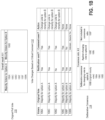
- FIG. 1A is a conceptual diagram for determining a deliberative consensus in an online polling environment or system 100.
- the online polling environment as described herein, can be any type of online discussion, including but not limited to a poll, vote, post, online forum, tweet, etc.
- a computer system 102 can communicate with a frontend server 104 (e.g., social media server) via network(s) 108. Communication can be wired and/or wireless.
- the frontend server 104 can be configured to provide a poll or other online social platform to user devices 106A-N.
- the computer system 102 can be configured to identify critical comments in a poll or other online platform presented to the user devices106A-N.
- the deliberative consensus is a ratio of users in the majority view who saw the critical comment (or may have seen the critical comment) and did not change their vote to users in the minority view, or to total users.
- the users in the deliberative consensus who changed their vote to option B includes users at the devices 106A, C, and D.
- the user at the user device 106B can also be part of the deliberative consensus since the user who posted the critical comment also saw the critical comment. Since users at the devices 106E and N did not change their votes from the majority view in response to receiving notification of the critical comment, these users are considered against changing their vote to option B.
- the resulting consensus ratio, or deliberative consensus ratio is 4:2 (four users in the group for option B and two users in the group against option B).
- the user devices 106A-N can each include input device(s) 218, output device(s) 220, an application 224, and a communication interface 226.
- the input device(s) 218 can be configured to receive input from a user in response to a poll, post, comment or other information presented in the application 224 from the frontend server 104.
- the input device(s) 218 can also be configured to receive information from a user to generate a poll or post in the application 224.
- the frontend server 104 can receive user input to generate the poll or post. User input can be stored in the frontend content 238.
- the sentiment analysis engine 209 can be configured to determine a sentiment of comments or reactions to the poll. The determined sentiment can then be associated with an agreement side and a disagreement side.
- the critical comment determiner 210 can then be configured to determine or identify a comment made in response to the poll by a user who is not in the majority view. As described herein, the critical comment determiner 210 can also be configured to compare or rank multiple comments that may be identified as critical of the majority view. Thus, the determiner 210 can rank comments from most critical to least critical of the majority view.
- the poll or post modifying engine 214 can be configured to generate instructions about how a poll thread or feed should be modified.
- the engine 214 can communicate the modification instructions to the frontend server 104.
- the frontend server 104 can format the poll thread or feed.
- the poll thread or feed can be transmitted to the user devices 106A-N for display at the output device(s) 220.
- the modification instructions can include rearranging content to provide more emphasis on the critical comment, critical comment thread, and/or deliberative consensus.
- the notification engine 204 can be configured to generate a notification indicative of critical comments and/or critical comment threads.
- the notification can include a link to the critical comment.
- the notification can include a portion of a thread of the poll that includes the critical comment.
- the notification can output the critical comment.
- the notification can output the critical comment in some context, such as a comment made before and a comment made in response to the critical comment.
- the engine 204 can also be configured to determine which users in the group of users voted in the majority view so that the engine 204 can determine which users should receive the notification and/or modified poll thread or feed.
- the engine 204 can then send the notification of the critical comment to the identified portion of users in the majority view at the user devices 106A-N.
- the notification engine 204 and the poll/post modifying engine 214 can be a same engine.
- the engines 204 and 214 can be separate, as depicted in FIG. 2 .
- the deliberative consensus determiner 212 can be configured to determine a deliberative consensus ratio, as described herein.
- the determiner 212 can receive information from each of the devices 106A-N that received the notification of the critical comment.
- the information can include an indication of whether the notification was sent to the devices 106AN, whether the notification was seen by a user at the devices 106A-N, and/or any changes (or inaction) to a vote or comment or other activity by a user at the devices 106A-N.
- the determiner 212 can also receive an indication of an absence of activity or action by a user at the user devices 106A-N. An absence of activity or action can indicate that the user either did not see the critical comment or did see the critical comment but was not swayed by the critical comment to change their vote.
- the computer system 102 can be in communication with the poll database 228.
- the database 228 can store information per poll that is generated and provided to users by the frontend server 104. For example, for each poll data 230A-N, overall poll results 232, a deliberative consensus ratio 234, and critical comment(s) 236 can be identified and/or stored. This information can be displayed at the user devices 106A-N with each of the polls 230A-N presented in the application 224. As described herein, the poll or post modifying engine 214 of the computer system 102 can be configured to generate instructions for rearranging a feed in the application 224 at each of the user devices 106A-N.
- poll votes can be received in 302.
- a majority vote can be determined in 304. As described herein, the majority vote can be determined based on counting how many users voted for each option or viewpoint in the poll and identifying which viewpoint has the most amount of votes.
- a critical comment can then be identified in 306, as described herein (e.g., refer to FIGS. 4A-B). The critical comment can be identified based on one or more factors. For example, the critical comment can be one made by a user in a minority vote, a user who did not vote, or a user who downloaded a comment or content from the poll thread.
- the critical comment can also be one that, using machine learning, deep learning, and/or textual sentiment analysis, is in agreement with the poll, in disagreement with the poll, or is neutral.
- a comment that counters the majority view/vote can be identified as the critical comment.
- the critical comment can be a response to a previous critical comment.
- the critical comment can also be the start of a new critical thread.
- the critical comment can be identified as a comment that is considered most convincing to a majority of users interacting with the poll (e.g., the comment causes the majority of users to change their vote or provide another response/reaction to the poll).
- these comments can be ranked from most critical to least critical.
- the most critical comment can be identified as the next critical comment for the thread.
- more than one critical comment can be identified as critical comments for the thread.
- Each critical comment thread should be defined as a critical comment, followed possibly by a critical response to that comment, followed possibly by a critical response to that response, and so on.
- the deliberative consensus can be based on notified users who in fact saw the critical comment and notified users who may have seen the critical comment. It can be assumed that users saw the critical comment if they were explicitly notified and there's no indication that the users did not see the notification. It can also be assumed that users saw the critical comment if they interacted with the comment in any way (e.g., the users clicked on the comment or poll in general to see if there were any responses).
- a deliberative consensus can be determined in 314, based on the indication received in 312. As described herein, the deliberative consensus can be a ratio of a quantity of the majority voters who changed their vote in response to the critical comment plus the user who made the critical comment against a quantity of the majority voters who received (and/or saw) the critical comment but did not change their vote.
- the deliberative consensus can be a value indicative of how many of the voters in the majority changed their vote based on the comment. If votes are not changed in response to a critical comment, then the deliberative consensus can remain the same. Over time, as more votes change and/or more critical comments are identified and provided to users in the majority, the deliberative consensus can be updated and changed.
- the deliberative consensus can be outputted in 316.
- the deliberative consensus can be outputted in a feed at the devices of each of the users in the majority and/or the minority view.
- the deliberative consensus can be outputted with a critical comment thread, the critical comment, and/or overall poll results.
- the deliberative consensus can also be outputted with the poll thread.
- Comments in the poll thread can be ordered from a highest criticalness to a lowest criticalness. For example, a critical comment that caused a greatest number of majority voters to change their votes can be displayed at the top of the poll thread. A comment that did not cause any majority voters to change their votes can be pushed to the bottom of the poll thread. As a result, poll viewers can be informed about what comments caused one or more of the majority voters to make more informed decisions and change their original votes.
- posts in the thread can be filtered or sorted based on the deliberative consensus.
- the deliberative consensus can be used for sorting.
- a popular but misleading post may appear at the top of a user's feed because the post has a significant quantity of up votes and/or a high click-through rate.
- the post may have a low deliberative consensus in comparison to other posts in the feed. Accordingly, the post with the low deliberative consensus may not appear at the top of the user's feed.
- a post (or multiple posts) with a higher deliberative consensus may appear at the top of the user's feed.
- posts can be filtered based on the deliberative consensus. As an illustrative example, if a post has a deliberative consensus that satisfies a threshold condition, the post can be presented in the feed. If the post's deliberative consensus does not satisfy the threshold condition, then the post may be filtered out of the feed and therefore would not be presented in the feed with other posts.
- the threshold condition an include a high deliberative consensus, such as a numeric value that exceeds a threshold deliberative consensus value, a Boolean value indicating "High” for deliberative consensus (instead of "Low”), and/or a string value such as "This content is misleading, inappropriate, etc.” (instead of a string value such as "This content is good”).
- a high deliberative consensus such as a numeric value that exceeds a threshold deliberative consensus value, a Boolean value indicating "High” for deliberative consensus (instead of "Low"), and/or a string value such as "This content is misleading, inappropriate, etc.” (instead of a string value such as "This content is good”).
- One or more other threshold conditions may also be used to filter and/or sort posts that are presented in the feed based on the deliberative consensus.
- Steps 306-316 can be repeated in the process 300 for each poll. For example, one or more steps of the process 300 can be repeated until a poll is closed and/or for a predetermined amount of time. The process 300 can be repeated until discussion ends in the poll. For example, if no one in the majority responds to the critical comment or changes their votes, the discussion can be deemed as ended. In another example, if someone in the majority replies to the critical comment then someone in the minority responds to the reply, discussion is deemed to be ongoing until there are no more back and forth replies. During this back and forth discussion, the critical comment can be continuously updated and provided to different portions or groups of users for that poll. For example, users in the majority can receive the first critical comment notification. Where a user in the majority replies to the first critical comment, users in the minority can receive notification of this reply; the reply can be a second critical comment. The process 300 can therefore repeat in a feedback loop until discussion ends and/or the poll closes.
- FIG. 4 is a flowchart of a process 400 for determining a critical comment to a poll.
- the process 400 can be performed by the computer system 102 and/or any other computer system.
- the process 400 can begin once a poll receives one or more comments.
- the process 400 can then be repeated for subsequent reply comments or reactions from group members.
- comments to the poll can be received in 402.
- the comments can be associated with a side in 404.
- Textual sentiment analysis can be used in 404.
- Sentiment analysis can be performed when a poll receives one or more comments. It can also be performed whenever there is a reaction or reply to any comments or activity in the poll. It can be used when the user interfaces at user devices do not allow users to explicitly express agreement or disagreement, such as when the poll is a social media post where there is no option for downvoting.
- a sentiment of comments can be determined as being generally positive or in agreement with the poll, or generally negative or in disagreement with the poll.
- users votes can be inferred based on the sentiment of the comments that they like. For example, if a comment is generally negative or against a decision proposed in a poll, and a majority of users agree with that comment, then the sentiment of the majority vote can be identified as negative or against a decision.
- One or more other methods or techniques can be used in 404, such as machine learning and/or deep learning techniques and algorithms. For example, associations can be made by counting votes of users who submitted comments or liked comments. For example, if user A votes "Disagree" and submits a comment B, comment B can be associated with the disagreement side based on votes. If, on the other hand, A does not vote (e.g., for example, a social network may not provide dislikes, downvotes, or other disagreement buttons or features), then sentiment analysis can be used to determine whether comment B expresses a supporting or dissenting sentiment.
- A does not vote
- sentiment analysis can be used to determine whether comment B expresses a supporting or dissenting sentiment.
- One side can be in agreement with the poll and the other side can be in disagreement with the poll.
- the sides can make up a current poll consensus. Comments made by users who voted in the majority view can be associated with the majority view or majority side. Comments made by users who voted in the minority view and/or users who did not vote in the poll can be associated with the minority view or minority side. In other words, any comments that are critical of or do not share the same sentiment as the majority view can be associated with the minority view.
- a top ranked comment can be identified as a critical comment in 410.
- the comment with the highest ranking can be the critical comment.
- the first chronological comment can be the critical comment.
- the critical comment can be outputted to a portion of users in the majority of the current poll consensus in 412. As described herein, the portion of users in the majority can include all the users in the majority. The portion of users in the majority can also include less than all the users in the majority.
- the critical comment can be a comment that is the most highly upvoted comment amongst users in the minority.
- the critical comment can be identified as a comment that changes minds (e.g., changes the most amount of minds of users in the majority).
- the comment that changes the most amount of minds can be identified based on determining a probability that a user accepts and/or rejects a poll after seeing the comment.
- the comment can also be identified by a probability that the user likes, shares, upvotes, or takes some other action in response to a post after seeing the comment. The comment may therefore prove itself by changing the user's mind, and therefor should be broadcasted to more users (e.g., more users in the majority).
- a difference of logarithms of probabilities can also be used to identify the critical comment.
- the relative entropy e.g., KL Divergence
- This difference can be a measure of information content (e.g., in bits) of the critical comment.
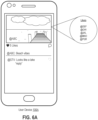
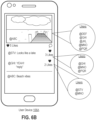
- @GHI responded to @STV's comment and since two people liked that message (@STV and @MNO), @GHI's comment can be second in criticalness.
- @STV's comment can be most critical since it had the most impact on changing original votes
- @GHI's comment can be a second most critical comment since it had some support/reaction
- @ABC's original comment can be the least critical comment in the thread and moved to the bottom of the thread since it had no impact on changing the original vote.
- @MNO responded to @GHI's comment by liking it. Since @GHI's comment disagrees with @STV's comment, which was the original critical comment, @GHI's comment can be the new critical comment and can be bumped to the top of the thread. @STV's comment can therefore be moved to the bottom of the thread but still above @ABC's comment since @STV's comment has a higher criticalness score than @ABC's comment (e.g., in other words, @STV's comment had previously been a critical comment whereas @ABC's comment was not).
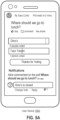
- the photo post started with a comment.
- there has to be some disagreement or approval e.g., explicit via a downvote or dislike or implicit via textual sentiment analysis.
- there was no disagreement with @ABC's original post which was just a photo that users liked. Rather, the first disagreement was @STV's comment in response to @ABC's original post.
- the deliberative poll, and deliberative consensus therefore began with @STV's comment.
- various methods, techniques, and algorithms described herein can be used to infer whether the comment represents agreement/disagreement (e.g., NLP, sentiment analysis; sentiment of users who voted for it; clustering of users who generally disagree/agree, etc.).
- agreement/disagreement e.g., NLP, sentiment analysis; sentiment of users who voted for it; clustering of users who generally disagree/agree, etc.
- explicit/stand-alone polls can integrate the disclosed technology and can include a separate website, a plugin/feature in a social network, forum software, team collaboration software, decision support system(s), DAO governance platform(s), or other governance platform(s), and/or an enhancement to existing social platforms, to create a poll feature.
- the disclosed technology can run "on top" of existing social networks, providing a different view of conversations or threads.
- an application can use a TWITTER API and re-order a user's feed, pushing tweets to the top that have a high deliberative consensus.
- the disclosed technology can apply to multiple choice polls. This can also allow for different Social Choice functions such as ranked (e.g., condorcet, borda count, instant runoff), quadratic, etc.
- a critical thread may need to be generalized as starting with a comment with most votes from someone who voted for an option that was not selected by the social choice function. If users can upvote multiple comments, then a critical comment may be a comment that gets the most votes, but then there can be ties for comments that getting first votes.
- reputation can be rewarded based on a measure of mutual information (e.g., in bits) between a user's vote and votes of users who already have reputation. Reputation may therefore be awarded to users whose votes can be used to predict the votes of other users who have reputation.
- a measure of mutual information e.g., in bits
- Bayes rule can be used to calculate a posterior probability of the vote of a second user who has reptitation, given the vote of the first user.
- a proper scoring rule such as a logarithm of this posterior probability, can then be used to assign a score to the first user based on the vote of the second user.
- the use of proper scoring rules can create an incentive for the first user to vote honestly, as long as the first user believes that the second user will also vote honestly .
- Nash equilibrium where users seeking to maximize their reputation vote honestly because they expect other users with reputation to vote honestly. The deliberative consensus can thus reveal what a user who is exposed to all information in the critical thread would honestly believe, support, or approve of.
- the argument tree and votes can be a conflict-flee replicated data type (CRDT), which can allow for the disclosed technology to operate within a decentralized system.
- Hash of content can also be used, or a universally unique identifier (UUID), for each comment to therefore generate IDs.
- Each comment can reference a parent ID (e.g., parent comment that the comment is a response to).
- Votes can also be a last-write wins (LWW) register (e.g., one per user per comment), which is a type of CRDT.
- LWW last-write wins
- Any event such as a new post or new vote can be sent out as an update.
- Each client can then subscribe to a stream of updates to store a whole tree for a conversation.
- Each client can then calculate a deliberative consensus and determine which users should receive the critical comment.
- the systems and disclosed technology can be applied in numerous variations.
- the disclosed technology can be seamlessly integrated into different social media platforms where users vote on and/or discuss posted content (e.g., FACEBOOK, TWITTER, TWITTER BIRDWATCH, TWITTER SPACES, INSTAGRAM, TIK TOK, ZOOM, CLUBHOUSE, TWITCH, etc.).
- posted content e.g., FACEBOOK, TWITTER, TWITTER BIRDWATCH, TWITTER SPACES, INSTAGRAM, TIK TOK, ZOOM, CLUBHOUSE, TWITCH, etc.
- audio social networks e.g., TWITTER SPACES, CLUBHOUSE
- users can enter and communicate in audio chat rooms.
- the viral coefficient for the group of informed users is similar to, the same as, or greater than the viral coefficient for the broader population, it can indicate that the content is truthful/accurate, which can cause social media and/or other content distribution systems to maintain (and/or increase, in some instances) the viral coefficient for the viral content.
- Other extensions and/or applications of the deliberative consensus to viral content are also possible.
- Mechanisms such as Peer Prediction and/or Bayesian Truth Serum can be used to improve a fact-checking system in promoting content that users who are informed of information in a critical thread may honestly believe to be true.
Landscapes
- Engineering & Computer Science (AREA)
- Theoretical Computer Science (AREA)
- Physics & Mathematics (AREA)
- Health & Medical Sciences (AREA)
- General Physics & Mathematics (AREA)
- General Health & Medical Sciences (AREA)
- Artificial Intelligence (AREA)
- General Engineering & Computer Science (AREA)
- Computational Linguistics (AREA)
- Audiology, Speech & Language Pathology (AREA)
- Business, Economics & Management (AREA)
- Computing Systems (AREA)
- Tourism & Hospitality (AREA)
- Economics (AREA)
- General Business, Economics & Management (AREA)
- Human Resources & Organizations (AREA)
- Marketing (AREA)
- Strategic Management (AREA)
- Primary Health Care (AREA)
- Computer Networks & Wireless Communication (AREA)
- Signal Processing (AREA)
- Management, Administration, Business Operations System, And Electronic Commerce (AREA)
Claims (15)
- Verfahren zum Bestimmen deliberativen Konsenses unter einer Vielzahl von Meinungen, die in einer Online-Diskussion elektronisch ausgedrückt wird, wobei das Verfahren Folgendes umfasst:Empfangen (302), an einem Computersystem (102), von Benutzerrückmeldungsdaten für mindestens eine erste Gruppe von Benutzern und eine zweite Gruppe von Benutzern, wobei die Benutzerrückmeldungsdaten eine erste Meinung, die in der Online-Diskussion von der ersten Gruppe von Benutzern ausgedrückt wird, und eine zweite Meinung, die in der Online-Diskussion von der zweiten Gruppe von Benutzern ausgedrückt wird, identifizieren, wobei die erste Meinung und die zweite Meinung sich auf ein Thema beziehen und die erste Meinung sich von der zweiten Meinung unterscheidet;Empfangen, an dem Computersystem, von Kommentardaten, die Kommentare identifizieren, die als Reaktion auf die erste und die zweite in der Online-Diskussion ausgedrückte Meinung in der Online-Diskussion gepostet werden;Identifizieren (306), durch das Computersystem und basierend auf Reaktionen auf die Kommentare und die Benutzerrückmeldungsdaten, eines kritischen Kommentars aus den Kommentaren, die die zweite Meinung unterstützen, wobei die erste Meinung eine Mehrheitsansicht darstellt, die von der ersten Gruppe vertreten wird, und die zweite Meinung eine Minderheitsansicht in der Online-Diskussion darstellt, die von der zweiten Gruppe vertreten wird;Übertragen (310), durch das Computersystem und an einen Teil von Rechenvorrichtungen, der Benutzern einer dritten Gruppe zugeordnet ist, einer Benachrichtigung mit dem kritischen Kommentar, wobei das Übertragen der Benachrichtigung bewirkt, dass der kritische Kommentar auf dem Teil der Rechenvorrichtungen präsentiert wird, und dass der Teil der Rechenvorrichtungen Antworten auf den kritischen Kommentar von den Benutzern der dritten Gruppe empfängt;wobei das Verfahren dadurch gekennzeichnet ist, dass es ferner folgende Schritte umfasst:Empfangen (312), durch das Computersystem und von dem Teil der Rechenvorrichtungen, von Angaben zu den Antworten auf die Benachrichtigung;Bestimmen (314), durch das Computersystem und basierend auf den Angaben der Antworten auf die Benachrichtigung, einer deliberativen Konsensmeinung, die mindestens teilweise auf den Antworten auf die Benachrichtigung bezüglich des kritischen Kommentars von dem Teil der Rechenvorrichtungen, der den Benutzern der dritten Gruppe zugeordnet ist, basiert, wobei die deliberative Konsensmeinung ein numerischer Wert ist, der mindestens einer von der ersten Meinung und der zweiten Meinung zu dem Thema zugeordnet ist; undÜbertragen (316), durch das Computersystem und an mindestens eine der Rechenvorrichtungen von Benutzern der ersten Gruppe, der zweiten Gruppe und der dritten Gruppe, der deliberativen Konsensmeinung der Online-Diskussion.
- Verfahren nach Anspruch 1, wobei:die Online-Diskussion ein Online-Forum oder eine Social-Media-Plattform ist,die erste Meinung in Bezug auf einen Beitrag zu dem Thema durch die ersten Rechenvorrichtungen, die der ersten Gruppe von Benutzern über das Online-Forum zugeordnet sind, ausgedrückt wird, wobei die erste Meinung mindestens eines von (i) einem Kommentar, (ii) einer positiven Bewertung, (iii) einem "Gefällt mir", (iv) dem Beitrag, (v) einem Tag, (vi) einer Teilen-Aktion, (vii) einer Repost-Aktion, (viii) einer Mikrozahlung und (ix) einer Benutzerauswahl ist, unddie zweite Meinung in Bezug auf den Beitrag zu dem Thema durch zweite Rechenvorrichtungen, die der zweiten Gruppe von Benutzern über das Online-Forum zugeordnet sind, ausgedrückt wird, wobei die zweite Meinung mindestens eines von (i) einer negativen Bewertung, (ii) einem Kommentar, (iii) einer Untätigkeit, (iv) einem Flag, (v) einem Tag und (vi) einem "Gefällt mir nicht" ist,wobei die Benutzerrückmeldungsdaten von einem Computersystem empfangen werden, das die Online-Diskussion hostet.
- Verfahren nach Anspruch 2, wobei die Benachrichtigung mindestens eines umfasst von (i) einer Nachricht, die in einem oberen Teil eines Feeds präsentiert wird, der vom Online-Forum oder der Social-Media-Plattform bereitgestellt wird, (ii) einer Push-Benachrichtigung, die die Benutzer der dritten Gruppe auf eine mobile Anwendung weiterleitet, die an dem Teil der Rechenvorrichtungen bereitgestellt ist, (iii) einer E-Mail-Benachrichtigung, (iv) einer Badge-Benachrichtigung für die mobile Anwendung oder eine Webanwendung, die an dem Teil der Rechenvorrichtungen bereitgestellt ist, und (v) dem kritischen Kommentar, der unmittelbar unter oder unmittelbar über dem Beitrag in dem Feed präsentiert wird, der von dem Online-Forum oder der Social-Media-Plattform bereitgestellt wird.
- Verfahren nach Anspruch 2, ferner umfassend das Sortieren, durch das Computersystem und basierend auf der deliberativen Konsensmeinung, von Beiträgen, die in dem Online-Forum oder auf der Social-Media-Plattform Benutzern von mindestens einer der ersten Gruppe, der zweiten Gruppe und der dritten Gruppe präsentiert werden, wobei Beiträge, die einen höheren numerischen Wert aufweisen, oberhalb von anderen Beiträgen, die einen niedrigeren numerischen Wert aufweisen, in dem Online-Forum oder auf der Social-Media-Plattform präsentiert werden.
- Verfahren nach Anspruch 2, ferner Folgendes umfassend:Identifizieren, durch das Computersystem, einer Teilmenge von Benutzern aus mindestens einer von der ersten Gruppe, der zweiten Gruppe und der dritten Gruppe, die virale Inhalte und den kritischen Kommentar gesehen haben, wobei der kritische Kommentar eine Reaktion auf den viralen Inhalt darstellt;Bestimmen, durch das Computersystem, eines ersten viralen Koeffizienten für die identifizierte Teilmenge von Benutzern;Bestimmen, durch das Computersystem, eines zweiten viralen Koeffizienten für Benutzer aus mindestens einer von der ersten Gruppe, der zweiten Gruppe und der dritten Gruppe, die den viralen Inhalt, aber nicht den kritischen Kommentar gesehen haben;Bestimmen, durch das Computersystem, ob der erste virale Koeffizient kleiner als der zweite virale Koeffizient ist;Identifizieren, durch das Computersystem und basierend auf einer Bestimmung, dass der erste virale Koeffizient kleiner als der zweite virale Koeffizient ist, des viralen Inhalts als einen Inhalt, der ungenaue oder falsche Informationen enthält; undDurchführen einer Korrekturmaßnahme, durch das Computersystem, als Reaktion darauf, dass der virale Inhalt ungenaue oder falsche Informationen enthält,wobei der erste virale Koeffizient ein Wert ist, der einer ersten deliberativen Konsensmeinung zugeordnet ist, und der zweite virale Koeffizient ein Wert ist, der einer vor-deliberativen Konsensmeinung zugeordnet ist.
- Verfahren nach Anspruch 5, wobei das Durchführen der Korrekturmaßnahme, durch das Computersystem, das Absenken des zweiten viralen Koeffizienten auf einen Wert des ersten viralen Koeffizienten umfasst.
- Verfahren nach Anspruch 6, wobei das Durchführen der Korrekturmaßnahme, durch das Computersystem, das Entfernen des viralen Inhalts aus der Online-Diskussion umfasst.
- Verfahren nach Anspruch 6, wobei das Durchführen der Korrekturmaßnahme, durch das Computersystem, das Sortieren von in der Online-Diskussion präsentierten Inhalten umfasst, sodass der virale Inhalt unterhalb von anderem Inhalt präsentiert wird.
- Verfahren nach Anspruch 1, wobei:die Online-Diskussion eine Umfrage ist,die erste Meinung in Bezug auf den Beitrag zum Thema als erste Stimme in der Umfrage an den ersten Rechenvorrichtungen, die der ersten Gruppe von Benutzern zugeordnet sind, ausgedrückt wird, unddie zweite Meinung in Bezug auf die Umfrage zum Thema als zweite Stimme in der Umfrage an zweiten Rechenvorrichtungen, die der zweiten Gruppe von Benutzern zugeordnet sind, ausgedrückt wird.
- Verfahren nach Anspruch 1, ferner umfassend das Auswählen, durch das Computersystem, der deliberativen Konsensmeinung unter Verwendung von Verteiltem Bayes'schem Denken und mindestens teilweise basierend auf mindestens der Schwellenübernahme der zweiten Meinung.
- Verfahren nach Anspruch 1, wobei die Benachrichtigung eine Teilmenge von Kommentaren in einem der Online-Diskussion zugeordneten Kommentar-Thread einschließt, wobei die Teilmenge von Kommentaren den kritischen Kommentar unterstützt und Kontext um den kritischen Kommentar bereitstellt.
- Verfahren nach Anspruch 1, ferner Folgendes umfassend:Identifizieren, durch das Computersystem, eines Kommentars, der in Widerspruch zu dem kritischen Kommentar steht, wobei der kritische Kommentar ein vorheriger kritischer Kommentar ist; undrekursives Durchführen, durch das Computersystem, der Schritte des Empfangens, Auswählens und Übertragens, wobei der Kommentar, der in Widerspruch zu dem vorherigen kritischen Kommentar steht, als neuer kritischer Kommentar ausgewählt wird, wobeider neue kritische Kommentar der Kommentar ist, der in Widerspruch zu dem vorherigen kritischen Kommentar steht,die erste Meinung mit dem vorherigen kritischen Kommentar übereinstimmt, unddie zweite Meinung in Widerspruch zu dem vorherigen kritischen Kommentar steht.
- Verfahren nach Anspruch 1, wobei:die Online-Diskussion eine Governance-Plattform ist,die erste Meinung in Bezug auf eine Entscheidung ausgedrückt wird, die durch die ersten Rechenvorrichtungen, die der ersten Gruppe von Benutzern zugeordnet sind, über die Governance-Plattform zu dem Thema getroffen werden soll, wobei die erste Meinung mindestens eines von (i) einem Kommentar und (ii) einer Stimme ist, unddie zweite Meinung in Bezug auf die Entscheidung ausgedrückt wird, die durch zweite Rechenvorrichtungen, die der zweiten Gruppe von Benutzern zugeordnet sind, über die Governance-Plattform zu dem Thema getroffen werden soll, wobei die zweite Meinung mindestens eines von (i) einem Kommentar gegen die erste Meinung, (ii) einer Stimme gegen die erste Meinung und (iii) einer Untätigkeit ist.
- Verfahren nach Anspruch 13, wobei die Governance-Plattform eine Dezentralisierte Autonome Organisation (DAO) ist.
- System zum Bestimmen eines deliberativen Konsenses unter einer Vielzahl von Meinungen, die in einer Online-Diskussion elektronisch ausgedrückt wird, wobei das System Folgendes umfasst:ein Online-Diskussionssystem, das konfiguriert ist, um Online-Diskussionen zu hosten, wobei die Online-Diskussionen mindestens eines von einem Online-Forum, einer Social-Media-Plattform und einer Umfrage einschließen;Benutzervorrichtungen, auf denen Client-Anwendungen ausgeführt werden, die mit dem Online-Diskussionssystem interagieren, um den Benutzern der Benutzervorrichtungen die Online-Diskussionen zu präsentieren; undein Computersystem, das mit den Benutzervorrichtungen kommuniziert, wobei das Computersystem konfiguriert ist, um eine deliberative Konsensmeinung unter einer Vielzahl von Meinungen zu bestimmen, die von den Benutzern der Benutzervorrichtungen in einer vom Online-Diskussionssystem gehosteten Online-Diskussion ausgedrückt wird, wobei das Computersystem konfiguriert ist, um Operationen durchzuführen, Folgendes umfassend:Empfangen, von den Benutzervorrichtungen, von Benutzerrückmeldungsdaten für mindestens eine erste Gruppe von Benutzern und eine zweite Gruppe von Benutzern, wobei die Benutzerrückmeldungsdaten eine erste Meinung, die in der Online-Diskussion von der ersten Gruppe von Benutzern ausgedrückt wird, und eine zweite Meinung, die in der Online-Diskussion von der zweiten Gruppe von Benutzern ausgedrückt wird, identifizieren, wobei die erste Meinung und die zweite Meinung sich auf ein Thema beziehen und die erste Meinung sich von der zweiten Meinung unterscheidet;Empfangen, von den Benutzervorrichtungen, von Kommentardaten, die Kommentare identifizieren, die als Reaktion auf die erste und die zweite in der Online-Diskussion ausgedrückte Meinung in der Online-Diskussion gepostet werden;Identifizieren, basierend auf Reaktionen auf die Kommentare und die Benutzerrückmeldungsdaten, eines kritischen Kommentars aus den Kommentaren, die die zweite Meinung unterstützen, wobei die erste Meinung eine Mehrheitsansicht darstellt, die von der ersten Gruppe vertreten wird, und die zweite Meinung eine Minderheitsansicht in der Online-Diskussion darstellt, die von der zweiten Gruppe vertreten wird;Übertragen einer Benachrichtigung mit dem kritischen Kommentar, an einen Teil von Benutzervorrichtungen, der Benutzern einer dritten Gruppe zugeordnet ist, wobei das Übertragen der Benachrichtigung bewirkt, dass der kritische Kommentar auf dem Teil von den Benutzervorrichtungen präsentiert wird und dass der Teil der Benutzervorrichtungen Antworten auf den kritischen Kommentar von den Benutzern der dritten Gruppe empfängt;dadurch gekennzeichnet, dass das Computersystem ferner konfiguriert ist, um Operationen durchzuführen, die Folgendes umfassen:Empfangen, von dem Teil der Benutzervorrichtungen, von Angaben zu den Antworten auf die Benachrichtigung;Bestimmen, basierend auf den Angaben zu Antworten auf die Benachrichtigung, einer deliberativen Konsensmeinung, basierend mindestens teilweise auf den Antworten auf die Benachrichtigung bezüglich des kritischen Kommentars von dem Teil der Rechenvorrichtungen, der den Benutzern der dritten Gruppe zugeordnet ist, wobei die deliberative Konsensmeinung ein numerischer Wert ist, der mindestens einer von der ersten Meinung und der zweiten Meinung zu dem Thema zugeordnet ist; undÜbertragen der deliberativen Konsensmeinung der Online-Diskussion, an mindestens eine der Benutzervorrichtungen von Benutzern der ersten Gruppe, der zweiten Gruppe und der dritten Gruppe.
Applications Claiming Priority (2)
| Application Number | Priority Date | Filing Date | Title |
|---|---|---|---|
| US202163154628P | 2021-02-26 | 2021-02-26 | |
| PCT/US2022/018134 WO2022183103A1 (en) | 2021-02-26 | 2022-02-28 | Informed consensus determination among multiple divergent user opinions |
Publications (3)
| Publication Number | Publication Date |
|---|---|
| EP4298548A1 EP4298548A1 (de) | 2024-01-03 |
| EP4298548C0 EP4298548C0 (de) | 2024-12-18 |
| EP4298548B1 true EP4298548B1 (de) | 2024-12-18 |
Family
ID=81326005
Family Applications (1)
| Application Number | Title | Priority Date | Filing Date |
|---|---|---|---|
| EP22714953.1A Active EP4298548B1 (de) | 2021-02-26 | 2022-02-28 | Informierte konsensbestimmung zwischen mehreren divergierenden benutzermeinungen |
Country Status (3)
| Country | Link |
|---|---|
| US (2) | US20240046376A1 (de) |
| EP (1) | EP4298548B1 (de) |
| WO (1) | WO2022183103A1 (de) |
Families Citing this family (6)
| Publication number | Priority date | Publication date | Assignee | Title |
|---|---|---|---|---|
| US11909703B2 (en) * | 2021-08-26 | 2024-02-20 | International Business Machines Corporation | Live chat stream comment management |
| US20240046049A1 (en) * | 2022-08-04 | 2024-02-08 | Qatar Foundation For Education, Science And Community Development | Identifying and converting questions into statements |
| US20240250971A1 (en) * | 2023-01-25 | 2024-07-25 | Capital One Services, Llc | Detecting malicious users in a decentralized autonomous organization |
| US12406153B2 (en) | 2023-03-13 | 2025-09-02 | Causality Link LLC | Dynamic contrarian view analysis in natural language content |
| CN117097940A (zh) * | 2023-08-21 | 2023-11-21 | 北京达佳互联信息技术有限公司 | 评论显示方法、装置、电子设备及存储介质 |
| CN119377491B (zh) * | 2024-12-31 | 2025-05-06 | 浙江大学 | 一种基于代表性天际线点选取的数据查询方法 |
Family Cites Families (19)
| Publication number | Priority date | Publication date | Assignee | Title |
|---|---|---|---|---|
| US7526459B2 (en) * | 2003-11-28 | 2009-04-28 | Manyworlds, Inc. | Adaptive social and process network systems |
| US7523085B2 (en) * | 2004-09-30 | 2009-04-21 | Buzzmetrics, Ltd An Israel Corporation | Topical sentiments in electronically stored communications |
| US8019637B2 (en) * | 2005-07-07 | 2011-09-13 | Sermo, Inc. | Method and apparatus for conducting an information brokering service |
| US20080320090A1 (en) * | 2007-01-19 | 2008-12-25 | Bryan Callan H | System and method for review of discussion content |
| US20100121707A1 (en) * | 2008-11-13 | 2010-05-13 | Buzzient, Inc. | Displaying analytic measurement of online social media content in a graphical user interface |
| US20120198357A1 (en) * | 2011-01-28 | 2012-08-02 | Christine Margaret Tozzi | Computerized method of mediating disputed issues |
| US9461876B2 (en) * | 2012-08-29 | 2016-10-04 | Loci | System and method for fuzzy concept mapping, voting ontology crowd sourcing, and technology prediction |
| US9704175B2 (en) * | 2013-01-16 | 2017-07-11 | Whotheman Media, Inc. | Conversation management systems |
| US20140278835A1 (en) * | 2013-03-15 | 2014-09-18 | Alexander J. Moseson | System and method for recording and analyzing opinions |
| US20150089399A1 (en) * | 2013-09-26 | 2015-03-26 | Polis Technology Inc. | System and methods for real-time formation of groups and decentralized decision making |
| US20150304269A1 (en) * | 2014-04-21 | 2015-10-22 | Gaurav KEERTHI | System and method |
| US20180013800A1 (en) * | 2015-01-13 | 2018-01-11 | Rushline, LLC | Systems and methods for enabling dialog amongst different participant groups with post-level qualifiers |
| WO2018085896A1 (en) * | 2016-11-11 | 2018-05-17 | Lets Join In (Holdings) Pty Ltd | An interactive broadcast management system |
| US10861029B2 (en) * | 2017-05-15 | 2020-12-08 | Facebook, Inc. | Qualifying comments with poll responses on online systems |
| US20210012394A1 (en) * | 2019-07-08 | 2021-01-14 | James Tolley | Online mediation platform |
| US11580869B2 (en) * | 2019-09-23 | 2023-02-14 | Revealit Corporation | Computer-implemented interfaces for identifying and revealing selected objects from video |
| WO2021226150A1 (en) * | 2020-05-04 | 2021-11-11 | MORGAN, Kevan L. | Computer-aided methods and systems for distributed cognition of digital content comprised of knowledge objects |
| US12340175B2 (en) * | 2021-01-29 | 2025-06-24 | Elaboration, Inc. | Automated classification of emotio-cogniton |
| WO2023069989A1 (en) * | 2021-10-19 | 2023-04-27 | Intelling Media Corp. | System and method for topological representation of commentary |
-
2022
- 2022-02-28 EP EP22714953.1A patent/EP4298548B1/de active Active
- 2022-02-28 WO PCT/US2022/018134 patent/WO2022183103A1/en not_active Ceased
- 2022-02-28 US US18/263,640 patent/US20240046376A1/en not_active Abandoned
- 2022-02-28 US US17/682,400 patent/US20220277403A1/en not_active Abandoned
Also Published As
| Publication number | Publication date |
|---|---|
| EP4298548C0 (de) | 2024-12-18 |
| WO2022183103A1 (en) | 2022-09-01 |
| US20240046376A1 (en) | 2024-02-08 |
| EP4298548A1 (de) | 2024-01-03 |
| US20220277403A1 (en) | 2022-09-01 |
Similar Documents
| Publication | Publication Date | Title |
|---|---|---|
| EP4298548B1 (de) | Informierte konsensbestimmung zwischen mehreren divergierenden benutzermeinungen | |
| US11516264B2 (en) | Methods and systems for soliciting an answer to a question | |
| US11816743B1 (en) | Information enhancing method using software agents in a social networking system | |
| US20210182499A1 (en) | Automatically Detecting and Storing Entity Information for Assistant Systems | |
| De Nooy et al. | Polarization in the media during an election campaign: A dynamic network model predicting support and attack among political actors | |
| KR20250143111A (ko) | 상호작용 플랫폼들을 위한 챗봇 | |
| US20120185484A1 (en) | Method and system of selecting responders | |
| Gill et al. | Chatting in a mobile chamber: effects of instant messenger use on tolerance toward political misinformation among South Koreans | |
| US20180013800A1 (en) | Systems and methods for enabling dialog amongst different participant groups with post-level qualifiers | |
| Liu et al. | Consumer engagement on social media: an analysis of brand post characteristic combinations | |
| US20220269386A1 (en) | Methods and Systems for Soliciting an Answer to a Question | |
| US20240330796A1 (en) | Question generation for groups | |
| US11238470B2 (en) | System of structured argumentation for asynchronous collaboration and machine-based arbitration | |
| Lan et al. | Evaluating state-led social mobilization in public health crises: agenda dynamics in China’s COVID-19 response | |
| McGregor | Social (media) construction of public opinion by Elites | |
| US20160232544A1 (en) | Social Network that Groups Users into Political Constituencies | |
| Dutton et al. | Disentangling polarisation and civic empowerment in the digital age: The role of filter bubbles and echo chambers in the rise of populism | |
| Yang et al. | The influence of follower reactions on political leaders’ environmental policy communication: Toward a social-mediated dynamic influence framework | |
| CN112966203B (zh) | 一种等级确定方法、装置、电子设备及存储介质 | |
| Nisbett | What makes for effective and meaningful online parliamentary public engagement? | |
| Jia | Media Trust and Individuals’ Epistemic As Well As Expressive Engagement With News on Social Media | |
| Mills | Distributed Moderation systems: an exploration of their utility and the social implications of their widespread adoption | |
| Reindel et al. | MASTER THESIS Potential for outrage? | |
| Lewis | A New Day in American Democracy: Explaining How Social Media Affects Voter Participation and Civic Engagement | |
| Wang | Audiences as Media Users: Supporting Audience Engagement via Algorithms and Designs |
Legal Events
| Date | Code | Title | Description |
|---|---|---|---|
| STAA | Information on the status of an ep patent application or granted ep patent |
Free format text: STATUS: UNKNOWN |
|
| STAA | Information on the status of an ep patent application or granted ep patent |
Free format text: STATUS: THE INTERNATIONAL PUBLICATION HAS BEEN MADE |
|
| PUAI | Public reference made under article 153(3) epc to a published international application that has entered the european phase |
Free format text: ORIGINAL CODE: 0009012 |
|
| STAA | Information on the status of an ep patent application or granted ep patent |
Free format text: STATUS: REQUEST FOR EXAMINATION WAS MADE |
|
| 17P | Request for examination filed |
Effective date: 20230925 |
|
| AK | Designated contracting states |
Kind code of ref document: A1 Designated state(s): AL AT BE BG CH CY CZ DE DK EE ES FI FR GB GR HR HU IE IS IT LI LT LU LV MC MK MT NL NO PL PT RO RS SE SI SK SM TR |
|
| DAV | Request for validation of the european patent (deleted) | ||
| DAX | Request for extension of the european patent (deleted) | ||
| GRAP | Despatch of communication of intention to grant a patent |
Free format text: ORIGINAL CODE: EPIDOSNIGR1 |
|
| STAA | Information on the status of an ep patent application or granted ep patent |
Free format text: STATUS: GRANT OF PATENT IS INTENDED |
|
| INTG | Intention to grant announced |
Effective date: 20240710 |
|
| GRAS | Grant fee paid |
Free format text: ORIGINAL CODE: EPIDOSNIGR3 |
|
| GRAA | (expected) grant |
Free format text: ORIGINAL CODE: 0009210 |
|
| STAA | Information on the status of an ep patent application or granted ep patent |
Free format text: STATUS: THE PATENT HAS BEEN GRANTED |
|
| AK | Designated contracting states |
Kind code of ref document: B1 Designated state(s): AL AT BE BG CH CY CZ DE DK EE ES FI FR GB GR HR HU IE IS IT LI LT LU LV MC MK MT NL NO PL PT RO RS SE SI SK SM TR |
|
| REG | Reference to a national code |
Ref country code: CH Ref legal event code: EP |
|
| REG | Reference to a national code |
Ref country code: DE Ref legal event code: R096 Ref document number: 602022008874 Country of ref document: DE |
|
| REG | Reference to a national code |
Ref country code: IE Ref legal event code: FG4D |
|
| U01 | Request for unitary effect filed |
Effective date: 20250117 |
|
| U07 | Unitary effect registered |
Designated state(s): AT BE BG DE DK EE FI FR IT LT LU LV MT NL PT RO SE SI Effective date: 20250123 |
|
| U20 | Renewal fee for the european patent with unitary effect paid |
Year of fee payment: 4 Effective date: 20250227 |
|
| PG25 | Lapsed in a contracting state [announced via postgrant information from national office to epo] |
Ref country code: HR Free format text: LAPSE BECAUSE OF FAILURE TO SUBMIT A TRANSLATION OF THE DESCRIPTION OR TO PAY THE FEE WITHIN THE PRESCRIBED TIME-LIMIT Effective date: 20241218 |
|
| PG25 | Lapsed in a contracting state [announced via postgrant information from national office to epo] |
Ref country code: NO Free format text: LAPSE BECAUSE OF FAILURE TO SUBMIT A TRANSLATION OF THE DESCRIPTION OR TO PAY THE FEE WITHIN THE PRESCRIBED TIME-LIMIT Effective date: 20250318 |
|
| PG25 | Lapsed in a contracting state [announced via postgrant information from national office to epo] |
Ref country code: GR Free format text: LAPSE BECAUSE OF FAILURE TO SUBMIT A TRANSLATION OF THE DESCRIPTION OR TO PAY THE FEE WITHIN THE PRESCRIBED TIME-LIMIT Effective date: 20250319 |
|
| PG25 | Lapsed in a contracting state [announced via postgrant information from national office to epo] |
Ref country code: RS Free format text: LAPSE BECAUSE OF FAILURE TO SUBMIT A TRANSLATION OF THE DESCRIPTION OR TO PAY THE FEE WITHIN THE PRESCRIBED TIME-LIMIT Effective date: 20250318 |
|
| PG25 | Lapsed in a contracting state [announced via postgrant information from national office to epo] |
Ref country code: SM Free format text: LAPSE BECAUSE OF FAILURE TO SUBMIT A TRANSLATION OF THE DESCRIPTION OR TO PAY THE FEE WITHIN THE PRESCRIBED TIME-LIMIT Effective date: 20241218 |
|
| PG25 | Lapsed in a contracting state [announced via postgrant information from national office to epo] |
Ref country code: PL Free format text: LAPSE BECAUSE OF FAILURE TO SUBMIT A TRANSLATION OF THE DESCRIPTION OR TO PAY THE FEE WITHIN THE PRESCRIBED TIME-LIMIT Effective date: 20241218 |
|
| PG25 | Lapsed in a contracting state [announced via postgrant information from national office to epo] |
Ref country code: ES Free format text: LAPSE BECAUSE OF FAILURE TO SUBMIT A TRANSLATION OF THE DESCRIPTION OR TO PAY THE FEE WITHIN THE PRESCRIBED TIME-LIMIT Effective date: 20241218 |
|
| PG25 | Lapsed in a contracting state [announced via postgrant information from national office to epo] |
Ref country code: IS Free format text: LAPSE BECAUSE OF FAILURE TO SUBMIT A TRANSLATION OF THE DESCRIPTION OR TO PAY THE FEE WITHIN THE PRESCRIBED TIME-LIMIT Effective date: 20250418 |
|
| PG25 | Lapsed in a contracting state [announced via postgrant information from national office to epo] |
Ref country code: SK Free format text: LAPSE BECAUSE OF FAILURE TO SUBMIT A TRANSLATION OF THE DESCRIPTION OR TO PAY THE FEE WITHIN THE PRESCRIBED TIME-LIMIT Effective date: 20241218 |
|
| PG25 | Lapsed in a contracting state [announced via postgrant information from national office to epo] |
Ref country code: CZ Free format text: LAPSE BECAUSE OF FAILURE TO SUBMIT A TRANSLATION OF THE DESCRIPTION OR TO PAY THE FEE WITHIN THE PRESCRIBED TIME-LIMIT Effective date: 20241218 |
|
| PG25 | Lapsed in a contracting state [announced via postgrant information from national office to epo] |
Ref country code: MC Free format text: LAPSE BECAUSE OF FAILURE TO SUBMIT A TRANSLATION OF THE DESCRIPTION OR TO PAY THE FEE WITHIN THE PRESCRIBED TIME-LIMIT Effective date: 20241218 |
|
| REG | Reference to a national code |
Ref country code: CH Ref legal event code: PL |
|
| PG25 | Lapsed in a contracting state [announced via postgrant information from national office to epo] |
Ref country code: CH Free format text: LAPSE BECAUSE OF NON-PAYMENT OF DUE FEES Effective date: 20250228 |
|
| PLBE | No opposition filed within time limit |
Free format text: ORIGINAL CODE: 0009261 |
|
| STAA | Information on the status of an ep patent application or granted ep patent |
Free format text: STATUS: NO OPPOSITION FILED WITHIN TIME LIMIT |
|
| 26N | No opposition filed |
Effective date: 20250919 |