EP4296115A1 - Power supply managing system and power supply managing method - Google Patents
Power supply managing system and power supply managing method Download PDFInfo
- Publication number
- EP4296115A1 EP4296115A1 EP23178883.7A EP23178883A EP4296115A1 EP 4296115 A1 EP4296115 A1 EP 4296115A1 EP 23178883 A EP23178883 A EP 23178883A EP 4296115 A1 EP4296115 A1 EP 4296115A1
- Authority
- EP
- European Patent Office
- Prior art keywords
- power supply
- battery
- target
- charge
- time
- Prior art date
- Legal status (The legal status is an assumption and is not a legal conclusion. Google has not performed a legal analysis and makes no representation as to the accuracy of the status listed.)
- Pending
Links
Images
Classifications
-
- B—PERFORMING OPERATIONS; TRANSPORTING
- B60—VEHICLES IN GENERAL
- B60L—PROPULSION OF ELECTRICALLY-PROPELLED VEHICLES; SUPPLYING ELECTRIC POWER FOR AUXILIARY EQUIPMENT OF ELECTRICALLY-PROPELLED VEHICLES; ELECTRODYNAMIC BRAKE SYSTEMS FOR VEHICLES IN GENERAL; MAGNETIC SUSPENSION OR LEVITATION FOR VEHICLES; MONITORING OPERATING VARIABLES OF ELECTRICALLY-PROPELLED VEHICLES; ELECTRIC SAFETY DEVICES FOR ELECTRICALLY-PROPELLED VEHICLES
- B60L58/00—Methods or circuit arrangements for monitoring or controlling batteries or fuel cells, specially adapted for electric vehicles
- B60L58/10—Methods or circuit arrangements for monitoring or controlling batteries or fuel cells, specially adapted for electric vehicles for monitoring or controlling batteries
- B60L58/12—Methods or circuit arrangements for monitoring or controlling batteries or fuel cells, specially adapted for electric vehicles for monitoring or controlling batteries responding to state of charge [SoC]
- B60L58/14—Preventing excessive discharging
-
- B—PERFORMING OPERATIONS; TRANSPORTING
- B60—VEHICLES IN GENERAL
- B60L—PROPULSION OF ELECTRICALLY-PROPELLED VEHICLES; SUPPLYING ELECTRIC POWER FOR AUXILIARY EQUIPMENT OF ELECTRICALLY-PROPELLED VEHICLES; ELECTRODYNAMIC BRAKE SYSTEMS FOR VEHICLES IN GENERAL; MAGNETIC SUSPENSION OR LEVITATION FOR VEHICLES; MONITORING OPERATING VARIABLES OF ELECTRICALLY-PROPELLED VEHICLES; ELECTRIC SAFETY DEVICES FOR ELECTRICALLY-PROPELLED VEHICLES
- B60L55/00—Arrangements for supplying energy stored within a vehicle to a power network, i.e. vehicle-to-grid [V2G] arrangements
-
- B—PERFORMING OPERATIONS; TRANSPORTING
- B60—VEHICLES IN GENERAL
- B60L—PROPULSION OF ELECTRICALLY-PROPELLED VEHICLES; SUPPLYING ELECTRIC POWER FOR AUXILIARY EQUIPMENT OF ELECTRICALLY-PROPELLED VEHICLES; ELECTRODYNAMIC BRAKE SYSTEMS FOR VEHICLES IN GENERAL; MAGNETIC SUSPENSION OR LEVITATION FOR VEHICLES; MONITORING OPERATING VARIABLES OF ELECTRICALLY-PROPELLED VEHICLES; ELECTRIC SAFETY DEVICES FOR ELECTRICALLY-PROPELLED VEHICLES
- B60L53/00—Methods of charging batteries, specially adapted for electric vehicles; Charging stations or on-board charging equipment therefor; Exchange of energy storage elements in electric vehicles
- B60L53/60—Monitoring or controlling charging stations
- B60L53/62—Monitoring or controlling charging stations in response to charging parameters, e.g. current, voltage or electrical charge
-
- B—PERFORMING OPERATIONS; TRANSPORTING
- B60—VEHICLES IN GENERAL
- B60L—PROPULSION OF ELECTRICALLY-PROPELLED VEHICLES; SUPPLYING ELECTRIC POWER FOR AUXILIARY EQUIPMENT OF ELECTRICALLY-PROPELLED VEHICLES; ELECTRODYNAMIC BRAKE SYSTEMS FOR VEHICLES IN GENERAL; MAGNETIC SUSPENSION OR LEVITATION FOR VEHICLES; MONITORING OPERATING VARIABLES OF ELECTRICALLY-PROPELLED VEHICLES; ELECTRIC SAFETY DEVICES FOR ELECTRICALLY-PROPELLED VEHICLES
- B60L58/00—Methods or circuit arrangements for monitoring or controlling batteries or fuel cells, specially adapted for electric vehicles
- B60L58/10—Methods or circuit arrangements for monitoring or controlling batteries or fuel cells, specially adapted for electric vehicles for monitoring or controlling batteries
- B60L58/12—Methods or circuit arrangements for monitoring or controlling batteries or fuel cells, specially adapted for electric vehicles for monitoring or controlling batteries responding to state of charge [SoC]
-
- H—ELECTRICITY
- H02—GENERATION; CONVERSION OR DISTRIBUTION OF ELECTRIC POWER
- H02J—ELECTRIC POWER NETWORKS; CIRCUIT ARRANGEMENTS OR SYSTEMS FOR SUPPLYING OR DISTRIBUTING ELECTRIC POWER; SYSTEMS FOR STORING ELECTRIC ENERGY
- H02J3/00—Circuit arrangements for AC mains or AC distribution networks
- H02J3/28—Arrangements for balancing of the load in networks by storage of energy
- H02J3/32—Arrangements for balancing of the load in networks by storage of energy using batteries or super capacitors with converting means
- H02J3/322—Arrangements for balancing of the load in networks by storage of energy using batteries or super capacitors with converting means the battery being on-board an electric or hybrid vehicle, e.g. vehicle to grid arrangements [V2G], power aggregation, use of the battery for network load balancing, coordinated or cooperative battery charging
-
- H—ELECTRICITY
- H02—GENERATION; CONVERSION OR DISTRIBUTION OF ELECTRIC POWER
- H02J—ELECTRIC POWER NETWORKS; CIRCUIT ARRANGEMENTS OR SYSTEMS FOR SUPPLYING OR DISTRIBUTING ELECTRIC POWER; SYSTEMS FOR STORING ELECTRIC ENERGY
- H02J7/00—Circuit arrangements for charging or discharging batteries or for supplying loads from batteries
- H02J7/80—Circuit arrangements for charging or discharging batteries or for supplying loads from batteries including monitoring or indicating arrangements
- H02J7/82—Control of state of charge [SOC]
-
- H—ELECTRICITY
- H02—GENERATION; CONVERSION OR DISTRIBUTION OF ELECTRIC POWER
- H02J—ELECTRIC POWER NETWORKS; CIRCUIT ARRANGEMENTS OR SYSTEMS FOR SUPPLYING OR DISTRIBUTING ELECTRIC POWER; SYSTEMS FOR STORING ELECTRIC ENERGY
- H02J7/00—Circuit arrangements for charging or discharging batteries or for supplying loads from batteries
- H02J7/90—Regulation of charging or discharging current or voltage
- H02J7/933—Regulation of charging or discharging current or voltage the cycle being controlled or terminated in response to electric parameters
-
- H—ELECTRICITY
- H02—GENERATION; CONVERSION OR DISTRIBUTION OF ELECTRIC POWER
- H02J—ELECTRIC POWER NETWORKS; CIRCUIT ARRANGEMENTS OR SYSTEMS FOR SUPPLYING OR DISTRIBUTING ELECTRIC POWER; SYSTEMS FOR STORING ELECTRIC ENERGY
- H02J7/00—Circuit arrangements for charging or discharging batteries or for supplying loads from batteries
- H02J7/90—Regulation of charging or discharging current or voltage
- H02J7/971—Regulation of charging or discharging current or voltage the charge cycle being controlled or terminated in response to non-electric parameters
-
- H—ELECTRICITY
- H02—GENERATION; CONVERSION OR DISTRIBUTION OF ELECTRIC POWER
- H02J—ELECTRIC POWER NETWORKS; CIRCUIT ARRANGEMENTS OR SYSTEMS FOR SUPPLYING OR DISTRIBUTING ELECTRIC POWER; SYSTEMS FOR STORING ELECTRIC ENERGY
- H02J7/00—Circuit arrangements for charging or discharging batteries or for supplying loads from batteries
- H02J7/90—Regulation of charging or discharging current or voltage
- H02J7/96—Regulation of charging or discharging current or voltage in response to battery voltage
-
- Y—GENERAL TAGGING OF NEW TECHNOLOGICAL DEVELOPMENTS; GENERAL TAGGING OF CROSS-SECTIONAL TECHNOLOGIES SPANNING OVER SEVERAL SECTIONS OF THE IPC; TECHNICAL SUBJECTS COVERED BY FORMER USPC CROSS-REFERENCE ART COLLECTIONS [XRACs] AND DIGESTS
- Y02—TECHNOLOGIES OR APPLICATIONS FOR MITIGATION OR ADAPTATION AGAINST CLIMATE CHANGE
- Y02T—CLIMATE CHANGE MITIGATION TECHNOLOGIES RELATED TO TRANSPORTATION
- Y02T10/00—Road transport of goods or passengers
- Y02T10/60—Other road transportation technologies with climate change mitigation effect
- Y02T10/70—Energy storage systems for electromobility, e.g. batteries
-
- Y—GENERAL TAGGING OF NEW TECHNOLOGICAL DEVELOPMENTS; GENERAL TAGGING OF CROSS-SECTIONAL TECHNOLOGIES SPANNING OVER SEVERAL SECTIONS OF THE IPC; TECHNICAL SUBJECTS COVERED BY FORMER USPC CROSS-REFERENCE ART COLLECTIONS [XRACs] AND DIGESTS
- Y02—TECHNOLOGIES OR APPLICATIONS FOR MITIGATION OR ADAPTATION AGAINST CLIMATE CHANGE
- Y02T—CLIMATE CHANGE MITIGATION TECHNOLOGIES RELATED TO TRANSPORTATION
- Y02T10/00—Road transport of goods or passengers
- Y02T10/60—Other road transportation technologies with climate change mitigation effect
- Y02T10/7072—Electromobility specific charging systems or methods for batteries, ultracapacitors, supercapacitors or double-layer capacitors
-
- Y—GENERAL TAGGING OF NEW TECHNOLOGICAL DEVELOPMENTS; GENERAL TAGGING OF CROSS-SECTIONAL TECHNOLOGIES SPANNING OVER SEVERAL SECTIONS OF THE IPC; TECHNICAL SUBJECTS COVERED BY FORMER USPC CROSS-REFERENCE ART COLLECTIONS [XRACs] AND DIGESTS
- Y02—TECHNOLOGIES OR APPLICATIONS FOR MITIGATION OR ADAPTATION AGAINST CLIMATE CHANGE
- Y02T—CLIMATE CHANGE MITIGATION TECHNOLOGIES RELATED TO TRANSPORTATION
- Y02T90/00—Enabling technologies or technologies with a potential or indirect contribution to GHG emissions mitigation
- Y02T90/10—Technologies relating to charging of electric vehicles
- Y02T90/12—Electric charging stations
Definitions
- the present invention relates to a power supply managing system and a power supply managing method.
- VPP Virtual Power Plant
- V2X Vehicle to X
- EV electric vehicle
- Patent Literature 1 Japanese Patent Laid-Open No. 2021-191044
- Patent Literature 1 With a system disclosed in Patent Literature 1, there are compared differences or ratios, each of which is taken between a current SOC (State Of Charge) of a battery in an EV and a charge-requesting SOC thereof based on a scheduled use of the EV, to determine the charge priority and the discharge priority of each EV. There is employed a configuration of, then, supplying electric power from EVs having higher discharge priorities to other EVs and building facilities.
- SOC State Of Charge
- an object of the present application is to provide a power supply managing system capable of enhancing motivation of users of movable bodies including batteries, such as EVs, to participate in a VPP.
- a power supply managing system including a charge amount recognizing section that recognizes a charge amount of a battery mounted on a movable body, wherein when the movable body is in a state where power supply from the battery to a charge and discharge apparatus is possible, a power supply target is determined based on the charge amount of the battery and a current time, the power supply target being to undergo power supply from the battery.
- a power supply managing system including: a charge amount recognizing section that recognizes a charge amount of a battery of a movable body; a scheduled date-and-time-of-use recognizing section that recognizes a next scheduled date and time of use of the movable body; a target attribute information recognizing section that acquires target attribute information indicating attributes of a plurality of targets that are able to undergo power supply from the battery via the charge and discharge apparatus; and a power supply target determining section that, when the movable body is in the state where the power supply from the battery to the charge and discharge apparatus is possible, determines a power supply target out of the plurality of targets based on the charge amount of the battery, the current time, the next scheduled date and time of use of the movable body, and the target attribute information, the power supply target being to undergo the power supply from the battery via the charge and discharge apparatus.
- the power supply target determining section determines a target recognized as an object used by a user of the movable body as the power supply target out of the plurality of targets based on the target attribute information.
- the power supply target determining section determines a target recognized as not being the object used by the user of the movable body as the power supply target out of the plurality of targets based on the target attribute information.
- the power supply target determining section determines a target as the power supply target based on the target attribute information, the target being recognized as being positioned at a place where a distance from the charge and discharge apparatus is not more than a predetermined distance out of the plurality of targets, in preference to a target positioned at a place where a distance from the charge and discharge apparatus exceeds the predetermined distance.
- the power supply target determining section prohibits power supply from the battery to the target via the charge and discharge apparatus.
- the power supply target determining section charges the battery with electric power supplied from a power grid to the charge and discharge apparatus.
- a power supply managing method executed by a computer including: a charge amount recognizing step of recognizing a charge amount of a battery mounted on a movable body; and a power supply target determining step of determining, when the movable body is in a state where power supply from the battery to a charge and discharge apparatus is possible, a power supply target based on the charge amount of the battery and a current time, the power supply target being to undergo power supply from the battery via the charge and discharge apparatus.
- motivation of a user of a movable body including a battery, such as an EV, to participate in a VPP can be enhanced.
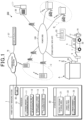
- FIG. 1 is a block diagram showing a configuration 200 of power demand and supply including a power supply managing system 1 according to the present embodiment.
- the configuration 200 of power demand and supply includes a power plant 39 and a power grid 100 which supply electric power, an EV (movable body) 5 mentioned later, a home facility A of a user of the EV 5, targets B of power supply existing in an area B which is in a short distance from A, and targets of power supply existing in an area C which is in a long distance from A.
- the EV 5 may be what is called an automobile or a saddle riding vehicle.
- the power supply managing system 1 performs charge and discharge management on a battery 32 included in the EV 5 used by a user U. Through the charge and discharge management, the power supply managing system 1 causes the battery 32 to function as a VPP to perform power supply from the battery 32 to electric appliances in the house A and to other facilities via the power grid 100.
- a smart meter 35 is connected to a power retailing system 37 and the power supply managing system 1 via a communication network N through wireless communication. Connection to the communication network N may be of course attained through wired communication.
- the power supply managing system 1 is a server, and specifically, a computer system having a processor 10 such as a CPU (Central Processing Unit), and the like.
- the power supply managing system 1 includes the processor 10 which performs various arithmetic operations, a storage device 20 which stores programs and the like, and a communication unit 30 which communicates with the communication network N.
- the power supply managing system 1 controls power supply with the VPP with the battery 32 mounted on the EV 5 being as a target.
- the power supply managing system 1 also performs the similar control on a battery 32 of another EV such, for example, as an EV used by a VPP participant (contractor using the VPP) B near the home of the user U.
- the storage device 20 includes a ROM (Read Only Memory) having programs written, a RAM (Random Access Memory) for temporary storage of data, and a storage medium such as an HDD (Hard Disk Drive) or an SSD (Solid State Drive), and includes a control program storage area 21 that stores a control program, a target data storage area 22 that stores data regarding power supply targets, and a predetermined amount storage area 23 that stores thresholds and the like for various kinds of control.
- the processor 10 implements various functions by executing the control program using data stored in the storage device 20.
- the processor 10 implements a function of a charge amount recognizing section 11 that recognizes an SOC (charge amount) of the battery 32 mounted on the EV 5.
- the smart meter 35 acquires information from an ECU 7 that controls the battery 32 of the EV 5, and the power supply managing system 1 recognizes the charge amount of the battery 32 via the communication network N and the communication unit 30.
- the battery 32 of the EV 5 is virtually divided into a first region 31 as a user region the charge and discharge of which can be determined by the user U, and a second region 33 as a region where power supply with the VPP is handled.
- the processor 10 implements a function of a power supply target determining section 13 that performs comparison and determination between various predetermined amounts stored in the predetermined amount storage area 23 and measurement amounts acquired and recognized by the processor 10 such, for example, as the charge amount.
- the power supply target determining section 13 determines a power supply target that is a target that is to undergo power supply from the battery 32 via the charge and discharge apparatus 9.
- the processor 10 implements a function of a scheduled date-and-time-of-use recognizing section 12 that recognizes a next scheduled date and time of use of the EV 5.
- the scheduled date-and-time-of-use recognizing section 12 has a function of determining whether or not a scheduled date and time of use is included in a predetermined period stored in the predetermined amount storage area 23.
- the scheduled date-and-time-of-use recognizing section 12 has a function of acquiring a period from a current time (time point when determination processing of the power supply target is performed) to the next scheduled date and time of use.
- the processor 10 implements a function of a target attribute information recognizing section 14 that acquires target attribute information indicating attributes of a plurality of targets that can undergo power supply from the battery 32 via the charge and discharge apparatus 9.
- the target attribute information includes users of the targets (owners, renting persons, and the like), and distance information to the targets from the charge and discharge apparatus 9 (consignment charge information).
- the consignment charge means a charge that a general power transmission and distribution company sets as a charge of use for a power transmission and distribution network used by an electricity retailing company in transmission of electricity.
- the communication unit 30 has an interface circuit that connects the power supply managing system 1 and the communication network N.
- each of the entire pats or some parts of the power supply managing system 1 above can also be configured of hardware including one or more electronic circuit components.
- the EV 5 includes the battery 32 which stores electric power.
- the battery 32 virtually includes the first region 31 where the user of the EV 5 can determine the usage of electricity, and the second region 33 where the user of the EV 5 cannot determine the usage of electricity.
- the power supply managing system 1 may control charge and discharge of the first region 31 and the second region 33.
- the battery 32 is connected to the charge and discharge apparatus 9 via a connection cable, and the charge and discharge apparatus 9 is connected to the power grid 100 and electric wiring in the house A via the smart meter 35.
- there is exemplarily illustrated a configuration of virtually dividing and managing the battery 32 into the first region and the second region there may be taken a configuration without such virtual division.
- FIG. 1 as well as the user U as a user of the EV 5, there is also used, as the VPP, a battery of the EV positioned in the area B near the house A as the home of the user U. Moreover, EVs positioned in the area B and facilities and the like positioned in the area C in a long distance from the home facility A of the user U are targets of power supply with the VPP.
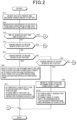
- FIG. 2 is a flowchart showing processing in the power supply managing system 1.
- a state is supposed where the EV 5 is connected to the charge and discharge apparatus 9 via a connection cable.
- the charge amount recognizing section 11 receives SOC data from the EV 5 to recognize the charge amount of the battery 32 (step S1).
- the scheduled date-and-time-of-use recognizing section 12 recognizes the next scheduled date and time of use of the EV 5 of the user U (step S2). Specifically, by a TCU (Telematics Control Unit) (not shown), of the EV 5, linking, for example, with a schedule application in a smartphone 70 of the user U, the scheduled date-and-time-of-use recognizing section 12 recognizes the next scheduled date and time of use of the EV 5 via the smart meter 35.
- TCU Transmission Control Unit
- the power supply target determining section 13 determines whether or not a time to the scheduled date and time of use is smaller than a first predetermined time RT_L (step S3).
- the power supply target determining section 13 determines whether or not a charge amount of the second region 33 of the battery 32 is less than a lower limit charge amount CR_L (step S4).
- the power supply target determining section 13 determines whether or not the charge amount of the second region 33 in the battery 32 is not less than a second predetermined amount (step S5).
- the target attribute information recognizing section 14 refers to target data and determines the home facility A of the user U and targets that are other than the home facility A as power supply targets.
- the power supply target determining section 13 preferentially selects a target that has a shorter distance from the charge and discharge apparatus 9 as a power supply target (step S6).
- the target attribute information recognizing section 13 recognizes information regarding distances from the charge and discharge apparatus 9 of the user U to power supply targets of other VPP participants and a consignment charge, and then, determines a power supply target. For example, when distances from the charge and discharge apparatus 9 are compared, since a consignment charge required for power supply is lower when a VPP participant B near the home facility A of the user U undergoes power supply than when a VPP participant C in a long distance from the home facility A of the user U undergoes power supply, the power supply target determining section 13 desirably determines the power supply to the VPP participant B near the home facility A of the user U.
- the highest one may be given the EV 5 of the user U or the home facility A of the user U, and based on the information acquired by the target attribute information recognizing section 14, the degrees of priority of power supply may be determined among the power supply targets.
- the power supply target determining section 13 sets power supply from the battery 32 to the home facility A of the user U and power supply targets other than the home facility A. In consideration of fluctuation in power purchase price depending on hours of the day, timing of power supply to the power supply targets is determined (step S7).
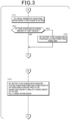
- step S3 When the time to the scheduled date and time of use is less than the first predetermined time RT_L (step S3: YES), the power supply target determining section 13 sets virtual transfer of charge from the second region 33 to the first region 31 of the battery 32 (movement to A in FIG. 3 , followed by performance of step T1).
- the power supply target determining section 13 determines whether or not there is a shortage in charge amount of the first region 31 of the battery 32 (step T2). Specifically, the power supply target determining section 13 compares the charge amount of the first region 31 with a fourth predetermined amount stored in the predetermined amount storage area 23. When there is no shortage in charge amount of the first region 31 of the battery 32 (step T2: NO), the process is returned to C in FIG. 1 and is ended.
- step T2 When there is a shortage in charge amount of the first region 31 of the battery 32 (step T2: YES), the power supply target determining section 13 sets the battery 32 to be charged with purchased electric power from the power grid 100 (step T3), and the process is returned to C in FIG. 2 and is ended.
- the power supply target determining section 13 determines whether or not the charge amount of the second region 33 in the battery 32 is not less than a first predetermined amount CR1 (step S8).
- the power supply target determining section 13 refers to the target data in the target data storage area 22 and determines the home facility A of the user U as the power supply target (step S9). Then, the power supply target determining section 13 sets power supply from the battery 32 to the home facility A of the user U, and determines timing of the power supply in consideration of fluctuation in power purchase price depending on hours of the day (step S10).
- step S8 NO
- the power supply target determining section 13 sets the battery to be charged with purchased electric power from the power grid 100 during hours of the day when the power purchase price is low.
- the power supply target determining section 13 charges the first region 31 to the smallest charge amount set by the user U.
- the power supply target determining section 13 sets the second region 33 to be fully charged (step U1).
- relationship in measurement between the lower limit charge amount CR_L, the first predetermined amount CR1, and the second predetermined amount CR2 is CR _L ⁇ CR1 ⁇ CR2.
- the power supply target determining section 13 may determine, as the power supply target, a target that is recognized as being positioned at a place where a distance from the charge and discharge apparatus 9 is not more than a predetermined distance based on the target attribute information acquired by the target attribute information recognizing section 14, in preference to a target positioned at a place where a distance from the charge and discharge apparatus 9 exceeds the predetermined distance.
- the power supply target determining section 13 may prohibit power supply from the battery 32 to another power supply target via the charge and discharge apparatus 9.
- a power supply managing system including a charge amount recognizing section that recognizes a charge amount of a battery mounted on a movable body, wherein when the movable body is in a state where power supply from the battery to a charge and discharge apparatus is possible, a power supply target is determined based on the charge amount of the battery and a current time, the power supply target being to undergo power supply from the battery.
- Configuration 2 The power supply managing system according to Configuration 1, including: a scheduled date-and-time-of-use recognizing section that recognizes a next scheduled date and time of use of the movable body; a target attribute information recognizing section that acquires target attribute information indicating attributes of a plurality of targets that are able to undergo power supply from the battery via the charge and discharge apparatus; and a power supply target determining section that, when the movable body is in the state where the power supply from the battery to the charge and discharge apparatus is possible, determines a power supply target out of the plurality of targets based on the charge amount of the battery, the current time, the next scheduled date and time of use of the movable body, and the target attribute information, the power supply target being to undergo the power supply from the battery via the charge and discharge apparatus.
- the power supply target to which electric power is to be supplied from the battery via the charge and discharge apparatus can be determined in consideration of a margin of power supply from the battery to the target and the attributes of the target, the margin being able to be estimated from the next scheduled date and time of use of the movable body and the charge amount of the battery.
- the object used by the user of the movable body is determined as the power supply target when there is a margin of electric power taken out from the battery with respect to the schedule of use of the movable body by the user.
- electric power can be actively supplied from the battery to the object used by the user, the object being supposed to be small in reluctance of the user against electric power taken out from the battery.
- an object other than the object used by the user is determined as the power supply target when there is further a margin of electric power taken out from the battery with respect to the schedule of use of the movable body by the user.
- electric power can be supplied from the battery to an object other than the object used by the user.
- an object the distance of which from the charge and discharge apparatus is expected to be short, which leads to a small consignment charge required for power supply, can be preferentially determined as the power supply target.
- the battery when the charge amount of the battery is less than the lower limit charge amount, the battery can be charged to maintain the charge amount of the battery to be not less than a certain level.
- a power supply managing method executed by a computer including: a charge amount recognizing step of recognizing a charge amount of a battery of a movable body; and a power supply target determining step of determining, when the movable body is in a state where power supply from the battery to a charge and discharge apparatus is possible, a power supply target based on the charge amount of the battery and a current time, the power supply target being to undergo power supply from the battery via the charge and discharge apparatus.
- a power supply managing system of the present invention is not limited to the aforementioned embodiment but various alterations may occur without departing from the spirit of the present invention.
Landscapes
- Engineering & Computer Science (AREA)
- Power Engineering (AREA)
- Transportation (AREA)
- Mechanical Engineering (AREA)
- Life Sciences & Earth Sciences (AREA)
- Sustainable Development (AREA)
- Sustainable Energy (AREA)
- Charge And Discharge Circuits For Batteries Or The Like (AREA)
- Supply And Distribution Of Alternating Current (AREA)
- Electric Propulsion And Braking For Vehicles (AREA)
- Remote Monitoring And Control Of Power-Distribution Networks (AREA)
Abstract
There is provided a power transmission/reception system capable of enhancing motivation of users of movable bodies including batteries, such as EVs, to participate in a VPP. A power supply system (1) including a charge amount recognizing section (32) that recognizes a charge amount of a battery (7) mounted on a movable body (5), wherein when the movable body (5) is in a state where power supply from the battery (7) to a charge and discharge apparatus (13) is possible, a power supply target is determined based on the charge amount of the battery (7) and a current time, the power supply target being to undergo power supply from the battery (7) .
Description
- The present invention relates to a power supply managing system and a power supply managing method.
- Research and development of virtual power plants (VPP: Virtual Power Plant) which contribute to optimization of energy have been recently being conducted in order to enable more people to secure reasonable and reliable access to sustainable and advanced energy. Among those, based on technologies such as V2X (Vehicle to X) using an EV (electric vehicle) or the like, there is developed a technology of enabling efficient use of energy by timely causing electricity stored in batteries of EVs and the like to discharge (see
Japanese Patent Laid-Open No. 2021-191044 - With a system disclosed in Patent Literature 1, there are compared differences or ratios, each of which is taken between a current SOC (State Of Charge) of a battery in an EV and a charge-requesting SOC thereof based on a scheduled use of the EV, to determine the charge priority and the discharge priority of each EV. There is employed a configuration of, then, supplying electric power from EVs having higher discharge priorities to other EVs and building facilities.
- When there are determined such discharge destinations of the batteries of the EVs on the basis of the current SOCs and the charge-requesting SOCs of the batteries, there can arise a case where power supply to the determined discharge destinations is not necessarily advantageous to a user of an EV. In such a case, there arises a problem that some users of EVs lose motivation to participate in a VPP, which situation disturbs the optimization of energy using the VPP. In order to solve the problem(s) mentioned above, an object of the present application is to provide a power supply managing system capable of enhancing motivation of users of movable bodies including batteries, such as EVs, to participate in a VPP.
- There is exemplified as a first aspect in order to achieve the aforementioned object a power supply managing system including a charge amount recognizing section that recognizes a charge amount of a battery mounted on a movable body, wherein when the movable body is in a state where power supply from the battery to a charge and discharge apparatus is possible, a power supply target is determined based on the charge amount of the battery and a current time, the power supply target being to undergo power supply from the battery.
- There is exemplified according to the aforementioned power supply managing system a power supply managing system including: a charge amount recognizing section that recognizes a charge amount of a battery of a movable body; a scheduled date-and-time-of-use recognizing section that recognizes a next scheduled date and time of use of the movable body; a target attribute information recognizing section that acquires target attribute information indicating attributes of a plurality of targets that are able to undergo power supply from the battery via the charge and discharge apparatus; and a power supply target determining section that, when the movable body is in the state where the power supply from the battery to the charge and discharge apparatus is possible, determines a power supply target out of the plurality of targets based on the charge amount of the battery, the current time, the next scheduled date and time of use of the movable body, and the target attribute information, the power supply target being to undergo the power supply from the battery via the charge and discharge apparatus.
- There may be employed according to the aforementioned power supply managing system a configuration that when a time from a time point of determination of the power supply target to the next scheduled date and time of use of the movable body is not less than a first predetermined time and the charge amount of the battery is not less than a first predetermined amount, the power supply target determining section determines a target recognized as an object used by a user of the movable body as the power supply target out of the plurality of targets based on the target attribute information.
- There may be employed according to the aforementioned power supply managing system a configuration that when the time from the time point of determination of the power supply target to the next scheduled date and time of use of the movable body is not less than the first predetermined time and the charge amount of the battery is not less than a second predetermined amount larger than the first predetermined amount, the power supply target determining section determines a target recognized as not being the object used by the user of the movable body as the power supply target out of the plurality of targets based on the target attribute information.
- There may be employed according to the aforementioned power supply system a configuration that when a time from a time point of determination of the power supply target to the next scheduled date and time of use of the movable body is not less than a second predetermined time and the charge amount of the battery is not less than a third predetermined amount, the power supply target determining section determines a target as the power supply target based on the target attribute information, the target being recognized as being positioned at a place where a distance from the charge and discharge apparatus is not more than a predetermined distance out of the plurality of targets, in preference to a target positioned at a place where a distance from the charge and discharge apparatus exceeds the predetermined distance.
- There may be employed according to the aforementioned power supply system a configuration that when a time from a time point of determination of the power supply target to the next scheduled date and time of use of the movable body is less than a predetermined lower limit time, the power supply target determining section prohibits power supply from the battery to the target via the charge and discharge apparatus.
- There may be employed according to the aforementioned power supply system a configuration that when the charge amount of the battery is less than a predetermined lower limit charge amount, the power supply target determining section charges the battery with electric power supplied from a power grid to the charge and discharge apparatus.
- There is exemplified as a second aspect in order to achieve the aforementioned object a power supply managing method executed by a computer, the method including: a charge amount recognizing step of recognizing a charge amount of a battery mounted on a movable body; and a power supply target determining step of determining, when the movable body is in a state where power supply from the battery to a charge and discharge apparatus is possible, a power supply target based on the charge amount of the battery and a current time, the power supply target being to undergo power supply from the battery via the charge and discharge apparatus.
- According to the power supply managing system of the present disclosure, motivation of a user of a movable body including a battery, such as an EV, to participate in a VPP can be enhanced.
-
-
FIG. 1 is a block diagram showing a mode of a power supply managing system according to an embodiment of the present invention; -
FIG. 2 is a first flowchart showing processing in the power supply managing system; and -
FIG. 3 shows second flowcharts showing the processing in the power supply managing system. - Hereafter, an embodiment of the present invention will be described with reference to the drawings.
-
FIG. 1 is a block diagram showing aconfiguration 200 of power demand and supply including a power supply managing system 1 according to the present embodiment. Theconfiguration 200 of power demand and supply includes apower plant 39 and apower grid 100 which supply electric power, an EV (movable body) 5 mentioned later, a home facility A of a user of theEV 5, targets B of power supply existing in an area B which is in a short distance from A, and targets of power supply existing in an area C which is in a long distance from A. The EV 5 may be what is called an automobile or a saddle riding vehicle. - The power supply managing system 1 performs charge and discharge management on a
battery 32 included in theEV 5 used by a user U. Through the charge and discharge management, the power supply managing system 1 causes thebattery 32 to function as a VPP to perform power supply from thebattery 32 to electric appliances in the house A and to other facilities via thepower grid 100. - A
smart meter 35 is connected to apower retailing system 37 and the power supply managing system 1 via a communication network N through wireless communication. Connection to the communication network N may be of course attained through wired communication. - The power supply managing system 1 is a server, and specifically, a computer system having a
processor 10 such as a CPU (Central Processing Unit), and the like. The power supply managing system 1 includes theprocessor 10 which performs various arithmetic operations, astorage device 20 which stores programs and the like, and acommunication unit 30 which communicates with the communication network N. - The power supply managing system 1 controls power supply with the VPP with the
battery 32 mounted on the EV 5 being as a target. Hereafter, a case of controlling power charge and discharge with the VPP with theEV 5 and the like being as targets will be described. The power supply managing system 1 also performs the similar control on abattery 32 of another EV such, for example, as an EV used by a VPP participant (contractor using the VPP) B near the home of the user U. - The
storage device 20 includes a ROM (Read Only Memory) having programs written, a RAM (Random Access Memory) for temporary storage of data, and a storage medium such as an HDD (Hard Disk Drive) or an SSD (Solid State Drive), and includes a controlprogram storage area 21 that stores a control program, a targetdata storage area 22 that stores data regarding power supply targets, and a predeterminedamount storage area 23 that stores thresholds and the like for various kinds of control. Theprocessor 10 implements various functions by executing the control program using data stored in thestorage device 20. - The
processor 10 implements a function of a charge amount recognizing section 11 that recognizes an SOC (charge amount) of thebattery 32 mounted on theEV 5. Specifically, thesmart meter 35 acquires information from anECU 7 that controls thebattery 32 of theEV 5, and the power supply managing system 1 recognizes the charge amount of thebattery 32 via the communication network N and thecommunication unit 30. - The
battery 32 of theEV 5 is virtually divided into a first region 31 as a user region the charge and discharge of which can be determined by the user U, and a second region 33 as a region where power supply with the VPP is handled. - The
processor 10 implements a function of a power supplytarget determining section 13 that performs comparison and determination between various predetermined amounts stored in the predeterminedamount storage area 23 and measurement amounts acquired and recognized by theprocessor 10 such, for example, as the charge amount. The power supplytarget determining section 13 determines a power supply target that is a target that is to undergo power supply from thebattery 32 via the charge anddischarge apparatus 9. - Moreover, the
processor 10 implements a function of a scheduled date-and-time-of-use recognizing section 12 that recognizes a next scheduled date and time of use of theEV 5. The scheduled date-and-time-of-use recognizing section 12 has a function of determining whether or not a scheduled date and time of use is included in a predetermined period stored in the predeterminedamount storage area 23. Moreover, the scheduled date-and-time-of-use recognizing section 12 has a function of acquiring a period from a current time (time point when determination processing of the power supply target is performed) to the next scheduled date and time of use. - Moreover, the
processor 10 implements a function of a target attributeinformation recognizing section 14 that acquires target attribute information indicating attributes of a plurality of targets that can undergo power supply from thebattery 32 via the charge anddischarge apparatus 9. Here, the target attribute information includes users of the targets (owners, renting persons, and the like), and distance information to the targets from the charge and discharge apparatus 9 (consignment charge information). In the present specification, the consignment charge means a charge that a general power transmission and distribution company sets as a charge of use for a power transmission and distribution network used by an electricity retailing company in transmission of electricity. - The
communication unit 30 has an interface circuit that connects the power supply managing system 1 and the communication network N. - In place of or in addition to the
processor 10 and thestorage device 20 of the power supply managing system 1 above, each of the entire pats or some parts of the power supply managing system 1 above can also be configured of hardware including one or more electronic circuit components. - The EV 5 includes the
battery 32 which stores electric power. Thebattery 32 virtually includes the first region 31 where the user of the EV 5 can determine the usage of electricity, and the second region 33 where the user of theEV 5 cannot determine the usage of electricity. The power supply managing system 1 may control charge and discharge of the first region 31 and the second region 33. Thebattery 32 is connected to the charge anddischarge apparatus 9 via a connection cable, and the charge anddischarge apparatus 9 is connected to thepower grid 100 and electric wiring in the house A via thesmart meter 35. Notably, while in the present embodiment, there is exemplarily illustrated a configuration of virtually dividing and managing thebattery 32 into the first region and the second region, there may be taken a configuration without such virtual division. - In
FIG. 1 , as well as the user U as a user of theEV 5, there is also used, as the VPP, a battery of the EV positioned in the area B near the house A as the home of the user U. Moreover, EVs positioned in the area B and facilities and the like positioned in the area C in a long distance from the home facility A of the user U are targets of power supply with the VPP. -
FIG. 2 is a flowchart showing processing in the power supply managing system 1. A state is supposed where theEV 5 is connected to the charge anddischarge apparatus 9 via a connection cable. The charge amount recognizing section 11 receives SOC data from theEV 5 to recognize the charge amount of the battery 32 (step S1). The scheduled date-and-time-of-use recognizing section 12 recognizes the next scheduled date and time of use of theEV 5 of the user U (step S2). Specifically, by a TCU (Telematics Control Unit) (not shown), of theEV 5, linking, for example, with a schedule application in asmartphone 70 of the user U, the scheduled date-and-time-of-use recognizing section 12 recognizes the next scheduled date and time of use of theEV 5 via thesmart meter 35. Next, the power supplytarget determining section 13 determines whether or not a time to the scheduled date and time of use is smaller than a first predetermined time RT_L (step S3). When the time to the scheduled date and time of use is not less than the first predetermined time RT_L (step S3: NO), the power supplytarget determining section 13 determines whether or not a charge amount of the second region 33 of thebattery 32 is less than a lower limit charge amount CR_L (step S4). When the charge amount of the second region 33 of thebattery 32 is not less than the lower limit charge amount CR_L (step S4: NO), the power supplytarget determining section 13 determines whether or not the charge amount of the second region 33 in thebattery 32 is not less than a second predetermined amount (step S5). When the charge amount of the second region 33 is not less than the second predetermined amount (step S5: YES), the target attributeinformation recognizing section 14 refers to target data and determines the home facility A of the user U and targets that are other than the home facility A as power supply targets. Here, as to the targets that are other than the home facility A, the power supplytarget determining section 13 preferentially selects a target that has a shorter distance from the charge anddischarge apparatus 9 as a power supply target (step S6). - Specifically, in order that the power supply
target determining section 13 considers a charge of use for power lines, the target attributeinformation recognizing section 13 recognizes information regarding distances from the charge anddischarge apparatus 9 of the user U to power supply targets of other VPP participants and a consignment charge, and then, determines a power supply target. For example, when distances from the charge anddischarge apparatus 9 are compared, since a consignment charge required for power supply is lower when a VPP participant B near the home facility A of the user U undergoes power supply than when a VPP participant C in a long distance from the home facility A of the user U undergoes power supply, the power supplytarget determining section 13 desirably determines the power supply to the VPP participant B near the home facility A of the user U. As to the degrees of priority of power supply targets by the power supplytarget determining section 13, the highest one may be given theEV 5 of the user U or the home facility A of the user U, and based on the information acquired by the target attributeinformation recognizing section 14, the degrees of priority of power supply may be determined among the power supply targets. - The power supply
target determining section 13 sets power supply from thebattery 32 to the home facility A of the user U and power supply targets other than the home facility A. In consideration of fluctuation in power purchase price depending on hours of the day, timing of power supply to the power supply targets is determined (step S7). - When the time to the scheduled date and time of use is less than the first predetermined time RT_L (step S3: YES), the power supply
target determining section 13 sets virtual transfer of charge from the second region 33 to the first region 31 of the battery 32 (movement to A inFIG. 3 , followed by performance of step T1). The power supplytarget determining section 13 determines whether or not there is a shortage in charge amount of the first region 31 of the battery 32 (step T2). Specifically, the power supplytarget determining section 13 compares the charge amount of the first region 31 with a fourth predetermined amount stored in the predeterminedamount storage area 23. When there is no shortage in charge amount of the first region 31 of the battery 32 (step T2: NO), the process is returned to C inFIG. 1 and is ended. When there is a shortage in charge amount of the first region 31 of the battery 32 (step T2: YES), the power supplytarget determining section 13 sets thebattery 32 to be charged with purchased electric power from the power grid 100 (step T3), and the process is returned to C inFIG. 2 and is ended. - In
FIG. 2 , when the charge amount of the second region 33 is less than the second predetermined amount (step S5: NO), the power supplytarget determining section 13 determines whether or not the charge amount of the second region 33 in thebattery 32 is not less than a first predetermined amount CR1 (step S8). When the charge amount of the second region 33 in thebattery 32 is not less than the first predetermined amount CR1 (step S8: YES), the power supplytarget determining section 13 refers to the target data in the targetdata storage area 22 and determines the home facility A of the user U as the power supply target (step S9). Then, the power supplytarget determining section 13 sets power supply from thebattery 32 to the home facility A of the user U, and determines timing of the power supply in consideration of fluctuation in power purchase price depending on hours of the day (step S10). - When the charge amount of the second region 33 in the
battery 32 is less than the first predetermined amount CR1 (step S8: NO), after movement to B inFIG. 3 , the power supplytarget determining section 13 sets the battery to be charged with purchased electric power from thepower grid 100 during hours of the day when the power purchase price is low. Moreover, the power supplytarget determining section 13 charges the first region 31 to the smallest charge amount set by the user U. Here, the power supplytarget determining section 13 sets the second region 33 to be fully charged (step U1). - Herein, relationship in measurement between the lower limit charge amount CR_L, the first predetermined amount CR1, and the second predetermined amount CR2 is CR _L<CR1<CR2.
- As a modification of the aforementioned embodiment, for example, when a time from a time point of determination of the power supply target to the next scheduled date and time of use of the
EV 5 is not less than a second predetermined time and the charge amount of thebattery 32 is not less than a third predetermined amount, the power supplytarget determining section 13 may determine, as the power supply target, a target that is recognized as being positioned at a place where a distance from the charge anddischarge apparatus 9 is not more than a predetermined distance based on the target attribute information acquired by the target attributeinformation recognizing section 14, in preference to a target positioned at a place where a distance from the charge anddischarge apparatus 9 exceeds the predetermined distance. - As another modification, when a time from a time point of determination of the power supply target to the next scheduled date and time of use of the
EV 5 is less than a predetermined lower limit time, the power supplytarget determining section 13 may prohibit power supply from thebattery 32 to another power supply target via the charge anddischarge apparatus 9. - (Configuration 1) A power supply managing system including a charge amount recognizing section that recognizes a charge amount of a battery mounted on a movable body, wherein when the movable body is in a state where power supply from the battery to a charge and discharge apparatus is possible, a power supply target is determined based on the charge amount of the battery and a current time, the power supply target being to undergo power supply from the battery.
- According to such a configuration, motivation of a user of the movable body including the battery, such as an EV, to participate in a VPP can be enhanced. Therefore, there can be attained an effect of enabling more people to secure reasonable and reliable access to sustainable and advanced energy.
- (Configuration 2) The power supply managing system according to Configuration 1, including: a scheduled date-and-time-of-use recognizing section that recognizes a next scheduled date and time of use of the movable body; a target attribute information recognizing section that acquires target attribute information indicating attributes of a plurality of targets that are able to undergo power supply from the battery via the charge and discharge apparatus; and a power supply target determining section that, when the movable body is in the state where the power supply from the battery to the charge and discharge apparatus is possible, determines a power supply target out of the plurality of targets based on the charge amount of the battery, the current time, the next scheduled date and time of use of the movable body, and the target attribute information, the power supply target being to undergo the power supply from the battery via the charge and discharge apparatus.
- According to the power supply managing system of Configuration 2, the power supply target to which electric power is to be supplied from the battery via the charge and discharge apparatus can be determined in consideration of a margin of power supply from the battery to the target and the attributes of the target, the margin being able to be estimated from the next scheduled date and time of use of the movable body and the charge amount of the battery. Thereby, there can be relieved reluctance of the user of the movable body against utilizing the battery of the movable body with a VPP, and the motivation of the user of the movable body to participate in the VPP can be enhanced.
- (Configuration 3) The power supply managing system according to Configuration 2, wherein when a time from a time point of determination of the power supply target to the next scheduled date and time of use of the movable body is not less than a first predetermined time and the charge amount of the battery is not less than a first predetermined amount, the power supply target determining section determines a target recognized as an object used by a user of the movable body as the power supply target out of the plurality of targets based on the target attribute information.
- According to the power supply managing system of Configuration 3, the object used by the user of the movable body is determined as the power supply target when there is a margin of electric power taken out from the battery with respect to the schedule of use of the movable body by the user. Thereby, electric power can be actively supplied from the battery to the object used by the user, the object being supposed to be small in reluctance of the user against electric power taken out from the battery.
- (Configuration 4) The power supply managing system according to Configuration 3, wherein when the time from the time point of determination of the power supply target to the next scheduled date and time of use of the movable body is not less than the first predetermined time and the charge amount of the battery is not less than a second predetermined amount larger than the first predetermined amount, the power supply target determining section determines a target recognized as not being the object used by the user of the movable body as the power supply target out of the plurality of targets based on the target attribute information.
- According to the power supply managing system of Configuration 4, an object other than the object used by the user is determined as the power supply target when there is further a margin of electric power taken out from the battery with respect to the schedule of use of the movable body by the user. Thereby, limitedly when there is a sufficient margin of electric power taken out from the battery, electric power can be supplied from the battery to an object other than the object used by the user.
- (Configuration 5) The power supply managing system according to Configuration 2, wherein when a time from a time point of determination of the power supply target to the next scheduled date and time of use of the movable body is not less than a second predetermined time and the charge amount of the battery is not less than a third predetermined amount, the power supply target determining section determines a target recognized as being positioned at a place as the power supply target out of the plurality of targets based on the target attribute information, the place being where a distance from the charge and discharge apparatus is not more than a predetermined distance, in preference to a target positioned at a place where a distance from the charge and discharge apparatus exceeds the predetermined distance.
- According to the power supply managing system of
Configuration 5, an object the distance of which from the charge and discharge apparatus is expected to be short, which leads to a small consignment charge required for power supply, can be preferentially determined as the power supply target. - (Configuration 6) The power supply managing system according to any one of Configurations 2 to 5, wherein when a time from a time point of determination of the power supply target to the next scheduled date and time of use of the movable body is less than a predetermined lower limit time, the power supply target determining section prohibits power supply from the battery to the power supply target via the charge and discharge apparatus.
- According to the power supply managing system of Configuration 6, when there is little time to spare by the next scheduled date and time of use of the movable body, power supply from the battery to the target via the charge and discharge apparatus can be prohibited. Therefore, an inconvenience can be prevented from arising in the next use of the movable body by the user.
- (Configuration 7) The power supply managing system according to any one of Configurations 2 to 5, wherein when the charge amount of the battery is less than a predetermined lower limit charge amount, the power supply target determining section charges the battery with electric power supplied from a power grid to the charge and discharge apparatus.
- According to the power supply managing system of
Configuration 7, when the charge amount of the battery is less than the lower limit charge amount, the battery can be charged to maintain the charge amount of the battery to be not less than a certain level. - (Configuration 8) A power supply managing method executed by a computer, the method including: a charge amount recognizing step of recognizing a charge amount of a battery of a movable body; and a power supply target determining step of determining, when the movable body is in a state where power supply from the battery to a charge and discharge apparatus is possible, a power supply target based on the charge amount of the battery and a current time, the power supply target being to undergo power supply from the battery via the charge and discharge apparatus.
- By causing a computer to execute the power supply managing method of Configuration 8, the similar operation and effect(s) to those of the power supply managing system of Configuration 1 can be obtained.
- It is needless to say that a power supply managing system of the present invention is not limited to the aforementioned embodiment but various alterations may occur without departing from the spirit of the present invention.
-
- 1
- Power supply managing system
- 5
- EV (movable body)
- 7
- ECU
- 9
- Charge and discharge apparatus
- 10
- Processor
- 11
- Charge amount recognizing section
- 12
- Scheduled date-and-time-of-use recognizing section
- 13
- Power supply target determining section
- 14
- Target attribute information recognizing section
- 20
- Storage device
- 21
- Control program storage area
- 22
- Target data storage area
- 23
- Predetermined amount storage area
- 30
- Communication unit
- 31
- First region
- 32
- Battery
- 33
- Second region
- 35
- Smart meter
- 37
- Power retailing system
- 39
- Power plant
- 70
- Smartphone
- 100
- Electric power
- 200
- Configuration of power demand and supply
- A
- Home facility of a user U
- B
- VPP participation area near the home facility of the user U
- C
- VPP participation area in a long distance from the home facility of the user U
- N
- Communication network
Claims (8)
- A power supply managing system (1) characterized by comprisinga charge amount recognizing section (11) that recognizes a charge amount of a battery (32) mounted on a movable body (5), whereinwhen the movable body is in a state where power supply from the battery to a charge and discharge apparatus (9) is possible,a power supply target is determined based on the charge amount of the battery and a current time, the power supply target being to undergo power supply from the battery.
- The power supply managing system according to claim 1, comprising:a scheduled date-and-time-of-use recognizing section (12) that recognizes a next scheduled date and time of use of the movable body;a target attribute information recognizing section (14) that acquires target attribute information indicating attributes of a plurality of targets that are able to undergo power supply from the battery via the charge and discharge apparatus; anda power supply target determining section (13) that, when the movable body is in the state where the power supply from the battery to the charge and discharge apparatus is possible, determines a power supply target out of the plurality of targets based on the charge amount of the battery, the current time, the next scheduled date and time of use of the movable body, and the target attribute information, the power supply target being to undergo the power supply from the battery via the charge and discharge apparatus.
- The power supply managing system according to claim 2, wherein when a time from a time point of determination of the power supply target to the next scheduled date and time of use of the movable body is not less than a first predetermined time and the charge amount of the battery is not less than a first predetermined amount, the power supply target determining section determines a target recognized as an object used by a user of the movable body as the power supply target out of the plurality of targets based on the target attribute information.
- The power supply managing system according to claim 3, wherein when the time from the time point of determination of the power supply target to the next scheduled date and time of use of the movable body is not less than the first predetermined time and the charge amount of the battery is not less than a second predetermined amount larger than the first predetermined amount, the power supply target determining section determines a target recognized as not being the object used by the user of the movable body as the power supply target out of the plurality of targets based on the target attribute information.
- The power supply managing system according to claim 2, wherein when a time from a time point of determination of the power supply target to the next scheduled date and time of use of the movable body is not less than a second predetermined time and the charge amount of the battery is not less than a third predetermined amount, the power supply target determining section determines a target recognized as being positioned at a place as the power supply target out of the plurality of targets based on the target attribute information, the place being where a distance from the charge and discharge apparatus is not more than a predetermined distance, in preference to a target positioned at a place where a distance from the charge and discharge apparatus exceeds the predetermined distance.
- The power supply managing system according to any one of claims 2 to 5, wherein when a time from a time point of determination of the power supply target to the next scheduled date and time of use of the movable body is less than a predetermined lower limit time, the power supply target determining section prohibits power supply from the battery to the power supply target via the charge and discharge apparatus.
- The power supply managing system according to any one of claims 2 to 5, wherein when the charge amount of the battery is less than a predetermined lower limit charge amount, the power supply target determining section charges the battery with electric power supplied from a power grid to the charge and discharge apparatus.
- A power supply managing method executed by a computer, the method characterized by comprising:a charge amount recognizing step of recognizing a charge amount of a battery (32) mounted on a movable body (5); anda power supply target determining step of determining, when the movable body is in a state where power supply from the battery to a charge and discharge apparatus (9) is possible, a power supply target based on the charge amount of the battery and a current time, the power supply target being to undergo power supply from the battery via the charge and discharge apparatus.
Applications Claiming Priority (1)
| Application Number | Priority Date | Filing Date | Title |
|---|---|---|---|
| JP2022101332A JP7815047B2 (en) | 2022-06-23 | 2022-06-23 | Power supply management system and power supply management method |
Publications (1)
| Publication Number | Publication Date |
|---|---|
| EP4296115A1 true EP4296115A1 (en) | 2023-12-27 |
Family
ID=86764491
Family Applications (1)
| Application Number | Title | Priority Date | Filing Date |
|---|---|---|---|
| EP23178883.7A Pending EP4296115A1 (en) | 2022-06-23 | 2023-06-13 | Power supply managing system and power supply managing method |
Country Status (3)
| Country | Link |
|---|---|
| US (1) | US20230415607A1 (en) |
| EP (1) | EP4296115A1 (en) |
| JP (1) | JP7815047B2 (en) |
Citations (5)
| Publication number | Priority date | Publication date | Assignee | Title |
|---|---|---|---|---|
| US20200231063A1 (en) * | 2019-01-17 | 2020-07-23 | Honda Motor Co.,Ltd. | Cable, power transfer managing system, managing apparatus, and computer-readable storage medium |
| US20200244071A1 (en) * | 2019-01-25 | 2020-07-30 | Flex Power Control, Inc. | Multifunction power management system |
| EP3885180A1 (en) * | 2020-03-23 | 2021-09-29 | Toyota Jidosha Kabushiki Kaisha | Information presentation system, server, information presentation method, and information presentation device |
| US20210331599A1 (en) * | 2019-01-17 | 2021-10-28 | Honda Motor Co.,Ltd. | Capacity control device and computer-readable medium |
| JP2021191044A (en) | 2020-05-26 | 2021-12-13 | 株式会社日立ビルシステム | Power control system |
Family Cites Families (34)
| Publication number | Priority date | Publication date | Assignee | Title |
|---|---|---|---|---|
| US7444192B2 (en) * | 2004-10-26 | 2008-10-28 | Aerovironment, Inc. | Reactive replenishable device management |
| US20110016063A1 (en) * | 2009-07-17 | 2011-01-20 | Gridpoint, Inc. | System and methods for smart charging techniques |
| EP2454639A1 (en) * | 2009-07-17 | 2012-05-23 | Gridpoint, Inc. | System and methods for smart charging techniques, values and guarantees |
| US9043038B2 (en) * | 2010-02-18 | 2015-05-26 | University Of Delaware | Aggregation server for grid-integrated vehicles |
| JP2012050222A (en) * | 2010-08-26 | 2012-03-08 | Mitsubishi Electric Corp | Charging/discharging system for automobile |
| WO2013031036A1 (en) * | 2011-09-01 | 2013-03-07 | 日本電気株式会社 | Charging control system, charging control method, and program |
| JP5860706B2 (en) * | 2012-01-12 | 2016-02-16 | トヨタホーム株式会社 | Local power interchange system |
| US9290104B2 (en) * | 2012-08-24 | 2016-03-22 | The Regents Of The University Of California | Power control apparatus and methods for electric vehicles |
| JP2015122836A (en) * | 2013-12-20 | 2015-07-02 | 積水化学工業株式会社 | Power management device, power management method and program |
| WO2016009492A1 (en) * | 2014-07-15 | 2016-01-21 | 中国電力株式会社 | Power supply control device |
| US9843187B2 (en) * | 2014-11-05 | 2017-12-12 | Honda Motor Co., Ltd. | System and method for aggregating electric vehicle loads for demand response events |
| JP6611499B2 (en) * | 2015-07-17 | 2019-11-27 | エイディシーテクノロジー株式会社 | Vehicle power management device |
| JP2017112806A (en) * | 2015-12-18 | 2017-06-22 | トヨタホーム株式会社 | Disaster time power supply system |
| CA3019622A1 (en) * | 2016-04-01 | 2018-02-15 | Power Hero Corp. | An automated system for managing and providing a network of charging stations |
| CN109890651B (en) * | 2016-11-01 | 2022-06-28 | 本田技研工业株式会社 | Power storage device, conveying device, and control method |
| US11069927B2 (en) * | 2016-11-01 | 2021-07-20 | Honda Motor Co., Ltd. | Server device and control method |
| WO2018156732A1 (en) * | 2017-02-22 | 2018-08-30 | Iotecha Corp. | Method and apparatus for charging a battery from an isolatable electric power grid |
| JP6963397B2 (en) * | 2017-03-03 | 2021-11-10 | 株式会社日立製作所 | Aggregation control system, aggregation control method and control device |
| US11796340B2 (en) * | 2017-04-03 | 2023-10-24 | Power Hero Corp. | Universal automated system for identifying, registering and verifying the existence, location and characteristics of electric and other power outlets by random users and for retrieval and utilization of such parametric data and outlets by all users |
| JP6596472B2 (en) * | 2017-08-24 | 2019-10-23 | 本田技研工業株式会社 | Charge / discharge management device |
| US11413982B2 (en) * | 2018-05-15 | 2022-08-16 | Power Hero Corp. | Mobile electric vehicle charging station system |
| EP3809357A4 (en) * | 2018-06-18 | 2021-07-07 | Nissan Motor Co., Ltd. | VEHICLE MANAGEMENT SYSTEM, COMPUTER, AND METHOD |
| GB2577853B (en) * | 2018-06-22 | 2021-03-24 | Moixa Energy Holdings Ltd | Systems for machine learning, optimising and managing local multi-asset flexibility of distributed energy storage resources |
| JP2020096476A (en) * | 2018-12-14 | 2020-06-18 | トヨタ自動車株式会社 | Management system |
| JP2020162252A (en) * | 2019-03-26 | 2020-10-01 | トヨタ自動車株式会社 | Charge / discharge management system |
| WO2021055843A1 (en) * | 2019-09-20 | 2021-03-25 | AMPLY Power, Inc. | Real-time electric vehicle fleet management |
| JP7251459B2 (en) * | 2019-12-09 | 2023-04-04 | トヨタ自動車株式会社 | Power management system and server |
| US11673483B2 (en) * | 2020-01-13 | 2023-06-13 | NAD Grid Corp | Methods and systems for facilitating charging sessions for electric vehicles |
| US10981464B1 (en) * | 2020-01-13 | 2021-04-20 | NAD Grid Corp | Methods and systems for facilitating charging sessions for electric vehicles |
| US10953765B1 (en) * | 2020-01-13 | 2021-03-23 | NAD Grid Corp | Methods and systems for facilitating charging sessions for electric vehicles |
| JP7379249B2 (en) * | 2020-03-27 | 2023-11-14 | 本田技研工業株式会社 | Control device, management server, control method, and program |
| US11642977B2 (en) * | 2020-07-09 | 2023-05-09 | Weave Grid, Inc. | Optimized charging of electric vehicles over distribution grid |
| JP7439154B2 (en) * | 2022-03-22 | 2024-02-27 | 本田技研工業株式会社 | Battery management system and battery management method |
| JP7826984B2 (en) * | 2023-03-07 | 2026-03-10 | トヨタ自動車株式会社 | Energy management method and electric vehicle |
-
2022
- 2022-06-23 JP JP2022101332A patent/JP7815047B2/en active Active
-
2023
- 2023-06-08 US US18/331,460 patent/US20230415607A1/en active Pending
- 2023-06-13 EP EP23178883.7A patent/EP4296115A1/en active Pending
Patent Citations (5)
| Publication number | Priority date | Publication date | Assignee | Title |
|---|---|---|---|---|
| US20200231063A1 (en) * | 2019-01-17 | 2020-07-23 | Honda Motor Co.,Ltd. | Cable, power transfer managing system, managing apparatus, and computer-readable storage medium |
| US20210331599A1 (en) * | 2019-01-17 | 2021-10-28 | Honda Motor Co.,Ltd. | Capacity control device and computer-readable medium |
| US20200244071A1 (en) * | 2019-01-25 | 2020-07-30 | Flex Power Control, Inc. | Multifunction power management system |
| EP3885180A1 (en) * | 2020-03-23 | 2021-09-29 | Toyota Jidosha Kabushiki Kaisha | Information presentation system, server, information presentation method, and information presentation device |
| JP2021191044A (en) | 2020-05-26 | 2021-12-13 | 株式会社日立ビルシステム | Power control system |
Also Published As
| Publication number | Publication date |
|---|---|
| JP7815047B2 (en) | 2026-02-17 |
| JP2024002250A (en) | 2024-01-11 |
| US20230415607A1 (en) | 2023-12-28 |
Similar Documents
| Publication | Publication Date | Title |
|---|---|---|
| Liu et al. | Optimal EV charging scheduling by considering the limited number of chargers | |
| Mohsenian-Rad | Optimal charging of electric vehicles with uncertain departure times: A closed-form solution | |
| Zeng et al. | Solving overstay and stochasticity in PEV charging station planning with real data | |
| Huang et al. | Unveiling electric vehicle (EV) charging patterns and their transformative role in electricity balancing and delivery: Insights from real-world data in Sweden | |
| JP2020114155A (en) | Control device and program | |
| JP6997289B2 (en) | Power management system and program | |
| US20220172129A1 (en) | Charging queue management systems and methods of electric vehicle charging stations | |
| Owens et al. | Can vehicle-to-grid facilitate the transition to low carbon energy systems? | |
| Darabi et al. | An event-based simulation framework to examine the response of power grid to the charging demand of plug-in hybrid electric vehicles | |
| JP2012023816A (en) | Information processing equipment, and program thereof | |
| US20130335005A1 (en) | Charger information distribution device | |
| CN111055716B (en) | Method and device for determining charging strategy, storage medium and processor | |
| ur Rehman et al. | RETRACTED: A robust optimization method for optimizing day-ahead operation of the electric vehicles aggregator | |
| JP5542284B2 (en) | Vehicle use support device | |
| JP2021078248A (en) | Charging system, charging method, and program | |
| Hayakawa et al. | Online mechanisms for charging electric vehicles in settings with varying marginal electricity costs | |
| Le Floch et al. | Optimal charging of vehicle-to-grid fleets via PDE aggregation techniques | |
| CN116937581A (en) | Intelligent scheduling method of charging station | |
| Yao et al. | A robust design of electric vehicle frequency regulation service | |
| WO2024182100A1 (en) | Electric vehicle detection | |
| US12502998B2 (en) | Method for electrically charging vehicle batteries for a group of vehicles | |
| EP4296115A1 (en) | Power supply managing system and power supply managing method | |
| Wang et al. | Admission and scheduling mechanism for electric vehicle charging with renewable energy | |
| CN112078416A (en) | Charging management system and method for charging equipment | |
| Qin et al. | Cloud-based data analytics framework for autonomic smart grid management |
Legal Events
| Date | Code | Title | Description |
|---|---|---|---|
| PUAI | Public reference made under article 153(3) epc to a published international application that has entered the european phase |
Free format text: ORIGINAL CODE: 0009012 |
|
| STAA | Information on the status of an ep patent application or granted ep patent |
Free format text: STATUS: REQUEST FOR EXAMINATION WAS MADE |
|
| 17P | Request for examination filed |
Effective date: 20230613 |
|
| AK | Designated contracting states |
Kind code of ref document: A1 Designated state(s): AL AT BE BG CH CY CZ DE DK EE ES FI FR GB GR HR HU IE IS IT LI LT LU LV MC ME MK MT NL NO PL PT RO RS SE SI SK SM TR |
|
| STAA | Information on the status of an ep patent application or granted ep patent |
Free format text: STATUS: EXAMINATION IS IN PROGRESS |
|
| 17Q | First examination report despatched |
Effective date: 20241011 |
|
| RAP3 | Party data changed (applicant data changed or rights of an application transferred) |
Owner name: HONDA MOTOR CO., LTD. |