EP4294084A1 - Informationserfassungsunterstützungsverfahren, gerät, vorrichtung und lesbares speichermedium - Google Patents
Informationserfassungsunterstützungsverfahren, gerät, vorrichtung und lesbares speichermedium Download PDFInfo
- Publication number
- EP4294084A1 EP4294084A1 EP22752247.1A EP22752247A EP4294084A1 EP 4294084 A1 EP4294084 A1 EP 4294084A1 EP 22752247 A EP22752247 A EP 22752247A EP 4294084 A1 EP4294084 A1 EP 4294084A1
- Authority
- EP
- European Patent Office
- Prior art keywords
- information
- network
- terminal
- credential
- subscription
- Prior art date
- Legal status (The legal status is an assumption and is not a legal conclusion. Google has not performed a legal analysis and makes no representation as to the accuracy of the status listed.)
- Pending
Links
Images




Classifications
-
- H—ELECTRICITY
- H04—ELECTRIC COMMUNICATION TECHNIQUE
- H04W—WIRELESS COMMUNICATION NETWORKS
- H04W48/00—Access restriction; Network selection; Access point selection
- H04W48/16—Discovering, processing access restriction or access information
-
- H—ELECTRICITY
- H04—ELECTRIC COMMUNICATION TECHNIQUE
- H04W—WIRELESS COMMUNICATION NETWORKS
- H04W48/00—Access restriction; Network selection; Access point selection
- H04W48/08—Access restriction or access information delivery, e.g. discovery data delivery
-
- H—ELECTRICITY
- H04—ELECTRIC COMMUNICATION TECHNIQUE
- H04W—WIRELESS COMMUNICATION NETWORKS
- H04W12/00—Security arrangements; Authentication; Protecting privacy or anonymity
- H04W12/06—Authentication
-
- H—ELECTRICITY
- H04—ELECTRIC COMMUNICATION TECHNIQUE
- H04W—WIRELESS COMMUNICATION NETWORKS
- H04W12/00—Security arrangements; Authentication; Protecting privacy or anonymity
- H04W12/08—Access security
-
- H—ELECTRICITY
- H04—ELECTRIC COMMUNICATION TECHNIQUE
- H04W—WIRELESS COMMUNICATION NETWORKS
- H04W12/00—Security arrangements; Authentication; Protecting privacy or anonymity
- H04W12/30—Security of mobile devices; Security of mobile applications
- H04W12/35—Protecting application or service provisioning, e.g. securing SIM application provisioning
-
- H—ELECTRICITY
- H04—ELECTRIC COMMUNICATION TECHNIQUE
- H04W—WIRELESS COMMUNICATION NETWORKS
- H04W28/00—Network traffic management; Network resource management
- H04W28/02—Traffic management, e.g. flow control or congestion control
- H04W28/0215—Traffic management, e.g. flow control or congestion control based on user or device properties, e.g. MTC-capable devices
-
- H—ELECTRICITY
- H04—ELECTRIC COMMUNICATION TECHNIQUE
- H04W—WIRELESS COMMUNICATION NETWORKS
- H04W48/00—Access restriction; Network selection; Access point selection
- H04W48/18—Selecting a network or a communication service
-
- H—ELECTRICITY
- H04—ELECTRIC COMMUNICATION TECHNIQUE
- H04W—WIRELESS COMMUNICATION NETWORKS
- H04W60/00—Affiliation to network, e.g. registration; Terminating affiliation with the network, e.g. de-registration
-
- H—ELECTRICITY
- H04—ELECTRIC COMMUNICATION TECHNIQUE
- H04W—WIRELESS COMMUNICATION NETWORKS
- H04W8/00—Network data management
- H04W8/18—Processing of user or subscriber data, e.g. subscribed services, user preferences or user profiles; Transfer of user or subscriber data
-
- H—ELECTRICITY
- H04—ELECTRIC COMMUNICATION TECHNIQUE
- H04W—WIRELESS COMMUNICATION NETWORKS
- H04W8/00—Network data management
- H04W8/18—Processing of user or subscriber data, e.g. subscribed services, user preferences or user profiles; Transfer of user or subscriber data
- H04W8/20—Transfer of user or subscriber data
-
- H—ELECTRICITY
- H04—ELECTRIC COMMUNICATION TECHNIQUE
- H04W—WIRELESS COMMUNICATION NETWORKS
- H04W8/00—Network data management
- H04W8/26—Network addressing or numbering for mobility support
-
- H—ELECTRICITY
- H04—ELECTRIC COMMUNICATION TECHNIQUE
- H04W—WIRELESS COMMUNICATION NETWORKS
- H04W60/00—Affiliation to network, e.g. registration; Terminating affiliation with the network, e.g. de-registration
- H04W60/04—Affiliation to network, e.g. registration; Terminating affiliation with the network, e.g. de-registration using triggered events
-
- H—ELECTRICITY
- H04—ELECTRIC COMMUNICATION TECHNIQUE
- H04W—WIRELESS COMMUNICATION NETWORKS
- H04W8/00—Network data management
- H04W8/18—Processing of user or subscriber data, e.g. subscribed services, user preferences or user profiles; Transfer of user or subscriber data
- H04W8/20—Transfer of user or subscriber data
- H04W8/205—Transfer to or from user equipment or user record carrier
Definitions
- This application pertains to the field of communications technologies, and specifically relates to a method and an apparatus for supporting information acquisition, a device, and a readable storage medium.
- a terminal for example, user equipment (User Equipment, UE)
- User Equipment User Equipment
- a terminal wishes to temporarily access a first network to obtain a credential and/or subscription.
- UE User Equipment
- how to acquire configuration information from the first network for the terminal to acquire the credential and/or subscription is an urgent problem to be resolved.
- Embodiments of this application provide a method and an apparatus for supporting information acquisition, a device, and a readable storage medium, to resolve a problem of how to acquire configuration information from a first network for a terminal to acquire a credential and/or subscription.
- a method for supporting information acquisition is provided.
- the method is performed by a first communications device and includes:
- a method for supporting information acquisition is provided.
- the method is performed by a second communications device and includes:
- a method for supporting information acquisition is provided.
- the method is performed by a third communications device and includes:
- a fourth communications device includes:
- a method for supporting information acquisition is provided.
- the method is performed by a fifth communications device and includes: a fourth acquisition module, configured to acquire first configuration information and/or information associated with the first configuration information.
- a sixth communications device includes:
- an apparatus for supporting information acquisition is provided.
- the apparatus is applied to a first communications device and includes:
- an apparatus for supporting information acquisition is provided.
- the apparatus is applied to a second communications device and includes:
- an apparatus for supporting information acquisition is provided.
- the apparatus is applied to a third communications device and includes:
- an apparatus for supporting information acquisition is provided.
- the apparatus is applied to a fourth communications device and includes:
- an apparatus for supporting information acquisition is provided.
- the apparatus is applied to a fifth communications device and includes: a fourth acquisition module, configured to acquire first configuration information and/or information associated with the first configuration information.
- an apparatus for supporting information acquisition is provided.
- the apparatus is applied to a sixth communications device and includes:
- a terminal includes a processor, a memory, and a program stored in the memory and capable of running on the processor.
- the program is executed by the processor, the steps of the method according to the fifth aspect are implemented.
- a network-side device includes a processor, a memory, and a program stored in the memory and capable of running on the processor.
- the program is executed by the processor, the steps of the method according to the first aspect, the second aspect, the third aspect, the fourth aspect, or the sixth aspect are implemented.
- a readable storage medium stores a program or instructions. When the program or instructions are executed by a processor, the steps of the foregoing method are implemented.
- a computer program product is provided.
- the computer program product is stored in a non-transitory storage medium.
- the computer program product is executed by at least one processor to implement the steps of the foregoing method.
- a chip includes a processor and a communications interface.
- the communications interface is coupled to the processor.
- the processor is configured to run a program or instructions to implement the steps of the foregoing method.
- first and second are intended to distinguish between similar objects but do not necessarily indicate a specific order or sequence. It should be understood that the data used in this way is interchangeable in appropriate circumstances so that the embodiments of this application can be implemented in other orders than the order illustrated or described herein, and “first” and “second” are usually for distinguishing same-type objects but not limiting the number of objects, for example, there may be one or more first objects.
- first and second are usually for distinguishing same-type objects but not limiting the number of objects, for example, there may be one or more first objects.
- “and/or” in this specification and claims indicates at least one of connected objects, and the symbol “/” generally indicates that the associated objects are in an "and/or” relationship.
- LTE Long Term Evolution
- LTE-Advanced LTE-Advanced
- LTE-A LTE-Advanced
- CDMA code division multiple access
- TDMA time division multiple access
- FDMA frequency division multiple access
- OFDMA Orthogonal Frequency Division Multiple Access
- SC-FDMA single-carrier Frequency-Division Multiple Access
- system and “network” in the embodiments of this application are usually used interchangeably. Techniques described herein may be used in the aforementioned systems and radio technologies, and may also be used in other systems and radio technologies. However, in the following descriptions, a new radio (New Radio, NR) system is described for an illustration purpose, and NR terms are used in most of the following descriptions, although these technologies may also be applied to other applications than an NR system application, for example, the 6th generation (6 th Generation, 6G) communications system.
- NR New Radio
- a default credential (Default credential) is used to access the O-SNPN, and an onboarding indication needs to be provided to indicate particularity of a registration type of the UE. Therefore, in an O-SNPN scenario, two functions are included:
- the AF cannot provide an associated generic public subscription identifier (Generic Public Subscription Identifier, GPSI) or a UE group identifier (Group ID).
- the O-SNPN may serve a plurality of SO-SNPNs, and PS addresses corresponding to the SO-SNPNs may be different. Therefore, it is not enough for the AF to provide only the PS address.
- the AF needs to provide the PS address and information associated with the PS address.
- the information associated with the PS address includes an SO-SNPN ID or an SO-SNPN group ID.
- the UE registers with an access and mobility management function (Access and Mobility Management Function, AMF) of a first network (for example, the O-SNPN) and provides indication information (for example, an onboarding indication) for indicating a first access mode.
- AMF Access and Mobility Management Function
- UDM Unified Data Manager
- UDR Unified Data Repository
- the AMF cannot index a unified data manager (Unified Data Manager, UDM) or unified data repository (Unified Data Repository, UDR) of the O-SNPN based on an UE identifier (ID) of the UE (for example, a subscription permanent identifier (Subscription Permanent Identifier, SUPI)), but can index an onboarding UDM or UDR according to the onboarding indication and query or subscribe to address information of a first server from the UDM or UDR.
- ID UE identifier
- SUPI subscription Permanent Identifier
- the UE can also provide information associated with a first provisioning server, such as identification information of a second object (for example, an SO-SNPN), for requesting to acquire the address information of the first server corresponding to the SO-SNPN.
- a first provisioning server such as identification information of a second object (for example, an SO-SNPN)
- An existing information index (for example, a data key) is supported only based on a terminal identifier or a terminal group identifier.
- the AF configures the address information of the first server for the first network, the AF is not sure which terminals will access the first network to acquire the address information. Therefore, the address information of the first server cannot be indexed based on the information index of the terminal identifier or terminal group identifier.
- One solution idea is to determine the core network elements by using the onboarding indication, that is, core network elements dedicated to an onboarding mode exist in the first network.
- a priority of a policy and charging control rule (Policy and Charging Control rule, PCC rule) is higher than a priority of first information stored locally in an SMF or higher than a priority of a data operation rule that is set based on locally stored first information. Because externally acquired first information is latest and should have a higher priority, if the PCF still sets the PCC rule based on the locally configured first information, on a basis that the priority of the existing PCC rule is higher than the priority of the first information stored locally in the SMF, an error occurs when the SMF sets the data operation rule according to the PCC rule. Therefore, one solution idea is to send the latest first information to the PCF or to set the priority of the received acquired first information to be higher than the priority of the PCC rule.
- Policy and Charging Control rule Policy and Charging Control rule
- local storage and local configuration are sometimes used interchangeably.
- sending may include broadcasting, broadcasting in system information, and returning in response to a request.
- the RAN network element may include but is not limited to at least one of the following: a radio access network device, a radio access network node, a radio access network function, a radio access network element, a 3rd Generation Partnership Project (3rd Generation Partnership Project, 3GPP) radio access network, a non-3GPP radio access network, a centralized unit (Centralized Unit, CU), a distributed unit (Distributed Unit, DU), a base station, an evolved NodeB (evolved NodeB, eNB), a 5G gNB (gNB), a radio network controller (Radio Network Controller, RNC), a NodeB (NodeB), a non-3GPP interworking function (Non-3GPP InterWorking Function, N3IWF), an access controller (Access Controller, AC) node, an access point (Access Point, AP) device, a wireless local area network (Wireless Local Area Networks, WLAN) node, and an N3IWF.
- a radio access network device a radio
- the first access mode includes at least one of the following: an access mode for accessing a network to acquire a credential and/or subscription, an access mode with limited access to a network, and an access mode using a default credential to access a network.
- a mode with limited access to a network to download a credential for accessing a first object, or a mode for accessing a network to download a credential for accessing a first object may be referred to as onboarding.
- the first object includes a network A
- the first network and the network A may be the same network or different networks.
- the first network is a network accessed by the terminal, such as a network that is currently accessed.
- the first server is used to configure a credential and/or subscription of a first object for the terminal.
- support for configuring a credential and/or subscription is used to further indicate at least one of the following: support for configuring a credential and/or subscription in a control plane mode and support for configuring a credential and/or subscription in a user plane mode.
- nonsupport for configuring a credential and/or subscription is used to further indicate nonsupport for configuring a credential and/or subscription in a control plane mode and nonsupport for configuring a credential and/or subscription in a user plane mode.
- acquisition of a credential and/or subscription is remote acquisition of the credential and/or subscription.
- a provider of the credential and/or subscription is a first entity.
- the first entity is an entity in a data network (Data Network, DN) or an entity (entity) outside the network accessed by the terminal.
- the provider of the credential and/or subscription is one of the following: an entity outside the first network, an entity outside the network accessed by the terminal, an entity in the data network (DN), and an entity in another network.
- the entity in the data network may be an application server, or a server for configuring the credential and/or subscription in the data network.
- a purpose of accessing the network by the terminal includes acquiring the credential and/or subscription.
- the DN information may represent information about the DN.
- the terminal may use a credential (for example, a default credential) and/or subscription for limited access to a network to access the first network, and then acquire a credential and/or subscription with unlimited access to the first object (including the network A) through the first network.
- a credential for example, a default credential
- the network A is the same as or different from the first network.
- acquiring the credential and/or subscription in the control plane mode and/or configuring the credential and/or subscription in the control plane mode includes at least one of the following: the first entity configures the credential and/or subscription for the terminal by using control plane signaling of the network accessed by the terminal; and the terminal acquires the credential and/or subscription from the first entity by using the control plane signaling of the network accessed by the terminal.
- acquiring the credential and/or subscription in the user plane mode and/or configuring the credential and/or subscription in the user plane mode includes at least one of the following: the terminal establishes a data channel in the accessed network, and acquires the credential and/or subscription from the first entity through the data channel; or the first entity configures the credential and/or subscription for the terminal through the data channel established by the terminal in the accessed network.
- the data channel includes but is not limited to one of the following: a protocol data unit (Protocol Data Unit, PDU) session, a public data network (Public Data Network, PDN) connection, a quality of service (Quality of Service, QoS) flow, a bearer, and an Internet Protocol Security (Internet Protocol Security, IPsec) channel, where the bearer may be an evolved radio access bearer (Evolved Radio Access Bearer, E-RAB), a radio access bearer (Radio Access Bearer, RAB), a data radio bearer (Data Radio Bearer, DRB), a signaling radio bearer (Signalling Radio Bearers, SRB), or the like.
- E-RAB evolved Radio Access Bearer
- RAB radio access bearer
- DRB Data Radio Bearer
- SRB Signaling radio bearer
- a network allowed to be accessed by using the default credential includes: a network where the terminal can acquire a limited connection by using a terminal identifier corresponding to the default credential for access.
- the default credential includes a credential for a limited access mode.
- limited access and the limited connection have the same meaning and may be used interchangeably.
- the limited access includes at least one of the following: allowing only establishment of a first data channel, not allowing establishment of a data channel other than the first data channel, allowing only acquisition of the credential and/or subscription, and not allowing acquisition of services other than the credential and/or subscription.
- the first data channel is used to acquire the credential and/or subscription.
- the credential and/or subscription of the first object can be acquired through the limited access.
- the limited access includes limited control plane access and/or limited user plane access.
- the limited connection includes a limited control plane connection and/or a limited user plane connection.
- the credential and/or subscription may be acquired through the limited connection.
- the network that can be accessed by using the default credential includes a network that is accessed by using the terminal identifier corresponding to the default credential and in which successful authentication and/or authorization can be performed by using the default credential.
- the subscription includes subscription data (subscription data), such as slice information, and a data network name (Data Network Name, DNN).
- subscription data such as slice information
- data network name Data Network Name, DNN
- a second communications device, a third communications device, a fourth communications device, or a sixth communications device is a communications device in the first network.
- an object (for example, the first object, a second object, or a third object) includes at least one of the following: the network A, an entity in the data network, an entity outside the first network, primary authentication and/or authorization, and non-primary authentication and/or authorization.
- the network A is the same as or different from the network accessed by the terminal.
- a network type of the first network, the network accessed by the terminal, and/or a network type of the network A include/includes at least one of the following: a public network, a non-public network, a public land mobile network (Public Land Mobile Network, PLMN), a non-standalone non-public network (Public Network Integrated Non-Public Network, PNI NPN), and a standalone non-public network (Standalone Non-Public Network, SNPN).
- PLMN Public Land Mobile Network
- PNI NPN Public Network Integrated Non-Public Network
- SNPN standalone non-public network
- the indication information for indicating the first access mode may be embodied as a registration type for identifying a registration type of the first access mode.
- the network A or a second network includes: an SNPN network (for example, an SO-SNPN) of a credential and/or subscription holder.
- an SNPN network for example, an SO-SNPN
- the first server includes a server configuring credential and/or subscription information for the terminal; and the credential and/or subscription information may be at least one of the following: credential and/or subscription information for accessing the first object, a credential and/or subscription used for primary authentication and/or authorization, and credential and/or subscription information for non-primary authentication and/or authorization.
- the slice information of the terminal includes at least one of the following: slice information requested by the terminal, slice information allowed for the terminal, slice information subscribed to by the terminal, and slice information configured for the terminal.
- the slice information requested by the terminal includes at least one of the following: slice information requested by the terminal when the terminal establishes a session; and slice information requested by the terminal when the terminal registers with the network.
- the DN information of the terminal includes at least one of the following: DN information requested by the terminal, DN information allowed for the terminal, DN information subscribed to by the terminal, and DN information configured for the terminal.
- the registration request information (including a registration request message) includes slice information requested by the terminal.
- first configuration information when first configuration information includes address information of a plurality of first servers, acquiring the first configuration information and the information associated with the first configuration information can help the terminal confirm which association information is associated with each first server. For example, a first server A is associated with a slice A and a second server B is associated with a slice B.
- Step 101 Send first information to a first network, where the first information includes first configuration information and/or information associated with the first configuration information.
- an object associated with primary authentication and/or authorization may represent an object that a primary authentication and/or authorization process determines whether to allow the terminal to access.
- the object associated with primary authentication and/or authorization includes at least one of the following: a slice (for example, a slice specified by the slice information), and a DN (for example, a DN specified by the DN information).
- the address information of the first server includes at least one of the following: an Internet Protocol address of the first server, a media access control address of the first server, a port number of the first server, a protocol version of the first server, and address index information of the first server.
- the address index information of the first server includes at least one of the following: a fully qualified domain name (Fully Qualified Domain Name, FQDN) of the first server and a uniform resource locator (Uniform Resource Locator, URL) of the first server.
- FQDN Fully Qualified Domain Name
- URL Uniform Resource Locator
- the first access mode includes at least one of the following: an access mode for accessing a network to acquire a credential and/or subscription, an access mode with limited access to a network, and an access mode using a default credential to access a network.
- providing the first configuration information to the first network is supported, so that the first network can configure the first configuration information for the terminal.
- the first configuration information includes the address information of the first server, and the terminal can acquire the credential and/or subscription from the first server through the first network.
- the information associated with the first configuration information can support filtering of the first configuration information, so that the terminal can acquire the first configuration information really desired by the terminal.
- an embodiment of this application provides a method for supporting information acquisition.
- the method is performed by a second communications device.
- the second communications device includes but is not limited to one of the following: a core network element (for example, a UDM, a UDR, an AMF, an SMF, and a PCF). Specific steps include:
- the first operation includes at least one of the following:
- the information associated with the first configuration information is also sent.
- acquiring the first request information occurs before acquiring the first information, and the requested first configuration information is sent after the first information is acquired.
- the subscribed first configuration information is sent.
- the queried or subscribed first configuration information is sent to a communications device that sends the first request information.
- the information associated with the first configuration information may also be sent to the communications device that sends the first request information.
- the first configuration information includes the address information of the first server, where the first server is capable of configuring a credential and/or subscription of a first object for the terminal.
- the information associated with the first configuration information includes at least one of the following:
- a network type of the first network and/or a network type of the network A include/includes at least one of the following: a public network, a non-public network, a PLMN, a PNI NPN, and an SNPN.
- the slice information includes slice information of the terminal.
- the DN information includes DN information of the terminal.
- the slice information of the terminal includes at least one of the following: slice information requested by the terminal, slice information allowed for the terminal, slice information subscribed to by the terminal, and slice information configured for the terminal.
- the slice information requested by the terminal includes at least one of the following: slice information requested by the terminal when the terminal establishes a session; and slice information requested by the terminal when the terminal registers with the network.
- the DN information of the terminal includes at least one of the following: DN information requested by the terminal, DN information allowed for the terminal, DN information subscribed to by the terminal, and DN information configured for the terminal.
- the DN information requested by the terminal includes at least one of the following: DN information requested by the terminal when the terminal establishes a session; and DN information requested by the terminal when the terminal registers with the network.
- non-primary authentication for example, secondary authentication and slice authentication
- association can be performed by using the slice information of the terminal and/or the DN information of the terminal.
- the sending the first configuration information and/or the information associated with the first configuration information includes: sending the first configuration information and/or the information associated with the first configuration information to the terminal.
- the first request information is acquired, and the subscribed first configuration information is queried or received based on the first request information.
- the address information of the first server includes at least one of the following: an Internet Protocol address of the first server, a media access control address of the first server, a port number of the first server, a protocol type for configuring the credential and/or subscription, a protocol version of the first server, and address index information of the first server.
- the address index information of the first server includes at least one of the following: an FQDN of the first server and a URL of the first server.
- the second object includes at least one of the following: a network A, an entity in a data network, an entity outside the first network, primary authentication and/or authorization, non-primary authentication and/or authorization, slice information, DN information, an object associated with primary authentication and/or authorization, and an object associated with non-primary authentication and/or authorization.
- the type information of the credential and/or subscription includes at least one of the following: a credential and/or subscription used for primary authentication and/or authorization, and a credential and/or subscription used for non-primary authentication and/or authorization.
- the first access mode includes at least one of the following: an access mode for accessing a network to acquire a credential and/or subscription, an access mode with limited access to a network, and an access mode using a default credential to access a network.
- the operation of setting a priority of the first information to be higher than a priority of policy information related to a data operation includes: in a case that a third condition is met, setting the priority of the first information to be higher than the priority of the policy information related to the data operation, where the third condition includes at least one of the following:
- the first target end includes at least one of the following: a communications network element responsible for session management and a communications network element responsible for policy control.
- the first target end includes the communications network element responsible for policy control.
- the communications network element responsible for policy control (for example, a PCF) sets policy information (for example, a PCC rule) related to the data operation.
- policy information for example, a PCC rule
- the communications network element responsible for session management performs at least one of the following based on the first information: setting data operation rules (for example, N4 rules such as packet detection rules (Packet Detection Rules, PDR) and forwarding action rules (Forwarding Action Rules, FAR)), and sending the first information to the terminal.
- setting data operation rules for example, N4 rules such as packet detection rules (Packet Detection Rules, PDR) and forwarding action rules (Forwarding Action Rules, FAR)
- the data operation includes at least one of the following: buffering, discarding, passing, forwarding, filtering, and the like.
- the first target end may be selected and/or the data channel (for example, a PDU session) of the terminal may be selected based on the slice information associated with the first configuration information and/or the DN information associated with the first configuration information in the first information.
- the terminal is registered normally and is not in the first access mode.
- a plurality of data channels may exist on the terminal, and may correspond to a plurality of SMFs or a plurality of PCFs. In this case, a data channel and an SMF need to be selected.
- signaling related to the data channel of the terminal is, for example, PDU session related signaling (such as PDU Session Establishment), or session management (Session Management, SM) association related signaling (such as SM Policy Association Establishment).
- PDU session related signaling such as PDU Session Establishment
- SM Session Management
- association related signaling such as SM Policy Association Establishment
- a priority of a PCC rule is higher than a priority of first information stored locally in an SMF or higher than a priority of a data operation rule that is set based on locally stored first information. Because externally acquired first information is latest and should have a higher priority, if the PCF still sets the PCC rule based on the locally configured first information, on a basis that the priority of the existing PCC rule is higher than the priority of the first information stored locally in the SMF, an error occurs when the SMF sets the data operation rule according to the PCC rule. Therefore, one solution idea is to send the latest first information to the PCF or to set the priority of the received acquired first information to be higher than the priority of the PCC rule.
- the first configuration information includes the address information of the first server, and the terminal can acquire the credential and/or subscription from the first server through the first network.
- the information associated with the first configuration information can support filtering of the first configuration information, so that the terminal can acquire the first configuration information really desired by the terminal.
- an embodiment of this application provides a method for supporting information acquisition.
- the method is performed by a third communications device.
- the third communications device includes but is not limited to one of the following: a registration management network element (for example, an AMF), a policy control network element (for example, a PCF), a session management network element (for example, a session management function (Session Management Function, SMF)), and a core network element.
- a registration management network element for example, an AMF
- policy control network element for example, a PCF
- a session management network element for example, a session management function (Session Management Function, SMF)
- SMF Session Management Function
- Step 302 Perform a second operation based on the second information.
- information about the target communications device that matches one or more items of the second information is configured on the third communications device. In another implementation, information about the target communications device is configured on a fourth communications device.
- sending the second information includes: sending the second information to a session management network element (for example, an SMF).
- the second information may be sent when session management related signaling sent by the terminal is forwarded to the session management network element.
- the third communications device may be a registration management network element.
- the fourth communications device is a network repository function (Network Repository Function, NRF).
- NRF Network Repository Function
- the first request information includes at least one of the following: the indication information for indicating the first access mode, the type information of the credential and/or subscription, the identification information of the second object, the group identification information of the network group to which the second object belongs, the identification information of the second network, the group identification information of the second network group, the slice information associated with the second object, the DN information associated with the second object, the slice information of the terminal, and the DN information of the terminal.
- the slice information requested by the terminal includes at least one of the following: slice information requested by the terminal when the terminal establishes a session; and slice information requested by the terminal when the terminal registers with the network.
- the DN information of the terminal includes at least one of the following: DN information requested by the terminal, DN information allowed for the terminal, DN information subscribed to by the terminal, and DN information configured for the terminal.
- the DN information requested by the terminal includes at least one of the following: DN information requested by the terminal when the terminal establishes a session; and DN information requested by the terminal when the terminal registers with the network.
- the slice information of the terminal and/or the DN information of the terminal may be acquired from subscription data of the terminal.
- non-primary authentication for example, secondary authentication and slice authentication
- association can be performed by using the slice information of the terminal and/or the DN information of the terminal.
- the first access mode includes at least one of the following: an access mode for accessing a network to acquire a credential and/or subscription, an access mode with limited access to a network, and an access mode using a default credential to access a network.
- that the index information of the target communications device matches the network element query information includes at least one of the following:
- the first access mode includes at least one of the following: an access mode for accessing a network to acquire a credential and/or subscription, an access mode with limited access to a network, and an access mode using a default credential to access a network.
- the method further includes: sending second information, where the second information includes at least one of the following: indication information for indicating a first access mode, type information of a credential and/or subscription, identification information of a second object, group identification information of a network group to which the second object belongs, slice information associated with the second object, DN information associated with the second object, identification information of a second network, group identification information of a second network group, where the second network group is a network group to which the second network belongs, slice information of a terminal, DN information of the terminal, connection establishment request information, registration request information, or data channel establishment request information.
- the second information includes at least one of the following: indication information for indicating a first access mode, type information of a credential and/or subscription, identification information of a second object, group identification information of a network group to which the second object belongs, slice information associated with the second object, DN information associated with the second object, identification information of a second network, group identification information of a second network group, where the second network group is a network group to
- the registration request information (including a registration request message) includes slice information requested by the terminal.
- the terminal establishes a connection to the network by using connection establishment request information (for example, a connection establishment request message, or a service request message).
- connection establishment request information for example, a connection establishment request message, or a service request message.
- acquiring the first configuration information and the information associated with the first configuration information can help the terminal confirm which association information is associated with each first server. For example, a first server A is associated with a slice A and a second server B is associated with a slice B.
- the step of sending second information includes:
- the second object includes at least one of the following: a network A, an entity in a data network, an entity outside a first network, primary authentication and/or authorization, non-primary authentication and/or authorization, slice information, DN information, an object associated with primary authentication and/or authorization, and an object associated with non-primary authentication and/or authorization.
- the method further includes: the terminal may perform at least one of the following based on the first configuration information and/or the information associated with the first configuration information:
- the credential and/or subscription may be a credential and/or subscription of a first object in the information associated with the first configuration information.
- the first configuration information includes address information of a first server, and the first server is capable of configuring a credential and/or subscription of a first object for the terminal; and/or the information associated with the first configuration information includes at least one of the following:
- the second object is the same as the first object.
- the second object is a subset of the first object.
- the first object is a subset of the second object.
- the terminal can acquire the credential and/or subscription from the first server through the first network.
- the terminal can further provide the second information, and can support filtering of the first configuration information, so that the terminal can acquire the first configuration information really desired by the terminal.
- an embodiment of this application provides a method for supporting information acquisition.
- the method is performed by a sixth communications device.
- the sixth communications device includes but is not limited to one of the following: a core network element (for example, a UDR, a UDM, or a PCF).
- a specific step includes:
- Step 601 Send network element registration information, where the network element registration information includes at least one of the following: indication information for indicating a first access mode, type information of a credential and/or subscription, identification information of a third object, group identification information of a network group to which the third object belongs, identification information of a third network, and group identification information of a third network group.
- the indication information for indicating the first access mode indicates that the sixth communications device is used for a terminal that accesses a network in the first access mode or used for the first access mode;
- network element registration of a core network element serving the first object and/or in the first access mode is supported, so that the core network element serving the first object and/or in the first access mode can be selected for the terminal.
- Step 1 UE sends a registration request (optionally, including second information) to an AMF.
- step 1 For the description of step 1, refer to the embodiment shown in FIG. 5 .
- Step 2 The AMF sends a policy (Policy) association establishment request (optionally, including second information) to a PCF.
- Policy Policy
- the PCF is a PCF that matches one or more items of the second information.
- the AMF selects a PCF or queries an NRF for a PCF based on the second information.
- the UDR is a UDR that matches one or more items of the second information.
- the AMF selects a UDR or queries the NRF for a UDR based on the second information.
- step 2 and step 3 refer to the embodiment shown in FIG. 3 .
- Step 4 An AF sends a service parameter configuration creation request or a service parameter configuration modification request (optionally, including the first information) to an NEF.
- step 4 and step 5 refer to the embodiment shown in FIG. 1 .
- Step 8 The PCF sends a UE policy (optionally including the first configuration information, and/or the information associated with the first configuration information) to the UE through the AMF.
- Step 1 UE sends a PDU session establishment request to an SMF through an AMF.
- the PDU session establishment request is included in a first message (for example, an N1N2 transfer message) sent by the AMF to the SMF.
- the PDU session request includes second information.
- the first message includes the second information.
- the AMF acquires the second information in a registration request of the UE.
- Step 2 The SMF sends a policy (Policy) association establishment request (optionally, including the second information) to a PCF through the AMF.
- Policy Policy
- the PCF is a PCF that matches one or more items of the second information.
- the AMF based on the second information.
- the AMF selects a PCF or queries an NRF for a PCF based on the second information.
- Step 3 The SMF sends an information subscription request (optionally, including first request information) to a UDR.
- steps 1 to 3 For the description of steps 1 to 3, refer to the embodiment shown in FIG. 3 .
- Steps 4 to 7 are consistent with steps 4 to 7 in FIG. 7-A and are not described herein again.
- Steps 1 to 3 may be performed in parallel with steps 4 to 7, or steps 4 to 7 are performed before steps 1 to 3, or steps 1 to 3 are performed before steps 4 and 5.
- an embodiment of this application provides an apparatus for supporting information acquisition.
- the apparatus is applied to a first communications device.
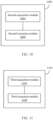
- the apparatus 800 includes:
- the first object includes at least one of the following: a network A, an entity in a data network, an entity outside the first network, primary authentication and/or authorization, non-primary authentication and/or authorization, slice information, DN information, an object associated with primary authentication and/or authorization, and an object associated with non-primary authentication and/or authorization, where
- a network type of the first network, a network accessed by the terminal, and/or a network type of the network A include/includes at least one of the following: a public network, a non-public network, a PLMN, a PNI NPN, and a standalone non-public network SNPN.
- the address information of the first server includes at least one of the following: an Internet Protocol address of the first server, a media access control address of the first server, a port number of the first server, a protocol version of the first server, and address index information of the first server.
- the first access mode includes at least one of the following: an access mode for accessing a network to acquire a credential and/or subscription, an access mode with limited access to a network, and an access mode using a default credential to access a network.
- the apparatus provided in this embodiment of this application can implement each process implemented by the method embodiment in FIG. 1 , with the same technical effect achieved. To avoid repetition, details are not described herein again.
- an embodiment of this application provides an apparatus for supporting information acquisition.
- the apparatus is applied to a second communications device.
- the apparatus 900 includes:
- the first object includes at least one of the following: a network A, an entity in a data network, an entity outside the first network, primary authentication and/or authorization, non-primary authentication and/or authorization, slice information, DN information, an object associated with primary authentication and/or authorization, and an object associated with non-primary authentication and/or authorization, where
- a network type of the first network and/or a network type of the network A include/includes at least one of the following: a public network, a non-public network, a PLMN, a PNI NPN, and an SNPN.
- the address information of the first server includes at least one of the following: an Internet Protocol address of the first server, a media access control address of the first server, a port number of the first server, a protocol type for configuring the credential and/or subscription, a protocol version of the first server, and address index information of the first server.
- the address index information of the first server includes at least one of the following: an FQDN of the first server and a URL of the first server.
- the first access mode includes at least one of the following: an access mode for accessing a network to acquire a credential and/or subscription, an access mode with limited access to a network, and an access mode using a default credential to access a network.
- the first request information includes at least one of the following:
- the second object includes at least one of the following: a network A, an entity in a data network, an entity outside the first network, primary authentication and/or authorization, non-primary authentication and/or authorization, slice information, DN information, an object associated with primary authentication and/or authorization, and an object associated with non-primary authentication and/or authorization.
- the operation of querying or receiving subscribed first configuration information based on the first request information includes at least one of the following:
- the first access mode includes at least one of the following: an access mode for accessing a network to acquire a credential and/or subscription, an access mode with limited access to a network, and an access mode using a default credential to access a network.
- the step of sending the first configuration information and/or the information associated with the first configuration information includes: in a case that a second condition is met, sending the first configuration information and/or the information associated with the first configuration information, where the second condition includes at least one of the following:
- the operation of setting a priority of the first information to be higher than a priority of policy information related to a data operation includes: in a case that a third condition is met, setting the priority of the first information to be higher than the priority of the policy information related to the data operation, where the third condition includes at least one of the following:
- that the first information is first information acquired through reception includes that the first information is first information acquired through reception from a communications network element responsible for mobility management.
- that the first information is first information acquired through reception includes that the first information is first information acquired through reception from a communications network element responsible for session management or a communications network element responsible for mobility management.
- the first target end includes at least one of the following: a communications network element responsible for session management and a communications network element responsible for policy control.
- the first target end includes the communications network element responsible for session management and/or the communications network element responsible for policy control.
- the step of sending the first information to the first target end and/or sending the first information by using related signaling of the data channel of the terminal includes:
- the communications network element responsible for policy control (for example, a PCF) sets policy information (for example, a PCC rule) related to the data operation.
- policy information for example, a PCC rule
- the communications network element responsible for session management performs at least one of the following based on the first information: setting data operation rules (for example, N4 rules such as PDR and FAR), and sending the first information to the terminal.
- setting data operation rules for example, N4 rules such as PDR and FAR
- the data operation rules and/or data operation related policy information may be used to restrict data (for example, except data related to the first server and/or data related to DNS queries) or allow data (for example, data related to the first server and/or data related to DNS queries) to pass.
- the data related to the first server may include: a data source and/or data whose data target is the first server.
- the data operation includes at least one of the following: buffering, discarding, passing, forwarding, filtering, and the like.
- the first target end may be selected and/or the data channel (for example, a PDU session) of the terminal may be selected based on the slice information associated with the first configuration information and/or the DN information associated with the first configuration information in the first information.
- the terminal is registered normally and is not in the first access mode.
- a plurality of data channels may exist on the terminal, and may correspond to a plurality of SMFs or a plurality of PCFs. In this case, a data channel and an SMF need to be selected.
- signaling related to the data channel of the terminal is, for example, PDU session related signaling (such as PDU Session Establishment), or session management association related signaling (such as SM Policy Association Establishment).
- PDU session related signaling such as PDU Session Establishment
- session management association related signaling such as SM Policy Association Establishment
- the second execution module 1002 is further configured to:
- the first access mode includes at least one of the following: an access mode for accessing a network to acquire a credential and/or subscription, an access mode with limited access to a network, and an access mode using a default credential to access a network.
- the apparatus provided in this embodiment of this application can implement each process implemented by the method embodiment in FIG. 3 , with the same technical effect achieved. To avoid repetition, details are not described herein again.
- an embodiment of this application provides an apparatus for supporting information acquisition.
- the apparatus is applied to a fourth communications device.
- the apparatus 1100 includes:
- the third object includes at least one of the following: a network A, an entity in a data network, an entity outside a first network, primary authentication and/or authorization, and non-primary authentication and/or authorization.
- the first access mode includes at least one of the following: an access mode for accessing a network to acquire a credential and/or subscription, an access mode with limited access to a network, and an access mode using a default credential to access a network.
- the apparatus provided in this embodiment of this application can implement each process implemented by the method embodiment in FIG. 4 , with the same technical effect achieved. To avoid repetition, details are not described herein again.
- an embodiment of this application provides an apparatus for supporting information acquisition.
- the apparatus is applied to a fifth communications device.
- the fifth communications device 1200 includes: a fourth acquisition module 1201, configured to acquire first configuration information and/or information associated with the first configuration information.
- the fifth communications device 1200 before the step of acquiring first configuration information and/or information associated with the first configuration information, the fifth communications device 1200 further includes: a second sending module 1202, configured to send second information, where the second information includes at least one of the following: indication information for indicating a first access mode, type information of a credential and/or subscription, identification information of a second object, group identification information of a network group to which the second object belongs, slice information associated with the second object, DN information associated with the second object, identification information of a second network, group identification information of a second network group, where the second network group is a network group to which the second network belongs, slice information of a terminal, DN information of the terminal, connection establishment request information, registration request information, or data channel establishment request information.
- the second information includes at least one of the following: indication information for indicating a first access mode, type information of a credential and/or subscription, identification information of a second object, group identification information of a network group to which the second object belongs, slice information associated with the second object
- the fifth communications device 1200 further includes: a fourth execution module, configured to perform at least one of the following based on the first configuration information and/or the information associated with the first configuration information:
- an embodiment of this application provides an apparatus for supporting information acquisition.
- the apparatus is applied to a sixth communications device.
- the apparatus 1300 includes:
- the apparatus provided in this embodiment of this application can implement each process implemented by the method embodiment in FIG. 6 , with the same technical effect achieved. To avoid repetition, details are not described herein again.
- FIG. 14 is a schematic structural diagram of hardware of a terminal for implementing the embodiments of this application.
- the terminal 1400 includes but is not limited to components such as a radio frequency unit 1401, a network module 1402, an audio output unit 1403, an input unit 1404, a sensor 1405, a display unit 1406, a user input unit 1407, an interface unit 1408, a memory 1409, and a processor 1410.
- the input unit 1404 may include a graphics processing unit (Graphics Processing Unit, GPU) 14041 and a microphone 14042.
- the graphics processing unit 14041 processes image data of a still picture or video obtained by an image capture apparatus (such as a camera) in a video capture mode or an image capture mode.
- the display unit 1406 may include a display panel 14061, and the display panel 14061 may be configured in a form of a liquid crystal display, an organic light-emitting diode, and the like.
- the user input unit 1407 may include a touch panel 14071 and other input devices 14072.
- the touch panel 14071 is also referred to as a touchscreen.
- the touch panel 14071 may include two parts: a touch detection apparatus and a touch controller.
- the other input devices 14072 may include but are not limited to a physical keyboard, a function key (such as a volume control key or a power on/off key), a trackball, a mouse, a joystick, and the like. Details are not described herein.
- the non-volatile memory may be a read-only memory (read-only memory, ROM), a programmable read-only memory (Programmable ROM, PROM), an erasable programmable read-only memory (Erasable PROM, EPROM), an electrically erasable programmable read-only memory (Electrically EPROM, EEPROM), or a flash memory, for example, at least one disk storage device, a flash memory device, or another volatile solid-state storage device.
- read-only memory read-only memory
- PROM programmable read-only memory
- Erasable PROM Erasable PROM
- EPROM electrically erasable programmable read-only memory
- EEPROM electrically erasable programmable read-only memory
- flash memory for example, at least one disk storage device, a flash memory device, or another volatile solid-state storage device.
- the network-side device 1500 includes an antenna 1501, a radio frequency apparatus 1502, and a baseband apparatus 1503.
- the antenna 1501 is connected to the radio frequency apparatus 1502.
- the radio frequency apparatus 1502 receives information by using the antenna 1501, and sends the received information to the baseband apparatus 1503 for processing.
- the baseband apparatus 1503 processes to-be-sent information, and sends the information to the radio frequency apparatus 1502; and the radio frequency apparatus 1502 processes the received information and then sends the information out by using the antenna 1501.
- the frequency band processing apparatus may be located in the baseband apparatus 1503.
- the method performed by the network-side device in the foregoing embodiments may be implemented in the baseband apparatus 1503, and the baseband apparatus 1503 includes a processor 1504 and a memory 1505.
- the baseband apparatus 1503 may further include a network interface 1506, configured to exchange information with the radio frequency apparatus 1502, where the interface is, for example, a common public radio interface (Common Public Radio Interface, CPRI).
- CPRI Common Public Radio Interface
- An embodiment of this application further provides a computer program product, where the computer program product is stored in a non-transitory readable storage medium, and the computer program product is executed by at least one processor to implement the steps of the processing method shown in FIG. 1 to FIG. 4 and FIG. 6 .
- An embodiment of this application further provides a readable storage medium.
- the readable storage medium may be non-volatile or volatile.
- a program or instructions are stored in the readable storage medium. When the program or the instructions are executed by a processor, the processes of the foregoing embodiment of the method shown in FIG. 1 to FIG. 6 can be implemented, with the same technical effects achieved. To avoid repetition, details are not described herein again.
- the processor is a processor in the terminal described in the foregoing embodiments.
- the readable storage medium includes a computer-readable storage medium, for example, a computer read-only memory (Read-Only Memory, ROM), a random access memory (Random Access Memory, RAM), a magnetic disk, or an optical disc.
- An embodiment of this application further provides a chip, where the chip includes a processor and a communications interface.
- the communications interface is coupled to the processor, and the processor is configured to run a program or instructions of a network-side device to implement the processes of the foregoing method embodiments shown in FIG. 1 to FIG. 6 , with the same technical effects achieved. To avoid repetition, details are not described herein again.
- the chip mentioned in the embodiments of this application may also be referred to as a system-level chip, a system chip, a chip system, a system-on-chip, or the like.
- the methods in the foregoing embodiments may be implemented by using software in combination with a necessary common hardware platform, and certainly may alternatively be implemented by using hardware. However, in most cases, the former is a preferred implementation.
- the technical solutions of this application essentially or the part contributing to the prior art may be implemented in a form of a software product.
- the software product is stored in a storage medium (such as a ROM/RAM, a magnetic disk, or an optical disc), and includes several instructions for instructing a terminal (which may be a mobile phone, a computer, a server, an air conditioner, a network device, or the like) to perform the methods described in the embodiments of this application.
Landscapes
- Engineering & Computer Science (AREA)
- Computer Networks & Wireless Communication (AREA)
- Signal Processing (AREA)
- Computer Security & Cryptography (AREA)
- Databases & Information Systems (AREA)
- Mobile Radio Communication Systems (AREA)
- Management, Administration, Business Operations System, And Electronic Commerce (AREA)
Applications Claiming Priority (4)
| Application Number | Priority Date | Filing Date | Title |
|---|---|---|---|
| CN202110185490 | 2021-02-10 | ||
| CN202110368840 | 2021-04-06 | ||
| CN202110507934.4A CN114915960B (zh) | 2021-02-10 | 2021-05-10 | 支持信息获得的方法、装置、设备及可读存储介质 |
| PCT/CN2022/075539 WO2022171086A1 (zh) | 2021-02-10 | 2022-02-08 | 支持信息获得的方法、装置、设备及可读存储介质 |
Publications (2)
| Publication Number | Publication Date |
|---|---|
| EP4294084A1 true EP4294084A1 (de) | 2023-12-20 |
| EP4294084A4 EP4294084A4 (de) | 2024-08-07 |
Family
ID=82761429
Family Applications (1)
| Application Number | Title | Priority Date | Filing Date |
|---|---|---|---|
| EP22752247.1A Pending EP4294084A4 (de) | 2021-02-10 | 2022-02-08 | Informationserfassungsunterstützungsverfahren, gerät, vorrichtung und lesbares speichermedium |
Country Status (6)
| Country | Link |
|---|---|
| US (1) | US20230379806A1 (de) |
| EP (1) | EP4294084A4 (de) |
| JP (1) | JP7723104B2 (de) |
| KR (1) | KR20230137989A (de) |
| CN (1) | CN114915960B (de) |
| WO (1) | WO2022171086A1 (de) |
Families Citing this family (3)
| Publication number | Priority date | Publication date | Assignee | Title |
|---|---|---|---|---|
| CN115190105B (zh) * | 2021-04-06 | 2024-03-29 | 维沃移动通信有限公司 | 信息处理方法、装置和通信设备 |
| CN117750394A (zh) * | 2022-09-14 | 2024-03-22 | 维沃移动通信有限公司 | 目标信息及信息的获取方法、装置和设备 |
| CN116095681B (zh) * | 2023-04-11 | 2023-07-11 | 北京首信科技股份有限公司 | 一种网络融合认证的方法和设备 |
Family Cites Families (10)
| Publication number | Priority date | Publication date | Assignee | Title |
|---|---|---|---|---|
| US20190089806A1 (en) * | 2017-09-15 | 2019-03-21 | Qualcomm Incorporated | Provisioning a device for use in a personal area network |
| CN110602724B (zh) * | 2018-06-12 | 2021-05-14 | 华为技术有限公司 | 网络配置的方法和通信装置 |
| CN110636506A (zh) * | 2018-06-22 | 2019-12-31 | 维沃移动通信有限公司 | 网络接入方法、终端及网络侧网元 |
| CN111436160B (zh) * | 2019-01-15 | 2022-04-29 | 华为技术有限公司 | 一种局域网通信方法、装置及系统 |
| CN112543455B (zh) * | 2019-01-31 | 2022-03-29 | 华为技术有限公司 | 一种通信方法、装置及系统 |
| US11218438B2 (en) * | 2019-04-12 | 2022-01-04 | Huawei Technologies Co., Ltd. | System, apparatus and method to support data server selection |
| US11375367B2 (en) * | 2019-05-07 | 2022-06-28 | Verizon Patent And Licensing Inc. | System and method for deriving a profile for a target endpoint device |
| WO2020250664A1 (en) * | 2019-06-13 | 2020-12-17 | Nec Corporation | Credential storage and selection of credentials for non-public network |
| US11050631B2 (en) * | 2019-06-20 | 2021-06-29 | Minim, Inc. | System and method for onboarding in a Wi-Fi mesh network |
| CN116962994A (zh) * | 2020-05-13 | 2023-10-27 | 腾讯科技(深圳)有限公司 | 多播通信方法、装置、计算机可读介质及电子设备 |
-
2021
- 2021-05-10 CN CN202110507934.4A patent/CN114915960B/zh active Active
-
2022
- 2022-02-08 KR KR1020237029474A patent/KR20230137989A/ko active Pending
- 2022-02-08 WO PCT/CN2022/075539 patent/WO2022171086A1/zh not_active Ceased
- 2022-02-08 EP EP22752247.1A patent/EP4294084A4/de active Pending
- 2022-02-08 JP JP2023545298A patent/JP7723104B2/ja active Active
-
2023
- 2023-07-31 US US18/362,047 patent/US20230379806A1/en active Pending
Also Published As
| Publication number | Publication date |
|---|---|
| WO2022171086A1 (zh) | 2022-08-18 |
| CN114915960A (zh) | 2022-08-16 |
| EP4294084A4 (de) | 2024-08-07 |
| KR20230137989A (ko) | 2023-10-05 |
| CN114915960B (zh) | 2026-04-28 |
| JP2024503932A (ja) | 2024-01-29 |
| US20230379806A1 (en) | 2023-11-23 |
| JP7723104B2 (ja) | 2025-08-13 |
Similar Documents
| Publication | Publication Date | Title |
|---|---|---|
| CN113228570B (zh) | 用于新无线电核心网系统的装置、方法、介质 | |
| US20230379806A1 (en) | Method and apparatus for supporting information acquisition, device, and readable storage medium | |
| EP4683423A2 (de) | Verfahren zur implementierung einer sicherheitsrichtlinie auf benutzerebene, vorrichtung und system | |
| EP4275375A1 (de) | Authentifizierung und autorisierung im zusammenhang mit einem drahtlosen sende-/empfangs-einheit-zu-netzwerk der schicht 3 | |
| CN118160406A (zh) | 具有单个订阅的多址协议数据单元会话建立 | |
| CN114051745A (zh) | 5g网络中的双sim ue操作的系统和方法 | |
| EP3751899A1 (de) | Verfahren und vorrichtung zur bestimmung des ssc-modus | |
| EP4398617A1 (de) | Verfahren und vorrichtung zur informationsübertragung | |
| US20230388909A1 (en) | Ensuring network control of simultaneous access to network slices with application awareness | |
| JP7662571B2 (ja) | ネットワークスライスアドミッション制御(nsac)発見及びローミング強化 | |
| EP4107972A1 (de) | Teilunterstützung von zugangsnetzinformationen | |
| CN116390203A (zh) | 选择网络的方法和装置 | |
| CN118433753A (zh) | 经由双连接同时使用网络切片 | |
| CN116210252A (zh) | 接收用于边缘计算的用户同意的网络操作 | |
| CN107079047A (zh) | 用于网络辅助的域选择的装置和方法 | |
| WO2024250933A1 (zh) | 一种创建配置信息的方法和通信装置 | |
| CN116471705B (zh) | 用户设备路由选择策略处理方法及用户设备 | |
| CN116471706B (zh) | 用户设备路由选择策略提供方法及用户设备 | |
| JP7714770B2 (ja) | オンボーディングを実行する方法及び装置 | |
| EP4037383B1 (de) | Basisstation mit einem virtuellen drahtlosen router | |
| US20250184810A1 (en) | Communication method and communication apparatus | |
| CN116567587A (zh) | 通信方法及通信装置 | |
| EP4727186A2 (de) | Zugangssteuerungsverfahren und kommunikationsvorrichtung | |
| JP2025504718A (ja) | Dscpベースのページングポリシー差別化の拡張 | |
| JP7769004B2 (ja) | 情報処理方法、装置及び通信機器 |
Legal Events
| Date | Code | Title | Description |
|---|---|---|---|
| STAA | Information on the status of an ep patent application or granted ep patent |
Free format text: STATUS: THE INTERNATIONAL PUBLICATION HAS BEEN MADE |
|
| PUAI | Public reference made under article 153(3) epc to a published international application that has entered the european phase |
Free format text: ORIGINAL CODE: 0009012 |
|
| STAA | Information on the status of an ep patent application or granted ep patent |
Free format text: STATUS: REQUEST FOR EXAMINATION WAS MADE |
|
| 17P | Request for examination filed |
Effective date: 20230803 |
|
| AK | Designated contracting states |
Kind code of ref document: A1 Designated state(s): AL AT BE BG CH CY CZ DE DK EE ES FI FR GB GR HR HU IE IS IT LI LT LU LV MC MK MT NL NO PL PT RO RS SE SI SK SM TR |
|
| DAV | Request for validation of the european patent (deleted) | ||
| DAX | Request for extension of the european patent (deleted) | ||
| A4 | Supplementary search report drawn up and despatched |
Effective date: 20240704 |
|
| RIC1 | Information provided on ipc code assigned before grant |
Ipc: H04W 8/20 20090101ALN20240628BHEP Ipc: H04W 60/04 20090101ALN20240628BHEP Ipc: H04W 48/18 20090101ALN20240628BHEP Ipc: H04W 8/18 20090101ALI20240628BHEP Ipc: H04W 12/30 20210101ALI20240628BHEP Ipc: H04W 12/08 20210101ALI20240628BHEP Ipc: H04W 12/06 20210101AFI20240628BHEP |