EP4293792A1 - Battery management device and operation method therefor - Google Patents
Battery management device and operation method therefor Download PDFInfo
- Publication number
- EP4293792A1 EP4293792A1 EP22864855.6A EP22864855A EP4293792A1 EP 4293792 A1 EP4293792 A1 EP 4293792A1 EP 22864855 A EP22864855 A EP 22864855A EP 4293792 A1 EP4293792 A1 EP 4293792A1
- Authority
- EP
- European Patent Office
- Prior art keywords
- identification information
- gas sensors
- sensors
- gas
- battery management
- Prior art date
- Legal status (The legal status is an assumption and is not a legal conclusion. Google has not performed a legal analysis and makes no representation as to the accuracy of the status listed.)
- Granted
Links
Images


Classifications
-
- H—ELECTRICITY
- H01—ELECTRIC ELEMENTS
- H01M—PROCESSES OR MEANS, e.g. BATTERIES, FOR THE DIRECT CONVERSION OF CHEMICAL ENERGY INTO ELECTRICAL ENERGY
- H01M10/00—Secondary cells; Manufacture thereof
- H01M10/42—Methods or arrangements for servicing or maintenance of secondary cells or secondary half-cells
- H01M10/425—Structural combination with electronic components, e.g. electronic circuits integrated to the outside of the casing
-
- H—ELECTRICITY
- H01—ELECTRIC ELEMENTS
- H01M—PROCESSES OR MEANS, e.g. BATTERIES, FOR THE DIRECT CONVERSION OF CHEMICAL ENERGY INTO ELECTRICAL ENERGY
- H01M10/00—Secondary cells; Manufacture thereof
- H01M10/05—Accumulators with non-aqueous electrolyte
- H01M10/052—Li-accumulators
- H01M10/0525—Rocking-chair batteries, i.e. batteries with lithium insertion or intercalation in both electrodes; Lithium-ion batteries
-
- H—ELECTRICITY
- H01—ELECTRIC ELEMENTS
- H01M—PROCESSES OR MEANS, e.g. BATTERIES, FOR THE DIRECT CONVERSION OF CHEMICAL ENERGY INTO ELECTRICAL ENERGY
- H01M10/00—Secondary cells; Manufacture thereof
- H01M10/42—Methods or arrangements for servicing or maintenance of secondary cells or secondary half-cells
- H01M10/425—Structural combination with electronic components, e.g. electronic circuits integrated to the outside of the casing
- H01M10/4257—Smart batteries, e.g. electronic circuits inside the housing of the cells or batteries
-
- H—ELECTRICITY
- H01—ELECTRIC ELEMENTS
- H01M—PROCESSES OR MEANS, e.g. BATTERIES, FOR THE DIRECT CONVERSION OF CHEMICAL ENERGY INTO ELECTRICAL ENERGY
- H01M10/00—Secondary cells; Manufacture thereof
- H01M10/42—Methods or arrangements for servicing or maintenance of secondary cells or secondary half-cells
- H01M10/48—Accumulators combined with arrangements for measuring, testing or indicating the condition of cells, e.g. the level or density of the electrolyte
-
- H—ELECTRICITY
- H01—ELECTRIC ELEMENTS
- H01M—PROCESSES OR MEANS, e.g. BATTERIES, FOR THE DIRECT CONVERSION OF CHEMICAL ENERGY INTO ELECTRICAL ENERGY
- H01M10/00—Secondary cells; Manufacture thereof
- H01M10/42—Methods or arrangements for servicing or maintenance of secondary cells or secondary half-cells
- H01M10/48—Accumulators combined with arrangements for measuring, testing or indicating the condition of cells, e.g. the level or density of the electrolyte
- H01M10/482—Accumulators combined with arrangements for measuring, testing or indicating the condition of cells, e.g. the level or density of the electrolyte for several batteries or cells simultaneously or sequentially
-
- G—PHYSICS
- G01—MEASURING; TESTING
- G01N—INVESTIGATING OR ANALYSING MATERIALS BY DETERMINING THEIR CHEMICAL OR PHYSICAL PROPERTIES
- G01N33/00—Investigating or analysing materials by specific methods not covered by groups G01N1/00 - G01N31/00
- G01N33/0004—Gaseous mixtures, e.g. polluted air
- G01N33/0009—General constructional details of gas analysers, e.g. portable test equipment
- G01N33/0027—General constructional details of gas analysers, e.g. portable test equipment concerning the detector
- G01N33/0031—General constructional details of gas analysers, e.g. portable test equipment concerning the detector comprising two or more sensors, e.g. a sensor array
-
- H—ELECTRICITY
- H01—ELECTRIC ELEMENTS
- H01M—PROCESSES OR MEANS, e.g. BATTERIES, FOR THE DIRECT CONVERSION OF CHEMICAL ENERGY INTO ELECTRICAL ENERGY
- H01M10/00—Secondary cells; Manufacture thereof
- H01M10/42—Methods or arrangements for servicing or maintenance of secondary cells or secondary half-cells
- H01M10/425—Structural combination with electronic components, e.g. electronic circuits integrated to the outside of the casing
- H01M2010/4271—Battery management systems including electronic circuits, e.g. control of current or voltage to keep battery in healthy state, cell balancing
-
- H—ELECTRICITY
- H01—ELECTRIC ELEMENTS
- H01M—PROCESSES OR MEANS, e.g. BATTERIES, FOR THE DIRECT CONVERSION OF CHEMICAL ENERGY INTO ELECTRICAL ENERGY
- H01M10/00—Secondary cells; Manufacture thereof
- H01M10/42—Methods or arrangements for servicing or maintenance of secondary cells or secondary half-cells
- H01M10/425—Structural combination with electronic components, e.g. electronic circuits integrated to the outside of the casing
- H01M2010/4278—Systems for data transfer from batteries, e.g. transfer of battery parameters to a controller, data transferred between battery controller and main controller
-
- Y—GENERAL TAGGING OF NEW TECHNOLOGICAL DEVELOPMENTS; GENERAL TAGGING OF CROSS-SECTIONAL TECHNOLOGIES SPANNING OVER SEVERAL SECTIONS OF THE IPC; TECHNICAL SUBJECTS COVERED BY FORMER USPC CROSS-REFERENCE ART COLLECTIONS [XRACs] AND DIGESTS
- Y02—TECHNOLOGIES OR APPLICATIONS FOR MITIGATION OR ADAPTATION AGAINST CLIMATE CHANGE
- Y02E—REDUCTION OF GREENHOUSE GAS [GHG] EMISSIONS, RELATED TO ENERGY GENERATION, TRANSMISSION OR DISTRIBUTION
- Y02E60/00—Enabling technologies; Technologies with a potential or indirect contribution to GHG emissions mitigation
- Y02E60/10—Energy storage using batteries
Definitions
- Embodiments disclosed herein relate to a battery management apparatus and an operating method thereof.
- the secondary batteries which are chargeable/dischargeable batteries, may include all of conventional nickel (Ni)/cadmium (Cd) batteries, Ni/metal hydride (MH) batteries, etc., and recent lithium-ion batteries.
- a lithium-ion battery has a much higher energy density than those of the conventional Ni/Cd batteries, Ni/MH batteries, etc.
- the lithium-ion battery may be manufactured to be small and lightweight, such that the lithium-ion battery has been used as a power source of mobile devices, and recently, a use range thereof has been extended to power sources for electric vehicles, attracting attention as next-generation energy storage media.
- Secondary batteries are generally used as battery racks including a battery module where a plurality of battery cells are connected to one another in series and/or in parallel.
- the battery rack may be managed and controlled by a battery management system in terms of a state and an operation.
- An energy storage system (ESS) including the battery rack mainly obtains key data through a personal computer (PC)-based battery management system and various sensors provided on the site.
- PC personal computer
- a time for gathering base line information is required to obtain the base line information, and in case of an error occurring in the gas sensor, a recovery time may be delayed.
- Embodiments disclosed herein aim to provide a battery management apparatus and an operating method thereof to reduce a recovery time for allowing a gas sensor to normally operate, in case of a failure error occurring in the gas sensor.
- a battery management apparatus includes a communication unit configured to communicate with a plurality of sensors and a controller configured to set identification information of each of the plurality of sensors and obtain base line information of each of the plurality of sensors based on the identification information.
- the plurality of sensors may include a plurality of gas sensors, and each of the plurality of gas sensors may be serially connected to a power supply line for identification information allocation.
- the controller may be further configured to deliver the base line information obtained from the higher-level BMS to each of the plurality of gas sensors based on the identification information of each of the plurality of gas sensors.
- the controller may be further configured to obtain base line information measured for a preset time by the plurality of sensors when an error does not occur in the plurality of sensors.
- the preset time may be 24 hours.
- the plurality of sensors may include a plurality of gas sensors
- the setting of the identification information of each of the plurality of sensors may include setting the identification information when the power for identification information allocation is applied to each of the plurality of gas sensors.
- the plurality of sensors may include a plurality of gas sensors
- the operating method may further include communicating with a higher-level battery management system (BMS) and obtaining base line information of each of the plurality of gas sensors from the higher-level BMS when the plurality of gas sensors are powered off and then on due to an error occurring in the plurality of gas sensors.
- BMS battery management system
- a battery management apparatus and an operating method thereof may reduce a time for obtaining base line information by obtaining the base line information from a higher-level battery management system (BMS) in case of an error occurring in a gas sensor.
- BMS battery management system
- the battery management apparatus and the operating method thereof may set identification information of each of a plurality of gas sensors, thereby accurately delivering the base line information obtained from the higher-level BMS to each gas sensor.
- the battery management apparatus and the operating method thereof may set identification information for each of a plurality of gas sensors through a serially connected power supply line for identification information allocation, thereby setting the same identification information in spite of hardware replacement of the gas sensor.
- the battery management apparatus and the operating method thereof may stably operate a battery using a gas sensor by reducing a recovery time for allowing the gas sensor to operate even when an error frequently occurs in the plurality of gas sensors.
- terms such as first, second, A, B, (a), (b), etc. may be used. These terms are used merely for distinguishing one component from another component and do not limit the component to the essence, sequence, order, etc., of the component.
- the terms used herein, including technical and scientific terms, have the same meanings as terms that are generally understood by those skilled in the art, as long as the terms are not differently defined.
- the terms defined in a generally used dictionary should be interpreted as having the same meanings as the contextual meanings of the relevant technology and should not be interpreted as having ideal or exaggerated meanings unless they are clearly defined in the present application.
- a sensor according to the present disclosure is implemented as a gas sensor
- the sensor may be implemented as various sensors, such as a temperature sensor, a humidity sensor, etc., capable of transmitting base line information to a higher-level battery management system (BMS) depending on an embodiment.
- BMS battery management system
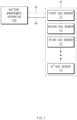
- a plurality of gas sensors 10 may include a first gas sensor 11 and a second gas sensor 12 to an n th gas sensor 14. While it is illustrated in FIG. 1 that the number of gas sensors included in the plurality of gas sensors 10 is 4, the plurality of gas sensors 10 may include n gas sensors (n is a natural number greater than or equal to 2).
- the battery management apparatus 100 may stop supplying power to the plurality of gas sensors 10 when determining that an error occurs in at least any one of the plurality of gas sensors 10. For example, when an error occurs in at least any one gas sensor, it may be a case where the gas sensor fails to operate normally or a failure occurs in the gas sensor, such that the battery management apparatus 100 may stop supplying power to the plurality of gas sensors 100. In this case, the battery management apparatus 100 may inform a user that an error occurs in the gas sensor, and the user may recognize the error occurring in the gas sensor, and take an appropriate action (e.g., hardware replacement of the gas sensor). When an error does not occur in the plurality of gas sensors 10 or the error occurring in the plurality of gas sensors 10 is solved, the battery management apparatus 100 may control power to be supplied to the plurality of gas sensors 10 through the second line 40.
- the battery management apparatus 100 may control power to be supplied to the plurality of gas sensors 10 through the second line 40.
- Each of the plurality of gas sensors 10 may be serially connected to a power supply line for identification information allocation.
- the battery management apparatus 100 may be connected to the first gas sensor 11 among the plurality of gas sensors 10 through the first line 30, and the first gas sensor 11 may be serially connected to the second gas sensor 12 through the first line 30.
- the second gas sensor 12 may be serially connected to the third gas sensor 130 through the first line 30, and the plurality of gas sensors 10 may be serially connected through the first line 30.
- the first line 30 may be a power supply line for identification information allocation.
- the battery management apparatus 100 may set identification information for each of the plurality of gas sensors 10 through the power supply line for identification information allocation (the first line 30). For example, the battery management apparatus 100 may set identification information when power for identification information allocation is applied to each of the plurality of gas sensors 10.
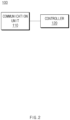
- FIG. 2 is a block diagram of a battery management apparatus according to an embodiment disclosed herein.
- the battery management apparatus 100 may include a communication unit 110 and a controller 120.
- the battery management apparatus 100 may be substantially the same as the battery management apparatus 100 of FIG. 1 .
- the communication unit 110 may communicate with the plurality of gas sensors 10 (see FIG. 1 ).
- the communication unit 110 may communicate with a higher-level BMS 20 (see FIG. 3 ).
- the communication unit 110 may include a wireless communication circuit (e.g., a cellular communication circuit, a short-range wireless communication circuit, or a global navigation satellite system (GNSS) communication circuit) or a wired communication circuit (e.g., a local area network (LAN) communication circuit or a power-line communication circuit), and may communicate with the external electronic device by using a corresponding communication circuit, via a short-range communication network such as Bluetooth, wireless-fidelity (Wi-Fi) direct, or infrared data association (IrDA) or a long-range communication network such as a cellular network, the Internet, or a computer network.
- a short-range communication network such as Bluetooth, wireless-fidelity (Wi-Fi) direct, or infrared data association (IrDA) or a long-range communication network such as a cellular network
- the battery management apparatus 100 may control whether to supply power to the plurality of gas sensors 10.
- the controller 120 may control power supply to the plurality of gas sensors 10 to be stopped when determining that an error occurs in at least any one of the plurality of gas sensors 10.
- the controller 120 may set identification information of each of the plurality of gas sensors 10. For example, the controller 120 may set an identification (ID) of each of the plurality of gas sensors 10. In another example, the controller 120 may set identification information based on position information of each of the plurality of gas sensors 10. In this case, the position information of each of the plurality of gas sensors 10 may indicate an order of a corresponding gas sensor with respect to a gas sensor connected to the controller 120. In an embodiment, the controller 120 may be a micro controller unit (MCU).
- MCU micro controller unit
- the controller 120 may apply power for identification information allocation to the first gas sensor connected to the power supply line 30 for identification information allocation among the plurality of gas sensors 10. For example, the controller 120 may apply power for identification information allocation to the first gas sensor 11 through the power supply line 30 for identification information allocation.
- the controller 120 may set identification information for the first gas sensor 11 when power for identification information allocation is applied to the first gas sensor 11. For example, the controller 120 may set identification information '0001' for the first gas sensor 11.
- the controller 120 may supply power for identification information allocation to the first gas sensor 11 by controlling a relay (not shown) existing in the power supply line 30 for identification information allocation to be shorted.
- a relay (not shown) existing in the power supply line 30 for identification information allocation to be shorted.
- the other gas sensors than the first gas sensor 11 among the plurality of gas sensors 10 may not receive power for identification information allocation, and identification information only for the first gas sensor 11 may be set.
- a relay (not shown) may exist in the power supply line 30 for identification information allocation to which the first gas sensor 11 and the second gas sensor 12 are serially connected, and the relay (not shown) is opened, such that the second gas sensor 12 may not receive power for identification information allocation.
- the controller 120 may set identification information when each of the plurality of gas sensors 10 is sequentially provided with power for identification information allocation from another gas sensor through the power supply line 30 for identification information allocation. For example, the controller 120 may sequentially set identification information for a gas sensor that receives power for identification information allocation.
- the first gas sensor 11 when the first gas sensor 11 is set with identification information from the controller 120, the first gas sensor 11 may supply the power for identification information allocation to the second gas sensor 12 serially connected to the power supply line 30 for identification information allocation.
- the controller 11 may supply the power for identification information allocation to the second gas sensor 12 by shorting a relay (not shown) existing in the power supply line 30 for identification information allocation between the first gas sensor 11 and the second gas sensor 12.
- the controller 120 may set the identification information for the second gas sensor 12 because the power for identification information allocation is supplied to the second gas sensor 12.
- the controller 120 may set identification information '0002' for the second gas sensor 12.
- the second gas sensor 12 may supply the power for identification information allocation to the third gas sensor 13 serially connected to the power supply line 30 for identification information allocation and the controller 120 may set the identification information for the third gas sensor 13. Thereafter, the controller 120 may sequentially set identification information for the plurality of gas sensors 10, and set identification information up to the n th gas sensor 14.
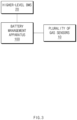
- the battery management apparatus 100 may communicate with the plurality of gas sensors 10 and the higher-level BMS 20.
- the communication unit 110 included in the battery management apparatus 100 may communicate with the plurality of gas sensors 10 and the higher-level BMS 20.
- the controller 120 included in the battery management apparatus 100 may obtain base line information of each of the plurality of gas sensors 10 based on identification information. For example, the controller 120 may obtain base line information of each of the plurality of gas sensors 10 from the higher-level BMS 20 based on identification information of each of the plurality of gas sensors 10.
- the higher-level BMS 20 may obtain the base line information of each of the plurality of gas sensors 10 from the battery management apparatus 100 based on identification information of each of the plurality of gas sensors 10, and store the obtained base line information based on the identification information of each of the plurality of gas sensors 10.
- the higher-level BMS 20 may deliver base line information corresponding to identification information of the plurality of gas sensors 10 to the battery management apparatus 100, when there is a request for the base line information of the plurality of gas sensors 10 from the battery management apparatus 100.
- the controller 120 may set the identification information of each of the plurality of gas sensors. For example, the controller 120 may control identical identification information to be set at all times for each of the plurality of gas sensors, by sequentially setting the identification information of each of the plurality of gas sensors. In another example, the controller 120 may set the identification information when power for identification information allocation is applied to each of the plurality of gas sensors.
- the controller 120 may obtain the base line information of each of the plurality of gas sensors based on the identification information. For example, the controller 120 may obtain the base line information of each of the plurality of gas sensors from the higher-level BMS based on the identification information of each of the plurality of gas sensors.
- FIGS. 5 to 7 are flowcharts of an operating method of a battery management apparatus, according to an embodiment disclosed herein.
- the operating method of the battery management apparatus 100 may further include operation S310 of communicating with the higher-level BMS, operation S320 of obtaining the base line information of each of the plurality of gas sensors from the higher-level BMS when the plurality of gas sensors are powered off and then on due to an error occurring in the plurality of gas sensors, and operation S330 of delivering the base line information obtained from the higher-level BMS to each of the plurality of gas sensors based on the identification information of each of the plurality of gas sensors.
- the controller 120 may control the plurality of gas sensors to be powered on. For example, when the plurality of gas sensors are powered off due to the error occurring in the plurality of gas sensors and the plurality of gas sensors need to be powered on due to replacement or repair of the gas sensor having the error, the controller 120 may control the plurality of gas sensors to be powered on.
- the controller 120 may continuously determine whether there is an error during an operation of the plurality of gas sensors. For example, the controller 120 may perform operation S460 when determining that there is no error in the plurality of gas sensors. In another example, the controller 120 may perform operation S470 when there is an error in at least any one of the plurality of gas sensors.
- FIG. 8 is a block diagram showing a hardware configuration of a computing system for performing a control method of a battery management apparatus, according to an embodiment disclosed herein.
- a computer program according to an embodiment disclosed herein may be recorded in the memory 1020 and processed by the MCU 1010, thus being implemented as a module that performs functions shown in FIG. 2 .
Landscapes
- Engineering & Computer Science (AREA)
- Chemical & Material Sciences (AREA)
- Manufacturing & Machinery (AREA)
- Chemical Kinetics & Catalysis (AREA)
- Electrochemistry (AREA)
- General Chemical & Material Sciences (AREA)
- Microelectronics & Electronic Packaging (AREA)
- Health & Medical Sciences (AREA)
- Life Sciences & Earth Sciences (AREA)
- Medicinal Chemistry (AREA)
- General Health & Medical Sciences (AREA)
- Food Science & Technology (AREA)
- Pathology (AREA)
- Physics & Mathematics (AREA)
- Analytical Chemistry (AREA)
- Biochemistry (AREA)
- Combustion & Propulsion (AREA)
- General Physics & Mathematics (AREA)
- Immunology (AREA)
- Materials Engineering (AREA)
- Emergency Alarm Devices (AREA)
- Testing Electric Properties And Detecting Electric Faults (AREA)
- Investigating Or Analyzing Materials By The Use Of Electric Means (AREA)
- Charge And Discharge Circuits For Batteries Or The Like (AREA)
Abstract
Description
- This application claims priority to and the benefit of
Korean Patent Application No. 10-2021-0115108 filed in the Korean Intellectual Property Office on August 30, 2021 - Embodiments disclosed herein relate to a battery management apparatus and an operating method thereof.
- Recently, research and development of secondary batteries have been actively performed. Herein, the secondary batteries, which are chargeable/dischargeable batteries, may include all of conventional nickel (Ni)/cadmium (Cd) batteries, Ni/metal hydride (MH) batteries, etc., and recent lithium-ion batteries. Among the secondary batteries, a lithium-ion battery has a much higher energy density than those of the conventional Ni/Cd batteries, Ni/MH batteries, etc. Moreover, the lithium-ion battery may be manufactured to be small and lightweight, such that the lithium-ion battery has been used as a power source of mobile devices, and recently, a use range thereof has been extended to power sources for electric vehicles, attracting attention as next-generation energy storage media.
- Secondary batteries are generally used as battery racks including a battery module where a plurality of battery cells are connected to one another in series and/or in parallel. The battery rack may be managed and controlled by a battery management system in terms of a state and an operation. An energy storage system (ESS) including the battery rack mainly obtains key data through a personal computer (PC)-based battery management system and various sensors provided on the site.
- To stably operate the ESS, diagnosis through a gas sensor is required. To use the gas sensor, a time for gathering base line information is required to obtain the base line information, and in case of an error occurring in the gas sensor, a recovery time may be delayed.
- Embodiments disclosed herein aim to provide a battery management apparatus and an operating method thereof to reduce a recovery time for allowing a gas sensor to normally operate, in case of a failure error occurring in the gas sensor.
- Technical problems of the embodiments disclosed herein are not limited to the above-described technical problems, and other unmentioned technical problems would be clearly understood by one of ordinary skill in the art from the following description.
- A battery management apparatus according to an embodiment disclosed herein includes a communication unit configured to communicate with a plurality of sensors and a controller configured to set identification information of each of the plurality of sensors and obtain base line information of each of the plurality of sensors based on the identification information.
- In an embodiment, the plurality of sensors may include a plurality of gas sensors, and each of the plurality of gas sensors may be serially connected to a power supply line for identification information allocation.
- In an embodiment, the controller may be further configured to set the identification information when power for identification information allocation is applied to each of the plurality of gas sensors.
- In an embodiment, the controller may be further configured to apply power for identification information allocation to a first gas sensor connected to the power supply line for identification information allocation among the plurality of gas sensors and set the identification information.
- In an embodiment, the controller may be further configured to set the identification information when each of the plurality of gas sensors is sequentially applied with the power for identification information allocation from another gas sensor through the power supply line for identification information allocation.
- In an embodiment, the plurality of sensors may include a plurality of gas sensors, and the communication unit may be further configured to communicate with a higher-level battery management system (BMS), and the controller may be further configured to obtain base line information of each of the plurality of gas sensors from the higher-level BMS when the plurality of gas sensors are powered off and then on due to an error occurring in the plurality of gas sensors.
- In an embodiment, the controller may be further configured to deliver the base line information obtained from the higher-level BMS to each of the plurality of gas sensors based on the identification information of each of the plurality of gas sensors.
- In an embodiment, the controller may be further configured to obtain base line information measured for a preset time by the plurality of sensors when an error does not occur in the plurality of sensors.
- In an embodiment, the communication unit may be further configured to communicate with the higher-level BMS, and the controller may be further configured to deliver the base line information measured from the plurality of sensors to the higher-level BMS.
- In an embodiment, the preset time may be 24 hours.
- An operating method of a battery management apparatus includes communicating with a plurality of sensors, setting identification information of each of the plurality of sensors, and obtaining base line information of each of the plurality of sensors based on the identification information.
- In an embodiment, the plurality of sensors may include a plurality of gas sensors, and the setting of the identification information of each of the plurality of sensors may include setting the identification information when the power for identification information allocation is applied to each of the plurality of gas sensors.
- In an embodiment, the plurality of sensors may include a plurality of gas sensors, and the setting of the identification information of each of the plurality of sensors may include applying power for identification information allocation to a first gas sensor connected to the power supply line for identification information allocation among the plurality of gas sensors and setting the identification information.
- In an embodiment, the setting of the identification information of each of the plurality of sensors may include setting the identification information when each of the plurality of gas sensors is sequentially applied with the power for identification information allocation from another gas sensor through the power supply line for identification information allocation.
- In an embodiment, the plurality of sensors may include a plurality of gas sensors, and the operating method may further include communicating with a higher-level battery management system (BMS) and obtaining base line information of each of the plurality of gas sensors from the higher-level BMS when the plurality of gas sensors are powered off and then on due to an error occurring in the plurality of gas sensors.
- In an embodiment, the operating method may further include delivering the base line information obtained from the higher-level BMS to each of the plurality of gas sensors based on the identification information of each of the plurality of gas sensors.
- A battery management apparatus and an operating method thereof according to an embodiment disclosed herein may reduce a time for obtaining base line information by obtaining the base line information from a higher-level battery management system (BMS) in case of an error occurring in a gas sensor.
- The battery management apparatus and the operating method thereof according to an embodiment disclosed herein may set identification information of each of a plurality of gas sensors, thereby accurately delivering the base line information obtained from the higher-level BMS to each gas sensor.
- The battery management apparatus and the operating method thereof according to an embodiment disclosed herein may set identification information for each of a plurality of gas sensors through a serially connected power supply line for identification information allocation, thereby setting the same identification information in spite of hardware replacement of the gas sensor.
- The battery management apparatus and the operating method thereof according to an embodiment disclosed herein may stably operate a battery using a gas sensor by reducing a recovery time for allowing the gas sensor to operate even when an error frequently occurs in the plurality of gas sensors.
- Moreover, various effects recognized directly or indirectly from the disclosure may be provided.
-
-
FIG. 1 shows a battery management apparatus and a plurality of gas sensors, according to an embodiment disclosed herein. -
FIG. 2 is a block diagram of a battery management apparatus according to an embodiment disclosed herein. -
FIG. 3 shows a system including a battery management apparatus, according to an embodiment disclosed herein. -
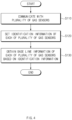
FIG. 4 is a flowchart of an operating method of a battery management apparatus according to an embodiment disclosed herein. -
FIGS. 5 to 7 are flowcharts of an operating method of a battery management apparatus, according to an embodiment disclosed herein. -
FIG. 8 is a block diagram showing a hardware configuration of a computing system for performing a control method of a battery management apparatus, according to an embodiment disclosed herein. - Hereinafter, embodiments disclosed in this document will be described in detail with reference to the exemplary drawings. In adding reference numerals to components of each drawing, it should be noted that the same components are given the same reference numerals even though they are indicated in different drawings. In addition, in describing the embodiments disclosed in this document, when it is determined that a detailed description of a related known configuration or function interferes with the understanding of an embodiment disclosed in this document, the detailed description thereof will be omitted.
- To describe a component of an embodiment disclosed herein, terms such as first, second, A, B, (a), (b), etc., may be used. These terms are used merely for distinguishing one component from another component and do not limit the component to the essence, sequence, order, etc., of the component. The terms used herein, including technical and scientific terms, have the same meanings as terms that are generally understood by those skilled in the art, as long as the terms are not differently defined. Generally, the terms defined in a generally used dictionary should be interpreted as having the same meanings as the contextual meanings of the relevant technology and should not be interpreted as having ideal or exaggerated meanings unless they are clearly defined in the present application.
-
FIG. 1 shows a battery management apparatus and a plurality of gas sensors, according to an embodiment disclosed herein. - Although the following description will be made of an example where a sensor according to the present disclosure is implemented as a gas sensor, the sensor may be implemented as various sensors, such as a temperature sensor, a humidity sensor, etc., capable of transmitting base line information to a higher-level battery management system (BMS) depending on an embodiment.
- Referring to
FIG. 1 , a plurality ofgas sensors 10 may include afirst gas sensor 11 and asecond gas sensor 12 to an nth gas sensor 14. While it is illustrated inFIG. 1 that the number of gas sensors included in the plurality ofgas sensors 10 is 4, the plurality ofgas sensors 10 may include n gas sensors (n is a natural number greater than or equal to 2). - The
battery management apparatus 100 may be connected to the plurality ofgas sensors 10 through afirst line 30 and asecond line 40. For example, thefirst line 30 may be a power supply line for identification information allocation. In another example, thesecond line 40 may be a line for power supply to the plurality ofgas sensors 10. - The
battery management apparatus 100 may supply power to the plurality ofgas sensors 10 through thesecond line 40. For example, thebattery management apparatus 100 may control power of a battery to be supplied to the plurality ofgas sensors 10 through thesecond line 40. In another example, thebattery management apparatus 100 may control independent power only for the plurality ofgas sensors 10 to be supplied to the plurality ofgas sensors 10 through thesecond line 40. In an embodiment, thebattery management apparatus 100 may determine whether to supply power to the plurality ofgas sensors 10 by controlling an operation of a relay (not shown) installed in thesecond line 40. In an embodiment, thesecond line 40 may be serially and/or in parallel connected to the plurality ofgas sensors 10 which may receive power through thesecond line 40. - In an embodiment, the
battery management apparatus 100 may stop supplying power to the plurality ofgas sensors 10 when determining that an error occurs in at least any one of the plurality ofgas sensors 10. For example, when an error occurs in at least any one gas sensor, it may be a case where the gas sensor fails to operate normally or a failure occurs in the gas sensor, such that thebattery management apparatus 100 may stop supplying power to the plurality ofgas sensors 100. In this case, thebattery management apparatus 100 may inform a user that an error occurs in the gas sensor, and the user may recognize the error occurring in the gas sensor, and take an appropriate action (e.g., hardware replacement of the gas sensor). When an error does not occur in the plurality ofgas sensors 10 or the error occurring in the plurality ofgas sensors 10 is solved, thebattery management apparatus 100 may control power to be supplied to the plurality ofgas sensors 10 through thesecond line 40. - Each of the plurality of
gas sensors 10 may be serially connected to a power supply line for identification information allocation. For example, thebattery management apparatus 100 may be connected to thefirst gas sensor 11 among the plurality ofgas sensors 10 through thefirst line 30, and thefirst gas sensor 11 may be serially connected to thesecond gas sensor 12 through thefirst line 30. Thesecond gas sensor 12 may be serially connected to the third gas sensor 130 through thefirst line 30, and the plurality ofgas sensors 10 may be serially connected through thefirst line 30. In an embodiment, thefirst line 30 may be a power supply line for identification information allocation. - The
battery management apparatus 100 may set identification information for each of the plurality ofgas sensors 10 through the power supply line for identification information allocation (the first line 30). For example, thebattery management apparatus 100 may set identification information when power for identification information allocation is applied to each of the plurality ofgas sensors 10. - Hereinbelow, referring to
FIGS. 1 and2 , an operation of thebattery management apparatus 100 will be described. -
FIG. 2 is a block diagram of a battery management apparatus according to an embodiment disclosed herein. - Referring to
FIG. 2 , thebattery management apparatus 100 according to an embodiment disclosed herein may include acommunication unit 110 and acontroller 120. Thebattery management apparatus 100 may be substantially the same as thebattery management apparatus 100 ofFIG. 1 . - The
communication unit 110 may communicate with the plurality of gas sensors 10 (seeFIG. 1 ). Thecommunication unit 110 may communicate with a higher-level BMS 20 (seeFIG. 3 ). In an embodiment, thecommunication unit 110 may include a wireless communication circuit (e.g., a cellular communication circuit, a short-range wireless communication circuit, or a global navigation satellite system (GNSS) communication circuit) or a wired communication circuit (e.g., a local area network (LAN) communication circuit or a power-line communication circuit), and may communicate with the external electronic device by using a corresponding communication circuit, via a short-range communication network such as Bluetooth, wireless-fidelity (Wi-Fi) direct, or infrared data association (IrDA) or a long-range communication network such as a cellular network, the Internet, or a computer network. The above-enumerated various types ofcommunication unit 110 may be implemented in a single chip or individually in separate chips. - In an embodiment, the
battery management apparatus 100 may control whether to supply power to the plurality ofgas sensors 10. For example, thecontroller 120 may control power supply to the plurality ofgas sensors 10 to be stopped when determining that an error occurs in at least any one of the plurality ofgas sensors 10. - The
controller 120 may set identification information of each of the plurality ofgas sensors 10. For example, thecontroller 120 may set an identification (ID) of each of the plurality ofgas sensors 10. In another example, thecontroller 120 may set identification information based on position information of each of the plurality ofgas sensors 10. In this case, the position information of each of the plurality ofgas sensors 10 may indicate an order of a corresponding gas sensor with respect to a gas sensor connected to thecontroller 120. In an embodiment, thecontroller 120 may be a micro controller unit (MCU). - The
controller 120 may apply power for identification information allocation to the first gas sensor connected to thepower supply line 30 for identification information allocation among the plurality ofgas sensors 10. For example, thecontroller 120 may apply power for identification information allocation to thefirst gas sensor 11 through thepower supply line 30 for identification information allocation. Thecontroller 120 may set identification information for thefirst gas sensor 11 when power for identification information allocation is applied to thefirst gas sensor 11. For example, thecontroller 120 may set identification information '0001' for thefirst gas sensor 11. - In an embodiment, the
controller 120 may supply power for identification information allocation to thefirst gas sensor 11 by controlling a relay (not shown) existing in thepower supply line 30 for identification information allocation to be shorted. In this case, the other gas sensors than thefirst gas sensor 11 among the plurality ofgas sensors 10 may not receive power for identification information allocation, and identification information only for thefirst gas sensor 11 may be set. For example, a relay (not shown) may exist in thepower supply line 30 for identification information allocation to which thefirst gas sensor 11 and thesecond gas sensor 12 are serially connected, and the relay (not shown) is opened, such that thesecond gas sensor 12 may not receive power for identification information allocation. - The
controller 120 may set identification information when each of the plurality ofgas sensors 10 is sequentially provided with power for identification information allocation from another gas sensor through thepower supply line 30 for identification information allocation. For example, thecontroller 120 may sequentially set identification information for a gas sensor that receives power for identification information allocation. - In an embodiment, when the
first gas sensor 11 is set with identification information from thecontroller 120, thefirst gas sensor 11 may supply the power for identification information allocation to thesecond gas sensor 12 serially connected to thepower supply line 30 for identification information allocation. For example, thecontroller 11 may supply the power for identification information allocation to thesecond gas sensor 12 by shorting a relay (not shown) existing in thepower supply line 30 for identification information allocation between thefirst gas sensor 11 and thesecond gas sensor 12. In this case, thecontroller 120 may set the identification information for thesecond gas sensor 12 because the power for identification information allocation is supplied to thesecond gas sensor 12. For example, thecontroller 120 may set identification information '0002' for thesecond gas sensor 12. - In an embodiment, when the identification information is set for the
second gas sensor 12, thesecond gas sensor 12 may supply the power for identification information allocation to thethird gas sensor 13 serially connected to thepower supply line 30 for identification information allocation and thecontroller 120 may set the identification information for thethird gas sensor 13. Thereafter, thecontroller 120 may sequentially set identification information for the plurality ofgas sensors 10, and set identification information up to the nth gas sensor 14. - The
battery management apparatus 100 according to an embodiment disclosed herein may set identification information for the plurality ofgas sensors 10. Thebattery management apparatus 100 sets identification information according to the order of a gas sensor serially connected to a power supply line for identification information allocation, such that in spite of hardware replacement due to an error in some gas sensors, the same identification information as that for the gas sensor before replacement may be set as long as the gas sensor is installed at the same position. That is, when the plurality ofgas sensors 10 are powered off and then on due to an error in some of the plurality ofgas sensors 10, thebattery management apparatus 100 may set identification information of each of the plurality ofgas sensors 10 identically to that before occurrence of the error. - Hereinbelow, referring to
FIGS. 2 and3 , an operation of thebattery management apparatus 100 will be described. -
FIG. 3 shows a system including a battery management apparatus, according to an embodiment disclosed herein. In an embodiment, thebattery management apparatus 100 may be substantially the same as thebattery management apparatus 100 ofFIGS. 1 and2 , and the plurality ofgas sensors 10 may be substantially the same as the plurality ofgas sensors 10 ofFIG. 1 . - Referring to
FIG. 3 , thebattery management apparatus 100 may communicate with the plurality ofgas sensors 10 and the higher-level BMS 20. For example, thecommunication unit 110 included in thebattery management apparatus 100 may communicate with the plurality ofgas sensors 10 and the higher-level BMS 20. - The
controller 120 included in thebattery management apparatus 100 may obtain base line information of each of the plurality ofgas sensors 10 based on identification information. For example, thecontroller 120 may obtain base line information of each of the plurality ofgas sensors 10 from the higher-level BMS 20 based on identification information of each of the plurality ofgas sensors 10. - In an embodiment, the higher-
level BMS 20 may obtain the base line information of each of the plurality ofgas sensors 10 from thebattery management apparatus 100 based on identification information of each of the plurality ofgas sensors 10, and store the obtained base line information based on the identification information of each of the plurality ofgas sensors 10. The higher-level BMS 20 may deliver base line information corresponding to identification information of the plurality ofgas sensors 10 to thebattery management apparatus 100, when there is a request for the base line information of the plurality ofgas sensors 10 from thebattery management apparatus 100. - When the plurality of gas sensors are powered off and then on due to an error occurring in the plurality of gas sensors, the
controller 120 may obtain base line information of each of the plurality ofgas sensors 10 from the higher-level BMS. For example, when an error occurs in the plurality of gas sensors, thecontroller 120 may control the plurality ofgas sensors 10 to be powered off, and when the plurality ofgas sensors 10 are powered on after the error occurring in the plurality ofgas 10 is solved, thecontroller 120 may obtain the base line information from the higher-level BMS 20. - When the
controller 120 obtains the base line information of the plurality ofgas sensors 10 from the higher-level BMS 20 based on the identification information of each of the plurality ofgas sensors 10, thecontroller 120 may deliver the obtained base line information to the plurality ofgas sensors 10. For example, thecontroller 120 may deliver the base line information to each of the plurality ofgas sensors 10 based on the identification information of each of the plurality ofgas sensors 10. Each of the plurality ofgas sensors 10 may perform diagnosis on a battery based on the delivered base line information. - In an embodiment, the
controller 120 may control the plurality ofgas sensors 10 to obtain the base line information when failing to obtain the base line information of the plurality ofgas sensors 10 from the higher-level BMS 20. For example, when the base line information of the plurality ofgas sensors 10 does not exist in the higher-level BMS 20, thecontroller 120 may fail to obtain the base line information and obtain base line information measured for a preset time by the plurality ofgas sensors 10. In another example, the preset time may be 24 hours. - When the
controller 120 obtains the base line information measured by each of the plurality ofgas sensors 10 from the plurality ofgas sensors 10, thecontroller 120 may deliver the measured base line information to the higher-level BMS 20. For example, when the plurality ofgas sensors 10 are powered off and then on due to an error occurring in the plurality ofgas sensors 10 after the base line information is delivered to the higher-level BMS 20, thecontroller 120 obtains again the base line information delivered to the higher-level BMS 20 and delivers the same to the plurality ofgas sensors 10, thus reducing a recovery time of the plurality ofgas sensors 10. - In an embodiment, when an error does not occur in the plurality of
gas sensors 10, thecontroller 120 may control the plurality ofgas sensors 10 to measure the base line information for the preset time. For example, thecontroller 120 may control the plurality ofgas sensors 10 to continuously measure the base line information simultaneously with diagnosing abnormality of the battery, and continuously update the base line information. In another example, thecontroller 120 may discard the measured base line information, including a time in which abnormality of the battery occurs, when the plurality ofgas sensors 10 diagnose the abnormality of the battery based on the preset base line information. - The
battery management apparatus 100 according to an embodiment disclosed herein may set identification information for each of the plurality ofgas sensors 10, and obtain base line information of each of the plurality ofgas sensors 10 from the higher-level BMS 20 based on the set identification information, thus effectively recovering the plurality ofgas sensors 10 in case of the error occurring in the plurality ofgas sensors 10. Thebattery management apparatus 100 may use previously measured base line information of the plurality ofgas sensors 10 because the same identification information is set for a gas sensor existing in the same order. Moreover, when no error occurs in the plurality ofgas sensors 10, thebattery management apparatus 100 may control abnormality of the battery to be diagnosed based on the base line information and deliver a diagnosis result to the higher-level BMS 20, thus performing failure (abnormality) diagnosis of the battery through the gas sensor. -
FIG. 4 is a flowchart of an operating method of a battery management apparatus according to an embodiment disclosed herein. - Referring to
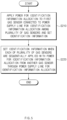
FIG. 4 , an operating method of thebattery management apparatus 100 according to an embodiment disclosed herein may includeoperation S 110 of communicating with a plurality of gas sensors,operation S 120 of setting identification information of each of the plurality of gas sensors, and operation S 130 of obtaining base line information of each of the plurality of gas sensors based on the identification information. - In
operation S 110 of communicating with the plurality of gas sensors, thecommunication unit 110 may communicate with the plurality of gas sensors. - In
operation S 120 of communicating with the plurality of gas sensors, thecontroller 120 may set the identification information of each of the plurality of gas sensors. For example, thecontroller 120 may control identical identification information to be set at all times for each of the plurality of gas sensors, by sequentially setting the identification information of each of the plurality of gas sensors. In another example, thecontroller 120 may set the identification information when power for identification information allocation is applied to each of the plurality of gas sensors. - In operation S 130 of obtaining the base line information of each of the plurality of gas sensors based on the identification information, the
controller 120 may obtain the base line information of each of the plurality of gas sensors based on the identification information. For example, thecontroller 120 may obtain the base line information of each of the plurality of gas sensors from the higher-level BMS based on the identification information of each of the plurality of gas sensors. -
FIGS. 5 to 7 are flowcharts of an operating method of a battery management apparatus, according to an embodiment disclosed herein. - Referring to
FIG. 5 , an operating method of thebattery management apparatus 100 according to an embodiment disclosed herein may include operation S210 of applying power for identification information allocation to the first gas sensor connected to a power supply line for identification information allocation among the plurality of gas sensors and setting identification information, and operation S220 of setting the identification information when each of the plurality of gas sensors is sequentially provided with the power for identification information allocation through the power supply line for identification information allocation from another gas sensor. For example, operations S210 and S220 may includeoperation S 120 ofFIG. 4 . - In operation S210 of applying the power for identification information allocation to the first gas sensor connected to the power supply line for identification information allocation among the plurality of gas sensors and setting the identification information, the
controller 120 may apply the power for identification information allocation to the first gas sensor connected to the power supply line for identification information allocation among the plurality of gas sensors. For example, the power supply line for identification information allocation may be different from a line for power supply to the plurality of gas sensors. In another example, thecontroller 120 may set the identification information for the first gas sensor when power for identification information allocation is applied to the first gas sensor. In another example, the power for identification information allocation is applied only to the first gas sensor, thecontroller 120 may not allocate identification information to the other gas sensors. - In operation S220 of setting the identification information when each of the plurality of gas sensors is sequentially provided with the power for identification information allocation through the power supply line for identification information allocation from another gas sensor, the
controller 120 may set the identification information for each gas sensor when each of the plurality of gas sensors is sequentially provided with the power for identification information allocation from another gas sensor through the power supply line for identification information allocation. For example, the first gas sensor may supply the power for identification information allocation to the second gas sensor serially connected through the power supply line for identification information allocation, and thecontroller 120 may allocate the identification information when the power for identification information allocation is supplied to the second gas sensor. In another example, each of the plurality of gas sensors may supply the power for identification information allocation to the next gas sensor, and thecontroller 120 may sequentially set the identification information for a gas sensor provided with the power for identification information allocation. - Referring to
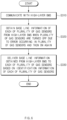
FIG. 6 , the operating method of thebattery management apparatus 100 according to an embodiment disclosed herein may further include operation S310 of communicating with the higher-level BMS, operation S320 of obtaining the base line information of each of the plurality of gas sensors from the higher-level BMS when the plurality of gas sensors are powered off and then on due to an error occurring in the plurality of gas sensors, and operation S330 of delivering the base line information obtained from the higher-level BMS to each of the plurality of gas sensors based on the identification information of each of the plurality of gas sensors. - In operation S310 of communicating with the higher-level BMS, the
communication unit 110 may communicate with the higher-level BMS. - In operation S320 of obtaining the base line information of each of the plurality of gas sensors from the higher-level BMS when the plurality of gas sensors are powered off and then on due to the error occurring in the plurality of gas sensors, the
controller 120 may control the plurality of gas sensors to be powered off when an error occurs in the plurality of gas sensors. Thecontroller 120 may control the plurality of gas sensors to be powered on again when the error in the plurality of gas sensors is solved. When the plurality of gas sensors are powered on, thecontroller 120 may obtain the base line information of each of the plurality of gas sensors from the higher-level BMS. For example, thecontroller 120 may obtain the base line information of each of the plurality of gas sensors based on the identification information of each of the plurality of gas sensors. In an embodiment, when the base line information of each of the plurality of gas sensors does not exist in the higher-level BMS, thecontroller 120 may control the plurality of gas sensors to measure again the base line information of each of the plurality of gas sensors. - In operation S330 of delivering the base line information obtained from the higher-level BMS to each of the plurality of gas sensors based on the identification information of each of the plurality of gas sensors, the
controller 120 may deliver the base line information to each of the plurality of gas sensors based on the identification information of each of the plurality of gas sensors when there is the base line information obtained from the higher-level BMS. For example, the identification information of each of the plurality of gas sensors is set according to an order in which the plurality of gas sensors are serially connected to the power for identification information allocation, such that thecontroller 120 may quickly recover an error occurring in a gas sensor by delivering the base line information of each of the plurality of gas sensors based on the identification information of each of the plurality of gas sensors. - Referring to
FIG. 7 , the operating method of thebattery management apparatus 100 according to an embodiment disclosed herein may include operation S410 of controlling the plurality of gas sensors to be powered on, operation S420 of setting the identification information of the plurality of gas sensors, operation S430 of determining whether there is the base line information obtained from the higher-level BMS, operation S440 of obtaining the base line information measured by the plurality of gas sensors, operation S450 of determining whether an error occurs in the plurality of gas sensors, operation S460 of delivering information measured by the plurality of gas sensors to the higher-level BMS, and operation S470 of controlling the plurality of gas sensors to be powered off. - In operation S410 of controlling the plurality of gas sensors to be powered on, the
controller 120 may control the plurality of gas sensors to be powered on. For example, when the plurality of gas sensors are powered off due to the error occurring in the plurality of gas sensors and the plurality of gas sensors need to be powered on due to replacement or repair of the gas sensor having the error, thecontroller 120 may control the plurality of gas sensors to be powered on. - In operation S420 of setting the identification information of the plurality of gas sensors, the
controller 120 may set the identification information of the plurality of gas sensors. For example, thebattery management apparatus 100 and the plurality of gas sensors may be serially connected to the power supply line for identification information allocation, and thecontroller 120 may set the identification information for the gas sensor supplied with the power for identification information allocation through the measured power supply line for identification information allocation. - In operation S430 of determining whether there is the base line information obtained from the higher-level BMS, the
controller 120 may request the base line information of the plurality of gas sensors to the higher-level BMS and obtain the base line information from the higher-level BMS. Thecontroller 120 may determine whether the base line information is obtained from the higher-level BMS and perform operation S450 when the base line information is obtained from the higher-level BMS, and perform operation S440 when the base line information is not obtained. In an embodiment, when the base line information is obtained from the higher-level BMS, thecontroller 120 may deliver the obtained base line information to the plurality of gas sensors based on the identification information of each of the plurality of gas sensors. - In operation S440 of obtaining the base line information measured by the plurality of gas sensors, the
controller 120 may obtain the base line information measured by the plurality of gas sensors because there is no base line information obtained from the higher-level BMS. For example, the plurality of gas sensors may transmit the base line information measured for a preset time to thecontroller 120 which may store the base line information measured by each of the plurality of gas sensors based on the identification information of each of the plurality of gas sensors or transmit the base line information to the higher-level BMS. In an embodiment, the preset time may be 24 hours. In an embodiment, operation S440 may not be performed when the base line information is previously stored in the higher-level BMS. - In operation S450 of determining whether there is an error in the plurality of gas sensors, the
controller 120 may continuously determine whether there is an error during an operation of the plurality of gas sensors. For example, thecontroller 120 may perform operation S460 when determining that there is no error in the plurality of gas sensors. In another example, thecontroller 120 may perform operation S470 when there is an error in at least any one of the plurality of gas sensors. - In operation S460 of delivering the information measured by the plurality of gas sensors to the higher-level BMS, the
controller 120 may deliver the information measured by the plurality of gas sensors to the higher-level BMS when no error occurs in the plurality of gas sensors. For example, the plurality of gas sensors may diagnose abnormality of the battery based on the base line information or measure state information of the battery and transmit the diagnosed or measured information to thecontroller 120. In this case, thecontroller 120 may deliver the information obtained from the plurality of gas sensors to the higher-level BMS which may diagnose abnormality of the battery based on the information measured by the plurality of gas sensors. - In operation S470 of controlling the plurality of gas sensors to be powered off, the
controller 120 may control all of the plurality of gas sensors to be powered off when an error occurs in at least any one of the plurality of gas sensors. For example, when all of the plurality of gas sensors are powered off, thecontroller 120 may obtain again the base line information stored in the higher-level BMS from the higher-level BMS because the base line information of the plurality of gas sensors is lost. In an embodiment, thecontroller 120 may perform operation S410 when the error occurring in the plurality of gas sensors is solved. -
FIG. 8 is a block diagram showing a hardware configuration of a computing system for performing a control method of a battery management apparatus, according to an embodiment disclosed herein. - Referring to
FIG. 8 , acomputing system 1000 according to an embodiment disclosed herein may include anMCU 1010, amemory 1020, an input/output interface (I/F) 1030, and a communication I/F 1040. - The
MCU 1010 may be a processor that executes various programs (e.g., a battery cell voltage measurement program, a switching control program, etc.) stored in thememory 1020, processes various data including voltage, internal resistance, etc., of a battery cell through these programs, and performs the above-described functions of thebattery management apparatus 100 shown inFIG. 2 . - The
memory 1020 may store various programs regarding voltage measurement, switching control, etc., of the battery cell. Moreover, thememory 1020 may store various data such as a voltage, an internal resistance, etc., of the battery cell. - The
memory 1020 may be provided in plural, depending on a need. Thememory 1020 may be volatile memory or non-volatile memory. For thememory 1020 as the volatile memory, random access memory (RAM), dynamic RAM (DRAM), static RAM (SRAM), etc., may be used. For thememory 1020 as the nonvolatile memory, read only memory (ROM), programmable ROM (PROM), electrically alterable ROM (EAROM), erasable PROM (EPROM), electrically erasable PROM (EEPROM), flash memory, etc., may be used. The above-listed examples of thememory 1020 are merely examples and are not limited thereto. - The input/output interface (I/F) 1030 may provide an interface for transmitting and receiving data by connecting an input device (not shown) such as a keyboard, a mouse, a touch panel, etc., and an output device such as a display (not shown), etc., to the
MCU 1010. - The communication I/
F 1040, which is a component capable of transmitting and receiving various data to and from a server, may be various devices capable of supporting wired or wireless communication. For example, a program for voltage measurement and switching control for a battery cell, various data, etc., may be transmitted and received to and from a separately provided external server through the communication I/F 1040. - As such, a computer program according to an embodiment disclosed herein may be recorded in the
memory 1020 and processed by theMCU 1010, thus being implemented as a module that performs functions shown inFIG. 2 . - The above description is merely illustrative of the technical idea of the present disclosure, and various modifications and variations will be possible without departing from the essential characteristics of embodiments of the present disclosure by those of ordinary skill in the art to which the embodiments disclosed herein pertains.
- Therefore, the embodiments disclosed herein are intended for description rather than limitation of the technical spirit of the embodiments disclosed herein and the scope of the technical spirit of the present disclosure is not limited by these embodiments disclosed herein. The protection scope of the technical spirit disclosed herein should be interpreted by the following claims, and all technical spirits within the same range should be understood to be included in the range of the present disclosure.
Claims (16)
- A battery management apparatus comprising:a communication unit configured to communicate with a plurality of sensors; anda controller configured to set identification information of each of the plurality of sensors and obtain base line information of each of the plurality of sensors based on the identification information.
- The battery management apparatus of claim 1, wherein the plurality of sensors comprise a plurality of gas sensors, and
each of the plurality of gas sensors are serially connected to a power supply line for identification information allocation. - The battery management apparatus of claim 2, wherein the controller is further configured to set the identification information when power for identification information allocation is applied to each of the plurality of gas sensors.
- The battery management apparatus of claim 2, wherein the controller is further configured to apply power for identification information allocation to a first gas sensor connected to the power supply line for identification information allocation among the plurality of gas sensors and set the identification information.
- The battery management apparatus of claim 4, wherein the controller is further configured to set the identification information when each of the plurality of gas sensors is sequentially applied with the power for identification information allocation from another gas sensor through the power supply line for identification information allocation.
- The battery management apparatus of claim 1, wherein the plurality of sensors comprise a plurality of gas sensors, andthe communication unit is further configured to communicate with a higher-level battery management system (BMS), andthe controller is further configured to obtain base line information of each of the plurality of gas sensors from the higher-level BMS when the plurality of gas sensors are powered off and then on due to an error occurring in the plurality of gas sensors.
- The battery management apparatus of claim 6, wherein the controller is further configured to deliver the base line information obtained from the higher-level BMS to each of the plurality of gas sensors based on the identification information of each of the plurality of gas sensors.
- The battery management apparatus of claim 1, wherein the controller is further configured to obtain base line information measured for a preset time by the plurality of sensors when an error does not occur in the plurality of sensors.
- The battery management apparatus of claim 8, wherein the communication unit is further configured to communicate with the higher-level BMS, and
the controller is further configured to deliver the base line information measured from the plurality of sensors to the higher-level BMS. - The battery management apparatus of claim 8, wherein the preset time is 24 hours.
- An operating method of a battery management apparatus, the operating method comprising:communicating with a plurality of sensors;setting identification information of each of the plurality of sensors; andobtaining base line information of each of the plurality of sensors based on the identification information.
- The operating method of claim 11, wherein the plurality of sensors comprise a plurality of gas sensors, and
the setting of the identification information of each of the plurality of sensors comprises setting the identification information when the power for identification information allocation is applied to each of the plurality of gas sensors. - The operating method of claim 11, wherein the plurality of sensors comprise a plurality of gas sensors, and
the setting of the identification information of each of the plurality of sensors comprises applying power for identification information allocation to a first gas sensor connected to the power supply line for identification information allocation among the plurality of gas sensors and setting the identification information. - The operating method of claim 13, wherein the setting of the identification information of each of the plurality of sensors comprises setting the identification information when each of the plurality of gas sensors is sequentially applied with the power for identification information allocation from another gas sensor through the power supply line for identification information allocation.
- The operating method of claim 11, wherein the plurality of sensors comprise a plurality of gas sensors, and
the operating method further comprises:communicating with a higher-level battery management system (BMS); andobtaining base line information of each of the plurality of gas sensors from the higher-level BMS when the plurality of gas sensors are powered off and then on due to an error occurring in the plurality of gas sensors. - The operating method of claim 15, further comprising delivering the base line information obtained from the higher-level BMS to each of the plurality of gas sensors based on the identification information of each of the plurality of gas sensors.
Applications Claiming Priority (2)
| Application Number | Priority Date | Filing Date | Title |
|---|---|---|---|
| KR1020210115108A KR102932304B1 (en) | 2021-08-30 | 2021-08-30 | Battery management apparatus and operating method of the same |
| PCT/KR2022/010030 WO2023033346A1 (en) | 2021-08-30 | 2022-07-11 | Battery management device and operation method therefor |
Publications (3)
| Publication Number | Publication Date |
|---|---|
| EP4293792A1 true EP4293792A1 (en) | 2023-12-20 |
| EP4293792A4 EP4293792A4 (en) | 2024-10-23 |
| EP4293792B1 EP4293792B1 (en) | 2025-08-27 |
Family
ID=85411300
Family Applications (1)
| Application Number | Title | Priority Date | Filing Date |
|---|---|---|---|
| EP22864855.6A Active EP4293792B1 (en) | 2021-08-30 | 2022-07-11 | Battery management apparatus and operating method thereof |
Country Status (8)
| Country | Link |
|---|---|
| US (1) | US20240154185A1 (en) |
| EP (1) | EP4293792B1 (en) |
| JP (1) | JP2024510284A (en) |
| KR (1) | KR102932304B1 (en) |
| CN (1) | CN116941096A (en) |
| ES (1) | ES3040935T3 (en) |
| HU (1) | HUE072971T2 (en) |
| WO (1) | WO2023033346A1 (en) |
Family Cites Families (16)
| Publication number | Priority date | Publication date | Assignee | Title |
|---|---|---|---|---|
| JP2010151756A (en) * | 2008-12-26 | 2010-07-08 | Panasonic Corp | Battery pack |
| KR101273030B1 (en) * | 2011-04-28 | 2013-06-10 | 주식회사 엘지화학 | Apparatus and method of charging battery |
| KR20140015702A (en) * | 2012-07-12 | 2014-02-07 | 현대모비스 주식회사 | Battery system and the method for battery sensor id assignment |
| KR20150011426A (en) * | 2013-07-22 | 2015-02-02 | 현대모비스 주식회사 | Battery System and the Method for Battery Sensor ID Assignment |
| US10497991B2 (en) * | 2016-10-11 | 2019-12-03 | Oneevent Technologies, Inc. | Prefailure monitoring system |
| JP7042222B2 (en) * | 2017-02-03 | 2022-03-25 | ネクセリス イノベーション ホールディングス,エルエルシー | Systems and methods for monitoring gas samples |
| JP6680251B2 (en) * | 2017-03-15 | 2020-04-15 | オムロン株式会社 | Distribution network monitoring system |
| JP6309129B1 (en) * | 2017-03-24 | 2018-04-11 | 本田技研工業株式会社 | Charge control device and control program |
| JP6935793B2 (en) * | 2018-12-04 | 2021-09-15 | 株式会社デンソー | Battery system |
| EP3895232A1 (en) * | 2018-12-14 | 2021-10-20 | Koninklijke Philips N.V. | System to improve safety and reliability of a lithium-ion (li-ion) battery pack |
| JP7333393B2 (en) * | 2019-02-20 | 2023-08-24 | リヴィアン アイピー ホールディングス,エルエルシー | Battery module gas sensor for battery cell monitoring |
| KR102051809B1 (en) * | 2019-09-06 | 2019-12-04 | 인셀(주) | Battery Protection apparatus and Method Using Gas Sensors |
| JP2021044157A (en) * | 2019-09-11 | 2021-03-18 | 株式会社日立製作所 | Battery control device and in-vehicle battery system |
| CN112909355A (en) * | 2019-12-04 | 2021-06-04 | 宁德时代新能源科技股份有限公司 | Battery management system, processing device, battery management method and battery management and control system |
| KR102861413B1 (en) * | 2020-02-13 | 2025-09-17 | 주식회사 엘지에너지솔루션 | Battery control system, battery pack, electric vehicle, and control method for the battery control system |
| CN115472941A (en) * | 2022-09-13 | 2022-12-13 | 西安交通大学 | A single lithium battery implantable hydrogen detection device and method |
-
2021
- 2021-08-30 KR KR1020210115108A patent/KR102932304B1/en active Active
-
2022
- 2022-07-11 WO PCT/KR2022/010030 patent/WO2023033346A1/en not_active Ceased
- 2022-07-11 JP JP2023557208A patent/JP2024510284A/en active Pending
- 2022-07-11 EP EP22864855.6A patent/EP4293792B1/en active Active
- 2022-07-11 US US18/281,518 patent/US20240154185A1/en active Pending
- 2022-07-11 ES ES22864855T patent/ES3040935T3/en active Active
- 2022-07-11 HU HUE22864855A patent/HUE072971T2/en unknown
- 2022-07-11 CN CN202280019466.9A patent/CN116941096A/en active Pending
Also Published As
| Publication number | Publication date |
|---|---|
| HUE072971T2 (en) | 2025-12-28 |
| ES3040935T3 (en) | 2025-11-05 |
| EP4293792B1 (en) | 2025-08-27 |
| CN116941096A (en) | 2023-10-24 |
| JP2024510284A (en) | 2024-03-06 |
| US20240154185A1 (en) | 2024-05-09 |
| KR20230032351A (en) | 2023-03-07 |
| EP4293792A4 (en) | 2024-10-23 |
| WO2023033346A1 (en) | 2023-03-09 |
| KR102932304B1 (en) | 2026-02-27 |
Similar Documents
| Publication | Publication Date | Title |
|---|---|---|
| US20240410952A1 (en) | Battery management apparatus and operating method thereof | |
| EP4446760B1 (en) | Battery depth-of-charge calculation apparatus and operating method thereof | |
| EP4290730A1 (en) | Battery management device and method | |
| US12265135B2 (en) | Battery monitoring data management device and method | |
| US20220404419A1 (en) | Battery data management system and method | |
| EP4293792A1 (en) | Battery management device and operation method therefor | |
| EP4692824A1 (en) | Battery management apparatus and operation method therefor | |
| EP4653892A1 (en) | Battery diagnosis device and battery diagnosis method | |
| EP4564032A1 (en) | Battery management device and operating method thereof | |
| EP4365610B1 (en) | Charge protocol inspection apparatus and operating method thereof | |
| EP4325232A1 (en) | Battery management device and operating method therefor | |
| EP4567447A1 (en) | Battery management apparatus and operation method therefor | |
| EP4318007A1 (en) | Fire prevention device and operation method therefor | |
| EP4365613B1 (en) | Battery pack and operating method thereof | |
| EP4464545A1 (en) | Battery management apparatus and server | |
| US20240192278A1 (en) | Battery data management system and method therefor | |
| EP4306977B1 (en) | Battery life prediction apparatus and operating method thereof | |
| EP4624960A1 (en) | Battery lifespan estimation device and method | |
| EP4513209A1 (en) | Battery management device and operation method therefor | |
| KR20230052674A (en) | Battery apparatus and control method thereof | |
| EP4614167A1 (en) | Battery management device, and operation method thereof | |
| EP4589315A1 (en) | Data collection apparatus mounted on vehicle and function change method thereof | |
| EP4231485B1 (en) | Device for managing battery, and battery system | |
| CN121794585A (en) | Battery management device and operation method thereof | |
| EP4682564A1 (en) | Battery management device and battery management method |
Legal Events
| Date | Code | Title | Description |
|---|---|---|---|
| STAA | Information on the status of an ep patent application or granted ep patent |
Free format text: STATUS: THE INTERNATIONAL PUBLICATION HAS BEEN MADE |
|
| PUAI | Public reference made under article 153(3) epc to a published international application that has entered the european phase |
Free format text: ORIGINAL CODE: 0009012 |
|
| STAA | Information on the status of an ep patent application or granted ep patent |
Free format text: STATUS: REQUEST FOR EXAMINATION WAS MADE |
|
| 17P | Request for examination filed |
Effective date: 20230912 |
|
| AK | Designated contracting states |
Kind code of ref document: A1 Designated state(s): AL AT BE BG CH CY CZ DE DK EE ES FI FR GB GR HR HU IE IS IT LI LT LU LV MC MK MT NL NO PL PT RO RS SE SI SK SM TR |
|
| A4 | Supplementary search report drawn up and despatched |
Effective date: 20240925 |
|
| RIC1 | Information provided on ipc code assigned before grant |
Ipc: H01M 10/0525 20100101ALI20240919BHEP Ipc: G01N 33/00 20060101ALI20240919BHEP Ipc: H01M 10/48 20060101ALI20240919BHEP Ipc: H01M 10/42 20060101AFI20240919BHEP |
|
| DAV | Request for validation of the european patent (deleted) | ||
| DAX | Request for extension of the european patent (deleted) | ||
| GRAP | Despatch of communication of intention to grant a patent |
Free format text: ORIGINAL CODE: EPIDOSNIGR1 |
|
| STAA | Information on the status of an ep patent application or granted ep patent |
Free format text: STATUS: GRANT OF PATENT IS INTENDED |
|
| INTG | Intention to grant announced |
Effective date: 20250226 |
|
| GRAS | Grant fee paid |
Free format text: ORIGINAL CODE: EPIDOSNIGR3 |
|
| P01 | Opt-out of the competence of the unified patent court (upc) registered |
Free format text: CASE NUMBER: APP_13998/2025 Effective date: 20250321 |
|
| GRAA | (expected) grant |
Free format text: ORIGINAL CODE: 0009210 |
|
| STAA | Information on the status of an ep patent application or granted ep patent |
Free format text: STATUS: THE PATENT HAS BEEN GRANTED |
|
| AK | Designated contracting states |
Kind code of ref document: B1 Designated state(s): AL AT BE BG CH CY CZ DE DK EE ES FI FR GB GR HR HU IE IS IT LI LT LU LV MC MK MT NL NO PL PT RO RS SE SI SK SM TR |
|
| REG | Reference to a national code |
Ref country code: CH Ref legal event code: EP |
|
| REG | Reference to a national code |
Ref country code: DE Ref legal event code: R096 Ref document number: 602022020458 Country of ref document: DE |
|
| REG | Reference to a national code |
Ref country code: IE Ref legal event code: FG4D |
|
| REG | Reference to a national code |
Ref country code: ES Ref legal event code: FG2A Ref document number: 3040935 Country of ref document: ES Kind code of ref document: T3 Effective date: 20251105 |
|
| REG | Reference to a national code |
Ref country code: HU Ref legal event code: AG4A Ref document number: E072971 Country of ref document: HU |
|
| REG | Reference to a national code |
Ref country code: NL Ref legal event code: MP Effective date: 20250827 |
|
| PG25 | Lapsed in a contracting state [announced via postgrant information from national office to epo] |
Ref country code: IS Free format text: LAPSE BECAUSE OF FAILURE TO SUBMIT A TRANSLATION OF THE DESCRIPTION OR TO PAY THE FEE WITHIN THE PRESCRIBED TIME-LIMIT Effective date: 20251227 |
|
| PG25 | Lapsed in a contracting state [announced via postgrant information from national office to epo] |
Ref country code: NO Free format text: LAPSE BECAUSE OF FAILURE TO SUBMIT A TRANSLATION OF THE DESCRIPTION OR TO PAY THE FEE WITHIN THE PRESCRIBED TIME-LIMIT Effective date: 20251127 |
|
| REG | Reference to a national code |
Ref country code: LT Ref legal event code: MG9D |
|
| PG25 | Lapsed in a contracting state [announced via postgrant information from national office to epo] |
Ref country code: PT Free format text: LAPSE BECAUSE OF FAILURE TO SUBMIT A TRANSLATION OF THE DESCRIPTION OR TO PAY THE FEE WITHIN THE PRESCRIBED TIME-LIMIT Effective date: 20251229 |
|
| PG25 | Lapsed in a contracting state [announced via postgrant information from national office to epo] |
Ref country code: FI Free format text: LAPSE BECAUSE OF FAILURE TO SUBMIT A TRANSLATION OF THE DESCRIPTION OR TO PAY THE FEE WITHIN THE PRESCRIBED TIME-LIMIT Effective date: 20250827 |
|
| PG25 | Lapsed in a contracting state [announced via postgrant information from national office to epo] |
Ref country code: HR Free format text: LAPSE BECAUSE OF FAILURE TO SUBMIT A TRANSLATION OF THE DESCRIPTION OR TO PAY THE FEE WITHIN THE PRESCRIBED TIME-LIMIT Effective date: 20250827 Ref country code: NL Free format text: LAPSE BECAUSE OF FAILURE TO SUBMIT A TRANSLATION OF THE DESCRIPTION OR TO PAY THE FEE WITHIN THE PRESCRIBED TIME-LIMIT Effective date: 20250827 |
|
| PG25 | Lapsed in a contracting state [announced via postgrant information from national office to epo] |
Ref country code: GR Free format text: LAPSE BECAUSE OF FAILURE TO SUBMIT A TRANSLATION OF THE DESCRIPTION OR TO PAY THE FEE WITHIN THE PRESCRIBED TIME-LIMIT Effective date: 20251128 |
|
| PG25 | Lapsed in a contracting state [announced via postgrant information from national office to epo] |
Ref country code: SE Free format text: LAPSE BECAUSE OF FAILURE TO SUBMIT A TRANSLATION OF THE DESCRIPTION OR TO PAY THE FEE WITHIN THE PRESCRIBED TIME-LIMIT Effective date: 20250827 |
|
| PG25 | Lapsed in a contracting state [announced via postgrant information from national office to epo] |
Ref country code: LV Free format text: LAPSE BECAUSE OF FAILURE TO SUBMIT A TRANSLATION OF THE DESCRIPTION OR TO PAY THE FEE WITHIN THE PRESCRIBED TIME-LIMIT Effective date: 20250827 |
|
| PG25 | Lapsed in a contracting state [announced via postgrant information from national office to epo] |
Ref country code: PL Free format text: LAPSE BECAUSE OF FAILURE TO SUBMIT A TRANSLATION OF THE DESCRIPTION OR TO PAY THE FEE WITHIN THE PRESCRIBED TIME-LIMIT Effective date: 20250827 Ref country code: BG Free format text: LAPSE BECAUSE OF FAILURE TO SUBMIT A TRANSLATION OF THE DESCRIPTION OR TO PAY THE FEE WITHIN THE PRESCRIBED TIME-LIMIT Effective date: 20250827 |
|
| PG25 | Lapsed in a contracting state [announced via postgrant information from national office to epo] |
Ref country code: RS Free format text: LAPSE BECAUSE OF FAILURE TO SUBMIT A TRANSLATION OF THE DESCRIPTION OR TO PAY THE FEE WITHIN THE PRESCRIBED TIME-LIMIT Effective date: 20251127 |
|
| REG | Reference to a national code |
Ref country code: AT Ref legal event code: MK05 Ref document number: 1831084 Country of ref document: AT Kind code of ref document: T Effective date: 20250827 |
|
| PG25 | Lapsed in a contracting state [announced via postgrant information from national office to epo] |
Ref country code: SM Free format text: LAPSE BECAUSE OF FAILURE TO SUBMIT A TRANSLATION OF THE DESCRIPTION OR TO PAY THE FEE WITHIN THE PRESCRIBED TIME-LIMIT Effective date: 20250827 |
|
| PG25 | Lapsed in a contracting state [announced via postgrant information from national office to epo] |
Ref country code: DK Free format text: LAPSE BECAUSE OF FAILURE TO SUBMIT A TRANSLATION OF THE DESCRIPTION OR TO PAY THE FEE WITHIN THE PRESCRIBED TIME-LIMIT Effective date: 20250827 |
|
| PG25 | Lapsed in a contracting state [announced via postgrant information from national office to epo] |
Ref country code: AT Free format text: LAPSE BECAUSE OF FAILURE TO SUBMIT A TRANSLATION OF THE DESCRIPTION OR TO PAY THE FEE WITHIN THE PRESCRIBED TIME-LIMIT Effective date: 20250827 |
|
| PG25 | Lapsed in a contracting state [announced via postgrant information from national office to epo] |
Ref country code: IT Free format text: LAPSE BECAUSE OF FAILURE TO SUBMIT A TRANSLATION OF THE DESCRIPTION OR TO PAY THE FEE WITHIN THE PRESCRIBED TIME-LIMIT Effective date: 20250827 |
|
| PG25 | Lapsed in a contracting state [announced via postgrant information from national office to epo] |
Ref country code: CZ Free format text: LAPSE BECAUSE OF FAILURE TO SUBMIT A TRANSLATION OF THE DESCRIPTION OR TO PAY THE FEE WITHIN THE PRESCRIBED TIME-LIMIT Effective date: 20250827 |
|
| PG25 | Lapsed in a contracting state [announced via postgrant information from national office to epo] |
Ref country code: SK Free format text: LAPSE BECAUSE OF FAILURE TO SUBMIT A TRANSLATION OF THE DESCRIPTION OR TO PAY THE FEE WITHIN THE PRESCRIBED TIME-LIMIT Effective date: 20250827 Ref country code: EE Free format text: LAPSE BECAUSE OF FAILURE TO SUBMIT A TRANSLATION OF THE DESCRIPTION OR TO PAY THE FEE WITHIN THE PRESCRIBED TIME-LIMIT Effective date: 20250827 |