EP4293591A1 - System for monitoring and predicting water damage in shipping containers - Google Patents
System for monitoring and predicting water damage in shipping containers Download PDFInfo
- Publication number
- EP4293591A1 EP4293591A1 EP23160443.0A EP23160443A EP4293591A1 EP 4293591 A1 EP4293591 A1 EP 4293591A1 EP 23160443 A EP23160443 A EP 23160443A EP 4293591 A1 EP4293591 A1 EP 4293591A1
- Authority
- EP
- European Patent Office
- Prior art keywords
- shipping container
- model
- water damage
- internal
- probability
- Prior art date
- Legal status (The legal status is an assumption and is not a legal conclusion. Google has not performed a legal analysis and makes no representation as to the accuracy of the status listed.)
- Granted
Links
Images





Classifications
-
- G—PHYSICS
- G06—COMPUTING OR CALCULATING; COUNTING
- G06Q—INFORMATION AND COMMUNICATION TECHNOLOGY [ICT] SPECIALLY ADAPTED FOR ADMINISTRATIVE, COMMERCIAL, FINANCIAL, MANAGERIAL OR SUPERVISORY PURPOSES; SYSTEMS OR METHODS SPECIALLY ADAPTED FOR ADMINISTRATIVE, COMMERCIAL, FINANCIAL, MANAGERIAL OR SUPERVISORY PURPOSES, NOT OTHERWISE PROVIDED FOR
- G06Q10/00—Administration; Management
- G06Q10/08—Logistics, e.g. warehousing, loading or distribution; Inventory or stock management
- G06Q10/083—Shipping
- G06Q10/0838—Historical data
-
- G—PHYSICS
- G06—COMPUTING OR CALCULATING; COUNTING
- G06Q—INFORMATION AND COMMUNICATION TECHNOLOGY [ICT] SPECIALLY ADAPTED FOR ADMINISTRATIVE, COMMERCIAL, FINANCIAL, MANAGERIAL OR SUPERVISORY PURPOSES; SYSTEMS OR METHODS SPECIALLY ADAPTED FOR ADMINISTRATIVE, COMMERCIAL, FINANCIAL, MANAGERIAL OR SUPERVISORY PURPOSES, NOT OTHERWISE PROVIDED FOR
- G06Q10/00—Administration; Management
- G06Q10/08—Logistics, e.g. warehousing, loading or distribution; Inventory or stock management
- G06Q10/083—Shipping
-
- B—PERFORMING OPERATIONS; TRANSPORTING
- B65—CONVEYING; PACKING; STORING; HANDLING THIN OR FILAMENTARY MATERIAL
- B65D—CONTAINERS FOR STORAGE OR TRANSPORT OF ARTICLES OR MATERIALS, e.g. BAGS, BARRELS, BOTTLES, BOXES, CANS, CARTONS, CRATES, DRUMS, JARS, TANKS, HOPPERS, FORWARDING CONTAINERS; ACCESSORIES, CLOSURES, OR FITTINGS THEREFOR; PACKAGING ELEMENTS; PACKAGES
- B65D90/00—Component parts, details or accessories for large containers
- B65D90/48—Arrangements of indicating or measuring devices
- B65D90/50—Arrangements of indicating or measuring devices of leakage-indicating devices
- B65D90/51—Arrangements of indicating or measuring devices of leakage-indicating devices characterised by sensors
-
- G—PHYSICS
- G06—COMPUTING OR CALCULATING; COUNTING
- G06N—COMPUTING ARRANGEMENTS BASED ON SPECIFIC COMPUTATIONAL MODELS
- G06N20/00—Machine learning
-
- G—PHYSICS
- G06—COMPUTING OR CALCULATING; COUNTING
- G06Q—INFORMATION AND COMMUNICATION TECHNOLOGY [ICT] SPECIALLY ADAPTED FOR ADMINISTRATIVE, COMMERCIAL, FINANCIAL, MANAGERIAL OR SUPERVISORY PURPOSES; SYSTEMS OR METHODS SPECIALLY ADAPTED FOR ADMINISTRATIVE, COMMERCIAL, FINANCIAL, MANAGERIAL OR SUPERVISORY PURPOSES, NOT OTHERWISE PROVIDED FOR
- G06Q10/00—Administration; Management
- G06Q10/06—Resources, workflows, human or project management; Enterprise or organisation planning; Enterprise or organisation modelling
- G06Q10/063—Operations research, analysis or management
- G06Q10/0635—Risk analysis of enterprise or organisation activities
-
- G—PHYSICS
- G06—COMPUTING OR CALCULATING; COUNTING
- G06Q—INFORMATION AND COMMUNICATION TECHNOLOGY [ICT] SPECIALLY ADAPTED FOR ADMINISTRATIVE, COMMERCIAL, FINANCIAL, MANAGERIAL OR SUPERVISORY PURPOSES; SYSTEMS OR METHODS SPECIALLY ADAPTED FOR ADMINISTRATIVE, COMMERCIAL, FINANCIAL, MANAGERIAL OR SUPERVISORY PURPOSES, NOT OTHERWISE PROVIDED FOR
- G06Q10/00—Administration; Management
- G06Q10/08—Logistics, e.g. warehousing, loading or distribution; Inventory or stock management
- G06Q10/087—Inventory or stock management, e.g. order filling, procurement or balancing against orders
-
- B—PERFORMING OPERATIONS; TRANSPORTING
- B65—CONVEYING; PACKING; STORING; HANDLING THIN OR FILAMENTARY MATERIAL
- B65D—CONTAINERS FOR STORAGE OR TRANSPORT OF ARTICLES OR MATERIALS, e.g. BAGS, BARRELS, BOTTLES, BOXES, CANS, CARTONS, CRATES, DRUMS, JARS, TANKS, HOPPERS, FORWARDING CONTAINERS; ACCESSORIES, CLOSURES, OR FITTINGS THEREFOR; PACKAGING ELEMENTS; PACKAGES
- B65D2590/00—Component parts, details or accessories for large containers
- B65D2590/0083—Computer or electronic system, e.g. GPS systems
Definitions
- the present disclosure relates generally to shipping containers, and more specifically, to systems and methods for monitoring and predicting water damage in shipping containers.
- FIG. 1 illustrates an example of a shipping container.
- Such shipping containers are used to carry cargo all across the world.
- Perishable cargo such as coffee, cocoa or milk powder, sometimes degrades in shipping. If water damage can be monitored in real-time, it can facilitate prevention, faster shipping of replacements, faster insurance payouts, parametric insurance products and such.
- Example implementations described herein involve systems and methods that specifically deal with water damage in the context of shipments. Adverse environment inside the container is a leading cause of damage to cargo in transportation. Thus, example implementations described herein involve a system and method to track the environment inside a container and to predict damage associated with water in any state: solid, liquid or gas.
- aspects of the present disclosure can involve a method, which can include executing a first model configured to model an internal environment of a shipping container, the first model configured to intake internal sensor data received from sensors internal to the shipping container and external data associated with an environment external to the shipping container, the first model configured to output internal environment parameters of the shipping container; executing a second model configured to derive water damage incurred to the cargo in the shipping container, the second model including a machine learning model configured to intake the internal environment parameters of the shipping container and output one or more of a probability of loss due to water damage or a predicted severity of water damage to the shipping container or one or more other metrics that depend on loss probability or severity; and prioritizing the shipping container for processing based on the one or more of the probability of loss due to water damage or the predicted severity of water damage to the cargo in the shipping container.
- aspects of the present disclosure can involve a computer program, which can include instructions including executing a first model configured to model an internal environment of a shipping container, the first model configured to intake internal sensor data received from sensors internal to the shipping container and external data associated with an environment external to the shipping container, the first model configured to output internal environment parameters of the shipping container; executing a second model configured to derive water damage incurred to the shipping container, the second model including a machine learning model configured to intake the internal environment parameters of the shipping container and output one or more of a probability of loss due to water damage or a predicted severity of water damage to the shipping container or one or more other metrics that depend on loss probability or severity; and prioritizing the shipping container for processing based on the one or more of the probability of loss due to water damage or the predicted severity of water damage to the cargo in the shipping container.
- the instructions and computer program can be stored in a non-transitory computer readable medium and executed by one or more processors.
- aspects of the present disclosure can involve a system, which can include means for executing a first model configured to model an internal environment of a shipping container, the first model configured to intake internal sensor data received from sensors internal to the shipping container and external data associated with an environment external to the shipping container, the first model configured to output internal environment parameters of the shipping container; means for executing a second model configured to derive water damage incurred to the shipping container, the second model including a machine learning model configured to intake the internal environment parameters of the shipping container and output one or more of a probability of loss due to water damage or a predicted severity of water damage to the cargo in the shipping container or one or more other metrics that depend on loss probability or severity; and means for prioritizing the shipping container for processing based on the one or more of the probability of loss due to water damage or the predicted severity of water damage to the shipping container.
- aspects of the present disclosure can involve an apparatus, which can include a process, which can be configured to execute a first model configured to model an internal environment of a shipping container, the first model configured to intake internal sensor data received from sensors internal to the shipping container and external data associated with an environment external to the shipping container, the first model configured to output internal environment parameters of the shipping container; execute a second model configured to derive water damage incurred to the shipping container, the second model including a machine learning model configured to intake the internal environment parameters of the shipping container and output one or more of a probability of loss due to water damage or a predicted severity of water damage to the cargo in the shipping container or one or more other metrics that depend on loss probability or severity; and prioritize the shipping container for processing based on the one or more of the probability of loss due to water damage or the predicted severity of water damage to the shipping container.
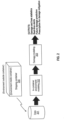
- FIG. 2 illustrates an overall method, in accordance with an example implementation.
- a shipping container 200 with sensors to measure the environment inside the container, as well as any other information that is considered to be relevant to the shipping container.
- Such other information can involve sensors at a weather station monitoring weather conditions, sensors that are disposed around the ship or outside the container, and so on in accordance with the desired implementation.
- the sensor measurements are provided as data 201 which can be managed by a database.
- Such data 201 is used to conduct in-container environment modeling 202 to train/execute an in-container environment model for the shipping container.
- the output internal environment parameters of the shipping container from the in-container environment modeling 202 is provided to damage modeling 203 which is configured to predict the damage to the shipping container based on the output.
- the in-container environment modeling 202 can be a machine learning model.
- a machine learning model can be a machine learning model trained from a database of historical data relating the internal environment parameters to the internal sensor data and the external data.
- Other models are also possible, and present disclosure is not limited thereto.
- such a model can be a physics based model.
- the physics based model is a thermodynamic model of the container's internal climate.
- the model can be a signal processing model configured to derive the desired internal environment parameters based on sampling the sensor data.
- Damage modeling 202 can be configured to derive water damage incurred to the shipping container, via a machine learning model configured to intake the internal environment parameters of the shipping container.
- the output representation of the water damage can involve one or more of a probability of loss due to water damage, a predicted severity of water damage to the shipping container, or one or more other metrics that depend on loss probability or severity depending on the desired implementation.
- the machine learning model can be trained against historical data that associates the measured/estimated internal parameters of the shipping container to outcomes (e.g., percentage lost due to water damage, whether loss occurred or not, and so on).
- Other outputs that can be provided by damage modeling 203 can include, but are not limited to, damage and loss statistics, real-time alerts, future damage prediction, and prescription for damage mitigation.
- the desired output can be provided if the appropriate historical data is available for training the machine learning model.
- examples of other one or more metrics calculated from the loss probability and severity can include one or more of cargo quality degradation, supply chain delay, or total economic impact as configured and measured in accordance with the desired implementation.
- software platforms associated with the shipping containers can prioritize the shipping containers the shipping container for processing based on the one or more of the probability of loss due to water damage or the predicted severity of water damage to the shipping container.
- shipping containers having a higher probability or predicted severity of water damage can be flagged or sorted to be opened first at port.
- processing can involve determining whether an alert is to be generated based on the one or more of the probability of loss due to water damage or the predicted severity of water damage to the shipping container or a metric calculated from the loss probability and severity. If the alert is determined to be generated, then an alert can be generated for the shipping container so that it can be opened during shipment.
- FIG. 3 illustrates example data in accordance with an example implementation.
- Examples of data that can be utilized in the example implementations described herein can include, but are not limited to, data collected by sensors inside the shipping container 301, environment data from outside the shipping container 302, and other data 303 in accordance with the desired implementation.
- Data collected by sensors inside the shipping container 301 can include, but are not limited to, temperature, humidity, gas levels (such as CO2 and methane), shock / acceleration, door open indicator, presence of liquid water (e.g., on the floor) and so on in accordance with the desired implementation.
- Environmental data from outside the shipping container 302 can include, but is not limited to, weather data (e.g., temperature, humidity, and so on), and other data considered to be relevant, in accordance with the desired implementation.
- weather data e.g., temperature, humidity, and so on
- other data considered to be relevant in accordance with the desired implementation.
- Other data 303 can include metadata and model parameters, such as, but not limited to, itinerary of the shipment, position of the shipping container on a ship, and so on in accordance with the desired implementation.
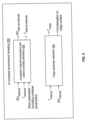
- FIG. 4 illustrates an example of the in-container environment modeling, in accordance with the desired implementation.
- the environment inside the container is described by several parameters, including, but not limited to, air temperature, relative humidity (e.g., corresponding dew point), cargo surface temperature, presence of water (e.g., including condensation and ice on the cargo surface), concentration of gases (e.g., CO2 and methane), and so on.
- air temperature relative humidity (e.g., corresponding dew point)
- cargo surface temperature e.g., including condensation and ice on the cargo surface
- concentration of gases e.g., CO2 and methane
- one or more of the above parameters is measured directly by a sensor placed inside the container.
- air temperature and humidity can be measured by sensors.
- direct measurements for example either sensors are not present, or the shipment has not yet taken place.
- air parameters such as air temperature
- what goes on at the cargo surface can be harder to measure and must often be estimated.
- the in-container environment modeling 202 can involve two models that estimate variables when they are not directly measured.
- the first model comes into play when sensors to measure in-container temperature and humidity are absent, the logic of which is shown in FIG. 4 .
- the implementation of the container's internal temperature and relative humidity estimation model 400 can take a few forms.
- the container's internal temperature and relative humidity estimation model 400 can be a physical model, such as a thermodynamic model that estimates how heat exchange occurs between the environment outside and inside the container.
- the model can also be a supervised machine learning model that is trained on data from containers that have sensors inside them.
- the sensor measurements inside the container serve as variables that the model predicts.
- An example of a machine learning model that can estimate in-container time series is an LSTM (Long Short-Term Memory) model; however, other types of models may also work in accordance with the desired implementation, and the present disclosure is not limited thereto.
- the container's internal temperature and relative humidity estimation model 400 can intake, if available, external relative humidity measurements, external temperature measurements, and other desired parameters in accordance with the desired implementation such as internal container measurements. Based on the input, the container's internal temperature and relative humidity estimation model 400 can thereby provide an estimate of the relative humidity and the temperature.
- Cargo parameter estimation 401 is used to estimate cargo parameters, specifically the temperature at the surface of the cargo and whether there is water in liquid form on the cargo surface.
- T cargo t T internal + T cargo 0 ⁇ T internal e ⁇ t ⁇
- uppercase T generally refers to temperature
- lowercase t is time
- T cargo ( t ) is the cargo temperature at time t
- T internal is the container's internal air temperature
- ⁇ (tau) is a cargo-specific constant that determines how fast the cargo temperature responds to its environment.
- Condensation inside a container follows the same physical process as dew-formation in nature. To determine condensation, the dew point of air is calculated from its temperature and relative humidity. Condensation occurs when cargo temperature falls below the air's dew point. Once condensation has occurred, one can further calculate how long it will take for the condensation to evaporate away. Some important kinds of water damage occur in the presence of moisture in liquid state, which makes the determination whether there is liquid water on the cargo surface important.
- cargo parameter estimation 401 can intake the internal relative humidity and the internal temperature, either from sensor data or by estimation from container's internal temperature and relative humidity estimation model 400. From the inputs, the cargo parameter estimation 401 can thereby estimate the temperature of the cargo as well as the condensation of the cargo's surface.
- FIG. 5 illustrates an example flow for estimating the container's internal environment, in accordance with an example implementation.
- sensor measurements are processed to determine whether the sensors are monitoring the container's internal environment. If so (yes), then the sensor data is used for the parameters of the internal environment. If not (no), then the estimate is provided as the parameters for the container's internal environment by executing the container's internal temperature and relative humidity estimation 400.
- the container's internal temperature and relative humidity estimation 400 intakes the internal parameters that are available and provides the estimate accordingly as described with respect to FIG. 4 .
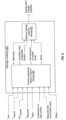
- FIG. 6 illustrates an example of damage modeling, in accordance with an example implementation.
- Damage caused by water can take many forms, including but not limited to mold, corrosion, and/or structural weakening of cargo or packaging. Detecting or predicting damage, creating alerts, and so on, can often be viewed as a supervised machine learning problem, typically classification where the classes are degrees of damage (no damage / moderate damage / severe damage etc.). Engineered features are helpful in improving accuracy as well as adding explainability to the model's output.
- the damage modeling 203 can involve two functions such as feature engineering based on type of damage 600, and machine learning model for damage 601.
- the example of mold risk is provided as an example.
- the growth of mold has been studied in controlled environments.
- T and RH are temperature and relative humidity respectively
- M is a mold index.
- the mold index M calculated from appropriate temperature and humidity readings can be a good feature for ranking shipments by mold risk.
- a machine learning model for mold damage 601 can use the mold index at any time as a feature to predict the risk of mold.
- a similar approach can be applied to other forms of water damage as well.
- the example implementations described herein outline the building blocks of a system for tracking and predicting damage due to water. Water damage can take many forms. The example implementations described herein can account for a variety of scenarios, ranging from those where the shipping container does not have sensors inside to those where a rich array of in-container sensors is available whose readings nonetheless need to be transformed into useful outputs.
- damage modeling 203 can intake outputs from in-container environment modeling 202, which can include, but is not limited to, timestamps of the information along the journey, measured/estimated internal temperature of the shipping container, measured/estimated internal relative humidity of the shipping container, dew point temperature, cargo temperature, condensation on the cargo surface, measured CO2 concentration, and other data in accordance with the desired implementation.
- feature engineering can be conducted at 600 based on the type of damage.
- features that can be extract can include, but is not limited to, mold index, cumulative cargo condensation duration, joint histogram involving multiple inputs, and other features depending on the desired implementation.
- Such features are used as inputs for the machine learning model for damage 601, which is configured to provide damage prediction or damage alerts in accordance with the desired implementation.
- FIG. 7 illustrates a system involving a plurality of shipping containers networked to a management apparatus, in accordance with an example implementation.
- One or more shipping containers integrated with various sensors 701 are communicatively coupled to a network 700 (e.g., local area network (LAN), wide area network (WAN)) through the corresponding network interface of the sensor system installed in the shipping container 701, which is connected to a management apparatus 702.
- the management apparatus 702 manages a database 703, which contains historical data collected from the sensor systems from each of the shipping containers 701.
- the data from the sensor systems of the shipping containers 701 can be stored to a central repository or central database such as proprietary databases that intake data from the shipping containers 701, or systems such as enterprise resource planning systems, and the management apparatus 702 can access or retrieve the data from the central repository or central database.
- the sensor systems of the shipping containers 701 can include any type of sensors to facilitate the desired implementation, such as but not limited to gyroscopes, accelerometers, global positioning satellite (GPS), thermometers, humidity gauges, or any sensors that can measure one or more of temperature, humidity, gas levels (e.g., CO2 gas), shock, acceleration, door open indicator, light, or presence of liquid water.
- the receipt of the plurality of sensor data points is in real time during shipment of the shipping container.
- the local area network can provide the plurality of sensor data points in real time to the management apparatus 702, or it can be transmitted (e.g., via satellite) to a monitoring station.
- the plurality of sensor data points can also be received after shipment of the shipping container (e.g., stored in the database of the ship for extraction and processing later at port by the management apparatus 702 as stored on the ship or at the port).
- database 703 can include additional sensor data points associated with previously shipped shipping containers (e.g., either from the same ship, or as imported from a master database).
- additional sensor data points can supplement the plurality of sensor data points from the present shipping containers 701 if such previously shipped shipping containers were shipped in the same route as the present shipping containers 701.
- external data may be transmitted to database 703 in accordance with the desired implementation.
- Such external data may be streaming information from the internet (e.g., regarding weather data), from sensors external to the shipping container, and so on, in accordance with the desired implementation.
- FIG. 8 illustrates an example computing environment with an example computer device suitable for use in some example implementations, such as a management apparatus 702 as illustrated in FIG. 7 .
- Computer device 805 in computing environment 800 can include one or more processing units, cores, or processors 810, memory 815 (e.g., RAM, ROM, and/or the like), internal storage 820 (e.g., magnetic, optical, solid state storage, and/or organic), and/or I/O interface 825, any of which can be coupled on a communication mechanism or bus 830 for communicating information or embedded in the computer device 805.
- I/O interface 825 is also configured to receive images from cameras or provide images to projectors or displays, depending on the desired implementation.
- Computer device 805 can be communicatively coupled to input/user interface 835 and output device/interface 840. Either one or both of input/user interface 835 and output device/interface 840 can be a wired or wireless interface and can be detachable.
- Input/user interface 835 may include any device, component, sensor, or interface, physical or virtual, that can be used to provide input (e.g., buttons, touch-screen interface, keyboard, a pointing/cursor control, microphone, camera, braille, motion sensor, optical reader, and/or the like).
- Output device/interface 840 may include a display, television, monitor, printer, speaker, braille, or the like.
- input/user interface 835 and output device/interface 840 can be embedded with or physically coupled to the computer device 805.
- other computer devices may function as or provide the functions of input/user interface 835 and output device/interface 840 for a computer device 805.
- Examples of computer device 805 may include, but are not limited to, highly mobile devices (e.g., smartphones, devices in vehicles and other machines, devices carried by humans and animals, and the, like), mobile devices (e.g., tablets, notebooks, laptops, personal computers, portable televisions, radios, and the like), and devices not designed for mobility (e.g., desktop computers, other computers, information kiosks, televisions with one or more processors embedded therein and/or coupled thereto, radios, and the like).
- highly mobile devices e.g., smartphones, devices in vehicles and other machines, devices carried by humans and animals, and the, like
- mobile devices e.g., tablets, notebooks, laptops, personal computers, portable televisions, radios, and the like
- devices not designed for mobility e.g., desktop computers, other computers, information kiosks, televisions with one or more processors embedded therein and/or coupled thereto, radios, and the like.
- Computer device 805 can be communicatively coupled (e.g., via I/O interface 825) to external storage 845 and network 850 for communicating with any number of networked components, devices, and systems, including one or more computer devices of the same or different configuration.
- Computer device 805 or any connected computer device can be functioning as, providing services of, or referred to as a server, client, thin server, general machine, special-purpose machine, or another label.
- I/O interface 825 can include, but is not limited to, wired and/or wireless interfaces using any communication or I/O protocols or standards (e.g., Ethernet, 802.11x, Universal System Bus, WiMax, modem, a cellular network protocol, and the like) for communicating information to and/or from at least all the connected components, devices, and network in computing environment 800.
- Network 850 can be any network or combination of networks (e.g., the Internet, local area network, wide area network, a telephonic network, a cellular network, satellite network, and the like).
- Computer device 805 can use and/or communicate using computer-usable or computer-readable media, including transitory media and non-transitory media.
- Transitory media include transmission media (e.g., metal cables, fiber optics), signals, carrier waves, and the like.
- Non-transitory media include magnetic media (e.g., disks and tapes), optical media (e.g., CD ROM, digital video disks, Blu-ray disks), solid state media (e.g., RAM, ROM, flash memory, solid-state storage), and other non-volatile storage or memory.
- Computer device 805 can be used to implement techniques, methods, applications, processes, or computer-executable instructions in some example computing environments.
- Computer-executable instructions can be retrieved from transitory media, and stored on and retrieved from non-transitory media.
- the executable instructions can originate from one or more of any programming, scripting, and machine languages (e.g., C, C++, C#, Java, Visual Basic, Python, Perl, JavaScript, and others).
- Processor(s) 810 can execute under any operating system (OS) (not shown), in a native or virtual environment.
- OS operating system
- One or more applications can be deployed that include logic unit 860, application programming interface (API) unit 865, input unit 870, output unit 875, and inter-unit communication mechanism 895 for the different units to communicate with each other, with the OS, and with other applications (not shown).
- API application programming interface
- Processor(s) 810 can be in the form of hardware processors such as central processing units (CPUs) or in a combination of hardware and software units.
- API unit 865 when information or an execution instruction is received by API unit 865, it may be communicated to one or more other units (e.g., logic unit 860, input unit 870, output unit 875).
- logic unit 860 may be configured to control the information flow among the units and direct the services provided by API unit 865, input unit 870, output unit 875, in some example implementations described above.
- the flow of one or more processes or implementations may be controlled by logic unit 860 alone or in conjunction with API unit 865.
- the input unit 870 may be configured to obtain input for the calculations described in the example implementations
- the output unit 875 may be configured to provide output based on the calculations described in example implementations.
- Processor(s) 810 can be configured to execute a method or instructions including executing a first model configured to model an internal environment of a shipping container, the first model configured to intake internal sensor data received from sensors internal to the shipping container and external data associated with an environment external to the shipping container as illustrated at in-container environment modeling 202 of FIG. 2 , the first model configured to output internal environment parameters of the shipping container; executing a second model configured to derive water damage incurred to the shipping container, the second model comprising a machine learning model configured to intake the internal environment parameters of the shipping container and output one or more of a probability of loss due to water damage or a predicted severity of water damage to the shipping container or one or more other metrics that depend on loss probability or severity as illustrate at damage modeling 203 of FIG. 2 ; and prioritizing the shipping container for processing based on the one or more of the probability of loss due to water damage or the predicted severity of water damage to the shipping container.
- the machine learning model is trained from a database of historical data relating the internal environment parameters with loss due to water damage and severity of water damage.
- the first model can be a physics based model.
- the physics based model is a thermodynamic model of the container's internal climate.
- the first model can be a machine learning model trained from a database of historical data relating the internal environment parameters to the internal sensor data and the external data.
- the first model can be a signal processing model.
- the internal environment parameters can involve one or more of mold index or cumulative cargo condensation duration.
- the internal sensor data comprises one or more of temperature, humidity, gas levels, shock, acceleration, door open indicator, light, or presence of liquid water.
- the external data can involve one or more of temperature or humidity.
- the prioritizing the shipping container for processing can include determining whether an alert is to be generated based on the one or more of the probability of loss due to water damage or the predicted severity of water damage to the shipping container or a metric calculated from the loss probability and severity; and for the determining indicating that the alert is to be generated, generating the alert for the shipping container.
- the one or more metrics calculated from the loss probability and severity can include one or more of cargo quality degradation, supply chain delay, or total economic impact.
- Example implementations may also relate to an apparatus for performing the operations herein.
- This apparatus may be specially constructed for the required purposes, or it may include one or more general-purpose computers selectively activated or reconfigured by one or more computer programs.
- Such computer programs may be stored in a computer readable medium, such as a computer-readable storage medium or a computer-readable signal medium.
- a computer-readable storage medium may involve tangible mediums such as, but not limited to optical disks, magnetic disks, read-only memories, random access memories, solid state devices and drives, or any other types of tangible or non-transitory media suitable for storing electronic information.
- a computer readable signal medium may include mediums such as carrier waves.
- the algorithms and displays presented herein are not inherently related to any particular computer or other apparatus.
- Computer programs can involve pure software implementations that involve instructions that perform the operations of the desired implementation.
- the operations described above can be performed by hardware, software, or some combination of software and hardware.
- Various aspects of the example implementations may be implemented using circuits and logic devices (hardware), while other aspects may be implemented using instructions stored on a machine-readable medium (software), which if executed by a processor, would cause the processor to perform a method to carry out implementations of the present application.
- some example implementations of the present application may be performed solely in hardware, whereas other example implementations may be performed solely in software.
- the various functions described can be performed in a single unit, or can be spread across a number of components in any number of ways.
- the methods may be executed by a processor, such as a general purpose computer, based on instructions stored on a computer-readable medium. If desired, the instructions can be stored on the medium in a compressed and/or encrypted format.
Landscapes
- Business, Economics & Management (AREA)
- Engineering & Computer Science (AREA)
- Economics (AREA)
- Human Resources & Organizations (AREA)
- Theoretical Computer Science (AREA)
- Strategic Management (AREA)
- Entrepreneurship & Innovation (AREA)
- Physics & Mathematics (AREA)
- General Physics & Mathematics (AREA)
- Development Economics (AREA)
- Marketing (AREA)
- Operations Research (AREA)
- Quality & Reliability (AREA)
- Tourism & Hospitality (AREA)
- General Business, Economics & Management (AREA)
- Software Systems (AREA)
- Game Theory and Decision Science (AREA)
- Mechanical Engineering (AREA)
- Artificial Intelligence (AREA)
- Computer Vision & Pattern Recognition (AREA)
- Data Mining & Analysis (AREA)
- Evolutionary Computation (AREA)
- Medical Informatics (AREA)
- Educational Administration (AREA)
- Computing Systems (AREA)
- General Engineering & Computer Science (AREA)
- Mathematical Physics (AREA)
- Accounting & Taxation (AREA)
- Finance (AREA)
- Management, Administration, Business Operations System, And Electronic Commerce (AREA)
Abstract
Description
- The present disclosure relates generally to shipping containers, and more specifically, to systems and methods for monitoring and predicting water damage in shipping containers.
-
FIG. 1 illustrates an example of a shipping container. Such shipping containers are used to carry cargo all across the world. In the related art, there has been little visibility into cargo once it goes inside a container. Perishable cargo, such as coffee, cocoa or milk powder, sometimes degrades in shipping. If water damage can be monitored in real-time, it can facilitate prevention, faster shipping of replacements, faster insurance payouts, parametric insurance products and such. - In related art implementations, there are systems and methods that deal with verifying the state of an item during transit. Such related art implementations describe how data can be collected and transmitted for tracking state; however, this state is generic.
- Example implementations described herein involve systems and methods that specifically deal with water damage in the context of shipments. Adverse environment inside the container is a leading cause of damage to cargo in transportation. Thus, example implementations described herein involve a system and method to track the environment inside a container and to predict damage associated with water in any state: solid, liquid or gas.
- Aspects of the present disclosure can involve a method, which can include executing a first model configured to model an internal environment of a shipping container, the first model configured to intake internal sensor data received from sensors internal to the shipping container and external data associated with an environment external to the shipping container, the first model configured to output internal environment parameters of the shipping container; executing a second model configured to derive water damage incurred to the cargo in the shipping container, the second model including a machine learning model configured to intake the internal environment parameters of the shipping container and output one or more of a probability of loss due to water damage or a predicted severity of water damage to the shipping container or one or more other metrics that depend on loss probability or severity; and prioritizing the shipping container for processing based on the one or more of the probability of loss due to water damage or the predicted severity of water damage to the cargo in the shipping container.
- Aspects of the present disclosure can involve a computer program, which can include instructions including executing a first model configured to model an internal environment of a shipping container, the first model configured to intake internal sensor data received from sensors internal to the shipping container and external data associated with an environment external to the shipping container, the first model configured to output internal environment parameters of the shipping container; executing a second model configured to derive water damage incurred to the shipping container, the second model including a machine learning model configured to intake the internal environment parameters of the shipping container and output one or more of a probability of loss due to water damage or a predicted severity of water damage to the shipping container or one or more other metrics that depend on loss probability or severity; and prioritizing the shipping container for processing based on the one or more of the probability of loss due to water damage or the predicted severity of water damage to the cargo in the shipping container. The instructions and computer program can be stored in a non-transitory computer readable medium and executed by one or more processors.
- Aspects of the present disclosure can involve a system, which can include means for executing a first model configured to model an internal environment of a shipping container, the first model configured to intake internal sensor data received from sensors internal to the shipping container and external data associated with an environment external to the shipping container, the first model configured to output internal environment parameters of the shipping container; means for executing a second model configured to derive water damage incurred to the shipping container, the second model including a machine learning model configured to intake the internal environment parameters of the shipping container and output one or more of a probability of loss due to water damage or a predicted severity of water damage to the cargo in the shipping container or one or more other metrics that depend on loss probability or severity; and means for prioritizing the shipping container for processing based on the one or more of the probability of loss due to water damage or the predicted severity of water damage to the shipping container.
- Aspects of the present disclosure can involve an apparatus, which can include a process, which can be configured to execute a first model configured to model an internal environment of a shipping container, the first model configured to intake internal sensor data received from sensors internal to the shipping container and external data associated with an environment external to the shipping container, the first model configured to output internal environment parameters of the shipping container; execute a second model configured to derive water damage incurred to the shipping container, the second model including a machine learning model configured to intake the internal environment parameters of the shipping container and output one or more of a probability of loss due to water damage or a predicted severity of water damage to the cargo in the shipping container or one or more other metrics that depend on loss probability or severity; and prioritize the shipping container for processing based on the one or more of the probability of loss due to water damage or the predicted severity of water damage to the shipping container.
-
-
FIG. 1 illustrates an example of a shipping container. -
FIG. 2 illustrates an overall method, in accordance with an example implementation. -
FIG. 3 illustrates example data in accordance with an example implementation. -
FIG. 4 illustrates an example of the in-container environment modeling, in accordance with the desired implementation. -
FIG. 5 illustrates an example flow for estimating the container's internal environment, in accordance with an example implementation. -
FIG. 6 illustrates an example of damage modeling, in accordance with an example implementation. -
FIG. 7 illustrates a system involving a plurality of shipping containers networked to a management apparatus, in accordance with an example implementation. -
FIG. 8 illustrates an example computing environment with an example computer device suitable for use in some example implementations. - The following detailed description provides details of the figures and example implementations of the present application. Reference numerals and descriptions of redundant elements between figures are omitted for clarity. Terms used throughout the description are provided as examples and are not intended to be limiting. For example, the use of the term "automatic" may involve fully automatic or semi-automatic implementations involving user or administrator control over certain aspects of the implementation, depending on the desired implementation of one of ordinary skill in the art practicing implementations of the present application. Selection can be conducted by a user through a user interface or other input means, or can be implemented through a desired algorithm. Example implementations as described herein can be utilized either singularly or in combination and the functionality of the example implementations can be implemented through any means according to the desired implementations.
-
FIG. 2 illustrates an overall method, in accordance with an example implementation. As illustrated in the system ofFIG. 2 , there is ashipping container 200 with sensors to measure the environment inside the container, as well as any other information that is considered to be relevant to the shipping container. Such other information can involve sensors at a weather station monitoring weather conditions, sensors that are disposed around the ship or outside the container, and so on in accordance with the desired implementation. The sensor measurements are provided asdata 201 which can be managed by a database.Such data 201 is used to conduct in-container environment modeling 202 to train/execute an in-container environment model for the shipping container. The output internal environment parameters of the shipping container from the in-container environment modeling 202 is provided to damagemodeling 203 which is configured to predict the damage to the shipping container based on the output. - The in-
container environment modeling 202 can be a machine learning model. For example, such a machine learning model can be a machine learning model trained from a database of historical data relating the internal environment parameters to the internal sensor data and the external data. Other models are also possible, and present disclosure is not limited thereto. - Depending on the desired implementation, such a model can be a physics based model. For example, the physics based model is a thermodynamic model of the container's internal climate. Or the model can be a signal processing model configured to derive the desired internal environment parameters based on sampling the sensor data.
-
Damage modeling 202 can be configured to derive water damage incurred to the shipping container, via a machine learning model configured to intake the internal environment parameters of the shipping container. The output representation of the water damage can involve one or more of a probability of loss due to water damage, a predicted severity of water damage to the shipping container, or one or more other metrics that depend on loss probability or severity depending on the desired implementation. To train such a model, the machine learning model can be trained against historical data that associates the measured/estimated internal parameters of the shipping container to outcomes (e.g., percentage lost due to water damage, whether loss occurred or not, and so on). Other outputs that can be provided bydamage modeling 203 can include, but are not limited to, damage and loss statistics, real-time alerts, future damage prediction, and prescription for damage mitigation. Because the implementation is a machine learning model, the desired output can be provided if the appropriate historical data is available for training the machine learning model. Examples of other one or more metrics calculated from the loss probability and severity can include one or more of cargo quality degradation, supply chain delay, or total economic impact as configured and measured in accordance with the desired implementation. - Once the output is determined, software platforms associated with the shipping containers can prioritize the shipping containers the shipping container for processing based on the one or more of the probability of loss due to water damage or the predicted severity of water damage to the shipping container. In an example, shipping containers having a higher probability or predicted severity of water damage can be flagged or sorted to be opened first at port. In another example, processing can involve determining whether an alert is to be generated based on the one or more of the probability of loss due to water damage or the predicted severity of water damage to the shipping container or a metric calculated from the loss probability and severity. If the alert is determined to be generated, then an alert can be generated for the shipping container so that it can be opened during shipment.
- Further details are provided as follows.
-
FIG. 3 illustrates example data in accordance with an example implementation. Examples of data that can be utilized in the example implementations described herein can include, but are not limited to, data collected by sensors inside theshipping container 301, environment data from outside theshipping container 302, andother data 303 in accordance with the desired implementation. - Data collected by sensors inside the
shipping container 301 can include, but are not limited to, temperature, humidity, gas levels (such as CO2 and methane), shock / acceleration, door open indicator, presence of liquid water (e.g., on the floor) and so on in accordance with the desired implementation. - Environmental data from outside the
shipping container 302 can include, but is not limited to, weather data (e.g., temperature, humidity, and so on), and other data considered to be relevant, in accordance with the desired implementation. -
Other data 303 can include metadata and model parameters, such as, but not limited to, itinerary of the shipment, position of the shipping container on a ship, and so on in accordance with the desired implementation. -
FIG. 4 illustrates an example of the in-container environment modeling, in accordance with the desired implementation. The environment inside the container is described by several parameters, including, but not limited to, air temperature, relative humidity (e.g., corresponding dew point), cargo surface temperature, presence of water (e.g., including condensation and ice on the cargo surface), concentration of gases (e.g., CO2 and methane), and so on. - Sometimes, one or more of the above parameters is measured directly by a sensor placed inside the container. For example, air temperature and humidity can be measured by sensors. However, there may be situations when direct measurements are unavailable, for example either sensors are not present, or the shipment has not yet taken place. Unlike air parameters (such as air temperature) which are easily measured by a sensor, what goes on at the cargo surface can be harder to measure and must often be estimated.
- To estimate such variables, the in-container environment modeling 202 can involve two models that estimate variables when they are not directly measured.
- The first model comes into play when sensors to measure in-container temperature and humidity are absent, the logic of which is shown in
FIG. 4 . The implementation of the container's internal temperature and relativehumidity estimation model 400 can take a few forms. In a first form, the container's internal temperature and relativehumidity estimation model 400 can be a physical model, such as a thermodynamic model that estimates how heat exchange occurs between the environment outside and inside the container. Or, the model can also be a supervised machine learning model that is trained on data from containers that have sensors inside them. Here, the sensor measurements inside the container serve as variables that the model predicts. Once the model is trained, it can be used to estimate in-container sensor measurements when there are no sensors. An example of a machine learning model that can estimate in-container time series is an LSTM (Long Short-Term Memory) model; however, other types of models may also work in accordance with the desired implementation, and the present disclosure is not limited thereto. - In the example of
FIG. 4 , the container's internal temperature and relativehumidity estimation model 400 can intake, if available, external relative humidity measurements, external temperature measurements, and other desired parameters in accordance with the desired implementation such as internal container measurements. Based on the input, the container's internal temperature and relativehumidity estimation model 400 can thereby provide an estimate of the relative humidity and the temperature.. - The second model housed within the in-
container environment modeling 202 is thecargo parameter estimation 401.Cargo parameter estimation 401 is used to estimate cargo parameters, specifically the temperature at the surface of the cargo and whether there is water in liquid form on the cargo surface. - There can be more than one way to estimate the cargo surface temperature. For example, one method can be based on Newton's Law of Cooling. Newton's Law of Cooling states that the rate of heat loss of a body is directly proportional to the difference in the temperatures between the body and its surroundings. Using this as a principle, a differential equation can be derived, which can be solved to yield the following formula to track cargo temperature:

- In the above equation, uppercase T generally refers to temperature, whereas lowercase t is time. Tcargo (t) is the cargo temperature at time t, and Tinternal is the container's internal air temperature. τ(tau) is a cargo-specific constant that determines how fast the cargo temperature responds to its environment.
- Condensation inside a container follows the same physical process as dew-formation in nature. To determine condensation, the dew point of air is calculated from its temperature and relative humidity. Condensation occurs when cargo temperature falls below the air's dew point. Once condensation has occurred, one can further calculate how long it will take for the condensation to evaporate away. Some important kinds of water damage occur in the presence of moisture in liquid state, which makes the determination whether there is liquid water on the cargo surface important.
- As illustrated in
FIG. 4 ,cargo parameter estimation 401 can intake the internal relative humidity and the internal temperature, either from sensor data or by estimation from container's internal temperature and relativehumidity estimation model 400. From the inputs, thecargo parameter estimation 401 can thereby estimate the temperature of the cargo as well as the condensation of the cargo's surface. -
FIG. 5 illustrates an example flow for estimating the container's internal environment, in accordance with an example implementation. At 500, sensor measurements are processed to determine whether the sensors are monitoring the container's internal environment. If so (yes), then the sensor data is used for the parameters of the internal environment. If not (no), then the estimate is provided as the parameters for the container's internal environment by executing the container's internal temperature andrelative humidity estimation 400. The container's internal temperature andrelative humidity estimation 400 intakes the internal parameters that are available and provides the estimate accordingly as described with respect toFIG. 4 . -
FIG. 6 illustrates an example of damage modeling, in accordance with an example implementation. Damage caused by water can take many forms, including but not limited to mold, corrosion, and/or structural weakening of cargo or packaging. Detecting or predicting damage, creating alerts, and so on, can often be viewed as a supervised machine learning problem, typically classification where the classes are degrees of damage (no damage / moderate damage / severe damage etc.). Engineered features are helpful in improving accuracy as well as adding explainability to the model's output. Considering this, thedamage modeling 203 can involve two functions such as feature engineering based on type ofdamage 600, and machine learning model fordamage 601. - With regards to the feature engineering based on type of
damage 600, the example of mold risk is provided as an example. The growth of mold has been studied in controlled environments. The rate of growth of mold sometimes has the form:
where a, c 1, c 2, c 0 etc. are constants that depend on the substrate, T and RH are temperature and relative humidity respectively, and M is a mold index. Within the range of practical temperatures and humidity, mold grows fast at warm temperatures and high humidity. The mold index M, calculated from appropriate temperature and humidity readings can be a good feature for ranking shipments by mold risk. A machine learning model formold damage 601 can use the mold index at any time as a feature to predict the risk of mold. A similar approach can be applied to other forms of water damage as well. - A lot of cargo is vulnerable to damage through exposure to humidity/water. The ability to track, predict and potentially prevent such damage is of benefit to manufacturers and shippers. The example implementations described herein outline the building blocks of a system for tracking and predicting damage due to water. Water damage can take many forms. The example implementations described herein can account for a variety of scenarios, ranging from those where the shipping container does not have sensors inside to those where a rich array of in-container sensors is available whose readings nonetheless need to be transformed into useful outputs.
- As illustrated in
FIG. 6 ,damage modeling 203 can intake outputs from in-container environment modeling 202, which can include, but is not limited to, timestamps of the information along the journey, measured/estimated internal temperature of the shipping container, measured/estimated internal relative humidity of the shipping container, dew point temperature, cargo temperature, condensation on the cargo surface, measured CO2 concentration, and other data in accordance with the desired implementation. From the data, feature engineering can be conducted at 600 based on the type of damage. Examples of features that can be extract can include, but is not limited to, mold index, cumulative cargo condensation duration, joint histogram involving multiple inputs, and other features depending on the desired implementation. Such features are used as inputs for the machine learning model fordamage 601, which is configured to provide damage prediction or damage alerts in accordance with the desired implementation. -
FIG. 7 illustrates a system involving a plurality of shipping containers networked to a management apparatus, in accordance with an example implementation. One or more shipping containers integrated withvarious sensors 701 are communicatively coupled to a network 700 (e.g., local area network (LAN), wide area network (WAN)) through the corresponding network interface of the sensor system installed in theshipping container 701, which is connected to amanagement apparatus 702. Themanagement apparatus 702 manages adatabase 703, which contains historical data collected from the sensor systems from each of theshipping containers 701. In alternate example implementations, the data from the sensor systems of theshipping containers 701 can be stored to a central repository or central database such as proprietary databases that intake data from theshipping containers 701, or systems such as enterprise resource planning systems, and themanagement apparatus 702 can access or retrieve the data from the central repository or central database. The sensor systems of theshipping containers 701 can include any type of sensors to facilitate the desired implementation, such as but not limited to gyroscopes, accelerometers, global positioning satellite (GPS), thermometers, humidity gauges, or any sensors that can measure one or more of temperature, humidity, gas levels (e.g., CO2 gas), shock, acceleration, door open indicator, light, or presence of liquid water. - Depending on the desired implementation, the receipt of the plurality of sensor data points is in real time during shipment of the shipping container. For example, if the system of
FIG. 8 is confined to a ship transporting the shipping container, then the local area network can provide the plurality of sensor data points in real time to themanagement apparatus 702, or it can be transmitted (e.g., via satellite) to a monitoring station. In another example implementation. the plurality of sensor data points can also be received after shipment of the shipping container (e.g., stored in the database of the ship for extraction and processing later at port by themanagement apparatus 702 as stored on the ship or at the port). - Further,
database 703 can include additional sensor data points associated with previously shipped shipping containers (e.g., either from the same ship, or as imported from a master database). In example implementations, such additional sensor data points can supplement the plurality of sensor data points from thepresent shipping containers 701 if such previously shipped shipping containers were shipped in the same route as thepresent shipping containers 701. - Further, other external data may be transmitted to
database 703 in accordance with the desired implementation. Such external data may be streaming information from the internet (e.g., regarding weather data), from sensors external to the shipping container, and so on, in accordance with the desired implementation. -
FIG. 8 illustrates an example computing environment with an example computer device suitable for use in some example implementations, such as amanagement apparatus 702 as illustrated inFIG. 7 .Computer device 805 incomputing environment 800 can include one or more processing units, cores, orprocessors 810, memory 815 (e.g., RAM, ROM, and/or the like), internal storage 820 (e.g., magnetic, optical, solid state storage, and/or organic), and/or I/O interface 825, any of which can be coupled on a communication mechanism orbus 830 for communicating information or embedded in thecomputer device 805. I/O interface 825 is also configured to receive images from cameras or provide images to projectors or displays, depending on the desired implementation. -
Computer device 805 can be communicatively coupled to input/user interface 835 and output device/interface 840. Either one or both of input/user interface 835 and output device/interface 840 can be a wired or wireless interface and can be detachable. Input/user interface 835 may include any device, component, sensor, or interface, physical or virtual, that can be used to provide input (e.g., buttons, touch-screen interface, keyboard, a pointing/cursor control, microphone, camera, braille, motion sensor, optical reader, and/or the like). Output device/interface 840 may include a display, television, monitor, printer, speaker, braille, or the like. In some example implementations, input/user interface 835 and output device/interface 840 can be embedded with or physically coupled to thecomputer device 805. In other example implementations, other computer devices may function as or provide the functions of input/user interface 835 and output device/interface 840 for acomputer device 805. - Examples of
computer device 805 may include, but are not limited to, highly mobile devices (e.g., smartphones, devices in vehicles and other machines, devices carried by humans and animals, and the, like), mobile devices (e.g., tablets, notebooks, laptops, personal computers, portable televisions, radios, and the like), and devices not designed for mobility (e.g., desktop computers, other computers, information kiosks, televisions with one or more processors embedded therein and/or coupled thereto, radios, and the like). -
Computer device 805 can be communicatively coupled (e.g., via I/O interface 825) toexternal storage 845 andnetwork 850 for communicating with any number of networked components, devices, and systems, including one or more computer devices of the same or different configuration.Computer device 805 or any connected computer device can be functioning as, providing services of, or referred to as a server, client, thin server, general machine, special-purpose machine, or another label. - I/
O interface 825 can include, but is not limited to, wired and/or wireless interfaces using any communication or I/O protocols or standards (e.g., Ethernet, 802.11x, Universal System Bus, WiMax, modem, a cellular network protocol, and the like) for communicating information to and/or from at least all the connected components, devices, and network incomputing environment 800.Network 850 can be any network or combination of networks (e.g., the Internet, local area network, wide area network, a telephonic network, a cellular network, satellite network, and the like). -
Computer device 805 can use and/or communicate using computer-usable or computer-readable media, including transitory media and non-transitory media. Transitory media include transmission media (e.g., metal cables, fiber optics), signals, carrier waves, and the like. Non-transitory media include magnetic media (e.g., disks and tapes), optical media (e.g., CD ROM, digital video disks, Blu-ray disks), solid state media (e.g., RAM, ROM, flash memory, solid-state storage), and other non-volatile storage or memory. -
Computer device 805 can be used to implement techniques, methods, applications, processes, or computer-executable instructions in some example computing environments. Computer-executable instructions can be retrieved from transitory media, and stored on and retrieved from non-transitory media. The executable instructions can originate from one or more of any programming, scripting, and machine languages (e.g., C, C++, C#, Java, Visual Basic, Python, Perl, JavaScript, and others). - Processor(s) 810 can execute under any operating system (OS) (not shown), in a native or virtual environment. One or more applications can be deployed that include
logic unit 860, application programming interface (API)unit 865,input unit 870,output unit 875, andinter-unit communication mechanism 895 for the different units to communicate with each other, with the OS, and with other applications (not shown). The described units and elements can be varied in design, function, configuration, or implementation and are not limited to the descriptions provided. Processor(s) 810 can be in the form of hardware processors such as central processing units (CPUs) or in a combination of hardware and software units. - In some example implementations, when information or an execution instruction is received by
API unit 865, it may be communicated to one or more other units (e.g.,logic unit 860,input unit 870, output unit 875). In some instances,logic unit 860 may be configured to control the information flow among the units and direct the services provided byAPI unit 865,input unit 870,output unit 875, in some example implementations described above. For example, the flow of one or more processes or implementations may be controlled bylogic unit 860 alone or in conjunction withAPI unit 865. Theinput unit 870 may be configured to obtain input for the calculations described in the example implementations, and theoutput unit 875 may be configured to provide output based on the calculations described in example implementations. - Processor(s) 810 can be configured to execute a method or instructions including executing a first model configured to model an internal environment of a shipping container, the first model configured to intake internal sensor data received from sensors internal to the shipping container and external data associated with an environment external to the shipping container as illustrated at in-container environment modeling 202 of
FIG. 2 , the first model configured to output internal environment parameters of the shipping container; executing a second model configured to derive water damage incurred to the shipping container, the second model comprising a machine learning model configured to intake the internal environment parameters of the shipping container and output one or more of a probability of loss due to water damage or a predicted severity of water damage to the shipping container or one or more other metrics that depend on loss probability or severity as illustrate atdamage modeling 203 ofFIG. 2 ; and prioritizing the shipping container for processing based on the one or more of the probability of loss due to water damage or the predicted severity of water damage to the shipping container. - Depending on the desired implementation, the machine learning model is trained from a database of historical data relating the internal environment parameters with loss due to water damage and severity of water damage.
- Depending on the desired implementation, the first model can be a physics based model. For example, the physics based model is a thermodynamic model of the container's internal climate.
- Depending on the desired implementation, the first model can be a machine learning model trained from a database of historical data relating the internal environment parameters to the internal sensor data and the external data.
- Depending on the desired implementation, the first model can be a signal processing model.
- Depending on the desired implementation, the internal environment parameters can involve one or more of mold index or cumulative cargo condensation duration.
- Depending on the desired implementation, wherein the internal sensor data comprises one or more of temperature, humidity, gas levels, shock, acceleration, door open indicator, light, or presence of liquid water.
- Depending on the desired implementation, the external data can involve one or more of temperature or humidity.
- Depending on the desired implementation, the prioritizing the shipping container for processing can include determining whether an alert is to be generated based on the one or more of the probability of loss due to water damage or the predicted severity of water damage to the shipping container or a metric calculated from the loss probability and severity; and for the determining indicating that the alert is to be generated, generating the alert for the shipping container.
- Depending on the desired implementation, the one or more metrics calculated from the loss probability and severity can include one or more of cargo quality degradation, supply chain delay, or total economic impact.
- Some portions of the detailed description are presented in terms of algorithms and symbolic representations of operations within a computer. These algorithmic descriptions and symbolic representations are the means used by those skilled in the data processing arts to convey the essence of their innovations to others skilled in the art. An algorithm is a series of defined steps leading to a desired end state or result. In example implementations, the steps carried out require physical manipulations of tangible quantities for achieving a tangible result.
- Unless specifically stated otherwise, as apparent from the discussion, it is appreciated that throughout the description, discussions utilizing terms such as "processing," "computing," "calculating," "determining," "displaying," or the like, can include the actions and processes of a computer system or other information processing device that manipulates and transforms data represented as physical (electronic) quantities within the computer system's registers and memories into other data similarly represented as physical quantities within the computer system's memories or registers or other information storage, transmission or display devices.
- Example implementations may also relate to an apparatus for performing the operations herein. This apparatus may be specially constructed for the required purposes, or it may include one or more general-purpose computers selectively activated or reconfigured by one or more computer programs. Such computer programs may be stored in a computer readable medium, such as a computer-readable storage medium or a computer-readable signal medium. A computer-readable storage medium may involve tangible mediums such as, but not limited to optical disks, magnetic disks, read-only memories, random access memories, solid state devices and drives, or any other types of tangible or non-transitory media suitable for storing electronic information. A computer readable signal medium may include mediums such as carrier waves. The algorithms and displays presented herein are not inherently related to any particular computer or other apparatus. Computer programs can involve pure software implementations that involve instructions that perform the operations of the desired implementation.
- Various general-purpose systems may be used with programs and modules in accordance with the examples herein, or it may prove convenient to construct a more specialized apparatus to perform desired method steps. In addition, the example implementations are not described with reference to any particular programming language. It will be appreciated that a variety of programming languages may be used to implement the techniques of the example implementations as described herein. The instructions of the programming language(s) may be executed by one or more processing devices, e.g., central processing units (CPUs), processors, or controllers.
- As is known in the art, the operations described above can be performed by hardware, software, or some combination of software and hardware. Various aspects of the example implementations may be implemented using circuits and logic devices (hardware), while other aspects may be implemented using instructions stored on a machine-readable medium (software), which if executed by a processor, would cause the processor to perform a method to carry out implementations of the present application. Further, some example implementations of the present application may be performed solely in hardware, whereas other example implementations may be performed solely in software. Moreover, the various functions described can be performed in a single unit, or can be spread across a number of components in any number of ways. When performed by software, the methods may be executed by a processor, such as a general purpose computer, based on instructions stored on a computer-readable medium. If desired, the instructions can be stored on the medium in a compressed and/or encrypted format.
- Moreover, other implementations of the present application will be apparent to those skilled in the art from consideration of the specification and practice of the techniques of the present application. Various aspects and/or components of the described example implementations may be used singly or in any combination. It is intended that the specification and example implementations be considered as examples only, with the true scope and spirit of the present application being indicated by the following claims.
Claims (13)
- A method, comprising:executing a first model configured to model an internal environment of a shipping container, the first model configured to intake internal sensor data received from sensors internal to the shipping container and external data associated with an environment external to the shipping container, the first model configured to output internal environment parameters of the shipping container;executing a second model configured to derive water damage incurred to the shipping container, the second model comprising a machine learning model configured to intake the internal environment parameters of the shipping container and output one or more of a probability of loss due to water damage or a predicted severity of water damage to the shipping container or one or more other metrics that depend on loss probability or severity; andprioritizing the shipping container for processing based on the one or more of the probability of loss due to water damage or the predicted severity of water damage to the shipping container.
- The method of claim 1, wherein the machine learning model is trained from a database of historical data relating the internal environment parameters with loss due to water damage and severity of water damage.
- The method of claim 1, wherein the first model is a physics based model.
- The method of claim 3, wherein the physics based model is a thermodynamic model of the container's internal climate
- The method of claim 1, wherein the first model is a machine learning model trained from a database of historical data relating the internal environment parameters to the internal sensor data and the external data.
- The method of claim 1, wherein the first model is signal processing model.
- The method of claim 1, wherein the internal environment parameters comprise one or more of mold index or cumulative cargo condensation duration.
- The method of claim 1, wherein the internal sensor data comprises one or more of temperature, humidity, gas levels, shock, acceleration, door open indicator, light, or presence of liquid water.
- The method of claim 1, wherein the external data comprises one or more of temperature or humidity.
- The method of claim 1, wherein the prioritizing the shipping container for processing comprises:determining whether an alert is to be generated based on the one or more of the probability of loss due to water damage or the predicted severity of water damage to the shipping container or a metric calculated from the loss probability and severity; andfor the determining indicating that the alert is to be generated, generating the alert for the shipping container.
- The method of claim 1, wherein the one or more metrics calculated from the loss probability and severity comprises one or more of cargo quality degradation, supply chain delay, or total economic impact.
- A non-transitory computer readable medium, storing instructions for executing a process, the instructions comprising:executing a first model configured to model an internal environment of a shipping container, the first model configured to intake internal sensor data received from sensors internal to the shipping container and external data associated with an environment external to the shipping container, the first model configured to output internal environment parameters of the shipping container;executing a second model configured to derive water damage incurred to the shipping container, the second model comprising a machine learning model configured to intake the internal environment parameters of the shipping container and output one or more of a probability of loss due to water damage or a predicted severity of water damage to the shipping container or one or more other metrics that depend on loss probability or severity; andprioritizing the shipping container for processing based on the one or more of the probability of loss due to water damage or the predicted severity of water damage to the shipping container.
- An apparatus, comprising:
a processor, configured to:execute a first model configured to model an internal environment of a shipping container, the first model configured to intake internal sensor data received from sensors internal to the shipping container and external data associated with an environment external to the shipping container, the first model configured to output internal environment parameters of the shipping container;execute a second model configured to derive water damage incurred to the shipping container, the second model comprising a machine learning model configured to intake the internal environment parameters of the shipping container and output one or more of a probability of loss due to water damage or a predicted severity of water damage to the shipping container or one or more other metrics that depend on loss probability or severity; andprioritize the shipping container for processing based on the one or more of the probability of loss due to water damage or the predicted severity of water damage to the shipping container.
Applications Claiming Priority (1)
| Application Number | Priority Date | Filing Date | Title |
|---|---|---|---|
| US17/841,413 US20230410033A1 (en) | 2022-06-15 | 2022-06-15 | System for monitoring and predicting water damage in shipping containers |
Publications (2)
| Publication Number | Publication Date |
|---|---|
| EP4293591A1 true EP4293591A1 (en) | 2023-12-20 |
| EP4293591B1 EP4293591B1 (en) | 2024-12-18 |
Family
ID=85510793
Family Applications (1)
| Application Number | Title | Priority Date | Filing Date |
|---|---|---|---|
| EP23160443.0A Active EP4293591B1 (en) | 2022-06-15 | 2023-03-07 | System for monitoring and predicting water damage in shipping containers |
Country Status (3)
| Country | Link |
|---|---|
| US (1) | US20230410033A1 (en) |
| EP (1) | EP4293591B1 (en) |
| JP (1) | JP7579380B2 (en) |
Families Citing this family (1)
| Publication number | Priority date | Publication date | Assignee | Title |
|---|---|---|---|---|
| US20240420072A1 (en) * | 2023-06-14 | 2024-12-19 | Hitachi, Ltd. | Method for container internal weather estimation from meteorological data |
Citations (1)
| Publication number | Priority date | Publication date | Assignee | Title |
|---|---|---|---|---|
| US20220156682A1 (en) * | 2020-11-18 | 2022-05-19 | Cisco Technology, Inc. | Determining the shared fate of damaged items within a supply chain |
Family Cites Families (18)
| Publication number | Priority date | Publication date | Assignee | Title |
|---|---|---|---|---|
| JP2003206028A (en) * | 2002-01-15 | 2003-07-22 | Mazda Motor Corp | Logistics support system, logistics support method and program thereof |
| JP2005071295A (en) * | 2003-08-28 | 2005-03-17 | Omron Corp | Information processing apparatus and method, and vehicle |
| DE102010000727A1 (en) * | 2010-01-07 | 2011-07-14 | Ford Global Technologies, LLC, Mich. | Method and apparatus for climate control, in particular for heating control for an interior of a motor vehicle |
| TWI541766B (en) * | 2010-03-10 | 2016-07-11 | 美國總統輪船股份有限公司 | Real time monitoring of ship cargo |
| US10591207B2 (en) * | 2016-03-18 | 2020-03-17 | Carrier Corporation | Automated and predictive monitoring of perishable good parameters throughout a cold chain distribution system |
| US10692050B2 (en) * | 2016-04-06 | 2020-06-23 | American International Group, Inc. | Automatic assessment of damage and repair costs in vehicles |
| US20180003572A1 (en) * | 2016-07-01 | 2018-01-04 | Exotag Inc. | Sensor-Based Systems and Methods for Monitoring Temperature Sensitive Products |
| US10240861B2 (en) * | 2016-10-19 | 2019-03-26 | Emanate Wireless, Inc. | Cold storage health monitoring system |
| JP6998709B2 (en) * | 2017-09-11 | 2022-01-18 | 株式会社富士通エフサス | Management system, management server, management method and management program |
| CA3295543A1 (en) * | 2018-09-28 | 2026-03-02 | I.D. Systems, Inc. | Cargo sensors, cargo-sensing units, cargo-sensing systems, and methods of using the same |
| US11605047B2 (en) * | 2018-11-01 | 2023-03-14 | Centaur Analytics, Inc. | Predictive post-harvest stored commodity management methods |
| WO2022004833A1 (en) * | 2020-06-30 | 2022-01-06 | 旭化成株式会社 | Device, method, and program |
| US12051033B2 (en) * | 2020-08-12 | 2024-07-30 | Qualcomm Incorporated | Techniques for verifying the state of an item during transit |
| JP2022039395A (en) * | 2020-08-28 | 2022-03-10 | Jfeエンジニアリング株式会社 | Information processing device, information processing method, program, storage facility and gate facility |
| JP7247151B2 (en) * | 2020-09-18 | 2023-03-28 | ダイキン工業株式会社 | Selection device, selection method and program |
| KR102889492B1 (en) * | 2021-01-12 | 2025-11-21 | 삼성전자주식회사 | An electronic device and a method controlling the same |
| US12322077B2 (en) * | 2021-05-14 | 2025-06-03 | Carrier Corporation | Systems and methods for container condition determination in transport refrigiration |
| US12315357B2 (en) * | 2022-11-01 | 2025-05-27 | State Farm Mutual Automobile Insurance Company | Systems and methods for detecting water damage using energy-harvesting sensors |
-
2022
- 2022-06-15 US US17/841,413 patent/US20230410033A1/en not_active Abandoned
-
2023
- 2023-03-07 EP EP23160443.0A patent/EP4293591B1/en active Active
- 2023-04-13 JP JP2023065457A patent/JP7579380B2/en active Active
Patent Citations (1)
| Publication number | Priority date | Publication date | Assignee | Title |
|---|---|---|---|---|
| US20220156682A1 (en) * | 2020-11-18 | 2022-05-19 | Cisco Technology, Inc. | Determining the shared fate of damaged items within a supply chain |
Also Published As
| Publication number | Publication date |
|---|---|
| EP4293591B1 (en) | 2024-12-18 |
| US20230410033A1 (en) | 2023-12-21 |
| JP7579380B2 (en) | 2024-11-07 |
| JP2023183378A (en) | 2023-12-27 |
Similar Documents
| Publication | Publication Date | Title |
|---|---|---|
| US12051033B2 (en) | Techniques for verifying the state of an item during transit | |
| US11231703B2 (en) | Multi task learning with incomplete labels for predictive maintenance | |
| US11448632B2 (en) | System and method for the determination of produce shelf life | |
| US9187104B2 (en) | Online learning using information fusion for equipment predictive maintenance in railway operations | |
| JP2022521285A (en) | Real-time ship navigation tracking | |
| US10475256B2 (en) | Methods and systems for automatic vehicle maintenance scheduling | |
| US12423980B2 (en) | Drone based automated yard check | |
| US12346844B2 (en) | Using randomness compensating factors to improve forecast accuracy | |
| US11579588B2 (en) | Multivariate nonlinear autoregression for outlier detection | |
| US11810061B2 (en) | Pre-trip inspection prediction and PTI reduction systems, processes and methods of use | |
| US11912410B2 (en) | Drone cloud connectivity for asset and facility operations | |
| US20170339021A1 (en) | Model deployment based on benchmarked devices | |
| US20210319543A1 (en) | Delivery package damage detection using photogrammetry models | |
| EP4293591B1 (en) | System for monitoring and predicting water damage in shipping containers | |
| JP2012197136A (en) | Physical distribution quality inspection system and component device thereof | |
| EP3648027A1 (en) | Method and system for cargo management | |
| US20240005172A1 (en) | Learning system and method | |
| US20250258317A1 (en) | Method for modeling container internal weather from meteorological data | |
| US20230410027A1 (en) | Method for analyzing and assigning probable cause to shocks experienced by shipping containers | |
| US20240420072A1 (en) | Method for container internal weather estimation from meteorological data | |
| US20230267773A1 (en) | Verifying mobile telematics with vehicle information | |
| TWI355623B (en) | Method for local state monitoring in a container h |
Legal Events
| Date | Code | Title | Description |
|---|---|---|---|
| PUAI | Public reference made under article 153(3) epc to a published international application that has entered the european phase |
Free format text: ORIGINAL CODE: 0009012 |
|
| STAA | Information on the status of an ep patent application or granted ep patent |
Free format text: STATUS: REQUEST FOR EXAMINATION WAS MADE |
|
| 17P | Request for examination filed |
Effective date: 20230314 |
|
| AK | Designated contracting states |
Kind code of ref document: A1 Designated state(s): AL AT BE BG CH CY CZ DE DK EE ES FI FR GB GR HR HU IE IS IT LI LT LU LV MC ME MK MT NL NO PL PT RO RS SE SI SK SM TR |
|
| GRAP | Despatch of communication of intention to grant a patent |
Free format text: ORIGINAL CODE: EPIDOSNIGR1 |
|
| STAA | Information on the status of an ep patent application or granted ep patent |
Free format text: STATUS: GRANT OF PATENT IS INTENDED |
|
| RIC1 | Information provided on ipc code assigned before grant |
Ipc: G06Q 10/087 20230101ALI20240723BHEP Ipc: G06Q 10/083 20230101AFI20240723BHEP |
|
| INTG | Intention to grant announced |
Effective date: 20240808 |
|
| GRAS | Grant fee paid |
Free format text: ORIGINAL CODE: EPIDOSNIGR3 |
|
| GRAA | (expected) grant |
Free format text: ORIGINAL CODE: 0009210 |
|
| STAA | Information on the status of an ep patent application or granted ep patent |
Free format text: STATUS: THE PATENT HAS BEEN GRANTED |
|
| AK | Designated contracting states |
Kind code of ref document: B1 Designated state(s): AL AT BE BG CH CY CZ DE DK EE ES FI FR GB GR HR HU IE IS IT LI LT LU LV MC ME MK MT NL NO PL PT RO RS SE SI SK SM TR |
|
| REG | Reference to a national code |
Ref country code: CH Ref legal event code: EP |
|
| REG | Reference to a national code |
Ref country code: DE Ref legal event code: R096 Ref document number: 602023001368 Country of ref document: DE |
|
| REG | Reference to a national code |
Ref country code: IE Ref legal event code: FG4D |
|
| REG | Reference to a national code |
Ref country code: LT Ref legal event code: MG9D |
|
| PG25 | Lapsed in a contracting state [announced via postgrant information from national office to epo] |
Ref country code: HR Free format text: LAPSE BECAUSE OF FAILURE TO SUBMIT A TRANSLATION OF THE DESCRIPTION OR TO PAY THE FEE WITHIN THE PRESCRIBED TIME-LIMIT Effective date: 20241218 |
|
| PG25 | Lapsed in a contracting state [announced via postgrant information from national office to epo] |
Ref country code: FI Free format text: LAPSE BECAUSE OF FAILURE TO SUBMIT A TRANSLATION OF THE DESCRIPTION OR TO PAY THE FEE WITHIN THE PRESCRIBED TIME-LIMIT Effective date: 20241218 |
|
| PG25 | Lapsed in a contracting state [announced via postgrant information from national office to epo] |
Ref country code: BG Free format text: LAPSE BECAUSE OF FAILURE TO SUBMIT A TRANSLATION OF THE DESCRIPTION OR TO PAY THE FEE WITHIN THE PRESCRIBED TIME-LIMIT Effective date: 20241218 |
|
| PG25 | Lapsed in a contracting state [announced via postgrant information from national office to epo] |
Ref country code: NO Free format text: LAPSE BECAUSE OF FAILURE TO SUBMIT A TRANSLATION OF THE DESCRIPTION OR TO PAY THE FEE WITHIN THE PRESCRIBED TIME-LIMIT Effective date: 20250318 |
|
| REG | Reference to a national code |
Ref country code: NL Ref legal event code: MP Effective date: 20241218 |
|
| PG25 | Lapsed in a contracting state [announced via postgrant information from national office to epo] |
Ref country code: GR Free format text: LAPSE BECAUSE OF FAILURE TO SUBMIT A TRANSLATION OF THE DESCRIPTION OR TO PAY THE FEE WITHIN THE PRESCRIBED TIME-LIMIT Effective date: 20250319 Ref country code: LV Free format text: LAPSE BECAUSE OF FAILURE TO SUBMIT A TRANSLATION OF THE DESCRIPTION OR TO PAY THE FEE WITHIN THE PRESCRIBED TIME-LIMIT Effective date: 20241218 |
|
| PG25 | Lapsed in a contracting state [announced via postgrant information from national office to epo] |
Ref country code: RS Free format text: LAPSE BECAUSE OF FAILURE TO SUBMIT A TRANSLATION OF THE DESCRIPTION OR TO PAY THE FEE WITHIN THE PRESCRIBED TIME-LIMIT Effective date: 20250318 |
|
| PG25 | Lapsed in a contracting state [announced via postgrant information from national office to epo] |
Ref country code: NL Free format text: LAPSE BECAUSE OF FAILURE TO SUBMIT A TRANSLATION OF THE DESCRIPTION OR TO PAY THE FEE WITHIN THE PRESCRIBED TIME-LIMIT Effective date: 20241218 |
|
| REG | Reference to a national code |
Ref country code: AT Ref legal event code: MK05 Ref document number: 1752854 Country of ref document: AT Kind code of ref document: T Effective date: 20241218 |
|
| PG25 | Lapsed in a contracting state [announced via postgrant information from national office to epo] |
Ref country code: SM Free format text: LAPSE BECAUSE OF FAILURE TO SUBMIT A TRANSLATION OF THE DESCRIPTION OR TO PAY THE FEE WITHIN THE PRESCRIBED TIME-LIMIT Effective date: 20241218 |
|
| PG25 | Lapsed in a contracting state [announced via postgrant information from national office to epo] |
Ref country code: PL Free format text: LAPSE BECAUSE OF FAILURE TO SUBMIT A TRANSLATION OF THE DESCRIPTION OR TO PAY THE FEE WITHIN THE PRESCRIBED TIME-LIMIT Effective date: 20241218 |
|
| PG25 | Lapsed in a contracting state [announced via postgrant information from national office to epo] |
Ref country code: ES Free format text: LAPSE BECAUSE OF FAILURE TO SUBMIT A TRANSLATION OF THE DESCRIPTION OR TO PAY THE FEE WITHIN THE PRESCRIBED TIME-LIMIT Effective date: 20241218 |
|
| PG25 | Lapsed in a contracting state [announced via postgrant information from national office to epo] |
Ref country code: IS Free format text: LAPSE BECAUSE OF FAILURE TO SUBMIT A TRANSLATION OF THE DESCRIPTION OR TO PAY THE FEE WITHIN THE PRESCRIBED TIME-LIMIT Effective date: 20250418 |
|
| PG25 | Lapsed in a contracting state [announced via postgrant information from national office to epo] |
Ref country code: PT Free format text: LAPSE BECAUSE OF FAILURE TO SUBMIT A TRANSLATION OF THE DESCRIPTION OR TO PAY THE FEE WITHIN THE PRESCRIBED TIME-LIMIT Effective date: 20250421 |
|
| PG25 | Lapsed in a contracting state [announced via postgrant information from national office to epo] |
Ref country code: EE Free format text: LAPSE BECAUSE OF FAILURE TO SUBMIT A TRANSLATION OF THE DESCRIPTION OR TO PAY THE FEE WITHIN THE PRESCRIBED TIME-LIMIT Effective date: 20241218 |
|
| PG25 | Lapsed in a contracting state [announced via postgrant information from national office to epo] |
Ref country code: AT Free format text: LAPSE BECAUSE OF FAILURE TO SUBMIT A TRANSLATION OF THE DESCRIPTION OR TO PAY THE FEE WITHIN THE PRESCRIBED TIME-LIMIT Effective date: 20241218 Ref country code: RO Free format text: LAPSE BECAUSE OF FAILURE TO SUBMIT A TRANSLATION OF THE DESCRIPTION OR TO PAY THE FEE WITHIN THE PRESCRIBED TIME-LIMIT Effective date: 20241218 |
|
| PG25 | Lapsed in a contracting state [announced via postgrant information from national office to epo] |
Ref country code: SK Free format text: LAPSE BECAUSE OF FAILURE TO SUBMIT A TRANSLATION OF THE DESCRIPTION OR TO PAY THE FEE WITHIN THE PRESCRIBED TIME-LIMIT Effective date: 20241218 |
|
| PG25 | Lapsed in a contracting state [announced via postgrant information from national office to epo] |
Ref country code: CZ Free format text: LAPSE BECAUSE OF FAILURE TO SUBMIT A TRANSLATION OF THE DESCRIPTION OR TO PAY THE FEE WITHIN THE PRESCRIBED TIME-LIMIT Effective date: 20241218 |
|
| PG25 | Lapsed in a contracting state [announced via postgrant information from national office to epo] |
Ref country code: IT Free format text: LAPSE BECAUSE OF FAILURE TO SUBMIT A TRANSLATION OF THE DESCRIPTION OR TO PAY THE FEE WITHIN THE PRESCRIBED TIME-LIMIT Effective date: 20241218 |
|
| PG25 | Lapsed in a contracting state [announced via postgrant information from national office to epo] |
Ref country code: SE Free format text: LAPSE BECAUSE OF FAILURE TO SUBMIT A TRANSLATION OF THE DESCRIPTION OR TO PAY THE FEE WITHIN THE PRESCRIBED TIME-LIMIT Effective date: 20241218 |
|
| REG | Reference to a national code |
Ref country code: DE Ref legal event code: R097 Ref document number: 602023001368 Country of ref document: DE |
|
| PG25 | Lapsed in a contracting state [announced via postgrant information from national office to epo] |
Ref country code: DK Free format text: LAPSE BECAUSE OF FAILURE TO SUBMIT A TRANSLATION OF THE DESCRIPTION OR TO PAY THE FEE WITHIN THE PRESCRIBED TIME-LIMIT Effective date: 20241218 |
|
| PG25 | Lapsed in a contracting state [announced via postgrant information from national office to epo] |
Ref country code: MC Free format text: LAPSE BECAUSE OF FAILURE TO SUBMIT A TRANSLATION OF THE DESCRIPTION OR TO PAY THE FEE WITHIN THE PRESCRIBED TIME-LIMIT Effective date: 20241218 |
|
| PLBE | No opposition filed within time limit |
Free format text: ORIGINAL CODE: 0009261 |
|
| STAA | Information on the status of an ep patent application or granted ep patent |
Free format text: STATUS: NO OPPOSITION FILED WITHIN TIME LIMIT |
|
| PG25 | Lapsed in a contracting state [announced via postgrant information from national office to epo] |
Ref country code: LU Free format text: LAPSE BECAUSE OF NON-PAYMENT OF DUE FEES Effective date: 20250307 |
|
| 26N | No opposition filed |
Effective date: 20250919 |
|
| REG | Reference to a national code |
Ref country code: BE Ref legal event code: MM Effective date: 20250331 |
|
| PG25 | Lapsed in a contracting state [announced via postgrant information from national office to epo] |
Ref country code: BE Free format text: LAPSE BECAUSE OF NON-PAYMENT OF DUE FEES Effective date: 20250331 |
|
| PG25 | Lapsed in a contracting state [announced via postgrant information from national office to epo] |
Ref country code: IE Free format text: LAPSE BECAUSE OF NON-PAYMENT OF DUE FEES Effective date: 20250307 |
|
| PGFP | Annual fee paid to national office [announced via postgrant information from national office to epo] |
Ref country code: DE Payment date: 20260331 Year of fee payment: 4 |
|
| PGFP | Annual fee paid to national office [announced via postgrant information from national office to epo] |
Ref country code: FR Payment date: 20260324 Year of fee payment: 4 |