EP4292240B1 - Zufälligkeit in verteilten netzwerken - Google Patents
Zufälligkeit in verteilten netzwerken Download PDFInfo
- Publication number
- EP4292240B1 EP4292240B1 EP21712778.6A EP21712778A EP4292240B1 EP 4292240 B1 EP4292240 B1 EP 4292240B1 EP 21712778 A EP21712778 A EP 21712778A EP 4292240 B1 EP4292240 B1 EP 4292240B1
- Authority
- EP
- European Patent Office
- Prior art keywords
- payload
- consensus
- distributed network
- payloads
- random seed
- Prior art date
- Legal status (The legal status is an assumption and is not a legal conclusion. Google has not performed a legal analysis and makes no representation as to the accuracy of the status listed.)
- Active
Links
Images


Classifications
-
- H—ELECTRICITY
- H04—ELECTRIC COMMUNICATION TECHNIQUE
- H04L—TRANSMISSION OF DIGITAL INFORMATION, e.g. TELEGRAPHIC COMMUNICATION
- H04L9/00—Cryptographic mechanisms or cryptographic arrangements for secret or secure communications; Network security protocols
- H04L9/32—Cryptographic mechanisms or cryptographic arrangements for secret or secure communications; Network security protocols including means for verifying the identity or authority of a user of the system or for message authentication, e.g. authorization, entity authentication, data integrity or data verification, non-repudiation, key authentication or verification of credentials
- H04L9/3236—Cryptographic mechanisms or cryptographic arrangements for secret or secure communications; Network security protocols including means for verifying the identity or authority of a user of the system or for message authentication, e.g. authorization, entity authentication, data integrity or data verification, non-repudiation, key authentication or verification of credentials using cryptographic hash functions
- H04L9/3239—Cryptographic mechanisms or cryptographic arrangements for secret or secure communications; Network security protocols including means for verifying the identity or authority of a user of the system or for message authentication, e.g. authorization, entity authentication, data integrity or data verification, non-repudiation, key authentication or verification of credentials using cryptographic hash functions involving non-keyed hash functions, e.g. modification detection codes [MDCs], MD5, SHA or RIPEMD
-
- H—ELECTRICITY
- H04—ELECTRIC COMMUNICATION TECHNIQUE
- H04L—TRANSMISSION OF DIGITAL INFORMATION, e.g. TELEGRAPHIC COMMUNICATION
- H04L9/00—Cryptographic mechanisms or cryptographic arrangements for secret or secure communications; Network security protocols
- H04L9/08—Key distribution or management, e.g. generation, sharing or updating, of cryptographic keys or passwords
- H04L9/0816—Key establishment, i.e. cryptographic processes or cryptographic protocols whereby a shared secret becomes available to two or more parties, for subsequent use
- H04L9/085—Secret sharing or secret splitting, e.g. threshold schemes
-
- H—ELECTRICITY
- H04—ELECTRIC COMMUNICATION TECHNIQUE
- H04L—TRANSMISSION OF DIGITAL INFORMATION, e.g. TELEGRAPHIC COMMUNICATION
- H04L9/00—Cryptographic mechanisms or cryptographic arrangements for secret or secure communications; Network security protocols
- H04L9/32—Cryptographic mechanisms or cryptographic arrangements for secret or secure communications; Network security protocols including means for verifying the identity or authority of a user of the system or for message authentication, e.g. authorization, entity authentication, data integrity or data verification, non-repudiation, key authentication or verification of credentials
- H04L9/3247—Cryptographic mechanisms or cryptographic arrangements for secret or secure communications; Network security protocols including means for verifying the identity or authority of a user of the system or for message authentication, e.g. authorization, entity authentication, data integrity or data verification, non-repudiation, key authentication or verification of credentials involving digital signatures
- H04L9/3255—Cryptographic mechanisms or cryptographic arrangements for secret or secure communications; Network security protocols including means for verifying the identity or authority of a user of the system or for message authentication, e.g. authorization, entity authentication, data integrity or data verification, non-repudiation, key authentication or verification of credentials involving digital signatures using group based signatures, e.g. ring or threshold signatures
-
- H—ELECTRICITY
- H04—ELECTRIC COMMUNICATION TECHNIQUE
- H04L—TRANSMISSION OF DIGITAL INFORMATION, e.g. TELEGRAPHIC COMMUNICATION
- H04L9/00—Cryptographic mechanisms or cryptographic arrangements for secret or secure communications; Network security protocols
- H04L9/50—Cryptographic mechanisms or cryptographic arrangements for secret or secure communications; Network security protocols using hash chains, e.g. blockchains or hash trees
Definitions
- the present invention pertains to a distributed network comprising a replicated computing cluster.
- the replicated computing cluster comprises a plurality of nodes. Each of the plurality of nodes of the replicated computing cluster is configured to run a replica.
- Blockchain networks are consensus-based, electronic ledgers based on blocks. Each block comprises transactions and other information. Furthermore, each block contains a hash of the previous block so that blocks become chained together to create a permanent, unalterable record of all transactions which have been written to the blockchain. Transactions may call small programs known e.g. as smart contracts.
- Such a threshold-signature is an efficient and secure solution for providing randomness for a replicated computing cluster. This is based in particular on the property of the threshold signature that its value is unpredictable until a threshold number of signature shares have been executed on the predefined input value by the replicas of the replicated computing cluster.
- a public-key signature scheme may comprise e.g. keys of a public-key signature and encryption scheme such as RSA or keys of a public-key signature scheme such as Schnorr or DSA.
- Secret key a bit-string related to a public key, in particular a verification key, enabling some cryptographic operation, in particular digitally signing a message.
- DKG Distributed key generation
- Such a threshold key has a threshold t and a number of secret key shares s1,...,sn such that any t secret key shares enable reconstruction of the secret key, while t-1 shares do not suffice to determine the secret key.
- a threshold-signature protocol is a protocol for executing a threshold signature, wherein any t secret key shares enable the execution of a valid threshold-signature under the threshold public key/verification key, while t-1 shares do not suffice to execute a valid signature.
- the Feldman protocol [Fel87], joint Feldman protocol [Ped91] and the GJKR protocol [GJKR99] may be used as distributed key generation protocols. These protocols are e.g. published as follows: [Fel87] Paul Feldman. A practical scheme for non-interactive verifiable secret sharing.
- the signature protocol as described e.g. in the document Boneh, D., Lynn, B. & Shacham, H. J Cryptology (2004) 17: 297, https://doi.org/10.1007/s00145-004-0314-9 , may be used as threshold-signature protocol.
- a coin flipping protocol may be defined as a protocol which allows mutually distrustful parties to generate a common unbiased random value, guaranteeing that even if a predefined threshold number of the parties is malicious, they cannot bias the random value.
- Such a coin-flipping protocol may be embodied e.g. as the protocol as described in:
- a pseudorandom number generator is module for generating a sequence of numbers whose properties approximate the properties of sequences of random numbers. As the generated sequence of numbers is determined by an initial seed value, the sequence is not truly random, but pseudorandom.
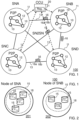
- FIG. 1 shows an exemplary block diagram of a distributed network 100 according to an embodiment of the invention.
- the distributed network 100 comprises a plurality of nodes 10, which may also be denoted as network nodes 10.
- the plurality of nodes 10 are assigned to a plurality of replicated computing clusters 11.
- the replicated computing clusters 11 establish subnetworks and may be in the following also denoted as subnetworks 11. In the example of FIG. 1 , four subnetworks 11 denoted with SNA, SNB, SNC and SND are provided.
- Each of the plurality of subnetworks 11 is configured to run a set of computational units on each node 10 of the respective subnetwork 11.
- a computational unit shall be understood as a piece of software, in particular as a piece of software that comprises or has its own unit state.
- the network 100 comprises communication links 12 for intra-subnetwork communication within the respective subnetwork 11, in particular for intra-subnetwork unit-to-unit messages to be exchanged between computational units assigned to the same subnetwork.
- the communication links 12 may also be denoted as intra-subnetwork or Peer-to-Peer (P2P) communication links and the communication links 13 may also be denoted as inter-subnetwork or Subnetwork-to-Subnetwork (SN2SN) communications links.
- P2P Peer-to-Peer
- SN2SN Subnetwork-to-Subnetwork
- the subnetworks 11 are configured to replicate the set of computational units across the respective subnetwork 11. More particularly, the subnetworks 11 are configured to replicate the unit state of the computational units across the respective subnetwork 11.
- the input blocks 301, 302 and 303 may be created by a proof-of-stake consensus-protocol.
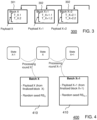
- the replicas may start, at a step 903, with the computation of the next random seed RS X+1 . And again, in parallel, the replicas may perform, at a step 904, a consensus protocol to agree on a payload X+1.
- FIG. 10 shows a flow chart of methods steps of a computer-implemented method for processing a sequence of payloads by a plurality of replicas in a replicated manner.
- the method performs regularly, at loops 1011, a consensus protocol to reach a consensus on input blocks comprising a payload that shall be executed by a respective replicated computing cluster, in particular by a subnetwork.
- the consensus protocol may be performed by a consensus subset of the nodes/replicas of the network, in particular by a consensus subset of a subnetwork.
- the loop 1011 comprises steps 1010 at which the nodes/replicas of the consensus subset reach a consensus on a new input block and a corresponding payload.
- the input blocks may be numbered with an increasing height index N .
- N may be an increasing integer, i.e. e.g. 0, 1, 2, 3 ... N.
- the height index may also be denoted as block height.
- the replicas process batch X and process the payload X and randomness requests of the payload X with the randomness/random seed RS X .
- a number N of nodes participate in the distributed key generation protocol.
- the N nodes have generated jointly a common public key pk, wherein a predefined threshold, e.g. at least two thirds or a third of the nodes need to use their secret key shares to create a joint signature ⁇ pk on the predefined input value.
- the public verification key pk can then be used to verify the joint signature.
- the threshold-signature may be executed on the respective processing round number X as predefined input value.
- the threshold-signature of a previous processing round may be used as input value for the threshold-signature of the next processing round.
- Fig. 12 a flow chart of methods steps of a computer-implemented method for processing a sequence of payloads by a plurality of replicas in a replicated manner is shown.
- the method performs regularly, at loops 1211, a consensus protocol to reach a consensus on input blocks comprising a payload that shall be executed by a respective replicated computing cluster, in particular by a subnetwork.
- the loops 1211 comprises steps 1210 at which the nodes/replicas of the consensus subset reach a consensus on a new input block X.
- the input blocks may be numbered with an increasing height index X corresponding to a processing round number.
- the replicated computing cluster provides, at a step 1220, a corresponding batch X comprising the payload of the input block X and a random seed RS X to the messaging layer 520 of the network (see FIG. 5 ).
- the random seed RS X has been computed beforehand and/or in parallel to the execution of the consensus protocol for the input block X.
- the replicas process the payload of batch X and randomness requests RR from the previous batch X-1. More particularly, the randomness requests RR of the payload instances, e.g. the messages, of the previous batch X-1 receive as response a randomness which is based on the random seed RS X of the current batch X.
- the responses may be added to an induction pool of the messaging layer 520.
- Step 1222 the randomness requests of payload instances of the current batch X are collected. Step 1222 may be performed in parallel to step 1221.
- the steps 1220, 1221 and 1222 establish a processing round X of a plurality of consecutive processing rounds.
- the replicas start, at a step 1230, to compute a random seed RS X+1 for the batch of a subsequent processing round X+1.
- the consensus layer 530 provides the random seed RS X+1 for the next batch X+1.
- the steps 1230 and 1231 may be performed in parallel to the processing round X.
- the replicas process the payload of batch X+1 and randomness requests RR from the previous batch X. More particularly, the randomness requests RR of the payload instances of the previous batch X receive as response a randomness which is based on the random seed RS X+1 of the batch X+1.
- the randomness requests of payload instances of the batch X+1 are collected. These randomness requests will receive a response in the next processing round X+2.
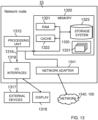
- the network node 10 establishes a computing node that may perform computing functions and may hence be generally embodied as computing system or computer.
- the network node 10 may be e.g. a server computer.
- the network node 10 may be configured to perform a computer-implemented method for operating a distributed network.
- the network node 10 may be operational with numerous other general purpose or special purpose computing system environments or configurations.
- the network node 10 may be described in the general context of computer system-executable instructions, such as program modules, being executed by a computer system.
- program modules may include routines, programs, objects, components, logic, data structures, and so on that perform particular tasks or implement particular abstract data types.
- the network node 10 is shown in the form of a general-purpose computing device.
- the components of network node 10 may include, but are not limited to, one or more processors or processing units 1315, a system memory 1320, and a bus 1316 that couples various system components including system memory 1320 to processor 1315.
- Bus 1316 represents one or more of any of several types of bus structures, including a memory bus or memory controller, a peripheral bus, an accelerated graphics port, and a processor or local bus using any of a variety of bus architectures.
- Network node 10 typically includes a variety of computer system readable media.
- System memory 1320 can include computer system readable media in the form of volatile memory, such as random access memory (RAM) 1321 and/or cache memory 1322.
- Network node 1310 may further include other removable/non-removable, volatile/non-volatile computer system storage media.
- storage system 1323 can be provided for reading from and writing to a non-removable, non-volatile magnetic media (not shown and typically called a "hard drive”).
- a magnetic disk drive for reading from and writing to a removable, non-volatile magnetic disk (e.g.
- memory 1320 may include at least one computer program product having a set (e.g., at least one) of program modules that are configured to carry out the functions of embodiments of the invention.
- Program/utility 1330 having a set (at least one) of program modules 1331, may be stored in memory 1320 by way of example, and not limitation, as well as an operating system, one or more application programs, other program modules, and program data. Each of the operating system, one or more application programs, other program modules, and program data or some combination thereof, may include an implementation of a networking environment.
- Program modules 1331 generally carry out the functions and/or methodologies of embodiments of the invention as described herein.
- Program modules 1331 may carry out in particular one or more steps of a computer-implemented method for operating a distributed network e.g. of one or more steps of the methods as described above.
- Network node 10 may also communicate with one or more external devices 1317 such as a keyboard or a pointing device as well as a display 1318. Such communication can occur via Input/Output (I/O) interfaces 1319. Still yet, network node 10 can communicate with one or more networks 40 such as a local area network (LAN), a general wide area network (WAN), and/or a public network (e.g. , the Internet) via network adapter 1341. According to embodiments the network 1340 may be in particular a distributed network comprising a plurality of network nodes 10, e.g. the network 100 as shown in FIG. 1 . As depicted, network adapter 1341 communicates with the other components of network node 10 via bus 1316. It should be understood that although not shown, other hardware and/or software components could be used in conjunction with network node 10.
- aspects of the present invention may be embodied as a system, in particular a distributed network comprising a plurality of subnetworks, a method, and/or a computer program product.
- the computer program product may include a computer readable storage medium (or media) having computer readable program instructions thereon for causing a processor to carry out aspects of the present invention.
- Computer readable program instructions described herein can be downloaded to respective computing/processing devices from a computer readable storage medium or to an external computer or external storage device via a network, for example, the Internet, a local area network, a wide area network and/or a wireless network.
- the network may comprise copper transmission cables, optical transmission fibers, wireless transmission, routers, firewalls, switches, gateway computers and/or edge servers.
- a network adapter card or network interface in each computing/processing device receives computer readable program instructions from the network and forwards the computer readable program instructions for storage in a computer readable storage medium within the respective computing/processing device.
- Computer readable program instructions for carrying out operations of the present invention may be assembler instructions, instruction-set-architecture (ISA) instructions, machine instructions, machine dependent instructions, microcode, firmware instructions, state-setting data, or either source code or object code written in any combination of one or more programming languages, including an object oriented programming language such as Smalltalk, C++ or the like, and conventional procedural programming languages, such as the "C" programming language or similar programming languages.
- ISA instruction-set-architecture
- machine instructions machine dependent instructions
- microcode firmware instructions
- state-setting data or either source code or object code written in any combination of one or more programming languages, including an object oriented programming language such as Smalltalk, C++ or the like, and conventional procedural programming languages, such as the "C" programming language or similar programming languages.
Landscapes
- Engineering & Computer Science (AREA)
- Computer Security & Cryptography (AREA)
- Computer Networks & Wireless Communication (AREA)
- Signal Processing (AREA)
- Data Exchanges In Wide-Area Networks (AREA)
Claims (15)
- Ein verteiltes Netzwerk (100), wobei das verteilte Netzwerk (100) einen replizierten Rechencluster (11) umfasst, wobei der replizierte Rechencluster (11) eine Vielzahl von Knoten (10) umfasst, wobei jeder der Vielzahl von Knoten (10) des replizierten Rechenclusters (11) konfiguriert ist, um eine Replika (18) auszuführen und jede der Replikas (18) konfiguriert ist, um eine oder mehrere Recheneinheiten (15) auszuführen; wobei der replizierte Rechencluster (11) konfiguriert ist, umaufeinanderfolgende Konsensrunden durchzuführen, um einen Konsens über eine Sequenz von Nutzdaten zu erreichen;aufeinanderfolgende Verarbeitungsrunden durchzuführen, die eine aufeinanderfolgende Verarbeitung der Sequenz von Nutzdaten in einer deterministischen und replizierten Weise umfassen; wobei das verteilte Netzwerk dadurch gekennzeichnet ist, dass der replizierte Rechencluster (11) konfiguriert ist, umaufeinanderfolgende Berechnungen eines Zufallsstartwertes für jede der Nutzdaten der Sequenz von Nutzdaten durchführen;den Zufallsstartwert einer jeweiligen Nutzlast der Sequenz von Nutzlasten zu verwenden, um der Nutzlast Zufälligkeit zu verleihen; wobeidie jeweilige Berechnung des Zufallsstartwertes für eine jeweilige Nutzlast erst durchgeführt wird, nachdem ein Konsens über die jeweilige Nutzlast erreicht wurde.
- Ein verteiltes Netzwerk (100) nach Anspruch 1, wobei das verteilte Netzwerk so konfiguriert ist, dass es die Berechnung des Zufallsstartwertes durchführt, indem esein Schwellenwertsignaturprotokoll auf einem vordefinierten Eingabewert einer jeweiligen Verarbeitungsrunde durchführt, wodurch eine Schwellenwertsignatur auf dem vordefinierten Eingabewert erzeugt wird; unddie Schwellenwertsignatur als Zufallsstartwert verwendet.
- Ein verteiltes Netzwerk (100) nach Anspruch 2, wobeidie aufeinanderfolgenden Verarbeitungsrunden mit einer fortlaufenden Verarbeitungsrundennummer nummeriert werden; undder vordefinierte Eingabewert einer jeweiligen Verarbeitungsrunde die Verarbeitungsrundennummer ist.
- Ein verteiltes Netzwerk (100) nach Anspruch 2, wobei der vordefinierte Eingabewert des Schwellenwertsignaturprotokolls die Schwellenwertsignatur ist, die in der vorherigen Verarbeitungsrunde erzeugt wurde.
- Ein verteiltes Netzwerk nach einem der vorhergehenden Ansprüche 2 bis 4, wobei das Schwellenwert-Signaturprotokoll das Boneh-Lynn-Shacham (BLS)-Signaturprotokoll ist.
- Ein verteiltes Netzwerk (100) nach einem der vorhergehenden Ansprüche 2 bis 5, wobei das verteilte Netzwerk so konfiguriert ist, dass esein verteiltes Schlüsselerzeugungsprotokoll für oder durch die Vielzahl von Knoten des replizierten Rechenclusters durchführt, wodurch ein Verifizierungsschlüssel eines Public-Key-Schwellenwertsignaturschemas und ein Satz von entsprechenden geheimen Schlüsselanteilen für die Knoten des replizierten Rechenclusters erzeugt werden; unddas Schwellenwert-Signaturprotokoll mit dem Satz der geheimen Schlüsselanteile durchführt.
- Ein verteiltes Netzwerk (100) nach Anspruch 1, wobei das verteilte Netzwerk so konfiguriert ist, dass es die Berechnung des Zufallsstartwertes mittels
Durchführen eines Münzwurfprotokolls durchführt. - Ein verteiltes Netzwerk (100) nach einem der vorhergehenden Ansprüche, wobei das verteilte Netzwerk so konfiguriert ist, dass es eine aufeinanderfolgende Verarbeitung von Eingabeblöcken (301-303) einer Blockchain (300) durchführt, wobei jeder der Eingabeblöcke eine Nutzlast der Sequenz von Nutzlasten umfasst.
- Ein verteiltes Netzwerk (100) nach einem der vorhergehenden Ansprüche, wobei jede der Replikas (18) so konfiguriert ist, dass sie während jeder der aufeinanderfolgenden Verarbeitungsrunden einen Stapel verarbeitet, der die Nutzlast der jeweiligen Verarbeitungsrunde und einen Zufallsstartwert umfasst;wobei das verteilte Netzwerk insbesondere eine Konsensschicht und eine Nachrichtenübermittlungsschicht umfasst, wobei die Konsensschicht konfiguriert ist, umein Konsensprotokoll durchzuführen, um einen Konsens über die jeweiligen Nutzdaten der Sequenz von Nutzdaten zu erreichen, die von dem replizierten Rechencluster verarbeitet werden sollen;die Berechnung der Zufallsstartwerte durchzuführen; unddie Nutzdaten und die Zufallsstartwerte der Nachrichtenübermittlungsschicht bereitzustellen; wobeidie Nachrichtenübermittlungsschicht so konfiguriert ist, dass sie eine stapelweise Verarbeitung der Stapel veranlasst;wobei die Konsensschicht insbesondere konfiguriert ist, umden Stapel einer jeweiligen Verarbeitungsrunde an die Nachrichtenübermittlungsschicht zu übermitteln, sobald ein Konsens über die entsprechende Nutzlast erreicht und der entsprechende Zufallsstartwert berechnet wurde;wobei die Verarbeitungsrunden insbesondere aufeinanderfolgende Verarbeitungsrundennummern X umfassen und das verteilte Netzwerk konfiguriert ist, ummit der Berechnung eines Zufallsstartwertes RSX für den Stapel einer Verarbeitungsrunde X zu beginnen, nachdem ein Konsens über die Nutzlast für die Verarbeitungsrunde X erzielt wurde;den Zufallsstartwert RSX zum Stapel der Verarbeitungsrunde X hinzuzufügen; undeine Antwort auf Zufälligkeitsanforderungen der Nutzlastinstanzen der Verarbeitungsrunde X auf der Grundlage des Zufallsstartwertes RSX. bereitzustellen.
- Ein verteiltes Netzwerk (100) nach Anspruch 9, wobei die Verarbeitungsrunden aufeinanderfolgende Verarbeitungsrundennummern X umfassen und das verteilte Netzwerk konfiguriert ist, ummit der Berechnung eines Zufallsstartwertes RSX+1 für den Stapel einer nachfolgenden Verarbeitungsrunde X+1 zu beginnen, nachdem ein Konsens über die Nutzlast für eine gegebene Verarbeitungsrunde X erreicht wurde;während der Verarbeitung der gegebenen Verarbeitungsrunde X Zufälligkeitsanforderungen von Nutzlastinstanzen zu sammeln; undAntworten auf die Zufälligkeitsanforderungen der Nutzlastinstanzen der gegebenen Verarbeitungsrunde X in der nachfolgenden Verarbeitungsrunde X+1 auf der Grundlage des Zufallsstartwertes RSX+1 zu liefern;wobei das verteilte Netzwerk insbesondere so konfiguriert ist, dass es die Antworten auf die Zufälligkeitsanforderungen zu einem Induktionspool der Nachrichtenübermittlungsschicht hinzufügt.
- Ein verteiltes Netzwerk (100) nach einem der vorhergehenden Ansprüche, wobei das verteilte Netzwerk so konfiguriert ist, dass es während einer jeweiligen Verarbeitungsrunde eine Vielzahl von Zufallswerten aus dem Zufallsstartwert der jeweiligen Verarbeitungsrunde ableitet; und wobei das verteilte Netzwerk insbesondere so konfiguriert ist, dass es einen Pseudozufallszahlengenerator ausführt, wobei der Pseudozufallszahlengenerator so konfiguriert ist, dass er den Zufallsstartwert einer jeweiligen Verarbeitungsrunde als Eingangsstartwert verwendet.
- Ein verteiltes Netzwerk (100) nach einem der vorhergehenden Ansprüche, wobei das verteilte Netzwerk (100) eine Vielzahl von Teilnetzwerken (11) umfasst, wobei jedes der Vielzahl von Teilnetzwerken (11) einen Satz von zugewiesenen Knoten (10) umfasst, wobei Replikas (18) der zugewiesenen Knoten der Vielzahl von Teilnetzwerken so konfiguriert sind, dass sie eine deterministische und replizierte Berechnung über ihre jeweiligen Teilnetzwerke durchführen, wodurch eine Vielzahl von replizierten Rechenclustern gebildet wird.
- Ein Knoten (10) für ein verteiltes Netzwerk (100) nach einem der vorhergehenden Ansprüche, wobei der Knoten (10) so konfiguriert ist, dass er eine Replika (18) ausführt, wobei die Replika (18) dazu konfiguriert ist,an aufeinanderfolgenden Konsensrunden teilzunehmen, um einen Konsens über eine Sequenz von Nutzdaten zu erreichen;aufeinanderfolgende Verarbeitungsrunden durchzuführen, die eine aufeinanderfolgende Verarbeitung der Sequenz von Nutzdaten in einer deterministischen und replizierten Weise umfassen; wobei der Knoten dadurch gekennzeichnet ist, dass die Replika konfiguriert ist, uman aufeinanderfolgenden Berechnungen eines Zufallsstartwertes für jede der Nutzdaten der Sequenz von Nutzdaten teilzunehmen;den Zufallsstartwert einer jeweiligen Nutzlast der Sequenz von Nutzlasten zu verwenden, um der Nutzlast Zufälligkeit zu verleihen; wobeidie jeweilige Berechnung des Zufallsstartwertes für eine jeweilige Nutzlast erst durchgeführt wird, nachdem ein Konsens über die jeweilige Nutzlast erreicht wurde.
- Ein computerimplementiertes Verfahren zum Betreiben eines verteilten Netzwerks (100), wobei das verteilte Netzwerk (100) einen replizierten Rechencluster (11) umfasst, wobei der replizierte Rechencluster eine Vielzahl von Knoten (10) umfasst, wobei jeder der Vielzahl von Knoten des replizierten Rechenclusters konfiguriert ist, um eine Replika (18) auszuführen, wobei das Verfahren umfasstDurchführung von aufeinanderfolgenden Konsensrunden durch den replizierten Rechencluster, um einen Konsens über eine Sequenz von Nutzdaten zu erzielen;Durchführen von aufeinanderfolgenden Verarbeitungsrunden durch den replizierten Rechencluster, die eine aufeinanderfolgende Verarbeitung der Sequenz von Nutzdaten in einer deterministischen und replizierten Weise umfassen; wobei das Verfahren gekennzeichnet ist durchDurchführen aufeinanderfolgender Berechnungen eines Zufallsstartwertes für jede der Nutzdaten der Sequenz von Nutzdaten durch den replizierten Rechencluster (11);Verwenden des Zufallsstartwertes einer jeweiligen Nutzlast der Sequenz von Nutzlasten durch den replizierten Rechencluster (11), um der Nutzlast Zufälligkeit zu verleihen; wobeidie jeweilige Berechnung des Zufallsstartwertes für eine jeweilige Nutzlast erst durchgeführt wird, nachdem ein Konsens über die jeweilige Nutzlast erreicht wurde.
- Ein Computerprogrammprodukt zum Betreiben eines verteilten Netzwerks (100), wobei das verteilte Netzwerk (100) einen replizierten Rechencluster (11) umfasst, wobei der replizierte Rechencluster (11) eine Vielzahl von Knoten (10) umfasst, wobei jeder der Vielzahl von Knoten des replizierten Rechenclusters konfiguriert ist, um eine Replika (18) auszuführen, wobei das Computerprogrammprodukt ein computerlesbares Speichermedium mit darin verkörperten Programmbefehlen umfasst, wobei die Programmbefehle durch einen oder mehrere der Vielzahl von Knoten ausführbar sind, um zu bewirken, dass der eine oder die mehreren der Vielzahl von Knoten ein Verfahren durchführen, das Folgendes umfasstDurchführen aufeinanderfolgender Konsensrunden, um einen Konsens über eine Sequenz von Nutzdaten zu erreichen;Durchführen aufeinanderfolgender Verarbeitungsrunden, die eine aufeinanderfolgende Verarbeitung der Sequenz von Nutzdaten in einer deterministischen und replizierten Weise umfassen; wobei das Verfahren gekennzeichnet ist durchDurchführen aufeinanderfolgender Berechnungen eines Zufallsstartwertes für jede der Nutzdaten der Sequenz von Nutzdaten;Verwenden des Zufallsstartwertes einer jeweiligen Nutzlast der Sequenz von Nutzlasten, um der Nutzlast Zufälligkeit zu verleihen; wobeidie jeweilige Berechnung des Zufallsstartwertes für eine jeweilige Nutzlast erst durchgeführt wird, nachdem ein Konsens über die jeweilige Nutzlast erreicht wurde.
Applications Claiming Priority (1)
| Application Number | Priority Date | Filing Date | Title |
|---|---|---|---|
| PCT/EP2021/056538 WO2022194343A1 (en) | 2021-03-15 | 2021-03-15 | Randomness in distributed networks |
Publications (3)
| Publication Number | Publication Date |
|---|---|
| EP4292240A1 EP4292240A1 (de) | 2023-12-20 |
| EP4292240C0 EP4292240C0 (de) | 2025-03-05 |
| EP4292240B1 true EP4292240B1 (de) | 2025-03-05 |
Family
ID=74947395
Family Applications (1)
| Application Number | Title | Priority Date | Filing Date |
|---|---|---|---|
| EP21712778.6A Active EP4292240B1 (de) | 2021-03-15 | 2021-03-15 | Zufälligkeit in verteilten netzwerken |
Country Status (3)
| Country | Link |
|---|---|
| US (1) | US20240154821A1 (de) |
| EP (1) | EP4292240B1 (de) |
| WO (1) | WO2022194343A1 (de) |
-
2021
- 2021-03-15 EP EP21712778.6A patent/EP4292240B1/de active Active
- 2021-03-15 US US18/550,621 patent/US20240154821A1/en active Pending
- 2021-03-15 WO PCT/EP2021/056538 patent/WO2022194343A1/en not_active Ceased
Also Published As
| Publication number | Publication date |
|---|---|
| EP4292240A1 (de) | 2023-12-20 |
| EP4292240C0 (de) | 2025-03-05 |
| WO2022194343A1 (en) | 2022-09-22 |
| US20240154821A1 (en) | 2024-05-09 |
Similar Documents
| Publication | Publication Date | Title |
|---|---|---|
| JP7664655B2 (ja) | 秘密分散の再分配 | |
| US12362923B2 (en) | Verification key generation in distributed networks | |
| US20220158842A1 (en) | Distributed network with blinded identities | |
| EP4315734B1 (de) | Datenauthentifizierung in verteilten netzwerken | |
| EP4173222B1 (de) | Verteilte netzwerke mit mehreren subnetzen | |
| US12598079B2 (en) | Digital signatures with key-derivation | |
| US12316775B2 (en) | Multi-party computations in a distributed network | |
| US20240154821A1 (en) | Randomness in distributed networks | |
| US20240396743A1 (en) | Digital signatures with re-randomized presignatures | |
| HK40092956A (en) | Distributed networks having a plurality of subnets | |
| HK40092956B (en) | Distributed networks having a plurality of subnets | |
| HK40109152A (en) | Data authentication in distributed networks | |
| HK40109152B (en) | Data authentication in distributed networks | |
| HK40115302B (en) | Digital signatures with re-randomized presignatures | |
| HK40115302A (en) | Digital signatures with re-randomized presignatures | |
| Meshram et al. | An efficient ID‐based cryptographic technique using IFP and GDLP |
Legal Events
| Date | Code | Title | Description |
|---|---|---|---|
| STAA | Information on the status of an ep patent application or granted ep patent |
Free format text: STATUS: UNKNOWN |
|
| STAA | Information on the status of an ep patent application or granted ep patent |
Free format text: STATUS: THE INTERNATIONAL PUBLICATION HAS BEEN MADE |
|
| PUAI | Public reference made under article 153(3) epc to a published international application that has entered the european phase |
Free format text: ORIGINAL CODE: 0009012 |
|
| STAA | Information on the status of an ep patent application or granted ep patent |
Free format text: STATUS: REQUEST FOR EXAMINATION WAS MADE |
|
| 17P | Request for examination filed |
Effective date: 20230911 |
|
| AK | Designated contracting states |
Kind code of ref document: A1 Designated state(s): AL AT BE BG CH CY CZ DE DK EE ES FI FR GB GR HR HU IE IS IT LI LT LU LV MC MK MT NL NO PL PT RO RS SE SI SK SM TR |
|
| DAV | Request for validation of the european patent (deleted) | ||
| DAX | Request for extension of the european patent (deleted) | ||
| REG | Reference to a national code |
Ref country code: DE Ipc: H04L0009000000 Ref legal event code: R079 Ref document number: 602021027135 Country of ref document: DE Free format text: PREVIOUS MAIN CLASS: H04L0009320000 |
|
| GRAP | Despatch of communication of intention to grant a patent |
Free format text: ORIGINAL CODE: EPIDOSNIGR1 |
|
| STAA | Information on the status of an ep patent application or granted ep patent |
Free format text: STATUS: GRANT OF PATENT IS INTENDED |
|
| RIC1 | Information provided on ipc code assigned before grant |
Ipc: H04L 9/08 20060101ALI20240823BHEP Ipc: H04L 9/32 20060101ALI20240823BHEP Ipc: H04L 9/00 20220101AFI20240823BHEP |
|
| INTG | Intention to grant announced |
Effective date: 20240930 |
|
| GRAS | Grant fee paid |
Free format text: ORIGINAL CODE: EPIDOSNIGR3 |
|
| GRAA | (expected) grant |
Free format text: ORIGINAL CODE: 0009210 |
|
| STAA | Information on the status of an ep patent application or granted ep patent |
Free format text: STATUS: THE PATENT HAS BEEN GRANTED |
|
| AK | Designated contracting states |
Kind code of ref document: B1 Designated state(s): AL AT BE BG CH CY CZ DE DK EE ES FI FR GB GR HR HU IE IS IT LI LT LU LV MC MK MT NL NO PL PT RO RS SE SI SK SM TR |
|
| REG | Reference to a national code |
Ref country code: GB Ref legal event code: FG4D |
|
| REG | Reference to a national code |
Ref country code: CH Ref legal event code: EP |
|
| REG | Reference to a national code |
Ref country code: IE Ref legal event code: FG4D |
|
| REG | Reference to a national code |
Ref country code: DE Ref legal event code: R096 Ref document number: 602021027135 Country of ref document: DE |
|
| PGFP | Annual fee paid to national office [announced via postgrant information from national office to epo] |
Ref country code: AT Payment date: 20250417 Year of fee payment: 5 |
|
| U01 | Request for unitary effect filed |
Effective date: 20250402 |
|
| U07 | Unitary effect registered |
Designated state(s): AT BE BG DE DK EE FI FR IT LT LU LV MT NL PT RO SE SI Effective date: 20250409 |
|
| U20 | Renewal fee for the european patent with unitary effect paid |
Year of fee payment: 5 Effective date: 20250430 |
|
| PG25 | Lapsed in a contracting state [announced via postgrant information from national office to epo] |
Ref country code: RS Free format text: LAPSE BECAUSE OF FAILURE TO SUBMIT A TRANSLATION OF THE DESCRIPTION OR TO PAY THE FEE WITHIN THE PRESCRIBED TIME-LIMIT Effective date: 20250605 |
|
| PG25 | Lapsed in a contracting state [announced via postgrant information from national office to epo] |
Ref country code: ES Free format text: LAPSE BECAUSE OF FAILURE TO SUBMIT A TRANSLATION OF THE DESCRIPTION OR TO PAY THE FEE WITHIN THE PRESCRIBED TIME-LIMIT Effective date: 20250305 |
|
| PG25 | Lapsed in a contracting state [announced via postgrant information from national office to epo] |
Ref country code: NO Free format text: LAPSE BECAUSE OF FAILURE TO SUBMIT A TRANSLATION OF THE DESCRIPTION OR TO PAY THE FEE WITHIN THE PRESCRIBED TIME-LIMIT Effective date: 20250605 |
|
| PG25 | Lapsed in a contracting state [announced via postgrant information from national office to epo] |
Ref country code: HR Free format text: LAPSE BECAUSE OF FAILURE TO SUBMIT A TRANSLATION OF THE DESCRIPTION OR TO PAY THE FEE WITHIN THE PRESCRIBED TIME-LIMIT Effective date: 20250305 |
|
| PG25 | Lapsed in a contracting state [announced via postgrant information from national office to epo] |
Ref country code: GR Free format text: LAPSE BECAUSE OF FAILURE TO SUBMIT A TRANSLATION OF THE DESCRIPTION OR TO PAY THE FEE WITHIN THE PRESCRIBED TIME-LIMIT Effective date: 20250606 |
|
| PG25 | Lapsed in a contracting state [announced via postgrant information from national office to epo] |
Ref country code: SM Free format text: LAPSE BECAUSE OF FAILURE TO SUBMIT A TRANSLATION OF THE DESCRIPTION OR TO PAY THE FEE WITHIN THE PRESCRIBED TIME-LIMIT Effective date: 20250305 |
|
| PG25 | Lapsed in a contracting state [announced via postgrant information from national office to epo] |
Ref country code: PL Free format text: LAPSE BECAUSE OF FAILURE TO SUBMIT A TRANSLATION OF THE DESCRIPTION OR TO PAY THE FEE WITHIN THE PRESCRIBED TIME-LIMIT Effective date: 20250305 |
|
| PG25 | Lapsed in a contracting state [announced via postgrant information from national office to epo] |
Ref country code: CZ Free format text: LAPSE BECAUSE OF FAILURE TO SUBMIT A TRANSLATION OF THE DESCRIPTION OR TO PAY THE FEE WITHIN THE PRESCRIBED TIME-LIMIT Effective date: 20250305 |
|
| PG25 | Lapsed in a contracting state [announced via postgrant information from national office to epo] |
Ref country code: SK Free format text: LAPSE BECAUSE OF FAILURE TO SUBMIT A TRANSLATION OF THE DESCRIPTION OR TO PAY THE FEE WITHIN THE PRESCRIBED TIME-LIMIT Effective date: 20250305 |
|
| PG25 | Lapsed in a contracting state [announced via postgrant information from national office to epo] |
Ref country code: IS Free format text: LAPSE BECAUSE OF FAILURE TO SUBMIT A TRANSLATION OF THE DESCRIPTION OR TO PAY THE FEE WITHIN THE PRESCRIBED TIME-LIMIT Effective date: 20250705 |
|
| PG25 | Lapsed in a contracting state [announced via postgrant information from national office to epo] |
Ref country code: MC Free format text: LAPSE BECAUSE OF FAILURE TO SUBMIT A TRANSLATION OF THE DESCRIPTION OR TO PAY THE FEE WITHIN THE PRESCRIBED TIME-LIMIT Effective date: 20250305 |
|
| PLBE | No opposition filed within time limit |
Free format text: ORIGINAL CODE: 0009261 |
|
| STAA | Information on the status of an ep patent application or granted ep patent |
Free format text: STATUS: NO OPPOSITION FILED WITHIN TIME LIMIT |
|
| REG | Reference to a national code |
Ref country code: CH Ref legal event code: L10 Free format text: ST27 STATUS EVENT CODE: U-0-0-L10-L00 (AS PROVIDED BY THE NATIONAL OFFICE) Effective date: 20260114 |
|
| PG25 | Lapsed in a contracting state [announced via postgrant information from national office to epo] |
Ref country code: IE Free format text: LAPSE BECAUSE OF NON-PAYMENT OF DUE FEES Effective date: 20250315 |
|
| 26N | No opposition filed |
Effective date: 20251208 |
|
| U20 | Renewal fee for the european patent with unitary effect paid |
Year of fee payment: 6 Effective date: 20260107 |
|
| REG | Reference to a national code |
Ref country code: CH Ref legal event code: U11 Free format text: ST27 STATUS EVENT CODE: U-0-0-U10-U11 (AS PROVIDED BY THE NATIONAL OFFICE) Effective date: 20260401 |
|
| PGFP | Annual fee paid to national office [announced via postgrant information from national office to epo] |
Ref country code: GB Payment date: 20260324 Year of fee payment: 6 |
|
| PG25 | Lapsed in a contracting state [announced via postgrant information from national office to epo] |
Ref country code: CY Free format text: LAPSE BECAUSE OF FAILURE TO SUBMIT A TRANSLATION OF THE DESCRIPTION OR TO PAY THE FEE WITHIN THE PRESCRIBED TIME-LIMIT Effective date: 20250305 |
|
| PG25 | Lapsed in a contracting state [announced via postgrant information from national office to epo] |
Ref country code: TR Free format text: LAPSE BECAUSE OF FAILURE TO SUBMIT A TRANSLATION OF THE DESCRIPTION OR TO PAY THE FEE WITHIN THE PRESCRIBED TIME-LIMIT Effective date: 20250305 |
|
| PGFP | Annual fee paid to national office [announced via postgrant information from national office to epo] |
Ref country code: CH Payment date: 20260401 Year of fee payment: 6 |