EP4291301B1 - Nicht-invasive krebsbehandlung - Google Patents
Nicht-invasive krebsbehandlung Download PDFInfo
- Publication number
- EP4291301B1 EP4291301B1 EP22703686.0A EP22703686A EP4291301B1 EP 4291301 B1 EP4291301 B1 EP 4291301B1 EP 22703686 A EP22703686 A EP 22703686A EP 4291301 B1 EP4291301 B1 EP 4291301B1
- Authority
- EP
- European Patent Office
- Prior art keywords
- target site
- heating
- emitter
- electromagnetic field
- electromagnetic
- Prior art date
- Legal status (The legal status is an assumption and is not a legal conclusion. Google has not performed a legal analysis and makes no representation as to the accuracy of the status listed.)
- Active
Links
Images






Classifications
-
- A—HUMAN NECESSITIES
- A61—MEDICAL OR VETERINARY SCIENCE; HYGIENE
- A61N—ELECTROTHERAPY; MAGNETOTHERAPY; RADIATION THERAPY; ULTRASOUND THERAPY
- A61N2/00—Magnetotherapy
- A61N2/002—Magnetotherapy in combination with another treatment
-
- A—HUMAN NECESSITIES
- A61—MEDICAL OR VETERINARY SCIENCE; HYGIENE
- A61F—FILTERS IMPLANTABLE INTO BLOOD VESSELS; PROSTHESES; DEVICES PROVIDING PATENCY TO, OR PREVENTING COLLAPSING OF, TUBULAR STRUCTURES OF THE BODY, e.g. STENTS; ORTHOPAEDIC, NURSING OR CONTRACEPTIVE DEVICES; FOMENTATION; TREATMENT OR PROTECTION OF EYES OR EARS; BANDAGES, DRESSINGS OR ABSORBENT PADS; FIRST-AID KITS
- A61F7/00—Heating or cooling appliances for medical or therapeutic treatment of the human body
- A61F7/02—Compresses or poultices for effecting heating or cooling
-
- A—HUMAN NECESSITIES
- A61—MEDICAL OR VETERINARY SCIENCE; HYGIENE
- A61N—ELECTROTHERAPY; MAGNETOTHERAPY; RADIATION THERAPY; ULTRASOUND THERAPY
- A61N1/00—Electrotherapy; Circuits therefor
- A61N1/02—Details
- A61N1/04—Electrodes
- A61N1/0404—Electrodes for external use
- A61N1/0472—Structure-related aspects
- A61N1/0492—Patch electrodes
-
- A—HUMAN NECESSITIES
- A61—MEDICAL OR VETERINARY SCIENCE; HYGIENE
- A61N—ELECTROTHERAPY; MAGNETOTHERAPY; RADIATION THERAPY; ULTRASOUND THERAPY
- A61N1/00—Electrotherapy; Circuits therefor
- A61N1/18—Applying electric currents by contact electrodes
- A61N1/32—Applying electric currents by contact electrodes alternating or intermittent currents
- A61N1/36—Applying electric currents by contact electrodes alternating or intermittent currents for stimulation
- A61N1/36002—Cancer treatment, e.g. tumour
-
- A—HUMAN NECESSITIES
- A61—MEDICAL OR VETERINARY SCIENCE; HYGIENE
- A61N—ELECTROTHERAPY; MAGNETOTHERAPY; RADIATION THERAPY; ULTRASOUND THERAPY
- A61N1/00—Electrotherapy; Circuits therefor
- A61N1/40—Applying electric fields by inductive or capacitive coupling ; Applying radio-frequency signals
- A61N1/403—Applying electric fields by inductive or capacitive coupling ; Applying radio-frequency signals for thermotherapy, e.g. hyperthermia
-
- A—HUMAN NECESSITIES
- A61—MEDICAL OR VETERINARY SCIENCE; HYGIENE
- A61N—ELECTROTHERAPY; MAGNETOTHERAPY; RADIATION THERAPY; ULTRASOUND THERAPY
- A61N2/00—Magnetotherapy
- A61N2/004—Magnetotherapy specially adapted for a specific therapy
-
- A—HUMAN NECESSITIES
- A61—MEDICAL OR VETERINARY SCIENCE; HYGIENE
- A61N—ELECTROTHERAPY; MAGNETOTHERAPY; RADIATION THERAPY; ULTRASOUND THERAPY
- A61N2/00—Magnetotherapy
- A61N2/02—Magnetotherapy using magnetic fields produced by coils, including single turn loops or electromagnets
-
- A—HUMAN NECESSITIES
- A61—MEDICAL OR VETERINARY SCIENCE; HYGIENE
- A61N—ELECTROTHERAPY; MAGNETOTHERAPY; RADIATION THERAPY; ULTRASOUND THERAPY
- A61N5/00—Radiation therapy
- A61N5/06—Radiation therapy using light
- A61N5/0613—Apparatus adapted for a specific treatment
- A61N5/0625—Warming the body, e.g. hyperthermia treatment
-
- A—HUMAN NECESSITIES
- A61—MEDICAL OR VETERINARY SCIENCE; HYGIENE
- A61N—ELECTROTHERAPY; MAGNETOTHERAPY; RADIATION THERAPY; ULTRASOUND THERAPY
- A61N7/00—Ultrasound therapy
- A61N7/02—Localised ultrasound hyperthermia
-
- A—HUMAN NECESSITIES
- A61—MEDICAL OR VETERINARY SCIENCE; HYGIENE
- A61F—FILTERS IMPLANTABLE INTO BLOOD VESSELS; PROSTHESES; DEVICES PROVIDING PATENCY TO, OR PREVENTING COLLAPSING OF, TUBULAR STRUCTURES OF THE BODY, e.g. STENTS; ORTHOPAEDIC, NURSING OR CONTRACEPTIVE DEVICES; FOMENTATION; TREATMENT OR PROTECTION OF EYES OR EARS; BANDAGES, DRESSINGS OR ABSORBENT PADS; FIRST-AID KITS
- A61F7/00—Heating or cooling appliances for medical or therapeutic treatment of the human body
- A61F2007/0054—Heating or cooling appliances for medical or therapeutic treatment of the human body with a closed fluid circuit, e.g. hot water
-
- A—HUMAN NECESSITIES
- A61—MEDICAL OR VETERINARY SCIENCE; HYGIENE
- A61F—FILTERS IMPLANTABLE INTO BLOOD VESSELS; PROSTHESES; DEVICES PROVIDING PATENCY TO, OR PREVENTING COLLAPSING OF, TUBULAR STRUCTURES OF THE BODY, e.g. STENTS; ORTHOPAEDIC, NURSING OR CONTRACEPTIVE DEVICES; FOMENTATION; TREATMENT OR PROTECTION OF EYES OR EARS; BANDAGES, DRESSINGS OR ABSORBENT PADS; FIRST-AID KITS
- A61F7/00—Heating or cooling appliances for medical or therapeutic treatment of the human body
- A61F7/02—Compresses or poultices for effecting heating or cooling
- A61F2007/0282—Compresses or poultices for effecting heating or cooling for particular medical treatments or effects
-
- A—HUMAN NECESSITIES
- A61—MEDICAL OR VETERINARY SCIENCE; HYGIENE
- A61N—ELECTROTHERAPY; MAGNETOTHERAPY; RADIATION THERAPY; ULTRASOUND THERAPY
- A61N7/00—Ultrasound therapy
- A61N2007/0004—Applications of ultrasound therapy
-
- A—HUMAN NECESSITIES
- A61—MEDICAL OR VETERINARY SCIENCE; HYGIENE
- A61N—ELECTROTHERAPY; MAGNETOTHERAPY; RADIATION THERAPY; ULTRASOUND THERAPY
- A61N7/00—Ultrasound therapy
- A61N2007/0078—Ultrasound therapy with multiple treatment transducers
-
- A—HUMAN NECESSITIES
- A61—MEDICAL OR VETERINARY SCIENCE; HYGIENE
- A61N—ELECTROTHERAPY; MAGNETOTHERAPY; RADIATION THERAPY; ULTRASOUND THERAPY
- A61N7/00—Ultrasound therapy
- A61N2007/0086—Beam steering
- A61N2007/0095—Beam steering by modifying an excitation signal
-
- A—HUMAN NECESSITIES
- A61—MEDICAL OR VETERINARY SCIENCE; HYGIENE
- A61N—ELECTROTHERAPY; MAGNETOTHERAPY; RADIATION THERAPY; ULTRASOUND THERAPY
- A61N7/00—Ultrasound therapy
- A61N7/02—Localised ultrasound hyperthermia
- A61N2007/025—Localised ultrasound hyperthermia interstitial
-
- A—HUMAN NECESSITIES
- A61—MEDICAL OR VETERINARY SCIENCE; HYGIENE
- A61N—ELECTROTHERAPY; MAGNETOTHERAPY; RADIATION THERAPY; ULTRASOUND THERAPY
- A61N7/00—Ultrasound therapy
- A61N7/02—Localised ultrasound hyperthermia
- A61N2007/027—Localised ultrasound hyperthermia with multiple foci created simultaneously
Definitions
- the present disclosure relates to an apparatus for treating a cancerous target site. More specifically, the present disclosure relates to an apparatus configured to provide a non-ionizing alternating electromagnetic field and local heating at the target site. The disclosure also relates to associated methods for treating a cancerous site and compositions for use in treating a cancerous target site.
- Non-invasive methods of treating cancer are important methods, particularly for cancers such as glioblastoma which are difficult to remove by surgery. There is a desire for new non-invasive methods of treating cancer which effectively reduce or eliminate the cancerous cells from a target site in the body.
- Radiotherapy is a type of cancer therapy which uses ionizing radiation to kill malignant cells at a target site.
- the ionizing radiation is provided to the target site, which causes damage by the direct or indirect action of radiation on DNA and other cell molecules.
- the radiation hits e.g. the DNA molecule directly, disrupting its molecular structure. Such structural change leads to cell damage or even cell death, and thus provides a mechanism for treatment of malignant cells.
- TT-Fields Another form of treatment, known as alternating electric field therapy or tumour treating fields (TT-Fields) applies non-ionizing electric fields to the target site.
- the mechanism of TT-Fields which renders it useful for cancer treatment is different to that of radiotherapy.
- the microtubule assembly deforms. Mitosis of tumour cells remains in the interdivision stage for a long time.
- TT-Fields When the cleavage furrow forms in mid to late mitosis, all polar molecules and dipoles in cells undergo di-electrophoresis under the action of TT-Fields, which accumulates in the cleavage furrow and eventually causes the cell membrane to rupture.
- Mitotic outcomes elicited by TT-Fields application include abnormal chromosome segregation, which triggers different forms of cell death.
- Hyperthermia is a known method for treating a cancerous site.
- tissue surrounding the area being treated may also be affected by hyperthermia, particularly when the cancerous site is heated to a high temperature.
- the cancerous site may not be effectively destroyed if the site is not heated to a sufficiently high temperature.
- the cancerous site may be resistant to such heating.
- HSPs heat shock proteins
- HSPs normally keep the responsible transcription factor (HSF-1) inactive but upon heating HSP bind with higher affinity to unfolded proteins, triggering the release of HSF-1 from HSP which initiates HSP gene transcription.
- HSF-1 responsible transcription factor
- substrate-free HSP themselves may be involved in attenuating the response by rebinding HSF-1.
- HSP levels transiently rise after heating but also gradually decline again upon prolonged stress-free periods.
- the upregulation of HSP is closely associated with a transient resistant state of cells towards a subsequent second heat shock. It is thought that the elevated HSP levels, by their chaperone activity, protect cells against protein damage induced by further heating. Accordingly, there is a need to provide hyperthermia which provides the required heating to the cancerous site more accurately and reliably, in order to avoid any resistance to heating of the cancerous cells as a result of deviation from the required amount of applied heat.
- a mediator such as a nanoparticle fluid
- the mediator is then heated, for example by an electric field, which then indirectly heats the target site.
- the mediator may be heated using an electric field which has the same or similar frequency range as TT-fields. This may be seen as advantageous as the cancerous site is attacked both via hyperthermia and via the TT-field mechanism.
- the mediator is a fluid injected into the patient's body, the location of heating when the electromagnetic radiation is administered is hard to control.
- the present invention confronts the problem of providing more effective cancer treatment methods by providing an apparatus for treating a cancerous target site, comprising:
- the heat source may be any heat source which heats a specific target site without the use of a mediator (e.g. directly and not indirectly via a mediator).
- the apparatus is configured to provide the non-ionizing alternating electromagnetic field at the target for a first time period, and to provide the direct heating at the target site for a second time period.
- the second time period may partially or fully overlap with the first time period.
- the first time period may begin at the same time as the second time period, or may begin a predetermined amount of time after the first time period begins, or may begin when the first time period expires. It is preferred that the first and second time periods completely overlap so that the TT-Fields and heating are applied to the site simultaneously, providing a synergistic effect on the cells in the target site as discussed in further detail below.
- the sequence of the first and second time periods may be repeated two or more times.
- the apparatus may be configured to apply the non-ionizing alternating electromagnetic field for a first time period, and apply the heating for a second time period a predetermined time after the first period begins. Subsequently, the apparatus may be configured to, again, apply the non-ionizing alternating electromagnetic field for a first time period, and apply the heating for a second time period the predetermined time after the first period begins.
- the length of the first and second time periods, and their start times relative to each other may be configurable by a user or according to one or more schedules saved in a memory of the apparatus.
- the apparatus is configured to provide the non-ionizing alternating electromagnetic field at the target site for a first time period of between 1 minute and 24 hours.
- the apparatus is further configured to provide the heating at the target site for a second time period of between 1 minute and 360 minutes.
- the heating may be applied simultaneously to the non-ionizing alternating electromagnetic field for a third time period.
- the third time period may be all or part of the second time period.
- the electromagnetic emitter is configured to provide an alternating electromagnetic field having a frequency of between 10 kHz and 300 kHz, preferably in the range from 100 kHz to 300 kHz. It is observed that the therapeutic effect of the tumour-treating field is significantly increased when the frequency is below 300 kHz.
- the electromagnetic emitter is configured to provide an alternating electromagnetic field at the target site having a magnetic flux density of between 0.1 pT and 1 mT, or between 0.1 pT and 100 ⁇ T, or between 100 ⁇ T and 1 mT and preferably an electric field strength of between 1 V/cm and 3 V/cm.
- electromagnetic emitter is configured to provide an alternating electromagnetic field at the target site having a magnetic flux density of between 0.5 ⁇ T and 1 mT, and more preferably between 8 ⁇ T and 1 mT.
- the heat source is configured to heat the target site to a temperature of at least 42°C and preferably between 42°C and 57°C. Heating the target site to a temperature of at least 42°C induces heating effects on the target site which corresponds to extreme hyperpyrexia.
- the heat source comprises an ultrasonic emitter configured to provide ultrasound radiation to the target site, optionally wherein the ultrasound radiation has one or more focal areas in the target site.
- the one or more focal areas may be provided from a single transducer or a plurality of transducers.
- the heat source comprises one or more of:
- the apparatus additionally comprises an electronic controller for electronically controlling the electromagnetic emitter and the heat source.
- a further aspect of the present invention refers to a method for treating a cancerous target site using an apparatus according to the supra embodiments, wherein the apparatus may take any configuration disclosed therein and wherein the method is preferably implemented by suitably positioning the emitter 10 and heat source 20 on the patient.
- the applicators of the electromagnetic emitter 10 may be placed at predetermined points on the patient's body and the heat source 20 (for example the transducer 204 described in relation to Fig. 2 ) may also be suitably positioned.
- the method comprises: In step S1, the non-ionizing alternating electromagnetic field is provided to give a magnetic flux density at the target site using electromagnetic emitter 10.
- step S2 the heat (and more particularly direct heat) is provided to the target site using heat source 20.
- This may be provided whilst the electromagnetic field is also being provided to the target site 30 or within a predetermined time before or after the electromagnetic field is provided. In some embodiments, it may be that only the alternating electromagnetic field is provided to produce the magnetic flux density at the target site without the heating for a first time period, before both are provided simultaneously to the target site.
- an anti-carcinogenic composition is provided to the target site.
- the anti-carcinogenic composition may be administered by any suitable means, such as orally or intravenously. It is noted that the anti-carcinogenic composition may be provided before or simultaneously to steps S1, S2 and step S4 or a predetermined time after step S1, S2 or S4.
- anti-carcinogenic compositions that may be used to implement the present invention are described in detail throughout the present invention.
- a Glutathione (GSH) depleting composition is provided to the target site in addition to the anti-carcinogenic compound.
- the GSH depleting composition may be administered by any suitable means, such as orally or intravenously. It is noted that the GSH depleting composition may be provided before or simultaneously to steps S1, S2 and step S3 or a predetermined time after step S1, S2 or S3, preferably at a predetermined time after step S3. Examples of GSH depleting compositions that may be used to implement the present invention are described in detail throughout the present invention.
- step S5 the direct heating is stopped and in step S6 the non-ionizing alternating electric field is stopped. It is noted that steps S5 and S6 may occur simultaneously or the direct heating may be stopped before the non-ionizing alternating electromagnetic field is stopped, such that only the non-ionizing alternating electromagnetic field is applied for a predetermined time after the direct heating is stopped.
- a still aspect of the present invention refers to an anti-carcinogenic composition for use in a method for treating a cancerous target site using an apparatus according to the supra embodiments, wherein the apparatus may take any configuration disclosed therein and wherein the method is preferably implemented by suitably positioning the emitter 10 and heat source 20 on the patient.
- the applicators of the electromagnetic emitter 10 may be placed at predetermined points on the patient's body and the heat source 20 (for example the transducer 204) may also be suitably positioned.
- the method comprises: In step S1, the non-ionizing alternating electromagnetic field is provided to give a magnetic flux density at the target site using electromagnetic emitter 10.
- step S2 the heat (and more particularly direct heat) is provided to the target site using heat source 20.
- This may be provided whilst the electromagnetic field is also being provided to the target site 30 or within a predetermined time before or after the electromagnetic field is provided. In some embodiments, it may be that only the alternating electromagnetic field is provided to produce the magnetic flux density at the target site without the heating for a first time period, before both are provided simultaneously to the target site.
- an anti-carcinogenic composition is provided to the target site.
- the anti-carcinogenic composition may be administered by any suitable means, such as orally or intravenously. It is noted that the anti-carcinogenic composition may be provided before or simultaneously to steps S1, S2 and step S4 or a predetermined time after step S1, S2 or S4. Examples of anti-carcinogenic compositions that may be used to implement the present invention are described in detail through out the present invention.
- a Glutathione (GSH) depleting composition is provided to the target site in addition to the anti-carcinogenic compound.
- the GSH depleting composition may be administered by any suitable means, such as orally or intravenously. It is noted that the GSH depleting composition may be provided before or simultaneously to steps S1, S2 and step S3 or a predetermined time after step S1, S2 or S3, preferably at a predetermined time after step S3. Examples of GSH depleting compositions that may be used to implement the present invention are described in detail through out the present invention.
- step S5 the direct heating is stopped and in step S6 the non-ionizing alternating electric field is stopped. It is noted that steps S5 and S6 may occur simultaneously or the direct heating may be stopped before the non-ionizing alternating electromagnetic field is stopped, such that only the non-ionizing alternating electromagnetic field is applied for a predetermined time after the direct heating is stopped.
- the present invention related to an apparatus which is configured to provide both a non-ionizing alternating electromagnetic field and hyperthermia to a target site, wherein the electromagnetic field and hyperthermia can be provided independently.
- the electromagnetic field may be applied, for example, by means of a magnetic applicator that provides a magnetic flux density in the target site.
- hyperthermia treatments involving a mediator such an alternating electromagnetic field is provided which also may be absorbed by the mediator.
- the mediator absorbs the electromagnetic energy, the tumour-treating effects of the electromagnetic field may be reduced.
- the present invention overcomes this problem by providing hyperthermia independently such that both treatments can be provided to the cancerous site without reducing the effectiveness of the other.
- the tumour-treating effects are due to a combined application of electromagnetic fields with direct hyperthermia.
- the electromagnetic field may be introduced with a magnetic field applicator.
- the treatment may further include the administration of an anti-cancer composition.
- the term "tumour treating field”, “TT-Field” or “TTF” may be understood to mean an oscillating electromagnetic field applied to a target site.
- the electromagnetic field is generated by applicators which are electrically isolated from the target site so that electrical current does not flow between the target site and the applicators.
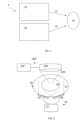
- Fig. 1 shows a schematic diagram of an apparatus 1 for treating a cancerous target site 30.
- the apparatus comprises an electromagnetic emitter 10 and a heat source 20.
- the electromagnetic emitter 10 is configured to provide a non-ionizing alternating electromagnetic field 15 at the target site 30.
- the heat source 20 is configured to provide direct heating 25 at the target site 30 to cause hyperthermia at the target site 30.
- the apparatus 1 is configured to provide the non-ionizing alternating electromagnetic field and the direct heating at the target site 30 within a predetermined time period.
- the target site 30 may include at least a cancerous growth and may further include some of the tissue surrounding the cancerous growth.
- the apparatus 1 may be configured to provide a non-ionizing alternating magnetic field 15.
- hyperthermia may be defined as elevation to a temperature above 37.5°C. Accordingly, the apparatuses disclosed herein may be configured to heat a target site to temperatures above 37.5°C. It is noted that hyperthermia is defined as a temperature greater than between 37.5°C to 38.3°C (depending on the reference used), occurring without a change in the body's temperature set point.
- hyperpyrexia is an extreme elevation of body temperature which, depending upon the source, is classified as a core body temperature greater than or equal to 40.0 or 41.0 °C; the range of hyperpyrexias include cases considered severe ( ⁇ 40 °C) and extreme ( ⁇ 42 °C). It differs from hyperthermia in that one's thermoregulatory system's set point for body temperature is set above normal, then heat is generated by the body to achieve it. In contrast, hyperthermia involves body temperature rising above its set point due to outside factors.
- thermal ablation is a type of procedure that uses heat, cold, microwave and electrical currents to vaporize (ablate) cancer cells and tumors by heating to above >50 °C.
- the apparatus is configured to heat the target site to a temperature of between 39°C and 52°C (heating to above 39°C may increase the sensitivity of a cancerous growth to other therapies such as TT-fields, chemotherapy and radiotherapy) and preferably at least 41.1°C (above which, advantageously, irreversible damage is caused to cells).
- the heat source is configured to heat the target site to a temperature of at least 42°C and preferably between 42°C and 57°C. Heating the target site to a temperature of at least 42°C induces heating effects on the target site which corresponds to extreme hyperpyrexia.
- the heat source 30 may be any suitable heat source for providing direct heating to the target site 30, and may comprise electromagnetic heating, such as capacitive radiofrequency heating, radiative radiofrequency heating, microwave heating, infrared heating and laser heating, heating by ultrasound, heating via a heated fluid, heating by conductive heat emitter, or any other suitable method which heats the target site 30 independently of the non-ionizing alternating electromagnetic field 15.
- the heat source 30 may be any heat source which heats the target site without the use of a mediator (e.g. directly and not indirectly via a mediator).
- the electromagnetic emitter 10 may be configured to provide an electromagnetic field 15 having a frequency of between 10kHz to 500kHz and more preferably between 10 kHz and 300 kHz.
- the electromagnetic field may have a magnetic flux density of between 0.1pT and 1mT, or between 0.1pT and 100 ⁇ T, or between 100 ⁇ T and 1mT, and/or the corresponding electric field of between 1 V/cm and 3 V/cm depending on the tissue impedance (i.e. taking into account possible attenuation of the field as it travels from the electromagnetic emitter 10 to the target site 30, which can be determined from the impedance arising from the different types of tissue present between the electromagnetic emitter 10 and the target site 30).
- the electromagnetic field 15 is non-ionizing, and its mechanism on the cancerous site is different to that of ioinizing radiation as discussed in the background section of the present disclosure. Further, the electromagnetic field 15 itself does not provide direct heating to the target site 30 due to the relatively low intensity of the oscillating field.
- each of the electromagnetic emitter 10 and the heat sources may be powered by any power source, and may be powered by the same or different power sources.
- each of the electromagnetic emitter 10 and the heat source 20 may comprise a user interface for selecting the operating parameters of each emitter (frequency, field strength, amplitude, etc), or the emitter 10 and heat source 20 may comprise pre-programmed sequences for emitting electromagnetic radiation and heat according to a predetermined program selectable by the user.
- the apparatus may further comprise a thermometry element for measuring the temperature of the target site 30.
- the apparatus may comprise an implantable thermometry probe configured to be implanted proximal to the target site 30 to measure a temperature indicating the temperature of the target site 30.
- the probe may comprise, for example, thermocouples, thermistors and/or fibreoptic sensors.
- non-invasive thermometry such as infrared sensing, CT thermometry, or magnetic resonance thermometry may be used.
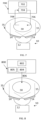
- Fig. 2 shows a schematic diagram of an electromagnetic emitter 10 and a heat source 200 according to one or more embodiments.
- the electromagnetic emitter 10 may comprise one or more sources 12 (such as one or more current or voltage sources) electrically connected to one or more applicators 14.
- the applicators 14 may be configured to be placed on or proximal to the surface of the patient body 35 and are electrically insulated from the patient body (i.e. do not form a closed electrical circuit between the source 12 and the patient body).
- the applicators 14 may comprise one or more electrodes with an electrically insulating coating for preventing electrical contact between the electrodes and the surface of the patient and thus the target site. It is noted that even if the applicators are placed on the surface of the patient of the patient body 35, they remain electrically insulated from the body by, for example, the presence of the electrically insulating coatings.
- the source 12 may be configured to provide an alternating electromagnetic field to the applicators 14, which in turn produce a magnetic flux density towards the target site 30 to provide the non-ionizing alternating electromagnetic field 15 at the target site 30. It will be appreciated that any number of applicators 14 may be used depending on the type of target site, and the strength of the resulting magnetic flux density at the target site 30 can be readily calculated from the setup by superposition of the electromagnetic fields emitted by each applicator 14.
- the applicators 14 may comprise a coil with positive and negative terminals.
- the one or more sources may be configured to provide an alternating current through the coil to generate a magnetic field out of the coil.
- the coil may comprise any number of turns, for example 1, 2, 3, 4, 5, 6, 7, 8, 9, 10, 15, 20, 25, 50 or 100, 500 or more.
- the heat source 200 shown in Fig. 2 may be an ultrasound emitter and may comprise an ultrasonic source 202 which emits an ultrasonic signal to one or more transducers 204.
- the transducer 204 is configured to transmit focussed ultrasonic radiation 205 to the target site 30.
- the one or more transducers 204 may include, for example, one or more piezoelectric transducers.
- the one or more transducers 204 may comprise one or more plastic and/or ceramic transducers.
- a coupling medium (not shown) may be provided on the patient body 35 between the transducer 204 and the patient body 30 to improve propagation of the ultrasound waves from the transducer 204 to inside the patient body 30 (i.e. to reduce reflections of ultrasound waves).
- a coupling medium is defined herein as any suitable solid or liquid (or combination thereof) for improving propagation of the ultrasound waves from the transducer 204 to inside the patient body 30.
- the shape of transducer 204 may be selected in order to select the amount of focussing of the ultrasound, and may be selected to focus the ultrasonic radiation 205 to one or more focal area in the target site 30.
- the one or more transducers 204 may be 3D printed or otherwise manufacture to a custom shape which is configured to propagate focussed ultrasonic radiation to one or more focal areas within the target site 30.
- the ultrasound emitter 200 may be configured to provide acoustic energy at frequencies between 0.5 and 10 MHz to provide heating at the target site 30.
- the ultrasound emitter 200 may comprise one or more multi-transducer arrays or phased arrays, planar devices or bowl-shaped sources. Further, the ultrasound emitter 200 may be configured to emit the ultrasound radiation interstitially. That is, the ultrasound emitter 200 may comprise one or more catheter-mounted transducers or other emitting components which are configured to be inserted into the body 35 at or near the target site 30, in order to emit ultrasonic radiation towards one or more points at the target site 30 to provide the required heating.
- Fig. 2 shows a specific configuration of an ultrasound emitter, it is noted that any suitable ultrasonic emitter may be used.
- any high-intensity focused ultrasound (HIFU) machine may be used, such as MRI-guided focused ultrasound.
- HIFU high-intensity focused ultrasound
- the ultrasound emitter 200 is configured to emit ultrasound radiation 205 to the target site 30 to cause heating at the target site.
- the ultrasound emitter 200 is configured to heating the target site to a predetermined temperature, preferably a temperature of 42°C or less, and maintain the temperature at the predetermined temperature whilst the electromagnetic field is applied.
- the ultrasound emitter 200 may be configured to heat the target site 30 by providing ultrasound radiation having a predetermined frequency and amplitude which causes the required heating at the target site 30.
- the ultrasound radiation may be continuous or pulsed wave. For a given frequency, amplitude and type of ultrasonic radiation, the amount of heating at a target site can be determined by routine experimentation.
- the power output of the source 202 as well as the duration of application of the ultrasonic radiation may be selected in order to arrive a predetermined amount of heating at the target site 30. This may be determined by prior empirical measurement or the apparatus may additionally include a thermometer component for measuring the temperature of the target site 30, with heat being applied by the apparatus to achieve and maintain a target temperature at the target site 30.
- Fig. 3 shows a schematic of diagram of an electromagnetic emitter 10 and a heat source 300 according to one or more embodiments.
- the electromagnetic emitter 10 may comprise one or more electromagnetic sources 12 (such as one or more current or voltage sources) electrically connected to one or more applicators 14.
- the applicators 14 may be configured to be placed on the surface of the patient body 35.
- the electromagnetic source 12 may be configured to provide an alternating electromagnetic field to the applicators 14, which in turn produce a magnetic flux density towards the target site 30 to provide the non-ionizing alternating electromagnetic field 15 at the target site 30.
- any number of applicators 14 may be used depending on the type of target site, and the strength of the resulting magnetic flux density at the target site 30 can be readily calculated from the setup by superposition of the electromagnetic fields emitted by each applicator 14.
- the heat source 300 comprises one or more antennas or applicators 304 configured to provide an electromagnetic field 305 for providing direct heating to the target site 30.
- the heat source 300 comprises one or more electromagnetic sources 302 for driving one or more antennas or applicators 304 to provide the heating electromagnetic field 305.
- the electromagnetic field 305 has a field strength and frequency which causes heating of the target site.
- the frequency of the electromagnetic field 305 is sufficiently different (e.g. at least an order of magnitude difference) such that the electromagnetic fields 305 and 15 interact with the target site 30 independently (i.e. such that the electromagnetic interference between the fields is negligible).
- the frequency of the electromagnetic field 305 may be, for example, above 1 MHz to cause dielectric heating of the target site 30 by molecular dipole rotation, polarization and/or vibration, or Ohms law.
- the number and configuration of antennas or applicators 304 can be selected in order to create constructive and/or destructive interference and cause heating only over a particular volume including the target site 30.
- the antennas or applicators 304 may comprise a single antenna, a pair of antennas, and a 2D or 3D array or phased array of antennas.
- the electromagnetic source 302 is a radiofrequency (RF) source configured to operate at a frequency between 8 and 30 MHz (for example, 8 MHz, 13.56 MHz or 27.12 MHz) to cause capacitive heating.
- the one or more antennas or applicators 304 comprise a pair of metal applicators with the target site 30 placed between the applicators.
- the applicators may be coupled to water bolus bags or other media for transferring the field into the body 35.
- the RF field is applied to the applicators, power is transferred to the target site 30 and heating is caused. This technique may be used for both superficial and deep tumours by selecting different configurations of applicators to concentrate the resulting electric field at the target site 30.
- the applicators may be provided as coplanar, or one or more applicators may be configured to be placed inside the body 35 inside insulating catheters.
- a single applicator may instead be used, coupled to an external ground plane. In all of these configurations, the RF field generated at the target site causes direct heating.
- the electromagnetic source 302 is an RF source configured to operate at frequencies between 60 MHz and 150 MHz.
- the one or more antennas or applicators 304 comprise one or more antennas placed external to the body. The electromagnetic fields generated at this frequency range penetrate deep into the body and so are suitable for heating of deep target sites 30.
- the one or more antennas may comprise a pair of antennas with the target site 30 placed between.
- the antennas may be coupled to water bolus bags or other media for transferring the electromagnetic field into the body 35
- the electromagnetic source 302 is a microwave (MW) source configured to operate at frequencies between 400MHz and 2.5 GHz (for example 433 MHz, 915 MHz or 2.45 GHz).
- the one or more antennas may comprise a pair of antennas or one or more antenna arrays with the target site 30 placed between.
- the antennas may again be coupled to water bolus bags or other media for transferring the electromagnetic field into the body 35.
- the power output of the source 302 as well as the duration of application may be selected in order to arrive a predetermined amount of heating at the target site 30. This may be determined by prior empirical measurement or the apparatus may additionally include a thermometer component for measuring the temperature of the target site 30, with heat being applied to achieve and maintain a target temperature at the target site 30.
- Fig. 4 shows a schematic of diagram of an electromagnetic emitter 10 and a heat source 400 according to one or more embodiments.
- the electromagnetic emitter 10 may comprise one or more electromagnetic sources 12 (such as one or more current or voltage sources) electrically connected to one or more applicators 14.
- the applicators 14 may be configured to be placed on the surface of the patient body 35.
- the electromagnetic source 12 may be configured to provide an alternating electromagnetic field to the applicators 14, which in turn produce a magnetic flux density towards the target site 30 to provide the non-ionizing alternating electromagnetic field 15 at the target site 30.
- any number of applicators 14 may be used depending on the type of target site, and the strength of the resulting magnetic flux density at the target site 30 can be readily calculated from the setup by superposition of the electromagnetic fields emitted by each applicator 14.
- the heat source 400 comprises an electromagnetic source 402 and one or more electromagnetic emitters 404 configured to penetrate the body 35 such that a distal portion of the emitters can be positioned within the target site 30.
- the one or more emitters 404 are electrically connected to the electromagnetic source 402 so that an electrical current is applied to the one or more emitters 404.
- the one or more emitters 404 may comprise one or more monopole, dipole, slot or helical coil microwave antennas, resistively-coupled radiofrequency, local current field electrodes or capacitively coupled radiofrequency catheter-based electrodes. Capacitively coupled electrodes may be configured to be contained in low-loss catheters such as a Nylon or Teflon catheter.
- the electromagnetic source 402 is configured to provide an alternating electric current to the one or more emitters 404 in the frequency range of 350 kHz to 30 MHz, which induces an electric current in the area of tissue near the needle(s) and as a result heats the tissue.
- the electromagnetic source 402 is configured to provide an alternating electric current to the one or more emitters 404 in the frequency range of 900 MHz to 2.5 GHz (for example 915 MHz or 2.45 GHz), which causes dielectric heating of the tissue surrounding the needle(s).
- the emitters 404 comprise a plurality of electrodes configured to be implanted around the target site 30, and the electromagnetic source 402 is configured to provide a series of very short (e.g. about 100 ⁇ s) direct-current electrical pulses between the electrodes.
- the voltage of the pulses and the positioning of the electrodes are configured to provide a high field strength (e.g. between about 100 V/cm to 3000 V/cm). It has been observed that such pulses provide heating to the target site 30.
- the power output of the source 402 as well as the duration of application may be selected in order to arrive a predetermined amount of heating at the target site 30. This may be determined by prior empirical measurement or the apparatus may additionally include a thermometer component for measuring the temperature of the target site 30, with heat being applied to achieve and maintain a target temperature at the target site 30.
- Fig. 5 shows a schematic of diagram of an electromagnetic emitter 10 and a heat source 500 according to one or more embodiments.
- the electromagnetic emitter 10 may comprise one or more electromagnetic sources 12 (such as one or more current or voltage sources) electrically connected to one or more applicators 14.
- the applicators 14 may be configured to be placed on the surface of the patient body 35.
- the electromagnetic source 12 may be configured to provide an alternating electromagnetic field to the applicators 14, which in turn produce a magnetic flux density towards the target site 30 to provide the non-ionizing alternating electromagnetic field 15 at the target site 30.
- any number of applicators 14 may be used depending on the type of target site, and the strength of the resulting magnetic flux density at the target site 30 can be readily calculated from the setup by superposition of the electromagnetic fields emitted by each applicator 14.
- the heat source 500 comprises one or more infrared light source 504 configured to provide infrared radiation 505 to the target site 30, and a power source 502 for powering the one or more infrared lamps.
- the infrared light source 504 may emit infrared light of any frequency, and in particular frequencies above 300 GHz.
- the penetration depth of the infrared radiation is typically 1 cm or less, so this apparatus may be suitable for target sites 30 which is located superficially in the body 35.
- the power output of the power source 502 as well as the duration of application of the radiation may be selected in order to arrive a predetermined amount of heating at the target site 30. This may be determined by prior empirical measurement or the apparatus may additionally include a thermometer component for measuring the temperature of the target site 30, with heat being applied to achieve and maintain a target temperature at the target site 30.
- Fig. 6 shows a schematic of diagram of an electromagnetic emitter 10 and a heat source 600 according to one or more embodiments.
- the electromagnetic emitter 10 may comprise one or more electromagnetic sources 12 (such as one or more current or voltage sources) electrically connected to one or more applicators 14.
- the applicators 14 may be configured to be placed on the surface of the patient body 35.
- the electromagnetic source 12 may be configured to provide an alternating electromagnetic field to the applicators 14, which in turn produce a magnetic flux density towards the target site 30 to provide the non-ionizing alternating electromagnetic field 15 at the target site 30.
- any number of applicators 14 may be used depending on the type of target site, and the strength of the resulting magnetic flux density at the target site 30 can be readily calculated from the setup by superposition the electromagnetic fields emitted by each applicator 14.
- the heat source comprises a laser source 604 and a power source 602 configured to power the laser source.
- the laser source 604 may be configured to emit laser radiation to the target site 30 to cause heating at the target site.
- the laser radiation may be optically guided, by an optical fiber, directly to the target site to cause local ablation of the target site 30.
- the laser source 604 may be configured to emit laser radiation having a wavelength of between 900nm and 1100nm at any suitable intensity for causing the required heating at the target site 30.
- the laser source 604 may be configured to operate at between 0.5 W and 15 W power (for example 980 nm at 15 W or 1064 nm at 12 W).
- the laser source 604 may be moved rotationally and linearly to target multiple regions in one or more target sites 30.
- the power output of the power source 602 as well as the duration of application of the laser radiation may be selected in order to arrive a predetermined amount of heating at the target site 30. This may be determined by prior empirical measurement or the apparatus may additionally include a thermometer component for measuring the temperature of the target site 30, with heat being applied to achieve and maintain a target temperature at the target site 30.
- the apparatus may include an MRI machine to perform magnetic resonance thermometry to monitor the temperature of the target site 30 during the heating process.
- Fig. 7 shows a schematic of diagram of an electromagnetic emitter 10 and a heat source 700 for heating the target site 30 according to one or more embodiments.
- the electromagnetic emitter 10 may comprise one or more electromagnetic sources 12 (such as one or more current or voltage sources) electrically connected to one or more applicators 14.
- the applicators 14 may be configured to be placed on the surface of the patient body 35.
- the electromagnetic source 12 may be configured to provide an alternating electromagnetic field to the applicators 14, which in turn produce a magnetic flux density towards the target site 30 to form the non-ionizing alternating electromagnetic field 15 at the target site 30.
- any number of applicators 14 may be used depending on the type of target site, and the strength of the resulting magnetic flux density at the target site 30 can be readily calculated from the setup by superposition of the electromagnetic fields emitted by each applicator 14.
- the heat source 700 comprises a heater 702, a pump 704, a fluidic output 706 and a fluidic input 708.
- the fluidic output 706 is configured to fluidically connect to a part the body 35 which is upstream from the target site 30, and the fluidic input 708 is configured to fluidically connect to a part of the body 35 which is downstream from the target site 30.
- a fluidic loop is created from the target site 30 to the pump 704 and back to the target site 30 again.
- the fluidic loop may be configured to be created in any fluidic system of the body 35 (e.g. vascular, renal or similar).
- the heater 702 is configured to heat the fluid to a desired temperature as it passes through the heat source 700, which is then delivered to the target site 30 via fluidic output 706.
- the fluidic loop provides a continuous source of heated fluid to the target site 30.
- the fluid may be the patient's blood or additionally the heat source 700 may comprise a reservoir of fluid (not shown) which is configured to be heated and added to the fluidic loop.
- the fluid may comprise a chemotherapeutic composition, anti-cancer drug or similar or may comprise a biocompatible solution such as saline solution or similar.
- the heater 702 may be any suitable heater, such as a resistive heater, or an electromagnetic heater configured to heat the fluid by the emission of, for example, microwave radiation.
- the heater 702 may be situated externally to the body 35 or may be configured to be implanted in the body 35.
- the amount of heat provided by the heat source 700 as well as the duration of application of the heat source 700 may be selected in order to arrive a predetermined amount of heating at the target site 30. This may be determined by prior empirical measurement or the apparatus may additionally include a thermometer component for measuring the temperature of the target site 30, with heat being applied to achieve and maintain a target temperature at the target site 30.
- Fig. 8 shows a schematic of diagram of an electromagnetic emitter 10 and a heat source 800 for heating the target site 30 according to one or more embodiments.
- the electromagnetic emitter 10 may comprise one or more electromagnetic sources 12 (such as one or more current or voltage sources) electrically connected to one or more applicators 14.
- the applicators 14 may be configured to be placed on the surface of the patient body 35.
- the electromagnetic source 12 may be configured to provide an alternating electromagnetic field to the applicators 14, which in turn produce a magnetic flux density towards the target site 30 to provide the non-ionizing alternating electromagnetic field 15 at the target site 30.
- any number of applicators 14 may be used depending on the type of target site, and the strength of the resulting magnetic flux density at the target site 30 can be readily calculated from the setup by superposition of the electromagnetic fields emitted by each applicator 14.
- the heat source 800 comprises a heater 802, a reservoir 805, a pump 804 and a fluidic output 806.
- the fluidic output 806 is configured to be fluidically connected to the target site 30.
- the pump 804 is configured to pump fluid in the reservoir 805 to the target site 30 via fluidic output 806.
- the heater 802 is configured to heat the fluid in the reservoir 805 to a desired temperature before the fluid is pumped to the target site 30.
- the fluid may comprise a chemotherapeutic composition, anti-cancer drug or similar or may comprise a biocompatible solution such as saline solution or similar.
- the amount of heat provided by the heat source 800, the amount of fluid provided from the reservoir 805 and the duration of application of the heat source 800 may be selected in order to arrive a predetermined amount of heating at the target site 30. This may be determined by prior empirical measurement or the apparatus may additionally include a thermometer component for measuring the temperature of the target site 30, with heat being applied to achieve and maintain a target temperature at the target site 30.
- Fig. 9 shows a schematic of diagram of an electromagnetic emitter 10 and a heat source 900 for heating the target site 30 according to one or more embodiments.
- the electromagnetic emitter 10 may comprise one or more electromagnetic sources 12 (such as one or more current or voltage sources) electrically connected to one or more applicators 14.
- the applicators 14 may be configured to be placed on the surface of the patient body 35.
- the electromagnetic source 12 may be configured to provide an alternating electromagnetic field to the applicators 14, which in turn produce a magnetic flux density towards the target site 30 to provide the non-ionizing alternating electromagnetic field 15 at the target site 30. It will be appreciated that any number of applicators 14 may be used depending on the type of target site, and the strength of the resulting magnetic flux density at the target site 30 can be readily calculated from the setup by superposition of the electromagnetic fields emitted by each applicator 14.
- Heat source 900 comprises a heat emitter 904 configured to provide conductive heating to the target site 30.
- the heat source may comprise a power source 902 to power the heat emitter 904 (such as an electrical power source), or the heat emitter 904 may be pre-heated or chemically self-heating (e.g. by exothermic chemical reaction).
- the heat emitter 904 may be provided on the surface of the body 35, or may be configured to be implanted inside the body to provide heat to the target site 30 at a location proximal to the target site.
- the heat emitter 904 may be an implantable resistive heater configured to be powered by an electrical power source 902.
- the heat emitter 904 may be configured to heat a local region of the body 35 or it may be configured to heat the entire body 35.
- the amount of heat provided by the heat source 900, and the duration of application of the heat source 900 may be selected in order to arrive a predetermined amount of heating at the target site 30. This may be determined by prior empirical measurement or the apparatus may additionally include a thermometer component for measuring the temperature of the target site 30, with heat being applied to achieve and maintain a target temperature at the target site 30.
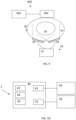
- Fig. 10 shows a schematic of an apparatus 1 for treating a cancerous target site according to one or more embodiments.
- the apparatus comprises an electromagnetic emitter 10 and a heat source 20.
- the electromagnetic emitter 10 is configured to provide a magnetic flux density at the target site.
- the heat source 20 is configured to provide direct heating at the target site to cause hyperthermia at the target site by any of the above mechanisms disclosed herein.
- the apparatus 1 is configured to provide the non-ionizing alternating electromagnetic field and the direct heating at the target site simultaneously.
- the electromagnetic emitter 10 and the heat source 20 may take any suitable configuration and may take the configurations shown in Figs. 2 to 9 .
- the apparatus 1 shown in Fig. 10 further comprises a controller 40 for controlling the emitter 10 and heat source 20.
- the controller comprises a first control interface 41 for controlling the operation of the electromagnetic emitter 10 and a second control interface 42 for controlling the operation of the heat source 20.
- the controller 40 is configured to provide control signals to the emitter 10 and heat source 20 via the control interfaces 41 and 42.
- the emitter 10 and heat source 20 may receive the control signals by any suitable form of communication, either wired or wireless, such as optic, fiber-optic, ethernet or similar, or any suitable wireless communication.
- the controller 40 may further be configured to power one or more of the emitter 10 and heat source 20, or one or more of the emitter 10 and heat source 20 may be powered independently of controller 40.
- the controller 40 further comprises one or more of a user interface 43, memory 44 and processor 45.
- the user interface 43 allows a user to control operation of the emitter 10 and heat source 20 manually, for example by controlling the operating parameters of the emitter 10 and heat source 20, and switching on or off their operation.
- the user interface 43 may allow the user to select a sequence of operation of the emitter 10 and heat source 20 over a time period.
- the memory 44 may contain instructions, which when executed using the processor 45, cause the emitter 10 and heat source 20 to be operated according to any suitable sequence including the sequences of operation disclosed herein.
- the memory 44 may comprise one or more volatile or non-volatile memory devices, such as DRAM, SRAM, flash memory, read-only memory, ferroelectric RAM, hard disk drives, floppy disks, magnetic tape, optical discs, or similar.
- the processor 45 may comprise one or more processing units, such as a microprocessor, GPU, CPU, multi-core processor or similar.
- the controller 40 may further be implemented in software, hardware, or any combination in order to execute the sequences of operation disclosed herein.
- Fig. 11 shows a schematic of a method for treating a cancerous target site using an apparatus according to the disclosure.
- the apparatus may take any configuration disclosed herein.
- the emitter 10 and heat source 20 may be suitably positioned on the patient.
- the applicators of the electromagnetic emitter 10 may be placed at predetermined points on the patient's body and the heat source 20 (for example the transducer 24) may also be suitably positioned.
- step S1 the non-ionizing alternating electromagnetic field is provided to give a magnetic flux density at the target site using electromagnetic emitter 10.
- step S2 the heat (and more particularly direct heat) is provided to the target site using heat source 20.
- This may be provided whilst the electromagnetic field is also being provided to the target site 30 or within a predetermined time before or after the electromagnetic field is provided. In some embodiments, it may be that only the alternating electromagnetic field is provided to produce the magnetic flux density at the target site without the heating for a first time period, before both are provided simultaneously to the target site.
- an anti-carcinogenic composition is provided to the target site.
- the anti-carcinogenic composition may be administered by any suitable means, such as orally or intravenously. It is noted that the anti-carcinogenic composition may be provided before or simultaneously to steps S1, S2 and step S4 or a predetermined time after step S1, S2 or S4.
- anti-carcinogenic composition refers to a composition that comprises an agent that at least partially inhibits the development or progression of a cancer, including inhibiting in whole or in part symptoms associated with the cancer.
- cancer a used herein, refers to a disease characterized by uncontrolled cell division (or by an increase of survival or apoptosis resistance) and by the ability of said cells to invade other neighbouring tissues (invasion) and spread to other areas of the body where the cells are not normally located (metastasis) through the lymphatic and blood vessels, circulate through the bloodstream, and then invade normal tissues elsewhere in the body.
- tumours are classified as being either benign or malignant: benign tumours are tumours that cannot spread by invasion or metastasis, i.e., they only grow locally; whereas malignant tumours are tumours that are capable of spreading by invasion and metastasis.
- the anti-carcinogenic composition may comprise one or more anti-carcinogenic compositions, including one or more of those disclosed in relation to Figs. 12 to 27 .
- cancer is preferably directed to solid tumours and/or infiltrating tumours.
- solid tumour is understood as an abnormal mass of tissue that usually does not contain cysts or liquid areas. Different types of solid tumours are named for the type of cells that form them. Examples of solid tumours are sarcomas, carcinomas, and lymphomas. Leukemias (cancers of the blood) generally do not form solid tumours.
- an "infiltrating tumour” is understood as tumours that have abnormal structures of tumours that show, at the same time, clear growing nodules and infiltrating growth.
- the invention is directed to cancers including, but not limited to, the following types: breast cancer; biliary tract cancer; bladder cancer; brain cancer including glioblastomas, in particular glioblastoma multiforme, and medulloblastomas; cervical cancer; head and neck carcinoma; choriocarcinoma; colon cancer, colorectal cancer; endometrial cancer; esophageal cancer; gastric cancer; intraepithelial neoplasms including Bowen's disease and Paget's disease; liver cancer, hepatoma; lung cancer, pleural mesothelioma; oral cancer including squamous cell carcinoma; parotid gland cancer; ovarian cancer including those arising from epithelial cells, stromal cells, germ cells and mesenchymal cells; pancreatic cancer; prostate cancer; kidney cancer, suprarenal cancer; rectal cancer; sarcomas including leiomyosarcoma, rhabdomyosarcoma, lip
- the cancer is melanoma.
- melanoma refers to a malignant skin tumour of melanocytes and includes, but is not limited to, melanomas, metastatic melanomas, melanomas derived from either melanocytes or melanocyte related nevus cells, melanocarcinomas, melanoepitheliomas, melanosarcomas, melanoma in situ , superficial spreading melanoma, modular melanoma, lentigo malignant melanoma, acral lentiginous melanoma, invasive melanoma and familial atypical mole and melanoma (FAM-M) syndrome.
- FAM-M familial atypical mole and melanoma
- melanoma refers not only to primary melanomas but also to "melanoma metastasis" which, as used herein, refers to the spread of melanoma cells to regional lymph nodes and/or distant organs. This event is frequent, given that melanomas contain multiple cell populations characterized by diverse growth rates, karyotypes, cell-surface properties, antigenicity, immunogenicity, invasion, metastasis, and sensitivity to cytotoxic drugs or biologic agents. Melanoma shows frequent metastasis to brain, lungs, lymph nodes, and skin. Other cancers will-be known to one of ordinary skill in the art.
- Fig. 12 shows experimental data showing the in vitro effect of TT-Fields ("TTF”), hyperthermia (“HT”), pterostilbene (“PT”) and their combinations on U87MG cells.
- TTF TT-Fields
- HT hyperthermia
- PT pterostilbene
- the TT-Field applied was at 300kHz for 240 mins (from minute 0 to minute 240) for an average magnetic flux density of 8 ⁇ T.
- the hyperthermia applied was 42°C for 10 minutes (from minute 120 to minute 130). 20 ⁇ M of pterostilbene was applied for 120 minutes (from minute 120 to minute 240).
- the data shows mean number of viable cells for 5 experiments, with P ⁇ 0.01 using Student's t test vs the control for those labelled *, vs TTF for those labelled + and vs TTF+ HT for those labelled #.
- the magnetic field was applied using a solenoid with approximately 100 ⁇ T magnetic flux density at the central axis of the solenoid.
- the solenoid was placed at a distance from the cell cultures such that the average field strength on the surface of the culture flasks where the cells were attached was 8 ⁇ T.
- hyperthermia potentiates the anti-cancer effect of the non-ionizing alternating electromagnetic field (TT-Field).
- TT-Field non-ionizing alternating electromagnetic field
- the apparatuses disclosed herein provides an effective method of treating cancerous sites by applying a TT-Field and direct heating of the cancerous site (i.e. not via a mediator). Further, as shown in Fig.
- the combination of a TT-Field, hyperthermia and pterostilbene effectively eliminates all cells in vitro.
- the combined therapy is not expected to have any substantial side effects in vivo as the amount of pterostilbene use is well-tolerated in vivo.
- Fig. 13 shows in vitro experimental data for the effect on cell viability for U87MG (ATCC) cells when exposed to various oscillating magnetic fields. Different cell cultures were exposed to one of the following magnetic fields: 24 ⁇ T at a frequency of 100 kHz; 12 ⁇ T at a frequency of 200 kHz; 8 ⁇ T at a frequency of 300 kHz; or 6 ⁇ T at a frequency of 400 kHz. Cell viability for each frequency after 1, 2, 3, 4 and 5 hours was measured. Five independent experiments were performed for each frequency and time point. The data for each frequency shows the average cell viability and standard deviation over time (1 to 5 hours from left to right) for the 5 corresponding experiments. A two-ways analysis of variance (ANOVA) was used to make comparisons among the different groups.
- ANOVA analysis of variance
- Fig. 14 shows in vitro experimental data for the effect on cell viability for U87MG cells when exposed to heat. Different cell cultures were heated to temperatures of 37, 38, 39, 40, 41 or 42°C. Five independent experiments were performed for each temperature and time point. The data for each temperature shows the average cell viability and standard deviation of the five corresponding experiments after 5 and 10 minutes of exposure to the temperature. Hyperthermia equivalent to a very high fever (41°C or above) reduced the viability of U87MG cells significantly.
- the data labelled * indicates a P value (student's t test) less than 0.01 compared to the 37°C data at the corresponding time
- the data labelled + indicates a P value less than 0.01 for the data at 10 minutes compared to the data at 5 mins for the same temperature.
- Figs. 15B to 15F show microscopic images of in vitro U87MG cell cultures after exposed to different external treatments.
- Figs. 15A shows a microscopic image of a control vitro U87MG cell culture which was not exposed to any external treatments and maintained at the physiological internal temperature of 37 °C.
- Fig 15B shows a cell culture after being exposed to an electromagnetic field having a magnetic flux density of about 8 ⁇ T at 300 kHz from 0 to 240 minutes.
- Fig. 15C shows a cell culture after being exposed to heating to 42°C for 10 minutes from minute 120 to 130.
- Fig. 15D shows a cell culture after being exposed to 20 ⁇ M pterostilbene from minute 120 to minute 240.
- Fig. 15A shows a microscopic image of a control vitro U87MG cell culture which was not exposed to any external treatments and maintained at the physiological internal temperature of 37 °C.
- Fig 15B shows a cell culture after being exposed to an electromagnetic field having a magnetic flux density
- FIG. 15E shows a cell culture after exposure to an electromagnetic field having a magnetic flux density of about 8 ⁇ T at 300 kHz from 0 to 240 minutes and 20 ⁇ M pterostilbene from minute 120 to minute 240.
- Fig. 15F shows a cell culture after exposure to an electromagnetic field having a magnetic flux density of about 8 ⁇ T at 300 kHz from 0 to 240 minutes, heating to 42°C for 10 minutes from minute 120 to 130 and 20 ⁇ M pterostilbene (PT) from minute 120 to minute 240. It is noted that the combination of TTF+HT+PT completely eliminates all U87MG growing cells. This therapy shows the same effectiveness in other glioblastoma lines such as C6 and GL261.
- Fig. 16 shows in vitro experimental data for the effect on cell viability for U87MG cells when exposed to an electromagnetic field having a magnetic flux density of about 8 ⁇ T at 300 kHz for about 240 minutes (data labelled "TTF"), a temperature of 42°C for about 10 minutes (data labelled HT), 50 ⁇ M Temozolomide (data labelled "TMZ”), and combinations thereof.
- the data show mean values for five independent experiments.
- Data labelled * indicates a P value (student's t test) less than 0.01 compared to control.
- Data labelled + indicates a P value (student's t test) less than 0.01 compared to the TTF-only data.
- Data labelled # indicates a P value (student's t test) less than 0.01 compared to the TTF+HT data.
- Fig. 17 shows in vitro experimental data for the effect on cell viability for U87MG cells when exposed to an electromagnetic field having a magnetic flux density of about 8 ⁇ T at 300 kHz for about 240 minutes (data labelled "TTF"), a temperature of 42°C for about 10 minutes (data labelled HT) at minute 120 to 130, 20 ⁇ M resveratrol at minute 210 to 240 (data labelled “R”), 20 ⁇ M resveratrol triphosphate at minute 210 to 240, (data labelled “R-triP”), 20 ⁇ M 4' butyrate-3,5-dihydroxystilbene at minute 210 to 240, (data labelled "B-diOH-s”), 20 ⁇ M 3-glucoside-5,4'-dihydroxystilbene at minute 210 to 240, (data labelled "G-diOH-s”), 20 ⁇ M 3-amide-5,4'-dihydroxystilbene at minute 210 to 240, (data labelled "A-diOH
- the data are means with standard deviation for four independent experiments.
- Data labelled * indicates a P value (student's t test) less than 0.01 compared to the control.
- Data labelled + indicates a P value (student's t test) less than 0.01 compared to the TTF-only data.
- Data labelled # indicates a P value (student's t test) less than 0.01 compared to the TTF+HT data. It is observed that resveratrol and its derivatives do not eliminate all U87MG cell growing in vitro, although it is observed that a significant reduction in cell viability occurs for TTF + HT + G-diOH-s.
- A2058 melanoma
- AsPC-1 pancreas carcinoma
- A549 lung carcinoma
- MCF-7 mimmary gland carcinoma
- HT-29 colonrectal carcinoma
- PC-3 prostate carcinoma
- SK-OV-3 ovarian carcinoma
- HepG2 hepatocarcinoma
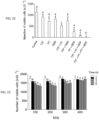
- Fig. 18 shows the shows in vitro experimental data for the effect on cell viability for AsPC1 (pancreatic adenocarcinoma, ATCC) cells when exposed to various oscillating magnetic fields.
- AsPC1 pancreatic adenocarcinoma, ATCC
- Different cell cultures were exposed to one of the following magnetic fields: 2 ⁇ T at 100 kHz; 1.5 ⁇ T at 200 kHz; 0.7 ⁇ T at 300 kHz; or 0.5 ⁇ T at 400 kHz
- Cell viability for each frequency after 1, 2, 3, 4 and 5 hours was measured for each cell culture.
- Five independent experiments were performed for each frequency and time point. The data for each frequency shows the average cell viability and standard deviation over time (1 to 5 hours from left to right) for the 5 corresponding experiments.
- a two-ways analysis of variance was used to make comparisons among the different groups. It can be seen that cell viability is reduced for frequencies equal to or below 200 kHz. Letters "a” and "b” are assigned to the data based on statistical tests applied to the data. Data labelled with the same letter are considered statistically similar, whereas data assigned different letters are considered significantly different with P less than 0.01.
- Fig. 19 shows in vitro experimental data for the effect on cell viability for AsPC1 cells when exposed to heat.
- Different cell cultures were heated to temperatures of 37, 42, 47 or 52°C.
- Five independent experiments were performed for each temperature and time point.
- the data for each temperature shows the average cell viability and standard deviation of the five corresponding experiments after 5, 10 and 20 minutes of exposure to the temperature. Heating to 47°C or above reduced the viability of AsPC1 cells significantly.
- the data labelled * indicates a P value (student's t test) less than 0.01 compared to the 37°C data at the corresponding time
- the data labelled + indicates a P value less than 0.01 for the data at 10 and 20 minutes compared to the data at 5 mins for the same temperature.
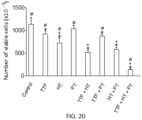
- Fig. 20 shows experimental data showing the in vitro effect of TT-Fields ("TTF”), hyperthermia (“HT”), pterostilbene (“PT”) and their combinations on AsPC1 cells.
- TTF TT-Fields
- HT hyperthermia
- PT pterostilbene
- AsPC1 cells AsPC1 cells.
- TTF data the TT-Field applied was at 200kHz for 240 mins (from minute 0 to minute 240) for a field intensity of 1.5 ⁇ T.
- HT data hyperthermia applied was 52°C for 20 minutes (from minute 120 to minute 140).
- PT data 20 uM of pterostilbene was applied from minute 0 to minute 240.
- the data shows mean number of viable cells for 5 experiments, with P ⁇ 0.01 using Student's t test vs the control for those labelled *, vs TTF for those labelled + and vs TTF+ HT for those labelled #.
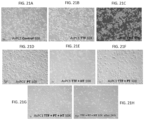
- Figs. 21B to 21H show microscopic images of in vitro AsPC1 cell cultures after exposed to different external treatments.
- Fig. 21A shows a microscopic image of a control vitro AsPC1 cell culture which was not exposed to any external treatments and maintained at an optimum temperature for AsPC1.
- Fig 21B shows a cell culture after being exposed to an electromagnetic field having a magnetic flux density of about 1.5 ⁇ T at 200 kHz from 0 to 240 minutes.
- Fig. 21C shows a cell culture after being exposed to heating to 52°C for 20 minutes from minute 120 to 140.
- Fig. 21D shows a cell culture after being exposed to 20 ⁇ M pterostilbene from minute 0 to minute 240.
- Fig. 21A shows a microscopic image of a control vitro AsPC1 cell culture which was not exposed to any external treatments and maintained at an optimum temperature for AsPC1.
- Fig 21B shows a cell culture after being exposed to an electromagnetic field having a magnetic flux density of about 1.5
- FIG. 21E shows a cell culture after exposure to an electromagnetic field having a magnetic flux density of about 1.5 ⁇ T at 200 kHz from 0 to 240 minutes and heating to 52°C for 20 minutes from minute 120 to 140.
- Fig. 21F shows a cell culture after exposure to an electromagnetic field having a magnetic flux density of about 1.5 ⁇ T at 200 kHz from 0 to 240 minutes and 20 ⁇ M pterostilbene (PT) from minute 0 to minute 240.
- Fig. 21G shows a cell culture after exposure to an electromagnetic field having a magnetic flux density of about 1.5 ⁇ T at 200 kHz from 0 to 240 minutes, heating to 52°C for 20 minutes from minute 120 to 140 and 20 ⁇ M pterostilbene (PT) from minute 0 to minute 240.
- Fig. 21H shows the cell culture of Fig. 21G after 24 hours where cultured cells were maintained at 37°C without any treatment. The growing cells do not seem to recover 24 hours after the combined treatment of Fig. 21G .
- Fig. 22 shows experimental data showing the in vitro effect of TT-Fields ("TTF"), hyperthermia (“HT”), gemcitabine (“GEM”), pterostilbene (“PT”) and their combinations on AsPC1 cells.
- TTF TT-Fields
- HT hyperthermia
- GEM gemcitabine
- PT pterostilbene
- the data shows mean number of viable cells for 5 experiments per experimental condition, with P ⁇ 0.01 using Student's t test vs the control for those labelled *, vs TTF for those labelled + and vs TTF+HT for those labelled #.
- the application of all four treatments in combination eliminated the AsPC1 cells.
- Fig. 23 shows the shows in vitro experimental data for the effect on cell viability for A2058 (melanoma, ATCC) cells when exposed to different oscillating magnetic fields
- A2058 melanoma, ATCC
- Different cell cultures were exposed to one of the following magnetic fields: 2 ⁇ T at a frequency of 100 kHz; 1.5 ⁇ T at a frequency of 200 kHz; 0.7 ⁇ T at a frequency of 300 kHz; or 0.5 ⁇ T at a frequency of 400 kHz.
- Cell viability for each frequency after 1, 2, 3, 4 and 5 hours was measured for each cell culture. Five independent experiments were performed for each frequency and time point. The data for each frequency shows the average cell viability and standard deviation over time (1 to 5 hours from left to right) for the 5 corresponding experiments.
- a two-ways analysis of variance was used to make comparisons among the different groups. It can be seen that cell viability is reduced for all frequencies, below 300 kHz. Letters "a” and "b” are assigned to the data based on statistical tests applied to the data. Data labelled with the same letter are considered statistically similar, whereas data assigned different letters are considered significantly different with P less than 0.01.
- Fig. 24 shows in vitro experimental data for the effect on cell viability for A2058 cells when exposed to heat.
- Different cell cultures were heated to temperatures of 37, 42, 47 or 52°C.
- Five independent experiments were performed for each temperature and time point.
- the data for each temperature shows the average cell viability and standard deviation of the five corresponding experiments after 5, 10 and 20 minutes of exposure to the temperature. Heating to 52°C reduced the viability of A2058 cells significantly.
- the data labelled * indicates a P value (student's t test) less than 0.01 compared to the 37°C data at the corresponding time
- the data labelled + indicates a P value less than 0.01 for the data at 10 and 20 minutes compared to the data at 5 mins for the same temperature.
- Fig. 25 shows experimental data showing the in vitro effect of TT-Fields ("TTF”), hyperthermia (“HT”), pterostilbene (“PT”) and their combinations on A2058 cells.
- TTF TT-Fields
- HT hyperthermia
- PT pterostilbene
- the data shows mean number of viable cells for 5 experiments per experimental condition, with P ⁇ 0.01 using Student's t test vs the control for those labelled *, vs TTF for those labelled + and vs TTF+HT for those labelled #.
- the application of all four treatments significantly reduced the viability of the cells compared to TTF+HT.
- the data show that the use of a higher magnetic flux density (about 8 ⁇ T or above) allows for heating of the tissue to a lower temperature whilst still maintaining or even improving the effectiveness of the treatment.
- the combination of such a higher magnetic flux density in combination with heating to temperatures above 42°C and administration of pterostilbene may be sufficient to eliminate the tumour. This is of special importance to areas of the body to which only limited heating can be applied (for example the brain).
- the data of, for example, Fig. 22 show that even if a lower magnetic field is used, the cancer cells may be reduced or even eliminated if the tumour treating field and heating is used in combination with one or more of pterostilbene and another anti-cancer drug.
- Figs. 26B to 26H show microscopic images of in vitro A2058 cell cultures after exposed to different external treatments.
- Fig. 26A shows a microscopic image of a control in vitro AsPC1 cell culture which was not exposed to any external treatments and maintained at the physiological internal temperature of 37 °C.
- Fig 26B shows a cell culture after being exposed to an electromagnetic field having a magnetic flux density of about 1.5 ⁇ T at 200 kHz from 0 to 240 minutes.
- Fig. 26C shows a cell culture after being exposed to heating to 52°C for 20 minutes from minute 120 to 140.
- Fig. 26D shows a cell culture after being exposed to 20 ⁇ M pterostilbene from minute 0 to minute 240.
- FIG. 26E shows a cell culture after exposure to an electromagnetic field having a magnetic flux density of about 1.5 ⁇ T at 200 kHz from 0 to 240 minutes and 20 ⁇ M pterostilbene from minute 0 to minute 240.
- Fig. 26F shows a cell culture after exposure to an electromagnetic field having a magnetic flux density of about 1.5 ⁇ T at 200 kHz from 0 to 240 minutes and heating to 52°C for 20 minutes from minute 120 to 140.
- Fig. 26G shows a cell culture after exposure to an electromagnetic field having a magnetic flux density of about 1.5 ⁇ T at 200 kHz from 0 to 240 minutes, heating to 52°C for 20 minutes from minute 120 to 140 and 20 ⁇ M pterostilbene (PT) from minute 0 to minute 240.
- Fig. 26H shows the cell culture of Fig. 26G after 24 hours where cultured cells were maintained at 37°C without any treatment. The growing cells do not seem to recover 24 hours after the combined treatment of Fig. 26G .
- Fig. 27 shows experimental data showing the in vitro effect of TT-Fields ("TTF”), hyperthermia (“HT”), paclitaxel (“PAC”) and their combinations on A2058 cells.
- TTF TT-Fields
- HT hyperthermia
- PAC paclitaxel
- the data shows mean number of viable cells for 5 experiments per experimental condition, with P ⁇ 0.01 using Student's t test vs the control for those labelled *, vs TTF for those labelled + and vs TTF+HT for those labelled #.
- the application of all three treatments eliminated the cells.
- Table 1 shows data examining the effect of GSH depletion on cell viability for U87MG, AsPC1 and A2058 cells in vitro.
- TTF a TT-Field was applied at 200kHz for 240 mins (from minute 0 to minute 240) for a field intensity of 1.5 ⁇ T.
- HT hyperthermia applied was at 42 °C for U87MG and 52°C for AsPC1 and A2058 for 20 minutes (from minute 120 to minute 140).
- BSO 1 mM of buthione sulfoximine, a specific inhibitor of GSH synthesis, was added to the cell culture medium at the time the cells of the culture were seeded.
- said anti-carcinogenic composition comprises (i) pterostilbene, pterostilbene phosphate or a pharmaceutically acceptable salt thereof.
- the anti-cancer composition may be provided in a cocrystal, a water-soluble prodrug, nanoparticle, nanodot, nanorob, nanospike, nanorod, nanocluster, nanoceramic, liposome or exosome formulation, or may be provided in an implantable device configured to release the anti-cancer composition when implanted in the body.
- said anti-carcinogenic composition may comprise any anti-oxidant composition.
- the anti-carcinogenic composition may comprise any stilbenoid, apart from pterostilbene, suitable as an anti-carcinogenic agent, such as resveratrol.
- pharmaceutically acceptable salt refers to any salt of pterostilbene or pterostilbene phosphate which, upon administration to the recipient is capable of providing (directly or indirectly) a compound as described herein.
- pharmaceutically acceptable salt means approved by a regulatory agency of the Federal or a state government or listed in the U.S. Pharmacopeia or other generally recognized pharmacopeia for use in animals, and more particularly in humans.
- the preparation of salts can be carried out by methods known in the art.
- Illustrative non-limitative examples of pharmaceutically acceptable salts include, but are not limited to sulfate, citrate, acetate, oxalate, chloride, bromide, iodide, nitrate, bisulfate, phosphate, acid phosphate, isonicotinate, lactate, salicylate, acid citrate, tartrate, oleate, tannate, pantothenate, bitartrate, ascorbate, succinate, maleate, gentisinate, fumarate, gluconate, glucuronate, saccharate, formate, benzoate, glutamate, methanesulfonate, ethanesulfonate, benzenesulfonate, p-toluenesulfonate, and pamoate salts.
- the pharmaceutically acceptable salts of pterostilbene or pterostilbene phosphate are preferably prepared from a polyphenol compound having an acidic functional group, and an acceptable inorganic or organic base.
- Suitable bases include, but are not limited to, hydroxides of alkali metals such as sodium, potassium, and lithium; hydroxides of alkaline earth metals such as calcium and magnesium; hydroxides of other metals, such as aluminum and zinc; ammonia, and organic amines, such as unsubstituted or hydroxy-substituted mono-, di-, ortri-alkylamines, dicyclohexylamine; tributyl amine; pyridine; N-methyl, N-ethylamine; diethylamine; triethylamine; mono-, bis-, or tris-(2-hydroxy substituted lower alkylamines), such as mono-; bis-, or tris-(2-hydroxyethyl)amine, 2-hydroxy-tert-butylamine,
- cancer chemotherapeutic agents which may be in accordance to the present invention include: alkylating agents such as nitrogen mustards/oxazaphosphorines (e.g. cyclophosphamide, ifosfamide), nitrosoureas (e.g. carmustine), triazenes (e.g.temozolamide), and alkyl sulfonates (e.g.
- alkylating agents such as nitrogen mustards/oxazaphosphorines (e.g. cyclophosphamide, ifosfamide), nitrosoureas (e.g. carmustine), triazenes (e.g.temozolamide), and alkyl sulfonates (e.g.
- antimetabolite drugs for example 5-fluorouracil, capecitabine, 6-mercaptopurine, methotrexate, gemcitabine, cytarabine, fludarabine or pemetrexed
- anthracycline antibiotics such as doxorubicin and daunorubicin, taxans such as Taxol TM and docetaxel, vinca alkaloids such as vincristin and vinblastine, 5-fluorouracil (5-FU), leucovorin, irinotecan, idarubicin, mitomycin C, oxaliplatin, raltitrexed, pemetrexed, tamoxifen, cisplatin, carboplatin, methotrexate, actinomycin D, mitoxantrone, blenoxane, mithramycin, paclitaxel, 2-methoxyestradiol, prinomastat, batimastat, BAY 12-9566, carboxyamid
- chemotherapeutic agents are selected from the group consisting of docetaxel (Taxotere ® ), cisplatin, pemetrexed, gemcitabine and irinotecan.
- the cancer chemotherapeutic agent is a taxane, preferably which comprises or consists on paclitaxel.
- paclitaxel refers to a compound with chemical name (2 ⁇ ,4 ⁇ ,5 ⁇ ,7 ⁇ ,10 ⁇ ,13 ⁇ )-4,10-Bis(acetyloxy)-13- ⁇ [(2R,3S)-3 (benzoylamino)-2-hydroxy-3-phenylpropanoyl]oxy ⁇ -1,7-dihydroxy-9-oxo-5,20-epoxytax-11-en-2-yl benzoate and having the chemical formula
- the paclitaxel is protein bound paclitaxel.
- protein-bound paclitaxel or “nab-paclitaxel” or “nanoparticle albumin-bound paclitaxel”, as used herein, refers to a formulation in which paclitaxel is bound to albumin as a delivery vehicle.
- the cancer chemotherapeutic agent will vary depending on the type of cancer that is going to be treated with the combination of the invention. The skilled person can easily determine which cancer chemotherapeutic agent is more suitable to treat a particular type of cancer.
- a Glutathione (GSH) depleting agent is provided to the target site in addition to the anti-carcinogenic compound.
- the GSH depleting agent may be administered by any suitable means, such as orally or intravenously. It is noted that the GSH depleting agent may be provided before or simultaneously to steps S1, S2 and step S3 or a predetermined time after step S1, S2 or S3, preferably at a predetermined time after step S3.
- the GSH depleting agent provided may be any GSH depleting agent disclosed herein, including in relation to Figs. 12 to 27 or Table 1.
- glutathione depleting agent refers to a substance that reduces or eliminates glutathione from a cell that has been contacted with that substance.
- the skilled person is able of determining if a particular molecule is a glutathione depleting agent, for example, by comparing the effect of the particular molecule with the effect of buthionine sulfoximine (BSO), a specific inhibitor of gamma-glutamyl-cysteinyl ligase, using the methodology described for in vitro and in vivo conditions by Terradez P et al, Biochem J 1993, 292 (Pt 2): 477-83 .
- BSO buthionine sulfoximine
- a particular molecule is a glutathione depleting agent if said molecule has at least a 10%, at least a 20%, at least a 30%, at least a 40%, at least a 50%, at least a 60%, at least a 70%, at least a 80%, at least a 90%, a 100% or more of the glutathione-depleting effect of buthionine sulfoximine.
- glutathione depleting agents are:
- the glutathione depleting agent of the combination of the invention is selected from the group consisting of: a) a Bcl-2 antisense oligodeoxynucleotide; b) an inhibitor of multidrug resistance protein 1; c) an inhibitor of the gamma-glutamyl transpeptidase; d) an inhibitor of cystine uptake; e) disodium glutathione disulfide; f) phenethyl isothiocyanate; g) a glucocorticoid receptor antagonist; h) an anti-IL-6 agent; i) buthionine sulfoximine; j) diethylmaleate; k) NPD926; 1) parthenolide; m) piperlongumine and n) an inhibitor of a protein from the bromodomain and extraterminal domain family, in particular GSK525762A or I-BET762 .
- the inhibitor of multidrug resistance protein 1 is verapamil, which is a compound having the formula
- the inhibitor of gamma-glutamil transpeptidase is acivicin, which is a compound having the formula
- the inhibitor of cystine uptake is sulfasalazine, which is a compound having the formula
- the glucocorticoid receptor antagonist is RU-486 or mifepristone, which is a compound having the formula
- the anti-IL-6 agent is an inhibitory antibody against IL-6 or an inhibitor of the IL-6 receptor.
- the anti-IL-6 agent is selected from the group consisting of tocilizumab, elsilimomab and siltuximab.
- tocilizumab refers to a humanized monoclonal antibody against the IL-6 receptor.
- elsilimomab refers to a mouse monoclonal antibody against IL-6.
- siltuximab refers to a chimeric monoclonal antibody against IL-6.
- the inhibitor of a protein from the bromodomain and extraterminal domain family is selected from the group consisting of JQ1, GSK525762A and OTX-015.
- JQ1 refers to a compound of formula
- GSK525762A refers to a compound of formula
- OTX-015" refers to a compound of formula
- CPI-0610 refers to the compound of reference CAT#: 206117 markered by MedKoo Biosciencies Inc.
- the glutathione depleting agent is diethylmaleate, GSK525762A (I-BET762) or piperlongumine.
- step S5 the direct heating is stopped and in step S6 the non-ionizing alternating electric field is stopped. It is noted that steps S5 and S6 may occur simultaneously or the direct heating may be stopped before the non-ionizing alternating electromagnetic field is stopped, such that only the non-ionizing alternating electromagnetic field is applied for a predetermined time after the direct heating is stopped.
- steps S3 and/or S4 may be implemented at the same time as the start of step S1, or a predetermined time after step S1 begins but before step S2 begins, or at the same time as the start of step S2, or a predetermined amount of time after the start of step S2. Further, in examples where both S3 and S4 are implemented, they may be implemented at the same or different times.
- step S3 may be implemented at the same time as the start of step S1, or a predetermined time period after the start of step S1 but before the start of step S2, or at the same time as the start of step S2, or a predetermined time after the start of step S2.
- step S4 may be implemented at the same time as the start of step S1, or a predetermined time after the start of step S1 but before the start of step S2, or at the same time as the start of step S2 or a predetermined time after the start of step S2.
- step S1 may be applied for a first time period and step S2 may be applied for a second time period, and the second time period may partially or completely overlap with the first time period or the second time period may begin when the first time period expires.
- the non-ionizing alternating electromagnetic field (e.g. at 300kHz) may be provided at the same time as the anti-cancer composition and the GSH depletor (for example pterostilbene and gemcitabine).
- the alternating electromagnetic field is applied for two hours, and heating is applied within this two-hour period (for example to heat the target site to a temperature of 52°C for 10 minutes).
- non-ionizing alternating electromagnetic field may be provided first (e.g. at 300kHz) for a first time period (e.g. 2 hours), and upon expiry of the first time period heating is applied in combination with the anti-cancer composition and/or the GSH depletor (for example pterostilbene with heating to 47 °C for two hours).
- the non-ionizing alternating electromagnetic field may have a frequency of between 10 kHz to 500 kHz, providing a magnetic flux density between 0.1 pT and 1 mT, or between 0.1 pT and 100 ⁇ T, or between 100 ⁇ T and 1 mT, and/or the corresponding electric field strength amplitude of between 1 V/cm and 3 V/cm depending on the tissue impedance and may be applied for a time period of between 1 minute and 24 hours.
- the direct heating preferably heats the target site to a temperature of at least 42°C, and preferably between 42°C and 57°C.
- the mechanism by which the oscillating magnetic field of the tumour treating field may cause heating of the tissue is through inducing Foucault currents (or “eddy currents") in the tissue. These currents revolve around the magnetic field lines in the tissue and by the Joule effect could heat the tumour cells. This is due to the conductivity, ⁇ , of the living tissue.
- the conductivity of tumour tissue increases with increasing frequency of the oscillating magnetic field and is approximately 0.15 siemens/metre at 300kHz. This conductivity provides the path for microscopic eddy currents which flow in circular paths.
- B is the magnetic flux density
- d is the depth of tissue over which the magnetic field is provided
- f is the field frequency
- ⁇ is the tissue resistivity (inverse to the electrical conductivity)
- D is the mass density of the tissue.
- tumour tissue can be up to five times higher than the conductivity of healthy tissue and has an approximate value of 0.15 siemens/metre at 100-300 kHz.
- D for biological tissue is variable (between 900-1050 kg/m 3 ), but can be approximated by that of water, 1000 kg/m 3 .
- the highest magnetic flux density of the tumour treating field is 1mT.
- the highest frequency is 300kHz.
- the thickness of the culture flask was approximately 1 mm which is the value of d. This gives a value for P of 20 pW/kg. This is an extremely low value.
- the mechanism of the TT-field is therefore not due to heating. Cell death may be the consequence of charge disruption in the mitochondria. This effect is stronger in tumour tissues due to its higher conductivity, approximately five times higher than the conductivity of healthy cells.
- the synergetic effect with hyperthermia could be attributable to an increase of the conductivity associated with an increase in the mobility of the charged molecules.
Landscapes
- Health & Medical Sciences (AREA)
- Engineering & Computer Science (AREA)
- Biomedical Technology (AREA)
- Life Sciences & Earth Sciences (AREA)
- Animal Behavior & Ethology (AREA)
- General Health & Medical Sciences (AREA)
- Public Health (AREA)
- Veterinary Medicine (AREA)
- Nuclear Medicine, Radiotherapy & Molecular Imaging (AREA)
- Radiology & Medical Imaging (AREA)
- Pathology (AREA)
- Hospice & Palliative Care (AREA)
- Oncology (AREA)
- Physics & Mathematics (AREA)
- Thermal Sciences (AREA)
- Heart & Thoracic Surgery (AREA)
- Vascular Medicine (AREA)
- Thermotherapy And Cooling Therapy Devices (AREA)
- Electrotherapy Devices (AREA)
- Medicines Containing Material From Animals Or Micro-Organisms (AREA)
- Surgical Instruments (AREA)
Claims (13)
- Gerät zur Behandlung eines kanzerösen Zielorts, umfassend:einen elektromagnetischen Strahler (10, 14) umfassend eine oder mehrere Elektroden mit einer elektrisch isolierenden Beschichtung zum Verhindern eines elektrischen Kontakts zwischen den Elektroden und dem Zielort, wobei der elektromagnetische Strahler dazu ausgebildet ist, ein Tumorbehandlungsfeld an einem Zielort mittels der einen oder mehreren Elektroden bereitzustellen, wobei das Tumorbehandlungsfeld ein nichtionisierendes elektromagnetisches Wechselfeld aufweisend eine Frequenz zwischen 10 kHz und 300 kHz; und zusätzlich aufweisend eine magnetische Flussdichte zwischen 0,1 pT und 1 mT ist;eine Wärmequelle (20, 200, 300, 400, 500, 600, 700, 800), welche dazu ausgebildet ist, Erwärmung am Zielort bereitzustellen, um Hyperthermie am Zielort hervorzurufen; undeine elektronische Steuerung (40) zum elektrischen Steuern des elektromagnetischen Strahlers und der Wärmequelle;wobei das Gerät dazu ausgebildet ist, das nichtionisierende elektromagnetische Wechselfeld und die Erwärmung unabhängig anzuwenden.
- Gerät nach Anspruch 1, wobei das Gerät dazu ausgebildet ist, das nichtionisierende elektromagnetische Wechselfeld am Ziel über einen ersten Zeitraum bereitzustellen und die direkte Erwärmung am Zielort über einen zweiten Zeitraum bereitzustellen.
- Gerät nach Anspruch 1 oder 2, wobei das Gerät dazu ausgebildet ist, das nichtionisierende elektromagnetische Wechselfeld am Zielort über einen ersten Zeitraum zwischen 1 Minute und 24 Stunden bereitzustellen.
- Gerät nach einem vorhergehenden Anspruch, wobei das Gerät zusätzlich dazu ausgebildet ist, die Erwärmung am Zielort über einen zweiten Zeitraum zwischen 1 Minute und 360 Minuten bereitzustellen, wobei wahlweise die Erwärmung gleichzeitig zum nichtionisierenden elektromagnetischen Wechselfeld über einen dritten Zeitraum angewendet wird.
- Gerät nach einem vorhergehenden Anspruch, wobei der elektromagnetische Strahler dazu ausgebildet ist, ein elektromagnetisches Wechselfeld am Zielort aufweisend eine magnetische Flussdichte zwischen 0,1 pT und 100 µT bereitzustellen.
- Gerät nach einem der Ansprüche 1 bis 4, wobei der elektromagnetische Strahler dazu ausgebildet ist, ein elektromagnetisches Wechselfeld am Zielort aufweisend eine magnetische Flussdichte zwischen 0,5 µT und 1 mT bereitzustellen.
- Gerät nach einem der Ansprüche 1 bis 4, wobei der elektromagnetische Strahler dazu ausgebildet ist, ein elektromagnetisches Wechselfeld am Zielort aufweisend eine magnetische Flussdichte zwischen 8 µT und 1 mT bereitzustellen.
- Gerät nach einem vorhergehenden Anspruch, wobei der elektromagnetische Strahler dazu ausgebildet ist, ein elektromagnetisches Wechselfeld aufweisend eine Frequenz zwischen 100 kHz und 300 kHz bereitzustellen.
- Gerät nach einem vorhergehenden Anspruch, wobei die Wärmequelle dazu ausgebildet ist, der Zielort bis zu einer Temperatur von über 42°C und vorzugsweise zwischen 42°C und 57°C zu erwärmen.
- Gerät nach einem vorhergehenden Anspruch, wobei die Wärmequelle einen Ultraschallstrahler umfasst, welcher dazu ausgebildet ist, dem Zielort Ultraschallstrahlung bereitzustellen, wobei wahlweise die Ultraschallstrahlung einen oder mehrere Brennbereiche im Zielort aufweist.
- Gerät nach einem vorhergehenden Anspruch, wobei die Wärmequelle einen elektromagnetischen Strahler umfasst, welcher dazu ausgebildet ist, dem Zielort elektromagnetische Strahlung bereitzustellen.
- Gerät nach einem vorhergehenden Anspruch, wobei die Wärmequelle eine Fluidpumpe, welche dazu ausgebildet ist, dem Zielort Fluid zu pumpen, und einen Wärmeerzeuger, um das Fluid zu erwärmen, bevor es den Zielort erreicht, umfasst.
- Gerät nach einem vorhergehenden Anspruch, wobei die Wärmequelle einen leitfähigen Wärmestrahler umfasst, welcher dazu ausgebildet ist, dem Zielort Wärme mittels Wärmeleitung bereitzustellen.
Applications Claiming Priority (2)
| Application Number | Priority Date | Filing Date | Title |
|---|---|---|---|
| EP21382115.0A EP4043071A1 (de) | 2021-02-12 | 2021-02-12 | Nicht-invasive krebsbehandlung |
| PCT/EP2022/053424 WO2022171826A1 (en) | 2021-02-12 | 2022-02-11 | Non-invasive cancer treatment |
Publications (3)
| Publication Number | Publication Date |
|---|---|
| EP4291301A1 EP4291301A1 (de) | 2023-12-20 |
| EP4291301C0 EP4291301C0 (de) | 2025-01-15 |
| EP4291301B1 true EP4291301B1 (de) | 2025-01-15 |
Family
ID=74732845
Family Applications (2)
| Application Number | Title | Priority Date | Filing Date |
|---|---|---|---|
| EP21382115.0A Withdrawn EP4043071A1 (de) | 2021-02-12 | 2021-02-12 | Nicht-invasive krebsbehandlung |
| EP22703686.0A Active EP4291301B1 (de) | 2021-02-12 | 2022-02-11 | Nicht-invasive krebsbehandlung |
Family Applications Before (1)
| Application Number | Title | Priority Date | Filing Date |
|---|---|---|---|
| EP21382115.0A Withdrawn EP4043071A1 (de) | 2021-02-12 | 2021-02-12 | Nicht-invasive krebsbehandlung |
Country Status (11)
| Country | Link |
|---|---|
| US (1) | US20240131352A1 (de) |
| EP (2) | EP4043071A1 (de) |
| JP (1) | JP7825235B2 (de) |
| KR (1) | KR20230147128A (de) |
| CN (1) | CN117202966A (de) |
| AU (1) | AU2022219528A1 (de) |
| CA (1) | CA3210894A1 (de) |
| ES (1) | ES3020943T3 (de) |
| IL (1) | IL304963A (de) |
| MX (1) | MX2023009487A (de) |
| WO (1) | WO2022171826A1 (de) |
Families Citing this family (2)
| Publication number | Priority date | Publication date | Assignee | Title |
|---|---|---|---|---|
| US20230293913A1 (en) * | 2022-03-17 | 2023-09-21 | Open Water Internet Inc. | Harmonic excitation therapy and anti-tumor agent |
| US20250032788A1 (en) * | 2023-06-30 | 2025-01-30 | Novocure Gmbh | Compositions and methods for treating with a combination of alternating electric fields and dna-dependent protein kinase inhibitors |
Citations (10)
| Publication number | Priority date | Publication date | Assignee | Title |
|---|---|---|---|---|
| WO1998037907A1 (en) * | 1997-02-27 | 1998-09-03 | The Catholic University Of America | Protection of living systems from the adverse effects of stress |
| US6640139B1 (en) * | 1998-10-20 | 2003-10-28 | Dornier Medtech Holding International Gmbh | Thermal therapy with tissue protection |
| US20110306870A1 (en) * | 2009-02-27 | 2011-12-15 | Koninklijke Philips Electronics N.V. | Therapeutic apparatus for treating a subject using magnetic nanoparticles |
| US20120253099A1 (en) * | 2002-02-15 | 2012-10-04 | Boston Scientific Corporation | Drug delivery |
| US20130238061A1 (en) * | 2011-09-05 | 2013-09-12 | Venus Concept Ltd. | Esthetic device |
| US20140276743A1 (en) * | 2013-03-15 | 2014-09-18 | Thermedical, Inc. | Methods and devices for fluid enhanced microwave ablation therapy |
| US20170165003A1 (en) * | 2009-01-20 | 2017-06-15 | Old Dominion University Research Foundation | System and methods of treatment using electromagnetic illumination |
| US20200107882A1 (en) * | 2015-05-12 | 2020-04-09 | National University Of Ireland, Galway | Devices for therapeutic nasal neuromodulation and associated methods and systems |
| WO2020141527A1 (en) * | 2019-01-03 | 2020-07-09 | Synergymed Devices Inc. | Precise ablation treatment of cancer using synergetic effects of electromagnetic radiation with nanoparticles |
| US20200246179A1 (en) * | 2015-12-21 | 2020-08-06 | Gholam A. Peyman | Cancer Treatment Methods Using Thermotherapy And/Or Enhanced Immunotherapy |
Family Cites Families (13)
| Publication number | Priority date | Publication date | Assignee | Title |
|---|---|---|---|---|
| US5831066A (en) | 1988-12-22 | 1998-11-03 | The Trustees Of The University Of Pennsylvania | Regulation of bcl-2 gene expression |
| US5734033A (en) | 1988-12-22 | 1998-03-31 | The Trustees Of The University Of Pennsylvania | Antisense oligonucleotides inhibiting human bcl-2 gene expression |
| WO2003002199A2 (de) * | 2001-06-26 | 2003-01-09 | Siemens Aktiengesellschaft | Magnetresonanzanlage und verfahren zum betrieb |
| ITMI20012367A1 (it) | 2001-11-09 | 2003-05-09 | Visufarma S R L | Oligonucleotidi antisenso che regolano l'espressione del gene antiapoptotico bcl-2 |
| EP3666328B1 (de) * | 2004-12-27 | 2022-04-06 | Novocure GmbH | Behandlung eines tumors oder dergleichen mit elektrischen feldern mit unterschiedlichen ausrichtungen |
| WO2010007614A2 (en) * | 2008-06-29 | 2010-01-21 | Venus Technologies Ltd | An esthetic apparatus useful for increasing skin rejuvenation and methods thereof |
| JP6472133B2 (ja) * | 2011-08-26 | 2019-02-20 | エンドマグネティクス リミテッド | 体腔および腔様の部分における癌を治療するためのエネルギー場を発生する装置 |
| EP3119473A1 (de) * | 2014-03-17 | 2017-01-25 | The United States of America, as represented by The Secretary, Department of Health and Human Services | System mit elektromagnetfeldgenerator mit spulen zur behandlung von tumoren und verfahren zur gewebebehandlung |
| US9833617B2 (en) * | 2014-07-25 | 2017-12-05 | Loyalty Based Innovations, LLC | Apparatus and method for treating multiple tumors in patients with metastatic disease by electric fields |
| US10821283B2 (en) * | 2016-04-04 | 2020-11-03 | Novocure Gmbh | Reducing motility of cancer cells using tumor treating fields (TTFields) |
| US10881882B1 (en) * | 2018-12-21 | 2021-01-05 | Btl Medical Technologies S.R.O. | Methods and devices for tissue treatment |
| US11027143B2 (en) * | 2020-02-06 | 2021-06-08 | Vivek K. Sharma | System and methods for treating cancer cells with alternating polarity magnetic fields |
| CN111481823A (zh) * | 2020-05-07 | 2020-08-04 | 河北普尼医疗科技有限公司 | 一种基于电场治疗多器官肿瘤的装置 |
-
2021
- 2021-02-12 EP EP21382115.0A patent/EP4043071A1/de not_active Withdrawn
-
2022
- 2022-02-11 CN CN202280027993.4A patent/CN117202966A/zh active Pending
- 2022-02-11 MX MX2023009487A patent/MX2023009487A/es unknown
- 2022-02-11 ES ES22703686T patent/ES3020943T3/es active Active
- 2022-02-11 AU AU2022219528A patent/AU2022219528A1/en active Pending
- 2022-02-11 EP EP22703686.0A patent/EP4291301B1/de active Active
- 2022-02-11 IL IL304963A patent/IL304963A/en unknown
- 2022-02-11 JP JP2023548838A patent/JP7825235B2/ja active Active
- 2022-02-11 KR KR1020237031183A patent/KR20230147128A/ko active Pending
- 2022-02-11 CA CA3210894A patent/CA3210894A1/en active Pending
- 2022-02-11 US US18/546,214 patent/US20240131352A1/en active Pending
- 2022-02-11 WO PCT/EP2022/053424 patent/WO2022171826A1/en not_active Ceased
Patent Citations (10)
| Publication number | Priority date | Publication date | Assignee | Title |
|---|---|---|---|---|
| WO1998037907A1 (en) * | 1997-02-27 | 1998-09-03 | The Catholic University Of America | Protection of living systems from the adverse effects of stress |
| US6640139B1 (en) * | 1998-10-20 | 2003-10-28 | Dornier Medtech Holding International Gmbh | Thermal therapy with tissue protection |
| US20120253099A1 (en) * | 2002-02-15 | 2012-10-04 | Boston Scientific Corporation | Drug delivery |
| US20170165003A1 (en) * | 2009-01-20 | 2017-06-15 | Old Dominion University Research Foundation | System and methods of treatment using electromagnetic illumination |
| US20110306870A1 (en) * | 2009-02-27 | 2011-12-15 | Koninklijke Philips Electronics N.V. | Therapeutic apparatus for treating a subject using magnetic nanoparticles |
| US20130238061A1 (en) * | 2011-09-05 | 2013-09-12 | Venus Concept Ltd. | Esthetic device |
| US20140276743A1 (en) * | 2013-03-15 | 2014-09-18 | Thermedical, Inc. | Methods and devices for fluid enhanced microwave ablation therapy |
| US20200107882A1 (en) * | 2015-05-12 | 2020-04-09 | National University Of Ireland, Galway | Devices for therapeutic nasal neuromodulation and associated methods and systems |
| US20200246179A1 (en) * | 2015-12-21 | 2020-08-06 | Gholam A. Peyman | Cancer Treatment Methods Using Thermotherapy And/Or Enhanced Immunotherapy |
| WO2020141527A1 (en) * | 2019-01-03 | 2020-07-09 | Synergymed Devices Inc. | Precise ablation treatment of cancer using synergetic effects of electromagnetic radiation with nanoparticles |
Also Published As
| Publication number | Publication date |
|---|---|
| WO2022171826A1 (en) | 2022-08-18 |
| EP4291301A1 (de) | 2023-12-20 |
| CA3210894A1 (en) | 2022-08-18 |
| JP2024506369A (ja) | 2024-02-13 |
| EP4291301C0 (de) | 2025-01-15 |
| CN117202966A (zh) | 2023-12-08 |
| JP7825235B2 (ja) | 2026-03-06 |
| EP4043071A1 (de) | 2022-08-17 |
| IL304963A (en) | 2023-10-01 |
| ES3020943T3 (en) | 2025-05-23 |
| US20240131352A1 (en) | 2024-04-25 |
| AU2022219528A1 (en) | 2023-08-24 |
| MX2023009487A (es) | 2023-10-31 |
| KR20230147128A (ko) | 2023-10-20 |
Similar Documents
| Publication | Publication Date | Title |
|---|---|---|
| Yang et al. | Thermal immuno-nanomedicine in cancer | |
| US11497544B2 (en) | Immunologic treatment of cancer | |
| US7367988B1 (en) | Use of electromagnetic fields in cancer and other therapies | |
| US20180110978A1 (en) | Synergistic regulated cell death induction with hsp90 inhibitors and nanosecond pulsed electric fields | |
| EP4291301B1 (de) | Nicht-invasive krebsbehandlung | |
| Yu et al. | Electric pulse responsive magnetic nanoclusters loaded with indoleamine 2, 3-dioxygenase inhibitor for synergistic immuno-ablation cancer therapy | |
| Kumar et al. | Combination treatment significantly enhances the efficacy of antitumor therapy by preferentially targeting angiogenesis | |
| Cohen et al. | Mild hyperthermia as a localized radiosensitizer for deep-seated tumors: Investigation in an orthotopic prostate cancer model in mice | |
| EP3654841B1 (de) | Zielgerichtete osmotische lyse maligner krebszellen mittels gepulster magnetfeldgradienten | |
| Spugnini et al. | Electroporation increases antitumoral efficacy of the bcl-2 antisense G3139 and chemotherapy in a human melanoma xenograft | |
| Sheets et al. | EXTH-59. INTRACRANIAL IMPLANTATION OF TUMORICIDAL STEM CELL-SEEDED SCAFFOLDS AFTER GLIOBLASTOMA RESECTION | |
| Campana et al. | Clinical electrochemotherapy for advanced superficial melanoma | |
| Vadalà et al. | Category: Cancer | |
| Wust¹ et al. | Hyperthermia in the Multimodal Therapy | |
| Chen | MR Guided Pulsed High Intensity Focused Ultrasound Enhancement of Gene Therapy Combined with Androgen Deprivation and Radiotherapy for Prostate Cancer Treatment |
Legal Events
| Date | Code | Title | Description |
|---|---|---|---|
| STAA | Information on the status of an ep patent application or granted ep patent |
Free format text: STATUS: UNKNOWN |
|
| STAA | Information on the status of an ep patent application or granted ep patent |
Free format text: STATUS: THE INTERNATIONAL PUBLICATION HAS BEEN MADE |
|
| PUAI | Public reference made under article 153(3) epc to a published international application that has entered the european phase |
Free format text: ORIGINAL CODE: 0009012 |
|
| STAA | Information on the status of an ep patent application or granted ep patent |
Free format text: STATUS: REQUEST FOR EXAMINATION WAS MADE |
|
| 17P | Request for examination filed |
Effective date: 20230831 |
|
| AK | Designated contracting states |
Kind code of ref document: A1 Designated state(s): AL AT BE BG CH CY CZ DE DK EE ES FI FR GB GR HR HU IE IS IT LI LT LU LV MC MK MT NL NO PL PT RO RS SE SI SK SM TR |
|
| DAV | Request for validation of the european patent (deleted) | ||
| DAX | Request for extension of the european patent (deleted) | ||
| GRAP | Despatch of communication of intention to grant a patent |
Free format text: ORIGINAL CODE: EPIDOSNIGR1 |
|
| STAA | Information on the status of an ep patent application or granted ep patent |
Free format text: STATUS: GRANT OF PATENT IS INTENDED |
|
| INTG | Intention to grant announced |
Effective date: 20240926 |
|
| GRAS | Grant fee paid |
Free format text: ORIGINAL CODE: EPIDOSNIGR3 |
|
| GRAA | (expected) grant |
Free format text: ORIGINAL CODE: 0009210 |
|
| STAA | Information on the status of an ep patent application or granted ep patent |
Free format text: STATUS: THE PATENT HAS BEEN GRANTED |
|
| AK | Designated contracting states |
Kind code of ref document: B1 Designated state(s): AL AT BE BG CH CY CZ DE DK EE ES FI FR GB GR HR HU IE IS IT LI LT LU LV MC MK MT NL NO PL PT RO RS SE SI SK SM TR |
|
| REG | Reference to a national code |
Ref country code: CH Ref legal event code: EP Ref country code: GB Ref legal event code: FG4D |
|
| REG | Reference to a national code |
Ref country code: DE Ref legal event code: R096 Ref document number: 602022009581 Country of ref document: DE |
|
| REG | Reference to a national code |
Ref country code: IE Ref legal event code: FG4D |
|
| U01 | Request for unitary effect filed |
Effective date: 20250213 |
|
| U07 | Unitary effect registered |
Designated state(s): AT BE BG DE DK EE FI FR IT LT LU LV MT NL PT RO SE SI Effective date: 20250219 |
|
| PGFP | Annual fee paid to national office [announced via postgrant information from national office to epo] |
Ref country code: CH Payment date: 20250301 Year of fee payment: 4 |
|
| REG | Reference to a national code |
Ref country code: ES Ref legal event code: FG2A Ref document number: 3020943 Country of ref document: ES Kind code of ref document: T3 Effective date: 20250523 |
|
| U20 | Renewal fee for the european patent with unitary effect paid |
Year of fee payment: 4 Effective date: 20250519 |
|
| PG25 | Lapsed in a contracting state [announced via postgrant information from national office to epo] |
Ref country code: RS Free format text: LAPSE BECAUSE OF FAILURE TO SUBMIT A TRANSLATION OF THE DESCRIPTION OR TO PAY THE FEE WITHIN THE PRESCRIBED TIME-LIMIT Effective date: 20250415 |
|
| PG25 | Lapsed in a contracting state [announced via postgrant information from national office to epo] |
Ref country code: PL Free format text: LAPSE BECAUSE OF FAILURE TO SUBMIT A TRANSLATION OF THE DESCRIPTION OR TO PAY THE FEE WITHIN THE PRESCRIBED TIME-LIMIT Effective date: 20250115 |
|
| PG25 | Lapsed in a contracting state [announced via postgrant information from national office to epo] |
Ref country code: IS Free format text: LAPSE BECAUSE OF FAILURE TO SUBMIT A TRANSLATION OF THE DESCRIPTION OR TO PAY THE FEE WITHIN THE PRESCRIBED TIME-LIMIT Effective date: 20250515 |
|
| PG25 | Lapsed in a contracting state [announced via postgrant information from national office to epo] |
Ref country code: HR Free format text: LAPSE BECAUSE OF FAILURE TO SUBMIT A TRANSLATION OF THE DESCRIPTION OR TO PAY THE FEE WITHIN THE PRESCRIBED TIME-LIMIT Effective date: 20250115 |
|
| PG25 | Lapsed in a contracting state [announced via postgrant information from national office to epo] |
Ref country code: GR Free format text: LAPSE BECAUSE OF FAILURE TO SUBMIT A TRANSLATION OF THE DESCRIPTION OR TO PAY THE FEE WITHIN THE PRESCRIBED TIME-LIMIT Effective date: 20250416 |
|
| PG25 | Lapsed in a contracting state [announced via postgrant information from national office to epo] |
Ref country code: SM Free format text: LAPSE BECAUSE OF FAILURE TO SUBMIT A TRANSLATION OF THE DESCRIPTION OR TO PAY THE FEE WITHIN THE PRESCRIBED TIME-LIMIT Effective date: 20250115 |
|
| PG25 | Lapsed in a contracting state [announced via postgrant information from national office to epo] |
Ref country code: MC Free format text: LAPSE BECAUSE OF FAILURE TO SUBMIT A TRANSLATION OF THE DESCRIPTION OR TO PAY THE FEE WITHIN THE PRESCRIBED TIME-LIMIT Effective date: 20250115 |
|
| PG25 | Lapsed in a contracting state [announced via postgrant information from national office to epo] |
Ref country code: CZ Free format text: LAPSE BECAUSE OF FAILURE TO SUBMIT A TRANSLATION OF THE DESCRIPTION OR TO PAY THE FEE WITHIN THE PRESCRIBED TIME-LIMIT Effective date: 20250115 |
|
| PG25 | Lapsed in a contracting state [announced via postgrant information from national office to epo] |
Ref country code: SK Free format text: LAPSE BECAUSE OF FAILURE TO SUBMIT A TRANSLATION OF THE DESCRIPTION OR TO PAY THE FEE WITHIN THE PRESCRIBED TIME-LIMIT Effective date: 20250115 |
|
| PLBE | No opposition filed within time limit |
Free format text: ORIGINAL CODE: 0009261 |
|
| STAA | Information on the status of an ep patent application or granted ep patent |
Free format text: STATUS: NO OPPOSITION FILED WITHIN TIME LIMIT |
|
| REG | Reference to a national code |
Ref country code: CH Ref legal event code: L10 Free format text: ST27 STATUS EVENT CODE: U-0-0-L10-L00 (AS PROVIDED BY THE NATIONAL OFFICE) Effective date: 20251126 |
|
| 26N | No opposition filed |
Effective date: 20251016 |
|
| REG | Reference to a national code |
Ref country code: CH Ref legal event code: U11 Free format text: ST27 STATUS EVENT CODE: U-0-0-U10-U11 (AS PROVIDED BY THE NATIONAL OFFICE) Effective date: 20260301 |
|
| U20 | Renewal fee for the european patent with unitary effect paid |
Year of fee payment: 5 Effective date: 20260225 |
|
| PGFP | Annual fee paid to national office [announced via postgrant information from national office to epo] |
Ref country code: GB Payment date: 20260225 Year of fee payment: 5 |
|
| PGFP | Annual fee paid to national office [announced via postgrant information from national office to epo] |
Ref country code: ES Payment date: 20260303 Year of fee payment: 5 |
|
| PGFP | Annual fee paid to national office [announced via postgrant information from national office to epo] |
Ref country code: NO Payment date: 20260227 Year of fee payment: 5 Ref country code: IE Payment date: 20260219 Year of fee payment: 5 |
|
| PGFP | Annual fee paid to national office [announced via postgrant information from national office to epo] |
Ref country code: TR Payment date: 20260209 Year of fee payment: 5 |