EP4290804A1 - Procédé et appareil de réalisation de multidiffusion sécurisée en réseau de chaînes de blocs - Google Patents
Procédé et appareil de réalisation de multidiffusion sécurisée en réseau de chaînes de blocs Download PDFInfo
- Publication number
- EP4290804A1 EP4290804A1 EP22748835.0A EP22748835A EP4290804A1 EP 4290804 A1 EP4290804 A1 EP 4290804A1 EP 22748835 A EP22748835 A EP 22748835A EP 4290804 A1 EP4290804 A1 EP 4290804A1
- Authority
- EP
- European Patent Office
- Prior art keywords
- security group
- blockchain node
- multicast
- group information
- message
- Prior art date
- Legal status (The legal status is an assumption and is not a legal conclusion. Google has not performed a legal analysis and makes no representation as to the accuracy of the status listed.)
- Pending
Links
Images

Classifications
-
- H—ELECTRICITY
- H04—ELECTRIC COMMUNICATION TECHNIQUE
- H04L—TRANSMISSION OF DIGITAL INFORMATION, e.g. TELEGRAPHIC COMMUNICATION
- H04L63/00—Network architectures or network communication protocols for network security
- H04L63/04—Network architectures or network communication protocols for network security for providing a confidential data exchange among entities communicating through data packet networks
- H04L63/0428—Network architectures or network communication protocols for network security for providing a confidential data exchange among entities communicating through data packet networks wherein the data content is protected, e.g. by encrypting or encapsulating the payload
- H04L63/0442—Network architectures or network communication protocols for network security for providing a confidential data exchange among entities communicating through data packet networks wherein the data content is protected, e.g. by encrypting or encapsulating the payload wherein the sending and receiving network entities apply asymmetric encryption, i.e. different keys for encryption and decryption
-
- H—ELECTRICITY
- H04—ELECTRIC COMMUNICATION TECHNIQUE
- H04L—TRANSMISSION OF DIGITAL INFORMATION, e.g. TELEGRAPHIC COMMUNICATION
- H04L63/00—Network architectures or network communication protocols for network security
- H04L63/04—Network architectures or network communication protocols for network security for providing a confidential data exchange among entities communicating through data packet networks
- H04L63/0428—Network architectures or network communication protocols for network security for providing a confidential data exchange among entities communicating through data packet networks wherein the data content is protected, e.g. by encrypting or encapsulating the payload
- H04L63/0435—Network architectures or network communication protocols for network security for providing a confidential data exchange among entities communicating through data packet networks wherein the data content is protected, e.g. by encrypting or encapsulating the payload wherein the sending and receiving network entities apply symmetric encryption, i.e. same key used for encryption and decryption
-
- H—ELECTRICITY
- H04—ELECTRIC COMMUNICATION TECHNIQUE
- H04L—TRANSMISSION OF DIGITAL INFORMATION, e.g. TELEGRAPHIC COMMUNICATION
- H04L12/00—Data switching networks
- H04L12/02—Details
- H04L12/16—Arrangements for providing special services to substations
- H04L12/18—Arrangements for providing special services to substations for broadcast or conference, e.g. multicast
-
- H—ELECTRICITY
- H04—ELECTRIC COMMUNICATION TECHNIQUE
- H04L—TRANSMISSION OF DIGITAL INFORMATION, e.g. TELEGRAPHIC COMMUNICATION
- H04L63/00—Network architectures or network communication protocols for network security
- H04L63/06—Network architectures or network communication protocols for network security for supporting key management in a packet data network
- H04L63/065—Network architectures or network communication protocols for network security for supporting key management in a packet data network for group communications
-
- H—ELECTRICITY
- H04—ELECTRIC COMMUNICATION TECHNIQUE
- H04L—TRANSMISSION OF DIGITAL INFORMATION, e.g. TELEGRAPHIC COMMUNICATION
- H04L67/00—Network arrangements or protocols for supporting network services or applications
- H04L67/01—Protocols
- H04L67/10—Protocols in which an application is distributed across nodes in the network
-
- H—ELECTRICITY
- H04—ELECTRIC COMMUNICATION TECHNIQUE
- H04L—TRANSMISSION OF DIGITAL INFORMATION, e.g. TELEGRAPHIC COMMUNICATION
- H04L9/00—Cryptographic mechanisms or cryptographic arrangements for secret or secure communications; Network security protocols
- H04L9/06—Cryptographic mechanisms or cryptographic arrangements for secret or secure communications; Network security protocols the encryption apparatus using shift registers or memories for block-wise or stream coding, e.g. DES systems or RC4; Hash functions; Pseudorandom sequence generators
- H04L9/0618—Block ciphers, i.e. encrypting groups of characters of a plain text message using fixed encryption transformation
-
- H—ELECTRICITY
- H04—ELECTRIC COMMUNICATION TECHNIQUE
- H04L—TRANSMISSION OF DIGITAL INFORMATION, e.g. TELEGRAPHIC COMMUNICATION
- H04L9/00—Cryptographic mechanisms or cryptographic arrangements for secret or secure communications; Network security protocols
- H04L9/08—Key distribution or management, e.g. generation, sharing or updating, of cryptographic keys or passwords
- H04L9/0816—Key establishment, i.e. cryptographic processes or cryptographic protocols whereby a shared secret becomes available to two or more parties, for subsequent use
- H04L9/0819—Key transport or distribution, i.e. key establishment techniques where one party creates or otherwise obtains a secret value, and securely transfers it to the other(s)
- H04L9/0825—Key transport or distribution, i.e. key establishment techniques where one party creates or otherwise obtains a secret value, and securely transfers it to the other(s) using asymmetric-key encryption or public key infrastructure [PKI], e.g. key signature or public key certificates
-
- H—ELECTRICITY
- H04—ELECTRIC COMMUNICATION TECHNIQUE
- H04L—TRANSMISSION OF DIGITAL INFORMATION, e.g. TELEGRAPHIC COMMUNICATION
- H04L9/00—Cryptographic mechanisms or cryptographic arrangements for secret or secure communications; Network security protocols
- H04L9/08—Key distribution or management, e.g. generation, sharing or updating, of cryptographic keys or passwords
- H04L9/0816—Key establishment, i.e. cryptographic processes or cryptographic protocols whereby a shared secret becomes available to two or more parties, for subsequent use
- H04L9/0819—Key transport or distribution, i.e. key establishment techniques where one party creates or otherwise obtains a secret value, and securely transfers it to the other(s)
- H04L9/083—Key transport or distribution, i.e. key establishment techniques where one party creates or otherwise obtains a secret value, and securely transfers it to the other(s) involving central third party, e.g. key distribution center [KDC] or trusted third party [TTP]
- H04L9/0833—Key transport or distribution, i.e. key establishment techniques where one party creates or otherwise obtains a secret value, and securely transfers it to the other(s) involving central third party, e.g. key distribution center [KDC] or trusted third party [TTP] involving conference or group key
-
- H—ELECTRICITY
- H04—ELECTRIC COMMUNICATION TECHNIQUE
- H04L—TRANSMISSION OF DIGITAL INFORMATION, e.g. TELEGRAPHIC COMMUNICATION
- H04L9/00—Cryptographic mechanisms or cryptographic arrangements for secret or secure communications; Network security protocols
- H04L9/14—Cryptographic mechanisms or cryptographic arrangements for secret or secure communications; Network security protocols using a plurality of keys or algorithms
-
- H—ELECTRICITY
- H04—ELECTRIC COMMUNICATION TECHNIQUE
- H04L—TRANSMISSION OF DIGITAL INFORMATION, e.g. TELEGRAPHIC COMMUNICATION
- H04L9/00—Cryptographic mechanisms or cryptographic arrangements for secret or secure communications; Network security protocols
- H04L9/32—Cryptographic mechanisms or cryptographic arrangements for secret or secure communications; Network security protocols including means for verifying the identity or authority of a user of the system or for message authentication, e.g. authorization, entity authentication, data integrity or data verification, non-repudiation, key authentication or verification of credentials
- H04L9/3247—Cryptographic mechanisms or cryptographic arrangements for secret or secure communications; Network security protocols including means for verifying the identity or authority of a user of the system or for message authentication, e.g. authorization, entity authentication, data integrity or data verification, non-repudiation, key authentication or verification of credentials involving digital signatures
-
- H—ELECTRICITY
- H04—ELECTRIC COMMUNICATION TECHNIQUE
- H04L—TRANSMISSION OF DIGITAL INFORMATION, e.g. TELEGRAPHIC COMMUNICATION
- H04L9/00—Cryptographic mechanisms or cryptographic arrangements for secret or secure communications; Network security protocols
- H04L9/40—Network security protocols
-
- H—ELECTRICITY
- H04—ELECTRIC COMMUNICATION TECHNIQUE
- H04L—TRANSMISSION OF DIGITAL INFORMATION, e.g. TELEGRAPHIC COMMUNICATION
- H04L9/00—Cryptographic mechanisms or cryptographic arrangements for secret or secure communications; Network security protocols
- H04L9/50—Cryptographic mechanisms or cryptographic arrangements for secret or secure communications; Network security protocols using hash chains, e.g. blockchains or hash trees
-
- H—ELECTRICITY
- H04—ELECTRIC COMMUNICATION TECHNIQUE
- H04L—TRANSMISSION OF DIGITAL INFORMATION, e.g. TELEGRAPHIC COMMUNICATION
- H04L12/00—Data switching networks
- H04L12/02—Details
- H04L12/16—Arrangements for providing special services to substations
- H04L12/18—Arrangements for providing special services to substations for broadcast or conference, e.g. multicast
- H04L12/1863—Arrangements for providing special services to substations for broadcast or conference, e.g. multicast comprising mechanisms for improved reliability, e.g. status reports
-
- H—ELECTRICITY
- H04—ELECTRIC COMMUNICATION TECHNIQUE
- H04L—TRANSMISSION OF DIGITAL INFORMATION, e.g. TELEGRAPHIC COMMUNICATION
- H04L2463/00—Additional details relating to network architectures or network communication protocols for network security covered by H04L63/00
- H04L2463/062—Additional details relating to network architectures or network communication protocols for network security covered by H04L63/00 applying encryption of the keys
Definitions
- One or more embodiments of this specification relate to the field of terminal technologies, and in particular, to a method and an apparatus for implementing secure multicast in a blockchain network.
- SA security association
- a key server can distribute keys to members that need to implement multicast, so that these members can encrypt multicast messages by using the distributed keys for transmission, so as to implement secure multicast.
- introduction of the key server increases architecture complexity and management difficulty.
- the key server plays a role of centralized management, which conflicts with decentralization of a blockchain technology. Consequently, the key server cannot be applied to secure multicast in a blockchain scenario.
- one or more embodiments of this specification provide a method and an apparatus for implementing secure multicast in a blockchain network.
- a method for implementing secure multicast in a blockchain network including: A first blockchain node generates and sends a security group creation message, where the security group creation message includes a security group information structure corresponding to each target blockchain node to be added to a multicast security group, each security group information structure includes a public key of a corresponding target blockchain node and ciphertext security group information obtained by encrypting plaintext security group information by using the public key, the plaintext security group information includes a security group session key, and the security group session key is used to encrypt a multicast message in the multicast security group for transmission; and a second blockchain node searches, after receiving the security group creation message, the security group creation message for a security group information structure that includes a public key of the second blockchain node, and decrypts, by using a private key of the second blockchain node, ciphertext security group information in the identified security group information structure to obtain the security group session key.
- a method for implementing secure multicast in a blockchain network including: A first blockchain node generates a security group creation message, where the security group creation message includes a security group information structure corresponding to each target blockchain node to be added to a multicast security group, each security group information structure includes a public key of a corresponding target blockchain node and ciphertext security group information obtained by encrypting plaintext security group information by using the public key, the plaintext security group information includes a security group session key, and the security group session key is used to encrypt a multicast message in the multicast security group for transmission; and the first blockchain node sends the security group creation message, so that each target blockchain node searches the security group creation message for a security group information structure that includes a public key of the target blockchain node, and decrypts, by using a private key of the target blockchain node, ciphertext security group information in the identified security group information structure to obtain the security group session key.
- a method for implementing secure multicast in a blockchain network including: A second blockchain node receives a security group creation message sent by a first blockchain node, where the security group creation message includes a security group information structure corresponding to each target blockchain node to be added to a multicast security group, each security group information structure includes a public key of a corresponding target blockchain node and ciphertext security group information obtained by encrypting plaintext security group information by using the public key, the plaintext security group information includes a security group session key, and the security group session key is used to encrypt a multicast message in the multicast security group for transmission; and the second blockchain node searches the security group creation message for a security group information structure that includes a public key of the second blockchain node, and decrypts, by using a private key of the second blockchain node, ciphertext security group information in the identified security group information structure to obtain the security group session key.
- an apparatus for implementing secure multicast in a blockchain network including: a message creation unit, configured to enable a first blockchain node to generate a security group creation message, where the security group creation message includes a security group information structure corresponding to each target blockchain node to be added to a multicast security group, each security group information structure includes a public key of a corresponding target blockchain node and ciphertext security group information obtained by encrypting plaintext security group information by using the public key, the plaintext security group information includes a security group session key, and the security group session key is used to encrypt a multicast message in the multicast security group for transmission; and a message sending unit, configured to enable the first blockchain node to send the security group creation message, so that each target blockchain node searches the security group creation message for a security group information structure that includes a public key of the target blockchain node, and decrypts, by using a private key of the target blockchain node, ciphertext security group information
- an apparatus for implementing secure multicast in a blockchain network including: a message receiving unit, configured to enable a second blockchain node to receive a security group creation message sent by a first blockchain node, where the security group creation message includes a security group information structure corresponding to each target blockchain node to be added to a multicast security group, each security group information structure includes a public key of a corresponding target blockchain node and ciphertext security group information obtained by encrypting plaintext security group information by using the public key, the plaintext security group information includes a security group session key, and the security group session key is used to encrypt a multicast message in the multicast security group for transmission; and a message processing unit, configured to enable the second blockchain node to search the security group creation message for a security group information structure that includes a public key of the second blockchain node, and decrypt, by using a private key of the second blockchain node, ciphertext security group information in the identified security group information structure
- an electronic device including: a processor; and a memory configured to store a processor-executable instruction, where the processor runs the executable instruction to implement the method according to the second aspect or the third aspect.
- a computer-readable storage medium stores a computer instruction, and the instruction is executed by a processor to implement the method according to the second aspect or the third aspect.
- each blockchain node in the blockchain network can obtain a public key of another blockchain node.
- the security group creation message generated by the first blockchain node may include the security group information structure corresponding to each target blockchain node.
- each security group information structure includes only a public key of a corresponding target blockchain node and ciphertext security group information encrypted based on the public key, so that the target blockchain node can identify a security group information structure corresponding to the target blockchain node by matching a public key.
- the ciphertext security group information can only be decrypted by the target blockchain node by using a private key of the target blockchain node, and cannot be decrypted by another blockchain node.
- a secure and accurate key sharing operation can be implemented to create a multicast security group without requiring an additional centralized key server, so that blockchain nodes in the multicast security group can implement secure multicast by using the above-mentioned security group session key.
- the steps of the corresponding method are not necessarily performed in the order shown and described in this specification in other embodiments.
- the method can include more or less steps than those described in this specification.
- a single step described in this specification may be decomposed into a plurality of steps in other embodiments for description; and a plurality of steps described in this specification may be combined into a single step for description in other embodiments.
- blockchain networks can be classified into a public blockchain, a private blockchain, a consortium blockchain, etc.
- the public blockchain has a highest degree of openness
- the private blockchain has a lowest degree of openness
- the consortium blockchain has a degree of openness that is between degrees of openness of the public blockchain and the private blockchain.
- a blockchain network includes some blockchain nodes that need to implement communication operations such as consensus, transaction transmission, and block synchronization.
- Blockchain nodes can communicate with each other by using a peer to peer (P2P) technology.
- P2P peer to peer
- each blockchain node can use a relay node in a blockchain relay communication network, for example, blockchain nodes that need to communicate separately access the relay node so that the blockchain nodes can implement communication by using the blockchain relay communication network.
- a blockchain relay communication network is a backbone relay communication network for real-time transmission of a blockchain, and relay nodes can communicate and interact with each other by using optimal bandwidth with high QoS assurance. Therefore, the blockchain relay communication network takes over intermediate links for communication between blockchain nodes, thereby reducing a communication delay, improving stability, and significantly improving communication quality between blockchain nodes.
- blockchain relay communication networks in related technologies may include: blockchain relay communication networks applied to the public blockchain, mainly including Falcon, Fast Bitcoin Relay Network (FBRN), Fast Internet Bitcoin Relay Engine (FIBRE), and the like; and blockchain relay communication networks applied to the consortium blockchain, mainly including BloXRoute, Blockchain Transmission Network (BTN), and the like.
- blockchain nodes may have multicast demands. For example, some blockchain nodes in the blockchain network may need to implement secure communication based on service demands or other demands, and do not want other blockchain nodes in the blockchain network to learn communication content. To this end, a multicast security group can be established between these blockchain nodes according to a technical solution of this specification, so that communication efficiency can be improved through multicast instead of one-to-one inefficient communication between blockchain nodes, and other blockchain nodes can be prevented from learning the communication content.
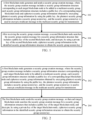
- FIG. 1 is a flowchart of a method for implementing secure multicast in a blockchain network according to some example embodiments.
- the method may include: Step 102: A first blockchain node generates and sends a security group creation message, where the security group creation message includes a security group information structure corresponding to each target blockchain node to be added to a multicast security group, each security group information structure includes a public key of a corresponding target blockchain node and ciphertext security group information obtained by encrypting plaintext security group information by using the public key, the plaintext security group information includes a security group session key, and the security group session key is used to encrypt a multicast message in the multicast security group for transmission.
- the security group creation message includes a security group information structure corresponding to each target blockchain node to be added to a multicast security group
- each security group information structure includes a public key of a corresponding target blockchain node and ciphertext security group information obtained by encrypting plaintext security group information by using the public key
- the first blockchain node may be any blockchain node in the blockchain network.
- the first blockchain node creates a multicast security group by using a security group creation message, and serves as a creator of the multicast security group.
- a specific limitation can be imposed on the creator of the multicast security group. For example, only one or more blockchain nodes designated in the blockchain network are allowed to become creators. For example, information (such as public keys) of these blockchain nodes can be recorded in the genesis block of the blockchain network, and other blockchain nodes can verify, based on this, whether a received security group creation message comes from these designated blockchain nodes. If yes, the received security group creation message is normally processed. If no, the received security group creation message is discarded.
- the target blockchain node may be any one or more blockchain nodes in the blockchain network.
- the first blockchain node can determine the above-mentioned target blockchain node from the blockchain network through off-chain negotiation, real-world negotiation, etc., and the first blockchain node and the determined target blockchain node form the above-mentioned multicast security group, thereby implementing secure multicast between these blockchain nodes, and preventing other blockchain nodes in the blockchain network from learning content of a multicast message.
- both the first blockchain node and the target blockchain node need to maintain a same session key, and it is ensured that the session key is maintained only by the first blockchain node and the target blockchain node, and is not learned by other blockchain nodes in the blockchain network.
- the first blockchain node and the target blockchain node can encrypt the multicast message by using the session key for transmission, and it is ensured that only the first blockchain node and the target blockchain node can decrypt the received multicast message.
- the session key described herein may be a security group session key in this specification.
- the first blockchain node can obtain the security group session key in any method.
- the first blockchain node receives a security group session key configured by a user, or the first blockchain node generates the security group session key by using a key generation rule, or the first blockchain node obtains the security group session key from an off-chain key server.
- the first blockchain node obtains the security group session key, and further distributes the security group session key to the target blockchain node by using a security group creation message, without adding a key server in a related technology to the blockchain network, thereby helping simplify a network architecture.
- a key distribution method can be applied to various blockchain nodes and conform to a decentralization characteristic of the blockchain network.
- Each blockchain node can be added to a plurality of multicast security groups at the same time, provided that the blockchain node can obtain a security group session key distributed in a corresponding multicast security group.
- Step 104 After receiving the security group creation message, a second blockchain node searches the security group creation message for a security group information structure that includes a public key of the second blockchain node, and decrypts, by using a private key of the second blockchain node, ciphertext security group information in the identified security group information structure to obtain the security group session key.
- each blockchain node has a corresponding public-private key pair to represent its identity.
- a private key in the public-private key pair is maintained by each blockchain node to avoid leakage, and a public key can be made public.
- each blockchain node can obtain a public key of other blockchain nodes in the blockchain network. According to the technical solution of this specification, secure distribution of the security group session key is implemented by using such a characteristic.
- a function of the public key is divided into two parts: In a first part, when a security group information structure corresponding to each target blockchain node is generated, a public key of a corresponding target blockchain node is included in the security group information structure, so that after receiving a security group creation message, each blockchain node can perform matching by using a public key of the blockchain node as an identifier, so as to accurately identify a security group information structure corresponding to the blockchain node. Certainly, if the matching fails, it indicates that the blockchain node does not belong to a corresponding multicast security group. As such, accurate distribution of the security group session key is ensured.
- asymmetric encryption is performed by using a public key of the corresponding target blockchain node to generate the above-mentioned ciphertext security group information. It is ensured that only the target blockchain node corresponding to the security group information structure can decrypt the ciphertext security group information to obtain the security group session key. The reason is that, as described above, only the target blockchain node holds its private key, thereby ensuring secure distribution of the security group session key. Therefore, if the first blockchain node wants to add the second blockchain node as a member of the multicast security group, the first blockchain node may include, in the security group creation message, a security group information structure corresponding to the second blockchain node.
- the security group information structure includes a public key of the second blockchain node and ciphertext security group information generated through encryption by using the public key, so that the second blockchain node can identify the security group information structure by using the public key of the second blockchain node, and perform decryption to obtain a security group session key.
- Secure multicast can be implemented between members of the multicast security group. Multicast messages sent between members are encrypted by using the above-mentioned security group session key for transmission, so that these multicast messages can only be decrypted by these members. Even if these multicast messages are received by other blockchain nodes in the blockchain network, the multicast messages cannot be decrypted, thereby ensuring that message content of the multicast messages certainly can only be obtained by members of the multicast security group. As such, secure multicast is implemented.
- the multicast security group When the multicast message is encrypted by using the security group session key, members of the multicast security group can pre-configure or pre-negotiate (for example, perform off-chain negotiation or real-world negotiation on) an encryption algorithm to be used.
- the encryption algorithm is further used to perform a decryption operation on the multicast message.
- the plaintext security group information may include encryption algorithm indication information, and the encryption algorithm indication information is used to represent an encryption algorithm used when the above-mentioned security group session key is used to encrypt the multicast message for transmission, which is equivalent to that the first blockchain node specifies the encryption algorithm to be used.
- the encryption algorithm can alternatively be determined by the first blockchain node and the target blockchain node through pre-negotiation, and is marked by the first blockchain node in the plaintext security group information.
- the encryption algorithm to be used may be any symmetric encryption algorithm, such as AES128-GCM, AES 128-CCM, AES256-GCM, AES256-CCM, AEAD_CHACHA20_POLY1305, SM4-GCM, or SM4-CCM. This is not limited in this specification.
- the security group session key is an asymmetric key
- the security group session key includes a public-private key pair, where a public key is used to encrypt the multicast message and a private key is used to decrypt the multicast message.
- the encryption algorithm to be used may be any asymmetric encryption algorithm, such as RSA, Elgamal, a Knapsack algorithm, Rabin, D-H, or ECC (an elliptic curve cryptography algorithm). This is not limited in this specification.
- one blockchain node joins only one multicast security group at the same time, the blockchain node receives and sends multicast messages only in the multicast security group, and only needs to use the security group session key distributed in the multicast security group for encryption and decryption, without confusing the multicast or security group session key.
- one blockchain node can join a plurality of multicast security groups at the same time. In such case, the blockchain node needs to distinguish between multicast security groups, for example, a security group session key used by each multicast security group and an encryption algorithm to be used, and for another example, a multicast security group to which a received multicast message belongs, and whether the blockchain node belongs to the multicast security group.
- the plaintext security group information may further include a security group identifier, and the security group identifier corresponds to a multicast security group, for example, the security group identifier and the multicast security group are in a one-to-one correspondence.
- a multicast message (that is, a multicast message transmitted between members of the multicast security group) in the multicast security group may include a security group identifier corresponding to the multicast security group, so as to instruct a receiver of the multicast message to perform a decryption operation by using a security group session key in plaintext security group information that includes the security group identifier.
- the receiver of the multicast message can determine, by using the security group identifier included in the multicast message, a multicast security group to which the multicast message belongs. If the receiver belongs to the multicast security group, the receiver maintains plaintext security group information that includes the security group identifier and that is obtained in steps 102 to 104, and further decrypts the multicast message by using a security group session key included in the plaintext security group information.
- the blockchain node can determine a multicast security group within which communication is to be performed, and can obtain, based on the determined security group identifier corresponding to the multicast security group, a security group session key from plaintext security group information that includes the security group identifier, and encrypt the multicast message by using the security group session key for transmission.
- the above-mentioned security group creation message may further include a message signature generated by using a private key of the first blockchain node. Then, after receiving the security group creation message, the second blockchain node can first verify the message signature by using the public key of the first blockchain node, and when the verification succeeds, determine that the security group creation message does indeed come from the first blockchain node, that the security group creation message is not tampered with during transmission, and that the first blockchain node can perform step 104 and another operation only after it is confirmed that the verification succeeds. Otherwise, the security group creation message may be discarded or not processed.
- the above-mentioned message signature can be generated by signing the key information in the security group creation message by using a private key of the first blockchain node, so that when the verification succeeds, it can be specifically proven that the key information is not tampered with.
- the key information may include the security group information structure corresponding to each target blockchain node.
- the key information may further include at least one of the following: an anti-replay random number; the public key or a digital certificate of the first blockchain node; and the like. This is not limited in this specification. Different security group creation messages sent by the first blockchain node may respectively include different anti-replay random numbers.
- the second blockchain node can confirm that the currently received security group creation message is a replay message, and needs to be discarded or not processed.
- the second blockchain node normally processes the received security group creation message only when the currently received security group creation message and the historically received security group creation message include different anti-replay random numbers.
- the digital certificate of the first blockchain node is issued by the CA center, and the digital certificate includes a public key of the first blockchain node. When verification of the digital certificate succeeds, the second blockchain node can determine that the public key included in the digital certificate belongs to the first blockchain node.
- the multicast security group may be a permanently effective security group, or may be short-term or temporary.
- the short-term or temporary multicast security group has specific timeliness.
- such a multicast security group may have a validity period, so that a corresponding multicast security group can implement secure multicast only within the validity period.
- the plaintext security group information in any one of the above-mentioned embodiments may further include a session validity period, and the session validity period is used to represent a validity period of the plaintext security group information, so that when the plaintext security group information is within the validity period, the plaintext security group information is stored by each blockchain node that has been added to the corresponding multicast security group; when the plaintext security group information is not within the validity period, the plaintext security group information is discarded or marked as invalid by each blockchain node that has been added to the corresponding multicast security group.
- the session validity period described herein is used to manage the validity period of the plaintext security group information, because security multicast in the multicast security group needs to use information such as a security group session key and a session group identifier that is included in the plaintext security group information, management of the plaintext security group information is actually management of the multicast security group, and the validity period of the plaintext security group information is the validity period of the multicast security group. A longer time of using the same plaintext security group information indicates a greater risk that the plaintext security group information is leaked. Therefore, setting the above-mentioned session validity period can avoid a potential security risk caused by long-term use of the same plaintext security group information, and force members of the corresponding multicast security group to update the plaintext security group information, thereby improving multicast security.
- FIG. 2 is a flowchart of a method for implementing secure multicast in a blockchain network on a creator side according to some example embodiments.
- the method may include: Step 202: A first blockchain node generates a security group creation message, where the security group creation message includes a security group information structure corresponding to each target blockchain node to be added to a multicast security group, each security group information structure includes a public key of a corresponding target blockchain node and ciphertext security group information obtained by encrypting plaintext security group information by using the public key, the plaintext security group information includes a security group session key, and the security group session key is used to encrypt a multicast message in the multicast security group for transmission.
- the security group creation message includes a security group information structure corresponding to each target blockchain node to be added to a multicast security group
- each security group information structure includes a public key of a corresponding target blockchain node and ciphertext security group information obtained by encrypting plaintext security group information by using the public key
- the first blockchain node When the first blockchain node is configured to generate the security group creation message, it is equivalent to that the first blockchain node initiates creation of a corresponding multicast session group, and therefore, the first blockchain node can be considered as a creator of the multicast session group.
- the first blockchain node For other blockchain nodes that receive the security group creation message and obtain the security group session key and the like from the first blockchain node, it is equivalent to participating in a corresponding multicast session group. Therefore, these blockchain nodes can be considered as participants of the multicast session group.
- the same blockchain node can serve as a creator in some multicast security groups, and can serve as a participant in some other multicast security groups at the same time.
- Step 204 The first blockchain node sends the security group creation message, so that each target blockchain node searches the security group creation message for a security group information structure that includes a public key of the target blockchain node, and decrypts, by using a private key of the target blockchain node, ciphertext security group information in the identified security group information structure to obtain the security group session key.
- the plaintext security group information further includes encryption algorithm indication information, and the encryption algorithm indication information is used to represent an encryption algorithm used when the security group session key is used to encrypt the multicast message for transmission.
- the plaintext security group information further includes a session validity period, and the session validity period is used to represent a validity period of the plaintext security group information.
- the plaintext security group information is stored by each blockchain node that has been added to the multicast security group.
- the plaintext security group information is not within the validity period, the plaintext security group information is discarded or marked as invalid by each blockchain node that has been added to the multicast security group.
- the plaintext security group information further includes a security group identifier, and the security group identifier corresponds to the multicast security group.
- the multicast message in the multicast security group includes the security group identifier, so as to instruct a receiver of the multicast message to perform a decryption operation by using a security group session key in plaintext security group information that includes the security group identifier.
- the security group creation message further includes a message signature generated by using a private key of the first blockchain node.
- the message signature is generated by signing key information in the security group creation message by using the private key of the first blockchain node; and the key information includes the security group information structure corresponding to each target blockchain node.
- the key information further includes at least one of the following: an anti-replay random number; and the public key or a digital certificate of the first blockchain node.
- FIG. 3 is a flowchart of a method for implementing secure multicast in a blockchain network on a participant side according to some example embodiments.
- the method may include: Step 302: The second blockchain node receives a security group creation message sent by a first blockchain node, where the security group creation message includes a security group information structure corresponding to each target blockchain node to be added to a multicast security group, each security group information structure includes a public key of a corresponding target blockchain node and ciphertext security group information obtained by encrypting plaintext security group information by using the public key, the plaintext security group information includes a security group session key, and the security group session key is used to encrypt a multicast message in the multicast security group for transmission.
- the security group creation message includes a security group information structure corresponding to each target blockchain node to be added to a multicast security group
- each security group information structure includes a public key of a corresponding target blockchain node and ciphertext security group information obtained by encrypting plaintext
- Step 304 The second blockchain node searches the security group creation message for a security group information structure that includes a public key of the second blockchain node, and decrypts, by using a private key of the second blockchain node, ciphertext security group information in the identified security group information structure to obtain the security group session key.
- the plaintext security group information further includes encryption algorithm indication information, and the encryption algorithm indication information is used to represent an encryption algorithm used when the security group session key is used to encrypt the multicast message for transmission.
- the plaintext security group information further includes a session validity period, and the session validity period is used to represent a validity period of the plaintext security group information.
- the plaintext security group information is stored by each blockchain node that has been added to the multicast security group.
- the plaintext security group information is not within the validity period, the plaintext security group information is discarded or marked as invalid by each blockchain node that has been added to the multicast security group.
- the plaintext security group information further includes a security group identifier, and the security group identifier corresponds to the multicast security group.
- the multicast message in the multicast security group includes the security group identifier, so as to instruct a receiver of the multicast message to perform a decryption operation by using a security group session key in plaintext security group information that includes the security group identifier.
- the security group creation message further includes a message signature generated by using a private key of the first blockchain node.
- the method further includes: The second blockchain node verifies the message signature by using a public key of the first blockchain node.
- the message signature is generated by signing key information in the security group creation message by using the private key of the first blockchain node; and the key information includes the security group information structure corresponding to each target blockchain node.
- the key information further includes at least one of the following: an anti-replay random number; and the public key or a digital certificate of the first blockchain node.
- FIG. 1 the technical solutions for the creator side and the participant side of the multicast security group have been described with reference to processing operations separately performed by the first blockchain node and the second blockchain node. Therefore, for descriptions of related features or solutions in some embodiments shown in FIG. 2 and FIG. 3 , references can be made to some embodiments shown in FIG. 1 , and details are not described herein again.
- FIG. 4 is a schematic diagram of a multicast scenario according to some example embodiments.
- the blockchain network includes some blockchain nodes, such as a node A, a node B, a node C, and a node D. It is assumed that a multicast security group needs to be established among the node A, the node B, and the node C, so that some sensitive content can be transmitted among the node A, the node B, and the node C, and other blockchain nodes such as the node D are prevented from obtaining the sensitive content.
- the node A, the node B, and the node C can perform key negotiation based on the Blockchain Security Group Generate Protocol (BSGGP) in some embodiments of this specification, so as to establish a multicast security group, and further implement secure multicast based on the Blockchain Security Group Multicast Protocol (BSGMP) in some embodiments of this specification.
- BSGGP Blockchain Security Group Generate Protocol
- BSGMP Blockchain Security Group Multicast Protocol
- the node A needs to first generate a security group creation message BSGGP_GroupInfo that complies with the BSGGP, and a message structure of the BSGGP_GroupInfo may be:
- Encrypt_Session_chain is used to store information about the multicast security group, and the information about the multicast security group may be a security group information structure corresponding to each target blockchain node to be added to the multicast security group in some embodiments described above.
- a structure of Encrypt_Session_chain may be:
- BSG_Encrypt_Session is the above-mentioned security group information structure, and security group information structures corresponding to various target blockchain nodes such as the node B and the node C can form a chain, and then are added to the above-mentioned Encrypt_Session_chain in a chain structure.
- these security group information structures form a chain structure, they can be successively concatenated in a predetermined order (for example, in an order of sizes of IP addresses or in an order of sizes of public keys of nodes, which is not limited in this specification).
- the concatenation may alternatively be unordered. The concatenation order does not affect a negotiation effect.
- a structure of BSG_Encrypt_Session may be:
- each BSG_Encrypt_Session needs to be separately generated for each target blockchain node, and each BSG_Encrypt_Session includes a public key of a corresponding target blockchain node, so that regardless of an order in which the BSG_Encrypt_Session is concatenated, each target blockchain node can always identify BSG_Encrypt_Session corresponding to the target blockchain node by matching a public key of the target blockchain node, and therefore, a concatenation order of the BSG_Encrypt_Session does not affect a negotiation effect.
- Enc_Session is equivalent to the ciphertext security group information described above, and Enc_Session is obtained by encrypting BSG_Session by using a public key of a target blockchain node corresponding to BSG_Encrypt_Session to which Enc_Session belongs, where BSG_Session is equivalent to the plaintext security group information described above.
- the included Enc_Session is obtained by encrypting the BSG_Session by using a public key of the node B
- the included Enc_Session is obtained by encrypting the BSG_Session by using a public key of the node C. It can be learned that only the target blockchain node corresponding to the BSG_Encrypt_Session can decrypt the Enc_Session by using the private key maintained by the target blockchain node, so as to obtain the BSG_Session.
- BSG_Encrypt_Session corresponding to each node BSG_Session corresponding to Enc_Session is the same.
- the BSG_Session may include any content that the node A wants to transmit to the node B and the node C. Certainly, the content is usually related to a multicast session group that needs to be created. For example, a structure of the BSG_Session may be:
- each target blockchain node After performing decryption to obtain the BSG_Session, each target blockchain node stores the BSG_Session.
- the session_lifetime_hint included in each BSG_Session is used to indicate a validity period of a corresponding multicast session group or a validity period of a corresponding session.
- the target blockchain node can delete a BSG_Session or mark the BSG_Session as invalid when determining that the session _lifetime_hint included in the BSG_Session expires.
- the target blockchain node when checking that the session_lifetime_hint included in the corresponding BSG_Session expires before needing to send a multicast message, the target blockchain node does not use the Master_key in the BSG_Session for encryption.
- the Master_key in the BSG_Session is used to encrypt the multicast message for transmission only when the session _lifetime_hint included in the BSG_Session does not expire.
- the BSG_ID is used to mark a multicast session group or a session corresponding to the multicast session group, so that multicast messages transmitted between members of the multicast session group each include the BSG_ID.
- a blockchain node can match a BSG_Session maintained by the blockchain node based on the BSG_ID included in the multicast message, and decrypt the received multicast message by using a Master _key in the BSG_Session that includes the BSG_ID.
- the Master _key is used to perform encryption and decryption processing on the multicast message.
- the cipher_id is used to indicate an algorithm used by members of the multicast session group to perform encryption and decryption processing.
- the node A, the node B, and the node C each locally maintain the BSG_Session, so that the node A, the node B, and the node C form one multicast security group, and these nodes can implement secure multicast based on the jointly maintained BSG_Session.
- a structure of the BSG_Plaintext may be:
- the BSG_Plaintext message content that needs to be transmitted by the node B is recorded in the content in a plaintext form.
- the BSG_Plaintext may include only the content.
- the BSG_Plaintext is organized by using a block structure, for example, a length of each block is 128 bits. In such case, when a length of content is exactly an integer multiple of 128 bits, the content can exactly pad some corresponding blocks, and the BSG_Plaintext may not include zeros[length_of padding-1] and length_of_padding, either. However, when a length of content is not exactly an integer multiple of 128 bits, 128 bits of the last block cannot be padded.
- All the unpadded portions can be padded with 0s.
- the above-mentioned zeros[length_of_padding-1] corresponds to the portions (i.e., padding) padded with 0s, and length_of_padding is used to describe a length of padding.
- the node B can construct the above-mentioned BSG_Plaintext, so as to generate a multicast message BSG_Message.
- a message structure of the BSG_Message may be:
- the node B When generating the BSG_Message, the node B needs to use the BSG_Session obtained in the above-mentioned process. Actually, when the node B wants to send the BSG_Message in a multicast session group, the node B should use the BSG_Session corresponding to the multicast session group, and generate the above-mentioned BSG_Message by using the BSG_ID and the Master _key included in the BSG_Session.
- the BSG_Ciphertext is generated by the node B by encrypting the BSG_Plaintext by using the Master_key.
- the encryption algorithm further requires that a random number iv be used to increase security of symmetric encryption, so that a structure of the BSG_Message includes the above-mentioned seq_num.
- the node B can separately send the seq_num to the node A and the node C, instead of integrating the seq_num into the structure of the BSG_Message for sending.
- the BSG_Ciphertext may not be decrypted correctly because the seq_num is not exposed, thereby helping improve security.
- integrating the seq_num into a structure of the BSG_Message for sending can avoid increasing a quantity of interaction times caused by sending the seq_num separately, thereby helping improve communication efficiency.
- additional_data BSG_Message.length ⁇ BSG_Message
- the node C can perform matching on all the BSG_Session maintained by the node C based on the BSG_ID included in the BSG_Message, to determine the BSG_Session that includes the BSG_ID. Further, the node C can read the cipher_id and the Master _key from the determined BSG_Session, and decrypt the BSG_Ciphertext in the received BSG_Message based on the cipher_id and the Master_key, so as to obtain the BSG_Plaintext in the plaintext.
- a blockchain node serving as a sender can designate information about a blockchain node serving as a receiver in a corresponding message packet. For example, an IP address of the blockchain node is added to a packet header, so that the multicast message can be directionally sent to the blockchain node designated as a receiver and is not sent to other blockchain nodes, thereby reducing network resources.
- IP address of the blockchain node is added to a packet header, so that the multicast message can be directionally sent to the blockchain node designated as a receiver and is not sent to other blockchain nodes, thereby reducing network resources.
- identification information corresponding to these blockchain nodes can be added to a message packet, so that the blockchain relay communication network can directionally send a multicast message to these blockchain nodes designated as receivers instead of sending the multicast message to other blockchain nodes.
- a blockchain node that does not belong to the multicast session group may also receive the multicast message. For example, if the node D receives the above-mentioned BSG_Message sent by the node B, the node D can also perform matching on all the BSG_Session maintained by the node D based on the BSG_ID included in the BSG Message, but the node D cannot obtain, through matching, the BSG_Session that includes the BSG_ID, and therefore cannot decrypt the BSG_Ciphertext in the received BSG_Message. In terms of security, it is equivalent to that the node D does not receive the multicast message.
- each blockchain node in the blockchain network can obtain a public key of another blockchain node.
- the security group creation message generated by the first blockchain node may include the security group information structure corresponding to each target blockchain node.
- each security group information structure includes only a public key of a corresponding target blockchain node and ciphertext security group information encrypted based on the public key, so that the target blockchain node can identify a security group information structure corresponding to the target blockchain node by matching a public key.
- the ciphertext security group information can only be decrypted by the target blockchain node by using a private key of the target blockchain node, and cannot be decrypted by another blockchain node.
- a secure and accurate key sharing operation can be implemented to create a multicast security group without requiring an additional centralized key server, so that blockchain nodes in the multicast security group can implement secure multicast by using the above-mentioned security group session key.
- the plaintext security group information further includes encryption algorithm indication information, and the encryption algorithm indication information is used to represent an encryption algorithm used when the security group session key is used to encrypt the multicast message for transmission.
- the plaintext security group information further includes a session validity period, and the session validity period is used to represent a validity period of the plaintext security group information.
- the plaintext security group information is stored by each blockchain node that has been added to the multicast security group.
- the plaintext security group information is not within the validity period, the plaintext security group information is discarded or marked as invalid by each blockchain node that has been added to the multicast security group.
- the security group creation message further includes a message signature generated by using a private key of the first blockchain node.
- the message signature is generated by signing key information in the security group creation message by using the private key of the first blockchain node; and the key information includes the security group information structure corresponding to each target blockchain node.
- the key information further includes at least one of the following: an anti-replay random number; and the public key or a digital certificate of the first blockchain node.
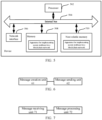
- the apparatus for implementing secure multicast in a blockchain network on a participant side may include: a message receiving unit 71, configured to enable a second blockchain node to receive a security group creation message sent by a first blockchain node, where the security group creation message includes a security group information structure corresponding to each target blockchain node to be added to a multicast security group, each security group information structure includes a public key of a corresponding target blockchain node and ciphertext security group information obtained by encrypting plaintext security group information by using the public key, the plaintext security group information includes a security group session key, and the security group session key is used to encrypt a multicast message in the multicast security group for transmission; and a message processing unit 72, configured to enable the second blockchain node to search the security group creation message for a security group information structure that includes a public key of the second blockchain node, and decrypt, by using a private key of the second blockchain node, ciphertext security group information in the identified
- the plaintext security group information further includes encryption algorithm indication information, and the encryption algorithm indication information is used to represent an encryption algorithm used when the security group session key is used to encrypt the multicast message for transmission.
- the plaintext security group information further includes a session validity period, and the session validity period is used to represent a validity period of the plaintext security group information.
- the plaintext security group information is stored by each blockchain node that has been added to the multicast security group.
- the plaintext security group information is not within the validity period, the plaintext security group information is discarded or marked as invalid by each blockchain node that has been added to the multicast security group.
- the plaintext security group information further includes a security group identifier, and the security group identifier corresponds to the multicast security group.
- the multicast message in the multicast security group includes the security group identifier, so as to instruct a receiver of the multicast message to perform a decryption operation by using a security group session key in plaintext security group information that includes the security group identifier.
- the security group creation message further includes a message signature generated by using a private key of the first blockchain node.
- the method further includes: The second blockchain node verifies the message signature by using a public key of the first blockchain node.
- the message signature is generated by signing key information in the security group creation message by using the private key of the first blockchain node; and the key information includes the security group information structure corresponding to each target blockchain node.
- the key information further includes at least one of the following: an anti-replay random number; and the public key or a digital certificate of the first blockchain node.
- the system, apparatus, module, or unit illustrated in the above-mentioned embodiments can be specifically implemented by using a computer chip or an entity, or can be implemented by using a product having a specific function.
- a typical implementation device is a computer, and a specific form of the computer can be a personal computer, a laptop computer, a cellular phone, a camera phone, a smartphone, a personal digital assistant, a media player, a navigation device, an email receiving and sending device, a game console, a tablet computer, a wearable device, or any combination of these devices.
- the memory may include a non-persistent memory, a random access memory (RAM), a non-volatile memory, and/or another form in a computer-readable medium, for example, a read-only memory (ROM) or a flash memory (flash RAM).
- RAM random access memory
- flash RAM flash memory
- the memory is an example of the computer-readable medium.
- Examples of a computer storage medium include but are not limited to a phase change random access memory (PRAM), a static RAM (SRAM), a dynamic RAM (DRAM), a RAM of another type, a read-only memory (ROM), an electrically erasable programmable ROM (EEPROM), a flash memory or another memory technology, a compact disc ROM (CD-ROM), a digital versatile disc (DVD) or another optical storage, a cassette tape, a magnetic disk storage, a quantum memory, a storage medium based on graphene, another magnetic storage device, or any other non-transmission medium.
- the computer storage medium can be used to store information that can be accessed by the computing device. Based on the definition in this specification, the computer-readable medium does not include transitory media such as a modulated data signal and carrier.
Landscapes
- Engineering & Computer Science (AREA)
- Computer Security & Cryptography (AREA)
- Computer Networks & Wireless Communication (AREA)
- Signal Processing (AREA)
- Computer Hardware Design (AREA)
- Computing Systems (AREA)
- General Engineering & Computer Science (AREA)
- Data Exchanges In Wide-Area Networks (AREA)
Applications Claiming Priority (2)
| Application Number | Priority Date | Filing Date | Title |
|---|---|---|---|
| CN202110152304.XA CN114866267B (zh) | 2021-02-03 | 2021-02-03 | 在区块链网络中实现安全组播的方法及装置 |
| PCT/CN2022/071800 WO2022166556A1 (fr) | 2021-02-03 | 2022-01-13 | Procédé et appareil de réalisation de multidiffusion sécurisée en réseau de chaînes de blocs |
Publications (2)
| Publication Number | Publication Date |
|---|---|
| EP4290804A1 true EP4290804A1 (fr) | 2023-12-13 |
| EP4290804A4 EP4290804A4 (fr) | 2024-12-25 |
Family
ID=82623388
Family Applications (1)
| Application Number | Title | Priority Date | Filing Date |
|---|---|---|---|
| EP22748835.0A Pending EP4290804A4 (fr) | 2021-02-03 | 2022-01-13 | Procédé et appareil de réalisation de multidiffusion sécurisée en réseau de chaînes de blocs |
Country Status (4)
| Country | Link |
|---|---|
| US (1) | US12438857B2 (fr) |
| EP (1) | EP4290804A4 (fr) |
| CN (1) | CN114866267B (fr) |
| WO (1) | WO2022166556A1 (fr) |
Families Citing this family (4)
| Publication number | Priority date | Publication date | Assignee | Title |
|---|---|---|---|---|
| CN115694978B (zh) * | 2022-10-28 | 2025-10-14 | 北京神经元网络技术有限公司 | 一种工业现场总线加密通信方法及装置、设备、存储介质 |
| CN116155973B (zh) * | 2023-02-13 | 2025-11-14 | 网易(杭州)网络有限公司 | 区块链通信方法、装置、计算机设备及存储介质 |
| CN117014234B (zh) * | 2023-10-07 | 2023-12-08 | 成都创一博通科技有限公司 | 基于区块链的信息加密传输方法 |
| CN119299459A (zh) * | 2024-09-25 | 2025-01-10 | 中国移动通信有限公司研究院 | 区块链系统通信方法、装置、网络设备、介质及程序产品 |
Family Cites Families (12)
| Publication number | Priority date | Publication date | Assignee | Title |
|---|---|---|---|---|
| US7103185B1 (en) * | 1999-12-22 | 2006-09-05 | Cisco Technology, Inc. | Method and apparatus for distributing and updating private keys of multicast group managers using directory replication |
| CN100525182C (zh) * | 2004-03-11 | 2009-08-05 | 西安西电捷通无线网络通信有限公司 | 用于无线网络的鉴别与保密方法 |
| CN102684875B (zh) * | 2012-01-07 | 2015-12-16 | 河南科技大学 | 组播安全代理组件及组播加密管理方法 |
| CN107171806B (zh) * | 2017-05-18 | 2020-04-10 | 北京航空航天大学 | 基于区块链的移动终端网络密钥协商方法 |
| US12021988B2 (en) * | 2017-11-09 | 2024-06-25 | Electric Society Sa | Ad-hoc network |
| US20190251199A1 (en) * | 2018-02-14 | 2019-08-15 | Ivan Klianev | Transactions Across Blockchain Networks |
| CN108566375A (zh) * | 2018-03-12 | 2018-09-21 | 深圳壹账通智能科技有限公司 | 基于区块链的多端间消息通信的方法、终端及存储介质 |
| US11405373B2 (en) * | 2018-09-07 | 2022-08-02 | Honeywell International, Inc. | Blockchain-based secured multicast communications |
| KR102020898B1 (ko) * | 2018-10-31 | 2019-09-11 | 상명대학교 천안산학협력단 | 신뢰 실행 환경 기반 세션키 수립 방법 |
| CN110046521B (zh) * | 2019-04-24 | 2023-04-18 | 成都派沃特科技股份有限公司 | 去中心化隐私保护方法 |
| US11218293B2 (en) * | 2020-01-27 | 2022-01-04 | Hewlett Packard Enterprise Development Lp | Secure parameter merging using homomorphic encryption for swarm learning |
| CN112217645B (zh) * | 2020-09-28 | 2021-10-26 | 电子科技大学 | 一种基于区块链技术的匿名通信系统路由选择方法 |
-
2021
- 2021-02-03 CN CN202110152304.XA patent/CN114866267B/zh active Active
-
2022
- 2022-01-13 EP EP22748835.0A patent/EP4290804A4/fr active Pending
- 2022-01-13 WO PCT/CN2022/071800 patent/WO2022166556A1/fr not_active Ceased
- 2022-01-13 US US18/275,665 patent/US12438857B2/en active Active
Also Published As
| Publication number | Publication date |
|---|---|
| WO2022166556A1 (fr) | 2022-08-11 |
| CN114866267B (zh) | 2023-12-05 |
| US12438857B2 (en) | 2025-10-07 |
| US20240129281A1 (en) | 2024-04-18 |
| CN114866267A (zh) | 2022-08-05 |
| EP4290804A4 (fr) | 2024-12-25 |
Similar Documents
| Publication | Publication Date | Title |
|---|---|---|
| EP4290804A1 (fr) | Procédé et appareil de réalisation de multidiffusion sécurisée en réseau de chaînes de blocs | |
| US11316677B2 (en) | Quantum key distribution node apparatus and method for quantum key distribution thereof | |
| CN111740828B (zh) | 一种密钥生成方法以及装置、设备、加解密方法 | |
| US9338150B2 (en) | Content-centric networking | |
| US11303431B2 (en) | Method and system for performing SSL handshake | |
| US20250330494A1 (en) | Identity verification method for handshake process for tlcp protocol | |
| US20210218717A1 (en) | Perfect forward secrecy (pfs) protected media access control security (macsec) key distribution | |
| CN115174061A (zh) | 基于区块链中继通信网络系统的消息传输方法及装置 | |
| CN114142995B (zh) | 面向区块链中继通信网络的密钥安全分发方法及装置 | |
| CN118540165B (zh) | 国密IPSec VPN协议的抗量子安全增强方法 | |
| CN118381608B (zh) | 一种基于带外量子密钥的噪声协议实现方法及装置 | |
| CN115174188A (zh) | 一种消息传输方法、装置、电子设备和存储介质 | |
| CN114095499B (zh) | 区块链中继通信网络的中立性验证方法及装置 | |
| CN117675235A (zh) | 一种保密通信处理方法、第一终端及存储介质 | |
| US11153087B1 (en) | Hub-based token generation and endpoint selection for secure channel establishment | |
| CN110620776B (zh) | 一种数据转移信息传输方法及其装置 | |
| CN119276468B (zh) | 基于双棘轮算法的群组密钥协商方法、通信方法及装置 | |
| CN118659881B (zh) | 安全外壳协议的抗量子安全增强方法 | |
| CN118555133A (zh) | 传输层安全协议的抗量子安全增强方法 | |
| CN114143038A (zh) | 面向区块链中继通信网络的密钥安全分发方法及装置 | |
| US20250286707A1 (en) | Multimodal Cryptographic System, Computer Executable Instructions and Method | |
| CN117254911B (zh) | 一种基于秘密分享的多方安全计算处理方法和系统 | |
| CN116722996A (zh) | 动态加密密钥切换方法、装置、视联网服务器及存储介质 | |
| JP2024118655A (ja) | 通信サーバ、通信方法及び通信プログラム | |
| CN118432862A (zh) | 一种匿名传输链路构建方法、装置及电子设备 |
Legal Events
| Date | Code | Title | Description |
|---|---|---|---|
| STAA | Information on the status of an ep patent application or granted ep patent |
Free format text: STATUS: THE INTERNATIONAL PUBLICATION HAS BEEN MADE |
|
| PUAI | Public reference made under article 153(3) epc to a published international application that has entered the european phase |
Free format text: ORIGINAL CODE: 0009012 |
|
| STAA | Information on the status of an ep patent application or granted ep patent |
Free format text: STATUS: REQUEST FOR EXAMINATION WAS MADE |
|
| 17P | Request for examination filed |
Effective date: 20230802 |
|
| AK | Designated contracting states |
Kind code of ref document: A1 Designated state(s): AL AT BE BG CH CY CZ DE DK EE ES FI FR GB GR HR HU IE IS IT LI LT LU LV MC MK MT NL NO PL PT RO RS SE SI SK SM TR |
|
| DAV | Request for validation of the european patent (deleted) | ||
| DAX | Request for extension of the european patent (deleted) | ||
| REG | Reference to a national code |
Ref country code: DE Ref legal event code: R079 Free format text: PREVIOUS MAIN CLASS: H04L0009140000 Ipc: H04L0009000000 |
|
| A4 | Supplementary search report drawn up and despatched |
Effective date: 20241125 |
|
| RIC1 | Information provided on ipc code assigned before grant |
Ipc: H04L 9/40 20220101ALI20241119BHEP Ipc: H04L 12/18 20060101ALI20241119BHEP Ipc: H04L 9/08 20060101ALI20241119BHEP Ipc: H04L 9/32 20060101ALI20241119BHEP Ipc: H04L 9/00 20220101AFI20241119BHEP |