EP4290733A1 - Intelligent battery discharge controlling method with load balancing and system thereof - Google Patents
Intelligent battery discharge controlling method with load balancing and system thereof Download PDFInfo
- Publication number
- EP4290733A1 EP4290733A1 EP23152992.6A EP23152992A EP4290733A1 EP 4290733 A1 EP4290733 A1 EP 4290733A1 EP 23152992 A EP23152992 A EP 23152992A EP 4290733 A1 EP4290733 A1 EP 4290733A1
- Authority
- EP
- European Patent Office
- Prior art keywords
- battery
- batteries
- load balancing
- discharge
- another
- Prior art date
- Legal status (The legal status is an assumption and is not a legal conclusion. Google has not performed a legal analysis and makes no representation as to the accuracy of the status listed.)
- Withdrawn
Links
Images




Classifications
-
- H—ELECTRICITY
- H02—GENERATION; CONVERSION OR DISTRIBUTION OF ELECTRIC POWER
- H02J—ELECTRIC POWER NETWORKS; CIRCUIT ARRANGEMENTS OR SYSTEMS FOR SUPPLYING OR DISTRIBUTING ELECTRIC POWER; SYSTEMS FOR STORING ELECTRIC ENERGY
- H02J7/00—Circuit arrangements for charging or discharging batteries or for supplying loads from batteries
- H02J7/50—Circuit arrangements for charging or discharging batteries or for supplying loads from batteries acting upon multiple batteries simultaneously or sequentially
- H02J7/52—Circuit arrangements for charging or discharging batteries or for supplying loads from batteries acting upon multiple batteries simultaneously or sequentially for charge balancing, e.g. equalisation of charge between batteries
- H02J7/56—Active balancing, e.g. using capacitor-based, inductor-based or DC-DC converters
-
- H—ELECTRICITY
- H02—GENERATION; CONVERSION OR DISTRIBUTION OF ELECTRIC POWER
- H02J—ELECTRIC POWER NETWORKS; CIRCUIT ARRANGEMENTS OR SYSTEMS FOR SUPPLYING OR DISTRIBUTING ELECTRIC POWER; SYSTEMS FOR STORING ELECTRIC ENERGY
- H02J7/00—Circuit arrangements for charging or discharging batteries or for supplying loads from batteries
- H02J7/50—Circuit arrangements for charging or discharging batteries or for supplying loads from batteries acting upon multiple batteries simultaneously or sequentially
- H02J7/52—Circuit arrangements for charging or discharging batteries or for supplying loads from batteries acting upon multiple batteries simultaneously or sequentially for charge balancing, e.g. equalisation of charge between batteries
- H02J7/54—Passive balancing, e.g. using resistors or parallel MOSFETs
-
- H—ELECTRICITY
- H02—GENERATION; CONVERSION OR DISTRIBUTION OF ELECTRIC POWER
- H02J—ELECTRIC POWER NETWORKS; CIRCUIT ARRANGEMENTS OR SYSTEMS FOR SUPPLYING OR DISTRIBUTING ELECTRIC POWER; SYSTEMS FOR STORING ELECTRIC ENERGY
- H02J7/00—Circuit arrangements for charging or discharging batteries or for supplying loads from batteries
- H02J7/14—Circuit arrangements for charging or discharging batteries or for supplying loads from batteries for charging batteries from dynamo-electric generators driven at varying speed, e.g. on vehicle
- H02J7/1407—Circuit arrangements for charging or discharging batteries or for supplying loads from batteries for charging batteries from dynamo-electric generators driven at varying speed, e.g. on vehicle on vehicles not being driven by a motor, e.g. bicycles
-
- H—ELECTRICITY
- H02—GENERATION; CONVERSION OR DISTRIBUTION OF ELECTRIC POWER
- H02J—ELECTRIC POWER NETWORKS; CIRCUIT ARRANGEMENTS OR SYSTEMS FOR SUPPLYING OR DISTRIBUTING ELECTRIC POWER; SYSTEMS FOR STORING ELECTRIC ENERGY
- H02J7/00—Circuit arrangements for charging or discharging batteries or for supplying loads from batteries
- H02J7/14—Circuit arrangements for charging or discharging batteries or for supplying loads from batteries for charging batteries from dynamo-electric generators driven at varying speed, e.g. on vehicle
- H02J7/1423—Circuit arrangements for charging or discharging batteries or for supplying loads from batteries for charging batteries from dynamo-electric generators driven at varying speed, e.g. on vehicle with multiple batteries
-
- H—ELECTRICITY
- H02—GENERATION; CONVERSION OR DISTRIBUTION OF ELECTRIC POWER
- H02J—ELECTRIC POWER NETWORKS; CIRCUIT ARRANGEMENTS OR SYSTEMS FOR SUPPLYING OR DISTRIBUTING ELECTRIC POWER; SYSTEMS FOR STORING ELECTRIC ENERGY
- H02J7/00—Circuit arrangements for charging or discharging batteries or for supplying loads from batteries
- H02J7/50—Circuit arrangements for charging or discharging batteries or for supplying loads from batteries acting upon multiple batteries simultaneously or sequentially
- H02J7/575—Parallel/serial switching of connection of batteries to charge or load circuit
-
- H—ELECTRICITY
- H02—GENERATION; CONVERSION OR DISTRIBUTION OF ELECTRIC POWER
- H02J—ELECTRIC POWER NETWORKS; CIRCUIT ARRANGEMENTS OR SYSTEMS FOR SUPPLYING OR DISTRIBUTING ELECTRIC POWER; SYSTEMS FOR STORING ELECTRIC ENERGY
- H02J7/00—Circuit arrangements for charging or discharging batteries or for supplying loads from batteries
- H02J7/50—Circuit arrangements for charging or discharging batteries or for supplying loads from batteries acting upon multiple batteries simultaneously or sequentially
- H02J7/585—Sequential battery discharge in systems with a plurality of batteries
-
- H—ELECTRICITY
- H02—GENERATION; CONVERSION OR DISTRIBUTION OF ELECTRIC POWER
- H02J—ELECTRIC POWER NETWORKS; CIRCUIT ARRANGEMENTS OR SYSTEMS FOR SUPPLYING OR DISTRIBUTING ELECTRIC POWER; SYSTEMS FOR STORING ELECTRIC ENERGY
- H02J7/00—Circuit arrangements for charging or discharging batteries or for supplying loads from batteries
- H02J7/80—Circuit arrangements for charging or discharging batteries or for supplying loads from batteries including monitoring or indicating arrangements
-
- H—ELECTRICITY
- H02—GENERATION; CONVERSION OR DISTRIBUTION OF ELECTRIC POWER
- H02J—ELECTRIC POWER NETWORKS; CIRCUIT ARRANGEMENTS OR SYSTEMS FOR SUPPLYING OR DISTRIBUTING ELECTRIC POWER; SYSTEMS FOR STORING ELECTRIC ENERGY
- H02J7/00—Circuit arrangements for charging or discharging batteries or for supplying loads from batteries
- H02J7/80—Circuit arrangements for charging or discharging batteries or for supplying loads from batteries including monitoring or indicating arrangements
- H02J7/82—Control of state of charge [SOC]
-
- H—ELECTRICITY
- H02—GENERATION; CONVERSION OR DISTRIBUTION OF ELECTRIC POWER
- H02J—ELECTRIC POWER NETWORKS; CIRCUIT ARRANGEMENTS OR SYSTEMS FOR SUPPLYING OR DISTRIBUTING ELECTRIC POWER; SYSTEMS FOR STORING ELECTRIC ENERGY
- H02J7/00—Circuit arrangements for charging or discharging batteries or for supplying loads from batteries
- H02J7/855—Circuit arrangements for charging or discharging batteries or for supplying loads from batteries with circuits adapted for supplying loads from the battery
-
- H—ELECTRICITY
- H02—GENERATION; CONVERSION OR DISTRIBUTION OF ELECTRIC POWER
- H02J—ELECTRIC POWER NETWORKS; CIRCUIT ARRANGEMENTS OR SYSTEMS FOR SUPPLYING OR DISTRIBUTING ELECTRIC POWER; SYSTEMS FOR STORING ELECTRIC ENERGY
- H02J7/00—Circuit arrangements for charging or discharging batteries or for supplying loads from batteries
- H02J7/90—Regulation of charging or discharging current or voltage
- H02J7/933—Regulation of charging or discharging current or voltage the cycle being controlled or terminated in response to electric parameters
-
- H—ELECTRICITY
- H02—GENERATION; CONVERSION OR DISTRIBUTION OF ELECTRIC POWER
- H02J—ELECTRIC POWER NETWORKS; CIRCUIT ARRANGEMENTS OR SYSTEMS FOR SUPPLYING OR DISTRIBUTING ELECTRIC POWER; SYSTEMS FOR STORING ELECTRIC ENERGY
- H02J7/00—Circuit arrangements for charging or discharging batteries or for supplying loads from batteries
- H02J7/90—Regulation of charging or discharging current or voltage
- H02J7/971—Regulation of charging or discharging current or voltage the charge cycle being controlled or terminated in response to non-electric parameters
- H02J7/975—Regulation of charging or discharging current or voltage the charge cycle being controlled or terminated in response to non-electric parameters in response to temperature
- H02J7/977—Regulation of charging or discharging current or voltage the charge cycle being controlled or terminated in response to non-electric parameters in response to temperature of the battery
-
- H—ELECTRICITY
- H02—GENERATION; CONVERSION OR DISTRIBUTION OF ELECTRIC POWER
- H02J—ELECTRIC POWER NETWORKS; CIRCUIT ARRANGEMENTS OR SYSTEMS FOR SUPPLYING OR DISTRIBUTING ELECTRIC POWER; SYSTEMS FOR STORING ELECTRIC ENERGY
- H02J2105/00—Networks for supplying or distributing electric power characterised by their spatial reach or by the load
- H02J2105/30—Networks for supplying or distributing electric power characterised by their spatial reach or by the load the load networks being external to vehicles, i.e. exchanging power with vehicles
- H02J2105/33—Networks for supplying or distributing electric power characterised by their spatial reach or by the load the load networks being external to vehicles, i.e. exchanging power with vehicles exchanging power with road vehicles
- H02J2105/37—Networks for supplying or distributing electric power characterised by their spatial reach or by the load the load networks being external to vehicles, i.e. exchanging power with vehicles exchanging power with road vehicles exchanging power with electric vehicles [EV] or with hybrid electric vehicles [HEV]
-
- H—ELECTRICITY
- H02—GENERATION; CONVERSION OR DISTRIBUTION OF ELECTRIC POWER
- H02J—ELECTRIC POWER NETWORKS; CIRCUIT ARRANGEMENTS OR SYSTEMS FOR SUPPLYING OR DISTRIBUTING ELECTRIC POWER; SYSTEMS FOR STORING ELECTRIC ENERGY
- H02J2207/00—Details of circuit arrangements for charging or discharging batteries or supplying loads from batteries
Definitions
- the present disclosure relates to a battery discharge controlling method and a system thereof. More particularly, the present disclosure relates to an intelligent battery discharge controlling method with load balancing and a system thereof.
- BMS Battery Management System
- a controller a motor
- a motor a motor
- BMS Battery Management System
- discharging of the batteries can be switched by the software.
- the batteries will be switched from one to another by the software after the one is discharged to empty.
- the conventional BMS cannot realize intelligent switching and discharging of the batteries according to the current battery conditions, so that it cannot balance the load.
- the number of dischargings of the single battery is too large, thus early reaching the limit of the number of dischargings (e.g., the single battery is discharged plural times in three years) and then needing to early replace the single battery. Therefore, an intelligent battery discharge controlling method and a system thereof having the features of load balancing and prolonging the service life of the batteries are commercially desirable.
- an intelligent battery discharge controlling method with load balancing includes performing a controlling step.
- the controlling step includes configuring a control unit to obtain a plurality of battery conditions of a plurality of batteries and control discharging of the batteries according to the battery conditions, thereby causing the batteries to perform a load balancing operation.
- the load balancing operation includes driving one of the batteries to discharge, and one of the battery conditions corresponding to the one of the batteries is better than another of the battery conditions corresponding to another of the batteries.
- the load balancing operation in response to determining that the battery conditions are different, the load balancing operation further includes configuring the control unit to drive the one of the batteries to discharge for a period of time, and then detect the one of the batteries to obtain another battery condition.
- the load balancing operation further includes driving the batteries to discharge simultaneously.
- the load balancing operation further includes maintaining the one of the batteries to discharge.
- the load balancing operation further includes switching the another of the batteries to discharge.
- the load balancing operation in response to determining that the battery conditions are the same as each other, includes driving the batteries to discharge simultaneously.
- the controlling step further includes configuring the control unit to compare a maximum voltage and a minimum voltage of the batteries to obtain a comparison result, and then determine whether the batteries are discharged simultaneously according to the comparison result.
- the batteries include a battery having the maximum voltage.
- the load balancing operation further includes driving the batteries to discharge simultaneously.
- the load balancing operation further includes driving the battery having the maximum voltage to discharge.
- each of the battery conditions includes at least one of a State of Health (SOH), a State of Charge (SOC), a battery temperature and a number of chargings.
- SOH State of Health
- SOC State of Charge
- the batteries include at least one in-tube battery and at least one of at least one extender battery and at least one rear battery.
- an intelligent battery discharge controlling system with load balancing includes a plurality of batteries and a control unit.
- the batteries have a plurality of battery conditions.
- the control unit is electrically connected to the batteries and obtains the battery conditions.
- the control unit controls discharging of the batteries according to the battery conditions, thereby causing the batteries to perform a load balancing operation.
- the load balancing operation includes driving one of the batteries to discharge, and one of the battery conditions corresponding to the one of the batteries is better than another of the battery conditions corresponding to another of the batteries.
- the load balancing operation in response to determining that the battery conditions are different, the load balancing operation further includes configuring the control unit to drive the one of the batteries to discharge for a period of time, and then detect the one of the batteries to obtain another battery condition.
- the load balancing operation further includes driving the batteries to discharge simultaneously.
- the load balancing operation further includes maintaining the one of the batteries to discharge.
- the load balancing operation further includes switching the another of the batteries to discharge.
- the load balancing operation in response to determining that the battery conditions are the same as each other, includes driving the batteries to discharge simultaneously.
- the control unit in response to determining that the battery conditions are the same as each other, is configured to compare a maximum voltage and a minimum voltage of the batteries to obtain a comparison result, and then determine whether the batteries are discharged simultaneously according to the comparison result.
- the batteries include a battery having the maximum voltage.
- the load balancing operation further includes driving the batteries to discharge simultaneously.
- the load balancing operation further includes driving the battery having the maximum voltage to discharge.
- each of the battery conditions includes at least one of a State of Health (SOH), a State of Charge (SOC), a battery temperature and a number of chargings.
- SOH State of Health
- SOC State of Charge
- the batteries include at least one in-tube battery and at least one of at least one extender battery and at least one rear battery.
- control unit and one of the at least one in-tube battery and the at least one of the at least one extender battery and the at least one rear battery are both disposed on a same circuit board.
- Fig. 1 shows a schematic view of an electrically assisted bicycle 102 according to a first embodiment of the present disclosure.
- Fig. 2 shows a schematic view of an intelligent battery discharge controlling system 100 with load balancing according to a second embodiment of the present disclosure.
- the intelligent battery discharge controlling system 100 with load balancing may be disposed on the electrically assisted bicycle 102.
- the electrically assisted bicycle 102 includes a bicycle frame, an in-tube battery 104, at least one extender battery 106 and at least one rear battery 108.
- the in-tube battery 104, the at least one extender battery 106 and the at least one rear battery 108 are all disposed on the bicycle frame.
- the intelligent battery discharge controlling system 100 with load balancing includes a plurality of batteries 200 and a control unit 300.
- the batteries 200 have a plurality of battery conditions.
- the control unit 300 is electrically connected to the batteries 200 and obtains the battery conditions.
- the control unit 300 controls discharging of the batteries 200 according to the battery conditions, thereby causing the batteries 200 to perform a load balancing operation.
- the load balancing operation includes driving one of the batteries 200 to discharge, and one of the battery conditions corresponding to the one of the batteries 200 is better than another of the battery conditions corresponding to another of the batteries 200.
- the control unit 300 may be a Micro Controller Unit (MCU), a microprocessor or another computing processor, but the present disclosure is not limited thereto. Therefore, the intelligent battery discharge controlling system 100 with load balancing of the present disclosure can be applied to an electrically assisted bicycle (E-bike) and determine intelligent switching and discharging of the batteries 200 according to the battery conditions, so that the system can not only balance the load significantly (i.e., avoid repeatedly discharging a single battery 200 and early reaching of the limit of the number of dischargings), but also can reduce the load when discharging the batteries 200 simultaneously (i.e., the current will be shunted when discharging the batteries 200 simultaneously, so that the load of a single one of the batteries 200 can be reduced). In addition, the present disclosure can balance the battery conditions of the batteries 200 and prolong the service life of the batteries 200.
- MCU Micro Controller Unit
- the present disclosure can balance the battery conditions of the batteries 200 and prolong the service life of the batteries 200.
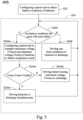
- Fig. 3 shows a flow chart of an intelligent battery discharge controlling method 400 with load balancing according to a third embodiment of the present disclosure.
- the intelligent battery discharge controlling method 400 with load balancing includes performing a controlling step.
- the controlling step includes performing two steps S02, S04.
- the step S02 includes configuring a control unit 300 to obtain a plurality of battery conditions of a plurality of batteries 200.
- the step S04 includes configuring the control unit 300 to control discharging of the batteries 200 according to the battery conditions, thereby causing the batteries 200 to perform a load balancing operation.
- the load balancing operation includes driving one of the batteries 200 to discharge, and one of the battery conditions corresponding to the one of the batteries 200 is better than another of the battery conditions corresponding to another of the batteries 200.
- the intelligent battery discharge controlling method 400 with load balancing of the present disclosure can drive the battery 200 having a better battery condition to discharge preferentially, thus balancing the load.
- Fig. 4 shows a flow chart of an intelligent battery discharge controlling method 400a with load balancing according to a fourth embodiment of the present disclosure.
- the intelligent battery discharge controlling method 400a with load balancing includes performing a controlling step.
- the controlling step includes performing two steps S12, S14.
- the step S12 includes configuring a control unit 300 to obtain a plurality of battery conditions of a plurality of batteries 200.
- the step S14 includes configuring the control unit 300 to control discharging of the batteries 200 according to the battery conditions, thereby causing the batteries 200 to perform a load balancing operation.
- the step S14 further includes a plurality of steps S142, S144, S146.
- the step S142 includes comparing whether the battery conditions of the batteries 200 are the same as each other. In response to determining that the battery conditions are the same as each other, the step S144 is performed. In response to determining that the battery conditions are different, the step S146 is performed.
- the step S 144 includes driving the batteries 200 to discharge simultaneously.
- the step S146 includes driving one of the batteries 200 to discharge.
- the step S142 includes comparing whether the two battery conditions are the same as each other. In response to determining that one of the two battery conditions is the same as the other of the two battery conditions, the step S144 is performed and includes driving the two batteries 200 to discharge simultaneously. In response to determining that the one of the two battery conditions is different from the other of the two battery conditions, the step S146 is performed and includes driving one of the batteries 200 to discharge, i.e., selecting the one of the batteries 200 having a better battery condition to discharge.
- the step S142 includes comparing whether the battery conditions are the same as each other. In response to determining that the battery conditions are the same as each other, the step S144 is performed and includes driving the batteries 200 to discharge simultaneously. In response to determining that two of the battery conditions are different, the step S146 is performed and includes driving one of the batteries 200 to discharge, i.e., selecting the one of the batteries 200 having a better battery condition to discharge.
- the step S 142 is repeatedly performed.
- the load balancing operation further includes configuring the control unit 300 to drive the batteries 200 to discharge simultaneously for a period of time (i.e., the step S144 is performed for the period of time), and then detect all of the batteries 200 to obtain another battery condition of each of the batteries 200.
- the step S142 (comparing whether the battery conditions are still the same as each other) is performed.
- the period of time may be from 1 minute to 10 minutes, but the present disclosure is not limited thereto.
- the step S142 is repeatedly performed.
- the load balancing operation in response to determining that the battery conditions are different (i.e., two of the battery conditions are different), the load balancing operation further includes configuring the control unit 300 to drive the one of the batteries 200 to discharge for a period of time (i.e., the step S146 is performed for the period of time), and then detect the one of the batteries 200 to obtain another battery condition.
- the step S142 (comparing whether the battery conditions are still the same as each other) is performed.
- the load balancing operation further includes driving the batteries 200 to discharge simultaneously.
- the load balancing operation further includes maintaining the one of the batteries 200 to discharge. In response to determining that the another battery condition is worse than the another of the battery conditions, the load balancing operation further includes switching the another of the batteries 200 to discharge. For example, after a first battery 200 having a better initial battery condition is driven to discharge for the period of time, if the battery condition of the first battery 200 is worse than the battery condition of a second battery 200, the control unit 300 of the present disclosure can intelligently switch the second battery 200 to discharge via software.
- Each of the battery conditions can include at least one of a State of Health (SOH), a State of Charge (SOC), a battery temperature and the number of chargings (or/and the number of dischargings).
- the batteries 200 include at least one in-tube battery 104, at least one extender battery 106 and at least one rear battery 108.
- the control unit 300 and one of the at least one in-tube battery 104, the at least one extender battery 106 and the at least one rear battery 108 are both disposed on a same circuit board.
- the control unit 300 and the at least one in-tube battery 104 are both disposed on the same circuit board, but the present disclosure is not limited thereto.
- the intelligent battery discharge controlling method 400a with load balancing of the present disclosure can be applied to an electrically assisted bicycle and determine intelligent switching and discharging of the batteries 200 according to the battery conditions, so that the system can not only balance the load significantly (i.e., avoid repeatedly discharging of a single battery 200 and early reaching the limit of the number of dischargings), but also reduce the load when discharging the batteries 200 simultaneously (i.e., the current will be shunted when discharging the batteries 200 simultaneously, so that the load of the single battery 200 can be reduced).
- the present disclosure can balance the battery conditions of the batteries 200 and prolong the service life of the batteries 200.
- Fig. 5 shows a flow chart of an intelligent battery discharge controlling method 400b with load balancing according to a fifth embodiment of the present disclosure.
- the intelligent battery discharge controlling method 400b with load balancing includes performing a controlling step.
- the controlling step includes performing two steps S22, S24.
- the step S22 includes configuring a control unit 300 to obtain a plurality of battery conditions of a plurality of batteries 200.
- the step S24 includes configuring the control unit 300 to control discharging of the batteries 200 according to the battery conditions, thereby causing the batteries 200 to perform a load balancing operation.
- the step S24 includes a plurality of steps S242, S244a, S244b, S244c, S244d, S246.
- the step S242 includes comparing whether the battery conditions of the batteries 200 are the same as each other. In response to determining that the battery conditions are the same as each other, the step S244a is performed. In response to determining that the battery conditions are different, the step S246 is performed.
- the step S244a includes configuring the control unit 300 to compare a maximum voltage Vmax and a minimum voltage Vmin of the batteries 200 to obtain a comparison result, and then determining whether the batteries 200 are discharged simultaneously according to the comparison result.
- the step S246 includes driving one of the batteries 200 to discharge.
- the step S246 is the same as the step S146 of Fig. 4 , and will not be described again herein.
- the batteries 200 include a battery having the maximum voltage Vmax.
- the step S244b includes confirming whether the comparison result is that in which a difference between the maximum voltage Vmax and the minimum voltage Vmin is smaller than a predetermined voltage range Vsafety (i.e., Vmax-Vmin ⁇ Vsafety?).
- the predetermined voltage range Vsafety may be 0.5 V, but the present disclosure is not limited thereto.
- the step S244c is performed.
- the step S244d is performed.
- the step S244c includes performing the load balancing operation which further includes driving the batteries 200 to discharge simultaneously.
- the step S244d includes performing the load balancing operation which further includes driving the battery 200 having the maximum voltage Vmax to discharge.
- the intelligent battery discharge controlling method 400b with load balancing of the present disclosure can be applied to an electrically assisted bicycle and determine intelligent switching and discharging of the batteries 200 according to the battery conditions and the voltage difference (e.g., the difference between the maximum voltage Vmax and the minimum voltage Vmin), so that the system can not only balance the load significantly, but also reduce the load when discharging the batteries 200 simultaneously.
- the present disclosure can balance the battery conditions of the batteries 200 and prolong the service life of the batteries 200.
- Fig. 6 shows a schematic view of an electrically assisted bicycle 102a according to a sixth embodiment of the present disclosure.
- the intelligent battery discharge controlling system 100 with load balancing may be disposed on the electrically assisted bicycle 102a.
- the electrically assisted bicycle 102a includes a bicycle frame, an in-tube battery 104 and an extender battery 106.
- the in-tube battery 104 and the extender battery 106 are both disposed on the bicycle frame.
- the batteries 200 can include the in-tube battery 104 and the extender battery 106.
- the control unit 300 and one of the in-tube battery 104 and the extender battery 106 are both disposed on a same circuit board. In one embodiment, the control unit 300 and the in-tube battery 104 are both disposed on the same circuit board, but the present disclosure is not limited thereto.
- Fig. 7 shows a schematic view of an electrically assisted bicycle 102b according to a seventh embodiment of the present disclosure.
- the intelligent battery discharge controlling system 100 with load balancing may be disposed on the electrically assisted bicycle 102b.
- the electrically assisted bicycle 102b includes a bicycle frame, an in-tube battery 104 and a rear battery 108.
- the in-tube battery 104 and the rear battery 108 are both disposed on the bicycle frame.
- the batteries 200 can include the in-tube battery 104 and the rear battery 108.
- the control unit 300 and one of the in-tube battery 104 and the rear battery 108 are both disposed on a same circuit board.
- the control unit 300 and the in-tube battery 104 are both disposed on the same circuit board, but the present disclosure is not limited thereto.
Landscapes
- Engineering & Computer Science (AREA)
- Power Engineering (AREA)
- Secondary Cells (AREA)
- Charge And Discharge Circuits For Batteries Or The Like (AREA)
Abstract
An intelligent battery discharge controlling method with load balancing includes performing a controlling step. The controlling step includes configuring a control unit to obtain a plurality of battery conditions of a plurality of batteries and control discharging of the batteries according to the battery conditions, thereby causing the batteries to perform a load balancing operation. In response to determining that the battery conditions are different, the load balancing operation includes driving one of the batteries to discharge, and one of the battery conditions corresponding to the one of the batteries is better than another of the battery conditions corresponding to another of the batteries.
Description
- The present disclosure relates to a battery discharge controlling method and a system thereof. More particularly, the present disclosure relates to an intelligent battery discharge controlling method with load balancing and a system thereof.
- Nowadays, electrical components are widely used in an application of an electrically assisted bicycle, such as a Battery Management System (BMS), a controller and a motor. In the conventional BMS, discharging of the batteries can be switched by the software. However, the batteries will be switched from one to another by the software after the one is discharged to empty. Hence, only a single battery is discharged, and two or more batteries cannot be discharged at the same time, so that the load cannot be effectively reduced. Furthermore, the conventional BMS cannot realize intelligent switching and discharging of the batteries according to the current battery conditions, so that it cannot balance the load. In the conventional BMS, the number of dischargings of the single battery is too large, thus early reaching the limit of the number of dischargings (e.g., the single battery is discharged plural times in three years) and then needing to early replace the single battery. Therefore, an intelligent battery discharge controlling method and a system thereof having the features of load balancing and prolonging the service life of the batteries are commercially desirable.
- According to one aspect of the present disclosure, an intelligent battery discharge controlling method with load balancing includes performing a controlling step. The controlling step includes configuring a control unit to obtain a plurality of battery conditions of a plurality of batteries and control discharging of the batteries according to the battery conditions, thereby causing the batteries to perform a load balancing operation. In response to determining that the battery conditions are different, the load balancing operation includes driving one of the batteries to discharge, and one of the battery conditions corresponding to the one of the batteries is better than another of the battery conditions corresponding to another of the batteries.
- According to one embodiment, in response to determining that the battery conditions are different, the load balancing operation further includes configuring the control unit to drive the one of the batteries to discharge for a period of time, and then detect the one of the batteries to obtain another battery condition. In response to determining that the another battery condition is the same as the another of the battery conditions, the load balancing operation further includes driving the batteries to discharge simultaneously. In response to determining that the another battery condition is better than the another of the battery conditions, the load balancing operation further includes maintaining the one of the batteries to discharge. In response to determining that the another battery condition is worse than the another of the battery conditions, the load balancing operation further includes switching the another of the batteries to discharge.
- According to one embodiment, in response to determining that the battery conditions are the same as each other, the load balancing operation includes driving the batteries to discharge simultaneously.
- According to one embodiment, in response to determining that the battery conditions are the same as each other, the controlling step further includes configuring the control unit to compare a maximum voltage and a minimum voltage of the batteries to obtain a comparison result, and then determine whether the batteries are discharged simultaneously according to the comparison result. The batteries include a battery having the maximum voltage. In response to determining that the comparison result is that in which a difference between the maximum voltage and the minimum voltage is smaller than a predetermined voltage range, the load balancing operation further includes driving the batteries to discharge simultaneously. In response to determining that the comparison result is that in which the difference between the maximum voltage and the minimum voltage is greater than or equal to the predetermined voltage range, the load balancing operation further includes driving the battery having the maximum voltage to discharge.
- According to one embodiment, each of the battery conditions includes at least one of a State of Health (SOH), a State of Charge (SOC), a battery temperature and a number of chargings.
- According to one embodiment, the batteries include at least one in-tube battery and at least one of at least one extender battery and at least one rear battery.
- According to another aspect of the present disclosure, an intelligent battery discharge controlling system with load balancing includes a plurality of batteries and a control unit. The batteries have a plurality of battery conditions. The control unit is electrically connected to the batteries and obtains the battery conditions. The control unit controls discharging of the batteries according to the battery conditions, thereby causing the batteries to perform a load balancing operation. In response to determining that the battery conditions are different, the load balancing operation includes driving one of the batteries to discharge, and one of the battery conditions corresponding to the one of the batteries is better than another of the battery conditions corresponding to another of the batteries.
- According to one embodiment, in response to determining that the battery conditions are different, the load balancing operation further includes configuring the control unit to drive the one of the batteries to discharge for a period of time, and then detect the one of the batteries to obtain another battery condition. In response to determining that the another battery condition is the same as the another of the battery conditions, the load balancing operation further includes driving the batteries to discharge simultaneously. In response to determining that the another battery condition is better than the another of the battery conditions, the load balancing operation further includes maintaining the one of the batteries to discharge. In response to determining that the another battery condition is worse than the another of the battery conditions, the load balancing operation further includes switching the another of the batteries to discharge.
- According to one embodiment, in response to determining that the battery conditions are the same as each other, the load balancing operation includes driving the batteries to discharge simultaneously.
- According to one embodiment, in response to determining that the battery conditions are the same as each other, the control unit is configured to compare a maximum voltage and a minimum voltage of the batteries to obtain a comparison result, and then determine whether the batteries are discharged simultaneously according to the comparison result. The batteries include a battery having the maximum voltage. In response to determining that the comparison result is that in which a difference between the maximum voltage and the minimum voltage is smaller than a predetermined voltage range, the load balancing operation further includes driving the batteries to discharge simultaneously. In response to determining that the comparison result is that in which the difference between the maximum voltage and the minimum voltage is greater than or equal to the predetermined voltage range, the load balancing operation further includes driving the battery having the maximum voltage to discharge.
- According to one embodiment, each of the battery conditions includes at least one of a State of Health (SOH), a State of Charge (SOC), a battery temperature and a number of chargings.
- According to one embodiment, the batteries include at least one in-tube battery and at least one of at least one extender battery and at least one rear battery.
- According to one embodiment, the control unit and one of the at least one in-tube battery and the at least one of the at least one extender battery and the at least one rear battery are both disposed on a same circuit board.
- The present disclosure can be more fully understood by reading the following detailed description of the embodiment, with reference made to the accompanying drawings as follows:
-
Fig. 1 shows a schematic view of an electrically assisted bicycle according to a first embodiment of the present disclosure. -
Fig. 2 shows a schematic view of an intelligent battery discharge controlling system with load balancing according to a second embodiment of the present disclosure. -
Fig. 3 shows a flow chart of an intelligent battery discharge controlling method with load balancing according to a third embodiment of the present disclosure. -
Fig. 4 shows a flow chart of an intelligent battery discharge controlling method with load balancing according to a fourth embodiment of the present disclosure. -
Fig. 5 shows a flow chart of an intelligent battery discharge controlling method with load balancing according to a fifth embodiment of the present disclosure. -
Fig. 6 shows a schematic view of an electrically assisted bicycle according to a sixth embodiment of the present disclosure. -
Fig. 7 shows a schematic view of an electrically assisted bicycle according to a seventh embodiment of the present disclosure. - Embodiments of the present disclosure will be described with reference to the drawings. For clarity, some practical details will be described below. However, it should be noted that the present disclosure should not be limited by the practical details, that is, in some embodiments, the practical details are unnecessary. In addition, for simplifying the drawings, some conventional structures and elements will be simply illustrated, and repeated elements may be represented by the same reference numerals.
- It will be understood that when an element (or device) is referred to as be "connected to" another element, it can be directly connected to the other element, or it can be indirectly connected to the other element, that is, intervening elements may be present. In contrast, when an element is referred to as be "directly connected to" another element, there are no intervening elements present. In addition, the terms first, second, third, etc. are used herein to describe various elements or components, and these elements or components should not be limited by these terms. Consequently, a first element or component discussed below could be termed a second element or component.
- Reference is made to
Figs. 1 and2 .Fig. 1 shows a schematic view of an electrically assistedbicycle 102 according to a first embodiment of the present disclosure.Fig. 2 shows a schematic view of an intelligent batterydischarge controlling system 100 with load balancing according to a second embodiment of the present disclosure. The intelligent batterydischarge controlling system 100 with load balancing may be disposed on the electrically assistedbicycle 102. The electrically assistedbicycle 102 includes a bicycle frame, an in-tube battery 104, at least oneextender battery 106 and at least onerear battery 108. The in-tube battery 104, the at least oneextender battery 106 and the at least onerear battery 108 are all disposed on the bicycle frame. In addition, the intelligent batterydischarge controlling system 100 with load balancing includes a plurality ofbatteries 200 and acontrol unit 300. Thebatteries 200 have a plurality of battery conditions. Thecontrol unit 300 is electrically connected to thebatteries 200 and obtains the battery conditions. Thecontrol unit 300 controls discharging of thebatteries 200 according to the battery conditions, thereby causing thebatteries 200 to perform a load balancing operation. In response to determining that the battery conditions are different, the load balancing operation includes driving one of thebatteries 200 to discharge, and one of the battery conditions corresponding to the one of thebatteries 200 is better than another of the battery conditions corresponding to another of thebatteries 200. In one embodiment, thecontrol unit 300 may be a Micro Controller Unit (MCU), a microprocessor or another computing processor, but the present disclosure is not limited thereto. Therefore, the intelligent batterydischarge controlling system 100 with load balancing of the present disclosure can be applied to an electrically assisted bicycle (E-bike) and determine intelligent switching and discharging of thebatteries 200 according to the battery conditions, so that the system can not only balance the load significantly (i.e., avoid repeatedly discharging asingle battery 200 and early reaching of the limit of the number of dischargings), but also can reduce the load when discharging thebatteries 200 simultaneously (i.e., the current will be shunted when discharging thebatteries 200 simultaneously, so that the load of a single one of thebatteries 200 can be reduced). In addition, the present disclosure can balance the battery conditions of thebatteries 200 and prolong the service life of thebatteries 200. - Reference is made to
Figs. 1 ,2 and 3. Fig. 3 shows a flow chart of an intelligent batterydischarge controlling method 400 with load balancing according to a third embodiment of the present disclosure. The intelligent batterydischarge controlling method 400 with load balancing includes performing a controlling step. The controlling step includes performing two steps S02, S04. The step S02 includes configuring acontrol unit 300 to obtain a plurality of battery conditions of a plurality ofbatteries 200. The step S04 includes configuring thecontrol unit 300 to control discharging of thebatteries 200 according to the battery conditions, thereby causing thebatteries 200 to perform a load balancing operation. In response to determining that the battery conditions are different, the load balancing operation includes driving one of thebatteries 200 to discharge, and one of the battery conditions corresponding to the one of thebatteries 200 is better than another of the battery conditions corresponding to another of thebatteries 200. In other words, the intelligent batterydischarge controlling method 400 with load balancing of the present disclosure can drive thebattery 200 having a better battery condition to discharge preferentially, thus balancing the load. - Reference is made to
Figs. 1 ,2 and4. Fig. 4 shows a flow chart of an intelligent batterydischarge controlling method 400a with load balancing according to a fourth embodiment of the present disclosure. The intelligent batterydischarge controlling method 400a with load balancing includes performing a controlling step. The controlling step includes performing two steps S12, S14. The step S12 includes configuring acontrol unit 300 to obtain a plurality of battery conditions of a plurality ofbatteries 200. The step S14 includes configuring thecontrol unit 300 to control discharging of thebatteries 200 according to the battery conditions, thereby causing thebatteries 200 to perform a load balancing operation. - The step S14 further includes a plurality of steps S142, S144, S146. The step S142 includes comparing whether the battery conditions of the
batteries 200 are the same as each other. In response to determining that the battery conditions are the same as each other, the step S144 is performed. In response to determining that the battery conditions are different, the step S146 is performed. The step S 144 includes driving thebatteries 200 to discharge simultaneously. The step S146 includes driving one of thebatteries 200 to discharge. - In one example, it is assumed that the number of the
batteries 200 and the number of the battery conditions are both two. The step S142 includes comparing whether the two battery conditions are the same as each other. In response to determining that one of the two battery conditions is the same as the other of the two battery conditions, the step S144 is performed and includes driving the twobatteries 200 to discharge simultaneously. In response to determining that the one of the two battery conditions is different from the other of the two battery conditions, the step S146 is performed and includes driving one of thebatteries 200 to discharge, i.e., selecting the one of thebatteries 200 having a better battery condition to discharge. - In another example, it is assumed that the number of the
batteries 200 and the number of the battery conditions are both greater than or equal to three. The step S142 includes comparing whether the battery conditions are the same as each other. In response to determining that the battery conditions are the same as each other, the step S144 is performed and includes driving thebatteries 200 to discharge simultaneously. In response to determining that two of the battery conditions are different, the step S146 is performed and includes driving one of thebatteries 200 to discharge, i.e., selecting the one of thebatteries 200 having a better battery condition to discharge. - After the step S144 is performed, the
step S 142 is repeatedly performed. In other words, in response to determining that the battery conditions are the same as each other, the load balancing operation further includes configuring thecontrol unit 300 to drive thebatteries 200 to discharge simultaneously for a period of time (i.e., the step S144 is performed for the period of time), and then detect all of thebatteries 200 to obtain another battery condition of each of thebatteries 200. Next, the step S142 (comparing whether the battery conditions are still the same as each other) is performed. The period of time may be from 1 minute to 10 minutes, but the present disclosure is not limited thereto. - After the step S146 is performed, the step S142 is repeatedly performed. In other words, in response to determining that the battery conditions are different (i.e., two of the battery conditions are different), the load balancing operation further includes configuring the
control unit 300 to drive the one of thebatteries 200 to discharge for a period of time (i.e., the step S146 is performed for the period of time), and then detect the one of thebatteries 200 to obtain another battery condition. Next, the step S142 (comparing whether the battery conditions are still the same as each other) is performed. In response to determining that the another battery condition is the same as another of the battery conditions (corresponding to another of the batteries 200), the load balancing operation further includes driving thebatteries 200 to discharge simultaneously. In response to determining that the another battery condition is better than the another of the battery conditions, the load balancing operation further includes maintaining the one of thebatteries 200 to discharge. In response to determining that the another battery condition is worse than the another of the battery conditions, the load balancing operation further includes switching the another of thebatteries 200 to discharge. For example, after afirst battery 200 having a better initial battery condition is driven to discharge for the period of time, if the battery condition of thefirst battery 200 is worse than the battery condition of asecond battery 200, thecontrol unit 300 of the present disclosure can intelligently switch thesecond battery 200 to discharge via software. - Each of the battery conditions can include at least one of a State of Health (SOH), a State of Charge (SOC), a battery temperature and the number of chargings (or/and the number of dischargings). The
batteries 200 include at least one in-tube battery 104, at least oneextender battery 106 and at least onerear battery 108. In addition, thecontrol unit 300 and one of the at least one in-tube battery 104, the at least oneextender battery 106 and the at least onerear battery 108 are both disposed on a same circuit board. In one embodiment, thecontrol unit 300 and the at least one in-tube battery 104 are both disposed on the same circuit board, but the present disclosure is not limited thereto. - Therefore, the intelligent battery
discharge controlling method 400a with load balancing of the present disclosure can be applied to an electrically assisted bicycle and determine intelligent switching and discharging of thebatteries 200 according to the battery conditions, so that the system can not only balance the load significantly (i.e., avoid repeatedly discharging of asingle battery 200 and early reaching the limit of the number of dischargings), but also reduce the load when discharging thebatteries 200 simultaneously (i.e., the current will be shunted when discharging thebatteries 200 simultaneously, so that the load of thesingle battery 200 can be reduced). In addition, the present disclosure can balance the battery conditions of thebatteries 200 and prolong the service life of thebatteries 200. - Reference is made to
Figs. 1 ,2 and5. Fig. 5 shows a flow chart of an intelligent batterydischarge controlling method 400b with load balancing according to a fifth embodiment of the present disclosure. The intelligent batterydischarge controlling method 400b with load balancing includes performing a controlling step. The controlling step includes performing two steps S22, S24. The step S22 includes configuring acontrol unit 300 to obtain a plurality of battery conditions of a plurality ofbatteries 200. The step S24 includes configuring thecontrol unit 300 to control discharging of thebatteries 200 according to the battery conditions, thereby causing thebatteries 200 to perform a load balancing operation. - The step S24 includes a plurality of steps S242, S244a, S244b, S244c, S244d, S246. The step S242 includes comparing whether the battery conditions of the
batteries 200 are the same as each other. In response to determining that the battery conditions are the same as each other, the step S244a is performed. In response to determining that the battery conditions are different, the step S246 is performed. The step S244a includes configuring thecontrol unit 300 to compare a maximum voltage Vmax and a minimum voltage Vmin of thebatteries 200 to obtain a comparison result, and then determining whether thebatteries 200 are discharged simultaneously according to the comparison result. The step S246 includes driving one of thebatteries 200 to discharge. The step S246 is the same as the step S146 ofFig. 4 , and will not be described again herein. In the step S244a, thebatteries 200 include a battery having the maximum voltage Vmax. The step S244b includes confirming whether the comparison result is that in which a difference between the maximum voltage Vmax and the minimum voltage Vmin is smaller than a predetermined voltage range Vsafety (i.e., Vmax-Vmin<Vsafety?). The predetermined voltage range Vsafety may be 0.5 V, but the present disclosure is not limited thereto. In response to determining that the comparison result is that in which the difference between the maximum voltage Vmax and the minimum voltage Vmin is smaller than the predetermined voltage range Vsafety, the step S244c is performed. In response to determining that the comparison result is that in which the difference between the maximum voltage Vmax and the minimum voltage Vmin is greater than or equal to the predetermined voltage range Vsafety, the step S244d is performed. The step S244c includes performing the load balancing operation which further includes driving thebatteries 200 to discharge simultaneously. The step S244d includes performing the load balancing operation which further includes driving thebattery 200 having the maximum voltage Vmax to discharge. - Therefore, the intelligent battery
discharge controlling method 400b with load balancing of the present disclosure can be applied to an electrically assisted bicycle and determine intelligent switching and discharging of thebatteries 200 according to the battery conditions and the voltage difference (e.g., the difference between the maximum voltage Vmax and the minimum voltage Vmin), so that the system can not only balance the load significantly, but also reduce the load when discharging thebatteries 200 simultaneously. In addition, the present disclosure can balance the battery conditions of thebatteries 200 and prolong the service life of thebatteries 200. - Reference is made to
Figs. 2 and6. Fig. 6 shows a schematic view of an electrically assistedbicycle 102a according to a sixth embodiment of the present disclosure. The intelligent batterydischarge controlling system 100 with load balancing may be disposed on the electrically assistedbicycle 102a. The electrically assistedbicycle 102a includes a bicycle frame, an in-tube battery 104 and anextender battery 106. The in-tube battery 104 and theextender battery 106 are both disposed on the bicycle frame. In other words, thebatteries 200 can include the in-tube battery 104 and theextender battery 106. In addition, thecontrol unit 300 and one of the in-tube battery 104 and theextender battery 106 are both disposed on a same circuit board. In one embodiment, thecontrol unit 300 and the in-tube battery 104 are both disposed on the same circuit board, but the present disclosure is not limited thereto. - Reference is made to
Figs. 2 and7. Fig. 7 shows a schematic view of an electrically assistedbicycle 102b according to a seventh embodiment of the present disclosure. The intelligent batterydischarge controlling system 100 with load balancing may be disposed on the electrically assistedbicycle 102b. The electrically assistedbicycle 102b includes a bicycle frame, an in-tube battery 104 and arear battery 108. The in-tube battery 104 and therear battery 108 are both disposed on the bicycle frame. In other words, thebatteries 200 can include the in-tube battery 104 and therear battery 108. In addition, thecontrol unit 300 and one of the in-tube battery 104 and therear battery 108 are both disposed on a same circuit board. In one embodiment, thecontrol unit 300 and the in-tube battery 104 are both disposed on the same circuit board, but the present disclosure is not limited thereto. - According to the aforementioned embodiments and examples, the advantages of the present disclosure are described below.
- 1. The intelligent battery discharge controlling method with load balancing and the system thereof of the present disclosure can be applied to an electrically assisted bicycle and determine intelligent switching and discharging of the batteries according to the battery conditions, thus balancing the load significantly.
- 2. The intelligent battery discharge controlling method with load balancing and the system thereof of the present disclosure can reduce the load when discharging the batteries simultaneously so as to balance the battery conditions of the batteries and prolong the service life of the batteries.
- 3. Apart from the battery conditions, the voltage difference of the batteries can determine intelligent switching and discharging of the batteries to further optimize the service life of the batteries.
Claims (13)
- An intelligent battery discharge controlling method (400, 400a, 400b) with load balancing, characterized in comprising:performing a controlling step, wherein the controlling step comprises configuring a control unit (300) to obtain a plurality of battery conditions of a plurality of batteries (200) and control discharging of the batteries (200) according to the battery conditions, thereby causing the batteries (200) to perform a load balancing operation;wherein in response to determining that the battery conditions are different, the load balancing operation comprises driving one of the batteries (200) to discharge, and one of the battery conditions corresponding to the one of the batteries (200) is better than another of the battery conditions corresponding to another of the batteries (200).
- The intelligent battery discharge controlling method (400a) with load balancing of claim 1, wherein in response to determining that the battery conditions are different, the load balancing operation further comprises:configuring the control unit (300) to drive the one of the batteries (200) to discharge for a period of time, and then detect the one of the batteries (200) to obtain another battery condition;wherein in response to determining that the another battery condition is the same as the another of the battery conditions, the load balancing operation further comprises driving the batteries (200) to discharge simultaneously;wherein in response to determining that the another battery condition is better than the another of the battery conditions, the load balancing operation further comprises maintaining the one of the batteries (200) to discharge;wherein in response to determining that the another battery condition is worse than the another of the battery conditions, the load balancing operation further comprises switching the another of the batteries (200) to discharge.
- The intelligent battery discharge controlling method (400a) with load balancing of any of claims 1-2, wherein in response to determining that the battery conditions are the same as each other, the load balancing operation comprises driving the batteries (200) to discharge simultaneously.
- The intelligent battery discharge controlling method (400b) with load balancing of any of claims 1-3, wherein in response to determining that the battery conditions are the same as each other, the controlling step further comprises:configuring the control unit (300) to compare a maximum voltage (Vmax) and a minimum voltage (Vmin) of the batteries (200) to obtain a comparison result, and then determine whether the batteries (200) are discharged simultaneously according to the comparison result;wherein the batteries (200) comprise a battery having the maximum voltage (Vmax);wherein in response to determining that the comparison result is that in which a difference between the maximum voltage (Vmax) and the minimum voltage (Vmin) is smaller than a predetermined voltage range (Vsafety), the load balancing operation further comprises driving the batteries (200) to discharge simultaneously;wherein in response to determining that the comparison result is that in which the difference between the maximum voltage (Vmax) and the minimum voltage (Vmin) is greater than or equal to the predetermined voltage range (Vsafety), the load balancing operation further comprises driving the battery having the maximum voltage (Vmax) to discharge.
- The intelligent battery discharge controlling method (400, 400a, 400b) with load balancing of any of claims 1-4, wherein each of the battery conditions comprises at least one of a State of Health (SOH), a State of Charge (SOC), a battery temperature and a number of chargings.
- The intelligent battery discharge controlling method (400, 400a, 400b) with load balancing of any of claims 1-5, wherein the batteries (200) comprise at least one in-tube battery (104) and at least one of at least one extender battery (106) and at least one rear battery (108).
- An intelligent battery discharge controlling system (100) with load balancing, characterized in comprising:a plurality of batteries (200) having a plurality of battery conditions; anda control unit (300) electrically connected to the batteries (200) and obtaining the battery conditions, wherein the control unit (300) controls discharging of the batteries (200) according to the battery conditions, thereby causing the batteries (200) to perform a load balancing operation;wherein in response to determining that the battery conditions are different, the load balancing operation comprises driving one of the batteries (200) to discharge, and one of the battery conditions corresponding to the one of the batteries (200) is better than another of the battery conditions corresponding to another of the batteries (200).
- The intelligent battery discharge controlling system (100) with load balancing of claim 7, wherein in response to determining that the battery conditions are different, the load balancing operation further comprises:configuring the control unit (300) to drive the one of the batteries (200) to discharge for a period of time, and then detect the one of the batteries (200) to obtain another battery condition;wherein in response to determining that the another battery condition is the same as the another of the battery conditions, the load balancing operation further comprises driving the batteries (200) to discharge simultaneously;wherein in response to determining that the another battery condition is better than the another of the battery conditions, the load balancing operation further comprises maintaining the one of the batteries (200) to discharge;wherein in response to determining that the another battery condition is worse than the another of the battery conditions, the load balancing operation further comprises switching the another of the batteries (200) to discharge.
- The intelligent battery discharge controlling system (100) with load balancing of any of claims 7-8, wherein in response to determining that the battery conditions are the same as each other, the load balancing operation comprises driving the batteries (200) to discharge simultaneously.
- The intelligent battery discharge controlling system (100) with load balancing of any of claims 7-9, wherein in response to determining that the battery conditions are the same as each other, the control unit (300) is configured to compare a maximum voltage (Vmax) and a minimum voltage (Vmin) of the batteries (200) to obtain a comparison result, and then determine whether the batteries (200) are discharged simultaneously according to the comparison result;wherein the batteries (200) comprise a battery having the maximum voltage (Vmax);wherein in response to determining that the comparison result is that in which a difference between the maximum voltage (Vmax) and the minimum voltage (Vmin) is smaller than a predetermined voltage range (Vsafety), the load balancing operation further comprises driving the batteries (200) to discharge simultaneously;wherein in response to determining that the comparison result is that in which the difference between the maximum voltage (Vmax) and the minimum voltage (Vmin) is greater than or equal to the predetermined voltage range (Vsafety), the load balancing operation further comprises driving the battery having the maximum voltage (Vmax) to discharge.
- The intelligent battery discharge controlling system (100) with load balancing of any of claims 7-10, wherein each of the battery conditions comprises at least one of a State of Health (SOH), a State of Charge (SOC), a battery temperature and a number of chargings.
- The intelligent battery discharge controlling system (100) with load balancing of any of claims 7-11, wherein the batteries (200) comprise at least one in-tube battery (104) and at least one of at least one extender battery (106) and at least one rear battery (108).
- The intelligent battery discharge controlling system (100) with load balancing of any of claims 7-12, wherein the control unit (300) and one of the at least one in-tube battery (104) and the at least one of the at least one extender battery (106) and the at least one rear battery (108) are both disposed on a same circuit board.
Applications Claiming Priority (1)
| Application Number | Priority Date | Filing Date | Title |
|---|---|---|---|
| TW111121095A TWI856326B (en) | 2022-06-07 | 2022-06-07 | Intelligent battery discharge controlling mechanism with load balancing and system thereof |
Publications (1)
| Publication Number | Publication Date |
|---|---|
| EP4290733A1 true EP4290733A1 (en) | 2023-12-13 |
Family
ID=85076268
Family Applications (1)
| Application Number | Title | Priority Date | Filing Date |
|---|---|---|---|
| EP23152992.6A Withdrawn EP4290733A1 (en) | 2022-06-07 | 2023-01-24 | Intelligent battery discharge controlling method with load balancing and system thereof |
Country Status (3)
| Country | Link |
|---|---|
| US (1) | US20230396082A1 (en) |
| EP (1) | EP4290733A1 (en) |
| TW (1) | TWI856326B (en) |
Citations (2)
| Publication number | Priority date | Publication date | Assignee | Title |
|---|---|---|---|---|
| CN112737018A (en) * | 2020-12-24 | 2021-04-30 | 东莞新能安科技有限公司 | Battery pack master-slave dynamic parallel operation method, electric equipment and storage medium |
| US20210408806A1 (en) * | 2020-06-25 | 2021-12-30 | Milwaukee Electric Tool Corporation | Charge balancing for a multi-bay power supply |
Family Cites Families (1)
| Publication number | Priority date | Publication date | Assignee | Title |
|---|---|---|---|---|
| US11070066B2 (en) * | 2019-04-04 | 2021-07-20 | Caterpillar Inc. | Passive battery cell discharge |
-
2022
- 2022-06-07 TW TW111121095A patent/TWI856326B/en active
- 2022-10-31 US US18/051,508 patent/US20230396082A1/en active Pending
-
2023
- 2023-01-24 EP EP23152992.6A patent/EP4290733A1/en not_active Withdrawn
Patent Citations (2)
| Publication number | Priority date | Publication date | Assignee | Title |
|---|---|---|---|---|
| US20210408806A1 (en) * | 2020-06-25 | 2021-12-30 | Milwaukee Electric Tool Corporation | Charge balancing for a multi-bay power supply |
| CN112737018A (en) * | 2020-12-24 | 2021-04-30 | 东莞新能安科技有限公司 | Battery pack master-slave dynamic parallel operation method, electric equipment and storage medium |
Also Published As
| Publication number | Publication date |
|---|---|
| US20230396082A1 (en) | 2023-12-07 |
| TWI856326B (en) | 2024-09-21 |
| TW202349781A (en) | 2023-12-16 |
Similar Documents
| Publication | Publication Date | Title |
|---|---|---|
| US6646421B2 (en) | Method and apparatus for controlling residual battery capacity of secondary battery | |
| CN101563827B (en) | Set battery control method, set battery control circuit, charging circuit having the control circuit, and battery pack | |
| JP5092812B2 (en) | Battery monitoring device and failure diagnosis method | |
| US6828757B2 (en) | Circuit for adjusting charging rate of cells in combination | |
| EP2186181B1 (en) | Apparatus and method for balancing of battery cell's charge capacity | |
| KR101298661B1 (en) | Voltage monitoring apparatus | |
| KR101746139B1 (en) | Apparatus for Cell Balancing Using Auxiliary Battery and Method thereof | |
| EP3648290B1 (en) | Power supply device | |
| JP2000197276A (en) | Battery charge management device and method | |
| KR20030004613A (en) | An apparatus and method for charging multi battery | |
| JP2000092732A (en) | Method for determining variation of assembled battery and battery device | |
| CN109017402A (en) | Electronic automobile-used Double-cell electric-supplying device and control method | |
| CN1233083A (en) | Battery status monitoring circuit and battery device | |
| EP4130765B1 (en) | Ground fault detection device | |
| JP3767150B2 (en) | Battery remaining capacity detection device | |
| US20160276823A1 (en) | Power supply system | |
| CN110361669B (en) | Battery Deterioration Determining Device | |
| EP4354693A1 (en) | Cell balancing method and battery pack employing same | |
| KR100535391B1 (en) | A method for calculating available power for a battery | |
| KR20240033022A (en) | Power battery voltage regulation system and its control method and control device | |
| US20230396082A1 (en) | Intelligent battery discharge controlling mechanism with load balancing and system thereof | |
| JP2020184829A (en) | Electric power conversion device and electric power conversion control device | |
| JP4604619B2 (en) | Battery pack capacity adjustment device | |
| US20240097458A1 (en) | Control device | |
| EP4636986A1 (en) | Electric power supply system |
Legal Events
| Date | Code | Title | Description |
|---|---|---|---|
| PUAI | Public reference made under article 153(3) epc to a published international application that has entered the european phase |
Free format text: ORIGINAL CODE: 0009012 |
|
| STAA | Information on the status of an ep patent application or granted ep patent |
Free format text: STATUS: THE APPLICATION HAS BEEN PUBLISHED |
|
| AK | Designated contracting states |
Kind code of ref document: A1 Designated state(s): AL AT BE BG CH CY CZ DE DK EE ES FI FR GB GR HR HU IE IS IT LI LT LU LV MC ME MK MT NL NO PL PT RO RS SE SI SK SM TR |
|
| STAA | Information on the status of an ep patent application or granted ep patent |
Free format text: STATUS: THE APPLICATION IS DEEMED TO BE WITHDRAWN |
|
| 18D | Application deemed to be withdrawn |
Effective date: 20240614 |