EP4289787A1 - Zsm-23 molecular sieve and preparation method therefor - Google Patents
Zsm-23 molecular sieve and preparation method therefor Download PDFInfo
- Publication number
- EP4289787A1 EP4289787A1 EP22736586.3A EP22736586A EP4289787A1 EP 4289787 A1 EP4289787 A1 EP 4289787A1 EP 22736586 A EP22736586 A EP 22736586A EP 4289787 A1 EP4289787 A1 EP 4289787A1
- Authority
- EP
- European Patent Office
- Prior art keywords
- zeolite
- zsm
- hours
- silicon source
- alkali
- Prior art date
- Legal status (The legal status is an assumption and is not a legal conclusion. Google has not performed a legal analysis and makes no representation as to the accuracy of the status listed.)
- Pending
Links
Images
Classifications
-
- C—CHEMISTRY; METALLURGY
- C01—INORGANIC CHEMISTRY
- C01B—NON-METALLIC ELEMENTS; COMPOUNDS THEREOF; METALLOIDS OR COMPOUNDS THEREOF NOT COVERED BY SUBCLASS C01C
- C01B39/00—Compounds having molecular sieve and base-exchange properties, e.g. crystalline zeolites; Their preparation; After-treatment, e.g. ion-exchange or dealumination
- C01B39/02—Crystalline aluminosilicate zeolites; Isomorphous compounds thereof; Direct preparation thereof; Preparation thereof starting from a reaction mixture containing a crystalline zeolite of another type, or from preformed reactants; After-treatment thereof
- C01B39/46—Other types characterised by their X-ray diffraction pattern and their defined composition
- C01B39/48—Other types characterised by their X-ray diffraction pattern and their defined composition using at least one organic template directing agent
-
- B—PERFORMING OPERATIONS; TRANSPORTING
- B01—PHYSICAL OR CHEMICAL PROCESSES OR APPARATUS IN GENERAL
- B01J—CHEMICAL OR PHYSICAL PROCESSES, e.g. CATALYSIS OR COLLOID CHEMISTRY; THEIR RELEVANT APPARATUS
- B01J20/00—Solid sorbent compositions or filter aid compositions; Sorbents for chromatography; Processes for preparing, regenerating or reactivating thereof
- B01J20/02—Solid sorbent compositions or filter aid compositions; Sorbents for chromatography; Processes for preparing, regenerating or reactivating thereof comprising inorganic material
- B01J20/10—Solid sorbent compositions or filter aid compositions; Sorbents for chromatography; Processes for preparing, regenerating or reactivating thereof comprising inorganic material comprising silica or silicate
- B01J20/16—Alumino-silicates
- B01J20/18—Synthetic zeolitic molecular sieves
-
- C—CHEMISTRY; METALLURGY
- C01—INORGANIC CHEMISTRY
- C01B—NON-METALLIC ELEMENTS; COMPOUNDS THEREOF; METALLOIDS OR COMPOUNDS THEREOF NOT COVERED BY SUBCLASS C01C
- C01B39/00—Compounds having molecular sieve and base-exchange properties, e.g. crystalline zeolites; Their preparation; After-treatment, e.g. ion-exchange or dealumination
- C01B39/02—Crystalline aluminosilicate zeolites; Isomorphous compounds thereof; Direct preparation thereof; Preparation thereof starting from a reaction mixture containing a crystalline zeolite of another type, or from preformed reactants; After-treatment thereof
- C01B39/04—Crystalline aluminosilicate zeolites; Isomorphous compounds thereof; Direct preparation thereof; Preparation thereof starting from a reaction mixture containing a crystalline zeolite of another type, or from preformed reactants; After-treatment thereof using at least one organic template directing agent, e.g. an ionic quaternary ammonium compound or an aminated compound
-
- C—CHEMISTRY; METALLURGY
- C01—INORGANIC CHEMISTRY
- C01B—NON-METALLIC ELEMENTS; COMPOUNDS THEREOF; METALLOIDS OR COMPOUNDS THEREOF NOT COVERED BY SUBCLASS C01C
- C01B39/00—Compounds having molecular sieve and base-exchange properties, e.g. crystalline zeolites; Their preparation; After-treatment, e.g. ion-exchange or dealumination
- C01B39/02—Crystalline aluminosilicate zeolites; Isomorphous compounds thereof; Direct preparation thereof; Preparation thereof starting from a reaction mixture containing a crystalline zeolite of another type, or from preformed reactants; After-treatment thereof
- C01B39/46—Other types characterised by their X-ray diffraction pattern and their defined composition
-
- B—PERFORMING OPERATIONS; TRANSPORTING
- B01—PHYSICAL OR CHEMICAL PROCESSES OR APPARATUS IN GENERAL
- B01J—CHEMICAL OR PHYSICAL PROCESSES, e.g. CATALYSIS OR COLLOID CHEMISTRY; THEIR RELEVANT APPARATUS
- B01J20/00—Solid sorbent compositions or filter aid compositions; Sorbents for chromatography; Processes for preparing, regenerating or reactivating thereof
- B01J20/02—Solid sorbent compositions or filter aid compositions; Sorbents for chromatography; Processes for preparing, regenerating or reactivating thereof comprising inorganic material
- B01J20/10—Solid sorbent compositions or filter aid compositions; Sorbents for chromatography; Processes for preparing, regenerating or reactivating thereof comprising inorganic material comprising silica or silicate
- B01J20/16—Alumino-silicates
-
- B—PERFORMING OPERATIONS; TRANSPORTING
- B01—PHYSICAL OR CHEMICAL PROCESSES OR APPARATUS IN GENERAL
- B01J—CHEMICAL OR PHYSICAL PROCESSES, e.g. CATALYSIS OR COLLOID CHEMISTRY; THEIR RELEVANT APPARATUS
- B01J20/00—Solid sorbent compositions or filter aid compositions; Sorbents for chromatography; Processes for preparing, regenerating or reactivating thereof
- B01J20/28—Solid sorbent compositions or filter aid compositions; Sorbents for chromatography; Processes for preparing, regenerating or reactivating thereof characterised by their form or physical properties
- B01J20/28002—Solid sorbent compositions or filter aid compositions; Sorbents for chromatography; Processes for preparing, regenerating or reactivating thereof characterised by their form or physical properties characterised by their physical properties
- B01J20/28011—Other properties, e.g. density, crush strength
-
- B—PERFORMING OPERATIONS; TRANSPORTING
- B01—PHYSICAL OR CHEMICAL PROCESSES OR APPARATUS IN GENERAL
- B01J—CHEMICAL OR PHYSICAL PROCESSES, e.g. CATALYSIS OR COLLOID CHEMISTRY; THEIR RELEVANT APPARATUS
- B01J20/00—Solid sorbent compositions or filter aid compositions; Sorbents for chromatography; Processes for preparing, regenerating or reactivating thereof
- B01J20/28—Solid sorbent compositions or filter aid compositions; Sorbents for chromatography; Processes for preparing, regenerating or reactivating thereof characterised by their form or physical properties
- B01J20/28054—Solid sorbent compositions or filter aid compositions; Sorbents for chromatography; Processes for preparing, regenerating or reactivating thereof characterised by their form or physical properties characterised by their surface properties or porosity
- B01J20/28057—Surface area, e.g. B.E.T specific surface area
-
- B—PERFORMING OPERATIONS; TRANSPORTING
- B01—PHYSICAL OR CHEMICAL PROCESSES OR APPARATUS IN GENERAL
- B01J—CHEMICAL OR PHYSICAL PROCESSES, e.g. CATALYSIS OR COLLOID CHEMISTRY; THEIR RELEVANT APPARATUS
- B01J20/00—Solid sorbent compositions or filter aid compositions; Sorbents for chromatography; Processes for preparing, regenerating or reactivating thereof
- B01J20/28—Solid sorbent compositions or filter aid compositions; Sorbents for chromatography; Processes for preparing, regenerating or reactivating thereof characterised by their form or physical properties
- B01J20/28054—Solid sorbent compositions or filter aid compositions; Sorbents for chromatography; Processes for preparing, regenerating or reactivating thereof characterised by their form or physical properties characterised by their surface properties or porosity
- B01J20/28069—Pore volume, e.g. total pore volume, mesopore volume, micropore volume
- B01J20/28071—Pore volume, e.g. total pore volume, mesopore volume, micropore volume being less than 0.5 ml/g
-
- B—PERFORMING OPERATIONS; TRANSPORTING
- B01—PHYSICAL OR CHEMICAL PROCESSES OR APPARATUS IN GENERAL
- B01J—CHEMICAL OR PHYSICAL PROCESSES, e.g. CATALYSIS OR COLLOID CHEMISTRY; THEIR RELEVANT APPARATUS
- B01J20/00—Solid sorbent compositions or filter aid compositions; Sorbents for chromatography; Processes for preparing, regenerating or reactivating thereof
- B01J20/30—Processes for preparing, regenerating, or reactivating
-
- B—PERFORMING OPERATIONS; TRANSPORTING
- B01—PHYSICAL OR CHEMICAL PROCESSES OR APPARATUS IN GENERAL
- B01J—CHEMICAL OR PHYSICAL PROCESSES, e.g. CATALYSIS OR COLLOID CHEMISTRY; THEIR RELEVANT APPARATUS
- B01J20/00—Solid sorbent compositions or filter aid compositions; Sorbents for chromatography; Processes for preparing, regenerating or reactivating thereof
- B01J20/30—Processes for preparing, regenerating, or reactivating
- B01J20/3078—Thermal treatment, e.g. calcining or pyrolizing
-
- B—PERFORMING OPERATIONS; TRANSPORTING
- B01—PHYSICAL OR CHEMICAL PROCESSES OR APPARATUS IN GENERAL
- B01J—CHEMICAL OR PHYSICAL PROCESSES, e.g. CATALYSIS OR COLLOID CHEMISTRY; THEIR RELEVANT APPARATUS
- B01J20/00—Solid sorbent compositions or filter aid compositions; Sorbents for chromatography; Processes for preparing, regenerating or reactivating thereof
- B01J20/30—Processes for preparing, regenerating, or reactivating
- B01J20/3085—Chemical treatments not covered by groups B01J20/3007 - B01J20/3078
-
- B—PERFORMING OPERATIONS; TRANSPORTING
- B01—PHYSICAL OR CHEMICAL PROCESSES OR APPARATUS IN GENERAL
- B01J—CHEMICAL OR PHYSICAL PROCESSES, e.g. CATALYSIS OR COLLOID CHEMISTRY; THEIR RELEVANT APPARATUS
- B01J29/00—Catalysts comprising molecular sieves
- B01J29/04—Catalysts comprising molecular sieves having base-exchange properties, e.g. crystalline zeolites
- B01J29/06—Crystalline aluminosilicate zeolites; Isomorphous compounds thereof
- B01J29/70—Crystalline aluminosilicate zeolites; Isomorphous compounds thereof of types characterised by their specific structure not provided for in groups B01J29/08 - B01J29/65
-
- B—PERFORMING OPERATIONS; TRANSPORTING
- B01—PHYSICAL OR CHEMICAL PROCESSES OR APPARATUS IN GENERAL
- B01J—CHEMICAL OR PHYSICAL PROCESSES, e.g. CATALYSIS OR COLLOID CHEMISTRY; THEIR RELEVANT APPARATUS
- B01J29/00—Catalysts comprising molecular sieves
- B01J29/04—Catalysts comprising molecular sieves having base-exchange properties, e.g. crystalline zeolites
- B01J29/06—Crystalline aluminosilicate zeolites; Isomorphous compounds thereof
- B01J29/70—Crystalline aluminosilicate zeolites; Isomorphous compounds thereof of types characterised by their specific structure not provided for in groups B01J29/08 - B01J29/65
- B01J29/7046—MTT-type, e.g. ZSM-23, KZ-1, ISI-4 or EU-13
-
- B—PERFORMING OPERATIONS; TRANSPORTING
- B01—PHYSICAL OR CHEMICAL PROCESSES OR APPARATUS IN GENERAL
- B01J—CHEMICAL OR PHYSICAL PROCESSES, e.g. CATALYSIS OR COLLOID CHEMISTRY; THEIR RELEVANT APPARATUS
- B01J35/00—Catalysts, in general, characterised by their form or physical properties
- B01J35/60—Catalysts, in general, characterised by their form or physical properties characterised by their surface properties or porosity
- B01J35/61—Surface area
- B01J35/615—100-500 m2/g
-
- B—PERFORMING OPERATIONS; TRANSPORTING
- B01—PHYSICAL OR CHEMICAL PROCESSES OR APPARATUS IN GENERAL
- B01J—CHEMICAL OR PHYSICAL PROCESSES, e.g. CATALYSIS OR COLLOID CHEMISTRY; THEIR RELEVANT APPARATUS
- B01J35/00—Catalysts, in general, characterised by their form or physical properties
- B01J35/60—Catalysts, in general, characterised by their form or physical properties characterised by their surface properties or porosity
- B01J35/63—Pore volume
- B01J35/633—Pore volume less than 0.5 ml/g
-
- B—PERFORMING OPERATIONS; TRANSPORTING
- B01—PHYSICAL OR CHEMICAL PROCESSES OR APPARATUS IN GENERAL
- B01J—CHEMICAL OR PHYSICAL PROCESSES, e.g. CATALYSIS OR COLLOID CHEMISTRY; THEIR RELEVANT APPARATUS
- B01J35/00—Catalysts, in general, characterised by their form or physical properties
- B01J35/60—Catalysts, in general, characterised by their form or physical properties characterised by their surface properties or porosity
- B01J35/64—Pore diameter
- B01J35/647—2-50 nm
-
- B—PERFORMING OPERATIONS; TRANSPORTING
- B01—PHYSICAL OR CHEMICAL PROCESSES OR APPARATUS IN GENERAL
- B01J—CHEMICAL OR PHYSICAL PROCESSES, e.g. CATALYSIS OR COLLOID CHEMISTRY; THEIR RELEVANT APPARATUS
- B01J35/00—Catalysts, in general, characterised by their form or physical properties
- B01J35/60—Catalysts, in general, characterised by their form or physical properties characterised by their surface properties or porosity
- B01J35/66—Pore distribution
-
- C—CHEMISTRY; METALLURGY
- C01—INORGANIC CHEMISTRY
- C01B—NON-METALLIC ELEMENTS; COMPOUNDS THEREOF; METALLOIDS OR COMPOUNDS THEREOF NOT COVERED BY SUBCLASS C01C
- C01B33/00—Silicon; Compounds thereof
- C01B33/113—Silicon oxides; Hydrates thereof
-
- C—CHEMISTRY; METALLURGY
- C01—INORGANIC CHEMISTRY
- C01B—NON-METALLIC ELEMENTS; COMPOUNDS THEREOF; METALLOIDS OR COMPOUNDS THEREOF NOT COVERED BY SUBCLASS C01C
- C01B33/00—Silicon; Compounds thereof
- C01B33/113—Silicon oxides; Hydrates thereof
- C01B33/12—Silica; Hydrates thereof, e.g. lepidoic silicic acid
-
- C—CHEMISTRY; METALLURGY
- C01—INORGANIC CHEMISTRY
- C01P—INDEXING SCHEME RELATING TO STRUCTURAL AND PHYSICAL ASPECTS OF SOLID INORGANIC COMPOUNDS
- C01P2002/00—Crystal-structural characteristics
- C01P2002/70—Crystal-structural characteristics defined by measured X-ray, neutron or electron diffraction data
- C01P2002/72—Crystal-structural characteristics defined by measured X-ray, neutron or electron diffraction data by d-values or two theta-values, e.g. as X-ray diagram
-
- C—CHEMISTRY; METALLURGY
- C01—INORGANIC CHEMISTRY
- C01P—INDEXING SCHEME RELATING TO STRUCTURAL AND PHYSICAL ASPECTS OF SOLID INORGANIC COMPOUNDS
- C01P2004/00—Particle morphology
- C01P2004/01—Particle morphology depicted by an image
- C01P2004/03—Particle morphology depicted by an image obtained by SEM
-
- C—CHEMISTRY; METALLURGY
- C01—INORGANIC CHEMISTRY
- C01P—INDEXING SCHEME RELATING TO STRUCTURAL AND PHYSICAL ASPECTS OF SOLID INORGANIC COMPOUNDS
- C01P2004/00—Particle morphology
- C01P2004/60—Particles characterised by their size
- C01P2004/62—Submicrometer sized, i.e. from 0.1-1 micrometer
-
- C—CHEMISTRY; METALLURGY
- C01—INORGANIC CHEMISTRY
- C01P—INDEXING SCHEME RELATING TO STRUCTURAL AND PHYSICAL ASPECTS OF SOLID INORGANIC COMPOUNDS
- C01P2006/00—Physical properties of inorganic compounds
- C01P2006/12—Surface area
-
- C—CHEMISTRY; METALLURGY
- C01—INORGANIC CHEMISTRY
- C01P—INDEXING SCHEME RELATING TO STRUCTURAL AND PHYSICAL ASPECTS OF SOLID INORGANIC COMPOUNDS
- C01P2006/00—Physical properties of inorganic compounds
- C01P2006/14—Pore volume
-
- C—CHEMISTRY; METALLURGY
- C01—INORGANIC CHEMISTRY
- C01P—INDEXING SCHEME RELATING TO STRUCTURAL AND PHYSICAL ASPECTS OF SOLID INORGANIC COMPOUNDS
- C01P2006/00—Physical properties of inorganic compounds
- C01P2006/16—Pore diameter
Definitions
- CN106513035 discloses a preparation method for composite zeolite with the ZSM-23 zeolite as the core and MCM-41 or SBA-15 as the shell. According to this method, the mesopores are provided by mesoporous zeolites MCM-41 or SBA-15. Due to its inherent stability and limited range of silica-alumina ratio, the prepared composite zeolite also has disadvantages such as poor stability and narrow adjustable silica-alumina ratio range.
- Cn 105540607 discloses a preparation method for multi-stage pore channel composite zeolite ZSM-22/ZSM-23, but both ZSM-22 and ZSM-23 zeolites have microporous structures, so the mesoporous structures involved are mainly stacked pores, with poor regularity and stability.
- the present invention provides a ZSM-23 zeolite and a preparation process thereof, and zeolite has a rich mesoporous structure and good hydrothermal stability.
- the present invention provides a ZSM-23 zeolite, wherein the pore volume of mesopores having a pore size of 3-8 nm, preferably 3-6 nm of the zeolite is 45-90%, preferably 50-85%, further preferably 55-81% of the total pore volume of the zeolite; the zeolite has a relative crystallinity of 95-120%, and the zeolite has a relative crystallinity retention of 95-100% after a hydrothermal treatment with steam for 2 hours at 600°C.
- the present invention also provides a process for preparing the ZSM-23 zeolite, wherein the process comprises the following steps:
- the silicon source used for preparing the ZSM-23 zeolite can be amorphous silica, as well as other silicon sources that are known in the art, such as one or more of fumed silica, silica sol, and water glass.
- step (1) of the above-mentioned process the preparation process of the amorphous silica is as follows: adding a silicon source to deionized water to be uniformly dispersed, and then adding a surfactant and stirring; adjusting the pH of the resulting solution to 1-5, preferably 1.5-4, and then heating it in a water bath for a period of time; filtering, washing, drying, and calcining to produce the amorphous silica.
- the molar ratio of said silicon source as SiO 2 to the surfactant is 1:(0.02-0.3), preferably 1:(0.05-0.2).
- the alkali treatment is performed by using an inorganic alkali, and the inorganic alkali is one or more of sodium hydroxide, potassium hydroxide, or ammonia water.
- the time for heating and stirring is 0.5-12 hours, preferably 2-8 hours; and the temperature for heating is 25-60°C, preferably 30-50°C.
- the molar ratio of the inorganic alkali as OH - to the amorphous silica as SiO 2 is 0.05-0.24, preferably 0.06-0.22.
- the mole number of the inorganic alkali as OH - can be obtained by conventional analytical chemistry means, the details of which will not be repeated herein.
- step (3) of the above-mentioned process in the preparation of the ZSM-23 zeolite by using an alkali-treated amorphous silica as the silicon source, any known method for preparing the ZSM-23 zeolite in the existing technology can be used, or a method for preparing the ZSM-23 zeolite that is not yet known in the existing technology but will be known in the future can be used.
- known methods had been disclosed, for exampleRohrman Jr, A. C., et al. "The framework topology of ZSM-23: A high silica zeolite.” Zeolites 5.6 (1985): 352-354 , US4076842 , US5405596 , US5707601 and US7157075 .
- step (3) of the above-mentioned process preferably, an alkali-treated amorphous silica is used as the silicon source, the silicon source is mixed with an aluminum source, an alkali source (MOH), a template agent (R) and water to form a gel, which is crystallized, filtered, washed, dried and calcined to produce the ZSM-23 zeolite;
- MOH alkali source
- R template agent
- the molar ratio of the silicon source (as SiO 2 ):the aluminum source(as Al 2 O 3 ):the alkali source (as hydroxide):the template agent:H 2 O is 1 :(0.003-0.03):(0.03-0.3):(0.05-2):(10-90); further preferably, in the gel, the molar ratio of the silicon source (as SiO 2 ):the aluminum source(as Al 2 O 3 ):the alkali source (as hydroxide):the template agent:H 2 O is 1:(0.005-0.02):(0.03-0.16):(0.08-1.6):(20-70); and/or More preferably, the gel is crystallized at 150-200°C, preferably 170-180°C for 24-96 hours, preferably 36-72 hours, filtered, washed, dried, and calcined to produce the ZSM-23 zeolite; and/or
- the temperature for drying is 80-120°C
- the time for drying is 4-12 hours
- the temperature for calcining is 500-600°C
- the time for calcining is 2-6 hours.
- the present invention discloses the following technical solutions:
- the present invention relates to a ZSM-23 zeolite and a preparation process and use thereof, and has the following advantages:
- a mesoporous amorphous silica is initially prepared with the assistance of the surfactant and used as the silicon source for the later synthesis of the ZSM-23 zeolite.
- the amorphous silica generated during this process has a mesoporous structure and has not been highly crystallized into a stable crystal form.
- the ZSM-23 zeolite synthesized by the process of the present invention not only has adjustable acid properties contributive to microporous structure, but also has large pore characteristics contributive to mesoporous structure, high specific surface area and pore volume, as well as high crystallinity, high thermal stability, and high hydrothermal stability. It can be used as an excellent adsorbent or catalyst material and has broader application prospects in the field of shape selective catalysis, further improving its application performance in the petrochemical reactions such as the cracking and isomerization of long-chain alkanes and olefins and the isomerization of aromatics.
- the specific surface area and the pore volume of the zeolite are measured with the ASAP 2405 physical adsorption instrument from Micromeritics Corporation (USA), where the specific surface area refers to the sum of the specific surface area of micropores and the specific surface area of mesopores.
- the XRD spectra of the samples are obtained by using the Dmax2500 X-ray diffractometer produced by Rigaku Corporation (Japan), and the relative crystallinity of the sample is obtained by calculation.
- the relative crystallinity of the zeolite is determined as follows: taking the sum of the heights of diffraction peaks by 2 ⁇ degree of approximately 11.3° and 19.5-23°in the XRD spectrum of a conventional ZSM-23 zeolite as 100% crystallinity and comparing with that of other samples to obtain the relative crystallinity.
- the ZSM-23 zeolite has an XRD pattern comprising the following characteristic peaks expressed by 2 ⁇ degree: about 11.3°+/-0.3° (for example +/-0.2° or +/-0.1°).
- the ZSM-23 zeolite has an XRD pattern comprising the following characteristic peaks expressed by 2 ⁇ degree: 11.2-11.5°, 19.5-19.9°, 20.7-21.0°, and 22.8-23.1°.
- the raw powder was calcined at 500°C for 12 hours under an air atmosphere to produce a micropore-mesopore composite ZSM-23 zeolite, which was measured for its relative crystallinity, its specific surface area, its pore volume and its pore size distribution, and measured for its hydrothermal stability after a hydrothermal treatment with steam for 2 hours at 600°C.
- the specific properties were shown in Table 1.
- IPA isopropylamine
- IPA isopropylamine
- the resulting gel was crystallized at 180°C for 48 hours, filtered, washed, dried, and calcined.
- the resulting product was measured for its relative crystallinity, its specific surface area, its pore volume, and its pore size distribution; and measured for its hydrothermal stability after a hydrothermal treatment with steam for 2 hours at 600°C.
- IPA isopropylamine
- the resulting gel was crystallized at 180°C for 48 hours, filtered, washed, dried, and calcined.
- the resulting product was measured for its relative crystallinity, its specific surface area, its pore volume, and its pore size distribution; and measured for its hydrothermal stability after a hydrothermal treatment with steam for 2 hours at 600°C.
Landscapes
- Chemical & Material Sciences (AREA)
- Organic Chemistry (AREA)
- Chemical Kinetics & Catalysis (AREA)
- Engineering & Computer Science (AREA)
- Materials Engineering (AREA)
- General Life Sciences & Earth Sciences (AREA)
- Life Sciences & Earth Sciences (AREA)
- Geology (AREA)
- Inorganic Chemistry (AREA)
- Analytical Chemistry (AREA)
- Crystallography & Structural Chemistry (AREA)
- Physics & Mathematics (AREA)
- Thermal Sciences (AREA)
- Silicates, Zeolites, And Molecular Sieves (AREA)
- Catalysts (AREA)
Abstract
Description
- The present invention relates to a ZSM-23 zeolite and a preparation process and use thereof, specifically to a mesopore-rich ZSM-23 zeolite and a preparation process and use thereof.
- ZSM-23 zeolite is a zeolite material with high SiO2/Al2O3 ratio and MTT topology structure, and its one-dimensional tear-drop-shaped porous channels are constituted with 10-member rings. With its unique porous channel structure and adjustable acid properties, ZSM-23 zeolite is widely used in the fields of separation, adsorption, and catalysis, playing an irreplaceable role. Especially in the petrochemical industry, it has shown outstanding performance in the hydrocracking of long-chain alkanes and olefins, the isomerization of alkanes and aromatic hydrocarbons, and the like. However, ZSM-23 is a microporous zeolite, which is limited in its ability to handle the conversion of larger molecules due to the porous channel size limitations. Therefore, in order to further expand its application range, it is of great significance to prepare high-performance mesopore-rich ZSM-23 zeolites.
- There are currently few publicly available patents that introduce mesoporous structures into microporous ZSM-23 zeolites.
-
CN106513035 discloses a preparation method for composite zeolite with the ZSM-23 zeolite as the core and MCM-41 or SBA-15 as the shell. According to this method, the mesopores are provided by mesoporous zeolites MCM-41 or SBA-15. Due to its inherent stability and limited range of silica-alumina ratio, the prepared composite zeolite also has disadvantages such as poor stability and narrow adjustable silica-alumina ratio range. - Cn
105540607 discloses a preparation method for multi-stage pore channel composite zeolite ZSM-22/ZSM-23, but both ZSM-22 and ZSM-23 zeolites have microporous structures, so the mesoporous structures involved are mainly stacked pores, with poor regularity and stability. - According to
CN107235497 , starch is added to regulate the synthesis path of ZSM-23 zeolite, and calcined at a later stage to be removed, so as to obtain a ZSM-23 zeolite having a mesoporous-microporous hierarchical composite structure. This method has a simple process and low cost, but due to its mesoporous structure obtained by removing the pore expanding agent, it will affect thermal stability and hydrothermal stability. - Common methods for preparing micropore-mesopore composite zeolites include alkali or acid post-treatment, hard template method, surfactant method, etc, and the detailed processing processes have been reported multiple times in articles or patents. However, these methods may lead to the destruction of the microporous structure of the zeolite, resulting in poor stability of the products produced, or the process being too complex and costly, with worrying application prospects.
- Therefore, developing a Z SM-23 zeolite rich in mesoporous structure with simple process, low cost, and excellent product performance is a technical problem that needs to be solved by those skilled in the art.
- In order to overcome the shortcomings in the existing technology, the present invention provides a ZSM-23 zeolite and a preparation process thereof, and zeolite has a rich mesoporous structure and good hydrothermal stability.
- The present invention provides a ZSM-23 zeolite, wherein the pore volume of mesopores having a pore size of 3-8 nm, preferably 3-6 nm of the zeolite is 45-90%, preferably 50-85%, further preferably 55-81% of the total pore volume of the zeolite; the zeolite has a relative crystallinity of 95-120%, and the zeolite has a relative crystallinity retention of 95-100% after a hydrothermal treatment with steam for 2 hours at 600°C.
- According to the above-mentioned zeolite, the zeolite has a specific surface area of 300-430 m2/g, and a pore volume of 0.31-0.5 cm3/g, the specific surface area of micropores is 50-170 m2/g, and the specific surface area of mesopores is 150-310 m2/g; Preferably, the specific surface area is 320-405 m2/g, the pore volume is 0.34-0.45 cm3/g, the specific surface area of micropores is 80-140 m2/g, and the specific surface area of mesopores is 261-295 m2/g.
- The present invention also provides a process for preparing the ZSM-23 zeolite, wherein the process comprises the following steps:
- (1) preparing or selecting a silicon source for preparing the ZSM-23 zeolite, such as amorphous silica;
- (2) performing an alkali treatment on the silicon source for preparing the ZSM-23 zeolite mentioned in step (1);
- (3) preparing the ZSM-23 zeolite by using the alkali-treated amorphous silica as the silicon source.
- In step (1) of the above-mentioned process, the silicon source used for preparing the ZSM-23 zeolite can be amorphous silica, as well as other silicon sources that are known in the art, such as one or more of fumed silica, silica sol, and water glass.
- In step (1) of the above-mentioned process, said amorphous silica has a specific surface area of 600-1300 m2/g, preferably 700-1200 m2/g; a pore volume of 0.6-1.3 cm3/g, preferably 0.7-1.2 cm3/g; and a pore diameter of 1-15 nm, preferably 2-10 nm.
- In step (1) of the above-mentioned process, the preparation process of the amorphous silica is as follows: adding a silicon source to deionized water to be uniformly dispersed, and then adding a surfactant and stirring; adjusting the pH of the resulting solution to 1-5, preferably 1.5-4, and then heating it in a water bath for a period of time; filtering, washing, drying, and calcining to produce the amorphous silica.
- According to the above-mentioned process, in the preparation of said amorphous silica, the silicon source is an inorganic silicon source, preferably one or more of water glass, silica sol, or white carbon black.
- According to the above-mentioned process, in the preparation of said amorphous silica, the surfactant is one or more of hexadecyltrimethylammonium chloride, hexadecyltrimethylammonium bromide, octodecyltrimethylammonium chloride, octodecyltrimethylammonium bromide.
- According to the above-mentioned process, in the preparation of said amorphous silica, the molar ratio of said silicon source as SiO2 to the surfactant is 1:(0.02-0.3), preferably 1:(0.05-0.2).
- According to the above-mentioned process, in the preparation of said amorphous silica, the molar ratio of said silicon source as SiO2 to the deionized water is 1:(30-300), preferably 1:(50-220).
- According to the above-mentioned process, in the preparation of said amorphous silica, the temperature for heating is 30-80°C, preferably 40-70°C, and the time for heating is 0.5-8 hours, preferably 3-6 hours.
- In step (2) of the above-mentioned process, the alkali treatment involves adding the amorphous silica prepared in step (1) to an alkaline solution, heating and stirring.
- According to the above-mentioned process, the alkali treatment is performed by using an inorganic alkali, and the inorganic alkali is one or more of sodium hydroxide, potassium hydroxide, or ammonia water.
- According to the above-mentioned process, in said alkali treatment, the time for heating and stirring is 0.5-12 hours, preferably 2-8 hours; and the temperature for heating is 25-60°C, preferably 30-50°C.
- According to the above-mentioned process, the molar ratio of the inorganic alkali as OH- to the amorphous silica as SiO2 is 0.05-0.24, preferably 0.06-0.22. The mole number of the inorganic alkali as OH- can be obtained by conventional analytical chemistry means, the details of which will not be repeated herein.
- In step (3) of the above-mentioned process, in the preparation of the ZSM-23 zeolite by using an alkali-treated amorphous silica as the silicon source, any known method for preparing the ZSM-23 zeolite in the existing technology can be used, or a method for preparing the ZSM-23 zeolite that is not yet known in the existing technology but will be known in the future can be used. For example, known methods had been disclosed, for exampleRohrman Jr, A. C., et al. "The framework topology of ZSM-23: A high silica zeolite." Zeolites 5.6 (1985): 352-354,
US4076842 ,US5405596 ,US5707601 andUS7157075 . - In step (3) of the above-mentioned process, preferably, an alkali-treated amorphous silica is used as the silicon source, the silicon source is mixed with an aluminum source, an alkali source (MOH), a template agent (R) and water to form a gel, which is crystallized, filtered, washed, dried and calcined to produce the ZSM-23 zeolite;
- More preferably, in the gel, the molar ratio of the silicon source (as SiO2):the aluminum source(as Al2O3):the alkali source (as hydroxide):the template agent:H2O is 1 :(0.003-0.03):(0.03-0.3):(0.05-2):(10-90); further preferably, in the gel, the molar ratio of the silicon source (as SiO2):the aluminum source(as Al2O3):the alkali source (as hydroxide):the template agent:H2O is 1:(0.005-0.02):(0.03-0.16):(0.08-1.6):(20-70); and/or More preferably, the gel is crystallized at 150-200°C, preferably 170-180°C for 24-96 hours, preferably 36-72 hours, filtered, washed, dried, and calcined to produce the ZSM-23 zeolite; and/or
- More preferably, the temperature for drying is 80-120°C, the time for drying is 4-12 hours, the temperature for calcining is 500-600°C, the time for calcining is 2-6 hours.
- Specifically, the present invention discloses the following technical solutions:
- 1. A ZSM-23 zeolite, which is characterized in that the pore volume of mesopores having a pore size of 3-8 nm, preferably 3-6 nm of the zeolite is 45-90%, preferably 50-85%, further preferably 55-81% of the total pore volume of the zeolite.
- 2. The ZSM-23 zeolite according to solution 1, which is characterized in that the zeolite has a relative crystallinity of 95-120%, and the zeolite has a relative crystallinity retention of 95-100% after a hydrothermal treatment with steam for 2 hours at 600°C.
- 3. The ZSM-23 zeolite according to any of the previous solutions, which is characterized in that the zeolite has a specific surface area of 300-430 m2/g, and a pore volume of 0.31-0.5 cm3/g, the specific surface area of micropores is 50-170 m2/g, and the specific surface area of mesopores is 150-310 m2/g, for example, the zeolite has a specific surface area of 320-405 m2/g, and a pore volume of 0.34-0.45 cm3/g, the specific surface area of micropores is 80-140 m2/g, and the specific surface area of mesopores is 261-295 m2/g.
- 4. The ZSM-23 zeolite according to any of the previous solutions, which is characterized in that said ZSM-23 zeolite has an XRD pattern comprising the following characteristic peaks expressed by 2θ degree: about 11.3°+/-0.3° (for example +/-0.2° or +/-0.1°).
- 5. The ZSM-23 zeolite according to any of the previous solutions, which is characterized in that said ZSM-23 zeolite has an XRD pattern comprising the following characteristic peaks expressed by 2θ degree: 11.2-11.5°, 19.5-19.9°, 20.7-21.0°, 22.8-23.1°.
- 6. A process for preparing the ZSM-23 zeolite according to any of solutions 1-3, wherein the process comprises the following steps:
- (1) preparing or selecting a silicon source for preparing the ZSM-23 zeolite, such as amorphous silica;
- (2) performing an alkali treatment on the silicon source for preparing the ZSM-23 zeolite mentioned in step (1);
- (3) preparing the ZSM-23 zeolite by using the alkali-treated amorphous silica as the silicon source.
- 7. Use of the alkali-treated amorphous silica obtained in step (2) of the process of solution 4 as the silicon source in the preparation of the ZSM-23 zeolite.
- 8. The process or use according to any of the previous solutions, which is characterized in that in step (1), said amorphous silica has a specific surface area of 600-1300 m2/g, preferably 700-1200 m2/g; a pore volume of 0.6-1.3 cm3/g, preferably 0.7-1.2 cm3/g; and a pore diameter of 1-13 nm, preferably 2-10 nm.
- 9. The process or use according to any of the previous solutions, which is characterized in that in step (1), the preparation process of the amorphous silica is as follows: adding a silicon source to deionized water to be uniformly dispersed, and then adding a surfactant and stirring; adjusting the pH of the resulting solution to 1-5, preferably 1.5-4, and then heating it in a water bath for a period of time; filtering, washing, drying, and calcining to produce the amorphous silica.
- 10. The process or use according to any of the previous solutions, which is characterized in that in step (1), the silicon source is an inorganic silicon source, preferably one or more of water glass, silica sol, or white carbon black.
- 11. The process or use according to any of the previous solutions, which is characterized in that in step (1), the surfactant is one or more of hexadecyltrimethylammonium chloride, hexadecyltrimethylammonium bromide, octodecyltrimethylammonium chloride, octodecyltrimethylammonium bromide.
- 12. The process or use according to any of the previous solutions, which is characterized in that in step (1), the molar ratio of said silicon source as SiO2 to the surfactant is 1:(0.02-0.3), preferably 1:(0.05-0.2).
- 13. The process or use according to any of the previous solutions, which is characterized in that in step (1), the molar ratio of said silicon source as SiO2 to the deionized water is 1:(30-300), preferably 1:(50-220).
- 14. The process or use according to any of the previous solutions, which is characterized in that in step (1), the temperature for heating is 30-80°C, preferably, 40-70°C, the time for heating is 0.5-8 hours, preferably, 3-6 hours.
- 15. The process or use according to any of the previous solutions, which is characterized in that in step (1), the temperature for drying is 80-120°C, the time for drying is 4-12 hours, the temperature for calcining is 500-600°C, the time for calcining is 2-6 hours.
- 16. The process or use according to any of the previous solutions, which is characterized in that in step (2), the alkali treatment involves adding the amorphous silica prepared in step (1) to an alkaline solution, heating and stirring.
- 17. The process or use according to any of the previous solutions, which is characterized in that in step (2), the alkali treatment is performed by using an inorganic alkali, and the inorganic alkali is one or more of sodium hydroxide, potassium hydroxide, or ammonia water.
- 18. The process or use according to any of the previous solutions, which is characterized in that in step (2), in the alkali treatment, the time for heating and stirring is 0.5-12 hours, preferably 2-8 hours; and the temperature for heating is 25-60°C, preferably 30-50°C.
- 19. The process or use according to any of the previous solutions, which is characterized in that in step (2), the molar ratio of the inorganic base as OH- to the amorphous silica as SiO2 is 0.05-0.24, preferably 0.06-0.22.
- 20. The process or use according to any of the previous solutions, which is characterized in that in step (3), an alkali-treated amorphous silica is used as the silicon source, the silicon source is mixed with an aluminum source, an alkali source (MOH), a template agent (R) and water to form a gel, which is crystallized, filtered, washed, dried and calcined to produce the ZSM-23 zeolite.
- 21. The process or use according to any of the previous solutions, which is characterized in that: in the gel, the molar ratio of the silicon source (as SiO2):the aluminum source (as Al2O3):the alkali source (as hydroxide):the template agent:H2O is
1 :(0.003-0.03):(0.03-0.3):(0.05-2):(10-90); further preferably, in the gel, the molar ratio of the silicon source (as SiO2):the aluminum source(as Al2O3):the alkali source (as hydroxide):the template agent:H2O is 1:(0.005-0.02):(0.03-0.16):(0.08-1.6):(20-70). - 22. The process or use according to any of the previous solutions, which is characterized in that the gel is crystallized at 150-200°C, preferably 170-180°C for 24-96 hours, preferably 36-72 hours, filtered, washed, dried, and calcined to produce the ZSM-23 zeolite.
- 23. The process or use according to any of the previous solutions, which is characterized in that in step (3), the temperature for drying is 80-120°C, the time for drying is 4-12 hours, the temperature for calcining is 500-600°C, the time for calcining is 2-6 hours.
- 24. an alkali-treated amorphous silica, which is characterized in that: the specific surface area is 600-1300 m2/g, preferably 700-1200 m2/g; the pore volume is 0.6-1.3 cm3/g, preferably 0.7-1.2 cm3/g; the pore diameter is 1-13 nm, preferably 2-10 nm.
- 25. an alkali-treated amorphous silica, which is characterized in that: the specific surface area is 600-1300 m2/g, preferably 700-1200 m2/g; the pore volume is 0.6-1.3 cm3/g, preferably 0.7-1.2 cm3/g; the pore diameter is 1-13 nm, preferably 2-10 nm;
wherein the alkali treatment is carried out according to step (2) of the process as described in any of solutions 6 and 8-19. - Compared with the prior art, the present invention relates to a ZSM-23 zeolite and a preparation process and use thereof, and has the following advantages:
According to the process of the present invention, a mesoporous amorphous silica is initially prepared with the assistance of the surfactant and used as the silicon source for the later synthesis of the ZSM-23 zeolite. The amorphous silica generated during this process has a mesoporous structure and has not been highly crystallized into a stable crystal form. After a further treatment in a low concentration of the alkaline solution for a period of time, some of the -Si-O- bonds are opened, which facilitates the formation of -Si-O-Al bonds in the zeolite structure; but a majority of the mesoporous structures are retained and generate a microporous structure in a suitable ZSM-23 zeolite synthesis system under the action of the microporous template agent in the later stage. At the same time, the mesoporous structures are further crystallized and stabilized, resulting in the production of a microporous-mesoporous composite ZSM-23 zeolite. The process is a feasible industrial production route due to its easy operational process, the relatively used amounts of the surfactant and the micropore template agent, the relatively low cost, and the excellent product performance of the obtained zeolite. - The ZSM-23 zeolite synthesized by the process of the present invention not only has adjustable acid properties contributive to microporous structure, but also has large pore characteristics contributive to mesoporous structure, high specific surface area and pore volume, as well as high crystallinity, high thermal stability, and high hydrothermal stability. It can be used as an excellent adsorbent or catalyst material and has broader application prospects in the field of shape selective catalysis, further improving its application performance in the petrochemical reactions such as the cracking and isomerization of long-chain alkanes and olefins and the isomerization of aromatics.
-
-
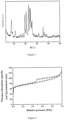
Figure 1 shows the XRD spectrum of the synthesized product of Example 1 of the present invention. -
Figure 2 shows the nitrogen gas physical adsorption diagram of the synthesized product of Example 1 of the present invention. - Analysis methods according to the present invention:
The specific surface area and the pore volume of the zeolite are measured with the ASAP 2405 physical adsorption instrument from Micromeritics Corporation (USA), where the specific surface area refers to the sum of the specific surface area of micropores and the specific surface area of mesopores. - The XRD spectra of the samples are obtained by using the Dmax2500 X-ray diffractometer produced by Rigaku Corporation (Japan), and the relative crystallinity of the sample is obtained by calculation. The relative crystallinity of the zeolite is determined as follows: taking the sum of the heights of diffraction peaks by 2θ degree of approximately 11.3° and 19.5-23°in the XRD spectrum of a conventional ZSM-23 zeolite as 100% crystallinity and comparing with that of other samples to obtain the relative crystallinity.
- According to the present invention, the ZSM-23 zeolite has an XRD pattern comprising the following characteristic peaks expressed by 2θ degree: about 11.3°+/-0.3° (for example +/-0.2° or +/-0.1°).
- According to the present invention, the ZSM-23 zeolite has an XRD pattern comprising the following characteristic peaks expressed by 2θ degree: 11.2-11.5°, 19.5-19.9°, 20.7-21.0°, and 22.8-23.1°.
- In order to better illustrate the present invention, the present invention is further described below in conjunction with Examples and Comparative Examples. But the scope of the present invention is not limited to the scope of these examples.
- To 250g of deionized water was added 50g of water glass (having a SiO2 mass fraction of 27%). The mixture was stirred and dispersed evenly. Then octodecyltrimethylammonium chloride (C18TMACI) was added and the resulting mixture was stirred for 0.5 hours, wherein the molar ratio of SiO2 to C18TMACl was 1:0.08. The solution was adjusted with hydrochloric acid to the pH of 2, and heated in a 50°C water bath for 4 hours. Then, the reaction system was filtered, washed, dried at 80°C for 8 hours, and calcined at 550°C for 3 hours to produce an amorphous silica.
-
- a) 0.35g of NaOH was dissolved in 35mL of deionized water, 3.7g of the mesoporous silicon source (OH-/SiO2 molar ratio=0.14) prepared in step (1) was added, and the mixture was stirred in a 45°C water bath for 3 hours;
- b) aluminum sulfate and isopropylamine (IPA) were successively dissolved in the remaining water, and to the resulting mixture was added the silicon source dispersion obtained from step a) to produce a gel with a total molar ratio of SiO2 in the silicon source:Al2O3 in the aluminum source:OH-:IPA:H2O=1:0.01:0.08:1.0:50. The resulting gel was crystallized at 180°C for 48 hours, filtered, washed, dried, and calcined. The resulting product was measured for its relative crystallinity, its specific surface area, its pore volume, and its pore size distribution; and measured for its hydrothermal stability after a hydrothermal treatment with steam for 2 hours at 600°C. Its XRD spectrum was shown in
Figure 1 (confirming that the obtained product is a ZSM-23 zeolite), and the nitrogen gas physical adsorption curve was shown inFigure 2 . The specific properties were shown in Table 1. - To 250g of deionized water was added 50g of water glass (having a SiO2 mass fraction of 27%). The mixture was stirred and dispersed evenly. Then octodecyltrimethylammonium chloride (C18TMACI) was added and the resulting mixture was stirred for 0.5 hours, wherein the molar ratio of SiO2 to C18TMACl was 1:0.08. The solution was adjusted with hydrochloric acid to the pH of 2, and heated in a 50°C water bath for 4 hours. Then, the reaction system was filtered, washed, dried at 100°C for 4 hours, and calcined at 550°C for 3 hours to produce an amorphous silica.
-
- a) 0.42g of NaOH was dissolved in 40mL of deionized water, 3.7g of the mesoporous silicon source (OH-/SiO2 molar ratio=0.17) prepared in step (1) was added, and the mixture was stirred in a 35°C water bath for 6 hours;
- b) aluminum sulfate and isopropylamine (IPA) were successively dissolved in the remaining water, and to the resulting mixture was added the silicon source dispersion obtained from step a) to produce a gel with a total molar ratio of SiO2 in the silicon source:Al2O3 in the aluminum source:OH-:IPA:H2O=1:0.005:0.10:1.0:50. The resulting gel was crystallized at 180°C for 48 hours, filtered, washed, dried, and calcined. The resulting product was measured for its relative crystallinity, its specific surface area, its pore volume, and its pore size distribution; and measured for its hydrothermal stability after a hydrothermal treatment with steam for 2 hours at 600°C. Its XRD spectrum was similar to
Figure 1 , and the nitrogen gas physical adsorption curve was similar toFigure 2 . The specific properties were shown in Table 1. - To 1200g of deionized water was added 50g of water glass (having a SiO2 mass fraction of 27%). The mixture was stirred and dispersed evenly. Then octodecyltrimethylammonium chloride (C18TMACl) was added and the resulting mixture was stirred for 2 hours, wherein the molar ratio of SiO2 to C18TMACl was 1:0.2. The solution was adjusted with hydrochloric acid to the pH of 3, and heated in a 50°C water bath for 4 hours. Then, the reaction system was filtered, washed, dried at 80°C for 4 hours, and calcined at 500°C for 3 hours to produce an amorphous silica.
-
- a) 0.15g of NaOH was dissolved in 35mL of deionized water, 3.7g of the mesoporous silicon source (OH-/SiO2 molar ratio=0.06) prepared in step (1) was added, and the mixture was stirred in a 45°C water bath for 3 hours;
- b) aluminum sulfate, isopropylamine (IPA) and NaOH were successively dissolved in the remaining water, and to the resulting mixture was added the silicon source dispersion obtained from step a) to produce a gel with a total molar ratio of SiO2 in the silicon source:Al2O3 in the aluminum source: OH-:IPA:H2O=1:0.01:0.08:1.0:50. The resulting gel was crystallized at 180°C for 48 hours, filtered, washed, dried, and calcined. The resulting product was measured for its relative crystallinity, its specific surface area, its pore volume, and its pore size distribution; and measured for its hydrothermal stability after a hydrothermal treatment with steam for 2 hours at 600°C. Its XRD spectrum was similar to
Figure 1 , and the nitrogen gas physical adsorption curve was similar toFigure 2 . The specific properties were shown in Table 1. - To 800g of deionized water was added 50g of water glass (having a SiO2 mass fraction of 27%). The mixture was stirred and dispersed evenly. Then octodecyltrimethylammonium chloride (C18TMACl) was added and the resulting mixture was stirred for 2 hours, wherein the molar ratio of SiO2 to C18TMACl was 1:0.15. The solution was adjusted with hydrochloric acid to the pH of 4, and heated in a 50°C water bath for 4 hours. Then, the reaction system was filtered, washed, dried at 90°C for 4 hours, and calcined at 550°C for 3 hours to produce an amorphous silica.
-
- a) 0.42g of NaOH was dissolved in 40mL of deionized water, 3.7g of the mesoporous silicon source (OH-/SiO2 molar ratio=0.17) prepared in step (1) was added, and the mixture was stirred in a 40°C water bath for 3 hours;
- b) aluminum sulfate and isopropylamine (IPA) were successively dissolved in the remaining water, and to the resulting mixture was added the silicon source dispersion obtained from step a) to produce a gel with a total molar ratio of SiO2 in the silicon source:Al2O3 in the aluminum source:OH-:IPA:H2O=1:0.005:0.10:1.0:50. The resulting gel was crystallized at 180°C for 48 hours, filtered, washed, dried, and calcined. The resulting product was measured for its relative crystallinity, its specific surface area, its pore volume, and its pore size distribution; and measured for its hydrothermal stability after a hydrothermal treatment with steam for 2 hours at 600°C. Its XRD spectrum was similar to
Figure 1 , and the nitrogen gas physical adsorption curve was similar toFigure 2 . The specific properties were shown in Table 1. - To 210g of deionized water was added 50g of water glass (having a SiO2 mass fraction of 27%). The mixture was stirred and dispersed evenly. Then octodecyltrimethylammonium chloride (C18TMACl) was added and the resulting mixture was stirred for 1 hour, wherein the molar ratio of SiO2 to C18TMACl was 1:0.05. The solution was adjusted with hydrochloric acid to the pH of 2, and heated in a 60°C water bath for 4 hours. Then, the reaction system was filtered, washed, dried at 80°C for 8 hours, and calcined at 550°C for 3 hours to produce an amorphous silica.
-
- a) 0.35g of NaOH was dissolved in 35mL of deionized water, 3.7g of the mesoporous silicon source (OH-/SiO2 molar ratio=0.14) prepared in step (1) was added, and the mixture was stirred in a 50°C water bath for 2 hours;
- b) aluminum sulfate and isopropylamine (IPA) were successively dissolved in the remaining water, and to the resulting mixture was added the silicon source dispersion obtained from step a) to produce a gel with a total molar ratio of SiO2 in the silicon source:Al2O3 in the aluminum source:OH-:IPA:H2O=1:0.01:0.08:1.0:50. The resulting gel was crystallized at 180°C for 48 hours, filtered, washed, dried, and calcined. The resulting product was measured for its relative crystallinity, its specific surface area, its pore volume, and its pore size distribution; and measured for its hydrothermal stability after a hydrothermal treatment with steam for 2 hours at 600°C. Its XRD spectrum was similar to
Figure 1 , and the nitrogen gas physical adsorption curve was similar toFigure 2 . The specific properties were shown in Table 1. - To 210g of deionized water was added 50g of water glass (having a SiO2 mass fraction of 27%). The mixture was stirred and dispersed evenly. Then octodecyltrimethylammonium chloride (C18TMACl) was added and the resulting mixture was stirred for 1 hour, wherein the molar ratio of SiO2 to C18TMACl was 1:0.06. The solution was adjusted with hydrochloric acid to the pH of 2, and heated in a 60°C water bath for 4 hours. Then, the reaction system was filtered, washed, dried at 80°C for 8 hours, and calcined at 550°C for 3 hours to produce an amorphous silica.
-
- a) 0.10g of NaOH and 1.36g of concentrated ammonia water (having a mass fraction of about 27%) was dissolved in 35mL of deionized water, 3.7g of the mesoporous silicon source (OH-/SiO2 molar ratio=0.22) prepared in step (1) was added, and the mixture was stirred in a 40°C water bath for 6 hours;
- b) aluminum sulfate and isopropylamine (IPA) were successively dissolved in the remaining water, and to the resulting mixture was added the silicon source dispersion obtained from step a) to produce a gel with a total molar ratio of SiO2 in the silicon source:Al2O3 in the aluminum source:OH-:IPA:H2O=1:0.01:0.15:1.0:50. The resulting gel was crystallized at 180°C for 48 hours, filtered, washed, dried, and calcined. The resulting product was measured for its relative crystallinity, its specific surface area, its pore volume, and its pore size distribution; and measured for its hydrothermal stability after a hydrothermal treatment with steam for 2 hours at 600°C. Its XRD spectrum was similar to
Figure 1 , and the nitrogen gas physical adsorption curve was similar toFigure 2 . The specific properties were shown in Table 1. - 0.51 g of pseudo-boehmite and 0.3 g of sodium hydroxide were added to 26 mL of deionized water under stirring at 35°C. The resulting solution was homogenized, then 0.3g of isopropylamine was added, then 21g of white carbon black was added, and the resulting mixture was homogenized and mixed for 1 hour. 24.5g of cereal starch was added, and the resulting mixture was heated to 90°C, stirred and aged for 6 hours. Finally, the resulting mixture was transferred to a hydrothermal reaction vessel lined with PTFE, statically crystallized at 160°C for 144 hours, taken out, cooled, filtered, and dried at 80°C to obtain the raw powder of zeolite. The raw powder was calcined at 500°C for 12 hours under an air atmosphere to produce a micropore-mesopore composite ZSM-23 zeolite, which was measured for its relative crystallinity, its specific surface area, its pore volume and its pore size distribution, and measured for its hydrothermal stability after a hydrothermal treatment with steam for 2 hours at 600°C. The specific properties were shown in Table 1.
- To 250g of deionized water was added 50g of water glass (having a SiO2 mass fraction of 27%). The mixture was stirred and dispersed evenly. Then octodecyltrimethylammonium chloride (C18TMACI) was added and the resulting mixture was stirred for 0.5 hours, wherein the molar ratio of SiO2 to C18TMACl was 1:0.08. The solution was adjusted with hydrochloric acid to the pH of 2, and heated in a 50°C water bath for 4 hours. Then, the reaction system was filtered, washed, dried, and calcined at 550°C to produce an amorphous silica.
- (2) a) 3.7g of the mesoporous silicon source prepared in step (1) was dispersed in 35 mL of deionized water, and the mixture was stirred in a 50°C water bath for 2 hours;
b) aluminum sulfate, isopropylamine (IPA) and NaOH were successively dissolved in the remaining water, and to the resulting mixture was added the silicon source dispersion obtained from step a) to produce a gel with a total molar ratio of SiO2 in the silicon source:Al2O3 in the aluminum source:NaOH:IPA:H2O=1:0.01:0.08:1.0:50. The resulting gel was crystallized at 180°C for 48 hours, filtered, washed, dried, and calcined. The resulting product was measured for its relative crystallinity, its specific surface area, its pore volume, and its pore size distribution; and measured for its hydrothermal stability after a hydrothermal treatment with steam for 2 hours at 600°C. The specific properties were shown in Table 1. - To 1200g of deionized water was added 50g of water glass (having a SiO2 mass fraction of 27%). The mixture was stirred and dispersed evenly. Then octodecyltrimethylammonium chloride (C18TMACl) was added and the resulting mixture was stirred for 2 hours, wherein the molar ratio of SiO2 to C18TMACl was 1:0.2. The solution was adjusted with hydrochloric acid to the pH of 3, and heated in a 50°C water bath for 4 hours. Then, the reaction system was filtered, washed, dried, and calcined at 550°C to produce an amorphous silica.
- (2) a) 0.70g of NaOH was dissolved in 40mL of deionized water, 3.7g of the mesoporous silicon source (OH-/SiO2 molar ratio=0.28) prepared in step (1) was added, and the mixture was stirred in a 45°C water bath for 3 hours;
b) aluminum sulfate and isopropylamine (IPA) were successively dissolved in the remaining water, and to the resulting mixture was added the silicon source dispersion obtained from step a) to produce a gel with a total molar ratio of SiO2 in the silicon source:Al2O3 in the aluminum source:NaOH:IPA:H2O=1:0.01:0.16:1.0:50. The resulting gel was crystallized at 180°C for 48 hours, filtered, washed, dried, and calcined. The resulting product was measured for its relative crystallinity, its specific surface area, its pore volume, and its pore size distribution; and measured for its hydrothermal stability after a hydrothermal treatment with steam for 2 hours at 600°C. - To 1200g of deionized water was added 50g of water glass (having a SiO2 mass fraction of 27%). The mixture was stirred and dispersed evenly. Then octodecyltrimethylammonium chloride (C18TMACl) was added and the resulting mixture was stirred for 2 hours, wherein the molar ratio of SiO2 to C18TMACl was 1:0.2. The solution was adjusted with hydrochloric acid to the pH of 3, and heated in a 50°C water bath for 4 hours. Then, the reaction system was filtered, washed, dried, and calcined at 550°C to produce an amorphous silica.
- (2) a) 0.10g of NaOH was dissolved in 40mL of deionized water, 3.7g of the mesoporous silicon source (OH-/SiO2 molar ratio=0.04) prepared in step (1) was added, and the mixture was stirred in a 45°C water bath for 3 hours;
b) aluminum sulfate, isopropylamine (IPA) and sodium hydroxidewere successively dissolved in the remaining water, and to the resulting mixture was added the silicon source dispersion obtained from step a) to produce a gel with a total molar ratio of SiO2 in the silicon source:Al2O3 in the aluminum source:NaOH:IPA:H2O=1:0.01:0.08:1.0:50. The resulting gel was crystallized at 180°C for 48 hours, filtered, washed, dried, and calcined. The resulting product was measured for its relative crystallinity, its specific surface area, its pore volume, and its pore size distribution; and measured for its hydrothermal stability after a hydrothermal treatment with steam for 2 hours at 600°C. - Water glass, aluminum sulfate, isopropylamine (IPA), sodium hydroxide and water were mixed to produce a gel with a total molar ratio of SiO2 in the silicon source:Al2O3 in the aluminum source:NaOH:IPA:H2O=1:0.01:0.08:1.0:50. The resulting gel was heated at 180°C for 72 hours, filtered, washed, dried, and calcined. The resulting product was measured for its relative crystallinity; and measured for its hydrothermal stability after a hydrothermal treatment with steam for 2 hours at 600°C. The specific properties were shown in Table 1.
Table 1 Specific surface area, m2/g Microporous surface area, m2/g Microporous surface area, m2/g Pore volume, cm3/g Content of mesopores with pore size of 3 -8 nm Relative crystallinity, % Relative crystallinity after hydrothermal treatment, % Relative crystallinity retention, %d Example 1 395 105 290 0.42 77 102 103 100 Example 2 387 99 288 0.41 56 104 102 98 Example 3 398 107 291 0.45 80 114 110 96 Example 4 378 101 277 0.38 60 100 99 99 Example 5 384 91 293 0.40 69 113 108 96 Example 6 401 114 287 0.45 84 105 106 100 Comparative Example 1 289 126 163 0.28 31 103 74 72 Comparative Example 2 69 61 8 0.03 -a -a -a -a Comparative Example 3 232 167 65 0.24 -b -b -b -b Comparative Example 4 108 84 24 0.09 -c -c -c -c Comparative Example 5 228 188 40 0.24 18 100 101 100 a Under this condition, the zeolite product was not produced through crystallization, so this property could not be analyzed.
b Under this condition, the obtained products are mainly other zeolites, so this property could not be analyzed.
c Under this condition, the crystallization was incompleted, so this property could not be analyzed.
d Relative crystallinity retention= crystallinity after hydrothermal treatment/ relative crystallinity. Due to measurement errors, results greater than 100% were recorded as 100%. - It can be seen from the data in Table 1 that the preparation processes in the examples of the present invention could prepare ZSM-23 zeolites with micropore-mesopore composite structures through a simple synthesis process with a relatively small amount of surfactant at a relatively low cost. The obtained product, a micropore-mesopore composite ZSM-23 zeolite, has high crystallinity, large specific surface area and pore volume, high mesopore content, relatively concentrated size distribution, good thermal stability and hydrothermal stability, and broad application prospects.
- The performance of Z SM-23 zeolite samples was evaluated on a fixed bed micro reactor. The reaction conditions and catalytic results of Comparative Example 1, Comparative Example 5, Example 4 and Example 6 in the linear C20-C30 hydroisomerization reaction were as follows:
- Reaction raw materials: 90wt% decahydronaphthalene, 10wt% C20-C30 straight chain alkanes;
- Reaction conditions: reaction temperature 280°C; Liquid hourly space velocity 1.0 h-1; Hydrogen to oil ratio 600; Reaction hydrogen pressure 4.0 MPa;
- Liquid yield (C5 +): 93%; C20-C30Isomerization degree: 100%; C20-C30isomerization product yield: 46%; Ratio of multiple-branched chain components to single-branched chain components in C20-C30 isomerization product: 0.6.
- Liquid yield (C5 +): 94%; C20-C30Isomerization degree: 100%; C20-C30isomerization product yield: 44%; Ratio of multiple-branched chain components to single-branched chain components in C20-C30 isomerization product: 0.5.
- Liquid yield (C5 +): 95%; C20-C30Isomerization degree: 100%; C20-C30isomerization product yield: 53%; Ratio of multiple-branched chain components to single-branched chain components in C20-C30 isomerization product: 2.1.
- Liquid yield (C5 +): 96%; C20-C30Isomerization degree: 100%; C20-C30isomerization product yield: 54%; Ratio of multiple-branched chain components to single-branched chain components in C20-C30 isomerization product: 2.3.
Claims (23)
- A ZSM-23 zeolite, which is characterized in that the pore volume of mesopores having a pore size of 3-8 nm, preferably 3-6 nm of the zeolite is 45-90%, preferably 50-85%, further preferably 55-81% of the total pore volume of the zeolite.
- The ZSM-23 zeolite according to claim 1, which is characterized in that the zeolite has a relative crystallinity of 95-120%, and the zeolite has a relative crystallinity retention of 95-100% after a hydrothermal treatment with steam for 2 hours at 600°C.
- The ZSM-23 zeolite according to any of the previous claims, which is characterized in that the zeolite has a specific surface area of 300-430 m2/g, and a pore volume of 0.31-0.5 cm3/g, the specific surface area of micropores is 50-170 m2/g, and the specific surface area of mesopores is 150-310 m2/g, for example, the zeolite has a specific surface area of 320-405 m2/g, and a pore volume of 0.34-0.45 cm3/g, the specific surface area of micropores is 80-140 m2/g, and the specific surface area of mesopores is 261-295 m2/g.
- A process for preparing the ZSM-23 zeolite according to any of claims 1-3, wherein the process comprises the following steps:(1) preparing or selecting a silicon source for preparing the ZSM-23 zeolite, such as amorphous silica;(2) performing an alkali treatment on the silicon source for preparing the ZSM-23 zeolite mentioned in step (1);(3) preparing the ZSM-23 zeolite by using the alkali-treated amorphous silica as the silicon source.
- Use of the alkali-treated amorphous silica obtained in step (2) of the process of claim 4 as the silicon source in the preparation of the ZSM-23 zeolite.
- The process or use according to any of claims 4-5, which is characterized in that in step (1), said amorphous silica has a specific surface area of 600-1300 m2/g, preferably 700-1200 m2/g; a pore volume of 0.6-1.3 cm3/g, preferably 0.7-1.2 cm3/g; and a pore diameter of 1-13 nm, preferably 2-10 nm.
- The process or use according to any of claims 4-6, which is characterized in that in step (1), the preparation process of the amorphous silica is as follows: adding a silicon source to deionized water to be uniformly dispersed, and then adding a surfactant and stirring; adjusting the pH of the resulting solution to 1-5, preferably 1.5-4, and then heating it in a water bath for a period of time; filtering, washing, drying, and calcining to produce the amorphous silica.
- The process or use according to claim 7, which is characterized in that in step (1), the silicon source is an inorganic silicon source, preferably one or more of water glass, silica sol, or white carbon black.
- The process or use according to any of claims 7-8, which is characterized in that in step (1), the surfactant is one or more of hexadecyltrimethylammonium chloride, hexadecyltrimethylammonium bromide, octodecyltrimethylammonium chloride, octodecyltrimethylammonium bromide.
- The process or use according to any of claims 7-9, which is characterized in that in step (1), the molar ratio of said silicon source as SiO2 to the surfactant is 1:(0.02-0.3), preferably 1:(0.05-0.2).
- The process or use according to any of claims 7-10, which is characterized in that in step (1), the molar ratio of said silicon source as SiO2 to the deionized water is 1:(30-300), preferably 1:(50-220).
- The process or use according to any of claims 7-11, which is characterized in that in step (1), the temperature for heating is 30-80°C, preferably, 40-70°C, the time for heating is 0.5-8 hours, preferably, 3-6 hours.
- The process or use according to any of claims 7-12, which is characterized in that in step (1), the temperature for drying is 80-120°C, the time for drying is 4-12 hours, the temperature for calcining is 500-600°C, the time for calcining is 2-6 hours.
- The process or use according to any of claims 4-13, which is characterized in that in step (2), the alkali treatment involves adding the amorphous silica prepared in step (1) to an alkaline solution, heating and stirring.
- The process or use according to claim 14, which is characterized in that in step (2), the alkali treatment is performed by using an inorganic alkali, and the inorganic alkali is one or more of sodium hydroxide, potassium hydroxide, or ammonia water.
- The process or use according to any of claims 14-15, which is characterized in that in step (2), in the alkali treatment, the time for heating and stirring is 0.5-12 hours, preferably 2-8 hours; and the temperature for heating is 25-60°C, preferably 30-50°C.
- The process or use according to any of claims 4-16, which is characterized in that in step (2), the molar ratio of the inorganic alkali as OH- to the amorphous silica as SiO2 is 0.05-0.24, preferably 0.06-0.22.
- The process according to any of claims 4-17, which is characterized in that in step (3), an alkali-treated amorphous silica is used as the silicon source, the silicon source is mixed with an aluminum source, an alkali source (MOH), a template agent (R) and water to form a gel, which is crystallized, filtered, washed, dried and calcined to produce the ZSM-23 zeolite.
- The process according to claim 18, which is characterized in that in the gel, the molar ratio of the silicon source (as SiO2):the aluminum source(as Al2O3):the alkali source (as hydroxide):the template agent:H2O is 1:(0.003-0.03):(0.03-0.3):(0.05-2):(10-90); further preferably, in the gel, the molar ratio of the silicon source (as SiO2):the aluminum source(as Al2O3):the alkali source (as hydroxide):the template agent:H2O is 1:(0.005-0.02):(0.03-0.16):(0.08-1.6):(20-70).
- The process according to any of claims 18-19, which is characterized in that the gel is crystallized at 150-200°C, preferably 170-180°C for 24-96 hours, preferably 36-72 hours, filtered, washed, dried, and calcined to produce the ZSM-23 zeolite.
- The process according to any of claims 18-20, which is characterized in that in step (3), the temperature for drying is 80-120°C, the time for drying is 4-12 hours, the temperature for calcining is 500-600°C, the time for calcining is 2-6 hours.
- An alkali-treated amorphous silica, which is characterized in that: the specific surface area is 600-1300 m2/g, preferably 700-1200 m2/g; the pore volume is 0.6-1.3 cm3/g, preferably 0.7-1.2 cm3/g; the pore diameter is 1-13 nm, preferably 2-10 nm.
- An alkali-treated amorphous silica, which is characterized in that: the specific surface area is 600-1300 m2/g, preferably 700-1200 m2/g; the pore volume is 0.6-1.3 cm3/g, preferably 0.7-1.2 cm3/g; the pore diameter is 1-13 nm, preferably 2-10 nm;
wherein the alkali treatment is carried out according to step (2) of the process as described in any of claims 4 and 6-17.
Applications Claiming Priority (2)
| Application Number | Priority Date | Filing Date | Title |
|---|---|---|---|
| CN202110018638 | 2021-01-07 | ||
| PCT/CN2022/070678 WO2022148424A1 (en) | 2021-01-07 | 2022-01-07 | Zsm-23 molecular sieve and preparation method therefor |
Publications (2)
| Publication Number | Publication Date |
|---|---|
| EP4289787A1 true EP4289787A1 (en) | 2023-12-13 |
| EP4289787A4 EP4289787A4 (en) | 2025-03-19 |
Family
ID=82235874
Family Applications (1)
| Application Number | Title | Priority Date | Filing Date |
|---|---|---|---|
| EP22736586.3A Pending EP4289787A4 (en) | 2021-01-07 | 2022-01-07 | ZSM-23 MOLECULAR SIEVE AND PREPARATION METHOD THEREOF |
Country Status (8)
| Country | Link |
|---|---|
| US (1) | US20240059573A1 (en) |
| EP (1) | EP4289787A4 (en) |
| JP (1) | JP7857299B2 (en) |
| KR (1) | KR20230128109A (en) |
| CN (1) | CN114715912A (en) |
| CA (1) | CA3207629A1 (en) |
| TW (1) | TWI826894B (en) |
| WO (1) | WO2022148424A1 (en) |
Families Citing this family (3)
| Publication number | Priority date | Publication date | Assignee | Title |
|---|---|---|---|---|
| CN115710002B (en) * | 2022-11-15 | 2024-08-02 | 国家能源集团宁夏煤业有限责任公司 | Nano molecular sieve and preparation method thereof |
| CN116116456B (en) * | 2023-03-07 | 2024-12-20 | 国家能源集团宁夏煤业有限责任公司 | Modified Pt/ZSM-23 catalyst, preparation method and application thereof |
| CN120057946B (en) * | 2023-11-30 | 2026-08-04 | 中国石油天然气股份有限公司 | Synthesis method of ZSM-23 zeolite molecular sieve with low silica-alumina ratio short axis nanocrystal morphology |
Family Cites Families (22)
| Publication number | Priority date | Publication date | Assignee | Title |
|---|---|---|---|---|
| CA1064890A (en) | 1975-06-10 | 1979-10-23 | Mae K. Rubin | Crystalline zeolite, synthesis and use thereof |
| US4629588A (en) * | 1984-12-07 | 1986-12-16 | W. R. Grace & Co. | Method for refining glyceride oils using amorphous silica |
| CA1256844A (en) * | 1986-02-28 | 1989-07-04 | Dean A. Young | Shock calcined aluminosilicate zeolites |
| IN171677B (en) * | 1987-08-31 | 1992-12-05 | Mobil Oil Corp | |
| US5405596A (en) | 1993-06-29 | 1995-04-11 | Mobil Oil Corp. | Synthesis of crystalline ZSM-23 |
| US5707601A (en) | 1995-03-17 | 1998-01-13 | Chevron U.S.A. Inc. | Process for preparing zeolites having MTT crystal structure using small, neutral amines |
| CN1055961C (en) * | 1997-11-24 | 2000-08-30 | 中国石油化工总公司 | Hydrocracking catalyst containing amorphous aluminum silicide |
| CN1171787C (en) * | 2001-06-28 | 2004-10-20 | 复旦大学 | A kind of preferential directional growth method of MFI type zeolite crystal |
| CN1261539C (en) * | 2003-04-29 | 2006-06-28 | 中国石油化工股份有限公司 | Hydrocarbon oil hydroconversion catalyst |
| US7157075B1 (en) | 2005-08-30 | 2007-01-02 | Chevron U.S.A. Inc. | Process for preparing MTT zeolites using nitrogen-containing organic compounds |
| GB0702327D0 (en) * | 2007-02-07 | 2007-03-21 | Leuven K U Res & Dev | Zeolite materials and synthesis method thereof |
| CN103818912B (en) * | 2014-01-21 | 2015-10-21 | 合肥科斯孚安全科技有限公司 | A kind of normal pressure prepares the method for low density bigger serface aerosil |
| CN104058422A (en) * | 2014-07-08 | 2014-09-24 | 大连理工大学 | Small-grain HZSM-23 molecular sieve and preparation method thereof |
| CN104129800B (en) * | 2014-07-18 | 2016-08-24 | 天津众智科技有限公司 | Utilize crystal seed and the method for composite inorganic alkali synthesizing high-silicon aluminum ratio Chabazite-type molecular sieve and the application of molecular sieve |
| CN106145133B (en) * | 2015-03-27 | 2018-06-15 | 中国石油化工股份有限公司 | A kind of H beta molecular sieves and preparation method thereof |
| CN105540607B (en) | 2016-02-29 | 2019-01-11 | 中国科学院山西煤炭化学研究所 | The preparation method of ZSM-23 molecular screen with mesoporous-micropore graded structure |
| CN107303497B (en) * | 2016-04-22 | 2019-10-15 | 中国石油化工股份有限公司 | A kind of multi-stage porous dehydrogenation and preparation method thereof |
| CN106635118B (en) * | 2016-09-30 | 2019-07-30 | 南京康鑫成生物科技有限公司 | A kind of method that waste oil directly prepares positive isoparaffin |
| CN106513035A (en) * | 2016-11-16 | 2017-03-22 | 中国海洋石油总公司 | Preparation method for mesoporous-microporous composite hydroisomerization dewaxing catalyst |
| CN107235497B (en) | 2017-07-25 | 2019-06-25 | 中国科学院山西煤炭化学研究所 | A kind of multi-stage porous composite molecular sieve with adjustable acidity distribution and preparation method thereof |
| CN109569697B (en) * | 2017-09-28 | 2021-11-16 | 中国石油化工股份有限公司 | Silicon-aluminum catalytic material and preparation method thereof |
| CN111971110A (en) | 2018-04-17 | 2020-11-20 | 住友化学株式会社 | Humidity control member and method for manufacturing same |
-
2022
- 2022-01-07 US US18/260,668 patent/US20240059573A1/en active Pending
- 2022-01-07 CN CN202210011752.2A patent/CN114715912A/en active Pending
- 2022-01-07 CA CA3207629A patent/CA3207629A1/en active Pending
- 2022-01-07 JP JP2023541302A patent/JP7857299B2/en active Active
- 2022-01-07 TW TW111100707A patent/TWI826894B/en active
- 2022-01-07 EP EP22736586.3A patent/EP4289787A4/en active Pending
- 2022-01-07 KR KR1020237026415A patent/KR20230128109A/en active Pending
- 2022-01-07 WO PCT/CN2022/070678 patent/WO2022148424A1/en not_active Ceased
Also Published As
| Publication number | Publication date |
|---|---|
| CA3207629A1 (en) | 2022-07-14 |
| EP4289787A4 (en) | 2025-03-19 |
| KR20230128109A (en) | 2023-09-01 |
| CN114715912A (en) | 2022-07-08 |
| JP2024503644A (en) | 2024-01-26 |
| TW202227362A (en) | 2022-07-16 |
| US20240059573A1 (en) | 2024-02-22 |
| TWI826894B (en) | 2023-12-21 |
| JP7857299B2 (en) | 2026-05-12 |
| WO2022148424A1 (en) | 2022-07-14 |
Similar Documents
| Publication | Publication Date | Title |
|---|---|---|
| US20240059573A1 (en) | Zsm-23 zeolite and preparation process and use thereof | |
| CN114715913B (en) | A ZSM-23 molecular sieve and its preparation method and application | |
| CN107777700B (en) | Stepped hole HZSM-5 molecular sieve and preparation method thereof | |
| CN107915234B (en) | Preparation method of hierarchical porous TS-1 nano zeolite aggregate molecular sieve | |
| WO2016145619A1 (en) | Method for preparation of, and application of, mordenite having mesopores and micropores | |
| CN102807230A (en) | Method for preparing hierarchical porous MCM-22 molecular sieves | |
| CN113044853A (en) | Method for synthesizing nano ZSM-5 molecular sieve with high silica-alumina ratio | |
| CN108821304A (en) | High activity multi-stage porous Titanium Sieve Molecular Sieve and its preparation method and application | |
| CN118289775B (en) | ZSM-5/Y composite structure molecular sieve and preparation method thereof | |
| CN116692893A (en) | Method for constructing hierarchical pores in molecular sieve | |
| CN107416859A (en) | A kind of preparation method and application of step hole Beta molecular sieves | |
| CN115739169B (en) | A method for preparing a single-atom shaped catalyst with a uniform crystal phase | |
| CN112551542A (en) | Single crystal cascade hole HZSM-5 molecular sieve and green preparation method thereof | |
| CN113880110B (en) | Nanometer hierarchical pore MOR/MTW eutectic molecular sieve and preparation method and application thereof | |
| CN113135578A (en) | Preparation method of silicon-germanium ISV zeolite molecular sieve | |
| CN107151022B (en) | A kind of mesoporous P-IM-5 molecular sieve and preparation method and application | |
| CN116037197A (en) | Catalyst containing ZSM-5 molecular sieve and its preparation method and application | |
| CN115010146A (en) | Hierarchical pore ZSM-5 nano aggregate molecular sieve and preparation method thereof | |
| CN118062855A (en) | A method for synthesizing low silicon-aluminum ratio nano ZSM-5 molecular sieve and its application | |
| CN117383579A (en) | A kind of preparation method of ZSM-5 molecular sieve | |
| CN114477224B (en) | Preparation method of beta molecular sieve, product and application thereof | |
| CN119320148B (en) | A hollow ZSM-12 molecular sieve and its preparation method | |
| CN119176567B (en) | Preparation method of hierarchical pore MFI molecular sieve | |
| CN114477203B (en) | A porous molecular sieve and its synthesis method | |
| CN119320145B (en) | A mordenite zeolite and its preparation method |
Legal Events
| Date | Code | Title | Description |
|---|---|---|---|
| STAA | Information on the status of an ep patent application or granted ep patent |
Free format text: STATUS: THE INTERNATIONAL PUBLICATION HAS BEEN MADE |
|
| PUAI | Public reference made under article 153(3) epc to a published international application that has entered the european phase |
Free format text: ORIGINAL CODE: 0009012 |
|
| STAA | Information on the status of an ep patent application or granted ep patent |
Free format text: STATUS: REQUEST FOR EXAMINATION WAS MADE |
|
| 17P | Request for examination filed |
Effective date: 20230803 |
|
| AK | Designated contracting states |
Kind code of ref document: A1 Designated state(s): AL AT BE BG CH CY CZ DE DK EE ES FI FR GB GR HR HU IE IS IT LI LT LU LV MC MK MT NL NO PL PT RO RS SE SI SK SM TR |
|
| DAV | Request for validation of the european patent (deleted) | ||
| DAX | Request for extension of the european patent (deleted) | ||
| REG | Reference to a national code |
Ref country code: DE Ref legal event code: R079 Free format text: PREVIOUS MAIN CLASS: C01B0039040000 Ipc: C01B0039480000 |
|
| A4 | Supplementary search report drawn up and despatched |
Effective date: 20250217 |
|
| RIC1 | Information provided on ipc code assigned before grant |
Ipc: B01J 20/18 20060101ALI20250211BHEP Ipc: B01J 35/66 20240101ALI20250211BHEP Ipc: B01J 35/64 20240101ALI20250211BHEP Ipc: B01J 35/63 20240101ALI20250211BHEP Ipc: B01J 35/61 20240101ALI20250211BHEP Ipc: B01J 29/70 20060101ALI20250211BHEP Ipc: B01J 20/30 20060101ALI20250211BHEP Ipc: B01J 20/28 20060101ALI20250211BHEP Ipc: C01B 33/12 20060101ALI20250211BHEP Ipc: C01B 39/48 20060101AFI20250211BHEP |