EP4289389A1 - Implant - Google Patents
Implant Download PDFInfo
- Publication number
- EP4289389A1 EP4289389A1 EP22187019.9A EP22187019A EP4289389A1 EP 4289389 A1 EP4289389 A1 EP 4289389A1 EP 22187019 A EP22187019 A EP 22187019A EP 4289389 A1 EP4289389 A1 EP 4289389A1
- Authority
- EP
- European Patent Office
- Prior art keywords
- implant
- cavities
- openings
- cavity
- medicine
- Prior art date
- Legal status (The legal status is an assumption and is not a legal conclusion. Google has not performed a legal analysis and makes no representation as to the accuracy of the status listed.)
- Granted
Links
Images





Classifications
-
- A—HUMAN NECESSITIES
- A61—MEDICAL OR VETERINARY SCIENCE; HYGIENE
- A61F—FILTERS IMPLANTABLE INTO BLOOD VESSELS; PROSTHESES; DEVICES PROVIDING PATENCY TO, OR PREVENTING COLLAPSING OF, TUBULAR STRUCTURES OF THE BODY, e.g. STENTS; ORTHOPAEDIC, NURSING OR CONTRACEPTIVE DEVICES; FOMENTATION; TREATMENT OR PROTECTION OF EYES OR EARS; BANDAGES, DRESSINGS OR ABSORBENT PADS; FIRST-AID KITS
- A61F2/00—Filters implantable into blood vessels; Prostheses, i.e. artificial substitutes or replacements for parts of the body; Appliances for connecting them with the body; Devices providing patency to, or preventing collapsing of, tubular structures of the body, e.g. stents
- A61F2/82—Devices providing patency to, or preventing collapsing of, tubular structures of the body, e.g. stents
- A61F2/86—Stents in a form characterised by the wire-like elements; Stents in the form characterised by a net-like or mesh-like structure
- A61F2/90—Stents in a form characterised by the wire-like elements; Stents in the form characterised by a net-like or mesh-like structure characterised by a net-like or mesh-like structure
-
- A—HUMAN NECESSITIES
- A61—MEDICAL OR VETERINARY SCIENCE; HYGIENE
- A61C—DENTISTRY; APPARATUS OR METHODS FOR ORAL OR DENTAL HYGIENE
- A61C8/00—Means to be fixed to the jaw-bone for consolidating natural teeth or for fixing dental prostheses thereon; Dental implants; Implanting tools
- A61C8/0018—Means to be fixed to the jaw-bone for consolidating natural teeth or for fixing dental prostheses thereon; Dental implants; Implanting tools characterised by the shape
- A61C8/0037—Details of the shape
-
- A—HUMAN NECESSITIES
- A61—MEDICAL OR VETERINARY SCIENCE; HYGIENE
- A61C—DENTISTRY; APPARATUS OR METHODS FOR ORAL OR DENTAL HYGIENE
- A61C8/00—Means to be fixed to the jaw-bone for consolidating natural teeth or for fixing dental prostheses thereon; Dental implants; Implanting tools
- A61C8/0018—Means to be fixed to the jaw-bone for consolidating natural teeth or for fixing dental prostheses thereon; Dental implants; Implanting tools characterised by the shape
-
- A—HUMAN NECESSITIES
- A61—MEDICAL OR VETERINARY SCIENCE; HYGIENE
- A61C—DENTISTRY; APPARATUS OR METHODS FOR ORAL OR DENTAL HYGIENE
- A61C8/00—Means to be fixed to the jaw-bone for consolidating natural teeth or for fixing dental prostheses thereon; Dental implants; Implanting tools
- A61C8/0048—Connecting the upper structure to the implant, e.g. bridging bars
- A61C8/0075—Implant heads specially designed for receiving an upper structure
-
- A—HUMAN NECESSITIES
- A61—MEDICAL OR VETERINARY SCIENCE; HYGIENE
- A61F—FILTERS IMPLANTABLE INTO BLOOD VESSELS; PROSTHESES; DEVICES PROVIDING PATENCY TO, OR PREVENTING COLLAPSING OF, TUBULAR STRUCTURES OF THE BODY, e.g. STENTS; ORTHOPAEDIC, NURSING OR CONTRACEPTIVE DEVICES; FOMENTATION; TREATMENT OR PROTECTION OF EYES OR EARS; BANDAGES, DRESSINGS OR ABSORBENT PADS; FIRST-AID KITS
- A61F2/00—Filters implantable into blood vessels; Prostheses, i.e. artificial substitutes or replacements for parts of the body; Appliances for connecting them with the body; Devices providing patency to, or preventing collapsing of, tubular structures of the body, e.g. stents
- A61F2/0077—Special surfaces of prostheses, e.g. for improving ingrowth
-
- A—HUMAN NECESSITIES
- A61—MEDICAL OR VETERINARY SCIENCE; HYGIENE
- A61F—FILTERS IMPLANTABLE INTO BLOOD VESSELS; PROSTHESES; DEVICES PROVIDING PATENCY TO, OR PREVENTING COLLAPSING OF, TUBULAR STRUCTURES OF THE BODY, e.g. STENTS; ORTHOPAEDIC, NURSING OR CONTRACEPTIVE DEVICES; FOMENTATION; TREATMENT OR PROTECTION OF EYES OR EARS; BANDAGES, DRESSINGS OR ABSORBENT PADS; FIRST-AID KITS
- A61F2/00—Filters implantable into blood vessels; Prostheses, i.e. artificial substitutes or replacements for parts of the body; Appliances for connecting them with the body; Devices providing patency to, or preventing collapsing of, tubular structures of the body, e.g. stents
- A61F2/82—Devices providing patency to, or preventing collapsing of, tubular structures of the body, e.g. stents
- A61F2/86—Stents in a form characterised by the wire-like elements; Stents in the form characterised by a net-like or mesh-like structure
-
- A—HUMAN NECESSITIES
- A61—MEDICAL OR VETERINARY SCIENCE; HYGIENE
- A61C—DENTISTRY; APPARATUS OR METHODS FOR ORAL OR DENTAL HYGIENE
- A61C8/00—Means to be fixed to the jaw-bone for consolidating natural teeth or for fixing dental prostheses thereon; Dental implants; Implanting tools
- A61C8/0018—Means to be fixed to the jaw-bone for consolidating natural teeth or for fixing dental prostheses thereon; Dental implants; Implanting tools characterised by the shape
- A61C8/0037—Details of the shape
- A61C2008/0046—Textured surface, e.g. roughness, microstructure
-
- A—HUMAN NECESSITIES
- A61—MEDICAL OR VETERINARY SCIENCE; HYGIENE
- A61F—FILTERS IMPLANTABLE INTO BLOOD VESSELS; PROSTHESES; DEVICES PROVIDING PATENCY TO, OR PREVENTING COLLAPSING OF, TUBULAR STRUCTURES OF THE BODY, e.g. STENTS; ORTHOPAEDIC, NURSING OR CONTRACEPTIVE DEVICES; FOMENTATION; TREATMENT OR PROTECTION OF EYES OR EARS; BANDAGES, DRESSINGS OR ABSORBENT PADS; FIRST-AID KITS
- A61F2/00—Filters implantable into blood vessels; Prostheses, i.e. artificial substitutes or replacements for parts of the body; Appliances for connecting them with the body; Devices providing patency to, or preventing collapsing of, tubular structures of the body, e.g. stents
- A61F2/0077—Special surfaces of prostheses, e.g. for improving ingrowth
- A61F2002/0081—Special surfaces of prostheses, e.g. for improving ingrowth directly machined on the prosthetic surface, e.g. holes, grooves
-
- A—HUMAN NECESSITIES
- A61—MEDICAL OR VETERINARY SCIENCE; HYGIENE
- A61F—FILTERS IMPLANTABLE INTO BLOOD VESSELS; PROSTHESES; DEVICES PROVIDING PATENCY TO, OR PREVENTING COLLAPSING OF, TUBULAR STRUCTURES OF THE BODY, e.g. STENTS; ORTHOPAEDIC, NURSING OR CONTRACEPTIVE DEVICES; FOMENTATION; TREATMENT OR PROTECTION OF EYES OR EARS; BANDAGES, DRESSINGS OR ABSORBENT PADS; FIRST-AID KITS
- A61F2230/00—Geometry of prostheses classified in groups A61F2/00 - A61F2/26 or A61F2/82 or A61F9/00 or A61F11/00 or subgroups thereof
- A61F2230/0002—Two-dimensional shapes, e.g. cross-sections
- A61F2230/0017—Angular shapes
- A61F2230/0023—Angular shapes triangular
-
- A—HUMAN NECESSITIES
- A61—MEDICAL OR VETERINARY SCIENCE; HYGIENE
- A61F—FILTERS IMPLANTABLE INTO BLOOD VESSELS; PROSTHESES; DEVICES PROVIDING PATENCY TO, OR PREVENTING COLLAPSING OF, TUBULAR STRUCTURES OF THE BODY, e.g. STENTS; ORTHOPAEDIC, NURSING OR CONTRACEPTIVE DEVICES; FOMENTATION; TREATMENT OR PROTECTION OF EYES OR EARS; BANDAGES, DRESSINGS OR ABSORBENT PADS; FIRST-AID KITS
- A61F2250/00—Special features of prostheses classified in groups A61F2/00 - A61F2/26 or A61F2/82 or A61F9/00 or A61F11/00 or subgroups thereof
- A61F2250/0058—Additional features; Implant or prostheses properties not otherwise provided for
- A61F2250/0067—Means for introducing or releasing pharmaceutical products into the body
-
- A—HUMAN NECESSITIES
- A61—MEDICAL OR VETERINARY SCIENCE; HYGIENE
- A61F—FILTERS IMPLANTABLE INTO BLOOD VESSELS; PROSTHESES; DEVICES PROVIDING PATENCY TO, OR PREVENTING COLLAPSING OF, TUBULAR STRUCTURES OF THE BODY, e.g. STENTS; ORTHOPAEDIC, NURSING OR CONTRACEPTIVE DEVICES; FOMENTATION; TREATMENT OR PROTECTION OF EYES OR EARS; BANDAGES, DRESSINGS OR ABSORBENT PADS; FIRST-AID KITS
- A61F2250/00—Special features of prostheses classified in groups A61F2/00 - A61F2/26 or A61F2/82 or A61F9/00 or A61F11/00 or subgroups thereof
- A61F2250/0058—Additional features; Implant or prostheses properties not otherwise provided for
- A61F2250/0067—Means for introducing or releasing pharmaceutical products into the body
- A61F2250/0068—Means for introducing or releasing pharmaceutical products into the body the pharmaceutical product being in a reservoir
Definitions
- the present invention relates to an implant that is configured to put into a human body, especially to an implant with surface treatment.
- artificial objects may be put into human bodies, and these artificial objects are socalled implants.
- One of the common implants is an artificial tooth root for the dental implant surgery, and another one is a stent for cardiac catheterization.
- the artificial tooth root is configured to be inserted into the gum, so the gum should be drilled and thus form a hole for the artificial tooth root.
- the bone of the gum may grow and thus the artificial tooth root can be secured on the gum.
- the growth speed of the bone is very slow, which causes inconvenience to the patient after the surgery.
- how to improve the growth speed of the bone is an issue of the dental implant surgery.
- after the cardiac catheterization if new blood vessels are developed (i.e. angiogenesis), the implanted blood vessel is prone to blockage again. Thus, how to prevent angiogenesis is an issue of the cardiac catheterization.
- the present invention provides an implant to mitigate or obviate the aforementioned problems.
- the main objective of the present invention is to provide an implant that is capable of absorbing more medicine, such that the medicine can assist the implanted tissue of the human body in recovery, or prevent the implanted tissue from development.
- the implant has an outer surface and a plurality of cavities.
- the outer surface forms a plurality of openings.
- the cavities communicates with the openings respectively.
- the implant which is a stent has a plurality of wire structures and a plurality of tube structures.
- the tube structures are formed on each one of the wire structures.
- Each one of the tube structures forms a cavity, one end of each one of the tube structures is connected to the wire structure, and another end forms an opening communicating with the cavity.
- the medicine may flow into the cavities after applied on the implant.
- the latitudinal section of each cavity is larger than the corresponding opening, so after flowing into the cavities, the medicine would not easily flow out, which allows the implant to absorb more medicine.
- the implant is an artificial tooth root A for the dental implant surgery and comprises an outer surface 10 and a plurality of cavities 12.
- the implant selectively further comprises a plurality of passages 13.
- the outer surface 10 forms a plurality of openings 11.
- the cavities 12 respectively communicate with the openings 11.
- each one of the cavities 12 communicates with the corresponding opening 11 via a respective one of the passages 13.
- one end of each passage 13 communicates with one of the openings 11 and another end of said passage 13 communicates with one of the cavities 12.
- each opening 11 communicates with one passage 13 and one cavity 12; in another embodiment, one opening 11 may communicate with one cavity 12 only.
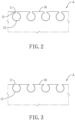
- Fig. 2 shows the arrangement of the cavities 12.
- the openings 11 and the cavities 12 are arranged regularly on the outer surface 10; in another embodiment, the openings 11 and the cavities 12 may be arranged irregularly as shown in Fig. 3 .
- the implant may not comprise any passage, such that the cavities 12 communicate with the openings 11 directly.
- each one of the cavities 12 is perpendicular to the outer surface 10 and may be round, elliptical, oval, or triangular.
- the latitudinal section of each one of the cavities 12 is parallel with the outer surface 10, and the latitudinal section thereof is changed according to the distance from the outer surface.
- the maximum area of the latitudinal section is larger than the sectional area of the communicating opening 11. Therefore, the cavities 12 have more spaces to contain medicine.
- the surface of each one of the cavities 12 may be smooth, or comprise irregular concave and convex structures.
- the latitudinal section of each one of the cavities 12 is as larger as farer from the outer surface 10.
- the longitudinal sections of the cavities 12 may be triangular.
- the implant is a stent B for cardiac catheterization.
- the stent B is roughly in the shape of a tube, so the outer surface 10 of the stent B includes an outward cylinder surface and an inward cylinder surface.
- both of the outward cylinder surface and the inward cylinder surface form the openings 11 and the cavities 12; however, in another embodiment, the openings 11 and the cavities 12 may only be formed on the outward cylinder surface.
- Fig. 8 and Fig. 9 shows another configuration of the stent B' in the second embodiment.
- Fig. 8 shows one of the wires that forms the mesh tube (i.e. the stent B')
- Fig. 9 shows the sectional view of the wire.
- Each one of the wire structures 101 of the stent B' forms a plurality of tube structures 102 located thereon and arranged densely.
- ends of the tube structures 102 that are connected to the wire structure 101 are adjacent to each other.
- Each one of the tube structures 102 forms a cavity 12 therein.
- One end of each tube structure 102 is connected to the wire structure 101 and another end forms the aforementioned opening 11.
- the opening 11 communicates with the cavity 12. Because the tube structures 102 are arranged densely, end surfaces of the ends of the tube structures 102 that are away from the wire structure 101 form the outer surface of the stent B' together.
- the outer surface of the implant forms multiple openings 11 communicating with the cavities 12, and therefore the medicine can flow into the cavities 12 after the medicine is applied on the surface of the implant. Because the maximum of the latitudinal section of each cavity 12 is larger than the corresponding opening 11, the medicine may not flow out after flowing into the cavity 12, which allows the implant to absorb more medicine.
- the implant is an artificial tooth root A
- the medicine may include ingredients for enhancing the gum bone growth. Therefore, the implant of the present invention can absorb more medicine that enhances bone growth, which shortens the period for fixing the artificial tooth root A on the gum.
- the implant is a stent B
- the medicine may include ingredients for preventing angiogenesis. Therefore, the implant of the present invention can absorb more medicine that prevents angiogenesis, which decreases vascular blockage possibility.
Landscapes
- Health & Medical Sciences (AREA)
- General Health & Medical Sciences (AREA)
- Oral & Maxillofacial Surgery (AREA)
- Veterinary Medicine (AREA)
- Public Health (AREA)
- Life Sciences & Earth Sciences (AREA)
- Animal Behavior & Ethology (AREA)
- Engineering & Computer Science (AREA)
- Biomedical Technology (AREA)
- Epidemiology (AREA)
- Dentistry (AREA)
- Cardiology (AREA)
- Transplantation (AREA)
- Orthopedic Medicine & Surgery (AREA)
- Heart & Thoracic Surgery (AREA)
- Vascular Medicine (AREA)
- Prostheses (AREA)
- Dental Prosthetics (AREA)
- Crystals, And After-Treatments Of Crystals (AREA)
Abstract
Description
- The present invention relates to an implant that is configured to put into a human body, especially to an implant with surface treatment.
- In many surgeries, artificial objects may be put into human bodies, and these artificial objects are socalled implants. One of the common implants is an artificial tooth root for the dental implant surgery, and another one is a stent for cardiac catheterization. The artificial tooth root is configured to be inserted into the gum, so the gum should be drilled and thus form a hole for the artificial tooth root. After a period of time, the bone of the gum may grow and thus the artificial tooth root can be secured on the gum. However, the growth speed of the bone is very slow, which causes inconvenience to the patient after the surgery. Thus, how to improve the growth speed of the bone is an issue of the dental implant surgery. On the contrary, after the cardiac catheterization, if new blood vessels are developed (i.e. angiogenesis), the implanted blood vessel is prone to blockage again. Thus, how to prevent angiogenesis is an issue of the cardiac catheterization.
- To overcome the shortcomings, the present invention provides an implant to mitigate or obviate the aforementioned problems.
- The main objective of the present invention is to provide an implant that is capable of absorbing more medicine, such that the medicine can assist the implanted tissue of the human body in recovery, or prevent the implanted tissue from development.
- The implant has an outer surface and a plurality of cavities. The outer surface forms a plurality of openings. The cavities communicates with the openings respectively.
- The implant which is a stent has a plurality of wire structures and a plurality of tube structures. The tube structures are formed on each one of the wire structures. Each one of the tube structures forms a cavity, one end of each one of the tube structures is connected to the wire structure, and another end forms an opening communicating with the cavity.
- Therefore, because the outer surface of the implant of the present invention forms multiple openings and the openings communicate with the cavities in the implant, the medicine may flow into the cavities after applied on the implant. The latitudinal section of each cavity is larger than the corresponding opening, so after flowing into the cavities, the medicine would not easily flow out, which allows the implant to absorb more medicine.
- Other objectives, advantages and novel features of the invention will become more apparent from the following detailed description when taken in conjunction with the accompanying drawings.
-
-
Fig. 1 is a perspective view of an implant in accordance with a first embodiment of the present invention; -
Fig. 2 is a sectional view of the implant of the first embodiment inFig. 1 ; -
Fig. 3 is a sectional view of the implant in another configuration of the first embodiment inFig. 1 ; -
Fig. 4 is a sectional view of the implant in another configuration of the first embodiment inFig. 1 ; -
Fig. 5 is a sectional view of the implant in another configuration of the first embodiment inFig. 1 ; -
Fig. 6 is a perspective view of an implant in accordance with a second embodiment of the present invention; -
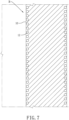
Fig. 7 is a sectional view of the implant of the second embodiment inFig. 6 ; -
Fig. 8 is a perspective view of one of wire structures of the implant in another configuration of the second embodiment inFig. 6 ; -
Fig. 9 is a sectional view of one of the wire structures of the implant in said another configuration of the second embodiment inFig. 8 . - With reference to
Fig.1 andFig. 2 , an implant in accordance with the present invention is provided. In a first embodiment, the implant is an artificial tooth root A for the dental implant surgery and comprises anouter surface 10 and a plurality ofcavities 12. The implant selectively further comprises a plurality ofpassages 13. - The
outer surface 10 forms a plurality ofopenings 11. Thecavities 12 respectively communicate with theopenings 11. In this embodiment, each one of thecavities 12 communicates with thecorresponding opening 11 via a respective one of thepassages 13. Precisely, one end of eachpassage 13 communicates with one of theopenings 11 and another end of saidpassage 13 communicates with one of thecavities 12. In this embodiment, each opening 11 communicates with onepassage 13 and onecavity 12; in another embodiment, oneopening 11 may communicate with onecavity 12 only.Fig. 2 shows the arrangement of thecavities 12. InFig. 2 , theopenings 11 and thecavities 12 are arranged regularly on theouter surface 10; in another embodiment, theopenings 11 and thecavities 12 may be arranged irregularly as shown inFig. 3 . In another configuration of this embodiment, the implant may not comprise any passage, such that thecavities 12 communicate with theopenings 11 directly. - The longitudinal section of each one of the
cavities 12 is perpendicular to theouter surface 10 and may be round, elliptical, oval, or triangular. The latitudinal section of each one of thecavities 12 is parallel with theouter surface 10, and the latitudinal section thereof is changed according to the distance from the outer surface. The maximum area of the latitudinal section is larger than the sectional area of the communicatingopening 11. Therefore, thecavities 12 have more spaces to contain medicine. Further, the surface of each one of thecavities 12 may be smooth, or comprise irregular concave and convex structures. - In the configurations as shown in
Fig. 4 and Fig. 5 , the latitudinal section of each one of thecavities 12 is as larger as farer from theouter surface 10. In other words, in these configurations, the longitudinal sections of thecavities 12 may be triangular. - Then please refer to
Fig. 6 andFig. 7 . In a second embodiment of the present invention, the implant is a stent B for cardiac catheterization. The stent B is roughly in the shape of a tube, so theouter surface 10 of the stent B includes an outward cylinder surface and an inward cylinder surface. In this embodiment, both of the outward cylinder surface and the inward cylinder surface form theopenings 11 and thecavities 12; however, in another embodiment, theopenings 11 and thecavities 12 may only be formed on the outward cylinder surface. - Then please refer to
Fig. 8 andFig. 9 , which shows another configuration of the stent B' in the second embodiment.Fig. 8 shows one of the wires that forms the mesh tube (i.e. the stent B') andFig. 9 shows the sectional view of the wire. Each one of thewire structures 101 of the stent B' forms a plurality oftube structures 102 located thereon and arranged densely. For example, ends of thetube structures 102 that are connected to thewire structure 101 are adjacent to each other. Each one of thetube structures 102 forms acavity 12 therein. One end of eachtube structure 102 is connected to thewire structure 101 and another end forms theaforementioned opening 11. The opening 11 communicates with thecavity 12. Because thetube structures 102 are arranged densely, end surfaces of the ends of thetube structures 102 that are away from thewire structure 101 form the outer surface of the stent B' together. - With the aforesaid structure, the outer surface of the implant forms
multiple openings 11 communicating with thecavities 12, and therefore the medicine can flow into thecavities 12 after the medicine is applied on the surface of the implant. Because the maximum of the latitudinal section of eachcavity 12 is larger than thecorresponding opening 11, the medicine may not flow out after flowing into thecavity 12, which allows the implant to absorb more medicine. If the implant is an artificial tooth root A, the medicine may include ingredients for enhancing the gum bone growth. Therefore, the implant of the present invention can absorb more medicine that enhances bone growth, which shortens the period for fixing the artificial tooth root A on the gum. On the other hand, if the implant is a stent B, the medicine may include ingredients for preventing angiogenesis. Therefore, the implant of the present invention can absorb more medicine that prevents angiogenesis, which decreases vascular blockage possibility.
Claims (8)
- An implant characterized in that the implant comprises:an outer surface (10) forming a plurality of openings (11); anda plurality of cavities (12) communicating with the openings (11) respectively.
- The implant as claimed in claim 1, wherein a maximum area of a latitudinal section of each one of the cavities (12) is larger than a sectional area of the corresponding opening (11) and the latitudinal sections thereof are parallel with the outer surface (10).
- The implant as claimed in claim 1 further comprising a plurality of passages (13), one end of each one of the passages (13) communicating with a respective one of the openings (11), and another end of each one of the passages (13) communicating with a respective one of the cavities (12).
- The implant as claimed in any one of claims 1 to 3, wherein a longitudinal section of each one of the cavities (12) is round, elliptical, oval, or triangular; the longitudinal sections of the cavities (12) are perpendicular to the outer surface (10).
- The implant as claimed in any one of claims 1 to 4, wherein a latitudinal section of each one of the cavities (12) is as larger as farer from the outer surface (10); the latitudinal sections of the cavities (12) are parallel with the outer surface (10).
- The implant as claimed in any one of claims 1 to 5, wherein the implant is an artificial tooth root (A).
- The implant as claimed in any one of claims 1 to 5, wherein the implant is a stent (B, B').
- An implant characterized in that the implant comprises:a plurality of wire structures (101); anda plurality of tube structures (103) formed on each one of the wire structures (101); each one of the tube structures (103) forming a cavity (12), one end of each one of the tube structures (103) connected to the wire structure (101), and another end forming an opening (11) communicating with the cavity (12);wherein the implant is a stent (B').
Priority Applications (1)
| Application Number | Priority Date | Filing Date | Title |
|---|---|---|---|
| EP23178047.9A EP4454600B1 (en) | 2022-06-06 | 2022-07-26 | Implant |
Applications Claiming Priority (1)
| Application Number | Priority Date | Filing Date | Title |
|---|---|---|---|
| TW111120886A TWI813320B (en) | 2022-06-06 | 2022-06-06 | implant |
Related Child Applications (2)
| Application Number | Title | Priority Date | Filing Date |
|---|---|---|---|
| EP23178047.9A Division-Into EP4454600B1 (en) | 2022-06-06 | 2022-07-26 | Implant |
| EP23178047.9A Division EP4454600B1 (en) | 2022-06-06 | 2022-07-26 | Implant |
Publications (3)
| Publication Number | Publication Date |
|---|---|
| EP4289389A1 true EP4289389A1 (en) | 2023-12-13 |
| EP4289389B1 EP4289389B1 (en) | 2026-02-11 |
| EP4289389C0 EP4289389C0 (en) | 2026-02-11 |
Family
ID=82742935
Family Applications (2)
| Application Number | Title | Priority Date | Filing Date |
|---|---|---|---|
| EP22187019.9A Active EP4289389B1 (en) | 2022-06-06 | 2022-07-26 | Implant |
| EP23178047.9A Active EP4454600B1 (en) | 2022-06-06 | 2022-07-26 | Implant |
Family Applications After (1)
| Application Number | Title | Priority Date | Filing Date |
|---|---|---|---|
| EP23178047.9A Active EP4454600B1 (en) | 2022-06-06 | 2022-07-26 | Implant |
Country Status (4)
| Country | Link |
|---|---|
| US (3) | US20230390089A1 (en) |
| EP (2) | EP4289389B1 (en) |
| JP (2) | JP2023178931A (en) |
| TW (1) | TWI813320B (en) |
Families Citing this family (3)
| Publication number | Priority date | Publication date | Assignee | Title |
|---|---|---|---|---|
| JP7110560B2 (en) * | 2017-09-06 | 2022-08-02 | 株式会社三洋物産 | game machine |
| JP7110562B2 (en) * | 2017-09-06 | 2022-08-02 | 株式会社三洋物産 | game machine |
| JP7110561B2 (en) * | 2017-09-06 | 2022-08-02 | 株式会社三洋物産 | game machine |
Citations (4)
| Publication number | Priority date | Publication date | Assignee | Title |
|---|---|---|---|---|
| US4729766A (en) * | 1980-08-28 | 1988-03-08 | Astra Meditec Aktiebolag | Vascular prosthesis and method in producing it |
| US20080145400A1 (en) * | 2006-11-03 | 2008-06-19 | Jan Weber | Ion Bombardment of Medical Devices |
| KR102161197B1 (en) * | 2018-06-14 | 2020-10-05 | 타이완 산 인 인터내셔널 씨오., 엘티디. | Implant device |
| WO2020222035A1 (en) * | 2019-04-30 | 2020-11-05 | Universidade Do Minho | Dental implant, process of obtention and uses thereof |
Family Cites Families (20)
| Publication number | Priority date | Publication date | Assignee | Title |
|---|---|---|---|---|
| SE450623B (en) * | 1984-11-07 | 1987-07-13 | Dan Lundgren | ELEMENTS OF CONTROLLED TISSUE INVESTMENT IN SURGICAL INTERVENTIONED AREAS |
| US6419491B1 (en) * | 1993-11-02 | 2002-07-16 | Bio-Lok International, Inc. | Dental implant system with repeating microgeometric surface patterns |
| US5639237A (en) * | 1995-06-08 | 1997-06-17 | Fontenot; Mark G | Dental prosthesis having indentations |
| AU6423796A (en) * | 1995-08-29 | 1997-03-06 | Johnson & Johnson Professional, Inc. | Bone prosthesis with protected coating for penetrating bone intergrowth |
| US5980564A (en) * | 1997-08-01 | 1999-11-09 | Schneider (Usa) Inc. | Bioabsorbable implantable endoprosthesis with reservoir |
| US6273908B1 (en) * | 1997-10-24 | 2001-08-14 | Robert Ndondo-Lay | Stents |
| US6805898B1 (en) * | 2000-09-28 | 2004-10-19 | Advanced Cardiovascular Systems, Inc. | Surface features of an implantable medical device |
| US6599322B1 (en) * | 2001-01-25 | 2003-07-29 | Tecomet, Inc. | Method for producing undercut micro recesses in a surface, a surgical implant made thereby, and method for fixing an implant to bone |
| US7018418B2 (en) * | 2001-01-25 | 2006-03-28 | Tecomet, Inc. | Textured surface having undercut micro recesses in a surface |
| US20050119758A1 (en) * | 2003-07-30 | 2005-06-02 | Bio-Lok International Inc. | Surgical implant for promotion of osseo-integration |
| US7955639B2 (en) * | 2005-03-31 | 2011-06-07 | Innovational Holdings, Llc. | System and method for loading a beneficial agent into a medical device |
| EP2022447A1 (en) * | 2007-07-09 | 2009-02-11 | Astra Tech AB | Nanosurface |
| US20090118818A1 (en) * | 2007-11-02 | 2009-05-07 | Boston Scientific Scimed, Inc. | Endoprosthesis with coating |
| JP2009201639A (en) * | 2008-02-27 | 2009-09-10 | Univ Kinki | Implant |
| US8268382B2 (en) * | 2010-07-12 | 2012-09-18 | Medtronic Vascular, Inc. | Method of making a stent with hollow struts |
| GB2554670B (en) | 2016-09-30 | 2022-01-05 | Vascutek Ltd | A vascular graft |
| US20180116768A1 (en) * | 2016-11-02 | 2018-05-03 | Taiwan Shan Yin International Co., Ltd. | Root implant |
| CN107951582A (en) * | 2017-11-10 | 2018-04-24 | 广州市健齿生物科技有限公司 | The personalized tooth implant that a kind of claw is fixed |
| WO2019122944A1 (en) * | 2017-12-19 | 2019-06-27 | Kardiozis Sas | Delivery device, delivery system, stent graft and a support structure |
| TWM634820U (en) * | 2022-06-06 | 2022-12-01 | 昱捷股份有限公司 | implant |
-
2022
- 2022-06-06 TW TW111120886A patent/TWI813320B/en active
- 2022-07-26 EP EP22187019.9A patent/EP4289389B1/en active Active
- 2022-07-26 EP EP23178047.9A patent/EP4454600B1/en active Active
- 2022-08-01 JP JP2022122683A patent/JP2023178931A/en active Pending
- 2022-08-09 US US17/884,133 patent/US20230390089A1/en active Pending
-
2023
- 2023-08-08 JP JP2023129262A patent/JP7605920B2/en active Active
-
2025
- 2025-03-11 US US19/076,150 patent/US20250205066A1/en active Pending
- 2025-03-11 US US19/076,043 patent/US20250205065A1/en active Pending
Patent Citations (4)
| Publication number | Priority date | Publication date | Assignee | Title |
|---|---|---|---|---|
| US4729766A (en) * | 1980-08-28 | 1988-03-08 | Astra Meditec Aktiebolag | Vascular prosthesis and method in producing it |
| US20080145400A1 (en) * | 2006-11-03 | 2008-06-19 | Jan Weber | Ion Bombardment of Medical Devices |
| KR102161197B1 (en) * | 2018-06-14 | 2020-10-05 | 타이완 산 인 인터내셔널 씨오., 엘티디. | Implant device |
| WO2020222035A1 (en) * | 2019-04-30 | 2020-11-05 | Universidade Do Minho | Dental implant, process of obtention and uses thereof |
Also Published As
| Publication number | Publication date |
|---|---|
| EP4454600C0 (en) | 2025-03-12 |
| EP4454600B1 (en) | 2025-03-12 |
| EP4289389B1 (en) | 2026-02-11 |
| JP2023178974A (en) | 2023-12-18 |
| TW202348207A (en) | 2023-12-16 |
| JP7605920B2 (en) | 2024-12-24 |
| US20230390089A1 (en) | 2023-12-07 |
| TWI813320B (en) | 2023-08-21 |
| US20250205066A1 (en) | 2025-06-26 |
| JP2023178931A (en) | 2023-12-18 |
| EP4454600A1 (en) | 2024-10-30 |
| US20250205065A1 (en) | 2025-06-26 |
| EP4289389C0 (en) | 2026-02-11 |
Similar Documents
| Publication | Publication Date | Title |
|---|---|---|
| US20250205066A1 (en) | Implant | |
| US7771482B1 (en) | Method for tissue expansion and regeneration using bioresorbable inflatable devices | |
| US6382976B1 (en) | Dental implant having round bottom with fluid directing channels | |
| KR20090080534A (en) | Dental implant | |
| KR101052069B1 (en) | Guide block, guide block assembly for dental implant procedure and implant method using same | |
| CN217488914U (en) | Implant | |
| KR200381367Y1 (en) | Dental Implant Fixture | |
| ES2363527T3 (en) | IMPLANT. | |
| TWM634820U (en) | implant | |
| CN115153920A (en) | Implant | |
| TWI835590B (en) | Implant | |
| TWM637942U (en) | implant | |
| KR200386050Y1 (en) | Dental Implant Fixture | |
| KR102161197B1 (en) | Implant device | |
| CN103054653B (en) | Cheek bone implanting device capable of regulating angle randomly | |
| KR100801976B1 (en) | Hybrid implant device | |
| CN220938248U (en) | A kind of intraoperative covered stent | |
| US20240225793A9 (en) | Zygomatic dental implant set | |
| CN103083114B (en) | Novel zygoma implant system | |
| EP4374829A1 (en) | Assembleable artificial bone plate and artificial bone plate unit | |
| CN110575272B (en) | Implant | |
| KR100444319B1 (en) | Abutment of Implant System | |
| JP3228880U6 (en) | Periodontal ligament | |
| KR20240052246A (en) | Healing abutment for dental implant | |
| RU2038056C1 (en) | Intraosseous pin for dental prosthesis |
Legal Events
| Date | Code | Title | Description |
|---|---|---|---|
| PUAI | Public reference made under article 153(3) epc to a published international application that has entered the european phase |
Free format text: ORIGINAL CODE: 0009012 |
|
| STAA | Information on the status of an ep patent application or granted ep patent |
Free format text: STATUS: REQUEST FOR EXAMINATION WAS MADE |
|
| 17P | Request for examination filed |
Effective date: 20230913 |
|
| AK | Designated contracting states |
Kind code of ref document: A1 Designated state(s): AL AT BE BG CH CY CZ DE DK EE ES FI FR GB GR HR HU IE IS IT LI LT LU LV MC MK MT NL NO PL PT RO RS SE SI SK SM TR |
|
| STAA | Information on the status of an ep patent application or granted ep patent |
Free format text: STATUS: EXAMINATION IS IN PROGRESS |
|
| 17Q | First examination report despatched |
Effective date: 20240212 |
|
| GRAP | Despatch of communication of intention to grant a patent |
Free format text: ORIGINAL CODE: EPIDOSNIGR1 |
|
| STAA | Information on the status of an ep patent application or granted ep patent |
Free format text: STATUS: GRANT OF PATENT IS INTENDED |
|
| INTG | Intention to grant announced |
Effective date: 20251008 |
|
| GRAS | Grant fee paid |
Free format text: ORIGINAL CODE: EPIDOSNIGR3 |
|
| GRAA | (expected) grant |
Free format text: ORIGINAL CODE: 0009210 |
|
| STAA | Information on the status of an ep patent application or granted ep patent |
Free format text: STATUS: THE PATENT HAS BEEN GRANTED |
|
| AK | Designated contracting states |
Kind code of ref document: B1 Designated state(s): AL AT BE BG CH CY CZ DE DK EE ES FI FR GB GR HR HU IE IS IT LI LT LU LV MC MK MT NL NO PL PT RO RS SE SI SK SM TR |
|
| REG | Reference to a national code |
Ref country code: CH Ref legal event code: F10 Free format text: ST27 STATUS EVENT CODE: U-0-0-F10-F00 (AS PROVIDED BY THE NATIONAL OFFICE) Effective date: 20260211 Ref country code: GB Ref legal event code: FG4D Ref country code: CH Ref legal event code: R17 Free format text: ST27 STATUS EVENT CODE: U-0-0-R10-R17 (AS PROVIDED BY THE NATIONAL OFFICE) Effective date: 20260211 |
|
| REG | Reference to a national code |
Ref country code: IE Ref legal event code: FG4D |
|
| U01 | Request for unitary effect filed |
Effective date: 20260218 |
|
| U07 | Unitary effect registered |
Designated state(s): AT BE BG DE DK EE FI FR IT LT LU LV MT NL PT RO SE SI Effective date: 20260223 |