EP4289262A2 - System und verfahren zur anlagenindexierung in einer hydroponischen landwirtschaftsumgebung und hydroponische landwirtschaftsumgebung - Google Patents
System und verfahren zur anlagenindexierung in einer hydroponischen landwirtschaftsumgebung und hydroponische landwirtschaftsumgebung Download PDFInfo
- Publication number
- EP4289262A2 EP4289262A2 EP23198751.2A EP23198751A EP4289262A2 EP 4289262 A2 EP4289262 A2 EP 4289262A2 EP 23198751 A EP23198751 A EP 23198751A EP 4289262 A2 EP4289262 A2 EP 4289262A2
- Authority
- EP
- European Patent Office
- Prior art keywords
- plants
- plant
- phase
- greenhouse
- nursery
- Prior art date
- Legal status (The legal status is an assumption and is not a legal conclusion. Google has not performed a legal analysis and makes no representation as to the accuracy of the status listed.)
- Pending
Links
Images





Classifications
-
- A—HUMAN NECESSITIES
- A01—AGRICULTURE; FORESTRY; ANIMAL HUSBANDRY; HUNTING; TRAPPING; FISHING
- A01G—HORTICULTURE; CULTIVATION OF VEGETABLES, FLOWERS, RICE, FRUIT, VINES, HOPS OR SEAWEED; FORESTRY; WATERING
- A01G31/00—Soilless cultivation, e.g. hydroponics
- A01G31/02—Special apparatus therefor
- A01G31/04—Hydroponic culture on conveyors
- A01G31/042—Hydroponic culture on conveyors with containers travelling on a belt or the like, or conveyed by chains
-
- A—HUMAN NECESSITIES
- A01—AGRICULTURE; FORESTRY; ANIMAL HUSBANDRY; HUNTING; TRAPPING; FISHING
- A01G—HORTICULTURE; CULTIVATION OF VEGETABLES, FLOWERS, RICE, FRUIT, VINES, HOPS OR SEAWEED; FORESTRY; WATERING
- A01G9/00—Cultivation in receptacles, forcing-frames or greenhouses; Edging for beds, lawn or the like
- A01G9/24—Devices or systems for heating, ventilating, regulating temperature, illuminating, or watering, in greenhouses, forcing-frames, or the like
-
- A—HUMAN NECESSITIES
- A01—AGRICULTURE; FORESTRY; ANIMAL HUSBANDRY; HUNTING; TRAPPING; FISHING
- A01C—PLANTING; SOWING; FERTILISING
- A01C21/00—Methods of fertilising, sowing or planting
-
- A—HUMAN NECESSITIES
- A01—AGRICULTURE; FORESTRY; ANIMAL HUSBANDRY; HUNTING; TRAPPING; FISHING
- A01G—HORTICULTURE; CULTIVATION OF VEGETABLES, FLOWERS, RICE, FRUIT, VINES, HOPS OR SEAWEED; FORESTRY; WATERING
- A01G31/00—Soilless cultivation, e.g. hydroponics
- A01G31/02—Special apparatus therefor
- A01G31/06—Hydroponic culture on racks or in stacked containers
-
- A—HUMAN NECESSITIES
- A01—AGRICULTURE; FORESTRY; ANIMAL HUSBANDRY; HUNTING; TRAPPING; FISHING
- A01G—HORTICULTURE; CULTIVATION OF VEGETABLES, FLOWERS, RICE, FRUIT, VINES, HOPS OR SEAWEED; FORESTRY; WATERING
- A01G9/00—Cultivation in receptacles, forcing-frames or greenhouses; Edging for beds, lawn or the like
- A01G9/14—Greenhouses
-
- A—HUMAN NECESSITIES
- A01—AGRICULTURE; FORESTRY; ANIMAL HUSBANDRY; HUNTING; TRAPPING; FISHING
- A01C—PLANTING; SOWING; FERTILISING
- A01C1/00—Apparatus, or methods of use thereof, for testing or treating seed, roots, or the like, prior to sowing or planting
- A01C1/02—Germinating apparatus; Determining germination capacity of seeds or the like
-
- A—HUMAN NECESSITIES
- A01—AGRICULTURE; FORESTRY; ANIMAL HUSBANDRY; HUNTING; TRAPPING; FISHING
- A01G—HORTICULTURE; CULTIVATION OF VEGETABLES, FLOWERS, RICE, FRUIT, VINES, HOPS OR SEAWEED; FORESTRY; WATERING
- A01G9/00—Cultivation in receptacles, forcing-frames or greenhouses; Edging for beds, lawn or the like
- A01G9/08—Devices for filling-up flower-pots or pots for seedlings; Devices for setting plants or seeds in pots
- A01G9/083—Devices for setting plants in pots
-
- A—HUMAN NECESSITIES
- A01—AGRICULTURE; FORESTRY; ANIMAL HUSBANDRY; HUNTING; TRAPPING; FISHING
- A01G—HORTICULTURE; CULTIVATION OF VEGETABLES, FLOWERS, RICE, FRUIT, VINES, HOPS OR SEAWEED; FORESTRY; WATERING
- A01G9/00—Cultivation in receptacles, forcing-frames or greenhouses; Edging for beds, lawn or the like
- A01G9/08—Devices for filling-up flower-pots or pots for seedlings; Devices for setting plants or seeds in pots
- A01G9/088—Handling or transferring pots
-
- Y—GENERAL TAGGING OF NEW TECHNOLOGICAL DEVELOPMENTS; GENERAL TAGGING OF CROSS-SECTIONAL TECHNOLOGIES SPANNING OVER SEVERAL SECTIONS OF THE IPC; TECHNICAL SUBJECTS COVERED BY FORMER USPC CROSS-REFERENCE ART COLLECTIONS [XRACs] AND DIGESTS
- Y02—TECHNOLOGIES OR APPLICATIONS FOR MITIGATION OR ADAPTATION AGAINST CLIMATE CHANGE
- Y02A—TECHNOLOGIES FOR ADAPTATION TO CLIMATE CHANGE
- Y02A40/00—Adaptation technologies in agriculture, forestry, livestock or agroalimentary production
- Y02A40/10—Adaptation technologies in agriculture, forestry, livestock or agroalimentary production in agriculture
- Y02A40/25—Greenhouse technology, e.g. cooling systems therefor
-
- Y—GENERAL TAGGING OF NEW TECHNOLOGICAL DEVELOPMENTS; GENERAL TAGGING OF CROSS-SECTIONAL TECHNOLOGIES SPANNING OVER SEVERAL SECTIONS OF THE IPC; TECHNICAL SUBJECTS COVERED BY FORMER USPC CROSS-REFERENCE ART COLLECTIONS [XRACs] AND DIGESTS
- Y02—TECHNOLOGIES OR APPLICATIONS FOR MITIGATION OR ADAPTATION AGAINST CLIMATE CHANGE
- Y02P—CLIMATE CHANGE MITIGATION TECHNOLOGIES IN THE PRODUCTION OR PROCESSING OF GOODS
- Y02P60/00—Technologies relating to agriculture, livestock or agroalimentary industries
- Y02P60/20—Reduction of greenhouse gas [GHG] emissions in agriculture, e.g. CO2
- Y02P60/21—Dinitrogen oxide [N2O], e.g. using aquaponics, hydroponics or efficiency measures
Definitions
- An exemplary embodiment relates to the field of hydroponic farming.
- CEA Controlled Environment Agriculture
- CEA still faces a number of challenges. For example, there is a risk of crop failure and a high risk of disease and virus outbreak. Further, these farms are typically less flexible in what products they can farm. They may require higher capital expenditures and operational expenses. Further, traditional farms plant seedlings spread apart in order to allow them to grow with a proper amount of space. As a result, there is a large amount of unused "white-space" that is only used when the plant reaches maturity. To maximize efficiency, some CEA farm facilities may implement vertical farming, where crops are grown in vertically stacked layers. In vertical farms, metal reflectors and LED lights substitute natural light in these densely packed farms. Vertical farming produces a high yield per square foot while also requiring less water due to implementation of hydroponic farming techniques. However, vertical farms still face challenges such as a high risk of crop failure, low product flexibility, and a heavy mechanical dependence leading to high capital costs to build and operate.
- the method may continue with transplanting the plants to a greenhouse, where the plants in the greenhouse may be horizontally arranged in a greenhouse phase, and where, during the greenhouse phase, the plants receive sunlight; and harvesting the plants from the greenhouse; adjusting, by a control unit, a plurality of plant parameters; where the step of adjusting the plant parameters occurs during one or more of the germination phase, the one or more nursery phases and the greenhouse phase, and where the control unit is configured to adjust the plant parameters differently according to requirements of each of the germination phase, nursery phase(s), and greenhouse phase.
- a hydroponic farm may implement a germination phase, multiple vertical/indoor nurseries, and finally a greenhouse phase.
- Crops may be initially seeded in the germination phase.
- the plants may be brought to a vertical nursery, where they may grow for a period of time.
- some of the plants may then be transplanted to one or more subsequent nurseries with different plant indexing density and duration.
- some or all of the plants from a first nursery may be transplanted to one or more subsequent nurseries.
- the size and environmental conditions of the nurseries may vary to accommodate the change in density and duration.
- Nurseries may be vertically set up such that plants are arranged in an indoor vertical farm.
- the plants may be transplanted to a greenhouse for the final phase of their growth.
- the greenhouse may not be vertically arranged, and the plants may instead be arranged horizontally or flat in order to receive natural sunlight. They may be harvested from the greenhouse at an optimal time.
- An exemplary embodiment may implement a control system to process data and automate the system.
- the control system may be implemented to monitor the lifecycle of a plant as well as environmental data, such as light, temperature, humidity, and the like.
- the control system may be a programmable logic controller (PLC) system.
- PLC programmable logic controller
- the control system may incorporate artificial intelligence (Al) algorithms to optimize and control the environmental parameters.
- Al algorithm may be any program known in the field, such as a machine learning algorithm and the like.
- Thermal, electronic and temperature sensors may feed data to the control system.
- the thermal, electronic and temperature sensors may include various sensors that would be understood by a person having ordinary skill in the art. For example, water temperature, electrical conductivity, pH, and dissolved oxygen may be measured from the plants.
- LIDAR may be implemented in order to determine factors such as moisture content or size of the plant.
- LIDAR data may identify that a plant has reached its target size and is ready for harvest.
- LIDAR may be used in an exemplary embodiment; however, alternative ranging, image recognition, and thermal imaging technologies may be used, as would be understood by a person having ordinary skill in the art.
- An exemplary embodiment may implement any type of sensor, such as a biosensor, biochemical, image, and/or MOS sensor. Alternatively, it may be contemplated that data is retrieved from a separate system or is manually entered into the system.
- robotics may be implemented to harvest plants.
- the entire process may be executed autonomously via the control unit AI and the robotic units.
- a robotic arm or fingers may be implemented to extract an individual plant and package the plant for a sale. Large amounts of plants may be similarly harvested or extracted.
- the word “exemplary” means “serving as an example, instance or illustration.”
- the embodiments described herein are not limiting, but rather are exemplary only. It should be understood that the described embodiments are not necessarily to be construed as preferred or advantageous over other embodiments. Moreover, the terms “embodiments of the invention”, “embodiments” or “invention” do not require that all embodiments of the invention include the discussed feature, advantage or mode of operation.
- sequences of actions described herein are described in terms of sequences of actions to be performed by, for example, elements of a computing device. It should berecognized by those skilled in the art that the various sequences of actions described herein can be performed by specific circuits (e.g. application specific integrated circuits (ASICs)) and/or by program instructions executed by at least one processor. Additionally, the sequence of actions described herein can be embodied entirely within any form of computer-readable storage medium such that execution of the sequence of actions enables the at least one processor to perform the functionality described herein. Furthermore, the sequence of actions described herein can be embodied in a combination of hardware and software.
- ASICs application specific integrated circuits
- plants may be indexed to enable optimal growth and density.
- Each plant may be indexed throughout its entire lifecycle, from when it is planted as a seed to when it is harvested. This allows for a more efficient use of square footage, labor, plant health inputs, energy usage, and equipment.
- Technology and automation may be implemented to further improve efficiency.
- a combination of natural and artificial light can be used in the facilities to optimally grow the plants.
- the improved efficiency and optimization may be used to determine target weight and height, to reach the target in the fewest days possible, and to maximize a success rate of survivability and achieving the target.
- the optimization may occur in each phase, including the nursery phases and greenhouse phase.
- An artificial intelligence or AI program may be implemented to control and identify how to optimize crop growth.
- Figure 1 may illustrate an exemplary plant growing process.
- the plant growing process may be split into multiple phases. Each phase may occur in a different location.
- a first phase may be the germination phase 102.
- the next phase 104 may be a nursery phase.
- the plants may be moved or transplanted 106 to subsequent one or more nurseries 108.
- the transplant 106 may be implemented using robotics.
- the plants may be kept in a first nursery, which may then be transformed in order to change the nursery conditions, thus minimizing movement of plants.
- the orientation and environment of the first nursery could be altered, including spacing, which may reduce or eliminate the need for transplanting.
- the various phases of the cycle may be customized for different varietals and may be adjusted over time.
- the phases may be customized for optimal time on a final hydroponic system or phase, which may be a natural or artificial system and may include a greenhouse, a deep-water agriculture location, a body of water or any combination thereof.
- the number of phases, including nursery phases and the specific indexing may all be adjusted as necessary to optimize the process.
- Different varietals may use any number of nurseries and associated nursery phases. Plants may be supported throughout the phases on platforms that may have at least one plant site.
- the platforms may be trays or hydroponic plant vessels, which may removably secure to a hydroponic system structure, rest on a hydroponic system structure, float on a hydroponic system, or otherwise support a plant to facilitate hydroponic growing as would be understood by a person having ordinary skill in the art.
- Another exemplary phase may be a nursery phase 104.
- the plants may begin growing.
- Formulas may be implemented in order to optimize environmental factors to more efficiently grow the plants.
- a formula may optimize plant density per square foot, nutrient type and volume, and reduce photon waste from seed to harvest. The minimum footprint and energy usage may be obtained while maximizing yield.
- the plants may be indexed so as to ensure maximum light absorption while minimizing light wasted on non-foliage space, or white space. The use of such formulas may provide an increase in production by three times in an exemplary embodiment.
- plants may be disposed on a nursery tray with optimal plant spacing and density.
- the plants may begin their lifecycle. They may continue in the nursery until they reach a desired size. It may be contemplated that the desired size may be chosen based on the space available, such that plants grow in a nursery until further growth is inhibited by plant density.
- the plants may be transferred to one or more subsequent nurseries for subsequent nursery phases 108 or may be transferred to a greenhouse.
- the plants may be larger.
- Environmental conditions may be changed as plants grow or when plants are moved to subsequent phases or nurseries. For example, an increased photo-period may be implemented, where a higher intensity light is used for a longer period of time.
- Air flow may be increased to accommodate elevated levels of transportation.
- Increased levels of nutrients may be implemented to accommodate the increased age of the plant.
- plants may be spread further apart in order to accommodate their increased size.
- the number of plants transferred may optionally be reduced.
- the reduction may be plant specific for optimization.
- the plants may be less densely configured so as to allow them room to grow.
- the step of reducing plant numbers may allow plants to be grown densely early in the lifecycle and spread out later in subsequent phases or nurseries, thus allowing for a larger amount of plants to be grown.
- all plants being indexed may be moved from a germination phase to a nursery, a nursery to a subsequent nursery, a nursery to a greenhouse, or a subsequent nursery to a greenhouse and the transplanting machine may take a seedling tray with 1 to 10,000 cells, an initial density, and automatically transfer some or all of the plants to one or more new trays with adjusted spacing for optimized density at the next phase.
- time in various phases may be an input in an optimization formula.
- the time and indexing in the nursery phases may optionally be adjusted to achieve a desired time in a greenhouse phase.
- An exemplary greenhouse phase may have a desired length in days, which may be used to optimize the nursery phases.
- a desired number of days may be 0 to 365.
- indexing, time, and environmental conditions may be optimized to minimize the length of time in the greenhouse. As would be understood by a person having ordinary skill in the art, this may be an exemplary embodiment and may be unique for each varietal.
- some or all of the plants from a nursery may be transplanted 106 to one or more subsequent nurseries.
- the size of the nurseries may vary to accommodate the change in density and duration.
- the plants may be disposed on a nursery specific tray, which may optimize the spacing for the phase and/or specific nursery conditions, as would be understood by a person having ordinary skill in the art.
- the tray may be specific to a particular plant species. Nurseries may refer to different physical locations of the plant cycle; however, it may be understood that a nursery may include one or more physical nursery spaces. Nurseries may be different physical sizes or a different number of physical nurseries to accommodate optimal plant density and duration.
- the trays of a subsequent nursery may be different from an initial nursery to achieve the desired optimization.
- the plants may be each individually placed in pods which may be gripped and moved by the transplanter.
- plants may be mechanically transplanted from the tray configuration to a hydroponic plant vessel, in an exemplary embodiment.
- the hydroponic plant vessel may be a part of a greenhouse hydroponic system.
- Hydroponic plant vessels may have a desired number of cells for optimal plant density and may be specific to varietals.
- the plants may then continue growing in the one or more subsequent nurseries, which may optionally be less dense and may allow the plants additional space for further growth.
- another transplant 110 may occur to move the plants from a nursery or subsequent nursery to the greenhouse phase 112.
- the transplant 110 may also be implemented via robotics.
- plants may no longer be vertically arranged and instead may be laid out or arranged in order to capture natural sunlight.
- the natural sunlight may increase the speed at which the plants reach their final form, and supplemental lighting might not be needed or may be reduced.
- an exemplary nursery may implement an ebb flow or flood drain hydroponic system
- an exemplary greenhouse may implement a deep-water culture hydroponic system.
- passive evaporative cooling may be implemented in the greenhouse, as opposed to the HVAC system used in nurseries.
- HVAC heating and cooling
- Other systems may be contemplated.
- a passive evaporative cooling system may be used.
- Nutritional and environmental conditions may also be altered in the greenhouse or nursery. Nutrients may be added throughout the phases. In an exemplary embodiment, the supply of nutrients may be controlled by an automated control system. Plants may then be harvested from the greenhouse.
- the transplanter204 may be utilized to transplant the plants from a nursery 206 to one or more subsequent phases or nurseries 208. After the appropriate period of time, the same transplanter 204 may be programmed to transplant the plants into the greenhouse hydroponic plant vessels.
- the germination phase may implement specialized equipment or spaces to increase environmental parameters such as temperature and humidity of the ambient space, such that the controlled environment created accelerates the germination of the sowed seeds.
- the transplanter may be an automated and mechanized piece of equipment designed to index seedlings with different densities.
- the transplanter may be capable of indexing seedlings from tray to tray with differing densities and also from tray to hydroponic plant vessel with differing densities.
- the density may vary by varietal.
- the final hydroponic system phase also known as a greenhouse phase, may be the final phase where the plants are placed in order to quickly reach their final size of the farming cycle.
- the use of a final hydroponic system and natural sunlight may allow the plants to grow at a larger rate. Plant growth may be exponentially faster when transplanted to a final hydroponic system.
- An AI system may calculate the ideal time to move plants into the greenhouse phase, and when to harvest from the greenhouse phase.
- the ideal time to move plants from the nursery phase to the greenhouse phase may be calculated to optimize or decrease the total amount of time required for the plants grow to maturity. It may be contemplated that environmental and other factors are also optimized by the AI in the greenhouse phase.
- An exemplary hydroponic plant vessel may include multiple plant sites. Each exemplary hydroponic plant vessel may only include one varietal of crop. Each hydroponic plant vessel may be individually controlled, monitored, and harvested. A single hydroponic plant vessel may allow for large product flexibility and no operational inefficiencies between crop types.
- a hydroponic plant vessel may have any number of plant sites.
- An exemplary hydroponic plant vessel may include 1-1,000 discrete plant sites. In an exemplary embodiment, each hydroponic plant vessel may only include one type of plant.
- An AI may be implemented to track a large number of hydroponic plant vessels. The AI system may customize plant parameters within each vessel according to the plant type.
- the optimization techniques provided may be governed according to one or more predetermined rules in order to optimize the photon-per-square-foot efficiency for a particular plant or series of plants.
- rules may vary based on the plants or combinations of plants at each stage; different types of plants may benefit from different amounts of light generally, or may benefit from different amounts of light at different stages in their growth cycle; additionally, certain types of light may be more effective at different stages of the growth cycle for certain plants, which may also adjust how these rules may be applied.
- rules may additionally vary based on light conditions, which may vary based on season, altitude, transmissivity of the greenhouse glass, and so forth.
- the optimization techniques may be implemented by an autonomous control unit or Al system.
- the AI may implement the predetermined rules to optimize efficiency. Sensors can feed the Al data regarding the conditions, whitespace, and greenspace for the set of plants. The AI can then process that data along with the rules and/or historical plant data to optimize the plant conditions and plant density.
- a yield of plant sites per square foot per day may be calculated by dividing the number of plants per square foot by the number of days in a nursery.
- a subsequent nursery may have less plants in a similar amount of square footage, which may result in lower plant density and fewer plants per square foot. However, importantly, the plants may spend less time in the subsequent nursery resulting in a similar yield of plant sites per square foot per day.
- An AI system may autonomously identify an ideal density for each of the nursery phases and greenhouse phase which optimizes plant growth. The identified ideal density may be based on historical plant data as well as other factors or equations used to optimize the speed and volume of plant growth.
- the AI system may also instruct another system or a robotic system to move or transplant the plants from the nursery phase to subsequent nursery or greenhouse phases.
- the greenhouse density may then be calculated based on the total number of plants in the greenhouse, divided by the total greenhouse space, yielding a total of plants per square foot in the greenhouse.
- the number of plants in the greenhouse may be between 0 and the number of plant sites in the nursery phases.
- a greenhouse may have 100 to 1,000,000 plants.
- Greenhouse efficiency may be represented by plant sites per square foot per day.
- the daily yield of plants per day may be determined by the square footage of the greenhouse multiplied by the number of plant sites per square foot per day. This data may then be optimized to solve for the largest or optimal number of plants per day.
- An AI system or control unit may identify the relevant variables which affect the optimal number of plants possible, may adjust plant parameters or conditions to optimize the life or growth of the plants, and may arrange or configure the plant arrangement in order to ensure that the optimal number of plants are transplanted in a given phase at any given time. Plant growth could be stunted when plants are too densely arranged. Further, a thinly populated arrangement is inefficient since extra white space may be utilized to grow additional plants.
- the AI system may optimize the plant growth rate to maximize efficient use of the white space. The exact number of plants at each phase may be impacted by survival of the plants during the lifecycle, as would be understood by a person having ordinary skill in the art.
- the plants may be monitored in order to ensure an optimal environment for their growth. Further, the monitoring of the plants may allow them to be moved between phases at an optimal or more efficient time. For example, once the plants reach a target weight and/or size, it may be favorable for them to move to a next phase. It may be contemplated that an AI system could be implemented in order to monitor the plants and to regulate their environment.
- the AI may be cloud based or may incorporate cloud-based data.
- the AI may be a machine learning algorithm, or the like.
- the AI may control the supple of nutrients throughout the plant life cycle.
- Image recognition and sensor programable logic controllers may be implemented to drive optimization of critical environmental data.
- Some examples of environmental data to be optimized may be air temperature, relative humidity, light, light intensity, CO2 content, air velocity, and air circulation.
- the controllers may also control and/or measure the water temperature, electrical conductivity, pH level, dissolved oxygen level, nutrients, and water of the plants.
- the environmental data may be optimized specific to each plant growing.
- Environmental parameters may differ between plants.
- Plant A 402 may be of a different species than Plant B 404, and therefore may require different environmental parameters, such as a different temperature and/or different nutrients.
- An exemplary AI system may identify the type of plant and then customize or adjust the parameters based on the plant type, as well as other information such as historical plant data.
- the AI may adjust a control unit set to control a heating or cooling unit, humidifier or dehumidifier, air purifier, water sprayer, nutrient sprayer, or any other contemplated mechanism which changes some environmental parameter.
- the same control unit and AI may also implement image recognition, volumetric sensing, air and surface temperature detection, moisture content detection, or other sensors to determine when each plant is ready for transplant.
- Environmental sensors may measure temperature, humidity, C02 concentration, light intensity or photosynthetic photon flux density (PPFD).
- Other exemplary sensors may be hydroponic sensors (which measure electrical conductivity), pH sensors, or dissolved oxygen sensors. The combination of these exemplary elements may allow for the AI to predict an optimal time for transplant.
- AI may be implemented in the greenhouse phase.
- EID AR may be implemented to estimate the size and weight of the plants, and thermal imaging may provide data on the moisture content. These sensors or cameras may feed data to the control unit which could then optimize the environmental parameters.
- Thermal imaging may provide moisture content readings to the control unit. This may be used, for example, to drive an overhead irrigation boom if moisture content readings are low.
- LIDAR may predict the growth rate, harvest time, and volume. Exemplary data may forecast accurate business or sales yield projections. LIDAR data on predictive growth rate and volume may also drive environmental parameters in the greenhouse.
- Each plant, seed, tray or hydroponic plant vessel lot may have a graphical representation pulled from PLC data which represents environmental data for each day of a seed's life from germination to harvest.
- Historical seed biometrics may be provided to the AI algorithm in order to better predict and optimize the process.
- robotics may be implemented.
- the transplants or the transplanter described above may include a robotic unit which extracts the plants and then places or plants them in another location or unit. Further, the plants may be planted on a shelf or other unit which is capable of movement and can be controlled by a control unit.
- the AI may control robotics to transplant or move the plants within each phase or between other phases. For example, an AI may move the plants from a first nursery phase to a subsequent nursery phase when the plant configuration reaches a predetermined density. Alternatively, the AI may control a robotic or mechanical tray which expands in order to decrease plant density. In another exemplary embodiment, the AI may control a germination robot configured to plant seeds and seedlings in the germination phase.
- the plants may be transplanted to trays having varying densities of plant sites. For example, plants may be transplanted to trays having a less dense arrangement of plant sites as the plant size increases.
- the AI may implement computer vision and/or other sensors to analyze plants in the various phases.
- the AI may control or operate a robotic system for harvesting the plants from the greenhouse phase.
- an exemplary embodiment is fully autonomous.
- seedlings may be planted in a germination phase by a robot, and then may be moved to each of the subsequent phases using additional robotics which are autonomously controlled by the Al.
- a further embodiment may harvest and prepare the plants for shipping using the robotics and Al.
- the AI is configured to receive instructions from an external machine, such as a web server, and to then operate the robotics to plant the seeds or seedlings based on the received instructions.
- the instructions may include a plant type and quantity, a desired size, a desired age, and a shipping address, for example.
- the AI system may then plant and grow one or more plants according to the instructions.
- the AI may control all the systems, from the germination phase to harvest, based on the received instructions, without human intervention.
- the AI may identify optimal times for transporting or transplanting the plants to the different phases based on sensor data, historical data, or any other contemplated information.
- the AI system may harvest the plants from the final greenhouse phase, and may place the harvested plants into a shipping package.
- the shipping package may include shipping information related to the user who placed the order on the web server corresponding to the instructions.
- an exemplary embodiment may be fully implemented by an autonomous AI system which can control one or more robots to move and/or harvest the plants and one or more control systems to optimize the plant conditions/parameters .
- the greenhouse may implement robotics in order to harvest.
- a robotic arm may move hydroponic plant vessels via transport channels in the final hydroponic system seeding phase and the final hydroponic system harvest phase.
- the robotic arm may be integrated or controlled by the control unit.
- the control unit may detect that a plant is ready for harvest based on size data collected from the LIDAR and may then direct a robotic arm to harvest said plant.
- the control unit may be integrated with a sales or harvest schedule in order to pull hydroponic plant vessels from the final hydroponic system and package the product accordingly.
- the robotic arm may harvest and package a specified number of plants together based on a scheduled sale.
- a robotic arm may harvest individual plants.
- the individual plants may be packaged for individual sale.
- robotic fingers may harvest a plant into a cup or other package, where the plant may be sold as a potted plant.
- Figure 6 may show an exemplary layout of a farming facility.
- multiple greenhouses or nurseries
- partitioned in one large facility Such partitioning allows for multiple different crops to grow in individualized environments. Further, the partitioning prevents the spread of pests, virus or disease throughout the entire facility. Instead, a breakout in one section may be contained. Additionally, the partitioned design may allow for a modular expansion of the facility. Additional sections can be easily integrated and expanded. The segmented nature of the facilities may allow maximum flexibility to switch between various crops.
- the greenhouse and nursery combination may allow for the facility to achieve an optimal combination of natural and artificial light.
- An AI system may identify a type of each crop and then may individually optimize the crops based on the type. The partitioning allows the AI system to optimize individual crops which may be planted next to or near plants of other types.
- Each greenhouse environment shown in Figure 6 may be individually controlled and automated. Automated seeding lines and high-efficiency germination chambers may be implemented along with nurseries.
- the center transport channel may efficiently move product from greenhouses into harvesting and packaging. It may be contemplated that an automated system uses the transport channels as harvesting and production lines.
- An exemplary AI system may utilize the transport channels within the facility for moving plants between phases. Portions of the facility may be kept cooler for packaged goods. It may be further contemplated that a dedicated nursery building may be expanded into the warehouse.
- Figure 7 may be an exemplary data model of a plant.
- An AI or machine learning system may simulate trials to identify and model the lifecycle of a plant. This may also implement tracking data within the greenhouses.
- Figure 8 may show plant growth over time in an exemplary embodiment.
- the plants In the first vertical section, the plants may be in the germination and nursery phases, where the plants may be kept in vertical arrangements. Then, the plants may be brought to the greenhouse or final hydroponic stage which may allow growth at a higher rate.
- the greenhouse stage may or may not employ vertical arrangements and may optionally receive natural light in addition to or instead of artificial light.
- the initial rate of plant growth in the vertical phase may be slower than the rate of growth in the greenhouse phase.
- efficiency may be increased by placing a large number of plants in the nursery phases and transplanting some of them into a less dense and quicker greenhouse phase for the final period of growth.
- a transplanter may be used to transfer plants from an initial platform or substrate to a tray.
- the tray may be optimized for a specific plant varietal. Adjustments may include plant spacing.
- the transplanter may be controlled by a human operator or by an AI control unit.
- the AI may identify optimal times for transferring plants, and may activate the transplanter at those times.
- a greenhouse may be laid out traditionally (as opposed to vertically) in order to allow for natural sunlight to shine on the plants, thus promoting faster growth.
- different varieties of plants may be planted in the same greenhouse.
- An AI may optimize the density of plants in the greenhouse.
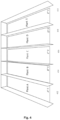
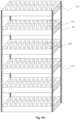
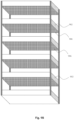
- a vertical hydroponic arrangement 900 may have a series of shelves 902, which may support plants 904.
- Shelves 902 may also have light sources 906 disposed on an underside to irradiate plants below.
- the light sources may be light emitting diodes (LED).
- the shelves may further incorporate systems for transporting nutrients and water into each of the shelves 902.
- an exemplary embodiment may include a grip or handle which is used by a transplanter or other robotic element for moving the shelves or for moving plants within the shelves.
Landscapes
- Life Sciences & Earth Sciences (AREA)
- Environmental Sciences (AREA)
- Soil Sciences (AREA)
- Health & Medical Sciences (AREA)
- Physiology (AREA)
- Cultivation Of Plants (AREA)
- Hydroponics (AREA)
Applications Claiming Priority (4)
| Application Number | Priority Date | Filing Date | Title |
|---|---|---|---|
| US202063062609P | 2020-08-07 | 2020-08-07 | |
| US17/341,718 US11895954B2 (en) | 2020-08-07 | 2021-06-08 | System and method for plant indexing in a hydroponic farming environment and a hydroponic farming environment |
| PCT/US2021/043142 WO2022031471A1 (en) | 2020-08-07 | 2021-07-26 | System and method for plant indexing in a hydroponic farming environment and a hydroponic farming environment |
| EP21853167.1A EP4192231A1 (de) | 2020-08-07 | 2021-07-26 | System und verfahren zur anlagenindexierung in einer hydroponischen landwirtschaftsumgebung und hydroponische landwirtschaftsumgebung |
Related Parent Applications (1)
| Application Number | Title | Priority Date | Filing Date |
|---|---|---|---|
| EP21853167.1A Division EP4192231A1 (de) | 2020-08-07 | 2021-07-26 | System und verfahren zur anlagenindexierung in einer hydroponischen landwirtschaftsumgebung und hydroponische landwirtschaftsumgebung |
Publications (2)
| Publication Number | Publication Date |
|---|---|
| EP4289262A2 true EP4289262A2 (de) | 2023-12-13 |
| EP4289262A3 EP4289262A3 (de) | 2024-02-28 |
Family
ID=80115411
Family Applications (2)
| Application Number | Title | Priority Date | Filing Date |
|---|---|---|---|
| EP21853167.1A Withdrawn EP4192231A1 (de) | 2020-08-07 | 2021-07-26 | System und verfahren zur anlagenindexierung in einer hydroponischen landwirtschaftsumgebung und hydroponische landwirtschaftsumgebung |
| EP23198751.2A Pending EP4289262A3 (de) | 2020-08-07 | 2021-07-26 | System und verfahren zur anlagenindexierung in einer hydroponischen landwirtschaftsumgebung und hydroponische landwirtschaftsumgebung |
Family Applications Before (1)
| Application Number | Title | Priority Date | Filing Date |
|---|---|---|---|
| EP21853167.1A Withdrawn EP4192231A1 (de) | 2020-08-07 | 2021-07-26 | System und verfahren zur anlagenindexierung in einer hydroponischen landwirtschaftsumgebung und hydroponische landwirtschaftsumgebung |
Country Status (6)
| Country | Link |
|---|---|
| US (2) | US11895954B2 (de) |
| EP (2) | EP4192231A1 (de) |
| CN (1) | CN116723764A (de) |
| CA (1) | CA3190975A1 (de) |
| MX (1) | MX2023001609A (de) |
| WO (1) | WO2022031471A1 (de) |
Families Citing this family (8)
| Publication number | Priority date | Publication date | Assignee | Title |
|---|---|---|---|---|
| US12382887B2 (en) * | 2021-12-08 | 2025-08-12 | Local Bounti Operating Company Llc | Root growth optimization method |
| US20230232753A1 (en) * | 2022-01-24 | 2023-07-27 | Local Bounti Operating Company, Llc | Apparatus for providing a root air gap |
| CN114879785A (zh) * | 2022-05-20 | 2022-08-09 | 哈尔滨理工大学 | 一种智能苗圃环境控制系统 |
| CN115583730A (zh) * | 2022-09-28 | 2023-01-10 | 西南科技大学 | 一种稻田排水沟种植水培蔬菜从而净化稻田退水的方法 |
| US20240147924A1 (en) * | 2022-11-07 | 2024-05-09 | Andrew Peck | Plant cultivation system |
| WO2024249766A1 (en) * | 2023-06-01 | 2024-12-05 | Plant Culture Systems Inc. | Coupled artificial intelligence and robotics to estimate size, mass, yield and integrated process for guiding robotic automation of vertical farming and greenhouse hydroponic cycle agriculture |
| WO2024249746A1 (en) * | 2023-06-01 | 2024-12-05 | Plant Culture Systems Inc. | A method and process for artificial intelligence to manage and optimize energy consumption across vertical farming and greenhouse hydroponic combined cycle agriculture |
| CN118058182A (zh) * | 2024-04-24 | 2024-05-24 | 上海蓝果实生物科技股份有限公司 | 一种芽苗菜种植法 |
Family Cites Families (8)
| Publication number | Priority date | Publication date | Assignee | Title |
|---|---|---|---|---|
| US6243987B1 (en) * | 1999-09-01 | 2001-06-12 | Organitech Ltd. | Self contained fully automated robotic crop production facility |
| US7702597B2 (en) * | 2004-04-20 | 2010-04-20 | George Mason Intellectual Properties, Inc. | Crop yield prediction using piecewise linear regression with a break point and weather and agricultural parameters |
| US20110131876A1 (en) * | 2009-11-22 | 2011-06-09 | Glen James Pettibone | Combined Vertical Farm, Biofuel, Biomass, and Electric Power Generation Process and Facility |
| US20120054061A1 (en) * | 2010-08-26 | 2012-03-01 | Fok Philip E | Produce production system and process |
| US9387987B2 (en) * | 2014-03-24 | 2016-07-12 | Elwha Llc | Systems and methods for sorting seedlings for planting |
| WO2018119407A1 (en) * | 2016-12-22 | 2018-06-28 | Iron Ox, Inc. | System and method for automating transfer of plants within an agricultural facility |
| KR20190103323A (ko) * | 2017-01-20 | 2019-09-04 | 그린파이토 피티이 리미티드 | 영농 시스템 및 방법 |
| US10813295B2 (en) * | 2017-04-17 | 2020-10-27 | Iron Ox, Inc. | Method for monitoring growth of plants and generating a plant grow schedule |
-
2021
- 2021-06-08 US US17/341,718 patent/US11895954B2/en active Active
- 2021-07-26 CA CA3190975A patent/CA3190975A1/en active Pending
- 2021-07-26 EP EP21853167.1A patent/EP4192231A1/de not_active Withdrawn
- 2021-07-26 EP EP23198751.2A patent/EP4289262A3/de active Pending
- 2021-07-26 CN CN202180068807.7A patent/CN116723764A/zh active Pending
- 2021-07-26 MX MX2023001609A patent/MX2023001609A/es unknown
- 2021-07-26 WO PCT/US2021/043142 patent/WO2022031471A1/en not_active Ceased
-
2024
- 2024-01-08 US US18/406,321 patent/US12245555B2/en active Active
Also Published As
| Publication number | Publication date |
|---|---|
| CN116723764A (zh) | 2023-09-08 |
| US20240138327A1 (en) | 2024-05-02 |
| EP4192231A1 (de) | 2023-06-14 |
| WO2022031471A1 (en) | 2022-02-10 |
| EP4289262A3 (de) | 2024-02-28 |
| US12245555B2 (en) | 2025-03-11 |
| US20220039342A1 (en) | 2022-02-10 |
| US11895954B2 (en) | 2024-02-13 |
| MX2023001609A (es) | 2023-06-01 |
| CA3190975A1 (en) | 2022-02-10 |
Similar Documents
| Publication | Publication Date | Title |
|---|---|---|
| US12245555B2 (en) | System and method for plant indexing in a hydroponic farming environment and a hydroponic farming environment | |
| US20230143014A1 (en) | Optimizing growing process in a hybrid growing environment using computer vision and artificial intelligence | |
| JP7370051B2 (ja) | 農業管理システム | |
| US10306847B2 (en) | Environmentally controlled vertical farming system | |
| US12171175B2 (en) | Indexing plants in two-dimensional and three-dimensional space in a controlled growing environment | |
| US20230157220A1 (en) | Method for initiating a plant in preparation of its introduction into a vertical farm unit | |
| CN109479579A (zh) | 一种种植系统及方法 | |
| CN107896970A (zh) | 分布式智能植物工厂 | |
| Singh et al. | Automated Production Management in Horticulture: An Industry 4.0 Perspective | |
| US12382887B2 (en) | Root growth optimization method | |
| Kreuger et al. | Applications for breeding and high-wire tomato production in plant factory | |
| He et al. | Plant Factory IoT Management | |
| HK40060229B (zh) | 对在受控生长环境中二维及三维空间中的植物进行变址 | |
| HK40060229A (en) | Indexing plants in two-dimensional and three-dimensional space in a controlled growing environment | |
| HK40015282A (en) | Farming management system |
Legal Events
| Date | Code | Title | Description |
|---|---|---|---|
| PUAI | Public reference made under article 153(3) epc to a published international application that has entered the european phase |
Free format text: ORIGINAL CODE: 0009012 |
|
| STAA | Information on the status of an ep patent application or granted ep patent |
Free format text: STATUS: THE APPLICATION HAS BEEN PUBLISHED |
|
| AC | Divisional application: reference to earlier application |
Ref document number: 4192231 Country of ref document: EP Kind code of ref document: P |
|
| AK | Designated contracting states |
Kind code of ref document: A2 Designated state(s): AL AT BE BG CH CY CZ DE DK EE ES FI FR GB GR HR HU IE IS IT LI LT LU LV MC MK MT NL NO PL PT RO RS SE SI SK SM TR |
|
| PUAL | Search report despatched |
Free format text: ORIGINAL CODE: 0009013 |
|
| AK | Designated contracting states |
Kind code of ref document: A3 Designated state(s): AL AT BE BG CH CY CZ DE DK EE ES FI FR GB GR HR HU IE IS IT LI LT LU LV MC MK MT NL NO PL PT RO RS SE SI SK SM TR |
|
| RIC1 | Information provided on ipc code assigned before grant |
Ipc: A01G 31/06 20060101ALI20240122BHEP Ipc: A01G 11/00 20060101AFI20240122BHEP |
|
| STAA | Information on the status of an ep patent application or granted ep patent |
Free format text: STATUS: REQUEST FOR EXAMINATION WAS MADE |
|
| 17P | Request for examination filed |
Effective date: 20240726 |
|
| RBV | Designated contracting states (corrected) |
Designated state(s): AL AT BE BG CH CY CZ DE DK EE ES FI FR GB GR HR HU IE IS IT LI LT LU LV MC MK MT NL NO PL PT RO RS SE SI SK SM TR |
|
| RAP3 | Party data changed (applicant data changed or rights of an application transferred) |
Owner name: LOCAL BOUNTI OPERATING COMPANY, LLC |