EP4288960B1 - Adaptive visuelle spracherkennung - Google Patents
Adaptive visuelle spracherkennung Download PDFInfo
- Publication number
- EP4288960B1 EP4288960B1 EP22737416.2A EP22737416A EP4288960B1 EP 4288960 B1 EP4288960 B1 EP 4288960B1 EP 22737416 A EP22737416 A EP 22737416A EP 4288960 B1 EP4288960 B1 EP 4288960B1
- Authority
- EP
- European Patent Office
- Prior art keywords
- embedding
- speech recognition
- video
- speaker
- neural network
- Prior art date
- Legal status (The legal status is an assumption and is not a legal conclusion. Google has not performed a legal analysis and makes no representation as to the accuracy of the status listed.)
- Active
Links
Images
Classifications
-
- G—PHYSICS
- G10—MUSICAL INSTRUMENTS; ACOUSTICS
- G10L—SPEECH ANALYSIS TECHNIQUES OR SPEECH SYNTHESIS; SPEECH RECOGNITION; SPEECH OR VOICE PROCESSING TECHNIQUES; SPEECH OR AUDIO CODING OR DECODING
- G10L15/00—Speech recognition
- G10L15/06—Creation of reference templates; Training of speech recognition systems, e.g. adaptation to the characteristics of the speaker's voice
- G10L15/063—Training
-
- G—PHYSICS
- G06—COMPUTING OR CALCULATING; COUNTING
- G06N—COMPUTING ARRANGEMENTS BASED ON SPECIFIC COMPUTATIONAL MODELS
- G06N3/00—Computing arrangements based on biological models
- G06N3/02—Neural networks
- G06N3/04—Architecture, e.g. interconnection topology
- G06N3/044—Recurrent networks, e.g. Hopfield networks
-
- G—PHYSICS
- G06—COMPUTING OR CALCULATING; COUNTING
- G06N—COMPUTING ARRANGEMENTS BASED ON SPECIFIC COMPUTATIONAL MODELS
- G06N3/00—Computing arrangements based on biological models
- G06N3/02—Neural networks
- G06N3/04—Architecture, e.g. interconnection topology
- G06N3/044—Recurrent networks, e.g. Hopfield networks
- G06N3/0442—Recurrent networks, e.g. Hopfield networks characterised by memory or gating, e.g. long short-term memory [LSTM] or gated recurrent units [GRU]
-
- G—PHYSICS
- G06—COMPUTING OR CALCULATING; COUNTING
- G06N—COMPUTING ARRANGEMENTS BASED ON SPECIFIC COMPUTATIONAL MODELS
- G06N3/00—Computing arrangements based on biological models
- G06N3/02—Neural networks
- G06N3/04—Architecture, e.g. interconnection topology
- G06N3/045—Combinations of networks
-
- G—PHYSICS
- G06—COMPUTING OR CALCULATING; COUNTING
- G06N—COMPUTING ARRANGEMENTS BASED ON SPECIFIC COMPUTATIONAL MODELS
- G06N3/00—Computing arrangements based on biological models
- G06N3/02—Neural networks
- G06N3/04—Architecture, e.g. interconnection topology
- G06N3/0464—Convolutional networks [CNN, ConvNet]
-
- G—PHYSICS
- G06—COMPUTING OR CALCULATING; COUNTING
- G06N—COMPUTING ARRANGEMENTS BASED ON SPECIFIC COMPUTATIONAL MODELS
- G06N3/00—Computing arrangements based on biological models
- G06N3/02—Neural networks
- G06N3/08—Learning methods
- G06N3/084—Backpropagation, e.g. using gradient descent
-
- G—PHYSICS
- G06—COMPUTING OR CALCULATING; COUNTING
- G06N—COMPUTING ARRANGEMENTS BASED ON SPECIFIC COMPUTATIONAL MODELS
- G06N3/00—Computing arrangements based on biological models
- G06N3/02—Neural networks
- G06N3/08—Learning methods
- G06N3/09—Supervised learning
-
- G—PHYSICS
- G06—COMPUTING OR CALCULATING; COUNTING
- G06V—IMAGE OR VIDEO RECOGNITION OR UNDERSTANDING
- G06V10/00—Arrangements for image or video recognition or understanding
- G06V10/70—Arrangements for image or video recognition or understanding using pattern recognition or machine learning
- G06V10/82—Arrangements for image or video recognition or understanding using pattern recognition or machine learning using neural networks
-
- G—PHYSICS
- G06—COMPUTING OR CALCULATING; COUNTING
- G06V—IMAGE OR VIDEO RECOGNITION OR UNDERSTANDING
- G06V40/00—Recognition of biometric, human-related or animal-related patterns in image or video data
- G06V40/10—Human or animal bodies, e.g. vehicle occupants or pedestrians; Body parts, e.g. hands
- G06V40/16—Human faces, e.g. facial parts, sketches or expressions
- G06V40/168—Feature extraction; Face representation
- G06V40/171—Local features and components; Facial parts ; Occluding parts, e.g. glasses; Geometrical relationships
-
- G—PHYSICS
- G10—MUSICAL INSTRUMENTS; ACOUSTICS
- G10L—SPEECH ANALYSIS TECHNIQUES OR SPEECH SYNTHESIS; SPEECH RECOGNITION; SPEECH OR VOICE PROCESSING TECHNIQUES; SPEECH OR AUDIO CODING OR DECODING
- G10L15/00—Speech recognition
- G10L15/08—Speech classification or search
- G10L15/16—Speech classification or search using artificial neural networks
-
- G—PHYSICS
- G10—MUSICAL INSTRUMENTS; ACOUSTICS
- G10L—SPEECH ANALYSIS TECHNIQUES OR SPEECH SYNTHESIS; SPEECH RECOGNITION; SPEECH OR VOICE PROCESSING TECHNIQUES; SPEECH OR AUDIO CODING OR DECODING
- G10L15/00—Speech recognition
- G10L15/26—Speech to text systems
-
- G—PHYSICS
- G10—MUSICAL INSTRUMENTS; ACOUSTICS
- G10L—SPEECH ANALYSIS TECHNIQUES OR SPEECH SYNTHESIS; SPEECH RECOGNITION; SPEECH OR VOICE PROCESSING TECHNIQUES; SPEECH OR AUDIO CODING OR DECODING
- G10L25/00—Speech or voice analysis techniques not restricted to a single one of groups G10L15/00 - G10L21/00
- G10L25/27—Speech or voice analysis techniques not restricted to a single one of groups G10L15/00 - G10L21/00 characterised by the analysis technique
- G10L25/30—Speech or voice analysis techniques not restricted to a single one of groups G10L15/00 - G10L21/00 characterised by the analysis technique using neural networks
-
- G—PHYSICS
- G10—MUSICAL INSTRUMENTS; ACOUSTICS
- G10L—SPEECH ANALYSIS TECHNIQUES OR SPEECH SYNTHESIS; SPEECH RECOGNITION; SPEECH OR VOICE PROCESSING TECHNIQUES; SPEECH OR AUDIO CODING OR DECODING
- G10L15/00—Speech recognition
- G10L15/24—Speech recognition using non-acoustical features
- G10L15/25—Speech recognition using non-acoustical features using position of the lips, movement of the lips or face analysis
Definitions
- This specification relates to visual speech recognition neural networks.
- Neural networks are machine learning models that employ one or more layers of nonlinear units to predict an output for a received input.
- Some neural networks include one or more hidden layers in addition to an output layer. The output of each hidden layer is used as input to the next layer in the network, e.g., the next hidden layer or the output layer.
- Each layer of the network generates an output from a received input in accordance with current values of a respective set of parameters.
- Visual speech recognition neural networks decode speech from the movement of a skeaper's mouth.
- visual speech recognition neural networks take video of a speaker's face as input and generate as output text that represents the words that are being spoken by the speaker depicted in the video.
- LipNet One example of a visual speech recognition neural network is a LipNet. LipNets were initially described in Assael et al., LipNet: End-to-End Sentence-Level Lipreading, in arXiv preprint arXiv: 1611.01599 (2016), available at arxiv.org .
- a LipNet is a deep neural network that maps a variable-length sequence of video frames to text, making use of spatiotemporal convolutions and a recurrent neural network.
- FIG. 1 Another example of a visual speech recognition neural network is described in Shillingford et al., Large-Scale Visual Speech Recognition, in arXiv preprint arXiv:1807.05612 (2016), available at arxiv.org .
- Large-Scale Visual Speech Recognition describes a deep visual speech recognition neural network that maps lip videos to sequences of phoneme distributions and a speech decoder that outputs sequences of words from the sequences of phoneme distributions generated by the deep neural network.
- WO 2019/219968 describes methods for performing visual speech recognition, including receiving a video comprising video frames which depict lips, and processing the video using a visual speech recognition neural network, to generate, for each output position in an output sequence, a respective score for each token in a vocabulary.
- US 2021/183391 discloses a speech recognition method which includes receiving images of a mouth-related portion of a human speaking and utterance, where each image has depth information. Viseme features are extracted from the images, and a sequence of words comprising to the viseme features are determined.
- This specification discloses methods, systems and computer-readable storage media defined by claims 1, 12 and 13 respectively. It describes a system implemented as computer programs on one or more computers in one or more locations that can generate a sample-efficient and adaptive visual speech recognition model.
- being sample-efficient and adaptive means that the model can be customized to recognize the speech of a new speaker with far less training data than was used to train the adaptive model. For example, while training the adaptive model may require hours of video recordings for each individual speaker, adapting the model for a new speaker may require only a few minutes of video recordings of the new speaker.
- a training system can train the visual speech recognition model using a plurality of embedding vectors for respective individual speakers and a visual speech recognition neural network. Because of the computationally intensive nature of the training process, the training can be performed by a distributed computing system, e.g., a datacenter, having hundreds or thousands of computers.
- the output of the training process is an adaptive visual speech recognition model that can be efficiently adapted to a new speaker.
- Adapting the model generally involves learning a new embedding vector for the new speaker, and may optionally involve fine-tuning the parameters of the neural network for the new speaker.
- the adaptation data can be only a few seconds or a few minutes of video of the new speaker and corresponding transcriptions for the text.
- the video may be a video of the speaker while the speaker speaks the text on a text prompt that is being presented to the user on a user device.
- the adaptation process is therefore much less computationally intensive than the original training process.
- the adaptation process can be performed on much less powerful hardware, e.g., a mobile phone or another wearable device, a desktop or laptop computer, or another internet-enabled device installed in a user's home, to name just a few examples.
- a method includes receiving a video that includes a plurality of video frames that depict a first speaker; obtaining a first embedding characterizing the first speaker; and processing a first input comprising (i) the video and (ii) the first embedding using a visual speech recognition neural network having a plurality of parameters, wherein the visual speech recognition neural network is configured to process the video and the first embedding in accordance with trained values of the parameters to generate a speech recognition output that defines a sequence of one or more words being spoken by the first speaker in the video.
- the visual speech recognition neural network is configured to: generate, from the first embedding, an additional input channel; and combine the additional channel with one or more of the frames in the video prior to processing the frames in the video to generate the speech recognition output.
- the visual speech recognition neural network comprises a plurality of hidden layers, and wherein the neural network is configured to, for at least one of the hidden layers: generate, from the first embedding, an additional hidden channel; and combine the hidden channel and an output of the hidden layer prior to providing the output for processing by another hidden layer of the visual speech recognition neural network.
- the method further comprises: obtaining adaptation data for the first speaker, the adaptation data comprising one of more videos of the first speaker and a respective ground truth transcription for each of the videos; and determining the first embedding for the first speaker using the adaptation data.
- the method further comprises obtaining pre-trained values for the model parameters that have been determined by training the visual speech recognition neural network on training data comprising training examples corresponding to a plurality of speakers that are different from the first speaker, wherein determining the first embedding comprises determining the first embedding using the pre-trained values and the adaptation data.
- determining the first embedding comprises: initializing the first embedding; and updating the first embedding by repeatedly performing operations comprising: processing each of one or more of the video segments in the adaptation data and the first embedding using the visual speech recognition neural network in accordance with current values of the parameters to generate a respective speech recognition output for each of the one or more video segments; and updating the first embedding to minimize a loss function that measures, for each of the one or more video segments, a respective error between the ground truth transcription of the video segment and the respective speech recognition output for the video segment.
- updating the first embedding to minimize a loss function that measures, for each of the one or more video segments, a respective error between the ground truth transcription of the video segment and the respective speech recognition output for the video segment comprises: backpropagating gradients of the loss function through the visual speech recognition neural network to determine a gradient of the loss function with respect to the first embedding; and updating the first embedding using the gradient of the loss function with respect to the first embedding.
- the current values are equal to the pre-trained values and to the trained values and wherein the model parameters are fixed while determining the first embedding.
- the operations further comprise: updating the current values of the parameters of the visual speech recognition neural network based on gradients of the loss function with respect to the parameters of the visual speech recognition neural network, and wherein the trained values are equal to the current values after determining the first embedding vector.
- the method further comprises: applying a decoder to the speech recognition output for the video to generate the sequence of one or more words being spoken by the first speaker in the video.
- the speech recognition output comprises, for each of the video frames, a respective probability distribution over a vocabulary of text elements.
- An adaptive visual speech recognition model as described in this specification can be used to rapidly adapt to a new speaker using orders of magnitude less data than was used to train the model. This enables the adaptation process to be performed by consumer hardware of end users rather than being performed in a datacenter.
- multi-speaker visual speech recognition models tend to under-fit a large number of data samples from the training data when being trained on a large dataset that represents videos of multiple speakers. This can be due to small imbalances in the collected video data or even to the finite capacity of any model to capture all the diverse scenarios represented in a large video data set.
- the described techniques address these issues by first training a speaker-conditional visual speech recognition model that is conditioned on (i) a video of speaker and (ii) an embedding of the speaker, and then adapting the speaker-conditional visual speech recognition model by learning an embedding for a new speaker (and optionally fine-tuning the weights of the model).
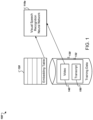
- FIG. 1 is a diagram that illustrates an example architecture 100 for training an adaptive visual speech recognition model.
- the architecture 100 includes a visual speech recognition neural network 110a that is trained using an embedding table 120 that stores embedding vectors for multiple different respective individual speakers.
- the visual speech recognition neural network 110a can be any appropriate visual speech recognition neural network that receives as input a video of a speaker and, as described below, an embedding vector for the speaker and processes the video and the embedding vector to generate as output a speech recognition output that represents a predicted transcription of the speech being spoken by the speaker in the video.
- a "video" includes only a sequence of video frames and not any corresponding audio for the video frame sequence.
- the visual speech recognition neural network 110a generates the speech recognition output without having access to any audio data of the speech actually being spoken by the speaker.
- LipNet One example of a visual speech recognition neural network is a LipNet. LipNets were initially described in Assael et al., LipNet: End-to-End Sentence-Level Lipreading, in arXiv preprint arXiv: 1611.01599 (2016), available at arxiv.org .
- a LipNet is a deep neural network that maps a variable-length sequence of video frames to text, making use of spatiotemporal convolutions and a recurrent neural network.
- FIG. 1 Another example of a visual speech recognition neural network is described in Shillingford et al., Large-Scale Visual Speech Recognition, in arXiv preprint arXiv: 1807.05612 (2016), available at arxiv.org .
- Large-Scale Visual Speech Recognition describes a deep visual speech recognition neural network that maps lip videos to sequences of phoneme distributions, also making use of spatiotemporal convolutions and a recurrent neural network.
- either of the above two visual speech recognition neural network architectures or any other visual speech recognition neural network architecture can be modified to accept an embedding vector as input along with a video that depicts a speaker, e.g., the face of the speaker or just the mouth or lips of the speaker, at each of multiple time steps.
- the architecture can be modified to process the embedding vector in any of a variety of ways.
- the system can generate an additional input channel using the embedding vector that has the same spatial dimensions as the video frame and then combine the additional channel with the video frames, e.g., by concatenating the additional channel to each video frame along the channel dimension (e.g. as if the input channel were intensity values for a color additional to the colors (e.g. RBG) of the video frames).
- the system can generate an additional channel using the embedding vector by applying a broadcast operation to the values in the embedding vector to generate a two-dimensional spatial map that has the same dimensions as the video frames.
- the system can generate an additional hidden channel using the embedding vector that has the same spatial dimensions as the output of a particular one of the hidden layers of the neural network, e.g., as one of the spatiotemporal convolutional layers in the neural network, and then combine the additional hidden channel with the output of the particular hidden layer, e.g., by concatenating the additional channel to the output of the hidden layer along the channel dimension, by adding the additional channel to the output of the hidden layer, by element-wise multiplication of the additional channel with the output of the hidden layer, or by applying a gating mechanism between the output of the hidden layer and the additional channel.
- FIG. 1 can be implemented by a distributed computing system comprising a plurality of computers that coordinate to train the visual speech recognition neural network 110a.
- the computing system can train the visual speech recognition neural network 110a on training data 130 that includes multiple training examples 132.
- Each training example 132 corresponds to a respective speaker and includes (i) a video of the corresponding speaker 140 and (ii) a respective ground truth transcription 150 of the speech that is being spoken by the corresponding speaker in the video.
- Each of the speakers that corresponds to one or more of the training examples 132 has a respective embedding vector that is stored in the embedding table 120.
- An embedding vector is a vector of numeric values, e.g., floating point values or quantized floating point values, that has a fixed dimensionality (number of components).
- the embedding vector for a given speaker can be generated in any of a variety of ways.
- the embedding vector can be generated based on one or more characteristics of the speaker.
- the computer system can process one or more images of the speaker's face, e.g., cropped from the video of the speaker in the corresponding training example, using an embedding neural network, e.g., a convolutional neural network that has been trained to generate embeddings of faces that can be used to distinguish between people or that reflect other properties of people's faces, to generate a face embedding vector of the face of the speaker.
- an embedding neural network e.g., a convolutional neural network that has been trained to generate embeddings of faces that can be used to distinguish between people or that reflect other properties of people's faces
- the computer system can process multiple images of the speaker's face using the embedding neural network to generate a respective image embedding vector for each image and then combine, e.g., average, the image embedding vectors to generate the face embedding vector of the face of the speaker.
- the computer system can measure certain properties of the speaker's appearance while speaking and map each measured property to a respective property embedding vector, e.g., using a predetermined mapping.
- a property is the frequency of mouth openness while speaking.
- Another example of such a property is a maximum degree of mouth openness while speaking.
- Yet another example of such a property is an average degree of mouth openness while speaking.
- the system can combine, e.g., average, sum, or concatenate, the respective embedding vectors for the multiple characteristics to generate the embedding vector for the speaker.
- the system can randomly initialize each speaker embedding (embedding vector) in the embedding table 120 and then update the speaker embeddings jointly with the training of the neural network 110a.
- the system samples a mini-batch of one or more training examples 132 and, for each training example 132, processes the respective speaker video 140 in the training example and the embedding vector for the corresponding speaker from the embedding table 120 using the neural network 110a to generate a predicted speech recognition output, e.g., a probability distribution over a set of text elements, e.g., characters, phonemes, or word pieces, for the training example 132.
- a predicted speech recognition output e.g., a probability distribution over a set of text elements, e.g., characters, phonemes, or word pieces
- the system trains the neural network 110a using a gradient-based technique, e.g., stochastic gradient descent, Adam, or rmsProp, to minimize a loss function that measures, for each training example 132 in the mini-batch, a respective error between the ground truth transcription 150 of the speech for the training example 132 and the predicted speech recognition output for the training example 132.
- the loss function can be a Connectionist Temporal Classification (CTC) loss function.
- CTC loss Connectionist Temporal Classification
- the CTC loss is described in more detail in Alex Graves, Santiago Fernández, Faustino Gomez, and Jürgen Schmidhuber. Connectionist temporal classification: Labelling unsegmented sequence data with recurrent neural networks. In International Conference on Machine Learning, pp. 369-376, 2006 .
- the system also updates the embedding vectors for the speaker videos in the mini-batch, e.g., by backpropagating gradients through the neural network 110a and into the appropriate embedding vector. More specifically, when the embedding vectors in the embedding table 120 are initialized randomly, the system also updates the embedding vectors. When the embedding vectors in the embedding table 120 are generated based on characteristics or properties of the corresponding speakers, in some implementations the system holds the embedding vectors fixed during the training while in other implementations, the system fine-tunes the embedding vectors in the embedding table 120 by updating them jointly with the training of the neural network 110a.
- the system After training, to generate a transcription for a new speaker video, the system (or another system) can process as input the new speaker video and a new embedding for the speaker to generate a predicted speech recognition output for the new speaker video.
- the system can then apply a decoder to the predicted speech recognition output, e.g., a beam search decoder or a finite state transducer (FST)-based decoder, to map the speech recognition output to a sequence of words.
- a decoder e.g., a beam search decoder or a finite state transducer (FST)-based decoder
- the system can adapt the trained neural network 110a to the new speaker before using the trained neural network 110a to generate transcriptions for the new speaker.
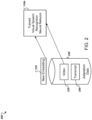
- FIG. 2 is a diagram that illustrates an example architecture 200 for adapting an adaptive visual speech recognition model to a new individual speaker.
- the embedding of the new speaker is adjusted so that the neural network 110a is adapted to a particular individual's characteristics.
- the purpose of the training process illustrated in FIG. 1 is to learn a prior.
- this prior is combined with new data to rapidly adapt to a new speaker's characteristics.
- the training process illustrated in FIG. 1 is performed on a distributed computing system having multiple computers. And as described above, the adaptation process can be performed on much less computationally expensive hardware, e.g., a desktop computer, laptop computer, or mobile computing device. For convenience, the adaptation process will be discussed as being performed by a system of one or more computers.
- the architecture 200 includes a visual speech recognition neural network 110b, e.g., corresponding to a trained version of the visual speech recognition neural network 110a that has been trained using the process described above with reference to FIG. 1 .
- each video 230 can be a video of the speaker taken while the speaker speaks the text that is written on a text prompt or that is otherwise being presented to the user on a user device.
- the adaptation data 220 used for the adaptation process can be orders of magnitude smaller than the training data 130 used for the training process.
- the training data 130 includes multiple hours of video recordings for each individual speaker of the plurality of different individual speakers, while the adaptation process 220 can use less than ten minutes of video recordings of the new individual speaker.
- the adaptation process is generally much less computationally intensive than the training process.
- the training process is performed in a datacenter having tens or hundreds or thousands of computers, while the adaptation process is performed on a mobile device or a single, Internet-enabled device.
- the system can initialize a new embedding vector 210 for the new speaker.
- the new embedding vector 210 can be different from any of the embedding vectors used during the training process.
- the system can initialize the new embedding vector 210 randomly or using any available data that characterizes the new speaker.
- the system can initialize the new embedding vector 210 randomly or from the adaptation data 220 using one of the techniques described above for generating the speaker embeddings in the table 120.
- the adaptation data 220 generally has less data than is available in the training data for any given speaker, the newly generated embedding vector 210 will generally be less informative about the speech of the speaker than the speaker embedding vectors used during training.
- the adaptation process can be performed in multiple ways.
- the system can use a non-parametric technique or a parametric technique.
- the non-parametric technique involves adapting the new speaker embedding 210 and, optionally, the model parameters of the neural network 110b, or both, using the adaptation data 220.
- the system processes one or more video segments 230 in the adaptation data 220 and the current embedding vector 210 for the new speaker using the neural network 110b to generate a predicted speech recognition output for each video segment 230.
- the system then updates the embedding vector 210 by backpropagating a gradient of a loss, e.g., the CTC loss, between the ground truth transcription 240 of the video segment 230 and the predicted speech recognition output for the video segment 230 through the neural network 110b to compute a gradient with respect to the embedding vector 210 and then updates the embedding vector 210 using an update rule, e.g., a stochastic gradient descent update rule, an Adam update rule, or an rmsProp update rule.
- a gradient of a loss e.g., the CTC loss
- an update rule e.g., a stochastic gradient descent update rule, an Adam update rule, or an rmsProp update rule.
- the system holds the values of the model parameters of the neural network 110b fixed during the adaptation phase. In others of these cases, the system also updates the model parameters at each iteration of the adaptation phase, e.g., by using the gradient-based technique to update the model parameters using the same loss used to update the embedding vector 210.
- the system can use a parametric technique that involves training an auxiliary network to predict the embedding vector of a new speaker using a set of demonstration data, e.g., a set of videos that is different from those in the training data used to train the neural network 110b.
- the trained auxiliary neural network can then be used to predict the embedding vector 210 for the new speaker given the speaker's adaptation data 220.
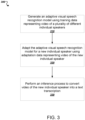
- FIG. 3 is a flowchart of an example process 300 for generating and using an adaptive visual speech recognition model. As described above, the process includes three stages: training, adaptation, and inference.
- the training stage is performed on a distributed computing system having multiple computers.
- the other two stages can be performed on much less computationally expensive hardware, e.g., a desktop computer, laptop computer, or mobile computing device.
- example process 300 will be described as being performed by a system of one or more computers, but it will be understood that different steps of the process 300 can be performed by different computing devices having different hardware capabilities.
- the system generates an adaptive visual speech recognition model using training data representing video of speech by a plurality of different individual speakers (310). As described above with reference to FIG. 1 , the system can generate different embedding vectors for a plurality of individual speakers. The system can then train parameter values of a neural visual speech recognition model using training data that includes text and video data representing a plurality of different individual speakers speaking portions of text. Each of the embedding vectors generally represents respective characteristics of one of the plurality of different individual speakers.
- the system adapts the adaptive visual speech recognition model for a new individual speaker using adaptation data representing video of speech being spoken by the new individual speaker (320). As described above with reference to FIG. 2 , the adaptation process uses video data representing the new individual speaker speaking portions of text.
- the system can generate a new embedding vector for the new speaker using the adaptation data and, optionally, fine-tune the model parameters of the trained visual speech recognition neural network.
- the system After adaptation, the system performs an inference process to convert video of a new speaker and the embedding of the new speaker into a transcription of the text being spoken in the video (330).
- the system uses the visual speech recognition model adapted for the new individual speaker, which includes using as input the new embedding vector for the individual speaker determined during the adaptation phase and a new video.
- the system can generate the transcription as a sequence of words and, in some cases, punctuation by applying a decoder to the speech recognition outputs generated by the adapted visual speech recognition model.
- Performing inference can also include can also include one or more of: displaying the transcription in a user interface, translating the transcription into another language, or providing audio data representing a verbalization of the transcription for play back on one or more audio devices.
- the described techniques can also be applied to generate an adaptive audio-visual speech recognition model, where the input to the model is a video sequence of a speaker speaking and a corresponding audio sequence of the speaker speaking (although the two may not be temporally aligned with one another) and an embedding of the speaker, and the output is a transcription of the text being spoken in the audio-video pair.
- An example of an audio-visual speech recognition model that can be modified to accept an embedding as input and can be adapted as described above is described in Makino, et al, Recurrent Neural Network Transducer for Audio-Visual Speech Recognition, in arXiv preprint arXiv:1911.04890 (2019), available at arxiv.org .
- the speaker embedding can also or instead be generated using the audio data, e.g., by processing the audio using an audio embedding neural network that has been trained to generate embeddings that uniquely identify speakers.
- the proposed adaptive visual speech recognition model, or audio-visual speech recognition model is useful for example for a user with impaired hearing, to generate text representing what the new speaker says so that the user can read it.
- the user may be the new speaker
- the visual speech recognition model, or audio-visual speech recognition model may be used in a dictation system to generate text, or in a control system to generate textual commands which are implemented by another system, such as an electronic system or an electro-mechanical system.
- the adaptive visual speech recognition model may be implemented to perform steps 320 and/or 330 by a computer system which comprises at least one video camera for capturing the video of the new speaker which is processed in steps 320 and/or 330.
- the video camera may comprise a microphone for capturing the audio track which accompanies the captured video.
- that data may be treated in one or more ways, such as aggregation and anonymization, before it is stored or used so that such personal information cannot be determined from the data that is stored or used.
- the use of such information may be such that no personally identifiable information may be determined from the output of the systems that use such information.
- Embodiments of the subject matter and the functional operations described in this specification can be implemented in digital electronic circuitry, in tangibly-embodied computer software or firmware, in computer hardware, including the structures disclosed in this specification and their structural equivalents, or in combinations of one or more of them.
- Embodiments of the subject matter described in this specification can be implemented as one or more computer programs, e.g., one or more modules of computer program instructions encoded on a tangible non transitory storage medium for execution by, or to control the operation of, data processing apparatus.
- the computer storage medium can be a machine-readable storage device, a machine-readable storage substrate, a random or serial access memory device, or a combination of one or more of them.
- the program instructions can be encoded on an artificially generated propagated signal, e.g., a machine-generated electrical, optical, or electromagnetic signal, that is generated to encode information for transmission to suitable receiver apparatus for execution by a data processing apparatus.
- data processing apparatus refers to data processing hardware and encompasses all kinds of apparatus, devices, and machines for processing data, including by way of example a programmable processor, a computer, or multiple processors or computers.
- the apparatus can also be, or further include, special purpose logic circuitry, e.g., an FPGA (field programmable gate array) or an ASIC (application specific integrated circuit).
- the apparatus can optionally include, in addition to hardware, code that creates an execution environment for computer programs, e.g., code that constitutes processor firmware, a protocol stack, a database management system, an operating system, or a combination of one or more of them.
- a computer program which may also be referred to or described as a program, software, a software application, an app, a module, a software module, a script, or code, can be written in any form of programming language, including compiled or interpreted languages, or declarative or procedural languages; and it can be deployed in any form, including as a stand alone program or as a module, component, subroutine, or other unit suitable for use in a computing environment.
- a program may, but need not, correspond to a file in a file system.
- a program can be stored in a portion of a file that holds other programs or data, e.g., one or more scripts stored in a markup language document, in a single file dedicated to the program in question, or in multiple coordinated files, e.g., files that store one or more modules, sub programs, or portions of code.
- a computer program can be deployed to be executed on one computer or on multiple computers that are located at one site or distributed across multiple sites and interconnected by a data communication network.
- the term “database” is used broadly to refer to any collection of data: the data does not need to be structured in any particular way, or structured at all, and it can be stored on storage devices in one or more locations.
- the index database can include multiple collections of data, each of which may be organized and accessed differently.
- engine is used broadly to refer to a software-based system, subsystem, or process that is programmed to perform one or more specific functions.
- an engine will be implemented as one or more software modules or components, installed on one or more computers in one or more locations. In some cases, one or more computers will be dedicated to a particular engine; in other cases, multiple engines can be installed and running on the same computer or computers.
- the processes and logic flows described in this specification can be performed by one or more programmable computers executing one or more computer programs to perform functions by operating on input data and generating output.
- the processes and logic flows can also be performed by special purpose logic circuitry, e.g., an FPGA or an ASIC, or by a combination of special purpose logic circuitry and one or more programmed computers.
- Computers suitable for the execution of a computer program can be based on general or special purpose microprocessors or both, or any other kind of central processing unit.
- a central processing unit will receive instructions and data from a read only memory or a random access memory or both.
- the essential elements of a computer are a central processing unit for performing or executing instructions and one or more memory devices for storing instructions and data.
- the central processing unit and the memory can be supplemented by, or incorporated in, special purpose logic circuitry.
- a computer will also include, or be operatively coupled to receive data from or transfer data to, or both, one or more mass storage devices for storing data, e.g., magnetic, magneto optical disks, or optical disks. However, a computer need not have such devices.
- a computer can be embedded in another device, e.g., a mobile telephone, a personal digital assistant (PDA), a mobile audio or video player, a game console, a Global Positioning System (GPS) receiver, or a portable storage device, e.g., a universal serial bus (USB) flash drive, to name just a few.
- PDA personal digital assistant
- GPS Global Positioning System
- USB universal serial bus
- Computer readable media suitable for storing computer program instructions and data include all forms of non volatile memory, media and memory devices, including by way of example semiconductor memory devices, e.g., EPROM, EEPROM, and flash memory devices; magnetic disks, e.g., internal hard disks or removable disks; magneto optical disks; and CD ROM and DVD-ROM disks.
- semiconductor memory devices e.g., EPROM, EEPROM, and flash memory devices
- magnetic disks e.g., internal hard disks or removable disks
- magneto optical disks e.g., CD ROM and DVD-ROM disks.
- embodiments of the subject matter described in this specification can be implemented on a computer having a display device, e.g., a CRT (cathode ray tube) or LCD (liquid crystal display) monitor, for displaying information to the user and a keyboard and a pointing device, e.g., a mouse or a trackball, by which the user can provide input to the computer.
- a display device e.g., a CRT (cathode ray tube) or LCD (liquid crystal display) monitor
- keyboard and a pointing device e.g., a mouse or a trackball
- Other kinds of devices can be used to provide for interaction with a user as well; for example, feedback provided to the user can be any form of sensory feedback, e.g., visual feedback, auditory feedback, or tactile feedback; and input from the user can be received in any form, including acoustic, speech, or tactile input.
- a computer can interact with a user by sending documents to and receiving documents from a device that is used by the user; for example, by sending web pages to a web browser on a user's device in response to requests received from the web browser.
- a computer can interact with a user by sending text messages or other forms of message to a personal device, e.g., a smartphone that is running a messaging application, and receiving responsive messages from the user in return.
- Data processing apparatus for implementing machine learning models can also include, for example, special-purpose hardware accelerator units for processing common and compute-intensive parts of machine learning training or production, e.g., inference, workloads.
- Machine learning models can be implemented and deployed using a machine learning framework, e.g., a TensorFlow framework.
- a machine learning framework e.g., a TensorFlow framework.
- Embodiments of the subject matter described in this specification can be implemented in a computing system that includes a back end component, e.g., as a data server, or that includes a middleware component, e.g., an application server, or that includes a front end component, e.g., a client computer having a graphical user interface, a web browser, or an app through which a user can interact with an implementation of the subject matter described in this specification, or any combination of one or more such back end, middleware, or front end components.
- the components of the system can be interconnected by any form or medium of digital data communication, e.g., a communication network. Examples of communication networks include a local area network (LAN) and a wide area network (WAN), e.g., the Internet.
- LAN local area network
- WAN wide area network
- the computing system can include clients and servers.
- a client and server are generally remote from each other and typically interact through a communication network. The relationship of client and server arises by virtue of computer programs running on the respective computers and having a client-server relationship to each other.
- a server transmits data, e.g., an HTML page, to a user device, e.g., for purposes of displaying data to and receiving user input from a user interacting with the device, which acts as a client.
- Data generated at the user device e.g., a result of the user interaction, can be received at the server from the device.
Landscapes
- Engineering & Computer Science (AREA)
- Physics & Mathematics (AREA)
- Health & Medical Sciences (AREA)
- Theoretical Computer Science (AREA)
- Computational Linguistics (AREA)
- Evolutionary Computation (AREA)
- Artificial Intelligence (AREA)
- General Health & Medical Sciences (AREA)
- Multimedia (AREA)
- General Physics & Mathematics (AREA)
- Human Computer Interaction (AREA)
- Software Systems (AREA)
- Computing Systems (AREA)
- Acoustics & Sound (AREA)
- Audiology, Speech & Language Pathology (AREA)
- Mathematical Physics (AREA)
- Life Sciences & Earth Sciences (AREA)
- Biomedical Technology (AREA)
- Data Mining & Analysis (AREA)
- Biophysics (AREA)
- General Engineering & Computer Science (AREA)
- Molecular Biology (AREA)
- Oral & Maxillofacial Surgery (AREA)
- Computer Vision & Pattern Recognition (AREA)
- Databases & Information Systems (AREA)
- Medical Informatics (AREA)
- Signal Processing (AREA)
- Image Analysis (AREA)
- Two-Way Televisions, Distribution Of Moving Picture Or The Like (AREA)
- Fittings On The Vehicle Exterior For Carrying Loads, And Devices For Holding Or Mounting Articles (AREA)
Claims (13)
- Verfahren, das durch einen oder mehrere Computer durchgeführt wird, wobei das Verfahren Folgendes umfasst:Empfangen eines Videos, das eine Vielzahl von Video-Einzelbildern einschließt, die einen ersten Sprecher darstellen;und dadurch gekennzeichnet, dass es ferner Folgendes umfasst:Erlangen einer ersten Einbettung, die den ersten Sprecher charakterisiert; undVerarbeiten einer ersten Eingabe, welche (i) das Video und (ii) die erste Einbettung umfasst, unter Verwendung eines neuronalen Netzes für visuelle Spracherkennung (110b), das eine Vielzahl von Parametern aufweist, wobei das neuronale Netz für visuelle Spracherkennung (110b) dafür konfiguriert ist, das Video und die erste Einbettung gemäß trainierten Werten der Parameter zu verarbeiten, um eine Spracherkennungsausgabe zu erzeugen, die eine Folge von einem oder mehreren Wörtern definiert, die durch den ersten Sprecher im Video gesprochen werden.
- Verfahren nach Anspruch 1, wobei das neuronale Netz für visuelle Spracherkennung (110b) dafür konfiguriert ist:aus der ersten Einbettung einen zusätzlichen Eingabekanal zu erzeugen; undden zusätzlichen Kanal mit einem oder mehreren der Einzelbilder im Video zu kombinieren, bevor die Einzelbilder im Video verarbeitet werden, um die Spracherkennungsausgabe zu erzeugen.
- Verfahren nach einem der vorhergehenden Ansprüche, wobei das neuronale Netz für visuelle Spracherkennung (110b) eine Vielzahl von verborgenen Schichten umfasst, und wobei das neuronale Netz dafür konfiguriert ist, für mindestens eine der verborgenen Schichten:aus der ersten Einbettung einen zusätzlichen verborgenen Kanal zu erzeugen; undden verborgenen Kanal und eine Ausgabe der verborgenen Schicht zu kombinieren, bevor die Ausgabe zum Verarbeiten durch eine andere verborgene Schicht des neuronalen Netzes für visuelle Spracherkennung bereitgestellt wird.
- Verfahren nach einem der vorhergehenden Ansprüche, ferner Folgendes umfassend:Erlangen von Anpassungsdaten (220) für den ersten Sprecher, wobei die Anpassungsdaten eines von mehreren Videos (230) des ersten Sprechers und eine jeweilige Ground-Truth-Transkription (240) für jedes der Videos umfassen; undBestimmen der ersten Einbettung für den ersten Sprecher unter Verwendung der Anpassungsdaten.
- Verfahren nach Anspruch 4, ferner Folgendes umfassend:
Erlangen vorab trainierter Werte für die Modellparameter, die durch Trainieren des neuronalen Netzes für visuelle Spracherkennung (110a) auf Trainingsdaten (130) bestimmt worden sind, welche Trainingsbeispiele umfassen, die einer Vielzahl von Sprechern entsprechen, die sich von dem ersten Sprecher unterscheiden, wobei das Bestimmen der ersten Einbettung das Bestimmen der ersten Einbettung unter Verwendung der vorab trainierten Werte und der Anpassungsdaten umfasst. - Verfahren nach Anspruch 5, wobei das Bestimmen der ersten Einbettung Folgendes umfasst:Initialisieren der ersten Einbettung; undAktualisieren der ersten Einbettung durch wiederholtes Durchführen von Operationen, welche Folgendes umfassen:Verarbeiten von jedem von einem oder mehreren der Videosegmente in den Anpassungsdaten und der ersten Einbettung unter Verwendung des neuronalen Netzes für visuelle Spracherkennung gemäß aktuellen Werten der Parameter, um eine jeweilige Spracherkennungsausgabe für jedes des einen oder der mehreren Videosegmenten zu erzeugen; undAktualisieren der ersten Einbettung, um eine Verlustfunktion zu minimieren, die für jedes des einen oder der mehreren Videosegmente einen jeweiligen Fehler zwischen der Ground-Truth-Transkription des Videosegments und der jeweiligen Spracherkennungsausgabe für das Videosegment misst.
- Verfahren nach Anspruch 6, wobei das Aktualisieren der ersten Einbettung, um eine Verlustfunktion zu minimieren, die für jedes des einen oder der mehreren Videosegmente einen jeweiligen Fehler zwischen der Ground-Truth-Transkription des Videosegments und der jeweiligen Spracherkennungsausgabe für das Videosegment misst, Folgendes umfasst:Rückpropagieren von Gradienten der Verlustfunktion durch das neuronale Netz für visuelle Spracherkennung, um einen Gradienten der Verlustfunktion in Bezug auf die erste Einbettung zu bestimmen; undAktualisieren der ersten Einbettung unter Verwendung des Gradienten der Verlustfunktion in Bezug auf die erste Einbettung.
- Verfahren nach Anspruch 6 oder Anspruch 7, wobei die aktuellen Werte gleich den vorab trainierten Werten und den trainierten Werten sind und wobei die Modellparameter festgesetzt sind, während die erste Einbettung bestimmt wird.
- Verfahren nach Anspruch 6 oder Anspruch 7, wobei die Operationen ferner Folgendes umfassen:
Aktualisieren (320) der aktuellen Werte der Parameter des neuronalen Netzes für visuelle Spracherkennung (110b) auf der Grundlage von Gradienten der Verlustfunktion in Bezug auf die Parameter des neuronalen Netzes für visuelle Spracherkennung (1 10b), und wobei die trainierten Werte nach dem Bestimmen des ersten Einbettungsvektors gleich den aktuellen Werten sind. - Verfahren nach einem der vorhergehenden Ansprüche, ferner Folgendes umfassend:
Anwenden eines Decodierers auf die Spracherkennungsausgabe für das Video, um die Folge von einem oder mehreren Wörtern zu erzeugen, die durch den ersten Sprecher im Video gesprochen werden. - Verfahren nach einem der vorhergehenden Ansprüche, wobei die Spracherkennungsausgabe für jedes der Video-Einzelbilder eine jeweilige Wahrscheinlichkeitsverteilung über ein Vokabular von Textelementen umfasst.
- System, umfassend einen oder mehrere Computer und eine oder mehrere Speichervorrichtungen, die Anweisungen speichern, die, wenn sie durch den einen oder die mehreren Computer ausgeführt werden, bewirken, dass der eine oder die mehreren Computer die Operationen des jeweiligen Verfahrens nach einem der Ansprüche 1 bis 11 ausführen.
- Computerlesbare(s) Speichermedium/-medien, das/die Anweisungen speichert/speichern, die, wenn sie durch einen oder mehrere Computer ausgeführt werden, bewirken, dass der eine oder die mehreren Computer die Operationen des jeweiligen Verfahrens nach einem der Ansprüche 1 bis 11 ausführen.
Applications Claiming Priority (2)
| Application Number | Priority Date | Filing Date | Title |
|---|---|---|---|
| GR20210100402 | 2021-06-18 | ||
| PCT/EP2022/066419 WO2022263570A1 (en) | 2021-06-18 | 2022-06-15 | Adaptive visual speech recognition |
Publications (2)
| Publication Number | Publication Date |
|---|---|
| EP4288960A1 EP4288960A1 (de) | 2023-12-13 |
| EP4288960B1 true EP4288960B1 (de) | 2024-12-25 |
Family
ID=82385592
Family Applications (1)
| Application Number | Title | Priority Date | Filing Date |
|---|---|---|---|
| EP22737416.2A Active EP4288960B1 (de) | 2021-06-18 | 2022-06-15 | Adaptive visuelle spracherkennung |
Country Status (9)
| Country | Link |
|---|---|
| US (2) | US12211488B2 (de) |
| EP (1) | EP4288960B1 (de) |
| JP (2) | JP7640738B2 (de) |
| KR (1) | KR102663654B1 (de) |
| CN (1) | CN117121099B (de) |
| AU (1) | AU2022292104B2 (de) |
| BR (1) | BR112023019971A2 (de) |
| CA (1) | CA3214170A1 (de) |
| WO (1) | WO2022263570A1 (de) |
Families Citing this family (3)
| Publication number | Priority date | Publication date | Assignee | Title |
|---|---|---|---|---|
| CN118633070A (zh) * | 2022-01-28 | 2024-09-10 | 渊慧科技有限公司 | 使用定点设备和键盘动作的学习计算机控制 |
| US12249345B2 (en) * | 2022-08-26 | 2025-03-11 | Google Llc | Ephemeral learning and/or federated learning of audio-based machine learning model(s) from stream(s) of audio data generated via radio station(s) |
| US12367343B2 (en) * | 2022-09-16 | 2025-07-22 | Verizon Patent And Licensing Inc. | Systems and methods for adjusting a transcript based on output from a machine learning model |
Family Cites Families (16)
| Publication number | Priority date | Publication date | Assignee | Title |
|---|---|---|---|---|
| KR101382504B1 (ko) | 2007-05-21 | 2014-04-07 | 삼성전자주식회사 | 매크로 생성 장치 및 방법 |
| US8407057B2 (en) * | 2009-01-21 | 2013-03-26 | Nuance Communications, Inc. | Machine, system and method for user-guided teaching and modifying of voice commands and actions executed by a conversational learning system |
| JP2011014985A (ja) | 2009-06-30 | 2011-01-20 | Sony Corp | 撮像装置、撮像方法、およびプログラム |
| KR102301880B1 (ko) | 2014-10-14 | 2021-09-14 | 삼성전자 주식회사 | 전자 장치 및 이의 음성 대화 방법 |
| US10740596B2 (en) * | 2016-11-08 | 2020-08-11 | Nec Corporation | Video security system using a Siamese reconstruction convolutional neural network for pose-invariant face recognition |
| US11919531B2 (en) * | 2018-01-31 | 2024-03-05 | Direct Current Capital LLC | Method for customizing motion characteristics of an autonomous vehicle for a user |
| US10621991B2 (en) | 2018-05-06 | 2020-04-14 | Microsoft Technology Licensing, Llc | Joint neural network for speaker recognition |
| US11386900B2 (en) | 2018-05-18 | 2022-07-12 | Deepmind Technologies Limited | Visual speech recognition by phoneme prediction |
| JP6964044B2 (ja) | 2018-05-21 | 2021-11-10 | 株式会社デンソーアイティーラボラトリ | 学習装置、学習方法、プログラム、学習済みモデルおよびリップリーディング装置 |
| WO2020048358A1 (en) * | 2018-09-04 | 2020-03-12 | Guangdong Oppo Mobile Telecommunications Corp., Ltd. | Method, system, and computer-readable medium for recognizing speech using depth information |
| US10846522B2 (en) * | 2018-10-16 | 2020-11-24 | Google Llc | Speaking classification using audio-visual data |
| JP7344023B2 (ja) | 2019-07-01 | 2023-09-13 | 日本放送協会 | 顔認識装置、学習装置及びプログラム |
| US20210065712A1 (en) * | 2019-08-31 | 2021-03-04 | Soundhound, Inc. | Automotive visual speech recognition |
| CN114616620A (zh) | 2019-10-18 | 2022-06-10 | 谷歌有限责任公司 | 端到端多讲话者视听自动语音识别 |
| JP7370050B2 (ja) | 2019-11-26 | 2023-10-27 | 国立大学法人九州工業大学 | 読唇装置及び読唇方法 |
| CN111723758B (zh) * | 2020-06-28 | 2023-10-31 | 腾讯科技(深圳)有限公司 | 视频信息的处理方法、装置、电子设备及存储介质 |
-
2022
- 2022-06-15 JP JP2023560142A patent/JP7640738B2/ja active Active
- 2022-06-15 BR BR112023019971A patent/BR112023019971A2/pt unknown
- 2022-06-15 WO PCT/EP2022/066419 patent/WO2022263570A1/en not_active Ceased
- 2022-06-15 AU AU2022292104A patent/AU2022292104B2/en active Active
- 2022-06-15 CA CA3214170A patent/CA3214170A1/en active Pending
- 2022-06-15 US US18/571,553 patent/US12211488B2/en active Active
- 2022-06-15 KR KR1020237032681A patent/KR102663654B1/ko active Active
- 2022-06-15 EP EP22737416.2A patent/EP4288960B1/de active Active
- 2022-06-15 CN CN202280025056.5A patent/CN117121099B/zh active Active
-
2024
- 2024-12-18 US US18/986,673 patent/US20250232762A1/en active Pending
-
2025
- 2025-02-20 JP JP2025026055A patent/JP2025102754A/ja active Pending
Non-Patent Citations (1)
| Title |
|---|
| AMIN HONARMANDI SHANDIZ ET AL: "Neural Speaker Embeddings for Ultrasound-based Silent Speech Interfaces", ARXIV.ORG, CORNELL UNIVERSITY LIBRARY, 201 OLIN LIBRARY CORNELL UNIVERSITY ITHACA, NY 14853, 8 June 2021 (2021-06-08), XP081986542 * |
Also Published As
| Publication number | Publication date |
|---|---|
| JP2025102754A (ja) | 2025-07-08 |
| WO2022263570A1 (en) | 2022-12-22 |
| KR102663654B1 (ko) | 2024-05-10 |
| JP2024520985A (ja) | 2024-05-28 |
| JP7640738B2 (ja) | 2025-03-05 |
| CN117121099A (zh) | 2023-11-24 |
| EP4288960A1 (de) | 2023-12-13 |
| CA3214170A1 (en) | 2022-12-22 |
| AU2022292104B2 (en) | 2024-08-01 |
| CN117121099B (zh) | 2024-12-03 |
| US20250232762A1 (en) | 2025-07-17 |
| BR112023019971A2 (pt) | 2023-11-21 |
| KR20230141932A (ko) | 2023-10-10 |
| US12211488B2 (en) | 2025-01-28 |
| AU2022292104A1 (en) | 2023-09-21 |
| US20240265911A1 (en) | 2024-08-08 |
Similar Documents
| Publication | Publication Date | Title |
|---|---|---|
| US20240135955A1 (en) | Generating audio using neural networks | |
| US11355097B2 (en) | Sample-efficient adaptive text-to-speech | |
| US10388284B2 (en) | Speech recognition apparatus and method | |
| US11093813B2 (en) | Answer to question neural networks | |
| US9818409B2 (en) | Context-dependent modeling of phonemes | |
| US20200335121A1 (en) | Audio-visual speech separation | |
| US20250232762A1 (en) | Adaptive visual speech recognition | |
| EP4172985B1 (de) | Sprachsynthese und spracherkennung | |
| EP4409568B1 (de) | Kontrastierendes siamesisches netzwerk für halbüberwachte spracherkennung | |
| CN109697978B (zh) | 用于生成模型的方法和装置 | |
| KR20210028041A (ko) | 전자 장치 및 그 제어 방법 | |
| CN120239884A (zh) | 用于语音辨识的半监督训练方案 | |
| CN118715525A (zh) | 使用生成神经网络的计算有效率的提炼 | |
| JP2024539599A (ja) | Rnn-tとして実装された自動音声認識システムにおける音響表現およびテキスト表現の融合 | |
| US12597417B2 (en) | Exporting modular encoder features for streaming and deliberation ASR | |
| JP2025509860A (ja) | オンデバイスでの音声認識用のパーソナルvadの最適化 | |
| CN116129875A (zh) | 模型训练方法和装置、语音生成方法和装置 | |
| CN120766658B (zh) | 基于大语言模型的语音生成方法、设备及存储介质 | |
| CN119478145A (zh) | 虚拟形象驱动方法、装置及设备 | |
| WO2026060285A1 (en) | Generating speech of a given style using machine learning models |
Legal Events
| Date | Code | Title | Description |
|---|---|---|---|
| STAA | Information on the status of an ep patent application or granted ep patent |
Free format text: STATUS: UNKNOWN |
|
| STAA | Information on the status of an ep patent application or granted ep patent |
Free format text: STATUS: THE INTERNATIONAL PUBLICATION HAS BEEN MADE |
|
| PUAI | Public reference made under article 153(3) epc to a published international application that has entered the european phase |
Free format text: ORIGINAL CODE: 0009012 |
|
| STAA | Information on the status of an ep patent application or granted ep patent |
Free format text: STATUS: REQUEST FOR EXAMINATION WAS MADE |
|
| 17P | Request for examination filed |
Effective date: 20230905 |
|
| AK | Designated contracting states |
Kind code of ref document: A1 Designated state(s): AL AT BE BG CH CY CZ DE DK EE ES FI FR GB GR HR HU IE IS IT LI LT LU LV MC MK MT NL NO PL PT RO RS SE SI SK SM TR |
|
| GRAP | Despatch of communication of intention to grant a patent |
Free format text: ORIGINAL CODE: EPIDOSNIGR1 |
|
| STAA | Information on the status of an ep patent application or granted ep patent |
Free format text: STATUS: GRANT OF PATENT IS INTENDED |
|
| RIC1 | Information provided on ipc code assigned before grant |
Ipc: G06N 3/045 20230101ALN20240618BHEP Ipc: G06N 3/044 20230101ALN20240618BHEP Ipc: G10L 15/25 20130101ALN20240618BHEP Ipc: G06N 3/084 20230101ALI20240618BHEP Ipc: G06V 10/82 20220101ALI20240618BHEP Ipc: G06V 40/16 20220101ALI20240618BHEP Ipc: G10L 15/26 20060101ALI20240618BHEP Ipc: G10L 15/16 20060101AFI20240618BHEP |
|
| DAV | Request for validation of the european patent (deleted) | ||
| DAX | Request for extension of the european patent (deleted) | ||
| INTG | Intention to grant announced |
Effective date: 20240716 |
|
| GRAS | Grant fee paid |
Free format text: ORIGINAL CODE: EPIDOSNIGR3 |
|
| GRAA | (expected) grant |
Free format text: ORIGINAL CODE: 0009210 |
|
| STAA | Information on the status of an ep patent application or granted ep patent |
Free format text: STATUS: THE PATENT HAS BEEN GRANTED |
|
| AK | Designated contracting states |
Kind code of ref document: B1 Designated state(s): AL AT BE BG CH CY CZ DE DK EE ES FI FR GB GR HR HU IE IS IT LI LT LU LV MC MK MT NL NO PL PT RO RS SE SI SK SM TR |
|
| REG | Reference to a national code |
Ref country code: GB Ref legal event code: FG4D |
|
| REG | Reference to a national code |
Ref country code: CH Ref legal event code: EP |
|
| REG | Reference to a national code |
Ref country code: DE Ref legal event code: R096 Ref document number: 602022009155 Country of ref document: DE |
|
| REG | Reference to a national code |
Ref country code: IE Ref legal event code: FG4D |
|
| REG | Reference to a national code |
Ref country code: SE Ref legal event code: TRGR |
|
| REG | Reference to a national code |
Ref country code: NL Ref legal event code: FP |
|
| REG | Reference to a national code |
Ref country code: LT Ref legal event code: MG9D |
|
| PG25 | Lapsed in a contracting state [announced via postgrant information from national office to epo] |
Ref country code: HR Free format text: LAPSE BECAUSE OF FAILURE TO SUBMIT A TRANSLATION OF THE DESCRIPTION OR TO PAY THE FEE WITHIN THE PRESCRIBED TIME-LIMIT Effective date: 20241225 |
|
| PG25 | Lapsed in a contracting state [announced via postgrant information from national office to epo] |
Ref country code: FI Free format text: LAPSE BECAUSE OF FAILURE TO SUBMIT A TRANSLATION OF THE DESCRIPTION OR TO PAY THE FEE WITHIN THE PRESCRIBED TIME-LIMIT Effective date: 20241225 |
|
| PG25 | Lapsed in a contracting state [announced via postgrant information from national office to epo] |
Ref country code: BG Free format text: LAPSE BECAUSE OF FAILURE TO SUBMIT A TRANSLATION OF THE DESCRIPTION OR TO PAY THE FEE WITHIN THE PRESCRIBED TIME-LIMIT Effective date: 20241225 |
|
| PG25 | Lapsed in a contracting state [announced via postgrant information from national office to epo] |
Ref country code: NO Free format text: LAPSE BECAUSE OF FAILURE TO SUBMIT A TRANSLATION OF THE DESCRIPTION OR TO PAY THE FEE WITHIN THE PRESCRIBED TIME-LIMIT Effective date: 20250325 |
|
| PG25 | Lapsed in a contracting state [announced via postgrant information from national office to epo] |
Ref country code: LV Free format text: LAPSE BECAUSE OF FAILURE TO SUBMIT A TRANSLATION OF THE DESCRIPTION OR TO PAY THE FEE WITHIN THE PRESCRIBED TIME-LIMIT Effective date: 20241225 Ref country code: GR Free format text: LAPSE BECAUSE OF FAILURE TO SUBMIT A TRANSLATION OF THE DESCRIPTION OR TO PAY THE FEE WITHIN THE PRESCRIBED TIME-LIMIT Effective date: 20250326 |
|
| PG25 | Lapsed in a contracting state [announced via postgrant information from national office to epo] |
Ref country code: RS Free format text: LAPSE BECAUSE OF FAILURE TO SUBMIT A TRANSLATION OF THE DESCRIPTION OR TO PAY THE FEE WITHIN THE PRESCRIBED TIME-LIMIT Effective date: 20250325 |
|
| P01 | Opt-out of the competence of the unified patent court (upc) registered |
Free format text: CASE NUMBER: APP_14577/2025 Effective date: 20250325 |
|
| REG | Reference to a national code |
Ref country code: AT Ref legal event code: MK05 Ref document number: 1754889 Country of ref document: AT Kind code of ref document: T Effective date: 20241225 |
|
| PG25 | Lapsed in a contracting state [announced via postgrant information from national office to epo] |
Ref country code: SM Free format text: LAPSE BECAUSE OF FAILURE TO SUBMIT A TRANSLATION OF THE DESCRIPTION OR TO PAY THE FEE WITHIN THE PRESCRIBED TIME-LIMIT Effective date: 20241225 |
|
| PG25 | Lapsed in a contracting state [announced via postgrant information from national office to epo] |
Ref country code: PL Free format text: LAPSE BECAUSE OF FAILURE TO SUBMIT A TRANSLATION OF THE DESCRIPTION OR TO PAY THE FEE WITHIN THE PRESCRIBED TIME-LIMIT Effective date: 20241225 |
|
| PGFP | Annual fee paid to national office [announced via postgrant information from national office to epo] |
Ref country code: DE Payment date: 20250627 Year of fee payment: 4 |
|
| PG25 | Lapsed in a contracting state [announced via postgrant information from national office to epo] |
Ref country code: ES Free format text: LAPSE BECAUSE OF FAILURE TO SUBMIT A TRANSLATION OF THE DESCRIPTION OR TO PAY THE FEE WITHIN THE PRESCRIBED TIME-LIMIT Effective date: 20241225 |
|
| PG25 | Lapsed in a contracting state [announced via postgrant information from national office to epo] |
Ref country code: IS Free format text: LAPSE BECAUSE OF FAILURE TO SUBMIT A TRANSLATION OF THE DESCRIPTION OR TO PAY THE FEE WITHIN THE PRESCRIBED TIME-LIMIT Effective date: 20250425 |
|
| PGFP | Annual fee paid to national office [announced via postgrant information from national office to epo] |
Ref country code: NL Payment date: 20250626 Year of fee payment: 4 Ref country code: BE Payment date: 20250627 Year of fee payment: 4 |
|
| PG25 | Lapsed in a contracting state [announced via postgrant information from national office to epo] |
Ref country code: PT Free format text: LAPSE BECAUSE OF FAILURE TO SUBMIT A TRANSLATION OF THE DESCRIPTION OR TO PAY THE FEE WITHIN THE PRESCRIBED TIME-LIMIT Effective date: 20250428 |
|
| PG25 | Lapsed in a contracting state [announced via postgrant information from national office to epo] |
Ref country code: EE Free format text: LAPSE BECAUSE OF FAILURE TO SUBMIT A TRANSLATION OF THE DESCRIPTION OR TO PAY THE FEE WITHIN THE PRESCRIBED TIME-LIMIT Effective date: 20241225 |
|
| PGFP | Annual fee paid to national office [announced via postgrant information from national office to epo] |
Ref country code: FR Payment date: 20250625 Year of fee payment: 4 |
|
| PG25 | Lapsed in a contracting state [announced via postgrant information from national office to epo] |
Ref country code: RO Free format text: LAPSE BECAUSE OF FAILURE TO SUBMIT A TRANSLATION OF THE DESCRIPTION OR TO PAY THE FEE WITHIN THE PRESCRIBED TIME-LIMIT Effective date: 20241225 Ref country code: AT Free format text: LAPSE BECAUSE OF FAILURE TO SUBMIT A TRANSLATION OF THE DESCRIPTION OR TO PAY THE FEE WITHIN THE PRESCRIBED TIME-LIMIT Effective date: 20241225 |
|
| PG25 | Lapsed in a contracting state [announced via postgrant information from national office to epo] |
Ref country code: SK Free format text: LAPSE BECAUSE OF FAILURE TO SUBMIT A TRANSLATION OF THE DESCRIPTION OR TO PAY THE FEE WITHIN THE PRESCRIBED TIME-LIMIT Effective date: 20241225 |
|
| PG25 | Lapsed in a contracting state [announced via postgrant information from national office to epo] |
Ref country code: CZ Free format text: LAPSE BECAUSE OF FAILURE TO SUBMIT A TRANSLATION OF THE DESCRIPTION OR TO PAY THE FEE WITHIN THE PRESCRIBED TIME-LIMIT Effective date: 20241225 |
|
| PG25 | Lapsed in a contracting state [announced via postgrant information from national office to epo] |
Ref country code: IT Free format text: LAPSE BECAUSE OF FAILURE TO SUBMIT A TRANSLATION OF THE DESCRIPTION OR TO PAY THE FEE WITHIN THE PRESCRIBED TIME-LIMIT Effective date: 20241225 |
|
| PGFP | Annual fee paid to national office [announced via postgrant information from national office to epo] |
Ref country code: IE Payment date: 20250627 Year of fee payment: 4 |
|
| PGFP | Annual fee paid to national office [announced via postgrant information from national office to epo] |
Ref country code: SE Payment date: 20250627 Year of fee payment: 4 |
|
| REG | Reference to a national code |
Ref country code: DE Ref legal event code: R097 Ref document number: 602022009155 Country of ref document: DE |
|
| PG25 | Lapsed in a contracting state [announced via postgrant information from national office to epo] |
Ref country code: DK Free format text: LAPSE BECAUSE OF FAILURE TO SUBMIT A TRANSLATION OF THE DESCRIPTION OR TO PAY THE FEE WITHIN THE PRESCRIBED TIME-LIMIT Effective date: 20241225 |
|
| PGFP | Annual fee paid to national office [announced via postgrant information from national office to epo] |
Ref country code: CH Payment date: 20250701 Year of fee payment: 4 |
|
| PLBE | No opposition filed within time limit |
Free format text: ORIGINAL CODE: 0009261 |
|
| STAA | Information on the status of an ep patent application or granted ep patent |
Free format text: STATUS: NO OPPOSITION FILED WITHIN TIME LIMIT |
|
| 26N | No opposition filed |
Effective date: 20250926 |
|
| REG | Reference to a national code |
Ref country code: DE Ref legal event code: R081 Ref document number: 602022009155 Country of ref document: DE Owner name: GDM HOLDING LLC (N.D.GES.D.STAATES DELAWARE), , US Free format text: FORMER OWNER: DEEPMIND TECHNOLOGIES LIMITED, LONDON, GB |
|
| PG25 | Lapsed in a contracting state [announced via postgrant information from national office to epo] |
Ref country code: MC Free format text: LAPSE BECAUSE OF FAILURE TO SUBMIT A TRANSLATION OF THE DESCRIPTION OR TO PAY THE FEE WITHIN THE PRESCRIBED TIME-LIMIT Effective date: 20241225 |
|
| PG25 | Lapsed in a contracting state [announced via postgrant information from national office to epo] |
Ref country code: LU Free format text: LAPSE BECAUSE OF NON-PAYMENT OF DUE FEES Effective date: 20250615 |