EP4288874B1 - Einfädeln einer replikation auf der basis des datentyps - Google Patents
Einfädeln einer replikation auf der basis des datentyps Download PDFInfo
- Publication number
- EP4288874B1 EP4288874B1 EP22703761.1A EP22703761A EP4288874B1 EP 4288874 B1 EP4288874 B1 EP 4288874B1 EP 22703761 A EP22703761 A EP 22703761A EP 4288874 B1 EP4288874 B1 EP 4288874B1
- Authority
- EP
- European Patent Office
- Prior art keywords
- data
- computing system
- replication
- region
- primary
- Prior art date
- Legal status (The legal status is an assumption and is not a legal conclusion. Google has not performed a legal analysis and makes no representation as to the accuracy of the status listed.)
- Active
Links
Images



Classifications
-
- G—PHYSICS
- G06—COMPUTING OR CALCULATING; COUNTING
- G06F—ELECTRIC DIGITAL DATA PROCESSING
- G06F16/00—Information retrieval; Database structures therefor; File system structures therefor
- G06F16/20—Information retrieval; Database structures therefor; File system structures therefor of structured data, e.g. relational data
- G06F16/27—Replication, distribution or synchronisation of data between databases or within a distributed database system; Distributed database system architectures therefor
- G06F16/275—Synchronous replication
-
- G—PHYSICS
- G06—COMPUTING OR CALCULATING; COUNTING
- G06F—ELECTRIC DIGITAL DATA PROCESSING
- G06F3/00—Input arrangements for transferring data to be processed into a form capable of being handled by the computer; Output arrangements for transferring data from processing unit to output unit, e.g. interface arrangements
- G06F3/06—Digital input from, or digital output to, record carriers, e.g. RAID, emulated record carriers or networked record carriers
- G06F3/0601—Interfaces specially adapted for storage systems
- G06F3/0628—Interfaces specially adapted for storage systems making use of a particular technique
- G06F3/0646—Horizontal data movement in storage systems, i.e. moving data in between storage devices or systems
- G06F3/065—Replication mechanisms
-
- G—PHYSICS
- G06—COMPUTING OR CALCULATING; COUNTING
- G06F—ELECTRIC DIGITAL DATA PROCESSING
- G06F3/00—Input arrangements for transferring data to be processed into a form capable of being handled by the computer; Output arrangements for transferring data from processing unit to output unit, e.g. interface arrangements
- G06F3/06—Digital input from, or digital output to, record carriers, e.g. RAID, emulated record carriers or networked record carriers
- G06F3/0601—Interfaces specially adapted for storage systems
- G06F3/0602—Interfaces specially adapted for storage systems specifically adapted to achieve a particular effect
- G06F3/0604—Improving or facilitating administration, e.g. storage management
-
- G—PHYSICS
- G06—COMPUTING OR CALCULATING; COUNTING
- G06F—ELECTRIC DIGITAL DATA PROCESSING
- G06F3/00—Input arrangements for transferring data to be processed into a form capable of being handled by the computer; Output arrangements for transferring data from processing unit to output unit, e.g. interface arrangements
- G06F3/06—Digital input from, or digital output to, record carriers, e.g. RAID, emulated record carriers or networked record carriers
- G06F3/0601—Interfaces specially adapted for storage systems
- G06F3/0668—Interfaces specially adapted for storage systems adopting a particular infrastructure
- G06F3/0671—In-line storage system
- G06F3/0683—Plurality of storage devices
-
- G—PHYSICS
- G06—COMPUTING OR CALCULATING; COUNTING
- G06F—ELECTRIC DIGITAL DATA PROCESSING
- G06F9/00—Arrangements for program control, e.g. control units
- G06F9/06—Arrangements for program control, e.g. control units using stored programs, i.e. using an internal store of processing equipment to receive or retain programs
- G06F9/30—Arrangements for executing machine instructions, e.g. instruction decode
- G06F9/38—Concurrent instruction execution, e.g. pipeline or look ahead
- G06F9/3836—Instruction issuing, e.g. dynamic instruction scheduling or out of order instruction execution
- G06F9/3851—Instruction issuing, e.g. dynamic instruction scheduling or out of order instruction execution from multiple instruction streams, e.g. multistreaming
Definitions
- each of these computing systems could be distinct virtual machines running in the cloud.
- the primary computing system responds to requests (from a user or an application) to thereby alter the data on the primary computing system. Meanwhile, the data on the primary computing system is replicated to the replica computing systems. That way, if the primary computing system ever ceases to operate properly, one of the replica computing systems can then take over as the new primary computing system, thereafter itself responding to the requests. From the viewpoint of the entity making the requests, the entity may not even know that the primary computing system has been replaced.
- replication there are two broad types of replication - incremental replication and full replication.
- incremental replication each time data on the primary computing system changes, a change instruction is provided to the replica computing system(s) (though sometimes change instructions can accumulate for a short time for efficiency in transfer).
- change instructions can accumulate for a short time for efficiency in transfer.
- the data on the replica computing system(s) is updated incrementally in relative real-time, as changes are made on the primary computing system.
- a full replication operation involves all of the data on the primary computing system being replicated in a large data transfer to a replica computing system.
- Full replication is appropriate where the replica computing system is being started up, or if the replica computing system has lost all of its data.
- the data on the replica computing system is represented in volatile memory, a full replication would be performed upon powering up a replica computing system after a power cycle.
- Full replications of large amounts of data can take significant time, computing resources, and network bandwidth.
- US20070185852A1 describes performing data management operations on replicated data in a computer network.
- Log entries are generated for data management operations of an application executing on a source system.
- Consistency point entries are used to indicate a time of a known good, or recoverable, state of the application.
- a destination system is configured to process a copy of the log and consistency point entries to replicate data in a replication volume, the replicated data being a copy of the application data on the source system.
- the destination system(s) may perform a storage operation (e.g., snapshot, backup) to copy the replicated data and to logically associate the copied data with a time information (e.g., time stamp) indicative of the source system time when the application was in the known good state.
- a storage operation e.g., snapshot, backup
- time information e.g., time stamp
- the principles described herein relate to the replication of data from a primary computing system to a secondary computing system.
- the replication is single-threaded or multi-threaded depending on one or more characteristics of the data to be replicated. As an example, the characteristics could include the type of data being replicated and/or the variability of that data.
- the multi-threading capabilities of the primary and secondary computing systems are determined. Then, the primary computing system decides whether to perform multi-threaded replication and what the multi-threading parameters of the replication will be based on the one or more characteristics of that data, as well as based on the multi-threading capabilities of the primary and secondary computing systems.
- multi-threaded replication is accomplished by assigning partitions to each of the threads. Corresponding threads at the secondary computing system gather the partitions. Furthermore, the secondary computing system assembles those partitions into the replicated data.
- multi-threaded replication allows for more rapid and efficient replication from the primary computing system to the secondary computing system. This is especially advantageous for full replication, in which large amounts of data are replicated. Full replication can thus be done in less time by tailoring the replication according to the nature of the data being replicated.
- the principles described herein relate to the replication of data from a primary computing system to a secondary computing system.
- the replication is single-threaded or multi-threaded depending on one or more characteristics of the data to be replicated. As an example, the characteristics could include the type of data being replicated and/or the variability of that data.
- the multi-threading capabilities of the primary and secondary computing systems are determined. Then, the primary computing system decides whether to perform multi-threaded replication and what the multi-threading parameters of the replication will be based on the one or more characteristics of that data, as well as based on the multi-threading capabilities of the primary and secondary computing systems.
- multi-threaded replication is accomplished by assigning partitions to each of the threads. Corresponding threads at the secondary computing system gather the partitions. Furthermore, the secondary computing system assembles those partitions into the replicated data.
- multi-threaded replication allows for more rapid and efficient replication from the primary computing system to the secondary computing system. This is especially advantageous for full replication, in which large amounts of data are replicated. Full replication can thus be done in less time by tailoring the replication according to the nature of the data being replicated.
- FIG. 1 illustrates an environment 100 in which the principles described herein may be employed.
- the environment 100 includes a primary computing system 101 (also called herein a “primary system” or simply “the primary”) and a secondary computing system 102 (also called herein a “secondary system” or simply “the secondary”).
- the primary system 101 replicates its data to the secondary system 102.
- the primary system 101 and the secondary system 102 may each be physical systems. Alternatively, one or both of the primary system 101 and the secondary system 102 may be a virtual machine thereby emulating a computing system. As an example, the primary system 101 and the secondary system 102 may be structured as described below for the computing system 800 or Figure 8 , or may be structured to emulate such a computing system. In addition, the replica component 112 on the primary system 101 and the replica component 122 on the secondary system 102 may each be structured as described below for the executable component 806 of Figure 8 .
- the primary system 101 interfaces with a user computing system 105 (also called herein a "user system").
- the primary system 101 receives requests from the user system 105, as appropriate provides responses or notifications to the user system 105, and as appropriate alters data 111 held by the primary system 101.
- the data 111 may be altered as the primary system 101 interfaces with the user system 105. Because of this interaction with the user system 105, the primary system 101 is modified by the term "primary".
- the secondary system 102 is modified by the term "secondary" as it is not presently interfacing directly with the user system 105. Instead, the secondary system 102 stands at the ready to become primary in case the current primary system 101 is no longer available or has reduced functionality. To ensure that the secondary system 102 can do this, at least some of the data 111 on the primary system 101 is replicated (as represented by arrow B) to the data 121 on the secondary system 102. A replica component 112 on the primary system 101 and a replica component 122 on the secondary system collaborate to accomplish this replication.
- the replication could be full replication of the data 110 from the primary system to the secondary system 120. That is, in full replication, a replication scope is defined, and all data within that replication scope on the primary system is replicated to the secondary system.
- the replication scope could be an address range, or perhaps could be a large piece of structured data, such as perhaps a database.
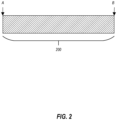
- Figure 2 illustrates an example of a data range 200 that is to be replicated.
- the data range is represented linearly from A to B.
- the data range 200 will be referred to as an example of data to be replicated hereinafter.
- the secondary system 102 may also be referred to as a "replica" system.
- the environment 100 illustrates replication occurring from a primary system to a single secondary system, the principles described herein may also be performed to replicate data from a primary computing system to multiple secondary computing systems.
- the replication occurs in a manner that depends on one or more characteristics of the data to be replicated as part of the replication.
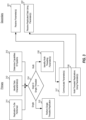
- Figure 3 illustrates a flowchart of a method 300 for performing replication in a manner that depends on one or more characteristics of the data to be replicated, in accordance with the principles described herein.
- the method 300 may be performed to replicate the data 200 of Figure 2 from the primary system 101 to the secondary system 102 in Figure 1 . Accordingly, the method 300 will now be described with respect to the environment 100 of Figure 1 and the data 200 of Figure 2 .
- the method 300 includes acts that are performed by the primary system (e.g., the primary system 101), which are illustrated in the left column of Figure 3 under the heading "Primary" and have reference numbers in the 310's. Furthermore, the method 300 includes acts that are performed by the secondary system (e.g., the secondary system 102 of Figure 1 ) which are illustrated in the right column of Figure 1 under the heading "Secondary" and have reference numbers in the 320's. As an example, the acts performed by the primary system may be performed by the replica component 112 of the primary system 101, and the acts performed by the secondary system may be performed by the replication component 122 of the secondary system 102.
- the primary system e.g., the primary system 101
- the acts performed by the secondary system may be performed by the replication component 122 of the secondary system 102.
- the method 300 includes determining that a replication of data is to be performed (act 211).
- the data range 200 of Figure 2 may be the data to be replicated.
- the primary system 101 may initiate the replication in response to a request from the secondary system 102. Alternatively, the primary system 101 may initiate the replication without such a request. In any case, the replication component 112 on the primary system 101 determines that a replication of data is to be performed.
- the replication is performed using different multi-threading parameters, depending on characteristics of the data to be replicated. Accordingly, the primary system determines one or more characteristics of the data to be replicated (act 312). As an example, the data 200 of Figure 2 is the data to be replicated. The right cross-hatching represents that this data 200 has a particular set of characteristics.
- the act 312 is shown in parallel with the act 311, which emphasizes that there is no time dependency between when the time that the one or more characteristics of the data are identified (act 312), and the time that the replication is determined to occur (act 311).
- the data of that data region may be monitored continuously, periodically, or intermittently, such that the one or more characteristics of the data of the data range are known even prior to determining that the replication is to occur.
- the identification of the one or more characteristics may be deferred until after it is determined to replicate the data.
- the characteristics could be variability in size of the partitionable portions of the data to be replicated.
- the characteristics could also be the data type of the data to be replicated in cases in which the data type is correlated with variability in the size of partitionable portions of the data of that data type.
- some key-value pairs may have predictable sizes in the value field (e.g., one kilobyte).
- some values may represent hash values and be of very large and unpredictable size.
- the primary system determines the multi-threading capabilities of the primary system and the secondary system (act 313).
- the multi-threading capabilities may be connected to the number of cores that the respective systems have. For instance, suppose that the primary system 101 has eight cores, but the secondary system 102 has four cores. From this, the primary system can conclude that the highest number of threads possible for the replication is four, governed by the computing system with the least number of cores.
- the primary and secondary systems agree upon the replication buffer size and number of buffers. For example, the secondary system might have lower memory available, say 100 MB, than the primary, say 200 MB. Both the systems will agree on using the lower value of 100 MB to replicate the data.
- the primary system also sends additional information for the size of data filled in a partition where the partition could be partially filled or empty.
- act 313 is shown in parallel with the acts 311 and 312 to emphasize that there is no time dependency between when the capabilities of the primary and secondary systems are determined (act 313), the time that the replication is determined to occur (act 311) and the time that the one or more characteristics of the data to be replicated are identified (act 312).
- the primary system determines whether to perform replication by multi-threading the replication (decision block 314). If the primary system determines to perform single-threaded replication ("Single" in decision block 314), then the primary system replicates the data using a single thread (act 315). Likewise, the secondary system is to receive the data using a single thread.
- a simple example of multi-threading parameters is a number of threads to use when replicating.
- less variability in the size of the partition portions of data to be replicated tends the decision towards more aggressively using multi-threading (of course constrained at the upper end by the capabilities of the primary and secondary systems).
- less variability in the size of partitions of data to be replicated tends the decision towards less aggressive multi-threading, or even single threaded replication.
- Figure 1 illustrates a primary system 101 replicating data to a single secondary system 102.
- the principles described herein may also be used to replicate from the primary system 101 to multiple secondary systems. Since the decision on whether to perform single-threaded or multi-threaded replication depends at least in part upon the capabilities of the secondary system that is the target of replication, it is possible that replication of the same region of data occurs by single threaded replication to one secondary system, and multi-threaded replication to another secondary system. Likewise, it is also possible that the same region of data is replicated by multi-threading, albeit with different multi-threading parameters, depending on the capabilities of the respective secondary systems. For instance, there may be one secondary with four cores, and thus multi-threaded replication may occur using four cores for that secondary system. However, multi-threaded replication might occur to another secondary using only two cores where that secondary only has two cores.
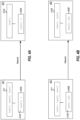
- Figures 4A through 4C illustrates an example showing single threaded replication of data 411 from the volatile memory 401 of a primary system (such as the primary system 101) of Figure 1 to the volatile memory 402 of a secondary system (such as the secondary system 102) of Figure 1 .
- the volatile memory 401 may also be referred to as the "primary memory”
- the volatile memory 402 may also be referred to as the "secondary memory”.
- the string "test1, test2, test3" is to be replicated from the primary memory 401 to the secondary memory 402 in a buffer capable of holding 8 characters.
- the primary system decided to perform single threaded replication ("Single" in decision block 314), and negotiated this with the secondary system.
- the buffer 405A is populated with the first eight characters "test1, t", transferred over a network, and the data from the buffer provided as data 412A to the secondary memory 402.
- the buffer 405B is populated with the next eight characters "est2, tes”, is transferred over the network, and the characters are appended to the data 412A within the secondary memory 402 to formulate data 412B.
- the buffer 405C is populated with the final characters "t3”, is transferred over the network, and the characters are appended within to the previous data the secondary memory 402 to formulate the final data 412.
- the final data 412 within the secondary memory 402 is a replicated form of the original data 411 that is in the primary memory 401. This replication occurred using three network transfers over one connection.
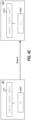
- Figures 5A and 5B illustrate an example showing multi-threaded replication of data 511 from the primary memory 401 to the secondary memory 402.
- the data 511 in the form of values "test”, “rest”, “best” and “west” are to be replicated from the primary memory 401 to the secondary memory 402 in buffers that are partitioned in four parts.
- the primary system decides to perform multi-threaded replication ("Multi" in decision block 314), determines multi-threading parameter(s) in the form of the number of threads being four (act 316), and negotiates this number of threads with the secondary system (act 317).
- the primary system will use four threads to perform the replication, and likewise the secondary system will use four threads to perform the replication.
- the buffer 505A is partitioned into four parts 505A1, 505A2, 505A3 and 505A4, being equal in number to the number of threads to be used by each system for the replication. Accordingly, the primary system spins up four threads, and the secondary system spins up four threads. On the primary system, a thread is assigned to each of the parts of the buffer 505A.
- a first thread populates the first part 505A1 of the buffer 505A with the first two characters of the value "test" (in other words "te").
- a second thread populates the second part 505A2 of the buffer 505A with the first two characters of the value "rest” (in other words "re").
- a third thread populates the third part 505A3 of the buffer 505A with the first two characters of the value "best” (in other words "be”).
- a fourth thread populates the fourth part 505A4 of the buffer 505A with the first two characters of the value "west” (in other words "we”).
- the four threads transfer the appropriate parts of the buffer 505A.
- a first thread on the secondary system takes the content of part 505A1 ("te") and populates that into secondary memory 402.
- a second thread on the secondary system takes the content of part 505A2 ("re") and populates that into secondary memory 402.
- a third thread on the secondary system takes the content of part 505A3 ("be") and populates that into secondary memory 402.
- a fourth thread on the secondary system takes the content of part 505A4 ("we") and populates that into the secondary memory 402.
- the result of this first transfer over the network is the data 512A.
- each thread on the secondary system holds its respective data for assembling with other data prior to populating of that data into the secondary system.
- the first thread populates the first part 505B1 of the buffer 505B with the last two characters of the value "test” (in other words "st").
- the second thread populates the second part 505B2 of the buffer 505B with the last two characters of the value "rest” (in other words "st”).
- the third thread populates the third part 505B3 of the buffer 505B with the last two characters of the value "best” (in other words "st”).
- the fourth thread populates the fourth part 505B4 of the buffer 505B with the last two characters of the value "west” (in other words "st”).
- the four threads of the primary system transfer the appropriate parts of the buffer 505B to the secondary system.
- the four threads of the secondary system each take the content of respective parts 505B1, 505B2, 505B3 and 505B4 and append that content onto the respective values to form data 512.
- the result of this second transfer over the network is the data 512, which is a replicated form of the original data 511.
- Figure 6 illustrates an example showing multi-threaded replication of data 511 from the primary memory 401 to the secondary memory 402.
- the data 511 in the form of values "test”, “rest”, “best” and “west” are to be replicated from the primary memory 401 to the secondary memory 402 using multiple buffers 505A and 505B.
- the buffers 505A and 505B are each partitioned in four parts. For example, like the Figure 5A , buffer 505A is partitioned into parts 505A1 through 505A4, and buffer 505B is partitioned into parts 505B1 through 505B4.
- the primary system decides to perform multi-threaded replication ("Multi" in decision block 314), and determines multi-threading parameter(s) in the form of the number of threads being four and the number of buffers per transfer being two (act 316), and negotiates this number of threads and buffers with the secondary system (act 317).
- Multi multi-threaded replication
- the primary system will use four threads and two buffers to perform the replication as a single transfer, and likewise the secondary system will use four threads and two buffers to receive the replication.
- a first thread populates the first part 505A1 of the first buffer 505A with the first two characters of the value "test” (in other words "te"), and the first part 505B1 of the second buffer 505B with the last two characters of the value "test” (in other words "st”).
- a second thread populates the second part 505A2 of the first buffer 505A with the first two characters of the value "rest” (in other words "re") and the second part 505B2 of the second buffer 505B with the last two characters of the value "rest” (in other words "st”).
- a third thread populates the third part 505A3 of the first buffer 505A with the first two characters of the value "best” (in other words "be"), and the third part 505B3 of the second buffer 505B with the last two characters of the value "best” (in other words "st”).
- a fourth thread populates the fourth part 505A4 of the first buffer 505A with the first two characters of the value "west” (in other words "we"), and the fourth part 505B1 of the buffer 505B with the last two characters of the value "west” (in other words "st”).
- a first thread on the secondary system takes the content of part 505A1 ("te") and part 505B1 ("st"), assembles the content into value "test”, and populates that value into secondary memory 402.
- a second thread on the secondary system takes the content of part 505A2 ("re") and part 505B2 ("st"), assembles the content into value "rest”, and populates that value into secondary memory 402.
- a third thread on the secondary system takes the content of part 505A3 ("be”) and part 505B3 (“st”), assembles the content into value "best”, and populates that value into secondary memory 402.
- a fourth thread on the secondary system takes the content of part 505A4 ("we") and part 505B4 ("st"), assembles the content into value "west”, and populates that value into the secondary memory 402.
- the result of this is the data 512, which is a replicated form of the original data 511.
- each buffer part is sent as soon as it is filled.
- buffer part 505A2 might be sent as soon as it is filled, regardless of whether the other buffer parts are populated with respective data.
- each buffer is sent as soon as it is filled with the data. For instance, buffer 505A may be sent even though buffer 505B is not yet ready to be sent.
- connection instead of using only one connection, there are multiple connections (e.g., SSL connections) used to transfer the various parts of the buffers.
- the number of connections may be negotiated in advance between the primary system and the secondary system.
- the buffers 505A and 505B may be communicated concurrently over their distinct connections.
- Other examples of multi-threading parameters that may be communicated includes whether the data is an ordered set or an unordered set, and if ordered how the ordering is determined.
- the secondary computing system can reassemble ordered data in the proper order.
- the use of multiple connections helps to scale out the encryption and decryption load across multiple sockets.
- Figure 7 illustrates data 700 that has different characteristics.
- the data 700 ranges from point A to B.
- a first part 701 of that data 700 ranging from point A to C has a first set of one or more characteristics as represented by the rightward facing cross hatching.
- a second part 702 of the data 700 ranging from point C to B has a second set of one or more characteristics as represented by the leftward facing cross hatching.
- the method 300 may be performed once for the first part 701, and once for the second part 702. Accordingly, the primary system may decide to replicate the first part 701 using single-threaded replication, and the second part 702 using multi-threaded replication, or vice versa. Alternatively, the primary system may decide to replicate the first part 701 using a first set of multi-threading parameters, and the second part 702 using a second set of multi-threading parameters.
- Computing systems are now increasingly taking a wide variety of forms.
- Computing systems may, for example, be handheld devices, appliances, laptop computers, desktop computers, mainframes, distributed computing systems, data centers, or even devices that have not conventionally been considered a computing system, such as wearables (e.g., glasses).
- the term "computing system” is defined broadly as including any device or system (or a combination thereof) that includes at least one physical and tangible processor, and a physical and tangible memory capable of having thereon computer-executable instructions that may be executed by a processor.
- the memory may take any form and may depend on the nature and form of the computing system.
- a computing system may be distributed over a network environment and may include multiple constituent computing systems.
- a computing system 800 includes at least one hardware processing unit 802 and memory 804.
- the processing unit 802 includes a general-purpose processor. Although not required, the processing unit 802 may also include a field programmable gate array (FPGA), an application specific integrated circuit (ASIC), or any other specialized circuit.
- the memory 804 includes a physical system memory. That physical system memory may be volatile, non-volatile, or some combination of the two. In a second embodiment, the memory is non-volatile mass storage such as physical storage media. If the computing system is distributed, the processing, memory and/or storage capability may be distributed as well.
- the computing system 800 also has thereon multiple structures often referred to as an "executable component".
- the memory 804 of the computing system 800 is illustrated as including executable component 806.
- executable component is the name for a structure that is well understood to one of ordinary skill in the art in the field of computing as being a structure that can be software, hardware, or a combination thereof.
- the structure of an executable component may include software objects, routines, methods (and so forth) that may be executed on the computing system.
- Such an executable component exists in the heap of a computing system, in computer-readable storage media, or a combination.
- the structure of the executable component exists on a computer-readable medium such that, when interpreted by one or more processors of a computing system (e.g., by a processor thread), the computing system is caused to perform a function.
- Such structure may be computer readable directly by the processors (as is the case if the executable component were binary).
- the structure may be structured to be interpretable and/or compiled (whether in a single stage or in multiple stages) so as to generate such binary that is directly interpretable by the processors.
- executable component is also well understood by one of ordinary skill as including structures, such as hard coded or hard wired logic gates, that are implemented exclusively or near-exclusively in hardware, such as within a field programmable gate array (FPGA), an application specific integrated circuit (ASIC), or any other specialized circuit. Accordingly, the term “executable component” is a term for a structure that is well understood by those of ordinary skill in the art of computing, whether implemented in software, hardware, or a combination. In this description, the terms “component”, “agent”, “manager”, “service”, “engine”, “module”, “virtual machine” or the like may also be used. As used in this description and in the case, these terms (whether expressed with or without a modifying clause) are also intended to be synonymous with the term “executable component”, and thus also have a structure that is well understood by those of ordinary skill in the art of computing.
- FPGA field programmable gate array
- ASIC application specific integrated circuit
- embodiments are described with reference to acts that are performed by one or more computing systems. If such acts are implemented in software, one or more processors (of the associated computing system that performs the act) direct the operation of the computing system in response to having executed computer-executable instructions that constitute an executable component.
- such computer-executable instructions may be embodied on one or more computer-readable media that form a computer program product.
- An example of such an operation involves the manipulation of data.
- the computer-executable instructions may be hard-coded or hard-wired logic gates.
- the computer-executable instructions (and the manipulated data) may be stored in the memory 804 of the computing system 800.
- Computing system 800 may also contain communication channels 808 that allow the computing system 800 to communicate with other computing systems over, for example, network 810.
- the computing system 800 includes a user interface system 812 for use in interfacing with a user.
- the user interface system 812 may include output mechanisms 812A as well as input mechanisms 812B.
- output mechanisms 812A might include, for instance, speakers, displays, tactile output, virtual or augmented reality, holograms and so forth.
- input mechanisms 812B might include, for instance, microphones, touchscreens, virtual or augmented reality, holograms, cameras, keyboards, mouse or other pointer input, sensors of any type, and so forth.
- Embodiments described herein may comprise or utilize a special-purpose or general-purpose computing system including computer hardware, such as, for example, one or more processors and system memory, as discussed in greater detail below.
- Embodiments described herein also include physical and other computer-readable media for carrying or storing computer-executable instructions and/or data structures.
- Such computer-readable media can be any available media that can be accessed by a general-purpose or special-purpose computing system.
- Computer-readable media that store computer-executable instructions are physical storage media.
- Computer-readable media that carry computer-executable instructions are transmission media.
- embodiments of the invention can comprise at least two distinctly different kinds of computer-readable media: storage media and transmission media.
- Computer-readable storage media includes RAM, ROM, EEPROM, CD-ROM, or other optical disk storage, magnetic disk storage, or other magnetic storage devices, or any other physical and tangible storage medium which can be used to store desired program code means in the form of computer-executable instructions or data structures and which can be accessed by a general-purpose or special-purpose computing system.
- a "network” is defined as one or more data links that enable the transport of electronic data between computing systems and/or modules and/or other electronic devices.
- Transmission media can include a network and/or data links which can be used to carry desired program code means in the form of computer-executable instructions or data structures and which can be accessed by a general-purpose or special-purpose computing system. Combinations of the above should also be included within the scope of computer-readable media.
- program code means in the form of computer-executable instructions or data structures can be transferred automatically from transmission media to storage media (or vice versa).
- computer-executable instructions or data structures received over a network or data link can be buffered in RAM within a network interface module (e.g., a "NIC"), and then be eventually transferred to computing system RAM and/or to less volatile storage media at a computing system.
- a network interface module e.g., a "NIC”
- storage media can be included in computing system components that also (or even primarily) utilize transmission media.
- Computer-executable instructions comprise, for example, instructions and data which, when executed at a processor, cause a general-purpose computing system, special-purpose computing system, or special-purpose processing device to perform a certain function or group of functions. Alternatively, or in addition, the computer-executable instructions may configure the computing system to perform a certain function or group of functions.
- the computer executable instructions may be, for example, binaries or even instructions that undergo some translation (such as compilation) before direct execution by the processors, such as intermediate format instructions such as assembly language, or even source code.
- the invention may be practiced in network computing environments with many types of computing system configurations, including, personal computers, desktop computers, laptop computers, message processors, hand-held devices, multi-processor systems, microprocessor-based or programmable consumer electronics, network PCs, minicomputers, mainframe computers, mobile telephones, PDAs, pagers, routers, switches, datacenters, wearables (such as glasses) and the like.
- the invention may also be practiced in distributed system environments where local and remote computing system, which are linked (either by hardwired data links, wireless data links, or by a combination of hardwired and wireless data links) through a network, both perform tasks.
- program modules may be located in both local and remote memory storage devices.
- Cloud computing environments may be distributed, although this is not required. When distributed, cloud computing environments may be distributed internationally within an organization and/or have components possessed across multiple organizations.
- cloud computing is defined as a model for enabling on-demand network access to a shared pool of configurable computing resources (e.g., networks, servers, storage, applications, and services). The definition of “cloud computing” is not limited to any of the other numerous advantages that can be obtained from such a model when properly deployed.
Landscapes
- Engineering & Computer Science (AREA)
- Theoretical Computer Science (AREA)
- Physics & Mathematics (AREA)
- General Engineering & Computer Science (AREA)
- General Physics & Mathematics (AREA)
- Software Systems (AREA)
- Human Computer Interaction (AREA)
- Multimedia (AREA)
- Databases & Information Systems (AREA)
- Computing Systems (AREA)
- Data Mining & Analysis (AREA)
- Information Retrieval, Db Structures And Fs Structures Therefor (AREA)
Claims (12)
- Verfahren zum Durchführen einer Replikation von einem primären Computersystem (101; 800) auf ein sekundäres Computersystem (102; 800) in einer Weise, die von einer oder mehreren Eigenschaften von mindestens einigen der Daten (111) abhängt, die als Teil der Replikation repliziert werden sollen, indem Folgendes durchgeführt wird:
Identifizieren (312) einer oder mehrerer Eigenschaften einer Region (200; 700) von Daten (111), die innerhalb mindestens eines Teils der Replikation von dem primären Computersystem (101; 800) auf das sekundäre Computersystem (102; 800) repliziert werden solle, und dadurch gekennzeichnet, dass das Verfahren ferner das Durchführen des Folgenden umfasst:Bestimmen (313) der Multithreading-Fähigkeiten des primären Computersystems (101; 800) und der Multithreading-Fähigkeiten des sekundären Computersystems (102; 800);basierend auf den identifizierten einen oder mehreren Eigenschaften der Daten (111) der Region (200; 700) von Daten (111) und den Multithreading-Fähigkeiten sowohl des primären Computersystems (101; 800) als auch des sekundären Computersystems (102; 800), Entscheiden (314), eine Multithread-Replikation der Region (200; 700) von Daten (111) unter Verwendung eines oder mehrerer Multithreading-Parameter (316) durchzuführen, und Übermitteln (317) des einen oder der mehreren Multithreading-Parameter an das sekundäre Computersystem (102; 800); undals Reaktion auf die Entscheidung, eine Multithread-Replikation der Region (200; 700) von Daten (111) unter Verwendung des einen oder mehrerer Multithreading-Parameter durchzuführen, Durchführen (318) einer Multithread-Replikation der Region (200; 700) von Daten (111) unter Verwendung des einen oder mehrerer Multithreading-Parameter. - Verfahren nach Anspruch 1, wobei die Multithread-Replikation umfasst:Identifizieren einer Vielzahl von Threads, die bei der Replikation verwendet werden sollen;Partitionieren der Daten (111) in eine Vielzahl von Teilen; undZuweisen der Vielzahl von Teilen zu entsprechenden Threads der Vielzahl von Threads.
- Verfahren nach Anspruch 1, wobei die eine oder mehreren Eigenschaften der Daten (111) ein Datentyp der Daten (111) sind.
- Verfahren nach Anspruch 1, wobei die eine oder die mehreren Eigenschaften der Daten (111) eine Variation der Partitionsgrößen der Daten sind.
- Verfahren nach Anspruch 1, wobei die Region (200; 700) der Daten (111) eine erste Region der Daten (701) ist, wobei die eine oder mehreren Eigenschaften erste eine oder mehrere Eigenschaften sind, wobei das Verfahren ferner umfasst:Identifizieren zweiter einer oder mehrerer Eigenschaften von Daten (111) einer zweiten Region (702) von Daten (111), die von dem primären Computersystem (101; 800) auf das sekundäre Computersystem (102; 800) repliziert werden sollen;basierend auf der zweiten einen oder mehreren Eigenschaften der Daten der zweiten Region (702) von Daten (111), Entscheiden, eine Singlethread-Replikation der zweiten Region (702) von Daten (111) durchzuführen; undals Reaktion auf die Entscheidung, eine Singlethread-Replikation der zweiten Region (702) von Daten (111) durchzuführen, Durchführen einer Singlethread-Darstellung der zweiten Region (702) von Daten (111).
- Verfahren nach Anspruch 5, wobei die erste eine oder mehrere Eigenschaften eine Variabilität in der Größe von Partitionsabschnitten der Daten (111) der ersten Region (701) von Daten (111) umfasst und die zweite eine oder mehrere Eigenschaften eine Variation in der Größe von Partitionsabschnitten von Daten (111) der zweiten Region (702) von Daten (111) umfasst, wobei die Entscheidung, ob eine Multithread- oder Singlethread-Replikation durchgeführt werden soll, mindestens teilweise auf der Größenvariation der Partitionsabschnitte der zugeordneten Region (701, 702) von Daten (111) basiert, wobei die Größenvariation der Partitionsabschnitte der Daten der ersten Region (701) von Daten (111) geringer ist als die Größenvariation der Partitionsabschnitte der Daten der zweiten Region (702) von Daten (111).
- Verfahren nach Anspruch 5, wobei die Replikation der zweiten Region (702) von Daten (111) und die Replikation der ersten Region (701) von Daten (111) mindestens ein Teil einer vollständigen Replikation von dem primären Computersystem (101; 800) auf das sekundäre Computersystem (102; 800) ist.
- Verfahren nach Anspruch 1, wobei die Region (200; 700) von Daten (111) eine erste Region (701) von Daten (111) ist, die eine oder mehreren Eigenschaften eine erste eine oder mehrere Eigenschaften sind, der eine oder die mehreren Multithreading-Parameter ein erster oder mehrere Multithreading-Parameter sind, wobei das Verfahren ferner umfasst:Identifizieren zweiter einer oder mehrerer Eigenschaften einer zweiten Region (702) von Daten (111), die innerhalb mindestens eines Teils der Replikation von dem primären Computersystem (101; 800) auf das sekundäre Computersystem (102; 800) repliziert werden sollen;basierend auf den identifizierten einen oder mehreren Eigenschaften der Daten (111) der Region von Daten (200; 700) und den Multithreading-Fähigkeiten sowohl des primären Computersystems (101; 800) als auch des sekundären Computersystems (102; 800), Entscheiden, eine Multithread-Replikation der Region (200; 700) von Daten unter Verwendung zweiter einer oder mehrerer Multithreading-Parameter durchzuführen, und Übermitteln des zweiten einen oder mehrerer Multithreading-Parameter an das sekundäre Computersystem (102; 800); undals Reaktion auf die Entscheidung, eine Multithread-Replikation der zweiten Region (702) von Daten (111) unter Verwendung des zweiten einen oder mehrerer Multithreading-Parameter durchzuführen, Durchführen einer Multithread-Replikation der zweiten Region (702) von Daten unter Verwendung des zweiten einen oder mehrerer Multithreading-Parameter.
- Verfahren nach Anspruch 3, ferner umfassend das Bestimmen einer Größenvariabilität von partitionierbaren Abschnitten des identifizierten Datentyps, wobei die Entscheidung, ob die Multithread- oder Singlethread-Replikation durchgeführt werden soll, mindestens teilweise auf der Größenvariabilität der partitionierbaren Abschnitte des identifizierten Datentyps basiert.
- Verfahren nach Anspruch 1, wobei Bestimmen (313) der Multithreading-Fähigkeiten des primären Computersystems (101; 800) und der Multithreading-Fähigkeiten des sekundären Computersystems (102; 800) Folgendes umfasst:
die Tatsache, dass sich primäre Computersystem (101; 800) und das sekundäre Computersystem (102; 800) auf eine Replikationspuffergröße und eine Anzahl von Puffern einigen. - Verfahren nach Anspruch 1, wobei Bestimmen (313) der Multithreading-Fähigkeiten des primären Computersystems (101; 800) und der Multithreading-Fähigkeiten des sekundären Computersystems (102; 800) Folgendes umfasst:
Bestimmen der Multithreading-Fähigkeiten des primären Computersystems (101; 800) und des sekundären Computersystems (102; 800) basierend auf einer Anzahl von Cores, die die jeweiligen Computersysteme aufweisen, wobei die höchstmögliche Anzahl von Threads für die Replikation durch das Computersystem mit der geringsten Anzahl von Cores bestimmt wird. - Primäres Computersystem (101, 800), das so konfiguriert ist, dass es eine Replikation auf ein sekundäres Computersystem (102, 800) durchführt, wobei das primäre Computersystem Folgendes umfasst:einen oder mehrere Prozessoren (802); undein oder mehrere computerlesbare Medien (804), die computerausführbare Anweisungen (806) aufweisen, die so strukturiert sind, dass sie das primäre Computersystem (101; 800) so konfigurieren, dass es eine Replikation auf das sekundäre Computersystem (102; 800) in einer Weise durchführt, die von einer oder mehreren Eigenschaften von mindestens einigen der Daten (111) abhängt, die als Teil der Replikation repliziert werden sollen, indem es ein Verfahren nach einem der Ansprüche 1 bis 11 durchführt.
Applications Claiming Priority (2)
| Application Number | Priority Date | Filing Date | Title |
|---|---|---|---|
| US17/169,248 US11537310B2 (en) | 2021-02-05 | 2021-02-05 | Threading of replication based on data type |
| PCT/US2022/013022 WO2022169596A1 (en) | 2021-02-05 | 2022-01-19 | Threading of replication based on data type |
Publications (2)
| Publication Number | Publication Date |
|---|---|
| EP4288874A1 EP4288874A1 (de) | 2023-12-13 |
| EP4288874B1 true EP4288874B1 (de) | 2025-02-26 |
Family
ID=80447058
Family Applications (1)
| Application Number | Title | Priority Date | Filing Date |
|---|---|---|---|
| EP22703761.1A Active EP4288874B1 (de) | 2021-02-05 | 2022-01-19 | Einfädeln einer replikation auf der basis des datentyps |
Country Status (3)
| Country | Link |
|---|---|
| US (3) | US11537310B2 (de) |
| EP (1) | EP4288874B1 (de) |
| WO (1) | WO2022169596A1 (de) |
Family Cites Families (14)
| Publication number | Priority date | Publication date | Assignee | Title |
|---|---|---|---|---|
| WO2004025483A1 (en) * | 2002-09-16 | 2004-03-25 | Commvault Systems, Inc. | System and method for optimizing storage operations |
| US7913206B1 (en) | 2004-09-16 | 2011-03-22 | Cadence Design Systems, Inc. | Method and mechanism for performing partitioning of DRC operations |
| US8275976B2 (en) | 2005-08-29 | 2012-09-25 | The Invention Science Fund I, Llc | Hierarchical instruction scheduler facilitating instruction replay |
| WO2007075587A2 (en) * | 2005-12-19 | 2007-07-05 | Commvault Systems, Inc. | Systems and methods for performing data replication |
| US7636743B2 (en) | 2005-12-19 | 2009-12-22 | Commvault Systems, Inc. | Pathname translation in a data replication system |
| US20090292745A1 (en) | 2008-05-23 | 2009-11-26 | Orbitz Worldwide, L.L.C. | Database management system and method |
| US9218404B2 (en) | 2011-06-06 | 2015-12-22 | Sybase, Inc. | Replication support for heterogeneous data types |
| US9672126B2 (en) | 2011-12-15 | 2017-06-06 | Sybase, Inc. | Hybrid data replication |
| CN104969169B (zh) | 2013-05-13 | 2017-11-17 | 株式会社日立制作所 | 出于卷复制的目的来标识工作量和对缓冲器定大小 |
| US9442674B1 (en) | 2015-11-20 | 2016-09-13 | International Business Machines Corporation | Using a plurality of sub-buffers and a free segment list to allocate segments to a plurality of threads to use for writing data |
| US10719531B2 (en) | 2016-12-20 | 2020-07-21 | Sap Se | System configuration for data replication system |
| US10055808B1 (en) | 2017-01-23 | 2018-08-21 | Kinetica Db, Inc. | Distributed and parallelized visualization framework |
| US10970310B2 (en) | 2018-08-02 | 2021-04-06 | Netapp Inc. | Synchronous replication based cutover engine |
| CN112685223B (zh) * | 2019-10-17 | 2024-12-20 | 伊姆西Ip控股有限责任公司 | 基于文件类型的文件备份 |
-
2021
- 2021-02-05 US US17/169,248 patent/US11537310B2/en active Active
-
2022
- 2022-01-19 EP EP22703761.1A patent/EP4288874B1/de active Active
- 2022-01-19 WO PCT/US2022/013022 patent/WO2022169596A1/en not_active Ceased
- 2022-12-08 US US18/077,534 patent/US11960750B2/en active Active
-
2024
- 2024-02-27 US US18/588,808 patent/US12210764B2/en active Active
Also Published As
| Publication number | Publication date |
|---|---|
| US11960750B2 (en) | 2024-04-16 |
| EP4288874A1 (de) | 2023-12-13 |
| US20220253217A1 (en) | 2022-08-11 |
| US20240201889A1 (en) | 2024-06-20 |
| US20230095358A1 (en) | 2023-03-30 |
| WO2022169596A1 (en) | 2022-08-11 |
| US12210764B2 (en) | 2025-01-28 |
| US11537310B2 (en) | 2022-12-27 |
Similar Documents
| Publication | Publication Date | Title |
|---|---|---|
| US10915664B2 (en) | Data masking systems and methods | |
| US11249885B2 (en) | Test case generator and user interface | |
| US10613978B2 (en) | Application cache replication to secondary application(s) | |
| CN108510082A (zh) | 对机器学习模型进行处理的方法及装置 | |
| CN112363994A (zh) | 数据库的处理方法、装置、电子装置和存储介质 | |
| US10922202B2 (en) | Application service-level configuration of dataloss failover | |
| US11755297B2 (en) | Compiling monoglot function compositions into a single entity | |
| Mohamed et al. | MidCloud: an agent‐based middleware for effective utilization of replicated Cloud services | |
| Ye et al. | Resource-efficient collaborative edge transformer inference with hybrid model parallelism | |
| US20250315253A1 (en) | Partitioning code bases for parallel execution of code analysis | |
| US11960750B2 (en) | Threading of replication based on data type | |
| US10262054B2 (en) | Database and service upgrade without downtime | |
| US10908922B2 (en) | Dataflow controller technology for dataflow execution graph | |
| US9697036B2 (en) | Method and apparatus for generating unique identifier for distributed computing environment | |
| US11194630B2 (en) | Grouped shuffling of partition vertices | |
| WO2021230854A1 (en) | Combined server requests for computer-aided design (cad) applications | |
| JP7717795B2 (ja) | フォルト・トレラントなビッグ・データ処理 | |
| US11487467B1 (en) | Layered memory mapped file technology | |
| US20210064670A1 (en) | Customizing and updating analytics of remote data source | |
| EP4036720A1 (de) | Hash-optimierter zusammengesetzter cache für isolierte ausführungsumgebungen | |
| Luu | Spark Streaming |
Legal Events
| Date | Code | Title | Description |
|---|---|---|---|
| STAA | Information on the status of an ep patent application or granted ep patent |
Free format text: STATUS: UNKNOWN |
|
| STAA | Information on the status of an ep patent application or granted ep patent |
Free format text: STATUS: THE INTERNATIONAL PUBLICATION HAS BEEN MADE |
|
| PUAI | Public reference made under article 153(3) epc to a published international application that has entered the european phase |
Free format text: ORIGINAL CODE: 0009012 |
|
| STAA | Information on the status of an ep patent application or granted ep patent |
Free format text: STATUS: REQUEST FOR EXAMINATION WAS MADE |
|
| 17P | Request for examination filed |
Effective date: 20230720 |
|
| AK | Designated contracting states |
Kind code of ref document: A1 Designated state(s): AL AT BE BG CH CY CZ DE DK EE ES FI FR GB GR HR HU IE IS IT LI LT LU LV MC MK MT NL NO PL PT RO RS SE SI SK SM TR |
|
| DAV | Request for validation of the european patent (deleted) | ||
| DAX | Request for extension of the european patent (deleted) | ||
| GRAP | Despatch of communication of intention to grant a patent |
Free format text: ORIGINAL CODE: EPIDOSNIGR1 |
|
| STAA | Information on the status of an ep patent application or granted ep patent |
Free format text: STATUS: GRANT OF PATENT IS INTENDED |
|
| INTG | Intention to grant announced |
Effective date: 20240618 |
|
| P01 | Opt-out of the competence of the unified patent court (upc) registered |
Free format text: CASE NUMBER: APP_41482/2024 Effective date: 20240713 |
|
| GRAJ | Information related to disapproval of communication of intention to grant by the applicant or resumption of examination proceedings by the epo deleted |
Free format text: ORIGINAL CODE: EPIDOSDIGR1 |
|
| STAA | Information on the status of an ep patent application or granted ep patent |
Free format text: STATUS: REQUEST FOR EXAMINATION WAS MADE |
|
| GRAP | Despatch of communication of intention to grant a patent |
Free format text: ORIGINAL CODE: EPIDOSNIGR1 |
|
| STAA | Information on the status of an ep patent application or granted ep patent |
Free format text: STATUS: GRANT OF PATENT IS INTENDED |
|
| INTC | Intention to grant announced (deleted) | ||
| INTG | Intention to grant announced |
Effective date: 20241024 |
|
| GRAS | Grant fee paid |
Free format text: ORIGINAL CODE: EPIDOSNIGR3 |
|
| GRAA | (expected) grant |
Free format text: ORIGINAL CODE: 0009210 |
|
| STAA | Information on the status of an ep patent application or granted ep patent |
Free format text: STATUS: THE PATENT HAS BEEN GRANTED |
|
| AK | Designated contracting states |
Kind code of ref document: B1 Designated state(s): AL AT BE BG CH CY CZ DE DK EE ES FI FR GB GR HR HU IE IS IT LI LT LU LV MC MK MT NL NO PL PT RO RS SE SI SK SM TR |
|
| REG | Reference to a national code |
Ref country code: GB Ref legal event code: FG4D |
|
| REG | Reference to a national code |
Ref country code: CH Ref legal event code: EP |
|
| REG | Reference to a national code |
Ref country code: DE Ref legal event code: R096 Ref document number: 602022011108 Country of ref document: DE |
|
| REG | Reference to a national code |
Ref country code: IE Ref legal event code: FG4D |
|
| REG | Reference to a national code |
Ref country code: NL Ref legal event code: MP Effective date: 20250226 |
|
| PG25 | Lapsed in a contracting state [announced via postgrant information from national office to epo] |
Ref country code: RS Free format text: LAPSE BECAUSE OF FAILURE TO SUBMIT A TRANSLATION OF THE DESCRIPTION OR TO PAY THE FEE WITHIN THE PRESCRIBED TIME-LIMIT Effective date: 20250526 |
|
| PG25 | Lapsed in a contracting state [announced via postgrant information from national office to epo] |
Ref country code: FI Free format text: LAPSE BECAUSE OF FAILURE TO SUBMIT A TRANSLATION OF THE DESCRIPTION OR TO PAY THE FEE WITHIN THE PRESCRIBED TIME-LIMIT Effective date: 20250226 |
|
| PG25 | Lapsed in a contracting state [announced via postgrant information from national office to epo] |
Ref country code: PL Free format text: LAPSE BECAUSE OF FAILURE TO SUBMIT A TRANSLATION OF THE DESCRIPTION OR TO PAY THE FEE WITHIN THE PRESCRIBED TIME-LIMIT Effective date: 20250226 |
|
| PG25 | Lapsed in a contracting state [announced via postgrant information from national office to epo] |
Ref country code: ES Free format text: LAPSE BECAUSE OF FAILURE TO SUBMIT A TRANSLATION OF THE DESCRIPTION OR TO PAY THE FEE WITHIN THE PRESCRIBED TIME-LIMIT Effective date: 20250226 |
|
| REG | Reference to a national code |
Ref country code: LT Ref legal event code: MG9D |
|
| PG25 | Lapsed in a contracting state [announced via postgrant information from national office to epo] |
Ref country code: NO Free format text: LAPSE BECAUSE OF FAILURE TO SUBMIT A TRANSLATION OF THE DESCRIPTION OR TO PAY THE FEE WITHIN THE PRESCRIBED TIME-LIMIT Effective date: 20250526 Ref country code: IS Free format text: LAPSE BECAUSE OF FAILURE TO SUBMIT A TRANSLATION OF THE DESCRIPTION OR TO PAY THE FEE WITHIN THE PRESCRIBED TIME-LIMIT Effective date: 20250626 |
|
| PG25 | Lapsed in a contracting state [announced via postgrant information from national office to epo] |
Ref country code: NL Free format text: LAPSE BECAUSE OF FAILURE TO SUBMIT A TRANSLATION OF THE DESCRIPTION OR TO PAY THE FEE WITHIN THE PRESCRIBED TIME-LIMIT Effective date: 20250226 |
|
| PG25 | Lapsed in a contracting state [announced via postgrant information from national office to epo] |
Ref country code: HR Free format text: LAPSE BECAUSE OF FAILURE TO SUBMIT A TRANSLATION OF THE DESCRIPTION OR TO PAY THE FEE WITHIN THE PRESCRIBED TIME-LIMIT Effective date: 20250226 |
|
| PG25 | Lapsed in a contracting state [announced via postgrant information from national office to epo] |
Ref country code: PT Free format text: LAPSE BECAUSE OF FAILURE TO SUBMIT A TRANSLATION OF THE DESCRIPTION OR TO PAY THE FEE WITHIN THE PRESCRIBED TIME-LIMIT Effective date: 20250626 Ref country code: LV Free format text: LAPSE BECAUSE OF FAILURE TO SUBMIT A TRANSLATION OF THE DESCRIPTION OR TO PAY THE FEE WITHIN THE PRESCRIBED TIME-LIMIT Effective date: 20250226 |
|
| PG25 | Lapsed in a contracting state [announced via postgrant information from national office to epo] |
Ref country code: BG Free format text: LAPSE BECAUSE OF FAILURE TO SUBMIT A TRANSLATION OF THE DESCRIPTION OR TO PAY THE FEE WITHIN THE PRESCRIBED TIME-LIMIT Effective date: 20250226 Ref country code: GR Free format text: LAPSE BECAUSE OF FAILURE TO SUBMIT A TRANSLATION OF THE DESCRIPTION OR TO PAY THE FEE WITHIN THE PRESCRIBED TIME-LIMIT Effective date: 20250527 |
|
| REG | Reference to a national code |
Ref country code: AT Ref legal event code: MK05 Ref document number: 1771341 Country of ref document: AT Kind code of ref document: T Effective date: 20250226 |
|
| PG25 | Lapsed in a contracting state [announced via postgrant information from national office to epo] |
Ref country code: SE Free format text: LAPSE BECAUSE OF FAILURE TO SUBMIT A TRANSLATION OF THE DESCRIPTION OR TO PAY THE FEE WITHIN THE PRESCRIBED TIME-LIMIT Effective date: 20250226 |
|
| PG25 | Lapsed in a contracting state [announced via postgrant information from national office to epo] |
Ref country code: SM Free format text: LAPSE BECAUSE OF FAILURE TO SUBMIT A TRANSLATION OF THE DESCRIPTION OR TO PAY THE FEE WITHIN THE PRESCRIBED TIME-LIMIT Effective date: 20250226 |
|
| PG25 | Lapsed in a contracting state [announced via postgrant information from national office to epo] |
Ref country code: DK Free format text: LAPSE BECAUSE OF FAILURE TO SUBMIT A TRANSLATION OF THE DESCRIPTION OR TO PAY THE FEE WITHIN THE PRESCRIBED TIME-LIMIT Effective date: 20250226 |
|
| PG25 | Lapsed in a contracting state [announced via postgrant information from national office to epo] |
Ref country code: IT Free format text: LAPSE BECAUSE OF FAILURE TO SUBMIT A TRANSLATION OF THE DESCRIPTION OR TO PAY THE FEE WITHIN THE PRESCRIBED TIME-LIMIT Effective date: 20250226 |
|
| PG25 | Lapsed in a contracting state [announced via postgrant information from national office to epo] |
Ref country code: AT Free format text: LAPSE BECAUSE OF FAILURE TO SUBMIT A TRANSLATION OF THE DESCRIPTION OR TO PAY THE FEE WITHIN THE PRESCRIBED TIME-LIMIT Effective date: 20250226 |
|
| PG25 | Lapsed in a contracting state [announced via postgrant information from national office to epo] |
Ref country code: EE Free format text: LAPSE BECAUSE OF FAILURE TO SUBMIT A TRANSLATION OF THE DESCRIPTION OR TO PAY THE FEE WITHIN THE PRESCRIBED TIME-LIMIT Effective date: 20250226 Ref country code: CZ Free format text: LAPSE BECAUSE OF FAILURE TO SUBMIT A TRANSLATION OF THE DESCRIPTION OR TO PAY THE FEE WITHIN THE PRESCRIBED TIME-LIMIT Effective date: 20250226 |
|
| PG25 | Lapsed in a contracting state [announced via postgrant information from national office to epo] |
Ref country code: RO Free format text: LAPSE BECAUSE OF FAILURE TO SUBMIT A TRANSLATION OF THE DESCRIPTION OR TO PAY THE FEE WITHIN THE PRESCRIBED TIME-LIMIT Effective date: 20250226 |
|
| PG25 | Lapsed in a contracting state [announced via postgrant information from national office to epo] |
Ref country code: SK Free format text: LAPSE BECAUSE OF FAILURE TO SUBMIT A TRANSLATION OF THE DESCRIPTION OR TO PAY THE FEE WITHIN THE PRESCRIBED TIME-LIMIT Effective date: 20250226 |
|
| REG | Reference to a national code |
Ref country code: DE Ref legal event code: R097 Ref document number: 602022011108 Country of ref document: DE |
|
| PLBE | No opposition filed within time limit |
Free format text: ORIGINAL CODE: 0009261 |
|
| STAA | Information on the status of an ep patent application or granted ep patent |
Free format text: STATUS: NO OPPOSITION FILED WITHIN TIME LIMIT |
|
| PGFP | Annual fee paid to national office [announced via postgrant information from national office to epo] |
Ref country code: GB Payment date: 20251220 Year of fee payment: 5 |
|
| 26N | No opposition filed |
Effective date: 20251127 |
|
| PGFP | Annual fee paid to national office [announced via postgrant information from national office to epo] |
Ref country code: DE Payment date: 20251217 Year of fee payment: 5 |