EP4287579B1 - Prioritized storage and transmission tool for optimized telemetry unit memory allocation - Google Patents
Prioritized storage and transmission tool for optimized telemetry unit memory allocation Download PDFInfo
- Publication number
- EP4287579B1 EP4287579B1 EP23166021.8A EP23166021A EP4287579B1 EP 4287579 B1 EP4287579 B1 EP 4287579B1 EP 23166021 A EP23166021 A EP 23166021A EP 4287579 B1 EP4287579 B1 EP 4287579B1
- Authority
- EP
- European Patent Office
- Prior art keywords
- data
- streamed
- permutation
- data sources
- transmission
- Prior art date
- Legal status (The legal status is an assumption and is not a legal conclusion. Google has not performed a legal analysis and makes no representation as to the accuracy of the status listed.)
- Active
Links
Images


Classifications
-
- H—ELECTRICITY
- H04—ELECTRIC COMMUNICATION TECHNIQUE
- H04L—TRANSMISSION OF DIGITAL INFORMATION, e.g. TELEGRAPHIC COMMUNICATION
- H04L47/00—Traffic control in data switching networks
- H04L47/10—Flow control; Congestion control
-
- G—PHYSICS
- G06—COMPUTING OR CALCULATING; COUNTING
- G06F—ELECTRIC DIGITAL DATA PROCESSING
- G06F3/00—Input arrangements for transferring data to be processed into a form capable of being handled by the computer; Output arrangements for transferring data from processing unit to output unit, e.g. interface arrangements
- G06F3/06—Digital input from, or digital output to, record carriers, e.g. RAID, emulated record carriers or networked record carriers
- G06F3/0601—Interfaces specially adapted for storage systems
- G06F3/0628—Interfaces specially adapted for storage systems making use of a particular technique
- G06F3/0629—Configuration or reconfiguration of storage systems
- G06F3/0631—Configuration or reconfiguration of storage systems by allocating resources to storage systems
-
- G—PHYSICS
- G06—COMPUTING OR CALCULATING; COUNTING
- G06F—ELECTRIC DIGITAL DATA PROCESSING
- G06F3/00—Input arrangements for transferring data to be processed into a form capable of being handled by the computer; Output arrangements for transferring data from processing unit to output unit, e.g. interface arrangements
- G06F3/06—Digital input from, or digital output to, record carriers, e.g. RAID, emulated record carriers or networked record carriers
- G06F3/0601—Interfaces specially adapted for storage systems
- G06F3/0602—Interfaces specially adapted for storage systems specifically adapted to achieve a particular effect
- G06F3/0604—Improving or facilitating administration, e.g. storage management
-
- G—PHYSICS
- G06—COMPUTING OR CALCULATING; COUNTING
- G06F—ELECTRIC DIGITAL DATA PROCESSING
- G06F3/00—Input arrangements for transferring data to be processed into a form capable of being handled by the computer; Output arrangements for transferring data from processing unit to output unit, e.g. interface arrangements
- G06F3/06—Digital input from, or digital output to, record carriers, e.g. RAID, emulated record carriers or networked record carriers
- G06F3/0601—Interfaces specially adapted for storage systems
- G06F3/0628—Interfaces specially adapted for storage systems making use of a particular technique
- G06F3/0655—Vertical data movement, i.e. input-output transfer; data movement between one or more hosts and one or more storage devices
- G06F3/0656—Data buffering arrangements
-
- G—PHYSICS
- G06—COMPUTING OR CALCULATING; COUNTING
- G06F—ELECTRIC DIGITAL DATA PROCESSING
- G06F3/00—Input arrangements for transferring data to be processed into a form capable of being handled by the computer; Output arrangements for transferring data from processing unit to output unit, e.g. interface arrangements
- G06F3/06—Digital input from, or digital output to, record carriers, e.g. RAID, emulated record carriers or networked record carriers
- G06F3/0601—Interfaces specially adapted for storage systems
- G06F3/0668—Interfaces specially adapted for storage systems adopting a particular infrastructure
- G06F3/0671—In-line storage system
- G06F3/0673—Single storage device
- G06F3/0679—Non-volatile semiconductor memory device, e.g. flash memory, one time programmable memory [OTP]
-
- H—ELECTRICITY
- H04—ELECTRIC COMMUNICATION TECHNIQUE
- H04L—TRANSMISSION OF DIGITAL INFORMATION, e.g. TELEGRAPHIC COMMUNICATION
- H04L47/00—Traffic control in data switching networks
- H04L47/50—Queue scheduling
- H04L47/62—Queue scheduling characterised by scheduling criteria
- H04L47/6215—Individual queue per QOS, rate or priority
-
- H—ELECTRICITY
- H04—ELECTRIC COMMUNICATION TECHNIQUE
- H04L—TRANSMISSION OF DIGITAL INFORMATION, e.g. TELEGRAPHIC COMMUNICATION
- H04L47/00—Traffic control in data switching networks
- H04L47/50—Queue scheduling
- H04L47/62—Queue scheduling characterised by scheduling criteria
- H04L47/6295—Queue scheduling characterised by scheduling criteria using multiple queues, one for each individual QoS, connection, flow or priority
-
- H—ELECTRICITY
- H04—ELECTRIC COMMUNICATION TECHNIQUE
- H04L—TRANSMISSION OF DIGITAL INFORMATION, e.g. TELEGRAPHIC COMMUNICATION
- H04L47/00—Traffic control in data switching networks
- H04L47/70—Admission control; Resource allocation
- H04L47/83—Admission control; Resource allocation based on usage prediction
-
- H—ELECTRICITY
- H04—ELECTRIC COMMUNICATION TECHNIQUE
- H04L—TRANSMISSION OF DIGITAL INFORMATION, e.g. TELEGRAPHIC COMMUNICATION
- H04L49/00—Packet switching elements
- H04L49/90—Buffering arrangements
- H04L49/9047—Buffering arrangements including multiple buffers, e.g. buffer pools
- H04L49/9052—Buffering arrangements including multiple buffers, e.g. buffer pools with buffers of different sizes
-
- H—ELECTRICITY
- H04—ELECTRIC COMMUNICATION TECHNIQUE
- H04W—WIRELESS COMMUNICATION NETWORKS
- H04W4/00—Services specially adapted for wireless communication networks; Facilities therefor
- H04W4/30—Services specially adapted for particular environments, situations or purposes
- H04W4/38—Services specially adapted for particular environments, situations or purposes for collecting sensor information
Definitions
- Examples generally relate to a prioritized storage and transmission (PST) tool that generates an enhanced memory allocation for storage buffers of telemetry units.
- the PST tool generates a granular storage model based on the priority of data to be transmitted and/or stored to determine how each storage buffer is changed during the mission and allocate sizes of the storage buffers accordingly.
- a vehicle (e.g., an airplane, spacecraft, helicopter, watercraft, ground vehicle, etc.), generates data while in operation.
- the data can pertain to various aspects of the vehicle and can be transmitted with a telemetry unit.
- the telemetry unit has a finite storage space to store the data. Further, the storage of the telemetry unit is a single storage buffer for all the data types (e.g., one large shared buffer), but instead is several buffers each dedicated to a different data source (e.g., sensor) and data type.
- a system and method include collecting vehicle sensor data, wherein prioritizing vehicle sensor data includes identifying a level of importance for each of a plurality of vehicle sensor data types included in the vehicle sensor data; generating a vehicle sensor data schedule, wherein generating the vehicle data schedule includes one or more of (i) identifying a transmission order for each of the plurality of vehicle sensor data types and (ii) identifying a storage scheme selected from a hierarchy of data storage types for each of the plurality of vehicle sensor data types; transforming vehicle sensor data into message data, wherein the transforming includes selectively converting one or more of the vehicle sensor data types of the vehicle sensor data to a messaging format based on the prioritization; and transmitting, via one or more selected communication networks, the message data according to the vehicle sensor data schedule.
- US 2021/0390848 Al states that a vehicle-mounted device collects and transmits sensor data to an external apparatus, a buffer unit that stores the sensor data.
- a determination unit that determines whether or not a predetermined condition is satisfied, and a controller that controls transmission of the sensor data by the transmitter to the external apparatus.
- the controller causes the transmitter to stop transmitting the sensor data collected by the collector to the external apparatus when the determination unit determines that the predetermined condition is satisfied, and causes, when a determination result obtained by the determination unit changes to indicate that the predetermined condition is not satisfied after the determination unit determines that the predetermined condition is satisfied, the transmitter to concurrently transmit the sensor data stored in Foreign Application Priority Data the buffer unit to the external apparatus while giving priority to sensor data with a shorter delay time based on priority levels according to delay time.
- a method comprising: identifying transmission priorities for a plurality of streamed data sources, wherein each of streamed data sources is configured to generate a respective amount of data, and wherein the transmission priorities indicate a transmission order associated with the plurality of streamed data sources; generating a first permutation that is a first assignment of the plurality of streamed data sources to a plurality of transmitters for transmission; generating a first prediction of whether and how much data from the plurality of streamed data sources will need to be stored prior to transmission based on the first permutation, the respective amounts of data to be generated by the plurality of streamed data sources, the transmission priorities and bandwidths of the plurality of transmitters; generating a first allocation of storage space sizes that the plurality of streamed data sources will need based on the first permutation and the first prediction; generating a second permutation that is a second assignment of the plurality of streamed data sources to the plurality of transmitters for transmission; generating a second prediction of whether and
- a computer program comprising a set of computer program instructions that, when executed by one or more computer processors of a computing system cause the computing system to perform a method comprising: identifying transmission priorities for a plurality of streamed data sources, wherein each of streamed data sources is configured to generate a respective amount of data, and wherein the transmission priorities indicate a transmission order associated with the plurality of streamed data sources; generating a first permutation that is a first assignment of the plurality of streamed data sources to a plurality of transmitters for transmission; generating a first prediction of whether and how much data from the plurality of streamed data sources will need to be stored prior to transmission based on the first permutation, the respective amounts of data to be generated by the plurality of streamed data sources, the transmission priorities and bandwidths of the plurality of transmitters; generating a first allocation of storage space sizes that the plurality of streamed data sources will need based on the first permutation and the first prediction; generating a second per
- a computer-readable storage medium having stored thereon a computer program comprising a set of computer program instructions that, when executed by one or more computer processors of a computing system cause the computing system to perform a method comprising: identifying transmission priorities for a plurality of streamed data sources, wherein each of streamed data sources is configured to generate a respective amount of data, and wherein the transmission priorities indicate a transmission order associated with the plurality of streamed data sources; generating a first permutation that is a first assignment of the plurality of streamed data sources to a plurality of transmitters for transmission; generating a first prediction of whether and how much data from the plurality of streamed data sources will need to be stored prior to transmission based on the first permutation, the respective amounts of data to be generated by the plurality of streamed data sources, the transmission priorities and bandwidths of the plurality of transmitters; generating a first allocation of storage space sizes that the plurality of streamed data sources will need based on the first permutation and
- a computer system comprising: a computer processor; and a memory having stored therein a computer program comprising a set of computer program instructions that, when executed by one or more computer processors of a computing system cause the computing system to perform a method comprising: identifying transmission priorities for a plurality of streamed data sources, wherein each of streamed data sources is configured to generate a respective amount of data, and wherein the transmission priorities indicate a transmission order associated with the plurality of streamed data sources; generating a first permutation that is a first assignment of the plurality of streamed data sources to a plurality of transmitters for transmission; generating a first prediction of whether and how much data from the plurality of streamed data sources will need to be stored prior to transmission based on the first permutation, the respective amounts of data to be generated by the plurality of streamed data sources, the transmission priorities and bandwidths of the plurality of transmitters; generating a first allocation of storage space sizes that the plurality of streamed data sources will need
- a vehicle comprising a computer system comprising: a computer processor; and a memory having stored therein a computer program comprising a set of computer program instructions that, when executed by one or more computer processors of a computing system cause the computing system to perform a method comprising: identifying transmission priorities for a plurality of streamed data sources, wherein each of streamed data sources is configured to generate a respective amount of data, and wherein the transmission priorities indicate a transmission order associated with the plurality of streamed data sources; generating a first permutation that is a first assignment of the plurality of streamed data sources to a plurality of transmitters for transmission; generating a first prediction of whether and how much data from the plurality of streamed data sources will need to be stored prior to transmission based on the first permutation, the respective amounts of data to be generated by the plurality of streamed data sources, the transmission priorities and bandwidths of the plurality of transmitters; generating a first allocation of storage space sizes that the plurality of streame
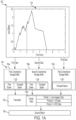
- FIG. 1A a conventional storage buffer allocation process 100 and an enhanced storage buffer allocation process 120 are illustrated.
- the enhanced storage buffer allocation process 120 is executed with a PST tool (e.g., a computing system, computing device, non-transitory computer readable storage medium, etc.).
- a PST tool e.g., a computing system, computing device, non-transitory computer readable storage medium, etc.
- the enhanced storage buffer allocation process 120 provides a granular analysis of storage capacity that will be required by various data sources.
- some vehicles transmit information to a base station during transit.
- the information can be stored on-board the vehicle prior to transmission for various reasons (e.g., bandwidth limitations).
- Examples as related to the enhanced storage buffer allocation process 120 determine an individual amount of storage space that each data source (e.g., sensor(s)) will need for buffering information during transit.
- the enhanced storage buffer allocation process 120 may include predicting amounts of data storage that each of the data sources will individually utilize. A storage space is divided into buffers based on the predicted amounts so that each respective data source has an adequate amount of data storage associated with the respective data source. That is, granular buffer storage amounts are set in order to avoid situations in which the data sources generate an amount of data that exceeds buffer storage limits. Doing so reduces data loss during transit and efficiently allocates resources to reduce data storage overhead.
- Examples as related to the enhanced storage buffer allocation process 120 include a live data failure detection where the PTS tool detects where live data is predicted to not be fully transmitted. Doing so enables the PST tool and/or a user to identify such cases, and further allows an automated selection of data storage characteristics to prevent and/or reduce data omission.
- some live data e.g., live imagery
- the PST tool still considers the live data as part of the below modelling process. If the PST tool shows that live data is being dropped in the model, then the PST tool detects that a current (or projected) data rate for the mission fails and the data rate must be changed so the live data will not be dropped.
- the conventional data storage graph 102 shows an overall data storage pattern throughout transit of a vehicle (e.g., aircraft, a ground vehicle, watercraft, a spacecraft such as an artificial satellite, space telescope, or space vehicle, etc.).
- the conventional data storage graph 102 can be a projected amount of data (e.g., an estimation, etc.) that will be generated. Data that cannot be transmitted, will be stored in the conventional buffers 104 unless the conventional buffers 104 are at full capacity. In such an event, data is dropped as the data cannot be stored or transmitted, and is therefore discarded.
- first data there are three different types of data. Specifically, there is first data, second data, and third data. Each of the three different types of data originates with a different data source (e.g., sensor, computing device, etc.). For example, a camera can generate the second data (e.g., live imagery data), while a global positioning satellite system can generate the first data.
- a different data source e.g., sensor, computing device, etc.
- a camera can generate the second data (e.g., live imagery data)
- a global positioning satellite system can generate the first data.
- the conventional storage buffer allocation process 100 allocates 1 GB of storage to each of the first data, the second data, and the third data.
- Each of the first, second, and third conventional storage buffers 104a, 104b, 104c has allocated one gigabyte of storage space.
- the first, second, and third conventional storage buffers 104a, 104b, 104c can be part of a same storage. Thus, the space of the same storage is equally distributed among the first, second, and third conventional storage buffers 104a, 104b, 104c.
- a transmitter 106 transmits data from the conventional buffers 104 to a ground station 108.
- the transmitter 106 transmits the data during transit (e.g., a flight, mission, etc.) of the vehicle, and completes transmission of all data prior to the transit ending. Any data that cannot be immediately transmitted is stored in the conventional buffers 104 until the transmitter 106 is available. When the transmitter 106 is available, the data is transmitted and deleted from storage in the conventional buffers 104. Data that is not transmitted is stored in the conventional buffers 104.
- the transmitter 106 transmits data according to the priority table 106a.
- First data has a priority of one meaning that the first data is transmitted first.
- the second data has a priority of two, meaning that second data is transmitted second and after all of the first data has been transmitted, or in some cases concurrently therewith if sufficient bandwidth exists for concurrent transmission. Sufficient bandwidth exists when the second data and third data have a combined transmission amount that is equal to or below the maximum available bandwidth of the transmitter 106.
- the third data has a priority of three, meaning that the third data is transmitted last and after the first data and second data have been transmitted (or in some cases concurrently therewith if sufficient bandwidth exists).
- data is transmitted based on priorities assigned to the data and/or the data sources that generate the data.
- the third data is unable to be stored in the third conventional storage buffer 104c.
- the third conventional storage buffer 104c is fully occupied as illustrated by the "occupied space.” That is, the bandwidth of the transmitter 106 is consumed by transmitting the first data and/or the second data. As such, the transmitter 106 does not have available bandwidth to transmit the third data to alleviate congestion in the third conventional storage buffer 104c.
- the third data accumulates in the third conventional storage buffer 104c until the third conventional storage buffer 104c is fully occupied.
- incoming third data can no longer be stored in the third conventional storage buffer 104c unless other third data is removed from the third conventional storage buffer 104c.
- the conventional storage buffer allocation process 100 fails to transmit all data since some of the third data is not stored in the third conventional storage buffer 104c. As such, the conventional storage buffer allocation process 100 results in incomplete data transmissions. Furthermore, the conventional storage buffer allocation process 100 allocates excess storage space to both the first conventional storage buffer 104a and the second conventional storage buffer 104b as illustrated by the free spaces. In contrast, the third conventional storage buffer 104c is not allocated sufficient space and therefore cannot store all data. That is, the conventional storage buffer allocation process 100 does not allocate storage in a real-life and usage based manner. As a consequence, the conventional storage buffer allocation process 100 fails to transmit all data.
- the conventional data storage graph 102 is based on all the data (the sum of all data types including the first data, second data, and third data) for a permutation (e.g., an arrangement of data sources to a particular transmitter that will transmit data from the data sources).
- a permutation e.g., an arrangement of data sources to a particular transmitter that will transmit data from the data sources.
- the conventional storage buffer allocation process 100 assigns the first data, second data, and third data to the transmitter 106 as one permutation.
- Other unillustrated permutations exists with other unillustrated transmitters and data sources (e.g., the first data is assigned to a different transmitter).
- the conventional data storage graph 102 implies that there is only one value for storage at a given time. Such a generalized analysis fails to identify the granular storage spaces that are required by the data sources. For example, the utilized storage will increase if the bandwidth of the transmitter 106 is insufficient to transmit some stored data and it will decrease if the transmitter 106 has enough data to transmit
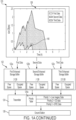
- each of the first data, the second data, and the third data is shown at a granular level with respect to time and storage size in enhanced data storage graph 128.
- Each of the first data, the second data, and the third data originates with a different data source (e.g., sensor) similar to the above.
- the enhanced data storage graph 128 can anticipate data storage, and is based on the bandwidth of the transmitter 124, the priorities of the different data types (e.g., first data, second data, and third data) as well as a projected amount of each data type.
- the exact amount of data storage of each data type with respect to time is shown in the enhanced data storage graph 128. For example, at time equals two seconds it can be understood that that over 1 GB of storage space is needed by the third data. Further, at around 2.7 seconds, it can be understood that around 2 gigabytes of storage space is needed for the third data. In contrast, less than 0.5 gigabytes is ever needed for the first data, and less than .1 gigabytes of data is ever needed for the second data.
- the second data is shown in more detail at area 140, which shows a greater detail in FIG. 1B . In FIG. 1B it can be seen that the second requires less than 0.1 gigabytes of storage space.
- the enhanced data storage graph 128 is generated based on the priorities of the data, the bandwidth of the transmitter 124, and a predicted amount of data that will be generated during transit. That is, the enhanced storage buffer allocation process 120 predicts how much of the first data, the second data and the third data will be generated during transit, and how effectively the transmitter 124 can transmit the generated data to determine how much data will not be immediately transmitted and thus will be stored.
- the PST data includes live data failure detection.
- the second data is live data which should not be stored and should always be immediately transmitted.
- the transmitter 124 can simultaneously transmit the first and second data. If the second data is illustrated in the enhanced data storage graph 128, the PST tool can determine that the current bandwidth allocations of the transmitter 124 are ineffective to meet the requirement that the live data is immediately transmitted, and modify parameters.
- the parameters can include bandwidth allocations of the transmitter 124 and/or storage allocations of the enhanced storage buffers 122.
- the PST tool can generate the enhanced data storage graph 128 based on the modified parameters and determine if the modified parameters result in meeting the requirement that the live data is immediately transferred.
- the transmitter 124 transmits data to the ground station 126 based on the priority table 124a.
- second data (which is associated with a first data source) has a priority of one and is transmitted first
- first data (which is associated with a second data source) has a priority of two and is transmitted second
- third data has a priority of three and is transmitted third.
- Allocations of data storage space are determined based on the enhanced data storage graph 128.
- the first enhanced storage buffer 122a will store the first data
- the second enhanced storage buffer 122b will store the second data
- the third enhanced storage buffer 122c will store the third data. Therefore, the first enhanced storage buffer 122a has a total storage capacity of 0.5 gigabytes
- the second enhanced storage buffer 122B has a total storage capacity of 0.1 gigabytes
- the third enhanced storage buffer 122C has a storage capacity of 2.5 gigabytes. Therefore, even at time equals 2 seconds, the third data will be able to be stored in the third enhanced storage buffer 122c.
- third data cannot be stored in the third conventional storage buffer 104c at time equals 2 seconds. Indeed, throughout the entirety of the enhanced data storage graph 128, the third enhanced storage buffer 122c is able to sufficiently store the third data to avoid dropping of any data.
- the total storage required by the first enhanced storage buffer 122a, the second enhanced storage buffer 122b, and the third enhanced storage buffer 122c is less than the total space required by the first conventional storage buffer 104a, second conventional storage buffer 104b, and the third conventional storage buffer 104c.
- the enhanced storage buffer allocation process 120 not only allocates resources effectively to reduce dropping of information, but utilizes less resources in order to do so.
- the enhanced storage buffer allocation process 120as described herein enhances computer efficiency and resource utilization to effectively transmit data while in transit.
- the maximum storage values of the first data, the second data, and the third data from the enhanced data storage graph 128 are used to feed classifiers and select permutations based on the max values and other parameters.
- the enhanced storage buffer allocation process 120 can include different combinations of data with different transmitters.
- enhanced storage buffers 122 and transmitter 124 form a telemetry unit.
- the enhanced storage buffer allocation process 120 allows user to optimized buffer allocations for each type of data based on each permutations which could be uniform or non-uniform distribution based on hardware and design capability.
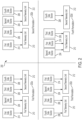
- FIG. 2 illustrates various permutations 200.
- a vehicle includes first, second, third, and fourth data sources 214, 204, 206, 208, first telemetry unit 210 and second telemetry unit 212.
- a first permutation 202a allocates first data source 214 and second data source 204 to a first telemetry unit 210 (which includes buffers and a transmitter), and a third data source 206 and a fourth data source 208 to a second telemetry unit 212 (which includes buffers and a transmitter).
- a second permutation 202b allocates first data source 202 and third data source 206 to the first telemetry unit 210, and a second data source 204 and a fourth data source 208 to the second telemetry unit 212.
- a third permutation 202c allocates fourth data source 208 and third data source 206 to the first telemetry unit 210, and the second data source 204 and the first data source 214 to the second telemetry unit 212.
- a fourth permutation 202d allocates second data source 204, first data source 214, and third data source 206 to the first telemetry unit 210, and the fourth data source 208 to the second telemetry unit 212.
- Each respective permutation of the first through the fourth permutations (hereinafter "first-fourth") 202a-202d can be analyzed according to the enhanced storage buffer allocation process 120 to determine if the respective permutation meets certain metrics.
- the metrics include whether all data will be transmitted prior to a transit (e.g., mission) of the vehicle completing. If not, the respective permutation is abandoned and will not be utilized. If the data will complete transmission prior to the transit ending, the respective transmission is analyzed further to determine how much storage space will be utilized by the respective permutation.
- a permutation with the least amount of storage space and that will complete prior to transit completion is selected as the final permutation, and storage spaces sizes are allocated to match the storage spaces sizes of the permutation as determined by the enhanced storage buffer allocation process 120.
- permutations which result in an amount of data of the plurality of streamed data sources being greater than a maximum available size of buffers associated with the first or second telemetry units 210, 212 are discarded.
- the fourth permutation 202d results in one or more of the first, second, and third data sources 214, 204, 206 having a storage size that is greater than a maximum available size of a buffer of the first telemetry unit 210.
- the fourth permutation 202d can be discarded.
- permutations of the first-fourth 202a-202d are maintained when an amount of data of the plurality of streamed data sources is less than an available size of buffers associated with the first and second telemetry units 210, 212.
- FIG. 3 shows a method 300 of storing and transmitting data.
- the method 300 is generally implemented by any of the examples described herein, for example, the enhanced storage buffer allocation process 120 ( FIG. 1A ) and/or various permutations 200 ( FIG. 2 ) can be executed in conjunction with method 400.
- the method 300 is implemented at least partly in one or more modules as a set of logic instructions stored in a non-transitory machine- or computer-readable storage medium such as random access memory (RAM), read only memory (ROM), programmable ROM (PROM), firmware, flash memory, etc., in configurable logic such as, for example, programmable logic arrays (PLAs), field programmable gate arrays (FPGAs), complex programmable logic devices (CPLDs), in fixed-functionality logic hardware using circuit technology such as, for example, application specific integrated circuit (ASIC), complementary metal oxide semiconductor (CMOS) or transistor-transistor logic (TTL) technology, or any combination thereof.
- a non-transitory machine- or computer-readable storage medium such as random access memory (RAM), read only memory (ROM), programmable ROM (PROM), firmware, flash memory, etc.
- configurable logic such as, for example, programmable logic arrays (PLAs), field programmable gate arrays (FPGAs), complex programmable logic devices (CPLDs),
- Illustrated processing block 302 initializes all memory buffers to zero. Illustrated processing block 304 puts all data for an iteration (which corresponds to a slice of time during transit) into a buffer. Illustrated processing block 306 determines if a bandwidth is sufficient for highest priority data. The bandwidth corresponds to a transmitter that will transmit the data. If not, illustrated processing block 310 transmits a portion of the highest priority data and stores a remainder of the highest priority data in, for example, a corresponding buffer. If the bandwidth is sufficient for the highest priority data, illustrated processing block 308 transmit all of highest priority data. Illustrated processing block 312 reduces the current priority (e.g., decrements the priority by one).
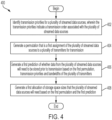
- FIG. 4 shows a method 400 of generating allocations.
- the method 400 is generally implemented by any of the examples described herein, for example, the enhanced storage buffer allocation process 120 ( FIG. 1A ), various permutations 200 ( FIG. 2 ) and/or method 300 ( FIG. 3 ).
- the plurality of streamed data sources is associated with a vehicle, and the method 400 further includes determining whether to maintain or discard the first allocation of the storage space sizes based on whether data generated by the plurality of streamed data sources will be transmitted prior to a completion of an operation by the vehicle.
- the method 400 assigns first and second streamed data sources from the plurality of streamed data sources to a first transmitter from the plurality of transmitters.
- the method 400 determines that the first streamed data source is associated with a first transmission priority from the transmission priorities, determines that the second streamed data source is associated with a second transmission priority from the transmission priorities and determines based on the first and second transmission priorities, that the first streamed data source is to have data transmitted by the first transmitter before data from the second streamed data source is transmitted by the first transmitter and determines the first allocation of the storage space sizes based on the first streamed data source having data transmitted by the first transmitter before data from the second streamed data source is transmitted by the first transmitter.
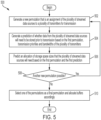
- FIG. 5 shows a method 500 of generating permutations.
- the method 500 is generally implemented by any of the examples described herein.
- the method 500 is generally implemented by any of the examples described herein, for example, the enhanced storage buffer allocation process 120 ( FIG. 1A ), various permutations 200 ( FIG. 2 ), method 300 ( FIG. 3 ) and/or method 400 ( FIG. 4 ).
- Illustrated processing block 502 generates a new permutation that is an assignment of the plurality of streamed data sources to a plurality of transmitters for transmission.
- Illustrated processing block 504 generates a prediction of whether data from the plurality of streamed data sources will need to be stored prior to transmission based on the first permutation, transmission priorities and bandwidths of the plurality of transmitters.
- Illustrated processing block 506 predicts an allocation of storage space sizes that the plurality of streamed data sources will need based on the first permutation and the first prediction.
- Illustrated processing block 508 determines if another new permutation is possible. If so, illustrated processing block 502 executes again.
- illustrated processing block 510 selects one of the permutations as a final permutation, for example based on the enhanced storage buffer allocation process 120, and allocates buffers accordingly. For example, processing block 510 selects the most efficient permutation (e.g., utilizes the least amount of memory and completes prior to a completion of transit).
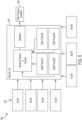
- FIG. 6 illustrates a telemetry architecture 600.
- a plurality of data sources 602 are coupled with telemetry unit 604.
- the telemetry unit 604 includes a telemetry processor and controller, buffers assigned to different priorities and a multiplexer.
- the telemetry unit transmits data through the radio frequency transmitter 606 to a ground station.
- Example sizes/models/values/ranges can have been given, although examples are not limited to the same. Arrangements can be shown in block diagram form in order to avoid obscuring examples, and also in view of the fact that specifics with respect to implementation of such block diagram arrangements are highly dependent upon the computing system within which the example is to be implemented, i.e., such specifics should be well within purview of one skilled in the art.
- the term “coupled” can be used herein to refer to any type of relationship, direct or indirect, between the components in question, and can apply to electrical, mechanical, fluid, optical, electromagnetic, electromechanical, or other connections.
- first”, “second”, etc. can be used herein only to facilitate discussion, and carry no particular temporal or chronological significance unless otherwise indicated.
Landscapes
- Engineering & Computer Science (AREA)
- Theoretical Computer Science (AREA)
- Human Computer Interaction (AREA)
- Physics & Mathematics (AREA)
- General Engineering & Computer Science (AREA)
- General Physics & Mathematics (AREA)
- Computer Networks & Wireless Communication (AREA)
- Signal Processing (AREA)
- Data Exchanges In Wide-Area Networks (AREA)
- Mobile Radio Communication Systems (AREA)
- Small-Scale Networks (AREA)
Applications Claiming Priority (1)
| Application Number | Priority Date | Filing Date | Title |
|---|---|---|---|
| US17/805,315 US12086434B2 (en) | 2022-06-03 | 2022-06-03 | Prioritized storage and transmission tool for optimized telemetry unit memory allocation |
Publications (2)
| Publication Number | Publication Date |
|---|---|
| EP4287579A1 EP4287579A1 (en) | 2023-12-06 |
| EP4287579B1 true EP4287579B1 (en) | 2025-02-26 |
Family
ID=85800584
Family Applications (1)
| Application Number | Title | Priority Date | Filing Date |
|---|---|---|---|
| EP23166021.8A Active EP4287579B1 (en) | 2022-06-03 | 2023-03-31 | Prioritized storage and transmission tool for optimized telemetry unit memory allocation |
Country Status (4)
| Country | Link |
|---|---|
| US (1) | US12086434B2 (https=) |
| EP (1) | EP4287579B1 (https=) |
| JP (1) | JP2023178205A (https=) |
| CN (1) | CN117170573A (https=) |
Families Citing this family (1)
| Publication number | Priority date | Publication date | Assignee | Title |
|---|---|---|---|---|
| US12445352B1 (en) * | 2024-04-16 | 2025-10-14 | The Boeing Company | Systems and methods for a telemetry interactive permutation matrix |
Family Cites Families (4)
| Publication number | Priority date | Publication date | Assignee | Title |
|---|---|---|---|---|
| US10263764B2 (en) | 2016-05-03 | 2019-04-16 | The Boeing Company | Auto-adaptive digital clock system and method for optimizing data communications |
| US10810806B2 (en) * | 2017-03-13 | 2020-10-20 | Renovo Motors, Inc. | Systems and methods for processing vehicle sensor data |
| DE112019005963T5 (de) * | 2018-11-29 | 2021-09-23 | Sumitomo Electric Industries, Ltd. | System, Server-Computer, fahrzeugmontierte Vorrichtung, Steuerverfahren, integrierte Halbleiterschaltung und Computerprogramm |
| US11258716B1 (en) * | 2019-05-14 | 2022-02-22 | R-Stor Inc. | System and method for optimizing dynamic multi-stream network connections |
-
2022
- 2022-06-03 US US17/805,315 patent/US12086434B2/en active Active
-
2023
- 2023-03-28 CN CN202310317395.7A patent/CN117170573A/zh active Pending
- 2023-03-31 EP EP23166021.8A patent/EP4287579B1/en active Active
- 2023-03-31 JP JP2023057494A patent/JP2023178205A/ja active Pending
Also Published As
| Publication number | Publication date |
|---|---|
| JP2023178205A (ja) | 2023-12-14 |
| CN117170573A (zh) | 2023-12-05 |
| US12086434B2 (en) | 2024-09-10 |
| US20230393768A1 (en) | 2023-12-07 |
| EP4287579A1 (en) | 2023-12-06 |
Similar Documents
| Publication | Publication Date | Title |
|---|---|---|
| US11587367B2 (en) | Systems and methods for processing vehicle sensor data | |
| CN103279351B (zh) | 一种任务调度的方法及装置 | |
| EP1429473A2 (en) | Apparatus and method for dynamic resource allocation in interactive satellite multimedia system | |
| US12135996B2 (en) | Computing resource scheduling method, scheduler, internet of things system, and computer readable medium | |
| CN107634913B (zh) | 一种业务流量控制及区分服务的星载设备系统 | |
| EP4287579B1 (en) | Prioritized storage and transmission tool for optimized telemetry unit memory allocation | |
| US8181184B2 (en) | System and method for scheduling tasks in processing frames | |
| EP3939178A1 (en) | Managing satellite bearer resources | |
| CN114706596B (zh) | 容器部署方法、资源调度方法、装置、介质和电子设备 | |
| EP3721646B1 (en) | Control device configured for and method of determining a data format | |
| CN109743751B (zh) | 无线接入网的资源分配方法及装置 | |
| US20160234128A1 (en) | Apparatus for managing data queues in a network | |
| Gavriluţ et al. | Traffic class assignment for mixed-criticality frames in TTEthernet | |
| CN105634990A (zh) | 基于时间频谱连续的资源预留方法、装置和处理器 | |
| US11743134B2 (en) | Programmable traffic management engine | |
| CN109254857A (zh) | 一种共享内存的调整方法、装置、设备和介质 | |
| CN112188636B (zh) | 用户调度方法及装置、传输基站 | |
| US20220393990A1 (en) | Data validity based network buffer management system | |
| CN115373764A (zh) | 一种容器自动加载方法和装置 | |
| US11582155B2 (en) | Communication control apparatus and communication control method | |
| CN118972335A (zh) | 一种应用于实时网络流量的调度系统 | |
| Yang et al. | Intelligent Elastic Scheduling Algorithm for Multi-Resource Low Earth Orbit Satellite Networks | |
| EP4531480A1 (en) | Apparatus and method for scheduling user devices in a radio access network | |
| US20220261282A1 (en) | Information processing apparatus, information processing method, and computer-readable recording medium storing information processing program | |
| CN117939636A (zh) | 一种链路层的资源管理方法、装置、电子设备及存储介质 |
Legal Events
| Date | Code | Title | Description |
|---|---|---|---|
| PUAI | Public reference made under article 153(3) epc to a published international application that has entered the european phase |
Free format text: ORIGINAL CODE: 0009012 |
|
| STAA | Information on the status of an ep patent application or granted ep patent |
Free format text: STATUS: THE APPLICATION HAS BEEN PUBLISHED |
|
| AK | Designated contracting states |
Kind code of ref document: A1 Designated state(s): AL AT BE BG CH CY CZ DE DK EE ES FI FR GB GR HR HU IE IS IT LI LT LU LV MC ME MK MT NL NO PL PT RO RS SE SI SK SM TR |
|
| STAA | Information on the status of an ep patent application or granted ep patent |
Free format text: STATUS: REQUEST FOR EXAMINATION WAS MADE |
|
| 17P | Request for examination filed |
Effective date: 20240425 |
|
| RBV | Designated contracting states (corrected) |
Designated state(s): AL AT BE BG CH CY CZ DE DK EE ES FI FR GB GR HR HU IE IS IT LI LT LU LV MC ME MK MT NL NO PL PT RO RS SE SI SK SM TR |
|
| GRAP | Despatch of communication of intention to grant a patent |
Free format text: ORIGINAL CODE: EPIDOSNIGR1 |
|
| STAA | Information on the status of an ep patent application or granted ep patent |
Free format text: STATUS: GRANT OF PATENT IS INTENDED |
|
| RIC1 | Information provided on ipc code assigned before grant |
Ipc: H04L 49/9047 20220101ALI20240828BHEP Ipc: H04W 28/14 20090101ALI20240828BHEP Ipc: H04L 67/12 20220101ALI20240828BHEP Ipc: H04L 47/83 20220101ALI20240828BHEP Ipc: H04L 47/6295 20220101ALI20240828BHEP Ipc: H04L 49/9005 20220101ALI20240828BHEP Ipc: H04L 47/62 20220101ALI20240828BHEP Ipc: H04L 47/10 20220101AFI20240828BHEP |
|
| INTG | Intention to grant announced |
Effective date: 20240930 |
|
| P01 | Opt-out of the competence of the unified patent court (upc) registered |
Free format text: CASE NUMBER: APP_54224/2024 Effective date: 20241001 |
|
| GRAS | Grant fee paid |
Free format text: ORIGINAL CODE: EPIDOSNIGR3 |
|
| GRAA | (expected) grant |
Free format text: ORIGINAL CODE: 0009210 |
|
| STAA | Information on the status of an ep patent application or granted ep patent |
Free format text: STATUS: THE PATENT HAS BEEN GRANTED |
|
| AK | Designated contracting states |
Kind code of ref document: B1 Designated state(s): AL AT BE BG CH CY CZ DE DK EE ES FI FR GB GR HR HU IE IS IT LI LT LU LV MC ME MK MT NL NO PL PT RO RS SE SI SK SM TR |
|
| REG | Reference to a national code |
Ref country code: GB Ref legal event code: FG4D |
|
| REG | Reference to a national code |
Ref country code: CH Ref legal event code: EP |
|
| REG | Reference to a national code |
Ref country code: DE Ref legal event code: R096 Ref document number: 602023002152 Country of ref document: DE |
|
| REG | Reference to a national code |
Ref country code: IE Ref legal event code: FG4D |
|
| REG | Reference to a national code |
Ref country code: NL Ref legal event code: MP Effective date: 20250226 |
|
| PG25 | Lapsed in a contracting state [announced via postgrant information from national office to epo] |
Ref country code: RS Free format text: LAPSE BECAUSE OF FAILURE TO SUBMIT A TRANSLATION OF THE DESCRIPTION OR TO PAY THE FEE WITHIN THE PRESCRIBED TIME-LIMIT Effective date: 20250526 |
|
| PG25 | Lapsed in a contracting state [announced via postgrant information from national office to epo] |
Ref country code: FI Free format text: LAPSE BECAUSE OF FAILURE TO SUBMIT A TRANSLATION OF THE DESCRIPTION OR TO PAY THE FEE WITHIN THE PRESCRIBED TIME-LIMIT Effective date: 20250226 |
|
| PG25 | Lapsed in a contracting state [announced via postgrant information from national office to epo] |
Ref country code: PL Free format text: LAPSE BECAUSE OF FAILURE TO SUBMIT A TRANSLATION OF THE DESCRIPTION OR TO PAY THE FEE WITHIN THE PRESCRIBED TIME-LIMIT Effective date: 20250226 |
|
| PG25 | Lapsed in a contracting state [announced via postgrant information from national office to epo] |
Ref country code: ES Free format text: LAPSE BECAUSE OF FAILURE TO SUBMIT A TRANSLATION OF THE DESCRIPTION OR TO PAY THE FEE WITHIN THE PRESCRIBED TIME-LIMIT Effective date: 20250226 |
|
| REG | Reference to a national code |
Ref country code: LT Ref legal event code: MG9D |
|
| PG25 | Lapsed in a contracting state [announced via postgrant information from national office to epo] |
Ref country code: NO Free format text: LAPSE BECAUSE OF FAILURE TO SUBMIT A TRANSLATION OF THE DESCRIPTION OR TO PAY THE FEE WITHIN THE PRESCRIBED TIME-LIMIT Effective date: 20250526 Ref country code: IS Free format text: LAPSE BECAUSE OF FAILURE TO SUBMIT A TRANSLATION OF THE DESCRIPTION OR TO PAY THE FEE WITHIN THE PRESCRIBED TIME-LIMIT Effective date: 20250626 |
|
| PG25 | Lapsed in a contracting state [announced via postgrant information from national office to epo] |
Ref country code: NL Free format text: LAPSE BECAUSE OF FAILURE TO SUBMIT A TRANSLATION OF THE DESCRIPTION OR TO PAY THE FEE WITHIN THE PRESCRIBED TIME-LIMIT Effective date: 20250226 |
|
| PG25 | Lapsed in a contracting state [announced via postgrant information from national office to epo] |
Ref country code: HR Free format text: LAPSE BECAUSE OF FAILURE TO SUBMIT A TRANSLATION OF THE DESCRIPTION OR TO PAY THE FEE WITHIN THE PRESCRIBED TIME-LIMIT Effective date: 20250226 |
|
| PG25 | Lapsed in a contracting state [announced via postgrant information from national office to epo] |
Ref country code: PT Free format text: LAPSE BECAUSE OF FAILURE TO SUBMIT A TRANSLATION OF THE DESCRIPTION OR TO PAY THE FEE WITHIN THE PRESCRIBED TIME-LIMIT Effective date: 20250626 Ref country code: LV Free format text: LAPSE BECAUSE OF FAILURE TO SUBMIT A TRANSLATION OF THE DESCRIPTION OR TO PAY THE FEE WITHIN THE PRESCRIBED TIME-LIMIT Effective date: 20250226 |
|
| PG25 | Lapsed in a contracting state [announced via postgrant information from national office to epo] |
Ref country code: BG Free format text: LAPSE BECAUSE OF FAILURE TO SUBMIT A TRANSLATION OF THE DESCRIPTION OR TO PAY THE FEE WITHIN THE PRESCRIBED TIME-LIMIT Effective date: 20250226 Ref country code: GR Free format text: LAPSE BECAUSE OF FAILURE TO SUBMIT A TRANSLATION OF THE DESCRIPTION OR TO PAY THE FEE WITHIN THE PRESCRIBED TIME-LIMIT Effective date: 20250527 |
|
| REG | Reference to a national code |
Ref country code: AT Ref legal event code: MK05 Ref document number: 1771788 Country of ref document: AT Kind code of ref document: T Effective date: 20250226 |
|
| PG25 | Lapsed in a contracting state [announced via postgrant information from national office to epo] |
Ref country code: SE Free format text: LAPSE BECAUSE OF FAILURE TO SUBMIT A TRANSLATION OF THE DESCRIPTION OR TO PAY THE FEE WITHIN THE PRESCRIBED TIME-LIMIT Effective date: 20250226 |
|
| PG25 | Lapsed in a contracting state [announced via postgrant information from national office to epo] |
Ref country code: SM Free format text: LAPSE BECAUSE OF FAILURE TO SUBMIT A TRANSLATION OF THE DESCRIPTION OR TO PAY THE FEE WITHIN THE PRESCRIBED TIME-LIMIT Effective date: 20250226 |
|
| PG25 | Lapsed in a contracting state [announced via postgrant information from national office to epo] |
Ref country code: DK Free format text: LAPSE BECAUSE OF FAILURE TO SUBMIT A TRANSLATION OF THE DESCRIPTION OR TO PAY THE FEE WITHIN THE PRESCRIBED TIME-LIMIT Effective date: 20250226 |
|
| PG25 | Lapsed in a contracting state [announced via postgrant information from national office to epo] |
Ref country code: IT Free format text: LAPSE BECAUSE OF FAILURE TO SUBMIT A TRANSLATION OF THE DESCRIPTION OR TO PAY THE FEE WITHIN THE PRESCRIBED TIME-LIMIT Effective date: 20250226 |
|
| PG25 | Lapsed in a contracting state [announced via postgrant information from national office to epo] |
Ref country code: AT Free format text: LAPSE BECAUSE OF FAILURE TO SUBMIT A TRANSLATION OF THE DESCRIPTION OR TO PAY THE FEE WITHIN THE PRESCRIBED TIME-LIMIT Effective date: 20250226 |
|
| PG25 | Lapsed in a contracting state [announced via postgrant information from national office to epo] |
Ref country code: EE Free format text: LAPSE BECAUSE OF FAILURE TO SUBMIT A TRANSLATION OF THE DESCRIPTION OR TO PAY THE FEE WITHIN THE PRESCRIBED TIME-LIMIT Effective date: 20250226 Ref country code: CZ Free format text: LAPSE BECAUSE OF FAILURE TO SUBMIT A TRANSLATION OF THE DESCRIPTION OR TO PAY THE FEE WITHIN THE PRESCRIBED TIME-LIMIT Effective date: 20250226 |
|
| PG25 | Lapsed in a contracting state [announced via postgrant information from national office to epo] |
Ref country code: RO Free format text: LAPSE BECAUSE OF FAILURE TO SUBMIT A TRANSLATION OF THE DESCRIPTION OR TO PAY THE FEE WITHIN THE PRESCRIBED TIME-LIMIT Effective date: 20250226 |
|
| PG25 | Lapsed in a contracting state [announced via postgrant information from national office to epo] |
Ref country code: SK Free format text: LAPSE BECAUSE OF FAILURE TO SUBMIT A TRANSLATION OF THE DESCRIPTION OR TO PAY THE FEE WITHIN THE PRESCRIBED TIME-LIMIT Effective date: 20250226 |
|
| PG25 | Lapsed in a contracting state [announced via postgrant information from national office to epo] |
Ref country code: LU Free format text: LAPSE BECAUSE OF NON-PAYMENT OF DUE FEES Effective date: 20250331 |
|
| REG | Reference to a national code |
Ref country code: DE Ref legal event code: R097 Ref document number: 602023002152 Country of ref document: DE |
|
| REG | Reference to a national code |
Ref country code: BE Ref legal event code: MM Effective date: 20250331 |
|
| PG25 | Lapsed in a contracting state [announced via postgrant information from national office to epo] |
Ref country code: MC Free format text: LAPSE BECAUSE OF FAILURE TO SUBMIT A TRANSLATION OF THE DESCRIPTION OR TO PAY THE FEE WITHIN THE PRESCRIBED TIME-LIMIT Effective date: 20250226 |
|
| PLBE | No opposition filed within time limit |
Free format text: ORIGINAL CODE: 0009261 |
|
| STAA | Information on the status of an ep patent application or granted ep patent |
Free format text: STATUS: NO OPPOSITION FILED WITHIN TIME LIMIT |
|
| PG25 | Lapsed in a contracting state [announced via postgrant information from national office to epo] |
Ref country code: BE Free format text: LAPSE BECAUSE OF NON-PAYMENT OF DUE FEES Effective date: 20250331 |
|
| PG25 | Lapsed in a contracting state [announced via postgrant information from national office to epo] |
Ref country code: IE Free format text: LAPSE BECAUSE OF NON-PAYMENT OF DUE FEES Effective date: 20250331 |
|
| 26N | No opposition filed |
Effective date: 20251127 |
|
| PGFP | Annual fee paid to national office [announced via postgrant information from national office to epo] |
Ref country code: DE Payment date: 20260327 Year of fee payment: 4 |
|
| PGFP | Annual fee paid to national office [announced via postgrant information from national office to epo] |
Ref country code: FR Payment date: 20260325 Year of fee payment: 4 |