EP4285191B1 - Cloud-computersystem, verfahren und computerprogramm - Google Patents
Cloud-computersystem, verfahren und computerprogramm Download PDFInfo
- Publication number
- EP4285191B1 EP4285191B1 EP22722501.8A EP22722501A EP4285191B1 EP 4285191 B1 EP4285191 B1 EP 4285191B1 EP 22722501 A EP22722501 A EP 22722501A EP 4285191 B1 EP4285191 B1 EP 4285191B1
- Authority
- EP
- European Patent Office
- Prior art keywords
- controller
- computing system
- cloud computing
- configuration
- industrial automation
- Prior art date
- Legal status (The legal status is an assumption and is not a legal conclusion. Google has not performed a legal analysis and makes no representation as to the accuracy of the status listed.)
- Active
Links
Images

Classifications
-
- G—PHYSICS
- G05—CONTROLLING; REGULATING
- G05B—CONTROL OR REGULATING SYSTEMS IN GENERAL; FUNCTIONAL ELEMENTS OF SUCH SYSTEMS; MONITORING OR TESTING ARRANGEMENTS FOR SUCH SYSTEMS OR ELEMENTS
- G05B19/00—Programme-control systems
- G05B19/02—Programme-control systems electric
- G05B19/04—Programme control other than numerical control, i.e. in sequence controllers or logic controllers
- G05B19/05—Programmable logic controllers, e.g. simulating logic interconnections of signals according to ladder diagrams or function charts
- G05B19/056—Programming the PLC
-
- G—PHYSICS
- G05—CONTROLLING; REGULATING
- G05B—CONTROL OR REGULATING SYSTEMS IN GENERAL; FUNCTIONAL ELEMENTS OF SUCH SYSTEMS; MONITORING OR TESTING ARRANGEMENTS FOR SUCH SYSTEMS OR ELEMENTS
- G05B19/00—Programme-control systems
- G05B19/02—Programme-control systems electric
- G05B19/18—Numerical control [NC], i.e. automatically operating machines, in particular machine tools, e.g. in a manufacturing environment, so as to execute positioning, movement or co-ordinated operations by means of programme data in numerical form
- G05B19/4155—Numerical control [NC], i.e. automatically operating machines, in particular machine tools, e.g. in a manufacturing environment, so as to execute positioning, movement or co-ordinated operations by means of programme data in numerical form characterised by programme execution, i.e. part programme or machine function execution, e.g. selection of a programme
-
- G—PHYSICS
- G06—COMPUTING OR CALCULATING; COUNTING
- G06F—ELECTRIC DIGITAL DATA PROCESSING
- G06F8/00—Arrangements for software engineering
- G06F8/60—Software deployment
- G06F8/65—Updates
- G06F8/656—Updates while running
-
- G—PHYSICS
- G06—COMPUTING OR CALCULATING; COUNTING
- G06N—COMPUTING ARRANGEMENTS BASED ON SPECIFIC COMPUTATIONAL MODELS
- G06N20/00—Machine learning
-
- G—PHYSICS
- G05—CONTROLLING; REGULATING
- G05B—CONTROL OR REGULATING SYSTEMS IN GENERAL; FUNCTIONAL ELEMENTS OF SUCH SYSTEMS; MONITORING OR TESTING ARRANGEMENTS FOR SUCH SYSTEMS OR ELEMENTS
- G05B2219/00—Program-control systems
- G05B2219/30—Nc systems
- G05B2219/31—From computer integrated manufacturing till monitoring
- G05B2219/31449—Monitor workflow, to optimize business, industrial processes
Definitions
- the present disclosure relates to a cloud computing system, as well as to a related method and computer program for configuring and optimizing performance of industrial automation systems.
- US 2021/0356944 A1 relates to system and methods for providing centralized management of a software defined automation (SDA) system.
- SDA software defined automation
- the described SDA system comprises a collection of controller nodes and logically centralized and yet physically distributed collection of compute nodes.
- US 2014/0336791 A1 relates to a cloud-based predictive maintenance service that collects industrial data from multiple industrial customers for storage and analysis on a cloud platform.
- the cloud-based notification services also notify appropriate technical support entities to facilitate proactive maintenance and device management.
- US 2015/120012 A1 relates to synchronization between control logic at an automation controller and a representation of this logic at a communication network.
- Control logic is initially deployed to an automatic controller and a representation of this control logic is stored at the communication network.
- control logic When a change is made to the representation of the control logic at the network, the control logic is re-deployed to the automation controller so that the operator of the control logic is synchronized to the representation.
- US 2020/103842 A1 relates to an engineering system including a cloud.
- the cloud includes an engineering tool and a virtual device.
- the engineering tool is configured to create and debug software for operating a control device that controls a field device installed in a plant.
- the virtual device is configured to simulate an operation state of the control device in accordance with the software and with simulated input or input to the control device.
- the engineering tool debugs the software based on an operation result of the virtual device and on output from the control device or the simulated input.
- US 2021/389968 A1 relates to an edge controller may be used for obtaining device data from one or more local devices at a local facility and to provide a representation of at least some of the device data to a remote server.
- the edge controller may include a network communication port, a cellular communication port and a device communication port.
- a controller is operatively coupled to the network communication port, the cellular communication port and the device communication port and is configured to receive configuration information and to install the received configuration information on the edge controller.
- the installed configuration information configures the controller to obtain the device data from the one or more local devices and to send a representation of at least some of the device data to the remote server.
- the present disclosure provides a method for configuring a controller of an industrial automation system, comprising, obtaining, by a cloud computing system, a controller configuration and a controller program.
- the method further comprises generating, by the cloud computing system, based on the obtained controller configuration and the obtained controller program, a compile time representation of the controller allowing modification of the controller program and the controller configuration at compile time comprising a time at or prior to generation of run time machine code for the controller from a corresponding source code, and a time during which the source code is generated by extracting the source code from a configuration file or by writing the source code via programming language or via a cloud-based source code development environment; and generating, by the cloud computing system, a modified controller program and a modified controller configuration, using the compile time representation of the controller, wherein the controller program defines runtime operation of the controller controlling a subsystem of the industrial automation system.
- the compile time representation of the controller comprises a persistence layer holding controller configurations and control instruction elements of controller programs, the individual control elements are represented as separated control logic objects, and individual elements of the persistence layer are individually configurable based on programming and configuration instructions received via a programming interface.
- parts of the controller configuration and / or the controller program may be obtained, at the cloud computing system, from the controller via the network, from a controller configuration file and / or from a software library or source code repository residing withing or outside the cloud computing system.
- PLC project files generated via vendor-specific software such as Siemens TIA Portal, Rockwell Studio 5000, Codesys Engineering etc. may be imported and used for importing parts of the controller configuration and / or the controller program.
- the controller program may also be obtained, at the cloud computing system, from an integrated development environment (IDE) service hosted by the cloud computing system or connected to it via a network.
- IDE integrated development environment
- controller configuration comprises one or more of: controller type and capability information, network configuration of the controller, interface information for electromechanical drives, and interface configuration for I/O devices connected to the controller via back panel integration of Industrial Field Bus Systems.
- compile time representation of the industrial automation controller (also designated synonymously as PLCTwin service in the following) can exist in the same IT / cloud infrastructure as other company core microservices and software systems.
- compile time is to be understood to cover the time at or prior to the generation of run time machine code from a corresponding source code as well as the time during which the source code is generated, e.g., the time needed for extracting the source code from a configuration file or the time needed to write the source code via a high-level programming language or system such as a cloud-based IDE.
- the PLC Twin service allows modification (e.g., via an IDE connected to a GUI or an API) of an existing / obtained controller program - at compile time - while or before a corresponding executable is currently running - at run time - on one or more industrial controllers (e.g., PLCs, virtual PLCs etc.) of an industrial automations system.
- modification e.g., via an IDE connected to a GUI or an API
- an existing / obtained controller program - at compile time - while or before a corresponding executable is currently running - at run time - on one or more industrial controllers (e.g., PLCs, virtual PLCs etc.) of an industrial automations system.
- industrial controllers e.g., PLCs, virtual PLCs etc.
- aspects of the present disclosure thus allow to optimize the run time of automation systems with regards to response time and cost of compute. Execution of real time sensitive automation control tasks can still be performed in close proximity to the industrial assets under control while the PLC Twin service abstracts major PLC functions across different technology platforms. Based on a secure and non-intrusive connectivity service the PLC Twin service fully abstracts the PLC control logic and allows system wide automatic PLC deployment withing minutes.
- aspects of the present disclosure thus enable a micro services enterprise architecture above real-time control level to natively interact with industrial automation - in essence industrial automation is turning into a set of micro services in the company core stack. Further, aspects of the present disclosure allow building of programmatic APIs on top of control instructions as a key enabler to full loop system optimization.
- aspects of the present disclosure also enable, modern CI/CD dev-ops features such as IDE as a service (IDEaaS), PLC Code versioning, configurable access and security policies, monitoring of code integrity across whole PLC fleet services etc.
- the modified controller program can then be provided to a compiler service (operably connected to or integrated with the PLC Twin service) hosted by the cloud computing system, generating a run time executable which is then provided, via a network, to one or more hardware-based PLC or virtual PLC service, hosted by an edge-computing system, controlling a subsystem of an industrial automation system.
- a compiler service may be a cloud computing service external to the PLC Twin service or integrated into it.
- the compiler service and / or the PLC Twin service may be implemented in a configurable virtualization environment such as a container or micro service specifying security access policies and / or system resource utilization parameters as well as comprising software libraries required for isolated execution by different types of (virtual) cloud computing equipment.
- controller program and configuration parameters are represented via such a PLC Twin service
- programming interfaces such as Application Programming Interfaces (APIs) can be used to programmatically adapt controller code and / or configuration parameters via other company software systems like PLM, SCM, CRM, ERP, Analytics, AI and / or via a graphical user interface displayed on a terminal device and connected to the cloud computing system via a network.
- APIs Application Programming Interfaces
- the PLC Twin service forms the basis for cloud-based automation of automation engineering.
- some aspects may further comprise receiving, at the cloud computing system, via a programming interface (e.g., an API), programming and configuration instructions for modifying the controller program and / or the controller configuration and generating, using the compile time representation the modified controller program and / or modified controller configuration based on the received instructions.
- a programming interface e.g., an API
- said programming and configuration instructions might be received via an API from a second cloud computing system, wherein the programming and configuration instructions may be configured for modifying the controller program and / or the controller configuration based on product lifecycle management, PLM, requirements, manufacturing execution requirements, customer relationship management, CRM, requirements, supply chain management, SCM, requirements and / or enterprise resource planning, ERP, requirements.
- PLM product lifecycle management
- CRM customer relationship management
- SCM supply chain management
- ERP enterprise resource planning
- the obtained controller program and / or the programming and configuration instructions may also be generated using an IDE service, preferably containerized, and hosted by the cloud computing system.
- some aspects of the present disclosure enable integration of industrial automation system setup and reconfiguration into existing cloud-based company software systems resulting in less downtime, cost and increased production output.
- the persistence layer can act as a single source of truth (e.g., via a cloud-based data storage module providing code versioning capabilities) for all control code used by the controllers (e.g., PLCs, virtual PLCs etc.) of an industrial automation system, which allows for a multitude of benefits.
- a key security benefit is the full backup capability of complete production lines or even complete factories in case of a security incidence (e.g., a STUXnet-type incident) e.g., in the control layer.
- Using such a persistence layer or similar persistence functions further improves debugging and system maintenance via system-wide and technology-agnostic code versioning capabilities.
- Some aspects may further comprise receiving, at the cloud computing system, via the network, sensor data associated with a subsystem of the industrial automation system, controlled by the controller and generating, by the cloud computing system, programming and configuration instructions for modifying the controller program and / or the controller configuration, based on analyzing the received sensor data.
- the present disclosure enables full closed loop reconfiguration of industrial automation systems in a technology and vendor agnostic manner and thereby provides the technical foundation for self-optimizing production systems.
- the present disclosure also provides a method for reconfiguring a controller of an industrial automation system, comprising: receiving, at the cloud computing system, via a network, sensor data associated with a subsystem of the industrial automation system, controlled by the controller, generating, by the cloud computing system, a modified controller program and a modified controller configuration, based on analyzing the received sensor data and providing, by the cloud computing system via a network, the modified controller program and the modified controller configuration to the controller of the industrial automation system, wherein the controller program defines run time operation of the controller.
- Some implementations may further comprise deriving, by the cloud computing system and based on the received sensor data, a quality metric associated with operation of the subsystem controlled by the controller, comparing, by the cloud computing system, the quality metric with an operation requirement for the industrial automation system (e.g., overall system output requirements, frequency of product defect, etc.) and generating, by the cloud computing system, the programming and configuration instructions based on the comparison of the quality metric with the operation requirement.
- a quality metric associated with operation of the subsystem controlled by the controller e.g., comparing, by the cloud computing system, the quality metric with an operation requirement for the industrial automation system (e.g., overall system output requirements, frequency of product defect, etc.) and generating, by the cloud computing system, the programming and configuration instructions based on the comparison of the quality metric with the operation requirement.
- an operation requirement for the industrial automation system e.g., overall system output requirements, frequency of product defect, etc.
- the cloud computing system may employ cloud computing software such as a trained neural network for assessing / classifying product quality based on received image sensor data and compare a frequency or percentage of products manufactured with low quality with an operation requirement received from other company software systems (e.g., product defect shall be lower than 5 percent). Based on this comparison, the cloud computing system may generate programming and configuration instructions and provide them to the compile time representation of one or more controllers for changing the run time behavior of the controllers to decrease product defect.
- cloud computing software such as a trained neural network for assessing / classifying product quality based on received image sensor data and compare a frequency or percentage of products manufactured with low quality with an operation requirement received from other company software systems (e.g., product defect shall be lower than 5 percent). Based on this comparison, the cloud computing system may generate programming and configuration instructions and provide them to the compile time representation of one or more controllers for changing the run time behavior of the controllers to decrease product defect.
- the cloud computing software may also be configured for determining a likely cause and /or suitable controller program modification for matching the operation requirement based on the received sensor data.
- the controller may be a virtual controller implemented by edge computing software executed by an edge computing system operably connected to the cloud computing system and the industrial automation system.
- the controller configuration may specify a virtualization environment for executing the edge computing software implementing the virtual controller and may comprises a network configuration of a physical I/O device connected to a subsystem of the industrial automation system to be controlled by the virtual controller.
- the virtual controller may be instantiated, by the cloud computing system via the network on a host machine of the edge computing system managed by a real-time hypervisor using the compile time representation of the virtual controller.
- the code implementing such virtual PLCs can also be containerized as discussed above for the PLC Twin service and / or the compiler service.
- aspects of the present disclosure allow for (re-)configuration of complex industrial control systems employing a combination of hardware-based and virtual controllers from a uniform cloud-based interface that treats different types, models and implementations if industrial control equipment on an equal footing.
- cloud computing, edge computing and hardware-based PLCs can be synergistically integrated into a single hybrid industrial automation control system with greatly improved security, scalability and flexibility while maintaining real-time and deterministic behavior where needed.
- an integrated hybrid industrial automation control system can easily be interfaced with other core company software systems resulting in significant gains in productivity, product customization capabilities and reduction in manufacturing facility downtime.
- Some implementations may further comprise receiving, at the cloud computing system, monitoring data from the edge computing system characterizing performance of the virtual controller. Similar to sensor data received by the cloud computing system, such monitoring data may be used for optimizing performance of the industrial automation system as discussed above.
- the present disclosure also provide a cloud computing system for configuring controllers of an industrial automation system, the cloud computing system comprising one or more cloud compute nodes, each providing processing, memory and networking resources for execution of cloud computing software wherein the cloud compute nodes are configured to receive and to transmit, via a network, data from and to the controllers and, optionally, from one or more sensors monitoring the industrial automation system wherein the one or more cloud compute nodes are configured to execute cloud computing software to configure the controllers, via the network, by performing one of the methods as discussed above and in the following.
- the present disclosure also provides a computer program, comprising instructions for carrying out the one of the methods as discussed above and in the following, when being executed by such a cloud computing system.
- the present disclosure thus also provides for a distributed industrial automation control system comprising a first cloud computing system as described above, one or more controllers connected to the cloud computing system via a network and a second cloud computing system communicating with the first cloud computing system via an API.
- the present disclosure provides for a method for optimizing performance of an industrial automation system, comprising generating, by a cloud computing system (e.g., by using a PLC Twin service as discussed above), a modified controller program and / or a modified controller configuration for a controller controlling a subsystem of the industrial automation system, wherein the controller program defines runtime operation of the controller.
- a cloud computing system e.g., by using a PLC Twin service as discussed above
- a modified controller program and / or a modified controller configuration for a controller controlling a subsystem of the industrial automation system wherein the controller program defines runtime operation of the controller.
- the method further comprises providing, by the cloud computing system via a network, the modified controller program and / or the modified controller configuration to the controller to modify the run time operation of the controller, receiving, at the cloud computing system via the network, sensor data for the industrial automation system, estimating, by the cloud computing system and based on the received sensor data, a change of performance of the industrial automation system caused by the modified run time operation of the controller and optimizing, by the cloud computing system, the performance of the industrial automation system based on the estimated change of performance.
- optimizing the performance of the industrial automation system may comprise one or more of: storing, in a memory subsystem, a data structure correlating the modification of the controller program and / or the controller configuration with the estimated change in performance, deriving, based on the estimated change in performance, a subsequent modification of the controller program and / or the controller configuration and comparing the estimated change of performance with a prediction derived from a computational model of the industrial automation system.
- a training set of labeled samples may be generated, preferably across many different industrial automation systems that may be used as input for modern machine learning paradigms such as reinforcement learning.
- deriving the subsequent modification of the controller program and / or the controller configuration may be based on a stochastic search algorithm or reinforcement learning.
- Some implementations may comprise training a deep reinforcement learning neural network model based at least in part on a training set comprising stored correlations of controller program and / or the controller configuration modifications with the estimated changes in performance, wherein, optionally, the training set is obtained from multiple different industrial automation systems.
- the present disclosure provides for autonomous AI-based optimization of complex industrial automation systems that may comprise a plurality of different controller technologies, types and models.
- computing systems may employ standard hardware components (e.g., cloud compute nodes or servers connect to each other via conventional wired or wireless networking technology).
- application-specific hardware e.g., circuitry for training neural network models and /or circuitry for executing trained models, etc.
- computing systems are configured to execute software instructions (e.g., retrieved from collocated or remote non-transitory memory circuitry) to execute the computer-implemented methods discussed in the preceding section.
- the various embodiments discussed herein can be implemented in hardware, software or a combination thereof.
- the various components, elements, subsystems, modules, etc. of the systems disclosed herein may also be implemented via application specific software being executed on multi-purpose data and signal processing equipment such as servers, compute nodes, CPUs, DSPs and / or systems on a chip, SOCs, or similar components or any combination thereof.
- Some implementations also employ application specific hardware components such as application specific integrated circuits, ASICs, and / or field programmable gate arrays, FPGAs, and / or similar components and / or any combination thereof.
- the various computing (sub)-systems discussed herein may be implemented, at least in part, on multi-purpose data processing equipment such as cloud and / or edge computing servers.
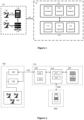
- Fig. 1 shows a functional block diagram illustrating system architecture, functions and operation of a cloud computing system 110 according to an aspect of the present disclosure.
- the cloud computing system 110 may comprise one or more cloud compute nodes 112, each providing (e.g., virtualized) processing resources 114, memory resources 116 and networking resources 118 for cloud-based distributed execution of cloud computing software (not shown).
- the cloud compute nodes 112 are configured to receive and to transmit, via a network 120 (e.g., an IP-based network such as the internet), data from and to controllers 132 of an industrial automation system 130 and, optionally, from and to one or more sensors (not shown) monitoring operation of the industrial automation system 130.
- the industrial automation system 130 may also comprise (or may be connected to) edge computing equipment 134 (e.g., one or more edge computing nodes executing edge computing software) that may be configured for hosting virtualized and preferably containerized virtual industrial controllers as discussed in section 3. above.
- the industrial automation system 130 may also comprise hardware-based industrial controllers 132 such as PLCs.
- the virtual and hardware-based controllers of the industrial automation system 130 may be connected via real-time capable industrial automation networking technology 136 to actuators 138 and sensors (not shown) of the industrial automation system 130.
- the cloud compute nodes 112 are configured to execute cloud computing software to configure the controllers of the industrial automation system 130, via the network 120, by performing methods as discussed above and below with reference to Fig. 4 .
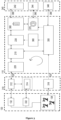
- Fig. 2 shows a functional block diagram illustrating further aspects of the system architecture, functions and operation of a cloud computing system 110 according to some aspects of the present disclosure.
- Fig. 2 illustrates key aspects of the software architecture of the cloud computing system 110.
- the cloud computing system 110 is configured to generated and operate one or more compile time representations 210 for each controller 132 (e.g., jointly or as separate instances) to be configured via the network 120.
- the compile time representations 210 comprise or use a persistence layer 212 and programming interface layer 214.
- the persistence layer 212 is configured for holding controller configurations and control instruction elements of controller programs, wherein the individual control elements are represented as separated control logic objects.
- the individual elements of the persistence layer 212 are individually configurable based on programming and configuration instructions received via a programming interface 250 via the programming interface layer 214.
- the cloud computing system 110 is configured for receiving via a programming interface 250 programming and configuration instructions for modifying the controller programs and / or the controller configurations maintained by persistence layer 212 as discussed above as well as for generating the modified controller program and modified controller configuration based on the received instructions.
- the programming and configuration instructions 242 may be received via an API 250 form a second cloud computing system 240 such as a PLM, manufacturing execution, CRM, SCM or ERP system.
- a second cloud computing system 240 such as a PLM, manufacturing execution, CRM, SCM or ERP system.
- the cloud computing system 110 may be further configured to host an integrated development environment (IDE) service 230 that may provide controller program instructions 232 (e.g., in the form of blocks of control logic elements) and / or controller configurations as discussed above.
- IDE integrated development environment
- the modified controller program can then be provided to a compiler service 220 (operably connected to or integrated with the PLC Twin service 210) hosted by the cloud computing system 110, generating a run time executable which is then provided, via a network 120, to one or more hardware-based PLCs 132 or virtual PLC services 132, hosted by an edge-computing system (see Fig.1 and Fig. 3 ), controlling a subsystem 138 (e.g. sensors and /or actuators) of the industrial automation system 130.
- a compiler service 220 may be implemented as a cloud computing service external to the PLC Twin service 210 or be integrated into it.
- the compiler service 220 may also comprise several different compiler modules 222, 224 for compiling different types of (e.g., vendor-specific) controller program types.
- the compiler service 220 and / or the PLC Twin service 210 may be implemented in / via a configurable virtualization environment such as a container or micro service specifying - inter alia - security access policies and / or system resource utilization parameters as well as comprising software libraries required for isolated execution of the respective service by different types of (virtual) cloud computing equipment.
- a configurable virtualization environment such as a container or micro service specifying - inter alia - security access policies and / or system resource utilization parameters as well as comprising software libraries required for isolated execution of the respective service by different types of (virtual) cloud computing equipment.
- the cloud computing system illustrated in Fig. 2 is thus configured to carry out the various methods for configuring industrial controllers discussed above and with reference to Fig. 4 below.
- Fig. 3 shows a functional block diagram illustrating further aspects of the system architecture, functions and operation of a cloud computing system 110 according to further aspects of the present disclosure.
- Fig. 3 illustrates key aspects of the software architecture of a cloud computing system 110 that is configured for enabling fully closed-loop controller (re-)configuration as discussed in more detail in section 3. above.
- Fig. 3 also illustrates industrial automation systems 130 involving an edge computing system 310 operably connected, e.g., via a network 120, to the cloud computing system 110.
- the edge computing system 310 may comprise a controller management service / module 312 and may be configured for executing edge computing software for implementing / hosting virtual controllers 314 (e.g., virtual PLCs).
- the controller configuration obtained and used for generating the corresponding compile time representation 210 may also specify a virtualization environment for executing the edge computing software implementing the virtual controller 314 as well as a network configuration of a physical I/O devices 332 connected to a subsystem 138 of the industrial automation system 130 to be controlled by the virtual controller 314.
- the cloud computing system 110 may be configured for instantiating the virtual controller 314, via the network 120, on a host machine of the edge computing system 310 managed by a real-time hypervisor to enable deterministic real-time control of the corresponding subsystem 138.
- the edge computing system 310 may also comprise / host a sensor management service / module 316 configured to receive, to pre-process and forward sensor data to the cloud-computing system 110, via the network 120, as discussed above in section 3.
- the cloud computing system 110 may be configured for receiving, via the network 120, sensor data associated with a subsystem 138 of the industrial automation system 130, controlled by controller 132, 314 and for generating programming and configuration instructions (e.g., via an API to the IDE 230) for modifying the controller program and / or the controller configuration, based on analyzing the received sensor data.
- programming and configuration instructions e.g., via an API to the IDE 230
- the received sensor data may for example be stored in a data storage module 350 of the cloud computing system 110 that may also be used to support or enable operation of the persistence layer used by the compile time representations 210.
- the cloud computing system may also host a sensor data processing and displaying service 360 that may implement certain sensor data analysis steps as discussed above.
- such a sensor data processing and displaying service 360 may be configured for deriving, based on the received sensor data, a quality metric associated with operation of the subsystem 138 controlled by the controller 132, 314 and for comparing the quality metric with an operation requirement for the industrial automation system 130 as well as for generating, (e.g., directly or via an API to the IDE service 230) programming and configuration instructions, based on the comparison of the quality metric with the operation requirement as discussed in more detail in section 3. above.
- the cloud computing system 110 may further comprise / host an artificial intelligence (AI) module / service 370 that may be operably connected (e.g., via APIs 390) to the data storage module 350 and / or to further cloud-based software systems 242, 344, 346 as discussed above.
- AI artificial intelligence
- the AI service 370 may be interfaced with an experiment engine 380 hosted by the cloud computing system 110, which in turn may be interfaced with the PLC Twin service 210 (e.g., directly or via an API to the IDE service 230).
- the cloud computing system 110 may be configured for AI-based auto-optimization of the industrial automation system 130 as discussed in more detail above. Specifically, the cloud computing system 110 may be configured for carrying out a method for optimizing performance of an industrial automation system as disclosed herein and with reference to Fig. 5 .
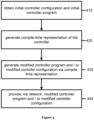
- Fig. 4 illustrates an examplary method for configuring a controller of an industrial automation system via a network (see Figs. 1 to 3 ).
- the process starts at step 410, where a cloud computing system obtains a controller configuration and a controller program.
- the cloud computing system generates, based on the obtained controller configuration and the obtained controller program, a compile time representation of the controller allowing modification of the controller program and the controller configuration (e.g., via programming interfaces or a GUI-based IDE).
- a modified controller program and a modified controller configuration is generated, using the compile time representation of the controller wherein the controller program defines run time operation of the controller controlling a subsystem of the industrial automation system (as discussed in more detail above in section 3. and with reference to Figs. 1 to 3 ).
- the cloud computing system provides, via the network, the modified controller program and the modified controller configuration to the controller of the industrial automation system. Further implementations of such a method are discussed in detail in section 3. above.
- Fig. 5 illustrates a method for optimizing performance of an industrial automation system, comprising the following steps: Generating 510, by a cloud computing system (for implementation details see Figs. 1 to 3 ), a modified controller program and / or a modified controller configuration for a controller controlling a subsystem of the industrial automation system, wherein the controller program defines runtime operation of the controller and, providing 520, by the cloud computing system via a network, the modified controller program and / or the modified controller configuration to the controller to modify the run time operation of the controller.
- the illustrated method further comprises receiving 530, at the cloud computing system via the network, sensor data for the industrial automation system and estimating 540, by the cloud computing system and based on the received sensor data, a change of the performance of the industrial automation system caused by the modified run time operation of the controller and optimizing 540, by the cloud computing system, the performance of the industrial automation system based on the estimated change of performance.
Landscapes
- Engineering & Computer Science (AREA)
- General Physics & Mathematics (AREA)
- Physics & Mathematics (AREA)
- Software Systems (AREA)
- Theoretical Computer Science (AREA)
- General Engineering & Computer Science (AREA)
- Automation & Control Theory (AREA)
- Manufacturing & Machinery (AREA)
- Human Computer Interaction (AREA)
- Computer Security & Cryptography (AREA)
- Evolutionary Computation (AREA)
- Mathematical Physics (AREA)
- Computing Systems (AREA)
- Medical Informatics (AREA)
- Data Mining & Analysis (AREA)
- Computer Vision & Pattern Recognition (AREA)
- Artificial Intelligence (AREA)
- Programmable Controllers (AREA)
- Stored Programmes (AREA)
Claims (14)
- Verfahren zum Konfigurieren einer Steuerung eines industriellen Automatisierungssystems über ein Netzwerk, wobei das Verfahren umfasst:Erhalten (410), durch ein Cloud-Computersystem, einer Steuerungskonfiguration und eines Steuerungsprogramms;Erzeugen (420), durch das Cloud-Computersystem, basierend auf der erhaltenen Steuerungskonfiguration und dem erhaltenen Steuerungsprogramm, einer Kompilierungszeitdarstellung (210) der Steuerung, die eine Modifikation des Steuerungsprogramms und der Steuerungskonfiguration zur Kompilierungszeit ermöglicht, die eine Zeit bei oder vor der Erzeugung von Laufzeitmaschinencode für die Steuerung aus einem entsprechenden Quellcode umfasst, und eine Zeit, während der der Quellcode erzeugt wird, durch Extrahieren des Quellcodes aus einer Konfigurationsdatei oder durch Schreiben des Quellcodes über eine Programmiersprache oder über eine cloudbasierte Quellcodeentwicklungsumgebung; undErzeugen (430), durch das Cloud-Computersystem, eines modifizierten Steuerungsprogramms und einer modifizierten Steuerungskonfiguration unter Verwendung der Kompilierungszeitdarstellung (210) der Steuerung, wobei das Steuerungsprogramm einen Laufzeitbetrieb der Steuerung definiert, die ein Teilsystem des industriellen Automatisierungssystems steuert; undBereitstellen (440), durch das Cloud-Computersystem über das Netzwerk, des modifizierten Steuerungsprogramms und der modifizierten Steuerungskonfiguration an die Steuerung des industriellen Automatisierungssystems;wobei die erhaltene Steuerungskonfiguration ferner eines oder mehrere von Folgendem umfasst: Steuerungstyp- und -fähigkeitsinformation, Netzwerkkonfiguration der Steuerung, Schnittstelleninformation für elektromechanische Antriebe und Schnittstellenkonfiguration für E/A-Vorrichtungen, die mit der Steuerung über Backpanel-Integration von industriellen Feldbussystemen verbunden sind,wobei die Kompilierungszeitdarstellung (210) der Steuerung eine Persistenzschicht (212) umfasst, die Steuerungskonfigurationen und Steueranweisungselemente von Steuerungsprogrammen enthält, wobei die einzelnen Steuerelemente als getrennte Steuerlogikobjekte dargestellt sind, und wobei einzelne Elemente der Persistenzschicht (212) basierend auf Programmier- und Konfigurationsanweisungen, die über eine Programmierschnittstelle (250) empfangen werden, individuell konfigurierbar sind.
- Verfahren nach Anspruch 1, wobei Teile der Steuerungskonfiguration und/oder des Steuerungsprogramms an dem Cloud-Computersystem von der Steuerung, von einer Steuerungskonfigurationsdatei und/oder von einer Softwarebibliothek oder einem Quellcoderepository, das sich innerhalb oder außerhalb des Cloud-Computersystems befindet, erhalten werden.
- Verfahren nach Anspruch 1 oder 2, wobei das Steuerungsprogramm an dem Cloud-Computersystem von einem integrierten Entwicklungsumgebungsdienst, der von dem Cloud-Computersystem gehostet wird, erhalten wird.
- Verfahren nach einem der Ansprüche 1 bis 3, ferner umfassend:Empfangen, an dem Cloud-Computersystem über die Programmierschnittstelle, von Programmier- und Konfigurationsanweisungen zum Modifizieren des erhaltenen Steuerungsprogramms und/oder der erhaltenen Steuerungskonfiguration; undErzeugen des modifizierten Steuerungsprogramms und/oder der modifizierten Steuerungskonfiguration basierend auf den empfangenen Anweisungen.
- Verfahren nach Anspruch 4, wobei die Programmierschnittstelle eine Anwendungsprogrammierschnittstelle, API, ist und wobei die Programmier- und Konfigurationsanweisungen über die API von einem zweiten Cloud-Computersystem empfangen werden; und wobei die Programmier- und Konfigurationsanweisungen konfiguriert sind, um das Steuerungsprogramm und/oder die Steuerungskonfiguration basierend auf Produktlebenszyklusverwaltungs-, PLM-, Anforderungen, Herstellungsausführungsanforderungen, Kundenbeziehungsverwaltungs-, CRM-, Anforderungen, Lieferkettenverwaltungs-, SCM-, Anforderungen und/oder Unternehmensressourcenplanungs-, ERP-, Anforderungen zu modifizieren.
- Verfahren nach einem der Ansprüche 4 bis 5, ferner umfassend:Empfangen, an dem Cloud-Computersystem über das Netzwerk, von Sensordaten, die einem Teilsystem des industriellen Automatisierungssystems zugeordnet sind, das durch die Steuerung gesteuert wird; undErzeugen, durch das Cloud-Computersystem, der Programmier- und Konfigurationsanweisungen zum Modifizieren des Steuerungsprogramms und/oder der Steuerungskonfiguration basierend auf dem Analysieren der empfangenen Sensordaten.
- Verfahren nach Anspruch 6, ferner umfassendAbleiten, durch das Cloud-Computersystem und basierend auf den empfangenen Sensordaten, einer Qualitätsmetrik, die dem Betrieb des Teilsystems zugeordnet ist, das durch die Steuerung gesteuert wird;Vergleichen, durch das Cloud-Computersystem, der Qualitätsmetrik mit einer Betriebsanforderung für das industrielle Automatisierungssystem; undErzeugen, durch das Cloud-Computersystem, der Programmier- und Konfigurationsanweisungen basierend auf dem Vergleich der Qualitätsmetrik mit der Betriebsanforderung.
- Verfahren nach Anspruch 7, ferner umfassend:Klassifizieren, durch das Cloud-Computersystem, der Produktqualität basierend auf den empfangenen Sensordaten und Vergleichen einer Häufigkeit oder eines Prozentsatzes von Produktdefekten mit einer Betriebsanforderung; und/oderBestimmen einer wahrscheinlichen Ursache und/oder einer geeigneten Steuerungsprogrammmodifikation zum Übereinstimmen mit der Betriebsanforderung basierend auf den empfangenen Sensordaten.
- Verfahren nach einem der vorhergehenden Ansprüche 1 bis 8,wobei die Steuerung eine virtuelle Steuerung ist, die durch Edge-Computing-Software implementiert ist, die durch ein Edge-Computersystem ausgeführt wird, das betriebsfähig mit dem Cloud-Computersystem und dem industriellen Automatisierungssystem verbunden ist; undwobei die erhaltene Steuerungskonfiguration eine Virtualisierungsumgebung zum Ausführen der Edge-Computing-Software, die die virtuelle Steuerung implementiert, spezifiziert und eine Netzwerkkonfiguration einer physischen E/A-Vorrichtung umfasst, die mit einem Teilsystem des industriellen Automatisierungssystems verbunden ist, das durch die virtuelle Steuerung gesteuert werden soll,vorzugsweise ferner umfassend Instanziieren der virtuellen Steuerung durch das Cloud-Computersystem über das Netzwerk auf einer Host-Maschine des Edge-Computersystems, das durch einen Echtzeit-Hypervisor verwaltet wird.
- Verfahren nach Anspruch 9, ferner umfassend:
Empfangen, an dem Cloud-Computersystem, von Überwachungsdaten von dem Edge-Computersystem, die die Leistung der virtuellen Steuerung charakterisieren. - Verfahren nach einem der vorhergehenden Ansprüche 1 bis 10, ferner
umfassend:
Konfigurationsanweisungen unter Verwendung einer integrierten Entwicklungsumgebung des Cloud-Computersystems. - Cloud-Computersystem zum Konfigurieren einer oder mehrerer Steuerungen eines industriellen Automatisierungssystems, wobei das Cloud-Computersystem umfasst:einen oder mehrere Cloud-Rechenknoten, die jeweils Verarbeitungs-, Speicher- und Netzwerkressourcen zur Ausführung von Cloud-Computing-Software bereitstellen;wobei die Cloud-Rechenknoten konfiguriert sind, um Daten von und an die Steuerungen der industriellen Automatisierungssysteme und optional von einem oder mehreren Sensoren, die das industrielle Automatisierungssystem überwachen, zu empfangen und über ein Netzwerk zu übertragen;wobei der eine oder die mehreren Cloud-Rechenknoten konfiguriert sind, um Cloud-Computing-Software auszuführen, um die Steuerungen über das Netzwerk durch Durchführen des Verfahrens nach einem der vorhergehenden Ansprüche 1 bis 11 zu konfigurieren.
- Computerprogrammprodukt, umfassend Anweisungen zum Ausführen des Verfahrens nach einem der vorhergehenden Ansprüche 1 bis 11, wenn es durch ein Cloud-Computersystem ausgeführt wird.
- Verteiltes industrielles Automatisierungssteuerungssystem, umfassend:ein erstes Cloud-Computersystem nach Anspruch 12;eine oder mehrere Steuerungen eines industriellen Automatisierungssystems, die mit dem ersten Cloud-Computersystem über ein Netzwerk verbunden sind; undein zweites Cloud-Computersystem, das mit dem ersten Cloud-Computersystem über eine Programmierschnittstelle kommuniziert.
Priority Applications (1)
| Application Number | Priority Date | Filing Date | Title |
|---|---|---|---|
| EP24152689.6A EP4332850A3 (de) | 2022-04-12 | 2022-04-12 | Cloud-computersystem, verfahren und computerprogramm |
Applications Claiming Priority (1)
| Application Number | Priority Date | Filing Date | Title |
|---|---|---|---|
| PCT/EP2022/059787 WO2023198280A1 (en) | 2022-04-12 | 2022-04-12 | Cloud computing system, method and computer program |
Related Child Applications (2)
| Application Number | Title | Priority Date | Filing Date |
|---|---|---|---|
| EP24152689.6A Division-Into EP4332850A3 (de) | 2022-04-12 | 2022-04-12 | Cloud-computersystem, verfahren und computerprogramm |
| EP24152689.6A Division EP4332850A3 (de) | 2022-04-12 | 2022-04-12 | Cloud-computersystem, verfahren und computerprogramm |
Publications (3)
| Publication Number | Publication Date |
|---|---|
| EP4285191A1 EP4285191A1 (de) | 2023-12-06 |
| EP4285191B1 true EP4285191B1 (de) | 2024-11-06 |
| EP4285191C0 EP4285191C0 (de) | 2024-11-06 |
Family
ID=81598014
Family Applications (2)
| Application Number | Title | Priority Date | Filing Date |
|---|---|---|---|
| EP24152689.6A Pending EP4332850A3 (de) | 2022-04-12 | 2022-04-12 | Cloud-computersystem, verfahren und computerprogramm |
| EP22722501.8A Active EP4285191B1 (de) | 2022-04-12 | 2022-04-12 | Cloud-computersystem, verfahren und computerprogramm |
Family Applications Before (1)
| Application Number | Title | Priority Date | Filing Date |
|---|---|---|---|
| EP24152689.6A Pending EP4332850A3 (de) | 2022-04-12 | 2022-04-12 | Cloud-computersystem, verfahren und computerprogramm |
Country Status (6)
| Country | Link |
|---|---|
| US (1) | US12429851B2 (de) |
| EP (2) | EP4332850A3 (de) |
| JP (1) | JP7721821B2 (de) |
| KR (2) | KR20250156846A (de) |
| ES (1) | ES3012397T3 (de) |
| WO (1) | WO2023198280A1 (de) |
Families Citing this family (3)
| Publication number | Priority date | Publication date | Assignee | Title |
|---|---|---|---|---|
| EP4125257A1 (de) * | 2021-07-30 | 2023-02-01 | Siemens Aktiengesellschaft | Verfahren zur kommunikation mit einem mikrodienst in einer industrieanlage |
| US20230379353A1 (en) * | 2022-05-23 | 2023-11-23 | The Johns Hopkins University | Virtualization-Based Controller for Industrial Control System Resiliency |
| DE102023210561B4 (de) | 2023-10-25 | 2025-05-08 | Software Defined Automation Gmbh | Sicherer fernzugriff für cloud-basierte industrielle automatisierung |
Family Cites Families (17)
| Publication number | Priority date | Publication date | Assignee | Title |
|---|---|---|---|---|
| DE102004012315A1 (de) | 2004-03-11 | 2005-10-06 | Dspace Gmbh | Verfahren zur automatischen Anpassung von Software |
| US8301746B2 (en) * | 2010-01-26 | 2012-10-30 | International Business Machines Corporation | Method and system for abstracting non-functional requirements based deployment of virtual machines |
| EP2801002B1 (de) | 2012-01-06 | 2023-05-17 | Intelligent Platforms, LLC | Vorrichtung und verfahren zur synchronisierung einer steuerlogik |
| US9253054B2 (en) * | 2012-08-09 | 2016-02-02 | Rockwell Automation Technologies, Inc. | Remote industrial monitoring and analytics using a cloud infrastructure |
| US9703902B2 (en) | 2013-05-09 | 2017-07-11 | Rockwell Automation Technologies, Inc. | Using cloud-based data for industrial simulation |
| US20140336791A1 (en) * | 2013-05-09 | 2014-11-13 | Rockwell Automation Technologies, Inc. | Predictive maintenance for industrial products using big data |
| RU2730534C2 (ru) | 2015-10-13 | 2020-08-24 | Шнейдер Электрик Эндюстри Сас | Способ для размещения рабочих нагрузок в программно-определяемой автоматизированной системе |
| EP3611581B1 (de) | 2016-05-25 | 2021-11-10 | Siemens Aktiengesellschaft | Industrielles steuergerät und zur steuerung einer industriellen aktivität konfiguriertes verfahren |
| US20170351226A1 (en) | 2016-06-01 | 2017-12-07 | Rockwell Automation Technologies, Inc. | Industrial machine diagnosis and maintenance using a cloud platform |
| JP2020052812A (ja) | 2018-09-27 | 2020-04-02 | 横河電機株式会社 | エンジニアリングシステム及びエンジニアリング方法 |
| JP6632692B1 (ja) | 2018-11-19 | 2020-01-22 | 日鉄テックスエンジ株式会社 | 制御プログラム作成支援ツール及び制御プログラムの作成方法 |
| DE102019204480A1 (de) | 2019-03-29 | 2020-10-01 | Siemens Aktiengesellschaft | Verfahren zum Engineering eines Automatisierungssystems zur Steuerung eines Prozesses in einer technischen Anlage und Automatisierungssystem |
| EP3734379A1 (de) | 2019-04-30 | 2020-11-04 | Siemens Aktiengesellschaft | Verfahren und system zur erzeugung von steuerungsprogrammen in einer cloud-computing-umgebung |
| US20210080941A1 (en) | 2019-09-17 | 2021-03-18 | Rockwell Automation Technologies Inc. | Scalable predictive maintenance for industrial automation equipment |
| JP2023529723A (ja) * | 2020-06-15 | 2023-07-11 | ハネウェル・インターナショナル・インコーポレーテッド | 施設のためのエッジコントローラ |
| US11561535B2 (en) * | 2020-09-30 | 2023-01-24 | Rockwell Automation Technologies, Inc. | Systems and methods for data lifecycle management with code content optimization and servicing |
| US12169742B2 (en) * | 2022-08-04 | 2024-12-17 | Salesforce, Inc. | Deployed application programming interface management |
-
2022
- 2022-04-12 KR KR1020257034868A patent/KR20250156846A/ko active Pending
- 2022-04-12 JP JP2024560757A patent/JP7721821B2/ja active Active
- 2022-04-12 EP EP24152689.6A patent/EP4332850A3/de active Pending
- 2022-04-12 US US18/693,960 patent/US12429851B2/en active Active
- 2022-04-12 KR KR1020247037527A patent/KR102875066B1/ko active Active
- 2022-04-12 ES ES22722501T patent/ES3012397T3/es active Active
- 2022-04-12 WO PCT/EP2022/059787 patent/WO2023198280A1/en not_active Ceased
- 2022-04-12 EP EP22722501.8A patent/EP4285191B1/de active Active
Also Published As
| Publication number | Publication date |
|---|---|
| WO2023198280A1 (en) | 2023-10-19 |
| JP7721821B2 (ja) | 2025-08-12 |
| EP4332850A2 (de) | 2024-03-06 |
| EP4332850A3 (de) | 2024-05-29 |
| KR20250008877A (ko) | 2025-01-16 |
| ES3012397T3 (en) | 2025-04-09 |
| KR20250156846A (ko) | 2025-11-03 |
| EP4285191C0 (de) | 2024-11-06 |
| JP2025513896A (ja) | 2025-04-30 |
| US12429851B2 (en) | 2025-09-30 |
| US20240385592A1 (en) | 2024-11-21 |
| EP4285191A1 (de) | 2023-12-06 |
| KR102875066B1 (ko) | 2025-10-22 |
Similar Documents
| Publication | Publication Date | Title |
|---|---|---|
| EP4285191B1 (de) | Cloud-computersystem, verfahren und computerprogramm | |
| US10037443B2 (en) | Industrial simulation using redirected I/O module configurations | |
| CN112558929B (zh) | 用于开发或创建工业应用的系统和方法及计算机可读介质 | |
| EP3696622A1 (de) | Ai-erweiterungen und intelligente modellvalidierung für einen industriellen digitalen zwilling | |
| CN108885560B (zh) | 用于在软件定义自动化系统中分配工作负载的方法 | |
| US11567783B2 (en) | Data format transformation for downstream processing in a data pipeline | |
| US11175643B2 (en) | Rich contextualization of automation data | |
| US20060168195A1 (en) | Distributed intelligent diagnostic scheme | |
| EP3002649B1 (de) | Industrielle simulation mit umgeleiteten e/a-modul-konfigurationen | |
| CN115562199B (zh) | 工业互联网操作系统和产品的处理方法 | |
| Leitão et al. | Integration of virtual and real environments for engineering service-oriented manufacturing systems | |
| Valente et al. | An approach to design and develop reconfigurable control software for highly automated production systems | |
| US11835941B2 (en) | Industrial automation smart object parent/child data collection propagation | |
| US12242842B2 (en) | Continuous deployment and orchestration of feature processing units in a managed cloud and a provider network for consistent data processing | |
| Velesaca et al. | Optimizing smart factory operations: a methodological approach to industrial system implementation based on opc-ua | |
| Manne | Generative AI for Cloud Infrastructure Decision-Making and Self Healing Systems | |
| US10948883B2 (en) | Machine logic characterization, modeling, and code generation | |
| De Blasi et al. | Next generation control units simplifying industrial machine learning | |
| Leitão et al. | Petri net based methodology for the development of collaborative production systems | |
| EP4276624A1 (de) | Verfahren und server zur installation und ausführung eines ki-modells in einer industriellen ausführungsumgebung | |
| US20240402679A1 (en) | Industrial controller having ai-enabled multicore architecture | |
| Lazaro et al. | Open automation framework for cognitive manufacturing | |
| Seo et al. | Handling Multiple Events in IoT Environments: A Workflow-Based FaaS System | |
| Odefey et al. | Manufacturing Smart Services for automotive production lines | |
| Reshetov | Communication between programmable logic controllers and the warehouse control system |
Legal Events
| Date | Code | Title | Description |
|---|---|---|---|
| STAA | Information on the status of an ep patent application or granted ep patent |
Free format text: STATUS: UNKNOWN |
|
| STAA | Information on the status of an ep patent application or granted ep patent |
Free format text: STATUS: THE INTERNATIONAL PUBLICATION HAS BEEN MADE |
|
| PUAI | Public reference made under article 153(3) epc to a published international application that has entered the european phase |
Free format text: ORIGINAL CODE: 0009012 |
|
| STAA | Information on the status of an ep patent application or granted ep patent |
Free format text: STATUS: EXAMINATION IS IN PROGRESS |
|
| 17P | Request for examination filed |
Effective date: 20230831 |
|
| AK | Designated contracting states |
Kind code of ref document: A1 Designated state(s): AL AT BE BG CH CY CZ DE DK EE ES FI FR GB GR HR HU IE IS IT LI LT LU LV MC MK MT NL NO PL PT RO RS SE SI SK SM TR |
|
| RIN1 | Information on inventor provided before grant (corrected) |
Inventor name: WALTI, JOSEF |
|
| GRAP | Despatch of communication of intention to grant a patent |
Free format text: ORIGINAL CODE: EPIDOSNIGR1 |
|
| STAA | Information on the status of an ep patent application or granted ep patent |
Free format text: STATUS: GRANT OF PATENT IS INTENDED |
|
| DAV | Request for validation of the european patent (deleted) | ||
| DAX | Request for extension of the european patent (deleted) | ||
| INTG | Intention to grant announced |
Effective date: 20240528 |
|
| GRAS | Grant fee paid |
Free format text: ORIGINAL CODE: EPIDOSNIGR3 |
|
| GRAA | (expected) grant |
Free format text: ORIGINAL CODE: 0009210 |
|
| STAA | Information on the status of an ep patent application or granted ep patent |
Free format text: STATUS: THE PATENT HAS BEEN GRANTED |
|
| AK | Designated contracting states |
Kind code of ref document: B1 Designated state(s): AL AT BE BG CH CY CZ DE DK EE ES FI FR GB GR HR HU IE IS IT LI LT LU LV MC MK MT NL NO PL PT RO RS SE SI SK SM TR |
|
| REG | Reference to a national code |
Ref country code: GB Ref legal event code: FG4D |
|
| REG | Reference to a national code |
Ref country code: CH Ref legal event code: EP |
|
| REG | Reference to a national code |
Ref country code: DE Ref legal event code: R096 Ref document number: 602022007535 Country of ref document: DE |
|
| REG | Reference to a national code |
Ref country code: IE Ref legal event code: FG4D |
|
| U01 | Request for unitary effect filed |
Effective date: 20241108 |
|
| U07 | Unitary effect registered |
Designated state(s): AT BE BG DE DK EE FI FR IT LT LU LV MT NL PT RO SE SI Effective date: 20241118 |
|
| REG | Reference to a national code |
Ref country code: ES Ref legal event code: FG2A Ref document number: 3012397 Country of ref document: ES Kind code of ref document: T3 Effective date: 20250409 |
|
| PG25 | Lapsed in a contracting state [announced via postgrant information from national office to epo] |
Ref country code: HR Free format text: LAPSE BECAUSE OF FAILURE TO SUBMIT A TRANSLATION OF THE DESCRIPTION OR TO PAY THE FEE WITHIN THE PRESCRIBED TIME-LIMIT Effective date: 20241106 Ref country code: IS Free format text: LAPSE BECAUSE OF FAILURE TO SUBMIT A TRANSLATION OF THE DESCRIPTION OR TO PAY THE FEE WITHIN THE PRESCRIBED TIME-LIMIT Effective date: 20250306 |
|
| PG25 | Lapsed in a contracting state [announced via postgrant information from national office to epo] |
Ref country code: NO Free format text: LAPSE BECAUSE OF FAILURE TO SUBMIT A TRANSLATION OF THE DESCRIPTION OR TO PAY THE FEE WITHIN THE PRESCRIBED TIME-LIMIT Effective date: 20250206 |
|
| PG25 | Lapsed in a contracting state [announced via postgrant information from national office to epo] |
Ref country code: GR Free format text: LAPSE BECAUSE OF FAILURE TO SUBMIT A TRANSLATION OF THE DESCRIPTION OR TO PAY THE FEE WITHIN THE PRESCRIBED TIME-LIMIT Effective date: 20250207 |
|
| PG25 | Lapsed in a contracting state [announced via postgrant information from national office to epo] |
Ref country code: PL Free format text: LAPSE BECAUSE OF FAILURE TO SUBMIT A TRANSLATION OF THE DESCRIPTION OR TO PAY THE FEE WITHIN THE PRESCRIBED TIME-LIMIT Effective date: 20241106 |
|
| PG25 | Lapsed in a contracting state [announced via postgrant information from national office to epo] |
Ref country code: RS Free format text: LAPSE BECAUSE OF FAILURE TO SUBMIT A TRANSLATION OF THE DESCRIPTION OR TO PAY THE FEE WITHIN THE PRESCRIBED TIME-LIMIT Effective date: 20250206 |
|
| U20 | Renewal fee for the european patent with unitary effect paid |
Year of fee payment: 4 Effective date: 20250423 |
|
| PG25 | Lapsed in a contracting state [announced via postgrant information from national office to epo] |
Ref country code: SM Free format text: LAPSE BECAUSE OF FAILURE TO SUBMIT A TRANSLATION OF THE DESCRIPTION OR TO PAY THE FEE WITHIN THE PRESCRIBED TIME-LIMIT Effective date: 20241106 |
|
| PGFP | Annual fee paid to national office [announced via postgrant information from national office to epo] |
Ref country code: ES Payment date: 20250519 Year of fee payment: 4 |
|
| PG25 | Lapsed in a contracting state [announced via postgrant information from national office to epo] |
Ref country code: SK Free format text: LAPSE BECAUSE OF FAILURE TO SUBMIT A TRANSLATION OF THE DESCRIPTION OR TO PAY THE FEE WITHIN THE PRESCRIBED TIME-LIMIT Effective date: 20241106 |
|
| PG25 | Lapsed in a contracting state [announced via postgrant information from national office to epo] |
Ref country code: CZ Free format text: LAPSE BECAUSE OF FAILURE TO SUBMIT A TRANSLATION OF THE DESCRIPTION OR TO PAY THE FEE WITHIN THE PRESCRIBED TIME-LIMIT Effective date: 20241106 |
|
| PLBE | No opposition filed within time limit |
Free format text: ORIGINAL CODE: 0009261 |
|
| STAA | Information on the status of an ep patent application or granted ep patent |
Free format text: STATUS: NO OPPOSITION FILED WITHIN TIME LIMIT |
|
| 26N | No opposition filed |
Effective date: 20250807 |
|
| REG | Reference to a national code |
Ref country code: CH Ref legal event code: H13 Free format text: ST27 STATUS EVENT CODE: U-0-0-H10-H13 (AS PROVIDED BY THE NATIONAL OFFICE) Effective date: 20251125 |