EP4284039A2 - Verfahren und vorrichtungen zur sms zustellung - Google Patents
Verfahren und vorrichtungen zur sms zustellung Download PDFInfo
- Publication number
- EP4284039A2 EP4284039A2 EP23190171.1A EP23190171A EP4284039A2 EP 4284039 A2 EP4284039 A2 EP 4284039A2 EP 23190171 A EP23190171 A EP 23190171A EP 4284039 A2 EP4284039 A2 EP 4284039A2
- Authority
- EP
- European Patent Office
- Prior art keywords
- sms
- terminal device
- entity
- udr
- waiting context
- Prior art date
- Legal status (The legal status is an assumption and is not a legal conclusion. Google has not performed a legal analysis and makes no representation as to the accuracy of the status listed.)
- Pending
Links
Images


Classifications
-
- H—ELECTRICITY
- H04—ELECTRIC COMMUNICATION TECHNIQUE
- H04W—WIRELESS COMMUNICATION NETWORKS
- H04W4/00—Services specially adapted for wireless communication networks; Facilities therefor
- H04W4/12—Messaging; Mailboxes; Announcements
- H04W4/14—Short messaging services, e.g. short message services [SMS] or unstructured supplementary service data [USSD]
-
- H—ELECTRICITY
- H04—ELECTRIC COMMUNICATION TECHNIQUE
- H04L—TRANSMISSION OF DIGITAL INFORMATION, e.g. TELEGRAPHIC COMMUNICATION
- H04L67/00—Network arrangements or protocols for supporting network services or applications
- H04L67/01—Protocols
- H04L67/02—Protocols based on web technology, e.g. hypertext transfer protocol [HTTP]
-
- H—ELECTRICITY
- H04—ELECTRIC COMMUNICATION TECHNIQUE
- H04W—WIRELESS COMMUNICATION NETWORKS
- H04W8/00—Network data management
- H04W8/02—Processing of mobility data, e.g. registration information at HLR [Home Location Register] or VLR [Visitor Location Register]; Transfer of mobility data, e.g. between HLR, VLR or external networks
- H04W8/06—Registration at serving network Location Register, VLR or user mobility server
-
- H—ELECTRICITY
- H04—ELECTRIC COMMUNICATION TECHNIQUE
- H04W—WIRELESS COMMUNICATION NETWORKS
- H04W8/00—Network data management
- H04W8/18—Processing of user or subscriber data, e.g. subscribed services, user preferences or user profiles; Transfer of user or subscriber data
- H04W8/20—Transfer of user or subscriber data
-
- H—ELECTRICITY
- H04—ELECTRIC COMMUNICATION TECHNIQUE
- H04W—WIRELESS COMMUNICATION NETWORKS
- H04W88/00—Devices specially adapted for wireless communication networks, e.g. terminals, base stations or access point devices
- H04W88/18—Service support devices; Network management devices
- H04W88/184—Messaging devices, e.g. message centre
Definitions
- Embodiments of the disclosure generally relate to communication, and, more particularly, to methods and apparatuses for SMS delivery.
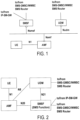
- FIG. 1 shows the non-roaming architecture to support SMS over NAS using service-based interfaces within the control plane.
- the architecture comprises a user equipment (UE), an access and mobility management function (AMF), an SMS function (SMSF), a unified data management (UDM), an Internet protocol (IP) short message gateway (IP-SM-GW), and an SMS gateway mobile switching center (SMS-GMSC)/interworking mobile switching center (IWMSC)/SMS router.
- UE user equipment
- AMF access and mobility management function
- SMS function SMS function
- UDM unified data management
- IP-SM-GW Internet protocol short message gateway
- IWMSC SMS gateway mobile switching center
- Nsmsf refers to a service-based interface exhibited by the SMSF.
- FIG. 2 shows the non-roaming architecture to support SMS over NAS using reference point representation.
- N1 is the reference point for SMS transfer between UE and AMF via NAS.
- the following reference points are realized by service based interfaces: N8 which is the reference point for SMS subscription data retrieval between AMF and UDM; N20 which is the reference point for SMS transfer between AMF and SMSF; and N21 which is the reference point for SMSF address registration management and SMS management subscription data retrieval between SMSF and UDM.
- FIG. 3 shows the roaming architecture to support SMS over NAS using service-based interfaces within the control plane.
- HPLMN refers to home public land mobile network (PLMN) and VPLMN refers to visited PLMN.
- FIG. 4 shows the roaming architecture to support SMS over NAS using reference point representation. Note that unified data repository (UDR) is not shown in FIGs. 1-4 for brevity.
- UDR unified data repository
- One of the objects of the disclosure is to provide an improved solution for SMS delivery.
- a method performed by a unified data management (UDM) entity may comprise transmitting an HTTP request to a unified data repository, UDR, entity to maintain a short message service (SMS) waiting context for a terminal device, at the UDR entity.
- SMS waiting context may be information related to a re-attempt of a mobile terminating (MT) SMS delivery from at least one SMS service center (SMS-SC) to the terminal device due to a failure of the MT SMS delivery.
- MT mobile terminating
- SMS-SC SMS service center
- the SMS waiting context may be maintained by at least one of the following steps: querying the UDR entity for an SMS waiting context for the terminal device; creating an SMS waiting context for the terminal device; and updating the SMS waiting context for the terminal device.
- the querying may be performed by sending a hypertext transfer protocol (HTTP) GET request to the UDR entity.
- HTTP hypertext transfer protocol
- the creating may be performed by sending an HTTP PUT request to the UDR entity.
- the updating may be performed by sending an HTTP PUT or PATCH request to the UDR entity.
- the HTTP PUT request may comprise the SMS waiting context for the terminal device.
- the HTTP PATCH request may comprise an indication indicating at least one of the SMS waiting context for the terminal device.
- the method may further comprise receiving an HTTP GET response in response to HTTP GET request, wherein the HTTP GET response may comprise the SMS waiting context for the terminal device.
- the method may further comprise alerting the at least one SMS-SC that the re-attempt of the MT SMS delivery can be started for the terminal device, based on the maintained SMS waiting context.
- the method may further comprise deleting the maintained SMS waiting context after alerting the at least one SMS-SC.
- the maintained SMS waiting context may be deleted from a UDR entity.
- the deleting may be performed by sending an HTTP DELETE request to the UDR entity.
- the SMS waiting context for the terminal device may contain at least one of: a list of an address of the at least one SMS-SC; a list of an expiry time of the at least one SMS-SC until which the re-attempt of the MT SMS delivery by the at least one SMS-SC is valid; a first indicator indicating that a reason for the failure of the MT SMS delivery is the terminal device being not reachable; a second indicator indicating that the reason for the failure of the MT SMS delivery is a memory capacity of the terminal device being exceeded; a third indicator indicating a reason for the re-attempt of the MT SMS delivery; a first time point until which the re-attempt of the MT SMS delivery is valid; and a second time point until which the second indicator is valid.
- the third indicator may have a first value indicating that the terminal device is reachable for the re-attempt, and/or a second value indicating that the terminal device has available memory for the re-attempt.
- maintaining the SMS waiting context at the UDR entity for the terminal device may comprise at least one of the following steps: in response to being informed about a failure of the MT SMS delivery, querying the UDR entity for an SMS waiting context for the terminal device; when there has been no SMS waiting context stored at the UDR entity for the terminal device, creating an SMS waiting context at the UDR entity for the terminal device; and when there has been an SMS waiting context stored at the UDR entity for the terminal device and the failure of the MT SMS delivery relates to a different SMS-SC than that of the SMS waiting context, updating the SMS waiting context at the UDR entity for the terminal device.
- the UDM entity may be informed that the reason for the failure of the MT SMS delivery is the terminal device being not reachable.
- the created or updated SMS waiting context may contain the first indicator.
- the UDM entity may be informed that the reason for the failure of the MT SMS delivery is the memory capacity of the terminal device being exceeded.
- the created or updated SMS waiting context may contain the second indicator.
- the event may be the UDM entity being informed that the terminal device is reachable.
- the queried SMS waiting context contains the first indicator and does not contain the second indicator.
- the SMS waiting context may be updated at the UDR entity by deleting the first indicator from the SMS waiting context.
- the event may be the UDM entity being informed that the terminal device has available memory for the re-attempt.
- the queried SMS waiting context contains the second indicator and does not contain the first indicator.
- the SMS waiting context may be updated at the UDR entity by deleting the second indicator from the SMS waiting context.
- the event may be the UDM entity being informed that the terminal device is reachable or has available memory for the re-attempt.
- the queried SMS waiting context does not contain the first indicator and the second indicator.
- the SMS waiting context may be updated at the UDR entity by adding the third indicator and the first time point into the SMS waiting context.
- a method performed by a UDR entity may comprise maintaining, for a terminal device, an SMS waiting context in response to an HTTP request from a UDM entity.
- the SMS waiting context may be information related to a re-attempt of an MT SMS delivery from at least one SMS-SC to the terminal device due to a failure of the MT SMS delivery.
- the SMS waiting context may be maintained by at least one of the following steps: responding to a query from the UDM entity for an SMS waiting context for the terminal device; creating an SMS waiting context for the terminal device; and updating the SMS waiting context for the terminal device.
- the query may be an HTTP GET request.
- the creating may be performed by receiving an HTTP PUT request from the UDM entity.
- the updating may be performed by receiving an HTTP PUT or PATCH request from the UDM entity.
- the method may further comprise deleting the maintained SMS waiting context in response to another request from the UDM entity.
- the deleting may be performed by receiving an HTTP DELETE request from the UDM entity.
- the SMS waiting context for the terminal device may contain at least one of: a list of an address of the at least one SMS-SC; a list of an expiry time of the at least one SMS-SC until which the re-attempt of the MT SMS delivery by the at least one SMS-SC is valid; a first indicator indicating that a reason for the failure of the MT SMS delivery is the terminal device being not reachable; a second indicator indicating that the reason for the failure of the MT SMS delivery is a memory capacity of the terminal device being exceeded; a third indicator indicating a reason for the re-attempt of the MT SMS delivery; a first time point until which the re-attempt of the MT SMS delivery is valid; and a second time point until which the second indicator is valid.
- the third indicator may have a first value indicating that the terminal device is reachable for the re-attempt, and/or a second value indicating that the terminal device has available memory for the re-attempt.
- a method implemented in a communication system including a UDM entity and a UDR entity.
- the method may comprise transmitting an HTTP request to the UDR entity to maintain, by the UDM entity, an SMS waiting context at the UDR entity for a terminal device.
- the SMS waiting context may be information related to a re-attempt of a MT SMS delivery from at least one SMS-SC to the terminal device due to a failure of the MT SMS delivery.
- the UDR entity may maintain, for the terminal device, the SMS waiting context in response to an HTTP request from the UDM entity.
- a UDM entity may comprise at least one processor and at least one memory.
- the at least one memory may contain instructions executable by the at least one processor, whereby the UDM entity may be operative to transmit an HTTP request to the UDM entity to maintain an SMS waiting context for a terminal device, at the UDM entity.
- the SMS waiting context may be information related to a re-attempt of an MT SMS delivery from at least one SMS-SC to the terminal device due to a failure of the MT SMS delivery.
- the UDM entity may be operative to perform the method according to the above first aspect.
- a UDR entity may comprise at least one processor and at least one memory.
- the at least one memory may contain instructions executable by the at least one processor, whereby the UDR entity may be operative to maintain, for a terminal device, an SMS waiting context in response to an HTTP request from a UDM entity.
- the SMS waiting context may be information related to a re-attempt of an MT SMS delivery from at least one SMS-SC to the terminal device due to a failure of the MT SMS delivery.
- the UDR entity may be operative to perform the method according to the above second aspect.
- the computer program product may comprise instructions which when executed by at least one processor, cause the at least one processor to perform the method according to any of the above first and second aspects.
- the computer readable storage medium may comprise instructions which when executed by at least one processor, cause the at least one processor to perform the method according to any of the above first and second aspects.
- the UDM entity may comprise a transmitting module for transmitting an HTTP request to the UDR entity to maintain an SMS waiting context for a terminal device, at the UDR entity.
- the SMS waiting context may be information related to a re-attempt of an MT SMS delivery from at least one SMS-SC to the terminal device due to a failure of the MT SMS delivery.
- the UDR entity may comprise a maintaining module for maintaining, for a terminal device, an SMS waiting context in response to an HTTP request from a UDM entity.
- the SMS waiting context may be information related to a re-attempt of an MT SMS delivery from at least one SMS-SC to the terminal device due to a failure of the MT SMS delivery.
- the communication system may comprise a UDM entity and a UDR entity.
- the UDM entity may be configured to transmit an HTTP request to the UDR entity to maintain an SMS waiting context at the UDR entity for a terminal device.
- the SMS waiting context may be information related to a re-attempt of an MT SMS delivery from at least one SMS-SC to the terminal device due to a failure of the MT SMS delivery.
- the UDR entity may be configured to maintain, for the terminal device, the SMS waiting context in response to the HTTP request from the UDM entity.
- the procedure of unsuccessful mobile terminating SMS delivery re-attempt is defined as follows. If the UE is registered over both 3GPP access and non-3GPP access in the same AMF (i.e. the UE is registered in the same PLMN for both access types): if the MT-SMS delivery over one Access Type has failed, the AMF, based on operator local policy, may re-attempt the MT-SMS delivery over the other Access Type before indicating failure to SMSF; and if the MT-SMS delivery on both Access Types has failed, the AMF shall inform the SMSF immediately.
- the SMSF sends a failure report to the first SMS-GMSC (which can be co-located with IP-SM-GW or SMS Router) as defined in TS 23.040. If the SMS-GMSC has more than one entity for SMS transport towards the UE, then upon receiving MT-SMS failure report, the SMS-GMSC, based on operator local policy, may re-attempt the MT-SMS delivery via the other entity.
- the SMS-GMSC which can be co-located with IP-SM-GW or SMS Router
- the UDM After the first SMS-GMSC informs the UDM/home subscriber server (HSS) that the UE is not able to receive MT-SMS, the UDM shall set its internal URRP-AMF flag. If the UE is registered in an AMF and the UDM has not subscribed to UE Reachability Notification in the AMF yet, the UDM immediately initiates a subscription procedure as specified in clause 4.2.5.2. When the AMF detects UE activities, it notifies UDM with UE Activity Notification as described in clause 4.2.5.3. The UDM clears its URRP-AMF flag and alerts related SCs to retry MT-SMS delivery.
- HSS home subscriber server
- the UDM When the SMS-GMSC requests routing information from UDM for a UE not registered in the 5th generation core (5GC), or for a registered UE which has not been yet registered for SMS service, the UDM responds to the SMS-GMSC that the UE is absent, stores the SC address in the MWD list (if not yet stored) and indicates that to the SC as defined in TS 23.040.
- the UDM also sets an internal SMSF registration notification flag to notify the SC upon subsequent SMSF registration for the UE.
- the UDM receives an Nudm_UECM_Registration Request from an SMSF for a UE for which the SMSF registration notification flag is set, the UDM clears the flag and alerts the related SCs to retry the MT-SMS delivery. Note that this scenario assumes that the UE is not in 2G/3G/4G coverage.
- UDM To support unsuccessful mobile terminating SMS (MT-SMS) delivery re-attempt, UDM at one side needs to support the UE reachability event monitoring if the failure reason is UE not present or to be ready for notification if the failure reason is memory exceeding at client side. At the other side, when get notification of UE reachable event and memory available event, UDM needs to alert the SMS-SC to re-attempt the MT-SMS delivery which has failed before. Since there exists a certain period of time between the time point when the UDM knows the failure of the SMS delivery and the time point when the UDM knows the re-attempt can be started, the MT-SMS waiting context should be stored somewhere for stateless UDM to access.
- MT-SMS unsuccessful mobile terminating SMS
- the present disclosure proposes an improved solution for SMS delivery.
- the solution will be described in detail with reference to FIGs. 5-18 .
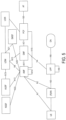
- FIG. 5 is a diagram showing an exemplary communication system into which an embodiment of the disclosure is applicable.
- the communication system comprises a UE, a (radio) access network ((R)AN), a user plane function (UPF), a data network (DN), an access and mobility management function (AMF), a session management function (SMF), a policy control function (PCF), an application function (AF), a short message service function (SMSF), a network slice selection function (NSSF), an authentication server function (AUSF), a unified data management (UDM) and a unified data repository (UDR).
- R radio access network
- UPF user plane function
- DN data network
- AMF access and mobility management function
- SMF session management function
- PCF policy control function
- AF application function
- SMSF short message service function
- NSSF network slice selection function
- AUSF authentication server function
- UDM unified data management
- UDR unified data repository
- the term UE used herein may also be referred to as, for example, terminal device, access terminal, mobile station, mobile unit, subscriber station, or the like. It may refer to any end device that can access a wireless communication network and receive services therefrom.
- the UE may include a portable computer, an image capture terminal device such as a digital camera, a gaming terminal device, a music storage and playback appliance, a mobile phone, a cellular phone, a smart phone, a tablet, a wearable device, a personal digital assistant (PDA), or the like.
- PDA personal digital assistant
- a UE may represent a machine or other device that performs monitoring and/or measurements, and transmits the results of such monitoring and/or measurements to another UE and/or a network equipment.
- the UE may be a machine-to-machine (M2M) device, which may, in a 3GPP context, be referred to as a machine-type communication (MTC) device.
- M2M machine-to-machine
- MTC machine-type communication
- machines or devices may include sensors, metering devices such as power meters, industrial machineries, bikes, vehicles, or home or personal appliances, e.g. refrigerators, televisions, personal wearables such as watches, and so on.
- the term "communication system” refers to a system following any suitable communication standards, such as the first generation (1G), 2G, 2.5G, 2.75G, 3G, 4G, 4.5G, 5G communication protocols, and/or any other protocols either currently known or to be developed in the future.
- the communications between a terminal device and a network node in the communication system may be performed according to any suitable generation communication protocols, including, but not limited to, 1G, 2G, 2.5G, 2.75G, 3G, 4G, 4.5G, 5G communication protocols, and/or any other protocols either currently known or to be developed in the future.
- the specific terms used herein do not limit the present disclosure only to the communication system related to the specific terms, which however can be more generally applied to other communication systems.
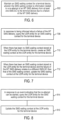
- FIG. 6 is a flowchart illustrating a method implemented at a UDM entity according to an embodiment of the disclosure.
- the UDM entity maintains an SMS waiting context for a terminal device.
- the SMS waiting context is information related to a re-attempt of an MT SMS delivery from at least one SMS-SC to the terminal device due to a failure of the MT SMS delivery. In this way, when the re-attempt of the MT SMS delivery can be started, it can be triggered by the UDM entity since the SMS waiting context is maintained.
- the SMS waiting context for the terminal device may contain, but not limited to, at least one of: a list of an address of the at least one SMS-SC; a list of an expiry time of the at least one SMS-SC until which the re-attempt of the MT SMS delivery by the at least one SMS-SC is valid; a first indicator indicating that a reason for the failure of the MT SMS delivery is the terminal device being not reachable; a second indicator indicating that the reason for the failure of the MT SMS delivery is a memory capacity of the terminal device being exceeded; a third indicator indicating a reason for the re-attempt of the MT SMS delivery; a first time point until which the re-attempt of the MT SMS delivery is valid; and a second time point until which the second indicator is valid.
- the third indicator may have a first value indicating that the terminal device is reachable for the re-attempt, and/or a second value indicating that the terminal device has available memory for the re-attempt.
- the SMS waiting context may be maintained at a UDR entity in response to a request from the UDM entity.
- the SMS waiting context may be maintained by interacting with the UDR entity through at least one of: querying the UDR entity for an SMS waiting context for the terminal device; creating an SMS waiting context for the terminal device; and updating the SMS waiting context for the terminal device.
- the querying may be performed by sending an HTTP GET request to the UDR entity.
- the creating may be performed by sending an HTTP PUT request to the UDR entity.
- the updating may be performed by sending an HTTP PUT or PATCH request to the UDR entity.
- the UDM entity has a storage component with a function similar to the UDR entity such that the SMS waiting context is maintained within the UDM entity itself.
- the maintaining at block 602 may be performed in response to the UDM entity being informed about a failure of the MT SMS delivery, or in response to an event indicating that the re-attempt can be started.
- block 602 may be implemented as blocks 708 and 710, or blocks 708 and 712, or blocks 814 and 816.
- the UDM entity queries the UDR entity for an SMS waiting context for the terminal device.
- the UDM entity may be informed that the reason for the failure of the MT SMS delivery is the terminal device being not reachable.
- the UDM entity may be informed that the reason for the failure of the MT SMS delivery is the memory capacity of the terminal device being exceeded.
- the UDM entity creates an SMS waiting context at the UDR entity for the terminal device at block 710.
- the UDM entity updates the SMS waiting context at the UDR entity for the terminal device at block 712.
- the created or updated SMS waiting context may contain the first indicator.
- the created or updated SMS waiting context may contain the second indicator.
- the UDM entity queries the UDR entity for the SMS waiting context for the terminal device.
- the event may be the UDM entity being informed that the terminal device is reachable.
- the event may be the UDM entity being informed that the terminal device has available memory for the re-attempt.
- the UDM entity updates the SMS waiting context at the UDR entity for the terminal device.
- the queried SMS waiting context contains the first indicator and does not contain the second indicator.
- the SMS waiting context may be updated at the UDR entity by deleting the first indicator from the SMS waiting context.
- the term "deleting" may refer to the first indicator being set to an opposite value when the first indicator can have two opposite values (e.g. TRUE and FALSE) to indicate opposite conditions.
- the queried SMS waiting context contains the second indicator and does not contain the first indicator.
- the SMS waiting context may be updated at the UDR entity by deleting the second indicator from the SMS waiting context.
- the queried SMS waiting context does not contain the first indicator and the second indicator.
- the SMS waiting context may be updated at the UDR entity by adding the third indicator and the first time point into the SMS waiting context.
- the third indicator may have the first value (indicating that the terminal device is reachable for the re-attempt) for the third example, and the second value (indicating that the terminal device has available memory for the re-attempt) for the fourth example.
- FIG. 9 is a flowchart illustrating a method implemented at a UDM entity according to an embodiment of the disclosure.
- the method comprises block 602, 904 and 906.
- the dotted block may be an optional block.
- Block 602 has been described above and its details are omitted here.
- the UDM entity alerts the at least one SMS-SC that the re-attempt of the MT SMS delivery can be started for the terminal device, based on the maintained SMS waiting context.
- block 904 may be performed in response to the UDM entity being informed that the terminal device is reachable or the terminal device has available memory for the re-attempt.
- At least the list of the address of the at least one SMS-SC may be used for alerting the at least one SMS-SC.
- the re-attempt of the SMS delivery can be supported by the UDM entity.
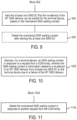
- the UDM entity deletes the maintained SMS waiting context after alerting the at least one SMS-SC.
- the maintained SMS waiting context may be deleted from the UDR entity.
- the deleting may be performed by sending an HTTP DELETE request to the UDR entity.
- the SMS waiting context may be simply deleted by the UDM entity.
- FIG. 10 is a flowchart illustrating a method implemented at a UDR entity according to an embodiment of the disclosure.
- the UDR entity maintains, for a terminal device, an SMS waiting context in response to a request from a UDM entity.
- the SMS waiting context is information related to a re-attempt of an MT SMS delivery from at least one SMS-SC to the terminal device due to a failure of the MT SMS delivery.
- the SMS waiting context may be maintained by at least one of: responding to a query from the UDM entity for an SMS waiting context for the terminal device; creating an SMS waiting context for the terminal device; and updating the SMS waiting context for the terminal device.
- the query may be an HTTP GET request.
- the creating may be performed by receiving an HTTP PUT request from the UDM entity.
- the updating may be performed by receiving an HTTP PUT or PATCH request from the UDM entity.
- FIG. 11 is a flowchart illustrating a method implemented at a UDR entity according to an embodiment of the disclosure. As shown, the method comprises blocks 1002 and 1104. At block 1104, the UDR entity deletes the maintained SMS waiting context in response to another request from the UDM entity. As an exemplary example, the deleting may be performed by receiving an HTTP DELETE request from the UDM entity.
- At least one aspect of the disclosure provides a method implemented in a communication system including a UDM entity and a UDR entity.
- the method comprises maintaining, by the UDM entity, an SMS waiting context at the UDR entity for a terminal device.
- the SMS waiting context is information related to a re-attempt of an MT SMS delivery from at least one SMS-SC to the terminal device due to a failure of the MT SMS delivery.
- the UDR entity maintains, for the terminal device, the SMS waiting context in response to a request from the UDM entity.
- At least one aspect of the disclosure provides a communication system comprising a UDM entity and a UDR entity.
- the UDM entity is configured to maintain an SMS waiting context at the UDR entity for a terminal device.
- the SMS waiting context is information related to a re-attempt of an MT SMS delivery from at least one SMS-SC to the terminal device due to a failure of the MT SMS delivery.
- the UDR entity is configured to maintain, for the terminal device, the SMS waiting context in response to a request from the UDM entity.
- this process involves a UE, an access network (AN), an AMF, an SMSF, a UDM and a UDR.
- AN access network
- AMF access network
- SMSF SMSF
- UDM UDM
- UDR UDR
- the UE includes an "SMS supported" indication in Registration Request indicating the UE's capability for SMS over NAS transporting.
- the "SMS supported” indication indicates whether the UE supports SMS delivery over NAS.
- the AMF discovers a UDM for AMF registration.
- the AMF registers into the UDM either for 3GPP access or for non-3GPP access.
- the registration context is also stored into the UDR.
- the AMF checks SMS subscription data from the UDM for the UE on whether the SMS service is subscribed by the UE.
- the AMF subscribes to data change notification for SMS subscription data.
- the AMF discovers and selects an SMSF to serve the UE.
- the AMF invokes Nsmsf_SMService_Activate service operation from the SMSF.
- the invocation includes AMF address, Access Type, radio access technology (RAT) type, Trace requirements, generic public subscription identifier (GPSI) (if available) and subscription permanent identifier (SUPI).
- the AMF uses the SMSF address derived from step 8.
- the SMSF discovers a UDM for SMSF registration. If the UE context already exists in the SMSF, the SMSF shall replace the old AMF address with the new AMF address. Otherwise, at step 11, the SMSF registers with the UDM using Nudm_UECM_Registration with Access Type (3GPP/non-3GPP).
- the UDM stores the SMSF registration context into the UDR.
- the UDM answers the SMSF for the SMSF registration request.
- the SMSF retrieves SMS management subscription data using Nudm_SDM_Get (the UDM may get this information from the UDR by Nudr_DR_Query) and the SMSF also creates a UE context to store the SMS management subscription information and the AMF address that is serving this UE.
- the SMSF subscribes to be notified when the SMS management subscription data is modified (the UDM may subscribe to notifications from the UDR by Nudr_DR_Subscribe).
- the SMSF responds back to the AMF with Nsmsf_SMService_Activate service operation response message.
- the AMF stores the SMSF address received as part of the UE context.
- the AMF includes the "SMS allowed” indication to the UE in the Registration Accept message if the AMF has received a positive indication from the selected SMSF.
- the "SMS allowed" indication in the Registration Accept message indicates to the UE whether the network allows the SMS message delivery over NAS.
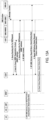
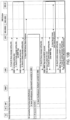
- FIGs. 13A-13B illustrate an exemplary process according to an embodiment of the disclosure. It corresponds to a use case for MT-SMS re-attempt after a failure of absent subscriber.
- the process involves a UE, an AN, an AMF, an SMSF, a UDM, a UDR, an SMS-IWMSC, an SMS-GMSC and an SMS-SC.
- the SMS-SC has pending SMS to be sent to a target UE, so it sends the message to an SMS entity SMS-GMSC.
- the SMS-GMSC queries the current SMS serving node for the target UE (the identity thereof could be MSISDN or IMSI) from the UDM.
- the serving SMS node is an SMSF.
- the UDM queries the current SMS serving node for the target UE from the UDR. Suppose the UE has registered before into 5G domain. Then, an SMSF address is returned by the UDR. At step 4, the UDM answers the SMS entity SMS-GMSC of the serving SMSF address for the target UE. At step 5, the SMS-GMSC forwards the MT-SMS to the SMSF address get in step 4.
- the SMSF executes the MT-SMS over NAS delivery procedure, which may further trigger UE paging if the UE is not in connected state.
- the delivery may succeed or fail depends on the UE connectivity state in the network or the memory state on the UE.
- the SMSF forwards an MT-SMS delivery report to the SMS-GSMC and the SMS-SC.
- the failure indicator indicates a failure reason of Absent Subscriber.
- the SMS-GMSC reports the MT-SMS delivery status to the UDM.
- the failure reason included in the message is Absent Subscriber.
- the UDM checks the failure reason, then based on the failure of Absent Subscriber, starts the Absent Subscriber Failure Handling.
- the UDM queries the UDR whether there is an existing SMS waiting context for the target UE. Because this is not supported by the UDR in the prior art, this message is based on our proposed new GET method. If there is not any SMS waiting context existed before, the UDM creates and stores the SMS waiting context for the UE in the UDR at step 11. Because this is not supported by the UDR in the prior art, this message is based on our proposed new PUT method. In the message body, a mobile not reachable flag (MNRF) is set to true to indicate the failure reason of Absent Subscriber. On the other hand, if there is an existing SMS waiting context before for the same failure reason, the UDM checks whether this is for a new SMS-SC address.
- MNRF mobile not reachable flag
- the UDM updates the SMS waiting context for the target UE at step 12 by adding the new SMS-SC address. Because this is not supported by the UDR in the prior art, this message is based on our proposed new PATCH method for delta update or based on our proposed new PUT method for full update.
- the UDM answers the SMS-GMSC for the report SM delivery status request at step 8.
- the UDM subscribes the UE reachability for SMS event from the AMF based on its exposed interfaces Namf_EventExposure_Subscribe at step 14. Sometime later, the UE becomes reachable again for SMS at step 15, for example within a good coverage area. At step 16, once detecting that the UE is reachable for SMS, the AMF notifies the UDM this reachable for SMS event by Namf_EventExposure_Notify.
- the UDM queries the UDR for the SMS waiting context of the target UE. Because this is not supported by the UDR in the prior art, this message is based on our proposed new GET method. If the MNRF is true and memory capacity exceeding flag (MCEF) is false, then the UDM updates the SMS waiting context stored in the UDR to set the MNRF flag to false at step 18. Because this is not supported by the UDR in the prior art, this message is based on our proposed new PATCH method for delta update or based on our proposed new PUT method for full update.
- MNRF memory capacity exceeding flag
- the UDM For each SMS-SC address stored in the SMS waiting context, the UDM sends the alert service center message to the SMS-SC through the SMS-IWMSC at step 19, with an alert reason to indicate a desired SMS delivery re-attempt because of MS present. Once receiving the alert message, the SMS-SC could trigger the SMS redelivery procedure. If all alert service center messages have been sent, then the UDM deletes the message waiting context for the target UE from the UDR at step 20. Because this is not supported by the UDR in the prior art, this message is based on our proposed new DELETE method.
- the UDM updates the SMS waiting context stored in the UDR at step 21.
- the update is on the re-attempt reason as MS present and the valid time for the re-attempt. Because this is not supported by the UDR in the prior art, this message is based on our proposed new PATCH method for delta update or based on our proposed new PUT method for full update.
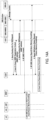
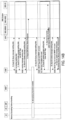
- FIGs. 14A-14B illustrate an exemplary process according to an embodiment of the disclosure. It corresponds to a use case for MT-SMS re-attempt after a failure of memory exceeding. Similar to FIGs. 13A-13B , the process involves a UE, an AN, an AMF, an SMSF, a UDM, a UDR, an SMS-IWMSC, an SMS-GMSC and an SMS-SC.
- the SMS-SC has pending SMS to be sent to a target UE, so it sends the message to an SMS entity SMS-GMSC.
- the SMS-GMSC queries the current SMS serving node for the target UE (the identity thereof could be MSISDN or IMSI) from the UDM.
- the serving SMS node is an SMSF.
- the UE registration procedure in 5G has been described above with reference to FIG. 12 .
- the UDM queries the current SMS serving node for the target UE from the UDR.
- an SMSF address is returned by the UDR.
- the UDM answers the SMS entity SMS-GMSC of the serving SMSF address for the target UE.
- the SMS-GMSC forwards the MT-SMS to the SMSF address get in step 4.
- the SMSF executes the MT-SMS over NAS delivery procedure, which may further trigger UE paging if the UE is not in connected state.
- the delivery may succeed or fail depends on the UE connectivity state in the network or the memory state on the UE. In this process, suppose the SMS delivery fails because because the UE's memory capacity is exceeded. Then, at step 7, the SMSF forwards an MT-SMS delivery report to the SMS-GSMC and the SMS-SC.
- the failure indicator indicates a failure reason of Memory Exceeding.
- the SMS-GMSC reports the MT-SMS delivery status to the UDM.
- the failure reason included in the message is Memory Exceeding.
- the UDM checks the failure reason, then based on the failure of Memory Exceeding, starts the Memory Exceeding Failure Handling.
- the UDM queries the UDR whether there is an existing SMS waiting context for the target UE. Because this is not supported by the UDR in the prior art, this message is based on our proposed new GET method. If there is not any SMS waiting context existed before, the UDM creates and stores the SMS waiting context for the UE in the UDR at step 11. Because this is not supported by the UDR in the prior art, this message is based on our proposed new PUT method. In the message body, a mobile memory exceeding flag (MCEF) is set to true to indicate the failure reason of Memory Exceeding. On the other hand, if there is an existing SMS waiting context before for the same failure reason, the UDM checks whether this is for a new SMS-SC address.
- MCEF mobile memory exceeding flag
- the UDM updates the SMS waiting context for the target UE at step 12 by adding the new SMS-SC address. Because this is not supported by the UDR in the prior art, this message is based on our proposed new PATCH method for delta update or based on our proposed new PUT method for full update.
- the UDM answers the SMS-GMSC for the report SM delivery status request at step 8.
- the UDM queries the UDR for the SMS waiting context of the target UE. Because this is not supported by the UDR in the prior art, this message is based on our proposed new GET method. If the MCEF is true and MNRF is false, then the UDM updates the SMS waiting context stored in the UDR to set the MCEF flag to false at step 16. Because this is not supported by the UDR in the prior art, this message is based on our proposed new PATCH method for delta update or based on our proposed new PUT method for full update.
- the UDM For each SMS-SC address stored in the SMS waiting context, the UDM sends the alert service center message to the SMS-SC through the SMS-IWMSC, with an alert reason to indicate a desired re-attempt because of UE memory available. Once receiving the alert message, the SMS-SC could trigger the SMS redelivery procedure. If all alert service center messages have been sent, then the UDM deletes the message waiting data for the target UE from the UDR at step 18. Because this is not supported by the UDR in the prior art, this message is based on our proposed new DELETE method.
- the UDM updates the SMS waiting context stored in the UDR at step 19.
- the update is on the re-attempt reason as memory available and the valid time for the re-attempt. Because this is not supported by the UDR in the prior art, this message is based on our proposed new PATCH method for delta update or based on our proposed new PUT method for full update.
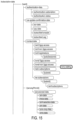
- FIG. 15 shows this proposal for the new UDR interface for MT-SMS waiting context.
- the resource URI sub-level structure for subscription data is updated with "/sms-waiting" under "/context-data”, compared to Figure 5.2.1-1 of 3GPP TS 29.505 V16.1.0. This update is highlighted by a box drawn with thick lines.
- Table 1 shows the proposal for UDR Resources and methods overview. The updates are underlined compared to Table 5.2.1-1 of 3GPP TS 29.505 V16.1.0.
- Table 1 Resources and methods overview (added with SmsWaitingContext resource compared to Table 5.2.1-1 of 3GPP TS 29.505 V16.1.0)
- Resource name Resource URI HTTP metho d Description
- Authentication Subscription /subscription-data/ ⁇ ueld ⁇ /authentication-data/authentication-subscription GET Retrieve a UE's authentication subscription data
- PATCH Update a UE's authentication subscription data Updates shall be limited to the sequenceNumb er attribute. Attempts to patch any other attribute shall be rejected by the UDR.
- Smsf3GppAccessRegistration /subscription-data/ ⁇ ueId ⁇ /contextdata /smsf-3gpp-access PUT Create or Update the SMSF registration DELET E Delete the SMSF registration for 3GPP access GET Retrieve the SMSF registration information SmsfNon3GppAccessRegistration /subscription-data/ ⁇ ueld ⁇ /contextdata /smsf-non-3gpp-access PUT Create or Update the SMSF registration for non 3GPP access DELET E Delete the SMSF registration for non 3GPP access GET Retrieve the SMSF registration information for non 3GPP access SmsWaitinqContext /subscription-data/ ⁇ ueId ⁇ /context-data /sms-waiting PUT Create/Update an individual MT-SMS waiting context for re-attempt DELETE Delete an individual MT-SMS waiting context for re-attempt PATCH Update an individual MT-SMS waiting context for re-attempt GET Retrieve
- GET retrieves the UE's provisioned parameters.
- SMS waiting context data for 5G SMS re-attempt can be supported by UDR.
- stateless UDM could work as front-end NF and UDR could work as the back-end common repository to support 5G SMS over NAS service especially for the re-attempt use cases.
- the unsuccessful MT-SMS delivery re-attempt can be supported in a 5GC deployment, in a private deployment for the vertical customers who do not have legacy generation of mobile networks deployed yet.
- (5.2.X) is a change request (CR) proposal for the description of SmsWaitingContext resource and the corresponding four serviceoperations, compared to the latest 3GPP TS 29.505 16.1.0 (2019-12 ). All the contents are new sections.
- the expression "5.2.X” means once accepted by 3GPP, this sub-chapter is under 5.2, but X should be decided when get published.
- This resource represents the dynamic MT-SMS waiting data for a UE. It is created, deleted, updated, or queried by the UDM during the MT-SMS delivery procedures (see clause 4.13.3.9 of 3GPP TS 23.502 [18]).
- Resource URI ⁇ apiRoot ⁇ /nudr-dr/ ⁇ apiVersion>/subscription-data/ ⁇ ueId ⁇ /context-data/sms-waiting This resource shall support the resource URI variables defined in table 5.2.X.2-1.
- Table 5.2.X.2-1 Resource URI variables for this resource Name Definition apiRoot See 3GPP TS 29.504 [2] clause 6.1.1 ueld Represents the Subscription Identifier SUPI or GPSI (see 3GPP TS 23.501 [4] clause 5.9.2) pattern: " ⁇ (imsi-[0-9] ⁇ 5,15 ⁇
- This method shall support the URI query parameters specified in table 5.2.X.3.1-1.
- This method shall support the request data structures specified in table 5.2.13.3.1-2 and the response data structures and response codes specified in table 5.2.13.3.1-3.
- Table 5.2.X.3.1-2 Data structures supported by the PUT Request Body on this resource Data type P Cardinality Description SmsWaitingCont ext M 1 The SMS waiting data created for a MT-SMS delivery failure which needs to be re-attempted upon UE reachable event notification or UE memory available event notification
- Table 5.2.X.3.1-3 Data structures supported by the PUT Response Body on this resource Data type P Cardinality Response codes Description SmsWaitingContext M 1 201 Created Upon success, a response body containing the created SMS waiting context shall be returned.
- This method shall support the URI query parameters specified in table 5.2.X.3.2-1.
- This method shall support the request data structures specified in table 5.2.X.3.2-2 and the response data structures and response codes specified in table 5.2.X.3.2-3.
- Table 5.2.X.3.2-2 Data structures supported by the DELETE Request Body on this resource Data type P Cardinality Description n/a The request body shall be empty.
- Table 5.2.X.3.2-3 Data structures supported by the DELETE Response Body on this resource Data type P Cardinality Response codes Description n/a 204 No Content Upon success, an empty response body shall be returned.
- This method is used to modify the provisioned parameter data in the UDR.
- This method shall support the URI query parameters specified in table 5.2.X.3.3-1.
- This method shall support the request data structures specified in table 5.2.X.3.3-2 and the response data structures and response codes specified in table 5.2.X.3.3-3.
- Table 5.2.X.3.3-2 Data structures supported by the PATCH Request Body on this resource Data type P Cardinality Description array(Patchtte m) M 1..N Contains the delta data to the SMS waiting context
- Table 5.2.X.3.3-3 Data structures supported by the PATCH Response Body on this resource Data type P Cardinality Response codes Description n/a 204 No Content Upon successful modification there is no body in the response message.
- PatchResult M 1 200 OK Upon success, the execution report is returned.
- NOTE 1 In addition common data structures as listed in table 5.5-1 are supported.
- This method shall support the URI query parameters specified in table 5.2.X.3.4-1.
- This method shall support the request data structures specified in table 5.2.X.3.4-2 and the response data structures and response codes specified in table 5.2.X.3.4-3.
- Table 5.2.X.3.4-2 Data structures supported by the GET Request Body on this resource Data type P Cardinality Description n/a Table 5.2.X.3.4-3: Data structures supported by the GET Response Body on this resource Data type P Cardinality Response codes Description SmsWaitingContext M 1 200 OK Upon success, a response body containing the SMS waiting context shall be returned.
- Table 5.5-1 are supported.
- the data model proposed by the CR is as following: 5.4.2.X Type: SmsWaitingContext Table 5.4.2.X-1: SmsWaitingContext Attribute name Data type P Cardinality Description scAddressList array(SmsScAddre ss) C 1..N SMS-SC address list mnrflndicator boolean O 0..1 MNRF indicator for the MT-SMS failure reason mceflndicator boolean O 1..N MCEF indicator for the MT-SMS failure reason reattemptReason MtsmsReattemptR eason O 1..N The reason for MT-SMS re-attempt reattemptValidTime DateTime O 0..1 The time point until which MT-SMS re-attempt is valid mcefValidTime DateTime O 0..1 The time point until which MCEF is valid 5.4.2.Y Type: SmsScAddress Table 5.4.2
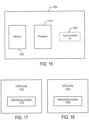
- FIG. 16 is a block diagram showing an apparatus suitable for use in practicing some embodiments of the disclosure.
- the apparatus 1600 may include a processor 1610, a memory 1620 that stores a program, and optionally a communication interface 1630 for communicating data with other external devices through wired and/or wireless communication.
- the program includes program instructions that, when executed by the processor 1610, enable the apparatus 1600 to operate in accordance with the embodiments of the present disclosure, as discussed above. That is, the embodiments of the present disclosure may be implemented at least in part by computer software executable by the processor 1610, or by hardware, or by a combination of software and hardware.
- the memory 1620 may be of any type suitable to the local technical environment and may be implemented using any suitable data storage technology, such as semiconductor based memory devices, flash memories, magnetic memory devices and systems, optical memory devices and systems, fixed memories and removable memories.
- the processor 1610 may be of any type suitable to the local technical environment, and may include one or more of general purpose computers, special purpose computers, microprocessors, digital signal processors (DSPs) and processors based on multi-core processor architectures, as non-limiting examples.
- FIG. 17 is a block diagram showing a UDM entity according to an embodiment of the disclosure.
- the UDM entity 1700 comprises a maintaining module 1702 configured to maintain an SMS waiting context for a terminal device, as described above with respect to block 602.
- the SMS waiting context is information related to a re-attempt of an MT SMS delivery from at least one SMS-SC to the terminal device due to a failure of the MT SMS delivery.
- FIG. 18 is a block diagram showing a UDR entity according to an embodiment of the disclosure.
- the UDR entity 1800 comprises a maintaining module 1802 configured to maintain, for a terminal device, an SMS waiting context in response to a request from a UDM entity, as described above with respect to block 1002.
- the SMS waiting context is information related to a re-attempt of an MT SMS delivery from at least one SMS-SC to the terminal device due to a failure of the MT SMS delivery.
- the modules described above may be implemented by hardware, or software, or a combination of both.
- the various exemplary embodiments may be implemented in hardware or special purpose circuits, software, logic or any combination thereof.
- some aspects may be implemented in hardware, while other aspects may be implemented in firmware or software which may be executed by a controller, microprocessor or other computing device, although the disclosure is not limited thereto.
- firmware or software which may be executed by a controller, microprocessor or other computing device, although the disclosure is not limited thereto.
- While various aspects of the exemplary embodiments of this disclosure may be illustrated and described as block diagrams, flow charts, or using some other pictorial representation, it is well understood that these blocks, apparatus, systems, techniques or methods described herein may be implemented in, as non-limiting examples, hardware, software, firmware, special purpose circuits or logic, general purpose hardware or controller or other computing devices, or some combination thereof.
- the exemplary embodiments of the disclosure may be practiced in various components such as integrated circuit chips and modules. It should thus be appreciated that the exemplary embodiments of this disclosure may be realized in an apparatus that is embodied as an integrated circuit, where the integrated circuit may comprise circuitry (as well as possibly firmware) for embodying at least one or more of a data processor, a digital signal processor, baseband circuitry and radio frequency circuitry that are configurable so as to operate in accordance with the exemplary embodiments of this disclosure.
- exemplary embodiments of the disclosure may be embodied in computer-executable instructions, such as in one or more program modules, executed by one or more computers or other devices.
- program modules include routines, programs, objects, components, data structures, etc. that perform particular tasks or implement particular abstract data types when executed by a processor in a computer or other device.
- the computer executable instructions may be stored on a computer readable medium such as a hard disk, optical disk, removable storage media, solid state memory, RAM, etc.
- the function of the program modules may be combined or distributed as desired in various embodiments.
- the function may be embodied in whole or in part in firmware or hardware equivalents such as integrated circuits, field programmable gate arrays (FPGA), and the like.
Landscapes
- Engineering & Computer Science (AREA)
- Computer Networks & Wireless Communication (AREA)
- Signal Processing (AREA)
- Mobile Radio Communication Systems (AREA)
- Telephonic Communication Services (AREA)
- Telephone Function (AREA)
- Infusion, Injection, And Reservoir Apparatuses (AREA)
- Pharmaceuticals Containing Other Organic And Inorganic Compounds (AREA)
- Vending Machines For Individual Products (AREA)
Applications Claiming Priority (3)
| Application Number | Priority Date | Filing Date | Title |
|---|---|---|---|
| CN2020074635 | 2020-02-10 | ||
| PCT/EP2020/077085 WO2021160299A1 (en) | 2020-02-10 | 2020-09-28 | Methods and apparatuses for sms delivery |
| EP20781499.7A EP4104463B1 (de) | 2020-02-10 | 2020-09-28 | Verfahren und vorrichtungen zur sms zustellung |
Related Parent Applications (1)
| Application Number | Title | Priority Date | Filing Date |
|---|---|---|---|
| EP20781499.7A Division EP4104463B1 (de) | 2020-02-10 | 2020-09-28 | Verfahren und vorrichtungen zur sms zustellung |
Publications (2)
| Publication Number | Publication Date |
|---|---|
| EP4284039A2 true EP4284039A2 (de) | 2023-11-29 |
| EP4284039A3 EP4284039A3 (de) | 2024-02-21 |
Family
ID=72670723
Family Applications (2)
| Application Number | Title | Priority Date | Filing Date |
|---|---|---|---|
| EP20781499.7A Active EP4104463B1 (de) | 2020-02-10 | 2020-09-28 | Verfahren und vorrichtungen zur sms zustellung |
| EP23190171.1A Pending EP4284039A3 (de) | 2020-02-10 | 2020-09-28 | Verfahren und vorrichtungen zur sms zustellung |
Family Applications Before (1)
| Application Number | Title | Priority Date | Filing Date |
|---|---|---|---|
| EP20781499.7A Active EP4104463B1 (de) | 2020-02-10 | 2020-09-28 | Verfahren und vorrichtungen zur sms zustellung |
Country Status (7)
| Country | Link |
|---|---|
| US (1) | US12185197B2 (de) |
| EP (2) | EP4104463B1 (de) |
| JP (2) | JP7345670B2 (de) |
| CN (1) | CN115088278B (de) |
| ES (1) | ES2952593T3 (de) |
| WO (1) | WO2021160299A1 (de) |
| ZA (1) | ZA202209731B (de) |
Families Citing this family (4)
| Publication number | Priority date | Publication date | Assignee | Title |
|---|---|---|---|---|
| WO2021064714A1 (en) * | 2019-10-03 | 2021-04-08 | Telefonaktiebolaget Lm Ericsson (Publ) | Support of network slicing for sms |
| CN116261107B (zh) * | 2021-12-10 | 2025-04-22 | 中国电信股份有限公司 | 短信传输方法和系统、短信网关移动交换中心设备 |
| US12526618B2 (en) * | 2022-04-28 | 2026-01-13 | T-Mobile Innovations Llc | Accelerated user data messaging in a wireless communication network |
| US20250071714A1 (en) * | 2023-08-25 | 2025-02-27 | T-Mobile Usa, Inc. | Optimized registration and deregistration messaging with the smsf and udm |
Family Cites Families (16)
| Publication number | Priority date | Publication date | Assignee | Title |
|---|---|---|---|---|
| TWI382714B (zh) * | 2003-05-01 | 2013-01-11 | Interdigital Tech Corp | 在耦合於包含相關於在WLANs上短訊息服務之協定架構及資訊元件之3GPP裝置之微微網及無線LANs(WLANs)上傳遞以資料為基礎/語音服務之方法及裝置 |
| US8848604B2 (en) | 2011-01-10 | 2014-09-30 | Alcatel Lucent | Application-originated text messages delivered over a packet-switched network |
| US10924895B2 (en) | 2013-01-22 | 2021-02-16 | Blackberry Limited | Enhancing short message service addressing and routing |
| US10531420B2 (en) | 2017-01-05 | 2020-01-07 | Huawei Technologies Co., Ltd. | Systems and methods for application-friendly protocol data unit (PDU) session management |
| CN110663284B (zh) | 2017-06-21 | 2023-08-04 | Lg电子株式会社 | 在无线通信系统中执行服务请求过程的方法和设备 |
| CN108227652A (zh) | 2017-12-21 | 2018-06-29 | 北京航空航天大学 | 一种基于MTConnect协议的能耗数据采集系统 |
| US11457336B2 (en) | 2018-05-18 | 2022-09-27 | Nec Corporation | Procedure to deliver SMS to mobile device |
| CN110582062B (zh) | 2018-05-21 | 2020-12-08 | 华为技术有限公司 | 一种消息发送的方法及装置 |
| EP3732907B1 (de) | 2018-06-25 | 2024-03-06 | NEC Corporation | Verfahren und system zur anzeige eines sms-abonnements für ein endgerät bei änderung des sms-abonnements in einem netzwerk |
| US10932097B2 (en) * | 2018-12-21 | 2021-02-23 | Verizon Patent And Licensing Inc. | Method and system of routing selection for SMS over NAS |
| JP7269356B2 (ja) * | 2019-02-07 | 2023-05-08 | アップル インコーポレイテッド | 3gppシステムにおける識別及び動作のためのuasサービスの有効化 |
| CN118890650A (zh) * | 2019-06-12 | 2024-11-01 | 苹果公司 | 与应用触发和nas上的sms有关的性能测量 |
| WO2021064714A1 (en) * | 2019-10-03 | 2021-04-08 | Telefonaktiebolaget Lm Ericsson (Publ) | Support of network slicing for sms |
| BR112022015490A2 (pt) * | 2020-02-07 | 2023-02-23 | Ericsson Telefon Ab L M | Métodos realizados por uma entidade consumidora de serviço de função de rede e por uma entidade de gerenciamento de dados, e, entidades consumidora de serviço de função de rede e de gerenciamento de dados |
| US11470454B2 (en) * | 2020-07-28 | 2022-10-11 | T-Mobile Usa, Inc. | Systems and methods for improved access to user data |
| CA3208359A1 (en) * | 2021-02-12 | 2022-08-18 | Cheng Wang | Method and apparatus for ue reachability event enhancements |
-
2020
- 2020-09-28 US US17/792,870 patent/US12185197B2/en active Active
- 2020-09-28 JP JP2022548099A patent/JP7345670B2/ja active Active
- 2020-09-28 EP EP20781499.7A patent/EP4104463B1/de active Active
- 2020-09-28 ES ES20781499T patent/ES2952593T3/es active Active
- 2020-09-28 EP EP23190171.1A patent/EP4284039A3/de active Pending
- 2020-09-28 WO PCT/EP2020/077085 patent/WO2021160299A1/en not_active Ceased
- 2020-09-28 CN CN202080096034.9A patent/CN115088278B/zh active Active
-
2022
- 2022-08-31 ZA ZA2022/09731A patent/ZA202209731B/en unknown
-
2023
- 2023-09-05 JP JP2023143708A patent/JP7546126B2/ja active Active
Non-Patent Citations (5)
| Title |
|---|
| 3GPP TS 23.501 |
| 3GPP TS 23.502 |
| 3GPP TS 29.501 |
| 3GPP TS 29.505 |
| 3GPP TS 29.505 16.1.0 |
Also Published As
| Publication number | Publication date |
|---|---|
| EP4104463C0 (de) | 2023-08-09 |
| US20230308842A1 (en) | 2023-09-28 |
| CN115088278A (zh) | 2022-09-20 |
| JP7345670B2 (ja) | 2023-09-15 |
| ZA202209731B (en) | 2024-11-27 |
| US12185197B2 (en) | 2024-12-31 |
| ES2952593T3 (es) | 2023-11-02 |
| EP4104463B1 (de) | 2023-08-09 |
| BR112022014931A2 (pt) | 2022-09-20 |
| WO2021160299A1 (en) | 2021-08-19 |
| EP4104463A1 (de) | 2022-12-21 |
| JP7546126B2 (ja) | 2024-09-05 |
| JP2023171738A (ja) | 2023-12-05 |
| EP4284039A3 (de) | 2024-02-21 |
| CN115088278B (zh) | 2024-04-19 |
| JP2023516901A (ja) | 2023-04-21 |
Similar Documents
| Publication | Publication Date | Title |
|---|---|---|
| EP4104463B1 (de) | Verfahren und vorrichtungen zur sms zustellung | |
| WO2022215331A1 (en) | Method of user equipment (ue), method of access and mobility management function (amf), method of unified data management (udm), ue, amf and udm | |
| CN115053548B (zh) | 用于注册数据检索的方法和装置 | |
| AU2022255919A1 (en) | Methods, network nodes and computer readable media for supporting set information in ue context retrieval | |
| US20090017817A1 (en) | Method and apparatuses for sending message to a mobile station by addressing the hardware part | |
| US20040038688A1 (en) | Method and system for presence determination of mobile devices | |
| US20130148492A1 (en) | Method of Handling Delayed Signaling of Target Mobile device | |
| US20250294436A1 (en) | Methods and apparatuses for facilitating network slice selection | |
| EP4184962A1 (de) | Informationsabfrage für sms | |
| US11647379B2 (en) | Methods and apparatuses for exposure of monitoring event | |
| EP4278622B1 (de) | Verfahren und vorrichtung zum routing von informationsabrufen | |
| WO2026032416A1 (en) | Methods and apparatuses for management of event subscription | |
| US8655384B2 (en) | System and method for providing location based reminders | |
| US20260046650A1 (en) | Methods and Apparatuses for Configuration of Monitoring for Terminal Device | |
| BR112022014931B1 (pt) | Entidades de gerenciamento e de repositório de dados unificados, métodos relacionados, método implementado em um sistema de comunicação e meio de armazenamento | |
| CA2996449C (en) | Optimized short message transport | |
| CN103249012B (zh) | 触发消息的发送方法、装置及系统 | |
| MXPA06008659A (en) | A method and apparatuses for sending message to a mobile station by addressing the hardware part |
Legal Events
| Date | Code | Title | Description |
|---|---|---|---|
| PUAI | Public reference made under article 153(3) epc to a published international application that has entered the european phase |
Free format text: ORIGINAL CODE: 0009012 |
|
| STAA | Information on the status of an ep patent application or granted ep patent |
Free format text: STATUS: THE APPLICATION HAS BEEN PUBLISHED |
|
| AC | Divisional application: reference to earlier application |
Ref document number: 4104463 Country of ref document: EP Kind code of ref document: P |
|
| AK | Designated contracting states |
Kind code of ref document: A2 Designated state(s): AL AT BE BG CH CY CZ DE DK EE ES FI FR GB GR HR HU IE IS IT LI LT LU LV MC MK MT NL NO PL PT RO RS SE SI SK SM TR |
|
| REG | Reference to a national code |
Ref country code: DE Ref legal event code: R079 Free format text: PREVIOUS MAIN CLASS: H04W0008060000 Ipc: H04W0004140000 |
|
| PUAL | Search report despatched |
Free format text: ORIGINAL CODE: 0009013 |
|
| AK | Designated contracting states |
Kind code of ref document: A3 Designated state(s): AL AT BE BG CH CY CZ DE DK EE ES FI FR GB GR HR HU IE IS IT LI LT LU LV MC MK MT NL NO PL PT RO RS SE SI SK SM TR |
|
| RIC1 | Information provided on ipc code assigned before grant |
Ipc: H04W 88/18 20090101ALN20240116BHEP Ipc: H04W 8/20 20090101ALN20240116BHEP Ipc: H04W 8/06 20090101ALN20240116BHEP Ipc: H04W 4/14 20090101AFI20240116BHEP |
|
| STAA | Information on the status of an ep patent application or granted ep patent |
Free format text: STATUS: REQUEST FOR EXAMINATION WAS MADE |
|
| 17P | Request for examination filed |
Effective date: 20240730 |
|
| RBV | Designated contracting states (corrected) |
Designated state(s): AL AT BE BG CH CY CZ DE DK EE ES FI FR GB GR HR HU IE IS IT LI LT LU LV MC MK MT NL NO PL PT RO RS SE SI SK SM TR |
|
| GRAP | Despatch of communication of intention to grant a patent |
Free format text: ORIGINAL CODE: EPIDOSNIGR1 |
|
| STAA | Information on the status of an ep patent application or granted ep patent |
Free format text: STATUS: GRANT OF PATENT IS INTENDED |