EP4283618A1 - Verfahren und vorrichtung zur sprachverbesserung sowie vorrichtung und speichermedium - Google Patents
Verfahren und vorrichtung zur sprachverbesserung sowie vorrichtung und speichermedium Download PDFInfo
- Publication number
- EP4283618A1 EP4283618A1 EP22749017.4A EP22749017A EP4283618A1 EP 4283618 A1 EP4283618 A1 EP 4283618A1 EP 22749017 A EP22749017 A EP 22749017A EP 4283618 A1 EP4283618 A1 EP 4283618A1
- Authority
- EP
- European Patent Office
- Prior art keywords
- speech frame
- glottal
- target speech
- target
- signal
- Prior art date
- Legal status (The legal status is an assumption and is not a legal conclusion. Google has not performed a legal analysis and makes no representation as to the accuracy of the status listed.)
- Pending
Links
Images




Classifications
-
- G—PHYSICS
- G10—MUSICAL INSTRUMENTS; ACOUSTICS
- G10L—SPEECH ANALYSIS TECHNIQUES OR SPEECH SYNTHESIS; SPEECH RECOGNITION; SPEECH OR VOICE PROCESSING TECHNIQUES; SPEECH OR AUDIO CODING OR DECODING
- G10L21/00—Speech or voice signal processing techniques to produce another audible or non-audible signal, e.g. visual or tactile, in order to modify its quality or its intelligibility
- G10L21/02—Speech enhancement, e.g. noise reduction or echo cancellation
- G10L21/0208—Noise filtering
- G10L21/0264—Noise filtering characterised by the type of parameter measurement, e.g. correlation techniques, zero crossing techniques or predictive techniques
-
- G—PHYSICS
- G10—MUSICAL INSTRUMENTS; ACOUSTICS
- G10L—SPEECH ANALYSIS TECHNIQUES OR SPEECH SYNTHESIS; SPEECH RECOGNITION; SPEECH OR VOICE PROCESSING TECHNIQUES; SPEECH OR AUDIO CODING OR DECODING
- G10L21/00—Speech or voice signal processing techniques to produce another audible or non-audible signal, e.g. visual or tactile, in order to modify its quality or its intelligibility
- G10L21/02—Speech enhancement, e.g. noise reduction or echo cancellation
-
- G—PHYSICS
- G10—MUSICAL INSTRUMENTS; ACOUSTICS
- G10L—SPEECH ANALYSIS TECHNIQUES OR SPEECH SYNTHESIS; SPEECH RECOGNITION; SPEECH OR VOICE PROCESSING TECHNIQUES; SPEECH OR AUDIO CODING OR DECODING
- G10L21/00—Speech or voice signal processing techniques to produce another audible or non-audible signal, e.g. visual or tactile, in order to modify its quality or its intelligibility
- G10L21/02—Speech enhancement, e.g. noise reduction or echo cancellation
- G10L21/0208—Noise filtering
- G10L21/0216—Noise filtering characterised by the method used for estimating noise
- G10L21/0232—Processing in the frequency domain
-
- G—PHYSICS
- G10—MUSICAL INSTRUMENTS; ACOUSTICS
- G10L—SPEECH ANALYSIS TECHNIQUES OR SPEECH SYNTHESIS; SPEECH RECOGNITION; SPEECH OR VOICE PROCESSING TECHNIQUES; SPEECH OR AUDIO CODING OR DECODING
- G10L21/00—Speech or voice signal processing techniques to produce another audible or non-audible signal, e.g. visual or tactile, in order to modify its quality or its intelligibility
- G10L21/02—Speech enhancement, e.g. noise reduction or echo cancellation
- G10L21/0316—Speech enhancement, e.g. noise reduction or echo cancellation by changing the amplitude
- G10L21/0324—Details of processing therefor
- G10L21/034—Automatic adjustment
-
- G—PHYSICS
- G10—MUSICAL INSTRUMENTS; ACOUSTICS
- G10L—SPEECH ANALYSIS TECHNIQUES OR SPEECH SYNTHESIS; SPEECH RECOGNITION; SPEECH OR VOICE PROCESSING TECHNIQUES; SPEECH OR AUDIO CODING OR DECODING
- G10L21/00—Speech or voice signal processing techniques to produce another audible or non-audible signal, e.g. visual or tactile, in order to modify its quality or its intelligibility
- G10L21/02—Speech enhancement, e.g. noise reduction or echo cancellation
- G10L21/0316—Speech enhancement, e.g. noise reduction or echo cancellation by changing the amplitude
- G10L21/0364—Speech enhancement, e.g. noise reduction or echo cancellation by changing the amplitude for improving intelligibility
-
- G—PHYSICS
- G10—MUSICAL INSTRUMENTS; ACOUSTICS
- G10L—SPEECH ANALYSIS TECHNIQUES OR SPEECH SYNTHESIS; SPEECH RECOGNITION; SPEECH OR VOICE PROCESSING TECHNIQUES; SPEECH OR AUDIO CODING OR DECODING
- G10L25/00—Speech or voice analysis techniques not restricted to a single one of groups G10L15/00 - G10L21/00
- G10L25/27—Speech or voice analysis techniques not restricted to a single one of groups G10L15/00 - G10L21/00 characterised by the analysis technique
- G10L25/30—Speech or voice analysis techniques not restricted to a single one of groups G10L15/00 - G10L21/00 characterised by the analysis technique using neural networks
Definitions
- the present disclosure relates to the field of speech processing technologies, and specifically, to a speech enhancement method and apparatus, a device, and a storage medium.
- voice communication Due to the convenience and timeliness of voice communication, voice communication is increasingly widely applied. For example, speech signals are transmitted between conference participants of cloud conferencing.
- noise may be mixed in speech signals, and the noise mixed in the speech signals leads to poor communication quality and greatly affects the auditory experience of the user. Therefore, how to enhance the speech to remove noise is a technical problem urgently needs to be resolved in the related art.
- Embodiments of the present disclosure provide a speech enhancement method and apparatus, a device, and a storage medium, to implement speech enhancement and improve quality of a speech signal.
- a speech enhancement method including:
- a speech enhancement apparatus including:
- an electronic device including: a processor; a memory, storing computer-readable instructions, the computer-readable instructions, when executed by the processor, implementing the speech enhancement method described above.
- a computer-readable storage medium storing computer-readable instructions, the computer-readable instructions, when executed by a processor, implementing the speech enhancement method described above.
- Noise in a speech signal may greatly reduce the speech quality and affect the auditory experience of a user. Therefore, to improve the quality of the speech signal, it is necessary to enhance the speech signal to remove the noise as much as possible and keep an original speech signal (that is, a pure signal excluding noise) in the signal. To enhance a speech, solutions of the present disclosure are provided.
- the solutions of the present disclosure are applicable to an application scenario of a voice call, for example, voice communication performed through an instant messaging application or a voice call in a game application.
- speech enhancement may be performed according to the solution of the present disclosure at a transmit end of a speech, a receive end of the speech, or a server end providing a voice communication service.
- the cloud conferencing is an important part of the online office.
- a sound acquisition apparatus of a participant of the cloud conferencing needs to transmit the acquired speech signal to other conference participants. This process involves transmission of the speech signal between a plurality of participants and playback of the speech signal. If a noise signal mixed in the speech signal is not processed, the auditory experiences of the conference participants are greatly affected.
- the solutions of the present disclosure are applicable to enhancing the speech signal in the cloud conferencing, so that a speech signal heard by the conference participants is the enhanced speech signal, and the quality of the speech signal is improved.
- the cloud conferencing is an efficient, convenient, and low-cost conference form based on the cloud computing technology.
- a user can quickly and efficiently share speeches, data files, and videos with teams and customers around the world synchronously by only performing simple and easy operations through an Internet interface, and for complex technologies, such as transmission and processing of data, in the conference, the cloud conferencing provider helps the user to perform operations.
- the cloud conferencing in China mainly focuses on service content with the Software as a Service (SaaS) mode as the main body, including service forms such as a telephone, a network, and a video.
- SaaS Software as a Service
- Cloud computing-based video conferencing is referred to as cloud conferencing.
- transmission, processing, and storage of data are all performed by computer resources of the video conference provider.
- a user can conduct an efficient remote conference by only opening a client and entering a corresponding interface without purchasing expensive hardware and installing cumbersome software.
- the cloud conferencing system supports multi-server dynamic cluster deployment, and provides a plurality of high-performance servers, to greatly improve the stability, security, and usability of the conference.
- the video conference can greatly improve communication efficiency, continuously reduce communication costs, and upgrade the internal management level, the video conference is welcomed by many users, and has been widely applied to various fields such as government, military, traffic, transportation, finance, operators, education, and enterprises.
- FIG. 1 is a schematic diagram of a voice communication link in a VoIP system according to one embodiment. As shown in FIG. 1 , based on a network connection between a transmit end 110 and a receive end 120, the transmit end 110 and the receive end 120 can perform speech transmission.
- the transmit end 110 includes an acquisition module 111, a pre-enhancement module 112, and an encoding module 113.
- the acquisition module 111 is configured to acquire a speech signal, and can convert an acquired acoustic signal into a digital signal.
- the pre-enhancement module 112 is configured to enhance the acquired speech signal to remove noise from the acquired speech signal and improve the quality of the speech signal.
- the encoding module 113 is configured to encode the enhanced speech signal to improve interference immunity of the speech signal during transmission.
- the pre-enhancement module 112 can perform speech enhancement according to the method of the present disclosure. After being enhanced, the speech can be further encoded, compressed, and transmitted. In this way, it can be ensured that the signal received by the receive end is not affected by the noise any more.
- the receive end 120 includes a decoding module 121, a post-enhancement module 122, and a playback module 123.
- the decoding module 121 is configured to decode the received encoded speech signal to obtain a decoded speech signal.
- the post-enhancement module 122 is configured to enhance the decoded speech signal.
- the playback module 123 is configured to play the enhanced speech signal.
- the post-enhancement module 122 can also perform speech enhancement according to the method of the present disclosure.
- the receive end 120 may also include a sound effect adjustment module.
- the sound effect adjustment module is configured to perform sound effect adjustment on the enhanced speech signal.
- speech enhancement can be performed only on the receive end 120 or the transmit end 110 according to the method of the present disclosure, and certainly, speech enhancement may also be performed on both the transmit end 110 and the receive end 120 according to the method of the present disclosure.
- the terminal device in the VoIP system can also support another third-party protocol, for example, the Public Switched Telephone Network (PSTN) circuit-switched domain phone, but cannot perform speech enhancement in the PSTN service, cannot be performed, and in such a scenario, can perform speech enhancement according to the method of the present disclosure as a terminal of the receive end.
- PSTN Public Switched Telephone Network
- a speech signal is generated by physiological movement of the human vocal organs under the control of the brain, that is, an airflow rushing out of the trachea and lungs of a person continuously impacts the vocal cord, so as to cause the vocal cord to vibrate and produce sound (i.e. output the speech signal).
- the airflow with specific energy i.e., a noise-like signal, which is equivalent to an excitation signal
- the excitation signal impacts the vocal cord of the person (the vocal cord is equivalent to a glottal filter), to generate quasi-periodic opening and closing.
- the excitation signal is regarded as an input signal of the glottal filter. Through the amplification performed by the mouth, a sound is made (a speech signal is outputted).
- FIG. 2 is a schematic diagram of a digital model of generation of a speech signal.
- the generation process of the speech signal can be described by using the digital model.
- a speech signal is outputted after gain control is performed.
- FIG. 3 is a schematic diagram of frequency responses of an excitation signal and a glottal filter obtained by decomposing an original speech signal.
- FIG. 3a is a schematic diagram of a frequency response of the original speech signal.
- FIG. 3b is a schematic diagram of a frequency response of a glottal filter obtained by decomposing the original speech signal.
- FIG. 3c is a schematic diagram of a frequency response of an excitation signal obtained by decomposing the original speech signal.
- a fluctuating part in a schematic diagram of a frequency response of an original speech signal corresponds to a peak position in a schematic diagram of a frequency response of a glottal filter.
- An excitation signal is equivalent to a residual signal after linear prediction (LP) analysis is performed on the original speech signal, and therefore, its corresponding frequency response is relatively smooth.
- LP linear prediction
- an excitation signal, a glottal filter, and a gain can be obtained by decomposing an original speech signal (that is, a speech signal that does not include noise), and the excitation signal, the glottal filter, and the gain obtained by decomposition may be used for expressing the original speech signal.
- the glottal filter can be expressed by a glottal parameter.
- a glottal parameter, an excitation signal, and gain corresponding to an original speech signal in a to-be-processed speech signal are predicted according to the speech signal.
- speech synthesis is performed based on the obtained glottal parameter, excitation signal, and gain.
- the speech signal obtained by synthesis is equivalent to the original speech signal in the to-be-processed speech signal. Therefore, the signal obtained by synthesis is equivalent to a signal with noise removed This process enhances the to-be-processed speech signal. Therefore, the signal obtained by synthesis may also be referred to as an enhanced speech signal corresponding to the to-be-processed speech signal.
- FIG. 4 is a flowchart of a speech enhancement method according to an embodiment of the present disclosure. This method may be performed by a computer device with computing and processing capabilities, for example, a server or a terminal, which is not specifically limited herein. Referring to FIG. 4 , the method includes at least steps 410 to 440, specifically described as follows:
- Step 410 Determine a glottal parameter corresponding to a target speech frame according to a frequency domain representation of the target speech frame.
- the speech signal varies with time rather than steadily and randomly.
- the speech signal is strongly correlated in a short time. That is, the speech signal has short-time correlation. Therefore, in the solution of the present disclosure, a speech frame is used as a unit for speech enhancement.
- the target speech frame is a current to-be-enhanced speech frame.
- the frequency domain representation of a target speech frame can be obtained by performing a time-frequency transform on a time domain signal of the target speech frame.
- the time-frequency transform may be, for example, a short-time Fourier transform (STFT).
- STFT short-time Fourier transform
- the frequency domain representation may be an amplitude spectrum, a complex spectrum, or the like, which is not specifically limited herein.
- the glottal parameter refers to a parameter used for constructing a glottal filter. When the glottal parameter is determined, then the glottal filter is determined correspondingly.
- the glottal filter is a digital filter.
- the glottal parameter can be a linear predictive coding (LPC) coefficient or a line spectral frequency (LSF) parameter.
- LPC linear predictive coding
- LSF line spectral frequency
- a quantity of glottal parameters corresponding to the target speech frame is related to an order of the glottal filter.
- the glottal filter is a K-order filter
- the glottal parameter includes a K-order LSF parameter or a K-order LPC coefficient.
- the LSF parameter and the LPC coefficient can be converted into each other.
- P(z) and Q(z) respectively represent periodical variation laws of glottal opening and glottal closure. Roots of multinomials P(z) and Q(z) appear alternately on a complex plane, and are a series of angular frequencies distributed on a unit circle on the complex plane.
- the LSF parameter is angular frequencies corresponding to the roots of P(z) and Q(z) on the unit circle on the complex plane.
- the LSF parameter LSF(n) corresponding to the n th speech frame may be expressed as ⁇ n .
- the LSF parameter LSF(n) corresponding to the n th speech frame may also be directly expressed as a root of P(z) corresponding to the n th speech frame and a root of Q(z) corresponding to the n th speech frame.
- roots of P(z) and Q(z) corresponding to the n th speech frame are defined as ⁇ n
- the glottal parameter prediction is performed, where the glottal parameter prediction refers to predicting a glottal parameter used for reconstructing the original speech signal in the target speech frame.
- the glottal parameter corresponding to the target speech frame can be predicted by using a trained neural network model.
- step 410 includes: inputting the frequency domain representation of the target speech frame into a first neural network, the first neural network being obtained by training according to a frequency domain representation of a sample speech frame and a glottal parameter corresponding to the sample speech frame; and outputting, by the first neural network according to the frequency domain representation of the target speech frame, the glottal parameter corresponding to the target speech frame.
- the first neural network refers to a neural network model used for performing glottal parameter prediction.
- the first neural network may be a model constructed by using a long short-term memory neural network, a convolutional neural network, a cyclic neural network, a fully-connected neural network, or the like, which is not specifically limited herein.
- the frequency domain representation of a sample speech frame is obtained by performing a time-frequency transform on a time domain signal of the sample speech frame.
- the frequency domain representation may be an amplitude spectrum, a complex spectrum, or the like, which is not specifically limited herein.
- a signal indicated by the sample speech frame may be obtained by combining a known original speech signal and a known noise signal. Therefore, when the original speech signal is known, linear predictive analysis can be performed on the original speech signal, to obtain glottal parameters corresponding to the sample speech frames.
- the first neural network performs glottal parameter prediction according to the frequency domain representation of the sample speech frame, and outputs a predicted glottal parameter. Then, the predicted glottal parameter is compared with the glottal parameter corresponding to the original speech signal in the sample speech frame. When the two are inconsistent, a parameter of the first neural network is adjusted until the predicted glottal parameter outputted by the first neural network according to the frequency domain representation of the sample speech frame is consistent with the glottal parameter corresponding to the original speech signal in the sample speech frame. After the training ends, the first neural network acquires the capability of accurately predicting a glottal parameter corresponding to an original speech signal in an inputted speech frame according to a frequency domain representation of the speech frame.
- a glottal parameter corresponding to a target speech frame can be predicted with reference to a glottal parameter corresponding to a historical speech frame before the target speech frame.
- the historical speech frame is a previous speech frame of the target speech frame, i.e. a speech frame which is temporally previous or prior to the target speech frame.
- the previous speech frame can be adjacent to the target speech frame.
- step 410 includes: determining the glottal parameter corresponding to the target speech frame by using a glottal parameter corresponding to the historical speech frame of the target speech frame as a reference.
- a process of predicting the glottal parameter of the target speech frame can be supervised by using the glottal parameter corresponding to the original speech signal in the historical speech frame of the target speech frame as a reference, which can improve the accuracy rate of glottal parameter prediction.
- a glottal parameter of a speech frame closer to the target speech frame has a higher similarity. Therefore, the accuracy rate of prediction can be further ensured by using a glottal parameter corresponding to a historical speech frame relatively close to the target speech frame as a reference.
- a glottal parameter corresponding to a previous speech frame of the target speech frame can be used as a reference.
- a quantity of historical speech frames used as a reference may be one or more, which can be selected according to actual needs.
- a glottal parameter corresponding to the historical speech frame of the target speech frame may be a glottal parameter obtained by performing glottal parameter prediction on the historical speech frame.
- a glottal parameter prediction process of a current speech frame is supervised by multiplexing a glottal parameter predicted for the historical speech frame.
- a glottal parameter corresponding to a historical speech frame of a target speech frame is also used as an input of the first neural network for glottal parameter prediction.
- step 410 includes: inputting the frequency domain representation of the target speech frame and the glottal parameter corresponding to the historical speech frame of the target speech frame into a first neural network, the first neural network being obtained by training according to a frequency domain representation of a sample speech frame, a glottal parameter corresponding to the sample speech frame, and a glottal parameter corresponding to a historical speech frame of the sample speech frame; and performing, by the first neural network, prediction according to the frequency domain representation of the target speech frame and the glottal parameter corresponding to the historical speech frame of the target speech frame, and outputting the glottal parameter corresponding to the target speech frame.
- the frequency domain representation of the sample speech frame and the glottal parameter corresponding to the historical speech frame of the sample speech frame are inputted into the first neural network.
- the first neural network outputs a predicted glottal parameter.
- a parameter of the first neural network is adjusted until the outputted predicted glottal parameter is consistent with the glottal parameter corresponding to the original speech signal in the sample speech frame.
- the first neural network acquires the capability of predicting, according to a frequency domain representation of a speech frame and a glottal parameter corresponding to a historical speech frame of the speech frame, a glottal parameter used for reconstructing an original speech signal in the speech frame.
- Step 420 Determine a gain corresponding to the target speech frame according to a gain corresponding to a historical speech frame of the target speech frame.
- a gain corresponding to a historical speech frame is a gain used for reconstructing an original speech signal in the historical speech frame.
- the gain that corresponds to the target speech frame and that is predicted in step 420 is used for reconstructing the original speech signal in the target speech frame.
- gain prediction may be performed on the target speech frame in a deep learning manner. That is, gain prediction is performed by using a constructed neural network model.
- a neural network model used for performing gain prediction is referred to as a second neural network.
- the second neural network may be a model constructed by using a long short-term memory neural network, a convolutional neural network, a fully-connected neural network, or the like.
- step 420 may include: inputting the gain corresponding to the historical speech frame of the target speech frame to a second neural network, the second neural network being obtained by training according to a gain corresponding to a sample speech frame and a gain corresponding to a historical speech frame of the sample speech frame; and outputting, by the second neural network, the target gain according to the gain corresponding to the historical speech frame of the target speech frame.
- a signal indicated by the sample speech frame may be obtained by combining a known original speech signal and a known noise signal. Therefore, when the original speech signal is known, linear predictive analysis can be performed on the original speech signal, to correspondingly determine gains corresponding to the sample speech frames, that is, a gain used for reconstructing the original speech signal in the sample speech frame.
- the gain corresponding to the historical speech frame of the target speech frame may be obtained by performing gain prediction by the second neural network for the historical speech frame.
- the gain predicted by the historical speech frame is multiplexed as an input of the second neural network model in a process of performing gain prediction on the target speech frame.
- the gain corresponding to the historical speech frame of the sample speech frame is inputted into the second neural network, and then, the second neural network performs gain prediction on the inputted gain corresponding to the historical speech frame of the sample speech frame, and outputs a predicted gain. Then, a parameter of the second neural network is adjusted according to the predicted gain and the gain corresponding to the sample speech frame. That is, when the predicted gain is inconsistent with the gain corresponding to the sample speech frame, the parameter of the second neural network is adjusted until the predicted gain outputted by the second neural network for the sample speech frame is consistent with the gain corresponding to the sample speech frame.
- the second neural network can acquire the capability of predicting a gain corresponding to a speech frame according to a gain corresponding to a historical speech frame of the speech frame, so as to accurately perform gain prediction.
- Step 430 Determine an excitation signal corresponding to the target speech frame according to the frequency domain representation of the target speech frame.
- the excitation signal prediction is performed, where the excitation signal prediction refers to predicting a corresponding excitation signal used for reconstructing the original speech signal in the target speech frame. Therefore, the excitation signal corresponding to the target speech frame may be used for reconstructing the original speech signal in the target speech frame.
- excitation signal prediction may be performed in a deep learning manner. That is, excitation signal prediction is performed by using a constructed neural network model.
- a neural network model used for performing excitation signal prediction is referred to as a third neural network.
- the third neural network may be a model constructed by using a long short-term memory neural network, a convolutional neural network, a fully-connected neural network, or the like.
- step 430 may include: inputting the frequency domain representation of the target speech frame to a third neural network, the third neural network being obtained by training according to a frequency domain representation of a sample speech frame and a frequency domain representation of an excitation signal corresponding to the sample speech frame; and outputting, by the third neural network according to the frequency domain representation of the target speech frame, a frequency domain representation of the excitation signal corresponding to the target speech frame.
- the excitation signal corresponding to the sample speech frame refers to an excitation signal used for reconstructing the original speech signal in the sample speech frame.
- the excitation signal corresponding to the sample speech frame can be determined by performing linear predictive analysis on the original speech signal in the sample speech frame.
- the frequency domain representation of the excitation signal may be an amplitude spectrum, a complex spectrum, or the like of the excitation signal, which is not specifically limited herein.
- the frequency domain representation of the sample speech frame is inputted into the third neural network model, and then, the third neural network performs excitation signal prediction according to the inputted frequency domain representation of the sample speech frame, and outputs a predicted frequency domain representation of the excitation signal. Further, a parameter of the third neural network is adjusted according to the frequency domain representation of the excitation signal and the frequency domain representation of the excitation signal corresponding to the sample speech frame.
- the parameter of the third neural network is adjusted until the predicted frequency domain representation of the excitation signal outputted by the third neural network for the sample speech frame is consistent with the frequency domain representation of the excitation signal corresponding to the sample speech frame.
- the third neural network can acquire the capability of predicting an excitation signal corresponding to a speech frame according to a frequency domain representation of the speech frame, so as to accurately perform excitation signal prediction.
- Step 440 Synthesize the determined glottal parameter, the determined gain, and the determined excitation signal, to obtain an enhanced speech signal corresponding to the target speech frame.
- linear predictive analysis can be performed based on the three parameters to implement synthesis, to obtain an enhanced signal corresponding to the target speech frame.
- a glottal filter may be first constructed according to the glottal parameter corresponding to the target speech frame, and then, speech synthesis is performed according to the foregoing formula (1) with reference to the gain and the excitation signal that correspond to the target speech frame, to obtain an enhanced speech signal corresponding to the target speech frame.
- step 440 includes steps 510 to 530:
- Step 510 Construct a glottal filter according to the glottal parameter corresponding to the target speech frame.
- the glottal filter can be constructed directly according to the foregoing formula (2).
- the glottal filter is a K-order filter
- the glottal parameter corresponding to the target speech frame includes a K-order LPC coefficient, that is, a 1 , a 2 , ..., a K , in the foregoing formula (2).
- a constant 1 in the foregoing formula (2) may also be used as an LPC coefficient.
- the glottal parameter is an LSF parameter
- the LSF parameter can be converted into an LPC coefficient, and then, glottal filter is correspondingly constructed according to the foregoing formula (2).
- Step 520 Filter the excitation signal corresponding to the target speech frame by using the glottal filter, to obtain a first speech signal.
- the filtering is convolution in time domain. Therefore, the foregoing process of filtering the excitation signal by using the glottal filter can be transformed to the time domain for processing. Then, based on the predicted frequency domain representation of the excitation signal corresponding to the target speech frame, the frequency domain representation of the excitation signal is transformed to the time domain, to obtain a time domain signal of the excitation signal corresponding to the target speech frame.
- the target speech frame is a digital signal, including a plurality of sample points.
- the excitation signal is filtered by using the glottal filter. That is, convolution is performed on a historical sample point before a sample point and the glottal filter, to obtain a target signal value corresponding to the sample point.
- the target speech frame includes a plurality of sample points.
- the glottal filter is a K-order filter, K being a positive integer.
- the excitation signal includes excitation signal values respectively corresponding to the plurality of sample points in the target speech frame.
- step 520 includes: for one sample point in the target speech frame, performing convolution on excitation signal values corresponding to K sample points before the sample point in the target speech frame and the K-order filter, to obtain a target signal value of the sample point in the target speech frame; and combining target signal values corresponding to the sample points in the target speech frame chronologically, to obtain the first speech signal.
- K-order filter For an expression of the K-order filter, reference may be made to the foregoing formula (1). That is, for each sample point in the target speech frame, convolution is performed on excitation signal values corresponding to K sample points before the sample point and the K-order filter, to obtain a target signal value corresponding to the each sample point.
- a target signal value corresponding to the first sample point needs to be calculated by using excitation signal values of the last K sample points in the previous speech frame of the target speech frame.
- the second sample point in the target speech frame convention needs to be performed on excitation signal values of the last (K-1) sample points in the previous speech frame of the target speech frame and an excitation signal value of the first sample point in the target speech frame and the K-order filter, to obtain a target signal value corresponding to the second sample point in the target speech frame.
- step 520 requires participation of an excitation signal value corresponding to a historical speech frame of the target speech frame.
- a quantity of sample points in the required historical speech frame is related to an order of the glottal filter. That is, when the glottal filter is K-order, participation of excitation signal values corresponding to the last K sample points in the previous speech frame of the target speech frame is required.
- Step 530 Amplify the first speech signal according to the gain corresponding to the target speech frame, to obtain the enhanced speech signal corresponding to the target speech frame.
- speech synthesis is performed on the glottal parameter, excitation signal, and gain predicted for the target speech frame, to obtain the enhanced speech signal of the target speech frame.
- the glottal parameter and the excitation signal that are used for reconstructing the original speech signal in the target speech frame are predicted based on the frequency domain representation of the target speech frame
- the gain used for reconstructing the original speech signal in the target speech frame is predicted based on the gain of the historical speech frame of the target speech frame
- speech synthesis is performed the predicted glottal parameter, excitation signal, and gain that correspond to the target speech frame, which is equivalent to constructing the original speech signal in the target speech frame
- the signal obtained through synthesis is an enhanced speech signal corresponding to the target speech frame, thereby enhancing the speech frame and improving the quality of the speech signal.
- speech enhancement may be performed through spectral estimation and spectral regression prediction.
- spectrum estimation speech enhancement manner it is considered that a mixed speech includes a speech part and a noise part, and therefore, noise can be estimated by using a statistical models and the like.
- a spectrum corresponding to the noise is subtracted from a spectrum corresponding to the mixed speech, and the remaining is a speech spectrum.
- a clean speech signal is restored according to the spectrum obtained by subtracting the spectrum corresponding to the noise from the spectrum corresponding to the mixed speech.
- a masking threshold corresponding to the speech frame is predicted through the neural network.
- the masking threshold reflects a ratio of a speech component and a noise component in each frequency point of the speech frame. Then, gain control is performed on the mixed signal spectrum according to the masking threshold, to obtain an enhanced spectrum.
- the foregoing speech enhancement through spectral estimation and spectral regression prediction is based on estimation of a posterior probability of the noise spectrum, in which there may be inaccurate estimated noise. For example, because transient noise, such as keystroke noise, occurs transiently, an estimated noise spectrum is very inaccurate, resulting in a poor noise suppression effect.
- noise spectrum prediction is inaccurate, if the original mixed speech signal is processed according to the estimated noise spectrum, distortion of a speech in the mixed speech signal or a poor noise suppression effect may be caused. Therefore, in this case, a compromise needs to be made between speech fidelity and noise suppression.
- the glottal parameter is strongly related to a glottal feature in a physical process of speech generation
- synthesizing a speech according to the predicted glottal parameter effectively ensures a speech structure of the original speech signal in the target speech frame. Therefore, obtaining the enhanced speech signal of the target speech frame by performing synthesis on the predicted glottal parameter, excitation signal, and gain can effectively prevent the original speech signal in the target speech frame from being cut down, thereby effectively protecting the speech structure.
- the glottal parameter, excitation signal, and gain corresponding to the target speech frame are predicted, because the original noisy speech is not processed any more, there is no need to make a compromise between speech fidelity and noise suppression.
- the method before step 410, further includes: obtaining a time domain signal of the target speech frame; and performing a time-frequency transform on the time domain signal of the target speech frame, to obtain the frequency domain representation of the target speech frame.
- the time-frequency transform may be a short-time Fourier transform (STFT).
- STFT short-time Fourier transform
- the frequency domain representation may be an amplitude spectrum, a complex spectrum, or the like, which is not specifically limited herein.
- FIG. 6 is a schematic diagram of windowed overlapping in a short-time Fourier transform according to one embodiment of the present disclosure.
- a 50% windowed overlapping operation is adopted.
- a quantity of overlapping samples (hop-size) of the window function is 320.
- the window function used for windowing may be a Hanning window, and certainly, may also be another window function, which is not specifically limited herein.
- a non-50% windowed overlapping operation may also be adopted.
- the short-time Fourier transform is aimed at 512 sample points, if a speech frame includes 320 sample points, it only needs to overlap 192 sample points of the previous speech frame.
- the obtaining a time domain signal of the target speech frame includes: a second speech signal, the second speech signal being an acquired speech signal or a speech signal obtained by decoding an encoded speech; and framing the second speech signal, to obtain the time domain signal of the target speech frame.
- the second speech signal may be framed according to a set frame length.
- the frame length may be set according to actual needs. For example, the frame length may be set to 20ms.
- the solution of the present disclosure can be applied to a transmit end for speech enhancement or to a receive end for speech enhancement.
- the second speech signal is a speech signal acquired by the transmit end, and then the second speech signal is framed, to obtain a plurality of speech frames.
- each speech frame can be used as the target speech frame, and the target speech frame can be enhanced according to the foregoing process of steps 410 to 440.
- the enhanced speech signal can also be encoded, so as to perform transmission based on the obtained encoded speech signal.
- the directly acquired speech signal is an analog signal
- the signal further needs to be digitalized.
- the acquired speech signal can be sampled according to a set sampling rate.
- the set sampling rate may be 16000 Hz, 8000 Hz, 32000 Hz, 48000 Hz, or the like, which can be set specifically according to actual needs.
- the second speech signal is a speech signal obtained by decoding a received encoded speech signal, and after a plurality of speech frames are obtained by framing the second speech signal.
- the second speech signal is used as a target speech frame, and the target speech frame is enhanced according to the foregoing process of steps 410 to 440, to obtain an enhanced speech signal of the target speech frame.
- the enhanced speech signal corresponding to the target speech frame may also be played. Because compared with the signal before the target speech frame is enhanced, the obtained enhanced speech signal already has noise removed, and quality of the speech signal is higher, for the user, the auditory experience is better.
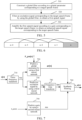
- FIG. 7 is a flowchart of a speech enhancement method according to one embodiment. It is assumed that the n th speech frame is used as the target speech frame, and a time domain signal of the n th speech frame is s(n). As shown in FIG. 7 , a time-frequency transform is performed on the n th speech frame in step 710 to obtain a frequency domain representation S(n) of the n th speech frame. S(n) may be an amplitude spectrum or a complex spectrum, which is not specifically limited herein.
- the glottal parameter corresponding to the n th speech frame can be predicted through step 720, and an excitation signal corresponding to the target speech frame can be obtained through steps 730 and 740.
- step 720 only the frequency domain representation S(n) of the n th speech frame may be used as an input of the first neural network, or a glottal parameter P_pre(n) corresponding to a historical speech frame of the target speech frame and the frequency domain representation S(n) of the n th speech frame may be used as inputs of the first neural network.
- the first neural network may perform glottal parameter prediction based on the inputted information, to obtain a glottal parameter ar(n) corresponding to the n th speech frame.
- the frequency domain representation S(n) of the n th speech frame is used as an input of the third neural network.
- the third neural network performs excitation signal prediction based on the inputted information, to output a frequency domain representation R(n) of an excitation signal corresponding to the n th speech frame.
- a frequency-time transform may be performed in step 740 to transform the frequency domain representation R(n) of the excitation signal corresponding to the n th speech frame into a time domain signal r(n).
- a gain corresponding to the n th speech frame is obtained through step 750.
- a gain G_pre(n) of a historical speech frame of the n th speech frame is used as an input of the second neural network, and the second neural network correspondingly performs gain prediction to obtain a gain G_(n) corresponding to the n th speech frame.
- synthesis filtering is performed based on the three parameters in step 760, to obtain an enhanced speech signal s_e(n) corresponding to the n th speech frame.
- speech synthesis can be performed according to the principle of linear predictive analysis. In a process of performing speech synthesis according to the principle of linear predictive analysis, information about a historical speech frame needs to be used.
- a process of filtering the excitation signal by using the glottal filter is performing, for the t th sample point, convolution by using excitation signal values of previous p historical sample points thereof and a p-order glottal filter, to obtain a target signal value corresponding to the sample point.
- the glottal filter is a 16-order digital filter
- information about the last p sample points in the (n-1) th frame also needs to be used.
- Step 720, step 730, and step 750 are further described below with reference to example embodiments.
- a frame length is 20 ms
- each speech frame includes 320 sample points.
- the short-time Fourier transform performed in this method uses 640 sample points and has 320 sample points overlapped.
- the glottal parameter is a line spectral frequency coefficient, that is, the glottal parameter corresponding to the n th speech frame is ar(n), a corresponding LSF parameter is LSF(n), and the glottal filter is set to a 16-order filter.
- FIG. 8 is a schematic diagram of a first neural network according to one embodiment.
- the first neural network includes one long short-term memory (LSTM) layer and three cascaded fully connected (FC) layers.
- the LSTM layer is a hidden layer, including 256 units, and an input of the LSTM layer is the frequency domain representation S(n) of the n th speech frame.
- the input of the LSTM layer is a 321-dimensional STFT coefficient.
- an activation function ⁇ () is set in the first two FC layers. The set activation function is used for improving a nonlinear expression capability of the first neural network.
- the last FC layer is used as a classifier to perform classification and outputting.
- the three FC layers include 512, 512, and 16 units respectively from bottom to top, and an output of the last FC layer is a 16-dimensional line spectral frequency coefficient LSF(n) corresponding to the n th speech frame, that is, a 16-order line spectral frequency coefficient.
- FIG. 9 is a schematic diagram of an input and an output of a first neural network according to another embodiment.
- the structure of the first neural network in FIG. 9 is the same as that in FIG. 8 .
- the input of the first neural network in FIG. 9 further includes a line spectral frequency coefficient LSF(n-1) of the previous speech frame (that is, the (n-1) th frame) of the n th frame speech frame.
- the line spectral frequency coefficient LSF(n-1) of the previous speech frame of the n th speech frame is embedded in the second FC layer as reference information. Due to an extremely high similarity between LSF parameters of two neighboring speech frames, when the LSF parameter corresponding to the historical speech frame of the n th speech frame is used as reference information, the accuracy rate of the LSF parameter prediction can be improved.
- FIG. 10 is a schematic diagram of a second neural network according to one embodiment.
- the second neural network includes one LSTM layer and one FC layer.
- the LSTM layer is a hidden layer, including 128 units.
- An input of the FC layer is a 512-dimensional vector, and an output thereof is a 1-dimensional gain.
- a quantity of historical speech frames selected for gain prediction is not limited to the foregoing example, and can be specifically selected according to actual needs.
- the network presents an M-to-N mapping relationship (N ⁇ M), that is, a dimension of inputted information of the neural network is M, and a dimension of outputted information thereof is N, which greatly simplifies the structures of the first neural network and the second neural network, and reduces the complexity of the neural network model.
- FIG. 11 is a schematic diagram of a third neural network according to one embodiment.
- the third neural network includes one LSTM layer and three FC layers.
- the LSTM layer is a hidden layer, including 256 units.
- An input of the LSTM layer is a 321-dimensional STFT coefficient S(n) corresponding to the n th speech frame.
- Quantities of units included in the three FC layers are 512, 512, and 321 respectively, and the last FC layer outputs a 321-dimensional frequency domain representation R(n) of an excitation signal corresponding to the n th speech frame.
- the first two FC layers in the three FC layers have an activation function set therein, and are configured to improve a nonlinear expression capability of the model, and the last FC layer has no activation function set therein, and is configured to perform classification and outputting.
- Structures of the first neural network, the second neural network, and the third neural network shown in FIG. 8-11 are merely illustrative examples. In other embodiments, a corresponding network structure may also be set in an open source platform of deep learning and is trained correspondingly.
- FIG. 12 is a block diagram of a speech enhancement apparatus according to an embodiment. As shown in FIG. 12 , the speech enhancement apparatus includes:
- the synthesis module 1240 includes: a glottal filter construction unit, configured to construct a glottal filter according to the glottal parameter corresponding to the target speech frame; a filter unit, configured to filtering the excitation signal corresponding to the target speech frame by using the glottal filter, to obtain a first speech signal; and an amplification unit, configured to amplify the first speech signal according to the gain corresponding to the target speech frame, to obtain the enhanced speech signal corresponding to the target speech frame.
- the target speech frame includes a plurality of sample points.
- the glottal filter is a K-order filter, K being a positive integer.
- the excitation signal includes excitation signal values respectively corresponding to the plurality of sample points in the target speech frame.
- the filter unit includes: a convolution unit, configured to for one sample point in the target speech frame, perform convolution on excitation signal values corresponding to K sample points before the sample point in the target speech frame and the K-order filter, to obtain a target signal value of the sample point in the target speech frame; and a combination unit, configured to combine target signal values corresponding to the sample points in the target speech frame chronologically, to obtain the first speech signal.
- the glottal filter is a K-order filter, and the glottal parameter includes a K-order line spectral frequency parameter or a K-order linear prediction coefficient.
- the glottal parameter prediction module 1210 includes: a first input unit, configured to input the frequency domain representation of the target speech frame into a first neural network, the first neural network being obtained by training according to a frequency domain representation of a sample speech frame and a glottal parameter corresponding to the sample speech frame; and a first output unit, configured to output, by the first neural network according to the frequency domain representation of the target speech frame, the glottal parameter corresponding to the target speech frame.
- the glottal parameter prediction module 1210 is further configured to determining the glottal parameter corresponding to the target speech frame by using a glottal parameter corresponding to the historical speech frame of the target speech frame as a reference.
- the glottal parameter prediction module 1210 includes: a second input unit, configured to input the frequency domain representation of the target speech frame and the glottal parameter corresponding to the historical speech frame of the target speech frame into a first neural network, the first neural network being obtained by training according to a frequency domain representation of a sample speech frame, a glottal parameter corresponding to the sample speech frame, and a glottal parameter corresponding to a historical speech frame of the sample speech frame; and a second output unit, configured to perform, by the first neural network, prediction according to the frequency domain representation of the target speech frame and the glottal parameter corresponding to the historical speech frame of the target speech frame, and output the glottal parameter corresponding to the target speech frame.
- the gain prediction module 1220 includes: a third input unit, configured to input the gain corresponding to the historical speech frame of the target speech frame to a second neural network, the second neural network being obtained by training according to a gain corresponding to a sample speech frame and a gain corresponding to a historical speech frame of the sample speech frame; and a third output unit, configured to output, by the second neural network, the target gain according to the gain corresponding to the historical speech frame of the target speech frame.
- the excitation signal prediction module 1230 includes: a fourth input unit, configured to input the frequency domain representation of the target speech frame to a third neural network, the third neural network being obtained by training according to a frequency domain representation of a sample speech frame and a frequency domain representation of an excitation signal corresponding to the sample speech frame; and a fourth output unit, configured to output, by the third neural network according to the frequency domain representation of the target speech frame, a frequency domain representation of the excitation signal corresponding to the target speech frame.
- the speech enhancement apparatus further includes: an obtaining module, configured to obtaining a time domain signal of the target speech frame; and a time-frequency transform module, configured to perform a time-frequency transform on the time domain signal of the target speech frame, to obtain the frequency domain representation of the target speech frame.
- the obtaining module is further configured to obtain a second speech signal, the second speech signal being an acquired speech signal or a speech signal obtained by decoding an encoded speech; and frame the second speech signal, to obtain the time domain signal of the target speech frame.
- the speech enhancement apparatus further includes a processing module, configured to play or encode and transmit the enhanced speech signal corresponding to the target speech frame.
- FIG. 13 is a schematic structural diagram of a computer system adapted to implement an electronic device according to an embodiment of the present disclosure.
- the computer system 1300 of the electronic device shown in FIG. 13 is merely an example, and does not constitute any limitation on functions and use ranges of the embodiments of the present disclosure.
- the computer system 1300 includes a central processing unit (CPU) 1301, which may perform various suitable actions and processing based on a program stored in a read-only memory (ROM) 1302 or a program loaded from a storage part 1308 into a random access memory (RAM) 1303, for example, perform the method in the foregoing embodiments.
- the RAM 1303 further stores various programs and data required for operating the system.
- the CPU 1301, the ROM 1302, and the RAM 1303 are connected to each other by a bus 1304.
- An input/output (I/O) interface 1305 is also connected to the bus 1304.
- the following components are connected to the I/O interface 1305 includes an input part 1306 including a keyboard, a mouse, or the like; an output part 1307 including a cathode ray tube (CRT), a liquid crystal display (LCD), a speaker, or the like; a storage part 1308 including hard disk, or the like; and a communication part 1309 including a network interface card such as a local area network (LAN) card, a modem, or the like.
- the communication part 1309 performs communication processing by using a network such as the Internet.
- a driver 1310 is also connected to the I/O interface 1305 as required.
- a removable medium 1311 such as a magnetic disk, an optical disc, a magneto-optical disk, or a semiconductor memory, is installed on the driver 1310 as required, so that a computer program read from the removable medium is installed into the storage part 1308 as required.
- the processes described in the following by referring to the flowcharts may be implemented as computer software programs.
- the embodiments of the present disclosure include a computer program product, the computer program product includes a computer program carried on a computer-readable medium, and the computer program includes program code used for performing the methods shown in the flowcharts.
- the computer program may be downloaded and installed from a network, and/or installed from the removable medium 1311.
- the various functions defined in the system of the present disclosure are executed.
- the computer-readable medium shown in the embodiments of the present disclosure may be a computer-readable signal medium or a computer-readable storage medium or any combination of two.
- the computer-readable storage medium may be, for example, but is not limited to, an electrical, magnetic, optical, electromagnetic, infrared, or semiconductor system, apparatus, or device, or any combination thereof.
- a more specific example of the computer-readable storage medium may include but is not limited to: an electrical connection having one or more wires, a portable computer magnetic disk, a hard disk, a random access memory (RAM), a read-only memory (ROM), an erasable programmable read-only memory (EPROM), a flash memory, an optical fiber, a compact disk read-only memory (CD-ROM), an optical storage device, a magnetic storage device, or any appropriate combination thereof.
- the computer-readable storage medium may be any tangible medium containing or storing a program, and the program may be used by or used in combination with an instruction execution system, an apparatus, or a device.
- the computer-readable signal medium may include a data signal being in a baseband or propagated as at least a part of a carrier wave, and carries computer-readable program code.
- a data signal propagated in such a way may assume a plurality of forms, including, but not limited to, an electromagnetic signal, an optical signal, or any appropriate combination thereof.
- the computer-readable signal medium may be further any computer-readable medium in addition to a computer-readable storage medium.
- the computer-readable medium may send, propagate, or transmit a program that is used by or used in combination with an instruction execution system, apparatus, or device.
- the program code included in the computer-readable medium may be transmitted by using any suitable medium, including but not limited to: a wireless medium, a wired medium, or the like, or any suitable combination thereof.
- Each box in a flowchart or a block diagram may represent a module, a program segment, or a part of code.
- the module, the program segment, or the part of code includes one or more executable instructions used for implementing specified logic functions.
- functions marked in boxes may alternatively occur in a sequence different from that marked in an accompanying drawing. For example, two boxes shown in succession may actually be performed basically in parallel, and sometimes the two boxes may be performed in a reverse sequence. This is determined by a related function.
- Each box in the block diagram or the flowchart, and a combination of boxes in the block diagram or the flowchart may be implemented by using a dedicated hardware-based system that performs a specified function or operation, or may be implemented by using a combination of dedicated hardware and computer instructions.
- a related unit described in the embodiments of the present disclosure may be implemented in a software manner, or may be implemented in a hardware manner, and the unit described may also be set in a processor. Names of the units do not constitute a limitation on the units in a specific case.
- the present disclosure further provides a computer-readable storage medium.
- the computer-readable storage medium may be included in the electronic device described in the foregoing embodiments, or may exist alone without being assembled into the electronic device.
- the computer-readable storage medium carries computer-readable instructions.
- the computer-readable instructions when executed by a processor, implement the method in any one of the foregoing embodiments.
- an electronic device including: a processor; a memory, storing computer-readable instructions, the computer-readable instructions, when executed by the processor, implementing the method in any one of the foregoing embodiments.
- a computer program product or a computer program includes computer instructions, and the computer instructions are stored in a computer-readable storage medium.
- a processor of a computer device reads the computer instructions from the computer-readable storage medium and executes the computer instructions to cause the computer device to perform the method in any one of the foregoing embodiments.
- the exemplary implementations described herein may be implemented through software, or may be implemented through software located in combination with necessary hardware. Therefore, the technical solutions according to the implementations of the present disclosure may be implemented in a form of a software product.
- the software product may be stored in a non-volatile storage medium (which may be a CD-ROM, a USB flash drive, a removable hard disk, or the like) or on the network, including several instructions for instructing a computing device (which may be a personal computer, a server, a touch terminal, a network device, or the like) to perform the methods according to the implementations of the present disclosure.
Landscapes
- Engineering & Computer Science (AREA)
- Human Computer Interaction (AREA)
- Signal Processing (AREA)
- Health & Medical Sciences (AREA)
- Audiology, Speech & Language Pathology (AREA)
- Computational Linguistics (AREA)
- Physics & Mathematics (AREA)
- Acoustics & Sound (AREA)
- Multimedia (AREA)
- Quality & Reliability (AREA)
- Artificial Intelligence (AREA)
- Evolutionary Computation (AREA)
- Telephonic Communication Services (AREA)
- Compression, Expansion, Code Conversion, And Decoders (AREA)
Applications Claiming Priority (2)
| Application Number | Priority Date | Filing Date | Title |
|---|---|---|---|
| CN202110171244.6A CN113571079B (zh) | 2021-02-08 | 2021-02-08 | 语音增强方法、装置、设备及存储介质 |
| PCT/CN2022/074225 WO2022166738A1 (zh) | 2021-02-08 | 2022-01-27 | 语音增强方法、装置、设备及存储介质 |
Publications (2)
| Publication Number | Publication Date |
|---|---|
| EP4283618A1 true EP4283618A1 (de) | 2023-11-29 |
| EP4283618A4 EP4283618A4 (de) | 2024-06-19 |
Family
ID=78161158
Family Applications (1)
| Application Number | Title | Priority Date | Filing Date |
|---|---|---|---|
| EP22749017.4A Pending EP4283618A4 (de) | 2021-02-08 | 2022-01-27 | Verfahren und vorrichtung zur sprachverbesserung sowie vorrichtung und speichermedium |
Country Status (5)
| Country | Link |
|---|---|
| US (1) | US12361959B2 (de) |
| EP (1) | EP4283618A4 (de) |
| JP (1) | JP7615510B2 (de) |
| CN (1) | CN113571079B (de) |
| WO (1) | WO2022166738A1 (de) |
Families Citing this family (4)
| Publication number | Priority date | Publication date | Assignee | Title |
|---|---|---|---|---|
| CN113571079B (zh) * | 2021-02-08 | 2025-07-11 | 腾讯科技(深圳)有限公司 | 语音增强方法、装置、设备及存储介质 |
| US20240331715A1 (en) * | 2023-04-03 | 2024-10-03 | Samsung Electronics Co., Ltd. | System and method for mask-based neural beamforming for multi-channel speech enhancement |
| CN116631419B (zh) * | 2023-05-29 | 2025-11-14 | 小米科技(武汉)有限公司 | 语音信号的处理方法、装置、电子设备和存储介质 |
| CN119068876B (zh) * | 2024-08-19 | 2025-05-02 | 美的集团(上海)有限公司 | 唤醒设备识别方法、装置、设备、存储介质及程序产品 |
Family Cites Families (38)
| Publication number | Priority date | Publication date | Assignee | Title |
|---|---|---|---|---|
| US4586193A (en) * | 1982-12-08 | 1986-04-29 | Harris Corporation | Formant-based speech synthesizer |
| US5748838A (en) * | 1991-09-24 | 1998-05-05 | Sensimetrics Corporation | Method of speech representation and synthesis using a set of high level constrained parameters |
| EP0840975B1 (de) * | 1995-07-27 | 2003-02-05 | BRITISH TELECOMMUNICATIONS public limited company | Signalqualitätsbewertung |
| US6304843B1 (en) | 1999-01-05 | 2001-10-16 | Motorola, Inc. | Method and apparatus for reconstructing a linear prediction filter excitation signal |
| EP1160764A1 (de) * | 2000-06-02 | 2001-12-05 | Sony France S.A. | Morphologische Kategorien für Sprachsynthese |
| EP1557827B8 (de) * | 2002-10-31 | 2015-01-07 | Fujitsu Limited | Sprachintensivierer |
| KR100735246B1 (ko) * | 2005-09-12 | 2007-07-03 | 삼성전자주식회사 | 오디오 신호 전송 장치 및 방법 |
| CN101281744B (zh) * | 2007-04-04 | 2011-07-06 | 纽昂斯通讯公司 | 语音分析方法和装置以及语音合成方法和装置 |
| CN101616059B (zh) * | 2008-06-27 | 2011-09-14 | 华为技术有限公司 | 一种丢包隐藏的方法和装置 |
| US8762150B2 (en) * | 2010-09-16 | 2014-06-24 | Nuance Communications, Inc. | Using codec parameters for endpoint detection in speech recognition |
| CN103295578B (zh) * | 2012-03-01 | 2016-05-18 | 华为技术有限公司 | 一种语音频信号处理方法和装置 |
| GB2508417B (en) * | 2012-11-30 | 2017-02-08 | Toshiba Res Europe Ltd | A speech processing system |
| SG11201510519RA (en) * | 2013-06-21 | 2016-01-28 | Fraunhofer Ges Forschung | Apparatus and method for improved signal fade out for switched audio coding systems during error concealment |
| US20150149157A1 (en) * | 2013-11-22 | 2015-05-28 | Qualcomm Incorporated | Frequency domain gain shape estimation |
| US10014007B2 (en) * | 2014-05-28 | 2018-07-03 | Interactive Intelligence, Inc. | Method for forming the excitation signal for a glottal pulse model based parametric speech synthesis system |
| US10255903B2 (en) * | 2014-05-28 | 2019-04-09 | Interactive Intelligence Group, Inc. | Method for forming the excitation signal for a glottal pulse model based parametric speech synthesis system |
| US20160343366A1 (en) * | 2015-05-19 | 2016-11-24 | Google Inc. | Speech synthesis model selection |
| US10186251B1 (en) * | 2015-08-06 | 2019-01-22 | Oben, Inc. | Voice conversion using deep neural network with intermediate voice training |
| CA3004700C (en) * | 2015-10-06 | 2021-03-23 | Interactive Intelligence Group, Inc. | Method for forming the excitation signal for a glottal pulse model based parametric speech synthesis system |
| CN107248411B (zh) | 2016-03-29 | 2020-08-07 | 华为技术有限公司 | 丢帧补偿处理方法和装置 |
| US10657437B2 (en) * | 2016-08-18 | 2020-05-19 | International Business Machines Corporation | Training of front-end and back-end neural networks |
| US20180330713A1 (en) * | 2017-05-14 | 2018-11-15 | International Business Machines Corporation | Text-to-Speech Synthesis with Dynamically-Created Virtual Voices |
| WO2018209556A1 (en) * | 2017-05-16 | 2018-11-22 | Beijing Didi Infinity Technology And Development Co., Ltd. | System and method for speech synthesis |
| US10381020B2 (en) * | 2017-06-16 | 2019-08-13 | Apple Inc. | Speech model-based neural network-assisted signal enhancement |
| US11495244B2 (en) * | 2018-04-04 | 2022-11-08 | Pindrop Security, Inc. | Voice modification detection using physical models of speech production |
| US10650806B2 (en) * | 2018-04-23 | 2020-05-12 | Cerence Operating Company | System and method for discriminative training of regression deep neural networks |
| US10741192B2 (en) * | 2018-05-07 | 2020-08-11 | Qualcomm Incorporated | Split-domain speech signal enhancement |
| CN109065067B (zh) * | 2018-08-16 | 2022-12-06 | 福建星网智慧科技有限公司 | 一种基于神经网络模型的会议终端语音降噪方法 |
| CN110018808A (zh) | 2018-12-25 | 2019-07-16 | 瑞声科技(新加坡)有限公司 | 一种音质调整方法及装置 |
| CN111739544B (zh) * | 2019-03-25 | 2023-10-20 | Oppo广东移动通信有限公司 | 语音处理方法、装置、电子设备及存储介质 |
| CN111554322B (zh) * | 2020-05-15 | 2025-05-27 | 腾讯科技(深圳)有限公司 | 一种语音处理方法、装置、设备及存储介质 |
| CN111554309B (zh) * | 2020-05-15 | 2024-11-22 | 腾讯科技(深圳)有限公司 | 一种语音处理方法、装置、设备及存储介质 |
| CN111554323B (zh) * | 2020-05-15 | 2025-02-18 | 腾讯科技(深圳)有限公司 | 一种语音处理方法、装置、设备及存储介质 |
| CN111554308B (zh) * | 2020-05-15 | 2024-10-15 | 腾讯科技(深圳)有限公司 | 一种语音处理方法、装置、设备及存储介质 |
| EP4179961A4 (de) * | 2020-07-10 | 2023-06-07 | Emocog Co., Ltd. | Auf spracheigenschaften basierendes verfahren und vorrichtung zur vorhersage von morbus alzheimer |
| CN113571079B (zh) * | 2021-02-08 | 2025-07-11 | 腾讯科技(深圳)有限公司 | 语音增强方法、装置、设备及存储介质 |
| CN113571080B (zh) * | 2021-02-08 | 2024-11-08 | 腾讯科技(深圳)有限公司 | 语音增强方法、装置、设备及存储介质 |
| CN113763973A (zh) * | 2021-04-30 | 2021-12-07 | 腾讯科技(深圳)有限公司 | 音频信号增强方法、装置、计算机设备和存储介质 |
-
2021
- 2021-02-08 CN CN202110171244.6A patent/CN113571079B/zh active Active
-
2022
- 2022-01-27 EP EP22749017.4A patent/EP4283618A4/de active Pending
- 2022-01-27 JP JP2023538919A patent/JP7615510B2/ja active Active
- 2022-01-27 WO PCT/CN2022/074225 patent/WO2022166738A1/zh not_active Ceased
- 2022-10-31 US US17/977,772 patent/US12361959B2/en active Active
Also Published As
| Publication number | Publication date |
|---|---|
| US20230050519A1 (en) | 2023-02-16 |
| EP4283618A4 (de) | 2024-06-19 |
| US12361959B2 (en) | 2025-07-15 |
| JP7615510B2 (ja) | 2025-01-17 |
| CN113571079B (zh) | 2025-07-11 |
| CN113571079A (zh) | 2021-10-29 |
| WO2022166738A1 (zh) | 2022-08-11 |
| JP2024502287A (ja) | 2024-01-18 |
Similar Documents
| Publication | Publication Date | Title |
|---|---|---|
| US12315488B2 (en) | Speech enhancement method and apparatus, device, and storage medium | |
| US12361959B2 (en) | Speech enhancement method and apparatus, device, and storage medium | |
| EP3992964A1 (de) | Sprachsignalverarbeitungsverfahren und -vorrichtung sowie elektronische vorrichtung und speichermedium | |
| US10262677B2 (en) | Systems and methods for removing reverberation from audio signals | |
| CN108198566B (zh) | 信息处理方法及装置、电子设备及存储介质 | |
| US20230186943A1 (en) | Voice activity detection method and apparatus, and storage medium | |
| CN113345460A (zh) | 音频信号处理方法、装置、设备及存储介质 | |
| CN111326166B (zh) | 语音处理方法及装置、计算机可读存储介质、电子设备 | |
| CN114333891B (zh) | 一种语音处理方法、装置、电子设备和可读介质 | |
| CN114333893B (zh) | 一种语音处理方法、装置、电子设备和可读介质 | |
| CN114333892B (zh) | 一种语音处理方法、装置、电子设备和可读介质 | |
| Chen et al. | CITISEN: A deep learning-based speech signal-processing mobile application | |
| CN113571081B (zh) | 语音增强方法、装置、设备及存储介质 | |
| WO2025152852A1 (zh) | 音频处理模型的训练方法及装置、存储介质、电子设备 | |
| HK40052887A (en) | Speech enhancement method, device, equipment and storage medium | |
| HK40052886A (en) | Speech enhancement method, device, equipment and storage medium | |
| HK40052885A (en) | Speech enhancement method, device, equipment and storage medium | |
| HK40052885B (zh) | 语音增强方法、装置、设备及存储介质 | |
| HK40070826A (en) | Voice processing method and apparatus, electronic device, and readable medium | |
| HK40071037A (en) | Voice processing method and apparatus, electronic device, and readable medium | |
| HK40071035A (zh) | 一种语音处理方法、装置、电子设备和可读介质 | |
| HK40070826B (zh) | 一种语音处理方法、装置、电子设备和可读介质 | |
| CN114258569B (zh) | 用于音频编码的多滞后格式 |
Legal Events
| Date | Code | Title | Description |
|---|---|---|---|
| STAA | Information on the status of an ep patent application or granted ep patent |
Free format text: STATUS: THE INTERNATIONAL PUBLICATION HAS BEEN MADE |
|
| PUAI | Public reference made under article 153(3) epc to a published international application that has entered the european phase |
Free format text: ORIGINAL CODE: 0009012 |
|
| STAA | Information on the status of an ep patent application or granted ep patent |
Free format text: STATUS: REQUEST FOR EXAMINATION WAS MADE |
|
| 17P | Request for examination filed |
Effective date: 20230825 |
|
| AK | Designated contracting states |
Kind code of ref document: A1 Designated state(s): AL AT BE BG CH CY CZ DE DK EE ES FI FR GB GR HR HU IE IS IT LI LT LU LV MC MK MT NL NO PL PT RO RS SE SI SK SM TR |
|
| DAV | Request for validation of the european patent (deleted) | ||
| DAX | Request for extension of the european patent (deleted) | ||
| A4 | Supplementary search report drawn up and despatched |
Effective date: 20240522 |
|
| RIC1 | Information provided on ipc code assigned before grant |
Ipc: G10L 21/0364 20130101ALI20240515BHEP Ipc: G10L 21/034 20130101ALI20240515BHEP Ipc: G10L 21/02 20130101ALI20240515BHEP Ipc: G10L 21/0232 20130101AFI20240515BHEP |
|
| STAA | Information on the status of an ep patent application or granted ep patent |
Free format text: STATUS: EXAMINATION IS IN PROGRESS |
|
| 17Q | First examination report despatched |
Effective date: 20250704 |