EP4283141B1 - Vehicle battery housing lid systems - Google Patents
Vehicle battery housing lid systems Download PDFInfo
- Publication number
- EP4283141B1 EP4283141B1 EP23174105.9A EP23174105A EP4283141B1 EP 4283141 B1 EP4283141 B1 EP 4283141B1 EP 23174105 A EP23174105 A EP 23174105A EP 4283141 B1 EP4283141 B1 EP 4283141B1
- Authority
- EP
- European Patent Office
- Prior art keywords
- lid
- bolt
- head
- intermediate portion
- adhesive
- Prior art date
- Legal status (The legal status is an assumption and is not a legal conclusion. Google has not performed a legal analysis and makes no representation as to the accuracy of the status listed.)
- Active
Links
Images

Classifications
-
- F—MECHANICAL ENGINEERING; LIGHTING; HEATING; WEAPONS; BLASTING
- F16—ENGINEERING ELEMENTS AND UNITS; GENERAL MEASURES FOR PRODUCING AND MAINTAINING EFFECTIVE FUNCTIONING OF MACHINES OR INSTALLATIONS; THERMAL INSULATION IN GENERAL
- F16B—DEVICES FOR FASTENING OR SECURING CONSTRUCTIONAL ELEMENTS OR MACHINE PARTS TOGETHER, e.g. NAILS, BOLTS, CIRCLIPS, CLAMPS, CLIPS OR WEDGES; JOINTS OR JOINTING
- F16B33/00—Features common to bolt and nut
- F16B33/002—Means for preventing rotation of screw-threaded elements
-
- F—MECHANICAL ENGINEERING; LIGHTING; HEATING; WEAPONS; BLASTING
- F16—ENGINEERING ELEMENTS AND UNITS; GENERAL MEASURES FOR PRODUCING AND MAINTAINING EFFECTIVE FUNCTIONING OF MACHINES OR INSTALLATIONS; THERMAL INSULATION IN GENERAL
- F16B—DEVICES FOR FASTENING OR SECURING CONSTRUCTIONAL ELEMENTS OR MACHINE PARTS TOGETHER, e.g. NAILS, BOLTS, CIRCLIPS, CLAMPS, CLIPS OR WEDGES; JOINTS OR JOINTING
- F16B35/00—Screw-bolts; Stay-bolts; Screw-threaded studs; Screws; Set screws
-
- F—MECHANICAL ENGINEERING; LIGHTING; HEATING; WEAPONS; BLASTING
- F16—ENGINEERING ELEMENTS AND UNITS; GENERAL MEASURES FOR PRODUCING AND MAINTAINING EFFECTIVE FUNCTIONING OF MACHINES OR INSTALLATIONS; THERMAL INSULATION IN GENERAL
- F16B—DEVICES FOR FASTENING OR SECURING CONSTRUCTIONAL ELEMENTS OR MACHINE PARTS TOGETHER, e.g. NAILS, BOLTS, CIRCLIPS, CLAMPS, CLIPS OR WEDGES; JOINTS OR JOINTING
- F16B35/00—Screw-bolts; Stay-bolts; Screw-threaded studs; Screws; Set screws
- F16B35/04—Screw-bolts; Stay-bolts; Screw-threaded studs; Screws; Set screws with specially-shaped head or shaft in order to fix the bolt on or in an object
- F16B35/041—Specially-shaped shafts
- F16B35/048—Specially-shaped necks
-
- F—MECHANICAL ENGINEERING; LIGHTING; HEATING; WEAPONS; BLASTING
- F16—ENGINEERING ELEMENTS AND UNITS; GENERAL MEASURES FOR PRODUCING AND MAINTAINING EFFECTIVE FUNCTIONING OF MACHINES OR INSTALLATIONS; THERMAL INSULATION IN GENERAL
- F16B—DEVICES FOR FASTENING OR SECURING CONSTRUCTIONAL ELEMENTS OR MACHINE PARTS TOGETHER, e.g. NAILS, BOLTS, CIRCLIPS, CLAMPS, CLIPS OR WEDGES; JOINTS OR JOINTING
- F16B37/00—Nuts or like thread-engaging members
- F16B37/04—Devices for fastening nuts to surfaces, e.g. sheets, plates
- F16B37/048—Non-releasable devices
-
- H—ELECTRICITY
- H01—ELECTRIC ELEMENTS
- H01M—PROCESSES OR MEANS, e.g. BATTERIES, FOR THE DIRECT CONVERSION OF CHEMICAL ENERGY INTO ELECTRICAL ENERGY
- H01M10/00—Secondary cells; Manufacture thereof
- H01M10/02—Details
-
- H—ELECTRICITY
- H01—ELECTRIC ELEMENTS
- H01M—PROCESSES OR MEANS, e.g. BATTERIES, FOR THE DIRECT CONVERSION OF CHEMICAL ENERGY INTO ELECTRICAL ENERGY
- H01M50/00—Constructional details or processes of manufacture of the non-active parts of electrochemical cells other than fuel cells, e.g. hybrid cells
- H01M50/20—Mountings; Secondary casings or frames; Racks, modules or packs; Suspension devices; Shock absorbers; Transport or carrying devices; Holders
- H01M50/249—Mountings; Secondary casings or frames; Racks, modules or packs; Suspension devices; Shock absorbers; Transport or carrying devices; Holders specially adapted for aircraft or vehicles, e.g. cars or trains
-
- Y—GENERAL TAGGING OF NEW TECHNOLOGICAL DEVELOPMENTS; GENERAL TAGGING OF CROSS-SECTIONAL TECHNOLOGIES SPANNING OVER SEVERAL SECTIONS OF THE IPC; TECHNICAL SUBJECTS COVERED BY FORMER USPC CROSS-REFERENCE ART COLLECTIONS [XRACs] AND DIGESTS
- Y02—TECHNOLOGIES OR APPLICATIONS FOR MITIGATION OR ADAPTATION AGAINST CLIMATE CHANGE
- Y02E—REDUCTION OF GREENHOUSE GAS [GHG] EMISSIONS, RELATED TO ENERGY GENERATION, TRANSMISSION OR DISTRIBUTION
- Y02E60/00—Enabling technologies; Technologies with a potential or indirect contribution to GHG emissions mitigation
- Y02E60/10—Energy storage using batteries
Definitions
- the present disclosure relates to vehicle battery housing lid systems.
- the batteries for electric, hybrid or any type of hydrogen-fuelled vehicles are comprised of different elements, which are arranged inside an essentially hollow housing which is closed at the top by a top lid.
- Said housing plus lid assembly which must necessarily be fully airtight, is referred to in the jargon as a battery box or casing.
- the battery lids suitable for a vehicle to which this invention refers are manufactured from a rigid, thin sheet, generally of metal, with an essentially flat configuration, although it may be ridged and contoured, for example, rectangular, although its configuration may vary depending on the battery model in question.
- a current common manufacturing process for such a battery lid is by stamping.
- the covers may additionally have one or more openings or through holes arranged in specific positions on their lower surface, so that associated external parts can pass through and/or be inserted into the same and be fixed by means of fasteners in the cover, and they may have different spatial shapes: flat, and concave or convex in different positions.
- some models of battery lid incorporate an opening for fitting an external component, which is an external part of the battery and in the vicinity of said opening one or more apertures are provided to permit the insertion of a respective fixing bolt in each aperture.
- Said external component is securely mounted on the upper surface of the battery lid by means of one or more fixing bolts.
- This external component may be, for example, a contactor, which is an electrical element, securely accessible from the outside, and whose function is to connect the battery to the electrical system of a vehicle.
- Said contactor is securely mounted on the upper surface of the battery lid protruding from the upper portion of said lid.
- some models of lids may have a perimeter edge with a number of holes distributed along the perimeter edge, wherein said holes are configured to fix said lid to the battery housing.
- US 2021/296728 A1 relates to a lower protecting plate of a battery module for an electric car.
- US 2007/269155 A1 relates to a rolling bearing device for a wheel, in which a hub bolt for mounting a wheel is press-fitted and fixed in a flange of a hub wheel having a hub spindle to be assembled with a rolling bearing.
- the present invention focuses on the models of battery lids that incorporate, at least, an opening for placing a contactor, where said contactor is placed partially or totally inserted in said opening, where part of the contactor may be in contact with the upper surface of the lid when it is in position.
- the contactor is fixed to the upper surface of the lid by means of one or more fixing elements, such as one or more bolts.
- fixing elements such as one or more bolts.
- four identical bolts may be provided in the vicinity of the opening where the contactor is located, and wherein each bolt is configured to be inserted, in a close-fitting manner, into a respective hole in the lid intended for such purpose.
- the external component must necessarily be mounted on the bolt from above. Therefore, it is necessary to provide a respective hole in the battery lid to receive the head of the bolt, since the head of each bolt is arranged resting on and flush against the lower surface of the battery lid. If the bolt head were placed on the upper face of the lid then a risk would be generated for the airtightness at that point, which presents a serious problem, since there are very high airtightness requirements for the entire battery lid.
- This type of bolt is permanently fastened to the lower face of the lid by means of a fastening medium.
- the currently known means of attachment are some type of adhesive and also by welding.
- the object of the present invention is to provide a bolt for a lid to a battery housing, wherein said batteries are used in a vehicle, and wherein the bolt is suitable to be inserted, in a close-fitting manner, in a passage provided in the surface of a battery lid and serves to fix an external component on or to the battery lid, and which solves the aforementioned drawbacks, presenting the advantages described below.
- a vehicle battery housing lid system according to claim 1 is provided.
- Said plurality of grooves is intended to contact a part of the inner surface of the passage through the lid, interlocking against the hole provided in the lid, but without deforming the outer surface of the lid or any other part of the lid in the operation of exerting a pinning force to position the bolt inside the hole with a tool.
- the head may be a widened head, with a greater width than the intermediate portion, and wherein the head is devoid of grooves in its outer lateral surface.
- the sheet constituting the battery lid has a thickness of at least 1.5 mm.
- the intermediate portion of the bolt it is preferably arranged at the bottom of the bolt body, continuously attached, i.e. the intermediate portion is integral to the bolt body. Also preferably, the intermediate portion is continuously attached, i.e. the intermediate portion is integral to the bolt head.
- the intermediate portion has a slightly greater width than the bolt's threaded body.
- the bolt head can have a square, rectangular, hexagonal or any other possible geometric shape.
- the intermediate portion can have a prismatic configuration of square, rectangular, hexagonal or any other geometric, in addition to cylindrical, shape.
- the intermediate portion is prismatic, it is not necessary to have a groove in its outer surface, since the shape of its rectangular, hexagonal, etc. base ensures the maintenance of the torque for tightening the bolt nut.
- the intermediate portion of the bolt has a height of between 1.5 mm and 3 mm and a width or diameter greater than the gauge of the bolt.
- the plurality of grooves provided on the outer side surface of the intermediate portion extend regularly in the longitudinal direction, wherein said longitudinal direction is the axial direction of the bolt body.
- the plurality of grooves provided on the outer lateral surface of the intermediate portion comprises a plurality of flutes and peaks alternating in a zigzag shape.
- the plurality of alternating flutes and peaks have a straight triangular profile.
- the plurality of grooves occupies the entire outer surface of the grooved portion.
- the widened head of the bolt preferably has a thickness between 1.1 and 2.5 times greater than the gauge of the bolt.
- the widened head in the case of a metric 6, has a cylindrical body of diameter between 8 mm and 18 mm or even more than 18 mm.
- the bolt body has a cylindrical or prismatic configuration.
- the body has a width or diameter between metric 4 and metric 8. Therefore, the enlarged head has a width or diameter that is nearly twice the width or diameter of the bolt body.
- the bolt body comprises, in part or in its entirety, a portion of its threaded outer surface.
- this conical tapering portion has a height between 1.4 mm and 2.4 mm.
- the function of said conical tapering portion is to allow the manufacture of the bolt using current manufacturing means. That is, it does not have any specific technical function for the bolt.
- the external component to be fixed with one or more bolts on or to the upper face of the surface of the battery lid can, for example, be a contactor, although it can be used for fixing any support and/or system that must be attached so that it is securely mounted on said upper surface, but with the ability to be subsequently manipulated without deteriorating the behaviour of the bolt-lid assembly.
- the function of the adhesive is to adhere the upper surface of the head to a face or lower surface of the lid with a removal force such that the attachment is strong enough to maintain the attachment of both parts, but at the same time not too strong, thereby serving as a safety fuse in case of blows or bad handling.
- it provides the advantage of ensuring the airtightness of the joint.
- the adhesive is arranged on the entire lateral outer surface of the intermediate portion and also on at least half of the upper surface of the head corresponding to the half closest to the grooved portion.
- the adhesive used is a water-based adhesive or a toluene-based microencapsulated adhesive.
- the applicant of the present invention has carried out tests to verify the improved properties of the adhesive with respect to other types of adhesives known in the state of the art. Specifically, a lid with an opening and four holes located in the vicinity of its perimeter edge has been tested by inserting respective bolts and attaching them to said lid by two types of adhesive.
- the outer casing of a battery for a vehicle comprises a housing (26) and a lid (1), where the housing (26) is formed by a receptacle, which defines a cavity suitable for housing different components of the battery, and the lid (1) is arranged to cover the access opening to the cavity defined by the receptacle of the housing (26).
- the vehicle battery lid (1) is formed by a rectangular-shaped sheet extending in the X-Y plane and has a low thickness or height. In the vicinity of the peripheral edge (24) of said lid (1) there are provided a number of holes (5) distributed along said peripheral edge. As can be seen in Figures 2 and 3 , the upper surface (3) of the lid (1) has a series of ridges (21) and a rectangular-shaped opening (14) for locating a contactor (25). In particular, the opening (14) has in the vicinity of its four vertices four holes or inlets (6) for receiving four respective bolts (15).
- Each bolt (15) is mounted below the lid (1) in each of these holes (6), so that the body (16) of each bolt (15) protrudes outwards beyond the outer surface (3) of the lid (1), see Figures 3 and 4 .
- Figures 3 to 5 show the mounted assembly of the battery lid (1) and four fixing bolts (15) inserted in a respective hole or space (6) provided in said surface (2) of the housing lid (1).
- Figures 4 and 5 show how the lower surface (17b) of the head (17) of the bolt is flush abutting against the lower surface (4) of the lid (1) and the body (16) of the bolt (15) protrudes on the other side, the upper side, of the lid (1).
- the intermediate portion (18) is inserted in the mounting position inside the hole or inlet (6) provided in the sheet (2) of the lid (1).
- FIG. 6 to 8 A possible embodiment of the fixing bolt (15) of the present invention is illustrated in Figures 6 to 8 , wherein the adhesive layer (20) is also illustrated.
- the fixing bolt (15) is formed by an elongate body (16), of cylindrical configuration, extending in a longitudinal direction corresponding to the longitudinal axis of the bolt body and having part or all of its outer surface threaded.
- an enlarged head (17) Arranged at the lower end of the body (16) is an enlarged head (17), in this case with a circular contour, with a smooth outer surface.
- the bolt (15) has an intermediate portion (18), of cylindrical configuration, arranged at the bottom of the body (16), wherein the grooves extend over the entire lateral surface of the intermediate portion (18) in longitudinal direction in a zigzag manner with a right triangular cross-section, see Figures 6 and 7 .
- a conical tapering portion (19) is formed between the body (16) of the fixing bolt (15) and the enlarged head (17).
- Figures 7 and 8 show the adhesive layer (20) arranged on most of the outer surface of the intermediate portion (18) and also on part of the upper surface (17a) of the head (17) corresponding to the area closest to the intermediate portion (18).
- Figure 7 shows only the horizontal area of the adhesive layer (13) arranged on the upper surface (17a) of the head (17) of the bolt (15).
- the bolt has an intermediate portion (18) with an outer diameter such as to be inserted in a close-fitting manner inside the hole (6).
Landscapes
- Engineering & Computer Science (AREA)
- General Engineering & Computer Science (AREA)
- Mechanical Engineering (AREA)
- General Chemical & Material Sciences (AREA)
- Chemical & Material Sciences (AREA)
- Chemical Kinetics & Catalysis (AREA)
- Electrochemistry (AREA)
- Aviation & Aerospace Engineering (AREA)
- Manufacturing & Machinery (AREA)
- Battery Mounting, Suspending (AREA)
- Connection Of Plates (AREA)
- Arrangement Or Mounting Of Propulsion Units For Vehicles (AREA)
- Body Structure For Vehicles (AREA)
Description
- The present disclosure relates to vehicle battery housing lid systems.
- Today the batteries for electric, hybrid or any type of hydrogen-fuelled vehicles are comprised of different elements, which are arranged inside an essentially hollow housing which is closed at the top by a top lid. Said housing plus lid assembly, which must necessarily be fully airtight, is referred to in the jargon as a battery box or casing.
- The battery lids suitable for a vehicle to which this invention refers are manufactured from a rigid, thin sheet, generally of metal, with an essentially flat configuration, although it may be ridged and contoured, for example, rectangular, although its configuration may vary depending on the battery model in question.
- A current common manufacturing process for such a battery lid is by stamping.
- The covers may additionally have one or more openings or through holes arranged in specific positions on their lower surface, so that associated external parts can pass through and/or be inserted into the same and be fixed by means of fasteners in the cover, and they may have different spatial shapes: flat, and concave or convex in different positions.
- In particular, some models of battery lid incorporate an opening for fitting an external component, which is an external part of the battery and in the vicinity of said opening one or more apertures are provided to permit the insertion of a respective fixing bolt in each aperture. Said external component is securely mounted on the upper surface of the battery lid by means of one or more fixing bolts. This external component may be, for example, a contactor, which is an electrical element, securely accessible from the outside, and whose function is to connect the battery to the electrical system of a vehicle. Said contactor is securely mounted on the upper surface of the battery lid protruding from the upper portion of said lid.
- Additionally, some models of lids may have a perimeter edge with a number of holes distributed along the perimeter edge, wherein said holes are configured to fix said lid to the battery housing.
US 2021/296728 A1 relates to a lower protecting plate of a battery module for an electric car.US 2007/269155 A1 relates to a rolling bearing device for a wheel, in which a hub bolt for mounting a wheel is press-fitted and fixed in a flange of a hub wheel having a hub spindle to be assembled with a rolling bearing. - The present invention focuses on the models of battery lids that incorporate, at least, an opening for placing a contactor, where said contactor is placed partially or totally inserted in said opening, where part of the contactor may be in contact with the upper surface of the lid when it is in position. The contactor is fixed to the upper surface of the lid by means of one or more fixing elements, such as one or more bolts. By way of example, four identical bolts may be provided in the vicinity of the opening where the contactor is located, and wherein each bolt is configured to be inserted, in a close-fitting manner, into a respective hole in the lid intended for such purpose.
- The external component must necessarily be mounted on the bolt from above. Therefore, it is necessary to provide a respective hole in the battery lid to receive the head of the bolt, since the head of each bolt is arranged resting on and flush against the lower surface of the battery lid. If the bolt head were placed on the upper face of the lid then a risk would be generated for the airtightness at that point, which presents a serious problem, since there are very high airtightness requirements for the entire battery lid.
- The bolts known today that are suitable for this type of assembly with a very high degree of airtightness in battery lid have the following parts:
- an elongate body extending in a longitudinal direction, which is threaded on its external surface, configured to take a nut which, in turn, fixes a contactor of the battery, and where, in its mounted position, it is located on the side corresponding to the upper face of the lid, and
- a head, at one end of the body, configured to be arranged in the mounting position abutting against the underside of the lid.
- This type of bolt is permanently fastened to the lower face of the lid by means of a fastening medium. The currently known means of attachment are some type of adhesive and also by welding.
- It has been found that the application of a weld is not an optimal solution for this type of assembly since it does not guarantee airtightness by itself, and it can cause perforations and deformations to the sheet of the lid, which also causes undesired failures in the airtightness.
- Solutions known today which use an adhesive to fix the top of the bolt head to the bottom face of the lid present a number of drawbacks, such as that the attachment of the top surface of said bolt head to a surface of the lid is not entirely efficient and does not provide optimal fixation.
- Moreover, it is sought that when the bolts are placed inside the respective holes or apertures made in the lid and are adhered or welded they have a power of adhesion/fixation such that they detach when they receive a strong impact, but remain fixed without detaching from the lid during its "normal" use or handling. The purpose of this special feature is to prevent the incorrect installation of bolts, which could lead to poor installation with a lack of airtightness.
- For the reasons set forth above, there is a need in the market for improving the bolt for a battery lid as well as providing an assembly to fix the bolt to the battery lid.
- The object of the present invention is to provide a bolt for a lid to a battery housing, wherein said batteries are used in a vehicle, and wherein the bolt is suitable to be inserted, in a close-fitting manner, in a passage provided in the surface of a battery lid and serves to fix an external component on or to the battery lid, and which solves the aforementioned drawbacks, presenting the advantages described below.
- In accordance with this object, a vehicle battery housing lid system according to
claim 1 is provided. - Said plurality of grooves is intended to contact a part of the inner surface of the passage through the lid, interlocking against the hole provided in the lid, but without deforming the outer surface of the lid or any other part of the lid in the operation of exerting a pinning force to position the bolt inside the hole with a tool.
- The bolt proposed by the present invention provides the following advantages:
- Eliminates risks of perforations.
- Guarantees a resistant torque in the joint sufficient to allow the mounting and tightening of the fixing nuts for the contactors, supports and any auxiliary element that the vehicle needs.
- Acts as a safety fuse against improper handling or impacts that may partially deteriorate the joint allowing its use, but without guaranteeing airtightness.
- Connects the lid-bolt assembly by means of relatively low pressure systems and with easy and safe quality control of the connection.
- As an option, the head may be a widened head, with a greater width than the intermediate portion, and wherein the head is devoid of grooves in its outer lateral surface.
- Preferably, the sheet constituting the battery lid has a thickness of at least 1.5 mm.
- In particular reference to the intermediate portion of the bolt, it is preferably arranged at the bottom of the bolt body, continuously attached, i.e. the intermediate portion is integral to the bolt body. Also preferably, the intermediate portion is continuously attached, i.e. the intermediate portion is integral to the bolt head.
- Also preferably, the intermediate portion has a slightly greater width than the bolt's threaded body.
- Also preferably, the bolt head can have a square, rectangular, hexagonal or any other possible geometric shape.
- Also preferably, the intermediate portion can have a prismatic configuration of square, rectangular, hexagonal or any other geometric, in addition to cylindrical, shape. In this case, if the intermediate portion is prismatic, it is not necessary to have a groove in its outer surface, since the shape of its rectangular, hexagonal, etc. base ensures the maintenance of the torque for tightening the bolt nut.
- According to a possible embodiment of the invention, the intermediate portion of the bolt has a height of between 1.5 mm and 3 mm and a width or diameter greater than the gauge of the bolt.
- According to a possible embodiment of the invention, the plurality of grooves provided on the outer side surface of the intermediate portion extend regularly in the longitudinal direction, wherein said longitudinal direction is the axial direction of the bolt body.
- According to a possible embodiment of the invention, the plurality of grooves provided on the outer lateral surface of the intermediate portion comprises a plurality of flutes and peaks alternating in a zigzag shape. Preferably, the plurality of alternating flutes and peaks have a straight triangular profile. Preferably, the plurality of grooves occupies the entire outer surface of the grooved portion.
- In particular reference to the widened head of the bolt, it preferably has a thickness between 1.1 and 2.5 times greater than the gauge of the bolt.
- According to one possible embodiment of the invention, the widened head, in the case of a
metric 6, has a cylindrical body of diameter between 8 mm and 18 mm or even more than 18 mm. - With reference to the bolt body in particular, according to a possible embodiment, the bolt body has a cylindrical or prismatic configuration. Preferably, the body has a width or diameter between
metric 4 and metric 8. Therefore, the enlarged head has a width or diameter that is nearly twice the width or diameter of the bolt body. Preferably, the bolt body comprises, in part or in its entirety, a portion of its threaded outer surface. - Optionally, between the body and the intermediate portion of the bolt there is a conical tapering portion. By way of example, this conical tapering portion has a height between 1.4 mm and 2.4 mm. The function of said conical tapering portion is to allow the manufacture of the bolt using current manufacturing means. That is, it does not have any specific technical function for the bolt.
- The external component to be fixed with one or more bolts on or to the upper face of the surface of the battery lid can, for example, be a contactor, although it can be used for fixing any support and/or system that must be attached so that it is securely mounted on said upper surface, but with the ability to be subsequently manipulated without deteriorating the behaviour of the bolt-lid assembly.
- Unlike the fastening systems of bolts in battery lids already known in the state of the art, that of the present invention is characterised, in addition to the features of the bolt set forth above, in that:
- the medium for fastening the upper surface of the head of the bolt to a lower surface of the lid is an adhesive.
- Advantageously, the function of the adhesive is to adhere the upper surface of the head to a face or lower surface of the lid with a removal force such that the attachment is strong enough to maintain the attachment of both parts, but at the same time not too strong, thereby serving as a safety fuse in case of blows or bad handling. In addition, it provides the advantage of ensuring the airtightness of the joint.
- According to the invention, the adhesive is arranged on the entire lateral outer surface of the intermediate portion and also on at least half of the upper surface of the head corresponding to the half closest to the grooved portion.
- Preferably, the adhesive used is a water-based adhesive or a toluene-based microencapsulated adhesive.
- The applicant of the present invention has carried out tests to verify the improved properties of the adhesive with respect to other types of adhesives known in the state of the art. Specifically, a lid with an opening and four holes located in the vicinity of its perimeter edge has been tested by inserting respective bolts and attaching them to said lid by two types of adhesive.
- The results of said tests show that the adhesive used in the present invention results in a removal force over the 4 bolts that is 30% to 50%, or even more, times greated than if the adhesives known in the prior art are used.
- For a better understanding of the description made herein, a set of drawings has been provided wherein, schematically and solely by way of a non-limiting example, practical examples are represented of examples of the fastening bolt for battery housing lids and the system for fastening said bolt to the lid, which are the subject of the present invention.
-
-
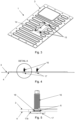
Figure 1 is a perspective view of an example of a battery housing with a lid for a vehicle, wherein a connector is securely mounted on the top of the lid by four fixing bolts according to the claimed invention. -
Figure 2 is a top plan view of an example of the example battery housing lid for a vehicle shown inFigure 1 . -
Figure 3 is the same top perspective view as the previousFigure 2 , but with the four fixing bolts placed in their mounting position. -
Figure 4 is a front elevation view ofFigure 3 with the four fixing bolts positioned in their mounting position. -
Figure 5 is a sectional view of a detail A ofFigure 4 where a fixing bolt placed in its mounting position can be seen. -
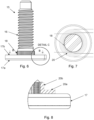
Figure 6 is a front elevation view of a possible embodiment of the fixing bolt according to the claimed invention. -
Figure 7 is a cross-sectional view B-B with reference toFigure 6 . -
Figure 8 is a view of a detail C fromFigure 6 corresponding to a lower part of the bolt, wherein the adhesive layer is represented. - A preferred embodiment of a battery housing lid (1) suitable for a vehicle that is the object of the present invention, with four fixing bolts (15) for an external component, in this case a contactor (25), is described below, with reference to
Figures 1 to 7 . - The outer casing of a battery for a vehicle comprises a housing (26) and a lid (1), where the housing (26) is formed by a receptacle, which defines a cavity suitable for housing different components of the battery, and the lid (1) is arranged to cover the access opening to the cavity defined by the receptacle of the housing (26).
- The vehicle battery lid (1) is formed by a rectangular-shaped sheet extending in the X-Y plane and has a low thickness or height. In the vicinity of the peripheral edge (24) of said lid (1) there are provided a number of holes (5) distributed along said peripheral edge. As can be seen in
Figures 2 and3 , the upper surface (3) of the lid (1) has a series of ridges (21) and a rectangular-shaped opening (14) for locating a contactor (25). In particular, the opening (14) has in the vicinity of its four vertices four holes or inlets (6) for receiving four respective bolts (15). - In
Figure 2 below, only the battery lid (1) can be seen, without the contactor (25). Therefore, it is possible to see the through opening (14), which has a substantially rectangular perimeter, and, in the vicinity of its perimeter edge, 4 holes (6) are present. - Each bolt (15) is mounted below the lid (1) in each of these holes (6), so that the body (16) of each bolt (15) protrudes outwards beyond the outer surface (3) of the lid (1), see
Figures 3 and 4 . -
Figures 3 to 5 show the mounted assembly of the battery lid (1) and four fixing bolts (15) inserted in a respective hole or space (6) provided in said surface (2) of the housing lid (1).Figures 4 and 5 show how the lower surface (17b) of the head (17) of the bolt is flush abutting against the lower surface (4) of the lid (1) and the body (16) of the bolt (15) protrudes on the other side, the upper side, of the lid (1). The intermediate portion (18) is inserted in the mounting position inside the hole or inlet (6) provided in the sheet (2) of the lid (1). - A possible embodiment of the fixing bolt (15) of the present invention is illustrated in
Figures 6 to 8 , wherein the adhesive layer (20) is also illustrated. - The fixing bolt (15) is formed by an elongate body (16), of cylindrical configuration, extending in a longitudinal direction corresponding to the longitudinal axis of the bolt body and having part or all of its outer surface threaded. Arranged at the lower end of the body (16) is an enlarged head (17), in this case with a circular contour, with a smooth outer surface. Furthermore, the bolt (15) has an intermediate portion (18), of cylindrical configuration, arranged at the bottom of the body (16), wherein the grooves extend over the entire lateral surface of the intermediate portion (18) in longitudinal direction in a zigzag manner with a right triangular cross-section, see
Figures 6 and 7 . A conical tapering portion (19) is formed between the body (16) of the fixing bolt (15) and the enlarged head (17). -
Figures 7 and 8 show the adhesive layer (20) arranged on most of the outer surface of the intermediate portion (18) and also on part of the upper surface (17a) of the head (17) corresponding to the area closest to the intermediate portion (18).Figure 7 shows only the horizontal area of the adhesive layer (13) arranged on the upper surface (17a) of the head (17) of the bolt (15). - The bolt has an intermediate portion (18) with an outer diameter such as to be inserted in a close-fitting manner inside the hole (6).
- Although reference has been made to a specific embodiment of the invention, it is evident to a person skilled in the art that the bolts for the lid to the housing for a battery to be installed in a vehicle described herein is susceptible to numerous variations and modifications, and that all the aforementioned details can be replaced by other technically equivalent details, without departing from the scope of protection defined by the attached claims.
Claims (3)
- Vehicle battery housing lid system, wherein the system includes:- a vehicle battery housing lid (1) comprising at least one hole (6) for receiving a corresponding bolt (15),- at least one bolt (15) for fixing an external component on or to the upper face (3) of the surface (2) of the battery housing lid (1), wherein the at least one bolt (15) is inserted in a close-fitting manner into the at least one hole (6), wherein the bolt (15) has an elongate body (16) comprising a threaded outer portion and a head (17) arranged at a lower end of the elongate body (16), so that the elongated body (16) protrudes from one side of the upper surface (3) of the lid (1) and the head (17) of the bolt (15) is on the other side of the lid (1), the lower part of the elongate body (16) comprising an intermediate portion (18), wherein the lower part of the intermediate portion (18) contacts the upper part of the head (17) of the bolt, and wherein the outer lateral surface of the intermediate portion (18) is provided with grooves and is configured to contact a part of the inner surface of the corresponding hole (6) of the lid (1), and- an adhesive (20) that fastens the upper surface of the head (3) of the at least one bolt (15) corresponding to the surface that is closest to the elongate body (2) to a lower surface (4) of the lid (1),characterised in that the adhesive (20) is arranged on the entire outer lateral surface of the intermediate portion (18) and also on at least half of the upper surface of the head (17) corresponding to the half closest to the intermediate portion (18).
- The vehicle battery housing lid system of claim 1, wherein the adhesive (20) is a water-based adhesive.
- The vehicle battery housing lid system of claim 1, wherein the adhesive (20) is a toluene-based microencapsulated adhesive.
Priority Applications (1)
| Application Number | Priority Date | Filing Date | Title |
|---|---|---|---|
| MA69578A MA69578B1 (en) | 2022-05-23 | 2023-05-17 | Vehicle battery housing lid systems |
Applications Claiming Priority (1)
| Application Number | Priority Date | Filing Date | Title |
|---|---|---|---|
| ES202230439A ES2956836B2 (en) | 2022-05-23 | 2022-05-23 | SCREW FOR BATTERY COVER FOR A VEHICLE AND SCREW FIXING SYSTEM IN A BATTERY COVER FOR A VEHICLE |
Publications (3)
| Publication Number | Publication Date |
|---|---|
| EP4283141A1 EP4283141A1 (en) | 2023-11-29 |
| EP4283141B1 true EP4283141B1 (en) | 2025-01-15 |
| EP4283141C0 EP4283141C0 (en) | 2025-01-15 |
Family
ID=88506066
Family Applications (1)
| Application Number | Title | Priority Date | Filing Date |
|---|---|---|---|
| EP23174105.9A Active EP4283141B1 (en) | 2022-05-23 | 2023-05-17 | Vehicle battery housing lid systems |
Country Status (3)
| Country | Link |
|---|---|
| EP (1) | EP4283141B1 (en) |
| ES (1) | ES2956836B2 (en) |
| MA (1) | MA69578B1 (en) |
Citations (1)
| Publication number | Priority date | Publication date | Assignee | Title |
|---|---|---|---|---|
| US20210296728A1 (en) * | 2018-09-20 | 2021-09-23 | Lg Hausys, Ltd. | Lower protecting plate of battery module for electric car |
Family Cites Families (8)
| Publication number | Priority date | Publication date | Assignee | Title |
|---|---|---|---|---|
| JPH10184634A (en) * | 1996-12-26 | 1998-07-14 | Kokusan Denki Co Ltd | Bolt |
| DE10115823A1 (en) * | 2001-03-29 | 2002-10-24 | Schmitz Cargobull Ag | Fastening system for metal sheet comprises bolt with threaded lower shaft and upper section which has longitudinal grooves and ribs, this section being deformed when nut is tightened |
| US20070269155A1 (en) * | 2006-05-22 | 2007-11-22 | Jtekt Corporation | Rolling bearing device for wheels |
| JP6476965B2 (en) * | 2015-02-16 | 2019-03-06 | 株式会社豊田自動織機 | Battery pack and fastening structure |
| CN204878187U (en) * | 2015-07-13 | 2015-12-16 | 上汽通用汽车有限公司 | From taking fixing bolt's storage battery line terminal in advance |
| CN205806161U (en) * | 2016-07-20 | 2016-12-14 | 安徽江淮汽车股份有限公司 | A kind of bolt assembly |
| DE202017105715U1 (en) * | 2017-09-20 | 2017-10-24 | Richard Bergner Verbindungstechnik Gmbh & Co Kg | Press-in connection between a high-strength component and a press-in element and press-in element for such a press-fit connection |
| CN213039614U (en) * | 2020-07-31 | 2021-04-23 | 蜂巢能源科技有限公司 | A support bolt and power battery pack for multi-layer modules |
-
2022
- 2022-05-23 ES ES202230439A patent/ES2956836B2/en active Active
-
2023
- 2023-05-17 EP EP23174105.9A patent/EP4283141B1/en active Active
- 2023-05-17 MA MA69578A patent/MA69578B1/en unknown
Patent Citations (1)
| Publication number | Priority date | Publication date | Assignee | Title |
|---|---|---|---|---|
| US20210296728A1 (en) * | 2018-09-20 | 2021-09-23 | Lg Hausys, Ltd. | Lower protecting plate of battery module for electric car |
Also Published As
| Publication number | Publication date |
|---|---|
| ES2956836A1 (en) | 2023-12-28 |
| EP4283141A1 (en) | 2023-11-29 |
| ES2956836B2 (en) | 2024-05-20 |
| EP4283141C0 (en) | 2025-01-15 |
| MA69578B1 (en) | 2025-03-28 |
Similar Documents
| Publication | Publication Date | Title |
|---|---|---|
| US6230834B1 (en) | Battery mounting system | |
| KR101149700B1 (en) | Battery case | |
| US20120264001A1 (en) | Electrode structure and battery device manufacturing method | |
| EP3118911B1 (en) | Seal structure of battery pack | |
| KR20140027179A (en) | Terminal attachment structure | |
| EP4283141B1 (en) | Vehicle battery housing lid systems | |
| US6435297B1 (en) | Vehicle component mounting assembly | |
| CN114865197A (en) | Battery pack case | |
| EP1364430A1 (en) | Double-ended grounding bolt | |
| CN120033387A (en) | Battery pack box, battery pack and electrical equipment | |
| US20030038529A1 (en) | Fixing holder for a wheel cover | |
| JP7224193B2 (en) | Battery structure fixing structure | |
| US20210231215A1 (en) | Seal | |
| EP4329066A1 (en) | Screw for battery case for a vehicle and assembly of vehicle battery case plus one or more screws | |
| US11285801B2 (en) | Isolation flange | |
| CN218341213U (en) | U-shaped part outside nut projection welding electrode device | |
| EP3201980B1 (en) | Energy storage system for vehicle | |
| JP4131311B2 (en) | Fuel cell | |
| CN213116972U (en) | Nut assembly and electric automobile | |
| CN108916193A (en) | The aluminum cell pallet connection structure of rivet nut and the fixed battery modules of application rivet nut | |
| JP2011084201A (en) | Mounting structure of fender panel | |
| CN223432203U (en) | Battery frames, battery assemblies, and vehicles | |
| CN220710187U (en) | Locking spring piece for isolating switch | |
| CN216805086U (en) | Skylight subassembly and vehicle that has it | |
| CN217415454U (en) | Automobile engine suspension device |
Legal Events
| Date | Code | Title | Description |
|---|---|---|---|
| PUAI | Public reference made under article 153(3) epc to a published international application that has entered the european phase |
Free format text: ORIGINAL CODE: 0009012 |
|
| STAA | Information on the status of an ep patent application or granted ep patent |
Free format text: STATUS: THE APPLICATION HAS BEEN PUBLISHED |
|
| AK | Designated contracting states |
Kind code of ref document: A1 Designated state(s): AL AT BE BG CH CY CZ DE DK EE ES FI FR GB GR HR HU IE IS IT LI LT LU LV MC ME MK MT NL NO PL PT RO RS SE SI SK SM TR |
|
| STAA | Information on the status of an ep patent application or granted ep patent |
Free format text: STATUS: REQUEST FOR EXAMINATION WAS MADE |
|
| 17P | Request for examination filed |
Effective date: 20240528 |
|
| RAV | Requested validation state of the european patent: fee paid |
Extension state: MA Effective date: 20240528 |
|
| RBV | Designated contracting states (corrected) |
Designated state(s): AL AT BE BG CH CY CZ DE DK EE ES FI FR GB GR HR HU IE IS IT LI LT LU LV MC ME MK MT NL NO PL PT RO RS SE SI SK SM TR |
|
| GRAP | Despatch of communication of intention to grant a patent |
Free format text: ORIGINAL CODE: EPIDOSNIGR1 |
|
| STAA | Information on the status of an ep patent application or granted ep patent |
Free format text: STATUS: GRANT OF PATENT IS INTENDED |
|
| INTG | Intention to grant announced |
Effective date: 20241004 |
|
| RAP3 | Party data changed (applicant data changed or rights of an application transferred) |
Owner name: DEFTA |
|
| GRAS | Grant fee paid |
Free format text: ORIGINAL CODE: EPIDOSNIGR3 |
|
| GRAA | (expected) grant |
Free format text: ORIGINAL CODE: 0009210 |
|
| STAA | Information on the status of an ep patent application or granted ep patent |
Free format text: STATUS: THE PATENT HAS BEEN GRANTED |
|
| AK | Designated contracting states |
Kind code of ref document: B1 Designated state(s): AL AT BE BG CH CY CZ DE DK EE ES FI FR GB GR HR HU IE IS IT LI LT LU LV MC ME MK MT NL NO PL PT RO RS SE SI SK SM TR |
|
| REG | Reference to a national code |
Ref country code: CH Ref legal event code: EP Ref country code: GB Ref legal event code: FG4D |
|
| REG | Reference to a national code |
Ref country code: DE Ref legal event code: R096 Ref document number: 602023001657 Country of ref document: DE |
|
| REG | Reference to a national code |
Ref country code: IE Ref legal event code: FG4D |
|
| U01 | Request for unitary effect filed |
Effective date: 20250212 |
|
| U07 | Unitary effect registered |
Designated state(s): AT BE BG DE DK EE FI FR IT LT LU LV MT NL PT RO SE SI Effective date: 20250218 |
|
| REG | Reference to a national code |
Ref country code: MA Ref legal event code: VAGR Ref document number: 69578 Country of ref document: MA Kind code of ref document: B1 |
|
| U20 | Renewal fee for the european patent with unitary effect paid |
Year of fee payment: 3 Effective date: 20250402 |
|
| PG25 | Lapsed in a contracting state [announced via postgrant information from national office to epo] |
Ref country code: RS Free format text: LAPSE BECAUSE OF FAILURE TO SUBMIT A TRANSLATION OF THE DESCRIPTION OR TO PAY THE FEE WITHIN THE PRESCRIBED TIME-LIMIT Effective date: 20250415 |
|
| PG25 | Lapsed in a contracting state [announced via postgrant information from national office to epo] |
Ref country code: PL Free format text: LAPSE BECAUSE OF FAILURE TO SUBMIT A TRANSLATION OF THE DESCRIPTION OR TO PAY THE FEE WITHIN THE PRESCRIBED TIME-LIMIT Effective date: 20250115 |
|
| PG25 | Lapsed in a contracting state [announced via postgrant information from national office to epo] |
Ref country code: ES Free format text: LAPSE BECAUSE OF FAILURE TO SUBMIT A TRANSLATION OF THE DESCRIPTION OR TO PAY THE FEE WITHIN THE PRESCRIBED TIME-LIMIT Effective date: 20250115 |
|
| PG25 | Lapsed in a contracting state [announced via postgrant information from national office to epo] |
Ref country code: IS Free format text: LAPSE BECAUSE OF FAILURE TO SUBMIT A TRANSLATION OF THE DESCRIPTION OR TO PAY THE FEE WITHIN THE PRESCRIBED TIME-LIMIT Effective date: 20250515 Ref country code: NO Free format text: LAPSE BECAUSE OF FAILURE TO SUBMIT A TRANSLATION OF THE DESCRIPTION OR TO PAY THE FEE WITHIN THE PRESCRIBED TIME-LIMIT Effective date: 20250415 |
|
| PG25 | Lapsed in a contracting state [announced via postgrant information from national office to epo] |
Ref country code: HR Free format text: LAPSE BECAUSE OF FAILURE TO SUBMIT A TRANSLATION OF THE DESCRIPTION OR TO PAY THE FEE WITHIN THE PRESCRIBED TIME-LIMIT Effective date: 20250115 |
|
| PG25 | Lapsed in a contracting state [announced via postgrant information from national office to epo] |
Ref country code: GR Free format text: LAPSE BECAUSE OF FAILURE TO SUBMIT A TRANSLATION OF THE DESCRIPTION OR TO PAY THE FEE WITHIN THE PRESCRIBED TIME-LIMIT Effective date: 20250416 |
|
| PGFP | Annual fee paid to national office [announced via postgrant information from national office to epo] |
Ref country code: TR Payment date: 20250502 Year of fee payment: 3 |
|
| PG25 | Lapsed in a contracting state [announced via postgrant information from national office to epo] |
Ref country code: SM Free format text: LAPSE BECAUSE OF FAILURE TO SUBMIT A TRANSLATION OF THE DESCRIPTION OR TO PAY THE FEE WITHIN THE PRESCRIBED TIME-LIMIT Effective date: 20250115 |
|
| PG25 | Lapsed in a contracting state [announced via postgrant information from national office to epo] |
Ref country code: CZ Free format text: LAPSE BECAUSE OF FAILURE TO SUBMIT A TRANSLATION OF THE DESCRIPTION OR TO PAY THE FEE WITHIN THE PRESCRIBED TIME-LIMIT Effective date: 20250115 |
|
| PG25 | Lapsed in a contracting state [announced via postgrant information from national office to epo] |
Ref country code: SK Free format text: LAPSE BECAUSE OF FAILURE TO SUBMIT A TRANSLATION OF THE DESCRIPTION OR TO PAY THE FEE WITHIN THE PRESCRIBED TIME-LIMIT Effective date: 20250115 |
|
| PLBE | No opposition filed within time limit |
Free format text: ORIGINAL CODE: 0009261 |
|
| STAA | Information on the status of an ep patent application or granted ep patent |
Free format text: STATUS: NO OPPOSITION FILED WITHIN TIME LIMIT |
|
| VSFP | Annual fee paid to validation state [announced via postgrant information from national office to epo] |
Ref country code: MA Payment date: 20250521 Year of fee payment: 3 |
|
| 26N | No opposition filed |
Effective date: 20251016 |
|
| PG25 | Lapsed in a contracting state [announced via postgrant information from national office to epo] |
Ref country code: MC Free format text: LAPSE BECAUSE OF FAILURE TO SUBMIT A TRANSLATION OF THE DESCRIPTION OR TO PAY THE FEE WITHIN THE PRESCRIBED TIME-LIMIT Effective date: 20250115 |
|
| PG25 | Lapsed in a contracting state [announced via postgrant information from national office to epo] |
Ref country code: IE Free format text: LAPSE BECAUSE OF NON-PAYMENT OF DUE FEES Effective date: 20250517 |