EP4282714A1 - Child seat monitoring system for a vehicle - Google Patents
Child seat monitoring system for a vehicle Download PDFInfo
- Publication number
- EP4282714A1 EP4282714A1 EP22175851.9A EP22175851A EP4282714A1 EP 4282714 A1 EP4282714 A1 EP 4282714A1 EP 22175851 A EP22175851 A EP 22175851A EP 4282714 A1 EP4282714 A1 EP 4282714A1
- Authority
- EP
- European Patent Office
- Prior art keywords
- sound
- seat belt
- child seat
- seat
- monitoring system
- Prior art date
- Legal status (The legal status is an assumption and is not a legal conclusion. Google has not performed a legal analysis and makes no representation as to the accuracy of the status listed.)
- Granted
Links
Images
Classifications
-
- B—PERFORMING OPERATIONS; TRANSPORTING
- B60—VEHICLES IN GENERAL
- B60R—VEHICLES, VEHICLE FITTINGS, OR VEHICLE PARTS, NOT OTHERWISE PROVIDED FOR
- B60R22/00—Safety belts or body harnesses in vehicles
- B60R22/48—Control systems, alarms, or interlock systems, for the correct application of the belt or harness
-
- B—PERFORMING OPERATIONS; TRANSPORTING
- B60—VEHICLES IN GENERAL
- B60N—SEATS SPECIALLY ADAPTED FOR VEHICLES; VEHICLE PASSENGER ACCOMMODATION NOT OTHERWISE PROVIDED FOR
- B60N2/00—Seats specially adapted for vehicles; Arrangement or mounting of seats in vehicles
- B60N2/002—Seats provided with an occupancy detection means mounted therein or thereon
-
- B—PERFORMING OPERATIONS; TRANSPORTING
- B60—VEHICLES IN GENERAL
- B60R—VEHICLES, VEHICLE FITTINGS, OR VEHICLE PARTS, NOT OTHERWISE PROVIDED FOR
- B60R22/00—Safety belts or body harnesses in vehicles
- B60R22/10—Safety belts or body harnesses in vehicles specially adapted for children or animals
- B60R22/105—Safety belts or body harnesses in vehicles specially adapted for children or animals for children
-
- B—PERFORMING OPERATIONS; TRANSPORTING
- B60—VEHICLES IN GENERAL
- B60N—SEATS SPECIALLY ADAPTED FOR VEHICLES; VEHICLE PASSENGER ACCOMMODATION NOT OTHERWISE PROVIDED FOR
- B60N2/00—Seats specially adapted for vehicles; Arrangement or mounting of seats in vehicles
- B60N2/24—Seats specially adapted for vehicles; Arrangement or mounting of seats in vehicles for particular purposes or particular vehicles
- B60N2/26—Seats specially adapted for vehicles; Arrangement or mounting of seats in vehicles for particular purposes or particular vehicles for children
- B60N2/265—Adaptations for seat belts
-
- B—PERFORMING OPERATIONS; TRANSPORTING
- B60—VEHICLES IN GENERAL
- B60R—VEHICLES, VEHICLE FITTINGS, OR VEHICLE PARTS, NOT OTHERWISE PROVIDED FOR
- B60R22/00—Safety belts or body harnesses in vehicles
- B60R22/48—Control systems, alarms, or interlock systems, for the correct application of the belt or harness
- B60R2022/4808—Sensing means arrangements therefor
-
- B—PERFORMING OPERATIONS; TRANSPORTING
- B60—VEHICLES IN GENERAL
- B60R—VEHICLES, VEHICLE FITTINGS, OR VEHICLE PARTS, NOT OTHERWISE PROVIDED FOR
- B60R22/00—Safety belts or body harnesses in vehicles
- B60R22/48—Control systems, alarms, or interlock systems, for the correct application of the belt or harness
- B60R2022/4808—Sensing means arrangements therefor
- B60R2022/4816—Sensing means arrangements therefor for sensing locking of buckle
-
- B—PERFORMING OPERATIONS; TRANSPORTING
- B60—VEHICLES IN GENERAL
- B60R—VEHICLES, VEHICLE FITTINGS, OR VEHICLE PARTS, NOT OTHERWISE PROVIDED FOR
- B60R22/00—Safety belts or body harnesses in vehicles
- B60R22/48—Control systems, alarms, or interlock systems, for the correct application of the belt or harness
- B60R2022/4866—Displaying or indicating arrangements thereof
Definitions
- the present disclosure relates to a monitoring system for a child seat in a vehicle, a vehicle comprising such a monitoring system, a method for monitoring for a child seat in a vehicle and a computer program element for monitoring a child seat in a vehicle.
- Child car seats are used in the vehicle to increase child safety and reduce consequences in case of a car accident or an oversight of a driver.
- the child car seats generally comprise a 4 or 5-point harness system configured to safely fasten an occupant child during driving.
- seat belt system may be accidently disengaged, not firmly secured, or malfunction.
- Many vehicles comprise a child seat monitoring system configured to detect whether the child seat is correctly mounted or to electronically monitor whether the seat belts is locked.
- the monitoring system often comprises a warning system configured to generate a warning signal when the seat belt is not secured.
- a monitoring system for a child seat in a vehicle comprises a human machine interface unit and a control unit.
- the human machine interface unit comprises at least a sound system and a display unit.
- the sound system is configured to capture a lock sound of a seat belt of the child seat.
- the control unit is configured to identify if the lock sound corresponds to a predetermined safe locking sound of the seat belt, and the control unit is configured to indicate in the display unit that the seat belt of the child seat is locked.
- the monitoring system may allow a user-specific and/or product-specific monitoring of the seat belt of the child seat. Further, the monitoring system may monitor a current locking and/or unlocking state of the seat belt according to a unique locking and/or unlocking sound of the seat belt. Such information may be transferred to a driver audibly and/or graphically such that the driver may be informed about the locked or unlocked state of the seat belt without continuously watching a child seating in the child seat.
- the child seat may be fixedly arranged and releasably attachable on a front passenger seat and/or a rear passenger seat inside the vehicle.
- the releasable child seat it may be fixed via a child car seat socket such as an Isofix interface, a top tether interface or the like.
- one or more child seats may be mounted to ride one or more children. However, not all of the child seats need to be occupied for performing the child seat monitoring according to the present disclosure.
- the human machine interface unit may be configured to interact with the driver and/or user. Accordingly, the human machine interface unit may be able to receive an input from the user and provide an output according to the received input.
- the human machine interface unit may utilize one or more user-friendly applications to facilitate communication between the user and the control unit of the vehicle.
- the human machine interface unit may allow the user to enter an input via a (touch) screen, a voice control and/or a gesture control. Further, the display unit may be able to receive user's input by touching and/or via a button, (rotary) knob or the like.
- the human machine interface unit may also provide information visually and/or audibly. Accordingly, the user may have an easy access to the control unit.
- the display unit of the human machine interface unit may be arranged in a driver's visual field. Accordingly, the display unit may be arranged in a front side of the driver.
- the display unit may be integrated in a Center Stack Display (SCD), Head Up Display (HUD), Drivers Information Module (DIM) and/or Infotainment Head Unit (IHU).
- SCD Center Stack Display
- HUD Head Up Display
- DIM Drivers Information Module
- IHU Infotainment Head Unit
- the display unit may be configured to show the monitored state of the child seat whether the child seat is occupied, the respective seat belt is locked, where the child seat is positioned etc.
- the sound system of the human machine interface unit may comprise one or more sound sensors such as microphones configured to detect sound waves and convert it to electrical signals.
- the sound sensors may be arranged in the vehicle at various positions to reliably capture sound generated in a vehicle cabin.
- the sound sensors and/or the sound system may be configured to capture sound when the seat belt of the child seat is locked. Due to its mechanical engagement of a fastening connection of the seat belt such as buckle, clamp or the like, the seat belt may cause sound based on a material, a locking mechanism, a shape, etc. of the fastening connection of the seat belt. Additionally, the sound sensors and/or the sound system may be also configured to capture a mounting sound when the child seat is correctly mounted in the vehicle cabin.
- the control unit may be capable to monitor a locked or unlocked state of the seat belt in real time.
- the control unit may be an electronic control unit (ECU).
- the control unit may be able to identify the sound captured by the sound system whether the sound corresponds to the safe locking sound of the seat belt. To verify the lock sound of the seat belt captured by the sound system, the control unit may have an access to the predetermined safe locking sound.
- the safe locking sound may be understood as the lock sound of the seat belt, particularly of the fastening connection, made when it is correctly engaged.
- the safe locking sound may be set manually and/or determined automatically by the control unit based on lock sound data collected by the sound system during previous driving.
- the control unit may be capable to verify if the detected lock sound corresponds to the predetermined safe locking sound of the seat belt.
- the control unit may prompt the display unit to display the locked state of the seat belt of the child seat.
- the state of the seat belt may be shown in the display unit using a symbol and/or letters. Additionally or alternatively, the sound system may also provide lock information of the seat belt.
- the control unit may be capable to indicate a wrong engagement of the seat belt graphically via the display unit and/or audibly via the sound system. Accordingly, the driver may receive information about the locked or unlocked state of the seat belt in real time without controlling the child seat during driving, which may increase safety of occupants in the vehicle.
- the display unit is configured to receive a confirmation from a user if the seat belt is safely locked. Once the display unit shows that the seat belt of the child seat is locked, the user may be able to confirm the safe lock of the seat belt via the human machine interface unit. In case the user denies the confirmation of the safe lock, the control unit may be capable to classify the lock sound collected from the sound system as an unsafe or doubtful state of the seat belt of the child seat.
- the display unit is further configured to display an activated state of the seat belt of the child seat. Once the control unit identifies the safely locked state and/or receives a confirmation of the safe lock of the seat belt from the user, the control unit may prompt the display unit to indicate the activated state of the seat belt of the child seat.
- control unit is further configured to identify if the lock sound corresponds to an unlocking sound of the seat belt and indicate in the display unit that the seat belt of the child seat is unlocked.
- the control unit may be able to distinguish between the safe locking sound and the unlocking sound detected by the sound sensor(s) of the sound system. Accordingly, the control unit may prompt the display unit to display that the seat belt of the child seat is unlocked.
- control unit is further configured to collect the lock sound of the seat belt of the child seat and determine a characteristic safe locking sound of the seat belt of the child seat based on the collected lock sound and the confirmation of the user, wherein the characteristic safe locking sound is the predetermined safe locking sound.
- the monitoring system may comprise a data storage medium or it may be at least coupled with the data storage medium.
- control unit may be configured to transfer data from the sound system to the data storage medium to collect the lock sound. The user may be able to create a profile of an individual seat belt and/or child seat including its lock sound.
- the control unit may be adapted to collect the lock sound in the data storage medium, which was confirmed by the user via the human machine interface unit.
- the control unit may be further configured to evaluate the lock sound collected in the data storage medium and identify a distinctive lock sound of the seat belt of each child seat arranged in the vehicle cabin. Accordingly, the control unit may be able to determine the characteristic safe locking sound of the respective seat belt.
- the determined characteristic safe locking sound may be applied to verify if the lock sound currently detected by the sound system represents the safely locked state of the seat belt. Hence, if the currently detected lock sound is identical with the characteristic safe locking sound determined based on the collected lock sound of the respective seat belt, the safely locked state of the seat belt may be admitted.
- the monitoring system may apply machine learning to determine the safe locking sound of the seat belt by continuously evaluating the collected lock sound, thus and steadily updating the safe locking sound for identifying the safely locked state of the seat belt. Accordingly, the child seat monitoring may be facilitated.
- the monitoring system further comprises a sensor unit, and the sensor unit is configured to detect if the child seat is occupied.
- the sensor unit may comprise various sensor elements configured for monitoring if the child seat is in use, preferably before checking the seat belt state.
- the sensor unit may comprise, for instance, a pressure sensor element, an image sensor element, a radar sensor element, etc. Additionally, the sound system of the human machine interface unit may be also able to detect if the child seat is occupied.
- the child seat monitoring may be only performed if the child seat is occupied by a child or a baby.
- the control unit may exclude unoccupied child seat(s) for child seat monitoring.
- the display unit of the human machine interface unit may be configured to display which child seat(s) is occupied.
- control unit is further configured to generate a warning signal, if the seat belt is unlocked despite the activated state of the seat belt of the child seat.
- the warning signal may be a graphical signal, a light signal and/or a sound signal.
- the control unit may detect an inadvertent or accidental opening of the seat belt, particularly during driving, which may result in a dangerous situation.
- the control unit may initiate to provide warning signal to the driver.
- the warning signal may be transmitted via the human machine interface unit.
- the display unit may be configured to receive an input from the user for deactivating the warning signal of the sound system after ensuring a safely locked state of the seat belt.
- control unit is configured to generate a warning signal, if no safe locking sound of the seat belt is detected, although the child seat is occupied.
- the control unit of the child seat monitoring system may be coupled with several subsystems of the vehicle. For instance, the control unit may receive information from a door monitoring system that a vehicle door is opened and closed again, which may mean that a passenger is present in the vehicle cabin. Additionally, the control unit may receive information from the sensor unit that at least one child seat is occupied. If, however, any safe locking sound of the seat belt is not detected by the sound system of the human machine interface unit, the control unit may initiate to provide the warning signal to the driver via the human machine interface unit to alert the driver about the unsafe or doubtful state of the seat belt of the child seat. Accordingly a reliable child seat monitoring may be achieved.
- the display unit is further configured to receive an input from the user for changing the state of the seat belt of the child seat displayed in the display unit.
- the control unit identified an erroneous state of the seat belt, which may be displayed on the display unit of the human machine interface unit, the user may be able to remedy the correct state of the seat belt manually.
- the user may be able to change to the deactivated state of the seat belt.
- the user may be able to change the state of the seat belt shown on the display unit as the activated state, which is not identified by the control unit, even though the seat belt is actually secured.
- the control unit may be further configured to collect such erroneous behavior of the monitoring system and integrate it when estimating the characteristic safe locking sound of the seat belt.
- the display unit is further configured to display a position of the child seat in the vehicle.
- the display unit may be able to show where the child seat is mounted in the vehicle.
- Such information may receive the display unit from the sensor unit and/or the control unit identifying an electrical connection of a car seat socket such as an Isofix interface, a top tether interface or the like.
- the user may be also able to confirm the position of the child seat displayed in the display unit. Together with the information of the activated state of the seat belt of the respective child seat, the driver may obtain reliable information of the child seat mounted in the vehicle without checking the child seat constantly.
- control unit is configured to determine each characteristic safe locking sound of each seat belt of two or more child seats based on the collected lock sound and the confirmation of the user provided by the user via the display unit.
- the monitoring system may be adapted to monitor several child seats simultaneously.
- the control unit may be able to distinguish the lock sound of the different child seats detected by the sound system and based on the information on the position of the child seat displayed on the display unit.
- control unit may be able to determine the characteristic safe locking sound of the seat belt of each child seat accurately.
- a vehicle comprises a monitoring system for a child seat and at least one child seat arrangeable in the vehicle. Accordingly, monitoring the child seat may be facilitated and child safety in the vehicle can be increased.
- a method for monitoring a child seat in a vehicle comprises
- a computer program element for monitoring a child seat in a vehicle is presented.
- the computer program element is adapted to perform the method steps as described above, when being executed by a processing element.
- one or more computer storage media may be presented.
- the computer storage media is encoded with instructions, that when executed by a computer, cause the computer to perform the operations of the respective method as described above.
- the storage media may comprise internal to a computing device, such as a computer's SSD, or a removable device such as an external HDD or universal serial bus (USB) flash drive.
- a computing device such as a computer's SSD
- a removable device such as an external HDD or universal serial bus (USB) flash drive.
- USB universal serial bus
- storage media including magnetic tape, compact discs (CDs) and non-volatile memory (NVM) cards.
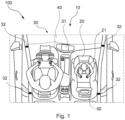
- Fig. 1 shows a vehicle 100 comprising a monitoring system 10 and at least one child seat 20 arranged in the vehicle 100.
- the monitoring system 10 is configured for monitoring the child seat 20, particularly a safely locked state of a seat belt 21 of the child seat 20.
- the monitoring system 10 comprises a human machine interface unit 30 and a control unit 40.
- the human machine interface unit 30 utilizes one or more user-friendly applications to facilitate communication between a user and the control unit 40 of the vehicle 100.
- the human machine interface unit 30 comprises at least a sound system 32 and a display unit 31.
- the display unit 31 of the human machine interface unit 30 is arranged in a driver's visual field.
- the monitoring system 10 further comprises a sensor unit 50 configured to detect if the child seat 20 is occupied.
- the seat belt 21 may cause sound based on a material, a locking mechanism, a shape, etc. of the fastening connection of the seat belt 21.
- the sound system 32 comprises several sound sensors arranged at several positions inside the vehicle 100 for capturing a lock sound of a seat belt 21 of the child seat 20.
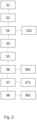
- the child seat monitoring system 10 is configured to perform the following steps, but not necessarily in this order:
Landscapes
- Engineering & Computer Science (AREA)
- Mechanical Engineering (AREA)
- Automation & Control Theory (AREA)
- Aviation & Aerospace Engineering (AREA)
- Transportation (AREA)
- Seats For Vehicles (AREA)
- Automotive Seat Belt Assembly (AREA)
Abstract
Description
- The present disclosure relates to a monitoring system for a child seat in a vehicle, a vehicle comprising such a monitoring system, a method for monitoring for a child seat in a vehicle and a computer program element for monitoring a child seat in a vehicle.
- Child car seats are used in the vehicle to increase child safety and reduce consequences in case of a car accident or an oversight of a driver. The child car seats generally comprise a 4 or 5-point harness system configured to safely fasten an occupant child during driving. However, such seat belt system may be accidently disengaged, not firmly secured, or malfunction. Many vehicles comprise a child seat monitoring system configured to detect whether the child seat is correctly mounted or to electronically monitor whether the seat belts is locked. The monitoring system often comprises a warning system configured to generate a warning signal when the seat belt is not secured.
- There still may be a need to provide an improved child seat monitoring system for a vehicle, which may increase safety of children in a vehicle.
- The problem is at least partially solved or alleviated by the subject matter of the independent claims of the present disclosure, wherein further examples are incorporated in the dependent claims. It should be noted that the aspects of the disclosure described in the following apply to the monitoring system for a child seat in a vehicle, the vehicle comprising such a monitoring system, the method for monitoring for a child seat in a vehicle and a computer program element for monitoring a child seat in a vehicle.
- According to the present disclosure, a monitoring system for a child seat in a vehicle is presented. The monitoring system comprises a human machine interface unit and a control unit. The human machine interface unit comprises at least a sound system and a display unit. The sound system is configured to capture a lock sound of a seat belt of the child seat. The control unit is configured to identify if the lock sound corresponds to a predetermined safe locking sound of the seat belt, and the control unit is configured to indicate in the display unit that the seat belt of the child seat is locked.
- The monitoring system according to the present disclosure may allow a user-specific and/or product-specific monitoring of the seat belt of the child seat. Further, the monitoring system may monitor a current locking and/or unlocking state of the seat belt according to a unique locking and/or unlocking sound of the seat belt. Such information may be transferred to a driver audibly and/or graphically such that the driver may be informed about the locked or unlocked state of the seat belt without continuously watching a child seating in the child seat.
- The child seat may be fixedly arranged and releasably attachable on a front passenger seat and/or a rear passenger seat inside the vehicle. In case of the releasable child seat, it may be fixed via a child car seat socket such as an Isofix interface, a top tether interface or the like. In the vehicle, one or more child seats may be mounted to ride one or more children. However, not all of the child seats need to be occupied for performing the child seat monitoring according to the present disclosure.
- The human machine interface unit may be configured to interact with the driver and/or user. Accordingly, the human machine interface unit may be able to receive an input from the user and provide an output according to the received input. The human machine interface unit may utilize one or more user-friendly applications to facilitate communication between the user and the control unit of the vehicle. The human machine interface unit may allow the user to enter an input via a (touch) screen, a voice control and/or a gesture control. Further, the display unit may be able to receive user's input by touching and/or via a button, (rotary) knob or the like. The human machine interface unit may also provide information visually and/or audibly. Accordingly, the user may have an easy access to the control unit.
- The display unit of the human machine interface unit may be arranged in a driver's visual field. Accordingly, the display unit may be arranged in a front side of the driver. The display unit may be integrated in a Center Stack Display (SCD), Head Up Display (HUD), Drivers Information Module (DIM) and/or Infotainment Head Unit (IHU). The display unit may be configured to show the monitored state of the child seat whether the child seat is occupied, the respective seat belt is locked, where the child seat is positioned etc.
- The sound system of the human machine interface unit may comprise one or more sound sensors such as microphones configured to detect sound waves and convert it to electrical signals. The sound sensors may be arranged in the vehicle at various positions to reliably capture sound generated in a vehicle cabin.
- Particularly, the sound sensors and/or the sound system may be configured to capture sound when the seat belt of the child seat is locked. Due to its mechanical engagement of a fastening connection of the seat belt such as buckle, clamp or the like, the seat belt may cause sound based on a material, a locking mechanism, a shape, etc. of the fastening connection of the seat belt. Additionally, the sound sensors and/or the sound system may be also configured to capture a mounting sound when the child seat is correctly mounted in the vehicle cabin.
- Since the sound system continuously detects surrounding sound, it may be able to capture constantly any sound similar or identical to a lock sound of the seat belt. Accordingly, the control unit may be capable to monitor a locked or unlocked state of the seat belt in real time.
- The control unit may be an electronic control unit (ECU). The control unit may be able to identify the sound captured by the sound system whether the sound corresponds to the safe locking sound of the seat belt. To verify the lock sound of the seat belt captured by the sound system, the control unit may have an access to the predetermined safe locking sound. The safe locking sound may be understood as the lock sound of the seat belt, particularly of the fastening connection, made when it is correctly engaged.
- The safe locking sound may be set manually and/or determined automatically by the control unit based on lock sound data collected by the sound system during previous driving. Thus, the control unit may be capable to verify if the detected lock sound corresponds to the predetermined safe locking sound of the seat belt.
- When the captured lock sound corresponds to the predetermined safe locking sound of the seat belt, the control unit may prompt the display unit to display the locked state of the seat belt of the child seat. The state of the seat belt may be shown in the display unit using a symbol and/or letters. Additionally or alternatively, the sound system may also provide lock information of the seat belt.
- In case the captured lock sound does not correspond to the predetermined safe locking sound of the seat belt, the control unit may be capable to indicate a wrong engagement of the seat belt graphically via the display unit and/or audibly via the sound system. Accordingly, the driver may receive information about the locked or unlocked state of the seat belt in real time without controlling the child seat during driving, which may increase safety of occupants in the vehicle.
- In an example, the display unit is configured to receive a confirmation from a user if the seat belt is safely locked. Once the display unit shows that the seat belt of the child seat is locked, the user may be able to confirm the safe lock of the seat belt via the human machine interface unit. In case the user denies the confirmation of the safe lock, the control unit may be capable to classify the lock sound collected from the sound system as an unsafe or doubtful state of the seat belt of the child seat.
- In an example, the display unit is further configured to display an activated state of the seat belt of the child seat. Once the control unit identifies the safely locked state and/or receives a confirmation of the safe lock of the seat belt from the user, the control unit may prompt the display unit to indicate the activated state of the seat belt of the child seat.
- In an example, the control unit is further configured to identify if the lock sound corresponds to an unlocking sound of the seat belt and indicate in the display unit that the seat belt of the child seat is unlocked. The control unit may be able to distinguish between the safe locking sound and the unlocking sound detected by the sound sensor(s) of the sound system. Accordingly, the control unit may prompt the display unit to display that the seat belt of the child seat is unlocked.
- In an example, the control unit is further configured to collect the lock sound of the seat belt of the child seat and determine a characteristic safe locking sound of the seat belt of the child seat based on the collected lock sound and the confirmation of the user, wherein the characteristic safe locking sound is the predetermined safe locking sound. The monitoring system may comprise a data storage medium or it may be at least coupled with the data storage medium. In addition, the control unit may be configured to transfer data from the sound system to the data storage medium to collect the lock sound. The user may be able to create a profile of an individual seat belt and/or child seat including its lock sound.
- The control unit may be adapted to collect the lock sound in the data storage medium, which was confirmed by the user via the human machine interface unit. The control unit may be further configured to evaluate the lock sound collected in the data storage medium and identify a distinctive lock sound of the seat belt of each child seat arranged in the vehicle cabin. Accordingly, the control unit may be able to determine the characteristic safe locking sound of the respective seat belt.
- The determined characteristic safe locking sound may be applied to verify if the lock sound currently detected by the sound system represents the safely locked state of the seat belt. Hence, if the currently detected lock sound is identical with the characteristic safe locking sound determined based on the collected lock sound of the respective seat belt, the safely locked state of the seat belt may be admitted.
- In other words, the monitoring system may apply machine learning to determine the safe locking sound of the seat belt by continuously evaluating the collected lock sound, thus and steadily updating the safe locking sound for identifying the safely locked state of the seat belt. Accordingly, the child seat monitoring may be facilitated.
- In an example, the monitoring system further comprises a sensor unit, and the sensor unit is configured to detect if the child seat is occupied. The sensor unit may comprise various sensor elements configured for monitoring if the child seat is in use, preferably before checking the seat belt state. The sensor unit may comprise, for instance, a pressure sensor element, an image sensor element, a radar sensor element, etc. Additionally, the sound system of the human machine interface unit may be also able to detect if the child seat is occupied.
- Accordingly, the child seat monitoring may be only performed if the child seat is occupied by a child or a baby. In case two or more child seats are arranged in the vehicle cabin, the control unit may exclude unoccupied child seat(s) for child seat monitoring. The display unit of the human machine interface unit may be configured to display which child seat(s) is occupied.
- In an example, the control unit is further configured to generate a warning signal, if the seat belt is unlocked despite the activated state of the seat belt of the child seat. The warning signal may be a graphical signal, a light signal and/or a sound signal. The control unit may detect an inadvertent or accidental opening of the seat belt, particularly during driving, which may result in a dangerous situation.
- As soon as the control unit identifies such a situation, the control unit may initiate to provide warning signal to the driver. The warning signal may be transmitted via the human machine interface unit. The display unit may be configured to receive an input from the user for deactivating the warning signal of the sound system after ensuring a safely locked state of the seat belt.
- In an example, the control unit is configured to generate a warning signal, if no safe locking sound of the seat belt is detected, although the child seat is occupied. The control unit of the child seat monitoring system may be coupled with several subsystems of the vehicle. For instance, the control unit may receive information from a door monitoring system that a vehicle door is opened and closed again, which may mean that a passenger is present in the vehicle cabin. Additionally, the control unit may receive information from the sensor unit that at least one child seat is occupied. If, however, any safe locking sound of the seat belt is not detected by the sound system of the human machine interface unit, the control unit may initiate to provide the warning signal to the driver via the human machine interface unit to alert the driver about the unsafe or doubtful state of the seat belt of the child seat. Accordingly a reliable child seat monitoring may be achieved.
- In an example, the display unit is further configured to receive an input from the user for changing the state of the seat belt of the child seat displayed in the display unit. In case the control unit identified an erroneous state of the seat belt, which may be displayed on the display unit of the human machine interface unit, the user may be able to remedy the correct state of the seat belt manually.
- For instance, if the display unit shows an activated state and/or a safely locked state of the seat belt although the seat belt is not actually secured, the user may be able to change to the deactivated state of the seat belt. Alternatively, the user may be able to change the state of the seat belt shown on the display unit as the activated state, which is not identified by the control unit, even though the seat belt is actually secured.
- The control unit may be further configured to collect such erroneous behavior of the monitoring system and integrate it when estimating the characteristic safe locking sound of the seat belt.
- In an example, the display unit is further configured to display a position of the child seat in the vehicle. The display unit may be able to show where the child seat is mounted in the vehicle. Such information may receive the display unit from the sensor unit and/or the control unit identifying an electrical connection of a car seat socket such as an Isofix interface, a top tether interface or the like. The user may be also able to confirm the position of the child seat displayed in the display unit. Together with the information of the activated state of the seat belt of the respective child seat, the driver may obtain reliable information of the child seat mounted in the vehicle without checking the child seat constantly.
- In an example, the control unit is configured to determine each characteristic safe locking sound of each seat belt of two or more child seats based on the collected lock sound and the confirmation of the user provided by the user via the display unit. The monitoring system may be adapted to monitor several child seats simultaneously. The control unit may be able to distinguish the lock sound of the different child seats detected by the sound system and based on the information on the position of the child seat displayed on the display unit.
- By receiving the confirmation and/or input from the user regarding the position and safely locked state of the child seat iteratively, the control unit may be able to determine the characteristic safe locking sound of the seat belt of each child seat accurately.
- According to the present disclosure, a vehicle is presented. The vehicle comprises a monitoring system for a child seat and at least one child seat arrangeable in the vehicle. Accordingly, monitoring the child seat may be facilitated and child safety in the vehicle can be increased.
- According to the present disclosure, a method for monitoring a child seat in a vehicle is presented. The method comprises
- capturing a lock sound of a seat belt of the child seat,
- identifying if the lock sound corresponds to a predetermined safe locking sound of the seat belt, and
- indicating in a display unit that the seat belt of the child seat is locked.
- According to the present disclosure, a computer program element for monitoring a child seat in a vehicle is presented. The computer program element is adapted to perform the method steps as described above, when being executed by a processing element.
- According to the present disclosure, one or more computer storage media may be presented. The computer storage media is encoded with instructions, that when executed by a computer, cause the computer to perform the operations of the respective method as described above.
- The storage media may comprise internal to a computing device, such as a computer's SSD, or a removable device such as an external HDD or universal serial bus (USB) flash drive. There are also other types of storage media, including magnetic tape, compact discs (CDs) and non-volatile memory (NVM) cards.
- It should be noted that the above examples may be combined with each other irrespective of the aspect involved. Accordingly, the method may be combined with structural features and, likewise, the system may be combined with features described above with regard to the method.
- These and other examples of the present disclosure will become apparent from and elucidated with reference to the embodiments described hereinafter.
- Examples according to the present disclosure will be described in the following with reference to the following drawings.
- Fig. 1
- shows schematically and exemplarily an example of a vehicle comprising a monitoring system for a child seat according to the present disclosure.
- Fig. 2
- shows schematically and exemplarily an example of a monitoring method for a child seat according to the present disclosure.
-
Fig. 1 shows avehicle 100 comprising amonitoring system 10 and at least onechild seat 20 arranged in thevehicle 100. Themonitoring system 10 is configured for monitoring thechild seat 20, particularly a safely locked state of aseat belt 21 of thechild seat 20. - The
monitoring system 10 comprises a humanmachine interface unit 30 and acontrol unit 40. The humanmachine interface unit 30 utilizes one or more user-friendly applications to facilitate communication between a user and thecontrol unit 40 of thevehicle 100. The humanmachine interface unit 30 comprises at least asound system 32 and adisplay unit 31. Thedisplay unit 31 of the humanmachine interface unit 30 is arranged in a driver's visual field. Themonitoring system 10 further comprises asensor unit 50 configured to detect if thechild seat 20 is occupied. - Due to its mechanical engagement of a fastening connection of the
seat belt 21 such as buckle, clamp or the like, theseat belt 21 may cause sound based on a material, a locking mechanism, a shape, etc. of the fastening connection of theseat belt 21. Thus, thesound system 32 comprises several sound sensors arranged at several positions inside thevehicle 100 for capturing a lock sound of aseat belt 21 of thechild seat 20. - As shown in
Fig. 2 , the childseat monitoring system 10 is configured to perform the following steps, but not necessarily in this order: - S1:
- displaying a position of the
child seat 20 in thevehicle 100 in thedisplay unit 31; - S2:
- capturing a lock sound of the
seat belt 21 of thechild seat 20; - S3:
- identifying if the lock sound corresponds to a predetermined safe locking sound of the
seat belt 21 to indicate in thedisplay unit 31 that theseat belt 21 of thechild seat 20 is locked; - S31:
- identifying if the lock sound corresponds to an unlocking sound of the
seat belt 21 and indicating in thedisplay unit 31 that theseat belt 21 of thechild seat 20 is unlocked; - S4:
- indicating in the
display unit 31 that theseat belt 21 of thechild seat 20 is safely locked; - S5:
- receiving a confirmation from the user if the
seat belt 21 is safely locked; - S6:
- collecting the lock sound of the
seat belt 21 of thechild seat 20 and determining a characteristic safe locking sound of theseat belt 21 of thechild seat 20 based on the collected lock sound and the confirmation of the user, wherein the characteristic safe locking sound is the predetermined safe locking sound; - S61:
- determining each characteristic safe locking sound of each
seat belt 21 of two ormore child seats 20 based on the collected lock sound and the confirmation of the user provided by the user via thedisplay unit 31; - S7:
- displaying an activated state of the
seat belt 21 of thechild seat 20; - S71:
- receiving an input from the user for changing the state of the
seat belt 21 of thechild seat 20 displayed in thedisplay unit 31; - S8:
- generating a warning signal, if the
seat belt 21 is unlocked despite the activated state of theseat belt 21 of thechild seat 20; - S81:
- generating a warning signal, if unsafe locking sound of the
seat belt 21 is detected, although thechild seat 20 is occupied. - It has to be noted that examples of the disclosure are described with reference to different subject matters. In particular, some examples are described with reference to method type claims whereas other examples are described with reference to the device type claims. However, a person skilled in the art will gather from the above and the following description that, unless otherwise notified, in addition to any combination of features belonging to one type of subject matter also any combination between features relating to different subject matters is considered to be disclosed with this application. However, all features can be combined providing synergetic effects that are more than the simple summation of the features.
- While the disclosure has been illustrated and described in detail in the drawings and description, such illustration and description are to be considered illustrative or exemplary and not restrictive. The disclosure is not limited to the disclosed examples. Other variations to the disclosed examples can be understood and effected by those skilled in the art in practicing a claimed disclosure, from a study of the drawings, the disclosure, and the dependent claims.
- In the claims, the word "comprising" does not exclude other elements or steps, and the indefinite article "a" or "an" does not exclude a plurality. A single processor or other unit may fulfil the functions of several items recited in the claims. The mere fact that certain measures are recited in mutually different dependent claims does not indicate that a combination of these measures cannot be used to advantage. Any reference signs in the claims should not be construed as limiting the scope.
Claims (14)
- A monitoring system (10) for a child seat (20) in a vehicle (100), comprising:- a human machine interface unit (30), and- a control unit (40),the human machine interface unit (30) comprising at least a sound system (32) and a display unit (31),the sound system (32) being configured to capture a lock sound of a seat belt (21) of the child seat (20),the control unit (40) being configured to identify if the lock sound corresponds to a predetermined safe locking sound of the seat belt (21), andthe control unit (40) being configured to indicate in the display unit (31) that the seat belt (21) of the child seat (20) is locked.
- The monitoring system (10) according to claim 1, the display unit (31) being configured to receive a confirmation from a user if the seat belt (21) is safely locked.
- The monitoring system (10) according to claim 1 or 2, the display unit (31) being further configured to display an activated state of the seat belt (21) of the child seat (20).
- The monitoring system (10) according to any of the preceding claims, the control unit (40) being further configured to identify if the lock sound corresponds to an unlocking sound of the seat belt (21) and indicate in the display unit (31) that the seat belt (21) of the child seat (20) is unlocked.
- The monitoring system (10) according to any of the preceding claims, the control unit (40) being further configured to collect the lock sound of the seat belt (21) of the child seat (20) and determine a characteristic safe locking sound of the seat belt (21) of the child seat (20) based on the collected lock sound and the confirmation of the user, the characteristic safe locking sound being the predetermined safe locking sound.
- The monitoring system (10) according to any of the preceding claims, further comprising a sensor unit, the sensor unit being configured to detect if the child seat (20) is occupied.
- The monitoring system (10) according to any of the preceding claims, the control unit (40) being further configured to generate a warning signal, if the seat belt (21) is unlocked despite the activated state of the seat belt (21) of the child seat (20).
- The monitoring system (10) according to any of the preceding claims, the control unit (40) being configured to generate a warning signal, if no unsafe locking sound of the seat belt is detected, although the child seat (20) is occupied.
- The monitoring system (10) according to any of the preceding claims, the display unit (31) being further configured to receive an input from the user for changing the state of the seat belt (21) of the child seat (20) displayed in the display unit (31).
- The monitoring system (10) according to any of the preceding claims, the display unit (31) being further configured to display a position of the child seat (20) in the vehicle (100).
- The monitoring system (10) according to any of the preceding claims, the control unit (40) being configured to determine each characteristic safe locking sound of each seat belt (21) of two or more child seats (20) based on the collected lock sound and the confirmation of the user provided by the user via the display unit (31).
- A vehicle (100) comprising a monitoring system (10) according to any one of the preceding claims 1 to 11, at least one child seat (20) being arrangeable in the vehicle (100).
- A method for monitoring for a child seat (20) in a vehicle (100), comprising:- capturing a lock sound of a seat belt (21) of the child seat (20),- identifying if the lock sound corresponds to a predetermined safe locking sound of the seat belt (21), and- indicating in a display unit (31) that the seat belt (21) of the child seat (20) is locked.
- A computer program element for monitoring a child seat (20) in a vehicle (100), which, when being executed by a processing element, being adapted to perform the method steps of the method claim 13.
Priority Applications (3)
| Application Number | Priority Date | Filing Date | Title |
|---|---|---|---|
| EP22175851.9A EP4282714B1 (en) | 2022-05-27 | 2022-05-27 | Child seat monitoring system for a vehicle |
| CN202310526110.0A CN117125023A (en) | 2022-05-27 | 2023-05-10 | Child seat monitoring system for vehicles |
| US18/316,558 US12257974B2 (en) | 2022-05-27 | 2023-05-12 | Child seat monitoring system for a vehicle |
Applications Claiming Priority (1)
| Application Number | Priority Date | Filing Date | Title |
|---|---|---|---|
| EP22175851.9A EP4282714B1 (en) | 2022-05-27 | 2022-05-27 | Child seat monitoring system for a vehicle |
Publications (2)
| Publication Number | Publication Date |
|---|---|
| EP4282714A1 true EP4282714A1 (en) | 2023-11-29 |
| EP4282714B1 EP4282714B1 (en) | 2024-08-28 |
Family
ID=81851479
Family Applications (1)
| Application Number | Title | Priority Date | Filing Date |
|---|---|---|---|
| EP22175851.9A Active EP4282714B1 (en) | 2022-05-27 | 2022-05-27 | Child seat monitoring system for a vehicle |
Country Status (3)
| Country | Link |
|---|---|
| US (1) | US12257974B2 (en) |
| EP (1) | EP4282714B1 (en) |
| CN (1) | CN117125023A (en) |
Citations (3)
| Publication number | Priority date | Publication date | Assignee | Title |
|---|---|---|---|---|
| US20110074566A1 (en) * | 2009-09-28 | 2011-03-31 | Ford Global Technologies, Llc | System and method of vehicle passenger detection for rear seating rows |
| DE102016122806A1 (en) * | 2016-11-25 | 2018-05-30 | Audi Ag | Device for detecting a proper application status of a safety belt |
| US10857971B1 (en) * | 2020-03-09 | 2020-12-08 | Lemuel Alexander Davis | System and method of monitoring and managing a child seatbelt |
Family Cites Families (7)
| Publication number | Priority date | Publication date | Assignee | Title |
|---|---|---|---|---|
| US20130021476A1 (en) * | 2008-10-10 | 2013-01-24 | Trummer Marcus A | Child seat safety system |
| ES1110705Y (en) * | 2014-04-03 | 2014-08-29 | Rodriguez Andres Torrescusa | DETACHED SEAT BELT SEEING DEVICE |
| DE102016012374A1 (en) * | 2016-10-15 | 2017-06-01 | Daimler Ag | A method of operating a seat belt device of a vehicle |
| DE102016121341B3 (en) * | 2016-11-08 | 2018-01-04 | Audi Ag | Device and method for detecting a proper donning a safety belt and vehicle with such a device |
| US10365654B2 (en) * | 2017-03-31 | 2019-07-30 | Uber Technologies, Inc. | System for safe passenger departure from autonomous vehicle |
| US10821934B2 (en) * | 2017-10-24 | 2020-11-03 | Universal City Studios Llc | Passenger restraint with integrated audio system |
| DE102018128851A1 (en) * | 2018-11-16 | 2020-05-20 | Trw Automotive Gmbh | Device and method for belt wear detection |
-
2022
- 2022-05-27 EP EP22175851.9A patent/EP4282714B1/en active Active
-
2023
- 2023-05-10 CN CN202310526110.0A patent/CN117125023A/en active Pending
- 2023-05-12 US US18/316,558 patent/US12257974B2/en active Active
Patent Citations (3)
| Publication number | Priority date | Publication date | Assignee | Title |
|---|---|---|---|---|
| US20110074566A1 (en) * | 2009-09-28 | 2011-03-31 | Ford Global Technologies, Llc | System and method of vehicle passenger detection for rear seating rows |
| DE102016122806A1 (en) * | 2016-11-25 | 2018-05-30 | Audi Ag | Device for detecting a proper application status of a safety belt |
| US10857971B1 (en) * | 2020-03-09 | 2020-12-08 | Lemuel Alexander Davis | System and method of monitoring and managing a child seatbelt |
Also Published As
| Publication number | Publication date |
|---|---|
| US12257974B2 (en) | 2025-03-25 |
| EP4282714B1 (en) | 2024-08-28 |
| US20230382346A1 (en) | 2023-11-30 |
| CN117125023A (en) | 2023-11-28 |
Similar Documents
| Publication | Publication Date | Title |
|---|---|---|
| US10864918B2 (en) | Vehicle and method for supporting driving safety thereof | |
| CN107031559B (en) | Child seat monitoring system and method | |
| CN109070836B (en) | Occupancy detection system based on seat belt and child seat anchor | |
| JP2008522883A (en) | Child seat detector | |
| US9522631B2 (en) | System and method for notifying a driver of possible rear seat passengers or objects | |
| CN105882585B (en) | Child safety monitoring method for vehicles | |
| US20050080533A1 (en) | Vehicle passenger seat sensor network | |
| CN111055731B (en) | A control method, device and device for safe riding | |
| CN216833629U (en) | Monitoring device for motor vehicle cabin | |
| CN105882584A (en) | Method For Controlling At Least One Safety Function For A Motor Vehicle | |
| CN111605452A (en) | Integration of child safety seat and vehicle seat belt reminder system | |
| JP2012188035A (en) | Child abandonment alarm device | |
| CN109624913A (en) | System and method for being detached from the locking coiler and the message for generating the locking mechanism in instruction engagement coiler of safety belt | |
| EP2527213A1 (en) | System and method for detecting the correct fastening of a seat belt | |
| US9908436B2 (en) | System and method for backseat child safety | |
| EP4282714B1 (en) | Child seat monitoring system for a vehicle | |
| CN108482302B (en) | Safety belt state reminding system, reminding control method and vehicle | |
| CN113002468B (en) | Method and device for controlling an occupant protection device of a vehicle | |
| US6177864B1 (en) | Device for actuating electronic equipment in a motor vehicle | |
| US20190100115A1 (en) | Systems and methods for vehicle seat occupancy detection | |
| CN111791829A (en) | A safety alarm system and method suitable for a child safety seat | |
| US20170129454A1 (en) | Safety system and method for preventing living body from being locked in vehicle | |
| KR20100073171A (en) | Method and apparatus for detecting car door by using sensor | |
| CN117315821A (en) | A control method and device for an intelligent child lock | |
| Husain et al. | Child presence detection: Assessment methodology for asean ncap |
Legal Events
| Date | Code | Title | Description |
|---|---|---|---|
| PUAI | Public reference made under article 153(3) epc to a published international application that has entered the european phase |
Free format text: ORIGINAL CODE: 0009012 |
|
| STAA | Information on the status of an ep patent application or granted ep patent |
Free format text: STATUS: REQUEST FOR EXAMINATION WAS MADE |
|
| 17P | Request for examination filed |
Effective date: 20230208 |
|
| AK | Designated contracting states |
Kind code of ref document: A1 Designated state(s): AL AT BE BG CH CY CZ DE DK EE ES FI FR GB GR HR HU IE IS IT LI LT LU LV MC MK MT NL NO PL PT RO RS SE SI SK SM TR |
|
| GRAP | Despatch of communication of intention to grant a patent |
Free format text: ORIGINAL CODE: EPIDOSNIGR1 |
|
| STAA | Information on the status of an ep patent application or granted ep patent |
Free format text: STATUS: GRANT OF PATENT IS INTENDED |
|
| RIC1 | Information provided on ipc code assigned before grant |
Ipc: B60N 2/26 20060101ALN20240325BHEP Ipc: B60R 22/48 20060101AFI20240325BHEP |
|
| INTG | Intention to grant announced |
Effective date: 20240412 |
|
| GRAS | Grant fee paid |
Free format text: ORIGINAL CODE: EPIDOSNIGR3 |
|
| GRAA | (expected) grant |
Free format text: ORIGINAL CODE: 0009210 |
|
| STAA | Information on the status of an ep patent application or granted ep patent |
Free format text: STATUS: THE PATENT HAS BEEN GRANTED |
|
| AK | Designated contracting states |
Kind code of ref document: B1 Designated state(s): AL AT BE BG CH CY CZ DE DK EE ES FI FR GB GR HR HU IE IS IT LI LT LU LV MC MK MT NL NO PL PT RO RS SE SI SK SM TR |
|
| REG | Reference to a national code |
Ref country code: CH Ref legal event code: EP |
|
| P01 | Opt-out of the competence of the unified patent court (upc) registered |
Free format text: CASE NUMBER: APP_45320/2024 Effective date: 20240805 |
|
| REG | Reference to a national code |
Ref country code: DE Ref legal event code: R096 Ref document number: 602022005600 Country of ref document: DE |
|
| REG | Reference to a national code |
Ref country code: IE Ref legal event code: FG4D |
|
| REG | Reference to a national code |
Ref country code: LT Ref legal event code: MG9D |
|
| PG25 | Lapsed in a contracting state [announced via postgrant information from national office to epo] |
Ref country code: NO Free format text: LAPSE BECAUSE OF FAILURE TO SUBMIT A TRANSLATION OF THE DESCRIPTION OR TO PAY THE FEE WITHIN THE PRESCRIBED TIME-LIMIT Effective date: 20241128 |
|
| REG | Reference to a national code |
Ref country code: AT Ref legal event code: MK05 Ref document number: 1717634 Country of ref document: AT Kind code of ref document: T Effective date: 20240828 |
|
| PG25 | Lapsed in a contracting state [announced via postgrant information from national office to epo] |
Ref country code: FI Free format text: LAPSE BECAUSE OF FAILURE TO SUBMIT A TRANSLATION OF THE DESCRIPTION OR TO PAY THE FEE WITHIN THE PRESCRIBED TIME-LIMIT Effective date: 20240828 Ref country code: NL Free format text: LAPSE BECAUSE OF FAILURE TO SUBMIT A TRANSLATION OF THE DESCRIPTION OR TO PAY THE FEE WITHIN THE PRESCRIBED TIME-LIMIT Effective date: 20240828 Ref country code: GR Free format text: LAPSE BECAUSE OF FAILURE TO SUBMIT A TRANSLATION OF THE DESCRIPTION OR TO PAY THE FEE WITHIN THE PRESCRIBED TIME-LIMIT Effective date: 20241129 Ref country code: PT Free format text: LAPSE BECAUSE OF FAILURE TO SUBMIT A TRANSLATION OF THE DESCRIPTION OR TO PAY THE FEE WITHIN THE PRESCRIBED TIME-LIMIT Effective date: 20241230 Ref country code: PL Free format text: LAPSE BECAUSE OF FAILURE TO SUBMIT A TRANSLATION OF THE DESCRIPTION OR TO PAY THE FEE WITHIN THE PRESCRIBED TIME-LIMIT Effective date: 20240828 |
|
| PG25 | Lapsed in a contracting state [announced via postgrant information from national office to epo] |
Ref country code: BG Free format text: LAPSE BECAUSE OF FAILURE TO SUBMIT A TRANSLATION OF THE DESCRIPTION OR TO PAY THE FEE WITHIN THE PRESCRIBED TIME-LIMIT Effective date: 20240828 |
|
| PG25 | Lapsed in a contracting state [announced via postgrant information from national office to epo] |
Ref country code: LV Free format text: LAPSE BECAUSE OF FAILURE TO SUBMIT A TRANSLATION OF THE DESCRIPTION OR TO PAY THE FEE WITHIN THE PRESCRIBED TIME-LIMIT Effective date: 20240828 |
|
| REG | Reference to a national code |
Ref country code: NL Ref legal event code: MP Effective date: 20240828 |
|
| PG25 | Lapsed in a contracting state [announced via postgrant information from national office to epo] |
Ref country code: AT Free format text: LAPSE BECAUSE OF FAILURE TO SUBMIT A TRANSLATION OF THE DESCRIPTION OR TO PAY THE FEE WITHIN THE PRESCRIBED TIME-LIMIT Effective date: 20240828 Ref country code: IS Free format text: LAPSE BECAUSE OF FAILURE TO SUBMIT A TRANSLATION OF THE DESCRIPTION OR TO PAY THE FEE WITHIN THE PRESCRIBED TIME-LIMIT Effective date: 20241228 |
|
| PG25 | Lapsed in a contracting state [announced via postgrant information from national office to epo] |
Ref country code: HR Free format text: LAPSE BECAUSE OF FAILURE TO SUBMIT A TRANSLATION OF THE DESCRIPTION OR TO PAY THE FEE WITHIN THE PRESCRIBED TIME-LIMIT Effective date: 20240828 |
|
| PG25 | Lapsed in a contracting state [announced via postgrant information from national office to epo] |
Ref country code: RS Free format text: LAPSE BECAUSE OF FAILURE TO SUBMIT A TRANSLATION OF THE DESCRIPTION OR TO PAY THE FEE WITHIN THE PRESCRIBED TIME-LIMIT Effective date: 20241128 Ref country code: ES Free format text: LAPSE BECAUSE OF FAILURE TO SUBMIT A TRANSLATION OF THE DESCRIPTION OR TO PAY THE FEE WITHIN THE PRESCRIBED TIME-LIMIT Effective date: 20240828 |
|
| PG25 | Lapsed in a contracting state [announced via postgrant information from national office to epo] |
Ref country code: RS Free format text: LAPSE BECAUSE OF FAILURE TO SUBMIT A TRANSLATION OF THE DESCRIPTION OR TO PAY THE FEE WITHIN THE PRESCRIBED TIME-LIMIT Effective date: 20241128 Ref country code: PT Free format text: LAPSE BECAUSE OF FAILURE TO SUBMIT A TRANSLATION OF THE DESCRIPTION OR TO PAY THE FEE WITHIN THE PRESCRIBED TIME-LIMIT Effective date: 20241230 Ref country code: PL Free format text: LAPSE BECAUSE OF FAILURE TO SUBMIT A TRANSLATION OF THE DESCRIPTION OR TO PAY THE FEE WITHIN THE PRESCRIBED TIME-LIMIT Effective date: 20240828 Ref country code: NO Free format text: LAPSE BECAUSE OF FAILURE TO SUBMIT A TRANSLATION OF THE DESCRIPTION OR TO PAY THE FEE WITHIN THE PRESCRIBED TIME-LIMIT Effective date: 20241128 Ref country code: NL Free format text: LAPSE BECAUSE OF FAILURE TO SUBMIT A TRANSLATION OF THE DESCRIPTION OR TO PAY THE FEE WITHIN THE PRESCRIBED TIME-LIMIT Effective date: 20240828 Ref country code: LV Free format text: LAPSE BECAUSE OF FAILURE TO SUBMIT A TRANSLATION OF THE DESCRIPTION OR TO PAY THE FEE WITHIN THE PRESCRIBED TIME-LIMIT Effective date: 20240828 Ref country code: IS Free format text: LAPSE BECAUSE OF FAILURE TO SUBMIT A TRANSLATION OF THE DESCRIPTION OR TO PAY THE FEE WITHIN THE PRESCRIBED TIME-LIMIT Effective date: 20241228 Ref country code: HR Free format text: LAPSE BECAUSE OF FAILURE TO SUBMIT A TRANSLATION OF THE DESCRIPTION OR TO PAY THE FEE WITHIN THE PRESCRIBED TIME-LIMIT Effective date: 20240828 Ref country code: GR Free format text: LAPSE BECAUSE OF FAILURE TO SUBMIT A TRANSLATION OF THE DESCRIPTION OR TO PAY THE FEE WITHIN THE PRESCRIBED TIME-LIMIT Effective date: 20241129 Ref country code: FI Free format text: LAPSE BECAUSE OF FAILURE TO SUBMIT A TRANSLATION OF THE DESCRIPTION OR TO PAY THE FEE WITHIN THE PRESCRIBED TIME-LIMIT Effective date: 20240828 Ref country code: ES Free format text: LAPSE BECAUSE OF FAILURE TO SUBMIT A TRANSLATION OF THE DESCRIPTION OR TO PAY THE FEE WITHIN THE PRESCRIBED TIME-LIMIT Effective date: 20240828 Ref country code: BG Free format text: LAPSE BECAUSE OF FAILURE TO SUBMIT A TRANSLATION OF THE DESCRIPTION OR TO PAY THE FEE WITHIN THE PRESCRIBED TIME-LIMIT Effective date: 20240828 Ref country code: AT Free format text: LAPSE BECAUSE OF FAILURE TO SUBMIT A TRANSLATION OF THE DESCRIPTION OR TO PAY THE FEE WITHIN THE PRESCRIBED TIME-LIMIT Effective date: 20240828 |
|
| PG25 | Lapsed in a contracting state [announced via postgrant information from national office to epo] |
Ref country code: DK Free format text: LAPSE BECAUSE OF FAILURE TO SUBMIT A TRANSLATION OF THE DESCRIPTION OR TO PAY THE FEE WITHIN THE PRESCRIBED TIME-LIMIT Effective date: 20240828 Ref country code: RO Free format text: LAPSE BECAUSE OF FAILURE TO SUBMIT A TRANSLATION OF THE DESCRIPTION OR TO PAY THE FEE WITHIN THE PRESCRIBED TIME-LIMIT Effective date: 20240828 Ref country code: SM Free format text: LAPSE BECAUSE OF FAILURE TO SUBMIT A TRANSLATION OF THE DESCRIPTION OR TO PAY THE FEE WITHIN THE PRESCRIBED TIME-LIMIT Effective date: 20240828 |
|
| PG25 | Lapsed in a contracting state [announced via postgrant information from national office to epo] |
Ref country code: EE Free format text: LAPSE BECAUSE OF FAILURE TO SUBMIT A TRANSLATION OF THE DESCRIPTION OR TO PAY THE FEE WITHIN THE PRESCRIBED TIME-LIMIT Effective date: 20240828 |
|
| PG25 | Lapsed in a contracting state [announced via postgrant information from national office to epo] |
Ref country code: CZ Free format text: LAPSE BECAUSE OF FAILURE TO SUBMIT A TRANSLATION OF THE DESCRIPTION OR TO PAY THE FEE WITHIN THE PRESCRIBED TIME-LIMIT Effective date: 20240828 |
|
| PG25 | Lapsed in a contracting state [announced via postgrant information from national office to epo] |
Ref country code: SK Free format text: LAPSE BECAUSE OF FAILURE TO SUBMIT A TRANSLATION OF THE DESCRIPTION OR TO PAY THE FEE WITHIN THE PRESCRIBED TIME-LIMIT Effective date: 20240828 Ref country code: IT Free format text: LAPSE BECAUSE OF FAILURE TO SUBMIT A TRANSLATION OF THE DESCRIPTION OR TO PAY THE FEE WITHIN THE PRESCRIBED TIME-LIMIT Effective date: 20240828 |
|
| REG | Reference to a national code |
Ref country code: DE Ref legal event code: R097 Ref document number: 602022005600 Country of ref document: DE |
|
| PLBE | No opposition filed within time limit |
Free format text: ORIGINAL CODE: 0009261 |
|
| STAA | Information on the status of an ep patent application or granted ep patent |
Free format text: STATUS: NO OPPOSITION FILED WITHIN TIME LIMIT |
|
| PGFP | Annual fee paid to national office [announced via postgrant information from national office to epo] |
Ref country code: DE Payment date: 20250423 Year of fee payment: 4 |
|
| PGFP | Annual fee paid to national office [announced via postgrant information from national office to epo] |
Ref country code: FR Payment date: 20250423 Year of fee payment: 4 |
|
| 26N | No opposition filed |
Effective date: 20250530 |
|
| PG25 | Lapsed in a contracting state [announced via postgrant information from national office to epo] |
Ref country code: SE Free format text: LAPSE BECAUSE OF FAILURE TO SUBMIT A TRANSLATION OF THE DESCRIPTION OR TO PAY THE FEE WITHIN THE PRESCRIBED TIME-LIMIT Effective date: 20240828 |
|
| REG | Reference to a national code |
Ref country code: CH Ref legal event code: H13 Free format text: ST27 STATUS EVENT CODE: U-0-0-H10-H13 (AS PROVIDED BY THE NATIONAL OFFICE) Effective date: 20251223 |
|
| PG25 | Lapsed in a contracting state [announced via postgrant information from national office to epo] |
Ref country code: LU Free format text: LAPSE BECAUSE OF NON-PAYMENT OF DUE FEES Effective date: 20250527 |
|
| PG25 | Lapsed in a contracting state [announced via postgrant information from national office to epo] |
Ref country code: CH Free format text: LAPSE BECAUSE OF NON-PAYMENT OF DUE FEES Effective date: 20250531 |
|
| REG | Reference to a national code |
Ref country code: BE Ref legal event code: MM Effective date: 20250531 |
|
| PG25 | Lapsed in a contracting state [announced via postgrant information from national office to epo] |
Ref country code: MC Free format text: LAPSE BECAUSE OF FAILURE TO SUBMIT A TRANSLATION OF THE DESCRIPTION OR TO PAY THE FEE WITHIN THE PRESCRIBED TIME-LIMIT Effective date: 20240828 |
|
| PG25 | Lapsed in a contracting state [announced via postgrant information from national office to epo] |
Ref country code: IE Free format text: LAPSE BECAUSE OF NON-PAYMENT OF DUE FEES Effective date: 20250527 |
|
| PG25 | Lapsed in a contracting state [announced via postgrant information from national office to epo] |
Ref country code: BE Free format text: LAPSE BECAUSE OF NON-PAYMENT OF DUE FEES Effective date: 20250531 |