EP4280220A1 - Medical product cold-insulation-storage operation assistance system, medical product cold-insulation-storage operation assistance method, and computer program - Google Patents
Medical product cold-insulation-storage operation assistance system, medical product cold-insulation-storage operation assistance method, and computer program Download PDFInfo
- Publication number
- EP4280220A1 EP4280220A1 EP22762896.3A EP22762896A EP4280220A1 EP 4280220 A1 EP4280220 A1 EP 4280220A1 EP 22762896 A EP22762896 A EP 22762896A EP 4280220 A1 EP4280220 A1 EP 4280220A1
- Authority
- EP
- European Patent Office
- Prior art keywords
- medicine
- pharmaceutical
- information
- refrigerator
- computer
- Prior art date
- Legal status (The legal status is an assumption and is not a legal conclusion. Google has not performed a legal analysis and makes no representation as to the accuracy of the status listed.)
- Pending
Links
Images


Classifications
-
- G—PHYSICS
- G16—INFORMATION AND COMMUNICATION TECHNOLOGY [ICT] SPECIALLY ADAPTED FOR SPECIFIC APPLICATION FIELDS
- G16H—HEALTHCARE INFORMATICS, i.e. INFORMATION AND COMMUNICATION TECHNOLOGY [ICT] SPECIALLY ADAPTED FOR THE HANDLING OR PROCESSING OF MEDICAL OR HEALTHCARE DATA
- G16H40/00—ICT specially adapted for the management or administration of healthcare resources or facilities; ICT specially adapted for the management or operation of medical equipment or devices
- G16H40/20—ICT specially adapted for the management or administration of healthcare resources or facilities; ICT specially adapted for the management or operation of medical equipment or devices for the management or administration of healthcare resources or facilities, e.g. managing hospital staff or surgery rooms
-
- G—PHYSICS
- G16—INFORMATION AND COMMUNICATION TECHNOLOGY [ICT] SPECIALLY ADAPTED FOR SPECIFIC APPLICATION FIELDS
- G16H—HEALTHCARE INFORMATICS, i.e. INFORMATION AND COMMUNICATION TECHNOLOGY [ICT] SPECIALLY ADAPTED FOR THE HANDLING OR PROCESSING OF MEDICAL OR HEALTHCARE DATA
- G16H20/00—ICT specially adapted for therapies or health-improving plans, e.g. for handling prescriptions, for steering therapy or for monitoring patient compliance
- G16H20/10—ICT specially adapted for therapies or health-improving plans, e.g. for handling prescriptions, for steering therapy or for monitoring patient compliance relating to drugs or medications, e.g. for ensuring correct administration to patients
-
- G—PHYSICS
- G06—COMPUTING OR CALCULATING; COUNTING
- G06Q—INFORMATION AND COMMUNICATION TECHNOLOGY [ICT] SPECIALLY ADAPTED FOR ADMINISTRATIVE, COMMERCIAL, FINANCIAL, MANAGERIAL OR SUPERVISORY PURPOSES; SYSTEMS OR METHODS SPECIALLY ADAPTED FOR ADMINISTRATIVE, COMMERCIAL, FINANCIAL, MANAGERIAL OR SUPERVISORY PURPOSES, NOT OTHERWISE PROVIDED FOR
- G06Q10/00—Administration; Management
- G06Q10/08—Logistics, e.g. warehousing, loading or distribution; Inventory or stock management
- G06Q10/087—Inventory or stock management, e.g. order filling, procurement or balancing against orders
-
- G—PHYSICS
- G16—INFORMATION AND COMMUNICATION TECHNOLOGY [ICT] SPECIALLY ADAPTED FOR SPECIFIC APPLICATION FIELDS
- G16H—HEALTHCARE INFORMATICS, i.e. INFORMATION AND COMMUNICATION TECHNOLOGY [ICT] SPECIALLY ADAPTED FOR THE HANDLING OR PROCESSING OF MEDICAL OR HEALTHCARE DATA
- G16H40/00—ICT specially adapted for the management or administration of healthcare resources or facilities; ICT specially adapted for the management or operation of medical equipment or devices
- G16H40/60—ICT specially adapted for the management or administration of healthcare resources or facilities; ICT specially adapted for the management or operation of medical equipment or devices for the operation of medical equipment or devices
- G16H40/67—ICT specially adapted for the management or administration of healthcare resources or facilities; ICT specially adapted for the management or operation of medical equipment or devices for the operation of medical equipment or devices for remote operation
Definitions
- the present disclosure relates to a pharmaceutical refrigerator operation support system, a pharmaceutical refrigerator operation support method, and a computer program.
- a pharmaceutical refrigerator operation support system includes: a server; a pharmaceutical refrigerator that is installed in a medical institution, obtains information from a radio frequency identification (RFID) tag attached to stored medicine, and sends information about a status of the stored medicine to the server; a first computer that sends to the server information about a first medicine, information about a first RFID tag attached to the first medicine, and information about a first pharmaceutical distribution institution that delivers the first medicine to the medical institution; and a second computer that sends to the server information about a second medicine, information about a second RFID tag attached to the second medicine, and information about a second pharmaceutical distribution institution that delivers the second medicine to the medical institution, in which the server manages a status of medicine in the pharmaceutical refrigerator by identifying the first medicine as a medicine delivered by the first pharmaceutical distribution institution and identifying the second medicine as a medicine delivered by the second pharmaceutical distribution institution, based on information received from the pharmaceutical refrigerator, the first computer, and the second computer.
- RFID radio frequency identification
- a pharmaceutical refrigerator operation support method includes: sending, by a first computer to a server, information about a first medicine, information about a first radio frequency identification (RFID) tag attached to the first medicine, and information about a first pharmaceutical distribution institution that delivers the first medicine to a medical institution; sending, by a second computer to the server, information about a second medicine, information about a second RFID tag attached to the second medicine, and information about a second pharmaceutical distribution institution that delivers the second medicine to the medical institution; obtaining, by a pharmaceutical refrigerator installed in the medical institution, information from an RFID tag attached to medicine stored in the pharmaceutical refrigerator; sending, by the pharmaceutical refrigerator to the server, information obtained from the RFID tag attached to the medicine stored in the pharmaceutical refrigerator; and managing, by the server, a status of medicine in the pharmaceutical refrigerator by identifying the first medicine as a medicine delivered by the first pharmaceutical distribution institution and identifying the second medicine as a medicine delivered by the second pharmaceutical distribution institution, based on information received from the first computer, the second computer, and the pharmaceutical refrigerator.
- RFID radio frequency identification
- a computer program is a program executed by a server communicably connected via a network to a pharmaceutical refrigerator that is installed in a medical institution and that stores medicine delivered by a first pharmaceutical distribution institution and a second pharmaceutical distribution institution, the computer program causing the server to execute: receiving, from a first computer, information about a first medicine, information about a first radio frequency identification (RFID) tag attached to the first medicine, and information about the first pharmaceutical distribution institution; receiving, from a second computer, information about a second medicine, information about a second RFID tag attached to the second medicine, and information about the second pharmaceutical distribution institution; receiving, from the pharmaceutical refrigerator, information obtained from an RFID tag affixed to medicine stored in the pharmaceutical refrigerator; and managing a status of medicine in the pharmaceutical refrigerator by identifying the first medicine as a medicine delivered by the first pharmaceutical distribution institution and identifying the second medicine as a medicine delivered by the second pharmaceutical distribution institution, based on information received from the first computer, the second computer, and the pharmaceutical refrigerator.
- RFID radio frequency identification
- a single pharmaceutical refrigerator can be supported in storing medicines delivered from multiple distribution institutions.
- FIG. 1 is a diagram illustrating the configuration of pharmaceutical refrigerator operation support system 1 according to Embodiment 1.
- FIG. 1 also illustrates how medicine M is distributed. That is, medicine M (including first medicine M1 and second medicine M2) manufactured at pharmaceutical institution 30 is delivered to medical institution 40 via pharmaceutical distribution institutions (including first pharmaceutical distribution institution 10 and second pharmaceutical distribution institution 20). Specifically, first medicine M1 manufactured by pharmaceutical institution 30 is delivered to medical institution 40 via first pharmaceutical distribution institution 10. In addition, second medicine M2 manufactured by pharmaceutical institution 30 is delivered to medical institution 40 via second pharmaceutical distribution institution 20.
- medicine M including first medicine M1 and second medicine M2 manufactured at pharmaceutical institution 30 is delivered to medical institution 40 via pharmaceutical distribution institution 20.
- first medicine M1 is described as one medicine in the present specification, but it should be understood that first medicine M1 may include multiple medicines.
- first medicine M1 may include multiple medicines.
- the multiple first medicines M1 may be delivered to medical institution 40 at one time, or may be delivered in multiple times. For example, when the inventory of first medicine M1 at medical institution 40 runs out or is about to run out, the next first medicine M1 may be delivered. The same is true for second medicine M2.
- pharmaceutical distribution institutions are described as the total of two pharmaceutical distribution institutions, first pharmaceutical distribution institution 10 and second pharmaceutical distribution institution 20, but it should be understood that the number of pharmaceutical distribution institutions is not limited to two. For example, it is included in the technical scope of the present disclosure that there are multiple second pharmaceutical distribution institutions 20.
- pharmaceutical institution 30 is, for example, a pharmaceutical manufacturer.
- the distribution institutions are, for example, wholesalers.
- Medical institution 40 is, for example, a hospital or a pharmacy.
- pharmaceutical institution 30 manufacturing first medicine M1 and pharmaceutical institution 30 manufacturing second medicine M2 may be the same pharmaceutical institution or may be pharmaceutical institutions that are different from each other. In the case where first medicine M1 or second medicine M2 includes multiple medicines, first medicines M1 or second medicines M2 may be manufactured at pharmaceutical institutions 30 that are different from each other.
- pharmaceutical refrigerator operation support system 1 includes first computer 11, second computer 21, pharmaceutical refrigerator 41, and server 50.
- First computer 11 is installed in first pharmaceutical distribution institution 10.
- First computer 11 includes an arithmetic processor such as a central processing unit (CPU), a storage apparatus such as a read only memory (ROM), a random access memory (RAM), and a hard disk drive (HDD), and a communication apparatus such as a network interface card that communicates with server 50 via a communication network.
- arithmetic processor such as a central processing unit (CPU)
- ROM read only memory
- RAM random access memory
- HDD hard disk drive
- communication apparatus such as a network interface card that communicates with server 50 via a communication network.
- First computer 11 is communicably connected to server 50 via a communication network.
- First computer 11 sends information about first pharmaceutical distribution institution 10 to server 50 when starting communication with server 50 or when requesting server 50 to authenticate first computer 11 or the user of first computer 11.
- the information about first pharmaceutical distribution institution 10 is, for example, the identification information of first computer 11, the identification information of an application executed by first computer 11, or the identification information of the user of first computer 11.
- first computer 11 may send the information about first pharmaceutical distribution institution 10 to server 50 when sending information about first medicine M1 or information about first radio frequency identification (RFID) tag 12, which will be described later.
- RFID radio frequency identification
- Second computer 21 is installed in second pharmaceutical distribution institution 20.
- Second computer 21 includes an arithmetic processor such as a CPU, a storage apparatus such as a ROM, a RAM, and an HDD, and a communication apparatus such as a network interface card that communicates with server 50 via a communication network.
- arithmetic processor such as a CPU
- a storage apparatus such as a ROM, a RAM, and an HDD
- a communication apparatus such as a network interface card that communicates with server 50 via a communication network.
- Second computer 21 is communicably connected to server 50 via a communication network. Second computer 21 sends information about second pharmaceutical distribution institution 20 to server 50 when starting communication with server 50 or when requesting server 50 to authenticate second computer 21 or the user of second computer 21.
- the information about second pharmaceutical distribution institution 20 is, for example, the identification information of second computer 21, the identification information of an application executed by second computer 21, or the identification information of the user of second computer 21.
- second computer 21 may send the information about second pharmaceutical distribution institution 20 to server 50 when sending information about second medicine M2 or information about second RFID tag 22, which will be described later.
- Pharmaceutical refrigerator 41 is installed in medical institution 40. Inside pharmaceutical refrigerator 41, removable cage 42 is placed. Cage 42 has an antenna for obtaining information from an RFID tag attached to medicine M placed inside cage 42.
- Pharmaceutical refrigerator 41 has communication apparatus 43. Communication apparatus 43 is communicably connected to server 50 via a communication network.
- Operation display apparatus 44 is attached on the front surface of pharmaceutical refrigerator 41. Operation display apparatus 44 is used by individuals who store medicine in pharmaceutical refrigerator 41 or retrieve medicine from pharmaceutical refrigerator 41 to perform operations such as user login and logout, as well as medicine storage and retrieval operations.
- Pharmaceutical refrigerator 41 is configured to be able to store and retrieve medicine M by opening and closing sliding door 45. Note that operation display apparatus 44 may accept a chamber temperature setting operation, or may present information such as the quantity of medicine M in stock or the chamber temperature to the user.
- Cage 42, communication apparatus 43, and operation display apparatus 44 are also configured to be attached as retrofit apparatuses to existing pharmaceutical refrigerator 41 not equipped with them.
- Pharmaceutical refrigerator 41 includes a refrigeration circuit and a chamber temperature sensor (not illustrated), and can maintain the chamber temperature at a temperature set by the user. Pharmaceutical refrigerator 41 can also record the time and the chamber temperature at that time in association with each other. Pharmaceutical refrigerator 41 can also detect that medicine M has been placed in cage 42 and retrieved from cage 42. Therefore, pharmaceutical refrigerator 41 can obtain the time at which medicine M is stored in pharmaceutical refrigerator 41 and the time at which medicine M is retrieved from pharmaceutical refrigerator 41. Pharmaceutical refrigerator 41 can also record and manage the temperature at which medicine M has been stored from the time it is stored until the time it is retrieved.
- Server 50 is a computer including processor 51, memory 52, and communicator 53.
- Processor 51 includes an arithmetic processor such as a CPU.
- Memory 52 includes a storage apparatus such as a ROM, a RAM, and an HDD.
- Communicator 53 includes a communication apparatus such as a network interface card that communicates with first computer 11, second computer 21, and pharmaceutical refrigerator 41 via a communication network.
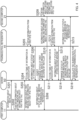
- FIG. 2 is a sequential diagram illustrating an example of the flow of a pharmaceutical refrigerator operation support method executed by pharmaceutical refrigerator operation support system 1 according to the present embodiment.
- first medicine M1 which is a medicine that requires strict temperature control
- first medicine M1 is attached with first RFID tag 12.
- the method for attaching first RFID tag 12 is not particularly limited, and, for example, first RFID tag 12 may be attached by affixing first label 13 to which first RFID tag 12 is attached in advance to first medicine M1.
- first RFID tag 12 may be attached by affixing first label 13 to which first RFID tag 12 is attached in advance to first medicine M1.
- first RFID tag 12 it is preferable to affix it so as to be perpendicular to the ground plane of the outer box of first medicine M1.
- first medicine M1 is printed with information that can identify what kind of medicine first medicine M1 is (for example, first indication 14 in FIG. 3 ), it is preferable to affix first label 13 on a face where this information is not printed.
- FIG. 1 illustrates a situation where first label 13 having first RFID tag 12 is affixed to the surface of first medicine M1.
- First computer 11 obtains information about first medicine M1 and information about first RFID tag 12 (S101). First computer 11 may obtain these items of information in any way, such as by receiving information input by the user of first computer 11 using an input apparatus such as a keyboard.
- the information about first medicine M1 is information that can identify what kind of medicine first medicine M1 is, such as an identification number unique to first medicine M1.
- the information about first RFID tag 12 is information that can be associated one-to-one with information that can be obtained from first RFID tag 12 through wireless communication, such as an identification number unique to first RFID tag 12.
- first computer 11 sends the information about first medicine M1 and the information about first RFID tag 12 to server 50 (S102).
- server 50 Upon receiving these items of information from first computer 11, server 50 stores the aforementioned information about first pharmaceutical distribution institution 10, information about first medicine M1, and information about first RFID tag 12 in memory 52 in association with one another (S103).
- a database for managing the name, quantity in stock, storage temperature history, supplier, and the like of medicine M stored in pharmaceutical refrigerator 41 may be constructed in memory 52, and information may be stored by registering the information in the database.
- first medicine M1 is delivered to medical institution 40 by first pharmaceutical distribution institution 10. Upon delivery to medical institution 40, first medicine M1 is stored in pharmaceutical refrigerator 41. At this time, first medicine M1 is placed in cage 42.
- Pharmaceutical refrigerator 41 then obtains information from first RFID tag 12 by wireless communication via the antenna of cage 42 (S104).
- the information obtained at this time is, for example, the identification number of first RFID tag 12.
- pharmaceutical refrigerator 41 sends information about the status of first medicine M1 to server 50 (S105).
- the information about the status of first medicine M1 includes the information obtained from first RFID tag 12, as well as information about the date and time of storage, date and time of retrieval, quantity in stock, storage temperature, and the like of a medicine to which first RFID tag 12 is attached (i.e., first medicine M1).
- server 50 Upon obtaining the information from pharmaceutical refrigerator 41, server 50 stores these items of information in memory 52 and manages them (S106). The storage of information may be done by registering the information in the database constructed in memory 52. At this time, server 50 checks the information about first RFID tag 12 received from first computer 11 against the information received from pharmaceutical refrigerator 41, that is, the information obtained by pharmaceutical refrigerator 41 from first RFID tag 12. This allows server 50 to identify that medicine M stored in pharmaceutical refrigerator 41 is first medicine M1 delivered by first pharmaceutical distribution institution 10.
- server 50 may send the information about the status of first medicine M1 to first computer 11 (S107). This allows first pharmaceutical distribution institution 10 to know whether first medicine M1 is managed in medical institution 40 in an appropriate temperature environment, the quantity of first medicine M1 in stock, and the like, and to provide appropriate services to medical institution 40.
- the sending of information from server 50 to first computer 11 may be performed automatically or may be performed in response to a request from first computer 11. In the case where the sending of information is performed automatically, the sending may be performed every certain time or may be performed each time sliding door 45 is opened and closed, where it is highly likely that medicine M has been stored or retrieved.
- second RFID tag 22 is attached to second medicine M2.
- the method for attaching second RFID tag 22 is not particularly limited, and, for example, second RFID tag 22 may be attached by affixing second label 23 to which second RFID tag 22 is attached in advance to second medicine M2.
- second RFID tag 22 it is preferable to affix it so as to be perpendicular to the ground plane of the outer box of second medicine M2.
- second medicine M2 is printed with information that can identify what kind of medicine second medicine M2 is (for example, second indication 24 in FIG. 3 ), it is preferable to affix second label 23 on a face where this information is not printed. Note that FIG. 1 illustrates a situation where second label 23 having second RFID tag 22 is affixed to the surface of second medicine M2.
- Second computer 21 obtains information about second medicine M2 and information about second RFID tag 22 (S 108). Second computer 21 may obtain these items of information in any way, such as by receiving information input by the user of second computer 21 using an input apparatus such as a keyboard.
- the information about second medicine M2 is information that can identify what kind of medicine second medicine M2 is, such as an identification number unique to second medicine M2.
- the information about second RFID tag 22 is information that can be associated one-to-one with information that can be obtained from second RFID tag 22 through wireless communication, such as an identification number unique to second RFID tag 22.
- second computer 21 sends the information about second medicine M2 and the information about second RFID tag 22 to server 50 (S109).
- server 50 Upon receiving these items of information from second computer 21, server 50 stores the aforementioned information about second pharmaceutical distribution institution 20, information about second medicine M2, and information about second RFID tag 22 in memory 52 in association with one another (S110). The storage of information may be done by registering the information in the database constructed in memory 52.
- second medicine M2 is delivered to medical institution 40 by second pharmaceutical distribution institution 20.
- second medicine M2 is stored in pharmaceutical refrigerator 41.
- second medicine M2 is placed in cage 42.
- Pharmaceutical refrigerator 41 then obtains information from second RFID tag 22 by wireless communication via the antenna of cage 42 (S111).
- the information obtained at this time is, for example, the identification number of second RFID tag 22.
- pharmaceutical refrigerator 41 sends information about the status of second medicine M2 to server 50 (S112).
- the information about the status of second medicine M2 includes the information obtained from second RFID tag 22, as well as information about the date and time of storage, date and time of retrieval, quantity in stock, storage temperature, and the like of the medicine to which second RFID tag 22 is attached (i.e., second medicine M2).
- server 50 Upon obtaining the information from pharmaceutical refrigerator 41, server 50 stores these items of information in memory 52 and manages them (S113). The storage of information may be done by registering the information in the database constructed in memory 52. At this time, server 50 checks the information about second RFID tag 22 received from second computer 21 against the information received from pharmaceutical refrigerator 41, that is, the information obtained by pharmaceutical refrigerator 41 from second RFID tag 22. This allows server 50 to identify that medicine M stored in pharmaceutical refrigerator 41 is second medicine M2 delivered by second pharmaceutical distribution institution 20.
- server 50 may send the information about the status of second medicine M2 to second computer 21 (S114). This allows second pharmaceutical distribution institution 20 to know whether second medicine M2 is managed in medical institution 40 in an appropriate temperature environment, the quantity of second medicine M2 in stock, and the like, and to provide appropriate services to medical institution 40.
- the sending of information from server 50 to second computer 21 may be performed automatically or may be performed in response to a request from second computer 21. In the case where the sending of information is performed automatically, the sending may be performed every certain time or may be performed each time sliding door 45 is opened and closed, where it is highly likely that medicine M has been stored or retrieved.
- Pharmaceutical refrigerator operation support system 1 is configured and functions as described above. Therefore, server 50 can identify and manage which distributor, specifically either first pharmaceutical distribution institution 10 or second pharmaceutical distribution institution 20, has delivered medicine M stored in pharmaceutical refrigerator 41. Accordingly, upon inquiry from first pharmaceutical distribution institution 10, second pharmaceutical distribution institution 20, and medical institution 40, the storage status such as the storage temperature and the supplier of each medicine M can be reported.
- single pharmaceutical refrigerator 41 can be shared by multiple distribution institutions. That is, single pharmaceutical refrigerator 41 can be supported in storing medicine M delivered from multiple distribution institutions while identifying the supplier. Note that only individuals with specific authority (such as the administrator of medical institution 40) may have access to information about which medicines have been delivered by whom.
- first pharmaceutical distribution institution 10 may have access to information about first medicine M1, but may not have access to information about second medicine M2, and the administrator of second pharmaceutical distribution institution 20 may have access to information about second medicine M2, but may not have access to information about first medicine M1.
- multiple pharmaceutical refrigerators 41 may be installed in medical institution 40.
- FIG. 3 is a diagram illustrating the configuration of pharmaceutical refrigerator operation support system 1 according to Embodiment 2.
- Embodiment 2 describes the configuration of pharmaceutical refrigerator operation support system 1 according to Embodiment 2.
- descriptions of matters common to Embodiment 1 may be omitted.
- first indication 14 is printed on the surface of first medicine M1
- second indication 24 is printed on the surface of second medicine M2.
- These indications may be in the form of, for example, bar codes or two-dimensional codes, or they may be character strings.
- Information about medicine M is information that can identify what kind of medicine medicine M is, such as an identification number unique to medicine M.
- pharmaceutical refrigerator operation support system 1 is configured of first computer 11, first printer 15, first scanner 17, second computer 21, second printer 25, second scanner 27, pharmaceutical refrigerator 41, and server 50.
- First printer 15 is installed in first pharmaceutical distribution institution 10.
- First printer 15 is configured to be able to obtain information about first RFID tag 12 from first RFID tag 12 by wirelessly communicating with first RFID tag 12.
- first printer 15 is configured to be able to print, on first label 13, first code 16 including information corresponding one-to-one with information about first RFID tag 12.
- FIG. 3 illustrates a situation where first label 13 having first RFID tag 12 is supplied to first printer 15, first code 16 is printed on the surface of first label 13, and then first label 13 is affixed to the surface of first medicine M1.
- First scanner 17 is installed in first pharmaceutical distribution institution 10. First scanner 17 is configured to be able to obtain information from first indication 14 and first code 16. First scanner 17 is also configured to be able to pass the obtained information to first computer 11.
- Second printer 25 is installed in second pharmaceutical distribution institution 20.
- Second printer 25 is configured to be able to obtain information about second RFID tag 22 from second RFID tag 22 by wirelessly communicating with second RFID tag 22.
- second printer 25 is configured to be able to print, on second label 23, second code 26 including information corresponding one-to-one with information about second RFID tag 22.
- FIG. 3 illustrates a situation where second label 23 having second RFID tag 22 is supplied to second printer 25, second code 26 is printed on the surface of second label 23, and then second label 23 is affixed to the surface of second medicine M2.
- Second scanner 27 is installed in second pharmaceutical distribution institution 20. Second scanner 27 is configured to be able to obtain information from second indication 24 and second code 26. Second scanner 27 is also configured to be able to pass the obtained information to second computer 21.
- Pharmaceutical refrigerator 41 according to the present embodiment is one installed in medical institution 40 by first pharmaceutical distribution institution 10.
- the installation of pharmaceutical refrigerator 41 in the present specification includes the installation of pharmaceutical refrigerator 41 equipped with cage 42, communication apparatus 43, and operation display apparatus 44, and further includes the attaching of cage 42, communication apparatus 43, and operation display apparatus 44 as retrofit apparatuses to existing pharmaceutical refrigerator 41 not equipped with cage 42, communication apparatus 43, or operation display apparatus 44.
- the installer in the present embodiment includes individuals who have installed pharmaceutical refrigerator 41 equipped with cage 42, communication apparatus 43, and operation display apparatus 44, as well as individuals who have attached cage 42, communication apparatus 43, and operation display apparatus 44 as retrofit apparatuses to existing pharmaceutical refrigerator 41 not equipped with cage 42, communication apparatus 43, or operation display apparatus 44.
- FIG. 4 is a sequential diagram illustrating an example of the flow of a pharmaceutical refrigerator operation support method executed by pharmaceutical refrigerator operation support system 1 according to the present embodiment.
- Server 50 obtains the installer information indicating that the installer who has installed pharmaceutical refrigerator 41 is first pharmaceutical distribution institution 10 (S201). As illustrated in FIG. 4 , the installer information may be sent from first computer 11, may be directly input to server 50 by the operator of server 50, or may be sent from outside pharmaceutical refrigerator operation support system 1.
- first medicine M1 which is a medicine that requires strict temperature control
- first medicine M1 is attached with first RFID tag 12.
- first code 16 is printed by first printer 15 on first label 13 to which first RFID tag 12 is attached in advance
- first label 13 is affixed to first medicine M1.
- First computer 11 obtains information about first medicine M1 and information about first RFID tag 12 by reading first indication 14 and first code 16 using first scanner 17 (S202).
- first computer 11 sends the information about first medicine M1 and the information about first RFID tag 12 to server 50 (S203).
- server 50 Upon receiving these items of information from first computer 11, server 50 stores the information about first pharmaceutical distribution institution 10, the information about first medicine M1, and the information about first RFID tag 12, which are described in Embodiment 1, in memory 52 in association with one another (S204).
- first medicine M1 is delivered to medical institution 40 by first pharmaceutical distribution institution 10. Upon delivery to medical institution 40, first medicine M1 is stored in pharmaceutical refrigerator 41. At this time, first medicine M1 is placed in cage 42.
- Pharmaceutical refrigerator 41 then obtains information from first RFID tag 12 by wireless communication via the antenna of cage 42 (S205).
- the information obtained at this time is, for example, the identification number of first RFID tag 12.
- pharmaceutical refrigerator 41 sends information about the status of first medicine M1 to server 50 (S206).
- the information about the status of first medicine M1 includes the information obtained from first RFID tag 12, as well as information about the date and time of storage, date and time of retrieval, quantity in stock, storage temperature, and the like of a medicine to which first RFID tag 12 is attached (i.e., first medicine M1).
- server 50 Upon obtaining the information from pharmaceutical refrigerator 41, server 50 stores these items of information in memory 52 and manages them (S207). At this time, server 50 checks the information about first RFID tag 12 received from first computer 11 against the information received from pharmaceutical refrigerator 41, that is, the information obtained by pharmaceutical refrigerator 41 from first RFID tag 12. This allows server 50 to identify that medicine M stored in pharmaceutical refrigerator 41 is first medicine M1 delivered by first pharmaceutical distribution institution 10. Furthermore, server 50 can store the information in a state where it can be identified that first medicine M1 is a medicine delivered by the installer who has installed pharmaceutical refrigerator 41, by means such as flagging the information about first medicine M1 based on the installer information. In other words, server 50 can manage first medicine M1 delivered by first pharmaceutical distribution institution 10 as being identified as a medicine delivered by first pharmaceutical distribution institution 10, who is the installer, based on the information received from pharmaceutical refrigerator 41 and first computer 11, as well as the installer information.
- server 50 may send the information about the status of first medicine M1 to first computer 11 (S208). This allows first pharmaceutical distribution institution 10 to know whether first medicine M1 is managed in medical institution 40 in an appropriate temperature environment, the quantity of first medicine M1 in stock, and the like, and to provide appropriate services to medical institution 40.
- the sending of information from server 50 to first computer 11 may be performed automatically or may be performed in response to a request from first computer 11. In the case where the sending of information is performed automatically, the sending may be performed every certain time or may be performed each time sliding door 45 is opened and closed, where it is highly likely that medicine M has been stored or retrieved.
- second RFID tag 22 is attached to second medicine M2.
- second code 26 is printed by second printer 25 on second label 23 to which second RFID tag 22 is attached in advance
- second label 23 is affixed to second medicine M2.
- Second computer 21 obtains information about second medicine M2 and information about second RFID tag 22 by reading second indication 24 and second code 26 using second scanner 27 (S209).
- second computer 21 sends the information about second medicine M2 and the information about second RFID tag 22 to server 50 (S210).
- server 50 stores the information about second pharmaceutical distribution institution 20, the information about second medicine M2, and the information about second RFID tag 22, which are described in Embodiment 1, in memory 52 in association with one another (S211).
- second medicine M2 is delivered to medical institution 40 by second pharmaceutical distribution institution 20.
- second medicine M2 is stored in pharmaceutical refrigerator 41.
- second medicine M2 is placed in cage 42.
- Pharmaceutical refrigerator 41 then obtains information from second RFID tag 22 by wireless communication via the antenna of cage 42 (S212).
- the information obtained at this time is, for example, the identification number of second RFID tag 22.
- pharmaceutical refrigerator 41 sends information about the status of second medicine M2 to server 50 (S213).
- the information about the status of second medicine M2 includes the information obtained from second RFID tag 22, as well as information about the date and time of storage, date and time of retrieval, quantity in stock, storage temperature, and the like of the medicine to which second RFID tag 22 is attached (i.e., second medicine M2).
- server 50 Upon obtaining the information from pharmaceutical refrigerator 41, server 50 stores these items of information in memory 52 and manages them (S214). At this time, server 50 checks the information about second RFID tag 22 received from second computer 21 against the information received from pharmaceutical refrigerator 41, that is, the information obtained by pharmaceutical refrigerator 41 from second RFID tag 22. This allows server 50 to identify that medicine M stored in pharmaceutical refrigerator 41 is second medicine M2 delivered by second pharmaceutical distribution institution 20. Furthermore, server 50 can store the information in a state where it can be identified that second medicine M2 is a medicine delivered by individuals who are not the installer having installed pharmaceutical refrigerator 41, by means such as flagging the information about first medicine M1 while not flagging the information about second medicine M2 based on the installer information. In other words, server 50 can manage second medicine M2 delivered by second pharmaceutical distribution institution 20 as being identified as a medicine delivered by second pharmaceutical distribution institution 20, who is not the installer, based on the information received from pharmaceutical refrigerator 41 and second computer 21, as well as the installer information.
- server 50 may send the information about the status of second medicine M2 to second computer 21 (S215).
- second pharmaceutical distribution institution 20 may know whether second medicine M2 is managed in medical institution 40 in an appropriate temperature environment, the quantity of second medicine M2 in stock, and the like, and to provide appropriate services to medical institution 40, without installing pharmaceutical refrigerator 41 by itself.
- the sending of information from server 50 to second computer 21 may be performed automatically or may be performed in response to a request from second computer 21. In the case where the sending of information is performed automatically, the sending may be performed every certain time or may be performed each time sliding door 45 is opened and closed, where it is highly likely that medicine M has been stored or retrieved.
- server 50 can calculate a fee for the operation of pharmaceutical refrigerator 41 to be borne by at least one of first pharmaceutical distribution institution 10, second pharmaceutical distribution institution 20, and medical institution 40 (S216). Specifically, if the distribution institution delivering medicine M stored in pharmaceutical refrigerator 41 is only first pharmaceutical distribution institution 10, who is the installer, medical institution 40 may bear the full amount of the fee for the operation, or the fees or cost-sharing ratio can be calculated to be shared between the two, medical institution 40 and first pharmaceutical distribution institution 10.
- the fees or cost-sharing ratio can be calculated to be shared among the three, medical institution 40, first pharmaceutical distribution institution 10, and second pharmaceutical distribution institution 20.
- the amount borne by first pharmaceutical distribution institution 10 and the amount borne by second pharmaceutical distribution institution 20 can be calculated based on the ratio of the quantity of first medicine M1 and the ratio of the quantity of second medicine M2 to the quantity of medicine M stored in pharmaceutical refrigerator 41.
- the fees or cost-sharing ratio to be borne by the users of pharmaceutical refrigerator 41 can be calculated . Therefore, it is possible to suppress such a situation in which the cost burden regarding the installation and operation of pharmaceutical refrigerator 41 is unevenly applied to specific individuals. This can promote the spread and utilization of pharmaceutical refrigerator 41.
- first printer 15, first scanner 17, second printer 25, and second scanner 27 are used. Therefore, information about first medicine M1, information about first RFID tag 12, information about second medicine M2, and information about second RFID tag 22 can be easily obtained.
- the installer information may be used to calculate a fee for the operation of pharmaceutical refrigerator 41 to be borne by at least one of first pharmaceutical distribution institution 10, second pharmaceutical distribution institution 20, and medical institutions 40.
- first computer 11 and first printer 15, or second computer 21 and second printer 25 may be integrated.
- first printer 15 may be configured to have the function of first computer 11 and to be able to communicate with server 50.
- either the combination of first printer 15 and first scanner 17 or the combination of second printer 25 and second scanner 27 may be used exclusively.
- the pharmaceutical refrigerator operation support system, pharmaceutical refrigerator operation support method, and computer program according to the present disclosure can be utilized for the distribution of medicine that requires strict temperature control.
Landscapes
- Engineering & Computer Science (AREA)
- Health & Medical Sciences (AREA)
- Business, Economics & Management (AREA)
- General Business, Economics & Management (AREA)
- Epidemiology (AREA)
- General Health & Medical Sciences (AREA)
- Medical Informatics (AREA)
- Primary Health Care (AREA)
- Public Health (AREA)
- Biomedical Technology (AREA)
- Economics (AREA)
- Medicinal Chemistry (AREA)
- Chemical & Material Sciences (AREA)
- Bioinformatics & Cheminformatics (AREA)
- Entrepreneurship & Innovation (AREA)
- Tourism & Hospitality (AREA)
- Human Resources & Organizations (AREA)
- Marketing (AREA)
- Operations Research (AREA)
- Quality & Reliability (AREA)
- Strategic Management (AREA)
- Accounting & Taxation (AREA)
- Physics & Mathematics (AREA)
- Development Economics (AREA)
- General Physics & Mathematics (AREA)
- Theoretical Computer Science (AREA)
- Finance (AREA)
- Medical Treatment And Welfare Office Work (AREA)
- Management, Administration, Business Operations System, And Electronic Commerce (AREA)
Abstract
Description
- The present disclosure relates to a pharmaceutical refrigerator operation support system, a pharmaceutical refrigerator operation support method, and a computer program.
- Conventionally, medicines have been manufactured by pharmaceutical institutions and delivered to medical institutions through distribution institutions. In recent years, medicines that require strict temperature control have been distributed. Such medicines are managed by using pharmaceutical refrigerators in medical institutions. Literature disclosing related techniques includes, for example,
PTL 1. -
PTL 1
Japanese Patent Application Laid-Open No. 2019-135632 - Usually, multiple distribution institutions deliver medicines to a single medical institution. Therefore, the medical institution needs to manage which distribution institutions have delivered which medicines. This is also true for medicines that require strict temperature control. In the case of medicines that require strict temperature control, it is also necessary to manage the temperature environment in which they have been stored. It is conceivable to utilize pharmaceutical refrigerators for such management. However, it has been difficult to manage various medicines by using a single pharmaceutical refrigerator, while identifying distribution institutions that have delivered the medicines.
- In light of such circumstances, it is an object of the present disclosure to support a single pharmaceutical refrigerator in storing medicines delivered from multiple distribution institutions.
- A pharmaceutical refrigerator operation support system according to the present disclosure includes: a server; a pharmaceutical refrigerator that is installed in a medical institution, obtains information from a radio frequency identification (RFID) tag attached to stored medicine, and sends information about a status of the stored medicine to the server; a first computer that sends to the server information about a first medicine, information about a first RFID tag attached to the first medicine, and information about a first pharmaceutical distribution institution that delivers the first medicine to the medical institution; and a second computer that sends to the server information about a second medicine, information about a second RFID tag attached to the second medicine, and information about a second pharmaceutical distribution institution that delivers the second medicine to the medical institution, in which the server manages a status of medicine in the pharmaceutical refrigerator by identifying the first medicine as a medicine delivered by the first pharmaceutical distribution institution and identifying the second medicine as a medicine delivered by the second pharmaceutical distribution institution, based on information received from the pharmaceutical refrigerator, the first computer, and the second computer.
- A pharmaceutical refrigerator operation support method according to the present disclosure includes: sending, by a first computer to a server, information about a first medicine, information about a first radio frequency identification (RFID) tag attached to the first medicine, and information about a first pharmaceutical distribution institution that delivers the first medicine to a medical institution; sending, by a second computer to the server, information about a second medicine, information about a second RFID tag attached to the second medicine, and information about a second pharmaceutical distribution institution that delivers the second medicine to the medical institution; obtaining, by a pharmaceutical refrigerator installed in the medical institution, information from an RFID tag attached to medicine stored in the pharmaceutical refrigerator; sending, by the pharmaceutical refrigerator to the server, information obtained from the RFID tag attached to the medicine stored in the pharmaceutical refrigerator; and managing, by the server, a status of medicine in the pharmaceutical refrigerator by identifying the first medicine as a medicine delivered by the first pharmaceutical distribution institution and identifying the second medicine as a medicine delivered by the second pharmaceutical distribution institution, based on information received from the first computer, the second computer, and the pharmaceutical refrigerator.
- A computer program according to the present disclosure is a program executed by a server communicably connected via a network to a pharmaceutical refrigerator that is installed in a medical institution and that stores medicine delivered by a first pharmaceutical distribution institution and a second pharmaceutical distribution institution, the computer program causing the server to execute: receiving, from a first computer, information about a first medicine, information about a first radio frequency identification (RFID) tag attached to the first medicine, and information about the first pharmaceutical distribution institution; receiving, from a second computer, information about a second medicine, information about a second RFID tag attached to the second medicine, and information about the second pharmaceutical distribution institution; receiving, from the pharmaceutical refrigerator, information obtained from an RFID tag affixed to medicine stored in the pharmaceutical refrigerator; and managing a status of medicine in the pharmaceutical refrigerator by identifying the first medicine as a medicine delivered by the first pharmaceutical distribution institution and identifying the second medicine as a medicine delivered by the second pharmaceutical distribution institution, based on information received from the first computer, the second computer, and the pharmaceutical refrigerator.
- According to the present disclosure, a single pharmaceutical refrigerator can be supported in storing medicines delivered from multiple distribution institutions.
-
-
FIG. 1 is a diagram illustrating an example of the configuration of a pharmaceutical refrigerator operation support system according toEmbodiment 1; -
FIG. 2 is a sequential diagram illustrating the flow of the pharmaceutical refrigerator operation support system according toEmbodiment 1; -
FIG. 3 is a diagram illustrating an example of the configuration of a pharmaceutical refrigerator operation support system according to Embodiment 2; and -
FIG. 4 is a sequential diagram illustrating the flow of the pharmaceutical refrigerator operation support system according to Embodiment 2. - Hereinafter, embodiments of the present disclosure will be described in detail with reference to the drawings. Note that the embodiments described hereinafter are examples, and the present disclosure is not limited by these embodiments.
-
FIG. 1 is a diagram illustrating the configuration of pharmaceutical refrigeratoroperation support system 1 according toEmbodiment 1. -
FIG. 1 also illustrates how medicine M is distributed. That is, medicine M (including first medicine M1 and second medicine M2) manufactured atpharmaceutical institution 30 is delivered tomedical institution 40 via pharmaceutical distribution institutions (including firstpharmaceutical distribution institution 10 and second pharmaceutical distribution institution 20). Specifically, first medicine M1 manufactured bypharmaceutical institution 30 is delivered tomedical institution 40 via firstpharmaceutical distribution institution 10. In addition, second medicine M2 manufactured bypharmaceutical institution 30 is delivered tomedical institution 40 via secondpharmaceutical distribution institution 20. - For the convenience of description, first medicine M1 is described as one medicine in the present specification, but it should be understood that first medicine M1 may include multiple medicines. In addition, if first medicine M1 includes multiple medicines, the multiple first medicines M1 may be delivered to
medical institution 40 at one time, or may be delivered in multiple times. For example, when the inventory of first medicine M1 atmedical institution 40 runs out or is about to run out, the next first medicine M1 may be delivered. The same is true for second medicine M2. - Moreover, for the convenience of description, in the present specification, pharmaceutical distribution institutions are described as the total of two pharmaceutical distribution institutions, first
pharmaceutical distribution institution 10 and secondpharmaceutical distribution institution 20, but it should be understood that the number of pharmaceutical distribution institutions is not limited to two. For example, it is included in the technical scope of the present disclosure that there are multiple secondpharmaceutical distribution institutions 20. - Note that
pharmaceutical institution 30 is, for example, a pharmaceutical manufacturer. The distribution institutions are, for example, wholesalers.Medical institution 40 is, for example, a hospital or a pharmacy. In addition,pharmaceutical institution 30 manufacturing first medicine M1 andpharmaceutical institution 30 manufacturing second medicine M2 may be the same pharmaceutical institution or may be pharmaceutical institutions that are different from each other. In the case where first medicine M1 or second medicine M2 includes multiple medicines, first medicines M1 or second medicines M2 may be manufactured atpharmaceutical institutions 30 that are different from each other. - In the present embodiment, pharmaceutical refrigerator
operation support system 1 includesfirst computer 11,second computer 21,pharmaceutical refrigerator 41, andserver 50. -
First computer 11 is installed in firstpharmaceutical distribution institution 10.First computer 11 includes an arithmetic processor such as a central processing unit (CPU), a storage apparatus such as a read only memory (ROM), a random access memory (RAM), and a hard disk drive (HDD), and a communication apparatus such as a network interface card that communicates withserver 50 via a communication network. -
First computer 11 is communicably connected toserver 50 via a communication network.First computer 11 sends information about firstpharmaceutical distribution institution 10 to server 50 when starting communication withserver 50 or when requestingserver 50 to authenticatefirst computer 11 or the user offirst computer 11. The information about firstpharmaceutical distribution institution 10 is, for example, the identification information offirst computer 11, the identification information of an application executed byfirst computer 11, or the identification information of the user offirst computer 11. Note thatfirst computer 11 may send the information about firstpharmaceutical distribution institution 10 to server 50 when sending information about first medicine M1 or information about first radio frequency identification (RFID)tag 12, which will be described later. -
Second computer 21 is installed in secondpharmaceutical distribution institution 20.Second computer 21 includes an arithmetic processor such as a CPU, a storage apparatus such as a ROM, a RAM, and an HDD, and a communication apparatus such as a network interface card that communicates withserver 50 via a communication network. -
Second computer 21 is communicably connected toserver 50 via a communication network.Second computer 21 sends information about secondpharmaceutical distribution institution 20 toserver 50 when starting communication withserver 50 or when requestingserver 50 to authenticatesecond computer 21 or the user ofsecond computer 21. The information about secondpharmaceutical distribution institution 20 is, for example, the identification information ofsecond computer 21, the identification information of an application executed bysecond computer 21, or the identification information of the user ofsecond computer 21. Note thatsecond computer 21 may send the information about secondpharmaceutical distribution institution 20 toserver 50 when sending information about second medicine M2 or information aboutsecond RFID tag 22, which will be described later. -
Pharmaceutical refrigerator 41 is installed inmedical institution 40. Insidepharmaceutical refrigerator 41,removable cage 42 is placed.Cage 42 has an antenna for obtaining information from an RFID tag attached to medicine M placed insidecage 42.Pharmaceutical refrigerator 41 hascommunication apparatus 43.Communication apparatus 43 is communicably connected toserver 50 via a communication network.Operation display apparatus 44 is attached on the front surface ofpharmaceutical refrigerator 41.Operation display apparatus 44 is used by individuals who store medicine inpharmaceutical refrigerator 41 or retrieve medicine frompharmaceutical refrigerator 41 to perform operations such as user login and logout, as well as medicine storage and retrieval operations.Pharmaceutical refrigerator 41 is configured to be able to store and retrieve medicine M by opening and closing sliding door 45. Note thatoperation display apparatus 44 may accept a chamber temperature setting operation, or may present information such as the quantity of medicine M in stock or the chamber temperature to the user.Cage 42,communication apparatus 43, andoperation display apparatus 44 are also configured to be attached as retrofit apparatuses to existingpharmaceutical refrigerator 41 not equipped with them. -
Pharmaceutical refrigerator 41 includes a refrigeration circuit and a chamber temperature sensor (not illustrated), and can maintain the chamber temperature at a temperature set by the user.Pharmaceutical refrigerator 41 can also record the time and the chamber temperature at that time in association with each other.Pharmaceutical refrigerator 41 can also detect that medicine M has been placed incage 42 and retrieved fromcage 42. Therefore,pharmaceutical refrigerator 41 can obtain the time at which medicine M is stored inpharmaceutical refrigerator 41 and the time at which medicine M is retrieved frompharmaceutical refrigerator 41.Pharmaceutical refrigerator 41 can also record and manage the temperature at which medicine M has been stored from the time it is stored until the time it is retrieved. -
Server 50 is acomputer including processor 51,memory 52, andcommunicator 53.Processor 51 includes an arithmetic processor such as a CPU.Memory 52 includes a storage apparatus such as a ROM, a RAM, and an HDD.Communicator 53 includes a communication apparatus such as a network interface card that communicates withfirst computer 11,second computer 21, andpharmaceutical refrigerator 41 via a communication network. By executing a computer program stored inmemory 52 byprocessor 51 and communicating withfirst computer 11,second computer 21, andpharmaceutical refrigerator 41 bycommunicator 53, a pharmaceutical refrigerator operation support method according to the present disclosure is executed. -
FIG. 2 is a sequential diagram illustrating an example of the flow of a pharmaceutical refrigerator operation support method executed by pharmaceutical refrigeratoroperation support system 1 according to the present embodiment. - When first medicine M1, which is a medicine that requires strict temperature control, is delivered from
pharmaceutical institution 30 to firstpharmaceutical distribution institution 10, first medicine M1 is attached withfirst RFID tag 12. The method for attachingfirst RFID tag 12 is not particularly limited, and, for example,first RFID tag 12 may be attached by affixingfirst label 13 to whichfirst RFID tag 12 is attached in advance to first medicine M1. When affixingfirst label 13 to first medicine M1, it is preferable to affix it so as to be perpendicular to the ground plane of the outer box of first medicine M1. In addition, if first medicine M1 is printed with information that can identify what kind of medicine first medicine M1 is (for example,first indication 14 inFIG. 3 ), it is preferable to affixfirst label 13 on a face where this information is not printed. Note thatFIG. 1 illustrates a situation wherefirst label 13 havingfirst RFID tag 12 is affixed to the surface of first medicine M1. -
First computer 11 obtains information about first medicine M1 and information about first RFID tag 12 (S101).First computer 11 may obtain these items of information in any way, such as by receiving information input by the user offirst computer 11 using an input apparatus such as a keyboard. The information about first medicine M1 is information that can identify what kind of medicine first medicine M1 is, such as an identification number unique to first medicine M1. The information aboutfirst RFID tag 12 is information that can be associated one-to-one with information that can be obtained fromfirst RFID tag 12 through wireless communication, such as an identification number unique tofirst RFID tag 12. - Next,
first computer 11 sends the information about first medicine M1 and the information aboutfirst RFID tag 12 to server 50 (S102). Upon receiving these items of information fromfirst computer 11,server 50 stores the aforementioned information about firstpharmaceutical distribution institution 10, information about first medicine M1, and information aboutfirst RFID tag 12 inmemory 52 in association with one another (S103). A database for managing the name, quantity in stock, storage temperature history, supplier, and the like of medicine M stored inpharmaceutical refrigerator 41 may be constructed inmemory 52, and information may be stored by registering the information in the database. - Meanwhile or thereafter, first medicine M1 is delivered to
medical institution 40 by firstpharmaceutical distribution institution 10. Upon delivery tomedical institution 40, first medicine M1 is stored inpharmaceutical refrigerator 41. At this time, first medicine M1 is placed incage 42. -
Pharmaceutical refrigerator 41 then obtains information fromfirst RFID tag 12 by wireless communication via the antenna of cage 42 (S104). The information obtained at this time is, for example, the identification number offirst RFID tag 12. Next,pharmaceutical refrigerator 41 sends information about the status of first medicine M1 to server 50 (S105). The information about the status of first medicine M1 includes the information obtained fromfirst RFID tag 12, as well as information about the date and time of storage, date and time of retrieval, quantity in stock, storage temperature, and the like of a medicine to whichfirst RFID tag 12 is attached (i.e., first medicine M1). - Upon obtaining the information from
pharmaceutical refrigerator 41,server 50 stores these items of information inmemory 52 and manages them (S106). The storage of information may be done by registering the information in the database constructed inmemory 52. At this time,server 50 checks the information aboutfirst RFID tag 12 received fromfirst computer 11 against the information received frompharmaceutical refrigerator 41, that is, the information obtained bypharmaceutical refrigerator 41 fromfirst RFID tag 12. This allowsserver 50 to identify that medicine M stored inpharmaceutical refrigerator 41 is first medicine M1 delivered by firstpharmaceutical distribution institution 10. - If necessary,
server 50 may send the information about the status of first medicine M1 to first computer 11 (S107). This allows firstpharmaceutical distribution institution 10 to know whether first medicine M1 is managed inmedical institution 40 in an appropriate temperature environment, the quantity of first medicine M1 in stock, and the like, and to provide appropriate services tomedical institution 40. The sending of information fromserver 50 tofirst computer 11 may be performed automatically or may be performed in response to a request fromfirst computer 11. In the case where the sending of information is performed automatically, the sending may be performed every certain time or may be performed each time sliding door 45 is opened and closed, where it is highly likely that medicine M has been stored or retrieved. - Also, upon delivery of second medicine M2, which is a medicine that requires strict temperature control, from
pharmaceutical institution 30 to secondpharmaceutical distribution institution 20,second RFID tag 22 is attached to second medicine M2. The method for attachingsecond RFID tag 22 is not particularly limited, and, for example,second RFID tag 22 may be attached by affixingsecond label 23 to whichsecond RFID tag 22 is attached in advance to second medicine M2. When affixingsecond label 23 to second medicine M2, it is preferable to affix it so as to be perpendicular to the ground plane of the outer box of second medicine M2. In addition, if second medicine M2 is printed with information that can identify what kind of medicine second medicine M2 is (for example,second indication 24 inFIG. 3 ), it is preferable to affixsecond label 23 on a face where this information is not printed. Note thatFIG. 1 illustrates a situation wheresecond label 23 havingsecond RFID tag 22 is affixed to the surface of second medicine M2. -
Second computer 21 obtains information about second medicine M2 and information about second RFID tag 22 (S 108).Second computer 21 may obtain these items of information in any way, such as by receiving information input by the user ofsecond computer 21 using an input apparatus such as a keyboard. The information about second medicine M2 is information that can identify what kind of medicine second medicine M2 is, such as an identification number unique to second medicine M2. The information aboutsecond RFID tag 22 is information that can be associated one-to-one with information that can be obtained fromsecond RFID tag 22 through wireless communication, such as an identification number unique tosecond RFID tag 22. - Next,
second computer 21 sends the information about second medicine M2 and the information aboutsecond RFID tag 22 to server 50 (S109). Upon receiving these items of information fromsecond computer 21,server 50 stores the aforementioned information about secondpharmaceutical distribution institution 20, information about second medicine M2, and information aboutsecond RFID tag 22 inmemory 52 in association with one another (S110). The storage of information may be done by registering the information in the database constructed inmemory 52. - Meanwhile or thereafter, second medicine M2 is delivered to
medical institution 40 by secondpharmaceutical distribution institution 20. Upon delivery tomedical institution 40, second medicine M2 is stored inpharmaceutical refrigerator 41. At this time, second medicine M2 is placed incage 42. -
Pharmaceutical refrigerator 41 then obtains information fromsecond RFID tag 22 by wireless communication via the antenna of cage 42 (S111). The information obtained at this time is, for example, the identification number ofsecond RFID tag 22. Next,pharmaceutical refrigerator 41 sends information about the status of second medicine M2 to server 50 (S112). The information about the status of second medicine M2 includes the information obtained fromsecond RFID tag 22, as well as information about the date and time of storage, date and time of retrieval, quantity in stock, storage temperature, and the like of the medicine to whichsecond RFID tag 22 is attached (i.e., second medicine M2). - Upon obtaining the information from
pharmaceutical refrigerator 41,server 50 stores these items of information inmemory 52 and manages them (S113). The storage of information may be done by registering the information in the database constructed inmemory 52. At this time,server 50 checks the information aboutsecond RFID tag 22 received fromsecond computer 21 against the information received frompharmaceutical refrigerator 41, that is, the information obtained bypharmaceutical refrigerator 41 fromsecond RFID tag 22. This allowsserver 50 to identify that medicine M stored inpharmaceutical refrigerator 41 is second medicine M2 delivered by secondpharmaceutical distribution institution 20. - If necessary,
server 50 may send the information about the status of second medicine M2 to second computer 21 (S114). This allows secondpharmaceutical distribution institution 20 to know whether second medicine M2 is managed inmedical institution 40 in an appropriate temperature environment, the quantity of second medicine M2 in stock, and the like, and to provide appropriate services tomedical institution 40. The sending of information fromserver 50 tosecond computer 21 may be performed automatically or may be performed in response to a request fromsecond computer 21. In the case where the sending of information is performed automatically, the sending may be performed every certain time or may be performed each time sliding door 45 is opened and closed, where it is highly likely that medicine M has been stored or retrieved. - Pharmaceutical refrigerator
operation support system 1 according to the present embodiment is configured and functions as described above. Therefore,server 50 can identify and manage which distributor, specifically either firstpharmaceutical distribution institution 10 or secondpharmaceutical distribution institution 20, has delivered medicine M stored inpharmaceutical refrigerator 41. Accordingly, upon inquiry from firstpharmaceutical distribution institution 10, secondpharmaceutical distribution institution 20, andmedical institution 40, the storage status such as the storage temperature and the supplier of each medicine M can be reported. In other words, singlepharmaceutical refrigerator 41 can be shared by multiple distribution institutions. That is, singlepharmaceutical refrigerator 41 can be supported in storing medicine M delivered from multiple distribution institutions while identifying the supplier. Note that only individuals with specific authority (such as the administrator of medical institution 40) may have access to information about which medicines have been delivered by whom. In addition, the administrator of firstpharmaceutical distribution institution 10 may have access to information about first medicine M1, but may not have access to information about second medicine M2, and the administrator of secondpharmaceutical distribution institution 20 may have access to information about second medicine M2, but may not have access to information about first medicine M1. It should be understood that multiplepharmaceutical refrigerators 41 may be installed inmedical institution 40. -
FIG. 3 is a diagram illustrating the configuration of pharmaceutical refrigeratoroperation support system 1 according to Embodiment 2. Hereinafter, descriptions of matters common toEmbodiment 1 may be omitted. - On the surface of medicine M manufactured at
pharmaceutical institution 30, indication with information about medicine M is printed. For example,first indication 14 is printed on the surface of first medicine M1, andsecond indication 24 is printed on the surface of second medicine M2. These indications may be in the form of, for example, bar codes or two-dimensional codes, or they may be character strings. Information about medicine M is information that can identify what kind of medicine medicine M is, such as an identification number unique to medicine M. - In the present embodiment, pharmaceutical refrigerator
operation support system 1 is configured offirst computer 11, first printer 15, first scanner 17,second computer 21,second printer 25,second scanner 27,pharmaceutical refrigerator 41, andserver 50. - First printer 15 is installed in first
pharmaceutical distribution institution 10. First printer 15 is configured to be able to obtain information aboutfirst RFID tag 12 fromfirst RFID tag 12 by wirelessly communicating withfirst RFID tag 12. In addition, first printer 15 is configured to be able to print, onfirst label 13,first code 16 including information corresponding one-to-one with information aboutfirst RFID tag 12.FIG. 3 illustrates a situation wherefirst label 13 havingfirst RFID tag 12 is supplied to first printer 15,first code 16 is printed on the surface offirst label 13, and then first label 13 is affixed to the surface of first medicine M1. - First scanner 17 is installed in first
pharmaceutical distribution institution 10. First scanner 17 is configured to be able to obtain information fromfirst indication 14 andfirst code 16. First scanner 17 is also configured to be able to pass the obtained information tofirst computer 11. -
Second printer 25 is installed in secondpharmaceutical distribution institution 20.Second printer 25 is configured to be able to obtain information aboutsecond RFID tag 22 fromsecond RFID tag 22 by wirelessly communicating withsecond RFID tag 22. In addition,second printer 25 is configured to be able to print, onsecond label 23, second code 26 including information corresponding one-to-one with information aboutsecond RFID tag 22.FIG. 3 illustrates a situation wheresecond label 23 havingsecond RFID tag 22 is supplied tosecond printer 25, second code 26 is printed on the surface ofsecond label 23, and thensecond label 23 is affixed to the surface of second medicine M2. -
Second scanner 27 is installed in secondpharmaceutical distribution institution 20.Second scanner 27 is configured to be able to obtain information fromsecond indication 24 and second code 26.Second scanner 27 is also configured to be able to pass the obtained information tosecond computer 21. -
Pharmaceutical refrigerator 41 according to the present embodiment is one installed inmedical institution 40 by firstpharmaceutical distribution institution 10. Note that, as a matter of course, the installation ofpharmaceutical refrigerator 41 in the present specification includes the installation ofpharmaceutical refrigerator 41 equipped withcage 42,communication apparatus 43, andoperation display apparatus 44, and further includes the attaching ofcage 42,communication apparatus 43, andoperation display apparatus 44 as retrofit apparatuses to existingpharmaceutical refrigerator 41 not equipped withcage 42,communication apparatus 43, oroperation display apparatus 44. That is, the installer in the present embodiment includes individuals who have installedpharmaceutical refrigerator 41 equipped withcage 42,communication apparatus 43, andoperation display apparatus 44, as well as individuals who have attachedcage 42,communication apparatus 43, andoperation display apparatus 44 as retrofit apparatuses to existingpharmaceutical refrigerator 41 not equipped withcage 42,communication apparatus 43, oroperation display apparatus 44. -
FIG. 4 is a sequential diagram illustrating an example of the flow of a pharmaceutical refrigerator operation support method executed by pharmaceutical refrigeratoroperation support system 1 according to the present embodiment. -
Server 50 obtains the installer information indicating that the installer who has installedpharmaceutical refrigerator 41 is first pharmaceutical distribution institution 10 (S201). As illustrated inFIG. 4 , the installer information may be sent fromfirst computer 11, may be directly input toserver 50 by the operator ofserver 50, or may be sent from outside pharmaceutical refrigeratoroperation support system 1. - When first medicine M1, which is a medicine that requires strict temperature control, is delivered from
pharmaceutical institution 30 to firstpharmaceutical distribution institution 10, first medicine M1 is attached withfirst RFID tag 12. Specifically, afterfirst code 16 is printed by first printer 15 onfirst label 13 to whichfirst RFID tag 12 is attached in advance,first label 13 is affixed to first medicine M1. -
First computer 11 obtains information about first medicine M1 and information aboutfirst RFID tag 12 by readingfirst indication 14 andfirst code 16 using first scanner 17 (S202). - Next,
first computer 11 sends the information about first medicine M1 and the information aboutfirst RFID tag 12 to server 50 (S203). Upon receiving these items of information fromfirst computer 11,server 50 stores the information about firstpharmaceutical distribution institution 10, the information about first medicine M1, and the information aboutfirst RFID tag 12, which are described inEmbodiment 1, inmemory 52 in association with one another (S204). - Meanwhile or thereafter, first medicine M1 is delivered to
medical institution 40 by firstpharmaceutical distribution institution 10. Upon delivery tomedical institution 40, first medicine M1 is stored inpharmaceutical refrigerator 41. At this time, first medicine M1 is placed incage 42. -
Pharmaceutical refrigerator 41 then obtains information fromfirst RFID tag 12 by wireless communication via the antenna of cage 42 (S205). The information obtained at this time is, for example, the identification number offirst RFID tag 12. Next,pharmaceutical refrigerator 41 sends information about the status of first medicine M1 to server 50 (S206). The information about the status of first medicine M1 includes the information obtained fromfirst RFID tag 12, as well as information about the date and time of storage, date and time of retrieval, quantity in stock, storage temperature, and the like of a medicine to whichfirst RFID tag 12 is attached (i.e., first medicine M1). - Upon obtaining the information from
pharmaceutical refrigerator 41,server 50 stores these items of information inmemory 52 and manages them (S207). At this time,server 50 checks the information aboutfirst RFID tag 12 received fromfirst computer 11 against the information received frompharmaceutical refrigerator 41, that is, the information obtained bypharmaceutical refrigerator 41 fromfirst RFID tag 12. This allowsserver 50 to identify that medicine M stored inpharmaceutical refrigerator 41 is first medicine M1 delivered by firstpharmaceutical distribution institution 10. Furthermore,server 50 can store the information in a state where it can be identified that first medicine M1 is a medicine delivered by the installer who has installedpharmaceutical refrigerator 41, by means such as flagging the information about first medicine M1 based on the installer information. In other words,server 50 can manage first medicine M1 delivered by firstpharmaceutical distribution institution 10 as being identified as a medicine delivered by firstpharmaceutical distribution institution 10, who is the installer, based on the information received frompharmaceutical refrigerator 41 andfirst computer 11, as well as the installer information. - If necessary,
server 50 may send the information about the status of first medicine M1 to first computer 11 (S208). This allows firstpharmaceutical distribution institution 10 to know whether first medicine M1 is managed inmedical institution 40 in an appropriate temperature environment, the quantity of first medicine M1 in stock, and the like, and to provide appropriate services tomedical institution 40. The sending of information fromserver 50 tofirst computer 11 may be performed automatically or may be performed in response to a request fromfirst computer 11. In the case where the sending of information is performed automatically, the sending may be performed every certain time or may be performed each time sliding door 45 is opened and closed, where it is highly likely that medicine M has been stored or retrieved. - Also, upon delivery of second medicine M2, which is a medicine that requires strict temperature control, from
pharmaceutical institution 30 to secondpharmaceutical distribution institution 20,second RFID tag 22 is attached to second medicine M2. Specifically, after second code 26 is printed bysecond printer 25 onsecond label 23 to whichsecond RFID tag 22 is attached in advance,second label 23 is affixed to second medicine M2. -
Second computer 21 obtains information about second medicine M2 and information aboutsecond RFID tag 22 by readingsecond indication 24 and second code 26 using second scanner 27 (S209). - Next,
second computer 21 sends the information about second medicine M2 and the information aboutsecond RFID tag 22 to server 50 (S210). Upon receiving these items of information fromsecond computer 21,server 50 stores the information about secondpharmaceutical distribution institution 20, the information about second medicine M2, and the information aboutsecond RFID tag 22, which are described inEmbodiment 1, inmemory 52 in association with one another (S211). - Meanwhile or thereafter, second medicine M2 is delivered to
medical institution 40 by secondpharmaceutical distribution institution 20. Upon delivery tomedical institution 40, second medicine M2 is stored inpharmaceutical refrigerator 41. At this time, second medicine M2 is placed incage 42. -
Pharmaceutical refrigerator 41 then obtains information fromsecond RFID tag 22 by wireless communication via the antenna of cage 42 (S212). The information obtained at this time is, for example, the identification number ofsecond RFID tag 22. Next,pharmaceutical refrigerator 41 sends information about the status of second medicine M2 to server 50 (S213). The information about the status of second medicine M2 includes the information obtained fromsecond RFID tag 22, as well as information about the date and time of storage, date and time of retrieval, quantity in stock, storage temperature, and the like of the medicine to whichsecond RFID tag 22 is attached (i.e., second medicine M2). - Upon obtaining the information from
pharmaceutical refrigerator 41,server 50 stores these items of information inmemory 52 and manages them (S214). At this time,server 50 checks the information aboutsecond RFID tag 22 received fromsecond computer 21 against the information received frompharmaceutical refrigerator 41, that is, the information obtained bypharmaceutical refrigerator 41 fromsecond RFID tag 22. This allowsserver 50 to identify that medicine M stored inpharmaceutical refrigerator 41 is second medicine M2 delivered by secondpharmaceutical distribution institution 20. Furthermore,server 50 can store the information in a state where it can be identified that second medicine M2 is a medicine delivered by individuals who are not the installer having installedpharmaceutical refrigerator 41, by means such as flagging the information about first medicine M1 while not flagging the information about second medicine M2 based on the installer information. In other words,server 50 can manage second medicine M2 delivered by secondpharmaceutical distribution institution 20 as being identified as a medicine delivered by secondpharmaceutical distribution institution 20, who is not the installer, based on the information received frompharmaceutical refrigerator 41 andsecond computer 21, as well as the installer information. - If necessary,
server 50 may send the information about the status of second medicine M2 to second computer 21 (S215). This allows secondpharmaceutical distribution institution 20 to know whether second medicine M2 is managed inmedical institution 40 in an appropriate temperature environment, the quantity of second medicine M2 in stock, and the like, and to provide appropriate services tomedical institution 40, without installingpharmaceutical refrigerator 41 by itself. The sending of information fromserver 50 tosecond computer 21 may be performed automatically or may be performed in response to a request fromsecond computer 21. In the case where the sending of information is performed automatically, the sending may be performed every certain time or may be performed each time sliding door 45 is opened and closed, where it is highly likely that medicine M has been stored or retrieved. - Based on the installer information and the status of first medicine M1 in
pharmaceutical refrigerator 41 and the status of second medicine M2 inpharmaceutical refrigerator 41,server 50 can calculate a fee for the operation ofpharmaceutical refrigerator 41 to be borne by at least one of firstpharmaceutical distribution institution 10, secondpharmaceutical distribution institution 20, and medical institution 40 (S216). Specifically, if the distribution institution delivering medicine M stored inpharmaceutical refrigerator 41 is only firstpharmaceutical distribution institution 10, who is the installer,medical institution 40 may bear the full amount of the fee for the operation, or the fees or cost-sharing ratio can be calculated to be shared between the two,medical institution 40 and firstpharmaceutical distribution institution 10. If secondpharmaceutical distribution institution 20, who is not the installer, delivers medicine M stored inpharmaceutical refrigerator 41 in addition to firstpharmaceutical distribution institution 10, who is the installer, the fees or cost-sharing ratio can be calculated to be shared among the three,medical institution 40, firstpharmaceutical distribution institution 10, and secondpharmaceutical distribution institution 20. For example, the amount borne by firstpharmaceutical distribution institution 10 and the amount borne by secondpharmaceutical distribution institution 20 can be calculated based on the ratio of the quantity of first medicine M1 and the ratio of the quantity of second medicine M2 to the quantity of medicine M stored inpharmaceutical refrigerator 41. - In other words, based on the beneficiary principle, the fees or cost-sharing ratio to be borne by the users of
pharmaceutical refrigerator 41 can be calculated . Therefore, it is possible to suppress such a situation in which the cost burden regarding the installation and operation ofpharmaceutical refrigerator 41 is unevenly applied to specific individuals. This can promote the spread and utilization ofpharmaceutical refrigerator 41. - In pharmaceutical refrigerator
operation support system 1 according to Embodiment 2, first printer 15, first scanner 17,second printer 25, andsecond scanner 27 are used. Therefore, information about first medicine M1, information aboutfirst RFID tag 12, information about second medicine M2, and information aboutsecond RFID tag 22 can be easily obtained. - The present disclosure should not be construed to be limited to the embodiments described above, and it should be understood that various changes may be made within the scope that does not depart from the gist thereof.
- For example, in pharmaceutical refrigerator
operation support system 1 according toEmbodiment 1, the installer information may be used to calculate a fee for the operation ofpharmaceutical refrigerator 41 to be borne by at least one of firstpharmaceutical distribution institution 10, secondpharmaceutical distribution institution 20, andmedical institutions 40. - Moreover, in pharmaceutical refrigerator
operation support system 1 according to Embodiment 2,first computer 11 and first printer 15, orsecond computer 21 andsecond printer 25 may be integrated. For example, first printer 15 may be configured to have the function offirst computer 11 and to be able to communicate withserver 50. - In addition, in pharmaceutical refrigerator
operation support system 1 according toEmbodiment 1 or Embodiment 2, either the combination of first printer 15 and first scanner 17 or the combination ofsecond printer 25 andsecond scanner 27 may be used exclusively. - The pharmaceutical refrigerator operation support system, pharmaceutical refrigerator operation support method, and computer program according to the present disclosure can be utilized for the distribution of medicine that requires strict temperature control.
- The disclosure of
Japanese Patent Application No. 2021-031797 filed on March 1, 2021 -
- 1 Pharmaceutical refrigerator operation support system
- 10 First pharmaceutical distribution institution
- 11 First computer
- 12 First RFID tag
- 13 First label
- 14 First indication
- 15 First printer
- 16 First code
- 17 First scanner
- 20 Second pharmaceutical distribution institution
- 21 Second computer
- 22 Second RFID tag
- 23 Second label
- 24 Second indication
- 25 Second printer
- 26 Second code
- 27 Second scanner
- 30 Pharmaceutical institution
- 40 Medical institution
- 41 Pharmaceutical refrigerator
- 42 Cage
- 43 Communication apparatus
- 44 Operation display apparatus
- 45 Sliding door
- 50 Server
- 51 Processor
- 52 Memory
- 53 Communicator
- M Medicine
- M1 First medicine
- M2 Second medicine
Claims (11)
- A pharmaceutical refrigerator operation support system comprising:a server;a pharmaceutical refrigerator that is installed in a medical institution, obtains information from a radio frequency identification (RFID) tag attached to stored medicine, and sends information about a status of the stored medicine to the server;a first computer that sends to the server information about a first medicine, information about a first RFID tag attached to the first medicine, and information about a first pharmaceutical distribution institution that delivers the first medicine to the medical institution; anda second computer that sends to the server information about a second medicine, information about a second RFID tag attached to the second medicine, and information about a second pharmaceutical distribution institution that delivers the second medicine to the medical institution,wherein the server manages a status of medicine in the pharmaceutical refrigerator by identifying the first medicine as a medicine delivered by the first pharmaceutical distribution institution and identifying the second medicine as a medicine delivered by the second pharmaceutical distribution institution, based on information received from the pharmaceutical refrigerator, the first computer, and the second computer.
- The pharmaceutical refrigerator operation support system according to Claim 1, further comprising:a first printer that prints the information about the first RFID tag on a first label having the first RFID tag;a first scanner that reads the information about the first medicine from the first medicine, and reads the information about the first RFID tag from the first label;a second printer that prints the information about the second RFID tag on a second label having the second RFID tag; anda second scanner that reads the information about the second medicine from the second medicine, and reads the information about the second RFID tag from the second label.
- The pharmaceutical refrigerator operation support system according to Claim 1 or 2, wherein:
the serversends information about a status of the first medicine in the pharmaceutical refrigerator to the first computer, andsends information about a status of the second medicine in the pharmaceutical refrigerator to the second computer. - The pharmaceutical refrigerator operation support system according to any one of Claims 1 to 3, wherein:
the serverobtains installer information indicating that an installer who has installed the pharmaceutical refrigerator is the first pharmaceutical distribution institution, andmanages the status of the medicine in the pharmaceutical refrigerator by identifying the first medicine as a medicine delivered by the first pharmaceutical distribution institution, who is the installer, and identifying the second medicine as a medicine delivered by the second pharmaceutical distribution institution, who is not the installer, based on information received from the pharmaceutical refrigerator, the first computer, and the second computer, as well as the installer information. - The pharmaceutical refrigerator operation support system according to Claim 4, wherein:
the server calculates a fee for operation of the pharmaceutical refrigerator to be borne by at least one of the first pharmaceutical distribution institution, the second pharmaceutical distribution institution, and the medical institution, based on the installer information, as well as a status of the first medicine in the pharmaceutical refrigerator and a status of the second medicine in the pharmaceutical refrigerator. - A pharmaceutical refrigerator operation support method comprising:sending, by a first computer to a server, information about a first medicine, information about a first radio frequency identification (RFID) tag attached to the first medicine, and information about a first pharmaceutical distribution institution that delivers the first medicine to a medical institution;sending, by a second computer to the server, information about a second medicine, information about a second RFID tag attached to the second medicine, and information about a second pharmaceutical distribution institution that delivers the second medicine to the medical institution;obtaining, by a pharmaceutical refrigerator installed in the medical institution, information from an RFID tag attached to medicine stored in the pharmaceutical refrigerator;sending, by the pharmaceutical refrigerator to the server, information obtained from the RFID tag attached to the medicine stored in the pharmaceutical refrigerator; andmanaging, by the server, a status of medicine in the pharmaceutical refrigerator by identifying the first medicine as a medicine delivered by the first pharmaceutical distribution institution and identifying the second medicine as a medicine delivered by the second pharmaceutical distribution institution, based on information received from the first computer, the second computer, and the pharmaceutical refrigerator.
- The pharmaceutical refrigerator operation support method according to Claim 6, further comprising:obtaining, by the server, installer information indicating that an installer who has installed the pharmaceutical refrigerator is the first pharmaceutical distribution institution,wherein, in the managing the status of the medicine in the pharmaceutical refrigerator by the server, the server manages the status of the medicine in the pharmaceutical refrigerator by identifying the first medicine as a medicine delivered by the first pharmaceutical distribution institution, who is the installer, and identifying the second medicine as a medicine delivered by the second pharmaceutical distribution institution, who is not the installer, based on information received from the first computer, the second computer, and the pharmaceutical refrigerator, as well as the installer information.
- The pharmaceutical refrigerator operation support method according to Claim 7, further comprising:
calculating, by the server, a fee for operation of the pharmaceutical refrigerator to be borne by at least one of the first pharmaceutical distribution institution, the second pharmaceutical distribution institution, and the medical institution, based on the installer information, as well as a status of the first medicine in the pharmaceutical refrigerator and a status of the second medicine in the pharmaceutical refrigerator. - A computer program executed by a server communicably connected via a network to a pharmaceutical refrigerator that is installed in a medical institution and that stores medicine delivered by a first pharmaceutical distribution institution and a second pharmaceutical distribution institution, the computer program causing the server to execute:receiving, from a first computer, information about a first medicine, information about a first radio frequency identification (RFID) tag attached to the first medicine, and information about the first pharmaceutical distribution institution;receiving, from a second computer, information about a second medicine, information about a second RFID tag attached to the second medicine, and information about the second pharmaceutical distribution institution;receiving, from the pharmaceutical refrigerator, information obtained from an RFID tag affixed to medicine stored in the pharmaceutical refrigerator; andmanaging a status of medicine in the pharmaceutical refrigerator by identifying the first medicine as a medicine delivered by the first pharmaceutical distribution institution and identifying the second medicine as a medicine delivered by the second pharmaceutical distribution institution, based on information received from the first computer, the second computer, and the pharmaceutical refrigerator.
- The computer program according to Claim 9, wherein the computer program causes the server to further execute:obtaining installer information indicating that an installer who has installed the pharmaceutical refrigerator is the first pharmaceutical distribution institution,wherein, in the managing the status of the medicine in the pharmaceutical refrigerator by the server, the server is caused to execute managing the status of the medicine in the pharmaceutical refrigerator by identifying the first medicine as a medicine delivered by the first pharmaceutical distribution institution, who is the installer, and identifying the second medicine as a medicine delivered by the second pharmaceutical distribution institution, who is not the installer, based on information received from the first computer, the second computer, and the pharmaceutical refrigerator, as well as the installer information.
- The computer program according to Claim 10, wherein the computer program causes the server to further execute:
calculating a fee for operation of the pharmaceutical refrigerator to be borne by at least one of the first pharmaceutical distribution institution, the second pharmaceutical distribution institution, and the medical institution based on the installer information, as well as a status of the first medicine in the pharmaceutical refrigerator and a status of the second medicine in the pharmaceutical refrigerator.
Applications Claiming Priority (2)
| Application Number | Priority Date | Filing Date | Title |
|---|---|---|---|
| JP2021031797 | 2021-03-01 | ||
| PCT/JP2022/004475 WO2022185839A1 (en) | 2021-03-01 | 2022-02-04 | Medical product cold-insulation-storage operation assistance system, medical product cold-insulation-storage operation assistance method, and computer program |
Publications (2)
| Publication Number | Publication Date |
|---|---|
| EP4280220A1 true EP4280220A1 (en) | 2023-11-22 |
| EP4280220A4 EP4280220A4 (en) | 2024-07-17 |
Family
ID=83155013
Family Applications (1)
| Application Number | Title | Priority Date | Filing Date |
|---|---|---|---|
| EP22762896.3A Pending EP4280220A4 (en) | 2021-03-01 | 2022-02-04 | SYSTEM AND METHOD FOR ASSISTING A COLD STORAGE OPERATION OF MEDICAL PRODUCTS, AS WELL AS COMPUTER PROGRAM |
Country Status (4)
| Country | Link |
|---|---|
| US (1) | US20230395226A1 (en) |
| EP (1) | EP4280220A4 (en) |
| JP (1) | JP7575567B2 (en) |
| WO (1) | WO2022185839A1 (en) |
Family Cites Families (38)
| Publication number | Priority date | Publication date | Assignee | Title |
|---|---|---|---|---|
| US6225904B1 (en) * | 1999-09-29 | 2001-05-01 | Refrigerator Manufacturers, Inc. | Automatic sliding door system for refrigerator unit |
| US20060006999A1 (en) * | 2004-01-22 | 2006-01-12 | Vanderbilt University | Monitoring people, objects, and information using radio frequency identification |
| US7269476B2 (en) * | 2004-12-11 | 2007-09-11 | Nitesh Ratnakar | Smart medicine container |
| JP4724001B2 (en) | 2006-01-05 | 2011-07-13 | 株式会社フジシールインターナショナル | Medical container |
| WO2007084866A2 (en) * | 2006-01-18 | 2007-07-26 | Merck & Co., Inc. | Intelligent refrigerator for storing pharmaceutical product containers |
| US20100300130A1 (en) * | 2006-03-29 | 2010-12-02 | S&S X-Ray Products, Inc. | Medical Storage Case with Remote Unlocking Refrigerator with thermal Spoilage Protection |
| US20080004908A1 (en) * | 2006-06-27 | 2008-01-03 | Tcm Rfid Pte Ltd | RFID Medical Supply Monitoring And Tracking System |
| US8467897B2 (en) * | 2007-12-19 | 2013-06-18 | Rxsafe Llc | Pharmaceutical storage and retrieval system and methods of storing and retrieving pharmaceuticals |
| JP2011526501A (en) * | 2008-07-03 | 2011-10-13 | ベーリンガー インゲルハイム インターナショナル ゲゼルシャフト ミット ベシュレンクテル ハフツング | Safety system to avoid misuse of drugs |
| US20100185458A1 (en) * | 2009-01-22 | 2010-07-22 | David Newcomb | Method for Retrieving Prescriptions with RFID Detection |
| KR101831614B1 (en) * | 2010-01-28 | 2018-02-26 | 삼성전자주식회사 | Refrigerator |
| US9355220B2 (en) * | 2011-05-02 | 2016-05-31 | Omnicell, Inc. | Medication dispensing cabinet systems and methods |
| US10762173B2 (en) * | 2011-12-05 | 2020-09-01 | Omnicell, Inc. | System and method for managing inventory at dispensing units |
| CN109549400A (en) * | 2012-04-18 | 2019-04-02 | Jvm有限公司 | Drug administration system and its control method |
| EP4273486B1 (en) * | 2012-08-23 | 2026-02-18 | TruMed Systems, Inc. | Refrigerator and method for a smart storage of temperature sensitive pharmaceuticals |
| US20140155827A1 (en) * | 2012-12-03 | 2014-06-05 | Mylan, Inc. | Medicament information system and method |
| KR101323686B1 (en) * | 2013-03-22 | 2013-10-30 | 극동일렉콤주식회사 | Monitoring and controlling system for reefer container |
| EP2988716B1 (en) * | 2013-04-23 | 2019-09-25 | Minibar Systems | Controlled inventory refrigerated dispensing system |
| US20180372398A1 (en) * | 2013-04-23 | 2018-12-27 | Minibar North America, Inc. | Controlled inventory refrigerated dispensing system |
| US20150148943A1 (en) * | 2013-11-26 | 2015-05-28 | John Timothy Sullivan | Programmable time motorized tamperproof blister pack dosage dispenser and method of preventing unauthorized use of pharmaceuticals and other items |
| WO2016151594A1 (en) * | 2015-03-24 | 2016-09-29 | Logitag Systems Ltd. | System and method for managing inventory based on rfid technology |
| US20160350715A1 (en) * | 2015-05-29 | 2016-12-01 | Eugenio Minvielle | Nutrition Based Food System and Method |
| US12542046B2 (en) * | 2016-04-13 | 2026-02-03 | Arian Shoari | Apparatus and methods for hygiene monitoring in restaurants and grocery superstores |
| JP6708342B2 (en) * | 2016-09-30 | 2020-06-10 | 株式会社スズケン | Drug inventory management system |
| US20180121629A1 (en) * | 2016-10-28 | 2018-05-03 | Portal Instruments, Inc. | Device for treatment compliance and event tracking |
| US20190139638A1 (en) * | 2017-06-19 | 2019-05-09 | Codonics, Inc. | Method and apparatus for labeling and tracking medicinal substances |
| GB2566938A (en) * | 2017-09-20 | 2019-04-03 | Bayer Plc | A system and method for distributing, monitoring and managing inventory |
| JP7131741B2 (en) * | 2018-02-05 | 2022-09-06 | 株式会社スズケン | Medicine management system and medicine management method |
| JP7010034B2 (en) | 2018-02-05 | 2022-01-26 | 株式会社スズケン | Drug inventory management system and drug inventory management method |
| US11348673B2 (en) | 2018-06-08 | 2022-05-31 | Carefusion 303, Inc. | System and method for distributed medication management |
| JP7057424B2 (en) * | 2018-08-10 | 2022-04-19 | Phcホールディングス株式会社 | Chemical management system |
| US11263581B2 (en) * | 2019-01-11 | 2022-03-01 | Fff Enterprises, Inc. | Storage devices and operation methods thereof |
| US20200234380A1 (en) * | 2019-01-17 | 2020-07-23 | Shriniwas Dulori | System and method for smart community |
| JP6932154B2 (en) | 2019-05-08 | 2021-09-08 | 株式会社スズケン | Drug management system and drug management method |
| JP6770133B1 (en) * | 2019-05-08 | 2020-10-14 | 株式会社スズケン | Drug inventory management system and drug inventory management method |
| JP2021031797A (en) | 2019-08-23 | 2021-03-01 | 力 當眞 | Masks and mask aids |
| JP7319460B2 (en) * | 2020-04-06 | 2023-08-01 | Phcホールディングス株式会社 | Chemical management system |
| CN115398168A (en) * | 2020-04-06 | 2022-11-25 | 普和希控股公司 | medicine storage box |
-
2022
- 2022-02-04 WO PCT/JP2022/004475 patent/WO2022185839A1/en not_active Ceased
- 2022-02-04 JP JP2023503653A patent/JP7575567B2/en active Active
- 2022-02-04 EP EP22762896.3A patent/EP4280220A4/en active Pending
-
2023
- 2023-08-18 US US18/452,368 patent/US20230395226A1/en active Pending
Also Published As
| Publication number | Publication date |
|---|---|
| EP4280220A4 (en) | 2024-07-17 |
| US20230395226A1 (en) | 2023-12-07 |
| WO2022185839A1 (en) | 2022-09-09 |
| JPWO2022185839A1 (en) | 2022-09-09 |
| JP7575567B2 (en) | 2024-10-29 |
Similar Documents
| Publication | Publication Date | Title |
|---|---|---|
| US11893534B2 (en) | System for inventory management | |
| US20190114731A1 (en) | Cold Storage System for Storing Pharmaceutical Product Containers | |
| US8284059B2 (en) | Inventory monitoring and verification system | |
| EP2232418B1 (en) | Active tag-based dispensing | |
| KR101886172B1 (en) | Inventory managemnet system and method for medical center | |
| US10198709B2 (en) | Managing assets using at least one policy and asset locations | |
| TWI311723B (en) | System and method for accessing information on an external machine-readable tag | |
| US8332240B1 (en) | Method and system for tracking and monitoring vaccine and pharmaceutical information | |
| US20180182189A1 (en) | Displaying targeted messages on display screens of automated storage and retrieval terminals | |
| CN108701288B (en) | Inventory control system and method of controlling inventory | |
| WO2009045544A1 (en) | Method and system for monitoring room activity | |
| JP2025029226A (en) | Processing terminal and its program | |
| JP6708342B2 (en) | Drug inventory management system | |
| JP6932154B2 (en) | Drug management system and drug management method | |
| JP5875221B2 (en) | Object management method and apparatus | |
| US20230395226A1 (en) | Pharmaceutical refrigerator operation support system, pharmaceutical refrigerator operation support method, and non-transitory computer-readable medium | |
| JP7414418B2 (en) | Pharmaceutical management system | |
| CN114648263A (en) | Information processing apparatus, information processing method, and system | |
| CN107545642A (en) | Computer readable recording medium storing program for performing, processing method, processing equipment and automatic vending machine | |
| US20150095169A1 (en) | Systems, articles and methods related to retail ordering and fulfillment, employing wireless communications | |
| US20230197234A1 (en) | Container vault system | |
| JP2015121848A (en) | Reservation system, information processing apparatus and program | |
| KR20120075637A (en) | Rfid based warehouse management apparatus | |
| KR20210071235A (en) | method of managing stock of goods based on barcode recognition | |
| JP2025187325A (en) | Management System |
Legal Events
| Date | Code | Title | Description |
|---|---|---|---|
| STAA | Information on the status of an ep patent application or granted ep patent |
Free format text: STATUS: THE INTERNATIONAL PUBLICATION HAS BEEN MADE |
|
| PUAI | Public reference made under article 153(3) epc to a published international application that has entered the european phase |
Free format text: ORIGINAL CODE: 0009012 |
|
| STAA | Information on the status of an ep patent application or granted ep patent |
Free format text: STATUS: REQUEST FOR EXAMINATION WAS MADE |
|
| 17P | Request for examination filed |
Effective date: 20230814 |
|
| AK | Designated contracting states |
Kind code of ref document: A1 Designated state(s): AL AT BE BG CH CY CZ DE DK EE ES FI FR GB GR HR HU IE IS IT LI LT LU LV MC MK MT NL NO PL PT RO RS SE SI SK SM TR |
|
| DAV | Request for validation of the european patent (deleted) | ||
| DAX | Request for extension of the european patent (deleted) | ||
| A4 | Supplementary search report drawn up and despatched |
Effective date: 20240613 |
|
| RIC1 | Information provided on ipc code assigned before grant |
Ipc: G16H 40/40 20180101ALI20240607BHEP Ipc: G16H 20/10 20180101AFI20240607BHEP |
|
| RAP3 | Party data changed (applicant data changed or rights of an application transferred) |
Owner name: PHC HOLDINGS CORPORATION |
|
| STAA | Information on the status of an ep patent application or granted ep patent |
Free format text: STATUS: EXAMINATION IS IN PROGRESS |
|
| 17Q | First examination report despatched |
Effective date: 20250226 |