EP4277232B1 - Verwaltung von datenverkehrsüberlastung in netzwerkknoten - Google Patents
Verwaltung von datenverkehrsüberlastung in netzwerkknoten Download PDFInfo
- Publication number
- EP4277232B1 EP4277232B1 EP22172415.6A EP22172415A EP4277232B1 EP 4277232 B1 EP4277232 B1 EP 4277232B1 EP 22172415 A EP22172415 A EP 22172415A EP 4277232 B1 EP4277232 B1 EP 4277232B1
- Authority
- EP
- European Patent Office
- Prior art keywords
- packets
- congestion
- packet
- marking
- network
- Prior art date
- Legal status (The legal status is an assumption and is not a legal conclusion. Google has not performed a legal analysis and makes no representation as to the accuracy of the status listed.)
- Active
Links
Images



Classifications
-
- H—ELECTRICITY
- H04—ELECTRIC COMMUNICATION TECHNIQUE
- H04L—TRANSMISSION OF DIGITAL INFORMATION, e.g. TELEGRAPHIC COMMUNICATION
- H04L47/00—Traffic control in data switching networks
- H04L47/10—Flow control; Congestion control
- H04L47/24—Traffic characterised by specific attributes, e.g. priority or QoS
- H04L47/2441—Traffic characterised by specific attributes, e.g. priority or QoS relying on flow classification, e.g. using integrated services [IntServ]
-
- H—ELECTRICITY
- H04—ELECTRIC COMMUNICATION TECHNIQUE
- H04L—TRANSMISSION OF DIGITAL INFORMATION, e.g. TELEGRAPHIC COMMUNICATION
- H04L47/00—Traffic control in data switching networks
- H04L47/10—Flow control; Congestion control
- H04L47/28—Flow control; Congestion control in relation to timing considerations
-
- H—ELECTRICITY
- H04—ELECTRIC COMMUNICATION TECHNIQUE
- H04L—TRANSMISSION OF DIGITAL INFORMATION, e.g. TELEGRAPHIC COMMUNICATION
- H04L47/00—Traffic control in data switching networks
- H04L47/10—Flow control; Congestion control
- H04L47/12—Avoiding congestion; Recovering from congestion
-
- H—ELECTRICITY
- H04—ELECTRIC COMMUNICATION TECHNIQUE
- H04L—TRANSMISSION OF DIGITAL INFORMATION, e.g. TELEGRAPHIC COMMUNICATION
- H04L47/00—Traffic control in data switching networks
- H04L47/10—Flow control; Congestion control
- H04L47/12—Avoiding congestion; Recovering from congestion
- H04L47/127—Avoiding congestion; Recovering from congestion by using congestion prediction
-
- H—ELECTRICITY
- H04—ELECTRIC COMMUNICATION TECHNIQUE
- H04L—TRANSMISSION OF DIGITAL INFORMATION, e.g. TELEGRAPHIC COMMUNICATION
- H04L47/00—Traffic control in data switching networks
- H04L47/10—Flow control; Congestion control
- H04L47/24—Traffic characterised by specific attributes, e.g. priority or QoS
-
- H—ELECTRICITY
- H04—ELECTRIC COMMUNICATION TECHNIQUE
- H04L—TRANSMISSION OF DIGITAL INFORMATION, e.g. TELEGRAPHIC COMMUNICATION
- H04L47/00—Traffic control in data switching networks
- H04L47/10—Flow control; Congestion control
- H04L47/32—Flow control; Congestion control by discarding or delaying data units, e.g. packets or frames
-
- H—ELECTRICITY
- H04—ELECTRIC COMMUNICATION TECHNIQUE
- H04L—TRANSMISSION OF DIGITAL INFORMATION, e.g. TELEGRAPHIC COMMUNICATION
- H04L47/00—Traffic control in data switching networks
- H04L47/50—Queue scheduling
- H04L47/56—Queue scheduling implementing delay-aware scheduling
-
- H—ELECTRICITY
- H04—ELECTRIC COMMUNICATION TECHNIQUE
- H04L—TRANSMISSION OF DIGITAL INFORMATION, e.g. TELEGRAPHIC COMMUNICATION
- H04L47/00—Traffic control in data switching networks
- H04L47/50—Queue scheduling
- H04L47/62—Queue scheduling characterised by scheduling criteria
- H04L47/629—Ensuring fair share of resources, e.g. weighted fair queuing [WFQ]
Definitions
- the moving average can for example, amongst others, be a simple moving average, a cumulative average, a weighted moving average, an exponential moving average, or any other moving average known to the skilled person.
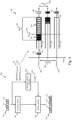
- a packet 231 received by the network communication node can thus be identified as responsible for congestion when enqueuing 241 that packet results in a queue size 237 that exceeds the size threshold 235.
- This allows implementation in network communication nodes that aggregate the received packets 231 upon enqueuing 241, or in network communication nodes with an inaccessible network queue 122, e.g. a queue that resides in an inaccessible circuitry such as a closed or protected system on chip, SOC.
- identifying packets 230 as responsible for congestion in the network queue can be performed upon dequeuing 242 the packet 231 from the network queue 122.
- a packet can be identified as responsible for congestion when a sojourn time 238 exceeds a time threshold 236.
- the build-up of excess packets 233 in the network queue 122 can be identified as packets responsible for congestion.
- the sojourn time 238 of a packet 231 is indicative of the time needed for the packet to travel through the network queue 122, i.e. the difference between the enqueue time 239 and the dequeue time 240 of the packet 231. This difference, i.e.
- the sojourn time 238, can for example be measured upon dequeuing 242 the packet 231.
- the time threshold 236 represents a maximum allowable sojourn time of a packet without resulting in congestion of the network queue 122.
- the time threshold 236 can for example be 1 ms.
- a packet forwarded or outputted by the network communication node can thus be identified as responsible for congestion when the sojourn time 238 of the packet 231 exceeds the time threshold 236 upon dequeuing 242 the packet.
- This allows to implement the method in software applications, e.g. in a queuing discipline, qdisc, of a Linux network interface. This has the further advantage that the method can be independent of the rate at which packets are received by the network communication node, i.e. the serving rate, and/or variations in the serving rate.
- the congestion parameter in the example embodiments described above is interchangeable as the sojourn time 238 can be converted to a queue size 237, and vice-versa, based on the bit rate of the network communication node.
- packets responsible for congestion 233 can also be identified based on the sojourn time 238 before enqueuing 241 the packet, and packets responsible for congestion 233 can also be identified based on the queue size 237 upon dequeuing 242 the packet.
- the maintaining of the marking probability 223 in step 202 and the identifying 230 of packets responsible for congestion in the network queue can be performed substantially before the classifying in step 201, substantially after the classifying in step 201, or substantially simultaneous with the classifying in step 201, i.e. in parallel.
- the marking probability 223 can be based on a moving average of the marking ratio.
- the moving average can for example, amongst others, be a simple moving average, a cumulative average, a weighted moving average, an exponential moving average, or any other moving average known to the skilled person.
- the marking probability 223 can, for example, be a value between zero and one.
- the maintaining of the marking probability can be performed at a predetermined time interval, e.g. every 30 ms, or at a predetermined change in the total number of packets 222 processed by the network queue, e.g. every 30 packets at a bit rate of 12 Mbps.
- the marking probability 223 is based on the change in packets responsible for congestion 221 and the change in the total number of packets processed by the network queue 222 during a predetermined interval. This allows to periodically derive or update the marking probability 223 rather than for every packet processed by the queue. This has the further advantage that it can limit the execution time and the consumed processing power of the method.
- the classified packets are marked with a congestion mark 213 to signal congestion to the respective senders.
- Packets classified as scalable packets are marked with the congestion mark 213 when identified 230 as responsible for congestion.
- Packets classified as other packets are marked with the congestion mark 213 based on the marking probability 223 if they support unscalable congestion control. In other words, other packets that do not support unscalable congestion control may not be marked.
- Other packets can, for example, be marked when the marking probability P i ( M ) 223 is equal to, or larger than a random value, e.g. when P i ( M ) ⁇ rand(0,1). In doing so, senders that implement an unscalable congestion control algorithm receive a smoothed congestion signal, i.e. a frequency of reflected marked packets 214, compatible with their packet transmission rate adjustment mechanism.
- This smoothed congestion signal for unscalable congestion control is thus coupled to the congestion signal for scalable congestion control by the marking probability 223, which is based on the marking ratio.
- This marking ratio is indicative of the marking density that would be applied to packets in a scalable traffic queue reserved for scalable packets, i.e. a queue without other packets.
- the marking density that is applied to scalable packets for scalable congestion control is converted or translated to a marking density for unscalable congestion control that is applied to the other traffic.
- Marking a packet can comprise adding the congestion mark 213 to the packet.
- marking a packet can comprise overwriting or adjusting the identifier 212 included in the packet 210.
- the marking can preferably comprise overwriting an identifier 212 included in the explicit congestion notification, ECN, field of an internet protocol, IP, header of the packet 210 with the congestion mark 213.
- ECN explicit congestion notification
- IP internet protocol
- the value or bits included in the ECN field of the IP header can be switched or adjusted to a predetermined value, e.g. to 0b11, to mark the packet 210 with the congestion mark 213.
- a packet 210 received by a network communication node can further already include a congestion mark that was applied by the AQM-module of a preceding network communication node.
- the ECN field of a received packet can already contain the congestion mark 0b11. As this prevents the classifying of the packet as scalable or as an other packet, such a packet can preferably be treated as a scalable packet.
- the method is compatible with existing transport protocols that support scalable congestion control, e.g. data centre transmission control protocol, DCTCP, or QUIC, and existing transport protocols that support unscalable congestion control, e.g. transmission control protocol, TCP. It is a further advantage that the method is compatible with existing scalable congestion controls, e.g. BBRv2, Prague, SCReAM, and unscalable congestion controls, e.g. New Reno and CUBIC.
- existing transport protocols that support scalable congestion control e.g. data centre transmission control protocol, DCTCP, or QUIC
- existing transport protocols that support unscalable congestion control e.g. transmission control protocol, TCP.
- existing scalable congestion controls e.g. BBRv2, Prague, SCReAM
- unscalable congestion controls e.g. New Reno and CUBIC.
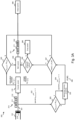
- Fig. 3A shows steps 300 according to an example embodiment wherein the steps of the method are performed upon dequeuing 301 a packet 210 from the network queue 122.
- the change in total number of packets processed by the network queue ⁇ packets processed 302 can be updated, e.g. by incrementing a counter by one.
- the dequeued packet 210 can be identified as responsible for congestion if the sojourn time ⁇ t packet of the packet 210 exceeds the time threshold Th time . If this is the case, the change in packets responsible for congestion ⁇ packets congestion can be updated 304, e.g. by incrementing a counter by one. Else, the method can continue to step 305 without updating ⁇ packets congestion .
- the marking probability 306 can be maintained or updated as described in relation to Fig. 2 above.
- the dequeued packet 210 can further be classified as a scalable packet 311 or an other packet 312 in step 310.
- the classifying can be performed as described in relation to Fig. 2 above.
- the classifying in step 310 can be performed substantially after or substantially simultaneous with the identifying of packets responsible for congestion in step 303 and the maintaining of the marking probability in step 305.
- scalable packets 311 can be identified as responsible for congestion in the network queue 122 if the sojourn time ⁇ t packet of the packet 210 exceeds the time threshold Th time . If this is the case, the scalable packet 311 is marked in step 330, e.g. by overwriting identifier 212 with the congestion mark 332. Else, the packet 210 is outputted in step 380 without marking it.
- scalable packets 311 can be identified as responsible for congestion in the network queue 122 based on a first time threshold Th t 1 and a second time threshold Th t 2 , wherein the second may be substantially larger than the first, i.e. Th t 1 ⁇ Th t 2 .
- scalable packets 311 with a sojourn time ⁇ t packet substantially smaller than the first time threshold may not be identified as responsible for congestion; packets with a sojourn time that exceeds the second time threshold, i.e. Th t 2 ⁇ ⁇ t packet , may always be identified as responsible for congestion; and packets with a sojourn time between the first time threshold and the second time threshold, i.e. Th t 1 ⁇ ⁇ t packet ⁇ Th t2 , may be identified as responsible for congestion according to a probability function based on the actual sojourn time of the packet, e.g. a progressive probability to identify the packet as responsible for congestion between the first Th t 1 and second Th t 2 time threshold.
- the maintained or updated marking probability 306 is used to determine whether the packet 210 is eligible for marking. If, in step 307, the marking probability 306 is larger or equal to a random value, e.g. between zero and one, the packet 210 is eligible for marking and the method proceeds to step 350. Else, the packet 210 is outputted in step 380 without marking it.
- identifying a packet as responsible for congestion in the network queue in steps 303 and 320 can be performed only once.
- the marked scalable or other packet 331 can be forwarded or outputted by the network communication node.
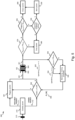
- Fig. 3B shows additional steps 340, 370 according to a further example embodiment wherein the steps 300 of the method are performed upon dequeuing 301 a packet 210 from the network queue 122.
- the other packet 312 can further be identified as responsible for congestion in the network queue 122. This can be achieved by comparing the sojourn time ⁇ t packet of the packet 210 with the time threshold Th time in additional step 340. If the packet is identified as responsible for congestion, the method proceeds to step 350 and continues as described above in relation to Fig. 3A . Else, the method proceeds to additional step 370. Alternatively, step 370 can be skipped and the method proceeds directly to step 380.
- step 370 the sojourn time ⁇ t packet of a packet can further be compared to a first drop threshold Th drop .
- the packet can be a marked packet 331 originating from step 330, or an unmarked packet originating from step 320, 330, or 340.
- Drop threshold Th drop can preferably be substantially larger than the time threshold Th time , e.g. a drop threshold of 1.5 ms when the time threshold is 1 ms. If the sojourn time ⁇ t packet of the packet exceeds the first drop threshold Th drop , the packet can be dropped in step 360.
- additional step 370 provides an overload protection to the network queue 122. This can make the network queue 122 more resilient against sudden changes in queuing delay, e.g. due to a plurality of traffic flows starting up, unresponsive traffic flows, or a sudden burst of packets. It will be apparent that additional step 370 need not be performed at the end of the method, step 370 can for example also be performed before step 310.
- Fig. 4A shows steps 400 according to an example embodiment wherein the steps of the method are performed before enqueuing 401 a packet 210 received by a network communication node in the network queue 122.
- the packet 210 Before enqueuing 401 the packet 210, e.g. before segmentation, the change in total number of packets processed by the network queue ⁇ packets processed 302 can be updated, e.g. by incrementing a counter by one.
- the received packet 210 can be identified as responsible for congestion if enqueuing 401 packet 210 results in a queue size Q size of the network queue 122 that exceeds the size threshold Th size .
- the change in packets responsible for congestion ⁇ packets congestion can be updated 304, e.g. by incrementing a counter by one. Else, the method can continue to step 305 without updating ⁇ packets congestion .
- the marking probability 306 can be maintained or updated as described in relation to Fig. 2 above.
- the received packet 210 can further be classified as a scalable packet 311 or an other packet 312 in step 310.
- the classifying can be performed as discussed in relation to Fig. 2 above.
- the classifying in step 310 can be performed substantially after or substantially simultaneous with identifying packets responsible for congestion in step 303 and maintaining of the marking probability in step 305.
- a scalable packet 311 can be identified as responsible for congestion in the network queue 122 when enqueuing 401 packet 210 results in a queue size Q size of the network queue 122 that exceeds the size threshold Th size . If this is the case, the scalable packet 311 is marked in step 330, e.g. by overwriting identifier 212 with the congestion mark 332.
- scalable packets 311 can be identified as responsible for congestion in the network queue 122 based on a first size threshold Th s 1 and a second size threshold Th s2 , wherein the second may be substantially larger than the first, i.e. Th s 1 ⁇ Th s2 .
- the scalable packet 311 may not be identified as responsible for congestion; if the queue size Q size exceeds the second size threshold, i.e. Th s 2 ⁇ Q size , the scalable packet 311 may always be identified as responsible for congestion; and if the queue size Q size is between the first size threshold and the second size threshold, i.e. Th s 1 ⁇ Q size ⁇ Th s 2 , the scalable packet 311 may be identified as responsible for congestion according to a probability function based on the actual queue size Q size , e.g. a progressive probability to identify the packet as responsible for congestion between the first Th s 1 and second Th s 2 time threshold.
- a probability function based on the actual queue size Q size
- the maintained or updated marking probability 306 is used to determine whether the packet 210 is eligible for marking. If, in step 307, the marking probability 306 is larger or equal to a random value, e.g. between zero and one, the packet 210 is eligible for marking and the method proceeds to step 350. Else, the packet 210 is enqueued 401 without marking it.
- the other packet 312 can be marked in step 330 when the other packet eligible for marking supports unscalable congestion control. This can, for example, be determined in step 350 based on the identifier 212 included in the packet 210. Unscalable congestion control can, for example, not be supported when the sender of the packet 210 is not provided with a congestion control algorithm, or when the traffic transport protocol of the packet 210 does not support marking the packet with the congestion mark 332. If the packet eligible for marking in step 350 does not support unscalable congestion control, the other packet 312 can be dropped in step 360. Dropping a packet refers to substantially removing or discarding the packet from memory. This results in packet loss as the packet is not enqueued in the network queue 122. This allows to manage the congestion in the network queue 122 in the presence of other packets 312 that do not support congestion control. It is a further advantage that futile marking of packets that do not support scalable congestion control can be avoided.
- identifying a packet as responsible for congestion in the network queue in steps 403 and 420 can be performed only once.
- the marked packet 331 can be enqueued 401 in network queue 122 of the network communication node i.e. added to network queue 122.
- the queue size Q size of the network queue 122 can further be compared to a second drop threshold Th drop .
- the packet can be a marked packet 331 originating from step 330, or an unmarked packet originating from step 320, 330, or 340.
- Drop threshold Th drop can preferably be substantially larger than the size threshold Th size , e.g. a drop threshold of 2.25 MB when the size threshold is 1.5 MB. If the queue size Q size of the network queue 122 exceeds the second drop threshold Th drop , the packet can be dropped in step 360.
- additional step 470 provides an overload protection to the network queue 122. This can make the network queue 122 more resilient against sudden changes in queuing delay, e.g. due to a plurality of traffic flows starting up, unresponsive traffic flows, or a sudden burst of packets. It will be apparent that additional step 470 need not be performed at the end of the method, step 470 can for example also be performed before step 310.
- Fig. 5 shows steps 500 according to an example embodiment wherein a portion of the steps of the method are performed before enqueuing 401 a received packet 210, and another portion of the steps are performed upon dequeuing 301 the packet 210.
- the change in total number of packets processed by the network queue ⁇ packets processed 302 can be updated, e.g. by incrementing a counter by one.
- the dequeued packet can be identified as responsible for congestion. If this is the case, the change in packets responsible for congestion ⁇ packets congestion can be updated 304, e.g. by incrementing a counter by one. Else, the method can continue to step 305 without updating ⁇ packets congestion .
- the marking probability 306 can be maintained or updated as described in relation to Fig. 2 above.
- step 370 the sojourn time ⁇ t packet of a packet can further be compared to a first drop threshold Th drop . If the sojourn time ⁇ t packet of the packet exceeds the first drop threshold Th drop , the packet can be dropped in step 360. It will be apparent that optional step 370 need not be performed directly after dequeuing 301, step 370 can for example also be performed after step 505 or step 350.
- the packet can be checked for the presence of the flag in addition to identifying whether the packet is responsible for congestion. If this is not the case, the packet can be outputted or transmitted by the network communication node in step 380. Else, the method proceeds to step 350 wherein it is checked if the packet eligible for marking supports congestion control. If so, the packet can be marked in step 330 and subsequently outputted in step 380. If the packet does not support congestion control, the packet can be dropped in step 360.
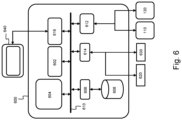
- Fig. 6 shows a suitable computing system 600 enabling to implement embodiments of the method for managing data traffic congestion in a network communication node.
- Computing system 600 may in general be formed as a suitable general-purpose computer and comprise a bus 610, a processor 602, a local memory 604, one or more optional input interfaces 614, one or more optional output interfaces 616, a communication interface 612, a storage element interface 606, and one or more storage elements 608.
- Bus 610 may comprise one or more conductors that permit communication among the components of the computing system 600.
- Processor 602 may include any type of conventional processor or microprocessor that interprets and executes programming instructions.
- Local memory 604 may include a random-access memory (RAM) or another type of dynamic storage device that stores information and instructions for execution by processor 602 and/or a read only memory (ROM) or another type of static storage device that stores static information and instructions for use by processor 602.
- RAM random-access memory
- ROM read only memory
- Input interface 614 may comprise one or more conventional mechanisms that permit an operator or user to input information to the computing device 600, such as a keyboard 620, a mouse 630, a pen, voice recognition and/or biometric mechanisms, a camera, etc.
- Output interface 616 may comprise one or more conventional mechanisms that output information to the operator or user, such as a display 640, etc.
- circuitry may refer to one or more or all of the following: (a) hardware-only circuit implementations (such as implementations in only analogue and/or digital circuitry) and (b) combinations of hardware circuits and software, such as (as applicable): (i) a combination of analogue and/or digital hardware circuit(s) with software/firmware and (ii) any portions of hardware processor(s) with software (including digital signal processor(s)), software, and memory(ies) that work together to cause an apparatus to perform various functions) and (c) hardware circuit(s) and or processor(s), such as a microprocessor(s) or a portion of a microprocessor(s), that requires software (e.g., firmware) for operation, but the software may not be present when it is not needed for operation.
- hardware-only circuit implementations such as implementations in only analogue and/or digital circuitry
- combinations of hardware circuits and software such as (as applicable): (i) a combination of analogue and/or digital hardware circuit(s) with
Landscapes
- Engineering & Computer Science (AREA)
- Computer Networks & Wireless Communication (AREA)
- Signal Processing (AREA)
- Data Exchanges In Wide-Area Networks (AREA)
Claims (15)
- Verfahren (200) zum Verwalten von Datenverkehrsüberlastungen in einem Netzwerkkommunikationsknoten, das Pakete mit einer Kennung (212) verarbeitet, die auf skalierbare Pakete oder andere Pakete hinweist, wobei skalierbare Pakete eine skalierbare Überlastungskontrolle unterstützen, wobei das Verfahren umfasst:- Aufrechterhalten (202) einer Markierungswahrscheinlichkeit (223) basierend auf einem Markierungsverhältnis, das ein Verhältnis zwischen einer Änderung von Paketen, die für eine Überlastung (221) in einer Netzwerkwarteschlange (122) in dem Netzwerkkommunikationsknoten verantwortlich sind, und einer Änderung einer Gesamtanzahl von Paketen (222), die von der Netzwerkwarteschlange verarbeitet werden, anzeigt, wobei Pakete, die für eine Überlastung verantwortlich sind, bewirken, dass ein Überlastungsparameter einen Schwellenwert überschreitet;- Klassifizieren von (201) Paketen (210), die von der Netzwerkwarteschlange verarbeitet werden, als skalierbare Pakete oder andere Pakete auf der Grundlage der in den Paketen enthaltenen Kennung (212);- Markieren (203) der skalierbaren Pakete, die für eine Überlastung in der Netzwerkwarteschlange verantwortlich sind, mit einer Überlastungsmarkierung (213), um eine Überlastung des Datenverkehrs zu signalisieren; und- Markieren (203) der anderen Pakete, die eine nichtskalierbare Überlastungskontrolle unterstützen, mit der Überlastungsmarkierung (213) auf der Grundlage der Markierungswahrscheinlichkeit (223).
- Verfahren nach Anspruch 1, wobei das Aufrechterhalten (202) ferner das Identifizieren (230) von Paketen als verantwortlich für die Überlastung in der Netzwerkwarteschlange umfasst, bevor das Paket (231) in die Netzwerkwarteschlange (122) eingereiht (241) wird.
- Verfahren nach Anspruch 1, wobei das Aufrechterhalten (202) ferner das Identifizieren (230) von Paketen umfasst, die für die Überlastung in der Netzwerkwarteschlange verantwortlich sind, wenn das Paket (231) aus der Netzwerkwarteschlange (122) entnommen (242) wird.
- Verfahren nach einem der vorhergehenden Ansprüche, wobei Pakete (233) als verantwortlich für eine Überlastung in der Netzwerkwarteschlange als Reaktion auf eine Größe (237) der Netzwerkwarteschlange (122) identifiziert werden, die einen Größenschwellenwert (235) überschreitet.
- Verfahren nach einem der vorhergehenden Ansprüche, wobei Pakete (233) als verantwortlich für eine Überlastung in der Netzwerkwarteschlange als Reaktion auf eine Aufenthaltszeit (238) der Pakete in der Netzwerkwarteschlange (122) identifiziert werden, die einen Zeitschwellenwert (236) überschreitet.
- Verfahren nach einem der vorhergehenden Ansprüche, ferner umfassend:- vor dem Einreihen (401) der Pakete in die Netzwerkwarteschlange, Markieren (501) der skalierbaren Pakete (311) zum Markieren und Markieren (501) der anderen Pakete (312) zum Markieren auf der Grundlage der Markierungswahrscheinlichkeit (306); und- beim Entnehmen aus der Netzwerkwarteschlange (301), das Durchführen der Markierung (330) mit der Überlastungsmarkierung für Pakete, die zur Markierung gekennzeichnet sind und als verantwortlich für die Überlastung in der Netzwerkwarteschlange (505) identifiziert werden.
- Verfahren nach einem der vorhergehenden Ansprüche, ferner umfassend das Verwerfen (360) von Paketen als Reaktion auf (470) eine Größe der Netzwerkwarteschlange, die einen ersten Verwerf-Schwellenwert überschreitet, oder als Reaktion auf (370) eine Verweilzeit der Pakete in der Netzwerkwarteschlange, die einen zweiten Verwerf-Schwellenwert überschreitet.
- Verfahren nach einem der vorhergehenden Ansprüche, ferner umfassend das Verwerfen (360) der anderen Pakete (312), die für eine Markierung auf der Grundlage der Markierungswahrscheinlichkeit (306) in Frage kommen und die keine nichtskalierbare Überlastungskontrolle unterstützen.
- Verfahren nach einem der vorhergehenden Ansprüche, wobei die Überlastungsmarkierung (213) und die Kennung (212) in einer expliziten Überlastungsbenachrichtigung, ECN, im Feld eines Internetprotokolls, IP, Header der Pakete (210) enthalten sind.
- Verfahren nach Anspruch 9, wobei die Markierung (203) ferner das Überschreiben der in dem Feld für die explizite Überlastungsbenachrichtigung (ECN) enthaltenen Kennung (212) mit der Überlastungsmarkierung (213) umfasst.
- Verfahren nach einem der vorhergehenden Ansprüche, wobei das Beibehalten (202) der Markierungswahrscheinlichkeit das Aktualisieren der Markierungswahrscheinlichkeit und des Markierungsverhältnisses in einem vorgegebenen Zeitintervall oder bei einer vorgegebenen Änderung der Gesamtzahl der von der Netzwerkwarteschlange verarbeiteten Pakete umfasst.
- Verfahren nach einem der vorhergehenden Ansprüche, wobei die Markierungswahrscheinlichkeit (306) auf einem gleitenden Durchschnitt des Markierungsverhältnisses beruht.
- Netzwerkkommunikationsknoten, konfiguriert zur Verwaltung von Datenverkehrsüberlastungen, wobei der Netzwerkkommunikationsknoten konfiguriert ist, Pakete mit einer Kennung (212) zu verarbeiten, die auf skalierbare Pakete oder andere Pakete hinweist, wobei die skalierbaren Pakete eine skalierbare Überlastungskontrolle unterstützen; und wobei der Netzwerkkommunikationsknoten weiter konfiguriert ist zum:- Aufrechterhalten (202) einer Markierungswahrscheinlichkeit (223) basierend auf einem Markierungsverhältnis, das ein Verhältnis zwischen einer Änderung von Paketen, die für eine Überlastung (221) in einer Netzwerkwarteschlange (122) in dem Netzwerkkommunikationsknoten verantwortlich sind, und einer Änderung einer Gesamtanzahl von Paketen (222), die von der Netzwerkwarteschlange verarbeitet werden, anzeigt, wobei Pakete, die für eine Überlastung verantwortlich sind, dazu führen, dass ein Überlastungsparameter einen Schwellenwert überschreitet;- Klassifizieren (201) von Paketen (210), die von der Netzwerkwarteschlange verarbeitet werden, als skalierbare Pakete oder andere Pakete auf der Grundlage der in den Paketen enthaltenen Kennung (212);- Markieren (203) der skalierbaren Pakete, die für die Überlastung in der Netzwerkwarteschlange verantwortlich sind, mit einer Überlastungsmarkierung (213), um eine Überlastung des Datenverkehrs zu signalisieren; und- Markieren (203) der anderen Pakete, die eine nicht skalierbare Überlastungskontrolle unterstützen, mit der Überlastungsmarkierung (213) auf der Grundlage der Markierungswahrscheinlichkeit (223).
- Computerprogrammprodukt mit computerausführbaren Anweisungen zum Ausführen des Verfahrens nach einem der Ansprüche 1 bis 12, wenn das Programm auf einem Computer ausgeführt wird.
- Computerlesbares Speichermedium, das computerausführbare Anweisungen zum Ausführen des Verfahrens nach einem der Ansprüche 1 bis 12 umfasst, wenn die Anweisungen auf einem Computer ausgeführt werden.
Priority Applications (2)
| Application Number | Priority Date | Filing Date | Title |
|---|---|---|---|
| EP22172415.6A EP4277232B1 (de) | 2022-05-09 | 2022-05-09 | Verwaltung von datenverkehrsüberlastung in netzwerkknoten |
| US18/313,873 US12206591B2 (en) | 2022-05-09 | 2023-05-08 | Managing data traffic congestion in network nodes |
Applications Claiming Priority (1)
| Application Number | Priority Date | Filing Date | Title |
|---|---|---|---|
| EP22172415.6A EP4277232B1 (de) | 2022-05-09 | 2022-05-09 | Verwaltung von datenverkehrsüberlastung in netzwerkknoten |
Publications (3)
| Publication Number | Publication Date |
|---|---|
| EP4277232A1 EP4277232A1 (de) | 2023-11-15 |
| EP4277232C0 EP4277232C0 (de) | 2025-07-09 |
| EP4277232B1 true EP4277232B1 (de) | 2025-07-09 |
Family
ID=81597894
Family Applications (1)
| Application Number | Title | Priority Date | Filing Date |
|---|---|---|---|
| EP22172415.6A Active EP4277232B1 (de) | 2022-05-09 | 2022-05-09 | Verwaltung von datenverkehrsüberlastung in netzwerkknoten |
Country Status (2)
| Country | Link |
|---|---|
| US (1) | US12206591B2 (de) |
| EP (1) | EP4277232B1 (de) |
Families Citing this family (6)
| Publication number | Priority date | Publication date | Assignee | Title |
|---|---|---|---|---|
| CN115118667A (zh) * | 2021-03-17 | 2022-09-27 | 华为技术有限公司 | 传输控制方法及装置 |
| US12388756B2 (en) | 2023-08-06 | 2025-08-12 | Microsoft Technology Licensing, Llc | Weighted random early back-to-sender notification |
| US12170619B1 (en) * | 2023-08-31 | 2024-12-17 | Google Llc | Network congestion control signaling on network devices |
| US20250202827A1 (en) * | 2023-12-19 | 2025-06-19 | Cisco Technology, Inc. | Identifying and Scheduling Low Latency, Low Loss, and Scalable Throughput (L4S) Data Flows |
| GB2641024A (en) * | 2024-05-13 | 2025-11-19 | Nokia Technologies Oy | Marking and dropping of packets at the data frame level |
| GB2641729A (en) * | 2024-06-07 | 2025-12-17 | Nokia Technologies Oy | Queue management |
Family Cites Families (5)
| Publication number | Priority date | Publication date | Assignee | Title |
|---|---|---|---|---|
| US10069744B2 (en) | 2015-07-14 | 2018-09-04 | Alcatel Lucent | Method and apparatus for managing network congestion |
| EP3340551A1 (de) * | 2016-12-21 | 2018-06-27 | Alcatel Lucent | Verfahren und system zur warteschlangenverwaltung |
| US10785161B2 (en) * | 2018-07-10 | 2020-09-22 | Cisco Technology, Inc. | Automatic rate limiting based on explicit network congestion notification in smart network interface card |
| US11784932B2 (en) * | 2020-11-06 | 2023-10-10 | Innovium, Inc. | Delay-based automatic queue management and tail drop |
| EP4007225A1 (de) * | 2020-11-26 | 2022-06-01 | Nokia Solutions and Networks Oy | Verfahren und vorrichtung zur verwaltung von netzwerküberlastung |
-
2022
- 2022-05-09 EP EP22172415.6A patent/EP4277232B1/de active Active
-
2023
- 2023-05-08 US US18/313,873 patent/US12206591B2/en active Active
Also Published As
| Publication number | Publication date |
|---|---|
| EP4277232C0 (de) | 2025-07-09 |
| EP4277232A1 (de) | 2023-11-15 |
| US20230362099A1 (en) | 2023-11-09 |
| US12206591B2 (en) | 2025-01-21 |
Similar Documents
| Publication | Publication Date | Title |
|---|---|---|
| EP4277232B1 (de) | Verwaltung von datenverkehrsüberlastung in netzwerkknoten | |
| US10063488B2 (en) | Tracking queuing delay and performing related congestion control in information centric networking | |
| US9185047B2 (en) | Hierarchical profiled scheduling and shaping | |
| US6894974B1 (en) | Method, apparatus, media, and signals for controlling packet transmission rate from a packet source | |
| EP1805524B1 (de) | Verfahren und Vorrichtung zur aktiven Warteschlangenverwaltung | |
| US6628610B1 (en) | Methods and apparatus for managing a flow of packets using change and reply signals | |
| CN107431667B (zh) | 一种用于发送数据包的网络设备、方法及存储介质 | |
| EP3267639B1 (de) | Überlastungssteuerung in einem kommunikationsnetzwerk | |
| CN111464452B (zh) | 基于dctcp的快速拥塞反馈方法 | |
| CN1344456A (zh) | 用于tcp连接的增强确认定步设备和方法 | |
| CN102461093B (zh) | 管理业务负荷的方法 | |
| CN119011502B (zh) | 一种确定性网络动态带宽预留方法及装置 | |
| WO2023280004A1 (zh) | 一种网络配置方法、设备和系统 | |
| US7817556B2 (en) | Modification of policing methods to make them more TCP-friendly | |
| CN113904994B (zh) | 一种家庭网关大数据统一上报平台的方法 | |
| US20070140282A1 (en) | Managing on-chip queues in switched fabric networks | |
| EP1232627B1 (de) | Verfahren und system zur steuerung der paketübertragung in computernetzwerken | |
| Patel et al. | Comparative analysis of congestion control algorithms using ns-2 | |
| Albalawi et al. | Enhancing end-to-end transport with packet trimming | |
| CN116155824B (zh) | 网络拥塞数据处理方法、装置、系统和计算机设备 | |
| CN116032852B (zh) | 基于会话的流量控制方法、装置、系统、设备及存储介质 | |
| Garcia-Luna-Aceves | Enhancing End-to-End Transport with Packet Trimming | |
| CN121792447A (zh) | 拥塞处理方法、设备和介质 | |
| Rawajbeh et al. | Algorithm development for measurement and prediction the traffic in broad band integrated service networks | |
| Fiems et al. | Performance analysis of a video streaming buffer |
Legal Events
| Date | Code | Title | Description |
|---|---|---|---|
| PUAI | Public reference made under article 153(3) epc to a published international application that has entered the european phase |
Free format text: ORIGINAL CODE: 0009012 |
|
| STAA | Information on the status of an ep patent application or granted ep patent |
Free format text: STATUS: THE APPLICATION HAS BEEN PUBLISHED |
|
| AK | Designated contracting states |
Kind code of ref document: A1 Designated state(s): AL AT BE BG CH CY CZ DE DK EE ES FI FR GB GR HR HU IE IS IT LI LT LU LV MC MK MT NL NO PL PT RO RS SE SI SK SM TR |
|
| STAA | Information on the status of an ep patent application or granted ep patent |
Free format text: STATUS: REQUEST FOR EXAMINATION WAS MADE |
|
| 17P | Request for examination filed |
Effective date: 20240515 |
|
| RBV | Designated contracting states (corrected) |
Designated state(s): AL AT BE BG CH CY CZ DE DK EE ES FI FR GB GR HR HU IE IS IT LI LT LU LV MC MK MT NL NO PL PT RO RS SE SI SK SM TR |
|
| GRAP | Despatch of communication of intention to grant a patent |
Free format text: ORIGINAL CODE: EPIDOSNIGR1 |
|
| STAA | Information on the status of an ep patent application or granted ep patent |
Free format text: STATUS: GRANT OF PATENT IS INTENDED |
|
| INTG | Intention to grant announced |
Effective date: 20240826 |
|
| GRAJ | Information related to disapproval of communication of intention to grant by the applicant or resumption of examination proceedings by the epo deleted |
Free format text: ORIGINAL CODE: EPIDOSDIGR1 |
|
| STAA | Information on the status of an ep patent application or granted ep patent |
Free format text: STATUS: REQUEST FOR EXAMINATION WAS MADE |
|
| GRAP | Despatch of communication of intention to grant a patent |
Free format text: ORIGINAL CODE: EPIDOSNIGR1 |
|
| STAA | Information on the status of an ep patent application or granted ep patent |
Free format text: STATUS: GRANT OF PATENT IS INTENDED |
|
| INTC | Intention to grant announced (deleted) | ||
| INTG | Intention to grant announced |
Effective date: 20250131 |
|
| GRAS | Grant fee paid |
Free format text: ORIGINAL CODE: EPIDOSNIGR3 |
|
| GRAA | (expected) grant |
Free format text: ORIGINAL CODE: 0009210 |
|
| STAA | Information on the status of an ep patent application or granted ep patent |
Free format text: STATUS: THE PATENT HAS BEEN GRANTED |
|
| AK | Designated contracting states |
Kind code of ref document: B1 Designated state(s): AL AT BE BG CH CY CZ DE DK EE ES FI FR GB GR HR HU IE IS IT LI LT LU LV MC MK MT NL NO PL PT RO RS SE SI SK SM TR |
|
| REG | Reference to a national code |
Ref country code: GB Ref legal event code: FG4D |
|
| REG | Reference to a national code |
Ref country code: CH Ref legal event code: EP |
|
| REG | Reference to a national code |
Ref country code: IE Ref legal event code: FG4D |
|
| REG | Reference to a national code |
Ref country code: DE Ref legal event code: R096 Ref document number: 602022017182 Country of ref document: DE |
|
| U01 | Request for unitary effect filed |
Effective date: 20250811 |
|
| U07 | Unitary effect registered |
Designated state(s): AT BE BG DE DK EE FI FR IT LT LU LV MT NL PT RO SE SI Effective date: 20250820 |
|
| PG25 | Lapsed in a contracting state [announced via postgrant information from national office to epo] |
Ref country code: IS Free format text: LAPSE BECAUSE OF FAILURE TO SUBMIT A TRANSLATION OF THE DESCRIPTION OR TO PAY THE FEE WITHIN THE PRESCRIBED TIME-LIMIT Effective date: 20251109 |
|
| PG25 | Lapsed in a contracting state [announced via postgrant information from national office to epo] |
Ref country code: NO Free format text: LAPSE BECAUSE OF FAILURE TO SUBMIT A TRANSLATION OF THE DESCRIPTION OR TO PAY THE FEE WITHIN THE PRESCRIBED TIME-LIMIT Effective date: 20251009 |
|
| PG25 | Lapsed in a contracting state [announced via postgrant information from national office to epo] |
Ref country code: HR Free format text: LAPSE BECAUSE OF FAILURE TO SUBMIT A TRANSLATION OF THE DESCRIPTION OR TO PAY THE FEE WITHIN THE PRESCRIBED TIME-LIMIT Effective date: 20250709 |
|
| PG25 | Lapsed in a contracting state [announced via postgrant information from national office to epo] |
Ref country code: GR Free format text: LAPSE BECAUSE OF FAILURE TO SUBMIT A TRANSLATION OF THE DESCRIPTION OR TO PAY THE FEE WITHIN THE PRESCRIBED TIME-LIMIT Effective date: 20251010 |
|
| PG25 | Lapsed in a contracting state [announced via postgrant information from national office to epo] |
Ref country code: PL Free format text: LAPSE BECAUSE OF FAILURE TO SUBMIT A TRANSLATION OF THE DESCRIPTION OR TO PAY THE FEE WITHIN THE PRESCRIBED TIME-LIMIT Effective date: 20250709 |
|
| PG25 | Lapsed in a contracting state [announced via postgrant information from national office to epo] |
Ref country code: RS Free format text: LAPSE BECAUSE OF FAILURE TO SUBMIT A TRANSLATION OF THE DESCRIPTION OR TO PAY THE FEE WITHIN THE PRESCRIBED TIME-LIMIT Effective date: 20251009 |
|
| PG25 | Lapsed in a contracting state [announced via postgrant information from national office to epo] |
Ref country code: ES Free format text: LAPSE BECAUSE OF FAILURE TO SUBMIT A TRANSLATION OF THE DESCRIPTION OR TO PAY THE FEE WITHIN THE PRESCRIBED TIME-LIMIT Effective date: 20250709 |