EP4275597B1 - Nicht-invasiver sensor und messverfahren - Google Patents
Nicht-invasiver sensor und messverfahren Download PDFInfo
- Publication number
- EP4275597B1 EP4275597B1 EP22173132.6A EP22173132A EP4275597B1 EP 4275597 B1 EP4275597 B1 EP 4275597B1 EP 22173132 A EP22173132 A EP 22173132A EP 4275597 B1 EP4275597 B1 EP 4275597B1
- Authority
- EP
- European Patent Office
- Prior art keywords
- irradiation
- nodal
- stratified
- model
- parameter
- Prior art date
- Legal status (The legal status is an assumption and is not a legal conclusion. Google has not performed a legal analysis and makes no representation as to the accuracy of the status listed.)
- Active
Links
Images



Classifications
-
- A—HUMAN NECESSITIES
- A61—MEDICAL OR VETERINARY SCIENCE; HYGIENE
- A61B—DIAGNOSIS; SURGERY; IDENTIFICATION
- A61B5/00—Measuring for diagnostic purposes; Identification of persons
- A61B5/145—Measuring characteristics of blood in vivo, e.g. gas concentration or pH-value ; Measuring characteristics of body fluids or tissues, e.g. interstitial fluid or cerebral tissue
- A61B5/14532—Measuring characteristics of blood in vivo, e.g. gas concentration or pH-value ; Measuring characteristics of body fluids or tissues, e.g. interstitial fluid or cerebral tissue for measuring glucose, e.g. by tissue impedance measurement
-
- A—HUMAN NECESSITIES
- A61—MEDICAL OR VETERINARY SCIENCE; HYGIENE
- A61B—DIAGNOSIS; SURGERY; IDENTIFICATION
- A61B5/00—Measuring for diagnostic purposes; Identification of persons
- A61B5/0093—Detecting, measuring or recording by applying one single type of energy and measuring its conversion into another type of energy
- A61B5/0095—Detecting, measuring or recording by applying one single type of energy and measuring its conversion into another type of energy by applying light and detecting acoustic waves, i.e. photoacoustic measurements
-
- A—HUMAN NECESSITIES
- A61—MEDICAL OR VETERINARY SCIENCE; HYGIENE
- A61B—DIAGNOSIS; SURGERY; IDENTIFICATION
- A61B5/00—Measuring for diagnostic purposes; Identification of persons
- A61B5/145—Measuring characteristics of blood in vivo, e.g. gas concentration or pH-value ; Measuring characteristics of body fluids or tissues, e.g. interstitial fluid or cerebral tissue
- A61B5/14507—Measuring characteristics of blood in vivo, e.g. gas concentration or pH-value ; Measuring characteristics of body fluids or tissues, e.g. interstitial fluid or cerebral tissue specially adapted for measuring characteristics of body fluids other than blood
- A61B5/1451—Measuring characteristics of blood in vivo, e.g. gas concentration or pH-value ; Measuring characteristics of body fluids or tissues, e.g. interstitial fluid or cerebral tissue specially adapted for measuring characteristics of body fluids other than blood for interstitial fluid
-
- A—HUMAN NECESSITIES
- A61—MEDICAL OR VETERINARY SCIENCE; HYGIENE
- A61B—DIAGNOSIS; SURGERY; IDENTIFICATION
- A61B5/00—Measuring for diagnostic purposes; Identification of persons
- A61B5/145—Measuring characteristics of blood in vivo, e.g. gas concentration or pH-value ; Measuring characteristics of body fluids or tissues, e.g. interstitial fluid or cerebral tissue
- A61B5/1455—Measuring characteristics of blood in vivo, e.g. gas concentration or pH-value ; Measuring characteristics of body fluids or tissues, e.g. interstitial fluid or cerebral tissue using optical sensors, e.g. spectral photometrical oximeters
-
- A—HUMAN NECESSITIES
- A61—MEDICAL OR VETERINARY SCIENCE; HYGIENE
- A61B—DIAGNOSIS; SURGERY; IDENTIFICATION
- A61B5/00—Measuring for diagnostic purposes; Identification of persons
- A61B5/72—Signal processing specially adapted for physiological signals or for diagnostic purposes
- A61B5/7235—Details of waveform analysis
- A61B5/7264—Classification of physiological signals or data, e.g. using neural networks, statistical classifiers, expert systems or fuzzy systems
- A61B5/7267—Classification of physiological signals or data, e.g. using neural networks, statistical classifiers, expert systems or fuzzy systems involving training the classification device
-
- G—PHYSICS
- G01—MEASURING; TESTING
- G01N—INVESTIGATING OR ANALYSING MATERIALS BY DETERMINING THEIR CHEMICAL OR PHYSICAL PROPERTIES
- G01N21/00—Investigating or analysing materials by the use of optical means, i.e. using sub-millimetre waves, infrared, visible or ultraviolet light
- G01N21/17—Systems in which incident light is modified in accordance with the properties of the material investigated
- G01N21/1702—Systems in which incident light is modified in accordance with the properties of the material investigated with opto-acoustic detection, e.g. for gases or analysing solids
-
- G—PHYSICS
- G01—MEASURING; TESTING
- G01N—INVESTIGATING OR ANALYSING MATERIALS BY DETERMINING THEIR CHEMICAL OR PHYSICAL PROPERTIES
- G01N21/00—Investigating or analysing materials by the use of optical means, i.e. using sub-millimetre waves, infrared, visible or ultraviolet light
- G01N21/17—Systems in which incident light is modified in accordance with the properties of the material investigated
- G01N21/171—Systems in which incident light is modified in accordance with the properties of the material investigated with calorimetric detection, e.g. with thermal lens detection
-
- G—PHYSICS
- G16—INFORMATION AND COMMUNICATION TECHNOLOGY [ICT] SPECIALLY ADAPTED FOR SPECIFIC APPLICATION FIELDS
- G16H—HEALTHCARE INFORMATICS, i.e. INFORMATION AND COMMUNICATION TECHNOLOGY [ICT] SPECIALLY ADAPTED FOR THE HANDLING OR PROCESSING OF MEDICAL OR HEALTHCARE DATA
- G16H40/00—ICT specially adapted for the management or administration of healthcare resources or facilities; ICT specially adapted for the management or operation of medical equipment or devices
- G16H40/60—ICT specially adapted for the management or administration of healthcare resources or facilities; ICT specially adapted for the management or operation of medical equipment or devices for the operation of medical equipment or devices
- G16H40/63—ICT specially adapted for the management or administration of healthcare resources or facilities; ICT specially adapted for the management or operation of medical equipment or devices for the operation of medical equipment or devices for local operation
-
- G—PHYSICS
- G16—INFORMATION AND COMMUNICATION TECHNOLOGY [ICT] SPECIALLY ADAPTED FOR SPECIFIC APPLICATION FIELDS
- G16H—HEALTHCARE INFORMATICS, i.e. INFORMATION AND COMMUNICATION TECHNOLOGY [ICT] SPECIALLY ADAPTED FOR THE HANDLING OR PROCESSING OF MEDICAL OR HEALTHCARE DATA
- G16H50/00—ICT specially adapted for medical diagnosis, medical simulation or medical data mining; ICT specially adapted for detecting, monitoring or modelling epidemics or pandemics
- G16H50/20—ICT specially adapted for medical diagnosis, medical simulation or medical data mining; ICT specially adapted for detecting, monitoring or modelling epidemics or pandemics for computer-aided diagnosis, e.g. based on medical expert systems
-
- A—HUMAN NECESSITIES
- A61—MEDICAL OR VETERINARY SCIENCE; HYGIENE
- A61B—DIAGNOSIS; SURGERY; IDENTIFICATION
- A61B2560/00—Constructional details of operational features of apparatus; Accessories for medical measuring apparatus
- A61B2560/02—Operational features
- A61B2560/0223—Operational features of calibration, e.g. protocols for calibrating sensors
-
- G—PHYSICS
- G01—MEASURING; TESTING
- G01N—INVESTIGATING OR ANALYSING MATERIALS BY DETERMINING THEIR CHEMICAL OR PHYSICAL PROPERTIES
- G01N21/00—Investigating or analysing materials by the use of optical means, i.e. using sub-millimetre waves, infrared, visible or ultraviolet light
- G01N21/17—Systems in which incident light is modified in accordance with the properties of the material investigated
- G01N21/1702—Systems in which incident light is modified in accordance with the properties of the material investigated with opto-acoustic detection, e.g. for gases or analysing solids
- G01N2021/1706—Systems in which incident light is modified in accordance with the properties of the material investigated with opto-acoustic detection, e.g. for gases or analysing solids in solids
-
- G—PHYSICS
- G01—MEASURING; TESTING
- G01N—INVESTIGATING OR ANALYSING MATERIALS BY DETERMINING THEIR CHEMICAL OR PHYSICAL PROPERTIES
- G01N21/00—Investigating or analysing materials by the use of optical means, i.e. using sub-millimetre waves, infrared, visible or ultraviolet light
- G01N21/17—Systems in which incident light is modified in accordance with the properties of the material investigated
- G01N21/1717—Systems in which incident light is modified in accordance with the properties of the material investigated with a modulation of one or more physical properties of the sample during the optical investigation, e.g. electro-reflectance
- G01N2021/1731—Temperature modulation
Definitions
- the present invention relates to a measurement method and to a non-invasive sensor making it possible to measure one or more parameters of interest in a target medium.
- the invention relates to a non-invasive sensor based on the detection of a photothermal or photoacoustic effect, in particular configured to measure one or more parameters in a stratified target medium, the stratification of which can evolve over time.
- a measured parameter can for example be blood sugar in the skin.
- a zone of interest of a medium to be analyzed is irradiated by means of a laser beam of wavelength and modulation frequency chosen according to the parameter of interest to be measured.
- the laser beam is absorbed by the target over a characteristic length which depends on the structuring of the target.
- the absorption of light energy causes local heating of the target.
- a thermal wave with a frequency equal to the modulation frequency of the laser is generated in the target. This wave propagates into the target and in particular to the exterior surface of the target.
- the thermal wave can be directly detected and analyzed. We then speak of photothermal energy. Photoacoustic detection uses the fact that the thermal wave is associated with a pressure wave with a frequency identical to the modulation frequency.
- the pressure wave generated in the fluid external environment is detected when the thermal wave generated in the target arrives, after propagation, at the target interface - fluid external environment.
- Photoacoustic detection has many advantages compared to other detection techniques, among which we can cite the orthogonal aspect of transduction: the optical signal at the input of the medium to be analyzed is converted into an acoustic signal which is very specific to the phenomenon. to observe and which allows the use of inexpensive and miniaturized sensors.
- g1) further comprises f2) being repeated at the end of f1).
- the choice of the model configuration and the irradiation case taking into account the interference phenomena are repeated until the desired performances are achieved in terms of precision and/or sensitivity and/or energy consumption of the sensor. non invasive.
- the energy consumption for each irradiation being controlled due to the fact that the number of irradiation parameters is limited for each case of irradiation and that these irradiation parameters take into account interference phenomena, even if the convergence n it is obtained that after three, four, five or even ten successive irradiations, the overall energy consumption can be controlled and in particular lower than that which would be necessary for the acquisition of a complete spectrum in irradiation frequency and/or in frequency modulation, while simultaneously controlling or even improving the precision of the measurement.
- the non-invasive sensor at least two of the elements among the light source, the device for controlling the irradiation parameters of the light source, the detection cell configured to detect an acoustic or thermal signal, the memory in which a chart of nodal frequencies is stored and the adaptation module are mechanically independent of each other.
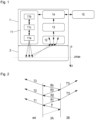
- the invention relates to a non-invasive sensor 1 of one or more parameters of a target stratified medium 2, the structuring of which can possibly evolve over time.
- the target stratified medium 2 may be, for example, a tissue of a human or animal organism, such as the skin.
- the parameters to be measured are hereinafter called “parameters of interest”.
- a parameter of interest may in particular be a physiological parameter in the case where the stratified medium is tissue from a human being or an animal.
- the physiological parameter to measure is blood sugar, particularly interstitial blood sugar. It could also involve measuring the water content in a particular layer of the skin or the lactate concentration of a particular layer. These examples are not limiting.
- the non-invasive sensor 1 can be portable and it can allow continuous monitoring of the parameter(s) of interest.
- the non-invasive sensor 1 may be based on photoacoustic detection or photothermal detection.
- the measurement method is particularly suitable for improving the precision of a non-invasive sensor based on indirect photoacoustic detection, for which the non-invasive sensor 1 detects an acoustic wave generated in the fluid surrounding the target stratified medium 2 in response to irradiation , while controlling its energy consumption or to reduce the energy consumption of the sensor while controlling its precision.
- this process it is entirely possible to implement this process on a non-invasive sensor based on photothermal energy.
- the light source 11a emits an intensity-modulated laser beam at at least one particular wavelength towards the target stratified medium 2.
- the light source 11a may in particular be a light-emitting diode (LED) or a laser chip.
- the light source 11a may, in addition or as a variant, comprise a quantum cascade laser (QCL) emitting in the mid-infrared region (MIR-QCL), an ICL laser (“Interband Cavity Laser”), a laser with internal or external cavity, a GaSb laser. These examples are not limiting.
- QCL quantum cascade laser
- MIR-QCL mid-infrared region
- ICL laser Interband Cavity Laser
- the light source 11a can be chosen according to the target stratified medium 2 and/or the parameters of interest.
- the light source 11a can be modulated in intensity by any known electrical or mechanical means.
- the light irradiating the target stratified medium 2 can be emitted continuously or pulsed by a given light source 11a.
- the light incident on the target stratified medium 2 emitted by the intensity modulated light source(s) 11a, propagates to the target stratified medium 2 then through this medium target laminate 2 (phenomenon symbolized by solid line arrows on the figure 1 ). It is then gradually absorbed by the different constituents of this target stratified medium 2, over a characteristic depth, denoted zmax, which depends on the structure of the target stratified medium 2 and its physicochemical composition.
- the signal processing module 13 may include an analog-to-digital converter configured to convert the analog electrical signal from the electroacoustic sensor into a digital signal.
- the signal processing module 13 may include a synchronous detection device adapted to demodulate and extract the signal of interest from the detected signal.
- the signal processing module 13 optionally includes an operational amplifier operably connected to the analog-to-digital converter and configured to amplify the electronic signal derived from the acoustic response of the target laminated medium 2 transmitted by an electroacoustic sensor.
- the thermal effusivities as well as the thickness of layer 2A can, in the case of our target stratified medium 2, vary over time.
- the target stratified medium 2 is the skin and where the non-invasive sensor 1 is a blood glucose sensor
- a simulation module 15 which will be described in detail later and which makes it possible, among other things, to simulate the photothermal signal associated with irradiation of which all the characteristics (power, wavelength(s) (s), modulation frequency(s), etc.) are known, the target stratified medium 2 also being modeled by a multilayer medium whose characteristics (thicknesses, compositions, etc.) are known, on the basis of a multiphysics analytical model taking into account at least implicitly thermal interference phenomena.
- This simulation module 15 made it possible to carry out extensive in silico experiments, some of the results of which are presented on the figures 3a and 3b .
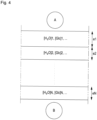
- the target stratified medium 2 is the skin, modeled by a two-layer model (stratum corneum, epidermis).
- the thickness of the upper layer (modeling the stratum corneum) is equal to 14 ⁇ m, that of the lower layer (modeling the epidermis) is considered infinite.
- Blood sugar is zero in the upper layer.
- the upper layer comprises 20% water and the lower layer comprises 60% water.
- the skin model is irradiated (in a simulated manner) with a laser of wave number 1034 cm -1 modulated in intensity at a modulation frequency which is plotted on the abscissa axis.
- the amplitude of the simulated response thermal wave generated in response to irradiation is represented on the ordinate as a function of the modulation frequency for different blood glucose values of the lower layer (50 mg/L; 500 mg/L and 1000 mg/ dL).
- These nodal modulation frequencies can be explained by the phenomenon of thermal wave interference within the target stratified medium 2.
- the nodal modulation frequencies can be taken advantage of in the context of the non-invasive sensor 1 thanks to the adaptation module 14 which characterizes it and, in a particular embodiment, to the simulation module 15.
- a non-invasive sensor 1 comprising an adaptation module 14 for measuring the parameter of interest are represented schematically on the Figure 5
- the target stratified medium 2 is the skin and the parameter of interest is interstitial blood glucose.
- the non-invasive sensor 1 further comprises a memory for storing a database of model configurations, a chart of nodal frequencies and one or more inverse models which are described below.
- CMk model configurations each CMk model configuration corresponding to a number of layers N and a set of level 1 parameters, and optionally to a value or a range of values of the parameter of interest, describing a particular situation of the target stratified medium 2 of interest.
- the processor of the adaptation module 14 can implement a single inverse model.
- the processor of the adaptation module searches in the nodal frequency chart for a new plurality of nodal modulation frequencies, this time corresponding to the group of model configurations GMp' to which the new model configuration of target stratified medium CMmes belongs and it determines, on the basis of this plurality of nodal modulation frequencies, a new particular irradiation case which comprises at least one foptim modulation frequency determined based on the plurality of nodal modulation frequencies for the target stratified medium model configuration 2 CMmes.
- the new particular case of irradiation is for example noted Iopt. l, insofar as it is optimized to take into account interference phenomena for the physiological situation measured.
- the processor of the adaptation module 14 transmits the corresponding parameters to the irradiation device 11.
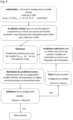
- the method may also include a reiteration of step e2) of validation of the model configuration.
- CMirrad CMirrad
- CMmes is different from CMirrad
- the adaptation of the irradiation parameters and the model configuration makes it possible to increase the precision of the measurement at the cost of at least one additional irradiation but with energy consumption always controlled, and thanks to the second validation step, to confirm that the precision of the measurement is indeed maximum.
- the reiteration of the validation step is authorized (as shown in the figure 5 )
- we acquire at the output of the process the additional information that the precision of the measurement is indeed maximum.
- the target stratified medium 2 is the skin of a patient, modeled by a two-layer model (stratum corneum, epidermis).
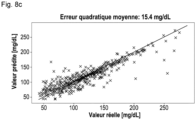
- the thickness of the upper layer (modeling the stratum corneum) is equal to 14 ⁇ m for the figure 8a , and we assume that an event causes this thickness to vary so that it evolves and becomes equal to 18 ⁇ m when the measurements for the figure 8b and the figure 8c are carried out.
- the thickness of the lower layer (modeling the epidermis) is considered infinite. Blood sugar is zero in the upper layer.
- the upper layer comprises 20% water and the lower layer comprises 60% water.
- the chart of nodal frequencies makes it possible to determine, by means of the processor of the adaptation module 14, a plurality of nodal frequencies for the initial situation (thickness of the stratum corneum equal to 14 ⁇ m) and to determine the case of irradiation to be used for this situation based on these nodal frequencies.
- the chart of nodal frequencies makes it possible to determine, by means of the processor of the adaptation module 14, a plurality of nodal modulation frequencies for the final situation (thickness of the stratum corneum equal to 18 ⁇ m) and to determine the case irradiation to be used for this situation based on these nodal frequencies.
- the root mean square deviation (RMSE) between the predicted and actual values is acceptable (18.5 mg/dL and 15.4 mg/dL, respectively).
- the nodal modulation frequencies are unsuitable (case of figure 8b )
- the root mean square deviation (RMSE) between the predicted and actual values deteriorates sharply and in this case reaches 28.4 mg/dL.
- the adaptation of the nodal modulation frequencies (on the basis of which are determined the particular modulation frequencies) to the current physiological situation also makes it possible to control the precision of the non-invasive sensor 1, for example so that the mean square deviation or any other quantity making it possible to quantify the precision is less than a predetermined threshold.
- the detection method may comprise the selection for each case of irradiation of a single particular foptim modulation frequency determined on the basis of a plurality of nodal frequencies, for example by means of an arithmetic or weighted average. In particular, in the case of a weighted average, a greater weight can be assigned to the lowest nodal modulation frequency.
- This arrangement makes it possible to take into account the fact that the amplitude of the photothermal signal decreases with the frequency of modulation of the intensity of the incident light wave.
- a particular modulation frequency foptim can be the barycenter of two successive nodal modulation frequencies each assigned a weight equal to its inverse raised to the power 3/2.
- weights can still be chosen, for example to take into account the frequency responses of one or more other elements of the measurement chain.
- the irradiation case selected in the method may comprise, in addition to a particular modulation frequency foptim, at least one nodal modulation frequency.
- the detected signal corresponding to the nodal modulation frequency does not carry information concerning the parameter of interest, it does on the other hand carry information concerning the structuring of the stratified medium 2 independently of this parameter of interest. interest.
- the selection of both a particular modulation frequency foptim and a nodal modulation frequency fnod can therefore lead to the resolution of the inverse problem with increased efficiency and precision compared to any other selection of two modulation frequencies.
- the energy consumption criterion is less important and irradiation following two different modulation frequencies is permitted, a particular modulation frequency foptim and the lowest nodal modulation frequency among those used to determine foptim. Indeed, it is at this lowest nodal modulation frequency that the amplitude of the signal will be the highest and therefore the precision the best amplitude.
- foptim a particular modulation frequency foptim and two nodal modulation frequencies to determine foptim, and optionally also a second, a third, etc., particular modulation frequency.
- the invention finally relates to a computer program comprising instructions which cause the non-invasive sensor 1 according to one of the preceding embodiments to be executed the steps of the process according to any of the embodiments described above.
Landscapes
- Health & Medical Sciences (AREA)
- Life Sciences & Earth Sciences (AREA)
- Engineering & Computer Science (AREA)
- Physics & Mathematics (AREA)
- Biomedical Technology (AREA)
- General Health & Medical Sciences (AREA)
- Pathology (AREA)
- Public Health (AREA)
- Medical Informatics (AREA)
- Surgery (AREA)
- Molecular Biology (AREA)
- Heart & Thoracic Surgery (AREA)
- Biophysics (AREA)
- Animal Behavior & Ethology (AREA)
- Veterinary Medicine (AREA)
- Artificial Intelligence (AREA)
- Optics & Photonics (AREA)
- Fuzzy Systems (AREA)
- Computer Vision & Pattern Recognition (AREA)
- Immunology (AREA)
- Chemical & Material Sciences (AREA)
- Evolutionary Computation (AREA)
- Analytical Chemistry (AREA)
- Signal Processing (AREA)
- Epidemiology (AREA)
- Physiology (AREA)
- Psychiatry (AREA)
- General Physics & Mathematics (AREA)
- Mathematical Physics (AREA)
- Biochemistry (AREA)
- Primary Health Care (AREA)
- General Business, Economics & Management (AREA)
- Databases & Information Systems (AREA)
- Business, Economics & Management (AREA)
- Data Mining & Analysis (AREA)
- Spectroscopy & Molecular Physics (AREA)
- Acoustics & Sound (AREA)
- Emergency Medicine (AREA)
- Investigating Or Analyzing Materials By The Use Of Ultrasonic Waves (AREA)
- Investigating Or Analysing Materials By Optical Means (AREA)
Claims (11)
- Verfahren zum Messen eines Parameters von Interesse in einem geschichteten Zielmedium (2) mittels eines nichtinvasiven Sensors (1), der auf photoakustischer Detektion oder photothermischer Detektion basiert, das Folgendes beinhaltet:a) Bereitstellen eines Sensors, der Folgendes umfasst:- eine Lichtquelle (11a),- eine Vorrichtung zur Steuerung mehrerer Strahlungsparameter der Lichtquelle (11a), wobei die mehreren Strahlungsparameter mindestens eine Modulationsfrequenz der Intensität der Lichtquelle umfassen,- eine Detektionszelle, die zum Detektieren eines akustischen oder thermischen Signals (12) konfiguriert ist,- einen Speicher, in dem ein Knotenfrequenzdiagramm gespeichert ist, das für:* mehrere Gruppen (GMp) von Modellkonfigurationen des geschichteten Zielmediums, von denen jede mindestens zwei Modellkonfigurationen (CMk) des geschichteten Zielmediums umfasst, die sich nur durch den Parameter von Interesse voneinander unterscheiden,* und mehrere Gruppen (GIq) von Strahlungsfällen, von denen jede mindestens zwei Strahlungsfälle (Ij) umfasst, die sich nur durch eine Modulationsfrequenz einer Lichtquelle voneinander unterscheiden, wobei jeder Strahlungsfall (Ij) einen Satz von Strahlungsparameterwerten umfasst,mehrere Knotenbytes umfasst, wobei jedes Knotenbyte Charakteristiken umfasst, die allen Elementen einer gegebenen Gruppe (GMp) von Modellkonfigurationen des geschichteten Zielmediums gemeinsam sind, und mehrere assoziierte Knotenmodulationsfrequenzen, bei denen das von der Detektionszelle als Reaktion auf eine Strahlung durch die Lichtquelle detektierte akustische oder thermische Signal eine Korrelation unterhalb eines vorbestimmten Schwellenwerts mit dem Parameter von Interesse aufweist;- und ein Anpassungsmodul (14), das einen Prozessor umfasst und Informationen mit der Detektionszelle (12) und der Vorrichtung zur Steuerung der Strahlungsparameter der Lichtquelle austauscht;b) Auswählen, durch das Anpassungsmodul (14), einer ursprünglichen Modellkonfiguration des geschichteten Zielmediums (CMirrad) im Hinblick auf eine Strahlung;c) durch den Prozessor des Anpassungsmoduls (14):- Bestimmen, in dem Knotenfrequenzdiagramm, mehrerer Knotenmodulationsfrequenzen (fnod), die mit einer Gruppe (GMp) von Modellkonfigurationen des geschichteten Zielmediums assoziiert sind, zu der die ausgewählte Modellkonfiguration des geschichteten Mediums (CMirrad) gehört,- dann Bestimmen mindestens einer besonderen Modulationsfrequenz (foptim) auf der Basis der genannten mehreren Knotenmodulationsfrequenzen, wobei die genannte besondere Modulationsfrequenz ein gewichteter Durchschnitt von mindestens zwei der genannten mehreren Knotenmodulationsfrequenzen ist und durch zwei Knotenmodulationsfrequenzen begrenzt wird,- und Bestimmen eines besonderen Strahlungsfalls für die gewählte Modellkonfiguration des geschichteten Zielmediums (CMirrad), wobei der besondere Strahlungsfall die mindestens eine besondere Modulationsfrequenz (foptim) umfasst;d) Bestrahlen, durch die Lichtquelle (11a), des geschichteten Zielmediums (2) gemäß dem Satz von Strahlungsparametern des genannten besonderen Strahlungsfalls;e) Detektieren, durch die Detektionszelle (12), eines akustischen oder thermischen Signals, das als Reaktion auf die Strahlung erzeugt wird;f) Bestimmen, durch den Prozessor des Anpassungsmoduls (14), des Parameters von Interesse auf der Basis des detektierten akustischen oder thermischen Signals.
- Messverfahren nach Anspruch 1, wobei:- der Prozessor des Anpassungsmoduls (14) zusätzlich einen inversen Modellierungsalgorithmus implementiert, der als Eingabe einen Strahlungsfall (Ij) und ein akustisches oder thermisches Signal empfängt und als Ausgabe eine Modellkonfiguration (CMk) des geschichteten Zielmediums und einen Wert des Parameters von Interesse liefert,- Schritt f) die folgenden Schritte beinhaltet:f1) durch den Prozessor des Anpassungsmoduls, Empfangen, als Eingabe, des von der Detektionszelle (12) erfassten akustischen oder thermischen Signals und des für die Strahlung verwendeten besonderen Strahlungsfalls, und Zurückgeben, als Ausgabe des inversen Modellierungsalgorithmus, einer aktuellen Modellkonfiguration des geschichteten Zielmediums (CMmes) und eines geschätzten Wertes des Parameters von Interesse (Pest);f2) Bewerten, durch den Prozessor des Anpassungsmoduls (14), der ausgewählten Modellkonfiguration des geschichteten Zielmediums (CMirrad) durch Vergleichen mit der aktuellen Modellkonfiguration des geschichteten Zielmediums (CMmes) und nur dann, wenn CMirrad von CMmes verschieden ist: g) durch das Anpassungsmodul (14), Empfangen, als Eingabe, der aktuellen Modellkonfiguration des geschichteten Zielmediums (CMmes), und Zurückgeben, als Ausgabe, einer neuen ausgewählten Modellkonfiguration des geschichteten Zielmediums im Hinblick auf eine Strahlung (CMirrad), woraufhin c), d), e) und f1) wiederholt werden;f3) wobei der vom Sensor gemessene Wert des Parameters von Interesse (Pmes) der letzte geschätzte Wert des Parameters von Interesse (Pest) ist.
- Messverfahren nach Anspruch 1, wobei g) außerdem das Wiederholen von f2) nach Abschluss von f1) beinhaltet.
- Messverfahren nach einem der Ansprüche 1 bis 3, das zuvor Folgendes beinhaltet:I- Erzeugen, mittels eines Prozessors und einer Datenbank von Modellkonfigurationen, die Bytes (Modellkonfiguration (CMk) des geschichteten Zielmediums, Strahlungsfall (Ij), Parameter von Interesse) und ein akustisches oder thermisches Signal umfasst, das von der mit jedem der genannten Bytes assoziierten Detektionszelle (12) detektiert wird, einer Knotenfrequenzdiagramm für:- mehrere Gruppen (GMp) von Modellkonfigurationen,- und mehrere Gruppen (GIq) von Strahlungsfällen,wobei das Knotenfrequenzdiagramm mehrere Knotenbytes umfasst, wobei jedes Knotenbyte allen Elementen einer Gruppe (GMp) von Modellkonfigurationen des geschichteten Zielmediums gemeinsame Charakteristiken und mehrere assoziierte Knotenmodulationsfrequenzen umfasst, und Speichern dieses Knotenfrequenzdiagramms im Speicher des nichtinvasiven Sensors (1).
- Messverfahren nach Anspruch 4, das Folgendes beinhaltet:
II- Lernen, durch einen Prozessor, mindestens eines inversen Modellierungsalgorithmus auf der Basis der Modellkonfigurationsdatenbank und Speichern des mindestens einen inversen Modellierungsalgorithmus im Speicher des nichtinvasiven Sensors (1). - Messverfahren nach einem der Ansprüche 4 bis 5, wobei mindestens ein Teil der von der Detektionszelle (12) detektierten akustischen oder thermischen Signale, die mit den in der Modellkonfigurationsdatenbank gespeicherten Bytes assoziiert sind, simuliert wird, d.h. sie werden mithilfe einer computergestützten Simulationsvorrichtung erzeugt.
- Messverfahren nach einem der Ansprüche 1 bis 6, wobei der genannte durch das Anpassungsmodul (14) in Schritt c) bestimmte besondere Strahlungsfall für die gewählte Modellkonfiguration zusätzlich mindestens eine Knotenmodulationsfrequenz umfasst.
- Nichtinvasiver Sensor (1), der auf photoakustischer oder photothermischer Detektion basiert und zum Messen eines Parameters von Interesse in einem geschichteten Zielmedium (2) konfiguriert ist, der Folgendes umfasst:- eine Lichtquelle (11a),- eine Vorrichtung zur Steuerung der Strahlungsparameter der Lichtquelle (11a),- eine Detektionszelle (12), die zum Detektieren eines akustischen oder thermischen Signals konfiguriert ist,- einen Speicher, in dem ein Knotenfrequenzdiagramm gespeichert ist, das für:- mehrere Gruppen (GMp) von Modellkonfigurationen des geschichteten Zielmediums, von denen jede mindestens zwei Modellkonfigurationen (CMk) des geschichteten Zielmediums umfasst, die sich nur durch den Parameter von Interesse voneinander unterscheiden,- und mehrere Gruppen (GIq) von Strahlungsfällen, von denen jede mindestens zwei Strahlungsfälle (Ij) umfasst, die sich nur durch eine Modulationsfrequenz einer Lichtquelle voneinander unterscheiden, wobei jeder Strahlungsfall (Ij) einen Satz von Strahlungsparameterwerten umfasst,mehrere sogenannte "Knoten"-Bytes umfasst, wobei jedes Byte allen Elementen einer gegebenen Gruppe (GMp) von Modellkonfigurationen des geschichteten Zielmediums gemeinsame Charakteristiken und mehrere assoziierte Knotenmodulationsfrequenzen umfasst, bei denen das von der Detektionszelle als Reaktion auf eine Strahlung durch die Lichtquelle detektierte akustische oder thermische Signal eine Korrelation unterhalb eines vorbestimmten Schwellenwerts mit dem Parametervon Interesse aufweist,wobei der nichtinvasive Sensor ferner ein Anpassungsmodul (14) umfasst, das einen Prozessor umfasst und zum Austauschen von Informationen mit der Detektionszelle (12) und der Vorrichtung zur Steuerung der Strahlungsparameter der Lichtquelle (11a) ausgelegt ist,wobei das Anpassungsmodul (14) außerdem konfiguriert ist zum:- Auswählen einer ursprünglichen Modellkonfiguration des geschichteten Zielmediums (CMirrad),- Bestimmen, in dem Knotenfrequenzdiagramm, mehrerer Knotenmodulationsfrequenzen (fnod), die mit einer Gruppe (GMp) von Modellkonfigurationen assoziiert sind, zu der die ausgewählte Modellkonfiguration des geschichteten Zielmediums (CMirrad) gehört,- Bestimmen mindestens einer besonderen Modulationsfrequenz (foptim) auf der Basis der genannten mehreren Knotenmodulationsfrequenzen, wobei die genannte besondere Modulationsfrequenz ein gewichteter Durchschnitt von mindestens zwei der genannten mehreren Knotenmodulationsfrequenzen ist und durch zwei Knotenmodulationsfrequenzen begrenzt wird,- Bestimmen eines besonderen Strahlungsfalls für die ausgewählte Strahlungsmodellkonfiguration (CMirrad), die die mindestens eine besondere Modulationsfrequenz (foptim) umfasst;- Senden eines besonderen Strahlungsfalls zu der Vorrichtung zur Steuerung der Strahlungsparameter der Lichtquelle,- Empfangen eines akustischen oder thermischen Signals, das von der Detektionszelle (12) detektiert wurde,- Bestimmen des Wertes des Parameters von Interesse auf der Basis des detektierten akustischen oder thermischen Signals.
- Nichtinvasiver Sensor nach Anspruch 8, wobei der Prozessor des Anpassungsmoduls zusätzlich ausgelegt ist zum:- Implementieren eines inversen Modellierungsalgorithmus, der als Eingabe einen Strahlungsfall (Ij), der einen Satz von Strahlungsparametern umfasst, und ein akustisches oder thermisches Signal empfängt und als Ausgabe eine Modellkonfiguration (CMk) des geschichteten Zielmediums und einen Wert des Parameters von Interesse liefert;- Bestimmen, mittels des inversen Modellierungsalgorithmus, einer aktuellen Modellkonfiguration des geschichteten Zielmediums (CMmes) und eines geschätzten Wertes des Parameters von Interesse (Pest) auf der Basis eines empfangenen detektierten photoakustischen oder photothermischen Signals und eines ausgewählten Strahlungsfalls;- Bewerten einer ausgewählten Strahlungsmodellkonfiguration des geschichteten Zielmediums (CMirrad) durch Vergleichen mit einer aktuellen Modellkonfiguration des geschichteten Zielmediums (CMmes);- nur dann, wenn die gewählte Strahlungsmodellkonfiguration des geschichteten Zielmediums (CMirrad) und die aktuelle Modellkonfiguration des geschichteten Zielmediums (CMmes), die verglichen wurden, unterschiedlich sind:* Bestimmen einer neuen ausgewählten Modellkonfiguration des geschichteten Zielmediums im Hinblick auf eine Strahlung (CMirrad), wenn er eine aktuelle Modellkonfiguration des geschichteten Zielmediums (CMmes) empfängt,* Bestimmen, in dem Knotenfrequenzdiagramm, mehrerer Knotenmodulationsfrequenzen (fnod), die mit einer Gruppe (GMp) von Modellkonfigurationen des geschichteten Zielmediums assoziiert sind, zu der die neue ausgewählte Modellkonfiguration des geschichteten Mediums (CMirrad) gehört,* dann Bestimmen mindestens einer besonderen Modulationsfrequenz (foptim) auf der Basis der genannten mehreren Knotenmodulationsfrequenzen, wobei die genannte besondere Modulationsfrequenz ein gewichteter Durchschnitt von mindestens zwei der genannten mehreren Knotenmodulationsfrequenzen ist und durch zwei Knotenmodulationsfrequenzen begrenzt wird,* Bestimmen eines neuen besonderen Strahlungsfalls für die neue ausgewählte Modellkonfiguration des geschichteten Zielmediums (CMirrad), wobei der besondere Strahlungsfall die mindestens eine besondere Modulationsfrequenz (foptim) umfasst,* und Senden des neuen besonderen Strahlungsfalls zu der Vorrichtung zur Steuerung der Strahlungsparameter der Lichtquelle (11a), so dass die Lichtquelle (11a) das geschichtete Zielmedium (2) gemäß dem Satz von Strahlungsparametern des genannten neuen besonderen Strahlungsfalls bestrahlt, die Detektionszelle (12) ein als Reaktion auf diese neue Bestrahlung erzeugtes akustisches oder thermisches Signal detektiert und der Prozessor des Anpassungsmoduls (14) den Parameter von Interesse auf der Basis des neuen detektierten akustischen oder thermischen Signals bestimmt;- Bestimmen des gemessenen Wertes des Parameters von Interesse (Pmes) auf der Basis des letzten geschätzten Wertes des Parameters von Interesse (Pest).
- Nichtinvasiver Sensor nach einem der Ansprüche 8 und 9, wobei mindestens zwei der Elemente aus der Lichtquelle (11a), der Vorrichtung zur Steuerung der Strahlungsparameter der Lichtquelle (11a), der Detektionszelle (12), die zum Detektieren eines akustischen oder thermischen Signals konfiguriert ist, dem Speicher, in dem ein Knotenfrequenzdiagramm gespeichert ist, und dem Anpassungsmodul (14) mechanisch voneinander unabhängig sind.
- Computerprogramm mit Befehlen, die den nichtinvasiven Sensor (1) nach einem der Ansprüche 8 bis 10 zum Ausführen der Schritte des Verfahrens nach einem der Ansprüche 1 bis 7 veranlassen.
Priority Applications (7)
| Application Number | Priority Date | Filing Date | Title |
|---|---|---|---|
| DK22173132.6T DK4275597T3 (da) | 2022-05-12 | 2022-05-12 | Ikke-invasiv sensor samt målemetode |
| EP22173132.6A EP4275597B1 (de) | 2022-05-12 | 2022-05-12 | Nicht-invasiver sensor und messverfahren |
| FIEP22173132.6T FI4275597T3 (en) | 2022-05-12 | 2022-05-12 | Non-invasive sensor and measuring method |
| PCT/EP2023/062675 WO2023217998A1 (fr) | 2022-05-12 | 2023-05-11 | Capteur non invasif et procede de mesure |
| KR1020247040956A KR20250016168A (ko) | 2022-05-12 | 2023-05-11 | 비침습적 센서 및 측정 방법 |
| JP2024566772A JP2025518671A (ja) | 2022-05-12 | 2023-05-11 | 非侵襲センサおよび測定方法 |
| CN202380039860.3A CN119421662A (zh) | 2022-05-12 | 2023-05-11 | 非侵入式传感器和测量方法 |
Applications Claiming Priority (1)
| Application Number | Priority Date | Filing Date | Title |
|---|---|---|---|
| EP22173132.6A EP4275597B1 (de) | 2022-05-12 | 2022-05-12 | Nicht-invasiver sensor und messverfahren |
Publications (2)
| Publication Number | Publication Date |
|---|---|
| EP4275597A1 EP4275597A1 (de) | 2023-11-15 |
| EP4275597B1 true EP4275597B1 (de) | 2024-07-03 |
Family
ID=82019281
Family Applications (1)
| Application Number | Title | Priority Date | Filing Date |
|---|---|---|---|
| EP22173132.6A Active EP4275597B1 (de) | 2022-05-12 | 2022-05-12 | Nicht-invasiver sensor und messverfahren |
Country Status (7)
| Country | Link |
|---|---|
| EP (1) | EP4275597B1 (de) |
| JP (1) | JP2025518671A (de) |
| KR (1) | KR20250016168A (de) |
| CN (1) | CN119421662A (de) |
| DK (1) | DK4275597T3 (de) |
| FI (1) | FI4275597T3 (de) |
| WO (1) | WO2023217998A1 (de) |
Family Cites Families (3)
| Publication number | Priority date | Publication date | Assignee | Title |
|---|---|---|---|---|
| US6574490B2 (en) * | 2001-04-11 | 2003-06-03 | Rio Grande Medical Technologies, Inc. | System for non-invasive measurement of glucose in humans |
| JP5186044B2 (ja) * | 2009-07-28 | 2013-04-17 | パナソニック株式会社 | 血糖値推定装置 |
| WO2015162215A1 (en) * | 2014-04-25 | 2015-10-29 | Helmholtz Zentrum München Deutsches Forschungszentrum Für Gesundheit Und Umwelt (Gmbh) | Device and method for frequency-domain thermoacoustic sensing |
-
2022
- 2022-05-12 EP EP22173132.6A patent/EP4275597B1/de active Active
- 2022-05-12 FI FIEP22173132.6T patent/FI4275597T3/sv active
- 2022-05-12 DK DK22173132.6T patent/DK4275597T3/da active
-
2023
- 2023-05-11 KR KR1020247040956A patent/KR20250016168A/ko not_active Withdrawn
- 2023-05-11 WO PCT/EP2023/062675 patent/WO2023217998A1/fr not_active Ceased
- 2023-05-11 JP JP2024566772A patent/JP2025518671A/ja active Pending
- 2023-05-11 CN CN202380039860.3A patent/CN119421662A/zh active Pending
Also Published As
| Publication number | Publication date |
|---|---|
| JP2025518671A (ja) | 2025-06-19 |
| WO2023217998A1 (fr) | 2023-11-16 |
| EP4275597A1 (de) | 2023-11-15 |
| CN119421662A (zh) | 2025-02-11 |
| KR20250016168A (ko) | 2025-02-03 |
| DK4275597T3 (da) | 2024-10-07 |
| FI4275597T3 (en) | 2024-09-26 |
Similar Documents
| Publication | Publication Date | Title |
|---|---|---|
| RU2739681C1 (ru) | Измерительный аппарат и способ измерения | |
| CN104958075B (zh) | 使用拉曼光谱非侵入性测量皮肤厚度和血糖浓度及其校准方法 | |
| CA2765203C (fr) | Procede et dispositif ultrasonores pour caracteriser un milieu | |
| FR3060743A1 (fr) | Procede et systeme de controle de sante integre d'une structure mecanique par ondes elastiques diffuses | |
| EP3487412B1 (de) | Verfahren zur messung eines viskoelastischen parameters eines menschlichen oder tierischen organs | |
| EP1984727B1 (de) | Verfahren und vorrichtung zur charakterisierung eines dünnfilmmaterials auf einem substrat mittels aktiver pyrometrie | |
| EP3885765A1 (de) | Vorrichtung zum nachweis eines analyten durch photoakustische detektion | |
| EP4245218B1 (de) | Nicht-invasiver sensor und messverfahren | |
| EP3449239A1 (de) | Verfahren und vorrichtung zur messung der wasserkonzentration in einem lichtstreuenden material | |
| EP1573655A1 (de) | Verfahren zur lebenderkennung eines fingerabdruckträgers | |
| EP4275597A1 (de) | Nicht-invasiver sensor und messverfahren | |
| EP2430391A1 (de) | Tastoberflächen-texturcharakterisierungsverfahren | |
| EP4200603A1 (de) | Verfahren zur charakterisierung eines teils durch zerstörungsfreie prüfung | |
| WO2022038159A1 (fr) | Procédé de caractérisation d'une pièce par contrôle non destructif | |
| EP3044580A1 (de) | Verfahren zur zerstörungsfreien ultraschallprüfung eines bauteils mittels echoanalyse | |
| EP4023147B1 (de) | Verfahren zur analyse einer probe durch zeitlich aufgelöste messung der intensität von rückgestreuten photonen | |
| EP4068724B1 (de) | Verfahren zur erkennung von anomalien in einem informationssystem, computerprogramm und system zur erkennung von anomalien, das ein solches verfahren verwendet | |
| FR3065078B1 (fr) | Procede et dispositif de sondage ultrasonore par focalisation adaptative au moyen d'un objet solide reverberant | |
| EP4368097A1 (de) | Verfahren zur nichtinvasiven analyse eines mehrschichtigen mediums | |
| FR3097051A1 (fr) | Procédé et dispositif d'analyse d'un échantillon, mettant en œuvre un support résonant, illuminé par un rayonnement infra-rouge. | |
| WO2019039269A1 (en) | MEASURING APPARATUS AND MEASURING METHOD | |
| Ward et al. | Crust & Crumb sampling: efficient sampling design for high dimensional parameter recovery | |
| EP4459386A1 (de) | Akustische messungen an einer uhrenhemmung | |
| FR3144285A1 (fr) | Procédé d ’analyse d’un objet comportant plusieurs couches superposées, par mesures de réflectance optique. |
Legal Events
| Date | Code | Title | Description |
|---|---|---|---|
| PUAI | Public reference made under article 153(3) epc to a published international application that has entered the european phase |
Free format text: ORIGINAL CODE: 0009012 |
|
| STAA | Information on the status of an ep patent application or granted ep patent |
Free format text: STATUS: REQUEST FOR EXAMINATION WAS MADE |
|
| 17P | Request for examination filed |
Effective date: 20220920 |
|
| AK | Designated contracting states |
Kind code of ref document: A1 Designated state(s): AL AT BE BG CH CY CZ DE DK EE ES FI FR GB GR HR HU IE IS IT LI LT LU LV MC MK MT NL NO PL PT RO RS SE SI SK SM TR |
|
| GRAP | Despatch of communication of intention to grant a patent |
Free format text: ORIGINAL CODE: EPIDOSNIGR1 |
|
| STAA | Information on the status of an ep patent application or granted ep patent |
Free format text: STATUS: GRANT OF PATENT IS INTENDED |
|
| INTG | Intention to grant announced |
Effective date: 20231220 |
|
| GRAS | Grant fee paid |
Free format text: ORIGINAL CODE: EPIDOSNIGR3 |
|
| GRAA | (expected) grant |
Free format text: ORIGINAL CODE: 0009210 |
|
| STAA | Information on the status of an ep patent application or granted ep patent |
Free format text: STATUS: THE PATENT HAS BEEN GRANTED |
|
| AK | Designated contracting states |
Kind code of ref document: B1 Designated state(s): AL AT BE BG CH CY CZ DE DK EE ES FI FR GB GR HR HU IE IS IT LI LT LU LV MC MK MT NL NO PL PT RO RS SE SI SK SM TR |
|
| REG | Reference to a national code |
Ref country code: CH Ref legal event code: EP |
|
| REG | Reference to a national code |
Ref country code: DE Ref legal event code: R096 Ref document number: 602022004252 Country of ref document: DE |
|
| REG | Reference to a national code |
Ref country code: FI Ref legal event code: FGE |
|
| REG | Reference to a national code |
Ref country code: DK Ref legal event code: T3 Effective date: 20240930 |
|
| REG | Reference to a national code |
Ref country code: NL Ref legal event code: FP |
|
| REG | Reference to a national code |
Ref country code: SE Ref legal event code: TRGR |
|
| RAP4 | Party data changed (patent owner data changed or rights of a patent transferred) |
Owner name: ECLYPIA |
|
| REG | Reference to a national code |
Ref country code: LT Ref legal event code: MG9D |
|
| PG25 | Lapsed in a contracting state [announced via postgrant information from national office to epo] |
Ref country code: PT Free format text: LAPSE BECAUSE OF FAILURE TO SUBMIT A TRANSLATION OF THE DESCRIPTION OR TO PAY THE FEE WITHIN THE PRESCRIBED TIME-LIMIT Effective date: 20241104 |
|
| REG | Reference to a national code |
Ref country code: AT Ref legal event code: MK05 Ref document number: 1698948 Country of ref document: AT Kind code of ref document: T Effective date: 20240703 |
|
| PG25 | Lapsed in a contracting state [announced via postgrant information from national office to epo] |
Ref country code: PT Free format text: LAPSE BECAUSE OF FAILURE TO SUBMIT A TRANSLATION OF THE DESCRIPTION OR TO PAY THE FEE WITHIN THE PRESCRIBED TIME-LIMIT Effective date: 20241104 |
|
| PG25 | Lapsed in a contracting state [announced via postgrant information from national office to epo] |
Ref country code: PL Free format text: LAPSE BECAUSE OF FAILURE TO SUBMIT A TRANSLATION OF THE DESCRIPTION OR TO PAY THE FEE WITHIN THE PRESCRIBED TIME-LIMIT Effective date: 20240703 Ref country code: GR Free format text: LAPSE BECAUSE OF FAILURE TO SUBMIT A TRANSLATION OF THE DESCRIPTION OR TO PAY THE FEE WITHIN THE PRESCRIBED TIME-LIMIT Effective date: 20241004 |
|
| PG25 | Lapsed in a contracting state [announced via postgrant information from national office to epo] |
Ref country code: BG Free format text: LAPSE BECAUSE OF FAILURE TO SUBMIT A TRANSLATION OF THE DESCRIPTION OR TO PAY THE FEE WITHIN THE PRESCRIBED TIME-LIMIT Effective date: 20240703 |
|
| PG25 | Lapsed in a contracting state [announced via postgrant information from national office to epo] |
Ref country code: LV Free format text: LAPSE BECAUSE OF FAILURE TO SUBMIT A TRANSLATION OF THE DESCRIPTION OR TO PAY THE FEE WITHIN THE PRESCRIBED TIME-LIMIT Effective date: 20240703 |
|
| PG25 | Lapsed in a contracting state [announced via postgrant information from national office to epo] |
Ref country code: IS Free format text: LAPSE BECAUSE OF FAILURE TO SUBMIT A TRANSLATION OF THE DESCRIPTION OR TO PAY THE FEE WITHIN THE PRESCRIBED TIME-LIMIT Effective date: 20241103 Ref country code: AT Free format text: LAPSE BECAUSE OF FAILURE TO SUBMIT A TRANSLATION OF THE DESCRIPTION OR TO PAY THE FEE WITHIN THE PRESCRIBED TIME-LIMIT Effective date: 20240703 |
|
| PG25 | Lapsed in a contracting state [announced via postgrant information from national office to epo] |
Ref country code: HR Free format text: LAPSE BECAUSE OF FAILURE TO SUBMIT A TRANSLATION OF THE DESCRIPTION OR TO PAY THE FEE WITHIN THE PRESCRIBED TIME-LIMIT Effective date: 20240703 Ref country code: CZ Free format text: LAPSE BECAUSE OF FAILURE TO SUBMIT A TRANSLATION OF THE DESCRIPTION OR TO PAY THE FEE WITHIN THE PRESCRIBED TIME-LIMIT Effective date: 20240703 |
|
| PG25 | Lapsed in a contracting state [announced via postgrant information from national office to epo] |
Ref country code: RS Free format text: LAPSE BECAUSE OF FAILURE TO SUBMIT A TRANSLATION OF THE DESCRIPTION OR TO PAY THE FEE WITHIN THE PRESCRIBED TIME-LIMIT Effective date: 20241003 Ref country code: ES Free format text: LAPSE BECAUSE OF FAILURE TO SUBMIT A TRANSLATION OF THE DESCRIPTION OR TO PAY THE FEE WITHIN THE PRESCRIBED TIME-LIMIT Effective date: 20240703 |
|
| PG25 | Lapsed in a contracting state [announced via postgrant information from national office to epo] |
Ref country code: RS Free format text: LAPSE BECAUSE OF FAILURE TO SUBMIT A TRANSLATION OF THE DESCRIPTION OR TO PAY THE FEE WITHIN THE PRESCRIBED TIME-LIMIT Effective date: 20241003 Ref country code: PL Free format text: LAPSE BECAUSE OF FAILURE TO SUBMIT A TRANSLATION OF THE DESCRIPTION OR TO PAY THE FEE WITHIN THE PRESCRIBED TIME-LIMIT Effective date: 20240703 Ref country code: LV Free format text: LAPSE BECAUSE OF FAILURE TO SUBMIT A TRANSLATION OF THE DESCRIPTION OR TO PAY THE FEE WITHIN THE PRESCRIBED TIME-LIMIT Effective date: 20240703 Ref country code: IS Free format text: LAPSE BECAUSE OF FAILURE TO SUBMIT A TRANSLATION OF THE DESCRIPTION OR TO PAY THE FEE WITHIN THE PRESCRIBED TIME-LIMIT Effective date: 20241103 Ref country code: HR Free format text: LAPSE BECAUSE OF FAILURE TO SUBMIT A TRANSLATION OF THE DESCRIPTION OR TO PAY THE FEE WITHIN THE PRESCRIBED TIME-LIMIT Effective date: 20240703 Ref country code: GR Free format text: LAPSE BECAUSE OF FAILURE TO SUBMIT A TRANSLATION OF THE DESCRIPTION OR TO PAY THE FEE WITHIN THE PRESCRIBED TIME-LIMIT Effective date: 20241004 Ref country code: ES Free format text: LAPSE BECAUSE OF FAILURE TO SUBMIT A TRANSLATION OF THE DESCRIPTION OR TO PAY THE FEE WITHIN THE PRESCRIBED TIME-LIMIT Effective date: 20240703 Ref country code: CZ Free format text: LAPSE BECAUSE OF FAILURE TO SUBMIT A TRANSLATION OF THE DESCRIPTION OR TO PAY THE FEE WITHIN THE PRESCRIBED TIME-LIMIT Effective date: 20240703 Ref country code: BG Free format text: LAPSE BECAUSE OF FAILURE TO SUBMIT A TRANSLATION OF THE DESCRIPTION OR TO PAY THE FEE WITHIN THE PRESCRIBED TIME-LIMIT Effective date: 20240703 Ref country code: AT Free format text: LAPSE BECAUSE OF FAILURE TO SUBMIT A TRANSLATION OF THE DESCRIPTION OR TO PAY THE FEE WITHIN THE PRESCRIBED TIME-LIMIT Effective date: 20240703 |
|
| REG | Reference to a national code |
Ref country code: DE Ref legal event code: R097 Ref document number: 602022004252 Country of ref document: DE |
|
| PG25 | Lapsed in a contracting state [announced via postgrant information from national office to epo] |
Ref country code: SM Free format text: LAPSE BECAUSE OF FAILURE TO SUBMIT A TRANSLATION OF THE DESCRIPTION OR TO PAY THE FEE WITHIN THE PRESCRIBED TIME-LIMIT Effective date: 20240703 Ref country code: RO Free format text: LAPSE BECAUSE OF FAILURE TO SUBMIT A TRANSLATION OF THE DESCRIPTION OR TO PAY THE FEE WITHIN THE PRESCRIBED TIME-LIMIT Effective date: 20240703 |
|
| PG25 | Lapsed in a contracting state [announced via postgrant information from national office to epo] |
Ref country code: EE Free format text: LAPSE BECAUSE OF FAILURE TO SUBMIT A TRANSLATION OF THE DESCRIPTION OR TO PAY THE FEE WITHIN THE PRESCRIBED TIME-LIMIT Effective date: 20240703 |
|
| PG25 | Lapsed in a contracting state [announced via postgrant information from national office to epo] |
Ref country code: SK Free format text: LAPSE BECAUSE OF FAILURE TO SUBMIT A TRANSLATION OF THE DESCRIPTION OR TO PAY THE FEE WITHIN THE PRESCRIBED TIME-LIMIT Effective date: 20240703 |
|
| PLBE | No opposition filed within time limit |
Free format text: ORIGINAL CODE: 0009261 |
|
| STAA | Information on the status of an ep patent application or granted ep patent |
Free format text: STATUS: NO OPPOSITION FILED WITHIN TIME LIMIT |
|
| 26N | No opposition filed |
Effective date: 20250404 |
|
| PGFP | Annual fee paid to national office [announced via postgrant information from national office to epo] |
Ref country code: IT Payment date: 20250531 Year of fee payment: 4 |
|
| REG | Reference to a national code |
Ref country code: DK Ref legal event code: EBP Effective date: 20250531 |
|
| REG | Reference to a national code |
Ref country code: CH Ref legal event code: H13 Free format text: ST27 STATUS EVENT CODE: U-0-0-H10-H13 (AS PROVIDED BY THE NATIONAL OFFICE) Effective date: 20251223 |
|
| REG | Reference to a national code |
Ref country code: NL Ref legal event code: MM Effective date: 20250601 |
|
| PG25 | Lapsed in a contracting state [announced via postgrant information from national office to epo] |
Ref country code: NO Free format text: LAPSE BECAUSE OF NON-PAYMENT OF DUE FEES Effective date: 20250531 |
|
| PG25 | Lapsed in a contracting state [announced via postgrant information from national office to epo] |
Ref country code: FI Free format text: LAPSE BECAUSE OF NON-PAYMENT OF DUE FEES Effective date: 20250512 |
|
| PG25 | Lapsed in a contracting state [announced via postgrant information from national office to epo] |
Ref country code: LU Free format text: LAPSE BECAUSE OF NON-PAYMENT OF DUE FEES Effective date: 20250512 |
|
| PG25 | Lapsed in a contracting state [announced via postgrant information from national office to epo] |
Ref country code: CH Free format text: LAPSE BECAUSE OF NON-PAYMENT OF DUE FEES Effective date: 20250531 |
|
| PG25 | Lapsed in a contracting state [announced via postgrant information from national office to epo] |
Ref country code: SE Free format text: LAPSE BECAUSE OF NON-PAYMENT OF DUE FEES Effective date: 20250513 |
|
| REG | Reference to a national code |
Ref country code: SE Ref legal event code: EUG |
|
| REG | Reference to a national code |
Ref country code: BE Ref legal event code: MM Effective date: 20250531 |
|
| PG25 | Lapsed in a contracting state [announced via postgrant information from national office to epo] |
Ref country code: MC Free format text: LAPSE BECAUSE OF FAILURE TO SUBMIT A TRANSLATION OF THE DESCRIPTION OR TO PAY THE FEE WITHIN THE PRESCRIBED TIME-LIMIT Effective date: 20240703 |
|
| PG25 | Lapsed in a contracting state [announced via postgrant information from national office to epo] |
Ref country code: NL Free format text: LAPSE BECAUSE OF NON-PAYMENT OF DUE FEES Effective date: 20250601 |
|
| PG25 | Lapsed in a contracting state [announced via postgrant information from national office to epo] |
Ref country code: IE Free format text: LAPSE BECAUSE OF NON-PAYMENT OF DUE FEES Effective date: 20250512 Ref country code: DK Free format text: LAPSE BECAUSE OF NON-PAYMENT OF DUE FEES Effective date: 20250531 |
|
| PG25 | Lapsed in a contracting state [announced via postgrant information from national office to epo] |
Ref country code: BE Free format text: LAPSE BECAUSE OF NON-PAYMENT OF DUE FEES Effective date: 20250531 |
|
| PG25 | Lapsed in a contracting state [announced via postgrant information from national office to epo] |
Ref country code: LT Free format text: LAPSE BECAUSE OF FAILURE TO SUBMIT A TRANSLATION OF THE DESCRIPTION OR TO PAY THE FEE WITHIN THE PRESCRIBED TIME-LIMIT Effective date: 20240703 |
|
| PGFP | Annual fee paid to national office [announced via postgrant information from national office to epo] |
Ref country code: GB Payment date: 20260506 Year of fee payment: 5 |
|
| PGFP | Annual fee paid to national office [announced via postgrant information from national office to epo] |
Ref country code: DE Payment date: 20260504 Year of fee payment: 5 |
|
| PGFP | Annual fee paid to national office [announced via postgrant information from national office to epo] |
Ref country code: FR Payment date: 20260520 Year of fee payment: 5 |
|
| PG25 | Lapsed in a contracting state [announced via postgrant information from national office to epo] |
Ref country code: CY Free format text: LAPSE BECAUSE OF FAILURE TO SUBMIT A TRANSLATION OF THE DESCRIPTION OR TO PAY THE FEE WITHIN THE PRESCRIBED TIME-LIMIT Effective date: 20240703 |