EP4271022A1 - Communication device, control method, and program - Google Patents
Communication device, control method, and program Download PDFInfo
- Publication number
- EP4271022A1 EP4271022A1 EP21927813.2A EP21927813A EP4271022A1 EP 4271022 A1 EP4271022 A1 EP 4271022A1 EP 21927813 A EP21927813 A EP 21927813A EP 4271022 A1 EP4271022 A1 EP 4271022A1
- Authority
- EP
- European Patent Office
- Prior art keywords
- communication
- communication device
- another device
- vehicle
- another
- Prior art date
- Legal status (The legal status is an assumption and is not a legal conclusion. Google has not performed a legal analysis and makes no representation as to the accuracy of the status listed.)
- Granted
Links
Images

Classifications
-
- H—ELECTRICITY
- H04—ELECTRIC COMMUNICATION TECHNIQUE
- H04W—WIRELESS COMMUNICATION NETWORKS
- H04W56/00—Synchronisation arrangements
- H04W56/004—Synchronisation arrangements compensating for timing error of reception due to propagation delay
- H04W56/0045—Synchronisation arrangements compensating for timing error of reception due to propagation delay compensating for timing error by altering transmission time
-
- H—ELECTRICITY
- H04—ELECTRIC COMMUNICATION TECHNIQUE
- H04W—WIRELESS COMMUNICATION NETWORKS
- H04W40/00—Communication routing or communication path finding
- H04W40/02—Communication route or path selection, e.g. power-based or shortest path routing
- H04W40/22—Communication route or path selection, e.g. power-based or shortest path routing using selective relaying for reaching a BTS [Base Transceiver Station] or an access point
-
- H—ELECTRICITY
- H04—ELECTRIC COMMUNICATION TECHNIQUE
- H04W—WIRELESS COMMUNICATION NETWORKS
- H04W4/00—Services specially adapted for wireless communication networks; Facilities therefor
- H04W4/30—Services specially adapted for particular environments, situations or purposes
- H04W4/40—Services specially adapted for particular environments, situations or purposes for vehicles, e.g. vehicle-to-pedestrians [V2P]
- H04W4/44—Services specially adapted for particular environments, situations or purposes for vehicles, e.g. vehicle-to-pedestrians [V2P] for communication between vehicles and infrastructures, e.g. vehicle-to-cloud [V2C] or vehicle-to-home [V2H]
-
- H—ELECTRICITY
- H04—ELECTRIC COMMUNICATION TECHNIQUE
- H04W—WIRELESS COMMUNICATION NETWORKS
- H04W4/00—Services specially adapted for wireless communication networks; Facilities therefor
- H04W4/30—Services specially adapted for particular environments, situations or purposes
- H04W4/40—Services specially adapted for particular environments, situations or purposes for vehicles, e.g. vehicle-to-pedestrians [V2P]
- H04W4/46—Services specially adapted for particular environments, situations or purposes for vehicles, e.g. vehicle-to-pedestrians [V2P] for vehicle-to-vehicle communication [V2V]
-
- H—ELECTRICITY
- H04—ELECTRIC COMMUNICATION TECHNIQUE
- H04W—WIRELESS COMMUNICATION NETWORKS
- H04W40/00—Communication routing or communication path finding
- H04W40/02—Communication route or path selection, e.g. power-based or shortest path routing
- H04W40/12—Communication route or path selection, e.g. power-based or shortest path routing based on transmission quality or channel quality
-
- H—ELECTRICITY
- H04—ELECTRIC COMMUNICATION TECHNIQUE
- H04W—WIRELESS COMMUNICATION NETWORKS
- H04W40/00—Communication routing or communication path finding
- H04W40/02—Communication route or path selection, e.g. power-based or shortest path routing
- H04W40/18—Communication route or path selection, e.g. power-based or shortest path routing based on predicted events
-
- H—ELECTRICITY
- H04—ELECTRIC COMMUNICATION TECHNIQUE
- H04W—WIRELESS COMMUNICATION NETWORKS
- H04W40/00—Communication routing or communication path finding
- H04W40/02—Communication route or path selection, e.g. power-based or shortest path routing
- H04W40/20—Communication route or path selection, e.g. power-based or shortest path routing based on geographic position or location
-
- H—ELECTRICITY
- H04—ELECTRIC COMMUNICATION TECHNIQUE
- H04W—WIRELESS COMMUNICATION NETWORKS
- H04W56/00—Synchronisation arrangements
- H04W56/0055—Synchronisation arrangements determining timing error of reception due to propagation delay
- H04W56/0065—Synchronisation arrangements determining timing error of reception due to propagation delay using measurement of signal travel time
-
- H—ELECTRICITY
- H04—ELECTRIC COMMUNICATION TECHNIQUE
- H04W—WIRELESS COMMUNICATION NETWORKS
- H04W76/00—Connection management
- H04W76/10—Connection setup
- H04W76/14—Direct-mode setup
-
- H—ELECTRICITY
- H04—ELECTRIC COMMUNICATION TECHNIQUE
- H04W—WIRELESS COMMUNICATION NETWORKS
- H04W84/00—Network topologies
- H04W84/18—Self-organising networks, e.g. ad-hoc networks or sensor networks
- H04W84/22—Self-organising networks, e.g. ad-hoc networks or sensor networks with access to wired networks
-
- H—ELECTRICITY
- H04—ELECTRIC COMMUNICATION TECHNIQUE
- H04W—WIRELESS COMMUNICATION NETWORKS
- H04W88/00—Devices specially adapted for wireless communication networks, e.g. terminals, base stations or access point devices
- H04W88/02—Terminal devices
- H04W88/04—Terminal devices adapted for relaying to or from another terminal or user
Definitions
- the present invention relates to a communication device, a control method, and a program, and more particularly, to a technique for selecting a relay device in relay transmission.
- V2X communication by which a vehicle communicates wirelessly with another vehicle or an object, enables the vehicle to acquire various types of information or to provide information to others.
- a vehicle transmits data to a device such as a server on the Internet or a network that has been constructed by a service provider
- the vehicle has to connect to a predetermined communication device such as, for example, a base station or an access point through which the vehicle is capable of connecting to the network.
- a predetermined communication device such as, for example, a base station or an access point through which the vehicle is capable of connecting to the network.
- PTL 1 describes a configuration for connection between vehicles to transfer data to a predetermined node.
- a vehicle close to the predetermined node is identified by communication between the vehicles, and data is transferred to the vehicle close to the predetermined node.
- a communication device establishes a connection with another device to communicate with the predetermined device, it will not be possible for the communication device to recognize whether the other device is capable of connecting to the predetermined device, and at what communication rate (throughput) the other device is capable of connecting, when the other device is capable of connecting to the predetermined device.
- the vehicle close in distance to a predetermined node is not always capable of communicating with the predetermined node.
- the communication device may have to change a connection destination of the other device after the communication device is connected to another device, because it may be that the other device is not capable of connecting to the predetermined device, or the communication rate between the other device and the predetermined device is insufficient, and consequently it may not possible for the communication device to communicate with the predetermined device at a sufficient communication rate.
- the present invention provides a technique that enables a communication device to appropriately select another device to relay communication with a predetermined device.
- a communication apparatus is a communication device that communicates wirelessly, the communication device configured to: receive, from a first another device, a predetermined signal to be transmitted before a connection with the first another device is established, a response to the predetermined signal being to be transmitted to the first another device, when the communication device receives the predetermined signal; and control, upon receiving the predetermined signal, a transmission timing of the response to the predetermined signal, based on communication that is executable by the communication device with a second another device that is a communication partner to which communication with the first another device is relayed.
- a communication device it becomes possible for a communication device to appropriately select another device to relay communication with a predetermined device.
- FIG. 1 illustrates a configuration example of a system in the present embodiment.
- the present system is a wireless communication system in which vehicles 111 to 114, which are capable of performing wireless communication, connect to a predetermined network such as the Internet, and perform communication.
- the vehicles 111 to 114 according to the present embodiment connect to a base station 101 of a cellular communication system, for example, and perform communication with a predetermined communication device.
- the vehicles 111 to 114 are, for example, configured to be capable of communicating with each other by connecting to each other using a communication method different from the cellular communication method for communicating with the base station 101.
- the communication method different from the cellular communication method is, for example, any communication method of cellular Vehicle-to-Everything (V2X), wireless LAN, Dedicated Short Range Communications (DSRC), and Bluetooth (registered trademark).
- V2X Vehicle-to-Everything
- DSRC Dedicated Short Range Communications
- Bluetooth registered trademark
- the vehicles 111 to 114 are configured to connect to a first device such as the base station 101 in a first communication method, and to be connectable with each other in a second communication method different from the first communication method. Note that in FIG. 1 , only one base station 101 and four vehicles 111 to 114 are illustrated, but it is needless to say that a large number of these devices can be present.
- the vehicles 111 to 114 are capable of performing, for example, not only vehicle-to-vehicle communication but also communication with another device such as, for example, an access point of a wireless LAN.
- another device such as, for example, an access point of a wireless LAN.
- the vehicle 112 is present in a location where it is possible to communicate with another device 121 that is fixed in a communication method other than the cellular communication method.
- the vehicle 113 and the vehicle 114 are also capable of connecting to and communicating with surrounding devices depending on their locations.
- FIG. 1 illustrates an example in which the vehicle 112 is capable of directly connecting to another device 121 that is fixed.
- the vehicle 112 may be further capable of communicating with another device 121 that is fixed, through a wireless communication device of another vehicle or the like. The same applies to other vehicles.
- the vehicles 111 to 114 are capable of transmitting, for example, information that has been acquired by sensors of the respective vehicles to a device such as a predetermined information processing server.
- the information processing server is capable of performing various types of processing such as control for automated driving with this information.
- the vehicles 111 to 114 are capable of acquiring various types of information such as driving control information and service information in accordance with the locations of the vehicles from a server that holds, for example, predetermined information.
- the communication capacity that can be provided by the base station 101 may be insufficient.
- the communication of the vehicle 111 is offloaded onto another device through the other vehicles 112 to 114.
- the communication of the vehicle 112 to the vehicle 114 can be similarly offloaded through another vehicle.
- a description will be given by focusing on offloading the communication of the vehicle 111.
- the vehicle 111 establishes a connection with a vehicle in the surroundings, and communicates with a predetermined device such as a server on the Internet through the connection. For this purpose, the vehicle 111 transmits a connection request for requesting another vehicle in the surroundings to relay the communication, and establishes a connection. At this time, the vehicle 111 can, for example, establish a connection with another vehicle having good wireless quality of communication with the vehicle 111 in the second communication system. However, in some cases, the other vehicle cannot communicate with the predetermined device that is a communication partner with sufficient quality. In this case, the vehicle 111 attempts communication with the predetermined device through the other vehicle. After recognizing that the communication rate is insufficient, the vehicle 111 disconnects the connection with the other vehicle, and attempts a connection with further another vehicle. As a result, it is not possible for the vehicle 111 to communicate with the predetermined device in a timely manner.
- a predetermined device such as a server on the Internet
- a mechanism is provided for the vehicle 111 to recognize beforehand which one of the vehicle 112 to the vehicle 114 to be candidates for a relay device is suitable for communicating with the predetermined device.
- the vehicle 111 transmits a predetermined signal, before the connection with another device such as the vehicle 112 to the vehicle 114 is established.
- a predetermined signal is a signal for transmitting a response signal to the vehicle 111, in response to receipt of the predetermined signal by the vehicle 112 to the vehicle 114.
- it can be a signal for requesting, by the vehicle 111, a connection for relaying the communication with the predetermined device, such as, for example, a specific server.
- the predetermined device here can be, for example, a device deployed on the Internet, and the predetermined signal can be a signal for requesting a wireless connection to be relayed to a device connectable to the Internet.
- the predetermined signal can be a signal (that is, a multicast signal or a broadcast signal) simultaneously transmitted to the plurality of vehicles 112 to 114.
- the vehicle 112 to the vehicle 114 control a transmission timing of a response signal to the predetermined signal, based on communication executable by the self-device with the predetermined device that is a communication partner of the vehicle 111.
- the transmission timing here is set to make the time from a reception timing of the predetermined signal shorter the better the condition under which relay of the communication of the vehicle 111 executable.
- the vehicle 112 to the vehicle 114 determine whether the communication quality obtainable by the self-device in communicating with the predetermined device can satisfy a requested quality to be requested by the vehicle 111 in communicating with the predetermined device.
- the quality can be throughput or a communication capacity.
- the vehicle 112 to the vehicle 114 can estimate the communication quality in the communication between the self-device and the predetermined device, based on, for example, the wireless quality with a partner device (for example, an access point of a wireless LAN) capable of communicating with the predetermined device.
- the wireless quality can be, for example, signal to noise ratio (SNR), signal to interference plus noise ratio (SINR), or received signal strength indicator (RSSI).
- the obtainable communication capacity or throughput can be calculated, based on the wireless quality and available frequency bandwidth. Then, in a case where a communication quality that satisfies the requested quality is obtained, the vehicle 112 to the vehicle 114 make a transmission timing of the response earlier than that of a case where a communication quality that satisfies the requested quality is not obtained.
- the transmission timing of the response may be determined in accordance with a ratio between the requested quality and the obtainable communication quality so that the response is transmitted earlier, as the communication quality more similar to the requested quality is obtainable.
- the vehicle 111 is capable of determining that there is a higher probability that the requested quality can be satisfied, as a period from the transmission of the predetermined signal to the reception of a response is shorter in length. As a result, by selecting and connecting to another vehicle having an early reception timing of the response, the vehicle 111 is capable of establishing a connection with the other vehicle capable of relaying the communication with the predetermined device with high quality.
- the vehicle 112 to the vehicle 114 may control to make the transmission timing of the response earlier, as there is a higher probability that the relay by the self-device will enable the vehicle 111 to communicate with the predetermined device.
- the vehicle 112 to the vehicle 114 can estimate the probability that the relay by the self-device will enable the communication with the predetermined device, based on, for example, a first wireless quality between the self-device and a partner device (for example, an access point of a wireless LAN) capable of communicating with the predetermined device and a second wireless quality between the self-device and the vehicle 111.
- the vehicle 112 to the vehicle 114 can determine that the probability is higher, as the value of SNR, SINR, RSSI, or the like is higher.
- the vehicle 112 to the vehicle 114 can determine that this probability is low, in a case where any of these wireless qualities is low. That is, in a case where both the first wireless quality and the second wireless quality are sufficiently high, the vehicle 112 to the vehicle 114 can determine that there is a high probability that the relay by the self-device will enable the vehicle 111 to communicate with the predetermined device. Note that the vehicle 112 to the vehicle 114 may determine this probability, based on only one of the first wireless quality and the second wireless quality.
- the vehicle 112 to the vehicle 114 are capable of receiving the predetermined signal and in a case where it can be estimated that there is a sufficient wireless quality between the vehicle 111 and the vehicle 112 to the vehicle 114, the vehicle 112 to the vehicle 114 are capable of determining the probability in consideration of only the above-described first wireless quality.
- the vehicle 112 to the vehicle 114 may determine the probability in consideration of only the second wireless quality. Note that without calculating the above probability from the values of the wireless qualities such as SNR, SINR, and RSSI, the vehicle 112 to the vehicle 114 may control to make the transmission timing of the response earlier, as a value of such a wireless quality is better.
- the vehicle 112 to the vehicle 114 may determine that there is a lower probability that the relay by the self-device will enable the vehicle 111 to communicate with the predetermined device, as a communication path to the predetermined device (the number of hops or the like in a wireless section) is longer in length. Note that without determining the probability from the length of the communication path, the vehicle 112 to the vehicle 114 may make the transmission timing of the response earlier, as the communication path is shorter.
- the vehicle 112 to the vehicle 114 may determine that there is a lower probability that the relay by the self-device will enable the vehicle 111 to communicate with the predetermined device, as the moving speed of the self-device, the moving speed of the vehicle 111, or the relative moving speed between the self-device and the vehicle 111 is faster. Note that without determining the probability that the relay by the self-device will enable the vehicle 111 to communicate with the predetermined device from any of the above-described moving speeds, the vehicle 112 to the vehicle 114 may delay the transmission timing of the response, as the moving speed is faster.
- the vehicle 112 to the vehicle 114 may determine that there is a higher probability that the relay by the self-device will enable the vehicle 111 to communicate with the predetermined device, as there is a higher probability of moving to a location where it is possible to communicate with a device capable of communicating with the predetermined device (for example, there is a higher possibility of entering a communicable area of such a device, based on an expected movement route corresponding to a destination that has been set).
- the vehicle 112 to the vehicle 114 may make the transmission timing of the response earlier, as the first probability is higher.
- the vehicle 112 to the vehicle 114 can make the transmission timing of the response earlier, as the time while it is possible to maintain the connection with the device capable of communicating with the predetermined device is longer.
- the vehicle 112 to the vehicle 114 can estimate a time to stay within a communicable range of the device capable of communicating with the predetermined device, and can identify such a time as the time while it is possible to maintain the connection.
- the vehicle 112 to the vehicle 114 may determine a probability that it becomes possible to communicate with the device capable of communicating with the predetermined device, based on the movement route or the like of the self-device, and may control to make the transmission timing of the response earlier, as the probability is higher.
- the vehicle 112 to the vehicle 114 may transmit the response earlier than a case where the connection with the device has not been established yet.
- the vehicle 111 is capable of determining that there is a higher probability that the relay by the vehicle 112 to the vehicle 114 will enable the vehicle 111 to communicate with the predetermined device, as the period from the transmission of the predetermined signal to the reception of the response is shorter in length.
- the vehicle 111 is capable of establishing a connection with another vehicle having a high probability of enabling the communication with the predetermined device.
- the vehicle 112 to the vehicle 114 may control to make the transmission timing of the response earlier, as there is a larger communication capacity available for relaying the communication between the vehicle 111 and the predetermined device.
- the vehicle 112 to the vehicle 114 can identify a second communication capacity used for communication of the self-device, and can identify a value obtained by subtracting the second communication capacity from the first communication capacity, as a communication capacity available for relaying the communication between the vehicle 111 and the predetermined device.
- the vehicle 112 to the vehicle 114 may receive the communication capacity requested by the vehicle 111 in a predetermined signal, and may control to transmit a response earlier, as the communication capacity similar to the requested communication capacity is more achievable in accordance with a ratio between the available communication capacity and the requested communication capacity.
- FIG. 2 illustrates a hardware configuration example of the vehicle 112 to the vehicle 114 in the present embodiment.
- the vehicle 112 to the vehicle 114 each include a general-purpose computer in one example, and the computer includes, for example, a CPU 201, a memory 202, a storage device 203, a communication circuit 204, and an input and output circuit 205.
- FIG. 2 illustrates a configuration example of hardware according to the present embodiment, and illustrations of the other configurations such as configurations of the vehicle 112 to the vehicle 114 as vehicles are omitted.
- the CPU 201 executes, for example, a program stored in the memory 202 to perform processing to be described later and conduct control of the entire device.
- the CPU 201 can be substituted by any one or more processors such as an MPU and an ASIC.
- the memory 202 holds a program for causing the vehicle 112 to the vehicle 114 to perform various types of processing, and also functions as a work memory when the program is executed.
- the memory 202 is a random access memory (RAM) or a read-only memory (ROM).
- the storage device 203 is, for example, a detachable external storage device, a built-in hard disk drive, or the like, and holds various types of information.
- the communication circuit 204 performs signal processing related to communication, acquires various types of information from an external device through a communication network, and transmits the various types of information to the external device.
- the information that has been acquired by the communication circuit 204 can be stored in, for example, the memory 202 or the storage device 203.
- the vehicle 112 to the vehicle 114 each may include a plurality of communication circuits 204.
- the input and output circuit 205 controls, for example, outputs of screen information to be displayed on a display device, not illustrated, audio information to be output from a speaker, and receiving of user inputs via a keyboard, a pointing device, or the like.
- the input and output circuit 205 may control a device that integrally inputs into and outputs from a touch panel or the like.
- the configuration of FIG. 2 is an example, and for example, the vehicle 112 to the vehicle 114 each may include dedicated hardware for performing the above-described processing.
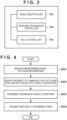
- FIG. 3 illustrates a functional configuration example of the vehicle 112 to the vehicle 114 in the present embodiment.
- the vehicle 111 to the vehicle 114 each include, for example, a signal reception unit 301, a response transmission control unit 302, and a relay control unit 303, as its functions.
- these functional units may be implemented, for example, by the CPU 201 executing a program stored in the memory 202 or the storage device 203, or may be implemented by dedicated hardware.
- the signal reception unit 301 receives a predetermined signal from another communication device such as the vehicle 111, which requests the vehicle 112 to the vehicle 114 to relay the communication.
- the predetermined signal is a signal requested to transmit a response, when the vehicle 112 to the vehicle 114 receive the predetermined signal.
- the predetermined signal can be, for example, a signal for requesting (asking for) the relay of the communication in order to perform the communication with a predetermined device on a network. Note that this is merely an example, and the predetermined signal can be any signal that requests a response, such as, for example, a search request or an authentication request.
- the response transmission control unit 302 Upon receiving the predetermined signal, the response transmission control unit 302 conducts control in transmitting the response to a device (for example, the vehicle 111), which is a transmission source.
- the response transmission control unit 302 determines a transmission timing of the response, based on communication executable by the self-device with the predetermined device that is a communication partner of the device (for example, the vehicle 111), which is the transmission source of the predetermined signal. Since the method for determining the transmission timing has been described above, its description is not repeated here.
- the response transmission control unit 302 transmits the response to the predetermined signal at the timing that has been determined.
- the relay control unit 303 establishes a connection with a first another device (for example, the vehicle 111) that is the transmission source of the predetermined signal, based on the response that has been transmitted under the control of the response transmission control unit 302.
- the relay control unit 303 establishes a connection with a second another device (for example, an access point of a wireless LAN) connectable to the predetermined device that is the communication partner of the first another device.
- the relay control unit 303 relays the communication between the first another device and the second another device. That is, the relay control unit 303 conducts control of transferring a signal that has been received from the first another device to the second another device and transferring a signal that has been received from the second another device to the first another device.
- the relay control unit 303 can perform communication under the control of the base station 101, for example, in a case where the communication with the first another device is performed by using cellular side link communication. In addition, in a case where the communication is performed with the first another device in accordance with wireless LAN standards, and in a case where the self-device functions as an access point, the relay control unit 303 can control the communication of the first another device under the control of the self-device. In addition, in the case where the communication is performed with the first another device in accordance with the wireless LAN standards, and in a case where the self-device functions as a station, the relay control unit 303 can perform the communication under the control of the first another device.
- the relay control unit 303 may perform communication with the first another device under the control of the self-device or under the control of another device (for example, the first another device or any other device). Similarly, the relay control unit 303 can perform the communication with the second another device under the control of the self-device or under the control of another device (for example, the second another device or any other device).
- the vehicle 112 to the vehicle 114 first receive a predetermined signal that requests a response, from the first another device (for example, the vehicle 111), which is present in the surroundings, and which requests relay of communication by the self-device (S401). Then, the vehicle 112 to the vehicle 114 identify a property of the communication executable between the self-device and the second another device (for example, a device capable of communicating with the predetermined device that is a communication partner of the first another device) that is a relay destination to which the communication of the first another device is to be relayed (S402).
- the second another device for example, a device capable of communicating with the predetermined device that is a communication partner of the first another device
- the communication partner device of the first another device may be the second another device, or may be a device that is deployed on a predetermined network such as the Internet and that further needs relay by the second another device in order to perform communication.
- the property of the communication can be indicated by, for example, information capable of identifying whether the communication between the first another device and the predetermined device can be performed on a good condition. Then, the vehicle 112 to the vehicle 114 determine a transmission timing of a response to the predetermined signal received in S401, based on the property of the communication that can be executed with the second another device (S403).
- the vehicle 112 to the vehicle 114 determine transmission of the response to the first another device at a timing of a shorter period from the reception of the predetermined signal, as better relay communication is available. Then, at the timing determined in S403, the vehicle 112 to the vehicle 114 transmit the response to the first another device (S404).
- the first another device is capable of determining whether the device (the vehicle 112 to the vehicle 114), which is a transmission source of the response, is a device suitable for relaying the communication between the first another device and the second another device in accordance with a timing when receiving this response.
- the vehicle 111 for example, transmits predetermined signals to the vehicle 112 to the vehicle 114, and receives responses respectively from the vehicle 112 to the vehicle 114.
- the vehicle 111 is capable of recognizing that by connecting to the vehicle 112, it is possible to perform communication with the device that is the relay destination on a good condition.
- the vehicle 111 can establish a connection with the vehicle 112 and request the vehicle 112 to relay the communication with, for example, the device 121.
- the vehicle 111 may notify the base station 101 of reception timings of responses from the vehicle 112 to the vehicle 114, and may cause the base station 101 to select another vehicle to be connected to.
- the vehicle 112 to the vehicle 114 are capable of notifying the vehicle 111 that whether it is possible to relay the communication between the vehicle 111 and the predetermined device that is a communication partner of the vehicle 111 on a good condition, by the transmission timing of the response to the predetermined signal. Accordingly, the vehicle 111 is capable of selecting a vehicle suitable for relay transmission from among other vehicles (the vehicle 112 to the vehicle 114) to be candidates for the relay device, establishing a connection, and requesting the relay. In addition, since information is notified by the transmission timing of the response, it is not necessary to add information to be included in the response. Therefore, selection of an appropriate relay device is enabled with no degradation in use efficiency of frequency.
- the first another device that has transmitted the predetermined signal and received the response is capable of identifying communication executable by each communication device in the relay with the second another device, and it becomes possible to select an appropriate communication device as a relay device.
- the predetermined signal is a signal for requesting, by the first another device, a connection for relaying the communication with the second another communication.
- the first another device when the first another device requests a connection, it becomes possible to identify the communication executable by each communication device with the second another device by the response, and to smoothly shifting to connection processing.
- the signal for requesting the connection is a signal simultaneously transmitted from the first another device to a plurality of devices.
- the first another device is capable of receiving the response from a plurality of devices present in the surroundings at timings in accordance with the respective communication situations of the plurality of devices, determining a communication device suitable for the relay device early, and starting communication early.
- the communication device controls such that the transmission timing, in a case where a requested quality when the first another device communicates with the second another device is satisfiable with a communication quality obtainable by the communication device through communication with the second another device, is earlier than the transmission timing in a case where the requested quality is unsatisfiable with the communication quality.
- the first another device is capable of identifying the quality of the communication between the communication device and the second another device in accordance with the reception timing of the response, and by selecting a communication device with an earlier reception timing of the response as the relay device, it becomes possible to increase the probability that the requested quality can be satisfied in the relay communication.
- the communication device controls to make the transmission timing earlier, as there is a higher probability that the first another device is capable of communicating with the second another device through relay of the communication device.
- the first another device is capable of identifying a communication device with a high probability of enabling the communication between the self-device and the second another device, and by requesting such a communication device to relay the communication, it becomes possible to reduce the probability of connecting to a communication device that is not capable of communicating with the second another device.
- the communication device controls to make the transmission timing earlier, as there is a larger communication capacity available to the communication for the first another device in the communication between the communication device and the second another device.
- the first another device is capable of identifying a communication device that is capable of using the communication capacity for the relay of the self-device, and for example, it is possible to prevent from requesting a communication device that is not capable of using the communication capacity sufficiently to relay the communication.
- the communication device controls to make the transmission timing earlier, as wireless quality in the communication with the second another device is better.
- the first another device is capable of identifying a device capable of relaying the communication with the second another device with good wireless quality, and for example, it is possible to prevent from requesting a communication device having insufficient wireless quality with the second another device to relay the communication.
- the wireless quality includes at least one of received signal strength, a signal-to-noise ratio, and a signal-to-interference and noise ratio of a signal that have been received in the communication device regarding the communication with the second another device.
- the first another device is capable of identifying a situation of the wireless section between the communication device and the second another device in accordance with the reception timing of the response, and it becomes possible to select a communication device suitable for the relay.
- the communication device controls to make the transmission timing earlier, as a moving speed of the communication device is lower.
- the first another device is capable of identifying the moving speed of the communication device, based on the reception timing of the response, and for example, it becomes possible to select a communication device having a slow moving speed and capable of stably enabling the relay, and to request the relay.
- the communication device controls to make the transmission timing earlier, as there is a higher probability that the communication device is capable of communicating with the second another device.
- the first another device is capable of identifying the probability that each communication device is capable of communicating with the second another device, based on the reception timing of the response, and for example, it is possible to prevent from requesting a communication device having a low probability of being capable of communicating with the second another device to relay the communication.
- the communication device controls such that the transmission timing in a case where the communication device is in connection with the second another device is earlier than the transmission timing in a case where the communication device is not in connection with the second another device.
- the first another device is capable of identifying a communication device that is currently establishing a connection with the second another device, and, for example, by requesting such a communication device to relay the communication, it becomes possible to reliably communicate with a communication partner.
- the communication device determines that there is a higher probability of being capable of communicating with the second another device, as there is a higher probability of moving to a location where the communication with the second another device is possible on a movement route of the communication device.
- the probability of being capable of connecting to the second another device can be identified with high accuracy, based on a geographical range in which it becomes possible to communicate with the second another device along the movement route, and the transmission timing of the response can be appropriately set, accordingly.
- the communication device controls to make the transmission timing earlier, as a time while the communication device is capable of maintaining a connection with the second another device is longer.
- the first another device is capable of identifying a communication device capable of maintaining the connection with the second another device for a long time, based on the reception timing of the response to the predetermined signal, and for example, it becomes possible to request an appropriate communication device suitable for the duration of the communication to be performed by the self-device to relay the communication.
- the communication device is a vehicle.
- the first another device is capable of selecting a vehicle suitable for the relay from among vehicles capable of relaying the communication, based on the reception timing of the response to the predetermined signal.
- the first another device is a vehicle.
- the first another device it becomes possible for the first another device to find a communication device capable of relaying the communication of the self-device, for example, while traveling, and to select a device capable of appropriately relaying the communication.
- the communication with the second another device is performed through a wireless LAN.
- a control method is: a control method performed by a communication device that communicates wirelessly, the control method comprising:
- the first another device that has transmitted the predetermined signal and received the response is capable of identifying communication executable by each communication device in the relay with the second another device, and it becomes possible to select an appropriate communication device as a relay device.
- a program according to the above embodiments is: a program for causing a computer included in a communication device that communicates wirelessly to:
- the first another device that has transmitted the predetermined signal and received the response is capable of identifying communication executable by each communication device in the relay with the second another device, and it becomes possible to select an appropriate communication device as a relay device.
Landscapes
- Engineering & Computer Science (AREA)
- Computer Networks & Wireless Communication (AREA)
- Signal Processing (AREA)
- Mobile Radio Communication Systems (AREA)
Abstract
Description
- The present invention relates to a communication device, a control method, and a program, and more particularly, to a technique for selecting a relay device in relay transmission.
- Vehicle-to-Everything (V2X) communication, by which a vehicle communicates wirelessly with another vehicle or an object, enables the vehicle to acquire various types of information or to provide information to others. When a vehicle transmits data to a device such as a server on the Internet or a network that has been constructed by a service provider, the vehicle has to connect to a predetermined communication device such as, for example, a base station or an access point through which the vehicle is capable of connecting to the network. However, vehicles are not always in an environment where the connection to such a predetermined communication device is possible. For this reason, it is envisioned that a vehicle will communicate with a predetermined communication device through, for example, another vehicle capable of connecting to such a predetermined communication device. PTL 1 describes a configuration for connection between vehicles to transfer data to a predetermined node. In PTL 1, a vehicle close to the predetermined node is identified by communication between the vehicles, and data is transferred to the vehicle close to the predetermined node.
- PTL 1:
Japanese Patent Laid-Open No. 2017-184051 - It is expected that when a communication device establishes a connection with another device to communicate with the predetermined device, it will not be possible for the communication device to recognize whether the other device is capable of connecting to the predetermined device, and at what communication rate (throughput) the other device is capable of connecting, when the other device is capable of connecting to the predetermined device. For example, also in the technique of PTL 1, the vehicle close in distance to a predetermined node is not always capable of communicating with the predetermined node. In this case, the communication device may have to change a connection destination of the other device after the communication device is connected to another device, because it may be that the other device is not capable of connecting to the predetermined device, or the communication rate between the other device and the predetermined device is insufficient, and consequently it may not possible for the communication device to communicate with the predetermined device at a sufficient communication rate.
- The present invention provides a technique that enables a communication device to appropriately select another device to relay communication with a predetermined device.
- A communication apparatus according to one aspect of the present invention is a communication device that communicates wirelessly, the communication device configured to: receive, from a first another device, a predetermined signal to be transmitted before a connection with the first another device is established, a response to the predetermined signal being to be transmitted to the first another device, when the communication device receives the predetermined signal; and control, upon receiving the predetermined signal, a transmission timing of the response to the predetermined signal, based on communication that is executable by the communication device with a second another device that is a communication partner to which communication with the first another device is relayed.
- According to the present invention, it becomes possible for a communication device to appropriately select another device to relay communication with a predetermined device.
- Other features and advantages of the present invention will be apparent from the following description taken in conjunction with the accompanying drawings. Note that the same reference numerals denote the same or like components throughout the accompanying drawings.
- The accompanying drawings, which are incorporated in and constitute a part of the specification, illustrate embodiments of the invention and, together with the description, serve to explain principles of the invention.
-
FIG. 1 is a diagram illustrating a system configuration example. -
FIG. 2 is a diagram illustrating a hardware configuration example of a device that can execute a relay. -
FIG. 3 is a diagram illustrating a functional configuration example of the device that can execute the relay. -
FIG. 4 is a diagram illustrating an example of a flow of processing performed by a device that can execute the relay. - Hereinafter, embodiments will be described in detail with reference to the attached drawings. Note, the following embodiments are not intended to limit the scope of the claimed invention, and limitation is not made to an invention that requires a combination of all features described in the embodiments. Two or more of the multiple features described in the embodiments may be combined as appropriate. Furthermore, the same reference numerals are given to the same or similar configurations, and redundant description thereof is omitted.
-
FIG. 1 illustrates a configuration example of a system in the present embodiment. The present system is a wireless communication system in whichvehicles 111 to 114, which are capable of performing wireless communication, connect to a predetermined network such as the Internet, and perform communication. Thevehicles 111 to 114 according to the present embodiment connect to abase station 101 of a cellular communication system, for example, and perform communication with a predetermined communication device. In addition, thevehicles 111 to 114 are, for example, configured to be capable of communicating with each other by connecting to each other using a communication method different from the cellular communication method for communicating with thebase station 101. Here, the communication method different from the cellular communication method is, for example, any communication method of cellular Vehicle-to-Everything (V2X), wireless LAN, Dedicated Short Range Communications (DSRC), and Bluetooth (registered trademark). Note that although the cellular V2X is one aspect of the cellular communication method, it is not used for the communication between the base station and the terminal (that is, thevehicle 111 to the vehicle 114), but is used for the communication between a device other than the base station and the terminal (thevehicle 111 to the vehicle 114). Therefore, these communication methods are treated as different communication methods throughout the present embodiment and the scope of claims. Note that a combination of the cellular communication method and any other communication method is an example, and thevehicles 111 to 114 are configured to connect to a first device such as thebase station 101 in a first communication method, and to be connectable with each other in a second communication method different from the first communication method. Note that inFIG. 1 , only onebase station 101 and fourvehicles 111 to 114 are illustrated, but it is needless to say that a large number of these devices can be present. - By using the second communication method, the
vehicles 111 to 114 are capable of performing, for example, not only vehicle-to-vehicle communication but also communication with another device such as, for example, an access point of a wireless LAN. In one example, it is assumed that thevehicle 112 is present in a location where it is possible to communicate with anotherdevice 121 that is fixed in a communication method other than the cellular communication method. In addition, thevehicle 113 and thevehicle 114 are also capable of connecting to and communicating with surrounding devices depending on their locations. Note thatFIG. 1 illustrates an example in which thevehicle 112 is capable of directly connecting to anotherdevice 121 that is fixed. However, without being limited to this, for example, thevehicle 112 may be further capable of communicating with anotherdevice 121 that is fixed, through a wireless communication device of another vehicle or the like. The same applies to other vehicles. - By performing cellular communication with the
base station 101, thevehicles 111 to 114 are capable of transmitting, for example, information that has been acquired by sensors of the respective vehicles to a device such as a predetermined information processing server. The information processing server is capable of performing various types of processing such as control for automated driving with this information. In addition, by performing the cellular communication with thebase station 101, thevehicles 111 to 114 are capable of acquiring various types of information such as driving control information and service information in accordance with the locations of the vehicles from a server that holds, for example, predetermined information. On the other hand, in an environment in which a large number of vehicles communicate in parallel, the communication capacity that can be provided by thebase station 101 may be insufficient. For this reason, in the present embodiment, for example, the communication of thevehicle 111 is offloaded onto another device through theother vehicles 112 to 114. Note that the communication of thevehicle 112 to thevehicle 114 can be similarly offloaded through another vehicle. However, here, a description will be given by focusing on offloading the communication of thevehicle 111. - The
vehicle 111 establishes a connection with a vehicle in the surroundings, and communicates with a predetermined device such as a server on the Internet through the connection. For this purpose, thevehicle 111 transmits a connection request for requesting another vehicle in the surroundings to relay the communication, and establishes a connection. At this time, thevehicle 111 can, for example, establish a connection with another vehicle having good wireless quality of communication with thevehicle 111 in the second communication system. However, in some cases, the other vehicle cannot communicate with the predetermined device that is a communication partner with sufficient quality. In this case, thevehicle 111 attempts communication with the predetermined device through the other vehicle. After recognizing that the communication rate is insufficient, thevehicle 111 disconnects the connection with the other vehicle, and attempts a connection with further another vehicle. As a result, it is not possible for thevehicle 111 to communicate with the predetermined device in a timely manner. - Therefore, in the present embodiment, a mechanism is provided for the
vehicle 111 to recognize beforehand which one of thevehicle 112 to thevehicle 114 to be candidates for a relay device is suitable for communicating with the predetermined device. Specifically, thevehicle 111 transmits a predetermined signal, before the connection with another device such as thevehicle 112 to thevehicle 114 is established. Such a predetermined signal is a signal for transmitting a response signal to thevehicle 111, in response to receipt of the predetermined signal by thevehicle 112 to thevehicle 114. In one example, it can be a signal for requesting, by thevehicle 111, a connection for relaying the communication with the predetermined device, such as, for example, a specific server. The predetermined device here can be, for example, a device deployed on the Internet, and the predetermined signal can be a signal for requesting a wireless connection to be relayed to a device connectable to the Internet. Note that the predetermined signal can be a signal (that is, a multicast signal or a broadcast signal) simultaneously transmitted to the plurality ofvehicles 112 to 114. Upon receiving this predetermined signal, thevehicle 112 to thevehicle 114 control a transmission timing of a response signal to the predetermined signal, based on communication executable by the self-device with the predetermined device that is a communication partner of thevehicle 111. The transmission timing here is set to make the time from a reception timing of the predetermined signal shorter the better the condition under which relay of the communication of thevehicle 111 executable. - For example, the
vehicle 112 to thevehicle 114 determine whether the communication quality obtainable by the self-device in communicating with the predetermined device can satisfy a requested quality to be requested by thevehicle 111 in communicating with the predetermined device. For example, the quality can be throughput or a communication capacity. Thevehicle 112 to thevehicle 114 can estimate the communication quality in the communication between the self-device and the predetermined device, based on, for example, the wireless quality with a partner device (for example, an access point of a wireless LAN) capable of communicating with the predetermined device. The wireless quality can be, for example, signal to noise ratio (SNR), signal to interference plus noise ratio (SINR), or received signal strength indicator (RSSI). In one example, the obtainable communication capacity or throughput can be calculated, based on the wireless quality and available frequency bandwidth. Then, in a case where a communication quality that satisfies the requested quality is obtained, thevehicle 112 to thevehicle 114 make a transmission timing of the response earlier than that of a case where a communication quality that satisfies the requested quality is not obtained. Note that the transmission timing of the response may be determined in accordance with a ratio between the requested quality and the obtainable communication quality so that the response is transmitted earlier, as the communication quality more similar to the requested quality is obtainable. According to this, thevehicle 111 is capable of determining that there is a higher probability that the requested quality can be satisfied, as a period from the transmission of the predetermined signal to the reception of a response is shorter in length. As a result, by selecting and connecting to another vehicle having an early reception timing of the response, thevehicle 111 is capable of establishing a connection with the other vehicle capable of relaying the communication with the predetermined device with high quality. - In addition, the
vehicle 112 to thevehicle 114 may control to make the transmission timing of the response earlier, as there is a higher probability that the relay by the self-device will enable thevehicle 111 to communicate with the predetermined device. For example, thevehicle 112 to thevehicle 114 can estimate the probability that the relay by the self-device will enable the communication with the predetermined device, based on, for example, a first wireless quality between the self-device and a partner device (for example, an access point of a wireless LAN) capable of communicating with the predetermined device and a second wireless quality between the self-device and thevehicle 111. Thevehicle 112 to thevehicle 114 can determine that the probability is higher, as the value of SNR, SINR, RSSI, or the like is higher. Thevehicle 112 to thevehicle 114 can determine that this probability is low, in a case where any of these wireless qualities is low. That is, in a case where both the first wireless quality and the second wireless quality are sufficiently high, thevehicle 112 to thevehicle 114 can determine that there is a high probability that the relay by the self-device will enable thevehicle 111 to communicate with the predetermined device. Note that thevehicle 112 to thevehicle 114 may determine this probability, based on only one of the first wireless quality and the second wireless quality. For example, in a case where thevehicle 112 to thevehicle 114 are capable of receiving the predetermined signal and in a case where it can be estimated that there is a sufficient wireless quality between thevehicle 111 and thevehicle 112 to thevehicle 114, thevehicle 112 to thevehicle 114 are capable of determining the probability in consideration of only the above-described first wireless quality. In addition, in a case where the self-device is present in a location where it is known beforehand that, for example, the first wireless quality becomes sufficiently high, thevehicle 112 to thevehicle 114 may determine the probability in consideration of only the second wireless quality. Note that without calculating the above probability from the values of the wireless qualities such as SNR, SINR, and RSSI, thevehicle 112 to thevehicle 114 may control to make the transmission timing of the response earlier, as a value of such a wireless quality is better. - Further, for example, the
vehicle 112 to thevehicle 114 may determine that there is a lower probability that the relay by the self-device will enable thevehicle 111 to communicate with the predetermined device, as a communication path to the predetermined device (the number of hops or the like in a wireless section) is longer in length. Note that without determining the probability from the length of the communication path, thevehicle 112 to thevehicle 114 may make the transmission timing of the response earlier, as the communication path is shorter. In addition, thevehicle 112 to thevehicle 114 may determine that there is a lower probability that the relay by the self-device will enable thevehicle 111 to communicate with the predetermined device, as the moving speed of the self-device, the moving speed of thevehicle 111, or the relative moving speed between the self-device and thevehicle 111 is faster. Note that without determining the probability that the relay by the self-device will enable thevehicle 111 to communicate with the predetermined device from any of the above-described moving speeds, thevehicle 112 to thevehicle 114 may delay the transmission timing of the response, as the moving speed is faster. - Further, the
vehicle 112 to thevehicle 114 may determine that there is a higher probability that the relay by the self-device will enable thevehicle 111 to communicate with the predetermined device, as there is a higher probability of moving to a location where it is possible to communicate with a device capable of communicating with the predetermined device (for example, there is a higher possibility of entering a communicable area of such a device, based on an expected movement route corresponding to a destination that has been set). Note that from a first probability of moving to the location where it is possible to communicate a device capable of communicating with the predetermined device, without identifying a second probability that the relay by the self-device will enable thevehicle 111 to communicate with the predetermined device, thevehicle 112 to thevehicle 114 may make the transmission timing of the response earlier, as the first probability is higher. In addition, thevehicle 112 to thevehicle 114 can make the transmission timing of the response earlier, as the time while it is possible to maintain the connection with the device capable of communicating with the predetermined device is longer. In one example, on the expected movement route of the self-device, thevehicle 112 to thevehicle 114 can estimate a time to stay within a communicable range of the device capable of communicating with the predetermined device, and can identify such a time as the time while it is possible to maintain the connection. Note that thevehicle 112 to thevehicle 114 may determine a probability that it becomes possible to communicate with the device capable of communicating with the predetermined device, based on the movement route or the like of the self-device, and may control to make the transmission timing of the response earlier, as the probability is higher. In addition, in a case of actually establishing a connection with the device capable of communicating with the predetermined device, thevehicle 112 to thevehicle 114 may transmit the response earlier than a case where the connection with the device has not been established yet. - According to the foregoing, the
vehicle 111 is capable of determining that there is a higher probability that the relay by thevehicle 112 to thevehicle 114 will enable thevehicle 111 to communicate with the predetermined device, as the period from the transmission of the predetermined signal to the reception of the response is shorter in length. As a result, by selecting and connecting to another vehicle having an early reception timing of the response, thevehicle 111 is capable of establishing a connection with another vehicle having a high probability of enabling the communication with the predetermined device. - In addition, the
vehicle 112 to thevehicle 114 may control to make the transmission timing of the response earlier, as there is a larger communication capacity available for relaying the communication between thevehicle 111 and the predetermined device. For example, from a first communication capacity achievable between the self-device and a partner device capable of communicating with the predetermined device, thevehicle 112 to thevehicle 114 can identify a second communication capacity used for communication of the self-device, and can identify a value obtained by subtracting the second communication capacity from the first communication capacity, as a communication capacity available for relaying the communication between thevehicle 111 and the predetermined device. Note that, for example, thevehicle 112 to thevehicle 114 may receive the communication capacity requested by thevehicle 111 in a predetermined signal, and may control to transmit a response earlier, as the communication capacity similar to the requested communication capacity is more achievable in accordance with a ratio between the available communication capacity and the requested communication capacity. - Hereinafter, configurations and operations of the
vehicle 112 to thevehicle 114, which perform such processing, will be described. Note that in the present embodiment, in order to select a device to relay the communication of thevehicle 111, the description is given with regard to processing to be performed by thevehicle 112 to thevehicle 114. However, the vehicle is merely one aspect, and the discussion according to the present embodiment is applicable to a wireless communication device in any aspect. -
FIG. 2 illustrates a hardware configuration example of thevehicle 112 to thevehicle 114 in the present embodiment. Thevehicle 112 to thevehicle 114 each include a general-purpose computer in one example, and the computer includes, for example, aCPU 201, amemory 202, astorage device 203, acommunication circuit 204, and an input andoutput circuit 205. Note thatFIG. 2 illustrates a configuration example of hardware according to the present embodiment, and illustrations of the other configurations such as configurations of thevehicle 112 to thevehicle 114 as vehicles are omitted. TheCPU 201 executes, for example, a program stored in thememory 202 to perform processing to be described later and conduct control of the entire device. Note that theCPU 201 can be substituted by any one or more processors such as an MPU and an ASIC. Thememory 202 holds a program for causing thevehicle 112 to thevehicle 114 to perform various types of processing, and also functions as a work memory when the program is executed. In one example, thememory 202 is a random access memory (RAM) or a read-only memory (ROM). Thestorage device 203 is, for example, a detachable external storage device, a built-in hard disk drive, or the like, and holds various types of information. Thecommunication circuit 204 performs signal processing related to communication, acquires various types of information from an external device through a communication network, and transmits the various types of information to the external device. Note that the information that has been acquired by thecommunication circuit 204 can be stored in, for example, thememory 202 or thestorage device 203. Note that thevehicle 112 to thevehicle 114 each may include a plurality ofcommunication circuits 204. The input andoutput circuit 205 controls, for example, outputs of screen information to be displayed on a display device, not illustrated, audio information to be output from a speaker, and receiving of user inputs via a keyboard, a pointing device, or the like. Note that the input andoutput circuit 205 may control a device that integrally inputs into and outputs from a touch panel or the like. Note that the configuration ofFIG. 2 is an example, and for example, thevehicle 112 to thevehicle 114 each may include dedicated hardware for performing the above-described processing. -
FIG. 3 illustrates a functional configuration example of thevehicle 112 to thevehicle 114 in the present embodiment. Thevehicle 111 to thevehicle 114 each include, for example, asignal reception unit 301, a responsetransmission control unit 302, and arelay control unit 303, as its functions. Note that these functional units may be implemented, for example, by theCPU 201 executing a program stored in thememory 202 or thestorage device 203, or may be implemented by dedicated hardware. - The
signal reception unit 301 receives a predetermined signal from another communication device such as thevehicle 111, which requests thevehicle 112 to thevehicle 114 to relay the communication. As described above, the predetermined signal is a signal requested to transmit a response, when thevehicle 112 to thevehicle 114 receive the predetermined signal. The predetermined signal can be, for example, a signal for requesting (asking for) the relay of the communication in order to perform the communication with a predetermined device on a network. Note that this is merely an example, and the predetermined signal can be any signal that requests a response, such as, for example, a search request or an authentication request. Upon receiving the predetermined signal, the responsetransmission control unit 302 conducts control in transmitting the response to a device (for example, the vehicle 111), which is a transmission source. The responsetransmission control unit 302 determines a transmission timing of the response, based on communication executable by the self-device with the predetermined device that is a communication partner of the device (for example, the vehicle 111), which is the transmission source of the predetermined signal. Since the method for determining the transmission timing has been described above, its description is not repeated here. The responsetransmission control unit 302 transmits the response to the predetermined signal at the timing that has been determined. - The
relay control unit 303 establishes a connection with a first another device (for example, the vehicle 111) that is the transmission source of the predetermined signal, based on the response that has been transmitted under the control of the responsetransmission control unit 302. In parallel, therelay control unit 303 establishes a connection with a second another device (for example, an access point of a wireless LAN) connectable to the predetermined device that is the communication partner of the first another device. Then, therelay control unit 303 relays the communication between the first another device and the second another device. That is, therelay control unit 303 conducts control of transferring a signal that has been received from the first another device to the second another device and transferring a signal that has been received from the second another device to the first another device. Note that therelay control unit 303 can perform communication under the control of thebase station 101, for example, in a case where the communication with the first another device is performed by using cellular side link communication. In addition, in a case where the communication is performed with the first another device in accordance with wireless LAN standards, and in a case where the self-device functions as an access point, therelay control unit 303 can control the communication of the first another device under the control of the self-device. In addition, in the case where the communication is performed with the first another device in accordance with the wireless LAN standards, and in a case where the self-device functions as a station, therelay control unit 303 can perform the communication under the control of the first another device. In this manner, therelay control unit 303 may perform communication with the first another device under the control of the self-device or under the control of another device (for example, the first another device or any other device). Similarly, therelay control unit 303 can perform the communication with the second another device under the control of the self-device or under the control of another device (for example, the second another device or any other device). - Next, an example of a flow of processing performed by the
vehicle 112 to thevehicle 114 will be described. Note that details of each process to be described later have been described above. Therefore, in the description here, only the flow of the processing is outlined, and the detailed description is not repeated. The present processing is implemented by, for example, theCPU 201 executing a program stored in thememory 202 or thestorage device 203. - In the present processing, the
vehicle 112 to thevehicle 114 first receive a predetermined signal that requests a response, from the first another device (for example, the vehicle 111), which is present in the surroundings, and which requests relay of communication by the self-device (S401). Then, thevehicle 112 to thevehicle 114 identify a property of the communication executable between the self-device and the second another device (for example, a device capable of communicating with the predetermined device that is a communication partner of the first another device) that is a relay destination to which the communication of the first another device is to be relayed (S402). Note that regarding the predetermined device here, the communication partner device of the first another device may be the second another device, or may be a device that is deployed on a predetermined network such as the Internet and that further needs relay by the second another device in order to perform communication. In addition, the property of the communication here can be indicated by, for example, information capable of identifying whether the communication between the first another device and the predetermined device can be performed on a good condition. Then, thevehicle 112 to thevehicle 114 determine a transmission timing of a response to the predetermined signal received in S401, based on the property of the communication that can be executed with the second another device (S403). Thevehicle 112 to thevehicle 114 determine transmission of the response to the first another device at a timing of a shorter period from the reception of the predetermined signal, as better relay communication is available. Then, at the timing determined in S403, thevehicle 112 to thevehicle 114 transmit the response to the first another device (S404). - The first another device is capable of determining whether the device (the
vehicle 112 to the vehicle 114), which is a transmission source of the response, is a device suitable for relaying the communication between the first another device and the second another device in accordance with a timing when receiving this response. In one example, thevehicle 111, for example, transmits predetermined signals to thevehicle 112 to thevehicle 114, and receives responses respectively from thevehicle 112 to thevehicle 114. Here, in a case where thevehicle 111 receives the response from thevehicle 112 earliest, thevehicle 111 is capable of recognizing that by connecting to thevehicle 112, it is possible to perform communication with the device that is the relay destination on a good condition. Therefore, thevehicle 111 can establish a connection with thevehicle 112 and request thevehicle 112 to relay the communication with, for example, thedevice 121. Note that, for example, thevehicle 111 may notify thebase station 101 of reception timings of responses from thevehicle 112 to thevehicle 114, and may cause thebase station 101 to select another vehicle to be connected to. - In this manner, in a procedure according to the present embodiment, the
vehicle 112 to thevehicle 114 are capable of notifying thevehicle 111 that whether it is possible to relay the communication between thevehicle 111 and the predetermined device that is a communication partner of thevehicle 111 on a good condition, by the transmission timing of the response to the predetermined signal. Accordingly, thevehicle 111 is capable of selecting a vehicle suitable for relay transmission from among other vehicles (thevehicle 112 to the vehicle 114) to be candidates for the relay device, establishing a connection, and requesting the relay. In addition, since information is notified by the transmission timing of the response, it is not necessary to add information to be included in the response. Therefore, selection of an appropriate relay device is enabled with no degradation in use efficiency of frequency. -
- 1. A communication apparatus according to the above embodiments is:
a communication device that communicates wirelessly, and is configured to:- receive, from a first another device, a predetermined signal to be transmitted before a connection with the first another device is established, a response to the predetermined signal being to be transmitted to the first another device when the communication device receives the predetermined signal; and
- control, upon receiving the predetermined signal, a transmission timing of the response to the predetermined signal, based on communication that is executable by the communication device with a second another device that is a communication partner of the first another device.
- According to this embodiment, the first another device that has transmitted the predetermined signal and received the response is capable of identifying communication executable by each communication device in the relay with the second another device, and it becomes possible to select an appropriate communication device as a relay device.
- 2. In the embodiment according to 1 above,
the predetermined signal is a signal for requesting, by the first another device, a connection for relaying the communication with the second another communication. - According to this embodiment, when the first another device requests a connection, it becomes possible to identify the communication executable by each communication device with the second another device by the response, and to smoothly shifting to connection processing.
- 3. In the embodiment according to 2 above,
the signal for requesting the connection is a signal simultaneously transmitted from the first another device to a plurality of devices. - According to this embodiment, the first another device is capable of receiving the response from a plurality of devices present in the surroundings at timings in accordance with the respective communication situations of the plurality of devices, determining a communication device suitable for the relay device early, and starting communication early.
- 4. In the embodiment according to any one of 1 to 3 above,
the communication device controls such that the transmission timing, in a case where a requested quality when the first another device communicates with the second another device is satisfiable with a communication quality obtainable by the communication device through communication with the second another device, is earlier than the transmission timing in a case where the requested quality is unsatisfiable with the communication quality. - According to this embodiment, the first another device is capable of identifying the quality of the communication between the communication device and the second another device in accordance with the reception timing of the response, and by selecting a communication device with an earlier reception timing of the response as the relay device, it becomes possible to increase the probability that the requested quality can be satisfied in the relay communication.
- 5. In the embodiment according to any one of 1 to 4 above,
the communication device controls to make the transmission timing earlier, as there is a higher probability that the first another device is capable of communicating with the second another device through relay of the communication device. - According to this embodiment, the first another device is capable of identifying a communication device with a high probability of enabling the communication between the self-device and the second another device, and by requesting such a communication device to relay the communication, it becomes possible to reduce the probability of connecting to a communication device that is not capable of communicating with the second another device.
- 6. In the embodiment according to any one of 1 to 5 above,
the communication device controls to make the transmission timing earlier, as there is a larger communication capacity available to the communication for the first another device in the communication between the communication device and the second another device. - According to this embodiment, the first another device is capable of identifying a communication device that is capable of using the communication capacity for the relay of the self-device, and for example, it is possible to prevent from requesting a communication device that is not capable of using the communication capacity sufficiently to relay the communication.
- 7. In the embodiment according to any one of 1 to 6 above,
the communication device controls to make the transmission timing earlier, as wireless quality in the communication with the second another device is better. - According to this embodiment, the first another device is capable of identifying a device capable of relaying the communication with the second another device with good wireless quality, and for example, it is possible to prevent from requesting a communication device having insufficient wireless quality with the second another device to relay the communication.
- 8. In the embodiment according to 7 above,
the wireless quality includes at least one of received signal strength, a signal-to-noise ratio, and a signal-to-interference and noise ratio of a signal that have been received in the communication device regarding the communication with the second another device. - According to this embodiment, the first another device is capable of identifying a situation of the wireless section between the communication device and the second another device in accordance with the reception timing of the response, and it becomes possible to select a communication device suitable for the relay.
- 9. In the embodiment according to any one of 1 to 8 above,
the communication device controls to make the transmission timing earlier, as a moving speed of the communication device is lower. - According to this embodiment, the first another device is capable of identifying the moving speed of the communication device, based on the reception timing of the response, and for example, it becomes possible to select a communication device having a slow moving speed and capable of stably enabling the relay, and to request the relay.
- 10. In the embodiment according to any one of 1 to 9 above,
the communication device controls to make the transmission timing earlier, as there is a higher probability that the communication device is capable of communicating with the second another device. - According to this embodiment, the first another device is capable of identifying the probability that each communication device is capable of communicating with the second another device, based on the reception timing of the response, and for example, it is possible to prevent from requesting a communication device having a low probability of being capable of communicating with the second another device to relay the communication.
- 11. In the embodiment according to 10 above,
the communication device controls such that the transmission timing in a case where the communication device is in connection with the second another device is earlier than the transmission timing in a case where the communication device is not in connection with the second another device. - According to this embodiment, the first another device is capable of identifying a communication device that is currently establishing a connection with the second another device, and, for example, by requesting such a communication device to relay the communication, it becomes possible to reliably communicate with a communication partner.
- 12. In the embodiment according to 10 above,
the communication device determines that there is a higher probability of being capable of communicating with the second another device, as there is a higher probability of moving to a location where the communication with the second another device is possible on a movement route of the communication device. - According to this embodiment, in a case where the movement route of the communication device has been decided, for example, the probability of being capable of connecting to the second another device can be identified with high accuracy, based on a geographical range in which it becomes possible to communicate with the second another device along the movement route, and the transmission timing of the response can be appropriately set, accordingly.
- 13. In the embodiment according to any one of 1 to 12 above,
the communication device controls to make the transmission timing earlier, as a time while the communication device is capable of maintaining a connection with the second another device is longer. - According to this embodiment, the first another device is capable of identifying a communication device capable of maintaining the connection with the second another device for a long time, based on the reception timing of the response to the predetermined signal, and for example, it becomes possible to request an appropriate communication device suitable for the duration of the communication to be performed by the self-device to relay the communication.
- 14. In the embodiment according to any one of 1 to 13 above,
the communication device is a vehicle. - According to this embodiment, the first another device is capable of selecting a vehicle suitable for the relay from among vehicles capable of relaying the communication, based on the reception timing of the response to the predetermined signal.
- 15. In the embodiment according to any one of 1 to 14 above,
the first another device is a vehicle. - According to this embodiment, it becomes possible for the first another device to find a communication device capable of relaying the communication of the self-device, for example, while traveling, and to select a device capable of appropriately relaying the communication.
- 16. In the embodiment according to any one of 1 to 15 above,
the communication with the second another device is performed through a wireless LAN. - According to this embodiment, inexpensive and high-speed communication is enabled.
- 17. A control method according to the above embodiments is:
a control method performed by a communication device that communicates wirelessly, the control method comprising: - receiving, from a first another device, a predetermined signal to be transmitted before a connection with the first another device is established, a response to the predetermined signal being to be transmitted to the first another device, when the communication device receives the predetermined signal; and
- controlling, upon receiving the predetermined signal, a transmission timing of the response to the predetermined signal, based on communication executable by the communication device with a second another device that is a communication partner of the first another device.
- According to this embodiment, the first another device that has transmitted the predetermined signal and received the response is capable of identifying communication executable by each communication device in the relay with the second another device, and it becomes possible to select an appropriate communication device as a relay device.
- 18. A program according to the above embodiments is:
a program for causing a computer included in a communication device that communicates wirelessly to: - receive, from a first another device, a predetermined signal to be transmitted before a connection with the first another device is established, a response to the predetermined signal being to be transmitted to the first another device, when the communication device receives the predetermined signal; and
- control, upon receiving the predetermined signal, a transmission timing of the response to the predetermined signal, based on communication executable by the communication device with a second another device that is a communication partner of the first another device.
- According to this embodiment, the first another device that has transmitted the predetermined signal and received the response is capable of identifying communication executable by each communication device in the relay with the second another device, and it becomes possible to select an appropriate communication device as a relay device.
- The invention is not limited to the foregoing embodiments, and various variations/changes are possible within the spirit of the invention.
Claims (18)
- A communication device that communicates wirelessly, the communication device configured to:receive, from a first another device, a predetermined signal to be transmitted before a connection with the first another device is established, a response to the predetermined signal being to be transmitted to the first another device when the communication device receives the predetermined signal; andcontrol, upon receiving the predetermined signal, a transmission timing of the response to the predetermined signal, based on communication that is executable by the communication device with a second another device that is a communication partner of the first another device.
- The communication device according to claim 1, wherein the predetermined signal is a signal for requesting, by the first another device, a connection for relaying the communication with the second another communication.
- The communication device according to claim 2, wherein the signal for requesting the connection is a signal simultaneously transmitted from the first another device to a plurality of devices.
- The communication device according to any one of claims 1 to 3, wherein the communication device controls such that the transmission timing, in a case where a requested quality when the first another device communicates with the second another device is satisfiable with a communication quality obtainable by the communication device through communication with the second another device, is earlier than the transmission timing in a case where the requested quality is unsatisfiable with the communication quality.
- The communication device according to any one of claims 1 to 4, wherein the communication device controls to make the transmission timing earlier, as there is a higher probability that the first another device is capable of communicating with the second another device through relay of the communication device.
- The communication device according to any one of claims 1 to 5, wherein the communication device controls to make the transmission timing earlier, as there is a larger communication capacity available to the communication for the first another device in the communication between the communication device and the second another device.
- The communication device according to any one of claims 1 to 6, wherein the communication device controls to make the transmission timing earlier, as wireless quality in the communication with the second another device is better.
- The communication device according to claim 7, wherein the wireless quality includes at least one of received signal strength, a signal-to-noise ratio, and a signal-to-interference and noise ratio of a signal that have been received in the communication device regarding the communication with the second another device.
- The communication device according to any one of claims 1 to 8, wherein the communication device controls to make the transmission timing earlier, as a moving speed of the communication device is lower.
- The communication device according to any one of claims 1 to 9, wherein the communication device controls to make the transmission timing earlier, as there is a higher probability that the communication device is capable of communicating with the second another device.
- The communication device according to claim 10, wherein the communication device controls such that the transmission timing in a case where the communication device is in connection with the second another device is earlier than the transmission timing in a case where the communication device is not in connection with the second another device.
- The communication device according to claim 10, wherein the communication device determines that there is a higher probability of being capable of communicating with the second another device, as there is a higher probability of moving to a location where the communication with the second another device is possible on a movement route of the communication device.
- The communication device according to any one of claims 1 to 12, wherein the communication device controls to make the transmission timing earlier, as a time while the communication device is capable of maintaining a connection with the second another device is longer.
- The communication device according to any one of claims 1 to 13, wherein the communication device is a vehicle.
- The communication device according to any one of claims 1 to 14, wherein the first another device is a vehicle.
- The communication device according to any one of claims 1 to 15, wherein the communication with the second another device is performed through a wireless LAN.
- A control method performed by a communication device that communicates wirelessly, the control method comprising:receiving, from a first another device, a predetermined signal to be transmitted before a connection with the first another device is established, a response to the predetermined signal being to be transmitted to the first another device, when the communication device receives the predetermined signal; andcontrolling, upon receiving the predetermined signal, a transmission timing of the response to the predetermined signal, based on communication executable by the communication device with a second another device that is a communication partner of the first another device.
- A program for causing a computer included in a communication device that communicates wirelessly to:receive, from a first another device, a predetermined signal to be transmitted before a connection with the first another device is established, a response to the predetermined signal being to be transmitted to the first another device, when the communication device receives the predetermined signal; andcontrol, upon receiving the predetermined signal, a transmission timing of the response to the predetermined signal, based on communication executable by the communication device with a second another device that is a communication partner of the first another device.
Applications Claiming Priority (1)
| Application Number | Priority Date | Filing Date | Title |
|---|---|---|---|
| PCT/JP2021/006979 WO2022180711A1 (en) | 2021-02-25 | 2021-02-25 | Communication device, control method, and program |
Publications (3)
| Publication Number | Publication Date |
|---|---|
| EP4271022A1 true EP4271022A1 (en) | 2023-11-01 |
| EP4271022A4 EP4271022A4 (en) | 2024-02-28 |
| EP4271022B1 EP4271022B1 (en) | 2025-11-19 |
Family
ID=83047894
Family Applications (1)
| Application Number | Title | Priority Date | Filing Date |
|---|---|---|---|
| EP21927813.2A Active EP4271022B1 (en) | 2021-02-25 | 2021-02-25 | Communication device, control method, and program |
Country Status (5)
| Country | Link |
|---|---|
| US (1) | US20230403666A1 (en) |
| EP (1) | EP4271022B1 (en) |
| JP (1) | JP7557041B2 (en) |
| CN (1) | CN116830663A (en) |
| WO (1) | WO2022180711A1 (en) |
Families Citing this family (2)
| Publication number | Priority date | Publication date | Assignee | Title |
|---|---|---|---|---|
| US11870879B1 (en) * | 2023-01-04 | 2024-01-09 | Getac Technology Corporation | Device communication during emergent conditions |
| JP2025099720A (en) * | 2023-12-22 | 2025-07-03 | キヤノン株式会社 | Communication device, control method, and program |
Family Cites Families (18)
| Publication number | Priority date | Publication date | Assignee | Title |
|---|---|---|---|---|
| JP2007096917A (en) * | 2005-09-29 | 2007-04-12 | Toshiba Corp | Communication method and communication apparatus |
| JP5067201B2 (en) * | 2008-03-04 | 2012-11-07 | 日本電気株式会社 | Road-to-vehicle and vehicle-to-vehicle communication system, road-to-vehicle and vehicle-to-vehicle communication method, program thereof, and program recording medium |
| WO2013054415A1 (en) * | 2011-10-13 | 2013-04-18 | 三菱電機株式会社 | Radio terminal apparatus and wireless communication system |
| JP5867212B2 (en) * | 2012-03-19 | 2016-02-24 | 富士通株式会社 | COMMUNICATION CONTROL SYSTEM, COMMUNICATION DEVICE, AND COMMUNICATION CONTROL METHOD |
| US9167547B2 (en) * | 2012-09-27 | 2015-10-20 | Blackberry Limited | Uplink timing maintenance upon time alignment timer expiry |
| JP6452463B2 (en) * | 2015-01-19 | 2019-01-16 | 富士通コンポーネント株式会社 | Communication system and communication device |
| JP6801191B2 (en) * | 2016-02-24 | 2020-12-16 | 沖電気工業株式会社 | Wireless communication systems, wireless communication devices, and wireless communication programs |
| JP6418194B2 (en) | 2016-03-30 | 2018-11-07 | トヨタ自動車株式会社 | Wireless communication apparatus and wireless communication method |
| KR102364074B1 (en) * | 2016-12-08 | 2022-02-18 | 소니그룹주식회사 | Terminal device, method and recording medium |
| JP6863119B2 (en) * | 2017-06-20 | 2021-04-21 | 沖電気工業株式会社 | Wireless communication system, wireless relay device, and wireless relay program |
| EP3691360B1 (en) * | 2017-09-29 | 2023-10-25 | Sony Group Corporation | Communication device and communication method |
| US10939448B2 (en) * | 2018-06-08 | 2021-03-02 | Qualcomm Incorporated | Predictive scheduling for MM-Wave based CV2X |
| US11172327B2 (en) * | 2018-07-12 | 2021-11-09 | Qualcomm Incorporated | Relaying for vehicular communications |
| US11405980B2 (en) * | 2018-09-28 | 2022-08-02 | Apple Inc. | Listen again after talk for broadcast/multi-cast communications |
| US20220095250A1 (en) * | 2019-02-01 | 2022-03-24 | Lg Electronics Inc. | Method for measuring location of terminal in wireless communication system and terminal thereof |
| CN113545139B (en) * | 2019-03-07 | 2026-01-30 | 苹果公司 | Enhanced autonomous uplink timing adjustment |
| WO2022071571A1 (en) * | 2020-10-01 | 2022-04-07 | 京セラ株式会社 | Communication control method, relay user device, and remote user device |
| US12074829B2 (en) * | 2021-09-14 | 2024-08-27 | Qualcomm Incorporated | Dynamic full-duplex mode switching for sidelink |
-
2021
- 2021-02-25 WO PCT/JP2021/006979 patent/WO2022180711A1/en not_active Ceased
- 2021-02-25 JP JP2023501737A patent/JP7557041B2/en active Active
- 2021-02-25 EP EP21927813.2A patent/EP4271022B1/en active Active
- 2021-02-25 CN CN202180091452.3A patent/CN116830663A/en active Pending
-
2023
- 2023-08-15 US US18/234,118 patent/US20230403666A1/en active Pending
Also Published As
| Publication number | Publication date |
|---|---|
| CN116830663A (en) | 2023-09-29 |
| JP7557041B2 (en) | 2024-09-26 |
| JPWO2022180711A1 (en) | 2022-09-01 |
| WO2022180711A1 (en) | 2022-09-01 |
| EP4271022A4 (en) | 2024-02-28 |
| EP4271022B1 (en) | 2025-11-19 |
| US20230403666A1 (en) | 2023-12-14 |
Similar Documents
| Publication | Publication Date | Title |
|---|---|---|
| US9439121B2 (en) | Method and apparatus for multi-network communication in vehicular networks | |
| RU2529891C2 (en) | Method and system for selection of retransmitting station-responder in wireless communication networks | |
| US20230403666A1 (en) | Communication device, control method, and computer-readable storage medium | |
| WO2017101070A1 (en) | Fast moving scenario access point switching | |
| US10375748B2 (en) | Method for terminal-to-terminal communication in a cellular mobile radio network, and a system therefor | |
| US10588067B2 (en) | Terminal apparatus, communication system, and connection-destination selection method | |
| US11882606B2 (en) | Wireless communication terminal device, and wireless communication method therefor | |
| CN103209447A (en) | Subscriber access terminal selecting device and method supporting multi-hopping wireless local area network (WLAN) in internet of vehicles | |
| US20200296732A1 (en) | Vehicle and on-board device | |
| US20230389096A1 (en) | Communication device, relay device, control method, and computer-readable storage medium | |
| US10771953B2 (en) | Selection of communication partners using location and velocity information | |
| CN110768711A (en) | Unmanned aerial vehicle communication method, dispatching station, base station and system | |
| EP4396959A1 (en) | Beam management in cellular system | |
| US9497694B2 (en) | Wireless communication device, wireless communication system and wireless communication method | |
| CN116761182A (en) | Communication method, communication device, electronic apparatus, and storage medium | |
| KR20190082500A (en) | Method for transming data between vehicle and vehicle, apparatus and system for executing the method | |
| KR20130097328A (en) | Apparatus and method for dynamically determining communication link in communication system | |
| JP6904782B2 (en) | Wireless communication system for vehicles | |
| EP4271044B1 (en) | Communication device, base station, control method, and program | |
| US12634805B2 (en) | Communication device, base station, control method, and computer-readable storage medium for selecting a second device for relaying communication between devices | |
| US20230388240A1 (en) | Communication device, communication method, and computer-readable storage medium | |
| Raviglione et al. | Edge-V: Vehicular Edge Intelligence Through Multi-Band Unlicensed Spectrum Access | |
| JP2026500132A (en) | U2U relay reselection | |
| JP5219781B2 (en) | COMMUNICATION DEVICE, RADIO COMMUNICATION TERMINAL, RADIO COMMUNICATION SYSTEM, AND COMMUNICATION METHOD | |
| JP2009004829A (en) | Base station, server device, and wireless LAN system |
Legal Events
| Date | Code | Title | Description |
|---|---|---|---|
| STAA | Information on the status of an ep patent application or granted ep patent |
Free format text: STATUS: THE INTERNATIONAL PUBLICATION HAS BEEN MADE |
|
| PUAI | Public reference made under article 153(3) epc to a published international application that has entered the european phase |
Free format text: ORIGINAL CODE: 0009012 |
|
| STAA | Information on the status of an ep patent application or granted ep patent |
Free format text: STATUS: REQUEST FOR EXAMINATION WAS MADE |
|
| 17P | Request for examination filed |
Effective date: 20230725 |
|
| AK | Designated contracting states |
Kind code of ref document: A1 Designated state(s): AL AT BE BG CH CY CZ DE DK EE ES FI FR GB GR HR HU IE IS IT LI LT LU LV MC MK MT NL NO PL PT RO RS SE SI SK SM TR |
|
| REG | Reference to a national code |
Ref country code: DE Ref legal event code: R079 Free format text: PREVIOUS MAIN CLASS: H04W0016260000 Ipc: H04W0004440000 Ref country code: DE Ref legal event code: R079 Ref document number: 602021042861 Country of ref document: DE Free format text: PREVIOUS MAIN CLASS: H04W0016260000 Ipc: H04W0004440000 |
|
| A4 | Supplementary search report drawn up and despatched |
Effective date: 20240126 |
|
| RIC1 | Information provided on ipc code assigned before grant |
Ipc: H04W 84/22 20090101ALN20240122BHEP Ipc: H04W 88/04 20090101ALN20240122BHEP Ipc: H04W 76/14 20180101ALI20240122BHEP Ipc: H04W 40/22 20090101ALI20240122BHEP Ipc: H04W 40/20 20090101ALI20240122BHEP Ipc: H04W 40/18 20090101ALI20240122BHEP Ipc: H04W 40/12 20090101ALI20240122BHEP Ipc: H04W 4/46 20180101ALI20240122BHEP Ipc: H04W 4/44 20180101AFI20240122BHEP |
|
| DAV | Request for validation of the european patent (deleted) | ||
| DAX | Request for extension of the european patent (deleted) | ||
| STAA | Information on the status of an ep patent application or granted ep patent |
Free format text: STATUS: EXAMINATION IS IN PROGRESS |
|
| 17Q | First examination report despatched |
Effective date: 20241108 |
|
| GRAP | Despatch of communication of intention to grant a patent |
Free format text: ORIGINAL CODE: EPIDOSNIGR1 |
|
| STAA | Information on the status of an ep patent application or granted ep patent |
Free format text: STATUS: GRANT OF PATENT IS INTENDED |
|
| RIC1 | Information provided on ipc code assigned before grant |
Ipc: H04W 84/22 20090101ALN20250603BHEP Ipc: H04W 88/04 20090101ALN20250603BHEP Ipc: H04W 76/14 20180101ALI20250603BHEP Ipc: H04W 40/22 20090101ALI20250603BHEP Ipc: H04W 40/20 20090101ALI20250603BHEP Ipc: H04W 40/18 20090101ALI20250603BHEP Ipc: H04W 40/12 20090101ALI20250603BHEP Ipc: H04W 4/46 20180101ALI20250603BHEP Ipc: H04W 4/44 20180101AFI20250603BHEP |
|
| INTG | Intention to grant announced |
Effective date: 20250616 |
|
| RAP3 | Party data changed (applicant data changed or rights of an application transferred) |
Owner name: HONDA MOTOR CO., LTD. |
|
| GRAS | Grant fee paid |
Free format text: ORIGINAL CODE: EPIDOSNIGR3 |
|
| GRAA | (expected) grant |
Free format text: ORIGINAL CODE: 0009210 |
|
| STAA | Information on the status of an ep patent application or granted ep patent |
Free format text: STATUS: THE PATENT HAS BEEN GRANTED |
|
| AK | Designated contracting states |
Kind code of ref document: B1 Designated state(s): AL AT BE BG CH CY CZ DE DK EE ES FI FR GB GR HR HU IE IS IT LI LT LU LV MC MK MT NL NO PL PT RO RS SE SI SK SM TR |
|
| REG | Reference to a national code |
Ref country code: CH Ref legal event code: F10 Free format text: ST27 STATUS EVENT CODE: U-0-0-F10-F00 (AS PROVIDED BY THE NATIONAL OFFICE) Effective date: 20251119 Ref country code: GB Ref legal event code: FG4D |
|
| REG | Reference to a national code |
Ref country code: DE Ref legal event code: R096 Ref document number: 602021042861 Country of ref document: DE |
|
| REG | Reference to a national code |
Ref country code: IE Ref legal event code: FG4D |
|
| REG | Reference to a national code |
Ref country code: NL Ref legal event code: MP Effective date: 20251119 |
|
| PG25 | Lapsed in a contracting state [announced via postgrant information from national office to epo] |
Ref country code: ES Free format text: LAPSE BECAUSE OF FAILURE TO SUBMIT A TRANSLATION OF THE DESCRIPTION OR TO PAY THE FEE WITHIN THE PRESCRIBED TIME-LIMIT Effective date: 20251119 |
|
| REG | Reference to a national code |
Ref country code: LT Ref legal event code: MG9D |
|
| PG25 | Lapsed in a contracting state [announced via postgrant information from national office to epo] |
Ref country code: NO Free format text: LAPSE BECAUSE OF FAILURE TO SUBMIT A TRANSLATION OF THE DESCRIPTION OR TO PAY THE FEE WITHIN THE PRESCRIBED TIME-LIMIT Effective date: 20260219 |
|
| PGFP | Annual fee paid to national office [announced via postgrant information from national office to epo] |
Ref country code: DE Payment date: 20260123 Year of fee payment: 6 |
|
| PG25 | Lapsed in a contracting state [announced via postgrant information from national office to epo] |
Ref country code: FI Free format text: LAPSE BECAUSE OF FAILURE TO SUBMIT A TRANSLATION OF THE DESCRIPTION OR TO PAY THE FEE WITHIN THE PRESCRIBED TIME-LIMIT Effective date: 20251119 Ref country code: AT Free format text: LAPSE BECAUSE OF FAILURE TO SUBMIT A TRANSLATION OF THE DESCRIPTION OR TO PAY THE FEE WITHIN THE PRESCRIBED TIME-LIMIT Effective date: 20251119 Ref country code: HR Free format text: LAPSE BECAUSE OF FAILURE TO SUBMIT A TRANSLATION OF THE DESCRIPTION OR TO PAY THE FEE WITHIN THE PRESCRIBED TIME-LIMIT Effective date: 20251119 |
|
| REG | Reference to a national code |
Ref country code: AT Ref legal event code: MK05 Ref document number: 1859938 Country of ref document: AT Kind code of ref document: T Effective date: 20251119 |
|
| PG25 | Lapsed in a contracting state [announced via postgrant information from national office to epo] |
Ref country code: NL Free format text: LAPSE BECAUSE OF FAILURE TO SUBMIT A TRANSLATION OF THE DESCRIPTION OR TO PAY THE FEE WITHIN THE PRESCRIBED TIME-LIMIT Effective date: 20251119 |
|
| PG25 | Lapsed in a contracting state [announced via postgrant information from national office to epo] |
Ref country code: RS Free format text: LAPSE BECAUSE OF FAILURE TO SUBMIT A TRANSLATION OF THE DESCRIPTION OR TO PAY THE FEE WITHIN THE PRESCRIBED TIME-LIMIT Effective date: 20260219 |
|
| PG25 | Lapsed in a contracting state [announced via postgrant information from national office to epo] |
Ref country code: IS Free format text: LAPSE BECAUSE OF FAILURE TO SUBMIT A TRANSLATION OF THE DESCRIPTION OR TO PAY THE FEE WITHIN THE PRESCRIBED TIME-LIMIT Effective date: 20260319 |
|
| PG25 | Lapsed in a contracting state [announced via postgrant information from national office to epo] |
Ref country code: PT Free format text: LAPSE BECAUSE OF FAILURE TO SUBMIT A TRANSLATION OF THE DESCRIPTION OR TO PAY THE FEE WITHIN THE PRESCRIBED TIME-LIMIT Effective date: 20260319 |
|
| PG25 | Lapsed in a contracting state [announced via postgrant information from national office to epo] |
Ref country code: PL Free format text: LAPSE BECAUSE OF FAILURE TO SUBMIT A TRANSLATION OF THE DESCRIPTION OR TO PAY THE FEE WITHIN THE PRESCRIBED TIME-LIMIT Effective date: 20251119 |
|
| PG25 | Lapsed in a contracting state [announced via postgrant information from national office to epo] |
Ref country code: LV Free format text: LAPSE BECAUSE OF FAILURE TO SUBMIT A TRANSLATION OF THE DESCRIPTION OR TO PAY THE FEE WITHIN THE PRESCRIBED TIME-LIMIT Effective date: 20251119 |
|
| PG25 | Lapsed in a contracting state [announced via postgrant information from national office to epo] |
Ref country code: BG Free format text: LAPSE BECAUSE OF FAILURE TO SUBMIT A TRANSLATION OF THE DESCRIPTION OR TO PAY THE FEE WITHIN THE PRESCRIBED TIME-LIMIT Effective date: 20251119 |