EP4270139B1 - Unmanned vehicle and delivery system - Google Patents
Unmanned vehicle and delivery system Download PDFInfo
- Publication number
- EP4270139B1 EP4270139B1 EP23169396.1A EP23169396A EP4270139B1 EP 4270139 B1 EP4270139 B1 EP 4270139B1 EP 23169396 A EP23169396 A EP 23169396A EP 4270139 B1 EP4270139 B1 EP 4270139B1
- Authority
- EP
- European Patent Office
- Prior art keywords
- wind
- door
- unmanned vehicle
- ugv
- vehicle
- Prior art date
- Legal status (The legal status is an assumption and is not a legal conclusion. Google has not performed a legal analysis and makes no representation as to the accuracy of the status listed.)
- Active
Links
Images






Classifications
-
- B—PERFORMING OPERATIONS; TRANSPORTING
- B60—VEHICLES IN GENERAL
- B60W—CONJOINT CONTROL OF VEHICLE SUB-UNITS OF DIFFERENT TYPE OR DIFFERENT FUNCTION; CONTROL SYSTEMS SPECIALLY ADAPTED FOR HYBRID VEHICLES; ROAD VEHICLE DRIVE CONTROL SYSTEMS FOR PURPOSES NOT RELATED TO THE CONTROL OF A PARTICULAR SUB-UNIT
- B60W60/00—Drive control systems specially adapted for autonomous road vehicles
- B60W60/001—Planning or execution of driving tasks
- B60W60/0025—Planning or execution of driving tasks specially adapted for specific operations
- B60W60/00256—Delivery operations
-
- G—PHYSICS
- G05—CONTROLLING; REGULATING
- G05D—SYSTEMS FOR CONTROLLING OR REGULATING NON-ELECTRIC VARIABLES
- G05D1/00—Control of position, course, altitude or attitude of land, water, air or space vehicles, e.g. using automatic pilots
- G05D1/02—Control of position or course in two dimensions
- G05D1/021—Control of position or course in two dimensions specially adapted to land vehicles
- G05D1/0212—Control of position or course in two dimensions specially adapted to land vehicles with means for defining a desired trajectory
- G05D1/0214—Control of position or course in two dimensions specially adapted to land vehicles with means for defining a desired trajectory in accordance with safety or protection criteria, e.g. avoiding hazardous areas
-
- B—PERFORMING OPERATIONS; TRANSPORTING
- B62—LAND VEHICLES FOR TRAVELLING OTHERWISE THAN ON RAILS
- B62D—MOTOR VEHICLES; TRAILERS
- B62D63/00—Motor vehicles or trailers not otherwise provided for
- B62D63/02—Motor vehicles
- B62D63/04—Component parts or accessories
-
- B—PERFORMING OPERATIONS; TRANSPORTING
- B62—LAND VEHICLES FOR TRAVELLING OTHERWISE THAN ON RAILS
- B62D—MOTOR VEHICLES; TRAILERS
- B62D63/00—Motor vehicles or trailers not otherwise provided for
- B62D63/02—Motor vehicles
-
- E—FIXED CONSTRUCTIONS
- E05—LOCKS; KEYS; WINDOW OR DOOR FITTINGS; SAFES
- E05B—LOCKS; ACCESSORIES THEREFOR; HANDCUFFS
- E05B81/00—Power-actuated vehicle locks
- E05B81/54—Electrical circuits
-
- E—FIXED CONSTRUCTIONS
- E05—LOCKS; KEYS; WINDOW OR DOOR FITTINGS; SAFES
- E05F—DEVICES FOR MOVING WINGS INTO OPEN OR CLOSED POSITION; CHECKS FOR WINGS; WING FITTINGS NOT OTHERWISE PROVIDED FOR, CONCERNED WITH THE FUNCTIONING OF THE WING
- E05F15/00—Power-operated mechanisms for wings
- E05F15/60—Power-operated mechanisms for wings using electrical actuators
- E05F15/603—Power-operated mechanisms for wings using electrical actuators using rotary electromotors
- E05F15/611—Power-operated mechanisms for wings using electrical actuators using rotary electromotors for swinging wings
-
- E—FIXED CONSTRUCTIONS
- E05—LOCKS; KEYS; WINDOW OR DOOR FITTINGS; SAFES
- E05F—DEVICES FOR MOVING WINGS INTO OPEN OR CLOSED POSITION; CHECKS FOR WINGS; WING FITTINGS NOT OTHERWISE PROVIDED FOR, CONCERNED WITH THE FUNCTIONING OF THE WING
- E05F15/00—Power-operated mechanisms for wings
- E05F15/70—Power-operated mechanisms for wings with automatic actuation
-
- E—FIXED CONSTRUCTIONS
- E05—LOCKS; KEYS; WINDOW OR DOOR FITTINGS; SAFES
- E05F—DEVICES FOR MOVING WINGS INTO OPEN OR CLOSED POSITION; CHECKS FOR WINGS; WING FITTINGS NOT OTHERWISE PROVIDED FOR, CONCERNED WITH THE FUNCTIONING OF THE WING
- E05F15/00—Power-operated mechanisms for wings
- E05F15/70—Power-operated mechanisms for wings with automatic actuation
- E05F15/71—Power-operated mechanisms for wings with automatic actuation responsive to temperature changes, rain, wind or noise
-
- B—PERFORMING OPERATIONS; TRANSPORTING
- B60—VEHICLES IN GENERAL
- B60W—CONJOINT CONTROL OF VEHICLE SUB-UNITS OF DIFFERENT TYPE OR DIFFERENT FUNCTION; CONTROL SYSTEMS SPECIALLY ADAPTED FOR HYBRID VEHICLES; ROAD VEHICLE DRIVE CONTROL SYSTEMS FOR PURPOSES NOT RELATED TO THE CONTROL OF A PARTICULAR SUB-UNIT
- B60W2510/00—Input parameters relating to a particular sub-units
- B60W2510/08—Electric propulsion units
-
- B—PERFORMING OPERATIONS; TRANSPORTING
- B60—VEHICLES IN GENERAL
- B60W—CONJOINT CONTROL OF VEHICLE SUB-UNITS OF DIFFERENT TYPE OR DIFFERENT FUNCTION; CONTROL SYSTEMS SPECIALLY ADAPTED FOR HYBRID VEHICLES; ROAD VEHICLE DRIVE CONTROL SYSTEMS FOR PURPOSES NOT RELATED TO THE CONTROL OF A PARTICULAR SUB-UNIT
- B60W2520/00—Input parameters relating to overall vehicle dynamics
- B60W2520/06—Direction of travel
-
- B—PERFORMING OPERATIONS; TRANSPORTING
- B60—VEHICLES IN GENERAL
- B60W—CONJOINT CONTROL OF VEHICLE SUB-UNITS OF DIFFERENT TYPE OR DIFFERENT FUNCTION; CONTROL SYSTEMS SPECIALLY ADAPTED FOR HYBRID VEHICLES; ROAD VEHICLE DRIVE CONTROL SYSTEMS FOR PURPOSES NOT RELATED TO THE CONTROL OF A PARTICULAR SUB-UNIT
- B60W2520/00—Input parameters relating to overall vehicle dynamics
- B60W2520/10—Longitudinal speed
-
- B—PERFORMING OPERATIONS; TRANSPORTING
- B60—VEHICLES IN GENERAL
- B60W—CONJOINT CONTROL OF VEHICLE SUB-UNITS OF DIFFERENT TYPE OR DIFFERENT FUNCTION; CONTROL SYSTEMS SPECIALLY ADAPTED FOR HYBRID VEHICLES; ROAD VEHICLE DRIVE CONTROL SYSTEMS FOR PURPOSES NOT RELATED TO THE CONTROL OF A PARTICULAR SUB-UNIT
- B60W2555/00—Input parameters relating to exterior conditions, not covered by groups B60W2552/00, B60W2554/00
- B60W2555/20—Ambient conditions, e.g. wind or rain
-
- E—FIXED CONSTRUCTIONS
- E05—LOCKS; KEYS; WINDOW OR DOOR FITTINGS; SAFES
- E05Y—INDEXING SCHEME ASSOCIATED WITH SUBCLASSES E05D AND E05F, RELATING TO CONSTRUCTION ELEMENTS, ELECTRIC CONTROL, POWER SUPPLY, POWER SIGNAL OR TRANSMISSION, USER INTERFACES, MOUNTING OR COUPLING, DETAILS, ACCESSORIES, AUXILIARY OPERATIONS NOT OTHERWISE PROVIDED FOR, APPLICATION THEREOF
- E05Y2201/00—Constructional elements; Accessories therefor
- E05Y2201/40—Motors; Magnets; Springs; Weights; Accessories therefor
- E05Y2201/404—Function thereof
- E05Y2201/418—Function thereof for holding
-
- E—FIXED CONSTRUCTIONS
- E05—LOCKS; KEYS; WINDOW OR DOOR FITTINGS; SAFES
- E05Y—INDEXING SCHEME ASSOCIATED WITH SUBCLASSES E05D AND E05F, RELATING TO CONSTRUCTION ELEMENTS, ELECTRIC CONTROL, POWER SUPPLY, POWER SIGNAL OR TRANSMISSION, USER INTERFACES, MOUNTING OR COUPLING, DETAILS, ACCESSORIES, AUXILIARY OPERATIONS NOT OTHERWISE PROVIDED FOR, APPLICATION THEREOF
- E05Y2201/00—Constructional elements; Accessories therefor
- E05Y2201/40—Motors; Magnets; Springs; Weights; Accessories therefor
- E05Y2201/43—Motors
- E05Y2201/434—Electromotors; Details thereof
-
- E—FIXED CONSTRUCTIONS
- E05—LOCKS; KEYS; WINDOW OR DOOR FITTINGS; SAFES
- E05Y—INDEXING SCHEME ASSOCIATED WITH SUBCLASSES E05D AND E05F, RELATING TO CONSTRUCTION ELEMENTS, ELECTRIC CONTROL, POWER SUPPLY, POWER SIGNAL OR TRANSMISSION, USER INTERFACES, MOUNTING OR COUPLING, DETAILS, ACCESSORIES, AUXILIARY OPERATIONS NOT OTHERWISE PROVIDED FOR, APPLICATION THEREOF
- E05Y2400/00—Electronic control; Electrical power; Power supply; Power or signal transmission; User interfaces
- E05Y2400/10—Electronic control
- E05Y2400/30—Electronic control of motors
- E05Y2400/31—Force or torque control
-
- E—FIXED CONSTRUCTIONS
- E05—LOCKS; KEYS; WINDOW OR DOOR FITTINGS; SAFES
- E05Y—INDEXING SCHEME ASSOCIATED WITH SUBCLASSES E05D AND E05F, RELATING TO CONSTRUCTION ELEMENTS, ELECTRIC CONTROL, POWER SUPPLY, POWER SIGNAL OR TRANSMISSION, USER INTERFACES, MOUNTING OR COUPLING, DETAILS, ACCESSORIES, AUXILIARY OPERATIONS NOT OTHERWISE PROVIDED FOR, APPLICATION THEREOF
- E05Y2400/00—Electronic control; Electrical power; Power supply; Power or signal transmission; User interfaces
- E05Y2400/10—Electronic control
- E05Y2400/40—Control units therefor
-
- E—FIXED CONSTRUCTIONS
- E05—LOCKS; KEYS; WINDOW OR DOOR FITTINGS; SAFES
- E05Y—INDEXING SCHEME ASSOCIATED WITH SUBCLASSES E05D AND E05F, RELATING TO CONSTRUCTION ELEMENTS, ELECTRIC CONTROL, POWER SUPPLY, POWER SIGNAL OR TRANSMISSION, USER INTERFACES, MOUNTING OR COUPLING, DETAILS, ACCESSORIES, AUXILIARY OPERATIONS NOT OTHERWISE PROVIDED FOR, APPLICATION THEREOF
- E05Y2400/00—Electronic control; Electrical power; Power supply; Power or signal transmission; User interfaces
- E05Y2400/10—Electronic control
- E05Y2400/44—Sensors not directly associated with the wing movement
-
- E—FIXED CONSTRUCTIONS
- E05—LOCKS; KEYS; WINDOW OR DOOR FITTINGS; SAFES
- E05Y—INDEXING SCHEME ASSOCIATED WITH SUBCLASSES E05D AND E05F, RELATING TO CONSTRUCTION ELEMENTS, ELECTRIC CONTROL, POWER SUPPLY, POWER SIGNAL OR TRANSMISSION, USER INTERFACES, MOUNTING OR COUPLING, DETAILS, ACCESSORIES, AUXILIARY OPERATIONS NOT OTHERWISE PROVIDED FOR, APPLICATION THEREOF
- E05Y2400/00—Electronic control; Electrical power; Power supply; Power or signal transmission; User interfaces
- E05Y2400/10—Electronic control
- E05Y2400/44—Sensors not directly associated with the wing movement
- E05Y2400/446—Vehicle state sensors, e.g. parked or inclination
-
- E—FIXED CONSTRUCTIONS
- E05—LOCKS; KEYS; WINDOW OR DOOR FITTINGS; SAFES
- E05Y—INDEXING SCHEME ASSOCIATED WITH SUBCLASSES E05D AND E05F, RELATING TO CONSTRUCTION ELEMENTS, ELECTRIC CONTROL, POWER SUPPLY, POWER SIGNAL OR TRANSMISSION, USER INTERFACES, MOUNTING OR COUPLING, DETAILS, ACCESSORIES, AUXILIARY OPERATIONS NOT OTHERWISE PROVIDED FOR, APPLICATION THEREOF
- E05Y2900/00—Application of doors, windows, wings or fittings thereof
- E05Y2900/50—Application of doors, windows, wings or fittings thereof for vehicles
- E05Y2900/53—Type of wing
- E05Y2900/531—Doors
Definitions
- One or more embodiments of the present invention relate to a technical field of a delivery system and the like for delivering an article.
- Patent Literature 1 discloses a conveyance robot that conveys an article (conveyed object) to a collection site that is designated by a recipient (expected recipient) and does not get in the way of people around, and causes the recipient to collect the article.
- a door is provided on a front surface of a housing portion that houses the article, and the article can be received by the recipient as the door is opened.
- Patent Literature 2 relates to a door assist system for a vehicle.
- one or more embodiments of the present invention are to providing an unmanned vehicle and a delivery system capable of suppressing unintentional closing of a door due to the influence of the wind when a recipient is to receive an article from the unmanned vehicle.
- a first aspect of the invention is an unmanned vehicle for delivering an article, including: a housing portion for housing the article, the housing portion having an opening portion for receiving the article and being provided with an openable and closable door, the door being closeable on the opening portion;
- the door closing suppression unit is configured to control the unmanned vehicle, on the basis of the identified direction of the wind, so as to achieve a vehicle direction for suppressing closing of the door, opened when the unmanned vehicle is stopped, due to the influence of the wind. This makes it possible to more effectively suppress unintentional closing of the door due to the influence of the wind when the recipient is to receive the article from the unmanned vehicle.
- the wind identification unit may be configured to further identify a strength of the wind blown onto the unmanned vehicle, and in a case where the strength of the wind is equal to or greater than a threshold, the door closing suppression unit may be configured to control the unmanned vehicle so as to achieve the vehicle direction for suppressing closing of the door, opened when the unmanned vehicle is stopped, due to the influence of the wind. This makes it possible to suppress unintentional closing of the door depending on the strength of the wind when the recipient is to receive the article from the unmanned vehicle.
- the unmanned vehicle may further include an appearance direction estimation unit configured to estimate an appearance direction in which the recipient of the article appears with reference to a receiving place of the article, and the door closing suppression unit may be configured to control the unmanned vehicle, on the basis of the identified direction of the wind and the estimated appearance direction, so that the vehicle direction for suppressing closing of the door, opened when the unmanned vehicle is stopped, due to the influence of the wind is achieved and so that the opening portion faces the recipient.
- This makes it possible to suppress unintentional closing of the door due to the influence of the wind when the recipient is to receive the article from the unmanned vehicle, and to suppress extension of a flow line of the recipient to the receiving surface of the article.
- the vehicle direction may be a direction in which the opening portion is on a leeward side of a vehicle body of the unmanned vehicle in a stopped state.
- the wind can be blocked by the vehicle body of the unmanned vehicle, and it is possible to more effectively suppress unintentional closing of the door due to the influence of the wind.
- the wind identification unit may be configured to identify the direction of the wind by determining whether or not the wind is a headwind with respect to the unmanned vehicle on the basis of a comparison between a ratio between output of a motor for moving the unmanned vehicle and travel speed of the unmanned vehicle, and a reference ratio. This makes it possible to suppress unintentional closing of the door due to the influence of the wind with a simple configuration without using a wind sensor such as an anemoscope.
- a second aspect of the invention is a delivery system including: an unmanned vehicle for delivering an article; and an information processing device.
- the unmanned vehicle includes a housing portion for housing the article, the housing portion having an opening portion for receiving the article and being provided with an openable and closable door, the door being closeable on the opening portion.
- the information processing device includes: a wind identification unit configured to identify a direction of wind blown onto the unmanned vehicle; and a door closing suppression unit configured to, on the basis of the identified direction of the wind, suppress closing of the door, opened when the unmanned vehicle is stopped, due to an influence of the wind; wherein the door closing suppression unit is configured to control the unmanned vehicle, on the basis of the identified direction of the wind, so as to achieve a vehicle direction for suppressing closing of the door, opened when the unmanned vehicle is stopped, due to the influence of the wind.
- the following embodiment is an embodiment of a delivery system for delivering an article.
- FIG. 1 is a diagram illustrating a schematic configuration example of the delivery system S.
- the delivery system S includes a UGV (Unmanned Ground Vehicle) 1 and a management server 2 (an example of an information processing device), and the UGV 1 and the management server 2 are connectable to a communication network NW.
- the communication network NW includes the Internet, a mobile communication network and wireless base stations thereof, or the like.
- the UGV 1 is an example of an unmanned vehicle, has a plurality of wheels 1b, and can autonomously travel on the ground in an unmanned manner.
- the UGV 1 may be a robot (for example, a biped walking robot) having no wheels, or the like.
- the management server 2 is a server for managing and controlling delivery of articles.
- the management server 2 can also control the UGV 1.
- the management server 2 can communicate with the UGV 1 via the communication network NW.
- the article loaded on the UGV 1 as cargo (a package) is, for example, an ordered item (for example, a product or a home delivery article) ordered at an EC (Electronic commerce) website, a home delivery website, or the like.
- the article is transported from a delivery station to a delivery destination (shipping destination) designated by an order from a delivery requester (for example, an orderer of the product).
- the delivery station is a place where the article is loaded onto the UGV 1.
- the article is received by a recipient (for example, the delivery requester) from the UGV 1 at a receiving place near the delivery destination.
- the receiving place of the article is basically an outdoor place since the receiving place is a place influenced by the wind.
- the receiving place of the article may be on a site (for example, a yard) of a house where the recipient lives, or may be on a side of a road outside the site.
- the receiving place of the article may be a place near the shared entrance.
- the receiving place of the article may be a side of a road near a building of an office where the recipient works, or may be a park, a school yard, an empty lot, or the like.
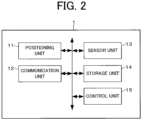
- FIG. 2 is a diagram illustrating a schematic configuration example of the UGV 1.
- the UGV 1 includes a vehicle body (casing) 1a, the plurality of wheels 1b for causing the UGV 1 to travel, one or a plurality of housing portions 1c for housing an article A, one or a plurality of openable and closable doors 1d, and the like.
- the door 1d is provided at an opening portion O of the housing portion 1c. The opening portion O allows the article A to be received into and/or from the housing portion 1c.
- the door 1d is provided so as to close (block) the opening portion O.
- the door 1d is closeable on the opening portion O.
- the opening portion O is provided on the right side as one faces the front side (foreside) of the UGV 1, but the opening portion O may be provided on the left side, the foreside (front side), or the rear side (backside) as one faces the front side of the UGV 1.
- the door 1d is opened to the left, but may be opened to the right.
- the UGV 1 includes a wheel drive mechanism, a locking/unlocking mechanism, a door drive mechanism, and a battery.
- the UGV 1 further includes a positioning unit 11, a communication unit 12, a sensor unit 13, a storage unit 14, a control unit 15, and the like.
- the wheel drive mechanism includes a traveling motor (motor for moving the UGV 1), a steering motor, various shafts, various gears, a tie rod, and the like.
- the traveling motor and the steering motor are rotationally driven by current supplied from the battery under control of the control unit 15.
- Torque (rotational force) generated by the rotational driving of the traveling motor is transmitted to the shafts via the gears, whereby the wheels 1b rotate.
- torque generated by the rotational driving of the steering motor is transmitted via the shafts and the tie rod, whereby the direction (steering angle) of the wheels 1b changes.
- the wheel 1b may include an omni wheel capable of turning and parallel movement in all directions.
- the locking/unlocking mechanism locks/unlocks the door 1d (that is, a key provided on the door 1d) under control of the control unit 15.
- the door drive mechanism includes hinges or the like. Each of the hinges is secured (for example, screwed) to the housing portion 1c and the door 1d, and the door 1d is opened and closed using a connecting shaft of the hinge secured to the respective portions as a support column. For example, after the door 1d is unlocked, the recipient of the article A can hold a handle (not illustrated) provided on the front surface of the door 1d and open the door 1d to the near side (in a direction of broken line arrow R).
- the door drive mechanism may further include a door motor, a gear (or cam) connected to the connecting shaft of the hinge, and the like, and may open and close the door by means of the door motor.
- the connecting shaft is secured to the hinge at the door 1d.
- the door motor is rotated (rotated in a direction corresponding to the polarity of the current) under control of the control unit 15. Torque generated by rotational driving of the door motor is transmitted to the connecting shaft via the gear (or cam), so that the connecting shaft rotates to cause the door 1d to be automatically opened and closed.
- the positioning unit 11 includes an electric wave receiver and the like.
- the positioning unit 11 receives electric waves transmitted from a GNSS (Global Navigation Satellite System) satellite by means of the electric wave receiver, and detects the current position (latitude and longitude) of the UGV 1 on the basis of the electric waves.
- the current position of the UGV 1 may be identified by SLAM (Simultaneous Localization and Mapping) processing in addition to the electric waves transmitted from the GNSS satellite.
- the current position of the UGV 1 may be corrected on the basis of an image captured by a camera of the sensor unit 13.
- Positional information indicating the current position detected by the positioning unit 11 is output to the control unit 15.
- the communication unit 12 controls communication performed via the communication network NW.
- the communication unit 12 may have a short-range wireless communication function such as Bluetooth (registered trademark) and perform near field communication with a user terminal (for example, a smartphone) used by the recipient of the article.
- the sensor unit 13 includes a geomagnetic sensor, a motor output sensor, a travel speed sensor, an optical sensor, and a wind sensor (for example, an anemoscope or wind vane).
- the geomagnetic sensor detects a direction (orientation).
- the motor output sensor detects a motor output [W] (workload) of the traveling motor.
- the motor output [W] is derived from, for example, the rotational speed and torque of the traveling motor.
- the travel speed sensor detects a travel speed [km/h] (moving speed) of the UGV 1.
- the optical sensor includes, for example, a wide-angle camera such as an omnidirectional camera, and continuously images a real space within a range falling within an angle of view of the camera.
- the wind sensor detects a direction of wind blown onto the UGV 1 (that is, the direction of the wind hitting the UGV 1).
- the direction of the wind having a strength equal to or higher than a set detection sensitivity is detected.
- the direction of the wind is preferably expressed by a clockwise angle (the direction from True North to the UGV1 is 0 degrees) with respect to True North, and in this case, the direction of the wind is referred to as "a wind direction (that is, a direction from which the wind is blowing)".
- sensing information sensed by the sensor unit 13 is output to the control unit 15, for example, and used for various types of control.
- the sensing information includes direction data indicating the direction detected by the geomagnetic sensor, travel speed data indicating the travel speed detected by the travel speed sensor, motor output data indicating the motor output detected by the motor output sensor, image data indicating the image captured by the optical sensor, and wind direction data indicating the wind direction detected by the wind sensor.
- the wind sensor may further detect the strength (hereinafter, referred to as "wind speed") of the wind blown onto the UGV 1 by measuring the pressure of the air.
- the sensing information includes wind speed data indicating the wind speed detected by the wind sensor.
- the sensing information and a vehicle ID of the UGV 1 may be sequentially transmitted to the management server 2 by the communication unit 12.
- the storage unit 14 includes a nonvolatile memory or the like, and stores various programs and data. Moreover, the storage unit 14 stores the vehicle ID of the UGV 1. The vehicle ID is identification information for identifying the UGV 1.
- FIG. 3 is a diagram illustrating an example of functional blocks in the control unit 15.
- the control unit 15 includes at least one CPU (Central Processing Unit), a ROM (Read Only Memory), a RAM (Random Access Memory), and the like. As illustrated in FIG. 3 , the control unit 15 functions as a travel control unit 151, a wind identification unit 152, an appearance direction estimation unit 153, a vehicle direction control unit 154, a door control unit 155, and the like in accordance with a program (program code group) stored in the ROM (or the storage unit 14).
- a program program code group
- the travel control unit 151 performs control (travel control) to move the UGV 1 toward the delivery destination.
- control travel control
- a revolution speed of the wheels 1b, a position of the UGV 1, and a traveling direction (direction of the wheels 1b) of the UGV 1 are controlled with use of the positional information from the positioning unit 11, the image data from the sensor unit 13, delivery destination information, and the like.
- the UGV 1 can autonomously move toward the delivery destination.
- the vehicle ID and the positional information of the UGV 1 are sequentially transmitted to the management server 2 via the communication unit 12.
- the delivery destination information is preferably transmitted from the management server 2 to the UGV 1 and set in the control unit 15.
- the delivery destination information includes, for example, an address of the delivery destination and positional information of the receiving place of the article, and such positional information is preferably expressed by latitude and longitude.
- the receiving place of the article may be decided by humans, or may be mechanically determined from map data including the delivery destination. In a case where an article is delivered to each of a plurality of delivery destinations, the delivery destination information is set for each delivery destination.
- the wind identification unit 152 identifies the wind direction of the wind blown onto the UGV 1 (in other words, the wind direction in the peripheral area including the UGV 1) on the basis of the wind direction data from the sensor unit 13 (wind sensor).
- the wind direction is desirably identified while the UGV 1 is stopped at the receiving place of the article, but may be identified at a low speed (for example, 2 km/h or less) of the UGV 1.
- the wind identification unit 152 may identify the wind speed on the basis of the wind speed data from the sensor unit 13 (the wind sensor). Similar to the wind direction, the wind speed is desirably identified while the UGV 1 is stopped at the receiving place of the article, but may be identified at the low speed of the UGV 1.
- the wind identification unit 152 may identify the direction of the wind blown onto the UGV 1 by using the motor output data and the travel speed data from the sensor unit 13 (the motor output sensor and the travel speed sensor) instead of the wind direction data from the sensor unit 13 (in this case, the wind sensor may not be provided in the UGV 1).
- the direction of the wind in this case is, for example, a direction based on the traveling direction of the UGV 1, and is identified while the UGV 1 is traveling before reaching the receiving place of the article.
- the wind identification unit 152 may identify the direction of the wind blown onto the UGV 1 by determining whether or not the wind is a headwind (wind in a direction opposite to the traveling direction) with respect to the UGV 1 on the basis of a comparison between a ratio (that is, the travel speed with respect to the motor output) between the motor output indicated by the motor output data and the travel speed indicated by the travel speed data, and a reference ratio.
- a ratio that is, the travel speed with respect to the motor output
- the reference ratio is, for example, a ratio (for example, 4/1), when the UGV 1 travels at a predetermined motor output (for example, 1 W) in a windless state, between the motor output and the travel speed (for example, 4 km/h), and the reference ratio is stored in the storage unit 14 in advance.
- the wind identification unit 152 may determine that the direction of the wind blown onto the UGV 1 is the headwind with respect to the UGV 1 in a case where the ratio (for example, 3/1) between the motor output (for example, 1 W) indicated by the motor output data and the travel speed (for example, 3 km/h) indicated by the travel speed data is lower than the reference ratio (for example, 4/1). As a result, the headwind is identified as the direction of the wind.
- the appearance direction estimation unit 153 estimates an appearance direction in which the recipient of the article appears (hereinbelow, referred to as a "recipient appearance direction") with reference to the receiving place of the article. That is, it is estimated from which direction (orientation) the recipient appears at the receiving place of the article.
- the appearance direction estimation unit 153 estimates a direction of a doorway, an entrance, or a site of the delivery destination (for example, the house) as viewed from the receiving place of the article as the recipient appearance direction.
- the doorway, the entrance, or the site of the delivery destination may be identified on the basis of the image data from the sensor unit 13, or may be identified on the basis of the map data of an area where the delivery destination is located.
- the appearance direction estimation unit 153 may estimate the recipient appearance direction by detecting (estimating) a person heading to the receiving place of the article (or the UGV 1) as the recipient on the basis of the image data from the sensor unit 13.
- the vehicle direction control unit 154 suppresses, on the basis of the direction of the wind blown onto the UGV 1, closing of the door 1d, opened when the UGV 1 is stopped, due to the influence of the wind. More specifically, the vehicle direction control unit 154 controls the UGV 1 so as to achieve a vehicle direction for suppressing, on the basis of the wind direction identified by the wind identification unit 152, closing of the door 1d, opened when the UGV 1 is stopped, due to the influence of the wind. As a result, it is possible to more effectively suppress unintentional closing of the door 1d due to the influence of the wind when the recipient is to receive the article from the UGV 1.
- the vehicle direction is a direction indicated by a line (broken line arrow L) from the rear end to the front end of the UGV 1, and is expressed by a clockwise angle (the direction from the UGV1 to True North is 0 degrees) with respect to True North.
- the vehicle direction may be a direction indicated by a line from the front end to the rear end of the UGV 1.
- the vehicle direction control unit 154 preferably determines the vehicle direction for suppressing, on the basis of the wind direction identified by the wind identification unit 152, closing of the door 1d, opened when the UGV 1 is stopped, due to the influence of the wind.
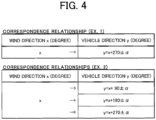
- the vehicle direction is determined on the basis of, for example, a calculation formula or a table that defines correspondence relationships between the wind directions and the vehicle directions. Such correspondence relationships are preferably appropriately set by an administrator or the like of the delivery system S.
- FIG. 4 is a diagram illustrating the correspondence relationships between the wind directions and the vehicle directions.
- "x" represents the wind direction (angle)
- "y” represents the vehicle direction (angle)
- " ⁇ ” represents an arbitrarily determined angle (for example, any angle out of 0 to 10 degrees).
- the wind direction and the vehicle direction are in a one-to-one relationship and are in a relationship in which the opening portion O is on the leeward side of the vehicle body 1a of the UGV 1.
- the vehicle direction is calculated from "y - 360”.
- the wind direction and the vehicle directions are in a one-to-N (N is an integer of 2 or more) relationships.
- the optimum vehicle direction is, for example, a vehicle direction in which the opening portion O is on the leeward side of the vehicle body 1a of the UGV 1.
- a vehicle direction that is least susceptible to the influence of the obstacle in receiving the article is determined as the optimum vehicle direction.
- the vehicle direction that is least susceptible to the influence of the obstacle is, for example, a vehicle direction in which the opening portion O is located on the opposite side of the obstacle with the vehicle body 1a interposed therebetween.
- the vehicle direction capable of suppressing door closing for the wind direction differs depending on whether the opening portion O is provided on the right side or on the left side as one faces the front side of the UGV 1, the aforementioned correspondence relationships are set in consideration of such a point. Furthermore, since the vehicle direction capable of suppressing door closing for the wind direction differs depending on whether the door 1d is opened to the left or to the right, the aforementioned correspondence relationships are set in consideration of such a point.
- the vehicle direction control unit 154 outputs a control command corresponding to the determined vehicle direction to the wheel drive mechanism to rotate the wheels 1b and change the direction of the wheels 1b, thereby causing the UGV 1 to face in the determined vehicle direction.
- vehicle direction control Such control is referred to as "vehicle direction control”.
- vehicle direction control unit 154 preferably performs the vehicle direction control so that the vehicle direction may fall within such a range.
- the vehicle direction control unit 154 may perform the vehicle direction control so as to achieve the determined vehicle direction in a case where the wind speed identified by the wind identification unit 152 is equal to or higher than a threshold.
- a threshold is preferably appropriately set on the basis of the relationships between loads for opening and closing the door 1d and wind speeds, which has been investigated in advance. Incidentally, in a case where the UGV 1 is already in the determined vehicle direction, it is not necessary to perform the vehicle direction control.
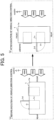
- FIG. 5 is a conceptual diagram illustrating a state in which the vehicle direction control of the UGV 1 is performed.
- the wind direction is the wind from the east, whereas the vehicle direction is the east direction. Therefore, it is not possible to suppress unintentional closing of the opened door 1d, due to the influence of the wind.
- the wind direction is the wind from the east, whereas the vehicle direction is the north direction.
- the vehicle direction in this case is a direction in which the opening portion O is on the leeward side of the vehicle body 1a of the UGV 1 in the stopped state. Therefore, the wind can be blocked by the vehicle body 1a, and this case is the most effective in suppressing unintentional closing of the door 1d due to the influence of the wind.
- the vehicle direction control unit 154 preferably performs the vehicle direction control so that the vehicle direction for suppressing, on the basis of the wind direction identified by the wind identification unit 152 and the recipient appearance direction estimated by the appearance direction estimation unit 153, closing of the door 1d, opened when the UGV 1 is stopped, due to the influence of the wind is achieved and so that the opening portion O faces the recipient side.
- the vehicle direction in which closing of the door 1d, opened when the UGV 1 is stopped, due to the influence of the wind is suppressed and in which the opening portion O faces the recipient side is determined, and the control command corresponding to the vehicle direction is output to the wheel drive mechanism.
- FIG. 6 is a conceptual diagram illustrating a state in which the vehicle direction control of the UGV 1 is performed in consideration of the recipient appearance direction.
- the wind direction is the wind from the east
- the vehicle direction is the east direction (similar to the example in frame (a) of FIG. 5 ).
- the recipient appearance direction is estimated to be the front side of the UGV 1.
- the wind direction is the wind from the east, whereas the vehicle direction is the south direction so that the opening portion O faces the recipient U. Therefore, it is possible to suppress the deterioration of the convenience for the recipient U while suppressing unintentional closing of the opened door 1d, due to the influence of the wind.
- the vehicle direction in this case is a direction in which the opening portion O is on the windward side of the vehicle body 1a of the UGV 1 in the stopped state.
- the wind cannot be blocked by the vehicle body 1a, but the vehicle direction is effective in suppressing unintentional closing of the door 1d due to the influence of the wind when the door 1d is open at 90 degrees or more (that is, when the recipient U receives the article).
- the vehicle direction control unit 154 performs the vehicle direction control so that the opening portion O is on the leeward side of the vehicle body 1a of the UGV 1 in the stopped state. That is, the control is performed such that the vehicle direction intersects the traveling direction of the UGV 1.
- the vehicle direction in which the opening portion O is on the leeward side of the vehicle body 1a is determined, and the control command corresponding to the vehicle direction is output to the wheel drive mechanism.
- FIG. 7 is a conceptual diagram illustrating a state in which the vehicle direction control of the UGV 1 is performed in a case where the headwind is determined.
- the headwind is determined before the traveling UGV 1 reaches a receiving place P located in the traveling direction. Therefore, in a case where the UGV 1 stops and the door 1d is opened in this state of the vehicle direction (that is, the state where the vehicle is against the headwind), it is not possible to suppress unintentional closing of the opened door 1d, due to the influence of the wind.
- the opening portion O is on the leeward side of the vehicle body 1a of the UGV 1 (the UGV 1 in the stopped state at the receiving place P). Therefore, it is possible to suppress unintentional closing of the opened door 1d, due to the influence of the wind.
- the door control unit 155 performs authentication processing using the input authentication code and an authentication code registered in advance.
- the authentication code from the recipient may be input from an operation panel provided on the front surface of the door 1d or may be input from the user terminal of the recipient via the near field communication.
- the door control unit 155 outputs a control command for unlocking the door 1d to the locking/unlocking mechanism to perform unlocking.
- the recipient can open the door 1d and easily take out the article from the housing portion 1c under a situation where closing of the door 1d is suppressed due to the influence of the wind.
- the door 1d may be openable without performing the authentication processing.
- the door control unit 155 may unlock the door 1d and then output a control command for opening the door 1d to the door drive mechanism to open the door 1d. Furthermore, in this case, as an example of the door closing suppression unit, the door control unit 155 may suppress, on the basis of the wind direction identified by the wind identification unit 152, closing of the door 1d, opened when the UGV 1 is stopped, due to the influence of the wind.
- the door control unit 155 controls the door drive mechanism (door drive mechanism control), on the basis of the wind direction identified by the wind identification unit 152, so as to generate torque for suppressing closing of the door 1d, opened when the UGV 1 is stopped, due to the influence of the wind.
- the door control unit 155 controls the door drive mechanism (door drive mechanism control), on the basis of the wind direction identified by the wind identification unit 152, so as to generate torque for suppressing closing of the door 1d, opened when the UGV 1 is stopped, due to the influence of the wind.
- the door control unit 155 controls the door drive mechanism (door drive mechanism control), on the basis of the wind direction identified by the wind identification unit 152, so as to generate torque for suppressing closing of the door 1d, opened when the UGV 1 is stopped, due to the influence of the wind.
- the torque for suppressing closing of the door 1d is torque for rotating the connecting shaft of the hinge in a direction for suppressing closing of the door 1d (in other words, a direction in which the door 1d opens).
- the torque is generated as the control command for suppressing closing of the door 1d is output from the door control unit 155 to the door drive mechanism to cause the door motor to be rotationally driven.
- the degree of torque to be generated is preferably appropriately set on the basis of the relationships between the loads for opening and closing the door 1d and the wind speeds.
- the door control unit 155 may control the door drive mechanism such that larger torque is generated as the wind speed is higher (larger).
- the control of the door drive mechanism is performed by adjusting the magnitude of the current supplied to the door motor.
- FIG. 8 is a diagram illustrating a schematic configuration example of the management server 2.
- the management server 2 includes a communication unit 21, a storage unit 22, a control unit 23, and the like.
- the communication unit 21 controls communication performed via the communication network NW.
- the positional information and the vehicle ID transmitted from the UGV 1 are received by the communication unit 21.
- the management server 2 can recognize the current position of the UGV 1 from the positional information of the UGV 1.
- the sensing information and the vehicle ID transmitted from the UGV 1 are received by the communication unit 21.
- the storage unit 22 includes, for example, a hard disk drive, and stores various programs and data.
- the delivery management database 221 is a database for managing information related to delivery of the articles.
- vehicle information, the delivery destination information, recipient information, and the like are stored (registered) in association with each other.
- the vehicle information includes information regarding the UGV 1 for delivering the article (for example, the vehicle ID).
- the recipient information includes a user ID for identifying the recipient of the article, an e-mail address or a telephone number of the recipient, and the like.
- the control unit 23 includes at least one CPU, a ROM, a RAM, and the like. The control unit 23 monitors the current position of the UGV 1 and controls the UGV 1 by appropriately transmitting a control command to the UGV 1. Such control may include at least one of the travel control, the vehicle direction control, and door control of the UGV 1.
- the control unit 23 may identify the wind direction on the basis of the wind direction data from the UGV 1, determine the vehicle direction for suppressing, on the basis of the wind direction, closing of the door 1d, opened when the UGV 1 is stopped, due to the influence of the wind, and transmit a control command corresponding to the vehicle direction to the UGV 1 to control the UGV 1 (vehicle direction control). Furthermore, the control unit 23 may estimate the above-described recipient appearance direction instead of the control unit 15.
- control unit 23 determines, on the basis of the wind direction and the recipient appearance direction, the vehicle direction for suppressing closing of the door 1d, opened when the UGV 1 is stopped, due to the influence of the wind and for causing the opening portion O to face the recipient side, and transmits the control command corresponding to the vehicle direction to the UGV 1 to control the UGV 1 (vehicle direction control).
- control unit 23 may determine whether or not there is the headwind with respect to the UGV 1 on the basis of the comparison between the ratio between the motor output indicated by the motor output data and the travel speed indicated by the travel speed data from the UGV 1, and the reference ratio, thereby identifying the direction of the wind blown onto the UGV 1.
- the control unit 23 determines the vehicle direction in which the opening portion O is on the leeward side of the vehicle body 1a of the UGV 1, and transmits the control command corresponding to the vehicle direction to the UGV 1 to control the UGV 1 (vehicle direction control).
- control unit 23 may transmit, to the UGV 1, a control command for generating torque for suppressing, on the basis of the wind direction to control the UGV 1 (door drive mechanism control), closing of the door 1d, opened when the UGV 1 is stopped, due to the influence of the wind.
- FIG. 9 is a flowchart illustrating an example of processing executed by the control unit 15 of the UGV 1 in Example 1.
- the processing illustrated in FIG. 9 is started when the UGV 1 that loads the article starts delivery from the delivery station.
- the control unit 23 determines whether or not the UGV 1 has arrived at a position at a predetermined distance (for example, 5 to 30 m) from the receiving place of the article (step S1). In a case where it is determined that the UGV 1 has arrived at the position at the predetermined distance from the receiving place of the article (step S1: YES), the processing proceeds to step S2. On the other hand, in a case where it is determined that the UGV 1 has not arrived at the position at the predetermined distance from the receiving place of the article (step S1: NO), the processing returns to step S1.
- a predetermined distance for example, 5 to 30 m
- step S2 the control unit 15 notifies the recipient that the article has arrived at the receiving place (or that the article has arrived immediately near the receiving place) on the basis of the recipient information acquired in advance from the management server 2. For example, the control unit 15 transmits an e-mail including a message indicating that the article has arrived at the receiving place to the e-mail address of the recipient. Alternatively, the control unit 15 may transmit the message to the telephone number of the recipient by means of SMS (Short Message Service). Alternatively, the control unit 15 may push the message to an application resident in the user terminal of the recipient. Incidentally, the notification that the article has arrived at the receiving place may be performed by the management server 2.
- SMS Short Message Service
- the control unit 15 stops the UGV 1 at the receiving place of the article (step S3).
- the UGV 1 stops, for example, while maintaining the vehicle direction in which the UGV 1 travels toward the receiving place of the article.
- the control unit 15 acquires the wind direction data from the sensor unit 13 (wind sensor) (step S4).
- the control unit 15 causes the wind identification unit 152 to identify the wind direction on the basis of the wind direction data acquired in step S4 (step S5), and advances the processing to step S6.
- the control unit 15 may further acquire the wind speed data from the sensor unit 13 (wind sensor) and identify the wind speed on the basis of the wind speed data. In this case, the control unit 15 determines whether or not the wind speed is equal to or higher than the threshold. Then, in a case where it is determined that the wind speed is equal to or higher than the threshold, the processing proceeds to step S6. On the other hand, in a case where it is determined that the wind speed is not equal to or higher than the threshold, the vehicle direction is not determined and controlled, and the processing proceeds to step S9.
- step S6 based on the wind direction identified in step S5, the control unit 15 causes the vehicle direction control unit 154 to determine the vehicle direction for suppressing closing of the door 1d due to the influence of the wind as described above. Subsequently, the control unit 15 determines whether or not the UGV 1 is in the vehicle direction determined in step S6 (step S7). In a case where it is determined that the UGV 1 is not in the vehicle direction determined in step S6 (step S7: NO), the processing proceeds to step S8. On the other hand, in a case where it is determined that the UGV 1 is already in the vehicle direction determined in step S6 (step S7: YES), the control of the vehicle direction is not performed, and the processing proceeds to step S9.
- step S8 the control unit 15 performs the vehicle direction control by outputting a control command corresponding to the vehicle direction determined in step S6 to the wheel drive mechanism by means of the vehicle direction control unit 154.
- the UGV 1 changes the direction at the receiving place of the article so as to have the determined vehicle direction.
- step S9 the control unit 15 determines whether or not the authentication code is input from the recipient. In a case where it is determined that the authentication code is input from the recipient (step S9: YES), the processing proceeds to step S10. On the other hand, in a case where it is determined that the authentication code is not input from the recipient (step S9: NO), the processing returns to step S9.
- the UGV 1 may start moving toward the next delivery destination or the delivery station.
- step S10 the control unit 15 performs the authentication processing using the input authentication code and the authentication code registered in advance.
- the control unit 15 outputs a control command for unlocking the door 1d to the locking/unlocking mechanism by means of the door control unit 155 to perform unlocking (step S11).
- the recipient can open the door 1d and easily take out the article from the housing portion 1c.
- the control unit 15 may cause the door 1d to be automatically opened by outputting a control command for opening the door 1d to the door drive mechanism by means of the door control unit 155.
- the control unit 15 starts moving the UGV 1 toward the next delivery destination or the delivery station (step S12).
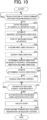
- FIG. 10 is a flowchart illustrating an example of processing executed by the control unit 15 of the UGV 1 in Example 2.
- the processing in steps S21 and S22 illustrated in FIG. 10 is similar to the processing in steps S1 and S2 illustrated in FIG. 9 .
- step S23 the control unit 15 estimates the recipient appearance direction in which the recipient appears with reference to the receiving place of the article by means of the appearance direction estimation unit 153. Subsequently, the control unit 15 stops the UGV 1 at the receiving place of the article (step S24). As a result, the UGV 1 stops, for example, while maintaining the vehicle direction in which the UGV 1 travels toward the receiving place of the article. Subsequently, the control unit 15 acquires the wind direction data from the sensor unit 13 (wind sensor) (step S25). Subsequently, the control unit 15 causes the wind identification unit 152 to identify the wind direction on the basis of the wind direction data acquired in step S25 (step S26), and advances the processing to step S27.
- the control unit 15 may further acquire the wind speed data from the sensor unit 13 (wind sensor) and identify the wind speed on the basis of the wind speed data. In this case, the control unit 15 determines whether or not the wind speed is equal to or higher than the threshold. Then, in a case where it is determined that the wind speed is equal to or higher than the threshold, the processing proceeds to step S27. On the other hand, in a case where it is determined that the wind speed is not equal to or higher than the threshold, the vehicle direction is not determined and controlled, and the processing proceeds to step S30.
- step S27 based on the recipient appearance direction estimated in step S23 and the wind direction identified in step S26, the control unit 15 causes the vehicle direction control unit 154 to determine the vehicle direction for suppressing closing of the door 1d due to the influence of the wind and for causing the opening portion O to face the recipient side as described above. Subsequently, the control unit 15 determines whether or not the UGV 1 is in the vehicle direction determined in step S27 (step S28). In a case where it is determined that the UGV 1 is not in the vehicle direction determined in step S27 (step S28: NO), the processing proceeds to step S29. On the other hand, in a case where it is determined that the UGV 1 is already in the vehicle direction determined in step S27 (step S28: YES), the control of the vehicle direction is not performed, and the processing proceeds to step S30.
- step S29 the control unit 15 performs the vehicle direction control by outputting a control command corresponding to the vehicle direction determined in step S27 to the wheel drive mechanism by means of the vehicle direction control unit 154.
- the UGV 1 changes the direction at the receiving place of the article so as to have the determined vehicle direction.
- the processing in steps S30 to S33 illustrated in FIG. 10 is similar to the processing in steps S9 to S12 illustrated in FIG. 9 .
- FIG. 11 is a flowchart illustrating an example of processing executed by the control unit 15 of the UGV 1 in Example 3.
- the processing in steps S41 and S42 illustrated in FIG. 11 is similar to the processing in steps S1 and S2 illustrated in FIG. 9 .
- step S43 the control unit 15 acquires the motor output data and the travel speed data from the sensor unit 13 (motor output sensor and travel speed sensor) while the UGV 1 is traveling. Subsequently, the control unit 15 determines whether or not there is a headwind with respect to the UGV 1 on the basis of the comparison between the ratio between the motor output indicated by the motor output data and the travel speed indicated by the travel speed data acquired in step S43, and the reference ratio (step S44).
- step S44 YES
- the headwind is identified as the direction of the wind, and the processing proceeds to step S45.
- step S44 NO
- the UGV 1 stops at the receiving place while maintaining the vehicle direction in which the UGV 1 travels toward the receiving place of the article, and the processing proceeds to step S47.
- step S45 the control unit 15 determines the vehicle direction in which the opening portion O is on the leeward side of the vehicle body 1a. Such a determination is preferably made after the UGV 1 stops at the receiving place while maintaining the vehicle direction in which the UGV 1 travels toward the receiving place of the article. Subsequently, the control unit 15 performs the vehicle direction control by outputting a control command corresponding to the vehicle direction determined in step S45 to the wheel drive mechanism by means of the vehicle direction control unit 154 (step S46). As a result, for example, as illustrated in FIG. 7 , the UGV 1 changes the direction at the receiving place of the article so as to have the determined vehicle direction.
- the processing in steps S47 to S50 illustrated in FIG. 11 is similar to the processing in steps S9 to S12 illustrated in FIG. 9 .
- FIG. 12 is a flowchart illustrating an example of processing executed by the control unit 15 of the UGV 1 in Example 4.
- the processing in steps S61 to S66 illustrated in FIG. 12 is similar to the processing in steps S1 to S6 illustrated in FIG. 9 .
- step S67 the control unit 15 determines whether or not the UGV 1 is in the vehicle direction determined in step S66. In a case where it is determined that the UGV 1 is not in the vehicle direction determined in step S66 (step S67: NO), the processing proceeds to step S68. On the other hand, in a case where it is determined that the UGV 1 is already in the vehicle direction determined in step S66 (step S67: YES), the processing proceeds to step S75.
- step S68 it is determined whether or not the authentication code is input from the recipient. In a case where it is determined that the authentication code is input from the recipient (step S68: YES), the processing proceeds to step S69. On the other hand, in a case where it is determined that the authentication code is not input from the recipient (step S68: NO), the processing returns to step S68.
- the UGV 1 may start moving toward the next delivery destination or the delivery station.
- step S69 the control unit 15 performs the authentication processing using the input authentication code and the authentication code registered in advance.
- the control unit 15 outputs a control command for unlocking the door 1d to the locking/unlocking mechanism by means of the door control unit 155 to perform unlocking (step S70).
- the control unit 15 causes the door 1d to be automatically opened by outputting a control command for opening the door 1d to the door drive mechanism by means of the door control unit 155 (step S71).
- control unit 15 outputs a control command for suppressing closing of the door 1d due to the influence of the wind to the door drive mechanism by means of the door control unit 155 to suppress closing of the door 1d (step S72).
- control unit 15 detects this, and outputs a control command for closing the door 1d to the door drive mechanism by means of the door control unit 155 to cause the door 1d to be automatically closed (step S73).
- the control unit 15 starts moving the UGV 1 toward the next delivery destination or the delivery station (step S74).
- the processing in steps S75 to S78 illustrated in FIG. 12 is similar to the processing in steps S68 to S71 illustrated in FIG. 12 .
- the delivery system S identifies the direction of the wind blown onto the UGV 1, and suppresses, on the basis of the direction of the wind, closing of the door 1d, opened when the UGV 1 is stopped, due to the influence of the wind.
- it is possible to suppress unintentional closing of the door due to the influence of the wind when the recipient is to receive the article from the UGV 1. Therefore, it is possible to avoid hindering the receipt of the article by the recipient.
- the method of identifying the direction of the wind blown onto the UGV 1 on the basis of the wind direction data is provided, but the wind direction may be identified by detecting the load on the wheels 1b on the basis of the moment of the force on the vehicle body 1a due to the wind, instead of this method.
- the wind direction can be identified by detecting the load on the wheels 1b on the basis of the moment of the force on the vehicle body 1a due to the wind not only from the longitudinal direction but also from the lateral direction.
- the UGV is shown as an example of the unmanned vehicle, but the present invention can also be applied to, for example, a UAV (Unmanned Aerial Vehicle) or a flying robot capable of autonomously flying in the air in an unmanned manner, such as a drone and a multi-copter.
- a UAV Unmanned Aerial Vehicle
- the UAV similarly to the UGV 1, the UAV includes a housing portion for housing an article, a sensor unit including an optical sensor, a wind sensor, and the like, and a control unit, and an openable and closable door is provided at an opening portion of the housing portion.
- the control unit of the UAV functions as a wind identification unit, a door closing suppression unit (corresponding to the vehicle direction control unit 154 and the door control unit 155 described above), and the like, to identify the direction of the wind blown onto the UAV, and suppresses, on the basis of the direction of the wind, closing of the door, opened when the UAV is stopped (for example, in a landing state), due to the influence of the wind.
- the control unit of the UAV controls the UAV so as to achieve the vehicle direction for suppressing, on the basis of the direction of the wind, closing of the door, opened when the UAV is stopped (for example, in a landing state), due to the influence of the wind.
- control is preferably performed in a state where the UAV is hovering.
- the control unit of the UAV may function as an appearance direction estimation unit and estimate the above-described recipient appearance direction.
- the control unit of the UAV controls the UAV on the basis of the wind direction and the recipient appearance direction so as to achieve the vehicle direction for suppressing closing of the door, opened when the UAV is stopped, due to the influence of the wind and for causing the opening portion to face the recipient side.
- control unit of the UAV may identify the direction of the wind by determining whether or not the wind is a headwind with respect to the UAV on the basis of a comparison between a ratio between output of a motor for flying the UAV (that is, a flying motor for rotationally driving a horizontal rotary blade) and flying speed of the UAV, and a reference ratio.
Landscapes
- Engineering & Computer Science (AREA)
- Transportation (AREA)
- Mechanical Engineering (AREA)
- Automation & Control Theory (AREA)
- Chemical & Material Sciences (AREA)
- Combustion & Propulsion (AREA)
- Human Computer Interaction (AREA)
- Radar, Positioning & Navigation (AREA)
- Physics & Mathematics (AREA)
- General Physics & Mathematics (AREA)
- Remote Sensing (AREA)
- Aviation & Aerospace Engineering (AREA)
- Control Of Position, Course, Altitude, Or Attitude Of Moving Bodies (AREA)
- Warehouses Or Storage Devices (AREA)
Description
- One or more embodiments of the present invention relate to a technical field of a delivery system and the like for delivering an article.
- Conventionally, an unmanned vehicle such as a conveyance robot that delivers articles in an unmanned manner is known. For example,
Patent Literature 1 discloses a conveyance robot that conveys an article (conveyed object) to a collection site that is designated by a recipient (expected recipient) and does not get in the way of people around, and causes the recipient to collect the article. In the conveyance robot, a door is provided on a front surface of a housing portion that houses the article, and the article can be received by the recipient as the door is opened.Patent Literature 2 relates to a door assist system for a vehicle. -
- Patent Literature 1:
JP 2021-86216 A - Patent Literature 2:
US 10 570 656 B2 - However, there is an issue that the door opened when the recipient is to receive an article from the unmanned vehicle is unintentionally closed due to an influence of wind, which prevents the recipient from receiving the article.
- Therefore, one or more embodiments of the present invention are to providing an unmanned vehicle and a delivery system capable of suppressing unintentional closing of a door due to the influence of the wind when a recipient is to receive an article from the unmanned vehicle.
- In response to the above issue, a first aspect of the invention is an unmanned vehicle for delivering an article, including: a housing portion for housing the article, the housing portion having an opening portion for receiving the article and being provided with an openable and closable door, the door being closeable on the opening portion;
- a wind identification unit configured to identify a direction of wind blown onto the unmanned vehicle; and
- a door closing suppression unit configured to, on the basis of the identified direction of the wind, suppress closing of the door, opened when the unmanned vehicle is stopped, due to an influence of the wind. This makes it possible to suppress unintentional closing of the door due to the influence of the wind when the recipient is to receive the article from the unmanned vehicle.
- The door closing suppression unit is configured to control the unmanned vehicle, on the basis of the identified direction of the wind, so as to achieve a vehicle direction for suppressing closing of the door, opened when the unmanned vehicle is stopped, due to the influence of the wind. This makes it possible to more effectively suppress unintentional closing of the door due to the influence of the wind when the recipient is to receive the article from the unmanned vehicle.
- The wind identification unit may be configured to further identify a strength of the wind blown onto the unmanned vehicle, and in a case where the strength of the wind is equal to or greater than a threshold, the door closing suppression unit may be configured to control the unmanned vehicle so as to achieve the vehicle direction for suppressing closing of the door, opened when the unmanned vehicle is stopped, due to the influence of the wind. This makes it possible to suppress unintentional closing of the door depending on the strength of the wind when the recipient is to receive the article from the unmanned vehicle.
- The unmanned vehicle may further include an appearance direction estimation unit configured to estimate an appearance direction in which the recipient of the article appears with reference to a receiving place of the article, and the door closing suppression unit may be configured to control the unmanned vehicle, on the basis of the identified direction of the wind and the estimated appearance direction, so that the vehicle direction for suppressing closing of the door, opened when the unmanned vehicle is stopped, due to the influence of the wind is achieved and so that the opening portion faces the recipient. This makes it possible to suppress unintentional closing of the door due to the influence of the wind when the recipient is to receive the article from the unmanned vehicle, and to suppress extension of a flow line of the recipient to the receiving surface of the article.
- The vehicle direction may be a direction in which the opening portion is on a leeward side of a vehicle body of the unmanned vehicle in a stopped state. As a result, the wind can be blocked by the vehicle body of the unmanned vehicle, and it is possible to more effectively suppress unintentional closing of the door due to the influence of the wind.
- The wind identification unit may be configured to identify the direction of the wind by determining whether or not the wind is a headwind with respect to the unmanned vehicle on the basis of a comparison between a ratio between output of a motor for moving the unmanned vehicle and travel speed of the unmanned vehicle, and a reference ratio. This makes it possible to suppress unintentional closing of the door due to the influence of the wind with a simple configuration without using a wind sensor such as an anemoscope.
- A second aspect of the invention is a delivery system including: an unmanned vehicle for delivering an article; and an information processing device. The unmanned vehicle includes a housing portion for housing the article, the housing portion having an opening portion for receiving the article and being provided with an openable and closable door, the door being closeable on the opening portion. The information processing device includes: a wind identification unit configured to identify a direction of wind blown onto the unmanned vehicle; and a door closing suppression unit configured to, on the basis of the identified direction of the wind, suppress closing of the door, opened when the unmanned vehicle is stopped, due to an influence of the wind; wherein the door closing suppression unit is configured to control the unmanned vehicle, on the basis of the identified direction of the wind, so as to achieve a vehicle direction for suppressing closing of the door, opened when the unmanned vehicle is stopped, due to the influence of the wind.
- According to one or more embodiments of the present invention, it is possible to suppress unintentional closing of the door due to the influence of the wind when the recipient is to receive the article from the unmanned vehicle.
-
-
FIG. 1 is a diagram illustrating a schematic configuration example of a delivery system S. -
FIG. 2 is a diagram illustrating a schematic configuration example of anUGV 1. -
FIG. 3 is a diagram illustrating an example of functional blocks in acontrol unit 15. -
FIG. 4 is a diagram illustrating correspondence relationships between wind directions and vehicle directions. -
FIG. 5 is a conceptual diagram illustrating a state in which a vehicle direction control of theUGV 1 is performed. -
FIG. 6 is a conceptual diagram illustrating a state in which the vehicle direction control of theUGV 1 is performed in consideration of a recipient appearance direction. -
FIG. 7 is a conceptual diagram illustrating a state in which the vehicle direction control of theUGV 1 is performed in a case where a headwind is determined. -
FIG. 8 is a diagram illustrating a schematic configuration example of amanagement server 2. -
FIG. 9 is a flowchart illustrating an example of processing executed by thecontrol unit 15 of theUGV 1 in Example 1. -
FIG. 10 is a flowchart illustrating an example of processing executed by thecontrol unit 15 of theUGV 1 in Example 2. -
FIG. 11 is a flowchart illustrating an example of processing executed by thecontrol unit 15 of theUGV 1 in Example 3. -
FIG. 12 is a flowchart illustrating an example of processing executed by thecontrol unit 15 of theUGV 1 in Example 4. - Hereinbelow, one or more embodiments of the present invention will be described with reference to the drawings. Incidentally, the following embodiment is an embodiment of a delivery system for delivering an article.
- First, a configuration of a delivery system S according to an embodiment of the present invention will be described with reference to
FIG. 1. FIG. 1 is a diagram illustrating a schematic configuration example of the delivery system S. As illustrated inFIG. 1 , the delivery system S includes a UGV (Unmanned Ground Vehicle) 1 and a management server 2 (an example of an information processing device), and theUGV 1 and themanagement server 2 are connectable to a communication network NW. The communication network NW includes the Internet, a mobile communication network and wireless base stations thereof, or the like. The UGV 1 is an example of an unmanned vehicle, has a plurality ofwheels 1b, and can autonomously travel on the ground in an unmanned manner. The UGV 1 may be a robot (for example, a biped walking robot) having no wheels, or the like. Themanagement server 2 is a server for managing and controlling delivery of articles. Themanagement server 2 can also control theUGV 1. Moreover, themanagement server 2 can communicate with theUGV 1 via the communication network NW. - The article loaded on the
UGV 1 as cargo (a package) is, for example, an ordered item (for example, a product or a home delivery article) ordered at an EC (Electronic commerce) website, a home delivery website, or the like. The article is transported from a delivery station to a delivery destination (shipping destination) designated by an order from a delivery requester (for example, an orderer of the product). The delivery station is a place where the article is loaded onto theUGV 1. The article is received by a recipient (for example, the delivery requester) from theUGV 1 at a receiving place near the delivery destination. The receiving place of the article is basically an outdoor place since the receiving place is a place influenced by the wind. For example, the receiving place of the article may be on a site (for example, a yard) of a house where the recipient lives, or may be on a side of a road outside the site. Moreover, in a case where the house where the recipient lives is a multiple dwelling house (for example, a condominium or an apartment), the receiving place of the article may be a place near the shared entrance. Alternatively, the receiving place of the article may be a side of a road near a building of an office where the recipient works, or may be a park, a school yard, an empty lot, or the like. - Next, a configuration and functions of the
UGV 1 will be described with reference toFIGS. 1 to 3 and the like.FIG. 2 is a diagram illustrating a schematic configuration example of theUGV 1. As illustrated inFIG. 1 , theUGV 1 includes a vehicle body (casing) 1a, the plurality ofwheels 1b for causing theUGV 1 to travel, one or a plurality ofhousing portions 1c for housing an article A, one or a plurality of openable andclosable doors 1d, and the like. As illustrated inFIG. 1 , thedoor 1d is provided at an opening portion O of thehousing portion 1c. The opening portion O allows the article A to be received into and/or from thehousing portion 1c. Thedoor 1d is provided so as to close (block) the opening portion O. Namely, thedoor 1d is closeable on the opening portion O. Incidentally, in the example ofFIG. 1 , the opening portion O is provided on the right side as one faces the front side (foreside) of theUGV 1, but the opening portion O may be provided on the left side, the foreside (front side), or the rear side (backside) as one faces the front side of theUGV 1. Moreover, in the example ofFIG. 1 , thedoor 1d is opened to the left, but may be opened to the right. Moreover, although not illustrated, theUGV 1 includes a wheel drive mechanism, a locking/unlocking mechanism, a door drive mechanism, and a battery. As illustrated inFIG. 2 , theUGV 1 further includes apositioning unit 11, acommunication unit 12, asensor unit 13, astorage unit 14, acontrol unit 15, and the like. - The wheel drive mechanism includes a traveling motor (motor for moving the UGV 1), a steering motor, various shafts, various gears, a tie rod, and the like. The traveling motor and the steering motor are rotationally driven by current supplied from the battery under control of the
control unit 15. Torque (rotational force) generated by the rotational driving of the traveling motor is transmitted to the shafts via the gears, whereby thewheels 1b rotate. Moreover, torque generated by the rotational driving of the steering motor is transmitted via the shafts and the tie rod, whereby the direction (steering angle) of thewheels 1b changes. Incidentally, thewheel 1b may include an omni wheel capable of turning and parallel movement in all directions. - The locking/unlocking mechanism locks/unlocks the
door 1d (that is, a key provided on thedoor 1d) under control of thecontrol unit 15. The door drive mechanism includes hinges or the like. Each of the hinges is secured (for example, screwed) to thehousing portion 1c and thedoor 1d, and thedoor 1d is opened and closed using a connecting shaft of the hinge secured to the respective portions as a support column. For example, after thedoor 1d is unlocked, the recipient of the article A can hold a handle (not illustrated) provided on the front surface of thedoor 1d and open thedoor 1d to the near side (in a direction of broken line arrow R). The door drive mechanism may further include a door motor, a gear (or cam) connected to the connecting shaft of the hinge, and the like, and may open and close the door by means of the door motor. In this case, the connecting shaft is secured to the hinge at thedoor 1d. By current supplied from the battery, the door motor is rotated (rotated in a direction corresponding to the polarity of the current) under control of thecontrol unit 15. Torque generated by rotational driving of the door motor is transmitted to the connecting shaft via the gear (or cam), so that the connecting shaft rotates to cause thedoor 1d to be automatically opened and closed. - The
positioning unit 11 includes an electric wave receiver and the like. For example, thepositioning unit 11 receives electric waves transmitted from a GNSS (Global Navigation Satellite System) satellite by means of the electric wave receiver, and detects the current position (latitude and longitude) of theUGV 1 on the basis of the electric waves. Incidentally, the current position of theUGV 1 may be identified by SLAM (Simultaneous Localization and Mapping) processing in addition to the electric waves transmitted from the GNSS satellite. The current position of theUGV 1 may be corrected on the basis of an image captured by a camera of thesensor unit 13. Positional information indicating the current position detected by thepositioning unit 11 is output to thecontrol unit 15. Thecommunication unit 12 controls communication performed via the communication network NW. Moreover, thecommunication unit 12 may have a short-range wireless communication function such as Bluetooth (registered trademark) and perform near field communication with a user terminal (for example, a smartphone) used by the recipient of the article. - The
sensor unit 13 includes a geomagnetic sensor, a motor output sensor, a travel speed sensor, an optical sensor, and a wind sensor (for example, an anemoscope or wind vane). The geomagnetic sensor detects a direction (orientation). The motor output sensor detects a motor output [W] (workload) of the traveling motor. The motor output [W] is derived from, for example, the rotational speed and torque of the traveling motor. The travel speed sensor detects a travel speed [km/h] (moving speed) of theUGV 1. The optical sensor includes, for example, a wide-angle camera such as an omnidirectional camera, and continuously images a real space within a range falling within an angle of view of the camera. The wind sensor detects a direction of wind blown onto the UGV 1 (that is, the direction of the wind hitting the UGV 1). For example, the direction of the wind having a strength equal to or higher than a set detection sensitivity is detected. Here, the direction of the wind is preferably expressed by a clockwise angle (the direction from True North to the UGV1 is 0 degrees) with respect to True North, and in this case, the direction of the wind is referred to as "a wind direction (that is, a direction from which the wind is blowing)". - Incidentally, sensing information sensed by the
sensor unit 13 is output to thecontrol unit 15, for example, and used for various types of control. The sensing information includes direction data indicating the direction detected by the geomagnetic sensor, travel speed data indicating the travel speed detected by the travel speed sensor, motor output data indicating the motor output detected by the motor output sensor, image data indicating the image captured by the optical sensor, and wind direction data indicating the wind direction detected by the wind sensor. The wind sensor may further detect the strength (hereinafter, referred to as "wind speed") of the wind blown onto theUGV 1 by measuring the pressure of the air. In this case, the sensing information includes wind speed data indicating the wind speed detected by the wind sensor. Moreover, the sensing information and a vehicle ID of theUGV 1 may be sequentially transmitted to themanagement server 2 by thecommunication unit 12. - The
storage unit 14 includes a nonvolatile memory or the like, and stores various programs and data. Moreover, thestorage unit 14 stores the vehicle ID of theUGV 1. The vehicle ID is identification information for identifying theUGV 1.FIG. 3 is a diagram illustrating an example of functional blocks in thecontrol unit 15. Thecontrol unit 15 includes at least one CPU (Central Processing Unit), a ROM (Read Only Memory), a RAM (Random Access Memory), and the like. As illustrated inFIG. 3 , thecontrol unit 15 functions as atravel control unit 151, awind identification unit 152, an appearancedirection estimation unit 153, a vehicledirection control unit 154, adoor control unit 155, and the like in accordance with a program (program code group) stored in the ROM (or the storage unit 14). - The
travel control unit 151 performs control (travel control) to move theUGV 1 toward the delivery destination. In such control, a revolution speed of thewheels 1b, a position of theUGV 1, and a traveling direction (direction of thewheels 1b) of theUGV 1 are controlled with use of the positional information from thepositioning unit 11, the image data from thesensor unit 13, delivery destination information, and the like. As a result, theUGV 1 can autonomously move toward the delivery destination. Incidentally, while theUGV 1 is traveling, the vehicle ID and the positional information of theUGV 1 are sequentially transmitted to themanagement server 2 via thecommunication unit 12. The delivery destination information is preferably transmitted from themanagement server 2 to theUGV 1 and set in thecontrol unit 15. The delivery destination information includes, for example, an address of the delivery destination and positional information of the receiving place of the article, and such positional information is preferably expressed by latitude and longitude. The receiving place of the article may be decided by humans, or may be mechanically determined from map data including the delivery destination. In a case where an article is delivered to each of a plurality of delivery destinations, the delivery destination information is set for each delivery destination. - The
wind identification unit 152 identifies the wind direction of the wind blown onto the UGV 1 (in other words, the wind direction in the peripheral area including the UGV 1) on the basis of the wind direction data from the sensor unit 13 (wind sensor). The wind direction is desirably identified while theUGV 1 is stopped at the receiving place of the article, but may be identified at a low speed (for example, 2 km/h or less) of theUGV 1. Furthermore, thewind identification unit 152 may identify the wind speed on the basis of the wind speed data from the sensor unit 13 (the wind sensor). Similar to the wind direction, the wind speed is desirably identified while theUGV 1 is stopped at the receiving place of the article, but may be identified at the low speed of theUGV 1. Moreover, thewind identification unit 152 may identify the direction of the wind blown onto theUGV 1 by using the motor output data and the travel speed data from the sensor unit 13 (the motor output sensor and the travel speed sensor) instead of the wind direction data from the sensor unit 13 (in this case, the wind sensor may not be provided in the UGV 1). The direction of the wind in this case is, for example, a direction based on the traveling direction of theUGV 1, and is identified while theUGV 1 is traveling before reaching the receiving place of the article. Thewind identification unit 152 may identify the direction of the wind blown onto theUGV 1 by determining whether or not the wind is a headwind (wind in a direction opposite to the traveling direction) with respect to theUGV 1 on the basis of a comparison between a ratio (that is, the travel speed with respect to the motor output) between the motor output indicated by the motor output data and the travel speed indicated by the travel speed data, and a reference ratio. - Here, the reference ratio is, for example, a ratio (for example, 4/1), when the
UGV 1 travels at a predetermined motor output (for example, 1 W) in a windless state, between the motor output and the travel speed (for example, 4 km/h), and the reference ratio is stored in thestorage unit 14 in advance. Thewind identification unit 152 may determine that the direction of the wind blown onto theUGV 1 is the headwind with respect to theUGV 1 in a case where the ratio (for example, 3/1) between the motor output (for example, 1 W) indicated by the motor output data and the travel speed (for example, 3 km/h) indicated by the travel speed data is lower than the reference ratio (for example, 4/1). As a result, the headwind is identified as the direction of the wind. - The appearance
direction estimation unit 153 estimates an appearance direction in which the recipient of the article appears (hereinbelow, referred to as a "recipient appearance direction") with reference to the receiving place of the article. That is, it is estimated from which direction (orientation) the recipient appears at the receiving place of the article. For example, the appearancedirection estimation unit 153 estimates a direction of a doorway, an entrance, or a site of the delivery destination (for example, the house) as viewed from the receiving place of the article as the recipient appearance direction. Incidentally, the doorway, the entrance, or the site of the delivery destination may be identified on the basis of the image data from thesensor unit 13, or may be identified on the basis of the map data of an area where the delivery destination is located. Alternatively, the appearancedirection estimation unit 153 may estimate the recipient appearance direction by detecting (estimating) a person heading to the receiving place of the article (or the UGV 1) as the recipient on the basis of the image data from thesensor unit 13. - As an example of a door closing suppression unit, the vehicle
direction control unit 154 suppresses, on the basis of the direction of the wind blown onto theUGV 1, closing of thedoor 1d, opened when theUGV 1 is stopped, due to the influence of the wind. More specifically, the vehicledirection control unit 154 controls theUGV 1 so as to achieve a vehicle direction for suppressing, on the basis of the wind direction identified by thewind identification unit 152, closing of thedoor 1d, opened when theUGV 1 is stopped, due to the influence of the wind. As a result, it is possible to more effectively suppress unintentional closing of thedoor 1d due to the influence of the wind when the recipient is to receive the article from theUGV 1. Here, takingFIG. 1 as an example, the vehicle direction is a direction indicated by a line (broken line arrow L) from the rear end to the front end of theUGV 1, and is expressed by a clockwise angle (the direction from the UGV1 to True North is 0 degrees) with respect to True North. Incidentally, the vehicle direction may be a direction indicated by a line from the front end to the rear end of theUGV 1. When theUGV 1 arrives at the receiving place of the article, the vehicledirection control unit 154 preferably determines the vehicle direction for suppressing, on the basis of the wind direction identified by thewind identification unit 152, closing of thedoor 1d, opened when theUGV 1 is stopped, due to the influence of the wind. Here, the vehicle direction is determined on the basis of, for example, a calculation formula or a table that defines correspondence relationships between the wind directions and the vehicle directions. Such correspondence relationships are preferably appropriately set by an administrator or the like of the delivery system S. -
FIG. 4 is a diagram illustrating the correspondence relationships between the wind directions and the vehicle directions. InFIG. 4 , "x" represents the wind direction (angle), "y" represents the vehicle direction (angle), and "α" represents an arbitrarily determined angle (for example, any angle out of 0 to 10 degrees). In the correspondence relationship (Ex. 1) illustrated inFIG. 4 , the wind direction and the vehicle direction are in a one-to-one relationship and are in a relationship in which the opening portion O is on the leeward side of thevehicle body 1a of theUGV 1. For example, in a case where the wind direction x = 0 (wind from the north), the vehicle direction y = 270 (west direction) is calculated (where α = 0) and determined by a calculation formula (y = x + 270 ± α) of the correspondence relationship (Ex. 1). Incidentally, in a case where "y > 360", the vehicle direction is calculated from "y - 360". On the other hand, in the correspondence relationships (Ex. 2) illustrated inFIG. 4 , the wind direction and the vehicle directions are in a one-to-N (N is an integer of 2 or more) relationships. For example, in a case where the wind direction x = 0 (wind from the north), the vehicle direction y = 90 (east direction), the vehicle direction y = 180 (south direction), and the vehicle direction y = 270 (west direction) are calculated by respective calculation formulas of the correspondence relationships (Ex. 2) (where α = 0). - As illustrated in the correspondence relationships (Ex. 2) in
FIG. 4 , in a case where the plurality of vehicle directions capable of suppressing door closing for the wind direction are calculated, one optimum vehicle direction is determined out of these vehicle directions. The optimum vehicle direction is, for example, a vehicle direction in which the opening portion O is on the leeward side of thevehicle body 1a of theUGV 1. Alternatively, in a case where an obstacle is detected around the receiving place of the article from the image data, a vehicle direction that is least susceptible to the influence of the obstacle in receiving the article is determined as the optimum vehicle direction. The vehicle direction that is least susceptible to the influence of the obstacle is, for example, a vehicle direction in which the opening portion O is located on the opposite side of the obstacle with thevehicle body 1a interposed therebetween. Incidentally, since the vehicle direction capable of suppressing door closing for the wind direction differs depending on whether the opening portion O is provided on the right side or on the left side as one faces the front side of theUGV 1, the aforementioned correspondence relationships are set in consideration of such a point. Furthermore, since the vehicle direction capable of suppressing door closing for the wind direction differs depending on whether thedoor 1d is opened to the left or to the right, the aforementioned correspondence relationships are set in consideration of such a point. - Then, the vehicle
direction control unit 154 outputs a control command corresponding to the determined vehicle direction to the wheel drive mechanism to rotate thewheels 1b and change the direction of thewheels 1b, thereby causing theUGV 1 to face in the determined vehicle direction. Such control is referred to as "vehicle direction control". Incidentally, in a case where the vehicle direction is expressed as a range such as 90 ± 5 degrees, the vehicledirection control unit 154 preferably performs the vehicle direction control so that the vehicle direction may fall within such a range. Moreover, since it is also assumed that the wind speed is not so high as to close thedoor 1d, the vehicledirection control unit 154 may perform the vehicle direction control so as to achieve the determined vehicle direction in a case where the wind speed identified by thewind identification unit 152 is equal to or higher than a threshold. As a result, it is possible to suppress unintentional closing of thedoor 1d depending on the strength of the wind when the recipient is to receive the article from theUGV 1. The threshold is preferably appropriately set on the basis of the relationships between loads for opening and closing thedoor 1d and wind speeds, which has been investigated in advance. Incidentally, in a case where theUGV 1 is already in the determined vehicle direction, it is not necessary to perform the vehicle direction control. -
FIG. 5 is a conceptual diagram illustrating a state in which the vehicle direction control of theUGV 1 is performed. In the example in frame (a) ofFIG. 5 , before the execution of the vehicle direction control, while theUGV 1 is stopped at the receiving place of the article, the wind direction is the wind from the east, whereas the vehicle direction is the east direction. Therefore, it is not possible to suppress unintentional closing of the openeddoor 1d, due to the influence of the wind. On the other hand, in the example in frame (b) ofFIG. 5 , after the execution of the vehicle direction control, while theUGV 1 is stopped at the receiving place of the article, the wind direction is the wind from the east, whereas the vehicle direction is the north direction. Therefore, it is possible to suppress unintentional closing of the openeddoor 1d, due to the influence of the wind. The vehicle direction in this case is a direction in which the opening portion O is on the leeward side of thevehicle body 1a of theUGV 1 in the stopped state. Therefore, the wind can be blocked by thevehicle body 1a, and this case is the most effective in suppressing unintentional closing of thedoor 1d due to the influence of the wind. - Moreover, the vehicle
direction control unit 154 preferably performs the vehicle direction control so that the vehicle direction for suppressing, on the basis of the wind direction identified by thewind identification unit 152 and the recipient appearance direction estimated by the appearancedirection estimation unit 153, closing of thedoor 1d, opened when theUGV 1 is stopped, due to the influence of the wind is achieved and so that the opening portion O faces the recipient side. In this case, the vehicle direction in which closing of thedoor 1d, opened when theUGV 1 is stopped, due to the influence of the wind is suppressed and in which the opening portion O faces the recipient side is determined, and the control command corresponding to the vehicle direction is output to the wheel drive mechanism. As a result, it is possible to suppress unintentional closing of thedoor 1d due to the influence of the wind when the recipient is to receive the article from theUGV 1, and to suppress extension of a flow line of the recipient to the opening portion O, and eventually, it is possible to suppress the deterioration in convenience for the recipient. -
FIG. 6 is a conceptual diagram illustrating a state in which the vehicle direction control of theUGV 1 is performed in consideration of the recipient appearance direction. In the example in frame (a) ofFIG. 6 , before the execution of the vehicle direction control, while theUGV 1 is stopped at the receiving place of the article, the wind direction is the wind from the east, whereas the vehicle direction is the east direction (similar to the example in frame (a) ofFIG. 5 ). Incidentally, in the example in frame (a) ofFIG. 6 , it is assumed that the recipient appearance direction is estimated to be the front side of theUGV 1. On the other hand, in the example in frame (b) ofFIG. 6 , after the execution of the vehicle direction control, while theUGV 1 is stopped at the receiving place of the article, the wind direction is the wind from the east, whereas the vehicle direction is the south direction so that the opening portion O faces the recipient U. Therefore, it is possible to suppress the deterioration of the convenience for the recipient U while suppressing unintentional closing of the openeddoor 1d, due to the influence of the wind. However, the vehicle direction in this case is a direction in which the opening portion O is on the windward side of thevehicle body 1a of theUGV 1 in the stopped state. Therefore, the wind cannot be blocked by thevehicle body 1a, but the vehicle direction is effective in suppressing unintentional closing of thedoor 1d due to the influence of the wind when thedoor 1d is open at 90 degrees or more (that is, when the recipient U receives the article). - On the other hand, in a case where the headwind is determined as the direction of the wind by the
wind identification unit 152, the vehicledirection control unit 154 performs the vehicle direction control so that the opening portion O is on the leeward side of thevehicle body 1a of theUGV 1 in the stopped state. That is, the control is performed such that the vehicle direction intersects the traveling direction of theUGV 1. In this case, the vehicle direction in which the opening portion O is on the leeward side of thevehicle body 1a is determined, and the control command corresponding to the vehicle direction is output to the wheel drive mechanism. As a result, it is possible to suppress unintentional closing of thedoor 1d due to the influence of the wind with a simple configuration without using the wind sensor. -
FIG. 7 is a conceptual diagram illustrating a state in which the vehicle direction control of theUGV 1 is performed in a case where the headwind is determined. In the example in frame (a) ofFIG. 7 , before the execution of the vehicle direction control, the headwind is determined before the travelingUGV 1 reaches a receiving place P located in the traveling direction. Therefore, in a case where theUGV 1 stops and thedoor 1d is opened in this state of the vehicle direction (that is, the state where the vehicle is against the headwind), it is not possible to suppress unintentional closing of the openeddoor 1d, due to the influence of the wind. On the other hand, in the example in frame (b) ofFIG. 7 , after the execution of the vehicle direction control, the opening portion O is on the leeward side of thevehicle body 1a of the UGV 1 (theUGV 1 in the stopped state at the receiving place P). Therefore, it is possible to suppress unintentional closing of the openeddoor 1d, due to the influence of the wind. - In a state where the
UGV 1 is stopped at the receiving place of the article after the execution of the vehicle direction control, when an authentication code for unlocking thedoor 1d (that is, releasing the lock of thedoor 1d) is input from the recipient, thedoor control unit 155 performs authentication processing using the input authentication code and an authentication code registered in advance. Incidentally, the authentication code from the recipient may be input from an operation panel provided on the front surface of thedoor 1d or may be input from the user terminal of the recipient via the near field communication. In a case where the authentication is successful (for example, both the authentication codes match) in the authentication processing, thedoor control unit 155 outputs a control command for unlocking thedoor 1d to the locking/unlocking mechanism to perform unlocking. As a result, the recipient can open thedoor 1d and easily take out the article from thehousing portion 1c under a situation where closing of thedoor 1d is suppressed due to the influence of the wind. Incidentally, in a case where there is no risk of theft or the like of the article (for example, in a case where the delivery destination is in a specific company), thedoor 1d may be openable without performing the authentication processing. - Moreover, in a case where the door drive mechanism can open and close the
door 1d by means of the door motor, thedoor control unit 155 may unlock thedoor 1d and then output a control command for opening thedoor 1d to the door drive mechanism to open thedoor 1d. Furthermore, in this case, as an example of the door closing suppression unit, thedoor control unit 155 may suppress, on the basis of the wind direction identified by thewind identification unit 152, closing of thedoor 1d, opened when theUGV 1 is stopped, due to the influence of the wind. More specifically, thedoor control unit 155 controls the door drive mechanism (door drive mechanism control), on the basis of the wind direction identified by thewind identification unit 152, so as to generate torque for suppressing closing of thedoor 1d, opened when theUGV 1 is stopped, due to the influence of the wind. As a result, it is possible to suppress unintentional closing of thedoor 1d due to the influence of the wind when the recipient is to receive the article from theUGV 1 without changing the vehicle direction by means of the vehicle direction control. - Here, the torque for suppressing closing of the
door 1d is torque for rotating the connecting shaft of the hinge in a direction for suppressing closing of thedoor 1d (in other words, a direction in which thedoor 1d opens). The torque is generated as the control command for suppressing closing of thedoor 1d is output from thedoor control unit 155 to the door drive mechanism to cause the door motor to be rotationally driven. The degree of torque to be generated is preferably appropriately set on the basis of the relationships between the loads for opening and closing thedoor 1d and the wind speeds. Moreover, thedoor control unit 155 may control the door drive mechanism such that larger torque is generated as the wind speed is higher (larger). Incidentally, the control of the door drive mechanism is performed by adjusting the magnitude of the current supplied to the door motor. - Next, a configuration and functions of the
management server 2 will be described with reference toFIG. 8. FIG. 8 is a diagram illustrating a schematic configuration example of themanagement server 2. As illustrated inFIG. 8 , themanagement server 2 includes acommunication unit 21, astorage unit 22, acontrol unit 23, and the like. Thecommunication unit 21 controls communication performed via the communication network NW. The positional information and the vehicle ID transmitted from theUGV 1 are received by thecommunication unit 21. Themanagement server 2 can recognize the current position of theUGV 1 from the positional information of theUGV 1. Moreover, the sensing information and the vehicle ID transmitted from theUGV 1 are received by thecommunication unit 21. Thestorage unit 22 includes, for example, a hard disk drive, and stores various programs and data. - Moreover, in the
storage unit 22, adelivery management database 221 and the like are constructed. Thedelivery management database 221 is a database for managing information related to delivery of the articles. In thedelivery management database 221, vehicle information, the delivery destination information, recipient information, and the like are stored (registered) in association with each other. Here, the vehicle information includes information regarding theUGV 1 for delivering the article (for example, the vehicle ID). The recipient information includes a user ID for identifying the recipient of the article, an e-mail address or a telephone number of the recipient, and the like. Thecontrol unit 23 includes at least one CPU, a ROM, a RAM, and the like. Thecontrol unit 23 monitors the current position of theUGV 1 and controls theUGV 1 by appropriately transmitting a control command to theUGV 1. Such control may include at least one of the travel control, the vehicle direction control, and door control of theUGV 1. - For example, instead of the
control unit 15, thecontrol unit 23 may identify the wind direction on the basis of the wind direction data from theUGV 1, determine the vehicle direction for suppressing, on the basis of the wind direction, closing of thedoor 1d, opened when theUGV 1 is stopped, due to the influence of the wind, and transmit a control command corresponding to the vehicle direction to theUGV 1 to control the UGV 1 (vehicle direction control). Furthermore, thecontrol unit 23 may estimate the above-described recipient appearance direction instead of thecontrol unit 15. In this case, thecontrol unit 23 determines, on the basis of the wind direction and the recipient appearance direction, the vehicle direction for suppressing closing of thedoor 1d, opened when theUGV 1 is stopped, due to the influence of the wind and for causing the opening portion O to face the recipient side, and transmits the control command corresponding to the vehicle direction to theUGV 1 to control the UGV 1 (vehicle direction control). - Alternatively, instead of the
control unit 15, thecontrol unit 23 may determine whether or not there is the headwind with respect to theUGV 1 on the basis of the comparison between the ratio between the motor output indicated by the motor output data and the travel speed indicated by the travel speed data from theUGV 1, and the reference ratio, thereby identifying the direction of the wind blown onto theUGV 1. In this case, thecontrol unit 23 determines the vehicle direction in which the opening portion O is on the leeward side of thevehicle body 1a of theUGV 1, and transmits the control command corresponding to the vehicle direction to theUGV 1 to control the UGV 1 (vehicle direction control). Alternatively, instead of thecontrol unit 15, thecontrol unit 23 may transmit, to theUGV 1, a control command for generating torque for suppressing, on the basis of the wind direction to control the UGV 1 (door drive mechanism control), closing of thedoor 1d, opened when theUGV 1 is stopped, due to the influence of the wind. - Next, operations of the delivery system S will be described in Examples 1 to 4.
- First, an operation of the delivery system S in Example 1 will be described with reference to
FIG. 9. FIG. 9 is a flowchart illustrating an example of processing executed by thecontrol unit 15 of theUGV 1 in Example 1. The processing illustrated inFIG. 9 is started when theUGV 1 that loads the article starts delivery from the delivery station. - When the processing illustrated in
FIG. 9 is started, thecontrol unit 23 determines whether or not theUGV 1 has arrived at a position at a predetermined distance (for example, 5 to 30 m) from the receiving place of the article (step S1). In a case where it is determined that theUGV 1 has arrived at the position at the predetermined distance from the receiving place of the article (step S1: YES), the processing proceeds to step S2. On the other hand, in a case where it is determined that theUGV 1 has not arrived at the position at the predetermined distance from the receiving place of the article (step S1: NO), the processing returns to step S1. - In step S2, the
control unit 15 notifies the recipient that the article has arrived at the receiving place (or that the article has arrived immediately near the receiving place) on the basis of the recipient information acquired in advance from themanagement server 2. For example, thecontrol unit 15 transmits an e-mail including a message indicating that the article has arrived at the receiving place to the e-mail address of the recipient. Alternatively, thecontrol unit 15 may transmit the message to the telephone number of the recipient by means of SMS (Short Message Service). Alternatively, thecontrol unit 15 may push the message to an application resident in the user terminal of the recipient. Incidentally, the notification that the article has arrived at the receiving place may be performed by themanagement server 2. - Subsequently, the
control unit 15 stops theUGV 1 at the receiving place of the article (step S3). As a result, theUGV 1 stops, for example, while maintaining the vehicle direction in which theUGV 1 travels toward the receiving place of the article. Subsequently, thecontrol unit 15 acquires the wind direction data from the sensor unit 13 (wind sensor) (step S4). Subsequently, thecontrol unit 15 causes thewind identification unit 152 to identify the wind direction on the basis of the wind direction data acquired in step S4 (step S5), and advances the processing to step S6. - Incidentally, in steps S4 and S5, the
control unit 15 may further acquire the wind speed data from the sensor unit 13 (wind sensor) and identify the wind speed on the basis of the wind speed data. In this case, thecontrol unit 15 determines whether or not the wind speed is equal to or higher than the threshold. Then, in a case where it is determined that the wind speed is equal to or higher than the threshold, the processing proceeds to step S6. On the other hand, in a case where it is determined that the wind speed is not equal to or higher than the threshold, the vehicle direction is not determined and controlled, and the processing proceeds to step S9. - In step S6, based on the wind direction identified in step S5, the
control unit 15 causes the vehicledirection control unit 154 to determine the vehicle direction for suppressing closing of thedoor 1d due to the influence of the wind as described above. Subsequently, thecontrol unit 15 determines whether or not theUGV 1 is in the vehicle direction determined in step S6 (step S7). In a case where it is determined that theUGV 1 is not in the vehicle direction determined in step S6 (step S7: NO), the processing proceeds to step S8. On the other hand, in a case where it is determined that theUGV 1 is already in the vehicle direction determined in step S6 (step S7: YES), the control of the vehicle direction is not performed, and the processing proceeds to step S9. - In step S8, the
control unit 15 performs the vehicle direction control by outputting a control command corresponding to the vehicle direction determined in step S6 to the wheel drive mechanism by means of the vehicledirection control unit 154. As a result, for example, as illustrated inFIG. 5 , theUGV 1 changes the direction at the receiving place of the article so as to have the determined vehicle direction. - In step S9, the
control unit 15 determines whether or not the authentication code is input from the recipient. In a case where it is determined that the authentication code is input from the recipient (step S9: YES), the processing proceeds to step S10. On the other hand, in a case where it is determined that the authentication code is not input from the recipient (step S9: NO), the processing returns to step S9. Incidentally, in a case where the authentication code is not input from the recipient even after a predetermined time has elapsed from the execution of the vehicle direction control, theUGV 1 may start moving toward the next delivery destination or the delivery station. - In step S10, the
control unit 15 performs the authentication processing using the input authentication code and the authentication code registered in advance. When the authentication is successful in the authentication processing, thecontrol unit 15 outputs a control command for unlocking thedoor 1d to the locking/unlocking mechanism by means of thedoor control unit 155 to perform unlocking (step S11). As a result, the recipient can open thedoor 1d and easily take out the article from thehousing portion 1c. Incidentally, after unlocking thedoor 1d, thecontrol unit 15 may cause thedoor 1d to be automatically opened by outputting a control command for opening thedoor 1d to the door drive mechanism by means of thedoor control unit 155. Subsequently, when the article is received by the recipient and thedoor 1d is closed, thecontrol unit 15 starts moving theUGV 1 toward the next delivery destination or the delivery station (step S12). - Next, an operation of the delivery system S in Example 2 will be described with reference to
FIG. 10. FIG. 10 is a flowchart illustrating an example of processing executed by thecontrol unit 15 of theUGV 1 in Example 2. Incidentally, the processing in steps S21 and S22 illustrated inFIG. 10 is similar to the processing in steps S1 and S2 illustrated inFIG. 9 . - In step S23, the
control unit 15 estimates the recipient appearance direction in which the recipient appears with reference to the receiving place of the article by means of the appearancedirection estimation unit 153. Subsequently, thecontrol unit 15 stops theUGV 1 at the receiving place of the article (step S24). As a result, theUGV 1 stops, for example, while maintaining the vehicle direction in which theUGV 1 travels toward the receiving place of the article. Subsequently, thecontrol unit 15 acquires the wind direction data from the sensor unit 13 (wind sensor) (step S25). Subsequently, thecontrol unit 15 causes thewind identification unit 152 to identify the wind direction on the basis of the wind direction data acquired in step S25 (step S26), and advances the processing to step S27. - Incidentally, in steps S25 and S26, the
control unit 15 may further acquire the wind speed data from the sensor unit 13 (wind sensor) and identify the wind speed on the basis of the wind speed data. In this case, thecontrol unit 15 determines whether or not the wind speed is equal to or higher than the threshold. Then, in a case where it is determined that the wind speed is equal to or higher than the threshold, the processing proceeds to step S27. On the other hand, in a case where it is determined that the wind speed is not equal to or higher than the threshold, the vehicle direction is not determined and controlled, and the processing proceeds to step S30. - In step S27, based on the recipient appearance direction estimated in step S23 and the wind direction identified in step S26, the
control unit 15 causes the vehicledirection control unit 154 to determine the vehicle direction for suppressing closing of thedoor 1d due to the influence of the wind and for causing the opening portion O to face the recipient side as described above. Subsequently, thecontrol unit 15 determines whether or not theUGV 1 is in the vehicle direction determined in step S27 (step S28). In a case where it is determined that theUGV 1 is not in the vehicle direction determined in step S27 (step S28: NO), the processing proceeds to step S29. On the other hand, in a case where it is determined that theUGV 1 is already in the vehicle direction determined in step S27 (step S28: YES), the control of the vehicle direction is not performed, and the processing proceeds to step S30. - In step S29, the
control unit 15 performs the vehicle direction control by outputting a control command corresponding to the vehicle direction determined in step S27 to the wheel drive mechanism by means of the vehicledirection control unit 154. As a result, for example, as illustrated inFIG. 6 , theUGV 1 changes the direction at the receiving place of the article so as to have the determined vehicle direction. Incidentally, the processing in steps S30 to S33 illustrated inFIG. 10 is similar to the processing in steps S9 to S12 illustrated inFIG. 9 . - Next, an operation of the delivery system S in Example 3 will be described with reference to
FIG. 11. FIG. 11 is a flowchart illustrating an example of processing executed by thecontrol unit 15 of theUGV 1 in Example 3. Incidentally, the processing in steps S41 and S42 illustrated inFIG. 11 is similar to the processing in steps S1 and S2 illustrated inFIG. 9 . - In step S43, the
control unit 15 acquires the motor output data and the travel speed data from the sensor unit 13 (motor output sensor and travel speed sensor) while theUGV 1 is traveling. Subsequently, thecontrol unit 15 determines whether or not there is a headwind with respect to theUGV 1 on the basis of the comparison between the ratio between the motor output indicated by the motor output data and the travel speed indicated by the travel speed data acquired in step S43, and the reference ratio (step S44). - For example, in a case where the ratio between the motor output indicated by the motor output data and the travel speed indicated by the travel speed data is lower than the reference ratio, it is determined that there is a headwind. Alternatively, in a case where a value obtained by subtracting the ratio between the motor output and the travel speed from the reference ratio is higher than a threshold value, it may be determined that there is a headwind. In a case where it is determined that there is a headwind with respect to the UGV 1 (step S44: YES), the headwind is identified as the direction of the wind, and the processing proceeds to step S45. On the other hand, in a case where it is determined that there is no headwind with respect to the UGV 1 (step S44: NO), the
UGV 1 stops at the receiving place while maintaining the vehicle direction in which theUGV 1 travels toward the receiving place of the article, and the processing proceeds to step S47. - In step S45, the
control unit 15 determines the vehicle direction in which the opening portion O is on the leeward side of thevehicle body 1a. Such a determination is preferably made after theUGV 1 stops at the receiving place while maintaining the vehicle direction in which theUGV 1 travels toward the receiving place of the article. Subsequently, thecontrol unit 15 performs the vehicle direction control by outputting a control command corresponding to the vehicle direction determined in step S45 to the wheel drive mechanism by means of the vehicle direction control unit 154 (step S46). As a result, for example, as illustrated inFIG. 7 , theUGV 1 changes the direction at the receiving place of the article so as to have the determined vehicle direction. Incidentally, the processing in steps S47 to S50 illustrated inFIG. 11 is similar to the processing in steps S9 to S12 illustrated inFIG. 9 . - Next, an operation of the delivery system S in Example 4 will be described with reference to
FIG. 12. FIG. 12 is a flowchart illustrating an example of processing executed by thecontrol unit 15 of theUGV 1 in Example 4. Incidentally, the processing in steps S61 to S66 illustrated inFIG. 12 is similar to the processing in steps S1 to S6 illustrated inFIG. 9 . - In step S67, the
control unit 15 determines whether or not theUGV 1 is in the vehicle direction determined in step S66. In a case where it is determined that theUGV 1 is not in the vehicle direction determined in step S66 (step S67: NO), the processing proceeds to step S68. On the other hand, in a case where it is determined that theUGV 1 is already in the vehicle direction determined in step S66 (step S67: YES), the processing proceeds to step S75. - In step S68, it is determined whether or not the authentication code is input from the recipient. In a case where it is determined that the authentication code is input from the recipient (step S68: YES), the processing proceeds to step S69. On the other hand, in a case where it is determined that the authentication code is not input from the recipient (step S68: NO), the processing returns to step S68. Incidentally, in a case where the authentication code is not input from the recipient even after a predetermined time has elapsed from the execution of the vehicle direction control, the
UGV 1 may start moving toward the next delivery destination or the delivery station. - In step S69, the
control unit 15 performs the authentication processing using the input authentication code and the authentication code registered in advance. When the authentication is successful in the authentication processing, thecontrol unit 15 outputs a control command for unlocking thedoor 1d to the locking/unlocking mechanism by means of thedoor control unit 155 to perform unlocking (step S70). Subsequently, thecontrol unit 15 causes thedoor 1d to be automatically opened by outputting a control command for opening thedoor 1d to the door drive mechanism by means of the door control unit 155 (step S71). - Subsequently, the
control unit 15 outputs a control command for suppressing closing of thedoor 1d due to the influence of the wind to the door drive mechanism by means of thedoor control unit 155 to suppress closing of thedoor 1d (step S72). Subsequently, when the article is received by the recipient, thecontrol unit 15 detects this, and outputs a control command for closing thedoor 1d to the door drive mechanism by means of thedoor control unit 155 to cause thedoor 1d to be automatically closed (step S73). Subsequently, thecontrol unit 15 starts moving theUGV 1 toward the next delivery destination or the delivery station (step S74). Incidentally, the processing in steps S75 to S78 illustrated inFIG. 12 is similar to the processing in steps S68 to S71 illustrated inFIG. 12 . - As described above, according to the above embodiment, the delivery system S identifies the direction of the wind blown onto the
UGV 1, and suppresses, on the basis of the direction of the wind, closing of thedoor 1d, opened when theUGV 1 is stopped, due to the influence of the wind. As a result, it is possible to suppress unintentional closing of the door due to the influence of the wind when the recipient is to receive the article from theUGV 1. Therefore, it is possible to avoid hindering the receipt of the article by the recipient. - In the above embodiment, the method of identifying the direction of the wind blown onto the
UGV 1 on the basis of the wind direction data (alternatively, motor output data and travel speed data) is provided, but the wind direction may be identified by detecting the load on thewheels 1b on the basis of the moment of the force on thevehicle body 1a due to the wind, instead of this method. In particular, if the omni wheels are used as the front wheels of theUGV 1, for example, the wind direction can be identified by detecting the load on thewheels 1b on the basis of the moment of the force on thevehicle body 1a due to the wind not only from the longitudinal direction but also from the lateral direction. - Moreover, in the above embodiment, the UGV is shown as an example of the unmanned vehicle, but the present invention can also be applied to, for example, a UAV (Unmanned Aerial Vehicle) or a flying robot capable of autonomously flying in the air in an unmanned manner, such as a drone and a multi-copter. For example, similarly to the
UGV 1, the UAV includes a housing portion for housing an article, a sensor unit including an optical sensor, a wind sensor, and the like, and a control unit, and an openable and closable door is provided at an opening portion of the housing portion. Similarly to theUGV 1, the control unit of the UAV functions as a wind identification unit, a door closing suppression unit (corresponding to the vehicledirection control unit 154 and thedoor control unit 155 described above), and the like, to identify the direction of the wind blown onto the UAV, and suppresses, on the basis of the direction of the wind, closing of the door, opened when the UAV is stopped (for example, in a landing state), due to the influence of the wind. In particular, the control unit of the UAV controls the UAV so as to achieve the vehicle direction for suppressing, on the basis of the direction of the wind, closing of the door, opened when the UAV is stopped (for example, in a landing state), due to the influence of the wind. Such control is preferably performed in a state where the UAV is hovering. Furthermore, the control unit of the UAV may function as an appearance direction estimation unit and estimate the above-described recipient appearance direction. In this case, the control unit of the UAV controls the UAV on the basis of the wind direction and the recipient appearance direction so as to achieve the vehicle direction for suppressing closing of the door, opened when the UAV is stopped, due to the influence of the wind and for causing the opening portion to face the recipient side. Moreover, the control unit of the UAV may identify the direction of the wind by determining whether or not the wind is a headwind with respect to the UAV on the basis of a comparison between a ratio between output of a motor for flying the UAV (that is, a flying motor for rotationally driving a horizontal rotary blade) and flying speed of the UAV, and a reference ratio. -
- 1
- UGV
- 1a
- Vehicle body
- 1b
- Wheels
- 1c
- Housing portion
- 1d
- Door
- 2
- Management server
- 11
- Positioning unit
- 12
- Communication unit
- 13
- Sensor unit
- 14
- Storage unit
- 15
- Control unit
- 151
- Travel control unit
- 152
- Wind identification unit
- 153
- Appearance direction estimation unit
- 154
- Vehicle direction control unit
- 155
- Door control unit
- S
- Delivery System
Claims (6)
- An unmanned vehicle (1) for delivering an article (A), comprising:a housing portion (1c) for housing the article, the housing portion having an opening portion (O) for receiving the article and being provided with an openable and closable door (1d), the door being closeable on the opening portion;characterized in that the unmanned vehicle further comprises:a wind identification unit (152) configured to identify a direction of wind blown onto the unmanned vehicle; anda door closing suppression unit (154) configured to, on the basis of the identified direction of the wind, suppress closing of the door, opened when the unmanned vehicle is stopped, due to an influence of the wind;wherein the door closing suppression unit is configured to control the unmanned vehicle, on the basis of the identified direction of the wind, so as to achieve a vehicle direction (L) for suppressing closing of the door, opened when the unmanned vehicle is stopped, due to the influence of the wind.
- The unmanned vehicle according to claim 1, wherein the wind identification unit is configured to further identify a strength of the wind blown onto the unmanned vehicle, and
wherein, in a case where the strength of the wind is equal to or greater than a threshold, the door closing suppression unit is configured to control the unmanned vehicle so as to achieve the vehicle direction for suppressing closing of the door, opened when the unmanned vehicle is stopped, due to the influence of the wind. - The unmanned vehicle according to claim 1, further comprising an appearance direction estimation unit (153) configured to estimate an appearance direction in which a recipient (U) of the article appears with reference to a receiving place (P) of the article,
wherein the door closing suppression unit is configured to control the unmanned vehicle, on the basis of the identified direction of the wind and the estimated appearance direction, so that the vehicle direction for suppressing closing of the door, opened when the unmanned vehicle is stopped, due to the influence of the wind, is achieved and so that the opening portion faces the recipient. - The unmanned vehicle according to any one of claims 1 to 3, wherein the vehicle direction is a direction in which the opening portion is on a leeward side of a vehicle body of the unmanned vehicle in a stopped state.
- The unmanned vehicle according to claim 1, wherein the wind identification unit is configured to identify the direction of the wind by determining whether or not the wind is a headwind with respect to the unmanned vehicle on the basis of a comparison between a ratio between output of a motor for moving the unmanned vehicle and travel speed of the unmanned vehicle, and a reference ratio.
- A delivery system (S) comprising: an unmanned vehicle (1) for delivering an article (A); and an information processing device (2),wherein the unmanned vehicle includes a housing portion (1c) for housing the article, the housing portion having an opening portion (O) for receiving the article and being provided with an openable and closable door (1d), the door being closable on the opening portion, andcharacterized in that the information processing device includes:a wind identification unit (152) configured to identify a direction of wind blown onto the unmanned vehicle; anda door closing suppression unit (154) configured to, on the basis of the identified direction of the wind, suppress closing of the door, opened when the unmanned vehicle is stopped, due to an influence of the wind;wherein the door closing suppression unit is configured to control the unmanned vehicle, on the basis of the identified direction of the wind, so as to achieve a vehicle direction (L) for suppressing closing of the door, opened when the unmanned vehicle is stopped, due to the influence of the wind.
Applications Claiming Priority (1)
| Application Number | Priority Date | Filing Date | Title |
|---|---|---|---|
| JP2022071714A JP7394165B2 (en) | 2022-04-25 | 2022-04-25 | Drones and delivery systems |
Publications (2)
| Publication Number | Publication Date |
|---|---|
| EP4270139A1 EP4270139A1 (en) | 2023-11-01 |
| EP4270139B1 true EP4270139B1 (en) | 2025-02-19 |
Family
ID=86226365
Family Applications (1)
| Application Number | Title | Priority Date | Filing Date |
|---|---|---|---|
| EP23169396.1A Active EP4270139B1 (en) | 2022-04-25 | 2023-04-24 | Unmanned vehicle and delivery system |
Country Status (4)
| Country | Link |
|---|---|
| US (1) | US12509120B2 (en) |
| EP (1) | EP4270139B1 (en) |
| JP (1) | JP7394165B2 (en) |
| CN (1) | CN116946283A (en) |
Family Cites Families (29)
| Publication number | Priority date | Publication date | Assignee | Title |
|---|---|---|---|---|
| JPH09319436A (en) * | 1996-05-31 | 1997-12-12 | Toyota Autom Loom Works Ltd | Automatic guided vehicle control device |
| JP4244829B2 (en) * | 2004-03-11 | 2009-03-25 | トヨタ自動車株式会社 | Vehicle door control device |
| KR20080025891A (en) * | 2006-09-19 | 2008-03-24 | 현대자동차주식회사 | Wind direction calculation method for safe parking and parking direction guidance system and method using the same |
| DE102007023110A1 (en) * | 2007-02-01 | 2008-08-07 | Edscha Ag | A door stay |
| JP2015183426A (en) * | 2014-03-24 | 2015-10-22 | カルソニックカンセイ株式会社 | Door opening regulation apparatus for vehicle |
| ES2934213T3 (en) * | 2015-06-05 | 2023-02-20 | Gogoro Inc | Systems and methods for vehicle load detection and response |
| JP6549432B2 (en) * | 2015-07-13 | 2019-07-24 | 株式会社Subaru | Opening and closing movement auxiliary device |
| US10570656B2 (en) * | 2015-07-29 | 2020-02-25 | Ford Global Technologies, Llc | Magnetic object detection for vehicle door assist system |
| US20220243521A1 (en) * | 2016-04-25 | 2022-08-04 | Magna Closures Inc. | A power closure member actuation system |
| US11021150B2 (en) * | 2016-12-08 | 2021-06-01 | CO-AX Technology, Inc. | Controlling a motor vehicle based upon wind |
| US10159181B2 (en) * | 2017-02-02 | 2018-12-25 | Robin Technologies, Inc. | Automated secure door for robotic mower |
| US10718148B2 (en) * | 2017-06-14 | 2020-07-21 | Ford Global Technologies, Llc | Vehicle door assistance |
| JP7017882B2 (en) * | 2017-08-25 | 2022-02-09 | 株式会社Subaru | Vehicle control device |
| DE102017216018A1 (en) * | 2017-09-12 | 2019-03-14 | Robert Bosch Gmbh | A method of determining a wet condition of a roadway traveled by a motor vehicle |
| JP6820877B2 (en) * | 2018-03-28 | 2021-01-27 | 三井金属アクト株式会社 | Switchgear |
| JP6796613B2 (en) * | 2018-03-28 | 2020-12-09 | 三井金属アクト株式会社 | Switchgear and switchgear |
| WO2020049065A1 (en) * | 2018-09-07 | 2020-03-12 | Starship Technologies Oü | System and method for beverage dispensing |
| DE102018221264B4 (en) * | 2018-12-07 | 2021-03-18 | Volkswagen Aktiengesellschaft | Method and system for detecting a wind in a geographic area |
| US11267650B2 (en) * | 2019-06-06 | 2022-03-08 | Box Bot, Inc. | Package receiving and delivery system |
| US20210061091A1 (en) * | 2019-08-27 | 2021-03-04 | Ford Global Technologies, Llc | Vehicle fuel door biasing systems |
| JP2021033825A (en) * | 2019-08-28 | 2021-03-01 | 株式会社Jvcケンウッド | Notification system and notification method |
| JP7243593B2 (en) * | 2019-11-25 | 2023-03-22 | トヨタ自動車株式会社 | TRANSPORT CONTROL SYSTEM, TRANSPORT CONTROL PROGRAM AND TRANSPORT CONTROL METHOD |
| JP6842603B1 (en) | 2019-11-28 | 2021-03-17 | 楽天株式会社 | Delivery system, delivery method, and unmanned aerial vehicle |
| JP2021130947A (en) * | 2020-02-19 | 2021-09-09 | 株式会社アイシン | Vehicle door control device |
| WO2021231780A1 (en) * | 2020-05-13 | 2021-11-18 | Portal Entryways, Inc | Automated door system |
| JP2022040862A (en) * | 2020-08-31 | 2022-03-11 | 株式会社東海理化電機製作所 | Door control system and door control apparatus |
| US12078995B1 (en) * | 2021-04-26 | 2024-09-03 | Zoox, Inc. | Vehicle control based on wind compensation |
| CN113982411B (en) * | 2021-09-29 | 2024-02-13 | 浙江零跑科技股份有限公司 | A door system that can be infinitely limited and hovered at will |
| US20230206166A1 (en) * | 2021-12-23 | 2023-06-29 | Gm Cruise Holdings Llc | Delivery assembly to help facilitate delivery of items by autonomous vehicles |
-
2022
- 2022-04-25 JP JP2022071714A patent/JP7394165B2/en active Active
-
2023
- 2023-04-19 US US18/303,000 patent/US12509120B2/en active Active
- 2023-04-24 CN CN202310450156.9A patent/CN116946283A/en active Pending
- 2023-04-24 EP EP23169396.1A patent/EP4270139B1/en active Active
Also Published As
| Publication number | Publication date |
|---|---|
| JP2023161366A (en) | 2023-11-07 |
| US12509120B2 (en) | 2025-12-30 |
| JP7394165B2 (en) | 2023-12-07 |
| US20230339511A1 (en) | 2023-10-26 |
| EP4270139A1 (en) | 2023-11-01 |
| CN116946283A (en) | 2023-10-27 |
Similar Documents
| Publication | Publication Date | Title |
|---|---|---|
| US10595163B2 (en) | Apparatus and method for updating directions to a container | |
| US20190113935A1 (en) | Enhanced cargo transportation system | |
| US12002000B2 (en) | Delivery method, information processing device, and delivery system | |
| Hsu et al. | Verification of smart guiding system to search for parking space via DSRC communication | |
| US20200324662A1 (en) | Device, system and method for storing, safeguarding and maintaining a mobile robot | |
| US20210208603A1 (en) | Determining method of article transfer place, determining method of landing place, article transfer system, and information processing device | |
| JP2018190379A (en) | System and method for robotic delivery between moving targets | |
| JP2019131391A (en) | Delivery system and method of controlling delivery system | |
| US11474530B1 (en) | Semantic navigation of autonomous ground vehicles | |
| CN113401614A (en) | Transportation system and transportation method | |
| US20230242099A1 (en) | Method for Vehicle Driving Assistance within Delimited Area | |
| US20240019864A1 (en) | Vehicle assist drone | |
| WO2022210194A1 (en) | System | |
| EP4270139B1 (en) | Unmanned vehicle and delivery system | |
| US11804088B2 (en) | Mobile body, delivery system, and delivery method | |
| CN111801550B (en) | Remote operation to extend an existing route to a destination | |
| WO2023114592A1 (en) | System and method for delivery by autonomous vehicles | |
| US20250331668A1 (en) | Access point device, system and method for autonomous vehicle delivery | |
| JP7143485B1 (en) | Information processing device, notification method, and delivery system | |
| JP7246424B2 (en) | Home delivery device | |
| CN112937734A (en) | Sharing carrier and control method thereof | |
| CN213399310U (en) | Automatic pick-up robot | |
| JP7215620B2 (en) | System, information processing device and information processing method | |
| KR20240132561A (en) | A follow-up golf trolley capable of precise location tracking and a smart golf control system using the same |
Legal Events
| Date | Code | Title | Description |
|---|---|---|---|
| PUAI | Public reference made under article 153(3) epc to a published international application that has entered the european phase |
Free format text: ORIGINAL CODE: 0009012 |
|
| STAA | Information on the status of an ep patent application or granted ep patent |
Free format text: STATUS: REQUEST FOR EXAMINATION WAS MADE |
|
| 17P | Request for examination filed |
Effective date: 20230424 |
|
| AK | Designated contracting states |
Kind code of ref document: A1 Designated state(s): AL AT BE BG CH CY CZ DE DK EE ES FI FR GB GR HR HU IE IS IT LI LT LU LV MC ME MK MT NL NO PL PT RO RS SE SI SK SM TR |
|
| RBV | Designated contracting states (corrected) |
Designated state(s): AL AT BE BG CH CY CZ DE DK EE ES FI FR GB GR HR HU IE IS IT LI LT LU LV MC ME MK MT NL NO PL PT RO RS SE SI SK SM TR |
|
| REG | Reference to a national code |
Ref country code: DE Ref legal event code: R079 Free format text: PREVIOUS MAIN CLASS: G05D0001020000 Ipc: G05D0001000000 Ref document number: 602023002067 Country of ref document: DE |
|
| RIC1 | Information provided on ipc code assigned before grant |
Ipc: E05F 1/00 20060101ALI20240828BHEP Ipc: G05D 1/00 20060101AFI20240828BHEP |
|
| GRAP | Despatch of communication of intention to grant a patent |
Free format text: ORIGINAL CODE: EPIDOSNIGR1 |
|
| STAA | Information on the status of an ep patent application or granted ep patent |
Free format text: STATUS: GRANT OF PATENT IS INTENDED |
|
| INTG | Intention to grant announced |
Effective date: 20241004 |
|
| GRAS | Grant fee paid |
Free format text: ORIGINAL CODE: EPIDOSNIGR3 |
|
| GRAA | (expected) grant |
Free format text: ORIGINAL CODE: 0009210 |
|
| STAA | Information on the status of an ep patent application or granted ep patent |
Free format text: STATUS: THE PATENT HAS BEEN GRANTED |
|
| AK | Designated contracting states |
Kind code of ref document: B1 Designated state(s): AL AT BE BG CH CY CZ DE DK EE ES FI FR GB GR HR HU IE IS IT LI LT LU LV MC ME MK MT NL NO PL PT RO RS SE SI SK SM TR |
|
| REG | Reference to a national code |
Ref country code: GB Ref legal event code: FG4D |
|
| REG | Reference to a national code |
Ref country code: CH Ref legal event code: EP |
|
| REG | Reference to a national code |
Ref country code: IE Ref legal event code: FG4D |
|
| REG | Reference to a national code |
Ref country code: DE Ref legal event code: R096 Ref document number: 602023002067 Country of ref document: DE |
|
| REG | Reference to a national code |
Ref country code: NL Ref legal event code: MP Effective date: 20250219 |
|
| PG25 | Lapsed in a contracting state [announced via postgrant information from national office to epo] |
Ref country code: RS Free format text: LAPSE BECAUSE OF FAILURE TO SUBMIT A TRANSLATION OF THE DESCRIPTION OR TO PAY THE FEE WITHIN THE PRESCRIBED TIME-LIMIT Effective date: 20250519 |
|
| PG25 | Lapsed in a contracting state [announced via postgrant information from national office to epo] |
Ref country code: FI Free format text: LAPSE BECAUSE OF FAILURE TO SUBMIT A TRANSLATION OF THE DESCRIPTION OR TO PAY THE FEE WITHIN THE PRESCRIBED TIME-LIMIT Effective date: 20250219 |
|
| PG25 | Lapsed in a contracting state [announced via postgrant information from national office to epo] |
Ref country code: PL Free format text: LAPSE BECAUSE OF FAILURE TO SUBMIT A TRANSLATION OF THE DESCRIPTION OR TO PAY THE FEE WITHIN THE PRESCRIBED TIME-LIMIT Effective date: 20250219 |
|
| PGFP | Annual fee paid to national office [announced via postgrant information from national office to epo] |
Ref country code: DE Payment date: 20250423 Year of fee payment: 3 |
|
| PG25 | Lapsed in a contracting state [announced via postgrant information from national office to epo] |
Ref country code: ES Free format text: LAPSE BECAUSE OF FAILURE TO SUBMIT A TRANSLATION OF THE DESCRIPTION OR TO PAY THE FEE WITHIN THE PRESCRIBED TIME-LIMIT Effective date: 20250219 |
|
| REG | Reference to a national code |
Ref country code: LT Ref legal event code: MG9D |
|
| PG25 | Lapsed in a contracting state [announced via postgrant information from national office to epo] |
Ref country code: NO Free format text: LAPSE BECAUSE OF FAILURE TO SUBMIT A TRANSLATION OF THE DESCRIPTION OR TO PAY THE FEE WITHIN THE PRESCRIBED TIME-LIMIT Effective date: 20250519 Ref country code: IS Free format text: LAPSE BECAUSE OF FAILURE TO SUBMIT A TRANSLATION OF THE DESCRIPTION OR TO PAY THE FEE WITHIN THE PRESCRIBED TIME-LIMIT Effective date: 20250619 |
|
| PG25 | Lapsed in a contracting state [announced via postgrant information from national office to epo] |
Ref country code: NL Free format text: LAPSE BECAUSE OF FAILURE TO SUBMIT A TRANSLATION OF THE DESCRIPTION OR TO PAY THE FEE WITHIN THE PRESCRIBED TIME-LIMIT Effective date: 20250219 |
|
| PG25 | Lapsed in a contracting state [announced via postgrant information from national office to epo] |
Ref country code: HR Free format text: LAPSE BECAUSE OF FAILURE TO SUBMIT A TRANSLATION OF THE DESCRIPTION OR TO PAY THE FEE WITHIN THE PRESCRIBED TIME-LIMIT Effective date: 20250219 |
|
| PG25 | Lapsed in a contracting state [announced via postgrant information from national office to epo] |
Ref country code: LV Free format text: LAPSE BECAUSE OF FAILURE TO SUBMIT A TRANSLATION OF THE DESCRIPTION OR TO PAY THE FEE WITHIN THE PRESCRIBED TIME-LIMIT Effective date: 20250219 Ref country code: PT Free format text: LAPSE BECAUSE OF FAILURE TO SUBMIT A TRANSLATION OF THE DESCRIPTION OR TO PAY THE FEE WITHIN THE PRESCRIBED TIME-LIMIT Effective date: 20250620 |
|
| PG25 | Lapsed in a contracting state [announced via postgrant information from national office to epo] |
Ref country code: GR Free format text: LAPSE BECAUSE OF FAILURE TO SUBMIT A TRANSLATION OF THE DESCRIPTION OR TO PAY THE FEE WITHIN THE PRESCRIBED TIME-LIMIT Effective date: 20250520 Ref country code: BG Free format text: LAPSE BECAUSE OF FAILURE TO SUBMIT A TRANSLATION OF THE DESCRIPTION OR TO PAY THE FEE WITHIN THE PRESCRIBED TIME-LIMIT Effective date: 20250219 |
|
| REG | Reference to a national code |
Ref country code: AT Ref legal event code: MK05 Ref document number: 1768883 Country of ref document: AT Kind code of ref document: T Effective date: 20250219 |
|
| PG25 | Lapsed in a contracting state [announced via postgrant information from national office to epo] |
Ref country code: SE Free format text: LAPSE BECAUSE OF FAILURE TO SUBMIT A TRANSLATION OF THE DESCRIPTION OR TO PAY THE FEE WITHIN THE PRESCRIBED TIME-LIMIT Effective date: 20250219 |
|
| PG25 | Lapsed in a contracting state [announced via postgrant information from national office to epo] |
Ref country code: SM Free format text: LAPSE BECAUSE OF FAILURE TO SUBMIT A TRANSLATION OF THE DESCRIPTION OR TO PAY THE FEE WITHIN THE PRESCRIBED TIME-LIMIT Effective date: 20250219 |
|
| PG25 | Lapsed in a contracting state [announced via postgrant information from national office to epo] |
Ref country code: DK Free format text: LAPSE BECAUSE OF FAILURE TO SUBMIT A TRANSLATION OF THE DESCRIPTION OR TO PAY THE FEE WITHIN THE PRESCRIBED TIME-LIMIT Effective date: 20250219 |
|
| PG25 | Lapsed in a contracting state [announced via postgrant information from national office to epo] |
Ref country code: IT Free format text: LAPSE BECAUSE OF FAILURE TO SUBMIT A TRANSLATION OF THE DESCRIPTION OR TO PAY THE FEE WITHIN THE PRESCRIBED TIME-LIMIT Effective date: 20250219 |
|
| PG25 | Lapsed in a contracting state [announced via postgrant information from national office to epo] |
Ref country code: AT Free format text: LAPSE BECAUSE OF FAILURE TO SUBMIT A TRANSLATION OF THE DESCRIPTION OR TO PAY THE FEE WITHIN THE PRESCRIBED TIME-LIMIT Effective date: 20250219 |
|
| PG25 | Lapsed in a contracting state [announced via postgrant information from national office to epo] |
Ref country code: EE Free format text: LAPSE BECAUSE OF FAILURE TO SUBMIT A TRANSLATION OF THE DESCRIPTION OR TO PAY THE FEE WITHIN THE PRESCRIBED TIME-LIMIT Effective date: 20250219 Ref country code: CZ Free format text: LAPSE BECAUSE OF FAILURE TO SUBMIT A TRANSLATION OF THE DESCRIPTION OR TO PAY THE FEE WITHIN THE PRESCRIBED TIME-LIMIT Effective date: 20250219 |
|
| PG25 | Lapsed in a contracting state [announced via postgrant information from national office to epo] |
Ref country code: RO Free format text: LAPSE BECAUSE OF FAILURE TO SUBMIT A TRANSLATION OF THE DESCRIPTION OR TO PAY THE FEE WITHIN THE PRESCRIBED TIME-LIMIT Effective date: 20250219 |
|
| PG25 | Lapsed in a contracting state [announced via postgrant information from national office to epo] |
Ref country code: SK Free format text: LAPSE BECAUSE OF FAILURE TO SUBMIT A TRANSLATION OF THE DESCRIPTION OR TO PAY THE FEE WITHIN THE PRESCRIBED TIME-LIMIT Effective date: 20250219 |
|
| REG | Reference to a national code |
Ref country code: DE Ref legal event code: R097 Ref document number: 602023002067 Country of ref document: DE |
|
| PG25 | Lapsed in a contracting state [announced via postgrant information from national office to epo] |
Ref country code: LU Free format text: LAPSE BECAUSE OF NON-PAYMENT OF DUE FEES Effective date: 20250424 |
|
| PG25 | Lapsed in a contracting state [announced via postgrant information from national office to epo] |
Ref country code: MC Free format text: LAPSE BECAUSE OF FAILURE TO SUBMIT A TRANSLATION OF THE DESCRIPTION OR TO PAY THE FEE WITHIN THE PRESCRIBED TIME-LIMIT Effective date: 20250219 |
|
| PLBE | No opposition filed within time limit |
Free format text: ORIGINAL CODE: 0009261 |
|
| STAA | Information on the status of an ep patent application or granted ep patent |
Free format text: STATUS: NO OPPOSITION FILED WITHIN TIME LIMIT |
|
| REG | Reference to a national code |
Ref country code: BE Ref legal event code: MM Effective date: 20250430 |
|
| PG25 | Lapsed in a contracting state [announced via postgrant information from national office to epo] |
Ref country code: BE Free format text: LAPSE BECAUSE OF NON-PAYMENT OF DUE FEES Effective date: 20250430 |
|
| 26N | No opposition filed |
Effective date: 20251120 |
|
| PG25 | Lapsed in a contracting state [announced via postgrant information from national office to epo] |
Ref country code: IE Free format text: LAPSE BECAUSE OF NON-PAYMENT OF DUE FEES Effective date: 20250424 |
|
| PGFP | Annual fee paid to national office [announced via postgrant information from national office to epo] |
Ref country code: FR Payment date: 20260319 Year of fee payment: 4 |