EP4266769A1 - Random access method, and electronic device and storage medium - Google Patents
Random access method, and electronic device and storage medium Download PDFInfo
- Publication number
- EP4266769A1 EP4266769A1 EP20967617.0A EP20967617A EP4266769A1 EP 4266769 A1 EP4266769 A1 EP 4266769A1 EP 20967617 A EP20967617 A EP 20967617A EP 4266769 A1 EP4266769 A1 EP 4266769A1
- Authority
- EP
- European Patent Office
- Prior art keywords
- random access
- transmission
- transmission repetition
- last
- repetition
- Prior art date
- Legal status (The legal status is an assumption and is not a legal conclusion. Google has not performed a legal analysis and makes no representation as to the accuracy of the status listed.)
- Pending
Links
Images




Classifications
-
- H—ELECTRICITY
- H04—ELECTRIC COMMUNICATION TECHNIQUE
- H04L—TRANSMISSION OF DIGITAL INFORMATION, e.g. TELEGRAPHIC COMMUNICATION
- H04L1/00—Arrangements for detecting or preventing errors in the information received
- H04L1/12—Arrangements for detecting or preventing errors in the information received by using return channel
- H04L1/16—Arrangements for detecting or preventing errors in the information received by using return channel in which the return channel carries supervisory signals, e.g. repetition request signals
- H04L1/18—Automatic repetition systems, e.g. Van Duuren systems
- H04L1/1867—Arrangements specially adapted for the transmitter end
- H04L1/189—Transmission or retransmission of more than one copy of a message
-
- H—ELECTRICITY
- H04—ELECTRIC COMMUNICATION TECHNIQUE
- H04W—WIRELESS COMMUNICATION NETWORKS
- H04W74/00—Wireless channel access
- H04W74/002—Transmission of channel access control information
- H04W74/004—Transmission of channel access control information in the uplink, i.e. towards network
-
- H—ELECTRICITY
- H04—ELECTRIC COMMUNICATION TECHNIQUE
- H04L—TRANSMISSION OF DIGITAL INFORMATION, e.g. TELEGRAPHIC COMMUNICATION
- H04L1/00—Arrangements for detecting or preventing errors in the information received
- H04L1/12—Arrangements for detecting or preventing errors in the information received by using return channel
- H04L1/16—Arrangements for detecting or preventing errors in the information received by using return channel in which the return channel carries supervisory signals, e.g. repetition request signals
- H04L1/18—Automatic repetition systems, e.g. Van Duuren systems
-
- H—ELECTRICITY
- H04—ELECTRIC COMMUNICATION TECHNIQUE
- H04L—TRANSMISSION OF DIGITAL INFORMATION, e.g. TELEGRAPHIC COMMUNICATION
- H04L1/00—Arrangements for detecting or preventing errors in the information received
- H04L1/12—Arrangements for detecting or preventing errors in the information received by using return channel
- H04L1/16—Arrangements for detecting or preventing errors in the information received by using return channel in which the return channel carries supervisory signals, e.g. repetition request signals
- H04L1/18—Automatic repetition systems, e.g. Van Duuren systems
- H04L1/1867—Arrangements specially adapted for the transmitter end
- H04L1/1887—Scheduling and prioritising arrangements
-
- H—ELECTRICITY
- H04—ELECTRIC COMMUNICATION TECHNIQUE
- H04L—TRANSMISSION OF DIGITAL INFORMATION, e.g. TELEGRAPHIC COMMUNICATION
- H04L1/00—Arrangements for detecting or preventing errors in the information received
- H04L1/12—Arrangements for detecting or preventing errors in the information received by using return channel
- H04L1/16—Arrangements for detecting or preventing errors in the information received by using return channel in which the return channel carries supervisory signals, e.g. repetition request signals
- H04L1/18—Automatic repetition systems, e.g. Van Duuren systems
- H04L1/1867—Arrangements specially adapted for the transmitter end
- H04L1/1896—ARQ related signaling
-
- H—ELECTRICITY
- H04—ELECTRIC COMMUNICATION TECHNIQUE
- H04W—WIRELESS COMMUNICATION NETWORKS
- H04W56/00—Synchronisation arrangements
- H04W56/001—Synchronization between nodes
-
- H—ELECTRICITY
- H04—ELECTRIC COMMUNICATION TECHNIQUE
- H04W—WIRELESS COMMUNICATION NETWORKS
- H04W74/00—Wireless channel access
- H04W74/002—Transmission of channel access control information
-
- H—ELECTRICITY
- H04—ELECTRIC COMMUNICATION TECHNIQUE
- H04W—WIRELESS COMMUNICATION NETWORKS
- H04W74/00—Wireless channel access
- H04W74/08—Non-scheduled access, e.g. ALOHA
- H04W74/0808—Non-scheduled access, e.g. ALOHA using carrier sensing, e.g. carrier sense multiple access [CSMA]
-
- H—ELECTRICITY
- H04—ELECTRIC COMMUNICATION TECHNIQUE
- H04W—WIRELESS COMMUNICATION NETWORKS
- H04W74/00—Wireless channel access
- H04W74/08—Non-scheduled access, e.g. ALOHA
- H04W74/0833—Random access procedures, e.g. with 4-step access
Definitions
- Embodiments of the present disclosure relate to the wireless communication technical field, and more specifically, to a random access method, an electronic device, and a storage medium.
- a method of Msg1 transmission repetition and/or Msg3 transmission repetition may be used.
- Msg1 and/or Msg3 transmission repetitions how to improve the success rate of random access is always the goal that is pursued.
- Embodiments of the present disclosure provide a random access method, and electronic device, and a storage medium, which can improve the success rate of random access.
- an embodiment of the present disclosure provides a random access method, including: determining, by a terminal device, a starting time moment of a contention resolution timer according to a time of Msg3 transmission repetitions.
- an embodiment of the present disclosure provides a random access method, including: determining, by a terminal device, a starting time moment of a random access response window according to a random access occasion corresponding to Msg1 transmission repetitions.
- an embodiment of the present disclosure provides a random access method, including: determining, by a network device, a starting time moment of a contention resolution timer according to a time of Msg3 transmission repetitions.
- an embodiment of the present disclosure provides a random access method, including: determining, by a network device, a starting time moment of a random access response window according to a random access occasion corresponding to Msg1 transmission repetitions.
- an embodiment of the present disclosure provides a terminal device, including: a first processing unit configured to determine a starting time moment of a contention resolution timer according to a time of Msg3 transmission repetitions.
- an embodiment of the present disclosure provides a terminal device, including: a second processing unit configured to determine a starting time moment of a random access response window according to a random access occasion corresponding to Msg1 transmission repetitions.
- an embodiment of the present disclosure provides a network device, including: a third processing unit configured to determine a starting time moment of a contention resolution timer according to a time of Msg3 transmission repetitions.
- an embodiment of the present disclosure provides a network device, including: a fourth processing unit configured to determine a starting time moment of a random access response window according to a random access occasion corresponding to Msg1 transmission repetitions.
- an embodiment of the present disclosure provides a terminal device, including a processor and a memory for storing a computer program that can be run on the processor, wherein the processor is configured to, when the computer programs are run, perform steps of a random access method performed by the terminal device.
- an embodiment of the present disclosure provides a network device, including a processor and a memory for storing a computer program that can be run on the processor, wherein the processor is configured to, when the computer programs are run, perform steps of a random access method performed by the network device.
- an embodiment of the present disclosure provides a chip, including: a processor configured to call and run a computer program from a memory, so that a device in which the chip is installed performs the random access method performed by the above-mentioned terminal device.
- an embodiment of the present disclosure provides a chip, including: a processor configured to call and run a computer program from a memory, so that a device in which the chip is installed performs the random access method performed by the above-mentioned network device.
- an embodiment of the present disclosure provides a storage medium that stores an executable program, and when the executable program is executed by a processor, the random access method performed by the above-mentioned terminal device is implemented.
- an embodiment of the present disclosure provides a storage medium that stores an executable program, and when the executable program is executed by a processor, the random access method performed by the above-mentioned network device is implemented.
- an embodiment of the present disclosure provides a computer program product, including computer program instructions, wherein the computer program instructions cause a computer to perform the random access method performed by the above-mentioned terminal device.
- an embodiment of the present disclosure provides a computer program product, including computer program instructions, wherein the computer program instructions cause a computer to perform the random access method performed by the above-mentioned network device.
- an embodiment of the present disclosure provides a computer program, wherein the computer program causes a computer to perform the random access method performed by the above-mentioned terminal device.
- an embodiment of the present disclosure provides a computer program, wherein the computer program causes a computer to perform the random access method performed by the above-mentioned network device.
- the terminal device or network device determines a starting time moment of a contention resolution timer according to a time of Msg3 transmission repetitions; the terminal device or network device determines a starting time moment of a random access response window according to a random access occasion corresponding to Msg1 transmission repetitions.
- the embodiments of the present disclosure can avoid the problem of Msg2 reception failure caused by the inconsistency of the understanding of the RAR window by the terminal device and the network device, and avoid the problem of Msg4 reception failure caused by inconsistency of the understanding of a contention resolution window by the terminal device and the network device, thereby improving the success rate of random access.
- the New Radio (NR) system is mainly designed to support an Enhanced Mobile Broadband (eMBB) service, in order to meet requirements of high speed, high spectrum efficiency and large bandwidth.
- eMBB Enhanced Mobile Broadband
- services such as sensor networks, video surveillance, and wearable services. These services have demands different from eMBB service in terms of speed, bandwidth, power consumption, and cost. These services have a lower capability requirement for terminal devices than the eMBB service.
- These services may allow terminal devices to support reduced bandwidth, loosening of processing time, reduction of number of antennas, loosening of maximum modulation order, etc.
- This type of terminal device may be referred to as a Reduced Capability (RedCap) terminal device for short.
- RedCap Reduced Capability
- a network device sends an uplink grant (UL grant) through Downlink Control Information (DCI), which is used to schedule a terminal device to transmit a Physical Uplink Shared CHannel (PUSCH); where the DCI may be DCI format 0_0 or DCI format 0_1.
- DCI Downlink Control Information
- the DCI When the network device schedules uplink data transmission through DCI, the DCI carries a Time Domain Resource Allocation (TDRA) field.
- the TDRA field is 4 bits and can indicate 16 different rows in a resource allocation table, each row contains a different resource allocation combination, such as the starting position S of PUSCH, the length L of PUSCH, k2, and different PUSCH time domain resource allocation type(s), etc.
- the k2 represents the number of offset slots between the slot where the DCI is located and the slot where the PUSCH scheduled by the DCI is located.
- the mapping type of PUSCH includes Type A and Type B; the difference between Type A and Type B is that the range of S candidate values and range of L candidate values corresponding to the two types are different.
- Type A is mainly for a slot-based service, S is earlier and L is longer.
- Type B is mainly for a URLLC service and has higher requirement on delay, and thus the position of S is more flexible to transmit URLLC service arriving at any time, and L is shorter to reduce transmission delay.
- Table 1 The valid combinations of optional value ranges of S and L are shown in Table 1 below.
- Table 2 The time domain resource allocation parameters of PUSCH are shown in Table 2 below, which is the default PUSCH time domain resource configuration A for the normal cyclic prefix. Specifically, a kind of time domain resource information in Table 2 can be indicated through DCI.
- the four-step random access procedure of the NR system includes:
- a terminal device sends a PRACH to a network device.
- the PRACH includes a random access preamble. That is, the terminal device sends a message 1 (Msg1) to the network device, and Msg1 carries the preamble.
- Msg1 message 1
- the network device sends a Random Access Response (RAR) to the terminal device. That is, the network device sends Msg2 to the terminal device to inform the terminal device of the PUSCH resource that can be used when sending Msg3, a Radio Network Temporary Identity (RNTI) assigned to the terminal device, and a time advance command provided for the terminal device, etc.
- RAR Random Access Response
- the terminal device After receiving the RAR message, the terminal device sends a Msg3 message on the PUSCH resource specified by the RAR message, and the Msg3 message carries specific temporary identification information of the terminal device.
- the network device sends a Msg4 message to the terminal device, which includes a contention resolution message, and allocates an uplink transmission resource for the terminal device.
- the terminal device receives the Msg4 sent by the network device, it will detect whether the terminal device-specific temporary identifier sent by the terminal device in Msg 3 is included in the contention resolution message sent by the network device; if it is included, it indicates that the random access procedure of the terminal device is successful; otherwise, the random access procedure is considered to have failed, and the terminal device needs to initiate the random access procedure from the first step again.
- the network device sends to the terminal device RAR carrying uplink scheduling information to schedule the initial transmission of Msg3 by the terminal device. If the network device does not successfully receive Msg3, the network device schedules Msg3 for HARQ retransmission through DCI. That is, each Msg3 transmission repetition needs to be implemented through a DCI scheduling. The network device sends a DCI to the terminal device, the terminal device is scheduled to retransmit Msg3 once.
- HARQ Hybrid Automatic Repeat reQuest
- each Msg3 transmission repetition being implemented through a DCI scheduling greatly consumes system resources. Therefore, the applicant proposes the method of Msg3 transmission repetition and/or Msg1 transmission repetition to improve the uplink coverage of the terminal device.
- the network device sends retransmission indication information once to indicate X Msg3 transmission repetitions, and the X Msg3 transmission repetitions may be called a transmission repetition set.
- the present disclosure clarifies how to determine a Random Access Response (RAR) window and a contention resolution window (the time moment for restarting the contention resolution timer) when there are multiple transmission repetitions in a transmission repetition set, and how to determine the RAR window and the contention resolution window (the time moment for restarting the contention resolution timer) when there are multiple transmission repetition sets.
- the present disclosure can avoid the problem of Msg2 reception failure caused by the inconsistent understanding of the RAR window by the terminal device and the network device, and avoid the problem of Msg4 reception failure caused by inconsistent understanding of the contention resolution window between the terminal device and the network device.
- the RAR window will be described below.
- the network device indicates, through system information, configuration information (ra-SearchSpace) of a search space of a PDCCH required for the terminal device to receive the RAR.
- the terminal device detects the PDCCH corresponding to Msg1 in the search space within the RAR window, thereby receiving RAR information corresponding to Msg1.
- the network device sends PDCCH carrying DCI format 1-0 scrambled by RA-RNTI to the terminal device.
- the search space configured through ra-SearchSpace is Type 1-PDCCH common search space.
- the RAR window is configured through the higher layer parameter ra-ResponseWindow.
- the RAR window starts from the first symbol of the nearest Control Resource Set (CORESET) after at least one symbol after the last symbol of the random access occasion, and the CORESET is a CORESET configured by the ra-SearchSpace configuration information.
- CORESET Control Resource Set
- the configuration information of the RAR window is as follows:
- the size of the RAR window is 10 slots, and the subcarrier spacing is 15 kHz.
- the RAR window starts from the first symbol in the earliest CORESET after at least one symbol after the last symbol of the PRACH occasion.
- the CORESET is the time-frequency resource configured in the Type 1-PDCCH common search space for receiving the PDCCH.
- GSM Global System of Mobile communication
- CDMA Code Division Multiple Access
- WCDMA Wideband Code Division Multiple Access
- GPRS General Packet Radio Service
- LTE Long Term Evolution
- FDD Frequency Division Duplex
- TDD Time division duplex
- LTE-A Advanced Long Term Evolution
- NR New Radio
- UMTS Universal Mobile Telecommunications System
- WiMAX worldwide interoperability for microwave access
- WLAN Wireless Local Area Network
- WiFi Wireless Fidelity
- the network device involved in the embodiments of the present disclosure may be an ordinary base station (such as NodeB or eNB or gNB), a new radio controller (NR controller), a centralized unit, a new radio base station, a remote radio unit, a micro base station, a relay, a distributed unit, a transmission reception point (TRP), a transmission point (TP) or any other device.
- the embodiments of the present disclosure do not limit the specific technology and specific device form adopted by the network device.
- the above-mentioned apparatuses for providing wireless communication functions for a terminal device are collectively referred to as network device.
- the terminal device may be any terminal.
- the terminal device may be a user device for machine type communication. That is to say, the terminal device may also be called user equipment (UE), mobile station (MS), mobile terminal, terminal, etc..
- the terminal device may communicate with one or more core networks via a Radio Access Network (RAN).
- RAN Radio Access Network
- a terminal device may be a mobile phone (or called a "cellular" phone), a computer with a mobile terminal, etc..
- a terminal device may also be a portable, pocket-sized, handheld, computer built-in, or vehicle-mounted mobile device that exchanges language and/or data with the radio access network.
- RAN Radio Access Network
- the network device and terminal device may be deployed on land, including indoor or outdoor, handheld or vehicle-mounted; they may also be deployed on water; they may also be deployed on aircraft, balloons or artificial satellites in the air.
- the embodiments of the present disclosure do not limit the application scenarios of the network device and the terminal device.
- communications between the network device and the terminal device and between terminal devices may be performed through licensed spectrum, or through unlicensed spectrum, or through both licensed spectrum and unlicensed spectrum.
- Communications between the network device and the terminal device and between terminal devices may be performed through frequency spectrums below 7 gigahertz (GHz), communications may also be performed through frequency spectrums above 7 GHz, or communications may be performed through frequency spectrums below 7 GHz and frequency spectrums above 7GHz at the same time.
- GHz gigahertz
- the embodiments of the present disclosure do not limit the frequency spectrum resources used between the network device and the terminal device.
- D2D Device to Device
- M2M Machine to Machine
- MTC Machine Type Communication
- V2V Vehicle to Vehicle
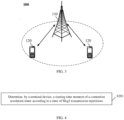
- the communication system 100 may include a network device 110, and the network device 110 may be a device for communicating with a terminal device 120 (or called a communication terminal, terminal).
- the network device 110 may provide communication coverage for a specific geographical area, and may communicate with terminal devices in the coverage area.
- the network device 110 may be a base station (Base Transceiver Station, BTS) in a GSM system or a CDMA system, or a base station (NodeB, NB) in a WCDMA system, or an evolved type base station (Evolutional Node B, eNB or eNodeB) in LTE system, or a wireless controller in a Cloud Radio Access Network (CRAN), or the network device may be a mobile switching center, a relay station, an access point, a vehicle-mounted device, a wearable device, a hub, a switch, a bridge, a router, a network -side device in the 5G network or a network device in the future evolution of the Public Land Mobile Network (PLMN), etc.
- BTS Base Transceiver Station
- NodeB, NB base station
- Evolutional Node B, eNB or eNodeB evolved type base station
- LTE Long Term Evolution
- CRAN Cloud Radio Access Network
- the network device may be a mobile switching
- the communication system 100 further includes at least one terminal device 120 within the coverage area of the network device 110.
- the "terminal device” as used herein may be connected in the following manners (including but not limited to): the terminal device may be connected via wired lines, such as via Public Switched Telephone Networks (PSTN), Digital Subscriber Line (DSL), digital cables, and direct cable connections; and/or the terminal may be connected via another data connection/network; and/or the terminal device may be connected via a wireless interface, such as cellular networks, wireless local area network (WLAN), digital TV networks such as DVB-H networks, satellite networks, AM-FM broadcast transmitter; and/or the terminal device is connected via a device of another terminal device which is configured to receive/send communication signals; and/or the terminal is connected via an Internet of Things (IoT) device.
- PSTN Public Switched Telephone Networks
- DSL Digital Subscriber Line
- the terminal may be connected via another data connection/network
- a wireless interface such as cellular networks, wireless local area network (WLAN
- a terminal device set as communicating through a wireless interface may be referred to as a "wireless communication terminal", a “wireless terminal” or a “mobile terminal”.
- the mobile terminal include but are not limited to: satellite or cellular phone; Personal Communications System (PCS) terminal that can integrate a cellular radio phone with data processing, fax, and data communication capabilities; a PDA which can include a radio phone, a pager, an Internet/intranet access, a Web browser, a memo pad, a calendar, and/or Global Positioning System (GPS) receiver; and conventional laptop and/or palmtop receivers or other electronic device including a radio telephone transceiver.
- PCS Personal Communications System
- GPS Global Positioning System
- the terminal device can refer to access terminal, User Equipment (UE), user unit, user station, mobile station, mobile device, remote station, remote terminal, mobile equipment, user terminal, terminal, wireless communication equipment, user agent or user device.
- the access terminal can be a cellular phone, a cordless phone, a Session Initiation Protocol (SIP) phone, a Wireless Local Loop (WLL) station, a Personal Digital Assistant (PDA), a handheld device with wireless communication functions, a computing device or other processing device connected to a wireless modem, an in-vehicle device, a wearable device, a terminal device in 5G networks, or a terminal device in the future evolved PLMN, etc.
- SIP Session Initiation Protocol
- WLL Wireless Local Loop
- PDA Personal Digital Assistant
- a Device to Device (D2D) communication may be performed between the terminal devices 120.
- D2D Device to Device
- the 5G system or 5G network may also be referred to as a New Radio (NR) system or NR network.
- NR New Radio
- FIG. 3 exemplarily shows one network device and two terminal devices.
- the communication system 100 may include multiple network devices and the coverage of each network device may include other numbers of terminal devices, and embodiments of the present disclosure do not impose specific limitations on this.
- the communication system 100 may further include other network entities such as a network controller or a mobility management entity, and embodiments of the present disclosure do not impose specific limitations on this.
- a device with a communication function in the network/system in embodiments of the present disclosure may be referred to as a communication device.
- the communication device may include the network device 110 and the terminal devices 120 having a communication function.
- the network device 110 and the terminal devices 120 may be the specific devices described above, and repeated descriptions will be omitted here.
- the communication device may also include other devices in the communication system 100, such as a network controller, a mobility management entity, or other network entities, and embodiments of the present disclosure do not impose specific limitations on this.
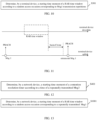
- An optional processing flow of a random access method applied to a terminal device provided in an embodiment of the present disclosure, as shown in FIG. 4 includes the following steps:
- a terminal device determines a starting time moment of a contention resolution timer according to a time of Msg3 transmission repetitions.
- the coverage performance of the RedCap terminal device is improved by Msg3 transmission repetitions.
- the terminal device receives first indication information sent by the network device, where the first indication information is used to indicate the number of Msg3 transmission repetitions. If the first indication information indicates that the number of Msg3 transmission repetitions is N, then N Msg3 transmission repetitions may be called a first transmission repetition set or a first transmission repetition bundle. The N Msg3 transmission repetitions are indicated by one piece of information (first indication information), and such method can save network resources as compared with related art in which each Msg3 transmission repetition is scheduled by one DCI.
- the first indication information may be carried in at least one of the following information: first higher layer signaling, uplink grant carried by RAR, and first DCI.
- the terminal device may determine the time moment of Msg3 transmission repetitions according to the number of Msg3 transmission repetitions indicated by the first indication information and a time domain resource indicated by RAR. For example, if the first indication information indicates that the number of Msg3 transmission repetitions is 3, the terminal device performs Msg3 transmission repetitions in three consecutive uplink slots.
- the terminal device determines the starting time moment of a contention resolution timer (ra-Contention Resolution) according to the time of each Msg3 transmission repetition.
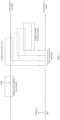
- the terminal device starts the ra-Contention Resolution timer at the first symbol after each Msg3 transmission repetition; the duration of the ra-Contention Resolution timer restarted each time may be the same as the duration of the ra-Contention Resolution timer started the first time.
- the terminal device determines the starting time moment of the contention resolution timer according to the time of each Msg3 transmission repetition.
- the terminal device repeatedly transmits Msg3 each time, even if the ra-Contention Resolution timer started for the immediate prior Msg3 transmission repetition has not ended, a ra-Contention Resolution timer is still restarted at the first symbol after the present Msg3 transmission repetition; and the ra-Contention Resolution timer started for the immediate prior Msg3 transmission repetition does not continue timing.
- the terminal device determines the starting time moment of the contention resolution timer according to the time of the last Msg3 transmission repetition of all first transmission repetition sets.
- the network device may send first indication information to the terminal device.
- the first indication information is used to indicate that the N Msg3 transmission repetitions performed by the terminal device are called a first transmission repetition set. If the network device does not successfully receive the Msg3 after the transmission of the first transmission repetition set is completed, and the ra-Contention Resolution timer has not expired, the network device may send second indication information to the terminal device.
- the second indication information may be carried in a second DCI.
- the second DCI is used to schedule the terminal device to perform Msg3 transmission repetitions again.
- the number of Msg3 transmission repetitions again may be determined by one of the following information: the number of Msg3 transmission repetitions which is indicated by the network device last time, second higher layer signaling and the second DCI. That is, the number of Msg3 transmission repetitions performed by the terminal device again may be the same as the number of immediate prior Msg3 transmission repetitions performed by the terminal device. Or, the difference between the number of Msg3 transmission repetitions performed by the terminal device again and the number of immediate prior Msg3 transmission repetitions performed by the terminal device may be a preset value.
- the terminal device receives the second higher layer signaling or the second DCI sent by the network device, and determines the number of Msg3 transmission repetitions performed by the terminal device again according to the second higher layer signaling or the second DCI. Therefore, according to the indication of the network device, the terminal device may transmit one first transmission repetition set, or may transmit two or more first transmission repetition sets. Each first transmission repetition set may include multiple Msg3 transmission repetitions. The terminal device starts the ra-Contention Resolution timer at the first symbol after the last Msg3 transmission repetition.
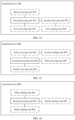
- the terminal device determines the starting time moment of the contention resolution timer according to the time of each Msg3 transmission repetition. As shown in FIG. 6 , the network device indicates, through first indication information, that the number of Msg3 transmission repetitions is 4. The terminal device only restarts the ra-Contention Resolution timer at the first symbol after the fourth Msg3 transmission repetition (that is, the last transmission repetition).
- the terminal device determines the starting time moment of the contention resolution timer according to the time of the last Msg3 transmission repetition of each first transmission repetition set.
- the network device may send first indication information to the terminal device.
- the first indication information is used to indicate that N Msg3 transmission repetitions performed by the terminal device are called a first transmission repetition set. If the network device does not successfully receive the Msg3 after the transmission of the first transmission repetition set is completed, and the ra-Contention Resolution timer has not expired, the network device may send second indication information to the terminal device.
- the second indication information may be carried in a second DCI.
- the second DCI is used to schedule the terminal device to perform Msg3 transmission repetitions again.
- the number of Msg3 transmission repetitions performed by the terminal again may be determined by one of the following information: the number of Msg3 transmission repetitions which is indicated by the network device last time, second higher layer signaling and the second DCI. That is, the number of Msg3 transmission repetitions performed by the terminal device again may be the same as the number of immediate prior Msg3 transmission repetitions performed by terminal device. Or, the difference between the number of Msg3 transmission repetitions performed by the terminal device again and the number of immediate prior Msg3 transmission repetitions performed by the terminal device may be a preset value.
- the terminal device receives the second higher layer signaling or the second DCI sent by the network device, and determines the number of Msg3 transmission repetitions performed by the terminal device again according to the second higher layer signaling or the second DCI. Therefore, according to the indication of the network device, the terminal device may transmit one first transmission repetition set, or may transmit two or more first transmission repetition sets. Each first transmission repetition set may include multiple Msg3 transmission repetitions.
- the terminal device starts the ra-Contention Resolution timer at the first symbol after the last Msg3 transmission repetition of each first transmission repetition set.
- the duration of the ra-Contention Resolution timer restarted by the terminal device each time may be the same as the duration of the immediate prior restarted ra-Contention Resolution timer.
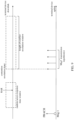
- the terminal device determines the starting time moment of the contention resolution timer according to the time of the last Msg3 transmission repetition of each transmission repetition set. As shown in FIG. 7 , the network device indicates the first transmission repetition set through the first indication information, and the number of Msg3 transmission repetitions of the first transmission repetition set is 4. The terminal device restarts the ra-Contention Resolution timer at the first symbol after the fourth Msg3 transmission repetition of the first transmission repetition set.
- the network device Since the network device does not successfully receive the Msg3 after the transmission of the first transmission repetition set is completed, and the ra-Contention Resolution timer has not expired, the network device sends to the terminal device the second DCI for scheduling the terminal device to perform Msg3 transmission repetitions again.
- the terminal device performs Msg3 transmission repetitions again based on the second indication information.
- the terminal device determines that the number of Msg3 transmission repetitions again is the same as the number of immediate prior Msg3 transmission repetitions.
- the terminal restarts the ra-Contention Resolution timer at the first symbol after the fourth Msg3 transmission repetition among the Msg3 transmission repetitions again.
- the terminal device if the terminal device receives Msg4 and/or the physical downlink control channel (PDCCH) that schedules Msg4 before end of the Msg3 transmission repetition(s), the terminal device stops transmission repetition(s).
- the terminal device monitors the PDCCH that schedules the Msg4 transmission within the time range of the contention resolution timer, and receives the Msg4, and completes contention resolution through Msg4.
- PDCCH physical downlink control channel
- the terminal device When the terminal device can receive contention resolution information, including the Physical Downlink Shared Channel (PDSCH) carrying the Msg4 and/or Physical Downlink Control CHannel (PDCCH) scheduling the PDSCH in the started contention resolution window before end of one transmission of the first transmission repetition set, the terminal device terminates the Msg3 transmission repetition(s) not performed in this first transmission repetition set.
- PDSCH Physical Downlink Shared Channel
- PDCCH Physical Downlink Control CHannel
- FIG. 8 An optional schematic diagram of a terminal device terminating transmission repetition(s) is as shown in FIG. 8 .
- the terminal device starts the contention resolution timer after the second Msg3 transmission repetition in the first transmission repetition set, and receives the PDSCH carrying the Msg4 and/or the PDCCH scheduling the PDSCH before the third Msg3 transmission repetition, the terminal device terminates the third Msg3 transmission repetition and the fourth Msg3 transmission repetition which are not performed in the first transmission repetition set.
- FIG. 9 a schematic diagram of Msg3 transmission repetitions is shown in FIG. 9 .
- the ra-Contention Resolution timer is started or restarted at the first Msg3 transmission repetition. If the number of Msg3 transmission repetitions is four, the network device needs to wait for four Msg3 transmission repetitions and perform joint reception, and then the network device performs the transmission of Msg4, and the length of the contention resolution window needs to be extended so that the contention resolution window at least includes the time for four Msg3 transmission repetitions. Therefore, the network device needs to reconfigure the duration of the ra-Contention Resolution timer for the terminal device, and this may make relatively large changes on the basis of the existing random access method.
- the duration of the ra-Contention Resolution timer started or restarted each time is the same as the duration of the ra-Contention Resolution timer started or restarted last time, that is, the length of existing contention resolution window is followed, there is no need to extend the length of the contention resolution window, there is no need to reconfigure the duration of the ra-Contention Resolution timer, and no configuration change is required on the basis of the existing random access method.
- transmission repetition(s) of Msg1 may also be performed, or transmission repetition(s) of both Msg1 and Msg3 may be performed.
- the following describes the method for determining the RAR window in Msg1 transmission repetition(s).
- Another optional processing flow of the random access method applied to the terminal device provided in an embodiment of the present disclosure, as shown in FIG. 10 includes the following steps:
- step S301 the terminal device determines a starting time moment of a RAR window according to a random access occasion corresponding to Msg1 transmission repetitions.
- the coverage performance of the RedCap terminal device is improved by Msg1 transmission repetitions.
- An optional schematic diagram of a terminal device performing Msg1 transmission repetition in related art is as shown in FIG. 11 .
- the network device indicates a PREAMBLE_BACKOFF. If the random access is not completed, the terminal device may follow a uniform distribution function or a value arbitrarily selected between 0 and PREAMBLE_BACKOFF as the backoff time. The backoff time is used to determine the waiting time for the terminal device to initiate a target random access again when the random access is not completed.
- the PREAMBLE_BACKOFF may be indicated by a header of a sub-protocol data unit (subPDU) in the RAR message sent by the network device; the PREAMBLE_BACKOFF is a backoff parameter (Backoff Indicator, BI).
- the terminal device starts a random access resource selection procedure after the backoff time.
- the situation where the random access is not completed may be as follows. If during the random access procedure, after the terminal device sends Msg1, the terminal device does not receive a RAR message that matches the preamble in the Msg1 sent by the terminal device after the RAR window expires and the number of times the terminal device sends the preamble does not reach the maximum number of transmissions, it is determined that the random access procedure is not completed. Or, the situation where the random access is not completed may also be as follows. In a four-step random access procedure, the terminal device sends the Msg1 to the network device, and receives the Msg2 sent by the network device. The terminal device starts ra-ContentionResolutionTimer after sending the Msg3. If the contention resolution is not successfully completed when the ra-ContentionResolutionTimer expires, it is determined that the random access procedure is not completed.
- the Msg1 transmission repetition(s) by the terminal device shown in FIG. 11 occurs in a scenario where the terminal device has not received the RAR message sent by the network device at the end of the RAR window.
- the terminal device does not need to wait for the end of the RAR window and then perform the Msg1 transmission repetition(s).
- the following describes the starting time moment of the RAR window when performing the Msg1 transmission repetitions in the embodiments of the present disclosure.
- the terminal device receives third indication information sent by the network device.
- the third indication information is used to indicate the number of Msg1 transmission repetitions. If the third indication information indicates that the number of Msg1 transmission repetitions is M, the M Msg1 transmission repetitions may be referred to as a second transmission repetition set or a second transmission repetition bundle.
- the M MSg1 transmission repetitions are indicated by one piece of information (third indication information), or the terminal device may autonomously determine the number of Msg1 transmission repetitions.
- the third indication information may be carried in at least one of the following information: third higher layer signaling and third DCI.
- the terminal device determines the starting time moment of the RAR window according to the random access occasion corresponding to each Msg1 transmission repetition. In specific implementations, the terminal device determines the first symbol in the earliest control resource set after at least one symbol after the last symbol of the random access occasion corresponding to each Msg1 transmission repetition as the starting time moment of the RRA window.
- the length of each RAR window may be the same as the length of the immediate prior RAR window.
- the terminal device determines the starting time moment of the RAR window according to the random access occasion corresponding to the last Msg1 transmission repetition of all second transmission repetition sets.
- the terminal device may perform Msg1 transmission repetitions in multiple second transmission repetition sets, and each second transmission repetition set includes M Msg1 transmission repetitions.
- the terminal device determines the first symbol in the earliest control resource set after at least one symbol after the last symbol of the random access occasion corresponding to the last Msg1 transmission repetition of all second transmission repetition sets as the starting time moment of the RAR window.
- the terminal device performs Msg1 transmission repetitions in two second transmission repetition sets, the first symbol in the earliest control resource set after at least one symbol after the last symbol of the random access occasion corresponding to the last Msg1 transmission repetition in the latter second transmission repetition set is the starting time moment of the RAR window.
- the terminal device determines the starting time moment of the RAR window according to the random access occasion corresponding to the last Msg1 transmission repetition in each second transmission repetition set.
- the terminal device may perform Msg1 transmission repetitions in multiple second transmission repetition sets, and each second transmission repetition set includes M Msg1 transmission repetitions.
- the terminal device determines the first symbol in the earliest control resource set after at least one symbol after the last symbol of the random access occasion corresponding to the immediate prior Msg1 transmission repetition in each second transmission repetition set as the starting time moment of the RAR window.
- the terminal device performs Msg1 transmission repetitions in two second transmission repetition sets, the first symbol in the earliest control resource set after at least one symbol after the last symbol of the random access occasion corresponding to the last Msg1 transmission repetition of the former second transmission repetition set is the starting time moment of the RAR window; and the first symbol in the earliest control resource set after at least one symbol after the last symbol of the random access occasion corresponding to the last Msg1 transmission repetition in the latter second transmission repetition set is also the starting time moment of the RAR window.
- the length of each RAR window may be the same as the length of the immediate prior RAR window.
- the terminal device stops the Msg1 transmission repetition(s).
- the terminal device terminates the Msg1 transmission repetition(s) that is(are) not performed.
- the starting time moment of one or more RAR windows may be determined, and the starting time moment of each RAR window is reset.
- the durations of all RAR windows are the same, that is, the duration of the existing RAR window is followed, and there is no need to extend the duration of the RAR window, and it is not necessary to reconfigure the duration of the RAR window, and it is not needed to perform configuration change based on the existing random access method.
- the random access methods of the embodiments of the present disclosure described with reference to FIG. 3 and the random access methods of the embodiments of the present disclosure described with reference to FIG. 10 may be used simultaneously, or may be used independently, which is not limited here.
- An optional processing flow of a random access method applied to a network device provided in an embodiment of the present disclosure, as shown in FIG. 12 includes the following steps:
- step S401 the network device determines a starting time moment of a contention resolution timer according to a time of Msg3 transmission repetitions.
- the specific implementation of the network device determining the starting time moment of the contention resolution timer according to the time of the Msg3 transmission repetitions may be the same as that of determining the starting time moment of the contention resolution timer by the terminal device according to the time of the Msg3 transmission repetitions in the above step S201, and the only difference is that the entity for determining the starting time moment of the contention resolution timer is changed.
- the network device if the network device does not successfully receive the Msg3 transmission repetitions during the running of the contention resolution timer, the network device sends the second indication information to the terminal device.
- the description of the second indication information in the present disclosure is the same as the description of the second indication information regarding the above step S201, and will not be repeated here.
- Another optional processing flow of the random access method applied to network devices provided by an embodiment of the present disclosure, as shown in FIG. 13 includes the following steps:
- step S1001 the network device determines a starting time moment of a random access response window according to a random access occasion corresponding to Msg1 transmission repetitions.
- the specific implementation of the network device determining the starting time moment of the random access response window according to the random access occasion corresponding to the Msg1 transmission repetitions is the same as that of determining the starting time moment of the random access response window by the terminal device according to the random access occasion corresponding to the Msg1 transmission repetitions in above step S201, and the only difference is that the entity for determining the starting time moment of the random access response window is changed.
- the method further includes: the network device sending third indication information to the terminal device, where the third indication information is used to indicate the number of Msg1 transmission repetitions.
- the first indication information is carried in at least one of the following information: third higher layer signaling and third DCI.
- the description of the third indication information in the embodiments of the present disclosure is the same as the description of the third indication information in the embodiments regarding step S201, and will not be repeated here.
- the random access methods of the embodiments of the present disclosure described with reference to FIG. 12 and the random access methods of the embodiments of the present disclosure described with reference to FIG. 13 may be used simultaneously, or may be used independently, which is not limited here.
- starting of the contention resolution timer involved in the embodiments of the present disclosure may also be referred to as restarting of the contention resolution timer.
- the embodiments of the present disclosure can avoid the problem of Msg2 reception failure caused by inconsistent understanding of the RAR window between the terminal device and the network device, and can avoid the Msg4 reception failure caused by the inconsistent understanding of the contention resolution window between the terminal device and the network device, thereby improving the success rate of random access.
- an embodiment of the present disclosure also provides a terminal device.
- An optional composition structure of the terminal device 500 includes a first processing unit 501.
- the first processing unit 501 is configured to determine a starting time moment of a contention resolution timer according to a time of Msg3 transmission repetitions.
- the time of the Msg3 transmission repetitions includes at least one of the following:
- N transmission repetitions indicated by a network device each time are a first transmission repetition set, and N is a positive integer; wherein the time of the last Msg3 transmission repetition includes: a time of the last Msg3 transmission repetition of each first transmission repetition set, or a time of the last Msg3 transmission repetition of all first transmission repetition sets.
- the starting time moment of the contention resolution timer is located at the first symbol after each Msg3 transmission repetition.
- the starting time moment of the contention resolution timer is located at the first symbol after the last Msg3 transmission repetition of all first transmission repetition sets; wherein the first transmission repetition set includes N transmission repetitions indicated by a network device each time, where N is a positive integer.
- the starting time moment of the contention resolution timer is located at the first symbol after the last Msg3 transmission repetition of each first transmission repetition set; wherein the first transmission repetition set includes N transmission repetitions indicated by a network device each time, where N is a positive integer.
- the terminal device 500 further includes: a first receiving unit 502 configured to receive first indication information sent by a network device, wherein the first indication information is used to indicate the number of Msg3 transmission repetitions.
- the first indication information is carried in at least one of the following information:
- first higher layer signaling an uplink grant carried by a Random Access Response (RAR), and first Downlink Control Signaling DCI.
- RAR Random Access Response
- the terminal device 500 further includes: a second receiving unit 503 configured to, in response to that a network device does not successfully receive the Msg3 transmission repetitions during running of the contention resolution timer, receive second indication information.
- the second indication information is carried in a second DCI, and the second DCI is used to schedule the terminal device to perform Msg3 transmission repetitions again.
- the terminal device 500 further includes: a first sending unit 504 configured to perform Msg3 transmission repetitions again based on the second indication information.
- the number of Msg3 transmission repetitions again can be determined by one of the following information: the number of Msg3 transmission repetitions which is last indicated by the network device last time, second higher layer signaling and the second DCI.
- the first processing unit 501 is further configured to, in response to that the terminal device receives Msg4 and/or a Physical Downlink Control Channel (PDCCH) scheduling the Msg4 before end of Msg3 transmission repetitions, stop the Msg3 transmission repetitions.
- PDCCH Physical Downlink Control Channel
- the first processing unit 501 is further configured to: determine a starting time moment of a random access response window according to a random access occasion corresponding to Msg1 transmission repetitions.
- the random access occasion corresponding to Msg1 transmission repetitions includes at least one of the following:
- M transmission repetitions are a second transmission repetition set, and M is a positive integer; wherein the random access occasion corresponding to the last Msg1 transmission repetition includes: a random access occasion corresponding to the last Msg1 transmission repetition of each second transmission repetition set, or a random access occasion corresponding to the last Msg1 transmission repetition of all second transmission repetition sets.
- the starting time moment of the random access response window is located at the first symbol in the earliest control resource set after at least one symbol after the last symbol of a random access occasion corresponding to each Msg1 transmission repetition.
- the starting time moment of the random access response window is located at the first symbol in the earliest control resource set after at least one symbol after the last symbol of a random access occasion corresponding to the last Msg1 transmission repetition of all second transmission repetition sets; wherein each second transmission repetition set includes M transmission repetitions, where M is a positive integer.
- the starting time moment of the random access response window is located at the first symbol in the earliest control resource set after at least one symbol after the last symbol of a random access occasion corresponding to the last Msg1 transmission repetition of each second transmission repetition set; wherein each second transmission repetition sets includes M transmission repetitions, where M is a positive integer.
- the terminal device 500 further includes: a third receiving unit 505 configured to receive third indication information sent by a network device, wherein the third indication information is used to indicate the number of Msg1 transmission repetitions.
- the third indication information is carried in at least one of the following information: third higher layer signaling and third DCI.
- the second processing unit is configured to, in response to that the terminal device receives a Physical Downlink Shared Channel (PDSCH) carrying Msg2 and/or a Physical Downlink Control Channel (PDCCH) scheduling the PDSCH within the random access response window, stop Msg1 transmission repetitions.
- PDSCH Physical Downlink Shared Channel
- PDCCH Physical Downlink Control Channel
- an embodiment of the present disclosure further provides a terminal device.
- Another optional composition structure of the terminal device 600 includes a second processing unit 601.
- the second processing unit 601 is configured to determine a starting time moment of a random access response window according to a random access occasion corresponding to Msg1 transmission repetitions.
- the random access occasion corresponding to the Msg1 transmission repetitions includes at least one of the following:
- M transmission repetitions are a second transmission repetition set, and M is a positive integer; wherein the random access occasion corresponding to the last Msg1 transmission repetition includes: a random access occasion corresponding to the last Msg1 transmission repetition of each second transmission repetition set, or a random access occasion corresponding to the last Msg1 transmission repetition of all second transmission repetition sets.
- the starting time moment of the random access response window is located at the first symbol in the earliest control resource set after at least one symbol after the last symbol of a random access occasion corresponding to each Msg1 transmission repetition.
- the starting time moment of the random access response window is located at the first symbol in the earliest control resource set after at least one symbol after the last symbol of a random access occasion corresponding to the last Msg1 transmission repetition of all second transmission repetition sets; wherein each second transmission repetition set includes M transmission repetitions, where M is a positive integer.
- the starting time moment of the random access response window is located at the first symbol in the earliest control resource set after at least one symbol after the last symbol of a random access occasion corresponding to the last Msg1 transmission repetition of each second transmission repetition set; wherein each second transmission repetition sets includes M transmission repetitions, where M is a positive integer.
- the terminal device 600 further includes: a fourth receiving unit 602 configured to receive third indication information sent by a network device, wherein the third indication information is used to indicate the number of Msg1 transmission repetitions.
- the third indication information is carried in at least one of the following information: third higher layer signaling and third Downlink Control Signaling DCI.
- the second processing unit 601 is configured to, in response to that the terminal device receives a Physical Downlink Shared Channel (PDSCH) carrying Msg2 and/or a Physical Downlink Control Channel (PDCCH) scheduling the PDSCH within the random access response window, stop Msg1 transmission repetitions.
- PDSCH Physical Downlink Shared Channel
- PDCCH Physical Downlink Control Channel
- the second processing unit 601 is further configured to: determine a starting time moment of a contention resolution timer according to a time of Msg3 transmission repetitions.
- the time of the Msg3 transmission repetitions includes at least one of the following:
- N transmission repetitions indicated by the network device each time are a first transmission repetition set; wherein the time of the last Msg3 transmission repetition includes: a time of the last Msg3 transmission repetition of each first transmission repetition set, or a time of the last Msg3 transmission repetition of all first transmission repetition sets.
- the starting time moment of the contention resolution timer is located at the first symbol after each Msg3 transmission repetition.
- the starting time moment of the contention resolution timer is located at the first symbol after the last Msg3 transmission repetition of all first transmission repetition sets;
- the first transmission repetition set includes N transmission repetitions indicated by a network device each time, where N is a positive integer.
- the starting time moment of the contention resolution timer is located at the first symbol after the last Msg3 transmission repetition of each first transmission repetition set; wherein the first transmission repetition set includes N transmission repetitions indicated by a network device each time, where N is a positive integer.
- the terminal device 600 further includes:
- a fifth receiving unit 603 configured to receive first indication information sent by a network device, wherein the first indication information is used to indicate the number of Msg3 transmission repetitions.
- the first indication information is carried in at least one of the following information:
- first higher layer signaling an uplink grant carried by a Random Access Response (RAR), and first DCI.
- RAR Random Access Response
- the terminal device 600 further includes: a sixth receiving unit 604 configured to, in response to that a network device does not successfully receive the Msg3 transmission repetitions during running of the contention resolution timer, receive second indication information.
- the second indication information is carried in a second DCI, and the second DCI is used to schedule the terminal device to perform Msg3 transmission repetitions again.
- the terminal device further includes: a second sending unit 605 configured to perform Msg3 transmission repetitions again based on the second indication information.
- the number of Msg3 transmission repetitions again can be determined by one of the following information: the number of Msg3 transmission repetitions which is indicated by the network device last time, second higher layer signaling and the second DCI.
- the second processing unit 601 is further configured to, in response to that the terminal device receives Msg4 and/or a Physical Downlink Control Channel (PDCCH) scheduling the Msg4 before end of Msg3 transmission repetitions, stop Msg3 transmission repetitions.
- PDCCH Physical Downlink Control Channel
- an embodiment of the present disclosure also provides a network device.
- An optional composition structure of the network device 800 includes a third processing unit 801.
- the third processing unit 801 configured to determine a starting time moment of a contention resolution timer according to a time of Msg3 transmission repetitions.
- the time of the Msg3 transmission repetitions includes at least one of the following:
- N transmission repetitions indicated by a network device each time are a first transmission repetition set, and N is a positive integer; wherein the time of the last Msg3 transmission repetition includes: a time of the last Msg3 transmission repetition of each first transmission repetition set, or a time of the last Msg3 transmission repetition of all first transmission repetition sets.
- the starting time moment of the contention resolution timer is located at the first symbol after each Msg3 transmission repetition.
- the starting time moment of the contention resolution timer is located at the first symbol after the last Msg3 transmission repetition of all first transmission repetition sets; wherein the first transmission repetition set includes N transmission repetitions indicated by a network device each time, where N is a positive integer.
- the starting time moment of the contention resolution timer is located at the first symbol after the last Msg3 transmission repetition of each first transmission repetition set; wherein the first transmission repetition set includes N transmission repetitions indicated by a network device each time, where N is a positive integer.
- the network device 800 further includes: a third sending unit 802 configured to send first indication information to a terminal device, wherein the first indication information is used to indicate the number of Msg3 transmission repetitions.
- the first indication information is carried in at least one of the following information: first higher layer signaling, an uplink grant carried by a Random Access Response (RAR), and first Downlink Control Signaling DCI.
- first higher layer signaling an uplink grant carried by a Random Access Response (RAR)
- RAR Random Access Response
- DCI first Downlink Control Signaling DCI.
- the network device 800 further includes: a fourth sending unit 803 configured to, in response to that the network device does not successfully receive the Msg3 transmission repetitions during running of the contention resolution timer, send second indication information to a terminal device.
- the second indication information is carried in a second DCI, and the second DCI is used to schedule the terminal device to perform Msg3 transmission repetitions again.
- the number of Msg3 transmission repetitions again can be determined by one of the following information: the number of Msg3 transmission repetitions which is indicated by the network device last time, second higher layer signaling and the second DCI.
- the third processing unit is further configured to: determine a starting time moment of a random access response window according to a random access occasion corresponding to Msg1 transmission repetitions.
- the random access occasion corresponding to Msg1 transmission repetitions includes at least one of the following:
- M transmission repetitions are a second transmission repetition set, and M is a positive integer; wherein the random access occasion corresponding to the last Msg1 transmission repetition includes: a random access occasion corresponding to the last transmission repetition of the Msg1 of each second transmission repetition set, or a random access occasion corresponding to the last Msg1 transmission repetition of all second transmission repetition sets.
- the starting time moment of the random access response window is located at the first symbol in the earliest control resource set after at least one symbol after the last symbol of a random access occasion corresponding to each Msg1 transmission repetition.
- the starting time moment of the random access response window is located at the first symbol in the earliest control resource set after at least one symbol after the last symbol of a random access occasion corresponding to the last Msg1 transmission repetition of all second transmission repetition sets;
- each second transmission repetition set includes M transmission repetitions, where M is a positive integer.
- the starting time moment of the random access response window is located at the first symbol in the earliest control resource set after at least one symbol after the last symbol of a random access occasion corresponding to the last Msg1 transmission repetition of each second transmission repetition set; wherein each second transmission repetition sets includes M transmission repetitions, where M is a positive integer.
- the network device 800 further includes: a fifth sending unit 804 configured to send third indication information to a terminal device, wherein the third indication information is used to indicate the number of Msg1 transmission repetitions.
- the third indication information is carried in at least one of the following information: third higher layer signaling and third DCI.
- an embodiment of the present disclosure also provides a network device.
- Another optional composition structure of the network device 900 includes a fourth processing unit 901.
- the fourth processing unit 901 is configured to determine a starting time moment of a random access response window according to a random access occasion corresponding to Msg1 transmission repetitions.
- the random access occasion corresponding to the Msg1 transmission repetitions includes at least one of the following:
- M transmission repetitions are a second transmission repetition set, and M is a positive integer; wherein the random access occasion corresponding to the last Msg1 transmission repetition includes: a random access occasion corresponding to the last Msg1 transmission repetition of each second transmission repetition set, or a random access occasion corresponding to the last Msg1 transmission repetition of all second transmission repetition sets.
- the starting time moment of the random access response window is located at the first symbol in the earliest control resource set after at least one symbol after the last symbol of a random access occasion corresponding to each Msg1 transmission repetition.
- the starting time moment of the random access response window is located at the first symbol in the earliest control resource set after at least one symbol after the last symbol of a random access occasion corresponding to the last Msg1 transmission repetition of all second transmission repetition sets; wherein each second transmission repetition set includes M transmission repetitions, where M is a positive integer.
- the starting time moment of the random access response window is located at the first symbol in the earliest control resource set after at least one symbol after the last symbol of a random access occasion corresponding to the last Msg1 transmission repetition of each second transmission repetition set; wherein each second transmission repetition sets includes M transmission repetitions, where M is a positive integer.
- the network device 900 further includes: a sixth sending unit 902 configured to send third indication information to a terminal device, wherein the third indication information is used to indicate the number of Msg1 transmission repetitions.
- the third indication information is carried in at least one of the following information: third higher layer signaling and third Downlink Control Signaling DCI.
- the fourth processing unit 901 is configured to, in response to that the terminal device receives a Physical Downlink Shared Channel (PDSCH) carrying Msg2 and/or a Physical Downlink Control Channel (PDCCH) scheduling the PDSCH within the random access response window, stop Msg1 transmission repetitions.
- PDSCH Physical Downlink Shared Channel
- PDCCH Physical Downlink Control Channel
- the fourth processing unit 901 is further configured to: determine a starting time moment of a contention resolution timer according to a time of Msg3 transmission repetitions.
- the time of the Msg3 transmission repetitions includes at least one of the following:
- N transmission repetitions indicated by the network device each time are a first transmission repetition set; wherein the time of the last Msg3 transmission repetition includes: a time of the last Msg3 transmission repetition of each first transmission repetition set, or a time of the last Msg3 transmission repetition of all first transmission repetition sets.
- the starting time moment of the contention resolution timer is located at the first symbol after each Msg3 transmission repetition.
- the starting time moment of the contention resolution timer is located at the first symbol after the last Msg3 transmission repetition of all first transmission repetition sets; wherein the first transmission repetition set includes N transmission repetitions indicated by a network device each time, where N is a positive integer.
- the starting time moment of the contention resolution timer is located at the first symbol after the last Msg3 transmission repetition of each first transmission repetition set; wherein the first transmission repetition set includes N transmission repetitions indicated by a network device each time, where N is a positive integer.
- the network device 900 further includes: a seventh sending unit 903 configured to send first indication information to a terminal device, wherein the first indication information is used to indicate the number of Msg3 transmission repetitions.
- the first indication information is carried in at least one of the following information: first higher layer signaling, an uplink grant carried by a Random Access Response (RAR), and first DCI.
- first higher layer signaling an uplink grant carried by a Random Access Response (RAR)
- RAR Random Access Response
- first DCI first DCI.
- the network device 900 further includes: an eighth sending unit 904 configured to, in response to that a network device does not successfully receive the Msg3 transmission repetitions during running of the contention resolution timer, send second indication information to the terminal device.
- the second indication information is carried in a second DCI, and the second DCI is used to schedule the terminal device to perform Msg3 transmission repetitions again.
- the number of Msg3 transmission repetitions again can be determined by one of the following information: the number of Msg3 transmission repetitions which is indicated by the network device last time, second higher layer signaling and the second DCI.
- the functions of the sending unit involved in the embodiments of the present disclosure may be realized by a sender, or a transmitter, or a transceiver; the functions of the receiving unit involved in the embodiments of the present disclosure may be realized by a receiver or a transceiver.
- the functions of the processing unit involved in the embodiments of the present disclosure may be implemented by a processor.
- An embodiment of the present disclosure further provides a terminal device, including a processor and a memory for storing a computer program that can be run on the processor, wherein the processor is configured to, when the computer programs are run, perform steps of a random access method performed by the terminal device.
- An embodiment of the present disclosure also provides a network device, including a processor and a memory for storing a computer program that can run on the processor, wherein the processor is configured to, when the computer programs are run, perform steps of a random access method performed by the network device.
- An embodiment of the present disclosure further provides a chip, including: a processor configured to call and run a computer program from a memory, so that a device in which the chip is installed performs the random access method performed by the above-mentioned terminal device.
- An embodiment of the present disclosure further provides a chip, including: a processor configured to call and run a computer program from a memory, so that a device in which the chip is installed performs the random access method performed by the above-mentioned network device.
- An embodiment of the present disclosure further provides a storage medium, which stores an executable program, and when the executable program is executed by a processor, the processor is caused to implement the above random access method performed by the terminal device.
- An embodiment of the present disclosure further provides a storage medium, which stores an executable program, and when the executable program is executed by a processor, the processor is caused to implement the above random access method performed by the network device.
- An embodiment of the present disclosure further provides a computer program product, including computer program instructions, where the computer program instructions cause a computer to perform the random access method performed by the above-mentioned terminal device.
- An embodiment of the present disclosure further provides a computer program product, including computer program instructions, where the computer program instructions cause a computer to perform the random access method performed by the foregoing network device.
- An embodiment of the present disclosure further provides a computer program, where the computer program causes a computer to perform the random access method executed by the above-mentioned terminal device.
- An embodiment of the present disclosure further provides a computer program, where the computer program causes a computer to perform the random access method executed by the above-mentioned network device.
- FIG. 18 is a schematic diagram of the hardware composition structure of an electronic device (terminal device or network device) according to an embodiment of the present disclosure.
- the electronic device 700 includes: at least one processor 701, a memory 702 and at least one network interface 704.
- Various components in the electronic device 700 are coupled together through a bus system 705. It can be understood that the bus system 705 is used to realize connections and communications between these components.
- the bus system 705 also includes a power bus, a control bus and a status signal bus.
- the various buses are labeled as the bus system 705 in FIG. 18 for clarity of illustration.
- the memory 702 may be a volatile memory or a non-volatile memory, and may also include both volatile and non-volatile memories.
- the non-volatile memory may be ROM, Programmable Read-Only Memory (PROM), Erasable Programmable Read-Only Memory (EPROM), Electrically Erasable Programmable read-only memory (EEPROM), Ferromagnetic Random Access Memory (FRAM), flash memory, magnetic surface storage, optical disc, or Compact Disc Read-Only Memory (CD-ROM); the magnetic surface storage may be a disk storage or a tape storage .
- the volatile memory may be Random Access Memory (RAM), which is used as an external cache.
- RAM Random Access Memory
- SRAM Static Random Access Memory
- SSRAM Synchronous Static Random Access Memory
- DRAM Dynamic Random Access Memory
- SDRAM Synchronous Dynamic Random Access Memory
- DDRSDRAM Double Data Rate Synchronous Dynamic Random Access Memory
- ESDRAM Enhanced Synchronous Dynamic Random Access Memory
- SLDRAM SyncLink Dynamic Random Access Memory
- DRRAM Direct Rambus Random Access Memory
- the memory 702 in the embodiments of the present disclosure is used to store various types of data to support the operation of the electronic device 700.
- Examples of such data include: any computer programs for operations on the electronic device 700, such as application program 7022.
- the program for implementing the methods of the embodiments of the present disclosure may be included in the application program 7022.
- the methods disclosed in the foregoing embodiments of the present disclosure may be applied to the processor 701 or implemented by the processor 701.
- the processor 701 may be an integrated circuit chip with signal processing capabilities. In the implementations, each step of the above methods may be completed by an integrated logic circuit of hardware in the processor 701 or instructions in the form of software.
- the aforementioned processor 701 may be a general-purpose processor, a digital signal processor (DSP), or other programmable logic devices, discrete gate or transistor logic devices, discrete hardware components, and the like.
- DSP digital signal processor
- the processor 701 may implement or execute various methods, steps, and logic block diagrams disclosed in the embodiments of the present disclosure.
- a general purpose processor may be a microprocessor or any conventional processor or the like.
- the steps of the methods disclosed in the embodiments of the present disclosure may be directly embodied as being implemented by a hardware decoding processor, or implemented by a combination of hardware and software modules in the decoding processor.
- the software modules may be located in a storage medium, and the storage medium is located in the memory 702.
- the processor 701 reads the information in the memory 702, and completes the steps of the foregoing methods in combination with its hardware.
- the electronic device 700 may be implemented by one or more Application Specific Integrated Circuits (ASIC), DSPs, Programmable Logic Devices (PLDs), Complex Programmable Logic Devices (CPLDs), FPGAs, general-purpose processor, controller, MCU, MPU, or other electronic components to implement the aforementioned methods.
- ASIC Application Specific Integrated Circuits
- DSPs Digital Signal processors
- PLDs Programmable Logic Devices
- CPLDs Complex Programmable Logic Devices
- FPGAs general-purpose processor
- controller MCU, MPU, or other electronic components to implement the aforementioned methods.
- each flow and/or block in the flowchart(s) and/or block diagram(s), and a combination of flows and/or blocks in the flowchart(s) and/or block diagram(s) may be realized by computer program instructions.
- These computer program instructions may be provided to a general purpose computer, special purpose computer, embedded processor, or processor of other programmable data processing equipment to produce a machine such that the instructions executed by the processor of the computer or other programmable data processing equipment produce an apparatus for realizing the functions specified in one or more flows of the flowchart(s) and/or one or more blocks of the block diagram(s).
- These computer program instructions may also be stored in a computerreadable memory capable of directing a computer or other programmable data processing device to operate in a specific manner, such that the instructions stored in the computerreadable memory produce an article of manufacture including instruction means, which realizes the function specified in one or more flow of the flowchart(s) and/or one or more blocks of the block diagram(s).
- These computer program instructions can also be loaded onto a computer or other programmable data processing device, causing a series of operation steps to be performed on the computer or other programmable device to produce a computerimplemented process, so that the instructions executed on the computer or other programmable device provide steps for implementing the functions specified in one or more flow of the flowchart(s) and/or one or more blocks of the block diagram(s).
Landscapes
- Engineering & Computer Science (AREA)
- Computer Networks & Wireless Communication (AREA)
- Signal Processing (AREA)
- Mobile Radio Communication Systems (AREA)
- Information Transfer Between Computers (AREA)
- Computer And Data Communications (AREA)
Abstract
Description
- Embodiments of the present disclosure relate to the wireless communication technical field, and more specifically, to a random access method, an electronic device, and a storage medium.
- In a random access procedure, in order to improve the coverage performance of a terminal device, a method of Msg1 transmission repetition and/or Msg3 transmission repetition may be used. When performing Msg1 and/or Msg3 transmission repetitions, how to improve the success rate of random access is always the goal that is pursued.
- Embodiments of the present disclosure provide a random access method, and electronic device, and a storage medium, which can improve the success rate of random access.
- In a first aspect, an embodiment of the present disclosure provides a random access method, including: determining, by a terminal device, a starting time moment of a contention resolution timer according to a time of Msg3 transmission repetitions.
- In a second aspect, an embodiment of the present disclosure provides a random access method, including: determining, by a terminal device, a starting time moment of a random access response window according to a random access occasion corresponding to Msg1 transmission repetitions.
- In a third aspect, an embodiment of the present disclosure provides a random access method, including: determining, by a network device, a starting time moment of a contention resolution timer according to a time of Msg3 transmission repetitions.
- In a fourth aspect, an embodiment of the present disclosure provides a random access method, including: determining, by a network device, a starting time moment of a random access response window according to a random access occasion corresponding to Msg1 transmission repetitions.
- In a fifth aspect, an embodiment of the present disclosure provides a terminal device, including: a first processing unit configured to determine a starting time moment of a contention resolution timer according to a time of Msg3 transmission repetitions.
- In a sixth aspect, an embodiment of the present disclosure provides a terminal device, including: a second processing unit configured to determine a starting time moment of a random access response window according to a random access occasion corresponding to Msg1 transmission repetitions.
- In a seventh aspect, an embodiment of the present disclosure provides a network device, including: a third processing unit configured to determine a starting time moment of a contention resolution timer according to a time of Msg3 transmission repetitions.
- In an eighth aspect, an embodiment of the present disclosure provides a network device, including: a fourth processing unit configured to determine a starting time moment of a random access response window according to a random access occasion corresponding to Msg1 transmission repetitions.
- In a ninth aspect, an embodiment of the present disclosure provides a terminal device, including a processor and a memory for storing a computer program that can be run on the processor, wherein the processor is configured to, when the computer programs are run, perform steps of a random access method performed by the terminal device.
- In a tenth aspect, an embodiment of the present disclosure provides a network device, including a processor and a memory for storing a computer program that can be run on the processor, wherein the processor is configured to, when the computer programs are run, perform steps of a random access method performed by the network device.
- In an eleventh aspect, an embodiment of the present disclosure provides a chip, including: a processor configured to call and run a computer program from a memory, so that a device in which the chip is installed performs the random access method performed by the above-mentioned terminal device.
- In a twelfth aspect, an embodiment of the present disclosure provides a chip, including: a processor configured to call and run a computer program from a memory, so that a device in which the chip is installed performs the random access method performed by the above-mentioned network device.
- In a thirteenth aspect, an embodiment of the present disclosure provides a storage medium that stores an executable program, and when the executable program is executed by a processor, the random access method performed by the above-mentioned terminal device is implemented.
- In a fourteenth aspect, an embodiment of the present disclosure provides a storage medium that stores an executable program, and when the executable program is executed by a processor, the random access method performed by the above-mentioned network device is implemented.
- In a fifteenth aspect, an embodiment of the present disclosure provides a computer program product, including computer program instructions, wherein the computer program instructions cause a computer to perform the random access method performed by the above-mentioned terminal device.
- In a sixteenth aspect, an embodiment of the present disclosure provides a computer program product, including computer program instructions, wherein the computer program instructions cause a computer to perform the random access method performed by the above-mentioned network device.
- In a seventeenth aspect, an embodiment of the present disclosure provides a computer program, wherein the computer program causes a computer to perform the random access method performed by the above-mentioned terminal device.
- In an eighteenth aspect, an embodiment of the present disclosure provides a computer program, wherein the computer program causes a computer to perform the random access method performed by the above-mentioned network device.
- In the random access method, electronic device, and storage medium provided by embodiments of the present disclosure, the terminal device or network device determines a starting time moment of a contention resolution timer according to a time of Msg3 transmission repetitions; the terminal device or network device determines a starting time moment of a random access response window according to a random access occasion corresponding to Msg1 transmission repetitions. Thus, the embodiments of the present disclosure can avoid the problem of Msg2 reception failure caused by the inconsistency of the understanding of the RAR window by the terminal device and the network device, and avoid the problem of Msg4 reception failure caused by inconsistency of the understanding of a contention resolution window by the terminal device and the network device, thereby improving the success rate of random access.
-
-
FIG. 1 is a schematic diagram of a processing flow of a four-step random access procedure according to an embodiment of the present disclosure; -
FIG. 2 is an optional schematic diagram of a RAR window of the present disclosure; -
FIG. 3 is a schematic diagram of the composition and structure of a communication system according to an embodiment of the present disclosure; -
FIG. 4 is an optional processing flow of a random access method applied to a terminal device provided by an embodiment of the present disclosure; -
FIG. 5 is a schematic diagram of determining a starting time moment of a contention resolution timer according to the time of each Msg3 transmission repetition by a terminal device according to an embodiment of the present disclosure; -
FIG. 6 is a schematic diagram of determining a starting time moment of a contention resolution timer according to the time of each Msg3 transmission repetition according to an embodiment of the present disclosure; -
FIG. 7 is a schematic diagram of determining a starting time moment of a contention resolution timer according to the time of the last Msg3 transmission repetition in each transmission repetition set according to an embodiment of the present disclosure; -
FIG. 8 is an optional schematic diagram of a terminal device terminating transmission repetition(s) according to an embodiment of the present disclosure; -
FIG. 9 is a schematic diagram of Msg3 transmission repetition(s) in related art; -
FIG. 10 is a schematic diagram of another optional processing flow of a random access method applied to a terminal device provided in an embodiment of the present disclosure; -
FIG. 11 is an optional schematic diagram of a terminal device performing Msg1 transmission repetition(s) in related art; -
FIG. 12 is a schematic diagram of an optional processing flow of a random access method applied to a network device provided in an embodiment of the present disclosure; -
FIG. 13 is a schematic diagram of another optional processing flow of a random access method applied to a network device provided by an embodiment of the present disclosure; -
FIG. 14 is a schematic diagram of an optional composition structure of a terminal device provided by an embodiment of the present disclosure; -
FIG. 15 is a schematic diagram of another optional composition structure of a terminal device provided by an embodiment of the present disclosure; -
FIG. 16 is a schematic diagram of an optional composition structure of a network device provided by an embodiment of the present disclosure; -
FIG. 17 is a schematic diagram of another optional composition structure of a network device provided by an embodiment of the present disclosure; -
FIG. 18 is a schematic diagram of a hardware composition structure of an electronic device provided by an embodiment of the present disclosure. - In order to understand the characteristics and technical contents of the embodiments of the present disclosure in more detail, the implementations of the embodiments of the present disclosure will be described in detail below in conjunction with the accompanying drawings. The accompanying drawings are only for reference and description, and are not intended to limit the embodiments of the present disclosure.
- Before describing the embodiments of the present disclosure, a brief description of relevant contents will be given.
- The New Radio (NR) system is mainly designed to support an Enhanced Mobile Broadband (eMBB) service, in order to meet requirements of high speed, high spectrum efficiency and large bandwidth. However, in practical applications, there are many different types of services besides eMBB service, such as sensor networks, video surveillance, and wearable services. These services have demands different from eMBB service in terms of speed, bandwidth, power consumption, and cost. These services have a lower capability requirement for terminal devices than the eMBB service. These services may allow terminal devices to support reduced bandwidth, loosening of processing time, reduction of number of antennas, loosening of maximum modulation order, etc. This type of terminal device may be referred to as a Reduced Capability (RedCap) terminal device for short. It is necessary to optimize the NR system for these services and corresponding reduced capability terminal devices. In LTE technologies, a similar system has been designed to support terminals with a large number of connections, low power consumption, and low cost, such as Machine Type Communication (MTC), Narrow Band Internet of Things (NB-IoT). In the NR system, it is desired to introduce a similar technology to use the NR technology to better support other service types except the eMBB service. For such low-complexity, low-cost terminal device, one dimension of optimization that needs to be carried out is the coverage enhancement of the NR system, which is used to improve the downlink coverage and uplink coverage of the low-complexity, low-cost terminal device.
- The following describes the uplink transmission in the NR system. In the NR system, a network device sends an uplink grant (UL grant) through Downlink Control Information (DCI), which is used to schedule a terminal device to transmit a Physical Uplink Shared CHannel (PUSCH); where the DCI may be DCI format 0_0 or DCI format 0_1.
- When the network device schedules uplink data transmission through DCI, the DCI carries a Time Domain Resource Allocation (TDRA) field. The TDRA field is 4 bits and can indicate 16 different rows in a resource allocation table, each row contains a different resource allocation combination, such as the starting position S of PUSCH, the length L of PUSCH, k2, and different PUSCH time domain resource allocation type(s), etc. The k2 represents the number of offset slots between the slot where the DCI is located and the slot where the PUSCH scheduled by the DCI is located. The mapping type of PUSCH includes Type A and Type B; the difference between Type A and Type B is that the range of S candidate values and range of L candidate values corresponding to the two types are different. Type A is mainly for a slot-based service, S is earlier and L is longer. Type B is mainly for a URLLC service and has higher requirement on delay, and thus the position of S is more flexible to transmit URLLC service arriving at any time, and L is shorter to reduce transmission delay. The valid combinations of optional value ranges of S and L are shown in Table 1 below.
Table 1 PUSCH mapping type) Normal cyclic prefix Extended cyclic prefix S L S+L S L S+L Type A 0 {4,...,14} {4,...,14} (repetition Type A only) 0 {4,...,12} {4,...,12} Type B {0,...,13} {1,...,14} {1,...,14} for repetition Type A, {1,...,27} for repetition Type B {0,..., 11} {1,...,12} {1,...,12} - The time domain resource allocation parameters of PUSCH are shown in Table 2 below, which is the default PUSCH time domain resource configuration A for the normal cyclic prefix. Specifically, a kind of time domain resource information in Table 2 can be indicated through DCI.
Table 2 Row index PUSCH mapping type) K 2 S L 1 Type A j 0 14 2 Type A j 0 12 3 Type A j 0 10 4 Type B j 2 10 5 Type B j 4 10 6 Type B j 4 8 7 Type B j 4 6 8 Type A j+1 0 14 9 Type A j+1 0 12 10 Type A j+1 0 10 11 Type A j+2 0 14 12 Type A j+2 0 12 13 Type A j+2 0 10 14 Type B j 8 6 15 Type A j+3 0 14 16 Type A j+3 0 10 - The four-step random access procedure of the NR system, as shown in
FIG. 1 , includes: - In the first step, a terminal device sends a PRACH to a network device. The PRACH includes a random access preamble. That is, the terminal device sends a message 1 (Msg1) to the network device, and Msg1 carries the preamble.
- In the second step, after the network device detects that a terminal device sends a preamble, the network device sends a Random Access Response (RAR) to the terminal device. That is, the network device sends Msg2 to the terminal device to inform the terminal device of the PUSCH resource that can be used when sending Msg3, a Radio Network Temporary Identity (RNTI) assigned to the terminal device, and a time advance command provided for the terminal device, etc.
- In the third step, after receiving the RAR message, the terminal device sends a Msg3 message on the PUSCH resource specified by the RAR message, and the Msg3 message carries specific temporary identification information of the terminal device.
- In the fourth step, the network device sends a Msg4 message to the terminal device, which includes a contention resolution message, and allocates an uplink transmission resource for the terminal device. When the terminal device receives the Msg4 sent by the network device, it will detect whether the terminal device-specific temporary identifier sent by the terminal device in
Msg 3 is included in the contention resolution message sent by the network device; if it is included, it indicates that the random access procedure of the terminal device is successful; otherwise, the random access procedure is considered to have failed, and the terminal device needs to initiate the random access procedure from the first step again. - In order to improve the uplink coverage of the terminal device, one solution is to improve the uplink coverage of the terminal device by Hybrid Automatic Repeat reQuest (HARQ) retransmission of Msg3. Specifically, the network device sends to the terminal device RAR carrying uplink scheduling information to schedule the initial transmission of Msg3 by the terminal device. If the network device does not successfully receive Msg3, the network device schedules Msg3 for HARQ retransmission through DCI. That is, each Msg3 transmission repetition needs to be implemented through a DCI scheduling. The network device sends a DCI to the terminal device, the terminal device is scheduled to retransmit Msg3 once. During the implementation of random access, the applicant found that each Msg3 transmission repetition being implemented through a DCI scheduling greatly consumes system resources. Therefore, the applicant proposes the method of Msg3 transmission repetition and/or Msg1 transmission repetition to improve the uplink coverage of the terminal device. Specifically, the network device sends retransmission indication information once to indicate X Msg3 transmission repetitions, and the X Msg3 transmission repetitions may be called a transmission repetition set. The present disclosure clarifies how to determine a Random Access Response (RAR) window and a contention resolution window (the time moment for restarting the contention resolution timer) when there are multiple transmission repetitions in a transmission repetition set, and how to determine the RAR window and the contention resolution window (the time moment for restarting the contention resolution timer) when there are multiple transmission repetition sets. The present disclosure can avoid the problem of Msg2 reception failure caused by the inconsistent understanding of the RAR window by the terminal device and the network device, and avoid the problem of Msg4 reception failure caused by inconsistent understanding of the contention resolution window between the terminal device and the network device.
- The RAR window will be described below. The network device indicates, through system information, configuration information (ra-SearchSpace) of a search space of a PDCCH required for the terminal device to receive the RAR. The terminal device detects the PDCCH corresponding to Msg1 in the search space within the RAR window, thereby receiving RAR information corresponding to Msg1. Specifically, within the RAR window, the network device sends PDCCH carrying DCI format 1-0 scrambled by RA-RNTI to the terminal device. The search space configured through ra-SearchSpace is Type 1-PDCCH common search space. The RAR window is configured through the higher layer parameter ra-ResponseWindow. The RAR window starts from the first symbol of the nearest Control Resource Set (CORESET) after at least one symbol after the last symbol of the random access occasion, and the CORESET is a CORESET configured by the ra-SearchSpace configuration information.
- The configuration information of the RAR window is as follows:
- ra-ResponseWindow ENUMERATED {sl1, sl2, sl4, sl8, sl10, sl20, sl40, s180},
- where sl80 indicates that the length of the RAR window is 80 slots. The biggest length of the RAR window is 10ms.
- An optional schematic diagram of the RAR window is as shown in
FIG. 2 . The size of the RAR window is 10 slots, and the subcarrier spacing is 15 kHz. The RAR window starts from the first symbol in the earliest CORESET after at least one symbol after the last symbol of the PRACH occasion. The CORESET is the time-frequency resource configured in the Type 1-PDCCH common search space for receiving the PDCCH. - The technical solutions of the embodiments of the present disclosure can be applied to various communication systems, for example: Global System of Mobile communication (GSM) system, Code Division Multiple Access (CDMA) system, Wideband Code Division Multiple Access (WCDMA) system, General Packet Radio Service (GPRS), Long Term Evolution (LTE) system, LTE Frequency Division Duplex (FDD) system, LTE Time division duplex (TDD) system, Advanced Long Term Evolution (LTE-A) system, New Radio (NR) system, an evolution system of the NR system, LTE-based access to unlicensed spectrum (LTE-U) system, NR-based access to unlicensed spectrum (NR-U) system, Universal Mobile Telecommunications System (UMTS), worldwide interoperability for microwave access (WiMAX) communication system, Wireless Local Area Network (WLAN), Wireless Fidelity (WiFi), next-generation communication system or other communication systems, etc.
- The system architecture and service scenarios described in the embodiments of the present disclosure are for more clearly illustrating the technical solutions of the embodiments of the present disclosure, and do not constitute limitations on the technical solutions provided by the embodiments of the present disclosure. One of ordinary skill in this art can know that with the evolution of architecture and the emergence of new service scenarios, the technical solutions provided by the embodiments of the present disclosure are also applicable to similar technical problems.
- The network device involved in the embodiments of the present disclosure may be an ordinary base station (such as NodeB or eNB or gNB), a new radio controller (NR controller), a centralized unit, a new radio base station, a remote radio unit, a micro base station, a relay, a distributed unit, a transmission reception point (TRP), a transmission point (TP) or any other device. The embodiments of the present disclosure do not limit the specific technology and specific device form adopted by the network device. For convenience of description, in all the embodiments of the present disclosure, the above-mentioned apparatuses for providing wireless communication functions for a terminal device are collectively referred to as network device.
- In embodiments of the present disclosure, the terminal device may be any terminal. For example, the terminal device may be a user device for machine type communication. That is to say, the terminal device may also be called user equipment (UE), mobile station (MS), mobile terminal, terminal, etc.. The terminal device may communicate with one or more core networks via a Radio Access Network (RAN). For example, a terminal device may be a mobile phone (or called a "cellular" phone), a computer with a mobile terminal, etc.. For example, a terminal device may also be a portable, pocket-sized, handheld, computer built-in, or vehicle-mounted mobile device that exchanges language and/or data with the radio access network. There is no specific limitation in the embodiments of the present disclosure.
- Optionally, the network device and terminal device may be deployed on land, including indoor or outdoor, handheld or vehicle-mounted; they may also be deployed on water; they may also be deployed on aircraft, balloons or artificial satellites in the air. The embodiments of the present disclosure do not limit the application scenarios of the network device and the terminal device.
- Optionally, communications between the network device and the terminal device and between terminal devices may be performed through licensed spectrum, or through unlicensed spectrum, or through both licensed spectrum and unlicensed spectrum. Communications between the network device and the terminal device and between terminal devices may be performed through frequency spectrums below 7 gigahertz (GHz), communications may also be performed through frequency spectrums above 7 GHz, or communications may be performed through frequency spectrums below 7 GHz and frequency spectrums above 7GHz at the same time. The embodiments of the present disclosure do not limit the frequency spectrum resources used between the network device and the terminal device.
- Generally speaking, the number of connections supported by traditional communication systems is limited and easy to implement. However, with the development of communication technologies, mobile communication systems will not only support traditional communication, but also support, for example, Device to Device (D2D) communication, Machine to Machine (M2M) communication, Machine Type Communication (MTC), and Vehicle to Vehicle (V2V) communication, etc., and the embodiments of the present disclosure may also be applied to these communication systems.
- Exemplarily, a
communication system 100 which embodiments of the present disclosure may be applied is shown inFIG. 3 . Thecommunication system 100 may include anetwork device 110, and thenetwork device 110 may be a device for communicating with a terminal device 120 (or called a communication terminal, terminal). Thenetwork device 110 may provide communication coverage for a specific geographical area, and may communicate with terminal devices in the coverage area. Optionally, thenetwork device 110 may be a base station (Base Transceiver Station, BTS) in a GSM system or a CDMA system, or a base station (NodeB, NB) in a WCDMA system, or an evolved type base station (Evolutional Node B, eNB or eNodeB) in LTE system, or a wireless controller in a Cloud Radio Access Network (CRAN), or the network device may be a mobile switching center, a relay station, an access point, a vehicle-mounted device, a wearable device, a hub, a switch, a bridge, a router, a network -side device in the 5G network or a network device in the future evolution of the Public Land Mobile Network (PLMN), etc. - The
communication system 100 further includes at least oneterminal device 120 within the coverage area of thenetwork device 110. The "terminal device" as used herein may be connected in the following manners (including but not limited to): the terminal device may be connected via wired lines, such as via Public Switched Telephone Networks (PSTN), Digital Subscriber Line (DSL), digital cables, and direct cable connections; and/or the terminal may be connected via another data connection/network; and/or the terminal device may be connected via a wireless interface, such as cellular networks, wireless local area network (WLAN), digital TV networks such as DVB-H networks, satellite networks, AM-FM broadcast transmitter; and/or the terminal device is connected via a device of another terminal device which is configured to receive/send communication signals; and/or the terminal is connected via an Internet of Things (IoT) device. A terminal device set as communicating through a wireless interface may be referred to as a "wireless communication terminal", a "wireless terminal" or a "mobile terminal". Examples of the mobile terminal include but are not limited to: satellite or cellular phone; Personal Communications System (PCS) terminal that can integrate a cellular radio phone with data processing, fax, and data communication capabilities; a PDA which can include a radio phone, a pager, an Internet/intranet access, a Web browser, a memo pad, a calendar, and/or Global Positioning System (GPS) receiver; and conventional laptop and/or palmtop receivers or other electronic device including a radio telephone transceiver. The terminal device can refer to access terminal, User Equipment (UE), user unit, user station, mobile station, mobile device, remote station, remote terminal, mobile equipment, user terminal, terminal, wireless communication equipment, user agent or user device. The access terminal can be a cellular phone, a cordless phone, a Session Initiation Protocol (SIP) phone, a Wireless Local Loop (WLL) station, a Personal Digital Assistant (PDA), a handheld device with wireless communication functions, a computing device or other processing device connected to a wireless modem, an in-vehicle device, a wearable device, a terminal device in 5G networks, or a terminal device in the future evolved PLMN, etc. - Optionally, a Device to Device (D2D) communication may be performed between the
terminal devices 120. - Optionally, the 5G system or 5G network may also be referred to as a New Radio (NR) system or NR network.
-
FIG. 3 exemplarily shows one network device and two terminal devices. Optionally, thecommunication system 100 may include multiple network devices and the coverage of each network device may include other numbers of terminal devices, and embodiments of the present disclosure do not impose specific limitations on this. - Optionally, the
communication system 100 may further include other network entities such as a network controller or a mobility management entity, and embodiments of the present disclosure do not impose specific limitations on this. - It should be understood that a device with a communication function in the network/system in embodiments of the present disclosure may be referred to as a communication device. Taking the
communication system 100 shown inFIG. 3 as an example, the communication device may include thenetwork device 110 and theterminal devices 120 having a communication function. Thenetwork device 110 and theterminal devices 120 may be the specific devices described above, and repeated descriptions will be omitted here. The communication device may also include other devices in thecommunication system 100, such as a network controller, a mobility management entity, or other network entities, and embodiments of the present disclosure do not impose specific limitations on this. - An optional processing flow of a random access method applied to a terminal device provided in an embodiment of the present disclosure, as shown in
FIG. 4 , includes the following steps: - In step S201, a terminal device determines a starting time moment of a contention resolution timer according to a time of Msg3 transmission repetitions.
- In some embodiments, the coverage performance of the RedCap terminal device is improved by Msg3 transmission repetitions.
- In some embodiments, the terminal device receives first indication information sent by the network device, where the first indication information is used to indicate the number of Msg3 transmission repetitions. If the first indication information indicates that the number of Msg3 transmission repetitions is N, then N Msg3 transmission repetitions may be called a first transmission repetition set or a first transmission repetition bundle. The N Msg3 transmission repetitions are indicated by one piece of information (first indication information), and such method can save network resources as compared with related art in which each Msg3 transmission repetition is scheduled by one DCI.
- In specific implementations, the first indication information may be carried in at least one of the following information: first higher layer signaling, uplink grant carried by RAR, and first DCI.
- In embodiments of the present disclosure, the terminal device may determine the time moment of Msg3 transmission repetitions according to the number of Msg3 transmission repetitions indicated by the first indication information and a time domain resource indicated by RAR. For example, if the first indication information indicates that the number of Msg3 transmission repetitions is 3, the terminal device performs Msg3 transmission repetitions in three consecutive uplink slots.
- In some optional embodiments, the terminal device determines the starting time moment of a contention resolution timer (ra-Contention Resolution) according to the time of each Msg3 transmission repetition. In specific implementations, the terminal device starts the ra-Contention Resolution timer at the first symbol after each Msg3 transmission repetition; the duration of the ra-Contention Resolution timer restarted each time may be the same as the duration of the ra-Contention Resolution timer started the first time.
- For example, as shown in
FIG. 5 , the terminal device determines the starting time moment of the contention resolution timer according to the time of each Msg3 transmission repetition. When the terminal device repeatedly transmits Msg3 each time, even if the ra-Contention Resolution timer started for the immediate prior Msg3 transmission repetition has not ended, a ra-Contention Resolution timer is still restarted at the first symbol after the present Msg3 transmission repetition; and the ra-Contention Resolution timer started for the immediate prior Msg3 transmission repetition does not continue timing. - In some other optional embodiments, the terminal device determines the starting time moment of the contention resolution timer according to the time of the last Msg3 transmission repetition of all first transmission repetition sets. In specific implementations, the network device may send first indication information to the terminal device. The first indication information is used to indicate that the N Msg3 transmission repetitions performed by the terminal device are called a first transmission repetition set. If the network device does not successfully receive the Msg3 after the transmission of the first transmission repetition set is completed, and the ra-Contention Resolution timer has not expired, the network device may send second indication information to the terminal device. The second indication information may be carried in a second DCI. The second DCI is used to schedule the terminal device to perform Msg3 transmission repetitions again. The number of Msg3 transmission repetitions again may be determined by one of the following information: the number of Msg3 transmission repetitions which is indicated by the network device last time, second higher layer signaling and the second DCI. That is, the number of Msg3 transmission repetitions performed by the terminal device again may be the same as the number of immediate prior Msg3 transmission repetitions performed by the terminal device. Or, the difference between the number of Msg3 transmission repetitions performed by the terminal device again and the number of immediate prior Msg3 transmission repetitions performed by the terminal device may be a preset value. Or, the terminal device receives the second higher layer signaling or the second DCI sent by the network device, and determines the number of Msg3 transmission repetitions performed by the terminal device again according to the second higher layer signaling or the second DCI. Therefore, according to the indication of the network device, the terminal device may transmit one first transmission repetition set, or may transmit two or more first transmission repetition sets. Each first transmission repetition set may include multiple Msg3 transmission repetitions. The terminal device starts the ra-Contention Resolution timer at the first symbol after the last Msg3 transmission repetition.
- For example, taking a terminal device being indicated with one first transmission repetition set as an example, the terminal device determines the starting time moment of the contention resolution timer according to the time of each Msg3 transmission repetition. As shown in
FIG. 6 , the network device indicates, through first indication information, that the number of Msg3 transmission repetitions is 4. The terminal device only restarts the ra-Contention Resolution timer at the first symbol after the fourth Msg3 transmission repetition (that is, the last transmission repetition). - In some optional embodiments, the terminal device determines the starting time moment of the contention resolution timer according to the time of the last Msg3 transmission repetition of each first transmission repetition set. In specific implementations, the network device may send first indication information to the terminal device. The first indication information is used to indicate that N Msg3 transmission repetitions performed by the terminal device are called a first transmission repetition set. If the network device does not successfully receive the Msg3 after the transmission of the first transmission repetition set is completed, and the ra-Contention Resolution timer has not expired, the network device may send second indication information to the terminal device. The second indication information may be carried in a second DCI. The second DCI is used to schedule the terminal device to perform Msg3 transmission repetitions again. The number of Msg3 transmission repetitions performed by the terminal again may be determined by one of the following information: the number of Msg3 transmission repetitions which is indicated by the network device last time, second higher layer signaling and the second DCI. That is, the number of Msg3 transmission repetitions performed by the terminal device again may be the same as the number of immediate prior Msg3 transmission repetitions performed by terminal device. Or, the difference between the number of Msg3 transmission repetitions performed by the terminal device again and the number of immediate prior Msg3 transmission repetitions performed by the terminal device may be a preset value. Or, the terminal device receives the second higher layer signaling or the second DCI sent by the network device, and determines the number of Msg3 transmission repetitions performed by the terminal device again according to the second higher layer signaling or the second DCI. Therefore, according to the indication of the network device, the terminal device may transmit one first transmission repetition set, or may transmit two or more first transmission repetition sets. Each first transmission repetition set may include multiple Msg3 transmission repetitions. The terminal device starts the ra-Contention Resolution timer at the first symbol after the last Msg3 transmission repetition of each first transmission repetition set. The duration of the ra-Contention Resolution timer restarted by the terminal device each time may be the same as the duration of the immediate prior restarted ra-Contention Resolution timer.
- For example, taking the terminal device being indicated with two first transmission repetition sets as an example, the terminal device determines the starting time moment of the contention resolution timer according to the time of the last Msg3 transmission repetition of each transmission repetition set. As shown in
FIG. 7 , the network device indicates the first transmission repetition set through the first indication information, and the number of Msg3 transmission repetitions of the first transmission repetition set is 4. The terminal device restarts the ra-Contention Resolution timer at the first symbol after the fourth Msg3 transmission repetition of the first transmission repetition set. Since the network device does not successfully receive the Msg3 after the transmission of the first transmission repetition set is completed, and the ra-Contention Resolution timer has not expired, the network device sends to the terminal device the second DCI for scheduling the terminal device to perform Msg3 transmission repetitions again. The terminal device performs Msg3 transmission repetitions again based on the second indication information. The terminal device determines that the number of Msg3 transmission repetitions again is the same as the number of immediate prior Msg3 transmission repetitions. The terminal restarts the ra-Contention Resolution timer at the first symbol after the fourth Msg3 transmission repetition among the Msg3 transmission repetitions again. - In some embodiments, if the terminal device receives Msg4 and/or the physical downlink control channel (PDCCH) that schedules Msg4 before end of the Msg3 transmission repetition(s), the terminal device stops transmission repetition(s). In specific implementations, after starting or restarting the ra-Contention Resolution timer, the terminal device monitors the PDCCH that schedules the Msg4 transmission within the time range of the contention resolution timer, and receives the Msg4, and completes contention resolution through Msg4. When the terminal device can receive contention resolution information, including the Physical Downlink Shared Channel (PDSCH) carrying the Msg4 and/or Physical Downlink Control CHannel (PDCCH) scheduling the PDSCH in the started contention resolution window before end of one transmission of the first transmission repetition set, the terminal device terminates the Msg3 transmission repetition(s) not performed in this first transmission repetition set.
- An optional schematic diagram of a terminal device terminating transmission repetition(s) is as shown in
FIG. 8 . The terminal device starts the contention resolution timer after the second Msg3 transmission repetition in the first transmission repetition set, and receives the PDSCH carrying the Msg4 and/or the PDCCH scheduling the PDSCH before the third Msg3 transmission repetition, the terminal device terminates the third Msg3 transmission repetition and the fourth Msg3 transmission repetition which are not performed in the first transmission repetition set. - In related art, a schematic diagram of Msg3 transmission repetitions is shown in
FIG. 9 . The ra-Contention Resolution timer is started or restarted at the first Msg3 transmission repetition. If the number of Msg3 transmission repetitions is four, the network device needs to wait for four Msg3 transmission repetitions and perform joint reception, and then the network device performs the transmission of Msg4, and the length of the contention resolution window needs to be extended so that the contention resolution window at least includes the time for four Msg3 transmission repetitions. Therefore, the network device needs to reconfigure the duration of the ra-Contention Resolution timer for the terminal device, and this may make relatively large changes on the basis of the existing random access method. However, in the embodiments of the present disclosure, since the duration of the ra-Contention Resolution timer started or restarted each time is the same as the duration of the ra-Contention Resolution timer started or restarted last time, that is, the length of existing contention resolution window is followed, there is no need to extend the length of the contention resolution window, there is no need to reconfigure the duration of the ra-Contention Resolution timer, and no configuration change is required on the basis of the existing random access method. - The above-mentioned embodiments shown in
FIG. 3 are for Msg3 transmission repetition(s). During the random access procedure, transmission repetition(s) of Msg1 may also be performed, or transmission repetition(s) of both Msg1 and Msg3 may be performed. The following describes the method for determining the RAR window in Msg1 transmission repetition(s). - Another optional processing flow of the random access method applied to the terminal device provided in an embodiment of the present disclosure, as shown in
FIG. 10 , includes the following steps: - In step S301, the terminal device determines a starting time moment of a RAR window according to a random access occasion corresponding to Msg1 transmission repetitions.
- In some embodiments, the coverage performance of the RedCap terminal device is improved by Msg1 transmission repetitions. An optional schematic diagram of a terminal device performing Msg1 transmission repetition in related art is as shown in
FIG. 11 . The network device indicates a PREAMBLE_BACKOFF. If the random access is not completed, the terminal device may follow a uniform distribution function or a value arbitrarily selected between 0 and PREAMBLE_BACKOFF as the backoff time. The backoff time is used to determine the waiting time for the terminal device to initiate a target random access again when the random access is not completed. The PREAMBLE_BACKOFF may be indicated by a header of a sub-protocol data unit (subPDU) in the RAR message sent by the network device; the PREAMBLE_BACKOFF is a backoff parameter (Backoff Indicator, BI). The terminal device starts a random access resource selection procedure after the backoff time. - The situation where the random access is not completed may be as follows. If during the random access procedure, after the terminal device sends Msg1, the terminal device does not receive a RAR message that matches the preamble in the Msg1 sent by the terminal device after the RAR window expires and the number of times the terminal device sends the preamble does not reach the maximum number of transmissions, it is determined that the random access procedure is not completed. Or, the situation where the random access is not completed may also be as follows. In a four-step random access procedure, the terminal device sends the Msg1 to the network device, and receives the Msg2 sent by the network device. The terminal device starts ra-ContentionResolutionTimer after sending the Msg3. If the contention resolution is not successfully completed when the ra-ContentionResolutionTimer expires, it is determined that the random access procedure is not completed.
- The Msg1 transmission repetition(s) by the terminal device shown in
FIG. 11 occurs in a scenario where the terminal device has not received the RAR message sent by the network device at the end of the RAR window. In the random access method provided by the embodiments of the present disclosure, the terminal device does not need to wait for the end of the RAR window and then perform the Msg1 transmission repetition(s). The following describes the starting time moment of the RAR window when performing the Msg1 transmission repetitions in the embodiments of the present disclosure. - In some embodiments, the terminal device receives third indication information sent by the network device. The third indication information is used to indicate the number of Msg1 transmission repetitions. If the third indication information indicates that the number of Msg1 transmission repetitions is M, the M Msg1 transmission repetitions may be referred to as a second transmission repetition set or a second transmission repetition bundle. The M MSg1 transmission repetitions are indicated by one piece of information (third indication information), or the terminal device may autonomously determine the number of Msg1 transmission repetitions.
- In specific implementations, the third indication information may be carried in at least one of the following information: third higher layer signaling and third DCI.
- In some optional embodiments, the terminal device determines the starting time moment of the RAR window according to the random access occasion corresponding to each Msg1 transmission repetition. In specific implementations, the terminal device determines the first symbol in the earliest control resource set after at least one symbol after the last symbol of the random access occasion corresponding to each Msg1 transmission repetition as the starting time moment of the RRA window. The length of each RAR window may be the same as the length of the immediate prior RAR window.
- In other optional embodiments, the terminal device determines the starting time moment of the RAR window according to the random access occasion corresponding to the last Msg1 transmission repetition of all second transmission repetition sets. In specific implementations, the terminal device may perform Msg1 transmission repetitions in multiple second transmission repetition sets, and each second transmission repetition set includes M Msg1 transmission repetitions. In this scenario, the terminal device determines the first symbol in the earliest control resource set after at least one symbol after the last symbol of the random access occasion corresponding to the last Msg1 transmission repetition of all second transmission repetition sets as the starting time moment of the RAR window. For example, the terminal device performs Msg1 transmission repetitions in two second transmission repetition sets, the first symbol in the earliest control resource set after at least one symbol after the last symbol of the random access occasion corresponding to the last Msg1 transmission repetition in the latter second transmission repetition set is the starting time moment of the RAR window.
- In some other embodiments, the terminal device determines the starting time moment of the RAR window according to the random access occasion corresponding to the last Msg1 transmission repetition in each second transmission repetition set. In specific implementations, the terminal device may perform Msg1 transmission repetitions in multiple second transmission repetition sets, and each second transmission repetition set includes M Msg1 transmission repetitions. In this scenario, the terminal device determines the first symbol in the earliest control resource set after at least one symbol after the last symbol of the random access occasion corresponding to the immediate prior Msg1 transmission repetition in each second transmission repetition set as the starting time moment of the RAR window. For example, the terminal device performs Msg1 transmission repetitions in two second transmission repetition sets, the first symbol in the earliest control resource set after at least one symbol after the last symbol of the random access occasion corresponding to the last Msg1 transmission repetition of the former second transmission repetition set is the starting time moment of the RAR window; and the first symbol in the earliest control resource set after at least one symbol after the last symbol of the random access occasion corresponding to the last Msg1 transmission repetition in the latter second transmission repetition set is also the starting time moment of the RAR window. The length of each RAR window may be the same as the length of the immediate prior RAR window.
- In some embodiments, if the terminal device receives PDSCH carrying Msg2 and/or PDCCH scheduling the PDSCH before end of the Msg1 transmission repetitions, the terminal device stops the Msg1 transmission repetition(s). In a specific implementation, after the terminal device determines the starting time moment of the RAR window, and receives PDSCH carrying Msg2 and/or PDCCH scheduling the PDSCH in the RAR window, the terminal device terminates the Msg1 transmission repetition(s) that is(are) not performed.
- In the embodiments of the present disclosure, when the random access occasion of each Msgltransmission repetition is determined, the starting time moment of one or more RAR windows may be determined, and the starting time moment of each RAR window is reset.
- In the embodiments of the present disclosure, the durations of all RAR windows are the same, that is, the duration of the existing RAR window is followed, and there is no need to extend the duration of the RAR window, and it is not necessary to reconfigure the duration of the RAR window, and it is not needed to perform configuration change based on the existing random access method.
- The random access methods of the embodiments of the present disclosure described with reference to
FIG. 3 and the random access methods of the embodiments of the present disclosure described with reference toFIG. 10 may be used simultaneously, or may be used independently, which is not limited here. - An optional processing flow of a random access method applied to a network device provided in an embodiment of the present disclosure, as shown in
FIG. 12 , includes the following steps: - In step S401, the network device determines a starting time moment of a contention resolution timer according to a time of Msg3 transmission repetitions.
- In some embodiments, the specific implementation of the network device determining the starting time moment of the contention resolution timer according to the time of the Msg3 transmission repetitions may be the same as that of determining the starting time moment of the contention resolution timer by the terminal device according to the time of the Msg3 transmission repetitions in the above step S201, and the only difference is that the entity for determining the starting time moment of the contention resolution timer is changed.
- In some embodiments, if the network device does not successfully receive the Msg3 transmission repetitions during the running of the contention resolution timer, the network device sends the second indication information to the terminal device. The description of the second indication information in the present disclosure is the same as the description of the second indication information regarding the above step S201, and will not be repeated here.
- Another optional processing flow of the random access method applied to network devices provided by an embodiment of the present disclosure, as shown in
FIG. 13 , includes the following steps: - In step S1001, the network device determines a starting time moment of a random access response window according to a random access occasion corresponding to Msg1 transmission repetitions.
- In some embodiments, the specific implementation of the network device determining the starting time moment of the random access response window according to the random access occasion corresponding to the Msg1 transmission repetitions is the same as that of determining the starting time moment of the random access response window by the terminal device according to the random access occasion corresponding to the Msg1 transmission repetitions in above step S201, and the only difference is that the entity for determining the starting time moment of the random access response window is changed.
- In some embodiments, the method further includes: the network device sending third indication information to the terminal device, where the third indication information is used to indicate the number of Msg1 transmission repetitions. The first indication information is carried in at least one of the following information: third higher layer signaling and third DCI. The description of the third indication information in the embodiments of the present disclosure is the same as the description of the third indication information in the embodiments regarding step S201, and will not be repeated here.
- The random access methods of the embodiments of the present disclosure described with reference to
FIG. 12 and the random access methods of the embodiments of the present disclosure described with reference toFIG. 13 may be used simultaneously, or may be used independently, which is not limited here. - It should be noted that starting of the contention resolution timer involved in the embodiments of the present disclosure may also be referred to as restarting of the contention resolution timer.
- In the random access methods applied in the network device or the terminal device provided by the embodiments of the present disclosure, it is clarified how to determine the Random Access Response (RAR) window and the contention resolution window (the time moment for restarting the contention resolution timer) when there are multiple transmission repetitions in one transmission repetition set, and how to determine the RAR window and contention resolution window (the time moment for restarting the contention resolution timer) when there are multiple transmission repetition sets. The embodiments of the present disclosure can avoid the problem of Msg2 reception failure caused by inconsistent understanding of the RAR window between the terminal device and the network device, and can avoid the Msg4 reception failure caused by the inconsistent understanding of the contention resolution window between the terminal device and the network device, thereby improving the success rate of random access.
- In order to implement the random access methods provided in the embodiments of the present disclosure, an embodiment of the present disclosure also provides a terminal device. An optional composition structure of the
terminal device 500, as shown inFIG. 14 , includes afirst processing unit 501. - The
first processing unit 501 is configured to determine a starting time moment of a contention resolution timer according to a time of Msg3 transmission repetitions. - In some optional embodiments, the time of the Msg3 transmission repetitions includes at least one of the following:
- a time of each Msg3 transmission repetition; and
- a time of the last Msg3 transmission repetition.
- In some optional embodiments, N transmission repetitions indicated by a network device each time are a first transmission repetition set, and N is a positive integer;
wherein the time of the last Msg3 transmission repetition includes: a time of the last Msg3 transmission repetition of each first transmission repetition set, or a time of the last Msg3 transmission repetition of all first transmission repetition sets. - In some optional embodiments, the starting time moment of the contention resolution timer is located at the first symbol after each Msg3 transmission repetition.
- In some optional embodiments, the starting time moment of the contention resolution timer is located at the first symbol after the last Msg3 transmission repetition of all first transmission repetition sets;
wherein the first transmission repetition set includes N transmission repetitions indicated by a network device each time, where N is a positive integer. - In some optional embodiments, the starting time moment of the contention resolution timer is located at the first symbol after the last Msg3 transmission repetition of each first transmission repetition set;
wherein the first transmission repetition set includes N transmission repetitions indicated by a network device each time, where N is a positive integer. - In some optional embodiments, the
terminal device 500 further includes:
afirst receiving unit 502 configured to receive first indication information sent by a network device, wherein the first indication information is used to indicate the number of Msg3 transmission repetitions. - In some optional embodiments, the first indication information is carried in at least one of the following information:
- first higher layer signaling, an uplink grant carried by a Random Access Response (RAR), and first Downlink Control Signaling DCI.
- In some optional embodiments, the
terminal device 500 further includes:
asecond receiving unit 503 configured to, in response to that a network device does not successfully receive the Msg3 transmission repetitions during running of the contention resolution timer, receive second indication information. - In some optional embodiments, the second indication information is carried in a second DCI, and the second DCI is used to schedule the terminal device to perform Msg3 transmission repetitions again.
- In some optional embodiments, the
terminal device 500 further includes:
afirst sending unit 504 configured to perform Msg3 transmission repetitions again based on the second indication information. - In some optional embodiments, the number of Msg3 transmission repetitions again can be determined by one of the following information:
the number of Msg3 transmission repetitions which is last indicated by the network device last time, second higher layer signaling and the second DCI. - In some optional embodiments, the
first processing unit 501 is further configured to, in response to that the terminal device receives Msg4 and/or a Physical Downlink Control Channel (PDCCH) scheduling the Msg4 before end of Msg3 transmission repetitions, stop the Msg3 transmission repetitions. - In some optional embodiments, the
first processing unit 501 is further configured to:
determine a starting time moment of a random access response window according to a random access occasion corresponding to Msg1 transmission repetitions. - In some optional embodiments, the random access occasion corresponding to Msg1 transmission repetitions includes at least one of the following:
- a random access occasion corresponding to each Msg1 transmission repetition; and
- a random access occasion corresponding to the last Msg1 transmission repetition.
- In some optional embodiments, M transmission repetitions are a second transmission repetition set, and M is a positive integer;
wherein the random access occasion corresponding to the last Msg1 transmission repetition includes: a random access occasion corresponding to the last Msg1 transmission repetition of each second transmission repetition set, or a random access occasion corresponding to the last Msg1 transmission repetition of all second transmission repetition sets. - In some optional embodiments, the starting time moment of the random access response window is located at the first symbol in the earliest control resource set after at least one symbol after the last symbol of a random access occasion corresponding to each Msg1 transmission repetition.
- In some optional embodiments, the starting time moment of the random access response window is located at the first symbol in the earliest control resource set after at least one symbol after the last symbol of a random access occasion corresponding to the last Msg1 transmission repetition of all second transmission repetition sets;
wherein each second transmission repetition set includes M transmission repetitions, where M is a positive integer. - In some optional embodiments, the starting time moment of the random access response window is located at the first symbol in the earliest control resource set after at least one symbol after the last symbol of a random access occasion corresponding to the last Msg1 transmission repetition of each second transmission repetition set;
wherein each second transmission repetition sets includes M transmission repetitions, where M is a positive integer. - In some optional embodiments, the
terminal device 500 further includes:
athird receiving unit 505 configured to receive third indication information sent by a network device, wherein the third indication information is used to indicate the number of Msg1 transmission repetitions. - In some optional embodiments, the third indication information is carried in at least one of the following information:
third higher layer signaling and third DCI. - In some optional embodiments, the second processing unit is configured to, in response to that the terminal device receives a Physical Downlink Shared Channel (PDSCH) carrying Msg2 and/or a Physical Downlink Control Channel (PDCCH) scheduling the PDSCH within the random access response window, stop Msg1 transmission repetitions.
- In order to implement the random access methods provided by the embodiments of the present disclosure, an embodiment of the present disclosure further provides a terminal device. Another optional composition structure of the
terminal device 600, as shown inFIG. 15 , includes asecond processing unit 601. - The
second processing unit 601 is configured to determine a starting time moment of a random access response window according to a random access occasion corresponding to Msg1 transmission repetitions. - In some optional embodiments, the random access occasion corresponding to the Msg1 transmission repetitions includes at least one of the following:
- a random access occasion corresponding to each Msg1 transmission repetition; and
- a random access occasion corresponding to the last Msg1 transmission repetition.
- In some optional embodiments, M transmission repetitions are a second transmission repetition set, and M is a positive integer;
wherein the random access occasion corresponding to the last Msg1 transmission repetition includes: a random access occasion corresponding to the last Msg1 transmission repetition of each second transmission repetition set, or a random access occasion corresponding to the last Msg1 transmission repetition of all second transmission repetition sets. - In some optional embodiments, the starting time moment of the random access response window is located at the first symbol in the earliest control resource set after at least one symbol after the last symbol of a random access occasion corresponding to each Msg1 transmission repetition.
- In some optional embodiments, the starting time moment of the random access response window is located at the first symbol in the earliest control resource set after at least one symbol after the last symbol of a random access occasion corresponding to the last Msg1 transmission repetition of all second transmission repetition sets;
wherein each second transmission repetition set includes M transmission repetitions, where M is a positive integer. - In some optional embodiments, the starting time moment of the random access response window is located at the first symbol in the earliest control resource set after at least one symbol after the last symbol of a random access occasion corresponding to the last Msg1 transmission repetition of each second transmission repetition set;
wherein each second transmission repetition sets includes M transmission repetitions, where M is a positive integer. - In some optional embodiments, the
terminal device 600 further includes:
afourth receiving unit 602 configured to receive third indication information sent by a network device, wherein the third indication information is used to indicate the number of Msg1 transmission repetitions. - In some optional embodiments, the third indication information is carried in at least one of the following information:
third higher layer signaling and third Downlink Control Signaling DCI. - In some optional embodiments, the
second processing unit 601 is configured to, in response to that the terminal device receives a Physical Downlink Shared Channel (PDSCH) carrying Msg2 and/or a Physical Downlink Control Channel (PDCCH) scheduling the PDSCH within the random access response window, stop Msg1 transmission repetitions. - In some optional embodiments, the
second processing unit 601 is further configured to:
determine a starting time moment of a contention resolution timer according to a time of Msg3 transmission repetitions. - In some optional embodiments, the time of the Msg3 transmission repetitions includes at least one of the following:
- a time of each Msg3 transmission repetition; and
- a time of the last Msg3 transmission repetition.
- In some optional embodiments, N transmission repetitions indicated by the network device each time are a first transmission repetition set;
wherein the time of the last Msg3 transmission repetition includes: a time of the last Msg3 transmission repetition of each first transmission repetition set, or a time of the last Msg3 transmission repetition of all first transmission repetition sets. - In some optional embodiments, the starting time moment of the contention resolution timer is located at the first symbol after each Msg3 transmission repetition.
- In some optional embodiments, the starting time moment of the contention resolution timer is located at the first symbol after the last Msg3 transmission repetition of all first transmission repetition sets;
- wherein the first transmission repetition set includes N transmission repetitions indicated by a network device each time, where N is a positive integer.
- In some optional embodiments, the starting time moment of the contention resolution timer is located at the first symbol after the last Msg3 transmission repetition of each first transmission repetition set;
wherein the first transmission repetition set includes N transmission repetitions indicated by a network device each time, where N is a positive integer. - In some optional embodiments, the
terminal device 600 further includes: - a
fifth receiving unit 603 configured to receive first indication information sent by a network device, wherein the first indication information is used to indicate the number of Msg3 transmission repetitions. - In some optional embodiments, the first indication information is carried in at least one of the following information:
- first higher layer signaling, an uplink grant carried by a Random Access Response (RAR), and first DCI.
- In some optional embodiments, the
terminal device 600 further includes:
asixth receiving unit 604 configured to, in response to that a network device does not successfully receive the Msg3 transmission repetitions during running of the contention resolution timer, receive second indication information. - In some optional embodiments, the second indication information is carried in a second DCI, and the second DCI is used to schedule the terminal device to perform Msg3 transmission repetitions again.
- In some optional embodiments, the terminal device further includes:
asecond sending unit 605 configured to perform Msg3 transmission repetitions again based on the second indication information. - In some optional embodiments, the number of Msg3 transmission repetitions again can be determined by one of the following information:
the number of Msg3 transmission repetitions which is indicated by the network device last time, second higher layer signaling and the second DCI. - In some optional embodiments, the
second processing unit 601 is further configured to, in response to that the terminal device receives Msg4 and/or a Physical Downlink Control Channel (PDCCH) scheduling the Msg4 before end of Msg3 transmission repetitions, stop Msg3 transmission repetitions. - In order to implement the random access methods provided in the embodiments of the present disclosure, an embodiment of the present disclosure also provides a network device. An optional composition structure of the
network device 800, as shown inFIG. 16 , includes athird processing unit 801. - The
third processing unit 801 configured to determine a starting time moment of a contention resolution timer according to a time of Msg3 transmission repetitions. - In some optional embodiments, the time of the Msg3 transmission repetitions includes at least one of the following:
- a time of each Msg3 transmission repetition; and
- a time of the last Msg3 transmission repetition.
- In some optional embodiments, N transmission repetitions indicated by a network device each time are a first transmission repetition set, and N is a positive integer;
wherein the time of the last Msg3 transmission repetition includes: a time of the last Msg3 transmission repetition of each first transmission repetition set, or a time of the last Msg3 transmission repetition of all first transmission repetition sets. - In some optional embodiments, the starting time moment of the contention resolution timer is located at the first symbol after each Msg3 transmission repetition.
- In some optional embodiments, the starting time moment of the contention resolution timer is located at the first symbol after the last Msg3 transmission repetition of all first transmission repetition sets;
wherein the first transmission repetition set includes N transmission repetitions indicated by a network device each time, where N is a positive integer. - In some optional embodiments, the starting time moment of the contention resolution timer is located at the first symbol after the last Msg3 transmission repetition of each first transmission repetition set;
wherein the first transmission repetition set includes N transmission repetitions indicated by a network device each time, where N is a positive integer. - In some optional embodiments, the
network device 800 further includes:
athird sending unit 802 configured to send first indication information to a terminal device, wherein the first indication information is used to indicate the number of Msg3 transmission repetitions. - In some optional embodiments, the first indication information is carried in at least one of the following information:
first higher layer signaling, an uplink grant carried by a Random Access Response (RAR), and first Downlink Control Signaling DCI. - In some optional embodiments, the
network device 800 further includes:
afourth sending unit 803 configured to, in response to that the network device does not successfully receive the Msg3 transmission repetitions during running of the contention resolution timer, send second indication information to a terminal device. - In some optional embodiments, the second indication information is carried in a second DCI, and the second DCI is used to schedule the terminal device to perform Msg3 transmission repetitions again.
- In some optional embodiments, the number of Msg3 transmission repetitions again can be determined by one of the following information:
the number of Msg3 transmission repetitions which is indicated by the network device last time, second higher layer signaling and the second DCI. - In some optional embodiments, the third processing unit is further configured to:
determine a starting time moment of a random access response window according to a random access occasion corresponding to Msg1 transmission repetitions. - In some optional embodiments, the random access occasion corresponding to Msg1 transmission repetitions includes at least one of the following:
- a random access occasion corresponding to each Msg1 transmission repetition; and
- a random access occasion corresponding to the last Msg1 transmission repetition.
- In some optional embodiments, M transmission repetitions are a second transmission repetition set, and M is a positive integer;
wherein the random access occasion corresponding to the last Msg1 transmission repetition includes: a random access occasion corresponding to the last transmission repetition of the Msg1 of each second transmission repetition set, or a random access occasion corresponding to the last Msg1 transmission repetition of all second transmission repetition sets. - In some optional embodiments, the starting time moment of the random access response window is located at the first symbol in the earliest control resource set after at least one symbol after the last symbol of a random access occasion corresponding to each Msg1 transmission repetition.
- In some optional embodiments, the starting time moment of the random access response window is located at the first symbol in the earliest control resource set after at least one symbol after the last symbol of a random access occasion corresponding to the last Msg1 transmission repetition of all second transmission repetition sets;
- wherein each second transmission repetition set includes M transmission repetitions, where M is a positive integer.
- In some optional embodiments, the starting time moment of the random access response window is located at the first symbol in the earliest control resource set after at least one symbol after the last symbol of a random access occasion corresponding to the last Msg1 transmission repetition of each second transmission repetition set;
wherein each second transmission repetition sets includes M transmission repetitions, where M is a positive integer. - In some optional embodiments, the
network device 800 further includes:
afifth sending unit 804 configured to send third indication information to a terminal device, wherein the third indication information is used to indicate the number of Msg1 transmission repetitions. - In some optional embodiments, the third indication information is carried in at least one of the following information:
third higher layer signaling and third DCI. - In order to implement the random access methods provided in the embodiments of the present disclosure, an embodiment of the present disclosure also provides a network device. Another optional composition structure of the
network device 900, as shown inFIG. 17 , includes afourth processing unit 901. - The
fourth processing unit 901 is configured to determine a starting time moment of a random access response window according to a random access occasion corresponding to Msg1 transmission repetitions. - In some optional embodiments, the random access occasion corresponding to the Msg1 transmission repetitions includes at least one of the following:
- a random access occasion corresponding to each Msg1 transmission repetition; and
- a random access occasion corresponding to the last Msg1 transmission repetition.
- In some optional embodiments, M transmission repetitions are a second transmission repetition set, and M is a positive integer;
wherein the random access occasion corresponding to the last Msg1 transmission repetition includes: a random access occasion corresponding to the last Msg1 transmission repetition of each second transmission repetition set, or a random access occasion corresponding to the last Msg1 transmission repetition of all second transmission repetition sets. - In some optional embodiments, the starting time moment of the random access response window is located at the first symbol in the earliest control resource set after at least one symbol after the last symbol of a random access occasion corresponding to each Msg1 transmission repetition.
- In some optional embodiments, the starting time moment of the random access response window is located at the first symbol in the earliest control resource set after at least one symbol after the last symbol of a random access occasion corresponding to the last Msg1 transmission repetition of all second transmission repetition sets;
wherein each second transmission repetition set includes M transmission repetitions, where M is a positive integer. - In some optional embodiments, the starting time moment of the random access response window is located at the first symbol in the earliest control resource set after at least one symbol after the last symbol of a random access occasion corresponding to the last Msg1 transmission repetition of each second transmission repetition set;
wherein each second transmission repetition sets includes M transmission repetitions, where M is a positive integer. - In some optional embodiments, the
network device 900 further includes:
asixth sending unit 902 configured to send third indication information to a terminal device, wherein the third indication information is used to indicate the number of Msg1 transmission repetitions. - In some optional embodiments, the third indication information is carried in at least one of the following information:
third higher layer signaling and third Downlink Control Signaling DCI. - In some optional embodiments, the
fourth processing unit 901 is configured to, in response to that the terminal device receives a Physical Downlink Shared Channel (PDSCH) carrying Msg2 and/or a Physical Downlink Control Channel (PDCCH) scheduling the PDSCH within the random access response window, stop Msg1 transmission repetitions. - In some optional embodiments, the
fourth processing unit 901 is further configured to:
determine a starting time moment of a contention resolution timer according to a time of Msg3 transmission repetitions. - In some optional embodiments, the time of the Msg3 transmission repetitions includes at least one of the following:
- a time of each Msg3 transmission repetition; and
- a time of the last Msg3 transmission repetition.
- In some optional embodiments, N transmission repetitions indicated by the network device each time are a first transmission repetition set;
wherein the time of the last Msg3 transmission repetition includes: a time of the last Msg3 transmission repetition of each first transmission repetition set, or a time of the last Msg3 transmission repetition of all first transmission repetition sets. - In some optional embodiments, the starting time moment of the contention resolution timer is located at the first symbol after each Msg3 transmission repetition.
- In some optional embodiments, the starting time moment of the contention resolution timer is located at the first symbol after the last Msg3 transmission repetition of all first transmission repetition sets;
wherein the first transmission repetition set includes N transmission repetitions indicated by a network device each time, where N is a positive integer. - In some optional embodiments, the starting time moment of the contention resolution timer is located at the first symbol after the last Msg3 transmission repetition of each first transmission repetition set;
wherein the first transmission repetition set includes N transmission repetitions indicated by a network device each time, where N is a positive integer. - In some optional embodiments, the
network device 900 further includes:
aseventh sending unit 903 configured to send first indication information to a terminal device, wherein the first indication information is used to indicate the number of Msg3 transmission repetitions. - In some optional embodiments, the first indication information is carried in at least one of the following information:
first higher layer signaling, an uplink grant carried by a Random Access Response (RAR), and first DCI. - In some optional embodiments, the
network device 900 further includes:
aneighth sending unit 904 configured to, in response to that a network device does not successfully receive the Msg3 transmission repetitions during running of the contention resolution timer, send second indication information to the terminal device. - In some optional embodiments, the second indication information is carried in a second DCI, and the second DCI is used to schedule the terminal device to perform Msg3 transmission repetitions again.
- In some optional embodiments, the number of Msg3 transmission repetitions again can be determined by one of the following information:
the number of Msg3 transmission repetitions which is indicated by the network device last time, second higher layer signaling and the second DCI. - It should be noted that the functions of the sending unit involved in the embodiments of the present disclosure may be realized by a sender, or a transmitter, or a transceiver; the functions of the receiving unit involved in the embodiments of the present disclosure may be realized by a receiver or a transceiver. The functions of the processing unit involved in the embodiments of the present disclosure may be implemented by a processor.
- An embodiment of the present disclosure further provides a terminal device, including a processor and a memory for storing a computer program that can be run on the processor, wherein the processor is configured to, when the computer programs are run, perform steps of a random access method performed by the terminal device.
- An embodiment of the present disclosure also provides a network device, including a processor and a memory for storing a computer program that can run on the processor, wherein the processor is configured to, when the computer programs are run, perform steps of a random access method performed by the network device.
- An embodiment of the present disclosure further provides a chip, including: a processor configured to call and run a computer program from a memory, so that a device in which the chip is installed performs the random access method performed by the above-mentioned terminal device.
- An embodiment of the present disclosure further provides a chip, including: a processor configured to call and run a computer program from a memory, so that a device in which the chip is installed performs the random access method performed by the above-mentioned network device.
- An embodiment of the present disclosure further provides a storage medium, which stores an executable program, and when the executable program is executed by a processor, the processor is caused to implement the above random access method performed by the terminal device.
- An embodiment of the present disclosure further provides a storage medium, which stores an executable program, and when the executable program is executed by a processor, the processor is caused to implement the above random access method performed by the network device.
- An embodiment of the present disclosure further provides a computer program product, including computer program instructions, where the computer program instructions cause a computer to perform the random access method performed by the above-mentioned terminal device.
- An embodiment of the present disclosure further provides a computer program product, including computer program instructions, where the computer program instructions cause a computer to perform the random access method performed by the foregoing network device.
- An embodiment of the present disclosure further provides a computer program, where the computer program causes a computer to perform the random access method executed by the above-mentioned terminal device.
- An embodiment of the present disclosure further provides a computer program, where the computer program causes a computer to perform the random access method executed by the above-mentioned network device.
-
FIG. 18 is a schematic diagram of the hardware composition structure of an electronic device (terminal device or network device) according to an embodiment of the present disclosure. Theelectronic device 700 includes: at least oneprocessor 701, amemory 702 and at least onenetwork interface 704. Various components in theelectronic device 700 are coupled together through abus system 705. It can be understood that thebus system 705 is used to realize connections and communications between these components. In addition to a data bus, thebus system 705 also includes a power bus, a control bus and a status signal bus. However, the various buses are labeled as thebus system 705 inFIG. 18 for clarity of illustration. - It can be understood that the
memory 702 may be a volatile memory or a non-volatile memory, and may also include both volatile and non-volatile memories. Among them, the non-volatile memory may be ROM, Programmable Read-Only Memory (PROM), Erasable Programmable Read-Only Memory (EPROM), Electrically Erasable Programmable read-only memory (EEPROM), Ferromagnetic Random Access Memory (FRAM), flash memory, magnetic surface storage, optical disc, or Compact Disc Read-Only Memory (CD-ROM); the magnetic surface storage may be a disk storage or a tape storage . The volatile memory may be Random Access Memory (RAM), which is used as an external cache. By way of illustration and not limitation, many forms of RAM may be used, such as Static Random Access Memory (SRAM), Synchronous Static Random Access Memory (SSRAM), Dynamic Random Access Memory (DRAM), Synchronous Dynamic Random Access Memory (SDRAM), Double Data Rate Synchronous Dynamic Random Access Memory (DDRSDRAM), Enhanced Synchronous Dynamic Random Access Memory (ESDRAM), SyncLink Dynamic Random Access Memory (SLDRAM), Direct Rambus Random Access Memory (DRRAM). Thememory 702 described in the embodiments of the present disclosure is intended to include but not limited to these and any other suitable types of memory. - The
memory 702 in the embodiments of the present disclosure is used to store various types of data to support the operation of theelectronic device 700. Examples of such data include: any computer programs for operations on theelectronic device 700, such asapplication program 7022. The program for implementing the methods of the embodiments of the present disclosure may be included in theapplication program 7022. - The methods disclosed in the foregoing embodiments of the present disclosure may be applied to the
processor 701 or implemented by theprocessor 701. Theprocessor 701 may be an integrated circuit chip with signal processing capabilities. In the implementations, each step of the above methods may be completed by an integrated logic circuit of hardware in theprocessor 701 or instructions in the form of software. Theaforementioned processor 701 may be a general-purpose processor, a digital signal processor (DSP), or other programmable logic devices, discrete gate or transistor logic devices, discrete hardware components, and the like. Theprocessor 701 may implement or execute various methods, steps, and logic block diagrams disclosed in the embodiments of the present disclosure. A general purpose processor may be a microprocessor or any conventional processor or the like. The steps of the methods disclosed in the embodiments of the present disclosure may be directly embodied as being implemented by a hardware decoding processor, or implemented by a combination of hardware and software modules in the decoding processor. The software modules may be located in a storage medium, and the storage medium is located in thememory 702. Theprocessor 701 reads the information in thememory 702, and completes the steps of the foregoing methods in combination with its hardware. - In an exemplary embodiment, the
electronic device 700 may be implemented by one or more Application Specific Integrated Circuits (ASIC), DSPs, Programmable Logic Devices (PLDs), Complex Programmable Logic Devices (CPLDs), FPGAs, general-purpose processor, controller, MCU, MPU, or other electronic components to implement the aforementioned methods. - The present disclosure is described with reference to flowcharts and/or block diagrams of methods, devices (systems), and computer program products according to embodiments of the present disclosure. It should be understood that each flow and/or block in the flowchart(s) and/or block diagram(s), and a combination of flows and/or blocks in the flowchart(s) and/or block diagram(s) may be realized by computer program instructions. These computer program instructions may be provided to a general purpose computer, special purpose computer, embedded processor, or processor of other programmable data processing equipment to produce a machine such that the instructions executed by the processor of the computer or other programmable data processing equipment produce an apparatus for realizing the functions specified in one or more flows of the flowchart(s) and/or one or more blocks of the block diagram(s).
- These computer program instructions may also be stored in a computerreadable memory capable of directing a computer or other programmable data processing device to operate in a specific manner, such that the instructions stored in the computerreadable memory produce an article of manufacture including instruction means, which realizes the function specified in one or more flow of the flowchart(s) and/or one or more blocks of the block diagram(s).
- These computer program instructions can also be loaded onto a computer or other programmable data processing device, causing a series of operation steps to be performed on the computer or other programmable device to produce a computerimplemented process, so that the instructions executed on the computer or other programmable device provide steps for implementing the functions specified in one or more flow of the flowchart(s) and/or one or more blocks of the block diagram(s).
- It should be understood that the terms "system" and "network" are often used interchangeably herein. The term "and/or" in this application is only an association relationship describing associated objects, which means that there may be three kinds of relationships, for example, A and/or B may mean three situations: A alone, B alone, and A and B together. In addition, the character "/" in this application generally indicates that the objects before and after the character are an "or" relationship.
- The above only describes example embodiments of the present disclosure, and is not used to limit the protection scope of the present disclosure. Any modifications, equivalent replacements and improvements made within the spirit and principle of the present disclosure fall within the protection scope of the present disclosure.
Claims (176)
- A random access method, comprising:
determining, by a terminal device, a starting time moment of a contention resolution timer according to a time of Msg3 transmission repetitions. - The method according to claim 1, wherein the time of the Msg3 transmission repetitions comprises at least one of the following:a time of each Msg3 transmission repetition; anda time of the last Msg3 transmission repetition.
- The method according to claim 2, wherein N transmission repetitions indicated by a network device each time are a first transmission repetition set, and N is a positive integer;
wherein the time of the last Msg3 transmission repetition comprises: a time of the last Msg3 transmission repetition of each first transmission repetition set, or a time of the last Msg3 transmission repetition of all first transmission repetition sets. - The method according to any one of claims 1 to 3, wherein the starting time moment of the contention resolution timer is located at the first symbol after each Msg3 transmission repetition.
- The method according to any one of claims 1 to 3, wherein the starting time moment of the contention resolution timer is located at the first symbol after the last Msg3 transmission repetition of all first transmission repetition sets;
wherein the first transmission repetition set comprises N transmission repetitions indicated by a network device each time, where N is a positive integer. - The method according to any one of claims 1 to 3, wherein the starting time moment of the contention resolution timer is located at the first symbol after the last Msg3 transmission repetition of each first transmission repetition set;
wherein the first transmission repetition set comprises N transmission repetitions indicated by a network device each time, where N is a positive integer. - The method according to any one of claims 1 to 6, further comprising:
receiving, by the terminal device, first indication information sent by a network device, wherein the first indication information is used to indicate the number of Msg3 transmission repetitions. - The method according to claim 7, wherein the first indication information is carried in at least one of the following information:
first higher layer signaling, an uplink grant carried by a Random Access Response (RAR), and first Downlink Control Signaling DCI. - The method according to any one of claims 1 to 8, further comprising:
in response to that a network device does not successfully receive the Msg3 transmission repetitions during running of the contention resolution timer, receiving, by the terminal device, second indication information. - The method according to claim 9, wherein the second indication information is carried in a second DCI, and the second DCI is used to schedule the terminal device to perform Msg3 transmission repetitions again.
- The method according to claim 9 or 10, further comprising:
performing, by the terminal device, Msg3 transmission repetitions again based on the second indication information. - The method according to claim 10, wherein the number of Msg3 transmission repetitions again can be determined by one of the following information:
the number of Msg3 transmission repetitions which is indicated by the network device last time, second higher layer signaling and the second DCI. - The method according to any one of claims 1 to 12, wherein in response to that the terminal device receives Msg4 and/or a Physical Downlink Control Channel (PDCCH) scheduling the Msg4 before end of the Msg3 transmission repetitions, stopping, by the terminal device, the Msg3 transmission repetitions.
- The method according to any one of claims 1 to 13, further comprising:
determining, by the terminal device, a starting time moment of a random access response window according to a random access occasion corresponding to Msg1 transmission repetitions. - The method according to claim 14, wherein the random access occasion corresponding to Msg1 transmission repetitions comprises at least one of the following:a random access occasion corresponding to each Msg1 transmission repetition; anda random access occasion corresponding to the last Msg1 transmission repetition.
- The method according to claim 15, wherein M transmission repetitions are a second transmission repetition set, and M is a positive integer;
wherein the random access occasion corresponding to the last Msg1 transmission repetition comprises: a random access occasion corresponding to the last Msg1 transmission repetition of each second transmission repetition set, or a random access occasion corresponding to the last Msg1 transmission repetition of all second transmission repetition sets. - The method according to any one of claims 14 to 16, wherein the starting time moment of the random access response window is located at the first symbol in the earliest control resource set after at least one symbol after the last symbol of a random access occasion corresponding to each Msg1 transmission repetition.
- The method according to any one of claims 14 to 16, wherein the starting time moment of the random access response window is located at the first symbol in the earliest control resource set after at least one symbol after the last symbol of a random access occasion corresponding to the last Msg1 transmission repetition of all second transmission repetition sets;
wherein each second transmission repetition set comprises M transmission repetitions, where M is a positive integer. - The method according to any one of claims 14 to 16, wherein the starting time moment of the random access response window is located at the first symbol in the earliest control resource set after at least one symbol after the last symbol of a random access occasion corresponding to the last Msg1 transmission repetition of each second transmission repetition set;
wherein each second transmission repetition sets comprises M transmission repetitions, where M is a positive integer. - The method according to any one of claims 14 to 19, further comprising:
receiving, by the terminal device, third indication information sent by a network device, wherein the third indication information is used to indicate the number of Msg1 transmission repetitions. - The method according to claim 20, wherein the third indication information is carried in at least one of the following information:
third higher layer signaling and third DCI. - The method according to any one of claims 14 to 21, wherein in response to that the terminal device receives a Physical Downlink Shared Channel (PDSCH) carrying Msg2 and/or a Physical Downlink Control Channel (PDCCH) scheduling the PDSCH within the random access response window, stopping, by the terminal device, the Msg1 transmission repetitions.
- A random access method, comprising:
determining, by a terminal device, a starting time moment of a random access response window according to a random access occasion corresponding to Msg1 transmission repetitions. - The method according to claim 23, wherein the random access occasion corresponding to the Msg1 transmission repetitions comprises at least one of the following:a random access occasion corresponding to each Msg1 transmission repetition; anda random access occasion corresponding to the last Msg1 transmission repetition.
- The method according to claim 24, wherein M transmission repetitions are a second transmission repetition set, and M is a positive integer;
wherein the random access occasion corresponding to the last Msg1 transmission repetition comprises: a random access occasion corresponding to the last Msg1 transmission repetition of each second transmission repetition set, or a random access occasion corresponding to the last Msg1 transmission repetition of all second transmission repetition sets. - The method according to any one of claims 23 to 25, wherein the starting time moment of the random access response window is located at the first symbol in the earliest control resource set after at least one symbol after the last symbol of a random access occasion corresponding to each Msg1 transmission repetition.
- The method according to any one of claims 23 to 25, wherein the starting time moment of the random access response window is located at the first symbol in the earliest control resource set after at least one symbol after the last symbol of a random access occasion corresponding to the last Msg1 transmission repetition of all second transmission repetition sets;
wherein each second transmission repetition set comprises M transmission repetitions, where M is a positive integer. - The method according to any one of claims 23 to 25, wherein the starting time moment of the random access response window is located at the first symbol in the earliest control resource set after at least one symbol after the last symbol of a random access occasion corresponding to the last Msg1 transmission repetition of each second transmission repetition set;
wherein each second transmission repetition sets comprises M transmission repetitions, where M is a positive integer. - The method according to any one of claims 23 to 28, further comprising:
receiving, by the terminal device, third indication information sent by a network device, wherein the third indication information is used to indicate the number of Msg1 transmission repetitions. - The method according to claim 29, wherein the third indication information is carried in at least one of the following information:
third higher layer signaling and third Downlink Control Signaling DCI. - The method according to any one of claims 23 to 30, wherein in response to that the terminal device receives a Physical Downlink Shared Channel (PDSCH) carrying Msg2 and/or a Physical Downlink Control Channel (PDCCH) scheduling the PDSCH within the random access response window, stopping, by the terminal device, the Msg1 transmission repetitions.
- The method according to any one of claims 23 to 31, further comprising:
determining, by the terminal device, a starting time moment of a contention resolution timer according to a time of Msg3 transmission repetitions. - The method according to claim 32, wherein the time of the Msg3 transmission repetitions comprises at least one of the following:a time of each Msg3 transmission repetition; anda time of the last Msg3 transmission repetition.
- The method according to claim 33, wherein N transmission repetitions indicated by the network device each time are a first transmission repetition set;
wherein the time of the last Msg3 transmission repetition comprises: a time of the last Msg3 transmission repetition of each first transmission repetition set, or a time of the last Msg3 transmission repetition of all first transmission repetition sets. - The method according to any one of claims 32 to 34, wherein the starting time moment of the contention resolution timer is located at the first symbol after each Msg3 transmission repetition.
- The method according to any one of claims 32 to 34, wherein the starting time moment of the contention resolution timer is located at the first symbol after the last Msg3 transmission repetition of all first transmission repetition sets;
wherein the first transmission repetition set comprises N transmission repetitions indicated by a network device each time, where N is a positive integer. - The method according to any one of claims 32 to 34, wherein the starting time moment of the contention resolution timer is located at the first symbol after the last Msg3 transmission repetition of each first transmission repetition set;
wherein the first transmission repetition set comprises N transmission repetitions indicated by a network device each time, where N is a positive integer. - The method according to any one of claims 32 to 37, further comprising:
receiving, by the terminal device, first indication information sent by a network device, wherein the first indication information is used to indicate the number of Msg3 transmission repetitions. - The method according to claim 38, wherein the first indication information is carried in at least one of the following information:
first higher layer signaling, an uplink grant carried by a Random Access Response (RAR), and first DCI. - The method according to any one of claims 32 to 39, further comprising:
in response to that a network device does not successfully receive the Msg3 transmission repetitions during running of the contention resolution timer, receiving, by the terminal device, second indication information. - The method according to claim 40, wherein the second indication information is carried in a second DCI, and the second DCI is used to schedule the terminal device to perform Msg3 transmission repetitions again.
- The method according to claim 40 or 41, further comprising:
performing, by the terminal device, Msg3 transmission repetitions again based on the second indication information. - The method according to claim 41, wherein the number of Msg3 transmission repetitions again can be determined by one of the following information:
the number of Msg3 transmission repetitions which is indicated by the network device last time, second higher layer signaling and the second DCI. - The method according to any one of claims 32 to 43, wherein in response to that the terminal device receives Msg4 and/or a Physical Downlink Control Channel (PDCCH) scheduling the Msg4 before end of the Msg3 transmission repetitions, stopping, by the terminal device, the Msg3 transmission repetitions.
- A random access method, comprising:
determining, by a network device, a starting time moment of a contention resolution timer according to a time of Msg3 transmission repetitions. - The method according to claim 45, wherein the time of the Msg3 transmission repetitions comprises at least one of the following:a time of each Msg3 transmission repetition; anda time of the last Msg3 transmission repetition.
- The method according to claim 46, wherein N transmission repetitions indicated by a network device each time are a first transmission repetition set, and N is a positive integer;
wherein the time of the last Msg3 transmission repetition comprises: a time of the last Msg3 transmission repetition of each first transmission repetition set, or a time of the last Msg3 transmission repetition of all first transmission repetition sets. - The method according to any one of claims 45 to 47, wherein the starting time moment of the contention resolution timer is located at the first symbol after each Msg3 transmission repetition.
- The method according to any one of claims 45 to 47, wherein the starting time moment of the contention resolution timer is located at the first symbol after the last Msg3 transmission repetition of all first transmission repetition sets;
wherein the first transmission repetition set comprises N transmission repetitions indicated by a network device each time, where N is a positive integer. - The method according to any one of claims 45 to 47, wherein the starting time moment of the contention resolution timer is located at the first symbol after the last Msg3 transmission repetition of each first transmission repetition set;
wherein the first transmission repetition set comprises N transmission repetitions indicated by the network device each time, where N is a positive integer. - The method according to any one of claims 45 to 50, further comprising:
sending, by the network device, first indication information to a terminal device, wherein the first indication information is used to indicate the number of Msg3 transmission repetitions. - The method according to claim 51, wherein the first indication information is carried in at least one of the following information:
first higher layer signaling, an uplink grant carried by a Random Access Response (RAR), and first Downlink Control Signaling DCI. - The method according to any one of claims 45 to 52, further comprising:
in response to that the network device does not successfully receive the Msg3 transmission repetitions during running of the contention resolution timer, sending, by the network device, second indication information to a terminal device. - The method according to claim 53, wherein the second indication information is carried in a second DCI, and the second DCI is used to schedule the terminal device to perform Msg3 transmission repetitions again.
- The method according to claim 54, wherein the number of Msg3 transmission repetitions again can be determined by one of the following information:
the number of Msg3 transmission repetitions which is indicated by the network device last time, second higher layer signaling and the second DCI. - The method according to any one of claims 45 to 55, further comprising:
determining, by the network device, a starting time moment of a random access response window according to a random access occasion corresponding to Msg1 transmission repetitions. - The method according to claim 56, wherein the random access occasion corresponding to Msg1 transmission repetitions comprises at least one of the following:a random access occasion corresponding to each Msg1 transmission repetition; anda random access occasion corresponding to the last Msg1 transmission repetition.
- The method according to claim 57, wherein M transmission repetitions are a second transmission repetition set, and M is a positive integer;
wherein the random access occasion corresponding to the last Msg1 transmission repetition comprises: a random access occasion corresponding to the last Msg1 transmission repetition of each second transmission repetition set, or a random access occasion corresponding to the last Msg1 transmission repetition of all second transmission repetition sets. - The method according to any one of claims 56 to 58, wherein the starting time moment of the random access response window is located at the first symbol in the earliest control resource set after at least one symbol after the last symbol of a random access occasion corresponding to each Msg1 transmission repetition.
- The method according to any one of claims 56 to 58, wherein the starting time moment of the random access response window is located at the first symbol in the earliest control resource set after at least one symbol after the last symbol of a random access occasion corresponding to the last Msg1 transmission repetition of all second transmission repetition sets;
wherein each second transmission repetition set comprises M transmission repetitions, where M is a positive integer. - The method according to any one of claims 56 to 58, wherein the starting time moment of the random access response window is located at the first symbol in the earliest control resource set after at least one symbol after the last symbol of a random access occasion corresponding to the last Msg1 transmission repetition of each second transmission repetition set;
wherein each second transmission repetition sets comprises M transmission repetitions, where M is a positive integer. - The method according to any one of claims 56 to 61, further comprising:
sending, by the network device, third indication information to a terminal device, wherein the third indication information is used to indicate the number of Msg1 transmission repetitions. - The method according to claim 62, wherein the third indication information is carried in at least one of the following information:
third higher layer signaling and third DCI. - A random access method, comprising:
determining, by a network device, a starting time moment of a random access response window according to a random access occasion corresponding to Msg1 transmission repetitions. - The method according to claim 64, wherein the random access occasion corresponding to the Msg1 transmission repetitions comprises at least one of the following:a random access occasion corresponding to each Msg1 transmission repetition; anda random access occasion corresponding to the last Msg1 transmission repetition.
- The method according to claim 65, wherein M transmission repetitions are a second transmission repetition set, and M is a positive integer;
wherein the random access occasion corresponding to the last Msg1 transmission repetition comprises: a random access occasion corresponding to the last Msg1 transmission repetition of each second transmission repetition set, or a random access occasion corresponding to the last Msg1 transmission repetition of all second transmission repetition sets. - The method according to any one of claims 64 to 66, wherein the starting time moment of the random access response window is located at the first symbol in the earliest control resource set after at least one symbol after the last symbol of a random access occasion corresponding to each Msg1 transmission repetition.
- The method according to any one of claims 64 to 66, wherein the starting time moment of the random access response window is located at the first symbol in the earliest control resource set after at least one symbol after the last symbol of a random access occasion corresponding to the last Msg1 transmission repetition of all second transmission repetition sets;
wherein each second transmission repetition set comprises M transmission repetitions, where M is a positive integer. - The method according to any one of claims 64 to 66, wherein the starting time moment of the random access response window is located at the first symbol in the earliest control resource set after at least one symbol after the last symbol of a random access occasion corresponding to the last Msg1 transmission repetition of each second transmission repetition set;
wherein each second transmission repetition sets comprises M transmission repetitions, where M is a positive integer. - The method according to any one of claims 64 to 69, further comprising:
sending, by the network device, third indication information to a terminal device, wherein the third indication information is used to indicate the number of Msg1 transmission repetitions. - The method according to claim 70, wherein the third indication information is carried in at least one of the following information:
third higher layer signaling and third Downlink Control Signaling DCI. - The method according to any one of claims 64 to 71, wherein in response to that the terminal device receives a Physical Downlink Shared Channel (PDSCH) carrying Msg2 and/or a Physical Downlink Control Channel (PDCCH) scheduling the PDSCH within the random access response window, stopping, by the terminal device, the Msg1 transmission repetitions.
- The method according to any one of claims 64 to 72, further comprising:
determining, by the network device, a starting time moment of a contention resolution timer according to a time of Msg3 transmission repetitions. - The method according to claim 73, wherein the time of the Msg3 transmission repetitions comprises at least one of the following:a time of each Msg3 transmission repetition; anda time of the last Msg3 transmission repetition.
- The method according to claim 74, wherein N transmission repetitions indicated by the network device each time are a first transmission repetition set;
wherein the time of the last Msg3 transmission repetition comprises: a time of the last Msg3 transmission repetition of each first transmission repetition set, or a time of the last Msg3 transmission repetition of all first transmission repetition sets. - The method according to any one of claims 73 to 75, wherein the starting time moment of the contention resolution timer is located at the first symbol after each Msg3 transmission repetition.
- The method according to any one of claims 73 to 75, wherein the starting time moment of the contention resolution timer is located at the first symbol after the last Msg3 transmission repetition of all first transmission repetition sets;
wherein the first transmission repetition set comprises N transmission repetitions indicated by a network device each time, where N is a positive integer. - The method according to any one of claims 73 to 75, wherein the starting time moment of the contention resolution timer is located at the first symbol after the last Msg3 transmission repetition of each first transmission repetition set;
wherein the first transmission repetition set comprises N transmission repetitions indicated by a network device each time, where N is a positive integer. - The method according to any one of claims 73 to 78, further comprising:
sending, by the network device, first indication information to a terminal device, wherein the first indication information is used to indicate the number of Msg3 transmission repetitions. - The method according to claim 79, wherein the first indication information is carried in at least one of the following information:
first higher layer signaling, an uplink grant carried by a Random Access Response (RAR), and first DCI. - The method according to any one of claims 73 to 80, further comprising:
in response to that a network device does not successfully receive the Msg3 transmission repetitions during running of the contention resolution timer, sending, by the network device, second indication information to the terminal device. - The method according to claim 81, wherein the second indication information is carried in a second DCI, and the second DCI is used to schedule the terminal device to perform Msg3 transmission repetitions again.
- The method according to claim 82, wherein the number of Msg3 transmission repetitions again can be determined by one of the following information:
the number of Msg3 transmission repetitions which is indicated by the network device last time, second higher layer signaling and the second DCI. - A terminal device, comprising:
a first processing unit configured to determine a starting time moment of a contention resolution timer according to a time of Msg3 transmission repetitions. - The terminal device according to claim 84, wherein the time of the Msg3 transmission repetitions comprises at least one of the following:a time of each Msg3 transmission repetition; anda time of the last Msg3 transmission repetition.
- The terminal device according to claim 85, wherein N transmission repetitions indicated by a network device each time are a first transmission repetition set, and N is a positive integer;
wherein the time of the last Msg3 transmission repetition comprises: a time of the last Msg3 transmission repetition of each first transmission repetition set, or a time of the last Msg3 transmission repetition of all first transmission repetition sets. - The terminal device according to any one of claims 84 to 86, wherein the starting time moment of the contention resolution timer is located at the first symbol after each Msg3 transmission repetition.
- The terminal device according to any one of claims 84 to 86, wherein the starting time moment of the contention resolution timer is located at the first symbol after the last Msg3 transmission repetition of all first transmission repetition sets;
wherein the first transmission repetition set comprises N transmission repetitions indicated by a network device each time, where N is a positive integer. - The terminal device according to any one of claims 84 to 86, wherein the starting time moment of the contention resolution timer is located at the first symbol after the last Msg3 transmission repetition of each first transmission repetition set;
wherein the first transmission repetition set comprises N transmission repetitions indicated by a network device each time, where N is a positive integer. - The terminal device according to any one of claims 84 to 89, further comprising:
a first receiving unit configured to receive first indication information sent by a network device, wherein the first indication information is used to indicate the number of Msg3 transmission repetitions. - The terminal device according to claim 90, wherein the first indication information is carried in at least one of the following information:
first higher layer signaling, an uplink grant carried by a Random Access Response (RAR), and first Downlink Control Signaling DCI. - The terminal device according to any one of claims 84 to 91, further comprising:
a second receiving unit configured to, in response to that a network device does not successfully receive the Msg3 transmission repetitions during running of the contention resolution timer, receive second indication information. - The terminal device according to claim 92, wherein the second indication information is carried in a second DCI, and the second DCI is used to schedule the terminal device to perform Msg3 transmission repetitions again.
- The terminal device according to claim 92 or 93, further comprising:
a first sending unit configured to perform Msg3 transmission repetitions again based on the second indication information. - The terminal device according to claim 93, wherein the number of Msg3 transmission repetitions again can be determined by one of the following information:
the number of Msg3 transmission repetitions which is indicated by the network device last time, second higher layer signaling and the second DCI. - The terminal device according to any one of claims 84 to 95, wherein the first processing unit is further configured to, in response to that the terminal device receives Msg4 and/or a Physical Downlink Control Channel (PDCCH) scheduling the Msg4 before end of the Msg3 transmission repetitions, stop the Msg3 transmission repetitions.
- The terminal device according to any one of claims 84 to 96, wherein the first processing unit is further configured to:
determine a starting time moment of a random access response window according to a random access occasion corresponding to Msg1 transmission repetitions. - The terminal device according to claim 97, wherein the random access occasion corresponding to Msg1 transmission repetitions comprises at least one of the following:a random access occasion corresponding to each Msg1 transmission repetition; anda random access occasion corresponding to the last Msg1 transmission repetition.
- The terminal device according to claim 98, wherein M transmission repetitions are a second transmission repetition set, and M is a positive integer;
wherein the random access occasion corresponding to the last Msg1 transmission repetition comprises: a random access occasion corresponding to the last Msg1 transmission repetition of each second transmission repetition set, or a random access occasion corresponding to the last Msg1 transmission repetition of all second transmission repetition sets. - The terminal device according to any one of claims 97 to 99, wherein the starting time moment of the random access response window is located at the first symbol in the earliest control resource set after at least one symbol after the last symbol of a random access occasion corresponding to each Msg1 transmission repetition.
- The terminal device according to any one of claims 97 to 99, wherein the starting time moment of the random access response window is located at the first symbol in the earliest control resource set after at least one symbol after the last symbol of a random access occasion corresponding to the last Msgltransmission repetition of all second transmission repetition sets;
wherein each second transmission repetition set comprises M transmission repetitions, where M is a positive integer. - The terminal device according to any one of claims 97 to 99, wherein the starting time moment of the random access response window is located at the first symbol in the earliest control resource set after at least one symbol after the last symbol of a random access occasion corresponding to the last Msg1 transmission repetition of each second transmission repetition set;
wherein each second transmission repetition sets comprises M transmission repetitions, where M is a positive integer. - The terminal device according to any one of claims 97 to 102, further comprising:
a third receiving unit configured to receive third indication information sent by a network device, wherein the third indication information is used to indicate the number of Msg3 transmission repetitions. - The terminal device according to claim 103, wherein the third indication information is carried in at least one of the following information:
third higher layer signaling and third DCI. - The terminal device according to any one of claims 97 to 104, wherein the second processing unit is configured to, in response to that the terminal device receives a Physical Downlink Shared Channel (PDSCH) and/or a Physical Downlink Control Channel (PDCCH) scheduling the PDSCH which carries Msg2 within the random access response window, stop the Msg1 transmission repetitions.
- A terminal device, comprising:
a second processing unit configured to determine a starting time moment of a random access response window according to a random access occasion corresponding to Msg1 transmission repetitions. - The terminal device according to claim 106, wherein the random access occasion corresponding to the Msg1 transmission repetitions comprises at least one of the following:a random access occasion corresponding to each Msg1 transmission repetition; anda random access occasion corresponding to the last Msg1 transmission repetition.
- The terminal device according to claim 107, wherein M transmission repetitions are a second transmission repetition set, and M is a positive integer;
wherein the random access occasion corresponding to the last Msg1 transmission repetition comprises: a random access occasion corresponding to the last Msg1 transmission repetition of each second transmission repetition set, or a random access occasion corresponding to the last Msg1 transmission repetition of all second transmission repetition sets. - The terminal device according to any one of claims 106 to 108, wherein the starting time moment of the random access response window is located at the first symbol in the earliest control resource set after at least one symbol after the last symbol of a random access occasion corresponding to each Msg1 transmission repetition.
- The terminal device according to any one of claims 106 to 108, wherein the starting time moment of the random access response window is located at the first symbol in the earliest control resource set after at least one symbol after the last symbol of a random access occasion corresponding to the last Msg1 transmission repetition of all second transmission repetition sets;
wherein each second transmission repetition set comprises M transmission repetitions, where M is a positive integer. - The terminal device according to any one of claims 106 to 108, wherein the starting time moment of the random access response window is located at the first symbol in the earliest control resource set after at least one symbol after the last symbol of a random access occasion corresponding to the last Msg1 transmission repetition of each second transmission repetition set;
wherein each second transmission repetition sets comprises M transmission repetitions, where M is a positive integer. - The terminal device according to any one of claims 106 to 111, further comprising:
a fourth receiving unit configured to receive third indication information sent by a network device, wherein the third indication information is used to indicate the number of Msg1 transmission repetitions. - The terminal device according to claim 112, wherein the third indication information is carried in at least one of the following information:
third higher layer signaling and third Downlink Control Signaling DCI. - The terminal device according to any one of claims 106 to 113, wherein the second processing unit is configured to, in response to that the terminal device receives a Physical Downlink Shared Channel (PDSCH) carrying MSg2 and/or a Physical Downlink Control Channel (PDCCH) scheduling the PDSCH within the random access response window, stop the Msg1 transmission repetitions.
- The terminal device according to any one of claims 106 to 114, wherein the second processing unit is further configured to:
determine a starting time moment of a contention resolution timer according to a time of Msg3 transmission repetitions. - The terminal device according to claim 115, wherein the time of the Msg3 transmission repetitions comprises at least one of the following:a time of each Msg3 transmission repetition; anda time of the last Msg3 transmission repetition.
- The terminal device according to claim 116, wherein N transmission repetitions indicated by the network device each time are a first transmission repetition set;
wherein the time of the last Msg3 transmission repetition comprises: a time of the last Msg3 transmission repetition of each first transmission repetition set, or a time of the last Msg3 transmission repetition of all first transmission repetition sets. - The terminal device according to any one of claims 115 to 117, wherein the starting time moment of the contention resolution timer is located at the first symbol after each Msg3 transmission repetition.
- The terminal device according to any one of claims 115 to 117, wherein the starting time moment of the contention resolution timer is located at the first symbol after the last Msg3 transmission repetition of all first transmission repetition sets;
wherein the first transmission repetition set comprises N transmission repetitions indicated by a network device each time, where N is a positive integer. - The terminal device according to any one of claims 115 to 117, wherein the starting time moment of the contention resolution timer is located at the first symbol after the last Msg3 transmission repetition of each first transmission repetition set;
wherein the first transmission repetition set comprises N transmission repetitions indicated by a network device each time, where N is a positive integer. - The terminal device according to any one of claims 115 to 120, further comprising:
a fifth receiving unit configured to receive first indication information sent by a network device, wherein the first indication information is used to indicate the number of Msg3 transmission repetitions. - The terminal device according to claim 121, wherein the first indication information is carried in at least one of the following information:
first higher layer signaling, an uplink grant carried by a Random Access Response (RAR), and first DCI. - The terminal device according to any one of claims 115 to 122, further comprising:
a sixth receiving unit configured to, in response to that a network device does not successfully receive the Msg3 transmission repetitions during running of the contention resolution timer, receive second indication information. - The terminal device according to claim 123, wherein the second indication information is carried in a second DCI, and the second DCI is used to schedule the terminal device to perform Msg3 transmission repetitions again.
- The terminal device according to claim 123 or 124, further comprising:
a second sending unit configured to perform Msg3 transmission repetitions again based on the second indication information. - The terminal device according to claim 125, wherein the number of Msg3 transmission repetitions again can be determined by one of the following information:
the number of Msg3 transmission repetitions which is indicated by the network device last time, second higher layer signaling and the second DCI. - The terminal device according to any one of claims 115 to 126, wherein the second processing unit is further configured to, in response to that the terminal device receives Msg4 and/or a Physical Downlink Control Channel (PDCCH) scheduling the Msg4 before end of the Msg3 transmission repetitions, stop the Msg3 transmission repetitions.
- A network device, comprising:
a third processing unit configured to determine a starting time moment of a contention resolution timer according to a time of Msg3 transmission repetitions. - The network device according to claim 128, wherein the time of the Msg3 transmission repetitions comprises at least one of the following:a time of each Msg3 transmission repetition; anda time of the last Msg3 transmission repetition.
- The network device according to claim 129, wherein N transmission repetitions indicated by a network device each time are a first transmission repetition set, and N is a positive integer;
wherein the time of the last Msg3 transmission repetition comprises: a time of the last Msg3 transmission repetition of each first transmission repetition set, or a time of the last Msg3 transmission repetition of all first transmission repetition sets. - The network device according to any one of claims 128 to 130, wherein the starting time moment of the contention resolution timer is located at the first symbol after each Msg3 transmission repetition.
- The network device according to any one of claims 128 to 130, wherein the starting time moment of the contention resolution timer is located at the first symbol after the last Msg3 transmission repetition of all first transmission repetition sets;
wherein the first transmission repetition set comprises N transmission repetitions indicated by a network device each time, where N is a positive integer. - The network device according to any one of claims 128 to 130, wherein the starting time moment of the contention resolution timer is located at the first symbol after the last Msg3 transmission repetition of each first transmission repetition set;
wherein the first transmission repetition set comprises N transmission repetitions indicated by a network device each time, where N is a positive integer. - The network device according to any one of claims 128 to 133, further comprising:
a third sending unit configured to send first indication information to a terminal device, wherein the first indication information is used to indicate the number of Msg3 transmission repetitions. - The network device according to claim 134, wherein the first indication information is carried in at least one of the following information:
first higher layer signaling, an uplink grant carried by a Random Access Response (RAR), and first Downlink Control Signaling DCI. - The network device according to any one of claims 128 to 135, further comprising:
a fourth sending unit configured to, in response to that the network device does not successfully receive the Msg3 transmission repetitions during running of the contention resolution timer, send second indication information to a terminal device. - The network device according to claim 136, wherein the second indication information is carried in a second DCI, and the second DCI is used to schedule the terminal device to perform Msg3 transmission repetitions again.
- The network device according to claim 137, wherein the number of Msg3 transmission repetitions again can be determined by one of the following information:
the number of Msg3 transmission repetitions which is indicated by the network device last time, second higher layer signaling and the second DCI. - The network device according to any one of claims 128 to 138, wherein the third processing unit is further configured to:
determine a starting time moment of a random access response window according to a random access occasion corresponding to Msg1 transmission repetitions. - The network device according to claim 139, wherein the random access occasion corresponding to Msg1 transmission repetitions comprises at least one of the following:a random access occasion corresponding to each Msg1 transmission repetition; anda random access occasion corresponding to the last Msg1 transmission repetition.
- The network device according to claim 140, wherein M transmission repetitions are a second transmission repetition set, and M is a positive integer;
wherein the random access occasion corresponding to the last Msg1 transmission repetition comprises: a random access occasion corresponding to the last Msg1 transmission repetition of each second transmission repetition set, or a random access occasion corresponding to the last Msg1 transmission repetition of all second transmission repetition sets. - The network device according to any one of claims 139 to 141, wherein the starting time moment of the random access response window is located at the first symbol in the earliest control resource set after at least one symbol after the last symbol of a random access occasion corresponding to each Msg1 transmission repetition.
- The network device according to any one of claims 139 to 141, wherein the starting time moment of the random access response window is located at the first symbol in the earliest control resource set after at least one symbol after the last symbol of a random access occasion corresponding to the last Msg1 transmission repetition of the of all second transmission repetition sets;
wherein each second transmission repetition set comprises M transmission repetitions, where M is a positive integer. - The network device according to any one of claims 139 to 141, wherein the starting time moment of the random access response window is located at the first symbol in the earliest control resource set after at least one symbol after the last symbol of a random access occasion corresponding to the last Msg1 transmission repetition of each second transmission repetition set;
wherein each second transmission repetition sets comprises M transmission repetitions, where M is a positive integer. - The network device according to any one of claims 139 to 144, further comprising:
a fifth sending unit configured to send third indication information to a terminal device, wherein the third indication information is used to indicate the number of Msg1 transmission repetitions. - The network device according to claim 145, wherein the third indication information is carried in at least one of the following information:
third higher layer signaling and third DCI. - A network device, comprising:
a fourth processing unit configured to determine a starting time moment of a random access response window according to a random access occasion corresponding to Msg1 transmission repetitions. - The network device according to claim 147, wherein the random access occasion corresponding to the Msg1 transmission repetitions comprises at least one of the following:a random access occasion corresponding to each Msg1 transmission repetition; anda random access occasion corresponding to the last Msg1 transmission repetition.
- The network device according to claim 148, wherein M transmission repetitions are a second transmission repetition set, and M is a positive integer;
wherein the random access occasion corresponding to the last Msg1 transmission repetition comprises: a random access occasion corresponding to the last Msg1 transmission repetition of each second transmission repetition set, or a random access occasion corresponding to the last Msg1 transmission repetition of the of all second transmission repetition sets. - The network device according to any one of claims 147 to 149, wherein the starting time moment of the random access response window is located at the first symbol in the earliest control resource set after at least one symbol after the last symbol of a random access occasion corresponding to each Msg1 transmission repetition.
- The network device according to any one of claims 147 to 149, wherein the starting time moment of the random access response window is located at the first symbol in the earliest control resource set after at least one symbol after the last symbol of a random access occasion corresponding to the last Msg1 transmission repetition of all second transmission repetition sets;
wherein each second transmission repetition set comprises M transmission repetitions, where M is a positive integer. - The network device according to any one of claims 147 to 149, wherein the starting time moment of the random access response window is located at the first symbol in the earliest control resource set after at least one symbol after the last symbol of a random access occasion corresponding to the last Msg1 transmission repetition of each second transmission repetition set;
wherein each second transmission repetition sets comprises M transmission repetitions, where M is a positive integer. - The network device according to any one of claims 147 to 152, further comprising:
a sixth sending unit configured to send third indication information to a terminal device, wherein the third indication information is used to indicate the number of Msg1 transmission repetitions. - The network device according to claim 153, wherein the third indication information is carried in at least one of the following information:
third higher layer signaling and third Downlink Control Signaling DCI. - The network device according to any one of claims 147 to 154, wherein the fourth processing unit is configured to, in response to that the terminal device receives a Physical Downlink Shared Channel (PDSCH) carrying Msg2 and/or a Physical Downlink Control Channel (PDCCH) scheduling the PDSCH within the random access response window, stop the Msg1 transmission repetitions.
- The network device according to any one of claims 147 to 155, wherein the fourth processing unit is further configured to:
determine a starting time moment of a contention resolution timer according to a time of Msg3 transmission repetitions. - The network device according to claim 156, wherein the time of the Msg3 transmission repetitions comprises at least one of the following:a time of each Msg3 transmission repetition; anda time of the last Msg3 transmission repetition.
- The network device according to claim 157, wherein N transmission repetitions indicated by the network device each time are a first transmission repetition set;
wherein the time of the last Msg3 transmission repetition comprises: a time of the last Msg3 transmission repetition of each first transmission repetition set, or a time of the last Msg3 transmission repetition of all first transmission repetition sets. - The network device according to any one of claims 156 to 158, wherein the starting time moment of the contention resolution timer is located at the first symbol after each Msg3 transmission repetition.
- The network device according to any one of claims 156 to 158, wherein the starting time moment of the contention resolution timer is located at the first symbol after the last Msg3 transmission repetition of all first transmission repetition sets;
wherein the first transmission repetition set comprises N transmission repetitions indicated by a network device each time, where N is a positive integer. - The network device according to any one of claims 156 to 158, wherein the starting time moment of the contention resolution timer is located at the first symbol after the last Msg3 transmission repetition of each first transmission repetition set;
wherein the first transmission repetition set comprises N transmission repetitions indicated by a network device each time, where N is a positive integer. - The network device according to any one of claims 156 to 161, further comprising:
a seventh sending unit configured to send first indication information to a terminal device, wherein the first indication information is used to indicate the number of Msg3 transmission repetitions3. - The network device according to claim 162, wherein the first indication information is carried in at least one of the following information:
first higher layer signaling, an uplink grant carried by a Random Access Response (RAR), and first DCI. - The network device according to any one of claims 156 to 163, further comprising:
an eighth sending unit configured to, in response to that a network device does not successfully receive the Msg3 transmission repetitions during running of the contention resolution timer, send second indication information to the terminal device. - The network device according to claim 164, wherein the second indication information is carried in a second DCI, and the second DCI is used to schedule the terminal device to perform Msg3 transmission repetitions again.
- The network device according to claim 165, wherein the number of Msg3 transmission repetitions again can be determined by one of the following information:
the number of Msg3 transmission repetitions which is indicated by the network device last time, second higher layer signaling and the second DCI. - A terminal device, comprising a processor and a memory for storing computer programs that can be run on the processor;wherein the processor is configured to, when the computer programs are run, perform steps of the random access method according to any one of claims 1 to 22;or, wherein the processor is configured to, when the computer programs are run, perform steps of the random access method according to any one of claims 23 to 44.
- A network device comprising a processor and a memory for storing computer programs that can be run on the processor;wherein the processor is configured to, when the computer programs are run, perform steps of the random access method according to any one of claims 45 to 63;or, wherein the processor is configured to, when the computer programs are run, perform steps of the random access method according to any one of claims 64 to 83.
- A storage medium storing an executable program, wherein when the executable program is executed by a processor, the random access method according to any one of claims 1 to 22 is implemented;
or, when the executable program is executed by a processor, the random access method according to any one of claims 23 to 44 is implemented. - A storage medium storing an executable program, wherein when the executable program is executed by a processor, the random access method according to any one of claims 45 to 63 is implemented;
or, when the executable program is executed by a processor, the random access method according to any one of claims 64 to 83 is implemented. - A computer program product, comprising computer program instructions, wherein the computer program instructions cause a computer to perform the random access method according to any one of claims 1 to 22;
or, the computer program instructions cause the computer to perform the random access method according to any one of claims 23 to 44. - A computer program product, comprising computer program instructions, wherein the computer program instructions cause a computer to perform the random access method according to any one of claims 45 to 63;
or, the computer program instructions cause the computer to perform the random access method according to any one of claims 64 to 83. - A computer program, which causes a computer to perform the random access method according to any one of claims 1 to 22;
or, the computer program causes the computer to perform the random access method according to any one of claims 23 to 44. - A computer program, which causes a computer to perform the random access method according to any one of claims 45 to 63;
or, the computer program enables the computer to execute the random access method according to any one of claims 64 to 83. - A chip, comprising: a processor configured to call and run a computer program from a memory, to cause a device in which the chip is installed to perform the random access method according to any one of claims 1 to 22, or to cause a device in which the chip is installed to perform the random access method according to any one of claims 23 to 44.
- A chip, comprising: a processor configured to call and run a computer program from a memory, to cause a device in which the chip is installed to perform the random access method according to any one of claims 45 to 63, or to cause a device in which the chip is installed to perform the random access method according to any one of claims 64 to 83.
Applications Claiming Priority (1)
| Application Number | Priority Date | Filing Date | Title |
|---|---|---|---|
| PCT/CN2020/141746 WO2022141277A1 (en) | 2020-12-30 | 2020-12-30 | Random access method, and electronic device and storage medium |
Publications (2)
| Publication Number | Publication Date |
|---|---|
| EP4266769A1 true EP4266769A1 (en) | 2023-10-25 |
| EP4266769A4 EP4266769A4 (en) | 2024-03-06 |
Family
ID=82260039
Family Applications (1)
| Application Number | Title | Priority Date | Filing Date |
|---|---|---|---|
| EP20967617.0A Pending EP4266769A4 (en) | 2020-12-30 | 2020-12-30 | DIRECT ACCESS METHOD AND ELECTRONIC DEVICE AND STORAGE MEDIUM |
Country Status (4)
| Country | Link |
|---|---|
| US (1) | US12568524B2 (en) |
| EP (1) | EP4266769A4 (en) |
| CN (1) | CN116134906A (en) |
| WO (1) | WO2022141277A1 (en) |
Families Citing this family (4)
| Publication number | Priority date | Publication date | Assignee | Title |
|---|---|---|---|---|
| EP4266769A4 (en) * | 2020-12-30 | 2024-03-06 | Guangdong Oppo Mobile Telecommunications Corp., Ltd. | DIRECT ACCESS METHOD AND ELECTRONIC DEVICE AND STORAGE MEDIUM |
| CN115707014A (en) * | 2021-08-13 | 2023-02-17 | 华为技术有限公司 | Communication method and device |
| CN117545100A (en) * | 2022-07-28 | 2024-02-09 | 大唐移动通信设备有限公司 | Msg3 repeated transmission parameter determining method, device and storage medium |
| CN119605264A (en) * | 2022-08-26 | 2025-03-11 | Oppo广东移动通信有限公司 | Wireless communication method, terminal device and network device |
Family Cites Families (12)
| Publication number | Priority date | Publication date | Assignee | Title |
|---|---|---|---|---|
| CN102448181B (en) * | 2010-09-30 | 2016-04-06 | 重庆重邮信科通信技术有限公司 | TDD-LTE system contention resolved accidental access method |
| CN104581925B (en) * | 2013-10-29 | 2019-01-08 | 电信科学技术研究院 | A kind of timed maintenance method and device under coverage enhancement mechanism |
| EP3666020A4 (en) * | 2017-08-08 | 2021-04-28 | LG Electronics Inc. | PROCESS FOR CARRYING OUT A RANDOM ACCESS PROCEDURE IN A WIRELESS COMMUNICATION SYSTEM AND RELATED DEVICE |
| US10813137B2 (en) * | 2017-12-13 | 2020-10-20 | Asustek Computer Inc. | Method and apparatus of handling BWP inactivity timer during random access procedure in a wireless communication system |
| CN110475371B (en) * | 2018-05-09 | 2023-10-27 | 夏普株式会社 | Method performed by user equipment, user equipment and base station |
| US11805547B2 (en) * | 2018-06-29 | 2023-10-31 | Lenovo (Singapore) Pte. Ltd. | Efficient RACH behavior |
| CN113273299B (en) * | 2019-05-24 | 2023-06-09 | Oppo广东移动通信有限公司 | Method and apparatus for random access |
| US11497026B2 (en) * | 2019-09-11 | 2022-11-08 | Samsung Electronics Co., Ltd. | Channel reception or transmission in a coreset based on an RSRP threshold |
| EP4266769A4 (en) * | 2020-12-30 | 2024-03-06 | Guangdong Oppo Mobile Telecommunications Corp., Ltd. | DIRECT ACCESS METHOD AND ELECTRONIC DEVICE AND STORAGE MEDIUM |
| US12414153B2 (en) * | 2021-05-17 | 2025-09-09 | Qualcomm Incorporated | Invoking an activity state of a radio resource control connection setup message monitoring procedure |
| WO2023087256A1 (en) * | 2021-11-19 | 2023-05-25 | Lenovo (Beijing) Limited | Method and apparatus for random access in non-terrestrial network |
| CN118476289A (en) * | 2022-01-17 | 2024-08-09 | Oppo广东移动通信有限公司 | Wireless communication method and terminal equipment |
-
2020
- 2020-12-30 EP EP20967617.0A patent/EP4266769A4/en active Pending
- 2020-12-30 CN CN202080105408.9A patent/CN116134906A/en active Pending
- 2020-12-30 WO PCT/CN2020/141746 patent/WO2022141277A1/en not_active Ceased
-
2023
- 2023-06-28 US US18/215,659 patent/US12568524B2/en active Active
Also Published As
| Publication number | Publication date |
|---|---|
| US12568524B2 (en) | 2026-03-03 |
| US20230345525A1 (en) | 2023-10-26 |
| EP4266769A4 (en) | 2024-03-06 |
| CN116134906A (en) | 2023-05-16 |
| WO2022141277A1 (en) | 2022-07-07 |
Similar Documents
| Publication | Publication Date | Title |
|---|---|---|
| CN116916426B (en) | Channel monitoring method, electronic equipment and storage medium | |
| CN113905429B (en) | Method for monitoring wake-up signal, electronic equipment and storage medium | |
| CN113490286B (en) | Random access method, terminal equipment and network equipment | |
| US12568524B2 (en) | Random access method, and electronic device and storage medium | |
| WO2021016973A1 (en) | Information transmission method, electronic apparatus, and storage medium | |
| US12167335B2 (en) | Discontinuous reception method, electronic device and storage medium | |
| CN113950161B (en) | Wireless communication method, terminal device and network device | |
| WO2021087675A1 (en) | Method for monitoring wake-up signal, electronic device, and storage medium | |
| US12507283B2 (en) | Channel transmission method, electronic device, and storage medium | |
| CN112806086B (en) | Random access method, equipment and storage medium | |
| WO2021217344A1 (en) | Channel monitoring method, electronic device, and storage medium | |
| CN113678562B (en) | Communication method, terminal equipment and network equipment | |
| JP7496834B2 (en) | METHOD FOR TWO-STEP RANDOM ACCESS, TERMINAL DEVICE AND NETWORK DEVICE - Patent application | |
| CA3108098C (en) | Random access method and related device | |
| CN115552978B (en) | Method, device, equipment and storage medium for monitoring channel | |
| CN113613256B (en) | Method for determining size of competition window and related product | |
| WO2021232377A1 (en) | Configuration method for discontinuous reception, and electronic device and storage medium | |
| WO2021174467A1 (en) | Data transmission method, electronic device, and storage medium | |
| CN112806068B (en) | Resource management method, equipment and storage medium | |
| EP3993546A1 (en) | Random access method and device, and terminal | |
| WO2020082394A1 (en) | Random access method, terminal device and network device | |
| CN112970318B (en) | Random access method, equipment and storage medium | |
| US20230363007A1 (en) | Methods for channel transmission and terminal device | |
| CN113905458B (en) | Discontinuous reception method, terminal equipment and network equipment | |
| WO2020206597A1 (en) | Power distribution method and terminal device |
Legal Events
| Date | Code | Title | Description |
|---|---|---|---|
| STAA | Information on the status of an ep patent application or granted ep patent |
Free format text: STATUS: THE INTERNATIONAL PUBLICATION HAS BEEN MADE |
|
| PUAI | Public reference made under article 153(3) epc to a published international application that has entered the european phase |
Free format text: ORIGINAL CODE: 0009012 |
|
| STAA | Information on the status of an ep patent application or granted ep patent |
Free format text: STATUS: REQUEST FOR EXAMINATION WAS MADE |
|
| 17P | Request for examination filed |
Effective date: 20230718 |
|
| AK | Designated contracting states |
Kind code of ref document: A1 Designated state(s): AL AT BE BG CH CY CZ DE DK EE ES FI FR GB GR HR HU IE IS IT LI LT LU LV MC MK MT NL NO PL PT RO RS SE SI SK SM TR |
|
| A4 | Supplementary search report drawn up and despatched |
Effective date: 20240201 |
|
| RIC1 | Information provided on ipc code assigned before grant |
Ipc: H04W 74/0833 20240101ALI20240126BHEP Ipc: H04W 74/0808 20240101ALI20240126BHEP Ipc: H04L 1/1867 20230101ALI20240126BHEP Ipc: H04W 56/00 20090101AFI20240126BHEP |
|
| DAV | Request for validation of the european patent (deleted) | ||
| DAX | Request for extension of the european patent (deleted) |