EP4266594A2 - Durch mehrfachverbindungsbetrieb unterstütztes 60-ghz-strahlformungstraining und datenübertragung in der drahtlosen kommunikation - Google Patents
Durch mehrfachverbindungsbetrieb unterstütztes 60-ghz-strahlformungstraining und datenübertragung in der drahtlosen kommunikation Download PDFInfo
- Publication number
- EP4266594A2 EP4266594A2 EP23168762.5A EP23168762A EP4266594A2 EP 4266594 A2 EP4266594 A2 EP 4266594A2 EP 23168762 A EP23168762 A EP 23168762A EP 4266594 A2 EP4266594 A2 EP 4266594A2
- Authority
- EP
- European Patent Office
- Prior art keywords
- 60ghz
- band
- beamforming training
- sub
- 7ghz
- Prior art date
- Legal status (The legal status is an assumption and is not a legal conclusion. Google has not performed a legal analysis and makes no representation as to the accuracy of the status listed.)
- Pending
Links
Images




Classifications
-
- H—ELECTRICITY
- H04—ELECTRIC COMMUNICATION TECHNIQUE
- H04B—TRANSMISSION
- H04B7/00—Radio transmission systems, i.e. using radiation field
- H04B7/02—Diversity systems; Multi-antenna system, i.e. transmission or reception using multiple antennas
- H04B7/04—Diversity systems; Multi-antenna system, i.e. transmission or reception using multiple antennas using two or more spaced independent antennas
- H04B7/06—Diversity systems; Multi-antenna system, i.e. transmission or reception using multiple antennas using two or more spaced independent antennas at the transmitting station
- H04B7/0613—Diversity systems; Multi-antenna system, i.e. transmission or reception using multiple antennas using two or more spaced independent antennas at the transmitting station using simultaneous transmission
- H04B7/0615—Diversity systems; Multi-antenna system, i.e. transmission or reception using multiple antennas using two or more spaced independent antennas at the transmitting station using simultaneous transmission of weighted versions of same signal
- H04B7/0617—Diversity systems; Multi-antenna system, i.e. transmission or reception using multiple antennas using two or more spaced independent antennas at the transmitting station using simultaneous transmission of weighted versions of same signal for beam forming
-
- H—ELECTRICITY
- H04—ELECTRIC COMMUNICATION TECHNIQUE
- H04B—TRANSMISSION
- H04B7/00—Radio transmission systems, i.e. using radiation field
- H04B7/02—Diversity systems; Multi-antenna system, i.e. transmission or reception using multiple antennas
- H04B7/04—Diversity systems; Multi-antenna system, i.e. transmission or reception using multiple antennas using two or more spaced independent antennas
- H04B7/06—Diversity systems; Multi-antenna system, i.e. transmission or reception using multiple antennas using two or more spaced independent antennas at the transmitting station
- H04B7/0686—Hybrid systems, i.e. switching and simultaneous transmission
- H04B7/0695—Hybrid systems, i.e. switching and simultaneous transmission using beam selection
- H04B7/06952—Selecting one or more beams from a plurality of beams, e.g. beam training, management or sweeping
- H04B7/06954—Sidelink beam training with support from third instance, e.g. the third instance being a base station
-
- H—ELECTRICITY
- H04—ELECTRIC COMMUNICATION TECHNIQUE
- H04B—TRANSMISSION
- H04B7/00—Radio transmission systems, i.e. using radiation field
- H04B7/02—Diversity systems; Multi-antenna system, i.e. transmission or reception using multiple antennas
- H04B7/04—Diversity systems; Multi-antenna system, i.e. transmission or reception using multiple antennas using two or more spaced independent antennas
- H04B7/06—Diversity systems; Multi-antenna system, i.e. transmission or reception using multiple antennas using two or more spaced independent antennas at the transmitting station
- H04B7/0613—Diversity systems; Multi-antenna system, i.e. transmission or reception using multiple antennas using two or more spaced independent antennas at the transmitting station using simultaneous transmission
- H04B7/0615—Diversity systems; Multi-antenna system, i.e. transmission or reception using multiple antennas using two or more spaced independent antennas at the transmitting station using simultaneous transmission of weighted versions of same signal
- H04B7/0619—Diversity systems; Multi-antenna system, i.e. transmission or reception using multiple antennas using two or more spaced independent antennas at the transmitting station using simultaneous transmission of weighted versions of same signal using feedback from receiving side
- H04B7/0621—Feedback content
- H04B7/0626—Channel coefficients, e.g. channel state information [CSI]
-
- H—ELECTRICITY
- H04—ELECTRIC COMMUNICATION TECHNIQUE
- H04B—TRANSMISSION
- H04B7/00—Radio transmission systems, i.e. using radiation field
- H04B7/02—Diversity systems; Multi-antenna system, i.e. transmission or reception using multiple antennas
- H04B7/04—Diversity systems; Multi-antenna system, i.e. transmission or reception using multiple antennas using two or more spaced independent antennas
- H04B7/06—Diversity systems; Multi-antenna system, i.e. transmission or reception using multiple antennas using two or more spaced independent antennas at the transmitting station
- H04B7/0686—Hybrid systems, i.e. switching and simultaneous transmission
- H04B7/0695—Hybrid systems, i.e. switching and simultaneous transmission using beam selection
- H04B7/06952—Selecting one or more beams from a plurality of beams, e.g. beam training, management or sweeping
Definitions
- the present disclosure is generally related to wireless communications and, more particularly, to multi-link operation (MLO) assisted 60GHz beamforming training and data transmission in wireless communications.
- MLO multi-link operation
- Next-generation wireless communication such as wireless communication in the 60GHz unlicensed spectrum band as specified in accordance with one or more Institute of Electrical and Electronics Engineers (IEEE) 802.11 specification, tends to provide a large amount of spectrum that enables high data rate in short-range communications.
- the 60GHz band tends to suffer significant propagation loss and, thus, directional transmissions (or beamforming) are needed.
- discovery, association and beamforming training are complicated procedures in 60GHz communication systems based on the IEEE 802.11 ad and IEEE 802.11 ay standards. Therefore, there is a need for a solution of MLO assisted 60GHz beamforming training and data transmission in wireless communications.
- An objective of the present disclosure is to provide schemes, concepts, designs, techniques, methods and apparatuses pertaining to MLO assisted 60GHz beamforming training and data transmission in wireless communications. It is believed that aforementioned issue(s) may be avoided or otherwise alleviated by implementation of one or more of various proposed schemes described herein with respect to simplification of discovery, association and beamforming training of 60GHz communications in MLO assisted 60GHz systems.
- a method and an apparatus according to the invention are defined in the independent claims. The dependent claims define preferred embodiments thereof.
- a method may involve a processor of an apparatus (e.g., as a 60GHz-capable MLO station (STA)) performing MLO assisted 60GHz operations by: (i) performing discovery and association; and (ii) performing either or both of beamforming training and data transmission in a 60GHz band.
- STA 60GHz-capable MLO station
- an apparatus may include a transceiver configured to communicate wirelessly and a processor coupled to the transceiver.
- the processor may perform, via the transceiver, MLO assisted 60GHz operations by: (i) performing discovery and association; and (ii) performing either or both of beamforming training and data transmission in a 60GHz band.
- radio access technologies such as, Wi-Fi
- the proposed concepts, schemes and any variation(s)/derivative(s) thereof may be implemented in, for and by other types of radio access technologies, networks and network topologies such as, for example and without limitation, Bluetooth, ZigBee, 5 th Generation (5G)/New Radio (NR), Long-Term Evolution (LTE), LTE-Advanced, LTE-Advanced Pro, Internet-of-Things (IoT), Industrial IoT (IIoT) and narrowband IoT (NB-IoT).
- 5G 5 th Generation
- NR 5 th Generation
- LTE Long-Term Evolution
- LTE-Advanced LTE-Advanced
- LTE-Advanced Pro Internet-of-Things
- IoT Industrial IoT
- NB-IoT narrowband IoT
- Implementations in accordance with the present disclosure relate to various techniques, methods, schemes and/or solutions pertaining to MLO assisted 60GHz beamforming training and data transmission in wireless communications.
- a number of possible solutions may be implemented separately or jointly. That is, although these possible solutions may be described below separately, two or more of these possible solutions may be implemented in one combination or another.
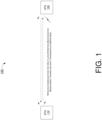
- FIG. 1 illustrates an example network environment 100 in which various solutions and schemes in accordance with the present disclosure may be implemented.
- FIG. 2 ⁇ FIG. 8 illustrate examples of implementation of various proposed schemes in network environment 100 in accordance with the present disclosure. The following description of various proposed schemes is provided with reference to FIG. 1 ⁇ FIG. 8.
- network environment 100 may involve at least a STA 110 communicating wirelessly with a STA 120.
- STA 110 and STA 120 may be a non-access point (non-AP) STA or, alternatively, either of STA 110 and STA 120 may function as an access point (AP) STA.
- AP access point
- Each of STA 110 and STA 120 may be a 60GHz-capable MLO STA.
- STA 110 and STA 120 may be associated with a basic service set (BSS) in accordance with one or more IEEE 802.11 standards (e.g., IEEE 802.11be and future-developed standards).
- BSS basic service set
- Each of STA 110 and STA 120 may be configured to communicate with each other by utilizing the techniques pertaining to MLO assisted 60GHz beamforming training and data transmission in wireless communications in accordance with various proposed schemes described below, with each of STA 110 and STA 120 functioning as an AP, a 60GHz-capable MLO STA, a beamformer or a beamformee, respectively, in each of the illustrative and non-limiting examples shown in FIG. 2 ⁇ FIG. 6 . It is noteworthy that, while the various proposed schemes may be individually or separately described below, in actual implementations some or all of the proposed schemes may be utilized or otherwise implemented jointly. Of course, each of the proposed schemes may be utilized or otherwise implemented individually or separately.
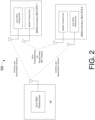
- FIG. 2 illustrates an example scenario 200 with respect to MLO 60GHz systems under a proposed scheme in accordance with the present disclosure.
- an AP and a 60GHz-capable MLO STA may use one or more sub-7GHz bands (e.g., 2.4GHz, 5GHz and/or 6GHZ) to associate with each other.
- sub-7GHz bands e.g., 2.4GHz, 5GHz and/or 6GHZ
- the AP may not be able to communicate with the STAs in the 60GHz band.
- discovery and association of 60GHz-capable MLO STAs need to be done via one or more sub-7GHz bands with MLO, each of the 60GHz-capable MLO STAs needs to report its one or more 60GHz capabilities to the AP.
- the AP may set up a 60GHz operation period for 60GHz data transmissions or beamforming training among the group of 60GHz-capable MLO STAs. Also, each of the 60GHz-capable MLO STAs may transmit its request(s) of 60GHz data transmissions or beamforming training to the AP. Accordingly, transmissions and/or beamforming training may be done in the 60GHz band during the 60GHz operation period. It is noteworthy that signal exchange over sub-7GHz bands may or may not be necessary during the 60GHz operation period.
- the AP may set up a 60GHz operation period during which STA1 and STA2 may perform, in the 60GHz band, data transmission(s) and/or beamforming training (which may or may not require any signal exchange between STA1 and STA2 over one or more sub-7GHz bands).
- FIG. 3 illustrates an example scenario 300 with respect to MLO assisted 60GHz beamforming training under a proposed scheme in accordance with the present disclosure.
- a sub-7GHz link may be utilized to assist 60GHz beamforming training, as the sub-7Ghz link may have a longer range than a 60GHz link.
- NDPA null data packet announcement
- a sub-7GHz band e.g., 2.4GHz, 5GHz or 6GHz
- pre-beamformed e.g., using predefined beambook(s) or sector(s)
- NDPs null data packets
- the sub-7GHz link may be utilized to exchange beamforming training results and signaling. For instance, a sector identifier (ID) or beambook ID and/or channel state information (CSI) may be fed back via the sub-7GHz link.
- ID sector identifier
- CSI channel state information
- a sub-7GHz link may be utilized to assist 60GHz beamforming training.
- the sub-7GHz link may be utilized by STA1 and STA2 to exchange beamforming training results and signaling (e.g., sector ID, beambook ID and/or CSI as feedbacks), while pre-beamformed NDPs (e.g., using predefined beambook(s) or sector(s)) may be transmitted between STA1 and STA2 in the 60GHz band as part of MLO assisted 60GHz beamforming training.
- beamforming training results and signaling e.g., sector ID, beambook ID and/or CSI as feedbacks
- pre-beamformed NDPs e.g., using predefined beambook(s) or sector(s)
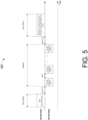
- FIG. 4 illustrates an example scenario 400 with respect to trigger-based MLO assisted 60GHz beamforming training, which is initiated by a beamformer, under a proposed scheme in accordance with the present disclosure.
- the MLO assisted 60GHz beamforming training may be triggered by the beamformer, and thus such beamforming training may be regarded as forward link beamforming training.
- an NDPA may be transmitted in a sub 7GHz band by the beamformer.
- the interval between sub-7GHz and 60GHz transmissions may be herein referred to as a MLO-transmission period (MLO-TP), and the MLO-TP may be much longer than a short inter-frame spacing (SIFS).
- MLO-TP MLO-transmission period
- SIFS short inter-frame spacing
- pre-BF sounding NDPs may be transmitted in the 60GHz band by the beamformer.
- the interval between pre-sounding NDPs may be herein referred to as a NDP inter-frame spacing (NIFS), and the NIFS may be much shorter than the SIFS.
- NIFS NDP inter-frame spacing
- pre-BF sounding NDPs may be beamformed with different beamform codewords. For instance, a pre-BF sounding NDP n may be beamformed with an n th codeword in a predefined beambook. Each codeword in the predefined beambook may be indicated by its index in the beambook.
- BFRP beamforming report poll
- the CSI may be in a compressed format similar to the compressed beamforming feedback as defined in the IEEE 802.1 1ax/be standards.
- a plurality of sequential pre-BF sounding NDPs may be transmitted in the 60GHz band by the beamformer.
- the interval between pre-sounding NDPs may be herein referred to as a NIFS, and the NIFS may be much shorter than the SIFS.
- pre-BF sounding NDPs may be beamformed with different beamform codewords. For instance, a pre-BF sounding NDP n may be beamformed with an n th codeword in a predefined beambook. Each codeword in the predefined beambook may be indicated by its index in the beambook.
- feedbacks and a BFRP trigger may be transmitted in the sub-7GHz band by the beamformee. Additionally, the best K beambook indexes and/or the corresponding CSI may be fed back using the sub-7GHz band.
- the CSI may be in a compressed format similar to the compressed beamforming feedback as defined in the IEEE 802.11 ax/be standards.
- FIG. 6 illustrates an example scenario 600 with respect to MLO assisted 60GHz data transmissions under a proposed scheme in accordance with the present disclosure.
- 60GHz beamforming may be set up between 60GHz-capable MLO STA pairs.
- data transmissions may be performed in the 60GHz band with a beamformed link between 60GHz-capable MLO STA pairs.
- 60GHz-capable MLO STAs may use one or more sub-7GHz bands (e.g., 2.4GHz, 5GHz and/or 6GHz) to coordinate 60GHz data transmissions.
- a 60GHz transmission period may be set up via a sub-7GHz link.
- sub-7GHz link may also be utilized as a part of data transmission using MLO.
- 60GHz beamforming may be set up between 60GHz-capable MLO STA1 and 60GHz-capable MLO STA2. Accordingly, data transmissions may be performed over a 60GHz link in the 60GHz band with a beamformed link between STA1 and STA2. Moreover, a sub-7GHz link may be utilized by STA1 and STA2 to coordinate data transmissions in the 60GHz band. For instance, a 60GHz transmission period may be negotiated, coordinated or otherwise set up between STA1 and STA2 by utilizing the sub-7GHz band. Furthermore, the sub-7GHz band may also be utilized in data transmissions (along with the 60GHz link) as part of MLO.
- FIG. 7 illustrates an example system 700 having at least an example apparatus 710 and an example apparatus 720 in accordance with an implementation of the present disclosure.
- apparatus 710 and apparatus 720 may perform various functions to implement schemes, techniques, processes and methods described herein pertaining to MLO assisted 60GHz beamforming training and data transmission in wireless communications, including the various schemes described above with respect to various proposed designs, concepts, schemes, systems and methods described above as well as processes described below.
- apparatus 710 may be implemented in STA 110 and apparatus 720 may be implemented in STA 120, or vice versa.
- Each of apparatus 710 and apparatus 720 may be a part of an electronic apparatus, which may be a non-AP STA or an AP STA, such as a portable or mobile apparatus, a wearable apparatus, a wireless communication apparatus or a computing apparatus.
- an electronic apparatus which may be a non-AP STA or an AP STA, such as a portable or mobile apparatus, a wearable apparatus, a wireless communication apparatus or a computing apparatus.
- each of apparatus 710 and apparatus 720 may be implemented in a smartphone, a smart watch, a personal digital assistant, a digital camera, or a computing equipment such as a tablet computer, a laptop computer or a notebook computer.
- Each of apparatus 710 and apparatus 720 may also be a part of a machine type apparatus, which may be an IoT apparatus such as an immobile or a stationary apparatus, a home apparatus, a wire communication apparatus or a computing apparatus.
- each of apparatus 710 and apparatus 720 may be implemented in a smart thermostat, a smart fridge, a smart door lock, a wireless speaker or a home control center.
- apparatus 710 and/or apparatus 720 may be implemented in a network node, such as an AP in a WLAN.
- each of apparatus 710 and apparatus 720 may be implemented in the form of one or more integrated-circuit (IC) chips such as, for example and without limitation, one or more single-core processors, one or more multi-core processors, one or more reduced-instruction set computing (RISC) processors, or one or more complex-instruction-set-computing (CISC) processors.
- IC integrated-circuit
- RISC reduced-instruction set computing
- CISC complex-instruction-set-computing
- each of apparatus 710 and apparatus 720 may be implemented in or as a STA or an AP.
- Each of apparatus 710 and apparatus 720 may include at least some of those components shown in FIG. 7 such as a processor 712 and a processor 722, respectively, for example.
- Each of apparatus 710 and apparatus 720 may further include one or more other components not pertinent to the proposed scheme of the present disclosure (e.g., internal power supply, display device and/or user interface device), and, thus, such component(s) of apparatus 710 and apparatus 720 are neither shown in FIG. 7 nor described below in the interest of simplicity and brevity.
- other components e.g., internal power supply, display device and/or user interface device
- each of processor 712 and processor 722 may be implemented in the form of one or more single-core processors, one or more multi-core processors, one or more RISC processors or one or more CISC processors. That is, even though a singular term "a processor" is used herein to refer to processor 712 and processor 722, each of processor 712 and processor 722 may include multiple processors in some implementations and a single processor in other implementations in accordance with the present disclosure.
- each of processor 712 and processor 722 may be implemented in the form of hardware (and, optionally, firmware) with electronic components including, for example and without limitation, one or more transistors, one or more diodes, one or more capacitors, one or more resistors, one or more inductors, one or more memristors and/or one or more varactors that are configured and arranged to achieve specific purposes in accordance with the present disclosure.
- each of processor 712 and processor 722 is a special-purpose machine specifically designed, arranged and configured to perform specific tasks including those pertaining to MLO assisted 60GHz beamforming training and data transmission in wireless communications in accordance with various implementations of the present disclosure.
- apparatus 710 may also include a transceiver 716 coupled to processor 712.
- Transceiver 716 may include a transmitter capable of wirelessly transmitting and a receiver capable of wirelessly receiving data.
- apparatus 720 may also include a transceiver 726 coupled to processor 722.
- Transceiver 726 may include a transmitter capable of wirelessly transmitting and a receiver capable of wirelessly receiving data.
- transceiver 716 and transceiver 726 are illustrated as being external to and separate from processor 712 and processor 722, respectively, in some implementations, transceiver 716 may be an integral part of processor 712 as a system on chip (SoC), and transceiver 726 may be an integral part of processor 722 as a SoC.
- SoC system on chip
- apparatus 710 may further include a memory 714 coupled to processor 712 and capable of being accessed by processor 712 and storing data therein.
- apparatus 720 may further include a memory 724 coupled to processor 722 and capable of being accessed by processor 722 and storing data therein.
- RAM random-access memory
- DRAM dynamic RAM
- SRAM static RAM
- T-RAM thyristor RAM
- Z-RAM zero-capacitor RAM
- each of memory 714 and memory 724 may include a type of read-only memory (ROM) such as mask ROM, programmable ROM (PROM), erasable programmable ROM (EPROM) and/or electrically erasable programmable ROM (EEPROM).
- ROM read-only memory
- PROM programmable ROM
- EPROM erasable programmable ROM
- EEPROM electrically erasable programmable ROM
- each of memory 714 and memory 724 may include a type of non-volatile random-access memory (NVRAM) such as flash memory, solid-state memory, ferroelectric RAM (FeRAM), magnetoresistive RAM (MRAM) and/or phase-change memory.
- NVRAM non-volatile random-access memory
- Each of apparatus 710 and apparatus 720 may be a communication entity capable of communicating with each other using various proposed schemes in accordance with the present disclosure.
- a description of capabilities of apparatus 710, as STA 110, and apparatus 720, as STA 120, is provided below. It is noteworthy that, although a detailed description of capabilities, functionalities and/or technical features of apparatus 720 is provided below, the same may be applied to apparatus 710 although a detailed description thereof is not provided solely in the interest of brevity. It is also noteworthy that, although the example implementations described below are provided in the context of WLAN, the same may be implemented in other types of networks.
- processor 712 of apparatus 710 may perform, via transceiver 716, performing, by a processor of an apparatus, MLO assisted 60GHz operations. For instance, processor 712 may perform discovery and association. Moreover, processor 712 may perform either or both of beamforming training and data transmission in a 60GHz band.
- processor 712 may exchange control and management signals with an AP via one or more sub-7GHz bands.
- the one or more sub-7GHz bands may include one or more of a 2.4GHz band, a 5GHz band and a 6GHz band.
- processor 712 in exchanging the control and management signals with the AP, may perform certain operations. For instance, processor 712 may report one or more 60GHz capabilities to the AP. Additionally, processor 712 may transmit one or more requests for either or both of the beamforming training and the data transmission to the AP. In some implementations, in performing either or both of the beamforming training and the data transmission, processor 712 may perform either or both of the beamforming training and the data transmission during a 60GHz operation period set up by the AP.
- processor 712 may perform a forward link beamforming training as a beamformer. For instance, processor 712 may transmit an NDPA in a sub-7GHz band. Additionally, processor 712 may transmit one or more pre-beamformed sounding NDPs in the 60GHz band. Moreover, processor 712 may transmit a BFRP trigger in the sub-7GHz band. Furthermore, processor 712 may receive either or both of one or more beambook indexes and CSI from a beamformee in the sub-7GHz band. In some implementations, a first interval between the NDPA transmitted in the sub-7GHz band and a beginning of the one or more pre-beamformed sounding NDPs transmitted in the 60GHz may be an MLO-TP.
- a second interval between every two adjacent pre-beamformed sounding NDPs of the one or more pre-beamformed sounding NDPs may be an NIFS.
- a third interval between an end of the one or more pre-beamformed sounding NDPs transmitted in the 60GHz and the BFRP trigger transmitted in the sub-7GHz band may be the MLO-TP.
- a fourth interval between the BFRP trigger and either or both of the one or more beambook indexes and CSI may be a SIFS.
- the MLO-TP may be greater than the SIFS, which may be greater than the NIFS.
- processor 712 may perform a reversed link beamforming training as a beamformee. For instance, processor 712 may transmit an NDPA in a sub-7GHz band. Additionally, processor 712 may receive one or more pre-beamformed sounding NDPs in the 60GHz band. Moreover, processor 712 may transmit either or both of one or more beambook indexes and CSI from a beamformee in the sub-7GHz band. In some implementations, a first interval between the NDPA transmitted in the sub-7GHz band and a beginning of the one or more pre-beamformed sounding NDPs received in the 60GHz may be an MLO-TP.
- a second interval between every two adjacent pre-beamformed sounding NDPs of the one or more pre-beamformed sounding NDPs may be an NIFS.
- a third interval between an end of the one or more pre-beamformed sounding NDPs received in the 60GHz and either or both of the one or more beambook indexes and CSI transmitted in the sub-7GHz band may be the MLO-TP, with the MLO-TP being greater than the NIFS.
- processor 712 may perform the data transmission over a beamformed link in the 60GHz band after a forward link beamforming training and a reversed link beamforming training. Alternatively, or additionally, in performing the data transmission, processor 712 may perform the data transmission during a 60GHz transmission period that is set up by using a sub-7GHz link. Alternatively, or additionally, in performing the data transmission, processor 712 may perform the data transmission via a 60GHz link and the sub-7GHz link.
- FIG. 8 illustrates an example process 800 in accordance with an implementation of the present disclosure.
- Process 800 may represent an aspect of implementing various proposed designs, concepts, schemes, systems and methods described above. More specifically, process 800 may represent an aspect of the proposed concepts and schemes pertaining to MLO assisted 60GHz beamforming training and data transmission in wireless communications in accordance with the present disclosure.
- Process 800 may include one or more operations, actions, or functions as illustrated by one or more of blocks 810 as well as sub-blocks 812 and 814. Although illustrated as discrete blocks, various blocks of process 800 may be divided into additional blocks, combined into fewer blocks, or eliminated, depending on the desired implementation. Moreover, the blocks/sub-blocks of process 800 may be executed in the order shown in FIG. 8 or, alternatively in a different order.
- Process 800 may be implemented by or in apparatus 710 and apparatus 720 as well as any variations thereof. Solely for illustrative purposes and without limiting the scope, process 800 is described below in the context of apparatus 710 implemented in or as STA 110 functioning as a non-AP STA and apparatus 720 implemented in or as STA 120 functioning as an AP STA of a wireless network such as a WLAN in network environment 100 in accordance with one or more of IEEE 802.11 standards. Process 800 may begin at block 810.
- process 800 may involve processor 712 of apparatus 710 performing, via transceiver 716, performing, by a processor of an apparatus, MLO assisted 60GHz operations, which may be represented by 812 and 814.
- process 800 may involve processor 712 performing discovery and association. Process 800 may proceed from 812 to 814.
- process 800 may involve processor 712 performing either or both of beamforming training and data transmission in a 60GHz band.
- process 800 may involve processor 712 exchanging control and management signals with an AP via one or more sub-7GHz bands.
- the one or more sub-7GHz bands may include one or more of a 2.4GHz band, a 5GHz band and a 6GHz band.
- process 800 in exchanging the control and management signals with the AP, may involve processor 712 performing certain operations. For instance, process 800 may involve processor 712 reporting one or more 60GHz capabilities to the AP. Additionally, process 800 may involve processor 712 transmitting one or more requests for either or both of the beamforming training and the data transmission to the AP. In some implementations, in performing either or both of the beamforming training and the data transmission, process 800 may involve processor 712 performing either or both of the beamforming training and the data transmission during a 60GHz operation period set up by the AP.
- process 800 in performing the beamforming training, may involve processor 712 performing certain operations. For instance, process 800 may involve processor 712 transmitting one or more pre-beamformed NDPs in the 60GHz band. Moreover, process 800 may involve processor 712 exchanging beamforming training results and signaling via a sub-7GHz link. In some implementations, in exchanging the beamforming training results and signaling, process 800 may involve processor 712 feedbacking back one or more of a sector ID, beambook ID and CSI.
- a first interval between the NDPA transmitted in the sub-7GHz band and a beginning of the one or more pre-beamformed sounding NDPs transmitted in the 60GHz may be an MLO-TP.
- a second interval between every two adjacent pre-beamformed sounding NDPs of the one or more pre-beamformed sounding NDPs may be an NIFS.
- a third interval between an end of the one or more pre-beamformed sounding NDPs transmitted in the 60GHz and the BFRP trigger transmitted in the sub-7GHz band may be the MLO-TP.
- a fourth interval between the BFRP trigger and either or both of the one or more beambook indexes and CSI may be a SIFS.
- the MLO-TP may be greater than the SIFS, which may be greater than the NIFS.
- a second interval between every two adjacent pre-beamformed sounding NDPs of the one or more pre-beamformed sounding NDPs may be an NIFS.
- a third interval between an end of the one or more pre-beamformed sounding NDPs received in the 60GHz and either or both of the one or more beambook indexes and CSI transmitted in the sub-7GHz band may be the MLO-TP, with the MLO-TP being greater than the NIFS.
- process 800 may involve processor 712 performing the data transmission over a beamformed link in the 60GHz band after a forward link beamforming training and a reversed link beamforming training. Alternatively, or additionally, in performing the data transmission, process 800 may involve processor 712 performing the data transmission during a 60GHz transmission period that is set up by using a sub-7GHz link. Alternatively, or additionally, in performing the data transmission, process 800 may involve processor 712 performing the data transmission via a 60GHz link and the sub-7GHz link.
- any two components so associated can also be viewed as being “operably connected”, or “operably coupled”, to each other to achieve the desired functionality, and any two components capable of being so associated can also be viewed as being “operably couplable”, to each other to achieve the desired functionality.
- operably couplable include but are not limited to physically mateable and/or physically interacting components and/or wirelessly interactable and/or wirelessly interacting components and/or logically interacting and/or logically interactable components.
Landscapes
- Engineering & Computer Science (AREA)
- Computer Networks & Wireless Communication (AREA)
- Signal Processing (AREA)
- Mobile Radio Communication Systems (AREA)
Applications Claiming Priority (2)
| Application Number | Priority Date | Filing Date | Title |
|---|---|---|---|
| US202263332740P | 2022-04-20 | 2022-04-20 | |
| US18/136,323 US20230344480A1 (en) | 2022-04-20 | 2023-04-18 | Multi-Link Operation Assisted 60GHz Beamforming Training And Data Transmission In Wireless Communications |
Publications (2)
| Publication Number | Publication Date |
|---|---|
| EP4266594A2 true EP4266594A2 (de) | 2023-10-25 |
| EP4266594A3 EP4266594A3 (de) | 2024-05-15 |
Family
ID=86095938
Family Applications (1)
| Application Number | Title | Priority Date | Filing Date |
|---|---|---|---|
| EP23168762.5A Pending EP4266594A3 (de) | 2022-04-20 | 2023-04-19 | Durch mehrfachverbindungsbetrieb unterstütztes 60-ghz-strahlformungstraining und datenübertragung in der drahtlosen kommunikation |
Country Status (3)
| Country | Link |
|---|---|
| US (1) | US20230344480A1 (de) |
| EP (1) | EP4266594A3 (de) |
| TW (1) | TWI845269B (de) |
Families Citing this family (1)
| Publication number | Priority date | Publication date | Assignee | Title |
|---|---|---|---|---|
| US20240283506A1 (en) * | 2023-02-21 | 2024-08-22 | Cisco Technology, Inc. | Predicting connection issues in a wireless band |
Family Cites Families (13)
| Publication number | Priority date | Publication date | Assignee | Title |
|---|---|---|---|---|
| JP4858555B2 (ja) * | 2009-02-19 | 2012-01-18 | ソニー株式会社 | 通信装置、通信方法、および通信システム |
| JP2011223135A (ja) * | 2010-04-06 | 2011-11-04 | Sony Corp | 通信装置及び通信方法、並びに通信システム |
| KR102109476B1 (ko) * | 2012-09-04 | 2020-05-12 | 한국전자통신연구원 | 채널 액세스 장치 및 그 방법 |
| US9923702B2 (en) * | 2013-01-25 | 2018-03-20 | Mediatek Singapore Pte. Ltd. | Sectorization feedback and multi-sector transmission in wireless networks |
| US9198215B2 (en) * | 2013-03-01 | 2015-11-24 | Qualcomm Incorporated | Peer connectivity using reciprocal wireless connections |
| CN118574241A (zh) * | 2013-03-15 | 2024-08-30 | 交互数字专利控股公司 | 用于无线lan系统的多频带操作 |
| US10158413B2 (en) * | 2015-05-08 | 2018-12-18 | Newracom, Inc. | Uplink sounding for WLAN system |
| CN108141270B (zh) * | 2015-11-05 | 2021-09-28 | 英特尔公司 | 波束形成的装置、系统和方法 |
| WO2018017161A1 (en) * | 2016-07-20 | 2018-01-25 | Intel IP Corporation | Lwa enhancements for tri-band (2.4 ghz, 5 ghz, and 60 ghz) wi-fi equipment |
| WO2019005038A1 (en) * | 2017-06-28 | 2019-01-03 | Intel Corporation | NAN FOR DEVICES WITH 60 GHz CAPACITY |
| US12035225B2 (en) * | 2019-04-24 | 2024-07-09 | Hewlett Packard Enterprise Development Lp | Multi-band channel scanning |
| US12543115B2 (en) * | 2020-06-15 | 2026-02-03 | Lg Electronics Inc. | Method and apparatus for performing sensing in wireless LAN system |
| US12463761B2 (en) * | 2021-12-24 | 2025-11-04 | Intel Corporation | Apparatus, system, and method of a transmit sector sweep (TXSS) procedure over a millimeterwave (mmWave) wireless communication channel |
-
2023
- 2023-04-18 US US18/136,323 patent/US20230344480A1/en active Pending
- 2023-04-19 EP EP23168762.5A patent/EP4266594A3/de active Pending
- 2023-04-20 TW TW112114738A patent/TWI845269B/zh active
Also Published As
| Publication number | Publication date |
|---|---|
| EP4266594A3 (de) | 2024-05-15 |
| TW202343988A (zh) | 2023-11-01 |
| US20230344480A1 (en) | 2023-10-26 |
| TWI845269B (zh) | 2024-06-11 |
Similar Documents
| Publication | Publication Date | Title |
|---|---|---|
| US11825460B2 (en) | Extreme-high-throughput multi-link dynamic antenna switching in wireless communications | |
| US20250226947A1 (en) | Sounding Schemes Using Distributed Tones In Wireless Communications | |
| US12562839B2 (en) | Detailed signaling designs for distributed-tone resource unit transmission | |
| US12369171B2 (en) | System parameters transmission scheme in wireless communications | |
| WO2021155842A1 (en) | Method and apparatus for channel state information reporting | |
| US20240097820A1 (en) | Performance Enhancement Of RU Duplication With Predefined Interleaving Patterns In Wireless Communications | |
| US12133202B2 (en) | Bandwidth indication with preamble puncturing in wireless communications | |
| WO2024001678A1 (en) | Dynamic beam indication for network-controlled forwarding in mobile communications | |
| EP4266765A1 (de) | Dynamische anfangsauslöser-rahmensteuerung in emlsr | |
| US20230344480A1 (en) | Multi-Link Operation Assisted 60GHz Beamforming Training And Data Transmission In Wireless Communications | |
| US20230117111A1 (en) | Coverage Enhancement For 6GHz Long Range Wireless Communications | |
| CN116915297A (zh) | 无线通信方法及装置 | |
| EP4300861A1 (de) | Drahtloskommunikationsverfahren, endgerätevorrichtung und netzwerkvorrichtung | |
| US12549320B2 (en) | Channelization of 60GHz band for next-generation WLAN | |
| WO2025209334A1 (en) | Enhanced single-user sounding and feedback in wlan communications | |
| EP4422085A1 (de) | Auslöserbasierte implizite rückkopplung für implizite strahlformung in der drahtlosen kommunikation | |
| WO2025146163A1 (en) | Ultra-high-reliable coordinated beamforming sounding in wireless communications | |
| WO2025051265A1 (en) | Method and apparatus for low complexity design of distributed high-rank mimo transmission in mobile communications | |
| US12634991B2 (en) | Anti-motion and anti-interference frame exchange sequences in wireless communications | |
| US20240073972A1 (en) | Primary Link Identification Schemes In Wireless Communications | |
| US20240188130A1 (en) | Anti-Motion And Anti-Interference Frame Exchange Sequences In Wireless Communications | |
| WO2025031490A1 (en) | Emlsr sst operations in wireless communications | |
| WO2025036466A1 (en) | Asymmetric coordinated beam forming multi-access point schemes in wireless communications | |
| WO2026061471A1 (en) | Uhr obss sounding feedback improvement and coordinated beamforming transmission schemes in wireless communications | |
| WO2025124471A1 (en) | Signaling designs enabling unequal modulation transmission on spatial streams in wireless communications |
Legal Events
| Date | Code | Title | Description |
|---|---|---|---|
| STAA | Information on the status of an ep patent application or granted ep patent |
Free format text: STATUS: THE APPLICATION HAS BEEN PUBLISHED |
|
| PUAI | Public reference made under article 153(3) epc to a published international application that has entered the european phase |
Free format text: ORIGINAL CODE: 0009012 |
|
| AK | Designated contracting states |
Kind code of ref document: A2 Designated state(s): AL AT BE BG CH CY CZ DE DK EE ES FI FR GB GR HR HU IE IS IT LI LT LU LV MC ME MK MT NL NO PL PT RO RS SE SI SK SM TR |
|
| PUAL | Search report despatched |
Free format text: ORIGINAL CODE: 0009013 |
|
| AK | Designated contracting states |
Kind code of ref document: A3 Designated state(s): AL AT BE BG CH CY CZ DE DK EE ES FI FR GB GR HR HU IE IS IT LI LT LU LV MC ME MK MT NL NO PL PT RO RS SE SI SK SM TR |
|
| RIC1 | Information provided on ipc code assigned before grant |
Ipc: H04B 7/06 20060101AFI20240409BHEP |
|
| STAA | Information on the status of an ep patent application or granted ep patent |
Free format text: STATUS: REQUEST FOR EXAMINATION WAS MADE |
|
| 17P | Request for examination filed |
Effective date: 20241031 |
|
| RBV | Designated contracting states (corrected) |
Designated state(s): AL AT BE BG CH CY CZ DE DK EE ES FI FR GB GR HR HU IE IS IT LI LT LU LV MC ME MK MT NL NO PL PT RO RS SE SI SK SM TR |
|
| STAA | Information on the status of an ep patent application or granted ep patent |
Free format text: STATUS: EXAMINATION IS IN PROGRESS |
|
| 17Q | First examination report despatched |
Effective date: 20251106 |