EP4266428A1 - Conductor pre-dispersion slurry for secondary battery electrode, preparation method therefor, electrode manufactured by applying conductor pre-dispersion slurry, and secondary battery comprising same electrode - Google Patents
Conductor pre-dispersion slurry for secondary battery electrode, preparation method therefor, electrode manufactured by applying conductor pre-dispersion slurry, and secondary battery comprising same electrode Download PDFInfo
- Publication number
- EP4266428A1 EP4266428A1 EP21911339.6A EP21911339A EP4266428A1 EP 4266428 A1 EP4266428 A1 EP 4266428A1 EP 21911339 A EP21911339 A EP 21911339A EP 4266428 A1 EP4266428 A1 EP 4266428A1
- Authority
- EP
- European Patent Office
- Prior art keywords
- conductive material
- secondary battery
- cellulose
- dispersed slurry
- cnts
- Prior art date
- Legal status (The legal status is an assumption and is not a legal conclusion. Google has not performed a legal analysis and makes no representation as to the accuracy of the status listed.)
- Pending
Links
Images


Classifications
-
- H—ELECTRICITY
- H01—ELECTRIC ELEMENTS
- H01M—PROCESSES OR MEANS, e.g. BATTERIES, FOR THE DIRECT CONVERSION OF CHEMICAL ENERGY INTO ELECTRICAL ENERGY
- H01M4/00—Electrodes
- H01M4/02—Electrodes composed of, or comprising, active material
- H01M4/62—Selection of inactive substances as ingredients for active masses, e.g. binders, fillers
- H01M4/624—Electric conductive fillers
- H01M4/625—Carbon or graphite
-
- H—ELECTRICITY
- H01—ELECTRIC ELEMENTS
- H01M—PROCESSES OR MEANS, e.g. BATTERIES, FOR THE DIRECT CONVERSION OF CHEMICAL ENERGY INTO ELECTRICAL ENERGY
- H01M4/00—Electrodes
- H01M4/02—Electrodes composed of, or comprising, active material
- H01M4/62—Selection of inactive substances as ingredients for active masses, e.g. binders, fillers
-
- C—CHEMISTRY; METALLURGY
- C01—INORGANIC CHEMISTRY
- C01B—NON-METALLIC ELEMENTS; COMPOUNDS THEREOF; METALLOIDS OR COMPOUNDS THEREOF NOT COVERED BY SUBCLASS C01C
- C01B32/00—Carbon; Compounds thereof
- C01B32/15—Nano-sized carbon materials
- C01B32/158—Carbon nanotubes
- C01B32/168—After-treatment
-
- C—CHEMISTRY; METALLURGY
- C01—INORGANIC CHEMISTRY
- C01B—NON-METALLIC ELEMENTS; COMPOUNDS THEREOF; METALLOIDS OR COMPOUNDS THEREOF NOT COVERED BY SUBCLASS C01C
- C01B32/00—Carbon; Compounds thereof
- C01B32/15—Nano-sized carbon materials
- C01B32/158—Carbon nanotubes
- C01B32/168—After-treatment
- C01B32/174—Derivatisation; Solubilisation; Dispersion in solvents
-
- C—CHEMISTRY; METALLURGY
- C01—INORGANIC CHEMISTRY
- C01B—NON-METALLIC ELEMENTS; COMPOUNDS THEREOF; METALLOIDS OR COMPOUNDS THEREOF NOT COVERED BY SUBCLASS C01C
- C01B32/00—Carbon; Compounds thereof
- C01B32/20—Graphite
-
- C—CHEMISTRY; METALLURGY
- C09—DYES; PAINTS; POLISHES; NATURAL RESINS; ADHESIVES; COMPOSITIONS NOT OTHERWISE PROVIDED FOR; APPLICATIONS OF MATERIALS NOT OTHERWISE PROVIDED FOR
- C09D—COATING COMPOSITIONS, e.g. PAINTS, VARNISHES OR LACQUERS; FILLING PASTES; CHEMICAL PAINT OR INK REMOVERS; INKS; CORRECTING FLUIDS; WOODSTAINS; PASTES OR SOLIDS FOR COLOURING OR PRINTING; USE OF MATERIALS THEREFOR
- C09D101/00—Coating compositions based on cellulose, modified cellulose, or cellulose derivatives
- C09D101/08—Cellulose derivatives
- C09D101/26—Cellulose ethers
- C09D101/28—Alkyl ethers
- C09D101/286—Alkyl ethers substituted with acid radicals
-
- C—CHEMISTRY; METALLURGY
- C09—DYES; PAINTS; POLISHES; NATURAL RESINS; ADHESIVES; COMPOSITIONS NOT OTHERWISE PROVIDED FOR; APPLICATIONS OF MATERIALS NOT OTHERWISE PROVIDED FOR
- C09D—COATING COMPOSITIONS, e.g. PAINTS, VARNISHES OR LACQUERS; FILLING PASTES; CHEMICAL PAINT OR INK REMOVERS; INKS; CORRECTING FLUIDS; WOODSTAINS; PASTES OR SOLIDS FOR COLOURING OR PRINTING; USE OF MATERIALS THEREFOR
- C09D129/00—Coating compositions based on homopolymers or copolymers of compounds having one or more unsaturated aliphatic radicals, each having only one carbon-to-carbon double bond, and at least one being terminated by an alcohol, ether, aldehydo, ketonic, acetal, or ketal radical; Coating compositions based on hydrolysed polymers of esters of unsaturated alcohols with saturated carboxylic acids; Coating compositions based on derivatives of such polymers
- C09D129/02—Homopolymers or copolymers of unsaturated alcohols
- C09D129/04—Polyvinyl alcohol; Partially hydrolysed homopolymers or copolymers of esters of unsaturated alcohols with saturated carboxylic acids
-
- C—CHEMISTRY; METALLURGY
- C09—DYES; PAINTS; POLISHES; NATURAL RESINS; ADHESIVES; COMPOSITIONS NOT OTHERWISE PROVIDED FOR; APPLICATIONS OF MATERIALS NOT OTHERWISE PROVIDED FOR
- C09D—COATING COMPOSITIONS, e.g. PAINTS, VARNISHES OR LACQUERS; FILLING PASTES; CHEMICAL PAINT OR INK REMOVERS; INKS; CORRECTING FLUIDS; WOODSTAINS; PASTES OR SOLIDS FOR COLOURING OR PRINTING; USE OF MATERIALS THEREFOR
- C09D133/00—Coating compositions based on homopolymers or copolymers of compounds having one or more unsaturated aliphatic radicals, each having only one carbon-to-carbon double bond, and at least one being terminated by only one carboxyl radical, or of salts, anhydrides, esters, amides, imides, or nitriles thereof; Coating compositions based on derivatives of such polymers
- C09D133/02—Homopolymers or copolymers of acids; Metal or ammonium salts thereof
-
- C—CHEMISTRY; METALLURGY
- C09—DYES; PAINTS; POLISHES; NATURAL RESINS; ADHESIVES; COMPOSITIONS NOT OTHERWISE PROVIDED FOR; APPLICATIONS OF MATERIALS NOT OTHERWISE PROVIDED FOR
- C09D—COATING COMPOSITIONS, e.g. PAINTS, VARNISHES OR LACQUERS; FILLING PASTES; CHEMICAL PAINT OR INK REMOVERS; INKS; CORRECTING FLUIDS; WOODSTAINS; PASTES OR SOLIDS FOR COLOURING OR PRINTING; USE OF MATERIALS THEREFOR
- C09D133/00—Coating compositions based on homopolymers or copolymers of compounds having one or more unsaturated aliphatic radicals, each having only one carbon-to-carbon double bond, and at least one being terminated by only one carboxyl radical, or of salts, anhydrides, esters, amides, imides, or nitriles thereof; Coating compositions based on derivatives of such polymers
- C09D133/24—Homopolymers or copolymers of amides or imides
- C09D133/26—Homopolymers or copolymers of acrylamide or methacrylamide
-
- C—CHEMISTRY; METALLURGY
- C09—DYES; PAINTS; POLISHES; NATURAL RESINS; ADHESIVES; COMPOSITIONS NOT OTHERWISE PROVIDED FOR; APPLICATIONS OF MATERIALS NOT OTHERWISE PROVIDED FOR
- C09D—COATING COMPOSITIONS, e.g. PAINTS, VARNISHES OR LACQUERS; FILLING PASTES; CHEMICAL PAINT OR INK REMOVERS; INKS; CORRECTING FLUIDS; WOODSTAINS; PASTES OR SOLIDS FOR COLOURING OR PRINTING; USE OF MATERIALS THEREFOR
- C09D139/00—Coating compositions based on homopolymers or copolymers of compounds having one or more unsaturated aliphatic radicals, each having only one carbon-to-carbon double bond, and at least one being terminated by a single or double bond to nitrogen or by a heterocyclic ring containing nitrogen; Coating compositions based on derivatives of such polymers
- C09D139/04—Homopolymers or copolymers of monomers containing heterocyclic rings having nitrogen as ring member
- C09D139/06—Homopolymers or copolymers of N-vinyl-pyrrolidones
-
- C—CHEMISTRY; METALLURGY
- C09—DYES; PAINTS; POLISHES; NATURAL RESINS; ADHESIVES; COMPOSITIONS NOT OTHERWISE PROVIDED FOR; APPLICATIONS OF MATERIALS NOT OTHERWISE PROVIDED FOR
- C09D—COATING COMPOSITIONS, e.g. PAINTS, VARNISHES OR LACQUERS; FILLING PASTES; CHEMICAL PAINT OR INK REMOVERS; INKS; CORRECTING FLUIDS; WOODSTAINS; PASTES OR SOLIDS FOR COLOURING OR PRINTING; USE OF MATERIALS THEREFOR
- C09D5/00—Coating compositions, e.g. paints, varnishes or lacquers, characterised by their physical nature or the effects produced; Filling pastes
- C09D5/24—Electrically-conducting paints
-
- C—CHEMISTRY; METALLURGY
- C09—DYES; PAINTS; POLISHES; NATURAL RESINS; ADHESIVES; COMPOSITIONS NOT OTHERWISE PROVIDED FOR; APPLICATIONS OF MATERIALS NOT OTHERWISE PROVIDED FOR
- C09D—COATING COMPOSITIONS, e.g. PAINTS, VARNISHES OR LACQUERS; FILLING PASTES; CHEMICAL PAINT OR INK REMOVERS; INKS; CORRECTING FLUIDS; WOODSTAINS; PASTES OR SOLIDS FOR COLOURING OR PRINTING; USE OF MATERIALS THEREFOR
- C09D7/00—Features of coating compositions, not provided for in group C09D5/00; Processes for incorporating ingredients in coating compositions
- C09D7/40—Additives
- C09D7/45—Anti-settling agents
-
- C—CHEMISTRY; METALLURGY
- C09—DYES; PAINTS; POLISHES; NATURAL RESINS; ADHESIVES; COMPOSITIONS NOT OTHERWISE PROVIDED FOR; APPLICATIONS OF MATERIALS NOT OTHERWISE PROVIDED FOR
- C09D—COATING COMPOSITIONS, e.g. PAINTS, VARNISHES OR LACQUERS; FILLING PASTES; CHEMICAL PAINT OR INK REMOVERS; INKS; CORRECTING FLUIDS; WOODSTAINS; PASTES OR SOLIDS FOR COLOURING OR PRINTING; USE OF MATERIALS THEREFOR
- C09D7/00—Features of coating compositions, not provided for in group C09D5/00; Processes for incorporating ingredients in coating compositions
- C09D7/40—Additives
- C09D7/60—Additives non-macromolecular
- C09D7/61—Additives non-macromolecular inorganic
-
- C—CHEMISTRY; METALLURGY
- C09—DYES; PAINTS; POLISHES; NATURAL RESINS; ADHESIVES; COMPOSITIONS NOT OTHERWISE PROVIDED FOR; APPLICATIONS OF MATERIALS NOT OTHERWISE PROVIDED FOR
- C09D—COATING COMPOSITIONS, e.g. PAINTS, VARNISHES OR LACQUERS; FILLING PASTES; CHEMICAL PAINT OR INK REMOVERS; INKS; CORRECTING FLUIDS; WOODSTAINS; PASTES OR SOLIDS FOR COLOURING OR PRINTING; USE OF MATERIALS THEREFOR
- C09D7/00—Features of coating compositions, not provided for in group C09D5/00; Processes for incorporating ingredients in coating compositions
- C09D7/40—Additives
- C09D7/65—Additives macromolecular
-
- C—CHEMISTRY; METALLURGY
- C09—DYES; PAINTS; POLISHES; NATURAL RESINS; ADHESIVES; COMPOSITIONS NOT OTHERWISE PROVIDED FOR; APPLICATIONS OF MATERIALS NOT OTHERWISE PROVIDED FOR
- C09D—COATING COMPOSITIONS, e.g. PAINTS, VARNISHES OR LACQUERS; FILLING PASTES; CHEMICAL PAINT OR INK REMOVERS; INKS; CORRECTING FLUIDS; WOODSTAINS; PASTES OR SOLIDS FOR COLOURING OR PRINTING; USE OF MATERIALS THEREFOR
- C09D7/00—Features of coating compositions, not provided for in group C09D5/00; Processes for incorporating ingredients in coating compositions
- C09D7/40—Additives
- C09D7/70—Additives characterised by shape, e.g. fibres, flakes or microspheres
-
- C—CHEMISTRY; METALLURGY
- C09—DYES; PAINTS; POLISHES; NATURAL RESINS; ADHESIVES; COMPOSITIONS NOT OTHERWISE PROVIDED FOR; APPLICATIONS OF MATERIALS NOT OTHERWISE PROVIDED FOR
- C09D—COATING COMPOSITIONS, e.g. PAINTS, VARNISHES OR LACQUERS; FILLING PASTES; CHEMICAL PAINT OR INK REMOVERS; INKS; CORRECTING FLUIDS; WOODSTAINS; PASTES OR SOLIDS FOR COLOURING OR PRINTING; USE OF MATERIALS THEREFOR
- C09D7/00—Features of coating compositions, not provided for in group C09D5/00; Processes for incorporating ingredients in coating compositions
- C09D7/80—Processes for incorporating ingredients
-
- H—ELECTRICITY
- H01—ELECTRIC ELEMENTS
- H01B—CABLES; CONDUCTORS; INSULATORS; SELECTION OF MATERIALS FOR THEIR CONDUCTIVE, INSULATING OR DIELECTRIC PROPERTIES
- H01B1/00—Conductors or conductive bodies characterised by the conductive materials; Selection of materials as conductors
- H01B1/20—Conductive material dispersed in non-conductive organic material
- H01B1/24—Conductive material dispersed in non-conductive organic material the conductive material comprising carbon-silicon compounds, carbon or silicon
-
- H—ELECTRICITY
- H01—ELECTRIC ELEMENTS
- H01M—PROCESSES OR MEANS, e.g. BATTERIES, FOR THE DIRECT CONVERSION OF CHEMICAL ENERGY INTO ELECTRICAL ENERGY
- H01M4/00—Electrodes
- H01M4/02—Electrodes composed of, or comprising, active material
- H01M4/04—Processes of manufacture in general
- H01M4/0402—Methods of deposition of the material
- H01M4/0404—Methods of deposition of the material by coating on electrode collectors
-
- H—ELECTRICITY
- H01—ELECTRIC ELEMENTS
- H01M—PROCESSES OR MEANS, e.g. BATTERIES, FOR THE DIRECT CONVERSION OF CHEMICAL ENERGY INTO ELECTRICAL ENERGY
- H01M4/00—Electrodes
- H01M4/02—Electrodes composed of, or comprising, active material
- H01M4/13—Electrodes for accumulators with non-aqueous electrolyte, e.g. for lithium-accumulators; Processes of manufacture thereof
-
- H—ELECTRICITY
- H01—ELECTRIC ELEMENTS
- H01M—PROCESSES OR MEANS, e.g. BATTERIES, FOR THE DIRECT CONVERSION OF CHEMICAL ENERGY INTO ELECTRICAL ENERGY
- H01M4/00—Electrodes
- H01M4/02—Electrodes composed of, or comprising, active material
- H01M4/13—Electrodes for accumulators with non-aqueous electrolyte, e.g. for lithium-accumulators; Processes of manufacture thereof
- H01M4/139—Processes of manufacture
-
- H—ELECTRICITY
- H01—ELECTRIC ELEMENTS
- H01M—PROCESSES OR MEANS, e.g. BATTERIES, FOR THE DIRECT CONVERSION OF CHEMICAL ENERGY INTO ELECTRICAL ENERGY
- H01M4/00—Electrodes
- H01M4/02—Electrodes composed of, or comprising, active material
- H01M4/62—Selection of inactive substances as ingredients for active masses, e.g. binders, fillers
- H01M4/621—Binders
- H01M4/622—Binders being polymers
-
- B—PERFORMING OPERATIONS; TRANSPORTING
- B82—NANOTECHNOLOGY
- B82Y—SPECIFIC USES OR APPLICATIONS OF NANOSTRUCTURES; MEASUREMENT OR ANALYSIS OF NANOSTRUCTURES; MANUFACTURE OR TREATMENT OF NANOSTRUCTURES
- B82Y30/00—Nanotechnology for materials or surface science, e.g. nanocomposites
-
- B—PERFORMING OPERATIONS; TRANSPORTING
- B82—NANOTECHNOLOGY
- B82Y—SPECIFIC USES OR APPLICATIONS OF NANOSTRUCTURES; MEASUREMENT OR ANALYSIS OF NANOSTRUCTURES; MANUFACTURE OR TREATMENT OF NANOSTRUCTURES
- B82Y40/00—Manufacture or treatment of nanostructures
-
- C—CHEMISTRY; METALLURGY
- C08—ORGANIC MACROMOLECULAR COMPOUNDS; THEIR PREPARATION OR CHEMICAL WORKING-UP; COMPOSITIONS BASED THEREON
- C08K—Use of inorganic or non-macromolecular organic substances as compounding ingredients
- C08K3/00—Use of inorganic substances as compounding ingredients
- C08K3/02—Elements
- C08K3/04—Carbon
- C08K3/041—Carbon nanotubes
-
- Y—GENERAL TAGGING OF NEW TECHNOLOGICAL DEVELOPMENTS; GENERAL TAGGING OF CROSS-SECTIONAL TECHNOLOGIES SPANNING OVER SEVERAL SECTIONS OF THE IPC; TECHNICAL SUBJECTS COVERED BY FORMER USPC CROSS-REFERENCE ART COLLECTIONS [XRACs] AND DIGESTS
- Y02—TECHNOLOGIES OR APPLICATIONS FOR MITIGATION OR ADAPTATION AGAINST CLIMATE CHANGE
- Y02E—REDUCTION OF GREENHOUSE GAS [GHG] EMISSIONS, RELATED TO ENERGY GENERATION, TRANSMISSION OR DISTRIBUTION
- Y02E60/00—Enabling technologies; Technologies with a potential or indirect contribution to GHG emissions mitigation
- Y02E60/10—Energy storage using batteries
Definitions
- the present disclosure relates to a material for an electrode, a battery to which the same is applied, and a manufacturing method thereof, and more particularly, to a conductive material pre-dispersed slurry for a secondary battery electrode, a preparation method thereof, an electrode manufactured by applying the conductive material pre-dispersed slurry, and a secondary battery having the electrode.
- Conductive materials are contained in both the cathode and the anode, and are materials used in order to improve electron transfer characteristics between an active material and an active material or between an active material and a current collector.
- the conductive materials are being developed mainly with carbon-based materials.
- a conductive material pre-dispersed slurry is a solution in which a conductive material is dispersed in a solvent, and becomes a material constituting a slurry for an electrode together with an active material and a binder in a subsequent step.
- CNTs carbon nanotubes
- the CNTs are a cylindrical structure with a nano-sized diameter, have carbon atoms helically arranged therein, and have a sp 2 bonding structure. These CNTs can exhibit excellent physical properties in various aspects, such as excellent electrical properties, strength, resilience, and thermal conductivity.
- As a conductive material for a secondary battery electrode it is expected that the CNTs, compared to conventional powder-type carbon materials, can not only increase energy density and improve lifespan, but can also reduce the size of batteries. In particular, these advantages can be more advantageously seen in batteries for electric vehicles that require high capacity, rapid charging, and the like.
- CNTs have low solubility and dispersibility, it is difficult to apply them as an actual conductive material.
- the CNTs exist in the form of aggregates or bundles in a solution due to strong van der Waals attraction between the CNTs.
- a technology capable of effectively dispersing the CNTs is required, and in particular, a method capable of properly or easily dispersing the CNTs while minimizing damage to the CNTs is required.
- the surface of the CNTs is treated with an acid to disperse the CNTs in a solvent, defects may occur on the surface of the CNTs, and thus physical properties such as electrical conductivity may deteriorate.
- a technical task to be achieved by the present disclosure is to provide a technique and method capable of effectively dispersing CNTs while preventing or minimizing damage to the CNTs in the development of a material for a conductive material, to which CNTs are applied.
- a technical task to be achieved by the present disclosure is to provide a conductive material pre-dispersed slurry for a secondary battery electrode, which has improved dispersion properties of CNTs (conductive material), and a preparation method thereof.
- a technical task to be achieved by the present disclosure is to provide a conductive material pre-dispersed slurry for a secondary battery electrode, which has a relatively high content of CNTs (conductive material) and a relatively low viscosity and can be easily prepared by a relatively simple process, and a preparation method thereof.
- a technical task to be achieved by the present disclosure is to provide an electrode manufactured by applying the above-described conductive material pre-dispersed slurry and a secondary battery to which such an electrode is applied.
- a conductive material pre-dispersed slurry for a secondary battery electrode including: a conductive material; a dispersant for dispersing the conductive material; and a solvent mixed with the conductive material and the dispersant, wherein the dispersant includes a cellulose-based compound and a vinyl-based or acrylic compound, and the cellulose-based compound and the vinyl-based or acrylic compound in the dispersant have a weight ratio of 25:1 to 1:25.
- the cellulose-based compound may have a weight-average molecular weight (Mw) of about 450,000 g/mol or less.
- the cellulose-based compound may have a degree of esterification (DE) of about 0.6 to about 1.0.
- the cellulose-based compound may be one or more selected from the group consisting of methyl cellulose, ethyl cellulose, hydroxyethyl cellulose, benzyl cellulose, trityl cellulose, cyanoethyl cellulose, carboxymethyl cellulose, carboxyethyl cellulose, aminoethyl cellulose, nitrocellulose, cellulose ether, and carboxymethylcellulose sodium salt.
- the vinyl-based compound may have a weight-average molecular weight (Mw) of about 6,000 to 80,000 g/mol, and the acrylic compound may have a weight-average molecular weight (Mw) of about 8,000 to 150,000 g/mol.
- the vinyl-based or acrylic compound may be provided to surround the periphery of the conductive material.
- the vinyl-based compound may be one or more selected from the group consisting of polyvinylpyrrolidone, polyvinyl alcohol, polyvinyl chloride, polyvinyl fluoride, and polyvinyl acetate, or the acrylic compound may be one or more selected from the group consisting of polyacrylic acid, polyacrylamide, and polyacrylonitrile.
- the conductive material may be one or more selected from the group consisting of graphite, carbon black, graphene, and carbon nanotubes (CNTs).
- the carbon nanotubes may be multi-walled carbon nanotubes (MWCNTs).
- the multi-walled carbon nanotubes may have a diameter of about 4 to 12 nm.
- the carbon nanotubes (CNTs) and the dispersant may have a weight ratio (CNTs:dispersant) of about 1:0.2 to about 1:1.5.
- the carbon nanotubes (CNTs) may be contained in the conductive material pre-dispersed slurry in an amount of more than about 0wt% and not more than 6wt%.
- the conductive material pre-dispersed slurry may have a viscosity of about 3,000 cPs or less under conditions of a temperature of 25°C and a shear rate of 50 s -1 .
- the conductive material pre-dispersed slurry may have a D50 particle size smaller than about 0.1 ⁇ m.
- the solvent may include water.
- an electrode for a secondary battery which is manufactured by applying the above-described conductive material pre-dispersed slurry.
- a secondary battery having the above-described electrode.
- a method for preparing a conductive material pre-dispersed slurry for a secondary battery electrode including the steps of: preparing a mixed solution which contains CNTs as a conductive material, a dispersant, and a solvent, the dispersant including a cellulose-based compound and a vinyl-based or acrylic compound, and in which the cellulose-based compound and the vinyl-based or acrylic compound in the dispersant have a weight ratio of 25: 1 to 1:25; and high-pressure dispersing the mixed solution using a high-pressure disperser having an operating pressure of 200 bars or more.
- the step of preparing the mixed solution may include the steps of: preparing a cellulose-based compound solution containing the cellulose-based compound and a vinyl-based or acrylic compound solution containing the vinyl-based or acrylic compound, respectively; preparing a primary mixed solution containing the cellulose-based compound solution, the vinyl-based or acrylic compound solution, and the CNTs; and stirring the primary mixed solution.
- the high-pressure dispersion may be performed about 3 to 10 times at an operating pressure of about 500 to 2,500 bars.
- a technique and method capable of effectively dispersing CNTs while preventing or minimizing damage to the CNTs can be implemented.
- a conductive material pre-dispersed slurry for a secondary battery electrode which has improved dispersion properties of CNTs (conductive material).
- a conductive material pre-dispersed slurry for a secondary battery electrode which has a relatively high content of the CNTs (conductive material) and a relatively low viscosity, and can be easily prepared by a relatively simple process.
- An electrode having excellent performance can be manufactured by applying the above-described conductive material pre-dispersed slurry, and a secondary battery to which the above-described electrode is applied can be manufactured.
- connection used in the present specification is a concept which not only means that certain members are directly connected, but also includes that the members are indirectly connected with another member being additionally interposed between the members.
- FIG. 1 is a view for explaining the configuration of a conductive material pre-dispersed slurry for a secondary battery electrode according to one embodiment of the present disclosure.
- the conductive material pre-dispersed slurry for a secondary battery electrode may include a conductive material 10, a dispersant 20 for dispersing the conductive material 10, and a solvent 30 mixed with the conductive material 10 and the dispersant 20 to provide fluidity.
- the conductive material 10 may be one or more selected from the group consisting of graphite, carbon black, graphene, and carbon nanotubes (CNTs), and may specifically be CNTs or include CNTs.
- the conductive material 10 may be made of a plurality of CNTs.
- the dispersant 20 may include a cellulose-based compound and a vinyl-based or acrylic compound.
- the cellulose-based compound and the vinyl-based or acrylic compound may have a weight ratio of about 25:1 to about 1:25.
- the cellulose-based compound and the vinyl-based compound may have a weight ratio of 25:1 to 1:25
- the cellulose-based compound and the acrylic compound may have a weight ratio of 25:1 to 1:25.
- the solvent 30 may be, for example, water.
- CNTs are used as the conductive material 10
- a cellulose-based compound and a vinyl-based or acrylic compound are mixed and used as the dispersant 20, and the weight ratio thereof may be adjusted to about 25:1 to 1:25 so that the dispersion properties of the CNTs can be considerably improved, and the particle size of CNTs in the conductive material pre-dispersed slurry can be greatly lowered.
- the cellulose-based compound may have a weight-average molecular weight (Mw) of about 450,000 g/mol or less. Specifically, it may be 120,000 g/mol or less.
- Mw weight-average molecular weight
- a cellulose-based compound having a weight-average molecular weight (Mw) of about 50,000 to about 120,000 g/mol or a cellulose-based compound having a weight-average molecular weight (Mw) of about 120,000 to about 450,000 g/mol may be used.
- Cellulose-based compounds may be used as binders in conventional slurries for secondary battery electrodes.
- molecular weights thereof are about 1,500,000 g/mol, which is considerably different from that of the cellulose-based compound used in the embodiment of the present disclosure.
- Mw weight-average molecular weight
- the viscosity of the conductive material pre-dispersed slurry may be lowered and the dispersibility of CNTs may be easily improved.
- the cellulose-based compound has a weight-average molecular weight (Mw) of about 120,000 g/mol or less
- coating properties of the slurry for an electrode, including the conductive material pre-dispersed slurry, may be further improved, and the electrode formation may be further facilitated.
- the cellulose-based compound used in the embodiment of the present disclosure may have a degree of esterification (DE) of about 0.6 to about 1.0.
- CMC carboxymethyl cellulose
- one of the cellulose-based compounds three OR groups exist in one monomer (refer to the chemical formula of FIG. 2 ), and the degree of esterification (DE) of the cellulose-based compound represents the degree (i.e., degree of substitution) of a hydroxyl group (-OH) substituted with an ester group, based on a cellulose monomer.
- the degree of esterification (DE) of the cellulose-based compound may have a range of 0 to 3 (i.e., corresponding to the number of OR groups in FIG. 2 ).
- the degree of esterification (DE) of carboxymethyl cellulose (CMC), which is one of the cellulose-based compounds used in the present embodiment, may be about 0.6 to about 1.0 or about 0.7 to about 0.9. As the degree of esterification (DE) of CMC increases, the hydrophilicity of CMC may increase. When the degree of esterification (DE) is less than 0.6, the degree of hydration is too low and may not mix well with water. When the degree of esterification (DE) exceeds 1.0, the dispersibility of CNTs may decrease.
- the cellulose-based compound may be one or more selected from the group consisting of methyl cellulose, ethyl cellulose, hydroxyethyl cellulose, benzyl cellulose, trityl cellulose, cyanoethyl cellulose, carboxymethyl cellulose, carboxyethyl cellulose, aminoethyl cellulose, nitrocellulose, cellulose ether, and carboxymethylcellulose sodium salt.
- FIG. 2 is a view showing the chemical formula of CMC, which is one of cellulose-based compounds, that can be applied to a conductive material pre-dispersed slurry for a secondary battery electrode according to one embodiment of the present disclosure.
- CMC in FIG. 2 is sodium carboxymethyl cellulose (i.e., Na CMC).
- the glucose ring portion of CMC may bind to the surface of CNTs in a hydrophobic manner, and the carboxylate portion thereof may bind to water in a hydrophilic manner to play a role of dispersing CNTs in water.
- CMC may form a structure that is aligned with CNTs in water (solvent), and at this time, the binding of the hydrophobic portion may play an important role.
- the -OH group i.e., equatorial hydroxyl group
- Such CMC may serve as a dispersion stabilizer for CNTs by using its rigid properties.
- CMC may have a weight-average molecular weight (Mw) of about 450,000 g/mol or less.
- Mw weight-average molecular weight
- CMC having a weight-average molecular weight (Mw) of about 450,000 g/mol or less is used, the viscosity of the conductive material pre-dispersed slurry may be lowered, and the dispersibility of CNTs may be easily improved.
- CMC may have a degree of esterification (DE) of about 0.6 to about 1.0.
- DE degree of esterification
- the degree of substitution of a hydroxyl group with an ester group based on the cellulose monomer (i.e., degree of substitution) may be about 0.6 to about 1.0. In this case, CMC may easily improve the dispersibility of CNTs while being well mixed with the solvent (water).
- a vinyl-based or acrylic compound together with CMC as the dispersant 20 may be additionally used.
- the vinyl-based or acrylic compound may be provided to surround the periphery of the conductive material.
- the vinyl-based compound used in the embodiment of the present disclosure may have a weight-average molecular weight (Mw) of 6,000 to 80,000 g/mol, and the acrylic compound may have a weight-average molecular weight (Mw) of 8,000 to 150,000 g/mol.
- PVP polyvinylpyrrolidone
- Mw polyvinylpyrrolidone
- the PVP may have a weight-average molecular weight (Mw) of about 6,000 to 15,000 g/mol.
- the PVP may be provided to surround the periphery of CNTs.
- the PVP may be provided so that it is adsorbed on the CNTs to surround (i.e., wrap) the CNTs.
- PVP may serve to disperse CNTs in a solvent (e.g., water) by being adsorbed on CNTs and surrounding the CNTs.
- a solvent e.g., water
- the type (molecular weight) of PVP suitable therefor may vary depending on the type of the CNTs.
- PVP has a weight-average molecular weight (Mw) of less than 6,000 g/mol
- the wrapping itself may not work well, the viscosity of the conductive material pre-dispersed slurry may increase, and the dispersibility of the CNTs may deteriorate.
- PVP has a weight-average molecular weight (Mw) exceeding 80,000 g/mol
- Mw weight-average molecular weight
- the viscosity of the conductive material pre-dispersed slurry may increase, and the dispersibility of CNTs may decrease. Therefore, it may be preferable in the embodiment of the present disclosure that PVP has a weight-average molecular weight (Mw) of about 6,000 to about 80,000 g/mol.
- Mw weight-average molecular weight
- Such PVP is used, and thus CNTs may be better dispersed, and flowability is improved, and thus a conductive material pre-dispersed slurry with a low viscosity may be prepared.
- the vinyl-based compound may be one or more selected from the group consisting of polyvinylpyrrolidone, polyvinyl alcohol, polyvinyl chloride, polyvinyl fluoride, and polyvinyl acetate.
- the acrylic compound may be one or more selected from the group consisting of polyacrylic acid, polyacrylamide, and polyacrylonitrile.
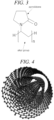
- FIG. 3 is a view showing the chemical formula of PVP that can be applied to a conductive material pre-dispersed slurry for a secondary battery electrode according to one embodiment of the present disclosure.
- a pyrrolidone group of PVP may be hydrophilic, and an alkyl group below it may be hydrophobic.
- the alkyl group may be flexible as a linear structure and may have a property of wrapping around the CNTs.
- Mw weight-average molecular weight
- PVP weight-average molecular weight
- Mw weight-average molecular weight
- Specific types of PVP may include k12, k15, k30, and k90, and PVP corresponding to k15 and k30 among them may be applied to the embodiment of the present disclosure.
- CNTs used as the conductive material 10 in the embodiment of the present disclosure may be a material that complements the conductivity of the active material in the cathode or anode of the secondary battery and forms a path through which electrons may move.
- CNTs are a linear carbon body and connect an active material to an active material or an active material to a current collector at a much longer distance than a powder, and may easily form a network structure.
- CNTs used in the embodiment of the present disclosure may be multi-walled carbon nanotubes (MWCNTs).
- MWCNTs multi-walled carbon nanotubes
- SWCNTs single-walled carbon nanotubes
- the diameters of CNTs range from several nm for small ones to tens of nm for large ones. When the diameter is more than about 12 nm, the BET specific surface area is low so that it may be easy to disperse, but the electrical conductivity is reduced so that the role of the conductive material in the secondary battery may not be performed well. Since the CNTs applied to the present disclosure are thin and long among MWCNTs, they have quality close to SWCNTs and price advantages of MWCNTs at the same time.
- FIG. 4 is a perspective view showing CNTs that can be applied to a conductive material pre-dispersed slurry for a secondary battery electrode according to one embodiment of the present disclosure.
- CNTs that can be applied to the conductive material pre-dispersed slurry according to the embodiment of the present disclosure may be MWCNTs.
- the MWCNTs may have 3 to 10 walls and may have a diameter of 4 to 12 nm.
- the MWCNTs may have a length of about 50 to 200 ⁇ m.
- the MWCNTs may have a Brunauer-Emmett-Teller (BET) specific surface area of about 300 m 2 /g or more.
- BET Brunauer-Emmett-Teller
- the MWCNTs may have a BET specific surface area of about 300 to 500 m 2 /g. Since the MWCNTs used have a large BET specific surface area of about 300 m 2 /g or more, it may be advantageous to improve conductivity.
- the MWCNTs may have a bulk density of about 0.042 g/ml and a purity of about 96.96%.
- the dispersion properties of MWCNTs may be greatly improved by using CMC and PVP together as the dispersant 20, appropriately selecting their use ratio, and appropriately selecting their physical properties. While PVP appropriately wraps the MWCNTs, CMC maintains the phase stability of the dispersion. Therefore, according to the embodiment of the present disclosure, even if the MWCNTs are used, a conductive material pre-dispersed slurry having properties of low viscosity and small particle size may be prepared.
- CMC and PVP are mixed and used as a dispersant in the conductive material pre-dispersed slurry according to the embodiment of the present disclosure, and when their weight ratio (CMC:PVP) is adjusted to about 25:1 to 1:25, the dispersion properties of CNTs may be considerably improved, and the particle size of the CNTs may be greatly lowered.
- the content of the dispersant compared to the CNTs may also affect the dispersion and viscosity properties.
- the CNTs and the dispersant may have a weight ratio of about 1:0.2 to 1:1.5, or about 1:0.5 to 1:1.
- the dispersant i.e., CMC + PVP
- the dispersant may be contained in an amount of about 20 to 150%, or about 50 to 100% compared to the CNTs.
- CMC + PVP dispersant
- the ratio of the dispersant (i.e., CMC + PVP) to the CNTs is less than 20%, CNT dispersibility may deteriorate, and when it exceeds 150%, the viscosity of the slurry may increase to an undesirable level, and electrical conductivity may decrease.
- the CNTs may be contained in the conductive material pre-dispersed slurry according to the embodiment of the present disclosure in an amount of about 6wt% or less. That is, the CNTs may be contained in the total weight of the conductive material pre-dispersed slurry in an amount of about more than 0wt% and not more than 6wt%. For example, the CNTs may be contained in an amount of about 1 to 6wt%. When the CNTs are contained in an amount exceeding 6wt%, the viscosity of the slurry may increase to an undesirable level, and electrical conductivity may decrease. An electrode having excellent performance may be manufactured by increasing the dispersibility of the CNTs while using a small amount of CNTs.
- the content of CNTs is not limited to the foregoing description, and may vary depending on the case.
- the conductive material pre-dispersed slurry may have a viscosity of about 3,000 cPs or less under conditions of a temperature of 25°C and a shear rate of 50 s -1 .
- the conductive material pre-dispersed slurry may have a viscosity of about 2,000 cPs or less, or about 1,000 cPs or less. Even when the CNTs have a high content as high as about 6wt%, the conductive material pre-dispersed slurry may be prepared to have a low viscosity of about 3,000 cPs or less, or about 1,000 cPs or less.
- the D50 particle size may be smaller than about 0.1 ⁇ m.
- the CNTs may be evenly well dispersed to the extent that the D50 value is smaller than about 0.1 ⁇ m. In this way, when the CNTs have good dispersibility, and the slurry has a small particle size, an electrode manufactured using the slurry may have excellent performance. In addition, it may be possible to implement excellent electrode properties even with a small amount of CNTs.
- FIG. 5 is a flowchart for explaining a method for preparing a conductive material pre-dispersed slurry for a secondary battery electrode according to one embodiment of the present disclosure.
- the method for preparing a conductive material pre-dispersed slurry for a secondary battery electrode may include a step (S10) of preparing a mixed solution including a conductive material, a dispersant, and a solvent, and a step (S20) of high-pressure dispersing the mixed solution using a high-pressure disperser.
- the conductive material may include CNTs
- the dispersant may include CMC and PVP.
- CMC and PVP in the dispersant may have a weight ratio (CMC:PVP) of about 25:1 to 1:25.
- the high-pressure disperser may have an operating pressure of about 200 bars or more.
- the high-pressure disperser may have an operating pressure of about 200 to 3,000 bars.
- the high-pressure dispersion using the high-pressure disperser may be performed, for example, about 3 to 10 passes or about 4 to 8 passes at an operating pressure of about 500 to 2,500 bars.
- the step S10 that is, the step of preparing the mixed solution may be composed of detailed steps (S11 to S13) as shown in FIG. 6 .
- the step of preparing the mixed solution may include a step (S11) of preparing a cellulose-based compound solution containing the cellulose-based compound and a vinyl-based or acrylic compound solution containing the vinyl-based or acrylic compound, respectively, a step (S12) of preparing a primary mixed solution containing the cellulose-based compound solution, the vinyl-based or acrylic compound solution, and the CNTs, and a step (S13) of stirring the primary mixed solution.
- the primary mixed solution may be prepared by mixing the cellulose-based compound solution, the vinyl-based or acrylic compound solution, CNTs, and an additional solvent (e.g., distilled water).
- the primary mixed solution may be stirred at a speed of about 3,000 to 10,000 rpm for about 10 minutes to 1 hour.
- the specific process conditions disclosed herein are illustrative, and may vary depending on the case.
- the mixed solution of the step S10 in FIG. 5 may be prepared by stirring the primary mixed solution.
- the mixed solution may be referred to as a CNT dispersion solution.
- the conductive material pre-dispersed slurry according to the embodiment may be prepared by high-pressure dispersing the mixed solution in the step S20 in FIG. 5 .
- the composition and properties of the conductive material pre-dispersed slurry may be the same as those described with reference to FIGS. 1 to 4 .
- CMC may have a weight-average molecular weight (Mw) of about 450,000 g/mol or less, and CMC may have a degree of esterification (DE) of about 0.6 to 1.0.
- the PVP may have a weight-average molecular weight (Mw) of about 6,000 to 80,000 g/mol.
- the CNTs may be MWCNTs, and in this case, the MWCNTs may have a diameter of about 4 to 12 nm.
- the MWCNTs may have a length of about 50 to 200 ⁇ m, and the MWCNTs may have a BET specific surface area of about 300 m 2 /g or more.
- the CNTs and the dispersant may have a weight ratio (CNT:dispersant) of about 1:0.2 to 1:1.5.
- the CNTs may be contained in the conductive material pre-dispersed slurry in an amount of about 6wt% or less.
- the conductive material pre-dispersed slurry may have a viscosity of about 3,000 cPs or less under conditions of a temperature of 25°C and a shear rate of 50 s -1 .
- the conductive material pre-dispersed slurry may have a D50 particle size smaller than about 0.1 ⁇ m.
- the specific composition and properties of the conductive material pre-dispersed slurry may be the same as those described with reference to FIGS. 1 to 4 .
- the conductive material pre-dispersed slurry according to the embodiment of the present disclosure was prepared by the following method and its properties were evaluated.
- the viscosity of the conductive material pre-dispersed slurry prepared as described above was measured using an HR-2 Viscometer (TA Instruments Co.) under conditions of a temperature of 25°C, a shear rate of 50 s -1 , and a plate of ⁇ 40 mm.
- the D50 particle size was measured using a particle size analyzer (Malvern Co.).
- the conductive material pre-dispersed slurry prepared as described above was coated to a thickness of 7 to 8 ⁇ m on a PET film using a blader, and the sheet resistance was measured using a sheet resistance measuring instrument MCP-T610 (Mitsubishi chemical Co.).
- PVP used in Table 1 has a weight-average molecular weight (Mw) of 6,000 to 80,000 g/mol
- PVA has a weight-average molecular weight (Mw) of 6,000 to 40,000 g/mol
- PAA has a weight-average molecular weight (Mw) of 8,000 to 120,000 g/mol
- PAM has a weight-average molecular weight (Mw) of 10,000 to 150,000 g/mol.
- Example 1 Classification CNT (wt%) CMC1(A) (wt%) PVP(B) (wt%) PVA(B) (wt%) PAA(B) (wt%) PAM(B) (wt%) Dispersant A (% compared to CNTs) Dispersant B (% compared to CNTs) Dispersant ratio Degree of esterification Example 1 5 0.144 3.606 2.88 72.12 75 0.6-1.0 Example 2 5 0.1875 3.5625 3.75 71.25 75 0.6-1.0 Example 3 5 0.375 3.375 7.50 67.50 75 0.6-1.0 Example 4 5 0.750 3.000 15.00 60.00 75 0.6-1.0 Example 5 5 1.250 2.500 25.00 50.00 75 0.6-1.0 Example 6 5 1.875 1.875 37.50 37.50 75 0.6-1.0 Example 7 5 2.500 1.250 50.00 25.00 75 0.6-1.0 Example 8 5 3.000 0.750 60.00 15.00 75 0.6-1.0 Example 9 5 3.375 0.375 67.50 7.50 75 0.6-1.0 Example 10 5 5 3.
- the dispersant ratio means the ratio (%) of the dispersant (i.e., CMC + PVP) to CNTs. Referring to Example 2 and Examples 18 to 25, it can be seen that when the ratio of the dispersant to CNTs is about 20 to 150% or about 50 to 100%, low viscosity numerical values are exhibited. In addition, it was confirmed to have a low D50 particle size ( ⁇ m) of 0.1 or less.
- a preferred ratio (or optimal ratio) of the CNTs, dispersant component A (CMC), dispersant component B (PVP) and solvent may be present.
- Blending conditions and evaluation results of samples according to additional Examples and Comparative Examples are as shown in Tables 5 to 12 below.
- CMC used in Tables 5 and 6 is CMC1
- CMC1 has a weight-average molecular weight (Mw) of 50,000 to 120,000 g/mol.
- CMC used in Tables 7 and 8 was CMC that differed from CMC1 only in degree of esterification.
- CMCs used in Tables 9 and 10 are CMC2 to CMC4, CMC2 has a weight-average molecular weight (Mw) of 200,000 to 450,000 g/mol, and CMC3 has a weight-average molecular weight (Mw) of 700,000 to 1,000,000 g/mol, and CMC4 has a weight-average molecular weight (Mw) of 1,500,000 to 2,300,000 g/mol.
- Example 28 of Tables 7 and 8 it can be seen that the viscosity and particle size are measured to be high when CMC having a degree of esterification of 1.0 to 1.5 is used.
- Examples 29 to 31 of Table 9 and Table 10 the results of CNT dispersions according to the molecular weight of CMC can be seen.
- Mw weight-average molecular weight
- the results of the dispersions according to the CNT diameters can be confirmed.
- the CNT diameter is smaller than 4 nm, the viscosity and particle size increase greatly, making it difficult to prepare a high-content CNT dispersion.
- the CNT diameter is greater than 12 nm, it is easy to prepare a dispersion with low viscosity, but it is confirmed that the sheet resistance component is greatly increased and may not play a role as a conductive material for a secondary battery.
- a slurry for an electrode may be prepared by mixing the conductive material pre-dispersed slurry according to the embodiment as described above with a predetermined active material, a binder, etc., and an electrode (electrode film) for a secondary battery may be formed by applying the slurry for the electrode on a predetermined substrate and performing a drying process, annealing process or the like thereon.
- a secondary battery to which such an electrode is applied can be manufactured.
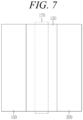
- FIG. 7 is a cross-sectional view showing a secondary battery having an electrode manufactured by applying a conductive material pre-dispersed slurry for a secondary battery electrode according to one embodiment of the present disclosure.
- the secondary battery according to the present embodiment may include a cathode 100 and an anode 200 spaced apart from each other, and an electrolyte 150 provided for ion movement therebetween.
- a separator 170 allowing the movement of the electrolyte 150 or the movement of ions through the electrolyte 150 while physically separating them may be further provided between the cathode 100 and the anode 200. In some cases, the separator 170 may not be provided.
- the cathode 100 may comprise a predetermined electrode material for the cathode.
- the cathode 100 may comprise a cathode active material, a first binder, and a first conductive material.
- the cathode active material, the first binder, and the first conductive material may constitute one cathode active material layer.
- the cathode 100 may include a cathode current collector bonded to the cathode active material layer. In this case, the cathode active material layer may be disposed between the cathode current collector and the electrolyte 150.
- the anode 200 may comprise a predetermined electrode material for the anode.
- the anode 200 may comprise an anode active material, a second binder, and a second conductive material.
- the anode active material, the second binder, and the second conductive material may constitute one anode active material layer.
- the anode 200 may include an anode current collector bonded to the anode active material layer. In this case, the anode active material layer may be disposed between the anode current collector and the electrolyte 150.
- At least one of the cathode 100 and the anode 200 may be manufactured by applying the conductive material pre-dispersed slurry according to the embodiment of the present disclosure.
- at least the anode 200 of the cathode 100 and the anode 200 may be manufactured by applying the conductive material pre-dispersed slurry according to the embodiment of the present disclosure.
- the secondary battery according to the present embodiment may be, for example, a lithium secondary battery, but may also be other batteries.
- a technology/method capable of effectively dispersing CNTs while preventing/minimizing damage to CNTs can be implemented in developing a material for the conductive material to which CNTs are applied.
- a conductive material pre-dispersed slurry for a secondary battery electrode having improved dispersion properties of CNTs (conductive material).
- a conductive material pre-dispersed slurry for a secondary battery electrode which has a relatively high CNT (conductive material) content and a relatively low viscosity, and can be easily prepared through a relatively simple process.
- An electrode having excellent performance can be manufactured by applying the above-described conductive material pre-dispersed slurry, and a secondary battery to which the above-described electrode is applied can be manufactured.
Landscapes
- Chemical & Material Sciences (AREA)
- Engineering & Computer Science (AREA)
- Organic Chemistry (AREA)
- Materials Engineering (AREA)
- Life Sciences & Earth Sciences (AREA)
- Wood Science & Technology (AREA)
- General Chemical & Material Sciences (AREA)
- Chemical Kinetics & Catalysis (AREA)
- Electrochemistry (AREA)
- Inorganic Chemistry (AREA)
- Nanotechnology (AREA)
- Manufacturing & Machinery (AREA)
- Dispersion Chemistry (AREA)
- Physics & Mathematics (AREA)
- Spectroscopy & Molecular Physics (AREA)
- General Life Sciences & Earth Sciences (AREA)
- Geology (AREA)
- Battery Electrode And Active Subsutance (AREA)
Abstract
Description
- The present disclosure relates to a material for an electrode, a battery to which the same is applied, and a manufacturing method thereof, and more particularly, to a conductive material pre-dispersed slurry for a secondary battery electrode, a preparation method thereof, an electrode manufactured by applying the conductive material pre-dispersed slurry, and a secondary battery having the electrode.
- Since secondary batteries appeared in the 1990s, they have continued to develop along with steady research. Research and development are also being conducted together on auxiliary elements playing a role of complementing and improving their characteristics as well as cathode/anode active materials, electrolytes, and separators, which are the main components of the secondary batteries.
- Conductive materials are contained in both the cathode and the anode, and are materials used in order to improve electron transfer characteristics between an active material and an active material or between an active material and a current collector. The conductive materials are being developed mainly with carbon-based materials. A conductive material pre-dispersed slurry is a solution in which a conductive material is dispersed in a solvent, and becomes a material constituting a slurry for an electrode together with an active material and a binder in a subsequent step.
- Recently, as the field of application of secondary batteries has expanded to the field of medium and large-sized batteries such as electric vehicles and energy storage systems (ESS), the importance of conductive materials is increasing. In order to increase the theoretical capacity of the secondary batteries, it is necessary to increase the amount of a cathode active material or an anode active material. However, when the amount of active material increases in the same electrode, the amount of conductive material decreases. Therefore, a conductive material capable of exhibiting excellent performance even with a small amount is required. In this regard, carbon nanotubes (CNTs) are attracting attention as a new material for the conductive material. The CNTs are a cylindrical structure with a nano-sized diameter, have carbon atoms helically arranged therein, and have a sp2 bonding structure. These CNTs can exhibit excellent physical properties in various aspects, such as excellent electrical properties, strength, resilience, and thermal conductivity. As a conductive material for a secondary battery electrode, it is expected that the CNTs, compared to conventional powder-type carbon materials, can not only increase energy density and improve lifespan, but can also reduce the size of batteries. In particular, these advantages can be more advantageously seen in batteries for electric vehicles that require high capacity, rapid charging, and the like.
- However, despite various advantages as described above, since CNTs have low solubility and dispersibility, it is difficult to apply them as an actual conductive material. In particular, the CNTs exist in the form of aggregates or bundles in a solution due to strong van der Waals attraction between the CNTs. In the development of a conductive material to which CNTs are applied, a technology capable of effectively dispersing the CNTs is required, and in particular, a method capable of properly or easily dispersing the CNTs while minimizing damage to the CNTs is required. When the surface of the CNTs is treated with an acid to disperse the CNTs in a solvent, defects may occur on the surface of the CNTs, and thus physical properties such as electrical conductivity may deteriorate. Meanwhile, when a surfactant is used to disperse CNTs, since the amount of surfactant used also increases as the content of CNTs increases, there are problems in that, due to the surfactant, the viscosity of the solution increases, and physical properties such as electrical conductivity decrease.
- A technical task to be achieved by the present disclosure is to provide a technique and method capable of effectively dispersing CNTs while preventing or minimizing damage to the CNTs in the development of a material for a conductive material, to which CNTs are applied.
- Further, a technical task to be achieved by the present disclosure is to provide a conductive material pre-dispersed slurry for a secondary battery electrode, which has improved dispersion properties of CNTs (conductive material), and a preparation method thereof.
- Further, a technical task to be achieved by the present disclosure is to provide a conductive material pre-dispersed slurry for a secondary battery electrode, which has a relatively high content of CNTs (conductive material) and a relatively low viscosity and can be easily prepared by a relatively simple process, and a preparation method thereof.
- Further, a technical task to be achieved by the present disclosure is to provide an electrode manufactured by applying the above-described conductive material pre-dispersed slurry and a secondary battery to which such an electrode is applied.
- The problems to be solved by the present disclosure are not limited to the problems mentioned above, and other problems not mentioned will be clearly understood by those skilled in the art from the description below.
- According to embodiments of the present disclosure for achieving the above-described tasks, there is provided a conductive material pre-dispersed slurry for a secondary battery electrode, including: a conductive material; a dispersant for dispersing the conductive material; and a solvent mixed with the conductive material and the dispersant, wherein the dispersant includes a cellulose-based compound and a vinyl-based or acrylic compound, and the cellulose-based compound and the vinyl-based or acrylic compound in the dispersant have a weight ratio of 25:1 to 1:25.
- The cellulose-based compound may have a weight-average molecular weight (Mw) of about 450,000 g/mol or less.
- The cellulose-based compound may have a degree of esterification (DE) of about 0.6 to about 1.0.
- The cellulose-based compound may be one or more selected from the group consisting of methyl cellulose, ethyl cellulose, hydroxyethyl cellulose, benzyl cellulose, trityl cellulose, cyanoethyl cellulose, carboxymethyl cellulose, carboxyethyl cellulose, aminoethyl cellulose, nitrocellulose, cellulose ether, and carboxymethylcellulose sodium salt.
- The vinyl-based compound may have a weight-average molecular weight (Mw) of about 6,000 to 80,000 g/mol, and the acrylic compound may have a weight-average molecular weight (Mw) of about 8,000 to 150,000 g/mol.
- The vinyl-based or acrylic compound may be provided to surround the periphery of the conductive material.
- The vinyl-based compound may be one or more selected from the group consisting of polyvinylpyrrolidone, polyvinyl alcohol, polyvinyl chloride, polyvinyl fluoride, and polyvinyl acetate, or the acrylic compound may be one or more selected from the group consisting of polyacrylic acid, polyacrylamide, and polyacrylonitrile.
- The conductive material may be one or more selected from the group consisting of graphite, carbon black, graphene, and carbon nanotubes (CNTs).
- The carbon nanotubes (CNTs) may be multi-walled carbon nanotubes (MWCNTs).
- The multi-walled carbon nanotubes (MWCNTs) may have a diameter of about 4 to 12 nm.
- The carbon nanotubes (CNTs) and the dispersant may have a weight ratio (CNTs:dispersant) of about 1:0.2 to about 1:1.5.
- The carbon nanotubes (CNTs) may be contained in the conductive material pre-dispersed slurry in an amount of more than about 0wt% and not more than 6wt%.
- The conductive material pre-dispersed slurry may have a viscosity of about 3,000 cPs or less under conditions of a temperature of 25°C and a shear rate of 50 s-1.
- The conductive material pre-dispersed slurry may have a D50 particle size smaller than about 0.1 µm.
- The solvent may include water.
- According to another embodiments of the present disclosure, there is provided an electrode for a secondary battery, which is manufactured by applying the above-described conductive material pre-dispersed slurry.
- According to another embodiments of the present disclosure, there is provided a secondary battery having the above-described electrode.
- According to another embodiments of the present disclosure, there is provided a method for preparing a conductive material pre-dispersed slurry for a secondary battery electrode, the method including the steps of: preparing a mixed solution which contains CNTs as a conductive material, a dispersant, and a solvent, the dispersant including a cellulose-based compound and a vinyl-based or acrylic compound, and in which the cellulose-based compound and the vinyl-based or acrylic compound in the dispersant have a weight ratio of 25: 1 to 1:25; and high-pressure dispersing the mixed solution using a high-pressure disperser having an operating pressure of 200 bars or more.
- The step of preparing the mixed solution may include the steps of: preparing a cellulose-based compound solution containing the cellulose-based compound and a vinyl-based or acrylic compound solution containing the vinyl-based or acrylic compound, respectively; preparing a primary mixed solution containing the cellulose-based compound solution, the vinyl-based or acrylic compound solution, and the CNTs; and stirring the primary mixed solution.
- The high-pressure dispersion may be performed about 3 to 10 times at an operating pressure of about 500 to 2,500 bars.
- According to embodiments of the present disclosure, in the development of a material for a conductive material, to which carbon nanotubes (CNTs) are applied, a technique and method capable of effectively dispersing CNTs while preventing or minimizing damage to the CNTs can be implemented. According to these embodiments, it is possible to implement a conductive material pre-dispersed slurry for a secondary battery electrode, which has improved dispersion properties of CNTs (conductive material). In particular, it is possible to implement a conductive material pre-dispersed slurry for a secondary battery electrode, which has a relatively high content of the CNTs (conductive material) and a relatively low viscosity, and can be easily prepared by a relatively simple process.
- An electrode having excellent performance can be manufactured by applying the above-described conductive material pre-dispersed slurry, and a secondary battery to which the above-described electrode is applied can be manufactured.
-
-
FIG. 1 is a view for explaining the configuration of a conductive material pre-dispersed slurry for a secondary battery electrode according to one embodiment of the present disclosure. -
FIG. 2 is a view showing the chemical formula of carboxymethyl cellulose (CMC) among cellulose-based compounds that can be applied to a conductive material pre-dispersed slurry for a secondary battery electrode according to one embodiment of the present disclosure. -
FIG. 3 is a view showing the chemical formula of polyvinylpyrrolidone (PVP) among vinyl-based compounds that can be applied to a conductive material pre-dispersed slurry for a secondary battery electrode according to one embodiment of the present disclosure. -
FIG. 4 is a perspective view showing carbon nanotubes (CNTs) that can be applied to a conductive material pre-dispersed slurry for a secondary battery electrode according to one embodiment of the present disclosure. -
FIG. 5 is a flowchart for explaining a method for preparing a conductive material pre-dispersed slurry for a secondary battery electrode according to one embodiment of the present disclosure. -
FIG. 6 is a flowchart for explaining process steps that can be applied to the method for preparing the conductive material pre-dispersed slurry ofFIG. 5 . -
FIG. 7 is a cross-sectional view showing a secondary battery having an electrode manufactured by applying a conductive material pre-dispersed slurry for a secondary battery electrode according to one embodiment of the present disclosure. - Hereinafter, embodiments of the present disclosure will be described in detail with reference to the accompanying drawings.
- Embodiments of the present disclosure to be described below are provided to more clearly explain the present disclosure to those skilled in the art, the scope of the present disclosure is not limited by the following embodiments, and the following embodiments may be modified in many different forms.
- Terms used in the present specification are used to describe specific embodiments and are not intended to limit the present disclosure. Terms in the singular form used in the present specification may include plural forms unless the context clearly indicates otherwise. Also, the terms "comprise" and/or "comprising" used in the present specification specify the presence of the mentioned shape, step, number, operation, member, element, and/or a group thereof, and do not exclude the presence or addition of one or more other shapes, steps, numbers, operations, members, elements and/or groups thereof. In addition, the term "connection" used in the present specification is a concept which not only means that certain members are directly connected, but also includes that the members are indirectly connected with another member being additionally interposed between the members.
- In addition, when a member is said to be located "on" another member in the present specification, this includes not only a case where a member is in contact with other member, but also a case where another member exists between the two members. The term "and/or" used in the present specification includes any one of the corresponding listed items and all combinations of one or more thereof. In addition, terms of degree such as "about" and "substantially" used in the present specification by taking into account inherent manufacturing and material tolerances are used in a range of their numerical values or degrees, or meanings close thereto, and are used in order to prevent infringers from unfairly using the disclosure in which exact or absolute numerical values are mentioned to help the understanding of this application.
- Hereinafter, embodiments of the present disclosure will be described in detail with reference to the accompanying drawings. The size or thickness of regions or parts shown in the accompanying drawings may be somewhat exaggerated for clarity of the specification and convenience of description. The same reference numbers indicate the same elements throughout the detailed description.
-
FIG. 1 is a view for explaining the configuration of a conductive material pre-dispersed slurry for a secondary battery electrode according to one embodiment of the present disclosure. - Referring to
FIG. 1 , the conductive material pre-dispersed slurry for a secondary battery electrode according to an embodiment of the present disclosure may include aconductive material 10, adispersant 20 for dispersing theconductive material 10, and a solvent 30 mixed with theconductive material 10 and thedispersant 20 to provide fluidity. Theconductive material 10 may be one or more selected from the group consisting of graphite, carbon black, graphene, and carbon nanotubes (CNTs), and may specifically be CNTs or include CNTs. Theconductive material 10 may be made of a plurality of CNTs. Thedispersant 20 may include a cellulose-based compound and a vinyl-based or acrylic compound. In thedispersant 20, the cellulose-based compound and the vinyl-based or acrylic compound may have a weight ratio of about 25:1 to about 1:25. Specifically, according to one embodiment of the present disclosure, the cellulose-based compound and the vinyl-based compound may have a weight ratio of 25:1 to 1:25, and according to another embodiment of the present disclosure, the cellulose-based compound and the acrylic compound may have a weight ratio of 25:1 to 1:25. The solvent 30 may be, for example, water. - When CNTs are used as the
conductive material 10, a cellulose-based compound and a vinyl-based or acrylic compound are mixed and used as thedispersant 20, and the weight ratio thereof may be adjusted to about 25:1 to 1:25 so that the dispersion properties of the CNTs can be considerably improved, and the particle size of CNTs in the conductive material pre-dispersed slurry can be greatly lowered. - In this case, the cellulose-based compound may have a weight-average molecular weight (Mw) of about 450,000 g/mol or less. Specifically, it may be 120,000 g/mol or less. For example, in an embodiment of the present disclosure, a cellulose-based compound having a weight-average molecular weight (Mw) of about 50,000 to about 120,000 g/mol or a cellulose-based compound having a weight-average molecular weight (Mw) of about 120,000 to about 450,000 g/mol may be used. Cellulose-based compounds may be used as binders in conventional slurries for secondary battery electrodes. In this case, molecular weights thereof are about 1,500,000 g/mol, which is considerably different from that of the cellulose-based compound used in the embodiment of the present disclosure. As in the embodiment of the present disclosure, when a cellulose-based compound having a weight-average molecular weight (Mw) of about 450,000 g/mol or less is used, the viscosity of the conductive material pre-dispersed slurry may be lowered and the dispersibility of CNTs may be easily improved. In particular, when the cellulose-based compound has a weight-average molecular weight (Mw) of about 120,000 g/mol or less, coating properties of the slurry for an electrode, including the conductive material pre-dispersed slurry, may be further improved, and the electrode formation may be further facilitated.
- In addition, the cellulose-based compound used in the embodiment of the present disclosure may have a degree of esterification (DE) of about 0.6 to about 1.0. In carboxymethyl cellulose (CMC), one of the cellulose-based compounds, three OR groups exist in one monomer (refer to the chemical formula of
FIG. 2 ), and the degree of esterification (DE) of the cellulose-based compound represents the degree (i.e., degree of substitution) of a hydroxyl group (-OH) substituted with an ester group, based on a cellulose monomer. The degree of esterification (DE) of the cellulose-based compound may have a range of 0 to 3 (i.e., corresponding to the number of OR groups inFIG. 2 ). The degree of esterification (DE) of carboxymethyl cellulose (CMC), which is one of the cellulose-based compounds used in the present embodiment, may be about 0.6 to about 1.0 or about 0.7 to about 0.9. As the degree of esterification (DE) of CMC increases, the hydrophilicity of CMC may increase. When the degree of esterification (DE) is less than 0.6, the degree of hydration is too low and may not mix well with water. When the degree of esterification (DE) exceeds 1.0, the dispersibility of CNTs may decrease. - The cellulose-based compound may be one or more selected from the group consisting of methyl cellulose, ethyl cellulose, hydroxyethyl cellulose, benzyl cellulose, trityl cellulose, cyanoethyl cellulose, carboxymethyl cellulose, carboxyethyl cellulose, aminoethyl cellulose, nitrocellulose, cellulose ether, and carboxymethylcellulose sodium salt.
-
FIG. 2 is a view showing the chemical formula of CMC, which is one of cellulose-based compounds, that can be applied to a conductive material pre-dispersed slurry for a secondary battery electrode according to one embodiment of the present disclosure. CMC inFIG. 2 is sodium carboxymethyl cellulose (i.e., Na CMC). - Referring to
FIG. 2 , the glucose ring portion of CMC may bind to the surface of CNTs in a hydrophobic manner, and the carboxylate portion thereof may bind to water in a hydrophilic manner to play a role of dispersing CNTs in water. CMC may form a structure that is aligned with CNTs in water (solvent), and at this time, the binding of the hydrophobic portion may play an important role. In addition, the -OH group (i.e., equatorial hydroxyl group) in the equatorial direction of CMC may show a form that it is packed while being hydrogen-bonded with the glucose ring of another CMC. Such CMC may serve as a dispersion stabilizer for CNTs by using its rigid properties. - As described above, in the embodiment of the present disclosure, CMC may have a weight-average molecular weight (Mw) of about 450,000 g/mol or less. When CMC having a weight-average molecular weight (Mw) of about 450,000 g/mol or less is used, the viscosity of the conductive material pre-dispersed slurry may be lowered, and the dispersibility of CNTs may be easily improved. In addition, in the embodiment of the present disclosure, CMC may have a degree of esterification (DE) of about 0.6 to about 1.0. In CMC, the degree of substitution of a hydroxyl group with an ester group based on the cellulose monomer (i.e., degree of substitution) may be about 0.6 to about 1.0. In this case, CMC may easily improve the dispersibility of CNTs while being well mixed with the solvent (water).
- As described in
FIG. 1 , in the embodiment of the present disclosure, a vinyl-based or acrylic compound together with CMC as thedispersant 20 may be additionally used. The vinyl-based or acrylic compound may be provided to surround the periphery of the conductive material. The vinyl-based compound used in the embodiment of the present disclosure may have a weight-average molecular weight (Mw) of 6,000 to 80,000 g/mol, and the acrylic compound may have a weight-average molecular weight (Mw) of 8,000 to 150,000 g/mol. More specifically, polyvinylpyrrolidone (PVP), which is one of the vinyl-based compounds, may have a weight-average molecular weight (Mw) of about 6,000 to about 80,000 g/mol. More specifically, the PVP may have a weight-average molecular weight (Mw) of about 6,000 to 15,000 g/mol. The PVP may be provided to surround the periphery of CNTs. In other words, the PVP may be provided so that it is adsorbed on the CNTs to surround (i.e., wrap) the CNTs. PVP may serve to disperse CNTs in a solvent (e.g., water) by being adsorbed on CNTs and surrounding the CNTs. In order to appropriately wrap the CNTs with PVP, it is necessary to use PVP having an appropriate length. In addition, the type (molecular weight) of PVP suitable therefor may vary depending on the type of the CNTs. When PVP has a weight-average molecular weight (Mw) of less than 6,000 g/mol, the wrapping itself may not work well, the viscosity of the conductive material pre-dispersed slurry may increase, and the dispersibility of the CNTs may deteriorate. When PVP has a weight-average molecular weight (Mw) exceeding 80,000 g/mol, the viscosity of the conductive material pre-dispersed slurry may increase, and the dispersibility of CNTs may decrease. Therefore, it may be preferable in the embodiment of the present disclosure that PVP has a weight-average molecular weight (Mw) of about 6,000 to about 80,000 g/mol. Such PVP is used, and thus CNTs may be better dispersed, and flowability is improved, and thus a conductive material pre-dispersed slurry with a low viscosity may be prepared. - The vinyl-based compound may be one or more selected from the group consisting of polyvinylpyrrolidone, polyvinyl alcohol, polyvinyl chloride, polyvinyl fluoride, and polyvinyl acetate.
- The acrylic compound may be one or more selected from the group consisting of polyacrylic acid, polyacrylamide, and polyacrylonitrile.
-
FIG. 3 is a view showing the chemical formula of PVP that can be applied to a conductive material pre-dispersed slurry for a secondary battery electrode according to one embodiment of the present disclosure. - Referring to
FIG. 3 , a pyrrolidone group of PVP may be hydrophilic, and an alkyl group below it may be hydrophobic. The alkyl group may be flexible as a linear structure and may have a property of wrapping around the CNTs. When PVP has a weight-average molecular weight (Mw) of less than 6,000 g/mol, since the linear structure of the alkyl group is shortened, CNT wrapping may not work well, and as a result, the viscosity of the conductive material pre-dispersed slurry may increase, and the CNT dispersibility may be lowered. When PVP has a weight-average molecular weight (Mw) exceeding 80,000 g/mol, the molecular weight becomes excessively large so that the viscosity of the conductive material pre-dispersed slurry may increase, and the dispersibility of the CNTs may deteriorate. Therefore, as described above, it may be preferable in the embodiment of the present disclosure that PVP may have a weight-average molecular weight (Mw) of about 6,000 to about 80,000 g/mol. Specific types of PVP may include k12, k15, k30, and k90, and PVP corresponding to k15 and k30 among them may be applied to the embodiment of the present disclosure. - Referring back to
FIG. 1 , CNTs used as theconductive material 10 in the embodiment of the present disclosure may be a material that complements the conductivity of the active material in the cathode or anode of the secondary battery and forms a path through which electrons may move. CNTs are a linear carbon body and connect an active material to an active material or an active material to a current collector at a much longer distance than a powder, and may easily form a network structure. - CNTs used in the embodiment of the present disclosure may be multi-walled carbon nanotubes (MWCNTs). In the case of single-walled carbon nanotubes (SWCNTs), it has better electrical performance than that of MWCNTs, but there are disadvantages in that it is difficult to prepare a high-content CNT dispersion, and the manufacturing cost (price) is high. In the case of MWCNTs, the diameters of CNTs range from several nm for small ones to tens of nm for large ones. When the diameter is more than about 12 nm, the BET specific surface area is low so that it may be easy to disperse, but the electrical conductivity is reduced so that the role of the conductive material in the secondary battery may not be performed well. Since the CNTs applied to the present disclosure are thin and long among MWCNTs, they have quality close to SWCNTs and price advantages of MWCNTs at the same time.
-
FIG. 4 is a perspective view showing CNTs that can be applied to a conductive material pre-dispersed slurry for a secondary battery electrode according to one embodiment of the present disclosure. - Referring to
FIG. 4 , CNTs that can be applied to the conductive material pre-dispersed slurry according to the embodiment of the present disclosure may be MWCNTs. The MWCNTs may have 3 to 10 walls and may have a diameter of 4 to 12 nm. The MWCNTs may have a length of about 50 to 200 µm. The MWCNTs may have a Brunauer-Emmett-Teller (BET) specific surface area of about 300 m2/g or more. The MWCNTs may have a BET specific surface area of about 300 to 500 m2/g. Since the MWCNTs used have a large BET specific surface area of about 300 m2/g or more, it may be advantageous to improve conductivity. Meanwhile, the MWCNTs may have a bulk density of about 0.042 g/ml and a purity of about 96.96%. - In the case of MWCNTs of 12 nm or less, it may not be easy to disperse in the solvent 30 due to physical properties such as a relatively large specific surface area or the like. Therefore, in the embodiment of the present disclosure, the dispersion properties of MWCNTs may be greatly improved by using CMC and PVP together as the
dispersant 20, appropriately selecting their use ratio, and appropriately selecting their physical properties. While PVP appropriately wraps the MWCNTs, CMC maintains the phase stability of the dispersion. Therefore, according to the embodiment of the present disclosure, even if the MWCNTs are used, a conductive material pre-dispersed slurry having properties of low viscosity and small particle size may be prepared. - When CMC and PVP are mixed and used as a dispersant in the conductive material pre-dispersed slurry according to the embodiment of the present disclosure, and when their weight ratio (CMC:PVP) is adjusted to about 25:1 to 1:25, the dispersion properties of CNTs may be considerably improved, and the particle size of the CNTs may be greatly lowered.
- The content of the dispersant compared to the CNTs may also affect the dispersion and viscosity properties. In this regard, in the conductive material pre-dispersed slurry according to the embodiment of the present disclosure, the CNTs and the dispersant (CNT: dispersant) may have a weight ratio of about 1:0.2 to 1:1.5, or about 1:0.5 to 1:1. In other words, the dispersant (i.e., CMC + PVP) may be contained in an amount of about 20 to 150%, or about 50 to 100% compared to the CNTs. When these conditions are satisfied, it may be advantageous to improve the dispersion properties of CNTs and control the viscosity of the slurry. When the ratio of the dispersant (i.e., CMC + PVP) to the CNTs is less than 20%, CNT dispersibility may deteriorate, and when it exceeds 150%, the viscosity of the slurry may increase to an undesirable level, and electrical conductivity may decrease.
- In addition, the CNTs may be contained in the conductive material pre-dispersed slurry according to the embodiment of the present disclosure in an amount of about 6wt% or less. That is, the CNTs may be contained in the total weight of the conductive material pre-dispersed slurry in an amount of about more than 0wt% and not more than 6wt%. For example, the CNTs may be contained in an amount of about 1 to 6wt%. When the CNTs are contained in an amount exceeding 6wt%, the viscosity of the slurry may increase to an undesirable level, and electrical conductivity may decrease. An electrode having excellent performance may be manufactured by increasing the dispersibility of the CNTs while using a small amount of CNTs. However, the content of CNTs is not limited to the foregoing description, and may vary depending on the case.
- The conductive material pre-dispersed slurry may have a viscosity of about 3,000 cPs or less under conditions of a temperature of 25°C and a shear rate of 50 s-1. The conductive material pre-dispersed slurry may have a viscosity of about 2,000 cPs or less, or about 1,000 cPs or less. Even when the CNTs have a high content as high as about 6wt%, the conductive material pre-dispersed slurry may be prepared to have a low viscosity of about 3,000 cPs or less, or about 1,000 cPs or less.
- In addition, when the particle size of the conductive material pre-dispersed slurry is measured, the D50 particle size may be smaller than about 0.1 µm. The CNTs may be evenly well dispersed to the extent that the D50 value is smaller than about 0.1 µm. In this way, when the CNTs have good dispersibility, and the slurry has a small particle size, an electrode manufactured using the slurry may have excellent performance. In addition, it may be possible to implement excellent electrode properties even with a small amount of CNTs.
-
FIG. 5 is a flowchart for explaining a method for preparing a conductive material pre-dispersed slurry for a secondary battery electrode according to one embodiment of the present disclosure. - Referring to
FIG. 5 , the method for preparing a conductive material pre-dispersed slurry for a secondary battery electrode according to the embodiment of the present disclosure may include a step (S10) of preparing a mixed solution including a conductive material, a dispersant, and a solvent, and a step (S20) of high-pressure dispersing the mixed solution using a high-pressure disperser. In the step S10, the conductive material may include CNTs, and the dispersant may include CMC and PVP. In addition, CMC and PVP in the dispersant may have a weight ratio (CMC:PVP) of about 25:1 to 1:25. In the step S20, the high-pressure disperser may have an operating pressure of about 200 bars or more. For example, the high-pressure disperser may have an operating pressure of about 200 to 3,000 bars. The high-pressure dispersion using the high-pressure disperser may be performed, for example, about 3 to 10 passes or about 4 to 8 passes at an operating pressure of about 500 to 2,500 bars. According to the embodiment of the present disclosure, it may be possible to perform the high-pressure dispersion within about 5 passes. Accordingly, a conductive material pre-dispersed slurry having a low viscosity while containing high-content CNTs may be easily prepared in a relatively simple and short process. - The step S10, that is, the step of preparing the mixed solution may be composed of detailed steps (S11 to S13) as shown in
FIG. 6 . - Referring to
FIG. 6 , the step of preparing the mixed solution (S10 inFIG. 5 ) may include a step (S11) of preparing a cellulose-based compound solution containing the cellulose-based compound and a vinyl-based or acrylic compound solution containing the vinyl-based or acrylic compound, respectively, a step (S12) of preparing a primary mixed solution containing the cellulose-based compound solution, the vinyl-based or acrylic compound solution, and the CNTs, and a step (S13) of stirring the primary mixed solution. In the step S12, the primary mixed solution may be prepared by mixing the cellulose-based compound solution, the vinyl-based or acrylic compound solution, CNTs, and an additional solvent (e.g., distilled water). In the step S13, the primary mixed solution may be stirred at a speed of about 3,000 to 10,000 rpm for about 10 minutes to 1 hour. However, the specific process conditions disclosed herein are illustrative, and may vary depending on the case. The mixed solution of the step S10 inFIG. 5 may be prepared by stirring the primary mixed solution. The mixed solution may be referred to as a CNT dispersion solution. - The conductive material pre-dispersed slurry according to the embodiment may be prepared by high-pressure dispersing the mixed solution in the step S20 in
FIG. 5 . The composition and properties of the conductive material pre-dispersed slurry may be the same as those described with reference toFIGS. 1 to 4 . In the conductive material pre-dispersed slurry, CMC may have a weight-average molecular weight (Mw) of about 450,000 g/mol or less, and CMC may have a degree of esterification (DE) of about 0.6 to 1.0. In the conductive material pre-dispersed slurry, the PVP may have a weight-average molecular weight (Mw) of about 6,000 to 80,000 g/mol. In the conductive material pre-dispersed slurry, the CNTs may be MWCNTs, and in this case, the MWCNTs may have a diameter of about 4 to 12 nm. The MWCNTs may have a length of about 50 to 200 µm, and the MWCNTs may have a BET specific surface area of about 300 m2/g or more. In the conductive material pre-dispersed slurry, the CNTs and the dispersant may have a weight ratio (CNT:dispersant) of about 1:0.2 to 1:1.5. The CNTs may be contained in the conductive material pre-dispersed slurry in an amount of about 6wt% or less. The conductive material pre-dispersed slurry may have a viscosity of about 3,000 cPs or less under conditions of a temperature of 25°C and a shear rate of 50 s-1. In addition, the conductive material pre-dispersed slurry may have a D50 particle size smaller than about 0.1 µm. In addition, the specific composition and properties of the conductive material pre-dispersed slurry may be the same as those described with reference toFIGS. 1 to 4 . - The conductive material pre-dispersed slurry according to the embodiment of the present disclosure was prepared by the following method and its properties were evaluated.
- (1) After putting 950 g of a solvent (distilled water) into a flask and adding 50 g of PVP, 5wt% of a PVP solution (aqueous solution) is prepared by performing stirring at room temperature for 2 hours.
- (2) After putting 950 g of a solvent (distilled water) into a flask and adding 50 g of CMC, 5wt% of a CMC solution (aqueous solution) is prepared by performing stirring at room temperature for 2 hours.
- (3) 400 g of a CNT dispersion solution (i.e., a mixed solution) is prepared by putting the PVP solution, the CMC solution, CNTs, and an additional solvent (distilled water) into a beaker and performing stirring for 30 minutes at 6,000 rpm using a Homo mixer. The CNT dispersion solution (mixed solution) contained 5wt% of the CNTs, 0.12 to 3.63wt% of CMC, 0.12 to 3.63wt% of the PVP, and 86.0 to 94.25wt% of the solvent (distilled water).
- (4) A conductive material pre-dispersed slurry containing 3wt% of CNTs is prepared by performing a high-pressure dispersion process on the CNT dispersion solution (mixed solution) at 1,300 bars for 5 to 12 passes using a high-pressure disperser (Micronox Co., Ltd., MN400BF).
- The viscosity of the conductive material pre-dispersed slurry prepared as described above was measured using an HR-2 Viscometer (TA Instruments Co.) under conditions of a temperature of 25°C, a shear rate of 50 s-1, and a plate of Φ 40 mm. In addition, after diluting the conductive material pre-dispersed slurry prepared as described above to 0.0004wt%, the D50 particle size was measured using a particle size analyzer (Malvern Co.).
- The conductive material pre-dispersed slurry prepared as described above was coated to a thickness of 7 to 8 µm on a PET film using a blader, and the sheet resistance was measured using a sheet resistance measuring instrument MCP-T610 (Mitsubishi chemical Co.).
- Specific mixing conditions and evaluation results of samples according to Examples and Comparative Examples prepared by applying the method as described above are as shown in Tables 1 and 2 below. In addition, in the remarks column of Table 2, A represents CMC, and B represents PVP, PVA, PAA, and PAM. CMC used in Table 1 below is CMC1, and CMC1 has a weight-average molecular weight (Mw) of 50,000 to 120,000 g/mol. PVP used in Table 1 has a weight-average molecular weight (Mw) of 6,000 to 80,000 g/mol, PVA has a weight-average molecular weight (Mw) of 6,000 to 40,000 g/mol, PAA has a weight-average molecular weight (Mw) of 8,000 to 120,000 g/mol, and PAM has a weight-average molecular weight (Mw) of 10,000 to 150,000 g/mol.
[Table 1] Classification CNT (wt%) CMC1(A) (wt%) PVP(B) (wt%) PVA(B) (wt%) PAA(B) (wt%) PAM(B) (wt%) Dispersant A (% compared to CNTs) Dispersant B (% compared to CNTs) Dispersant ratio Degree of esterification Example 1 5 0.144 3.606 2.88 72.12 75 0.6-1.0 Example 2 5 0.1875 3.5625 3.75 71.25 75 0.6-1.0 Example 3 5 0.375 3.375 7.50 67.50 75 0.6-1.0 Example 4 5 0.750 3.000 15.00 60.00 75 0.6-1.0 Example 5 5 1.250 2.500 25.00 50.00 75 0.6-1.0 Example 6 5 1.875 1.875 37.50 37.50 75 0.6-1.0 Example 7 5 2.500 1.250 50.00 25.00 75 0.6-1.0 Example 8 5 3.000 0.750 60.00 15.00 75 0.6-1.0 Example 9 5 3.375 0.375 67.50 7.50 75 0.6-1.0 Example 10 5 3.563 0.188 71.25 3.75 75 0.6-1.0 Example 11 5 3.606 0.144 72.12 2.88 75 0.6-1.0 Example 12 5 0.375 3.375 7.50 67.50 75 0.6-1.0 Example 13 5 0.1875 3.5625 3.75 71.25 75 0.6-1.0 Example 14 5 0.375 3.375 7.50 67.50 75 0.6-1.0 Example 15 5 0.1875 3.5625 3.75 71.25 75 0.6-1.0 Example 16 5 0.375 3.375 7.50 67.50 75 0.6-1.0 Example 17 5 0.1875 3.5625 3.75 71.25 75 0.6-1.0 Comparative Example 1 5 0.121 3.629 2.42 72.58 75 0.6-1.0 Comparative Example 2 5 3.629 0.121 72.58 2.42 75 0.6-1.0 Comparative Example 3 5 0.121 3.629 2.42 72.58 75 0.6-1.0 Comparative Example 4 5 0.121 3.629 2.42 72.58 75 0.6-1.0 Comparative Example 5 5 0.121 3.629 2.42 72.58 75 0.6-1.0 [Table 2] Classification Number of High-Pressure Dispersion Passes Viscosity (40 mm, 50 s-1, cP) Particle size D50 (µm) Remarks Example 1 6 1,313 0.0652 A:B = 1:25 Example 2 5 864 0.0223 A:B = 1:19 Example 3 5 732 0.0289 A:B = 1:9 Example 4 5 1,220 0.0596 A:B = 1:4 Example 5 5 1,510 0.0620 A:B = 1:2 Example 6 7 2,329 0.0707 A:B = 1:1 Example 7 5 1,688 0.0320 A:B = 2:1 Example 8 5 1,650 0.0300 A:B = 4:1 Example 9 5 1,350 0.0263 A:B = 9:1 Example 10 5 1,270 0.0263 A:B = 19:1 Example 11 6 1,828 0.0844 A:B = 25:1 Example 12 5 1,245 0.0357 A:B = 1:9 Example 13 5 9,84 0.0242 A:B = 1:19 Example 14 5 1,522 0.0645 A:B = 1:9 Example 15 5 1,020 0.0243 A:B = 1:19 Example 16 5 1,417 0.0924 A:B = 1:9 Example 17 5 1,110 0.0352 A:B = 1:19 Comparative Example 1 9 3,410 10.5 A:B = 1:30 Comparative Example 2 10 3,820 12.1 A:B=30:1 Comparative Example 3 11 3,722 5.7 A:B = 1:30 Comparative Example 4 11 4,510 15.2 A:B = 1:30 Comparative Example 5 11 4,250 10.4 A:B = 1:30 - Referring to Examples 1 to 11 and Comparative Examples 1 and 2 in Tables 1 and 2, it can be confirmed from the viscosity results according to the ratios of dispersant component A (CMC) and dispersant component B (PVP) that the viscosities are far lower than other ratios when the ratios of dispersant component B (PVP) to dispersant component A (CMC) become about 25:1 to 1:25. Among them, it can be seen that the viscosities are lowest when the ratios are within a range of 19:1 to 1:19. Referring to Examples 12 to 17 and Comparative Examples 3 to 5, even when PVP (B) is replaced with PVA (B), PAA (B), and PAM (B), the low viscosity results are shown when the ratios are within the range of 19:1 to 1:19, and the viscosities and particle sizes are increased when the ratios are out of the range. Excellent results can be confirmed even when the PAA, PVA and PAM are used together with CMC, but it can be confirmed that PVP is more superior in viscosity and particle size D50 when the high-pressure dispersion pass numbers are the same.
[Table 3] Classification CNT (wt%) CMC1(A) (wt%) PVP(B) (wt%) PVA(B) (wt%) PAA(B) (wt%) PAM(B) (wt%) Dispersant A (% compared to CNTs) Dispersant B (% compared to CNTs) Dispersant ratio Degree of esterification Example 2 5 0.1875 3.5625 3.75 71.25 75 0.6-1.0 Example 18 5 0.125 2.375 2.5 47.5 50 0.6-1.0 Example 19 5 0.0625 1.1875 1.25 23.75 25 0.6-1.0 Example 20 5 0.05 0.95 1 19 20 0.6-1.0 Example 21 5 0.0375 0.7125 0.75 14.25 15 0.6-1.0 Example 22 5 0.25 4.75 5 95 100 0.6-1.0 Example 23 5 0.3125 5.9375 6.25 118.75 125 0.6-1.0 Example 24 5 0.375 7.125 7.5 142.5 150 0.6-1.0 Comparative Example 25 5 0.45 8.55 9 171 180 0.6-1.0 [Table 4] Classification Number of High-Pressure Dispersion Passes Viscosity (40 mm, 50 s-1, cP) Particle size D50 (µm) Remarks Example 2 5 864 0.0223 A:B = 1:19 Example 18 5 1,025 0.0352 A:B = 1:19 Example 19 6 1,822 0.0341 A:B = 1:19 Example 20 7 2,510 0.075 A:B = 1:19 Example 21 10 4,220 0.135 A:B = 1:19 Example 22 5 1,135 0.0452 A:B = 1:19 Example 23 5 1,520 0.0377 A:B = 1:19 Example 24 5 2,311 0.0521 A:B = 1:19 Example 25 8 3,460 0.092 A:B = 1:19 - In Tables 3 and 4, the dispersant ratio means the ratio (%) of the dispersant (i.e., CMC + PVP) to CNTs. Referring to Example 2 and Examples 18 to 25, it can be seen that when the ratio of the dispersant to CNTs is about 20 to 150% or about 50 to 100%, low viscosity numerical values are exhibited. In addition, it was confirmed to have a low D50 particle size (µm) of 0.1 or less. In the conductive material pre-dispersed slurry, a preferred ratio (or optimal ratio) of the CNTs, dispersant component A (CMC), dispersant component B (PVP) and solvent may be present.
- Blending conditions and evaluation results of samples according to additional Examples and Comparative Examples are as shown in Tables 5 to 12 below. CMC used in Tables 5 and 6 is CMC1, and CMC1 has a weight-average molecular weight (Mw) of 50,000 to 120,000 g/mol. CMC used in Tables 7 and 8 was CMC that differed from CMC1 only in degree of esterification. CMCs used in Tables 9 and 10 are CMC2 to CMC4, CMC2 has a weight-average molecular weight (Mw) of 200,000 to 450,000 g/mol, and CMC3 has a weight-average molecular weight (Mw) of 700,000 to 1,000,000 g/mol, and CMC4 has a weight-average molecular weight (Mw) of 1,500,000 to 2,300,000 g/mol.
[Table 5] Classification CNT (wt%) CMC1(A) (wt%) PVP(B) (wt%) PVA(B) (wt%) PAA(B) (wt%) PAM(B) (wt%) Dispersant A (% compared to CNTs) Dispersant B (% compared to CNTs) Dispersant ratio Degree of esterification Example 2 5 0.1875 3.5625 3.75 71.25 75 0.6-1.0 Example 26 6 0.225 4.275 3.75 71.25 75 0.6-1.0 Example 27 7 0.2625 4.9875 3.75 71.25 75 0.6-1.0 [Table 6] Classification Number of High-Pressure Dispersion Passes Viscosity (40 mm, 50 s-1, cP) Particle size D50 (µm) Remarks Example 2 5 864 0.0223 A:B = 1:19 Example 26 8 2,980 0.099 A:B = 1:19 Example 27 12 6,645 0.52 A:B = 1:19 [Table 7] Classification CNT (wt%) CMC1(A) (wt%) PVP(B) (wt%) PVA(B) (wt%) PAA(B) (wt%) PAM(B) (wt%) Dispersant A (% compared to CNTs) Dispersant B (% compared to CNTs) Dispersant ratio Degree of esterification Example 2 5 0.1875 3.5625 3.75 71.25 75 0.6-1.0 Example 28 5 0.1875 3.5625 3.75 71.25 75 1.0-1.5 [Table 8] Classification Number of High-Pressure Dispersion Passes Viscosity (40 mm, 50 s-1, cP) Particle size D50 (µm) Remarks Example 2 5 864 0.0223 A:B = 1:19 Example 28 8 4,255 0.154 A:B = 1:19 [Table 9] Classification CNT (wt%) CMC1(A) (wt%) CMC2(A) (wt%) CMC3(A) (wt%) CMC4(A) (wt%) PVP(B) (wt%) CMC (% compared to CNTs) PVP (% compared to CNTs) Dispersant ratio Degree of esterification Example 2 5 0.1875 3.5625 3.75 71.25 75 0.6-1.0 Example 29 5 0.1875 3.5625 3.75 71.25 75 0.6-1.0 Example 30 5 0.1875 3.5625 3.75 71.25 75 0.6-1.0 Example 31 5 0.1875 3.5625 3.75 71.25 75 0.6-1.0 [Table 10] Classification Number of High-Pressure Dispersion Passes Viscosity (40 mm, 50 s-1, cP) Particle size D50 (µm) Remarks Example 2 5 864 0.0223 A:B = 1:19 Example 29 8 2,248 0.0442 A:B = 1:19 Example 30 10 3,462 5.44 A:B = 1:19 Example 31 10 5,270 10.2 A:B = 1:19 [Table 11] Classification CNT (wt%) (2nm) CNT (wt%) (4~12nm) CNT (wt%) (15~25n m) CNT (wt%) (30~45nm) CMC1(A) (wt%) PVP(B) (wt%) Dispersant A (% compared to CNTs) Dispersant B (% compared to CNTs) Dispersant ratio Degree of esterification Example 2 5 0.1875 3.5625 3.75 71.25 75 0.6-1.0 Example 32 5 0.1875 3.5625 3.75 71.25 75 0.6-1.0 Example 33 5 0.1875 3.5625 3.75 71.25 75 0.6-1.0 Example 34 5 0.1875 3.5625 3.75 71.25 75 0.6-1.0 [Table 12] Classification Number of High-Pressure Dispersion Passes Viscosity (40 mm, 50 s-1, cP) Particle size D50 (µm) Sheet resistance (Ohm/sq.) Remarks Example 2 5 864 0.0223 12 A:B = 1:19 Example 32 10 13,000 25.1 5 A:B = 1:19 Example 33 5 625 0.0852 48 A:B = 1:19 Example 34 5 433 0.154 151 A:B = 1:19 - Referring to Examples 26 and 27 of Tables 5 and 6, it can be seen that when the content of CNTs is 6wt%, the viscosity of 3,000 cPs and the particle size D50 of 0.1 µm are satisfied, but when the content of CNTs is 7wt%, the viscosity and particle size are greatly increased.
- Referring to Example 28 of Tables 7 and 8, it can be seen that the viscosity and particle size are measured to be high when CMC having a degree of esterification of 1.0 to 1.5 is used. Referring to Examples 29 to 31 of Table 9 and Table 10, the results of CNT dispersions according to the molecular weight of CMC can be seen. When the weight-average molecular weight (Mw) of the CMC used increases beyond a predetermined level, a problem in which the D50 particle size value increases excessively may occur.
- Referring to Examples 32 to 34 of Table 11 and Table 12, the results of the dispersions according to the CNT diameters can be confirmed. When the CNT diameter is smaller than 4 nm, the viscosity and particle size increase greatly, making it difficult to prepare a high-content CNT dispersion. On the other hand, when the CNT diameter is greater than 12 nm, it is easy to prepare a dispersion with low viscosity, but it is confirmed that the sheet resistance component is greatly increased and may not play a role as a conductive material for a secondary battery.
- A slurry for an electrode may be prepared by mixing the conductive material pre-dispersed slurry according to the embodiment as described above with a predetermined active material, a binder, etc., and an electrode (electrode film) for a secondary battery may be formed by applying the slurry for the electrode on a predetermined substrate and performing a drying process, annealing process or the like thereon. In addition, a secondary battery to which such an electrode is applied can be manufactured.
-
FIG. 7 is a cross-sectional view showing a secondary battery having an electrode manufactured by applying a conductive material pre-dispersed slurry for a secondary battery electrode according to one embodiment of the present disclosure. - Referring to
FIG. 7 , the secondary battery according to the present embodiment may include acathode 100 and ananode 200 spaced apart from each other, and an electrolyte 150 provided for ion movement therebetween. A separator 170 allowing the movement of the electrolyte 150 or the movement of ions through the electrolyte 150 while physically separating them may be further provided between thecathode 100 and theanode 200. In some cases, the separator 170 may not be provided. - The
cathode 100 may comprise a predetermined electrode material for the cathode. Thecathode 100 may comprise a cathode active material, a first binder, and a first conductive material. The cathode active material, the first binder, and the first conductive material may constitute one cathode active material layer. Thecathode 100 may include a cathode current collector bonded to the cathode active material layer. In this case, the cathode active material layer may be disposed between the cathode current collector and the electrolyte 150. - The
anode 200 may comprise a predetermined electrode material for the anode. Theanode 200 may comprise an anode active material, a second binder, and a second conductive material. The anode active material, the second binder, and the second conductive material may constitute one anode active material layer. Theanode 200 may include an anode current collector bonded to the anode active material layer. In this case, the anode active material layer may be disposed between the anode current collector and the electrolyte 150. - At least one of the
cathode 100 and theanode 200 may be manufactured by applying the conductive material pre-dispersed slurry according to the embodiment of the present disclosure. For example, at least theanode 200 of thecathode 100 and theanode 200 may be manufactured by applying the conductive material pre-dispersed slurry according to the embodiment of the present disclosure. The secondary battery according to the present embodiment may be, for example, a lithium secondary battery, but may also be other batteries. - As described above, according to embodiments of the present disclosure, a technology/method capable of effectively dispersing CNTs while preventing/minimizing damage to CNTs can be implemented in developing a material for the conductive material to which CNTs are applied. According to such embodiments, it is possible to implement a conductive material pre-dispersed slurry for a secondary battery electrode having improved dispersion properties of CNTs (conductive material). In particular, it is possible to implement a conductive material pre-dispersed slurry for a secondary battery electrode, which has a relatively high CNT (conductive material) content and a relatively low viscosity, and can be easily prepared through a relatively simple process. An electrode having excellent performance can be manufactured by applying the above-described conductive material pre-dispersed slurry, and a secondary battery to which the above-described electrode is applied can be manufactured.
- In the present specification, preferred embodiments of the present disclosure have been disclosed, and although specific terms have been used, they are only used in a general sense to easily explain the technical details of the present disclosure and help understanding of the invention, and are not intended to limit the scope of the present disclosure. It is obvious to those skilled in the art to which the present disclosure pertains that other modifications based on the technical idea of the present disclosure can be implemented in addition to the embodiments disclosed herein. For example, it will be appreciated by those of ordinary skill in the art that a conductive material pre-dispersed slurry for a secondary battery electrode, a preparation method thereof, an electrode manufactured by applying the conductive material pre-dispersed slurry, and a secondary battery including the electrode, according to the embodiments which have been described with reference to
FIGS. 1 to 7 , can be variously modified. Therefore, the scope of the invention should not be determined by the described embodiments, but by the technical idea described in the claims.
Claims (20)
- A conductive material pre-dispersed slurry for a secondary battery electrode, comprising: a conductive material; a dispersant for dispersing the conductive material; and a solvent mixed with the conductive material and the dispersant,
wherein the dispersant includes a cellulose-based compound and a vinyl-based or acrylic compound, and the cellulose-based compound and the vinyl-based or acrylic compound in the dispersant have a weight ratio of 25:1 to 1:25. - The conductive material pre-dispersed slurry for a secondary battery electrode of claim 1, wherein the cellulose-based compound has a weight-average molecular weight (Mw) of 450,000 g/mol or less.
- The conductive material pre-dispersed slurry for a secondary battery electrode of claim 1, wherein the cellulose-based compound has a degree of esterification (DE) of 0.6 to 1.0.
- The conductive material pre-dispersed slurry for a secondary battery electrode of claim 1, wherein the cellulose-based compound is one or more selected from the group consisting of methyl cellulose, ethyl cellulose, hydroxyethyl cellulose, benzyl cellulose, trityl cellulose, cyanoethyl cellulose, carboxymethyl cellulose, carboxyethyl cellulose, aminoethyl cellulose, nitrocellulose, cellulose ether, and carboxymethylcellulose sodium salt.
- The conductive material pre-dispersed slurry for a secondary battery electrode of claim 1, wherein the vinyl-based compound has a weight-average molecular weight (Mw) of 6,000 to 80,000 g/mol, and the acrylic compound has a weight-average molecular weight (Mw) of 8,000 to 150,000 g/mol.
- The conductive material pre-dispersed slurry for a secondary battery electrode of claim 1, wherein the vinyl-based or acrylic compound is provided to surround the periphery of the conductive material.
- The conductive material pre-dispersed slurry for a secondary battery electrode of claim 1, wherein the vinyl-based compound is one or more selected from the group consisting of polyvinylpyrrolidone, polyvinyl alcohol, polyvinyl chloride, polyvinyl fluoride, and polyvinyl acetate, and the acrylic compound is one or more selected from the group consisting of polyacrylic acid, polyacrylamide, and polyacrylonitrile.
- The conductive material pre-dispersed slurry for a secondary battery electrode of claim 1, wherein the conductive material is one or more selected from the group consisting of graphite, carbon black, graphene, and carbon nanotubes (CNTs).
- The conductive material pre-dispersed slurry for a secondary battery electrode of claim 8, wherein the carbon nanotubes (CNTs) are multi-walled carbon nanotubes (MWCNTs).
- The conductive material pre-dispersed slurry for a secondary battery electrode of claim 9, wherein the multi-walled carbon nanotubes (MWCNTs) have a diameter of 4 to 12 nm.
- The conductive material pre-dispersed slurry for a secondary battery electrode of claim 8, wherein the carbon nanotubes (CNTs) and the dispersant have a weight ratio (CNTs:dispersant) of 1:0.2 to 1:1.5.
- The conductive material pre-dispersed slurry for a secondary battery electrode of claim 8, wherein the carbon nanotubes (CNTs) are contained in the conductive material pre-dispersed slurry in an amount of more than 0wt% and not more than 6wt%.
- The conductive material pre-dispersed slurry for a secondary battery electrode of claim 1, wherein the conductive material pre-dispersed slurry has a viscosity of 3,000 cPs or less under conditions of a temperature of 25°C and a shear rate of 50 s-1.
- The conductive material pre-dispersed slurry for a secondary battery electrode of claim 1, wherein the conductive material pre-dispersed slurry has a D50 particle size smaller than 0.1 µm.
- The conductive material pre-dispersed slurry for a secondary battery electrode of claim 1, wherein the solvent includes water.
- An electrode for a secondary battery, which is manufactured by applying the conductive material pre-dispersed slurry described in any one of claims 1 to 15.
- A secondary battery having the electrode described in claim 16.
- A method for preparing a conductive material pre-dispersed slurry for a secondary battery electrode, the method comprising the steps of:preparing a mixed solution which contains CNTs as a conductive material, a dispersant, and a solvent, the dispersant including a cellulose-based compound and a vinyl-based or acrylic compound, and in which the cellulose-based compound and the vinyl-based or acrylic compound in the dispersant have a weight ratio of 25:1 to 1:25; andhigh-pressure dispersing the mixed solution using a high-pressure disperser having an operating pressure of 200 bars or more.
- The method of claim 18, wherein the step of preparing the mixed solution includes the steps of:preparing a cellulose-based compound solution containing the cellulose-based compound and a vinyl-based or acrylic compound solution containing the vinyl-based or acrylic compound, respectively;preparing a primary mixed solution containing the cellulose-based compound solution, the vinyl-based or acrylic compound solution, and the CNTs; andstirring the primary mixed solution.
- The method of claim 18, wherein the high-pressure dispersion is performed 3 to 10 times at an operating pressure of 500 to 2,500 bars.
Applications Claiming Priority (2)
| Application Number | Priority Date | Filing Date | Title |
|---|---|---|---|
| KR1020200181127A KR20220090179A (en) | 2020-12-22 | 2020-12-22 | Conductive material pre-dispersed slurry for electrode of secondary battery, method of manufacturing the same, electrode manufactured by applying conductive material pre-dispersed slurry, and secondary battery including the electrode |
| PCT/KR2021/018682 WO2022139272A1 (en) | 2020-12-22 | 2021-12-09 | Conductor pre-dispersion slurry for secondary battery electrode, preparation method therefor, electrode manufactured by applying conductor pre-dispersion slurry, and secondary battery comprising same electrode |
Publications (2)
| Publication Number | Publication Date |
|---|---|
| EP4266428A1 true EP4266428A1 (en) | 2023-10-25 |
| EP4266428A4 EP4266428A4 (en) | 2025-09-10 |
Family
ID=82159574
Family Applications (1)
| Application Number | Title | Priority Date | Filing Date |
|---|---|---|---|
| EP21911339.6A Pending EP4266428A4 (en) | 2020-12-22 | 2021-12-09 | Conductor pre-dispersion slurry for secondary battery electrode, manufacturing method therefor, electrode produced by using the conductor pre-dispersion slurry, and secondary battery comprising the electrode |
Country Status (7)
| Country | Link |
|---|---|
| US (1) | US12412900B2 (en) |
| EP (1) | EP4266428A4 (en) |
| JP (1) | JP2024502286A (en) |
| KR (1) | KR20220090179A (en) |
| CN (1) | CN116648427A (en) |
| CA (1) | CA3203164A1 (en) |
| WO (1) | WO2022139272A1 (en) |
Families Citing this family (4)
| Publication number | Priority date | Publication date | Assignee | Title |
|---|---|---|---|---|
| KR20240079972A (en) * | 2022-11-29 | 2024-06-05 | 주식회사 동진쎄미켐 | Conductive material slurry for electrode of secondary battery, electrode of secondary battery and secondary battery comprising the same |
| KR102733024B1 (en) * | 2023-10-26 | 2024-11-22 | 주식회사 이엔티 | Carbon nanotube slurry dispersion system based on IC mixer and high-pressure disperser |
| KR102904742B1 (en) * | 2023-11-28 | 2025-12-29 | (주)티에스아이 | Method of manufacturing dispersed solution for forming an electrode of a secondary battery and |
| WO2026075441A1 (en) * | 2024-10-02 | 2026-04-09 | 주식회사 엘지화학 | Conductive material dispersion and preparation method therefor |
Family Cites Families (17)
| Publication number | Priority date | Publication date | Assignee | Title |
|---|---|---|---|---|
| JP4819342B2 (en) * | 2004-11-08 | 2011-11-24 | エレクセル株式会社 | Positive electrode for lithium battery and lithium battery using the same |
| JP5230278B2 (en) * | 2008-06-13 | 2013-07-10 | 三洋電機株式会社 | Negative electrode for nonaqueous electrolyte secondary battery, nonaqueous electrolyte secondary battery including the same, and method for producing negative electrode for nonaqueous electrolyte secondary battery |
| KR20130029977A (en) * | 2011-09-16 | 2013-03-26 | 한국과학기술원 | Carbon nanotube-polymer nanocomposite and fabricating method thereof |
| JP2014075415A (en) * | 2012-10-03 | 2014-04-24 | Yokohama Rubber Co Ltd:The | Conductive composition |
| DE102013213273A1 (en) * | 2013-02-22 | 2014-08-28 | Bayer Materialscience Aktiengesellschaft | Carbon nanotube-containing dispersion and its use in the manufacture of electrodes |
| EP3005450B1 (en) * | 2013-05-30 | 2017-04-26 | 3M Innovative Properties Company | Electrode composition, electrochemical cell and method of making electrochemical cells |
| KR20140140980A (en) * | 2013-05-30 | 2014-12-10 | 주식회사 엘지화학 | Electrode for lithium secondary battery and lithium secondary battery comprising the same |
| KR101773698B1 (en) * | 2015-01-13 | 2017-08-31 | 주식회사 엘지화학 | Method for preparing positive electrode composition of lithium secondary battery, and positive electrode and lithium secondary battery prepared by using the same |
| KR102690388B1 (en) * | 2018-01-31 | 2024-08-01 | 주식회사 엘지에너지솔루션 | Conductive material dispersion and method for preparing negative electrode slurry |
| CA3097215A1 (en) * | 2018-04-27 | 2019-10-31 | Dow Global Technologies Llc | Ethyl cellulose as a dispersant for lithium ion battery cathode production |
| JP6586197B1 (en) * | 2018-06-01 | 2019-10-02 | 東洋インキScホールディングス株式会社 | Carbon nanotube, carbon nanotube dispersion and use thereof |
| WO2019236313A1 (en) * | 2018-06-05 | 2019-12-12 | Cabot Corporation | Compositions useful for producing electrodes and related methods |
| JP2020021629A (en) * | 2018-08-01 | 2020-02-06 | 東洋インキScホールディングス株式会社 | Carbon black dispersion composition for battery and use thereof |
| US20200106124A1 (en) * | 2018-09-28 | 2020-04-02 | Hong Kong Applied Science and Technology Research Institute Company Limited | Anode Active Materials for Lithium-ion Batteries |
| KR102650390B1 (en) * | 2019-03-22 | 2024-03-26 | 캐보트 코포레이션 | Anode electrode compositions and aqueous dispersions for battery applications |
| CN111224062A (en) * | 2020-01-14 | 2020-06-02 | 广州鹏辉能源科技股份有限公司 | Electrode plate and manufacturing method thereof |
| US20240030448A1 (en) * | 2020-03-09 | 2024-01-25 | Mikuni Shikiso Kabushiki Kaisha | Conductive material dispersion, and methods for manufacturing positive electrode for lithium ion secondary battery and lithium ion secondary battery using same |
-
2020
- 2020-12-22 KR KR1020200181127A patent/KR20220090179A/en active Pending
-
2021
- 2021-12-09 WO PCT/KR2021/018682 patent/WO2022139272A1/en not_active Ceased
- 2021-12-09 CA CA3203164A patent/CA3203164A1/en active Pending
- 2021-12-09 EP EP21911339.6A patent/EP4266428A4/en active Pending
- 2021-12-09 CN CN202180087307.8A patent/CN116648427A/en active Pending
- 2021-12-09 JP JP2023538909A patent/JP2024502286A/en active Pending
-
2023
- 2023-06-21 US US18/338,640 patent/US12412900B2/en active Active
Also Published As
| Publication number | Publication date |
|---|---|
| WO2022139272A1 (en) | 2022-06-30 |
| JP2024502286A (en) | 2024-01-18 |
| US12412900B2 (en) | 2025-09-09 |
| KR20220090179A (en) | 2022-06-29 |
| CA3203164A1 (en) | 2022-06-30 |
| US20230335747A1 (en) | 2023-10-19 |
| CN116648427A (en) | 2023-08-25 |
| EP4266428A4 (en) | 2025-09-10 |
Similar Documents
| Publication | Publication Date | Title |
|---|---|---|
| EP4266428A1 (en) | Conductor pre-dispersion slurry for secondary battery electrode, preparation method therefor, electrode manufactured by applying conductor pre-dispersion slurry, and secondary battery comprising same electrode | |
| CN113597695B (en) | Carbon nanotube dispersion, negative electrode slurry, negative electrode and lithium secondary battery including the carbon nanotube dispersion | |
| KR102276658B1 (en) | Anode material with graphene-mxene-silicon of secondary battery and the method thereof | |
| KR102305509B1 (en) | Electrode Composition for Battery | |
| KR102753012B1 (en) | Cathode electrode composition for battery applications | |
| KR102405622B1 (en) | Anode material with graphene-cnt-silicon coreshell of secondary battery and the method thereof | |
| EP4038683B1 (en) | High purity swcnt additive for performance enhancement in lithium ion battery | |
| JP2012501515A (en) | Composite electrode material, battery electrode including the material, and lithium battery having the electrode | |
| JP2016028109A (en) | Water dispersion of carboxymethylcellulose sodium containing multilayer carbon nanotube | |
| KR102388203B1 (en) | Anode material with graphene-mxene-silicon of secondary battery and the method thereof | |
| JP7759727B2 (en) | Improved lithium-ion batteries using high surface area nanotubes | |
| KR102405605B1 (en) | Anode material with graphene-antimony-silicon of secondary battery and the method thereof | |
| KR102405612B1 (en) | Anode material with graphene-agnw-silicon of secondary battery and the method thereof | |
| US20230238509A1 (en) | Manufacture of electrodes for energy storage devices | |
| KR102821986B1 (en) | Current collector and electrode for supercapacitor with carbon fiber conductive layer, and method for manufacturing the same | |
| KR102952046B1 (en) | Method for manufacturing a supercapacitor electrode including a particulate conductive material and a fibrous conductive material, and an electrode for a supercapacitor manufactured thereby | |
| US20240339623A1 (en) | Conductive agent slurry for secondary battery electrode, secondary battery electrode including same, and secondary battery | |
| EP3561916A1 (en) | Negative electrode for secondary battery, and method for producing same | |
| US20240097134A1 (en) | Electrodes for energy storage devices | |
| KR102766568B1 (en) | Carbon nanotube pre-dispersed slurry for electrode of secondary battery and method of manufacturing the same | |
| JP2025082767A (en) | Conductive carbon material dispersion and method for producing the same | |
| JP7563145B2 (en) | Porous carbon and its manufacturing method | |
| CN115224240A (en) | Silicon-based negative electrode and preparation method thereof | |
| CN115312748A (en) | Preparation method of negative electrode material, negative electrode material and sodium ion battery | |
| EP4613705A1 (en) | Carbon nanotube dispersion solution, slurry for manufacturing electrode, and secondary battery |
Legal Events
| Date | Code | Title | Description |
|---|---|---|---|
| STAA | Information on the status of an ep patent application or granted ep patent |
Free format text: STATUS: THE INTERNATIONAL PUBLICATION HAS BEEN MADE |
|
| PUAI | Public reference made under article 153(3) epc to a published international application that has entered the european phase |
Free format text: ORIGINAL CODE: 0009012 |
|
| STAA | Information on the status of an ep patent application or granted ep patent |
Free format text: STATUS: REQUEST FOR EXAMINATION WAS MADE |
|
| 17P | Request for examination filed |
Effective date: 20230720 |
|
| AK | Designated contracting states |
Kind code of ref document: A1 Designated state(s): AL AT BE BG CH CY CZ DE DK EE ES FI FR GB GR HR HU IE IS IT LI LT LU LV MC MK MT NL NO PL PT RO RS SE SI SK SM TR |
|
| TPAC | Observations filed by third parties |
Free format text: ORIGINAL CODE: EPIDOSNTIPA |
|
| DAV | Request for validation of the european patent (deleted) | ||
| DAX | Request for extension of the european patent (deleted) | ||
| A4 | Supplementary search report drawn up and despatched |
Effective date: 20250807 |
|
| RIC1 | Information provided on ipc code assigned before grant |
Ipc: H01M 4/62 20060101AFI20250801BHEP Ipc: C01B 32/174 20170101ALI20250801BHEP Ipc: C01B 32/168 20170101ALI20250801BHEP Ipc: C01B 32/20 20170101ALI20250801BHEP Ipc: C09D 7/80 20180101ALI20250801BHEP Ipc: C09D 101/28 20060101ALI20250801BHEP Ipc: C09D 139/06 20060101ALI20250801BHEP Ipc: H01M 4/13 20100101ALI20250801BHEP Ipc: H01M 4/04 20060101ALI20250801BHEP Ipc: H01M 4/139 20100101ALI20250801BHEP Ipc: C08K 3/04 20060101ALN20250801BHEP Ipc: C09D 5/24 20060101ALI20250801BHEP Ipc: C09D 7/45 20180101ALI20250801BHEP Ipc: C09D 7/61 20180101ALI20250801BHEP Ipc: C09D 7/40 20180101ALI20250801BHEP |