EP4265695A1 - Unconstrained vibration damping metal sheet with foam pores and method for manufacturing same - Google Patents
Unconstrained vibration damping metal sheet with foam pores and method for manufacturing same Download PDFInfo
- Publication number
- EP4265695A1 EP4265695A1 EP21911285.1A EP21911285A EP4265695A1 EP 4265695 A1 EP4265695 A1 EP 4265695A1 EP 21911285 A EP21911285 A EP 21911285A EP 4265695 A1 EP4265695 A1 EP 4265695A1
- Authority
- EP
- European Patent Office
- Prior art keywords
- metal sheet
- vibration damping
- foam
- foaming agent
- pores
- Prior art date
- Legal status (The legal status is an assumption and is not a legal conclusion. Google has not performed a legal analysis and makes no representation as to the accuracy of the status listed.)
- Pending
Links
Images


Classifications
-
- C—CHEMISTRY; METALLURGY
- C09—DYES; PAINTS; POLISHES; NATURAL RESINS; ADHESIVES; COMPOSITIONS NOT OTHERWISE PROVIDED FOR; APPLICATIONS OF MATERIALS NOT OTHERWISE PROVIDED FOR
- C09D—COATING COMPOSITIONS, e.g. PAINTS, VARNISHES OR LACQUERS; FILLING PASTES; CHEMICAL PAINT OR INK REMOVERS; INKS; CORRECTING FLUIDS; WOODSTAINS; PASTES OR SOLIDS FOR COLOURING OR PRINTING; USE OF MATERIALS THEREFOR
- C09D127/00—Coating compositions based on homopolymers or copolymers of compounds having one or more unsaturated aliphatic radicals, each having only one carbon-to-carbon double bond, and at least one being terminated by a halogen; Coating compositions based on derivatives of such polymers
- C09D127/02—Coating compositions based on homopolymers or copolymers of compounds having one or more unsaturated aliphatic radicals, each having only one carbon-to-carbon double bond, and at least one being terminated by a halogen; Coating compositions based on derivatives of such polymers not modified by chemical after-treatment
- C09D127/04—Coating compositions based on homopolymers or copolymers of compounds having one or more unsaturated aliphatic radicals, each having only one carbon-to-carbon double bond, and at least one being terminated by a halogen; Coating compositions based on derivatives of such polymers not modified by chemical after-treatment containing chlorine atoms
- C09D127/06—Homopolymers or copolymers of vinyl chloride
-
- B—PERFORMING OPERATIONS; TRANSPORTING
- B05—SPRAYING OR ATOMISING IN GENERAL; APPLYING FLUENT MATERIALS TO SURFACES, IN GENERAL
- B05D—PROCESSES FOR APPLYING FLUENT MATERIALS TO SURFACES, IN GENERAL
- B05D7/00—Processes, other than flocking, specially adapted for applying liquids or other fluent materials to particular surfaces or for applying particular liquids or other fluent materials
- B05D7/12—Processes, other than flocking, specially adapted for applying liquids or other fluent materials to particular surfaces or for applying particular liquids or other fluent materials to leather
-
- B—PERFORMING OPERATIONS; TRANSPORTING
- B05—SPRAYING OR ATOMISING IN GENERAL; APPLYING FLUENT MATERIALS TO SURFACES, IN GENERAL
- B05D—PROCESSES FOR APPLYING FLUENT MATERIALS TO SURFACES, IN GENERAL
- B05D7/00—Processes, other than flocking, specially adapted for applying liquids or other fluent materials to particular surfaces or for applying particular liquids or other fluent materials
- B05D7/24—Processes, other than flocking, specially adapted for applying liquids or other fluent materials to particular surfaces or for applying particular liquids or other fluent materials for applying particular liquids or other fluent materials
-
- B—PERFORMING OPERATIONS; TRANSPORTING
- B32—LAYERED PRODUCTS
- B32B—LAYERED PRODUCTS, i.e. PRODUCTS BUILT-UP OF STRATA OF FLAT OR NON-FLAT, e.g. CELLULAR OR HONEYCOMB, FORM
- B32B15/00—Layered products comprising a layer of metal
- B32B15/04—Layered products comprising a layer of metal comprising metal as the main or only constituent of a layer, which is next to another layer of the same or of a different material
- B32B15/046—Layered products comprising a layer of metal comprising metal as the main or only constituent of a layer, which is next to another layer of the same or of a different material of foam
-
- B—PERFORMING OPERATIONS; TRANSPORTING
- B32—LAYERED PRODUCTS
- B32B—LAYERED PRODUCTS, i.e. PRODUCTS BUILT-UP OF STRATA OF FLAT OR NON-FLAT, e.g. CELLULAR OR HONEYCOMB, FORM
- B32B15/00—Layered products comprising a layer of metal
- B32B15/18—Layered products comprising a layer of metal comprising iron or steel
-
- B—PERFORMING OPERATIONS; TRANSPORTING
- B32—LAYERED PRODUCTS
- B32B—LAYERED PRODUCTS, i.e. PRODUCTS BUILT-UP OF STRATA OF FLAT OR NON-FLAT, e.g. CELLULAR OR HONEYCOMB, FORM
- B32B15/00—Layered products comprising a layer of metal
- B32B15/20—Layered products comprising a layer of metal comprising aluminium or copper
-
- B—PERFORMING OPERATIONS; TRANSPORTING
- B32—LAYERED PRODUCTS
- B32B—LAYERED PRODUCTS, i.e. PRODUCTS BUILT-UP OF STRATA OF FLAT OR NON-FLAT, e.g. CELLULAR OR HONEYCOMB, FORM
- B32B5/00—Layered products characterised by the non- homogeneity or physical structure, i.e. comprising a fibrous, filamentary, particulate or foam layer; Layered products characterised by having a layer differing constitutionally or physically in different parts
- B32B5/18—Layered products characterised by the non- homogeneity or physical structure, i.e. comprising a fibrous, filamentary, particulate or foam layer; Layered products characterised by having a layer differing constitutionally or physically in different parts characterised by features of a layer of foamed material
-
- B—PERFORMING OPERATIONS; TRANSPORTING
- B32—LAYERED PRODUCTS
- B32B—LAYERED PRODUCTS, i.e. PRODUCTS BUILT-UP OF STRATA OF FLAT OR NON-FLAT, e.g. CELLULAR OR HONEYCOMB, FORM
- B32B5/00—Layered products characterised by the non- homogeneity or physical structure, i.e. comprising a fibrous, filamentary, particulate or foam layer; Layered products characterised by having a layer differing constitutionally or physically in different parts
- B32B5/18—Layered products characterised by the non- homogeneity or physical structure, i.e. comprising a fibrous, filamentary, particulate or foam layer; Layered products characterised by having a layer differing constitutionally or physically in different parts characterised by features of a layer of foamed material
- B32B5/20—Layered products characterised by the non- homogeneity or physical structure, i.e. comprising a fibrous, filamentary, particulate or foam layer; Layered products characterised by having a layer differing constitutionally or physically in different parts characterised by features of a layer of foamed material foamed in situ
-
- B—PERFORMING OPERATIONS; TRANSPORTING
- B32—LAYERED PRODUCTS
- B32B—LAYERED PRODUCTS, i.e. PRODUCTS BUILT-UP OF STRATA OF FLAT OR NON-FLAT, e.g. CELLULAR OR HONEYCOMB, FORM
- B32B7/00—Layered products characterised by the relation between layers; Layered products characterised by the relative orientation of features between layers, or by the relative values of a measurable parameter between layers, i.e. products comprising layers having different physical, chemical or physicochemical properties; Layered products characterised by the interconnection of layers
- B32B7/04—Interconnection of layers
- B32B7/12—Interconnection of layers using interposed adhesives or interposed materials with bonding properties
-
- C—CHEMISTRY; METALLURGY
- C08—ORGANIC MACROMOLECULAR COMPOUNDS; THEIR PREPARATION OR CHEMICAL WORKING-UP; COMPOSITIONS BASED THEREON
- C08J—WORKING-UP; GENERAL PROCESSES OF COMPOUNDING; AFTER-TREATMENT NOT COVERED BY SUBCLASSES C08B, C08C, C08F, C08G or C08H
- C08J9/00—Working-up of macromolecular substances to porous or cellular articles or materials; After-treatment thereof
- C08J9/0014—Use of organic additives
- C08J9/0023—Use of organic additives containing oxygen
-
- C—CHEMISTRY; METALLURGY
- C08—ORGANIC MACROMOLECULAR COMPOUNDS; THEIR PREPARATION OR CHEMICAL WORKING-UP; COMPOSITIONS BASED THEREON
- C08J—WORKING-UP; GENERAL PROCESSES OF COMPOUNDING; AFTER-TREATMENT NOT COVERED BY SUBCLASSES C08B, C08C, C08F, C08G or C08H
- C08J9/00—Working-up of macromolecular substances to porous or cellular articles or materials; After-treatment thereof
- C08J9/04—Working-up of macromolecular substances to porous or cellular articles or materials; After-treatment thereof using blowing gases generated by a previously added blowing agent
- C08J9/06—Working-up of macromolecular substances to porous or cellular articles or materials; After-treatment thereof using blowing gases generated by a previously added blowing agent by a chemical blowing agent
- C08J9/10—Working-up of macromolecular substances to porous or cellular articles or materials; After-treatment thereof using blowing gases generated by a previously added blowing agent by a chemical blowing agent developing nitrogen, the blowing agent being a compound containing a nitrogen-to-nitrogen bond
- C08J9/102—Azo-compounds
- C08J9/103—Azodicarbonamide
-
- C—CHEMISTRY; METALLURGY
- C08—ORGANIC MACROMOLECULAR COMPOUNDS; THEIR PREPARATION OR CHEMICAL WORKING-UP; COMPOSITIONS BASED THEREON
- C08J—WORKING-UP; GENERAL PROCESSES OF COMPOUNDING; AFTER-TREATMENT NOT COVERED BY SUBCLASSES C08B, C08C, C08F, C08G or C08H
- C08J9/00—Working-up of macromolecular substances to porous or cellular articles or materials; After-treatment thereof
- C08J9/32—Working-up of macromolecular substances to porous or cellular articles or materials; After-treatment thereof from compositions containing microballoons, e.g. syntactic foams
-
- C—CHEMISTRY; METALLURGY
- C08—ORGANIC MACROMOLECULAR COMPOUNDS; THEIR PREPARATION OR CHEMICAL WORKING-UP; COMPOSITIONS BASED THEREON
- C08K—Use of inorganic or non-macromolecular organic substances as compounding ingredients
- C08K3/00—Use of inorganic substances as compounding ingredients
- C08K3/34—Silicon-containing compounds
- C08K3/36—Silica
-
- C—CHEMISTRY; METALLURGY
- C08—ORGANIC MACROMOLECULAR COMPOUNDS; THEIR PREPARATION OR CHEMICAL WORKING-UP; COMPOSITIONS BASED THEREON
- C08K—Use of inorganic or non-macromolecular organic substances as compounding ingredients
- C08K5/00—Use of organic ingredients
- C08K5/04—Oxygen-containing compounds
- C08K5/14—Peroxides
-
- C—CHEMISTRY; METALLURGY
- C08—ORGANIC MACROMOLECULAR COMPOUNDS; THEIR PREPARATION OR CHEMICAL WORKING-UP; COMPOSITIONS BASED THEREON
- C08K—Use of inorganic or non-macromolecular organic substances as compounding ingredients
- C08K5/00—Use of organic ingredients
- C08K5/16—Nitrogen-containing compounds
- C08K5/22—Compounds containing nitrogen bound to another nitrogen atom
- C08K5/23—Azo-compounds
-
- C—CHEMISTRY; METALLURGY
- C08—ORGANIC MACROMOLECULAR COMPOUNDS; THEIR PREPARATION OR CHEMICAL WORKING-UP; COMPOSITIONS BASED THEREON
- C08K—Use of inorganic or non-macromolecular organic substances as compounding ingredients
- C08K7/00—Use of ingredients characterised by shape
- C08K7/16—Solid spheres
- C08K7/18—Solid spheres inorganic
-
- C—CHEMISTRY; METALLURGY
- C08—ORGANIC MACROMOLECULAR COMPOUNDS; THEIR PREPARATION OR CHEMICAL WORKING-UP; COMPOSITIONS BASED THEREON
- C08K—Use of inorganic or non-macromolecular organic substances as compounding ingredients
- C08K9/00—Use of pretreated ingredients
- C08K9/10—Encapsulated ingredients
-
- C—CHEMISTRY; METALLURGY
- C09—DYES; PAINTS; POLISHES; NATURAL RESINS; ADHESIVES; COMPOSITIONS NOT OTHERWISE PROVIDED FOR; APPLICATIONS OF MATERIALS NOT OTHERWISE PROVIDED FOR
- C09D—COATING COMPOSITIONS, e.g. PAINTS, VARNISHES OR LACQUERS; FILLING PASTES; CHEMICAL PAINT OR INK REMOVERS; INKS; CORRECTING FLUIDS; WOODSTAINS; PASTES OR SOLIDS FOR COLOURING OR PRINTING; USE OF MATERIALS THEREFOR
- C09D133/00—Coating compositions based on homopolymers or copolymers of compounds having one or more unsaturated aliphatic radicals, each having only one carbon-to-carbon double bond, and at least one being terminated by only one carboxyl radical, or of salts, anhydrides, esters, amides, imides, or nitriles thereof; Coating compositions based on derivatives of such polymers
- C09D133/04—Homopolymers or copolymers of esters
-
- C—CHEMISTRY; METALLURGY
- C09—DYES; PAINTS; POLISHES; NATURAL RESINS; ADHESIVES; COMPOSITIONS NOT OTHERWISE PROVIDED FOR; APPLICATIONS OF MATERIALS NOT OTHERWISE PROVIDED FOR
- C09D—COATING COMPOSITIONS, e.g. PAINTS, VARNISHES OR LACQUERS; FILLING PASTES; CHEMICAL PAINT OR INK REMOVERS; INKS; CORRECTING FLUIDS; WOODSTAINS; PASTES OR SOLIDS FOR COLOURING OR PRINTING; USE OF MATERIALS THEREFOR
- C09D133/00—Coating compositions based on homopolymers or copolymers of compounds having one or more unsaturated aliphatic radicals, each having only one carbon-to-carbon double bond, and at least one being terminated by only one carboxyl radical, or of salts, anhydrides, esters, amides, imides, or nitriles thereof; Coating compositions based on derivatives of such polymers
- C09D133/04—Homopolymers or copolymers of esters
- C09D133/06—Homopolymers or copolymers of esters of esters containing only carbon, hydrogen and oxygen, the oxygen atom being present only as part of the carboxyl radical
- C09D133/08—Homopolymers or copolymers of acrylic acid esters
-
- C—CHEMISTRY; METALLURGY
- C09—DYES; PAINTS; POLISHES; NATURAL RESINS; ADHESIVES; COMPOSITIONS NOT OTHERWISE PROVIDED FOR; APPLICATIONS OF MATERIALS NOT OTHERWISE PROVIDED FOR
- C09D—COATING COMPOSITIONS, e.g. PAINTS, VARNISHES OR LACQUERS; FILLING PASTES; CHEMICAL PAINT OR INK REMOVERS; INKS; CORRECTING FLUIDS; WOODSTAINS; PASTES OR SOLIDS FOR COLOURING OR PRINTING; USE OF MATERIALS THEREFOR
- C09D5/00—Coating compositions, e.g. paints, varnishes or lacquers, characterised by their physical nature or the effects produced; Filling pastes
- C09D5/002—Priming paints
-
- C—CHEMISTRY; METALLURGY
- C09—DYES; PAINTS; POLISHES; NATURAL RESINS; ADHESIVES; COMPOSITIONS NOT OTHERWISE PROVIDED FOR; APPLICATIONS OF MATERIALS NOT OTHERWISE PROVIDED FOR
- C09D—COATING COMPOSITIONS, e.g. PAINTS, VARNISHES OR LACQUERS; FILLING PASTES; CHEMICAL PAINT OR INK REMOVERS; INKS; CORRECTING FLUIDS; WOODSTAINS; PASTES OR SOLIDS FOR COLOURING OR PRINTING; USE OF MATERIALS THEREFOR
- C09D7/00—Features of coating compositions, not provided for in group C09D5/00; Processes for incorporating ingredients in coating compositions
- C09D7/40—Additives
- C09D7/60—Additives non-macromolecular
- C09D7/61—Additives non-macromolecular inorganic
-
- C—CHEMISTRY; METALLURGY
- C09—DYES; PAINTS; POLISHES; NATURAL RESINS; ADHESIVES; COMPOSITIONS NOT OTHERWISE PROVIDED FOR; APPLICATIONS OF MATERIALS NOT OTHERWISE PROVIDED FOR
- C09D—COATING COMPOSITIONS, e.g. PAINTS, VARNISHES OR LACQUERS; FILLING PASTES; CHEMICAL PAINT OR INK REMOVERS; INKS; CORRECTING FLUIDS; WOODSTAINS; PASTES OR SOLIDS FOR COLOURING OR PRINTING; USE OF MATERIALS THEREFOR
- C09D7/00—Features of coating compositions, not provided for in group C09D5/00; Processes for incorporating ingredients in coating compositions
- C09D7/40—Additives
- C09D7/60—Additives non-macromolecular
- C09D7/63—Additives non-macromolecular organic
-
- C—CHEMISTRY; METALLURGY
- C09—DYES; PAINTS; POLISHES; NATURAL RESINS; ADHESIVES; COMPOSITIONS NOT OTHERWISE PROVIDED FOR; APPLICATIONS OF MATERIALS NOT OTHERWISE PROVIDED FOR
- C09D—COATING COMPOSITIONS, e.g. PAINTS, VARNISHES OR LACQUERS; FILLING PASTES; CHEMICAL PAINT OR INK REMOVERS; INKS; CORRECTING FLUIDS; WOODSTAINS; PASTES OR SOLIDS FOR COLOURING OR PRINTING; USE OF MATERIALS THEREFOR
- C09D7/00—Features of coating compositions, not provided for in group C09D5/00; Processes for incorporating ingredients in coating compositions
- C09D7/40—Additives
- C09D7/66—Additives characterised by particle size
- C09D7/69—Particle size larger than 1000 nm
-
- C—CHEMISTRY; METALLURGY
- C09—DYES; PAINTS; POLISHES; NATURAL RESINS; ADHESIVES; COMPOSITIONS NOT OTHERWISE PROVIDED FOR; APPLICATIONS OF MATERIALS NOT OTHERWISE PROVIDED FOR
- C09D—COATING COMPOSITIONS, e.g. PAINTS, VARNISHES OR LACQUERS; FILLING PASTES; CHEMICAL PAINT OR INK REMOVERS; INKS; CORRECTING FLUIDS; WOODSTAINS; PASTES OR SOLIDS FOR COLOURING OR PRINTING; USE OF MATERIALS THEREFOR
- C09D7/00—Features of coating compositions, not provided for in group C09D5/00; Processes for incorporating ingredients in coating compositions
- C09D7/40—Additives
- C09D7/70—Additives characterised by shape, e.g. fibres, flakes or microspheres
-
- F—MECHANICAL ENGINEERING; LIGHTING; HEATING; WEAPONS; BLASTING
- F16—ENGINEERING ELEMENTS AND UNITS; GENERAL MEASURES FOR PRODUCING AND MAINTAINING EFFECTIVE FUNCTIONING OF MACHINES OR INSTALLATIONS; THERMAL INSULATION IN GENERAL
- F16F—SPRINGS; SHOCK-ABSORBERS; MEANS FOR DAMPING VIBRATION
- F16F7/00—Vibration-dampers; Shock-absorbers
-
- G—PHYSICS
- G10—MUSICAL INSTRUMENTS; ACOUSTICS
- G10K—SOUND-PRODUCING DEVICES; METHODS OR DEVICES FOR PROTECTING AGAINST, OR FOR DAMPING, NOISE OR OTHER ACOUSTIC WAVES IN GENERAL; ACOUSTICS NOT OTHERWISE PROVIDED FOR
- G10K11/00—Methods or devices for transmitting, conducting or directing sound in general; Methods or devices for protecting against, or for damping, noise or other acoustic waves in general
- G10K11/16—Methods or devices for protecting against, or for damping, noise or other acoustic waves in general
- G10K11/162—Selection of materials
- G10K11/165—Particles in a matrix
-
- G—PHYSICS
- G10—MUSICAL INSTRUMENTS; ACOUSTICS
- G10K—SOUND-PRODUCING DEVICES; METHODS OR DEVICES FOR PROTECTING AGAINST, OR FOR DAMPING, NOISE OR OTHER ACOUSTIC WAVES IN GENERAL; ACOUSTICS NOT OTHERWISE PROVIDED FOR
- G10K11/00—Methods or devices for transmitting, conducting or directing sound in general; Methods or devices for protecting against, or for damping, noise or other acoustic waves in general
- G10K11/16—Methods or devices for protecting against, or for damping, noise or other acoustic waves in general
- G10K11/162—Selection of materials
- G10K11/168—Plural layers of different materials, e.g. sandwiches
-
- B—PERFORMING OPERATIONS; TRANSPORTING
- B32—LAYERED PRODUCTS
- B32B—LAYERED PRODUCTS, i.e. PRODUCTS BUILT-UP OF STRATA OF FLAT OR NON-FLAT, e.g. CELLULAR OR HONEYCOMB, FORM
- B32B2250/00—Layers arrangement
- B32B2250/02—2 layers
-
- B—PERFORMING OPERATIONS; TRANSPORTING
- B32—LAYERED PRODUCTS
- B32B—LAYERED PRODUCTS, i.e. PRODUCTS BUILT-UP OF STRATA OF FLAT OR NON-FLAT, e.g. CELLULAR OR HONEYCOMB, FORM
- B32B2255/00—Coating on the layer surface
- B32B2255/06—Coating on the layer surface on metal layer
-
- B—PERFORMING OPERATIONS; TRANSPORTING
- B32—LAYERED PRODUCTS
- B32B—LAYERED PRODUCTS, i.e. PRODUCTS BUILT-UP OF STRATA OF FLAT OR NON-FLAT, e.g. CELLULAR OR HONEYCOMB, FORM
- B32B2255/00—Coating on the layer surface
- B32B2255/26—Polymeric coating
-
- B—PERFORMING OPERATIONS; TRANSPORTING
- B32—LAYERED PRODUCTS
- B32B—LAYERED PRODUCTS, i.e. PRODUCTS BUILT-UP OF STRATA OF FLAT OR NON-FLAT, e.g. CELLULAR OR HONEYCOMB, FORM
- B32B2264/00—Composition or properties of particles which form a particulate layer or are present as additives
- B32B2264/10—Inorganic particles
- B32B2264/102—Oxide or hydroxide
- B32B2264/1021—Silica
-
- B—PERFORMING OPERATIONS; TRANSPORTING
- B32—LAYERED PRODUCTS
- B32B—LAYERED PRODUCTS, i.e. PRODUCTS BUILT-UP OF STRATA OF FLAT OR NON-FLAT, e.g. CELLULAR OR HONEYCOMB, FORM
- B32B2264/00—Composition or properties of particles which form a particulate layer or are present as additives
- B32B2264/30—Particles characterised by physical dimension
- B32B2264/302—Average diameter in the range from 100 nm to 1000 nm
-
- B—PERFORMING OPERATIONS; TRANSPORTING
- B32—LAYERED PRODUCTS
- B32B—LAYERED PRODUCTS, i.e. PRODUCTS BUILT-UP OF STRATA OF FLAT OR NON-FLAT, e.g. CELLULAR OR HONEYCOMB, FORM
- B32B2266/00—Composition of foam
- B32B2266/02—Organic
- B32B2266/0214—Materials belonging to B32B27/00
- B32B2266/0221—Vinyl resin
- B32B2266/0235—Vinyl halide, e.g. PVC, PVDC, PVF, PVDF
-
- B—PERFORMING OPERATIONS; TRANSPORTING
- B32—LAYERED PRODUCTS
- B32B—LAYERED PRODUCTS, i.e. PRODUCTS BUILT-UP OF STRATA OF FLAT OR NON-FLAT, e.g. CELLULAR OR HONEYCOMB, FORM
- B32B2266/00—Composition of foam
- B32B2266/10—Composition of foam characterised by the foam pores
- B32B2266/104—Micropores, i.e. with average diameter in the range from 0.1 µm to 0.1 mm
-
- B—PERFORMING OPERATIONS; TRANSPORTING
- B32—LAYERED PRODUCTS
- B32B—LAYERED PRODUCTS, i.e. PRODUCTS BUILT-UP OF STRATA OF FLAT OR NON-FLAT, e.g. CELLULAR OR HONEYCOMB, FORM
- B32B2307/00—Properties of the layers or laminate
- B32B2307/10—Properties of the layers or laminate having particular acoustical properties
- B32B2307/102—Insulating
-
- B—PERFORMING OPERATIONS; TRANSPORTING
- B32—LAYERED PRODUCTS
- B32B—LAYERED PRODUCTS, i.e. PRODUCTS BUILT-UP OF STRATA OF FLAT OR NON-FLAT, e.g. CELLULAR OR HONEYCOMB, FORM
- B32B2307/00—Properties of the layers or laminate
- B32B2307/50—Properties of the layers or laminate having particular mechanical properties
- B32B2307/56—Damping, energy absorption
-
- B—PERFORMING OPERATIONS; TRANSPORTING
- B32—LAYERED PRODUCTS
- B32B—LAYERED PRODUCTS, i.e. PRODUCTS BUILT-UP OF STRATA OF FLAT OR NON-FLAT, e.g. CELLULAR OR HONEYCOMB, FORM
- B32B2307/00—Properties of the layers or laminate
- B32B2307/70—Other properties
- B32B2307/732—Dimensional properties
- B32B2307/737—Dimensions, e.g. volume or area
- B32B2307/7375—Linear, e.g. length, distance or width
- B32B2307/7376—Thickness
-
- C—CHEMISTRY; METALLURGY
- C08—ORGANIC MACROMOLECULAR COMPOUNDS; THEIR PREPARATION OR CHEMICAL WORKING-UP; COMPOSITIONS BASED THEREON
- C08J—WORKING-UP; GENERAL PROCESSES OF COMPOUNDING; AFTER-TREATMENT NOT COVERED BY SUBCLASSES C08B, C08C, C08F, C08G or C08H
- C08J2201/00—Foams characterised by the foaming process
- C08J2201/02—Foams characterised by the foaming process characterised by mechanical pre- or post-treatments
- C08J2201/026—Crosslinking before of after foaming
-
- C—CHEMISTRY; METALLURGY
- C08—ORGANIC MACROMOLECULAR COMPOUNDS; THEIR PREPARATION OR CHEMICAL WORKING-UP; COMPOSITIONS BASED THEREON
- C08J—WORKING-UP; GENERAL PROCESSES OF COMPOUNDING; AFTER-TREATMENT NOT COVERED BY SUBCLASSES C08B, C08C, C08F, C08G or C08H
- C08J2203/00—Foams characterized by the expanding agent
- C08J2203/04—N2 releasing, ex azodicarbonamide or nitroso compound
-
- C—CHEMISTRY; METALLURGY
- C08—ORGANIC MACROMOLECULAR COMPOUNDS; THEIR PREPARATION OR CHEMICAL WORKING-UP; COMPOSITIONS BASED THEREON
- C08J—WORKING-UP; GENERAL PROCESSES OF COMPOUNDING; AFTER-TREATMENT NOT COVERED BY SUBCLASSES C08B, C08C, C08F, C08G or C08H
- C08J2205/00—Foams characterised by their properties
- C08J2205/04—Foams characterised by their properties characterised by the foam pores
- C08J2205/044—Micropores, i.e. average diameter being between 0,1 micrometer and 0,1 millimeter
-
- C—CHEMISTRY; METALLURGY
- C08—ORGANIC MACROMOLECULAR COMPOUNDS; THEIR PREPARATION OR CHEMICAL WORKING-UP; COMPOSITIONS BASED THEREON
- C08J—WORKING-UP; GENERAL PROCESSES OF COMPOUNDING; AFTER-TREATMENT NOT COVERED BY SUBCLASSES C08B, C08C, C08F, C08G or C08H
- C08J2327/00—Characterised by the use of homopolymers or copolymers of compounds having one or more unsaturated aliphatic radicals, each having only one carbon-to-carbon double bond, and at least one being terminated by a halogen; Derivatives of such polymers
- C08J2327/02—Characterised by the use of homopolymers or copolymers of compounds having one or more unsaturated aliphatic radicals, each having only one carbon-to-carbon double bond, and at least one being terminated by a halogen; Derivatives of such polymers not modified by chemical after-treatment
- C08J2327/04—Characterised by the use of homopolymers or copolymers of compounds having one or more unsaturated aliphatic radicals, each having only one carbon-to-carbon double bond, and at least one being terminated by a halogen; Derivatives of such polymers not modified by chemical after-treatment containing chlorine atoms
- C08J2327/06—Homopolymers or copolymers of vinyl chloride
-
- C—CHEMISTRY; METALLURGY
- C08—ORGANIC MACROMOLECULAR COMPOUNDS; THEIR PREPARATION OR CHEMICAL WORKING-UP; COMPOSITIONS BASED THEREON
- C08K—Use of inorganic or non-macromolecular organic substances as compounding ingredients
- C08K5/00—Use of organic ingredients
- C08K5/04—Oxygen-containing compounds
- C08K5/10—Esters; Ether-esters
- C08K5/11—Esters; Ether-esters of acyclic polycarboxylic acids
-
- C—CHEMISTRY; METALLURGY
- C08—ORGANIC MACROMOLECULAR COMPOUNDS; THEIR PREPARATION OR CHEMICAL WORKING-UP; COMPOSITIONS BASED THEREON
- C08K—Use of inorganic or non-macromolecular organic substances as compounding ingredients
- C08K5/00—Use of organic ingredients
- C08K5/16—Nitrogen-containing compounds
- C08K5/29—Compounds containing one or more carbon-to-nitrogen double bonds
-
- F—MECHANICAL ENGINEERING; LIGHTING; HEATING; WEAPONS; BLASTING
- F16—ENGINEERING ELEMENTS AND UNITS; GENERAL MEASURES FOR PRODUCING AND MAINTAINING EFFECTIVE FUNCTIONING OF MACHINES OR INSTALLATIONS; THERMAL INSULATION IN GENERAL
- F16F—SPRINGS; SHOCK-ABSORBERS; MEANS FOR DAMPING VIBRATION
- F16F2224/00—Materials; Material properties
- F16F2224/02—Materials; Material properties solids
- F16F2224/0225—Cellular, e.g. microcellular foam
-
- F—MECHANICAL ENGINEERING; LIGHTING; HEATING; WEAPONS; BLASTING
- F16—ENGINEERING ELEMENTS AND UNITS; GENERAL MEASURES FOR PRODUCING AND MAINTAINING EFFECTIVE FUNCTIONING OF MACHINES OR INSTALLATIONS; THERMAL INSULATION IN GENERAL
- F16F—SPRINGS; SHOCK-ABSORBERS; MEANS FOR DAMPING VIBRATION
- F16F2228/00—Functional characteristics, e.g. variability, frequency-dependence
- F16F2228/001—Specific functional characteristics in numerical form or in the form of equations
- F16F2228/005—Material properties, e.g. moduli
- F16F2228/007—Material properties, e.g. moduli of solids, e.g. hardness
-
- F—MECHANICAL ENGINEERING; LIGHTING; HEATING; WEAPONS; BLASTING
- F16—ENGINEERING ELEMENTS AND UNITS; GENERAL MEASURES FOR PRODUCING AND MAINTAINING EFFECTIVE FUNCTIONING OF MACHINES OR INSTALLATIONS; THERMAL INSULATION IN GENERAL
- F16F—SPRINGS; SHOCK-ABSORBERS; MEANS FOR DAMPING VIBRATION
- F16F2230/00—Purpose; Design features
- F16F2230/40—Multi-layer
Definitions
- the present disclosure relates to manufacturing of an unconstrained vibration damping metal sheet with foam pores, and more particularly, to an unconstrained vibration damping metal sheet with foam pores having a vibration control and noise blocking effect by using pores formed through foaming in a coating film of the metal sheet, and a method for manufacturing the same.
- a vibration damping steel sheet is a steel sheet in the form of a constrained composite steel sheet manufactured by laminating a resin between two steel sheets, and in the form of an unconstrained steel sheet manufactured by coating or laminating a resin on one steel sheet, and is roughly classified into an unconstrained vibration damping steel sheet serving to block noise or vibrations.
- the unconstrained steel sheet has a two-layer structure and thus has a simple manufacturing process, but has a relatively low vibration damping effect compared to the constrained steel sheet and thus has inferior performance as a vibration damping steel sheet, so most vibration damping steel sheets have a constrained structure.
- the constrained vibration damping steel sheet serves to absorb external noise or vibrations energy applied to the steel sheet as thermal energy by shear deformation of the resin laminated between the steel sheets to reduce noise or vibrations.
- the unconstrained vibration damping steel sheet serves to absorb external noise or vibration energy applied to the steel sheet as thermal energy by expansion and contraction of the resin coated on the steel sheet to reduce noise or vibrations.
- vibration damping steel sheets may be used in a wide variety of areas such as outer panels of household appliances that generate a lot of noise, such as a refrigerator, a washing machine, and an air purifier, an oil pan in an engine part, which is a main cause of automobile noise, automobile parts such as a dash panel, precision instruments, and construction materials.
- vibration damping performance is implemented by inserting a thermoplastic polymer resin such as polyethylene into the steel sheet in the form of a sandwich panel or applying a liquid polymer resin to the steel sheet. That is, typically, it has been known that polymer resins such as polyester ( Japanese Patent Laid-Open Publication No. 51-93770 ), polyamide ( Japanese Patent Laid-Open Publication No. 56-159160 ), ethylene/ ⁇ -olefin, and cross-linked polyolefin ( Japanese Patent Laid-Open Publication No. 59-152847 ) are used to secure the vibration damping performance, but the polymer resins have limitations in application to the above-mentioned home appliances or automobiles that generate a lot of noise.
- polymer resins have limitations in application to the above-mentioned home appliances or automobiles that generate a lot of noise.
- the present disclosure provides an unconstrained vibration damping metal sheet with foam pores capable of minimizing vibration/noise of a product by implementing vibration damping performance and sound insulation performance using viscoelastic properties of a polymer resin and a vibration/noise blocking effect of the foam pores in order to improve the vibration damping performance.
- an unconstrained vibration damping metal sheet with foam pores may include:
- the foaming agent may be a powder foaming agent or a foamed capsule.
- the powder foaming agent may be an azodicarbonamide-based powder foaming agent.
- the foamed capsule may be a foamed capsule having a diameter of 1 to 20um in which a foaming agent is contained in a thermoplastic cell structure.
- the foam resin layer may have a foam pore having an average diameter of 5 to 100 ⁇ m.
- a thickness of the pretreatment layer may range from 0.1 to 2 um.
- a thickness of the foam resin layer may range from 5 to 200 um.
- the metal sheet may be one selected from a cold-rolled steel sheet, a hot-rolled steel sheet, a galvanized steel sheet, a zinc alloy-plated steel sheet, a stainless steel sheet, and an aluminum plate.
- the oxide-based crosslinker may be dicumyl peroxide.
- An average diameter of the spherical silica may have a size ranging from 1 to 30 um.
- the plasticizer may be one selected from the group consisting of bis (2-ethylhexyl) adipate (DEHA), dimethyl adipate (DMAD), monomethyl adipate (MMAD), dioctyl adipate (DOA), dibutyl sebacate (DBS), dibutyl maleate (DBM), diisobutyl maleate (DIBM), and trimethyl tentanyl diisobutylate.
- DEHA bis (2-ethylhexyl) adipate
- DMAD dimethyl adipate
- MMAD monomethyl adipate
- DOA dioctyl adipate
- DBS dibutyl sebacate
- DBM dibutyl maleate
- DIBM diisobutyl maleate
- a method for manufacturing an unconstrained vibration damping metal sheet with foam pores may include:
- the present disclosure is a technology for improving vibration damping performance of a metal sheet by applying foam pores to a coating film. Specifically, the present disclosure is characterized by improving vibration damping performance of a metal sheet so that noise/vibration generated by exposing foam pores to a noise/vibration source is blocked from pores.
- the unconstrained vibration damping metal sheet of the present disclosure includes: a metal sheet; an organic-inorganic pretreatment layer containing an acrylic resin formed on the metal sheet; and a foam resin layer formed on the pretreatment layer, the foam resin layer containing, based on weight% thereof, a thermoplastic polyvinyl chloride resin: 40 to 80%, a plasticizer: 5 to 40%, a foaming agent: 0.1 to 10%, an oxide-based crosslinker: 1 to 4%, and spherical silica: 1 to 10%.
- a foamed capsule having a diameter of 1 to 20 um containing the foaming agent in a thermoplastic cell structure may be used as a foaming agent.
- the unconstrained vibration damping metal sheet of the present disclosure includes a metal sheet on which the foam resin layer is formed.
- the metal sheet may be one selected from a cold-rolled steel sheet, a hot-rolled steel sheet, a galvanized steel sheet, a zinc alloy-plated steel sheet, a tainless steel sheet, and an aluminum plate, and a thickness of the metal sheet may range from 0.2 to 2.0 mm.
- the vibration damping metal sheet of the present disclosure also includes an organic-inorganic pretreatment layer containing an acrylic resin formed on the metal sheet.
- an organic-inorganic pretreatment layer containing an acrylic resin is formed on the metal sheet in order to enhance corrosion resistance of the metal sheet and coating film adhesion between the metal sheet and the vibration damping coating film.
- a thickness of the pretreatment layer it is preferable to control a thickness of the pretreatment layer to be in the range of 0.1 to 2 um. The reason is that, when the thickness of the pretreatment layer is less than 0.1 um, adhesion to the polyvinyl chloride vibration damping resin layer described later is insufficient, but when the thickness of the pretreatment layer exceeds 2 um, it is not economically advantageous due to an excessive coating layer.
- the vibration damping metal sheet of the present disclosure includes the foam resin layer formed on the pretreatment layer, in which the foam resin layer contains, based on weight% thereof, a thermoplastic polyvinyl chloride resin: 40 to 80%, a plasticizer: 5 to 40%, a foaming agent: 0.1 to 10%, an oxide-based crosslinker: 1 to 4%, and spherical silica: 1 to 10%.
- % means “wt%” unless otherwise indicated.
- the foam resin layer of the present disclosure contains, based on weight% thereof, thermoplastic polyvinyl chloride in the range of 40 to 80% as a polymer resin.
- the content may be adjusted according to workability and a thickness of a coating film.
- the content of the polyvinyl chloride resin is less than 40%, the effect of the vibration damping performance may be reduced due to insufficient resin content, whereas when the content of the polyvinyl chloride resin exceeds 80%, the viscosity is too high, and the workability may be lowered.
- a plasticizer should be included for the flexibility and workability of the solution, and the foam resin layer of the present disclosure may include a plasticizer within the range of 5 to 40%.
- the content of the plasticizer is less than 5%, the viscosity of the polyvinyl chloride solution is too high, resulting in poor workability, whereas when the content of the plasticizer exceeds 40%, the viscosity is too low or the coating film becomes too soft and difficult to maintain as a vibration damping steel sheet coating film.
- plasticizer bis (2-ethylhexyl) adipate (DEHA), dimethyl adipate (DMAD), monomethyl adipate (MMAD), dioctyl adipate (DOA), dibutyl sebacate (DBS), dibutyl maleate (DBM), diisobutyl maleate (DIBM), trimethyl tentanyl diisobutylate, and the like may be used, and the type of plasticizer is not particularly limited.
- the foam resin layer of the present disclosure may include spherical silica in the range of 1 to 10% to improve the hardness of the coating film because the hardness of the coating film may be weakened when the coating film is foamed.
- spherical silica in the range of 1 to 10% to improve the hardness of the coating film because the hardness of the coating film may be weakened when the coating film is foamed.
- the content of the spherical silica is less than 1%, it is difficult to see the effect of improving the hardness of the coating film, whereas when the content of the spherical silica exceeds 10%, the coating film becomes too hard, which may cause problems during processing and may be economically unfavorable.
- the present disclosure is not particularly limited to the size of the spherical silica, but an average diameter of the spherical silica may be limited to the range of 1 to 30 um.
- an average diameter of the spherical silica may be limited to the range of 1 to 30 um.
- the average diameter of the silica is less than 1 um, it may increase the viscosity of the solution or does not help improve the hardness, whereas, when the average diameter of the silica exceeds 30 um, the stability of the solution may decrease or the formation of foam pores may be restricted.
- the foam resin layer of the present disclosure includes a foaming agent to form pores through foaming in a molecular resin.
- a foaming agent in the form of a powder or a foaming agent in the form of a capsule may be used.
- the content of the foaming agent When using the foaming agent in the form of powder, it is preferable to control the content of the foaming agent to be in the range of 0.1 to 10%.
- the content of the foaming agent is less than 0.1%, the amount of foaming agent is too small to exhibit the functions of the vibration damping performance and the sound insulation performance, and when the content of the foaming agent exceeds 10%, the viscosity of the solution increases when the solution is prepared, the increase in the viscosity of the solution may make coating work difficult, and the increase in the price of the solution may cause economic problems.
- a foaming agent that foams at 200 to 210°C of the pore formation temperature of the powder foaming agent, which corresponds to the curing temperature of the coating film, may be used.
- an azodicarbonamide-based powder foaming agent is usually used, but the power foaming agent is not limited thereto.
- the foamed capsule may be used as the foaming agent, and for example, 0.1 to 10% of foamed capsules having a diameter of 1 to 20 um containing a foaming agent in a thermoplastic cell structure may also be used.
- the foaming agent itself forms pores by using the foamed capsule of 1 to 20 um that may form pores. That is, the pores of the present disclosure may adopt a method of forming pores in a coating film by foaming a foamed capsule, not foaming the coating film.
- the capsule foaming agent used is the form in which the foaming agent is contained in the spherical thermoplastic cell structure having a size of 1 to 20um. When the capsule foaming agent is heated, the cells outside the foamed capsule are first softened and the foaming agent inside is vaporized and the internal pressure is increased so that the entire microcapsule expands to form pores.
- the foaming agent in which foaming is performed at 160 to 220°C, which corresponds to the curing temperature of the coating film may be used without limitation.
- the conventional azodicarbonamide-based foaming agent may be used.
- the added amount of crosslinker it is preferable to limit the added amount of crosslinker to the range of 1 to 4%.
- the added amount of crosslinker is less than 1%, it is difficult to play a role as a crosslinker, and when the added amount of crosslinker exceeds 4%, due to the increase in the crosslinking degree, crosslinked parts occur before foam cells are formed, which may lead to a decrease in a foaming rate.
- ZnO which is a commonly used foaming aid
- ZnO which is a commonly used foaming aid
- the gas generation temperature of the foaming agent may be lowered when the foaming aid is added, the gas generation temperature becomes 140 to 160°C when ZnO is added.
- the thickness of the foam resin layer may be controlled in the range of 5 to 200 um.
- the thickness of the foam resin layer is less than 5um, the effect on vibration damping performance is reduced, and when the thickness of the foam resin layer exceeds 200um, the vibration damping performance and the sound insulation performance are good, but difficulties may arise in molding due to the thick coating film during molding processing, and economic problems may occur.
- the foam resin layer may have foam pores having an average diameter of 5 to 100 um.
- the average diameter of the foam pores is less than 5 um, the size of the pores is too small to obtain the effect of the pores, and when the average diameter of the foam pores exceeds 100 um, the size of the pores in the coating film is too large, and the toughness of the coating film is reduced, which may cause the problem of the deterioration in the physical properties of the coating film during processing.
- the foam resin layer of the present disclosure may include additives such as a wetting agent, an antifoaming agent, and an antioxidant at a conventional level.
- the method for manufacturing an unconstrained vibration damping metal sheet of the present disclosure includes preparing a base metal sheet; forming a pretreatment layer with a thickness of 0.1 to 2 um by applying an organic-inorganic pretreatment solution containing an acrylic resin on the base metal sheet and then curing the organic-inorganic pretreatment solution at 60 to 150°C; and forming a foam resin layer by applying a foam resin solution, which contains, based on weight% thereof, a thermoplastic polyvinyl chloride resin: 40 to 80%, a plasticizer: 5 to 40%, a foaming agent: 0.1 to 10%, an oxide-based crosslinker: 1 to 4%, and spherical silica: 1 to 10%, on the formed pretreatment layer to a thickness of 5 to 200 um and foaming the foam resin solution in a temperature range of 200 to 220°C.
- a foam resin solution which contains, based on weight% thereof, a thermoplastic polyvinyl chloride resin: 40 to 80%, a plasticizer: 5 to 40%, a
- the base metal sheet is prepared, and as such a base metal sheet, one selected among a cold-rolled steel sheet, a hot-rolled steel sheet, a galvanized steel sheet, a zinc alloy-plated steel sheet, a stainless steel sheet, and an aluminum plate may be used.
- the organic-inorganic pretreatment solution containing acrylic resin is applied on the base metal sheet and cured to form a pretreatment layer having a thickness of 0.1 to 2 um.
- the curing temperature is less than 60°C, the uncuring of the coating film may occur, and when the curing temperature exceeds 150°C, the brittle property of the coating film increases due to overcuring, resulting in a problem in the physical properties of the coating film.
- the vibration damping resin solution (foam resin solution) having the above-described composition is applied on the pretreatment layer to a thickness of 5 to 200 um and then foamed, the vibration damping steel sheet with the foam resin layer formed on a surface thereof may be manufactured.
- the vibration damping resin solution may be prepared by mixing each composition and then mixing the mixture in a high-speed stirrer and uniformly dispersing the mixture.
- the foaming temperature it is preferable to limit the foaming temperature to the range of 200 to 220°C.
- the foaming temperature is less than 200°C, a large part of the foaming agent is not foamed and the foaming efficiency is reduced, but when the foaming temperature exceeds 220°C, the overfoaming occurs, resulting in the problem in that the foamed bubbles disappear.
- a 0.8T cold-rolled steel sheet was prepared. Subsequently, a pretreatment layer was formed by coating an organic-inorganic pretreatment solution containing an acrylic resin on the surface of the cold-rolled steel sheet to a thickness of 1.0 um. Thereafter, a foam resin solution was applied on the pretreatment layer to form a foam resin layer having a thickness of 80 um.
- the foamed resin solution contains, based on weight% thereof, thermoplastic polyvinyl chloride resin: 60 to 80%, DEHA plasticizer: 5 to 40%, dicumyl peroxide crosslinker: 1 to 4%, and spherical silica: 1 to 10%.
- a vibration damping steel sheet having a foam resin layer was prepared by adding an azodicarbonamide-based powder foaming agent to the foaming resin solution in different amounts as shown in Tables 1 and 2 below.
- Vibration damping performance is a quantity that represents the ability to convert vibration energy into thermal energy when vibration is applied to a material.
- FIG. 2 is a diagram illustrating vibration damping performance of the vibration damping metal sheet according to the exemplary embodiment in the present disclosure
- FIG. 3 is a diagram illustrating an effect of foamed pore particles contained in a foam resin layer in the present disclosure on the vibration damping performance.
- the loss factor ⁇ which has the same meaning as internal friction, is used as an indication of the vibration damping performance.
- the loss factor ⁇ is defined by the following Relational Expression 1 when the total vibration energy of vibration system is E and energy dissipated by converting into thermal energy during 1 cycle vibration is ⁇ E.
- ⁇ ⁇ E / 2 ⁇ E ⁇ ⁇ 1
- the modal evaluation method is an impact test method using a hammer on a test piece as a form of vibration test, and is a method for measuring the vibration damping performance by measuring the loss factor using the vibration properties generated after impact on the specimen.
- the loss factor values of a low frequency range of 1 khz or less and a high frequency range of 1 khz or more were measured.
- the higher the value of the loss coefficient the better the vibration damping performance.
- a sound insulation test is a test to evaluate how well a material used as a member separating spaces may block sound.
- Transmittance which is a ratio of transmitted sound energy to incident sound energy, is calculated with the intensity of sound measured in both spaces.
- the expression unit is represented by transmission loss (TL), which is a value obtained by taking the reciprocal of transmittance as a common logarithm, as shown in the following Relational Expression 2. In this case, the sound insulation of the low frequency range of 1 khz or less and the high frequency range of 1 khz or more was measured.
- TL Transmission Loss 10 log 1 / ⁇
- ⁇ represents transmittance.
- Comparative Example 1 in which the content of the foaming agent is insufficient, was difficult to expect the effect of foaming compared to the existing painted steel sheet.
- Comparative Example 2 having an excessive content of foaming agent, it may difficult to expect an improved effect due to the additional addition due to the saturation of the foam pore formation compared to Inventive Examples 4 and 5, and the excessive foaming may cause the coating film to become soft or may economically unfavorable.
- a 0.8T cold-rolled steel sheet was prepared. Subsequently, a pretreatment layer was formed by coating an organic-inorganic pretreatment solution containing an acrylic resin on the surface of the cold-rolled steel sheet to a thickness of 1.0 um. Thereafter, a foam resin solution was applied on the pretreatment layer to form a foam resin layer having a thickness of 80 um.
- the foamed resin solution contains, based on weight% thereof, thermoplastic polyvinyl chloride resin: 60 to 80%, DEHA plasticizer: 5 to 40%, dicumyl peroxide crosslinker: 1 to 4%, and spherical silica: 1 to 10%.
- a vibration damping steel sheet having a foam resin layer was prepared by adding a thermoplastic resin type capsule foaming agent to the foaming resin solution in different amounts as shown in Tables 3 and 4 below.
- Table 3 Property Measurement Area Conventional Example Compara -tive Example 3 Inventive Example 6 Inventive Example 7 Inventive Example 8 Inventive Example 9 Inventive Example 10 Compara -tive Example 4 Existing Painted Steel Sheet Content of Capsule Foaming Agent (%) 0.06 0.1 1 1.5 5 10 12 Loss Factor ( ⁇ 10 -3 ) Low Frequency Range (lkhz Or less) 6 6 8 9 10 10 9 9 High Frequency Range (1khz Or More) 0.6 0.6 2 3 4 5 5 3 [Table 4] Property Measurement Area Conventional Example Compara -tive Example 3 Inventive Example 6 Inventive Example 7 Inventive Example 8 Inventive Example 9 Inventive Example 10 Compara -tive 4 Existing Painted Steel Sheet Content of Capsule Foaming Agent (%) 0.06 0.1 1 1.5 5 10 12 Transmission Los
- Comparative Example 3 in which the content of the foaming agent is insufficient, was difficult to expect the effect of foaming compared to the existing painted steel sheet.
- Comparative Example 4 having an excessive content of foaming agent, it may difficult to expect an improved effect due to the additional addition due to the saturation of the foam pore formation compared to Inventive Examples 6 to 10, and the excessive foaming caused the coating film to become soft or was economically unfavorable.
Landscapes
- Chemical & Material Sciences (AREA)
- Organic Chemistry (AREA)
- Engineering & Computer Science (AREA)
- Materials Engineering (AREA)
- Health & Medical Sciences (AREA)
- Chemical Kinetics & Catalysis (AREA)
- Medicinal Chemistry (AREA)
- Polymers & Plastics (AREA)
- Life Sciences & Earth Sciences (AREA)
- Wood Science & Technology (AREA)
- General Chemical & Material Sciences (AREA)
- Emergency Medicine (AREA)
- Inorganic Chemistry (AREA)
- General Engineering & Computer Science (AREA)
- Physics & Mathematics (AREA)
- Acoustics & Sound (AREA)
- Multimedia (AREA)
- Nanotechnology (AREA)
- Mechanical Engineering (AREA)
- Laminated Bodies (AREA)
- Body Structure For Vehicles (AREA)
Abstract
Description
- The present disclosure relates to manufacturing of an unconstrained vibration damping metal sheet with foam pores, and more particularly, to an unconstrained vibration damping metal sheet with foam pores having a vibration control and noise blocking effect by using pores formed through foaming in a coating film of the metal sheet, and a method for manufacturing the same.
- In general, a vibration damping steel sheet is a steel sheet in the form of a constrained composite steel sheet manufactured by laminating a resin between two steel sheets, and in the form of an unconstrained steel sheet manufactured by coating or laminating a resin on one steel sheet, and is roughly classified into an unconstrained vibration damping steel sheet serving to block noise or vibrations. The unconstrained steel sheet has a two-layer structure and thus has a simple manufacturing process, but has a relatively low vibration damping effect compared to the constrained steel sheet and thus has inferior performance as a vibration damping steel sheet, so most vibration damping steel sheets have a constrained structure.
- In other words, although there is a difference in the form of showing the effect of vibration damping of the constrained and unconstrained steel sheets, the constrained vibration damping steel sheet serves to absorb external noise or vibrations energy applied to the steel sheet as thermal energy by shear deformation of the resin laminated between the steel sheets to reduce noise or vibrations. On the other hand, the unconstrained vibration damping steel sheet serves to absorb external noise or vibration energy applied to the steel sheet as thermal energy by expansion and contraction of the resin coated on the steel sheet to reduce noise or vibrations.
- Such vibration damping steel sheets may be used in a wide variety of areas such as outer panels of household appliances that generate a lot of noise, such as a refrigerator, a washing machine, and an air purifier, an oil pan in an engine part, which is a main cause of automobile noise, automobile parts such as a dash panel, precision instruments, and construction materials.
- However, in conventional vibration damping steel sheet, vibration damping performance is implemented by inserting a thermoplastic polymer resin such as polyethylene into the steel sheet in the form of a sandwich panel or applying a liquid polymer resin to the steel sheet. That is, typically, it has been known that polymer resins such as polyester (
Japanese Patent Laid-Open Publication No. 51-93770 Japanese Patent Laid-Open Publication No. 56-159160 Japanese Patent Laid-Open Publication No. 59-152847 - The present disclosure provides an unconstrained vibration damping metal sheet with foam pores capable of minimizing vibration/noise of a product by implementing vibration damping performance and sound insulation performance using viscoelastic properties of a polymer resin and a vibration/noise blocking effect of the foam pores in order to improve the vibration damping performance.
- Objects of the present disclosure are not limited to the above-mentioned objects. That is, other objects that are not mentioned may be obviously understood by those skilled in the art to which the present disclosure pertains from the following description.
- In an aspect of the present disclosure, an unconstrained vibration damping metal sheet with foam pores may include:
- a metal sheet;
- an organic-inorganic pretreatment layer containing an acrylic resin formed on the metal sheet; and
- a foam resin layer formed on the pretreatment layer, wherein the foam resin layer contains, based on weight% thereof, a thermoplastic polyvinyl chloride resin: 40 to 80%, a plasticizer: 5 to 40%, a foaming agent: 0.1 to 10%, an oxide-based crosslinker: 1 to 4%, and spherical silica: 1 to 10%.
- The foaming agent may be a powder foaming agent or a foamed capsule.
- The powder foaming agent may be an azodicarbonamide-based powder foaming agent.
- The foamed capsule may be a foamed capsule having a diameter of 1 to 20um in which a foaming agent is contained in a thermoplastic cell structure.
- The foam resin layer may have a foam pore having an average diameter of 5 to 100 µm.
- A thickness of the pretreatment layer may range from 0.1 to 2 um.
- A thickness of the foam resin layer may range from 5 to 200 um.
- The metal sheet may be one selected from a cold-rolled steel sheet, a hot-rolled steel sheet, a galvanized steel sheet, a zinc alloy-plated steel sheet, a stainless steel sheet, and an aluminum plate.
- The oxide-based crosslinker may be dicumyl peroxide.
- An average diameter of the spherical silica may have a size ranging from 1 to 30 um.
- The plasticizer may be one selected from the group consisting of bis (2-ethylhexyl) adipate (DEHA), dimethyl adipate (DMAD), monomethyl adipate (MMAD), dioctyl adipate (DOA), dibutyl sebacate (DBS), dibutyl maleate (DBM), diisobutyl maleate (DIBM), and trimethyl tentanyl diisobutylate.
- In another aspect of the present disclosure, a method for manufacturing an unconstrained vibration damping metal sheet with foam pores may include:
- preparing a base metal sheet;
- forming a pretreatment layer with a thickness of 0.1 to 2 um by applying an organic-inorganic pretreatment solution containing an acrylic resin on the base metal sheet and then curing the organic-inorganic pretreatment solution at 60 to 150°C; and
- forming a foam resin layer by applying a foam resin solution, which contains, based on weight% thereof, a thermoplastic polyvinyl chloride resin: 40 to 80%, a plasticizer: 5 to 40%, a foaming agent: 0.1 to 10%, an oxide-based crosslinker: 1 to 4%, and spherical silica: 1 to 10%, on the formed pretreatment layer to a thickness of 5 to 200 um and foaming the foam resin solution in a temperature range of 200 to 220°C.
- As set forth above, according to the present disclosure, by mixing a foaming agent with a main resin containing a thermoplastic resin and a plasticizer and forming the mixture on a metal sheet having a foam resin layer, it is possible to effectively provide an unconstrained vibration damping steel sheet with excellent vibration damping characteristics.
-
-
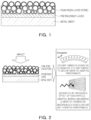
FIG. 1 is a schematic cross-sectional view of an unconstrained vibration damping metal sheet according to an exemplary embodiment in the present disclosure. -
FIG. 2 is a diagram illustrating vibration damping performance of the unconstrained vibration damping metal sheet according to the exemplary embodiment in the present disclosure. -
FIG. 3 is a diagram illustrating an effect of foamed pore particles contained in a foam resin layer in the present disclosure on the vibration damping performance. -
FIG. 4 is a diagram illustrating a modal evaluation method for measuring vibration damping performance. - Hereinafter, the present disclosure will be described below.
- The present disclosure is a technology for improving vibration damping performance of a metal sheet by applying foam pores to a coating film. Specifically, the present disclosure is characterized by improving vibration damping performance of a metal sheet so that noise/vibration generated by exposing foam pores to a noise/vibration source is blocked from pores.
- As illustrated in
FIG. 1 , the unconstrained vibration damping metal sheet of the present disclosure includes: a metal sheet; an organic-inorganic pretreatment layer containing an acrylic resin formed on the metal sheet; and a foam resin layer formed on the pretreatment layer, the foam resin layer containing, based on weight% thereof, a thermoplastic polyvinyl chloride resin: 40 to 80%, a plasticizer: 5 to 40%, a foaming agent: 0.1 to 10%, an oxide-based crosslinker: 1 to 4%, and spherical silica: 1 to 10%. Alternatively, instead of the powder foaming agent, a foamed capsule having a diameter of 1 to 20 um containing the foaming agent in a thermoplastic cell structure may be used as a foaming agent. - First, the unconstrained vibration damping metal sheet of the present disclosure includes a metal sheet on which the foam resin layer is formed. In the present disclosure, the metal sheet may be one selected from a cold-rolled steel sheet, a hot-rolled steel sheet, a galvanized steel sheet, a zinc alloy-plated steel sheet, a tainless steel sheet, and an aluminum plate, and a thickness of the metal sheet may range from 0.2 to 2.0 mm.
- The vibration damping metal sheet of the present disclosure also includes an organic-inorganic pretreatment layer containing an acrylic resin formed on the metal sheet.
- In the present disclosure, an organic-inorganic pretreatment layer containing an acrylic resin is formed on the metal sheet in order to enhance corrosion resistance of the metal sheet and coating film adhesion between the metal sheet and the vibration damping coating film.
- In the present disclosure, it is preferable to control a thickness of the pretreatment layer to be in the range of 0.1 to 2 um. The reason is that, when the thickness of the pretreatment layer is less than 0.1 um, adhesion to the polyvinyl chloride vibration damping resin layer described later is insufficient, but when the thickness of the pretreatment layer exceeds 2 um, it is not economically advantageous due to an excessive coating layer.
- The vibration damping metal sheet of the present disclosure includes the foam resin layer formed on the pretreatment layer, in which the foam resin layer contains, based on weight% thereof, a thermoplastic polyvinyl chloride resin: 40 to 80%, a plasticizer: 5 to 40%, a foaming agent: 0.1 to 10%, an oxide-based crosslinker: 1 to 4%, and spherical silica: 1 to 10%. Hereinafter, "%" means "wt%" unless otherwise indicated.
- First, the foam resin layer of the present disclosure contains, based on weight% thereof, thermoplastic polyvinyl chloride in the range of 40 to 80% as a polymer resin. In this case, the content may be adjusted according to workability and a thickness of a coating film. When the content of the polyvinyl chloride resin is less than 40%, the effect of the vibration damping performance may be reduced due to insufficient resin content, whereas when the content of the polyvinyl chloride resin exceeds 80%, the viscosity is too high, and the workability may be lowered.
- Meanwhile, when using a polyvinyl chloride resin, a plasticizer should be included for the flexibility and workability of the solution, and the foam resin layer of the present disclosure may include a plasticizer within the range of 5 to 40%. When the content of the plasticizer is less than 5%, the viscosity of the polyvinyl chloride solution is too high, resulting in poor workability, whereas when the content of the plasticizer exceeds 40%, the viscosity is too low or the coating film becomes too soft and difficult to maintain as a vibration damping steel sheet coating film.
- In the present disclosure, as the plasticizer, bis (2-ethylhexyl) adipate (DEHA), dimethyl adipate (DMAD), monomethyl adipate (MMAD), dioctyl adipate (DOA), dibutyl sebacate (DBS), dibutyl maleate (DBM), diisobutyl maleate (DIBM), trimethyl tentanyl diisobutylate, and the like may be used, and the type of plasticizer is not particularly limited.
- In addition, the foam resin layer of the present disclosure may include spherical silica in the range of 1 to 10% to improve the hardness of the coating film because the hardness of the coating film may be weakened when the coating film is foamed. When the content of the spherical silica is less than 1%, it is difficult to see the effect of improving the hardness of the coating film, whereas when the content of the spherical silica exceeds 10%, the coating film becomes too hard, which may cause problems during processing and may be economically unfavorable.
- The present disclosure is not particularly limited to the size of the spherical silica, but an average diameter of the spherical silica may be limited to the range of 1 to 30 um. When the average diameter of the silica is less than 1 um, it may increase the viscosity of the solution or does not help improve the hardness, whereas, when the average diameter of the silica exceeds 30 um, the stability of the solution may decrease or the formation of foam pores may be restricted.
- In addition, the foam resin layer of the present disclosure includes a foaming agent to form pores through foaming in a molecular resin. In this case, a foaming agent in the form of a powder or a foaming agent in the form of a capsule may be used.
- When using the foaming agent in the form of powder, it is preferable to control the content of the foaming agent to be in the range of 0.1 to 10%. When the content of the foaming agent is less than 0.1%, the amount of foaming agent is too small to exhibit the functions of the vibration damping performance and the sound insulation performance, and when the content of the foaming agent exceeds 10%, the viscosity of the solution increases when the solution is prepared, the increase in the viscosity of the solution may make coating work difficult, and the increase in the price of the solution may cause economic problems.
- In this case, a foaming agent that foams at 200 to 210°C of the pore formation temperature of the powder foaming agent, which corresponds to the curing temperature of the coating film, may be used. In the case of using such a powder foaming agent in the present disclosure, an azodicarbonamide-based powder foaming agent is usually used, but the power foaming agent is not limited thereto.
- Meanwhile, in the case of the foaming using the powder foaming agent described above, a phenomenon in which a polymer resin is foamed due to the gas generated by the decomposition of the foaming agent at a certain temperature or higher in an enclosed space is used, but in an open space, the generated gas may not be maintained inside a coating resin and does not form bubbles and disappears altogether, so it is difficult to use polymer resins and solutions to be foamed in coated products. Therefore, when foaming gas is generated to form bubbles, in order to maintain the pores, an oxide-based crosslinker such as dicumyl peroxide should be added so that the generated gas may form pores.
- Alternatively, in the present disclosure, the foamed capsule may be used as the foaming agent, and for example, 0.1 to 10% of foamed capsules having a diameter of 1 to 20 um containing a foaming agent in a thermoplastic cell structure may also be used. In the case of the form of the foamed capsule, the foaming agent itself forms pores by using the foamed capsule of 1 to 20 um that may form pores. That is, the pores of the present disclosure may adopt a method of forming pores in a coating film by foaming a foamed capsule, not foaming the coating film. The capsule foaming agent used is the form in which the foaming agent is contained in the spherical thermoplastic cell structure having a size of 1 to 20um. When the capsule foaming agent is heated, the cells outside the foamed capsule are first softened and the foaming agent inside is vaporized and the internal pressure is increased so that the entire microcapsule expands to form pores.
- In the present disclosure, the foaming agent in which foaming is performed at 160 to 220°C, which corresponds to the curing temperature of the coating film, may be used without limitation. For example, the conventional azodicarbonamide-based foaming agent may be used.
- In the present disclosure, it is preferable to limit the added amount of crosslinker to the range of 1 to 4%. When the added amount of crosslinker is less than 1%, it is difficult to play a role as a crosslinker, and when the added amount of crosslinker exceeds 4%, due to the increase in the crosslinking degree, crosslinked parts occur before foam cells are formed, which may lead to a decrease in a foaming rate.
- Meanwhile, in the present disclosure, ZnO, which is a commonly used foaming aid, is not used. Because the gas generation temperature of the foaming agent may be lowered when the foaming aid is added, the gas generation temperature becomes 140 to 160°C when ZnO is added. However, as in the case of the present disclosure, in the foaming condition in an open space, it is necessary to generate gas at a high temperature so that the generated gas does not escape before forming pores.
- Meanwhile, in the present disclosure, the thickness of the foam resin layer may be controlled in the range of 5 to 200 um. When the thickness of the foam resin layer is less than 5um, the effect on vibration damping performance is reduced, and when the thickness of the foam resin layer exceeds 200um, the vibration damping performance and the sound insulation performance are good, but difficulties may arise in molding due to the thick coating film during molding processing, and economic problems may occur. In addition, the foam resin layer may have foam pores having an average diameter of 5 to 100 um. When the average diameter of the foam pores is less than 5 um, the size of the pores is too small to obtain the effect of the pores, and when the average diameter of the foam pores exceeds 100 um, the size of the pores in the coating film is too large, and the toughness of the coating film is reduced, which may cause the problem of the deterioration in the physical properties of the coating film during processing.
- In addition, the foam resin layer of the present disclosure may include additives such as a wetting agent, an antifoaming agent, and an antioxidant at a conventional level.
- Next, a method for manufacturing an unconstrained vibration damping metal sheet of the present disclosure will be described.
- The method for manufacturing an unconstrained vibration damping metal sheet of the present disclosure includes preparing a base metal sheet; forming a pretreatment layer with a thickness of 0.1 to 2 um by applying an organic-inorganic pretreatment solution containing an acrylic resin on the base metal sheet and then curing the organic-inorganic pretreatment solution at 60 to 150°C; and forming a foam resin layer by applying a foam resin solution, which contains, based on weight% thereof, a thermoplastic polyvinyl chloride resin: 40 to 80%, a plasticizer: 5 to 40%, a foaming agent: 0.1 to 10%, an oxide-based crosslinker: 1 to 4%, and spherical silica: 1 to 10%, on the formed pretreatment layer to a thickness of 5 to 200 um and foaming the foam resin solution in a temperature range of 200 to 220°C.
- First, in the present disclosure, the base metal sheet is prepared, and as such a base metal sheet, one selected among a cold-rolled steel sheet, a hot-rolled steel sheet, a galvanized steel sheet, a zinc alloy-plated steel sheet, a stainless steel sheet, and an aluminum plate may be used.
- In the present disclosure, the organic-inorganic pretreatment solution containing acrylic resin is applied on the base metal sheet and cured to form a pretreatment layer having a thickness of 0.1 to 2 um. In this case, in the present disclosure, it is preferable to limit the curing temperature to 60 to 150°C during the curing. When the curing temperature is less than 60°C, the uncuring of the coating film may occur, and when the curing temperature exceeds 150°C, the brittle property of the coating film increases due to overcuring, resulting in a problem in the physical properties of the coating film.
- Thereafter, in the present disclosure, the vibration damping resin solution (foam resin solution) having the above-described composition is applied on the pretreatment layer to a thickness of 5 to 200 um and then foamed, the vibration damping steel sheet with the foam resin layer formed on a surface thereof may be manufactured.
- In this case, the vibration damping resin solution may be prepared by mixing each composition and then mixing the mixture in a high-speed stirrer and uniformly dispersing the mixture.
- In the present disclosure, it is preferable to limit the foaming temperature to the range of 200 to 220°C. When the foaming temperature is less than 200°C, a large part of the foaming agent is not foamed and the foaming efficiency is reduced, but when the foaming temperature exceeds 220°C, the overfoaming occurs, resulting in the problem in that the foamed bubbles disappear.
- Hereinafter, the present disclosure will be described in more detail with reference to Examples.
- A 0.8T cold-rolled steel sheet was prepared. Subsequently, a pretreatment layer was formed by coating an organic-inorganic pretreatment solution containing an acrylic resin on the surface of the cold-rolled steel sheet to a thickness of 1.0 um. Thereafter, a foam resin solution was applied on the pretreatment layer to form a foam resin layer having a thickness of 80 um. In this case, the foamed resin solution contains, based on weight% thereof, thermoplastic polyvinyl chloride resin: 60 to 80%, DEHA plasticizer: 5 to 40%, dicumyl peroxide crosslinker: 1 to 4%, and spherical silica: 1 to 10%. A vibration damping steel sheet having a foam resin layer was prepared by adding an azodicarbonamide-based powder foaming agent to the foaming resin solution in different amounts as shown in Tables 1 and 2 below.
- For each vibration damping steel sheet manufactured as described above, a loss factor and a sound insulation rate according to the content of the foaming agent were evaluated, and the results were shown in Tables 2 and 3, respectively.
- Vibration damping performance is a quantity that represents the ability to convert vibration energy into thermal energy when vibration is applied to a material.
FIG. 2 is a diagram illustrating vibration damping performance of the vibration damping metal sheet according to the exemplary embodiment in the present disclosure, andFIG. 3 is a diagram illustrating an effect of foamed pore particles contained in a foam resin layer in the present disclosure on the vibration damping performance. - The loss factor η, which has the same meaning as internal friction, is used as an indication of the vibration damping performance. Here, the loss factor η is defined by the following Relational Expression 1 when the total vibration energy of vibration system is E and energy dissipated by converting into thermal energy during 1 cycle vibration is ΔE.

- Meanwhile, as a loss factor measurement method, a modal evaluation method of
FIG. 4 was used, and the modal evaluation method is an impact test method using a hammer on a test piece as a form of vibration test, and is a method for measuring the vibration damping performance by measuring the loss factor using the vibration properties generated after impact on the specimen. In this case, the loss factor values of a low frequency range of 1 khz or less and a high frequency range of 1 khz or more were measured. For reference, the higher the value of the loss coefficient, the better the vibration damping performance. - In addition, in order to confirm the effect of blocking noise caused by internal vibration, a sound insulation rate was measured through a sound insulation test. A sound insulation test is a test to evaluate how well a material used as a member separating spaces may block sound. In the sound insulation test, a sample whose performance is to be evaluated is placed between two spaces, and sizes of sound sources on both sides are measured and investigated. Transmittance, which is a ratio of transmitted sound energy to incident sound energy, is calculated with the intensity of sound measured in both spaces. The expression unit is represented by transmission loss (TL), which is a value obtained by taking the reciprocal of transmittance as a common logarithm, as shown in the following Relational Expression 2. In this case, the sound insulation of the low frequency range of 1 khz or less and the high frequency range of 1 khz or more was measured.

- Here, τ represents transmittance.
[Table 1] Property Measurement Area Conventional Example Compara -tive Example 1 Inventive Example 1 Inventive Example 2 Inventive Example 3 Inventive Example 4 Inventive Example 5 Comparative Example 2 Existing Painted Steel Sheet Content of Powder Foaming Agent (%) 0.06 0.1 1 1.5 5 10 12 Loss Factor (×10-3) Low Frequency Range (lkhz Or less) 6 6 9 9 9 10 9 9 High Frequency Range (lkhz Or More) 0.6 0.6 3 2 4 4 3 2.5 [Table 2] Property Measurement Area Conventional Example Comparative Example 1 Inventive Example 1 Inventive Example 2 Inventive Example 3 Inventive Example 4 Inventive Example 5 Comparative Example 2 Existing Painted Steel Sheet Content of Powder Foaming Agent (%) 0.06 0.1 1 1.5 5 10 12 Transmission Loss (dB) Low Frequency Range (1khz Or less) 32 32 33 39 40 43 43 42 High Frequency Range (1khz Or More) 38 38 39 43 46 48 47 47 - As shown in Table 1 and 2, in the case of the foam resin layer of Inventive Examples 1 to 5 containing the content of the foaming agent powder meeting the range of the present disclosure on the cold-rolled steel sheet on which the organic-inorganic pretreatment layer containing acrylic resin was formed, it can be confirmed that the loss factor and transmission loss are excellent compared to the conventional examples that do not contain such a foaming agent.
- In contrast, Comparative Example 1, in which the content of the foaming agent is insufficient, was difficult to expect the effect of foaming compared to the existing painted steel sheet. In Comparative Example 2 having an excessive content of foaming agent, it may difficult to expect an improved effect due to the additional addition due to the saturation of the foam pore formation compared to Inventive Examples 4 and 5, and the excessive foaming may cause the coating film to become soft or may economically unfavorable.
- A 0.8T cold-rolled steel sheet was prepared. Subsequently, a pretreatment layer was formed by coating an organic-inorganic pretreatment solution containing an acrylic resin on the surface of the cold-rolled steel sheet to a thickness of 1.0 um. Thereafter, a foam resin solution was applied on the pretreatment layer to form a foam resin layer having a thickness of 80 um. In this case, the foamed resin solution contains, based on weight% thereof, thermoplastic polyvinyl chloride resin: 60 to 80%, DEHA plasticizer: 5 to 40%, dicumyl peroxide crosslinker: 1 to 4%, and spherical silica: 1 to 10%. A vibration damping steel sheet having a foam resin layer was prepared by adding a thermoplastic resin type capsule foaming agent to the foaming resin solution in different amounts as shown in Tables 3 and 4 below.
[Table 3] Property Measurement Area Conventional Example Compara -tive Example 3 Inventive Example 6 Inventive Example 7 Inventive Example 8 Inventive Example 9 Inventive Example 10 Compara -tive Example 4 Existing Painted Steel Sheet Content of Capsule Foaming Agent (%) 0.06 0.1 1 1.5 5 10 12 Loss Factor (×10-3) Low Frequency Range (lkhz Or less) 6 6 8 9 10 10 9 9 High Frequency Range (1khz Or More) 0.6 0.6 2 3 4 5 5 3 [Table 4] Property Measurement Area Conventional Example Compara -tive Example 3 Inventive Example 6 Inventive Example 7 Inventive Example 8 Inventive Example 9 Inventive Example 10 Compara -tive 4 Existing Painted Steel Sheet Content of Capsule Foaming Agent (%) 0.06 0.1 1 1.5 5 10 12 Transmission Loss (dB) Low Frequency Range (lkhz Or less) 32 32 33 42 44 45 44 41 High Frequency Range (lkhz Or More) 38 38 39 46 48 48 50 46 - As shown in Tables 3 and 4, in the case of the foam resin layer of Inventive Examples 6 to 10 containing the content of the capsule foaming agent meeting the range of the present disclosure on the cold-rolled steel sheet on which the organic-inorganic pretreatment layer containing acrylic resin was formed, it can be confirmed that the loss factor and transmission loss are excellent compared to the conventional examples that do not contain such a foaming agent.
- In contrast, Comparative Example 3, in which the content of the foaming agent is insufficient, was difficult to expect the effect of foaming compared to the existing painted steel sheet. In Comparative Example 4 having an excessive content of foaming agent, it may difficult to expect an improved effect due to the additional addition due to the saturation of the foam pore formation compared to Inventive Examples 6 to 10, and the excessive foaming caused the coating film to become soft or was economically unfavorable.
- As described above, exemplary embodiments of the present disclosure have been described in the detailed description of the present disclosure, but those of ordinary skill in the art to which the present disclosure pertains may be variously modified without departing from the scope of the present disclosure. Therefore, the scope of the present disclosure is not construed as being limited to the embodiments described above, but should be defined by the following claims as well as equivalents thereto.
Claims (12)
- An unconstrained vibration damping metal sheet with foam pores, comprising:a metal sheet;an organic-inorganic pretreatment layer containing an acrylic resin formed on the metal sheet; anda foam resin layer formed on the pretreatment layer,wherein the foam resin layer contains, based on weigh% thereof, a thermoplastic polyvinyl chloride resin: 40 to 80%, a plasticizer: 5 to 40%, a foaming agent: 0.1 to 10%, an oxide-based crosslinker: 1 to 4%, and spherical silica: 1 to 10%.
- The unconstrained vibration damping metal sheet with foam pores of claim 1, wherein the foaming agent is a powder foaming agent or a foamed capsule.
- The unconstrained vibration damping metal sheet with foam pores of claim 2, wherein the powder foaming agent is an azodicarbonamide-based powder foaming agent.
- The unconstrained vibration damping metal sheet with foam pores of claim 2, wherein the foamed capsule is a foamed capsule having a diameter of 1 to 20um in which a foaming agent is contained in a thermoplastic cell structure.
- The unconstrained vibration damping metal sheet with foam pores of claim 1, wherein the foam resin layer has a foam pore having an average diameter of 5 to 100 um.
- The unconstrained vibration damping metal sheet with foam pores of claim 1, wherein a thickness of the pretreatment layer ranges from 0.1 to 2 um.
- The unconstrained vibration damping metal sheet with foam pores of claim 1, wherein a thickness of the foam resin layer ranges from 5 to 200 um.
- The unconstrained vibration damping metal sheet with foam pores of claim 1, wherein the metal sheet is one selected from a cold-rolled steel sheet, a hot-rolled steel sheet, a galvanized steel sheet, a zinc alloy-plated steel sheet, a stainless steel sheet, and an aluminum plate.
- The unconstrained vibration damping metal sheet with foam pores of claim 1, wherein the oxide-based crosslinker is dicumyl peroxide.
- The unconstrained vibration damping metal sheet with foam pores of claim 1, wherein an average diameter of the spherical silica has a size ranging from 1 to 30 um.
- The unconstrained vibration damping metal sheet with foam pores of claim 1, wherein the plasticizer is one selected from the group consisting of bis (2-ethylhexyl) adipate (DEHA), dimethyl adipate (DMAD), monomethyl adipate (MMAD), dioctyl adipate (DOA), dibutyl sebacate (DBS), dibutyl maleate (DBM), diisobutyl maleate (DIBM), and trimethyl tentanyl diisobutylate.
- A method for manufacturing an unconstrained vibration damping metal sheet with foam pores, the method comprising:preparing a base metal sheet;forming a pretreatment layer with a thickness of 0.1 to 2 um by applying an organic-inorganic pretreatment solution containing an acrylic resin on the base metal sheet and then curing the organic-inorganic pretreatment solution at 60 to 150°C; andforming a foam resin layer by applying a foam resin solution, which contains, based on weight% thereof, a thermoplastic polyvinyl chloride resin: 40 to 80%, a plasticizer: 5 to 40%, a foaming agent: 0.1 to 10%, an oxide-based crosslinker: 1 to 4%, and spherical silica: 1 to 10%, on the formed pretreatment layer to a thickness of 5 to 200 um and foaming the foam resin solution in a temperature range of 200 to 220°C.
Applications Claiming Priority (2)
| Application Number | Priority Date | Filing Date | Title |
|---|---|---|---|
| KR1020200179434A KR20220089747A (en) | 2020-12-21 | 2020-12-21 | Vibration damping steel sheet of free layer type with foam structure |
| PCT/KR2021/017830 WO2022139218A1 (en) | 2020-12-21 | 2021-11-30 | Unconstrained vibration damping metal sheet with foam pores and method for manufacturing same |
Publications (2)
| Publication Number | Publication Date |
|---|---|
| EP4265695A1 true EP4265695A1 (en) | 2023-10-25 |
| EP4265695A4 EP4265695A4 (en) | 2024-04-03 |
Family
ID=82159951
Family Applications (1)
| Application Number | Title | Priority Date | Filing Date |
|---|---|---|---|
| EP21911285.1A Pending EP4265695A4 (en) | 2020-12-21 | 2021-11-30 | Unconstrained vibration damping metal sheet with foam pores and method for manufacturing same |
Country Status (6)
| Country | Link |
|---|---|
| US (2) | US12508796B2 (en) |
| EP (1) | EP4265695A4 (en) |
| JP (1) | JP2023554655A (en) |
| KR (2) | KR20220089747A (en) |
| CN (1) | CN116745367A (en) |
| WO (1) | WO2022139218A1 (en) |
Families Citing this family (4)
| Publication number | Priority date | Publication date | Assignee | Title |
|---|---|---|---|---|
| KR20240040864A (en) * | 2022-09-22 | 2024-03-29 | 주식회사 포스코 | A coating film composition having insulation properties and a coated metal plate using the same |
| CN117820937B (en) * | 2022-09-27 | 2026-01-16 | 烟台正海磁性材料股份有限公司 | An intumescent coating, its preparation method and application, and a permanent magnet containing the intumescent coating. |
| JPWO2024232185A1 (en) * | 2023-05-09 | 2024-11-14 | ||
| KR20250052063A (en) * | 2023-10-11 | 2025-04-18 | 주식회사 포스코 | Coating composition for thermo-shield and sound absorption and steel sheet having excellent thermo-shield and sound absorption performance using the same |
Family Cites Families (19)
| Publication number | Priority date | Publication date | Assignee | Title |
|---|---|---|---|---|
| JPS5193770A (en) | 1975-02-14 | 1976-08-17 | Danpinguseinoo jusurufukugokinzokuban | |
| JPS56159160A (en) | 1980-05-14 | 1981-12-08 | Daicel Ltd | Vibration damping composite metallic plate |
| JPS58224738A (en) | 1982-06-23 | 1983-12-27 | 大日本インキ化学工業株式会社 | Composite sheet for reinforcing thin metallic plate and method of reinforcing thin metallic plate |
| JPS59152847A (en) | 1983-02-21 | 1984-08-31 | 住友ベークライト株式会社 | Steel plate for absorbing vibration |
| DE3444863A1 (en) | 1984-12-08 | 1986-07-17 | Teroson Gmbh, 6900 Heidelberg | SPRAYABLE PLASTIC INSULATION AND THEIR USE FOR SOUND ABSORPTION |
| JPS63236633A (en) * | 1987-03-25 | 1988-10-03 | サンスタ−技研株式会社 | Vibration-damping material |
| JPH0717801B2 (en) * | 1990-10-05 | 1995-03-01 | 日本特殊塗料株式会社 | Plastisol composition having damping properties |
| JP2957303B2 (en) | 1991-04-18 | 1999-10-04 | 新日本製鐵株式会社 | Damping steel sheet with excellent workability and its manufacturing method |
| JP3381737B2 (en) * | 1993-07-12 | 2003-03-04 | 日本ゼオン株式会社 | Vehicle damping structure |
| ES2387805T3 (en) * | 2003-02-25 | 2012-10-02 | Chemetall Gmbh | Procedure for coating metal surfaces with a polymer-rich composition |
| JP2005131830A (en) * | 2003-10-28 | 2005-05-26 | Nippon Fine Coatings Inc | Painted metal plate and manufacturing method thereof |
| JP2005186303A (en) | 2003-12-24 | 2005-07-14 | Saitama Rubber Kogyo Kk | Damping reinforcing sheet for steel panel |
| JP4448817B2 (en) | 2005-12-09 | 2010-04-14 | 日東電工株式会社 | Damping materials for automobiles |
| KR100842033B1 (en) | 2006-12-19 | 2008-06-27 | 포스코강판 주식회사 | Foam coating steel sheet |
| KR100887094B1 (en) * | 2006-12-28 | 2009-03-04 | 주식회사 포스코 | Low temperature sintered chromium-free pretreatment solution composition for resin coated steel sheet, pretreatment layer manufacturing method using the composition, steel sheet including pretreatment layer and pretreatment layer by the preparation method |
| JP5629253B2 (en) | 2011-10-19 | 2014-11-19 | 株式会社神戸製鋼所 | Precoated metal plate having excellent vibration damping properties and method for producing the same |
| DE102013215441A1 (en) * | 2013-08-06 | 2015-02-12 | Henkel Ag & Co. Kgaa | Metal pretreatment compositions comprising silanes and organophosphonic acids |
| JP5995891B2 (en) | 2014-03-12 | 2016-09-21 | アイシン化工株式会社 | Vinyl chloride plastisol composition |
| KR102333683B1 (en) | 2017-12-20 | 2021-12-02 | (주)엘엑스하우시스 | A foam and the floor comprising the foam |
-
2020
- 2020-12-21 KR KR1020200179434A patent/KR20220089747A/en not_active Ceased
-
2021
- 2021-11-30 EP EP21911285.1A patent/EP4265695A4/en active Pending
- 2021-11-30 CN CN202180086539.1A patent/CN116745367A/en active Pending
- 2021-11-30 JP JP2023537349A patent/JP2023554655A/en active Pending
- 2021-11-30 WO PCT/KR2021/017830 patent/WO2022139218A1/en not_active Ceased
- 2021-11-30 US US18/265,566 patent/US12508796B2/en active Active
-
2023
- 2023-09-12 KR KR1020230121146A patent/KR20230134113A/en not_active Ceased
-
2025
- 2025-11-24 US US19/398,295 patent/US20260077570A1/en active Pending
Also Published As
| Publication number | Publication date |
|---|---|
| US20240092060A1 (en) | 2024-03-21 |
| EP4265695A4 (en) | 2024-04-03 |
| WO2022139218A1 (en) | 2022-06-30 |
| CN116745367A (en) | 2023-09-12 |
| JP2023554655A (en) | 2023-12-28 |
| KR20230134113A (en) | 2023-09-20 |
| KR20220089747A (en) | 2022-06-29 |
| US12508796B2 (en) | 2025-12-30 |
| US20260077570A1 (en) | 2026-03-19 |
Similar Documents
| Publication | Publication Date | Title |
|---|---|---|
| EP4265695A1 (en) | Unconstrained vibration damping metal sheet with foam pores and method for manufacturing same | |
| NO170667B (en) | PROCEDURE FOR THE PREPARATION OF AN OSMOSE DEVICE Rendering of a useful agent | |
| EP0138557A2 (en) | Vibration-damping material | |
| US12539687B2 (en) | Constrained-type vibration-damping metal sheet having foam pores and method for manufacturing same | |
| EP4074791B1 (en) | Surface treatment composition for vibration damping steel sheet and vibration damping steel sheet | |
| KR102284298B1 (en) | Dash isolation pad with improved sound absorption | |
| EP0456473B1 (en) | Polyvinyl chloride based resin composition | |
| US11692073B2 (en) | Resin foam, resin foam sheet, adhesive tape, vehicle member, and building member | |
| JP2018138504A (en) | Interlayer film for glass laminate, and glass laminate | |
| KR20210078970A (en) | Surface treatment composition for vibration damping steel sheet and vibration damping steel sheet | |
| JP2633440B2 (en) | Composite damping material | |
| JPS61268440A (en) | Vibration-damping composite steel plate | |
| JP2018138503A (en) | Interlayer film for glass laminate, and glass laminate | |
| KR20230096422A (en) | Sandwich steel sheet having vibration damping property and insulation property and method of manufacturing the same | |
| JPS61268439A (en) | Composite steel plate for damping vibration | |
| JPS60238344A (en) | Vibration damper | |
| JPS6038151A (en) | Composite type vibration-damping laminate | |
| JPS60238342A (en) | Polymer composition and vibration damper | |
| JPH0270777A (en) | Vibration-damping adhesive sheet | |
| JPH06263972A (en) | Sheet made of polyester resin composition for damping material | |
| JPH01242659A (en) | Damping material composition and composite thereof | |
| JPH05193043A (en) | Method for manufacturing resin composite type damping metal plate | |
| JPS63165135A (en) | Composite type vibration-damping metallic plate |
Legal Events
| Date | Code | Title | Description |
|---|---|---|---|
| STAA | Information on the status of an ep patent application or granted ep patent |
Free format text: STATUS: THE INTERNATIONAL PUBLICATION HAS BEEN MADE |
|
| PUAI | Public reference made under article 153(3) epc to a published international application that has entered the european phase |
Free format text: ORIGINAL CODE: 0009012 |
|
| STAA | Information on the status of an ep patent application or granted ep patent |
Free format text: STATUS: REQUEST FOR EXAMINATION WAS MADE |
|
| 17P | Request for examination filed |
Effective date: 20230628 |
|
| AK | Designated contracting states |
Kind code of ref document: A1 Designated state(s): AL AT BE BG CH CY CZ DE DK EE ES FI FR GB GR HR HU IE IS IT LI LT LU LV MC MK MT NL NO PL PT RO RS SE SI SK SM TR |
|
| DAV | Request for validation of the european patent (deleted) | ||
| DAX | Request for extension of the european patent (deleted) | ||
| A4 | Supplementary search report drawn up and despatched |
Effective date: 20240229 |
|
| RIC1 | Information provided on ipc code assigned before grant |
Ipc: G10K 11/168 20060101ALI20240223BHEP Ipc: F16F 7/12 20060101ALI20240223BHEP Ipc: B32B 5/18 20060101ALI20240223BHEP Ipc: C08K 5/00 20060101ALI20240223BHEP Ipc: C08K 5/14 20060101ALI20240223BHEP Ipc: C08K 9/10 20060101ALI20240223BHEP Ipc: C08K 5/10 20060101ALI20240223BHEP Ipc: C08K 3/36 20060101ALI20240223BHEP Ipc: C08K 7/18 20060101ALI20240223BHEP Ipc: C09D 133/04 20060101ALI20240223BHEP Ipc: C09D 5/00 20060101ALI20240223BHEP Ipc: C09D 7/40 20180101ALI20240223BHEP Ipc: C09D 127/06 20060101AFI20240223BHEP |
|
| STAA | Information on the status of an ep patent application or granted ep patent |
Free format text: STATUS: EXAMINATION IS IN PROGRESS |
|
| 17Q | First examination report despatched |
Effective date: 20250429 |