EP4265459B1 - Elektrische antriebsachse - Google Patents
Elektrische antriebsachse Download PDFInfo
- Publication number
- EP4265459B1 EP4265459B1 EP23168181.8A EP23168181A EP4265459B1 EP 4265459 B1 EP4265459 B1 EP 4265459B1 EP 23168181 A EP23168181 A EP 23168181A EP 4265459 B1 EP4265459 B1 EP 4265459B1
- Authority
- EP
- European Patent Office
- Prior art keywords
- shaft
- output wheel
- sliding sleeve
- switching position
- drive
- Prior art date
- Legal status (The legal status is an assumption and is not a legal conclusion. Google has not performed a legal analysis and makes no representation as to the accuracy of the status listed.)
- Active
Links
Images
Classifications
-
- F—MECHANICAL ENGINEERING; LIGHTING; HEATING; WEAPONS; BLASTING
- F16—ENGINEERING ELEMENTS AND UNITS; GENERAL MEASURES FOR PRODUCING AND MAINTAINING EFFECTIVE FUNCTIONING OF MACHINES OR INSTALLATIONS; THERMAL INSULATION IN GENERAL
- F16D—COUPLINGS FOR TRANSMITTING ROTATION; CLUTCHES; BRAKES
- F16D21/00—Systems comprising a plurality of actuated clutches
- F16D21/02—Systems comprising a plurality of actuated clutches for interconnecting three or more shafts or other transmission members in different ways
-
- B—PERFORMING OPERATIONS; TRANSPORTING
- B60—VEHICLES IN GENERAL
- B60K—ARRANGEMENT OR MOUNTING OF PROPULSION UNITS OR OF TRANSMISSIONS IN VEHICLES; ARRANGEMENT OR MOUNTING OF PLURAL DIVERSE PRIME-MOVERS IN VEHICLES; AUXILIARY DRIVES FOR VEHICLES; INSTRUMENTATION OR DASHBOARDS FOR VEHICLES; ARRANGEMENTS IN CONNECTION WITH COOLING, AIR INTAKE, GAS EXHAUST OR FUEL SUPPLY OF PROPULSION UNITS IN VEHICLES
- B60K1/00—Arrangement or mounting of electrical propulsion units
- B60K1/02—Arrangement or mounting of electrical propulsion units comprising more than one electric motor
-
- B—PERFORMING OPERATIONS; TRANSPORTING
- B60—VEHICLES IN GENERAL
- B60K—ARRANGEMENT OR MOUNTING OF PROPULSION UNITS OR OF TRANSMISSIONS IN VEHICLES; ARRANGEMENT OR MOUNTING OF PLURAL DIVERSE PRIME-MOVERS IN VEHICLES; AUXILIARY DRIVES FOR VEHICLES; INSTRUMENTATION OR DASHBOARDS FOR VEHICLES; ARRANGEMENTS IN CONNECTION WITH COOLING, AIR INTAKE, GAS EXHAUST OR FUEL SUPPLY OF PROPULSION UNITS IN VEHICLES
- B60K17/00—Arrangement or mounting of transmissions in vehicles
- B60K17/02—Arrangement or mounting of transmissions in vehicles characterised by arrangement, location, or kind of clutch
-
- B—PERFORMING OPERATIONS; TRANSPORTING
- B60—VEHICLES IN GENERAL
- B60K—ARRANGEMENT OR MOUNTING OF PROPULSION UNITS OR OF TRANSMISSIONS IN VEHICLES; ARRANGEMENT OR MOUNTING OF PLURAL DIVERSE PRIME-MOVERS IN VEHICLES; AUXILIARY DRIVES FOR VEHICLES; INSTRUMENTATION OR DASHBOARDS FOR VEHICLES; ARRANGEMENTS IN CONNECTION WITH COOLING, AIR INTAKE, GAS EXHAUST OR FUEL SUPPLY OF PROPULSION UNITS IN VEHICLES
- B60K17/00—Arrangement or mounting of transmissions in vehicles
- B60K17/04—Arrangement or mounting of transmissions in vehicles characterised by arrangement, location or kind of gearing
- B60K17/043—Transmission unit disposed in on near the vehicle wheel, or between the differential gear unit and the wheel
-
- B—PERFORMING OPERATIONS; TRANSPORTING
- B60—VEHICLES IN GENERAL
- B60K—ARRANGEMENT OR MOUNTING OF PROPULSION UNITS OR OF TRANSMISSIONS IN VEHICLES; ARRANGEMENT OR MOUNTING OF PLURAL DIVERSE PRIME-MOVERS IN VEHICLES; AUXILIARY DRIVES FOR VEHICLES; INSTRUMENTATION OR DASHBOARDS FOR VEHICLES; ARRANGEMENTS IN CONNECTION WITH COOLING, AIR INTAKE, GAS EXHAUST OR FUEL SUPPLY OF PROPULSION UNITS IN VEHICLES
- B60K17/00—Arrangement or mounting of transmissions in vehicles
- B60K17/04—Arrangement or mounting of transmissions in vehicles characterised by arrangement, location or kind of gearing
- B60K17/06—Arrangement or mounting of transmissions in vehicles characterised by arrangement, location or kind of gearing of change-speed gearing
- B60K17/08—Arrangement or mounting of transmissions in vehicles characterised by arrangement, location or kind of gearing of change-speed gearing of mechanical type
-
- B—PERFORMING OPERATIONS; TRANSPORTING
- B60—VEHICLES IN GENERAL
- B60K—ARRANGEMENT OR MOUNTING OF PROPULSION UNITS OR OF TRANSMISSIONS IN VEHICLES; ARRANGEMENT OR MOUNTING OF PLURAL DIVERSE PRIME-MOVERS IN VEHICLES; AUXILIARY DRIVES FOR VEHICLES; INSTRUMENTATION OR DASHBOARDS FOR VEHICLES; ARRANGEMENTS IN CONNECTION WITH COOLING, AIR INTAKE, GAS EXHAUST OR FUEL SUPPLY OF PROPULSION UNITS IN VEHICLES
- B60K6/00—Arrangement or mounting of plural diverse prime-movers for mutual or common propulsion, e.g. hybrid propulsion systems comprising electric motors and internal combustion engines
- B60K6/20—Arrangement or mounting of plural diverse prime-movers for mutual or common propulsion, e.g. hybrid propulsion systems comprising electric motors and internal combustion engines the prime-movers consisting of electric motors and internal combustion engines, e.g. HEVs
- B60K6/22—Arrangement or mounting of plural diverse prime-movers for mutual or common propulsion, e.g. hybrid propulsion systems comprising electric motors and internal combustion engines the prime-movers consisting of electric motors and internal combustion engines, e.g. HEVs characterised by apparatus, components or means specially adapted for HEVs
- B60K6/38—Arrangement or mounting of plural diverse prime-movers for mutual or common propulsion, e.g. hybrid propulsion systems comprising electric motors and internal combustion engines the prime-movers consisting of electric motors and internal combustion engines, e.g. HEVs characterised by apparatus, components or means specially adapted for HEVs characterised by the driveline clutches
- B60K6/387—Actuated clutches, i.e. clutches engaged or disengaged by electric, hydraulic or mechanical actuating means
-
- F—MECHANICAL ENGINEERING; LIGHTING; HEATING; WEAPONS; BLASTING
- F16—ENGINEERING ELEMENTS AND UNITS; GENERAL MEASURES FOR PRODUCING AND MAINTAINING EFFECTIVE FUNCTIONING OF MACHINES OR INSTALLATIONS; THERMAL INSULATION IN GENERAL
- F16H—GEARING
- F16H61/00—Control functions within control units of change-speed- or reversing-gearings for conveying rotary motion ; Control of exclusively fluid gearing, friction gearing, gearings with endless flexible members or other particular types of gearing
- F16H61/0059—Braking of gear output shaft using simultaneous engagement of engaging means, e.g. clutches or brakes, applied for different gear ratios
-
- F—MECHANICAL ENGINEERING; LIGHTING; HEATING; WEAPONS; BLASTING
- F16—ENGINEERING ELEMENTS AND UNITS; GENERAL MEASURES FOR PRODUCING AND MAINTAINING EFFECTIVE FUNCTIONING OF MACHINES OR INSTALLATIONS; THERMAL INSULATION IN GENERAL
- F16D—COUPLINGS FOR TRANSMITTING ROTATION; CLUTCHES; BRAKES
- F16D11/00—Clutches in which the members have interengaging parts
- F16D11/14—Clutches in which the members have interengaging parts with clutching members movable only axially
-
- F—MECHANICAL ENGINEERING; LIGHTING; HEATING; WEAPONS; BLASTING
- F16—ENGINEERING ELEMENTS AND UNITS; GENERAL MEASURES FOR PRODUCING AND MAINTAINING EFFECTIVE FUNCTIONING OF MACHINES OR INSTALLATIONS; THERMAL INSULATION IN GENERAL
- F16D—COUPLINGS FOR TRANSMITTING ROTATION; CLUTCHES; BRAKES
- F16D11/00—Clutches in which the members have interengaging parts
- F16D2011/002—Clutches in which the members have interengaging parts using an external and axially slidable sleeve for coupling the teeth of both coupling components together
-
- F—MECHANICAL ENGINEERING; LIGHTING; HEATING; WEAPONS; BLASTING
- F16—ENGINEERING ELEMENTS AND UNITS; GENERAL MEASURES FOR PRODUCING AND MAINTAINING EFFECTIVE FUNCTIONING OF MACHINES OR INSTALLATIONS; THERMAL INSULATION IN GENERAL
- F16D—COUPLINGS FOR TRANSMITTING ROTATION; CLUTCHES; BRAKES
- F16D11/00—Clutches in which the members have interengaging parts
- F16D2011/004—Clutches in which the members have interengaging parts using an internal or intermediate axially slidable sleeve, coupling both components together, whereby the intermediate sleeve is arranged internally at least with respect to one of the components
-
- F—MECHANICAL ENGINEERING; LIGHTING; HEATING; WEAPONS; BLASTING
- F16—ENGINEERING ELEMENTS AND UNITS; GENERAL MEASURES FOR PRODUCING AND MAINTAINING EFFECTIVE FUNCTIONING OF MACHINES OR INSTALLATIONS; THERMAL INSULATION IN GENERAL
- F16H—GEARING
- F16H63/00—Control outputs from the control unit to change-speed- or reversing-gearings for conveying rotary motion or to other devices than the final output mechanism
- F16H63/02—Final output mechanisms therefor; Actuating means for the final output mechanisms
- F16H63/30—Constructional features of the final output mechanisms
- F16H63/34—Locking or disabling mechanisms
- F16H63/3416—Parking lock mechanisms or brakes in the transmission
- F16H63/3425—Parking lock mechanisms or brakes in the transmission characterised by pawls or wheels
Definitions
- the invention relates to an electric drive axle for a two-track motor vehicle, with a first half-shaft for driving a first wheel and a second half-shaft for driving a second wheel of the motor vehicle, wherein the first half-shaft can be driven by a first electric machine via a first output gear and the second half-shaft can be driven by a second electric machine via a second output gear, wherein at least one electric machine can be connected to a wheel via a switching element, wherein the switching element has at least one first sliding sleeve arranged in a first drive path between the first output gear and the first half-shaft coaxially to the first half-shaft and axially displaceable, which is designed to separate the first half-shaft from the first output gear in a first switching position of the switching element and to establish a rotationally fixed connection between the first half-shaft and the first output gear in a second switching position and/or third switching position of the switching element, and wherein the switching element has at least one second sliding sleeve arranged
- Arrangements with one or two drive motors are known. Arrangements with only one drive motor have a mechanical differential gear to compensate for the speed differences on the wheels when cornering. If no mechanical torque vectoring system is provided, the drive torque is always split 50:50 between both wheels. Arrangements with two drive motors are designed so that one motor drives each wheel. The advantage of this is that no differential gear is necessary. This arrangement also allows torque vectoring to be implemented purely through control measures, which significantly increases driving comfort and safety.
- Electric drive axles are sometimes used as additional drives. If a drive axle is not required in certain driving situations, it can be useful to mechanically decouple the drive from the wheels in order to prevent constant dragging and thus increase the drive efficiency.
- the WO 2018/059783 A1 describes a drive device for a vehicle axle of a two-track vehicle with electric drive, with each vehicle wheel of this vehicle axle being assigned an electric machine.
- the electric shafts of the electric machines can each be connected to a first and second flange shaft of the vehicle wheels via first and second switching elements.
- the vehicle axle has an axle differential, which drives on the flange shafts of the vehicle wheels on the output side and can be connected to the electric machine shafts on the input side via a third and fourth switching element.
- This solution requires a total of four switching elements, two of which are multi-disk clutches, and is switched at the level of the electric machines. This has a detrimental effect on efficiency.
- an electric drive axle with a differential is known, which can be connected to two electric machines via a spur gear and two switching elements, wherein the switching elements are arranged in the drive path between the drive shafts of the electric machines and the spur gear.
- a similar electric drive axle is known from CN 108 819 690 A The fact that the transmission and differential cannot be decoupled has a detrimental effect on drive efficiency.
- the JP 2018-001845 A discloses an electric drive axle for a two-track vehicle with two half-shafts for driving the wheels, wherein a first electric machine is assigned to the first half-shaft and a second electric machine is assigned to the second half-shaft.
- the electric machines can be connected to the half-shafts via clutch mechanisms and output gears, wherein a switching element is arranged between each half-shaft and the corresponding output gear.
- the JP 2019-206204 A shows a similar arrangement.
- the CN112406497A discloses an electric drive axle with two electric machines, each electric drive axle driving a wheel of the vehicle via a clutch and a spur gear stage.
- the electric machines can also be coupled to one another via a clutch.
- the object of the invention is to provide an electric drive axle with high drive efficiency.
- first sliding sleeve and the second sliding sleeve are firmly connected to one another via a connecting element.
- the switching element has at least one axially displaceable third sliding sleeve arranged in a third drive path between the first output gear and the second output gear coaxially to the first and second half shaft, which is designed to decouple the first output gear and the second output gear in terms of drive in the first and/or second switching position of the switching element and to couple the first and second output gear to one another in terms of drive in a third switching position of the switching element.
- a complete axle lock can thus be achieved.
- the connecting element is formed by the third sliding sleeve.
- the first output gear and/or the second output gear is formed by a gear of a gear stage.
- the first electric machine is permanently connected to the first output gear and/or the second electric machine is permanently connected to the second output gear.
- the first electric machine acts directly or indirectly on the first output gear, i.e. without an intermediate switching element, and the second electric machine acts directly or indirectly on the second output gear.
- the sliding sleeves are mounted so as to be axially displaceable relative to the two half shafts and the two output gears.
- One embodiment of the invention provides that the first sliding sleeve is permanently connected in a rotationally fixed manner to the first half-shaft in each of the switching positions and the second sliding sleeve is permanently connected in a rotationally fixed manner to the second output gear in each of the switching positions.
- the first sliding sleeve is separated from the first output gear and the second sliding sleeve is separated from the second half-shaft.
- the first sliding sleeve in the second and/or third switching position, is drive-connected both to the first half-shaft and to the first output gear, and the second sliding sleeve is drive-connected both to the second half-shaft and to the second output gear.
- first output gear and the second output gear are coupled together in the third switching position, preferably by the third sliding sleeve.
- a rigid drive to the output gears can be achieved in order to increase traction on slippery surfaces, for example.
- At least one output gear can be blocked via a parking lock, wherein the parking lock has at least one locking gear, preferably arranged on a drive shaft of an electric machine, into which a locking member mounted fixedly to the housing can be positively deflected.
- a further embodiment of the invention provides that in a fourth switching position the first sliding sleeve is drivingly connected to both the first half shaft and the first output gear and the second sliding sleeve is drivingly connected to both the second half shaft and the second output gear, wherein the first output gear and the second output gear are coupled to one another, preferably by the third sliding sleeve, and that the first switching element and/or the second switching element are connected to a housing in a rotationally fixed manner.
- the drive axle described enables a high efficiency and a very compact design.
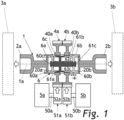
- Fig.1 showed an electric drive axle 10 for a two-track motor vehicle in a first embodiment of the invention, with a first half-shaft 2a for driving a first wheel 3a and a second half-shaft 2b for driving a second wheel 3b of the motor vehicle.
- the first half-shaft 2a can be driven via a first output gear 4a by a first electric machine 5a and the second half-shaft 2b can be driven via a second output gear 4b by a second electric machine 5b.
- the electric drive axle 1 has a switching element 6 to establish a drive connection between the drive wheels 4a, 4b and the half-shafts 2a, 2b.
- the electrical machines 5a, 5b can act directly or indirectly on the output gear 4a, 4b via a drive shaft 50a, 50b, at least one gear stage 51a, 51b and a gear 52a, 52b.
- the first output gear 4a and the second output gear 4b are each formed by a gear 52a, 52b of a gear stage 51a, 51b.
- the switching element 6 has a first sliding sleeve 6a arranged in a first drive path between the first output gear 4a and the first half-shaft 2a coaxially to the first half-shaft 2a and axially displaceable.
- the first sliding sleeve 6a is designed to separate the first half-shaft 2a from the first output gear 4a in a first switching position of the switching element 6 and to establish a rotationally fixed connection between the first half-shaft 2a and the first output gear 4a in a second switching position.
- the switching element 6 further comprises a second sliding sleeve 6b arranged in a second drive path between the second output gear 4b and the second half-shaft 2b coaxially to the second half-shaft 2b and axially displaceable. This is designed to separate the second half-shaft 2b from the second output gear 4b in the first switching position of the switching element 6 and to establish a rotationally fixed connection between the second half-shaft 2b and the second output gear 4b in a second switching position.
- the first sliding sleeve 6a and the second sliding sleeve 6b are firmly connected to each other via a connecting element 7.
- the switching element 6 also has a third sliding sleeve 6c arranged in a third drive path between the first driven gear 4a and the second driven gear 4b coaxially to the first half-shaft 2a and the second half-shaft 2b and axially displaceable.
- the third sliding sleeve 6c is designed to decouple the first driven gear 4a and the second driven gear 4b in terms of drive in the first and/or second switching position of the switching element 6 and to connect the first driven gear 4a and the second driven gear 4b to one another in terms of drive in a third switching position of the switching element 6.
- the third sliding sleeve 6c forms the connecting element 62c for connecting the first sliding sleeve 6a and the second sliding sleeve 6b.
- the two output wheels 4a and 4b are designed as gears and are each connected to the electrical machines via a gear (not shown).
- the two half shafts 2a and 2b each drive a first, for example left wheel 3a or a second, for example right wheel 3b of the vehicle.
- the first 6a and second sliding sleeves 6b are designed in such a way that they either connect or decouple the first output wheel 4a to the first half shaft 2a or the second output wheel 4b to the second half shaft 2b in a rotationally fixed manner.
- the third sliding sleeve 6c is designed in such a way that it either connects or decouples the two output wheels 4a and 4b in a rotationally fixed manner.
- the sliding sleeves 6a, 6b and 6c are designed in such a way that they can rotate relative to one another and can only be moved axially together.
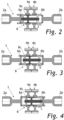
- the switching element has three switching positions A, B, C, wherein the switching positions are characterized by different axial positions of the interconnected slide sleeves 6a, 6b, 6c relative to the half shafts 2a, 2b and the output gears 4a, 4b.
- the first switching position A and the third switching position C form end positions of the switching element 6 and the second switching position B forms a middle position arranged between the first A and the third C position.
- the two half shafts 2a, 2b have an externally toothed section 20a, 20b at the end facing the output gears 4a, 4b.
- the externally toothed section 20a of the first half shaft 2a is permanently - i.e. in all switching positions A, B, C - in meshing engagement with an internally toothed area 60a of the first sliding sleeve 6a, whereby the first sliding sleeve 6a is displaceable in relation to the first half shaft 2a.
- the externally toothed section 20b of the second half shaft 2b is in meshing engagement with an internally toothed area 60b of the second sliding sleeve 6b in the second switching position B and in the third switching position C.
- the second sliding sleeve 6b is designed to be axially displaceable in relation to the second half shaft 2b.
- the externally toothed section 20b of the second half shaft 2b and the internally toothed section 60b of the second sliding sleeve 6b are in meshing engagement with the internally toothed area 60b of the second sliding sleeve 6b.
- Area 60b of the second sliding sleeve 6b is not in meshing engagement and is therefore separated from each other.
- the first shift sleeve 6a and the second shift sleeve 6b each have an externally toothed area 61a, 61b that corresponds to an external toothing 40a, 40b of the first output gear 4a or second output gear 4b.
- the first shift sleeve 6a can be moved relative to the first output gear 4a and the second shift sleeve 6b relative to the second output gear 4b.
- the externally toothed area 61a of the first shift sleeve 6a and the external toothing 40a of the first output gear 4a are not in meshing engagement and are thus separated from one another.
- the second switching position B and in the third switching position C the externally toothed region 61a of the first shift sleeve 6a and the external toothing 40a of the first output gear are in meshing engagement and are thus drive-connected to one another.
- the third sliding sleeve 6c is arranged centrally and axially between the first sliding sleeve 6c and the second sliding sleeve 6b and has a connecting element 62c which connects the first sliding sleeve 6a and the second sliding sleeve 6b to one another.
- the third sliding sleeve 6c is firmly connected - i.e. immovable relative to the first sliding sleeve 6a and second sliding sleeve 6b - to the first 6a and the second sliding sleeve 6b, so that all three sliding sleeves 6a, 6b, 6c can be moved axially together between the first switching position A, the central second switching position and the third switching position C.
- the third shift sleeve 6c is rotatably connected to the first shift sleeve 6a at its first end 60c of its connecting element 62c and to the second shift sleeve 6b at its second end 61c of the shaft part 62c, so that the shift sleeves 6a, 6b, 6c can be rotated relative to one another about the axis of rotation 1a of the drive shaft 1.
- the third shift sleeve 6c has an externally toothed gear part 63c which is non-rotatably connected to the connecting element 62c and which is permanently in mesh with the first output gear 4a in each of the three switching positions A, B, C.
- the gear part 63c is separated from the second output gear 4b, but in the third switching position C it is simultaneously in mesh with the second output gear 4b and with the first output gear 4a.
- the first output gear 4a and the second output gear 4b are thus coupled in terms of drive, i.e. they are connected to one another in a rotationally fixed manner.
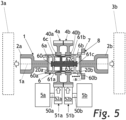
- Fig.5 shows an electric drive axle 10 for a two-track motor vehicle in a second embodiment of the invention.
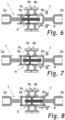
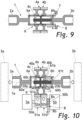
- the Fig. 6 to Fig. 9 show different switching positions A, B, C, D of this second design variant, whereby the Fig. 6 to 8 with the switch positions A, B, C essentially the Fig. 2 to Fig. 4 are equivalent to.
- the second design variant differs from the first design variant in that a further - fourth - switching position D is provided, in which the two half shafts 2a, 2b are connected to each other in a rotationally fixed manner and in addition the half shafts 2a, 2b are connected to a housing 7 so that they cannot rotate (see Fig.9 ).
- the fourth switching position D thus forms a parking lock 8 for the electric drive axle 1 that is structurally simple and has only a few parts.
- Fig.10 shows an electric drive axle 10 for a two-track motor vehicle in a third embodiment of the invention, in which a parking lock 8 is also provided.
- the parking lock 8 is formed here by an additional locking wheel 8a arranged on the drive shaft 50b between the electric machine 5b and the gear stage 51, into which a locking member 8b mounted fixed to the housing and actuated by an actuator (not shown) engages in a form-fitting manner and thus fixes this drive shaft 50b fixed to the housing, with a simultaneous rotationally fixed connection of the two half-shafts 2a, 2b in the switching position C.
- the parking lock 8 can also be arranged at another point in the drive path of the first electric machine 5a or the second electric machine 5b.
- the switching element 6 not only the electric machines 5a, 5b but also the output wheels 4a, 4b and the gear stages of the half shafts 2a, 2b can be optionally decoupled or coupled. This function is particularly useful in off-road vehicles in order to ensure sufficient traction in difficult terrain or on surfaces with very different friction coefficients.
Landscapes
- Engineering & Computer Science (AREA)
- Mechanical Engineering (AREA)
- Chemical & Material Sciences (AREA)
- Combustion & Propulsion (AREA)
- Transportation (AREA)
- General Engineering & Computer Science (AREA)
- Connection Of Motors, Electrical Generators, Mechanical Devices, And The Like (AREA)
- Arrangement And Mounting Of Devices That Control Transmission Of Motive Force (AREA)
Description
- Die Erfindung betrifft eine elektrische Antriebsachse für ein zweispuriges Kraftfahrzeug, mit einer ersten Halbwelle zum Antrieb eines ersten Rades und einer zweiten Halbwelle zum Antrieb eines zweiten Rades des Kraftfahrzeuges, wobei die erste Halbwelle über ein erstes Abtriebsrad durch eine erste elektrische Maschine und die zweite Halbwelle über ein zweites Abtriebsrad durch eine zweite elektrische Maschine antreibbar ist, wobei zumindest eine elektrische Maschine über ein Schaltelement mit einem Rad antriebsverbindbar ist, wobei das Schaltelement zumindest eine in einem ersten Antriebspfad zwischen dem ersten Abtriebsrad und der ersten Halbwelle koaxial zur ersten Halbwelle angeordnete und axial verschiebbare erste Schiebemuffe aufweist, welche ausgebildet ist, um in einer ersten Schaltstellung des Schaltelementes die erste Halbwelle vom ersten Abtriebsrad zu trennen und in einer zweiten Schaltstellung und/oder dritten Schaltstellung des Schaltelementes eine drehfeste Verbindung zwischen der ersten Halbwelle und dem ersten Abtriebsrad herzustellen, und wobei das Schaltelement zumindest eine in einem zweiten Antriebspfad zwischen dem zweiten Abtriebsrad und der zweiten Halbwelle koaxial zur zweiten Halbwelle angeordnete und axial verschiebbare zweite Schiebemuffe aufweist, welche ausgebildet ist, um in der ersten Schaltstellung des Schaltelementes die zweite Halbwelle vom zweiten Abtriebsrad zu trennen und in der zweiten Schaltstellung und/oder einer dritten Schaltstellung des Schaltelementes eine drehfeste Verbindung zwischen der zweiten Halbwelle und dem zweiten Abtriebsrad herzustellen.
- Bekannt sind Anordnungen mit ein oder zwei Antriebsmaschinen. Anordnungen mit nur einer Antriebsmaschine verfügen über mechanisches Differentialgetriebe, um die Drehzahlunterschiede an den Rädern in Kurvenfahrt auszugleichen. Sofern kein mechanisches Torque-Vectoring-System vorgesehen ist, wird das Antriebsmoment immer 50:50 auf beide Räder aufgeteilt. Anordnungen mit zwei Antriebsmaschinen sind so ausgeführt, dass jeweils eine Maschine ein Rad antreibt. Der Vorteil dabei ist, dass hierbei kein Differentialgetriebe notwendig ist. Außerdem erlaubt es diese Anordnung, Torque-Vectoring rein durch regelungstechnische Maßnahmen darzustellen, was Fahrkomfort und -sicherheit wesentlich erhöht.
- Elektrische Antriebsachsen werden mitunter als zusätzliche Antriebe genutzt. Wird eine Antriebsachse in gewissen Fahrsituationen nicht benötigt, kann es sinnvoll sein, den Antrieb mechanisch von den Rädern abzukoppeln, um ein dauerndes Mitschleppen zu verhindern, und somit den Antriebswirkungsgrad zu erhöhen.
- Die
WO 2018/059783 A1 beschreibt eine Antriebsvorrichtung für eine Fahrzeugachse eines zweispurigen Fahrzeuges mit elektrischem Antrieb, wobei jedem Fahrzeugrad dieser Fahrzeugachse eine elektrische Maschine zugeordnet ist. Die elektrischen Wellen der elektrischen Maschinen sind jeweils über erste und zweite Schaltelemente trieblich mit einer ersten und zweiten Flanschwelle der Fahrzeugräder verbindbar. Die Fahrzeugachse weist ein Achsdifferential auf, das ausgangsseitig auf die Flanschwellen der Fahrzeugräder abtreibt und eingangsseitig über ein drittes und viertes Schaltelement mit den Elektromaschinen-Wellen verbindbar ist. Diese Lösung benötigt insgesamt vier Schaltelemente, davon zwei Lamellenkupplungen, und wird auf Ebene der elektrischen Maschinen geschaltet. Dies wirkt sich nachteilig auf den Wirkungsgrad aus. - Weiters ist aus der
CN 109 017 251 A eine elektrische Antriebsachse mit einem Differential bekannt, welches über ein Stirnradgetriebe und zwei Schaltelementen mit zwei elektrischen Maschinen antriebsverbindbar ist, wobei die Schaltelemente im Antriebspfad zwischen den Antriebswellen der elektrischen Maschinen und dem Stirnradgetriebe angeordnet sind. Eine ähnliche elektrische Antriebsachse ist aus derCN 108 819 690 A . Die Tatsache, dass das Getriebe und das Differential nicht entkoppelt werden können, wirkt sich nachteilig auf den Antriebswirkungsgrad aus. - Die
JP 2018-001845 A JP 2019-206204 A - Die
CN 112406497 A offenbart eine elektrische Antriebsachse mit zwei elektrischen Maschinen, wobei jede elektrische Antriebsachse über eine Kupplung und eine Stirnradstufe auf ein Rad des Fahrzeuges antreibend einwirkt. Die elektrischen Maschinen können auch miteinander über eine Kupplung gekoppelt werden. - Aufgabe der Erfindung ist eine elektrische Antriebsachse mit hohem Antriebswirkungsgrad bereitzustellen.
- Diese Aufgabe wird erfindungsgemäß dadurch gelöst, dass die erste Schiebemuffe und die zweite Schiebemuffe über ein Verbindungselement fest miteinander verbunden sind.
- In einer Ausführungsvariante der Erfindung ist vorgesehen, dass das Schaltelement zumindest eine in einem dritten Antriebspfad zwischen dem ersten Abtriebsrad und dem zweiten Abtriebsrad koaxial zur ersten und zweiten Halbwelle angeordnete und axial verschiebbare dritte Schiebemuffe aufweist, welche ausgebildet ist, um in der ersten und/oder zweiten Schaltstellung des Schaltelementes das erste Abtriebsrad und das zweite Abtriebsrad antriebsmäßig zu entkoppeln und in einer dritten Schaltstellung des Schaltelementes das erste und das zweite Abtriebsrad antriebsmäßig miteinander zu koppeln. In der dritten Schaltstellung kann somit eine vollständige Achssperre erzielt werden.
- Um ein gleichzeitiges Schalten der ersten Schiebemuffe und der zweiten Schiebemuffe zu ermöglichen, ist es vorteilhaft, wenn das Verbindungselement durch die dritte Schiebemuffe gebildet ist.
- Bevorzugt ist das erste Abtriebsrad und/oder das zweite Abtriebsrad durch ein Zahnrad einer Getriebestufe gebildet.
- Günstigerweise ist die erste elektrische Maschine permanent mit dem ersten Abtriebsrad und/oder die zweite elektrische Maschine permanent mit dem zweiten Abtriebsrad antriebsverbunden. Die erste elektrische Maschine wirkt dabei direkt oder indirekt permanent - also ohne dazwischenliegendem Schaltelement auf das erste Abtriebsrad und die zweite elektrische Maschine direkt oder indirekt permanent auf das zweite Abtriebsrad ein.
- Vorzugsweise sind die Schiebemuffen relativ zu den beiden Halbwellen und den beiden Abtriebsrädern axial verschiebbar gelagert.
- Eine Ausführungsvariante der Erfindung sieht vor, dass die erste Schiebemuffe in jeder der Schaltstellungen permanent drehfest mit der ersten Halbwelle und die zweite Schiebemuffe in jeder der Schaltstellungen permanent drehfest mit dem zweiten Abtriebsrad verbunden sind.
- Vorzugsweise ist vorgesehen, dass in der ersten Schaltstellung die erste Schiebemuffe von dem ersten Abtriebsrad und die zweite Schiebemuffe von der zweiten Halbwelle getrennt sind.
- In weiterer Ausführung der Erfindung ist vorgesehen, dass in der zweiten und/oder dritten Schaltstellung die erste Schiebemuffe sowohl mit der ersten Halbwelle als auch mit dem ersten Abtriebsrad antriebsverbunden ist und die zweite Schiebemuffe sowohl mit der zweiten Halbwelle, als auch mit dem zweiten Abtriebsrad antriebsverbunden ist.
- Besonders vorteilhaft ist es, wenn in der dritten Schaltstellung das erste Abtriebsrad und das zweite Abtriebsrad, vorzugsweise durch die dritte Schiebemuffe, miteinander gekoppelt sind. Auf diese Weise lässt sich ein starrer Antrieb auf die Abtriebsräder realisieren, um beispielsweise auf rutschigem Untergrund die Traktion zu erhöhen.
- In einer Ausführungsvariante der Erfindung ist vorgesehen, dass in der dritten Schaltstellung zumindest ein Abtriebsrad über eine Parksperre blockierbar ist, wobei die Parksperre zumindest ein vorzugsweise auf einer Antriebswelle einer elektrischen Maschine angeordnetes Sperrrad aufweist, in welches ein gehäusefest gelagertes Sperrglied formschlüssig einlenkbar ist.
- Eine weitere Ausführungsvariante der Erfindung sieht vor, dass in einer vierten Schaltstellung die erste Schiebemuffe sowohl mit der ersten Halbwelle, als auch mit dem ersten Abtriebsrad antriebsverbunden ist und die zweite Schiebemuffe sowohl mit der zweiten Halbwelle, als auch mit dem zweiten Abtriebsrad antriebsverbunden ist, wobei das erste Abtriebsrad und das zweite Abtriebsrad, vorzugsweise durch die dritte Schiebemuffe, miteinander gekoppelt sind, und dass das erste Schaltelement und/oder das zweite Schaltelement drehfest mit einem Gehäuse verbunden sind. Dies ermöglicht auf einfache Weise eine Parksperre mit einer minimalen Anzahl an Teilen.
- Die beschrieben Antriebsachse ermöglicht einen hohen Wirkungsrad und eine sehr kompakte Bauweise.
- Die Erfindung wird im Folgend anhand des in den nicht einschränkenden Figuren gezeigten Ausführungsbeispiels näher erläutert. Darin zeigen schematisch:
- Fig. 1
- eine erfindungsgemäße Antriebsachse in einer ersten Ausführungs-variante;
- Fig. 2
- diese Antriebsachse in einer ersten Schaltstellung;
- Fig. 3
- diese Antriebsachse in einer zweiten Schaltstellung;
- Fig. 4
- diese Antriebsachse in einer dritten Schaltstellung;
- Fig. 5
- eine erfindungsgemäße Antriebsachse in einer zweiten Ausführungs-variante;
- Fig. 6
- diese Antriebsachse in einer ersten Schaltstellung;
- Fig. 7
- diese Antriebsachse in einer zweiten Schaltstellung;
- Fig. 8
- diese Antriebsachse in einer dritten Schaltstellung;
- Fig. 9
- diese Antriebsachse in einer vierten Schaltstellung; und
- Fig. 10
- eine erfindungsgemäße Antriebsachse in einer dritten Ausführungs-variante.
-
Fig. 1 zeigte eine elektrische Antriebsachse 10 für ein zweispuriges Kraftfahrzeug in einer ersten Ausführungsvariante der Erfindung, mit einer ersten Halbwelle 2a zum Antrieb eines ersten Rades 3a und einer zweiten Halbwelle 2b zum Antrieb eines zweiten Rades 3b des Kraftfahrzeuges. Die erste Halbwelle 2a ist über ein erstes Abtriebsrad 4a durch eine erste elektrische Maschine 5a und die zweite Halbwelle 2b über ein zweites Abtriebsrad 4b mit einer zweiten elektrischen Maschine 5b antreibbar. Die elektrische Antriebsachse 1 weist ein Schaltelement 6 auf um eine Antriebsverbindung zwischen den Antriebsrädern 4a, 4b und den Halbwellen 2a, 2b herzustellen. - Die elektrischen Maschinen 5a, 5b können direkt oder indirekt über jeweils eine Antriebswelle 50a, 50b, zumindest eine Getriebestufe 51a, 51b und ein Zahnrad 52a, 52b auf das Abtriebsrad 4a, 4b einwirken. In gezeigten Ausführungsbeispiel der Erfindung werden das erste Abtriebsrad 4a und das zweite Abtriebsrad 4b jeweils durch ein Zahnrad 52a, 52b einer Getriebestufe 51a, 51b gebildet.
- Das Schaltelement 6 weist eine in einem ersten Antriebspfad zwischen dem ersten Abtriebsrad 4a und der ersten Halbwelle 2a koaxial zur ersten Halbwelle 2a angeordnete und axial verschiebbare erste Schiebemuffe 6a auf. Die erste Schiebemuffe 6a ist ausgebildet, um in einer ersten Schaltstellung des Schaltelementes 6 die erste Halbwelle 2a vom ersten Abtriebsrad 4a zu trennen und in einer zweiten Schaltstellung eine drehfeste Verbindung zwischen der ersten Halbwelle 2a und dem ersten Abtriebsrad 4a herzustellen.
- Das Schaltelement 6 weist weiters eine in einem zweiten Antriebspfad zwischen dem zweiten Abtriebsrad 4b und der zweiten Halbwelle 2b koaxial zur zweiten Halbwelle 2b angeordnete und axial verschiebbare zweite Schiebemuffe 6b auf. Diese ist ausgebildet, um in der ersten Schaltstellung des Schaltelementes 6 die zweite Halbwelle 2b vom zweiten Abtriebsrad 4b zu trennen und in einer zweiten Schaltstellung eine drehfeste Verbindung zwischen der zweiten Halbwelle 2b und dem zweiten Abtriebsrad 4b herzustellen.
- Die erste Schiebemuffe 6a und die zweite Schiebemuffe 6b sind dabei über ein Verbindungselement 7 fest miteinander verbunden.
- Das Schaltelement 6 weist darüber hinaus eine in einem dritten Antriebspfad zwischen dem ersten Abtriebsrad 4a und dem zweiten Abtriebsrad 4b koaxial zur ersten Halbwelle 2a und zweiten Halbwelle 2b angeordnete und axial verschiebbare dritte Schiebemuffe 6c auf. Die dritte Schiebemuffe 6c ist ausgebildet, um in der ersten und/oder zweiten Schaltstellung des Schaltelementes 6 das erste Abtriebsrad 4a und das zweite Abtriebsrad 4b antriebsmäßig zu entkoppeln und in einer dritten Schaltstellung des Schaltelementes 6 das erste Abtriebsrad 4a und das zweite Abtriebsrad 4b antriebsmäßig miteinander zu verbinden. Die dritte Schiebemuffe 6c bildet das Verbindungselement 62c zur Verbindung der ersten Schiebemuffe 6a und der zweiten Schiebemuffe 6b.
- Die zwei Abtriebsräder 4a und 4b sind als Zahnräder ausgeführt und jeweils über ein Getriebe (nicht dargestellt) mit den elektrischen Maschinen verbunden. Die zwei Halbwellen 2a und 2b treiben jeweils ein erstes, beispielsweise linkes Rad 3a bzw. zweites, beispielsweise rechtes Rad 3b des Fahrzeuges an. Die ersten 6a und zweiten Schiebemuffen 6b sind so ausgeführt, dass sie das erste Abtriebsrad 4a mit der ersten Halbwelle 2a bzw. das zweite Abtriebsrad 4b mit der zweiten Halbwelle 2b wahlweise drehfest verbinden oder entkoppeln. Die dritte Schiebemuffe 6c ist so ausgeführt, dass sie die beiden Abtriebsräder 4a und 4b wahlweise drehfest verbindet oder entkoppelt. Weiters sind die Schiebemuffen 6a, 6b und 6c so ausgeführt, dass sie sich zueinander verdrehen und nur gemeinsam axial verschieben lassen.
- Das Schaltelement weist drei Schaltstellungen A, B, C auf, wobei die Schalstellungen durch unterschiedliche axiale Positionen der miteinander verbundenen Schiebermuffen 6a, 6b, 6c relativ zu den Halbwellen 2a, 2b und den Abtriebsrädern 4a, 4b charakterisiert sind. Die erste Schaltstellung A und die dritte Schaltstellung C bilden dabei Endstellungen des Schaltelementes 6 und die zweite Schaltstellung B eine zwischen der ersten A und der dritten Stellung C angeordnete Mittelstellung aus.
- Die beiden Halbwellen 2a, 2b weisen am den Abtriebsrädern 4a, 4b zugewandten Ende einen außenverzahnten Abschnitt 20a, 20b auf. Der außenverzahnte Abschnitt 20a der ersten Halbwelle 2a steht permanent - also in allen Schalstellungen A. B, C - mit einem innenverzahnten Bereich 60a der ersten Schiebemuffe 6a im Zahneingriff, wobei die erste Schiebemuffe 6a in Bezug auf die erste Halbwelle 2a verschiebbar ist. Weiters steht der außenverzahnte Abschnitt 20b der zweiten Halbwelle 2b mit einem innenverzahnten Bereich 60b der zweiten Schiebemuffe 6b in der zweiten Schaltstellung B und in der dritten Schaltstellung C im Zahneingriff. Die zweite Schiebemuffe 6b ist in Bezug auf die zweite Halbwelle 2b axial verschiebbar ausgebildet. In der ersten Schalstellung A stehen dagegen der außenverzahnte Abschnitt 20b der zweiten Halbwelle 2b und der innenverzahnte Bereich 60b der zweiten Schiebemuffe 6b nicht im Zahneingriff, sind also voneinander getrennt.
- An dem den Halbwellen 2a, 2b abgewandten Ende weisen die erste Schaltmuffe 6a und die zweite Schaltmuffe 6b jeweils einen außenverzahnten Bereich 61a, 61b auf, der mit einer Außenverzahnung 40a, 40b des ersten Abtriebsrades 4a bzw. zweiten Abtriebsrades 4b korrespondiert. Die erste Schiebemuffe 6a ist relativ zum ersten Abtriebsrad 4a und die zweite Schiebemuffe 6b relativ zum zweiten Abtriebsrad 4b verschiebbar. In der ersten Schaltstellung A stehen dabei der außenverzahnte Bereich 61a der ersten Schaltmuffe 6a und die Außenverzahnung 40a des ersten Abtriebsrades 4a nicht im Zahneingriff, sind somit voneinander getrennt. In der zweiten Schaltstellung B und in der dritten Schaltstellung C stehen der außenverzahnte Bereich 61a der ersten Schaltmuffe 6a und die Außenverzahnung 40a des ersten Abtriebsrades im Zahneingriff, sind somit miteinander antriebsverbunden.
- Die dritte Schiebemuffe 6c ist mittig und achsgleich zwischen der ersten Schiebemuffe 6c und der zweiten Schiebemuffe 6b angeordnet und weist einen Verbindungselement 62c auf, welcher die erste Schiebemuffe 6a und die zweite Schiebemuffe 6b miteinander verbindet. In axialer Verschieberichtung ist die dritte Schiebemuffe 6c fest - also relativ zur ersten Schaltmuffe 6a und zweiten Schaltmuffe 6b unverschieblich - mit der ersten 6a und der zweiten Schiebemuffe 6b verbunden, so dass alle drei Schiebemuffen 6a, 6b, 6c gemeinsam axial zwischen der ersten Schaltstellung A, der mittigen zweiten Schalt6stellung und der dritten Schaltstellung C verschoben werden können. Die dritte Schaltmuffe 6c ist aber an ihrem ersten Ende 60c ihres Verbindungselement 62c drehbar mit der ersten Schaltmuffe 6a und an ihrem zweiten Ende 61c des Wellenteils 62c drehbar mit der zweiten Schaltmuffe 6b verbunden, so dass die Schaltmuffen 6a, 6b, 6c relativ zueinander um die Drehachse 1a der Antriebsachse 1 verdreht werden können. Die dritte Schaltmuffe 6c weist einen mit dem Verbindungselement 62c drehfest verbundenen außenverzahnten Zahnradteil 63c auf, welcher permanent, also n jeder der drei Schaltstellungen A. B, C mit dem ersten Abtriebsrad 4a im Zahneingriff steht. In der ersten Schaltstellung A und der zweiten Schaltstellung B ist der Zahnradteil 63c vom zweiten Abtriebsrad 4b getrennt, steht in der dritten Schaltstellung C aber mit dem zweiten Abtriebsrad 4b und mit dem ersten Abtriebsrad 4a gleichzeitig im Zahneingriff. In der dritten Schaltstellung C sind somit das erste Abtriebsrad 4a und das zweite Abtriebsrad 4b antriebsmäßig gekoppelt, also drehfest miteinander verbunden.
- Die Schiebemuffen 6a, 6b, 6c sind so angeordnet und ausgeführt, dass
- in einer ersten Schaltstellung A sowohl die Halbwellen 2a und 2b von den Abtriebsrädern 4a und 4b, als auch die Abtriebsräder 4a und 4b voneinander entkoppelt sind (
Fig. 2 ), - in einer zweiten Schaltstellung B die erste Halbwelle 2a mit dem ersten Abtriebsrad 4a und die zweite Halbwelle 2b mit dem zweiten Abtriebsrad 4b drehfest verbunden ist, die beiden Abtriebsräder 4a und 4b aber voneinander entkoppelt sind (
Fig. 3 ) und - in einer dritten Schalstellung 3 sowohl die Halbwellen 2a und 2b mit den Abtriebsrädern 4a und 4b, als auch die beiden Abtriebsräder 4a und 4b miteinander drehfest verbunden sind (
Fig. 4 ). -
Fig. 5 zeigt eine elektrische Antriebsachse 10 für ein zweispuriges Kraftfahrzeug in einer zweiten Ausführungsvariante der Erfindung. DieFig. 6 bis Fig. 9 zeigen verschiedene Schaltstellungen A, B, C, D dieser zweiten Ausführungsvariante, wobei dieFig. 6 bis 8 mit den Schaltstellungen A, B, C im Wesentlichen denFig. 2 bis Fig. 4 entsprechen. - Die zweite Ausführungsvariante unterscheidet sich von der ersten Ausführungsvariante dadurch, dass eine weitere - vierte - Schaltstellung D vorgesehen ist, in der die beiden Halbwellen 2a, 2b drehfest miteinander verbunden sind und zudem die Halbwellen 2a, 2b mit einem Gehäuse 7 verbunden sind, sodass sie sich nicht drehen können (siehe
Fig. 9 ). Die vierte Schaltstellung D bildet somit eine konstruktiv einfache und nur wenige Teile aufweisende Parksperre 8 für die elektrische Antriebsachse 1. -
Fig. 10 zeigt eine elektrische Antriebsachse 10 für ein zweispuriges Kraftfahrzeug in einer dritten Ausführungsvariante der Erfindung, bei der ebenfalls eine Parksperre 8 vorgesehen ist. Die Parksperre 8 ist hier durch ein auf der Antriebswelle 50b zwischen der elektrischen Maschine 5b und der Getriebestufe 51 angeordnetes zusätzliches Sperrrad 8a gebildet, in das ein gehäusefest gelagertes und durch einen nicht weiter dargestellten Aktuator betätigtes Sperrglied 8b formschlüssig eingreift und diese Antriebswelle 50b somit gehäusefest fixiert, bei gleichzeitiger drehfester Verbindung der beiden Halbwellen 2a, 2b in der Schaltstellung C. Alternativ kann die Parksperre 8 auch an anderer Stelle im Antriebspfad der ersten elektrischen Maschine 5a oder der zweiten elektrischen Maschine 5b angeordnet sein. - In allen Ausführungsvarianten ist nur ein einziges Schaltelement mit drei miteinander mechanisch -also in axialer Schieberichtung miteinander verbundenen Schiebemuffen 6a, 6b, 6c erforderlich. Die Schiebemuffen 6a, 6b, 6c sind zwar in axialer Schieberichtung miteinander verbunden, allerdings gegeneinander verdrehbar. Insbesondere ist die dritte Schiebemuffe 6c relativ zur ersten Schiebemuffe 6a und zur zweiten Schiebemuffe 6b verdrehbar ausgebildet.
- Mit dem Schaltelement 6 können nicht nur die die elektrischen Maschinen 5a, 5b sondern auch die Abtriebsräder 4a, 4b und die Getriebestufen von den Halbwellen 2a, 2b wahlweise entkoppelt oder gekoppelt werden. Diese Funktion ist vor allem in geländegängigen Fahrzeugen sinnvoll, um in schwierigem Gelände oder auf Untergründen mit stark unterschiedlichen Reibkoeffizienten ausreichend Traktion sicher zu stellen.
Claims (12)
- Elektrische Antriebsachse (1) für ein zweispuriges Kraftfahrzeug, mit einer ersten Halbwelle (2a) zum Antrieb eines ersten Rades (3a) und einer zweiten Halbwelle (2b) zum Antrieb eines zweiten Rades (3b) des Kraftfahrzeuges, wobei die erste Halbwelle (2a) über ein erstes Abtriebsrad (4a) durch eine erste elektrische Maschine (5a) und die zweite Halbwelle (2b) über ein zweites Abtriebsrad (4b) durch eine zweite elektrische Maschine (5b) antreibbar ist, wobei zumindest eine elektrische Maschine (5a, 5b) über ein Schaltelement (6) mit einem Rad (3a, 3b) antriebsverbindbar ist, wobei das Schaltelement (6) zumindest eine in einem ersten Antriebspfad zwischen dem ersten Abtriebsrad (4a) und der ersten Halbwelle (2a) koaxial zur ersten Halbwelle (2a) angeordnete und axial verschiebbare erste Schiebemuffe (6a) aufweist, welche ausgebildet ist, um in einer ersten Schaltstellung (A) des Schaltelementes (6) die erste Halbwelle (2a) vom ersten Abtriebsrad (4a) zu trennen und in einer zweiten Schaltstellung (B) und/oder dritten Schaltstellung (C) des Schaltelementes (6) eine drehfeste Verbindung zwischen der ersten Halbwelle (2a) und dem ersten Abtriebsrad (4a) herzustellen, und wobei das Schaltelement (6) zumindest eine in einem zweiten Antriebspfad zwischen dem zweiten Abtriebsrad (4b) und der zweiten Halbwelle (2b) koaxial zur zweiten Halbwelle (2b) angeordnete und axial verschiebbare zweite Schiebemuffe (6b) aufweist, welche ausgebildet ist, um in der ersten Schaltstellung (A) des Schaltelementes (6) die zweite Halbwelle (2b) vom zweiten Abtriebsrad (4b) zu trennen und in der zweiten Schaltstellung (B) und/oder einer dritten Schaltstellung (C) des Schaltelementes (6) eine drehfeste Verbindung zwischen der zweiten Halbwelle (2b) und dem zweiten Abtriebsrad (4b) herzustellen, dadurch gekennzeichnet, dass die erste Schiebemuffe (6a) und die zweite Schiebemuffe (6b) über ein Verbindungselement (62c) fest miteinander verbunden sind.
- Elektrische Antriebsachse (1) nach Anspruch 1, dadurch gekennzeichnet, dass das Schaltelement (6) zumindest eine in einem dritten Antriebspfad zwischen dem ersten Abtriebsrad (4a) und dem zweiten Abtriebsrad (4b) koaxial zur ersten Halbwelle (2a) und zweiten Halbwelle (2b) angeordnete und axial verschiebbare dritte Schiebemuffe (6c) aufweist, welche ausgebildet ist, um in der ersten Schaltstellung (A) und/oder zweiten Schaltstellung (B) des Schaltelementes (6) das erste Abtriebsrad (4a) und das zweite Abtriebsrad (4b) antriebsmäßig zu entkoppeln und in einer dritten Schaltstellung (C) des Schaltelementes (6) das erste Abtriebsrad (4a) und das zweite Abtriebsrad (4b) antriebsmäßig miteinander zu koppeln.
- Elektrische Antriebsachse (1) nach Anspruch 2, dadurch gekennzeichnet, dass das Verbindungselement (62c) durch die dritte Schiebemuffe (6c) gebildet ist.
- Elektrische Antriebsachse (1) nach einem der Ansprüche 1 bis 3, dadurch gekennzeichnet, dass das erste Abtriebsrad (4a) und/oder das zweite Abtriebsrad (4b) durch ein Zahnrad einer Getriebestufe gebildet ist.
- Elektrische Antriebsachse (1) nach einem der Ansprüche 1 bis 4, dadurch gekennzeichnet, dass die erste elektrische Maschine (5a) permanent mit dem ersten Abtriebsrad (4a) und/oder die zweite elektrische Maschine (5b) permanent mit dem zweiten Abtriebsrad (4b) antriebsverbunden ist.
- Elektrische Antriebsachse (1) nach einem der Ansprüche 1 bis 5, dadurch gekennzeichnet, dass die Schiebemuffen (6a, 6b, 6c) relativ zu den beiden Halbwellen (2a, 2b) und den beiden Abtriebsrädern (4a, 4b) axial verschiebbar gelagert sind.
- Elektrische Antriebsachse (1) nach einem der Ansprüche 1 bis 6, dadurch gekennzeichnet, dass die erste Schiebemuffe (6a) in jeder der Schaltstellungen (A, B, C) permanent drehfest mit der ersten Halbwelle (2a) und die zweite Schiebemuffe (6b) in jeder der Schaltstellungen (A, B, C) permanent drehfest mit dem zweiten Abtriebsrad (4b) verbunden sind.
- Elektrische Antriebsachse (1) nach einem der Ansprüche 1 bis 7, dadurch gekennzeichnet, dass in der ersten Schaltstellung (A) die erste Schiebemuffe (6a) von dem ersten Abtriebsrad (4a) und die zweite Schiebemuffe (6b) von der zweiten Halbwelle (2b) getrennt sind.
- Elektrische Antriebsachse (1) nach einem der Ansprüche 1 bis 8, dadurch gekennzeichnet, dass in der zweiten (B) und/oder dritten Schaltstellung (C) die erste Schiebemuffe (6a) sowohl mit der ersten Halbwelle (2a), als auch mit dem ersten Abtriebsrad (4a) antriebsverbunden ist und die zweite Schiebemuffe (6b) sowohl mit der zweiten Halbwelle (2b), als auch mit dem zweiten Abtriebsrad (4b) antriebsverbunden ist.
- Elektrische Antriebsachse (1) nach Anspruch 9, dadurch gekennzeichnet, dass in der dritten Schaltstellung (C) das erste Abtriebsrad (4a) und das zweite Abtriebsrad (4b), vorzugsweise durch die dritte Schiebemuffe (6c), miteinander gekoppelt sind.
- Elektrische Antriebsachse (1) nach Anspruch 10, dadurch gekennzeichnet, dass in der dritten Schaltstellung (C) zumindest ein Abtriebsrad (4b) über eine Parksperre (8) blockierbar ist, wobei die Parksperre (8) zumindest ein vorzugsweise auf einer Antriebswelle (50b) einer elektrischen Maschine (5b) angeordnetes Sperrrad (8a) aufweist, in welches ein gehäusefest gelagertes Sperrglied (8b) formschlüssig einlenkbar ist.
- Elektrische Antriebsachse (1) nach einem der Ansprüche 1 bis 11, dadurch gekennzeichnet, dass in einer vierten Schaltstellung (D) die erste Schiebemuffe (6a) sowohl mit der ersten Halbwelle (2a), als auch mit dem ersten Abtriebsrad (4a) antriebsverbunden ist und die zweite Schiebemuffe (6b) sowohl mit der zweiten Halbwelle (2b), als auch mit dem zweiten Abtriebsrad (4b) antriebsverbunden ist, wobei das erste Abtriebsrad (4a) und das zweite Abtriebsrad (4b), vorzugsweise durch die dritte Schiebemuffe (6c), miteinander gekoppelt sind, und dass das erste Schaltelement (6a) und/oder das zweite Schaltelement (6b) drehfest mit einem Gehäuse (7) verbunden sind.
Applications Claiming Priority (1)
| Application Number | Priority Date | Filing Date | Title |
|---|---|---|---|
| ATA50253/2022A AT525812B1 (de) | 2022-04-19 | 2022-04-19 | Elektrische antriebsachse |
Publications (2)
| Publication Number | Publication Date |
|---|---|
| EP4265459A1 EP4265459A1 (de) | 2023-10-25 |
| EP4265459B1 true EP4265459B1 (de) | 2024-05-01 |
Family
ID=86052434
Family Applications (1)
| Application Number | Title | Priority Date | Filing Date |
|---|---|---|---|
| EP23168181.8A Active EP4265459B1 (de) | 2022-04-19 | 2023-04-17 | Elektrische antriebsachse |
Country Status (2)
| Country | Link |
|---|---|
| EP (1) | EP4265459B1 (de) |
| AT (1) | AT525812B1 (de) |
Families Citing this family (3)
| Publication number | Priority date | Publication date | Assignee | Title |
|---|---|---|---|---|
| FR3156065A1 (fr) * | 2023-11-30 | 2025-06-06 | Valeo Embrayages | Système de motorisation d’essieu rigide |
| CN117863853A (zh) * | 2023-12-28 | 2024-04-12 | 中国第一汽车股份有限公司 | 双电机驱动装置、车辆驱动系统和车辆 |
| WO2026030878A1 (zh) * | 2024-08-06 | 2026-02-12 | 舍弗勒技术股份两合公司 | 车辆用动力系统及车辆 |
Family Cites Families (8)
| Publication number | Priority date | Publication date | Assignee | Title |
|---|---|---|---|---|
| JP6186555B1 (ja) * | 2016-06-29 | 2017-08-23 | 隆志 矢野 | 電気自動車のための変速制御とトルクベクタリング制御を行う動力システム |
| DE102016218717B3 (de) | 2016-09-28 | 2018-02-22 | Audi Ag | Antriebsvorrichtung für eine Fahrzeugachse, insbesondere Hinterachse |
| CN107284213A (zh) * | 2017-07-27 | 2017-10-24 | 精进电动科技股份有限公司 | 一种车辆双动力源双驱动总成 |
| JP6471281B1 (ja) * | 2018-05-28 | 2019-02-13 | 隆志 矢野 | 電気自動車のためのトルクベクタリング制御と可変定格出力制御と変速制御を行う動力システム |
| CN109017251A (zh) | 2018-06-29 | 2018-12-18 | 北京新能源汽车股份有限公司 | 车辆 |
| CN108819690A (zh) | 2018-06-29 | 2018-11-16 | 北京新能源汽车股份有限公司 | 车辆 |
| US12007008B2 (en) * | 2019-03-28 | 2024-06-11 | Mitsubishi Jidosha Kogyo Kabushiki Kaisha | Left-right wheel driving device |
| CN112406497B (zh) * | 2020-11-19 | 2022-04-29 | 北京汽车股份有限公司 | 双电机的扭矩矢量控制系统、方法、动力总成及车辆 |
-
2022
- 2022-04-19 AT ATA50253/2022A patent/AT525812B1/de active
-
2023
- 2023-04-17 EP EP23168181.8A patent/EP4265459B1/de active Active
Also Published As
| Publication number | Publication date |
|---|---|
| AT525812A4 (de) | 2023-08-15 |
| AT525812B1 (de) | 2023-08-15 |
| EP4265459A1 (de) | 2023-10-25 |
Similar Documents
| Publication | Publication Date | Title |
|---|---|---|
| EP4265459B1 (de) | Elektrische antriebsachse | |
| DE102012007656B3 (de) | Achsantrieb für Kraftfahrzeuge | |
| WO2013083220A1 (de) | Antriebsstrang eines rein elektrisch allradbetreibbaren kraftfahrzeuges | |
| DE19721091A1 (de) | Zweistellungs-Antriebstrenneinrichtungen für Fahrzeuge | |
| DE102018218535A1 (de) | Elektrische Antriebsachse eines Fahrzeuges | |
| DE3727698C2 (de) | ||
| EP1254326B1 (de) | Differentialgetriebe mit sperrkupplung und mit einer solchen ausgestattetes verteilergetriebe für kraftfahrzeuge | |
| EP4522881A1 (de) | Verbessertes schalten von axialkupplungen mit flachverzahnungen unter last | |
| DE102022203304A1 (de) | Antriebsanordnung für ein Fahrzeug sowie elektrische Achse mit der Antriebsanordnung | |
| DE102021109712A1 (de) | Schalteinheit und Antriebseinheit für einen elektrifizierten Antriebsstrang eines Kraftfahrzeugs sowie Achsmodul | |
| WO2025098744A1 (de) | Elektrisches antriebssystem | |
| DE102022111557B4 (de) | Parksperrenvorrichtung für eine elektrische Antriebsachse und elektrische Antriebsachse mit einer Parksperrenvorrichtung | |
| DE102009027342A1 (de) | Überlagerungsgetriebe für ein Lenksystem | |
| DE102020121915A1 (de) | Antriebsvorrichtung für ein Kraftfahrzeug | |
| DE69009565T2 (de) | Differentialgetriebe. | |
| WO2024008718A1 (de) | Elektrische antriebsanordnung für ein fahrzeug | |
| EP1199237B1 (de) | Getriebe für Schienenfahrzeuge | |
| DE102023202166A1 (de) | Kraftfahrzeuggetriebe, insbesondere für ein zumindest teilweise elektrisch angetriebenes Kraftfahrzeug | |
| DE102023106327B4 (de) | Differentialgetriebe für ein Kraftfahrzeug mit integrierter formschlüssiger Zuschaltkupplung | |
| DE102024113396B4 (de) | Getriebe mit nichtlinearer Kennlinie | |
| DE102023209860B4 (de) | Kraftfahrzeuggetriebe für ein zumindest teilweise elektrisch angetriebenes Kraftfahrzeug | |
| EP4351905B1 (de) | Antriebsanordnung | |
| DE102021100448B3 (de) | Sperrdifferentialgetriebe für ein Kraftfahrzeug sowie Verfahren zum Betreiben eines Sperrdifferentialgetriebes für ein Kraftfahrzeug | |
| DE102023209845B4 (de) | Kraftfahrzeuggetriebe für ein zumindest teilweise elektrisch angetriebenes Kraftfahrzeug | |
| DE102022129620B4 (de) | Differentialanordnung mit Abschalt- und Sperrfunktion und Elektroantrieb mit einer solchen Differentialanordnung |
Legal Events
| Date | Code | Title | Description |
|---|---|---|---|
| PUAI | Public reference made under article 153(3) epc to a published international application that has entered the european phase |
Free format text: ORIGINAL CODE: 0009012 |
|
| STAA | Information on the status of an ep patent application or granted ep patent |
Free format text: STATUS: THE APPLICATION HAS BEEN PUBLISHED |
|
| AK | Designated contracting states |
Kind code of ref document: A1 Designated state(s): AL AT BE BG CH CY CZ DE DK EE ES FI FR GB GR HR HU IE IS IT LI LT LU LV MC ME MK MT NL NO PL PT RO RS SE SI SK SM TR |
|
| STAA | Information on the status of an ep patent application or granted ep patent |
Free format text: STATUS: REQUEST FOR EXAMINATION WAS MADE |
|
| 17P | Request for examination filed |
Effective date: 20231122 |
|
| RBV | Designated contracting states (corrected) |
Designated state(s): AL AT BE BG CH CY CZ DE DK EE ES FI FR GB GR HR HU IE IS IT LI LT LU LV MC ME MK MT NL NO PL PT RO RS SE SI SK SM TR |
|
| GRAP | Despatch of communication of intention to grant a patent |
Free format text: ORIGINAL CODE: EPIDOSNIGR1 |
|
| STAA | Information on the status of an ep patent application or granted ep patent |
Free format text: STATUS: GRANT OF PATENT IS INTENDED |
|
| INTG | Intention to grant announced |
Effective date: 20240131 |
|
| GRAS | Grant fee paid |
Free format text: ORIGINAL CODE: EPIDOSNIGR3 |
|
| GRAA | (expected) grant |
Free format text: ORIGINAL CODE: 0009210 |
|
| STAA | Information on the status of an ep patent application or granted ep patent |
Free format text: STATUS: THE PATENT HAS BEEN GRANTED |
|
| AK | Designated contracting states |
Kind code of ref document: B1 Designated state(s): AL AT BE BG CH CY CZ DE DK EE ES FI FR GB GR HR HU IE IS IT LI LT LU LV MC ME MK MT NL NO PL PT RO RS SE SI SK SM TR |
|
| REG | Reference to a national code |
Ref country code: GB Ref legal event code: FG4D Free format text: NOT ENGLISH |
|
| REG | Reference to a national code |
Ref country code: CH Ref legal event code: EP |
|
| P01 | Opt-out of the competence of the unified patent court (upc) registered |
Effective date: 20240416 |
|
| REG | Reference to a national code |
Ref country code: IE Ref legal event code: FG4D Free format text: LANGUAGE OF EP DOCUMENT: GERMAN |
|
| REG | Reference to a national code |
Ref country code: DE Ref legal event code: R096 Ref document number: 502023000019 Country of ref document: DE |
|
| REG | Reference to a national code |
Ref country code: LT Ref legal event code: MG9D |
|
| REG | Reference to a national code |
Ref country code: NL Ref legal event code: MP Effective date: 20240501 |
|
| PG25 | Lapsed in a contracting state [announced via postgrant information from national office to epo] |
Ref country code: IS Free format text: LAPSE BECAUSE OF FAILURE TO SUBMIT A TRANSLATION OF THE DESCRIPTION OR TO PAY THE FEE WITHIN THE PRESCRIBED TIME-LIMIT Effective date: 20240901 |
|
| PG25 | Lapsed in a contracting state [announced via postgrant information from national office to epo] |
Ref country code: BG Free format text: LAPSE BECAUSE OF FAILURE TO SUBMIT A TRANSLATION OF THE DESCRIPTION OR TO PAY THE FEE WITHIN THE PRESCRIBED TIME-LIMIT Effective date: 20240501 |
|
| PG25 | Lapsed in a contracting state [announced via postgrant information from national office to epo] |
Ref country code: FI Free format text: LAPSE BECAUSE OF FAILURE TO SUBMIT A TRANSLATION OF THE DESCRIPTION OR TO PAY THE FEE WITHIN THE PRESCRIBED TIME-LIMIT Effective date: 20240501 Ref country code: HR Free format text: LAPSE BECAUSE OF FAILURE TO SUBMIT A TRANSLATION OF THE DESCRIPTION OR TO PAY THE FEE WITHIN THE PRESCRIBED TIME-LIMIT Effective date: 20240501 |
|
| PG25 | Lapsed in a contracting state [announced via postgrant information from national office to epo] |
Ref country code: GR Free format text: LAPSE BECAUSE OF FAILURE TO SUBMIT A TRANSLATION OF THE DESCRIPTION OR TO PAY THE FEE WITHIN THE PRESCRIBED TIME-LIMIT Effective date: 20240802 |
|
| PG25 | Lapsed in a contracting state [announced via postgrant information from national office to epo] |
Ref country code: PT Free format text: LAPSE BECAUSE OF FAILURE TO SUBMIT A TRANSLATION OF THE DESCRIPTION OR TO PAY THE FEE WITHIN THE PRESCRIBED TIME-LIMIT Effective date: 20240902 |
|
| PG25 | Lapsed in a contracting state [announced via postgrant information from national office to epo] |
Ref country code: NL Free format text: LAPSE BECAUSE OF FAILURE TO SUBMIT A TRANSLATION OF THE DESCRIPTION OR TO PAY THE FEE WITHIN THE PRESCRIBED TIME-LIMIT Effective date: 20240501 |
|
| PG25 | Lapsed in a contracting state [announced via postgrant information from national office to epo] |
Ref country code: ES Free format text: LAPSE BECAUSE OF FAILURE TO SUBMIT A TRANSLATION OF THE DESCRIPTION OR TO PAY THE FEE WITHIN THE PRESCRIBED TIME-LIMIT Effective date: 20240501 |
|
| PG25 | Lapsed in a contracting state [announced via postgrant information from national office to epo] |
Ref country code: PL Free format text: LAPSE BECAUSE OF FAILURE TO SUBMIT A TRANSLATION OF THE DESCRIPTION OR TO PAY THE FEE WITHIN THE PRESCRIBED TIME-LIMIT Effective date: 20240501 |
|
| PG25 | Lapsed in a contracting state [announced via postgrant information from national office to epo] |
Ref country code: LV Free format text: LAPSE BECAUSE OF FAILURE TO SUBMIT A TRANSLATION OF THE DESCRIPTION OR TO PAY THE FEE WITHIN THE PRESCRIBED TIME-LIMIT Effective date: 20240501 |
|
| PG25 | Lapsed in a contracting state [announced via postgrant information from national office to epo] |
Ref country code: PT Free format text: LAPSE BECAUSE OF FAILURE TO SUBMIT A TRANSLATION OF THE DESCRIPTION OR TO PAY THE FEE WITHIN THE PRESCRIBED TIME-LIMIT Effective date: 20240902 Ref country code: PL Free format text: LAPSE BECAUSE OF FAILURE TO SUBMIT A TRANSLATION OF THE DESCRIPTION OR TO PAY THE FEE WITHIN THE PRESCRIBED TIME-LIMIT Effective date: 20240501 Ref country code: NO Free format text: LAPSE BECAUSE OF FAILURE TO SUBMIT A TRANSLATION OF THE DESCRIPTION OR TO PAY THE FEE WITHIN THE PRESCRIBED TIME-LIMIT Effective date: 20240801 Ref country code: NL Free format text: LAPSE BECAUSE OF FAILURE TO SUBMIT A TRANSLATION OF THE DESCRIPTION OR TO PAY THE FEE WITHIN THE PRESCRIBED TIME-LIMIT Effective date: 20240501 Ref country code: LV Free format text: LAPSE BECAUSE OF FAILURE TO SUBMIT A TRANSLATION OF THE DESCRIPTION OR TO PAY THE FEE WITHIN THE PRESCRIBED TIME-LIMIT Effective date: 20240501 Ref country code: IS Free format text: LAPSE BECAUSE OF FAILURE TO SUBMIT A TRANSLATION OF THE DESCRIPTION OR TO PAY THE FEE WITHIN THE PRESCRIBED TIME-LIMIT Effective date: 20240901 Ref country code: HR Free format text: LAPSE BECAUSE OF FAILURE TO SUBMIT A TRANSLATION OF THE DESCRIPTION OR TO PAY THE FEE WITHIN THE PRESCRIBED TIME-LIMIT Effective date: 20240501 Ref country code: GR Free format text: LAPSE BECAUSE OF FAILURE TO SUBMIT A TRANSLATION OF THE DESCRIPTION OR TO PAY THE FEE WITHIN THE PRESCRIBED TIME-LIMIT Effective date: 20240802 Ref country code: FI Free format text: LAPSE BECAUSE OF FAILURE TO SUBMIT A TRANSLATION OF THE DESCRIPTION OR TO PAY THE FEE WITHIN THE PRESCRIBED TIME-LIMIT Effective date: 20240501 Ref country code: ES Free format text: LAPSE BECAUSE OF FAILURE TO SUBMIT A TRANSLATION OF THE DESCRIPTION OR TO PAY THE FEE WITHIN THE PRESCRIBED TIME-LIMIT Effective date: 20240501 Ref country code: BG Free format text: LAPSE BECAUSE OF FAILURE TO SUBMIT A TRANSLATION OF THE DESCRIPTION OR TO PAY THE FEE WITHIN THE PRESCRIBED TIME-LIMIT Effective date: 20240501 Ref country code: RS Free format text: LAPSE BECAUSE OF FAILURE TO SUBMIT A TRANSLATION OF THE DESCRIPTION OR TO PAY THE FEE WITHIN THE PRESCRIBED TIME-LIMIT Effective date: 20240801 |
|
| PG25 | Lapsed in a contracting state [announced via postgrant information from national office to epo] |
Ref country code: DK Free format text: LAPSE BECAUSE OF FAILURE TO SUBMIT A TRANSLATION OF THE DESCRIPTION OR TO PAY THE FEE WITHIN THE PRESCRIBED TIME-LIMIT Effective date: 20240501 |
|
| PG25 | Lapsed in a contracting state [announced via postgrant information from national office to epo] |
Ref country code: EE Free format text: LAPSE BECAUSE OF FAILURE TO SUBMIT A TRANSLATION OF THE DESCRIPTION OR TO PAY THE FEE WITHIN THE PRESCRIBED TIME-LIMIT Effective date: 20240501 |
|
| PG25 | Lapsed in a contracting state [announced via postgrant information from national office to epo] |
Ref country code: CZ Free format text: LAPSE BECAUSE OF FAILURE TO SUBMIT A TRANSLATION OF THE DESCRIPTION OR TO PAY THE FEE WITHIN THE PRESCRIBED TIME-LIMIT Effective date: 20240501 |
|
| PG25 | Lapsed in a contracting state [announced via postgrant information from national office to epo] |
Ref country code: RO Free format text: LAPSE BECAUSE OF FAILURE TO SUBMIT A TRANSLATION OF THE DESCRIPTION OR TO PAY THE FEE WITHIN THE PRESCRIBED TIME-LIMIT Effective date: 20240501 Ref country code: SK Free format text: LAPSE BECAUSE OF FAILURE TO SUBMIT A TRANSLATION OF THE DESCRIPTION OR TO PAY THE FEE WITHIN THE PRESCRIBED TIME-LIMIT Effective date: 20240501 |
|
| PG25 | Lapsed in a contracting state [announced via postgrant information from national office to epo] |
Ref country code: SM Free format text: LAPSE BECAUSE OF FAILURE TO SUBMIT A TRANSLATION OF THE DESCRIPTION OR TO PAY THE FEE WITHIN THE PRESCRIBED TIME-LIMIT Effective date: 20240501 |
|
| PG25 | Lapsed in a contracting state [announced via postgrant information from national office to epo] |
Ref country code: SM Free format text: LAPSE BECAUSE OF FAILURE TO SUBMIT A TRANSLATION OF THE DESCRIPTION OR TO PAY THE FEE WITHIN THE PRESCRIBED TIME-LIMIT Effective date: 20240501 Ref country code: SK Free format text: LAPSE BECAUSE OF FAILURE TO SUBMIT A TRANSLATION OF THE DESCRIPTION OR TO PAY THE FEE WITHIN THE PRESCRIBED TIME-LIMIT Effective date: 20240501 Ref country code: RO Free format text: LAPSE BECAUSE OF FAILURE TO SUBMIT A TRANSLATION OF THE DESCRIPTION OR TO PAY THE FEE WITHIN THE PRESCRIBED TIME-LIMIT Effective date: 20240501 Ref country code: EE Free format text: LAPSE BECAUSE OF FAILURE TO SUBMIT A TRANSLATION OF THE DESCRIPTION OR TO PAY THE FEE WITHIN THE PRESCRIBED TIME-LIMIT Effective date: 20240501 Ref country code: DK Free format text: LAPSE BECAUSE OF FAILURE TO SUBMIT A TRANSLATION OF THE DESCRIPTION OR TO PAY THE FEE WITHIN THE PRESCRIBED TIME-LIMIT Effective date: 20240501 Ref country code: CZ Free format text: LAPSE BECAUSE OF FAILURE TO SUBMIT A TRANSLATION OF THE DESCRIPTION OR TO PAY THE FEE WITHIN THE PRESCRIBED TIME-LIMIT Effective date: 20240501 |
|
| REG | Reference to a national code |
Ref country code: DE Ref legal event code: R097 Ref document number: 502023000019 Country of ref document: DE |
|
| PG25 | Lapsed in a contracting state [announced via postgrant information from national office to epo] |
Ref country code: IT Free format text: LAPSE BECAUSE OF FAILURE TO SUBMIT A TRANSLATION OF THE DESCRIPTION OR TO PAY THE FEE WITHIN THE PRESCRIBED TIME-LIMIT Effective date: 20240501 |
|
| PLBE | No opposition filed within time limit |
Free format text: ORIGINAL CODE: 0009261 |
|
| STAA | Information on the status of an ep patent application or granted ep patent |
Free format text: STATUS: NO OPPOSITION FILED WITHIN TIME LIMIT |
|
| 26N | No opposition filed |
Effective date: 20250204 |
|
| PG25 | Lapsed in a contracting state [announced via postgrant information from national office to epo] |
Ref country code: SI Free format text: LAPSE BECAUSE OF FAILURE TO SUBMIT A TRANSLATION OF THE DESCRIPTION OR TO PAY THE FEE WITHIN THE PRESCRIBED TIME-LIMIT Effective date: 20240501 |
|
| PGFP | Annual fee paid to national office [announced via postgrant information from national office to epo] |
Ref country code: DE Payment date: 20250430 Year of fee payment: 5 |
|
| PGFP | Annual fee paid to national office [announced via postgrant information from national office to epo] |
Ref country code: FR Payment date: 20250429 Year of fee payment: 3 |
|
| PGFP | Annual fee paid to national office [announced via postgrant information from national office to epo] |
Ref country code: AT Payment date: 20250721 Year of fee payment: 3 |
|
| PG25 | Lapsed in a contracting state [announced via postgrant information from national office to epo] |
Ref country code: SE Free format text: LAPSE BECAUSE OF FAILURE TO SUBMIT A TRANSLATION OF THE DESCRIPTION OR TO PAY THE FEE WITHIN THE PRESCRIBED TIME-LIMIT Effective date: 20240501 |
|
| PG25 | Lapsed in a contracting state [announced via postgrant information from national office to epo] |
Ref country code: LU Free format text: LAPSE BECAUSE OF NON-PAYMENT OF DUE FEES Effective date: 20250417 |
|
| PG25 | Lapsed in a contracting state [announced via postgrant information from national office to epo] |
Ref country code: MC Free format text: LAPSE BECAUSE OF FAILURE TO SUBMIT A TRANSLATION OF THE DESCRIPTION OR TO PAY THE FEE WITHIN THE PRESCRIBED TIME-LIMIT Effective date: 20240501 |
|
| REG | Reference to a national code |
Ref country code: BE Ref legal event code: MM Effective date: 20250430 |
|
| PG25 | Lapsed in a contracting state [announced via postgrant information from national office to epo] |
Ref country code: BE Free format text: LAPSE BECAUSE OF NON-PAYMENT OF DUE FEES Effective date: 20250430 |
|
| PG25 | Lapsed in a contracting state [announced via postgrant information from national office to epo] |
Ref country code: IE Free format text: LAPSE BECAUSE OF NON-PAYMENT OF DUE FEES Effective date: 20250417 |