EP4264885B1 - Verfahren und entsprechendes system zur steuerung einer sicheren ausführung von operationen durch miteinander verbundene vorrichtungen - Google Patents
Verfahren und entsprechendes system zur steuerung einer sicheren ausführung von operationen durch miteinander verbundene vorrichtungen Download PDFInfo
- Publication number
- EP4264885B1 EP4264885B1 EP21870574.7A EP21870574A EP4264885B1 EP 4264885 B1 EP4264885 B1 EP 4264885B1 EP 21870574 A EP21870574 A EP 21870574A EP 4264885 B1 EP4264885 B1 EP 4264885B1
- Authority
- EP
- European Patent Office
- Prior art keywords
- controller
- token
- ownership
- challenge
- server
- Prior art date
- Legal status (The legal status is an assumption and is not a legal conclusion. Google has not performed a legal analysis and makes no representation as to the accuracy of the status listed.)
- Active
Links
Images




Classifications
-
- H—ELECTRICITY
- H04—ELECTRIC COMMUNICATION TECHNIQUE
- H04L—TRANSMISSION OF DIGITAL INFORMATION, e.g. TELEGRAPHIC COMMUNICATION
- H04L63/00—Network architectures or network communication protocols for network security
- H04L63/08—Network architectures or network communication protocols for network security for authentication of entities
- H04L63/0807—Network architectures or network communication protocols for network security for authentication of entities using tickets, e.g. Kerberos
-
- G—PHYSICS
- G05—CONTROLLING; REGULATING
- G05B—CONTROL OR REGULATING SYSTEMS IN GENERAL; FUNCTIONAL ELEMENTS OF SUCH SYSTEMS; MONITORING OR TESTING ARRANGEMENTS FOR SUCH SYSTEMS OR ELEMENTS
- G05B19/00—Program-control systems
- G05B19/02—Program-control systems electric
- G05B19/418—Total factory control, i.e. centrally controlling a plurality of machines, e.g. direct or distributed numerical control [DNC], flexible manufacturing systems [FMS], integrated manufacturing systems [IMS] or computer integrated manufacturing [CIM]
- G05B19/4185—Total factory control, i.e. centrally controlling a plurality of machines, e.g. direct or distributed numerical control [DNC], flexible manufacturing systems [FMS], integrated manufacturing systems [IMS] or computer integrated manufacturing [CIM] characterised by the network communication
- G05B19/4186—Total factory control, i.e. centrally controlling a plurality of machines, e.g. direct or distributed numerical control [DNC], flexible manufacturing systems [FMS], integrated manufacturing systems [IMS] or computer integrated manufacturing [CIM] characterised by the network communication by protocol, e.g. MAP, TOP
-
- G—PHYSICS
- G06—COMPUTING OR CALCULATING; COUNTING
- G06F—ELECTRIC DIGITAL DATA PROCESSING
- G06F21/00—Security arrangements for protecting computers, components thereof, programs or data against unauthorised activity
- G06F21/30—Authentication, i.e. establishing the identity or authorisation of security principals
- G06F21/31—User authentication
- G06F21/33—User authentication using certificates
- G06F21/335—User authentication using certificates for accessing specific resources, e.g. using Kerberos tickets
-
- H—ELECTRICITY
- H04—ELECTRIC COMMUNICATION TECHNIQUE
- H04L—TRANSMISSION OF DIGITAL INFORMATION, e.g. TELEGRAPHIC COMMUNICATION
- H04L63/00—Network architectures or network communication protocols for network security
- H04L63/12—Applying verification of the received information
- H04L63/126—Applying verification of the received information the source of the received data
-
- H—ELECTRICITY
- H04—ELECTRIC COMMUNICATION TECHNIQUE
- H04L—TRANSMISSION OF DIGITAL INFORMATION, e.g. TELEGRAPHIC COMMUNICATION
- H04L9/00—Cryptographic mechanisms or cryptographic arrangements for secret or secure communications; Network security protocols
- H04L9/32—Cryptographic mechanisms or cryptographic arrangements for secret or secure communications; Network security protocols including means for verifying the identity or authority of a user of the system or for message authentication, e.g. authorization, entity authentication, data integrity or data verification, non-repudiation, key authentication or verification of credentials
- H04L9/321—Cryptographic mechanisms or cryptographic arrangements for secret or secure communications; Network security protocols including means for verifying the identity or authority of a user of the system or for message authentication, e.g. authorization, entity authentication, data integrity or data verification, non-repudiation, key authentication or verification of credentials involving a third party or a trusted authority
- H04L9/3213—Cryptographic mechanisms or cryptographic arrangements for secret or secure communications; Network security protocols including means for verifying the identity or authority of a user of the system or for message authentication, e.g. authorization, entity authentication, data integrity or data verification, non-repudiation, key authentication or verification of credentials involving a third party or a trusted authority using tickets or tokens, e.g. Kerberos
-
- H—ELECTRICITY
- H04—ELECTRIC COMMUNICATION TECHNIQUE
- H04L—TRANSMISSION OF DIGITAL INFORMATION, e.g. TELEGRAPHIC COMMUNICATION
- H04L9/00—Cryptographic mechanisms or cryptographic arrangements for secret or secure communications; Network security protocols
- H04L9/32—Cryptographic mechanisms or cryptographic arrangements for secret or secure communications; Network security protocols including means for verifying the identity or authority of a user of the system or for message authentication, e.g. authorization, entity authentication, data integrity or data verification, non-repudiation, key authentication or verification of credentials
- H04L9/3218—Cryptographic mechanisms or cryptographic arrangements for secret or secure communications; Network security protocols including means for verifying the identity or authority of a user of the system or for message authentication, e.g. authorization, entity authentication, data integrity or data verification, non-repudiation, key authentication or verification of credentials using proof of knowledge, e.g. Fiat-Shamir, GQ, Schnorr, ornon-interactive zero-knowledge proofs
-
- H—ELECTRICITY
- H04—ELECTRIC COMMUNICATION TECHNIQUE
- H04L—TRANSMISSION OF DIGITAL INFORMATION, e.g. TELEGRAPHIC COMMUNICATION
- H04L9/00—Cryptographic mechanisms or cryptographic arrangements for secret or secure communications; Network security protocols
- H04L9/32—Cryptographic mechanisms or cryptographic arrangements for secret or secure communications; Network security protocols including means for verifying the identity or authority of a user of the system or for message authentication, e.g. authorization, entity authentication, data integrity or data verification, non-repudiation, key authentication or verification of credentials
- H04L9/3234—Cryptographic mechanisms or cryptographic arrangements for secret or secure communications; Network security protocols including means for verifying the identity or authority of a user of the system or for message authentication, e.g. authorization, entity authentication, data integrity or data verification, non-repudiation, key authentication or verification of credentials involving additional secure or trusted devices, e.g. TPM, smartcard, USB or software token
-
- H—ELECTRICITY
- H04—ELECTRIC COMMUNICATION TECHNIQUE
- H04L—TRANSMISSION OF DIGITAL INFORMATION, e.g. TELEGRAPHIC COMMUNICATION
- H04L9/00—Cryptographic mechanisms or cryptographic arrangements for secret or secure communications; Network security protocols
- H04L9/32—Cryptographic mechanisms or cryptographic arrangements for secret or secure communications; Network security protocols including means for verifying the identity or authority of a user of the system or for message authentication, e.g. authorization, entity authentication, data integrity or data verification, non-repudiation, key authentication or verification of credentials
- H04L9/3236—Cryptographic mechanisms or cryptographic arrangements for secret or secure communications; Network security protocols including means for verifying the identity or authority of a user of the system or for message authentication, e.g. authorization, entity authentication, data integrity or data verification, non-repudiation, key authentication or verification of credentials using cryptographic hash functions
- H04L9/3239—Cryptographic mechanisms or cryptographic arrangements for secret or secure communications; Network security protocols including means for verifying the identity or authority of a user of the system or for message authentication, e.g. authorization, entity authentication, data integrity or data verification, non-repudiation, key authentication or verification of credentials using cryptographic hash functions involving non-keyed hash functions, e.g. modification detection codes [MDCs], MD5, SHA or RIPEMD
-
- H—ELECTRICITY
- H04—ELECTRIC COMMUNICATION TECHNIQUE
- H04L—TRANSMISSION OF DIGITAL INFORMATION, e.g. TELEGRAPHIC COMMUNICATION
- H04L9/00—Cryptographic mechanisms or cryptographic arrangements for secret or secure communications; Network security protocols
- H04L9/32—Cryptographic mechanisms or cryptographic arrangements for secret or secure communications; Network security protocols including means for verifying the identity or authority of a user of the system or for message authentication, e.g. authorization, entity authentication, data integrity or data verification, non-repudiation, key authentication or verification of credentials
- H04L9/3247—Cryptographic mechanisms or cryptographic arrangements for secret or secure communications; Network security protocols including means for verifying the identity or authority of a user of the system or for message authentication, e.g. authorization, entity authentication, data integrity or data verification, non-repudiation, key authentication or verification of credentials involving digital signatures
-
- H—ELECTRICITY
- H04—ELECTRIC COMMUNICATION TECHNIQUE
- H04L—TRANSMISSION OF DIGITAL INFORMATION, e.g. TELEGRAPHIC COMMUNICATION
- H04L9/00—Cryptographic mechanisms or cryptographic arrangements for secret or secure communications; Network security protocols
- H04L9/32—Cryptographic mechanisms or cryptographic arrangements for secret or secure communications; Network security protocols including means for verifying the identity or authority of a user of the system or for message authentication, e.g. authorization, entity authentication, data integrity or data verification, non-repudiation, key authentication or verification of credentials
- H04L9/3271—Cryptographic mechanisms or cryptographic arrangements for secret or secure communications; Network security protocols including means for verifying the identity or authority of a user of the system or for message authentication, e.g. authorization, entity authentication, data integrity or data verification, non-repudiation, key authentication or verification of credentials using challenge-response
-
- H—ELECTRICITY
- H04—ELECTRIC COMMUNICATION TECHNIQUE
- H04L—TRANSMISSION OF DIGITAL INFORMATION, e.g. TELEGRAPHIC COMMUNICATION
- H04L9/00—Cryptographic mechanisms or cryptographic arrangements for secret or secure communications; Network security protocols
- H04L9/32—Cryptographic mechanisms or cryptographic arrangements for secret or secure communications; Network security protocols including means for verifying the identity or authority of a user of the system or for message authentication, e.g. authorization, entity authentication, data integrity or data verification, non-repudiation, key authentication or verification of credentials
- H04L9/3297—Cryptographic mechanisms or cryptographic arrangements for secret or secure communications; Network security protocols including means for verifying the identity or authority of a user of the system or for message authentication, e.g. authorization, entity authentication, data integrity or data verification, non-repudiation, key authentication or verification of credentials involving time stamps, e.g. generation of time stamps
-
- H—ELECTRICITY
- H04—ELECTRIC COMMUNICATION TECHNIQUE
- H04L—TRANSMISSION OF DIGITAL INFORMATION, e.g. TELEGRAPHIC COMMUNICATION
- H04L9/00—Cryptographic mechanisms or cryptographic arrangements for secret or secure communications; Network security protocols
- H04L9/50—Cryptographic mechanisms or cryptographic arrangements for secret or secure communications; Network security protocols using hash chains, e.g. blockchains or hash trees
-
- G—PHYSICS
- G05—CONTROLLING; REGULATING
- G05B—CONTROL OR REGULATING SYSTEMS IN GENERAL; FUNCTIONAL ELEMENTS OF SUCH SYSTEMS; MONITORING OR TESTING ARRANGEMENTS FOR SUCH SYSTEMS OR ELEMENTS
- G05B2219/00—Program-control systems
- G05B2219/30—Nc systems
- G05B2219/31—From computer integrated manufacturing till monitoring
- G05B2219/31183—Token ring
-
- Y—GENERAL TAGGING OF NEW TECHNOLOGICAL DEVELOPMENTS; GENERAL TAGGING OF CROSS-SECTIONAL TECHNOLOGIES SPANNING OVER SEVERAL SECTIONS OF THE IPC; TECHNICAL SUBJECTS COVERED BY FORMER USPC CROSS-REFERENCE ART COLLECTIONS [XRACs] AND DIGESTS
- Y02—TECHNOLOGIES OR APPLICATIONS FOR MITIGATION OR ADAPTATION AGAINST CLIMATE CHANGE
- Y02P—CLIMATE CHANGE MITIGATION TECHNOLOGIES IN THE PRODUCTION OR PROCESSING OF GOODS
- Y02P90/00—Enabling technologies with a potential contribution to greenhouse gas [GHG] emissions mitigation
- Y02P90/02—Total factory control, e.g. smart factories, flexible manufacturing systems [FMS] or integrated manufacturing systems [IMS]
Definitions
- the present invention relates to the field of supervised control of operations performed by a plurality of devices equipped with communication units having secure hardware components operable to exchange data via secure wired or wireless data transfer and verification protocols.
- US 2012/117380 A1 discloses an identifier determined for a control program, the identifier being encrypted based on a private digital key associated with a control and monitoring unit of the automation system to grant authorization to access a computer-based object in an automation system.
- a first service of the automation system is provided based on the computer-based object, and a second service of the automation system is provided based on the control program.
- the encrypted identifier is decrypted when being transmitted to an authentication service and is verified by the authentication service. If the verification process has been successful, the authentication service transmits a temporarily valid token to the second service.
- the control program requests access to the computer-based object, the token is transmitted to the first service for checking purposes.
- the control program is granted access to the computer-based object if the result of the checking process is positive.
- Interconnected devices via wired or wireless networks, e.g. industrial robots cooperating to perform various tasks within a factory according to industrial manufacturing processes, but also mobile devices like mobile phones, laptops or tablet computers, are widespread today. All those devices must exchange data between each other and with servers. These devices are generally equipped with a processing unit and a communication unit in order to exchange and process data received via a communication network.
- interconnected robots are generally supervised by a server (having processing and communication means, as well as storage means like a database) in order to receive instructions for executing tasks.
- US 2012117380 A1 discloses method of granting authorization to access a computer-based object in an automation system, computer program and automation system.
- Security of data exchanges through a network against intrusions has been improved by using encryption of data.
- "Rich operating system Execution Environment" REE have been developed (e.g. like Android TM ).
- this is not always sufficient to prevent (physical) intrusions and data integrity.
- physical protection of the processing units, or at least part of them, has been developed to increase security.
- TEE Trusted Execution Environment
- a trusted execution environment TEE is a secure area of a processor: as an isolated execution environment, it guarantees code and data loaded inside to be protected with respect to integrity and confidentiality of sensitive data.
- TEE uses secure hardware enclaves.
- a secure enclave is a protected region of memory acting as a TEE for processing sensitive data inside a processing device.
- the secure enclave appears like an opaque box to the rest of the device and other processes running on the device: there is no way to view any data or code inside the enclave from the outside. For example, when parsing an application's query from a client driver, the processing device determines whether the query contains any operations on encrypted data that require the use of the secure enclave.
- the client driver For queries for which the secure enclave needs to be accessed: (i) the client driver sends the column encryption keys required for the operations to the secure enclave (over a secure channel), (ii) then, the client driver submits the query for execution along the encrypted query parameters.
- the data or the column encryption keys are not exposed in plain text outside the secure enclave (the processing device delegates cryptographic operations and computations on encrypted columns to the secure enclave).
- the secure enclave inside the processing device can access sensitive data stored in the encrypted database column and the corresponding column encryption keys in plaintext.
- the client driver inside the application Before submitting a query that involves enclave computations to the processing device, the client driver inside the application must verify the secure enclave is a genuine enclave based on a given technology (for example, VBS "Virtualization-Based Security") and the code running inside the enclave has been signed for running inside the enclave.
- VBS Virtualization-Based Security
- the invention relates to a method for controlling a plurality of devices via a server connected with a database, each device being equipped with a processing unit, a communication unit, and a hardware trusted execution environment (TEE) having a memory and securely connected to the communication unit via a dedicated secure hardware pathway, and being controlled by a corresponding controller, the communication units being adapted to securely communicate with each other via a wireless or wired point to point communication link for offline communication, and the server being adapted to securely communicate with each device communication unit via a wired or wireless communication network for online communication, the server and the communication units being adapted to transfer data using encrypted protocols, the server and the TEE of each device being adapted to respond to a validation challenge via a zero-knowledge proof (ZKP) protocol, and to generate and validate a single use ownership digital signature and its corresponding ownership signature validation challenge, wherein:
- the TEE of the device of controller B may check that the token owner is controller A via zero knowledge proof ZKP protocol at the device of controller B in offline communication with the communication unit of the device of controller A.
- the TEE of the device of controller B may check that the token is running in the trusted execution environment of the device of controller A via dynamical systems state synchronization/reconstruction and ZKP protocol for TEE signature at the device of controller B in offline communication with the communication unit of the device of controller A.
- the controller A may change the token ownership challenge of the running token in favor of controller B via oblivious computing at the device of controller A in offline communication with the communication unit of the device of controller B.
- the transfer may involve:
- the invention relates to a system for controlling a plurality of devices via server connected with a database, each device being equipped with a processing unit, a communication unit, and a hardware trusted execution environment (TEE) having a memory and securely connected to the communication unit via a dedicated secure hardware pathway, and being controlled by a corresponding controller, the communication units being adapted to securely communicate with each other via a wireless or wired point to point communication link for offline communication, and the server being adapted to securely communicate with each device communication unit via a wired or wireless communication network for online communication, the server and the communication units being adapted to transfer data using encrypted protocols, the server and the TEE of each device being adapted to respond to a validation challenge via a zero-knowledge proof (ZKP) protocol, and to generate and validate a single use ownership digital signature and its corresponding ownership signature validation challenge, wherein:
- the TEE of the device of controller B may check that the token owner is controller A via zero knowledge proof protocol at the device of controller B in offline communication with the communication unit of the device of controller A.
- the TEE of the device of controller B may check that the token is running in the trusted execution environment of the device of controller A via dynamical systems state synchronization/reconstruction and ZKP protocol for TEE signature at the device of controller B in offline communication with the communication unit of the device of controller A.
- the controller A may change the token ownership challenge of the running token in favor of controller B via oblivious computing at the device of controller A in offline communication with the communication unit of the device of controller B.
- the transfer in case of online transfer of a token owned by a controller A of a device to another controller B of another device, the transfer may be carried out by performing the following operations:
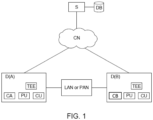
- a server S supervises operations performed by a plurality of devices (here, only two devices are shown: D(A) and D(B)), e.g. industrial robots in a factory or automated machines on a distribution line.
- the devices have each a processing unit PU and a communication unit CU.
- Each device is controlled by a corresponding controller (here, controller A, "CA”, and controller B, "CB").
- the server S has computing capabilities and a communication module to allow direct transmission of data with the devices, i.e. in online data transfers through a wired or wireless communication network CN (e.g.
- secure data transfers comprise exchange of tokens.
- the server S can create a digital token T comprising a corresponding token unique identifier Tid (e.g. a serial number, possibly alphanumeric), specific token data assigned by the server S and including a server digital signature SDS, and a token ownership challenge Toc corresponding to a controller to which this token has been attributed by the server S.
- the server signature SDS may be added to the token unique identifier instead of the token assigned data.
- These assigned token data may be, for example, programmed instructions to be executed by a device of a controller or an application(s) to be run on a processing unit of said device.
- the server S manages a database DB in which the tokens are stored.
- the first two "entries" of a token i.e. the token unique identifier Tid and the token assigned data (with the server signature SDS), are immutable, while the third entry (i.e. the token ownership challenge Toc) may be changed (according to possible transfer of the token from a controller to another controller).
- the third entry of the token is an encrypted ownership key or any function, data, or piece of code allowing an oblivious challenge of ownership to be completed without revealing the owner.
- the server S stores the tokens in a database DB and updates the DB content according to various transfers of tokens between the devices through a communication link.
- each controller can directly communicate with the server S, via online data transfer and ZKP protocol, to know the tokens it owns, their corresponding token unique identifiers and assigned token data.
- Operations to be performed by the device involve transfer of tokens between the devices, without involving the server S, i.e. offline data transfers between these devices.
- Offline communications between devices i.e. between their respective communication units
- a wireless communication link CL e.g. a "Local Area Network” LAN like Wi-Fi, or “Personal Area Network” PAN like Bluetooth, "Infrared Data Association” IrDA, wireless USB, or “Near Field Communication” NFC
- a wired communication link CL e.g. a LAN like Ethernet
- a communication protocol with single use ownership digital signature and ownership signature validation challenge i.e.
- the processing unit PU and communication unit CU of each device are securely connected to corresponding Trusted Execution Environment hardware TEE.
- TEE Trusted Execution Environment hardware
- the communication units CU of the devices are capable to communicate with each other via Zero-Knowledge Proof ZKP protocol to validate (offline) the signature (proof of signature) of a digital artefact, through the communication link CL in offline mode (i.e. without involving the server S) in order to exchange tokens and access to their unique token identifiers and assigned data.
- the server S is informed of the transfers at a later stage, when the controller having received one or several tokens contacts the server in online mode (via the communication unit of its device through the communication network CN) and transmits a list of the tokens received offline. Moreover, the server S can obliviously compile a list of token unique identifiers that have been transferred offline. Conversely, each controller of a device can obliviously (i.e. without revealing its own identity) query the server S (via online communication between the communication unit of the device and the server) to know a list of tokens (with their assigned data) owned by said controller according to the (updated) content in the database DB.
- a transfer of a token between two controllers can be realized in online mode or in offline mode.
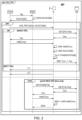
- Fig.2 is a diagram illustrating an embodiment of a case of online transfer ONLTRF of a token T owned by a controller CA of a device D(A) to another controller CB of another device D(B).
- Such a transfer involves the following operations:
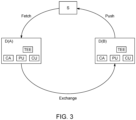
- Fig.3 schematically illustrates the main operations “Fetch”, “Exchange” and “Push” that are involved between the server S and the devices D(A) and D(B) of controllers CA and CB to realize an offline transfer of a token between the devices D(A) and D(B) according to the invention.
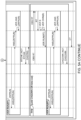
- Fig.4 is a diagram illustrating an embodiment of an operation of offline fetching (see also the operation "Fetch" on Fig.3 ) of a token T by a controller CA of device D(A) from the server S to prepare an offline transfer according to the invention of the token T owned by the controller CA to a controller CB of a device D(B).
- Such a fetching involves the following operations:
- the server S sends back a corresponding failure message FM corresponding to an invalid single use offline signature TEE-SUS(A) to the communication unit of the device D(A) controller CA, via the communication network CN.
- Fig.6A-B illustrate an embodiment of the operations of stopping a running token RT and pushing online a corresponding transfer request PUSONL by a device D(B) of a controller CB having received a token from a controller CA of a device D(A) according to the invention.
- STOP RT to run the offline token RT by the TEE of the device D(B) of controller CB:
- the controller CB of the device D(B) can check whether the server S has indeed changed the ownership of the transferred token having the token unique identifier Tid (see the sub-diagram "loop [until RES OR time-out]" of Fig.6A ) by sending a corresponding ownership query QRYOWN[Tid].
- An advantage of the above offline transfer according to the invention is that, in case the token ownership challenge Toc of the running token RT has been changed to the token ownership challenge Toc' in favor or controller CB, both controller CA and controller CB have a copy of the running token RT in their respective TEE, but only controller CB can prove having ownership. Thus, the running token RT cannot be further used (or transferred) by controller CA, and may only be used by controller CB to control operations corresponding to the token assigned data (performed via the device D(B)).
- a further advantage of the above offline transfer according to the invention is that the controller CA, after the change of token ownership in favor of controller B, has interest in stopping the (copy of the) running token and delete it in order to save energy (e.g. of a battery) of the device D(A).
- the TEE of the device D(B) of controller B performs the above operation of checking (ii) that the token T is owned by controller CA via zero knowledge proof protocol ZKP at the device D(B) of controller CB in offline communication (i.e. by communication through the local communication link CL) with the TEE of the device D(A) of controller CA.
- the server S only knows that token T is running offline.
- the TEE of the device D(B) of controller B performs the above operation of checking (iii) that the token T is indeed running in the trusted execution environment TEE of the device D(A) of controller A via dynamical systems state synchronization/reconstruction (see [12], [13]) and zero-knowledge proof ZKP for TEE signature at the device D(B) of controller B in offline communication with the communication unit of the device D(A) of controller A.
- this particular embodiment is a further development of the previous one aimed at reducing even further the exclusivity of the root of trust in the TEE hardware.
- the ingredients are essentially the same as the previous one where instead of a cumulative proof of the elapsed time and number of iteration steps, the TEE has to produce a (sufficiently hard to compute) proof of each performed iteration in the form of a blockchain, rooted on the information received from the server S at the fetch off-line time, and with a block for each iteration step.
- the D(A) TEE receives and stores (signed by the server): 1) time stamp of the fetching time; 2) a set of control parameters P defining the settings for the non-trivial dynamical system; and 3) the initial condition X(0) of the dynamical system.
- Each block contains a link the previous block via the hash value of the previous block, the state of the dynamical system X(n), the current time stamp, and a nonce to solve a relatively easy cryptographic puzzle, so to have a proof of work, finally the block is signed by the TEE.
- the combination of the proof of work and the TEE signature prevent fast-forwarding computation within or outside the TEE.
- the D(A) TEE exposes the whole blockchain computed till then, and the D(B) TEE, after validation of the signatures (server S and TEE) validates the proof of running validating the whole blockchain with standard blockchain validation techniques; hence, proving that the token trusted application in the TEE has executed as expected and has never been stopped.
- an alternative embodiment related to proof of running without reconstruction is described below wherein it is required that it is possible to internally enforce and externally verify that a token is running and it is doing so within a TEE.
- the internal current state of the Trusted Application (TA) running a token shall be exposed from controller CA device D(A) TEE to controller CB device D(B), so that D(B) TEE can verify the consistency of the exposed state with the hypothesis that the token has been "running” since it has been fetched off-line, i.e. validate the proof or running.
- the exposure and observation of the "running" state can be realized in two possible ways:
- the changing state of the running token can be securely (i.e. without possibility of malicious interference by a third party, or even by controller A) exposed via the connection from the TEE of the device D(A) of controller A to an externalization peripheral (see above).
- the state can be observed (from the exposure) by the TEE of the device D(B) of controller B securely (i.e. without possibility of malicious interference by a third party, or even by controller B).
- the controller A changes the token ownership challenge of the running token in favor of controller B via oblivious computing at the device D(A) of controller A in offline communication with the communication unit of the device D(B) of controller B.
- Fig.6B sub-diagram "[T@ A]" illustrates a case of the above offline transfer where the TEE of the device D(A) of controller CA failed in running the offline token of token unique identifier Tid, or prematurely stopped running the offline token (before its transfer to the controller CB).
- TEE of the device D(A) of controller CA failed in running the offline token of token unique identifier Tid, or prematurely stopped running the offline token (before its transfer to the controller CB).
- the above described invention allowing secure exchange of a token between two devices based on a combination of a running (digital) token (which makes any static or past copy of the token useless) together with cross-devices check functions, can also be used in a context of online/offline (i.e. on/off internet) exchange of digital value tokens (representing an amount of money) between two parties CA and CB.
- a controller may correspond to an owner of the digital value token (e.g. a person or a company)
- the devices D(A) and D(B) my correspond to respective mobile devices (e.g. smartphones, tablets...) of the owners CA and CB
- the server S may correspond to an authority (e.g. central bank) having mint the digital value token.
- the token data assigned by the server may correspond to a mere face value (amount of money) of the token together with the digital signature of the authority (as a proof of mint).
Landscapes
- Engineering & Computer Science (AREA)
- Computer Security & Cryptography (AREA)
- Computer Networks & Wireless Communication (AREA)
- Signal Processing (AREA)
- General Engineering & Computer Science (AREA)
- Computer Hardware Design (AREA)
- Physics & Mathematics (AREA)
- Computing Systems (AREA)
- General Physics & Mathematics (AREA)
- Theoretical Computer Science (AREA)
- Software Systems (AREA)
- Manufacturing & Machinery (AREA)
- Quality & Reliability (AREA)
- Automation & Control Theory (AREA)
- Computer And Data Communications (AREA)
- Hardware Redundancy (AREA)
- Multi Processors (AREA)
- Selective Calling Equipment (AREA)
Claims (14)
- Verfahren zum Steuern einer Vielzahl von Vorrichtungen (D(A), D(B)) über einen Server (S), der mit einer Datenbank (DB) verbunden ist, wobei jede Vorrichtung (D(A), D(B)) mit einer Verarbeitungseinheit (PU), einer Kommunikationseinheit (CU) und einer vertrauenswürdigen Hardware-Ausführungsumgebung (TEE) mit einem Speicher ausgestattet ist, die über einen zugewiesenen sicheren Hardware-Pfad sicher mit der Kommunikationseinheit (CU) verbunden ist, und durch einen entsprechenden Controller (CA, CB) gesteuert wird, wobei die Kommunikationseinheiten (CU) dafür ausgelegt sind, über eine drahtlose oder drahtgebundene Punktzu-Punkt-Kommunikationsverbindung für eine Offline-Kommunikation sicher miteinander zu kommunizieren, und wobei der Server (S) dafür ausgelegt ist, über ein drahtgebundenes oder drahtloses Kommunikationsnetzwerk (CN) für eine Online-Kommunikation sicher mit jeder Vorrichtungs-Kommunikationseinheit (CU) zu kommunizieren, wobei der Server (S) und die Kommunikationseinheiten (CU) dafür ausgelegt sind, Daten unter Verwendung verschlüsselter Protokolle zu übertragen, wobei der Server (S) und die TEE jeder Vorrichtung (D(A), D(B)) dafür ausgelegt sind, auf eine Validierungsaufforderung über ein Zero-Knowledge-Proof-(ZKP)-Protokoll zu reagieren und eine digitale Einmal-Eigentumssignatur und ihre entsprechende Eigentumssignatur-Validierungsaufforderung zu erzeugen und zu validieren,
wobei das Verfahren dadurch gekennzeichnet ist, dass:die vom Server (S) verwaltete Datenbank (DB) digitale Token (T) speichert, wobei jedes vom Server (S) gelieferte Token (T) ein eindeutiges Token-Identifikationsmerkmal (Tid), entsprechende vom Server (S) zugewiesene Tokendaten, die eine Serversignatur umfassen, und eine Token-Eigentumsaufforderung aufweist, die einem eindeutigen Controller entspricht, dem das Token gehört und das vom Server (S) zugewiesen wurde;im Falle einer Offline-Übertragung eines Tokens, das einem Controller A (CA) einer Vorrichtung (D(A)) gehört, an einen anderen Controller B (CB) einer anderen Vorrichtung (D(B)), sendet der Controller A (CA) zunächst eine Anforderung zur Offline-Übertragung, die das eindeutige Token-Identifikationsmerkmal (Tid) und eine TEE-Einmal-Offline-Signatur der vertrauenswürdigen Ausführungsumgebung der Vorrichtung (D(A)) des Controllers A (CA) mittels der Kommunikationseinheit (CU) der Vorrichtung (D(A)) über Online-Kommunikation an den Server (S), bei Empfang der Anforderung zur Offline-Übertragung überprüft der Server (S), dass das eindeutige Token-Identifikationsmerkmal (Tid) in der Datenbank (DB) mit entsprechender Token-Eigentumsaufforderung gespeichert ist, und sendet dann die Token-Eigentumsaufforderung an den Controller A (CA), nach Empfang und Verifizierung der Antwort auf die Token-Eigentumsaufforderung von Controller A (CA) überprüft der Server (S), ob die TEE-Einmal-Offline-Signatur gültig ist, falls die TEE-Einmal-Offline-Signatur gültig ist, ersetzt der Server (S) die Token-Eigentumsaufforderung, die dem eindeutigen Token-Identifikationsmerkmal (Tid) entspricht, durch eine TEE-Eigentumsaufforderung, die der TEE-Einmal-Offline-Signatur entspricht, und sendet eine Bestätigungsnachricht zurück, die den erfolgreichen Ersatz der Token-Eigentumsaufforderung zusammen mit den für das TEE der Vorrichtung (D(A)) von Controller A (CA) erforderlichen Daten anzeigt, um mit der Ausführung des Tokens zu beginnen, falls die besagte Einmal-Offline-Signatur ungültig ist, sendet der Server (S) eine entsprechende Fehlermeldung bezüglich einer ungültigen Einmal-Offline-Signatur an den Controller A (CA);falls der Controller A (CA) die Bestätigungsnachricht erhält, beginnt die TEE der Vorrichtung (D(A)) von Controller A (CA) mit der Ausführung des Tokens, und die Kommunikationseinheit (CU) der Vorrichtung (D(A)) von Controller A (CA) legt das ausgeführte Token der Kommunikationseinheit (CU) der Vorrichtung (D(B)) von Controller B (CB) offen, die dann das ausgeführte Token kontinuierlich beobachtet, sich in ihrer vertrauenswürdigen Ausführungsumgebung damit synchronisiert und Folgendes überprüft:(i) ob das Token vom Server (S) signiert ist,(ii) ob der Token-Eigentümer der Controller A (CA) ist und(iii) ob der Token in der vertrauenswürdigen Ausführungsumgebung der Vorrichtung (D(A)) des Controllers A (CA) ausgeführt wird;dann ändert die Vorrichtung (D(A)) des Controllers A (CA) die Token-Eigentumsaufforderung des laufenden Tokens zugunsten des Controllers B (CB) und der Controller B (CB) beobachtet kontinuierlich eine Kopie des Tokens mit der geänderten Token-Eigentumsaufforderung in der vertrauenswürdigen Ausführungsumgebung seiner Vorrichtung (D(B)) unddie TEE der Vorrichtung (D(B)) des Controllers B (CB) stoppt die Ausführung des Tokens und generiert einen Stoppnachweis, und der Controller B (CB) fordert dann online eine Übertragungsanforderung an, die das eindeutige Token-Identifikationsmerkmal (Tid), den Stoppnachweis und die geänderte Token-Eigentumsaufforderung an den Server (S) enthält, und nach Empfang der genannten Übertragungsanforderung überprüft der Server (S), ob die Anforderung gültig ist, und führt im Falle der Gültigkeit der Anforderung eine entsprechende Änderung der Token-Eigentumsaufforderung für dieses Token in der Datenbank (DB) durch. - Verfahren nach Anspruch 1, wobei in Schritt (ii) die TEE der Vorrichtung (D(B)) des Controllers B (CB) überprüft, ob der Token-Eigentümer der Controller A (CA) ist, und zwar über das Zero-Knowledge-Proof-ZKP-Protokoll an der Vorrichtung (D(B)) des Controllers B (CB) bei Offline-Kommunikation mit der Kommunikationseinheit (CU) der Vorrichtung (D(A)) des Controllers A (CA).
- Verfahren nach einem der Ansprüche 1 und 2, wobei in Schritt (iii) die TEE der Vorrichtung (D(B)) des Controllers B (CB) überprüft, ob der Token in der vertrauenswürdigen Ausführungsumgebung der Vorrichtung (D(A)) des Controllers A (CA) über eine dynamische Systemzustandsynchronisierung/- rekonstruktion und ein ZKP-Protokoll für die TEE-Signatur an der Vorrichtung (D(B)) von Controller B (CB) in Offline-Kommunikation mit der Kommunikationseinheit (CU) der Vorrichtung (D(A)) von Controller A (CA) ausgeführt wird.
- Verfahren nach einem der Ansprüche 1 bis 3, wobei der Controller A (CA) die Token-Eigentumsaufforderung des ausgeführten Tokens zugunsten des Controllers B (CB) über ein "oblivious computing" an der Vorrichtung (D(A)) des Controllers A (CA) in Offline-Kommunikation mit der Kommunikationseinheit (CU) der Vorrichtung (D(B)) des Controllers B (CB) ändert.
- Verfahren nach einem der Ansprüche 1 bis 4, wobei beim Stoppen der Ausführung des Offline-Tokens durch die TEE der Vorrichtung (D(B)) des Controllers B (CB)die TEE der Vorrichtung (D(B)) von Controller B (CB) eine überprüfbare Einmal-Signatur erzeugt, die beweist, dass das Offline-Token gestoppt wurde, und die eine nachweisbare Überprüfung der ursprünglichen TEE-Einmal-Offline-Signatur enthält, und die Vorrichtung (D(B)) von Controller B (CB) eine Einmal-Eigentumsaufforderung-Signatur erzeugt;der Controller B (CB) fügt der Übertragungsanforderung die überprüfbare Einmal-Signatur, die nachweisbare Überprüfung der ursprünglichen TEE-Einmal-Offline-Signatur und die Einmal-Eigentumsaufforderung-Signatur hinzu und schickt die Übertragungsanforderung online an den Server (S); undbeim Empfang der genannten Übertragungsanforderung überprüft der Server (S) die Gültigkeit der Übertragungsanforderung, indem er die folgenden Schritte ausführt:Überprüfung, ob das Token mit dem eindeutigen Identifikationsmerkmal für empfangene Token (Tid) tatsächlich offline ist, und falls dies der Fall ist,Verifizierung der Gültigkeit der erhaltenen einmaligen Signatur und, falls diese gültig ist, Anfechtung des Eigentums über die erhaltene ursprüngliche TEE-Einmal-Offline-Signatur, dannÜberprüfung, ob die empfangene Einmal-Eigentumsaufforderung-Signatur gültig ist, und, falls sie gültig ist, Ersetzen der in der Datenbank (DB) gespeicherten Token-Eigentumsaufforderung für dieses eindeutige Token-Identifikationsmerkmal (Tid) durch die empfangene geänderte Token-Eigentumsaufforderung.
- Verfahren nach einem der Ansprüche 1 bis 3, wobei, falls die TEE der Vorrichtung (D(A)) des Controllers A (CA) bei der Ausführung des Tokens fehlschlägt oder die Ausführung des Tokens vor seiner Übertragung an die Vorrichtung (D(B)) des Controllers B (CB) stoppt,generiert die TEE der Vorrichtung (D(A)) des Controllers A (CA) generiert eine überprüfbare Einmal-Signatur, die beweist, dass das Offline-Token gestoppt wurde, und generiert die Vorrichtung (D(A)) des Controllers A (CA) eine Einmal-Eigentums-Challenge-Signatur, die einer neuen Token-Eigentumsaufforderung für den Controller A (CA) entspricht;sendet der Controller A (CA) an den Server (S) eine Zurücksetzungsanforderung, in der er den Server (S) anweist, das Token online zurückzusetzen, zusammen mit der überprüfbaren Einmal-Signatur und der Einmal-Eigentumsaufforderung-Signatur;beim Empfang der besagten Zurücksetzungsanforderung überprüft der Server (S) die Gültigkeit der Anforderung, indem er die folgenden Schritte ausführt:Verifizierung, dass das Token tatsächlich offline ist, dannAnfechtung der ursprünglichen Offline-Einmal-Signatur und anschließende Verifizierung, dass die empfangene Einmal-Signatur gültig ist, und falls sie gültig ist und nach der Verifizierung, dass die empfangene Einmal-Eigentumsaufforderung-Signatur tatsächlich gültig ist, Ersetzen der gespeicherten Token-Eigentumsaufforderung für dieses eindeutige Token-Identifikationsmerkmal (Tid) in der Datenbank (DB) durch die neue Token-Eigentumsaufforderung.
- Verfahren nach einem der Ansprüche 1 bis 6, wobei im Falle einer Online-Übertragung eines Tokens, das einem Controller A (CA) einer Vorrichtung (D(A)) gehört, an einen anderen Controller B (CB) einer anderen Vorrichtung (D(B)), die Übertragung Folgendes umfasst: Senden des eindeutigen Identifikationsmerkmals (Tid) des zu übertragenden Tokens durch den Controller A (CA) an den Controller B (CB) über die Kommunikationseinheit (CU) der Vorrichtung (D(A)), Zurücksenden einer Einmal-Eigentumsaufforderung-Signatur des Controllers B (CB) durch den Controller B (CB) über die Kommunikationseinheit (CU) der anderen Vorrichtung (D(B)), Senden einer Übertragungsanforderung durch den Controller A (CA) an den Server (S), in der das eindeutige Token-Identifikationsmerkmal (Tid) und die empfangene Einmal-Eigentumsaufforderung-Signatur des Controllers B (CB) angegeben sind, beim Empfang der genannten Übertragungsanforderung überprüft der Server (S), ob das eindeutige Token-Identifikationsmerkmal (Tid) in der Datenbank (DB) mit der entsprechenden Token-Eigentumsaufforderung gespeichert ist, und sendet dann die genannte Token-Eigentumsaufforderung an den Controller A (CA), beim Empfang und der Verifizierung der Eigentumsantwort von Controller A (CA) überprüft der Server (S), ob die Einmal-Eigentumssignatur von Controller B (CB) in der Übertragungsanforderung gültig ist, im Falle, dass die Einmal-Eigentumssignatur gültig ist, ersetzt der Server (S) die Token-Eigentumsaufforderung, die dem eindeutigen Token-Identifikationsmerkmal (Tid) entspricht, durch eine Token-Eigentumsaufforderung, die dem Controller B (CB) entspricht, und sendet eine Übertragungsbestätigung an den Controller A (CA) zurück, im Falle, dass die Einmal-Eigentumssignatur nicht gültig ist, sendet der Server (S) eine Fehlermeldung an den Controller A (CA) zurück.
- System zum Steuern einer Vielzahl von Vorrichtungen (D(A), D(B)) über einen Server (S), der mit einer Datenbank (DB) verbunden ist, wobei jede Vorrichtung (D(A), D(B)) mit einer Verarbeitungseinheit (PU), einer Kommunikationseinheit (CU) und einer vertrauenswürdigen Hardware-Ausführungsumgebung (TEE) mit einem Speicher ausgestattet ist, die über einen zugewiesenen sicheren Hardware-Pfad sicher mit der Kommunikationseinheit (CU) verbunden ist, und durch einen entsprechenden Controller gesteuert wird, wobei die Kommunikationseinheiten (CU) dafür ausgelegt sind, über eine drahtlose oder drahtgebundene Punktzu-Punkt-Kommunikationsverbindung für eine Offline-Kommunikation sicher miteinander zu kommunizieren, und wobei der Server (S) dafür ausgelegt ist, über ein drahtgebundenes oder drahtloses Kommunikationsnetzwerk (CN) für eine Online-Kommunikation sicher mit jeder Vorrichtungs-Kommunikationseinheit (CU) zu kommunizieren, wobei der Server (S) und die Kommunikationseinheiten (CU) dafür ausgelegt sind, Daten unter Verwendung verschlüsselter Protokolle zu übertragen, wobei der Server (S) und die TEE jeder Vorrichtung (D(A), D(B)) dafür ausgelegt sind, auf eine Validierungsaufforderung über ein Zero-Knowledge-Proof-(ZKP)-Protokoll zu reagieren und eine digitale Einmal-Eigentumssignatur und ihre entsprechende Eigentumssignatur-Validierungsaufforderung zu erzeugen und zu validieren,
wobei das System dadurch gekennzeichnet ist, dass:der Server (S) eignet sich zur Bereitstellung digitaler Token (T) und zur Speicherung der bereitgestellten Token (T) in der Datenbank (DB), wobei jeder vom Server (S) bereitgestellte Token ein eindeutiges Token-Identifikationsmerkmal (Tid), entsprechende vom Server (S) zugewiesene Token-Daten, die eine Serversignatur umfassen, und eine Token-Eigentumsaufforderung aufweist, die einem eindeutigen Controller entspricht, dem der Token gehört und der vom Server (S) zugewiesen wurde;das System so eingerichtet ist, dass zur Durchführung einer Offline-Übertragung eines Tokens, das einem Controller A (CA) einer Vorrichtung (D(A)) gehört, an einen anderen Controller B (CB) einer anderen Vorrichtung (D(B)),der Controller A (CA) sendet zunächst eine Offline-Übertragungsanforderung, die das eindeutige Identifikationsmerkmal (Tid) und eine TEE-Einmal-Offline-Signatur der vertrauenswürdigen Ausführungsumgebung der Vorrichtung (D(A)) des Controllers A (CA) enthält, über die Kommunikationseinheit (CU) der Vorrichtung (D(A)) über Online-Kommunikation an den Server (S);beim Empfang der besagten Offline-Übertragungsanforderung überprüft der Server (S), ob das eindeutige Token-Identifikationsmerkmal (Tid) in der Datenbank (DB) mit der entsprechenden Token-Eigentumsaufforderung gespeichert ist, und sendet dann die besagte Token-Eigentumsaufforderung an den Controller A (CA);nach Empfang und Verifizierung der Token-Eigentumsaufforderung von Controller A (CA) überprüft der Server (S), ob die TEE-Einmal-Offline-Signatur gültig ist, falls die TEE-Einmal-Offline-Signatur gültig ist, ersetzt der Server (S) die Token-Eigentumsaufforderung, die dem eindeutigen Token-Identifikationsmerkmal (Tid) entspricht, durch eine TEE-Eigentumsaufforderung, die der TEE-Einmal-Offline-Signatur entspricht, und sendet eine Bestätigungsnachricht zurück, die einen erfolgreichen Ersatz der Token-Eigentumsaufforderung zusammen mit den für die TEE der Vorrichtung (D(A)) von Controller A (CA) erforderlichen Daten anzeigt, um mit der Ausführung des Tokens zu beginnen, falls die besagte Einmal-Offline-Signatur ungültig ist, sendet der Server (S) eine entsprechende Fehlermeldung bezüglich einer ungültigen Einmal-Offline-Signatur an den Controller A (CA);falls der Controller A (CA) die Bestätigungsnachricht erhält, beginnt die TEE der Vorrichtung (D(A)) von Controller A (CA) mit der Ausführung des Tokens, und die Kommunikationseinheit (CU) der Vorrichtung (D(A)) von Controller A (CA) legt das ausgeführte Token der Kommunikationseinheit (CU) der Vorrichtung (D(B)) von Controller B (CB) offen, die dann das ausgeführte Token kontinuierlich beobachtet, sich in ihrer vertrauenswürdigen Ausführungsumgebung damit synchronisiert und Folgendes überprüft:(i) ob das Token vom Server (S) signiert ist,(ii) ob der Token-Eigentümer der Controller A (CA) ist und(iii) ob der Token in der vertrauenswürdigen Ausführungsumgebung der Vorrichtung (D(A)) des Controllers A (CA) ausgeführt wird;dann ändert die Vorrichtung (D(A)) des Controllers A (CA) die Token-Eigentumsaufforderung des laufenden Tokens zugunsten des Controllers B (CB) und der Controller B (CB) beobachtet kontinuierlich eine Kopie des Tokens mit der geänderten Token-Eigentumsaufforderung in der vertrauenswürdigen Ausführungsumgebung seiner Vorrichtung (D(A)) unddie TEE der Vorrichtung (D(B)) des Controllers B (CB) stoppt die Ausführung des Tokens und generiert einen Stoppnachweis, und der Controller B (CB) fordert dann online eine Übertragungsanforderung an, die das eindeutige Token-Identifikationsmerkmal (Tid), den Stoppnachweis und die geänderte Token-Eigentumsaufforderung an den Server (S) enthält,und nach Empfang der genannten Übertragungsanforderung überprüft der Server (S), ob die Anforderung gültig ist, und führt im Falle der Gültigkeit der Anforderung eine entsprechende Änderung der Token-Eigentumsaufforderung für dieses Token in der Datenbank (DB) durch. - System nach Anspruch 8, wobei zur Durchführung des Vorgangs der Überprüfung (ii), dass der Token-Eigentümer der Controller A (CA) ist, die TEE der Vorrichtung (D(B)) des Controllers B (CB) dazu eingerichtet ist, mittels eines Zero-Knowledge-Proof-ZKP-Protokoll an der Vorrichtung (D(B)) des Controllers B (CB) bei Offline-Kommunikation mit der Kommunikationseinheit (CU) der Vorrichtung (D(A)) des Controllers A (CA) zu überprüfen, dass der Token-Eigentümer der Controller A (CA) ist.
- System nach einem der Ansprüche 8 und 9, wobei zur Durchführung des Vorgangs der Überprüfung (iii), dass das Token in der vertrauenswürdigen Ausführungsumgebung der Vorrichtung (D(A)) des Controllers A (CA) ausgeführt wird, die TEE der Vorrichtung (D(B)) des Controllers B (CB) dazu eingerichtet ist, zu überprüfen, dass das Token in der vertrauenswürdigen Ausführungsumgebung der Vorrichtung (D(A)) des Controllers A (CA) über eine dynamische Systemzustandsynchronisierung/- rekonstruktion und ein ZKP-Protokoll für TEE-Signatur an der Vorrichtung (D(B)) des Controllers B (CB) in Offline-Kommunikation mit der Kommunikationseinheit (CU) der Vorrichtung (D(A)) des Controllers A (CA) ausgeführt wird.
- System nach einem der Ansprüche 8 bis 10, wobei der Controller A (CA) dazu eingerichtet ist, die Token-Eigentumsaufforderung des ausgeführten Tokens zugunsten des Controllers B (CB) über ein "oblivious computing" an der Vorrichtung (D(A)) des Controllers A (CA) in Offline-Kommunikation mit der Kommunikationseinheit (CU) der Vorrichtung (D(B)) des Controllers B (CB) zu ändern.
- System nach einem der Ansprüche 8 bis 11, wobei das System so eingerichtet ist, dass beim Stoppen der Ausführung des Offline-Tokens durch die TEE der Vorrichtung (D(B)) des Controllers B (CB),die TEE der Vorrichtung (D(B)) des Controllers B (CB) eine überprüfbare Einmal-Signatur erzeugt, die beweist, dass das Offline-Token gestoppt wurde, und die eine nachweisbare Überprüfung der ursprünglichen TEE-Einmal-Offline-Signatur enthält, und die Vorrichtung (D(B)) von Controller B eine Einmal-Eigentumsaufforderung-Signatur erzeugt;der Controller B (CB) fügt der Übertragungsanforderung die überprüfbare Einmal-Signatur, die nachweisbare Überprüfung der ursprünglichen TEE-Einmal-Offline-Signatur und die Einmal-Eigentumsaufforderung-Signatur hinzu und schickt die Übertragungsanforderung über die Kommunikationseinheit (CU) der Vorrichtung (D(B)) des Controllers B (CB) online an den Server (S); undbeim Empfang der genannten Übertragungsanforderung überprüft der Server (S) die Gültigkeit der Übertragungsanforderung, indem er die folgenden Vorgänge ausführt:Überprüfung, ob das Token mit dem eindeutigen Identifikationsmerkmal für empfangene Token (Tid) tatsächlich offline ist, und falls dies der Fall ist,Verifizierung der Gültigkeit der erhaltenen einmaligen Signatur und, falls diese gültig ist, Anfechtung des Eigentums über die erhaltene ursprüngliche TEE-Einmal-Offline-Signatur, dannÜberprüfung, ob die empfangene Einmal-Eigentumsaufforderung-Signatur gültig ist, und, falls sie gültig ist, Ersetzen der in der Datenbank (DB) gespeicherten Token-Eigentumsaufforderung für dieses eindeutige Token-Identifikationsmerkmal (Tid) durch die empfangene geänderte Token-Eigentumsaufforderung.
- System nach einem der Ansprüche 8 bis 10, wobei das System so eingerichtet ist, dass, falls die TEE der Vorrichtung (D(A)) des Controllers A (CA) bei der Ausführung des Tokens fehlschlägt oder die Ausführung des Tokens vor seiner Übertragung an die Vorrichtung (D(B)) des Controllers B (CB) stoppt:generiert die TEE der Vorrichtung (D(A)) des Controllers A (CA) generiert eine überprüfbare Einmal-Signatur, die beweist, dass das Offline-Token gestoppt wurde, und generiert die Vorrichtung (D(A)) des Controllers A (CA) eine Einmal-Eigentums-Challenge-Signatur, die einer neuen Token-Eigentumsaufforderung für den Controller A (CA) entspricht;sendet der Controller A (CA) an den Server (S) eine Zurücksetzungsanforderung, die den Server (S) anweist, das Token online zurückzusetzen, zusammen mit der überprüfbaren Einmal-Signatur und der Einmal-Eigentumsaufforderung-Signatur, über Online-Kommunikation mittels der Kommunikationseinheit (CU) der Vorrichtung (D(A)) des Controllers A (CA);beim Empfang der besagten Zurücksetzungsanforderung überprüft der Server (S) die Gültigkeit der Anforderung, indem er die folgenden Vorgänge ausführt:Verifizierung, dass das Token tatsächlich offline ist, dannAnfechtung der ursprünglichen Offline-Einmal-Signatur und anschließende Verifizierung, dass die empfangene Einmal-Signatur gültig ist, und falls sie gültig ist und nach der Verifizierung, dass die empfangene Einmal-Eigentumsaufforderung-Signatur tatsächlich gültig ist, Ersetzen der gespeicherten Token-Eigentumsaufforderung für dieses eindeutige Token-Identifikationsmerkmal (Tid) in der Datenbank (DB) durch die neue Token-Eigentumsaufforderung.
- System nach einem der Ansprüche 8 bis 13, wobei das System so eingerichtet ist, dass im Falle einer Online-Übertragung eines Tokens, das einem Controller A (CA) einer Vorrichtung (D(A)) gehört, an einen anderen Controller B (CB) einer anderen Vorrichtung (D(B)) die Übertragung durch Ausführen der folgenden Vorgänge durchgeführt wird:Senden des eindeutigen Token-Identifikationsmerkmals (Tid) des zu übertragenden Tokens durch den Controller A (CA) an den Controller B (CB) über eine Offline-Kommunikation zwischen den Kommunikationseinheiten (CU) der Vorrichtung (D(A)) des Controllers A (CA) und der Vorrichtung (D(B)) des Controllers B (CB),Zurücksenden der Einmal- Eigentumsaufforderung-Signatur von Controller B (CB) durch Controller B (CB) über Offline-Kommunikation zwischen den Kommunikationseinheiten (CU) der Vorrichtung (D(B)) von Controller B (CB) und der Vorrichtung (D(A)) von Controller A (CA),Senden einer Übertragungsanforderung durch den Controller A (CA) an den Server (S), in der das eindeutige Token-Identifikationsmerkmal (Tid) und die empfangene Einmal-Eigentumsaufforderung-Signatur des Controllers B (CB) angegeben sind, mittels der Kommunikationseinheit (CU) der Vorrichtung (D(A)) des Controllers A (CA) über Online-Kommunikation,beim Empfang der besagten Übertragungsanforderung überprüft der Server (S), ob das eindeutige Token-Identifikationsmerkmal (Tid) in der Datenbank (DB) mit der entsprechenden Token-Eigentumsaufforderung gespeichert ist, und sendet dann die besagte Token-Eigentumsaufforderung an den Controller A (CA) über Online-Kommunikation mit der Kommunikationseinheit (CU) der Vorrichtung (D(A)) des Controllers A (CA) an den Controller A (CA),nach dem Empfang, über die Online-Kommunikation mit der Kommunikationseinheit (CU) der Vorrichtung (D(A)) von Controller A (CA) und der Verifizierung der Eigentumsantwort von Controller A (CA) verifiziert der Server (S), dass die Einmal-Eigentumssignatur von Controller B (CB) in der Übertragungsanforderung gültig ist, undfalls die Einmal-Eigentumssignatur gültig ist, ersetzt der Server (S) die Token-Eigentumsaufforderung entsprechend dem eindeutigen Token-Identifikationsmerkmal (Tid) durch eine Token-Eigentumsaufforderung entsprechend dem Controller B (CB) und sendet eine Übertragungsbestätigung an den Controller A (CA) über die Online-Kommunikation mit der Kommunikationseinheit (CU) der Vorrichtung (D(A)) des Controllers A (CA) zurück,falls die Einmal-Eigentumssignatur ungültig ist, sendet der Server (S) über die Online-Kommunikation mit der Kommunikationseinheit (CU) der Vorrichtung (D(A)) von Controller A (CA) eine Fehlermeldung an Controller A (CA) zurück.
Applications Claiming Priority (2)
| Application Number | Priority Date | Filing Date | Title |
|---|---|---|---|
| EP20215163 | 2020-12-17 | ||
| PCT/EP2021/025509 WO2022128160A1 (en) | 2020-12-17 | 2021-12-16 | Method and corresponding system for controlling secure execution of operations by interconnected devices |
Publications (2)
| Publication Number | Publication Date |
|---|---|
| EP4264885A1 EP4264885A1 (de) | 2023-10-25 |
| EP4264885B1 true EP4264885B1 (de) | 2025-05-28 |
Family
ID=73855436
Family Applications (1)
| Application Number | Title | Priority Date | Filing Date |
|---|---|---|---|
| EP21870574.7A Active EP4264885B1 (de) | 2020-12-17 | 2021-12-16 | Verfahren und entsprechendes system zur steuerung einer sicheren ausführung von operationen durch miteinander verbundene vorrichtungen |
Country Status (9)
| Country | Link |
|---|---|
| US (1) | US12309298B2 (de) |
| EP (1) | EP4264885B1 (de) |
| KR (1) | KR20230117751A (de) |
| CN (1) | CN116615725A (de) |
| AU (1) | AU2021403444A1 (de) |
| CA (1) | CA3205012A1 (de) |
| ES (1) | ES3039762T3 (de) |
| IL (1) | IL303594B2 (de) |
| WO (1) | WO2022128160A1 (de) |
Families Citing this family (7)
| Publication number | Priority date | Publication date | Assignee | Title |
|---|---|---|---|---|
| JP7732502B2 (ja) * | 2021-06-03 | 2025-09-02 | 日本電気株式会社 | 施設利用制御装置、システム及び方法、並びに、施設利用制御プログラム |
| EP4141768A1 (de) * | 2021-08-27 | 2023-03-01 | ETH Zurich | Verfahren und system für eine digitale zentralbankwährung mit nichtverknüpfbaren transaktionen und datenschutzerhaltender regulierung |
| US12531750B2 (en) * | 2021-12-22 | 2026-01-20 | Sicpa Holding Sa | Method and system for validating transferring data between communication devices |
| GB2622431A (en) * | 2022-09-16 | 2024-03-20 | Hewlett Packard Development Co | Authorization of states in a stateful signature scheme |
| US20240113857A1 (en) * | 2022-09-30 | 2024-04-04 | Intel Corporation | Encrypted processing unit emulated with homomorphic encryption circuits |
| PY2426088A (es) * | 2023-04-11 | 2024-12-12 | Sicpa Holding Sa | Método y sistema para controlar dispositivos interconectados que operan en un entorno no fiable.- |
| US20260106759A1 (en) * | 2024-10-16 | 2026-04-16 | Lemon Inc. | Trustless execution environment cryptographic proofs |
Family Cites Families (12)
| Publication number | Priority date | Publication date | Assignee | Title |
|---|---|---|---|---|
| EP1793525B1 (de) * | 2005-12-01 | 2008-10-15 | BRAVIS GmbH | Verfahren zum Ändern eines Gruppenschlüssels in einer Gruppe von Netzelementen in einem Netz |
| US20080086766A1 (en) * | 2006-10-06 | 2008-04-10 | Microsoft Corporation | Client-based pseudonyms |
| EP2159653B1 (de) * | 2008-09-02 | 2014-07-23 | Siemens Aktiengesellschaft | Verfahren zur Einräumung einer Zugriffsberechtigung auf ein rechnerbasiertes Objekt in einem Automatisierungssystem, Computerprogramm und Automatisierungssystem |
| US11349675B2 (en) * | 2013-10-18 | 2022-05-31 | Alcatel-Lucent Usa Inc. | Tamper-resistant and scalable mutual authentication for machine-to-machine devices |
| US10148624B2 (en) * | 2015-09-25 | 2018-12-04 | Mcafee, Llc | Secure service matching |
| CN106888097B (zh) * | 2017-03-30 | 2020-08-11 | 北卡科技有限公司 | 一种hce模式下基于零知识证明的身份认证方法 |
| US20190197518A1 (en) * | 2017-12-22 | 2019-06-27 | Mastercard Asia/Pacific Pte. Ltd. | System and method using stored value tokens |
| US10721069B2 (en) * | 2018-08-18 | 2020-07-21 | Eygs Llp | Methods and systems for enhancing privacy and efficiency on distributed ledger-based networks |
| US20210357927A1 (en) * | 2018-09-17 | 2021-11-18 | Blockrules Ltd | Transaction authentication system and related methods |
| US11361069B2 (en) * | 2018-09-20 | 2022-06-14 | Nec Corporation | Subversion resilient attestation for trusted execution environments |
| GB2594272A (en) * | 2020-04-21 | 2021-10-27 | Nchain Holdings Ltd | Method for implementing a digital coin system using a blockchain |
| US12137108B2 (en) * | 2020-08-06 | 2024-11-05 | Zscaler, Inc. | Live log analysis for real-time data manipulation and visualization of a large data set |
-
2021
- 2021-12-16 EP EP21870574.7A patent/EP4264885B1/de active Active
- 2021-12-16 AU AU2021403444A patent/AU2021403444A1/en active Pending
- 2021-12-16 WO PCT/EP2021/025509 patent/WO2022128160A1/en not_active Ceased
- 2021-12-16 US US18/258,127 patent/US12309298B2/en active Active
- 2021-12-16 ES ES21870574T patent/ES3039762T3/es active Active
- 2021-12-16 CA CA3205012A patent/CA3205012A1/en active Pending
- 2021-12-16 CN CN202180085386.9A patent/CN116615725A/zh active Pending
- 2021-12-16 IL IL303594A patent/IL303594B2/en unknown
- 2021-12-16 KR KR1020237023580A patent/KR20230117751A/ko active Pending
Also Published As
| Publication number | Publication date |
|---|---|
| CN116615725A (zh) | 2023-08-18 |
| ES3039762T3 (en) | 2025-10-24 |
| WO2022128160A1 (en) | 2022-06-23 |
| IL303594B1 (en) | 2026-01-01 |
| US12309298B2 (en) | 2025-05-20 |
| CA3205012A1 (en) | 2022-06-23 |
| AU2021403444A1 (en) | 2023-07-27 |
| KR20230117751A (ko) | 2023-08-09 |
| US20240073039A1 (en) | 2024-02-29 |
| IL303594B2 (en) | 2026-05-01 |
| EP4264885A1 (de) | 2023-10-25 |
| IL303594A (en) | 2023-08-01 |
Similar Documents
| Publication | Publication Date | Title |
|---|---|---|
| US12309298B2 (en) | Method and corresponding system for controlling secure execution of operations by interconnected devices | |
| Ma et al. | Redactable blockchain in decentralized setting | |
| Zhang et al. | A group signature and authentication scheme for blockchain-based mobile-edge computing | |
| Cai et al. | Towards private, robust, and verifiable crowdsensing systems via public blockchains | |
| CN109189727B (zh) | 一种基于属性代理重加密的区块链密文云存储共享方法 | |
| Fan et al. | SAKE*: A symmetric authenticated key exchange protocol with perfect forward secrecy for industrial Internet of Things | |
| JP2012050066A (ja) | セキュアなフィールドプログラマブルゲートアレイ(fpga)アーキテクチャ | |
| CN115495768A (zh) | 基于区块链及多方安全计算的涉密信息处理方法及系统 | |
| TW202015378A (zh) | 密碼運算、創建工作密鑰的方法、密碼服務平台及設備 | |
| US11991189B2 (en) | Intrusion detection for computer systems | |
| Ma et al. | Efficient, traceable and privacy-aware data access control in distributed cloud-based IoD systems | |
| CN112734576A (zh) | 一种区块链的共识系统及方法 | |
| Chang et al. | Practical privacy-preserving scheme with fault tolerance for smart grids | |
| Ahmed et al. | Optimizing V2G dynamics: An AI-enhanced secure protocol for energy management in industrial cyber-physical systems | |
| Palit et al. | AUGChain: blockchain-based mobile user authentication scheme in global mobility network | |
| CN113869901B (zh) | 密钥生成方法、装置、计算机可读存储介质及计算机设备 | |
| Zhang et al. | Cross-chain interoperability and collaboration for keyword-based embedded smart contracts in internet of things | |
| Heydari et al. | An efficient password-based authenticated key exchange protocol with provable security for mobile client–client networks | |
| JPH10171759A (ja) | 商品またはサービスを分配するネットワークにおいて情報を多様化するシステム | |
| Alp et al. | Rethinking general-purpose decentralized computing | |
| Feng et al. | Secure data collaborative computing scheme based on blockchain | |
| Zhang et al. | Enabling privacy-preserving off-chain payment via hybrid multi-hop mechanism | |
| RU2840413C1 (ru) | Способ и соответствующая система для управления защищенным выполнением операций взаимосвязанными устройствами | |
| Jiang et al. | Privacy-preserving and fair crowdsourcing framework with fine-grained reuse based on blockchain | |
| Dojen et al. | On establishing and fixing a parallel session attack in a security protocol |
Legal Events
| Date | Code | Title | Description |
|---|---|---|---|
| STAA | Information on the status of an ep patent application or granted ep patent |
Free format text: STATUS: UNKNOWN |
|
| STAA | Information on the status of an ep patent application or granted ep patent |
Free format text: STATUS: THE INTERNATIONAL PUBLICATION HAS BEEN MADE |
|
| PUAI | Public reference made under article 153(3) epc to a published international application that has entered the european phase |
Free format text: ORIGINAL CODE: 0009012 |
|
| STAA | Information on the status of an ep patent application or granted ep patent |
Free format text: STATUS: REQUEST FOR EXAMINATION WAS MADE |
|
| 17P | Request for examination filed |
Effective date: 20230714 |
|
| AK | Designated contracting states |
Kind code of ref document: A1 Designated state(s): AL AT BE BG CH CY CZ DE DK EE ES FI FR GB GR HR HU IE IS IT LI LT LU LV MC MK MT NL NO PL PT RO RS SE SI SK SM TR |
|
| DAV | Request for validation of the european patent (deleted) | ||
| DAX | Request for extension of the european patent (deleted) | ||
| GRAP | Despatch of communication of intention to grant a patent |
Free format text: ORIGINAL CODE: EPIDOSNIGR1 |
|
| STAA | Information on the status of an ep patent application or granted ep patent |
Free format text: STATUS: GRANT OF PATENT IS INTENDED |
|
| INTG | Intention to grant announced |
Effective date: 20250103 |
|
| GRAS | Grant fee paid |
Free format text: ORIGINAL CODE: EPIDOSNIGR3 |
|
| GRAA | (expected) grant |
Free format text: ORIGINAL CODE: 0009210 |
|
| STAA | Information on the status of an ep patent application or granted ep patent |
Free format text: STATUS: THE PATENT HAS BEEN GRANTED |
|
| RAP3 | Party data changed (applicant data changed or rights of an application transferred) |
Owner name: SICPA HOLDING SA |
|
| AK | Designated contracting states |
Kind code of ref document: B1 Designated state(s): AL AT BE BG CH CY CZ DE DK EE ES FI FR GB GR HR HU IE IS IT LI LT LU LV MC MK MT NL NO PL PT RO RS SE SI SK SM TR |
|
| REG | Reference to a national code |
Ref country code: GB Ref legal event code: FG4D |
|
| REG | Reference to a national code |
Ref country code: CH Ref legal event code: EP |
|
| P01 | Opt-out of the competence of the unified patent court (upc) registered |
Free format text: CASE NUMBER: APP_20223/2025 Effective date: 20250428 |
|
| REG | Reference to a national code |
Ref country code: IE Ref legal event code: FG4D Ref country code: DE Ref legal event code: R096 Ref document number: 602021031527 Country of ref document: DE |
|
| REG | Reference to a national code |
Ref country code: SE Ref legal event code: TRGR |
|
| REG | Reference to a national code |
Ref country code: NL Ref legal event code: MP Effective date: 20250528 |
|
| PG25 | Lapsed in a contracting state [announced via postgrant information from national office to epo] |
Ref country code: FI Free format text: LAPSE BECAUSE OF FAILURE TO SUBMIT A TRANSLATION OF THE DESCRIPTION OR TO PAY THE FEE WITHIN THE PRESCRIBED TIME-LIMIT Effective date: 20250528 |
|
| REG | Reference to a national code |
Ref country code: LT Ref legal event code: MG9D |
|
| PG25 | Lapsed in a contracting state [announced via postgrant information from national office to epo] |
Ref country code: GR Free format text: LAPSE BECAUSE OF FAILURE TO SUBMIT A TRANSLATION OF THE DESCRIPTION OR TO PAY THE FEE WITHIN THE PRESCRIBED TIME-LIMIT Effective date: 20250829 Ref country code: NO Free format text: LAPSE BECAUSE OF FAILURE TO SUBMIT A TRANSLATION OF THE DESCRIPTION OR TO PAY THE FEE WITHIN THE PRESCRIBED TIME-LIMIT Effective date: 20250828 |
|
| PG25 | Lapsed in a contracting state [announced via postgrant information from national office to epo] |
Ref country code: NL Free format text: LAPSE BECAUSE OF FAILURE TO SUBMIT A TRANSLATION OF THE DESCRIPTION OR TO PAY THE FEE WITHIN THE PRESCRIBED TIME-LIMIT Effective date: 20250528 Ref country code: PL Free format text: LAPSE BECAUSE OF FAILURE TO SUBMIT A TRANSLATION OF THE DESCRIPTION OR TO PAY THE FEE WITHIN THE PRESCRIBED TIME-LIMIT Effective date: 20250528 |
|
| PG25 | Lapsed in a contracting state [announced via postgrant information from national office to epo] |
Ref country code: BG Free format text: LAPSE BECAUSE OF FAILURE TO SUBMIT A TRANSLATION OF THE DESCRIPTION OR TO PAY THE FEE WITHIN THE PRESCRIBED TIME-LIMIT Effective date: 20250528 |
|
| PG25 | Lapsed in a contracting state [announced via postgrant information from national office to epo] |
Ref country code: HR Free format text: LAPSE BECAUSE OF FAILURE TO SUBMIT A TRANSLATION OF THE DESCRIPTION OR TO PAY THE FEE WITHIN THE PRESCRIBED TIME-LIMIT Effective date: 20250528 |
|
| PG25 | Lapsed in a contracting state [announced via postgrant information from national office to epo] |
Ref country code: RS Free format text: LAPSE BECAUSE OF FAILURE TO SUBMIT A TRANSLATION OF THE DESCRIPTION OR TO PAY THE FEE WITHIN THE PRESCRIBED TIME-LIMIT Effective date: 20250828 |
|
| REG | Reference to a national code |
Ref country code: ES Ref legal event code: FG2A Ref document number: 3039762 Country of ref document: ES Kind code of ref document: T3 Effective date: 20251024 |
|
| PG25 | Lapsed in a contracting state [announced via postgrant information from national office to epo] |
Ref country code: IS Free format text: LAPSE BECAUSE OF FAILURE TO SUBMIT A TRANSLATION OF THE DESCRIPTION OR TO PAY THE FEE WITHIN THE PRESCRIBED TIME-LIMIT Effective date: 20250928 |
|
| PG25 | Lapsed in a contracting state [announced via postgrant information from national office to epo] |
Ref country code: LV Free format text: LAPSE BECAUSE OF FAILURE TO SUBMIT A TRANSLATION OF THE DESCRIPTION OR TO PAY THE FEE WITHIN THE PRESCRIBED TIME-LIMIT Effective date: 20250528 |
|
| REG | Reference to a national code |
Ref country code: AT Ref legal event code: MK05 Ref document number: 1799288 Country of ref document: AT Kind code of ref document: T Effective date: 20250528 |
|
| REG | Reference to a national code |
Ref country code: CH Ref legal event code: U11 Free format text: ST27 STATUS EVENT CODE: U-0-0-U10-U11 (AS PROVIDED BY THE NATIONAL OFFICE) Effective date: 20260101 |
|
| PGFP | Annual fee paid to national office [announced via postgrant information from national office to epo] |
Ref country code: DE Payment date: 20251126 Year of fee payment: 5 |
|
| PGFP | Annual fee paid to national office [announced via postgrant information from national office to epo] |
Ref country code: GB Payment date: 20251120 Year of fee payment: 5 |
|
| PG25 | Lapsed in a contracting state [announced via postgrant information from national office to epo] |
Ref country code: DK Free format text: LAPSE BECAUSE OF FAILURE TO SUBMIT A TRANSLATION OF THE DESCRIPTION OR TO PAY THE FEE WITHIN THE PRESCRIBED TIME-LIMIT Effective date: 20250528 Ref country code: AT Free format text: LAPSE BECAUSE OF FAILURE TO SUBMIT A TRANSLATION OF THE DESCRIPTION OR TO PAY THE FEE WITHIN THE PRESCRIBED TIME-LIMIT Effective date: 20250528 Ref country code: SM Free format text: LAPSE BECAUSE OF FAILURE TO SUBMIT A TRANSLATION OF THE DESCRIPTION OR TO PAY THE FEE WITHIN THE PRESCRIBED TIME-LIMIT Effective date: 20250528 |
|
| PGFP | Annual fee paid to national office [announced via postgrant information from national office to epo] |
Ref country code: FR Payment date: 20251120 Year of fee payment: 5 |
|
| PGFP | Annual fee paid to national office [announced via postgrant information from national office to epo] |
Ref country code: SE Payment date: 20251119 Year of fee payment: 5 |
|
| PG25 | Lapsed in a contracting state [announced via postgrant information from national office to epo] |
Ref country code: CZ Free format text: LAPSE BECAUSE OF FAILURE TO SUBMIT A TRANSLATION OF THE DESCRIPTION OR TO PAY THE FEE WITHIN THE PRESCRIBED TIME-LIMIT Effective date: 20250528 |
|
| PG25 | Lapsed in a contracting state [announced via postgrant information from national office to epo] |
Ref country code: EE Free format text: LAPSE BECAUSE OF FAILURE TO SUBMIT A TRANSLATION OF THE DESCRIPTION OR TO PAY THE FEE WITHIN THE PRESCRIBED TIME-LIMIT Effective date: 20250528 |
|
| PG25 | Lapsed in a contracting state [announced via postgrant information from national office to epo] |
Ref country code: SK Free format text: LAPSE BECAUSE OF FAILURE TO SUBMIT A TRANSLATION OF THE DESCRIPTION OR TO PAY THE FEE WITHIN THE PRESCRIBED TIME-LIMIT Effective date: 20250528 |
|
| PG25 | Lapsed in a contracting state [announced via postgrant information from national office to epo] |
Ref country code: IT Free format text: LAPSE BECAUSE OF FAILURE TO SUBMIT A TRANSLATION OF THE DESCRIPTION OR TO PAY THE FEE WITHIN THE PRESCRIBED TIME-LIMIT Effective date: 20250528 |
|
| REG | Reference to a national code |
Ref country code: DE Ref legal event code: R097 Ref document number: 602021031527 Country of ref document: DE |
|
| PG25 | Lapsed in a contracting state [announced via postgrant information from national office to epo] |
Ref country code: RO Free format text: LAPSE BECAUSE OF FAILURE TO SUBMIT A TRANSLATION OF THE DESCRIPTION OR TO PAY THE FEE WITHIN THE PRESCRIBED TIME-LIMIT Effective date: 20250528 |
|
| PLBE | No opposition filed within time limit |
Free format text: ORIGINAL CODE: 0009261 |
|
| STAA | Information on the status of an ep patent application or granted ep patent |
Free format text: STATUS: NO OPPOSITION FILED WITHIN TIME LIMIT |
|
| REG | Reference to a national code |
Ref country code: CH Ref legal event code: L10 Free format text: ST27 STATUS EVENT CODE: U-0-0-L10-L00 (AS PROVIDED BY THE NATIONAL OFFICE) Effective date: 20260409 |
|
| PGFP | Annual fee paid to national office [announced via postgrant information from national office to epo] |
Ref country code: ES Payment date: 20260102 Year of fee payment: 5 |
|
| PGFP | Annual fee paid to national office [announced via postgrant information from national office to epo] |
Ref country code: CH Payment date: 20260101 Year of fee payment: 5 |
|
| 26N | No opposition filed |
Effective date: 20260303 |