EP4257649A1 - Adhesive composition and adhesive tape - Google Patents
Adhesive composition and adhesive tape Download PDFInfo
- Publication number
- EP4257649A1 EP4257649A1 EP21900431.4A EP21900431A EP4257649A1 EP 4257649 A1 EP4257649 A1 EP 4257649A1 EP 21900431 A EP21900431 A EP 21900431A EP 4257649 A1 EP4257649 A1 EP 4257649A1
- Authority
- EP
- European Patent Office
- Prior art keywords
- resin
- terpene
- glucan
- weight
- adhesive
- Prior art date
- Legal status (The legal status is an assumption and is not a legal conclusion. Google has not performed a legal analysis and makes no representation as to the accuracy of the status listed.)
- Withdrawn
Links
- 239000000853 adhesive Substances 0.000 title claims abstract description 73
- 230000001070 adhesive effect Effects 0.000 title claims abstract description 71
- 239000000203 mixture Substances 0.000 title claims abstract description 55
- 239000002390 adhesive tape Substances 0.000 title claims abstract description 29
- 239000011347 resin Substances 0.000 claims abstract description 148
- 229920005989 resin Polymers 0.000 claims abstract description 148
- 150000003505 terpenes Chemical class 0.000 claims abstract description 96
- 235000007586 terpenes Nutrition 0.000 claims abstract description 96
- 229920002498 Beta-glucan Polymers 0.000 claims abstract description 86
- 239000012790 adhesive layer Substances 0.000 claims abstract description 28
- 125000002252 acyl group Chemical group 0.000 claims abstract description 15
- 125000004432 carbon atom Chemical group C* 0.000 claims description 32
- 125000001931 aliphatic group Chemical group 0.000 claims description 29
- 150000004678 hydrides Chemical class 0.000 claims description 9
- ISWSIDIOOBJBQZ-UHFFFAOYSA-N phenol group Chemical group C1(=CC=CC=C1)O ISWSIDIOOBJBQZ-UHFFFAOYSA-N 0.000 claims description 9
- YXFVVABEGXRONW-UHFFFAOYSA-N Toluene Chemical compound CC1=CC=CC=C1 YXFVVABEGXRONW-UHFFFAOYSA-N 0.000 description 36
- 230000015572 biosynthetic process Effects 0.000 description 18
- 238000003786 synthesis reaction Methods 0.000 description 18
- 239000000463 material Substances 0.000 description 14
- OKKJLVBELUTLKV-UHFFFAOYSA-N Methanol Chemical compound OC OKKJLVBELUTLKV-UHFFFAOYSA-N 0.000 description 12
- 239000007787 solid Substances 0.000 description 10
- 125000003118 aryl group Chemical group 0.000 description 9
- 239000000126 substance Substances 0.000 description 9
- 125000000217 alkyl group Chemical group 0.000 description 8
- 239000002798 polar solvent Substances 0.000 description 7
- UNSAJINGUOTTRA-UHFFFAOYSA-N 3-(3-bromophenyl)prop-2-yn-1-ol Chemical compound OCC#CC1=CC=CC(Br)=C1 UNSAJINGUOTTRA-UHFFFAOYSA-N 0.000 description 6
- 230000000052 comparative effect Effects 0.000 description 6
- 229910001220 stainless steel Inorganic materials 0.000 description 6
- 239000010935 stainless steel Substances 0.000 description 6
- 239000006185 dispersion Substances 0.000 description 5
- 239000012943 hotmelt Substances 0.000 description 5
- 239000003208 petroleum Substances 0.000 description 5
- RSWGJHLUYNHPMX-UHFFFAOYSA-N Abietic-Saeure Natural products C12CCC(C(C)C)=CC2=CCC2C1(C)CCCC2(C)C(O)=O RSWGJHLUYNHPMX-UHFFFAOYSA-N 0.000 description 4
- LFQSCWFLJHTTHZ-UHFFFAOYSA-N Ethanol Chemical compound CCO LFQSCWFLJHTTHZ-UHFFFAOYSA-N 0.000 description 4
- KHPCPRHQVVSZAH-HUOMCSJISA-N Rosin Natural products O(C/C=C/c1ccccc1)[C@H]1[C@H](O)[C@@H](O)[C@@H](O)[C@@H](CO)O1 KHPCPRHQVVSZAH-HUOMCSJISA-N 0.000 description 4
- 239000000654 additive Substances 0.000 description 4
- 230000000996 additive effect Effects 0.000 description 4
- 150000002148 esters Chemical class 0.000 description 4
- 238000011156 evaluation Methods 0.000 description 4
- 150000002430 hydrocarbons Chemical group 0.000 description 4
- 125000000400 lauroyl group Chemical group O=C([*])C([H])([H])C([H])([H])C([H])([H])C([H])([H])C([H])([H])C([H])([H])C([H])([H])C([H])([H])C([H])([H])C([H])([H])C([H])([H])[H] 0.000 description 4
- 125000001419 myristoyl group Chemical group O=C([*])C([H])([H])C([H])([H])C([H])([H])C([H])([H])C([H])([H])C([H])([H])C([H])([H])C([H])([H])C([H])([H])C([H])([H])C([H])([H])C([H])([H])C([H])([H])[H] 0.000 description 4
- 230000003287 optical effect Effects 0.000 description 4
- 125000001312 palmitoyl group Chemical group O=C([*])C([H])([H])C([H])([H])C([H])([H])C([H])([H])C([H])([H])C([H])([H])C([H])([H])C([H])([H])C([H])([H])C([H])([H])C([H])([H])C([H])([H])C([H])([H])C([H])([H])C([H])([H])[H] 0.000 description 4
- KHPCPRHQVVSZAH-UHFFFAOYSA-N trans-cinnamyl beta-D-glucopyranoside Natural products OC1C(O)C(O)C(CO)OC1OCC=CC1=CC=CC=C1 KHPCPRHQVVSZAH-UHFFFAOYSA-N 0.000 description 4
- ZWEHNKRNPOVVGH-UHFFFAOYSA-N 2-Butanone Chemical compound CCC(C)=O ZWEHNKRNPOVVGH-UHFFFAOYSA-N 0.000 description 3
- XEKOWRVHYACXOJ-UHFFFAOYSA-N Ethyl acetate Chemical compound CCOC(C)=O XEKOWRVHYACXOJ-UHFFFAOYSA-N 0.000 description 3
- 125000003342 alkenyl group Chemical group 0.000 description 3
- 230000007423 decrease Effects 0.000 description 3
- 230000000694 effects Effects 0.000 description 3
- VLKZOEOYAKHREP-UHFFFAOYSA-N n-Hexane Chemical compound CCCCCC VLKZOEOYAKHREP-UHFFFAOYSA-N 0.000 description 3
- 125000002801 octanoyl group Chemical group C(CCCCCCC)(=O)* 0.000 description 3
- 239000003960 organic solvent Substances 0.000 description 3
- 230000000704 physical effect Effects 0.000 description 3
- 229920000642 polymer Polymers 0.000 description 3
- 239000011541 reaction mixture Substances 0.000 description 3
- GRWFGVWFFZKLTI-IUCAKERBSA-N (-)-α-pinene Chemical compound CC1=CC[C@@H]2C(C)(C)[C@H]1C2 GRWFGVWFFZKLTI-IUCAKERBSA-N 0.000 description 2
- FMXSYRBHGUMFBA-UHFFFAOYSA-N 6-amino-3-azaniumylidene-9-[2-carboxy-4-[6-[4-[4-[4-[4-[3-carboxy-6-[4-(trifluoromethyl)phenyl]naphthalen-1-yl]phenyl]piperidin-1-yl]butyl]triazol-1-yl]hexylcarbamoyl]phenyl]-5-sulfoxanthene-4-sulfonate Chemical compound Nc1ccc2c(-c3ccc(cc3C(O)=O)C(=O)NCCCCCCn3cc(CCCCN4CCC(CC4)c4ccc(cc4)-c4cc(cc5cc(ccc45)-c4ccc(cc4)C(F)(F)F)C(O)=O)nn3)c3ccc(=[NH2+])c(c3oc2c1S(O)(=O)=O)S([O-])(=O)=O FMXSYRBHGUMFBA-UHFFFAOYSA-N 0.000 description 2
- IJGRMHOSHXDMSA-UHFFFAOYSA-N Atomic nitrogen Chemical compound N#N IJGRMHOSHXDMSA-UHFFFAOYSA-N 0.000 description 2
- 238000001157 Fourier transform infrared spectrum Methods 0.000 description 2
- 229920001503 Glucan Polymers 0.000 description 2
- WQZGKKKJIJFFOK-GASJEMHNSA-N Glucose Natural products OC[C@H]1OC(O)[C@H](O)[C@@H](O)[C@@H]1O WQZGKKKJIJFFOK-GASJEMHNSA-N 0.000 description 2
- IMNFDUFMRHMDMM-UHFFFAOYSA-N N-Heptane Chemical compound CCCCCCC IMNFDUFMRHMDMM-UHFFFAOYSA-N 0.000 description 2
- OFBQJSOFQDEBGM-UHFFFAOYSA-N Pentane Chemical compound CCCCC OFBQJSOFQDEBGM-UHFFFAOYSA-N 0.000 description 2
- JUJWROOIHBZHMG-UHFFFAOYSA-N Pyridine Chemical compound C1=CC=NC=C1 JUJWROOIHBZHMG-UHFFFAOYSA-N 0.000 description 2
- 150000001334 alicyclic compounds Chemical class 0.000 description 2
- 150000001491 aromatic compounds Chemical class 0.000 description 2
- 229920005601 base polymer Polymers 0.000 description 2
- 125000004063 butyryl group Chemical group O=C([*])C([H])([H])C([H])([H])C([H])([H])[H] 0.000 description 2
- 238000006243 chemical reaction Methods 0.000 description 2
- 125000003074 decanoyl group Chemical group [H]C([H])([H])C([H])([H])C([H])([H])C([H])([H])C([H])([H])C([H])([H])C([H])([H])C([H])([H])C([H])([H])C(*)=O 0.000 description 2
- 230000002708 enhancing effect Effects 0.000 description 2
- 239000008103 glucose Substances 0.000 description 2
- -1 heptadecenyl Chemical group 0.000 description 2
- 125000003187 heptyl group Chemical group [H]C([*])([H])C([H])([H])C([H])([H])C([H])([H])C([H])([H])C([H])([H])C([H])([H])[H] 0.000 description 2
- 125000004051 hexyl group Chemical group [H]C([H])([H])C([H])([H])C([H])([H])C([H])([H])C([H])([H])C([H])([H])* 0.000 description 2
- 150000002576 ketones Chemical class 0.000 description 2
- XMGQYMWWDOXHJM-UHFFFAOYSA-N limonene Chemical compound CC(=C)C1CCC(C)=CC1 XMGQYMWWDOXHJM-UHFFFAOYSA-N 0.000 description 2
- 238000004519 manufacturing process Methods 0.000 description 2
- 125000002960 margaryl group Chemical group [H]C([*])([H])C([H])([H])C([H])([H])C([H])([H])C([H])([H])C([H])([H])C([H])([H])C([H])([H])C([H])([H])C([H])([H])C([H])([H])C([H])([H])C([H])([H])C([H])([H])C([H])([H])C([H])([H])C([H])([H])[H] 0.000 description 2
- 238000000691 measurement method Methods 0.000 description 2
- 238000000034 method Methods 0.000 description 2
- UAEPNZWRGJTJPN-UHFFFAOYSA-N methylcyclohexane Chemical compound CC1CCCCC1 UAEPNZWRGJTJPN-UHFFFAOYSA-N 0.000 description 2
- 238000002156 mixing Methods 0.000 description 2
- 125000001402 nonanoyl group Chemical group O=C([*])C([H])([H])C([H])([H])C([H])([H])C([H])([H])C([H])([H])C([H])([H])C([H])([H])C([H])([H])[H] 0.000 description 2
- 125000001400 nonyl group Chemical group [H]C([*])([H])C([H])([H])C([H])([H])C([H])([H])C([H])([H])C([H])([H])C([H])([H])C([H])([H])C([H])([H])[H] 0.000 description 2
- 125000002347 octyl group Chemical group [H]C([*])([H])C([H])([H])C([H])([H])C([H])([H])C([H])([H])C([H])([H])C([H])([H])C([H])([H])[H] 0.000 description 2
- 125000002811 oleoyl group Chemical group O=C([*])C([H])([H])C([H])([H])C([H])([H])C([H])([H])C([H])([H])C([H])([H])C([H])([H])/C([H])=C([H])\C([H])([H])C([H])([H])C([H])([H])C([H])([H])C([H])([H])C([H])([H])C([H])([H])C([H])([H])[H] 0.000 description 2
- 125000002958 pentadecyl group Chemical group [H]C([*])([H])C([H])([H])C([H])([H])C([H])([H])C([H])([H])C([H])([H])C([H])([H])C([H])([H])C([H])([H])C([H])([H])C([H])([H])C([H])([H])C([H])([H])C([H])([H])C([H])([H])[H] 0.000 description 2
- 229920000728 polyester Polymers 0.000 description 2
- 230000001681 protective effect Effects 0.000 description 2
- 238000000425 proton nuclear magnetic resonance spectrum Methods 0.000 description 2
- 229930195734 saturated hydrocarbon Natural products 0.000 description 2
- 125000003696 stearoyl group Chemical group O=C([*])C([H])([H])C([H])([H])C([H])([H])C([H])([H])C([H])([H])C([H])([H])C([H])([H])C([H])([H])C([H])([H])C([H])([H])C([H])([H])C([H])([H])C([H])([H])C([H])([H])C([H])([H])C([H])([H])C([H])([H])[H] 0.000 description 2
- 125000004079 stearyl group Chemical group [H]C([*])([H])C([H])([H])C([H])([H])C([H])([H])C([H])([H])C([H])([H])C([H])([H])C([H])([H])C([H])([H])C([H])([H])C([H])([H])C([H])([H])C([H])([H])C([H])([H])C([H])([H])C([H])([H])C([H])([H])C([H])([H])[H] 0.000 description 2
- 125000002889 tridecyl group Chemical group [H]C([*])([H])C([H])([H])C([H])([H])C([H])([H])C([H])([H])C([H])([H])C([H])([H])C([H])([H])C([H])([H])C([H])([H])C([H])([H])C([H])([H])C([H])([H])[H] 0.000 description 2
- 125000002948 undecyl group Chemical group [H]C([*])([H])C([H])([H])C([H])([H])C([H])([H])C([H])([H])C([H])([H])C([H])([H])C([H])([H])C([H])([H])C([H])([H])C([H])([H])[H] 0.000 description 2
- WTARULDDTDQWMU-RKDXNWHRSA-N (+)-β-pinene Chemical compound C1[C@H]2C(C)(C)[C@@H]1CCC2=C WTARULDDTDQWMU-RKDXNWHRSA-N 0.000 description 1
- WTARULDDTDQWMU-IUCAKERBSA-N (-)-Nopinene Natural products C1[C@@H]2C(C)(C)[C@H]1CCC2=C WTARULDDTDQWMU-IUCAKERBSA-N 0.000 description 1
- MLQBTMWHIOYKKC-KTKRTIGZSA-N (z)-octadec-9-enoyl chloride Chemical compound CCCCCCCC\C=C/CCCCCCCC(Cl)=O MLQBTMWHIOYKKC-KTKRTIGZSA-N 0.000 description 1
- 239000004925 Acrylic resin Substances 0.000 description 1
- 229920000178 Acrylic resin Polymers 0.000 description 1
- XDTMQSROBMDMFD-UHFFFAOYSA-N Cyclohexane Chemical compound C1CCCCC1 XDTMQSROBMDMFD-UHFFFAOYSA-N 0.000 description 1
- SNRUBQQJIBEYMU-UHFFFAOYSA-N Dodecane Natural products CCCCCCCCCCCC SNRUBQQJIBEYMU-UHFFFAOYSA-N 0.000 description 1
- WTARULDDTDQWMU-UHFFFAOYSA-N Pseudopinene Natural products C1C2C(C)(C)C1CCC2=C WTARULDDTDQWMU-UHFFFAOYSA-N 0.000 description 1
- 150000003855 acyl compounds Chemical class 0.000 description 1
- 125000002723 alicyclic group Chemical group 0.000 description 1
- XCPQUQHBVVXMRQ-UHFFFAOYSA-N alpha-Fenchene Natural products C1CC2C(=C)CC1C2(C)C XCPQUQHBVVXMRQ-UHFFFAOYSA-N 0.000 description 1
- MVNCAPSFBDBCGF-UHFFFAOYSA-N alpha-pinene Natural products CC1=CCC23C1CC2C3(C)C MVNCAPSFBDBCGF-UHFFFAOYSA-N 0.000 description 1
- 239000003963 antioxidant agent Substances 0.000 description 1
- 125000002029 aromatic hydrocarbon group Chemical group 0.000 description 1
- 229930006722 beta-pinene Natural products 0.000 description 1
- 125000000484 butyl group Chemical group [H]C([*])([H])C([H])([H])C([H])([H])C([H])([H])[H] 0.000 description 1
- DVECBJCOGJRVPX-UHFFFAOYSA-N butyryl chloride Chemical compound CCCC(Cl)=O DVECBJCOGJRVPX-UHFFFAOYSA-N 0.000 description 1
- 229910052799 carbon Inorganic materials 0.000 description 1
- 239000003795 chemical substances by application Substances 0.000 description 1
- 150000001875 compounds Chemical class 0.000 description 1
- 238000001816 cooling Methods 0.000 description 1
- 125000002704 decyl group Chemical group [H]C([H])([H])C([H])([H])C([H])([H])C([H])([H])C([H])([H])C([H])([H])C([H])([H])C([H])([H])C([H])([H])C([H])([H])* 0.000 description 1
- 230000007547 defect Effects 0.000 description 1
- 239000002270 dispersing agent Substances 0.000 description 1
- NQGIJDNPUZEBRU-UHFFFAOYSA-N dodecanoyl chloride Chemical compound CCCCCCCCCCCC(Cl)=O NQGIJDNPUZEBRU-UHFFFAOYSA-N 0.000 description 1
- 125000003438 dodecyl group Chemical group [H]C([H])([H])C([H])([H])C([H])([H])C([H])([H])C([H])([H])C([H])([H])C([H])([H])C([H])([H])C([H])([H])C([H])([H])C([H])([H])C([H])([H])* 0.000 description 1
- 239000003995 emulsifying agent Substances 0.000 description 1
- 230000007613 environmental effect Effects 0.000 description 1
- 239000000945 filler Substances 0.000 description 1
- LCWMKIHBLJLORW-UHFFFAOYSA-N gamma-carene Natural products C1CC(=C)CC2C(C)(C)C21 LCWMKIHBLJLORW-UHFFFAOYSA-N 0.000 description 1
- 238000005227 gel permeation chromatography Methods 0.000 description 1
- 150000004676 glycans Chemical class 0.000 description 1
- 238000010438 heat treatment Methods 0.000 description 1
- 125000000268 heptanoyl group Chemical group O=C([*])C([H])([H])C([H])([H])C([H])([H])C([H])([H])C([H])([H])C([H])([H])[H] 0.000 description 1
- ARBOVOVUTSQWSS-UHFFFAOYSA-N hexadecanoyl chloride Chemical compound CCCCCCCCCCCCCCCC(Cl)=O ARBOVOVUTSQWSS-UHFFFAOYSA-N 0.000 description 1
- 125000003104 hexanoyl group Chemical group O=C([*])C([H])([H])C([H])([H])C([H])([H])C([H])([H])C([H])([H])[H] 0.000 description 1
- 238000007757 hot melt coating Methods 0.000 description 1
- 125000002887 hydroxy group Chemical group [H]O* 0.000 description 1
- 238000004949 mass spectrometry Methods 0.000 description 1
- GYNNXHKOJHMOHS-UHFFFAOYSA-N methyl-cycloheptane Natural products CC1CCCCCC1 GYNNXHKOJHMOHS-UHFFFAOYSA-N 0.000 description 1
- 238000012986 modification Methods 0.000 description 1
- 230000004048 modification Effects 0.000 description 1
- 125000001421 myristyl group Chemical group [H]C([*])([H])C([H])([H])C([H])([H])C([H])([H])C([H])([H])C([H])([H])C([H])([H])C([H])([H])C([H])([H])C([H])([H])C([H])([H])C([H])([H])C([H])([H])C([H])([H])[H] 0.000 description 1
- 229910052757 nitrogen Inorganic materials 0.000 description 1
- 239000012299 nitrogen atmosphere Substances 0.000 description 1
- REEZZSHJLXOIHL-UHFFFAOYSA-N octanoyl chloride Chemical compound CCCCCCCC(Cl)=O REEZZSHJLXOIHL-UHFFFAOYSA-N 0.000 description 1
- 125000000913 palmityl group Chemical group [H]C([*])([H])C([H])([H])C([H])([H])C([H])([H])C([H])([H])C([H])([H])C([H])([H])C([H])([H])C([H])([H])C([H])([H])C([H])([H])C([H])([H])C([H])([H])C([H])([H])C([H])([H])C([H])([H])[H] 0.000 description 1
- 125000001147 pentyl group Chemical group C(CCCC)* 0.000 description 1
- 239000005011 phenolic resin Substances 0.000 description 1
- 239000004014 plasticizer Substances 0.000 description 1
- 229920001282 polysaccharide Polymers 0.000 description 1
- 239000005017 polysaccharide Substances 0.000 description 1
- 150000003097 polyterpenes Chemical class 0.000 description 1
- 239000003755 preservative agent Substances 0.000 description 1
- 125000001436 propyl group Chemical group [H]C([*])([H])C([H])([H])C([H])([H])[H] 0.000 description 1
- UMJSCPRVCHMLSP-UHFFFAOYSA-N pyridine Natural products COC1=CC=CN=C1 UMJSCPRVCHMLSP-UHFFFAOYSA-N 0.000 description 1
- 150000003222 pyridines Chemical class 0.000 description 1
- GRWFGVWFFZKLTI-UHFFFAOYSA-N rac-alpha-Pinene Natural products CC1=CCC2C(C)(C)C1C2 GRWFGVWFFZKLTI-UHFFFAOYSA-N 0.000 description 1
- 239000002994 raw material Substances 0.000 description 1
- 238000011160 research Methods 0.000 description 1
- 239000003381 stabilizer Substances 0.000 description 1
- 238000003756 stirring Methods 0.000 description 1
- 238000009864 tensile test Methods 0.000 description 1
- 125000003774 valeryl group Chemical group O=C([*])C([H])([H])C([H])([H])C([H])([H])C([H])([H])[H] 0.000 description 1
- 239000004034 viscosity adjusting agent Substances 0.000 description 1
- 238000005406 washing Methods 0.000 description 1
- XLYOFNOQVPJJNP-UHFFFAOYSA-N water Substances O XLYOFNOQVPJJNP-UHFFFAOYSA-N 0.000 description 1
Images
Classifications
-
- C—CHEMISTRY; METALLURGY
- C09—DYES; PAINTS; POLISHES; NATURAL RESINS; ADHESIVES; COMPOSITIONS NOT OTHERWISE PROVIDED FOR; APPLICATIONS OF MATERIALS NOT OTHERWISE PROVIDED FOR
- C09J—ADHESIVES; NON-MECHANICAL ASPECTS OF ADHESIVE PROCESSES IN GENERAL; ADHESIVE PROCESSES NOT PROVIDED FOR ELSEWHERE; USE OF MATERIALS AS ADHESIVES
- C09J11/00—Features of adhesives not provided for in group C09J9/00, e.g. additives
- C09J11/08—Macromolecular additives
-
- C—CHEMISTRY; METALLURGY
- C09—DYES; PAINTS; POLISHES; NATURAL RESINS; ADHESIVES; COMPOSITIONS NOT OTHERWISE PROVIDED FOR; APPLICATIONS OF MATERIALS NOT OTHERWISE PROVIDED FOR
- C09J—ADHESIVES; NON-MECHANICAL ASPECTS OF ADHESIVE PROCESSES IN GENERAL; ADHESIVE PROCESSES NOT PROVIDED FOR ELSEWHERE; USE OF MATERIALS AS ADHESIVES
- C09J105/00—Adhesives based on polysaccharides or on their derivatives, not provided for in groups C09J101/00 or C09J103/00
-
- C—CHEMISTRY; METALLURGY
- C08—ORGANIC MACROMOLECULAR COMPOUNDS; THEIR PREPARATION OR CHEMICAL WORKING-UP; COMPOSITIONS BASED THEREON
- C08B—POLYSACCHARIDES; DERIVATIVES THEREOF
- C08B37/00—Preparation of polysaccharides not provided for in groups C08B1/00 - C08B35/00; Derivatives thereof
- C08B37/0006—Homoglycans, i.e. polysaccharides having a main chain consisting of one single sugar, e.g. colominic acid
- C08B37/0024—Homoglycans, i.e. polysaccharides having a main chain consisting of one single sugar, e.g. colominic acid beta-D-Glucans; (beta-1,3)-D-Glucans, e.g. paramylon, coriolan, sclerotan, pachyman, callose, scleroglucan, schizophyllan, laminaran, lentinan or curdlan; (beta-1,6)-D-Glucans, e.g. pustulan; (beta-1,4)-D-Glucans; (beta-1,3)(beta-1,4)-D-Glucans, e.g. lichenan; Derivatives thereof
-
- C—CHEMISTRY; METALLURGY
- C09—DYES; PAINTS; POLISHES; NATURAL RESINS; ADHESIVES; COMPOSITIONS NOT OTHERWISE PROVIDED FOR; APPLICATIONS OF MATERIALS NOT OTHERWISE PROVIDED FOR
- C09J—ADHESIVES; NON-MECHANICAL ASPECTS OF ADHESIVE PROCESSES IN GENERAL; ADHESIVE PROCESSES NOT PROVIDED FOR ELSEWHERE; USE OF MATERIALS AS ADHESIVES
- C09J193/00—Adhesives based on natural resins; Adhesives based on derivatives thereof
-
- C—CHEMISTRY; METALLURGY
- C09—DYES; PAINTS; POLISHES; NATURAL RESINS; ADHESIVES; COMPOSITIONS NOT OTHERWISE PROVIDED FOR; APPLICATIONS OF MATERIALS NOT OTHERWISE PROVIDED FOR
- C09J—ADHESIVES; NON-MECHANICAL ASPECTS OF ADHESIVE PROCESSES IN GENERAL; ADHESIVE PROCESSES NOT PROVIDED FOR ELSEWHERE; USE OF MATERIALS AS ADHESIVES
- C09J7/00—Adhesives in the form of films or foils
- C09J7/30—Adhesives in the form of films or foils characterised by the adhesive composition
-
- C—CHEMISTRY; METALLURGY
- C09—DYES; PAINTS; POLISHES; NATURAL RESINS; ADHESIVES; COMPOSITIONS NOT OTHERWISE PROVIDED FOR; APPLICATIONS OF MATERIALS NOT OTHERWISE PROVIDED FOR
- C09J—ADHESIVES; NON-MECHANICAL ASPECTS OF ADHESIVE PROCESSES IN GENERAL; ADHESIVE PROCESSES NOT PROVIDED FOR ELSEWHERE; USE OF MATERIALS AS ADHESIVES
- C09J2405/00—Presence of polysaccharides
Definitions
- the present invention relates to an adhesive composition and an adhesive tape.
- Patent Document 1 There has been known an adhesive composition containing a ⁇ -1,3-glucan derivative obtained by introducing an acyl group into ⁇ -1,3-glucan (ref: for example, Patent Document 1 below). Since the ⁇ -1,3-glucan derivative is a polysaccharide of biological origin, the adhesive agent described in Patent Document 1 has a small environmental load as compared to conventional adhesive agents using petroleum as a raw material.
- Patent Document 1 Japanese Unexamined Patent Publication No. 2018-154723
- Adhesive compositions used for optical applications requiring transparency, or the like are required to have higher adhesive strength and also required to have excellent transparency.
- the present invention provides an adhesive composition and an adhesive tape that have high adhesive strength and excellent transparency.
- the present invention (1) includes an adhesive composition, containing a ⁇ -1,3-glucan derivative obtained by introducing an acyl group into ⁇ -1,3-glucan; and a terpene-based resin.
- the present invention (2) includes the adhesive composition described in (1), in which the terpene-based resin is at least one selected from the group consisting of terpene resin, hydride of terpene resin, and phenolic modified terpene resin.
- the present invention (3) includes the adhesive composition described in (1) or (2), in which the acyl group is represented by RCO-, where R is an aliphatic hydrocarbon group having 8 or more and 14 or less carbon atoms.
- the present invention (4) includes the adhesive composition described in any one of (1) to (3), in which an amount of the terpene-based resin relative to 100 parts by weight of the ⁇ -1,3-glucan derivative is 10 parts by weight or more and 100 parts by weight or less.
- the present invention (5) includes an adhesive tape including an adhesive layer formed from the adhesive composition described in any one of (1) to (4).
- the adhesive composition and the adhesive tape according to the present invention have high adhesive strength and excellent transparency.
- the adhesive composition of the present invention contains a ⁇ -1,3-glucan derivative and a terpene-based resin.
- the ⁇ -1,3-glucan derivative is a base polymer in the adhesive composition.
- the ⁇ -1,3-glucan derivative is a partially acylated compound in which a part of a hydroxyl group in glucose in ⁇ -1,3-glucan is acylated with an acyl group. That is, the ⁇ -1,3-glucan derivative is an acyl compound in which an acyl group is incorporated into ⁇ -1,3-glucan (obtained by introducing an acyl group into ⁇ -1,3-glucan).
- the acyl group is represented by RCO-.
- R include a hydrocarbon group.
- the hydrocarbon group include an aliphatic hydrocarbon group, an alicyclic hydrocarbon group, and an aromatic hydrocarbon group, and preferably, an aliphatic hydrocarbon group is used.
- Examples of the aliphatic hydrocarbon group include a saturated aliphatic hydrocarbon group and an unsaturated aliphatic hydrocarbon group, and preferably, a saturated aliphatic hydrocarbon group, that is, an alkyl group is used.
- Examples of the alkyl group include a linear alkyl group and a branched alkyl group, and preferably, a linear alkyl group is used.
- the alkyl group has, for example, 3 or more carbon atoms, and for example, 18 or less carbon atoms.
- linear alkyl group examples include propyl, butyl, pentyl, hexyl, heptyl, octyl, nonyl, decyl, undecyl, dodecyl, tridecyl, tetradecyl, pentadecyl, hexadecyl, heptadecyl, and octadecyl.
- unsaturated aliphatic hydrocarbon group alkenyl groups having, for example, 3 or more carbon atoms, preferably, 5 or more carbon atoms, and for example, 18 or less carbon atoms are used.
- alkenyl group examples include heptadecenyl.
- the aliphatic hydrocarbon group (alkyl group or alkenyl group) has preferably 6 or more carbon atoms, more preferably 8 or more carbon atoms, and preferably 14 or less carbon atoms.
- the adhesive strength can be sufficiently improved.
- the adhesive strength can be sufficiently improved and the transparency is excellent.
- acyl group examples include butanoyl (an example of RCO where R is C 3 H 7 ), pentanoyl (an example of RCO where R is C 4 H 9 ), hexanoyl (an example of RCO where R is C 5 H 11 ), heptanoyl (an example of RCO where R is C 6 H 13 ), octanoyl (an example of RCO where R is C 7 H 15 ), nonanoyl (an example of RCO where R is C 8 H 17 ), decanoyl (an example of RCO where R is C 9 H 19 ), lauroyl (i.e., dodecanoyl) (an example of RCO where R is C 11 H 23 ), myristoyl (i.e., tetradecanoyl) (an example of RCO where R is C 13 H 27 ), palmitoyl (i.e., hexadecanoyl) (an example of RCO where R is C 15
- the proportion of the ⁇ -1,3-glucan derivative in the solid content of the adhesive composition is, for example, 50% by weight or more, preferably 60% by weight or more, more preferably 70% by weight or more, and for example, 99% by weight or less, preferably 90% by weight or less, more preferably 80% by weight or less.
- the ⁇ -1,3-glucan derivative is identified by 1 H-NMR spectrum and FT-IR spectrum. Details of the identification is described in Japanese Unexamined Patent Publication No. 2018-154723 .
- the terpene-based resin is a tackifier. That is, the terpene-based resin is a component that enhances adhesive strength of the adhesive composition.
- the adhesive composition of the present invention contains the terpene-based resin as a tackifier.
- the terpene-based resin can improve the adhesive strength of the adhesive composition and can prevent decrease in transparency.
- terpene-based resin examples include terpene resin, hydride of terpene resin, aromatic modified terpene resin, phenolic modified terpene resin, and hydride of phenolic modified terpene resin. These can be used alone or in combination.
- terpene-based resin preferably, at least one selected from the group consisting of terpene resin, hydride of terpene resin, and phenolic modified terpene resin is used in view of further enhancing adhesive strength and further enhancing transparency.
- terpene-based resin more preferably, phenolic modified terpene resin, terpene resin, or hydride of terpene resin is used, even more preferably, terpene resin is used.
- the phenolic modified terpene resin may be referred to as a terpene-phenol resin.
- terpene-based resin preferably, terpene resin and hydride of terpene resin are also used in view of a large proportion of reusable resources.
- the terpene resin include ⁇ -pinene polymer, ⁇ -pinene polymer, and dipentene polymer.
- the terpene resin may be referred to as a polyterpene resin.
- the amount of the terpene-based resin relative to 100 parts by weight of the ⁇ -1,3-glucan derivative is, for example, 5 parts by weight or more, preferably 10 parts by weight or more, and for example, 150 parts by weight or less, preferably 100 parts by weight or less, more preferably 80 parts by weight or less, even more preferably 60 parts by weight or less, particularly preferably 40 parts by weight or less.
- the amount of the terpene-based resin relative to 100 parts by weight of the ⁇ -1,3-glucan derivative exceeds the above-described lower limit, an increase in the viscosity of a solution (to be described later) of the adhesive composition can be suppressed, which in turn can prevent an appearance defect of an adhesive layer (to be described later).
- the amount of the terpene-based resin relative to 100 parts by weight of the ⁇ -1,3-glucan derivative is less than the above-described upper limit, it is possible to prevent bleed-out of the terpene-based resin from the adhesive layer in a high temperature environment, and in addition, the adhesive strength is further enhanced, and the transparency is further enhanced.
- terpene-based resin commercially available products are used.
- the terpene-based resin in the adhesive composition is identified by 1 H-NMR spectrum, FT-IR spectrum, gel permeation chromatography, and/or mass spectrometry.
- the adhesive composition may contain an additive at an appropriate ratio.
- the additive include other base polymers (acrylic resin), other tackifiers (rosin-based resin and petroleum-based resin), viscosity modifiers, leveling agents, plasticizers, fillers, stabilizers, preservative agents, and antioxidants.
- the ⁇ -1,3-glucan derivative, the terpene-based resin, and as necessary, an additive are blended and mixed.
- the above-described components can also be dissolved in an organic solvent to prepare a solution containing the adhesive composition.
- the solution may be referred to as a "solution of the adhesive composition".
- the organic solvent includes a low polar solvent and a high polar solvent.
- Examples of the low polar solvent include an aromatic compound, an alicyclic compound, and a chain saturated hydrocarbon compound.
- the aromatic compound include toluene.
- Examples of the alicyclic compound include cyclohexane and methylcyclohexane.
- Examples of the chain saturated hydrocarbon compound include pentane, hexane, and heptane.
- Examples of the high polar solvent include ketone, ester, and alcohol.
- Examples of the ketone include methyl ethyl ketone.
- Examples of the ester include ethyl acetate.
- Examples of the alcohol include methanol and ethanol.
- organic solvents can be used alone or in combination.
- a low polar solvent is used alone, and a low polar solvent and a high polar solvent are used in combination.
- the ⁇ -1,3-glucan derivative and the terpene-based resin can also be dissolved in water using an emulsifier and/or a dispersant to prepare an aqueous dispersion containing the adhesive composition.
- the aqueous dispersion may be referred to as an "aqueous dispersion of the adhesive composition".
- the solid content in the solution of the adhesive composition or the aqueous dispersion of the adhesive composition is, for example, 1% by weight or more, preferably 10% by weight or more, and for example, 50% by weight or less, preferably 40% by weight or less.
- the ⁇ -1,3-glucan derivative and the terpene-based resin can also be mixed using a kneader or the like to prepare a hot-melt resin of the adhesive composition.
- the hot-melt resin of the adhesive composition may be simply referred to as a "hot-melt resin".
- a surface of a base material sheet 2 is coated with the solution of the adhesive composition or the aqueous dispersion of the adhesive composition, and thereafter dried by heating to form an adhesive layer 3.
- the adhesive layer 3 is formed by hot-melt coating the surface of the base material sheet 2 with the above-described hot-melt resin, and thereafter cooling the hot-melt resin. In this manner, an adhesive tape 1 having the base material sheet 2 and the adhesive layer 3 can be produced.
- Examples of a material of the base material sheet 2 include resin.
- Examples of the resin include polyester.
- the base material sheet 2 has a thickness of 0.5 ⁇ m or more, and for example, 900 ⁇ m or less.
- the adhesive layer 3 has a thickness of, for example, 1 ⁇ m or more, and for example, 1000 ⁇ m or less.
- the adhesive tape 1 has a thickness of, for example, 2 ⁇ m or more, and for example, 1100 ⁇ m or less.
- the adhesive tape 1 can also include the base material sheet 2, and the adhesive layers 3 disposed on front and back surfaces of the base material sheet 2.
- a base material-less type adhesive tape 1 including the adhesive layer 3 alone without using the base material sheet 2 can also be obtained.
- the adhesive tape 1 is formed from the adhesive layer 3 alone.
- the adhesive strength of the adhesive layer 3 to a stainless steel plate at 23°C and 50% RH is, for example, 1 N/20 mm or more, preferably 2 N/20 mm or more, more preferably 3 N/20 mm or more, and for example, 20 N/20 mm or less.
- a measurement method of the adhesive strength of the adhesive layer 3 to the stainless steel plate is described in detail in Example below.
- the adhesive layer 3 has a haze of, for example, 20% or less, preferably 10% or less, more preferably 5.0% or less, even more preferably 2.0% or less, particularly preferably 1.0% or less, most preferably 0.5% or less.
- a measurement method of the haze of the adhesive layer 3 is described in detail in Example below.
- a low haze means excellent transparency.
- the adhesive layer 3 is suitably used for optical applications.
- the optical applications include, for example, transparent protective films.
- the adhesive composition contains a terpene-based resin as an essential tackifier. Therefore, the adhesive composition and the adhesive tape have high adhesive strength and excellent transparency. For this reason, the adhesive composition and the adhesive tape are suitably used for optical applications including transparent protective films.
- the adhesive composition contains a rosin-based resin as an essential tackifier
- the haze increases. Therefore, the transparency decreases.
- the adhesive composition contains a petroleum-based resin as an essential tackifier, the adhesion is not sufficiently improved, and furthermore, the haze increases and the transparency decreases.
- the same reference numerals are provided for members and steps corresponding to each of those in one embodiment, and their detailed description is omitted. Further, the modified example can achieve the same function and effect as that of one embodiment unless otherwise specified. Furthermore, one embodiment and the modified examples thereof can be appropriately used in combination.
- the adhesive tape 1 of the modified example further includes a release sheet 4 disposed on the surface of the adhesive layer 3.
- a palmitoylated ⁇ -1,3-glucan was obtained. However, 133.05 mL (492.2 mmol) of myristoyl chloride was changed to 150.21 mL of palmitoyl chloride (492.2 mmol: FUJIFILM Wako Pure Chemical Corporation). That is, the palmitoylated ⁇ -1,3-glucan was a ⁇ -1,3-glucan derivative obtained by introducing palmitoyl into ⁇ -1,3-glucan.
- a toluene solution (solids concentration of 10% by weight) of myristoylated ⁇ -1,3-glucan was prepared.
- the toluene solution of the adhesive composition was applied to a surface of a polyester base material (Toray Industries, Inc.: Lumirror S-10, thickness 25 ⁇ m) as a base material sheet 2 using an applicator (Tester Sangyo Co., Ltd.), and dried at 50°C for 5 minutes and then at 120°C for 5 minutes. In this manner, an adhesive tape 1 including the base material sheet 2 and an adhesive layer 3 having a thickness of 50 ⁇ m was produced.
- a polyester base material Toray Industries, Inc.: Lumirror S-10, thickness 25 ⁇ m
- an applicator Teester Sangyo Co., Ltd.
- the adhesive composition and the adhesive tape 1 were produced in the same manner as in Example 1. However, the type of the tackifier was changed as follows. The changes are also shown in Table 1.
- Example 2 YS POLYSTER T-130 (Yasuhara Chemical Co., Ltd., phenolic modified terpene resin) was used in place of YS RESIN TO-125 (aromatic modified terpene resin).
- Example 3 YS RESIN PX-1250 (Yasuhara Chemical Co., Ltd., terpene resin) was used in place of YS RESIN TO-125 (aromatic modified terpene resin).
- Example 4 YS RESIN P-130 (Yasuhara Chemical Co., Ltd., hydride of terpene resin) was used in place of YS RESIN TO-125 (aromatic modified terpene resin).
- ARKON M-135 (Arakawa Chemical Industries, petroleum-based resin) was used in place of YS RESIN TO-125 (aromatic modified terpene resin).
- the adhesive composition and the adhesive tape 1 were produced in the same manner as in Example 3. However, the type of carbon atom in the R (aliphatic hydrocarbon group) of the acyl (RCO) introduced into the ⁇ -1,3-glucan derivative was changed as follows. The changes are also shown in Table 2.
- Example 5 butanoylated ⁇ -1,3-glucan (RCO where R (aliphatic hydrocarbon group) has 3 carbon atoms) was used in place of the myristoylated ⁇ -1,3-glucan (RCO where R (aliphatic hydrocarbon group) has 13 carbon atoms).
- Example 6 octanoylated ⁇ -1,3-glucan (RCO where R (aliphatic hydrocarbon group) has 7 carbon atoms) was used in place of the myristoylated ⁇ -1,3-glucan (RCO where R (aliphatic hydrocarbon group) has 13 carbon atoms).
- Example 7 lauroylated ⁇ -1,3-glucan (RCO where R (aliphatic hydrocarbon group) has 11 carbon atoms) was used in place of the myristoylated ⁇ -1,3-glucan (RCO where R (aliphatic hydrocarbon group) has 13 carbon atoms).
- Example 9 oleoylated ⁇ -1,3-glucan (RCO where R (aliphatic hydrocarbon group) has 17 carbon atoms) was used in place of the myristoylated ⁇ -1,3-glucan (RCO where R (aliphatic hydrocarbon group) has 13 carbon atoms).
- the adhesive composition and the adhesive tape 1 were produced in the same manner as in Example 3. However, the amount of the YS RESIN PX-1250 relative to 100 parts by weight of the myristoylated ⁇ -1,3-glucan was changed as follows. The changes are also shown in Table 3.
- Example 10 the amount of the YS RESIN PX-1250 relative to 100 parts by weight of the myristoylated ⁇ -1,3-glucan was changed from 30 parts by weight to 5 parts by weight.
- Example 11 the amount of the YS RESIN PX-1250 relative to 100 parts by weight of the myristoylated ⁇ -1,3-glucan was changed from 30 parts by weight to 10 parts by weight.
- Example 12 the amount of the YS RESIN PX-1250 relative to 100 parts by weight of the myristoylated ⁇ -1,3-glucan was changed from 30 parts by weight to 50 parts by weight.
- Example 13 the amount of the YS RESIN PX-1250 relative to 100 parts by weight of the myristoylated ⁇ -1,3-glucan was changed from 30 parts by weight to 70 parts by weight.
- Example 14 the amount of the YS RESIN PX-1250 relative to 100 parts by weight of the myristoylated ⁇ -1,3-glucan was changed from 30 parts by weight to 90 parts by weight.
- Example 15 the amount of the YS RESIN PX-1250 relative to 100 parts by weight of the myristoylated ⁇ -1,3-glucan was changed from 30 parts by weight to 120 parts by weight.
- Example 16 the amount of the YS RESIN PX-1250 relative to 100 parts by weight of the myristoylated ⁇ -1,3-glucan was changed from 30 parts by weight to 150 parts by weight.
- the adhesive tape 1 was cut into a size of 20 mm wide and 70 mm long to produce a sample.
- the adhesive layer 3 of the sample was pressure-bonded to a stainless steel plate by reciprocating a 2 kg roller in an environment of 23°C and 50% RH. Further, the sample was allowed to stand for 30 minutes in the same environment. Thereafter, the "adhesive strength" was obtained by measuring a peel force (N/20 mm) when the sample was peeled off at a peel rate of 300 mm/min and a peel angle of 180° using a universal tensile testing machine, Autograph AG-IS (Shimadzu Corporation). The adhesive strength was measured in an environment of 23°C and 50% RH.
- the adhesive tape 1 was cut into a size of 50 mm wide and 50 mm long to prepare a sample.
- a haze value (H1) of the sample was measured in accordance with JIS K 7136 (2000).
- H 3 H 1 ⁇ H 2
- Example 1 Example 2
- Example 3 Example 4 Comparative Example 1 Comparative Example 2 ⁇ -1,3-glucan derivative No. of carbon atoms in R of RCO (acyl group) 13 13 13 13 13 13 13 Tackifier
- Type Terpene-based resin Terpene-based resin Terpene-based resin Terpene-based resin Rosin-based resin Petroleum-based resin
- Aromatic modified terpene resin Phenolic modified terpene resin Terpene resin Hydride of terpene resin YS RESIN TO-125 YS RESIN TO-130 YS RESIN PX-1250 YS RESIN P-130 SUPER ESTER A-125 ARKON M-135 Amount (parts by weight) relative to 100 parts by weight of ⁇ -1,3-glucan derivative 30 30 30 30 30 30 30 30 30 30 30 30 30 30 30 30 30 30 30 30 30 30 30 30 30 30 30 30 30 30 30 30 30 30 30 30 30 30 30 30 30 30 30 30 30 30 30 30 30 30 30 30 30 30 30 30 30 30 30
- Example 11 Example 3
- Example 12 Example 13
- Example 14 Example 15
- Example 16 ⁇ -1,3-glucan derivative No. of carbon atoms in R of RCO (acyl group) 13 13 13 13 13 13 13 13
- Tackifier Type Terpene-based resin Terpene-based resin Terpene-based resin Terpene-based resin Terpene-based resin Terpene-based resin Terpene-based resin Terpene-based resin Terpene-based resin Terpene-based resin Terpene resin Terpene resin Terpene resin Terpene resin Terpene resin Terpene resin Terpene resin Terpene resin Terpene resin Terpene resin Terpene resin Terpene resin Terpene resin Terpene resin Terpene resin Terpene resin Terpene resin Terpene resin Terpene resin Terpene resin Terpene resin Terpene resin Terpene resin Terpene resin Terpene resin Terpene resin Terpene resin Terpene resin Terpene resin Terpene resin Terpene resin Terpene resin Terpene resin Terpen
- the adhesive composition is used as a material for an adhesive layer of an adhesive tape.
Landscapes
- Chemical & Material Sciences (AREA)
- Organic Chemistry (AREA)
- Health & Medical Sciences (AREA)
- Life Sciences & Earth Sciences (AREA)
- General Health & Medical Sciences (AREA)
- Molecular Biology (AREA)
- Engineering & Computer Science (AREA)
- Biochemistry (AREA)
- Materials Engineering (AREA)
- Chemical Kinetics & Catalysis (AREA)
- Medicinal Chemistry (AREA)
- Polymers & Plastics (AREA)
- Adhesives Or Adhesive Processes (AREA)
Abstract
Description
- The present invention relates to an adhesive composition and an adhesive tape.
- There has been known an adhesive composition containing a β-1,3-glucan derivative obtained by introducing an acyl group into β-1,3-glucan (ref: for example,
Patent Document 1 below). Since the β-1,3-glucan derivative is a polysaccharide of biological origin, the adhesive agent described inPatent Document 1 has a small environmental load as compared to conventional adhesive agents using petroleum as a raw material. - Patent Document 1:
Japanese Unexamined Patent Publication No. 2018-154723 - Adhesive compositions used for optical applications requiring transparency, or the like are required to have higher adhesive strength and also required to have excellent transparency.
- However, the adhesive composition described in
Patent Document 1 still cannot satisfy the above-described requirements. - The present invention provides an adhesive composition and an adhesive tape that have high adhesive strength and excellent transparency.
- The present invention (1) includes an adhesive composition, containing a β-1,3-glucan derivative obtained by introducing an acyl group into β-1,3-glucan; and a terpene-based resin.
- The present invention (2) includes the adhesive composition described in (1), in which the terpene-based resin is at least one selected from the group consisting of terpene resin, hydride of terpene resin, and phenolic modified terpene resin.
- The present invention (3) includes the adhesive composition described in (1) or (2), in which the acyl group is represented by RCO-, where R is an aliphatic hydrocarbon group having 8 or more and 14 or less carbon atoms.
- The present invention (4) includes the adhesive composition described in any one of (1) to (3), in which an amount of the terpene-based resin relative to 100 parts by weight of the β-1,3-glucan derivative is 10 parts by weight or more and 100 parts by weight or less.
- The present invention (5) includes an adhesive tape including an adhesive layer formed from the adhesive composition described in any one of (1) to (4).
- The adhesive composition and the adhesive tape according to the present invention have high adhesive strength and excellent transparency.
-
-
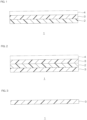
FIG. 1 is a cross-sectional view of one embodiment of an adhesive tape according to the present invention. -
FIG. 2 is a cross-sectional view of another embodiment of the adhesive tape. -
FIG. 3 is a cross-sectional view of another embodiment of the adhesive tape. - The adhesive composition of the present invention contains a β-1,3-glucan derivative and a terpene-based resin.
- The β-1,3-glucan derivative is a base polymer in the adhesive composition. The β-1,3-glucan derivative is a partially acylated compound in which a part of a hydroxyl group in glucose in β-1,3-glucan is acylated with an acyl group. That is, the β-1,3-glucan derivative is an acyl compound in which an acyl group is incorporated into β-1,3-glucan (obtained by introducing an acyl group into β-1,3-glucan).
- The acyl group is represented by RCO-. Examples of R include a hydrocarbon group. Examples of the hydrocarbon group include an aliphatic hydrocarbon group, an alicyclic hydrocarbon group, and an aromatic hydrocarbon group, and preferably, an aliphatic hydrocarbon group is used.
- Examples of the aliphatic hydrocarbon group include a saturated aliphatic hydrocarbon group and an unsaturated aliphatic hydrocarbon group, and preferably, a saturated aliphatic hydrocarbon group, that is, an alkyl group is used. Examples of the alkyl group include a linear alkyl group and a branched alkyl group, and preferably, a linear alkyl group is used. The alkyl group has, for example, 3 or more carbon atoms, and for example, 18 or less carbon atoms. Examples of the linear alkyl group include propyl, butyl, pentyl, hexyl, heptyl, octyl, nonyl, decyl, undecyl, dodecyl, tridecyl, tetradecyl, pentadecyl, hexadecyl, heptadecyl, and octadecyl. As the unsaturated aliphatic hydrocarbon group, alkenyl groups having, for example, 3 or more carbon atoms, preferably, 5 or more carbon atoms, and for example, 18 or less carbon atoms are used. Examples of the alkenyl group include heptadecenyl.
- The aliphatic hydrocarbon group (alkyl group or alkenyl group) has preferably 6 or more carbon atoms, more preferably 8 or more carbon atoms, and preferably 14 or less carbon atoms. When the number of carbon atoms of the aliphatic hydrocarbon group exceeds the above-described lower limit, the adhesive strength can be sufficiently improved. When the number of carbon atoms of the aliphatic hydrocarbon group is less than the above-described upper limit, the adhesive strength can be sufficiently improved and the transparency is excellent.
- Specific examples of the acyl group include butanoyl (an example of RCO where R is C3H7), pentanoyl (an example of RCO where R is C4H9), hexanoyl (an example of RCO where R is C5H11), heptanoyl (an example of RCO where R is C6H13), octanoyl (an example of RCO where R is C7H15), nonanoyl (an example of RCO where R is C8H17), decanoyl (an example of RCO where R is C9H19), lauroyl (i.e., dodecanoyl) (an example of RCO where R is C11H23), myristoyl (i.e., tetradecanoyl) (an example of RCO where R is C13H27), palmitoyl (i.e., hexadecanoyl) (an example of RCO where R is C15H31), stearoyl (i.e., octadecanoyl) (an example of RCO where R is C17H35), oleoyl (an example of RCO where R is C17H33), and nonadecanoyl (an example of RCO where R is C18H37). Preferably, octanoyl, nonanoyl, decanoyl, lauroyl, myristoyl, and palmitoyl are used.
- Types, physical properties, and production methods of the β-1,3-glucan derivative are described in, for example,
Japanese Unexamined Patent Publication No. 2018-154723 - The proportion of the β-1,3-glucan derivative in the solid content of the adhesive composition is, for example, 50% by weight or more, preferably 60% by weight or more, more preferably 70% by weight or more, and for example, 99% by weight or less, preferably 90% by weight or less, more preferably 80% by weight or less.
- The β-1,3-glucan derivative is identified by 1H-NMR spectrum and FT-IR spectrum. Details of the identification is described in
Japanese Unexamined Patent Publication No. 2018-154723 - The terpene-based resin is a tackifier. That is, the terpene-based resin is a component that enhances adhesive strength of the adhesive composition. The adhesive composition of the present invention contains the terpene-based resin as a tackifier. The terpene-based resin can improve the adhesive strength of the adhesive composition and can prevent decrease in transparency.
- Examples of the terpene-based resin include terpene resin, hydride of terpene resin, aromatic modified terpene resin, phenolic modified terpene resin, and hydride of phenolic modified terpene resin. These can be used alone or in combination.
- As the terpene-based resin, preferably, at least one selected from the group consisting of terpene resin, hydride of terpene resin, and phenolic modified terpene resin is used in view of further enhancing adhesive strength and further enhancing transparency. As the terpene-based resin, more preferably, phenolic modified terpene resin, terpene resin, or hydride of terpene resin is used, even more preferably, terpene resin is used. The phenolic modified terpene resin may be referred to as a terpene-phenol resin.
- As the terpene-based resin, preferably, terpene resin and hydride of terpene resin are also used in view of a large proportion of reusable resources. Examples of the terpene resin include α-pinene polymer, β-pinene polymer, and dipentene polymer. The terpene resin may be referred to as a polyterpene resin.
- The amount of the terpene-based resin relative to 100 parts by weight of the β-1,3-glucan derivative is, for example, 5 parts by weight or more, preferably 10 parts by weight or more, and for example, 150 parts by weight or less, preferably 100 parts by weight or less, more preferably 80 parts by weight or less, even more preferably 60 parts by weight or less, particularly preferably 40 parts by weight or less. When the amount of the terpene-based resin relative to 100 parts by weight of the β-1,3-glucan derivative exceeds the above-described lower limit, an increase in the viscosity of a solution (to be described later) of the adhesive composition can be suppressed, which in turn can prevent an appearance defect of an adhesive layer (to be described later). When the amount of the terpene-based resin relative to 100 parts by weight of the β-1,3-glucan derivative is less than the above-described upper limit, it is possible to prevent bleed-out of the terpene-based resin from the adhesive layer in a high temperature environment, and in addition, the adhesive strength is further enhanced, and the transparency is further enhanced.
- As the terpene-based resin, commercially available products are used.
- The terpene-based resin in the adhesive composition is identified by 1H-NMR spectrum, FT-IR spectrum, gel permeation chromatography, and/or mass spectrometry.
- The adhesive composition may contain an additive at an appropriate ratio. Examples of the additive include other base polymers (acrylic resin), other tackifiers (rosin-based resin and petroleum-based resin), viscosity modifiers, leveling agents, plasticizers, fillers, stabilizers, preservative agents, and antioxidants.
- To produce the adhesive composition, the β-1,3-glucan derivative, the terpene-based resin, and as necessary, an additive are blended and mixed. Alternatively, the above-described components can also be dissolved in an organic solvent to prepare a solution containing the adhesive composition. The solution may be referred to as a "solution of the adhesive composition". The organic solvent includes a low polar solvent and a high polar solvent.
- Examples of the low polar solvent include an aromatic compound, an alicyclic compound, and a chain saturated hydrocarbon compound. Examples of the aromatic compound include toluene. Examples of the alicyclic compound include cyclohexane and methylcyclohexane. Examples of the chain saturated hydrocarbon compound include pentane, hexane, and heptane.
- Examples of the high polar solvent include ketone, ester, and alcohol. Examples of the ketone include methyl ethyl ketone. Examples of the ester include ethyl acetate. Examples of the alcohol include methanol and ethanol.
- These organic solvents can be used alone or in combination. Preferably, a low polar solvent is used alone, and a low polar solvent and a high polar solvent are used in combination.
- The β-1,3-glucan derivative and the terpene-based resin can also be dissolved in water using an emulsifier and/or a dispersant to prepare an aqueous dispersion containing the adhesive composition. The aqueous dispersion may be referred to as an "aqueous dispersion of the adhesive composition".
- The solid content in the solution of the adhesive composition or the aqueous dispersion of the adhesive composition is, for example, 1% by weight or more, preferably 10% by weight or more, and for example, 50% by weight or less, preferably 40% by weight or less.
- The β-1,3-glucan derivative and the terpene-based resin can also be mixed using a kneader or the like to prepare a hot-melt resin of the adhesive composition. The hot-melt resin of the adhesive composition may be simply referred to as a "hot-melt resin".
- As shown in
FIG. 1 , a surface of abase material sheet 2 is coated with the solution of the adhesive composition or the aqueous dispersion of the adhesive composition, and thereafter dried by heating to form anadhesive layer 3. Alternatively, theadhesive layer 3 is formed by hot-melt coating the surface of thebase material sheet 2 with the above-described hot-melt resin, and thereafter cooling the hot-melt resin. In this manner, anadhesive tape 1 having thebase material sheet 2 and theadhesive layer 3 can be produced. - Examples of a material of the
base material sheet 2 include resin. Examples of the resin include polyester. Thebase material sheet 2 has a thickness of 0.5 µm or more, and for example, 900 µm or less. - The
adhesive layer 3 has a thickness of, for example, 1 µm or more, and for example, 1000 µm or less. Theadhesive tape 1 has a thickness of, for example, 2 µm or more, and for example, 1100 µm or less. - Further, as shown in
FIG. 2 , theadhesive tape 1 can also include thebase material sheet 2, and theadhesive layers 3 disposed on front and back surfaces of thebase material sheet 2. - Alternatively, as shown in
FIG. 3 , a base material-less typeadhesive tape 1 including theadhesive layer 3 alone without using thebase material sheet 2 can also be obtained. Theadhesive tape 1 is formed from theadhesive layer 3 alone. - The adhesive strength of the
adhesive layer 3 to a stainless steel plate at 23°C and 50% RH is, for example, 1 N/20 mm or more, preferably 2 N/20 mm or more, more preferably 3 N/20 mm or more, and for example, 20 N/20 mm or less. A measurement method of the adhesive strength of theadhesive layer 3 to the stainless steel plate is described in detail in Example below. - The
adhesive layer 3 has a haze of, for example, 20% or less, preferably 10% or less, more preferably 5.0% or less, even more preferably 2.0% or less, particularly preferably 1.0% or less, most preferably 0.5% or less. A measurement method of the haze of theadhesive layer 3 is described in detail in Example below. A low haze means excellent transparency. When the haze of theadhesive layer 3 is less than the above-described upper limit, theadhesive layer 3 is suitably used for optical applications. The optical applications include, for example, transparent protective films. - The adhesive composition contains a terpene-based resin as an essential tackifier. Therefore, the adhesive composition and the adhesive tape have high adhesive strength and excellent transparency. For this reason, the adhesive composition and the adhesive tape are suitably used for optical applications including transparent protective films.
- In contrast to this, when the adhesive composition contains a rosin-based resin as an essential tackifier, the haze increases. Therefore, the transparency decreases. When the adhesive composition contains a petroleum-based resin as an essential tackifier, the adhesion is not sufficiently improved, and furthermore, the haze increases and the transparency decreases.
- In the modified example, the same reference numerals are provided for members and steps corresponding to each of those in one embodiment, and their detailed description is omitted. Further, the modified example can achieve the same function and effect as that of one embodiment unless otherwise specified. Furthermore, one embodiment and the modified examples thereof can be appropriately used in combination.
- As shown in phantom lines in
FIGS. 1 and 2 , theadhesive tape 1 of the modified example further includes arelease sheet 4 disposed on the surface of theadhesive layer 3. Example - Specific numerical values such as blending ratios (content), physical property values, and parameters used in the following description can be replaced with the upper limit value (numeral values defined with "or less" or "less than") or the lower limit value (numeral values defined with "or more" or "more than") of the corresponding blending ratios (content), physical property values, and parameters described in the above-mentioned "DESCRIPTION OF THE EMBODIMENTS". The "parts" and "%" are based on weight unless otherwise specified in the following description.
- To a reaction vessel equipped with a condenser tube, a nitrogen inlet tube, a thermometer, and a stirrer, 13.3 g of β-1,3-glucan (Euglena Co., Ltd.: 82.03 mmol of glucose part) and 1000 mL of dehydrated pyridine (FUJIFILM Wako Pure Chemical Corporation) were added, and the mixture was stirred for 0.5 hours at a temperature of 92°C under a nitrogen atmosphere. To the obtained pyridine solution, 133.05 mL of myristoyl chloride (492.2 mmol: FUJIFILM Wako Pure Chemical Corporation) was added, and the mixture was heated to 92°C and then stirred for 1 hour. In this manner, a reaction mixture was prepared.
- Thereafter, a solid intermediate was obtained from the reaction mixture. First, 1 hour after the start of the reaction, 2000 mL of methanol was added to the reaction mixture and cooled to room temperature. Then, a solid thus formed was taken out and then dissolved in 600 mL of toluene to prepare a toluene solution. The toluene solution was poured into 2000 mL of methanol under stirring to give a solid. By repeating the process of dissolving the solid in toluene and pouring the toluene solution into
methanol 3 times, washing was performed to give a solid. The solid was dried at 60°C for 4 hours under reduced pressure. In this manner, a myristoylated β-1,3-glucan was obtained. That is, the myristoylated β-1,3-glucan was a β-1,3-glucan derivative obtained by introducing myristoyl into P-1,3-glucan. - In the same manner as in Synthesis Example 1, a palmitoylated β-1,3-glucan was obtained. However, 133.05 mL (492.2 mmol) of myristoyl chloride was changed to 150.21 mL of palmitoyl chloride (492.2 mmol: FUJIFILM Wako Pure Chemical Corporation). That is, the palmitoylated β-1,3-glucan was a β-1,3-glucan derivative obtained by introducing palmitoyl into β-1,3-glucan.
- In the same manner as in Synthesis Example 1, a lauroylated β-1,3-glucan was obtained. However, 133.05 mL (492.2 mmol) of myristoyl chloride was changed to 113.81 mL of lauroyl chloride (492.2 mmol: FUJIFILM Wako Pure Chemical Corporation). That is, the lauroylated β-1,3-glucan was a β-1,3-glucan derivative obtained by introducing lauroyl into β-1,3-glucan.
- In the same manner as in Synthesis Example 1, an octanoylated β-1,3-glucan was obtained. However, 133.05 mL (492.2 mmol) of myristoyl chloride was changed to 84.18 mL of octanoyl chloride (492.2 mmol: FUJIFILM Wako Pure Chemical Corporation). That is, the octanoylated β-1,3-glucan was a β-1,3-glucan derivative obtained by introducing octanoyl into β-1,3-glucan.
- In the same manner as in Synthesis Example 1, a butanoylated β-1,3-glucan was obtained. However, 133.05 mL (492.2 mmol) of myristoyl chloride was changed to 50.98 mL of butanoyl chloride (492.2 mmol: FUJIFILM Wako Pure Chemical Corporation). That is, the butanoylated β-1,3-glucan was a β-1,3-glucan derivative obtained by introducing butanoyl into β-1,3-glucan.
- In the same manner as in Synthesis Example 1, an oleoylated β-1,3-glucan was obtained. However, 133.05 mL (492.2 mmol) of myristoyl chloride was changed to 162.38 mL of oleoyl chloride (492.2 mmol: FUJIFILM Wako Pure Chemical Corporation). That is, the oleoylated β-1,3-glucan was a β-1,3-glucan derivative obtained by introducing oleoyl into β-1,3-glucan.
- A toluene solution (solids concentration of 10% by weight) of myristoylated β-1,3-glucan was prepared.
- Separately, a toluene solution (solids concentration of 50% by weight) of YS RESIN TO-125 (Yasuhara Chemical Co., Ltd., aromatic modified terpene resin), which is a terpene-based resin, was prepared.
- Then, the toluene solution of myristoylated β-1,3-glucan and the toluene solution of YS RESIN TO-125 were blended so that the YS RESIN TO-125 amounted to 30 parts by weight relative to 100 parts by weight of the myristoylated β-1,3-glucan, and the mixture was then stirred. In this manner, a toluene solution of an adhesive composition was obtained.
- The toluene solution of the adhesive composition was applied to a surface of a polyester base material (Toray Industries, Inc.: Lumirror S-10, thickness 25 µm) as a
base material sheet 2 using an applicator (Tester Sangyo Co., Ltd.), and dried at 50°C for 5 minutes and then at 120°C for 5 minutes. In this manner, anadhesive tape 1 including thebase material sheet 2 and anadhesive layer 3 having a thickness of 50 µm was produced. - The adhesive composition and the
adhesive tape 1 were produced in the same manner as in Example 1. However, the type of the tackifier was changed as follows. The changes are also shown in Table 1. - In Example 2, YS POLYSTER T-130 (Yasuhara Chemical Co., Ltd., phenolic modified terpene resin) was used in place of YS RESIN TO-125 (aromatic modified terpene resin).
- In Example 3, YS RESIN PX-1250 (Yasuhara Chemical Co., Ltd., terpene resin) was used in place of YS RESIN TO-125 (aromatic modified terpene resin).
- In Example 4, YS RESIN P-130 (Yasuhara Chemical Co., Ltd., hydride of terpene resin) was used in place of YS RESIN TO-125 (aromatic modified terpene resin).
- In Comparative Example 1, SUPER ESTER A-125 (Arakawa Chemical Industries, rosin-based resin) was used in place of YS RESIN TO-125 (aromatic modified terpene resin).
- In Comparative Example 2, ARKON M-135 (Arakawa Chemical Industries, petroleum-based resin) was used in place of YS RESIN TO-125 (aromatic modified terpene resin).
- The adhesive composition and the
adhesive tape 1 were produced in the same manner as in Example 3. However, the type of carbon atom in the R (aliphatic hydrocarbon group) of the acyl (RCO) introduced into the β-1,3-glucan derivative was changed as follows. The changes are also shown in Table 2. - In Example 5, butanoylated β-1,3-glucan (RCO where R (aliphatic hydrocarbon group) has 3 carbon atoms) was used in place of the myristoylated β-1,3-glucan (RCO where R (aliphatic hydrocarbon group) has 13 carbon atoms).
- In Example 6, octanoylated β-1,3-glucan (RCO where R (aliphatic hydrocarbon group) has 7 carbon atoms) was used in place of the myristoylated β-1,3-glucan (RCO where R (aliphatic hydrocarbon group) has 13 carbon atoms).
- In Example 7, lauroylated β-1,3-glucan (RCO where R (aliphatic hydrocarbon group) has 11 carbon atoms) was used in place of the myristoylated β-1,3-glucan (RCO where R (aliphatic hydrocarbon group) has 13 carbon atoms).
- In Example 8, palmitoylated β-1,3-glucan (RCO where R (aliphatic hydrocarbon group) has 15 carbon atoms) was used in place of the myristoylated β-1,3-glucan (RCO where R (aliphatic hydrocarbon group) has 13 carbon atoms).
- In Example 9, oleoylated β-1,3-glucan (RCO where R (aliphatic hydrocarbon group) has 17 carbon atoms) was used in place of the myristoylated β-1,3-glucan (RCO where R (aliphatic hydrocarbon group) has 13 carbon atoms).
- The adhesive composition and the
adhesive tape 1 were produced in the same manner as in Example 3. However, the amount of the YS RESIN PX-1250 relative to 100 parts by weight of the myristoylated β-1,3-glucan was changed as follows. The changes are also shown in Table 3. - In Example 10, the amount of the YS RESIN PX-1250 relative to 100 parts by weight of the myristoylated β-1,3-glucan was changed from 30 parts by weight to 5 parts by weight.
- In Example 11, the amount of the YS RESIN PX-1250 relative to 100 parts by weight of the myristoylated β-1,3-glucan was changed from 30 parts by weight to 10 parts by weight.
- In Example 12, the amount of the YS RESIN PX-1250 relative to 100 parts by weight of the myristoylated β-1,3-glucan was changed from 30 parts by weight to 50 parts by weight.
- In Example 13, the amount of the YS RESIN PX-1250 relative to 100 parts by weight of the myristoylated β-1,3-glucan was changed from 30 parts by weight to 70 parts by weight.
- In Example 14, the amount of the YS RESIN PX-1250 relative to 100 parts by weight of the myristoylated β-1,3-glucan was changed from 30 parts by weight to 90 parts by weight.
- In Example 15, the amount of the YS RESIN PX-1250 relative to 100 parts by weight of the myristoylated β-1,3-glucan was changed from 30 parts by weight to 120 parts by weight.
- In Example 16, the amount of the YS RESIN PX-1250 relative to 100 parts by weight of the myristoylated β-1,3-glucan was changed from 30 parts by weight to 150 parts by weight.
- The adhesive layers of Examples and Comparative Examples were evaluated with respect to the following items. The results are shown in Tables 1 to 3. The results of Example 3 were given in Tables 1 to 3 for easy comparison to those of the other Examples.
- The
adhesive tape 1 was cut into a size of 20 mm wide and 70 mm long to produce a sample. - The
adhesive layer 3 of the sample was pressure-bonded to a stainless steel plate by reciprocating a 2 kg roller in an environment of 23°C and 50% RH. Further, the sample was allowed to stand for 30 minutes in the same environment. Thereafter, the "adhesive strength" was obtained by measuring a peel force (N/20 mm) when the sample was peeled off at a peel rate of 300 mm/min and a peel angle of 180° using a universal tensile testing machine, Autograph AG-IS (Shimadzu Corporation). The adhesive strength was measured in an environment of 23°C and 50% RH. - The
adhesive tape 1 was cut into a size of 50 mm wide and 50 mm long to prepare a sample. - Using a haze meter "HM150" manufactured by Murakami Color Research Laboratory, a haze value (H1) of the sample was measured in accordance with JIS K 7136 (2000).
- Separately, only the
base material sheet 2 was cut into a size of 50 mm × 50 mm, and a haze value (H2) was measured by the same method as above. - Thereafter, a haze value (H3) of the
adhesive layer 3 was determined by the following formula:
-
TABLE 1 Example 1 Example 2 Example 3 Example 4 Comparative Example 1 Comparative Example 2 β-1,3-glucan derivative No. of carbon atoms in R of RCO (acyl group) 13 13 13 13 13 13 Tackifier Type Terpene-based resin Terpene-based resin Terpene-based resin Terpene-based resin Rosin-based resin Petroleum-based resin Aromatic modified terpene resin Phenolic modified terpene resin Terpene resin Hydride of terpene resin YS RESIN TO-125 YS RESIN TO-130 YS RESIN PX-1250 YS RESIN P-130 SUPER ESTER A-125 ARKON M-135 Amount (parts by weight) relative to 100 parts by weight of β-1,3-glucan derivative 30 30 30 30 30 30 Evaluation Adhesive strength to stainless steel plate (N/20 mm) 2.9 3.2 3.3 3.3 2.8 2.5 Haze (H3) of adhesive layer (%) 0.2 0.0 0.0 0.6 28 43 -
TABLE 2 Example 5 Example 6 Example 7 Example 1 Example 8 Example 9 P-1,3-glucan derivative No. of carbon atoms in R of RCO (acyl group) 3 7 11 13 15 17 Tackifier Type Terpene-based resin Terpene-based resin Terpene-based resin Terpene-based resin Terpene-based resin Terpene-based resin Terpene resin Terpene resin Terpene resin Aromatic modified terpene resin Terpene resin Terpene resin YS RESIN PX-1250 YS RESIN PX-1250 YS RESIN PX-1250 YS RESIN TO-125 YS RESIN PX-1250 YS RESIN PX-1250 Amount (parts by weight) relative to 100 parts by weight of β-1,3-glucan derivative 30 30 30 30 30 30 Evaluation Adhesive strength to stainless steel plate (N/20 mm) 0.03 1.5 4.7 2.9 1.8 0.6 Haze (H3) of adhesive layer (%) 76.8 0.1 0.3 0.2 4.5 66.2 -
TABLE3 Example 10 Example 11 Example 3 Example 12 Example 13 Example 14 Example 15 Example 16 β-1,3-glucan derivative No. of carbon atoms in R of RCO (acyl group) 13 13 13 13 13 13 13 13 Tackifier Type Terpene-based resin Terpene-based resin Terpene-based resin Terpene-based resin Terpene-based resin Terpene-based resin Terpene-based resin Terpene-based resin Terpene resin Terpene resin Terpene resin Terpene resin Terpene resin Terpene resin Terpene resin Terpene resin YS RESIN PX-1250 YS RESIN PX-1250 YS RESIN PX-1250 YS RESIN PX-1250 YS RESIN PX-1250 YS RESIN PX-1250 YS RESIN PX-1250 YS RESIN PX-1250 Amount (parts by weight) relative to 100 parts by weight of β-1,3-glucan derivative 5 10 30 50 70 90 120 150 Evaluation Adhesive strength to stainless steel plate (N/20 mm) 1.4 2.8 3.3 5.0 7.7 9.2 0.4 0.04 Haze (H3) of adhesive layer (%) 0.2 0.2 0.0 0.1 0.7 1.0 2.1 3.3 - While the illustrative embodiments of the present invention are provided in the above description, such is for illustrative purpose only and it is not to be construed restrictively. Modification and variation of the present invention that will be obvious to those skilled in the art is to be covered by the following claims.
- The adhesive composition is used as a material for an adhesive layer of an adhesive tape.
-
- 1
- adhesive tape
- 3
- adhesive layer
Claims (5)
- An adhesive composition, comprisinga β-1,3-glucan derivative in which an acyl group is incorporated into β-1,3-glucan; anda terpene-based resin.
- The adhesive composition according to claim 1, wherein the terpene-based resin is at least one selected from the group consisting of terpene resin, hydride of terpene resin, and phenolic modified terpene resin.
- The adhesive composition according to claim 1 or 2, whereinthe acyl group is represented by RCO-,where R is an aliphatic hydrocarbon group having 8 or more and 14 or less carbon atoms.
- The adhesive composition according to any one of claims 1 to 3, wherein an amount of the terpene-based resin relative to 100 parts by weight of the β-1,3-glucan derivative is 10 parts by weight or more and 100 parts by weight or less.
- An adhesive tape, comprising an adhesive layer made of an adhesive composition according to any one of claims 1 to 4.
Applications Claiming Priority (2)
| Application Number | Priority Date | Filing Date | Title |
|---|---|---|---|
| JP2020199264 | 2020-12-01 | ||
| PCT/JP2021/042591 WO2022118676A1 (en) | 2020-12-01 | 2021-11-19 | Adhesive composition and adhesive tape |
Publications (2)
| Publication Number | Publication Date |
|---|---|
| EP4257649A1 true EP4257649A1 (en) | 2023-10-11 |
| EP4257649A4 EP4257649A4 (en) | 2024-10-23 |
Family
ID=81855007
Family Applications (1)
| Application Number | Title | Priority Date | Filing Date |
|---|---|---|---|
| EP21900431.4A Withdrawn EP4257649A4 (en) | 2020-12-01 | 2021-11-19 | ADHESIVE COMPOSITION AND ADHESIVE TAPE |
Country Status (5)
| Country | Link |
|---|---|
| US (1) | US20240010883A1 (en) |
| EP (1) | EP4257649A4 (en) |
| JP (1) | JPWO2022118676A1 (en) |
| CN (1) | CN116529335A (en) |
| WO (1) | WO2022118676A1 (en) |
Families Citing this family (1)
| Publication number | Priority date | Publication date | Assignee | Title |
|---|---|---|---|---|
| EP4303260A4 (en) * | 2021-03-01 | 2025-03-05 | Nitto Denko Corporation | FILM AND ADHESIVE TAPE |
Family Cites Families (10)
| Publication number | Priority date | Publication date | Assignee | Title |
|---|---|---|---|---|
| DE10344126A1 (en) * | 2003-09-24 | 2005-04-21 | Henkel Kgaa | Water soluble hot melt adhesive |
| JP4592326B2 (en) * | 2004-04-28 | 2010-12-01 | 久光製薬株式会社 | Patch |
| JP2013032450A (en) * | 2011-08-02 | 2013-02-14 | Kaneka Corp | Pressure-sensitive adhesive composition |
| JP2013194108A (en) * | 2012-03-19 | 2013-09-30 | Toyo Ink Sc Holdings Co Ltd | Pressure-sensitive adhesive and laminate |
| CN105121578B (en) * | 2013-03-05 | 2018-03-09 | 日东电工株式会社 | Adhesive layer, adhesive tape, and double-sided adhesive tape |
| CN104130434B (en) * | 2013-05-02 | 2018-01-12 | 3M创新有限公司 | Bearing hydrocolloid dressing and preparation method thereof |
| BR112015029180B8 (en) * | 2013-05-23 | 2022-04-19 | Bostik Inc | Hot melt adhesive for use on porous substrates |
| CA2958582A1 (en) * | 2014-08-20 | 2016-02-25 | Kuraray Co., Ltd. | Acrylic pressure-sensitive adhesive compositions and pressure-sensitive adhesive products |
| JP6890316B2 (en) * | 2017-03-17 | 2021-06-18 | 国立研究開発法人産業技術総合研究所 | Adhesives and adhesives |
| JP6614383B1 (en) * | 2019-04-18 | 2019-12-04 | 東洋インキScホールディングス株式会社 | Solvent type adhesive composition and adhesive sheet |
-
2021
- 2021-11-19 EP EP21900431.4A patent/EP4257649A4/en not_active Withdrawn
- 2021-11-19 JP JP2022566838A patent/JPWO2022118676A1/ja active Pending
- 2021-11-19 WO PCT/JP2021/042591 patent/WO2022118676A1/en not_active Ceased
- 2021-11-19 CN CN202180080641.0A patent/CN116529335A/en active Pending
- 2021-11-19 US US18/039,562 patent/US20240010883A1/en active Pending
Also Published As
| Publication number | Publication date |
|---|---|
| US20240010883A1 (en) | 2024-01-11 |
| EP4257649A4 (en) | 2024-10-23 |
| JPWO2022118676A1 (en) | 2022-06-09 |
| CN116529335A (en) | 2023-08-01 |
| WO2022118676A1 (en) | 2022-06-09 |
Similar Documents
| Publication | Publication Date | Title |
|---|---|---|
| DE60117287T2 (en) | NETWORKED ADHESIVE ADHESIVE COMPOSITIONS AND ADHESIVE ARTICLES USED THEREOF FOR HIGH-TEMPERATURE APPLICATIONS | |
| DE602004000408T2 (en) | Pressure-sensitive adhesive and pressure-sensitive adhesive product | |
| EP4257651A1 (en) | Adhesive composition and adhesive tape | |
| EP3922693A1 (en) | Pressure-sensitive adhesive sheet | |
| EP3417005B1 (en) | Adhesive compound in particular for curved surfaces | |
| EP4257649A1 (en) | Adhesive composition and adhesive tape | |
| EP4349931A1 (en) | Pressure-sensitive adhesive composition and pressure-sensitive adhesive tape | |
| EP4105276A1 (en) | Polyrotaxane, polymer composition, cross-linked polymer composition, and method for producing cross-linked polymer composition | |
| EP3584278A1 (en) | Self-adsorbable foamed laminate sheet and composition for self-adsorbable foamed sheet | |
| EP4253493A1 (en) | Adhesive tape for adhering to lacquers | |
| CN110204805A (en) | A kind of resistance to ozone low pressure becomes nitrile rubber and preparation method thereof | |
| EP4257650A1 (en) | Adhesive composition and adhesive tape | |
| EP4303261A1 (en) | Adhesive sheet | |
| US20250320385A1 (en) | PRESSURE-SENSITIVE ADHESIVE COMPOSITION, PRESSURE-SENSITIVE ADHESIVE SHEET, LAMINATE, AND METHOD FOR PRODUCING ß-1,3-GLUCAN DERIVATIVE | |
| KR101622751B1 (en) | Resin composition comprising polyalkyene carbonate and self adhesive film produced therefrom | |
| US20250326953A1 (en) | Pressure-sensitive adhesive composition, pressure-sensitive adhesive sheet, laminate, and glucan derivative | |
| EP4296327A1 (en) | Adhesive composition and adhesive tape | |
| EP4303260A1 (en) | Film and adhesive tape | |
| WO2023248726A1 (en) | ADHESIVE COMPOSITION, ADHESIVE SHEET, MULTILAYER BODY, AND METHOD FOR PRODUCING β-1,3-GLUCAN DERIVATIVE | |
| Tahir et al. | Introduction of various functionalities into polysaccharides using alkynyl ethers as precursors: Pentynyl dextrans | |
| JP2022133222A (en) | Adhesive sheet | |
| CN117015583A (en) | Films and adhesive tapes | |
| CN116917428A (en) | Adhesive sheet | |
| EP4269396A1 (en) | Compound, corrosion inhibitor, and lubricant composition | |
| RU1794064C (en) | Protective coating for glass |
Legal Events
| Date | Code | Title | Description |
|---|---|---|---|
| STAA | Information on the status of an ep patent application or granted ep patent |
Free format text: STATUS: THE INTERNATIONAL PUBLICATION HAS BEEN MADE |
|
| PUAI | Public reference made under article 153(3) epc to a published international application that has entered the european phase |
Free format text: ORIGINAL CODE: 0009012 |
|
| STAA | Information on the status of an ep patent application or granted ep patent |
Free format text: STATUS: REQUEST FOR EXAMINATION WAS MADE |
|
| 17P | Request for examination filed |
Effective date: 20230601 |
|
| AK | Designated contracting states |
Kind code of ref document: A1 Designated state(s): AL AT BE BG CH CY CZ DE DK EE ES FI FR GB GR HR HU IE IS IT LI LT LU LV MC MK MT NL NO PL PT RO RS SE SI SK SM TR |
|
| DAV | Request for validation of the european patent (deleted) | ||
| DAX | Request for extension of the european patent (deleted) | ||
| A4 | Supplementary search report drawn up and despatched |
Effective date: 20240920 |
|
| RIC1 | Information provided on ipc code assigned before grant |
Ipc: C09J 193/00 20060101ALI20240916BHEP Ipc: C09J 7/30 20180101ALI20240916BHEP Ipc: C08B 37/00 20060101ALI20240916BHEP Ipc: C09J 7/38 20180101ALI20240916BHEP Ipc: C09J 105/00 20060101ALI20240916BHEP Ipc: C09J 11/08 20060101AFI20240916BHEP |
|
| STAA | Information on the status of an ep patent application or granted ep patent |
Free format text: STATUS: THE APPLICATION HAS BEEN WITHDRAWN |
|
| 18W | Application withdrawn |
Effective date: 20250313 |