EP4254533A1 - Calendering roll press for manufacturing dry electrodes - Google Patents
Calendering roll press for manufacturing dry electrodes Download PDFInfo
- Publication number
- EP4254533A1 EP4254533A1 EP22901571.4A EP22901571A EP4254533A1 EP 4254533 A1 EP4254533 A1 EP 4254533A1 EP 22901571 A EP22901571 A EP 22901571A EP 4254533 A1 EP4254533 A1 EP 4254533A1
- Authority
- EP
- European Patent Office
- Prior art keywords
- roller
- center
- wheel drive
- motor
- drive shafts
- Prior art date
- Legal status (The legal status is an assumption and is not a legal conclusion. Google has not performed a legal analysis and makes no representation as to the accuracy of the status listed.)
- Granted
Links
Images

Classifications
-
- B—PERFORMING OPERATIONS; TRANSPORTING
- B30—PRESSES
- B30B—PRESSES IN GENERAL
- B30B3/00—Presses characterised by the use of rotary pressing members, e.g. rollers, rings, discs
- B30B3/005—Roll constructions
-
- B—PERFORMING OPERATIONS; TRANSPORTING
- B30—PRESSES
- B30B—PRESSES IN GENERAL
- B30B9/00—Presses specially adapted for particular purposes
- B30B9/28—Presses specially adapted for particular purposes for forming shaped articles
-
- B—PERFORMING OPERATIONS; TRANSPORTING
- B30—PRESSES
- B30B—PRESSES IN GENERAL
- B30B11/00—Presses specially adapted for forming shaped articles from material in particulate or plastic state, e.g. briquetting presses, tabletting presses
- B30B11/005—Control arrangements
- B30B11/006—Control arrangements for roller presses
-
- B—PERFORMING OPERATIONS; TRANSPORTING
- B30—PRESSES
- B30B—PRESSES IN GENERAL
- B30B11/00—Presses specially adapted for forming shaped articles from material in particulate or plastic state, e.g. briquetting presses, tabletting presses
- B30B11/007—Presses specially adapted for forming shaped articles from material in particulate or plastic state, e.g. briquetting presses, tabletting presses using a plurality of pressing members working in different directions
-
- B—PERFORMING OPERATIONS; TRANSPORTING
- B30—PRESSES
- B30B—PRESSES IN GENERAL
- B30B15/00—Details of, or accessories for, presses; Auxiliary measures in connection with pressing
- B30B15/26—Program-control arrangements
-
- B—PERFORMING OPERATIONS; TRANSPORTING
- B30—PRESSES
- B30B—PRESSES IN GENERAL
- B30B3/00—Presses characterised by the use of rotary pressing members, e.g. rollers, rings, discs
- B30B3/04—Presses characterised by the use of rotary pressing members, e.g. rollers, rings, discs co-operating with one another, e.g. with co-operating cones
-
- H—ELECTRICITY
- H01—ELECTRIC ELEMENTS
- H01M—PROCESSES OR MEANS, e.g. BATTERIES, FOR THE DIRECT CONVERSION OF CHEMICAL ENERGY INTO ELECTRICAL ENERGY
- H01M10/00—Secondary cells; Manufacture thereof
- H01M10/05—Accumulators with non-aqueous electrolyte
- H01M10/058—Construction or manufacture
-
- H—ELECTRICITY
- H01—ELECTRIC ELEMENTS
- H01M—PROCESSES OR MEANS, e.g. BATTERIES, FOR THE DIRECT CONVERSION OF CHEMICAL ENERGY INTO ELECTRICAL ENERGY
- H01M4/00—Electrodes
- H01M4/02—Electrodes composed of, or comprising, active material
- H01M4/04—Processes of manufacture in general
- H01M4/043—Processes of manufacture in general involving compressing or compaction
- H01M4/0435—Rolling or calendering
-
- H—ELECTRICITY
- H01—ELECTRIC ELEMENTS
- H01M—PROCESSES OR MEANS, e.g. BATTERIES, FOR THE DIRECT CONVERSION OF CHEMICAL ENERGY INTO ELECTRICAL ENERGY
- H01M10/00—Secondary cells; Manufacture thereof
- H01M10/04—Construction or manufacture in general
- H01M10/0404—Machines for assembling batteries
-
- H—ELECTRICITY
- H01—ELECTRIC ELEMENTS
- H01M—PROCESSES OR MEANS, e.g. BATTERIES, FOR THE DIRECT CONVERSION OF CHEMICAL ENERGY INTO ELECTRICAL ENERGY
- H01M10/00—Secondary cells; Manufacture thereof
- H01M10/05—Accumulators with non-aqueous electrolyte
- H01M10/052—Li-accumulators
- H01M10/0525—Rocking-chair batteries, i.e. batteries with lithium insertion or intercalation in both electrodes; Lithium-ion batteries
-
- Y—GENERAL TAGGING OF NEW TECHNOLOGICAL DEVELOPMENTS; GENERAL TAGGING OF CROSS-SECTIONAL TECHNOLOGIES SPANNING OVER SEVERAL SECTIONS OF THE IPC; TECHNICAL SUBJECTS COVERED BY FORMER USPC CROSS-REFERENCE ART COLLECTIONS [XRACs] AND DIGESTS
- Y02—TECHNOLOGIES OR APPLICATIONS FOR MITIGATION OR ADAPTATION AGAINST CLIMATE CHANGE
- Y02E—REDUCTION OF GREENHOUSE GAS [GHG] EMISSIONS, RELATED TO ENERGY GENERATION, TRANSMISSION OR DISTRIBUTION
- Y02E60/00—Enabling technologies; Technologies with a potential or indirect contribution to GHG emissions mitigation
- Y02E60/10—Energy storage using batteries
Definitions
- An aspect of the present invention relates to a calendering roll press machine for manufacturing a dry electrode.
- an aspect of the present invention relates to a calendering roll machine for manufacturing a dry electrode in which a calendering crown roll is separated into a plurality of parts and has each part rotating independently.
- an aspect of the present invention relates to a calendering roll machine for manufacturing a dry electrode, which can make the quality of a dry electrode sheet uniform by differently adjusting the angular velocity of each part of a crown roll.
- secondary batteries are drawing attention not only as a power source for mobile devices such as mobile phones, smartphones, laptops, and camcorders, but also as a power source for electric vehicles and hybrid electric vehicles that are suggested as measures to solve air pollution caused by conventional gasoline vehicles and diesel vehicles that use fossil fuels.
- Such secondary battery can be classified into a lithium-ion battery, a lithium-ion polymer battery, a lithium polymer battery, etc. depending on the composition of an electrode and electrolyte, and the usage of the lithium-ion polymer battery, which is easy to be manufactured and is less likely to have electrolyte leakage, has been increasing.
- a secondary battery can be classified into a cylindrical battery and a prismatic battery each having an electrode assembly embedded into a cylindrical or a prismatic metal can, and a pouch-type battery electrode assembly embedded into a pouch-type case with an aluminum laminated sheet.
- the electrode assembly embedded into the battery case is capable of charging and discharging by being composed of a cathode, an anode, and a separation membrane interposed between the cathode and the anode, and may be classified as a jelly-roll type that is wrapped after interposing a separation membrane between a long sheet-type cathode and anode coated with an active material, and a stack type that sequentially stacks a plurality of cathodes and anodes with a predetermined size interposed onto the separation membrane.
- electric vehicles, etc. use a high-power electrical energy, they require a plurality of battery modules, and these battery modules have a plurality of battery cells connected in series or parallel on the inside.
- an electrode has been commonly manufactured through a wet electrode process in which a solvent of the slurry is removed through a drying process after applying an electrode active material, a binder, and a conductive material on a current collector.
- the wet electrode process as described above has been difficult to improve in productivity due to an increase in manufacturing cost, since energy is required to remove the solvent from the slurry applied to the current collector.
- the dry electrode process is prepared by mixing an electrode active material, a binder, and a conductive material without a liquid medium such as a solvent or a dispersion medium, and the powder mixture is made into a dry electrode sheet through a calendering process, and the electrode is manufactured by laminating the prepared dry electrode sheet to the current collector.
- Such dry electrode process increases energy density compared to the conventional wet electrode process, and the lifespan is doubled or more compared to the existing wet electrode process by having an improve in charge and discharge characteristics, and the drying process required in the existing wet electrode process is not required, so it has an advantage of not requiring a drying room and the corresponding space for the drying process as well as the cost of drying energy.
- the calendering process of manufacturing the dry electrode sheet proceeds through a calendering roll press in which a plurality of calendering crown rolls are arranged adjacently in multilevel, and proceeds a process of stretching a dry electrode sheet inserted between each calendering crown roll arranged in multilevel.
- the dry electrode sheet is stretched by inserting and passing through the dry electrode sheet for manufacturing the electrode by laminating it with the current collector between the multilevel calendering crowns provided in plurality.
- the calendering roll press installs calendering crown rolls in multilevel, each calendering crown roll installed in multilevel rotates at different speeds, and the linear speed of each crown roll increases along the processing direction.
- the calendering roll has a bigger diameter at the center of the roll than both sides to which the roll drive shafts 103a, 103b are connected, and it has a gently convex curve shape in the longitudinal direction of the roll.
- a bank phenomenon occurs where the dry electrode sheet 201 inserted between the calendering crown rolls 101, 101', 101" cannot pass through the calendering rolls 101, 101', 101" and gets clumped together, thereby blocking the entrance.
- the occurrence frequency of this bank phenomenon increases as the diameter of the roll increases.
- An aspect of the present invention was made to solve the problems mentioned above, and it is directed to provide a calendering roll press for manufacturing a dry electrode capable of separating a single calendering crown roll into a plurality of parts, and that can control the angular speed of each part to be different by having each part that rotates independently.
- an aspect of the present invention is directed to provide a calendering roll press for manufacturing a dry electrode capable of inhibiting a bank phenomenon occurring at an entrance between crown rolls in a calendering process by setting the angular velocity of the center part of the crown roll to be lower than the angular velocity of the side part.
- an aspect of the present invention is directed to provide a calendering roll press for manufacturing a dry electrode capable of making the quality of dry electrode sheets uniform by differently adjusting the angular velocity of each part of the crown roll.
- the calendaring roll press for manufacturing a dry electrode includes: a calendaring crown roll including a center roller in which an inner wheel drive shaft protrudes in the longitudinal direction at the center of both sides surface, and a first side roller and a second side roller with inner surfaces facing with both sides surface of the center roller, respectively, the first side roller and the second side roller have hollow outer wheel drive shafts protruding from the center of their outer surfaces in the longitudinal direction through which the inner wheel drive shaft passes, and a motor that independently and rotatably drives the center roller, the first side roller and the second side roller.
- the center roller and each side roller rotate at different angular velocities.
- the angular velocity of the center roller is slower than the angular velocity of each side roller.
- the angular velocities of the first and second side rollers are equal to each other.
- the outer circumferential surfaces of the first side roller, the center roller, and the second side roller may have a continuous parabolic surface in which the center roller is convex.
- the inner wheel drive shaft of the center roller is longer than the outer wheel drive shafts of the first and second side rollers, so that inner wheel drive shaft is exposed to the outside of the outer wheel drive shaft.
- At least one or more bearings are provided between the inner periphery surface of the outer wheel drive shaft and the outer periphery surface of the inner wheel drive shaft.
- the bearing is any one of a ball bearing, a roller bearing, or a journal bearing.
- the motor includes a center motor connected to the center roller to rotate the center roller, and a side motor connected to the first sided roller and the second side roller to rotate each side roller.
- the inner wheel drive shaft provided on one side of the center roller rotates by being connected to the center motor
- each outer wheel drive shaft provided on the outer surface of the first and second side rollers rotates by being connected to each side motor.
- the inner wheel drive shaft rotates by being connected to a center sprocket provided on a shaft of a center motor by a chain
- each outer wheel drive shaft rotates independently by being connected by a chain to a side sprocket provided on a shaft of each side motor.
- the inner wheel drive shaft provided on one side of the center roller rotates by being connected to the center motor, and each outer wheel drive shaft provided on the outer surface of the first and second side rollers rotates together by being connected to a single side motor.
- the inner wheel drive shaft rotates by being connected to a center sprocket provided on a shaft of a center motor by a chain, and each outer wheel drive shaft is connected by a chain to each side sprocket provided on both sides of a single shaft extending to both sides of the single side motor and rotates together.
- a single calendering crown roll can be separated into a plurality of parts, and the angular velocity of each part can be controlled to be different by having each part rotate independently.
- a bank phenomenon occurring between crown rolls in the calendering process can be inhibited by setting the angular velocity of the center part of the crown roll to be lower than the angular velocity of the side part.
- Embodiments of the present invention in terms of a calendering roll press for manufacturing a dry electrode in which a plurality of calendering crown rolls are arranged to stretch a dry electrode sheet, provide a calendering roll press for manufacturing a dry electrode that includes: a calendaring crown roll including a center roller in which an inner wheel drive shaft protrudes in the longitudinal direction at the center of both sides surface, and a first side roller and a second side roller with inner surfaces facing both side surfaces of the center roller, respectively, the first side roller and the second side roller have hollow outer wheel drive shafts protruding from the center of their outer surfaces in the longitudinal direction through which the inner wheel drive shaft passes, and a motor that independently and rotatably drives the center roller, the first side roller and the second side roller
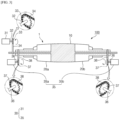
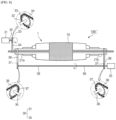
- FIG. 3 is a diagram schematically illustrating the calendering roll press according to an exemplary embodiment of the present invention.
- FIG. 4 is a side cross-sectional view schematically illustrating the calendering crown roll according to the present exemplary embodiment.
- the calendering roll press for manufacturing a dry electrode 100 is for stretching a dry electrode sheet (not shown) by passing it between a plurality of calendering crown rolls 1 installed.
- a calendering crown roll 1 including a center roller 10 and a first side roller 20a and a second side roller 20b provided on both sides of the center roller 10, and a motor 30 that rotates the center roller 10 and the first and second side rollers 20a, 20b.
- the calendering crown roll 1 includes a center roller 10 and a first side roller 20a and a second side roller 20b whose inner surfaces face each other on both sides of the center roller 10.
- the center roller 10 has an inner wheel drive shaft 11 protruding in the longitudinal direction at the center of both sides.
- the center roller 10 has a rod-shaped inner wheel drive shaft 11 protruding in the longitudinal direction of the center roller 10 at the center of both sides.
- the first side roller 20a and the second side roller 20b are respectively provided on both sides of the center roller 10.
- the inner surfaces of the first side roller 20a and the second side roller 20b face each other with respect to both sides of the center roller 10, and outer wheel drive shafts 21a, 21b protrude in the longitudinal direction from the center of the outer surface of the first side roller 20a and the second side roller 20b.
- outer wheel drive shafts 21a, 21b of the first side roller 20a and the second side roller 20b have a hollow shape so that the inner wheel drive shaft 11 of the center roller 10 can pass through.
- the inner surfaces of the first side roller 20a and the second side roller 20b face each other with respect to both sides of the center roller 10, and the inner wheel drive shaft 11 penetrates in the longitudinal direction of the outer wheel drive shafts 21a, 21b provided at the center of the outer surface of the first side roller 20a and the second side roller 20b, having the ends of the inner wheel drive shaft protruding outside the outer wheel drive shafts 21a, 21b.
- the outer circumferential surfaces of the first side roller 20a, the center roller 10, and the second side roller 20b have a continuous parabolic surface in which the center roller 10 is convex.
- first side roller 20a and the second side roller 20b are respectively installed on both sides of the center roller 10 in a form in which the hollow outer wheel drive shafts 21a, 21b each allow passage of the inner wheel drive shaft 11 protruding from the center of both sides of the center roller 10.
- the motor 30 is connected to the center roller 10, the first side roller 20a, and the second side roller 20b to independently rotate the center roller 10 and the first and second side rollers 20a, 20b.
- the motor 30 includes a center motor 31 connected to the center roller 10 to rotate the center roller 10, and a side motor 35 connected to the first side roller 20a and the second side roller 20b to rotate the first side roller 20a and the second side roller 20b.
- the side motor 35 may include a first side motor 35a connected to the first side roller 20a to rotate the first side roller 20a and a second side motor 35b connected to the second side roller 20b to rotate the second side roller 20b.
- the inner wheel drive shaft 11 provided on any one side of the inner wheel drive shaft 11 respectively provided on both sides of the center roller 10 rotates by being connected to the center motor 31, and each outer wheel drive shafts 21a, 21b provided on the outer surfaces of the first side roller 20a and the second side roller 20b rotates by being connected to the first side motor 35a and the second side motor 35b, respectively.
- the center roller 10 and each side rollers 20a, 20b rotate at different angular velocities. That is, the center roller 10 located at the center of the calendering crown roll 1 and each side rollers 20a, 20b provided on both sides of the center roller 10 are independent rollers that are structurally separated from each other, it is possible to rotate by varying the angular velocity of each rollers 10, 20a, 20b.
- the angular velocity of the center roller 10 of the calendering crown roll 1 is set to be slower than the angular velocity of each side roller 20a, 20b provided on both sides of the center roller 10.
- the angular velocities of the first side roller 20a and the second side roller 20b are set equal to each other.
- first side roller 20a and the second side roller 20b which are set to be faster than the angular velocity of the center roller 10 in the calendering crown roll 1, rotate at the same angular velocity.
- the calendering roll press 100 for manufacturing dry electrodes may further include a control unit (not shown), and the control unit can control the angular velocities of the center roller 10, the first side roller 20a, and the second side roller 20b by being electrically connected to the center motor 31, the first side motor 35a, and the second side motor 35a.
- the first side roller 20a and the second side roller 20b can be controlled to rotate at the same angular velocity.
- the angular velocities of the first side roller 20a and the second side roller 20b are set equal to each other, in some cases, it is also possible to more effectively inhibit the bank phenomenon that may occur between the calendering crown rolls 1 by setting the angular velocities of the first side roller 20a and the second side roller 20b to be different.
- each inner wheel drive shaft 11 of the center roller 10 is to be longer than the outer wheel drive shafts 21a, 21b of the first and second side rollers 20a, 20b, so that the ends of each inner wheel drive shaft 11 is exposed to the outside of the outer wheel drive shafts 21a, 21b.
- the inner wheel drive shaft 11 of the center roller 10 becomes connected to the center motor 31, and each outer wheel drive shaft 21a, 21b of the first and second side rollers 20a, 20b becomes connected to the first and second side motors 35a, 35b.
- the inner wheel drive shaft 11 rotates by being connected to the center sprocket 33 provided on the shaft 32 of the center motor 31 by a chain 34
- the first side roller 20a provided in the one side of the center roller 10 rotates by being connected to the side sprocket 37 provided on the shaft 36 of the first side motor 35a by a chain 38
- the second side roller 20b provided on the other side of the center roller 10 is connected to the side sprocket 37 provided on the shaft 36 of the second side motor 35b by a chain 38, so that all the rollers 10, 20a, 20b can rotate independently.
- the inner wheel drive shaft 11 and each outer wheel drive shaft 21a, 21b are made to rotate by being connected to the sprockets 33, 37 of each motor 31, 35a, 35b by a chain 34,38, but it is also possible for the inner wheel drive shaft 11 and each outer wheel drive shaft 21a, 21b to rotate by being connected with a belt, and other various power transmission mechanisms may be applied.
- At least one or more bearings 23 are provided between the inner periphery surface of the outer wheel drive shafts 21a, 21b and the outer periphery surface of the inner wheel drive shaft 11.
- a bearing 23 is provided between the outer wheel drive shafts 21a, 21b provided in a hollow shape in the first and second side rollers 20a, 20b and the inner wheel drive shaft 11 of the center roller 10 installed within the outer wheel drive shafts 21a, 21b.
- a plurality of bearings 23 may be provided around the inner wheel drive shaft 11 to correspond to its penetration length.
- the bearing 23 provided between the outer wheel drive shafts 21a, 21b and the inner wheel drive shaft 11, the inner wheel drive shaft 11 rotating within the hollow outer wheel drive shafts 21a, 21b can be stably supported, thereby the energy loss due to friction can be reduced.
- the bearing 23 may be made of any one of a ball bearing, a roller bearing, or a journal bearing.
- either a rolling bearing or a sliding bearing may be selected appropriately.
- a plurality of calendering crown rolls 1 composed of the center roller 10 and the first and second side rollers 20a, 20b are arranged so as to be adjacent to each other, and the dry electrode sheet is stretched while passing through a plurality of calendering crown rolls 1.
- the center roller 10, the first side roller 20a, and the second side roller 20b are rotated by driving the center motor 31 that rotates the center roller 10 and the first side motor 35a and the second side motor 35b that rotate the first side roller 20a and the second side roller 20b, respectively.
- the first side roller 20a and the second side roller 20b respectively provided on the center roller 10 and the sides of the center roller 10 are rotated independently.
- the angular velocity of the center roller 10 is set to be slower than the angular velocities of the first side roller 20a and the second side roller 20b respectively provided on both sides of the center roller 10.
- the embodiment of the present invention separates the calendering crown roll 1 into three parts: the center roller 10, the first side roller 20a, and the second side roller 20b; and varies the angular velocities between the separated center roller 10 and the first and second side rollers 20a, 20b. And by setting the angular velocities of the first side roller 20a and the second side roller 20b to equal each other and to be faster than the angular velocity of the center roller 10, the bank phenomenon, which occurs at the center part in contact with the center roller 10 whose diameter is bigger than both side parts of the dry electrode sheet in contact with the first and second side rollers 20a, 20b whose diameter is relatively small, may be prevented.
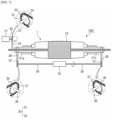
- FIG. 7 is a diagram schematically illustrating the calendering roll press according to another exemplary embodiment of the present invention.
- FIG. 8 is a diagram schematically illustrating another modified example of the calendering roll press according to the present exemplary embodiment.
- the calendering roll press 100' has the first side roller 20a and the second side roller 20b respectively provided on both sides of the center roller 10 rotate by being connected to a single side motor 35.
- each outer wheel drive shaft 21a, 21b of the first side roller 20a and the second side roller 20b rotates by being commonly connected to a single side motor 35.
- the inner wheel drive shaft 11 of the center motor 31 rotates by being connected to the center sprocket 33 provided on the shaft 32 of the center motor 31 by a chain 34, and each of outer wheel drive shaft 21a, 21b is connected by a chain 38 to each side sprocket 37 provided on both sides of a single shaft 36 extending to both sides of the single side motor 35 and rotates together.
- the first side roller 20a and the second side roller 20b connected to a single side motor 35 rotate at the same angular velocity, and unlike the first embodiment, by rotating the first side roller 20a and the second side roller 20b through a single side motor 35, the overall configuration is simplified and the equipment cost is reduced.
- the calendering roll press 100' has a single shaft 36 extending to both sides of the side motor 35, and a side sprocket 37 separately provided on both sides of the shaft 36 is rotatably connected to each side roller 20a, 20b by a chain 38, but as a modified example, the calendering roll press 100", as shown in FIG. 8 , has a single shaft extending only to one side of the side motor 35, and it is also possible for the side sprocket 37 to each be provided in the shaft 36 in equal spacings and be rotatably connected to each side rollers 20a, 20b by a chain 38.
Landscapes
- Engineering & Computer Science (AREA)
- Mechanical Engineering (AREA)
- Manufacturing & Machinery (AREA)
- Chemical & Material Sciences (AREA)
- Chemical Kinetics & Catalysis (AREA)
- Electrochemistry (AREA)
- General Chemical & Material Sciences (AREA)
- Casting Or Compression Moulding Of Plastics Or The Like (AREA)
- Battery Electrode And Active Subsutance (AREA)
Abstract
Description
- The present application is a national phase entry under 35 U.S.C. §371 of International Application No.
PCT/KR2022/015932 filed on October 19, 2022 Korean Patent Application No. 10-2021-0172100, filed on December 03, 2021 - An aspect of the present invention relates to a calendering roll press machine for manufacturing a dry electrode.
- More specifically, an aspect of the present invention relates to a calendering roll machine for manufacturing a dry electrode in which a calendering crown roll is separated into a plurality of parts and has each part rotating independently.
- In addition, an aspect of the present invention relates to a calendering roll machine for manufacturing a dry electrode, which can make the quality of a dry electrode sheet uniform by differently adjusting the angular velocity of each part of a crown roll.
- Recently, secondary batteries capable of charging and discharging are widely being used as a power source for wireless mobile devices.
- In addition, secondary batteries are drawing attention not only as a power source for mobile devices such as mobile phones, smartphones, laptops, and camcorders, but also as a power source for electric vehicles and hybrid electric vehicles that are suggested as measures to solve air pollution caused by conventional gasoline vehicles and diesel vehicles that use fossil fuels.
- Therefore, the kinds of application that use a secondary battery are being greatly diversified due to the advantages of the secondary battery, and the secondary battery is expected to be applied to various fields and appliances in the future than it is now.
- Such secondary battery can be classified into a lithium-ion battery, a lithium-ion polymer battery, a lithium polymer battery, etc. depending on the composition of an electrode and electrolyte, and the usage of the lithium-ion polymer battery, which is easy to be manufactured and is less likely to have electrolyte leakage, has been increasing.
- Generally, depending on the shape of the battery case, a secondary battery can be classified into a cylindrical battery and a prismatic battery each having an electrode assembly embedded into a cylindrical or a prismatic metal can, and a pouch-type battery electrode assembly embedded into a pouch-type case with an aluminum laminated sheet.
- Also, the electrode assembly embedded into the battery case is capable of charging and discharging by being composed of a cathode, an anode, and a separation membrane interposed between the cathode and the anode, and may be classified as a jelly-roll type that is wrapped after interposing a separation membrane between a long sheet-type cathode and anode coated with an active material, and a stack type that sequentially stacks a plurality of cathodes and anodes with a predetermined size interposed onto the separation membrane.
- Here, because electric vehicles, etc. use a high-power electrical energy, they require a plurality of battery modules, and these battery modules have a plurality of battery cells connected in series or parallel on the inside.
- Meanwhile, in the electrode process, an electrode has been commonly manufactured through a wet electrode process in which a solvent of the slurry is removed through a drying process after applying an electrode active material, a binder, and a conductive material on a current collector.
- The wet electrode process as described above has been difficult to improve in productivity due to an increase in manufacturing cost, since energy is required to remove the solvent from the slurry applied to the current collector.
- Therefore, a method of manufacturing an electrode through a dry electrode process without applying the slurry to the current collector is being proposed.
- The dry electrode process is prepared by mixing an electrode active material, a binder, and a conductive material without a liquid medium such as a solvent or a dispersion medium, and the powder mixture is made into a dry electrode sheet through a calendering process, and the electrode is manufactured by laminating the prepared dry electrode sheet to the current collector.
- Such dry electrode process increases energy density compared to the conventional wet electrode process, and the lifespan is doubled or more compared to the existing wet electrode process by having an improve in charge and discharge characteristics, and the drying process required in the existing wet electrode process is not required, so it has an advantage of not requiring a drying room and the corresponding space for the drying process as well as the cost of drying energy.
- Here, in the dry electrode process, the calendering process of manufacturing the dry electrode sheet proceeds through a calendering roll press in which a plurality of calendering crown rolls are arranged adjacently in multilevel, and proceeds a process of stretching a dry electrode sheet inserted between each calendering crown roll arranged in multilevel.
- That is, the dry electrode sheet is stretched by inserting and passing through the dry electrode sheet for manufacturing the electrode by laminating it with the current collector between the multilevel calendering crowns provided in plurality.
- Here, the calendering roll press installs calendering crown rolls in multilevel, each calendering crown roll installed in multilevel rotates at different speeds, and the linear speed of each crown roll increases along the processing direction.
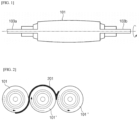
- As illustrated in
FIG. 1 , the calendering roll has a bigger diameter at the center of the roll than both sides to which theroll drive shafts - Accordingly, when the linear speed ratio of the crown roll and the crown roll adjacent to each other exceeds a specific value, there may be a high risk of a bank phenomenon in which the center of the dry electrode sheet, which is inserted into the center part that has a bigger roll diameter compared to the roll diameter of the side part of the roll, is unable to pass between the rolls and gets clogged.
- That is, as illustrated in
FIG. 2 , a bank phenomenon occurs where thedry electrode sheet 201 inserted between the calenderingcrown rolls calendering rolls - The occurrence frequency of this bank phenomenon increases as the diameter of the roll increases.
- As described above, when bank phenomenon occurs on the dry electrode sheet passing between the calendering crown rolls, there may be problems of having difficulty in producing a dry electrode sheet of uniform quality, and having the quality of the dry electrode sheet being deteriorated.
- An aspect of the present invention was made to solve the problems mentioned above, and it is directed to provide a calendering roll press for manufacturing a dry electrode capable of separating a single calendering crown roll into a plurality of parts, and that can control the angular speed of each part to be different by having each part that rotates independently.
- Also, an aspect of the present invention is directed to provide a calendering roll press for manufacturing a dry electrode capable of inhibiting a bank phenomenon occurring at an entrance between crown rolls in a calendering process by setting the angular velocity of the center part of the crown roll to be lower than the angular velocity of the side part.
- In addition, an aspect of the present invention is directed to provide a calendering roll press for manufacturing a dry electrode capable of making the quality of dry electrode sheets uniform by differently adjusting the angular velocity of each part of the crown roll.
- In order to solve the problems mentioned above, an aspect of the present invention, in terms of a calendering roll press for manufacturing a dry electrode in which a plurality of calendering crown rolls are arranged to stretch a dry electrode sheet, the calendaring roll press for manufacturing a dry electrode includes: a calendaring crown roll including a center roller in which an inner wheel drive shaft protrudes in the longitudinal direction at the center of both sides surface, and a first side roller and a second side roller with inner surfaces facing with both sides surface of the center roller, respectively, the first side roller and the second side roller have hollow outer wheel drive shafts protruding from the center of their outer surfaces in the longitudinal direction through which the inner wheel drive shaft passes, and a motor that independently and rotatably drives the center roller, the first side roller and the second side roller.
- As one example, the center roller and each side roller rotate at different angular velocities.
- As another example, the angular velocity of the center roller is slower than the angular velocity of each side roller.
- As another example, the angular velocities of the first and second side rollers are equal to each other.
- As a specific example, the outer circumferential surfaces of the first side roller, the center roller, and the second side roller may have a continuous parabolic surface in which the center roller is convex.
- As an example, the inner wheel drive shaft of the center roller is longer than the outer wheel drive shafts of the first and second side rollers, so that inner wheel drive shaft is exposed to the outside of the outer wheel drive shaft.
- As another example, at least one or more bearings are provided between the inner periphery surface of the outer wheel drive shaft and the outer periphery surface of the inner wheel drive shaft.
- As a specific example, the bearing is any one of a ball bearing, a roller bearing, or a journal bearing.
- As another specific example, the motor includes a center motor connected to the center roller to rotate the center roller, and a side motor connected to the first sided roller and the second side roller to rotate each side roller.
- As an example, the inner wheel drive shaft provided on one side of the center roller rotates by being connected to the center motor, and each outer wheel drive shaft provided on the outer surface of the first and second side rollers rotates by being connected to each side motor.
- As a specific example, the inner wheel drive shaft rotates by being connected to a center sprocket provided on a shaft of a center motor by a chain, and each outer wheel drive shaft rotates independently by being connected by a chain to a side sprocket provided on a shaft of each side motor.
- As another example, the inner wheel drive shaft provided on one side of the center roller rotates by being connected to the center motor, and each outer wheel drive shaft provided on the outer surface of the first and second side rollers rotates together by being connected to a single side motor.
- As a specific example, the inner wheel drive shaft rotates by being connected to a center sprocket provided on a shaft of a center motor by a chain, and each outer wheel drive shaft is connected by a chain to each side sprocket provided on both sides of a single shaft extending to both sides of the single side motor and rotates together.
- According to an aspect of the present invention, a single calendering crown roll can be separated into a plurality of parts, and the angular velocity of each part can be controlled to be different by having each part rotate independently.
- Also, a bank phenomenon occurring between crown rolls in the calendering process can be inhibited by setting the angular velocity of the center part of the crown roll to be lower than the angular velocity of the side part.
- In addition, it is possible to make the quality of the dry electrode sheet uniform by adjusting the angular velocity of each part of the crown roll to be different.
-
-
FIG. 1 is a side cross-sectional view schematically illustrating a calendering crown roll of a calendering roll press for manufacturing a dry electrode according to the conventional art. -
FIG. 2 is a diagram schematically illustrating the calendering process of a calendering roll press for manufacturing a dry electrode according to the conventional art. -
FIG. 3 is a diagram schematically illustrating the calendering roll press according to an exemplary embodiment of the present invention. -
FIG. 4 is a side cross-sectional view schematically illustrating the calendering crown roll according to the present exemplary embodiment. -
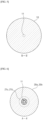
FIG. 5 is a cross-sectional view along line A-A' ofFIG. 4 . -
FIG. 6 is a cross sectional view along line B-B' ofFIG. 4 . -
FIG. 7 is a diagram schematically illustrating the calendering roll press according to another exemplary embodiment of the present invention. -
FIG. 8 is a diagram schematically illustrating another modified example of the calendering roll press according to the present exemplary embodiment. -
- 1: CALENDERING CROWN ROLL
- 10: CENTER ROLLER
- 11: INNER WHEEL DRIVE SHAFT
- 20a: FIRST SIDE ROLLER
- 20b: SECOND SIDE ROLLER
- 21a, 21b: OUTER WHEEL DRIVE SHAFT
- 23: BEARING
- 30: MOTOR
- 31: CENTER MOTOR
- 32: SHAFT
- 33: CENTER SPROCKET
- 34: CHAIN
- 35: SIDE MOTOR
- 35a: FIRST SIDE MOTOR
- 35b: SECOND SIDE MOTOR
- 36: SHAFT
- 37: SIDE SPROCKET
- 38: CHAIN
- 100, 100', 100": CALENDERING ROLL PRESS
- Embodiments of the present invention, in terms of a calendering roll press for manufacturing a dry electrode in which a plurality of calendering crown rolls are arranged to stretch a dry electrode sheet, provide a calendering roll press for manufacturing a dry electrode that includes: a calendaring crown roll including a center roller in which an inner wheel drive shaft protrudes in the longitudinal direction at the center of both sides surface, and a first side roller and a second side roller with inner surfaces facing both side surfaces of the center roller, respectively, the first side roller and the second side roller have hollow outer wheel drive shafts protruding from the center of their outer surfaces in the longitudinal direction through which the inner wheel drive shaft passes, and a motor that independently and rotatably drives the center roller, the first side roller and the second side roller
- Hereinafter, embodiments of the present invention will be described in detail. First, the terms and the words used in this specification and claims should not be interpreted as limited to commonly used meanings or dictionary meanings and should be interpreted with meanings and concepts which are consistent with the technological scope of the embodiments of the invention based on the principle that the inventors have appropriately defined concepts of terms in order to describe the embodiments of the invention in the best way.
- The terms "comprise," "include" and "have" used herein designate the presence of characteristics, numbers, steps, actions, components or elements described in the specification or a combination thereof, and it should be understood that the possibility of the presence or addition of one or more other characteristics, numbers, steps, actions, components, elements or a combination thereof is not excluded in advance.
- In addition, when a part of a layer, a film, a region or a plate is disposed "on" another part, this includes not only a case in which one part is disposed "directly on" another part, but a case in which a third part is interposed therebetween. In contrast, when a part of a layer, a film, a region or a plate is disposed "under" another part, this includes not only a case in which one part is disposed "directly under" another part, but a case in which a third part is interposed therebetween. In addition, in the specification of the present invention, "on" may include not only a case of being disposed on an upper part but also a case of being disposed on a lower part.
- In addition, when a part of a layer, a film, a region or a plate is disposed "on" another part, this includes not only a case in which one part is disposed "directly on" another part, but a case in which a third part is interposed therebetween. In contrast, when a part of a layer, a film, a region or a plate is disposed "under" another part, this includes not only a case in which one part is disposed "directly under" another part, but a case in which a third part is interposed therebetween. In addition, in this application, "on" may include not only a case of disposed on an upper part but also a case of disposed on a lower part.
-
FIG. 3 is a diagram schematically illustrating the calendering roll press according to an exemplary embodiment of the present invention.FIG. 4 is a side cross-sectional view schematically illustrating the calendering crown roll according to the present exemplary embodiment. - As illustrated in
FIG. 3 andFIG. 4 , the calendering roll press for manufacturing adry electrode 100 according to an exemplary embodiment of the present invention is for stretching a dry electrode sheet (not shown) by passing it between a plurality of calendering crown rolls 1 installed. - In the illustrated exemplary embodiment, it is configured by including a
calendering crown roll 1 including acenter roller 10 and afirst side roller 20a and asecond side roller 20b provided on both sides of thecenter roller 10, and amotor 30 that rotates thecenter roller 10 and the first andsecond side rollers - The
calendering crown roll 1 includes acenter roller 10 and afirst side roller 20a and asecond side roller 20b whose inner surfaces face each other on both sides of thecenter roller 10. - The
center roller 10 has an innerwheel drive shaft 11 protruding in the longitudinal direction at the center of both sides. - That is, as illustrated in
FIG. 5 , thecenter roller 10 has a rod-shaped innerwheel drive shaft 11 protruding in the longitudinal direction of thecenter roller 10 at the center of both sides. - The
first side roller 20a and thesecond side roller 20b are respectively provided on both sides of thecenter roller 10. - Here, the inner surfaces of the
first side roller 20a and thesecond side roller 20b face each other with respect to both sides of thecenter roller 10, and outerwheel drive shafts first side roller 20a and thesecond side roller 20b. - Also, the outer
wheel drive shafts first side roller 20a and thesecond side roller 20b have a hollow shape so that the innerwheel drive shaft 11 of thecenter roller 10 can pass through. - As a result, the inner surfaces of the
first side roller 20a and thesecond side roller 20b face each other with respect to both sides of thecenter roller 10, and the innerwheel drive shaft 11 penetrates in the longitudinal direction of the outerwheel drive shafts first side roller 20a and thesecond side roller 20b, having the ends of the inner wheel drive shaft protruding outside the outerwheel drive shafts - Also, the outer circumferential surfaces of the
first side roller 20a, thecenter roller 10, and thesecond side roller 20b have a continuous parabolic surface in which thecenter roller 10 is convex. - Here, the
first side roller 20a and thesecond side roller 20b are respectively installed on both sides of thecenter roller 10 in a form in which the hollow outerwheel drive shafts wheel drive shaft 11 protruding from the center of both sides of thecenter roller 10. - The
motor 30 is connected to thecenter roller 10, thefirst side roller 20a, and thesecond side roller 20b to independently rotate thecenter roller 10 and the first andsecond side rollers - Here, the
motor 30 includes acenter motor 31 connected to thecenter roller 10 to rotate thecenter roller 10, and aside motor 35 connected to thefirst side roller 20a and thesecond side roller 20b to rotate thefirst side roller 20a and thesecond side roller 20b. - At this time, the
side motor 35 may include afirst side motor 35a connected to thefirst side roller 20a to rotate thefirst side roller 20a and asecond side motor 35b connected to thesecond side roller 20b to rotate thesecond side roller 20b. - According to the structure as described above, the inner
wheel drive shaft 11 provided on any one side of the innerwheel drive shaft 11 respectively provided on both sides of thecenter roller 10 rotates by being connected to thecenter motor 31, and each outerwheel drive shafts first side roller 20a and thesecond side roller 20b rotates by being connected to thefirst side motor 35a and thesecond side motor 35b, respectively. - Here, the
center roller 10 and eachside rollers center roller 10 located at the center of thecalendering crown roll 1 and eachside rollers center roller 10 are independent rollers that are structurally separated from each other, it is possible to rotate by varying the angular velocity of eachrollers - As described above, when a dry electrode sheet is stretched while passing between the calendering crown rolls 1 after arranging a plurality of calendering crown rolls 1 adjacent to each other, in order to inhibit the back phenomenon occurring between the calendering crown rolls 1, it is helpful to have the
center roller 10 and eachside rollers 20a, 2b with different diameters to rotate in different angular velocities. - Here, the angular velocity of the
center roller 10 of thecalendering crown roll 1 is set to be slower than the angular velocity of eachside roller center roller 10. - That is, when the rotational speed of the
center roller 10 of thecalendering crown roll 1 is set to be slower than the rotational speed of eachside roller center roller 10, the occurrence of the bank phenomenon, in which the dry electrode sheet is unable to smoothly pass through and gets stuck at the center of the roll, is either inhibited or alleviated, as the linear speed of thecenter roller 10 with a big roll diameter is high. - Meanwhile, the angular velocities of the
first side roller 20a and thesecond side roller 20b are set equal to each other. - That is, the
first side roller 20a and thesecond side roller 20b, which are set to be faster than the angular velocity of thecenter roller 10 in thecalendering crown roll 1, rotate at the same angular velocity. - To this end, the
calendering roll press 100 for manufacturing dry electrodes according to the embodiment of the present invention may further include a control unit (not shown), and the control unit can control the angular velocities of thecenter roller 10, thefirst side roller 20a, and thesecond side roller 20b by being electrically connected to thecenter motor 31, thefirst side motor 35a, and thesecond side motor 35a. At this time, thefirst side roller 20a and thesecond side roller 20b can be controlled to rotate at the same angular velocity. - In an exemplary embodiment of the present invention, while the angular velocities of the
first side roller 20a and thesecond side roller 20b are set equal to each other, in some cases, it is also possible to more effectively inhibit the bank phenomenon that may occur between the calendering crown rolls 1 by setting the angular velocities of thefirst side roller 20a and thesecond side roller 20b to be different. - Meanwhile, each inner
wheel drive shaft 11 of thecenter roller 10 is to be longer than the outerwheel drive shafts second side rollers wheel drive shaft 11 is exposed to the outside of the outerwheel drive shafts - Through this structure, the inner
wheel drive shaft 11 of thecenter roller 10 becomes connected to thecenter motor 31, and each outerwheel drive shaft second side rollers second side motors - In one exemplary embodiment, the inner
wheel drive shaft 11 rotates by being connected to thecenter sprocket 33 provided on theshaft 32 of thecenter motor 31 by achain 34, thefirst side roller 20a provided in the one side of thecenter roller 10 rotates by being connected to theside sprocket 37 provided on theshaft 36 of thefirst side motor 35a by achain 38, and thesecond side roller 20b provided on the other side of thecenter roller 10 is connected to theside sprocket 37 provided on theshaft 36 of thesecond side motor 35b by achain 38, so that all therollers - In the illustrated exemplary embodiment of the present invention, the inner
wheel drive shaft 11 and each outerwheel drive shaft sprockets motor chain wheel drive shaft 11 and each outerwheel drive shaft - Meanwhile, as illustrated in
FIG. 6 , at least one or more bearings 23 are provided between the inner periphery surface of the outerwheel drive shafts wheel drive shaft 11. - That is, a bearing 23 is provided between the outer
wheel drive shafts second side rollers wheel drive shaft 11 of thecenter roller 10 installed within the outerwheel drive shafts - A plurality of bearings 23 may be provided around the inner
wheel drive shaft 11 to correspond to its penetration length. - As described above, by having the bearing 23 provided between the outer
wheel drive shafts wheel drive shaft 11, the innerwheel drive shaft 11 rotating within the hollow outerwheel drive shafts - Here, the bearing 23 may be made of any one of a ball bearing, a roller bearing, or a journal bearing.
- In other words, depending on the design conditions such as axial load, rotational speed, etc., either a rolling bearing or a sliding bearing may be selected appropriately.
- Hereinafter, an operation process of the calendering roll press for manufacturing a dry electrode according to an exemplary embodiment of the present invention will be described by referring to
FIG. 3 . - First, in the
calendering roll press 100 according to an exemplary embodiment of the present invention, a plurality of calendering crown rolls 1 composed of thecenter roller 10 and the first andsecond side rollers - Then, the
center roller 10, thefirst side roller 20a, and thesecond side roller 20b are rotated by driving thecenter motor 31 that rotates thecenter roller 10 and thefirst side motor 35a and thesecond side motor 35b that rotate thefirst side roller 20a and thesecond side roller 20b, respectively. - Here, in the
calendering crown roll 1, thefirst side roller 20a and thesecond side roller 20b respectively provided on thecenter roller 10 and the sides of thecenter roller 10 are rotated independently. - In addition, while the
center roller 10 and thefirst side roller 20a and thesecond side roller 20b provided on both sides of thecenter roller 10 rotate different angular velocities, the angular velocity of thecenter roller 10 is set to be slower than the angular velocities of thefirst side roller 20a and thesecond side roller 20b respectively provided on both sides of thecenter roller 10. - Here, by controlling the
first side motor 35a and thesecond side motor 35b so that the angular velocities of thefirst side roller 20a and thesecond side roller 20b are equal to each other and faster than the angular velocity of thecenter roller 10, it is possible to inhibit the bank phenomenon occurring in the dry electrode sheet passing between the calendering crown rolls 1. - The embodiment of the present invention as described above, separates the
calendering crown roll 1 into three parts: thecenter roller 10, thefirst side roller 20a, and thesecond side roller 20b; and varies the angular velocities between the separatedcenter roller 10 and the first andsecond side rollers first side roller 20a and thesecond side roller 20b to equal each other and to be faster than the angular velocity of thecenter roller 10, the bank phenomenon, which occurs at the center part in contact with thecenter roller 10 whose diameter is bigger than both side parts of the dry electrode sheet in contact with the first andsecond side rollers -
FIG. 7 is a diagram schematically illustrating the calendering roll press according to another exemplary embodiment of the present invention.FIG. 8 is a diagram schematically illustrating another modified example of the calendering roll press according to the present exemplary embodiment. - As illustrated in
FIG. 7 , the calendering roll press 100' according to another exemplary embodiment of the present invention has thefirst side roller 20a and thesecond side roller 20b respectively provided on both sides of thecenter roller 10 rotate by being connected to asingle side motor 35. - That is, the inner
wheel drive shaft 11 provided on one side of thecenter roller 10 rotates by being connected to thecenter motor 31, and each outerwheel drive shaft first side roller 20a and thesecond side roller 20b rotates by being commonly connected to asingle side motor 35. - To this end, the inner
wheel drive shaft 11 of thecenter motor 31 rotates by being connected to thecenter sprocket 33 provided on theshaft 32 of thecenter motor 31 by achain 34, and each of outerwheel drive shaft chain 38 to eachside sprocket 37 provided on both sides of asingle shaft 36 extending to both sides of thesingle side motor 35 and rotates together. - As described above, the
first side roller 20a and thesecond side roller 20b connected to asingle side motor 35 rotate at the same angular velocity, and unlike the first embodiment, by rotating thefirst side roller 20a and thesecond side roller 20b through asingle side motor 35, the overall configuration is simplified and the equipment cost is reduced. - In the present exemplary embodiment, the calendering roll press 100' has a
single shaft 36 extending to both sides of theside motor 35, and aside sprocket 37 separately provided on both sides of theshaft 36 is rotatably connected to eachside roller chain 38, but
as a modified example, thecalendering roll press 100", as shown inFIG. 8 , has a single shaft extending only to one side of theside motor 35, and it is also possible for theside sprocket 37 to each be provided in theshaft 36 in equal spacings and be rotatably connected to eachside rollers chain 38. - As above, the present invention has been described with reference to exemplary embodiments, but it should be understood by those skilled in the art or those of ordinary skill in the art that the present invention can be variously modified and changed without departing from the spirit and technical scope of the present invention described in the accompanying claims.
Claims (13)
- a calendering roll press for manufacturing a dry electrode in which a plurality of calendering crown rolls are arranged to stretch a dry electrode sheet, the calendering roll press comprising:a calendaring crown roll including:a center roller having inner wheel drive shafts protruding in a longitudinal direction from a center of both side surfaces of the center roller; anda first side roller and a second side roller, each having an inner surface facing a respective one of both side surfaces of the center roller in the longitudinal direction, respectively, wherein the first side roller and the second side roller each have an outer wheel drive shaft protruding from a center of an outer surface thereof in the longitudinal direction, wherein each of the outer wheel drive shafts are hollow, so as to allow a respective one of the inner wheel drive shafts to pass therethrough; anda motor configured to independently and rotatably drive the center roller, the first side roller, and the second side roller.
- The calendering roll press of claim 1, wherein
the center roller and each side roller are configured to rotate at different angular velocities. - The calendering roll press of claim 1, wherein
motor is configured to drive the center roller at a slower angular velocity than an angular velocity of each side roller. - The calendering roll press of claim 3, wherein
the motor is configured to drive the first and the second side rollers at an equal angular velocity. - The calendering roll press of claim 1, wherein
outer circumferential surfaces of the first side roller, the center roller, and the second side roller each have a continuous parabolic surface, wherein the center roller is convex. - The calendering roll press of claim 1, wherein
each of the inner wheel drive shafts of the center roller is longer than a respective one of the outer wheel drive shafts of the first and second side rollers, so that each of the inner wheel drive shafts extend to an exterior of the respective one of the outer wheel drive shafts. - The calendering roll press of claim 6, wherein
at least one bearing is provided between an inner periphery surface of each of the outer wheel drive shafts and a respective outer periphery surface of each of the inner wheel drive shafts. - The calendering roll press of claim 7, wherein
the at least one bearing is a ball bearing, a roller bearing, or a journal bearing. - The calendering roll press of claim 1, wherein
the motor includes:a center motor connected to the center roller, wherein the center motor is configured to rotate the center roller, anda side motor including a first side motor and a second side motor each connected tothe first side roller and the second side roller, respectively, wherein the first and second side motors are configured to rotate the respective first and second side rollers. - The calendering roll press of claim 9, wherein
one of each of the inner wheel drive shafts communicates with the center motor, so as to rotate each of the inner wheel drive shafts and the center roller, and wherein each of the outer wheel drive shafts provided on the outer surface of each of the first and the second side roller is configured to rotate by communicating with a respective one of the first and second side motors. - The calendering roll press of claim 10, whereineach of the inner wheel drive shafts are configured to rotate by communicating with a center sprocket by a connector, wherein the center sprocket is provided on a shaft of a center motor, andeach of the outer wheel drive shafts are configured to rotate independently by communicating with a respective side sprocket by a respective connector, wherein each side sprocket is provided on a respective shaft of each of the first and second side motors.
- The calendering roll press of claim 9, wherein
one of each of the inner wheel drive shafts communicates with the center motor, so as to rotate each of the inner wheel drive shafts and the center roller, and wherein each of the outer wheel drive shafts provided on the outer surface of the respective first and second side rollers is configured to rotate together by communicating with a single side motor. - The calendering roll press of claim 12, whereineach of the inner wheel drive shafts are configured to rotate by communicating with a center sprocket by a connector, wherein the center sprocket is provided on a shaft of the center motor, andeach of the outer wheel drive shafts communicate with a respective side sprocket by a respective connector, wherein each of the side sprockets is provided on a respective opposing side of a single shaft in the longitudinal direction, wherein the single shaft is configured to rotate by the single side motor.
Applications Claiming Priority (2)
| Application Number | Priority Date | Filing Date | Title |
|---|---|---|---|
| KR1020210172100A KR20230083780A (en) | 2021-12-03 | 2021-12-03 | Calending roll press for manufacturing dry electrode |
| PCT/KR2022/015932 WO2023101212A1 (en) | 2021-12-03 | 2022-10-19 | Calendering roll press for manufacturing dry electrodes |
Publications (3)
| Publication Number | Publication Date |
|---|---|
| EP4254533A1 true EP4254533A1 (en) | 2023-10-04 |
| EP4254533A4 EP4254533A4 (en) | 2024-07-17 |
| EP4254533B1 EP4254533B1 (en) | 2025-06-04 |
Family
ID=86612621
Family Applications (1)
| Application Number | Title | Priority Date | Filing Date |
|---|---|---|---|
| EP22901571.4A Active EP4254533B1 (en) | 2021-12-03 | 2022-10-19 | Calendering roll press for manufacturing dry electrodes |
Country Status (7)
| Country | Link |
|---|---|
| US (1) | US20240316890A1 (en) |
| EP (1) | EP4254533B1 (en) |
| KR (1) | KR20230083780A (en) |
| CN (1) | CN116710270A (en) |
| ES (1) | ES3034372T3 (en) |
| HU (1) | HUE071930T2 (en) |
| WO (1) | WO2023101212A1 (en) |
Cited By (1)
| Publication number | Priority date | Publication date | Assignee | Title |
|---|---|---|---|---|
| EP4560715A3 (en) * | 2023-11-24 | 2025-07-16 | Samsung Sdi Co., Ltd. | Dry electrode manufacturing apparatus, method of manufacturing dry electrode, and dry electrode |
Family Cites Families (10)
| Publication number | Priority date | Publication date | Assignee | Title |
|---|---|---|---|---|
| JPH0665888A (en) * | 1992-06-08 | 1994-03-08 | Yodogawa Steel Works Ltd | Calender roll |
| JP3817938B2 (en) * | 1998-10-26 | 2006-09-06 | 松下電器産業株式会社 | Roll press device for battery electrode material processing |
| JP5176347B2 (en) * | 2007-03-08 | 2013-04-03 | トヨタ自動車株式会社 | Electrode plate pressing method and electrode plate pressing apparatus |
| KR100954617B1 (en) | 2007-03-13 | 2010-04-27 | 유성보 | Pressure roller device and plastic sheet manufacturing method of plastic sheet manufacturing system |
| US10195805B2 (en) * | 2013-01-16 | 2019-02-05 | Hermann Schwelling | Pressure roller for an apparatus for compaction of empty beverage containers |
| KR101537517B1 (en) * | 2013-09-03 | 2015-07-17 | 한국기계연구원 | Pressure roller for uniform pressing of roll-to-roll apparatus |
| JP6904230B2 (en) * | 2017-12-13 | 2021-07-14 | トヨタ自動車株式会社 | Roll press equipment |
| JP7316589B2 (en) * | 2018-11-13 | 2023-07-28 | パナソニックIpマネジメント株式会社 | Roll press device and control device |
| JP7187422B2 (en) * | 2019-11-05 | 2022-12-12 | プライムアースEvエナジー株式会社 | Electrode sheet manufacturing apparatus and electrode sheet manufacturing method |
| CN111622010B (en) * | 2020-06-16 | 2022-01-04 | 杭州羽邦印务有限公司 | A calendering cooling mechanism for glazing and calendering integrated equipment |
-
2021
- 2021-12-03 KR KR1020210172100A patent/KR20230083780A/en active Pending
-
2022
- 2022-10-19 WO PCT/KR2022/015932 patent/WO2023101212A1/en not_active Ceased
- 2022-10-19 HU HUE22901571A patent/HUE071930T2/en unknown
- 2022-10-19 CN CN202280008620.2A patent/CN116710270A/en active Pending
- 2022-10-19 US US18/269,389 patent/US20240316890A1/en active Pending
- 2022-10-19 ES ES22901571T patent/ES3034372T3/en active Active
- 2022-10-19 EP EP22901571.4A patent/EP4254533B1/en active Active
Cited By (1)
| Publication number | Priority date | Publication date | Assignee | Title |
|---|---|---|---|---|
| EP4560715A3 (en) * | 2023-11-24 | 2025-07-16 | Samsung Sdi Co., Ltd. | Dry electrode manufacturing apparatus, method of manufacturing dry electrode, and dry electrode |
Also Published As
| Publication number | Publication date |
|---|---|
| CN116710270A (en) | 2023-09-05 |
| US20240316890A1 (en) | 2024-09-26 |
| HUE071930T2 (en) | 2025-10-28 |
| EP4254533A4 (en) | 2024-07-17 |
| ES3034372T3 (en) | 2025-08-18 |
| WO2023101212A1 (en) | 2023-06-08 |
| EP4254533B1 (en) | 2025-06-04 |
| KR20230083780A (en) | 2023-06-12 |
Similar Documents
| Publication | Publication Date | Title |
|---|---|---|
| JP6294348B2 (en) | Lithium pre-doping method, method for producing lithium secondary battery including this method, and lithium secondary battery produced by this method | |
| JP2011003518A (en) | Manufacturing method for winding type electrode laminated body, and electrode laminated body of lithium ion secondary battery made by the same | |
| KR102497772B1 (en) | Electrode fabric roll pressing device for secondary batteries | |
| JP2017117729A (en) | Multilayer battery manufacturing equipment | |
| EP4254533B1 (en) | Calendering roll press for manufacturing dry electrodes | |
| KR102940118B1 (en) | Calending roll of calending roll press for manufacturing dry electrode | |
| CN111106313B (en) | A batch continuous pretreatment electrode device and an electrochemical pretreatment electrode method thereof | |
| KR102541535B1 (en) | Roll Press Apparatus Comprising Stepped Revision Member and Method for Pressing Using the Same | |
| US20260018585A1 (en) | Apparatus and method for manufacturing electrode plate of secondary battery having multiple coating layers | |
| US20260088474A1 (en) | Apparatus and method for manufacturing secondary battery with enhanced electrolyte impregnation | |
| CN118173901B (en) | Electrochemical prelithiation method for lithium ion battery and prelithiation battery core | |
| CN119786697B (en) | Secondary battery and preparation method thereof, and electronic device | |
| US20250391884A1 (en) | Apparatus and method for manufacturing an electrode for a secondary battery | |
| KR20250037274A (en) | Stack and fording type electrode assembly with double_sided tape, secondary battery comprising the same, and battery module | |
| US20250246591A1 (en) | Apparatus and method for manufacturing secondary battery electrode plates and roller used therefor | |
| US20260081132A1 (en) | Apparatus and method for manufacturing electrode plate of secondary battery | |
| US20260084126A1 (en) | Slurry mixer for secondary battery electrode material and secondary battery manufacturing apparatus including slurry mixer | |
| US20260016225A1 (en) | Apparatus and method for manufacturing electrode plate of secondary battery including drying unit | |
| US20260070080A1 (en) | Apparatus and method for coating electrode plate of secondary battery, and slot die uses in the apparatus and method | |
| US20260058117A1 (en) | System and method of manufacturing electrodes using gradient roller sizes | |
| EP4651216A1 (en) | Method of manufacturing electrode for rechargeable lithium battery, apparatus for manufacturing electrode for rechargeable lithium battery, and rechargeable lithium battery manufactured by the method and apparatus | |
| KR20260060065A (en) | Apparatus and method for staking electrode plate | |
| KR20260054926A (en) | Winding Device for Secondary Batteries | |
| CN117525602A (en) | Methods of manufacturing lithium-ion battery cells | |
| CN119833553A (en) | Secondary battery and electronic device |
Legal Events
| Date | Code | Title | Description |
|---|---|---|---|
| STAA | Information on the status of an ep patent application or granted ep patent |
Free format text: STATUS: THE INTERNATIONAL PUBLICATION HAS BEEN MADE |
|
| PUAI | Public reference made under article 153(3) epc to a published international application that has entered the european phase |
Free format text: ORIGINAL CODE: 0009012 |
|
| STAA | Information on the status of an ep patent application or granted ep patent |
Free format text: STATUS: REQUEST FOR EXAMINATION WAS MADE |
|
| 17P | Request for examination filed |
Effective date: 20230627 |
|
| AK | Designated contracting states |
Kind code of ref document: A1 Designated state(s): AL AT BE BG CH CY CZ DE DK EE ES FI FR GB GR HR HU IE IS IT LI LT LU LV MC ME MK MT NL NO PL PT RO RS SE SI SK SM TR |
|
| A4 | Supplementary search report drawn up and despatched |
Effective date: 20240613 |
|
| RIC1 | Information provided on ipc code assigned before grant |
Ipc: B30B 11/00 20060101ALI20240607BHEP Ipc: H01M 4/04 20060101AFI20240607BHEP |
|
| GRAP | Despatch of communication of intention to grant a patent |
Free format text: ORIGINAL CODE: EPIDOSNIGR1 |
|
| STAA | Information on the status of an ep patent application or granted ep patent |
Free format text: STATUS: GRANT OF PATENT IS INTENDED |
|
| DAV | Request for validation of the european patent (deleted) | ||
| DAX | Request for extension of the european patent (deleted) | ||
| INTG | Intention to grant announced |
Effective date: 20250220 |
|
| GRAS | Grant fee paid |
Free format text: ORIGINAL CODE: EPIDOSNIGR3 |
|
| P01 | Opt-out of the competence of the unified patent court (upc) registered |
Free format text: CASE NUMBER: APP_13989/2025 Effective date: 20250321 |
|
| GRAA | (expected) grant |
Free format text: ORIGINAL CODE: 0009210 |
|
| STAA | Information on the status of an ep patent application or granted ep patent |
Free format text: STATUS: THE PATENT HAS BEEN GRANTED |
|
| AK | Designated contracting states |
Kind code of ref document: B1 Designated state(s): AL AT BE BG CH CY CZ DE DK EE ES FI FR GB GR HR HU IE IS IT LI LT LU LV MC ME MK MT NL NO PL PT RO RS SE SI SK SM TR |
|
| REG | Reference to a national code |
Ref country code: GB Ref legal event code: FG4D |
|
| REG | Reference to a national code |
Ref country code: CH Ref legal event code: EP |
|
| REG | Reference to a national code |
Ref country code: DE Ref legal event code: R096 Ref document number: 602022015673 Country of ref document: DE |
|
| REG | Reference to a national code |
Ref country code: IE Ref legal event code: FG4D |
|
| REG | Reference to a national code |
Ref country code: ES Ref legal event code: FG2A Ref document number: 3034372 Country of ref document: ES Kind code of ref document: T3 Effective date: 20250818 |
|
| REG | Reference to a national code |
Ref country code: NL Ref legal event code: MP Effective date: 20250604 |
|
| PG25 | Lapsed in a contracting state [announced via postgrant information from national office to epo] |
Ref country code: FI Free format text: LAPSE BECAUSE OF FAILURE TO SUBMIT A TRANSLATION OF THE DESCRIPTION OR TO PAY THE FEE WITHIN THE PRESCRIBED TIME-LIMIT Effective date: 20250604 |
|
| REG | Reference to a national code |
Ref country code: LT Ref legal event code: MG9D |
|
| PG25 | Lapsed in a contracting state [announced via postgrant information from national office to epo] |
Ref country code: GR Free format text: LAPSE BECAUSE OF FAILURE TO SUBMIT A TRANSLATION OF THE DESCRIPTION OR TO PAY THE FEE WITHIN THE PRESCRIBED TIME-LIMIT Effective date: 20250905 Ref country code: NO Free format text: LAPSE BECAUSE OF FAILURE TO SUBMIT A TRANSLATION OF THE DESCRIPTION OR TO PAY THE FEE WITHIN THE PRESCRIBED TIME-LIMIT Effective date: 20250904 |
|
| PG25 | Lapsed in a contracting state [announced via postgrant information from national office to epo] |
Ref country code: PL Free format text: LAPSE BECAUSE OF FAILURE TO SUBMIT A TRANSLATION OF THE DESCRIPTION OR TO PAY THE FEE WITHIN THE PRESCRIBED TIME-LIMIT Effective date: 20250604 |
|
| PG25 | Lapsed in a contracting state [announced via postgrant information from national office to epo] |
Ref country code: BG Free format text: LAPSE BECAUSE OF FAILURE TO SUBMIT A TRANSLATION OF THE DESCRIPTION OR TO PAY THE FEE WITHIN THE PRESCRIBED TIME-LIMIT Effective date: 20250604 |
|
| PGFP | Annual fee paid to national office [announced via postgrant information from national office to epo] |
Ref country code: BE Payment date: 20250922 Year of fee payment: 4 |
|
| PG25 | Lapsed in a contracting state [announced via postgrant information from national office to epo] |
Ref country code: HR Free format text: LAPSE BECAUSE OF FAILURE TO SUBMIT A TRANSLATION OF THE DESCRIPTION OR TO PAY THE FEE WITHIN THE PRESCRIBED TIME-LIMIT Effective date: 20250604 |
|
| PGFP | Annual fee paid to national office [announced via postgrant information from national office to epo] |
Ref country code: FR Payment date: 20250925 Year of fee payment: 4 |
|
| PG25 | Lapsed in a contracting state [announced via postgrant information from national office to epo] |
Ref country code: RS Free format text: LAPSE BECAUSE OF FAILURE TO SUBMIT A TRANSLATION OF THE DESCRIPTION OR TO PAY THE FEE WITHIN THE PRESCRIBED TIME-LIMIT Effective date: 20250904 |
|
| REG | Reference to a national code |
Ref country code: HU Ref legal event code: AG4A Ref document number: E071930 Country of ref document: HU |
|
| PG25 | Lapsed in a contracting state [announced via postgrant information from national office to epo] |
Ref country code: LV Free format text: LAPSE BECAUSE OF FAILURE TO SUBMIT A TRANSLATION OF THE DESCRIPTION OR TO PAY THE FEE WITHIN THE PRESCRIBED TIME-LIMIT Effective date: 20250604 |
|
| PGFP | Annual fee paid to national office [announced via postgrant information from national office to epo] |
Ref country code: HU Payment date: 20251029 Year of fee payment: 4 |
|
| PG25 | Lapsed in a contracting state [announced via postgrant information from national office to epo] |
Ref country code: NL Free format text: LAPSE BECAUSE OF FAILURE TO SUBMIT A TRANSLATION OF THE DESCRIPTION OR TO PAY THE FEE WITHIN THE PRESCRIBED TIME-LIMIT Effective date: 20250604 |
|
| PG25 | Lapsed in a contracting state [announced via postgrant information from national office to epo] |
Ref country code: PT Free format text: LAPSE BECAUSE OF FAILURE TO SUBMIT A TRANSLATION OF THE DESCRIPTION OR TO PAY THE FEE WITHIN THE PRESCRIBED TIME-LIMIT Effective date: 20251006 |
|
| REG | Reference to a national code |
Ref country code: AT Ref legal event code: MK05 Ref document number: 1801253 Country of ref document: AT Kind code of ref document: T Effective date: 20250604 |
|
| PG25 | Lapsed in a contracting state [announced via postgrant information from national office to epo] |
Ref country code: IS Free format text: LAPSE BECAUSE OF FAILURE TO SUBMIT A TRANSLATION OF THE DESCRIPTION OR TO PAY THE FEE WITHIN THE PRESCRIBED TIME-LIMIT Effective date: 20251004 |
|
| PGFP | Annual fee paid to national office [announced via postgrant information from national office to epo] |
Ref country code: DE Payment date: 20250922 Year of fee payment: 4 |
|
| PG25 | Lapsed in a contracting state [announced via postgrant information from national office to epo] |
Ref country code: SM Free format text: LAPSE BECAUSE OF FAILURE TO SUBMIT A TRANSLATION OF THE DESCRIPTION OR TO PAY THE FEE WITHIN THE PRESCRIBED TIME-LIMIT Effective date: 20250604 Ref country code: AT Free format text: LAPSE BECAUSE OF FAILURE TO SUBMIT A TRANSLATION OF THE DESCRIPTION OR TO PAY THE FEE WITHIN THE PRESCRIBED TIME-LIMIT Effective date: 20250604 |
|
| PG25 | Lapsed in a contracting state [announced via postgrant information from national office to epo] |
Ref country code: CZ Free format text: LAPSE BECAUSE OF FAILURE TO SUBMIT A TRANSLATION OF THE DESCRIPTION OR TO PAY THE FEE WITHIN THE PRESCRIBED TIME-LIMIT Effective date: 20250604 |
|
| PG25 | Lapsed in a contracting state [announced via postgrant information from national office to epo] |
Ref country code: EE Free format text: LAPSE BECAUSE OF FAILURE TO SUBMIT A TRANSLATION OF THE DESCRIPTION OR TO PAY THE FEE WITHIN THE PRESCRIBED TIME-LIMIT Effective date: 20250604 |
|
| PG25 | Lapsed in a contracting state [announced via postgrant information from national office to epo] |
Ref country code: SK Free format text: LAPSE BECAUSE OF FAILURE TO SUBMIT A TRANSLATION OF THE DESCRIPTION OR TO PAY THE FEE WITHIN THE PRESCRIBED TIME-LIMIT Effective date: 20250604 |
|
| PG25 | Lapsed in a contracting state [announced via postgrant information from national office to epo] |
Ref country code: IT Free format text: LAPSE BECAUSE OF FAILURE TO SUBMIT A TRANSLATION OF THE DESCRIPTION OR TO PAY THE FEE WITHIN THE PRESCRIBED TIME-LIMIT Effective date: 20250604 |
|
| PGFP | Annual fee paid to national office [announced via postgrant information from national office to epo] |
Ref country code: ES Payment date: 20251117 Year of fee payment: 4 |
|
| REG | Reference to a national code |
Ref country code: DE Ref legal event code: R097 Ref document number: 602022015673 Country of ref document: DE |
|
| PG25 | Lapsed in a contracting state [announced via postgrant information from national office to epo] |
Ref country code: RO Free format text: LAPSE BECAUSE OF FAILURE TO SUBMIT A TRANSLATION OF THE DESCRIPTION OR TO PAY THE FEE WITHIN THE PRESCRIBED TIME-LIMIT Effective date: 20250604 |
|
| PLBE | No opposition filed within time limit |
Free format text: ORIGINAL CODE: 0009261 |
|
| STAA | Information on the status of an ep patent application or granted ep patent |
Free format text: STATUS: NO OPPOSITION FILED WITHIN TIME LIMIT |
|
| PG25 | Lapsed in a contracting state [announced via postgrant information from national office to epo] |
Ref country code: DK Free format text: LAPSE BECAUSE OF FAILURE TO SUBMIT A TRANSLATION OF THE DESCRIPTION OR TO PAY THE FEE WITHIN THE PRESCRIBED TIME-LIMIT Effective date: 20250604 |
|
| REG | Reference to a national code |
Ref country code: CH Ref legal event code: L10 Free format text: ST27 STATUS EVENT CODE: U-0-0-L10-L00 (AS PROVIDED BY THE NATIONAL OFFICE) Effective date: 20260416 |