EP4252228B1 - Verfahren und vorrichtung zur echtzeittonverbesserung - Google Patents
Verfahren und vorrichtung zur echtzeittonverbesserung Download PDFInfo
- Publication number
- EP4252228B1 EP4252228B1 EP22776141.8A EP22776141A EP4252228B1 EP 4252228 B1 EP4252228 B1 EP 4252228B1 EP 22776141 A EP22776141 A EP 22776141A EP 4252228 B1 EP4252228 B1 EP 4252228B1
- Authority
- EP
- European Patent Office
- Prior art keywords
- model
- audio
- trained
- vector
- audio signal
- Prior art date
- Legal status (The legal status is an assumption and is not a legal conclusion. Google has not performed a legal analysis and makes no representation as to the accuracy of the status listed.)
- Active
Links
Images




Classifications
-
- G—PHYSICS
- G10—MUSICAL INSTRUMENTS; ACOUSTICS
- G10L—SPEECH ANALYSIS TECHNIQUES OR SPEECH SYNTHESIS; SPEECH RECOGNITION; SPEECH OR VOICE PROCESSING TECHNIQUES; SPEECH OR AUDIO CODING OR DECODING
- G10L17/00—Speaker identification or verification techniques
- G10L17/20—Pattern transformations or operations aimed at increasing system robustness, e.g. against channel noise or different working conditions
-
- G—PHYSICS
- G10—MUSICAL INSTRUMENTS; ACOUSTICS
- G10L—SPEECH ANALYSIS TECHNIQUES OR SPEECH SYNTHESIS; SPEECH RECOGNITION; SPEECH OR VOICE PROCESSING TECHNIQUES; SPEECH OR AUDIO CODING OR DECODING
- G10L21/00—Speech or voice signal processing techniques to produce another audible or non-audible signal, e.g. visual or tactile, in order to modify its quality or its intelligibility
- G10L21/02—Speech enhancement, e.g. noise reduction or echo cancellation
-
- G—PHYSICS
- G06—COMPUTING OR CALCULATING; COUNTING
- G06N—COMPUTING ARRANGEMENTS BASED ON SPECIFIC COMPUTATIONAL MODELS
- G06N3/00—Computing arrangements based on biological models
- G06N3/02—Neural networks
-
- G—PHYSICS
- G06—COMPUTING OR CALCULATING; COUNTING
- G06N—COMPUTING ARRANGEMENTS BASED ON SPECIFIC COMPUTATIONAL MODELS
- G06N3/00—Computing arrangements based on biological models
- G06N3/02—Neural networks
- G06N3/04—Architecture, e.g. interconnection topology
- G06N3/044—Recurrent networks, e.g. Hopfield networks
- G06N3/0442—Recurrent networks, e.g. Hopfield networks characterised by memory or gating, e.g. long short-term memory [LSTM] or gated recurrent units [GRU]
-
- G—PHYSICS
- G06—COMPUTING OR CALCULATING; COUNTING
- G06N—COMPUTING ARRANGEMENTS BASED ON SPECIFIC COMPUTATIONAL MODELS
- G06N3/00—Computing arrangements based on biological models
- G06N3/02—Neural networks
- G06N3/04—Architecture, e.g. interconnection topology
- G06N3/045—Combinations of networks
- G06N3/0455—Auto-encoder networks; Encoder-decoder networks
-
- G—PHYSICS
- G06—COMPUTING OR CALCULATING; COUNTING
- G06N—COMPUTING ARRANGEMENTS BASED ON SPECIFIC COMPUTATIONAL MODELS
- G06N3/00—Computing arrangements based on biological models
- G06N3/02—Neural networks
- G06N3/08—Learning methods
- G06N3/088—Non-supervised learning, e.g. competitive learning
-
- G—PHYSICS
- G10—MUSICAL INSTRUMENTS; ACOUSTICS
- G10L—SPEECH ANALYSIS TECHNIQUES OR SPEECH SYNTHESIS; SPEECH RECOGNITION; SPEECH OR VOICE PROCESSING TECHNIQUES; SPEECH OR AUDIO CODING OR DECODING
- G10L17/00—Speaker identification or verification techniques
- G10L17/02—Preprocessing operations, e.g. segment selection; Pattern representation or modelling, e.g. based on linear discriminant analysis [LDA] or principal components; Feature selection or extraction
-
- G—PHYSICS
- G10—MUSICAL INSTRUMENTS; ACOUSTICS
- G10L—SPEECH ANALYSIS TECHNIQUES OR SPEECH SYNTHESIS; SPEECH RECOGNITION; SPEECH OR VOICE PROCESSING TECHNIQUES; SPEECH OR AUDIO CODING OR DECODING
- G10L17/00—Speaker identification or verification techniques
- G10L17/04—Training, enrolment or model building
-
- G—PHYSICS
- G10—MUSICAL INSTRUMENTS; ACOUSTICS
- G10L—SPEECH ANALYSIS TECHNIQUES OR SPEECH SYNTHESIS; SPEECH RECOGNITION; SPEECH OR VOICE PROCESSING TECHNIQUES; SPEECH OR AUDIO CODING OR DECODING
- G10L17/00—Speaker identification or verification techniques
- G10L17/18—Artificial neural networks; Connectionist approaches
-
- G—PHYSICS
- G10—MUSICAL INSTRUMENTS; ACOUSTICS
- G10L—SPEECH ANALYSIS TECHNIQUES OR SPEECH SYNTHESIS; SPEECH RECOGNITION; SPEECH OR VOICE PROCESSING TECHNIQUES; SPEECH OR AUDIO CODING OR DECODING
- G10L21/00—Speech or voice signal processing techniques to produce another audible or non-audible signal, e.g. visual or tactile, in order to modify its quality or its intelligibility
- G10L21/02—Speech enhancement, e.g. noise reduction or echo cancellation
- G10L21/0208—Noise filtering
-
- G—PHYSICS
- G10—MUSICAL INSTRUMENTS; ACOUSTICS
- G10L—SPEECH ANALYSIS TECHNIQUES OR SPEECH SYNTHESIS; SPEECH RECOGNITION; SPEECH OR VOICE PROCESSING TECHNIQUES; SPEECH OR AUDIO CODING OR DECODING
- G10L21/00—Speech or voice signal processing techniques to produce another audible or non-audible signal, e.g. visual or tactile, in order to modify its quality or its intelligibility
- G10L21/02—Speech enhancement, e.g. noise reduction or echo cancellation
- G10L21/0208—Noise filtering
- G10L21/0216—Noise filtering characterised by the method used for estimating noise
- G10L21/0232—Processing in the frequency domain
-
- G—PHYSICS
- G10—MUSICAL INSTRUMENTS; ACOUSTICS
- G10L—SPEECH ANALYSIS TECHNIQUES OR SPEECH SYNTHESIS; SPEECH RECOGNITION; SPEECH OR VOICE PROCESSING TECHNIQUES; SPEECH OR AUDIO CODING OR DECODING
- G10L25/00—Speech or voice analysis techniques not restricted to a single one of groups G10L15/00 - G10L21/00
- G10L25/27—Speech or voice analysis techniques not restricted to a single one of groups G10L15/00 - G10L21/00 characterised by the analysis technique
- G10L25/30—Speech or voice analysis techniques not restricted to a single one of groups G10L15/00 - G10L21/00 characterised by the analysis technique using neural networks
-
- G—PHYSICS
- G06—COMPUTING OR CALCULATING; COUNTING
- G06N—COMPUTING ARRANGEMENTS BASED ON SPECIFIC COMPUTATIONAL MODELS
- G06N3/00—Computing arrangements based on biological models
- G06N3/02—Neural networks
- G06N3/04—Architecture, e.g. interconnection topology
- G06N3/048—Activation functions
Definitions
- the present application generally relates to a method for real-time sound enhancement, and in particular to a computer-implemented method and apparatus for training a machine learning, ML, model to perform sound enhancement for a target user in real-time.
- Audio source separation or speech enhancement techniques can potentially be used as an audio pre-processing step to suppress such noises for improved user-experience in a number of applications, including mobile voice communications, conference calls, hearing aids, and other down-stream audio recognition tasks, such as robust automatic speech recognition (ASR).
- ASR automatic speech recognition
- the current wide-spread trend in using speech-aware applications on mobile and IoT devices has also been driving research interests in development of real-time speech enhancement solutions that can run efficiently on-device. It is known from US 2019/392852 Al to perform audio enhancement using a selected model among a plurality of models that have been trained to use speaker-specific embedding (e.g., an "i-vector") information.
- Recent advancements in speech enhancement have improved the quality of existing speech enhancement solutions which do not operate in real-time. Typically, these solutions are used to clean collected data for training of other audio tasks. For example, speech enhancement techniques are focussed on enhancing perceptual quality of telephony or the performance of audio related down-stream tasks such as lower word error rate, WER, for automatic speech recognition, ASR.
- WER word error rate
- bidirectional architectures i.e., non-causal
- couples of inter- and intra- unidirectional architecture components applied in a dual path manner which effectively require access to the entire past, present and future to enhance the present frame (e.g., group communication line of work), and are therefore unsuitable for real-time deployment.
- the present techniques generally relate to a system, computer-implemented method and apparatus for training a machine learning, ML, model to perform sound enhancement for a target user in real-time, and to a method and apparatus for using the trained ML model to perform sound enhancement of audio signals in real-time.
- the present techniques are suitable for implementation on resource-constrained devices that capture audio signals, such as smartphones and Internet of Things devices.
- noise audio signal means an audio signal that contains speech of a user and noise, and which is to be enhanced in real-time by a trained ML model.
- clean audio samples means audio signals that only contain speech of individual users, and which are used to train a ML model to perform sound enhancement.
- corrupted audio samples means audio samples that have been generated as part of the process to train a ML model, where the corrupted audio samples are generated by adding at least one noise sample to a clean audio sample.
- enhanced audio sample means the output of the ML model during the training process, where the enhanced audio sample results from using the ML model to enhance a corrupted audio sample.
- the present techniques provide an on-device, real-time sound enhancement approach that is able to extract speech signals of a target user from noisy single-channel audio recordings.
- a successful deployment of such solutions can improve user-experiences in, for example, telephonic conversation and can improve performance of a downstream automatic speech recognition (ASR) system, especially in noisy conditions.
- the present techniques combine causal Time-Depth Separable convolution blocks and unidirectional recurrent layers in a novel way to create a Personalized Sound Enhancement Network (PSE-Net) that facilitates a low-latency on-device solution, without degrading the quality of the source extraction.
- PSE-Net Personalized Sound Enhancement Network
- PSE-Net outperforms state-of-the-art solutions in streaming-based sound enhancement, under two types of noise: non-stationary and babble.
- the impact of sound enhancement is objectively measured by computing word-error-rate in a downstream ASR task, and good transferability of sound-enhancement models across languages is shown.
- Figure 1 is a schematic diagram of the sound enhancement approach of the present techniques.
- a sound enhancement module of the machine learning model may take as inputs (i) a noisy recording that includes a target user's speech, and (ii) a voice profile for the target user, and may provide as an output an enhanced audio signal that only contains the target user's speech. In other words, noise is removed from the input audio signal.
- the present techniques differ from this line of research, as the present techniques operate on frequency-time without any look-ahead, introduce casual grouped convolutions to speech enhancement literature, and leverage RNNs as a novel mechanism to promote smaller model sizes.
- Operating on the frequency domain allows for a more efficient integration with ASR models, giving the opportunity to avoid duplicated effort in converting from frequency- to time- domain between speech enhancement and ASR models.
- the ideas presented here could also serve to model time domain signals, by increasing convolution dilations.
- models suitable for real-time represent only a fraction of recent work and have mostly been formed of unidirectional RNNs such as the seminal work.
- the present techniques differ from these developments by leveraging grouped convolutions to decrease the number of model parameters, as well as by the use of unidirectional RNNs to allow further reduction of the filter sizes in the convolutions, thereby further decreasing model size compared to what would otherwise be possible.
- the present techniques differ from these efforts by preserving enhancement quality in a way that is comparable with non-real time solutions. This is achieved even though the ML model of the present techniques does not require any look-ahead. Furthermore, the ML model yields a small enough model footprint that makes the present techniques suitable for implementation on resource-constrained devices (such as mid-range or high-end smartphones).
- the present techniques provide a real-time personalized sound enhancement approach that extracts the speech signal of a target user from a noisy single-channel audio recordings on mobile and wearable devices.
- a successful on-device deployment of a personalized sound enhancement has important product implications, including:
- ASR automatic speech recognition
- the present techniques focus on sound enhancement, where the main objective is to extract audio pertaining to the speech of a target user.
- the sound enhancement may be personalised or non-personalised, as mentioned above, and the same ML model may be able to switch between performing personalised and non-personalised sound enhancement.
- the personalisation may be performed by conditioning the output of a source extractor network on a voice profile of the target user, represented by a fixed-size embedding vector.
- ASR is considered to be the downstream task. Despite best efforts, ASR performance remains poor in noisy and crowded environments and personalised sound enhancement could potentially increase ASR robustness in many applications including personal assistants, car navigation, robots, and medical dictation devices.
- TDS Time Depth Separable
- the present techniques combine causal Time-Depth Separable (TDS) convolution blocks and unidirectional recurrent layers in a novel way to facilitate lower latency, without degrading the performance of the source extraction module.
- TDS Time-Depth Separable
- the present techniques are advantageous because they provide a solution that simultaneously meets all the criteria (i.e. the technical challenges mentioned above).
- Advantages of the present techniques include: The use of causal grouped convolutions to decrease the amount of parameters in the model by a factor of 10 to 50 times.
- the proposed solution is as fast to train as the state of the art in terms of training time offered by dual path solutions, which makes the optimization of such models, such as hyper-parameter tuning or neural architecture search related technologies more scalable to tackle on.
- PSE-Net - a fully streamable, on-device personalised sound enhancement network, which is designed with TDS cells and recurrent layers to meet memory and latency requirements.
- Extensive evaluation of the proposed PSE-Net model is presented by measuring SDRi and WER performances when used in conjunction with an open source ASR system. Furthermore, language shift is analysed for models trained on English and evaluated (for SDRi and WER) on Spanish, German, and English. This sheds light on how sound enhancement systems trained on high resource public data are able to transfer to unseen structurally different languages.
- FIG. 2 is a schematic diagram showing the architecture of the machine learning, ML, model of the present techniques.
- the ML model (also referred to herein as "PSE-Net”) accepts (i) a noisy spectrogram and (ii) speaker-embedding of a target user as inputs and outputs a time-frequency mask, which is then applied on the input audio spectrogram to obtain the enhanced spectrogram.
- the model comprises an encoder and decoder style network with intermediate filter blocks.
- a kernel size of 7 and 10 groups is used in all cells, which helps in significantly reducing the network size.
- left-padding is performed using the very first frame of the input. For example, if the input frames are ⁇ t1, t2, ..., tn ⁇ , they are padded with six frames on the left as follows: ⁇ t1, t1, t1, t1, t1, t1, t1, t2, ..., tn ⁇ .
- a filter block with N recurrent layers is designed, with a residual connection added at the end.
- each time frame is concatenated with a vector representing the speech profile of the target user.
- each time frame is concatenated with a speaker embedding vector; when the speech profile of the target user is not known, each time frame is concatenated with a zero vector.
- the speaker embedding vector is pre-computed using a speech recognition model, such as an X-Vector model, from utterances of a target user during an enrolment phase, and thus no additional computations are needed during the sound extraction phase.
- Model training / inference pipeline To improve the generalizability of the sound enhancement model, a data augmentation technique covering two noise types is introduced: (a) interfering utterance from a different speaker, i.e., babble noise, and (b) common non-speech environmental noise.
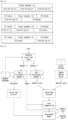
- the noise signals are mixed with the clean audio to reflect four common scenarios with interfering signal: (i) present throughout target utterance, (ii) occurring briefly within the target and corrupting a subsegment, (iii) starting before the target utterance but stopping before target utterance completion and (iv) vice-versa.
- Figure 3 shows these scenarios.
- interference augmentation is made stochastic by scaling the interference based on a target signal-to-noise (SNR) level chosen randomly for each utterance during the training phase.
- SNR target signal-to-noise
- the data pipeline of the present techniques also stochastically includes clean input (without any corruption) to allow the network to learn pass-through behaviour.
- Figure 4 is a block diagram of the mechanism for data augmentation for ML model training.
- the diagram shows the data augmentation technique used to help achieve generalizable sound enhancement model.
- Figure 5 is a schematic diagram showing ML model training and the use of the trained ML model. In other words, Figure 5 shows the detailed pipeline for training and inference phases.
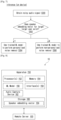
- Figure 6 is a flowchart of example steps for training an ML model to perform real-time personalised or non-personalised sound enhancement for a target user.
- the steps shown in Figure 6 may be performed off-device (i.e. off of the end user device where the trained ML model is deployed), such as on a remote server.
- the method comprises obtaining a training dataset comprising a plurality of audio noise samples, and a plurality of clean audio samples that each contain speech of individual speakers, and a speaker embedding vector for each individual speaker (step S102).
- the clean audio samples may be captured from a plurality of speakers.
- the method comprises generating, using the clean audio samples, corrupted audio samples by adding at least one noise sample to each clean audio sample (step S102).
- the generated corrupted samples x ⁇ ⁇ R t* 1 i.e., clean sample augmented with noise
- STFT Short-Time Fourier Transform
- the vector is the speaker embedding vector and the ML model switches to perform personalised noise removal.
- the model learns to remove ambient noise and/or babble noise from the output enhanced audio sample, while maintaining the speech of the target user.
- the vector is a zero vector and the ML model switches to perform non-personalised noise removal.
- the model learns to remove only ambient noise from the output enhanced audio sample, while maintaining the speech of the target user.
Landscapes
- Engineering & Computer Science (AREA)
- Physics & Mathematics (AREA)
- Health & Medical Sciences (AREA)
- Multimedia (AREA)
- Audiology, Speech & Language Pathology (AREA)
- Human Computer Interaction (AREA)
- Acoustics & Sound (AREA)
- Computational Linguistics (AREA)
- Theoretical Computer Science (AREA)
- Artificial Intelligence (AREA)
- Evolutionary Computation (AREA)
- Signal Processing (AREA)
- Quality & Reliability (AREA)
- Biomedical Technology (AREA)
- General Engineering & Computer Science (AREA)
- Biophysics (AREA)
- Data Mining & Analysis (AREA)
- General Health & Medical Sciences (AREA)
- Molecular Biology (AREA)
- Computing Systems (AREA)
- Life Sciences & Earth Sciences (AREA)
- General Physics & Mathematics (AREA)
- Mathematical Physics (AREA)
- Software Systems (AREA)
- Computer Vision & Pattern Recognition (AREA)
- Soundproofing, Sound Blocking, And Sound Damping (AREA)
- Telephonic Communication Services (AREA)
- Telephone Function (AREA)
Claims (10)
- Computerimplementiertes Verfahren zum Verwenden eines trainierten Maschinenlern-, ML-Modells, um Echtzeittonverbesserung für einen Zielbenutzer durchzuführen, wobei das Verfahren Folgendes umfasst:Erhalten eines verrauschten Audiosignals, das Sprache eines Zielbenutzers und Rauschen umfasst;Bestimmen, ob ein Sprechereinbettungsvektor für den Zielbenutzer existiert; undVerwenden von neuronalen Netzen des trainierten ML-Modells, um das Rauschen aus dem verrauschten Audiosignal zu entfernen, während die Sprache des Zielbenutzers beibehalten wird, indem das trainierte ML-Modell geschaltet wird, um personalisierte oder nicht-personalisierte Rauschentfernung durchzuführen, abhängig davon, ob der Sprechereinbettungsvektor existiert, durch:Eingeben des verrauschten Audiosignals in ein Encodermodul des trainierten ML-Modells;Verketten eines Vektors mit jedem Rahmen des verrauschten Audiosignals nach Verarbeiten durch das Encodermodul, um ein modifiziertes verrauschtes Audiosignal zu erzeugen;Eingeben des modifizierten verrauschten Audiosignals in ein Decodermodul des trainierten ML-Modells; undVerketten des Vektors mit jedem Rahmen des modifizierten verrauschten Audiosignals nach Verarbeiten durch das Decodermodul, um ein verbessertes Audiosignal auszugeben,wobei:wenn der Sprechereinbettungsvektor existiert, der Vektor der Sprechereinbettungsvektor ist und das trainierte ML-Modell geschaltet wird, um personalisierte Rauschentfernung durchzuführen, undwenn kein Sprechereinbettungsvektor existiert, der Vektor ein Nullvektor ist und das trainierte ML-Modell geschaltet wird, um nicht-personalisierte Rauschentfernung durchzuführen.
- Verfahren nach Anspruch 1, wobei Umgebungsrauschen und/oder Gesprächsrauschen von dem ausgegebenen verbesserten Audiosignal entfernt wird, während die Sprache des Zielbenutzers beibehalten wird.
- Verfahren nach Anspruch 1, wobei Umgebungsrauschen von dem ausgegebenen verbesserten Audiosignal entfernt wird, während die Sprache des Zielbenutzers beibehalten wird.
- Verfahren nach einem vorhergehenden Anspruch, ferner umfassend Erzeugen eines Sprechereinbettungsvektors für den Zielbenutzer durch:Erhalten von zumindest einem sauberen Audiosignal des Zielbenutzers; undAnwenden eines Sprechererkennungsmodells auf das zumindest eine saubere Audiosignal des Zielbenutzers, um einen Sprechereinbettungsvektor zu erzeugen, der ein Sprachprofil des Zielbenutzers darstellt.
- Verfahren nach einem der Ansprüche 1 bis 4, wobei das verrauschte Audiosignal während eines Audioanrufs erhalten wird und wobei das Verfahren ferner Übertragen des Audiosignals nach Verarbeiten durch das trainierte ML-Modell an einen anderen Teilnehmer in dem Audioanruf umfasst.
- Verfahren nach einem der Ansprüche 1 bis 4, wobei das Verfahren ferner Eingeben des Audiosignals nach Verarbeiten durch das trainierte ML-Modell in ein automatisches Spracherkennungssystem umfasst.
- Vorrichtung (150) zum Verwenden eines trainierten Maschinenlern-, ML-Modells (156), um Echtzeittonverbesserung für einen Zielbenutzer durchzuführen, wobei die Vorrichtung Folgendes umfasst:ein Audioaufnahmegerät (162); undzumindest einen Prozessor (152), der an Speicher (154) gekoppelt und zu Folgendem angeordnet ist:Erhalten, von dem Audioaufnahmegerät (162), eines verrauschten Audiosignals, das Sprache eines Zielbenutzers und Rauschen umfasst;Bestimmen, ob ein Sprechereinbettungsvektor (164) für den Zielbenutzer existiert; undVerwenden von neuronalen Netzen des trainierten ML-Modells (156), um das Rauschen aus dem verrauschten Audiosignal zu entfernen, während die Sprache des Zielbenutzers beibehalten wird, indem das trainierte ML-Modell geschaltet wird, um personalisierte oder nicht-personalisierte Rauschentfernung durchzuführen, abhängig davon, ob der Sprechereinbettungsvektor existiert, durch:Eingeben des verrauschten Audiosignals in ein Encodermodul des trainierten ML-Modells (156);Verketten eines Vektors mit jedem Rahmen des verrauschten Audiosignals nach Verarbeiten durch das Encodermodul, um ein modifiziertes verrauschtes Audiosignal zu erzeugen; Eingeben des modifizierten verrauschten Audiosignals in ein Decodermodul des trainierten ML-Modells (156); undVerketten des Vektors mit jedem Rahmen des modifizierten verrauschten Audiosignals nach Verarbeiten durch das Decodermodul, um ein verbessertes Audiosignal auszugeben,wobei:wenn der Sprechereinbettungsvektor existiert, der Vektor der Sprechereinbettungsvektor ist und das trainierte ML-Modell geschaltet wird, um personalisierte Rauschentfernung durchzuführen, undwenn kein Sprechereinbettungsvektor existiert, der Vektor ein Nullvektor ist und das trainierte ML-Modell geschaltet wird, um nicht-personalisierte Rauschentfernung durchzuführen.
- Vorrichtung nach Anspruch 7, wobei das verrauschte Audiosignal während eines Audioanrufs erhalten wird, der unter Verwendung der Vorrichtung gemacht wird, und wobei der Prozessor angeordnet ist, um das Audiosignal nach Verarbeiten durch das trainierte ML-Modell an einen anderen Teilnehmer in dem Audioanruf zu übertragen.
- Verfahren zum Trainieren eines Maschinenlern-, ML-Modells, um Echtzeittonverbesserung für einen Zielbenutzer durchzuführen, wobei das Verfahren Folgendes umfasst:Erhalten eines Trainingsdatensatzes, der eine Vielzahl von Audiorauschproben, eine Vielzahl von sauberen Audioproben, die jeweils Sprache von einzelnen Sprechern enthalten, und einen Sprechereinbettungsvektor für jeden einzelnen Sprecher umfasst;Erzeugen, unter Verwendung der sauberen Audioproben, von beschädigten Audioproben durch Hinzufügen von zumindest einer Rauschprobe zu jeder sauberen Audioprobe; undTrainieren von neuronalen Netzen des ML-Modells unter Verwendung des Trainingsdatensatzes und der beschädigten Audioproben, um das Rauschen aus den beschädigten Audioproben zu entfernen, während die Sprache der einzelnen Sprecher beibehalten wird, und um zu lernen, zwischen Durchführen von personalisierter und nichtpersonalisierter Rauschentfernung zu schalten, abhängig davon, ob der Sprechereinbettungsvektor für einen einzelnen Sprecher während einer Trainingsrunde verfügbar ist, durch:Eingeben der beschädigten Audioprobe in ein Encodermodul des ML-Modells;Verketten eines Vektors mit jedem Rahmen der beschädigten Audioprobe nach Verarbeiten durch das Encodermodul, um eine modifizierte beschädigte Audioprobe zu erzeugen;Eingeben der modifizierten beschädigten Audioprobe in ein Decodermodul des trainierten ML-Modells; undVerketten des Vektors mit jedem Rahmen des modifizierten beschädigten Audiosignals nach Verarbeiten durch das Decodermodul, um eine verbesserte Audioprobe auszugeben, wobei:wenn der Sprechereinbettungsvektor existiert, der Vektor der Sprechereinbettungsvektor ist und das trainierte ML-Modell geschaltet wird, um personalisierte Rauschentfernung durchzuführen, undwenn kein Sprechereinbettungsvektor existiert, der Vektor ein Nullvektor ist und das trainierte ML-Modell geschaltet wird, um nicht-personalisierte Rauschentfernung durchzuführen.
- Server (100) zum Trainieren eines Maschinenlern-, ML-Modells, um Echtzeittonverbesserung für einen Zielbenutzer durchzuführen, wobei der Server Folgendes umfasst:
zumindest einen Prozessor, der an Speicher gekoppelt und zu Folgendem angeordnet ist:Erhalten eines Trainingsdatensatzes, der eine Vielzahl von Audiorauschproben, eine Vielzahl von sauberen Audioproben, die jeweils Sprache von einzelnen Sprechern enthalten, und einen Sprechereinbettungsvektor für jeden einzelnen Sprecher umfasst;Erzeugen, unter Verwendung der sauberen Audioproben, von beschädigten Audioproben durch Hinzufügen von zumindest einer Rauschprobe zu jeder sauberen Audioprobe; undTrainieren von neuronalen Netzen des ML-Modells unter Verwendung des Trainingsdatensatzes und der beschädigten Audioproben, um das Rauschen aus den beschädigten Audioproben zu entfernen, während die Sprache der einzelnen Sprecher beibehalten wird, und um zu lernen, zwischen Durchführen von personalisierter und nichtpersonalisierter Rauschentfernung zu schalten, abhängig davon, ob der Sprechereinbettungsvektor für einen einzelnen Sprecher während einer Trainingsrunde verfügbar ist, durch:Eingeben der beschädigten Audioprobe in ein Encodermodul des ML-Modells;Verketten eines Vektors mit jedem Rahmen der beschädigten Audioprobe nach Verarbeiten durch das Encodermodul, um eine modifizierte beschädigte Audioprobe zu erzeugen;Eingeben der modifizierten beschädigten Audioprobe in ein Decodermodul des trainierten ML-Modells; undVerketten des Vektors mit jedem Rahmen des modifizierten beschädigten Audiosignals nach Verarbeiten durch das Decodermodul, um eine verbesserte Audioprobe auszugeben, wobei:wenn der Sprechereinbettungsvektor existiert, der Vektor der Sprechereinbettungsvektor ist und das trainierte ML-Modell geschaltet wird, um personalisierte Rauschentfernung durchzuführen, undwenn kein Sprechereinbettungsvektor existiert, der Vektor ein Nullvektor ist und das trainierte ML-Modell geschaltet wird, um nicht-personalisierte Rauschentfernung durchzuführen.
Applications Claiming Priority (3)
| Application Number | Priority Date | Filing Date | Title |
|---|---|---|---|
| GBGB2104280.9A GB202104280D0 (en) | 2021-03-26 | 2021-03-26 | Method and apparatus for real-time sound enhancement |
| GB2114393.8A GB2605219B (en) | 2021-03-26 | 2021-10-07 | Method and apparatus for real-time sound enhancement |
| PCT/KR2022/004204 WO2022203441A1 (en) | 2021-03-26 | 2022-03-25 | Method and apparatus for real-time sound enhancement |
Publications (5)
| Publication Number | Publication Date |
|---|---|
| EP4252228A1 EP4252228A1 (de) | 2023-10-04 |
| EP4252228A4 EP4252228A4 (de) | 2024-03-06 |
| EP4252228C0 EP4252228C0 (de) | 2025-04-30 |
| EP4252228B1 true EP4252228B1 (de) | 2025-04-30 |
| EP4252228B8 EP4252228B8 (de) | 2025-06-11 |
Family
ID=75783870
Family Applications (1)
| Application Number | Title | Priority Date | Filing Date |
|---|---|---|---|
| EP22776141.8A Active EP4252228B8 (de) | 2021-03-26 | 2022-03-25 | Verfahren und vorrichtung zur echtzeittonverbesserung |
Country Status (5)
| Country | Link |
|---|---|
| US (1) | US12518764B2 (de) |
| EP (1) | EP4252228B8 (de) |
| CN (1) | CN117121103A (de) |
| GB (2) | GB202104280D0 (de) |
| WO (1) | WO2022203441A1 (de) |
Families Citing this family (25)
| Publication number | Priority date | Publication date | Assignee | Title |
|---|---|---|---|---|
| CN119993185B (zh) * | 2021-12-01 | 2025-10-14 | 腾讯科技(深圳)有限公司 | 音频数据处理方法及装置、介质、设备及程序产品 |
| CN114171038B (zh) * | 2021-12-10 | 2023-07-28 | 北京百度网讯科技有限公司 | 语音降噪方法、装置、设备及存储介质 |
| CN114842863B (zh) * | 2022-04-19 | 2023-06-02 | 电子科技大学 | 一种基于多分支-动态合并网络的信号增强方法 |
| CN119252268B (zh) * | 2022-06-15 | 2026-03-10 | 腾讯科技(深圳)有限公司 | 音频解码、编码方法、装置、电子设备及存储介质 |
| KR102517661B1 (ko) * | 2022-07-15 | 2023-04-04 | 주식회사 액션파워 | 텍스트 정보에서 타겟 단어에 대응하는 단어를 식별하는 방법 |
| KR20240016032A (ko) * | 2022-07-28 | 2024-02-06 | 현대자동차주식회사 | 음성 인식 기능을 위한 전처리 모델 구축 시스템 및 전처리 모델 구축 방법 |
| US12597425B1 (en) * | 2022-09-30 | 2026-04-07 | Amazon Technologies, Inc. | Data routing in a multi-assistant context |
| US12230266B1 (en) | 2022-09-30 | 2025-02-18 | Amazon Technologies, Inc. | Data routing in a multi-assistant context |
| US11937073B1 (en) * | 2022-11-01 | 2024-03-19 | AudioFocus, Inc | Systems and methods for curating a corpus of synthetic acoustic training data samples and training a machine learning model for proximity-based acoustic enhancement |
| US12469510B2 (en) * | 2022-11-16 | 2025-11-11 | Cisco Technology, Inc. | Transforming speech signals to attenuate speech of competing individuals and other noise |
| EP4390922A1 (de) * | 2022-12-22 | 2024-06-26 | GN Audio A/S | Verfahren zum trainieren eines neuronalen netzwerks und datenverarbeitungsvorrichtung |
| GB202302913D0 (en) * | 2023-02-28 | 2023-04-12 | Samsung Electronics Co Ltd | Persoda: personalized data augmentation for personalized asr |
| US20240321286A1 (en) * | 2023-03-24 | 2024-09-26 | Super Hi-Fi, Llc | Systems and Methods for Audio Preparation and Delivery |
| US12505828B2 (en) * | 2023-06-02 | 2025-12-23 | Hangzhou Gaishi Technology Co., Ltd. | System and method to naturally join human talking sounds |
| US12561574B2 (en) | 2023-07-29 | 2026-02-24 | Zon Global Ip Inc. | Deterministically defined, differentiable, neuromorphically-informed I/O-mapped neural network |
| US12387736B2 (en) | 2023-07-29 | 2025-08-12 | Zon Global Ip Inc. | Audio compression with generative adversarial networks |
| US12236964B1 (en) | 2023-07-29 | 2025-02-25 | Seer Global, Inc. | Foundational AI model for capturing and encoding audio with artificial intelligence semantic analysis and without low pass or high pass filters |
| US12437213B2 (en) | 2023-07-29 | 2025-10-07 | Zon Global Ip Inc. | Bayesian graph-based retrieval-augmented generation with synthetic feedback loop (BG-RAG-SFL) |
| US12382051B2 (en) | 2023-07-29 | 2025-08-05 | Zon Global Ip Inc. | Advanced maximal entropy media compression processing |
| CN117524228A (zh) * | 2024-01-08 | 2024-02-06 | 腾讯科技(深圳)有限公司 | 语音数据处理方法、装置、设备及介质 |
| US20250252965A1 (en) * | 2024-02-02 | 2025-08-07 | Microsoft Technology Licensing, Llc | Generation of a personalized speech representation within an audio enhancement model |
| CN120612950A (zh) * | 2024-03-08 | 2025-09-09 | 华为技术有限公司 | 语音降噪方法、装置及相关装置 |
| CN119446157A (zh) * | 2024-10-12 | 2025-02-14 | 鹏城实验室 | 基于音频二维码的信息传输方法、装置、设备及介质 |
| CN119274546B (zh) * | 2024-12-05 | 2025-03-21 | 深圳市英菲克电子有限公司 | 智能语音鼠标的控制方法、鼠标、终端以及物联网系统 |
| CN119964540B (zh) * | 2025-02-05 | 2025-12-16 | 北京轻松怡康信息技术有限公司 | 音频降噪方法、装置、电子设备和存储介质 |
Family Cites Families (24)
| Publication number | Priority date | Publication date | Assignee | Title |
|---|---|---|---|---|
| US8639516B2 (en) * | 2010-06-04 | 2014-01-28 | Apple Inc. | User-specific noise suppression for voice quality improvements |
| US8725506B2 (en) * | 2010-06-30 | 2014-05-13 | Intel Corporation | Speech audio processing |
| KR101330328B1 (ko) * | 2010-12-14 | 2013-11-15 | 한국전자통신연구원 | 음성 인식 방법 및 이를 위한 시스템 |
| JP5670298B2 (ja) * | 2011-11-30 | 2015-02-18 | 日本電信電話株式会社 | 雑音抑圧装置、方法及びプログラム |
| US11631421B2 (en) | 2015-10-18 | 2023-04-18 | Solos Technology Limited | Apparatuses and methods for enhanced speech recognition in variable environments |
| US10783899B2 (en) | 2016-02-05 | 2020-09-22 | Cerence Operating Company | Babble noise suppression |
| US10373612B2 (en) | 2016-03-21 | 2019-08-06 | Amazon Technologies, Inc. | Anchored speech detection and speech recognition |
| KR101843079B1 (ko) * | 2016-09-26 | 2018-05-14 | 서울대학교산학협력단 | 화자 상호 정보를 활용한 강인한 i-벡터 추출기 학습 방법 및 시스템 |
| US10546575B2 (en) | 2016-12-14 | 2020-01-28 | International Business Machines Corporation | Using recurrent neural network for partitioning of audio data into segments that each correspond to a speech feature cluster identifier |
| WO2019104229A1 (en) | 2017-11-22 | 2019-05-31 | Google Llc | Audio-visual speech separation |
| KR102486395B1 (ko) | 2017-11-23 | 2023-01-10 | 삼성전자주식회사 | 화자 인식을 위한 뉴럴 네트워크 장치, 및 그 동작 방법 |
| US10991379B2 (en) * | 2018-06-22 | 2021-04-27 | Babblelabs Llc | Data driven audio enhancement |
| KR102925217B1 (ko) * | 2019-03-25 | 2026-02-09 | 삼성전자주식회사 | 화자 식별 뉴럴 네트워크를 구현하는 방법 및 장치 |
| US11763832B2 (en) * | 2019-05-01 | 2023-09-19 | Synaptics Incorporated | Audio enhancement through supervised latent variable representation of target speech and noise |
| KR102316537B1 (ko) * | 2019-06-21 | 2021-10-22 | 한양대학교 산학협력단 | 잡음 환경에 강인한 화자 인식을 위한 심화신경망 기반의 특징 강화 및 변형된 손실 함수를 이용한 결합 학습 방법 및 장치 |
| CN112201247B (zh) * | 2019-07-08 | 2024-05-03 | 北京地平线机器人技术研发有限公司 | 语音增强方法和装置、电子设备和存储介质 |
| CN120932662A (zh) * | 2019-08-01 | 2025-11-11 | 杜比实验室特许公司 | 用于增强劣化音频信号的系统和方法 |
| EP3857544B1 (de) * | 2019-12-04 | 2022-06-29 | Google LLC | Sprecherbewusstsein mittels sprecherabhängiger sprachmodelle |
| US11948553B2 (en) * | 2020-03-05 | 2024-04-02 | Pindrop Security, Inc. | Systems and methods of speaker-independent embedding for identification and verification from audio |
| US12367890B2 (en) * | 2020-05-29 | 2025-07-22 | Sony Group Corporation | Audio source separation and audio dubbing |
| US11854564B1 (en) * | 2020-06-16 | 2023-12-26 | Amazon Technologies, Inc. | Autonomously motile device with noise suppression |
| US11335321B2 (en) * | 2020-08-28 | 2022-05-17 | Google Llc | Building a text-to-speech system from a small amount of speech data |
| WO2022056226A1 (en) * | 2020-09-14 | 2022-03-17 | Pindrop Security, Inc. | Speaker specific speech enhancement |
| US11568878B2 (en) * | 2021-04-16 | 2023-01-31 | Google Llc | Voice shortcut detection with speaker verification |
-
2021
- 2021-03-26 GB GBGB2104280.9A patent/GB202104280D0/en not_active Ceased
- 2021-10-07 GB GB2114393.8A patent/GB2605219B/en active Active
-
2022
- 2022-03-25 CN CN202280024687.5A patent/CN117121103A/zh active Pending
- 2022-03-25 WO PCT/KR2022/004204 patent/WO2022203441A1/en not_active Ceased
- 2022-03-25 EP EP22776141.8A patent/EP4252228B8/de active Active
-
2023
- 2023-05-23 US US18/322,228 patent/US12518764B2/en active Active
Non-Patent Citations (2)
| Title |
|---|
| GIRI RITWIK ET AL: "Personalized PercepNet: Real-Time, Low-Complexity Target Voice Separation and Enhancement", INTERSPEECH 2021, 1 January 2021 (2021-01-01), pages 1124 - 1128, XP093201184, Retrieved from the Internet <URL:https://www.isca-archive.org/interspeech_2021/giri21_interspeech.pdf> DOI: 10.21437/Interspeech.2021-694 * |
| YANPEI SHI ET AL: "Speaker Re-identification with Speaker Dependent Speech Enhancement", ARXIV.ORG, CORNELL UNIVERSITY LIBRARY, 201 OLIN LIBRARY CORNELL UNIVERSITY ITHACA, NY 14853, 7 August 2020 (2020-08-07), XP081735405 * |
Also Published As
| Publication number | Publication date |
|---|---|
| GB202104280D0 (en) | 2021-05-12 |
| EP4252228B8 (de) | 2025-06-11 |
| GB2605219A (en) | 2022-09-28 |
| EP4252228A1 (de) | 2023-10-04 |
| WO2022203441A1 (en) | 2022-09-29 |
| EP4252228A4 (de) | 2024-03-06 |
| GB202114393D0 (en) | 2021-11-24 |
| EP4252228C0 (de) | 2025-04-30 |
| GB2605219B (en) | 2023-05-03 |
| US12518764B2 (en) | 2026-01-06 |
| CN117121103A (zh) | 2023-11-24 |
| US20230298593A1 (en) | 2023-09-21 |
Similar Documents
| Publication | Publication Date | Title |
|---|---|---|
| EP4252228B1 (de) | Verfahren und vorrichtung zur echtzeittonverbesserung | |
| EP4055595B1 (de) | Audiovisuelle sprachverstärkung | |
| Zhao et al. | Monaural speech dereverberation using temporal convolutional networks with self attention | |
| Wang et al. | A joint training framework for robust automatic speech recognition | |
| Strake et al. | Speech enhancement by LSTM-based noise suppression followed by CNN-based speech restoration | |
| Luo et al. | Real-time single-channel dereverberation and separation with time-domain audio separation network. | |
| Delcroix et al. | Strategies for distant speech recognitionin reverberant environments | |
| Zhang et al. | Multi-channel multi-frame ADL-MVDR for target speech separation | |
| US11699453B2 (en) | Adaptive multichannel dereverberation for automatic speech recognition | |
| Nie et al. | Deep learning based speech separation via NMF-style reconstructions | |
| Krueger et al. | Model-based feature enhancement for reverberant speech recognition | |
| JP7690138B2 (ja) | 自動音声認識のためのマイクロフォンアレイ構成でインバリアントな、ストリーミングな、マルチチャネルな、ニューラル強調フロントエンド | |
| JP7713113B2 (ja) | 統合音響エコー除去、音声強調、及び声分離のための一般化自動音声認識 | |
| CN117795597A (zh) | 用于自动语音辨识的联合声学回声消除、语音增强和话音分离 | |
| Sadjadi et al. | Blind spectral weighting for robust speaker identification under reverberation mismatch | |
| US20230306980A1 (en) | Method and System for Audio Signal Enhancement with Reduced Latency | |
| Parisae et al. | Adaptive attention mechanism for single channel speech enhancement | |
| Chhetri et al. | Speech enhancement: A survey of approaches and applications | |
| Xu et al. | Channel and temporal-frequency attention UNet for monaural speech enhancement | |
| Liu et al. | Gated Convolutional Fusion for Time-Domain Target Speaker Extraction Network. | |
| Xiang et al. | A two-stage deep representation learning-based speech enhancement method using variational autoencoder and adversarial training | |
| Zorilă et al. | Speaker reinforcement using target source extraction for robust automatic speech recognition | |
| Park et al. | Unsupervised speech domain adaptation based on disentangled representation learning for robust speech recognition | |
| Zhao et al. | Time-Domain Target-Speaker Speech Separation with Waveform-Based Speaker Embedding. | |
| JP7551805B2 (ja) | オーディオ処理方法及び装置 |
Legal Events
| Date | Code | Title | Description |
|---|---|---|---|
| STAA | Information on the status of an ep patent application or granted ep patent |
Free format text: STATUS: THE INTERNATIONAL PUBLICATION HAS BEEN MADE |
|
| PUAI | Public reference made under article 153(3) epc to a published international application that has entered the european phase |
Free format text: ORIGINAL CODE: 0009012 |
|
| STAA | Information on the status of an ep patent application or granted ep patent |
Free format text: STATUS: REQUEST FOR EXAMINATION WAS MADE |
|
| 17P | Request for examination filed |
Effective date: 20230630 |
|
| AK | Designated contracting states |
Kind code of ref document: A1 Designated state(s): AL AT BE BG CH CY CZ DE DK EE ES FI FR GB GR HR HU IE IS IT LI LT LU LV MC MK MT NL NO PL PT RO RS SE SI SK SM TR |
|
| A4 | Supplementary search report drawn up and despatched |
Effective date: 20240205 |
|
| RIC1 | Information provided on ipc code assigned before grant |
Ipc: G06N 3/048 20230101ALN20240130BHEP Ipc: G10L 25/30 20130101ALN20240130BHEP Ipc: G06N 3/0455 20230101ALI20240130BHEP Ipc: G06N 3/088 20230101ALI20240130BHEP Ipc: G06N 3/0442 20230101ALI20240130BHEP Ipc: G10L 21/0208 20130101AFI20240130BHEP |
|
| DAV | Request for validation of the european patent (deleted) | ||
| DAX | Request for extension of the european patent (deleted) | ||
| GRAP | Despatch of communication of intention to grant a patent |
Free format text: ORIGINAL CODE: EPIDOSNIGR1 |
|
| STAA | Information on the status of an ep patent application or granted ep patent |
Free format text: STATUS: GRANT OF PATENT IS INTENDED |
|
| RIC1 | Information provided on ipc code assigned before grant |
Ipc: G06N 3/048 20230101ALN20250213BHEP Ipc: G10L 25/30 20130101ALN20250213BHEP Ipc: G06N 3/0455 20230101ALI20250213BHEP Ipc: G06N 3/088 20230101ALI20250213BHEP Ipc: G06N 3/0442 20230101ALI20250213BHEP Ipc: G10L 21/0208 20130101AFI20250213BHEP |
|
| GRAS | Grant fee paid |
Free format text: ORIGINAL CODE: EPIDOSNIGR3 |
|
| INTG | Intention to grant announced |
Effective date: 20250220 |
|
| GRAA | (expected) grant |
Free format text: ORIGINAL CODE: 0009210 |
|
| STAA | Information on the status of an ep patent application or granted ep patent |
Free format text: STATUS: THE PATENT HAS BEEN GRANTED |
|
| AK | Designated contracting states |
Kind code of ref document: B1 Designated state(s): AL AT BE BG CH CY CZ DE DK EE ES FI FR GB GR HR HU IE IS IT LI LT LU LV MC MK MT NL NO PL PT RO RS SE SI SK SM TR |
|
| REG | Reference to a national code |
Ref country code: CH Ref legal event code: EP Ref country code: GB Ref legal event code: FG4D |
|
| REG | Reference to a national code |
Ref country code: CH Ref legal event code: PK Free format text: BERICHTIGUNG B8 Ref country code: DE Ref legal event code: R096 Ref document number: 602022013998 Country of ref document: DE |
|
| REG | Reference to a national code |
Ref country code: IE Ref legal event code: FG4D |
|
| RBV | Designated contracting states (corrected) |
Designated state(s): AL AT BE BG CH CY CZ DE DK EE ES FI FR GR HR HU IE IS IT LI LT LU LV MC MK MT NL NO PL PT RO RS SE SI SK SM TR |
|
| U01 | Request for unitary effect filed |
Effective date: 20250430 |
|
| U07 | Unitary effect registered |
Designated state(s): AT BE BG DE DK EE FI FR IT LT LU LV MT NL PT RO SE SI Effective date: 20250509 |
|
| PG25 | Lapsed in a contracting state [announced via postgrant information from national office to epo] |
Ref country code: ES Free format text: LAPSE BECAUSE OF FAILURE TO SUBMIT A TRANSLATION OF THE DESCRIPTION OR TO PAY THE FEE WITHIN THE PRESCRIBED TIME-LIMIT Effective date: 20250430 |
|
| PG25 | Lapsed in a contracting state [announced via postgrant information from national office to epo] |
Ref country code: GR Free format text: LAPSE BECAUSE OF FAILURE TO SUBMIT A TRANSLATION OF THE DESCRIPTION OR TO PAY THE FEE WITHIN THE PRESCRIBED TIME-LIMIT Effective date: 20250731 Ref country code: NO Free format text: LAPSE BECAUSE OF FAILURE TO SUBMIT A TRANSLATION OF THE DESCRIPTION OR TO PAY THE FEE WITHIN THE PRESCRIBED TIME-LIMIT Effective date: 20250730 |
|
| PG25 | Lapsed in a contracting state [announced via postgrant information from national office to epo] |
Ref country code: PL Free format text: LAPSE BECAUSE OF FAILURE TO SUBMIT A TRANSLATION OF THE DESCRIPTION OR TO PAY THE FEE WITHIN THE PRESCRIBED TIME-LIMIT Effective date: 20250430 |
|
| PG25 | Lapsed in a contracting state [announced via postgrant information from national office to epo] |
Ref country code: HR Free format text: LAPSE BECAUSE OF FAILURE TO SUBMIT A TRANSLATION OF THE DESCRIPTION OR TO PAY THE FEE WITHIN THE PRESCRIBED TIME-LIMIT Effective date: 20250430 |
|
| PG25 | Lapsed in a contracting state [announced via postgrant information from national office to epo] |
Ref country code: RS Free format text: LAPSE BECAUSE OF FAILURE TO SUBMIT A TRANSLATION OF THE DESCRIPTION OR TO PAY THE FEE WITHIN THE PRESCRIBED TIME-LIMIT Effective date: 20250731 |
|
| PG25 | Lapsed in a contracting state [announced via postgrant information from national office to epo] |
Ref country code: IS Free format text: LAPSE BECAUSE OF FAILURE TO SUBMIT A TRANSLATION OF THE DESCRIPTION OR TO PAY THE FEE WITHIN THE PRESCRIBED TIME-LIMIT Effective date: 20250830 |
|
| PG25 | Lapsed in a contracting state [announced via postgrant information from national office to epo] |
Ref country code: SM Free format text: LAPSE BECAUSE OF FAILURE TO SUBMIT A TRANSLATION OF THE DESCRIPTION OR TO PAY THE FEE WITHIN THE PRESCRIBED TIME-LIMIT Effective date: 20250430 |
|
| PG25 | Lapsed in a contracting state [announced via postgrant information from national office to epo] |
Ref country code: CZ Free format text: LAPSE BECAUSE OF FAILURE TO SUBMIT A TRANSLATION OF THE DESCRIPTION OR TO PAY THE FEE WITHIN THE PRESCRIBED TIME-LIMIT Effective date: 20250430 |
|
| PG25 | Lapsed in a contracting state [announced via postgrant information from national office to epo] |
Ref country code: SK Free format text: LAPSE BECAUSE OF FAILURE TO SUBMIT A TRANSLATION OF THE DESCRIPTION OR TO PAY THE FEE WITHIN THE PRESCRIBED TIME-LIMIT Effective date: 20250430 |
|
| PLBE | No opposition filed within time limit |
Free format text: ORIGINAL CODE: 0009261 |
|
| STAA | Information on the status of an ep patent application or granted ep patent |
Free format text: STATUS: NO OPPOSITION FILED WITHIN TIME LIMIT |
|
| REG | Reference to a national code |
Ref country code: CH Ref legal event code: L10 Free format text: ST27 STATUS EVENT CODE: U-0-0-L10-L00 (AS PROVIDED BY THE NATIONAL OFFICE) Effective date: 20260311 |
|
| 26N | No opposition filed |
Effective date: 20260202 |