EP4250386B1 - Calendering rolls for calendering roll press for manufacturing dry electrode - Google Patents
Calendering rolls for calendering roll press for manufacturing dry electrode Download PDFInfo
- Publication number
- EP4250386B1 EP4250386B1 EP22901581.3A EP22901581A EP4250386B1 EP 4250386 B1 EP4250386 B1 EP 4250386B1 EP 22901581 A EP22901581 A EP 22901581A EP 4250386 B1 EP4250386 B1 EP 4250386B1
- Authority
- EP
- European Patent Office
- Prior art keywords
- roll
- main body
- calendering
- oil paths
- longitudinal direction
- Prior art date
- Legal status (The legal status is an assumption and is not a legal conclusion. Google has not performed a legal analysis and makes no representation as to the accuracy of the status listed.)
- Active
Links
Images




Classifications
-
- B—PERFORMING OPERATIONS; TRANSPORTING
- B30—PRESSES
- B30B—PRESSES IN GENERAL
- B30B11/00—Presses specially adapted for forming shaped articles from material in particulate or plastic state, e.g. briquetting presses, tabletting presses
- B30B11/16—Presses specially adapted for forming shaped articles from material in particulate or plastic state, e.g. briquetting presses, tabletting presses using pocketed rollers, e.g. two co-operating pocketed rollers
- B30B11/165—Roll constructions
-
- B—PERFORMING OPERATIONS; TRANSPORTING
- B30—PRESSES
- B30B—PRESSES IN GENERAL
- B30B11/00—Presses specially adapted for forming shaped articles from material in particulate or plastic state, e.g. briquetting presses, tabletting presses
- B30B11/18—Presses specially adapted for forming shaped articles from material in particulate or plastic state, e.g. briquetting presses, tabletting presses using profiled rollers
-
- H—ELECTRICITY
- H01—ELECTRIC ELEMENTS
- H01M—PROCESSES OR MEANS, e.g. BATTERIES, FOR THE DIRECT CONVERSION OF CHEMICAL ENERGY INTO ELECTRICAL ENERGY
- H01M10/00—Secondary cells; Manufacture thereof
- H01M10/04—Construction or manufacture in general
-
- H—ELECTRICITY
- H01—ELECTRIC ELEMENTS
- H01M—PROCESSES OR MEANS, e.g. BATTERIES, FOR THE DIRECT CONVERSION OF CHEMICAL ENERGY INTO ELECTRICAL ENERGY
- H01M4/00—Electrodes
- H01M4/02—Electrodes composed of, or comprising, active material
- H01M4/04—Processes of manufacture in general
- H01M4/043—Processes of manufacture in general involving compressing or compaction
- H01M4/0435—Rolling or calendering
-
- Y—GENERAL TAGGING OF NEW TECHNOLOGICAL DEVELOPMENTS; GENERAL TAGGING OF CROSS-SECTIONAL TECHNOLOGIES SPANNING OVER SEVERAL SECTIONS OF THE IPC; TECHNICAL SUBJECTS COVERED BY FORMER USPC CROSS-REFERENCE ART COLLECTIONS [XRACs] AND DIGESTS
- Y02—TECHNOLOGIES OR APPLICATIONS FOR MITIGATION OR ADAPTATION AGAINST CLIMATE CHANGE
- Y02E—REDUCTION OF GREENHOUSE GAS [GHG] EMISSIONS, RELATED TO ENERGY GENERATION, TRANSMISSION OR DISTRIBUTION
- Y02E60/00—Enabling technologies; Technologies with a potential or indirect contribution to GHG emissions mitigation
- Y02E60/10—Energy storage using batteries
Definitions
- the present invention relates to a calendering roll for a calendering roll press for manufacturing a dry electrode.
- the present disclosure relates to a calendering roll of a calendering roll press for manufacturing a dry electrode capable of reducing a deformation deviation of the roll by improving an oil path in the calendering roll to increase bending rigidity.
- the present disclosure relates to a calendering roll of a calendering roll press for manufacturing a dry electrode capable of minimizing a deformation of a dry electrode sheet.
- the secondary batteries have attracted attention as energy sources for not only a portable device such as a mobile phone, a notebook, a camcorder, or the like, but also an electric vehicle, a hybrid electric vehicle, and the like which have been proposed as solutions for the air pollution or the like of an existing gasoline vehicle, a diesel vehicle, and the like using fossil fuel.
- the electrode assemblies accommodated in the battery cases are power generation elements which are each formed in a structure having a positive electrode, a negative electrode, and a separator interposed between the positive electrode and the negative electrode, and thus can be charged and discharged, and are classified into a jelly-roll type in which a separator is interposed between long sheet-type positive and negative electrodes coated with an active material and is rolled, and a stacked type in which a plurality of positive and negative electrodes which are formed in a predetermined size are sequentially stacked with the separator interposed therebetween.
- the calendering roll 101 is rotatably formed, and driving shafts 103a and 103b are respectively provided at center portions of both sides.
- a plurality of oil paths 105 through which oil flows are formed for temperature control, and the oil path 105 is formed in a straight line shape from one side of the calendering roll 101 to the other side in a longitudinal direction.
- the present invention is intended to solve the above problems, and is directed to providing a calendering roll for a calendering roll press for manufacturing a dry electrode capable of reducing a deformation deviation of the roll by improving a shape of an oil path through which oil flows in the calendering roll to increase bending rigidity.
- the oil path may be formed so that the interval may linearly change from one side in the longitudinal direction of the roll main body toward the center portion.
- the oil path may be formed in a curved shape from one side in the longitudinal direction of the roll main body toward the center portion.
- the oil path may be formed in a parabolic shape along the longitudinal direction of the roll main body.
- the oil path may form a shape bent toward the other side from one side in the longitudinal direction of the roll main body.
- the oil paths may be formed linearly with the constant intervals to a predetermined position from both sides of the roll main body in the longitudinal direction in directions facing each other, and then formed so that each of the intervals may linearly change toward the center portion.
- the oil paths may be formed linearly with the constant intervals to a predetermined position from both sides of the roll main body in the longitudinal direction in directions facing each other, and then each formed in a curved shape toward the center portion.
- the curved shape may be a parabolic shape.
- the oil paths may be formed linearly with the constant intervals to a predetermined position from both sides of the roll main body in the longitudinal direction in directions facing each other and bent toward the roll driving shaft, and then may each form a shape in which each of the intervals is uniformly maintained toward the center portion.
- bending rigidity can be sufficiently increased by only improving shapes of oil paths through which oil flows in a calendering roll, and accordingly, a deformation deviation of the roll can be reduced.
- a portion such as a layer, a film, a region, a plate, or the like when referred to as being “on” another portion, this includes not only a case in which the portion is “directly on” the other portion but also a case in which there is a still another portion therebetween.
- a portion such as a layer, a film, a region, a plate, or the like when referred to as being “under” another portion, this includes not only a case in which the portion is “directly under” the other portion but also a case in which there is still another portion therebetween.
- being disposed “on” in the specification may mean that something is disposed on a lower portion or on an upper portion.
- the dry electrode sheet 21 inserted between the roll main bodies 11 in the pair of calendering rolls 10a is elongated while passing between the roll main bodies 11.
- a calendering roll 10b is formed in a shape in which oil paths 15b formed in a roll main body 11 are bent toward the other side from one side in a longitudinal direction of the roll main body 11.
- oil path 15b may be formed in a curved shape toward the center portion after being formed linearly to the predetermined position of the roll main body 11.
- the linearly curved shape may be a parabolic shape.
- the curved shape of the oil path 15b is formed in the parabolic shape, but the oil path 15b may also be formed in a circular arc shape or an oval shape, and may be changed to other various shapes.
- FIG. 6 is a view schematically illustrating a calendering roll for a calendering roll press for manufacturing a dry electrode according to a third embodiment of the present invention.
- the oil path 15c of the present embodiment is formed so that the remaining portion except for the portion formed to be bent maintains the same interval to the roll driving shaft 13.
- the portion bent toward the roll driving shaft 13 is obliquely formed to be bent in a diagonal direction for flow of oil, and may be changed in other various ways.
- FIG. 7 is a view schematically illustrating a calendering roll for a calendering roll press for manufacturing a dry electrode according to a fourth embodiment of the present invention.
- oil paths 15d formed in a roll main body 11 of a calendering roll according to the present embodiment are bent inward to a predetermined position from both sides of the roll main body 11 in a longitudinal direction, and then each have a shape in which each of the intervals is uniformly maintained.
- the oil paths 15d of a calendering roll 10d of the fourth embodiment are bent to the predetermined position from both sides of the roll main body 11 in the longitudinal direction in directions facing each other, and then each formed in a straight line toward a center portion from the bent portion of the oil path 15d.
- the oil path 15d of the present embodiment is formed so that the remaining portion except for the bent portions at both sides of the roll main body 11 maintains the same interval to the roll driving shaft 13.
- FIG. 8 is a view schematically illustrating a calendering roll for a calendering roll press for manufacturing a dry electrode according to a fifth embodiment of the present invention.
- oil paths 15e formed in a roll main body 11 of a calendering roll 10e according to the present embodiment are formed to be inclined at a predetermined angle from both sides of the roll main body 11 in the longitudinal direction in directions facing each other, and then connected to a center portion in a curved shape.
- the oil paths 15e of the calendering roll 10e of the fifth embodiment are formed to be inclined at a predetermined angle to the predetermined position from both sides of the roll main body 11 in the longitudinal direction in directions facing each other, and thus are formed in an approximate 'V' shape, and since a center portion of the oil path 15e forms a curved shape, the oil paths 15e extending to be inclined from both sides of the roll main body 11 are smoothly connected to each other.
- the oil paths 15e of the present embodiment are disposed away from the roll driving shaft 13 at both sides of the roll main body 11, and on the other hand, the oil paths 15e are disposed close to the roll driving shaft 13 at the center portion of the roll main body 11, the bending rigidity of the roll main body 11 against the static pressure applied to each of the roil driving shafts 13a and 13b may be increased.
Landscapes
- Engineering & Computer Science (AREA)
- Mechanical Engineering (AREA)
- Manufacturing & Machinery (AREA)
- Chemical & Material Sciences (AREA)
- Chemical Kinetics & Catalysis (AREA)
- Electrochemistry (AREA)
- General Chemical & Material Sciences (AREA)
- Battery Electrode And Active Subsutance (AREA)
- Rolls And Other Rotary Bodies (AREA)
- Casting Or Compression Moulding Of Plastics Or The Like (AREA)
Description
- The present invention relates to a calendering roll for a calendering roll press for manufacturing a dry electrode.
- More specifically, the present disclosure relates to a calendering roll of a calendering roll press for manufacturing a dry electrode capable of reducing a deformation deviation of the roll by improving an oil path in the calendering roll to increase bending rigidity.
- Further, the present disclosure relates to a calendering roll of a calendering roll press for manufacturing a dry electrode capable of minimizing a deformation of a dry electrode sheet.
- Recently, secondary batteries, which can be charged and discharged, have been widely used as energy sources of wireless mobile devices.
- Further, the secondary batteries have attracted attention as energy sources for not only a portable device such as a mobile phone, a notebook, a camcorder, or the like, but also an electric vehicle, a hybrid electric vehicle, and the like which have been proposed as solutions for the air pollution or the like of an existing gasoline vehicle, a diesel vehicle, and the like using fossil fuel.
- Accordingly, types of applications using the secondary batteries are becoming very diverse due to the advantages of the secondary batteries, and in the future, it is expected that secondary batteries will be applied to more fields and products than now.
- These secondary batteries are classified into a lithium ion battery, a lithium ion polymer battery, a lithium polymer battery, and the like according to compositions of an electrode and an electrolyte, and the use of the lithium ion polymer battery which has low possibility of electrolyte leakage and can be easily manufacture is increasing.
- Generally, depending on the shape of the battery case, the secondary batteries are classified into a cylindrical battery and a prismatic battery in which electrode assemblies are respectively accommodated in a cylindrical metal can and a prismatic metal can, and a pouch-type battery in which an electrode assembly is accommodated in a pouch-type case of an aluminum laminate sheet.
- Further, the electrode assemblies accommodated in the battery cases are power generation elements which are each formed in a structure having a positive electrode, a negative electrode, and a separator interposed between the positive electrode and the negative electrode, and thus can be charged and discharged, and are classified into a jelly-roll type in which a separator is interposed between long sheet-type positive and negative electrodes coated with an active material and is rolled, and a stacked type in which a plurality of positive and negative electrodes which are formed in a predetermined size are sequentially stacked with the separator interposed therebetween.
- Here, since high-output electric energy is used in an electric vehicle or the like, a plurality of battery modules are required, and a plurality of battery cells are connected in series or parallel in this battery module.
- Meanwhile, in an electrode process, an electrode has been generally manufactured through a wet electrode process of applying a slurry including an electrode active material, a binder, and a conductive material onto a current collector and then removing a solvent of the slurry through a drying process.
- In the wet electrode process described above, since energy is required to remove the solvent from the slurry applied to the current collector, manufacturing costs are high and thus it is difficult to improve productivity.
- Accordingly, a method of manufacturing an electrode through a dry electrode process without applying a slurry to a current collector has been proposed.
- The dry electrode process is a method of manufacturing an electrode by preparing a powder mixture by mixing an electrode active material, a binder, a conductive material, and the like without a liquid medium such as a solvent, a dispersion medium, or the like, manufacturing the powder mixture into a dry electrode sheet through a calendering process, and laminating the manufactured dry electrode sheet on the current collector.
- In this dry electrode process, since energy density is improved and charging and discharging characteristics are improved compared to the existing wet electrode process and thus a lifespan is at least doubled compared to the existing wet electrode process, and a drying process required in the existing wet electrode process is not required, there is an advantage in that a drying room for the drying process, a space therefore, and costs of drying energy are not required.
- Here, in the dry electrode process, the calendering process for manufacturing the dry electrode sheet refers to a process of pressing and elongating the dry electrode sheet through a calendering roll press.
- That is, as shown in
FIG. 1 , acalendering roll 101 of acalendering roll press 100 is formed with a cylindrical body, and a calendering process is performed so that adry electrode sheet 108 is pushed between and passes through a pair of upper andlower rolls 101 to be elongated. - In this case, the
calendering roll 101 is rotatably formed, and drivingshafts - Here, the pair of calendering rolls have a problem in that static pressure is applied to each driving shaft and thus center portions of the calendering rolls are bent.
- Like the above, since the center portions of the calendering rolls are bent by the static pressure applied to each driving shaft, the static pressure acts strongly on both sides of the dry electrode sheet compared to the center portion, and thus uniform deformation of the dry electrode sheet is hindered.
- Further, there is a problem in that a buckling phenomenon occurs at both sides of the calendering roll due to static pressure repeatedly applied to the driving shafts of the calendering roll and thus a defect occurs in a dry electrode sheet to be manufactured.
- Like the above, in order to suppress the defect of the dry electrode sheet, a method of additionally applying counter pressure which counteracts the static pressure applied to the calendering roll has been proposed, but since counter pressure equipment which generates the counter pressure which counteracts the static pressure should be additionally installed, there is a problem in that an entire configuration of the calendering roll press becomes complicated when installing the counter pressure equipment in addition to the generation of additional costs.
- Further, a method of replacing the existing calendering roll formed in a cylindrical shape with a calendering crown roll, formed in a gently convex curve line shape in a longitudinal direction by forming a larger diameter at a center portion than the diameter at both sides of the roll, to suppress the buckling phenomenon caused by static pressure has been proposed, but this also has a problem in that the buckling phenomenon is caused at the center portion of the dry electrode sheet.
- Meanwhile, as shown in
FIG. 2 , in acalendering roll 101 having drivingshafts oil paths 105 through which oil flows are formed for temperature control, and theoil path 105 is formed in a straight line shape from one side of thecalendering roll 101 to the other side in a longitudinal direction. - However, since the plurality of oil paths are formed in the calendering roll in the longitudinal direction, the bending rigidity of the center portion of the calendering roll deteriorates when static pressure is applied to both driving shafts.
- Accordingly, in order to improve the production quality of the dry electrode sheet and suppress a defect of the dry electrode sheet, there is a need to minimize the roll deformation due to the static pressure applied to both side ends of the calendering roll within a width of the dry electrode sheet.
- Examples of background art can be found in
CN106252606B , which forms the basis for the preamble of claim 1, andCN113020274A . - The present invention is intended to solve the above problems, and is directed to providing a calendering roll for a calendering roll press for manufacturing a dry electrode capable of reducing a deformation deviation of the roll by improving a shape of an oil path through which oil flows in the calendering roll to increase bending rigidity.
- Further, the present invention is directed to providing a calendering roll for a calendering roll press for manufacturing a dry electrode capable of minimizing the deformation of a dry electrode sheet.
- In order to accomplish the above-described tasks, the invention according to the independent claim 1 includes a calendering roll for a calendering roll press for manufacturing a dry electrode disposed as a pair to press and elongate an electrode sheet in both directions, including: a cylindrical roll main body installed to extend in a width direction of the electrode sheet; a roll driving shaft installed to pass through a center portion of the roll main body in a longitudinal direction; and a plurality of oil paths formed outside the roll driving shaft to form a flow path through which oil flows, and to pass through the roll main body in the longitudinal direction, wherein an interval between the oil path and the roll driving shaft is formed to be largest at both sides of the roll main body in the longitudinal direction, and is formed to be smallest at the center portion of the roll main body.
- As one example, the oil path may be formed so that the interval may linearly change from one side in the longitudinal direction of the roll main body toward the center portion.
- Specifically, the oil path may be formed in a curved shape from one side in the longitudinal direction of the roll main body toward the center portion.
- More specifically, the oil path may be formed in a parabolic shape along the longitudinal direction of the roll main body.
- As another example, the oil path may form a shape bent toward the other side from one side in the longitudinal direction of the roll main body.
- Specifically, the oil paths may be formed linearly with the constant intervals to a predetermined position from both sides of the roll main body in the longitudinal direction in directions facing each other, and then formed so that each of the intervals may linearly change toward the center portion.
- More specifically, the oil paths may be formed linearly with the constant intervals to a predetermined position from both sides of the roll main body in the longitudinal direction in directions facing each other, and then each formed in a curved shape toward the center portion.
- More specifically, the curved shape may be a parabolic shape.
- As another example, the oil paths may be formed linearly with the constant intervals to a predetermined position from both sides of the roll main body in the longitudinal direction in directions facing each other and bent toward the roll driving shaft, and then may each form a shape in which each of the intervals is uniformly maintained toward the center portion.
- As another example, the oil paths may be bent to a predetermined position from both sides of the roll main body in the longitudinal direction toward the roll driving shaft, and then may each form a shape in which each of the intervals is uniformly maintained toward the center portion.
- As another example, the oil paths may be formed to be inclined at a predetermined angle from both sides of the roll main body in the longitudinal direction toward the roll driving shaft, and then may meet each other to form a curved boundary in the center portion.
- According to an aspect of the present invention, bending rigidity can be sufficiently increased by only improving shapes of oil paths through which oil flows in a calendering roll, and accordingly, a deformation deviation of the roll can be reduced.
- Further, as the deformation deviation of the roll is improved, production quality of a dry electrode sheet can be improved and defects can be suppressed by minimizing the deformation of the dry electrode sheet.
- Further, when the calendering roll is pressed by static pressure, a buckling phenomenon occurring at both side ends of the calendering roll and a center portion of the dry electrode sheet can also be prevented.
-
-
FIG. 1 is a view schematically illustrating a calendering process through a calendering roll of a calendering roll press for manufacturing a dry electrode according to the related art. -
FIG. 2 is a side-sectional view schematically illustrating the calendering roll of the calendering roll press for manufacturing the dry electrode according to the related art. -
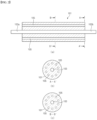
FIG. 3 is a view schematically illustrating a calendering roll for a calendering roll press for manufacturing a dry electrode according to a first embodiment of the present invention. -
FIG. 4 is a view schematically illustrating a calendering process through calendering rolls according to the present embodiment. -
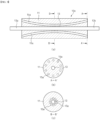
FIG. 5 is a view schematically illustrating a calendering roll for a calendering roll press for manufacturing a dry electrode according to a second embodiment of the present invention. -
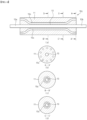
FIG. 6 is a view schematically illustrating a calendering roll for a calendering roll press for manufacturing a dry electrode according to a third embodiment of the present invention. -
FIG. 7 is a view schematically illustrating a calendering roll for a calendering roll press for manufacturing a dry electrode according to a fourth embodiment of the present invention. -
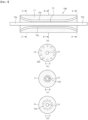
FIG. 8 is a view schematically illustrating a calendering roll for a calendering roll press for manufacturing a dry electrode according to a fifth embodiment of the present invention. -
- 10a, 10b, 10c, 10d, 10e: calendering roll
- 11: roll main body
- 13a, 13b: roll driving shaft
- 15a, 15b, 15c, 15d, 15e: oil path
- 21: dry electrode sheet
- An embodiment of the present invention provides a calendering roll for a calendering roll press for manufacturing a dry electrode disposed as a pair to press and elongate an electrode sheet in both directions, including: a cylindrical roll main body installed to extend in a width direction of the electrode sheet; a roll driving shaft installed to pass through a center portion of the roll main body in a longitudinal direction; and a plurality of oil paths formed outside the roll driving shaft to form a flow path through which oil flows, and to pass through the roll main body in the longitudinal direction, wherein an interval between the oil path and the roll driving shaft is formed to be largest at both sides of the roll main body in the longitudinal direction, and is formed to be smallest at the center portion of the roll main body.
- Hereinafter, embodiments the present invention will be described in detail. The invention is defined by the appended claims.
- It should be understood that terms such as "include" and "have" used throughout the specification are intended to indicate that the presence of a feature, number, step, operation, component, part, or a combination thereof described on the specification, but do not exclude the possibility of the presence or addition of one or more other features, numbers, steps, operations, components, or combinations thereof in advance.
- Further, when a portion such as a layer, a film, a region, a plate, or the like is referred to as being "on" another portion, this includes not only a case in which the portion is "directly on" the other portion but also a case in which there is a still another portion therebetween. On the other hand, when a portion such as a layer, a film, a region, a plate, or the like is referred to as being "under" another portion, this includes not only a case in which the portion is "directly under" the other portion but also a case in which there is still another portion therebetween. Further, being disposed "on" in the specification may mean that something is disposed on a lower portion or on an upper portion.
- In addition, when a portion such as a layer, a film, a region, a plate, or the like is referred to as being "on" another portion, this includes not only a case in which the portion is "directly on" the other portion but also a case in which there is a still another portion therebetween. On the other hand, when a portion such as a layer, a film, a region, a plate, or the like is referred to as being "under" another portion, this includes not only a case in which the portion is "directly under" the other portion but also a case in which there is still another portion therebetween. Further, being disposed "on" in the present application may mean that something is disposed on a lower portion or on an upper portion.
-
FIG. 3 is a view schematically illustrating a calendering roll for a calendering roll press for manufacturing a dry electrode according to a first embodiment of the present invention.FIG. 4 is a view schematically illustrating a calendering process through the calendering roll according to the present embodiment. - As shown in
FIG. 3 , calendering rolls 10a for a calendering roll press for manufacturing a dry electrode includes a cylindrical rollmain body 11 disposed as a pair, aroll driving shaft 13 formed at each of a center portion of the rollmain bodies 11, andoil paths 15a forming a flow path through which oil flows in the rollmain body 11. - As shown in
FIG. 4 , the rollmain body 11 is rotatably disposed as a pair, and is formed in a cylindrical shape extending in a width direction of adry electrode sheet 21. - According to the above-described structure, the
dry electrode sheet 21 inserted between the rollmain bodies 11 in the pair ofcalendering rolls 10a is elongated while passing between the rollmain bodies 11. - The
roll driving shaft 13 is formed in a shaft shape and is installed to pass through at the center portion of the rollmain body 11 in a longitudinal direction, and theroll driving shafts 13 are disposed to protrude from the center portions of both sides of the rollmain body 11, respectively. - The
oil paths 15a are provided so that oil for temperature control of thecalendering roll 10a flows, and thus are formed in the rollmain body 11, form a flow path through which oil flows outside theroll driving shaft 13, and are formed to pass through the rollmain body 11 in the longitudinal direction. - In this case, a plurality of
oil paths 15a are radially formed outside theroll driving shaft 13. - Here, according to the first embodiment of the present invention, an interval between the
oil path 15a and theroll driving shaft 13 is formed to be largest at both sides of the rollmain body 11 in the longitudinal direction, and is formed to be smallest at the center portion of the rollmain body 11. - The shape of each of the
oil paths 15a is provided to increase the bending rigidity of the rollmain body 11 against the static pressure applied to each of theroll driving shafts oil paths 15a at both sides of the rollmain body 11 are formed at a large interval from theroll driving shaft 13 and thus are disposed away from theroll driving shaft 13, and theoil paths 15a at the center portion of the rollmain body 11 are formed with a small interval from theroll driving shaft 13 and are disposed close to theroll driving shaft 13. - Accordingly, the interval between the
oil path 15a and theroll driving shaft 13 is formed to be largest at both sides of the rollmain body 11 in the longitudinal direction and the interval between theoil path 15a and theroll driving shaft 13 is formed to be smallest at the center portion of the rollmain body 11. - Like this, since the interval between the
oil path 15a and theroll driving shaft 13 at both sides of the rollmain body 11 in the longitudinal direction is maximally secured, the bending rigidity against the static pressure applied to each of theroll driving shafts - In the first embodiment, the
oil path 15a is formed so that the interval to theroll driving shaft 13 linearly changes from one side in the longitudinal direction of the rollmain body 11 toward the center portion. That is, theoil path 15a is formed so that the interval between theoil path 15a and theroll driving shaft 13 linearly changes from one side in the longitudinal direction of the rollmain body 11 toward the center portion. - According to the illustrated embodiment, the
oil path 15a is formed in a curved shape from one side in the longitudinal direction of the rollmain body 11 toward the center portion. - More specifically, the
oil path 15a is formed in a parabolic shape along the longitudinal direction of the rollmain body 11. - In the illustrated first embodiment of the present invention, the curved shape of the
oil path 15a is formed in the parabolic shape, but may also be formed in a circular arc shape or an oval shape, and may be changed to other various curved shapes. - According to the above-described structure, when static pressure is applied to each of the
roll driving shafts calendering roll 10a, the center portion of the rollmain body 11 of thecalendering roll 10a having a main problem of deformation due to static pressure is greatly amplified by a distance in proportion to the amount of deformation which occurs at both sides of the rollmain body 11, and since the bending rigidity against static pressure is increased as much as the interval to theoil path 15a at both sides of the rollmain body 11 that is secured to be larger, consequently, conventional problems such as bending of the center portion of thecalendering roll 10a, and strong static pressure acting on both sides of the rollmain body 11 are both solved. - Like this, since the interval between the
oil path 15a and theroll driving shaft 13 is configured to be smaller toward the center portion of the rollmain body 11, the bending rigidity of thecalendering roll 10a may be increased, and accordingly, the deformation of the center portion of the rollmain body 11 which comes into contact with the center of thedry electrode sheet 21 may be reduced, and a deformation deviation from the center to an end of thedry electrode sheet 21 may be minimized. - In an embodiment of the present invention, although a configuration which increases the bending rigidity against the static pressure applied to each of the
roll driving shafts calendering roll 10a by improving theoil paths 15a of thecalendering roll 10a applied to the calendering process is described, the bending rigidity of the roll against the static pressure may also be improved by applying the above-described structure to a roll or the like of a press process and a lamination process applied to a secondary battery manufacturing process. -
FIG. 5 is a view schematically illustrating a calendering roll for a calendering roll press for manufacturing a dry electrode according to a second embodiment of the present invention. - As shown in
FIG. 5 , acalendering roll 10b according to the present embodiment is formed in a shape in whichoil paths 15b formed in a rollmain body 11 are bent toward the other side from one side in a longitudinal direction of the rollmain body 11. - Here, the
oil paths 15b are formed linearly to a predetermined position from both sides of the rollmain body 11 in the longitudinal direction toward the inside, and then formed so that an interval to theroll driving shaft 13 linearly changes toward a center portion. - That is, in the second embodiment, the
oil paths 15b are each formed in a straight line shape with the constant interval to theroll driving shaft 13 to a predetermined position from both sides of the rollmain body 11 in the longitudinal direction, and then formed in a shape in which the interval linearly changes toward the center portion from the end portion of theoil path 15b. - Further, the
oil path 15b may be formed in a curved shape toward the center portion after being formed linearly to the predetermined position of the rollmain body 11. - For example, the linearly curved shape may be a parabolic shape.
- In the present embodiment, it is described that the curved shape of the
oil path 15b is formed in the parabolic shape, but theoil path 15b may also be formed in a circular arc shape or an oval shape, and may be changed to other various shapes. -
FIG. 6 is a view schematically illustrating a calendering roll for a calendering roll press for manufacturing a dry electrode according to a third embodiment of the present invention. - As shown in
FIG. 6 ,oil paths 15c formed in a rollmain body 11 of a calendering roll according to the present embodiment are formed linearly to a predetermined position from both sides of the rollmain body 11 in a longitudinal direction in directions facing each other and bent toward aroll driving shaft 13, and after bending, theoil paths 15c each have a shape in which each of the intervals is uniformly maintained toward a center portion. - That is, a configuration in which the
oil paths 15c of acalendering roll 10c of the third embodiment are formed linearly to the predetermined position from both sides of the rollmain body 11 in the longitudinal direction toward the inside is like the second embodiment, but there is a difference in that theoil path 15c is formed to be bent toward theroll driving shaft 13 after a portion formed linearly in theoil path 15c, and then is formed in a straight line toward the center portion from the portion formed to be bent in the configuration. - According to the above-described structure, the
oil path 15c of the present embodiment is formed so that the remaining portion except for the portion formed to be bent maintains the same interval to theroll driving shaft 13. - Here, in the
oil path 15c, it is preferable that the portion bent toward theroll driving shaft 13 is obliquely formed to be bent in a diagonal direction for flow of oil, and may be changed in other various ways. -
FIG. 7 is a view schematically illustrating a calendering roll for a calendering roll press for manufacturing a dry electrode according to a fourth embodiment of the present invention. - As shown in
FIG. 7 ,oil paths 15d formed in a rollmain body 11 of a calendering roll according to the present embodiment are bent inward to a predetermined position from both sides of the rollmain body 11 in a longitudinal direction, and then each have a shape in which each of the intervals is uniformly maintained. - That is, the
oil paths 15d of acalendering roll 10d of the fourth embodiment are bent to the predetermined position from both sides of the rollmain body 11 in the longitudinal direction in directions facing each other, and then each formed in a straight line toward a center portion from the bent portion of theoil path 15d. - According to the above-described structure, the
oil path 15d of the present embodiment is formed so that the remaining portion except for the bent portions at both sides of the rollmain body 11 maintains the same interval to theroll driving shaft 13. -
FIG. 8 is a view schematically illustrating a calendering roll for a calendering roll press for manufacturing a dry electrode according to a fifth embodiment of the present invention. - As shown in
FIG. 8 ,oil paths 15e formed in a rollmain body 11 of acalendering roll 10e according to the present embodiment are formed to be inclined at a predetermined angle from both sides of the rollmain body 11 in the longitudinal direction in directions facing each other, and then connected to a center portion in a curved shape. - That is, the
oil paths 15e of thecalendering roll 10e of the fifth embodiment are formed to be inclined at a predetermined angle to the predetermined position from both sides of the rollmain body 11 in the longitudinal direction in directions facing each other, and thus are formed in an approximate 'V' shape, and since a center portion of theoil path 15e forms a curved shape, theoil paths 15e extending to be inclined from both sides of the rollmain body 11 are smoothly connected to each other. - According to the above-described structure, as described in the first embodiment, since the
oil paths 15e of the present embodiment are disposed away from theroll driving shaft 13 at both sides of the rollmain body 11, and on the other hand, theoil paths 15e are disposed close to theroll driving shaft 13 at the center portion of the rollmain body 11, the bending rigidity of the rollmain body 11 against the static pressure applied to each of the roil drivingshafts - Hereinafter, although the present invention has been illustrated and described in relation to specific embodiments, the scope of the present invention is defined by the appended claims.
Claims (11)
- A calendering roll (10a, 10b, 10c, 10d, 10e) for a calendering roll press for manufacturing a dry electrode, the calendering roll comprising:a cylindrical roll main body (11) installed to extend in a width direction of an electrode sheet (21); anda roll driving shaft (13a, 13b) disposed to pass through a center axis of the cylindrical roll main body (11) in a longitudinal direction;
anda plurality of oil paths (15a, 15b, 15c, 15d, 15e) provided in the cylindrical roll main body (11) that pass through the cylindrical roll main body (11) in the longitudinal direction, wherein the plurality of oil paths (15a, 15b, 15c, 15d, 15e) are disposed between the roll driving shaft (13a, 13b) and an exterior of the cylindrical roll main body (11); characterised in thatan interval between the plurality of oil paths (15a, 15b, 15c, 15d, 15e) and the roll driving shaft (13a, 13b) is largest at both sides of the cylindrical roll main body (11) in the longitudinal direction and is smallest at a center portion of the cylindrical roll main body (11) in the longitudinal direction. - The calendering roll (10a, 10b, 10c, 10d, 10e) of claim 1, wherein the interval linearly changes from one side of the cylindrical roll main body (11) toward the center portion.
- The calendering roll (10a, 10b, 10c, 10d, 10e) of claim 2, wherein the plurality of oil paths (15a, 15b, 15c, 15d, 15e) have a curved shape extending from one side of the cylindrical roll main body (11) toward the center portion.
- The calendering roll (10a, 10b, 10c, 10d, 10e) of claim 3, wherein the plurality of oil paths (15a, 15b, 15c, 15d, 15e) have a parabolic shape extending along the cylindrical roll main body (11).
- The calendering roll (10a, 10b, 10c, 10d, 10e) of claim 1, wherein the plurality of oil paths (15a, 15b, 15c, 15d, 15e) have a shape bent toward the roll driving shaft (13a, 13b).
- The calendering roll (10a, 10b, 10c, 10d, 10e) of claim 5, wherein the plurality of oil paths (15a, 15b, 15c, 15d, 15e) have the shape extending in a constant interval from each side of the cylindrical roll main body (11) toward a predetermined position in the longitudinal direction,
wherein the interval of the plurality of oil paths (15a, 15b, 15c, 15d, 15e) linearly changes extending from the predetermined position to the center portion. - The calendering roll (10a, 10b, 10c, 10d, 10e) of claim 6, wherein the plurality of oil paths (15a, 15b, 15c, 15d, 15e) have the shape extending in the constant interval from each side of the cylindrical roll main body (11) toward the predetermined position in the longitudinal direction,
wherein the interval of the plurality of oil paths (15a, 15b, 15c, 15d, 15e) each have a curved shape extending from the predetermined position to the center portion. - The calendering roll (10a, 10b, 10c, 10d, 10e) of claim 7, wherein the curved shape is a parabolic shape.
- The calendering roll (10a, 10b, 10c, 10d, 10e) of claim 5, wherein the plurality of oil paths (15a, 15b, 15c, 15d, 15e) extend in a first constant interval from each side of the cylindrical roll main body (11) to a predetermined position,wherein the plurality of oil paths (15a, 15b, 15c, 15d, 15e) bend toward the roll driving shaft (13a, 13b) at the predetermined position andwherein the plurality of oil paths (15a, 15b, 15c, 15d, 15e) have the shape extending in a second constant interval from the predetermined position toward the center portion.
- The calendering roll (10a, 10b, 10c, 10d, 10e) of claim 5, wherein the plurality of oil paths (15a, 15b, 15c, 15d, 15e) extending from both sides of the cylindrical roll main body (11) in the longitudinal direction are bent to a predetermined position toward the roll driving shaft (13a, 13b), and
wherein the plurality of oil paths (15a, 15b, 15c, 15d, 15e) have the shape extending in a constant interval from the predetermined position toward the center portion. - The calendering roll (10a, 10b, 10c, 10d, 10e) of claim 5, wherein the plurality of oil paths (15a, 15b, 15c, 15d, 15e) are inclined at a predetermined angle from both sides of the cylindrical roll main body (11) and extend in the longitudinal direction toward the roll driving shaft (13a, 13b),
wherein the plurality of oil paths communicate each other in the center portion to have a curved boundary.
Applications Claiming Priority (2)
| Application Number | Priority Date | Filing Date | Title |
|---|---|---|---|
| KR1020210172114A KR102940118B1 (en) | 2021-12-03 | 2021-12-03 | Calending roll of calending roll press for manufacturing dry electrode |
| PCT/KR2022/016548 WO2023101222A1 (en) | 2021-12-03 | 2022-10-27 | Calendering rolls of calendering roll press for manufacturing dry electrode |
Publications (3)
| Publication Number | Publication Date |
|---|---|
| EP4250386A1 EP4250386A1 (en) | 2023-09-27 |
| EP4250386A4 EP4250386A4 (en) | 2024-07-31 |
| EP4250386B1 true EP4250386B1 (en) | 2025-06-25 |
Family
ID=86612644
Family Applications (1)
| Application Number | Title | Priority Date | Filing Date |
|---|---|---|---|
| EP22901581.3A Active EP4250386B1 (en) | 2021-12-03 | 2022-10-27 | Calendering rolls for calendering roll press for manufacturing dry electrode |
Country Status (9)
| Country | Link |
|---|---|
| US (1) | US20240047641A1 (en) |
| EP (1) | EP4250386B1 (en) |
| JP (1) | JP7507978B2 (en) |
| KR (1) | KR102940118B1 (en) |
| CN (1) | CN116685459B (en) |
| ES (1) | ES3038882T3 (en) |
| HU (1) | HUE072277T2 (en) |
| PL (1) | PL4250386T3 (en) |
| WO (1) | WO2023101222A1 (en) |
Family Cites Families (13)
| Publication number | Priority date | Publication date | Assignee | Title |
|---|---|---|---|---|
| JP2561143Y2 (en) * | 1992-06-19 | 1998-01-28 | 住友金属工業株式会社 | Perforated roll |
| JPH10192915A (en) * | 1997-01-09 | 1998-07-28 | Mitsubishi Heavy Ind Ltd | Rolling mill and rolling equipment |
| DE19830033C1 (en) * | 1998-06-26 | 1999-07-08 | Mannesmann Ag | Rolling mill for hot rolling of flat products |
| JP2005288535A (en) * | 2004-04-06 | 2005-10-20 | Hitachi Engineering & Services Co Ltd | Rolling apparatus of metal foil and rolling roll |
| JP2011181348A (en) * | 2010-03-01 | 2011-09-15 | Hitachi Engineering & Services Co Ltd | Rolling press machine for secondary battery electrode material |
| KR101299374B1 (en) | 2011-05-30 | 2013-08-22 | 현대제철 주식회사 | Apparatus for cooling inside of roll |
| JP5704050B2 (en) * | 2011-10-14 | 2015-04-22 | トヨタ自動車株式会社 | Rolling roll |
| JP5797171B2 (en) * | 2012-08-27 | 2015-10-21 | 株式会社日立パワーソリューションズ | Roll press machine and roll press method |
| CN106252606B (en) * | 2016-10-10 | 2019-07-12 | 宁德时代新能源科技股份有限公司 | Four-roll lithium belt calendering mechanism |
| KR102028611B1 (en) | 2018-07-27 | 2019-10-04 | 장명희 | Device for Laminating Electrode Assembly Used in Manufacturing Secondary Battery |
| JP2020170637A (en) * | 2019-04-03 | 2020-10-15 | トヨタ自動車株式会社 | Electrode sheet manufacturing method |
| CN213944327U (en) * | 2020-12-19 | 2021-08-13 | 安徽楚江特钢有限公司 | Wear-resistant high-speed steel roller |
| CN113020274A (en) * | 2021-02-22 | 2021-06-25 | 山西铄金高温材料科技有限公司 | Internal cooling system capable of uniformly reducing temperature of roller |
-
2021
- 2021-12-03 KR KR1020210172114A patent/KR102940118B1/en active Active
-
2022
- 2022-10-27 WO PCT/KR2022/016548 patent/WO2023101222A1/en not_active Ceased
- 2022-10-27 CN CN202280008467.3A patent/CN116685459B/en active Active
- 2022-10-27 HU HUE22901581A patent/HUE072277T2/en unknown
- 2022-10-27 PL PL22901581.3T patent/PL4250386T3/en unknown
- 2022-10-27 JP JP2023538827A patent/JP7507978B2/en active Active
- 2022-10-27 ES ES22901581T patent/ES3038882T3/en active Active
- 2022-10-27 US US18/269,023 patent/US20240047641A1/en active Pending
- 2022-10-27 EP EP22901581.3A patent/EP4250386B1/en active Active
Also Published As
| Publication number | Publication date |
|---|---|
| JP2024501670A (en) | 2024-01-15 |
| HUE072277T2 (en) | 2025-11-28 |
| US20240047641A1 (en) | 2024-02-08 |
| WO2023101222A1 (en) | 2023-06-08 |
| EP4250386A1 (en) | 2023-09-27 |
| KR102940118B1 (en) | 2026-03-16 |
| KR20230083788A (en) | 2023-06-12 |
| ES3038882T3 (en) | 2025-10-15 |
| CN116685459A (en) | 2023-09-01 |
| EP4250386A4 (en) | 2024-07-31 |
| JP7507978B2 (en) | 2024-06-28 |
| CN116685459B (en) | 2026-04-21 |
| PL4250386T3 (en) | 2025-09-08 |
Similar Documents
| Publication | Publication Date | Title |
|---|---|---|
| CN111668451B (en) | A method for preparing pole pieces for wound multi-pole batteries, pole pieces and batteries | |
| KR101767636B1 (en) | Press roll for electode sheet | |
| EP2059961B1 (en) | Electrode for electric storage device and electric storage device | |
| CN117637991A (en) | A pole piece, electrode assembly and battery | |
| EP4106035B1 (en) | Electrode assembly comprising anode and anode sheet having improved electrode stacking properties and manufacturing method therefor | |
| US20130344364A1 (en) | Lithium ion secondary battery | |
| CN104011907A (en) | Method For Producing Electrode And Method For Producing Non-Aqueous Electrolyte Battery | |
| CN103392257B (en) | Lithium ion battery | |
| US20230411582A1 (en) | Electrode plate extension device and electrode plate manufacturing apparatus | |
| KR100637505B1 (en) | Electrode plate of secondary battery, manufacturing method thereof and secondary battery using this electrode plate | |
| JP2007280687A (en) | Battery electrode | |
| EP4250386B1 (en) | Calendering rolls for calendering roll press for manufacturing dry electrode | |
| CN114628795A (en) | Lithium ion battery | |
| JP5186730B2 (en) | Battery electrode | |
| US20250006945A1 (en) | Electrode, electrode assembly and rechargeable battery including the same | |
| JP2014102896A (en) | Power storage device, secondary battery, and electrode manufacturing method | |
| KR100599797B1 (en) | Secondary Battery and Electrode Assembly Used in the Same | |
| JP2012181922A (en) | Battery cell using coating-type electrode group | |
| EP4254533A1 (en) | Calendering roll press for manufacturing dry electrodes | |
| JP2017059458A (en) | Lithium ion secondary battery manufacturing method and lithium ion secondary battery electrode structure | |
| CN118056330A (en) | Accumulator element and method for producing same | |
| EP3694025B1 (en) | Roll press apparatus comprising stepped revision member and method for pressing using the same | |
| KR100708864B1 (en) | Secondary battery | |
| US20260094861A1 (en) | Pouch-Type Battery Cell Pressing Member, Battery Module Including the Same, and Pouch-Type Battery Cell Pressing Method Using the Same | |
| US20240162450A1 (en) | Current collector, electrode plate and preparation method thereof, electrode assembly, and secondary battery |
Legal Events
| Date | Code | Title | Description |
|---|---|---|---|
| STAA | Information on the status of an ep patent application or granted ep patent |
Free format text: STATUS: THE INTERNATIONAL PUBLICATION HAS BEEN MADE |
|
| PUAI | Public reference made under article 153(3) epc to a published international application that has entered the european phase |
Free format text: ORIGINAL CODE: 0009012 |
|
| STAA | Information on the status of an ep patent application or granted ep patent |
Free format text: STATUS: REQUEST FOR EXAMINATION WAS MADE |
|
| 17P | Request for examination filed |
Effective date: 20230621 |
|
| AK | Designated contracting states |
Kind code of ref document: A1 Designated state(s): AL AT BE BG CH CY CZ DE DK EE ES FI FR GB GR HR HU IE IS IT LI LT LU LV MC ME MK MT NL NO PL PT RO RS SE SI SK SM TR |
|
| A4 | Supplementary search report drawn up and despatched |
Effective date: 20240703 |
|
| RIC1 | Information provided on ipc code assigned before grant |
Ipc: H01M 10/04 20060101ALI20240627BHEP Ipc: B30B 11/16 20060101ALI20240627BHEP Ipc: H01M 4/04 20060101AFI20240627BHEP |
|
| GRAP | Despatch of communication of intention to grant a patent |
Free format text: ORIGINAL CODE: EPIDOSNIGR1 |
|
| STAA | Information on the status of an ep patent application or granted ep patent |
Free format text: STATUS: GRANT OF PATENT IS INTENDED |
|
| DAV | Request for validation of the european patent (deleted) | ||
| DAX | Request for extension of the european patent (deleted) | ||
| INTG | Intention to grant announced |
Effective date: 20250224 |
|
| P01 | Opt-out of the competence of the unified patent court (upc) registered |
Free format text: CASE NUMBER: APP_13988/2025 Effective date: 20250321 |
|
| GRAS | Grant fee paid |
Free format text: ORIGINAL CODE: EPIDOSNIGR3 |
|
| GRAA | (expected) grant |
Free format text: ORIGINAL CODE: 0009210 |
|
| STAA | Information on the status of an ep patent application or granted ep patent |
Free format text: STATUS: THE PATENT HAS BEEN GRANTED |
|
| AK | Designated contracting states |
Kind code of ref document: B1 Designated state(s): AL AT BE BG CH CY CZ DE DK EE ES FI FR GB GR HR HU IE IS IT LI LT LU LV MC ME MK MT NL NO PL PT RO RS SE SI SK SM TR |
|
| REG | Reference to a national code |
Ref country code: GB Ref legal event code: FG4D |
|
| REG | Reference to a national code |
Ref country code: CH Ref legal event code: EP |
|
| REG | Reference to a national code |
Ref country code: CH Ref legal event code: EP |
|
| REG | Reference to a national code |
Ref country code: IE Ref legal event code: FG4D |
|
| REG | Reference to a national code |
Ref country code: DE Ref legal event code: R096 Ref document number: 602022016631 Country of ref document: DE |
|
| REG | Reference to a national code |
Ref country code: SE Ref legal event code: TRGR |
|
| PG25 | Lapsed in a contracting state [announced via postgrant information from national office to epo] |
Ref country code: FI Free format text: LAPSE BECAUSE OF FAILURE TO SUBMIT A TRANSLATION OF THE DESCRIPTION OR TO PAY THE FEE WITHIN THE PRESCRIBED TIME-LIMIT Effective date: 20250625 |
|
| REG | Reference to a national code |
Ref country code: LT Ref legal event code: MG9D |
|
| PG25 | Lapsed in a contracting state [announced via postgrant information from national office to epo] |
Ref country code: GR Free format text: LAPSE BECAUSE OF FAILURE TO SUBMIT A TRANSLATION OF THE DESCRIPTION OR TO PAY THE FEE WITHIN THE PRESCRIBED TIME-LIMIT Effective date: 20250926 Ref country code: NO Free format text: LAPSE BECAUSE OF FAILURE TO SUBMIT A TRANSLATION OF THE DESCRIPTION OR TO PAY THE FEE WITHIN THE PRESCRIBED TIME-LIMIT Effective date: 20250925 |
|
| REG | Reference to a national code |
Ref country code: ES Ref legal event code: FG2A Ref document number: 3038882 Country of ref document: ES Kind code of ref document: T3 Effective date: 20251015 |
|
| PG25 | Lapsed in a contracting state [announced via postgrant information from national office to epo] |
Ref country code: BG Free format text: LAPSE BECAUSE OF FAILURE TO SUBMIT A TRANSLATION OF THE DESCRIPTION OR TO PAY THE FEE WITHIN THE PRESCRIBED TIME-LIMIT Effective date: 20250625 |
|
| PGFP | Annual fee paid to national office [announced via postgrant information from national office to epo] |
Ref country code: BE Payment date: 20250922 Year of fee payment: 4 |
|
| PG25 | Lapsed in a contracting state [announced via postgrant information from national office to epo] |
Ref country code: HR Free format text: LAPSE BECAUSE OF FAILURE TO SUBMIT A TRANSLATION OF THE DESCRIPTION OR TO PAY THE FEE WITHIN THE PRESCRIBED TIME-LIMIT Effective date: 20250625 |
|
| PGFP | Annual fee paid to national office [announced via postgrant information from national office to epo] |
Ref country code: FR Payment date: 20250925 Year of fee payment: 4 |
|
| PGFP | Annual fee paid to national office [announced via postgrant information from national office to epo] |
Ref country code: SE Payment date: 20250923 Year of fee payment: 4 |
|
| PG25 | Lapsed in a contracting state [announced via postgrant information from national office to epo] |
Ref country code: RS Free format text: LAPSE BECAUSE OF FAILURE TO SUBMIT A TRANSLATION OF THE DESCRIPTION OR TO PAY THE FEE WITHIN THE PRESCRIBED TIME-LIMIT Effective date: 20250925 |
|
| PG25 | Lapsed in a contracting state [announced via postgrant information from national office to epo] |
Ref country code: LV Free format text: LAPSE BECAUSE OF FAILURE TO SUBMIT A TRANSLATION OF THE DESCRIPTION OR TO PAY THE FEE WITHIN THE PRESCRIBED TIME-LIMIT Effective date: 20250625 |
|
| REG | Reference to a national code |
Ref country code: NL Ref legal event code: MP Effective date: 20250625 |
|
| PGFP | Annual fee paid to national office [announced via postgrant information from national office to epo] |
Ref country code: HU Payment date: 20251029 Year of fee payment: 4 |
|
| PG25 | Lapsed in a contracting state [announced via postgrant information from national office to epo] |
Ref country code: NL Free format text: LAPSE BECAUSE OF FAILURE TO SUBMIT A TRANSLATION OF THE DESCRIPTION OR TO PAY THE FEE WITHIN THE PRESCRIBED TIME-LIMIT Effective date: 20250625 |
|
| REG | Reference to a national code |
Ref country code: HU Ref legal event code: AG4A Ref document number: E072277 Country of ref document: HU |
|
| PG25 | Lapsed in a contracting state [announced via postgrant information from national office to epo] |
Ref country code: PT Free format text: LAPSE BECAUSE OF FAILURE TO SUBMIT A TRANSLATION OF THE DESCRIPTION OR TO PAY THE FEE WITHIN THE PRESCRIBED TIME-LIMIT Effective date: 20251027 |
|
| REG | Reference to a national code |
Ref country code: AT Ref legal event code: MK05 Ref document number: 1807501 Country of ref document: AT Kind code of ref document: T Effective date: 20250625 |
|
| PG25 | Lapsed in a contracting state [announced via postgrant information from national office to epo] |
Ref country code: IS Free format text: LAPSE BECAUSE OF FAILURE TO SUBMIT A TRANSLATION OF THE DESCRIPTION OR TO PAY THE FEE WITHIN THE PRESCRIBED TIME-LIMIT Effective date: 20251025 |
|
| PGFP | Annual fee paid to national office [announced via postgrant information from national office to epo] |
Ref country code: DE Payment date: 20250922 Year of fee payment: 4 |
|
| PG25 | Lapsed in a contracting state [announced via postgrant information from national office to epo] |
Ref country code: AT Free format text: LAPSE BECAUSE OF FAILURE TO SUBMIT A TRANSLATION OF THE DESCRIPTION OR TO PAY THE FEE WITHIN THE PRESCRIBED TIME-LIMIT Effective date: 20250625 Ref country code: SM Free format text: LAPSE BECAUSE OF FAILURE TO SUBMIT A TRANSLATION OF THE DESCRIPTION OR TO PAY THE FEE WITHIN THE PRESCRIBED TIME-LIMIT Effective date: 20250625 |
|
| PG25 | Lapsed in a contracting state [announced via postgrant information from national office to epo] |
Ref country code: CZ Free format text: LAPSE BECAUSE OF FAILURE TO SUBMIT A TRANSLATION OF THE DESCRIPTION OR TO PAY THE FEE WITHIN THE PRESCRIBED TIME-LIMIT Effective date: 20250625 |
|
| PGFP | Annual fee paid to national office [announced via postgrant information from national office to epo] |
Ref country code: PL Payment date: 20250925 Year of fee payment: 4 |
|
| PG25 | Lapsed in a contracting state [announced via postgrant information from national office to epo] |
Ref country code: EE Free format text: LAPSE BECAUSE OF FAILURE TO SUBMIT A TRANSLATION OF THE DESCRIPTION OR TO PAY THE FEE WITHIN THE PRESCRIBED TIME-LIMIT Effective date: 20250625 |
|
| PG25 | Lapsed in a contracting state [announced via postgrant information from national office to epo] |
Ref country code: SK Free format text: LAPSE BECAUSE OF FAILURE TO SUBMIT A TRANSLATION OF THE DESCRIPTION OR TO PAY THE FEE WITHIN THE PRESCRIBED TIME-LIMIT Effective date: 20250625 |
|
| PGFP | Annual fee paid to national office [announced via postgrant information from national office to epo] |
Ref country code: ES Payment date: 20251117 Year of fee payment: 4 |
|
| PG25 | Lapsed in a contracting state [announced via postgrant information from national office to epo] |
Ref country code: RO Free format text: LAPSE BECAUSE OF FAILURE TO SUBMIT A TRANSLATION OF THE DESCRIPTION OR TO PAY THE FEE WITHIN THE PRESCRIBED TIME-LIMIT Effective date: 20250625 |
|
| PG25 | Lapsed in a contracting state [announced via postgrant information from national office to epo] |
Ref country code: DK Free format text: LAPSE BECAUSE OF FAILURE TO SUBMIT A TRANSLATION OF THE DESCRIPTION OR TO PAY THE FEE WITHIN THE PRESCRIBED TIME-LIMIT Effective date: 20250625 |
|
| PG25 | Lapsed in a contracting state [announced via postgrant information from national office to epo] |
Ref country code: IT Free format text: LAPSE BECAUSE OF FAILURE TO SUBMIT A TRANSLATION OF THE DESCRIPTION OR TO PAY THE FEE WITHIN THE PRESCRIBED TIME-LIMIT Effective date: 20250625 |
|
| PLBE | No opposition filed within time limit |
Free format text: ORIGINAL CODE: 0009261 |
|
| STAA | Information on the status of an ep patent application or granted ep patent |
Free format text: STATUS: NO OPPOSITION FILED WITHIN TIME LIMIT |