EP4247371B1 - Ezh2 inhibition therapies for the treatment of androgen receptor mutated prostate cancers - Google Patents
Ezh2 inhibition therapies for the treatment of androgen receptor mutated prostate cancers Download PDFInfo
- Publication number
- EP4247371B1 EP4247371B1 EP21827282.1A EP21827282A EP4247371B1 EP 4247371 B1 EP4247371 B1 EP 4247371B1 EP 21827282 A EP21827282 A EP 21827282A EP 4247371 B1 EP4247371 B1 EP 4247371B1
- Authority
- EP
- European Patent Office
- Prior art keywords
- methyl
- androgen receptor
- prostate cancer
- compound
- dihydropyridin
- Prior art date
- Legal status (The legal status is an assumption and is not a legal conclusion. Google has not performed a legal analysis and makes no representation as to the accuracy of the status listed.)
- Active
Links
Images

Classifications
-
- A—HUMAN NECESSITIES
- A61—MEDICAL OR VETERINARY SCIENCE; HYGIENE
- A61K—PREPARATIONS FOR MEDICAL, DENTAL OR TOILETRY PURPOSES
- A61K31/00—Medicinal preparations containing organic active ingredients
- A61K31/33—Heterocyclic compounds
- A61K31/395—Heterocyclic compounds having nitrogen as a ring hetero atom, e.g. guanethidine or rifamycins
- A61K31/435—Heterocyclic compounds having nitrogen as a ring hetero atom, e.g. guanethidine or rifamycins having six-membered rings with one nitrogen as the only ring hetero atom
- A61K31/44—Non condensed pyridines; Hydrogenated derivatives thereof
- A61K31/4427—Non condensed pyridines; Hydrogenated derivatives thereof containing further heterocyclic ring systems
- A61K31/4433—Non condensed pyridines; Hydrogenated derivatives thereof containing further heterocyclic ring systems containing a six-membered ring with oxygen as a ring hetero atom
-
- A—HUMAN NECESSITIES
- A61—MEDICAL OR VETERINARY SCIENCE; HYGIENE
- A61K—PREPARATIONS FOR MEDICAL, DENTAL OR TOILETRY PURPOSES
- A61K31/00—Medicinal preparations containing organic active ingredients
- A61K31/33—Heterocyclic compounds
- A61K31/395—Heterocyclic compounds having nitrogen as a ring hetero atom, e.g. guanethidine or rifamycins
- A61K31/435—Heterocyclic compounds having nitrogen as a ring hetero atom, e.g. guanethidine or rifamycins having six-membered rings with one nitrogen as the only ring hetero atom
- A61K31/44—Non condensed pyridines; Hydrogenated derivatives thereof
- A61K31/4427—Non condensed pyridines; Hydrogenated derivatives thereof containing further heterocyclic ring systems
- A61K31/443—Non condensed pyridines; Hydrogenated derivatives thereof containing further heterocyclic ring systems containing a five-membered ring with oxygen as a ring hetero atom
-
- A—HUMAN NECESSITIES
- A61—MEDICAL OR VETERINARY SCIENCE; HYGIENE
- A61K—PREPARATIONS FOR MEDICAL, DENTAL OR TOILETRY PURPOSES
- A61K31/00—Medicinal preparations containing organic active ingredients
- A61K31/33—Heterocyclic compounds
- A61K31/395—Heterocyclic compounds having nitrogen as a ring hetero atom, e.g. guanethidine or rifamycins
- A61K31/41—Heterocyclic compounds having nitrogen as a ring hetero atom, e.g. guanethidine or rifamycins having five-membered rings with two or more ring hetero atoms, at least one of which being nitrogen, e.g. tetrazole
- A61K31/4164—1,3-Diazoles
- A61K31/4166—1,3-Diazoles having oxo groups directly attached to the heterocyclic ring, e.g. phenytoin
-
- A—HUMAN NECESSITIES
- A61—MEDICAL OR VETERINARY SCIENCE; HYGIENE
- A61K—PREPARATIONS FOR MEDICAL, DENTAL OR TOILETRY PURPOSES
- A61K45/00—Medicinal preparations containing active ingredients not provided for in groups A61K31/00 - A61K41/00
- A61K45/06—Mixtures of active ingredients without chemical characterisation, e.g. antiphlogistics and cardiaca
-
- A—HUMAN NECESSITIES
- A61—MEDICAL OR VETERINARY SCIENCE; HYGIENE
- A61P—SPECIFIC THERAPEUTIC ACTIVITY OF CHEMICAL COMPOUNDS OR MEDICINAL PREPARATIONS
- A61P35/00—Antineoplastic agents
-
- A—HUMAN NECESSITIES
- A61—MEDICAL OR VETERINARY SCIENCE; HYGIENE
- A61P—SPECIFIC THERAPEUTIC ACTIVITY OF CHEMICAL COMPOUNDS OR MEDICINAL PREPARATIONS
- A61P35/00—Antineoplastic agents
- A61P35/04—Antineoplastic agents specific for metastasis
-
- A—HUMAN NECESSITIES
- A61—MEDICAL OR VETERINARY SCIENCE; HYGIENE
- A61K—PREPARATIONS FOR MEDICAL, DENTAL OR TOILETRY PURPOSES
- A61K2300/00—Mixtures or combinations of active ingredients, wherein at least one active ingredient is fully defined in groups A61K31/00 - A61K41/00
Definitions
- prostate cancer is the second most common type of cancer amongst men in the United States and is the second leading cause of cancer death in this population.
- the growth and survival of prostate cancer cells depend primarily on the androgen receptor signaling pathway. Cancer cells can use the binding of androgens to androgen receptors to trigger abnormal cell growth and tumor progression.
- ADT androgen deprivation therapy
- Medical castration involves gonadotropin-releasing hormone antagonists, alone or in combination with first generation anti-androgen therapy.
- Most men with prostate cancer treated with ADT respond, as measured by tumor regression, relief of symptoms and reductions in serum prostate-specific antigen, or PSA, level and are considered to have hormone-sensitive prostate cancer.
- CRPC castration-resistant prostate cancer
- Castration-resistant prostate cancer that spreads, or metastasizes, to other parts of the body is diagnosed as mCRPC and may be characterized by increasing PSA levels, elevated circulating tumor cell (CTC) counts and soft tissue disease. Elevated CTC counts have been demonstrated to be a poor prognostic factor for overall survival in patients with mCRPC. See e.g., Int. J. Mol. Sci. 2016, 17(9), 1580 .
- CTCs are cells that have shed from a primary tumor and are carried around the body in the blood and may lead to metastases. A 30% decline in CTC counts as early as four weeks after treatment initiation suggests that advanced prostate cancer patients may benefit from treatment.
- mCRPC patients with mCRPC have an average survival of approximately 30 months and experience a deterioration in quality of life despite treatment with the available therapeutic options.
- the current standard of practice is to treat mCRPC with a second generation androgen receptor signaling (ARS) inhibitor, such as abiraterone acetate or enzalutamide.
- ARS second generation androgen receptor signaling
- Such products are approved in the United States for first-line therapy in chemotherapy-na ⁇ ve patients with mCRPC as well as for second-line treatment in patients who have received prior chemotherapy.
- Androgen receptor (AR) signaling is intimately involved in prostate cancer development and growth, and castration-resistant prostate cancer transformation, and is the target for hormonal therapies, such as abiraterone acetate and enzalutamide.
- hormonal therapies such as abiraterone acetate and enzalutamide.
- AR aberrations such as AR copy number variations (CNVs), alternative splice variants, and AR point mutations are among the main causes of resistance to anti-androgen treatment. See e.g., Rice et al., Frontiers in Oncology 2019;9:1-12 ; Martignano et al., Transl Cancer Res 2016;5(Suppl 4):S803-S808 and Anantharaman et al., Urol Oncol 2016;34:356-67 .
- ARSI an androgen receptor signaling inhibitor
- an ARSI such as enzalutamide for use in treating prostate cancer characterized by having at least one AR mutation.
- an ARSI such as enzalutamide
- compositions comprising 7-chloro-2-(4-(3-methoxyazetidin-1-yl)cyclohexyl)-2,4-dimethyl-N-((6-methyl-4-(methylthio)-2-oxo-1,2-dihydropyridin-3-yl)methyl)benzo[d][1,3]dioxole-5-carboxamide; or a pharmaceutically acceptable salt thereof; and a second agent selected from a topoisomerase inhibitor, a DNA alkylating agent, and an ARSI; and optionally a pharmaceutically acceptable carrier, as well as said compositions for their use for treating prostate cancer characterized by having at least one AR mutation.
- AR androgen receptor
- AR androgen receptor
- AR androgen receptor
- compositions comprising an effective amount of 7-chloro-2-(4-(3-methoxyazetidin-1-yl)cyclohexyl)-2,4-dimethyl-N-((6-methyl-4-(methylthio)-2-oxo-1,2-dihydropyridin-3-yl)methyl)benzo[d][1,3]dioxole-5-carboxamide, or a pharmaceutically acceptable salt thereof, for use in treating a prostate cancer comprising at least one androgen receptor (AR) mutation.
- AR androgen receptor
- AR androgen receptor
- AR androgen receptor
- a second embodiment provided herein is the compound 7-chloro-2-(4-(3-methoxyazetidin-1-yl)cyclohexyl)-2,4-dimethyl-N-((6-methyl-4-(methylthio)-2-oxo-1,2-dihydropyridin-3-yl)methyl)benzo[d][1,3]dioxole-5-carboxamide, or a pharmaceutically acceptable salt thereof; and an effective amount of an ARSI for use in treating a prostate cancer comprising at least one androgen receptor (AR) mutation.
- AR androgen receptor
- compositions comprising an effective amount of 7-chloro-2-(4-(3-methoxyazetidin-1-yl)cyclohexyl)-2,4-dimethyl-N-((6-methyl-4-(methylthio)-2-oxo-1,2-dihydropyridin-3-yl)methyl)benzo[d][1,3]dioxole-5-carboxamide, or a pharmaceutically acceptable salt thereof; and an effective amount of an ARSI for use in treating a prostate cancer comprising at least one androgen receptor (AR) mutation.
- AR androgen receptor
- the at least one AR mutation of the present invention occurs in the ligand binding domain or the transactivation domain, or both, of the AR receptor.
- the at least one AR mutation of the present invention occurs in the ligand binding domain.
- the at least one AR mutation of the present invention is selected from W742L, A491R fs, S522R, L638V, L702H, H875Y, T878A, and F877L.
- the at least one AR mutation of the present invention is selected from W742L, A491R fs, S522R, L638V, L702H, H875Y, and T878A.
- the at least one AR mutation of the present invention is a pathogenic AR mutation.
- Pathogenic androgen receptor (AR) mutations include those mutations that increases a subject's susceptibility or predisposition to that prostate cancer, or which decreases a subject's susceptibility, predisposition, or response to hormonal therapies such as treatment with an ARSI.
- Pathogenic AR mutations can occur in the ligand binding domain or the transactivation domain, or both, of the AR receptor.
- the at least one AR mutation of the present invention e.g., as in the first or second embodiment
- the at least one AR mutation of the present invention (e.g., as in the first or second embodiment) is H875Y.
- Androgen receptor signaling inhibitors of the present invention refer to chemical or biological agents which block the androgen receptor (AR) and inhibit or suppress androgen production.
- the androgen receptor signaling inhibitors of the present invention e.g., as in the second embodiment
- the androgen receptor signaling inhibitors of the present invention is enzalutamide.
- the androgen receptor signaling inhibitors of the present invention is abiraterone acetate (wherein the abiraterone acetate may be included alone or in combination with prednisone).
- treatment refers to reversing, alleviating, or inhibiting the progress of a prostate cancer, or one or more symptoms thereof, as described herein.
- Prostate cancers treated by the compounds and compositions of the present invention include, but are not limited to, acinar adenocarcinoma, ductal adenocarcinoma, transitional cell carcinoma, neuroendocrine prostate cancer, basal cell prostate cancer, prostate sarcoma, and castration-resistant prostate cancer such as metastatic castration-resistant prostate cancer.
- Each of the disclosed prostate cancers may be "advanced", meaning that the recited cancer is unresectable, i.e., the cancer is defined as one that cannot be removed completely through surgery or that the cancer is metastatic, or both.
- "advanced cancer” means that the cancer is unresectable.
- the prostate cancer to be treated by the compounds and compositions of the present invention is metastatic castration-resistant prostate cancer
- Prostate cancers described herein may also be "relapsed” cancers.
- the term “relapsed cancer” refers to a cancer which was previously in remission and has returned, or the signs and symptoms of the cancer have returned. Remission includes both partial remission (some or not all signs and symptoms of the cancer have disappeared) and complete remission (all signs and symptoms of the cancer have disappeared, although the cancer may still remain in the body).
- a prostate cancer that is "advanced relapsed” means that the cancer was in remission and has returned and is unresectable.
- a specific dosage and treatment regimen for any particular patient will depend upon a variety of factors, including age, body weight, general health, sex, diet, time of administration, rate of excretion, drug combination, the judgment of the treating physician, and the severity of the particular disease being treated.
- the amount of a provided compound in the composition will also depend upon the particular compound in the composition.
- subject and “patient” may be used interchangeably, and means a mammal in need of treatment, e.g., companion animals (e.g., dogs, cats, and the like), farm animals (e.g ., cows, pigs, horses, sheep, goats and the like) and laboratory animals (e.g ., rats, mice, guinea pigs and the like).
- companion animals e.g., dogs, cats, and the like
- farm animals e.g ., cows, pigs, horses, sheep, goats and the like
- laboratory animals e.g ., rats, mice, guinea pigs and the like.
- the subject is a human in need of treatment.
- an effective amount refers to an amount of a compound described herein that will elicit a biological or medical response of a subject e.g., a dosage of between 0.01 - 100 mg/kg body weight/day.
- the administrations described herein include administering 7-chloro-2-(4-(3-methoxyazetidin-1-yl)cyclohexyl)-2,4-dimethyl-N-((6-methyl-4-(methylthio)-2-oxo-1,2-dihydropyridin-3-yl)methyl)benzo[d][1,3]dioxole-5-carboxamide prior to, concurrently with, or after administration of a disclosed androgen receptor signaling inhibitor described herein to treat a recited prostate cancer.
- simultaneous administration is not necessary for therapeutic purposes.
- 7-chloro-2-(4-(3-methoxyazetidin-1-yl)cyclohexyl)-2,4-dimethyl-N-((6-methyl-4-(methylthio)-2-oxo-1,2-dihydropyridin-3-yl)methyl)benzo[d][1,3]dioxole-5-carboxamide is administered concurrently with a disclosed androgen receptor signaling inhibitor.
- compositions comprising an effective amount of 7-chloro-2-(4-(3-methoxyazetidin-1-yl)cyclohexyl)-2,4-dimethyl-N-((6-methyl-4-(methylthio)-2-oxo-1,2-dihydropyridin-3-yl)methyl)benzo[d][1,3]dioxole-5-carboxamide, or a pharmaceutically acceptable salt thereof; and an effective amount of an androgen receptor signaling inhibitor; and optionally a pharmaceutically acceptable carrier.
- pharmaceutically acceptable carrier refers to a non-toxic carrier, adjuvant, or vehicle that does not adversely affect the pharmacological activity of the compound with which it is formulated, and which is also safe for human use.
- Pharmaceutically acceptable carriers, adjuvants or vehicles that may be used in the compositions of this disclosure include, but are not limited to, ion exchangers, alumina, aluminum stearate, magnesium stearate, lecithin, serum proteins, such as human serum albumin, buffer substances such as phosphates, glycine, sorbic acid, potassium sorbate, partial glyceride mixtures of saturated vegetable fatty acids, water, salts or electrolytes, such as protamine sulfate, disodium hydrogen phosphate, potassium hydrogen phosphate, sodium chloride, zinc salts, colloidal silica, magnesium trisilicate, polyvinyl pyrrolidone, cellulosebased substances (e.g., microcrystalline cellulose, hydroxypropyl methylcellulose, lacto
- the compounds described herein may be present in the form of pharmaceutically acceptable salts.
- the salts of the compounds described herein refer to non-toxic "pharmaceutically acceptable salts.”
- Pharmaceutically acceptable salt forms include pharmaceutically acceptable acidic/anionic or basic/cationic salts where possible.
- compositions and compounds for use herein may be administered orally, parenterally, by inhalation spray, topically, rectally, nasally, buccally, vaginally or via an implanted reservoir.
- parenteral as used herein includes subcutaneous, intravenous, intramuscular, intra-articular, intra-synovial, intrasternal, intrathecal, intrahepatic, intralesional and intracranial injection or infusion techniques.
- the 7-chloro-2-(4-(3-methoxyazetidin-1-yl)cyclohexyl)-2,4-dimethyl-N-((6-methyl-4-(methylthio)-2-oxo-1,2-dihydropyridin-3-yl)methyl)benzo[d][1,3]dioxole-5-carboxamide used in the disclosed uses and/or compositions is of crystalline Form 1 characterized by at least three X-ray powder diffraction peaks at 2 ⁇ angles selected from 10.0°, 13.3°, 14.9°, 20.2°, 20.8°, 22.2°, and 22.5°.
- the 7-chloro-2-(4-(3-methoxyazetidin-1 -yl)cyclohexyl)-2,4-dimethyl-N-((6-methyl-4-(methylthio)-2-oxo-1,2-dihydropyridin-3-yl)methyl)benzo[d][1,3]dioxole-5-carboxamide used in the disclosed uses and/or compositions is of crystalline Form 1 characterized by at least four X-ray powder diffraction peaks at 2 ⁇ angles selected from 10.0°, 13.3°, 14.9°, 20.2°, 20.8°, 22.2°, and 22.5°.
- the 7-chloro-2-(4-(3-methoxyazetidin-1-yl)cyclohexyl)-2,4-dimethyl-N-((6-methyl-4-(methylthio)-2-oxo-1,2-dihydropyridin-3-yl)methyl)benzo[d][1,3]dioxole-5-carboxamide used in the disclosed uses and/or compositions is of crystalline Form 1 characterized by at least five X-ray powder diffraction peaks at 2 ⁇ angles selected from 10.0°, 13.3°, 14.9°, 20.2°, 20.8°, 22.2°, and 22.5°.
- the 7-chloro-2-(4-(3-methoxyazetidin-1 -yl)cyclohexyl)-2,4-dimethyl-N-((6-methyl-4-(methylthio)-2-oxo-1,2-dihydropyridin-3-yl)methyl)benzo[d][1,3]dioxole-5-carboxamide used in the disclosed uses and/or compositions is of crystalline Form 1 characterized by at least six X-ray powder diffraction peaks at 2 ⁇ angles selected from 10.0°, 13.3°, 14.9°, 20.2°, 20.8°, 22.2°, and 22.5°.
- the 7-chloro-2-(4-(3-methoxyazetidin-1-yl)cyclohexyl)-2,4-dimethyl-N-((6-methyl-4-(methylthio)-2-oxo-1,2-dihydropyridin-3-yl)methyl)benzo[d][1,3]dioxole-5-carboxamide used in the disclosed uses and/or compositions is of crystalline Form 1 characterized by X-ray powder diffraction peaks at 2 ⁇ angles selected from 10.0°, 13.3°, 14.9°, 20.2°, 20.8°, 22.2°, and 22.5°.
- the 7-chloro-2-(4-(3-methoxyazetidin-1 -yl)cyclohexyl)-2,4-dimethyl-N-((6-methyl-4-(methylthio)-2-oxo-1,2-dihydropyridin-3-yl)methyl)benzo[d][1,3]dioxole-5-carboxamide used in the disclosed uses and/or compositions is of crystalline Form 1 characterized by X-ray powder diffraction peaks at 2 ⁇ angles selected from 10.0°, 10.2°, 12.3°, 12.7°, 13.3°, 14.9°, 15.3°, 20.2°, 20.8°, 21.3°, 22.2°, 22.5°, and 23.8°.
- the 7-chloro-2-(4-(3-methoxyazetidin-1-yl)cyclohexyl)-2,4-dimethyl-N-((6-methyl-4-(methylthio)-2-oxo-1,2-dihydropyridin-3-yl)methyl)benzo[d][1,3]dioxole-5-carboxamide used in the disclosed uses and/or compositions is of crystalline Form 1 characterized by X-ray powder diffraction peaks at 2 ⁇ angles selected from 10.0°, 10.2°, 11.0°, 11.4°, 11.8°, 12.3°, 12.7°, 13.3°, 14.9°, 15.3°, 16.1°, 17.4°, 20.2°, 20.8°, 21.3°, 22.2°, 22.5°, and 23.8°.
- the 7-chloro-2-(4-(3-methoxyazetidin-1 -yl)cyclohexyl)-2,4-dimethyl-N-((6-methyl-4-(methylthio)-2-oxo-1,2-dihydropyridin-3-yl)methyl)benzo[d][1,3]dioxole-5-carboxamide used in the disclosed uses and/or compositions is of crystalline Form 1 characterized by x-ray powder diffraction peaks at 2 ⁇ angles selected from 14.9°, 20.2°, and 20.8°.
- the 7-chloro-2-(4-(3-methoxyazetidin-1-yl)cyclohexyl)-2,4-dimethyl-N-((6-methyl-4-(methylthio)-2-oxo-1,2-dihydropyridin-3-yl)methyl)benzo[d][1,3]dioxole-5-carboxamide used in the disclosed uses and/or compositions is of crystalline Form 1 characterized by x-ray powder diffraction peaks at 2 ⁇ angles selected from 10.0°, 14.9°, 20.2°, and 20.8°.
- the 7-chloro-2-(4-(3-methoxyazetidin-1-yl)cyclohexyl)-2,4-dimethyl-N-((6-methyl-4-(methylthio)-2-oxo-1,2-dihydropyridin-3-yl)methyl)benzo[d][1,3]dioxole-5-carboxamide used in the disclosed uses and/or compositions is of crystalline Form 1 characterized by x-ray powder diffraction peaks at 2 ⁇ angles selected from 10.0°, 14.9°, 20.2°, 20.8°, and 22.2°.
- 7-chloro-2-(4-(3-methoxyazetidin-l-yl)cyclohexyl)-2,4-dimethyl-N-((6-methyl-4-(methylthio)-2-oxo-1,2-dihydropyridin-3-yl)methyl)benzo[d][1,3]dioxole-5-carboxamide is of crystalline Form 1 characterized by x-ray powder diffraction peaks at 2 ⁇ angles selected from 10.0°, 13.3°, 14.9°, 20.2°, 20.8°, and 22.2°.
- (R)-7-chloro-2-((1r,4R)-4-(3-methoxyazetidin-1-yl)cyclohexyl)-2,4-dimethyl-N-((6-methyl-4-(methylthio)-2-oxo-1,2-dihydropyridin-3-yl)methyl)benzo[d][1,3]dioxole-5-carboxamide is used in the present uses and compositions.
- Biomarker + patients are those who have at least one pathogenic mutation selected from L702H, T878A, and H875Y.
- Combo refers to use of R-N-((4-methoxy-6-methyl-2-oxo-1,2-dihydropyridin-3-yl)methyl)-2-methyl-1-(1-(1-(2,2,2-trifluoroethyl)piperidin-4-yl)ethyl)-1H-indole-3-carboxamide with enzalutamide.
- a fixed dose of 75 mg/kg was used for both compounds.
- Each mouse was inoculated subcutaneously at the right flank with LNCaP-FGC tumor cells (10 ⁇ 10 6 ) in 0.1 ml of PBS mixed with RPMI-1640:Matrigel (50:50) for tumor development.
- the treatments started when the average tumor volume reached approximately 158 mm 3 .
- the test articles were administered orally once daily.
- TGI tumor growth inhibition
- TGI tumor growth inhibition
Landscapes
- Health & Medical Sciences (AREA)
- Chemical & Material Sciences (AREA)
- Medicinal Chemistry (AREA)
- Pharmacology & Pharmacy (AREA)
- Life Sciences & Earth Sciences (AREA)
- Animal Behavior & Ethology (AREA)
- General Health & Medical Sciences (AREA)
- Public Health (AREA)
- Veterinary Medicine (AREA)
- Epidemiology (AREA)
- Chemical Kinetics & Catalysis (AREA)
- General Chemical & Material Sciences (AREA)
- Nuclear Medicine, Radiotherapy & Molecular Imaging (AREA)
- Organic Chemistry (AREA)
- Oncology (AREA)
- Pharmaceuticals Containing Other Organic And Inorganic Compounds (AREA)
- Medicines Containing Plant Substances (AREA)
- Peptides Or Proteins (AREA)
- Steroid Compounds (AREA)
- Acyclic And Carbocyclic Compounds In Medicinal Compositions (AREA)
- Medicines That Contain Protein Lipid Enzymes And Other Medicines (AREA)
Description
- This application claims the benefit of priority to
U.S. Provisional Application No. 63/115,165, filed November 18, 2020 - According to the American Cancer Society (ACS), prostate cancer is the second most common type of cancer amongst men in the United States and is the second leading cause of cancer death in this population. The growth and survival of prostate cancer cells depend primarily on the androgen receptor signaling pathway. Cancer cells can use the binding of androgens to androgen receptors to trigger abnormal cell growth and tumor progression. The standard of care for the treatment of advanced prostate cancer is androgen deprivation therapy (ADT), which induces medical castration, or surgical castration to achieve reduced testosterone levels. Medical castration involves gonadotropin-releasing hormone antagonists, alone or in combination with first generation anti-androgen therapy. Most men with prostate cancer treated with ADT respond, as measured by tumor regression, relief of symptoms and reductions in serum prostate-specific antigen, or PSA, level and are considered to have hormone-sensitive prostate cancer.
- However, almost all prostate cancer patients eventually experience a recurrence in tumor growth despite ADT. These patients are diagnosed with castration-resistant prostate cancer (CRPC), which refers to prostate cancer that progresses despite ADT and is characterized by low testosterone serum levels. The development of CRPC following ADT is due in part to tumor cells that adapt to the hormone-deprived environment of the prostate.
- Castration-resistant prostate cancer that spreads, or metastasizes, to other parts of the body is diagnosed as mCRPC and may be characterized by increasing PSA levels, elevated circulating tumor cell (CTC) counts and soft tissue disease. Elevated CTC counts have been demonstrated to be a poor prognostic factor for overall survival in patients with mCRPC. See e.g., Int. J. Mol. Sci. 2016, 17(9), 1580. CTCs are cells that have shed from a primary tumor and are carried around the body in the blood and may lead to metastases. A 30% decline in CTC counts as early as four weeks after treatment initiation suggests that advanced prostate cancer patients may benefit from treatment.
- Patients with mCRPC have an average survival of approximately 30 months and experience a deterioration in quality of life despite treatment with the available therapeutic options. The current standard of practice is to treat mCRPC with a second generation androgen receptor signaling (ARS) inhibitor, such as abiraterone acetate or enzalutamide. Such products are approved in the United States for first-line therapy in chemotherapy-naïve patients with mCRPC as well as for second-line treatment in patients who have received prior chemotherapy.
- The problem with this treatment is that of those who have a PSA response, a large majority eventually develop resistance to ARS inhibitors. If patients with mCRPC have disease progression after treatment with a second-generation ARS inhibitor, they may be treated with either chemotherapy or a different second-generation ARS inhibitor. However, experts that treat mCRPC patients estimated that only 10-30% of patients will respond to the second-line treatment with a different ARS inhibitor and that the response achieved is typically less than half as durable, with three to six months of PSA progression-free survival, as compared to the response observed with first-line ARS inhibitor treatment. Beyond this, patients with mCRPC have very limited treatment options other than pain management and other palliative care options.
- Despite these advances, the need for improved prostate cancer treatment remains.
- Androgen receptor (AR) signaling is intimately involved in prostate cancer development and growth, and castration-resistant prostate cancer transformation, and is the target for hormonal therapies, such as abiraterone acetate and enzalutamide. However, AR aberrations such as AR copy number variations (CNVs), alternative splice variants, and AR point mutations are among the main causes of resistance to anti-androgen treatment. See e.g., Rice et al., Frontiers in Oncology 2019;9:1-12; Martignano et al., Transl Cancer Res 2016;5(Suppl 4):S803-S808 and Anantharaman et al., Urol Oncol 2016;34:356-67. This can lead to reduced drug efficacy and ultimately affect patient outcomes. Indeed, we have identified that subjects with prostate cancer having pathogenic androgen receptor (AR) mutations who are have been treated with enzalutamide have a lower average progression free survival while undergoing treatment with than their corresponding wild-type treated counterparts.
- It has been found, however, that administering the EZH2 inhibitor R-N-((4-methoxy-6-methyl-2-oxo-1,2-dihydropyridin-3-yl)methyl)-2-methyl-1-(1-(1-(2,2,2-trifluoroethyl)piperidin-4-yl)ethyl)-1H-indole-3-carboxamide with enzalutamide increases progression free survival in similar subjects by nearly 2.5 times. See
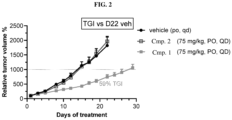
FIG. 1 . - It has also been found that the EZH2 inhibitor (R)-7-chloro-2-((1r,4R)-4-(3-methoxyazetidin-1-yl)cyclohexyl)-2,4-dimethyl-N-((6-methyl-4-(methylthio)-2-oxo-1,2-dihydropyridin-3-yl)methyl)benzo[d][1,3]dioxole-5-carboxamide is more efficacious then R-N-((4-methoxy-6-methyl-2-oxo-1,2-dihydropyridin-3-yl)methyl)-2-methyl-1-(1-(1-(2,2,2-trifluoroethyl)piperidin-4-yl)ethyl)-1H-indole-3-carboxamide at reducing tumor volume in prostate cancer models with pathogenic AR mutations. See e.g.,
FIG. 2 . - Provided herein, therefore, are combinations for use in treating prostate cancer having at least one AR mutation, wherein the combination comprises a therapeutically effective amount of 7-chloro-2-(4-(3-methoxyazetidin-1-yl)cyclohexyl)-2,4-dimethyl-N-((6-methyl-4-(methylthio)-2-oxo-1,2-dihydropyridin-3-yl)methyl)benzo[d][1,3]dioxole-5-carboxamide, or a pharmaceutically acceptable salt thereof; and a therapeutically effective amount of an androgen receptor signaling inhibitor (ARSI) such as enzalutamide.
- Also provided is a therapeutically effective amount of 7-chloro-2-(4-(3-methoxyazetidin-1-yl)cyclohexyl)-2,4-dimethyl-N-((6-methyl-4-(methylthio)-2-oxo-1,2-dihydropyridin-3-yl)methyl)benzo[d][1,3]dioxole-5-carboxamide, or a pharmaceutically acceptable salt thereof; and a therapeutically effective amount of an ARSI such as enzalutamide for use in treating prostate cancer characterized by having at least one AR mutation.
- Also disclosed is the use of a therapeutically effective amount of 7-chloro-2-(4-(3-methoxyazetidin-1-yl)cyclohexyl)-2,4-dimethyl-N-((6-methyl-4-(methylthio)-2-oxo-1,2-dihydropyridin-3-yl)methyl)benzo[d][1,3]dioxole-5-carboxamide, or a pharmaceutically acceptable salt thereof; and a therapeutically effective amount of an ARSI such as enzalutamide in the manufacture of a medicament for treating prostate cancer characterized by having at least one AR mutation.
- Also provided herein are pharmaceutical compositions comprising 7-chloro-2-(4-(3-methoxyazetidin-1-yl)cyclohexyl)-2,4-dimethyl-N-((6-methyl-4-(methylthio)-2-oxo-1,2-dihydropyridin-3-yl)methyl)benzo[d][1,3]dioxole-5-carboxamide; or a pharmaceutically acceptable salt thereof; and a second agent selected from a topoisomerase inhibitor, a DNA alkylating agent, and an ARSI; and optionally a pharmaceutically acceptable carrier, as well as said compositions for their use for treating prostate cancer characterized by having at least one AR mutation.
-
-
FIG. 1 is a plot showing a comparison of the clinical effects from treating subjects having wild-type metastatic castration-resistant prostate cancer (mCRPC) prostate cancer and those having pathogenic AR mutated mCRPC with the combination of R-N-((4-methoxy-6-methyl-2-oxo-1,2-dihydropyridin-3-yl)methyl)-2-methyl-1-(1-(1-(2,2,2-trifluoroethyl)piperidin-4-yl)ethyl)-1H-indole-3-carboxamide and enzalutamide. -
FIG. 2 shows a comparison of the tumor growth inhibition (TGI), measured by relative tumor volume % reduction, between (R)-7-chloro-2-((1r,4R)-4-(3-methoxyazetidin-1-yl)cyclohexyl)-2,4-dimethyl-N-((6-methyl-4-(methylthio)-2-oxo-1,2-dihydropyridin-3-yl)methyl)benzo[d][1,3]dioxole-5-carboxamide and R-N-((4-methoxy-6-methyl-2-oxo-1,2-dihydropyridin-3-yl)methyl)-2-methyl-1-(1-(1-(2,2,2-trifluoroethyl)piperidin-4-yl)ethyl)-1H-indole-3-carboxamide in a prostate cancer LNCaP model with AR mutations. -
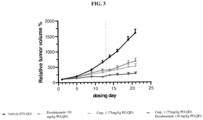
FIG. 3 shows tumor growth inhibition (TGI), measured by relative tumor volume % reduction, in a prostate cancer LNCaP model with AR mutations using a combination of (R)-7-chloro-2-((1r,4R)-4-(3-methoxyazetidin-1-yl)cyclohexyl)-2,4-dimethyl-N-((6-methyl-4-(methylthio)-2-oxo-1,2-dihydropyridin-3-yl)methyl)benzo[d][1,3]dioxole-5-carboxamide and enzalutamide. - The invention is as described in the appended claims. Any subject-matter falling outside the scope of the claims is provided for information only. Methods of treatment of the human body by therapy, referred to in this description, are not part of the present invention as such, but are described here in relation to compounds and pharmaceutical compositions for use in said methods of treatment of the human body by therapy, according to the present invention.
- Described herein are methods of treating a prostate cancer in a subject, wherein the prostate cancer comprises at least one androgen receptor (AR) mutation, said method comprising administering to the subject an effective amount of 7-chloro-2-(4-(3-methoxyazetidin-1-yl)cyclohexyl)-2,4-dimethyl-N-((6-methyl-4-(methylthio)-2-oxo-1,2-dihydropyridin-3-yl)methyl)benzo[d][1,3]dioxole-5-carboxamide, or a pharmaceutically acceptable salt thereof. Also described herein are uses of an effective amount of 7-chloro-2-(4-(3-methoxyazetidin-1 -yl)cyclohexyl)-2,4-dimethyl-N-((6-methyl-4-(methylthio)-2-oxo-1,2-dihydropyridin-3-yl)methyl)benzo[d][1,3]dioxole-5-carboxamide, or a pharmaceutically acceptable salt thereof, for the manufacture of a medicament for treating a prostate cancer comprising at least one androgen receptor (AR) mutation. According to a first embodiment provided herein is the compound 7-chloro-2-(4-(3-methoxyazetidin-1-yl)cyclohexyl)-2,4-dimethyl-N-((6-methyl-4-(methylthio)-2-oxo-1,2-dihydropyridin-3-yl)methyl)benzo[d][1,3]dioxole-5-carboxamide, or a pharmaceutically acceptable salt thereof, for use in treating a prostate cancer comprising at least one androgen receptor (AR) mutation. Also provided as part of a first embodiment, are pharmaceutical compositions comprising an effective amount of 7-chloro-2-(4-(3-methoxyazetidin-1-yl)cyclohexyl)-2,4-dimethyl-N-((6-methyl-4-(methylthio)-2-oxo-1,2-dihydropyridin-3-yl)methyl)benzo[d][1,3]dioxole-5-carboxamide, or a pharmaceutically acceptable salt thereof, for use in treating a prostate cancer comprising at least one androgen receptor (AR) mutation.
- Described herein are methods of treating a prostate cancer in a subject, wherein the prostate cancer comprises at least one androgen receptor (AR) mutation, said method comprising administering to the subject an effective amount of 7-chloro-2-(4-(3-methoxyazetidin-1-yl)cyclohexyl)-2,4-dimethyl-N-((6-methyl-4-(methylthio)-2-oxo-1,2-dihydropyridin-3-yl)methyl)benzo[d][1,3]dioxole-5-carboxamide, or a pharmaceutically acceptable salt thereof; and an effective amount of an ARSI. Also described herein are uses of an effective amount of 7-chloro-2-(4-(3-methoxyazetidin-1-yl)cyclohexyl)-2,4-dimethyl-N-((6-methyl-4-(methylthio)-2-oxo-1,2-dihydropyridin-3-yl)methyl)benzo[d][1,3]dioxole-5-carboxamide, or a pharmaceutically acceptable salt thereof; and an effective amount of an ARSI for the manufacture of a medicament for treating a prostate cancer comprising at least one androgen receptor (AR) mutation. According to a second embodiment provided herein is the compound 7-chloro-2-(4-(3-methoxyazetidin-1-yl)cyclohexyl)-2,4-dimethyl-N-((6-methyl-4-(methylthio)-2-oxo-1,2-dihydropyridin-3-yl)methyl)benzo[d][1,3]dioxole-5-carboxamide, or a pharmaceutically acceptable salt thereof; and an effective amount of an ARSI for use in treating a prostate cancer comprising at least one androgen receptor (AR) mutation. Also provided as part of a second embodiment, are pharmaceutical compositions comprising an effective amount of 7-chloro-2-(4-(3-methoxyazetidin-1-yl)cyclohexyl)-2,4-dimethyl-N-((6-methyl-4-(methylthio)-2-oxo-1,2-dihydropyridin-3-yl)methyl)benzo[d][1,3]dioxole-5-carboxamide, or a pharmaceutically acceptable salt thereof; and an effective amount of an ARSI for use in treating a prostate cancer comprising at least one androgen receptor (AR) mutation.
- In a third embodiment, the at least one AR mutation of the present invention (e.g., as in the first or second embodiment) occurs in the ligand binding domain or the transactivation domain, or both, of the AR receptor. Alternatively, as part of a third embodiment, the at least one AR mutation of the present invention (e.g., as in the first or second embodiment) occurs in the ligand binding domain. In another alternative, as part of a third embodiment, the at least one AR mutation of the present invention (e.g., as in the first or second embodiment) is selected from W742L, A491R fs, S522R, L638V, L702H, H875Y, T878A, and F877L. In another alternative, as part of a third embodiment, the at least one AR mutation of the present invention (e.g., as in the first or second embodiment) is selected from W742L, A491R fs, S522R, L638V, L702H, H875Y, and T878A. In another alternative, as part of a third embodiment, the at least one AR mutation of the present invention (e.g., as in the first or second embodiment) is a pathogenic AR mutation. Pathogenic androgen receptor (AR) mutations include those mutations that increases a subject's susceptibility or predisposition to that prostate cancer, or which decreases a subject's susceptibility, predisposition, or response to hormonal therapies such as treatment with an ARSI. Pathogenic AR mutations can occur in the ligand binding domain or the transactivation domain, or both, of the AR receptor. In another alternative, as part of a third embodiment, the at least one AR mutation of the present invention (e.g., as in the first or second embodiment) is selected from L702H, H875Y, and T878A.
- In another alternative, as part of a third embodiment, the at least one AR mutation of the present invention (e.g., as in the first or second embodiment) is H875Y.
- 7-chloro-2-(4-(3-methoxyazetidin-1-yl)cyclohexyl)-2,4-dimethyl-N-((6-methyl-4-(methylthio)-2-oxo-1,2-dihydropyridin-3-yl)methyl)benzo[d][1,3]dioxole-5-carboxamide and (R)-7-chloro-2-((1r,4R)-4-(3-methoxyazetidin-l-yl)cyclohexyl)-2,4-dimethyl-N-((6-methyl-4-(methylthio)-2-oxo-1,2-dihydropyridin-3-yl)methyl)benzo[d][1,3]dioxole-5-carboxamide have the following chemical formula respectively:

PCT/US2019/027932 , published asWO2019/204490 . 7-chloro-2-(4-(3-methoxyazetidin-1 -yl)cyclohexyl)-2,4-dimethyl-N-((6-methyl-4-(methylthio)-2-oxo-1,2-dihydropyridin-3-yl)methyl)benzo[d][1,3]dioxole-5-carboxamide includes stereoisomeric and geometric forms. (R)-7-chloro-2-((1r,4R)-4-(3-methoxyazetidin-1-yl)cyclohexyl)-2,4-dimethyl-N-((6-methyl-4-(methylthio)-2-oxo-1,2-dihydropyridin-3-yl)methyl)benzo[d][1,3]dioxole-5-carboxamide as named and depicted is a single enantiomer, single geometric isomer stereochemically enriched as R about the chiral dioxolanyl carbon (e.g., by a molar excess of at least 60%, 70%, 80%, 90%, 99% or 99.9%) and geometrically enriched as a trans cyclohexyl (e.g., by a molar excess of at least 60%, 70%, 80%, 90%, 99% or 99.9%). - Androgen receptor signaling inhibitors of the present invention refer to chemical or biological agents which block the androgen receptor (AR) and inhibit or suppress androgen production. As part of a third embodiment, the androgen receptor signaling inhibitors of the present invention (e.g., as in the second embodiment) is selected from bicalutamide, enzalutamide, apalutamide, flutamide, nilutamide, darolutamide, and abiraterone acetate (wherein the abiraterone acetate may be included alone or in combination with prednisone). Alternatively, as part of a third embodiment, the androgen receptor signaling inhibitors of the present invention (e.g., as in the second embodiment) is enzalutamide. In another alternative, as part of a third embodiment, the androgen receptor signaling inhibitors of the present invention (e.g., as in the second embodiment) is abiraterone acetate (wherein the abiraterone acetate may be included alone or in combination with prednisone).
- As used herein, the terms "treatment," "treat," and "treating" refer to reversing, alleviating, or inhibiting the progress of a prostate cancer, or one or more symptoms thereof, as described herein.
- Prostate cancers treated by the compounds and compositions of the present invention (e.g., as in the first through third embodiments) include, but are not limited to, acinar adenocarcinoma, ductal adenocarcinoma, transitional cell carcinoma, neuroendocrine prostate cancer, basal cell prostate cancer, prostate sarcoma, and castration-resistant prostate cancer such as metastatic castration-resistant prostate cancer. Each of the disclosed prostate cancers may be "advanced", meaning that the recited cancer is unresectable, i.e., the cancer is defined as one that cannot be removed completely through surgery or that the cancer is metastatic, or both. In one aspect, "advanced cancer" means that the cancer is unresectable. In one aspect, the prostate cancer to be treated by the compounds and compositions of the present invention (e.g., as in the first through third embodiments) is metastatic castration-resistant prostate cancer
- Prostate cancers described herein may also be "relapsed" cancers. The term "relapsed cancer" refers to a cancer which was previously in remission and has returned, or the signs and symptoms of the cancer have returned. Remission includes both partial remission (some or not all signs and symptoms of the cancer have disappeared) and complete remission (all signs and symptoms of the cancer have disappeared, although the cancer may still remain in the body). As such, a prostate cancer that is "advanced relapsed" means that the cancer was in remission and has returned and is unresectable.
- A specific dosage and treatment regimen for any particular patient will depend upon a variety of factors, including age, body weight, general health, sex, diet, time of administration, rate of excretion, drug combination, the judgment of the treating physician, and the severity of the particular disease being treated. The amount of a provided compound in the composition will also depend upon the particular compound in the composition.
- The terms "subject" and "patient" may be used interchangeably, and means a mammal in need of treatment, e.g., companion animals (e.g., dogs, cats, and the like), farm animals (e.g., cows, pigs, horses, sheep, goats and the like) and laboratory animals (e.g., rats, mice, guinea pigs and the like). Typically, the subject is a human in need of treatment.
- The term "effective amount" or "therapeutically effective amount" refers to an amount of a compound described herein that will elicit a biological or medical response of a subject e.g., a dosage of between 0.01 - 100 mg/kg body weight/day. In one aspect, the effective amount of 7-chloro-2-(4-(3-methoxyazetidin-1-yl)cyclohexyl)-2,4-dimethyl-N-((6-methyl-4-(methylthio)-2-oxo-1,2-dihydropyridin-3-yl)methyl)benzo[d][1,3]dioxole-5-carboxamide, or a pharmaceutically acceptable salt thereof; and the effective amount of a androgen receptor signaling inhibitor described herein is such that together, they elicit a combinatorial effect to measurably treat one or more prostate cancers described herein.
- Unless otherwise indicated, the administrations described herein include administering 7-chloro-2-(4-(3-methoxyazetidin-1-yl)cyclohexyl)-2,4-dimethyl-N-((6-methyl-4-(methylthio)-2-oxo-1,2-dihydropyridin-3-yl)methyl)benzo[d][1,3]dioxole-5-carboxamide prior to, concurrently with, or after administration of a disclosed androgen receptor signaling inhibitor described herein to treat a recited prostate cancer. Thus, simultaneous administration is not necessary for therapeutic purposes. In one aspect, however, 7-chloro-2-(4-(3-methoxyazetidin-1-yl)cyclohexyl)-2,4-dimethyl-N-((6-methyl-4-(methylthio)-2-oxo-1,2-dihydropyridin-3-yl)methyl)benzo[d][1,3]dioxole-5-carboxamide is administered concurrently with a disclosed androgen receptor signaling inhibitor.
- Further provided are pharmaceutical compositions comprising an effective amount of 7-chloro-2-(4-(3-methoxyazetidin-1-yl)cyclohexyl)-2,4-dimethyl-N-((6-methyl-4-(methylthio)-2-oxo-1,2-dihydropyridin-3-yl)methyl)benzo[d][1,3]dioxole-5-carboxamide, or a pharmaceutically acceptable salt thereof; and an effective amount of an androgen receptor signaling inhibitor; and optionally a pharmaceutically acceptable carrier.
- The term "pharmaceutically acceptable carrier" refers to a non-toxic carrier, adjuvant, or vehicle that does not adversely affect the pharmacological activity of the compound with which it is formulated, and which is also safe for human use. Pharmaceutically acceptable carriers, adjuvants or vehicles that may be used in the compositions of this disclosure include, but are not limited to, ion exchangers, alumina, aluminum stearate, magnesium stearate, lecithin, serum proteins, such as human serum albumin, buffer substances such as phosphates, glycine, sorbic acid, potassium sorbate, partial glyceride mixtures of saturated vegetable fatty acids, water, salts or electrolytes, such as protamine sulfate, disodium hydrogen phosphate, potassium hydrogen phosphate, sodium chloride, zinc salts, colloidal silica, magnesium trisilicate, polyvinyl pyrrolidone, cellulosebased substances (e.g., microcrystalline cellulose, hydroxypropyl methylcellulose, lactose monohydrate, sodium lauryl sulfate, and crosscarmellose sodium), polyethylene glycol, sodium carboxymethylcellulose, polyacrylates, waxes, polyethylene-polyoxypropylene-block polymers, polyethylene glycol and wool fat.
- The compounds described herein may be present in the form of pharmaceutically acceptable salts. For use in medicines, the salts of the compounds described herein refer to non-toxic "pharmaceutically acceptable salts." Pharmaceutically acceptable salt forms include pharmaceutically acceptable acidic/anionic or basic/cationic salts where possible.
- Compositions and compounds for use herein may be administered orally, parenterally, by inhalation spray, topically, rectally, nasally, buccally, vaginally or via an implanted reservoir. The term "parenteral" as used herein includes subcutaneous, intravenous, intramuscular, intra-articular, intra-synovial, intrasternal, intrathecal, intrahepatic, intralesional and intracranial injection or infusion techniques.
- In one aspect, the 7-chloro-2-(4-(3-methoxyazetidin-1-yl)cyclohexyl)-2,4-dimethyl-N-((6-methyl-4-(methylthio)-2-oxo-1,2-dihydropyridin-3-yl)methyl)benzo[d][1,3]dioxole-5-carboxamide used in the disclosed uses and/or compositions is of
crystalline Form 1 characterized by at least three X-ray powder diffraction peaks at 2Θ angles selected from 10.0°, 13.3°, 14.9°, 20.2°, 20.8°, 22.2°, and 22.5°. Alternatively, the 7-chloro-2-(4-(3-methoxyazetidin-1 -yl)cyclohexyl)-2,4-dimethyl-N-((6-methyl-4-(methylthio)-2-oxo-1,2-dihydropyridin-3-yl)methyl)benzo[d][1,3]dioxole-5-carboxamide used in the disclosed uses and/or compositions is ofcrystalline Form 1 characterized by at least four X-ray powder diffraction peaks at 2Θ angles selected from 10.0°, 13.3°, 14.9°, 20.2°, 20.8°, 22.2°, and 22.5°. In another alternative, the 7-chloro-2-(4-(3-methoxyazetidin-1-yl)cyclohexyl)-2,4-dimethyl-N-((6-methyl-4-(methylthio)-2-oxo-1,2-dihydropyridin-3-yl)methyl)benzo[d][1,3]dioxole-5-carboxamide used in the disclosed uses and/or compositions is ofcrystalline Form 1 characterized by at least five X-ray powder diffraction peaks at 2Θ angles selected from 10.0°, 13.3°, 14.9°, 20.2°, 20.8°, 22.2°, and 22.5°. In another alternative, the 7-chloro-2-(4-(3-methoxyazetidin-1 -yl)cyclohexyl)-2,4-dimethyl-N-((6-methyl-4-(methylthio)-2-oxo-1,2-dihydropyridin-3-yl)methyl)benzo[d][1,3]dioxole-5-carboxamide used in the disclosed uses and/or compositions is ofcrystalline Form 1 characterized by at least six X-ray powder diffraction peaks at 2Θ angles selected from 10.0°, 13.3°, 14.9°, 20.2°, 20.8°, 22.2°, and 22.5°. In another alternative, the 7-chloro-2-(4-(3-methoxyazetidin-1-yl)cyclohexyl)-2,4-dimethyl-N-((6-methyl-4-(methylthio)-2-oxo-1,2-dihydropyridin-3-yl)methyl)benzo[d][1,3]dioxole-5-carboxamide used in the disclosed uses and/or compositions is ofcrystalline Form 1 characterized by X-ray powder diffraction peaks at 2Θ angles selected from 10.0°, 13.3°, 14.9°, 20.2°, 20.8°, 22.2°, and 22.5°. In another alternative, the 7-chloro-2-(4-(3-methoxyazetidin-1 -yl)cyclohexyl)-2,4-dimethyl-N-((6-methyl-4-(methylthio)-2-oxo-1,2-dihydropyridin-3-yl)methyl)benzo[d][1,3]dioxole-5-carboxamide used in the disclosed uses and/or compositions is ofcrystalline Form 1 characterized by X-ray powder diffraction peaks at 2Θ angles selected from 10.0°, 10.2°, 12.3°, 12.7°, 13.3°, 14.9°, 15.3°, 20.2°, 20.8°, 21.3°, 22.2°, 22.5°, and 23.8°. In another alternative, the 7-chloro-2-(4-(3-methoxyazetidin-1-yl)cyclohexyl)-2,4-dimethyl-N-((6-methyl-4-(methylthio)-2-oxo-1,2-dihydropyridin-3-yl)methyl)benzo[d][1,3]dioxole-5-carboxamide used in the disclosed uses and/or compositions is ofcrystalline Form 1 characterized by X-ray powder diffraction peaks at 2Θ angles selected from 10.0°, 10.2°, 11.0°, 11.4°, 11.8°, 12.3°, 12.7°, 13.3°, 14.9°, 15.3°, 16.1°, 17.4°, 20.2°, 20.8°, 21.3°, 22.2°, 22.5°, and 23.8°. In another alternative, the 7-chloro-2-(4-(3-methoxyazetidin-1 -yl)cyclohexyl)-2,4-dimethyl-N-((6-methyl-4-(methylthio)-2-oxo-1,2-dihydropyridin-3-yl)methyl)benzo[d][1,3]dioxole-5-carboxamide used in the disclosed uses and/or compositions is ofcrystalline Form 1 characterized by x-ray powder diffraction peaks at 2Θ angles selected from 14.9°, 20.2°, and 20.8°. In another alternative, the 7-chloro-2-(4-(3-methoxyazetidin-1-yl)cyclohexyl)-2,4-dimethyl-N-((6-methyl-4-(methylthio)-2-oxo-1,2-dihydropyridin-3-yl)methyl)benzo[d][1,3]dioxole-5-carboxamide used in the disclosed uses and/or compositions is ofcrystalline Form 1 characterized by x-ray powder diffraction peaks at 2Θ angles selected from 10.0°, 14.9°, 20.2°, and 20.8°. In another alternative, the 7-chloro-2-(4-(3-methoxyazetidin-1-yl)cyclohexyl)-2,4-dimethyl-N-((6-methyl-4-(methylthio)-2-oxo-1,2-dihydropyridin-3-yl)methyl)benzo[d][1,3]dioxole-5-carboxamide used in the disclosed uses and/or compositions is ofcrystalline Form 1 characterized by x-ray powder diffraction peaks at 2Θ angles selected from 10.0°, 14.9°, 20.2°, 20.8°, and 22.2°. In another alternative, 7-chloro-2-(4-(3-methoxyazetidin-l-yl)cyclohexyl)-2,4-dimethyl-N-((6-methyl-4-(methylthio)-2-oxo-1,2-dihydropyridin-3-yl)methyl)benzo[d][1,3]dioxole-5-carboxamide is ofcrystalline Form 1 characterized by x-ray powder diffraction peaks at 2Θ angles selected from 10.0°, 13.3°, 14.9°, 20.2°, 20.8°, and 22.2°. Polymorphic forms of 7-chloro-2-(4-(3-methoxyazetidin-1-yl)cyclohexyl)-2,4-dimethyl-N-((6-methyl-4-(methylthio)-2-oxo-1,2-dihydropyridin-3-yl)methyl)benzo[d][1,3]dioxole-5-carboxamide and salts thereof are described inPCT/US2020/043178 . - In one aspect, (R)-7-chloro-2-((1r,4R)-4-(3-methoxyazetidin-1-yl)cyclohexyl)-2,4-dimethyl-N-((6-methyl-4-(methylthio)-2-oxo-1,2-dihydropyridin-3-yl)methyl)benzo[d][1,3]dioxole-5-carboxamide is used in the present uses and compositions.
- (R)-7-chloro-2-((1r,4R)-4-(3-methoxyazetidin-1-yl)cyclohexyl)-2,4-dimethyl-N-((6-methyl-4-(methylthio)-2-oxo-1,2-dihydropyridin-3-yl)methyl)benzo[d][1,3]dioxole-5-carboxamide can be prepared following the procedures described in
PCT/US2019/027932 (WO2019/204490 ) andPCT/US2020/043163 . - Phase 2 clinical studies were conducted using R-N-((4-methoxy-6-methyl-2-oxo-1,2-dihydropyridin-3-yl)methyl)-2-methyl-1 -(1 -(1 -(2,2,2-trifluoroethyl)piperidin-4-yl)ethyl)-1H-indole-3-carboxamide / enzalutamide combination versus enzalutamide alone in second-line mCRPC subjects. See e.g., ClinicalTrials.gov Identifier: NCT03480646. Tumors samples from the individuals in that trial were studied post-treatment. Of the subjects treated, 9.4% had pathogenic mutations L702H, 12.5% had pathogenic mutations T878A, and 9.4% had pathogenic mutations H875Y.
- It was found that subjects with who were treated with R-N-((4-methoxy-6-methyl-2-oxo-1,2-dihydropyridin-3-yl)methyl)-2-methyl-1-(1-(1-(2,2,2-trifluoroethyl)piperidin-4-yl)ethyl)-1H-indole-3-carboxamide / enzalutamide combination and had tumors characterized by the pathogenic mutations above, had a higher average progression free survival than subjects who had wild-type AR tumors, i.e., no pathogenic mutations in the AR domain. These results are shown in
FIG. 1 , where Biomarker + patients are those who have at least one pathogenic mutation selected from L702H, T878A, and H875Y. Combo refers to use of R-N-((4-methoxy-6-methyl-2-oxo-1,2-dihydropyridin-3-yl)methyl)-2-methyl-1-(1-(1-(2,2,2-trifluoroethyl)piperidin-4-yl)ethyl)-1H-indole-3-carboxamide with enzalutamide. - (R)-7-chloro-2-((1r,4R)-4-(3-methoxyazetidin-1-yl)cyclohexyl)-2,4-dimethyl-N-((6-methyl-4-(methylthio)-2-oxo-1,2-dihydropyridin-3-yl)methyl)benzo[d][1,3]dioxole-5-carboxamide and R-N-((4-methoxy-6-methyl-2-oxo-1,2-dihydropyridin-3-yl)methyl)-2-methyl-1-(1-(1-(2,2,2-trifluoroethyl)piperidin-4-yl)ethyl)-1H-indole-3-carboxamide were examined in a prostate cancer LNCaP Model with AR mutation H875Y.
- A fixed dose of 75 mg/kg was used for both compounds. Each mouse was inoculated subcutaneously at the right flank with LNCaP-FGC tumor cells (10 × 106) in 0.1 ml of PBS mixed with RPMI-1640:Matrigel (50:50) for tumor development. The treatments started when the average tumor volume reached approximately 158 mm3. The test articles were administered orally once daily. The tumor size was used for the calculation of tumor growth inhibition (TGI) = [1 - (T1-T0)/(C1-C0)] x 100, where C1= mean tumor volume of control mice at time t, T1 = mean tumor volume of treated mice at time t, C0 = mean tumor volume of control mice at
time 0, and T0 = mean tumor volume of treated mice at time 0]. - As shown by the data in
FIG. 2 , (R)-7-chloro-2-((1r,4R)-4-(3-methoxyazetidin-1-yl)cyclohexyl)-2,4-dimethyl-N-((6-methyl-4-(methylthio)-2-oxo-1,2-dihydropyridin-3-yl)methyl)benzo[d][1,3]dioxole-5-carboxamide (labeled as Cmp. 1), was more efficacious at tumor growth inhibition then R-N-((4-methoxy-6-methyl-2-oxo-1,2-dihydropyridin-3-yl)methyl)-2-methyl-1-(1-(1-(2,2,2-trifluoroethyl)piperidin-4-yl)ethyl)-1H-indole-3-carboxamide (labeled as Cmp. 2). Thus, its use in treating prostate cancers with AR mutations in combination with ARSIs like enzalutamide is conceivable. - A fixed dose of 75 mg/kg was used for (R)-7-chloro-2-((1r,4R)-4-(3-methoxyazetidin-1 -yl)cyclohexyl)-2,4-dimethyl-N-((6-methyl-4-(methylthio)-2-oxo-1,2-dihydropyridin-3-yl)methyl)benzo[d][1,3]dioxole-5-carboxamide (labeled as Cmp. 1) and 30 mg/kg was used for enzalutamide. Each mouse was inoculated subcutaneously at the right flank with LNCaP-FGC tumor cells (10 × 106) in 0.1 ml of PBS mixed with RPMI-1640:Matrigel (50:50) for tumor development. The treatments started when the average tumor volume reached approximately 158 mm3. The test articles were administered orally once daily. The tumor size was used for the calculation of tumor growth inhibition (TGI) = [1 - (T1-T0)/(C1-C0)] x 100, where C1= mean tumor volume of control mice at time t, T1 = mean tumor volume of treated mice at time t, C0 = mean tumor volume of control mice at
time 0, and T0 = mean tumor volume of treated mice at time 0]. As shown by the data inFIG. 3 , combination treatment with Cmp. 1 and enzalutamide was more effective at inhibiting tumor growth than the use of Cmp. 1 or enzalutamide alone. - Unless otherwise defined, all technical and scientific terms used herein are accorded the meaning commonly known to one with ordinary skill in the art.
Claims (14)
- A compound having the formula:
 or a pharmaceutically acceptable salt thereof, for use in the treatment of a prostate cancer,wherein the prostate cancer comprises at least one pathogenic androgen receptor mutation.
 - The compound for use of Claim 1, wherein the treatment further comprises administering an effective amount of an androgen receptor signaling inhibitor.
- The compound for use of Claim 2, wherein the androgen receptor signaling inhibitor is selected from bicalutamide, enzalutamide, apalutamide, flutamide, nilutamide, darolutamide, and abiraterone acetate.
- The compound for use of Claim 2 or 3, wherein the androgen receptor signaling inhibitor is enzalutamide.
- The compound for use of any one of Claims 1 to 4, wherein the prostate cancer is metastatic castration-resistant prostate cancer (mCRPC).
- The compound for use of any one of Claims 1 to 5, wherein the at least one pathogenic androgen receptor mutation occurs in the ligand binding domain or transactivation domain of the androgen receptor.
- The compound for use of any one of Claims 1 to 6, wherein the at least one pathogenic androgen receptor mutation occurs in the ligand binding domain.
- The compound for use of any one of Claims 1 to 6, wherein the at least one androgen receptor mutation is selected from L702H, H875Y, and T878A.
- The compound for use of any one of Claims 1 to 7, wherein the at least one pathogenic androgen receptor mutation is H875Y.
- The compound for use of any one of Claims 1 to 9, wherein the compound is of the formula

- A pharmaceutical composition comprising a compound having the formula:

- The pharmaceutical composition of Claim 11, wherein the androgen receptor signaling inhibitor is selected from bicalutamide, enzalutamide, apalutamide, flutamide, nilutamide, darolutamide, and abiraterone acetate.
- The pharmaceutical composition of Claim 11 or 12, wherein the androgen receptor signaling inhibitor is enzalutamide.
- The pharmaceutical composition of any one of Claims 11 to 13, wherein the compound is of the formula

Priority Applications (5)
| Application Number | Priority Date | Filing Date | Title |
|---|---|---|---|
| RS20250283A RS66645B1 (en) | 2020-11-18 | 2021-11-18 | THERAPIES BY INHIBITION OF EZH2 FOR THE TREATMENT OF PROSTATE CANCER WITH ANDROGEN RECEPTOR MUTATION |
| SI202130289T SI4247371T1 (en) | 2020-11-18 | 2021-11-18 | Ezh2 inhibition therapies for the treatment of androgen receptor mutated prostate cancers |
| EP24206265.1A EP4467200B1 (en) | 2020-11-18 | 2021-11-18 | Ezh2 inhibition therapies for the treatment of androgen receptor mutated prostate cancers |
| DK24206265.1T DK4467200T3 (en) | 2020-11-18 | 2021-11-18 | Ezh2 inhibition therapies for the treatment of androgen receptor mutated prostate cancers |
| HRP20250297TT HRP20250297T1 (en) | 2020-11-18 | 2021-11-18 | Ezh2 inhibition therapies for the treatment of androgen receptor mutated prostate cancers |
Applications Claiming Priority (2)
| Application Number | Priority Date | Filing Date | Title |
|---|---|---|---|
| US202063115165P | 2020-11-18 | 2020-11-18 | |
| PCT/US2021/059847 WO2022109106A1 (en) | 2020-11-18 | 2021-11-18 | Ezh2 inhibition therapies for the treatment of androgen receptor mutated prostate cancers |
Related Child Applications (2)
| Application Number | Title | Priority Date | Filing Date |
|---|---|---|---|
| EP24206265.1A Division EP4467200B1 (en) | 2020-11-18 | 2021-11-18 | Ezh2 inhibition therapies for the treatment of androgen receptor mutated prostate cancers |
| EP24206265.1A Division-Into EP4467200B1 (en) | 2020-11-18 | 2021-11-18 | Ezh2 inhibition therapies for the treatment of androgen receptor mutated prostate cancers |
Publications (2)
| Publication Number | Publication Date |
|---|---|
| EP4247371A1 EP4247371A1 (en) | 2023-09-27 |
| EP4247371B1 true EP4247371B1 (en) | 2025-01-01 |
Family
ID=79024100
Family Applications (2)
| Application Number | Title | Priority Date | Filing Date |
|---|---|---|---|
| EP21827282.1A Active EP4247371B1 (en) | 2020-11-18 | 2021-11-18 | Ezh2 inhibition therapies for the treatment of androgen receptor mutated prostate cancers |
| EP24206265.1A Active EP4467200B1 (en) | 2020-11-18 | 2021-11-18 | Ezh2 inhibition therapies for the treatment of androgen receptor mutated prostate cancers |
Family Applications After (1)
| Application Number | Title | Priority Date | Filing Date |
|---|---|---|---|
| EP24206265.1A Active EP4467200B1 (en) | 2020-11-18 | 2021-11-18 | Ezh2 inhibition therapies for the treatment of androgen receptor mutated prostate cancers |
Country Status (21)
| Country | Link |
|---|---|
| US (1) | US20230414593A1 (en) |
| EP (2) | EP4247371B1 (en) |
| JP (2) | JP2023549564A (en) |
| KR (1) | KR20230110527A (en) |
| CN (1) | CN116600804A (en) |
| AU (1) | AU2021382606A1 (en) |
| CA (1) | CA3199421A1 (en) |
| CL (1) | CL2023001408A1 (en) |
| DK (2) | DK4467200T3 (en) |
| ES (2) | ES3015527T3 (en) |
| FI (2) | FI4247371T3 (en) |
| HR (1) | HRP20250297T1 (en) |
| HU (1) | HUE070561T2 (en) |
| IL (1) | IL303025A (en) |
| LT (2) | LT4247371T (en) |
| MX (1) | MX2023005840A (en) |
| PL (1) | PL4247371T3 (en) |
| PT (2) | PT4247371T (en) |
| RS (1) | RS66645B1 (en) |
| SI (1) | SI4247371T1 (en) |
| WO (1) | WO2022109106A1 (en) |
Family Cites Families (8)
| Publication number | Priority date | Publication date | Assignee | Title |
|---|---|---|---|---|
| EP2945628B1 (en) * | 2013-01-15 | 2020-04-15 | Aragon Pharmaceuticals, Inc. | Androgen receptor modulator in combination with abiraterone acetate and prednisone for treating prostate cancer |
| MY189663A (en) * | 2013-04-17 | 2022-02-23 | Signal Pharm Llc | Combination therapy comprising a dihydropyrazino-pyrazine compound and an androgen receptor antagonist for treating prostate cancer |
| CN105861692A (en) * | 2013-06-24 | 2016-08-17 | 复旦大学附属肿瘤医院 | Method for studying on prostate cancer reoccurrence and metastasis |
| JP6817962B2 (en) * | 2015-01-20 | 2021-01-20 | アルビナス・オペレーションズ・インコーポレイテッドArvinas Operations, Inc. | Compounds and methods for targeted androgen receptor degradation |
| CN109528700A (en) * | 2017-09-21 | 2019-03-29 | 华东师范大学 | Application of the small molecule compound QW07 in preparation treatment prostatic disorders drug |
| MX2020010999A (en) * | 2018-04-18 | 2021-01-20 | Constellation Pharmaceuticals Inc | MODULATORS OF METHYL MODIFIING ENZYMES, COMPOSITIONS AND THEIR USES. |
| WO2020063863A1 (en) * | 2018-09-29 | 2020-04-02 | 江苏恒瑞医药股份有限公司 | Use of ezh2 inhibitor in combination with immune checkpoint inhibitor in preparation of drug for treating tumors |
| WO2020139339A1 (en) * | 2018-12-27 | 2020-07-02 | Constellation Pharmaceuticals, Inc. | Ezh2 and androgen receptor signaling inhibitors as tools for targeting prostate cancer |
-
2021
- 2021-11-18 WO PCT/US2021/059847 patent/WO2022109106A1/en not_active Ceased
- 2021-11-18 FI FIEP21827282.1T patent/FI4247371T3/en active
- 2021-11-18 SI SI202130289T patent/SI4247371T1/en unknown
- 2021-11-18 LT LTEPPCT/US2021/059847T patent/LT4247371T/en unknown
- 2021-11-18 PT PT218272821T patent/PT4247371T/en unknown
- 2021-11-18 PT PT242062651T patent/PT4467200T/en unknown
- 2021-11-18 EP EP21827282.1A patent/EP4247371B1/en active Active
- 2021-11-18 ES ES21827282T patent/ES3015527T3/en active Active
- 2021-11-18 HR HRP20250297TT patent/HRP20250297T1/en unknown
- 2021-11-18 RS RS20250283A patent/RS66645B1/en unknown
- 2021-11-18 HU HUE21827282A patent/HUE070561T2/en unknown
- 2021-11-18 KR KR1020237017778A patent/KR20230110527A/en active Pending
- 2021-11-18 EP EP24206265.1A patent/EP4467200B1/en active Active
- 2021-11-18 DK DK24206265.1T patent/DK4467200T3/en active
- 2021-11-18 US US18/037,120 patent/US20230414593A1/en active Pending
- 2021-11-18 LT LTEP24206265.1T patent/LT4467200T/en unknown
- 2021-11-18 AU AU2021382606A patent/AU2021382606A1/en active Pending
- 2021-11-18 ES ES24206265T patent/ES3076053T3/en active Active
- 2021-11-18 MX MX2023005840A patent/MX2023005840A/en unknown
- 2021-11-18 PL PL21827282.1T patent/PL4247371T3/en unknown
- 2021-11-18 FI FIEP24206265.1T patent/FI4467200T3/en active
- 2021-11-18 IL IL303025A patent/IL303025A/en unknown
- 2021-11-18 CA CA3199421A patent/CA3199421A1/en active Pending
- 2021-11-18 JP JP2023529941A patent/JP2023549564A/en active Pending
- 2021-11-18 CN CN202180077565.8A patent/CN116600804A/en active Pending
- 2021-11-18 DK DK21827282.1T patent/DK4247371T3/en active
-
2023
- 2023-05-16 CL CL2023001408A patent/CL2023001408A1/en unknown
-
2026
- 2026-04-08 JP JP2026063527A patent/JP2026113667A/en active Pending
Also Published As
| Publication number | Publication date |
|---|---|
| DK4467200T3 (en) | 2026-08-03 |
| AU2021382606A9 (en) | 2024-08-08 |
| FI4247371T3 (en) | 2025-03-31 |
| HUE070561T2 (en) | 2025-06-28 |
| PT4247371T (en) | 2025-03-26 |
| IL303025A (en) | 2023-07-01 |
| PT4467200T (en) | 2026-07-23 |
| US20230414593A1 (en) | 2023-12-28 |
| PL4247371T3 (en) | 2026-07-06 |
| ES3015527T3 (en) | 2025-05-06 |
| LT4247371T (en) | 2025-04-10 |
| EP4467200A2 (en) | 2024-11-27 |
| CA3199421A1 (en) | 2022-05-27 |
| JP2023549564A (en) | 2023-11-27 |
| EP4467200A3 (en) | 2025-02-26 |
| ES3076053T3 (en) | 2026-08-11 |
| KR20230110527A (en) | 2023-07-24 |
| JP2026113667A (en) | 2026-07-07 |
| EP4247371A1 (en) | 2023-09-27 |
| WO2022109106A1 (en) | 2022-05-27 |
| HRP20250297T1 (en) | 2025-04-25 |
| LT4467200T (en) | 2026-08-10 |
| AU2021382606A1 (en) | 2023-06-22 |
| FI4467200T3 (en) | 2026-07-14 |
| CL2023001408A1 (en) | 2024-01-12 |
| MX2023005840A (en) | 2023-06-02 |
| EP4467200B1 (en) | 2026-05-27 |
| SI4247371T1 (en) | 2025-05-30 |
| CN116600804A (en) | 2023-08-15 |
| DK4247371T3 (en) | 2025-03-31 |
| RS66645B1 (en) | 2025-04-30 |
Similar Documents
| Publication | Publication Date | Title |
|---|---|---|
| KR102112885B1 (en) | Pharmaceutical combinations comprising a b-raf inhibitor, an egfr inhibitor and optionally a pi3k-alpha inhibitor | |
| JP2023145689A (en) | Treatment of her2-positive cancers | |
| CN105209073A (en) | Combination therapy comprising a B-Raf inhibitor and a second inhibitor | |
| JP2017521396A (en) | Combination therapy for cancer | |
| JP2023516951A (en) | alpelisib and 6-(2,4-dichlorophenyl)-5-[4-[(3S)-1-(3-fluoropropyl)pyrrolidin-3-yl]oxyphenyl]-8,9-dihydro-7H-benzo[ 7] Combinations containing annulene-2-carboxylic acid | |
| TW202133857A (en) | Combination therapies for treatment of breast cancer | |
| WO2015171647A1 (en) | Treatment of cancer | |
| AU2020327022B2 (en) | Method of treating cancer | |
| CA3166741A1 (en) | Combination therapy for treating cancer | |
| EP4467200A2 (en) | Ezh2 inhibition therapies for the treatment of androgen receptor mutated prostate cancers | |
| HK40120197A (en) | Ezh2 inhibition therapies for the treatment of androgen receptor mutated prostate cancers | |
| HK40103046B (en) | Ezh2 inhibition therapies for the treatment of androgen receptor mutated prostate cancers | |
| HK40103046A (en) | Ezh2 inhibition therapies for the treatment of androgen receptor mutated prostate cancers | |
| JP2023542473A (en) | Combination drug anticancer treatment | |
| EA049438B1 (en) | EZH2 INHIBITORY THERAPY FOR THE TREATMENT OF ANDROGEN RECEPTOR-MUTATED PROSTATE CANCERS | |
| TW201902480A (en) | Method for treating brain tumors using combination therapy | |
| WO2020139943A1 (en) | Ezh2 and androgen receptor signaling inhibitors as tools for targeting prostate cancer | |
| TW202029961A (en) | Use of ar antagonist combined with parp inhibitor in preparation of medicament for treating prostate cancer | |
| HK40124174A (en) | Blu-945 in combination with osimertinib for the treatment of non-small-cell lung cancer | |
| TW202508598A (en) | Cancer therapy | |
| EA049014B1 (en) | CANCER TREATMENT METHOD | |
| HK40051622A (en) | Combination therapy comprising a b-raf inhibitor and a second inhibitor | |
| WO2025122470A1 (en) | Combination therapies for treatment of breast cancer | |
| HK40018197A (en) | Pharmaceutical combinations comprising a b-raf inhibitor, an egfr inhibitor and optionally a pi3k-alpha inhibitor | |
| HK1204976B (en) | Pharmaceutical combinations comprising a b-raf inhibitor, an egfr inhibitor and optionally a pi3k-alpha inhibitor |
Legal Events
| Date | Code | Title | Description |
|---|---|---|---|
| STAA | Information on the status of an ep patent application or granted ep patent |
Free format text: STATUS: UNKNOWN |
|
| STAA | Information on the status of an ep patent application or granted ep patent |
Free format text: STATUS: THE INTERNATIONAL PUBLICATION HAS BEEN MADE |
|
| PUAI | Public reference made under article 153(3) epc to a published international application that has entered the european phase |
Free format text: ORIGINAL CODE: 0009012 |
|
| STAA | Information on the status of an ep patent application or granted ep patent |
Free format text: STATUS: REQUEST FOR EXAMINATION WAS MADE |
|
| 17P | Request for examination filed |
Effective date: 20230616 |
|
| AK | Designated contracting states |
Kind code of ref document: A1 Designated state(s): AL AT BE BG CH CY CZ DE DK EE ES FI FR GB GR HR HU IE IS IT LI LT LU LV MC MK MT NL NO PL PT RO RS SE SI SK SM TR |
|
| DAV | Request for validation of the european patent (deleted) | ||
| DAX | Request for extension of the european patent (deleted) | ||
| GRAP | Despatch of communication of intention to grant a patent |
Free format text: ORIGINAL CODE: EPIDOSNIGR1 |
|
| STAA | Information on the status of an ep patent application or granted ep patent |
Free format text: STATUS: GRANT OF PATENT IS INTENDED |
|
| INTG | Intention to grant announced |
Effective date: 20240625 |
|
| GRAS | Grant fee paid |
Free format text: ORIGINAL CODE: EPIDOSNIGR3 |
|
| P01 | Opt-out of the competence of the unified patent court (upc) registered |
Free format text: CASE NUMBER: APP_54109/2024 Effective date: 20241001 |
|
| GRAA | (expected) grant |
Free format text: ORIGINAL CODE: 0009210 |
|
| STAA | Information on the status of an ep patent application or granted ep patent |
Free format text: STATUS: THE PATENT HAS BEEN GRANTED |
|
| AK | Designated contracting states |
Kind code of ref document: B1 Designated state(s): AL AT BE BG CH CY CZ DE DK EE ES FI FR GB GR HR HU IE IS IT LI LT LU LV MC MK MT NL NO PL PT RO RS SE SI SK SM TR |
|
| REG | Reference to a national code |
Ref country code: GB Ref legal event code: FG4D |
|
| REG | Reference to a national code |
Ref country code: CH Ref legal event code: EP |
|
| REG | Reference to a national code |
Ref country code: DE Ref legal event code: R096 Ref document number: 602021024436 Country of ref document: DE |
|
| REG | Reference to a national code |
Ref country code: IE Ref legal event code: FG4D |
|
| REG | Reference to a national code |
Ref country code: PT Ref legal event code: SC4A Ref document number: 4247371 Country of ref document: PT Date of ref document: 20250326 Kind code of ref document: T Free format text: AVAILABILITY OF NATIONAL TRANSLATION Effective date: 20250321 Ref country code: NL Ref legal event code: FP |
|
| REG | Reference to a national code |
Ref country code: FI Ref legal event code: FGE Ref country code: DK Ref legal event code: T3 Effective date: 20250325 |
|
| REG | Reference to a national code |
Ref country code: SE Ref legal event code: TRGR |
|
| REG | Reference to a national code |
Ref country code: HR Ref legal event code: T1PR Ref document number: P20250297 Country of ref document: HR |
|
| REG | Reference to a national code |
Ref country code: ES Ref legal event code: FG2A Ref document number: 3015527 Country of ref document: ES Kind code of ref document: T3 Effective date: 20250506 |
|
| REG | Reference to a national code |
Ref country code: SK Ref legal event code: T3 Ref document number: E 46107 Country of ref document: SK |
|
| REG | Reference to a national code |
Ref country code: GR Ref legal event code: EP Ref document number: 20250400678 Country of ref document: GR Effective date: 20250514 |
|
| REG | Reference to a national code |
Ref country code: EE Ref legal event code: FG4A Ref document number: E024983 Country of ref document: EE Effective date: 20250311 |
|
| REG | Reference to a national code |
Ref country code: HU Ref legal event code: AG4A Ref document number: E070561 Country of ref document: HU |
|
| PG25 | Lapsed in a contracting state [announced via postgrant information from national office to epo] |
Ref country code: NO Free format text: LAPSE BECAUSE OF FAILURE TO SUBMIT A TRANSLATION OF THE DESCRIPTION OR TO PAY THE FEE WITHIN THE PRESCRIBED TIME-LIMIT Effective date: 20250401 |
|
| REG | Reference to a national code |
Ref country code: DE Ref legal event code: R097 Ref document number: 602021024436 Country of ref document: DE |
|
| PG25 | Lapsed in a contracting state [announced via postgrant information from national office to epo] |
Ref country code: SM Free format text: LAPSE BECAUSE OF FAILURE TO SUBMIT A TRANSLATION OF THE DESCRIPTION OR TO PAY THE FEE WITHIN THE PRESCRIBED TIME-LIMIT Effective date: 20250101 |
|
| PLBE | No opposition filed within time limit |
Free format text: ORIGINAL CODE: 0009261 |
|
| STAA | Information on the status of an ep patent application or granted ep patent |
Free format text: STATUS: NO OPPOSITION FILED WITHIN TIME LIMIT |
|
| REG | Reference to a national code |
Ref country code: CH Ref legal event code: L10 Free format text: ST27 STATUS EVENT CODE: U-0-0-L10-L00 (AS PROVIDED BY THE NATIONAL OFFICE) Effective date: 20251112 |
|
| PGFP | Annual fee paid to national office [announced via postgrant information from national office to epo] |
Ref country code: NL Payment date: 20251024 Year of fee payment: 5 |
|
| REG | Reference to a national code |
Ref country code: HR Ref legal event code: ODRP Ref document number: P20250297 Country of ref document: HR Payment date: 20251031 Year of fee payment: 5 |
|
| REG | Reference to a national code |
Ref country code: CH Ref legal event code: U11 Free format text: ST27 STATUS EVENT CODE: U-0-0-U10-U11 (AS PROVIDED BY THE NATIONAL OFFICE) Effective date: 20251201 |
|
| PGFP | Annual fee paid to national office [announced via postgrant information from national office to epo] |
Ref country code: PT Payment date: 20251118 Year of fee payment: 5 |
|
| 26N | No opposition filed |
Effective date: 20251002 |
|
| PGFP | Annual fee paid to national office [announced via postgrant information from national office to epo] |
Ref country code: HU Payment date: 20251112 Year of fee payment: 5 |
|
| PGFP | Annual fee paid to national office [announced via postgrant information from national office to epo] |
Ref country code: LU Payment date: 20251113 Year of fee payment: 5 |
|
| PGFP | Annual fee paid to national office [announced via postgrant information from national office to epo] |
Ref country code: IS Payment date: 20251119 Year of fee payment: 5 Ref country code: DE Payment date: 20251022 Year of fee payment: 5 |
|
| PGFP | Annual fee paid to national office [announced via postgrant information from national office to epo] |
Ref country code: GB Payment date: 20251016 Year of fee payment: 5 Ref country code: LT Payment date: 20251021 Year of fee payment: 5 |
|
| PGFP | Annual fee paid to national office [announced via postgrant information from national office to epo] |
Ref country code: AT Payment date: 20260113 Year of fee payment: 5 |
|
| PGFP | Annual fee paid to national office [announced via postgrant information from national office to epo] |
Ref country code: FI Payment date: 20251113 Year of fee payment: 5 Ref country code: DK Payment date: 20251112 Year of fee payment: 5 Ref country code: IT Payment date: 20251030 Year of fee payment: 5 |
|
| PGFP | Annual fee paid to national office [announced via postgrant information from national office to epo] |
Ref country code: HR Payment date: 20251031 Year of fee payment: 5 Ref country code: FR Payment date: 20251023 Year of fee payment: 5 |
|
| PGFP | Annual fee paid to national office [announced via postgrant information from national office to epo] |
Ref country code: TR Payment date: 20251106 Year of fee payment: 5 Ref country code: GR Payment date: 20251029 Year of fee payment: 5 Ref country code: BE Payment date: 20251024 Year of fee payment: 5 |
|
| PGFP | Annual fee paid to national office [announced via postgrant information from national office to epo] |
Ref country code: SE Payment date: 20251028 Year of fee payment: 5 Ref country code: CH Payment date: 20251201 Year of fee payment: 5 |
|
| PGFP | Annual fee paid to national office [announced via postgrant information from national office to epo] |
Ref country code: CZ Payment date: 20251107 Year of fee payment: 5 Ref country code: IE Payment date: 20251024 Year of fee payment: 5 |
|
| PGFP | Annual fee paid to national office [announced via postgrant information from national office to epo] |
Ref country code: LV Payment date: 20251022 Year of fee payment: 5 Ref country code: MT Payment date: 20251118 Year of fee payment: 5 |
|
| PGFP | Annual fee paid to national office [announced via postgrant information from national office to epo] |
Ref country code: BG Payment date: 20251031 Year of fee payment: 5 |
|
| PGFP | Annual fee paid to national office [announced via postgrant information from national office to epo] |
Ref country code: EE Payment date: 20251024 Year of fee payment: 5 |
|
| PGFP | Annual fee paid to national office [announced via postgrant information from national office to epo] |
Ref country code: SK Payment date: 20251024 Year of fee payment: 5 Ref country code: RO Payment date: 20251105 Year of fee payment: 5 |
|
| PGFP | Annual fee paid to national office [announced via postgrant information from national office to epo] |
Ref country code: RS Payment date: 20251105 Year of fee payment: 5 |
|
| PGFP | Annual fee paid to national office [announced via postgrant information from national office to epo] |
Ref country code: ES Payment date: 20251212 Year of fee payment: 5 Ref country code: SI Payment date: 20251027 Year of fee payment: 5 |
|
| PGFP | Annual fee paid to national office [announced via postgrant information from national office to epo] |
Ref country code: CY Payment date: 20251024 Year of fee payment: 5 |
|
| PG25 | Lapsed in a contracting state [announced via postgrant information from national office to epo] |
Ref country code: MC Free format text: LAPSE BECAUSE OF FAILURE TO SUBMIT A TRANSLATION OF THE DESCRIPTION OR TO PAY THE FEE WITHIN THE PRESCRIBED TIME-LIMIT Effective date: 20250101 |
|
| PGFP | Annual fee paid to national office [announced via postgrant information from national office to epo] |
Ref country code: PL Payment date: 20251029 Year of fee payment: 5 |