EP4246331A1 - Verfahren und system zur bestimmung des optimalen ereignisprotokollsatzes zur bewertung des verhaltens von softwarebasierten systemen - Google Patents
Verfahren und system zur bestimmung des optimalen ereignisprotokollsatzes zur bewertung des verhaltens von softwarebasierten systemen Download PDFInfo
- Publication number
- EP4246331A1 EP4246331A1 EP22171680.6A EP22171680A EP4246331A1 EP 4246331 A1 EP4246331 A1 EP 4246331A1 EP 22171680 A EP22171680 A EP 22171680A EP 4246331 A1 EP4246331 A1 EP 4246331A1
- Authority
- EP
- European Patent Office
- Prior art keywords
- event
- filters
- software
- event logs
- logs
- Prior art date
- Legal status (The legal status is an assumption and is not a legal conclusion. Google has not performed a legal analysis and makes no representation as to the accuracy of the status listed.)
- Pending
Links
Images



Classifications
-
- G—PHYSICS
- G06—COMPUTING OR CALCULATING; COUNTING
- G06F—ELECTRIC DIGITAL DATA PROCESSING
- G06F11/00—Error detection; Error correction; Monitoring
- G06F11/36—Prevention of errors by analysis, debugging or testing of software
- G06F11/362—Debugging of software
- G06F11/3636—Debugging of software by tracing the execution of the program
-
- G—PHYSICS
- G06—COMPUTING OR CALCULATING; COUNTING
- G06F—ELECTRIC DIGITAL DATA PROCESSING
- G06F11/00—Error detection; Error correction; Monitoring
- G06F11/30—Monitoring
- G06F11/3065—Monitoring arrangements determined by the means or processing involved in reporting the monitored data
- G06F11/3072—Monitoring arrangements determined by the means or processing involved in reporting the monitored data where the reporting involves data filtering, e.g. pattern matching, time or event triggered, adaptive or policy-based reporting
-
- G—PHYSICS
- G06—COMPUTING OR CALCULATING; COUNTING
- G06F—ELECTRIC DIGITAL DATA PROCESSING
- G06F11/00—Error detection; Error correction; Monitoring
- G06F11/30—Monitoring
- G06F11/3003—Monitoring arrangements specially adapted to the computing system or computing system component being monitored
- G06F11/3006—Monitoring arrangements specially adapted to the computing system or computing system component being monitored where the computing system is distributed, e.g. networked systems, clusters, multiprocessor systems
-
- G—PHYSICS
- G06—COMPUTING OR CALCULATING; COUNTING
- G06F—ELECTRIC DIGITAL DATA PROCESSING
- G06F11/00—Error detection; Error correction; Monitoring
- G06F11/30—Monitoring
- G06F11/3003—Monitoring arrangements specially adapted to the computing system or computing system component being monitored
- G06F11/302—Monitoring arrangements specially adapted to the computing system or computing system component being monitored where the computing system component is a software system
-
- G—PHYSICS
- G06—COMPUTING OR CALCULATING; COUNTING
- G06F—ELECTRIC DIGITAL DATA PROCESSING
- G06F11/00—Error detection; Error correction; Monitoring
- G06F11/30—Monitoring
- G06F11/3065—Monitoring arrangements determined by the means or processing involved in reporting the monitored data
- G06F11/3072—Monitoring arrangements determined by the means or processing involved in reporting the monitored data where the reporting involves data filtering, e.g. pattern matching, time or event triggered, adaptive or policy-based reporting
- G06F11/3079—Monitoring arrangements determined by the means or processing involved in reporting the monitored data where the reporting involves data filtering, e.g. pattern matching, time or event triggered, adaptive or policy-based reporting the data filtering being achieved by reporting only the changes of the monitored data
-
- G—PHYSICS
- G06—COMPUTING OR CALCULATING; COUNTING
- G06F—ELECTRIC DIGITAL DATA PROCESSING
- G06F11/00—Error detection; Error correction; Monitoring
- G06F11/30—Monitoring
- G06F11/3065—Monitoring arrangements determined by the means or processing involved in reporting the monitored data
- G06F11/3072—Monitoring arrangements determined by the means or processing involved in reporting the monitored data where the reporting involves data filtering, e.g. pattern matching, time or event triggered, adaptive or policy-based reporting
- G06F11/3082—Monitoring arrangements determined by the means or processing involved in reporting the monitored data where the reporting involves data filtering, e.g. pattern matching, time or event triggered, adaptive or policy-based reporting the data filtering being achieved by aggregating or compressing the monitored data
-
- G—PHYSICS
- G06—COMPUTING OR CALCULATING; COUNTING
- G06F—ELECTRIC DIGITAL DATA PROCESSING
- G06F8/00—Arrangements for software engineering
- G06F8/70—Software maintenance or management
- G06F8/71—Version control; Configuration management
Definitions
- the present subject matter relates generally to the field of Debugging in software-based systems, and more particularly, but not exclusively to a method and a system for determining optimal event log set for evaluating behaviour of the software-based systems.
- debugging is a process of detecting and removing existing and potential errors in a software that can cause it to behave unexpectedly or crash.
- Software is developed by human and thus fault and error can occur in code especially in early days of deployment which needs to be fixed.
- logging code instrumented in software generates run time event logs, which helps engineers to debug the issues found in the software.
- Event logs play critical role in understanding the software behaviour and identifying the issues usually stored in log files that contains information about usage and operations of operating systems, applications or devices and other system specific details.
- Debugging and fault finding in the software-based system is always associated with certain logs including, but not limited to, crash dump, external events, and internal events recorded/logged by instrumented code in the software.
- Logs can be either structured logs (for example, syslog), a predefined detail (for example, crash dump) or a holistic execution record of the automated system like instruction trace. Structured / execution record are predefined and provide the details based on predefined specification.
- Automated system usually provides structured, semi-structured or unstructured logs. Semi-structured or un-structured logs are added as instrumented code to trace intermediate state of event/objects in software during the execution. However, there is no system or method to validate the completeness or correctness of these event logs and hence such event logs can only be analyzed by development engineers, thereby, lacking any further potential to automate the debugging of the software.
- event logging is a critical element in debugging and faultfinding, there are no ways to validate the logs for their completeness, correctness for a given error reported or any predictable error in system.
- event logging is open-ended item as there is no well-defined bounds for event logging.
- Some of the existing techniques provide a method for early filtering of events using a kernel-based filter.
- a driver for the kernel level matches events occurred at the kernel level to predefined rules. Upon finding a match, based on the predefined rules, the events are filtered like allowing or disallowing the said event for further processing.
- the events are matched with predefined rules, based on which the events are filtered.
- the existing technique lacks the mechanism for validating the event logs or even filtering out irrelevant event logs related to all the generated events.
- the method includes identifying, by an event log filtering system an input configuration of a previous version of a software-based system and a previous set of optimal event logs of the previous version of the software-based system.
- the input configuration includes external or internal event triggers and a previous set of filters.
- the method include, identifying a new set of event logs generated for a current version of the software-based system based on the input configuration provided to the previous version of the software-based system.
- the method Upon identifying the new set of event logs, the method includes determining an additional set of event logs based on comparison of the new set of event logs and the previous set of optimal event logs. Further, the method includes determining an updated set of filters for the current version of the software-based system based on the additional set of event logs and the previous set of filters. Finally, the method includes determining an optimal set of event logs for the new version of the software-based system based on the updated set of filters for evaluating behaviour of the current version of the software-based system.
- the present disclosure includes an event log filtering system for determining an optimal set of event logs for evaluating behaviour of the software-based systems during testing and debugging of incrementally developed software.
- the event log filtering system includes a processor and a memory communicatively coupled to the processor.
- the memory stores the processor-executable instructions, which, on execution, causes the processor to identify an input configuration of a previous version of a software-based system and a previous set of optimal event logs of the previous version of the software-based system.
- the input configuration includes external or internal event triggers and a previous set of filters.
- the processor identifies a new set of event logs generated for a current version of the software-based system, based on the input configuration provided to the previous version of software-based system.
- the processor determines an additional set of event logs based on comparison of the new set of event logs and the previous set of optimal event logs. Further, the processor determines an updated set of filters for the current version of the software-based system, based on the additional set of event logs and the previous set of filters. Finally, the processor determines an optimal set of event logs for the new version of the software-based system based on the updated set of filters for evaluating behaviour of the current version of the software-based system.
- the present disclosure comprises a non-transitory computer readable medium including instructions stored thereon that when processed by at least one processor causes an event log filtering system to determine an optimal set of event logs for evaluating behaviour of software-based systems during testing and debugging of incrementally developed software.
- the instructions cause the processor to identify an input configuration of a previous version of a software-based system and a previous set of optimal event logs of the previous version of the software-based system.
- the input configuration includes external or internal event triggers and a previous set of filters.
- the instructions cause the processor to identify a new set of event logs generated for a current version of the software-based system based on the input configuration provided to the previous version of the software-based system.
- the instructions Upon identifying the new set of event logs, the instructions cause the processor to determine an additional set of event logs based on comparison of the new set of event logs and the previous set of optimal event logs. Further, the instructions cause the processor to determine an updated set of filters for the current version of the software-based system based on the additional set of event logs and the previous set of filters. Finally, the instructions cause the processor to determine an optimal set of event logs for the new version of the software-based system based on the updated set of filters for evaluating behaviour of the current version of the software-based system.
- the present disclosure relates to a method and a system for determining an optimal set of event logs for evaluating behaviour of software-based systems during testing and debugging of incrementally developed software.
- a software based system whose behaviour needs to be analysed based on testing. This may require logging events related data at the backend based on occurrence of one or more events.
- An event log filtering system of the present disclosure may receive events that are logged while debugging the software based system.
- the event log filtering system may determine optimal set of event logs required for a given software based system for a given scenario. As an example, if the scenario is to detect memory leak, the event log filtering system may determine optimal set of event logs required for such detection.
- the event log filtering system may initially consider an input configuration of a previous version of the software-based system and a previous set of optimal event logs of the previous version of the software-based system.
- the input configuration may include, but not limited to, external or internal triggers and a previous set of filters.
- the event log filtering system may identify the input configuration and the previous set of optimal event logs from a data repository associated with the event log filtering system. Further, the event log filtering system may identify a new set of event logs for the current version of the software-based system based on the input configuration of the previous version of the software-based system.
- the current version of the software-based system may be an upgraded software, feature enhancement in a software, version change and the like, when compared to the previous version of the software-based system.
- an additional set of event logs is determined.
- the additional set of event logs is generated by comparing the previous set of optimal event logs and the new set of event logs.
- the additional set of event logs may be a set of logs which were not present in the previous set of optimal event logs but may be present in the new set of event logs generated for the current version of the software-based system.
- the event log filtering system may determine an updated set of filters for the current version of the software-based system based on the additional set of event logs and the previous set of filters.
- the updated set of filters for the current version of the software based system may be determined by performing at least one of, combining an additional set of new filters with previous set of filters, removal of one or more filters from the previous set of filters or replacing one or more filters of the previous set of filters with one or more filters of the additional set of new filters.
- the event log filtering system may determine the additional set of new filters by analysing the additional set of event logs and one or more attributes associated with additional set of event logs.
- the event log filtering system may determine an optimal set of event logs for the new version of the software-based system based on the updated set of filters for evaluating the behaviour of the current version of the software-based system.
- the optimal set of event logs may be generated by ranking the new set of event logs based on at least one of a system specific scenario and attributes associated with the updated set of filters.
- an optimal set of event logs may be determined based on the updated set of filters for evaluating behaviour of the current version of the software based system.
- the event log filtering system of the present disclosure tracks the unstructured logs and enhances the unstructured logs by a filtering mechanism to reach the equivalence of the structured logs.
- the event log filtering system may be trained by using training set of event logs and also with each iteration of the event log filtering system, it self learns based on the results, feedback and inputs received from subject matter experts. This in turn enables the event log filtering system of the present disclosure to analyse and optimize the amount of unstructured logs in the software-based system that in turn eliminates the need for intervention of subject matter experts during event logging process.
- the optimal set of event logs determined for each scenario of the software-based system in the present disclosure ensures optimal logging system which helps a developer to quickly resolve the issues.
- the present disclosure provides enables using the optimal set of event logs as the quantifiable measure to check the credibility and quality of the software-based system while comparing different software based systems.
- Unstructured logging has no well-defined lower bounds.
- the data repository may be associated with an Artificial Intelligence or Machine learning (AI/ML) engine to perform the analytics on the event logs and provide the feedback to event log filter system, thereby creating and learning the filters in the system automatically.
- AI/ML Artificial Intelligence or Machine learning
- the present disclosure suggests how to get an optimal event log set to define the behaviour of software.
- the present disclosure may determine a pattern validation of the set of event logs by creating a pattern as an optimal set for describing the behaviour of the system-software.
- FIG. 1 shows an exemplary architecture for determining an optimal set of event logs for evaluating behaviour of software-based systems during testing and debugging of incrementally developed software in accordance with some embodiments of the present disclosure.
- the architecture 100 includes an event logging system 101, an event log filtering system 103, and a data repository 105.
- the event logging system 101 may collect one or more events generated in the software-based system and generate a human readable event description commonly known as event logs. All the event logs of the software-based system are logged in the event logging system 101.
- the event logging system 101 may provide the one or more event logs collected to an event log filtering system 103 associated with the event logging system 101, for generating an optimal set of event logs by filtering out erroneous logs, spurious logs, incomplete logs, irrelevant logs and so on.
- the event logging system 101 may transmit the one or more events logs to the event log filtering system 103 using a wired or wireless communication network (Not shown in FIG. 1 ).
- the event-log filtering system 103 may be one of a stand-alone system, a distributed system, a networked system or a cloud-based system.
- the event log filtering system 103 may be a networked or cloud-based system, individual components communicatively connected to each other to form the event log filtering system 103 may be polled for the event logs and also may have the capability to provide the event logs as dictated by the event log filtering system 103.
- the event log filtering system 103 may be integrated with either CI/CD systems.
- the event log filtering system 103 may provide both online or offline capability for fault finding and performing corrective measures to a centralized controller associated with the event log filtering system 103.
- the event log filtering system 103 may include, a processor 107, an Input/Output (I/O) interface 109 and a memory 111.
- the I/O interface 109 may be configured to receive one or more new event logs from the event logging system 101 and one or more previous set of optimal event logs and the input configuration of a previous version of the software-based system from the data repository 105 associated with the event log filtering system 103.
- the input configuration of the previous version of the software-based system may include, but not limited to, external or internal triggers and a previous set of filters.
- the data repository 105 may store the one or more external or the internal triggers, the previous set of optimal event logs and the previous set of filters and the like, each time an optimal set of event logs is determined.
- the data repository 105 may be configured within the event log filtering system 103 or it may be associated with the event log filtering system 103 as shown in FIG. 1 .
- the processor 107 may initially identify the input configuration and the previous set of optimal event logs from the data repository 105. Further the processor 107 may identify the new set of event logs of the current version of the software-based version which is received from the event logging system 101.
- the processor 107 may determine the additional set of event logs among the new set of event logs based on comparison of the new set of event logs and the previous set of optimal event logs. Further, the processor 107 may determine the updated set of filters based on the additional set of event logs and the previous set of filters. Thereafter, the processor 107 may determine the optimal set of event logs based on the updated set of filters for evaluating the behavior of the current version of the software-based version.
- FIG. 2A shows a detailed block diagram of an event log filtering system for determining an optimal set of event logs for evaluating behaviour of software-based systems during testing and debugging of incrementally developed software in accordance with some embodiments of the present disclosure.
- the event log filtering system 103 may include data 203 and modules 205.
- the data 203 is stored in a memory 111 configured in the event log filtering system 103 as shown in the FIG. 2 .
- the data 203 may include input data 207, event log data 209, filter data 211, optimal event log data 213, training data 215 and other data 217.
- modules 205 are described herein in detail.
- the data 203 may be stored in the memory 111 in form of various data structures. Additionally, the data 203 can be organized using data models, such as relational or hierarchical data models.
- the other data 217 may store data, including temporary data and temporary files, generated by the modules 205 for performing the various functions of the event log filtering system 103.
- the input data 207 may include the inputs received by the event log filtering system 103 for evaluating the behaviour of the current version of the software-based system.
- the event log filtering system 103 may initially identify the input configuration of the previous version of the software-based system which may be retrieved from a data repository 105 associated with the event log filtering system 103.
- the input configuration may include, but not limited to the external or internal triggers and the previous set of filters.
- the external triggers may be triggered based on a key stroke on a computing device such as a notebook computer, various configurations and traffic entering a port in case of 5G-core UPF, and the like.
- the internal triggers may be generated in the event log filtering system 103 and distributed and processed by various modules of the event log filtering system 103.
- Internal triggers are primarily dependent on software design and implementation choices, as external world logs generated by the software-based systems are only way to get insight of a working software-based systems.
- event logs may include syslog, debug logs, and the like that help in visualizing the software-based systems.
- An exemplary representation of the Syslog can be visualized as shown in the reference link: https://datatracker.ietf.org/doc/html/rfc5424#page-8.
- debug logs may help in tracking and resolving the issue and is the primary focus of the present disclosure.
- debug logs are unstructured and not standardised logs that are primarily dependent on system design and implementation.
- the internal triggers or external triggers may include, but not limited to the external/internal events occurring in response to some software or hardware events or any manual /external system attached to it.
- the input configuration of the previous version of the software-based system stored as the input data 207 may also include a previous set of filters.
- the input data 207 may include a previous set of optimal event logs identified and retrieved by the event log filtering system 103 from the data repository 105.
- previous set of optimal event logs may be optimal set of event logs generated for the previous version of the software-based system.
- the event logs may be of different categories that may include, but not limited to, platform independent logs and platform dependent logs.
- the platform independent logs may capture a behaviour that is available across a platform where the software is executing.
- the platform dependent logs may capture specific values and behaviour that are platform or hardware dependent.
- the event log data 209 may include new event logs generated for a current version of the software-based system.
- a new set of event logs may be generated for the current version (upgraded software) of the software-based system.
- the new set of event logs may include the event logs which were determined to be the optimal set of event logs when testing/debugging the previous version of the software-based system and a set of event logs which may be logged currently due to the testing/debugging of the current version of the software-based system.
- the event log filtering system 103 may receive the new set of event logs as an input from an event logging system 101 associated with the event log filtering system 103.
- the filter data 211 may include an additional set of filters and updated set of filters of the current version of the software-based system.
- the additional set of filters may be determined by analysing additional set of event logs and one or more attributes associated with the additional set of event logs. This aspect is explained in detail in the further section of the present disclosure.
- the filter data 211 may include, but not limited to, API log filters, Object lifecycle filters, Process lifecycle filters, platform specific filters, platform independent filters, Client/server filters, service level filters, time-based filters, scale filters, maskable filters, program code specific filters and test case based filters.
- JSON JavaScript Object Notation
- the JSON objects defined in the above structure may include useful filters identified to filter out spurious events.
- the optimal event log data 213 may include optimal set of event logs determined for the current version of the software-based system.
- the optimal set of event logs may be a set of event logs that are necessary to understand the behaviour of the current version of the software-based system.
- the optimal set of event logs may be obtained by filtering out undesirable event logs that may include, but not limited to, irrelevant, redundant, erroneous, incomplete, misleading and spurious event logs.
- the training data 215, may include feedback and user input received during the determination of optimal set of event logs that are used for the process of self-learning.
- the event log filtering system 103 may learn and improve the analysis process that in turn improvises the determination of the optimal set of event logs in the upcoming testing/debugging process.
- the data 203 stored in the memory 111 may be processed by the modules 205 of the event log filtering system 103.
- the modules 205 may be stored within the memory 111.
- the modules 205 communicatively coupled to the processor 107 configured in the event log filtering system 103 may also be present outside the memory 111 as shown in FIG. 2A and implemented as hardware.
- the term modules 205 may refer to an application specific integrated circuit (ASIC), an electronic circuit, a processor (shared, dedicated, or group) and memory that execute one or more software or firmware programs, a combinational logic circuit, and/or other suitable components that provide the described functionality.
- ASIC application specific integrated circuit
- the modules 205 may include, for example, an identifying module 219, an event log determining module 221, a filter determining module 223, an optimal event log determining module 225, a self learning module 227, and other modules 229.
- the other modules 229 may be used to perform various miscellaneous functionalities of the event log filtering system 103. It will be appreciated that such aforementioned modules 205 may be represented as a single module or a combination of different modules.
- the identifying module 219 may identify the input configuration of the previous version of the software-based system and the previous set of optimal event logs.
- the event log filtering system 103 may retrieve the input configuration of the previous version of the software-based system and the previous set of optimal event logs from the data repository 105.
- the input configuration of the software-based system may include, but not limited to the external or internal triggers and the previous set of filters.
- the internal or external trigger may include, but not limited to the external/internal events in response to some software or hardware events or any manual /external system attached to it.
- the previous set of filters may refer to the filters applied for obtaining the previous set of optimal event logs.
- filters may be used to filter out event logs such as spurious event logs, irrelevant event logs, incomplete event logs, misleading event logs, erroneous event logs and redundant event logs, in order to provide an optimal set of event logs that are necessary to determine a behaviour of the software-based system.
- the previous set of optimal event logs may be defined as the event logs that were determined to be adequate for determining the behaviour of the previous version of the software-based system.
- event logs are human readable event description generated by an event logging system 101.
- FIG. 2B shows an exemplary event log and its corresponding attributes such as message, encoding type, message ID, process ID, Application, hostname, version, priority and the like.
- the present disclosure is explained from a point when the event log filtering system 103 has already completed "n" number of runs for determining the optimal set of event logs for a software-based system. Therefore, the input configuration of the previous version of the software-based system and the previous set of optimal event logs refers to the input configuration used in the previous run for testing/debugging of the previous version of the software-based system, and the previous set of optimal event logs refers to the event logs that were determined to be adequate for determining the behaviour of the previous version of the software-based system.
- the event log filtering system 103 may consider a statically preconfigured set of filters and external/internal triggers as input.
- the event log filtering system 103 may consider the predefined set of event logs selected by a user as the previous set of optimal event logs. Therefore, with each subsequent run, the event log filtering system 103 may self-learn based on the previous runs and provide an updated set of optimal event logs by determining updated set of filters. In some embodiments, the process of determining updated set of filters is discussed in detail in the further sections.
- the identifying module 219 may identify a new set of event logs generated for the current version of the software-based system.
- the event log filtering system 103 may receive the new set of logs from the event logging system 101 associated with the event log filtering system 103.
- the new set of event logs are all the events logs that are generated while testing/debugging the current version of the software-based system.
- the current version of the software-based system may be a result of software-upgrade to the previous version of the software-based system, feature enhancement to the previous version of the software-based system, or a version change of the software-based system.
- the event log determining module 221 may determine the additional set of events logs. In some embodiments, the event log determining module 221 may determine the additional set of events logs based on the previous set of optimal event logs and the new set of event logs. The event log determining module 221 may compare the previous set of the optimal event logs with the new set of event logs in order to determine the additional set of event logs that are logged while testing/debugging the current version of the software-based system, but not logged while testing/debugging the previous version of the software-based system. In some scenarios, there may be no additional set of event logs when the current version of the software-based system is tested/debugged. In some embodiments, the additional set of event logs may be stored as part of the event log data 209.
- the filter determining module 223 may determine the an updated set of filters for the current version of the software-based system based on the additional set of event logs and the previous set of filters. In some embodiments, to determine the updated set of filters, the filter determining module 223 may analyse the additional set of event logs and one or more attributes associated with the additional set of event logs. As an example, the additional set of filters may be determined based on the attributes such as object lifecycle, time stamping, API, and hardware/software of the additional set of event logs. As an example, some of the attributes and the corresponding filters are as shown below:
- the filter determining module 223 may determine the updated set of filters for the current version of the software-based system based on the additional set of filters and the previous set of filters.
- the updated set of filters may be obtained by performing at least one of, combining the additional set of new filters and the previous set of filters, removing of one or more filters from the previous set of filters or replacing the one or more filters of the previous set of filters with one or more filters of the additional set of new filters.
- the additional set of new filters and updated set of filters may be stored as part of the filter data 211.
- the optimal event log determining module 225 may determine the optimal set of event logs. The optimal set of event logs may be determined based on the updated set of filters. To determine the optimal set of event logs, the optimal event log determining module 225 may initially rank the new set of event logs based on at least one of the system specific scenario and attributes associated with the updated set of filters. As an example, the system specific scenario may refer to whether the system is a standalone platform, a networked platform or a cloud-native platform. In some embodiments, the optimal event log determining module 225 may rank the new set of event logs by using one or more predefined ranking techniques. As an example, the one or more predefined ranking techniques may include, but not limited to, techniques known in the art.
- optimal event log determining module 225 may perform ranking to identify event logs among the new set of event logs which are of least priority and accordingly eliminate such event logs.
- last "n" number of event logs among the ranked new set of event logs may be considered to be of least priority and eliminated or in other words filtered out.
- ranking may be performed based on the updated set of filters, where the event logs may be selected based on different categories of the updated set of filters.
- platform specific filters may prioritize platform logs and the object lifecycle filters may prioritize for (Create, Retrieve, Update, Delete) CRUD logs.
- the new set of event logs may be ranked by applying the updated set of filters, which ensures the presence of the event logs that are prioritized based on the updated set of filters and the elimination of rest of the event logs among the new set of event logs.
- the CRUD filter when the CRUD filter is one of the updated filters, the CRUD filter may look for 4 stages of the object life cycle. However, there may be multiple updates to an object. In such cases the optimal event log determining module 225 may decide whether all the updates of an object should be a part of the optimal event log set. In such cases, the optimal event log determining module 225 may filter one or more undesirable event logs from the ranked new set of event logs based on the updated set of filters.
- the one or more undesirable event logs may include, but not limited to irrelevant, redundant, erroneous, incomplete, misleading and spurious event logs.
- the optimal event log determining module 225 may determine the event logs that are retained upon ranking and filtering of the new set of event logs, as the optimal set of event logs for the current version of the software-based system.
- the optimal event log determining module 225 may determine a pattern validation of the set of event logs by creating a pattern as an optimal set for describing the behaviour of the system-software.
- the self learning module 227 may perform a self learning process by using results of the analysis of the optimal set of event logs and user input as training data.
- the user input may be provided by subject matter experts such as software developers.
- the self learning process may include training a machine learning model to perform analytics on at least one of the new set of event logs or the additional set of event logs for determining the updated set of filters for the current version of the software-based system. Based on the self-learning, the event log filtering system 103 may provide an improvised result while determining the optimal set of event logs during every subsequent run.
- FIB Forwarding Information Base
- Previous Set of Filters Set of 3 filters Allow all the logs for analysis, F1 Init-Modules- Allow, F2-CRUD -Deny Previous set of optimal event logs Feb 16 09:38:00:099500 event:Module Init RIP Feb 16 09:38:00:099500 event:Module Init NextHop Feb 16 09:38:00:099500 event:Module Init Adjacency
- the previous version of software may be configured with only Routing Information Protocol (RIP) protocol and the current version of software may include the Open Shortest Path first (OSPF) protocols configured into it.
- the optimal set of event logs for the current version of the software-based system in this scenario may be determined in the following manner.
- the event log filtering system 103 may identify the input configuration of previous version of the software-based system and the previous set of optimal event logs.
- the input configuration of the previous version of the software-based system may include the external/ internal triggers and the previous set of filters as shown in the above Table 1.
- the external triggers in this scenario may be, but not limited to configuring new routing protocol like Open Shortest Path First (OSPF), addition of routes caused by protocol packet exchange, passing the traffic to the network interface for checking if the packets have reached the destination, and deletion of routes.
- OSPF Open Shortest Path First
- some of the internal events may be, but not limited to, addition of prefix in prefix table, creation of next-hop structure and index in the table tailored to prefix and path, creation of Adjacency data and index tailored to next hop structures and download and distribute the FIB to all the Forwarding engines.
- the previous set of filters for the previous version of the software-based system may include, but not limited to a set of 3 filters i.e.
- the previous set of optimal event logs may be as shown in the Row 4 of Table 1.
- the event log filtering system 103 identifies the new set of event logs as shown in the Row 2 of Table 2 given below, generated for the current version of the software-based system, i.e. the new set of event logs may comprise the event logs generated with respect to the OSPF protocols along with the event logs of the RIP protocols.
- the event log filtering system 103 determines the additional set of event logs.
- the additional set of event logs in this scenario may be, but not limited to the logs as shown in the Row 3 of table 2 provided above.
- the event log filtering system 103 determines the updated set of filters for the current version of the software-based system based on the additional set of event logs and the previous set of filters.
- the event log filtering system 103 may determine the additional set of filters based on the attributes of the additional set of event logs.
- the additional set of filters in this scenario may be, but not limited to, Allow -OSPF logs.
- the updated set of filters are determined by the event log filtering system 103.
- the updated set of filters may be, but not limited to, "Allow all logs for analysis”, “F1 Init-Modules-Allow-RIP", “F2- Init-Modules-Allow-OSPF”, “F2-CRUD-Allow RIP”, and "F2-CRUD-Allow-OSPF”.
- the event log filtering system 103 determines an optimal set of event logs upon ranking the new event logs, based on the updated set of filters.
- the optimal set of event logs in this scenario may include, but not limited to as shown in column 2 of Table 3 given below.
- Module ID OSPF Feb 16 09:50:00:099500 event:Module Init RIP Feb 16 09:50:00:099500 event:Module Init OSPF Feb 16 09:50:00:099500 event:Module Init NextHop Feb 16 09:50:00:099500 event:Module Init Adjacency Feb 16 09:56:30:110550 event:route _add event_src:RIP Context:0x10027 AFI:IPv4 IP:80.2.62.0/24 Next-hop:0x31D00006 Feb 16 09:50:30:110690 event:nexthop-create event_src:NHP Context:0x10027 Next-hop:0x31D00006 link-id:50001 Adj acency: 0x7800001 Feb 16 09:56:30:110690 event:adj-create event_src:ADJP Context
- the filters applied may be CRUD filter.
- the CRUD filter may be modified to ensure that only the creation and the deletion of objects must be logged to catch the memory leak in the software-based system.
- the event log filtering system 103 identifies the external/internal triggers, previous set of filters and the previous set of optimal logs for the previous version of the software-based system. That is the previous version of the software-based system may be a software-based system which was configured for only RIP protocol.
- the previous set of optimal event logs may be generated during the memory leak in the previous version of the software-based system.
- the external triggers and the internal events may be, but not limited to as shown in the row 1 and row 2 respectively of Table 4 below.
- Table 4 External Event Triggers 1. Configure new routing protocol (OSPF) 2. Routed add caused by protocol packet exchange 3) Traffic passed to interface 4) Route delete Internal Events 1. Addition of prefix in prefix table 2. Creation of next Hop structure and index in the table tailored to prefix and path. 3. Creation of Adjacency data and index tailored to next hop structures; 4. Download and distribute the FIB to all the Forwarding engines. Previous Set of Filters Set of 2 filters - F2-CRUD -Allow only create and delete. All other filters in the system - Deny.
- the previous set of filters and the previous set of optimal event logs may be, but not limited to, as shown in row 3 and row 4 respectively of Table 4. Further the new set of event logs for the current version of the software-based system is identified by the event log filtering system 103. The new set of event logs may be, but not limited to as shown in Table 5 given below.
- the additional set of event logs have been generated by comparing the new set of event logs and the previous set of optimal event logs, where the additional set of event logs in this scenario may be, but not limited to, as shown in Table 5, the additional set of evet logs in this scenario may include the addition or deletion of event logs with respect to the OSPF protocols.
- the updated set of filters are determined based on the additional set of filters and previous set of filters.
- the additional set of filters are determined based on the additional set of event logs generated.
- the additional set of filters in this scenario may be the same CRUD filters which allows all the object lifecycle event logs related to addition or deletion of event logs, irrespective of which modules are generating the event logs.
- the CRUD filter since the CRUD filter was already set for the RIP protocol in the previous set of filters, and in the current version of the software-based system, only the additional protocol in being added which needs the same CRUD filter to determine the memory leak, there is no change in the updated set of filters, and it remains the same as that of the previous set of filters.
- the event logs may have the same priority to be added in the existing logs. Finally, the optimal set of event logs is generated upon ranking the event logs and based on the updated set of filters.
- the optimal set of event logs generated may be, but not limited to as shown in column 2 of Table 6 given below, the optimal set of event logs may include the event logs related to the addition or deletion of routes with respect to the OSPF protocols along with the previous set of optimal event logs. In this scenario, there is no change in the optimal set of event logs, as this is related to addition of event logs and it is allowed.
- Table 6 Ranking Parameters Optimal set of event logs after filtering after using the new set of filters.
- the CRUD filter may be modified to ensure that event logs for all the stages of object lifecycle that is (CREATE, RETRIEVE, UPDATE AND DELETE) must be logged and all other logs may be filtered out.
- the event log filtering system 103 identifies the external/internal triggers, previous set of filters and the previous set of optimal logs for the previous version of the software-based system. That is the previous version of the software-based system may be a software-based system which was configured for only RIP protocol. The previous set of optimal event logs may be generated during the race condition in the previous version of the software-based system.
- the external triggers and the internal events may be, but not limited to as shown in the row 1 and row 2 respectively of Table 7 given below.
- Table 7 External Event Triggers 1. Configure new routing protocol (OSPF) 2. Routed add caused by protocol packet exchange 3. Traffic passed to interface 4. Route delete Internal Events 1. Addition of prefix in prefix table 2. Creation of next Hop structure and index in the table tailored to prefix and path. 3. Creation of Adjacency data and index tailored to next hop structures; 4. Download and distribute the FIB to all the Forwarding engines.
- OSPF Configure new routing protocol
- Routed add caused by protocol packet exchange 3. Traffic passed to interface 4. Route delete Internal Events 1. Addition of prefix in prefix table 2. Creation of next Hop structure and index in the table tailored to prefix and path. 3. Creation of Adjacency data and index tailored to next hop structures; 4. Download and distribute the FIB to all the Forwarding engines.
- Previous Set of Filters CRUD -allow only create, delete and update Previous set of optimal event logs Feb 16 09:46:30:110550 event:route _add event_src:RIP Context:0x10027 AFI:IPv4 IP:80.2.62.0/24 Next-hop:0x31D00005 Feb 16 09:46:30:110690 event:nexthop-create event_src:NHPContext:0x10027 Next-hop:0x31D00005 link-id:50001 Adjacency:0x7800001 Feb 16 09:46:30:110690 event:adj-create event_src:ADJP Context:0x10027 Adjacency:0x7800001 link-id:50001 encap data: [....] Feb 16 09:46:30:110700 event:nexthop-update event_src:NHP Context:0x10027 Next-hop:0x31D00005 link-id:50002 Adjacency:0x
- the previous set of filters and the previous set of optimal event logs may be, but not limited to as shown in row 3 and row 4 respectively of Table 7.
- the previous set of filters may be, but not limited to, "CRUD-allow only create, delete and update”.
- the new set of event logs for the current version of the software-based system is identified by the event log filtering system 103.
- the new set of event logs may be, but not limited to, as shown in row 2 of Table 8 given below.
- the additional set of event logs have been generated by comparing the new set of event logs and the previous set of optimal event logs, where the additional set of event logs in this scenario may be, but not limited to as shown in the row 3 of Table 8, the additional set of evet logs in this scenario may include the addition, deletion and updation of logs with respect to the OSPF protocols.
- the updated set of filters are determined based on the additional set of filters and previous set of filters.
- the additional set of filters are determined based on the additional set of event logs generated.
- the additional set of filters in this scenario may be the same CRUD filters which allows all the object lifecycle event logs, irrespective of which modules are generating the event logs.
- the optimal set of event logs is generated upon ranking the event logs, based on the updated set of filters.
- the optimal set of event logs generated may be, but not limited to as shown in row 3 of Table 9 given below, the optimal set of event logs may include the event logs related to the addition, deletion and updation of routes with respect to the OSPF protocols along with the previous set of optimal event logs.
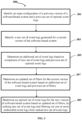
- FIG. 3 shows a flowchart illustrating a method of determining an optimal set of event logs for evaluating behaviour of software-based systems during testing and debugging of incrementally developed software in accordance with some embodiments of the present disclosure.
- the method 300 includes one or more blocks illustrating a method of determining an optimal set of event logs for evaluating behaviour of software-based systems during testing and debugging of incrementally developed software.
- the method 300 may be described in the general context of computer executable instructions.
- computer executable instructions can include routines, programs, objects, components, data structures, procedures, modules, and functions, which perform functions or implement abstract data types.
- the order in which the method 300 is described is not intended to be construed as a limitation, and any number of the described method blocks can be combined in any order to implement the method 300. Additionally, individual blocks may be deleted from the methods without departing from the scope of the subject matter described herein. Furthermore, the method 300 can be implemented in any suitable hardware, software, firmware, or combination thereof.
- the method 300 may include identifying, by a processor 107 of the event log filtering system 103, an input configuration of the previous version of the software-based system and a previous optimal set of event logs. Further the input configuration may include, but not limited to, the external or internal triggers and a previous set of filters.
- the method 300 may include identifying, by the processor 107, a new set of event logs generated for a current version of the software-based system based on the input configuration provided to the previous version of the software-based system.
- the new set of event logs may be generated for the current version of the software-based system.
- the new set of event logs may be generated as a result of software-upgrade, feature enhancement, version change and on the like.
- the method 300 may include, determining, by the processor 107, an additional set of event logs based on comparison of the new set of event logs and the previous set of event logs.
- the processor 107 may determine the additional set of event logs by comparing the new set of event logs and the previous set of event logs.
- the additional set of event logs may be the event logs which may be present in the new set of event logs, but not in the previous set of event logs and be present in the new set of event logs.
- the method 300 may include, determining, by the processor 107, an updated set of filters for the current version of the software-based system based on the additional set of event logs and the previous set of filters.
- the processor 107 may determine an additional set of filters based on the additional set of event logs.
- the processor 107 may analyse the additional set of event logs and one or more attributes associated with the additional set of event logs. Further the updated set of filters may be determined by combining the additional set of new filters and the previous set of filters, removal of the one or more filters from the previous set of filters and replacing one or more filters of the previous filter with one or more filters of the additional set of new filters.
- the method 300 may include, determining, by the processor 107, an optimal set of event logs for the new version of the software-based system based on the updated set of filters.
- the processor 107 may determine the optimal set of event logs based on the updated set of filters.
- the optimal set of event logs may be determined by ranking the new set of event logs based on the system specific scenario and attributes associated with the updated set of filters. Further, the processor 107 may filter out the one or more undesirable event logs from the ranked new set of event logs based on the updated set of filters, to obtain the optimal set of event logs for the current version of the software-based system.
- FIG. 4 is a block diagram of an exemplary computer system for implementing embodiments consistent with the present disclosure.
- FIG. 4 illustrates a block diagram of an exemplary computer system 400 for implementing embodiments consistent with the present invention.
- the computer system 400 can be an event log filtering system 103 that is used for determining an optimal set of event logs for evaluating behaviour of software-based systems during testing and debugging of incrementally developed software.
- the event-log filtering system 103 may be one of a stand-alone system, a distributed system, a networked system or a cloud-based system.
- the event log filtering system 103 may be a networked or cloud-based system
- individual components communicatively connected to each other to form the event log filtering system 103 may be polled for the event logs and also may have the capability to provide the event logs as dictated by the event log filtering system 103.
- the event log filtering system 103 may be integrated with either CI/CD systems.
- the event log filtering system 103 may provide both online or offline capability for fault finding and performing corrective measures to a centralized controller associated with the event log filtering system 103.
- the computer system 400 may include a central processing unit (“CPU" or "processor") 402.
- the processor 402 may include at least one data processor for executing program components for executing user or system-generated business processes.
- a user may include a person, a person using a device such as those included in this invention, or such a device itself.
- the processor 402 may include specialized processing units such as integrated system (bus) controllers, memory management control units, floating point units, graphics processing units, digital signal processing units, etc.
- the processor 402 may be disposed in communication with input devices 411 and output devices 412 via I/O interface 401.
- the I/O interface 401 may employ communication protocols/methods such as, without limitation, audio, analog, digital, stereo, IEEE-1394, serial bus, Universal Serial Bus (USB), infrared, PS/2, BNC, coaxial, component, composite, Digital Visual Interface (DVI), high-definition multimedia interface (HDMI), Radio Frequency (RF) antennas, S-Video, Video Graphics Array (VGA), IEEE 802.n /b/g/n/x, Bluetooth, cellular (e.g., Code-Division Multiple Access (CDMA), High-Speed Packet Access (HSPA+), Global System For Mobile Communications (GSM), Long-Term Evolution (LTE), WiMax, or the like), etc.
- CDMA Code-Division Multiple Access
- HSPA+ High-Speed Packet Access
- GSM Global System For Mobile Communications
- LTE Long-Term Evolution
- WiMax wireless wide area network
- computer system 400 may communicate with input devices 411 and output devices 412.
- the processor 402 may be disposed in communication with a communication network 409 via a network interface 403.
- the network interface 403 may communicate with the communication network 409.
- the network interface 403 may employ connection protocols including, without limitation, direct connect, Ethernet (e.g., twisted pair 10/100/1000 Base T), Transmission Control Protocol/Internet Protocol (TCP/IP), token ring, IEEE 802.11a/b/g/n/x, etc.
- TCP/IP Transmission Control Protocol/Internet Protocol
- the computer system 400 may communicate with an event logging system 101 and a data repository 105.
- the communication network 409 can be implemented as one of the different types of networks, such as intranet or Local Area Network (LAN), Closed Area Network (CAN) and such within the autonomous vehicle.
- LAN Local Area Network
- CAN Closed Area Network
- the communication network 409 may either be a dedicated network or a shared network, which represents an association of the different types of networks that use a variety of protocols, for example, Hypertext Transfer Protocol (HTTP), CAN Protocol, Transmission Control Protocol/Internet Protocol (TCP/IP), Wireless Application Protocol (WAP), etc., to communicate with each other. Further, the communication network 409 may include a variety of network devices, including routers, bridges, servers, computing devices, storage devices, etc. In some embodiments, the processor 402 may be disposed in communication with a memory 405 (e.g., RAM, ROM, etc. not shown in FIG. 4 ) via a storage interface 404.
- a memory 405 e.g., RAM, ROM, etc. not shown in FIG. 4
- the storage interface 404 may connect to memory 405 including, without limitation, memory drives, removable disc drives, etc., employing connection protocols such as Serial Advanced Technology Attachment (SATA), Integrated Drive Electronics (IDE), IEEE-1394, Universal Serial Bus (USB), fibre channel, Small Computer Systems Interface (SCSI), etc.
- the memory drives may further include a drum, magnetic disc drive, magneto-optical drive, optical drive, Redundant Array of Independent Discs (RAID), solid-state memory devices, solid-state drives, etc.
- the memory 405 may store a collection of program or database components, including, without limitation, a user interface 406, an operating system 407, a web browser 408 etc.
- the computer system 400 may store user/application data, such as the data, variables, records, etc. as described in this invention.
- databases may be implemented as fault-tolerant, relational, scalable, secure databases such as Oracle or Sybase.
- the operating system 407 may facilitate resource management and operation of the computer system 400.
- Examples of operating systems include, without limitation, APPLE ® MACINTOSH ® OS X ® , UNIX ® , UNIX-like system distributions (E.G., BERKELEY SOFTWARE DISTRIBUTION ® (BSD), FREEBSD ® , NETBSD ® , OPENBSD, etc.), LINUX ® DISTRIBUTIONS (E.G., RED HAT ® , UBUNTU ® , KUBUNTU ® , etc.), IBM ® OS/2 ® , MICROSOFT ® WINDOWS ® (XP ® , VISTA ® /7/8, 10 etc.), APPLE ® IOS ® , GOOGLETM ANDROIDTM, BLACKBERRY ® OS, or the like.
- the User interface 406 may facilitate display, execution, interaction, manipulation, or operation of program components through textual or graphical facilities.
- user interfaces may provide computer interaction interface elements on a display system operatively connected to the computer system 400, such as cursors, icons, checkboxes, menus, scrollers, windows, widgets, etc.
- GUIs Graphical User Interfaces
- Apple ® Macintosh ® operating systems' Aqua ® IBM ® OS/2 ®
- Microsoft ® Windows ® e.g., Aero, Metro, etc.
- web interface libraries e.g., ActiveX ® , Java ® , Javascript ® , AJAX, HTML, Adobe ® Flash ® , etc.
- the computer system 400 may implement the web browser 408 stored program components.
- the web browser 408 may be a hypertext viewing application, such as MICROSOFT ® INTERNET EXPLORER ® , GOOGLETM CHROMETM, MOZILLA ® FIREFOX ® , APPLE ® SAFARI ® , etc. Secure web browsing may be provided using Secure Hypertext Transport Protocol (HTTPS), Secure Sockets Layer (SSL), Transport Layer Security (TLS), etc.
- Web browsers 408 may utilize facilities such as AJAX, DHTML, ADOBE ® FLASH ® , JAVASCRIPT ® , JAVA ® , Application Programming Interfaces (APIs), etc.
- the computer system 400 may implement a mail server stored program component.
- the mail server may be an Internet mail server such as Microsoft Exchange, or the like.
- the mail server may utilize facilities such as Active Server Pages (ASP), ACTIVEX ® , ANSI ® C++/C#, MICROSOFT ® , .NET, CGI SCRIPTS, JAVA ® , JAVASCRIPT ® , PERL ® , PHP, PYTHON ® , WEBOBJECTS ® , etc.
- the mail server may utilize communication protocols such as Internet Message Access Protocol (IMAP), Messaging Application Programming Interface (MAPI), MICROSOFT ® exchange, Post Office Protocol (POP), Simple Mail Transfer Protocol (SMTP), or the like.
- the computer system 400 may implement a mail client stored program component.
- the mail client may be a mail viewing application, such as APPLE ® MAIL, MICROSOFT ® ENTOURAGE ® , MICROSOFT ® OUTLOOK ® , MOZILLA ® THUNDERBIRD ® , etc.
- a computer-readable storage medium refers to any type of physical memory on which information or data readable by a processor may be stored.
- a computer-readable storage medium may store instructions for execution by one or more processors, including instructions for causing the processor(s) to perform steps or stages consistent with the embodiments described herein.
- the term "computer-readable medium” should be understood to include tangible items and exclude carrier waves and transient signals, i.e., non-transitory. Examples include Random Access Memory (RAM), Read-Only Memory (ROM), volatile memory, non-volatile memory, hard drives, Compact Disc (CD) ROMs, Digital Video Disc (DVDs), flash drives, disks, and any other known physical storage media.
- the present disclosure provides a method and a system for determining an optimal set of event logs for evaluating behaviour of software-based systems during testing and debugging of incrementally developed software.
- the present disclosure performs computation for non-uniform logging mechanism.
- the event log filtering system 103 of the present disclosure processes the logs and filters the unwanted event logs and suggests the correction.
- the unstructured logs suffer from limitations, as there is no mechanism to check if the added log is intentionally misleading or is because of ignorance of the developer due too sheer volume of such logs during the debugging.
- the event log filtering system 103 of the present disclosure tracks the unstructured logs and enhances the unstructured logs by a filtering mechanism to reach the equivalence of the structured logs.
- the event log filtering system 103 is able to filter high volume of event logs. Usually, event logs collected are very large in number and time consuming to analyse. Event logging also requires special skill, deep understanding of the software, to decode them based on the type of the event logs. However, the event log filtering system 103 of the present disclosure performs an automated analysis and optimizes the amount of unstructured logs in the software-based system, which in turn eliminates the need for intervention of subject matter experts during event logging process.
- the event log filtering system 103 reduces the error recovery and the turnaround time. Apart from undefined structure of the event logs, most of the time the event logs collected may not be sufficient requiring iterative steps of re-collecting more event logs, analyzing and requiring furthermore logs to resolve the issue. This leads to longer turnaround time to fix an issue during the software debugging process.
- the optimal set of event logs determined for each scenario of the software-based system in the present disclosure ensures optimal logging system which helps a developer to quickly resolve the issues.
- the event log filtering system 103 may determine a pattern validation of the set of event logs by creating a pattern as an optimal set for describing the behaviour of the system-software.
- the logs could be unstructured or insufficient due to system capability to log all the events because of system load or unavailability of any event logging code, or even redundant or erroneous logging present in the system event logging.
- the event log filtering system 103 of the present disclosure validate the event logs for each scenario of the software-based system.
- the present disclosure provides enables using the optimal set of event logs as the quantifiable measure to check the credibility and quality of the software-based system while comparing different software based systems.
- the event log filtering system 103 provides an automated analysis of event logs. Automated analysis of such event logs, though suggested in many prior arts suffers heavily or sometime is not possible due to non-uniform logging or unverified or invalidated logging in the software.
- the data repository may be associated with an Artificial Intelligence or Machine learning (AI/ML) engine to perform the analytics on the event logs and provide the feedback to event log filter system, thereby creating and learning the filters in the system automatically.
- AI/ML Artificial Intelligence or Machine learning
- the event log filtering system 103 identifies the upper and lower bounds of logs.
- the logging provided by the event log filtering system 103 is taken as lower bound for the present disclosure and use this capability of system for getting minimal set of logs for combination of external and internal event.
- This bounded sets can be derived from various testing stages like Unit Test, Integration Test, Systems Test, Scale Test, limited deployment customer labs and so on.
- Event logging for replication of database, system redundancy & instruction trace are some of the examples of maximum logging, while some of the lower bounds are structured logging for monitoring and alarm generation. Unstructured logging has no well-defined lower bounds. The present disclosure suggests how to get a optimal event log set to define the behaviour of software.
Landscapes
- Engineering & Computer Science (AREA)
- Theoretical Computer Science (AREA)
- Physics & Mathematics (AREA)
- General Engineering & Computer Science (AREA)
- General Physics & Mathematics (AREA)
- Quality & Reliability (AREA)
- Computing Systems (AREA)
- Computer Vision & Pattern Recognition (AREA)
- Mathematical Physics (AREA)
- Software Systems (AREA)
- Computer Hardware Design (AREA)
- Computer Security & Cryptography (AREA)
- Debugging And Monitoring (AREA)
Applications Claiming Priority (1)
| Application Number | Priority Date | Filing Date | Title |
|---|---|---|---|
| IN202241015272 | 2022-03-19 |
Publications (1)
| Publication Number | Publication Date |
|---|---|
| EP4246331A1 true EP4246331A1 (de) | 2023-09-20 |
Family
ID=81580462
Family Applications (1)
| Application Number | Title | Priority Date | Filing Date |
|---|---|---|---|
| EP22171680.6A Pending EP4246331A1 (de) | 2022-03-19 | 2022-05-04 | Verfahren und system zur bestimmung des optimalen ereignisprotokollsatzes zur bewertung des verhaltens von softwarebasierten systemen |
Country Status (2)
| Country | Link |
|---|---|
| US (1) | US20230297492A1 (de) |
| EP (1) | EP4246331A1 (de) |
Citations (2)
| Publication number | Priority date | Publication date | Assignee | Title |
|---|---|---|---|---|
| US20200117587A1 (en) * | 2018-10-15 | 2020-04-16 | Hewlett Packard Enterprise Development Lp | Log File Analysis |
| US20220012165A1 (en) * | 2019-12-20 | 2022-01-13 | Beijing Baidu Netcom Science And Technology Co., Ltd. | Method and apparatus for debugging device |
Family Cites Families (8)
| Publication number | Priority date | Publication date | Assignee | Title |
|---|---|---|---|---|
| US20090144699A1 (en) * | 2007-11-30 | 2009-06-04 | Anton Fendt | Log file analysis and evaluation tool |
| US10332005B1 (en) * | 2012-09-25 | 2019-06-25 | Narus, Inc. | System and method for extracting signatures from controlled execution of applications and using them on traffic traces |
| EP2928157B1 (de) * | 2014-04-04 | 2019-12-18 | Siemens Aktiengesellschaft | Verfahren zur Analyse und/oder Evaluierung von mindestens einem Ereignis einer technischen Anlage |
| US11226975B2 (en) * | 2015-04-03 | 2022-01-18 | Oracle International Corporation | Method and system for implementing machine learning classifications |
| US10445212B2 (en) * | 2017-05-12 | 2019-10-15 | Microsoft Technology Licensing, Llc | Correlation of failures that shift for different versions of an analysis engine |
| US20200021511A1 (en) * | 2018-07-12 | 2020-01-16 | Fujitsu Limited | Performance analysis for transport networks using frequent log sequence discovery |
| US11163731B1 (en) * | 2020-05-04 | 2021-11-02 | Salesforce.Com, Inc. | Autobuild log anomaly detection methods and systems |
| US12339764B2 (en) * | 2020-07-31 | 2025-06-24 | Telefonaktiebolaget Lm Ericsson (Publ) | Machine-learning based software testing technique |
-
2022
- 2022-03-31 US US17/657,452 patent/US20230297492A1/en not_active Abandoned
- 2022-05-04 EP EP22171680.6A patent/EP4246331A1/de active Pending
Patent Citations (2)
| Publication number | Priority date | Publication date | Assignee | Title |
|---|---|---|---|---|
| US20200117587A1 (en) * | 2018-10-15 | 2020-04-16 | Hewlett Packard Enterprise Development Lp | Log File Analysis |
| US20220012165A1 (en) * | 2019-12-20 | 2022-01-13 | Beijing Baidu Netcom Science And Technology Co., Ltd. | Method and apparatus for debugging device |
Non-Patent Citations (2)
| Title |
|---|
| SINA GHOLAMIAN ET AL: "A Comprehensive Survey of Logging in Software: From Logging Statements Automation to Log Mining and Analysis", ARXIV.ORG, CORNELL UNIVERSITY LIBRARY, 201 OLIN LIBRARY CORNELL UNIVERSITY ITHACA, NY 14853, 1 January 2022 (2022-01-01), pages 1 - 45, XP091127192 * |
| VIDGOF MAXIM ET AL: "Interactive log-delta analysis using multi-range filtering", SOFTWARE & SYSTEMS MODELING, SPRINGER BERLIN HEIDELBERG, BERLIN/HEIDELBERG, vol. 21, no. 3, 14 September 2021 (2021-09-14), pages 847 - 868, XP037806775, ISSN: 1619-1366, [retrieved on 20210914], DOI: 10.1007/S10270-021-00902-0 * |
Also Published As
| Publication number | Publication date |
|---|---|
| US20230297492A1 (en) | 2023-09-21 |
Similar Documents
| Publication | Publication Date | Title |
|---|---|---|
| US11300481B2 (en) | Method and system for predicting failures in diverse set of asset types in an enterprise | |
| US9507700B1 (en) | Generic method for automated software testing | |
| CN111108481B (zh) | 故障分析方法及相关设备 | |
| US11443241B2 (en) | Method and system for automating repetitive task on user interface | |
| US10127134B2 (en) | Software testing system and a method for facilitating structured regression planning and optimization | |
| US9858175B1 (en) | Method and system for generation a valid set of test configurations for test scenarios | |
| US11151019B2 (en) | Method and system for dynamically testing a product and process in a virtual testing environment | |
| US20140143749A1 (en) | Affinity recommendation in software lifecycle management | |
| US20200409827A1 (en) | Method and system for automating generation of test data and associated configuration data for testing | |
| US12450435B2 (en) | Apparatus and method for performing forensic activity through automatic log analysis | |
| US20200401505A1 (en) | System and method for automated testing of application program interface (api) | |
| US11263072B2 (en) | Recovery of application from error | |
| US10249106B2 (en) | Method and system for performing vehicle inspection | |
| CN111898059A (zh) | 网站页面质量评估和监控方法及其系统 | |
| US20200226222A1 (en) | Method and system for preventing failures of a product in a virtual testing environment | |
| CN109684220A (zh) | 一种基于事件回放的浏览器兼容性分析方法 | |
| EP4246331A1 (de) | Verfahren und system zur bestimmung des optimalen ereignisprotokollsatzes zur bewertung des verhaltens von softwarebasierten systemen | |
| CN116089133B (zh) | 一种异常业务场景检测方法、装置、计算设备和存储介质 | |
| CN113031995B (zh) | 一种更新规则的方法、装置、存储介质以及电子设备 | |
| KR102757273B1 (ko) | 가상 서버들로부터 대용량 로그 파일들을 프로세싱하는 컴퓨터 시스템 및 방법 | |
| JP2015043181A (ja) | 回帰テスト支援システム | |
| US20240370801A1 (en) | System and method of predicting catastrophic incidents in a service system | |
| CN114185740B (zh) | 日志捕获方法、装置、电子设备及存储介质 | |
| US20170330090A1 (en) | Method and a system for optimzing stability of a project | |
| JP2020115248A (ja) | 試験優先順位決定装置 |
Legal Events
| Date | Code | Title | Description |
|---|---|---|---|
| PUAI | Public reference made under article 153(3) epc to a published international application that has entered the european phase |
Free format text: ORIGINAL CODE: 0009012 |
|
| STAA | Information on the status of an ep patent application or granted ep patent |
Free format text: STATUS: THE APPLICATION HAS BEEN PUBLISHED |
|
| AK | Designated contracting states |
Kind code of ref document: A1 Designated state(s): AL AT BE BG CH CY CZ DE DK EE ES FI FR GB GR HR HU IE IS IT LI LT LU LV MC MK MT NL NO PL PT RO RS SE SI SK SM TR |
|
| STAA | Information on the status of an ep patent application or granted ep patent |
Free format text: STATUS: REQUEST FOR EXAMINATION WAS MADE |
|
| 17P | Request for examination filed |
Effective date: 20231103 |
|
| RBV | Designated contracting states (corrected) |
Designated state(s): AL AT BE BG CH CY CZ DE DK EE ES FI FR GB GR HR HU IE IS IT LI LT LU LV MC MK MT NL NO PL PT RO RS SE SI SK SM TR |
|
| STAA | Information on the status of an ep patent application or granted ep patent |
Free format text: STATUS: EXAMINATION IS IN PROGRESS |
|
| 17Q | First examination report despatched |
Effective date: 20251201 |