EP4243445A1 - Audio signal processing apparatus, audio system, and method for enhancing low-frequency sound sensation - Google Patents
Audio signal processing apparatus, audio system, and method for enhancing low-frequency sound sensation Download PDFInfo
- Publication number
- EP4243445A1 EP4243445A1 EP23156949.2A EP23156949A EP4243445A1 EP 4243445 A1 EP4243445 A1 EP 4243445A1 EP 23156949 A EP23156949 A EP 23156949A EP 4243445 A1 EP4243445 A1 EP 4243445A1
- Authority
- EP
- European Patent Office
- Prior art keywords
- low
- signal
- frequency sound
- sound sensation
- audio
- Prior art date
- Legal status (The legal status is an assumption and is not a legal conclusion. Google has not performed a legal analysis and makes no representation as to the accuracy of the status listed.)
- Withdrawn
Links
Images



Classifications
-
- H—ELECTRICITY
- H04—ELECTRIC COMMUNICATION TECHNIQUE
- H04R—LOUDSPEAKERS, MICROPHONES, GRAMOPHONE PICK-UPS OR LIKE ACOUSTIC ELECTROMECHANICAL TRANSDUCERS; ELECTRIC HEARING AIDS; PUBLIC ADDRESS SYSTEMS
- H04R3/00—Circuits for transducers
-
- H—ELECTRICITY
- H04—ELECTRIC COMMUNICATION TECHNIQUE
- H04R—LOUDSPEAKERS, MICROPHONES, GRAMOPHONE PICK-UPS OR LIKE ACOUSTIC ELECTROMECHANICAL TRANSDUCERS; ELECTRIC HEARING AIDS; PUBLIC ADDRESS SYSTEMS
- H04R3/00—Circuits for transducers
- H04R3/04—Circuits for transducers for correcting frequency response
-
- H—ELECTRICITY
- H04—ELECTRIC COMMUNICATION TECHNIQUE
- H04R—LOUDSPEAKERS, MICROPHONES, GRAMOPHONE PICK-UPS OR LIKE ACOUSTIC ELECTROMECHANICAL TRANSDUCERS; ELECTRIC HEARING AIDS; PUBLIC ADDRESS SYSTEMS
- H04R2430/00—Signal processing covered by H04R, not provided for in its groups
- H04R2430/03—Synergistic effects of band splitting and sub-band processing
Definitions
- the present invention relates to a technique for enhancing a sensation of a low-frequency sound output by an audio system.
- a loudspeaker having insufficient reproduction capability in a low frequency range such as a small and lightweight speaker
- a low-frequency sound sensation that a user perceives may be insufficient.
- techniques are known for enhancing the sensation of the low-frequency sounds.
- low-frequency signal components output from an audio source apparatus are divided into a plurality of frequency bands, and overtones of signal components in each divided frequency band are generated. The generated overtones are added to the original signal output from the audio source apparatus, and a resultant signal is output to a loudspeaker (see, for example, JP 2004-320516 A ).
- a FIF (Fractal Interpolation Functions) technique is known (see, for example, JP 2005-084370 A , JP 2006-330144 A , or JP 2009-229492 A ).
- a time interval T is divided into a plurality of time intervals referred to as interpolation intervals ti, and a contraction mapping function ⁇ i(S), that maps a signal waveform S in the time interval T into the interpolation intervals ti, is calculated whereby audio data is up-sampled by contraction mapping of the signal waveform S into each interpolation interval ti the using contraction mapping function ⁇ i(S).
- the present invention relates to an audio signal processing apparatus, an audio system, and a method according to the appended claims. Embodiments are disclosed in the dependent claims.
- the present invention provides an audio signal processing apparatus configured to add, to an input audio signal, a low-frequency sound sensation enhancement signal for enhancing a low-frequency sound sensation of the audio signal and output a resultant signal
- the audio signal processing apparatus including a low-frequency sound sensation enhancement signal generation unit configured to generate the low-frequency sound sensation enhancement signal from the input audio signal, and a mixing unit configured to mix the low-frequency sound sensation enhancement signal with the input audio signal and output a resultant mixed signal, wherein the low-frequency sound sensation enhancement signal generation unit generates the low-frequency sound sensation enhancement signal by contraction mapping of components in a low-frequency range of the input audio signal using FIF (fractal interpolation functions).
- FIF fractal interpolation functions
- the present invention provides an audio system including an audio device configured to output an audio signal, a loudspeaker, and an audio signal processing apparatus configured to add, to the audio signal output by the audio device, a low-frequency sound sensation enhancement signal for enhancing a low-frequency sound sensation of the audio signal and output a resultant signal
- the audio signal processing apparatus includes a low-frequency sound sensation enhancement signal generation unit configured to generate the low-frequency sound sensation enhancement signal from the audio signal output by the audio device, and a mixing unit configured to mix the low-frequency sound sensation enhancement signal with the audio signal output by the audio device and output a resultant mixed signal to the loudspeaker
- the low-frequency sound sensation enhancement signal generation unit generates the low-frequency sound sensation enhancement signal with a frequency range from f0 to f1 (where f0 ⁇ f1) by contraction mapping of components in a frequency range lower than f0 of the audio signal output by the audio device using FIF (Fractal Interpolation Functions) where f0 is a lower limit
- the low-frequency sound sensation enhancement signal generation unit may extract data of the audio signal with a sampling rate of FS output by the audio device such that one piece of data is extracted as a feature point every I pieces of data, and may perform contraction mapping from each feature point in each block with a size BS into each interpolation interval with a size TS obtained by dividing the block such that following relationships are satisfied: I ⁇ FS f 0 ⁇ 2 , BS ⁇ I ⁇ 2 , and TS ⁇ BS f 1 / f 0 .
- the present invention also provides a method for enhancing a low-frequency sound sensation of an audio signal, including a step of generating a low-frequency sound sensation enhancement signal by contraction mapping of a component in a low-frequency range of the audio signal by FIF (Fractal Interpolation Functions), and a step of mixing the low-frequency sound sensation enhancement signal with the audio signal and outputting a resultant mixed signal.
- FIF Frractal Interpolation Functions
- the low-frequency sound sensation is enhanced by using a signal which is in a frequency range higher than the frequency range of the low-frequency components and which has self-similarity to the low-frequency components of the audio signal, and thus it is possible to enhance the low-frequency sound sensation such that a more natural sound sensation can be achieved.
- Fig. 1 illustrates a configuration of an audio system according to an embodiment of the present invention.
- the audio system includes an audio source device 1, an audio signal processing apparatus 2, a loudspeaker 3, and a control unit 4.
- the audio source device 1 outputs an audio source signal A.
- the audio signal processing apparatus 2 outputs, to the loudspeaker 3, an output audio signal B obtained by adding, to the audio source signal A, a low-frequency sound sensation enhancement signal for enhancing the low-frequency sound sensation of the audio source signal A.
- the audio signal processing apparatus 2 includes a low-frequency sound sensation enhancement signal generation unit 21 configured to generate and output a low-frequency sound sensation enhancement signal C from the audio source signal A, a delay unit 22 configured to delay the audio source signal A, and a mixer 23 configured to adjust the gain of the output of the low-frequency sound sensation enhancement signal generation unit 21, mix it with the output of the delay unit 22, and output a resultant signal as an output audio signal B.
- the delay unit 22 delays the audio source signal A by an amount equal to an amount of a delay in the low-frequency sound sensation enhancement signal C.
- the low-frequency sound sensation enhancement signal generation unit 21 includes a pre-LPF 211, an FIF processing unit 212, a post-HPF 213, and a post-LPF 214.
- the low-frequency sound sensation enhancement signal generation unit 21 generates a low-frequency sound sensation enhancement signal C with a frequency range from f0 to f1 (f0 ⁇ f1) where f0 is a frequency of the lower limit of the reproduction frequency range of the loudspeaker 3.
- the pre-LPF 211 extracts signal components in the frequency range lower than f0 from the audio source signal A and outputs the extracted signal components as a low-frequency range audio signal S to the FIF processing unit 212.
- the FIF processing unit 212 performs processing of generating an intermediate low-frequency sound sensation enhancement signal D by the FIF (Fractal Interpolation Functions).
- the post HPF 213 and post LPF 214 remove unnecessary components in the frequency range lower than f0 and the frequency range higher than f1 from the intermediate low-frequency sound sensation enhancement signal D thereby generating the low-frequency sound sensation enhancement signal C with the frequency range from f0 to f1.
- the resultant low-frequency sound sensation enhancement signal C is output to the mixer 23.
- the FIF processing unit 212 includes a feature point extraction unit 2121, a contraction mapping function calculation unit 2122, and a mapping processing unit 2123.
- the control unit 4 determines the feature point interval I, the block size BS of blocks indicating the time intervals, and the interpolation interval size TS of the interpolation intervals obtained by dividing the block into a plurality of pieces, according to the sampling rate FS of the audio source signal A acquired from the audio source device 1 or the like such that following condition is satisfied, I ⁇ FS f 0 ⁇ 2 , BS ⁇ I ⁇ 2 , and TS ⁇ BS f 1 / f 0 , and the control unit 4 sets the determined values in the FIF processing unit 212.
- I ⁇ FS f 0 ⁇ 2 480 .
- BS ⁇ I ⁇ 2 1024
- TS ⁇ BS f 1 / f 0 256 .
- each block includes 3 or more feature points.
- each block includes 3 feature points as shown in Fig. 3C .
- TS is set such that TS ⁇ ft
- each block is divided into f1/f0 or more interpolation intervals.
- each block with a block size BS is divided into four interpolation intervals each having an interpolation interval size equal to BS/4 as shown in Fig. 3D .
- the contraction mapping function calculation unit 2122 calculates the contraction mapping function wi(S) that performs the contraction mapping sequentially for each block with the block size BS of the low-frequency range audio signal S such that the low-frequency range audio signal S of the whole block is mapped into each interpolation interval with the interpolation interval size TS.
- the calculation of the contraction mapping function wi(S) is performed, for example, using a calculation algorithm of the contraction mapping function wi(S) in one of known techniques of FIF (Fractal Interpolation Functions) described above.
- the mapping processing unit 2123 performs the contraction mapping such that each feature point extracted by the feature point extraction unit from the block is mapped into each interpolation interval with the interpolation interval size TS in the block in each block with the block size BS of the low-frequency audio signal S using the contraction mapping function wi(S) calculated by the contraction mapping function calculation unit 2122 for the interpolation interval, for each interpolation interval and for each block, and the mapping processing unit 2123 outputs a resultant mapped signal as an intermediate low-frequency sound sensation enhancement signal D.
- each block is divided into four interpolation intervals with an interpolation interval size TS as shown in Fig. 5B
- the three feature points in each block are mapped, by contraction mapping, into each interpolation interval using the contraction mapping function wi(S) as represented by arrows directed from Fig. 4A to Fig. 4B.
- each block is divided into four interpolation intervals with an interpolation interval size TS as shown in Fig. 5D
- the five feature points in each block are mapped by contraction mapping into each interpolation interval using the contraction mapping function wi(S) as represented by arrows directed from Fig. 5C to Fig. 5D .
- the intermediate low-frequency sound sensation enhancement signal D generated in the above-described manner is a signal obtained by contracting the original low-frequency audio signal in the time domain by a ratio of TS/BS, and the intermediate low-frequency sound sensation enhancement signal D has a frequency range with an upper limit higher than f0 and provides a sound having a self-similarity to the sound of the low-frequency range audio signal S.
- the embodiment of the present invention has been described above.
- the low-frequency sound sensation enhancement signal C added to the audio source signal A to enhance the low-frequency sound sensation is generated by the FIF (Fractal Interpolation Functions) from the low-frequency components, outside the reproduction frequency range of the loudspeaker 3, of the audio source signal A such that the resultant low-frequency sound sensation enhancement signal C has self-similarity to the low-frequency components and has a frequency range within the reproduction frequency range of the loudspeaker 3, and thus it is possible to enhance the low-frequency sound sensation such that a more natural sound sensation is achieved.
- FIF Frractal Interpolation Functions
- a not-unnatural signal having components dispersed over a wide frequency range is obtained as the intermediate low-frequency sound sensation enhancement signal 62.
Landscapes
- Physics & Mathematics (AREA)
- Engineering & Computer Science (AREA)
- Acoustics & Sound (AREA)
- Signal Processing (AREA)
- Circuit For Audible Band Transducer (AREA)
- Stereophonic System (AREA)
Abstract
Description
- The present invention relates to a technique for enhancing a sensation of a low-frequency sound output by an audio system.
- In a case where a loudspeaker having insufficient reproduction capability in a low frequency range, such as a small and lightweight speaker, is used as an output device in an audio system, a low-frequency sound sensation that a user perceives may be insufficient. To handle such a situation, techniques are known for enhancing the sensation of the low-frequency sounds. In such a technique, low-frequency signal components output from an audio source apparatus are divided into a plurality of frequency bands, and overtones of signal components in each divided frequency band are generated. The generated overtones are added to the original signal output from the audio source apparatus, and a resultant signal is output to a loudspeaker (see, for example,
JP 2004-320516 A - As one of techniques related to the present invention, a FIF (Fractal Interpolation Functions) technique is known (see, for example,
JP 2005-084370 A JP 2006-330144 A JP 2009-229492 A - In the above-described technique for enhancing the low-frequency sound sensation by adding overtones of each frequency band of the low-frequency components of the output signal from the audio source apparatus to the output signal, since only the overtones are added to the output signal, there is a possibility that the sound output by the loudspeaker provides an unnatural feeling depending on the type of the sound represented by the signal output by the audio source apparatus (for example, a simple effect sound).
- In view of the above, it is an object of the present invention to provide a technique for enhancing the low-frequency sound sensation of a sound output by an audio system such that a more natural sound sensation is achieved.
- The present invention relates to an audio signal processing apparatus, an audio system, and a method according to the appended claims. Embodiments are disclosed in the dependent claims.
- According to an aspect, the present invention provides an audio signal processing apparatus configured to add, to an input audio signal, a low-frequency sound sensation enhancement signal for enhancing a low-frequency sound sensation of the audio signal and output a resultant signal, the audio signal processing apparatus including a low-frequency sound sensation enhancement signal generation unit configured to generate the low-frequency sound sensation enhancement signal from the input audio signal, and a mixing unit configured to mix the low-frequency sound sensation enhancement signal with the input audio signal and output a resultant mixed signal, wherein the low-frequency sound sensation enhancement signal generation unit generates the low-frequency sound sensation enhancement signal by contraction mapping of components in a low-frequency range of the input audio signal using FIF (fractal interpolation functions).
- Furthermore, according to another aspect, the present invention provides an audio system including an audio device configured to output an audio signal, a loudspeaker, and an audio signal processing apparatus configured to add, to the audio signal output by the audio device, a low-frequency sound sensation enhancement signal for enhancing a low-frequency sound sensation of the audio signal and output a resultant signal, wherein the audio signal processing apparatus includes a low-frequency sound sensation enhancement signal generation unit configured to generate the low-frequency sound sensation enhancement signal from the audio signal output by the audio device, and a mixing unit configured to mix the low-frequency sound sensation enhancement signal with the audio signal output by the audio device and output a resultant mixed signal to the loudspeaker, and wherein the low-frequency sound sensation enhancement signal generation unit generates the low-frequency sound sensation enhancement signal with a frequency range from f0 to f1 (where f0 < f1) by contraction mapping of components in a frequency range lower than f0 of the audio signal output by the audio device using FIF (Fractal Interpolation Functions) where f0 is a lower limit of a reproduction frequency range of the loudspeaker.
- The low-frequency sound sensation enhancement signal generation unit may extract data of the audio signal with a sampling rate of FS output by the audio device such that one piece of data is extracted as a feature point every I pieces of data, and may perform contraction mapping from each feature point in each block with a size BS into each interpolation interval with a size TS obtained by dividing the block such that following relationships are satisfied:


- In a further aspect, the present invention also provides a method for enhancing a low-frequency sound sensation of an audio signal, including a step of generating a low-frequency sound sensation enhancement signal by contraction mapping of a component in a low-frequency range of the audio signal by FIF (Fractal Interpolation Functions), and a step of mixing the low-frequency sound sensation enhancement signal with the audio signal and outputting a resultant mixed signal.
- According to the audio signal processing apparatus, the audio system, or the method for enhancing the low-frequency sound sensation, the low-frequency sound sensation is enhanced by using a signal which is in a frequency range higher than the frequency range of the low-frequency components and which has self-similarity to the low-frequency components of the audio signal, and thus it is possible to enhance the low-frequency sound sensation such that a more natural sound sensation can be achieved.
- As described above, according to the present invention, it is possible to enhance the low-frequency sound sensation of the sound output by the audio system such that a more natural sound sensation is achieved.
-
Fig. 1 is a block diagram illustrating a configuration of an audio system according to an embodiment of the present invention; -
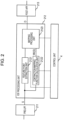
Fig. 2 is a block diagram illustrating a configuration of a FIF processing unit according to an embodiment of the present invention; -
Figs. 3A to 3D are diagrams illustrating examples of processing performed by a FIF processing unit according to an embodiment of the present invention; -
Fig. 4 is a diagram illustrating an example of processing performed by a FIF processing unit according to an embodiment of the present invention; -
Figs. 5A to 5D are diagrams illustrating examples of processing performed by a FIF processing unit according to an embodiment of the present invention; and -
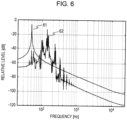
Fig. 6 is a diagram illustrating an example of processing of generating a low-frequency sound sensation enhancement signal according to an embodiment of the present invention. - Embodiments of the present invention are described below.
Fig. 1 illustrates a configuration of an audio system according to an embodiment of the present invention. As illustrated inFig. 1 , the audio system includes anaudio source device 1, an audio signal processing apparatus 2, aloudspeaker 3, and acontrol unit 4. In the audio system configured in this manner, theaudio source device 1 outputs an audio source signal A. The audio signal processing apparatus 2 outputs, to theloudspeaker 3, an output audio signal B obtained by adding, to the audio source signal A, a low-frequency sound sensation enhancement signal for enhancing the low-frequency sound sensation of the audio source signal A. The audio signal processing apparatus 2 includes a low-frequency sound sensation enhancementsignal generation unit 21 configured to generate and output a low-frequency sound sensation enhancement signal C from the audio source signal A, adelay unit 22 configured to delay the audio source signal A, and amixer 23 configured to adjust the gain of the output of the low-frequency sound sensation enhancementsignal generation unit 21, mix it with the output of thedelay unit 22, and output a resultant signal as an output audio signal B. Thedelay unit 22 delays the audio source signal A by an amount equal to an amount of a delay in the low-frequency sound sensation enhancement signal C. - The low-frequency sound sensation enhancement
signal generation unit 21 includes a pre-LPF 211, anFIF processing unit 212, a post-HPF 213, and a post-LPF 214. The low-frequency sound sensation enhancementsignal generation unit 21 generates a low-frequency sound sensation enhancement signal C with a frequency range from f0 to f1 (f0 < f1) where f0 is a frequency of the lower limit of the reproduction frequency range of theloudspeaker 3. The pre-LPF 211 extracts signal components in the frequency range lower than f0 from the audio source signal A and outputs the extracted signal components as a low-frequency range audio signal S to theFIF processing unit 212. TheFIF processing unit 212 performs processing of generating an intermediate low-frequency sound sensation enhancement signal D by the FIF (Fractal Interpolation Functions). The post HPF 213 andpost LPF 214 remove unnecessary components in the frequency range lower than f0 and the frequency range higher than f1 from the intermediate low-frequency sound sensation enhancement signal D thereby generating the low-frequency sound sensation enhancement signal C with the frequency range from f0 to f1. The resultant low-frequency sound sensation enhancement signal C is output to themixer 23. - As illustrated in
Fig. 2 , theFIF processing unit 212 includes a featurepoint extraction unit 2121, a contraction mappingfunction calculation unit 2122, and amapping processing unit 2123. Thecontrol unit 4 determines the feature point interval I, the block size BS of blocks indicating the time intervals, and the interpolation interval size TS of the interpolation intervals obtained by dividing the block into a plurality of pieces, according to the sampling rate FS of the audio source signal A acquired from theaudio source device 1 or the like such that following condition is satisfied,


control unit 4 sets the determined values in theFIF processing unit 212. - For example, if the sampling rate FS of the audio source signal A is FS = 48000 Hz, the lower limit f0 of the reproduction frequency range of the
loudspeaker 3 is f0 = 50 Hz, and the upper limit f1 of the low-frequency sound sensation enhancement signal C is f1 = 200 Hz, then


- The feature
point extraction unit 2121 of theFIF processing unit 212 extracts data of the low-frequency range audio signal S such that one piece of data is extracted as a feature point every I pieces of data. For example, when I = 4, the extraction of the low-frequency range audio signal S sampled at a sampling rate of FS as shown inFig. 3A is performed such that one piece of data is extracted as a feature point every four pieces of data as shown inFig. 3B . That is, the feature points extracted in the above-described manner are given as a result of down-sampling the low-frequency range audio signal S at a sampling rate of f0 × 2 or lower, and thus the upper limit of the frequency range of the resultant down-sampled signal is f0 or lower according to the Nyquist's theorem. When the block size BS is set such that BS ≥ I × 2, each block includes 3 or more feature points. For example, when the block size BS = I × 2, each block includes 3 feature points as shown inFig. 3C . When TS is set such that TS ≤ ft), each block is divided into f1/f0 or more interpolation intervals. For example, when f1/f0 = 4, each block with a block size BS is divided into four interpolation intervals each having an interpolation interval size equal to BS/4 as shown inFig. 3D . Next, as shown inFig. 4 , the contraction mappingfunction calculation unit 2122 calculates the contraction mapping function wi(S) that performs the contraction mapping sequentially for each block with the block size BS of the low-frequency range audio signal S such that the low-frequency range audio signal S of the whole block is mapped into each interpolation interval with the interpolation interval size TS. The calculation of the contraction mapping function wi(S) is performed, for example, using a calculation algorithm of the contraction mapping function wi(S) in one of known techniques of FIF (Fractal Interpolation Functions) described above. Next, themapping processing unit 2123 performs the contraction mapping such that each feature point extracted by the feature point extraction unit from the block is mapped into each interpolation interval with the interpolation interval size TS in the block in each block with the block size BS of the low-frequency audio signal S using the contraction mapping function wi(S) calculated by the contraction mappingfunction calculation unit 2122 for the interpolation interval, for each interpolation interval and for each block, and themapping processing unit 2123 outputs a resultant mapped signal as an intermediate low-frequency sound sensation enhancement signal D. - For example, in a case where three feature points are extracted from each block with a block size BS, as shown in
Fig. 5A , and each block is divided into four interpolation intervals with an interpolation interval size TS as shown inFig. 5B , the three feature points in each block are mapped, by contraction mapping, into each interpolation interval using the contraction mapping function wi(S) as represented by arrows directed from Fig. 4A to Fig. 4B. - For example, in a case where five feature points are extracted from each block with a block size BS, as shown in
Fig. 5C , and each block is divided into four interpolation intervals with an interpolation interval size TS as shown inFig. 5D , the five feature points in each block are mapped by contraction mapping into each interpolation interval using the contraction mapping function wi(S) as represented by arrows directed fromFig. 5C to Fig. 5D . - That is, the intermediate low-frequency sound sensation enhancement signal D generated in the above-described manner is a signal obtained by contracting the original low-frequency audio signal in the time domain by a ratio of TS/BS, and the intermediate low-frequency sound sensation enhancement signal D has a frequency range with an upper limit higher than f0 and provides a sound having a self-similarity to the sound of the low-frequency range audio signal S. The embodiment of the present invention has been described above. According to the embodiment, as described above, the low-frequency sound sensation enhancement signal C added to the audio source signal A to enhance the low-frequency sound sensation is generated by the FIF (Fractal Interpolation Functions) from the low-frequency components, outside the reproduction frequency range of the
loudspeaker 3, of the audio source signal A such that the resultant low-frequency sound sensation enhancement signal C has self-similarity to the low-frequency components and has a frequency range within the reproduction frequency range of theloudspeaker 3, and thus it is possible to enhance the low-frequency sound sensation such that a more natural sound sensation is achieved. - For example,
Fig. 6 shows an intermediate low-frequency soundsensation enhancement signal 62 generated by theFIF processor 212 from asine wave 61 of 50 Hz for a case where FS = 48000 Hz, I = 512, BS = 1024, and TS = 3. As shown inFig. 6 , compared to mere overtones of thesine wave 61, a not-unnatural signal having components dispersed over a wide frequency range is obtained as the intermediate low-frequency soundsensation enhancement signal 62. - Note that in
Fig. 6 , the vertical axis is represented in decibel dB, and the horizontal axis represents a frequency in Hz.
Claims (4)
- An audio signal processing apparatus configured to add, to an input audio signal, a low-frequency sound sensation enhancement signal for enhancing a low-frequency sound sensation of the audio signal and output a resultant signal, the audio signal processing apparatus comprising:a low-frequency sound sensation enhancement signal generation unit configured to generate the low-frequency sound sensation enhancement signal from the input audio signal, anda mixing unit configured to mix the low-frequency sound sensation enhancement signal with the input audio signal and output a resultant mixed signal,wherein the low-frequency sound sensation enhancement signal generation unit is configured to generate the low-frequency sound sensation enhancement signal by contraction mapping of components in a low-frequency range of the input audio signal using fractal interpolation functions, FIF.
- An audio system comprising:an audio device configured to output an audio signal;a loudspeaker; andan audio signal processing apparatus according to claim 1 configured to add, to the audio signal output by the audio device as the input audio signal, the low-frequency sound sensation enhancement signal,whereinthe mixing unit is configured to output the resultant mixed signal to the loudspeaker,and wherein the low-frequency sound sensation enhancement signal generation unit is configured to generate the low-frequency sound sensation enhancement signal with a frequency range from f0 to f1, where f0 < f1, by contraction mapping of components in a frequency range lower than f0 of the audio signal output by the audio device using FIF, where f0 is a lower limit of a reproduction frequency range of the loudspeaker.
- The audio system according to Claim 2, wherein
the low-frequency sound sensation enhancement signal generation unit is configured to extract data of the audio signal with a sampling rate of FS output by the audio device such that one piece of data is extracted as a feature point every I pieces of data, and performs contraction mapping from each feature point in each block with a size BS into each interpolation interval with a size TS obtained by dividing the block such that following relationships are satisfied:


- A method for enhancing a low-frequency sound sensation of an audio signal, comprising:a step of generating a low-frequency sound sensation enhancement signal by contraction mapping of a component in a low-frequency range of the audio signal by Fractal Interpolation Functions, FIF; anda step of mixing the low-frequency sound sensation enhancement signal with the audio signal and outputting a resultant mixed signal.
Applications Claiming Priority (1)
| Application Number | Priority Date | Filing Date | Title |
|---|---|---|---|
| JP2022035056A JP7802578B2 (en) | 2022-03-08 | 2022-03-08 | Acoustic signal processing device, acoustic system, and bass enhancement method |
Publications (1)
| Publication Number | Publication Date |
|---|---|
| EP4243445A1 true EP4243445A1 (en) | 2023-09-13 |
Family
ID=85278529
Family Applications (1)
| Application Number | Title | Priority Date | Filing Date |
|---|---|---|---|
| EP23156949.2A Withdrawn EP4243445A1 (en) | 2022-03-08 | 2023-02-16 | Audio signal processing apparatus, audio system, and method for enhancing low-frequency sound sensation |
Country Status (4)
| Country | Link |
|---|---|
| US (1) | US20230292044A1 (en) |
| EP (1) | EP4243445A1 (en) |
| JP (1) | JP7802578B2 (en) |
| CN (1) | CN116744182A (en) |
Citations (6)
| Publication number | Priority date | Publication date | Assignee | Title |
|---|---|---|---|---|
| JP2004320516A (en) | 2003-04-17 | 2004-11-11 | Matsushita Electric Ind Co Ltd | Acoustic signal processing apparatus and method |
| JP2005084370A (en) | 2003-09-09 | 2005-03-31 | Alpine Electronics Inc | Sampling rate conversion method using fif |
| JP2006330144A (en) | 2005-05-24 | 2006-12-07 | Alpine Electronics Inc | Interpolation method and interpolation system of audio data |
| JP2009229492A (en) | 2008-03-19 | 2009-10-08 | Alpine Electronics Inc | Sampling rate conversion device and its conversion method |
| EP2720477A1 (en) * | 2012-10-15 | 2014-04-16 | Dolby International AB | Virtual bass synthesis using harmonic transposition |
| EP3249649A1 (en) * | 2016-05-26 | 2017-11-29 | Alpine Electronics, Inc. | Audio processing apparatus and audio processing method |
Family Cites Families (1)
| Publication number | Priority date | Publication date | Assignee | Title |
|---|---|---|---|---|
| JPH08293750A (en) * | 1995-04-21 | 1996-11-05 | Alpine Electron Inc | Sound reproduction device |
-
2022
- 2022-03-08 JP JP2022035056A patent/JP7802578B2/en active Active
-
2023
- 2023-02-16 EP EP23156949.2A patent/EP4243445A1/en not_active Withdrawn
- 2023-02-23 US US18/113,238 patent/US20230292044A1/en not_active Abandoned
- 2023-03-07 CN CN202310210196.6A patent/CN116744182A/en active Pending
Patent Citations (6)
| Publication number | Priority date | Publication date | Assignee | Title |
|---|---|---|---|---|
| JP2004320516A (en) | 2003-04-17 | 2004-11-11 | Matsushita Electric Ind Co Ltd | Acoustic signal processing apparatus and method |
| JP2005084370A (en) | 2003-09-09 | 2005-03-31 | Alpine Electronics Inc | Sampling rate conversion method using fif |
| JP2006330144A (en) | 2005-05-24 | 2006-12-07 | Alpine Electronics Inc | Interpolation method and interpolation system of audio data |
| JP2009229492A (en) | 2008-03-19 | 2009-10-08 | Alpine Electronics Inc | Sampling rate conversion device and its conversion method |
| EP2720477A1 (en) * | 2012-10-15 | 2014-04-16 | Dolby International AB | Virtual bass synthesis using harmonic transposition |
| EP3249649A1 (en) * | 2016-05-26 | 2017-11-29 | Alpine Electronics, Inc. | Audio processing apparatus and audio processing method |
Non-Patent Citations (1)
| Title |
|---|
| MARAGOS P ED - INSTITUTE OF ELECTRICAL AND ELECTRONICS ENGINEERS: "Fractal aspects of speech signals: dimension and interpolation", SPEECH PROCESSING 1. TORONTO, MAY 14 - 17, 1991; [INTERNATIONAL CONFERENCE ON ACOUSTICS, SPEECH & SIGNAL PROCESSING. ICASSP], NEW YORK, IEEE, US, vol. CONF. 16, 14 April 1991 (1991-04-14), pages 417 - 420, XP010043910, ISBN: 978-0-7803-0003-3, DOI: 10.1109/ICASSP.1991.150365 * |
Also Published As
| Publication number | Publication date |
|---|---|
| JP7802578B2 (en) | 2026-01-20 |
| US20230292044A1 (en) | 2023-09-14 |
| JP2023130644A (en) | 2023-09-21 |
| CN116744182A (en) | 2023-09-12 |
Similar Documents
| Publication | Publication Date | Title |
|---|---|---|
| EP2375785B1 (en) | Stability improvements in hearing aids | |
| JP3434827B2 (en) | Frequency conversion hearing aid using digital single sideband modulation | |
| CN108196683B (en) | Sound to haptic effect conversion system using waveforms | |
| US6577739B1 (en) | Apparatus and methods for proportional audio compression and frequency shifting | |
| EP2579252B1 (en) | Stability and speech audibility improvements in hearing devices | |
| CN101208991B (en) | Hearing aid with enhanced high-frequency reproduction and method for processing audio signals | |
| US9130523B2 (en) | Methods and apparatus for processing audio signals | |
| KR101880764B1 (en) | Sound to haptic effect conversion system using waveform | |
| US7787633B2 (en) | Crossfade sample playback engine with digital signal processing for vehicle engine sound simulator | |
| EP2190217A1 (en) | Method to reduce feedback in hearing aids | |
| JP2013051589A (en) | Mixing device, mixing signal processor, mixing program, and mixing method | |
| TWI740599B (en) | System, method and non-transitory computer readable medium for audio processing | |
| US7961888B2 (en) | Method and system for enhancing bass effect in audio signals | |
| US20230292044A1 (en) | Audio signal processing apparatus, audio system, and method for enhancing low-frequency sound sensation | |
| JP5046786B2 (en) | Pseudo deep bass generator | |
| CN107529113B (en) | Signal processor using multiple frequency bands | |
| WO2019203127A1 (en) | Information processing device, mixing device using same, and latency reduction method | |
| JP2725444B2 (en) | Sound effect device | |
| TW202307828A (en) | Adaptive filterbanks using scale-dependent nonlinearity for psychoacoustic frequency range extension | |
| JP4593364B2 (en) | Audio data interpolation method and interpolation apparatus | |
| KR100684029B1 (en) | Method for generating harmonics using Fourier transform and apparatus therefor, method for generating harmonics by down sampling, apparatus for same and method for sound correction and apparatus for same | |
| JP2008219844A (en) | Highly-efficient low-pitched sound emphasizing technology | |
| JP2009147504A (en) | Hearing aid | |
| US20040032920A1 (en) | Methods and systems for providing a noise signal | |
| JP4234639B2 (en) | Audio signal generator |
Legal Events
| Date | Code | Title | Description |
|---|---|---|---|
| PUAI | Public reference made under article 153(3) epc to a published international application that has entered the european phase |
Free format text: ORIGINAL CODE: 0009012 |
|
| STAA | Information on the status of an ep patent application or granted ep patent |
Free format text: STATUS: THE APPLICATION HAS BEEN PUBLISHED |
|
| AK | Designated contracting states |
Kind code of ref document: A1 Designated state(s): AL AT BE BG CH CY CZ DE DK EE ES FI FR GB GR HR HU IE IS IT LI LT LU LV MC ME MK MT NL NO PL PT RO RS SE SI SK SM TR |
|
| STAA | Information on the status of an ep patent application or granted ep patent |
Free format text: STATUS: REQUEST FOR EXAMINATION WAS MADE |
|
| 17P | Request for examination filed |
Effective date: 20240305 |
|
| RBV | Designated contracting states (corrected) |
Designated state(s): AL AT BE BG CH CY CZ DE DK EE ES FI FR GB GR HR HU IE IS IT LI LT LU LV MC ME MK MT NL NO PL PT RO RS SE SI SK SM TR |
|
| STAA | Information on the status of an ep patent application or granted ep patent |
Free format text: STATUS: EXAMINATION IS IN PROGRESS |
|
| 17Q | First examination report despatched |
Effective date: 20250725 |
|
| STAA | Information on the status of an ep patent application or granted ep patent |
Free format text: STATUS: THE APPLICATION HAS BEEN WITHDRAWN |
|
| 18W | Application withdrawn |
Effective date: 20251107 |