EP4242628B1 - Reduction of erythrocyte sedimentation rate - Google Patents
Reduction of erythrocyte sedimentation rate Download PDFInfo
- Publication number
- EP4242628B1 EP4242628B1 EP23166232.1A EP23166232A EP4242628B1 EP 4242628 B1 EP4242628 B1 EP 4242628B1 EP 23166232 A EP23166232 A EP 23166232A EP 4242628 B1 EP4242628 B1 EP 4242628B1
- Authority
- EP
- European Patent Office
- Prior art keywords
- sucralose
- blood sample
- anticoagulant
- sedimentation rate
- formulation
- Prior art date
- Legal status (The legal status is an assumption and is not a legal conclusion. Google has not performed a legal analysis and makes no representation as to the accuracy of the status listed.)
- Active
Links
Images



Classifications
-
- A—HUMAN NECESSITIES
- A01—AGRICULTURE; FORESTRY; ANIMAL HUSBANDRY; HUNTING; TRAPPING; FISHING
- A01N—PRESERVATION OF BODIES OF HUMANS OR ANIMALS OR PLANTS OR PARTS THEREOF; BIOCIDES, e.g. AS DISINFECTANTS, AS PESTICIDES OR AS HERBICIDES; PEST REPELLANTS OR ATTRACTANTS; PLANT GROWTH REGULATORS
- A01N1/00—Preservation of bodies of humans or animals, or parts thereof
- A01N1/10—Preservation of living parts
- A01N1/12—Chemical aspects of preservation
- A01N1/122—Preservation or perfusion media
-
- G—PHYSICS
- G01—MEASURING; TESTING
- G01N—INVESTIGATING OR ANALYSING MATERIALS BY DETERMINING THEIR CHEMICAL OR PHYSICAL PROPERTIES
- G01N15/00—Investigating characteristics of particles; Investigating permeability, pore-volume or surface-area of porous materials
- G01N15/04—Investigating sedimentation of particle suspensions
-
- G—PHYSICS
- G01—MEASURING; TESTING
- G01N—INVESTIGATING OR ANALYSING MATERIALS BY DETERMINING THEIR CHEMICAL OR PHYSICAL PROPERTIES
- G01N15/00—Investigating characteristics of particles; Investigating permeability, pore-volume or surface-area of porous materials
- G01N15/04—Investigating sedimentation of particle suspensions
- G01N15/05—Investigating sedimentation of particle suspensions in blood
-
- G—PHYSICS
- G01—MEASURING; TESTING
- G01N—INVESTIGATING OR ANALYSING MATERIALS BY DETERMINING THEIR CHEMICAL OR PHYSICAL PROPERTIES
- G01N33/00—Investigating or analysing materials by specific methods not covered by groups G01N1/00 - G01N31/00
- G01N33/48—Biological material, e.g. blood, urine; Haemocytometers
- G01N33/483—Physical analysis of biological material
- G01N33/487—Physical analysis of biological material of liquid biological material
- G01N33/49—Blood
- G01N33/491—Blood by separating the blood components
-
- G—PHYSICS
- G01—MEASURING; TESTING
- G01N—INVESTIGATING OR ANALYSING MATERIALS BY DETERMINING THEIR CHEMICAL OR PHYSICAL PROPERTIES
- G01N33/00—Investigating or analysing materials by specific methods not covered by groups G01N1/00 - G01N31/00
- G01N33/48—Biological material, e.g. blood, urine; Haemocytometers
- G01N33/50—Chemical analysis of biological material, e.g. blood, urine; Testing involving biospecific ligand binding methods; Immunological testing
- G01N33/80—Chemical analysis of biological material, e.g. blood, urine; Testing involving biospecific ligand binding methods; Immunological testing involving blood groups or blood types or red blood cells
-
- G—PHYSICS
- G01—MEASURING; TESTING
- G01N—INVESTIGATING OR ANALYSING MATERIALS BY DETERMINING THEIR CHEMICAL OR PHYSICAL PROPERTIES
- G01N15/00—Investigating characteristics of particles; Investigating permeability, pore-volume or surface-area of porous materials
- G01N15/01—Investigating characteristics of particles; Investigating permeability, pore-volume or surface-area of porous materials specially adapted for biological cells, e.g. blood cells
- G01N2015/012—Red blood cells
Definitions
- WO2015119115 discloses the use of disodium 4,4'-dinitrostilbene-2,2'-disulfonate (DNDS) and 4,4'-diisothiocyanatostilbene-2,2'-disulfonic acid (DIDS) to avoid erythrocyte sedimentation during analysis in a microfluidic device.
- DNDS disodium 4,4'-dinitrostilbene-2,2'-disulfonate
- DIDS 4,4'-diisothiocyanatostilbene-2,2'-disulfonic acid
- the present invention provides a method for storage of one or more erythrocytes in a blood sample from a subject at an injection site of a microfluidic device the method comprising:
- the treated blood sample has a sucralose concentration of about 10 mM sucralose to about 100 mM sucralose. In some embodiments, the treated blood sample has a sucralose concentration of about 20 mM sucralose to about 100 mM sucralose. In some embodiments, the treated blood sample has a sucralose concentration of about 24 mM sucralose to about 100 mM sucralose. In some embodiments, the treated blood sample has a sucralose concentration of about 15 mM sucralose to about 50 mM sucralose. In some embodiments, the treated blood sample has a sucralose concentration of about 5 mM sucralose to about 50 mM sucralose.
- the treated blood sample has a sucralose concentration of about 5 mM sucralose to about 40 mM sucralose. In some embodiments, the treated blood sample has a sucralose concentration of about 10 mM sucralose to about 35 mM sucralose. In some embodiments, the treated blood sample has a sucralose concentration of about 10 mM sucralose to about 30 mM sucralose. In some embodiments, the treated blood sample has a sucralose concentration of about 5 mM sucralose to about 25 mM sucralose. In some embodiments, the treated blood sample has a sucralose concentration of about 5 mM sucralose up to but not including 25 mM sucralose.
- the treated blood sample has a sucralose concentration of about 5 mM sucralose to about 20 mM sucralose. In some embodiments, the treated blood sample has a sucralose concentration of about 5 mM sucralose to about 15 mM sucralose. In some embodiments, the treated blood sample has a sucralose concentration of about 5 mM sucralose to about 10 mM sucralose. In some embodiments, the treated blood sample has a sucralose concentration of about 24 mM. In some embodiments, the treated blood sample has a sucralose concentration of about 25 mM.
- erythrocyte sedimentation rate is reduced by at least 10%, at least 20%, at least 30%, at least 40%, at least 50%, at least 60%, at least 70%, at least 80%, at least 90%, at least 95% of the erythrocyte sedimentation rate of the untreated blood sample.
- the formulation is in the form of a powder, a solid, a lyophilized form, a solution, or an aqueous solution.
- the formulation is a powder.
- the formulation is a solid.
- the formulation is lyophilized.
- the formulation is a solution.
- the solution is an aqueous solution.
- the formulation consists of sucralose.
- the formulation further comprises an anticoagulant.
- the anticoagulant is selected from the group consisting of acid citrate dextrose solution (ACD), sodium heparin, sodium fluoride, lithium heparin, tri-potassium ethylenediaminetetraacetic acid (K 3 EDTA), di-potassium ethylenediaminetetraacetic acid (K 2 EDTA), hirudin, and sodium polyanethol sulfonate (SPS).
- the anticoagulant is acid citrate dextrose solution (ACD).
- the anticoagulant is sodium heparin.
- the anticoagulant is sodium fluoride.
- the anticoagulant is lithium heparin. In some embodiments, the anticoagulant is tri-potassium ethylenediaminetetraacetic acid (K 3 EDTA). In some embodiments, the anticoagulant is di-potassium ethylenediaminetetraacetic acid (K 2 EDTA). In some embodiments, the anticoagulant is hirudin. In some embodiments, the anticoagulant is sodium polyanethol sulfonate (SPS). In some embodiments, the formulation is contained within a blood collection tube, and the combining step occurs within the blood collection tube. In some embodiments, the blood collection tube is an evacuated blood collection tube. In some embodiments, the blood is collected from a subject. In some embodiments, the subject is a mammal. In some embodiments, the subject is a human.
- Described herein are in vitro methods for maintaining one or more erythrocytes in suspension in a blood sample, comprising: combining a sample of blood with an amount of a formulation comprising sucralose, wherein the amount is sufficient to produce a treated blood sample having a sucralose concentration of at least about 5 mM sucralose, thereby maintaining the one or more erythrocytes in suspension for a period of at least 30 minutes as compared to an untreated blood sample.
- the one or more erythrocytes remain in suspension for a period of at least 10 minutes, at least 20 minutes, at least 30 minutes, at least 40 minutes, at least 50 minutes, at least 60 minutes, at least 90 minutes, at least 2 hours, at least 3 hours, at least 4 hours, at least 5 hours, at least 6 hours, at least 7 hours, at least 8 hours, at least 10 hours, at least 12 hours, at least 24 hours or at least 48 hours.
- the treated blood sample has a sucralose concentration of about 5 mM sucralose to about 100 mM sucralose. In some embodiments, the treated blood sample has a sucralose concentration of about 10 mM sucralose to about 100 mM sucralose.
- the treated blood sample has a sucralose concentration of about 20 mM sucralose to about 100 mM sucralose. In some embodiments, the treated blood sample has a sucralose concentration of about 24 mM sucralose to about 100 mM sucralose. In some embodiments, the treated blood sample has a sucralose concentration of about 15 mM sucralose to about 50 mM sucralose. In some embodiments, the treated blood sample has a sucralose concentration of about 5 mM sucralose to about 50 mM sucralose. In some embodiments, the treated blood sample has a sucralose concentration of about 5 mM sucralose to about 40 mM sucralose.
- the treated blood sample has a sucralose concentration of about 10 mM sucralose to about 35 mM sucralose. In some embodiments, the treated blood sample has a sucralose concentration of about 10 mM sucralose to about 30 mM sucralose. In some embodiments, the treated blood sample has a sucralose concentration of about 5 mM sucralose to about 25 mM sucralose. In some embodiments, the treated blood sample has a sucralose concentration of about 5 mM sucralose up to but not including 25 mM sucralose. In some embodiments, the treated blood sample has a sucralose concentration of about 5 mM sucralose to about 20 mM sucralose.
- the treated blood sample has a sucralose concentration of about 5 mM sucralose to about 15 mM sucralose. In some embodiments, the treated blood sample has a sucralose concentration of about 5 mM sucralose to about 10 mM sucralose. In some embodiments, the treated blood sample has a sucralose concentration of about 24 mM. In some embodiments, the treated blood sample has a sucralose concentration of about 25 mM. In some embodiments, at least 10%, at least 20%, at least 30%, at least 40%, at least 50%, at least 60%, at least 70%, at least 80%, at least 90%, at least 95% of the one or more erythrocytes remain in suspension in the treated blood sample as compared to the untreated blood sample.
- the formulation is a powder. In some embodiments, the formulation is a solid. In some embodiments, the formulation is lyophilized. In some embodiments, the formulation is a solution. In some embodiments, the solution is an aqueous solution. In some embodiments, the formulation consists of sucralose. In some embodiments, the formulation further comprises an anticoagulant.
- the anticoagulant is selected from the group consisting of acid citrate dextrose solution (ACD), sodium heparin, sodium fluoride, lithium heparin, tri-potassium ethylenediaminetetraacetic acid (K 3 EDTA), di-potassium ethylenediaminetetraacetic acid (K 2 EDTA), hirudin, and sodium polyanethol sulfonate (SPS).
- the anticoagulant is acid citrate dextrose solution (ACD).
- the anticoagulant is sodium heparin.
- the anticoagulant is sodium fluoride.
- the anticoagulant is lithium heparin.
- the anticoagulant is tri-potassium ethylenediaminetetraacetic acid (K 3 EDTA). In some embodiments, the anticoagulant is di-potassium ethylenediaminetetraacetic acid (K 2 EDTA). In some embodiments, the anticoagulant is hirudin. In some embodiments, the anticoagulant is sodium polyanethol sulfonate (SPS). In some embodiments, the formulation is contained within a blood collection tube, and the combining step occurs within the blood collection tube. In some embodiments, the blood collection tube is an evacuated blood collection tube. In some embodiments, the blood sample is collected from a subject. In some embodiments, the subject is a mammal. In some embodiments, the subject is a human.
- compositions comprising a blood sample and sucralose, wherein the sucralose is at a concentration of about 5 mM sucralose up to about 100 mM sucralose.
- the sucralose is at a concentration of about 10 mM sucralose to about 100 mM sucralose.
- the sucralose is at a concentration of about 20 mM sucralose to about 100 mM sucralose.
- the sucralose is at a concentration of about 24 mM sucralose to about 100 mM sucralose.
- the sucralose is at a concentration of about 15 mM sucralose to about 50 mM sucralose.
- the sucralose is at a concentration of about 5 mM sucralose to about 50 mM sucralose. In some embodiments, the sucralose is at a concentration of about 5 mM sucralose to about 40 mM sucralose. In some embodiments, the treated blood sample has a sucralose concentration of about 10 mM sucralose to about 35 mM sucralose. In some embodiments, the treated blood sample has a sucralose concentration of about 10 mM sucralose to about 30 mM sucralose. In some embodiments, the sucralose is at a concentration of about 5 mM sucralose up to but not including 25 mM sucralose.
- the sucralose is at a concentration of about 5 mM sucralose to about 20 mM sucralose. In some embodiments, the sucralose is at a concentration of about 5 mM sucralose to about 15 mM sucralose. In some embodiments, the sucralose is at a concentration of about 5 mM sucralose to about 10 mM sucralose. In some embodiments, the treated blood sample has a sucralose concentration of about 24 mM. In some embodiments, the treated blood sample has a sucralose concentration of about 25 mM. In some embodiments, the compositions further comprise an anticoagulant.
- the anticoagulant is selected from the group consisting of acid citrate dextrose solution (ACD), sodium heparin, sodium fluoride, lithium heparin, tri-potassium ethylenediaminetetraacetic acid (K 3 EDTA), di-potassium ethylenediaminetetraacetic acid (K 2 EDTA), hirudin, and sodium polyanethol sulfonate (SPS).
- the anticoagulant is acid citrate dextrose solution (ACD).
- the anticoagulant is sodium heparin.
- the anticoagulant is sodium fluoride.
- the anticoagulant is lithium heparin.
- the anticoagulant is tri-potassium ethylenediaminetetraacetic acid (K 3 EDTA). In some embodiments, the anticoagulant is di-potassium ethylenediaminetetraacetic acid (K 2 EDTA). In some embodiments, the anticoagulant is hirudin. In some embodiments, the anticoagulant is sodium polyanethol sulfonate (SPS). In some embodiments, the composition is contained within a blood collection tube. In some embodiments, the blood collection tube is an evacuated blood collection tube. In some embodiments, the blood is collected from a subject. In some embodiments, the subject is a mammal. In some embodiments, the subject is a human.
- the sucralose is in a quantity sufficient to produce a final concentration of about 10 mM sucralose to about 100 mM sucralose.
- the sucralose is in a quantity sufficient to produce a final concentration of about 20 mM sucralose to about 100 mM sucralose.
- the sucralose is in a quantity sufficient to produce a final concentration of about 24 mM sucralose to about 100 mM sucralose.
- the sucralose is in a quantity sufficient to produce a final concentration of about 15 mM sucralose to about 50 mM sucralose. In some embodiments, the sucralose is in a quantity sufficient to produce a final concentration of about 5 mM sucralose to about 50 mM sucralose in the blood sample. In some embodiments, the sucralose is in a quantity sufficient to produce a final concentration of about 5 mM sucralose to about 40 mM sucralose in the blood sample. In some embodiments, the treated blood sample has a sucralose concentration of about 10 mM sucralose to about 35 mM sucralose.
- the treated blood sample has a sucralose concentration of about 10 mM sucralose to about 30 mM sucralose.
- the sucralose is in a quantity sufficient to produce a final concentration of about 5 mM sucralose to up to but not including 25 mM sucralose in the blood sample.
- the sucralose is in a quantity sufficient to produce a final concentration of about 5 mM sucralose to about 20 mM sucralose in the blood sample.
- the sucralose is in a quantity sufficient to produce a final concentration of about 5 mM sucralose to about 15 mM sucralose in the blood sample.
- the sucralose is in a quantity sufficient to produce a final concentration of about 5 mM sucralose to about 10 mM sucralose in the blood sample.
- the treated blood sample has a sucralose concentration of about 24 mM.
- the treated blood sample has a sucralose concentration of about 25 mM.
- the sucralose is a powder.
- the sucralose is a solid.
- the sucralose is lyophilized.
- the sucralose is in solution.
- the sucralose solution is an aqueous solution.
- the blood collection tube is an evacuated blood collection tube.
- the articles of manufacture further comprise an anticoagulant.
- the anticoagulant is selected from the group consisting of acid citrate dextrose solution (ACD), sodium heparin, sodium fluoride, lithium heparin, tri-potassium ethylenediaminetetraacetic acid (K 3 EDTA), di-potassium ethylenediaminetetraacetic acid (K 2 EDTA), hirudin, and sodium polyanethol sulfonate (SPS).
- the anticoagulant is acid citrate dextrose solution (ACD).
- the anticoagulant is sodium heparin.
- the anticoagulant is sodium fluoride.
- the anticoagulant is lithium heparin. In some embodiments, the anticoagulant is tri-potassium ethylenediaminetetraacetic acid (K 3 EDTA). In some embodiments, the anticoagulant is di-potassium ethylenediaminetetraacetic acid (K 2 EDTA). In some embodiments, the anticoagulant is hirudin. In some embodiments, the anticoagulant is sodium polyanethol sulfonate (SPS).
- SPS sodium polyanethol sulfonate
- kits comprising an article of manufacture provided herein, and a package insert.
- the present disclosure relates to formulations, compositions, articles of manufacture, kits, and methods for reduction of sedimentation rate of one or more erythrocytes in a blood sample.
- the terms “reduced sedimentation rate,” “reducing sedimentation rate,” and “reduction of sedimentation rate,” refer to the ability of a material to decrease the sedimentation rate of erythrocytes in a blood sample.
- erythrocyte sedimentation rate is reduced by at least 10%, at least 20%, at least 30%, at least 40%, at least 50%, at least 60%, at least 70%, at least 80%, at least 90%, at least 95% of the erythrocyte sedimentation rate of the untreated blood sample.
- reduction of sedimentation rate refers to the ability of a material to prevent one or more erythrocytes in a blood sample from settling out of suspension due to the force of gravity.
- one or more erythrocytes remain in suspension for at least 10 minutes, at least 20 minutes, at least 30 minutes, at least 40 minutes, at least 50 minutes, at least 60 minutes, at least 90 minutes, at least 2 hours, at least 3 hours, at least 4 hours, at least 5 hours, at least 6 hours, at least 7 hours, at least 8 hours, at least 10 hours, at least 12 hours, at least 24 hours or at least 48 hours.
- Selection of one or more particular halogenated disaccharide derivative for inclusion in a formulation or composition for reduction of sedimentation rate of erythrocytes in a blood sample may be done based on the present disclosure and according to routine practices in the art, and may be influenced by a variety of factors including other formulation components.
- the halogenated disaccharide derivative is sucralose.
- the sucralose is provided in solution as a formulation for mixing with a blood sample. In some embodiments, the solution is an aqueous solution. In some embodiments, the sucralose is present in the formulation at about 5 - 500 mM. In some embodiments, the sucralose is present in the formulation at about 10 - 500 mM. In some embodiments, the sucralose is present in the formulation at about 50 - 500 mM. In some embodiments, the sucralose is present in the formulation at about 100 - 500 mM. In some embodiments, the sucralose is present in the formulation at about 250 - 500 mM.
- the formulation is provided in an amount sufficient to produce a final concentration of sucralose of about 5 to about 25 mM, when mixed with a blood sample.
- the sucralose is present in the formulation at about 500 mM and is mixed with a blood sample at a ratio of 1:20 (v/v) (formulation to blood).
- the sucralose is present in the formulation at greater than 25 mM up to 100 mM.
- the sucralose is present in the formulation at about 13 - 24 mM.
- the sucralose is provided in powder form as a formulation for mixing with a blood sample.
- the sucralose powder is provided in an amount sufficient to produce a final concentration of sucralose of about 5 to about 25 mM, when mixed with a blood sample.
- the sucralose is present at a final concentration of about 5 - 15 mM, when mixed with a blood sample. In some embodiments, the sucralose is present at a final concentration of about 10 - 20 mM, when mixed with a blood sample. In some embodiments, the sucralose is present at a final concentration of about 10 - 15 mM, when mixed with a blood sample. In some embodiments, the sucralose is present at a final concentration of about 5 - 10 mM, when mixed with a blood sample. In some embodiments, the sucralose and is present at a final concentration of about 25 mM, when mixed with a blood sample.
- an anticoagulant is included in the presently described formulations and compositions.
- anticoagulants are known in the art.
- Exemplary anticoagulants include acid citrate dextrose solution (ACD), ethylenediaminetetraacetic acid (EDTA), tri-potassium ethylenediaminetetraacetic acid (K 3 EDTA), di-potassium ethylenediaminetetraacetic acid (K 2 EDTA), heparin, sodium heparin, sodium fluoride, lithium heparin, sodium citrate, hirudin, and sodium polyanethol sulfonate (SPS).
- the anticoagulant is contained within a blood collection tube.
- the sucralose is present at a final concentration of about 5 mM sucralose to about 50 mM sucralose, when mixed with a blood sample. In some embodiments, the sucralose is present at a final concentration of about 5 mM sucralose to about 25 mM sucralose, when mixed with a blood sample. In some embodiments, the sucralose is present at a final concentration of about 5 mM sucralose up to, but not including, 25 mM sucralose. In some embodiments, the sucralose is present at a final concentration of about 5 mM sucralose to about 20 mM sucralose.
- the sucralose is present at a final concentration of about 5 mM sucralose to about 15 mM sucralose. In some embodiments, the sucralose is present at a final concentration of about 5 mM sucralose to about 10 mM sucralose. In some embodiments, the sucralose is present as a solution. In some embodiments, the solution is an aqueous solution. In some embodiments, the sucralose is present as a powder. In some embodiments, the formulations further comprise an anticoagulant.
- the anticoagulant is selected from the group consisting of acid citrate dextrose solution (ACD), sodium heparin, sodium fluoride, lithium heparin, tri-potassium ethylenediaminetetraacetic acid (K 3 EDTA), di-potassium ethylenediaminetetraacetic acid (K 2 EDTA), hirudin, and sodium polyanethol sulfonate (SPS).
- the anticoagulant is acid citrate dextrose solution (ACD).
- the anticoagulant is sodium heparin.
- the anticoagulant is sodium fluoride.
- the anticoagulant is lithium heparin.
- the anticoagulant is tri-potassium ethylenediaminetetraacetic acid (K 3 EDTA). In some embodiments, the anticoagulant is di-potassium ethylenediaminetetraacetic acid (K 2 EDTA). In some embodiments, the anticoagulant is hirudin. In some embodiments, the anticoagulant is sodium polyanethol sulfonate (SPS). In some embodiments, the formulation is contained within a blood collection tube.
- the formulations are prepared as concentrated stock solutions of the formulation reagents, e.g., 2X, 5X, 10X, 20X or the like, so as to be admixed with the blood sample at the appropriate ratios to produce the desired final concentrations of sucralose in the blood sample.
- compositions comprising a blood sample and sucralose, wherein the sucralose is at a concentration of about 5 mM sucralose up to, but not including, about 25 mM sucralose.
- the compositions further comprise an anticoagulant.
- the anticoagulant is selected from the group consisting of acid citrate dextrose solution (ACD), sodium heparin, sodium fluoride, lithium heparin, tri-potassium ethylenediaminetetraacetic acid (K 3 EDTA), di-potassium ethylenediaminetetraacetic acid (K 2 EDTA), hirudin, and sodium polyanethol sulfonate (SPS).
- the anticoagulant is acid citrate dextrose solution (ACD). In some embodiments, the anticoagulant is acid citrate dextrose solution A (ACD-A). In some embodiments, the anticoagulant is acid citrate dextrose solution B (ACD-B). In some embodiments, the anticoagulant is sodium heparin. In some embodiments, the anticoagulant is sodium fluoride. In some embodiments, the anticoagulant is lithium heparin. In some embodiments, the anticoagulant is tri-potassium ethylenediaminetetraacetic acid (K 3 EDTA). In some embodiments, the anticoagulant is di-potassium ethylenediaminetetraacetic acid (K 2 EDTA).
- the anticoagulant is hirudin. In some embodiments, the anticoagulant is sodium polyanethol sulfonate (SPS). In some embodiments, the composition is contained within a blood collection tube. In some embodiments, the blood collection tube is an evacuated blood collection tube. In some embodiments, the blood is collected from a subject. In some embodiments, the subject is a mammal. In some embodiments, the subject is a human. In some embodiments, the compositions of one or more erythrocytes in a blood sample with reduced sedimentation rate are stored in the formulations described herein for extended periods of time before analysis in, for example, a microfluidic device.
- articles of manufacture are provided, which comprise a formulation provided herein, contained within a suitable blood collection tube, container or vessel for collection of a biological sample. In some embodiments, these articles of manufacture are used for reducing sedimentation rate of one or more erythrocytes in a blood sample at the time of biological sample collection.
- the blood collection tube is an evacuated blood tube having less than atmospheric pressure to withdraw a predetermined volume of whole blood. In some embodiments, the blood collection tube contains about 28.6 mg of sucralose powder and the blood collection tube is of a size to contain a blood draw volume of 3.0 mL blood to produce a final sucralose concentration of about 24 mM after the addition of 3.0 mL blood.
- the blood collection tube contains about 33.4 mg of sucralose powder and the blood collection tube is of a size to contain a blood draw volume of 3.5 mL blood. In some embodiments, the blood collection tube contains about 42.9 mg of sucralose powder and the blood collection tube is of a size to contain a blood draw volume of 4.5 mL blood. In some embodiments, the blood collection tube contains about 52.4 mg of sucralose powder and the blood collection tube is of a size to contain a blood draw volume of 5.5 mL blood. In some embodiments, the blood collection tube contains about 95.4 mg of sucralose powder and the blood collection tube is of a size to contain a blood draw volume of 10 mL blood. In some embodiments, these articles of manufacture are used in the kits and methods described herein.
- kits comprising any one of the articles of manufacture described herein and a package insert.
- the components of the kit are supplied in a container.
- the container is a compartmentalized plastic enclosure.
- the container includes a hermetically sealable cover so that the contents of the kit can be sterilized and sealed for storage.
- the treated blood sample has a sucralose concentration of about 5 mM sucralose to about 50 mM sucralose.
- the treated blood sample has a sucralose concentration of about 5 mM sucralose to about 25 mM sucralose.
- the treated blood sample has a sucralose concentration of about 5 mM sucralose up to but not including 25 mM sucralose.
- erythrocyte sedimentation rate is reduced by at least 10%, at least 20%, at least 30%, at least 40%, at least 50%, at least 60%, at least 70%, at least 80%, at least 90%, at least 95% of the erythrocyte sedimentation rate of the untreated blood sample.
- the formulation is a powder.
- the formulation is a solution.
- the solution is an aqueous solution.
- the formulation consists of sucralose.
- the formulation further comprises an anticoagulant.
- the anticoagulant is selected from the group consisting of acid citrate dextrose solution (ACD), sodium heparin, sodium fluoride, lithium heparin, tri-potassium ethylenediaminetetraacetic acid (K 3 EDTA), di-potassium ethylenediaminetetraacetic acid (K 2 EDTA), hirudin, and sodium polyanethol sulfonate (SPS).
- the anticoagulant is acid citrate dextrose solution (ACD).
- the anticoagulant is sodium heparin.
- the anticoagulant is sodium fluoride.
- the anticoagulant is lithium heparin.
- the anticoagulant is tri-potassium ethylenediaminetetraacetic acid (K 3 EDTA). In some embodiments, the anticoagulant is di-potassium ethylenediaminetetraacetic acid (K 2 EDTA). In some embodiments, the anticoagulant is hirudin. In some embodiments, the anticoagulant is sodium polyanethol sulfonate (SPS). In some embodiments, the formulation is contained within a blood collection tube, and the combining step occurs within the blood collection tube. In some embodiments, the blood collection tube is an evacuated blood collection tube. In some embodiments, the blood is collected from a subject. In some embodiments, the subject is a mammal. In some embodiments, the subject is a human.
- the one or more erythrocytes remain in suspension for a period of at least 10 minutes, at least 20 minutes, at least 30 minutes, at least 40 minutes, at least 50 minutes, at least 1 hour, at least 2 hours, at least 3 hours, at least 4 hours, at least 5 hours, at least 6 hours, at least 7 hours, at least 8 hours, at least 10 hours, at least 12 hours, at least 24 hours or at least 48 hours.
- the treated blood sample has a sucralose concentration of about 5 mM sucralose to about 25 mM sucralose. In some embodiments, the treated blood sample has a sucralose concentration of about 5 mM sucralose up to but not including 25 mM sucralose.
- Blood collection tubes, bags, containers and vessels are well-known in the art and have been employed by medical practitioners for decades. Blood collected for reduction of erythrocyte sedimentation rate may be obtained using any method or apparatus commonly employed by those skilled in the art such as venipuncture or finger prick.
- the formulation when the blood is collected by venipuncture, the formulation is located inside the blood collection tube, e.g., an evacuated tube (VACUTAINER ® blood collection tube, Becton Dickinson or VACUETTE ® blood collection tube, Greiner Bio-One) at the time that the blood sample is obtained from the subject.
- the formulations are added to an already obtained whole blood sample, either immediately or shortly after it is withdrawn.
- the methods as described herein use the articles of manufacture and kits disclosed.
- This Example describes reduction of erythrocyte sedimentation in whole blood by addition of sucralose.
- This Example illustrates the effect on sucralose concentration and other saccharides on reduction of erythrocyte sedimentation rate in whole blood.
- Fresh blood was collected into BD K 2 EDTA VACUTAINER ® tubes and pooled. 952 ⁇ L of fresh blood was aliquot into 2 mL centrifuge tubes, each containing 48 ⁇ L of sucralose at the indicated concentration in Figure 2 , or the indicated saccharide (ML848, a di-chlorinated monosaccharide, or DG783, a mono-fluorinated monosaccharide) at the indicated concentration. Sucralose solutions of different concentrations were prepared by dilution of 0.5 M sucralose to 10 mM in water. Formulations were adjusted to 300 mOsmol with NaCl, with the exception of formulations of the highest concentration that had an osmolarity of 500 mOsmol.
- Figure 2 shows that whole blood collected in K 2 EDTA tubes containing high concentrations of sucralose had lower sedimentation rate of erythrocytes after storage of aliquots at ambient temperature for 1 hour (upper panel) and 6 hours (center panel). Lower sedimentation rate of erythrocytes was not observed in samples that had final sucralose concentrations below 5 mM, or in samples following addition of sucrose, trehalose, melezitose, ML848, DG783, PBS, or saline to whole blood.
- This Example describes the effect of addition of sucralose in powder form on reduction of erythrocyte sedimentation rate in whole blood.
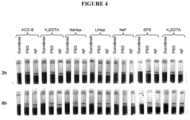
- This Example describes the effect of different anticoagulants present at the time of blood collection on reduction of erythrocyte sedimentation rate in whole blood.
- BD VACUTAINER ® or Greiner Bio-One VACUETTE ® low-volume blood collection tubes containing different anticoagulants including acid citrate dextrose solution B (ACD-B), tri-potassium ethylenediaminetetraacetic acid (K 3 EDTA), sodium heparin (NaHep), lithium heparin (LiHep), sodium fluoride (NaF), and sodium polyanethol sulfonate (SPS).
- Collection into tubes containing di-potassium ethylenediaminetetraacetic acid (K 2 EDTA) served as a control.
- This Example describes the effect of sucralose compared to the effect of polyols and halogenated polyols on reduction of erythrocyte sedimentation rate in whole blood.
Landscapes
- Health & Medical Sciences (AREA)
- Life Sciences & Earth Sciences (AREA)
- Engineering & Computer Science (AREA)
- Chemical & Material Sciences (AREA)
- Hematology (AREA)
- Biomedical Technology (AREA)
- Physics & Mathematics (AREA)
- General Health & Medical Sciences (AREA)
- Immunology (AREA)
- Pathology (AREA)
- General Physics & Mathematics (AREA)
- Biochemistry (AREA)
- Analytical Chemistry (AREA)
- Molecular Biology (AREA)
- Urology & Nephrology (AREA)
- Medicinal Chemistry (AREA)
- Food Science & Technology (AREA)
- Dispersion Chemistry (AREA)
- Biophysics (AREA)
- Ecology (AREA)
- Environmental Sciences (AREA)
- Dentistry (AREA)
- Wood Science & Technology (AREA)
- Zoology (AREA)
- Microbiology (AREA)
- Cell Biology (AREA)
- Biotechnology (AREA)
- Investigating Or Analysing Biological Materials (AREA)
- Medicines Containing Material From Animals Or Micro-Organisms (AREA)
- Management, Administration, Business Operations System, And Electronic Commerce (AREA)
- Prostheses (AREA)
- Display Devices Of Pinball Game Machines (AREA)
- Measuring Or Testing Involving Enzymes Or Micro-Organisms (AREA)
- Pharmaceuticals Containing Other Organic And Inorganic Compounds (AREA)
Description
- There exists a need for improved formulations and methods for reducing the rate of blood sedimentation for a time sufficient for storage, transport, and shipping for research, diagnostic and therapeutic purposes.
- The present invention relates generally to the reduction of sedimentation rate of one or more erythrocytes in a blood sample. In particular, the invention relates to formulations, compositions, articles of manufacture, kits and methods for the reduction of erythrocyte sedimentation rate in a blood sample. Mosbah et al (2006. Transplant Proc, 38(5), 1229 - 1235) discloses that preservation solutions of PEG20 at a concentration of 30 g/L reduce RBC sedimentation rate.
WO2015119115 discloses the use of disodium 4,4'-dinitrostilbene-2,2'-disulfonate (DNDS) and 4,4'-diisothiocyanatostilbene-2,2'-disulfonic acid (DIDS) to avoid erythrocyte sedimentation during analysis in a microfluidic device. - The present invention is defined in the claims. The present invention provides a method for storage of one or more erythrocytes in a blood sample from a subject at an injection site of a microfluidic device the method comprising:
- combining a blood sample with an amount of a formulation comprising sucralose,
- wherein the amount is sufficient to produce a treated blood sample having a sucralose concentration from 5 mM to 100 mM sucralose, thereby reducing the erythrocyte sedimentation rate as compared to the erythrocyte sedimentation rate in an untreated blood sample.
- In some embodiments, the treated blood sample has a sucralose concentration of about 10 mM sucralose to about 100 mM sucralose. In some embodiments, the treated blood sample has a sucralose concentration of about 20 mM sucralose to about 100 mM sucralose. In some embodiments, the treated blood sample has a sucralose concentration of about 24 mM sucralose to about 100 mM sucralose. In some embodiments, the treated blood sample has a sucralose concentration of about 15 mM sucralose to about 50 mM sucralose. In some embodiments, the treated blood sample has a sucralose concentration of about 5 mM sucralose to about 50 mM sucralose. In some embodiments, the treated blood sample has a sucralose concentration of about 5 mM sucralose to about 40 mM sucralose. In some embodiments, the treated blood sample has a sucralose concentration of about 10 mM sucralose to about 35 mM sucralose. In some embodiments, the treated blood sample has a sucralose concentration of about 10 mM sucralose to about 30 mM sucralose. In some embodiments, the treated blood sample has a sucralose concentration of about 5 mM sucralose to about 25 mM sucralose. In some embodiments, the treated blood sample has a sucralose concentration of about 5 mM sucralose up to but not including 25 mM sucralose. In some embodiments, the treated blood sample has a sucralose concentration of about 5 mM sucralose to about 20 mM sucralose. In some embodiments, the treated blood sample has a sucralose concentration of about 5 mM sucralose to about 15 mM sucralose. In some embodiments, the treated blood sample has a sucralose concentration of about 5 mM sucralose to about 10 mM sucralose. In some embodiments, the treated blood sample has a sucralose concentration of about 24 mM. In some embodiments, the treated blood sample has a sucralose concentration of about 25 mM. In some embodiments, erythrocyte sedimentation rate is reduced by at least 10%, at least 20%, at least 30%, at least 40%, at least 50%, at least 60%, at least 70%, at least 80%, at least 90%, at least 95% of the erythrocyte sedimentation rate of the untreated blood sample. In some embodiments, the formulation is in the form of a powder, a solid, a lyophilized form, a solution, or an aqueous solution. In some embodiments, the formulation is a powder. In some embodiments, the formulation is a solid. In some embodiments, the formulation is lyophilized. In some embodiments, the formulation is a solution. In some embodiments, the solution is an aqueous solution. In some embodiments, the formulation consists of sucralose. In some embodiments, the formulation further comprises an anticoagulant. In some embodiments, the anticoagulant is selected from the group consisting of acid citrate dextrose solution (ACD), sodium heparin, sodium fluoride, lithium heparin, tri-potassium ethylenediaminetetraacetic acid (K3EDTA), di-potassium ethylenediaminetetraacetic acid (K2EDTA), hirudin, and sodium polyanethol sulfonate (SPS). In some embodiments, the anticoagulant is acid citrate dextrose solution (ACD). In some embodiments, the anticoagulant is sodium heparin. In some embodiments, the anticoagulant is sodium fluoride. In some embodiments, the anticoagulant is lithium heparin. In some embodiments, the anticoagulant is tri-potassium ethylenediaminetetraacetic acid (K3EDTA). In some embodiments, the anticoagulant is di-potassium ethylenediaminetetraacetic acid (K2EDTA). In some embodiments, the anticoagulant is hirudin. In some embodiments, the anticoagulant is sodium polyanethol sulfonate (SPS). In some embodiments, the formulation is contained within a blood collection tube, and the combining step occurs within the blood collection tube. In some embodiments, the blood collection tube is an evacuated blood collection tube. In some embodiments, the blood is collected from a subject. In some embodiments, the subject is a mammal. In some embodiments, the subject is a human.
- Described herein are in vitro methods for maintaining one or more erythrocytes in suspension in a blood sample, comprising: combining a sample of blood with an amount of a formulation comprising sucralose, wherein the amount is sufficient to produce a treated blood sample having a sucralose concentration of at least about 5 mM sucralose, thereby maintaining the one or more erythrocytes in suspension for a period of at least 30 minutes as compared to an untreated blood sample. In some embodiments, the one or more erythrocytes remain in suspension for a period of at least 10 minutes, at least 20 minutes, at least 30 minutes, at least 40 minutes, at least 50 minutes, at least 60 minutes, at least 90 minutes, at least 2 hours, at least 3 hours, at least 4 hours, at least 5 hours, at least 6 hours, at least 7 hours, at least 8 hours, at least 10 hours, at least 12 hours, at least 24 hours or at least 48 hours. The treated blood sample has a sucralose concentration of about 5 mM sucralose to about 100 mM sucralose. In some embodiments, the treated blood sample has a sucralose concentration of about 10 mM sucralose to about 100 mM sucralose. In some embodiments, the treated blood sample has a sucralose concentration of about 20 mM sucralose to about 100 mM sucralose. In some embodiments, the treated blood sample has a sucralose concentration of about 24 mM sucralose to about 100 mM sucralose. In some embodiments, the treated blood sample has a sucralose concentration of about 15 mM sucralose to about 50 mM sucralose. In some embodiments, the treated blood sample has a sucralose concentration of about 5 mM sucralose to about 50 mM sucralose. In some embodiments, the treated blood sample has a sucralose concentration of about 5 mM sucralose to about 40 mM sucralose. In some embodiments, the treated blood sample has a sucralose concentration of about 10 mM sucralose to about 35 mM sucralose. In some embodiments, the treated blood sample has a sucralose concentration of about 10 mM sucralose to about 30 mM sucralose. In some embodiments, the treated blood sample has a sucralose concentration of about 5 mM sucralose to about 25 mM sucralose. In some embodiments, the treated blood sample has a sucralose concentration of about 5 mM sucralose up to but not including 25 mM sucralose. In some embodiments, the treated blood sample has a sucralose concentration of about 5 mM sucralose to about 20 mM sucralose. In some embodiments, the treated blood sample has a sucralose concentration of about 5 mM sucralose to about 15 mM sucralose. In some embodiments, the treated blood sample has a sucralose concentration of about 5 mM sucralose to about 10 mM sucralose. In some embodiments, the treated blood sample has a sucralose concentration of about 24 mM. In some embodiments, the treated blood sample has a sucralose concentration of about 25 mM. In some embodiments, at least 10%, at least 20%, at least 30%, at least 40%, at least 50%, at least 60%, at least 70%, at least 80%, at least 90%, at least 95% of the one or more erythrocytes remain in suspension in the treated blood sample as compared to the untreated blood sample. In some embodiments, the formulation is a powder. In some embodiments, the formulation is a solid. In some embodiments, the formulation is lyophilized. In some embodiments, the formulation is a solution. In some embodiments, the solution is an aqueous solution. In some embodiments, the formulation consists of sucralose. In some embodiments, the formulation further comprises an anticoagulant. In some embodiments, the anticoagulant is selected from the group consisting of acid citrate dextrose solution (ACD), sodium heparin, sodium fluoride, lithium heparin, tri-potassium ethylenediaminetetraacetic acid (K3EDTA), di-potassium ethylenediaminetetraacetic acid (K2EDTA), hirudin, and sodium polyanethol sulfonate (SPS). In some embodiments, the anticoagulant is acid citrate dextrose solution (ACD). In some embodiments, the anticoagulant is sodium heparin. In some embodiments, the anticoagulant is sodium fluoride. In some embodiments, the anticoagulant is lithium heparin. In some embodiments, the anticoagulant is tri-potassium ethylenediaminetetraacetic acid (K3EDTA). In some embodiments, the anticoagulant is di-potassium ethylenediaminetetraacetic acid (K2EDTA). In some embodiments, the anticoagulant is hirudin. In some embodiments, the anticoagulant is sodium polyanethol sulfonate (SPS). In some embodiments, the formulation is contained within a blood collection tube, and the combining step occurs within the blood collection tube. In some embodiments, the blood collection tube is an evacuated blood collection tube. In some embodiments, the blood sample is collected from a subject. In some embodiments, the subject is a mammal. In some embodiments, the subject is a human.
- Described herein are compositions comprising a blood sample and sucralose, wherein the sucralose is at a concentration of about 5 mM sucralose up to about 100 mM sucralose. In some embodiments, the sucralose is at a concentration of about 10 mM sucralose to about 100 mM sucralose. In some embodiments, the sucralose is at a concentration of about 20 mM sucralose to about 100 mM sucralose. In some embodiments, the sucralose is at a concentration of about 24 mM sucralose to about 100 mM sucralose. In some embodiments, the sucralose is at a concentration of about 15 mM sucralose to about 50 mM sucralose. In some embodiments, the sucralose is at a concentration of about 5 mM sucralose to about 50 mM sucralose. In some embodiments, the sucralose is at a concentration of about 5 mM sucralose to about 40 mM sucralose. In some embodiments, the treated blood sample has a sucralose concentration of about 10 mM sucralose to about 35 mM sucralose. In some embodiments, the treated blood sample has a sucralose concentration of about 10 mM sucralose to about 30 mM sucralose. In some embodiments, the sucralose is at a concentration of about 5 mM sucralose up to but not including 25 mM sucralose. In some embodiments, the sucralose is at a concentration of about 5 mM sucralose to about 20 mM sucralose. In some embodiments, the sucralose is at a concentration of about 5 mM sucralose to about 15 mM sucralose. In some embodiments, the sucralose is at a concentration of about 5 mM sucralose to about 10 mM sucralose. In some embodiments, the treated blood sample has a sucralose concentration of about 24 mM. In some embodiments, the treated blood sample has a sucralose concentration of about 25 mM. In some embodiments, the compositions further comprise an anticoagulant. In some embodiments, the anticoagulant is selected from the group consisting of acid citrate dextrose solution (ACD), sodium heparin, sodium fluoride, lithium heparin, tri-potassium ethylenediaminetetraacetic acid (K3EDTA), di-potassium ethylenediaminetetraacetic acid (K2EDTA), hirudin, and sodium polyanethol sulfonate (SPS). In some embodiments, the anticoagulant is acid citrate dextrose solution (ACD). In some embodiments, the anticoagulant is sodium heparin. In some embodiments, the anticoagulant is sodium fluoride. In some embodiments, the anticoagulant is lithium heparin. In some embodiments, the anticoagulant is tri-potassium ethylenediaminetetraacetic acid (K3EDTA). In some embodiments, the anticoagulant is di-potassium ethylenediaminetetraacetic acid (K2EDTA). In some embodiments, the anticoagulant is hirudin. In some embodiments, the anticoagulant is sodium polyanethol sulfonate (SPS). In some embodiments, the composition is contained within a blood collection tube. In some embodiments, the blood collection tube is an evacuated blood collection tube. In some embodiments, the blood is collected from a subject. In some embodiments, the subject is a mammal. In some embodiments, the subject is a human.
- Described herein, are articles of manufacture, comprising sucralose contained within a blood collection tube, wherein the sucralose is in a quantity sufficient to produce a final concentration of about 5 mM sucralose to about 100 mM sucralose in the blood sample. In some embodiments, the sucralose is in a quantity sufficient to produce a final concentration of about 10 mM sucralose to about 100 mM sucralose. In some embodiments, the sucralose is in a quantity sufficient to produce a final concentration of about 20 mM sucralose to about 100 mM sucralose. In some embodiments, the sucralose is in a quantity sufficient to produce a final concentration of about 24 mM sucralose to about 100 mM sucralose. In some embodiments, the sucralose is in a quantity sufficient to produce a final concentration of about 15 mM sucralose to about 50 mM sucralose. In some embodiments, the sucralose is in a quantity sufficient to produce a final concentration of about 5 mM sucralose to about 50 mM sucralose in the blood sample. In some embodiments, the sucralose is in a quantity sufficient to produce a final concentration of about 5 mM sucralose to about 40 mM sucralose in the blood sample. In some embodiments, the treated blood sample has a sucralose concentration of about 10 mM sucralose to about 35 mM sucralose. In some embodiments, the treated blood sample has a sucralose concentration of about 10 mM sucralose to about 30 mM sucralose. In some embodiments, the sucralose is in a quantity sufficient to produce a final concentration of about 5 mM sucralose to up to but not including 25 mM sucralose in the blood sample. In some embodiments, the sucralose is in a quantity sufficient to produce a final concentration of about 5 mM sucralose to about 20 mM sucralose in the blood sample. In some embodiments, the sucralose is in a quantity sufficient to produce a final concentration of about 5 mM sucralose to about 15 mM sucralose in the blood sample. In some embodiments, the sucralose is in a quantity sufficient to produce a final concentration of about 5 mM sucralose to about 10 mM sucralose in the blood sample. In some embodiments, the treated blood sample has a sucralose concentration of about 24 mM. In some embodiments, the treated blood sample has a sucralose concentration of about 25 mM. In some embodiments, the sucralose is a powder. In some embodiments, the sucralose is a solid. In some embodiments, the sucralose is lyophilized. In some embodiments, the sucralose is in solution. In some embodiments, the sucralose solution is an aqueous solution. In some embodiments, the blood collection tube is an evacuated blood collection tube. In some embodiments, the articles of manufacture further comprise an anticoagulant. In some embodiments, the anticoagulant is selected from the group consisting of acid citrate dextrose solution (ACD), sodium heparin, sodium fluoride, lithium heparin, tri-potassium ethylenediaminetetraacetic acid (K3EDTA), di-potassium ethylenediaminetetraacetic acid (K2EDTA), hirudin, and sodium polyanethol sulfonate (SPS). In some embodiments, the anticoagulant is acid citrate dextrose solution (ACD). In some embodiments, the anticoagulant is sodium heparin. In some embodiments, the anticoagulant is sodium fluoride. In some embodiments, the anticoagulant is lithium heparin. In some embodiments, the anticoagulant is tri-potassium ethylenediaminetetraacetic acid (K3EDTA). In some embodiments, the anticoagulant is di-potassium ethylenediaminetetraacetic acid (K2EDTA). In some embodiments, the anticoagulant is hirudin. In some embodiments, the anticoagulant is sodium polyanethol sulfonate (SPS).
- Described herein, are kits, comprising an article of manufacture provided herein, and a package insert.
- The novel features of the invention are set forth with particularity in the appended claims. A better understanding of the features and advantages of the present invention will be obtained by reference to the following detailed description that sets forth illustrative embodiments, in which the principles of the invention are utilized, and the accompanying drawings of which:
-
FIGURES 1A-1C illustrate reduction of erythrocyte sedimentation rate in whole blood following addition of 0.5 M sucralose, PBS, or saline. Storage was for 0 hours (Figure 1A ), 6 hours (Figure 1B ), and 24 hours (Figure 1C ). NF = no formulation control. -
FIGURE 2 illustrates sedimentation rate of erythrocytes in whole blood following addition of the indicated solution of sucralose, the indicated saccharide, PBS, or saline. Storage was for 1 hour (upper panel) and 6 hours (center panel). Lack of hemolysis from the reduction of sedimentation rate is illustrated in the bottom panel by centrifugation after 7 hours of storage. -
FIGURE 3 illustrates sedimentation rate of erythrocytes following addition of sucralose in powder form to the indicated final concentration. Storage of samples was for 1 hour (upper panel) and 6 hours (lower panel). NF = no formulation control. -
FIGURE 4 illustrates the effect of different anticoagulants on sedimentation rate of erythrocytes collected from whole blood. Samples were collected into blood collection tubes containing the indicated anticoagulant. Storage of samples following addition of a solution of 0.5 M sucralose or PBS was for 2 hours (upper panel) and 8 hours (lower panel). NF = no formulation control. -
FIGURE 5 illustrates the effect of a solution of 0.5 M sucralose on sedimentation rate of erythrocytes in whole blood compared to PBS, the indicated polyols, and the indicated halogenated polyols. Storage of samples was for 2 hours. NF = no formulation control. - The present disclosure relates to formulations, compositions, articles of manufacture, kits, and methods for reduction of sedimentation rate of one or more erythrocytes in a blood sample.
- In some embodiments, the formulations, methods, and compositions provided herein provide for reduced sedimentation rate and thus storage of the one or more erythrocytes in a blood sample at the injection site of a microfluidic device. Reduction of sedimentation rate of one or more erythrocytes in a blood sample allows for the slow injection of one or more erythrocytes into the microinjection device without the need for prior sample mixing.
- Erythrocyte sedimentation rate is used as a parameter for prognosis of diseases such as multiple myeloma, temporal arteritis, polymyalgia rheumatica, systemic lupus erythematosus, and rheumatoid arthritis. Thus, in some embodiments, the formulations, methods, and compositions for reduction of erythrocyte sedimentation rate in a blood sample provided herein may benefit patients with diseases that correlate with an increased rate of erythrocyte sedimentation.
- As used in this specification and the appended claims, the singular forms "a", "an", and "the" include plural references unless the context clearly dictates otherwise. Thus, for example, references to "the method" includes one or more methods, and/or steps of the type described herein which will become apparent to those persons skilled in the art upon reading this disclosure and so forth.
- "About" as used herein when referring to a measurable value such as an amount, a temporal duration, and the like, is meant to encompass variations of ±20%, or ±10%, or ±5%, or even ±1% from the specified value, as such variations are appropriate for the disclosed compositions or to perform the disclosed methods.
- Unless defined otherwise, all technical and scientific terms used herein have the same meaning as is commonly understood by one of skill in the art to which this invention belongs.
- The term "ambient temperature" as used herein refers to common indoor room temperatures. In some embodiments, ambient temperature is 15 to 32°C. In some embodiments, ambient temperature is 20 to 27°C.
- As used herein, the terms "reduced sedimentation rate," "reducing sedimentation rate," and "reduction of sedimentation rate," refer to the ability of a material to decrease the sedimentation rate of erythrocytes in a blood sample. In some embodiments, erythrocyte sedimentation rate is reduced by at least 10%, at least 20%, at least 30%, at least 40%, at least 50%, at least 60%, at least 70%, at least 80%, at least 90%, at least 95% of the erythrocyte sedimentation rate of the untreated blood sample. In some embodiments, reduction of sedimentation rate refers to the ability of a material to prevent one or more erythrocytes in a blood sample from settling out of suspension due to the force of gravity. In some embodiments, one or more erythrocytes are maintained in suspension for at least 30 minutes. In some embodiments, at least 10%, at least 20%, at least 30%, at least 40%, at least 50%, at least 60%, at least 70%, at least 80%, at least 90%, at least 95% of one or more erythrocytes remain in suspension in the treated blood sample as compared to the untreated blood sample. In some embodiments, one or more erythrocytes remain in suspension for at least 10 minutes, at least 20 minutes, at least 30 minutes, at least 40 minutes, at least 50 minutes, at least 60 minutes, at least 90 minutes, at least 2 hours, at least 3 hours, at least 4 hours, at least 5 hours, at least 6 hours, at least 7 hours, at least 8 hours, at least 10 hours, at least 12 hours, at least 24 hours or at least 48 hours.
- According to certain embodiments, the herein described formulations and compositions for the reduction of sedimentation rate of one or more erythrocytes in a blood sample include one or more pH buffers. In some embodiments, the pH buffer is any of a large number of compounds known in the art for their ability to resist changes in the pH of a solution, such as in an aqueous solution in which the pH buffer is present. Selection of one or more particular pH buffers for inclusion in a stable storage composition may be done based on the present disclosure and according to routine practices in the art, and may be influenced by a variety of factors including the pH that is desired to be maintained, the nature of the biological sample, the solvent conditions to be employed, the other components of the formulation to be used, and other criteria. For example, typically a pH buffer is employed at a pH that is within about 0.1, 0.2, 0.3, 0.4, 0.5, 0.6, 0.7, 0.8, 0.9 or 1.0 pH unit of a proton dissociation constant (pKa) that is a characteristic of the buffer.
- Non-limiting examples of pH buffers include citric acid, tartaric acid, malic acid, sulfosalicylic acid, sulfoisophthalic acid, oxalic acid, borate, CAPS (3-(cyclohexylamino)-1-propanesulfonic acid), CAPSO (3-(cyclohexylamino)-2-hydroxy-1-propanesulfonic acid), EPPS (4-(2-hydroxyethyl)-1-piperazinepropanesulfonic acid), HEPES (4-(2-hydroxyethyl)piperazine-1-ethanesulfonic acid), MES (2-(N-morpholino)ethanesulfonic acid), MOPS (3-(N-morpholino)propanesulfonic acid), MOPSO (3-morpholino-2-hydroxypropanesulfonic acid), PIPES (1,4-piperazinediethanesulfonic acid), TAPS (N-(tris(hydroxymethyl)methyl]-3-aminopropanesulfonic acid), TAPSO (2-hydroxy-3-[tris(hydroxymethyl)methylamino]-1-propanesulfonic acid), TES (N-(tris(hydroxymethyl)methyl]-2-aminoethanesulfonic acid), bicine (N,N-bis(2-hydroxyethyl)glycine), tricine (N-[tris(hydroxymethyl)methyl]glycine), tris (tris(hydroxymethyl)aminomethane) and bis-tris (2-[bis(2-hydroxyethyl)amino]-2-(hydroxymethyl)-1,3-propanediol). In some embodiments, the formulations have a pH of about 4.0, 4.1, 4.2, 4.3, 4.4, 4.5, 4.6, 4.7, 4.8, 4.9, 5.0, 5.1, 5.2, 5.3, 5.4, 5.5, 5.6, 5.7, 5.8, 5.9, 6.0, 6.1, 6.2, 6.3, 6.4, 6.5, 6.6, 6.7, 6.8, 6.9, 7.0, 7.1, 7.2, 7.3, 7.4, 7.5, 7.6, 7.7, 7.8, 7.9, 8.0, 8.1, 8.2, 8.3, 8.4, 8.5, 8.6, 8.7, 8.8, 8.9, or 9.0.
- In certain embodiments, the formulations or compositions for reduction of sedimentation rate of erythrocytes in a blood sample include at least one halogenated disaccharide derivative. In some embodiments, the halogenated disaccharide derivative is a di- or tri-chlorinated disaccharide. In some embodiments, such di- or tri-chlorinated disaccharides unexpectedly are capable of reducing sedimentation rate of erythrocytes in a blood sample either alone or in the presence of only a buffer. Halogenated disaccharide derivatives are known, e.g., see
US Patent Publication No. 2014/0065062 , and include sucralose (1,6-dichloro-1,6-dideoxy-β-D-fructofuranosyl-4-chloro-4-deoxy-α-D-galactopyranoside), trichloronated maltose, 1,6-dichloro-1,6-dideoxy-β-D-fructofuranosyl-4-chloro-4-deoxy-6-O-monododecanoate-α-D-galactopyranoside, and 1,6-dichloro-1,6-dideoxy-β-D-fructofuranosyl-4-chloro-4-deoxy-6-O-monotetradecanoate-α-D-galactopyranoside. Selection of one or more particular halogenated disaccharide derivative for inclusion in a formulation or composition for reduction of sedimentation rate of erythrocytes in a blood sample may be done based on the present disclosure and according to routine practices in the art, and may be influenced by a variety of factors including other formulation components. - In some embodiments, the halogenated disaccharide derivative is sucralose. In some embodiments, the sucralose is provided in solution as a formulation for mixing with a blood sample. In some embodiments, the solution is an aqueous solution. In some embodiments, the sucralose is present in the formulation at about 5 - 500 mM. In some embodiments, the sucralose is present in the formulation at about 10 - 500 mM. In some embodiments, the sucralose is present in the formulation at about 50 - 500 mM. In some embodiments, the sucralose is present in the formulation at about 100 - 500 mM. In some embodiments, the sucralose is present in the formulation at about 250 - 500 mM. In some embodiments, the sucralose is present in the formulation at about 5 - 630 mM. In some embodiments, the sucralose is present in the formulation at about 5 - 750 mM. In some embodiments, the sucralose is present in the formulation at about 10 - 750 mM. In some embodiments, the sucralose is present in the formulation at about 50 - 750 mM. In some embodiments, the sucralose is present in the formulation at about 100 - 750 mM. In some embodiments, the sucralose is present in the formulation at about 250 - 750 mM. In some embodiments, the formulation is a mixture of water and sucralose.
- In some embodiments, the formulation is provided in an amount sufficient to produce a final concentration of sucralose of about 5 to about 25 mM, when mixed with a blood sample. In some embodiments, the sucralose is present in the formulation at about 500 mM and is mixed with a blood sample at a ratio of 1:20 (v/v) (formulation to blood). In some embodiments, the sucralose is present in the formulation at greater than 25 mM up to 100 mM. In some embodiments, the sucralose is present in the formulation at about 13 - 24 mM. In some embodiments, the sucralose is provided in powder form as a formulation for mixing with a blood sample. In some embodiments, the sucralose powder is provided in an amount sufficient to produce a final concentration of sucralose of about 5 to about 25 mM, when mixed with a blood sample.
- In some embodiments, the sucralose is present at a final concentration of about 5 - 100 mM, when mixed with a blood sample. In some embodiments, the sucralose is present at a final concentration of about 5 - 50 mM, when mixed with a blood sample. In some embodiments, the sucralose is present at a final concentration of about 5 - 25 mM, when mixed with a blood sample. In some embodiments, the sucralose is present at a final concentration of about 5 up to but not including 25 mM, when mixed with a blood sample. In some embodiments, the sucralose is present at a final concentration of about 5 - 20 mM, when mixed with a blood sample. In some embodiments, the sucralose is present at a final concentration of about 5 - 15 mM, when mixed with a blood sample. In some embodiments, the sucralose is present at a final concentration of about 10 - 20 mM, when mixed with a blood sample. In some embodiments, the sucralose is present at a final concentration of about 10 - 15 mM, when mixed with a blood sample. In some embodiments, the sucralose is present at a final concentration of about 5 - 10 mM, when mixed with a blood sample. In some embodiments, the sucralose and is present at a final concentration of about 25 mM, when mixed with a blood sample.
- In some embodiments, an anticoagulant is included in the presently described formulations and compositions. Such anticoagulants are known in the art. Exemplary anticoagulants include acid citrate dextrose solution (ACD), ethylenediaminetetraacetic acid (EDTA), tri-potassium ethylenediaminetetraacetic acid (K3EDTA), di-potassium ethylenediaminetetraacetic acid (K2EDTA), heparin, sodium heparin, sodium fluoride, lithium heparin, sodium citrate, hirudin, and sodium polyanethol sulfonate (SPS). In some embodiments, the anticoagulant is contained within a blood collection tube.
- Described herein, in some embodiments, are formulations comprising sucralose. In some embodiments, the sucralose is present at a final concentration of about 5 mM sucralose to about 50 mM sucralose, when mixed with a blood sample. In some embodiments, the sucralose is present at a final concentration of about 5 mM sucralose to about 25 mM sucralose, when mixed with a blood sample. In some embodiments, the sucralose is present at a final concentration of about 5 mM sucralose up to, but not including, 25 mM sucralose. In some embodiments, the sucralose is present at a final concentration of about 5 mM sucralose to about 20 mM sucralose. In some embodiments, the sucralose is present at a final concentration of about 5 mM sucralose to about 15 mM sucralose. In some embodiments, the sucralose is present at a final concentration of about 5 mM sucralose to about 10 mM sucralose. In some embodiments, the sucralose is present as a solution. In some embodiments, the solution is an aqueous solution. In some embodiments, the sucralose is present as a powder. In some embodiments, the formulations further comprise an anticoagulant. In some embodiments, the anticoagulant is selected from the group consisting of acid citrate dextrose solution (ACD), sodium heparin, sodium fluoride, lithium heparin, tri-potassium ethylenediaminetetraacetic acid (K3EDTA), di-potassium ethylenediaminetetraacetic acid (K2EDTA), hirudin, and sodium polyanethol sulfonate (SPS). In some embodiments, the anticoagulant is acid citrate dextrose solution (ACD). In some embodiments, the anticoagulant is sodium heparin. In some embodiments, the anticoagulant is sodium fluoride. In some embodiments, the anticoagulant is lithium heparin. In some embodiments, the anticoagulant is tri-potassium ethylenediaminetetraacetic acid (K3EDTA). In some embodiments, the anticoagulant is di-potassium ethylenediaminetetraacetic acid (K2EDTA). In some embodiments, the anticoagulant is hirudin. In some embodiments, the anticoagulant is sodium polyanethol sulfonate (SPS). In some embodiments, the formulation is contained within a blood collection tube.
- Methods for preparing the formulations described herein for reduction of erythrocyte sedimentation rate in a blood sample employ techniques that are well-known to those skilled in the art and generally use commercially available reagents. In some embodiments, the formulations are prepared as concentrated stock solutions of the formulation reagents, e.g., 2X, 5X, 10X, 20X or the like, so as to be admixed with the blood sample at the appropriate ratios to produce the desired final concentrations of sucralose in the blood sample.
- Described herein, in some embodiments, are compositions comprising a blood sample and sucralose, wherein the sucralose is at a concentration of about 5 mM sucralose up to, but not including, about 25 mM sucralose. In some embodiments, the compositions further comprise an anticoagulant. In some embodiments, the anticoagulant is selected from the group consisting of acid citrate dextrose solution (ACD), sodium heparin, sodium fluoride, lithium heparin, tri-potassium ethylenediaminetetraacetic acid (K3EDTA), di-potassium ethylenediaminetetraacetic acid (K2EDTA), hirudin, and sodium polyanethol sulfonate (SPS). In some embodiments, the anticoagulant is acid citrate dextrose solution (ACD). In some embodiments, the anticoagulant is acid citrate dextrose solution A (ACD-A). In some embodiments, the anticoagulant is acid citrate dextrose solution B (ACD-B). In some embodiments, the anticoagulant is sodium heparin. In some embodiments, the anticoagulant is sodium fluoride. In some embodiments, the anticoagulant is lithium heparin. In some embodiments, the anticoagulant is tri-potassium ethylenediaminetetraacetic acid (K3EDTA). In some embodiments, the anticoagulant is di-potassium ethylenediaminetetraacetic acid (K2EDTA). In some embodiments, the anticoagulant is hirudin. In some embodiments, the anticoagulant is sodium polyanethol sulfonate (SPS). In some embodiments, the composition is contained within a blood collection tube. In some embodiments, the blood collection tube is an evacuated blood collection tube. In some embodiments, the blood is collected from a subject. In some embodiments, the subject is a mammal. In some embodiments, the subject is a human. In some embodiments, the compositions of one or more erythrocytes in a blood sample with reduced sedimentation rate are stored in the formulations described herein for extended periods of time before analysis in, for example, a microfluidic device.
- In certain embodiments, articles of manufacture are provided, which comprise a formulation provided herein, contained within a suitable blood collection tube, container or vessel for collection of a biological sample. In some embodiments, these articles of manufacture are used for reducing sedimentation rate of one or more erythrocytes in a blood sample at the time of biological sample collection. In certain embodiments, the blood collection tube is an evacuated blood tube having less than atmospheric pressure to withdraw a predetermined volume of whole blood. In some embodiments, the blood collection tube contains about 28.6 mg of sucralose powder and the blood collection tube is of a size to contain a blood draw volume of 3.0 mL blood to produce a final sucralose concentration of about 24 mM after the addition of 3.0 mL blood. In some embodiments, the blood collection tube contains about 33.4 mg of sucralose powder and the blood collection tube is of a size to contain a blood draw volume of 3.5 mL blood. In some embodiments, the blood collection tube contains about 42.9 mg of sucralose powder and the blood collection tube is of a size to contain a blood draw volume of 4.5 mL blood. In some embodiments, the blood collection tube contains about 52.4 mg of sucralose powder and the blood collection tube is of a size to contain a blood draw volume of 5.5 mL blood. In some embodiments, the blood collection tube contains about 95.4 mg of sucralose powder and the blood collection tube is of a size to contain a blood draw volume of 10 mL blood. In some embodiments, these articles of manufacture are used in the kits and methods described herein.
- In certain embodiments, there are provided kits comprising any one of the articles of manufacture described herein and a package insert. In some embodiments, the components of the kit are supplied in a container. In some embodiments, the container is a compartmentalized plastic enclosure. In some embodiments, the container includes a hermetically sealable cover so that the contents of the kit can be sterilized and sealed for storage.
- Described herein, in some embodiments, are in vitro methods for reducing the erythrocyte sedimentation rate in a blood sample, comprising: combining a sample of blood with an amount of a formulation comprising sucralose, wherein the amount is sufficient to produce a treated blood sample having a sucralose concentration of at least about 5 mM sucralose, thereby reducing the erythrocyte sedimentation rate as compared to erythrocyte sedimentation rate in an untreated blood sample. In some embodiments, the treated blood sample has a sucralose concentration of about 5 mM sucralose to about 50 mM sucralose. In some embodiments, the treated blood sample has a sucralose concentration of about 5 mM sucralose to about 25 mM sucralose. In some embodiments, the treated blood sample has a sucralose concentration of about 5 mM sucralose up to but not including 25 mM sucralose. In some embodiments, erythrocyte sedimentation rate is reduced by at least 10%, at least 20%, at least 30%, at least 40%, at least 50%, at least 60%, at least 70%, at least 80%, at least 90%, at least 95% of the erythrocyte sedimentation rate of the untreated blood sample. In some embodiments, the formulation is a powder. In some embodiments, the formulation is a solution. In some embodiments, the solution is an aqueous solution. In some embodiments, the formulation consists of sucralose. In some embodiments, the formulation further comprises an anticoagulant. In some embodiments, the anticoagulant is selected from the group consisting of acid citrate dextrose solution (ACD), sodium heparin, sodium fluoride, lithium heparin, tri-potassium ethylenediaminetetraacetic acid (K3EDTA), di-potassium ethylenediaminetetraacetic acid (K2EDTA), hirudin, and sodium polyanethol sulfonate (SPS). In some embodiments, the anticoagulant is acid citrate dextrose solution (ACD). In some embodiments, the anticoagulant is sodium heparin. In some embodiments, the anticoagulant is sodium fluoride. In some embodiments, the anticoagulant is lithium heparin. In some embodiments, the anticoagulant is tri-potassium ethylenediaminetetraacetic acid (K3EDTA). In some embodiments, the anticoagulant is di-potassium ethylenediaminetetraacetic acid (K2EDTA). In some embodiments, the anticoagulant is hirudin. In some embodiments, the anticoagulant is sodium polyanethol sulfonate (SPS). In some embodiments, the formulation is contained within a blood collection tube, and the combining step occurs within the blood collection tube. In some embodiments, the blood collection tube is an evacuated blood collection tube. In some embodiments, the blood is collected from a subject. In some embodiments, the subject is a mammal. In some embodiments, the subject is a human.
- Described herein, in some embodiments, are methods for maintaining one or more erythrocytes in suspension in a blood sample, comprising: combining a sample of blood with an amount of a formulation comprising sucralose, wherein the amount is sufficient to produce a treated blood sample having a sucralose concentration of at least about 5 mM sucralose, thereby maintaining the one or more erythrocytes in suspension for a period of at least 30 minutes as compared to an untreated blood sample. In some embodiments, the one or more erythrocytes remain in suspension for a period of at least 10 minutes, at least 20 minutes, at least 30 minutes, at least 40 minutes, at least 50 minutes, at least 1 hour, at least 2 hours, at least 3 hours, at least 4 hours, at least 5 hours, at least 6 hours, at least 7 hours, at least 8 hours, at least 10 hours, at least 12 hours, at least 24 hours or at least 48 hours. In some embodiments, the treated blood sample has a sucralose concentration of about 5 mM sucralose to about 25 mM sucralose. In some embodiments, the treated blood sample has a sucralose concentration of about 5 mM sucralose up to but not including 25 mM sucralose. In some embodiments, at least 10%, at least 20%, at least 30%, at least 40%, at least 50%, at least 60%, at least 70%, at least 80%, at least 90%, at least 95% of the one or more erythrocytes remain in suspension in the treated blood sample as compared to the untreated blood sample. In some embodiments, the formulation is a powder. In some embodiments, the formulation is a solution. In some embodiments, the solution is an aqueous solution. In some embodiments, the formulation consists of sucralose. In some embodiments, the formulation further comprises an anticoagulant. In some embodiments, the anticoagulant is selected from the group consisting of acid citrate dextrose solution (ACD), sodium heparin, sodium fluoride, lithium heparin, tri-potassium ethylenediaminetetraacetic acid (K3EDTA), di-potassium ethylenediaminetetraacetic acid (K2EDTA), hirudin, and sodium polyanethol sulfonate (SPS). In some embodiments, the anticoagulant is acid citrate dextrose solution (ACD). In some embodiments, the anticoagulant is sodium heparin. In some embodiments, the anticoagulant is sodium fluoride. In some embodiments, the anticoagulant is lithium heparin. In some embodiments, the anticoagulant is tri-potassium ethylenediaminetetraacetic acid (K3EDTA). In some embodiments, the anticoagulant is di-potassium ethylenediaminetetraacetic acid (K2EDTA). In some embodiments, the anticoagulant is hirudin. In some embodiments, the anticoagulant is sodium polyanethol sulfonate (SPS). In some embodiments, the formulation is contained within a blood collection tube, and the combining step occurs within the blood collection tube. In some embodiments, the blood collection tube is an evacuated blood collection tube. In some embodiments, the blood sample is collected from a subject. In some embodiments, the subject is a mammal. In some embodiments, the subject is a human.
- Blood collection tubes, bags, containers and vessels are well-known in the art and have been employed by medical practitioners for decades. Blood collected for reduction of erythrocyte sedimentation rate may be obtained using any method or apparatus commonly employed by those skilled in the art such as venipuncture or finger prick. In some embodiments, when the blood is collected by venipuncture, the formulation is located inside the blood collection tube, e.g., an evacuated tube (VACUTAINER® blood collection tube, Becton Dickinson or VACUETTE® blood collection tube, Greiner Bio-One) at the time that the blood sample is obtained from the subject. In some embodiments, when the blood is collected by venipuncture, the formulations are added to an already obtained whole blood sample, either immediately or shortly after it is withdrawn.
- In some embodiments, the methods as described herein use the articles of manufacture and kits disclosed.
- The following Examples are presented by way of illustration and not limitation.
- This Example describes reduction of erythrocyte sedimentation in whole blood by addition of sucralose.
- Fresh blood was collected into BD K2EDTA VACUTAINER® tubes and pooled. Blood and a solution of 0.5 M sucralose were mixed at a ratio of 20:1 by aliquotting 952 µL of fresh blood into 2 mL centrifuge tubes containing 48 µL of formulation, resulting in a concentration of about 24 mM sucralose. 48 µL of PBS and 0.9% saline served as controls. Blood with no formulation (NF) added served as an additional control. The filled centrifuge tubes were gently inverted five times to mix and stored upright on the benchtop at approximately 25°C. Tubes were photographed at 0 hours (
Figure 1A ), 6 hours (Figure 1B ), and 24 hours (Figure 1C ) against a white background for visual analysis of sedimentation rate. - As shown in
Figures 1A-C , whole blood collected in K2EDTA tubes containing sucralose had lower sedimentation rate of the erythrocytes after storage of the aliquots at ambient temperature for 6 hours and 24 hours compared to whole blood only (NF) or whole blood following addition of either PBS or saline. - This Example illustrates the effect on sucralose concentration and other saccharides on reduction of erythrocyte sedimentation rate in whole blood.
- Fresh blood was collected into BD K2EDTA VACUTAINER® tubes and pooled. 952 µL of fresh blood was aliquot into 2 mL centrifuge tubes, each containing 48 µL of sucralose at the indicated concentration in
Figure 2 , or the indicated saccharide (ML848, a di-chlorinated monosaccharide, or DG783, a mono-fluorinated monosaccharide) at the indicated concentration. Sucralose solutions of different concentrations were prepared by dilution of 0.5 M sucralose to 10 mM in water. Formulations were adjusted to 300 mOsmol with NaCl, with the exception of formulations of the highest concentration that had an osmolarity of 500 mOsmol. 48 µL of PBS and 0.9% saline served as controls. Final concentrations of sucralose or the indicated saccharide shown inFigure 2 were as follows (from left to right): 24 mM sucralose, 12 mM sucralose, 6.24 mM sucralose, 2.88 mM sucralose, 1.44 mM sucralose, 0.96 mM sucralose, 0.48 mM sucralose, 24 mM sucrose, 2.4 mM sucrose, 24 mM trehalose, 24 mM melezitose, 4.8 mM ML848, and 24 mM DG783. - The filled centrifuge tubes were gently inverted five times to mix and stored upright on the benchtop at approximately 25°C. Tubes were photographed at 1 hour (
Figure 2 , upper panel) and 6 hours (Figure 2 , center panel) against a white background for visual analysis of sedimentation rate. After 7 hours of storage, tubes were centrifuged for 20 min at 3000 rpm to determine the effect of hemolysis on sedimentation rate by visual analysis (Figure 2 , lower panel). -
Figure 2 shows that whole blood collected in K2EDTA tubes containing high concentrations of sucralose had lower sedimentation rate of erythrocytes after storage of aliquots at ambient temperature for 1 hour (upper panel) and 6 hours (center panel). Lower sedimentation rate of erythrocytes was not observed in samples that had final sucralose concentrations below 5 mM, or in samples following addition of sucrose, trehalose, melezitose, ML848, DG783, PBS, or saline to whole blood. - Homogeneity of whole blood in the presence of a high concentration of sucralose was not due to excessive hemolysis of erythrocytes, as shown by centrifugation of the sample after 7 hours of storage (
Figure 2 , lower panel). Centrifugation resulted in clear separation of plasma without coloration of the plasma layer similar to that seen for the saline and PBS sample controls (Figure 2 , lower panel). Significant hemolysis was not seen at final sucralose concentrations at or below 40 mM. - This Example describes the effect of addition of sucralose in powder form on reduction of erythrocyte sedimentation rate in whole blood.
- Fresh blood was collected into BD K2EDTA VACUTAINER® tubes and pooled. 1 mL of fresh blood was aliquotted into 2 mL centrifuge tubes containing sucralose powder. Final concentrations of sucralose ranged from 7.5 mM to 100 mM, corresponding to 3.0 mg to 39.8 mg per mL of blood. The no formulation (NF) control sample received no addition of sucralose. Tubes were inverted at least five times until no visible undissolved material remained at the bottom of the tubes. Tubes were stored upright on the benchtop at approximately 25°C. Tubes were photographed at 1 hour (
Figure 3 , upper panel) and 6 hours (Figure 3 , lower panel) against a white background for visual analysis of sedimentation rate. - Data in
Figure 3 shows that the rate of erythrocyte sedimentation was inversely proportional to the concentration of sucralose. At a sucralose concentration of 24 mM or greater, homogeneity of whole blood samples stored at ambient temperatures for 6 hours was observed, while lower concentrations of sucralose resulted in separation of the erythrocyte and plasma layers. - This Example describes the effect of different anticoagulants present at the time of blood collection on reduction of erythrocyte sedimentation rate in whole blood.
- To screen for collection conditions, fresh blood was collected into a series of BD VACUTAINER® or Greiner Bio-One VACUETTE® low-volume blood collection tubes containing different anticoagulants, including acid citrate dextrose solution B (ACD-B), tri-potassium ethylenediaminetetraacetic acid (K3EDTA), sodium heparin (NaHep), lithium heparin (LiHep), sodium fluoride (NaF), and sodium polyanethol sulfonate (SPS). Collection into tubes containing di-potassium ethylenediaminetetraacetic acid (K2EDTA) served as a control. 952 µL of fresh blood was aliquot into 2 mL centrifuge tubes containing 48 µL of 0.5 M sucralose or PBS. No formulation (NF) added served as an additional control. The filled centrifuge tubes were gently inverted five times to mix and stored upright on the benchtop at approximately 25°C. Tubes were photographed at 2 hours (
Figure 4 , upper panel) and 8 hours (Figure 4 , lower panel) against a white background for visual analysis of sedimentation rate. As shown inFigure 4 , addition of 0.5 M sucralose, for a final sucralose concentration of 24 mM in the treated sample, resulted in reduction of erythrocyte sedimentation rate for each anticoagulant present in the blood collection tube at the time of blood collection. By contrast, addition of PBS had no effect on erythrocyte sedimentation rate. - This Example describes the effect of sucralose compared to the effect of polyols and halogenated polyols on reduction of erythrocyte sedimentation rate in whole blood.
- Fresh blood was collected into BD K2EDTA VACUTAINER® tubes and pooled. 952 µL of fresh blood was aliquot into 2 mL centrifuge tubes containing 48 µL of a solution of 0.5 M sucralose, the indicated polyol, or the indicated halogenated polyol. Additives at 0.25 M were adjusted to 300 mOsmol with NaCl. PBS and no formulation (NF) added served as controls. The filled centrifuge tubes were gently inverted five times to mix and stored upright on the benchtop at approximately 25°C. Tubes were photographed at 2 hours against a white background for visual analysis of sedimentation rate.
- Data in
Figure 5 shows that addition of a solution of 0.5 M sucralose, for a final sucralose concentration of 24 mM in the treated sample, resulted in reduced erythrocyte sedimentation rate. By contrast, addition of indicated polyols or halogenated polyols had no apparent effect on erythrocyte sedimentation. - Unless the context requires otherwise, throughout the present specification and claims, the word "comprise" and variations thereof, such as, "comprises" and "comprising," which is used interchangeably with "including," "containing," or "characterized by," is inclusive or open-ended language and does not exclude additional, unrecited elements or method steps. The phrase "consisting of" excludes any element, step, or ingredient not specified in the claim. The phrase "consisting essentially of" limits the scope of a claim to the specified materials or steps and those that do not materially affect the basic and novel characteristics of the claimed invention. The present disclosure contemplates embodiments of the invention compositions and methods corresponding to the scope of each of these phrases. Thus, a composition or method comprising recited elements or steps contemplates particular embodiments in which the composition or method consists essentially of or consists of those elements or steps.
- Reference throughout this specification to "one embodiment" or "an embodiment" or "an aspect" means that a particular feature, structure or characteristic described in connection with the embodiment is included in at least one embodiment of the present invention. Thus, the appearances of the phrases "in one embodiment" or "in an embodiment" in various places throughout this specification are not necessarily all referring to the same embodiment. Furthermore, the particular features, structures, or characteristics may be combined in any suitable manner in one or more embodiments.
Claims (14)
- A method for storage of one or more erythrocytes in a blood sample from a subject at an injection site of a microfluidic device the method comprising:combining a blood sample with an amount of a formulation comprising sucralose,wherein the amount is sufficient to produce a treated blood sample having a sucralose concentration from 5 mM to 100 mM sucralose, thereby reducing the erythrocyte sedimentation rate as compared to the erythrocyte sedimentation rate in an untreated blood sample.
- The method of claim 1, wherein the treated blood sample is stored before injection into the microfluidics device.
- The method of any preceding claim, wherein the one or more erythrocytes in the treated blood sample remain in suspension for 10 minutes to 48 hours; for 30 minutes to 24 hours; or for 1 hour to 12 hours.
- The method of any preceding claim, wherein the treated blood sample is stored at ambient temperature.
- The method of any preceding claim, wherein the treated sample is not mixed before injection into the microfluidics device.
- The method of claim 1, wherein the erythrocyte sedimentation rate is reduced by at least 10% compared to the erythrocyte sedimentation rate of an untreated blood sample, by at least 20% compared to the erythrocyte sedimentation rate of an untreated blood sample, or by at least 50% compared to the erythrocyte sedimentation rate of an untreated blood sample.
- The method of any preceding claim, wherein the subject is a human subject.
- The method of claim 7, wherein the human subject has been diagnosed with a disease that correlates with an increased rate of erythrocyte sedimentation.
- The method of claim 8, wherein the disease is selected from the group consisting of multiple myeloma, temporal arteritis, polymyalgia rheumatica, systemic lupus erythematosus, and rheumatoid arthritis.
- The method of any preceding claim, wherein the treated blood sample comprises from 5 mM to 50 mM sucralose; or from 5 mM to 25 mM sucralose.
- The method of any preceding claim, wherein the formulation further comprises an anticoagulant.
- The method of claim 11, wherein the anticoagulant is selected from the group consisting of acid citrate dextrose solution (ACD), sodium heparin, sodium fluoride, lithium heparin, tri-potassium ethylenediaminetetraacetic acid (K3EDTA), di-potassium ethylenediaminetetraacetic acid (K2EDTA), hirudin, and sodium polyanethol sulfonate (SPS).
- The method of any preceding claim, wherein the treated blood sample comprises from 7.5 mM to 100 mM sucralose and 3.0 mg to 39.8 mg of the sucralose per ml of the subject's blood sample.
- The method of any preceding claim, wherein the formulation is in the form of a powder, a solid, a lyophilized form, or a solution, and wherein the formulation is contained in a blood collection tube.
Applications Claiming Priority (3)
| Application Number | Priority Date | Filing Date | Title |
|---|---|---|---|
| US201562264786P | 2015-12-08 | 2015-12-08 | |
| EP16873688.2A EP3387411B1 (en) | 2015-12-08 | 2016-12-06 | Reduction of erythrocyte sedimentation rate |
| PCT/US2016/065198 WO2017100212A1 (en) | 2015-12-08 | 2016-12-06 | Reduction of erythrocyte sedimentation rate |
Related Parent Applications (2)
| Application Number | Title | Priority Date | Filing Date |
|---|---|---|---|
| EP16873688.2A Division EP3387411B1 (en) | 2015-12-08 | 2016-12-06 | Reduction of erythrocyte sedimentation rate |
| EP16873688.2A Division-Into EP3387411B1 (en) | 2015-12-08 | 2016-12-06 | Reduction of erythrocyte sedimentation rate |
Publications (3)
| Publication Number | Publication Date |
|---|---|
| EP4242628A2 EP4242628A2 (en) | 2023-09-13 |
| EP4242628A3 EP4242628A3 (en) | 2023-11-08 |
| EP4242628B1 true EP4242628B1 (en) | 2025-07-02 |
Family
ID=59013182
Family Applications (2)
| Application Number | Title | Priority Date | Filing Date |
|---|---|---|---|
| EP16873688.2A Active EP3387411B1 (en) | 2015-12-08 | 2016-12-06 | Reduction of erythrocyte sedimentation rate |
| EP23166232.1A Active EP4242628B1 (en) | 2015-12-08 | 2016-12-06 | Reduction of erythrocyte sedimentation rate |
Family Applications Before (1)
| Application Number | Title | Priority Date | Filing Date |
|---|---|---|---|
| EP16873688.2A Active EP3387411B1 (en) | 2015-12-08 | 2016-12-06 | Reduction of erythrocyte sedimentation rate |
Country Status (11)
| Country | Link |
|---|---|
| US (3) | US10568317B2 (en) |
| EP (2) | EP3387411B1 (en) |
| JP (1) | JP6827048B2 (en) |
| KR (3) | KR102589056B1 (en) |
| CN (2) | CN113588501B (en) |
| AU (3) | AU2016368265B2 (en) |
| BR (1) | BR112018011639A2 (en) |
| ES (2) | ES3037826T3 (en) |
| IL (1) | IL259805B (en) |
| SG (1) | SG11201804776SA (en) |
| WO (1) | WO2017100212A1 (en) |
Families Citing this family (4)
| Publication number | Priority date | Publication date | Assignee | Title |
|---|---|---|---|---|
| WO2015191632A1 (en) * | 2014-06-10 | 2015-12-17 | Biomatrica, Inc. | Stabilization of thrombocytes at ambient temperatures |
| KR102589056B1 (en) | 2015-12-08 | 2023-10-12 | 바이오매트리카 인코포레이티드 | decreased erythrocyte sedimentation rate |
| WO2020227643A1 (en) | 2019-05-09 | 2020-11-12 | Truvian Sciences, Inc. | Methods and compositions for reversing platelet clumping |
| USD1116151S1 (en) | 2023-05-03 | 2026-03-03 | Truvian Sciences, Inc. | Monolayer |
Family Cites Families (437)
| Publication number | Priority date | Publication date | Assignee | Title |
|---|---|---|---|---|
| NL6509726A (en) * | 1965-07-28 | 1967-01-30 | ||
| US3673158A (en) | 1970-08-14 | 1972-06-27 | Celanese Corp | Sulfobetaine glycol modified poly(ethylene terephthalate) |
| US3700555A (en) | 1970-10-12 | 1972-10-24 | Technicon Instr | Method and apparatus for lymphocyte separation from blood |
| IT983328B (en) | 1973-06-12 | 1974-10-31 | Gasbarro L | EQUIPMENT FOR BIOLOGICAL ANALYSIS THAT FOR EXAMPLE ON THE BLOOD SERUM AND OTHER WITH CONTAINERS AND MEANS OF COLLECTION OF MULTI PLI SAMPLE SUITABLE TO ENSURE UNIFORMITY OF SAMPLE |
| US4024548A (en) | 1976-06-07 | 1977-05-17 | International Business Machines Corporation | Liquid absorbing assembly with two porosities |
| US4040785A (en) | 1976-10-18 | 1977-08-09 | Technicon Instruments Corporation | Lysable blood preservative composition |
| US4185964A (en) | 1977-02-08 | 1980-01-29 | Central Laboratories of Associated Maryland Pathologists, Ltd. | Lysing reagent |
| US4152208A (en) * | 1977-03-29 | 1979-05-01 | Hoffmann-La Roche Inc. | Stabilized leucocytes |
| US4127502A (en) | 1977-06-10 | 1978-11-28 | Eastman Kodak Company | Stabilizers for reconstituted, lyophilized samples |
| US4257958A (en) | 1979-05-25 | 1981-03-24 | Texaco Inc. | Stabilized acid anhydrides |
| US4264560A (en) | 1979-12-26 | 1981-04-28 | Samuel Natelson | Clinical analytical system |
| US4342740A (en) | 1980-08-18 | 1982-08-03 | E. R. Squibb & Sons, Inc. | Method and kit for labeling red blood cells with technetium-99m |
| US4473552A (en) | 1981-03-16 | 1984-09-25 | Jost Leonora I | Anaerobic method for preserving whole blood, tissue and components containing living mammalian cells |
| JPS589688A (en) | 1981-07-06 | 1983-01-20 | Toyobo Co Ltd | Stable enzymic composition |
| JPH0244514B2 (en) | 1981-09-14 | 1990-10-04 | Nippon Oil Co Ltd | BISEIBUTSUSEIKINTAINOKOTEIKA * ZOSHOKUHO |
| JPS58189558A (en) | 1982-04-28 | 1983-11-05 | Mochida Pharmaceut Co Ltd | Vessel for immunological measurement |
| US4683195A (en) | 1986-01-30 | 1987-07-28 | Cetus Corporation | Process for amplifying, detecting, and/or-cloning nucleic acid sequences |
| US4683202A (en) | 1985-03-28 | 1987-07-28 | Cetus Corporation | Process for amplifying nucleic acid sequences |
| US4965188A (en) | 1986-08-22 | 1990-10-23 | Cetus Corporation | Process for amplifying, detecting, and/or cloning nucleic acid sequences using a thermostable enzyme |
| JPH0687062B2 (en) | 1985-05-10 | 1994-11-02 | 株式会社京都医科学研究所 | How to prevent glycolysis in blood |
| GB8514288D0 (en) | 1985-06-06 | 1985-07-10 | Amersham Int Plc | Enzyme assay of body fluids |
| ATE68524T1 (en) | 1985-07-09 | 1991-11-15 | Quadrant Bioresources Ltd | PROTECTION OF PROTEINS AND THE LIKE. |
| EP0233939B1 (en) | 1985-08-21 | 1991-11-13 | Biotope, Inc. | Methods and devices for separating, mixing, and detecting components in specific binding assays |
| US5039704A (en) | 1985-09-12 | 1991-08-13 | Brigham And Women's Hospital | Method of treating catabolic dysfunction |
| US5607975A (en) | 1985-09-12 | 1997-03-04 | Brigham And Women's Hospital | Method of treating catabolic, gut-associated pathological processes and impaired host defenses |
| US4800159A (en) | 1986-02-07 | 1989-01-24 | Cetus Corporation | Process for amplifying, detecting, and/or cloning nucleic acid sequences |
| SU1381401A1 (en) * | 1986-02-25 | 1988-03-15 | Институт цитологии и генетики СО АН СССР | Method of determining polyethyleneoxide in aqueous solutions |
| CA1339653C (en) | 1986-02-25 | 1998-02-03 | Larry J. Johnson | Appartus and method for performing automated amplification of nucleic acid sequences and assays using heating and cooling steps |
| US4806343A (en) | 1986-03-13 | 1989-02-21 | University Of Southwestern Louisiana | Cryogenic protectant for proteins |
| US4898813A (en) | 1986-04-04 | 1990-02-06 | Albarella James P | Catalytic test composition intended to produce a range of colors |
| US5374553A (en) | 1986-08-22 | 1994-12-20 | Hoffmann-La Roche Inc. | DNA encoding a thermostable nucleic acid polymerase enzyme from thermotoga maritima |
| US5079352A (en) | 1986-08-22 | 1992-01-07 | Cetus Corporation | Purified thermostable enzyme |
| US4889818A (en) | 1986-08-22 | 1989-12-26 | Cetus Corporation | Purified thermostable enzyme |
| US6127155A (en) | 1986-08-22 | 2000-10-03 | Roche Molecular Systems, Inc. | Stabilized thermostable nucleic acid polymerase compositions containing non-ionic polymeric detergents |
| US4962022A (en) | 1986-09-22 | 1990-10-09 | Becton Dickinson And Company | Storage and use of liposomes |
| US4801428A (en) | 1986-10-27 | 1989-01-31 | Becton, Dickinson And Company | Blood sample sedimentation test kit |
| US4842758A (en) | 1986-10-31 | 1989-06-27 | Colgate-Palmolive Company | Stabilized enzyme system for use in aqueous liquid built detergent compositions |
| GR871619B (en) | 1986-10-31 | 1988-03-03 | Genetic Systems Corp | Automated patient sample analysis instrument |
| GB8715238D0 (en) | 1987-06-29 | 1987-08-05 | Quadrant Bioresources Ltd | Food process |
| US5315505A (en) | 1987-08-12 | 1994-05-24 | Micro Chemical, Inc. | Method and system for providing animal health histories and tracking inventory of drugs |
| GB8816443D0 (en) | 1988-07-11 | 1988-08-17 | Albright & Wilson | Liquid enzymatic detergents |
| US5089407A (en) | 1987-12-11 | 1992-02-18 | Monsanto Company | Encapsulation of biological material in non-ionic polymer beads |
| IL88923A (en) | 1988-01-12 | 1995-07-31 | Hoffmann La Roche | Gene encoding a thermostable dna polymerase from thermus aquaticus said dna polymerase and its purification |
| GB8801338D0 (en) | 1988-01-21 | 1988-02-17 | Quadrant Bioresources Ltd | Preservation of viruses |
| CA1340807C (en) | 1988-02-24 | 1999-11-02 | Lawrence T. Malek | Nucleic acid amplification process |
| US4962020A (en) | 1988-07-12 | 1990-10-09 | President And Fellows Of Harvard College | DNA sequencing |
| US5498523A (en) | 1988-07-12 | 1996-03-12 | President And Fellows Of Harvard College | DNA sequencing with pyrophosphatase |
| US5078997A (en) | 1988-07-13 | 1992-01-07 | Cetus Corporation | Pharmaceutical composition for interleukin-2 containing physiologically compatible stabilizers |
| DE3826055A1 (en) | 1988-07-30 | 1990-02-01 | Boehringer Mannheim Gmbh | REAGENT-RELEASED TRAEGERMATRIX WITH REAGENT |
| JPH0650999B2 (en) | 1988-09-12 | 1994-07-06 | 日本商事株式会社 | Blood coagulation factor stabilization method |
| US5985327A (en) | 1988-10-05 | 1999-11-16 | Flinders Technologies Pty. Ltd. | Solid medium and method for DNA storage |
| US6627226B2 (en) | 1988-10-05 | 2003-09-30 | Whatman, Inc. | Dry solid medium for storage and analysis of genetic material |
| US5496562A (en) | 1988-10-05 | 1996-03-05 | Flinders Technologies Pty Ltd | Solid medium and method for DNA storage |
| US5756126A (en) | 1991-05-29 | 1998-05-26 | Flinders Technologies Pty. Ltd. | Dry solid medium for storage and analysis of genetic material |
| US6447804B1 (en) | 1988-10-05 | 2002-09-10 | Whatman, Plc | Dry solid medium for storage and analysis of genetic material |
| US20040014068A1 (en) | 1988-10-05 | 2004-01-22 | Whatman, Inc. | Solid medium and method for DNA storage |
| GB8826429D0 (en) | 1988-11-11 | 1988-12-14 | Univ Leeds Ind Service Ltd | Enzyme stabilisation systems |
| USRE38385E1 (en) | 1989-02-16 | 2004-01-13 | Nektar Therapeutics | Storage of materials |
| GB8903593D0 (en) | 1989-02-16 | 1989-04-05 | Pafra Ltd | Storage of materials |
| US4978688A (en) | 1989-03-24 | 1990-12-18 | Louderback Allan Lee | Method of treating white blood cells |
| US5071648A (en) | 1989-04-06 | 1991-12-10 | Merocel Corporation | Polymeric broad-spectrum antimicrobial materials |
| JP3031923B2 (en) | 1989-07-07 | 2000-04-10 | フロイント産業株式会社 | Granulation coating apparatus and granulation coating method using the same |
| US5047342A (en) | 1989-08-10 | 1991-09-10 | Life Technologies, Inc. | Cloning and expression of T5 DNA polymerase |
| US5270179A (en) | 1989-08-10 | 1993-12-14 | Life Technologies, Inc. | Cloning and expression of T5 DNA polymerase reduced in 3'- to-5' exonuclease activity |
| US5250303A (en) * | 1989-10-06 | 1993-10-05 | The American National Red Cross | Procedure for storing red cells with prolonged maintenance of cellular concentrations of ATP and 2,3 DPG |
| IE64738B1 (en) | 1990-03-20 | 1995-09-06 | Akzo Nv | Stabilized gonadotropin containing preparations |
| GB9006642D0 (en) | 1990-03-24 | 1990-05-23 | Gibson Timothy D | Enzyme stabilisation |
| NZ237570A (en) | 1990-04-13 | 1993-09-27 | Colgate Palmolive Co | Enzyme stabilising composition and stabilised enzyme-containing built detergent compositions |
| US5650489A (en) | 1990-07-02 | 1997-07-22 | The Arizona Board Of Regents | Random bio-oligomer library, a method of synthesis thereof, and a method of use thereof |
| US5200399A (en) | 1990-09-14 | 1993-04-06 | Boyce Thompson Institute For Plant Research, Inc. | Method of protecting biological materials from destructive reactions in the dry state |
| EP0894860B1 (en) | 1990-09-28 | 2012-12-12 | F. Hoffmann-La Roche AG | Thermostable DNA polymerases and deletion mutants thereof |
| AU8906091A (en) | 1990-10-05 | 1992-04-28 | Wayne M. Barnes | Thermostable dna polymerase |
| WO1992008349A1 (en) | 1990-11-07 | 1992-05-29 | Baxter International Inc. | Blood platelet storage medium |
| EP0558671B1 (en) | 1990-11-21 | 1999-01-27 | Iterex Pharmaceuticals Ltd. Partnership | Synthesis of equimolar multiple oligomer mixtures, especially of oligopeptide mixtures |
| CA2075928A1 (en) | 1991-01-11 | 1992-07-12 | Roger W. Hackett | Method of detecting circulating antibody types using dried or lyophilized cells or cell-like material |
| US5455166A (en) | 1991-01-31 | 1995-10-03 | Becton, Dickinson And Company | Strand displacement amplification |
| US5242792A (en) | 1991-02-25 | 1993-09-07 | The United States Of America As Represented By The Secretary Of The Navy | Method for the preservation of red blood cells by lyophilization using glycerol or inositol with disaccharides |
| RU2026864C1 (en) * | 1991-04-18 | 1995-01-20 | Анатолий Павлович Дрожденюк | Method of dna isolation |
| US5849517A (en) | 1991-05-08 | 1998-12-15 | Streck Laboratories, Inc. | Method and composition for preserving antigens and nucleic acids and process for utilizing cytological material produced by same |
| AU659645B2 (en) | 1991-06-26 | 1995-05-25 | Inhale Therapeutic Systems | Storage of materials |
| CA2074752A1 (en) | 1991-07-29 | 1993-01-30 | Tadakazu Yamauchi | Process and device for specific binding assay |
| IL100810A (en) | 1992-01-30 | 1996-12-05 | Yeda Res & Dev | Pharmaceutical compositions comprising 2-methyl-4-carboxy-5-hydroxy-tetrahydropyrimidine and/or 2-methyl-4-carboxy-tetrahydropyrimidine methods for the isolation and purification of said compounds and substantially pure 2-methyl-4-carboxy-5-hydroxy-3, 4, 5, 6-tetrahydropyrimidine salts 5-ethers and 5-esters thereof |
| US5565324A (en) | 1992-10-01 | 1996-10-15 | The Trustees Of Columbia University In The City Of New York | Complex combinatorial chemical libraries encoded with tags |
| US5688516A (en) | 1992-11-12 | 1997-11-18 | Board Of Regents, The University Of Texas System | Non-glycopeptide antimicrobial agents in combination with an anticoagulant, an antithrombotic or a chelating agent, and their uses in, for example, the preparation of medical devices |
| DE4244580A1 (en) | 1992-12-31 | 1994-07-07 | Galinski Erwin A | Process for the in vivo extraction of ingredients from cells |
| AU6230594A (en) | 1993-02-01 | 1994-08-29 | University Of Iowa Research Foundation, The | Quartenary amine surfactants and methods of using same in isolation of rna |
| US5436149A (en) | 1993-02-19 | 1995-07-25 | Barnes; Wayne M. | Thermostable DNA polymerase with enhanced thermostability and enhanced length and efficiency of primer extension |
| US6090925A (en) | 1993-03-09 | 2000-07-18 | Epic Therapeutics, Inc. | Macromolecular microparticles and methods of production and use |
| CA2159649A1 (en) | 1993-03-29 | 1994-10-13 | Queen's University At Kingston | Anticoagulant compounds |
| DE4311252A1 (en) | 1993-04-06 | 1994-10-13 | Boehringer Mannheim Gmbh | Determination of an analyte in a sample liquid |
| US5397479A (en) * | 1993-04-26 | 1995-03-14 | International Remote Imaging Systems, Inc. | Composition and method for enrichment of white blood cells from whole human blood |
| US5351801A (en) | 1993-06-07 | 1994-10-04 | Board Of Regents - Univ. Of Nebraska | Automated laboratory conveyor system |
| US5541290A (en) | 1993-06-24 | 1996-07-30 | Harbeson; Scott L. | Optically pure calpain inhibitor compounds |
| WO1995001559A2 (en) | 1993-07-02 | 1995-01-12 | Evotec Biosystems Gmbh | Sample holder and its use |
| CN1127014A (en) | 1993-07-09 | 1996-07-17 | 诺沃挪第克公司 | Monohydrocarbylboronic acid or dihydrocarbylboronic acid derivatives as enzyme stabilizers |
| DE4326342A1 (en) | 1993-08-05 | 1995-02-09 | Boehringer Mannheim Gmbh | Method for analyzing sample liquids |
| US5837546A (en) | 1993-08-24 | 1998-11-17 | Metrika, Inc. | Electronic assay device and method |
| GB9320782D0 (en) | 1993-10-08 | 1993-12-01 | Univ Leeds Innovations Ltd | Stabilising of proteins on solution |
| DE4336266A1 (en) | 1993-10-23 | 1995-04-27 | Boehringer Mannheim Gmbh | Stabilized liquid mixtures for labeling nucleic acids |
| GB9325189D0 (en) | 1993-12-08 | 1994-02-09 | Unilever Plc | Methods and apparatus for electrochemical measurements |
| US5695928A (en) | 1993-12-10 | 1997-12-09 | Novartis Corporation | Rapid immunoassay for detection of antibodies or antigens incorporating simultaneous sample extraction and immunogenic reaction |
| US5512462A (en) | 1994-02-25 | 1996-04-30 | Hoffmann-La Roche Inc. | Methods and reagents for the polymerase chain reaction amplification of long DNA sequences |
| US5428063A (en) | 1994-04-11 | 1995-06-27 | Board Of Regents Of The University Of Nebraska | Use of betaine as a hepatic generator of S-adenosylmethionine and as a protective agent against hepatotoxicity |
| US5955448A (en) | 1994-08-19 | 1999-09-21 | Quadrant Holdings Cambridge Limited | Method for stabilization of biological substances during drying and subsequent storage and compositions thereof |
| US5648211A (en) | 1994-04-18 | 1997-07-15 | Becton, Dickinson And Company | Strand displacement amplification using thermophilic enzymes |
| US5418141A (en) | 1994-05-06 | 1995-05-23 | Avocet Medical, Inc. | Test articles for performing dry reagent prothrombin time assays |
| US6586006B2 (en) | 1994-08-04 | 2003-07-01 | Elan Drug Delivery Limited | Solid delivery systems for controlled release of molecules incorporated therein and methods of making same |
| US5593824A (en) | 1994-09-02 | 1997-01-14 | Pharmacia Biotech, Inc. | Biological reagent spheres |
| US5777303A (en) | 1994-09-09 | 1998-07-07 | Gay Freres, Vente Et Exportation S.A. | Device for associating test tube samples with electronic labels for storage of identifying data |
| US5705366A (en) | 1994-09-15 | 1998-01-06 | Johnson & Johnson Clinical Diagnostics, Inc. | Coamplification of target nucleic acids using volume exclusion agent in reaction composition, test kit and test device useful therefor |
| US6015668A (en) | 1994-09-30 | 2000-01-18 | Life Technologies, Inc. | Cloned DNA polymerases from thermotoga and mutants thereof |
| US5912155A (en) | 1994-09-30 | 1999-06-15 | Life Technologies, Inc. | Cloned DNA polymerases from Thermotoga neapolitana |
| DE9416270U1 (en) | 1994-10-10 | 1994-12-08 | Grieb, Reinhard, 63633 Birstein | Laboratory sample container |
| US5614365A (en) | 1994-10-17 | 1997-03-25 | President & Fellow Of Harvard College | DNA polymerase having modified nucleotide binding site for DNA sequencing |
| US5556771A (en) | 1995-02-10 | 1996-09-17 | Gen-Probe Incorporated | Stabilized compositions of reverse transcriptase and RNA polymerase for nucleic acid amplification |
| US5777099A (en) | 1995-02-24 | 1998-07-07 | Biotecx Laboratories, Inc. | RNA separation |
| US5741462A (en) | 1995-04-25 | 1998-04-21 | Irori | Remotely programmable matrices with memories |
| US5751629A (en) | 1995-04-25 | 1998-05-12 | Irori | Remotely programmable matrices with memories |
| US6017496A (en) | 1995-06-07 | 2000-01-25 | Irori | Matrices with memories and uses thereof |
| US6331273B1 (en) | 1995-04-25 | 2001-12-18 | Discovery Partners International | Remotely programmable matrices with memories |
| US5874214A (en) | 1995-04-25 | 1999-02-23 | Irori | Remotely programmable matrices with memories |
| US6025129A (en) | 1995-04-25 | 2000-02-15 | Irori | Remotely programmable matrices with memories and uses thereof |
| US6329139B1 (en) | 1995-04-25 | 2001-12-11 | Discovery Partners International | Automated sorting system for matrices with memory |
| US6352854B1 (en) | 1995-04-25 | 2002-03-05 | Discovery Partners International, Inc. | Remotely programmable matrices with memories |
| US6416714B1 (en) | 1995-04-25 | 2002-07-09 | Discovery Partners International, Inc. | Remotely programmable matrices with memories |
| US6284459B1 (en) | 1995-04-25 | 2001-09-04 | Discovery Partners International | Solid support matrices with memories and combinatorial libraries therefrom |
| KR19990008052A (en) | 1995-04-25 | 1999-01-25 | 마이클 피 노바 | Remotely programmable matrix with storage device and uses thereof |
| GB9508691D0 (en) | 1995-04-28 | 1995-06-14 | Pafra Ltd | Stable compositions |
| US5827874A (en) | 1995-05-05 | 1998-10-27 | Meyer; Hans | Methods of treating pain and inflammation with proline |
| US6964771B1 (en) | 1995-06-07 | 2005-11-15 | Elan Drug Delivery Limited | Method for stably incorporating substances within dry, foamed glass matrices |
| SE9502244D0 (en) | 1995-06-20 | 1995-06-20 | Bioglan Ab | A composition and a process for the preparation thereof |
| EP0755654B1 (en) | 1995-07-21 | 2000-03-22 | Becton, Dickinson and Company | A test tube for determining the erythrocyte sedimentation rate and a surfactant for use therein |
| US5945515A (en) | 1995-07-31 | 1999-08-31 | Chomczynski; Piotr | Product and process for isolating DNA, RNA and proteins |
| US5948614A (en) | 1995-09-08 | 1999-09-07 | Life Technologies, Inc. | Cloned DNA polymerases from thermotoga maritima and mutants thereof |
| US5888822A (en) | 1995-10-04 | 1999-03-30 | Hycor Biomedical Inc. | Erythrocyte sedimentation rate control |
| CA2187969C (en) | 1995-10-17 | 2006-05-30 | Dale L. Boger | A template for solution phase synthesis of combinatorial libraries |
| DE69637625D1 (en) | 1995-10-19 | 2008-09-18 | Bio Origyn Llc | METHODS AND COMPOSITIONS THAT IMPROVE THE SURVIVAL AND FUNCTION OF GERMAN CELLS AND EMBRYOS |
| GB9521775D0 (en) | 1995-10-24 | 1996-01-03 | Pa Consulting Services | Microwell plates |
| DE19539574A1 (en) | 1995-10-25 | 1997-04-30 | Boehringer Mannheim Gmbh | Preparations and processes for stabilizing biological materials by means of drying processes without freezing |
| JP3647000B2 (en) | 1995-10-27 | 2005-05-11 | アークレイ株式会社 | Liquid sample analysis tool and analysis method |
| US6057117A (en) | 1996-04-04 | 2000-05-02 | Chiron Corporation | Identification and use of selective inhibitors of glycogen synthase kinase 3 |
| US5928916A (en) | 1996-04-25 | 1999-07-27 | Medtronic, Inc. | Ionic attachment of biomolecules with a guanidino moiety to medical device surfaces |
| TW518219B (en) | 1996-04-26 | 2003-01-21 | Chugai Pharmaceutical Co Ltd | Erythropoietin solution preparation |
| US5914272A (en) | 1996-06-19 | 1999-06-22 | Becton Dickinson And Company | Test method for determining the erythrocyte sedimentation rate and a surfactant for use therein |
| US5677124A (en) | 1996-07-03 | 1997-10-14 | Ambion, Inc. | Ribonuclease resistant viral RNA standards |
| US5876992A (en) | 1996-07-03 | 1999-03-02 | Molecular Biology Resources, Inc. | Method and formulation for stabilization of enzymes |
| US5800784A (en) | 1996-07-09 | 1998-09-01 | Horn; Marcus J. | Chemical sample treatment system and cassette, and methods for effecting multistep treatment process |
| US20020039771A1 (en) | 1996-07-16 | 2002-04-04 | Lars-Erik Peters | Method for producing complex multienzymatical, storage resistant reaction mixtures and use thereof |
| US6013488A (en) | 1996-07-25 | 2000-01-11 | The Institute Of Physical And Chemical Research | Method for reverse transcription |
| US6458556B1 (en) | 1996-07-25 | 2002-10-01 | The Institute Of Physical & Chemical Research | Method for enhancing enzyme activity at elevated temperature |
| JP2000516468A (en) | 1996-08-14 | 2000-12-12 | ライフ テクノロジーズ,インコーポレイテッド | Stable compositions for nucleic acid amplification and sequencing |
| US5798035A (en) | 1996-10-03 | 1998-08-25 | Pharmacopeia, Inc. | High throughput solid phase chemical synthesis utilizing thin cylindrical reaction vessels useable for biological assay |
| AU4747197A (en) | 1996-10-10 | 1998-05-05 | Corning Incorporated | Tool for the transport of liquid drops and method for the transfer of drops using such a tool |
| WO1998016528A1 (en) | 1996-10-11 | 1998-04-23 | Chiron Corporation | Purine inhibitors of glycogen synthase kinase 3 (gsk3) |
| US5861251A (en) | 1996-10-15 | 1999-01-19 | Bioneer Corporation | Lyophilized reagent for polymerase chain reaction |
| US6054325A (en) | 1996-12-02 | 2000-04-25 | Glaxo Wellcom Inc. | Method and apparatus for transferring and combining distinct chemical compositions with reagents |
| US20020182258A1 (en) | 1997-01-22 | 2002-12-05 | Zycos Inc., A Delaware Corporation | Microparticles for delivery of nucleic acid |
| US5856102A (en) | 1997-02-26 | 1999-01-05 | Bierke-Nelson; Diane Lynn | Home/self-storage to improve DNA banking |
| CA2230222A1 (en) * | 1997-03-10 | 1998-09-10 | Stephen C. Wardlaw | Method and assembly for rapid measurement of cell layers |
| JPH10248828A (en) | 1997-03-10 | 1998-09-22 | Nissho Corp | Lysis vessel |
| ATE330004T1 (en) | 1997-03-12 | 2006-07-15 | Novozymes As | STORAGE STABLE LIQUID COMPOSITION CONTAINING LACCASE |
| US5939259A (en) | 1997-04-09 | 1999-08-17 | Schleicher & Schuell, Inc. | Methods and devices for collecting and storing clinical samples for genetic analysis |
| NL1005914C2 (en) | 1997-04-28 | 1998-10-29 | Sgt Exploitatie Bv | Device for storing and / or treating chemicals. |
| US5985214A (en) | 1997-05-16 | 1999-11-16 | Aurora Biosciences Corporation | Systems and methods for rapidly identifying useful chemicals in liquid samples |
| US6099832A (en) | 1997-05-28 | 2000-08-08 | Genzyme Corporation | Transplants for myocardial scars |
| US6166117A (en) | 1997-06-11 | 2000-12-26 | Kuraray Co., Ltd. | Water-soluble film |
| US5991729A (en) | 1997-06-28 | 1999-11-23 | Barry; James T. | Methods for generating patient-specific medical reports |
| US6310060B1 (en) | 1998-06-24 | 2001-10-30 | Warner-Lambert Company | 2-(4-bromo or 4-iodo phenylamino) benzoic acid derivatives and their use as MEK inhibitors |
| US6821963B2 (en) | 1997-07-01 | 2004-11-23 | Warner-Lambert Company | 4-Bromo or 4-iodo phenylamino benzhydroxamic acid derivatives and their use as MEK inhibitors |
| CA2304124A1 (en) | 1997-09-17 | 1999-03-25 | The Walter And Eliza Hall Institute Of Medical Research | Bci-2-like protein bim and methods of use thereof |
| US6197229B1 (en) | 1997-12-12 | 2001-03-06 | Massachusetts Institute Of Technology | Method for high supercoiled DNA content microspheres |
| US6057159A (en) | 1997-12-12 | 2000-05-02 | Vertex Pharmaceuticals Incorporated | Processes for identifying a solvent condition suitable for determining a biophysical property of a protein |
| US6037168A (en) | 1997-12-31 | 2000-03-14 | Cytonix Corporation | Microbiological assembly comprising resealable closure means |
| IL123256A0 (en) | 1998-02-10 | 1998-09-24 | Yeda Res & Dev | Methods for dna amplification and sequencing |
| RU2138805C1 (en) * | 1998-02-11 | 1999-09-27 | Кировский государственный медицинский институт | METHOD FOR EVALUATING ADRENAL REACTIVITY OF PREGNANT WOMEN ERYTHROCYTES FROM CAPILLARY BLOOD ERYTHROCYTE SEDIMENTATION RATE ON THE BACKGROUND OF THEIR β- ADRENORECEPTORS BLOCKED WITH OBSIDANE |
| EP1555033A3 (en) | 1998-03-13 | 2005-08-17 | Wyeth | Polynucleotide composition, method of preparation, and use thereof |
| US6787305B1 (en) | 1998-03-13 | 2004-09-07 | Invitrogen Corporation | Compositions and methods for enhanced synthesis of nucleic acid molecules |
| US6007833A (en) | 1998-03-19 | 1999-12-28 | Surmodics, Inc. | Crosslinkable macromers bearing initiator groups |
| US6410044B1 (en) | 1998-03-19 | 2002-06-25 | Surmodics, Inc. | Crosslinkable macromers |
| US20040228794A1 (en) | 1998-04-10 | 2004-11-18 | Battelle Memorial Institute | Therapeutic agent carrier compositions |
| US6139878A (en) | 1998-04-27 | 2000-10-31 | Aventis Behring, Llc | Method for preparing a diafiltered stabilized blood product |
| DE69929691T2 (en) | 1998-05-26 | 2006-09-07 | Lifecell Corp. | CRYOCONSERVATION OF HUMAN RED BLOOD CELLS |
| KR20010082554A (en) | 1998-05-26 | 2001-08-30 | 추후보정 | System for reproducing and modulating stability and turnover of RNA molecules |
| EP0969090A1 (en) | 1998-05-27 | 2000-01-05 | QIAGEN GmbH | Rapid and simple process for isolation of circular nucleic acids |
| US7045519B2 (en) | 1998-06-19 | 2006-05-16 | Chiron Corporation | Inhibitors of glycogen synthase kinase 3 |
| US6417185B1 (en) | 1998-06-19 | 2002-07-09 | Chiron Corporation | Inhibitors of glycogen synthase kinase 3 |
| US20020055118A1 (en) | 1998-06-24 | 2002-05-09 | Yong-Bin Eym | Method of preparing objects containing DNA |
| US6242235B1 (en) | 1998-06-24 | 2001-06-05 | Promega Corp. | Polymerase stabilization by polyethoxylated amine surfactants |
| US6750059B1 (en) | 1998-07-16 | 2004-06-15 | Whatman, Inc. | Archiving of vectors |
| US6204375B1 (en) | 1998-07-31 | 2001-03-20 | Ambion, Inc. | Methods and reagents for preserving RNA in cell and tissue samples |
| DE19834816A1 (en) | 1998-08-01 | 2000-02-03 | Merck Patent Gmbh | Use of ectoin or ectoin derivatives in cosmetic formulations |
| US6447726B1 (en) | 1998-08-10 | 2002-09-10 | Uab Research Foundation | High density protein crystal growth |
| DE19836559A1 (en) | 1998-08-12 | 2000-03-23 | Antigen Gmbh | Blood collection vessel |
| JP4538150B2 (en) | 1998-08-14 | 2010-09-08 | ヴァレンティス,インコーポレイテッド | Protected single vial preparation of nucleic acid molecule, method of forming it by in-line mixing, and related products and methods |
| US20010039010A1 (en) | 1998-09-03 | 2001-11-08 | Leigh Alexander Burgoyne | Sample collection medium incorporating material for sample visualization |
| US6610531B1 (en) | 1998-09-24 | 2003-08-26 | The United States Of America As Represented By The Secretary Of The Navy | Viable dried bacteria produced by drying in the presence of trehalose and divalent cation |
| GB9821573D0 (en) | 1998-10-02 | 1998-11-25 | Central Research Lab Ltd | Method and apparatus for removing a substance from a container |
| US6143817A (en) | 1998-10-07 | 2000-11-07 | National Starch & Chemical Co. | Use of derivatives of polyamino acids as emulsifiers stabilizers in aqueous free radical emulsion polymerization |
| US6746841B1 (en) | 1999-04-14 | 2004-06-08 | Whatman Inc. | FTA- coated media for use as a molecular diagnostic tool |
| US7001770B1 (en) | 1998-10-15 | 2006-02-21 | Canji, Inc. | Calpain inhibitors and their applications |
| US6251599B1 (en) | 1998-11-06 | 2001-06-26 | Selective Genetics, Inc. | Stabilized nucleic acid compositions and methods of preparation and use thereof |
| US6153412A (en) | 1998-12-07 | 2000-11-28 | Bioneer Corporation | Lyophilized reagent for polymerase chain reaction |
| FR2787042B1 (en) | 1998-12-09 | 2001-03-09 | Central Labo Europ | BIOLOGICAL ANALYSIS SYSTEM COMPRISING A MEANS OF CONTROLLING THE MATCHING BETWEEN BIOLOGICAL ANALYSIS EQUIPMENT AND A COMPLEMENTARY CONTAINER. |
| AU2201500A (en) | 1999-01-13 | 2000-08-01 | Warner-Lambert Company | Benzenesulfonamide derivatives and their use as mek inhibitors |
| US6077235A (en) | 1999-02-23 | 2000-06-20 | Becton, Dickinson And Company | Blood collection assembly and method therefor |
| ATE302940T1 (en) | 1999-03-04 | 2005-09-15 | Retsch Kurt Gmbh & Co Kg | METHOD AND DEVICE FOR THE DISSOLUTION OF BIOLOGICAL MATERIAL |
| ATE399215T1 (en) | 1999-03-11 | 2008-07-15 | Whatman Inc | SOLID MEDIUM AND METHOD FOR STORAGE AND RAPID PURIFICATION OF NUCLEIC ACIDS |
| DK1177420T3 (en) | 1999-04-14 | 2007-12-03 | Whatman Inc | FTA coated media for use as a molecular diagnostic tool |
| US6124089A (en) | 1999-04-30 | 2000-09-26 | Streck Laboratories, Inc. | Blood control and system for erythrocyte sedimentation measurement |
| KR100616195B1 (en) | 1999-05-04 | 2006-08-25 | 언하이드로 리미티드 | Preservation method of virus and mycoplasma |
| GB9910580D0 (en) | 1999-05-08 | 1999-07-07 | Zeneca Ltd | Chemical compounds |
| ES2163356B1 (en) | 1999-06-16 | 2003-04-16 | Univ Granada | AUTONOMOUS EQUIPMENT FOR COLLECTION, STORAGE AND SHIPPING OF BIO, HUMAN, ANIMAL AND VEGETABLE LOGIC SAMPLES. |
| US6323039B1 (en) | 1999-06-22 | 2001-11-27 | Mitokor | Compositions and methods for assaying subcellular conditions and processes using energy transfer |
| US6204066B1 (en) * | 1999-06-25 | 2001-03-20 | Robert A. Levine | Rapid method for determining the erythrocyte sedimentation rate in a sample of anticoagulated whole blood |
| US6942964B1 (en) | 1999-07-09 | 2005-09-13 | Sigma-Aldrich Co. | Tracer reagents that enhance reaction-product analysis |
| DK1238100T3 (en) | 1999-07-23 | 2006-01-23 | Gen Probe Inc | Polynucleotide amplification method |
| JP2001050872A (en) | 1999-08-12 | 2001-02-23 | Arkray Inc | Specimen holding device and specimen recovering method using the same |
| WO2007143451A2 (en) * | 2006-05-30 | 2007-12-13 | Terman David S | Targeted delivery of oncolytic viruses, anti-tumor proteins, plasmids, toxins, hemolysins & chemotherapy |
| DE19953475A1 (en) | 1999-11-05 | 2001-05-10 | Alfa Laval Lkm As Kolding | Assembly tool |
| IL149778A0 (en) | 1999-11-22 | 2002-11-10 | Universal Preservation Technologies Inc | Preservation of sensitive biological material |
| US6649406B1 (en) | 1999-11-23 | 2003-11-18 | 3M Innovative Properties Company | Device for propagation and storage of microorganisms |
| PT1237880E (en) | 1999-12-17 | 2008-03-05 | Novartis Vaccines & Diagnostic | Pyrazine based inhibitors of glycogen synthase kinase 3 |
| CN100335479C (en) | 1999-12-17 | 2007-09-05 | 希龙公司 | Bicyclic inhibitors of glycogen synthase kinase 3 |
| CN1302006A (en) | 1999-12-29 | 2001-07-04 | 仁宝电脑工业股份有限公司 | Magnetic open and close device for portable computer |
| US6294999B1 (en) | 1999-12-29 | 2001-09-25 | Becton, Dickinson And Company | Systems and methods for monitoring patient compliance with medication regimens |
| US6746851B1 (en) | 2000-01-14 | 2004-06-08 | Lab Vision Corporation | Method for automated staining of specimen slides |
| US20070048726A1 (en) | 2000-01-14 | 2007-03-01 | Biolife Solutions, Inc. | Methods and Compositions for the Control of Molecular-Based Cell Death During Preservation of Cells, Tissues or Organs in a Gel-Like State |
| DE10006662A1 (en) | 2000-02-15 | 2001-08-23 | Antigen Produktions Gmbh | Sample vessel for stabilizing and isolating nucleic acid, contains a lytic solution that stabilizes nucleic acid and a solid phase that binds it, especially for sampling whole blood |
| ATE395420T1 (en) | 2000-02-17 | 2008-05-15 | Qiagen Gmbh | THERMOSTABLE CHIMERIC NUCLEIC ACID POLYMERASES AND USES THEREOF |
| JP3694730B2 (en) | 2000-03-02 | 2005-09-14 | 国立大学法人京都大学 | Tissue cold preservation solution |
| US20050196824A1 (en) | 2000-03-15 | 2005-09-08 | Fisher Mark T. | Chaperonin and osmolyte protein folding and related screening methods |
| US7001905B2 (en) | 2000-03-15 | 2006-02-21 | Warner-Lambert Company | Substituted diarylamines as MEK inhibitors |
| JP3668091B2 (en) | 2000-03-15 | 2005-07-06 | 独立行政法人食品総合研究所 | Artificial chaperone kit |
| AU2001259817A1 (en) | 2000-05-04 | 2001-11-12 | The Government Of The United States Of America, As Represented By The Secretary, Department Of Health And Human Services, The National Institutes Of Health | Methods of and compounds for inhibiting calpains |
| EP1292285A4 (en) | 2000-06-02 | 2009-07-22 | Eisai Corp North America | Delivery systems for bioactive agents |
| GB0013619D0 (en) | 2000-06-06 | 2000-07-26 | Glaxo Group Ltd | Sample container |
| US6608632B2 (en) | 2000-06-12 | 2003-08-19 | Sharp Laboratories Of America, Inc. | Methods and systems for improving display resolution in images using sub-pixel sampling and visual error filtering |
| DE10031236A1 (en) | 2000-06-27 | 2002-01-10 | Qiagen Gmbh | Use of carboxylic acids and other additives in combination with cationic compounds to stabilize nucleic acids in biological materials |
| US6689353B1 (en) | 2000-06-28 | 2004-02-10 | Bayer Pharmaceuticals Corporation | Stabilized interleukin 2 |
| US6617123B1 (en) | 2000-06-29 | 2003-09-09 | Jack V. Smith | Method for detection of 4-hydroxybutyric acid and its precursor(s) in fluids |
| US6428210B1 (en) | 2000-07-11 | 2002-08-06 | Lintech Motion Control, Inc. | Precision air bearing slide and stage assembly for controlled linear motion |
| US6653062B1 (en) | 2000-07-26 | 2003-11-25 | Wisconsin Alumni Research Foundation | Preservation and storage medium for biological materials |
| ATE450604T1 (en) | 2000-07-27 | 2009-12-15 | Novartis Vaccines & Diagnostic | GSK3 POLYPEPTIDES |
| DE60124363T2 (en) | 2000-08-25 | 2007-09-06 | Riken, Wako | Method for the production of standardized and / or subtracted cDNA |
| US7144729B2 (en) | 2000-09-01 | 2006-12-05 | Dfb Pharmaceuticals, Inc. | Methods and compositions for tissue regeneration |
| DE10043456A1 (en) | 2000-09-04 | 2002-03-14 | Merck Patent Gmbh | Use of ectoin or ectoin derivatives to stabilize p53 |
| US6858634B2 (en) | 2000-09-15 | 2005-02-22 | Monsanto Technology Llc | Controlled release formulations and methods for their production and use |
| AU2001296809A1 (en) | 2000-10-10 | 2002-04-22 | Biotrove, Inc. | Apparatus for assay, synthesis and storage, and methods of manufacture, use, and manipulation thereof |
| US20020081565A1 (en) | 2000-10-30 | 2002-06-27 | Sigma-Aldrich Co. | Process for producing freeze dried competent cells and use thereof in cloning |
| CA2431332A1 (en) * | 2000-11-06 | 2002-05-10 | Denisa D. Wagner | Compositions and methods for prolonging survival of chilled platelets |
| JP5192631B2 (en) | 2000-11-08 | 2013-05-08 | ベクトン・ディキンソン・アンド・カンパニー | Method and apparatus for collecting and stabilizing biological samples |
| US6602718B1 (en) | 2000-11-08 | 2003-08-05 | Becton, Dickinson And Company | Method and device for collecting and stabilizing a biological sample |
| US6535129B1 (en) | 2000-11-17 | 2003-03-18 | Moore North America, Inc. | Chain of custody business form with automated wireless data logging feature |
| US6872357B1 (en) | 2000-11-22 | 2005-03-29 | Quadrant Drug Delivery Limited | Formulation of preservation mixtures containing sensitive biologicals to be stabilized for ambient temperature storage by drying |
| JP4299452B2 (en) * | 2000-11-28 | 2009-07-22 | テルモ株式会社 | Platelet collection device |
| US7129242B2 (en) | 2000-12-06 | 2006-10-31 | Signal Pharmaceuticals, Llc | Anilinopyrimidine derivatives as JNK pathway inhibitors and compositions and methods related thereto |
| US6803200B2 (en) | 2000-12-12 | 2004-10-12 | Invitrogen Corporation | Compositions and methods for the release of nucleic acid molecules from solid matrices |
| US20020076819A1 (en) | 2000-12-14 | 2002-06-20 | Bowman Danny Charles | Paperless chain of custody evidence for lab samples |
| US20040110267A1 (en) | 2000-12-15 | 2004-06-10 | Stratagene | Room temperature stable competent cells |
| WO2002061111A2 (en) | 2000-12-15 | 2002-08-08 | Stratagene | Room temperature stable competent cells |
| US6475716B1 (en) | 2001-03-06 | 2002-11-05 | Biobank Co., Ltd. | Method for preserving mammalian organs |
| ES2180416B1 (en) | 2001-03-12 | 2004-06-01 | BIOTOOLS BIOTECHNOLOGICAL & MEDICAL LABORATORIES, S.A. | PROCEDURE FOR THE PREPARATION OF STABILIZED REACTION MIXTURES, TOTAL OR PARTIALLY DESIRED, THAT INCLUDE, AT LEAST, ONE ENZYME, REACTION MIXES AND KITS CONTAINING THEM. |
| US6528309B2 (en) | 2001-03-19 | 2003-03-04 | The Regents Of The University Of California | Vacuum-mediated desiccation protection of cells |
| ES2292753T4 (en) | 2001-03-29 | 2009-02-16 | Vertex Pharmaceuticals Incorporated | INHIBITORS OF N-TERMINAL KINASES C-JUN (JNK) AND OTHER PROTEIN KINASES. |
| DE10117275B4 (en) | 2001-04-06 | 2005-02-24 | Hte Ag The High Throughput Experimentation Company | Device for archiving and analyzing materials |
| AU2002258787A1 (en) | 2001-04-11 | 2002-10-28 | Emerald Biostructures, Inc. | Screening methods for identifying ligands |
| US6821479B1 (en) | 2001-06-12 | 2004-11-23 | The University Of Akron | Preservation of biological materials using fiber-forming techniques |
| US20030032203A1 (en) | 2001-07-10 | 2003-02-13 | Sabatini David M. | Small molecule microarrays |
| RU2206575C2 (en) | 2001-07-25 | 2003-06-20 | Институт молекулярной биологии им. В.А. Энгельгардта РАН | Composition for immobilization of biological macromolecule in hydrogel, method for preparing composition, biochip, method for carrying out polymerase chain reaction (pcr) on biochip |
| EP1423514A2 (en) | 2001-09-05 | 2004-06-02 | WHATMAN plc | Stable storage of proteins |
| WO2003020874A2 (en) | 2001-09-06 | 2003-03-13 | I.M.T Interface Multigrad Technology Ltd. | Improved method for freezing viable cells |
| US7101693B2 (en) | 2001-09-07 | 2006-09-05 | Brigham Young University | Plasticized hydrophilic glasses for improved stabilization of biological agents |
| WO2003024211A2 (en) | 2001-09-14 | 2003-03-27 | Invitrogen Corporation | Composition for stabilizing biological materials |
| US20040058349A1 (en) | 2001-10-01 | 2004-03-25 | Jeffrey Van Ness | Methods for identifying nucleotides at defined positions in target nucleic acids |
| US7148343B2 (en) | 2001-10-12 | 2006-12-12 | Gentra Systems, Inc. | Compositions and methods for using a solid support to purify RNA |
| US6896894B2 (en) | 2001-10-30 | 2005-05-24 | Battelle Memorial Institute | Proteins stabilized with polysaccharide gums |
| AU2002340776A1 (en) | 2001-10-30 | 2003-05-12 | Novozymes A/S | High throughput isolation of proteins by charge induction chromatography |
| EP2287330A1 (en) | 2001-11-01 | 2011-02-23 | Rensselaer Polytechnic Institute | Biocatalytic Solgel Microarrays |
| US20030129755A1 (en) | 2001-11-07 | 2003-07-10 | Genvault Corporation | System and method of storing and retrieving storage elements |
| US7142987B2 (en) | 2001-11-07 | 2006-11-28 | Genvault Corporation | Apparatus, system, and method of archival and retrieval of samples |
| TWI229696B (en) | 2001-11-09 | 2005-03-21 | Yeastern Biotech Co Ltd | A fast method of transforming competent cells |
| MXPA04004478A (en) | 2001-11-13 | 2004-08-11 | Procter & Gamble | Compositions containing enzymes stabilized with certain osmo-protectants and methods for using such compositions in personal care. |
| WO2003041680A1 (en) | 2001-11-13 | 2003-05-22 | The Procter & Gamble Company | Topical compositions containing enzymes stabilized with inhibitors |
| CA2467563A1 (en) | 2001-11-20 | 2003-05-30 | Genentech, Inc. | Cell and tissue arrays and microarrays and methods of use |
| GB0203280D0 (en) | 2002-02-12 | 2002-03-27 | Ic Innovations Ltd | Anti-glycolytic composition |
| US20030163608A1 (en) | 2002-02-21 | 2003-08-28 | Ashutosh Tiwary | Instrumentation and workload recording for a system for performance testing of N-tiered computer systems using recording and playback of workloads |
| US6998480B2 (en) * | 2002-03-08 | 2006-02-14 | Tate & Lyle Public Limited Company | Process for improving sucralose purity and yield |
| JP2006512102A (en) | 2002-04-11 | 2006-04-13 | メディミューン・ヴァクシンズ・インコーポレーテッド | Preservation of bioactive materials by spray drying |
| KR20030085257A (en) * | 2002-04-29 | 2003-11-05 | 주식회사 셀론텍 | A blood bag and method for separating cell using of it |
| US20030215369A1 (en) | 2002-05-17 | 2003-11-20 | Eggers Mitchell D. | Sample carrier receiver |
| GB0218800D0 (en) | 2002-08-13 | 2002-09-18 | Celltech R&D Ltd | Chemical compounds |
| ES2784011T3 (en) | 2002-10-16 | 2020-09-21 | Streck Inc | Procedure and device to collect and preserve cells for analysis |
| MXPA05004528A (en) | 2002-11-01 | 2005-07-26 | Glaxosmithkline Biolog Sa | Immunogenic composition. |
| US6689343B1 (en) | 2002-11-05 | 2004-02-10 | Ultradent Products, Inc. | Hemostatic and acid etch compositions containing sucralose |
| US7718442B2 (en) | 2002-11-22 | 2010-05-18 | Genvault Corporation | Sealed sample storage element system and method |
| WO2004074818A2 (en) | 2002-12-20 | 2004-09-02 | Biotrove, Inc. | Assay apparatus and method using microfluidic arrays |
| EP1447665B1 (en) * | 2003-02-11 | 2016-06-29 | Bayer HealthCare LLC | Method for reducing effect of hematocrit on measurement of an analyte in whole blood |
| US6974701B2 (en) * | 2003-03-21 | 2005-12-13 | Hemovations, Llc | Erythrocyte sedimentation rate (ESR) test measurement instrument of unitary design and method of using the same |
| WO2004094713A2 (en) | 2003-04-16 | 2004-11-04 | Applied Dna Sciences, Inc. | System and method for marking textiles with nucleic acids |
| US20050026181A1 (en) | 2003-04-29 | 2005-02-03 | Genvault Corporation | Bio bar-code |
| EP1641804A1 (en) | 2003-06-20 | 2006-04-05 | Celltech R & D Limited | Thienopyridone derivatives as kinase inhibitors |
| GB0314607D0 (en) | 2003-06-23 | 2003-07-30 | Univ Cambridge Tech | Preservation method |
| AU2004203373A1 (en) | 2003-07-25 | 2005-02-10 | University Of Chicago | Identification of novel factors that block programmed cell death or apoptosis by targeting JNK |
| GB0318182D0 (en) | 2003-08-04 | 2003-09-03 | Univ Liverpool | Porous material and method of production thereof |
| US7083106B2 (en) | 2003-09-05 | 2006-08-01 | Cytyc Corporation | Locally storing biological specimen data to a slide |
| US7314755B2 (en) | 2003-10-15 | 2008-01-01 | Board Of Supervisors Of Louisiana State University And Agricultural And Mechanical College | Preservation of eukaryotic cells using reversible pore formation |
| US20050090009A1 (en) | 2003-10-23 | 2005-04-28 | Cormier Michel J. | Compositions of stabilized DNA for coating microprojctions |
| EP1680429A1 (en) | 2003-10-24 | 2006-07-19 | Celltech R & D Limited | Thieno-pyridinone derivatives as kinase inhibitors |
| JP2005156332A (en) * | 2003-11-25 | 2005-06-16 | Sefa Technology Kk | Blood inspection method and evacuated blood sampling tube used for the same |
| US20050124965A1 (en) | 2003-12-08 | 2005-06-09 | Becton, Dickinson And Company | Phosphatase inhibitor sample collection system |
| JP2007515956A (en) | 2003-12-10 | 2007-06-21 | バイオトローブ, インコーポレイテッド | Improved selective ligation and amplification assay |
| WO2005070968A1 (en) | 2004-01-21 | 2005-08-04 | Wako Pure Chemical Industries, Ltd. | Protein immobilization method and quantification method |
| EP1736542A4 (en) | 2004-03-23 | 2008-10-29 | Hiroyuki Ohno | SOLVENT FOR DISSOLVING A NUCLEIC ACID, SOLUTION CONTAINING NUCLEIC ACID AND METHOD FOR PRESERVING A NUCLEIC ACID |
| US20060099567A1 (en) | 2004-04-08 | 2006-05-11 | Biomatrica, Inc. | Integration of sample storage and sample management for life science |
| US20080176209A1 (en) | 2004-04-08 | 2008-07-24 | Biomatrica, Inc. | Integration of sample storage and sample management for life science |
| AU2005245338B2 (en) | 2004-04-08 | 2011-11-17 | Biomatrica, Inc. | Integration of sample storage and sample management for life science |
| ES2360801T3 (en) | 2004-04-09 | 2011-06-09 | Vivebio, Llc | DEVICES AND METHODS FOR COLLECTION, STORAGE AND TRANSPORTATION OF BIOLOGICAL SAMPLES. |
| ES2243131B1 (en) | 2004-05-07 | 2007-02-01 | Consejo Sup. Investig. Cientificas | TIAMIDAS DERIVED FROM BIFENYL AS CALPAINA INHIBITORS. |
| US20050251501A1 (en) | 2004-05-07 | 2005-11-10 | Mark Phillips | System and method for integrating disparate data sources |
| JP2008509226A (en) | 2004-05-24 | 2008-03-27 | ジェンボールト コーポレイション | Stable protein storage and stable nucleic acid storage in recoverable format |
| US20050266031A1 (en) | 2004-05-25 | 2005-12-01 | Jay Dickerson | Pharmaceutical suspension composition |
| MXPA06014206A (en) | 2004-06-25 | 2007-02-14 | Takeda Pharmaceutical | Metastin derivatives and use thereof. |
| TWI361066B (en) | 2004-07-26 | 2012-04-01 | Chugai Pharmaceutical Co Ltd | 5-substituted-2-phenylamino benzamides as mek inhibitors |
| EP1784639B1 (en) | 2004-08-12 | 2010-01-20 | CELLPHIRE, Inc. | Methods for preparing freeze-dried platelets, compositions comprising freeze-dried platelets, and methods of use |
| US20080146790A1 (en) | 2004-08-18 | 2008-06-19 | Daniel Grolz | Additive, Method, and Article For Dna Collection, Stabilization, and Purification |
| US20060198891A1 (en) | 2004-11-29 | 2006-09-07 | Francois Ravenelle | Solid formulations of liquid biologically active agents |
| ES2255848B1 (en) | 2004-12-16 | 2007-07-01 | Consejo Superior Investig. Cientificas | ISOQUINOLINE DERIVATIVES AS CALPAINE INHIBITORS. |
| US7727718B2 (en) | 2005-01-04 | 2010-06-01 | Molecular Research Center, Inc. | Reagents for storage and preparation of samples for DNA analysis |
| US7964380B2 (en) | 2005-01-21 | 2011-06-21 | Argylia Technologies | Nanoparticles for manipulation of biopolymers and methods of thereof |
| JP2008535790A (en) * | 2005-03-03 | 2008-09-04 | サートリス ファーマシューティカルズ, インコーポレイテッド | N-phenylbenzamide derivatives which are sirtuin modulators |
| US7419832B2 (en) * | 2005-03-10 | 2008-09-02 | Streck, Inc. | Blood collection tube with surfactant |
| DE102005015005A1 (en) | 2005-04-01 | 2006-10-05 | Qiagen Gmbh | Process for treating a sample containing biomolecules |
| US7205115B2 (en) * | 2005-04-28 | 2007-04-17 | Accumetrics, Inc. | Method and system for stabilization of arachidonic acid for use in platelet function assay |
| US20060293212A1 (en) | 2005-05-05 | 2006-12-28 | Ecolab Inc. | Stable solid compositions of spores, bacteria, fungi and/or enzyme |
| MX2007014114A (en) | 2005-05-10 | 2008-03-14 | Intermune Inc | DERIVATIVES OF PIRIDONA TO MODULATE THE SYSTEM OF PROTEIN KINASE ACTIVATED BY STRESS. |
| DK2395004T3 (en) | 2005-06-22 | 2016-03-21 | Plexxikon Inc | Pyrrolo [2,3-b] pyridine derivatives as protein kinase inhibitors |
| JP4881304B2 (en) * | 2005-07-21 | 2012-02-22 | 株式会社ヤクルト本社 | Novel Bifidobacterium and its utilization |
| WO2008048228A2 (en) | 2005-08-12 | 2008-04-24 | Department Of The Army | Glycine stabilized lyophilized plasma |
| CA2624153A1 (en) | 2005-09-29 | 2007-04-12 | The Scripps Research Institute | Viral peptides and their use to inhibit viral infections against viruses of the flaviridae family |
| CN103524392B (en) | 2005-10-07 | 2018-06-01 | 埃克塞利希斯股份有限公司 | As for treating the azetidine of the MEK inhibitor of proliferative disease |
| GB0601962D0 (en) | 2006-01-31 | 2006-03-15 | Ucb Sa | Therapeutic agents |
| KR100777249B1 (en) | 2006-02-14 | 2007-11-28 | (주)바이오니아 | Dry oligonucleotide composition and preparation method thereof |
| ES2354182T3 (en) | 2006-04-18 | 2011-03-10 | Ardea Biosciences, Inc. | PIRIDONA SULFONAMIDS AND PIRIDONA SULFAMIDS AS MEK INHIBITORS. |
| JP2009538146A (en) | 2006-05-23 | 2009-11-05 | モレキュラー ディテクション,インコーポレイテッド | Molecular diagnostic kit stable at room temperature |
| WO2008007463A1 (en) | 2006-07-12 | 2008-01-17 | Nippon Zenyaku Kogyo Co., Ltd. | Composition for diluting and storing sperm |
| US20080014275A1 (en) * | 2006-07-13 | 2008-01-17 | Buehler Gail K | Pharmaceutical suspensions and related methods |
| JP5479895B2 (en) | 2006-07-25 | 2014-04-23 | アジレント・テクノロジーズ・インク | Zwitterionic detergent for storage and use of DNA polymerase |
| CA2658725A1 (en) | 2006-08-16 | 2008-02-21 | Exelixis, Inc. | Using pi3k and mek modulators in treatments of cancer |
| US8575333B2 (en) | 2006-09-14 | 2013-11-05 | Bahram Memarzadeh | Halogenated alkyl di- and trisaccharides, pharmaceutical formulations, diagnostic kits and methods of treatment |
| US7846703B2 (en) | 2006-10-02 | 2010-12-07 | Takara Bio Inc. | Method for enhancing polymerase activity |
| WO2008040126A1 (en) | 2006-10-06 | 2008-04-10 | Dna Genotek Inc. | Stabilizing compositions and methods for extraction of ribonucleic acid |
| US7972828B2 (en) | 2006-12-19 | 2011-07-05 | Sigma-Aldrich Co. | Stabilized compositions of thermostable DNA polymerase and anionic or zwitterionic detergent |
| KR100844532B1 (en) * | 2006-12-28 | 2008-07-08 | 한국기계연구원 | Erythrocyte Sedimentation Rate Meter |
| EP2118260A2 (en) | 2007-01-16 | 2009-11-18 | Genvault Corporation | Nanoparticles useful for biomolecule storage |
| CA2621436A1 (en) * | 2007-02-16 | 2008-08-16 | Sherwin Kevy | Method for adjusting sedimentation rates |
| WO2008108549A1 (en) | 2007-03-05 | 2008-09-12 | Jootae Kim | Method on long-term structural preservation of hemocyte utilizing cellular lyophilization technique |
| EP1970440A1 (en) | 2007-03-06 | 2008-09-17 | Qiagen GmbH | Polymerase stabilization by ionic detergents |
| US20080234622A1 (en) * | 2007-03-20 | 2008-09-25 | Gambro Bct Inc. | Methods and Systems for Preparing Blood Products |
| WO2009009210A2 (en) | 2007-04-24 | 2009-01-15 | Biomatrica, Inc. | Sample storage for life science |
| EP2155769B1 (en) * | 2007-05-04 | 2012-06-27 | Katholieke Universiteit Leuven KU Leuven Research & Development | Tissue degeneration protection |
| BRPI0813342A2 (en) | 2007-06-13 | 2014-10-14 | Ge Healthcare Bio Sciences | "Thermostable DNA Polymerase Composition, and Methods for Stabilizing and Enhancing DNA Polymerase Activity and Performing PCR". |
| GB0711779D0 (en) | 2007-06-18 | 2007-07-25 | Univ Singapore | Thrombin inhibitor |
| WO2009006301A2 (en) | 2007-06-29 | 2009-01-08 | Battelle Memorial Institute | Protein stabilization |
| US20090010858A1 (en) | 2007-07-02 | 2009-01-08 | Hirofumi Asano | Oral cavity disinfectant and oral cavity disinfecting method |
| TW200920178A (en) | 2007-07-07 | 2009-05-01 | Idemitsu Kosan Co | Organic electroluminescence device and organic electroluminescence material containing solution |
| ES2535166T3 (en) | 2007-09-04 | 2015-05-06 | The Scripps Research Institute | Substituted pyrimidinyl amines as protein kinase inhibitors |
| DK2195466T3 (en) | 2007-10-01 | 2013-01-14 | Longhorn Vaccines & Diagnostics Llc | Method for storing biological samples |
| CN101932240A (en) | 2007-10-10 | 2010-12-29 | 环球有机物有限责任公司 | Anti-glycation methods and compositions |
| EP2195330B1 (en) | 2007-10-12 | 2013-03-13 | Merck Patent GmbH | Method and agent for refolding proteins |
| JP4761265B2 (en) | 2007-10-17 | 2011-08-31 | 学校法人甲南学園 | COMPOSITION CONTAINING COMPOUND FOR PROMOTING NUCLEIC ACID SYNTHESIS, USE THEREOF, AND METHOD FOR PRODUCING THE COMPOUND |
| TW200920369A (en) * | 2007-10-26 | 2009-05-16 | Amira Pharmaceuticals Inc | 5-lipoxygenase activating protein (flap) inhibitor |
| US8871434B2 (en) | 2008-03-21 | 2014-10-28 | Fenwal, Inc. | Red blood cell storage medium for extended storage |
| BRPI0911048A2 (en) | 2008-04-14 | 2015-12-29 | Atrm Llc | gdf-5 buffered liquid formulations |
| GB2460915B (en) * | 2008-06-16 | 2011-05-25 | Biovascular Inc | Controlled release compositions of agents that reduce circulating levels of platelets and methods therefor |
| DE102008029734A1 (en) | 2008-06-23 | 2009-12-24 | Merck Patent Gmbh | Thiazolyl-piperidine derivatives |
| US8178555B2 (en) | 2008-06-24 | 2012-05-15 | Takeda Pharmaceutical Company Limited | Apoptosis signal-regulating kinase 1 inhibitors |
| JP5615274B2 (en) | 2008-07-01 | 2014-10-29 | ジェネンテック, インコーポレイテッド | Isoindolone derivatives as MEK kinase inhibitors and methods of use thereof |
| WO2010046949A1 (en) | 2008-10-22 | 2010-04-29 | Inui Hiroaki | Method for vitrification of cell, and container for vitrification of cell |
| CN102223788A (en) | 2008-10-22 | 2011-10-19 | 由卫生福利和体育大臣代表的荷兰王国 | Preservation mixture and use thereof |
| EP2373804B1 (en) | 2008-12-05 | 2014-11-12 | DNA Polymerase Technology, Inc. | Compositions for improving gene amplification |
| CA2688174C (en) | 2008-12-19 | 2018-08-07 | F. Hoffmann-La Roche Ag | Dry composition of reaction compounds with stabilized polymerase |
| DE102008062824A1 (en) | 2008-12-23 | 2010-07-01 | Paul Hartmann Ag | wound dressing |
| US11634747B2 (en) | 2009-01-21 | 2023-04-25 | Streck Llc | Preservation of fetal nucleic acids in maternal plasma |
| EP3290530B1 (en) | 2009-02-18 | 2020-09-02 | Streck Inc. | Preservation of cell-free nucleic acids |
| BRPI0900575A2 (en) | 2009-03-31 | 2010-12-14 | Takashi Nishimura | fitness room floor refinement |
| US20100261252A1 (en) | 2009-04-10 | 2010-10-14 | Biomarin Pharmaceutical Inc. | Methods of enhancing yield of active iga protease |
| CN101880650B (en) * | 2009-05-04 | 2013-01-16 | 卢焕梅 | Composition and kit for rapid extraction of circulating unrelated nucleated cell from peripheral blood and application thereof |
| EP2430195B1 (en) | 2009-05-11 | 2019-01-23 | Biomatrica, INC. | Compositions and methods for biological sample storage |
| AU2010254235B2 (en) | 2009-05-26 | 2015-04-02 | Advanced Bionutrition Corporation | Stable dry powder composition comprising biologically active microorganisms and/or bioactive materials and methods of making |
| WO2010144682A1 (en) | 2009-06-12 | 2010-12-16 | Micronics, Inc. | Rehydratable matrices for dry storage of taq polymerase in a microfluidic device |
| US20110027862A1 (en) | 2009-06-29 | 2011-02-03 | Life Technologies Corporation | Sample stabilization |
| TWI491606B (en) | 2009-07-13 | 2015-07-11 | Gilead Sciences Inc | Inhibitor of kinases that regulate apoptosis signaling |
| US20130045314A1 (en) * | 2009-08-25 | 2013-02-21 | Pratima N. Shastri | Liquid sucralose sweetener composition |
| GB0915796D0 (en) | 2009-09-09 | 2009-10-07 | Fermentas Uab | Polymerase compositions and uses |
| KR20110043034A (en) * | 2009-10-20 | 2011-04-27 | 삼성전자주식회사 | Microfluidic device and sample inspection device using the same |
| US9173860B2 (en) * | 2009-11-04 | 2015-11-03 | Susan Park Perrine | S isomers of α-methyl hydrocinnamic acid for the treatment of blood disorders |
| CA2780536C (en) | 2009-11-09 | 2018-01-02 | Streck, Inc. | Stabilization of rna in and extracting from intact cells within a blood sample |
| CA2784826A1 (en) * | 2009-12-18 | 2011-06-23 | Exodos Life Sciences Limited Partnership | Methods and compositions for stable liquid drug formulations |
| EP2345719A1 (en) | 2010-01-18 | 2011-07-20 | Qiagen GmbH | Method for isolating small RNA |
| KR20130010483A (en) * | 2010-03-30 | 2013-01-28 | 씨 에이 카시소 아게 | Composition for the determination of coagulation characteristics of a test liquid |
| EP2555918A1 (en) | 2010-04-06 | 2013-02-13 | Genvault Corporation | Stabilized chemical dehydration of biological material |
| CN101926817B (en) * | 2010-06-11 | 2012-07-04 | 南京理工大学 | Application of Soracan gum in reducing liver fat, blood fat, body fat, body weight and cholesterol |
| AU2011272782B2 (en) | 2010-07-02 | 2014-11-27 | Gilead Sciences, Inc. | Apoptosis signal-regulating kinase inhibitors |
| WO2012018638A2 (en) | 2010-07-26 | 2012-02-09 | Biomatrica, Inc. | Compositions for stabilizing dna, rna and proteins in blood and other biological samples during shipping and storage at ambient temperatures |
| WO2012018639A2 (en) | 2010-07-26 | 2012-02-09 | Biomatrica, Inc. | Compositions for stabilizing dna, rna and proteins in saliva and other biological samples during shipping and storage at ambient temperatures |
| US20120028933A1 (en) | 2010-07-28 | 2012-02-02 | Baust John M | Cell Culture Media Supplement and Method of Molecular Stress Control |
| US8664244B2 (en) | 2010-09-12 | 2014-03-04 | Advenchen Pharmaceuticals, LLC | Compounds as c-Met kinase inhibitors |
| US20130236960A1 (en) | 2010-11-19 | 2013-09-12 | Yoshihiro Kunitomi | Vitrificated storage solution for cells |
| JP5937612B2 (en) | 2010-12-02 | 2016-06-22 | ベクトン・ディキンソン・アンド・カンパニーBecton, Dickinson And Company | Blood collection device containing blood stabilizer |
| WO2012133452A1 (en) | 2011-03-28 | 2012-10-04 | 三菱化学メディエンス株式会社 | Method and kit for measuring immunity in whole blood sample |
| MX2013011196A (en) | 2011-04-22 | 2013-12-16 | Polymer Technology Systems Inc | Blood separation system and method for a dry test strip. |
| WO2012170907A2 (en) | 2011-06-08 | 2012-12-13 | Life Technologies Corporation | Polymerization of nucleic acids using proteins having low isoelectric points |
| CN102357115A (en) * | 2011-10-12 | 2012-02-22 | 广西中医学院制药厂 | Sugar-free compound wintercreeper mixture and production method thereof |
| JP5822683B2 (en) | 2011-11-25 | 2015-11-24 | 株式会社日立国際電気 | Power circuit |
| JP5575734B2 (en) * | 2011-12-01 | 2014-08-20 | ▲たか▼森 涼子 | chocolate |
| US9044738B2 (en) | 2012-04-30 | 2015-06-02 | General Electric Company | Methods and compositions for extraction and storage of nucleic acids |
| WO2013177277A1 (en) * | 2012-05-24 | 2013-11-28 | Becton, Dickinson And Company | Microbial concentration by utilizing poly-l-glutamic acid (pga) as a centrifugation bypass |
| BE1020346A5 (en) * | 2012-07-04 | 2013-08-06 | Analis Sa | METHOD AND KIT FOR DETECTION AND / OR ANALYSIS BY PILLAR ELECTROPHORESIS. |
| CN110187089B (en) * | 2012-07-18 | 2021-10-29 | 赛拉诺斯知识产权有限责任公司 | Rapid measurement of sedimentation rate of tangible blood components in small volume samples |
| KR20140012390A (en) * | 2012-07-20 | 2014-02-03 | 신수 | Blood flow adjustment for maximizing nucleated cell recovery |
| EP2900834B1 (en) | 2012-09-25 | 2016-11-09 | Qiagen GmbH | Stabilisation of biological samples |
| GB2508358B (en) * | 2012-11-28 | 2014-10-29 | Microvisk Ltd | Apparatus and method for monitoring a sedimentation parameter in a fluid medium sample |
| US20140147856A1 (en) * | 2012-11-29 | 2014-05-29 | Rush University Medical Center | Intestinal Permeability Assay for Neurodegenerative Diseases |
| EP3249054A1 (en) | 2012-12-20 | 2017-11-29 | Biomatrica, INC. | Formulations and methods for stabilizing pcr reagents |
| JP2013082738A (en) * | 2013-01-16 | 2013-05-09 | Soda Aromatic Co Ltd | Platelet aggregation inhibitor |
| WO2014150245A1 (en) | 2013-03-15 | 2014-09-25 | Aradigm Corporation | Methods for inhalation of smoke-free nicotine |
| CN105102969A (en) * | 2013-03-29 | 2015-11-25 | 索尼公司 | Blood state evaluation device, blood state evaluation system, blood state evaluation method, and program |
| JP6604942B2 (en) | 2013-06-13 | 2019-11-13 | バイオマトリカ,インク. | Cell stabilization |
| US10788502B2 (en) * | 2014-02-06 | 2020-09-29 | Fujimori Kogyo Co., Ltd. | Erythrocyte sedimentation inhibitor |
| EP3142486B1 (en) | 2014-05-14 | 2026-03-11 | Boehringer Ingelheim Vetmedica GmbH | Methods for freeze-drying and rehydrating biologics |
| WO2015191632A1 (en) | 2014-06-10 | 2015-12-17 | Biomatrica, Inc. | Stabilization of thrombocytes at ambient temperatures |
| US20170202211A1 (en) | 2014-06-10 | 2017-07-20 | Biomatrica, Inc. | Stabilization of Metabolically-Active Cells in a Blood Sample at Ambient Temperatures |
| ES2884256T3 (en) | 2014-06-10 | 2021-12-10 | Biomatrica Inc | Methods and compositions for the stabilization of nucleic acids in a blood sample at ambient temperatures |
| CN104569401B (en) * | 2014-12-10 | 2016-05-18 | 浙江工业大学 | A kind of CA15-3 detection kit and application thereof |
| JP2019504619A (en) | 2015-12-08 | 2019-02-21 | バイオマトリカ,インク. | Stabilization of PCR reagents and assays |
| KR102589056B1 (en) | 2015-12-08 | 2023-10-12 | 바이오매트리카 인코포레이티드 | decreased erythrocyte sedimentation rate |
| WO2018081161A1 (en) | 2016-10-24 | 2018-05-03 | Biomatrica, Inc. | Stabilization of nucleic acids on paper |
-
2016
- 2016-12-06 KR KR1020187019294A patent/KR102589056B1/en active Active
- 2016-12-06 EP EP16873688.2A patent/EP3387411B1/en active Active
- 2016-12-06 EP EP23166232.1A patent/EP4242628B1/en active Active
- 2016-12-06 KR KR1020237034514A patent/KR102787387B1/en active Active
- 2016-12-06 AU AU2016368265A patent/AU2016368265B2/en active Active
- 2016-12-06 ES ES23166232T patent/ES3037826T3/en active Active
- 2016-12-06 CN CN202110760446.4A patent/CN113588501B/en active Active
- 2016-12-06 KR KR1020257009195A patent/KR20250047404A/en active Pending
- 2016-12-06 CN CN201680081392.6A patent/CN108700498B/en active Active
- 2016-12-06 JP JP2018528675A patent/JP6827048B2/en active Active
- 2016-12-06 WO PCT/US2016/065198 patent/WO2017100212A1/en not_active Ceased
- 2016-12-06 ES ES16873688T patent/ES2946184T3/en active Active
- 2016-12-06 BR BR112018011639A patent/BR112018011639A2/en not_active Application Discontinuation
- 2016-12-06 US US15/780,590 patent/US10568317B2/en active Active
- 2016-12-06 SG SG11201804776SA patent/SG11201804776SA/en unknown
-
2018
- 2018-06-04 IL IL259805A patent/IL259805B/en active IP Right Grant
-
2020
- 2020-02-24 US US16/798,522 patent/US11116205B2/en active Active
-
2021
- 2021-08-12 US US17/400,931 patent/US12089588B2/en active Active
-
2022
- 2022-01-27 AU AU2022200530A patent/AU2022200530B2/en active Active
-
2024
- 2024-05-27 AU AU2024203518A patent/AU2024203518B2/en active Active
Also Published As
Similar Documents
| Publication | Publication Date | Title |
|---|---|---|
| US12089588B2 (en) | Reduction of erythrocyte sedimentation rate | |
| JP7174000B2 (en) | Platelet stabilization at ambient temperature | |
| Scholander et al. | Microdetermination of lactic acid in blood and tissues |
Legal Events
| Date | Code | Title | Description |
|---|---|---|---|
| PUAI | Public reference made under article 153(3) epc to a published international application that has entered the european phase |
Free format text: ORIGINAL CODE: 0009012 |
|
| STAA | Information on the status of an ep patent application or granted ep patent |
Free format text: STATUS: REQUEST FOR EXAMINATION WAS MADE |
|
| 17P | Request for examination filed |
Effective date: 20230331 |
|
| AC | Divisional application: reference to earlier application |
Ref document number: 3387411 Country of ref document: EP Kind code of ref document: P |
|
| AK | Designated contracting states |
Kind code of ref document: A2 Designated state(s): AL AT BE BG CH CY CZ DE DK EE ES FI FR GB GR HR HU IE IS IT LI LT LU LV MC MK MT NL NO PL PT RO RS SE SI SK SM TR |
|
| REG | Reference to a national code |
Ref country code: DE Ipc: G01N0015040000 Ref legal event code: R079 Ref document number: 602016092811 Country of ref document: DE Free format text: PREVIOUS MAIN CLASS: G01N0015050000 |
|
| PUAL | Search report despatched |
Free format text: ORIGINAL CODE: 0009013 |
|
| AK | Designated contracting states |
Kind code of ref document: A3 Designated state(s): AL AT BE BG CH CY CZ DE DK EE ES FI FR GB GR HR HU IE IS IT LI LT LU LV MC MK MT NL NO PL PT RO RS SE SI SK SM TR |
|
| RIC1 | Information provided on ipc code assigned before grant |
Ipc: B01L 3/00 20060101ALI20231004BHEP Ipc: G01N 15/05 20060101ALI20231004BHEP Ipc: G01N 33/80 20060101ALI20231004BHEP Ipc: G01N 15/04 20060101AFI20231004BHEP |
|
| GRAP | Despatch of communication of intention to grant a patent |
Free format text: ORIGINAL CODE: EPIDOSNIGR1 |
|
| STAA | Information on the status of an ep patent application or granted ep patent |
Free format text: STATUS: GRANT OF PATENT IS INTENDED |
|
| INTG | Intention to grant announced |
Effective date: 20250325 |
|
| GRAS | Grant fee paid |
Free format text: ORIGINAL CODE: EPIDOSNIGR3 |
|
| RAP3 | Party data changed (applicant data changed or rights of an application transferred) |
Owner name: BIOMATRICA, INC. |
|
| GRAA | (expected) grant |
Free format text: ORIGINAL CODE: 0009210 |
|
| STAA | Information on the status of an ep patent application or granted ep patent |
Free format text: STATUS: THE PATENT HAS BEEN GRANTED |
|
| RIN1 | Information on inventor provided before grant (corrected) |
Inventor name: MATTMANN, MARGRITH Inventor name: ARENDT, VICTORIA Inventor name: DESHARNAIS, JOEL |
|
| P01 | Opt-out of the competence of the unified patent court (upc) registered |
Free format text: CASE NUMBER: APP_23283/2025 Effective date: 20250515 |
|
| AC | Divisional application: reference to earlier application |
Ref document number: 3387411 Country of ref document: EP Kind code of ref document: P |
|
| AK | Designated contracting states |
Kind code of ref document: B1 Designated state(s): AL AT BE BG CH CY CZ DE DK EE ES FI FR GB GR HR HU IE IS IT LI LT LU LV MC MK MT NL NO PL PT RO RS SE SI SK SM TR |
|
| REG | Reference to a national code |
Ref country code: GB Ref legal event code: FG4D |
|
| REG | Reference to a national code |
Ref country code: CH Ref legal event code: EP |
|
| REG | Reference to a national code |
Ref country code: DE Ref legal event code: R096 Ref document number: 602016092811 Country of ref document: DE |
|
| REG | Reference to a national code |
Ref country code: IE Ref legal event code: FG4D |
|
| REG | Reference to a national code |
Ref country code: ES Ref legal event code: FG2A Ref document number: 3037826 Country of ref document: ES Kind code of ref document: T3 Effective date: 20251007 |
|
| REG | Reference to a national code |
Ref country code: NL Ref legal event code: MP Effective date: 20250702 |
|
| PG25 | Lapsed in a contracting state [announced via postgrant information from national office to epo] |
Ref country code: PT Free format text: LAPSE BECAUSE OF FAILURE TO SUBMIT A TRANSLATION OF THE DESCRIPTION OR TO PAY THE FEE WITHIN THE PRESCRIBED TIME-LIMIT Effective date: 20251103 |
|
| PG25 | Lapsed in a contracting state [announced via postgrant information from national office to epo] |
Ref country code: NL Free format text: LAPSE BECAUSE OF FAILURE TO SUBMIT A TRANSLATION OF THE DESCRIPTION OR TO PAY THE FEE WITHIN THE PRESCRIBED TIME-LIMIT Effective date: 20250702 |
|
| PG25 | Lapsed in a contracting state [announced via postgrant information from national office to epo] |
Ref country code: IS Free format text: LAPSE BECAUSE OF FAILURE TO SUBMIT A TRANSLATION OF THE DESCRIPTION OR TO PAY THE FEE WITHIN THE PRESCRIBED TIME-LIMIT Effective date: 20251102 |
|
| PGFP | Annual fee paid to national office [announced via postgrant information from national office to epo] |
Ref country code: GB Payment date: 20251229 Year of fee payment: 10 |
|
| PG25 | Lapsed in a contracting state [announced via postgrant information from national office to epo] |
Ref country code: NO Free format text: LAPSE BECAUSE OF FAILURE TO SUBMIT A TRANSLATION OF THE DESCRIPTION OR TO PAY THE FEE WITHIN THE PRESCRIBED TIME-LIMIT Effective date: 20251002 |
|
| REG | Reference to a national code |
Ref country code: LT Ref legal event code: MG9D |
|
| PGFP | Annual fee paid to national office [announced via postgrant information from national office to epo] |
Ref country code: AT Payment date: 20251230 Year of fee payment: 10 |
|
| PG25 | Lapsed in a contracting state [announced via postgrant information from national office to epo] |
Ref country code: FI Free format text: LAPSE BECAUSE OF FAILURE TO SUBMIT A TRANSLATION OF THE DESCRIPTION OR TO PAY THE FEE WITHIN THE PRESCRIBED TIME-LIMIT Effective date: 20250702 |
|
| PGFP | Annual fee paid to national office [announced via postgrant information from national office to epo] |
Ref country code: IT Payment date: 20251219 Year of fee payment: 10 |
|
| PG25 | Lapsed in a contracting state [announced via postgrant information from national office to epo] |
Ref country code: HR Free format text: LAPSE BECAUSE OF FAILURE TO SUBMIT A TRANSLATION OF THE DESCRIPTION OR TO PAY THE FEE WITHIN THE PRESCRIBED TIME-LIMIT Effective date: 20250702 |
|
| PGFP | Annual fee paid to national office [announced via postgrant information from national office to epo] |
Ref country code: FR Payment date: 20251226 Year of fee payment: 10 |
|
| PG25 | Lapsed in a contracting state [announced via postgrant information from national office to epo] |
Ref country code: GR Free format text: LAPSE BECAUSE OF FAILURE TO SUBMIT A TRANSLATION OF THE DESCRIPTION OR TO PAY THE FEE WITHIN THE PRESCRIBED TIME-LIMIT Effective date: 20251003 |
|
| PG25 | Lapsed in a contracting state [announced via postgrant information from national office to epo] |
Ref country code: CZ Free format text: LAPSE BECAUSE OF FAILURE TO SUBMIT A TRANSLATION OF THE DESCRIPTION OR TO PAY THE FEE WITHIN THE PRESCRIBED TIME-LIMIT Effective date: 20250702 Ref country code: SE Free format text: LAPSE BECAUSE OF FAILURE TO SUBMIT A TRANSLATION OF THE DESCRIPTION OR TO PAY THE FEE WITHIN THE PRESCRIBED TIME-LIMIT Effective date: 20250702 |
|
| PGFP | Annual fee paid to national office [announced via postgrant information from national office to epo] |
Ref country code: IE Payment date: 20251229 Year of fee payment: 10 |
|
| PG25 | Lapsed in a contracting state [announced via postgrant information from national office to epo] |
Ref country code: LV Free format text: LAPSE BECAUSE OF FAILURE TO SUBMIT A TRANSLATION OF THE DESCRIPTION OR TO PAY THE FEE WITHIN THE PRESCRIBED TIME-LIMIT Effective date: 20250702 |
|
| PG25 | Lapsed in a contracting state [announced via postgrant information from national office to epo] |
Ref country code: PL Free format text: LAPSE BECAUSE OF FAILURE TO SUBMIT A TRANSLATION OF THE DESCRIPTION OR TO PAY THE FEE WITHIN THE PRESCRIBED TIME-LIMIT Effective date: 20250702 Ref country code: BG Free format text: LAPSE BECAUSE OF FAILURE TO SUBMIT A TRANSLATION OF THE DESCRIPTION OR TO PAY THE FEE WITHIN THE PRESCRIBED TIME-LIMIT Effective date: 20250702 |
|
| PG25 | Lapsed in a contracting state [announced via postgrant information from national office to epo] |
Ref country code: RS Free format text: LAPSE BECAUSE OF FAILURE TO SUBMIT A TRANSLATION OF THE DESCRIPTION OR TO PAY THE FEE WITHIN THE PRESCRIBED TIME-LIMIT Effective date: 20251002 |
|
| PG25 | Lapsed in a contracting state [announced via postgrant information from national office to epo] |
Ref country code: RO Free format text: LAPSE BECAUSE OF FAILURE TO SUBMIT A TRANSLATION OF THE DESCRIPTION OR TO PAY THE FEE WITHIN THE PRESCRIBED TIME-LIMIT Effective date: 20250702 |
|
| PG25 | Lapsed in a contracting state [announced via postgrant information from national office to epo] |
Ref country code: SM Free format text: LAPSE BECAUSE OF FAILURE TO SUBMIT A TRANSLATION OF THE DESCRIPTION OR TO PAY THE FEE WITHIN THE PRESCRIBED TIME-LIMIT Effective date: 20250702 |
|
| PGFP | Annual fee paid to national office [announced via postgrant information from national office to epo] |
Ref country code: ES Payment date: 20260102 Year of fee payment: 10 |
|
| PG25 | Lapsed in a contracting state [announced via postgrant information from national office to epo] |
Ref country code: DK Free format text: LAPSE BECAUSE OF FAILURE TO SUBMIT A TRANSLATION OF THE DESCRIPTION OR TO PAY THE FEE WITHIN THE PRESCRIBED TIME-LIMIT Effective date: 20250702 |
|
| PGFP | Annual fee paid to national office [announced via postgrant information from national office to epo] |
Ref country code: DE Payment date: 20251229 Year of fee payment: 10 |
|
| PG25 | Lapsed in a contracting state [announced via postgrant information from national office to epo] |
Ref country code: EE Free format text: LAPSE BECAUSE OF FAILURE TO SUBMIT A TRANSLATION OF THE DESCRIPTION OR TO PAY THE FEE WITHIN THE PRESCRIBED TIME-LIMIT Effective date: 20250702 Ref country code: SK Free format text: LAPSE BECAUSE OF FAILURE TO SUBMIT A TRANSLATION OF THE DESCRIPTION OR TO PAY THE FEE WITHIN THE PRESCRIBED TIME-LIMIT Effective date: 20250702 |
|
| PLBE | No opposition filed within time limit |
Free format text: ORIGINAL CODE: 0009261 |
|
| STAA | Information on the status of an ep patent application or granted ep patent |
Free format text: STATUS: NO OPPOSITION FILED WITHIN TIME LIMIT |