EP4242036A1 - Road vehicle passenger content display device and related road vehicle and control method - Google Patents
Road vehicle passenger content display device and related road vehicle and control method Download PDFInfo
- Publication number
- EP4242036A1 EP4242036A1 EP23160946.2A EP23160946A EP4242036A1 EP 4242036 A1 EP4242036 A1 EP 4242036A1 EP 23160946 A EP23160946 A EP 23160946A EP 4242036 A1 EP4242036 A1 EP 4242036A1
- Authority
- EP
- European Patent Office
- Prior art keywords
- passenger
- vehicle
- display device
- driver
- road vehicle
- Prior art date
- Legal status (The legal status is an assumption and is not a legal conclusion. Google has not performed a legal analysis and makes no representation as to the accuracy of the status listed.)
- Pending
Links
Images


Classifications
-
- B—PERFORMING OPERATIONS; TRANSPORTING
- B60—VEHICLES IN GENERAL
- B60K—ARRANGEMENT OR MOUNTING OF PROPULSION UNITS OR OF TRANSMISSIONS IN VEHICLES; ARRANGEMENT OR MOUNTING OF PLURAL DIVERSE PRIME-MOVERS IN VEHICLES; AUXILIARY DRIVES FOR VEHICLES; INSTRUMENTATION OR DASHBOARDS FOR VEHICLES; ARRANGEMENTS IN CONNECTION WITH COOLING, AIR INTAKE, GAS EXHAUST OR FUEL SUPPLY OF PROPULSION UNITS IN VEHICLES
- B60K35/00—Instruments specially adapted for vehicles; Arrangement of instruments in or on vehicles
-
- G—PHYSICS
- G02—OPTICS
- G02F—OPTICAL DEVICES OR ARRANGEMENTS FOR THE CONTROL OF LIGHT BY MODIFICATION OF THE OPTICAL PROPERTIES OF THE MEDIA OF THE ELEMENTS INVOLVED THEREIN; NON-LINEAR OPTICS; FREQUENCY-CHANGING OF LIGHT; OPTICAL LOGIC ELEMENTS; OPTICAL ANALOGUE/DIGITAL CONVERTERS
- G02F1/00—Devices or arrangements for the control of the intensity, colour, phase, polarisation or direction of light arriving from an independent light source, e.g. switching, gating or modulating; Non-linear optics
- G02F1/01—Devices or arrangements for the control of the intensity, colour, phase, polarisation or direction of light arriving from an independent light source, e.g. switching, gating or modulating; Non-linear optics for the control of the intensity, phase, polarisation or colour
- G02F1/13—Devices or arrangements for the control of the intensity, colour, phase, polarisation or direction of light arriving from an independent light source, e.g. switching, gating or modulating; Non-linear optics for the control of the intensity, phase, polarisation or colour based on liquid crystals, e.g. single liquid crystal display cells
- G02F1/133—Constructional arrangements; Operation of liquid crystal cells; Circuit arrangements
- G02F1/1333—Constructional arrangements; Manufacturing methods
- G02F1/1335—Structural association of cells with optical devices, e.g. polarisers or reflectors
- G02F1/1336—Illuminating devices
- G02F1/133602—Direct backlight
- G02F1/133606—Direct backlight including a specially adapted diffusing, scattering or light controlling members
-
- B—PERFORMING OPERATIONS; TRANSPORTING
- B60—VEHICLES IN GENERAL
- B60K—ARRANGEMENT OR MOUNTING OF PROPULSION UNITS OR OF TRANSMISSIONS IN VEHICLES; ARRANGEMENT OR MOUNTING OF PLURAL DIVERSE PRIME-MOVERS IN VEHICLES; AUXILIARY DRIVES FOR VEHICLES; INSTRUMENTATION OR DASHBOARDS FOR VEHICLES; ARRANGEMENTS IN CONNECTION WITH COOLING, AIR INTAKE, GAS EXHAUST OR FUEL SUPPLY OF PROPULSION UNITS IN VEHICLES
- B60K35/00—Instruments specially adapted for vehicles; Arrangement of instruments in or on vehicles
- B60K35/10—Input arrangements, i.e. from user to vehicle, associated with vehicle functions or specially adapted therefor
-
- B—PERFORMING OPERATIONS; TRANSPORTING
- B60—VEHICLES IN GENERAL
- B60K—ARRANGEMENT OR MOUNTING OF PROPULSION UNITS OR OF TRANSMISSIONS IN VEHICLES; ARRANGEMENT OR MOUNTING OF PLURAL DIVERSE PRIME-MOVERS IN VEHICLES; AUXILIARY DRIVES FOR VEHICLES; INSTRUMENTATION OR DASHBOARDS FOR VEHICLES; ARRANGEMENTS IN CONNECTION WITH COOLING, AIR INTAKE, GAS EXHAUST OR FUEL SUPPLY OF PROPULSION UNITS IN VEHICLES
- B60K35/00—Instruments specially adapted for vehicles; Arrangement of instruments in or on vehicles
- B60K35/20—Output arrangements, i.e. from vehicle to user, associated with vehicle functions or specially adapted therefor
- B60K35/21—Output arrangements, i.e. from vehicle to user, associated with vehicle functions or specially adapted therefor using visual output, e.g. blinking lights or matrix displays
- B60K35/22—Display screens
-
- B—PERFORMING OPERATIONS; TRANSPORTING
- B60—VEHICLES IN GENERAL
- B60K—ARRANGEMENT OR MOUNTING OF PROPULSION UNITS OR OF TRANSMISSIONS IN VEHICLES; ARRANGEMENT OR MOUNTING OF PLURAL DIVERSE PRIME-MOVERS IN VEHICLES; AUXILIARY DRIVES FOR VEHICLES; INSTRUMENTATION OR DASHBOARDS FOR VEHICLES; ARRANGEMENTS IN CONNECTION WITH COOLING, AIR INTAKE, GAS EXHAUST OR FUEL SUPPLY OF PROPULSION UNITS IN VEHICLES
- B60K35/00—Instruments specially adapted for vehicles; Arrangement of instruments in or on vehicles
- B60K35/80—Arrangements for controlling instruments
- B60K35/81—Arrangements for controlling instruments for controlling displays
-
- B—PERFORMING OPERATIONS; TRANSPORTING
- B60—VEHICLES IN GENERAL
- B60K—ARRANGEMENT OR MOUNTING OF PROPULSION UNITS OR OF TRANSMISSIONS IN VEHICLES; ARRANGEMENT OR MOUNTING OF PLURAL DIVERSE PRIME-MOVERS IN VEHICLES; AUXILIARY DRIVES FOR VEHICLES; INSTRUMENTATION OR DASHBOARDS FOR VEHICLES; ARRANGEMENTS IN CONNECTION WITH COOLING, AIR INTAKE, GAS EXHAUST OR FUEL SUPPLY OF PROPULSION UNITS IN VEHICLES
- B60K37/00—Dashboards
-
- B—PERFORMING OPERATIONS; TRANSPORTING
- B60—VEHICLES IN GENERAL
- B60R—VEHICLES, VEHICLE FITTINGS, OR VEHICLE PARTS, NOT OTHERWISE PROVIDED FOR
- B60R11/00—Arrangements for holding or mounting articles, not otherwise provided for
- B60R11/02—Arrangements for holding or mounting articles, not otherwise provided for for radio sets, television sets, telephones, or the like; Arrangement of controls thereof
- B60R11/0229—Arrangements for holding or mounting articles, not otherwise provided for for radio sets, television sets, telephones, or the like; Arrangement of controls thereof for displays, e.g. cathodic tubes
- B60R11/0235—Arrangements for holding or mounting articles, not otherwise provided for for radio sets, television sets, telephones, or the like; Arrangement of controls thereof for displays, e.g. cathodic tubes of flat type, e.g. LCD
-
- G—PHYSICS
- G02—OPTICS
- G02F—OPTICAL DEVICES OR ARRANGEMENTS FOR THE CONTROL OF LIGHT BY MODIFICATION OF THE OPTICAL PROPERTIES OF THE MEDIA OF THE ELEMENTS INVOLVED THEREIN; NON-LINEAR OPTICS; FREQUENCY-CHANGING OF LIGHT; OPTICAL LOGIC ELEMENTS; OPTICAL ANALOGUE/DIGITAL CONVERTERS
- G02F1/00—Devices or arrangements for the control of the intensity, colour, phase, polarisation or direction of light arriving from an independent light source, e.g. switching, gating or modulating; Non-linear optics
- G02F1/01—Devices or arrangements for the control of the intensity, colour, phase, polarisation or direction of light arriving from an independent light source, e.g. switching, gating or modulating; Non-linear optics for the control of the intensity, phase, polarisation or colour
- G02F1/13—Devices or arrangements for the control of the intensity, colour, phase, polarisation or direction of light arriving from an independent light source, e.g. switching, gating or modulating; Non-linear optics for the control of the intensity, phase, polarisation or colour based on liquid crystals, e.g. single liquid crystal display cells
- G02F1/133—Constructional arrangements; Operation of liquid crystal cells; Circuit arrangements
- G02F1/1333—Constructional arrangements; Manufacturing methods
- G02F1/133308—Support structures for LCD panels, e.g. frames or bezels
-
- G—PHYSICS
- G09—EDUCATION; CRYPTOGRAPHY; DISPLAY; ADVERTISING; SEALS
- G09G—ARRANGEMENTS OR CIRCUITS FOR CONTROL OF INDICATING DEVICES USING STATIC MEANS TO PRESENT VARIABLE INFORMATION
- G09G3/00—Control arrangements or circuits, of interest only in connection with visual indicators other than cathode-ray tubes
- G09G3/20—Control arrangements or circuits, of interest only in connection with visual indicators other than cathode-ray tubes for presentation of an assembly of a number of characters, e.g. a page, by composing the assembly by combination of individual elements arranged in a matrix no fixed position being assigned to or needed to be assigned to the individual characters or partial characters
- G09G3/34—Control arrangements or circuits, of interest only in connection with visual indicators other than cathode-ray tubes for presentation of an assembly of a number of characters, e.g. a page, by composing the assembly by combination of individual elements arranged in a matrix no fixed position being assigned to or needed to be assigned to the individual characters or partial characters by control of light from an independent source
- G09G3/3406—Control of illumination source
-
- B—PERFORMING OPERATIONS; TRANSPORTING
- B60—VEHICLES IN GENERAL
- B60K—ARRANGEMENT OR MOUNTING OF PROPULSION UNITS OR OF TRANSMISSIONS IN VEHICLES; ARRANGEMENT OR MOUNTING OF PLURAL DIVERSE PRIME-MOVERS IN VEHICLES; AUXILIARY DRIVES FOR VEHICLES; INSTRUMENTATION OR DASHBOARDS FOR VEHICLES; ARRANGEMENTS IN CONNECTION WITH COOLING, AIR INTAKE, GAS EXHAUST OR FUEL SUPPLY OF PROPULSION UNITS IN VEHICLES
- B60K2360/00—Indexing scheme associated with groups B60K35/00 or B60K37/00 relating to details of instruments or dashboards
- B60K2360/143—Touch sensitive instrument input devices
- B60K2360/1438—Touch screens
-
- B—PERFORMING OPERATIONS; TRANSPORTING
- B60—VEHICLES IN GENERAL
- B60K—ARRANGEMENT OR MOUNTING OF PROPULSION UNITS OR OF TRANSMISSIONS IN VEHICLES; ARRANGEMENT OR MOUNTING OF PLURAL DIVERSE PRIME-MOVERS IN VEHICLES; AUXILIARY DRIVES FOR VEHICLES; INSTRUMENTATION OR DASHBOARDS FOR VEHICLES; ARRANGEMENTS IN CONNECTION WITH COOLING, AIR INTAKE, GAS EXHAUST OR FUEL SUPPLY OF PROPULSION UNITS IN VEHICLES
- B60K2360/00—Indexing scheme associated with groups B60K35/00 or B60K37/00 relating to details of instruments or dashboards
- B60K2360/1523—Matrix displays
-
- B—PERFORMING OPERATIONS; TRANSPORTING
- B60—VEHICLES IN GENERAL
- B60K—ARRANGEMENT OR MOUNTING OF PROPULSION UNITS OR OF TRANSMISSIONS IN VEHICLES; ARRANGEMENT OR MOUNTING OF PLURAL DIVERSE PRIME-MOVERS IN VEHICLES; AUXILIARY DRIVES FOR VEHICLES; INSTRUMENTATION OR DASHBOARDS FOR VEHICLES; ARRANGEMENTS IN CONNECTION WITH COOLING, AIR INTAKE, GAS EXHAUST OR FUEL SUPPLY OF PROPULSION UNITS IN VEHICLES
- B60K2360/00—Indexing scheme associated with groups B60K35/00 or B60K37/00 relating to details of instruments or dashboards
- B60K2360/20—Optical features of instruments
- B60K2360/25—Optical features of instruments using filters
-
- G—PHYSICS
- G09—EDUCATION; CRYPTOGRAPHY; DISPLAY; ADVERTISING; SEALS
- G09G—ARRANGEMENTS OR CIRCUITS FOR CONTROL OF INDICATING DEVICES USING STATIC MEANS TO PRESENT VARIABLE INFORMATION
- G09G2320/00—Control of display operating conditions
- G09G2320/02—Improving the quality of display appearance
- G09G2320/0247—Flicker reduction other than flicker reduction circuits used for single beam cathode-ray tubes
-
- G—PHYSICS
- G09—EDUCATION; CRYPTOGRAPHY; DISPLAY; ADVERTISING; SEALS
- G09G—ARRANGEMENTS OR CIRCUITS FOR CONTROL OF INDICATING DEVICES USING STATIC MEANS TO PRESENT VARIABLE INFORMATION
- G09G2320/00—Control of display operating conditions
- G09G2320/06—Adjustment of display parameters
- G09G2320/068—Adjustment of display parameters for control of viewing angle adjustment
-
- G—PHYSICS
- G09—EDUCATION; CRYPTOGRAPHY; DISPLAY; ADVERTISING; SEALS
- G09G—ARRANGEMENTS OR CIRCUITS FOR CONTROL OF INDICATING DEVICES USING STATIC MEANS TO PRESENT VARIABLE INFORMATION
- G09G2360/00—Aspects of the architecture of display systems
- G09G2360/14—Detecting light within display terminals, e.g. using a single or a plurality of photosensors
- G09G2360/144—Detecting light within display terminals, e.g. using a single or a plurality of photosensors the light being ambient light
-
- G—PHYSICS
- G09—EDUCATION; CRYPTOGRAPHY; DISPLAY; ADVERTISING; SEALS
- G09G—ARRANGEMENTS OR CIRCUITS FOR CONTROL OF INDICATING DEVICES USING STATIC MEANS TO PRESENT VARIABLE INFORMATION
- G09G2380/00—Specific applications
- G09G2380/10—Automotive applications
Definitions
- the present invention relates to a road vehicle passenger content display device, a related road vehicle and a related control method.
- road vehicles are provided with a plurality of display devices arranged on the dashboard of the road vehicle.
- each road vehicle comprises at least one display device reserved for the driver, for example, screens or indicators arranged on the vehicle's instrument panel, i.e., on the portion of the dashboard interposed between the steering wheel and the windscreen.
- these devices can be supported by other screens (for example, head-up screens) completing the driver information display.
- devices have been developed to be viewed by road vehicle passengers.
- real multimedia devices have been developed to enable passengers to view distracting contents, such as films, documentaries, news, etc. These contents can hardly be enjoyed by a passenger sitting in front, next to the driver, without distracting the driver from driving. For this reason, a front passenger screen is rarely dedicated to the front passenger.
- Document FR3074924 discloses a display device wherein the screen is installed centrally on a dashboard and can be oriented, in particular wherein the brightness of said screen is adjusted according to its orientation.
- Document JP2001305312 discloses a laminated optical body to prevent unnecessary light emission through a liquid crystal panel in the lateral direction.
- the object of the present invention is to provide a road vehicle passenger content display device, a related road vehicle and a related control method, which are at least partially free from the drawbacks described above and, at the same time, simple and inexpensive to manufacture.
- a road vehicle passenger content display device a related road vehicle and a related control method are provided as claimed in the following independent claims, and preferably in any one of the claims directly or indirectly dependent on the independent claims.
- the numeral 1 schematically indicates a road vehicle driven by a driver DR and equipped with two front wheels and two rear wheels (in particular, driving wheels).
- the vehicle 1 is provided with a passenger compartment 2, which is adapted to accommodate the driver DR and at least one passenger P next to the driver DR.
- the vehicle 1 comprises at least one content display device 3 for the passenger P, which is arranged on a vehicle dashboard 4 (integral with, in particular integrated into the dashboard 4), facing the passenger P.
- a vehicle dashboard 4 integrated with, in particular integrated into the dashboard 4
- the frontal position of the display device 3 in relation to the passenger is of particular importance for what will be discussed below.
- the term "frontal" means that the passenger's point of view lies on a line perpendicular to the display device 3.
- the device 3 comprises at least one support element 5, which is configured to be mounted on the dashboard 4 of the road vehicle.
- the support element 5 may be any plastic or metallic support.
- the support device 5 is integrated into the dashboard 4 itself.
- the device 3 further comprises a screen 6 mechanically connected to the support element 5 and configured so as to be visible to the passenger P while the road vehicle 1 is driven by the driver DR.
- the screen 6 is a flat screen, that is, a screen that lies in a plane.
- the support element 5, in particular the screen 6, is integral with the dashboard 4, more particularly integrated into the vehicle dashboard 4.
- the support element 5, in particular the screen 6, is arranged in front of the passenger P along a normal forward moving direction of the vehicle 1.
- the display device 3 comprises a filter element 7, which determines a viewing area 8 from which it is possible to view the contents while the vehicle is driven.
- the viewing area 8 comprises the point of view VP of the passenger P and not the point of view VDR of the driver DR.
- “Point of view” means the position of at least one of the eyes of the driver DR or passenger P.
- the point of view VP of the passenger lies on a line perpendicular to the plane of the screen 6.
- the viewing area 8 is defined (delimited) by a viewing angle ⁇ between 80° and 15°, particularly between 60° and 20°, more particularly between 25° and 35°.
- the filter element 7 is arranged as an outer layer of the screen 6 and, in particular, comprises a polarized film limiting its viewing angle.
- the filter element 7 of the device 3 is arranged inside the screen and, in particular, comprises a first louver filter 9 (of a known type), also known as the "light control film” (LCF) filter.
- a first louver filter 9 also known as the "light control film” (LCF) filter.
- the aperture and depth of these louvers determine the viewing angle ⁇ , since light passage is only permitted to rays with a component perpendicular to the screen above a certain threshold.
- the device 3 comprises a backlighting element 10 (of a known type and not further detailed below).
- the first louver filter 9 comprises a series of bulkheads 11 configured to block some of the light rays coming from the backlighting element so as to limit the viewing area 8.
- the distance and length of the bulkheads 11 determine the viewing angle ⁇ .
- the viewing angle ⁇ is calculated and predefined according to the ergonomics of the vehicle 1.
- a dashboard 4 i.e., a screen 6 which is closer to the passenger P allows a wider viewing angle ⁇ compared to a dashboard 4 which is very far from the passenger P.
- the first filter 9 is arranged so that the bulkheads 11 are in a substantially vertical position, i.e., so as to limit the viewing area 8 horizontally.
- the display device 3 comprises a second louver filter, which is arranged so that its bulkheads 11 are in a substantially horizontal position, i.e., so as to limit the viewing area 8 vertically. It is thus possible to eliminate or in any case reduce possible reflections on the windscreen, making it also easier for the driver to see the road ahead.
- the first louver filter 9 is interposed between the backlighting element 10 and an image generating element 13.
- the image generating element 13 is a liquid crystal display, more precisely of the TFT or IPS type. This in particular prevents the passenger P or the driver from removing or inadvertently damaging the filter 9.
- the vehicle 1 further comprises a sensor element 14, which is configured to sense the light present outside the road vehicle.
- a sensor element 14 is configured to sense the light present outside the road vehicle.
- the twilight sensor present in most of the vehicles on the market is used as the sensor element 14.
- the sensor element 14 is configured to detect the lux outside the vehicle.
- the road vehicle 1 further comprises a control unit 15 (of a known type and therefore not shown and not further detailed), which is configured to adjust the brightness of the display device according to what is detected by the sensor element.
- the control unit can be composed of a single device or of multiple devices separate from each other and communicating through, for example, the CAN network of the road vehicle 1.
- the image generating element 13 is interposed between two polarizers 16.
- the screen 6 is a touch screen and therefore comprises a touch panel 17.
- the panel 17 is interposed between two OCRs 18 (Optically-Clear Resins), i.e., transparent resinous elements used to mitigate the stress on the panel 17, and prevent the formation of condensation and the entry of foreign bodies.
- OCRs 18 Optically-Clear Resins
- the touch panel 17 is interposed between the image generating element 13 and a glass 19, which, in use, is directly used as an interface by the passenger P to interact with the screen 6.
- the filter 9 has a thickness of less than 5 mm, in particular substantially equal to 3 mm.
- the method comprises at least the steps of: transmitting by means of the display device 3 distracting contents to the passenger P and filtering the light transmission of the same while preventing the driver DR from viewing them.
- the filtering step is carried out by at least the first louver filter 9 as described above.
- the method comprises the further steps of detecting the amount of light present outside the vehicle 1 by means of the sensor element 14; and adjusting, by means of the control unit 15, the brightness of the backlighting element 10 of the display device 3 according to what is detected by the sensor element 14.
- the external brightness values detected by the sensor element 14 are correlated with the brightness of the backlighting element 10, i.e., the screen 6.
- the control unit 15 sets the brightness of the screen to 5 candelas. Otherwise, if tens of thousands of lux are detected externally, the control unit 15 sets the brightness of the screen 6 to 500 or more candelas.
- the correlation between the external brightness and the brightness of the screen 6 is not strictly linear, therefore suitable reference tables are used.
- the step of adjusting the brightness is carried out by including a damping parameter, which prevents sudden changes in brightness of the device 3 in case of inconstant detection by the sensor element 14.
- the damping parameter prevents the screen 6 from flickering if the vehicle passes under a tree-lined avenue (a condition in which the sensor element 14 detects peaks and valleys of external brightness in rapid succession).
- the step of adjusting the brightness is carried out by including a doping parameter, which causes sudden changes in brightness of the screen 6 in case of a change in brightness constantly detected by the sensor element 14, for example, when entering or exiting a tunnel, where, in fact, the external brightness changes suddenly but maintains a substantially constant value (in fact, the sensor element 14 detects a rapid change in the internal brightness, which however remains constant over time, unlike the case of the tree-lined avenue).
- a doping parameter which causes sudden changes in brightness of the screen 6 in case of a change in brightness constantly detected by the sensor element 14, for example, when entering or exiting a tunnel, where, in fact, the external brightness changes suddenly but maintains a substantially constant value (in fact, the sensor element 14 detects a rapid change in the internal brightness, which however remains constant over time, unlike the case of the tree-lined avenue).
- the present invention has several advantages.
- the present invention prevents a user from removing or damaging the filter element (as in the case of an outer film), ensuring that the driver stays focused.
- a further advantage of the present invention is that it is possible to dynamically adjust the brightness of the display device, preventing the driver from viewing the contents obscured by the filter element in particularly dark conditions.
- the present invention allows the above method to be carried out without the need to install additional sensors, but simply by using the twilight sensor present on board most of the vehicles on the market today, for example where the vehicle dome light is located.
Landscapes
- Engineering & Computer Science (AREA)
- Chemical & Material Sciences (AREA)
- Physics & Mathematics (AREA)
- Mechanical Engineering (AREA)
- Combustion & Propulsion (AREA)
- Transportation (AREA)
- Nonlinear Science (AREA)
- General Physics & Mathematics (AREA)
- Crystallography & Structural Chemistry (AREA)
- Mathematical Physics (AREA)
- Optics & Photonics (AREA)
- Computer Hardware Design (AREA)
- Theoretical Computer Science (AREA)
- Devices For Indicating Variable Information By Combining Individual Elements (AREA)
- Liquid Crystal (AREA)
- Fittings On The Vehicle Exterior For Carrying Loads, And Devices For Holding Or Mounting Articles (AREA)
Abstract
Description
- This patent application claims priority from
Italian Patent Application no. 102022000004592 filed on March 10, 2022 - The present invention relates to a road vehicle passenger content display device, a related road vehicle and a related control method.
- Generally, road vehicles are provided with a plurality of display devices arranged on the dashboard of the road vehicle.
- Historically, each road vehicle comprises at least one display device reserved for the driver, for example, screens or indicators arranged on the vehicle's instrument panel, i.e., on the portion of the dashboard interposed between the steering wheel and the windscreen.
- In recent years, these devices can be supported by other screens (for example, head-up screens) completing the driver information display.
- In some cases, devices have been developed to be viewed by road vehicle passengers. In particular, for the rear seats, real multimedia devices have been developed to enable passengers to view distracting contents, such as films, documentaries, news, etc. These contents can hardly be enjoyed by a passenger sitting in front, next to the driver, without distracting the driver from driving. For this reason, a front passenger screen is rarely dedicated to the front passenger.
- In recent years, attempts have been made to circumvent driver distraction by allowing the front passenger to enjoy distracting contents only when the vehicle is stationary. On the other hand, when the vehicle is driven, the front passenger may be permitted to view contents that are deemed not to be distracting, such as speed, route, or other auxiliary driving contents (such as the current gear, lateral accelerations) which, for example, the driver can view on other screens.
- However, these solutions limit the entertainment for the front passenger (i.e., sitting next to the driver), thus reducing the pleasure of travelling.
- Document
FR3074924 - Document
EP3730333 discloses a driver display device which allows the head-up display to be expanded by projection onto the windscreen. - Document
JP2001305312 - The object of the present invention is to provide a road vehicle passenger content display device, a related road vehicle and a related control method, which are at least partially free from the drawbacks described above and, at the same time, simple and inexpensive to manufacture.
- According to the present invention, a road vehicle passenger content display device, a related road vehicle and a related control method are provided as claimed in the following independent claims, and preferably in any one of the claims directly or indirectly dependent on the independent claims.
- The claims describe preferred embodiments of the present invention forming an integral part of the present specification.
- The present invention will now be described with reference to the accompanying drawings, which illustrate some non-limiting embodiments thereof, in which:
-
Figure 1 is a schematic perspective view, with details removed for clarity, of an inner portion of a road vehicle in accordance with the present invention; -
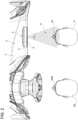
Figure 2 is a schematic plan view, with details removed for clarity, of the inner portion inFigure 1 , showing a viewing area of a display device; and -
Figure 3 is a plan, sectional and schematic view of a non-limiting embodiment of a content display device in accordance with the present invention. - In
Figure 1 , the numeral 1 schematically indicates a road vehicle driven by a driver DR and equipped with two front wheels and two rear wheels (in particular, driving wheels). The vehicle 1 is provided with apassenger compartment 2, which is adapted to accommodate the driver DR and at least one passenger P next to the driver DR. - As shown in the non-limiting embodiments in
Figures 1 and2 , the vehicle 1 comprises at least onecontent display device 3 for the passenger P, which is arranged on a vehicle dashboard 4 (integral with, in particular integrated into the dashboard 4), facing the passenger P. In particular, the frontal position of thedisplay device 3 in relation to the passenger is of particular importance for what will be discussed below. The term "frontal" means that the passenger's point of view lies on a line perpendicular to thedisplay device 3. - The
device 3 comprises at least onesupport element 5, which is configured to be mounted on thedashboard 4 of the road vehicle. In particular, thesupport element 5 may be any plastic or metallic support. In some non-limiting cases, thesupport device 5 is integrated into thedashboard 4 itself. - The
device 3 further comprises ascreen 6 mechanically connected to thesupport element 5 and configured so as to be visible to the passenger P while the road vehicle 1 is driven by the driver DR. Preferably, but without limitation, thescreen 6 is a flat screen, that is, a screen that lies in a plane. - Preferably, the
support element 5, in particular thescreen 6, is integral with thedashboard 4, more particularly integrated into thevehicle dashboard 4. - Advantageously, but not limitingly, the
support element 5, in particular thescreen 6, is arranged in front of the passenger P along a normal forward moving direction of the vehicle 1. - Advantageously, the
display device 3 comprises afilter element 7, which determines aviewing area 8 from which it is possible to view the contents while the vehicle is driven. In particular, as shown in the non-limiting embodiment inFigure 2 , theviewing area 8 comprises the point of view VP of the passenger P and not the point of view VDR of the driver DR. "Point of view" means the position of at least one of the eyes of the driver DR or passenger P. - In other words, preferably, as mentioned above, the point of view VP of the passenger lies on a line perpendicular to the plane of the
screen 6. - Advantageously, but not necessarily, and as shown in the non-limiting embodiment in
Figure 2 , theviewing area 8 is defined (delimited) by a viewing angle α between 80° and 15°, particularly between 60° and 20°, more particularly between 25° and 35°. - In some non-limiting cases, not shown, the
filter element 7 is arranged as an outer layer of thescreen 6 and, in particular, comprises a polarized film limiting its viewing angle. - In other preferred but non-limiting cases, such as the one shown in
Figure 3 , thefilter element 7 of thedevice 3 is arranged inside the screen and, in particular, comprises a first louver filter 9 (of a known type), also known as the "light control film" (LCF) filter. As is known, the aperture and depth of these louvers determine the viewing angle α, since light passage is only permitted to rays with a component perpendicular to the screen above a certain threshold. - Advantageously, but not limitingly, the
device 3 comprises a backlighting element 10 (of a known type and not further detailed below). Preferably, thefirst louver filter 9 comprises a series ofbulkheads 11 configured to block some of the light rays coming from the backlighting element so as to limit theviewing area 8. As mentioned above, in fact, the distance and length of thebulkheads 11 determine the viewing angle α. - In particular, the viewing angle α is calculated and predefined according to the ergonomics of the vehicle 1. In other words, for example, while ensuring that the driver DR is prevented from viewing distracting contents, a dashboard 4 (i.e., a screen 6) which is closer to the passenger P allows a wider viewing angle α compared to a
dashboard 4 which is very far from the passenger P. - As shown in the non-limiting embodiment in
Figure 3 , representing a sectional plan view of thedevice 3, thefirst filter 9 is arranged so that thebulkheads 11 are in a substantially vertical position, i.e., so as to limit theviewing area 8 horizontally. - According to some non-limiting embodiments, not shown, the
display device 3 comprises a second louver filter, which is arranged so that itsbulkheads 11 are in a substantially horizontal position, i.e., so as to limit theviewing area 8 vertically. It is thus possible to eliminate or in any case reduce possible reflections on the windscreen, making it also easier for the driver to see the road ahead. - According to some non-limiting cases, such as that shown in
Figure 3 , thefirst louver filter 9 is interposed between thebacklighting element 10 and animage generating element 13. In particular, theimage generating element 13 is a liquid crystal display, more precisely of the TFT or IPS type. This in particular prevents the passenger P or the driver from removing or inadvertently damaging thefilter 9. - Advantageously, but not necessarily, the vehicle 1 further comprises a
sensor element 14, which is configured to sense the light present outside the road vehicle. Preferably, the twilight sensor present in most of the vehicles on the market is used as thesensor element 14. For example, thesensor element 14 is configured to detect the lux outside the vehicle. - According to some preferred but non-limiting embodiments, the road vehicle 1 further comprises a control unit 15 (of a known type and therefore not shown and not further detailed), which is configured to adjust the brightness of the display device according to what is detected by the sensor element. Physically, the control unit can be composed of a single device or of multiple devices separate from each other and communicating through, for example, the CAN network of the road vehicle 1.
- In the non-limiting embodiment in
Figure 3 , theimage generating element 13 is interposed between twopolarizers 16. - Advantageously, but not necessarily, the
screen 6 is a touch screen and therefore comprises atouch panel 17. In particular, thepanel 17 is interposed between two OCRs 18 (Optically-Clear Resins), i.e., transparent resinous elements used to mitigate the stress on thepanel 17, and prevent the formation of condensation and the entry of foreign bodies. More particularly, thetouch panel 17 is interposed between theimage generating element 13 and aglass 19, which, in use, is directly used as an interface by the passenger P to interact with thescreen 6. - Advantageously, but not necessarily, the
filter 9 has a thickness of less than 5 mm, in particular substantially equal to 3 mm. - In accordance with a further aspect of the present invention, a method for displaying contents to a passenger of a road vehicle is described below.
- In particular, the method comprises at least the steps of: transmitting by means of the
display device 3 distracting contents to the passenger P and filtering the light transmission of the same while preventing the driver DR from viewing them. More precisely, the filtering step is carried out by at least thefirst louver filter 9 as described above. - Advantageously, but not necessarily, the method comprises the further steps of detecting the amount of light present outside the vehicle 1 by means of the
sensor element 14; and adjusting, by means of thecontrol unit 15, the brightness of thebacklighting element 10 of thedisplay device 3 according to what is detected by thesensor element 14. - In particular, it must be taken into consideration that not adjusting the brightness when the external brightness drops would still allow the driver, in conditions of external darkness and high brightness of the
screen 6, to view the distracting contents. As is known, in fact, the human eye becomes more sensitive in dark conditions. Therefore, preferably, by means of suitable test tables, the external brightness values detected by thesensor element 14 are correlated with the brightness of thebacklighting element 10, i.e., thescreen 6. For example, in the event that thesensor element 14 detects an unlit, night-time outdoor condition of 0 lux, thecontrol unit 15 sets the brightness of the screen to 5 candelas. Otherwise, if tens of thousands of lux are detected externally, thecontrol unit 15 sets the brightness of thescreen 6 to 500 or more candelas. The correlation between the external brightness and the brightness of thescreen 6 is not strictly linear, therefore suitable reference tables are used. - Preferably, the step of adjusting the brightness is carried out by including a damping parameter, which prevents sudden changes in brightness of the
device 3 in case of inconstant detection by thesensor element 14. For example, the damping parameter prevents thescreen 6 from flickering if the vehicle passes under a tree-lined avenue (a condition in which thesensor element 14 detects peaks and valleys of external brightness in rapid succession). - Alternatively or additionally, the step of adjusting the brightness is carried out by including a doping parameter, which causes sudden changes in brightness of the
screen 6 in case of a change in brightness constantly detected by thesensor element 14, for example, when entering or exiting a tunnel, where, in fact, the external brightness changes suddenly but maintains a substantially constant value (in fact, thesensor element 14 detects a rapid change in the internal brightness, which however remains constant over time, unlike the case of the tree-lined avenue). - Although the invention described above makes particular reference to a very precise embodiment, it is not to be construed as limited to this embodiment, since all the variations, modifications or simplifications covered by the attached claims, such as, for example, a different type of screen, a different position of the
device 3, a different type of vehicle (for example, a two-wheeled or front-wheel drive vehicle), etc., fall within its scope. - The present invention has several advantages.
- First of all, it prevents distraction for the driver, while increasing the pleasure of travelling for the passenger, who can serenely view contents which, if available to the driver, could lead to carelessness or accidents.
- Furthermore, the present invention prevents a user from removing or damaging the filter element (as in the case of an outer film), ensuring that the driver stays focused.
- A further advantage of the present invention is that it is possible to dynamically adjust the brightness of the display device, preventing the driver from viewing the contents obscured by the filter element in particularly dark conditions.
- Finally, the present invention allows the above method to be carried out without the need to install additional sensors, but simply by using the twilight sensor present on board most of the vehicles on the market today, for example where the vehicle dome light is located.
-
- 1
- vehicle
- 2
- passenger compartment
- 3
- display device
- 4
- vehicle dashboard
- 5
- support element
- 6
- screen
- 7
- filter element
- 8
- viewing area
- 9
- first filter
- 10
- backlighting element
- 11
- bulkheads
- 13
- image generating element
- 14
- sensor element
- 15
- control unit
- 16
- polarizers
- 17
- touch panel
- 18
- OCR
- 19
- glass
- DR
- driver
- P
- passenger
- VDR
- driver's point of view
- VP
- passenger's point of view
- α
- viewing angle
Claims (13)
- A content display device (3) for a passenger (P) of a road vehicle (1); the content display device (3) comprising:- a support element (5) configured to be mounted on a dashboard (4) of the road vehicle (1), integral with the dashboard (4);- at least one screen (6) mechanically connected to the support element (5) and configured so as to be visible to the passenger (P) while the vehicle is driven;the content display device (3) being characterised by the fact that it comprises a filter element (7), which determines a viewing area (8), from which it is possible to view the contents while the vehicle is driven; the viewing area (8) comprising the point of view (VP) of the passenger (P) and not the point of view (VDR) of a driver (DR).
- The device (3) according to claim 1, wherein the viewing area (8) is defined by a viewing angle (α) between 80° and 15°, in particular between 60° and 20°.
- The device (3) according to claim 1 or 2, wherein the filter element (7) comprises a first louver filter (9).
- The device (3) according to claim 3 and comprising a backlighting element (10); wherein the first louver filter (9) comprises a series of bulkheads (11) configured to block some of the light rays coming from the backlighting element (10) so as to limit the viewing area (8); the first filter (9) being arranged so that the bulkheads (11) are in a vertical position so as to limit the viewing area (8) horizontally.
- The device (3) according to any one of claims 3 or 4 and comprising a second louver filter, the second louver filter being arranged so that respective bulkheads (11) are in a horizontal position, so as to limit the viewing area (8) vertically.
- The device (3) according to any one of claims 2 to 5, wherein a first louver filter (9) is interposed between a backlighting element (10) and an image generating element (13) .
- A road vehicle (1) comprising:- a passenger compartment (2) configured to accommodate a driver (DR) and at least one passenger (P) alongside the driver (DR);- a vehicle dashboard (4);- a passenger (P) content display device (3) according to any one of the preceding claims, which is arranged on the vehicle dashboard (4), facing the passenger (P) and wherein the viewing area (8) prevents the driver (DR) from viewing the contents.
- The vehicle (1) according to claim 7 and further comprising:- a sensor element (14) configured to sense the amount of light present outside the road vehicle (1);- a control unit (15) configured to adjust the brightness of the display device (3) according to what is detected by the sensor element (14).
- A method for displaying contents to a passenger (P) of a road vehicle (1); the method comprising the steps of:- transmitting by means of a display device (3) distracting contents to a passenger (P) of the road vehicle (1) placed beside a driver (DR);- filtering the light transmission of the same while preventing the driver (DR) from viewing them;wherein the filtering step is carried out by at least a first louver filter (9).
- The method according to claim 9 and comprising the further steps of:- detecting the amount of light present outside the vehicle (1) by means of a sensor element (14);- adjusting, by means of a control unit (15), the brightness of a backlighting element (10) of the display device (3) according to what is detected by the sensor element (14).
- The method according to claim 10, wherein the step of adjusting the brightness is carried out by including a damping parameter, which prevents sudden changes in brightness in case of inconstant detection by the sensor element (14).
- The method according to claim 10 or 11, wherein the step of adjusting the brightness is carried out by including a doping parameter, which causes sudden changes in brightness in case of a change in brightness constantly detected by the sensor element (14).
- The use of a device (3) according to any of claims 1 to 6 for the viewing of contents by a passenger (P) arranged alongside a driver (DR) of a road vehicle (1).
Applications Claiming Priority (1)
| Application Number | Priority Date | Filing Date | Title |
|---|---|---|---|
| IT102022000004592A IT202200004592A1 (en) | 2022-03-10 | 2022-03-10 | DISPLAY DEVICE CONTENTS FOR PASSENGER OF A ROAD VEHICLE AND RELATED ROAD VEHICLE AND CONTROL METHOD |
Publications (1)
| Publication Number | Publication Date |
|---|---|
| EP4242036A1 true EP4242036A1 (en) | 2023-09-13 |
Family
ID=81927541
Family Applications (1)
| Application Number | Title | Priority Date | Filing Date |
|---|---|---|---|
| EP23160946.2A Pending EP4242036A1 (en) | 2022-03-10 | 2023-03-09 | Road vehicle passenger content display device and related road vehicle and control method |
Country Status (5)
| Country | Link |
|---|---|
| US (1) | US12487489B2 (en) |
| EP (1) | EP4242036A1 (en) |
| JP (1) | JP2023133201A (en) |
| CN (1) | CN116729115A (en) |
| IT (1) | IT202200004592A1 (en) |
Families Citing this family (1)
| Publication number | Priority date | Publication date | Assignee | Title |
|---|---|---|---|---|
| CN119252213A (en) * | 2024-12-03 | 2025-01-03 | 深圳市纬亚森科技有限公司 | A multimedia device energy consumption management system and method based on artificial intelligence |
Citations (3)
| Publication number | Priority date | Publication date | Assignee | Title |
|---|---|---|---|---|
| JP2001305312A (en) | 2000-03-31 | 2001-10-31 | Three M Innovative Properties Co | Optical laminated body |
| FR3074924A1 (en) | 2017-12-11 | 2019-06-14 | Psa Automobiles Sa | DEVICE FOR DISPLAYING OBSERVABLE IMAGES DIFFERENTLY ACCORDING TO THE ORIENTATION OF THE SCREEN, FOR A SYSTEM |
| EP3730333A1 (en) | 2019-04-23 | 2020-10-28 | Bayerische Motoren Werke Aktiengesellschaft | Display assembly for vehicle |
Family Cites Families (22)
| Publication number | Priority date | Publication date | Assignee | Title |
|---|---|---|---|---|
| US5554912A (en) * | 1995-05-15 | 1996-09-10 | Delco Electronics Corporation | Adaptive instrument display brightness control system |
| JP3733889B2 (en) * | 2001-10-05 | 2006-01-11 | 日産自動車株式会社 | Display device |
| JP2004109615A (en) * | 2002-09-19 | 2004-04-08 | Three M Innovative Properties Co | Analog display device |
| JP2005275262A (en) * | 2004-03-26 | 2005-10-06 | Denso Corp | In-vehicle LCD |
| JP4741887B2 (en) * | 2005-06-24 | 2011-08-10 | Nec液晶テクノロジー株式会社 | Light source device, display device, and terminal device |
| JP4924941B2 (en) * | 2006-10-13 | 2012-04-25 | Nltテクノロジー株式会社 | Optical elements, illumination optical devices, display devices, and electronic devices. |
| US8305678B2 (en) * | 2010-12-29 | 2012-11-06 | Delphi Technologies, Inc. | Dual view display system |
| CN103077684B (en) * | 2013-01-23 | 2015-09-16 | 京东方科技集团股份有限公司 | A kind of backlight adjusting method, device and display screen |
| KR20140134184A (en) * | 2013-05-13 | 2014-11-21 | 삼성디스플레이 주식회사 | Head-up display system and method and apparatus for controlling the same |
| US20160098692A1 (en) * | 2014-10-03 | 2016-04-07 | Bank Of America Corporation | Method for processing transaction statement inquiries via an atm |
| US9477083B2 (en) * | 2014-12-01 | 2016-10-25 | Visteon Global Technologies, Inc. | Adjusting an electronic display based on light sensing |
| JP6631185B2 (en) * | 2015-11-17 | 2020-01-15 | 日本精機株式会社 | Display device |
| KR102400470B1 (en) * | 2017-07-03 | 2022-05-20 | 현대자동차주식회사 | Vehicle and method for controlling thereof |
| DE112018005766B4 (en) * | 2017-11-07 | 2021-10-07 | Fujifilm Corporation | IMAGE EXPOSURE DEVICE |
| KR102854553B1 (en) * | 2019-09-02 | 2025-09-03 | 삼성전자주식회사 | Electronic apparatus for controlling a passenger seat display and method for controlling the passenger seat display |
| US11199652B2 (en) * | 2020-02-07 | 2021-12-14 | Sony Interactive Entertainment Inc. | Active privacy screen |
| KR102623342B1 (en) * | 2020-02-07 | 2024-01-11 | 삼성전자 주식회사 | Method and apparatus for controlling brightness of display in electronic device |
| WO2021243037A1 (en) * | 2020-05-27 | 2021-12-02 | Looking Glass Factory, Inc. | System and method for holographic displays |
| JP7536104B2 (en) * | 2020-09-01 | 2024-08-19 | 信越ポリマー株式会社 | Diffuse light irradiation device |
| JP2023105673A (en) * | 2022-01-19 | 2023-07-31 | 三星電子株式会社 | Louvre film, device, and manufacturing method thereof |
| TW202332973A (en) * | 2022-02-09 | 2023-08-16 | 美商瑞爾D斯帕克有限責任公司 | Display device with uniform off-axis luminance reduction |
| JP2023117649A (en) * | 2022-02-14 | 2023-08-24 | 船井電機株式会社 | Mobile-mounted display device |
-
2022
- 2022-03-10 IT IT102022000004592A patent/IT202200004592A1/en unknown
-
2023
- 2023-03-03 US US18/177,945 patent/US12487489B2/en active Active
- 2023-03-06 JP JP2023033592A patent/JP2023133201A/en active Pending
- 2023-03-09 EP EP23160946.2A patent/EP4242036A1/en active Pending
- 2023-03-09 CN CN202310221368.XA patent/CN116729115A/en active Pending
Patent Citations (3)
| Publication number | Priority date | Publication date | Assignee | Title |
|---|---|---|---|---|
| JP2001305312A (en) | 2000-03-31 | 2001-10-31 | Three M Innovative Properties Co | Optical laminated body |
| FR3074924A1 (en) | 2017-12-11 | 2019-06-14 | Psa Automobiles Sa | DEVICE FOR DISPLAYING OBSERVABLE IMAGES DIFFERENTLY ACCORDING TO THE ORIENTATION OF THE SCREEN, FOR A SYSTEM |
| EP3730333A1 (en) | 2019-04-23 | 2020-10-28 | Bayerische Motoren Werke Aktiengesellschaft | Display assembly for vehicle |
Also Published As
| Publication number | Publication date |
|---|---|
| US12487489B2 (en) | 2025-12-02 |
| IT202200004592A1 (en) | 2023-09-10 |
| US20230288754A1 (en) | 2023-09-14 |
| CN116729115A (en) | 2023-09-12 |
| JP2023133201A (en) | 2023-09-22 |
Similar Documents
| Publication | Publication Date | Title |
|---|---|---|
| US10987904B2 (en) | Visibility control device for a vehicle | |
| KR101759945B1 (en) | Display Device | |
| EP3380886B1 (en) | Display system adjustable based on the brightness of the background | |
| EP2648932B1 (en) | Vehicle information transmission device | |
| WO2012076954A2 (en) | Vehicle information transmission device | |
| US6404333B1 (en) | Gauge instrument for use in a motor vehicle | |
| CN113741031B (en) | Vehicle display device | |
| EP4242036A1 (en) | Road vehicle passenger content display device and related road vehicle and control method | |
| CN111873763A (en) | Anti-glare device, method for operating an anti-glare device, and corresponding vehicle | |
| JP2019527158A (en) | Window assembly for a vehicle having a variable thickness profile associated with a front camera | |
| WO2023243254A1 (en) | Information processing device, information processing method, and system | |
| US10222613B2 (en) | Display apparatus for a vehicle | |
| EP3608147A1 (en) | Vehicle display including a camera | |
| US20070262971A1 (en) | Method and device for operating an optical display device | |
| KR102709950B1 (en) | Integrated control system for cluster and hud of vehicles | |
| JP7375621B2 (en) | Automotive display device | |
| US11167640B2 (en) | Motor vehicle having a display apparatus with two integrally formed subregions arranged at an angle to one another | |
| KR20230136828A (en) | Head-up-display control system | |
| JP7068647B2 (en) | Driving support device | |
| KR102640693B1 (en) | Integrated control system for cluster and hud of vehicles | |
| US20260014868A1 (en) | Motion sickness reducing apparatus and method for reducing motion sickness | |
| EP4570558A1 (en) | Passenger content display device for a road vehicle; related road vehicle and control method | |
| JP3394584B2 (en) | Vehicle display device | |
| TWI855500B (en) | Windscreen electronics module and vehicle with respective windscreen electronics module | |
| JP2002274220A (en) | Indicator for vehicle |
Legal Events
| Date | Code | Title | Description |
|---|---|---|---|
| PUAI | Public reference made under article 153(3) epc to a published international application that has entered the european phase |
Free format text: ORIGINAL CODE: 0009012 |
|
| STAA | Information on the status of an ep patent application or granted ep patent |
Free format text: STATUS: THE APPLICATION HAS BEEN PUBLISHED |
|
| AK | Designated contracting states |
Kind code of ref document: A1 Designated state(s): AL AT BE BG CH CY CZ DE DK EE ES FI FR GB GR HR HU IE IS IT LI LT LU LV MC ME MK MT NL NO PL PT RO RS SE SI SK SM TR |
|
| STAA | Information on the status of an ep patent application or granted ep patent |
Free format text: STATUS: REQUEST FOR EXAMINATION WAS MADE |
|
| 17P | Request for examination filed |
Effective date: 20240313 |
|
| RBV | Designated contracting states (corrected) |
Designated state(s): AL AT BE BG CH CY CZ DE DK EE ES FI FR GB GR HR HU IE IS IT LI LT LU LV MC ME MK MT NL NO PL PT RO RS SE SI SK SM TR |
|
| STAA | Information on the status of an ep patent application or granted ep patent |
Free format text: STATUS: EXAMINATION IS IN PROGRESS |
|
| 17Q | First examination report despatched |
Effective date: 20260304 |