EP4239982A2 - Verfahren und netzwerkeinheit zur veröffentlichung von dienst-apis - Google Patents
Verfahren und netzwerkeinheit zur veröffentlichung von dienst-apis Download PDFInfo
- Publication number
- EP4239982A2 EP4239982A2 EP23187266.4A EP23187266A EP4239982A2 EP 4239982 A2 EP4239982 A2 EP 4239982A2 EP 23187266 A EP23187266 A EP 23187266A EP 4239982 A2 EP4239982 A2 EP 4239982A2
- Authority
- EP
- European Patent Office
- Prior art keywords
- api
- network entity
- service
- publishing
- service api
- Prior art date
- Legal status (The legal status is an assumption and is not a legal conclusion. Google has not performed a legal analysis and makes no representation as to the accuracy of the status listed.)
- Granted
Links
Images



Classifications
-
- G—PHYSICS
- G06—COMPUTING OR CALCULATING; COUNTING
- G06F—ELECTRIC DIGITAL DATA PROCESSING
- G06F9/00—Arrangements for program control, e.g. control units
- G06F9/06—Arrangements for program control, e.g. control units using stored programs, i.e. using an internal store of processing equipment to receive or retain programs
- G06F9/46—Multiprogramming arrangements
- G06F9/54—Interprogram communication
- G06F9/547—Remote procedure calls [RPC]; Web services
-
- G—PHYSICS
- G06—COMPUTING OR CALCULATING; COUNTING
- G06F—ELECTRIC DIGITAL DATA PROCESSING
- G06F8/00—Arrangements for software engineering
- G06F8/30—Creation or generation of source code
- G06F8/36—Software reuse
-
- H—ELECTRICITY
- H04—ELECTRIC COMMUNICATION TECHNIQUE
- H04L—TRANSMISSION OF DIGITAL INFORMATION, e.g. TELEGRAPHIC COMMUNICATION
- H04L67/00—Network arrangements or protocols for supporting network services or applications
- H04L67/50—Network services
- H04L67/51—Discovery or management thereof, e.g. service location protocol [SLP] or web services
-
- H—ELECTRICITY
- H04—ELECTRIC COMMUNICATION TECHNIQUE
- H04L—TRANSMISSION OF DIGITAL INFORMATION, e.g. TELEGRAPHIC COMMUNICATION
- H04L67/00—Network arrangements or protocols for supporting network services or applications
- H04L67/50—Network services
- H04L67/60—Scheduling or organising the servicing of application requests, e.g. requests for application data transmissions using the analysis and optimisation of the required network resources
Definitions
- the present disclosure relates to communication technology, and more particularly, to a method and a network entity for service Application Programming Interface (API) publishing.
- API Application Programming Interface
- CAPIF Common API Framework
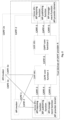
- Fig. 1 shows an architectural model for the CAPIF interconnection which allows API invokers of a CAPIF provider to utilize service APIs from the 3 rd party CAPIF provider.
- Fig. 2 shows an architectural model for the CAPIF interconnection within the same CAPIF provider domain, which allows API invokers of CAPIF Core Function (CCF) 1 to utilize service APIs from CCF 2, where both CCFs are hosted within the trust domain of the CAPIF provider A.
- CCF CAPIF Core Function
- the two CCFs are connected with each other via a CAPIF-6 interface (reference point).
- the CAPIF-6/6e interface supports publishing and discovering service API information.
- the API Publishing Function (APF) (which enables the API provider to publish service API information to the CCF in order to enable discovery of service APIs by API invokers) or CCF can indicate Shareable Information in an API publish request or interconnection API publish request, such information indicates whether the service API can be shared and if shared, shared with which CAPIF provider domains.
- a method in a first network entity for service API publishing includes: receiving, from a second network entity, a first API publish request for publishing a service API, the first API publish request containing a list of identifiers of network entities that have published the service API; and the method further includes: transmitting, when an identifier of the first network entity is included in the list, an API publish response indicating failure of publishing of the service API to the second network entity, without creating a new resource for the service API at the first network entity or further publishing the service API to any network entity, or transmitting, when an identifier of the first network entity is not included in the first list, a second API publish request for publishing the service API to a third network entity, the second API publish request containing a second list of identifiers of network entities obtained by adding the identifier of the first network entity to the first list.
- the second API publish request may be transmitted in response to determining that an identifier of the third network entity is not included in the first list.
- the method may further include, when the identifier of the first network entity is not included in the first list: creating a new resource for the service API at the first network entity; and transmitting, to the second network entity, an API publish response indicating success of publishing of the service API and containing an identifier of the created new resource.
- each of the first network entity, the second network entity, the third network entity, and the network entities that have published the service API may be a CCF entity.
- the first network entity, the second network entity, the third network entity, and the network entities that have published the service API may all be in one single CAPIF provider domain.
- a method in a first network entity for service API publishing includes: receiving, from a function entity, a first API publish request for publishing a service API; and transmitting a second API publish request for publishing the API to a second network entity, the second API publish request containing an identifier of the first network entity.
- each of the first network entity and the second network entity may be a CCF entity, and the function entity may be an APF entity.
- the first network entity and the second network entity may both be in one single CAPIF provider domain.
- a first network entity includes a communication interface, a processor and a memory.
- the memory stores instructions executable by the processor whereby the first network entity is operative to perform the method according to the above first, second and/or third aspect.
- a computer readable storage medium has computer program instructions stored thereon.
- the computer program instructions when executed by a processor in a first network entity, cause the first network entity to perform the method according to the above first, second and/or third aspect.
- a communication system includes an APF entity, and a plurality of CCF entities.
- the APF entity is configured to transmit an API publish request for publishing a service API to one of the plurality of CCF entities.
- Each of the plurality of CCF entities is configured to perform the method according to the above first, second and/or third aspect.
- a network entity upon receiving an API publish request for publishing a service API, can determine whether its identifier is included in a list of identifiers of network entities that have published the service API (if contained in the API publish request). When its identifier is included in the list, the network entity will respond with a result indicating failure of publishing of the service API, without creating a new resource for the service API or further publishing the service API to any network entity. On the other hand, only when its identifier is not included in the list, the CCF entity will create a new resource for the service API and/or transmit a further API publish request for publishing the service API to another network entity.
- the further API publish request can contain an updated list of identifiers of network entities that have published the service API, with the identifier of the network entity added to the list. In this way, the network entity can avoid creating redundant resources for the same service API and can prevent a loop for publishing the serving API.
- references in the specification to "one embodiment,” “an embodiment,” “an example embodiment,” and the like indicate that the embodiment described may include a particular feature, structure, or characteristic, but it is not necessary that every embodiment includes the particular feature, structure, or characteristic. Moreover, such phrases are not necessarily referring to the same embodiment. Further, when a particular feature, structure, or characteristic is described in connection with an embodiment, it is submitted that it is within the knowledge of one skilled in the art to affect such feature, structure, or characteristic in connection with other embodiments whether or not explicitly described.
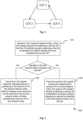
- CCF 1 For service API publishing via CAPIF-6/6e interfaces, as shown in Fig. 3 , it is possible that an API is first published from CCF 1 to CCF 2, then from CCF 2 to CCF 3, and then from CCF 3 back to CCF 1.
- CCF 1 will create a new service API resource for the API, in addition to the service API resource it has created when the API is initially published, e.g., from an APF.
- CCF 1 will have redundant resources occupied by the same API. More seriously, CCF 1 may again publish the API to CCF 2, which then may publish the API to CCF 3, and so on and so forth, resulting in a loop of service API publishing.
- Fig. 4 is a flowchart illustrating a method 400 for service API publishing according to an embodiment of the present disclosure.
- the method 400 can be performed at a first network entity, e.g., a CCF entity.
- a first API publish request for publishing a service API is received from a second network entity (e.g., a CCF entity).
- the first API publish request contains a first list of identifiers of network entities (e.g., CCF entities) that have published the service API.
- the list can also be referred to as a "published API path", or "API path" for short.
- the first API publish request can be an interconnection API publish request as specified in Section 8.25.2 of TS 23.222.
- Table 8.25.2.1-1 of TS 23.222 defines Information Elements (IEs) in the interconnection API publish request, which is reproduced as Table 1 below:
- the information of the CAPIF core function which publishes APIs, may include identity, authentication and authorization information Service API information O (see NOTE 1)
- the service API information includes the service API name, service API type, communication type, description, interface details (e.g. IP address, port number, URI), protocols, version numbers, and data format.
- Service API category O (see NOTE 1)
- the category of the service APIs to be published, (e.g.,V2X, IoT) Shareable information O (see NOTE 2) Indicates whether the service API or the service API category can be published to other CCFs. And if sharing, a list of CAPIF provider domain information where the service API or the service API catetorv can be published is contained.
- CAPIF provider domain information O (see NOTE 3) Indicates the CAPIF provider domain of the service API to be published NOTE 1: At least one of the Service API information and Service API category shall be present.
- NOTE 2 If the shareable information is not present, the service API is not allowed to be shared.
- NOTE 3 This is onlv presented when publish service API to a different CAPIF provider domain.
- Table 8.25.2.1-1 The service API information in the above Table 8.25.2.1-1 is defined in detail in Table 8.2.4.2.2-1 of TS 29.222 V16.1.0, which can be changed to include the API path, as shown in Table 2 below: Table 2: Definition of type ServiceAPIDescription Attribute name Data type P Cardinality Description Applicability apiName string M 1 API name, it is set as ⁇ apiName ⁇ part of the URI structure as defined in subclause 4.4 of 3GPP TS 29.501 [18]. apild string O 0..1 API identifier assigned by the CAPIF core function to the published service API. Shall not be present in the HTTP POST request from the API publishing function to the CAPIF core function.
- Shall be present in the HTTP POST response from the CAPIF core function to the API publishing function and in the HTTP GET response from the CAPIF core function to the API invoker (discovery API).
- aefProfiles array(AefP rofile) M 1..N AEF profile information, which includes the exposed API details (e.g. protocol).
- description string O 0..1 Text description of the API supportedFeatu res Supported Features
- O 0..1 The supported optional features of the CAPIF API. (NOTE) shareableInfo Shareable Information
- O 0..1 Represents whether the service API and/or the service API category can be published to other CCFs.
- serviceAPICate gory string O 0..1 The service API category to which the service API belongs to.
- apiSuppFeats Supported Features O 0..1 The features supported by the service API indicated by the apild attribute.
- ApiSupportedFe aturePublishing pubApiPath Published ApiPath C 0..1 It contains the published API path within the same CAPIF provider domain. it shall be provided by the CCF when publishing the service API to other CCF via the CAPIF-6/6e reference point.
- the supported features attribute shall be provided in the HTTP POST request and in the response of successful resource creation.
- the supportedFeatures attribute may include one or more the supported features as defined in subclause 8.2.6.
- the attribute "pubApiPath” contains identifiers of CCF entities that have published the API.
- the data type "PublishedApiPath” can be defined in Table 3 below: Table 3: Definition of type PublishedApiPath Attribute name Data type P Cardinality Description Applicability ccflds array(string) O 1..N A list of CCF identifiers.
- an API publish response indicating failure of publishing of the service API is transmitted to the second network entity, without creating a new resource for the service API at the first network entity or further publishing the service API to any network entity. That is, when the identifier of the first network identity is included the API path, it means that the service API published in the first API publish request is a service API the first entity has published. In this case, the first network entity will not create any new resource for the same service API or further publish the service API to any network entity, thereby avoiding a waste of resources and a loop for API publishing.
- the API publish response can be an interconnection API publish response as specified in Section 8.25.2.2 of TS 23.222.
- a second API publish request for publishing the service API is transmitted to a third network entity (e.g., a CCF entity).
- the second API publish request contains a second list of identifiers of network entities obtained by adding the identifier of the first network entity to the first list.
- the second API publish request can be transmitted in response to determining that an identifier of the third network entity is not included in the first list.
- the first network entity may not transmit the second API publish request to further publish the same service API to the third network entity, thereby avoiding a waste of resources and a loop for API publishing.
- the first network entity can create a new resource for the service API at the first network entity; and transmit, to the second network entity, an API publish response indicating success of publishing of the service API and containing an identifier of the created new resource.
- the API publish response can be an interconnection API publish response as specified in Section 8.25.2.2 of TS 23.222.
- the first network entity, the second network entity, the third network entity, and the network entities that have published the service API may all be in one single CAPIF provider domain. In another example, these network entities may belong to different CAPIF provider domains.
- the method 400 may include only the blocks 410 and 420. In another implementation, the method 400 may include only the blocks 410 and 430. In yet another implementation, the method 400 may include the blocks 410, 420 and 430.
- Fig. 5 is a flowchart illustrating a method 500 for service API publishing according to an embodiment of the present disclosure.
- the method 500 can be performed at a first network entity, e.g., a CCF entity.
- a first API publish request for publishing a service API is received from a function entity (e.g., an APF entity).
- the first API publish request can be e.g., a service API publish request as specified in Section 8.3.2.1 of TS 23.222.
- a second API publish request for publishing the API is transmitted to a second network entity (e.g., a CCF entity), e.g., in response to the first API publish request containing no API path.
- the second API publish request contains an identifier of the first network entity, e.g., in an API path.
- the second API publish request can be an interconnection API publish request according to Table 1 and contain "pubApiPath" according to Table 2.
- the first network entity can create a new resource for the service API at the first network entity, and transmit, to the function entity, an API publish response indicating success of publishing of the service API and containing an identifier of the created new resource.
- the API publish response can be a service API publish response as specified in Section 8.3.2.2 of TS 23.222.
- the first network entity and the second network entity can be both in one single CAPIF provider domain. In another example, these network entities may belong to different CAPIF provider domains.
- Fig. 6 is a sequence diagram showing an exemplary process for service API publishing according to an embodiment of the present disclosure.
- the process can be performed in a communication system including at least an APF entity and a plurality of CCF entities (e.g., CCF1, CCF2, and CCF3).
- CCF entities e.g., CCF1, CCF2, and CCF3
- the APF entity transmits a service API publish request for publishing a service API to CCF1.
- CCF1 creates a new resource for the service API and transmits a service API publish response indicating success of publishing of the service API and containing an identifier of the created new resource to the APF entity at 6.2.
- CCF1 transmits an interconnection API publish request for publishing the service API to CCF2, containing an API path including an identifier of CCF1.
- CCF2 Upon receiving the interconnection API publish request, CCF2 checks the API path and determines that an identifier of CCF2 is not included in the API path. Accordingly, CCF2 creates a new resource for the service API and transmits an interconnection API publish response indicating success of publishing of the service API and containing an identifier of the created new resource to CCF1 at 6.4. If the service API is to be shared with CCF3 (depending on Sharable Information in the interconnection API publish request from CCF1), CCF2 may first determine whether an identifier of CCF3 is included in the API path, if it is known to CCF2.
- CCF2 transmits an interconnection API publish request for publishing the service API to CCF3, containing an API path including the identifiers of CCF1 and CCF2.
- CCF3 Upon receiving the interconnection API publish request, CCF3 checks the API path and determines that the identifier of CCF3 is not included in the API path. Accordingly, CCF3 creates a new resource for the service API and transmits an interconnection API publish response indicating success of publishing of the service API and containing an identifier of the created new resource to CCF2 at 6.6.
- CCF3 may first determine whether the identifier of CCF1 is included in the API path, if it is known to CCF3. If the identifier of CCF1 is known and included in the API path, CCF3 will not further publish the service API back to CCF1 and there will be no loop accordingly. However, if the identifier of CCF1 is unknown to CCF3, at 6.7, CCF3 transmits an interconnection API publish request for publishing the service API to CCF1, containing an API path including the identifiers of CCF1, CCF2, and CCF3.
- CCF1 Upon receiving the interconnection API publish request, CCF1 checks the API path and determines that the identifier of CCF1 is included in the API path. Accordingly, CCF1 transmits an interconnection API publish response indicating failure of publishing of the service API to CCF3 at 6.8, without creating a new resource for the service API at CCF1 or further publishing the service API to any network entity. In this case, there will be no loop for publishing the service API.
- a first network entity is provided.
- Fig. 7 is a block diagram of a first network entity 700 according to an embodiment of the present disclosure.
- the first network entity 700 can be operative to perform the method 400 as shown in Fig. 4 . As discussed above in connection with the method 400, in an implementation, the first network entity 700 can be operative to perform only the blocks 410 and 420 in the method 400. In another implementation, the first network entity 700 can be operative to perform only the blocks 410 and 430 in the method 400. In yet another implementation, the first network entity 700 can be operative to perform the blocks 410, 420 and 430 in the method 400.
- the first network entity 700 includes a receiving unit 710 configured to receive, from a second network entity, a first API publish request for publishing a service API, the first API publish request containing a first list of identifiers of network entities that have published the service API.
- the first network entity 700 further includes a transmitting unit 720 configured to transmit, when an identifier of the first network entity is included in the first list, an API publish response indicating failure of publishing of the service API to the second network entity. In this case, the first network entity 700 will not create a new resource for the service API at the first network entity or further publish the service API to any network entity.
- the transmitting unit 720 can be configured to transmit, when an identifier of the first network entity is not included in the first list, a second API publish request for publishing the service API to a third network entity, the second API publish request containing a second list of identifiers of network entities obtained by adding the identifier of the first network entity to the first list.
- the second API publish request may be transmitted in response to determining that an identifier of the third network entity is not included in the first list.
- the first network entity 700 can further include a creating unit configured to create a new resource for the service API at the first network entity, and the transmitting unit 720 can be further configured to transmit, to the second network entity, an API publish response indicating success of publishing of the service API and containing an identifier of the created new resource.
- each of the first network entity, the second network entity, the third network entity, and the network entities that have published the service API may be a CCF entity.
- the first network entity, the second network entity, the third network entity, and the network entities that have published the service API may all be in one single CAPIF provider domain.
- the network entity 700 can be operative to perform the method 500 as shown in Fig. 5 .
- the network entity 700 includes a receiving unit 710 configured to receive, from a function entity, a first API publish request for publishing a service API.
- the network entity 700 further includes a transmitting unit 720 configured to transmit a second API publish request for publishing the API to a second network entity, the second API publish request containing an identifier of the first network entity.
- each of the first network entity and the second network entity may be a CCF entity, and the function entity may be an APF entity.
- the first network entity and the second network entity may both be in one single CAPIF provider domain.
- the units 710 and 720 can be implemented as a pure hardware solution or as a combination of software and hardware, e.g., by one or more of: a processor or a micro-processor and adequate software and memory for storing of the software, a Programmable Logic Device (PLD) or other electronic component(s) or processing circuitry configured to perform the actions described above, and illustrated, e.g., in Fig. 4 or 5 .
- PLD Programmable Logic Device
- Fig. 8 is a block diagram of a first network entity 800 according to another embodiment of the present disclosure.
- the first network entity 800 includes a communication interface 810, a processor 820 and a memory 830.
- the memory 830 may contain instructions executable by the processor 820 whereby the first network entity 800 is operative to perform the actions, e.g., of the procedure described earlier in conjunction with Fig. 4 .
- the first network entity 800 can be operative to perform only the blocks 410 and 420 in the method 400.
- the first network entity 800 can be operative to perform only the blocks 410 and 430 in the method 400.
- the first network entity 800 can be operative to perform the blocks 410, 420 and 430 in the method 400.
- the memory 830 contains instructions executable by the processor 820 whereby the first network entity 800 is operative to receive, from a second network entity, a first API publish request for publishing a service API, the first API publish request containing a first list of identifiers of network entities that have published the service API.
- the memory 830 may further contain instructions executable by the processor 820 whereby the first network entity 800 is operative to transmit, when an identifier of the first network entity is included in the first list, an API publish response indicating failure of publishing of the service API to the second network entity, without creating a new resource for the service API at the first network entity or further publishing the service API to any network entity.
- the memory 830 may further contain instructions executable by the processor 820 whereby the first network entity 800 is operative to transmit, when an identifier of the first network entity is not included in the first list, a second API publish request for publishing the service API to a third network entity, the second API publish request containing a second list of identifiers of network entities obtained by adding the identifier of the first network entity to the first list.
- the second API publish request may be transmitted in response to determining that an identifier of the third network entity is not included in the first list.
- the memory 830 may further contain instructions executable by the processor 820 whereby the first network entity 800 is operative to, when the identifier of the first network entity is not included in the first list: create a new resource for the service API at the first network entity; and transmit, to the second network entity, an API publish response indicating success of publishing of the service API and containing an identifier of the created new resource.
- each of the first network entity, the second network entity, the third network entity, and the network entities that have published the service API may be a CCF entity.
- the first network entity, the second network entity, the third network entity, and the network entities that have published the service API may all be in one single CAPIF provider domain.
- the memory 830 may contain instructions executable by the processor 820 whereby the first network entity 800 is operative to perform the actions, e.g., of the procedure described earlier in conjunction with Fig. 5 .
- the memory 830 contains instructions executable by the processor 820 whereby the first network entity 800 is operative to receive, from a function entity, a first API publish request for publishing a service API; and transmit a second API publish request for publishing the API to a second network entity, the second API publish request containing an identifier of the first network entity.
- each of the first network entity and the second network entity may be a CCF entity, and the function entity may be an APF entity.
- the first network entity and the second network entity may both be in one single CAPIF provider domain.
- the present disclosure also provides at least one computer program product in the form of a non-volatile or volatile memory, e.g., a non-transitory computer readable storage medium, an Electrically Erasable Programmable Read-Only Memory (EEPROM), a flash memory and a hard drive.
- the computer program product includes a computer program.
- the computer program includes: code/computer readable instructions, which when executed by the processor 820 causes the network entity 800 to perform the actions, e.g., of the procedure described earlier in conjunction with Fig. 4 or 5 .
- the computer program product may be configured as a computer program code structured in computer program modules.
- the computer program modules could essentially perform the actions of the flow illustrated in Fig. 4 or 5 .
- the processor may be a single CPU (Central Processing Unit), but could also comprise two or more processing units.
- the processor may include general purpose microprocessors; instruction set processors and/or related chips sets and/or special purpose microprocessors such as Application Specific Integrated Circuits (ASICs).
- ASICs Application Specific Integrated Circuits
- the processor may also comprise board memory for caching purposes.
- the computer program may be carried by a computer program product connected to the processor.
- the computer program product may comprise a non-transitory computer readable storage medium on which the computer program is stored.
- the computer program product may be a flash memory, a Random Access Memory (RAM), a Read-Only Memory (ROM), or an EEPROM, and the computer program modules described above could in alternative embodiments be distributed on different computer program products in the form of memories.
Landscapes
- Engineering & Computer Science (AREA)
- Software Systems (AREA)
- Theoretical Computer Science (AREA)
- General Engineering & Computer Science (AREA)
- Physics & Mathematics (AREA)
- General Physics & Mathematics (AREA)
- Computer Networks & Wireless Communication (AREA)
- Signal Processing (AREA)
- Computer And Data Communications (AREA)
- Information Transfer Between Computers (AREA)
- Mobile Radio Communication Systems (AREA)
Applications Claiming Priority (3)
| Application Number | Priority Date | Filing Date | Title |
|---|---|---|---|
| CN2020075379 | 2020-02-14 | ||
| EP20811591.5A EP4104417B1 (de) | 2020-02-14 | 2020-11-20 | Methode und netzwerkstelle zur veröffentlichung der service-api |
| PCT/EP2020/082923 WO2021160307A1 (en) | 2020-02-14 | 2020-11-20 | Method and network entity for service api publishing |
Related Parent Applications (1)
| Application Number | Title | Priority Date | Filing Date |
|---|---|---|---|
| EP20811591.5A Division EP4104417B1 (de) | 2020-02-14 | 2020-11-20 | Methode und netzwerkstelle zur veröffentlichung der service-api |
Publications (4)
| Publication Number | Publication Date |
|---|---|
| EP4239982A2 true EP4239982A2 (de) | 2023-09-06 |
| EP4239982A3 EP4239982A3 (de) | 2023-10-25 |
| EP4239982C0 EP4239982C0 (de) | 2025-09-03 |
| EP4239982B1 EP4239982B1 (de) | 2025-09-03 |
Family
ID=73544182
Family Applications (2)
| Application Number | Title | Priority Date | Filing Date |
|---|---|---|---|
| EP20811591.5A Active EP4104417B1 (de) | 2020-02-14 | 2020-11-20 | Methode und netzwerkstelle zur veröffentlichung der service-api |
| EP23187266.4A Active EP4239982B1 (de) | 2020-02-14 | 2020-11-20 | Verfahren und netzwerkeinheit zur veröffentlichung von dienst-apis |
Family Applications Before (1)
| Application Number | Title | Priority Date | Filing Date |
|---|---|---|---|
| EP20811591.5A Active EP4104417B1 (de) | 2020-02-14 | 2020-11-20 | Methode und netzwerkstelle zur veröffentlichung der service-api |
Country Status (8)
| Country | Link |
|---|---|
| US (1) | US20230046570A1 (de) |
| EP (2) | EP4104417B1 (de) |
| JP (2) | JP7346745B2 (de) |
| CN (2) | CN117221385A (de) |
| ES (1) | ES3040133T3 (de) |
| MX (1) | MX2022007792A (de) |
| WO (1) | WO2021160307A1 (de) |
| ZA (1) | ZA202209969B (de) |
Families Citing this family (1)
| Publication number | Priority date | Publication date | Assignee | Title |
|---|---|---|---|---|
| WO2025017627A1 (en) * | 2023-07-14 | 2025-01-23 | Jio Platforms Limited | Method and system for managing endpoint for a service application programming interface (api) |
Family Cites Families (18)
| Publication number | Priority date | Publication date | Assignee | Title |
|---|---|---|---|---|
| US7302439B2 (en) * | 2002-06-28 | 2007-11-27 | Sun Microsystems, Inc. | Information model mapping with shared directory tree representations |
| US7716357B2 (en) * | 2003-10-24 | 2010-05-11 | Microsoft Corporation | Service discovery and publication |
| US8595625B2 (en) * | 2007-10-09 | 2013-11-26 | Tellabs San Jose, Inc. | Method and apparatus to automate configuration of network entities |
| US20170251329A1 (en) * | 2014-09-24 | 2017-08-31 | Zte Corporation | Identification and discovery of exposed services in a digital communication network |
| US10091086B2 (en) * | 2015-04-03 | 2018-10-02 | Oracle International Corporation | System and method for providing an application programming interface manager for use with a service bus runtime |
| US10417060B2 (en) * | 2016-06-27 | 2019-09-17 | Verizon Patent And Licensing Inc. | Automated API publication for Internet of Things platform |
| WO2018203663A1 (en) * | 2017-05-02 | 2018-11-08 | Samsung Electronics Co., Ltd. | Method and apparatus for providing network-based northbound application programming interface in a wireless communication system |
| US11303676B2 (en) * | 2017-11-16 | 2022-04-12 | Samsung Electronics Co., Ltd. | Method and system for authenticating application program interface (API) invokers |
| CN110046001B (zh) * | 2018-01-15 | 2022-03-25 | 华为技术有限公司 | 一种授权撤回的方法及装置 |
| CN108111629A (zh) * | 2018-01-19 | 2018-06-01 | 京东方科技集团股份有限公司 | 应用编程接口服务装置和应用编程接口服务系统 |
| US20210144550A1 (en) * | 2018-04-06 | 2021-05-13 | Nec Corporation | Security procedures for common api framework in next generation networks |
| CN112438041B (zh) * | 2018-04-06 | 2024-07-19 | 三星电子株式会社 | 用于执行接入的方法与装置 |
| CN110362412A (zh) * | 2018-04-09 | 2019-10-22 | 华为技术有限公司 | 一种服务api调用方法和相关装置 |
| CN110730499B (zh) * | 2018-07-16 | 2021-06-15 | 华为技术有限公司 | 一种mec信息获取方法及装置 |
| CN110233791B (zh) * | 2019-06-06 | 2022-04-15 | 北京百度网讯科技有限公司 | 数据去重方法和装置 |
| KR20220070266A (ko) * | 2019-09-25 | 2022-05-30 | 삼성전자주식회사 | 에지 컴퓨팅을 위한 분산된 탐색 및 통지를 위한 방법 및 시스템 |
| CN110688142B (zh) * | 2019-10-10 | 2020-07-07 | 星环信息科技(上海)有限公司 | 应用程序编程接口的发布方法、设备及存储介质 |
| KR102802497B1 (ko) * | 2020-09-30 | 2025-04-29 | 텔레폰악티에볼라겟엘엠에릭슨(펍) | 애플리케이션 프로그래밍 인터페이스 관리를 위한 방법 및 장치 |
-
2020
- 2020-11-20 EP EP20811591.5A patent/EP4104417B1/de active Active
- 2020-11-20 US US17/793,072 patent/US20230046570A1/en active Pending
- 2020-11-20 JP JP2022540574A patent/JP7346745B2/ja active Active
- 2020-11-20 EP EP23187266.4A patent/EP4239982B1/de active Active
- 2020-11-20 WO PCT/EP2020/082923 patent/WO2021160307A1/en not_active Ceased
- 2020-11-20 MX MX2022007792A patent/MX2022007792A/es unknown
- 2020-11-20 CN CN202311313611.7A patent/CN117221385A/zh active Pending
- 2020-11-20 ES ES23187266T patent/ES3040133T3/es active Active
- 2020-11-20 CN CN202080095200.3A patent/CN115023931B/zh active Active
-
2022
- 2022-09-07 ZA ZA2022/09969A patent/ZA202209969B/en unknown
-
2023
- 2023-09-06 JP JP2023144636A patent/JP7664982B2/ja active Active
Non-Patent Citations (1)
| Title |
|---|
| 3GPP TECHNICAL SPECIFICATION (TS) 23.222 |
Also Published As
| Publication number | Publication date |
|---|---|
| EP4239982C0 (de) | 2025-09-03 |
| JP7664982B2 (ja) | 2025-04-18 |
| JP2024009797A (ja) | 2024-01-23 |
| EP4104417A1 (de) | 2022-12-21 |
| CN115023931A (zh) | 2022-09-06 |
| JP7346745B2 (ja) | 2023-09-19 |
| CN117221385A (zh) | 2023-12-12 |
| ZA202209969B (en) | 2024-11-27 |
| EP4239982A3 (de) | 2023-10-25 |
| MX2022007792A (es) | 2022-09-27 |
| EP4104417B1 (de) | 2023-07-26 |
| WO2021160307A1 (en) | 2021-08-19 |
| US20230046570A1 (en) | 2023-02-16 |
| JP2023516243A (ja) | 2023-04-19 |
| ES3040133T3 (en) | 2025-10-28 |
| EP4239982B1 (de) | 2025-09-03 |
| CN115023931B (zh) | 2023-10-03 |
Similar Documents
| Publication | Publication Date | Title |
|---|---|---|
| CN109995713B (zh) | 一种微服务框架中的服务处理方法及相关设备 | |
| US20200195740A1 (en) | Subscribe and publish method and server | |
| US20230359515A1 (en) | Method and Apparatus for Application Programming Interface Management | |
| CN110532106B (zh) | 进程间的通讯方法、装置、设备和存储介质 | |
| US20200045048A1 (en) | Data Leakage and Information Security Using Access Control | |
| US20250106053A1 (en) | Blockchain Network Management Method and Related Device | |
| US20210021580A1 (en) | Protection of private data using an enclave cluster | |
| CN115065703A (zh) | 物联网系统及其认证与通信方法、相关设备 | |
| CN112527669A (zh) | 本地服务的自测方法及系统 | |
| EP4104417B1 (de) | Methode und netzwerkstelle zur veröffentlichung der service-api | |
| CN114629744B (zh) | 基于macvlan主机网络的数据访问方法、系统及相关装置 | |
| CN116094699A (zh) | 消息处理方法、云服务器和通信系统 | |
| WO2020191639A1 (zh) | 一种设备的通信方法、设备及存储介质 | |
| CN114428924A (zh) | 一种基于grpc框架的服务请求处理方法及系统 | |
| WO2023208197A1 (zh) | 网络连接方法及装置、计算机可读存储介质 | |
| CN114065297B (zh) | 一种证书处理方法、装置、电子设备及存储介质 | |
| US12155730B2 (en) | Distributed publication/subscription as a service computing system | |
| US12231408B2 (en) | Secure data transfer request routing for peer-to-peer services | |
| CN121037390A (zh) | 一种设备管理的方法和通信装置 | |
| CN117378190A (zh) | 标识配置方法及装置、电子设备及存储介质 | |
| CN118433242A (zh) | 仪器相关资产的发现以及网络环境之间与这些资产的双向通信 | |
| WO2025241347A1 (zh) | 总线通信方法、装置、计算机设备和可读存储介质 | |
| CN119629258A (zh) | 用户数据的接入方法、装置、计算机设备和可读存储介质 | |
| CN118803914A (zh) | 服务测试方法、装置、存储介质、程序产品和通信设备 | |
| CN116193439A (zh) | 设备连接方法、装置以及存储介质 |
Legal Events
| Date | Code | Title | Description |
|---|---|---|---|
| PUAI | Public reference made under article 153(3) epc to a published international application that has entered the european phase |
Free format text: ORIGINAL CODE: 0009012 |
|
| STAA | Information on the status of an ep patent application or granted ep patent |
Free format text: STATUS: THE APPLICATION HAS BEEN PUBLISHED |
|
| AC | Divisional application: reference to earlier application |
Ref document number: 4104417 Country of ref document: EP Kind code of ref document: P |
|
| AK | Designated contracting states |
Kind code of ref document: A2 Designated state(s): AL AT BE BG CH CY CZ DE DK EE ES FI FR GB GR HR HU IE IS IT LI LT LU LV MC MK MT NL NO PL PT RO RS SE SI SK SM TR |
|
| REG | Reference to a national code |
Free format text: PREVIOUS MAIN CLASS: H04L0067600000 Ipc: H04L0067510000 Ref country code: DE Ref legal event code: R079 Ref document number: 602020058342 Country of ref document: DE Free format text: PREVIOUS MAIN CLASS: H04L0067600000 Ipc: H04L0067510000 |
|
| PUAL | Search report despatched |
Free format text: ORIGINAL CODE: 0009013 |
|
| AK | Designated contracting states |
Kind code of ref document: A3 Designated state(s): AL AT BE BG CH CY CZ DE DK EE ES FI FR GB GR HR HU IE IS IT LI LT LU LV MC MK MT NL NO PL PT RO RS SE SI SK SM TR |
|
| RIC1 | Information provided on ipc code assigned before grant |
Ipc: G06F 9/54 20060101ALI20230915BHEP Ipc: G06F 8/36 20180101ALI20230915BHEP Ipc: H04L 67/60 20220101ALI20230915BHEP Ipc: H04L 67/51 20220101AFI20230915BHEP |
|
| STAA | Information on the status of an ep patent application or granted ep patent |
Free format text: STATUS: REQUEST FOR EXAMINATION WAS MADE |
|
| 17P | Request for examination filed |
Effective date: 20240425 |
|
| RBV | Designated contracting states (corrected) |
Designated state(s): AL AT BE BG CH CY CZ DE DK EE ES FI FR GB GR HR HU IE IS IT LI LT LU LV MC MK MT NL NO PL PT RO RS SE SI SK SM TR |
|
| STAA | Information on the status of an ep patent application or granted ep patent |
Free format text: STATUS: EXAMINATION IS IN PROGRESS |
|
| 17Q | First examination report despatched |
Effective date: 20240703 |
|
| GRAP | Despatch of communication of intention to grant a patent |
Free format text: ORIGINAL CODE: EPIDOSNIGR1 |
|
| STAA | Information on the status of an ep patent application or granted ep patent |
Free format text: STATUS: GRANT OF PATENT IS INTENDED |
|
| INTG | Intention to grant announced |
Effective date: 20250401 |
|
| GRAS | Grant fee paid |
Free format text: ORIGINAL CODE: EPIDOSNIGR3 |
|
| GRAA | (expected) grant |
Free format text: ORIGINAL CODE: 0009210 |
|
| STAA | Information on the status of an ep patent application or granted ep patent |
Free format text: STATUS: THE PATENT HAS BEEN GRANTED |
|
| AC | Divisional application: reference to earlier application |
Ref document number: 4104417 Country of ref document: EP Kind code of ref document: P |
|
| AK | Designated contracting states |
Kind code of ref document: B1 Designated state(s): AL AT BE BG CH CY CZ DE DK EE ES FI FR GB GR HR HU IE IS IT LI LT LU LV MC MK MT NL NO PL PT RO RS SE SI SK SM TR |
|
| REG | Reference to a national code |
Ref country code: CH Ref legal event code: EP |
|
| REG | Reference to a national code |
Ref country code: IE Ref legal event code: FG4D |
|
| U01 | Request for unitary effect filed |
Effective date: 20250903 |
|
| U07 | Unitary effect registered |
Designated state(s): AT BE BG DE DK EE FI FR IT LT LU LV MT NL PT RO SE SI Effective date: 20250909 |
|
| REG | Reference to a national code |
Ref country code: ES Ref legal event code: FG2A Ref document number: 3040133 Country of ref document: ES Kind code of ref document: T3 Effective date: 20251028 |