EP4239877A1 - Power conversion device - Google Patents
Power conversion device Download PDFInfo
- Publication number
- EP4239877A1 EP4239877A1 EP21891970.2A EP21891970A EP4239877A1 EP 4239877 A1 EP4239877 A1 EP 4239877A1 EP 21891970 A EP21891970 A EP 21891970A EP 4239877 A1 EP4239877 A1 EP 4239877A1
- Authority
- EP
- European Patent Office
- Prior art keywords
- capacitor
- voltage
- current
- circuit
- coils
- Prior art date
- Legal status (The legal status is an assumption and is not a legal conclusion. Google has not performed a legal analysis and makes no representation as to the accuracy of the status listed.)
- Pending
Links
Images



Classifications
-
- H—ELECTRICITY
- H02—GENERATION; CONVERSION OR DISTRIBUTION OF ELECTRIC POWER
- H02P—CONTROL OR REGULATION OF ELECTRIC MOTORS, ELECTRIC GENERATORS OR DYNAMO-ELECTRIC CONVERTERS; CONTROLLING TRANSFORMERS, REACTORS OR CHOKE COILS
- H02P27/00—Arrangements or methods for the control of AC motors characterised by the kind of supply voltage
- H02P27/04—Arrangements or methods for the control of AC motors characterised by the kind of supply voltage using variable-frequency supply voltage, e.g. inverter or converter supply voltage
- H02P27/06—Arrangements or methods for the control of AC motors characterised by the kind of supply voltage using variable-frequency supply voltage, e.g. inverter or converter supply voltage using DC to AC converters or inverters
-
- H—ELECTRICITY
- H02—GENERATION; CONVERSION OR DISTRIBUTION OF ELECTRIC POWER
- H02M—APPARATUS FOR CONVERSION BETWEEN AC AND AC, BETWEEN AC AND DC, OR BETWEEN DC AND DC, AND FOR USE WITH MAINS OR SIMILAR POWER SUPPLY SYSTEMS; CONVERSION OF DC OR AC INPUT POWER INTO SURGE OUTPUT POWER; CONTROL OR REGULATION THEREOF
- H02M7/00—Conversion of AC power input into DC power output; Conversion of DC power input into AC power output
- H02M7/003—Constructional details, e.g. physical layout, assembly, wiring or busbar connections
-
- H—ELECTRICITY
- H02—GENERATION; CONVERSION OR DISTRIBUTION OF ELECTRIC POWER
- H02J—ELECTRIC POWER NETWORKS; CIRCUIT ARRANGEMENTS OR SYSTEMS FOR SUPPLYING OR DISTRIBUTING ELECTRIC POWER; SYSTEMS FOR STORING ELECTRIC ENERGY
- H02J7/00—Circuit arrangements for charging or discharging batteries or for supplying loads from batteries
- H02J7/34—Parallel operation in networks using both storage and other DC sources, e.g. providing buffering
- H02J7/345—Parallel operation in networks using both storage and other DC sources, e.g. providing buffering using capacitors as storage or buffering devices
-
- H—ELECTRICITY
- H02—GENERATION; CONVERSION OR DISTRIBUTION OF ELECTRIC POWER
- H02K—DYNAMO-ELECTRIC MACHINES
- H02K11/00—Structural association of dynamo-electric machines with electric components or with devices for shielding, monitoring or protection
- H02K11/30—Structural association with control circuits or drive circuits
- H02K11/33—Drive circuits, e.g. power electronics
-
- H—ELECTRICITY
- H02—GENERATION; CONVERSION OR DISTRIBUTION OF ELECTRIC POWER
- H02K—DYNAMO-ELECTRIC MACHINES
- H02K7/00—Arrangements for handling mechanical energy structurally associated with dynamo-electric machines, e.g. structural association with mechanical driving motors or auxiliary dynamo-electric machines
- H02K7/08—Structural association with bearings
- H02K7/09—Structural association with bearings with magnetic bearings
-
- H—ELECTRICITY
- H02—GENERATION; CONVERSION OR DISTRIBUTION OF ELECTRIC POWER
- H02K—DYNAMO-ELECTRIC MACHINES
- H02K7/00—Arrangements for handling mechanical energy structurally associated with dynamo-electric machines, e.g. structural association with mechanical driving motors or auxiliary dynamo-electric machines
- H02K7/14—Structural association with mechanical loads, e.g. with hand-held machine tools or fans
-
- H—ELECTRICITY
- H02—GENERATION; CONVERSION OR DISTRIBUTION OF ELECTRIC POWER
- H02M—APPARATUS FOR CONVERSION BETWEEN AC AND AC, BETWEEN AC AND DC, OR BETWEEN DC AND DC, AND FOR USE WITH MAINS OR SIMILAR POWER SUPPLY SYSTEMS; CONVERSION OF DC OR AC INPUT POWER INTO SURGE OUTPUT POWER; CONTROL OR REGULATION THEREOF
- H02M1/00—Details of apparatus for conversion
- H02M1/0067—Converter structures employing plural converter units, other than for parallel operation of the units on a single load
- H02M1/007—Plural converter units in cascade
-
- H—ELECTRICITY
- H02—GENERATION; CONVERSION OR DISTRIBUTION OF ELECTRIC POWER
- H02M—APPARATUS FOR CONVERSION BETWEEN AC AND AC, BETWEEN AC AND DC, OR BETWEEN DC AND DC, AND FOR USE WITH MAINS OR SIMILAR POWER SUPPLY SYSTEMS; CONVERSION OF DC OR AC INPUT POWER INTO SURGE OUTPUT POWER; CONTROL OR REGULATION THEREOF
- H02M1/00—Details of apparatus for conversion
- H02M1/14—Arrangements for reducing ripples from DC input or output
-
- H—ELECTRICITY
- H02—GENERATION; CONVERSION OR DISTRIBUTION OF ELECTRIC POWER
- H02M—APPARATUS FOR CONVERSION BETWEEN AC AND AC, BETWEEN AC AND DC, OR BETWEEN DC AND DC, AND FOR USE WITH MAINS OR SIMILAR POWER SUPPLY SYSTEMS; CONVERSION OF DC OR AC INPUT POWER INTO SURGE OUTPUT POWER; CONTROL OR REGULATION THEREOF
- H02M1/00—Details of apparatus for conversion
- H02M1/32—Means for protecting converters other than automatic disconnection
-
- H—ELECTRICITY
- H02—GENERATION; CONVERSION OR DISTRIBUTION OF ELECTRIC POWER
- H02M—APPARATUS FOR CONVERSION BETWEEN AC AND AC, BETWEEN AC AND DC, OR BETWEEN DC AND DC, AND FOR USE WITH MAINS OR SIMILAR POWER SUPPLY SYSTEMS; CONVERSION OF DC OR AC INPUT POWER INTO SURGE OUTPUT POWER; CONTROL OR REGULATION THEREOF
- H02M7/00—Conversion of AC power input into DC power output; Conversion of DC power input into AC power output
- H02M7/02—Conversion of AC power input into DC power output without possibility of reversal
- H02M7/04—Conversion of AC power input into DC power output without possibility of reversal by static converters
- H02M7/05—Capacitor coupled rectifiers
-
- H—ELECTRICITY
- H02—GENERATION; CONVERSION OR DISTRIBUTION OF ELECTRIC POWER
- H02M—APPARATUS FOR CONVERSION BETWEEN AC AND AC, BETWEEN AC AND DC, OR BETWEEN DC AND DC, AND FOR USE WITH MAINS OR SIMILAR POWER SUPPLY SYSTEMS; CONVERSION OF DC OR AC INPUT POWER INTO SURGE OUTPUT POWER; CONTROL OR REGULATION THEREOF
- H02M7/00—Conversion of AC power input into DC power output; Conversion of DC power input into AC power output
- H02M7/02—Conversion of AC power input into DC power output without possibility of reversal
- H02M7/04—Conversion of AC power input into DC power output without possibility of reversal by static converters
- H02M7/06—Conversion of AC power input into DC power output without possibility of reversal by static converters using discharge tubes without control electrode or semiconductor devices without control electrode
-
- H—ELECTRICITY
- H02—GENERATION; CONVERSION OR DISTRIBUTION OF ELECTRIC POWER
- H02M—APPARATUS FOR CONVERSION BETWEEN AC AND AC, BETWEEN AC AND DC, OR BETWEEN DC AND DC, AND FOR USE WITH MAINS OR SIMILAR POWER SUPPLY SYSTEMS; CONVERSION OF DC OR AC INPUT POWER INTO SURGE OUTPUT POWER; CONTROL OR REGULATION THEREOF
- H02M7/00—Conversion of AC power input into DC power output; Conversion of DC power input into AC power output
- H02M7/02—Conversion of AC power input into DC power output without possibility of reversal
- H02M7/04—Conversion of AC power input into DC power output without possibility of reversal by static converters
- H02M7/12—Conversion of AC power input into DC power output without possibility of reversal by static converters using discharge tubes with control electrode or semiconductor devices with control electrode
- H02M7/21—Conversion of AC power input into DC power output without possibility of reversal by static converters using discharge tubes with control electrode or semiconductor devices with control electrode using devices of a triode or transistor type requiring continuous application of a control signal
- H02M7/217—Conversion of AC power input into DC power output without possibility of reversal by static converters using discharge tubes with control electrode or semiconductor devices with control electrode using devices of a triode or transistor type requiring continuous application of a control signal using semiconductor devices only
- H02M7/219—Conversion of AC power input into DC power output without possibility of reversal by static converters using discharge tubes with control electrode or semiconductor devices with control electrode using devices of a triode or transistor type requiring continuous application of a control signal using semiconductor devices only in a bridge configuration
-
- H—ELECTRICITY
- H02—GENERATION; CONVERSION OR DISTRIBUTION OF ELECTRIC POWER
- H02M—APPARATUS FOR CONVERSION BETWEEN AC AND AC, BETWEEN AC AND DC, OR BETWEEN DC AND DC, AND FOR USE WITH MAINS OR SIMILAR POWER SUPPLY SYSTEMS; CONVERSION OF DC OR AC INPUT POWER INTO SURGE OUTPUT POWER; CONTROL OR REGULATION THEREOF
- H02M7/00—Conversion of AC power input into DC power output; Conversion of DC power input into AC power output
- H02M7/42—Conversion of DC power input into AC power output without possibility of reversal
- H02M7/44—Conversion of DC power input into AC power output without possibility of reversal by static converters
- H02M7/48—Conversion of DC power input into AC power output without possibility of reversal by static converters using discharge tubes with control electrode or semiconductor devices with control electrode
- H02M7/53—Conversion of DC power input into AC power output without possibility of reversal by static converters using discharge tubes with control electrode or semiconductor devices with control electrode using devices of a triode or transistor type requiring continuous application of a control signal
- H02M7/537—Conversion of DC power input into AC power output without possibility of reversal by static converters using discharge tubes with control electrode or semiconductor devices with control electrode using devices of a triode or transistor type requiring continuous application of a control signal using semiconductor devices only, e.g. single switched pulse inverters
-
- H—ELECTRICITY
- H02—GENERATION; CONVERSION OR DISTRIBUTION OF ELECTRIC POWER
- H02M—APPARATUS FOR CONVERSION BETWEEN AC AND AC, BETWEEN AC AND DC, OR BETWEEN DC AND DC, AND FOR USE WITH MAINS OR SIMILAR POWER SUPPLY SYSTEMS; CONVERSION OF DC OR AC INPUT POWER INTO SURGE OUTPUT POWER; CONTROL OR REGULATION THEREOF
- H02M7/00—Conversion of AC power input into DC power output; Conversion of DC power input into AC power output
- H02M7/42—Conversion of DC power input into AC power output without possibility of reversal
- H02M7/44—Conversion of DC power input into AC power output without possibility of reversal by static converters
- H02M7/48—Conversion of DC power input into AC power output without possibility of reversal by static converters using discharge tubes with control electrode or semiconductor devices with control electrode
- H02M7/53—Conversion of DC power input into AC power output without possibility of reversal by static converters using discharge tubes with control electrode or semiconductor devices with control electrode using devices of a triode or transistor type requiring continuous application of a control signal
- H02M7/537—Conversion of DC power input into AC power output without possibility of reversal by static converters using discharge tubes with control electrode or semiconductor devices with control electrode using devices of a triode or transistor type requiring continuous application of a control signal using semiconductor devices only, e.g. single switched pulse inverters
- H02M7/5387—Conversion of DC power input into AC power output without possibility of reversal by static converters using discharge tubes with control electrode or semiconductor devices with control electrode using devices of a triode or transistor type requiring continuous application of a control signal using semiconductor devices only, e.g. single switched pulse inverters in a bridge configuration
-
- H—ELECTRICITY
- H02—GENERATION; CONVERSION OR DISTRIBUTION OF ELECTRIC POWER
- H02P—CONTROL OR REGULATION OF ELECTRIC MOTORS, ELECTRIC GENERATORS OR DYNAMO-ELECTRIC CONVERTERS; CONTROLLING TRANSFORMERS, REACTORS OR CHOKE COILS
- H02P27/00—Arrangements or methods for the control of AC motors characterised by the kind of supply voltage
- H02P27/04—Arrangements or methods for the control of AC motors characterised by the kind of supply voltage using variable-frequency supply voltage, e.g. inverter or converter supply voltage
- H02P27/06—Arrangements or methods for the control of AC motors characterised by the kind of supply voltage using variable-frequency supply voltage, e.g. inverter or converter supply voltage using DC to AC converters or inverters
- H02P27/08—Arrangements or methods for the control of AC motors characterised by the kind of supply voltage using variable-frequency supply voltage, e.g. inverter or converter supply voltage using DC to AC converters or inverters with pulse width modulation
-
- H—ELECTRICITY
- H02—GENERATION; CONVERSION OR DISTRIBUTION OF ELECTRIC POWER
- H02P—CONTROL OR REGULATION OF ELECTRIC MOTORS, ELECTRIC GENERATORS OR DYNAMO-ELECTRIC CONVERTERS; CONTROLLING TRANSFORMERS, REACTORS OR CHOKE COILS
- H02P29/00—Arrangements for regulating or controlling electric motors, appropriate for both AC and DC motors
- H02P29/02—Providing protection against overload without automatic interruption of supply
- H02P29/024—Detecting a fault condition, e.g. short circuit, locked rotor, open circuit or loss of load
- H02P29/025—Detecting a fault condition, e.g. short circuit, locked rotor, open circuit or loss of load the fault being a power interruption
-
- H—ELECTRICITY
- H02—GENERATION; CONVERSION OR DISTRIBUTION OF ELECTRIC POWER
- H02P—CONTROL OR REGULATION OF ELECTRIC MOTORS, ELECTRIC GENERATORS OR DYNAMO-ELECTRIC CONVERTERS; CONTROLLING TRANSFORMERS, REACTORS OR CHOKE COILS
- H02P29/00—Arrangements for regulating or controlling electric motors, appropriate for both AC and DC motors
- H02P29/02—Providing protection against overload without automatic interruption of supply
- H02P29/024—Detecting a fault condition, e.g. short circuit, locked rotor, open circuit or loss of load
- H02P29/028—Detecting a fault condition, e.g. short circuit, locked rotor, open circuit or loss of load the motor continuing operation despite the fault condition, e.g. eliminating, compensating for or remedying the fault
-
- H—ELECTRICITY
- H02—GENERATION; CONVERSION OR DISTRIBUTION OF ELECTRIC POWER
- H02P—CONTROL OR REGULATION OF ELECTRIC MOTORS, ELECTRIC GENERATORS OR DYNAMO-ELECTRIC CONVERTERS; CONTROLLING TRANSFORMERS, REACTORS OR CHOKE COILS
- H02P5/00—Arrangements specially adapted for regulating or controlling the speed or torque of two or more electric motors
- H02P5/60—Arrangements specially adapted for regulating or controlling the speed or torque of two or more electric motors controlling combinations of DC and AC dynamo-electric motors
-
- H—ELECTRICITY
- H02—GENERATION; CONVERSION OR DISTRIBUTION OF ELECTRIC POWER
- H02P—CONTROL OR REGULATION OF ELECTRIC MOTORS, ELECTRIC GENERATORS OR DYNAMO-ELECTRIC CONVERTERS; CONTROLLING TRANSFORMERS, REACTORS OR CHOKE COILS
- H02P6/00—Arrangements for controlling synchronous motors or other dynamo-electric motors using electronic commutation dependent on the rotor position; Electronic commutators therefor
- H02P6/14—Electronic commutators
- H02P6/16—Circuit arrangements for detecting position
- H02P6/18—Circuit arrangements for detecting position without separate position detecting elements
- H02P6/182—Circuit arrangements for detecting position without separate position detecting elements using back-emf in windings
Definitions
- the regulator (25b) can reduce the current flowing from the second capacitor (25c) to the first capacitor (24) and can reduce voltage variation of the second capacitor (25c) that supplies energy to the current supply circuit (32, 33, 34), stabilizing the control of the support coils (136a to 136c, 154, 161a).
- the second capacitor (25c) can absorb more electric energy of the drive coils (135a to 135c) than the first capacitor (24) when the inverter circuit (22) stops supplying the second alternating current to the drive coils (135a to 135c).
- a fourth aspect of the present disclosure is an embodiment of any one of the first to third aspects.
- the buffer circuit (25, 35) has no voltage changer that includes an inductance element and a switch and is able to actively raise or lower the voltage of the second capacitor (25c, 35b).
- the configuration of the power conversion device (20) can be simplified.
- the configuration of the power conversion device (20) can be simplified.
- a seventh aspect of the present disclosure is an embodiment of any one of the first to sixth aspects.
- the following formula (1) is satisfied, where C1 represents a capacity of the first capacitor (24), Vc11 represents a withstanding voltage of the first capacitor (24), Vc12 represents a peak voltage of the first capacitor (24) during supplying of the second alternating current to the drive coils (135a to 135c), C2 represents a capacity of the second capacitor (25c), Vc21 represents a withstanding voltage of the second capacitor (25c), and Vc22 represents a peak voltage of the second capacitor (25c) during supplying of the second alternating current to the drive coils (135a to 135c).
- the second capacitor (25c) can absorb more electric energy of the drive coils (135a to 135c) than the first capacitor (24) when the inverter circuit (22) stops supplying the second alternating current to the drive coils (135a to 135c).
- the eighth aspect it is unnecessary to increase the capacitance or withstanding voltage of the first capacitor (24) to such an extent that the first capacitor (24) can absorb the maximum magnetic energy stored in the drive coils (135a to 135c), reducing the size of the first capacitor (24).
- a ninth aspect of the present disclosure is an embodiment of any one of the first to eighth aspects.
- the second capacitor (25c) has a greater capacitance than the first capacitor (24).
- FIG. 1 shows a turbo compressor (1).
- the turbo compressor (1) is provided in a refrigerant circuit (not shown) that performs a refrigeration cycle to compress a refrigerant.
- the turbo compressor (1) includes a casing (11), an impeller (12), a motor (13), a pair of touchdown bearings (14), one radial magnetic bearing (15), a thrust magnetic bearing (16), a power conversion device (20), and a control unit (40).
- the impeller (12) has a plurality of blades and has a substantially conical outer shape.
- the impeller (12) is housed in the impeller chamber (S1).
- Each drive coil (135a to 135c) is wound about a radially inner part of a corresponding one of the teeth.
- the drive coils (135a to 135c) include a U-phase drive coil (135a) circled with a thick solid line, a V-phase drive coil (135b) circled with a thick broken line, and a W-phase drive coil (135c) circled with a thin solid line in FIG. 2 .
- Each in-motor support coil (136a to 136c) is wound about a radially outer part of a corresponding one of the teeth.
- the in-motor support coils (136a to 136c) include a U-phase in-motor support coil (136a) surrounded by a thick solid-line rectangle, a V-phase in-motor support coil (136b) surrounded by a thick broken-line rectangle, and a W-phase in-motor support coil (136c) surrounded by a thin solid-line rectangle in FIG. 2 .
- the overcurrent protector (30) outputs the u-phase current detected by the u-phase current detector (28) and the w-phase current detected by the w-phase current detector (29) and outputs a PWM control signal outputted by the control unit (40) as will be described later.
- the overcurrent protector (30) does not output the PWM control signal when it is determined that an overcurrent has occurred based on the u-phase current detected by the u-phase current detector (28) and the w-phase current detected by the w-phase current detector (29). This allows the inverter circuit (22) to stop when the overcurrent occurs.
- a midpoint between an upper-arm switching element (32a) and a lower-arm switching element (32a) of one of the switching legs is connected to one end of one of the radial magnetic bearing coils (154) of the radial magnetic bearing (15), and a midpoint between an upper-arm switching element (32a) and a lower-arm switching element (32a) of the other switching leg is connected to the other end of the radial magnetic bearing coil (154).
- the four first current supply circuits (32) are provided in correspondence with the four radial magnetic bearing coils (154).
- a midpoint between an upper-arm switching element (34a) and a lower-arm switching element (34a) of each of the three switching legs is connected to a corresponding one of the in-motor support coils (136a to 136c) of the respective phases (the U-phase support coil, the V-phase support coil, and the W-phase support coil) of the motor (13).
- Each of the switching elements (34a) is connected antiparallel with a corresponding one of the freewheeling diodes (34b).
- the power conversion device (20) is configured to allow the second capacitor (25c) to absorb greater electric energy from the drive coils (135a to 135c) due to a counter electromotive force generated in the drive coils (135a to 135c) than the first capacitor (24) when the inverter circuit (22) stops supplying the second alternating current to the drive coils (135a to 135c).
- the regulator (25b) of the turbo compressor (1) configured as described above regulates the current flowing from the second capacitor (25c) to the first capacitor (24) so that the current flowing from the second capacitor (25c) to the first capacitor (24) when the second capacitor (25c) has a higher voltage than the first capacitor (24) by a predetermined voltage difference is smaller than a current flowing from the first capacitor (24) to the second capacitor (25c) when the first capacitor (24) has a higher voltage than the second capacitor (25c) by the predetermined voltage difference.
- the voltage variation of the first capacitor (24) has a reduced influence on the voltage variation of the second capacitor (25c).
- the first current supply circuits (32), the second current supply circuits (33), and the third current supply circuit (34) use the energy stored in the second capacitor (25c) to supply the current to the radial magnetic bearing coils (154), the thrust magnetic bearing coils (161a), and the in-motor support coils (136a to 136c). This allows the radial magnetic bearing coils (154), the thrust magnetic bearing coils (161a), and the in-motor support coils (136a to 136c) to keep supporting the drive shaft (131) for a while.
- the graphs (a) in FIG. 7 show the input voltage of the first, second, and third current supply circuits (32), (33), and (34) and the number of rotations of the motor (13) when the power conversion device (20) has no surge voltage reduction circuit (25) and the voltage of the first capacitor (24) is inputted to the first, second, and third current supply circuits (32), (33), and (34).
- the resistor (25a) is connected in series with the second capacitor (25c), reducing an inrush current flowing to the second capacitor (25c) at the start of the power supply from the three-phase AC power source (2). This requires no additional circuit for reducing the inrush current, reducing the cost of components.
- the resistor (25a) may be omitted when the surge voltage reduction circuit (25) does not require the function of reducing the inrush current, for example, when a circuit for reducing the inrush current is provided for another component except the surge voltage reduction circuit (25).
- No voltage changer such as a DC-DC converter that is able to actively raise or lower the input voltage of the first current supply circuits (32), the second current supply circuits (33), and the third current supply circuit (34) is provided between the second capacitor (25c) and the first, second, and third current supply circuits (32), (33), and (34), making the configuration of the power conversion device (20) simple.
- Two radial magnetic bearings (15) are provided and arranged on the axial sides of the stator (132) and rotor (133) of the motor (13).
- the third embodiment is the same as, or similar to the first embodiment apart from the difference mentioned above.
- the like reference characters are used to indicate the like components, and their detailed description will not be repeated.
- the regulative diode (25b) keeps the electrostatic energy from flowing from the second capacitor (25c) to the first capacitor (24) even if the electrostatic energy of the first capacitor (24) is consumed by the regenerative control and the voltage of the first capacitor (24) drops after the inverter circuit (22) stops supplying the second alternating current to the drive coils (135a to 135c) at time t1 due to the power failure.
- This can allocate almost all the energy stored in the second capacitor (25c) to the support of the drive shaft (131) and can keep the drive shaft (131) supported for a while.
- the resistor (25a) of the surge voltage reduction circuit (25) is connected to the first DC node (22c) of the regulative diode (25b).
- the resistor (25a) may be connected to the second DC node (22d), i.e., to the second capacitor (25c).
- the anode of the regulative diode (25b) may be connected to the first DC node (22c)
- the cathode of the regulative diode (25b) may be connected to the resistor (25a).
Landscapes
- Engineering & Computer Science (AREA)
- Power Engineering (AREA)
- Microelectronics & Electronic Packaging (AREA)
- Inverter Devices (AREA)
- Control Of Ac Motors In General (AREA)
- Rectifiers (AREA)
- Connection Of Motors, Electrical Generators, Mechanical Devices, And The Like (AREA)
- Magnetic Bearings And Hydrostatic Bearings (AREA)
- Amplifiers (AREA)
- Polarising Elements (AREA)
Abstract
Description
- The present disclosure relates to a power conversion device that rotationally drives a drive shaft of a motor and supplies power to support coils that support the drive shaft in a non-contact manner by an electromagnetic force.
-
Patent Document 1 discloses a power conversion device that rotationally drives a drive shaft of a motor and supplies power to support coils that support the drive shaft in a non-contact manner by an electromagnetic force. The power conversion device includes a converter circuit that converts a first alternating current from an AC power source into a direct current, an inverter circuit that converts an output of the converter circuit into a second alternating current and supplies the second alternating current to drive coils of the motor so that the drive shaft is rotationally driven, a current supply circuit that converts the output of the converter circuit into a third alternating current and supplies the third alternating current to the support coils, and a capacitor connected between DC nodes of the inverter circuit. In case of power failure, the inverter circuit is regeneratively controlled to regenerate power generated by the motor to the capacitor. - Patent Document 1:
Japanese Unexamined Patent Publication No. 2010-200524 - In
Patent Document 1, if the capacitor has a small capacity, a voltage of the capacitor may greatly vary, resulting in variation of an input voltage of the current supply circuit and unstable control of the support coils. - It is an object of the present disclosure to reduce variation of an input voltage of a current supply circuit and to stably control support coils.
- A first aspect of the present disclosure is directed to a power conversion device configured to rotationally drive a drive shaft (131) of a motor (13) and supply power to support coils (136a to 136c, 154, 161a) that support the drive shaft (131) in a non-contact manner by an electromagnetic force, the power conversion device including: a converter circuit (21) configured to convert a first alternating current from an AC power source (2) into a direct current and output the direct current to a pair of wires (L1, L2); an inverter circuit (22) including a switching element (22a) and configured to convert the direct current outputted from the converter circuit (21) to the pair of wires (L1, L2) into a second alternating current by a switching operation of the switching element (22a) and supply the second alternating current to drive coils (135a to 135c) of the motor (13) so that the drive shaft (131) is rotationally driven; a first capacitor (24) connected between the pair of wires (L1, L2); a buffer circuit (25, 35) including a second capacitor (25c, 35b) and a regulator (25b, 35a) connected in series with the second capacitor (25c, 35b), the buffer circuit (25, 35) being connected between the pair of wires (L1, L2); and a current supply circuit (32, 33, 34) configured to supply a current to the support coils (136a to 136c, 154, 161a) using energy stored in the second capacitor (25c) so that a load of the drive shaft (131) is supported in a non-contact manner, wherein the first capacitor (24) allows pulsation of a voltage outputted from the converter circuit (21) and absorbs voltage variation between the pair of wires (L1, L2) caused by the switching operation, and the regulator (25b) is configured to regulate a current flowing from the second capacitor (25c) to the first capacitor (24) so that the current flowing from the second capacitor (25c) to the first capacitor (24) when the second capacitor (25c) has a higher voltage than the first capacitor (24) by a predetermined voltage difference is smaller than a current flowing from the first capacitor (24) to the second capacitor (25c) when the first capacitor (24) has a higher voltage than the second capacitor (25c) by the predetermined voltage difference.
- In the first aspect, even if the voltage of the first capacitor (24) greatly varies, the regulator (25b) can reduce the current flowing from the second capacitor (25c) to the first capacitor (24) and can reduce voltage variation of the second capacitor (25c) that supplies energy to the current supply circuit (32, 33, 34), stabilizing the control of the support coils (136a to 136c, 154, 161a).
- A second aspect of the present disclosure is an embodiment of the first aspect. In the second aspect, the second capacitor (25c) is able to absorb greater electric energy from the drive coils (135a to 135c) due to a counter electromotive force generated in the drive coils (135a to 135c) than the first capacitor (24) when the inverter circuit (22) stops supplying the second alternating current to the drive coils (135a to 135c).
- In the second aspect, the second capacitor (25c) can absorb more electric energy of the drive coils (135a to 135c) than the first capacitor (24) when the inverter circuit (22) stops supplying the second alternating current to the drive coils (135a to 135c).
- A third aspect of the present disclosure is an embodiment of the first or second aspect. In the third aspect, the power conversion device further includes a reactor (23) provided on at least one wire (L1) of the pair of wires (L1, L2) between the converter circuit (21) and the first capacitor (24), wherein the buffer circuit (25, 35) is connected between the reactor (23) and the inverter circuit (22).
- In the third aspect, the second capacitor (25c) absorbs magnetic energy stored in the drive coils (135a to 135c) more easily than when the buffer circuit (25, 35) is provided closer to the converter circuit (21) than the reactor (23).
- A fourth aspect of the present disclosure is an embodiment of any one of the first to third aspects. In the fourth aspect, the buffer circuit (25, 35) has no voltage changer that includes an inductance element and a switch and is able to actively raise or lower the voltage of the second capacitor (25c, 35b).
- In the fourth aspect, the configuration of the power conversion device (20) can be simplified.
- A fifth aspect of the present disclosure is an embodiment of any one of the first to third aspects. In the fifth aspect, no voltage changer that is able to actively raise or lower a voltage inputted to the current supply circuit (32, 33, 34) is provided between the second capacitor (25c, 35b) and the current supply circuit (32, 33, 34).
- In the fifth aspect, the configuration of the power conversion device (20) can be simplified.
- A sixth aspect of the present disclosure is an embodiment of any one of the first to third aspects. In the sixth aspect, no voltage changer that is able to actively raise or lower the voltage of the second capacitor (25c, 35b) is provided between the buffer circuit (25, 35) and the pair of wires (L1, L2).
- In the sixth aspect, the configuration of the power conversion device (20) can be simplified.
- A seventh aspect of the present disclosure is an embodiment of any one of the first to sixth aspects. In the seventh aspect, the following formula (1) is satisfied, where C1 represents a capacity of the first capacitor (24), Vc11 represents a withstanding voltage of the first capacitor (24), Vc12 represents a peak voltage of the first capacitor (24) during supplying of the second alternating current to the drive coils (135a to 135c), C2 represents a capacity of the second capacitor (25c), Vc21 represents a withstanding voltage of the second capacitor (25c), and Vc22 represents a peak voltage of the second capacitor (25c) during supplying of the second alternating current to the drive coils (135a to 135c).

- An eighth aspect of the present disclosure is an embodiment of any one of the first to seventh aspects. In the eighth aspect, the following formula (2) is satisfied, where C1 represents a capacity of the first capacitor (24), Vc11 represents a withstanding voltage of the first capacitor (24), Vc12 represents a peak voltage of the first capacitor (24) during supplying of the second alternating current to the drive coils (135a to 135c), and E represents the maximum magnetic energy stored in the drive coils (135a to 135c).

- In the eighth aspect, it is unnecessary to increase the capacitance or withstanding voltage of the first capacitor (24) to such an extent that the first capacitor (24) can absorb the maximum magnetic energy stored in the drive coils (135a to 135c), reducing the size of the first capacitor (24).
- A ninth aspect of the present disclosure is an embodiment of any one of the first to eighth aspects. In the ninth aspect, the second capacitor (25c) has a greater capacitance than the first capacitor (24).
- In the ninth aspect, the voltage of the second capacitor (25c) is easily stabilized, and thus the current supply to the support coils (136a to 136c, 154, 161a) is easily stabilized.
- A tenth aspect of the present disclosure is an embodiment of any one of the first to ninth aspects. In the tenth aspect, the buffer circuit (25) further includes a resistor (25a) connected in series with the second capacitor (25c).
- In the tenth aspect, an inrush current that flows to the second capacitor (25c) at the start of the power supply from the AC power source (2) can be reduced. This requires no additional circuit for reducing the inrush current, reducing the cost of components.
- An eleventh aspect of the present disclosure is an embodiment of any one of the first to tenth aspects. In the eleventh aspect, the support coils (136a to 136c) that receive the current from the current supply circuit (34) are provided in the motor (13) and support a radial load of the drive shaft (131) in a non-contact manner.
- In the eleventh aspect, the support coils (136a to 136c) are provided in the motor (13), reducing the size of the device including the motor (13) and a bearing mechanism.
-
-
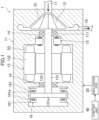
FIG. 1 is a schematic diagram illustrating a configuration of a turbo compressor including a power conversion device of a first embodiment of the present disclosure. -
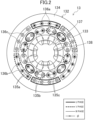
FIG. 2 is a schematic cross-sectional view of a motor. -
FIG. 3 is a schematic cross-sectional view of the motor illustrating magnet magnetic flux and driving magnetic flux. -
FIG. 4 is a schematic cross-sectional view of the motor illustrating magnet magnetic flux and supporting magnetic flux. -
FIG. 5 is a schematic cross-sectional view of a radial magnetic bearing. -
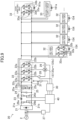
FIG. 6 is a circuit diagram illustrating a configuration of a power conversion device. - In
FIG. 7, (a) is a graph illustrating an input voltage of a first current supply circuit, a second current supply circuit, and a third current supply circuit and a graph of the number of rotations of a motor when the power conversion device has no surge voltage reduction circuit. InFIG. 7, (b) is a graph corresponding to (a) ofFIG. 7 of the first embodiment. InFIG. 7, (c) is a graph corresponding to (a) ofFIG. 7 when the motor performs a regenerative operation. -
FIG. 8 is a view corresponding toFIG. 1 , illustrating a second embodiment. -
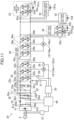
FIG. 9 is a view corresponding toFIG. 6 , illustrating the second embodiment. -
FIG. 10 is a view corresponding toFIG. 6 , illustrating a third embodiment. -
FIG. 11 is a view corresponding toFIG. 10 , illustrating a fourth embodiment. - Embodiments of the present disclosure will be described below with reference to the drawings. The following embodiments are merely exemplary ones in nature, and are not intended to limit the scope, applications, or use of the invention.
-
FIG. 1 shows a turbo compressor (1). The turbo compressor (1) is provided in a refrigerant circuit (not shown) that performs a refrigeration cycle to compress a refrigerant. The turbo compressor (1) includes a casing (11), an impeller (12), a motor (13), a pair of touchdown bearings (14), one radial magnetic bearing (15), a thrust magnetic bearing (16), a power conversion device (20), and a control unit (40). - The casing (11) is formed in a substantially cylindrical shape and is arranged with its cylindrical axis oriented horizontally. Space in the casing (11) is axially divided by a wall portion (111) into an impeller chamber (S 1) that houses the impeller (12) and a motor chamber (S2) that houses the motor (13). A suction pipe (17) and a discharge pipe (18) are connected to the impeller chamber (S1).
- The impeller (12) has a plurality of blades and has a substantially conical outer shape. The impeller (12) is housed in the impeller chamber (S1).
- The motor (13) is a bearingless motor. The motor (13) includes a drive shaft (131), a stator (132), and a rotor (133). One end of the drive shaft (131) is fixed to a center of a larger face of the impeller (12). A disc portion (131a) is formed to project from the other end of the drive shaft (131). The rotor (133) is fixed to the drive shaft (131), and the stator (132) is fixed to the casing (11). The rotor (133) and the stator (132) are housed in the motor chamber (S2).
- The stator (132) of the motor (13) is made of a magnetic material (e.g., a laminated steel plate).
FIG. 2 is a schematic cross-sectional view of the motor (13). The stator (132) has a back yoke (134), a plurality of teeth (not shown), and drive coils (135a to 135c) and in-motor support coils (136a to 136c) that are wound about the teeth. - The back yoke (134) of the stator (132) is formed in a cylindrical shape. Each of the drive coils (135a to 135c) and the in-motor support coils (136a to 136c) is wound about a corresponding one of the teeth by distributed winding or concentrated winding. The in-motor support coils (136a to 136c) are configured to support a radial load of the drive shaft (131) in a non-contact manner by an electromagnetic force generated when a current flows through the in-motor support coils (136a to 136c).
- Each drive coil (135a to 135c) is wound about a radially inner part of a corresponding one of the teeth. The drive coils (135a to 135c) include a U-phase drive coil (135a) circled with a thick solid line, a V-phase drive coil (135b) circled with a thick broken line, and a W-phase drive coil (135c) circled with a thin solid line in
FIG. 2 . - Each in-motor support coil (136a to 136c) is wound about a radially outer part of a corresponding one of the teeth. The in-motor support coils (136a to 136c) include a U-phase in-motor support coil (136a) surrounded by a thick solid-line rectangle, a V-phase in-motor support coil (136b) surrounded by a thick broken-line rectangle, and a W-phase in-motor support coil (136c) surrounded by a thin solid-line rectangle in
FIG. 2 . - The rotor (133) of the motor (13) includes a core (137) and a plurality of permanent magnets (138) (four permanent magnets in this example) embedded in the core (137).
- The core (137) of the rotor (133) is formed in a cylindrical shape. A shaft hole (not shown) for receiving the drive shaft (131) is formed in the center of the core (137). The core (137) is made of a magnetic material (e.g., a laminated steel plate).
- The permanent magnets (138) are embedded at regular intervals in the circumferential direction of the rotor (133). The permanent magnets (138) have the same shape. Each permanent magnet (138) has an N pole on an outer peripheral surface, and the core (137) between the permanent magnets (138) has an S pole on an outer peripheral surface.
-
FIG. 3 shows the motor (13) with magnet magnetic flux ϕ that is generated by each permanent magnet (138) and driving magnetic flux BM that is generated to rotationally drive the drive shaft (131). The motor (13) is configured to generate driving torque T shown inFIG. 3 by interaction between the magnet magnetic flux ϕ and the driving magnetic flux BM. InFIG. 3 , a current IM equivalent to the current flowing through the drive coils (135a to 135c) is shown. -
FIG. 4 shows the motor (13) with magnet magnetic flux ϕ that is generated by each permanent magnet (138) and supporting magnetic flux BS1 that is generated to support the radial load of the drive shaft (131) in a non-contact manner. The motor (13) is configured to generate a support force F shown inFIG. 4 by interaction between the magnet magnetic flux ϕ and the supporting magnetic flux BS1. InFIG. 4 , a current IS equivalent to the current flowing through the in-motor support coils (136a to 136c) is shown. - One of the pair of touchdown bearings (14) is provided on the drive shaft (131) to be located near the impeller (12), and the other touchdown bearing (14) is provided on the drive shaft (131) to be located near the disc portion (131a). The touchdown bearings (14) are configured to support the drive shaft (131) when the motor (13) is non-energized (i.e., when the drive shaft (131) is not levitated).
- The radial magnetic bearing (15) is fixed to an inner peripheral wall of the casing (11) between of the rotor (133) and stator (132) of the motor (13) and the impeller (12).
-
FIG. 5 is a transverse cross-sectional view illustrating a configuration example of the radial magnetic bearing (15). As illustrated inFIG. 5 , the radial magnetic bearing (15) is configured as a heteropolar magnetic bearing. The radial magnetic bearing (15) includes a stator (151) having a back yoke (152) and a plurality of teeth (153), and four radial magnetic bearing coils (154), each of which is a support coil wound about a corresponding one of the teeth (153). Each radial magnetic bearing coil (154) supports a radial load of the drive shaft (131) in a non-contact manner by an electromagnetic force generated when the current is supplied to the radial magnetic bearing coil (154). The directions of the currents flowing through the radial magnetic bearing coils (154) are set so that supporting magnetic flux BS2 is generated in the directions shown inFIG. 5 . - The thrust magnetic bearing (16) includes a pair of thrust magnetic bearing electromagnets (161). The thrust magnetic bearing electromagnets (161) are arranged to sandwich the disc portion (131a) in the axial direction. Each of the thrust magnetic bearing electromagnets (161) has a thrust magnetic bearing coil (161a) as the support coil. Each thrust magnetic bearing coil (161a) supports the disc portion (131a) of the drive shaft (131) in a non-contact manner by an electromagnetic force generated when the current flows through the thrust magnetic bearing coil (161a). The axial position of the disc portion (131a) of the drive shaft (131) can be controlled by controlling the current flowing through the thrust magnetic bearing coils (161a).
- The power conversion device (20) rotationally drives the motor (13) and supplies power to the support coils (136a to 136c, 154, 161a) that support the drive shaft (131) in a non-contact manner by the electromagnetic force. As illustrated in
FIG. 6 , the power conversion device (20) includes a converter circuit (21), an inverter circuit (22), a reactor (23), a first capacitor (24), a surge voltage reduction circuit (25) as a buffer circuit, first to fourth voltage dividing resistors (26a to 26d), a zero-crossing detection circuit (27), a u-phase current detector (28), a w-phase current detector (29), an overcurrent protector (30), a drive circuit (31), four first current supply circuits (32), two second current supply circuits (33), and one third current supply circuit (34). - The converter circuit (21) converts a first three-phase alternating current from a three-phase AC power source (2) into a direct current and outputs the direct current from first and second output nodes (21a, 21b) to a pair of wires (L1, L2). Specifically, the converter circuit (21) is a full-wave rectifier circuit. The converter circuit (21) has bridge-connected six diodes. The direct current outputted from the converter circuit (21) is electric power whose polarity does not change although its magnitude changes with time.
- The inverter circuit (22) converts the output of the converter circuit (21) into a second alternating current and supplies the second alternating current to the drive coils (135a to 135c) of the motor (13) so that the drive shaft (131) is rotationally driven. Specifically, the inverter circuit (22) includes six switching elements (22a) and six freewheeling diodes (22b). The six switching elements (22a) are bridge-connected. More specifically, the inverter circuit (22) includes three switching legs connected between the first and second DC nodes (22c, 22d). Each switching leg has two switching elements (22a) connected in series with each other.
- In each of the three switching legs, a midpoint between an upper-arm switching element (22a) and a lower-arm switching element (22a) is connected to a corresponding one of the drive coils (135a to 135c) of the respective phases of the motor (13). Each of the freewheeling diodes (22b) is connected in antiparallel with a corresponding one of the switching elements (22a). The six switching elements (22a) convert the direct current outputted from the converter circuit (21) to the pair of wires (L1, L2) into the second alternating current by a switching operation.
- The reactor (23) has one end connected to the first output node (21a) of the converter circuit (21) and the other end connected to the first DC node (22c) of the inverter circuit (22).
- The pair of wires (L1, L2) includes a first wire (L1) connecting the first output node (21a) and the first DC node (22c) and a second wire (L2) connecting the second output node (21b) and the second DC node (22d). The reactor (23) is provided in the wire (L1).
- The first capacitor (24) is connected between the first and second DC nodes (22c, 22d) of the inverter circuit (22). Specifically, the first capacitor (24) is connected between the pair of wires (
L 1, L2). - The capacity value of the first capacitor (24) is set so that the voltage outputted from the converter circuit (21) is hardly smoothed but a ripple voltage caused by the switching operation of the inverter circuit (22) is successfully reduced. Specifically, the first capacitor (24) allows pulsation of the voltage outputted from the converter circuit (21) and absorbs voltage variation between the pair of wires (L1, L2) caused by the switching operation of the switching element (22a). The ripple voltage is voltage variation corresponding to switching frequencies of the switching elements (22a). Thus, a DC link voltage, which is the voltage of the first capacitor (24), includes a ripple component corresponding to the frequency of the AC voltage of the three-phase AC power source (2). The three-phase AC power source (2) is a three-phase power source. Thus, the ripple component corresponding to the frequency of the three-phase AC power source (2) is six times higher than the frequency of the three-phase AC power source (2).
- Specifically, the capacity of the first capacitor (24) is set so that the voltage variation of the first capacitor (24) in a switching period is 1/10 or less of the average voltage of the first capacitor (24).
- The surge voltage reduction circuit (25) is connected between the first and second DC nodes (22c, 22d) of the inverter circuit (22). That is, the surge voltage reduction circuit (25) is connected in parallel with the first capacitor (24) between the pair of wires (L1, L2). The surge voltage reduction circuit (25) is connected between the reactor (23) and the inverter circuit (22). The surge voltage reduction circuit (25) includes a resistor (25a), a regulative diode (25b) serving as a regulator, and a second capacitor (25c). The resistor (25a), the regulative diode (25b), and the second capacitor (25c) are connected in series with each other in order from the first DC node (22c). That is, the resistor (25a) and the regulative diode (25b) are connected in series with the second capacitor (25c). The regulative diode (25b) has an anode connected to the resistor (25a) and a cathode connected to the second capacitor (25c). Thus, the regulative diode (25b) regulates the current flowing from the second capacitor (25c) to the first capacitor (24) so that the current flowing from the second capacitor (25c) to the first capacitor (24) when the second capacitor (25c) has a higher voltage than the first capacitor (24) by a predetermined voltage difference is smaller than a current flowing from the first capacitor (24) to the second capacitor (25c) when the first capacitor (24) has a higher voltage than the second capacitor (25c) by the predetermined voltage difference. The predetermined voltage difference is a voltage equal to or higher than a forward voltage of the regulative diode (25b). The second capacitor (25c) has a greater capacitance than the first capacitor (24).
- The first and second voltage dividing resistors (26a, 26b) are connected in series between the first and second output nodes (21a, 21b) of the converter circuit (21) in order from the first output node (21a).
- The third and fourth voltage dividing resistors (26c, 26d) are connected in series between the first and second DC nodes (22c, 22d) of the inverter circuit (22) in order from the first DC node (22c).
- The zero-crossing detection circuit (27) outputs a zero-crossing signal indicating a zero-crossing point of a voltage between two phase voltages among the three phase voltages of the first alternating current from the three-phase AC power source (2).
- The u-phase current detector (28) detects a u-phase current outputted by the inverter circuit (22).
- The w-phase current detector (29) detects a w-phase current outputted by the inverter circuit (22).
- The overcurrent protector (30) outputs the u-phase current detected by the u-phase current detector (28) and the w-phase current detected by the w-phase current detector (29) and outputs a PWM control signal outputted by the control unit (40) as will be described later. The overcurrent protector (30) does not output the PWM control signal when it is determined that an overcurrent has occurred based on the u-phase current detected by the u-phase current detector (28) and the w-phase current detected by the w-phase current detector (29). This allows the inverter circuit (22) to stop when the overcurrent occurs.
- The drive circuit (31) converts the PWM control signal outputted from the overcurrent protector (30) to an appropriate voltage level and outputs the converted signal.
- The first current supply circuits (32) use the energy stored in the second capacitor (25c) to supply a current to the radial magnetic bearing coils (154) so that the radial magnetic bearing coils (154) support the load of the drive shaft (131) in a non-contact manner. Each of the first current supply circuits (32) includes four switching elements (32a) constituting two switching legs and four freewheeling diodes (32b). Each switching leg includes two switching elements (32a) connected in series with each other and is connected in parallel with the second capacitor (25c). A midpoint between an upper-arm switching element (32a) and a lower-arm switching element (32a) of one of the switching legs is connected to one end of one of the radial magnetic bearing coils (154) of the radial magnetic bearing (15), and a midpoint between an upper-arm switching element (32a) and a lower-arm switching element (32a) of the other switching leg is connected to the other end of the radial magnetic bearing coil (154). The four first current supply circuits (32) are provided in correspondence with the four radial magnetic bearing coils (154).
- The second current supply circuits (33) use the energy stored in the second capacitor (25c) to supply a current to the thrust magnetic bearing coils (161a) so that the thrust magnetic bearing coils (161a) support the load of the drive shaft (131) in a non-contact manner. Each of the second current supply circuits (33) includes four switching elements (33a) constituting two switching legs and four freewheeling diodes (33b). Each switching leg includes two switching elements (33a) connected in series with each other and is connected in parallel with the second capacitor (25c). A midpoint between an upper-arm switching element (33a) and a lower-arm switching element (33a) of one of the switching legs is connected to one end of one of the thrust magnetic bearing coils (161a) of the thrust magnetic bearing (16), and a midpoint between an upper-arm switching element (33a) and a lower-arm switching element (33a) of the other switching leg is connected to the other end of the thrust magnetic bearing coil (161a). The two second current supply circuits (33) are provided in correspondence with the two thrust magnetic bearing coils (161a).
- The third current supply circuit (34) uses the energy stored in the second capacitor (25c) to supply a current to the in-motor support coils (136a to 136c) so that the in-motor support coils (136a to 136c) support the load of the drive shaft (131) in a non-contact manner. The third current supply circuit (34) includes six switching elements (34a) constituting three switching legs and six freewheeling diodes (34b). The six switching elements (34a) are bridge-connected. Each switching leg includes two switching elements (34a) connected in series with each other and is connected in parallel with the second capacitor (25c).
- A midpoint between an upper-arm switching element (34a) and a lower-arm switching element (34a) of each of the three switching legs is connected to a corresponding one of the in-motor support coils (136a to 136c) of the respective phases (the U-phase support coil, the V-phase support coil, and the W-phase support coil) of the motor (13). Each of the switching elements (34a) is connected antiparallel with a corresponding one of the freewheeling diodes (34b).
- A control signal outputted from the control unit (40) is used to turn on or off the switching elements (32a) of the first current supply circuits (32), the switching elements (33a) of the second current supply circuits (33), and the switching elements (34a) of the third current supply circuit (34).
- The control unit (40) generates and outputs a PWM control signal for PWM on/off control of the switching elements (22a) of the inverter circuit (22). The PWM control signal is generated based on the zero-crossing signal outputted from the zero-crossing detection circuit (27), the voltage at a connection point of the first and second voltage dividing resistors (26a, 26b), the voltage at a connection point of the third and fourth voltage dividing resistors (26c, 26d), the u-phase current detected by the u-phase current detector (28), and the w-phase current detected by the w-phase current detector (29).
- The control unit (40) also generates and outputs a control signal for on/off control of the switching elements (32a) of the first current supply circuits (32), a control signal for on/off control of the switching elements (33a) of the second current supply circuits (33), and a control signal for on/off control of the switching elements (34a) of the third current supply circuit (34) so that the drive shaft (131) of the motor (13) is located at a desired position. The control signals are generated based on a value detected by a gap sensor (not shown) capable of detecting a gap between the stator (132) and the rotor (133) and a value detected by a gap sensor (not shown) capable of detecting a gap between the disc portion (131a) and the thrust magnetic bearing (16).
- The power conversion device (20) is configured to allow the second capacitor (25c) to absorb greater electric energy from the drive coils (135a to 135c) due to a counter electromotive force generated in the drive coils (135a to 135c) than the first capacitor (24) when the inverter circuit (22) stops supplying the second alternating current to the drive coils (135a to 135c).
- The turbo compressor (1) is configured to satisfy the following formulae (1) and (2), where C1 represents the capacity of the first capacitor (24), Vc11 represents the withstanding voltage of the first capacitor (24), Vc12 represents the peak voltage of the first capacitor (24) supplying the voltage to the drive coils (135a to 135c), C2 represents the capacity of the second capacitor (25c), Vc21 represents the withstanding voltage of the second capacitor (25c), Vc22 represents the peak voltage of the second capacitor (25c) supplying the voltage to the drive coils (135a to 135c), and E represents the maximum magnetic energy stored in the drive coils (135a to 135c).


- When the voltage of the first capacitor (24) greatly varies with the inverter circuit (22), the first current supply circuits (32), the second current supply circuits (33), and the third current supply circuit (34) being driven by the power supplied from the three-phase AC power source (2), the regulator (25b) of the turbo compressor (1) configured as described above regulates the current flowing from the second capacitor (25c) to the first capacitor (24) so that the current flowing from the second capacitor (25c) to the first capacitor (24) when the second capacitor (25c) has a higher voltage than the first capacitor (24) by a predetermined voltage difference is smaller than a current flowing from the first capacitor (24) to the second capacitor (25c) when the first capacitor (24) has a higher voltage than the second capacitor (25c) by the predetermined voltage difference. Thus, the voltage variation of the first capacitor (24) has a reduced influence on the voltage variation of the second capacitor (25c).
- Although the capacitance of the first capacitor (24) is reduced, the voltage of the second capacitor (25c), which is inputted to the first current supply circuits (32), the second current supply circuits (33), and third current supply circuit (34), varies less. This allows stable control for supporting the radial and thrust loads of the drive shaft (131) in a non-contact manner without providing a DC-DC converter for stabilizing the input voltage.
- In the turbo compressor (1) configured as described above, if power failure occurs when the inverter circuit (22), the first current supply circuits (32), the second current supply circuits (33), and the third current supply circuit (34) are driven by the power supplied from the three-phase AC power source (2), the inverter circuit (22) stops the switching operation to stop the supply of the second alternating current to the drive coils (135a to 135c). Then, a counter electromotive force is generated in the drive coils (135a to 135c), and the current flows from the drive coils (135a to 135c) to the first and second capacitors (24, 25c). As a result, the magnetic energy (electric energy) stored in the drive coils (135a to 135c) is absorbed and stored as electrostatic energy by both of the first and second capacitors (24, 25c). Thus, even if the capacity of the first capacitor (24) is reduced, the first capacitor (24) is less likely to be damaged by the counter electromotive force of the drive coils (135a to 135c) as compared to when the second capacitor (25c) is not provided. At this time, the surge voltage reduction circuit (25) connected between the reactor (23) and the inverter circuit (22) allows the second capacitor (25c) to absorb the magnetic energy stored in the drive coils (135a to 135c) easily.
- After the power failure occurs, the first current supply circuits (32), the second current supply circuits (33), and the third current supply circuit (34) use the energy stored in the second capacitor (25c) to supply the current to the radial magnetic bearing coils (154), the thrust magnetic bearing coils (161a), and the in-motor support coils (136a to 136c). This allows the radial magnetic bearing coils (154), the thrust magnetic bearing coils (161a), and the in-motor support coils (136a to 136c) to keep supporting the drive shaft (131) for a while. Although the electrostatic energy of the first capacitor (24) is consumed by some load, e.g., a control power source, a discharge resistor, or regenerative control of the inverter circuit (22), and the voltage of the first capacitor (24) drops, the regulative diode (25b) can keep the electrostatic energy from flowing from the second capacitor (25c) to the first capacitor (24), allowing almost all the energy stored in the second capacitor (25c) to be used for supporting the drive shaft (131).
- The graphs (a) in
FIG. 7 show the input voltage of the first, second, and third current supply circuits (32), (33), and (34) and the number of rotations of the motor (13) when the power conversion device (20) has no surge voltage reduction circuit (25) and the voltage of the first capacitor (24) is inputted to the first, second, and third current supply circuits (32), (33), and (34). - The graphs (b) of
FIG. 7 show the input voltage of the first, second, and third current supply circuits (32), (33), and (34) and the number of rotations of the motor (13) of the first embodiment. - In the graphs (a) and (b) of
FIG. 7 , the inverter circuit (22) stops supplying the second alternating current to the drive coils (135a to 135c) at time t1 due to the power failure. In a period T1, the power supplied from the three-phase AC power source (2) drives the inverter circuit (22), the first current supply circuits (32), the second current supply circuits (33), and the third current supply circuit (34). In a period T2, the inverter circuit (22) stops the switching operation. - In the graphs (b) of
FIG. 7 , the current flows from the drive coils (135a to 135c) to both of the first and second capacitors (25c) due to the counter electromotive force at time t1. Thus, compared with (a) ofFIG. 7 , a peak value of the surge voltage temporarily applied to the inputs of the first, second, and third current supply circuits (32), (33), and (34) is lowered immediately after the power failure. This allows stable current supply to the radial magnetic bearing coils (154), the thrust magnetic bearing coils (161a), and the in-motor support coils (136a to 136c) without providing a DC-DC converter for stabilizing the voltage inputted to the first, second, and third current supply circuits (32), (33), and (34) or without performing regenerative control as described inPatent Document 1. Further, the regulative diode (25b) can keep the electrostatic energy from flowing from the second capacitor (25c) to the first capacitor (24). This can allocate almost all the energy stored in the second capacitor (25c) to the support of the drive shaft (131) and can keep the drive shaft (131) supported for a while although the voltage of the first capacitor (24) drops due to consumption of the electrostatic energy of the first capacitor (24) by some load. - In the first embodiment, the first, second, and third current supply circuits (32), (33), and (34) use, not the energy stored in the first capacitor (24), but the energy stored in the second capacitor (25c), to supply the current to the radial magnetic bearing coils (154), the thrust magnetic bearing coils (161a), and the in-motor support coils (136a to 136c). Thus, variation of the voltage of the first capacitor (24), i.e., the voltage between the first and second DC nodes (22c, 22d) of the inverter circuit (22), has a reduced influence on the current supplied to the coils (154, 161a, 136a to 136c). This allows stable current supply to the coils (154, 161a, 136a to 136c) without providing a DC-DC converter for stabilizing the voltage inputted to the first, second, and third current supply circuits (32), (33), and (34) or without performing regenerative control as described in
Patent Document 1. - The first capacitor (24) allows the pulsation of the output voltage of the converter circuit (21), making the capacity of the first capacitor (24) smaller than when the pulsation can be absorbed. This can reduce the size of the first capacitor (24).
- The formula (1) is satisfied, allowing the second capacitor (25c) to absorb greater electric energy of the drive coils (135a to 135c) than the first capacitor (24) when the inverter circuit (22) stops supplying the second alternating current to the drive coils (135a to 135c).
- Further, when the formula (2) is satisfied, it is unnecessary to increase the capacitance or withstanding voltage of the first capacitor (24) to such an extent that the first capacitor (24) can absorb the maximum magnetic energy stored in the drive coils (135a to 135c), reducing the size of the first capacitor (24).
- The second capacitor (25c) has a greater capacitance than the first capacitor (24), and thus the voltage of the second capacitor (25c) is easily stabilized. This allows stable current supply to the radial magnetic bearing coils (154), the thrust magnetic bearing coils (161a), and the in-motor support coils (136a to 136c).
- The resistor (25a) is connected in series with the second capacitor (25c), reducing an inrush current flowing to the second capacitor (25c) at the start of the power supply from the three-phase AC power source (2). This requires no additional circuit for reducing the inrush current, reducing the cost of components. The resistor (25a) may be omitted when the surge voltage reduction circuit (25) does not require the function of reducing the inrush current, for example, when a circuit for reducing the inrush current is provided for another component except the surge voltage reduction circuit (25).
- The bearingless motor including the in-motor support coils (136a to 136c) is used as the motor (13), and thus the size of the turbo compressor (1) can be reduced.
- The surge voltage reduction circuit (25) has no voltage changer such as a DC-DC converter that includes an inductance element and a switch and is able to actively raise or lower the voltage of the second capacitor (25c), making the configuration of the power conversion device (20) simple.
- No voltage changer such as a DC-DC converter that is able to actively raise or lower the input voltage of the first current supply circuits (32), the second current supply circuits (33), and the third current supply circuit (34) is provided between the second capacitor (25c) and the first, second, and third current supply circuits (32), (33), and (34), making the configuration of the power conversion device (20) simple.
- Further, no voltage changer that is able to actively raise or lower the voltage of the second capacitor (25c) is provided between the surge voltage reduction circuit (25) and the pair of wires (L1, L2), making the configuration of the power conversion device (20) simple.
-
FIG. 8 shows a turbo compressor (1) of a second embodiment. In the second embodiment, the motor (13) is not a bearingless motor but a permanent magnet synchronous motor or any other motor having no in-motor support coils (136a to 136c). - Two radial magnetic bearings (15) are provided and arranged on the axial sides of the stator (132) and rotor (133) of the motor (13).
- Thus, as illustrated in
FIG. 9 , the power conversion device (20) includes eight first current supply circuits (32) corresponding to the eight radial magnetic bearing coils (154). The power conversion device (20) has no third current supply circuit (34). - The second embodiment is the same as, or similar to the first embodiment apart from the difference mentioned above. Thus, the like reference characters are used to indicate the like components, and their detailed description will not be repeated.
-
FIG. 10 is a view corresponding toFIG. 6 , illustrating a third embodiment. In the third embodiment, a buffer circuit (35) is provided between the pair of wires (L1, L2) in addition to the surge voltage reduction circuit (25) to be located closer to the converter circuit (21) than the reactor (23). The buffer circuit (35) includes a buffer circuit diode (35a) as the regulator and a buffer circuit capacitor (35b) as the second capacitor. The buffer circuit diode (35a) and the buffer circuit capacitor (35b) are connected in series in order from the first output node (21a), i.e., from the first wire (L1). The first current supply circuits (32), the second current supply circuits (33), and the third current supply circuit (34) use the energy stored in the buffer circuit capacitor (35b) instead of the energy stored in the second capacitor (25c). - The third embodiment is the same as, or similar to the first embodiment apart from the difference mentioned above. Thus, the like reference characters are used to indicate the like components, and their detailed description will not be repeated.
-
FIG. 11 is a view corresponding toFIG. 10 , illustrating a fourth embodiment. In the fourth embodiment, a buffer circuit (35) is provided between the reactor (23) and the first capacitor (24) and between the pair of wires (L1, L2). - The fourth embodiment is the same as, or similar to the third embodiment apart from the difference mentioned above. Thus, the like reference characters are used to indicate the like components, and their detailed description will not be repeated.
- It has been described in the first and second embodiments that the inverter circuit (22) stops the switching operation at the time of power failure. However, the control unit (40) may perform control so that the inverter circuit (22) continues the switching operation. For example, immediately after the power failure, the inverter circuit (22) may cause the motor (13) to perform the regenerative operation of converting the kinetic energy of the drive shaft (131) into electric energy so that the motor (13) is further decelerated than in the normal operation and that the voltage of the first capacitor (24) is higher than in the normal operation. The graphs (c) of
FIG. 7 show the input voltage of the first, second, and third current supply circuits (32), (33), and (34) and the number of rotations of the motor (13) in this case. - Also, in the example of (c) of
FIG. 7 , the regulative diode (25b) keeps the electrostatic energy from flowing from the second capacitor (25c) to the first capacitor (24) even if the electrostatic energy of the first capacitor (24) is consumed by the regenerative control and the voltage of the first capacitor (24) drops after the inverter circuit (22) stops supplying the second alternating current to the drive coils (135a to 135c) at time t1 due to the power failure. This can allocate almost all the energy stored in the second capacitor (25c) to the support of the drive shaft (131) and can keep the drive shaft (131) supported for a while. - It has been described in the first to fourth embodiments that the resistor (25a) of the surge voltage reduction circuit (25) is connected to the first DC node (22c) of the regulative diode (25b). However, the resistor (25a) may be connected to the second DC node (22d), i.e., to the second capacitor (25c). Specifically, the anode of the regulative diode (25b) may be connected to the first DC node (22c), and the cathode of the regulative diode (25b) may be connected to the resistor (25a).
- The surge voltage reduction circuit (25) may further include a resistor having a high resistance value and connected in parallel with the regulative diode (25b), and the regulative diode (25b) and the resistor may constitute the regulator.
- Alternatively, the regulative diode (25b) may be replaced with a bi-directional switch, and the bi-directional switch may be controlled so that the current flowing from the second capacitor (25c) to the first capacitor (24) when the second capacitor (25c) has a higher voltage than the first capacitor (24) by a predetermined voltage difference is smaller than a current flowing from the first capacitor (24) to the second capacitor (25c) when the first capacitor (24) has a higher voltage than the second capacitor (25c) by the predetermined voltage difference. The regulative diode (25b) may be replaced with a unidirectional switch such as an insulated gate bipolar transistor (IGBT) that allows the current to flow only in a direction from the first capacitor (24) to the second capacitor (25c), and the current may be controlled by switching control of the unidirectional switch.
- The buffer circuit diode (35a) of the third and fourth embodiments may be replaced with a metal-oxide-semiconductor field-effect transistor (MOSFET), and a body diode of the MOSFET may regulate the current flowing from the buffer circuit capacitor (35b) to the first capacitor (24) so that the current flowing from the buffer circuit capacitor (35b) to the first capacitor (24) when the buffer circuit capacitor (35b) has a higher voltage than the first capacitor (24) by a predetermined voltage difference is smaller than the current flowing from the first capacitor (24) to the buffer circuit capacitor (35b) when the first capacitor (24) has a higher voltage than the buffer circuit capacitor (35b) by the voltage difference. Specifically, the body diode of the MOSFET may serve as the regulator.
- As can be seen in the foregoing, the present disclosure is useful for a power conversion device that rotationally drives a drive shaft of a motor and supplies power to support coils that support the drive shaft in a non-contact manner by an electromagnetic force.
-
- 13
- Motor
- 20
- Power Conversion Device
- 21
- Converter Circuit
- 22
- Inverter Circuit
- 22a
- Switching Element
- 22c
- First DC Node
- 22d
- Second DC Node
- 23
- Reactor
- 24
- First Capacitor
- 25
- Surge Voltage Reduction Circuit (Buffer Circuit)
- 25a
- Resistor
- 25b
- Regulative Diode (Regulator)
- 25c
- Second Capacitor
- 32
- First Current Supply Circuit
- 33
- Second Current Supply Circuit
- 34
- Third Current Supply Circuit
- 35
- Buffer Circuit
- 35a
- Buffer Circuit Diode (Regulator)
- 35b
- Buffer Circuit Capacitor (Second Capacitor)
- 131
- Drive Shaft
- 135a
- U-phase Drive Coil
- 135b
- V-phase Drive Coil
- 135c
- W-phase Drive Coil
- 136a
- U-phase In-motor Support Coil
- 136b
- V-phase In-motor Support Coil
- 136c
- W-phase In-motor Support Coil
- 154
- Radial Magnetic Bearing Coil
- 161a
- Thrust Magnetic Bearing Coil
- L1
- First Wire
- L2
- Second Wire
Claims (11)
- A power conversion device configured to rotationally drive a drive shaft (131) of a motor (13) and supply power to support coils (136a to 136c, 154, 161a) that support the drive shaft (131) in a non-contact manner by an electromagnetic force, the power conversion device comprising:a converter circuit (21) configured to convert a first alternating current from an AC power source (2) into a direct current and output the direct current to a pair of wires (L1, L2);an inverter circuit (22) including a switching element (22a) and configured to convert the direct current outputted from the converter circuit (21) to the pair of wires (L1, L2) into a second alternating current by a switching operation of the switching element (22a) and supply the second alternating current to drive coils (135a to 135c) of the motor (13) so that the drive shaft (131) is rotationally driven;a first capacitor (24) connected between the pair of wires (L1, L2);a buffer circuit (25, 35) including a second capacitor (25c, 35b) and a regulator (25b, 35a) connected in series with the second capacitor (25c, 35b), the buffer circuit (25, 35) being connected between the pair of wires (L1, L2); anda current supply circuit (32, 33, 34) configured to supply a current to the support coils (136a to 136c, 154, 161a) using energy stored in the second capacitor (25c) so that a load of the drive shaft (131) is supported in a non-contact manner, whereinthe first capacitor (24) allows pulsation of a voltage outputted from the converter circuit (21) and absorbs voltage variation between the pair of wires (L1, L2) caused by the switching operation, andthe regulator (25b) is configured to regulate a current flowing from the second capacitor (25c) to the first capacitor (24) so that the current flowing from the second capacitor (25c) to the first capacitor (24) when the second capacitor (25c) has a higher voltage than the first capacitor (24) by a predetermined voltage difference is smaller than a current flowing from the first capacitor (24) to the second capacitor (25c) when the first capacitor (24) has a higher voltage than the second capacitor (25c) by the predetermined voltage difference.
- The power conversion device of claim 1, wherein
the second capacitor (25c) is able to absorb greater electric energy from the drive coils (135a to 135c) due to a counter electromotive force generated in the drive coils (135a to 135c) than the first capacitor (24) when the inverter circuit (22) stops supplying the second alternating current to the drive coils (135a to 135c). - The power conversion device of claim 1 or 2, further comprising:a reactor (23) provided on at least one wire (L1) of the pair of wires (L1, L2) between the converter circuit (21) and the first capacitor (24), whereinthe buffer circuit (25, 35) is connected between the reactor (23) and the inverter circuit (22).
- The power conversion device of any one of claims 1 to 3, wherein
the buffer circuit (25, 35) has no voltage changer that includes an inductance element and a switch and is able to actively raise or lower the voltage of the second capacitor (25c, 35b). - The power conversion device of any one of claims 1 to 3, wherein
no voltage changer that is able to actively raise or lower a voltage inputted to the current supply circuit (32, 33, 34) is provided between the second capacitor (25c, 35b) and the current supply circuit (32, 33, 34). - The power conversion device of any one of claims 1 to 3, wherein
no voltage changer that is able to actively raise or lower the voltage of the second capacitor (25c, 35b) is provided between the buffer circuit (25, 35) and the pair of wires (L1, L2). - The power conversion device of any one of claims 1 to 6, wherein
the following formula (1) is satisfied, where C1 represents a capacity of the first capacitor (24), Vc11 represents a withstanding voltage of the first capacitor (24), Vc12 represents a peak voltage of the first capacitor (24) during supplying of the second alternating current to the drive coils (135a to 135c), C2 represents a capacity of the second capacitor (25c), Vc21 represents a withstanding voltage of the second capacitor (25c), and Vc22 represents a peak voltage of the second capacitor (25c) during supplying of the second alternating current to the drive coils (135a to 135c).
- The power conversion device of any one of claims 1 to 7, wherein
the following formula (2) is satisfied, where C1 represents a capacity of the first capacitor (24), Vc11 represents a withstanding voltage of the first capacitor (24), Vc12 represents a peak voltage of the first capacitor (24) during supplying of the second alternating current to the drive coils (135a to 135c), and E represents the maximum magnetic energy stored in the drive coils (135a to 135c).
- The power conversion device of any one of claims 1 to 8, wherein the second capacitor (25c) has a greater capacitance than the first capacitor (24).
- The power conversion device of any one of claims 1 to 9, wherein
the buffer circuit (25) further includes a resistor (25a) connected in series with the second capacitor (25c). - The power conversion device of any one of claims 1 to 10, wherein
the support coils (136a to 136c) that receive the current from the current supply circuit (34) are provided in the motor (13) and support a radial load of the drive shaft (131) in a non-contact manner.
Applications Claiming Priority (2)
| Application Number | Priority Date | Filing Date | Title |
|---|---|---|---|
| JP2020188082 | 2020-11-11 | ||
| PCT/JP2021/041610 WO2022102725A1 (en) | 2020-11-11 | 2021-11-11 | Power conversion device |
Publications (2)
| Publication Number | Publication Date |
|---|---|
| EP4239877A1 true EP4239877A1 (en) | 2023-09-06 |
| EP4239877A4 EP4239877A4 (en) | 2024-10-02 |
Family
ID=81602301
Family Applications (1)
| Application Number | Title | Priority Date | Filing Date |
|---|---|---|---|
| EP21891970.2A Pending EP4239877A4 (en) | 2020-11-11 | 2021-11-11 | Power conversion device |
Country Status (6)
| Country | Link |
|---|---|
| US (1) | US12244254B2 (en) |
| EP (1) | EP4239877A4 (en) |
| JP (1) | JP7193757B2 (en) |
| CN (1) | CN116420306A (en) |
| TW (1) | TWI819408B (en) |
| WO (1) | WO2022102725A1 (en) |
Family Cites Families (8)
| Publication number | Priority date | Publication date | Assignee | Title |
|---|---|---|---|---|
| JP2001037239A (en) * | 1999-07-14 | 2001-02-09 | Mitsubishi Electric Corp | Inverter device and inverter system |
| JP4760000B2 (en) * | 2004-12-09 | 2011-08-31 | ダイキン工業株式会社 | Multiphase current supply circuit, driving device, compressor, and air conditioner |
| JP5316080B2 (en) | 2009-02-26 | 2013-10-16 | 株式会社明電舎 | Motor control device |
| CN103053109B (en) * | 2010-09-07 | 2015-08-19 | 株式会社日立产机系统 | Method for detecting rotation direction of AC motor and power conversion device for AC motor using same |
| JP2014207735A (en) * | 2013-04-10 | 2014-10-30 | ファナック株式会社 | Motor control device capable of taking measures against blackout |
| JP6200457B2 (en) * | 2015-06-29 | 2017-09-20 | ファナック株式会社 | Motor driving device having means for detecting abnormal heat generation in initial charging circuit |
| JP7171174B2 (en) * | 2017-09-05 | 2022-11-15 | エドワーズ株式会社 | Vacuum pump and motor controller |
| JP7092620B2 (en) * | 2018-08-31 | 2022-06-28 | 株式会社日立産機システム | Power conversion system and motor control method |
-
2021
- 2021-11-11 CN CN202180074894.7A patent/CN116420306A/en active Pending
- 2021-11-11 JP JP2021184073A patent/JP7193757B2/en active Active
- 2021-11-11 TW TW110142073A patent/TWI819408B/en active
- 2021-11-11 EP EP21891970.2A patent/EP4239877A4/en active Pending
- 2021-11-11 WO PCT/JP2021/041610 patent/WO2022102725A1/en not_active Ceased
-
2023
- 2023-05-05 US US18/143,890 patent/US12244254B2/en active Active
Also Published As
| Publication number | Publication date |
|---|---|
| US12244254B2 (en) | 2025-03-04 |
| JP7193757B2 (en) | 2022-12-21 |
| JP2022077528A (en) | 2022-05-23 |
| TWI819408B (en) | 2023-10-21 |
| WO2022102725A1 (en) | 2022-05-19 |
| CN116420306A (en) | 2023-07-11 |
| US20230275533A1 (en) | 2023-08-31 |
| TW202226743A (en) | 2022-07-01 |
| EP4239877A4 (en) | 2024-10-02 |
Similar Documents
| Publication | Publication Date | Title |
|---|---|---|
| US6819012B1 (en) | Flywheel energy storage system | |
| EP2249471B1 (en) | Direct ac power converter | |
| CN101790836A (en) | AC/DC converter, compressor driving device using the same, and air conditioner | |
| US6486627B1 (en) | Flywheel uninterruptible power source | |
| WO2012061458A1 (en) | Power factor correction circuits for switched reluctance machines | |
| CN105765840A (en) | DC power supply unit and refrigeration cycle application equipment having the same | |
| US20210091704A1 (en) | Carrier frequency setting method, motor driving system, and carrier frequency setting device | |
| JP5452907B2 (en) | Voltage clamp / energy recovery circuit | |
| US9344029B2 (en) | Asynchronous motor unit comprising a frequency converter with electrical isolation in the DC voltage intermediate circuit | |
| EP4239877A1 (en) | Power conversion device | |
| CN103647462B (en) | AC/DC converter, and compressor driving unit and air conditioner utilizing the same | |
| EP2675061A1 (en) | Motor drive device | |
| US9407168B2 (en) | Power converting circuit | |
| US8427090B2 (en) | Magnetic-drive-pulsation motor | |
| US11967880B2 (en) | Power supply circuit and bearing device provided with same | |
| EP1174998A1 (en) | Brushless motor,method and circuit for its control | |
| JP2015065754A (en) | Motor system | |
| KR102579780B1 (en) | Power transforming apparatus and air conditioner including the same | |
| JP2017070056A (en) | Inverter driving device | |
| KR102299110B1 (en) | Power converting circuit | |
| KR101846967B1 (en) | Motor controlling apparatus | |
| CN113328594A (en) | Alternating-current magnetic field control multiphase flywheel pulse generator system | |
| JP2017131013A (en) | Power conversion circuit | |
| JPH10146093A (en) | Control device for switched reluctance motor | |
| KR20170001916A (en) | Driving system for switched reluctance motor |
Legal Events
| Date | Code | Title | Description |
|---|---|---|---|
| STAA | Information on the status of an ep patent application or granted ep patent |
Free format text: STATUS: THE INTERNATIONAL PUBLICATION HAS BEEN MADE |
|
| PUAI | Public reference made under article 153(3) epc to a published international application that has entered the european phase |
Free format text: ORIGINAL CODE: 0009012 |
|
| STAA | Information on the status of an ep patent application or granted ep patent |
Free format text: STATUS: REQUEST FOR EXAMINATION WAS MADE |
|
| 17P | Request for examination filed |
Effective date: 20230531 |
|
| AK | Designated contracting states |
Kind code of ref document: A1 Designated state(s): AL AT BE BG CH CY CZ DE DK EE ES FI FR GB GR HR HU IE IS IT LI LT LU LV MC MK MT NL NO PL PT RO RS SE SI SK SM TR |
|
| P01 | Opt-out of the competence of the unified patent court (upc) registered |
Effective date: 20231201 |
|
| DAV | Request for validation of the european patent (deleted) | ||
| DAX | Request for extension of the european patent (deleted) | ||
| A4 | Supplementary search report drawn up and despatched |
Effective date: 20240904 |
|
| RIC1 | Information provided on ipc code assigned before grant |
Ipc: H02J 7/34 20060101ALI20240829BHEP Ipc: H02M 7/48 20070101ALI20240829BHEP Ipc: H02P 27/06 20060101AFI20240829BHEP |
|
| STAA | Information on the status of an ep patent application or granted ep patent |
Free format text: STATUS: EXAMINATION IS IN PROGRESS |
|
| 17Q | First examination report despatched |
Effective date: 20250523 |