EP4239723A1 - Non-aqueous secondary cell and non-aqueous electrolyte used in same - Google Patents
Non-aqueous secondary cell and non-aqueous electrolyte used in same Download PDFInfo
- Publication number
- EP4239723A1 EP4239723A1 EP21885642.5A EP21885642A EP4239723A1 EP 4239723 A1 EP4239723 A1 EP 4239723A1 EP 21885642 A EP21885642 A EP 21885642A EP 4239723 A1 EP4239723 A1 EP 4239723A1
- Authority
- EP
- European Patent Office
- Prior art keywords
- compound
- aqueous
- positive electrode
- aqueous electrolyte
- secondary battery
- Prior art date
- Legal status (The legal status is an assumption and is not a legal conclusion. Google has not performed a legal analysis and makes no representation as to the accuracy of the status listed.)
- Pending
Links
Images
Classifications
-
- H—ELECTRICITY
- H01—ELECTRIC ELEMENTS
- H01M—PROCESSES OR MEANS, e.g. BATTERIES, FOR THE DIRECT CONVERSION OF CHEMICAL ENERGY INTO ELECTRICAL ENERGY
- H01M10/00—Secondary cells; Manufacture thereof
- H01M10/05—Accumulators with non-aqueous electrolyte
- H01M10/052—Li-accumulators
-
- H—ELECTRICITY
- H01—ELECTRIC ELEMENTS
- H01M—PROCESSES OR MEANS, e.g. BATTERIES, FOR THE DIRECT CONVERSION OF CHEMICAL ENERGY INTO ELECTRICAL ENERGY
- H01M10/00—Secondary cells; Manufacture thereof
- H01M10/05—Accumulators with non-aqueous electrolyte
- H01M10/056—Accumulators with non-aqueous electrolyte characterised by the materials used as electrolytes, e.g. mixed inorganic/organic electrolytes
- H01M10/0564—Accumulators with non-aqueous electrolyte characterised by the materials used as electrolytes, e.g. mixed inorganic/organic electrolytes the electrolyte being constituted of organic materials only
- H01M10/0566—Liquid materials
- H01M10/0567—Liquid materials characterised by the additives
-
- H—ELECTRICITY
- H01—ELECTRIC ELEMENTS
- H01M—PROCESSES OR MEANS, e.g. BATTERIES, FOR THE DIRECT CONVERSION OF CHEMICAL ENERGY INTO ELECTRICAL ENERGY
- H01M10/00—Secondary cells; Manufacture thereof
- H01M10/05—Accumulators with non-aqueous electrolyte
- H01M10/052—Li-accumulators
- H01M10/0525—Rocking-chair batteries, i.e. batteries with lithium insertion or intercalation in both electrodes; Lithium-ion batteries
-
- H—ELECTRICITY
- H01—ELECTRIC ELEMENTS
- H01M—PROCESSES OR MEANS, e.g. BATTERIES, FOR THE DIRECT CONVERSION OF CHEMICAL ENERGY INTO ELECTRICAL ENERGY
- H01M10/00—Secondary cells; Manufacture thereof
- H01M10/05—Accumulators with non-aqueous electrolyte
- H01M10/056—Accumulators with non-aqueous electrolyte characterised by the materials used as electrolytes, e.g. mixed inorganic/organic electrolytes
- H01M10/0564—Accumulators with non-aqueous electrolyte characterised by the materials used as electrolytes, e.g. mixed inorganic/organic electrolytes the electrolyte being constituted of organic materials only
- H01M10/0566—Liquid materials
- H01M10/0569—Liquid materials characterised by the solvents
-
- H—ELECTRICITY
- H01—ELECTRIC ELEMENTS
- H01M—PROCESSES OR MEANS, e.g. BATTERIES, FOR THE DIRECT CONVERSION OF CHEMICAL ENERGY INTO ELECTRICAL ENERGY
- H01M4/00—Electrodes
- H01M4/02—Electrodes composed of, or comprising, active material
- H01M4/36—Selection of substances as active materials, active masses, active liquids
- H01M4/48—Selection of substances as active materials, active masses, active liquids of inorganic oxides or hydroxides
- H01M4/50—Selection of substances as active materials, active masses, active liquids of inorganic oxides or hydroxides of manganese
- H01M4/505—Selection of substances as active materials, active masses, active liquids of inorganic oxides or hydroxides of manganese of mixed oxides or hydroxides containing manganese for inserting or intercalating light metals, e.g. LiMn2O4 or LiMn2OxFy
-
- H—ELECTRICITY
- H01—ELECTRIC ELEMENTS
- H01M—PROCESSES OR MEANS, e.g. BATTERIES, FOR THE DIRECT CONVERSION OF CHEMICAL ENERGY INTO ELECTRICAL ENERGY
- H01M4/00—Electrodes
- H01M4/02—Electrodes composed of, or comprising, active material
- H01M4/36—Selection of substances as active materials, active masses, active liquids
- H01M4/48—Selection of substances as active materials, active masses, active liquids of inorganic oxides or hydroxides
- H01M4/52—Selection of substances as active materials, active masses, active liquids of inorganic oxides or hydroxides of nickel, cobalt or iron
- H01M4/525—Selection of substances as active materials, active masses, active liquids of inorganic oxides or hydroxides of nickel, cobalt or iron of mixed oxides or hydroxides containing iron, cobalt or nickel for inserting or intercalating light metals, e.g. LiNiO2, LiCoO2 or LiCoOxFy
-
- H—ELECTRICITY
- H01—ELECTRIC ELEMENTS
- H01M—PROCESSES OR MEANS, e.g. BATTERIES, FOR THE DIRECT CONVERSION OF CHEMICAL ENERGY INTO ELECTRICAL ENERGY
- H01M4/00—Electrodes
- H01M4/02—Electrodes composed of, or comprising, active material
- H01M2004/026—Electrodes composed of, or comprising, active material characterised by the polarity
- H01M2004/028—Positive electrodes
-
- H—ELECTRICITY
- H01—ELECTRIC ELEMENTS
- H01M—PROCESSES OR MEANS, e.g. BATTERIES, FOR THE DIRECT CONVERSION OF CHEMICAL ENERGY INTO ELECTRICAL ENERGY
- H01M2300/00—Electrolytes
- H01M2300/0017—Non-aqueous electrolytes
- H01M2300/0025—Organic electrolyte
-
- Y—GENERAL TAGGING OF NEW TECHNOLOGICAL DEVELOPMENTS; GENERAL TAGGING OF CROSS-SECTIONAL TECHNOLOGIES SPANNING OVER SEVERAL SECTIONS OF THE IPC; TECHNICAL SUBJECTS COVERED BY FORMER USPC CROSS-REFERENCE ART COLLECTIONS [XRACs] AND DIGESTS
- Y02—TECHNOLOGIES OR APPLICATIONS FOR MITIGATION OR ADAPTATION AGAINST CLIMATE CHANGE
- Y02E—REDUCTION OF GREENHOUSE GAS [GHG] EMISSIONS, RELATED TO ENERGY GENERATION, TRANSMISSION OR DISTRIBUTION
- Y02E60/00—Enabling technologies; Technologies with a potential or indirect contribution to GHG emissions mitigation
- Y02E60/10—Energy storage using batteries
Definitions
- the present disclosure mainly relates to a non-aqueous electrolyte for a non-aqueous secondary battery.
- Patent Literature 1 proposes a non-aqueous liquid electrolyte containing a non-aqueous solvent and an electrolyte dissolved in the non-aqueous solvent, characterized by containing (A) at least one compound selected from the group consisting of an unsaturated carbonate and a specific cyclic compound, (B) a fluorine-containing ethylene carbonate derivative, and (C) a specific CN compound.
- Patent Literature 3 proposes a non-aqueous liquid electrolyte for a non-aqueous electrolyte battery having a positive electrode and a negative electrode both capable of absorbing and releasing metal ions, characterized by that the non-aqueous liquid electrolyte contains, together with an electrolyte and a non-aqueous solvent, (A) a compound having at least two isocyanate groups in a molecule and a compound having at least two cyano groups in a molecule, and (B) the ratio (ratio by mass) of the content of the compound having at least two isocyanate groups in a molecule to the compound having at least two cyano groups in a molecule is 50:50 to 1:99.
- Non-aqueous secondary batteries represented by lithium ion secondary batteries have a positive electrode, a negative electrode, and a non-aqueous electrolyte.
- a metal like copper or iron is present in a non-aqueous secondary battery, which utilizes electrochemical redox reactions, a dissolution-precipitation reaction of the metal occurs, which lowers the voltage of the non-aqueous secondary battery.
- a non-aqueous electrolyte for a non-aqueous secondary battery including: a non-aqueous solvent; an electrolyte salt; an isocyanate compound; and a nitrile compound having two or more nitrile groups, wherein a content C NCO of the isocyanate compound is higher on a mass basis than a content C CN of the nitrile compound.
- a non-aqueous secondary battery including: a positive electrode including a positive electrode active material; a separator; a negative electrode facing the positive electrode with the separator interposed between the positive electrode and the negative electrode; and a non-aqueous electrolyte, wherein the non-aqueous electrolyte contains a non-aqueous solvent, an electrolyte salt, an isocyanate compound, and a nitrile compound having two or more nitrile groups, and in the non-aqueous electrolyte, a content C NCO of the isocyanate compound is higher on a mass basis than a content C CN of the nitrile compound.
- the drop in voltage of a non-aqueous secondary battery due to a metal dissolution-deposition reaction can be suppressed.
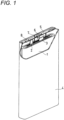
- FIG. 1 A partially cut-away schematic oblique view of a non-aqueous secondary battery according to one embodiment of the present disclosure.
- a non-aqueous electrolyte for a non-aqueous secondary battery according to the present disclosure contains a non-aqueous solvent, an electrolyte salt, an isocyanate compound, and a nitrile compound having two or more nitrile groups (hereinafter sometimes referred to as a "nitrile compound P").
- a content C NCO of the isocyanate compound is higher on a mass basis than a content C CN of the nitrile compound P (C NCO > C CN ).
- a non-aqueous secondary battery has a positive electrode including a positive electrode active material, a separator, a negative electrode facing the positive electrode with the separator interposed therebetween, and the aforementioned non-aqueous electrolyte.
- the positive electrode of a non-aqueous secondary battery includes a positive electrode active material, and the positive electrode active material has a high potential and contains a metal component (in many cases, a transition metal).
- the metal ions dissolved in the non-aqueous electrolyte migrate from the positive electrode side to the negative electrode side, and deposit on the negative electrode side.
- the voltage of the non-aqueous secondary battery drops. In a non-aqueous secondary battery, suppressing the dissolution and deposition of the metal is important.
- Adding an isocyanate compound or a nitrile compound P alone to the non-aqueous electrolyte also can suppress the metal dissolution-deposition reaction; however, the effect of suppressing the drop in battery voltage is limited. Even when an isocyanate compound and a nitrile compound P are used in combination, if C NCO > C CN is not satisfied (i.e., C NCO ⁇ C CN ), the effect of suppressing the drop in battery voltage is limited.
- C NCO > C CN i.e., C NCO ⁇ C CN
- surface analysis results have revealed that the isocyanate compound is reduced at the negative electrode, forming a surface film on the negative electrode active material, while the nitrile compound P is oxidized at the positive electrode, forming a surface film on the positive electrode active material.
- the metal dissolution-deposition reaction is considered to be suppressed when the total amount of the surface film on the negative electrode active material exceeds the total amount of the surface film on the positive electrode active material.
- the ratio between the amounts of the surface film formed on the positive and negative electrodes is presumed to have an influence on the metal dissolution-deposition reaction, and a larger amount of the isocyanate compound, which forms a surface film on the negative electrode active material, than the nitrile compound P is required.
- non-aqueous electrolyte secondary battery of the present disclosure will be specifically described for each component element.
- the non-aqueous electrolyte secondary battery includes, for example, a positive electrode, a negative electrode, a non-aqueous electrolyte, and a separator as described below.
- the non-aqueous electrolyte contains a non-aqueous solvent, an electrolyte salt, an isocyanate compound, and a nitrile compound P.
- the content C NCO of the isocyanate compound and the content C CN of the nitrile compound P satisfy C NCO > C CN , but the ratio C NCO /C CN of the content C NCO of the isocyanate compound to the content C CN of the nitrile compound may be, for example, in the range of 55/45 to 99/1, may be in the range of 70/30 to 99/1, and may be 80/20 to 99/1.
- the content C NCO of the isocyanate compound in the non-aqueous electrolyte is, for example, 0.001 mass% or more and 5 mass% or less, may be 0.001 mass% or more and less than 4 mass%, may be 0.01 mass% or more and less than 4 mass%, and may be 0.1 mass% or more and 2 mass% or less.
- the content C CN of the nitrile compound P in the non-aqueous electrolyte is, for example, 0.001 mass% or more and 5 mass% or less, may be 0.001 mass% or more and 2 mass% or less, may be 0.001 mass% or more and less than 1.6 mass%, may be 0.01 mass% or more and 1.5 mass% or less, and may be 0.02 mass% or more and 0.8 mass% or less.
- the contents of the isocyanate compound and the nitrile compound P in the non-aqueous electrolyte can vary. It suffices, therefore, that the isocyanate compound and the nitrile compound P remain each at a concentration above the detection limit in the non-aqueous electrolyte collected from the non-aqueous secondary battery.
- the content of the isocyanate compound in the non-aqueous electrolyte collected from the non-aqueous secondary battery may be 0.0001 mass% or more.
- the content of the nitrile compound P in the non-aqueous electrolyte collected from the non-aqueous secondary battery may be 0.0001 mass% or more.
- the contents of the isocyanate compound and the nitrile compound P in the non-aqueous electrolyte can be determined, for example, using gas chromatography under the following conditions.
- the isocyanate compound may be a monoisocyanate having one isocyanate group, may be a diisocyanate having two isocyanate groups, and may be a polyisocyanate having three or more isocyanate groups.
- the number of the isocyanate groups included in the isocyanate compound may be five or less, and may be four or less.
- a diisocyanate even with a small amount, is highly effective in suppressing the metal dissolution-deposition reaction, and exhibits excellent stability in the battery.
- the isocyanate compound forms a surface film on the surface of the negative electrode active material (e.g., a carbon material, such as graphite), to inhibit the reductive decomposition of the non-aqueous electrolyte.
- the surface film formed on the negative electrode surface also functions as a resistive body that restricts the migration of lithium ions.
- the property of the formed surface film differs depending on the number of the isocyanate groups.
- a diisocyanate produces a surface film which is less resistive than a monoisocyanate, and produces a more homogeneous surface film than a triisocyanate. In order to form a less-resistive and homogeneous surface film, thereby to effectively suppress the metal dissolution-deposition reaction, a diisocyanate having two isocyanate groups is desirable.
- isocyanate compound examples include but the isocyanate compound is not limited to the following.
- the isocyanate compound may be used singly, or in any combination of two or more kinds.
- the monoisocyanate include isocyanatomethane, isocyanatoethane, 1-isocyanatopropane, 1-isocyanatobutane, 1-isocyanatopentane, 1-isocyanatohexane, 1-isocyanatoheptane, 1-isocyanatooctane, 1-isocyanatononane, 1-isocyanatodecane, isocyanatocyclohexane, methoxycarbonyl isocyanate, ethoxycarbonyl isocyanate, propoxycarbonyl isocyanate, butoxycarbonyl isocyanate, methoxysulfonyl isocyanate, ethoxysulfonyl isocyanate, propoxysulfonyl isocyanate, butoxysulfonyl isocyanate, fluorosulfonyl isocyanate, methyl isocyanate, butyl isocyanate, phenyl isocyanate
- diisocyanate examples include 1,4-diisocyanatobutane, 1,5-diisocyanatopentane, 1,6-diisocyanatohexane (hexamethylene diisocyanate), 1,7-diisocyanatoheptane, 1, 8-diisocyanatooctane, 1,9-diisocyanatononane, 1,10-diisocyanatodecane, 1,3-diisocyanatopropene, 1,4-diisocyanato-2-butene, 1,4-diisocyanato-2-fluorobutane, 1,4-dii socyanato-2,3 -difluorobutane, 1,5-diisocyanato-2-pentene, 1,5-diisocyanato-2-methylpentane, 1,6-diisocyanato-2-hexene, 1,6-diisocyanato-3-
- triisocyanate examples include 1,6,11-triisocyanatoundecane, 4-isocyanatomethyl-1,8-octamethylene diisocyanate, 1,3,5-triisocyanate methylbenzene, 1,3,5-tris(6-isocyanatohex-1-yl)-1,3,5-triazine-2,4,6(1H,3H,5H)-trione, and 4-(isocyanatomethyl)octamethylene diisocyanate.
- a compound represented by OCN-C n H 2n -NCO, where n is an integer of 1 to 10 e.g., hexamethylene diisocyanate
- a compound having an alicyclic diyl group e.g., 1,3-bis(isocyanatomethyl)cyclohexane, dicyclohexylmethane-4,4'-diisocyanate, bicyclo[2.2.1]heptane-2,5-diylbis(methylisocyanate), bicyclo[2.2.1]heptane-2,6-diylbis(methylisocyanate), isophorone diisocyanate), 2,2,4-trimethylhexamethylene diisocyanate, 2,4,4-trimethylhexamethylene diisocyanate, and the like are easily available. These may be used singly or in combination of two or more kinds. These compounds may occupy 50 mass% or more, further 70 mass% or more or 90 mass% or more, of the isocyan
- the nitrile compound P may be a dinitrile having two nitrile groups or a nitrile compound having three or more nitrile groups.
- the number of the nitrile groups included in the nitrile compound P may be five or less, and may be four or less.
- a dinitrile is highly effective in suppressing the metal dissolution-deposition reaction, and the influence thereof on the battery characteristics is small.
- a nitrile compound having three or more nitrile groups suppress the metal dissolution, but has a tendency to increase the viscosity of the non-aqueous electrolyte. Therefore, a dinitrile having two nitrile groups is desirable.
- nitrile compound P Specific examples of the nitrile compound P are shown below, but the nitrile compound P is not limited to the following.
- the nitrile compound P may be used singly, or in any combination of two or more kinds.
- nitrile compound P examples include malononitrile, succinonitrile, glutaronitrile, adiponitrile, pimelonitrile, suberonitrile, azelanitrile, sebaconitrile, undecanedinitrile, dodecanedinitrile, methylmalononitrile, ethylmalononitrile, isopropylmalononitrile, tert-butylmalononitrile, methylsuccinonitrile, 2,2-dimethylsuccinonitrile, 2,3-dimethylsuccinonitrile, 2,3,3-trimethylsuccinonitrile, 2,2,3,3-tetramethylsuccinonitrile, 2,3-diethyl-2,3-dimethylsuccinonitrile, 2,2-diethyl-3,3-dimethylsuccinonitrile, bicyclohexyl-1,1-dicarbonitrile, bicyclohexyl-2,2-dicarbonitrile, bi
- NC-C m H 2m -CN a compound represented by NC-C m H 2m -CN, where m is an integer of 1 to 10, a compound having one phenyl group, and the like are easily available.
- examples of such compounds include succinonitrile (NC-C 2 H 4 -CN), glutaronitrile (NC-C 3 H 6 -CN), adiponitrile (NC-C 4 H 8 -CN), pimeronitrile (NC-C 5 H 10 -CN), suberonitrile (NC-C 6 H 12 -CN), and phthalonitrile (NC-C 6 H 5 -CN). These may be used singly or in combination of two or more kinds. These compounds may occupy 50 mass% or more, further 70 mass% or more, or 90 mass% or more, of the nitrile compound P in the non-aqueous electrolyte.
- non-aqueous solvent examples include cyclic carbonic acid esters, chain carbonic acid esters, cyclic carboxylic acid esters, and chain carboxylic acid esters.
- the cyclic carbonic acid esters are exemplified by propylene carbonate (PC) and ethylene carbonate (EC).
- the chain carbonic acid esters are exemplified by diethyl carbonate (DEC), ethyl methyl carbonate (EMC), and dimethyl carbonate (DMC).
- DEC diethyl carbonate
- EMC ethyl methyl carbonate
- DMC dimethyl carbonate
- the cyclic carboxylic acid esters are exemplified by ⁇ -butyrolactone (GBL), and ⁇ -valerolactone (GVL).
- the chain carboxylic acid esters are exemplified by methyl formate, ethyl formate, propyl formate, methyl acetate (MA), ethyl acetate, propyl acetate, methyl propionate, ethyl propionate, and propyl propionate.
- the non-aqueous electrolyte may contain these non-aqueous solvents singly, or in combination of two or more kinds.
- a lithium salt is preferred.
- the lithium salt include LiClO 4 , LiBF 4 , LiPF 6 , LiAlCl 4 , LiSbF 6 , LiSCN, LiCF 3 SO 3 , LiCF 3 CO 2 , LiAsF 6 , LiB 10 Cl 10 , lithium lower aliphatic carboxylate, LiCl, LiBr, Lil, borates, and imides.
- the borates include lithium difluorooxalate borate, and lithium bisoxalate borate.
- the imides include lithium bisfluorosulfonyl imide (LiN(FSO 2 ) 2 ), and lithium bis(trifluoromethanesulfonyl)imide (LiN(CF 3 SO 2 ) 2 ).
- the non-aqueous electrolyte may contain these electrolyte salts singly or in combination of two or more kinds.
- the concentration of the electrolyte salt in the non-aqueous electrolyte is, for example, 0.5 mol/L or more and 2 mol/L or less.
- the non-aqueous electrolyte may contain another additive.
- the other additive for example, at least one selected from the group consisting of vinylene carbonate, fluoroethylene carbonate, and vinylethylene carbonate can be used.
- the positive electrode includes a positive electrode active material.
- the positive electrode usually includes a positive electrode current collector, and a layer of a positive electrode mixture (hereinafter, a positive electrode mixture layer) held on the positive electrode current collector.
- the positive electrode mixture layer can be formed by applying a positive electrode slurry prepared by dispersing constituent components of the positive electrode mixture in a dispersion medium, onto a surface of the positive electrode current collector, followed by drying. The applied film after drying may be rolled as needed.
- the positive electrode mixture contains a positive electrode active material as an essential component, and may contain a binder, a thickener, and the like as optional components.
- the positive electrode active material may be any material that can be used as a positive electrode active material for a non-aqueous secondary battery (esp. lithium ion secondary battery).
- a positive electrode active material for example, a lithium-transition metal composite oxide having a layered rock-salt type structure and containing Ni and at least one selected from the group consisting of Co, Mn, and Al can be used.
- the proportion of Ni in the metal elements other than Li in the lithium-transition metal composite oxide is 80 atm% or more.
- the proportion of Ni in the metal elements other than Li may be 85 atm% or more, and may be 90 atm% or more.
- the proportion of Ni in the metal elements other than Li is desirably, for example, 95 atm% or less.
- a lithium-transition metal composite oxide having a layered rock-salt type structure and containing Ni and at least one selected from the group consisting of Co, Mn, and Al, in which the proportion of Ni in the metal elements other than Li is 80 atm% or more is sometimes referred to as a "composite oxide HN".
- the composite oxide HN having a layered rock-salt type structure is capable of reversible intercalation and deintercalation of Li ions between the layers.
- Ni in the composite oxide HN whose capacity has been increased as above has a tendency to have a higher valence.
- the proportion of Ni when the proportion of Ni is increased, the proportions of other elements are relatively decreased. In this case, the crystal structure tends to become unstable especially in a fully charged state, and the transition metal, such as Ni, tends to leach out with repeated charge and discharge.
- the particle surfaces tend to change to have a crystal structure into and from which lithium ions are difficult to be reversibly absorbed and released.
- non-aqueous secondary battery despite the use of a composite oxide HN with such a high Ni content, by using a non-aqueous electrolyte containing an isocyanate compound and a nitrile compound P, the leaching of the transition metal can be highly suppressed.
- Co, Mn, and Al contribute to stabilize the crystal structure of the composite oxide HN with a high Ni content.
- a lower Co content is desirable in view of the reduction in manufacturing costs.
- the composite oxide HN with low or no Co content may contain Mn and Al.
- the proportion of Co in the metal elements other than Li is desirably 10 atm% or less, more desirably 5 atm% or less, and may contain no Co. In view of the stabilization of the crystal structure of the composite oxide HN, it is desirable to contain 1 atm% or more or 1.5 atm% or more of Co.
- the proportion of Mn in the metal elements other than Li may be 10 atm% or less, and may be 5 atm% or less.
- the proportion of Mn in the metal elements other than Li may be 1 atm% or more, may be 3 atm% or more, and may be 5 atm% or more.
- the proportion of Al in the metal elements other than Li may be 10 atm% or less, and may be 5 atm% or less.
- the proportion of Al in the metal elements other than Li may be 1 atm% or more, may be 3 atm% or more, and may be 5 atm% or more. When defining a range, these upper and lower limits can be combined in any combination.
- the composite oxide HN is, for example, represented by a formula: Li ⁇ Ni (1-x1-x2-y-z) Co x1 Mn x2 Al y M z O 2+ ⁇ .
- the element M is an element other than Li, Ni, Co, Mn, Al, and oxygen.
- the ⁇ representing the atomic ratio of lithium is, for example, 0.95 ⁇ ⁇ ⁇ 1.05.
- the ⁇ increases and decreases during charge and discharge.
- ⁇ satisfies -0.05 ⁇ ⁇ ⁇ 0.05.
- the v representing the atomic ratio of Ni may be 0.98 or less, and may be 0.95 or less.
- the x1 representing the atomic ratio of Co is, for example, 0.1 or less (0 ⁇ x1 ⁇ 0.1), may be 0.08 or less, may be 0.05 or less, and may be 0.01 or less. When x1 is 0, this encompasses a cases where Co is below the detection limit.
- the x2 representing the atomic ratio of Mn is, for example, 0.1 or less (0 ⁇ x2 ⁇ 0.1), may be 0.08 or less, may be 0.05 or less, and may be 0.03 or less.
- the x2 may be 0.01 or more, and may be 0.03 or more.
- Mn contributes to stabilize the crystal structure of the composite oxide HN, and containing Mn, which is inexpensive, in the composite oxide HN is advantageous for cost reduction. When defining a range, these upper and lower limits can be combined in any combination.
- the y representing the atomic ratio of Al is, for example, 0.1 or less (0 ⁇ y ⁇ 0.1), may be 0.08 or less, may be 0.05 or less, and may be 0.03 or less. The y may be 0.01 or more, and may be 0.03 or more. Al contributes to stabilize the crystal structure of the composite oxide HN. When defining a range, these upper and lower limits can be combined in any combination.
- the z representing the atomic ratio of the element M is, for example, 0 ⁇ z ⁇ 0.10, may be 0 ⁇ z ⁇ 0.05, may be 0.001 ⁇ z ⁇ 0.01.
- these upper and lower limits can be combined in any combination.
- the element M may be at least one selected from the group consisting of Ti, Zr, Nb, Mo, W, Fe, Zn, B, Si, Mg, Ca, Sr, Sc, and Y.
- the surface structure of the composite oxide HN can be stabilized, the resistance can be reduced, and the leaching of the metal can be further suppressed. It is more effective when the element M is localized near the particle surfaces of the composite oxide HN.
- the contents of the elements constituting the composite oxide HN can be measured using an inductively coupled plasma atomic emission spectroscopy (ICP-AES), an electron probe microanalyzer (EPMA), an energy dispersive X-ray spectroscopy (EDX), or the like.
- ICP-AES inductively coupled plasma atomic emission spectroscopy
- EPMA electron probe microanalyzer
- EDX energy dispersive X-ray spectroscopy
- the composite oxide HN is, for example, secondary particles formed of an aggregate of primary particles.
- the particle diameter of the primary particles is, for example, 0.05 ⁇ m or more and 1 ⁇ m or less.
- the average particle diameter of the secondary particles of the composite oxide HN is, for example, 3 ⁇ m or more and 30 ⁇ m or less, and may be 5 ⁇ m or more and 25 ⁇ m or less.
- the average particle diameter of the secondary particles means a particle diameter at 50% cumulative volume (volume average particle diameter) in a particle diameter distribution measured by a laser diffraction and scattering method. Such a particle diameter is sometimes referred to as D50.
- the measuring apparatus for example, "LA-750", available from Horiba, Ltd. (HORIBA) can be used.
- the positive electrode active material can contain a lithium-transition metal composite oxide other than the composite oxide HN, but preferably, the proportion of the composite oxide HN is high.
- the proportion of the composite oxide HN in the positive electrode active material is, for example, 90 mass% or more, may be 95 mass% or more, and may be 100 %.
- the binder for example, a resin material is used.
- the binder include fluorocarbon resins, polyolefin resins, polyamide resins, polyimide resins, acrylic resins, vinyl resins, and rubbery materials (e.g., styrene-butadiene copolymer (SBR)).
- SBR styrene-butadiene copolymer
- cellulose derivatives such as cellulose ethers
- examples of the cellulose derivatives include carboxymethyl cellulose (CMC) and modified products thereof, and methyl cellulose.
- the thickener may be used singly or in combination of two or more kinds.
- conductive material for example, carbon nanotubes (CNTs), conductive fibers other than CNTs, and conductive particles (e.g., carbon black, graphite) are exemplified.
- CNTs carbon nanotubes
- conductive fibers other than CNTs e.g., carbon black, graphite
- conductive particles e.g., carbon black, graphite
- the dispersion medium used in the positive electrode slurry although not particularly limited, for example, water, an alcohol, N-methyl-2-pyrrolidone (NMP), and mixed solvents thereof can be used.
- NMP N-methyl-2-pyrrolidone
- the positive electrode current collector for example, a metal foil can be used.
- the positive electrode current collector may be porous. Examples of the porous current collector include a net, a punched sheet, and an expanded metal.
- the material of the positive electrode current collector may be, for example, stainless steel, aluminum, an aluminum alloy, and titanium.
- the thickness of the positive electrode current collector is not particularly limited, but is, for example, 1 to 50 ⁇ m, and may be 5 to 30 ⁇ m.
- the negative electrode includes a negative electrode active material.
- the negative electrode usually includes a negative electrode current collector, and a layer of a negative electrode mixture (hereinafter, a negative electrode mixture layer) held on the negative electrode current collector.
- the negative electrode mixture layer can be formed by applying a negative electrode slurry prepared by dispersing constituent components of the negative electrode mixture in a dispersion medium, onto a surface of the negative electrode current collector, followed by drying. The applied film after drying may be rolled as needed.
- the negative electrode mixture contains a negative electrode active material as an essential component, and may contain a binder, a thickener, a conductive agent, and the like as optional components.
- the negative electrode active material metal lithium, a lithium alloy, and the like may be used, but a material capable of electrochemically absorbing and releasing lithium ions is preferably used.
- a material includes a carbonaceous material and a Si-containing material.
- the negative electrode may contain these negative electrode active materials singly, or in combination of two or more kinds.
- Examples of the carbonaceous material include graphite, graphitizable carbon (soft carbon), and non-graphitizable carbon (hard carbon).
- the carbonaceous material may be used singly, or in combination of two or more kinds.
- graphite is preferred because of its excellent stability during charge and discharge and its low irreversible capacity.
- Examples of the graphite include natural graphite, artificial graphite, and graphitized mesophase carbon particles.
- the Si-containing material examples include elementary Si, a silicon alloy, and a silicon compound (e.g., silicon oxide), and a composite material including a lithium-ion conductive phase (matrix) and a silicon phase dispersed therein.
- the silicon oxide is exemplified by SiO x particles.
- the x may be, for example, 0.5 ⁇ x ⁇ 2, and may be 0.8 ⁇ x ⁇ 1.6.
- the lithium-ion conductive phase can be at least one selected from the group consisting of a SiO 2 phase, a silicate phase, and a carbon phase.
- the binder, the thickener, and the conductive agent, and the dispersion medium used in the negative electrode slurry for example, the materials exemplified for the positive electrode can be used.
- the negative electrode current collector for example, a metal foil can be used.
- the negative electrode current collector may be porous.
- the material of the negative electrode current collector may be, for example, stainless steel, nickel, a nickel alloy, copper, and a copper alloy.
- the thickness of the negative electrode current collector is not particularly limited, but is, for example, 1 to 50 ⁇ m, and may be 5 to 30 ⁇ m.
- the separator is excellent in ion permeability and has moderate mechanical strength and electrically insulating properties.
- the separator may be, for example, a microporous thin film, a woven fabric, or a nonwoven fabric.
- a polyolefin such as polypropylene and polyethylene, is preferred.
- an electrode group formed by winding the positive electrode and the negative electrode with the separator interposed therebetween is housed together with the non-aqueous electrolyte in an outer body.
- an electrode group in a different form may be adopted.
- the electrode group may be of a stacked type formed by stacking the positive electrode and the negative electrode with the separator interposed therebetween.
- the type of the non-aqueous electrolyte secondary battery is also not particularly limited, and may of a cylindrical, prismatic, coin, button, or laminate type.
- the battery includes a bottomed prismatic battery case 4, and an electrode group 1 and a non-aqueous electrolyte housed in the battery case 4.
- the electrode group 1 has a long negative electrode, a long positive electrode, and a separator interposed between the positive electrode and the negative electrode.
- a negative electrode current collector of the negative electrode is electrically connected, via a negative electrode lead 3, to a negative electrode terminal 6 provided on a sealing plate 5.
- the negative electrode terminal 6 is electrically insulated from the sealing plate 5 by a gasket 7 made of resin.
- a positive electrode current collector of the positive electrode is electrically connected, via a positive electrode lead 2, to the back side of the sealing plate 5. That is, the positive electrode is electrically connected to the battery case 4 serving as a positive electrode terminal.
- the periphery of the sealing plate 5 is engaged with the opening end of the battery case 4, and the engaging portion is laser-welded.
- the sealing plate 5 is provided with an injection port for non-aqueous electrolyte, which is closed with a sealing plug 8 after electrolyte injection.
- a non-aqueous secondary battery was fabricated and evaluated in the following procedure.
- a negative electrode active material graphite
- a sodium salt of carboxymethyl cellulose CMC-Na
- SBR carboxymethyl cellulose
- an appropriate amount of water were mixed, to prepare a negative electrode slurry.
- the negative electrode slurry was applied onto a surface of a copper foil serving as a negative electrode current collector, and the applied film was dried, and then rolled, to form a negative electrode mixture layer on both sides of the copper foil.
- LiPF 6 and, an isocyanate compound and a nitrile compound P as shown in Table 1 were dissolved each at a content as shown in Tables 1 and 2.
- the concentration of the LiPF 6 in the non-aqueous electrolyte was set to 1.0 mol/L.
- the contents of the isocyanate compound and the nitrile compound P in the liquid electrolyte each refer to an initial concentration in the liquid electrolyte immediately after preparation.
- the positive electrode was cut into a predetermined shape, to obtain a positive electrode for evaluation.
- a region of 20 mm ⁇ 20 mm for being allowed to function as a positive electrode, and a connection region of 5 mm ⁇ 5 mm for connection with a tab lead were allocated.
- the positive electrode mixture layer on the connection region was scraped off, to expose the positive electrode current collector. Thereafter, the exposed portion of the positive electrode current collector was connected to a positive electrode tab lead, and a predetermined area around the periphery of the positive electrode tab lead was covered with an electrically insulating tab film.
- a metal copper ball of approximately 100 ⁇ m in diameter was intentionally embedded near the center of the positive electrode mixture layer.
- the negative electrode was cut into a similar shape to that of the positive electrode, to obtain a negative electrode for evaluation.
- the negative electrode mixture layer on the connection region was scraped off, to expose the negative electrode current collector.
- the exposed portion of the negative electrode current collector was connected to a negative electrode tab lead, and a predetermined area around the periphery of the negative electrode tab lead was covered with an electrically insulating tab film.
- a cell was fabricated using the positive and negative electrodes for evaluation.
- the positive electrode and the negative electrode were placed to face each other such that the positive and negative electrode mixture layers were overlapped with each other with a polypropylene separator (thickness: 30 ⁇ m) interposed therebetween, to form an electrode plate group.
- an Al laminate film (thickness: 100 ⁇ m) cut into a 60 ⁇ 90 mm rectangular shape was folded in half, and the edge of the long side of 60 mm was heat-sealed, into a 60 ⁇ 45 mm tubular shape.
- the formed electrode plate group was placed inside the tube, which was then sealed, with the end surface of the Al laminate film aligned with the thermally welded resin of each tab lead.
- the evaluation cell was sandwiched between a pair of clamps of 80 ⁇ 80 cm stainless steel (thickness: 2 mm) and secured at a pressure of 0.2 MPa.
- the rate of increase in DCIR was determined by, before and after the storage for 100 hours, in a 25 °C temperature environment, constant-current charging the battery at a constant current of 0.3 It until the voltage reached 4.1 V, then, constant-voltage charging the battery at a constant voltage of 4.1 V until the current reached 0.05 It, and subsequently, discharging the battery at a constant current of 0.3 It for 100 minutes, so that the state of charge (SOC) reached 50%, and measuring the voltage values when the SOC 50% battery was discharged for 10 seconds at current values of 0 A, 0.1 A, 0.5 A, and 1.0 A, respectively.
- SOC state of charge
- the relationship between the discharge current values and the voltage values after 10 seconds was linearly approximated by a least squares method, and from the absolute value of a slope of the line, a DCIR (initial DCIR) was calculated.
- the ratio of the DCIR after 100 cycles to the initial DCIR was calculated as a DCIR increase rate, using the following equation.
- DCIR increase rate % DCIR at 100 th cycle ⁇ initial DCIR / initial DCIR ⁇ 100 [Table 1] isocyanate compound nitrile compound P C NCO /C CN Drop in voltage (mV) DCIR increase rate (%) material C NCO (mass%) material C CN (mass%) B1 - - - - - 3081 - B2 - - AdCN - 0/100 284 7 B3 HMDI 0.001 AdCN 0.001 50/50 2941 2 B4 HMDI 0.001 AdCN 0.003 25/75 2770 2 B5 HMDI 0.001 AdCN 0.1 1/99 767 8 A1 BIMCH13 4 ScCN 1.6 70/30 5 108 A2 BIMCH13 2 ScCN 0.8 70/30 5 6 A3 BIMCH13 0.1 ScCN 0.04 70/30 7 0.5 A4 BIMCH13 0.001 ScCN 0.0004 70/30 7 0 A5 BIMCH13 4 AdCN 1.6 70/30 4 120
- Table 1 shows that the drop in voltage was extremely severe in the batteries B1 and B2 without using a diisocyanate and the batteries B3 to B5 satisfying C NCO ⁇ C CN .
- Comparison between the batteries B2 and B5 including the same amount of the nitrile compound P shows that in B2 without using a diisocyanate, the drop in voltage was smaller than in B5 with using a diisocyanate.
- the drop in voltage was significantly suppressed in the batteries A1 to A38 satisfying C NCO > C CN . It would be understood that the DCIR tends to increase when an isocyanate compound or a nitrile compound P is added to the liquid electrolyte, but its increase rate can be suppressed by restricting the adding amount.
- the non-aqueous secondary battery according to the present disclosure is suitably applicable as a main power source for mobile communication devices, portable electronic devices, a power source for in-vehicle use, and the like.
- the application is not limited to these.
Landscapes
- Chemical & Material Sciences (AREA)
- Chemical Kinetics & Catalysis (AREA)
- Electrochemistry (AREA)
- General Chemical & Material Sciences (AREA)
- Inorganic Chemistry (AREA)
- Engineering & Computer Science (AREA)
- Manufacturing & Machinery (AREA)
- Physics & Mathematics (AREA)
- Condensed Matter Physics & Semiconductors (AREA)
- General Physics & Mathematics (AREA)
- Materials Engineering (AREA)
- Secondary Cells (AREA)
Abstract
Description
- The present disclosure mainly relates to a non-aqueous electrolyte for a non-aqueous secondary battery.
- Patent Literature 1 proposes a non-aqueous liquid electrolyte containing a non-aqueous solvent and an electrolyte dissolved in the non-aqueous solvent, characterized by containing (A) at least one compound selected from the group consisting of an unsaturated carbonate and a specific cyclic compound, (B) a fluorine-containing ethylene carbonate derivative, and (C) a specific CN compound.
- Patent Literature 2 proposes a non-aqueous liquid electrolyte for a lithium battery in which an electrolyte is dissolved in a non-aqueous solvent, characterized by that the non-aqueous electrolyte further contains a nitrile compound and a S=O group-containing compound.
- Patent Literature 3 proposes a non-aqueous liquid electrolyte for a non-aqueous electrolyte battery having a positive electrode and a negative electrode both capable of absorbing and releasing metal ions, characterized by that the non-aqueous liquid electrolyte contains, together with an electrolyte and a non-aqueous solvent, (A) a compound having at least two isocyanate groups in a molecule and a compound having at least two cyano groups in a molecule, and (B) the ratio (ratio by mass) of the content of the compound having at least two isocyanate groups in a molecule to the compound having at least two cyano groups in a molecule is 50:50 to 1:99.
-
- Patent Literature 1:
Japanese Laid-Open Patent Publication No. 2013-51202 - Patent Literature 2:
Japanese Laid-Open Patent Publication No. 2004-179146 - Patent Literature 3:
Japanese Laid-Open Patent Publication No. 2013-65540 - Non-aqueous secondary batteries represented by lithium ion secondary batteries have a positive electrode, a negative electrode, and a non-aqueous electrolyte. When a metal like copper or iron is present in a non-aqueous secondary battery, which utilizes electrochemical redox reactions, a dissolution-precipitation reaction of the metal occurs, which lowers the voltage of the non-aqueous secondary battery.
- One aspect of the present disclosure relates to a non-aqueous electrolyte for a non-aqueous secondary battery, including: a non-aqueous solvent; an electrolyte salt; an isocyanate compound; and a nitrile compound having two or more nitrile groups, wherein a content CNCO of the isocyanate compound is higher on a mass basis than a content CCN of the nitrile compound.
- Another aspect of the present disclosure relates to a non-aqueous secondary battery, including: a positive electrode including a positive electrode active material; a separator; a negative electrode facing the positive electrode with the separator interposed between the positive electrode and the negative electrode; and a non-aqueous electrolyte, wherein the non-aqueous electrolyte contains a non-aqueous solvent, an electrolyte salt, an isocyanate compound, and a nitrile compound having two or more nitrile groups, and in the non-aqueous electrolyte, a content CNCO of the isocyanate compound is higher on a mass basis than a content CCN of the nitrile compound.
- According to the present disclosure, the drop in voltage of a non-aqueous secondary battery due to a metal dissolution-deposition reaction can be suppressed.
- [
FIG. 1 ] A partially cut-away schematic oblique view of a non-aqueous secondary battery according to one embodiment of the present disclosure. - A non-aqueous electrolyte for a non-aqueous secondary battery according to the present disclosure contains a non-aqueous solvent, an electrolyte salt, an isocyanate compound, and a nitrile compound having two or more nitrile groups (hereinafter sometimes referred to as a "nitrile compound P"). Here, a content CNCO of the isocyanate compound is higher on a mass basis than a content CCN of the nitrile compound P (CNCO > CCN).
- A non-aqueous secondary battery according to the present disclosure has a positive electrode including a positive electrode active material, a separator, a negative electrode facing the positive electrode with the separator interposed therebetween, and the aforementioned non-aqueous electrolyte.
- When a metal is exposed to a positive electrode potential, metal ions may leach out from the metal into the non-aqueous electrolyte in some cases. In addition, from the positive electrode active material, too, metal ions may leach out in some cases. For example, the positive electrode of a non-aqueous secondary battery includes a positive electrode active material, and the positive electrode active material has a high potential and contains a metal component (in many cases, a transition metal). The metal ions dissolved in the non-aqueous electrolyte migrate from the positive electrode side to the negative electrode side, and deposit on the negative electrode side. When such a dissolution-deposition reaction proceeds, the voltage of the non-aqueous secondary battery drops. In a non-aqueous secondary battery, suppressing the dissolution and deposition of the metal is important.
- In contrast, when the content (mass%) of the isocyanate compound and the content (mass%) of the nitrile compound P in the non-aqueous electrolyte satisfy CNCO > CCN, the metal dissolution-deposit reaction is significantly suppressed, and the drop in battery voltage can be suppressed.
- Adding an isocyanate compound or a nitrile compound P alone to the non-aqueous electrolyte also can suppress the metal dissolution-deposition reaction; however, the effect of suppressing the drop in battery voltage is limited. Even when an isocyanate compound and a nitrile compound P are used in combination, if CNCO > CCN is not satisfied (i.e., CNCO ≤ CCN), the effect of suppressing the drop in battery voltage is limited. Although the detailed mechanism is not clear, surface analysis results have revealed that the isocyanate compound is reduced at the negative electrode, forming a surface film on the negative electrode active material, while the nitrile compound P is oxidized at the positive electrode, forming a surface film on the positive electrode active material. The metal dissolution-deposition reaction is considered to be suppressed when the total amount of the surface film on the negative electrode active material exceeds the total amount of the surface film on the positive electrode active material. The ratio between the amounts of the surface film formed on the positive and negative electrodes is presumed to have an influence on the metal dissolution-deposition reaction, and a larger amount of the isocyanate compound, which forms a surface film on the negative electrode active material, than the nitrile compound P is required.
- In the following, a non-aqueous electrolyte secondary battery of the present disclosure will be specifically described for each component element. The non-aqueous electrolyte secondary battery includes, for example, a positive electrode, a negative electrode, a non-aqueous electrolyte, and a separator as described below.
- The non-aqueous electrolyte contains a non-aqueous solvent, an electrolyte salt, an isocyanate compound, and a nitrile compound P.
- It suffices that the content CNCO of the isocyanate compound and the content CCN of the nitrile compound P satisfy CNCO > CCN, but the ratio CNCO/CCN of the content CNCO of the isocyanate compound to the content CCN of the nitrile compound may be, for example, in the range of 55/45 to 99/1, may be in the range of 70/30 to 99/1, and may be 80/20 to 99/1.
- The content CNCO of the isocyanate compound in the non-aqueous electrolyte is, for example, 0.001 mass% or more and 5 mass% or less, may be 0.001 mass% or more and less than 4 mass%, may be 0.01 mass% or more and less than 4 mass%, and may be 0.1 mass% or more and 2 mass% or less.
- The content CCN of the nitrile compound P in the non-aqueous electrolyte is, for example, 0.001 mass% or more and 5 mass% or less, may be 0.001 mass% or more and 2 mass% or less, may be 0.001 mass% or more and less than 1.6 mass%, may be 0.01 mass% or more and 1.5 mass% or less, and may be 0.02 mass% or more and 0.8 mass% or less.
- In the non-aqueous secondary battery, during storage or during charge and discharge, the contents of the isocyanate compound and the nitrile compound P in the non-aqueous electrolyte can vary. It suffices, therefore, that the isocyanate compound and the nitrile compound P remain each at a concentration above the detection limit in the non-aqueous electrolyte collected from the non-aqueous secondary battery. The content of the isocyanate compound in the non-aqueous electrolyte collected from the non-aqueous secondary battery may be 0.0001 mass% or more. The content of the nitrile compound P in the non-aqueous electrolyte collected from the non-aqueous secondary battery may be 0.0001 mass% or more.
- The contents of the isocyanate compound and the nitrile compound P in the non-aqueous electrolyte can be determined, for example, using gas chromatography under the following conditions.
- Instrument used: GC-2010 Plus, available from Shimadzu Corporation
- Column: HP-1 (membrane thickness: 1 µm, inner diameter: 0.32 mm, length: 60 m), available from J&W Corporation
- Column temperature: raised from 50 °C to 90 °C at a temperature rise rate of 5 °C/min and held at 90 °C for 15 minutes, and then, raised from 90 °C to 250 °C at a temperature rise rate of 10 °C/min and held at 250 °C for 15 minutes
- Split ratio: 1/50
- Linear velocity: 30.0 cm/sec
- Inlet temperature: 270 °C
- Injection amount: 1 µL
- Detector: FID 290 °C (sens. 101)
- (Isocyanate compound)
- The isocyanate compound may be a monoisocyanate having one isocyanate group, may be a diisocyanate having two isocyanate groups, and may be a polyisocyanate having three or more isocyanate groups. The number of the isocyanate groups included in the isocyanate compound may be five or less, and may be four or less. In particular, a diisocyanate, even with a small amount, is highly effective in suppressing the metal dissolution-deposition reaction, and exhibits excellent stability in the battery.
- The isocyanate compound forms a surface film on the surface of the negative electrode active material (e.g., a carbon material, such as graphite), to inhibit the reductive decomposition of the non-aqueous electrolyte. The surface film formed on the negative electrode surface, however, also functions as a resistive body that restricts the migration of lithium ions. The property of the formed surface film differs depending on the number of the isocyanate groups. A diisocyanate produces a surface film which is less resistive than a monoisocyanate, and produces a more homogeneous surface film than a triisocyanate. In order to form a less-resistive and homogeneous surface film, thereby to effectively suppress the metal dissolution-deposition reaction, a diisocyanate having two isocyanate groups is desirable.
- Specific examples of the isocyanate compound are shown below, but the isocyanate compound is not limited to the following. The isocyanate compound may be used singly, or in any combination of two or more kinds.
- Specific examples of the monoisocyanate include isocyanatomethane, isocyanatoethane, 1-isocyanatopropane, 1-isocyanatobutane, 1-isocyanatopentane, 1-isocyanatohexane, 1-isocyanatoheptane, 1-isocyanatooctane, 1-isocyanatononane, 1-isocyanatodecane, isocyanatocyclohexane, methoxycarbonyl isocyanate, ethoxycarbonyl isocyanate, propoxycarbonyl isocyanate, butoxycarbonyl isocyanate, methoxysulfonyl isocyanate, ethoxysulfonyl isocyanate, propoxysulfonyl isocyanate, butoxysulfonyl isocyanate, fluorosulfonyl isocyanate, methyl isocyanate, butyl isocyanate, phenyl isocyanate, 2-isocyanatoethyl acrylate, 2-isocyanatoethyl methacrylate, and ethyl isocyanate.
- Specific examples of the diisocyanate include 1,4-diisocyanatobutane, 1,5-diisocyanatopentane, 1,6-diisocyanatohexane (hexamethylene diisocyanate), 1,7-diisocyanatoheptane, 1, 8-diisocyanatooctane, 1,9-diisocyanatononane, 1,10-diisocyanatodecane, 1,3-diisocyanatopropene, 1,4-diisocyanato-2-butene, 1,4-diisocyanato-2-fluorobutane, 1,4-dii socyanato-2,3 -difluorobutane, 1,5-diisocyanato-2-pentene, 1,5-diisocyanato-2-methylpentane, 1,6-diisocyanato-2-hexene, 1,6-diisocyanato-3-hexene, 1,6-diisocyanato-3-fluorohexane, 1,6-diisocyanato-3,4-difluorohexane, toluene diisocyanate, xylene diisocyanate, tolylene diisocyanate, 1,2-bis(isocyanatomethyl)cyclohexane, 1,3-bis(isocyanatomethyl)cyclohexane, 1,4-bis(isocyanatomethyl)cyclohexane, 1,2-diisocyanatocyclohexane, 1,3-diisocyanatocyclohexane, 1,4 -diisocyanatocyclohexane, dicyclohexylmethane-1,1'-diisocyanate, dicyclohexylmethane-2,2'-diisocyanate, dicyclohexylmethane-3,3'-diisocyanate, dicyclohexylmethane-4,4'-diisocyanate, isophorone diisocyanate, bicyclo[2.2.1]heptane-2,5-diylbis(methylisocyanate), bicyclo[2.2. 1]heptane-2,6-diylbis(methylisocyanate), 2,4,4-trimethylhexamethylene diisocyanate, 2,2,4-trimethylhexamethylene diisocyanato, hexamethylene diisocyanate, 1,4-phenylene diisocyanate, octamethylene diisocyanate, and tetramethylene diisocyanate.
- Specific examples of the triisocyanate include 1,6,11-triisocyanatoundecane, 4-isocyanatomethyl-1,8-octamethylene diisocyanate, 1,3,5-triisocyanate methylbenzene, 1,3,5-tris(6-isocyanatohex-1-yl)-1,3,5-triazine-2,4,6(1H,3H,5H)-trione, and 4-(isocyanatomethyl)octamethylene diisocyanate.
- In particular, a compound represented by OCN-CnH2n-NCO, where n is an integer of 1 to 10 (e.g., hexamethylene diisocyanate), a compound having an alicyclic diyl group (e.g., 1,3-bis(isocyanatomethyl)cyclohexane, dicyclohexylmethane-4,4'-diisocyanate, bicyclo[2.2.1]heptane-2,5-diylbis(methylisocyanate), bicyclo[2.2.1]heptane-2,6-diylbis(methylisocyanate), isophorone diisocyanate), 2,2,4-trimethylhexamethylene diisocyanate, 2,4,4-trimethylhexamethylene diisocyanate, and the like are easily available. These may be used singly or in combination of two or more kinds. These compounds may occupy 50 mass% or more, further 70 mass% or more or 90 mass% or more, of the isocyanate compound in the non-aqueous electrolyte.
- The nitrile compound P may be a dinitrile having two nitrile groups or a nitrile compound having three or more nitrile groups. The number of the nitrile groups included in the nitrile compound P may be five or less, and may be four or less. In particular, a dinitrile is highly effective in suppressing the metal dissolution-deposition reaction, and the influence thereof on the battery characteristics is small. However, when a mononitrile is added to the non-aqueous electrolyte, to the contrary, the metal dissolution is facilitated. A nitrile compound having three or more nitrile groups suppress the metal dissolution, but has a tendency to increase the viscosity of the non-aqueous electrolyte. Therefore, a dinitrile having two nitrile groups is desirable.
- Specific examples of the nitrile compound P are shown below, but the nitrile compound P is not limited to the following. The nitrile compound P may be used singly, or in any combination of two or more kinds.
- Specific examples of the nitrile compound P include malononitrile, succinonitrile, glutaronitrile, adiponitrile, pimelonitrile, suberonitrile, azelanitrile, sebaconitrile, undecanedinitrile, dodecanedinitrile, methylmalononitrile, ethylmalononitrile, isopropylmalononitrile, tert-butylmalononitrile, methylsuccinonitrile, 2,2-dimethylsuccinonitrile, 2,3-dimethylsuccinonitrile, 2,3,3-trimethylsuccinonitrile, 2,2,3,3-tetramethylsuccinonitrile, 2,3-diethyl-2,3-dimethylsuccinonitrile, 2,2-diethyl-3,3-dimethylsuccinonitrile, bicyclohexyl-1,1-dicarbonitrile, bicyclohexyl-2,2-dicarbonitrile, bicyclohexyl-3,3-dicarbonitrile, 2,5-dimethyl-2,5-hexanedicarbonitrile, 2,3-diisobutyl-2,3-dimethylsuccinonitrile, 2,2-diisobutyl-3,3-dimethylsuccinonitrile, 2-methylglutaronitrile, 2,3-dimethylglutaronitrile, 2,4-dimethylglutaronitrile, 2,2,3,3-tetramethylglutaronitrile, 2,2,4,4-tetramethylglutaronitrile, 2,2,3,4-tetramethylglutaronitrile, 2,3,3,4-tetramethylglutaronitrile, 1,4-dicyanopentane, 2,6-dicyanoheptane, 2,7-dicyanooctane, 2,8-dicyanononane, 1,6-dicyanodecane, 1,2-dicyanobenzene, 1,3-dicyanobenzene, 1,4-dicyanobenzene, 3,3'-(ethylenedioxy)dipropionitrile, 3,3'-(ethylenedithio)dipropionitrile, 3,9-bis(2-cyanoethyl)-2,4,8,10-tetraoxaspiro[5,5]undecane, butanenitrile, and phthalonitrile.
- In particular, a compound represented by NC-CmH2m-CN, where m is an integer of 1 to 10, a compound having one phenyl group, and the like are easily available. Examples of such compounds include succinonitrile (NC-C2H4-CN), glutaronitrile (NC-C3H6-CN), adiponitrile (NC-C4H8-CN), pimeronitrile (NC-C5H10-CN), suberonitrile (NC-C6H12-CN), and phthalonitrile (NC-C6H5-CN). These may be used singly or in combination of two or more kinds. These compounds may occupy 50 mass% or more, further 70 mass% or more, or 90 mass% or more, of the nitrile compound P in the non-aqueous electrolyte.
- Examples of the non-aqueous solvent include cyclic carbonic acid esters, chain carbonic acid esters, cyclic carboxylic acid esters, and chain carboxylic acid esters. The cyclic carbonic acid esters are exemplified by propylene carbonate (PC) and ethylene carbonate (EC). The chain carbonic acid esters are exemplified by diethyl carbonate (DEC), ethyl methyl carbonate (EMC), and dimethyl carbonate (DMC). The cyclic carboxylic acid esters are exemplified by γ-butyrolactone (GBL), and γ-valerolactone (GVL). The chain carboxylic acid esters are exemplified by methyl formate, ethyl formate, propyl formate, methyl acetate (MA), ethyl acetate, propyl acetate, methyl propionate, ethyl propionate, and propyl propionate. The non-aqueous electrolyte may contain these non-aqueous solvents singly, or in combination of two or more kinds.
- As the electrolyte salt, a lithium salt is preferred. Examples of the lithium salt include LiClO4, LiBF4, LiPF6, LiAlCl4, LiSbF6, LiSCN, LiCF3SO3, LiCF3CO2, LiAsF6, LiB10Cl10, lithium lower aliphatic carboxylate, LiCl, LiBr, Lil, borates, and imides. Examples of the borates include lithium difluorooxalate borate, and lithium bisoxalate borate. Examples of the imides include lithium bisfluorosulfonyl imide (LiN(FSO2)2), and lithium bis(trifluoromethanesulfonyl)imide (LiN(CF3SO2)2). The non-aqueous electrolyte may contain these electrolyte salts singly or in combination of two or more kinds.
- The concentration of the electrolyte salt in the non-aqueous electrolyte is, for example, 0.5 mol/L or more and 2 mol/L or less.
- The non-aqueous electrolyte may contain another additive. As the other additive, for example, at least one selected from the group consisting of vinylene carbonate, fluoroethylene carbonate, and vinylethylene carbonate can be used.
- The positive electrode includes a positive electrode active material. The positive electrode usually includes a positive electrode current collector, and a layer of a positive electrode mixture (hereinafter, a positive electrode mixture layer) held on the positive electrode current collector. The positive electrode mixture layer can be formed by applying a positive electrode slurry prepared by dispersing constituent components of the positive electrode mixture in a dispersion medium, onto a surface of the positive electrode current collector, followed by drying. The applied film after drying may be rolled as needed. The positive electrode mixture contains a positive electrode active material as an essential component, and may contain a binder, a thickener, and the like as optional components.
- The positive electrode active material may be any material that can be used as a positive electrode active material for a non-aqueous secondary battery (esp. lithium ion secondary battery). As a preferred positive electrode active material, for example, a lithium-transition metal composite oxide having a layered rock-salt type structure and containing Ni and at least one selected from the group consisting of Co, Mn, and Al can be used.
- In view of achieving a high capacity, it is desirable that the proportion of Ni in the metal elements other than Li in the lithium-transition metal composite oxide is 80 atm% or more. The proportion of Ni in the metal elements other than Li may be 85 atm% or more, and may be 90 atm% or more. The proportion of Ni in the metal elements other than Li is desirably, for example, 95 atm% or less. When defining a range, these upper and lower limits can be combined in any combination.
- Hereinafter, a lithium-transition metal composite oxide having a layered rock-salt type structure and containing Ni and at least one selected from the group consisting of Co, Mn, and Al, in which the proportion of Ni in the metal elements other than Li is 80 atm% or more is sometimes referred to as a "composite oxide HN". The composite oxide HN having a layered rock-salt type structure is capable of reversible intercalation and deintercalation of Li ions between the layers.
- The higher the proportion of Ni is, the more the lithium ions can be extracted from the composite oxide HN during charge, and the capacity can be increased. However, Ni in the composite oxide HN whose capacity has been increased as above has a tendency to have a higher valence. Also, when the proportion of Ni is increased, the proportions of other elements are relatively decreased. In this case, the crystal structure tends to become unstable especially in a fully charged state, and the transition metal, such as Ni, tends to leach out with repeated charge and discharge. When Ni leaches out from the composite oxide HN with a high Ni content, the particle surfaces tend to change to have a crystal structure into and from which lithium ions are difficult to be reversibly absorbed and released. In the non-aqueous secondary battery according to the present disclosure, despite the use of a composite oxide HN with such a high Ni content, by using a non-aqueous electrolyte containing an isocyanate compound and a nitrile compound P, the leaching of the transition metal can be highly suppressed.
- Co, Mn, and Al contribute to stabilize the crystal structure of the composite oxide HN with a high Ni content. However, a lower Co content is desirable in view of the reduction in manufacturing costs. The composite oxide HN with low or no Co content may contain Mn and Al.
- The proportion of Co in the metal elements other than Li is desirably 10 atm% or less, more desirably 5 atm% or less, and may contain no Co. In view of the stabilization of the crystal structure of the composite oxide HN, it is desirable to contain 1 atm% or more or 1.5 atm% or more of Co.
- The proportion of Mn in the metal elements other than Li may be 10 atm% or less, and may be 5 atm% or less. The proportion of Mn in the metal elements other than Li may be 1 atm% or more, may be 3 atm% or more, and may be 5 atm% or more. When defining a range, these upper and lower limits can be combined in any combination.
- The proportion of Al in the metal elements other than Li may be 10 atm% or less, and may be 5 atm% or less. The proportion of Al in the metal elements other than Li may be 1 atm% or more, may be 3 atm% or more, and may be 5 atm% or more. When defining a range, these upper and lower limits can be combined in any combination.
- The composite oxide HN is, for example, represented by a formula: LiαNi(1-x1-x2-y-z)Cox1Mnx2AlyMzO2+β. The element M is an element other than Li, Ni, Co, Mn, Al, and oxygen.
- In the above formula, the α representing the atomic ratio of lithium is, for example, 0.95 ≤ α ≤ 1.05. The α increases and decreases during charge and discharge. In the (2+β) representing the atomic ratio of oxygen, β satisfies -0.05 ≤ β ≤ 0.05.
- The 1-x1-x2-y-z (= v) representing the atomic ratio of Ni is 0.8 or more, may be 0.85 or more, may be 0.90 or more, and may be 0.95 or more. The v representing the atomic ratio of Ni may be 0.98 or less, and may be 0.95 or less. When defining a range, these upper and lower limits can be combined in any combination.
- The x1 representing the atomic ratio of Co is, for example, 0.1 or less (0 ≤ x1 ≤ 0.1), may be 0.08 or less, may be 0.05 or less, and may be 0.01 or less. When x1 is 0, this encompasses a cases where Co is below the detection limit.
- The x2 representing the atomic ratio of Mn is, for example, 0.1 or less (0 ≤ x2 ≤ 0.1), may be 0.08 or less, may be 0.05 or less, and may be 0.03 or less. The x2 may be 0.01 or more, and may be 0.03 or more. Mn contributes to stabilize the crystal structure of the composite oxide HN, and containing Mn, which is inexpensive, in the composite oxide HN is advantageous for cost reduction. When defining a range, these upper and lower limits can be combined in any combination.
- The y representing the atomic ratio of Al is, for example, 0.1 or less (0 ≤ y ≤ 0.1), may be 0.08 or less, may be 0.05 or less, and may be 0.03 or less. The y may be 0.01 or more, and may be 0.03 or more. Al contributes to stabilize the crystal structure of the composite oxide HN. When defining a range, these upper and lower limits can be combined in any combination.
- The z representing the atomic ratio of the element M is, for example, 0 ≤ z ≤ 0.10, may be 0 < z ≤ 0.05, may be 0.001 ≤ z ≤ 0.01. When defining a range, these upper and lower limits can be combined in any combination.
- The element M may be at least one selected from the group consisting of Ti, Zr, Nb, Mo, W, Fe, Zn, B, Si, Mg, Ca, Sr, Sc, and Y. In particular, when at least one selected from the group consisting of Nb, Sr, and Ca is contained in the composite oxide HN, the surface structure of the composite oxide HN can be stabilized, the resistance can be reduced, and the leaching of the metal can be further suppressed. It is more effective when the element M is localized near the particle surfaces of the composite oxide HN.
- The contents of the elements constituting the composite oxide HN can be measured using an inductively coupled plasma atomic emission spectroscopy (ICP-AES), an electron probe microanalyzer (EPMA), an energy dispersive X-ray spectroscopy (EDX), or the like.
- The composite oxide HN is, for example, secondary particles formed of an aggregate of primary particles. The particle diameter of the primary particles is, for example, 0.05 µm or more and 1 µm or less. The average particle diameter of the secondary particles of the composite oxide HN is, for example, 3 µm or more and 30 µm or less, and may be 5 µm or more and 25 µm or less.
- In the present specification, the average particle diameter of the secondary particles means a particle diameter at 50% cumulative volume (volume average particle diameter) in a particle diameter distribution measured by a laser diffraction and scattering method. Such a particle diameter is sometimes referred to as D50. As the measuring apparatus, for example, "LA-750", available from Horiba, Ltd. (HORIBA) can be used.
- The positive electrode active material can contain a lithium-transition metal composite oxide other than the composite oxide HN, but preferably, the proportion of the composite oxide HN is high. The proportion of the composite oxide HN in the positive electrode active material is, for example, 90 mass% or more, may be 95 mass% or more, and may be 100 %.
- As the binder, for example, a resin material is used. Examples of the binder include fluorocarbon resins, polyolefin resins, polyamide resins, polyimide resins, acrylic resins, vinyl resins, and rubbery materials (e.g., styrene-butadiene copolymer (SBR)). The binder may be used singly or in combination of two or more kinds.
- As the thickener, for example, cellulose derivatives, such as cellulose ethers, are exemplified. Examples of the cellulose derivatives include carboxymethyl cellulose (CMC) and modified products thereof, and methyl cellulose. The thickener may be used singly or in combination of two or more kinds.
- As the conductive material, for example, carbon nanotubes (CNTs), conductive fibers other than CNTs, and conductive particles (e.g., carbon black, graphite) are exemplified.
- As the dispersion medium used in the positive electrode slurry, although not particularly limited, for example, water, an alcohol, N-methyl-2-pyrrolidone (NMP), and mixed solvents thereof can be used.
- As the positive electrode current collector, for example, a metal foil can be used. The positive electrode current collector may be porous. Examples of the porous current collector include a net, a punched sheet, and an expanded metal. The material of the positive electrode current collector may be, for example, stainless steel, aluminum, an aluminum alloy, and titanium. The thickness of the positive electrode current collector is not particularly limited, but is, for example, 1 to 50 µm, and may be 5 to 30 µm.
- The negative electrode includes a negative electrode active material. The negative electrode usually includes a negative electrode current collector, and a layer of a negative electrode mixture (hereinafter, a negative electrode mixture layer) held on the negative electrode current collector. The negative electrode mixture layer can be formed by applying a negative electrode slurry prepared by dispersing constituent components of the negative electrode mixture in a dispersion medium, onto a surface of the negative electrode current collector, followed by drying. The applied film after drying may be rolled as needed.
- The negative electrode mixture contains a negative electrode active material as an essential component, and may contain a binder, a thickener, a conductive agent, and the like as optional components.
- As the negative electrode active material, metal lithium, a lithium alloy, and the like may be used, but a material capable of electrochemically absorbing and releasing lithium ions is preferably used. Such a material includes a carbonaceous material and a Si-containing material. The negative electrode may contain these negative electrode active materials singly, or in combination of two or more kinds.
- Examples of the carbonaceous material include graphite, graphitizable carbon (soft carbon), and non-graphitizable carbon (hard carbon). The carbonaceous material may be used singly, or in combination of two or more kinds. In particular, as the carbonaceous material, graphite is preferred because of its excellent stability during charge and discharge and its low irreversible capacity. Examples of the graphite include natural graphite, artificial graphite, and graphitized mesophase carbon particles.
- Examples of the Si-containing material include elementary Si, a silicon alloy, and a silicon compound (e.g., silicon oxide), and a composite material including a lithium-ion conductive phase (matrix) and a silicon phase dispersed therein. The silicon oxide is exemplified by SiOx particles. The x may be, for example, 0.5 ≤ x < 2, and may be 0.8 ≤ x ≤ 1.6. The lithium-ion conductive phase can be at least one selected from the group consisting of a SiO2 phase, a silicate phase, and a carbon phase.
- As the binder, the thickener, and the conductive agent, and the dispersion medium used in the negative electrode slurry, for example, the materials exemplified for the positive electrode can be used.
- As the negative electrode current collector, for example, a metal foil can be used. The negative electrode current collector may be porous. The material of the negative electrode current collector may be, for example, stainless steel, nickel, a nickel alloy, copper, and a copper alloy. The thickness of the negative electrode current collector is not particularly limited, but is, for example, 1 to 50 µm, and may be 5 to 30 µm.
- It is desirable to interpose a separator between the positive electrode and the negative electrode. The separator is excellent in ion permeability and has moderate mechanical strength and electrically insulating properties. The separator may be, for example, a microporous thin film, a woven fabric, or a nonwoven fabric. As the material of the separator, a polyolefin, such as polypropylene and polyethylene, is preferred.
- In an exemplary structure of the non-aqueous electrolyte secondary battery, an electrode group formed by winding the positive electrode and the negative electrode with the separator interposed therebetween is housed together with the non-aqueous electrolyte in an outer body. However, without limited thereto, an electrode group in a different form may be adopted. For example, the electrode group may be of a stacked type formed by stacking the positive electrode and the negative electrode with the separator interposed therebetween. The type of the non-aqueous electrolyte secondary battery is also not particularly limited, and may of a cylindrical, prismatic, coin, button, or laminate type.
- In the following, the structure of a prismatic non-aqueous electrolyte secondary battery as an example of the non-aqueous electrolyte secondary battery according to the present invention will be described with reference to
FIG. 1 . - The battery includes a bottomed prismatic battery case 4, and an electrode group 1 and a non-aqueous electrolyte housed in the battery case 4. The electrode group 1 has a long negative electrode, a long positive electrode, and a separator interposed between the positive electrode and the negative electrode. A negative electrode current collector of the negative electrode is electrically connected, via a negative electrode lead 3, to a negative electrode terminal 6 provided on a sealing plate 5. The negative electrode terminal 6 is electrically insulated from the sealing plate 5 by a gasket 7 made of resin. A positive electrode current collector of the positive electrode is electrically connected, via a positive electrode lead 2, to the back side of the sealing plate 5. That is, the positive electrode is electrically connected to the battery case 4 serving as a positive electrode terminal. The periphery of the sealing plate 5 is engaged with the opening end of the battery case 4, and the engaging portion is laser-welded. The sealing plate 5 is provided with an injection port for non-aqueous electrolyte, which is closed with a sealing plug 8 after electrolyte injection.
- The present disclosure will be more specifically described below with reference to Examples and Comparative Examples, but the present invention is not limited to the following Examples.
- A non-aqueous secondary battery was fabricated and evaluated in the following procedure.
- First, 100 parts by mass of positive electrode active material particles (LiNi0.88Co0.09Al0.03O2), 1 part of carbon nanotubes, 1 part by mass of polyvinylidene fluoride, and an appropriate amount of NMP were mixed, to obtain a positive electrode slurry. Next, the positive electrode slurry was applied onto a surface of an aluminum foil, and the applied film was dried, and then rolled, to form a positive electrode mixture layer (thickness: 95 µm, density: 3.6 g/cm3) on both sides of the aluminum foil. A positive electrode was thus obtained.
- First, 98 mass parts of a negative electrode active material (graphite), 1 part by mass of a sodium salt of carboxymethyl cellulose (CMC-Na), 1 part by mass of SBR, and an appropriate amount of water were mixed, to prepare a negative electrode slurry. Next, the negative electrode slurry was applied onto a surface of a copper foil serving as a negative electrode current collector, and the applied film was dried, and then rolled, to form a negative electrode mixture layer on both sides of the copper foil.
- To a mixed solvent of EC and EMC (EC:EMC = 3:7 (ratio by volume)), LiPF6 and, an isocyanate compound and a nitrile compound P as shown in Table 1 were dissolved each at a content as shown in Tables 1 and 2. The concentration of the LiPF6 in the non-aqueous electrolyte was set to 1.0 mol/L. The contents of the isocyanate compound and the nitrile compound P in the liquid electrolyte each refer to an initial concentration in the liquid electrolyte immediately after preparation.
- The isocyanate compounds and the nitrile compounds P shown in Tables 1 and 2 are listed below.
-
- BIMCH13: 1,3-bis(isocyanatomethyl)cyclohexane
- HMDI: 1,6-diisocyanatohexane(hexamethylene-1,6-diisocyanate)
-
- ScCN: succinonitrile (NC-C2H4-CN)
- AdCN: adiponitrile (NC-C4H8-CN)
- The positive electrode was cut into a predetermined shape, to obtain a positive electrode for evaluation. On the positive electrode, a region of 20 mm × 20 mm for being allowed to function as a positive electrode, and a connection region of 5 mm × 5 mm for connection with a tab lead were allocated. The positive electrode mixture layer on the connection region was scraped off, to expose the positive electrode current collector. Thereafter, the exposed portion of the positive electrode current collector was connected to a positive electrode tab lead, and a predetermined area around the periphery of the positive electrode tab lead was covered with an electrically insulating tab film. In Examples 1 to 38 and Comparative Examples 1 to 5, a metal copper ball of approximately 100 µm in diameter was intentionally embedded near the center of the positive electrode mixture layer.
- The negative electrode was cut into a similar shape to that of the positive electrode, to obtain a negative electrode for evaluation. Like in the positive electrode, the negative electrode mixture layer on the connection region was scraped off, to expose the negative electrode current collector. Thereafter, like in the positive electrode, the exposed portion of the negative electrode current collector was connected to a negative electrode tab lead, and a predetermined area around the periphery of the negative electrode tab lead was covered with an electrically insulating tab film.
- A cell was fabricated using the positive and negative electrodes for evaluation. First, the positive electrode and the negative electrode were placed to face each other such that the positive and negative electrode mixture layers were overlapped with each other with a polypropylene separator (thickness: 30 µm) interposed therebetween, to form an electrode plate group. Next, an Al laminate film (thickness: 100 µm) cut into a 60 × 90 mm rectangular shape was folded in half, and the edge of the long side of 60 mm was heat-sealed, into a 60 × 45 mm tubular shape. Thereafter, the formed electrode plate group was placed inside the tube, which was then sealed, with the end surface of the Al laminate film aligned with the thermally welded resin of each tab lead. Next, the non-aqueous liquid electrolyte was injected from the short side of the Al laminate film where thermal sealing was not applied, to allow the non-aqueous liquid electrolyte to impregnate into each mixture layer. Finally, the end face of the Al laminate film from which the electrolyte had been injected was sealed, to obtain evaluation cells A1 to A38 of Examples 1 to 38 and evaluation cells B1 to B5 of Comparative Examples 1 to 5.
- The evaluation cell was sandwiched between a pair of clamps of 80 × 80 cm stainless steel (thickness: 2 mm) and secured at a pressure of 0.2 MPa.
- First, in a 25 °C thermostatic bath, five cycles of charge and discharge were performed at a constant current of 0.05 C (1C is a current value at which the design capacity is discharged in one hour). The charge and the discharge were terminated at the battery voltage having reached 4.2 V and 2.5 V, respectively, and between the charge and the discharge, the battery was left to stand in an open circuit for 20 minutes.
- In a 25 °C temperature environment, the battery was constant-current charged at a current of 0.3 It until the voltage reached 4.1 V, and then constant-voltage charged at a constant voltage of 4.1 V until the current reached 0.05 It. Subsequently, the battery was stored in a 25 °C temperature environment, the drop in voltage and the rate of increase in direct current resistance (DCIR) after 100 hours were determined. The results are shown in Tables 1 and 2.
- The rate of increase in DCIR was determined by, before and after the storage for 100 hours, in a 25 °C temperature environment, constant-current charging the battery at a constant current of 0.3 It until the voltage reached 4.1 V, then, constant-voltage charging the battery at a constant voltage of 4.1 V until the current reached 0.05 It, and subsequently, discharging the battery at a constant current of 0.3 It for 100 minutes, so that the state of charge (SOC) reached 50%, and measuring the voltage values when the SOC 50% battery was discharged for 10 seconds at current values of 0 A, 0.1 A, 0.5 A, and 1.0 A, respectively. The relationship between the discharge current values and the voltage values after 10 seconds was linearly approximated by a least squares method, and from the absolute value of a slope of the line, a DCIR (initial DCIR) was calculated. The ratio of the DCIR after 100 cycles to the initial DCIR was calculated as a DCIR increase rate, using the following equation.

[Table 1] isocyanate compound nitrile compound P CNCO/CCN Drop in voltage (mV) DCIR increase rate (%) material CNCO (mass%) material CCN (mass%) B1 - - - - - 3081 - B2 - - AdCN - 0/100 284 7 B3 HMDI 0.001 AdCN 0.001 50/50 2941 2 B4 HMDI 0.001 AdCN 0.003 25/75 2770 2 B5 HMDI 0.001 AdCN 0.1 1/99 767 8 A1 BIMCH13 4 ScCN 1.6 70/30 5 108 A2 BIMCH13 2 ScCN 0.8 70/30 5 6 A3 BIMCH13 0.1 ScCN 0.04 70/30 7 0.5 A4 BIMCH13 0.001 ScCN 0.0004 70/30 7 0 A5 BIMCH13 4 AdCN 1.6 70/30 4 120 A6 BIMCH13 2 AdCN 0.8 70/30 6 8 A7 BIMCH13 0.1 AdCN 0.04 70/30 9 0.2 A8 BIMCH13 0.001 AdCN 0.0004 70/30 14 0 A9 BIMCH13 4 ScCN 1 80/20 6 79 A10 BIMCH13 2 ScCN 0.5 80/20 4 3 A11 BIMCH13 0.1 ScCN 0.025 80/20 9 0.4 A12 BIMCH13 0.001 ScCN 0.00025 80/20 12 0 A13 BIMCH13 4 AdCN 1 80/20 6 81 A14 BIMCH13 2 AdCN 0.5 80/20 12 8 A15 BIMCH13 0.1 AdCN 0.025 80/20 17 0.5 A16 BIMCH13 0.001 AdCN 0.00025 80/20 16 0 A17 BIMCH13 4 ScCN 0.04 99/1 4 70 A18 BIMCH13 2 ScCN 0.02 99/1 4 1 A19 BIMCH13 0.1 ScCN 0.001 99/1 8 0.5 A20 BIMCH13 0.001 ScCN 0.00001 99/1 16 0 A21 BIMCH13 4 AdCN 0.04 99/1 2 80 A22 BIMCH13 2 AdCN 0.02 99/1 5 9 A23 BIMCH13 0.1 AdCN 0.001 99/1 10 0.2 A24 BIMCH13 0.001 AdCN 0.00001 99/1 12 0 [Table 2] isocyanate compound nitrile compound P CNCO/CCN Drop in voltage (mV) DCIR increase rate (%) material CNCO (mass%) material CCN (mass%) A25 HMDI 4 ScCN 1.6 70/30 3 108 A26 HMDI 2 ScCN 0.8 70/30 7 9 A27 HMDI 0.1 ScCN 0.04 70/30 16 3 A28 HMDI 0.001 ScCN 0.0004 70/30 270 0 A29 HMDI 4 AdCN 1.6 70/30 6 120 A30 HMDI 2 AdCN 0.8 70/30 9 6 A31 HMDI 4 ScCN 1 80/20 6 79 A32 HMDI 2 ScCN 0.5 80/20 11 7 A33 HMDI 4 AdCN 1 80/20 6 8 A34 HMDI 2 AdCN 0.5 80/20 23 11 A35 HMDI 4 ScCN 0.04 99/1 4 95 A36 HMDI 2 ScCN 0.02 99/1 29 8 A37 HMDI 4 AdCN 0.04 99/1 7 99 A38 HMDI 2 AdCN 0.02 99/1 91 9 - Table 1 shows that the drop in voltage was extremely severe in the batteries B1 and B2 without using a diisocyanate and the batteries B3 to B5 satisfying CNCO ≤ CCN. Comparison between the batteries B2 and B5 including the same amount of the nitrile compound P shows that in B2 without using a diisocyanate, the drop in voltage was smaller than in B5 with using a diisocyanate. On the other hand, the drop in voltage was significantly suppressed in the batteries A1 to A38 satisfying CNCO > CCN. It would be understood that the DCIR tends to increase when an isocyanate compound or a nitrile compound P is added to the liquid electrolyte, but its increase rate can be suppressed by restricting the adding amount.
- The non-aqueous secondary battery according to the present disclosure is suitably applicable as a main power source for mobile communication devices, portable electronic devices, a power source for in-vehicle use, and the like. The application, however, is not limited to these.
-
- 1: electrode group
- 2: positive electrode lead
- 3: negative electrode lead
- 4: battery case
- 5: sealing plate
- 6: negative electrode terminal
- 7: gasket
- 8: sealing plug
Claims (11)
- A non-aqueous electrolyte for a non-aqueous secondary battery, comprising:a non-aqueous solvent;an electrolyte salt;an isocyanate compound; anda nitrile compound having two or more nitrile groups, whereina content CNCO of the isocyanate compound is higher on a mass basis than a content CCN of the nitrile compound.
- The non-aqueous electrolyte for a non-aqueous secondary battery according to claim 1, whereinthe content CNCO of the isocyanate compound is 0.001 mass% or more and 5 mass% or less, andthe content CCN of the nitrile compound is 0.001 mass% or more and 5 mass% or less.
- The non-aqueous electrolyte for a non-aqueous secondary battery according to claim 2, whereinthe content CNCO of the isocyanate compound is less than 4 mass%, andthe content CCN of the nitrile compound is less than 1.6 mass%.
- The non-aqueous electrolyte for a non-aqueous secondary battery according to any one of claims 1 to 3, wherein a ratio CNCO/CCN of the content CNCO of the isocyanate compound to the content CCN of the nitrile compound is in the range of 70/30 to 99/1.
- The non-aqueous electrolyte for a non-aqueous secondary battery according to any one of claims 1 to 4, wherein the isocyanate compound has two or more isocyanate groups.
- The non-aqueous electrolyte for a non-aqueous secondary battery according to claim 5, wherein the isocyanate compound is a diisocyanate compound.
- The non-aqueous electrolyte for a non-aqueous secondary battery according to claim 5, wherein the diisocyanate compound includes at least one selected from the group consisting of hexamethylene diisocyanate, 1,3-bis(isocyanatomethyl)cyclohexane, dicyclohexylmethane-4,4'-diisocyanate, bicyclo[2.2.1]heptane-2,5-diylbis(methylisocyanate), bicyclo[2.2.1]heptane-2,6-diylbis(methylisocyanate), isophorone diisocyanate, 2,2,4-trimethylhexamethylene diisocyanate, and 2,4,4-trimethylhexamethylene diisocyanate.
- The non-aqueous electrolyte for a non-aqueous secondary battery according to any one of claims 1 to 7, wherein the nitrile compound is a dinitrile compound.
- The non-aqueous electrolyte for a non-aqueous secondary battery according to claim 8, wherein the dinitrile compound includes at least one selected from the group consisting of succinonitrile, glutaronitrile, adiponitrile, pimelonitrile, and suberonitrile.
- A non-aqueous secondary battery, comprising: a positive electrode including a positive electrode active material; a separator; a negative electrode facing the positive electrode with the separator interposed between the positive electrode and the negative electrode; and a non-aqueous electrolyte, whereinthe non-aqueous electrolyte contains a non-aqueous solvent, an electrolyte salt, an isocyanate compound, and a nitrile compound having two or more nitrile groups, andin the non-aqueous electrolyte, a content CNCO of the isocyanate compound is higher on a mass basis than a content CCN of the nitrile compound.
- The non-aqueous secondary battery according to claim 10, whereinthe positive electrode active material includes a lithium-transition metal composite oxide having a layered rock-salt type structure and containing Ni and at least one selected from the group consisting of Co, Mn, and Al, anda proportion of Ni in metal elements other than Li in the lithium-transition metal composite oxide is 80 atm% or more.
Applications Claiming Priority (2)
| Application Number | Priority Date | Filing Date | Title |
|---|---|---|---|
| JP2020180194 | 2020-10-28 | ||
| PCT/JP2021/029087 WO2022091520A1 (en) | 2020-10-28 | 2021-08-05 | Non-aqueous secondary cell and non-aqueous electrolyte used in same |
Publications (2)
| Publication Number | Publication Date |
|---|---|
| EP4239723A1 true EP4239723A1 (en) | 2023-09-06 |
| EP4239723A4 EP4239723A4 (en) | 2024-05-01 |
Family
ID=81382258
Family Applications (1)
| Application Number | Title | Priority Date | Filing Date |
|---|---|---|---|
| EP21885642.5A Pending EP4239723A4 (en) | 2020-10-28 | 2021-08-05 | NON-AQUEOUS SECONDARY CELL AND NON-AQUEOUS ELECTROLYTE USED THEREIN |
Country Status (5)
| Country | Link |
|---|---|
| US (1) | US20230402652A1 (en) |
| EP (1) | EP4239723A4 (en) |
| JP (1) | JP7833673B2 (en) |
| CN (1) | CN116472621A (en) |
| WO (1) | WO2022091520A1 (en) |
Families Citing this family (1)
| Publication number | Priority date | Publication date | Assignee | Title |
|---|---|---|---|---|
| JPWO2024219362A1 (en) * | 2023-04-20 | 2024-10-24 |
Family Cites Families (9)
| Publication number | Priority date | Publication date | Assignee | Title |
|---|---|---|---|---|
| JP4609751B2 (en) | 2002-07-15 | 2011-01-12 | 宇部興産株式会社 | Lithium secondary battery |
| EP2675010B1 (en) * | 2011-02-10 | 2019-03-27 | Mitsubishi Chemical Corporation | Non-aqueous electrolyte solution for secondary battery, and non-aqueous electrolyte secondary battery using same |
| CN105576244A (en) * | 2011-02-10 | 2016-05-11 | 三菱化学株式会社 | Nonaqueous electrolytic solution and nonaqueous electrolyte secondary battery using the nonaqueous electrolytic solution |
| JP5966410B2 (en) | 2011-02-16 | 2016-08-10 | 三菱化学株式会社 | Non-aqueous electrolyte and non-aqueous electrolyte battery using the same |
| JPWO2012133027A1 (en) * | 2011-03-31 | 2014-07-28 | 三洋電機株式会社 | Non-aqueous electrolyte secondary battery system |
| JP6098062B2 (en) | 2011-08-02 | 2017-03-22 | 三菱化学株式会社 | Non-aqueous electrolyte and non-aqueous electrolyte secondary battery using the same |
| JP2013251204A (en) | 2012-06-01 | 2013-12-12 | Panasonic Corp | Lithium secondary battery |
| WO2014112026A1 (en) * | 2013-01-15 | 2014-07-24 | パナソニック株式会社 | Lithium secondary battery |
| CN108137347B (en) * | 2015-10-09 | 2020-07-28 | 住友金属矿山株式会社 | Lithium-nickel-containing composite oxide, method for producing same, and nonaqueous electrolyte secondary battery |
-
2021
- 2021-08-05 CN CN202180073830.5A patent/CN116472621A/en active Pending
- 2021-08-05 EP EP21885642.5A patent/EP4239723A4/en active Pending
- 2021-08-05 US US18/033,614 patent/US20230402652A1/en active Pending
- 2021-08-05 JP JP2022558865A patent/JP7833673B2/en active Active
- 2021-08-05 WO PCT/JP2021/029087 patent/WO2022091520A1/en not_active Ceased
Also Published As
| Publication number | Publication date |
|---|---|
| JP7833673B2 (en) | 2026-03-23 |
| CN116472621A (en) | 2023-07-21 |
| JPWO2022091520A1 (en) | 2022-05-05 |
| US20230402652A1 (en) | 2023-12-14 |
| EP4239723A4 (en) | 2024-05-01 |
| WO2022091520A1 (en) | 2022-05-05 |
Similar Documents
| Publication | Publication Date | Title |
|---|---|---|
| EP2672561B1 (en) | Non-aqueous electrolytic solution, and non-aqueous electrolyte secondary battery using same | |
| EP2675010B1 (en) | Non-aqueous electrolyte solution for secondary battery, and non-aqueous electrolyte secondary battery using same | |
| EP3113274B1 (en) | Non-aqueous electrolytic solution and non-aqueous electrolyte secondary battery using same | |
| EP2685540B1 (en) | Non-aqueous electrolyte and non-aqueous-electrolyte secondary battery using same | |
| EP1995817B1 (en) | Lithium rechargeable battery using ionic liquid | |
| US8999575B2 (en) | Positive electrode and lithium battery including the same | |
| US8920981B2 (en) | Lithium ion electrolytes and lithium ion cells with good low temperature performance | |
| US9954247B2 (en) | Cathode mixture, non-aqueous electrolyte secondary battery, and its manufacturing method | |
| EP2549577B1 (en) | Lithium secondary battery using ionic liquid | |
| EP2320499A1 (en) | Nonaqueous electrolyte secondary battery | |
| EP3486991A1 (en) | Electrolyte additive for lithium battery, organic electrolyte solution including the same, and lithium battery including the same | |
| US20120021287A1 (en) | Positive electrode and lithium battery including the same | |
| US20150017552A1 (en) | Polyvinylpyridine additives for nonaqueous electrolytes activating lithium rechargeable electrochemical cells | |
| US12573616B2 (en) | Positive electrode for secondary battery, method of manufacturing the same, and lithium secondary battery including the same | |
| EP2571088A1 (en) | Non-aqueous electrolyte secondary battery, and non-aqueous electrolyte solution for non-aqueous electrolyte secondary battery | |
| EP4475256A1 (en) | Nonaqueous electrolyte for nonaqueous-electrolyte cell, and nonaqueous-electrolyte cell | |
| EP4398364A1 (en) | Nonaqueous electrolyte battery and nonaqueous electrolyte used in same | |
| EP4525120A1 (en) | Electrolytic solution for lithium ion secondary battery, and lithium ion secondary battery | |
| EP4300629A1 (en) | Nonaqueous secondary battery | |
| EP4239723A1 (en) | Non-aqueous secondary cell and non-aqueous electrolyte used in same | |
| EP4700893A1 (en) | Nonaqueous electrolyte for nonaqueous-electrolyte cell, and nonaqueous-electrolyte cell | |
| EP4307406A1 (en) | Lithium secondary battery | |
| JP5082221B2 (en) | Negative electrode for secondary battery and secondary battery | |
| EP4700891A1 (en) | Nonaqueous electrolyte for nonaqueous-electrolyte cell, and nonaqueous-electrolyte cell | |
| US20230187649A1 (en) | Lithium Ion Battery and Method for Manufacturing Such a Lithium Ion Battery |
Legal Events
| Date | Code | Title | Description |
|---|---|---|---|
| STAA | Information on the status of an ep patent application or granted ep patent |
Free format text: STATUS: THE INTERNATIONAL PUBLICATION HAS BEEN MADE |
|
| PUAI | Public reference made under article 153(3) epc to a published international application that has entered the european phase |
Free format text: ORIGINAL CODE: 0009012 |
|
| STAA | Information on the status of an ep patent application or granted ep patent |
Free format text: STATUS: REQUEST FOR EXAMINATION WAS MADE |
|
| 17P | Request for examination filed |
Effective date: 20230512 |
|
| AK | Designated contracting states |
Kind code of ref document: A1 Designated state(s): AL AT BE BG CH CY CZ DE DK EE ES FI FR GB GR HR HU IE IS IT LI LT LU LV MC MK MT NL NO PL PT RO RS SE SI SK SM TR |
|
| DAV | Request for validation of the european patent (deleted) | ||
| DAX | Request for extension of the european patent (deleted) | ||
| A4 | Supplementary search report drawn up and despatched |
Effective date: 20240405 |
|
| RIC1 | Information provided on ipc code assigned before grant |
Ipc: H01M 10/0567 20100101ALI20240328BHEP Ipc: H01M 10/052 20100101ALI20240328BHEP Ipc: H01M 4/525 20100101ALI20240328BHEP Ipc: H01M 4/505 20100101AFI20240328BHEP |
|
| STAA | Information on the status of an ep patent application or granted ep patent |
Free format text: STATUS: EXAMINATION IS IN PROGRESS |
|
| 17Q | First examination report despatched |
Effective date: 20251211 |