EP4238841B1 - A device and method for avoiding collisions between a turning combination vehicle and a road user - Google Patents
A device and method for avoiding collisions between a turning combination vehicle and a road user Download PDFInfo
- Publication number
- EP4238841B1 EP4238841B1 EP22159956.6A EP22159956A EP4238841B1 EP 4238841 B1 EP4238841 B1 EP 4238841B1 EP 22159956 A EP22159956 A EP 22159956A EP 4238841 B1 EP4238841 B1 EP 4238841B1
- Authority
- EP
- European Patent Office
- Prior art keywords
- vehicle
- unit
- combination
- sensors
- road user
- Prior art date
- Legal status (The legal status is an assumption and is not a legal conclusion. Google has not performed a legal analysis and makes no representation as to the accuracy of the status listed.)
- Active
Links
Images


Classifications
-
- G—PHYSICS
- G08—SIGNALLING
- G08G—TRAFFIC CONTROL SYSTEMS
- G08G1/00—Traffic control systems for road vehicles
- G08G1/16—Anti-collision systems
- G08G1/166—Anti-collision systems for active traffic, e.g. moving vehicles, pedestrians, bikes
-
- B—PERFORMING OPERATIONS; TRANSPORTING
- B60—VEHICLES IN GENERAL
- B60W—CONJOINT CONTROL OF VEHICLE SUB-UNITS OF DIFFERENT TYPE OR DIFFERENT FUNCTION; CONTROL SYSTEMS SPECIALLY ADAPTED FOR HYBRID VEHICLES; ROAD VEHICLE DRIVE CONTROL SYSTEMS FOR PURPOSES NOT RELATED TO THE CONTROL OF A PARTICULAR SUB-UNIT
- B60W30/00—Purposes of road vehicle drive control systems not related to the control of a particular sub-unit, e.g. of systems using conjoint control of vehicle sub-units
- B60W30/08—Active safety systems predicting or avoiding probable or impending collision or attempting to minimise its consequences
- B60W30/085—Taking automatic action to adjust vehicle attitude in preparation for collision, e.g. braking for nose dropping
-
- B—PERFORMING OPERATIONS; TRANSPORTING
- B60—VEHICLES IN GENERAL
- B60W—CONJOINT CONTROL OF VEHICLE SUB-UNITS OF DIFFERENT TYPE OR DIFFERENT FUNCTION; CONTROL SYSTEMS SPECIALLY ADAPTED FOR HYBRID VEHICLES; ROAD VEHICLE DRIVE CONTROL SYSTEMS FOR PURPOSES NOT RELATED TO THE CONTROL OF A PARTICULAR SUB-UNIT
- B60W30/00—Purposes of road vehicle drive control systems not related to the control of a particular sub-unit, e.g. of systems using conjoint control of vehicle sub-units
- B60W30/08—Active safety systems predicting or avoiding probable or impending collision or attempting to minimise its consequences
- B60W30/09—Taking automatic action to avoid collision, e.g. braking and steering
-
- B—PERFORMING OPERATIONS; TRANSPORTING
- B60—VEHICLES IN GENERAL
- B60W—CONJOINT CONTROL OF VEHICLE SUB-UNITS OF DIFFERENT TYPE OR DIFFERENT FUNCTION; CONTROL SYSTEMS SPECIALLY ADAPTED FOR HYBRID VEHICLES; ROAD VEHICLE DRIVE CONTROL SYSTEMS FOR PURPOSES NOT RELATED TO THE CONTROL OF A PARTICULAR SUB-UNIT
- B60W30/00—Purposes of road vehicle drive control systems not related to the control of a particular sub-unit, e.g. of systems using conjoint control of vehicle sub-units
- B60W30/08—Active safety systems predicting or avoiding probable or impending collision or attempting to minimise its consequences
- B60W30/095—Predicting travel path or likelihood of collision
- B60W30/0953—Predicting travel path or likelihood of collision the prediction being responsive to vehicle dynamic parameters
-
- B—PERFORMING OPERATIONS; TRANSPORTING
- B60—VEHICLES IN GENERAL
- B60W—CONJOINT CONTROL OF VEHICLE SUB-UNITS OF DIFFERENT TYPE OR DIFFERENT FUNCTION; CONTROL SYSTEMS SPECIALLY ADAPTED FOR HYBRID VEHICLES; ROAD VEHICLE DRIVE CONTROL SYSTEMS FOR PURPOSES NOT RELATED TO THE CONTROL OF A PARTICULAR SUB-UNIT
- B60W30/00—Purposes of road vehicle drive control systems not related to the control of a particular sub-unit, e.g. of systems using conjoint control of vehicle sub-units
- B60W30/08—Active safety systems predicting or avoiding probable or impending collision or attempting to minimise its consequences
- B60W30/095—Predicting travel path or likelihood of collision
- B60W30/0956—Predicting travel path or likelihood of collision the prediction being responsive to traffic or environmental parameters
-
- B—PERFORMING OPERATIONS; TRANSPORTING
- B60—VEHICLES IN GENERAL
- B60W—CONJOINT CONTROL OF VEHICLE SUB-UNITS OF DIFFERENT TYPE OR DIFFERENT FUNCTION; CONTROL SYSTEMS SPECIALLY ADAPTED FOR HYBRID VEHICLES; ROAD VEHICLE DRIVE CONTROL SYSTEMS FOR PURPOSES NOT RELATED TO THE CONTROL OF A PARTICULAR SUB-UNIT
- B60W30/00—Purposes of road vehicle drive control systems not related to the control of a particular sub-unit, e.g. of systems using conjoint control of vehicle sub-units
- B60W30/14—Adaptive cruise control
- B60W30/143—Speed control
-
- B—PERFORMING OPERATIONS; TRANSPORTING
- B60—VEHICLES IN GENERAL
- B60W—CONJOINT CONTROL OF VEHICLE SUB-UNITS OF DIFFERENT TYPE OR DIFFERENT FUNCTION; CONTROL SYSTEMS SPECIALLY ADAPTED FOR HYBRID VEHICLES; ROAD VEHICLE DRIVE CONTROL SYSTEMS FOR PURPOSES NOT RELATED TO THE CONTROL OF A PARTICULAR SUB-UNIT
- B60W30/00—Purposes of road vehicle drive control systems not related to the control of a particular sub-unit, e.g. of systems using conjoint control of vehicle sub-units
- B60W30/18—Propelling the vehicle
- B60W30/18009—Propelling the vehicle related to particular drive situations
- B60W30/18145—Cornering
-
- B—PERFORMING OPERATIONS; TRANSPORTING
- B60—VEHICLES IN GENERAL
- B60W—CONJOINT CONTROL OF VEHICLE SUB-UNITS OF DIFFERENT TYPE OR DIFFERENT FUNCTION; CONTROL SYSTEMS SPECIALLY ADAPTED FOR HYBRID VEHICLES; ROAD VEHICLE DRIVE CONTROL SYSTEMS FOR PURPOSES NOT RELATED TO THE CONTROL OF A PARTICULAR SUB-UNIT
- B60W50/00—Details of control systems for road vehicle drive control not related to the control of a particular sub-unit, e.g. process diagnostic or vehicle driver interfaces
- B60W50/08—Interaction between the driver and the control system
- B60W50/14—Means for informing the driver, warning the driver or prompting a driver intervention
-
- G—PHYSICS
- G08—SIGNALLING
- G08G—TRAFFIC CONTROL SYSTEMS
- G08G1/00—Traffic control systems for road vehicles
- G08G1/16—Anti-collision systems
- G08G1/167—Driving aids for lane monitoring, lane changing, e.g. blind spot detection
-
- B—PERFORMING OPERATIONS; TRANSPORTING
- B60—VEHICLES IN GENERAL
- B60Q—ARRANGEMENT OF SIGNALLING OR LIGHTING DEVICES, THE MOUNTING OR SUPPORTING THEREOF OR CIRCUITS THEREFOR, FOR VEHICLES IN GENERAL
- B60Q5/00—Arrangement or adaptation of acoustic signal devices
- B60Q5/005—Arrangement or adaptation of acoustic signal devices automatically actuated
- B60Q5/006—Arrangement or adaptation of acoustic signal devices automatically actuated indicating risk of collision between vehicles or with pedestrians
-
- B—PERFORMING OPERATIONS; TRANSPORTING
- B60—VEHICLES IN GENERAL
- B60Q—ARRANGEMENT OF SIGNALLING OR LIGHTING DEVICES, THE MOUNTING OR SUPPORTING THEREOF OR CIRCUITS THEREFOR, FOR VEHICLES IN GENERAL
- B60Q9/00—Arrangement or adaptation of signal devices not provided for in one of main groups B60Q1/00 - B60Q7/00, e.g. haptic signalling
- B60Q9/008—Arrangement or adaptation of signal devices not provided for in one of main groups B60Q1/00 - B60Q7/00, e.g. haptic signalling for anti-collision purposes
-
- B—PERFORMING OPERATIONS; TRANSPORTING
- B60—VEHICLES IN GENERAL
- B60W—CONJOINT CONTROL OF VEHICLE SUB-UNITS OF DIFFERENT TYPE OR DIFFERENT FUNCTION; CONTROL SYSTEMS SPECIALLY ADAPTED FOR HYBRID VEHICLES; ROAD VEHICLE DRIVE CONTROL SYSTEMS FOR PURPOSES NOT RELATED TO THE CONTROL OF A PARTICULAR SUB-UNIT
- B60W50/00—Details of control systems for road vehicle drive control not related to the control of a particular sub-unit, e.g. process diagnostic or vehicle driver interfaces
- B60W50/08—Interaction between the driver and the control system
- B60W50/14—Means for informing the driver, warning the driver or prompting a driver intervention
- B60W2050/143—Alarm means
-
- B—PERFORMING OPERATIONS; TRANSPORTING
- B60—VEHICLES IN GENERAL
- B60W—CONJOINT CONTROL OF VEHICLE SUB-UNITS OF DIFFERENT TYPE OR DIFFERENT FUNCTION; CONTROL SYSTEMS SPECIALLY ADAPTED FOR HYBRID VEHICLES; ROAD VEHICLE DRIVE CONTROL SYSTEMS FOR PURPOSES NOT RELATED TO THE CONTROL OF A PARTICULAR SUB-UNIT
- B60W50/00—Details of control systems for road vehicle drive control not related to the control of a particular sub-unit, e.g. process diagnostic or vehicle driver interfaces
- B60W50/08—Interaction between the driver and the control system
- B60W50/14—Means for informing the driver, warning the driver or prompting a driver intervention
- B60W2050/146—Display means
-
- B—PERFORMING OPERATIONS; TRANSPORTING
- B60—VEHICLES IN GENERAL
- B60W—CONJOINT CONTROL OF VEHICLE SUB-UNITS OF DIFFERENT TYPE OR DIFFERENT FUNCTION; CONTROL SYSTEMS SPECIALLY ADAPTED FOR HYBRID VEHICLES; ROAD VEHICLE DRIVE CONTROL SYSTEMS FOR PURPOSES NOT RELATED TO THE CONTROL OF A PARTICULAR SUB-UNIT
- B60W2300/00—Indexing codes relating to the type of vehicle
- B60W2300/12—Trucks; Load vehicles
- B60W2300/125—Heavy duty trucks
-
- B—PERFORMING OPERATIONS; TRANSPORTING
- B60—VEHICLES IN GENERAL
- B60W—CONJOINT CONTROL OF VEHICLE SUB-UNITS OF DIFFERENT TYPE OR DIFFERENT FUNCTION; CONTROL SYSTEMS SPECIALLY ADAPTED FOR HYBRID VEHICLES; ROAD VEHICLE DRIVE CONTROL SYSTEMS FOR PURPOSES NOT RELATED TO THE CONTROL OF A PARTICULAR SUB-UNIT
- B60W2300/00—Indexing codes relating to the type of vehicle
- B60W2300/13—Independent Multi-axle long vehicles
-
- B—PERFORMING OPERATIONS; TRANSPORTING
- B60—VEHICLES IN GENERAL
- B60W—CONJOINT CONTROL OF VEHICLE SUB-UNITS OF DIFFERENT TYPE OR DIFFERENT FUNCTION; CONTROL SYSTEMS SPECIALLY ADAPTED FOR HYBRID VEHICLES; ROAD VEHICLE DRIVE CONTROL SYSTEMS FOR PURPOSES NOT RELATED TO THE CONTROL OF A PARTICULAR SUB-UNIT
- B60W2300/00—Indexing codes relating to the type of vehicle
- B60W2300/14—Tractor-trailers, i.e. combinations of a towing vehicle and one or more towed vehicles, e.g. caravans; Road trains
-
- B—PERFORMING OPERATIONS; TRANSPORTING
- B60—VEHICLES IN GENERAL
- B60W—CONJOINT CONTROL OF VEHICLE SUB-UNITS OF DIFFERENT TYPE OR DIFFERENT FUNCTION; CONTROL SYSTEMS SPECIALLY ADAPTED FOR HYBRID VEHICLES; ROAD VEHICLE DRIVE CONTROL SYSTEMS FOR PURPOSES NOT RELATED TO THE CONTROL OF A PARTICULAR SUB-UNIT
- B60W2300/00—Indexing codes relating to the type of vehicle
- B60W2300/14—Tractor-trailers, i.e. combinations of a towing vehicle and one or more towed vehicles, e.g. caravans; Road trains
- B60W2300/147—Road trains
-
- B—PERFORMING OPERATIONS; TRANSPORTING
- B60—VEHICLES IN GENERAL
- B60W—CONJOINT CONTROL OF VEHICLE SUB-UNITS OF DIFFERENT TYPE OR DIFFERENT FUNCTION; CONTROL SYSTEMS SPECIALLY ADAPTED FOR HYBRID VEHICLES; ROAD VEHICLE DRIVE CONTROL SYSTEMS FOR PURPOSES NOT RELATED TO THE CONTROL OF A PARTICULAR SUB-UNIT
- B60W2420/00—Indexing codes relating to the type of sensors based on the principle of their operation
- B60W2420/40—Photo, light or radio wave sensitive means, e.g. infrared sensors
- B60W2420/403—Image sensing, e.g. optical camera
-
- B—PERFORMING OPERATIONS; TRANSPORTING
- B60—VEHICLES IN GENERAL
- B60W—CONJOINT CONTROL OF VEHICLE SUB-UNITS OF DIFFERENT TYPE OR DIFFERENT FUNCTION; CONTROL SYSTEMS SPECIALLY ADAPTED FOR HYBRID VEHICLES; ROAD VEHICLE DRIVE CONTROL SYSTEMS FOR PURPOSES NOT RELATED TO THE CONTROL OF A PARTICULAR SUB-UNIT
- B60W2420/00—Indexing codes relating to the type of sensors based on the principle of their operation
- B60W2420/40—Photo, light or radio wave sensitive means, e.g. infrared sensors
- B60W2420/408—Radar; Laser, e.g. lidar
-
- B—PERFORMING OPERATIONS; TRANSPORTING
- B60—VEHICLES IN GENERAL
- B60W—CONJOINT CONTROL OF VEHICLE SUB-UNITS OF DIFFERENT TYPE OR DIFFERENT FUNCTION; CONTROL SYSTEMS SPECIALLY ADAPTED FOR HYBRID VEHICLES; ROAD VEHICLE DRIVE CONTROL SYSTEMS FOR PURPOSES NOT RELATED TO THE CONTROL OF A PARTICULAR SUB-UNIT
- B60W2554/00—Input parameters relating to objects
- B60W2554/40—Dynamic objects, e.g. animals, windblown objects
- B60W2554/404—Characteristics
- B60W2554/4044—Direction of movement, e.g. backwards
-
- B—PERFORMING OPERATIONS; TRANSPORTING
- B60—VEHICLES IN GENERAL
- B60W—CONJOINT CONTROL OF VEHICLE SUB-UNITS OF DIFFERENT TYPE OR DIFFERENT FUNCTION; CONTROL SYSTEMS SPECIALLY ADAPTED FOR HYBRID VEHICLES; ROAD VEHICLE DRIVE CONTROL SYSTEMS FOR PURPOSES NOT RELATED TO THE CONTROL OF A PARTICULAR SUB-UNIT
- B60W2554/00—Input parameters relating to objects
- B60W2554/40—Dynamic objects, e.g. animals, windblown objects
- B60W2554/404—Characteristics
- B60W2554/4045—Intention, e.g. lane change or imminent movement
Definitions
- the invention relates to a device and method for avoiding collisions between a turning combination vehicle and a road user.
- the invention will be described with respect to a combination vehicle, but is applicable to any vehicle which comprises at least two vehicle units such as a tractor and a trailer.
- combination vehicles such as Load, Haul and Dump (LHD) trucks
- driver visibility is reduced or completely blocked by a number of blind spots. Visibility is typically reduced further for longer and/or wider vehicles.
- combination vehicles are therefore typically arranged with different kinds of mirrors for better rear view. Additionally, the combination vehicles may have reverse cameras for parking assistance. Occasionally, combination vehicles are also provided with additional cameras, e.g. in the front of the vehicle. Using these tools, it is easier for a driver to view some of the blind spots. However, none of these tools completely remove the danger of turning long and/or wide combination vehicles.
- US2018/233048 A1 discloses a warning intervention system to avoid the collision of a vehicle, such as a truck-trailer combination, with a vulnerable road user (VRU).
- a sensor on the side of the vehicle detects the position of the VRU, and other sensors measure the speed and, e.g., steering wheel angle to predict a path of the vehicle.
- a probability distribution of the position of the VRU is calculated, and if the VRU's possible future position is within the path of the vehicle with a certain probability, an action is taken (warning signals, braking, etc.).
- An object of the invention is to improve traffic safety when turning a combination vehicle.
- Fig. 2 illustrates a method for managing a traffic situation associated with a road user and the combination vehicle 1 according to embodiments herein.
- the method relates to a traffic situation wherein the combination vehicle 1 is turning, typically while also driving in a forward and turning direction.
- the combination vehicle 1 comprises the first vehicle unit 2 and the second vehicle unit 3.
- the method may be performed by the control unit 70.
- determining the respective trajectories of the first and second vehicle units 2, 3 is based on dimensions of the respective first and second vehicle units 2, 3. These dimensions may be pre-determined, known by the above-mentioned Al, or may be sensed by the set of cameras 10.
- determining the respective trajectories of the first and second vehicle units 2, 3 is further based on the dimensions of the objects loaded or mounted on the combination vehicle 1, e.g. as indicated by the sensor data obtained in action 201.
- the method further comprises determining whether the position of the road user is within the established region of interest. Determining whether the position of the road user is within the established region of interest may be performed in any suitable manner, e.g. by means of simple arithmetic when the region of interest and the position of the road user is within the coordinate system described above and/or by means of an Al, e.g. the same as in above action 202.
- only sound and/or light alerts are triggered when in the medium risk zone.
- sound and/or light alerts are triggered in the high risk zone combined with automatic braking of the combination vehicle 1.
- a minor warning may be issued, e.g. a tell-tale light may indicate to the driver of the combination vehicle 1 that there is a presence of a road user, but there is no immediate danger given the current position of the road user and the determined trajectories.
- the method may in some embodiments further comprise presenting the determined trajectories and the position of the road user on the display 40 comprised in the first vehicle unit 2.
- the driver of the combination vehicle 1 may operate the combination vehicle 1 from the first vehicle unit 2.
- the driver may then see in the display 40, how the determined trajectories are determined with respect to the position of the road user.
- the established region of interest may be presented, along with a warning when the preventive action is triggered.
- a live feed e.g. from the set of cameras 10, may be presented in the display 10. Since the display 40 may not be able to present all video from all cameras in the set of cameras 10, the video from the most relevant camera may be selected.
- the most relevant camera may be selected by manual input. Alternatively, the most relevant camera may be selected by determining which video is currently showing the road user, or a position closest to the road user.
- the combination vehicle 1 further comprises a third vehicle unit.
- the obtained sensor data of action 201 is further indicative of traffic information from the sides of the third vehicle unit.
- the traffic information is further indicative of a turning motion of the third vehicle unit.
- determining the respective trajectories as in action 203 further comprises determining a trajectory of the third vehicle unit based on the turning motion of the third vehicle unit.
- establishing the region of interest as in action 204 further comprises establishing the region of interest extending along the determined trajectory of the third vehicle unit.
- Fig. 3 illustrates an example scenario according to embodiments herein.
- the example scenario illustrates the combination vehicle 1 comprising the first and second vehicle units 2, 3 and a road user 300.
- the combination vehicle 1 turns, and obtains sensor data indicative of traffic information from respective sides 25a, 25b, of the first and second vehicle units 2, 3, e.g. by means of the control unit 70, as in action 201 above.
- the traffic information indicates respective turning motions of the first and second vehicle units 2, 3 and the position of the road user 300. This is possible by the use of sensors on each side 25a, 25b, of the first and second vehicle units 2, 3, which are able to sense the surroundings of the combination vehicle 1, including the shape of the first and second vehicle units 2, 3, and how they are turning in relation to its surroundings.
- the combination vehicle e.g. by means of the control unit 70, determines a first trajectory 301 for the first vehicle unit 2 and a second trajectory 302 for the second vehicle unit 3, e.g. as in action 202 above.
- Each of the first and second trajectories 301, 302 indicates current and future turning motions of the first and second vehicle units 2, 3.
- the region of interest 310 is in the example scenario indicated by the area within the dashed lines. In the example scenario, the road user 300 is within the region of interest 310 and is trying to overtake the combination vehicle 1.
- the control unit 70 determines that the road user 300 is within the region of interest 310, e.g. as in action 204 above.
- the road user 300 may not understand that its position is within the trajectory of the turning combination vehicle 1.
- the combination vehicle 1 e.g. by means of the control unit 70, triggers a preventive action, e.g. as in action 205 above.
- control unit 70 may be configured to perform any one or more of the above actions 201-206 or any of the other examples or embodiments herein.
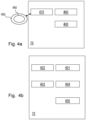
- the control unit 70 may for example comprise an arrangement depicted in Figs. 4a and 4b .
- the control unit 70 may comprise an input and output interface 400 configured to communicate any necessary components or entities of embodiments herein.
- the input and output interface 400 may comprise a wireless and/or wired receiver (not shown) and a wireless and/or wired transmitter (not shown).
- the control unit 70 may be arranged in any suitable location of the autonomous vehicle.
- the control unit 70 may for example be part of any suitable Advanced Driver Assistance System (ADAS).
- ADAS Advanced Driver Assistance System
- the control unit 70 may further be configured to, e.g. by means of an obtaining unit 401 in the control unit 70, obtain sensor data from a set of sensors 20, e.g. as in action 201 above.
- the control unit 70 may further be configured to, e.g. by means of a determining unit 402 in the control unit 70, determine respective trajectories of the first and second vehicle units 2, 3, e.g. as in action 202 above.
- the control unit 70 may further be configured to, e.g. by means of the determining unit 402 in the control unit 70, determine whether the position of the road user is within the established region of interest, e.g. as in action 204 above.
Landscapes
- Engineering & Computer Science (AREA)
- Automation & Control Theory (AREA)
- Transportation (AREA)
- Mechanical Engineering (AREA)
- Physics & Mathematics (AREA)
- General Physics & Mathematics (AREA)
- Human Computer Interaction (AREA)
- Traffic Control Systems (AREA)
Description
- The invention relates to a device and method for avoiding collisions between a turning combination vehicle and a road user. The invention will be described with respect to a combination vehicle, but is applicable to any vehicle which comprises at least two vehicle units such as a tractor and a trailer.
- When turning long and/or wide combination vehicles such as Load, Haul and Dump (LHD) trucks, driver visibility is reduced or completely blocked by a number of blind spots. Visibility is typically reduced further for longer and/or wider vehicles. To reduce a risk of colliding with road users and obstacles when turning, combination vehicles are therefore typically arranged with different kinds of mirrors for better rear view. Additionally, the combination vehicles may have reverse cameras for parking assistance. Occasionally, combination vehicles are also provided with additional cameras, e.g. in the front of the vehicle. Using these tools, it is easier for a driver to view some of the blind spots. However, none of these tools completely remove the danger of turning long and/or wide combination vehicles. A particular problem arises when a combination vehicle comprising a tractor and trailer turns in a forward direction in proximity of a road user such as a car. Since the trailer has a much wider turning trajectory than the tractor, the driver of the car may easily misjudge the trajectory of the trailer and may try to overtake the turning combination vehicle even though the risk of collision is very high. Since such traffic situations occurs on the side of the combination vehicle, the road user may be in a blind spot of the driver of the combination vehicle such that the driver is not able to detect the road user before a collision.
- Hence there is an ongoing strive to improve traffic safety when turning combination vehicles.
-
US2018/233048 A1 discloses a warning intervention system to avoid the collision of a vehicle, such as a truck-trailer combination, with a vulnerable road user (VRU). To this end, a sensor on the side of the vehicle detects the position of the VRU, and other sensors measure the speed and, e.g., steering wheel angle to predict a path of the vehicle. A probability distribution of the position of the VRU is calculated, and if the VRU's possible future position is within the path of the vehicle with a certain probability, an action is taken (warning signals, braking, etc.). - An object of the invention is to improve traffic safety when turning a combination vehicle.
- The object is achieved by a method according to
claim 1. Hence, there is provided a method for managing a traffic situation associated with a road user and a turning combination vehicle. The combination vehicle comprises a first vehicle unit and a second vehicle unit. The first vehicle unit may be a tractor and the second vehicle unit may be a trailer. Any other suitable combination of vehicle units may apply. The method comprises: - Obtaining sensor data from a set of sensors. The sensor data is indicative of traffic information from respective sides of the first and second vehicle units. The traffic information is indicative of respective turning motions of the first and second vehicle units, and a position of the road user. In other words, the set of sensors monitors the first and second vehicle units and their sides.
- Based on the respective turning motions of the first and second vehicle units, determining respective trajectories of the first and second vehicle units.
- Based on the determined trajectories, establishing a region of interest extending along the determined trajectories, and defined by a predefined distance from the determined trajectories.
- Determining whether the position of the road user is within the established region of interest.
- When the position of the road user is determined to be within the established region of interest, triggering a preventive action.
- Since the region of interest extends along the determined trajectories of the first and second vehicle units and because the position of the road user is known from the sensor data, it is possible to trigger the preventive action, and thus avoiding or at least mitigating a risk of collision with the road user. In particular, the preventive action can be triggered long before the risk of collision is high. This is because the position of the road user is compared to a trajectory of the first and second vehicle units, and thus the preventive action may be triggered before the road user is dangerously close to the combination vehicle. Furthermore, since the sensor data is indicative of traffic information from respective sides of the first and second vehicle units, the road user may be detected even if it is located in a usual blind spot of the combination vehicle.
- Optionally, triggering the preventive action comprises any one or more out of:
- triggering an alert,
- reducing a speed of the combination vehicle,
- triggering an emergency stop of the combination vehicle, and
- limiting a steering wheel angle of the first vehicle unit.
- Optionally, triggering the alert comprises alerting a driver of the combination vehicle and/or alerting the road user by triggering a sound and/or light alert. In this way, any one or both of the road user and the driver of the combination vehicle may be alerted of a potential collision and may take a respective preventive action for collision avoidance.
- Optionally, triggering the preventive action is further based on a shortest distance between the position of the road user and any one of the determined trajectories. For example, when the shortest distance is below a predetermined first distance threshold, the preventive action may comprise triggering an emergency stop of the combination vehicle. As another example, when the shortest distance is above the predetermined first distance threshold but below a predetermined second distance threshold the preventive action may comprise triggering a sound and/or light alert.
- Optionally, the combination vehicle further comprises a third vehicle unit. The third vehicle unit may be a trailer. The obtained sensor data is in this embodiment further indicative of traffic information from the sides of the third vehicle unit. The traffic information is further indicative of a turning motion of the third vehicle unit. In these embodiments, determining the respective trajectories further comprises determining a trajectory of the third vehicle unit based on the turning motion of the third vehicle unit. In these embodiments, establishing the region of interest further comprises establishing the region of interest extending along the determined trajectory of the third vehicle unit. In other words, the region of interest extends along the trajectory of the first, second and third vehicle units, which trajectories may all be different.
- Optionally, determining the respective trajectories of the first and second vehicle units is based on dimensions of the respective first and second vehicle units. For example, the sensor data may indicate a width, length, and shape of the first and second vehicle units which may be considered when determining the respective trajectories.
- Optionally, the sensor data is further indicative of dimensions of objects loaded or mounted on the combination vehicle. In these embodiments, determining the respective trajectories of the first and second vehicle units is further based on the dimensions of the objects loaded or mounted on the combination vehicle.
- Optionally, the method further comprises presenting the determined trajectories and the position of the road user on a display comprised in the first vehicle unit. In this way, the driver of the combination vehicle has a constant view of how the turning trajectories of the combination vehicle may risk collision with the road user.
- According to a second aspect, there is provided a control unit to perform the method according to the first aspect. The control unit may be an electronic control unit.
- According to a third aspect, there is provided an arrangement for a combination vehicle comprising a first vehicle unit and a second vehicle unit. The arrangement comprises a control unit according to the second aspect. The arrangement further comprises a set of sensors arranged in communicative connection with the control unit. The set of sensors comprises sensors configured to be arranged on each side of the first vehicle unit and the second vehicle unit, respectively.
- Optionally, the set of sensors comprises a set of cameras.
- Optionally, the set of sensors comprises any one or more out of:
- Light Detection and Ranging (Lidar) sensors, and
- Ultrasonic sensors.
- According to a fourth aspect, there is provided a combination vehicle comprising a first vehicle unit, a second vehicle unit, and the arrangement according to the third aspect. Each side of the first vehicle unit and the second vehicle unit, respectively, is provided with at least one sensor from the set of sensors.
- According to a fifth aspect, there is provided a computer program comprising program code means for performing the method according to the first aspect, when said program is run on a computer.
- According to a sixth aspect, there is provided a computer program medium carrying a computer program comprising program code means for performing the method according to the first aspect, when said program is run on a computer.
- With reference to the appended drawings, below follows a more detailed description of embodiments of the invention cited as examples.
- In the drawings:
-
Fig. 1 is an illustration of a combination vehicle according to embodiments herein. -
Fig. 2 is a flowchart of a method according to embodiments herein. -
Fig. 3 is an example scenario illustrating embodiments herein. -
Fig. 4 is an illustration of a control unit according to embodiments herein. -
Fig. 1 is a schematic overview of avehicle 1 in accordance with embodiments herein.Fig. 1 illustrates acombination vehicle 1, which in the illustrated embodiment comprises afirst vehicle unit 2 and asecond vehicle unit 3. Thefirst vehicle unit 2 is inFig. 1 illustrated as a tractor and thesecond vehicle unit 3 is illustrated as a trailer, but any other suitable combination, may also be applicable to embodiments herein, e.g., combinations may comprise at least any of a: truck, a semi-truck, a semi-trailer, a tractor, and a trailer. Thecombination vehicle 1 may in one embodiment be a road train comprising extra-long and/or extra-wide vehicle units, e.g. for transportation of large structures such as super structures. Thecombination vehicle 1 comprises afirst side 25a, asecond side 25b, afront part 26, and arear part 27. Thesides combination vehicle 1, including thefirst vehicle unit 2 and thesecond vehicle unit 3. Therespective sides combination vehicle 1. Thefront part 26 may be a front part of thefirst vehicle unit 2, as illustrated byFig. 1 . Therear part 26 may be a rear part of thesecond vehicle unit 3, as illustrated byFig. 1 . Thecombination vehicle 1 is arranged with a set ofsensors 20. Eachside first vehicle unit 2 and thesecond vehicle unit 3 is at least arranged with one of the sensors in the set of sensors 20 (not shown for thesecond side 25b). In embodiments herein, especially when thesecond vehicle unit 3 is a long and/or wide trailer, it may be advantageous to arrange thesecond vehicle unit 3 with multiple sensors on eachside sensors 20 may comprise at least one sensor on eachside rear part 27 of thecombination vehicle 1, e.g. within a predetermined distance from therear part 27 of thecombination vehicle 1. Similarly, the set ofsensors 20 may comprise at least one sensor on eachside front part 26 of thesecond vehicle unit 3, e.g. within a predetermined distance from thefront part 26 of thecombination vehicle 1. - The set of
sensors 20 are arranged to sense traffic information fromrespective sides combination vehicle 1. The traffic information is indicative of respective turning motions of the first andsecond vehicle units second vehicle units sensors 20 may be arranged to scan the surroundingsides second vehicle units second vehicle units sides second vehicle units side sensors 20 may comprise one or more sensors arranged on the front and/or rear part of the respective vehicle unit, which may sense traffic information in the front and/or rear side of the respective first andsecond vehicle units second vehicle unit - The set of
sensors 20 may comprise any suitable sensor for obtaining traffic information. For example, the set ofsensors 20 may comprise a set of cameras 10. As illustrated inFig. 1 , the set of cameras 10 may typically be arranged on a top-side 28, e.g. roof-top, of eachside second vehicle units respective sides second vehicle units second vehicle unit sides second vehicle units sensors 20 may also comprise Lidar sensors and/or ultrasonic sensors typically used for detecting road users' locations relative to thecombination vehicle 1. Each sensor of the set ofsensors 20 may be mounted at a respective known position of the first andsecond vehicle units second vehicle units - The set of
sensors 20, may in a horizontal plane be directed to scan the side of their respective vehicle unit. In other words, each sensor in the set ofsensors 20 are arranged to scan the side of their respective vehicle unit but may also be configured to partially also scan the front or rear part of their respective vehicle unit, e.g. thefront part 26 and/orrear part 27 of thecombination vehicle 1. In this way, a sensor arranged on a front and/or rear corner of the first orsecond vehicle unit - The
combination vehicle 1 may be arranged with an alertingarrangement 30 comprising interior and/or exterior alerting units. The alerting units may be sound alerts and/or visual alerts for alerting a driver of thecombination vehicle 1 and/or road users in proximity of thecombination vehicle 1 of emerging dangers. The alertingarrangement 30 may be arranged to perform any of the alerts described in the embodiments herein. - The
combination vehicle 1 may be arranged with adisplay 40. Thedisplay 40 may be arranged to display, to the driver of thecombination vehicle 1, sensor data indicative of traffic information, or any related processed sensor data, which will be exemplified in embodiments herein. - Embodiments herein may be performed by a
control unit 70. Thecontrol unit 70 may be an electronic control unit. Thecontrol unit 70 may be comprised in thecombination vehicle 1 but may also be comprised in any other suitable location. Thecontrol unit 70 may be communicatively connected with any one or more out of: the set ofsensors 20, the alertingarrangement 30, and thedisplay 40. -
Fig. 2 illustrates a method for managing a traffic situation associated with a road user and thecombination vehicle 1 according to embodiments herein. The method relates to a traffic situation wherein thecombination vehicle 1 is turning, typically while also driving in a forward and turning direction. Thecombination vehicle 1 comprises thefirst vehicle unit 2 and thesecond vehicle unit 3. The method may be performed by thecontrol unit 70. - The method comprises the following actions described below, which actions may be taken in any suitable order. Optional actions are indicated by dashed boxes in
Fig. 2 . - The method comprises obtaining sensor data from the set of
sensors 20. The sensor data is indicative of traffic information fromrespective sides second vehicle units second vehicle units sensors 20 monitors the first andsecond vehicle units sides second vehicle unit sensors 20. For example, the sensor data may be a combination of real-time video from the set of cameras 10 and sensor data from Lidar sensors arranged on the sides of the first andsecond vehicle unit sides second vehicle units second vehicle units combination vehicle 1 in a horizontal plane. - In some embodiments, the sensor data is further indicative of dimensions of objects loaded or mounted on the
combination vehicle 1. For example, the set of cameras 10 may sense the shape and/or dimensions ofcombination vehicle 1 which thus include any objects attached to, or mounted on, thecombination vehicle 1. - The method further comprises determining respective trajectories of the first and
second vehicle units second vehicle units second vehicle units second vehicle units second vehicle units second vehicle units first vehicle unit 2 is a tractor and thesecond vehicle unit 3 is a long and wide trailer, thesecond vehicle unit 3 will have a much wider trajectory than the trajectory of thefirst vehicle unit 1. - Determining the trajectories may be performed by means of an Artificial Intelligence (Al), i.e. by the use of a trained neural network or by the use of any other suitable data structure. Any suitable neural network may apply, e.g. a deep neural network or a convolutional neural network. The neural network may be trained in advance using training data from simulations. The training data may also be sensor data recorded from the set of
sensors 20 when previously driving the first andsecond vehicle units sensors 20. The training data may also be recordings from other suitable sensor configurations from other combination vehicles. - In some embodiments, determining the respective trajectories of the first and
second vehicle units second vehicle units - In some embodiments, determining the respective trajectories of the first and
second vehicle units combination vehicle 1, e.g. as indicated by the sensor data obtained inaction 201. - The method further comprises establishing a region of interest extending along the determined trajectories based on the determined trajectories. The region of interest may be represented as an area in the coordinate system relative to the
combination vehicle 1 in the horizontal plane, e.g. as inaction 201. The region of interest is an area defined by a predefined distance from the determined trajectories. In some embodiments, the region of interest is established as an area using the determined trajectories as a middle line, and spanning a predetermined width. Any other suitable region of interest which at least enables determining whether the position of the road user is within any one or both of the respective determined trajectories may be used. - The method further comprises determining whether the position of the road user is within the established region of interest. Determining whether the position of the road user is within the established region of interest may be performed in any suitable manner, e.g. by means of simple arithmetic when the region of interest and the position of the road user is within the coordinate system described above and/or by means of an Al, e.g. the same as in above
action 202. - The method further comprises triggering a preventive action when the position of the
road user 300 is determined to be within the established region ofinterest 310. The preventive action may thus prevent or mitigate risks for collision between the road user and thecombination vehicle 1. - In some embodiments, the preventive action may comprise any one or more out of:
- triggering an alert, e.g. a sound or light alert,
- reducing a speed of the
combination vehicle 1, - triggering an emergency stop of the
combination vehicle 1, and - limiting a steering wheel angle of the
first vehicle unit 2. - Any one or more out of the above-mentioned sound and/or light alerts may be triggered by the alerting
arrangement 30. In some of these embodiments, limiting the steering wheel angle of thefirst vehicle unit 2 may limit the steering wheel such that the determined respective trajectories may at least not grow wider by increasing the wheel angle. The driver of thecombination vehicle 1 may also be alerted by means of feeling the limited steering wheel when turning and can then take appropriate action. Additionally, or alternatively, triggering the alert comprises alerting a driver of thecombination vehicle 1 and/or alerting the road user by triggering a sound and/or light alert. In other words, the sound and/or light alert may either be sounds and/or lights exterior and/or interior of thecombination vehicle 1. The sound alert may for example be triggered by outside loudspeakers or speakers in thefirst vehicle unit 2. The light alert may comprise lighting outside warning lights or lighting lights inside thefirst vehicle unit 2, e.g. tell-tale lights on a dashboard. Triggering the light alerts may comprise the use of lights exterior to the first andsecond vehicle units combination vehicle 1, corresponding to the established region of interest. This light alert may in some embodiments further be triggered to always be visible when thecombination vehicle 1 is turning. - In some embodiments, triggering the preventive action is further based on a shortest distance between the position of the road user and any one of the determined trajectories. For example, when the shortest distance is below a predetermined first distance threshold, the preventive action may comprise triggering an emergency stop of the combination vehicle. As another example, when the shortest distance is above the predetermined first distance threshold, but below a predetermined second distance threshold, the preventive action may comprise triggering a sound and/or light alert. These embodiments may be realized by dividing the region of interest into different zones, e.g. high, medium and low risk zones depending on the length of the shortest distance. The preventive action may thus be triggered when the position of the road user is in any one or both of the high risk zone and the medium risk zone. In some embodiments, only sound and/or light alerts are triggered when in the medium risk zone. In some embodiments, sound and/or light alerts are triggered in the high risk zone combined with automatic braking of the
combination vehicle 1. When in a low risk zone, a minor warning may be issued, e.g. a tell-tale light may indicate to the driver of thecombination vehicle 1 that there is a presence of a road user, but there is no immediate danger given the current position of the road user and the determined trajectories. - The method may in some embodiments further comprise presenting the determined trajectories and the position of the road user on the
display 40 comprised in thefirst vehicle unit 2. For example, the driver of thecombination vehicle 1 may operate thecombination vehicle 1 from thefirst vehicle unit 2. The driver may then see in thedisplay 40, how the determined trajectories are determined with respect to the position of the road user. Additionally, the established region of interest may be presented, along with a warning when the preventive action is triggered. Additionally, a live feed, e.g. from the set of cameras 10, may be presented in the display 10. Since thedisplay 40 may not be able to present all video from all cameras in the set of cameras 10, the video from the most relevant camera may be selected. The most relevant camera may be selected by manual input. Alternatively, the most relevant camera may be selected by determining which video is currently showing the road user, or a position closest to the road user. - The method of actions 201-206 above is applicable for any suitable number of vehicle units, for example the
first vehicle unit 2 is a tractor pulling two or more trailers, including thesecond vehicle unit 3. In some of these embodiments, thecombination vehicle 1 further comprises a third vehicle unit. In these embodiments, the obtained sensor data ofaction 201 is further indicative of traffic information from the sides of the third vehicle unit. In these embodiments, the traffic information is further indicative of a turning motion of the third vehicle unit. In these embodiments, determining the respective trajectories as inaction 203, further comprises determining a trajectory of the third vehicle unit based on the turning motion of the third vehicle unit. In these embodiments, establishing the region of interest as inaction 204 further comprises establishing the region of interest extending along the determined trajectory of the third vehicle unit. - The methods will now be further explained and exemplified in below embodiments. These below embodiments may be combined with any suitable embodiment as described above.
-
Fig. 3 illustrates an example scenario according to embodiments herein. The example scenario illustrates thecombination vehicle 1 comprising the first andsecond vehicle units road user 300. Thecombination vehicle 1 turns, and obtains sensor data indicative of traffic information fromrespective sides second vehicle units control unit 70, as inaction 201 above. The traffic information indicates respective turning motions of the first andsecond vehicle units road user 300. This is possible by the use of sensors on eachside second vehicle units combination vehicle 1, including the shape of the first andsecond vehicle units combination vehicle 1, e.g. by means of thecontrol unit 70, determines afirst trajectory 301 for thefirst vehicle unit 2 and asecond trajectory 302 for thesecond vehicle unit 3, e.g. as inaction 202 above. Each of the first andsecond trajectories second vehicle units combination vehicle 1, e.g. by means of thecontrol unit 70, establishes a region ofinterest 310, e.g. as inaction 203. The region ofinterest 310 is in the example scenario indicated by the area within the dashed lines. In the example scenario, theroad user 300 is within the region ofinterest 310 and is trying to overtake thecombination vehicle 1. Thecombination vehicle 1, e.g. by means of thecontrol unit 70, determines that theroad user 300 is within the region ofinterest 310, e.g. as inaction 204 above. Theroad user 300 may not understand that its position is within the trajectory of the turningcombination vehicle 1. To avoid the risk of collision with theroad user 300 thecombination vehicle 1 e.g. by means of thecontrol unit 70, triggers a preventive action, e.g. as inaction 205 above. - To perform the method actions described herein, the
control unit 70 may be configured to perform any one or more of the above actions 201-206 or any of the other examples or embodiments herein. Thecontrol unit 70 may for example comprise an arrangement depicted inFigs. 4a and 4b . - The
control unit 70 may comprise an input andoutput interface 400 configured to communicate any necessary components or entities of embodiments herein. The input andoutput interface 400 may comprise a wireless and/or wired receiver (not shown) and a wireless and/or wired transmitter (not shown). Thecontrol unit 70 may be arranged in any suitable location of the autonomous vehicle. Thecontrol unit 70 may for example be part of any suitable Advanced Driver Assistance System (ADAS). - The
control unit 70 may further be configured to, e.g. by means of an obtainingunit 401 in thecontrol unit 70, obtain sensor data from a set ofsensors 20, e.g. as inaction 201 above. - The
control unit 70 may further be configured to, e.g. by means of a determiningunit 402 in thecontrol unit 70, determine respective trajectories of the first andsecond vehicle units action 202 above. - The
control unit 70 may further be configured to, e.g. by means of an establishingunit 403 in thecontrol unit 70, establish a region of interest extending along the determined trajectories, e.g. as inaction 203 above. - The
control unit 70 may further be configured to, e.g. by means of the determiningunit 402 in thecontrol unit 70, determine whether the position of the road user is within the established region of interest, e.g. as inaction 204 above. - The
control unit 70 may further be configured to, e.g. by means of a triggeringunit 404 in thecontrol unit 70, trigger a preventive action, when the position of the road user is determined to be within the established region of interest, e.g. as inaction 205 above. Thecontrol unit 70 may further be configured to, e.g. by means of a presentingunit 405 in thecontrol unit 70, present the determined trajectories and the position of the road user on a display comprised in thefirst vehicle unit 2, e.g. as inaction 206 above. - The embodiments herein may be implemented through a processor or one or more processors, such as the
processor 460 of a processing circuitry in thecontrol unit 70 depicted inFig. 4a , together with computer program code for performing the functions and actions of the embodiments herein. The program code mentioned above may also be provided as a computer program medium, for instance in the form of a data computer readable medium carrying computer program code for performing the embodiments herein when being loaded into thecontrol unit 70. One such computer readable medium may be in the form of a memory stick. The computer program code may furthermore be provided as pure program code on a server and downloaded to thecontrol unit 70. - The
control unit 70 may further comprise amemory 470 comprising one or more memory units. Thememory 470 comprises instructions executable by the processor incontrol unit 70. Thememory 470 is arranged to be used to store e.g. information, indications, data, configurations, trajectories, positions, region of interests, sensor data, and applications to perform the methods herein when being executed in thecontrol unit 70. Thememory 460 may in some embodiments comprise the storage medium 420. - In some embodiments, a
computer program 480 comprises instructions, which when executed by a computer, e.g. the at least oneprocessor 460, cause the at least one processor of thecontrol unit 70 to perform the actions 201-206 above. - In some embodiments, a computer-
readable storage medium 490 comprises therespective computer program 480. The computer-readable storage medium 490 may comprise program code for performing the steps of any one of actions 201-206 above when said program product is run on a computer, e.g. the at least oneprocessor 460. - Those skilled in the art will appreciate that the units in the
control unit 70 described above may refer to a combination of analogue and digital circuits, and/or one or more processors configured with software and/or firmware, e.g. stored in thecontrol unit 70, that when executed by the respective one or more processors such as the processors described above. One or more of these processors, as well as the other digital hardware, may be included in a single Application-Specific Integrated Circuitry (ASIC), or several processors and various digital hardware may be distributed among several separate components, whether individually packaged or assembled into a system-on-a-chip (SoC). - It is to be understood that the present invention is not limited to the embodiments described above and illustrated in the drawings; rather, the skilled person will recognize that many changes and modifications may be made within the scope of the appended claims.
Claims (15)
- A method for managing a traffic situation associated with a road user (300) and a turning combination vehicle (1), the combination vehicle (1) comprising a first vehicle unit (2) and a second vehicle unit (2), the method comprising:- obtaining (201) sensor data from a set of sensors (20), wherein the sensor data is indicative of traffic information from respective sides (25a, 25b) of the first and second vehicle units (2, 3), wherein the traffic information is indicative of respective turning motions of the first and second vehicle units (2, 3), and a position of the road user (300),- based on the respective turning motions of the first and second vehicle units (2, 3), determining (202) respective trajectories of the first and second vehicle units (2, 3),- based on the determined trajectories, establishing (203) a region of interest (310) extending along the determined trajectories, wherein the region of interest is an area defined by a predefined distance from the determined trajectories,- determining (204) whether the position of the road user (300) is within the established region of interest (310), and- when the position of the road user (300) is determined to be within the established region of interest (310), triggering (205) a preventive action.
- The method according to claim 1 wherein triggering (205) the preventive action comprises any one or more out of:- triggering an alert,- reducing a speed of the combination vehicle (1),- triggering an emergency stop of the combination vehicle (1), and- limiting a steering wheel angle of the first vehicle unit (2).
- The method according to claim 2 wherein triggering the alert comprises alerting a driver of the combination vehicle (1) and/or alerting the road user (300) by triggering a sound and/or light alert.
- The method according to any one of the preceding claims, wherein triggering (205) the preventive action is further based on a shortest distance between the position of the road user (300) and any one of the determined trajectories.
- The method according to any one of the preceding claims, wherein the combination vehicle (1) further comprises a third vehicle unit, wherein the obtained sensor data is further indicative of traffic information from the sides of the third vehicle unit, and wherein the traffic information is further indicative of a turning motion of the third vehicle unit, and wherein determining (202) the respective trajectories further comprises determining a trajectory of the third vehicle unit based on the turning motion of the third vehicle unit, and wherein establishing (204) the region of interest (310) further comprises establishing the region of interest extending along the determined trajectory of the third vehicle unit.
- The method according to any one of the preceding claims, wherein determining (202) the respective trajectories of the first and second vehicle units (2, 3) is based on dimensions of the respective first and second vehicle units.
- The method according to claim 6, wherein the sensor data is further indicative of dimensions of objects loaded or mounted on the combination vehicle (1), and wherein determining (202) the respective trajectories of the first and second vehicle units is further based on the dimensions of the objects loaded or mounted on the combination vehicle (1).
- The method according to any one of the preceding claims, wherein the method further comprises presenting (206) the determined trajectories and the position of the road user (300) on a display comprised in the first vehicle unit (2).
- A control unit (400) configured to perform the method according to any one of claims 1-8.
- An arrangement for a combination vehicle (1) comprising a first vehicle unit (2) and a second vehicle unit, the arrangement comprising a control unit (400) according to claim 9, and a set of sensors (20) arranged in communicative connection with the control unit (400), and wherein the set of sensors (20) comprises sensors configured to be arranged on each side (25a, 25b) of the first vehicle unit (2) and the second vehicle unit, respectively.
- The arrangement according to claim 10 wherein the set of sensors (20) comprises a set of cameras (10).
- The arrangement according to any one of claims 10-11 wherein the set of sensors (20) comprises any one or more out of:- Light Detection and Ranging, Lidar, sensors, and- Ultrasonic sensors.
- A combination vehicle (1) comprising a first vehicle unit (2), a second vehicle unit (3), and the arrangement according to any of claims 10-12, wherein each side (25a, 25b) of the first vehicle unit and the second vehicle unit, respectively, is provided with at least one sensor from the set of sensors.
- A computer program (480) comprising program code means for performing the steps of any one of claims 1-8 when said program is run on a computer.
- A computer program medium (490) carrying a computer program comprising program code means for performing the steps of any one of claims 1-8 when said program is run on a computer.
Priority Applications (2)
| Application Number | Priority Date | Filing Date | Title |
|---|---|---|---|
| EP22159956.6A EP4238841B1 (en) | 2022-03-03 | 2022-03-03 | A device and method for avoiding collisions between a turning combination vehicle and a road user |
| US18/093,411 US12340694B2 (en) | 2022-03-03 | 2023-01-05 | Device and method for avoiding collisions between a turning combination vehicle and a road user |
Applications Claiming Priority (1)
| Application Number | Priority Date | Filing Date | Title |
|---|---|---|---|
| EP22159956.6A EP4238841B1 (en) | 2022-03-03 | 2022-03-03 | A device and method for avoiding collisions between a turning combination vehicle and a road user |
Publications (2)
| Publication Number | Publication Date |
|---|---|
| EP4238841A1 EP4238841A1 (en) | 2023-09-06 |
| EP4238841B1 true EP4238841B1 (en) | 2025-07-09 |
Family
ID=80625413
Family Applications (1)
| Application Number | Title | Priority Date | Filing Date |
|---|---|---|---|
| EP22159956.6A Active EP4238841B1 (en) | 2022-03-03 | 2022-03-03 | A device and method for avoiding collisions between a turning combination vehicle and a road user |
Country Status (2)
| Country | Link |
|---|---|
| US (1) | US12340694B2 (en) |
| EP (1) | EP4238841B1 (en) |
Families Citing this family (1)
| Publication number | Priority date | Publication date | Assignee | Title |
|---|---|---|---|---|
| US12197222B2 (en) * | 2022-08-01 | 2025-01-14 | Trimble Inc. | Avoiding collisions with autonomous off-road vehicles |
Family Cites Families (10)
| Publication number | Priority date | Publication date | Assignee | Title |
|---|---|---|---|---|
| DE102008043675A1 (en) * | 2008-11-12 | 2010-05-20 | Zf Friedrichshafen Ag | Target-steering angle determining method for multi-part vehicle combination used as e.g. tractor-trailer combination, involves determining target-steering angle based on momentary driving speed of combination and effective length |
| DE102012017532A1 (en) * | 2012-09-05 | 2014-05-15 | Wabco Gmbh | Method of operating a trailer or a truck with the system |
| EP3172084B1 (en) * | 2014-07-25 | 2023-12-13 | Transoft Technologies Inc. | Onboard traffic and pedestrian warning system and method |
| SE539097C2 (en) * | 2015-08-20 | 2017-04-11 | Scania Cv Ab | Method, control unit and system for avoiding collision with vulnerable road users |
| US11048251B2 (en) * | 2017-08-16 | 2021-06-29 | Uatc, Llc | Configuring motion planning for a self-driving tractor unit |
| WO2020207602A1 (en) * | 2019-04-12 | 2020-10-15 | Volvo Truck Corporation | A method of determining an allowable vehicle state space for an articulated vehicle |
| US11332191B2 (en) * | 2019-09-09 | 2022-05-17 | Ford Global Technologies, Llc | Trailer sideswipe avoidance system |
| EP3855121A3 (en) * | 2019-12-30 | 2021-10-27 | Waymo LLC | Kinematic model for autonomous truck routing |
| DE102020120222A1 (en) * | 2020-07-31 | 2022-02-03 | Man Truck & Bus Se | Method and driver assistance system for determining a driving path of a commercial vehicle |
| US11634071B2 (en) * | 2021-01-12 | 2023-04-25 | Ford Global Technologies, Llc | Trailer sideswipe avoidance system |
-
2022
- 2022-03-03 EP EP22159956.6A patent/EP4238841B1/en active Active
-
2023
- 2023-01-05 US US18/093,411 patent/US12340694B2/en active Active
Also Published As
| Publication number | Publication date |
|---|---|
| US20230282113A1 (en) | 2023-09-07 |
| EP4238841A1 (en) | 2023-09-06 |
| US12340694B2 (en) | 2025-06-24 |
Similar Documents
| Publication | Publication Date | Title |
|---|---|---|
| US12049211B2 (en) | Information, warning and braking request generation for turn assist functionality | |
| US20210146999A1 (en) | Vehicular trailer guidance system | |
| US9527528B1 (en) | Trailer radius indication | |
| NL2016753B1 (en) | Platooning method for application in heavy trucks | |
| JP6185970B2 (en) | Method for detecting an object adjacent to the rear side of a vehicle | |
| JP5387531B2 (en) | Driving support device | |
| US20190126917A1 (en) | System and method for performing autonomous emergency braking | |
| US20080015743A1 (en) | Method and system for assisting the driver of a motor vehicle in identifying road bumps | |
| US10410514B2 (en) | Display device for vehicle and display method for vehicle | |
| KR20200094378A (en) | Driver assistance system and controlling method thereof | |
| US9902267B2 (en) | Predicted position display for vehicle | |
| KR20190098751A (en) | How to fly an autonomous car | |
| US20170120903A1 (en) | Cognitive reverse speed limiting | |
| US12447956B2 (en) | Path generation apparatus | |
| US12528459B2 (en) | System and method for monitoring surroundings of a vehicle | |
| JP2018092505A (en) | Driving assistance device | |
| US11981255B2 (en) | Vehicle control device, vehicle, operation method for vehicle control device, and storage medium | |
| US12043310B2 (en) | Driver assistance system and control method for the same | |
| JP6646135B2 (en) | Peripheral monitoring system and peripheral monitoring device | |
| US12340694B2 (en) | Device and method for avoiding collisions between a turning combination vehicle and a road user | |
| JP2010018080A (en) | Vehicular driving support device | |
| JP2011211432A (en) | In-vehicle imaging apparatus | |
| JP4751894B2 (en) | A system to detect obstacles in front of a car | |
| JP2007124097A (en) | Vehicle periphery visual recognition device | |
| KR20180078363A (en) | Method and apparatus of avoiding vehicle collision |
Legal Events
| Date | Code | Title | Description |
|---|---|---|---|
| PUAI | Public reference made under article 153(3) epc to a published international application that has entered the european phase |
Free format text: ORIGINAL CODE: 0009012 |
|
| STAA | Information on the status of an ep patent application or granted ep patent |
Free format text: STATUS: THE APPLICATION HAS BEEN PUBLISHED |
|
| AK | Designated contracting states |
Kind code of ref document: A1 Designated state(s): AL AT BE BG CH CY CZ DE DK EE ES FI FR GB GR HR HU IE IS IT LI LT LU LV MC MK MT NL NO PL PT RO RS SE SI SK SM TR |
|
| STAA | Information on the status of an ep patent application or granted ep patent |
Free format text: STATUS: REQUEST FOR EXAMINATION WAS MADE |
|
| 17P | Request for examination filed |
Effective date: 20240306 |
|
| RBV | Designated contracting states (corrected) |
Designated state(s): AL AT BE BG CH CY CZ DE DK EE ES FI FR GB GR HR HU IE IS IT LI LT LU LV MC MK MT NL NO PL PT RO RS SE SI SK SM TR |
|
| GRAP | Despatch of communication of intention to grant a patent |
Free format text: ORIGINAL CODE: EPIDOSNIGR1 |
|
| STAA | Information on the status of an ep patent application or granted ep patent |
Free format text: STATUS: GRANT OF PATENT IS INTENDED |
|
| RIC1 | Information provided on ipc code assigned before grant |
Ipc: B60Q 9/00 20060101ALN20250311BHEP Ipc: B60Q 5/00 20060101ALN20250311BHEP Ipc: B60W 50/14 20200101ALI20250311BHEP Ipc: B60W 30/18 20120101ALI20250311BHEP Ipc: B60W 30/085 20120101ALI20250311BHEP Ipc: G08G 1/16 20060101ALI20250311BHEP Ipc: B60W 30/095 20120101ALI20250311BHEP Ipc: B60W 30/09 20120101AFI20250311BHEP |
|
| INTG | Intention to grant announced |
Effective date: 20250403 |
|
| GRAS | Grant fee paid |
Free format text: ORIGINAL CODE: EPIDOSNIGR3 |
|
| GRAA | (expected) grant |
Free format text: ORIGINAL CODE: 0009210 |
|
| STAA | Information on the status of an ep patent application or granted ep patent |
Free format text: STATUS: THE PATENT HAS BEEN GRANTED |
|
| AK | Designated contracting states |
Kind code of ref document: B1 Designated state(s): AL AT BE BG CH CY CZ DE DK EE ES FI FR GB GR HR HU IE IS IT LI LT LU LV MC MK MT NL NO PL PT RO RS SE SI SK SM TR |
|
| REG | Reference to a national code |
Ref country code: GB Ref legal event code: FG4D |
|
| REG | Reference to a national code |
Ref country code: CH Ref legal event code: EP |
|
| REG | Reference to a national code |
Ref country code: IE Ref legal event code: FG4D |
|
| REG | Reference to a national code |
Ref country code: DE Ref legal event code: R096 Ref document number: 602022017156 Country of ref document: DE |
|
| REG | Reference to a national code |
Ref country code: NL Ref legal event code: MP Effective date: 20250709 |
|
| PG25 | Lapsed in a contracting state [announced via postgrant information from national office to epo] |
Ref country code: PT Free format text: LAPSE BECAUSE OF FAILURE TO SUBMIT A TRANSLATION OF THE DESCRIPTION OR TO PAY THE FEE WITHIN THE PRESCRIBED TIME-LIMIT Effective date: 20251110 |
|
| PG25 | Lapsed in a contracting state [announced via postgrant information from national office to epo] |
Ref country code: NL Free format text: LAPSE BECAUSE OF FAILURE TO SUBMIT A TRANSLATION OF THE DESCRIPTION OR TO PAY THE FEE WITHIN THE PRESCRIBED TIME-LIMIT Effective date: 20250709 |
|
| REG | Reference to a national code |
Ref country code: AT Ref legal event code: MK05 Ref document number: 1811612 Country of ref document: AT Kind code of ref document: T Effective date: 20250709 |
|
| PG25 | Lapsed in a contracting state [announced via postgrant information from national office to epo] |
Ref country code: IS Free format text: LAPSE BECAUSE OF FAILURE TO SUBMIT A TRANSLATION OF THE DESCRIPTION OR TO PAY THE FEE WITHIN THE PRESCRIBED TIME-LIMIT Effective date: 20251109 |
|
| PG25 | Lapsed in a contracting state [announced via postgrant information from national office to epo] |
Ref country code: NO Free format text: LAPSE BECAUSE OF FAILURE TO SUBMIT A TRANSLATION OF THE DESCRIPTION OR TO PAY THE FEE WITHIN THE PRESCRIBED TIME-LIMIT Effective date: 20251009 |
|
| REG | Reference to a national code |
Ref country code: LT Ref legal event code: MG9D |
|
| PG25 | Lapsed in a contracting state [announced via postgrant information from national office to epo] |
Ref country code: AT Free format text: LAPSE BECAUSE OF FAILURE TO SUBMIT A TRANSLATION OF THE DESCRIPTION OR TO PAY THE FEE WITHIN THE PRESCRIBED TIME-LIMIT Effective date: 20250709 |
|
| PG25 | Lapsed in a contracting state [announced via postgrant information from national office to epo] |
Ref country code: FI Free format text: LAPSE BECAUSE OF FAILURE TO SUBMIT A TRANSLATION OF THE DESCRIPTION OR TO PAY THE FEE WITHIN THE PRESCRIBED TIME-LIMIT Effective date: 20250709 |
|
| PG25 | Lapsed in a contracting state [announced via postgrant information from national office to epo] |
Ref country code: HR Free format text: LAPSE BECAUSE OF FAILURE TO SUBMIT A TRANSLATION OF THE DESCRIPTION OR TO PAY THE FEE WITHIN THE PRESCRIBED TIME-LIMIT Effective date: 20250709 |
|
| PG25 | Lapsed in a contracting state [announced via postgrant information from national office to epo] |
Ref country code: GR Free format text: LAPSE BECAUSE OF FAILURE TO SUBMIT A TRANSLATION OF THE DESCRIPTION OR TO PAY THE FEE WITHIN THE PRESCRIBED TIME-LIMIT Effective date: 20251010 |
|
| PG25 | Lapsed in a contracting state [announced via postgrant information from national office to epo] |
Ref country code: SE Free format text: LAPSE BECAUSE OF FAILURE TO SUBMIT A TRANSLATION OF THE DESCRIPTION OR TO PAY THE FEE WITHIN THE PRESCRIBED TIME-LIMIT Effective date: 20250709 |
|
| PG25 | Lapsed in a contracting state [announced via postgrant information from national office to epo] |
Ref country code: LV Free format text: LAPSE BECAUSE OF FAILURE TO SUBMIT A TRANSLATION OF THE DESCRIPTION OR TO PAY THE FEE WITHIN THE PRESCRIBED TIME-LIMIT Effective date: 20250709 |
|
| PG25 | Lapsed in a contracting state [announced via postgrant information from national office to epo] |
Ref country code: BG Free format text: LAPSE BECAUSE OF FAILURE TO SUBMIT A TRANSLATION OF THE DESCRIPTION OR TO PAY THE FEE WITHIN THE PRESCRIBED TIME-LIMIT Effective date: 20250709 Ref country code: PL Free format text: LAPSE BECAUSE OF FAILURE TO SUBMIT A TRANSLATION OF THE DESCRIPTION OR TO PAY THE FEE WITHIN THE PRESCRIBED TIME-LIMIT Effective date: 20250709 |
|
| PG25 | Lapsed in a contracting state [announced via postgrant information from national office to epo] |
Ref country code: RS Free format text: LAPSE BECAUSE OF FAILURE TO SUBMIT A TRANSLATION OF THE DESCRIPTION OR TO PAY THE FEE WITHIN THE PRESCRIBED TIME-LIMIT Effective date: 20251009 |
|
| PG25 | Lapsed in a contracting state [announced via postgrant information from national office to epo] |
Ref country code: ES Free format text: LAPSE BECAUSE OF FAILURE TO SUBMIT A TRANSLATION OF THE DESCRIPTION OR TO PAY THE FEE WITHIN THE PRESCRIBED TIME-LIMIT Effective date: 20250709 |
|
| PG25 | Lapsed in a contracting state [announced via postgrant information from national office to epo] |
Ref country code: SM Free format text: LAPSE BECAUSE OF FAILURE TO SUBMIT A TRANSLATION OF THE DESCRIPTION OR TO PAY THE FEE WITHIN THE PRESCRIBED TIME-LIMIT Effective date: 20250709 |
|
| PG25 | Lapsed in a contracting state [announced via postgrant information from national office to epo] |
Ref country code: DK Free format text: LAPSE BECAUSE OF FAILURE TO SUBMIT A TRANSLATION OF THE DESCRIPTION OR TO PAY THE FEE WITHIN THE PRESCRIBED TIME-LIMIT Effective date: 20250709 |
|
| PGFP | Annual fee paid to national office [announced via postgrant information from national office to epo] |
Ref country code: DE Payment date: 20260320 Year of fee payment: 5 |
|
| PG25 | Lapsed in a contracting state [announced via postgrant information from national office to epo] |
Ref country code: IT Free format text: LAPSE BECAUSE OF FAILURE TO SUBMIT A TRANSLATION OF THE DESCRIPTION OR TO PAY THE FEE WITHIN THE PRESCRIBED TIME-LIMIT Effective date: 20250709 |
|
| PG25 | Lapsed in a contracting state [announced via postgrant information from national office to epo] |
Ref country code: CZ Free format text: LAPSE BECAUSE OF FAILURE TO SUBMIT A TRANSLATION OF THE DESCRIPTION OR TO PAY THE FEE WITHIN THE PRESCRIBED TIME-LIMIT Effective date: 20250709 |
|
| PG25 | Lapsed in a contracting state [announced via postgrant information from national office to epo] |
Ref country code: SK Free format text: LAPSE BECAUSE OF FAILURE TO SUBMIT A TRANSLATION OF THE DESCRIPTION OR TO PAY THE FEE WITHIN THE PRESCRIBED TIME-LIMIT Effective date: 20250709 Ref country code: EE Free format text: LAPSE BECAUSE OF FAILURE TO SUBMIT A TRANSLATION OF THE DESCRIPTION OR TO PAY THE FEE WITHIN THE PRESCRIBED TIME-LIMIT Effective date: 20250709 |